Reading view

Justin Sun Says Trump-Backed World Liberty Financial Built a Secret Backdoor to Steal Investor Tokens

Justin Sun, HTX

The post Justin Sun Says Trump-Backed World Liberty Financial Built a Secret Backdoor to Steal Investor Tokens appeared first on Coinpedia Fintech News

Justin Sun says World Liberty Financial secretly built a backdoor into its smart contract that lets the company freeze or seize any token holder’s funds without warning, and he is demanding answers.

The Tron founder, who invested heavily in the Trump-backed DeFi project, published a lengthy public statement this week accusing WLFI of embedding a hidden blacklisting function that gives the company unilateral control over investor assets, directly contradicting its public promise of decentralisation.

“What was never disclosed to me or to any investor is that World Liberty embedded a backdoor blacklisting function in the smart contract used to deploy WLFI tokens,” Sun wrote. “This function gives the company unilateral power to freeze, restrict, and effectively confiscate the property rights of any token holder, without notice, without cause, and without recourse.”

He called it the opposite of decentralisation. “This is a trap door marketed as an open door.”

What Sun Says Happened

Sun said he invested in WLFI because he believed in its public vision of a decentralised finance platform that would remove intermediaries and bring DeFi to mainstream Americans. He described himself as an early and enthusiastic supporter of President Trump’s pro-crypto agenda.

His experience, he says, was very different from what was promised. Sun claims his WLFI wallet was frozen in 2025, making him what he describes as the first and single largest victim of the project’s alleged misconduct. He received no warning and no explanation.

He also accused the WLFI team of extracting fees from users, secretly controlling user assets without disclosure and treating the crypto community as a personal ATM. He dismissed the governance votes used to justify these actions as predetermined and non-transparent.

“These votes do not represent the will of the community. They represent the will of those who designed them,” he wrote.

The Community Is Divided

The reaction to Sun’s statement was sharp and split.

Some sided with him, pointing to the broader pattern of alleged misconduct by politically connected crypto projects during the current administration. One commentator said that given the lineup of founders involved, nothing coming to light was surprising, and called for a thorough investigation into what they described as the most blatant extraction of money from everyday Americans by any administration in recent memory.

What Sun Is Demanding

Sun is calling on WLFI to unlock his frozen tokens immediately, commit to transparency and stop what he describes as illegitimate control over investor assets. He framed his statement as a defence of basic blockchain principles rather than a personal grievance.

“Let’s build with integrity, not misconduct,” he wrote.

Whether WLFI responds publicly remains to be seen. The project has not addressed Sun’s accusations at time of publication.
Pi Network News: Why the PIRC 23.8% Floor Creates a Contradiction With Exchange Prices

Pi Network News

The post Pi Network News: Why the PIRC 23.8% Floor Creates a Contradiction With Exchange Prices appeared first on Coinpedia Fintech News

A post from pioneer Daniel F is generating discussion in the Pi community, and the argument at the centre of it is more technically interesting than most of the price speculation that usually dominates the conversation.

The claim is interesting but the implications are uncomfortable for anyone trying to reconcile Pi’s DEX pricing with its centralised exchange activity.

The Core Argument

Pi’s ecosystem includes PIRC tokens, which reportedly carry a design feature protecting holders from losing more than 23.8% of their initial listing value, measured in Pi. That floor is the starting point of Daniel’s argument.

If PIRC tokens cannot fall more than 23.8% relative to Pi, then Pi itself must behave with a certain degree of price stability to make that guarantee meaningful. A token whose floor is measured against a wildly volatile asset is not really floored at all. For the 23.8% protection to function as described, Pi’s liquidity would need to behave more like a stablecoin than a speculative asset.

“If they explain that PIRC tokens will never lose more than 23.8% of the initial value, they will have to admit that Pi liquidity acts like a stablecoin,” Daniel wrote. “This would contradict CEX prices. To avoid this paradox, they prefer to remain silent.”

The Contradiction

The tension he is identifying is real. Pi trades on centralised exchanges at prices determined by speculative market activity, prices that have already seen significant volatility. Pi itself has dropped more than 90% from its peak by some measures.

If the DEX operates with a protected floor measured in Pi, and Pi is simultaneously trading as a volatile speculative asset on CEXs, then either the floor protection is weaker than it appears or the DEX pricing operates on fundamentally different logic than the exchange price.

One community member extended the arithmetic simply. “If PIRC tokens will never lose more than 23.8% of listing price measured in Pi, then at that time it is expected that Pi, the most liquid token, will react to the same ratio around 23.8%. Simple arithmetic.”

Why the Silence

Daniel’s broader point is about transparency rather than price prediction. The technical architecture of Pi’s DEX and its relationship to exchange-listed Pi creates a logical tension that has not been publicly addressed. Speculators on centralised exchanges are operating on one price discovery mechanism. Pioneers participating in the DEX and Launchpad are operating on another.

“If someone tries to mislead you, ask them why the liquidity of tokens, which is in Pi, cannot fall if Pi is volatile,” he wrote.

The question is pointed and has not received a clean answer from the project. Whether that silence is strategic, technical or simply a matter of timing is something the community continues to debate.

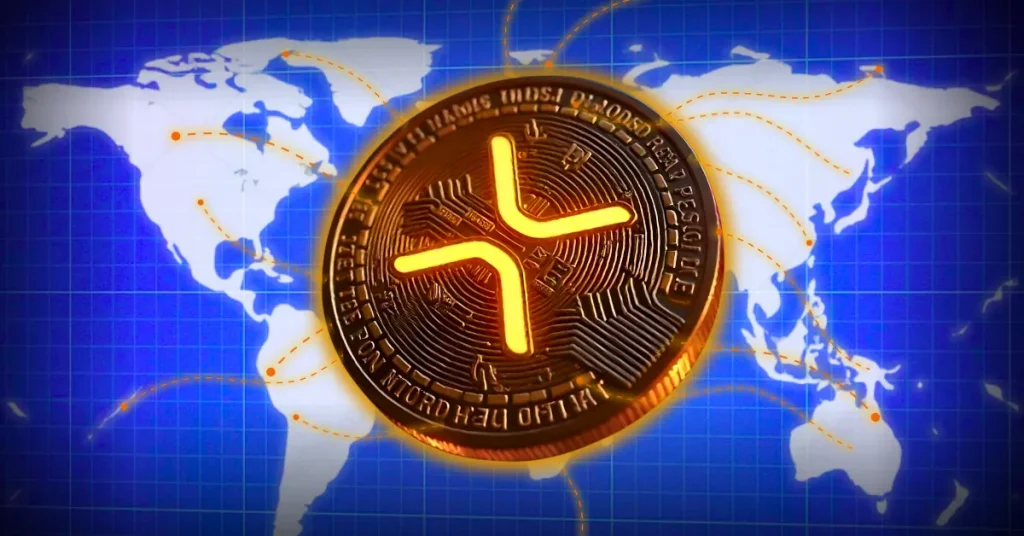
Why XRP Could Replace the Petrodollar?

Ripple stablecoin RLUSD and XRP reserves

The post Why XRP Could Replace the Petrodollar? appeared first on Coinpedia Fintech News

The events unfolding in the Strait of Hormuz are not just a geopolitical story. According to analyst Mickle, they may be the moment the world learns it does not need the dollar to settle trade.

“What’s happening in the Strait is teaching all of these other countries how to transact in something other than the petrodollar,” Mickle said in a recent discussion. “If that starts to happen, we’re going to see more XRP, Ethereum and a handful of other tokens being used in some of these global settlements.”

Flight From Currency, Not Just the Dollar

The framework underpinning Mickle’s argument draws on Ray Dalio’s long-cycle economic theory, specifically the final stage of a reserve currency collapse where the flight is not from one currency to another but from currency itself.

For years, that final stage was assumed to involve the Chinese Yuan stepping into the dollar’s role. Mickle argues that the narrative has shifted. Even Dalio, historically a gold advocate, appears to have pivoted toward something broader. The question is no longer which nation’s currency dominates. It is whether any nation’s currency dominates at all.

“I think Ray Dalio has pivoted his thesis because that final stage is now a flight from currency itself,” Mickle said. “Digital assets create an off-ramp from the global centralised fiat currency and into decentralised neutral liquidity sources.”

Why XRP Fits the Moment

Mickle was specific about what qualities matter when nations are looking for alternative settlement rails. Deep liquidity pools. International settlement capability. The ability to move value at speed. And neutrality, meaning no single government controls it.

“There’s only a handful of tokens that fall into that category and XRP is one of them,” he said. “That is exactly where an asset like XRP can be strategically positioned at a global level.”

Gold, he said, used to fill that neutral store of value role. But physical gold cannot settle 130 ships a day moving through a strait in real time. Digital assets can.

The Dominos Are Just Starting to Fall

Mickle’s timeline is explicitly long term. Dedollarisation and deglobalisation are multi-decade trends in his view and the technology to enable them is only now being introduced at the moment those trends are accelerating.

“I think we’re just at the very start of a technology being introduced to allow that to happen,” he said. “This is the dominoes just beginning to fall.”

With the Strait of Hormuz closed, Iran demanding crypto tolls and direct US-Iran talks collapsing in Islamabad, the scenario Mickle describes is no longer theoretical. It is being stress-tested in real time.

BREAKING: Bitcoin Drops Below $72,000 as Ethereum and XRP Slide After JD Vance Confirms Iran Deal Failure

What Will Happen To Bitcoin Price In These 2 Weeks Of US-Iran Ceasefire

The post BREAKING: Bitcoin Drops Below $72,000 as Ethereum and XRP Slide After JD Vance Confirms Iran Deal Failure appeared first on Coinpedia Fintech News

Crypto markets slipped on Friday after Vice President JD Vance confirmed that direct US-Iran negotiations in Pakistan ended without an agreement, reviving fears of continued conflict and uncertainty in global markets.

Bitcoin dropped below $72,000, trading around $71,503 at time of writing, down 1.82% in 24 hours. Ethereum fell to $2,211, while XRP slipped to $1.32. The total crypto market cap sits at $2.43 trillion, down 1.54% on the day.

What Happened in Islamabad

The talks represented a historic moment. It was the first direct face-to-face meeting between US and Iranian officials since the 1979 Islamic Revolution. They lasted 21 hours and produced nothing.

The negotiations collapsed on two core issues. Iran refused to give up uranium enrichment and refused to relinquish control of the Strait of Hormuz. Iran also arrived with four conditions of its own: full sovereignty over the Strait, complete war reparations, unconditional release of frozen assets and a regional ceasefire including Lebanon.

The US came in asking for free passage through Hormuz and a commitment that Iran would never build a nuclear weapon.

The two sides never found common ground.

Vance was direct after leaving Islamabad. “Iran has chosen not to accept our terms. That is bad news for Iran much more than it is for the United States,” he said, adding that the US had left its final and best offer on the table.

Why Markets Reacted

The Strait of Hormuz handles roughly 20% of global oil trade. A prolonged standoff keeping it closed adds sustained pressure to energy prices, inflation expectations and global growth forecasts. All three are headwinds for risk assets including crypto.

The Fear and Greed Index sits at 45, in neutral territory, suggesting markets have not yet fully priced in a worst-case scenario but are clearly not comfortable either. 

What Comes Next

With diplomatic talks now officially off the table and the US calling its last offer final, the path toward a negotiated resolution has narrowed significantly. Markets will now watch for whether military escalation resumes, whether a new diplomatic channel opens or whether a third party steps in to mediate.

Why is Crypto Rallying Today: Price Targets For Bitcoin, Ethereum and XRP

Why Is the Crypto Market Up Today Bitcoin, Ethereum & XRP Lead Broad Rally

The post Why is Crypto Rallying Today: Price Targets For Bitcoin, Ethereum and XRP appeared first on Coinpedia Fintech News

The crypto market has rebounded, with Bitcoin rising 10% over the last eight days and Ethereum up 12% in the same period. The total market cap is now up about 2.95% to $2.47 trillion in 24 hours, adding roughly $209 billion in value. 

Why Crypto Is Rallying

The primary driver is Japan’s regulatory momentum. The Japanese cabinet has approved a bill that classifies crypto as official “financial products,” giving institutions more confidence to treat crypto similarly to traditional assets.

Secondary factors include:

  • Reduced geopolitical risk from Iran ceasefire talks
  • Strong technical momentum, with Bitcoin now testing a very important resistance zone

Near‑term, the outlook remains bullish if Bitcoin holds its $69,000–$70,000 support range. The next event to watch is the SEC’s CLARITY Act roundtable on April 16, which could either confirm the current momentum or trigger a re‑evaluation by traders.

Bitcoin Price Analysis

Bitcoin is currently trading around $72,900–$73,000, still technically in a larger bearish trend, but now showing signs of a relief rally after a deep oversold phase. 

Bitcoin is now testing a major resistance zone between $72,000 and $76,000—a range that has acted as strong resistance since 2024 and has repeatedly flipped between support and resistance over 2025 and 2026. If BTC breaks and holds above $76,000, analysts expect a move toward the mid‑$80s, around $85,000–$86,000, as the next major target.

Ethereum Price Analysis

Ethereum has bounced back above $2,240–$2,250, recovering about 9% in the last week. 

On the daily chart, ETH is trading between $2,150 and $2,250, a range that has become critical. If Ethereum holds this zone as support, the bullish inverse head and shoulders structure remains intact, with a technical target around $2,430 as the next upside. However, a confirmed break below $2,150–$2,200 would invalidate the current pattern and reopen the door to deeper downside.

In the short term, many analysts expect a small cool‑off, mirroring Bitcoin’s structure, with a roughly 1‑day setback possible before the next leg up. 

XRP Price Analysis

XRP is trading around $1.35, up about 3% over the last seven days, and still in a larger bearish trend on the weekly chart. However, the price is now firmly testing a long‑watched support zone around $1.30–$1.35, which has served as a major downside target and bounce area for months.

  • Support area: $1.30–$1.35, with a tighter band near $1.32–$1.33
  • Resistance area: $1.44–$1.45

If XRP continues to hold above $1.30, the downside could be limited and the coin may trade sideways in its $1.30–$1.45 range. XRP is expected to follow Bitcoin’s lead over the next few days: if BTC pulls back into a small cool‑off, XRP is likely to see similar weakness, but not necessarily a full breakdown as long as that $1.30 floor holds.

Ripple and Quant Team Up on Stage: Is XRP the Real Internet of Value Behind the Scenes?

Ripple News

The post Ripple and Quant Team Up on Stage: Is XRP the Real Internet of Value Behind the Scenes? appeared first on Coinpedia Fintech News

Ripple and Quant are no longer just talking about the future of institutional payments, they’re now sharing the stage, and the market is taking notice. In a rare joint appearance, Ripple’s James Wallace, head of CBDC relations, and Gilbert Verdian of Quant Network sat side by side, unveiling a single, tightly‑linked vision: a programmable, multi‑ledger, institutional “internet of value” largely built on the XRP Ledger.

Ripple and Quant’s “Institution of Trust” Duets

On stage, Wallace laid out Ripple’s two‑pronged setup: RippleNet for cross‑border payments using cryptocurrency as a bridge currency, and Ripple’s XRP‑based initiatives for next‑generation CBDC and institutional solutions. Crucially, he framed Ripple’s mission as creating the “internet of value”—where corporate, central‑bank, and individual money can move as easily as data.

Observers on the XRP community side argue that while Quant markets itself as the programmable, interoperable layer for regulated value, Ripple is calling the XRP Ledger the main “regulated library network” beneath it all. In this narrative, Quant acts as the “API glue” and roll‑up layer, while XRP is the backbone ledger for CBDCs, private digital currencies, and cross‑border rails.

One Unified Ledger, Many “Library” Names

The video deep‑dive highlights how banks and central‑bank tech leaders have quietly renamed the same concept several times: “regulated library network,” “regulated internal value,” “shared ledger,” “unified ledger,” “constellation of regulated networks.” According to the XRP‑focused commentary, they all point back to the XRP Ledger as the shared, public, regulated‑grade core, with CBDC‑style blockchains as “carbon‑copy clones” running alongside.

The twist? The same executives who talk about a “constellation” of CBDC‑related networks are the ones who sit with Verdian at events and call Quant the interoperability layer. That’s where the XRP‑centric argument kicks in: Ripple and the XRP Ledger are the shared infrastructure; Quant and similar firms are the programmable front‑end layer.

Why This Matters for XRP

Jesse said that put together, the scene is a masterstroke for XRP:

  • Ripple publicly positions the XRP Ledger as the central “internet of value” ledger for CBDCs and regulated money.
  • Quant’s presence beside Ripple suggests multi‑ledger interoperability is already being architected around the XRP stack.
  • Language like “regulated library network,” “internet of value,” and “institutions of trust” is no longer abstract—it’s being used in real‑world forums by bank and central‑bank tech leaders.
❌