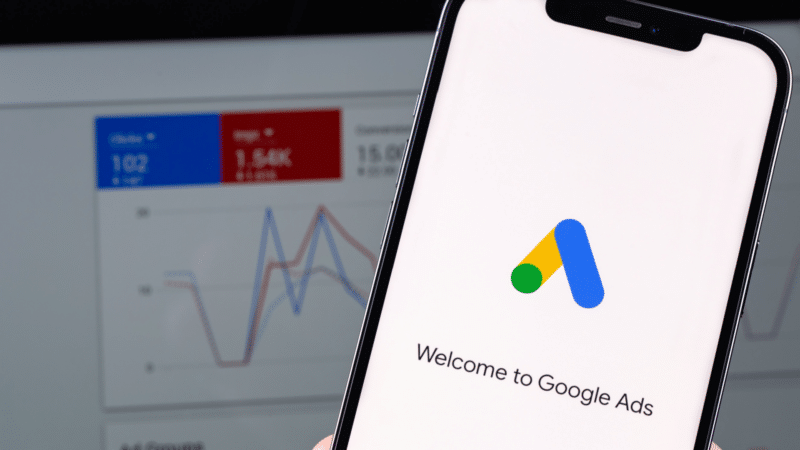
A major shift is underway in digital advertising: Meta Platforms is projected to generate more ad revenue than Google in 2026, signaling how marketers are increasingly favoring automated, performance-driven platforms.
Driving the news. According to Emarketer, Meta is expected to bring in $243.46 billion in global ad revenue this year, narrowly topping Google’s projected $239.54 billion.
Meta is forecast to capture 26.8% of global ad spend.
Google is projected to take 26.4%.
It would be the first time Google has lost the top spot in digital ad revenue.
Why we care. Meta’s growth suggests brands are getting more value from automated, performance-focused tools, which could influence how they split budgets between Meta and Google. It’s also a reminder that platform dynamics are changing fast, so media strategies need to stay flexible.
Catch up quick: Google has long dominated digital advertising through Search ads, Display ads across the web, and YouTube.
But its core ad business is growing more slowly than in previous years.
Meanwhile, Meta has benefited from AI-powered ad automation, stronger performance measurement tools, and continued scale across Facebook, Instagram, and WhatsApp.
Why Meta is winning now. Advertisers are increasingly prioritizing platforms that can deliver both reach and measurable return.
Meta’s advantage has been its ability to automate creative and targeting faster, optimize campaigns with less manual input, and make it easier for brands to prove ROI.
That’s especially appealing in a tighter economic environment where marketers are under pressure to do more with less.
Yes, but. Google is still enormous — and still growing.
Its search business remains one of the most profitable ad engines in the world, and YouTube continues to attract brand budgets. But the company faces more pressure from, AI search disruption, antitrust scrutiny, and slowing growth in traditional search advertising.
A growing number of advertisers say their Google Ads campaigns were suddenly hit with mass disapprovals tied to DNS and 500 server errors — even when their sites appeared to be working normally. The issue is raising fresh concerns about platform reliability and the risk of sudden performance disruptions.
Driving the news. PPC advertisers began flagging widespread problems this week across Google Ads accounts, with multiple agency leaders saying clients were affected at the same time.
Managing Director at Cornerhouse Media, Ryan Berry, said more than 1,500 ads were disapproved in a single account around 1:30 p.m. UTC.
Others said they received overnight emails warning that ads had been disapproved.
Why we care. Sudden mass disapprovals can instantly pause traffic, leads, and revenue — even if nothing is actually wrong with their website. If Google’s systems are incorrectly flagging DNS or server errors, brands could lose performance and spend valuable time troubleshooting an issue they didn’t cause. It also highlights the need for closer monitoring and faster escalation when platform glitches happen.
What advertisers are seeing:
DNS errors, even when internal IT teams found no website issue.
Google Ads trainer, Charlotte Osborne said she saw two separate cases this week — one tied to a DNS error and another to a 500 error — with no issues found on the client side.
Google Advertising specialist Joshua Barr said he received “lots of emails overnight” about disapproved ads and has been dealing with similar problems for weeks.
Several Paid Search experts also said they were seeing the same issue across accounts.
What’s likely happening. Google’s ad review systems use automated crawlers to test landing pages. If Googlebot encounters temporary server issues, DNS lookup failures, redirects, or timeout errors, ads can be automatically disapproved under the platform’s “destination not working” policy.
That means advertisers can be penalized even if:
their site is live for users,
the issue is temporary,
or the problem is on Google’s crawler side.
What to do now:
Check Google Ads policy manager for exact disapproval reasons.
Test landing pages using multiple locations and devices.
Review DNS uptime, redirects, and CDN/firewall settings.
Submit appeals for clearly incorrect disapprovals.
Document account-level impacts in case the issue proves platform-wide.
The bottom line. For advertisers, this is a reminder that campaign performance can be derailed by platform glitches as much as by strategy — and when Google’s systems misfire, spend and leads can disappear fast.
Google’s legal troubles over its search and ad tech businesses are entering a new phase — one that could expose the company to billions in payouts from advertisers seeking damages after U.S. courts found it illegally monopolized key digital ad markets.
Driving the news. A growing group of advertisers is preparing to file mass arbitration claims against Google, according to attorney Ashley Keller, who said the first filings are expected this week.
Keller says he has already signed up a “significant number” of advertisers.
He estimates potential claims tied to online search and display advertising could exceed $218 billion, based on economic analysis his firm commissioned.
Similar mass arbitration cases typically take 12 to 24 months to resolve.
Catch up quick. Courts in 2024 dealt Google major antitrust blows.
Why we care. This case could open a path to recover money advertisers believe they overpaid for search and display ads due to Google’s alleged monopoly power. Mass arbitration may give businesses more leverage than individual claims and could pressure Google into settlements.
It also signals growing legal scrutiny of the digital ad market, which could eventually lead to more competition and lower costs.
Why arbitration matters. Most advertisers can’t simply sue Google in court because their contracts require disputes to go through arbitration.
That usually favors large companies when claims are handled one by one. But mass arbitration — which bundles 25 or more similar claims — can shift leverage back toward claimants.
It increases pressure to settle.
It can lower legal costs for smaller businesses.
It allows companies with relatively modest individual claims to pursue damages collectively.
What’s new. This case could break new ground because most mass arbitrations to date have involved consumers or workers — not corporate plaintiffs.
A large-scale advertiser action against Google would be among the first major efforts to use the strategy for business-to-business claims.
What Google says. In a recent filing, Google said it faces private damages claims tied to global antitrust cases but cannot yet estimate potential losses.
The company said it believes it has “strong arguments” and plans to defend itself aggressively.
Google is changing how Google Analytics and Google Ads share consent signals — a shift that could have major implications for marketers’ tracking setups starting this summer.
What’s happening. Beginning June 15th, Google Ads data collection will rely solely on the ad_storage consent setting, removing a layer of complexity that previously came from linked Google Analytics configurations.
Until now, ad data flows between Analytics and Ads were influenced by both Consent Mode and Google Signals settings inside GA. That created confusion for marketers, especially because some of the controls were buried in Analytics settings rather than clearly surfaced in ad consent banners or tag implementations.
Starting in June, Google is simplifying that structure. Google Analytics data collection will still be governed by Google Signals, but Google Ads will look only at whether users have granted ad_storage consent.
That means a linked Google Analytics tag will no longer affect whether Google Ads can collect or use advertising identifiers.
What changes. For many advertisers, the update will effectively create a cleaner — but more rigid — consent framework.
If ad_storage is granted, Google Ads may use all available advertising signals, including linking activity to a user’s signed-in Google account when possible. If ad_storage is denied, Google will be limited to less persistent signals, such as URL parameters like gclid.
There appears to be little middle ground. Marketers will have less ambiguity about what drives ads data collection, but they will also have fewer ways to fine-tune what gets shared.
Why we care. This change makes consent settings much more consequential for measurement, attribution and audience targeting. From June, whether Google Ads can use identifiers will depend almost entirely on the ad_storage signal, so any gaps or errors in consent mode setup could directly affect campaign performance data.
It also removes some hidden complexity from linked Google Analytics settings, giving advertisers clearer rules — but less flexibility.
Between the lines. The move reflects Google’s broader push to make consent systems easier to understand for advertisers and regulators.
A single source of truth for ad consent could reduce implementation errors and make compliance easier to explain. But it also puts more pressure on brands to ensure their Consent Mode setup is working properly.
If consent updates are delayed, misconfigured or incomplete, marketers could see gaps in measurement, attribution and audience targeting.
What marketers should do now. Audit your consent implementation before the June deadline.
Teams should confirm that Consent Mode update calls are firing correctly and that ad_storage settings accurately reflect user choices. Brands with Google Signals turned off should pay particular attention: under the new setup, they could see more Ads-linked data than before if users grant ad consent.
For marketers, the takeaway is simple: cleaner rules are coming, but getting consent right will matter more than ever.
In an AI-driven economy, companies have more data than ever but still struggle to turn it into useful daily decisions. Google is betting that a revamped Data Studio can become the place where users quickly explore, organize and act on data across its ecosystem.
Why the switch back. Google says the new Data Studio will serve as a central hub for a range of assets, from traditional reports and dashboards to data apps built in Colab and BigQuery conversational agents. The idea is to give users one place to work with the tools and information that shape their business each day.
Flashback. Three years ago, Google folded Data Studio into its broader analytics push by rebranding it as Looker Studio. Now, it is separating the products again as customer needs evolve.
Two versions. Google is launching two versions of the product.
Data Studio will remain free for individuals and small teams that need quick analysis and visualization.
Data Studio Pro, meanwhile, is aimed at larger organizations that need stronger security, compliance, management controls and AI capabilities, with licenses sold through the Google Cloud and Workspace admin consoles.
Why we care. The (kind of) new Data Studio could make it much easier to pull together campaign, audience and performance data from across Google’s ecosystem in one place. That means faster reporting, easier ad hoc analysis and quicker answers without relying as heavily on analysts or engineering teams. For brands already using Google Ads, BigQuery or Sheets, it could streamline how teams track performance and make day-to-day budget and creative decisions.
Where Looker fits in. Under the new structure, Looker will remain Google Cloud’s enterprise business intelligence platform, focused on governed data, semantic modeling and large-scale analytics. Data Studio, by contrast, is being positioned as the faster, more flexible option for personal exploration, ad hoc reporting and lightweight dashboards across services like BigQuery, Google Sheets and Ads.
What’s next. For existing users, Google says the transition should be seamless. Current reports, data sources and assets will carry over automatically, with no action required.
Google plans to share more about the relaunch and its broader analytics strategy at Google Cloud Next ’26 later this month.
Maddie Lightening, head of paid media at Hallam, joined me to talk through the mistakes, lessons and mindset shifts that have shaped her career in PPC. With more than a decade of experience across search, social, programmatic, digital out of home and ABM, she shared a candid look at the realities of leading paid media in a fast-moving industry.
The reporting mistake that doubled performance
One of Maddie’s early mistakes involved misreporting performance due to account currency differences. Working with an Australian billing setup while reporting in GBP, she unknowingly halved the reported results because conversion values were being translated. The issue only surfaced after comparing platform data with CRM figures, revealing that performance was actually twice as strong as reported, highlighting how easily technical setup details can skew results.
When legacy account structure becomes a problem
A more complex challenge came from a travel client running an outdated, highly granular account structure with thousands of campaigns. While this “2016-style” setup had previously worked, it clashed with modern AI-driven bidding and data consolidation approaches, making it harder to optimize performance and diagnose issues when results began to decline.
Why timing matters as much as strategy
Maddie explained that although the team had planned to restructure the account, they delayed it to avoid disrupting peak season. When performance dropped in January, they were forced to make multiple changes quickly, which increased pressure and complexity. In hindsight, starting the restructure earlier would likely have reduced risk, showing that delaying necessary changes can sometimes be more damaging than acting sooner.
The pressure of fixing performance in real time
As performance declined during a critical period, the client became understandably concerned, especially given how much of their annual budget was tied to peak months. At the same time, audits and internal reviews added pressure, making it one of the most challenging moments of Maddie’s career, but also reinforcing the importance of collaboration, support and staying focused on solutions rather than panic.
How a max CPC cap helped reclaim control
One key fix involved regaining control over rising CPCs by applying a max CPC cap through portfolio bidding strategies, even while using automated bidding. This approach reduced CPCs significantly without harming performance, demonstrating that advertisers can still guide AI-driven campaigns by applying the right constraints rather than relying on full automation alone.
Why banning AI is the wrong move
Maddie also highlighted a broader industry mistake: refusing to adopt AI altogether. She recalled working at an agency that banned AI tools and automation, which she believes limits growth and puts teams at a disadvantage. Instead of resisting AI, she argues that marketers should learn how to use it strategically while maintaining oversight.
Better prompts lead to better AI outputs
A key takeaway on AI usage is that results depend heavily on input quality. Maddie emphasized that vague prompts produce weak outputs, while detailed context—such as goals, audience and structure—leads to far more useful results. AI should be treated as a support tool that enhances human work, not replaces it.
Why curiosity still matters in PPC
Maddie stressed the importance of experimentation, encouraging teams to test ideas even when outcomes are uncertain. Her philosophy—“test and learn”—reflects the idea that even unsuccessful experiments provide valuable insights that can inform better decisions in the future.
Small mistakes are not career-ending
She also addressed everyday mistakes, such as sending the wrong report to a client, noting that while they may feel serious in the moment, they are usually easy to fix. The key is to take accountability, correct the issue quickly and keep perspective rather than overreacting.
The bigger lesson for paid media teams
Across all her examples, Maddie reinforced that success in PPC comes from adaptability, continuous learning and a willingness to challenge existing approaches. Whether dealing with account structure, automation or performance issues, the ability to evolve is what separates strong teams from the rest.
Final takeaway
Ultimately, Maddie’s experience shows that mistakes, when handled correctly, can lead to stronger strategies and better performance, and that staying curious, proactive and open to change is essential for long-term success in paid media.
Looking to take the next step in your search marketing career?
Below, you will find the latest SEO, PPC, and digital marketing jobs at brands and agencies. We also include positions from previous weeks that are still open.
Job Description This position is a Full-time remote position The Entrust Group is a pioneer in the world of self-direction. For over 40 years, we’ve provided administration services for self-directed retirement accounts and tax‑advantaged plans. As a self-directed IRA administrator, Entrust enables clients to invest their retirement funds in alternative assets not typically available through […]
Job Description Growth Marketing eCommerce Director / VP Marketing (D2C/B2C) reporting to the north of Austin based CEO Founder. Our client is a profitable, founder-led D2C brand at the intersection of health, wellness, performance, safety protection and consumer goods/apparel. Their mission-driven products are trusted globally by professionals and consumers who depend on reliability, precision, and […]
Company Description At PayNearMe, we’re on a mission to make paying and getting paid as simple as possible. We build innovative technology that transforms the way businesses and their customers experience payments. Our industry-leading platform, PayXM, is the first of its kind—designed to manage the entire payment experience from start to finish. Every click, swipe […]
About Royal Apparel Royal Apparel is a USA-based apparel manufacturer known for high-quality, fashion-forward basics and a strong commitment to domestic production, sustainability, and service. We work across retail, wholesale, and promotional markets and are looking for a team member who wants to grow with a dynamic and evolving brand. Full-Time | Hybrid, Remote, or […]
Job Description One Step Secure I/T is an MSP providing the latest in managed services and cybersecurity. We’re a stable, privately-owned company where people enjoy what they do — and who they do it with. Our team sticks around, with an average tenure just shy of 10 years. That kind of loyalty doesn’t happen by […]
Description: Build campaigns. Shape stories. Drive growth—in an industry that quite literally builds the world. The products we support are behind the infrastructure, equipment, and technology that power everyday life. We’re looking for a Digital Marketing Specialist who’s excited by the opportunity to bring a highly technical, industrial product portfolio to life through modern marketing. […]
About Us We have been a recognized leader in the Healthcare Staffing and PCA industry for four decades and a pioneer of the franchised staffing model. We are seeking dynamic and results-oriented Digital Marketing and Communications Specialist to spearhead the development in major markets across the U.S. This is a unique opportunity to develop, establish and grow […]
Description: {Mur-chol-uh-jee | The science of company merch; the skill of creating and delivering custom-branded apparel and corporate gifts around the world.} Merchology is a leading eCommerce retailer in B2B sales of co-branded merchandise including apparel, headwear, drinkware, gifts, and accessories. We are family-owned, people-powered, and we are adding to our #MerchTeam at our renovated […]
We’re looking for an SEO Strategist who genuinely loves SEO. Not someone who “does SEO”, but someone who gets genuinely excited about the wins, and genuinely curious about the setbacks. This is not a checklist SEO role. It’s for someone who understands how search is changing, and knows how to turn that into measurable business […]
As VP of Search, you’ll set the vision and direction for our global Search practice—leading best-in-class SEO, SEM, and Generative Engine Optimization (GEO) strategies across a diverse portfolio of clients and regions. You are the global leader and point of contact for Search within the agency, responsible for practice leadership, quality standards, capability growth, and […]
120 Broadway, New York, NY 10271, USA Macmillan is seeking a strategic, data and results driven Manager, Retail Media Advertising to join the Performance Marketing & Audience Development team within the Consumer Insights, Marketing & Analytics (CIMA) department. Reporting to the Senior Director, Performance Marketing & Audience Development, this key role is an exciting opportunity […]
We’re working with a stable & successful manufacturing company in Conklin, NY to hire a Marketing & Business Development Manager. This is a direct hire position with full benefits! Salary: $70,000 – $80,000/year RESPONSIBILITIES You’ll be responsible for all aspects of marketing for a progressive B2B business in the materials processing industry. Responsible for the […]
Events & Lifecycle Marketing Specialist page is loaded## Events & Lifecycle Marketing Specialistremote type: Onsitelocations: 40 Enterprise Blvd. Suite 201 Bozeman, MTtime type: Full timeposted on: Publicado hoyjob requisition id: R0035561About Specialty Program GroupOur goal is to partner with industry-leading specialty businesses to provide them with the ability to achieve their goals and optimize their […]
We at Ravensburger are both a truly global company and a family. As a bunch full of different characters and personalities with heart and a passion for achieving our goals together, we offer a great range of entertainment for children and families. What drives us forward? A shared sense of purpose. Together we are working […]
Overview TTM Technologies, Inc. – Publicly Traded US Company, NASDAQ (TTMI) – Top-5 Global Printed Circuit Board Manufacturer About TTM : TTM Technologies, Inc. is a leading global manufacturer of technology products, including mission systems, RF components, RF microwave/microelectronic assemblies, and technologically advanced printed circuit boards (PCBs). TTM stands for time-to-market, representing how TTM's time-critical, […]
Google is pushing advertisers toward a more modern, scalable infrastructure for Shopping integrations—bringing new capabilities (including AI tools) directly into scripting workflows.
What’s happening. Google Ads scripts will begin supporting the Merchant API starting April 22nd, as Google prepares to retire the Content API for Shopping on August 18th. The new API will be available as an Advanced API in the scripts editor, while the existing Content API remains usable until its official sunset.
What’s new: The Merchant API introduces a modular architecture, breaking functionality into sub-APIs that allow for faster updates, easier maintenance, and fewer disruptions. It also expands capabilities with features like the Google Product Studio API for generative AI, dedicated APIs for managing product and store reviews, and a Notifications API for real-time updates.
In addition, advertisers gain more control over data management, including supplemental product data, local and regional inventory, and promotions—all within a system designed for omnichannel use while still supporting legacy setups.
Why we care. The Merchant API gives advertisers more a more flexible way to manage product data at scale, especially for complex or omnichannel setups. It also introduces new capabilities—like AI-driven content tools and improved data handling—that can enhance feed quality and performance. Just as importantly, with the Content API being retired, adopting the new system is essential to avoid disruption and stay competitive.
Yes, but. Migration will require some adjustment—especially for advertisers with custom scripts or complex feed setups tied to the legacy API.
Bottom line. For advertisers using scripts, this is an opportunity to upgrade to a more powerful and scalable integration, unlocking new features while future-proofing Shopping workflows before the cutoff.
Google is removing complexity from one of its most important measurement tools. By merging enhanced conversions for web and leads—and allowing multiple data inputs at once—advertisers get more accurate tracking with less setup friction.
What’s happening. Google Ads is consolidating its enhanced conversions features into a unified system with a single on/off toggle. At the same time, it’s eliminating the need to choose a single implementation method.
Advertisers will be able to send user-provided data through multiple channels simultaneously—including website tags, Data Manager, and API integrations. The current split between “enhanced conversions for web” and “enhanced conversions for leads” will disappear.
What’s changing and when: Google Ads is currently accepting user-provided data from website tags (e.g., Google tag, Google Tag Manager), Data Manager, and API connections. This multi-source approach is designed to improve conversion accuracy and bidding performance.
Starting June 2026, enhanced conversions become a single feature with a simple toggle, and method selection (tag vs API, etc.) is removed from the interface.
Why we care. This update makes conversion tracking more accurate and resilient at a time when signals are disappearing. By allowing multiple data sources at once, Google Ads can better match conversions, which can directly improve bidding efficiency and campaign performance. Just as importantly, it removes technical friction—so you get better data without having to choose or maintain a single integration method.
Impact on advertisers. Existing users require no action and will be automatically migrated if customer data terms have already been accepted. New users can enable enhanced conversions at either the account level or individual conversion action level. Opt-out remains available at the conversion action level.
How to enable it (quick take). At the account level, go to Goals → Settings, enable enhanced conversions under Customer data use, and accept data terms. At the conversion level, create or edit a conversion action, enable enhanced conversions during setup, and accept data terms.
Yes, but. To use enhanced conversions, advertisers must agree to Google’s Data Processing Terms and confirm compliance with its policies—an increasingly important step as platforms expand their use of first-party data.
Bottom line. Google is streamlining setup while quietly encouraging broader adoption of user-provided data. For advertisers, this means better performance with less manual setup. You get more complete conversion data feeding into bidding and optimization, without having to manage multiple tracking methods—helping you drive stronger results while simplifying your measurement strategy.

 Login
Login



 , is the first of its kind—designed to manage the entire payment experience from start to finish. Every click, swipe […]