Reading view

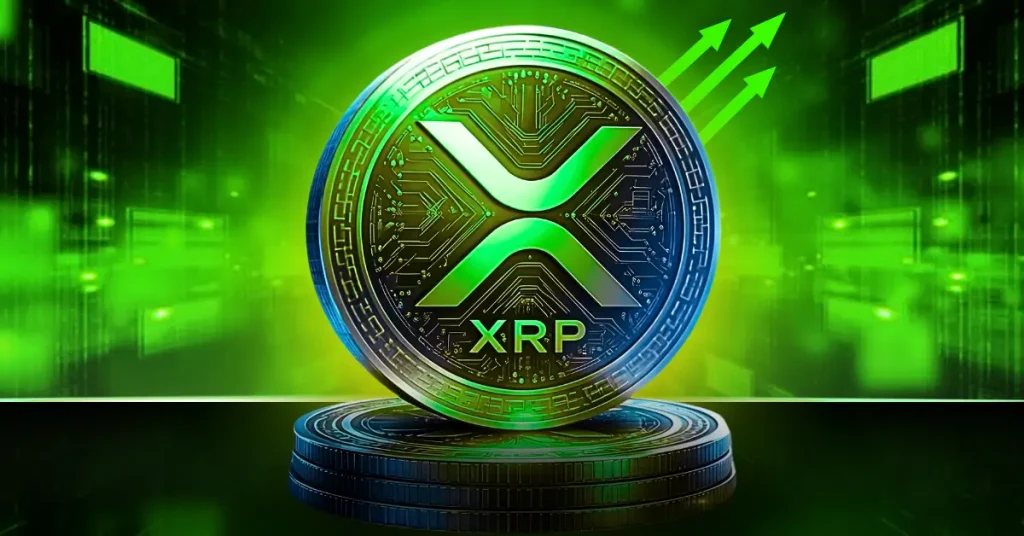
XRP Price Breakout Next Week? Fractal Analysis Points to $40 Target Before End of May
XRP Price About to Explode This Setup Says Yes

The post XRP Price Breakout Next Week? Fractal Analysis Points to $40 Target Before End of May appeared first on Coinpedia Fintech News

An analyst stirred debate this week by claiming XRP is following a historical fractal pattern that could trigger a breakout next week, with a $40 price target achievable before the end of May.

#XRP is following its fractal the breakout could happen next week and before the end of may 40$ per coin is realistic 🚨💥🚀 pic.twitter.com/VmikrkXuys

— XRP CAPTAIN (@UniverseTwenty) April 15, 2026

The claim landed with immediate skepticism. XRP is currently trading around $1.37, meaning the $40 target would require a 2,800% rally in roughly six weeks. Critics have been vocal, pointing out the gap between the fractal theory and current market reality.

What More Measured Analysts Are Saying

Setting aside the $40 debate, the technical picture analysts are working with is considerably more realistic.

On the weekly timeframe, XRP’s longer-term trend remains technically bearish. A full reversal out of the larger bearish structure has not yet been confirmed. That said, the token is finding consistent support around $1.30, a level that has held firm across multiple tests.

On the four-hour chart, the range to watch is $1.30 to $1.35 as support and $1.38 to $1.39 as the first resistance zone. A clean break above that opens the next resistance at $1.44 to $1.45.

In the immediate near term, with Bitcoin showing signs of short-term cooling after its recent run, XRP is expected to chop sideways rather than make a decisive move in either direction over the next day or so.

Where XRP Actually Stands

The honest picture is one of a token sitting on strong support with a cautiously bullish short-term setup and a longer-term trend that has not yet reversed. The $1.30 level is what matters most right now. Hold it and the near-term case builds. Lose it and the broader bearish structure reasserts.

The $40 target will keep circulating on social media. The $1.44 resistance level is what traders are actually watching.
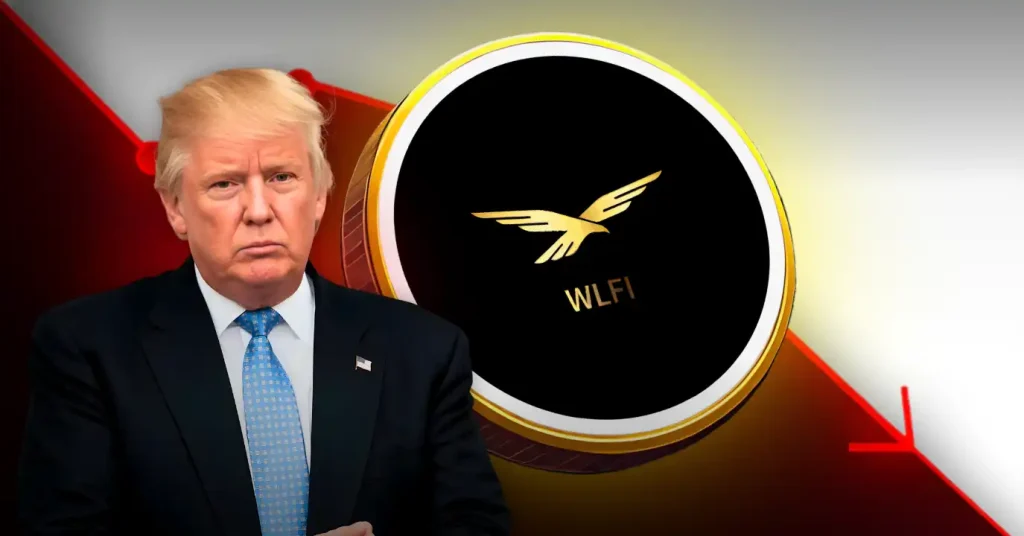
WLFI Proposes 4.5 Billion Token Burn in Major Governance Reset

WLFI Price Slumps as Regulatory Concerns Eclipse Crypto Market Recovery

The post WLFI Proposes 4.5 Billion Token Burn in Major Governance Reset appeared first on Coinpedia Fintech News

In a big move to rebuild trust and strengthen its long-term outlook, World Liberty Financial (WLFI) has introduced a new governance proposal that could change how its tokens are managed.

We’ve just posted a governance proposal to the forum for community discussion, and we believe it represents one of the strongest long-term governance alignment signals in DeFi.

Here's what it does 🧵

— WLFI (@worldlibertyfi) April 15, 2026

The plan covers a huge 62.28 billion WLFI tokens and includes stricter lockups, updated vesting schedules, and a potential burn of over 4.5 billion tokens.

Stronger Lockups for Founders and Team

The biggest change affects insiders like founders, team members, advisors, and partners.

If the proposal is approved:

  • Around 45.24 billion tokens will be locked for 2 years (cliff period)
  • After that, tokens will be released slowly over 3 years
  • A 10% token burn will apply when they opt in, removing up to 4.52 billion tokens permanently

This means insiders will have to stay committed to the project for the long run instead of exiting early.

Easier Terms for Early Supporters

For early supporters holding 17.04 billion tokens, the terms are slightly more flexible:

  • A 2-year lockup period
  • Followed by a 2-year gradual release
  • No token burn, so they keep all their tokens

However, holders must agree to these new terms. If they don’t opt in, their tokens will stay locked indefinitely.

Tensions Rise With Justin Sun

This proposal comes at a time when WLFI is already under pressure. A public dispute has emerged between the platform and Justin Sun, the founder of Tron and a former investor in WLFI. 

Sun claims that his accounts on WLFI have been frozen without proper explanation. He has made serious allegations against the platform, suggesting that users were not fully informed about how the system works.

According to Sun, WLFI included a hidden “backdoor” function in its smart contract that allows tokens to be locked.

“What was never disclosed to me or any other investor is that World Liberty built a backdoor locking function into the smart contract used to issue WLFI tokens. This is the opposite of decentralization. This is a trapdoor being marketed as an open door,” Sun said.

Both sides have now spoken publicly, and the dispute could move toward legal action.

Bitcoin Targets $80,000, Ethereum Eyes $2,700 and XRP Could Hit $1.55 Says Chart Analyst

Why Are Bitcoin, Ethereum and XRP Prices Surging Today

The post Bitcoin Targets $80,000, Ethereum Eyes $2,700 and XRP Could Hit $1.55 Says Chart Analyst appeared first on Coinpedia Fintech News

Gareth Soloway, chief market strategist at Verified.com, laid out his latest price targets for Bitcoin, Ethereum and XRP this week.

He said that Bitcoin has formed a micro bullish breakout on shorter timeframes while the bigger macro pattern remains bearish. Soloway has maintained an $80,000 upside target since February, and the charts still support that possibility.

“The micro pattern is bullish with upside still potentially to $80,000,” he said. “The macro pattern still looks like it has further downside.”

Bitcoin needs to hold $64,000 to $67,000 as support for the short-term rally to remain valid. If the macro pattern eventually plays out, $50,000 is the first major support, with a worst-case scenario near $30,000 if broader markets sell off 20% to 30%.

Ethereum: $2,600 to $2,700 If $2,000 Holds

Ethereum is holding a critical trend line around $2,000 that has been tested multiple times. As long as that support holds, Soloway sees a path to $2,400 first, then potentially $2,600 to $2,700.

“Near-term micro pattern is bullish. We’re holding the pattern,” he said, adding that the two converging trend lines intersect in early May, making the next few weeks decisive for ETH’s direction.

A break below $2,000 on the other hand would trigger the broader bearish pattern and open the door to significantly lower prices.

XRP: $1.50 to $1.55 Near Term 

XRP is the standout among the three in Soloway’s view. He described the current setup as a bullish reversal inside a bar bull flag with a clean parallel channel structure.

From the current price around $1.37, he sees near-term upside to $1.50 to $1.55. A breakout above that resistance zone opens the path to $1.73 to $1.83.

The downside level to watch is $1.12. A daily close below that would send XRP below one dollar. For now the micro bias remains bullish to neutral.

Ripple CEO Brad Garlinghouse Says Clarity Act Window is ‘Open’

US Crypto Regulation Clarity Act

The post Ripple CEO Brad Garlinghouse Says Clarity Act Window is ‘Open’ appeared first on Coinpedia Fintech News

Brad Garlinghouse marked his 11th anniversary at Ripple this week with a day in Washington that left him more positive than he has been in years. After meetings with Senators Hagerty, Bernie Moreno, Tim Scott, John Boozman, and Patrick Witt, and an appearance at the Semafor World Economic Summit, the Ripple CEO came away with a clear message for the crypto industry: the window for the CLARITY Act is open and now is the moment to act.

Yesterday, I celebrated 11 years at Ripple. Back then, I couldn’t have predicted that we’d still be fighting for regulatory clarity.

The fight has been worth it. After a day in DC having great conversations with @SenatorHagerty, @berniemoreno, @SenatorTimScott, @JohnBoozman and… https://t.co/YGM7KKoMT0 pic.twitter.com/zAmBr6hIyX

— Brad Garlinghouse (@bgarlinghouse) April 14, 2026

“After a day in DC having great conversations, I know we are closer than ever,” Garlinghouse wrote, reflecting on a journey that began when he joined Ripple in 2014 with no idea the company would still be fighting for regulatory clarity more than a decade later. “The fight has been worth it.”

What the CLARITY Act Actually Is

The CLARITY Act is the most significant piece of crypto market structure legislation currently moving through the U.S. Senate. It is designed to establish clear rules around when a digital asset is a security versus a commodity, a distinction that has left the entire industry operating in a grey zone for years and handed regulators the power to pursue enforcement actions rather than write rules.

The Senate Timeline Is Tighter Than It Looks

Senator Hagerty, one of the bill’s key champions and one of the senators Garlinghouse met with this week, said last week that he believed the bill could clear the Banking Committee during the current work period and reach the full Senate floor before the end of April.

However, as of now there is no confirmed markup session scheduled for the Senate Banking Committee next week, which could hint the April end-of-month target is plausible rather than guaranteed. The next realistic window, according to those tracking the bill closely, is the week of April 27.

The 30% Problem

Ron Hammond, Head of Policy at market maker Wintermute, puts the odds of the CLARITY Act passing in 2026 at just 30%, citing political friction, stalled negotiations, and shifting timelines as reasons the bill faces long odds despite strong industry support.

If the bill stalls into summer, senators begin shifting attention toward midterm election positioning, and legislation that lacks broad bipartisan urgency tends to get shelved in favour of issues with more obvious voter appeal. 

Attorney John Deaton, who has been one of the most vocal legal advocates for the crypto industry, issued a similar warning, pointing out that if the bill stalls until summer the window does not just narrow. It closes.

GameStop Power Packs Goes Live April 15: Pokemon, Basketball, Football and Baseball Packs Starting at $25

GameStop Launches Power Packs Digital Trading Card Platform

The post GameStop Power Packs Goes Live April 15: Pokemon, Basketball, Football and Baseball Packs Starting at $25 appeared first on Coinpedia Fintech News

GameStop launches Power Packs tomorrow, April 15. Available at powerpacks.com, Power Packs is a digital pack opening platform built in partnership with PSA, the world’s largest and most trusted trading card grading company, and it comes with something no other platform in this space has ever offered at launch. 

Packs are available across four categories at launch: Pokemon, football, basketball, and baseball. Entry level packs start at $25 and go up to $2,500 for premium offerings, meaning there is a price point for the casual collector opening their first pack and the serious investor looking to pull something significant.

How Power Packs Actually Works

You purchase a digital pack on powerpacks.com and open it in real time, seeing exactly which cards you pulled as it happens. From that moment, every card lives in the PSA Vault, authenticated and graded, with three options available to you immediately. You can sell it back instantly, have it shipped directly to your home, or hold it in your digital inventory and decide later.

That last part matters more than it sounds. The ability to sell back instantly is not a feature most platforms offer because most platforms cannot offer it. When a card is already PSA graded and sitting in a verified vault, it has a known condition and therefore a knowable market value. That makes instant liquidity possible in a way it has never been before for the average collector.

The Problem This Solves That Nobody Talks About

The trading card market has a friction problem that has quietly cost collectors enormous amounts of money for years. You pull a valuable card. You want to sell it. But a raw ungraded card sells for a fraction of what a PSA graded version commands. So you pay for grading, wait anywhere from weeks to months depending on the service tier, hope the grade comes back what you expected, and then sell on a secondary market that takes fees, charges shipping, and introduces counterparty risk at every step.

Power Packs removes those steps. The grading is done. The authentication is done. The storage is handled. The exit is immediate. For a collector who has been burned by the gap between pulling something exciting and actually turning it into money, that is not a minor convenience upgrade. That is a structural fix to a market that has needed one for a long time.

The trading card market is valued at roughly $15 billion and has seen explosive growth since 2020. Whether it delivers on that promise becomes clear tomorrow.

Bitcoin Price Today Reclaims $75,000 for the Second Time Since the US-Iran War

Bitcoin Price Today [LIVE] Updates, Why is Crypto Going Up 16th March

The post Bitcoin Price Today Reclaims $75,000 for the Second Time Since the US-Iran War appeared first on Coinpedia Fintech News

Bitcoin has reclaimed the $75,000 level for the second time since the outbreak of the U.S.-Iran conflict, rising 7% in the last 24 hours and adding approximately $98 billion to its market cap in a single day. The broader crypto market gained $135 billion in the same period, while $500 million in short positions were liquidated as leveraged traders were forced to buy back into a rapidly rising market.

What Drove the Move

The primary catalyst was a sudden escalation in U.S.-Iran tensions. On April 13, reports emerged of an order to blockade the Strait of Hormuz, one of the world’s most critical oil transit chokepoints. The news sent shockwaves through financial markets and triggered a wave of forced liquidations across crypto derivatives markets, with short sellers bearing the brunt of the move.

What Analysts Are Watching Next

Veteran technical analyst Gareth Soloway, who has been tracking Bitcoin’s macro structure through the current downturn, sees the current move as consistent with a near-term bullish pattern but urges caution about reading too much into it.

Soloway identifies the $64,000 to $67,000 range as the critical support zone. As long as Bitcoin holds that band, he views the near-term structure as net bullish with a move toward $80,000 still on the table. He said that the $80,000 target is one he has held since February, saying the charts have continued to point there even as the timeline stretched longer than expected.

The near-term pattern is bullish, he argues, but the larger timeframe still shows a structure that has not resolved its downside risk. If Bitcoin fails to hold key support levels and the macro pattern plays out, Soloway points to $50,000 as a level to watch.

The $80,000 level itself is not a clean breakout target in his view. He flags it as a major resistance zone where the upper parallel of Bitcoin’s trend channel converges with prior lows.

RaveDAO Surges 6,000% to $16 in 7 Days as Team Holding 90% of Supply Tells Users to ‘Remain Mindful’

RaveDAO (RAVE) Price Jumps 500% Is This Real Web3 Adoption or Just Short-Term Momentum

The post RaveDAO Surges 6,000% to $16 in 7 Days as Team Holding 90% of Supply Tells Users to ‘Remain Mindful’ appeared first on Coinpedia Fintech News

A crypto token tied to a Web3 music protocol called RaveDAO has become one of the most talked-about assets in the market today, with $RAVE climbing 68% in the last 24 hours alone and pushing its market cap to nearly $4 billion. But behind the eye-catching chart, blockchain investigators and on-chain data are raising serious red flags about who is actually benefiting from the move.

From $0.25 to $16 in seven days

Just one week ago, $RAVE was trading at $0.25. As of today it sits above $16, a move of over 6,000% in a matter of days. Volume hit $870 million in the last 24 hours, representing nearly 22% of the entire market cap changing hands in a single day. Open interest on RAVE futures surged past $200 million, the RSI pushed above 95, and 74% of Binance traders were positioned short heading into the spike. A single day saw $17 million in short positions liquidated.

The supply problem nobody is talking about

RaveDAO itself put out a statement today acknowledging “heightened market volatility” and urging users to be careful with leveraged positions.

We have observed heightened market volatility in $RAVE

We encourage all users to remain mindful of the associated risks and to exercise caution, particularly when using leveraged positions

— RaveDAO (@RaveDAO) April 14, 2026

Only 24% of the total $RAVE supply is currently in circulation. The rest, 76%, sits in wallets that on-chain analysts have traced back to the project itself. Three Gnosis Safe wallets hold 75.2%, 9.87%, and 4.67% of the entire token supply respectively. That is roughly 90% of every $RAVE token in existence concentrated with what appears to be the team. Expanding to the top 10 wallets pushes that concentration above 98%.

At current prices, the 752 million tokens still not in circulation carry a paper value of approximately $7.5 billion.

18 million tokens moved quietly before the explosion

The detail drawing the most attention is what happened roughly 10 hours before the price started moving. Wallets linked to the RaveDAO deployer transferred 18.58 million tokens to Bitget, one of the project’s listed exchange partners. No announcement was made. No disclosure was published. The price was still below $0.50.

Ten hours later, the rally began and did not stop.

Analyst Jeremy is calling this a textbook short squeeze executed on a low-float token where insiders controlled the vast majority of supply and had already positioned on an exchange before retail had any idea something was coming. Traders who bought at $8 or $9, believing they were getting in early, were in reality buying into a move that had already been set up by those who hold 90% of the supply and had moved tokens to an exchange while the price was still dormant.

ZachXBT weighs in, gets left on read

On-chain investigator ZachXBT, known for exposing manipulation in crypto markets, posted directly about the situation this morning, describing it as “the type of post a team makes while insiders control 90% of the supply and manipulate price on centralised exchanges.”

ZachXBT also revealed he had reached out to RaveDAO’s co-founder directly, eight hours before posting publicly. He said he was left on read. When he later asked in a public reply whether he expected a response, the answer came through the silence.

Why Are Bitcoin, Ethereum and XRP Prices Surging Today?

$2.1 Billion Bitcoin and Ethereum Options Expiry Today

The post Why Are Bitcoin, Ethereum and XRP Prices Surging Today? appeared first on Coinpedia Fintech News

Crypto markets are having a strong Tuesday. Bitcoin jumped nearly $4,000 in 12 hours, hitting $74,461. Ethereum surged 7.85% to $2,366 and XRP climbed 3.11% to $1.36. The total crypto market cap crossed $2.52 trillion, adding over $100 billion in a single day.

The move was fast and largely mechanical. Here is what actually drove it.

The Short Squeeze That Started Everything

Reports of potential progress toward a US-Iran deal acted as a catalyst across risk assets. Traders who had been betting against the market were caught badly positioned and forced to close their short positions in a hurry.

The result was a cascade of $425 million in short liquidations, part of a total $530 million wiped from leveraged positions on the day. When shorts get forced out at scale, they buy to close their positions, which adds buying pressure on top of buying pressure. That mechanical dynamic is why the move looked so sudden and aggressive.

Over $300 million in crypto shorts were liquidated in the 12-hour window around Bitcoin’s spike to $74,500.

Institutions Were Already Buying Before This

The short squeeze was the trigger but it landed on top of genuine institutional demand that had been building.

Michael Saylor’s STRC raised $1.15 billion in a single day for Bitcoin purchases, signalling that corporate appetite for BTC has not slowed despite weeks of geopolitical uncertainty. The SEC and CFTC’s joint March 2026 guidance, which formally classified Bitcoin and Ethereum as digital commodities, is also continuing to encourage institutional participation by reducing the legal ambiguity that kept large allocators on the sidelines.

The crypto market is currently showing a 93% correlation with the S&P 500, confirming this is a macro-driven move rather than something specific to crypto.

What to Watch Next

Bitcoin holding above $73,000 is the immediate technical priority. That level filled a key CME futures gap and needs to hold as support for the rally to continue toward $74,000 to $75,000.

The bigger catalyst on the horizon is the SEC roundtable on the CLARITY Act on April 16. Depending on how regulators frame the path forward, that event could either validate the current breakout or trigger profit-taking from traders who bought the geopolitical hope trade.

RAVE Token Skyrockets 3,300%: Was It Market Manipulation or Genius Trading?

RaveDAO (RAVE) Price Jumps 500% Is This Real Web3 Adoption or Just Short-Term Momentum

The post RAVE Token Skyrockets 3,300%: Was It Market Manipulation or Genius Trading? appeared first on Coinpedia Fintech News

The cryptocurrency world is buzzing after the RAVE token exploded from $0.30 to nearly $10 in just three days—a staggering 3,300% rally that turned heads and wallets alike. 

But according to on-chain sleuths at the Evening Trader Group, this wasn’t organic hype. It was a meticulously orchestrated scheme targeting short sellers, with clear wallet trails exposing the playbook.

The Setup: Baiting Shorts with a Fake Dump

The operation kicked off when wallets linked to the maneuver transferred $30.58 million worth of RAVE—roughly $42 million at the time—to Bitget exchange. This massive inbound flow screamed “imminent sell-off,” luring traders to pile into short positions betting on a price crash.

Over the next 48 hours, the plot twisted. About $32 million in RAVE was quietly withdrawn back to on-chain addresses, while spot market prices surged aggressively. Trapped shorts faced a bloodbath as liquidations wiped out their bets, handing profits to the architects. Key addresses implicated include:

  • 0xff6a7A6D89d49Bc41E4a90eeD1CAe358ce94f5EF
  • 0x53d7d52301366DC14E1916b14eFeC1aDD8F3487b
  • 0xD063ee03Cb86d7050496Ad5C56F7185961100452
  • 0x0A1F07993a51CcEb4f52CA67765AECeADDA790d7

Team-Controlled Supply: 80% of Circulation?

Digging deeper, analysts spotted a team-linked multisig wallet activating days before the pump. It scooped up $43.66 million in RAVE (about $251 million total value), averaging $1 per token—already a 600% gain from entry. Factoring in other multisigs, the group appears to control nearly 200 million RAVE, or 80% of circulating supply.

This concentration means price action isn’t driven by retail sentiment, it’s dictated by insiders. Liquidity is pooling rapidly, fueling speculation of an expansion phase. Yet experts warn: With such dominance, a reversal could be engineered anytime once accumulation flips to distribution.

Why This RAVE Pump Keeps Repeating

On-chain forensics show this “bait-and-liquidate” tactic is gaining traction in crypto. Exchanges become the stage for fake signals, spot pumps harvest futures pain, and concentrated holders pull strings. For RAVE price watchers, it’s a red flag amid the green candles.

Game Over for SEC Crypto Crackdown? DeFi UIs Get 5-Year Broker Pass

Jeffrey Epstein Gary Gensler crypto emails

The post Game Over for SEC Crypto Crackdown? DeFi UIs Get 5-Year Broker Pass appeared first on Coinpedia Fintech News

The U.S. Securities and Exchange Commission (SEC) issued guidance on Monday allowing certain decentralized finance (DeFi) user interfaces, including wallet apps and browser extensions, to operate without registering as broker-dealers when facilitating trades in crypto asset securities, provided they meet strict conditions.

The Division of Trading and Markets’ staff statement targets “Covered User Interfaces” — software like websites, mobile apps or wallet-embedded tools that help users prepare blockchain transactions using self-custodial wallets. These interfaces convert user inputs, such as buy/sell orders and prices, into executable code without handling custody, routing orders or offering investment advice.

To qualify for the relief, providers must adhere to a detailed checklist: no solicitation of specific trades, fixed neutral fees agnostic to products or venues, clear disclosures of conflicts and cybersecurity measures, and objective vetting of connected trading systems for liquidity and security. They can display market data and execution routes but must avoid endorsements like “best price” and enable user sorting by neutral criteria such as speed or cost.

The non-binding statement, effective as an interim measure for five years unless withdrawn, aims to clarify federal securities laws amid ongoing debates over crypto regulation. It does not address custody, advice or other potential triggers under Section 15(a) of the Securities Exchange Act.

Industry groups welcomed the move as a step toward innovation without prior SEC enforcement actions against similar tools. “This provides much-needed runway for self-custodial DeFi development,” said a spokesperson for the DeFi Education Fund, noting it aligns with recent SEC-CFTC coordination on digital assets.

Critics, including the Securities Industry and Financial Markets Association, have urged broader broker registration for wallet providers handling tokenized securities to protect investors. The guidance follows a series of 2026 clarifications, including a landmark SEC interpretation on crypto asset classifications.

Ice Open Network Surges 50% After Targeting $1 Billion Market Cap: ‘We stay We build’

Ice Open Network News What Really Happened to the ION Token

The post Ice Open Network Surges 50% After Targeting $1 Billion Market Cap: ‘We stay We build’ appeared first on Coinpedia Fintech News

Ice Open Network announced on Sunday that it is not shutting down, reversing course days after its CEO suggested the project might close if community confidence did not return.

“We stay. We build. We win,” the project posted on X. “We’re restructuring the company from the ground up. Cutting waste. Dropping distractions. Doubling down on what actually matters.”

The announcement described a leaner team, reduced spending and a singular focus on scaling. The project declared its road to a $1 billion market cap begins now.

The Context Behind the Announcement

Just days ago, ION crashed 93% in a single move, dropping from around $0.003 to approximately $0.00024 on April 7. The token is currently trading at $0.0002363, up 50% in 24 hours but still sitting 99.93% below its all-time high of $0.3129 reached in January 2024. Market cap stands at just $1.56 million.

The project built its user base through a mobile mining app that attracted millions of users, many from developing countries including Pakistan, who mined tokens daily through quizzes and referral systems. The promise of value accumulated over years. The April 7 crash wiped most of it out in hours.

What the CEO Said Happened

In a lengthy statement following the crash, the CEO attributed the collapse to a single unnamed service provider who had supported the project for four years through token-based agreements rather than traditional funding. When that provider’s tokens unlocked on April 7, they sold everything, triggering the collapse.

The team said it had spent over $18 million, taken no salaries and still held over 1 billion tokens in treasury. Monthly expenses run at approximately $400,000 and the project has been operating at a loss.

No names were provided. No wallet addresses were shared as evidence. The identity of the mystery service provider remains unverified.

What Happens Next

The project says it is restructuring, cutting costs and refocusing. It has committed to burning remaining tokens if the project ever does close rather than selling them into the market.

Whether the community chooses to believe that commitment is the question the next few weeks will answer. ICE has 331,690 holders and a circulating supply of 6.61 billion tokens. The gap between the $1 billion market cap target and the current $1.56 million reality is not a rounding error. It is a 64,000% difference.

Justin Sun Says Trump-Backed World Liberty Financial Built a Secret Backdoor to Steal Investor Tokens

Justin Sun, HTX

The post Justin Sun Says Trump-Backed World Liberty Financial Built a Secret Backdoor to Steal Investor Tokens appeared first on Coinpedia Fintech News

Justin Sun says World Liberty Financial secretly built a backdoor into its smart contract that lets the company freeze or seize any token holder’s funds without warning, and he is demanding answers.

The Tron founder, who invested heavily in the Trump-backed DeFi project, published a lengthy public statement this week accusing WLFI of embedding a hidden blacklisting function that gives the company unilateral control over investor assets, directly contradicting its public promise of decentralisation.

“What was never disclosed to me or to any investor is that World Liberty embedded a backdoor blacklisting function in the smart contract used to deploy WLFI tokens,” Sun wrote. “This function gives the company unilateral power to freeze, restrict, and effectively confiscate the property rights of any token holder, without notice, without cause, and without recourse.”

He called it the opposite of decentralisation. “This is a trap door marketed as an open door.”

What Sun Says Happened

Sun said he invested in WLFI because he believed in its public vision of a decentralised finance platform that would remove intermediaries and bring DeFi to mainstream Americans. He described himself as an early and enthusiastic supporter of President Trump’s pro-crypto agenda.

His experience, he says, was very different from what was promised. Sun claims his WLFI wallet was frozen in 2025, making him what he describes as the first and single largest victim of the project’s alleged misconduct. He received no warning and no explanation.

He also accused the WLFI team of extracting fees from users, secretly controlling user assets without disclosure and treating the crypto community as a personal ATM. He dismissed the governance votes used to justify these actions as predetermined and non-transparent.

“These votes do not represent the will of the community. They represent the will of those who designed them,” he wrote.

The Community Is Divided

The reaction to Sun’s statement was sharp and split.

Some sided with him, pointing to the broader pattern of alleged misconduct by politically connected crypto projects during the current administration. One commentator said that given the lineup of founders involved, nothing coming to light was surprising, and called for a thorough investigation into what they described as the most blatant extraction of money from everyday Americans by any administration in recent memory.

What Sun Is Demanding

Sun is calling on WLFI to unlock his frozen tokens immediately, commit to transparency and stop what he describes as illegitimate control over investor assets. He framed his statement as a defence of basic blockchain principles rather than a personal grievance.

“Let’s build with integrity, not misconduct,” he wrote.

Whether WLFI responds publicly remains to be seen. The project has not addressed Sun’s accusations at time of publication.

Pi Network News: Why the PIRC 23.8% Floor Creates a Contradiction With Exchange Prices

Pi Network News

The post Pi Network News: Why the PIRC 23.8% Floor Creates a Contradiction With Exchange Prices appeared first on Coinpedia Fintech News

A post from pioneer Daniel F is generating discussion in the Pi community, and the argument at the centre of it is more technically interesting than most of the price speculation that usually dominates the conversation.

The claim is interesting but the implications are uncomfortable for anyone trying to reconcile Pi’s DEX pricing with its centralised exchange activity.

The Core Argument

Pi’s ecosystem includes PIRC tokens, which reportedly carry a design feature protecting holders from losing more than 23.8% of their initial listing value, measured in Pi. That floor is the starting point of Daniel’s argument.

If PIRC tokens cannot fall more than 23.8% relative to Pi, then Pi itself must behave with a certain degree of price stability to make that guarantee meaningful. A token whose floor is measured against a wildly volatile asset is not really floored at all. For the 23.8% protection to function as described, Pi’s liquidity would need to behave more like a stablecoin than a speculative asset.

“If they explain that PIRC tokens will never lose more than 23.8% of the initial value, they will have to admit that Pi liquidity acts like a stablecoin,” Daniel wrote. “This would contradict CEX prices. To avoid this paradox, they prefer to remain silent.”

The Contradiction

The tension he is identifying is real. Pi trades on centralised exchanges at prices determined by speculative market activity, prices that have already seen significant volatility. Pi itself has dropped more than 90% from its peak by some measures.

If the DEX operates with a protected floor measured in Pi, and Pi is simultaneously trading as a volatile speculative asset on CEXs, then either the floor protection is weaker than it appears or the DEX pricing operates on fundamentally different logic than the exchange price.

One community member extended the arithmetic simply. “If PIRC tokens will never lose more than 23.8% of listing price measured in Pi, then at that time it is expected that Pi, the most liquid token, will react to the same ratio around 23.8%. Simple arithmetic.”

Why the Silence

Daniel’s broader point is about transparency rather than price prediction. The technical architecture of Pi’s DEX and its relationship to exchange-listed Pi creates a logical tension that has not been publicly addressed. Speculators on centralised exchanges are operating on one price discovery mechanism. Pioneers participating in the DEX and Launchpad are operating on another.

“If someone tries to mislead you, ask them why the liquidity of tokens, which is in Pi, cannot fall if Pi is volatile,” he wrote.

The question is pointed and has not received a clean answer from the project. Whether that silence is strategic, technical or simply a matter of timing is something the community continues to debate.

Why XRP Could Replace the Petrodollar?

Ripple stablecoin RLUSD and XRP reserves

The post Why XRP Could Replace the Petrodollar? appeared first on Coinpedia Fintech News

The events unfolding in the Strait of Hormuz are not just a geopolitical story. According to analyst Mickle, they may be the moment the world learns it does not need the dollar to settle trade.

“What’s happening in the Strait is teaching all of these other countries how to transact in something other than the petrodollar,” Mickle said in a recent discussion. “If that starts to happen, we’re going to see more XRP, Ethereum and a handful of other tokens being used in some of these global settlements.”

Flight From Currency, Not Just the Dollar

The framework underpinning Mickle’s argument draws on Ray Dalio’s long-cycle economic theory, specifically the final stage of a reserve currency collapse where the flight is not from one currency to another but from currency itself.

For years, that final stage was assumed to involve the Chinese Yuan stepping into the dollar’s role. Mickle argues that the narrative has shifted. Even Dalio, historically a gold advocate, appears to have pivoted toward something broader. The question is no longer which nation’s currency dominates. It is whether any nation’s currency dominates at all.

“I think Ray Dalio has pivoted his thesis because that final stage is now a flight from currency itself,” Mickle said. “Digital assets create an off-ramp from the global centralised fiat currency and into decentralised neutral liquidity sources.”

Why XRP Fits the Moment

Mickle was specific about what qualities matter when nations are looking for alternative settlement rails. Deep liquidity pools. International settlement capability. The ability to move value at speed. And neutrality, meaning no single government controls it.

“There’s only a handful of tokens that fall into that category and XRP is one of them,” he said. “That is exactly where an asset like XRP can be strategically positioned at a global level.”

Gold, he said, used to fill that neutral store of value role. But physical gold cannot settle 130 ships a day moving through a strait in real time. Digital assets can.

The Dominos Are Just Starting to Fall

Mickle’s timeline is explicitly long term. Dedollarisation and deglobalisation are multi-decade trends in his view and the technology to enable them is only now being introduced at the moment those trends are accelerating.

“I think we’re just at the very start of a technology being introduced to allow that to happen,” he said. “This is the dominoes just beginning to fall.”

With the Strait of Hormuz closed, Iran demanding crypto tolls and direct US-Iran talks collapsing in Islamabad, the scenario Mickle describes is no longer theoretical. It is being stress-tested in real time.

BREAKING: Bitcoin Drops Below $72,000 as Ethereum and XRP Slide After JD Vance Confirms Iran Deal Failure

What Will Happen To Bitcoin Price In These 2 Weeks Of US-Iran Ceasefire

The post BREAKING: Bitcoin Drops Below $72,000 as Ethereum and XRP Slide After JD Vance Confirms Iran Deal Failure appeared first on Coinpedia Fintech News

Crypto markets slipped on Friday after Vice President JD Vance confirmed that direct US-Iran negotiations in Pakistan ended without an agreement, reviving fears of continued conflict and uncertainty in global markets.

Bitcoin dropped below $72,000, trading around $71,503 at time of writing, down 1.82% in 24 hours. Ethereum fell to $2,211, while XRP slipped to $1.32. The total crypto market cap sits at $2.43 trillion, down 1.54% on the day.

What Happened in Islamabad

The talks represented a historic moment. It was the first direct face-to-face meeting between US and Iranian officials since the 1979 Islamic Revolution. They lasted 21 hours and produced nothing.

The negotiations collapsed on two core issues. Iran refused to give up uranium enrichment and refused to relinquish control of the Strait of Hormuz. Iran also arrived with four conditions of its own: full sovereignty over the Strait, complete war reparations, unconditional release of frozen assets and a regional ceasefire including Lebanon.

The US came in asking for free passage through Hormuz and a commitment that Iran would never build a nuclear weapon.

The two sides never found common ground.

Vance was direct after leaving Islamabad. “Iran has chosen not to accept our terms. That is bad news for Iran much more than it is for the United States,” he said, adding that the US had left its final and best offer on the table.

Why Markets Reacted

The Strait of Hormuz handles roughly 20% of global oil trade. A prolonged standoff keeping it closed adds sustained pressure to energy prices, inflation expectations and global growth forecasts. All three are headwinds for risk assets including crypto.

The Fear and Greed Index sits at 45, in neutral territory, suggesting markets have not yet fully priced in a worst-case scenario but are clearly not comfortable either. 

What Comes Next

With diplomatic talks now officially off the table and the US calling its last offer final, the path toward a negotiated resolution has narrowed significantly. Markets will now watch for whether military escalation resumes, whether a new diplomatic channel opens or whether a third party steps in to mediate.

❌