Reading view

Huawei Sound X5 debuts with 126mm woofer and 18K real gold

Huawei has introduced a new smart speaker as part of its latest launch event, and this one leans heavily on both sound quality and smart features. The Huawei Sound X5 was announced alongside the Pura 90 series and WATCH FIT 5 series, expanding the company’s growing ecosystem of connected devices.

At its core, the Sound X5 focuses on audio. Huawei is using an eight-unit, three-way speaker setup, consisting of a 126 mm woofer, four 48 mm midrange drivers, a 35 mm tweeter, and two passive radiators. The idea here is better separation across lows, mids, and highs. Huawei claims bass can go down to 36Hz, which should add a bit more depth compared to smaller speakers.

The rated output is around 160W, broken down into a 60W woofer, four 20W midrange drivers, and a 20W tweeter. For comparison, the Huawei Sound X4 featured a 50W 120.7mm woofer, four 38.1mm 5W full-range speakers, a 31.8mm 3W tweeter, and two passive radiators.

There’s also a push toward smarter interactions this time. The speaker runs on an updated HarmonyOS AI model, with support for more natural voice commands and continuous conversations. In theory, that means less rigid phrasing when you’re trying to control it.

Connectivity is also built around Huawei’s ecosystem. With HarmonyOS Smart Connect, the Sound X5 can link with other devices for things like quick audio sharing or basic smart home control. There are also smaller additions like gesture controls and a sleep mode.

Huawei has also included lighting effects that react to sound, adding a bit of visual feedback while music is playing. It’s not essential, but it does help the speaker stand out a little.

Pricing and availability:

It comes in black, white, and gold finishes, with pricing starting at 2,199 yuan. The gold version is priced slightly higher at 2,499 yuan, likely due to its passive radiator being plated with 18K gold. The product is currently available for purchase through the company’s official website in China.

Don’t miss a thing! Join our Telegram community for instant updates and grab our free daily newsletter for the best tech stories!

For more daily updates, please visit our News Section.

Huawei

The post Huawei Sound X5 debuts with 126mm woofer and 18K real gold appeared first on Gizmochina.

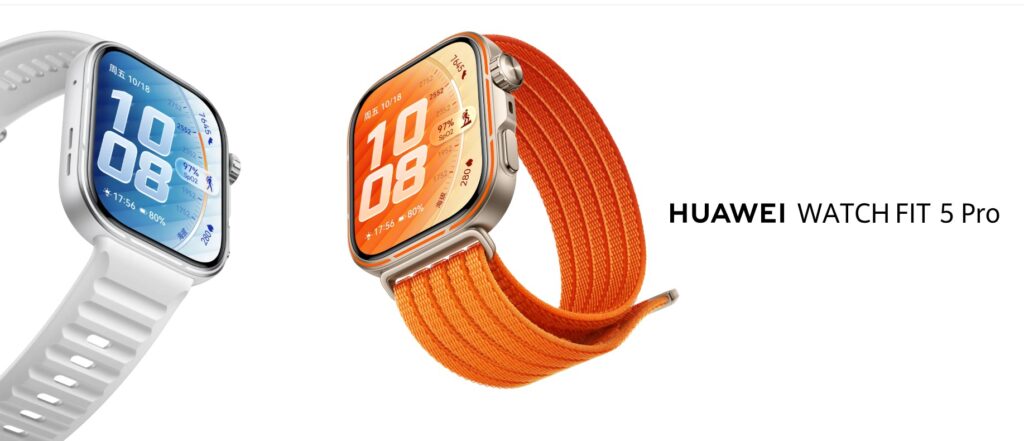
Huawei debuts WATCH FIT 5 series with 3000-nit AMOLED, 2.5D glass, up to 10-day battery

Huawei has officially launched the WATCH FIT 5 series, adding a new set of smartwatches to its lineup. The announcement came during the Pura series event, and as expected, the focus is on a mix of design, fitness features, and battery life rather than anything too experimental.

The WATCH FIT 5 Pro comes with a 1.92-inch LTPO AMOLED display with a resolution of 480 × 408. It’s surrounded by fairly slim 1.8mm bezels and protected with a 2.5D glass, which gives the watch a modern look overall. The display reaches up to 3000 nits, so visibility outdoors shouldn’t be much of a problem.

Just like last year’s WATCH Fit 4 Pro, the successor uses a titanium alloy bezel, and Huawei is pairing it with a woven strap that’s meant to feel lighter and more comfortable. Without the strap, the watch weighs 30.4 grams. Color options include White, Orange, and Black.

On the feature side, Huawei is leaning into shorter, more casual workouts. There are additions like “cycling assistant” and a golf mode. Health tracking includes ECG support and some form of blood sugar monitoring research, though how that works in practice will matter more than the feature list itself.

The list of sensors includes:

  • Accelerometer
  • Gyroscope sensor
  • Geomagnetic sensor
  • Ambient light sensor
  • Optical heart rate sensor
  • barometric pressure sensor
  • Temperature sensor
  • ECG sensor
  • Depth sensor

Battery life is fairly typical for this category. Huawei says the WATCH FIT 5 Pro can last up to 7 days of regular use, or around 10 days if you’re not pushing it too hard.

The standard WATCH FIT 5 gets a slightly smaller 1.82-inch AMOLED display, though it keeps the same resolution as the Pro and reaches up to 2500 nits brightness. It also includes most of the same sensors, just without ECG and the depth sensor. It comes in purple, green, white, and black, and is aimed at users who want a lighter watch at 27g, versus 30.4g for the Pro, without all the extra features.

Pricing and availability:

Pricing starts at 1099 yuan for the WATCH FIT 5 and 2099 yuan for the Pro. The standard model went up for pre-order on April 20 and goes on sale April 29, while the Pro opens for pre-orders on April 29 and will be available from May 15.

(WATCH FIT 5 | WATCH FIT 5 Pro)

The post Huawei debuts WATCH FIT 5 series with 3000-nit AMOLED, 2.5D glass, up to 10-day battery appeared first on Gizmochina.

Green line hits the Galaxy S26 Ultra

Samsung’s flagship phones are once again in the spotlight for a familiar issue. Reports of the green line display problem are popping up again, and this time, the Galaxy S26 Ultra is part of the conversation.

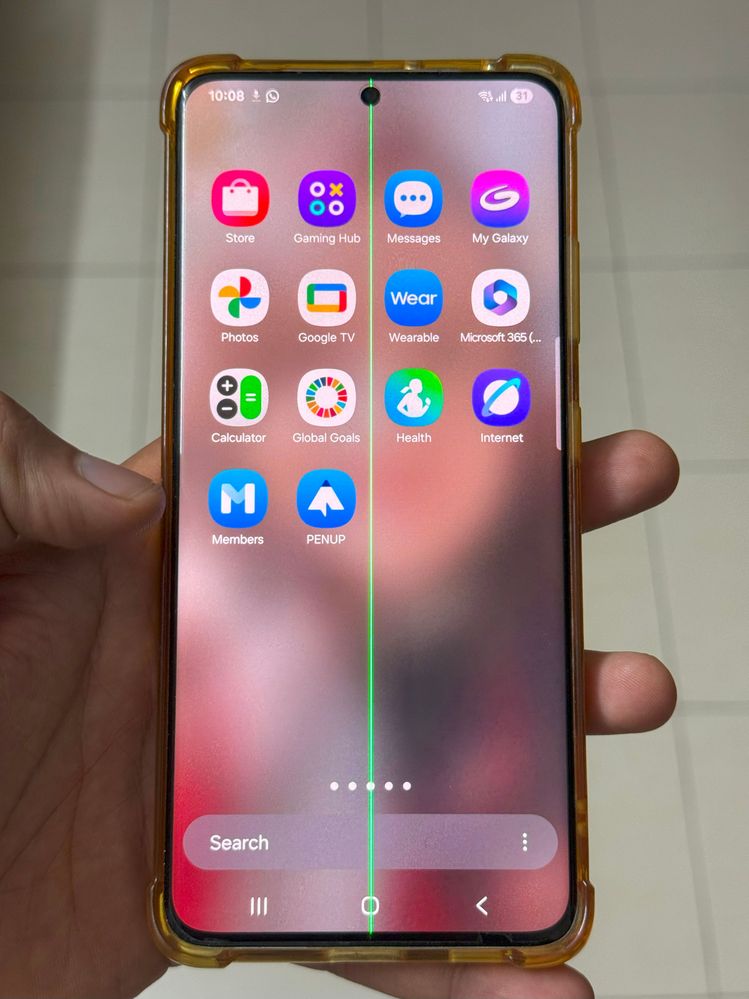
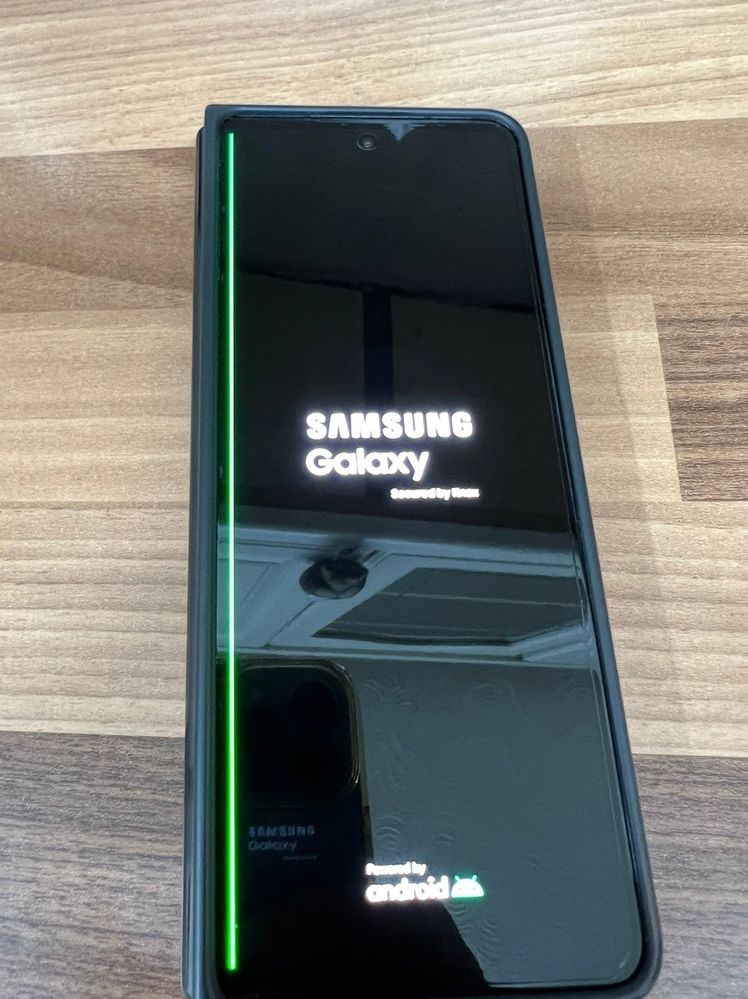
The issue showed up earlier on devices like the Galaxy S21 Ultra, Galaxy S21 FE, Galaxy S22 Ultra, the S23 series, and even the Galaxy Z Fold 4. The pattern has been fairly consistent. A thin vertical line appears on the display, usually without any visible damage or clear trigger.

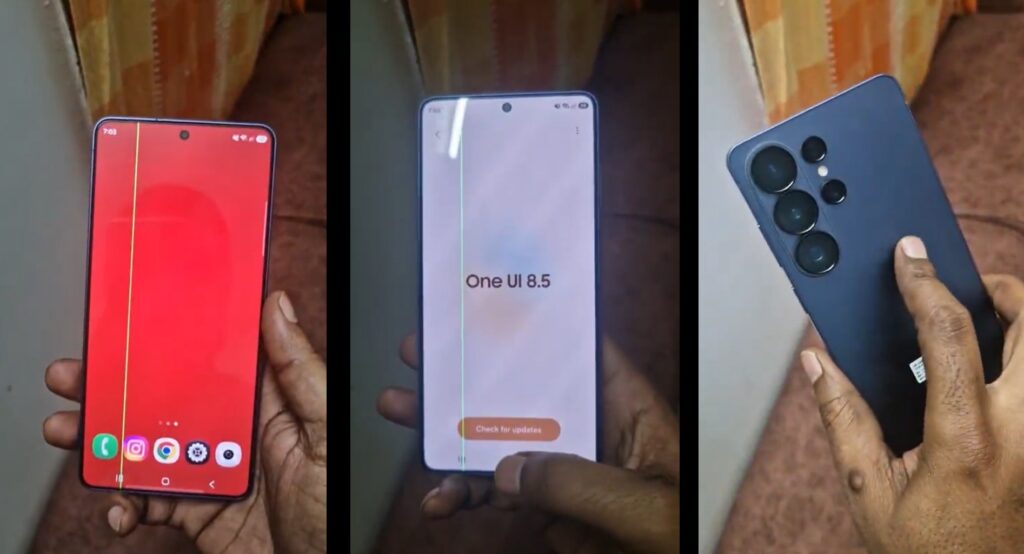
In the recent Galaxy S26 Ultra case, a few users on X have shared posts showing a fairly thick green line on the display. The posts have also sparked some confusion, with a few people calling them “edited” or “fake”.

That said, the video looks legitimate on closer inspection. And given the history of similar issues across older models, it doesn’t feel entirely out of place.

Galaxy S21 Ultra
Galaxy Z Fold 4

Still, there aren’t many reports yet. A handful of posts across X and Reddit, and not much detail beyond that. So it’s hard to say how widespread this is, or what might be causing it.

For now, it’s something Samsung will likely need to look into further, especially if more cases start to show up. The company has acknowledged it in the past for certain models and, in many cases, has offered free display replacements, as long as there’s no sign of physical damage.

If you run into this, the usual advice is to head to an authorized service center first. They’ll check the device and, if it qualifies, approve a screen replacement. If not, some users suggest asking for a job sheet and escalating the issue through official support channels or the Samsung Members app.

Don’t miss a thing! Join our Telegram community for instant updates and grab our free daily newsletter for the best tech stories!

For more daily updates, please visit our News Section.

(Sources: 1, 2, 3)

The post Green line hits the Galaxy S26 Ultra appeared first on Gizmochina.

Oppo Find X9 Ultra teased with RAW MAX, JPG MAX support, and 16EV dynamic range

Just ahead of the global debut of the Find X9 Ultra, the company has shared more details about its updated Hasselblad partnership, and there are some noticeable changes.

A big part of that is Hasselblad Master Mode 2.0, which looks like a step up in terms of flexibility. It now supports both RAW MAX and JPG MAX, and works across multiple focal lengths, from 14mm all the way to 230mm. That should make it easier to shoot different kinds of scenes. Oppo is also talking about a 16EV dynamic range, which, at least on paper, should help with tricky lighting.

There’s also a bit more focus on the “look” of photos this time. The phone includes Hasselblad-inspired film styles, with names like Portra, 800T, and TX400. These are available directly in the camera app, so you don’t have to rely on editing later. There’s even an XPAN-style wide format mode, which is a bit niche, but interesting.

For those who like more control, manual adjustments are still there, along with AI-based presets that can save custom settings. Oppo says you can store up to 20 of these, which could be useful if you tend to shoot in similar conditions.

On the hardware side, the setup is just as ambitious. The Find X9 Ultra is expected to feature a quad-camera system, including a 200MP main sensor, another 200MP sensor for 3x zoom, a 10x periscope lens, and a 50MP ultra-wide. It’s a lot on paper, and clearly aimed at people who care about zoom and versatility.

The official launch is set for April 21, so we won’t have to wait long to see how all of this comes together in real use.

Don’t miss a thing! Join our Telegram community for instant updates and grab our free daily newsletter for the best tech stories!

For more daily updates, please visit our News Section.

(Source)

The post Oppo Find X9 Ultra teased with RAW MAX, JPG MAX support, and 16EV dynamic range appeared first on Gizmochina.

TSMC pushes toward sub-1nm chips after 1.4nm breakthrough

The push toward smaller and more advanced chips isn’t slowing down anytime soon. A new report suggests TSMC is already looking beyond 2nm, with early plans for sub-1nm manufacturing starting to take shape.

According to DigiTimes, the company is targeting trial production of sub-1nm chips around 2029. Before that, TSMC is expected to bring its 1.4nm process (A14) into mass production in 2028. That node alone is said to offer noticeable gains in both performance and efficiency, reportedly in the range of 30 percent.

The sub-1nm phase, at least initially, won’t be large-scale. The report mentions a starting output of around 5,000 wafers per month, which suggests this will begin more as a testing ground than full production.

To support all this, TSMC is expected to rely on its facilities in Tainan, including the A10 fab and related plants. The timing lines up with increasing demand from areas like AI and high-performance computing, where even small efficiency gains can make a difference.

Apple is likely to be part of that early wave, as usual. The company has consistently been first in line for TSMC’s newest nodes, partly because of the scale it operates at. If things stay on track, it’s possible we could see sub-1nm chips in future MacBooks toward the end of the decade.

That said, there are still quite a few hurdles. TSMC first needs to stabilize its upcoming 1.6nm and 1.4nm processes, and moving below 1nm brings additional challenges around yields, EUV lithography, and heat. None of this is straightforward.

So while the roadmap looks ambitious, it’s still early. Plans at this stage tend to shift, especially when the technology involved is this complex.

Still, if TSMC manages to get there on time, it could be a fairly big step forward. Smaller nodes don’t just mean faster chips, they also help with efficiency, which matters just as much now.

Don’t miss a thing! Join our Telegram community for instant updates and grab our free daily newsletter for the best tech stories!

For more daily updates, please visit our News Section.

(Source)

The post TSMC pushes toward sub-1nm chips after 1.4nm breakthrough appeared first on Gizmochina.

Xiaomi Smart Dehumidifier debuts globally with 22L/day dehumidification capacity

Xiaomi looks like it’s preparing to expand its smart home lineup again, this time with a more powerful dehumidifier. The Xiaomi Smart Dehumidifier has now shown up on the company’s global website, which usually points to a wider launch not being too far away.

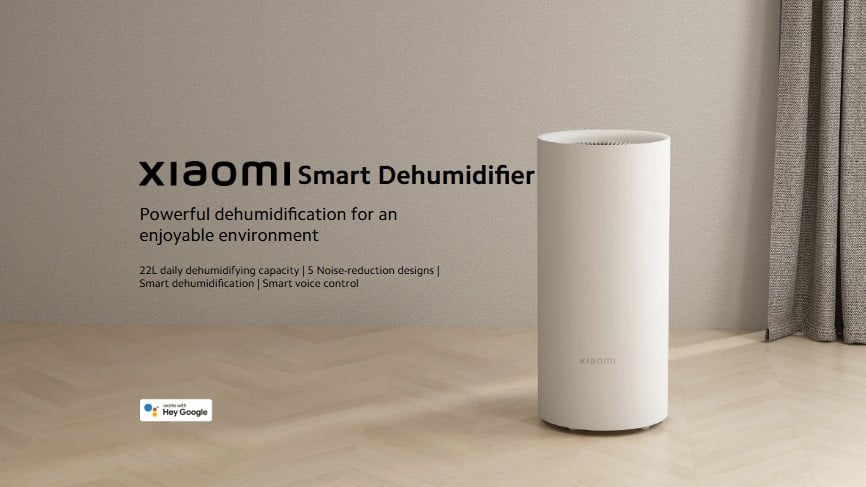
The headline feature here is the 22L per day dehumidification capacity. It should be able to handle larger rooms without much trouble. Xiaomi is also pitching it for everyday scenarios like bedrooms, bathrooms, or even drying clothes indoors.

It comes with a 4.5L water tank, and Xiaomi says that’s enough for around eight hours of use before it needs to be emptied. There’s also the option to connect a drain pipe, so it can run continuously if needed. That part feels pretty practical, especially if you plan to leave it running for long stretches.

There are three modes to work with: Smart, Dry, and Sleep. Smart mode adjusts things automatically depending on the humidity in the room, while Sleep mode brings the noise down to about 35.5 dB. That should be quiet enough to leave it on overnight, at least in most situations.

You get a small display on the unit itself showing real-time humidity, and controls are available both on-device and through the Xiaomi Home app. It also works with Google Assistant and Alexa, which is expected at this point, but still useful.

The design is pretty typical Xiaomi. Clean, white, and simple. It’s not exactly small, but still manageable, and the built-in wheels should make it easier to move around from room to room.

There’s no official pricing yet, and Xiaomi hasn’t shared an exact launch date either. It will likely sit above the existing Smart Dehumidifier Lite, which gives some idea of where it might land.

Don’t miss a thing! Join our Telegram community for instant updates and grab our free daily newsletter for the best tech stories!

For more daily updates, please visit our News Section.

(Source: Xiaomi)

The post Xiaomi Smart Dehumidifier debuts globally with 22L/day dehumidification capacity appeared first on Gizmochina.
OnePlus Ace 6 Ultra teased with add-on gaming controller

OnePlus has already started teasing its next gaming-focused phone in China, and the latest one suggests the company might be trying something a bit different this time.

Alongside the phone, OnePlus is teasing what it calls a “dream gear.” The name is vague, but the images make things a bit clearer. It appears to be a clip-on controller accessory designed to work with the Ace 6 Ultra, turning it into something closer to a handheld console.

From the teaser visuals, you can spot shoulder triggers, extra back buttons, and a layout that looks more like a proper controller rather than a basic add-on. The idea seems straightforward. Better control, less reliance on touch input, especially for fast-paced games.

There’s talk of a more “immersive” experience and “precise control,” but that’s about it for now. Things like customizable buttons, low-latency connection, or even hall-effect sticks haven’t been confirmed, though those would make sense for this kind of accessory.

This isn’t entirely new territory. Brands like Lenovo and Redmi have already tried similar add-ons, and there are plenty of third-party options as well. The difference here could come down to how well it’s integrated. It’s built specifically for the Ace 6 Ultra, so there’s a chance it feels more seamless than generic controllers.

There’s also an interesting bit of speculation going around. Recent rumors mentioned OnePlus working on a dedicated gaming handheld. Now it’s starting to look like this controller-plus-phone setup might be what those reports were actually referring to.

The Ace 6 Ultra is expected to launch later this month in China, so more details shouldn’t be too far away. Pricing and how well this “dream gear” actually works will probably decide whether this is just a nice extra or something people actually use regularly.

Don’t miss a thing! Join our Telegram community for instant updates and grab our free daily newsletter for the best tech stories!

For more daily updates, please visit our News Section.

(Sources: 1, 2)

The post OnePlus Ace 6 Ultra teased with add-on gaming controller appeared first on Gizmochina.

❌