Reading view

Pi Network Breakout Alert: Resistance Broken After a Year as Analyst Maps 1400% Rally to $2.80
Pi Network News Pi Price Enters High-Stakes Phase With Rising Token Supply

The post Pi Network Breakout Alert: Resistance Broken After a Year as Analyst Maps 1400% Rally to $2.80 appeared first on Coinpedia Fintech News

Pi Network is starting to turn heads again, and this time, the setup looks more convincing. With over 10.2 billion tokens in circulation with a market cap of $1.91B, Pi sits among the top 50 cryptocurrencies globally. 

After months of slow movement, Pi has finally broken an important resistance level, just as attention builds ahead of Consensus 2026 in Miami, where the founders are set to speak. 

Breakout Finally Kicks In

Crypto analyst Javon Marks recently said that Pi has broken and retested a resistance trend that held for over a year. Based on this structure, he sees a potential 1,400% move toward $2.80, suggesting Pi could be entering an early-stage rally.

“Pi has showed a clear breakout and retest of a resisting trend that took over one year and prices, in response, could be in the early stages of a massive uphill run! Prices can run over 1,400% to ~$2.80 and this may only be the beginning stages of the process,” he wrote on X.

With Pi Network heading into Consensus 2026, analysts are looking at which direction theprice will head next.

Big Claims? 

While excitement is rising, not everything being said holds up.

Users pointed out that many claims floating around, like political backing, “new world currency” status, or confirmed regulatory ties, have no official backing. While Pi’s ecosystem and adoption narrative are evolving, these larger claims remain unverified.

Right now, Pi’s breakout has improved sentiment, and upcoming catalysts could keep the momentum going. Pi Network is trading around $0.1819. Pi is still trading well below its all-time high of $2.98, reached in February 2025, while staying comfortably above its recent low of $0.1312 from early 2026. 
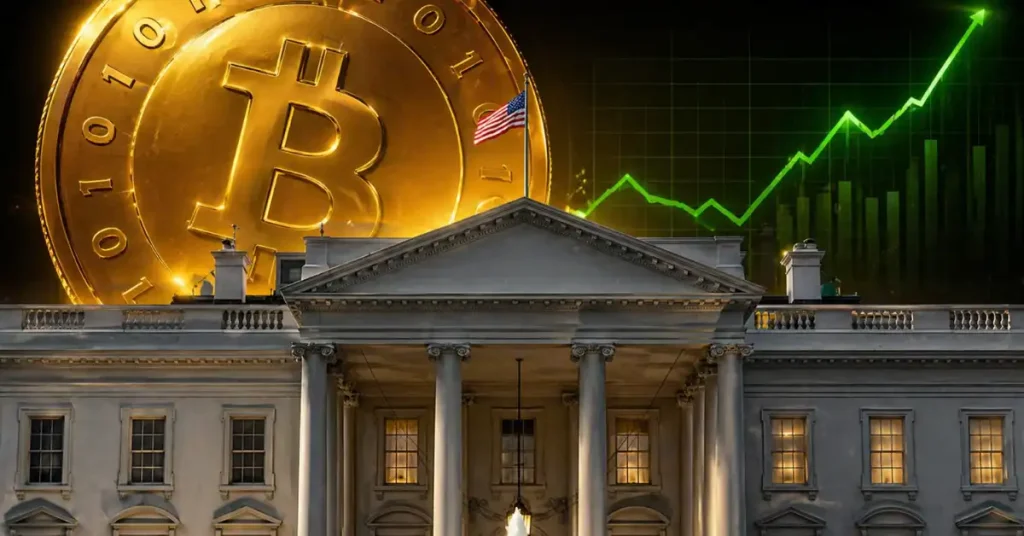
White House Teases Big Bitcoin Announcement as Analyst Says New All-Time Highs Are Coming This Year

The White House at night with a massive gold Bitcoin and a glowing green bullish trend line rising in the background.

The post White House Teases Big Bitcoin Announcement as Analyst Says New All-Time Highs Are Coming This Year appeared first on Coinpedia Fintech News

The United States may be weeks away from a major Bitcoin policy announcement. Fresh signals out of the Bitcoin 2026 Conference are hinting that the Strategic Bitcoin Reserve is moving closer to becoming reality, while Senator Cynthia Lummis confirmed the Clarity Act is heading toward a May markup and could be on the president’s desk shortly after.

“Big Move Coming” on Bitcoin Reserve

At the event, Patrick Witt revealed that a major announcement on the Strategic Bitcoin Reserve is expected within weeks, hinting at progress behind the scenes.

“The president signed the strategic bitcoin reserve executive order… and we’ve been working on the legal and operational framework to get that right,” Witt said. He added, “We believe we’re going to be able to take a big step forward from the executive branch side.”

The reserve, initiated under Donald Trump, is currently backed by Bitcoin already held by the government through seizures. However, the bigger push now is toward legislation.

Lawmakers are working to formalize the plan through an updated bill, now evolving into the American Reserves Modernization Act (ARMA), which includes a proposal to accumulate up to 1 million BTC over five years using budget-neutral strategies.

Meanwhile… Institutions Are Already Moving

While policy builds in the background, market structure is also changing rapidly. Crypto analyst Jeff Park points to a shift in derivatives.

For the first time, IBIT options have overtaken Deribit in open interest, marking a transition from crypto-native trading to institutional dominance.

“DeVault is flawed… it only uses Deribit options,” Park explained, noting that traditional models no longer capture the full picture of today’s market.

A standout signal is the volatility spread. IBIT’s implied volatility is about five points higher than offshore exchanges, suggesting strong demand for long-term upside exposure, especially from investors positioning early.

Park’s view is clear: “We’re going to see a big Bitcoin move up… led by IBIT options.”

Two Forces, Same Direction

What’s unfolding is a rare alignment. On one side, governments are building long-term Bitcoin positions. On the other hand, institutions are reshaping how the market trades.

As Park noted, “Watching IBIT take market share… shows we’re heading in the right direction.”

With both policy clarity and institutional demand building at the same time, Bitcoin’s next move may already be taking shape beneath the surface.

Clarity Act News Today: Senator Lummis Confirms Markup in May, Calls Bitcoin ‘Freedom Money’

CLARITY Act Moves Closer to Senate Vote

The post Clarity Act News Today: Senator Lummis Confirms Markup in May, Calls Bitcoin ‘Freedom Money’ appeared first on Coinpedia Fintech News

Senator Cynthia Lummis walked off the Bitcoin conference 2026 stage on Sunday, having delivered the clearest public commitment yet on the Clarity Act’s timeline.

“We are going to mark up the Clarity Act in May,” Lummis told the crowd. “We are going to get it to the finish line. We are going to have the market structure that allows us to innovate, you innovate, America to lead the world on this freedom asset.”

For the unversed, a May markup would set the Clarity Act on a path toward a Senate floor vote in June, which aligns with the timeline Galaxy Digital CEO Mike Novogratz outlined last week when he predicted President Trump could sign the bill into law before summer.

From Early Doubt to Strong Conviction

Lummis shared that her journey with Bitcoin began in 2013, when she first bought 3 BTC at around $300 each. She admitted the idea initially felt unusual, saying owning a digital asset on a blockchain “sounded a little strange.” But over time, deeper exposure to the ecosystem completely changed her perspective.

“As I learned more, I realized this is a unique asset, freedom money,” she said.

Fighting Early Policy Battles

Once in the Senate, Lummis found herself at the center of early crypto regulation debates. One major issue was the IRS attempting to classify developers and miners as brokers.

She called the move “absurd and ridiculous,” explaining that it misunderstood how decentralized systems work.

What changed the tide was industry response. According to Lummis, the crypto community stepped in forcefully, helping lawmakers understand the difference between infrastructure builders and financial intermediaries.

At that moment, she said, it marked a turning point in shaping more informed crypto policy in Washington.

Bitcoin as “Freedom Money”

Lummis repeatedly described Bitcoin as more than just an investment. She framed it as a tool for financial independence.

“It’s an asset you can carry anywhere, transfer cheaply, and hold yourself,” she explained.

She pointed to real-world use cases, from people sending funds across war zones to individuals leaving difficult situations with their wealth intact, as proof of Bitcoin’s real utility.

With a fixed supply of 21 million coins, she also highlighted its built-in scarcity as a long-term value driver.

Paris Blockchain Week: Anodos CEO Makes the Case for XRP Ledger as a Consumer Finance Layer

XRP Price Shows First Bullish Signal in 3 Months—Is a $1.55 Breakout Next

The post Paris Blockchain Week: Anodos CEO Makes the Case for XRP Ledger as a Consumer Finance Layer appeared first on Coinpedia Fintech News

At Paris Blockchain Week, Anodos CEO Panos Mekras shared a strong view on how the XRP Ledger is evolving beyond institutions and moving toward everyday users. The discussion focused on the idea that the next phase of crypto adoption is not just about banks, but individuals taking control of financial services directly.

From Banking Crisis to Blockchain Mission

Mekras explained that his motivation came from the 2008 financial crisis in Greece, where capital controls blocked people from accessing their savings and shut down businesses, including his family’s. That experience led him to Bitcoin and later XRP, where he saw faster and cheaper transactions as a foundation for a new financial system without traditional intermediaries.

Moving on, he shared that his crypto journey started from a very personal place. Referring to Greece’s financial crisis, he explained how capital controls in 2015 locked people out of their own money and even shut down family businesses.

He noted that this experience pushed him toward Bitcoin and later XRP. “You don’t need banks or middlemen anymore. You can already be your own bank and access financial services directly,” he said

Why XRP Ledger Was Chosen

Mekras pointed to XRP Ledger’s speed, low fees, and stability as top reasons for building on it. He added that compared to congestion issues seen in other networks, XRPL’s ability to settle transactions in seconds makes it suitable for mass adoption and real-time finance.

“Stick to the XRP Ledger and try to build something for consumers and like for retail”, he said.

Anodos is also preparing a crowdfunding round via Republic, allowing users to invest and gain equity exposure to the company. Mekras stated that the project avoids token-based fundraising and instead focuses on shared ownership through equity participation.

What This Signals for XRPL

The broader takeaway from the discussion is that XRPL is moving beyond institutional pilots into consumer-facing applications. With rising developer activity and new retail-focused platforms, the ecosystem is gradually expanding into everyday financial use cases.

According to the analysis, this shift reflects a wider trend: XRP Ledger infrastructure is no longer just about cross-border settlement, but about building full financial systems that individuals can directly use.

XRP News: Korea, France and Japan Are Building on XRP and One Analyst Says It Is Not Coincidence

Ripple is Building the Future

The post XRP News: Korea, France and Japan Are Building on XRP and One Analyst Says It Is Not Coincidence appeared first on Coinpedia Fintech News

South Korea’s K Bank, the country’s largest internet-only bank, has teamed up with Ripple to pilot blockchain-based cross-border payments across two corridors: the United Arab Emirates and Thailand.

K Bank operates entirely online with no physical branches, making it one of South Korea’s fastest-growing financial institutions and a natural fit for blockchain-based payment rails that bypass traditional correspondent banking infrastructure.

Additionally, previously, France launched a regulated euro stablecoin on the XRP Ledger and Japan made XRP spendable for millions.

But one analyst says this is not a coincidence.

Instead, she explains that this is a pattern showing where the real global wealth transfer is happening, quietly through financial infrastructure, not price action.

Institutional Moves, Not Retail Hype

According to Stevenson, these developments are not driven by speculation but by deep institutional adoption.

  • In France, Société Générale deployed a MiCA-compliant euro stablecoin on the XRP Ledger after passing strict compliance, legal, and risk checks. This shows XRP is being used for regulated financial products, not just trading.
  • In South Korea, Kyobo Life Insurance used Ripple Custody to pilot real-time settlement of tokenized government bonds. These are among the safest assets in finance, meaning this shift is structural, not experimental.
  • In Japan, XRP was integrated into payments, making it usable for 44 million consumers across 5 million merchants, proving real-world usability at scale.

Stevenson says these moves reflect institutions building on XRP infrastructure, not testing it.

Three Layers of Finance Converging

The pattern becomes clearer when all three developments are viewed together.

France represents the stablecoin and digital currency layer. South Korea brings in real-world assets through tokenized bonds. Japan covers the payments layer with everyday transactions.

Three different parts of the financial system are moving onto the same infrastructure at the same time.

Stevenson notes that patterns like this do not come from isolated decisions. They emerge when regulation, technology, and institutional confidence align after years of development.

Where the Real Wealth Transfer Is Happening

Stevenson says most investors are focused on XRP’s price, waiting for a breakout. But the real shift is happening underneath.

Banks, insurers, and payment systems are integrating XRP into core financial processes. Every stablecoin transaction on XRP Ledger uses XRP for fees, and real-time settlement systems reduce inefficiencies in traditional finance.

This is where the global wealth transfer is taking place, through infrastructure being built and adopted at scale.

The price may follow later, but the foundation is already being laid.

Pi Network News: Token Controls 95% of Mobile Mining Sector as Price Approaches Breakout Zone

Pi Network Plans Cross-Chain Bridge A Major Step Toward Real Utility

The post Pi Network News: Token Controls 95% of Mobile Mining Sector as Price Approaches Breakout Zone appeared first on Coinpedia Fintech News

Pi Network holds approximately $1.85 billion in market capitalisation, accounting for nearly 95% of the $1.94 billion mobile mining sector, according to market data.

The figures put Pi Network in a position of near-total dominance within its category, with no other project coming close in terms of market value. The mobile mining segment, which was largely overlooked in earlier crypto cycles, has grown into a tracked and traded market, with Pi Network as its central asset.

Whether that attention translates into longer-term utility and adoption remains an open question, with the network still working through its mainnet development and ecosystem build-out.

Pi Price Analysis 

Pi is currently trading around $0.1797, up 4.32% over the past 24 hours, with trading volume near $34 million. Short-term action shows a slight 0.85% dip in the last hour, hinting at a brief cooldown after the recent push.

Pi is sitting in a make-or-break zone right now, around $0.17–$0.18. If buying continues and hype builds into events like Consensus 2026, there are chances it pushes higher toward $0.25 and possibly even $0.40 as some analysts expect. 

Over 10.29 billion PI is already in circulation out of a 100 billion max supply. Meanwhile, exchange outflows are exceeding inflows by about 310,000 tokens, meaning more supply is moving off exchanges. Token unlock pressure is also easing, reducing immediate selling risk.

Upcoming Catalysts

The Protocol 22 upgrade has reached its deadline, introducing smart contracts and expanding what the network can actually do beyond mining.

Founders Chengdiao Fan and Nicolas Kokkalis are set to appear at Consensus 2026 in Miami. That kind of exposure usually brings fresh attention right when interest is already growing.

The network also reports over 18 million KYC-verified users, giving it one of the largest active user bases in crypto.

Why This Phase Feels Important

This isn’t just about a short-term price move. The market is starting to position itself for what comes next. If utility begins to kick in after the upgrade, Pi starts moving beyond just a mining narrative into something more functional.

One X user points out that it’s still early. Mining continues, rewards are still available, and there’s no reason to stop while billions of tokens remain unmined. He argues the real value will come from demand and usage, not just supply mechanics.

Bitcoin Price Today: Analyst Says One Clean Break Above $79K Could Bring $100,000 Back

Anthony Scaramucci Bitcoin Price Prediction

The post Bitcoin Price Today: Analyst Says One Clean Break Above $79K Could Bring $100,000 Back appeared first on Coinpedia Fintech News

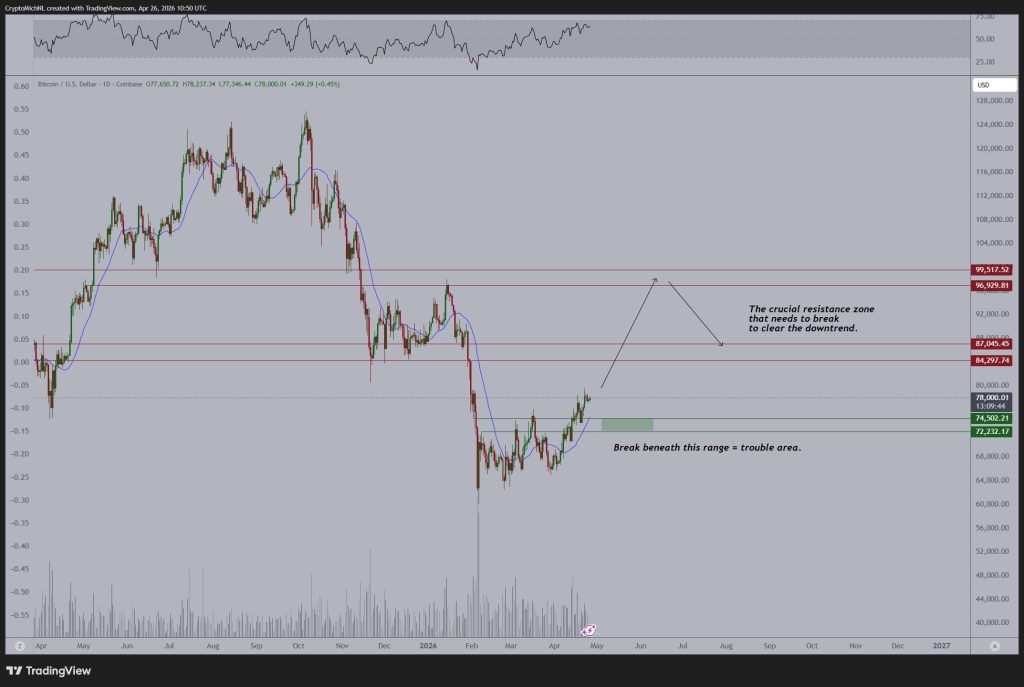
Bitcoin price is currently trading around $79,126, up 2% in the last 24 hours and roughly 6% in the last week. BTC is slightly outperforming the broader crypto market as the level of $80,000 comes back into focus

Analyst Michaël van de Poppe says Bitcoin value today is gaining strength again, but it’s now entering a phase where the next move could define the trend. Price action looks solid, but everything now depends on how BTC reacts around resistance.

Right now, the setup is either a breakout toward new highs or a pause before the next move.

Also Read : Bitcoin (BTC) Price Prediction 2026, 2027 – 2030: How High Will BTC Price Go?

$79K Break Could Open the Gates

The first level to watch is $79,000. A clean breakout here could push Bitcoin toward the $86,000–$89,000 range. That would confirm continuation and keep the rally going.

If that zone also breaks, the bigger move toward $100,000 comes into play. But this won’t be instant; it’ll likely build up step by step.

btc price

$84K–$87K = Bear Market Done?

According to van de Poppe, a breakout above $84K–$87K would confirm a new higher high and likely signal that the bear market is over.

That kind of move would flip the structure fully bullish. Resistance turns into support, and the market starts building higher lows.

Historically, after drops like the move to $60K, Bitcoin usually recovers and hits new highs within a year, except for rare events like the FTX collapse. Add to that stronger macro conditions and new highs in traditional markets, and the backdrop looks more supportive this time.

What If It Fails?

If Bitcoin can’t break $79K, expect some sideways movement. A consolidation phase before another attempt is likely.

“In that case, there’s a level that I prefer to see hold: $73.5k+,” he said

Here, $73,500 becomes the level to hold. If that breaks, the structure weakens, and a deeper pullback toward lower levels could follow.

Also Read : Exclusive: Arthur Hayes Sets $500K Bitcoin Target For End Of 2026, Backs HYPE At $200

What’s Driving the Move?

BlackRock has driven about $2.1B into spot ETFs, while Strategy bought over 34K BTC in a week, far more than what’s mined, tightening supply and pushing prices higher. On the macro side, Kevin Warsh’s calling crypto part of the financial system adds confidence.

Clarity Act May Deadline: Galaxy CEO Confident, His Own Researcher Gives It 50/50 Odds

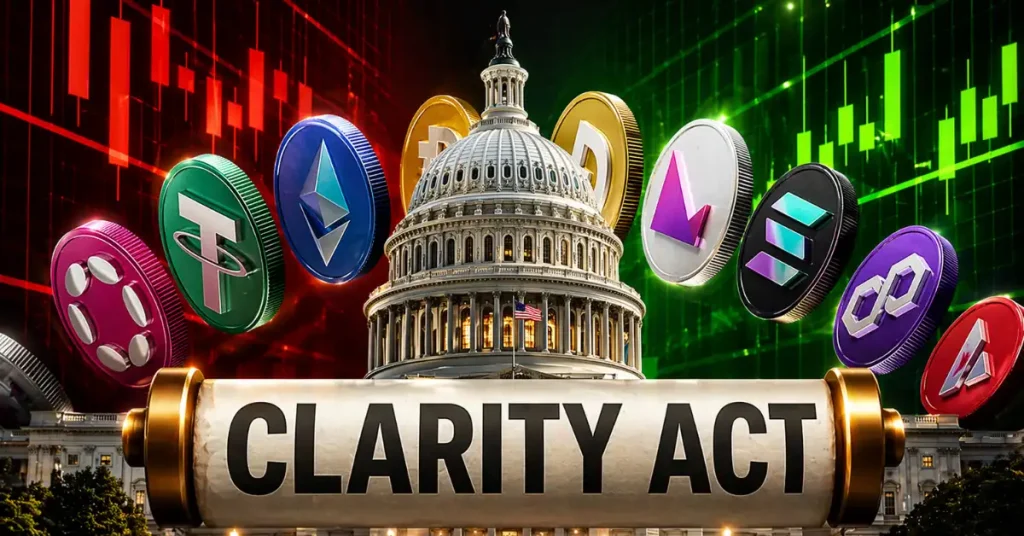
A "CLARITY ACT" scroll in front of the US Capitol Building, surrounded by various cryptocurrency coins including Bitcoin, Ethereum, and Solana against a trading chart background.

The post Clarity Act May Deadline: Galaxy CEO Confident, His Own Researcher Gives It 50/50 Odds appeared first on Coinpedia Fintech News

Momentum around the U.S. CLARITY Act remains uncertain, but Galaxy Digital CEO Mike Novogratz says the long-delayed bill could move forward in May and potentially become law by June.

Speaking with Anthony Scaramucci,Novogratz maintained a positive tone despite recent setbacks. “So this is going to get done. It will probably get done in May,” he said, adding that the legislation is “wildly important” for both political parties and the broader crypto market.

Delays Raise Doubts, Timeline Tightens

The update follows a slow week in Washington, where the Senate Banking Committee failed to schedule a key markup hearing. Expectations that the bill would move in April have now shifted to May.

Even within Galaxy Digital, uncertainty remains. Head of research Alex Thorn puts the odds of passage in 2026 at around 50%. He warned, “If markup slips past mid-May, odds will drop sharply.”

Senator Cynthia Lummis also pointed to a narrowing window, stating, “This is our last chance to pass the Clarity Act until at least 2030.”

Why the Bill Matters

The CLARITY Act aims to create a clear regulatory framework for digital assets in the U.S., something the industry has long pushed for.

“There are eight and a half billion people… probably five and a half billion don’t have access to our financial products,” Novogratz said, adding that crypto could connect global users to the U.S. economy through mobile wallets.

He also pointed to tokenization, suggesting firms like Google and SpaceX could eventually be offered as digital assets to investors worldwide.

Market Forces Add Urgency

Novogratz also noted the tightening of the Bitcoin supply. Michael Saylor-backed Strategy recently bought over 34,000 BTC in a single week, far exceeding the roughly 6,300 BTC mined weekly.

This imbalance, combined with long-term holders holding their positions, is increasing pressure on supply and driving institutional interest.

Despite bipartisan backing, disagreements, especially around stablecoin yields, continue to slow progress. For now, May remains the key window. If lawmakers fail to act soon, the CLARITY Act could face further delays.

Crypto CLARITY Act Faces Major Setback as Senate Pushes Decision to May

Clarity Act Timeline Update Hill Signals Senate Progress, Downplays Political Risk

The post Crypto CLARITY Act Faces Major Setback as Senate Pushes Decision to May appeared first on Coinpedia Fintech News

Momentum around the U.S. CLARITY Act markup has slowed further after the Senate Banking Committee failed to signal any markup schedule before the end of the week, pushing expectations into May and raising doubts over the bill’s near-term progress.

Eleanor Terrett reported that no update came from Senator Tim Scott or Senate Banking Committee Republicans regarding a markup for next week. Friday was viewed as the informal cutoff to announce proceedings before the Senate enters recess, and the absence of any notice has effectively removed the April window.

April Window Closes as Senate Schedule Tightens

While hearings can technically be scheduled on short notice, the lack of formal communication makes an April markup increasingly unlikely. The Senate is set to enter a weeklong recess on Thursday, further narrowing the remaining timeframe.

Attention is now shifting toward early May, with multiple industry and Senate sources indicating the markup is more likely in the second week of the month.

Competing Priorities Inside the Senate

Committee leadership may also be focused on a confirmation vote for Federal Reserve Chair nominee Kevin Warsh before turning to crypto legislation. This adds another layer of delay to an already compressed schedule.

Senator Thom Tillis has requested additional time to engage with banking groups on the stablecoin yield issue and has pushed for draft text to be released publicly ahead of markup. However, no draft has been circulated, making a near-term schedule unlikely.

Industry Warning Signs and Growing Concern

The delay has triggered concern across parts of the crypto policy community. Analysts, including commentator Nic, noted that a key deadline passed without movement, suggesting weakening momentum for immediate progress.

With the Senate calendar tightening ahead of the Memorial Day recess, there are concerns that further delays could push the bill deeper into uncertainty or reduce its chances of advancing this year.

Lobbying Pressure Intensifies

Industry groups continue to push for action. The North Carolina Blockchain Initiative recently urged Senator Tillis to move the bill forward, arguing that opposition from banking groups over stablecoin yield does not reflect broader sentiment across the industry or state-level policymakers.

The group warned that restricting yield-bearing stablecoin products could drive innovation offshore, while framing the CLARITY Act as important for maintaining U.S. competitiveness in digital assets, especially in financial hubs like Charlotte.

Outlook Shifts to Mid-May

With no formal markup notice and limited legislative time remaining in April, expectations now center on a second week of May timeline. The delay leaves the CLARITY Act’s path forward increasingly dependent on Senate coordination and resolution of stablecoin-related disagreements.

❌