Reading view

Russia’s Biggest Exchange Adds XRP Solana TRON and BNB Indexes

Russia to Launch Exclusive Crypto Exchange for Ultra-Wealthy Investors

The post Russia’s Biggest Exchange Adds XRP Solana TRON and BNB Indexes appeared first on Coinpedia Fintech News

Russia is stepping deeper into crypto, but not through hype cycles or speculative mania. Instead, it’s building quietly through structured financial products and regulatory alignment. The Moscow Exchange (MOEX), the country’s largest securities exchange, is now expanding its crypto footprint in a way that reflects long-term positioning rather than short-term noise.

Expanding Beyond Bitcoin and Ethereum

From May 13, MOEX will introduce four new crypto indexes tracking Solana, XRP, TRON, and BNB. These will trade under MOEXSOL, MOEXXRP, MOEXTRX, and MOEXBNB, expanding its existing lineup that already includes Bitcoin and Ethereum indexes launched in 2025.

This move signals a clear shift; Russia is no longer just tracking the top two assets, it’s opening the door to broader altcoin exposure within a regulated framework.

Built on Global Liquidity

The structure behind these indexes is carefully designed. Pricing data will be aggregated from leading global exchanges, with Binance contributing 50%, Bybit 20%, OKX 15%, and Bitget 15%.

At the same time, MOEX is upgrading how these indexes function. Instead of daily updates, all crypto indexes will now refresh every 15 seconds during trading sessions, bringing them much closer to real-time market conditions.

A Derivatives-First Strategy

This expansion isn’t about spot trading yet. These indexes will primarily serve as the foundation for crypto derivatives, which are currently restricted to professional investors. Under existing rules, these instruments cannot involve direct delivery of crypto assets, keeping exposure indirect but regulated.

MOEX has already been active in this space, offering derivatives linked to Bitcoin, Ethereum, and even products from BlackRock, showing how traditional finance and crypto are beginning to overlap.

Regulation Is Catching Up

Behind the scenes, Russia is working toward a broader legal framework. A new digital asset bill under review is expected to be finalized by mid-2026, potentially allowing limited retail participation with caps of around $4,000 annually.

At the same time, MOEX plans to expand its crypto index suite to at least 10 assets, with future additions likely including Dogecoin and Cardano.

Polygon Introduces Private Stablecoin Payments

Polygon Introduces Private Stablecoin Payments

The post Polygon Introduces Private Stablecoin Payments appeared first on Coinpedia Fintech News

Polygon Labs has introduced shielded payments for USDC and USDT in its wallet, enabling users to send funds privately through Hinkal’s system instead of standard on-chain transfers. The feature uses zero-knowledge proofs to hide sender, receiver, and transaction details while still verifying activity on the network. Each transfer is checked through KYT screening to ensure compliance. The system remains non-custodial, allowing users to keep full control of their funds while improving privacy and usability.

Former Ripple CTO Says He Had 26 Million XRP, Recalls Co-Founder Selling Bitcoin Not XRP

XRP News Today

The post Former Ripple CTO Says He Had 26 Million XRP, Recalls Co-Founder Selling Bitcoin Not XRP appeared first on Coinpedia Fintech News

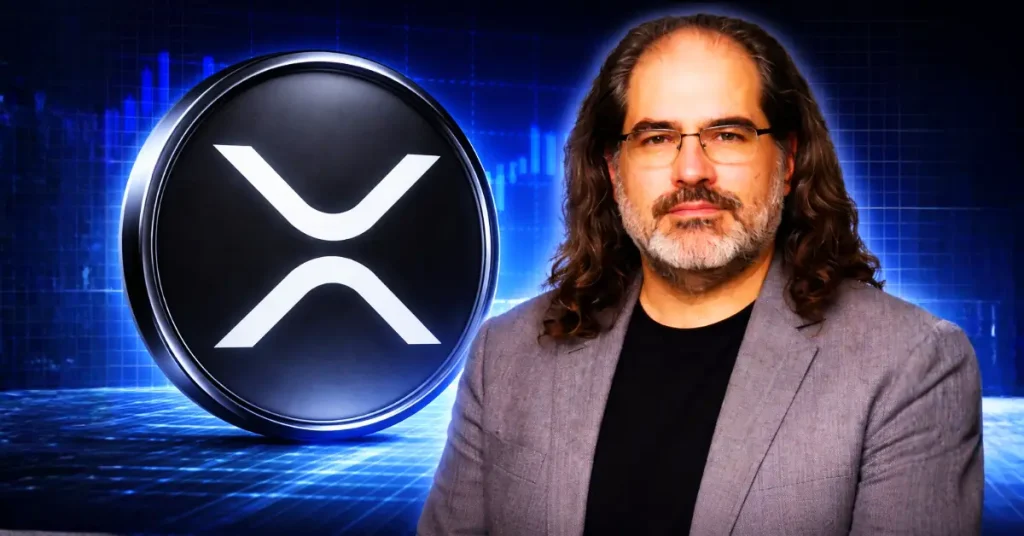
David Schwartz, aka JoelKatz and formerly Ripple’s Chief Technology Officer, disclosed in a social media exchange this week that he once held 26 million XRP, significantly more than what he currently holds.

Responding to a question on X about the size of his personal XRP position, Schwartz offered an unexpected point of reference. “My idea of not a lot is still more than a million,” he wrote. “I once had 26 million XRP.”

The comment came in the context of a broader exchange about risk tolerance and crypto exposure among Ripple’s founding figures.

David Schwartz reveals he once held 26M XRP and touches on Arthur Britto’s historical preference for holding XRP over BTC. pic.twitter.com/ZvmaF6c0IK

— 𝗕𝗮𝗻𝗸XRP (@BankXRP) May 4, 2026

When asked whether Ripple co-founder Arthur Britto shares a similar approach to risk and asset exposure, Schwartz said the two had never directly discussed the topic. He added that his vague recollection from years ago was that Britto had been selling Bitcoin to cover personal expenses while holding onto most or all of his XRP.

“I vaguely remember him saying that he’s been selling Bitcoin to cover expenses and hadn’t sold any, or very little, XRP,” Schwartz wrote. “But that was many years ago and I have no idea what he’s done since then.”

Schwartz was careful to note the limits of his knowledge, stressing that the recollection was both vague and dated, and that Britto’s current holdings and strategy are unknown to him.

The exchange drew attention within the XRP community, given the rarity of public disclosures from Ripple’s founding figures about their personal crypto positions. Schwartz’s acknowledgement that he once held 26 million XRP, a sum worth tens of millions of dollars at current prices, added context to how his personal holdings have changed over the years since the network launched.

Neither Schwartz nor Ripple made any further comment on the matter at the time of publication.

Ethereum Underperforming? Why This “Quiet” Phase Could be a Massive Buy Signal

Ethereum’s Next Rally May Have Started But No One Is Talking About It

The post Ethereum Underperforming? Why This “Quiet” Phase Could be a Massive Buy Signal appeared first on Coinpedia Fintech News

At press time, Ethereum (ETH) was trading at $2,354, having gained 1.78% within the day as it moved in lockstep with Bitcoin. The cryptocurrency, however, is trading more than 50% below its all-time high (ATH) of $4,700. In comparison, Bitcoin now trades at $80,000, having recovered by about 27% from its February low of $63,000 (about half of BTC’s ATH of roughly $126,000). This raises questions about Ethereum’s shortfall and what lies ahead for ETH.

Ethereum real-world developments

Ethereum has achieved certain milestones and is undergoing further developments to cement its place in the crypto industry, and possibly drive mark up ETH prices.

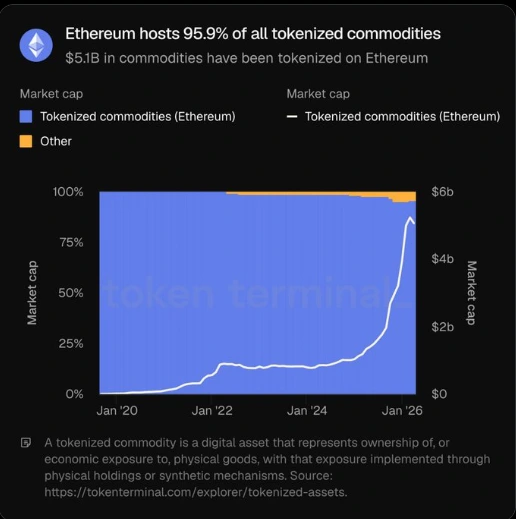
According to blockchain intelligence platform Token Terminal, Ethereum now hosts 95.9% of all tokenized commodities. The market cap of these digital assets is now $5.1 billion, representing a greater than 3x growth in just 12 months.

Graph showing Ethereum hosts 95.9% of all tokenized commodities

Source: Token Terminal

The surge in demand for tokenized commodities is attributed to investors’ rotation into safe-haven alternatives amid economic uncertainty. Additional advantages include 24/7 market access, fractional ownership, and DeFi utility (e.g., borrowing stablecoins or generating yield).

Still among institutions, Bitmine just disclosed its recent purchase of over 100,000 ETH worth about $240 million. This marks the company’s third consecutive week of purchasing similar amounts. It also solidifies its position as the first among Ethereum treasury companies worldwide.

Treasuries & #ETFs Board. Crypto Accumulation and Capital Flows

April closed as the strongest month of 2026, with approximately $1.97B in net #inflows across crypto treasury strategies and ETFs. pic.twitter.com/iWdRs4Eu3H

— CryptoDiffer Analytics (@CryptoDiffer) May 4, 2026

In terms of blockchain development, more than 100 Ethereum developers recently met at the Soldogn Interop event. Here, they discussed technical goals for the upcoming Glamsterdam update, including fostering transparency, scalability, and privacy with a final note on the Hegota upgrade.

What’s next for ETH price?

According to analyst Michaël van de Poppe, Ethereum may appear to be lagging behind Bitcoin. He, however, notes that a pickup is expected once the time for altcoins is ripe.

$ETH doesn't look great vs. Bitcoin, and the prime reason for that is just that timing matters.

If the Nasdaq shoots upwards, people will firstly move towards #Bitcoin as a higher beta play than the Nasdaq.

The time for #Altcoins is therefore selective and will likely be taking… pic.twitter.com/zRVsQ2bExN

— Michaël van de Poppe (@CryptoMichNL) May 4, 2026

Inflows into accumulation addresses have increased in the past year, according to CryptoQuant, signaling conviction in the coin’s future price action.

Breaking past the $2,400 resistance level on strong volume could pave the way to $2,550. However, rejection of this price could trigger a pullback to $2,270. On the other hand, a larger move to $10,000 would follow a break above $4,350.

Bitcoin at $80K: What are the Critical Signals to Confirm a Bullish Breakout?

A prominent 3D golden Bitcoin logo on a black medallion, centered over a green digital network grid with connected nodes and orange coin accents.

The post Bitcoin at $80K: What are the Critical Signals to Confirm a Bullish Breakout? appeared first on Coinpedia Fintech News

In the last 24 hours, Bitcoin (BTC) has repeatedly broken above the $80,000 psychological level, having abandoned it in January. The burning question in the market now is whether this marks a bullish reversal or simply a fakeout.

How Bitcoin got to $80K

Achieving $80K was triggered by a massive short squeeze. According to crypto market data and  analytics platform CoinGlass, short trader liquidations totalled $199.32 million in the past 24 hours, 

Another contributory factor is renewed institutional interest in the flagship coin. This was evidenced by $629.8 million in spot Bitcoin ETF inflows on May 1 and $603.14 million on May 4. 

Even more, Strive recently acquired 444 BTC, bringing its treasury to 15,000 BTC and making it the 9th largest public corporate Bitcoin holder globally. Meanwhile, Strategy announced a temporary pause in its Bitcoin purchases to remain compliant with regulations ahead of its May 5 Q1 2026 earnings report.

Treasuries & #ETFs Board. Crypto Accumulation and Capital Flows

April closed as the strongest month of 2026, with approximately $1.97B in net #inflows across crypto treasury strategies and ETFs. pic.twitter.com/iWdRs4Eu3H

— CryptoDiffer Analytics (@CryptoDiffer) May 4, 2026

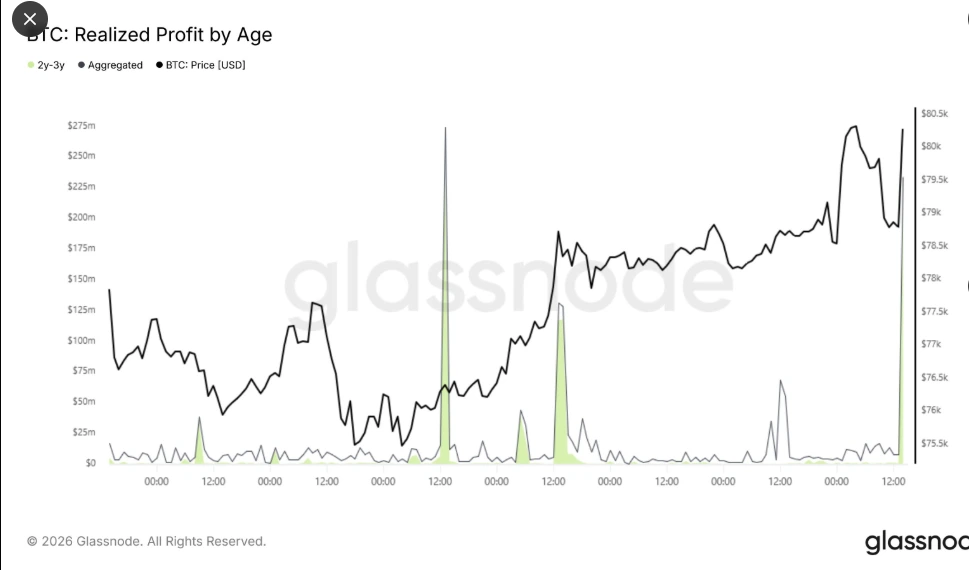
As prices crested at $80K, the 2-3 year BTC holding cohort, or those who accumulated just before the crypto ETF launches, ramped up their profit-taking. According to on-chain intelligence platform Glassnode, this group liquidated $209 million/hr, cashing in profits of 60%-100%.

Bitcoin realized profit for 2-3 year holders

Source: Glassnode

What BTC needs to confirm the bull market entrance

Still, Bitcoin remains indecisive about maintaining the $80K milestone. Multiple closes above this level could ignite a short squeeze, leading to $84,000-$85,500. 

Another sign of a bullish reversal would be BTC forming higher highs while its relative strength index (RSI) forms lower highs. Currently, the RSI reads 65.

Additionally, the 24-hour Bitcoin trading volume rallied to $56.51 billion on May 4, up from $16.76 billion on May 2. While indicating high short-term growth, these trading volumes remain lower than those recorded during previous breakouts. A periststent uptrend would demand even higher volumes, indicating strong institutional conviction and unwavering absorption of overhead supply.

To keep a bullish structure intact, prices must hold above the $72,352 100-day moving average. Defensive zones would be between $73,000 – $75,000, where a fall below this would suggest the upswing was but a bull trap.

XRP News Today: Gulf Nations Question US Loyalty and Analysts Examine What That Means for XRP

Analyst Declares XRP Price Won’t Hit $1700 in Next 90 Days; Internet Asks

The post XRP News Today: Gulf Nations Question US Loyalty and Analysts Examine What That Means for XRP appeared first on Coinpedia Fintech News

The petrodollar arrangement that has underpinned global finance for decades is under more pressure than at any point in recent memory, and the Iran war is accelerating a shift that experts say began years earlier.

Gulf nations are openly questioning whether Washington’s security guarantees extend to them or exclusively to Israel. The UAE has left OPEC. And Iran is now reportedly charging tolls to pass through the Strait of Hormuz, demanding payment in cryptocurrency rather than dollars.

The Financial Times reported that Iran initially sought $2 million per vessel, with a more recent figure of $1 per barrel of oil, payable in the cryptocurrency equivalent. The specific token was not named. Analysts have noted it could be Bitcoin, Tether, or any number of assets including XRP.

Where XRP Enters the Conversation

The breakdown of dollar-denominated oil trade is forcing a fundamental question: what replaces SWIFT and correspondent banking in a multipolar world where nations no longer trust each other’s financial systems and cannot trust each other’s banks?

Analysts following the XRP ledger argue it is structurally positioned to answer that question. The ledger settles transactions in approximately three seconds at a fraction of a cent, eliminates the need for nostro and vostro accounts that tie up dormant capital in correspondent banking relationships, and operates as a neutral infrastructure that no single sovereign nation controls or can weaponise.

The comparison to how Russia was removed from SWIFT in response to the Ukraine conflict is not lost on BRICS nations watching the current situation. When a reserve currency can be used as a geopolitical weapon, nations holding that currency face existential financial risk. A neutral bridge asset that cannot be seized or sanctioned addresses that risk directly.

The CBDC Complication

Analysts note that XRP’s role in instant cross-border settlement also creates the technical conditions for central bank digital currencies to operate at scale. Programmable money that governments can target to specific populations and specific use cases is both a financial inclusion tool and, critics argue, a potential control mechanism depending on who is operating it.

The distinction analysts draw is between XRP itself, which cannot be seized or confiscated on the ledger, and stablecoins issued on top of the ledger, which remain subject to clawback features and issuer control. In a world moving toward programmable digital currencies, that distinction matters considerably to those thinking about long-term financial sovereignty.

Pi Network News Today: What Dr Fan and Kokkalis Will Say at Consensus Miami

Pi Network News

The post Pi Network News Today: What Dr Fan and Kokkalis Will Say at Consensus Miami appeared first on Coinpedia Fintech News

Pi Network’s two co-founders will speak at Consensus Miami 2026 this week, presenting at one of the crypto industry’s most attended annual conferences at a moment when the network’s technical roadmap is moving at its most active pace.

Dr. Chengdiao Fan takes the stage Wednesday May 6 on the Convergence Stage with a session titled “Aligning Web3, AI and Blockchain for Utility.” Nicolas Kokkalis follows Thursday May 7 on a panel titled “How to Prove You’re Human in an AI World Without Doxing Yourself.”

Both sessions arrive four days before Protocol 23, Pi’s smart contract upgrade, is scheduled to activate on May 11.

Fan’s Session: Tokens and Sustainable Models

Fan’s presentation is expected to address how crypto projects build lasting utility rather than short-term speculation. Her core argument centres on how artificial intelligence is changing the competitive dynamics of building digital products, shifting advantage toward projects with verified users and authentic participation rather than speed of development alone.

Pi Network has 16.5 million migrated users and more than 17.7 million KYC-verified accounts across more than 200 countries. Fan is expected to present that user base as a data point in the broader argument about what constitutes real adoption in the current market environment.

The network shipped a subscription smart contract on testnet on April 17, enabling recurring on-chain billing. Fan is expected to reference this as an example of infrastructure designed for practical commerce rather than speculative use.

Kokkalis’s Session: Human Identity Online

Kokkalis addresses a problem that has become increasingly pressing as AI-generated profiles proliferate across the internet. His panel examines how blockchain-based identity verification can distinguish real users from synthetic ones without requiring those users to expose personal data.

Pi’s KYC system has processed more than 526 million verifications through over one million human validators. Kokkalis is expected to outline plans to make that verification infrastructure available to other projects via API, extending its use beyond Pi’s own ecosystem.

The Technical Context

The Consensus appearances arrive during Pi’s most active development period. Protocol 22 activated on April 27. Protocol 23 on May 11 introduces smart contracts and real-world asset tokenisation. Further upgrades are scheduled through June, targeting optimisation and scalability before a June 28 milestone.

Pi’s node network of over 350,000 operators has completed AI image recognition tasks in a proof of concept, a development the team has referenced in discussions about distributed computing infrastructure.

Market Position

Pi is currently trading around $0.18 with a market capitalisation of approximately $1.86 billion. The token accounts for the substantial majority of the mobile mining category by market value. Whether the Consensus sessions and Protocol 23 activation influence price in any meaningful direction will depend on how institutional and retail participants respond to the network’s technical progress in the days ahead.

What Caused the 4100% SKYAI Price jump? Is Hype Sustainable?

artificial-intelligence

The post What Caused the 4100% SKYAI Price jump? Is Hype Sustainable? appeared first on Coinpedia Fintech News

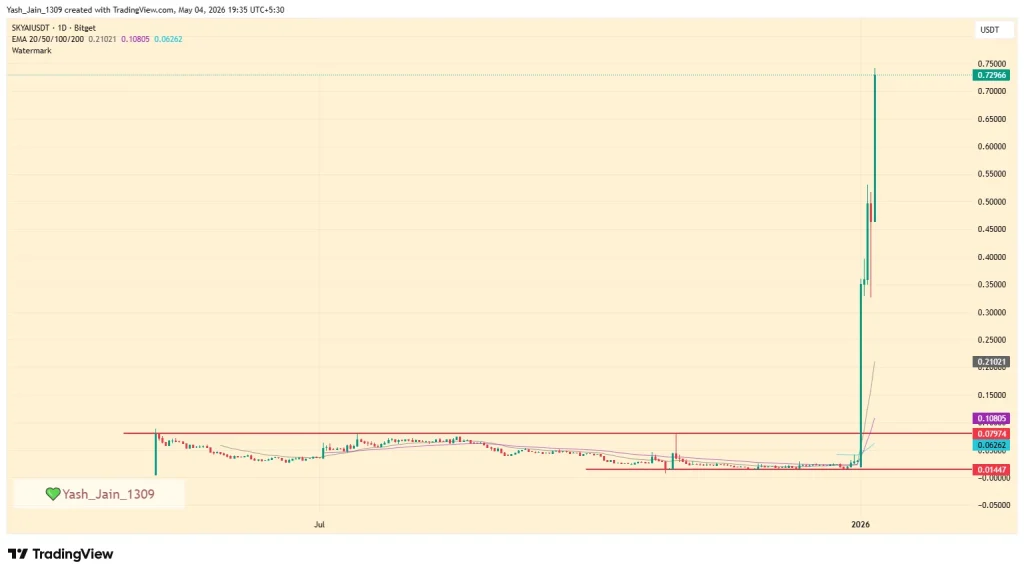
Investors and traders have been staring at the same boring sideways SKYAI chart, but this is bit different. Since May 2025, the SKYAI price was in a range but the recent price action probably gave you a mild heart attack, as it was a sniper rally. 

The shock was that for a whole year, this thing was trapped in a depressing range between $0.01447 and $0.07974, basically doing a whole lot of nothing. Then May 2026 hits, and suddenly, we see a sniper parabolic jump that sends the token screaming to $0.72645. We’re talking about a 4100% rally that makes your average “to the moon” tweet look like a joke. 

But before you scream “manipulation,” let’s look at the narrative, because this wasn’t just only a leveraged pump. It turns out, people actually care about the AI agent concept, and SKYAI is currently riding that wave like a pro surfer.

AI Agent Narrative Drives Parabolic Growth

Well, the demand is being fueled by actual infrastructure news, not just hot air. On April 30, Bitget listed the pair, which provided the initial spark, but the real gasoline came on May 3rd. The team announced final testing for the SKYAI MCP Hub. This isn’t just another protocol; it’s a routing layer for agents designed to handle multiple MCP servers, dynamic tool routing, and cross-agent sharing. 

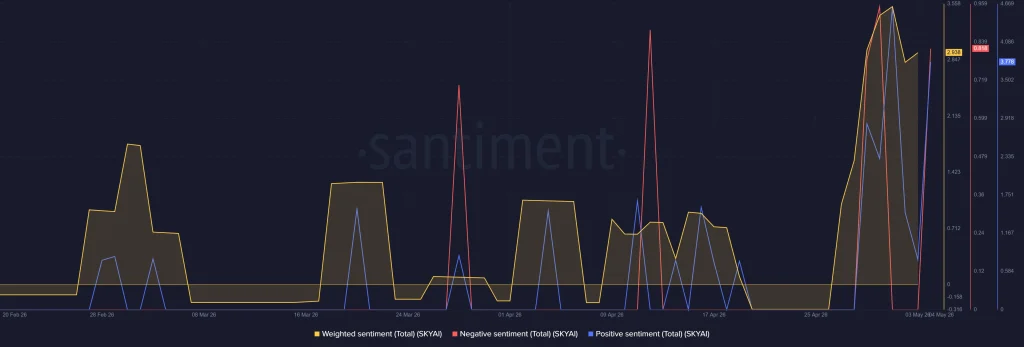
Basically, they’re building the “brain” for agentic orchestration. When you combine a trending narrative with a exchange listing, you get the kind of social sentiment spike that flips weighted sentiment aggressively to the positive side, per onchain data.

What Caused the 4100% SKYAI Price jump? Is Hype Sustainable?

Presale Returns And The Long Game

But let’s be real, the “overnight” success of the SKYAI price was actually a year in the making. On May 4th, the team reminded everyone that presale participants who aligned early are now sitting on massive returns. 

Now, while many are chasing the 4100% rally this week, the infrastructure has been quietly cooking in the background. So, what’s next? The devs claim returns are just a byproduct of development, but in this market, sentiment is king, and right now, the king is wearing an AI crown. 

What Caused the 4100% SKYAI Price jump? Is Hype Sustainable?

And about the price it’s at a cautionary stage if it breaks below $0.60034 a dump could be on its way, but holding $0.70380 could keep the trend intact and could stretch towards $1.0 ,if demand keeps up.

TAG Price 350% Surge Turns Heads, But Risks Loom

Arthur Hayes Predicts Bitcoin at $500K, Reveals Top Altcoins to Watch in 2026

The post TAG Price 350% Surge Turns Heads, But Risks Loom appeared first on Coinpedia Fintech News

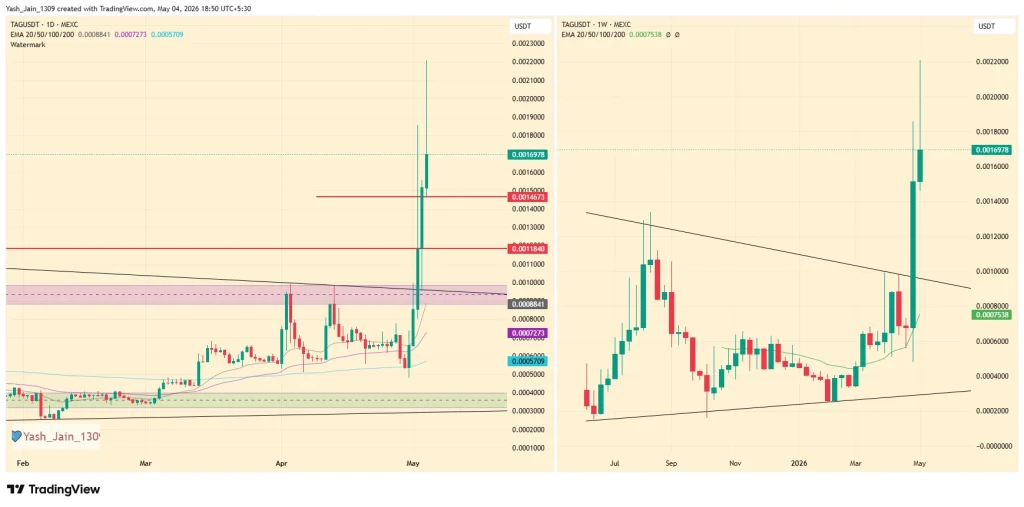
TAG price had a mesmerizing clean breakout rally this week. After months stuck in a tight $0.0003200 to $0.0009700 range, TAG finally snapped out of its cage, ripping all the way to $0.0022000. That’s not just any ordinary rally, it’s a full-blown demand based shift.

TAG Price Breakout Confirms Long-Term Compression Pattern

Here’s the setup. The weekly structure had been coiling inside a symmetrical triangle for months. Classic compression. The kind that doesn’t whisper but then it explodes big, that’s what occurred this time.

A breakout triggered from the 200-day EMA zone support around $0.0005721. Once that level flipped, momentum didn’t hesitate. Buyers piled in, resistance levels got steamrolled, and suddenly TAG price wasn’t range-bound anymore but it was vertical.

TAG Price 350% Surge Turns Heads, But Risks Loom

Derivatives Frenzy Fuels Aggressive Short Squeeze Move

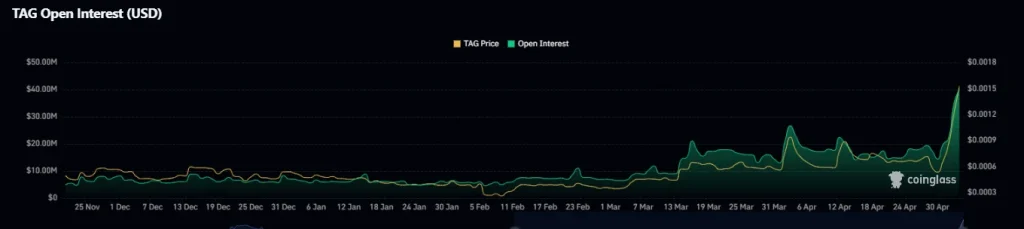
But let’s not pretend this was all spot-driven enthusiasm. Futures data tells the real story. Open Interest jumped from roughly $14 million to $40 million. That’s not casual participation that’s leverage entering the chat.

TAG Price 350% Surge Turns Heads, But Risks Loom

And where there’s leverage, there’s pain. Shorts got squeezed hard. Liquidations stacked up, pushing TAG price even higher as positions were forcibly closed. It’s the loop where price rises parabolically when shorts panics

Sentiment Spike And MVRV Flash Warning Signals

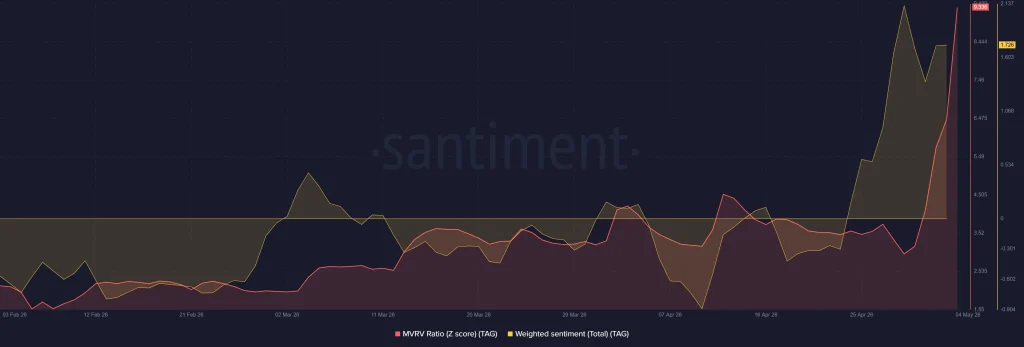
Now comes the uncomfortable part. The onchain data like MVRV Z-score has touched ceiling above the zero line, and weighted sentiment has clearly spiked, too. Translation? The market is getting crowded on the optimistic side. That’s usually great until it feels extremely overheated.

Well, when everyone agrees it’s bullish, and optimism breaks the meter then risk quietly builds underneath.

TAG Price 350% Surge Turns Heads, But Risks Loom

Key Levels That Could Make Or Break Rally

So, what’s next? If this rally is real and not just a hype-driven spike then in that case the TAG price needs to hold above $0.0014673 and $0.0011840. Those are the battlegrounds. Lose them, and things could unwind fast.

And not gently. A breakdown could erase a large chunk of gains just as quickly as they appeared. For now, TAG price is riding momentum. But momentum, as always, has an expiration date.

BSB Price Explosion: Tokenomics Hype Sends Blockstreet Soaring 150%

A 3D silver Ethena (ENA) token centered against a green digital grid with a rising candlestick market chart and a gold "150%" text overlay.

The post BSB Price Explosion: Tokenomics Hype Sends Blockstreet Soaring 150% appeared first on Coinpedia Fintech News

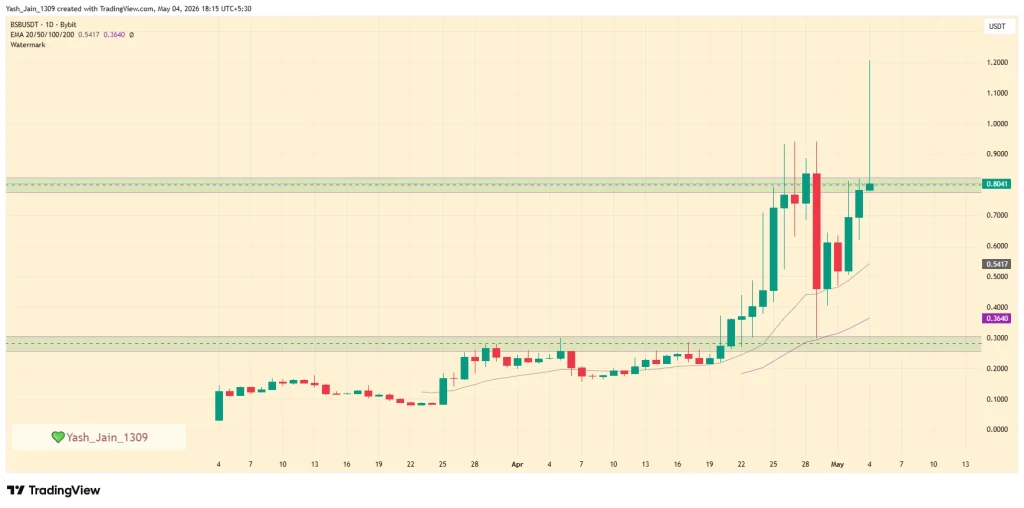
BSB price erupting massively and in barely 48 hours, Blockstreet’s native token has pulled off a near 150% rally, ripping from $0.466 to a fresh all-time high near $1.20. And no, this wasn’t random. The timing lines up almost perfectly with the project finally dropping its long-awaited tokenomics reveal.

Tokenomics Reveal Sparks Sudden Market Frenzy

Most interestingly, the announcement wasn’t just another whitepaper dump but it laid out a full ecosystem vision. Its post said that BSB isn’t just a token; it’s pitched as the backbone of utility access, liquidity participation, staking alignment, and governance across Block Street’s infrastructure.

Utility, staking, governance, it checked all the boxes traders like to hear. Add in structured yield access, fee reductions, and liquidity incentives, and suddenly the narrative writes itself. Since, markets love a clean narrative and BSB gave that.

Staking Surge Signals Strong Conviction Shift

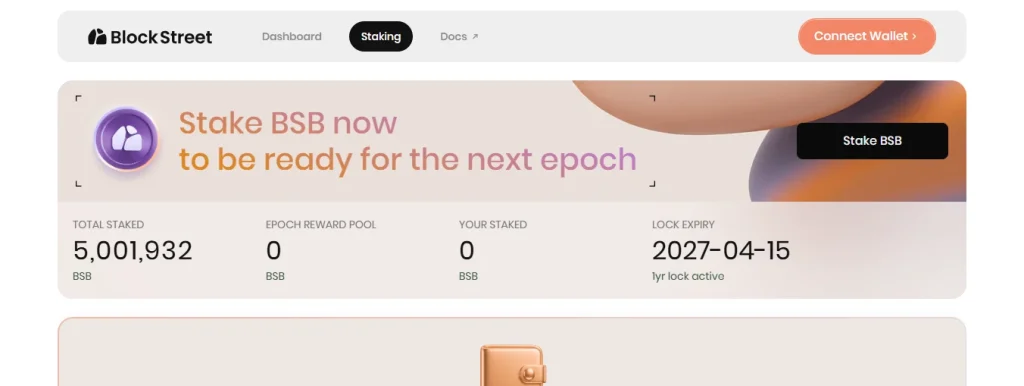
But let’s be real price doesn’t move like that on words alone, real participation is needed. The staking data adds another confirmation layer to this engagement. As over 5 million BSB is now locked, signaling something deeper than speculative hype. That’s capital committing, not just rotating.

BSB Price Explosion: Tokenomics Hype Sends Blockstreet Soaring 150%

The messaging around “alignment” and “coordination” clearly hit home. It’s not just yield farming anymore but it’s kind of a positioning within a system that’s trying to look bigger than just another token launch.

Social Hype Machine Kicks Into Overdrive

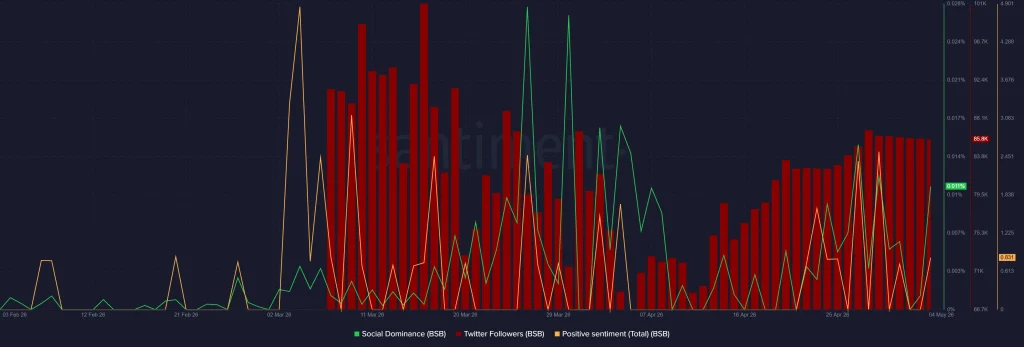
Now throw social metrics into the mix. Since April, Twitter followers have been climbing, and social dominance has spiked alongside positive sentiment. That’s usually the fuel phase where awareness turns into momentum.

BSB Price Explosion: Tokenomics Hype Sends Blockstreet Soaring 150%

Now, the BSB price now sits in a high-risk zone. Momentum was aggressive, but the spike reduced from $1.20 to around $0.80 support, which has emerged as the line in the sand. Lose that, and the chart opens up quickly with a potential retrace toward $0.30 lurking beneath.

BSB Price Explosion: Tokenomics Hype Sends Blockstreet Soaring 150%

Hold it, though? Different story. Sustained strength could legitimize this breakout as more than just a news-driven spike.

Right now, BSB price action isn’t subtle. It’s loud, fast, and very, very dependent on whether conviction sticks around.

When Will Bitcoin Price Hit $100,000 Again?

Bitcoin Breaks $100k, Market Changes Trend_ Top Altcoins To Stack Now

The post When Will Bitcoin Price Hit $100,000 Again? appeared first on Coinpedia Fintech News

Arthur Hayes does not deal in vague timelines. Speaking at the Cointelegraph booth at Bitcoin Vegas, the BitMEX co-founder put a specific window on Bitcoin’s return to six figures: after the northern hemispheric summer.

“I think we’re going to hit $100,000 after the northern hemispheric summer,” Hayes said, “mostly because the dollar liquidity situation is improving.”

His reasoning is macro rather than technical. Wartime financing through commercial banks in the US and other economies is injecting liquidity into the system in ways that are beginning to show up in risk asset performance. Bitcoin, he argued, is already starting to outperform the NASDAQ and US tech stocks as a result of this dynamic, and he expects that outperformance to continue into the autumn.

On the question of whether new all-time highs are possible this year, Hayes was measured but bullish. “I think we could get through $125,000 by the end of the year.”

The Iran Variable

Hayes acknowledged the Iran conflict as the key risk to his timeline but said markets are already looking past it. He pointed to oil price spreads as evidence that supply is moving through the Strait of Hormuz in sufficient quantities to prevent a complete breakdown, even if politicians are publicly characterising the situation as unresolved.

“If you assume the Iran war is not going to get super duper messed up, then I think markets look past that,” he said. “There’s enough stuff coming through the street, even though the politicians claim it’s close.”

Where He Is Putting His Own Money

Hayes recently bought over a million dollars of Hyperliquid, describing it as the only altcoin that genuinely matters right now. His thesis is simple: real clients spending real money on a platform that is generating actual revenue and returning value to token holders through buybacks or staking rewards. Everything else, including Dogecoin as an altcoin season indicator, he dismissed entirely.

“If you’re not doing any of those things, I don’t care about you,” he said.

Morgan Stanley’s Bitcoin ETP Draws $100M in Days, Fuels Bitcoin Rally

Morgan Stanley Submits Filing for 0.14% Spot Bitcoin ETF

The post Morgan Stanley’s Bitcoin ETP Draws $100M in Days, Fuels Bitcoin Rally appeared first on Coinpedia Fintech News

Morgan Stanley has launched a Bitcoin exchange-traded product (ETP), drawing more than $100 million in inflows within six days, according to reports.

The product, MSBT, attracted demand before being made available through the firm’s financial advisors, indicating early activity was largely driven by self-directed investors.

Bitcoin ETP demand driven by self-directed investors and institutional interest

The initial inflows suggest investors are allocating to Bitcoin exposure independently, without waiting for advisory guidance.

Amy Oldenburg said, “All of that was self-directed; it was not even available in advisory on the wealth platform,” highlighting that early demand came before advisor distribution.

Bitcoin allocation strategy and advisor adoption gap in wealth management

Morgan Stanley recommends a 2% to 4% Bitcoin allocation for eligible portfolios. However, advisor adoption remains limited compared to client demand.

Oldenburg said this reflects an education gap rather than a lack of interest. Around 80% of ETP exposure on the platform is currently self-directed. The firm is expanding internal training to support advisors.

Morgan Stanley expects Bitcoin to eventually be included on bank balance sheets, though regulatory constraints remain.

Oldenburg said, “The regulatory environment has been more supportive,” but noted that Federal Reserve policies, Basel capital rules, and global compliance requirements still limit broader integration.

Crypto custody, OCC charter plans, and Coinbase BNY Mellon partnership

The firm is pursuing a digital trust charter from the Office of the Comptroller of the Currency (OCC) to enable crypto custody and spot trading.

The MSBT product currently uses Coinbase and BNY Mellon as custodians.

Bitcoin ETF competition: MSBT vs BlackRock iShares Bitcoin Trust (IBIT)

MSBT enters a market led by BlackRock’s iShares Bitcoin Trust (IBIT), which holds more than $61 billion in assets.

Morgan Stanley’s product carries a fee of 0.14%, compared with 0.25% for IBIT. However, IBIT continues to lead in trading volume and market liquidity.

Morgan Stanley’s network of about 16,000 advisors may support future inflows once the product is fully integrated into advisory channels.

GameStop Bids $56B To Acquire eBay at $125 Per Share

GameStop Bids $56B To Acquire eBay at $125 Per Share

The post GameStop Bids $56B To Acquire eBay at $125 Per Share appeared first on Coinpedia Fintech News

GameStop CEO Ryan Cohen has proposed a $56 billion acquisition of eBay at $125 per share, after quietly building a 5% stake. The offer is non-binding and financed through a mix of cash reserves, bank debt, and newly issued shares. Cohen aims to merge GameStop’s physical retail network with eBay’s online marketplace, focusing on collectibles, live shopping, and operational cost cuts. While both stocks jumped on the news, eBay has not responded, and a potential proxy battle could follow if talks stall.

Exclusive: India’s Crypto Future Hinges on Clarity, Not Just Taxes — CoinSwitch Co-founder Speaks

Ashish Singhal CoinSwitch

The post Exclusive: India’s Crypto Future Hinges on Clarity, Not Just Taxes — CoinSwitch Co-founder Speaks appeared first on Coinpedia Fintech News

India’s crypto story is moving forward, but not without friction. In an exclusive conversation with Coinpedia, Ashish Singhal, Co-founder CoinSwitch, breaks down where things stand, from CBDCs and UPI dominance to Budget 2026, taxation, and why startups are quietly looking offshore.

UPI Dominates, But CBDC Plays a Different Game

Singhal makes it clear that India isn’t lacking payment solutions. Unified Payments Interface has already made transactions effortless, whether it’s paying vendors or splitting bills.

But CBDC isn’t competing with UPI. It’s something deeper.

He explains that a CBDC is essentially digital cash issued by the central bank, like a ₹100 note, but on your phone. Its real strength lies in targeted use cases. Government subsidies can be programmed for specific spending, and emergency funds can reach citizens instantly without intermediaries.

In his words, UPI is the “road,” while CBDC becomes a new “vehicle” running on it. For users, the experience may not change, but the backend becomes far more powerful.

Budget 2026: Clarity Without Relief

India Budget 2026 kept crypto taxes unchanged, continuing with one of the toughest regimes globally.

Singhal doesn’t see this as an attempt to kill retail participation, but rather to control it. The framework has brought clarity and improved traceability, even if high taxes and 1% TDS have pushed some activity offshore.

He suggests the government is prioritizing responsible investing and compliance first. But going forward, a more balanced tax structure, aligned with other asset classes, could unlock real growth while keeping innovation within India.

Startups Are Watching… and Moving

Moreover, regulatory ambiguity remains a bigger concern than taxes.

Singhal points out that many Web3 founders are drifting toward hubs like Dubai, Singapore, and Hong Kong, where clearer rules make it easier to access banking, capital, and partnerships.

India still has a strong advantage, its massive developer base and user market. But without clear and proportionate regulation, that edge could slowly erode.

Bitcoin ETFs and What Comes Next

On the question of Bitcoin ETFs, Singhal takes a grounded view.

He says India is still figuring out the basics, how crypto assets are classified, who regulates them, and how investors are protected. Products like ETFs will only come after that foundation is set.

Still, global momentum, especially after U.S. ETF approvals, is hard to ignore. Institutional demand in India is already building, particularly among investors seeking exposure without directly holding crypto.

Why Regulation Is Slower Than Adoption

Singhal ends with a reality check.

Crypto isn’t just another sector; it touches capital controls, taxation, AML, and financial stability. That means multiple regulators are involved, which naturally slows things down.

India, he says, is taking a “risk-first” approach, building guardrails through taxation and compliance while watching how global frameworks evolve.

Adoption, meanwhile, doesn’t wait. It’s market-driven, fast, and already ahead of policy.

And that gap, between speed and structure, is where India’s crypto future will ultimately be decided.

Is B Crypto Price 60% Rally Driven by Hype Sustainable?

BSC-based Memecoin BUILDon (B) Surges 150% After Support from World Liberty Financial (WLFI) (1)

The post Is B Crypto Price 60% Rally Driven by Hype Sustainable? appeared first on Coinpedia Fintech News

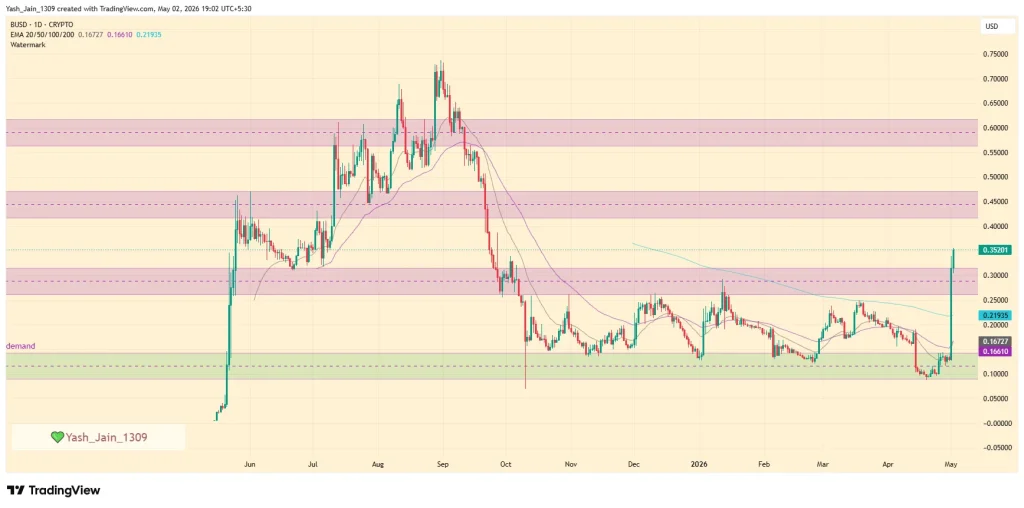
The B crypto price just did what most altcoins only dream about thats by ripping through a major downtrend with a brutal 60% intraday surge, landing near $0.352. No slow grind, no polite breakout. Just a straight-up detonation fueled by a viral social media wave that, oddly enough, involved an animated Donald Trump and a lion mascot.

Really? Yes. But beneath just an meme something more structural just shifted.

B crypto price breakout flips bearish structure completely

For months, B was stuck in a classic downtrend with lower highs, fading interest, the usual slow bleed. Then came the breakout today by a meme post. And which is clearly not a subtle one.

Big catch or quiet patience.
Same game.#BuildWithUSD1 build-on:native pic.twitter.com/1NuBXzq51U

— BUILDON GALAXY (@BUILDonBsc_AI) May 2, 2026

The B crypto price blasted through multiple resistance levels in a single session and, more importantly, reclaimed the 200-day EMA sitting around $0.219. That’s not just a technical milestone, it’s a regime change or kind of change in character. Assets don’t casually reclaim that level unless sentiment flips hard.

Is B Crypto Price 60% Rally Driven by Hype Sustainable?

Volume backed it up too. This wasn’t thin liquidity pushing candles higher. This was real participation.

So yeah, technically speaking, B just walked out of a bearish phase and into a high-volatility expansion. The kind traders chase and regret later if they’re late.

MVRV Z-score signals overheated market conditions ahead

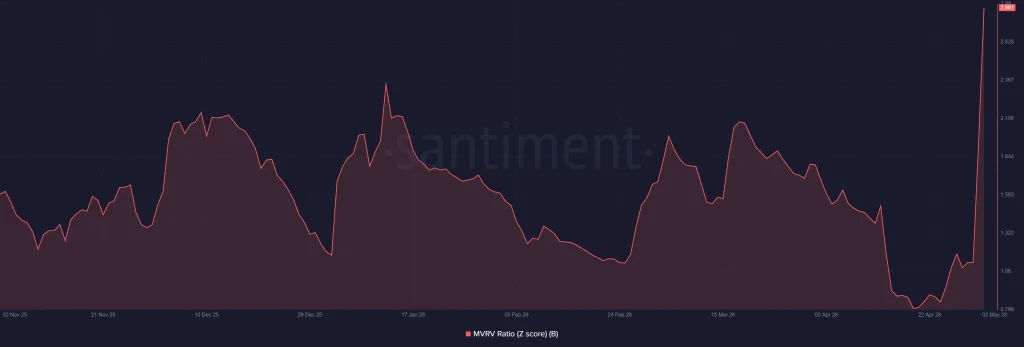
Now, here’s where things get a little less comfortable. Yes, the price run was good but the MVRV Z-score has climbed to around 2.86, too which is pretty high. Translation? The market value is running way ahead of what holders actually paid for the asset.

Historically, this is kind of a “red zone” where profit-taking may start creeping in if demand fails to sustain or push higher. Not always immediately, but the risk builds. The higher it goes, the more tempting it becomes for early buyers to cash out.

Is B Crypto Price 60% Rally Driven by Hype Sustainable?

So while the rising Z-score confirms strong momentum, it’s also quietly flashing a warning: things might be getting a bit stretched. And markets hate being stretched for too long.

Derivatives explosion and short squeeze fuel rally

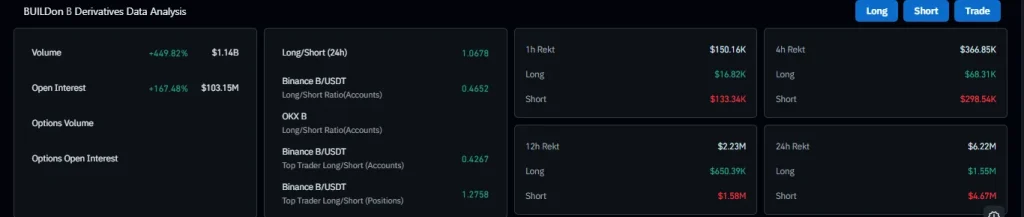
Well, with the move today, the sleeping derivatives activities went absolutely wild. As trading volume surged over 449%, hitting $1.14 billion. Open Interest? Up 167%, now sitting at $103.15 million. That’s not passive interest that’s aggressive positioning.

And then came the squeeze, which perhaps was the major fuel. Data says, over $4.67 million in short positions got wiped out in 24 hours. That’s forced buying pressure, the kind that accelerates moves and creates those vertical spikes everyone screenshots.

Is B Crypto Price 60% Rally Driven by Hype Sustainable?

But let’s be real, because practically this cuts both ways. Why? Because, high leverage always means high fragility. If sentiment shifts even slightly, then this same structure can unwind just as fast as it built.

So, curious wanna basically want to know what’s next? Everything now hinges on one level: $0.30. Hold it, and the B crypto price might stabilize and build a base for continuation. Lose it, and the market could cool off quickly as profit-taking and leverage unwind kick in.

LAB Crypto Price Explodes 210% as Derivatives Frenzy Takes Over

Arthur Hayes Predicts Bitcoin at $500K, Reveals Top Altcoins to Watch in 2026

The post LAB Crypto Price Explodes 210% as Derivatives Frenzy Takes Over appeared first on Coinpedia Fintech News

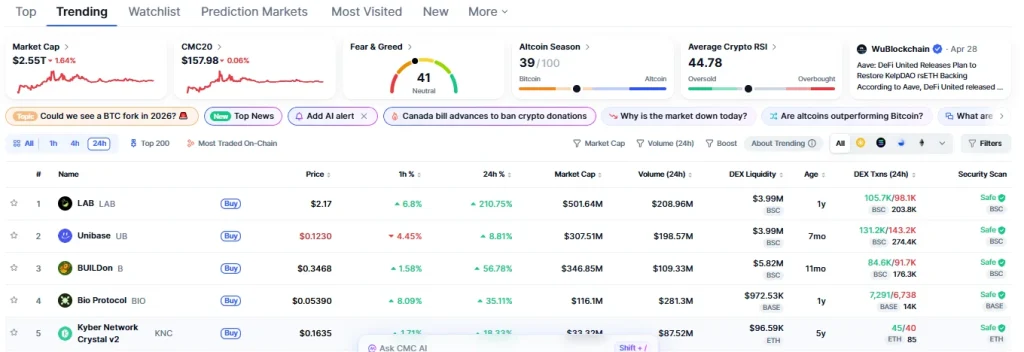
The LAB crypto price didn’t just rally today it detonated. Up over 210% intraday and now sitting with a market cap around $502 million, it has bulldozed its way to the no. 1 trending spot on CoinMarketCap. And no, this isn’t one of those quiet pumps nobody notices. This one came loud, fast, and packed with narrative.

Because apparently, trading isn’t just about reacting anymore but it’s about “understanding why.” That’s the pitch LAB is selling. And right now, the market seems to be buying it.

LAB Crypto Price Explodes 210% as Derivatives Frenzy Takes Over

LAB crypto price breakout backed by strong narrative

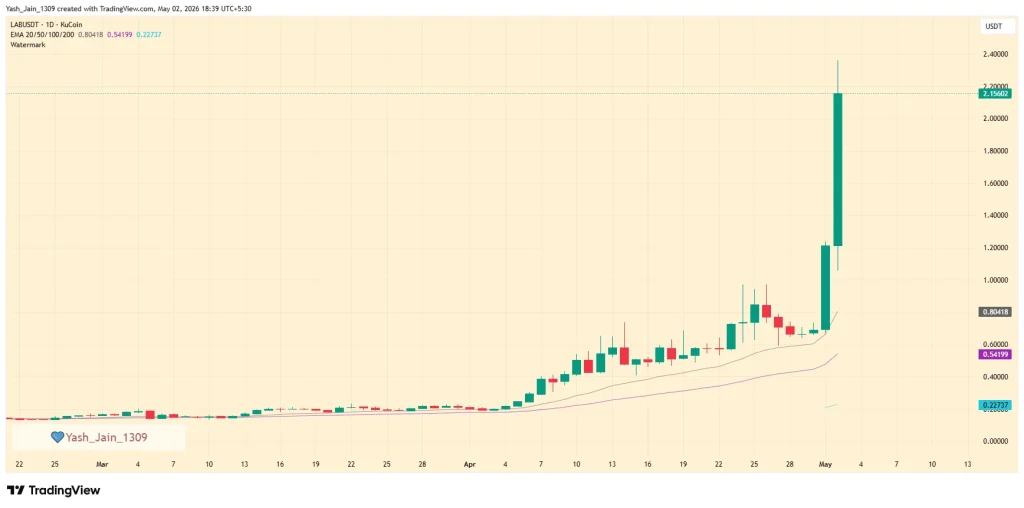
Let’s rewind for a second. On April 27, the chart printed a clean hammer candle right on the 20-day EMA which clearly a classic signal that sellers were losing grip. Fast forward to today, and the LAB crypto price has blasted past $2 like it was barely there. Coincidence? Probably not.

LAB Crypto Price Explodes 210% as Derivatives Frenzy Takes Over

The project has been actively pushing its core idea that most tools show activity, but LAB claims to connect the dots behind it. It’s a subtle shift in messaging, but clearly, it landed. Add to that the announcement of an upcoming mobile app which is still in its final polishing stage and you’ve got a narrative cocktail that traders love: utility + anticipation.

But let’s be real narratives don’t move markets alone. Liquidity does.

Futures market explosion signals aggressive positioning

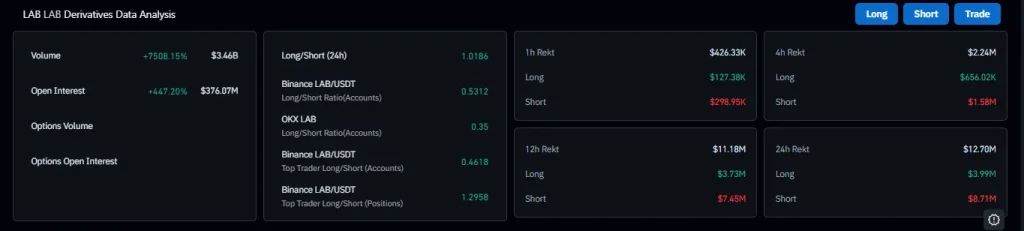
Well, here’s where things get wild. The derivatives market didn’t just react but it went into overdrive. Trading volume surged a ridiculous 7,500%, while Open Interest jumped 450%. That’s not organic growth. That’s traders piling in, fast and leveraged.

LAB Crypto Price Explodes 210% as Derivatives Frenzy Takes Over

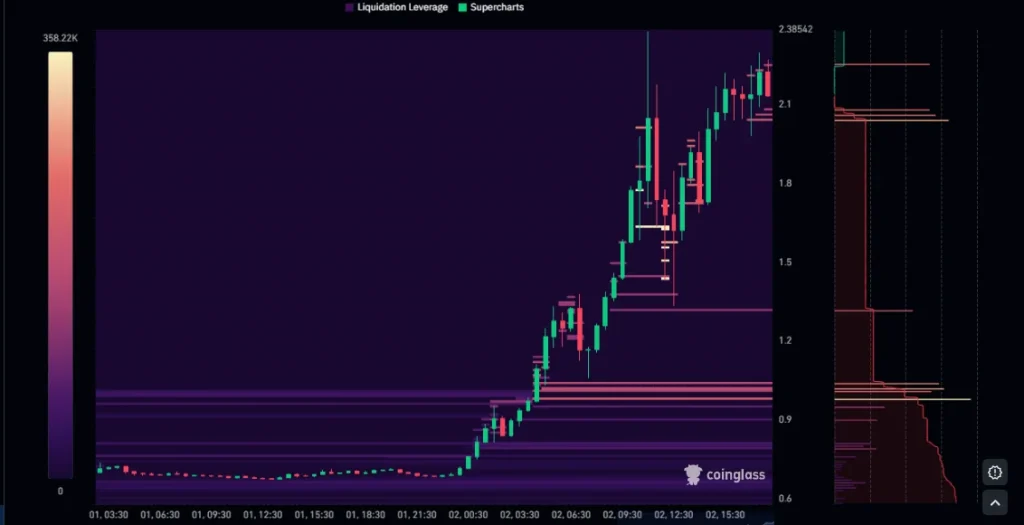
And then came the squeeze. Liquidation data shows $12.70 million wiped out in the last 24 hours, with $8.71 million of that being short positions. In plain terms? Bears got steamrolled. The kind of move that forces exits, fuels momentum, and creates those vertical candles everyone chases too late.

So yeah, the LAB crypto price didn’t climb it was pushed by leveraged fuel.

The $2 level now decides everything

Now comes the part nobody likes talking about during a rally and this is possible the downside condition.

The liquidation heatmap paints a pretty clear picture. The $2.00 level isn’t just psychological anymore it’s structural. Lose it, and there’s a gap below. Not a gentle decline. A drop into thin air, with potential targets around $1.31 and even $1.00. That’s the risk.

LAB Crypto Price Explodes 210% as Derivatives Frenzy Takes Over

But flip it around, and things get interesting. If the LAB crypto price holds above $2 and manages a strong weekly close, the upside opens up significantly. We’re talking about a potential extension toward the $4 to $5 range that will be effectively another 100% move from current levels. Sounds crazy? Maybe. But then again, so did a 210% intraday rally.

Donald Trump Net Worth Hits $6.5B as Crypto Leads Growth

Trump Administration Close to Announcing Bitcoin Reserve Plan

The post Donald Trump Net Worth Hits $6.5B as Crypto Leads Growth appeared first on Coinpedia Fintech News

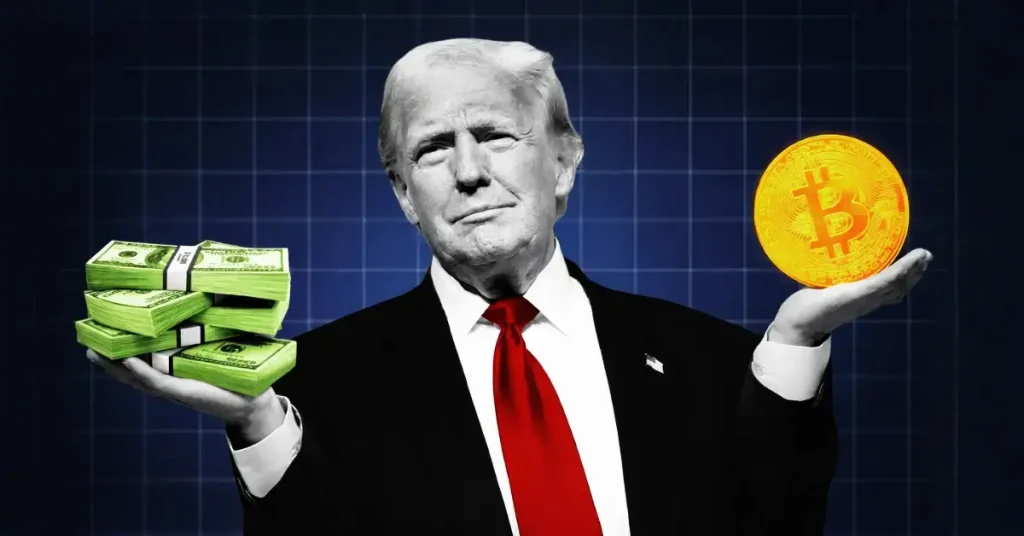
Forbes data shows President Donald Trump’s net worth has climbed sharply since returning to the White House, rising from about $2.3 billion in 2024 to around $6.5 billion in 2026. Analysts say crypto became the biggest driver of that growth, contributing roughly $3 billion between August 2025 and January 2026, overtaking real estate as his main wealth source. Much of this came from crypto ventures, including token sales and digital asset holdings linked to his family-backed projects.

a16z Says “Stablecoins” May Not Stand The Test Of Time

a16z Says "Stablecoins" May Not Stand The Test Of Time

The post a16z Says “Stablecoins” May Not Stand The Test Of Time appeared first on Coinpedia Fintech News

Research from Andreessen Horowitz crypto suggests the term “stablecoin” could lose relevance as the space matures. What began as a tool to reduce volatility is now standard, with stability no longer the key differentiator. These assets are rapidly becoming essential financial rails, powering instant global payments, real-time settlement, and direct ownership. The bigger shift is toward programmable money, where value moves like software, likely leading to new terms such as digital dollars or on-chain currencies.

❌