Reading view

Asteroid Shiba Price Down 14% as Mystery Trader Cashes In After 731,000% Rally
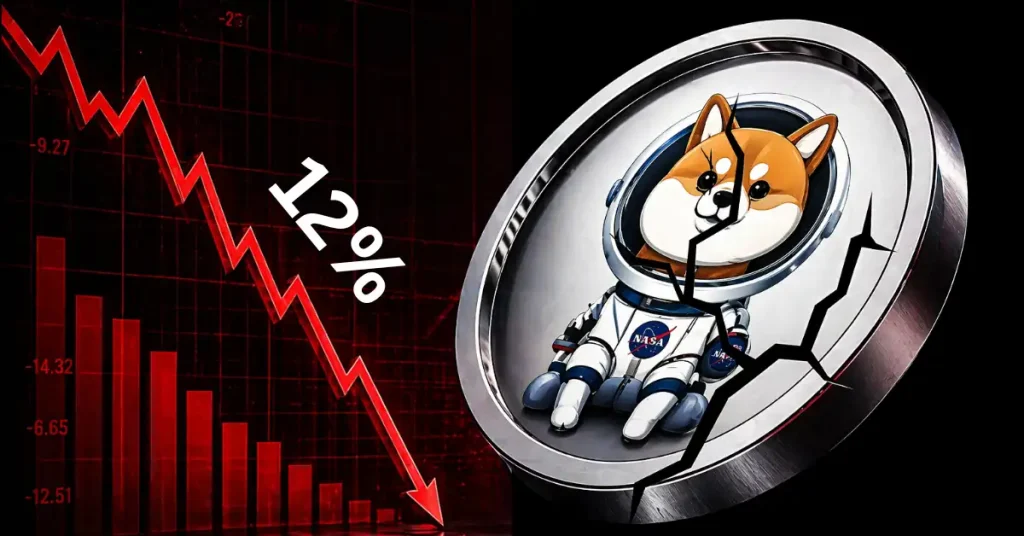
Asteroid Shiba Price Crashes 12% After 700,000% Rally What Comes Next

The post Asteroid Shiba Price Down 14% as Mystery Trader Cashes In After 731,000% Rally appeared first on Coinpedia Fintech News

ASTEROID Shiba is currently down around 14.82% in the past 24 hours, trading near 0.000368. 

The correction comes after ASTEROID’s massive 731,582% surge over the past 30 days, triggering aggressive profit-taking from traders who entered early in the rally.

Unknown Trader Makes Over $1 Million

The token made headlines today after blockchain analytics platform Arkham revealed that a mystery trader with only nine followers on X turned a small investment into a massive win.

THIS GUY HAS 9 FOLLOWERS – HE JUST MADE A MILLION DOLLARS

Nobody knows who trader @404eq is – but he bought $17.5K of ASTEROID at an average of $2.5M Market Cap.

Since then, he’s up over $1 Million. How bullish is he on ASTEROID? pic.twitter.com/OvRUPZvMkw

— Arkham (@arkham) May 7, 2026

According to Arkham, trader @404eq bought around $17,500 worth of ASTEROID when the token’s market cap was sitting near just $2.5 million. Since then, the wallet’s profits have surged past $1 million as the meme coin exploded higher.

Still Holding Big ASTEROID Bags

The mystery wallet has not fully exited the position yet. Arkham later revealed that the trader sold about $118,900 worth of ASTEROID and transferred another $187,000 to CookerFlips, but is still holding nearly $750,000 worth of the token.

He sold $118.9K, sent $187K to CookerFlips, and is still holding $750K of ASTEROID.

Track 404eq on Arkham:https://t.co/cDm1DGODP8

— Arkham (@arkham) May 7, 2026

That has sparked speculation across crypto social media about whether the trader expects another major rally ahead.

What Happens Next?

For now, the biggest factor driving ASTEROID appears to be profit-taking after its parabolic move. Hence, technically, the token could stabilize if buying pressure returns and price holds above the key $0.00035 level.

However, if ASTEROID breaks the support, the next downside target could move closer to $0.00034. Traders are also watching whether trading volume begins to normalize after the recent frenzy.

Ice Open Network Reveals New Direction After Security Breach and Team Cuts

Ice Open Network News What Really Happened to the ION Token

The post Ice Open Network Reveals New Direction After Security Breach and Team Cuts appeared first on Coinpedia Fintech News

Ice Open Network has finally addressed growing concerns from its community after weeks of silence, reduced updates, and rising criticism surrounding the project’s direction. The statement comes after many users pointed out that the development had slowed down following missed expectations, technical delays, and the sudden drop in communication from the team.

In a lengthy X post, Ice Open Network reassured supporters that the project is still active and “still building,” even though the team is now smaller than before.

Security Incident Sparked Fresh Concerns

Ice Open Network recently faced a security breach linked to a third-party provider, exposing some user emails and 2FA-related phone numbers. The team clarified that no wallets or funds were affected, but the incident still triggered community concerns. 

Since then, the project says it has been upgrading infrastructure and taking legal action against those involved.

“Silence Does Not Mean Surrender”

The project admitted that things may look difficult from the outside, but said the current phase is about staying focused on execution instead of public hype. According to the team, this period will help separate long-term supporters from short-term panic and negativity.

Ice Open Network stressed that the lack of updates should not be seen as abandonment. “Silence does not mean surrender. It means focus,” the team wrote.

No More Constant Timelines and Weekly Updates

One important shift announced by the project is its communication strategy. Ice Open Network said it will no longer share weekly bulletins, internal milestones, or expected timelines before products are fully ready.

The team explained that previous transparency often backfired whenever delays happened, turning unfinished work into FUD and damaging community trust instead of helping it.

Instead, the project now plans to reveal developments only when products are closer to launch.

Focus Turns Toward Revenue and Utility

According to the statement, the project’s main priority now is building products that generate “real revenue” and create a stronger long-term business model.

The team also hinted that Ice Open Network wants to move beyond being just another crypto project. It said the goal is to build technology that can scale outside the crypto industry by offering faster, cheaper, and utility-driven solutions.

Big Changes Ahead

Ice Open Network teased several upcoming updates, including changes to its website, whitepaper, and overall direction. While no launch dates were provided, the team said the new vision will become clear once development is ready to be shown publicly.

The statement also included a personal lesson from the team, saying they learned not to “brag before the product is ready,” adding that if the work was easy, “everyone would have done it already.”

BNY Expands Crypto Custody Push to Abu Dhabi as UAE’s Digital Asset Race Heats Up

Bitcoin ETF investment 2026

The post BNY Expands Crypto Custody Push to Abu Dhabi as UAE’s Digital Asset Race Heats Up appeared first on Coinpedia Fintech News

BNY, the world’s largest custodian bank with nearly $59 trillion in assets under custody and administration, is making a bigger move into crypto. The Wall Street giant is expanding its digital asset custody business into Abu Dhabi through partnerships with Finstreet and ADI Foundation. 

As per the report, the new initiative will operate inside Abu Dhabi Global Market (ADGM), one of the Middle East’s fastest-growing crypto and blockchain hubs. Initially, the focus will be on custody services for Bitcoin and Ethereum, but the plan is to later expand into stablecoins and tokenized assets.

BNY Is Going Bigger on Crypto

This is another sign that traditional finance is moving deeper into blockchain infrastructure. BNY was already the first major U.S. global systemically important bank to launch digital asset custody services, and now it’s taking that business into one of the world’s most crypto-friendly regions.

Hani Kablawi, Executive Vice Chair at BNY, said the UAE is entering a “new phase of financial development” driven by stronger digital connectivity and deeper capital markets. According to him, BNY wants to help connect traditional finance with digital assets through regulated infrastructure.

Why Abu Dhabi? The ADGM Advantage

A big reason behind the move is regulation. Unlike many regions still figuring out crypto laws, ADGM has spent years building a clear framework for digital assets through its Financial Services Regulatory Authority (FSRA).

For a 240-year-old bank like BNY, legal clarity matters. It gives institutions confidence to safely manage crypto assets with the same standards used for traditional financial products.

The Bigger Play: Tokenization

This expansion is not just about storing Bitcoin and Ethereum. The real opportunity is tokenization, putting real-world assets like real estate, bonds, and private equity on blockchain networks.

By working with ADI Chain infrastructure, BNY is positioning itself for a future where trading, settlement, and custody all happen on-chain in one regulated ecosystem.

What This Means for Crypto

BNY’s arrival in the UAE signals a “domino effect” for other global banks. As one of the biggest names in traditional finance, its move adds major credibility to Abu Dhabi’s ambition of becoming a global hub for regulated digital finance.

The UAE is no longer just attracting crypto startups; it’s now becoming a serious destination for trillion-dollar institutional players.

VanEck Says $1 Million Bitcoin Is The Base Case — Here Is What The Data Says

bitcoin-price-prediction (1)

The post VanEck Says $1 Million Bitcoin Is The Base Case — Here Is What The Data Says appeared first on Coinpedia Fintech News

Bitcoin is slowly regaining momentum as investors once again look toward the $100,000 milestone. After dropping from its late-2025 high of $126,000, BTC is now trading near $81,000, supported by improving sentiment, growing enthusiasm around the U.S. CLARITY Act, and strong institutional demand. 

Spot Bitcoin ETFs saw massive $2.44 billion inflows in April 2026 alone, marking the strongest month since the 2025 peak. On May 6, spot Bitcoin ETFs recorded a total net inflow of $46.33 million, marking the fifth consecutive day of net inflows. 

VanEck’s Matthew Sigel Predicts $1 Million Bitcoin

Matthew Sigel, Head of Digital Assets Research at VanEck, made one of the boldest predictions yet, saying Bitcoin reaching $1 million is now the firm’s “base case.”

“Bitcoin going up for us is the base case. We think this asset is going to reach a million dollars over the next several years,” Sigel said during a CNBC interview.

To explain his outlook, Sigel compared Bitcoin to the video game industry. He noted that gaming was once seen as something mainly for kids, but today it is mainstream across all age groups, even mentioning that Elon Musk plays video games. According to Sigel, Bitcoin is following a similar path toward mass adoption.

“People don’t quit Bitcoin,” he said, pointing to growing interest from younger investors and the fact that central banks are now beginning to hold Bitcoin reserves. He described Bitcoin as a long-term “mega trend,” although he warned that the asset will remain highly volatile along the way.

Sigel believes Bitcoin could potentially reach $1 million within five years if adoption keeps accelerating.

On-Chain Analysis Points to $93K Next

According to CryptoQuant researchers, Bitcoin’s next major target could be $93,000 due to a key CME gap. BTC recently surged close to $83,000 as the total crypto market cap jumped to $2.73 trillion. Moreover, a sharp 12% crash in oil prices and growing optimism around a possible U.S.-Iran peace deal also added fresh fuel to the crypto rally.

Ethena Jumps 4% After Grayscale Adds It to DeFi Fund in Q1 Rebalancing

Ethena Claims Third Place in Stablecoin Rankings

The post Ethena Jumps 4% After Grayscale Adds It to DeFi Fund in Q1 Rebalancing appeared first on Coinpedia Fintech News

Ethena Jumps 4% After Grayscale Adds It to DeFi Fund in Q1 Rebalancing

Grayscale Investments reshuffled its crypto portfolios this week as part of its Q1 2026 fund rebalancing. The firm removed Aerodrome Finance from its DeFi Fund and replaced it with Ethena, a yield-focused decentralized finance protocol. 

Ethena rose 4.33% in the last 24 hours following the announcement. Grayscale also made adjustments to its Smart Contract Fund, though no new assets were added to that portfolio.

Ethena Replaces Aerodrome

The biggest change came in Grayscale’s DeFi Fund. Following the CoinDesk DeFi Select Index methodology, the firm sold AERO and portions of other existing holdings to purchase ENA.

As of May 1, 2026, the fund holdings stood at:

  • Uniswap (UNI) – 35.22%
  • Aave (AAVE) – 21.36%
  • Ondo (ONDO) – 19.83%
  • Ethena (ENA) – 13.59%
  • Curve (CRV) – 5.27%
  • Lido DAO (LDO) – 4.73%

Smart Contract Fund Stays Focused on Layer 1s

Grayscale also adjusted the weightings of its Smart Contract Fund using the CoinDesk Smart Contract Platform Select Capped Index methodology. Unlike the DeFi Fund, no assets were removed or added.

The updated allocations are:

  • Ethereum (ETH) – 30.14%
  • Solana (SOL) – 29.69%
  • Cardano (ADA) – 17.96%
  • Avalanche (AVAX) – 7.69%
  • Hedera (HBAR) – 7.41%
  • Sui (SUI) – 7.11%

The allocation shows Grayscale still heavily favors established smart contract ecosystems led by Ethereum and Solana.

What This Signals for the Market

These updates give a simple look into where institutional investors believe crypto is heading. Grayscale appears to be betting more on DeFi projects connected to stablecoins, yield, and tokenized assets rather than only trading platforms.

At the same time, the company is still keeping strong exposure to big blockchain ecosystems like Ethereum and Solana, which continue to dominate developer activity and liquidity in crypto markets.

Overall, rebalances like this reflect where capital is rotating. The question is whether flows follow or lag.

Clarity Act All New Updates: Moreno Says Bill Could Be Signed Before July 4 as Odds Hit 67%

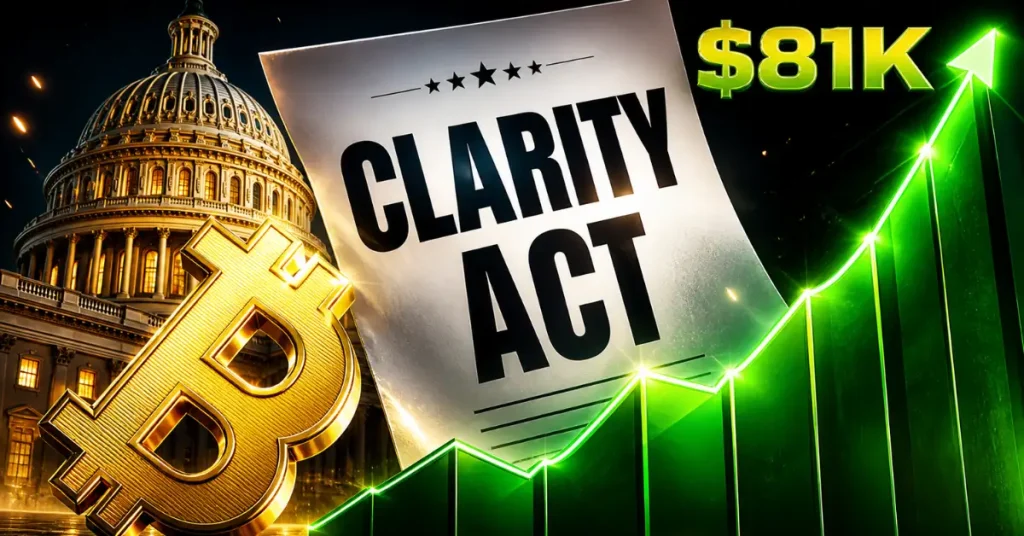
A golden Bitcoin symbol in front of the US Capitol building, a document labeled "CLARITY ACT," and a rising green line graph reaching "$81K."

The post Clarity Act All New Updates: Moreno Says Bill Could Be Signed Before July 4 as Odds Hit 67% appeared first on Coinpedia Fintech News

A bipartisan compromise on stablecoin yield has cleared the biggest obstacle standing between the Clarity Act and a Senate vote, injecting fresh momentum into legislation that has spent months stalled over a single unresolved dispute.

Senators Thom Tillis and Angela Alsobrooks struck the deal this week, agreeing on language that allows crypto firms to offer stablecoin rewards while stopping those products from functioning as direct substitutes for traditional bank deposits. The agreement, modest in its technical scope, was significant in its political effect. It moved a bill that had been frozen.

“This finalised, bipartisan text is the culmination of months of hard work to deliver a compromise on yield we can all live with,” Senator Cynthia Lummis said. “We are closer than ever to getting the Clarity Act across the finish line.”

This finalized, bipartisan text is the culmination of months of hard work to deliver a compromise on yield we can all live with. We are closer than ever to getting the Clarity Act across the finish line. https://t.co/8vF7tzpxpy

— Senator Cynthia Lummis (@SenLummis) May 4, 2026

A Timeline Comes Into View

With the yield dispute resolved, the legislative calendar is moving. House Financial Services Chair Bryan Steil confirmed the markup is scheduled and Senate planning is underway. 

Senator Bernie Moreno went further, telling reporters the bill could reach President Trump’s desk by the end of June and be signed into law before July 4.

The pressure to move is not just political. Brad Garlinghouse, Ripple’s chief executive, told the Consensus 2026 conference in Miami that the window is closing. “The next two weeks are pivotal,” Garlinghouse said. “Clarity is better than chaos.” 

He warned that delays running into election season would sharply reduce the bill’s chances of passage, giving both parties a concrete reason to act now.

Markets React Before the Vote

Circle rallied sharply. Coinbase gained. Bitcoin briefly crossed $80,000 as optimism about regulatory clarity fed into a broader market recovery already underway. Prediction markets moved the bill’s odds of passage to approximately 67%.

Coinbase CEO Brian Armstrong reduced his public position to two words: “Mark it up.”

The Dissent

Not every voice was bullish. Arthur Hayes argued that the bill, as written, advantages large centralised firms with established lobbying relationships while creating structural barriers for smaller and more decentralised projects. 

Charles Hoskinson raised similar concerns earlier, warning that the legislation’s mature blockchain standard protects incumbents while making it harder for new projects to avoid securities classification.

What Comes Next

Markup is the immediate milestone. After that, a Senate floor vote, House approval, and a presidential signature before July 4 is the timeline on record. The crypto industry has seen promising legislation arrive at the finish line before without crossing it. This time, the bipartisan deal, the market pressure, the political calendar, and the industry’s unified push are converging in the same direction at the same moment.

Flare CEO Slams Cardano as ADA and XRP Battle for Bitcoin DeFi Dominance

Cardano Price News Why $0.243 Support Could Decide Whether ADA Hits $0.30 or $0.10

The post Flare CEO Slams Cardano as ADA and XRP Battle for Bitcoin DeFi Dominance appeared first on Coinpedia Fintech News

Hugo Philion has taken a direct shot at Cardano, arguing that the network has failed to deliver on its DeFi ambitions despite its early start. Responding to recent claims by Charles Hoskinson around Bitcoin DeFi, Philion said Cardano has not been able to match Flare’s execution.

Instead of building a strong DeFi ecosystem, he suggested Cardano has struggled to turn its early advantage into real traction, even claiming it has been “trying and miserably failing” to replicate Flare’s approach.

Cardano launched in 2017.

Flare launched 6 years after.

Ever since Cardano has been trying and miserably failing to copy our strategy. (Im personally looking forward to them getting into TEEs 😂😂😂)

Cardano has far lower stats across the board in DeFi than Flare despite… https://t.co/FAZNAEnMnI pic.twitter.com/3jsVJvQg5Z

— Hugo Philion (@HugoPhilion) May 5, 2026

No Real DeFi Lead Despite Early Start

Cardano launched in 2017, giving it a six-year head start over Flare, which went live in 2023. But according to Philion, that advantage hasn’t translated into meaningful dominance in DeFi.

He pointed to the gap between vision and execution, arguing that simply being early doesn’t guarantee success if adoption and liquidity don’t follow.

Data from DeFiLlama supports this shift in momentum. Flare currently holds around $159 million in total value locked (TVL), ahead of Cardano’s $131 million, showing that capital is starting to flow toward newer ecosystems.

Bitcoin DeFi Clash Heats Up

The debate is really about who will lead Bitcoin-based DeFi. Hoskinson has proposed bringing programmability to Bitcoin and even institutional assets through Cardano.

Philion, however, dismissed those ambitions, arguing that Cardano is unlikely to win this race. In his view, the future lies in building a unified DeFi layer that can support multiple assets seamlessly, rather than isolated ecosystems.

Flare’s Approach: Simple and Execution-Focused

Flare’s strategy is centered on interoperability, bringing assets like XRP, Bitcoin, and others into one system. A key example is its FXRP model.

Around 154 million XRP is currently locked on Flare, with nearly 140 million actively deployed in DeFi protocols. This shows real usage, not just idle liquidity, and highlights how the network is focusing on practical adoption.

Cardano Still Building Its Path

Cardano, however, is not out of the race. It is pushing its own Bitcoin DeFi strategy through new tools like Cardinal, which allows users to interact with Bitcoin in a non-custodial way.

There are also plans to expand support to XRP, showing that Cardano is still evolving its ecosystem.

Genius Terminal Deploys Gh0st on BNB Chain in Push for Compliant On-Chain Trading Privacy

BNB Chain & Brevis Team with 0xbow

The post Genius Terminal Deploys Gh0st on BNB Chain in Push for Compliant On-Chain Trading Privacy appeared first on Coinpedia Fintech News

Genius Terminal has deployed its Gh0st privacy stack on BNB Chain, introducing a trading infrastructure tool designed to obscure on-chain activity from public observers while remaining verifiable by regulators.

The system routes trade execution through multiple intermediate wallets, breaking the visible link between a user’s primary wallet and their actual trading activity. Orders are fragmented and distributed across dozens of addresses, making it significantly harder for outside parties to track positions or replicate strategies through copy trading.

How It Works

The mechanism separates a user’s identity from their execution pathway. Rather than trading directly from a primary wallet, orders pass through intermediate routing addresses before reaching the market. The private keys for each wallet remain under the user’s local control throughout the process.

Gh0st in now live on @BNBCHAIN 👻

Complex orchestration across dozens of wallets enabling individuals to move in silence, killing copy trading and maintaining anonymity. pic.twitter.com/VEBMWst6ZR

— Genius (@GeniusTerminal) May 5, 2026

The effect is that positions and trading intent become difficult to observe from the outside, while the underlying transactions remain recorded on the blockchain and accessible to regulators for compliance verification.

Genius Terminal describes this as compliant privacy, a distinction it draws deliberately from traditional privacy tools that aim for complete anonymity. The company’s stated position is that privacy should mean protection from public observation, not removal from the ledger entirely.

“Privacy should not mean opacity,” the team said in a statement. “It should mean protection.”

The Copy Trading Problem

Copy trading, where participants mirror the on-chain activity of successful wallets in real time, has become a significant concern for sophisticated traders who find their strategies front-run or replicated before they can fully execute. By fragmenting orders across multiple wallets and pathways, Gh0st makes it substantially harder for copy trading bots and observers to identify and mirror positions as they are being built.

Backing and Market Context

The project has received backing from YZi Labs and counts Binance co-founder CZ as an advisor. Gh0st’s token has already been listed on Binance Alpha and derivatives markets.

The launch arrives as regulators globally are paying increasing attention to privacy tools in the crypto space. 

❌