Reading view

DJI ROMO 2 robot vacuum confirmed to launch on May 11

DJI Robot Vacuum ROMO

DJI is getting ready to launch its next robot vacuum, the ROMO 2, on May 11. The biggest hints so far revolve around navigation and low-clearance cleaning.

DJI Robot Vacuum ROMO

An official teaser video suggests the ROMO 2 can slide under beds and sofas with very little space underneath, something many robot vacuums still struggle with. Another teaser suggests the vacuum can move around objects placed on the floor, without bumping into them. That likely points to improvements in obstacle detection and movement precision.

There are also hints at better mopping performance this time around, including quicker floor drying after cleaning, though DJI hasn’t officially detailed how that system works yet.

For context, DJI only entered the robot vacuum space relatively recently with the first-generation ROMO lineup, which launched in China last year. Unsurprisingly, the company leaned heavily on its drone experience for things like navigation and sensing.

The original ROMO models used a combination of dual fisheye cameras and solid-state LiDAR for mapping and obstacle avoidance, helping them move through crowded spaces with very little manual intervention. Some versions even came with transparent design elements, giving them a more futuristic look than most robot vacuums on the market.

On the cleaning side, DJI advertised suction power up to 25,000Pa, alongside dual robotic arms for edge cleaning and anti-tangle roller brushes aimed at handling long hair more effectively. The docking station was also fairly ambitious, supporting self-cleaning and long maintenance intervals of up to 200 days. The ROMO 2 will likely build on most of that rather than completely changing direction.

At this point, full specs are still under wraps, but the quick follow-up launch suggests DJI is moving aggressively in this category. The company is clearly trying to position itself against established names like Roborock and Ecovacs, especially in the premium smart cleaning segment.

As usual, China will probably get the device first, with wider availability coming later if DJI follows the same rollout strategy as before.

Don’t miss a thing! Join our Telegram community for instant updates and grab our free daily newsletter for the best tech stories!

For more daily updates, please visit our News Section.

Sources: DJI on Weibo (1), (2)

The post DJI ROMO 2 robot vacuum confirmed to launch on May 11 appeared first on Gizmochina.

iQOO Z11 launches globally with Snapdragon 7s Gen 4, massive 9020mAh battery, 144Hz display

iQOO has officially launched the new Z11 and Z11x in Malaysia, bringing the standard model outside China for the first time. And looking at the specs, battery life is very clearly the main focus here.

iQOO Z11 specifications:

The regular iQOO Z11 is the more premium of the two, and honestly, the first thing most people will notice is the massive 9,020mAh battery. That’s unusually large even by current standards. What’s interesting is that iQOO still managed to keep the phone relatively slim at 8.25mm and reasonably manageable at 213g. Charging goes up to 90W, and there are a few extra battery-related features as well, including bypass charging and long-term battery health protection.

The phone also gets a large 6.83-inch AMOLED display with 1.5K resolution and a 144Hz refresh rate. Brightness can apparently hit 5,000 nits in certain conditions, though as usual, that number likely applies to small HDR highlights rather than full-screen use.

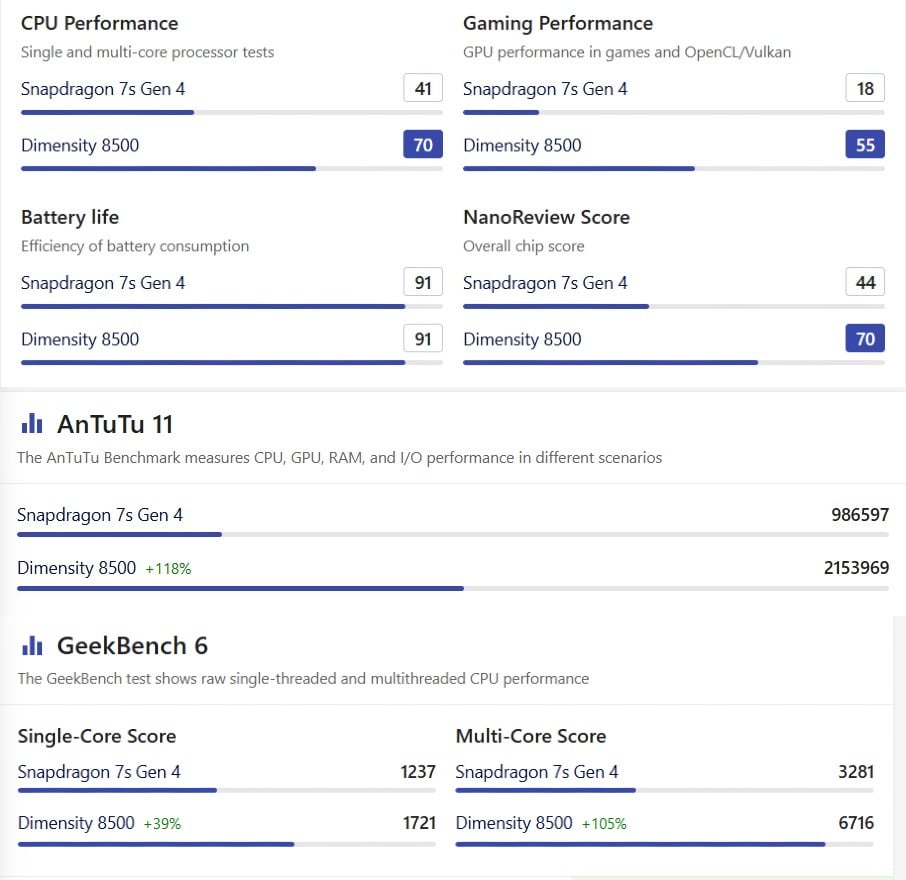
Under the hood is Qualcomm’s Snapdragon 7s Gen 4 chip, replacing the Dimensity 8500 used in the Chinese variant, paired with up to 12GB RAM and 256GB storage. Benchmark comparisons from NanoReview suggest the Dimensity 8500 delivers noticeably stronger CPU and GPU performance.

iQOO is also using a fairly large vapor chamber cooling setup here, likely because the phone is being positioned partly toward mobile gamers. The cameras are decent on paper, though clearly not the main selling point. You get a 50MP Sony IMX882 primary camera, a 2MP depth sensor, and a 32MP front camera with 4K recording support.

iQOO Z11x specifications:

The Z11x sits lower in the lineup but keeps a surprisingly similar overall approach. It swaps the AMOLED panel for a 6.76-inch LCD display with a 120Hz refresh rate and uses MediaTek’s Dimensity 7400-Turbo chipset instead. Battery capacity drops to 7,200mAh, though that’s still a large capacity for a smartphone in 2026.

Charging is reduced to 44W, but the phone still keeps the IP68 and IP69 ratings. Camera hardware includes a 50MP Sony IMX852 main sensor, a 2MP depth camera, and a 32MP selfie shooter.

Pricing and availability:

Pricing in Malaysia for the standard Z11 starts at RM1,899 for the 8GB + 256GB version, while the 12GB + 256GB model is priced at RM2,199. The Z11x starts at RM1,299 for the 8GB + 128GB variant, while the 256GB version comes in at RM1,599.

Both phones are already available through the company’s official website in Malaysia. As part of a limited 10-day launch offer, the base variants are currently discounted to RM1,599 for the Z11 and RM1,099 for the Z11x.

(Sources: iQOO Z11 | iQOO Z11x)

The post iQOO Z11 launches globally with Snapdragon 7s Gen 4, massive 9020mAh battery, 144Hz display appeared first on Gizmochina.
Realme 16x clears India BIS ahead of official unveiling

Realme looks set to add another model to its growing 16 series lineup in India. The upcoming Realme 16x has now surfaced on the BIS certification website, which usually means an official launch isn’t too far away.

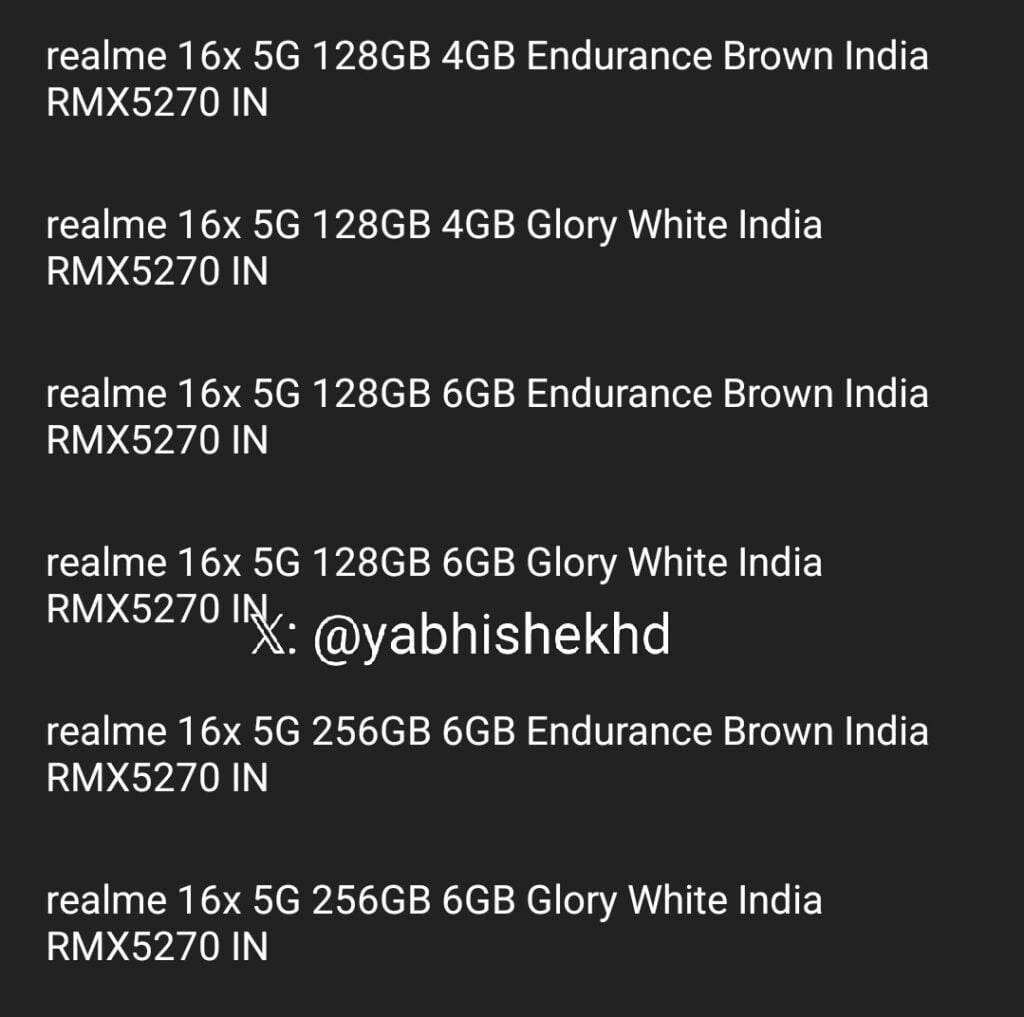
The certification was reportedly approved on May 6, 2026, suggesting Realme is already wrapping up regulatory formalities for the Indian market. Tipster Abhishek Yadav also recently mentioned the Realme 16x on X, claiming the phone will launch soon in India. According to the leak, the device could arrive in two color options: Endurance Brown and Glory White.

Storage variants are expected to include:

  • 4GB + 128GB
  • 6GB + 128GB
  • 6GB + 256GB

That setup makes it pretty clear Realme is targeting the affordable 5G segment again. The phone is expected to succeed the Realme 15x 5G, which launched last year with a starting price of ₹16,999 for the 6GB+128GB variant. The 8GB + 128GB and 8GB + 256GB configurations were priced at ₹17,999 and ₹19,999, respectively.

That phone focused heavily on battery life and everyday performance, offering a 144Hz display, 6-nm based Dimensity 6300 mid-range chipset, and a large 7,000mAh battery with 60W charging.

At the moment, specs for the new model are still under wraps, but the overall positioning likely won’t change too much. Expect the Realme 16x to land somewhere in the ₹15,000 to ₹18,000 range, competing with the usual crowd of budget 5G phones.

It’ll also expand the broader Realme 16 lineup, which already includes the standard Realme 16, Realme 16 Pro, and Realme 16 Pro Plus.

With the BIS certification now live, an official announcement could happen within the next few weeks. And considering how competitive the affordable 5G segment has become in India, Realme will probably continue focusing on the same formula that worked well before: big batteries, high refresh rate displays, and decent day-to-day performance.

Don’t miss a thing! Join our Telegram community for instant updates and grab our free daily newsletter for the best tech stories!

For more daily updates, please visit our News Section.

(Sources: 1, 2)

The post Realme 16x clears India BIS ahead of official unveiling appeared first on Gizmochina.

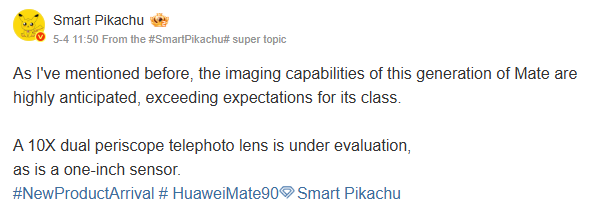
Huawei Mate 90 Pro Max tipped to include a 10x periscope telephoto

Huawei looks like it’s bringing back something most smartphone brands have quietly moved away from: true long-range optical zoom. Fresh leaks surrounding the upcoming Mate 90 Pro Max suggest the phone could feature a dedicated 10x optical periscope camera, alongside a second telephoto lens.

If accurate, it would mark a pretty significant shift at a time when many Android flagships are leaning more heavily on high-resolution sensors and digital cropping instead of native long-range optics. For context, the Mate 80 Pro Max already features a fairly capable dual-telephoto setup, combining a 50MP periscope camera with 4x optical zoom and a second 50MP periscope lens offering 6.2x optical zoom.

The leak comes not too long after Oppo showed what a modern 10x setup can do with the Find X9 Ultra. That phone uses a 50MP sensor paired with a 230mm-equivalent periscope lens and a complex prism arrangement, allowing it to maintain surprisingly good detail even at higher zoom levels. Oppo also pushed the idea of “lossless” 20x zoom through sensor cropping.

Huawei seems to be taking a somewhat similar direction. The Mate 90 Pro Max is rumored to pair the 10x periscope camera with a large 1-inch-type main sensor and Huawei’s XMAGE imaging system.

Exact details about the telephoto hardware are still unclear, but Huawei has experience in this area. The P40 Pro+ from 2020 was one of the first phones to offer proper 10x optical zoom in a relatively compact body, using a folded light-path design to make it work. In a way, the upcoming Mate series could be seen as Huawei revisiting that idea with newer hardware and smarter image processing.

The wider Android market has largely shifted away from this approach. Samsung, for instance, brought back 10x optical zoom on the Galaxy S21 Ultra using a dual fixed-focus telephoto setup, matching the zoom range of the experimental Galaxy S4 Zoom from 2013. However, the company later moved to a 5x optical zoom setup on the Galaxy S24 Ultra to accommodate a larger 50MP sensor.

Huawei’s current Pura 90 Pro Max already pushes zoom pretty far with its 200MP telephoto, especially for video at higher magnification levels. The Mate 90 Pro Max is expected to build further on that foundation, pairing a larger sensor inside a 10x periscope module with AI-powered image enhancement.

Don’t miss a thing! Join our Telegram community for instant updates and grab our free daily newsletter for the best tech stories!

For more daily updates, please visit our News Section.

(Source: Smart Pikachu on Weibo)

The post Huawei Mate 90 Pro Max tipped to include a 10x periscope telephoto appeared first on Gizmochina.
Google Pixel 11 series specs detailed: 2nm-based chip, new image sensors

Google’s next Pixel lineup is starting to leak in detail. A large spec dump has now revealed information across the entire Pixel 11 lineup. The focus this time seems to be a few hardware changes that are a little unexpected.

The biggest shift is probably the new Tensor G6 chip

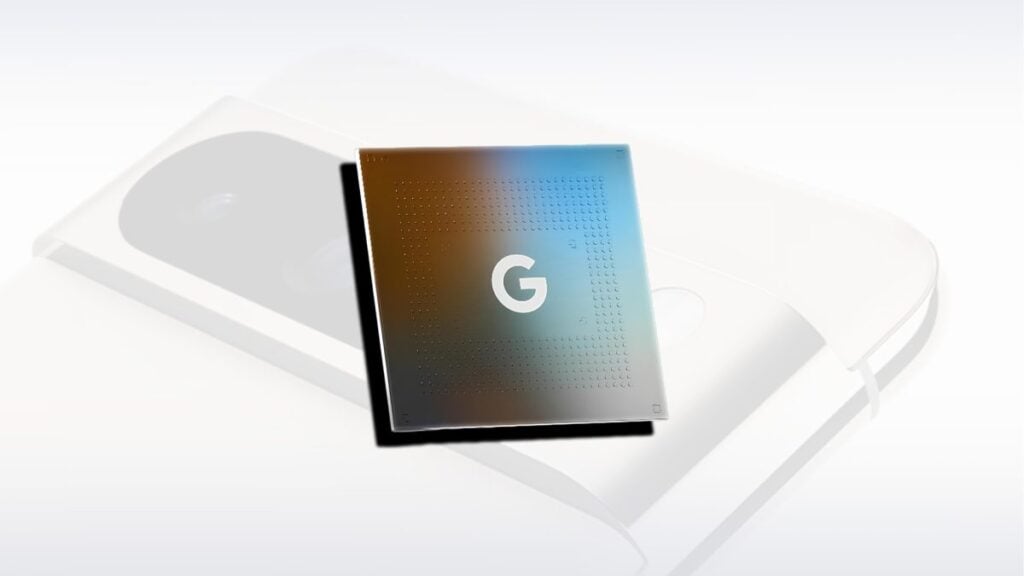
Google is moving to TSMC’s 2nm process for the chipset, which should help quite a bit with efficiency and sustained performance, two areas Pixel phones have been criticized for in the past. The chip itself uses a 1+4+2 CPU setup, combining ARM’s newer C1-series cores with a PowerVR GPU. There’s also a refreshed TPU for AI tasks, the Titan M3 security chip, and notably, a switch to the MediaTek M90 modem.

That last part is important because it means Google may finally be moving away from Samsung’s Exynos-based modem setup, something Pixel users have complained about in the past due to heat and connectivity issues. The MediaTek M90 itself is a newer 5G-Advanced modem introduced in early 2025, and appears to succeed the M80 modem found in the Dimensity 9100.

Google Pixel 11 series specs (rumored)

The regular Pixel 11 is expected to feature a 6.3-inch OLED display with a 60-120Hz refresh rate, HDR brightness up to 2,000 nits, and peak brightness reaching 3,100 nits. Battery capacity is listed at 4,840mAh rated. For comparison, the current Pixel 10 has a rated capacity of 4,835mAh, while the marketed typical capacity sits at 4,970mAh. Camera-wise, the phone is tipped to get a new 50MP main sensor, along with 8GB or 12GB RAM options.

Moving up the lineup, the Pixel 11 Pro and Pixel 11 Pro XL are expected to bring sharper displays with resolutions of 1280×2856 and 1344×2992, respectively. Both panels are also tipped to reach up to 2,450 nits HDR brightness and 3,600 nits peak brightness. RAM options reportedly go up to 16GB, while the camera setup sees upgrades to both the main and telephoto sensors.

As for battery capacity, the Pixel 11 Pro is listed with a 4,707mAh rated cell, while the Pro XL is expected to pack a 5,000mAh battery. The capacities themselves are fairly close to the Pixel 10 series, but the move to the 2nm Tensor G6 chip could still help improve overall battery life and efficiency.

Google is reportedly removing the infrared thermometer and replacing it with a small RGB LED setup called “Pixel Glow.” From what’s being described, it works somewhat like a smaller version of Nothing’s Glyph interface. The previously rumored IR face unlock apparently still isn’t ready for this generation.

Taken together, the Pixel 11 lineup looks less like a dramatic redesign and more like Google refining the experience in areas where previous Pixels fell short: better thermals, improved cellular connectivity.

(Source: Mystic Leaks)

The post Google Pixel 11 series specs detailed: 2nm-based chip, new image sensors appeared first on Gizmochina.

Sony Xperia 1 VIII Amazon listing, Geekbench reveals specs ahead of June 26 launch

Sony looks like it’s changing direction a bit with the next Xperia flagship, especially when it comes to zoom photography. Fresh leaks surrounding the upcoming Xperia 1 VIII suggest Sony is moving away from the variable telephoto system used on the Xperia 1 VII.

The details come from listings spotted on Amazon Germany and Amazon UK, reported by NotebookCheck. According to ITHome, the Xperia 1 VIII swaps the previous continuous optical zoom lens for a fixed 70mm telephoto camera with 3x optical zoom.

On paper, that sounds like a downgrade. The Xperia 1 VII could smoothly shift between 85mm and 170mm focal lengths (roughly 3.5x-7.1x), something no phones offer as of early 2026. But Sony seems to be compensating in another area that arguably matters more for everyday use: sensor size.

A much larger telephoto sensor (rumored)

The new telephoto camera is said to use a much larger 48MP 1/1.56-inch sensor, replacing the older 12MP 1/3.5-inch unit. That’s a pretty big jump, and it should help with light capture, detail, and low-light performance. There’s a chance the trade-off could actually work in Sony’s favor.

While the extreme long-range zoom from the older model may be gone, most users could end up getting better-looking photos in the focal lengths they actually use more often. The main and ultra-wide cameras reportedly stay familiar, sticking to 24mm and 16mm equivalents.

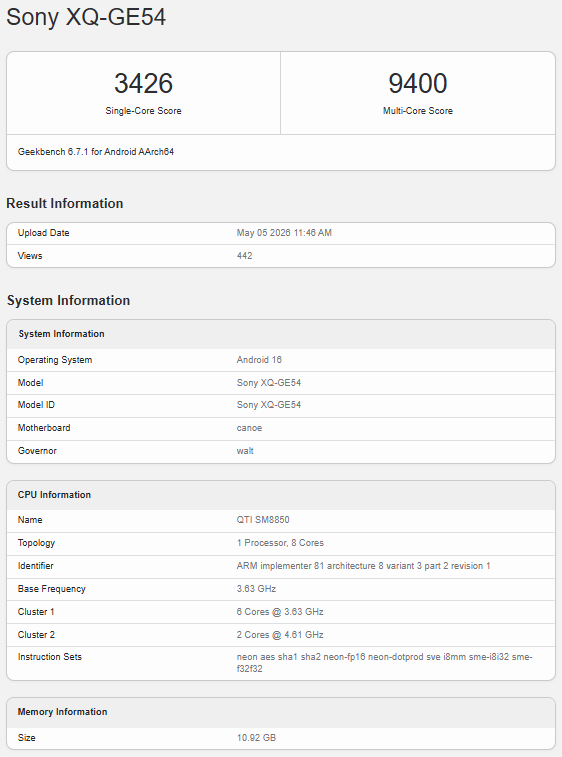
Outside the camera system, benchmark listings show the Xperia 1 VIII (Sony XQ-GE54) running Qualcomm’s Snapdragon 8 Elite Gen 5 chip paired with 12GB RAM. Geekbench scores floating around online point to flagship-level performance.

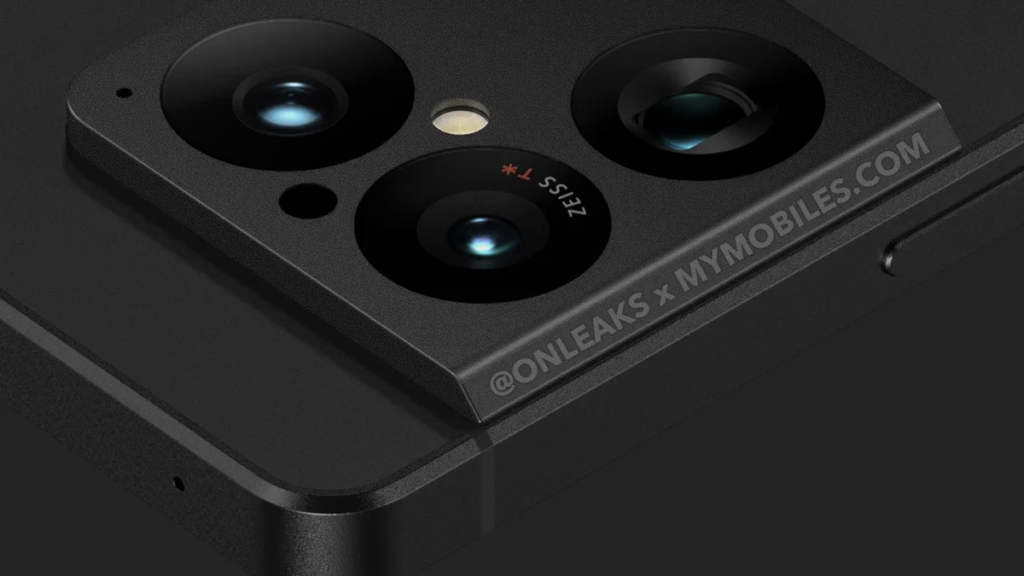
There also seem to be a few design tweaks this time around, including what looks like a more squared-off camera module. At the same time, Sony is apparently keeping some of the things Xperia fans tend to care about, including the 3.5mm headphone jack and the tall cinematic-style display.

Nothing is official yet, but the overall direction is becoming clearer. Sony doesn’t seem interested in chasing the highest zoom numbers anymore. Instead, it looks like the company is trying to improve the kind of shots people take most often, while still keeping that enthusiast-focused Xperia identity intact.

Don’t miss a thing! Join our Telegram community for instant updates and grab our free daily newsletter for the best tech stories!

For more daily updates, please visit our News Section.

(Sources: 1, 2, 3)

The post Sony Xperia 1 VIII Amazon listing, Geekbench reveals specs ahead of June 26 launch appeared first on Gizmochina.

Poco C Pad surfaces in FCC listing ahead of global launch

Xiaomi seems to be getting ready to bring another budget tablet to more markets, this time under the Poco brand. A new FCC listing has revealed details of what is expected to launch as the Poco C Pad.

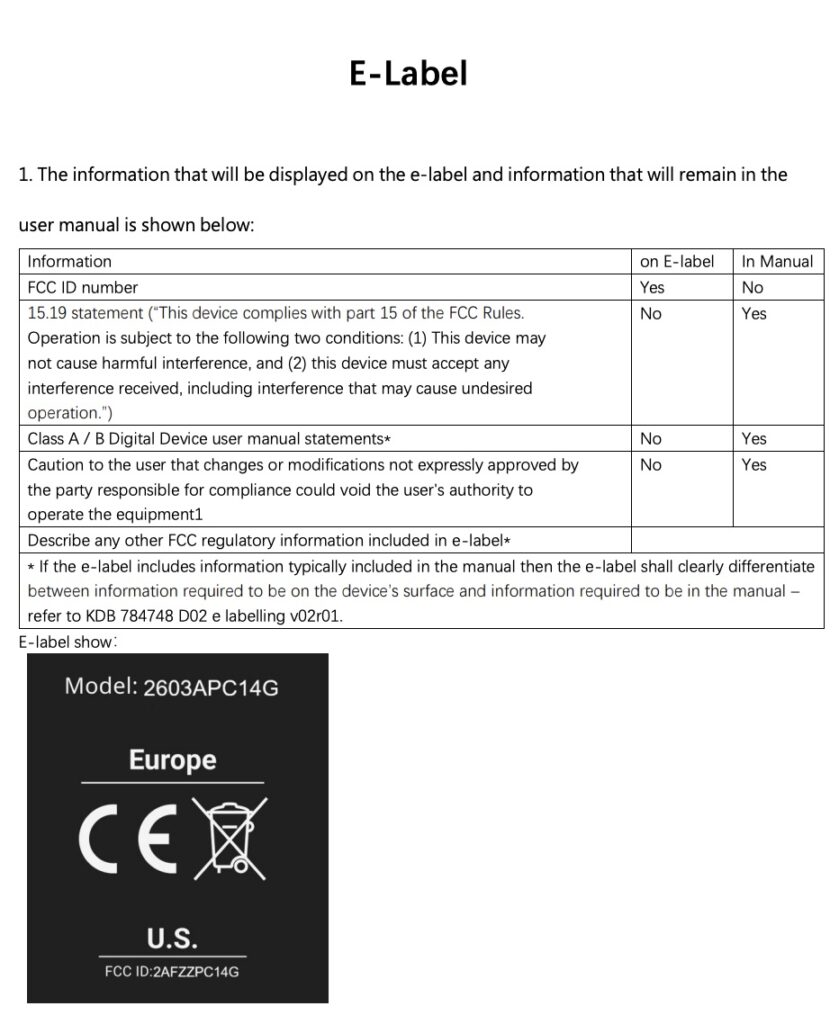
The tablet showed up in the FCC database with model number 2603APC14G. The filing itself does not mention the Poco C Pad name, but the same model number has already been linked to it through Xiaomi’s HyperOS code. The listing also confirms support for 18W charging, though it looks like a charger may not be included in the box.

One small detail that stands out is the color options. The device is listed in Pantone finishes, including Cool Gray and Red. It adds a bit of personality to what is otherwise a fairly straightforward tablet.

In terms of hardware, this is not entirely new. The Poco C Pad is expected to be a rebranded version of the Redmi Pad 2 9.7, which Xiaomi launched recently in some markets. So the overall experience should be quite similar.

That means a 9.7-inch LCD display with a 2K resolution and a 120Hz refresh rate, along with a slim metal body that keeps things relatively light at just 401 grams. Under the hood, it is powered by the Snapdragon 6s Gen 2 4G processor, paired with up to 4GB of RAM and 128GB of storage, expandable via microSD.

The rest of the setup is fairly standard. You get an 8MP rear camera, a 5MP front camera, dual speakers, a headphone jack, and optional 4G connectivity. Nothing flashy, but enough for everyday use. The tablet packs a 7,600mAh battery, which Xiaomi claims can last well over a day on mixed usage. It runs HyperOS 3 based on Android 16, with features like cross-device integration and some AI-assisted tools built in.

Pricing should stay on the lower side. In markets like Malaysia, the Redmi version starts at around RM560, which is equivalent to US$140. Prices may vary across regions, but it should stay in a similar range.

With certification already in place, an official announcement does not seem too far away.

Don’t miss a thing! Join our Telegram community for instant updates and grab our free daily newsletter for the best tech stories!

For more daily updates, please visit our News Section.

(Sources: FCC | Xiaomi)

The post Poco C Pad surfaces in FCC listing ahead of global launch appeared first on Gizmochina.
Samsung raises prices of several Galaxy M and F series phones

Samsung has quietly increased prices for a bunch of its budget and mid-range Galaxy phones in India, and this is not the first time this year. The latest revision, which took effect in early May 2026, marks the sixth price hike so far in 2026.

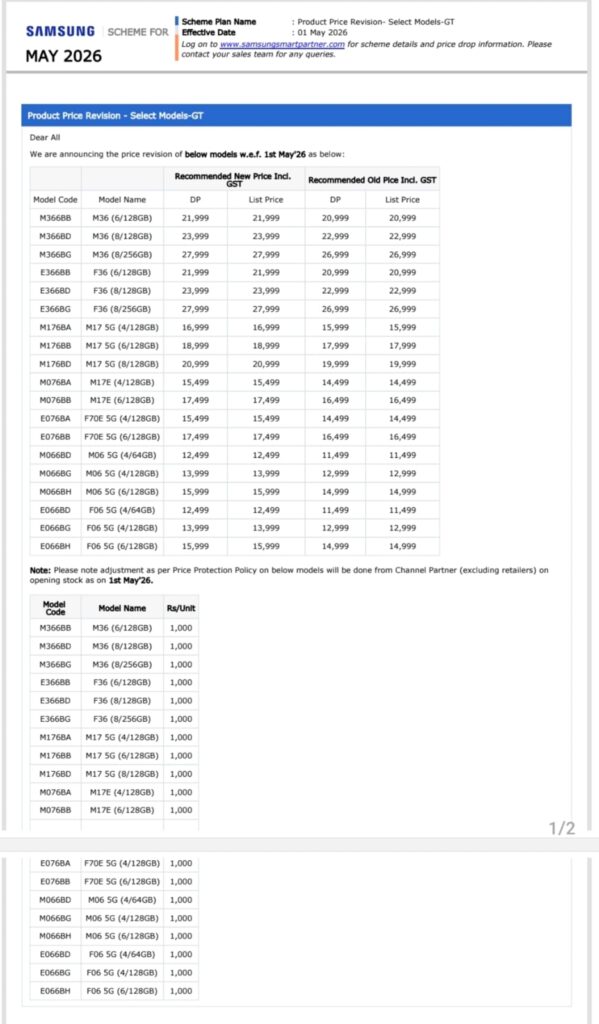
This time, the increase hits models across the M and F series, including the Galaxy F06, F36, F70e, M06, M17e, M17, and M36. Based on updated listings on Samsung’s official website, most variants have gone up by a flat ₹1,000.

The change was first pointed out by tipster Abhishek Yadav on X, who shared what looks like internal communication sent to retailers.

For the more affordable models like the Galaxy F06 and M06, prices now start at ₹12,499 for the 4GB/64GB variant, going up to ₹15,999 for the 6GB/128GB version. For context, the 4GB/128GB version of the Galaxy F06 was priced at ₹9,999 at launch and now stands at ₹13,999.

The F36 and M36 series now sit between ₹21,999 and ₹27,999 depending on the configuration. Mid-tier options like the F70e and M17e have also seen a similar ₹1,000 bump across variants, while the Galaxy M17 lineup now starts at ₹16,999 and goes up to ₹20,999.

Samsung has not officially explained the reason behind the repeated increases, but the broader industry trend gives some context. Component prices, especially memory and storage, have been climbing due to demand from AI infrastructure and data centers, and that shift seems to be trickling down to consumer devices.

What stands out is how frequent these adjustments have been. Samsung has been revising prices almost every month this year, and while ₹1,000 might not sound like much to some buyers, it starts to add up over multiple hikes.

Seasonal sales on platforms like Amazon and Flipkart could offset some of the increase, depending on discounts and exchange offers. So the actual street price may still look reasonable in some cases. Still, if this trend continues, these phones are slowly drifting away from their original “budget” positioning.

Don’t miss a thing! Join our Telegram community for instant updates and grab our free daily newsletter for the best tech stories!

For more daily updates, please visit our News Section.

(Sources: 1, 2)

The post Samsung raises prices of several Galaxy M and F series phones appeared first on Gizmochina.
❌