Reading view

DJI Osmo Pocket 4P global launch confirmed; design official
DJI is preparing to take the Pocket series in a slightly different direction this year. After several teasers on Chinese social media, the company has now confirmed that the upcoming Osmo Pocket 4P, sometimes shortened to Pocket 4 Pro, will launch globally. And unlike previous Pocket models, this one is focusing heavily on zoom and more flexible shooting options.
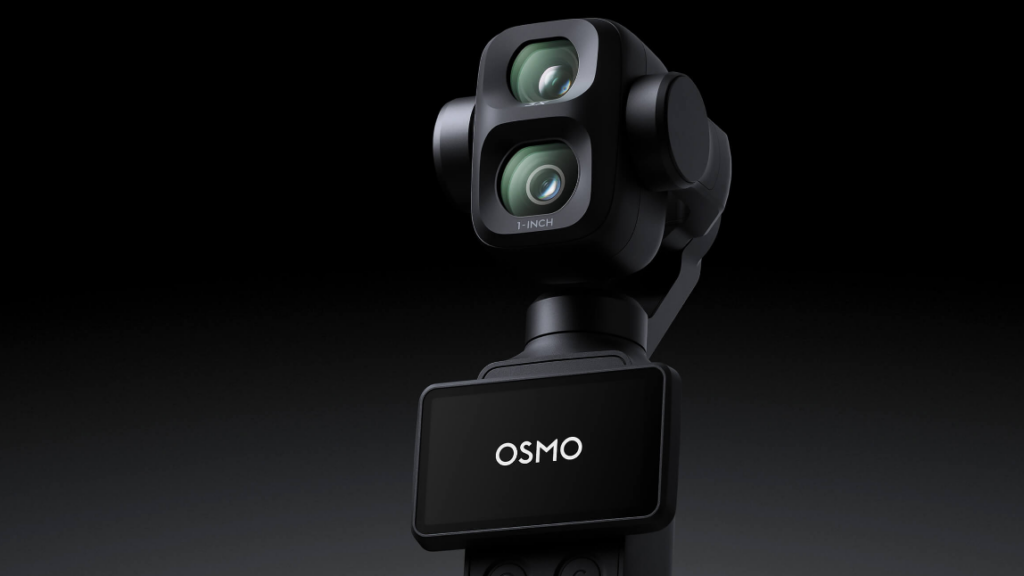
The biggest addition is a dedicated telephoto camera

The Pocket 4P keeps the same 1-inch primary sensor introduced on the standard Osmo Pocket 4, but adds a secondary 3x telephoto lens to the setup. That may not sound revolutionary on paper, but for a compact gimbal camera like this, it’s actually a pretty meaningful change.

One of the biggest limitations of previous Pocket models was that everything had to be shot through a single wide-angle lens. It worked well for vlogging, but portraits, tighter framing, and cinematic shots often relied heavily on digital zoom or cropping. The new telephoto camera changes that.

Early hands-on clips from China suggest the telephoto lens sits around a 70mm equivalent focal length and may use a fairly large 1/1.5-inch sensor. Reports also mention up to 6x “lossless” zoom and 12x maximum zoom overall, which should make the camera much more versatile for travel videos, interviews, and street-style shooting.

Outside of the second camera, the Pocket 4P seems to build directly on the standard Pocket 4. That model already introduced a few major upgrades compared to the Pocket 3, including 240fps recording at 4K, upgraded ActiveTrack, and a brighter rotating display. The upcoming Pocket 4P keeps all of that while adding the extra telephoto hardware. And of course, the signature 3-axis mechanical gimbal is still here, which remains one of the biggest reasons people buy Pocket cameras in the first place.

DJI has been teasing the device with the slogan “See More, Tell More,” which is honestly a pretty accurate summary of what this model seems designed for.

The rollout appears to start in China before expanding globally later. DJI pages for the device have already surfaced in markets like Canada and Mexico. Availability in the US is less clear, though. Similar to some recent DJI products, the Pocket 4P is reportedly facing regulatory hurdles tied to FCC authorization, and at least for now, it doesn’t appear on DJI’s US website.

Don’t miss a thing! Join our Telegram community for instant updates and grab our free daily newsletter for the best tech stories!

For more daily updates, please visit our News Section.

(Source: DJI)

The post DJI Osmo Pocket 4P global launch confirmed; design official appeared first on Gizmochina.
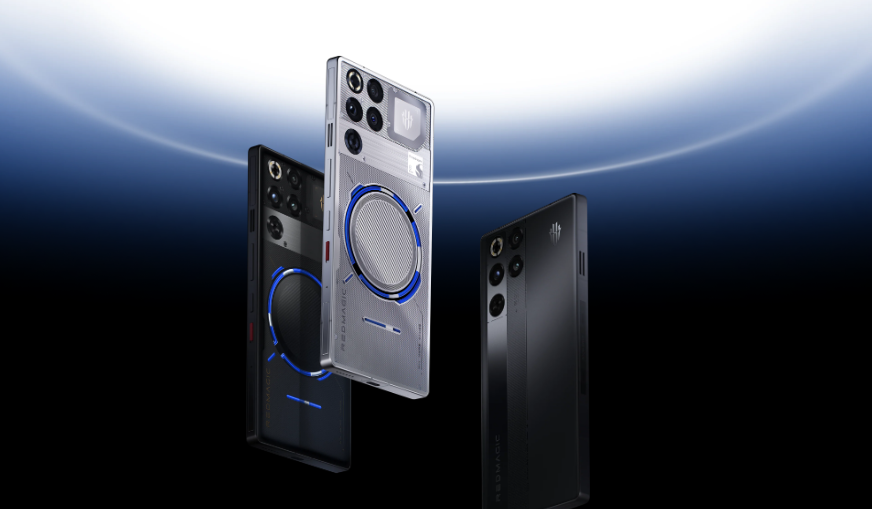
RedMagic 11S Pro confirmed for May 18 launch with overclocked Snapdragon 8 Elite Gen 5, 2K+144FPS gaming

RedMagic has officially locked in May 18 for the launch of the RedMagic 11S Pro, and based on the early teasers, the company is doing what it usually does best: pushing mobile hardware as hard as possible.

The teaser itself talks a lot about overclocking, which is basically RedMagic hinting that this won’t be a standard Snapdragon implementation. The Snapdragon 8 Elite Gen 5 “Leading Version” is a slightly boosted variant similar to the special “for Galaxy” chips Samsung uses in its flagships.

According to RedMagic, the chips go through three separate rounds of testing before qualifying for the “Leading Version” label. One of those tests involves running at extremely high clock speeds, and only chips capable of maintaining stable operation at 4.74GHz make it to the next stage.

From there, the selected chips are pushed through additional voltage and frequency stress testing under extreme conditions to evaluate stability, heat, and power efficiency. In simple terms, RedMagic is essentially binning the best-performing Snapdragon 8 Elite Gen 5 chips for the 11S Pro.

For context, most Snapdragon 8 Elite Gen 5 phones so far, including devices from Xiaomi, iQOO, and OnePlus, top out at 4.61GHz. Then there’s the software tuning side of things, which tends to be more conservative on mainstream flagships like Samsung’s Galaxy S26 Ultra.

The end result, at least according to RedMagic’s teaser material, is a phone capable of running over 200 supported games at up to 2K resolution and 144fps, including titles like Call of Duty and “Break Through the Dark Zone.” The company also mentions support for resolution upscaling and frame interpolation during gameplay.

Of course, higher clocks don’t automatically mean better gaming experience. Sustained performance matters more, and that’s usually where RedMagic tries to separate itself. The company has spent the last few generations aggressively experimenting with vapor chambers, internal fans, liquid cooling, basically anything that helps keep the chip running harder for longer. The 11S Pro is expected to continue that trend.

The RedMagic 11s Pro is set to launch on May 18 in China.

RedMagic is also launching a new gaming tablet, the Gaming Tablet 5 Pro, which is expected to feature a compact 9-inch OLED display with a very high refresh rate, reportedly up to 185Hz. It’s also tipped to use the same Snapdragon 8 Elite Gen 5 platform, paired with up to 24GB RAM and 1TB storage depending on the version.

Don’t miss a thing! Join our Telegram community for instant updates and grab our free daily newsletter for the best tech stories!

For more daily updates, please visit our News Section.

(Sources: 1, 2, 3)

The post RedMagic 11S Pro confirmed for May 18 launch with overclocked Snapdragon 8 Elite Gen 5, 2K+144FPS gaming appeared first on Gizmochina.

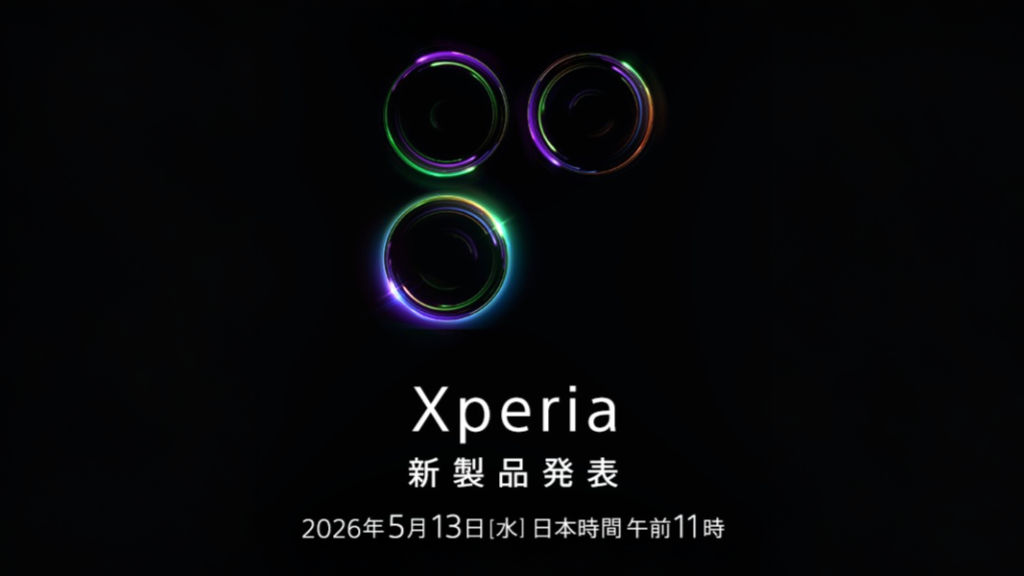
Sony Xperia 1 VIII teaser confirms camera layout, May 13 launch date

Sony has officially confirmed a launch event for May 13, and all signs point toward the company unveiling the Xperia 1 VIII. The teaser highlights the rear camera layout, which lines up with recent leaks showing a noticeable redesign compared to older Xperia models.

For years, Sony has mostly stuck to the same vertical camera layout on the Xperia 1 series. This time, though, the company appears to be moving toward a more modern square-shaped camera module. At the same time, Sony doesn’t seem interested in abandoning the things Xperia fans actually buy these phones for.

The Xperia 1 VIII is still expected to focus heavily on manual camera controls and creator-focused hardware rather than chasing mainstream trends. Leaks suggest the phone will feature a 6.5-inch 120Hz OLED panel with FHD+ HDR support, alongside Qualcomm’s Snapdragon 8 Elite Gen 5 chip and 12GB RAM. Color options are also expected to expand a bit this year, with reports mentioning Graphite Black, Iolite Silver, Garnet Red, and Native Gold variants.

Cameras remain the bigger talking point

Sony is reportedly changing direction with the telephoto system on this generation. Instead of continuing with the variable continuous zoom setup found on the Xperia 1 VII, the new model is expected to use a fixed 3x optical zoom periscope camera with a 48MP 1/1.56-inch sensor. The predecessor, in comparison, packs a much smaller 12MP sensor. On paper, that may sound like a downgrade in flexibility, but the larger sensor could improve detail, low-light performance, and image consistency in the zoom ranges people actually use most often.

The rest of the rear camera setup is rumored to include two additional 48MP sensors for the main and ultra-wide cameras. Selfies could once again be handled by a 12MP front-facing sensor, just like last year. Battery capacity is rumored to sit around the 5,000mAh mark, with IP68 water resistance also likely making a return.

Some early Amazon listings, which were later removed, hinted at European pricing above €1,800 and a release window sometime in June. For now, though, the bigger story is the redesign itself. Sony seems to be modernizing the Xperia look.

Don’t miss a thing! Join our Telegram community for instant updates and grab our free daily newsletter for the best tech stories!

For more daily updates, please visit our News Section.

(Source)

The post Sony Xperia 1 VIII teaser confirms camera layout, May 13 launch date appeared first on Gizmochina.
Vivo X500, X500 Pro, and X500e already spotted in IMEI listing

Vivo’s next flagship lineup is starting to show up online. Fresh entries spotted in the GSMA IMEI database have now confirmed the existence of the Vivo X500, X500 Pro, and X500e. That also means Vivo appears to be skipping the X400 branding entirely.

The listings suggest the phones are moving closer to launch and international certification. Leaks surrounding the lineup point toward Vivo continuing its usual formula: strong cameras, premium displays, and a heavy focus on imaging features.

The standard X500 is rumored to feature a 6.37-inch display, while the X500 Pro could use a 6.83-inch 2K LTPO OLED panel with high refresh rates. That would make both devices slightly larger than last year’s X300 (6.31-inch) and X300 Pro (6.78-inch). The lineup is expected to retain the ultrasonic in-display fingerprint sensors.

On the chipset side, Vivo is reportedly sticking with MediaTek again. Early reports suggest the series could debut the Dimensity 9600 family, which is expected to use TSMC’s newer 2nm process. If that ends up being accurate, efficiency and sustained performance could see a pretty noticeable jump compared to current-generation chips.

Cameras, unsurprisingly, remain the bigger talking point. The Pro models are rumored to feature newer LOFIC sensor technology, which is designed to improve highlight handling and dynamic range in difficult lighting conditions. There’s also talk of a 200MP periscope telephoto camera, something Vivo has been gradually pushing toward over the last few generations.

Nothing here is official yet, but the IMEI listings are usually a good sign that development is moving along steadily. Vivo is expected to unveil the X500 lineup in China sometime around September or October before expanding availability to other regions later on. For now, though, the X500 series already looks like Vivo doubling down on the areas it’s become known for: cameras, battery life, and increasingly ambitious hardware.

Don’t miss a thing! Join our Telegram community for instant updates and grab our free daily newsletter for the best tech stories!

For more daily updates, please visit our News Section.

(Source)

The post Vivo X500, X500 Pro, and X500e already spotted in IMEI listing appeared first on Gizmochina.
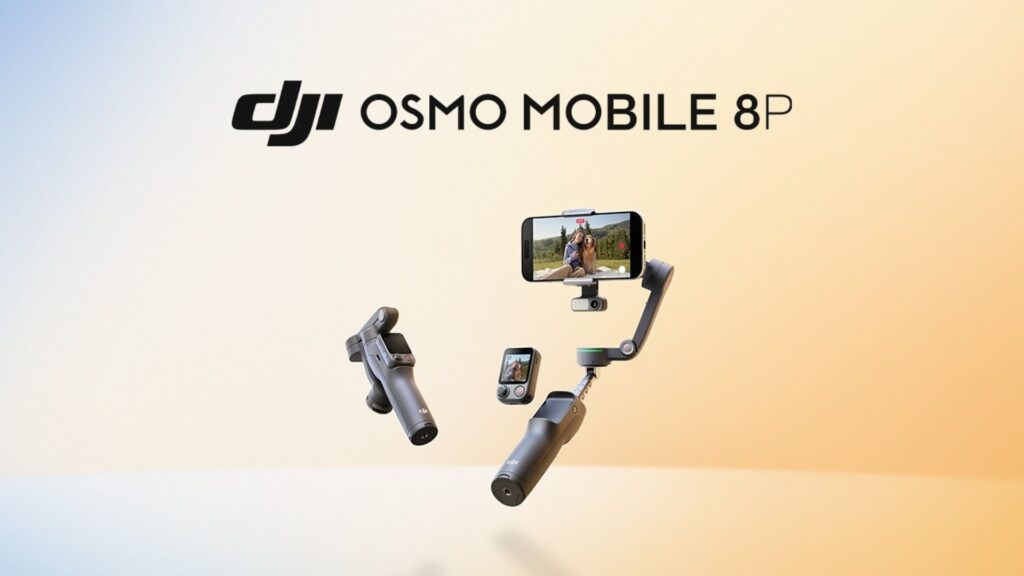
DJI Osmo Mobile 8P goes global with detachable controller

DJI has officially launched the Osmo Mobile 8P globally, and this time, the biggest upgrade is the new detachable remote. Announced on May 7, the Osmo Mobile 8P builds on the previous model with better tracking and a few smarter shooting tools, but the main focus is clearly giving solo creators more control when filming themselves.

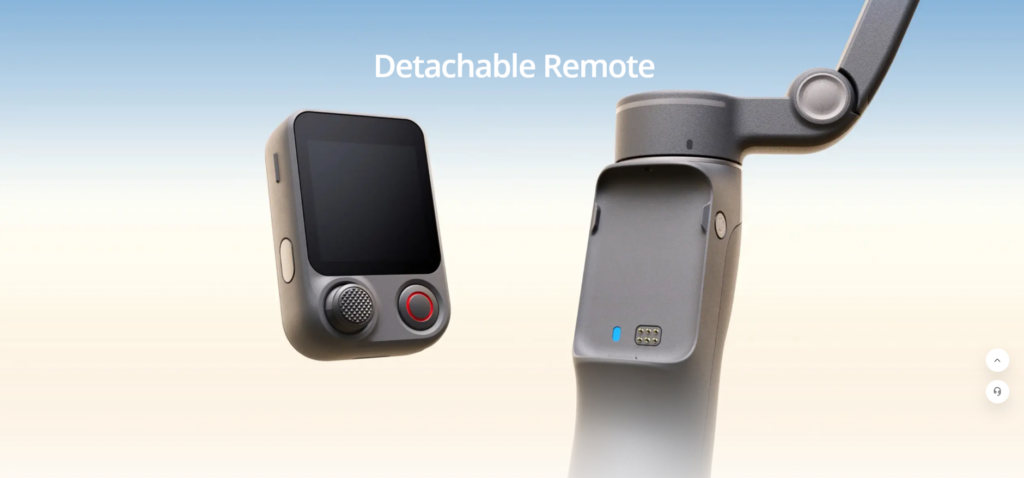
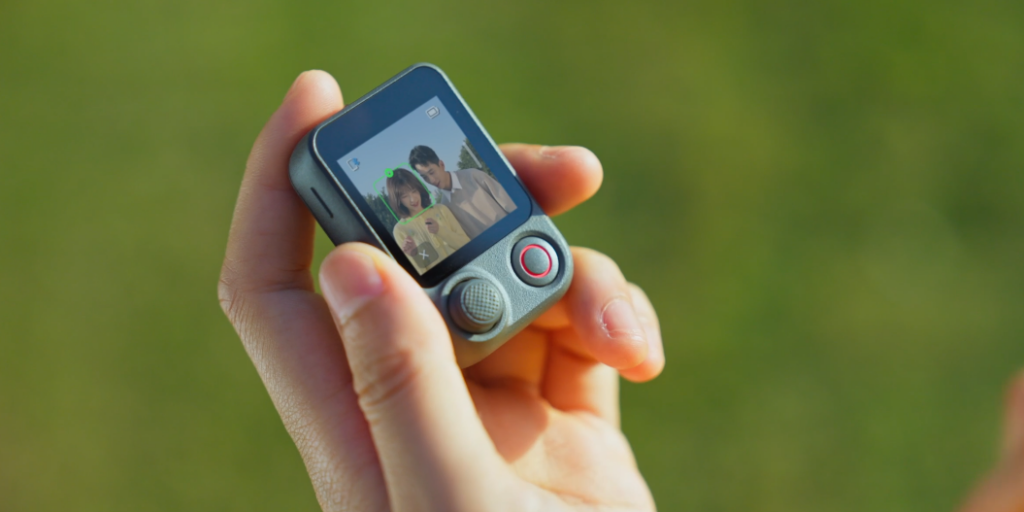
The new remote, called Osmo FrameTap, comes bundled with every version of the gimbal. It’s a small magnetic touchscreen controller weighing around 29g, and it connects over Bluetooth with a range of up to 10 meters.

What makes it interesting is that it can display a live preview from the connected phone, letting users adjust framing remotely instead of constantly walking back to check shots. You can switch tracking subjects, control zoom and gimbal movement through an on-screen joystick, and even tweak fill light settings directly from the remote.

For Android users, DJI is also supporting direct phone screen mirroring on the controller itself. In practical terms, it means creators can use the rear camera for selfies or position the phone farther away while still keeping control of the shot. That kind of setup usually requires much more expensive gear, so it’s a fairly useful addition for vloggers and solo shooting.

Tracking has also been upgraded. DJI says the new ActiveTrack 8.0 system handles crowded environments more reliably, even when subjects move quickly or get briefly blocked from view. The optional Multifunctional Module 2 takes things further by expanding tracking beyond humans and pets to objects like vehicles or landmarks.

For iPhone users, there’s also Apple DockKit support, which allows native tracking directly inside compatible apps including the stock Camera app, YouTube, and Blackmagic Camera.

Outside of the new remote features, the Osmo Mobile 8P keeps most of the things people already expect from DJI’s smartphone gimbals. You still get 3-axis stabilization, a built-in extension rod, foldable tripod, and up to 10 hours of battery life under certain conditions.

The DJI Mimo app also adds a few extra shooting modes like DynamicZoom, Slow Shutter, and Action Shot, alongside 360-degree spin support for more stylized clips.

Pricing and availability

Pricing starts at €159 for the standard bundle, while higher-end kits with the Multifunctional Module 2 and microphone accessories go up to €219. One thing worth noting is that, similar to the previous generation, the Osmo Mobile 8P isn’t launching in the US.

DJI

The post DJI Osmo Mobile 8P goes global with detachable controller appeared first on Gizmochina.
DJI ROMO 2 robot vacuum confirmed to launch on May 11

DJI ROMO Robot Vacuum

DJI is getting ready to launch its next robot vacuum, the ROMO 2, on May 11. The biggest hints so far revolve around navigation and low-clearance cleaning.

An official teaser video suggests the ROMO 2 can slide under beds and sofas with very little space underneath, something many robot vacuums still struggle with. Another teaser suggests the vacuum can move around objects placed on the floor, without bumping into them. That likely points to improvements in obstacle detection and movement precision.

DJI ROMO Robot Vacuum

There are also hints at better mopping performance this time around, including quicker floor drying after cleaning, though DJI hasn’t officially detailed how that system works yet. For context, DJI only entered the robot vacuum space relatively recently with the first-generation ROMO lineup, which launched in China last year. Unsurprisingly, the company leaned heavily on its drone experience for things like navigation and sensing.

The original ROMO models used a combination of dual fisheye cameras and solid-state LiDAR for mapping and obstacle avoidance, helping them move through crowded spaces with very little manual intervention. Some versions even came with transparent design elements, giving them a more futuristic look than most robot vacuums on the market.

On the cleaning side, DJI advertised suction power up to 25,000Pa, alongside dual robotic arms for edge cleaning and anti-tangle roller brushes aimed at handling long hair more effectively. The docking station was also fairly ambitious, supporting self-cleaning and long maintenance intervals of up to 200 days. The ROMO 2 will likely build on most of that rather than completely changing direction.

At this point, full specs are still under wraps, but the quick follow-up launch suggests DJI is moving aggressively in this category. The company is clearly trying to position itself against established names like Roborock and Ecovacs, especially in the premium smart cleaning segment.

As usual, China will probably get the device first, with wider availability coming later if DJI follows the same rollout strategy as before.

Don’t miss a thing! Join our Telegram community for instant updates and grab our free daily newsletter for the best tech stories!

For more daily updates, please visit our News Section.

Sources: DJI on Weibo (1), (2)

The post DJI ROMO 2 robot vacuum confirmed to launch on May 11 appeared first on Gizmochina.

iQOO Z11 launches globally with Snapdragon 7s Gen 4, massive 9020mAh battery, 144Hz display

iQOO has officially launched the new Z11 and Z11x in Malaysia, bringing the standard model outside China for the first time. And looking at the specs, battery life is very clearly the main focus here.

iQOO Z11 specifications:

The regular iQOO Z11 is the more premium of the two, and honestly, the first thing most people will notice is the massive 9,020mAh battery. That’s unusually large even by current standards. What’s interesting is that iQOO still managed to keep the phone relatively slim at 8.25mm and reasonably manageable at 213g. Charging goes up to 90W, and there are a few extra battery-related features as well, including bypass charging and long-term battery health protection.

The phone also gets a large 6.83-inch AMOLED display with 1.5K resolution and a 144Hz refresh rate. Brightness can apparently hit 5,000 nits in certain conditions, though as usual, that number likely applies to small HDR highlights rather than full-screen use.

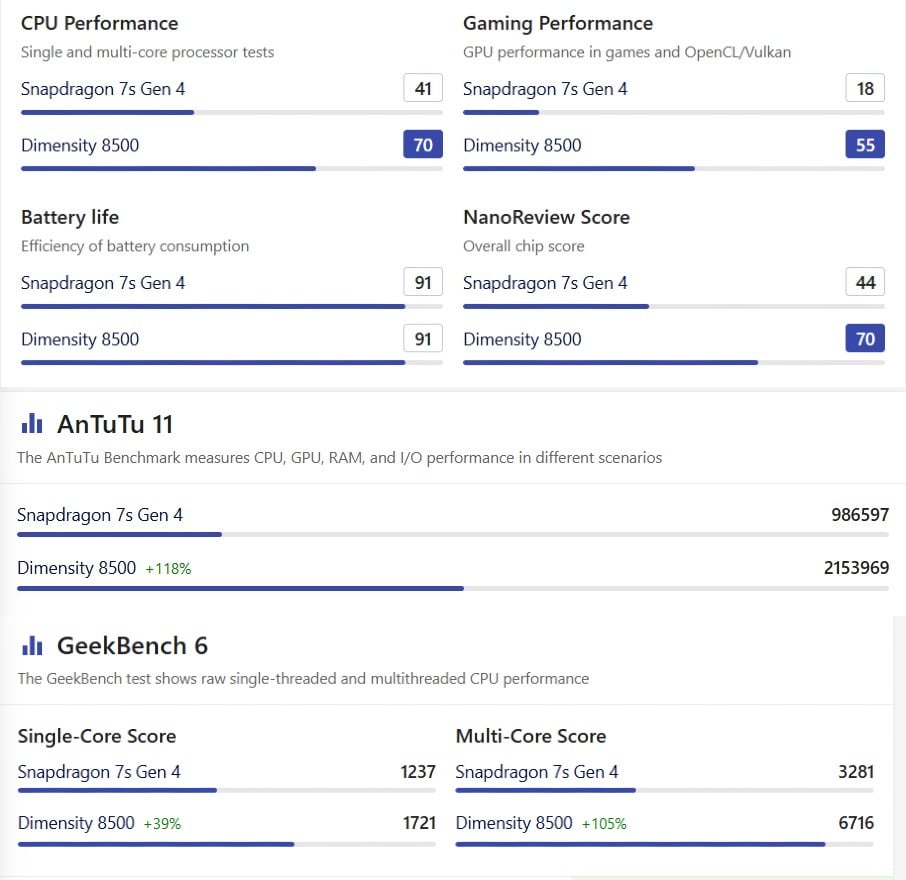
Under the hood is Qualcomm’s Snapdragon 7s Gen 4 chip, replacing the Dimensity 8500 used in the Chinese variant, paired with up to 12GB RAM and 256GB storage. Benchmark comparisons from NanoReview suggest the Dimensity 8500 delivers noticeably stronger CPU and GPU performance.

iQOO is also using a fairly large vapor chamber cooling setup here, likely because the phone is being positioned partly toward mobile gamers. The cameras are decent on paper, though clearly not the main selling point. You get a 50MP Sony IMX882 primary camera, a 2MP depth sensor, and a 32MP front camera with 4K recording support.

iQOO Z11x specifications:

The Z11x sits lower in the lineup but keeps a surprisingly similar overall approach. It swaps the AMOLED panel for a 6.76-inch LCD display with a 120Hz refresh rate and uses MediaTek’s Dimensity 7400-Turbo chipset instead. Battery capacity drops to 7,200mAh, though that’s still a large capacity for a smartphone in 2026.

Charging is reduced to 44W, but the phone still keeps the IP68 and IP69 ratings. Camera hardware includes a 50MP Sony IMX852 main sensor, a 2MP depth camera, and a 32MP selfie shooter.

Pricing and availability:

Pricing in Malaysia for the standard Z11 starts at RM1,899 for the 8GB + 256GB version, while the 12GB + 256GB model is priced at RM2,199. The Z11x starts at RM1,299 for the 8GB + 128GB variant, while the 256GB version comes in at RM1,599.

Both phones are already available through the company’s official website in Malaysia. As part of a limited 10-day launch offer, the base variants are currently discounted to RM1,599 for the Z11 and RM1,099 for the Z11x.

Don’t miss a thing! Join our Telegram community for instant updates and grab our free daily newsletter for the best tech stories!

For more daily updates, please visit our News Section.

(Sources: iQOO Z11 | iQOO Z11x)

The post iQOO Z11 launches globally with Snapdragon 7s Gen 4, massive 9020mAh battery, 144Hz display appeared first on Gizmochina.

Realme 16x clears India’s BIS certification ahead of launch

Realme looks set to add another model to its growing 16 series lineup in India. The upcoming Realme 16x has now surfaced on the BIS certification website, which usually means an official launch isn’t too far away.

The certification was reportedly approved on May 6, 2026, suggesting Realme is already wrapping up regulatory formalities for the Indian market. Tipster Abhishek Yadav also recently mentioned the Realme 16x on X, claiming the phone will launch soon in India. According to the leak, the device could arrive in two color options: Endurance Brown and Glory White.

Storage variants are expected to include:

4GB + 128GB

6GB + 128GB

6GB + 256GB

That setup makes it pretty clear Realme is targeting the affordable 5G segment again. The phone is expected to succeed the Realme 15x 5G, which launched last year with a starting price of ₹16,999 for the 6GB+128GB variant. The 8GB + 128GB and 8GB + 256GB configurations were priced at ₹17,999 and ₹19,999, respectively.

That phone focused heavily on battery life and everyday performance, offering a 144Hz display, 6-nm based Dimensity 6300 mid-range chipset, and a large 7,000mAh battery with 60W charging.

At the moment, specs for the new model are still under wraps, but the overall positioning likely won’t change too much. Expect the Realme 16x to land somewhere in the ₹15,000 to ₹18,000 range, competing with the usual crowd of budget 5G phones.

It’ll also expand the broader Realme 16 lineup, which already includes the standard Realme 16, Realme 16 Pro, and Realme 16 Pro Plus.

With the BIS certification now live, an official announcement could happen within the next few weeks. And considering how competitive the affordable 5G segment has become in India, Realme will probably continue focusing on the same formula that worked well before: big batteries, high refresh rate displays, and decent day-to-day performance.

Don’t miss a thing! Join our Telegram community for instant updates and grab our free daily newsletter for the best tech stories!

For more daily updates, please visit our News Section.

(Sources: 1, 2)

The post Realme 16x clears India’s BIS certification ahead of launch appeared first on Gizmochina.

❌