Reading view

Motorola Edge 70 Pro vs Google Pixel 10a: The Winner Is Surprisingly Cheaper
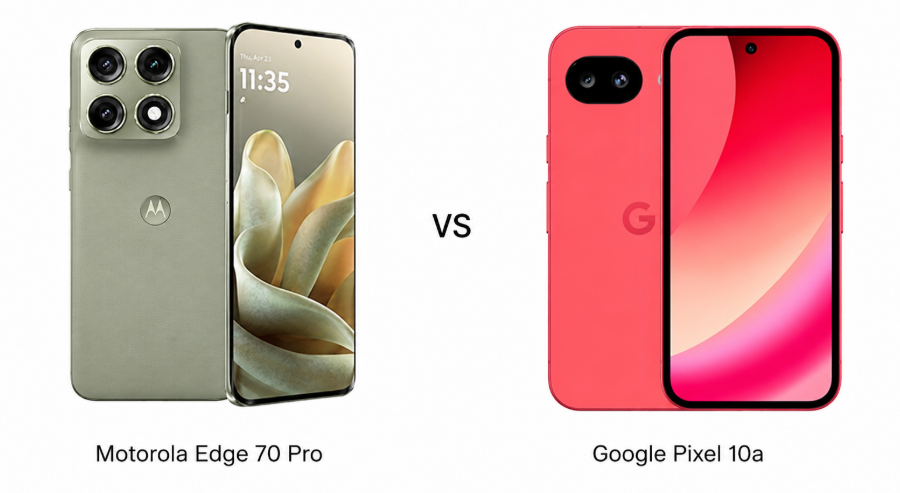
motorola vs google

Motorola Edge 70 Pro and Google Pixel 10a target buyers looking for a premium smartphone experience without stepping into flagship pricing. While Motorola focuses on high-end hardware, fast charging, and versatile cameras, Google leans heavily on software optimization, long-term support, and computational photography. Choosing between them comes down to whether hardware advantages or software refinement matters more in daily use.
Major Features:

CategoryMotorola Edge 70 ProGoogle Pixel 10aWinner
DesignEco-leather back, IP68/IP69, MIL-STD-810HAluminum frame, IP68Motorola – More premium and durable build
Display6.78-inch AMOLED, 144Hz, 5200 nits6.3-inch P-OLED, 120Hz, 3000 nitsMotorola – Smoother and brighter display
Resolution1272 × 2772, 450 ppi1080 × 2424, 422 ppiMotorola – Sharper panel
ProcessorDimensity 8500 ExtremeTensor G4Motorola – Stronger raw performance
RAM & StorageUp to 12GB RAM, UFS 4.18GB RAM, UFS 3.1Motorola – Faster storage and more memory
Software Support3 Android upgrades7 Android upgradesPixel – Much longer software support
Main Camera50MP OIS48MP OISPixel – Superior image processing
Ultrawide Camera50MP13MPMotorola – Higher-resolution ultrawide
Telephoto Camera50MP periscope, 3.5x zoomNoneMotorola – Dedicated optical zoom
Selfie Camera50MP AF13MPMotorola – Higher detail and autofocus
Video RecordingUp to 4K 120fpsUp to 4K 60fpsMotorola – More advanced video options
Battery6500mAh5100mAhMotorola – Larger battery
Charging90W wired, 15W wireless30W wired, 10W wirelessMotorola – Much faster charging
ConnectivityWi-Fi 7, Bluetooth 5.4Wi-Fi 6E, Bluetooth 6.0Motorola – Wi-Fi 7 support
Extra FeaturesReverse wireless charging, Smart ConnectSatellite SOS, Pixel AI featuresTie – Different strengths
PriceAround $400 / ₹39,000Around $500 / ₹50,000Motorola – Better value
Disclaimer: Specs are based on available data. Actual performance may vary. Verify details from official sources before buying.

Design and Display

Build and Feel

The Motorola Edge 70 Pro delivers a more premium appearance with its eco-leather rear panel, slim profile, and IP68/IP69 protection. It also carries MIL-STD-810H certification, adding an extra layer of durability for users who spend time outdoors. The design feels modern and stylish while remaining practical for everyday handling.

The Google Pixel 10a takes a more straightforward approach with an aluminum frame and plastic back. Its build quality remains solid, and the IP68 rating ensures reliable protection against water and dust. The compact form factor makes it easier to use with one hand, which many users may prefer for daily convenience.

Display Quality

Motorola clearly prioritizes display specifications. Its 6.78-inch AMOLED panel supports a 144Hz refresh rate, HDR content, and an extremely bright 5200-nit peak brightness. The higher resolution and smoother refresh rate create a more immersive experience for gaming and media consumption.

Google’s 6.3-inch P-OLED display offers excellent color accuracy and HDR support with a 120Hz refresh rate. While not as impressive on paper, Google’s display tuning is known for delivering a natural and consistent viewing experience.

Verdict

The Pixel 10a wins for compact usability, but the Edge 70 Pro offers the more impressive overall package thanks to its premium finish, stronger durability credentials, larger screen, higher resolution, and significantly superior display specifications.

Specifications Including Battery

Performance

The Motorola Edge 70 Pro is powered by the MediaTek Dimensity 8500 Extreme paired with UFS 4.1 storage and up to 12GB RAM. The combination delivers excellent responsiveness, faster app loading, and stronger multitasking capabilities. Users who frequently game or run demanding applications will appreciate the additional performance headroom.

Google’s Tensor G4 focuses more on AI-driven experiences than raw speed. Every day performance remains smooth, and Google’s software optimization keeps the interface fluid. However, UFS 3.1 storage and lower memory options place it behind Motorola in pure hardware capability.

Battery and Charging

Battery life is a major strength for Motorola. The 6500mAh battery is among the largest in the segment and is paired with ultra-fast 90W wired charging, along with wireless and reverse wireless charging support.

The Pixel 10a’s 5100mAh battery remains respectable and should comfortably last a full day. However, its 30W charging feels considerably slower compared to Motorola’s solution.

Verdict

The Edge 70 Pro takes a clear lead in specifications. Faster storage, more memory options, stronger performance potential, a larger battery, and dramatically faster charging make it a more capable hardware-focused smartphone.

Camera

Main and Secondary Lenses

Motorola equips the Edge 70 Pro with an unusually versatile triple-camera setup consisting of 50MP wide, 50MP ultrawide, and 50MP periscope telephoto cameras with 3.5x optical zoom. The inclusion of a dedicated telephoto lens significantly expands shooting flexibility, especially for portraits and distant subjects. Video recording is also impressive with support for 4K at up to 120fps.

The Pixel 10a relies on a dual-camera system featuring a 48MP main camera and a 13MP ultrawide sensor. While the hardware appears less ambitious, Google’s image processing remains one of the strongest in the industry. Features such as Best Take, Ultra HDR, and Pixel Shift help produce consistently excellent photos.

Selfie Camera

Motorola’s 50MP autofocus selfie camera offers higher resolution and greater versatility. It is particularly useful for detailed selfies and video calls.

Google’s 13MP ultrawide selfie camera provides a wider field of view, making group selfies easier, though image detail is lower.

Verdict

The Edge 70 Pro wins on hardware versatility and zoom capability, while the Pixel 10a remains highly competitive through software processing. Users seeking maximum camera flexibility will likely find Motorola more appealing.

Pricing

The Motorola Edge 70 Pro is priced around $400 (₹39,000), while the Google Pixel 10a is priced around $500 (₹50,000). This creates a noticeable price gap of roughly $100 or ₹11,000 between the two devices.

At its price point, Motorola delivers flagship-style features such as a 144Hz display, periscope telephoto camera, 6500mAh battery, 90W charging, UFS 4.1 storage, and wireless charging. The specification sheet feels unusually generous for the segment and competes with devices that often cost considerably more.

Google’s higher price is largely justified by its software strengths. Buyers receive seven years of Android upgrades, exclusive Pixel AI features, strong camera processing, and a clean Android experience. These advantages may hold long-term value for users who keep phones for many years.

Verdict

From a pure value-for-money perspective, the Edge 70 Pro delivers more hardware for less money. The Pixel 10a justifies its premium through software longevity rather than specifications.

Disclaimer:
Prices are approximate and may vary based on country, region, launch timing, and applicable taxes. Always check whether the listed price is for a China unit or a global/international variant when purchasing.

Conclusion

The Motorola Edge 70 Pro stands out with its 144Hz AMOLED display, 6500mAh battery, 90W charging, UFS 4.1 storage, and rare periscope telephoto camera. It is clearly designed for buyers who prioritize powerful hardware and feature-rich specifications.

The Google Pixel 10a differentiates itself through seven years of Android updates, Tensor-powered AI capabilities, advanced computational photography, Satellite SOS support, and Google’s highly optimized software experience. These strengths make it particularly attractive for users who value long-term reliability and software support.

Verdict

Motorola Edge 70 Pro is the stronger overall choice for most buyers. It offers a superior display, faster performance, better charging, a larger battery, and a more versatile camera system while costing less. 

Google Pixel 10a remains an excellent option for users who prioritize software updates, AI features, and Google’s camera processing, but the Edge 70 Pro provides the more compelling overall value in this comparison.

Disclaimer: This comparison is based on the specifications provided and is intended for general informational purposes. Actual performance, camera results, battery life, and overall experience may vary depending on real-world usage, software updates, and individual preferences.

Read More:

The post Motorola Edge 70 Pro vs Google Pixel 10a: The Winner Is Surprisingly Cheaper appeared first on Gizmochina.
Samsung Galaxy A27 vs Redmi 15: Is Samsung Really Worth Paying More For?

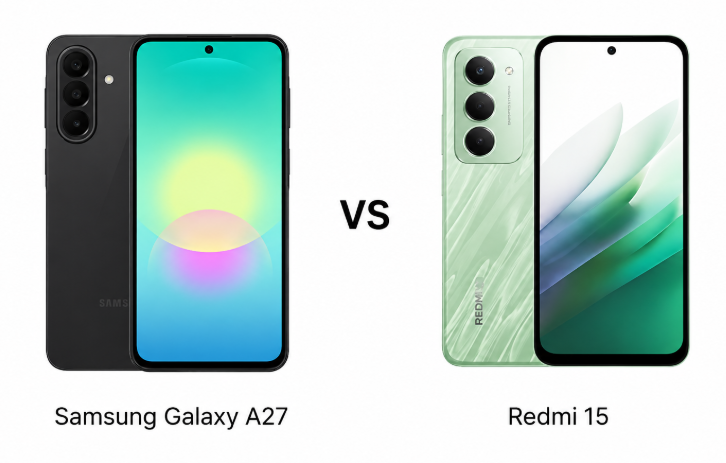
samsung vs redmi

Choosing between the Samsung Galaxy A27 and Redmi 15 is not as simple as comparing specifications. Both devices target budget-conscious buyers, but they focus on different priorities. Samsung aims to deliver a more premium experience with long-term software support, while Redmi focuses on battery life and affordability. The comparison becomes important for users looking for the best balance of performance, cameras, display quality, and overall value in the sub-$300 smartphone segment.

Major Features:

CategorySamsung Galaxy A27Redmi 15Winner
DisplaySuper AMOLED, 120HzIPS LCD, 144HzSamsung – Better colors and contrast
ProtectionGorilla Glass Victus+Gorilla Glass 3Samsung – Stronger glass protection
BuildGlass backPlastic backSamsung – More premium design
PerformanceSnapdragon 6 Gen 3Snapdragon 6s Gen 3Samsung – Faster chipset
GraphicsAdreno 710Adreno 619Samsung – Better gaming performance
Software Support6 major Android upgrades1 major upgradeSamsung – Longer updates
Main Camera50MP with OIS50MPSamsung – OIS improves photos
Secondary CamerasUltrawide + MacroAuxiliary lensSamsung – More versatile setup
Video Recording4K@30fps1080p@30fpsSamsung – Higher video quality
Selfie Camera12MP AF8MPSamsung – Sharper selfies
Battery5000mAh7000mAhRedmi – Much larger battery
Charging25W33WRedmi – Faster charging
Reverse ChargingNo18WRedmi – Extra convenience
AudioStandardHi-Res AudioRedmi – Better audio support
Extra FeaturesSamsung DeXIR BlasterSamsung – More useful feature
PriceAround ₹22,000Around ₹15,000Redmi – Better affordability
Disclaimer: Specs are based on available data. Actual performance may vary. Verify details from official sources before buying.

Design and Display

Build and Feel

The Samsung Galaxy A27 feels noticeably more premium thanks to its Gorilla Glass Victus+ protection on both the front and back. The overall construction gives it a more refined look, and the inclusion of eSIM support adds extra flexibility for modern users. Samsung also brings DeX support, which is uncommon in this price segment and adds productivity value.

The Redmi 15 uses a plastic back and frame with Gorilla Glass 3 on the front. While the IP64 rating matches Samsung’s splash resistance, the overall build feels more focused on practicality than premium appeal. The device is designed for users who prioritize durability and battery capacity over aesthetics.

Display Quality

Samsung’s 6.7-inch Super AMOLED panel delivers deeper blacks, richer colors, and better contrast. The 120Hz refresh rate keeps animations smooth while maintaining excellent image quality. The display feels more vibrant for streaming, gaming, and everyday use.

Redmi counters with a larger 6.9-inch IPS LCD and a faster 144Hz refresh rate. The higher refresh rate helps scrolling feel exceptionally fluid, but the LCD panel cannot match AMOLED’s color depth and contrast.

Verdict

The Galaxy A27 wins this section. Redmi offers a bigger and smoother display on paper, but Samsung’s AMOLED panel, stronger materials, and premium features create a more polished daily experience.

Specifications Including Battery

Performance

The Galaxy A27 is powered by the Snapdragon 6 Gen 3 built on a more efficient 4nm process. Combined with the Adreno 710 GPU, it delivers stronger overall performance for multitasking, gaming, and long-term use. Samsung also promises up to six major Android upgrades, making the device a safer long-term investment.

The Redmi 15 uses the Snapdragon 6s Gen 3, which is capable for everyday tasks but sits a tier below Samsung’s chipset. Basic gaming, social media, and video streaming run smoothly, but demanding workloads reveal the performance gap.

Battery and Charging

Battery life is where Redmi makes a strong statement. The massive 7000mAh battery easily outlasts most competitors and can comfortably stretch into a second day for many users. Its 33W charging is also slightly faster, and the addition of 18W reverse charging increases versatility.

Samsung’s 5000mAh battery remains dependable and sufficient for a full day of usage, though it cannot compete with Redmi’s endurance.

Verdict

The Galaxy A27 delivers better performance and software longevity, while Redmi dominates battery life. For power users and long-term ownership, Samsung feels more balanced, but heavy travelers may prefer Redmi’s enormous battery.

Camera

Main and Secondary Lenses

Samsung takes a clear lead in camera hardware. The 50MP primary camera includes optical image stabilization (OIS), helping produce sharper photos and steadier videos, especially in low light. The addition of an ultrawide camera provides more flexibility for landscapes and group shots, while 4K video recording enhances content creation capabilities.

The Redmi 15 also features a 50MP primary camera, but it lacks OIS and is paired only with an auxiliary sensor. Daylight photos should remain respectable, but the overall camera system is less versatile. Video recording is limited to 1080p, which places it behind Samsung.

Selfie Camera

Samsung continues its advantage with a 12MP autofocus selfie camera. Autofocus helps maintain sharper facial details and improves consistency across different shooting conditions.

The Redmi 15 uses an 8MP front camera that is suitable for video calls and casual social media uploads, but lacks the detail and flexibility offered by Samsung.

Verdict

The Galaxy A27 is a stronger camera phone. Better stabilization, an ultrawide lens, 4K recording, and a higher-quality selfie camera make it a more complete photography package.

Pricing

The Redmi 15 is priced around $150 (₹15,000), while the Samsung Galaxy A27 is priced around $260 (₹22,000). The price difference is significant, placing Samsung roughly ₹7,000 higher than Redmi.

At its price point, Redmi delivers impressive value. Buyers receive a large 144Hz display, a huge 7000mAh battery, 33W charging, and a modern Snapdragon chipset. For users focused on essential smartphone functions and battery endurance, the value proposition is difficult to ignore.

Samsung’s higher price brings meaningful upgrades rather than cosmetic improvements. The AMOLED display, stronger chipset, superior cameras, OIS, DeX support, and six years of major software updates all contribute to a more premium ownership experience. These are advantages that continue to matter long after purchase.

Verdict

Redmi offers stronger value for budget-focused buyers, while Samsung justifies its higher price through better hardware quality, cameras, performance, and software support.

Disclaimer:
Prices are approximate and may vary based on country, region, launch timing, and applicable taxes. Always check whether the listed price is for a China unit or a global/international variant when purchasing.

Conclusion

The Samsung Galaxy A27 stands out with its Super AMOLED display, Gorilla Glass Victus+ protection, OIS-equipped camera system, Samsung DeX support, and exceptional software update commitment. These features make it feel closer to a mid-range smartphone than an entry-level device.

The Redmi 15 focuses on practicality. Its standout features include a huge 7000mAh battery, 33W charging, 18W reverse charging, 144Hz refresh rate, and a significantly lower purchase price. It is designed for users who prioritize endurance and affordability above everything else.

Verdict

Samsung Galaxy A27 is the better overall smartphone. It delivers a superior display, stronger performance, better cameras, longer software support, and a more premium experience. Buyers planning to keep their phone for several years will likely find the extra cost worthwhile.

Redmi 15 remains an excellent choice for value seekers. Those who want maximum battery life and the lowest possible price without sacrificing modern features will find it difficult to beat. However, for the most complete package, the Galaxy A27 comes out ahead.

Disclaimer: This comparison is based on the specifications provided and is intended for general informational purposes. Actual performance, camera results, battery life, and overall experience may vary depending on real-world usage, software updates, and individual preferences.

Read More:

The post Samsung Galaxy A27 vs Redmi 15: Is Samsung Really Worth Paying More For? appeared first on Gizmochina.

Huawei Nova 16 vs Vivo V60: Which Mid-Range Phone Should You Buy in 2026?

Huawei vs Vivo

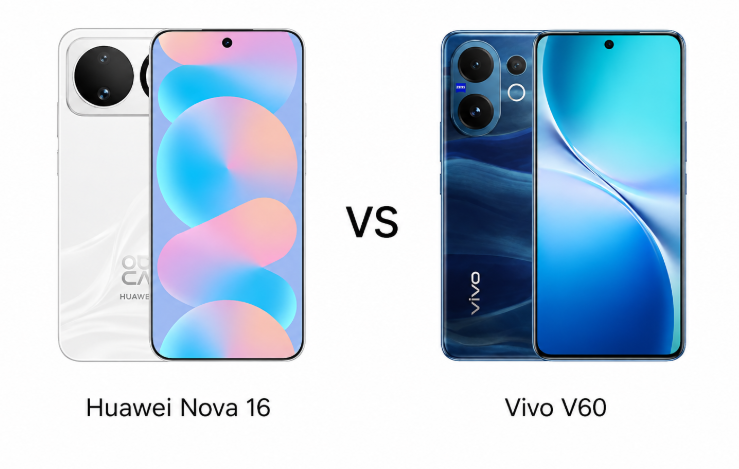
Huawei Nova 16 and Vivo V60 target buyers looking for premium features without stepping into flagship pricing. Both smartphones bring large batteries, capable cameras, high-refresh-rate displays, and modern designs, but they take different approaches when it comes to performance, photography, and overall value. This comparison breaks down their key differences to help determine which device deserves a spot in your pocket.

Major Features:

CategoryHuawei Nova 16Vivo V60Winner
Build QualityGlass front, aluminum backGlass front, plastic/glass backHuawei – More premium materials
DurabilityIP65IP68/IP69Vivo – Better water and dust resistance
Display QualityOLED, 1280 x 2800, 120HzAMOLED, 1080 x 2392, 120HzHuawei – Sharper display
Display BrightnessHDR VividUp to 5000 nits peakVivo – Much brighter outdoors
ProcessorKirin 9010SSnapdragon 7 Gen 4Vivo – Newer chipset
SoftwareHarmonyOS 6.1Android 15, 4 upgradesVivo – Better long-term support
RAM & StorageUp to 12GB/512GBUp to 16GB/512GBVivo – More memory options
Main Camera50MP Wide50MP Wide, Zeiss opticsVivo – Better image tuning
Telephoto Camera50MP, 3.7x zoom50MP, 3x zoomHuawei – Longer optical zoom
Ultrawide CameraNo8MP UltrawideVivo – More shooting flexibility
Selfie Camera50MP Ultrawide50MP AF SelfieVivo – Autofocus advantage
Video Recording4K Front & Rear4K Front & RearTie – Similar capabilities
Battery Capacity7000mAh6500mAhHuawei – Larger battery
Charging Speed100W90WHuawei – Faster charging
Extra Battery FeaturesReverse chargingReverse + Bypass chargingVivo – More useful features
ConnectivityWi-Fi 7, Bluetooth 6.0Wi-Fi 6, Bluetooth 5.4Huawei – Newer standards
Fingerprint ScannerSide-mountedUnder-displayVivo – More premium solution
PriceAround $450 / ₹42,000Around $425 / ₹37,000Vivo – Lower price
Value for MoneyPremium battery-focused packageBalanced feature setVivo – Better overall value
Disclaimer: Specs are based on available data. Actual performance may vary. Verify details from official sources before buying.

Design and Display

Build and Feel

The Huawei Nova 16 and Vivo V60 take different approaches to design. Huawei uses a more premium construction with an aluminum back paired with a glass front, giving the device a sturdier and more refined feel in daily use. It also carries an IP65 rating, which provides protection against dust and water splashes. The Vivo V60 counters with a much stronger IP68/IP69 rating, making it better suited for users who prioritize durability and water resistance. Its under-display fingerprint scanner also delivers a more modern experience than Huawei’s side-mounted solution.

Display Quality

Huawei equips the Nova 16 with a high-resolution OLED panel that delivers sharper visuals and excellent clarity. The HDR Vivid support and 2160Hz PWM dimming make it particularly appealing for multimedia consumption and long viewing sessions. Vivo’s AMOLED display is brighter, reaching significantly higher peak brightness levels while also supporting HDR10+. Outdoor visibility is excellent, and colors appear vibrant and punchy.

Verdict

Huawei offers a more premium-looking design and sharper screen, while Vivo delivers superior durability and brightness. Users focused on display clarity may prefer the Nova 16, whereas those wanting better outdoor usability and stronger protection will find the V60 more appealing.

Specifications Including Battery

Performance

The Huawei Nova 16 is powered by the Kirin 9010S chipset paired with 12GB of RAM across all variants. Every day, performance feels smooth, and HarmonyOS remains highly optimized for multitasking. However, the Vivo V60 gains an advantage with the newer Snapdragon 7 Gen 4 platform built on a 4nm process. Combined with Android 15 and a promise of four major Android upgrades, it offers stronger long-term software support and broader app compatibility.

Battery and Charging

Battery life is a major strength for both phones. Huawei packs a massive 7000mAh battery that comfortably handles heavy usage and can easily stretch into a second day. The 100W charging system is among the fastest in the segment. Vivo’s 6500mAh silicon-carbon battery is slightly smaller but still excellent, while its 90W charging remains impressively quick. Features such as bypass charging and reverse charging add extra versatility for gamers and power users.

Verdict

Huawei wins on battery capacity and charging speed, making it ideal for endurance-focused buyers. Vivo takes the lead in processing efficiency, software longevity, and overall platform flexibility.

Camera

Main and Secondary Lenses

The Huawei Nova 16 focuses on a dual-camera setup featuring a 50MP main sensor and a 50MP periscope telephoto camera with 3.7x optical zoom. Image quality should be strong, particularly for portraits and zoom photography. Vivo adopts a more versatile approach with a 50MP main camera, a 50MP periscope telephoto lens, and an additional 8MP ultrawide camera. The inclusion of Zeiss optics enhances color tuning and image processing, providing a more polished photography experience.

Selfie Camera

Both devices feature impressive 50MP front cameras capable of 4K video recording. Huawei uses an ultrawide selfie camera that is particularly useful for group photos and travel shots. Vivo’s autofocus-equipped selfie camera offers more reliable sharpness and consistency, especially when recording video or taking close-up portraits.

Verdict

Huawei delivers excellent zoom performance and a capable selfie system, but Vivo’s extra ultrawide camera and Zeiss-tuned imaging create a more complete camera package. For users who enjoy experimenting with different shooting styles, the V60 feels more versatile overall.

Pricing

The Huawei Nova 16 is priced around $450 (₹42,000), while the Vivo V60 is priced around $425 (₹37,000). Despite being slightly cheaper, the Vivo offers a newer Snapdragon chipset, stronger water resistance, an additional ultrawide camera, longer software support, and multiple memory configurations. These advantages make its pricing highly competitive within the upper mid-range segment.

Huawei justifies its higher price through premium materials, a larger battery, faster charging, and a sharper display. Buyers who place greater value on battery endurance and display resolution may find the premium worthwhile. However, the overall feature balance leans slightly toward Vivo.

Verdict

Both phones offer solid value, but the Vivo V60 extracts more features from a lower price point. Huawei remains attractive for battery-focused users, while Vivo provides a stronger all-around value proposition.

Disclaimer:
Prices are approximate and may vary based on country, region, launch timing, and applicable taxes. Always check whether the listed price is for a China unit or a global/international variant when purchasing.

Conclusion

The Huawei Nova 16 stands out with its premium aluminum-backed design, high-resolution OLED display, massive 7000mAh battery, and 100W charging system. It is clearly aimed at users who prioritize endurance, display sharpness, and premium hardware. The periscope zoom camera also adds appeal for portrait and telephoto photography enthusiasts.

The Vivo V60 differentiates itself with Snapdragon 7 Gen 4 performance, Zeiss-enhanced cameras, an ultrawide lens, superior IP68/IP69 protection, a brighter AMOLED display, and four guaranteed Android upgrades. These strengths create a more balanced smartphone that caters to a wider audience.

Verdict

Huawei Nova 16 is the better choice for users who want maximum battery life, faster charging, and a sharper display. The Vivo V60 is the stronger overall smartphone thanks to its more versatile camera system, newer chipset, better durability, longer software support, and lower price. For most buyers seeking the best combination of features and value, the Vivo V60 is the more compelling option.

Disclaimer: This comparison is based on the specifications provided and is intended for general informational purposes. Actual performance, camera results, battery life, and overall experience may vary depending on real-world usage, software updates, and individual preferences.

Read More:

The post Huawei Nova 16 vs Vivo V60: Which Mid-Range Phone Should You Buy in 2026? appeared first on Gizmochina.

Samsung Galaxy A27 vs Oppo A6 Comparison: Display, Battery, Camera & Performance

samsung vs oppo

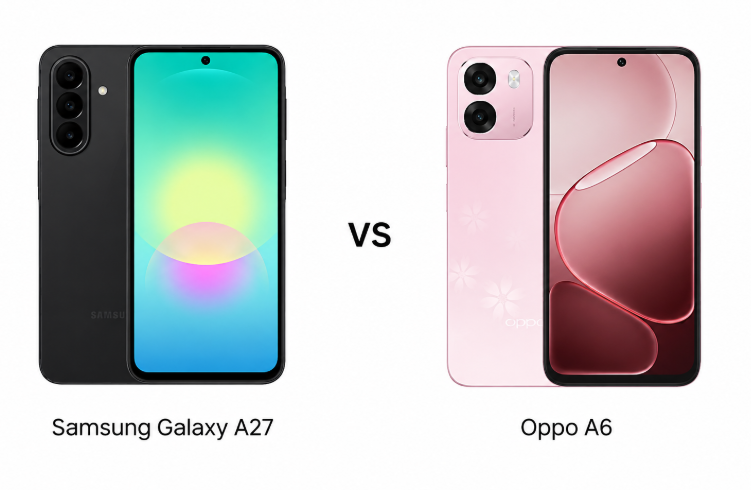
Samsung Galaxy A27 and Oppo A6 target buyers looking for a capable mid-range smartphone without stretching their budget. While both devices sit in the same price segment, they take very different approaches. Samsung focuses on display quality, performance, and long-term software support, while Oppo emphasizes battery life and durability. This comparison breaks down their key differences to help determine which phone delivers the better overall value. 

Major Features:

CategorySamsung Galaxy A27Oppo A6Winner
Design & BuildGorilla Glass Victus+ front and back, IP64 ratingPlastic back, IP68/IP69 ratingOppo – Better water and dust resistance
Display Technology6.7-inch Super AMOLED, 120Hz6.75-inch IPS LCD, 120HzSamsung – Superior AMOLED panel
Resolution1080 x 2340 (FHD+)720 x 1570 (HD+)Samsung – Sharper visuals
Display ProtectionGorilla Glass Victus+Mohs Level 5 protectionSamsung – Stronger protection
BrightnessAMOLED displayUp to 1125 nits peakSamsung – Better overall viewing experience
ProcessorSnapdragon 6 Gen 3 (4nm)Dimensity 6300 (6nm)Samsung – Faster performance
GraphicsAdreno 710Mali-G57 MC2Samsung – Better gaming capability
SoftwareAndroid 16, 6 major updatesAndroid 15, ColorOS 15Samsung – Longer software support
RAM & Storage OptionsUp to 8GB RAM, 256GB storageUp to 12GB RAM, 512GB storageOppo – More configuration choices
Expandable StoragemicroSD (hybrid slot)Dedicated microSD supportOppo – More flexible expansion
Main Camera50MP OIS camera50MP cameraSamsung – OIS improves photos and videos
Ultra-Wide Camera5MP ultrawideNot availableSamsung – More versatile photography
Video Recording4K@30fps1080p@60fpsSamsung – Higher video quality
Selfie Camera12MP AF8MPSamsung – Better selfies and focus
SpeakersSingle speakerStereo speakersOppo – Better audio experience
Battery Capacity5000mAh7000mAhOppo – Significantly longer battery life
Charging Speed25W wired45W wiredOppo – Faster charging
Reverse ChargingNo5W reverse chargingOppo – Extra convenience
ConnectivityBluetooth 5.1Bluetooth 5.4, aptX HDOppo – Newer wireless standards
Special FeaturesSamsung DeX supportReverse chargingSamsung – Unique productivity feature
Price/ValuePriced around $260 / ₹22,000Priced around $260 / ₹22,000Samsung – Better overall feature set
Disclaimer: Specs are based on available data. Actual performance may vary. Verify details from official sources before buying.

Design and Display

Build and Feel

The Samsung Galaxy A27 offers a more premium construction with Gorilla Glass Victus+ on both the front and back, along with an IP64 rating for protection against dust and water splashes. The overall design feels more refined and modern, especially for users who value premium materials in a mid-range smartphone.

The Oppo A6 takes a different approach by focusing on durability. Its IP68/IP69 rating provides significantly stronger water and dust resistance, making it more suitable for outdoor use or harsher environments. While the plastic back does not feel as premium as Samsung’s glass design, the rugged protection adds practical value for many users.

Display Quality

Samsung clearly leads in display quality with its 6.7-inch Super AMOLED panel, 120Hz refresh rate, and Full HD+ resolution. Colors appear richer, blacks are deeper, and overall sharpness is noticeably better.

The Oppo A6 offers a 120Hz IPS LCD panel with decent brightness, but the lower HD+ resolution results in less detail and clarity. Every day use remains smooth, but media consumption feels more immersive on Samsung’s AMOLED screen.

Verdict

The Galaxy A27 wins this category thanks to its premium materials and significantly superior AMOLED display. The Oppo A6 scores points for durability, but Samsung delivers the better overall viewing experience.

Specifications Including Battery

Performance

The Samsung Galaxy A27 is powered by the Snapdragon 6 Gen 3 chipset, which provides stronger CPU and GPU performance than the Dimensity 6300 inside the Oppo A6. Daily tasks, multitasking, gaming, and long-term responsiveness feel more polished on the Galaxy A27.

Samsung also benefits from an exceptional software commitment, offering Android 16 and up to six major Android upgrades. This level of support is rarely seen in this price segment and greatly improves long-term value.

The Oppo A6 handles everyday applications comfortably and offers multiple storage and RAM configurations, including a 512GB option. However, its Dimensity 6300 is aimed more at efficiency than outright performance.

Battery and Charging

Battery life is where the Oppo A6 shines. Its massive 7000mAh battery easily outlasts the Galaxy A27’s 5000mAh cell. Combined with 45W charging, it is built for users who prioritize endurance.

Samsung’s 25W charging is adequate but less impressive. Most users will comfortably get through a day, but the Oppo A6 is clearly the endurance champion.

Verdict

The Galaxy A27 offers stronger performance and industry-leading software support, while the Oppo A6 dominates in battery life. For overall capability, Samsung takes a slight lead, but heavy battery users may prefer Oppo.

Camera

Main and Secondary Lenses

Samsung equips the Galaxy A27 with a versatile triple-camera setup featuring a 50MP main sensor with OIS, a 5MP ultrawide camera, and a macro lens. Optical image stabilization helps improve low-light photos and video stability, while the ultrawide lens adds flexibility for landscapes and group shots.

The Oppo A6 uses a 50MP primary camera paired with an auxiliary sensor. Daylight photos can look good, but the lack of OIS and the absence of a true ultrawide camera limit versatility. Video recording is also capped at 1080p, whereas Samsung supports 4K recording and advanced stabilization.

The Galaxy A27 feels more complete as a camera-focused device, especially for users who regularly capture photos and videos.

Selfie Camera

Samsung again has the advantage with its 12MP autofocus selfie camera. Autofocus helps maintain sharper results, particularly in varying shooting distances.

The Oppo A6’s 8MP front camera is suitable for video calls and casual selfies, but it cannot match Samsung’s detail and consistency.

Verdict

The Galaxy A27 comfortably wins the camera category. Better stabilization, an ultrawide lens, 4K video recording, and a superior selfie camera make it a stronger photography package.

Pricing

The Samsung Galaxy A27 is priced around $260 / ₹22,000, while the Oppo A6 is also priced around $260 / ₹22,000. Since both devices occupy the same price bracket, the decision comes down to priorities rather than affordability.

Samsung delivers a premium AMOLED display, a faster processor, better cameras, DeX support, and one of the best software update policies available in the segment. These advantages contribute directly to the daily user experience and long-term ownership value.

The Oppo A6 focuses on practicality. Buyers receive a massive 7000mAh battery, faster 45W charging, stronger IP68/IP69 protection, stereo speakers, and extensive memory options. These features can be highly appealing for users who prioritize endurance and durability.

Verdict

At the same price, the Galaxy A27 offers better overall value for most buyers because of its display, performance, cameras, and software support. The Oppo A6 remains an excellent value choice for users who need exceptional battery life above everything else.

Disclaimer:
Prices are approximate and may vary based on country, region, launch timing, and applicable taxes. Always check whether the listed price is for a China unit or a global/international variant when purchasing.

Conclusion

The Galaxy A27 stands out with its Super AMOLED display, Snapdragon 6 Gen 3 chipset, OIS-equipped camera system, Samsung DeX support, and six years of major Android updates. These features make it feel like a more complete and future-proof smartphone.

The Oppo A6 counters with a huge 7000mAh battery, 45W charging, IP68/IP69 protection, stereo speakers, and numerous storage configurations. Its strengths are practical and designed for long-lasting daily usage.

Both devices serve different audiences. Samsung focuses on delivering a balanced smartphone experience with stronger multimedia and software capabilities, while Oppo emphasizes durability and battery endurance.

Verdict

For most users, the Samsung Galaxy A27 is the better overall smartphone. The superior display, faster performance, stronger camera system, and outstanding software support create a more rounded package at the same price.

Choose the Oppo A6 if battery life, charging speed, and rugged durability are the highest priorities. Otherwise, the Galaxy A27 provides a more complete experience and better long-term value.

Disclaimer: This comparison is based on the specifications provided and is intended for general informational purposes. Actual performance, camera results, battery life, and overall experience may vary depending on real-world usage, software updates, and individual preferences.

Read More:

The post Samsung Galaxy A27 vs Oppo A6 Comparison: Display, Battery, Camera & Performance appeared first on Gizmochina.

❌