Xiaomi, Vivo, Oppo, Lenovo, Honor, and other smartphone brands under the Gold Standard Alliance in China are trying to fix one of Android’s long-standing issues: inconsistent performance.
The alliance has announced a new effort to reduce lag, overheating, and random app crashes across Android devices.
The group says it will soon announce a new unified memory management standard for developers that aligns with changes coming in Android 17. The goal is for apps to use memory more responsibly, regardless of which Android phone they run on.
Right now, that consistency doesn’t really exist. As apps get more complex, they demand more memory, while differences between Android skins and hardware make optimization harder.
The alliance says this leads to higher development costs, longer testing cycles, and ultimately a worse experience. Things like apps getting killed in the background, phones heating up, or performance slowing down over time.
Google has already started tightening things on its end. With Android 17, the system will set clearer memory limits based on a device’s total RAM and target extreme cases like memory leaks. The alliance is essentially building on top of that with what it calls a “fair memory mechanism.”
The initiative has three parts to it
There are three parts to it. First is a unified standard that defines how much memory apps should use.
Second is a smarter notification system where apps are warned when memory is running low, so they can free up resources before the system steps in. Third is a set of contextual rules that decides when and how those notifications should appear.
Developers have until June 30, 2026, to adapt their apps. The alliance says each member company will provide documentation and technical support to make the transition easier.
Established in 2021, Gold Standard Alliance is a non-profit initiative formed by companies, including Lenovo, alongside the major Chinese smartphone makers. It also runs a certification program that highlights apps meeting standards for performance, stability, and efficiency across participating app stores.
For more daily updates, please visit our News Section.
Framework is expanding its modular laptop lineup with the new Framework Laptop 13 Pro. This is a more performance-focused version of its 13-inch system, still built around repairability and upgrades, but now with a clearer focus on Linux users.
The company is offering the laptop with a pre-installed Ubuntu option, alongside the usual bring-your-own OS approach. CEO Nirav Patel describes it as a “MacBook Pro for Linux users,” which is thanks to the combination of hardware polish and first-party Linux support.
Framework Laptop 13 Pro Specifications
At the center of the device is Intel’s third-generation Core Ultra “Panther Lake” lineup. Buyers can choose between the Ultra 5 325, Ultra X7 358H, and Ultra X9 388H, with AMD Ryzen AI 300 options also available. The higher-end Intel chips pair with Intel Arc B390 graphics and up to 50 TOPS of NPU performance, while power profiles range from a 15W efficiency mode to a 60W boost under load.
One of the more notable changes is the shift to LPCAMM2 memory. It’s a modular LPDDR5X format that runs at up to 7467MT/s, but unlike typical soldered memory, it can be replaced or upgraded. Framework says this allows up to 64GB of RAM while still keeping the efficiency benefits of LPDDR5X, including claimed battery life beyond 20 hours.
Storage is handled through a PCIe Gen5 M.2 2280 slot, with support for up to 2TB Gen5 SSDs or larger Gen4 drives. Like previous models, the laptop sticks to a flexible expansion card system, letting users swap ports like USB-C, HDMI, or Ethernet as needed.
The display is a 13.5-inch 2880×1920 LTPS touchscreen with a 3:2 aspect ratio and a variable 30–120Hz refresh rate. It covers 100 percent of the sRGB color space and reaches up to 700 nits brightness, with a matte finish to reduce glare.
The Framework Laptop 13 Pro now uses a CNC-machined aluminum chassis for a more premium build. The keyboard has 1.5mm of travel, along with a haptic touchpad that uses piezoelectric feedback. The system includes a 74Wh battery rated for 1,000 cycles, Wi-Fi 7 support, and a 1080p webcam with a hardware privacy switch.
Despite the changes, compatibility remains a key part of the story. Framework says the new Laptop 13 Pro keeps parts compatibility with earlier Framework Laptop 13 models, meaning existing users can upgrade components without replacing the entire system.
The DIY Edition, which requires users to assemble parts themselves, takes around 10 to 20 minutes and starts at $1,199 for a barebones configuration. As before, memory, storage, ports, and even the operating system can be customized or brought in separately.
At the launch event yesterday, Oppo introduced a new pair of open wireless earbuds called the Oppo Enco Clip 2. Unveiled alongside the Find X9 series and other wearables, it is set to go on sale in China starting April 24, priced at CNY 899 (around $120), with a limited-time offer bringing it down to CNY 849.
The Enco Clip 2 stands out primarily for its open-ear, clip-style design. Instead of sitting inside the ear canal like traditional earbuds, these wrap around the outer ear. Each earbud weighs just 5.2 grams, and the design uses an ultra-thin adaptive titanium plate, which Oppo says helps with both fit and durability.
Oppo Enco Clip 2 features a dual driver, DAC setup
On the audio side, Oppo says the earbuds are co-developed with Dynaudio, a Scandinavian audio company, and include a dual dynamic driver setup combining 11mm and 9mm units.
The setup is tuned to produce more natural sound, with better mids and extended highs. There’s also support for a wide 20Hz to 40kHz frequency range, along with spatial audio for a more immersive effect.
Internally, the Enco Clip 2 uses dual DACs and what Oppo claims is the industry’s first 6nm chip in this category. According to the company, that chip boosts noise reduction computing power by up to 100 times, which mainly benefits call clarity. A three-microphone system, paired with AI processing and a VPU sensor, handles noise reduction during calls.
The earbuds can last up to 9.5 hours on a single charge, with the case extending total playback time to around 40 hours. The case itself packs a 530mAh battery and charges over USB-C in about 80 minutes.
Connectivity is handled over Bluetooth 6.1, with support for dual-device pairing and a range of up to 10 meters. The earbuds also support common audio codecs like SBC, AAC, and LHDC. Interestingly, Oppo says the Enco Clip 2 supports Apple voice commands, allowing users to control playback, adjust volume, and manage calls hands-free.
The earbuds are available in two finishes: High-Gloss Gold and Space Grey. It also has an IP55 rating for dust and water resistance.
For more daily updates, please visit our News Section.
Less than a week after announcing the Osmo Pocket 4, DJI has unveiled the Osmo Mobile 8P in China today. The new gimbal brings a major design overhaul with a removable display module that allows it to function even as a wireless remote control.
The controller attaches magnetically and can be removed for remote shooting. It has its own display that mirrors what the camera sees, including subject detection boxes. You can tap on the screen to choose who or what to track, and switch targets without going back to the phone.
The remote also doubles as a control hub. Its joystick doesn’t have fixed directional limits, which means it can be used more fluidly for gimbal movement, zoom, or adjusting lighting.
DJI Osmo Mobile 8P Specifications
At the center of the update is Smart Follow 8.0, which comes through the updated DJI Mimo app. DJI says the new version is designed to hold onto a subject more reliably, even in crowded environments like concerts or exhibitions. The system can identify a subject on-screen and continue tracking without losing focus when other people or objects move through the frame.
There’s also a new multi-functional tracking module 2, which expands what the gimbal can follow. It’s not limited to people anymore; it can lock onto pets like cats and dogs, and even track objects or vehicles. That module also includes a built-in fill light with adjustable brightness and color temperature, controlled directly from the remote.
On the connectivity side, the Osmo Mobile 8P supports Apple DockKit, allowing quick pairing through NFC and Bluetooth.
Hardware-wise, DJI is combining several features into one unit. The gimbal includes a built-in extension rod, tripod, and fill light, along with up to 10 hours of battery life. There’s also a USB-C port that can be used to charge your phone while shooting.
The Osmo Mobile 8P continues to support gesture controls, automated camera movements, and composition assistance. For iPhone users, DJI is also offering a magnetic quick-release back sticker for faster mounting and removal.
Price and Availability
The DJI Osmo Mobile 8P starts at 899 yuan (around $130) for the standard version. A step-up option, the Osmo Mobile 8P AI, is priced at 1,099 yuan (roughly $160) and bundles in the Tracking Module 2.
At the top end, the Osmo Mobile 8P Vlog combo costs 1,299 yuan (about $190), adding both the Tracking Module 2 and the DJI Mic Mini 2 for a more complete shooting setup.
Oppo has finally taken the wraps off the Find X9 Ultra, and if you have been keeping up, you’ll know this isn’t just another all-purpose flagship. It’s a camera first, and a phone second.
In fact, the Find X9 Ultra is the only flagship in 2026 to pack not one but two 200-megapixel rear cameras. Nearly everything Oppo is doing here revolves around that idea.
Cameras and imaging system
The Find X9 Ultra is built around a six-lens system, trying to cover as many use cases as possible. And as mentioned earlier, the headline feature is the dual 200MP setup.
There’s a 200MP main camera with an f/1.5 aperture that Oppo claims can take in more light than traditional 1-inch sensors. Alongside it sits a 200MP 3x telephoto camera with a large 1/1.28-inch sensor that is meant for portrait or close-up shots.
Then there’s a dedicated 50MP 10x optical zoom telephoto lens, which can also snap “20x optical quality zoom” photos. The 50MP ultra-wide camera has also been upgraded to take 56% more light intake compared to the previous generation.
Together, these cameras are meant to deliver full focal length coverage in 8K image quality, which Oppo says is a first for its lineup.
On the software side, the new Hasselblad Master Mode is doing a lot of the work. It includes:
Hasselblad True Detail, which allows 8K photo output across six focal lengths
Hasselblad Natural Color, now paired with a full-link ProXDR pipeline
Master Mode Original Film, which recreates classic film looks using computational processing
There are nine film-style presets in total, and unlike typical filters, these are meant to simulate real film tone and color behavior.
Video and creator-focused features
Oppo is also touting the Find X9 Ultra as a cinematic productivity tool, and this is where things get more technical.
The phone supports 8K video at 30fps and 4K at 120fps, both in 10-bit Log format. That’s paired with a new O-Log2 profile that is said to preserve more detail in shadows and midtones. For users working across multiple cameras, there’s support for the ACES color management workflow, which is typically used in professional production.
There’s also support for custom 3D LUTs, so that creators can preview and apply color grading directly on the device.
Beyond the camera itself, Oppo is building an ecosystem around it. In collaboration with TILTA, the company is offering accessories like ND filters and manual focus grips. The phone also supports HDMI output for easier integration into multi-camera setups.
For storage and workflow, Oppo has partnered with NAS brand Flyniu to enable private cloud management.
Design and build
The Find X9 Ultra’s design takes cues from the Hasselblad X2D 100C Earth Explorer Limited Edition, which focuses on materials and finish rather than just aesthetics.
The back uses a new generation of environmentally friendly leather, where we can clearly see the Hasselblad branding too. The phone comes in three color options: Earth Tundra, Polar Glacier, and Velvet Sand Canyon.
On the durability side, Oppo is using Crystal Shield Glass and claims full-level waterproofing with IP66, IP68, and IP69 ratings. The device has also received a five-star drop and shock resistance certification from SGS.
Display and performance
Outside of the camera system, the Find X9 Ultra still checks the usual flagship boxes. It runs on Snapdragon 8 Elite Gen 5 paired with Oppo’s Tide Engine tuning. The company says the phone can maintain 144Hz performance in demanding games, including MOBA and FPS titles.
The display is a 6.82-inch 2K panel with a 144Hz refresh rate. It also includes pixel-level gamma correction and eye-protection features.
The Find X9 Ultra is backed by a 7050mAh “Glacier Battery,” which uses a silicon-carbon anode and a dedicated energy management chip. Charging is handled via 100W wired SuperVOOC and 50W wireless charging.
Connectivity and extras
The phone supports dual-satellite communication for calls and messages when there’s no cellular signal. It is backed by a dedicated communication enhancement chip.
Other additions include symmetrical dual speakers, a bionic vibration motor, and upgrades to haptics and audio.
Pricing and variants
The Find X9 Ultra starts at 7,499 yuan (~ $1099) for the 12GB + 256GB model.
There’s also a higher-end “Hasselblad Earth Explorer Master Set,” priced at 11,999 yuan (~ $1759), which includes a 16GB + 1TB variant with satellite communication and a bundle of professional accessories.
Additional accessory kits are sold separately, including a professional imaging kit priced at 2,499 yuan (~ $366).
Model / Configuration
Chinese Price (CNY)
USD Price (Converted)
Find X9 Ultra (12GB + 256GB)
¥7,499
$1,099.00
Find X9 Ultra (12GB + 512GB)
¥7,999
$1,172.28
Find X9 Ultra (16GB + 512GB)
¥8,499
$1,245.55
Find X9 Ultra (16GB + 1TB)
¥9,299
$1,362.80
Find X9 Ultra (16GB + 1TB) Satellite Edition
¥9,499
$1,392.11
Hasselblad Master Explorer Set
¥11,999
$1,758.49
Professional Photography Accessory Kit
¥2,499
$366.24
For more daily updates, please visit our News Section.
After teasing it last week, Oppo today announced the new Oppo SuperVOOC 120W Power Bank in China. The product is now available on the company’s online store with a price tag of 299 yuan (~ $44).
The power bank has a 15,000mAh capacity, but despite that, the design is relatively sleek. It measures 105 × 70 × 29mm, though it could feel a bit hefty at 310 grams.
Oppo’s 120W SuperVOOC power bank with 15,000mAh capacity
Oppo is offering it in two finishes, Starlight Orange and Space Black, both wrapped in what the company describes as a skin-friendly exterior.
Oppo SuperVOOC 120W Power Bank specifications
The headline feature here is charging speed. The power bank includes one USB-A port and one USB-C port, each capable of delivering up to 120W output when used individually. When both ports are used simultaneously, the output is split into 30W and 65W.
As a result, it’s flexible enough to handle everything from smartphones to laptops, assuming compatibility. It supports a wide range of charging standards, including PD, QC, PPS, and UFCS, alongside Oppo’s own SuperVOOC protocol.
Internally, the device uses three 5,000mAh battery cells connected in series, with a total energy rating of 58.65Wh. The rated output capacity drops to 8,750mAh at 5V/6A, which is fairly typical once conversion losses are accounted for. Input is handled via USB-C, with support for multiple voltage and current levels up to 20V/3.25A.
One feature that stands out is software integration. This is the first Oppo power bank to support the company’s Power Bank Assistant tool. When connected to a computer, users can check detailed status information like battery cycle count and operating conditions in real time.
There’s also a traceability QR code and CCC certification to verify authenticity and monitor lifespan. The package includes the power bank, a charging cable, and documentation.
For more daily updates, please visit our News Section.
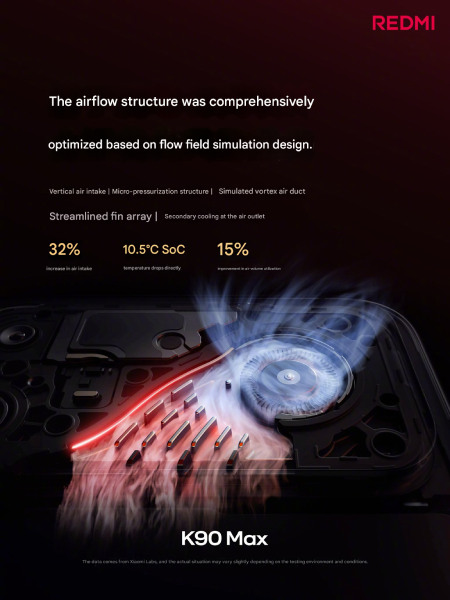
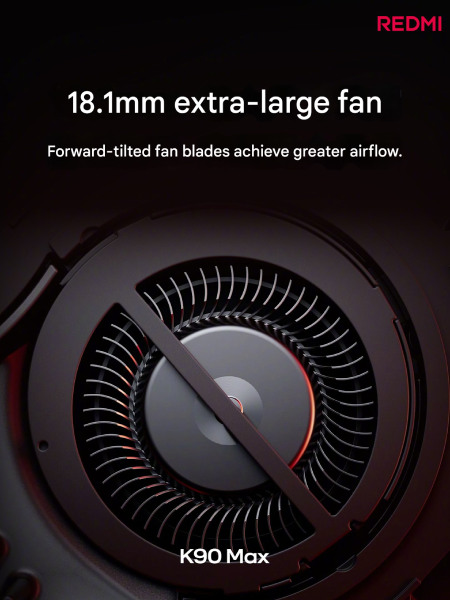
Xiaomi just announced the Redmi K90 Max in China, and this year, the headline feature isn’t just the chipset or the battery. It’s the fan. This is the first Xiaomi phone to ship with a built-in active cooling system, and it’s going all-in on the idea.
The fan measures 18.1mm in diameter, which Xiaomi says is larger than most implementations. It uses a vertical air intake with forward-leaning blades to push airflow more efficiently, alongside a sealed air duct and a vortex-style airflow design meant to reduce turbulence.
According to Xiaomi’s internal testing, the system can drop temperatures by up to 10°C in around 100 seconds. There are three adjustable fan modes, with noise levels topping out at 32dB.
The fan itself uses an all-metal bearing system and has reportedly passed a 50,000-hour aging test. More impressively, Xiaomi says buyers who pick up the device before May 5 will get a six-year warranty on the fan, along with lifetime free cleaning.
Redmi K90 Max is a performance-first phone
Inside, the phone runs on the MediaTek Dimensity 9500 chipset, paired with an AI-focused discrete graphics chip called the D2. The combination is designed for high refresh rate gaming, with support for 1.5K resolution at up to 165Hz across a wide range of titles.
It also uses the latest LPDDR5X Ultra RAM and UFS 4.1 memory standards, as you would expect from a performance-focused device.
Up front, there’s a 6.83-inch flat display with a 1.5K resolution and a 165Hz refresh rate. Xiaomi says it uses M10 backlight technology and supports full-brightness DC dimming, along with a low 1-nit brightness mode and a dedicated eye protection setting for gaming.
Keeping everything running is a large 8,550mAh single-cell battery with support for 100W wired charging.
Cameras and extras
Things are relatively simple on the camera side. The rear setup is led by a 50-megapixel main sensor (1/1.55-inch), paired with an 8MP ultrawide lens. On the front, there’s a 20MP selfie camera.
There are also a few gaming-focused additions, including a 400Hz gyroscope sampling rate, optimized touch zones for certain games, and a three-microphone system designed to work better in landscape orientation. Xiaomi has also included two Surge T1+ signal enhancement chips to improve network stability.
Other hardware details include symmetrical dual speakers tuned with Bose, a 3D ultrasonic fingerprint sensor, and an X-axis linear motor for haptics. The phone also carries IP66, IP68, and IP69 ratings for dust and water resistance, which is notable given the presence of an internal fan.
Price and Availability
The Redmi K90 Max starts at 3,499 yuan (~ $513)in China. A limited-time initial sale discount alongside the national subsidy effectively brings the price down to 2549 yuan (~ $373); however, we are listing the original price below:
Redmi K90 Ultra
China Price (CNY)
Price (USD, approx.)
12GB / 256GB
3,499
$513
12GB / 512GB
3,999
$586
16GB / 256GB
3,799
$557
16GB / 512GB
4,299
$630
16GB / 1TB
4,999
$733
It’s available in three finishes: Space Silver, Shadow Black, and Sky Blue, all wrapped in an aluminum alloy frame with slim bezels and a fairly minimal design.
For more daily updates, please visit our News Section.
Xiaomi has quietly taken the wraps off its latest budget audio product, the Redmi Buds 8, just as it is preparing for a broader launch event today. While the company is still likely to host an official presentation, the earbuds are already listed on its website and have gone on sale in China.
Priced at 229 yuan (roughly $34), the Redmi Buds 8 is an affordable counterpart of the Redmi Buds 8 Pro launched in January. It’s available in three colors, Lime White, Cyan, and Dusk Black, and comes with an in-ear design. Each earbud weighs about 5 grams.
Redmi Buds 8 Specifications
On the hardware side, Xiaomi is using an 11mm dynamic driver that supports the LHDC codec, which is designed to deliver higher-quality wireless audio when paired with compatible devices.
It also has noise-cancellation with a claimed average noise reduction depth of 24.9dB, peaks of up to 50dB, and a frequency coverage that extends to 4kHz. There are three levels of adaptive noise cancellation, along with an automatic mode that adjusts based on your surroundings.
The Redmi Buds 8 use a three-microphone setup paired with Xiaomi’s in-house AI noise reduction algorithm for calling. Like many recent earbuds, they also include customizable sound tuning with a five-level EQ and personalized audio profiles.
In terms of battery. Xiaomi says the earbuds can last up to 11 hours on a single charge without noise cancellation, or about 6.5 hours with it enabled. With the charging case, total playback time stretches to 44 hours (or 28 hours with ANC on). The case itself charges over USB-C and houses a 475mAh battery.
Connectivity is handled via Bluetooth 5.4, with support for SBC, AAC, and LHDC codecs, and a typical range of up to 10 meters in open space. The earbuds also carry an IP54 rating for dust and splash resistance, though the case isn’t protected.
There’s also some ecosystem integration at play. Xiaomi’s Smart Connect feature allows for things like device switching, audio streaming, and notification playback across compatible devices.
For more daily updates, please visit our News Section.
It didn’t take long for Insta360’s Luna to step out of the shadows. Just days after the company teased the device, a full specs leak has surfaced on X. The reveal comes on the heels of DJI unveiling its Osmo Pocket 4 gimbal camera.
According to the leak, the Insta360 Luna is built around a dual-camera system with relatively large sensors. The main wide-angle camera uses a 1-inch CMOS sensor with an 18mm equivalent focal length and f/2.0 aperture, while the secondary telephoto camera uses a 1/1.3-inch sensor at 70mm equivalent with an f/2.8 aperture.
The hardware combo, as per the leak, gives Luna a 1–6x “lossless” zoom system; the optical caps at 3.9x. In comparison, DJI claims 2x lossless zoom for the new Osmo Pocket 4.
As for video performance, the leak mentions support for 4K recording at up to 240fps, along with 10-bit color and Dolby Vision HDR. There’s also Leica color tuning and full-chain calibration, and Deep Track 3.0 for AI-enchanced subject tracking.
Insta360 Luna will have a detachable gimbal head
Another notable detail is simultaneous dual-lens recording. The wide and telephoto cameras can apparently shoot at the same time, opening up options for multi-angle content without needing a second device.
Then there’s the design. Earlier speculation hinted at a detachable camera module, and this leak backs that up with what’s described as a “twist modular” system. That is, you will be able to detach the gimbal head from the handle.
The rest of the package is fairly stacked as well. It’s revealed to have a 3-axis mechanical gimbal, AI-assisted stabilization, a 2-inch rotatable OLED touchscreen with 1000 nits brightness, and support for vertical shooting.
The battery life is rated at around 150 to 180 minutes from a 1500mAh cell, all within a body expected to weigh under 150 grams.
Interestingly, some YouTube creators already have early units, and first-look videos are starting to surface. As a result, we can expect a launch may not be that far off.
The upcoming iQOO 16 has been rumored to feature a 165Hz or even 185Hz refresh rate. A new report might finally settle that debate.
Fresh details from a reliable tipster, Digital Chat Station, reveal a handful of specifics around the phone’s chipset, display, and camera setup. And things are still being decided.
According to the leak, the iQOO 16 could be powered by Qualcomm’s SM8975 chip, which is expected to debut as the Snapdragon 8 Elite Gen 6 Pro. It aligns with earlier reports suggesting the device will land as the top model in iQOO’s lineup, likely launching in China later this year.
iQOO 16 Specifications
Up front, the phone is said to feature a 6.85-inch 2K display with a flat panel. The screen is described as an SDC “Pol-less” panel, shorthand for Samsung Display’s newer tech that replaces the traditional polarizer layer with a color filter structure to boost brightness while improving power efficiency.
As for that refresh rate? The tipster pins it at 165Hz, not the previously rumored 185Hz. That’s still a step up from the 144Hz panel on the iQOO 15, and likely more than enough for even the most demanding mobile gamers.
iQOO 15 Ultra
The camera story, however, seems a bit less settled. The latest leak suggests the current engineering unit includes a mid-range periscope telephoto camera, rather than a top-tier zoom system.
There’s also some indecision around the main shooter. iQOO is reportedly testing two configurations: one featuring a 200-megapixel sensor, and another pairing a 50-megapixel sensor with a larger physical size.
As usual, it’s unclear which direction will make the cut for the final hardware. The trade-off between resolution and sensor size suggests iQOO is still fine-tuning its priorities.
For more daily updates, please visit our News Section.
Huawei has introduced its new AI-powered smart glasses at its latest Pura series launch event. The device was unveiled by He Gang, CEO of Huawei Terminal BG, who wore the glasses during the presentation.
The product, called Huawei AI Glasses, comes in three color options: titanium silver gray, shimmering silver, and modern black. Huawei is also offering both round and square frame designs.
The glasses retail for 2,499 yuan (~ $367) for the titanium silver gray and modern black versions, while the shimmering silver model is priced higher at 2,899 yuan (~ $425). Pre-orders begin on April 20, with sales starting April 25.
Huawei AI Glasses Specifications
On design, the glasses are lightweight and will feel closer to your everyday eyewear. The company says it uses new lightweight materials and precision stacking techniques. The temples measure 6.25 mm, and the total weight is 35.5 grams.
Huawei also claims the design is based on analysis of over 300,000 head shapes in Asia, which it uses to build what it calls a “golden triangle” structure for balance.
The glasses use a self-developed titanium alloy hinge system, which Huawei says improves stability by 21% compared to competing products. There is also mention of a 0.65 mm effective amplitude and a 120 square millimeter vibration area, which relates to the frame’s mechanical movement and fit.
Inside, the glasses are powered by a Huawei-developed AI chip. The company claims near-instant response times for voice interactions, with support for voice wake-up and a one-click AI shortcut. A few of the key features include “See the World” through Huawei’s Xiaoyi assistant and an Alipay “Look and Pay” function.
For media use, the glasses come with a 1/2.8-inch image sensor. Huawei says it supports AI RAW multi-frame fusion, along with AI-assisted composition correction and first-person perspective live streaming.
Alongside the hardware, Huawei is also launching a companion app called Huawei Glasses App. It supports pairing, smart audio broadcasting, automatic content import, and device collaboration with other Huawei products.
The Huawei AI Glasses are rated for up to 12 hours of general use, including around 8 hours of voice calls and 9 hours of continuous music playback.
For more daily updates, please visit our News Section.
Xiaomi has launched a new smart kitchen appliance in China. The company’s latest product is the Xiaomi Mijia Timer Gas Stove 3 Pro, which debuted on the Youpin platform.
It is priced at 2,299 yuan (~ $338), but a limited-time offer discounts it to 1,899 yuan (~ $279). The stove is designed for natural gas users with a priority on safety, automation, and energy efficiency.
Xiaomi Mijia Timer Gas Stove 3 Pro Specifications
At the core of the system is a pressure-sensitive titanium alloy probe that monitors pot temperature in real time. If it detects that a pot is overheating or running dry, the system can automatically shut off the gas and extinguish the flame. Xiaomi says this anti-dry-burning feature is available on the right burner.
Both burners also support a built-in timer ranging from 1 to 180 minutes. Once the set time is reached, the stove automatically turns off the gas flow and extinguishes the flame.
On the performance side, the stove delivers up to 5200W of heat output. Xiaomi claims it supports high-efficiency combustion with up to 70% thermal efficiency and meets new Level 1 energy efficiency standards. The company also estimates that users could save around 1,680 yuan in gas costs over eight years.
The design also focuses on maintenance. The stove uses an anti-fingerprint AG glass panel, removable burner heads, and a detachable pot rack for easier cleaning. It also includes an adjustable chassis, which allows installation without modifying existing kitchen cutouts.
The smart features also extend to the connected home ecosystem. When paired with the Mi Home app and a compatible range hood, the stove can send alerts for abnormal usage, such as flameouts or dry burning. However, Xiaomi notes that compatibility depends on specific models, especially for older range hoods.
There are also a few limitations. The anti-dry-burning system requires direct contact with metal cookware, meaning ceramic, glass, or earthen pots may not work well with this feature.
For more daily updates, please visit our News Section.
Oppo is set to make the Find X9 Ultra official on April 21 — tomorrow — and at this point, there isn’t much left to guess. Thanks to official teasers, certification listings, and a steady flow of leaks, we are already well aware of the Find X9 Ultra in full.
As you might know, it’s a photography-first phone, but it still comes with the usual checklist of flagship features: a large battery, a high-refresh-rate display, and a top-end chipset.
Still, most of the conversation around the device comes back to the camera system. So let’s go through a roundup of the Oppo Find X9 Ultra to understand what it will offer in terms of cameras and other specs.
Cameras
Oppo’s collaboration with Hasselblad isn’t new, but this time it feels more integrated into the actual shooting experience. The company is introducing something called Hasselblad Master Mode 2.0.
The new mode is designed to deliver professional-grade photography with enhanced creative flexibility. This system introduces native film styles (Portra, 800T, TX400, XPAN), supports 16EV high dynamic range, and allows users to save up to 20 custom AI-powered presets. Not to forget, the system also supports RAW MAX and JPEG MAX across multiple focal lengths (14mm, 23mm, 46mm, 70mm, 140mm, 230mm).
As for the hardware, the Find X9 Ultra is expected to feature a quad-camera setup that includes two 200-megapixel sensors — one for the main camera and another for a 3x zoom lens.
Alongside that, there’s a 50-megapixel ultra-wide camera and a separate 10x periscope telephoto lens. There’s also mention of a 3.2-megapixel multispectral sensor to help with color accuracy.
Here, the main sensor is said to be the Sony LYT-901, while the ultra-wide uses Sony’s LYT-600. The 3x zoom relies on an OmniVision OV52A sensor, and the 10x periscope uses a Samsung JN-series sensor.
On top of that, Oppo is reportedly working on an optional telephoto extender with 16 glass elements. For most people, the built-in 10x zoom can handle most scenarios, but those who need more reach can opt for the external kit. Oppo claims it can deliver up to 20x “optical-quality” zoom and a maximum of 120x digital zoom.
There’s also a redesigned prism structure in the telephoto system, which is said to improve long-distance shooting. Combined with optical calibration during manufacturing, Oppo seems to be focusing on consistency as much as raw zoom capability.
Design
The design of the Find X9 Ultra makes it clear what the phone is about. The back is dominated by a large circular camera module. Inside the circle are camera sensors arranged in a somewhat asymmetrical layout, sitting within a rounded rectangular island.
The rest of the back panel uses a leather-like texture with a dual-tone finish toward the bottom. It’s a small detail, but it likely helps with grip, especially on a device that weighs around 238 grams.
Color options are expected to include Velvet Sand Canyon (an orange finish), Earth Tundra (brown), and Polar Glacier (white). The top-tier 16GB + 1TB model may also come bundled with a special Hasselblad “Explorer Master Kit.”
There are also a couple of physical additions worth noting. The Find X9 Ultra has a “Quick Button” at the bottom right, which will be useful for shortcuts or quick camera access. Meanwhile, there’s a “Snap Key” at the top left for accessing AI features.
The rest of the flagship checklist
Beyond the camera, the Find X9 Ultra mostly follows the expected formula for a high-end Android phone. It’s likely to feature a 6.78-inch OLED display with a resolution of 3168 x 1440 pixels, along with a 144Hz refresh rate.
Oppo Find X9 Ultra
Powering the device is the Snapdragon 8 Elite Gen 5, paired with LPDDR5x RAM and UFS 4.1 storage. Configurations are expected to go up to 16GB of RAM and 1TB of storage, with satellite connectivity reserved for the top variant.
Keeping everything running is a 7,050mAh battery that is expected to support 100W wired and 50W wireless charging.
Other features include an ultrasonic in-display fingerprint sensor, dual speakers, an IR blaster, and a full set of durability ratings — IP68, IP69, and IP69K. The phone will run ColorOS 16, based on Android 16.
For more daily updates, please visit our News Section.
Huawei is rounding out its latest flagship Pura 90 lineup with the launch of the standard Pura 90. It sits below the Pro and Pro Max in the lineup, but still brings a surprisingly aggressive mix of camera hardware, battery life, and design.
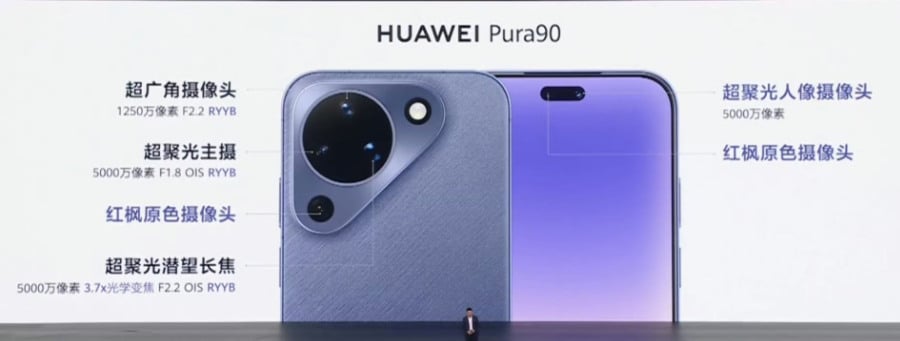
At a glance, the Pura 90 shares the same rounded triangular (or “guitar pick”) camera module seen across the lineup, but the execution is noticeably different.
Instead of the symmetrical triple-camera layout on the Pro Max, the standard Pura 90 goes for an asymmetrical design. It has one large circular camera paired with smaller surrounding sensors. The design makes the base model visually different from the part.
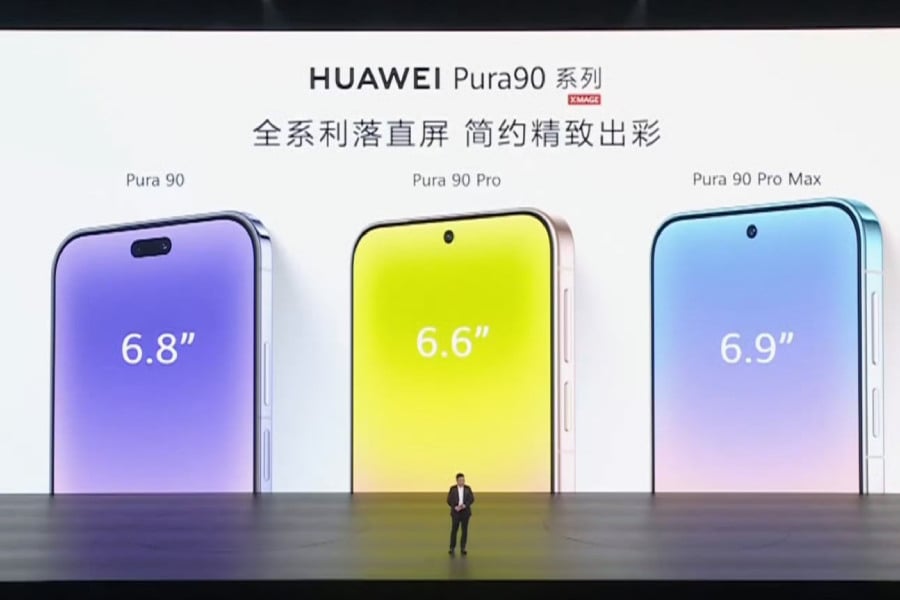
On the front, you get a 6.8-inch display with a centered pill-shaped punch-hole cutout. Huawei Pura 90 Pro series, in comparison, has a single punch-hole design.
Camera and Battery
Even as the “entry” model in the lineup, Huawei isn’t holding back much on imaging.
The Pura 90 features a 50MP RYYB main camera with OIS and an f/1.8 aperture, paired with a 12.5MP RYYB ultra-wide (f/2.2) and a 50MP periscope telephoto offering 3.7x optical zoom, also with OIS. Like the rest of the series, it includes Huawei’s Red Maple color system for improved color accuracy.
Up front, there’s a 50MP selfie camera, and interestingly, Huawei is adding a Red Maple color camera on the front as well, something that’s not available on the Pro and Pro Max variants.
Huawei Pura 90 Rear CameraHuawei Pura 90 series difference in screen designs
The Pura 90 packs a 6,500mAh battery, which is actually larger than the 6,000mAh unit found in the Pro Max. It supports 100W fast charging.
Unlike the new Kirin 9030 series, the Pura 90 is powered by the Kirin 9010S processor. Still, Huawei says the performance is about 15 percent better than the previous generation.
On the software side, the phone runs HarmonyOS 6.1, bringing the same AI-focused experience, visual refresh, and Xiaoyi assistant improvements seen across the rest of the Pura 90 series.
Despite the large battery, the Pura 90 comes in at just 7mm thick.
Price and availability
The Huawei Pura 90 starts at 4,699 yuan for the 12GB + 256GB model. The 12GB + 512GB version is priced at 5,199 yuan, while the 16GB + 512GB variant comes in at 5,699 yuan.
Huawei Pura 90
Price (CNY)
Approx. Price (USD)
12GB + 256GB
4,699 yuan
~$681
12GB + 512GB
5,199 yuan
~$754
16GB + 512GB
5,699 yuan
~$826
For more daily updates, please visit our News Section.
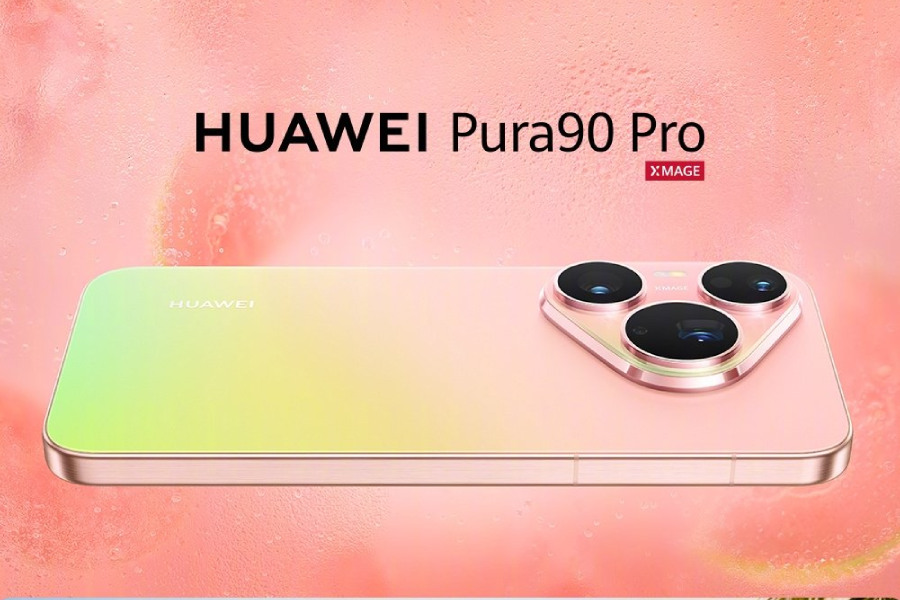
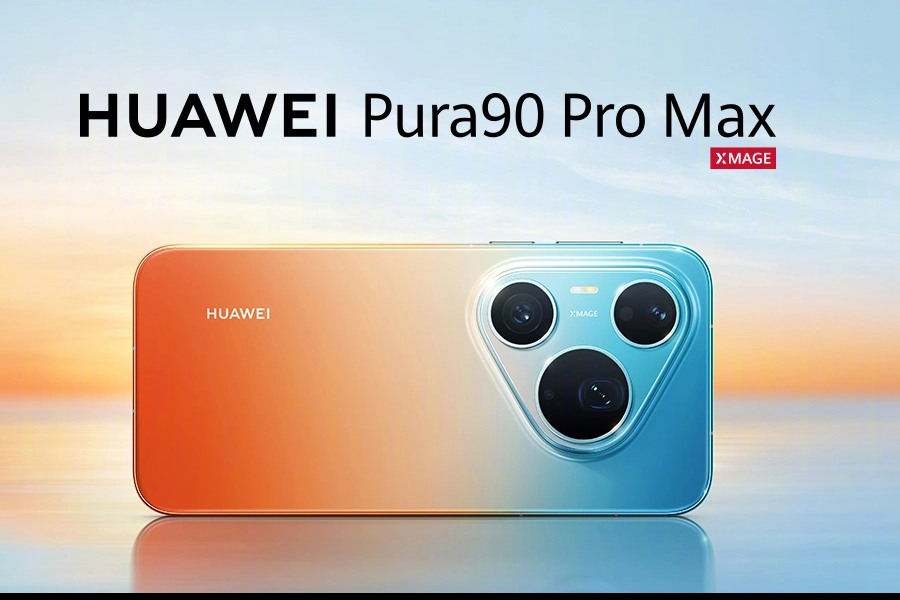
Alongside the wide, book-style Pura X Max, Huawei also unveiled its more conventional flagships, the Pura 90 Pro and Pura 90 Pro Max today. The latter is the top-of-the-line model this generation, as there will be no Ultra variant.
Starting with the display, the Huawei Pura 90 Pro features a 6.6-inch display, while the Pro Max stretches that to 6.9 inches. Both have a single punch-hole cutout.
Huawei is still trying to make things visually distinct. The Pro Max adopts what it calls an “emotional color aesthetic,” which has an industry-first dual-color gradient metal frame and a glowing borderless theme. It comes in Orange Ocean, Emerald Lake, Sunset Purple, Dawn Gold, and Obsidian Black.
The standard Pro tones things down slightly with Pink Guava, Orange Soda, Coconut White, and Mulberry Black.
Cameras
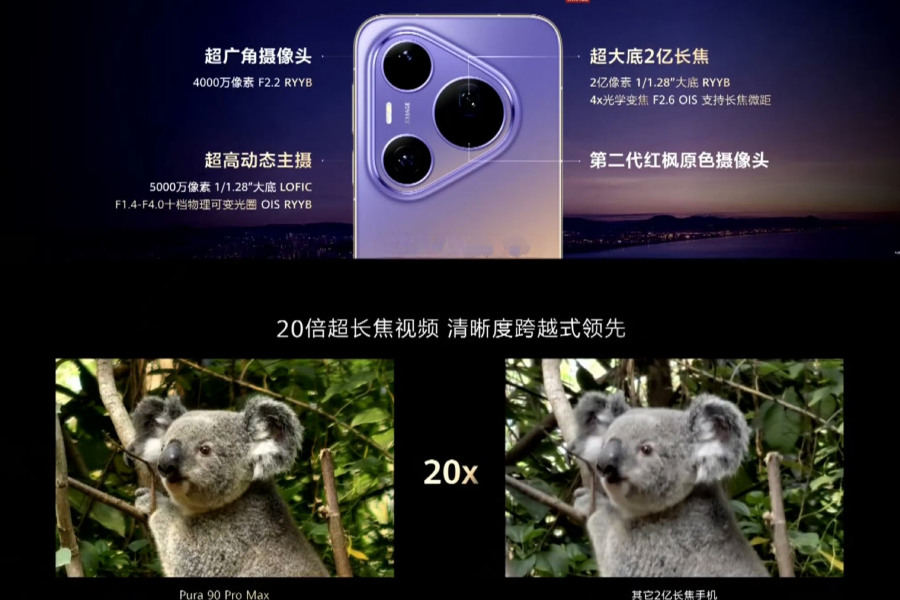
As for the camera, the Pura 90 Pro Max leads with a 50MP RYYB main sensor (1/1.28-inch) with OIS, paired with LOFIC tech and a variable aperture ranging from f/1.4 to f/4.0. Huawei claims it offers up to 16 times greater dynamic range than the iPhone 17 Pro Max, alongside significantly improved highlight and shadow detail.
It’s backed by a 40MP RYYB ultra-wide camera and a 200MP RYYB periscope telephoto (also 1/1.28-inch), offering 4x optical zoom and up to 8x “optical-quality” zoom. Huawei says the telephoto system pulls in up to five times more light than the iPhone 17 Pro Max, thanks in part to what it calls an industry-first three-in-one super concentrating prism. It is also rated for CIPA 7.0 stabilization.
Huawei Pura 90 Pro Huawei Pura 90 Pro Max
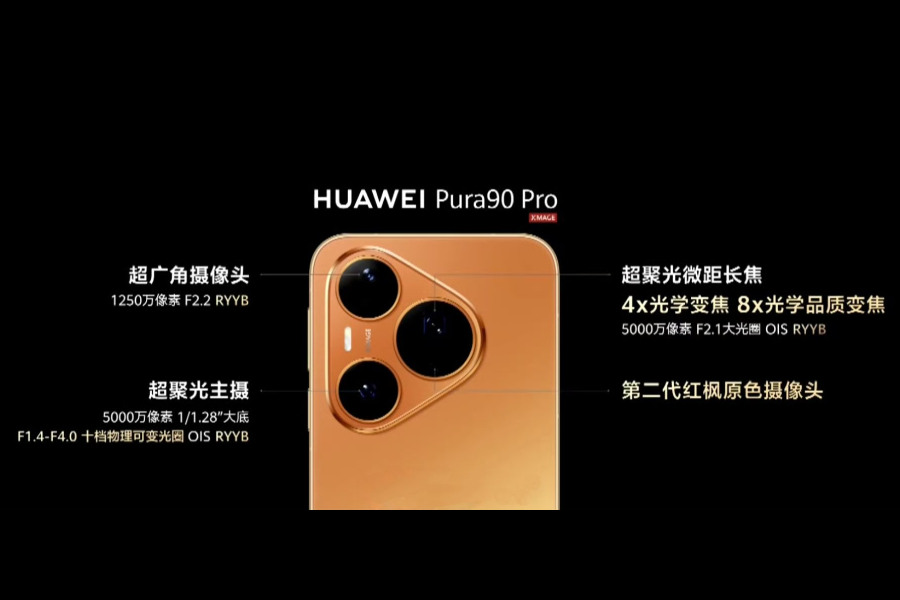
The standard Pura 90 Pro dials things back slightly but keeps the same core philosophy. It uses a 50MP RYYB main sensor (1/1.28-inch) with OIS and the same variable aperture setup (f/1.4–f/4.0), paired with a 12.5MP RYYB ultra-wide (13mm) and a 50MP periscope telephoto with 4x optical zoom and up to 8x optical-quality zoom.
Both phones fall under Huawei’s XMAGE branding and have a Red Maplee multispectral lens. The two also have features like 3D dynamic photos, portrait enhancements, and AI-assisted shooting tools.
Kirin 9030S and AI everywhere
Unlike the Kirin 9030 Pro on the Pura X Max foldable, both devices have the Kirin 9030S processor. The company claims a 200 percent improvement in NPU image understanding, along with gains in AI ISP color processing, telephoto video clarity, and stabilization accuracy.
On the software side, both phones run HarmonyOS 6.1. And AI is a major part of the pitch. Such features include AI pose recommendations, AI-assisted composition, portrait retouching, and one-click photo creation. The Xiaoyi assistant also gets upgrades like real-time pointing recognition and voiceprint detection.
Huawei Pura 90 ProHuawei Pura 90 Pro Max
The Pro Max also has Huawei’s Kunlun glass protection, which the company says reduces reflections by 70 percent while significantly improving scratch resistance (up to 16 times) and drop resistance (up to 25 percent).
There’s also support for long-distance voice enhancement, extending usable voice pickup up to 10 meters.
Price and availability
The Pura 90 Pro starts at 5,499 yuan for the 12GB + 256GB model, while the higher-tier (16GB + 1TB) model costs 7,499 yuan. The Pura 90 Pro Max starts at 6,499 yuan and tops out at 8,499 yuan for the 16GB + 1TB model.
Pura 90 Pro
Variant
Price (CNY)
Price (USD)
12GB + 256GB
¥5,499
$824.85
12GB + 512GB
¥5,999
$899.85
16GB + 512GB
¥6,499
$974.85
16GB + 1TB
¥7,499
$1,124.85
Pura 90 Pro Max
Variant
Price (CNY)
Price (USD)
12GB + 256GB
¥6,499
$974.85
12GB + 512GB
¥6,999
$1,049.85
16GB + 512GB
¥7,499
$1,124.85
16GB + 1TB
¥8,499
$1,274.85
For more daily updates, please visit our News Section.
Apple has long been rumored to launch a wide foldable iPhone, but Huawei just beat it to the punch with the first wide, book-style foldable. As scheduled, the company today announced the Pura X Max alongside the new Pura 90 series.
The Pura X Max shifts away from the now-familiar tall foldable design and instead focuses on a wider, more paper-like aspect ratio. Both the inner and outer displays follow a √2:1 aspect ratio, which Huawei says is intended to create a more consistent viewing experience across screens.
On the outside, you get a 5.4-inch display that pushes up to 3500 nits of peak brightness and supports a 1–120Hz LTPO adaptive refresh rate. Open it up, and there’s a 7.7-inch inner screen with similar adaptive refresh capabilities, though brightness tops out slightly lower at 3000 nits.
Design-wise, the phone has what it calls a geometric aesthetic, with a ceramic bezel around the camera module that’s meant to give it a more polished look. It comes in five colors: Midnight Black, Zero White, Interstellar Blue, Olive Gold, and Vibrant Orange.
AI, imaging, and a lot of Huawei-specific software
Like most recent launches, AI is a big part of the pitch. The Pura X Max runs HarmonyOS 6.1 and introduces an upgraded Xiaoyi Smart Brain along with what Huawei calls a companion AI system. This system integrates with apps like Amap, Zhihu, Didi, Baidu Maps, and DingTalk, aiming to make the assistant more useful across everyday tasks.
There’s also a long list of AI-driven features, including Xiaoyi Help, Time Machine, AI note-taking, and photo editing tools.
On the hardware side, the Pura X Max includes a 50MP main camera, a 50MP periscope telephoto lens, a second-generation color sensor, and a 12.5MP ultra-wide camera. Huawei is branding this setup as part of its XMAGE system, with support for portrait enhancements and 3D dynamic photos.
Huawei Pura X Max desgin
Under the hood, the device is powered by the Kirin 9030 Pro chip and runs HarmonyOS. Huawei also says the phone supports real-time ray tracing.
The foldable mechanism itself has been updated as well. Huawei is using a new basalt waterdrop hinge that reportedly increases screen space by 16% and improves drop resistance by 33%. The inner display is protected by a multi-layer structure that includes UTG glass and additional support layers.
There are also some accessories and extras. Huawei introduced the M-Pen 3 Mini stylus, which supports air gestures, includes a microphone, and can trigger the Xiaoyi assistant.
Price and Availability
The lineup is split into two tiers. The standard edition includes a 12GB + 256GB model at 10,999 yuan and a 12GB + 512GB variant at 11,999 yuan. The collector’s edition pushes things further with 16GB + 512GB at 12,999 yuan and a 16GB + 1TB option at 13,999 yuan.
For more daily updates, please visit our News Section.

 Login
Login