Reading view

Vivo X Fold6 vs OPPO Find N6: The Ultimate Foldable Flagship Comparison
vivo vs oppo

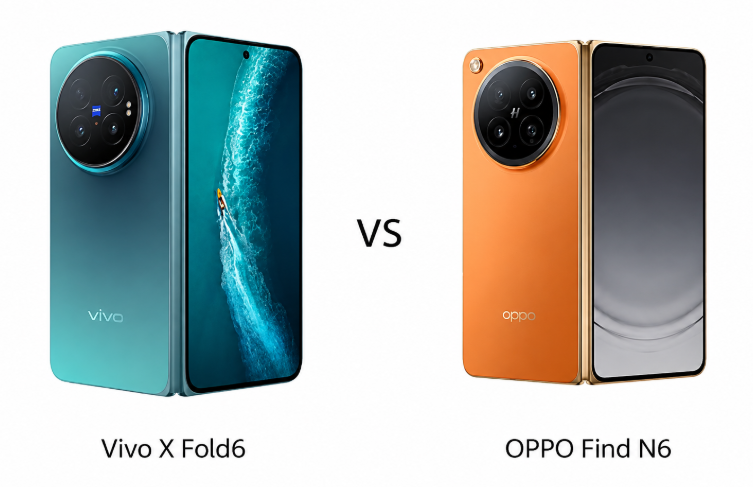
Foldable smartphones continue to evolve rapidly, and the Vivo X Fold6 and OPPO Find N6 represent two of the most advanced options available. Both target power users with flagship processors, premium cameras, large foldable displays, and fast charging technologies. While they share many high-end features, each phone focuses on different strengths. The Vivo X Fold6 emphasizes battery life and ZEISS imaging, whereas the OPPO Find N6 prioritizes premium display technologies, advanced software features, and productivity enhancements. Here’s a detailed comparison to help determine which foldable deserves a place in your pocket.
Major Features:

CategoryVivo X Fold6OPPO Find N6Winner
Build & DurabilityAluminum frame, glass-fiber reinforced plastic back, IP58/IP59 ratingAircraft-grade aluminum frame, Grade 5 titanium alloy hinge, Nanocrystal Glass, IP58/IP59 ratingOPPO – More premium materials and hinge
Main Display8.02-inch LTPO AMOLED, 120Hz, HDR10+, Dolby Vision8.12-inch LTPO OLED, 120Hz, Dolby Vision, HDR10+, HDR Vivid, 2160Hz PWM, Zero-Feel Crease, Stylus supportOPPO – More advanced display features
Cover Display6.51-inch LTPO AMOLED, 120Hz, Dolby Vision, 5,000 nits peak6.62-inch LTPO OLED, 120Hz, Dolby Vision, 3,600 nits peak, Stylus supportOPPO – Larger display with stylus support
ProcessorMediaTek Dimensity 9500 Super (3nm)Snapdragon 8 Elite Gen 5 (3nm)OPPO – More powerful flagship chipset
RAM & StorageUp to 16GB RAM, 1TB UFS 4.1Up to 16GB RAM, 1TB UFS 4.1Tie – Same memory configuration
Rear Cameras200MP + 50MP Periscope + 50MP Ultrawide, ZEISS optics, Laser AF200MP + 50MP Periscope + 50MP Ultrawide, Hasselblad Color CalibrationVivo – ZEISS optics and Laser AF
Video Recording8K 30fps, 4K 60fps4K 120fps, Dolby Vision, HDR10+OPPO – Better high-frame-rate video features
Selfie CamerasDual 20MP, 1080p videoDual 20MP, 4K video with HDR and gyro-EISOPPO – Better selfie video recording
Battery7,000mAh Silicon-Carbon6,000mAh Silicon-CarbonVivo – Larger battery
Charging80W wired, 40W wireless, reverse wired, 5W reverse wireless80W wired, 50W wireless, UFCS, PPS, PD/QC, reverse wired, reverse wirelessOPPO – Faster and more versatile charging
ConnectivityWi-Fi 7, Bluetooth 5.4, USB 3.2 Gen2, DisplayPort, IR BlasterWi-Fi 7, USB 3.1, DisplayPort, IR Blaster, Satellite Connectivity (1TB model)OPPO – Satellite connectivity
SoftwareAndroid 16, OriginOS 6 FoldAndroid 16, ColorOS 16Tie – Latest Android software
Price / ValuePriced around $1,200 / ₹1,11,000Priced around $1,800 / ₹1,60,000Vivo – Better value for money
OverallBigger battery, excellent cameras, lower priceBetter display, chipset, charging, and premium featuresOPPO – Better flagship experience; Vivo – Better value
Disclaimer: Specs are based on available data. Actual performance may vary. Verify details from official sources before buying.

Design and Display

Build and Feel

Both foldables feature premium materials, durable hinges, and IP58/IP59 dust and water resistance, making them reliable for everyday use. The Vivo X Fold6 combines an aluminum frame with a glass-fiber reinforced back, giving it a sturdy yet understated appearance. OPPO, meanwhile, takes a more premium approach by using an aircraft-grade aluminum frame, a Grade 5 titanium alloy hinge, Nanocrystal Glass, and self-healing memory glass for the internal display. The addition of stylus support on both screens also makes the Find N6 more versatile for productivity and creativity. The OPPO feels like the more feature-rich flagship, while the Vivo focuses on practicality and long-term durability.

Display Quality

The Vivo X Fold6 offers an excellent LTPO AMOLED display with Dolby Vision, HDR10+, HDR Vivid, a 120Hz refresh rate, and an exceptionally bright cover screen. The OPPO Find N6 raises the bar further with a larger LTPO OLED panel featuring 2160Hz PWM dimming, Zero-Feel crease technology, higher cover display brightness, Ultra HDR support, and stylus compatibility. Both displays deliver flagship-quality visuals, but OPPO provides a more refined viewing experience with additional display innovations.

Verdict

The Vivo X Fold6 delivers an excellent display package, but the OPPO Find N6 stands out thanks to its superior display technologies, stylus support, and more premium overall design experience.

Specifications Including Battery

Performance

The Vivo X Fold6 is powered by the MediaTek Dimensity 9500 Super chipset paired with UFS 4.1 storage and up to 16GB RAM, delivering flagship-grade multitasking and gaming performance. The OPPO Find N6 uses Qualcomm’s Snapdragon 8 Elite Gen 5 processor with the same fast storage standard and generous memory options. Qualcomm’s latest flagship chip offers stronger GPU performance, improved AI capabilities, and better long-term software optimization. Both devices easily handle demanding workloads, but the OPPO has a slight advantage for users seeking maximum processing power.

Battery and Charging

Battery life is where the Vivo X Fold6 shines. Its massive 7000mAh silicon-carbon battery comfortably exceeds the OPPO’s 6000mAh capacity while maintaining the same 80W wired charging speed. Although OPPO counters with faster 50W wireless charging compared to Vivo’s 40W, the larger battery in the Vivo is likely to provide noticeably longer endurance. Frequent travelers and heavy users will appreciate the additional battery reserve throughout the day.

Verdict

The OPPO Find N6 wins on raw performance, while the Vivo X Fold6 takes the lead in battery life. Overall, the Vivo delivers a slightly more balanced hardware package thanks to its outstanding endurance without sacrificing flagship performance.

Camera

Main and Secondary Lenses

Both smartphones feature an impressive 200MP primary camera accompanied by 50MP periscope telephoto and 50MP ultrawide sensors. Vivo partners with ZEISS, offering T* lens coating, Laser Autofocus, and excellent color consistency, while OPPO relies on Hasselblad Color Calibration for its signature image tuning. Vivo records up to 8K video and delivers excellent detail with its larger primary sensor, whereas OPPO focuses on smoother video recording with support for 4K at 120fps and Dolby Vision HDR. Photography enthusiasts may appreciate Vivo’s imaging hardware, while videographers are likely to prefer OPPO’s more advanced recording capabilities.

Selfie Camera

Each device includes dual 20MP selfie cameras, one on the cover display and one inside the foldable screen. The Vivo records Full HD video, whereas OPPO upgrades selfie recording to 4K with HDR and gyro-EIS for noticeably smoother footage. Content creators and video callers benefit from the additional flexibility offered by OPPO.

Verdict

The Vivo X Fold6 is the stronger option for still photography thanks to its ZEISS partnership and larger primary sensor. However, the OPPO Find N6 offers a more complete camera system with superior video recording and better selfie capabilities.

Pricing

The Vivo X Fold6 is priced around $1,200 (approximately ₹1,11,000), making it one of the most competitively priced premium foldables available. The OPPO Find N6 is priced around $1,800 (approximately ₹1,60,000), placing it firmly in the ultra-premium category. The significant price difference means buyers must carefully consider whether OPPO’s additional display features, Snapdragon chipset, stylus support, and premium construction justify spending considerably more. For many users, both devices deliver flagship experiences, but the Vivo offers far greater affordability without making major compromises in performance or camera quality.

Verdict

The Vivo X Fold6 delivers exceptional value for money by offering flagship hardware, an excellent camera system, and a huge battery at a substantially lower price. The OPPO Find N6 justifies its premium pricing with exclusive features, but its higher cost limits its value advantage.

Disclaimer:
Prices are approximate and may vary based on country, region, launch timing, and applicable taxes. Always check whether the listed price is for a China unit or a global/international variant when purchasing.

Conclusion

The Vivo X Fold6 stands out with its enormous 7000mAh silicon-carbon battery, ZEISS camera system, 8K video recording, and highly competitive pricing. It is built for users who prioritize endurance, photography, and overall value. The OPPO Find N6 distinguishes itself through its Snapdragon 8 Elite Gen 5 processor, titanium alloy hinge, stylus support on both displays, Zero-Feel crease technology, satellite connectivity on the 1TB model, and advanced Dolby Vision video recording. These additions create a more premium experience aimed at productivity enthusiasts and users seeking the latest display innovations.

Verdict

For most buyers, the Vivo X Fold6 is the smarter purchase. It delivers flagship performance, excellent cameras, and class-leading battery life while costing significantly less than its rival. The OPPO Find N6 remains the better choice for users who want the absolute best foldable display technologies, premium build materials, and productivity-focused features, but those advantages come at a steep premium.

Overall, the Vivo X Fold6 offers a stronger balance between features, performance, and value.

Disclaimer: This comparison is based on the specifications provided and is intended for general informational purposes. Actual performance, camera results, battery life, and overall experience may vary depending on real-world usage, software updates, and individual preferences.

Read More:

The post Vivo X Fold6 vs OPPO Find N6: The Ultimate Foldable Flagship Comparison appeared first on Gizmochina.

OPPO Reno 16 Pro Now Available at Giztop, Starting at $649

OPPO Reno 16 Pro

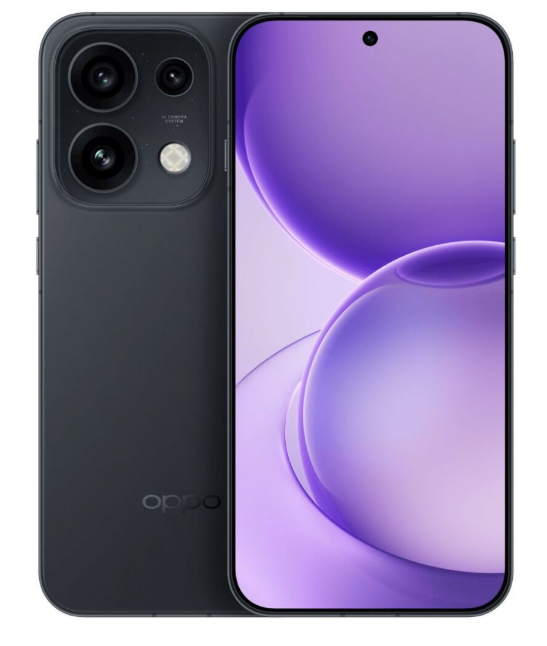
OPPO Reno 16 Pro is now available for global customers through Giztop with worldwide shipping. The smartphone starts at $649, making it an attractive option for users looking for a premium Android device with flagship-level hardware. It combines a large OLED display, the latest MediaTek processor, powerful cameras, and a massive battery, making it suitable for gaming, photography, and everyday use.

Display

The OPPO Reno 16 Pro features a 6.78-inch AMOLED display with a 2772 × 1272 resolution and a smooth 120Hz refresh rate. The screen also supports HDR10+, 2160Hz PWM dimming, and reaches up to 1,800 nits of local peak brightness for better outdoor visibility. With a 240Hz touch sampling rate and centered punch-hole design, the display delivers a responsive and immersive viewing experience.

Performance and Software

Powering the device is the MediaTek Dimensity 9500s octa-core processor with built-in 5G support. It is paired with 12GB or 16GB of LPDDR5X RAM and up to 512GB of UFS 3.1 storage, ensuring smooth multitasking and fast app loading. The phone runs Android 16 with ColorOS 16, offering a clean interface along with productivity and customization features.

Cameras

The OPPO Reno 16 Pro comes equipped with a versatile triple rear camera setup. It includes a 200MP Sony IMX890 main camera with OIS, a 50MP periscope telephoto camera offering 3.5x optical zoom, and a 50MP ultra-wide camera for capturing landscapes and group shots. On the front, a 50MP selfie camera handles high-resolution selfies and video calls.

Battery and Other Features

The smartphone packs a large 7000mAh battery designed to last through heavy daily use. It supports 80W wired fast charging and 50W wireless charging, allowing users to recharge quickly. Security is handled by an in-display fingerprint scanner for fast and secure unlocking.

Price and Availability

OPPO Reno 16 Pro is currently available from Giztop with worldwide shipping. The phone starts at $649, making it a compelling choice for buyers looking for a premium smartphone with a high-quality display, capable cameras, strong performance, and long battery life.

Read More:

The post OPPO Reno 16 Pro Now Available at Giztop, Starting at $649 appeared first on Gizmochina.
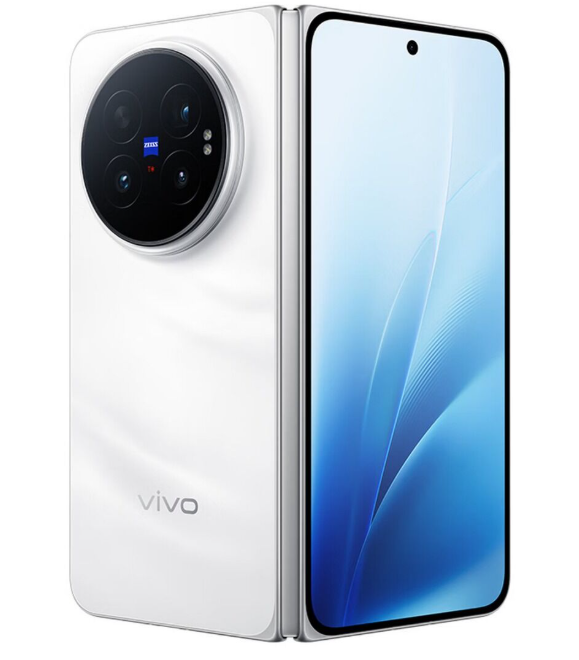
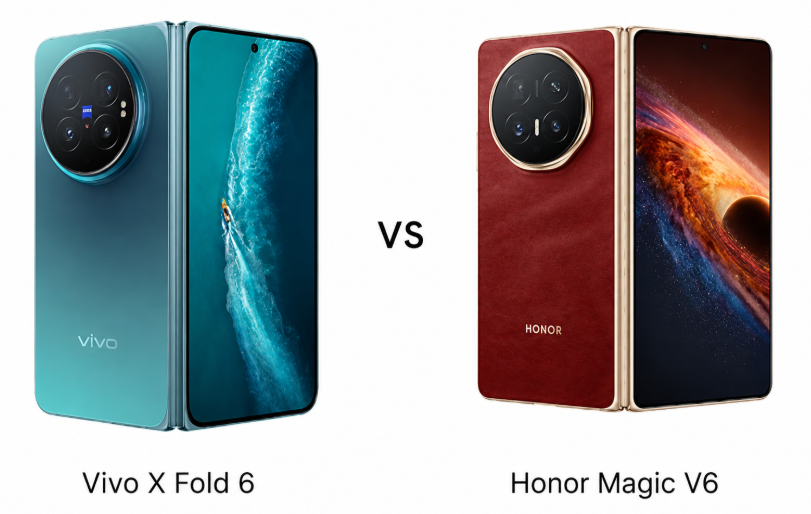
Vivo X Fold 6 vs Honor Magic V6 Comparison: Specs, Camera, Battery & Price

Vivo vs Honor

The premium foldable smartphone segment is becoming more competitive, and the Vivo X Fold 6 and Honor Magic V6 are among the most advanced book-style foldables available. Both feature flagship processors, premium AMOLED displays, large silicon-carbon batteries, wireless charging, and versatile triple-camera systems. However, they target different priorities. 

Vivo focuses on imaging, battery life, and multimedia, while Honor emphasizes portability, software longevity, durability, and productivity. Here’s a detailed comparison to help determine which foldable delivers the better overall experience.

Major Features:

CategoryVivo X Fold 6Honor Magic V6Winner
Display8.02-inch LTPO AMOLED, 120Hz, Dolby Vision, HDR10+, HDR Vivid, 5,000 nits cover display7.95-inch LTPO2 AMOLED, 120Hz, 4,320Hz PWM, 6,000 nits cover display, stylus supportHonor – Brighter display and better eye comfort
Build & DurabilityIP58/IP59, glass-fiber reinforced backIP68/IP69, NanoCrystal Shield, Armored inner display, stylus supportHonor – More durable and feature-rich
ProcessorMediaTek Dimensity 9500 Super (3nm)Snapdragon 8 Elite Gen 5 (3nm)Honor – Faster overall performance
GPUMali-G1 Ultra MC12Adreno 840Honor – Better graphics performance
SoftwareAndroid 16, OriginOS 6 FoldAndroid 16, MagicOS 10, up to 7 Android upgradesHonor – Longer software support
RAM & StorageUp to 16GB RAM, 1TB UFS 4.1Up to 16GB RAM, 1TB UFS 4.1Tie – Identical configurations
Main Camera200MP + 50MP Periscope + 50MP Ultrawide, ZEISS optics50MP + 64MP Periscope + 50MP UltrawideVivo – Superior primary camera
Telephoto Camera50MP, 3x optical zoom64MP, 3x optical zoomHonor – Higher-resolution telephoto
Selfie CamerasDual 20MP, 1080p videoDual 20MP, 4K videoHonor – Better selfie video
Rear Video RecordingUp to 8K 30fpsUp to 4K 60fps (10-bit)Vivo – Higher recording resolution
Battery7,000mAh6,660mAh (Global), 6,850/7,150mAh (China)Vivo – Larger global battery
Wired Charging80W80WTie – Same charging speed
Wireless Charging40W66WHonor – Faster wireless charging
ConnectivityWi-Fi 7, Bluetooth 5.4, USB 3.2 Gen2Wi-Fi 7, Bluetooth 6.0, USB 3.1Honor – Newer Bluetooth standard
AudioStereo speakers, Hi-Res AudioStereo speakers, Hi-Res AudioTie – Similar audio experience
Special FeaturesZEISS optics, Color Spectrum Sensor, Laser AF, Dolby VisionStylus support, Anti-reflective display, NanoCrystal ShieldTie – Depends on user priorities
Price / ValuePriced around $1,200 / ₹1,11,000Priced around $1,300 / ₹1,10,000Vivo – Better hardware value for the price
Disclaimer: Specs are based on available data. Actual performance may vary. Verify details from official sources before buying.

Design and Display

Build and Feel

Both smartphones deliver premium craftsmanship with aluminum frames and excellent durability. The Vivo X Fold 6 features IP58/IP59 protection and a glass-fiber reinforced plastic rear panel that feels sturdy while maintaining a refined finish. Honor raises the bar with IP68/IP69 protection, a stronger armored inner display, NanoCrystal Shield on the cover screen, anti-reflective coating, and stylus support on both displays. Those additions make it feel slightly more versatile for productivity and long-term durability. Vivo, however, offers a polished flagship feel that prioritizes photography and entertainment without compromising build quality.

Display Quality

The Vivo X Fold 6 sports a larger 8.02-inch LTPO AMOLED inner display with Dolby Vision, HDR10+, HDR Vivid, and excellent color reproduction. Its cover display also supports Dolby Vision and reaches 5,000 nits peak brightness. Honor counters with a 7.95-inch LTPO2 AMOLED panel featuring 4,320Hz PWM dimming for better eye comfort, while its cover display reaches an impressive 6,000 nits. Both offer smooth 120Hz refresh rates, but Honor’s eye-friendly display technologies make daily usage slightly more comfortable, whereas Vivo’s Dolby Vision support enhances movie watching.

Verdict

Honor Magic V6 offers a more feature-rich display package thanks to stronger durability, stylus compatibility, higher brightness, and advanced eye protection. Vivo X Fold 6 remains an outstanding choice for users who prioritize immersive multimedia experiences.

Specifications Including Battery

Performance

The Vivo X Fold 6 runs on the MediaTek Dimensity 9500 Super chipset paired with UFS 4.1 storage, delivering flagship-level performance for gaming, multitasking, AI features, and demanding workloads. Honor Magic V6 is powered by Qualcomm’s Snapdragon 8 Elite Gen 5, which offers stronger graphics performance and excellent efficiency. Both phones provide up to 16GB RAM and 1TB storage, ensuring smooth long-term usage. Honor also promises up to seven major Android upgrades, making it a stronger long-term software investment. Vivo’s hardware remains exceptionally capable, especially for users seeking raw speed combined with optimized camera processing.

Battery and Charging

Battery life is one of Vivo’s strongest advantages. It packs a massive 7,000mAh silicon-carbon battery with 80W wired and 40W wireless charging, making it ideal for heavy users. Honor ships with a 6,660mAh global battery while Chinese variants receive larger capacities. It supports the same 80W wired charging but improves wireless charging to 66W. Vivo’s larger battery generally provides better endurance, while Honor finishes charging wirelessly much faster.

Verdict

Honor Magic V6 offers a stronger chipset and superior software commitment, but Vivo X Fold 6 wins for endurance with its significantly larger battery. Users prioritizing long battery life may find Vivo more rewarding.

Camera

Main and Secondary Lenses

Photography is where Vivo clearly aims to stand out. Its 200MP primary sensor captures exceptional detail, while the 50MP ZEISS periscope telephoto and 50MP ultrawide cameras are enhanced by ZEISS optics, T* coating, Laser AF, and a color spectrum sensor. Honor Magic V6 features a capable 50MP primary camera, a 64MP 3x periscope telephoto lens, and a 50MP ultrawide camera that delivers reliable versatility. Video recording favors Vivo with 8K support, whereas Honor tops out at 4K but includes 10-bit recording for richer color reproduction. Vivo feels more photography-focused, while Honor offers a balanced camera system suitable for everyday shooting.

Selfie Camera

Both devices feature dual 20MP selfie cameras, one inside and one on the cover display. Honor gains an advantage by supporting 4K selfie video with gyro-EIS, while Vivo records up to 1080p. For content creators and video calls, Honor delivers a more capable front-camera experience.

Verdict

Vivo X Fold 6 is the strongest overall camera phone thanks to its impressive 200MP main sensor, ZEISS imaging system, and 8K recording. Honor Magic V6 remains excellent, especially for selfie videos and balanced everyday photography.

Pricing

The Vivo X Fold 6 is priced around $1,200 (approximately ₹1,11,000), while the Honor Magic V6 is priced around $1,300 (approximately ₹1,10,000). Although the listed regional pricing is very close in Indian currency, Honor generally carries a higher global asking price. Vivo delivers flagship hardware, a larger battery, and a superior primary camera at a slightly lower international price point. Honor justifies its premium with better durability, stylus support, longer software support, and more advanced display technologies. The difference ultimately depends on whether productivity or multimedia is the higher priority.

Verdict

Vivo X Fold 6 delivers stronger value for buyers focused on hardware performance, battery life, and camera quality. Honor Magic V6 earns its premium through long-term software support, productivity features, and premium durability, making it worthwhile for users planning to keep the device for many years.

Disclaimer:
Prices are approximate and may vary based on country, region, launch timing, and applicable taxes. Always check whether the listed price is for a China unit or a global/international variant when purchasing.

Conclusion

The Vivo X Fold 6 distinguishes itself with a 200MP ZEISS camera system, massive 7,000mAh battery, Dolby Vision displays, 8K video recording, and excellent multimedia capabilities. Honor Magic V6 responds with flagship Snapdragon performance, seven years of Android upgrades, stylus support on both displays, stronger water resistance, brighter cover display, anti-reflective coating, and one of the most durable foldable designs available. Each phone targets a slightly different audience, making the decision easier once priorities are established.

Verdict

Choose the Vivo X Fold 6 if photography, battery endurance, entertainment, and overall hardware value matter the most. Choose the Honor Magic V6 if long-term software support, productivity, display comfort, and premium durability are higher priorities. 

Although the Honor Magic V6 wins more spec-sheet categories, the Vivo X Fold 6 is the better overall choice because its 200MP ZEISS camera, larger 7,000mAh battery, superior multimedia experience, and lower price deliver greater real-world value for most users.

Disclaimer: This comparison is based on the specifications provided and is intended for general informational purposes. Actual performance, camera results, battery life, and overall experience may vary depending on real-world usage, software updates, and individual preferences.

Read More:

The post Vivo X Fold 6 vs Honor Magic V6 Comparison: Specs, Camera, Battery & Price appeared first on Gizmochina.
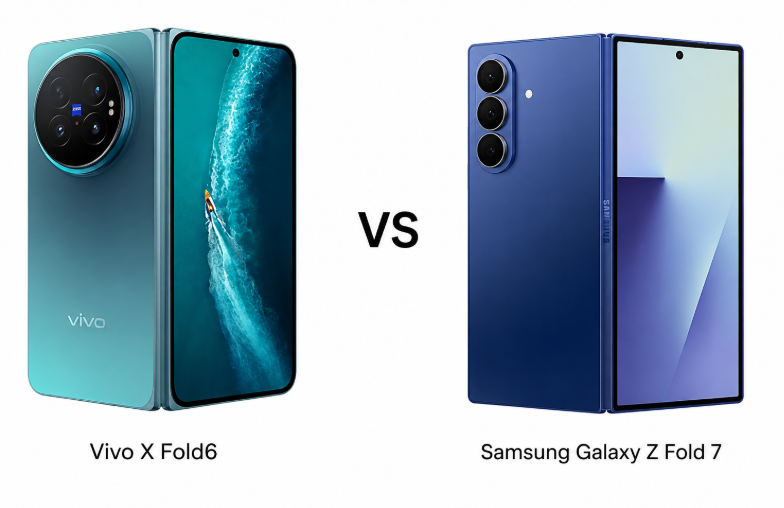
Vivo X Fold6 vs Samsung Galaxy Z Fold 7: Which Premium Foldable Offers Better Value?

Vivo vs Samsung

The premium foldable smartphone market is more competitive than ever, and the Vivo X Fold6 is taking on Samsung’s latest Galaxy Z Fold 7 with flagship hardware at a much lower price. While Samsung focuses on software refinement and long-term support, Vivo counters with a larger battery, faster charging, brighter displays, and an upgraded camera system. Here’s a detailed comparison to see which foldable delivers the better overall experience and value for your money. 

Major Features:

CategoryVivo X Fold6Samsung Galaxy Z Fold 7Winner
Display8.02-inch LTPO AMOLED, 120Hz, HDR10+, Dolby Vision, 2312 × 2504, 5,000 nits cover display8.0-inch Dynamic LTPO AMOLED 2X, 120Hz, HDR10+, 1968 × 2184, 2,600 nitsVivo – Sharper and brighter displays
Cover Display6.51-inch LTPO AMOLED, 120Hz, Dolby Vision6.5-inch Dynamic AMOLED 2X, 120HzVivo – Higher brightness
ProcessorMediaTek Dimensity 9500 Super (3nm)Snapdragon 8 Elite (3nm)Tie – Flagship performance
GPUMali-G1 Ultra MC12Adreno 830Samsung – Better gaming optimization
RAM & StorageUp to 16GB RAM, 1TB, UFS 4.1Up to 16GB RAM, 1TB, UFS 4.0Vivo – Faster storage
SoftwareAndroid 16, OriginOS 6 FoldAndroid 16, One UI 8, 7 major Android upgradesSamsung – Longer software support
Rear Cameras200MP + 50MP Periscope + 50MP Ultrawide200MP + 10MP Telephoto + 12MP UltrawideVivo – Superior camera hardware
Selfie CamerasDual 20MP camerasDual 10MP camerasVivo – Higher-resolution selfies
Video Recording8K@30fps, 4K@60fps8K@30fps, 4K@60fps, HDR10+, 1080p@240fpsSamsung – More versatile video features
Battery7,000mAh4,400mAhVivo – Much larger battery
Charging80W wired, 40W wireless, reverse wired, 5W reverse wireless25W wired, 15W wireless, 4.5W reverse wirelessVivo – Significantly faster charging
ConnectivityWi-Fi 7, Bluetooth 5.4, USB 3.2 Gen2, DisplayPort, IR BlasterWi-Fi 7, Bluetooth 5.4, USB 3.2, DeX, UWBSamsung – Better productivity features
DurabilityIP58/IP59 water and dust resistanceIP48 water and dust resistanceVivo – Better protection
Price / ValuePriced around $1,200 / ₹111,000Priced around $1,600 / ₹175,000Vivo – Better value for money
Disclaimer: Specs are based on available data. Actual performance may vary. Verify details from official sources before buying.

Design and Display

Build and Feel

The Vivo X Fold6 and Samsung Galaxy Z Fold 7 both represent the latest generation of premium foldable smartphones with refined designs and flagship materials. Vivo uses an aluminum frame paired with a glass front and a glass-fiber reinforced plastic rear panel while offering IP58/IP59 protection against dust and water. Samsung counters with Gorilla Glass Victus Ceramic 2 on the cover display, Gorilla Glass Victus 2 on the back, an Advanced Armor aluminum frame, and IP48 certification. Samsung also includes eSIM support and Ultra Wideband compatibility, making it more versatile for business users. Vivo, however, feels more practical with its higher durability rating and infrared blaster, giving it a few everyday advantages that many users may appreciate.

Display Quality

Both phones feature immersive 120Hz LTPO AMOLED foldable displays with HDR support, but Vivo delivers a sharper 8.02-inch panel with Dolby Vision, HDR Vivid, and an impressive 5,000-nit peak brightness on the cover display. Samsung’s Dynamic AMOLED 2X panel offers excellent color accuracy and One UI optimization, although its peak brightness tops out at 2,600 nits. Samsung’s software refinement makes animations exceptionally smooth, while Vivo’s brighter and higher-resolution displays provide a more striking visual experience, especially outdoors.

Verdict

Samsung offers premium materials and polished software, but Vivo delivers brighter displays, better durability certification, and a more impressive viewing experience. Overall, Vivo takes a slight lead in design and display.

Specifications Including Battery

Performance

The Vivo X Fold6 is powered by the MediaTek Dimensity 9500 Super chipset with UFS 4.1 storage, while the Galaxy Z Fold 7 runs Qualcomm’s Snapdragon 8 Elite paired with UFS 4.0 storage. Both deliver flagship-level performance capable of handling demanding games, multitasking, AI workloads, and productivity apps without difficulty. Samsung benefits from One UI 8 and promises seven major Android upgrades, making it a stronger long-term software investment. Vivo’s newer storage standard and powerful processor, however, provide excellent speed and responsiveness in everyday use. Both devices remain among the fastest foldables currently available.

Battery and Charging

Battery life is where the difference becomes significant. Vivo packs a massive 7,000mAh silicon-carbon battery supported by 80W wired, 40W wireless, reverse wired, and 5W reverse wireless charging. Samsung relies on a much smaller 4,400mAh battery with 25W wired and 15W wireless charging. Vivo is clearly built for heavy users who spend long hours away from a charger, while Samsung prioritizes efficiency over battery capacity.

Verdict

Samsung excels in software longevity, but Vivo delivers better battery endurance, faster charging, newer storage technology, and equally powerful performance. Vivo offers a stronger overall hardware package.

Camera

Main and Secondary Lenses

Both foldables feature impressive triple-camera systems led by 200MP primary sensors with optical image stabilization. Vivo complements its main sensor with a 50MP periscope telephoto camera offering 3x optical zoom and a 50MP ultrawide lens enhanced by Zeiss optics, Zeiss T* coating, laser autofocus, and a color spectrum sensor. Samsung uses a 10MP telephoto and a 12MP ultrawide camera while relying heavily on advanced computational photography. Samsung produces consistently balanced images with reliable color science, but Vivo’s superior hardware captures more detail, offers better zoom quality, and delivers greater flexibility in varied lighting conditions.

Selfie Camera

Vivo includes dual 20MP selfie cameras on both the cover and inner displays, while Samsung equips both positions with 10MP sensors capable of recording up to 4K video. Samsung offers better video recording options for selfie creators, but Vivo captures noticeably sharper still images with greater detail. Users focused primarily on photography are likely to appreciate Vivo’s approach.

Verdict

Samsung continues to impress with software processing and video capabilities, but Vivo’s stronger camera hardware, superior ultrawide and telephoto sensors, and higher-resolution selfie cameras make it the better photography-focused foldable.

Pricing

The Vivo X Fold6 is priced around $1,200 (₹111,000), while the Samsung Galaxy Z Fold 7 is priced around $1,600 (₹175,000). That creates a substantial difference of roughly $400 (₹64,000) between the two flagship foldables. Despite costing significantly less, Vivo includes a larger battery, dramatically faster charging, brighter displays, higher-resolution secondary cameras, UFS 4.1 storage, and a more capable camera system. Samsung justifies its premium through seven years of Android updates, One UI optimization, Samsung DeX, stronger ecosystem integration, and broader global software support. Buyers already invested in Samsung’s ecosystem may find the extra cost worthwhile, but the hardware advantage remains firmly with Vivo.

Verdict

Samsung commands a premium for software, ecosystem, and long-term support. Vivo delivers considerably more flagship hardware for a much lower asking price, making it the stronger value-for-money option for most buyers.

Disclaimer:
Prices are approximate and may vary based on country, region, launch timing, and applicable taxes. Always check whether the listed price is for a China unit or a global/international variant when purchasing.

Conclusion

Vivo X Fold6 stands out with its enormous 7,000mAh silicon-carbon battery, 80W wired and 40W wireless charging, Zeiss-enhanced triple-camera system, brighter dual displays, infrared blaster, and higher durability certification. Samsung Galaxy Z Fold 7 answers with seven years of Android upgrades, Samsung DeX desktop mode, Ultra Wideband support, polished One UI 8 software, and one of the most mature foldable ecosystems available today. Samsung remains an excellent productivity companion, particularly for users already using Galaxy tablets, watches, or laptops. Vivo, however, focuses on delivering flagship hardware without demanding the highest premium.

Verdict

For buyers seeking maximum hardware, longer battery life, faster charging, and better camera versatility, the Vivo X Fold6 is the stronger overall choice. Those prioritizing software support, productivity features, and seamless ecosystem integration will still appreciate the Galaxy Z Fold 7. 

Considering performance, features, and pricing together, Vivo offers the more compelling flagship foldable experience and delivers exceptional value against one of Samsung’s most premium devices.

Disclaimer: This comparison is based on the specifications provided and is intended for general informational purposes. Actual performance, camera results, battery life, and overall experience may vary depending on real-world usage, software updates, and individual preferences.

Read More:

The post Vivo X Fold6 vs Samsung Galaxy Z Fold 7: Which Premium Foldable Offers Better Value? appeared first on Gizmochina.
Vivo X Fold 6 Now Available at Giztop Starting at $1499

Vivo X Fold6

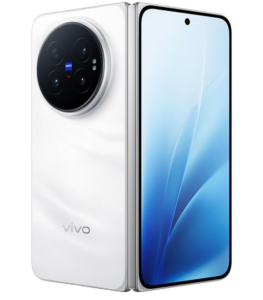
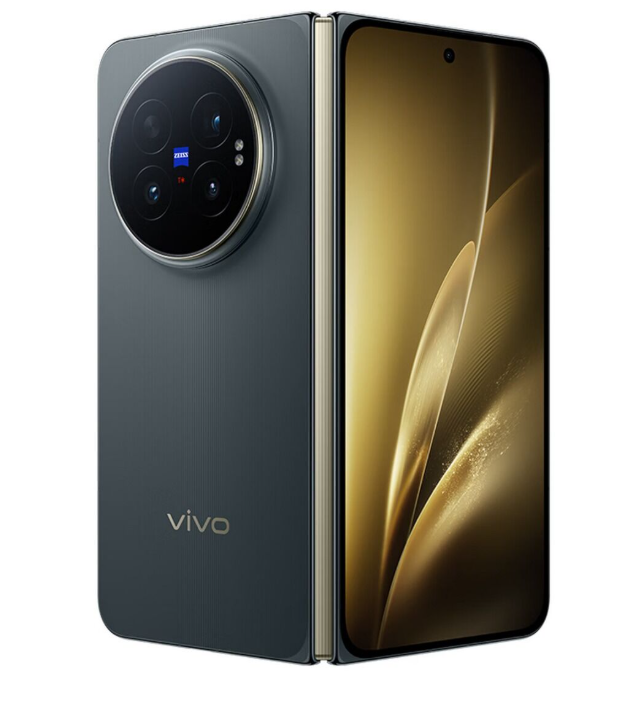
Vivo X Fold 6 is now available at Giztop with a starting price of $1,499, making it easier for global buyers to get Vivo’s latest flagship foldable smartphone. The device combines a large foldable display, flagship MediaTek performance, powerful ZEISS cameras, and a massive battery, making it an attractive option for users looking for a premium foldable experience.

Large Foldable Display

The Vivo X Fold 6 features an 8.02-inch LTPO AMOLED inner display built with Samsung’s advanced M14 emissive material. It offers a sharp 2K+ resolution, a 1-120Hz adaptive refresh rate, HDR10+ support, and up to 4,500 nits of peak brightness for excellent visibility. The outer 6.51-inch FHD+ LTPO AMOLED display uses second-generation Armor Glass, supports a 120Hz refresh rate, and features a 21:9 aspect ratio for comfortable everyday use. Security is handled by a fast 3D ultrasonic fingerprint scanner built into the display.

Flagship Performance

Powering the Vivo X Fold 6 is the custom MediaTek Dimensity 9500 Super Edition processor built on an efficient 3nm process. Paired with 12GB LPDDR5X Ultra RAM and up to 1TB UFS 4.1 storage, the phone is designed to deliver fast app launches, smooth multitasking, and reliable gaming performance.

ZEISS Camera System

The phone comes equipped with a premium triple rear camera setup led by a 200MP Samsung HPB main sensor with optical image stabilization. It is joined by a 50MP ultra-wide camera and a 50MP ZEISS APO periscope telephoto camera using Sony’s LYT602 sensor for detailed zoom shots. Vivo also includes its dedicated V2 imaging chip to improve image quality. Both the inner and outer displays feature 20MP punch-hole selfie cameras for clear video calls and selfies.

Battery and Software

A large 7,000mAh battery powers the Vivo X Fold 6 and supports 80W FlashCharge wired charging, along with 40W wireless charging. The phone runs Android 16 with OriginOS 6, offering a smooth software experience with Google Play Store support. Additional features include 5G connectivity, NFC, Wi-Fi, Bluetooth, USB Type-C, dual Nano SIM support, and a premium foldable design that completes the flagship package.

Read More:

The post Vivo X Fold 6 Now Available at Giztop Starting at $1499 appeared first on Gizmochina.
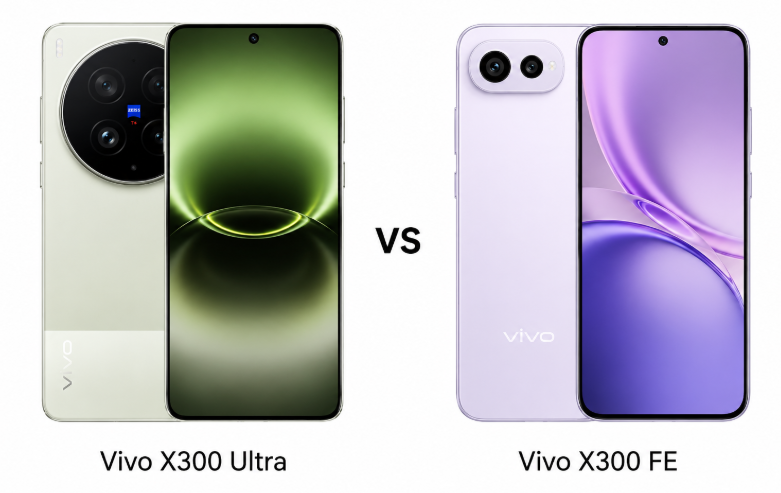
Vivo X300 Ultra vs Vivo X300 FE: What’s the Difference and Which Should You Buy?

Vivo X300 Ultra vs FE

Vivo X300 Ultra and Vivo X300 FE may share the same family name, but they are built for very different buyers. The X300 Ultra is Vivo’s ultimate flagship, packed with every premium feature the company offers, while the X300 FE aims to deliver the core flagship experience at a much more accessible price. 

Both feature premium builds, Zeiss cameras, LTPO AMOLED displays, and large silicon-carbon batteries. The real question isn’t which phone is better; it is whether the Ultra’s premium upgrades justify spending nearly twice as much or if the FE already delivers everything most users need.

Major Features:

CategoryVivo X300 UltraVivo X300 FEKey Differences
PositioningUltimate flagshipAffordable flagshipUltra offers every premium feature, while the FE focuses on delivering the flagship essentials at a lower price.
Display6.82-inch LTPO AMOLED, 144Hz, QHD+, Dolby Vision, Ultra HDR6.31-inch LTPO AMOLED, 120Hz, HDR10+, 5000 nitsChoose the Ultra for immersive media and gaming, or the FE if you prefer a compact display without sacrificing quality.
ProcessorSnapdragon 8 Elite Gen 5Snapdragon 8 Gen 5The Ultra is built for enthusiasts and demanding workloads, while the FE easily handles everyday flagship performance.
Memory & StorageUp to 16GB RAM, 1TB UFS 4.1Up to 12GB RAM, 512GB UFS 4.1The Ultra offers more room for power users and creators, whereas the FE provides ample storage for most buyers.
Rear Cameras200MP Main + 200MP Periscope + 50MP Ultrawide50MP Main + 50MP Periscope + 8MP UltrawideThe Ultra targets professional-grade photography, while the FE delivers reliable flagship imaging for everyday use.
Camera FeaturesGimbal OIS, Zeiss T* coating, 3D LUT, optional Zeiss zoom lensesZeiss optics, 3x optical zoomThe Ultra offers far greater photographic flexibility, especially for zoom and video enthusiasts.
Selfie Camera50MP AF with HDR and advanced video features50MP AF with 4K recordingBoth deliver sharp selfies, but creators benefit more from the Ultra’s additional recording capabilities.
Battery & Charging6600mAh, 100W wired, 40W wireless6500mAh, 90W wired, 40W wireless, bypass chargingBattery life is excellent on both, with the Ultra charging faster and the FE adding bypass charging for gamers.
ConnectivityUSB 3.2, DisplayPort, Satellite SOS (1TB variant)USB 2.0The Ultra includes premium connectivity features aimed at advanced users.
SoftwareAndroid 16, OriginOS 6Android 16, OriginOS 6, up to 5 Android upgradesThe FE offers a stronger long-term software commitment.
PricePriced around $1,500 (₹1,60,000)Priced around $950 (₹80,000)The Ultra charges a premium for its advanced hardware, while the FE delivers the core flagship experience for substantially less.
Ideal BuyerMobile photographers, content creators, gamers, and power usersBuyers seeking flagship performance, premium design, and strong valueThe choice comes down to whether cutting-edge hardware or overall value is the higher priority.
Disclaimer: Specs are based on available data. Actual performance may vary. Verify details from official sources before buying.

Design and Display

Build and Feel

Both phones feature glass backs, aluminum frames, IP68/IP69 protection, and ultrasonic in-display fingerprint scanners, so neither feels like a compromise in terms of build quality. The biggest difference is the experience they aim to deliver. The Vivo X300 Ultra is designed around a large-screen flagship philosophy, offering a more immersive feel for gaming, productivity, and media consumption. The Vivo X300 FE takes the opposite approach, prioritizing comfort and one-handed usability without sacrificing premium materials. The FE also promises up to five Android upgrades, making it appealing for users planning to keep their phone for several years.

Display Quality

The Vivo X300 Ultra features a larger QHD+ LTPO AMOLED panel with a 144Hz adaptive refresh rate, Dolby Vision support, and Ultra HDR compatibility, making it ideal for immersive entertainment and high-end gaming. The Vivo X300 FE uses a smaller LTPO AMOLED display with a 120Hz refresh rate and an impressive 5000-nit peak brightness. While it lacks the Ultra’s sharper resolution and advanced HDR support, it still delivers flagship-level color reproduction and outdoor visibility. Unless display size and maximum visual quality are priorities, the FE offers a surprisingly premium viewing experience.

Verdict

The Ultra’s display upgrades mainly benefit users who consume lots of multimedia, play games frequently, or simply want the biggest and sharpest screen available. The FE is better suited for buyers who prefer a compact flagship and are unlikely to notice the difference during everyday use.

Specifications Including Battery

Performance

Both smartphones are powered by Qualcomm’s latest flagship chipsets, making everyday performance exceptionally fast. The Vivo X300 Ultra’s Snapdragon 8 Elite Gen 5 and Adreno 840 GPU provide additional power for demanding tasks such as professional video editing, intensive gaming, and AI-driven workloads. The Vivo X300 FE’s Snapdragon 8 Gen 5 remains a genuine flagship processor capable of handling virtually every modern app and game with ease. The performance gap certainly exists, but it becomes noticeable mainly during sustained heavy workloads rather than routine smartphone usage. For many users, the FE already delivers more power than they are likely to fully utilize.

Battery and Charging

Battery life should be excellent on both devices thanks to their large silicon-carbon batteries. The X300 Ultra offers a slightly larger capacity alongside faster 100W wired charging, while the FE provides 90W charging, 40W wireless charging, reverse charging, and bypass charging for gamers. In day-to-day use, both phones should comfortably last a full day, making charging speed the more noticeable difference than battery endurance itself.

Verdict

The Ultra is built for users who consistently push their hardware to its limits. The FE, meanwhile, delivers flagship performance and battery life that will comfortably satisfy the vast majority of users while consuming significantly less of the budget.

Camera

Main and Secondary Lenses

This is where the largest price difference becomes visible. The Vivo X300 Ultra is designed for photography enthusiasts, featuring dual 200MP cameras, including a massive primary sensor with gimbal stabilization, a high-end periscope telephoto lens, a 50MP ultrawide camera, and support for optional Zeiss external zoom lenses. It is a camera system intended to rival dedicated imaging devices. The Vivo X300 FE, by comparison, focuses on delivering dependable flagship photography with a 50MP main camera, a 50MP periscope telephoto lens offering 3x optical zoom, and an 8MP ultrawide sensor. Zeiss tuning ensures excellent image quality, but the emphasis is on balanced everyday photography rather than professional-level versatility.

Selfie Camera

Both phones feature autofocus 50MP selfie cameras capable of recording 4K video, ensuring detailed selfies and sharp video calls. The Ultra expands on this with advanced HDR recording and additional video features aimed at creators. For most users, however, the selfie experience remains consistently strong across both models.

Verdict

Photography is the primary reason to choose the X300 Ultra. Users who frequently shoot landscapes, wildlife, portraits, or professional-quality videos will appreciate its advanced hardware. Those who mainly capture everyday moments, travel photos, and social media content are unlikely to feel limited by the FE’s camera system.

Pricing

The Vivo X300 Ultra is priced around $1,500 (₹1,60,000), positioning it among the most premium Android smartphones on the market. That additional investment goes toward its advanced camera hardware, superior display, flagship processor, faster charging, USB 3.2 connectivity, and several premium extras that target enthusiasts.

The Vivo X300 FE is priced around $950 (₹80,000), making it nearly half the price while retaining many flagship features such as a Snapdragon flagship processor, LTPO AMOLED display, Zeiss cameras, wireless charging, premium build quality, and long software support. Rather than feeling like a stripped-down flagship, it focuses on keeping the features most users actually use every day.

Verdict

The Ultra justifies its price for buyers seeking the very best Vivo has to offer. However, the FE arguably offers the stronger value proposition, as it delivers much of the flagship experience while asking for a significantly smaller investment.

Disclaimer:
Prices are approximate and may vary based on country, region, launch timing, and applicable taxes. Always check whether the listed price is for a China unit or a global/international variant when purchasing.

Conclusion

The Vivo X300 Ultra is built for buyers who want every flagship innovation available. Its class-leading camera hardware, professional imaging tools, higher-resolution display, flagship processor, premium connectivity, and advanced multimedia features make it an uncompromising smartphone for enthusiasts and content creators. The Vivo X300 FE follows a different philosophy by focusing on the features that matter most to everyday users. It combines flagship performance, premium build quality, capable Zeiss cameras, long software support, and excellent battery life in a compact and considerably more affordable package.

Verdict

The choice between these two smartphones depends less on which one is better and more on how much of the Ultra’s premium hardware will actually be used. The Vivo X300 Ultra is the right option for users who view smartphone photography, performance, and display quality as top priorities and are willing to pay for the absolute best. The Vivo X300 FE is aimed at buyers who want a flagship experience without entering ultra-premium pricing. For many users, it delivers nearly everything that matters while leaving the expensive specialist features to the Ultra.

Disclaimer: This comparison is based on the specifications provided and is intended for general informational purposes. Actual performance, camera results, battery life, and overall experience may vary depending on real-world usage, software updates, and individual preferences.

Read More:

The post Vivo X300 Ultra vs Vivo X300 FE: What’s the Difference and Which Should You Buy? appeared first on Gizmochina.
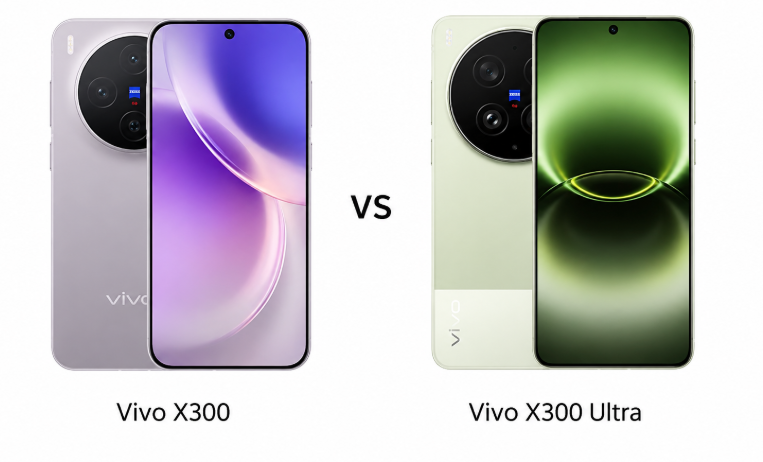
Vivo X300 vs Vivo X300 Ultra: Which Vivo Flagship Should You Buy?

Vivo X300 vs X300 Ultra

Vivo’s X-series continues to push smartphone photography and flagship performance to new heights. The Vivo X300 focuses on delivering premium features in a compact flagship, while the Vivo X300 Ultra targets power users with top-tier hardware, an advanced camera system, and premium extras. Although both phones share Vivo’s latest software and Zeiss camera partnership, they cater to very different buyers. Here’s a detailed comparison to help determine which flagship offers the better overall value.

Major Features:

CategoryVivo X300Vivo X300 UltraUpgrades – X300 Ultra
Display6.31-inch LTPO AMOLED, 120Hz, 1216 × 2640, HDR10+, HDR Vivid6.82-inch LTPO AMOLED, 144Hz, 1440 × 3168, Dolby Vision, HDR10+, HDR VividLarger QHD+ display, 144Hz refresh rate, Dolby Vision support
ProcessorMediaTek Dimensity 9500 (3nm)Snapdragon 8 Elite Gen 5 (3nm)Faster flagship chipset with stronger GPU performance
GPUArm G1-UltraAdreno 840Better gaming and graphics performance
RAM & StorageUp to 16GB RAM, 1TB UFS 4.1Up to 16GB RAM, 1TB UFS 4.1Same memory and storage configuration
Main Camera200MP, OIS200MP, larger sensor, gimbal OISLarger sensor with superior stabilization
Telephoto Camera50MP periscope, 3x optical zoom200MP periscope, 3.7x optical zoom, macroMassive resolution upgrade with better zoom and macro capabilities
Ultra-wide Camera50MP50MP with larger sensor, Dual Pixel AF, OISLarger sensor, autofocus, and optical stabilization
Video Recording4K up to 120fps8K, 4K up to 120fps, Dolby Vision HDR, 10-bit Log8K recording and professional video features
Selfie Camera50MP AF50MP AFHDR video and gyro-EIS improvements
Battery6,040mAh (Global)6,600mAh (International)Larger battery for longer endurance
Charging90W wired, 40W wireless, reverse wired100W wired, 40W wireless, reverse wired, reverse wirelessFaster wired charging and reverse wireless charging
ConnectivityWi-Fi 7, Bluetooth 5.4, USB-C 3.2Wi-Fi 7, Bluetooth 5.4 with aptX Adaptive/Lossless, USB-C 3.2 with DisplayPortBetter Bluetooth codecs and DisplayPort output
Special FeaturesZeiss optics, Ultrasonic fingerprint, IP68/IP69Zeiss optics, Ultrasonic fingerprint, IP68/IP69, Satellite SOS (1TB model), External zoom lens supportSatellite communication, DisplayPort, optional Zeiss telephoto lenses
SoftwareAndroid 16, OriginOS 6, 5 Android upgradesAndroid 16, OriginOS 6Similar software experience
PriceAround $910 (₹76,000)Around $1,500 (₹1,60,000)Costs significantly more but includes premium flagship hardware and imaging features
Disclaimer: Specs are based on available data. Actual performance may vary. Verify details from official sources before buying.

Design and Display

Build and Feel

Both smartphones feature premium glass backs, aluminum frames, and IP68/IP69 water and dust resistance, making them equally durable for everyday use. The Vivo X300 feels more compact and easier to operate with one hand, making it a practical choice for users who prioritize comfort during extended use. The Vivo X300 Ultra, meanwhile, embraces a more premium flagship identity with additional features like satellite SOS support on its top-end variant and USB DisplayPort output. The Ultra simply feels like a device built without many compromises, whereas the X300 focuses on balancing premium quality with usability.

Display Quality

The Vivo X300 offers a sharp 6.31-inch LTPO AMOLED panel with a 120Hz refresh rate, HDR10+, HDR Vivid support, and an impressive 4,500-nit peak brightness. It delivers vibrant colors and excellent outdoor visibility. The X300 Ultra steps up with a larger 6.82-inch LTPO AMOLED display featuring a higher 144Hz refresh rate, QHD+ resolution, Dolby Vision support, and even greater pixel density. The richer visuals and smoother refresh rate make gaming and media consumption feel more immersive.

Verdict

The Vivo X300 delivers an outstanding compact flagship display, but the X300 Ultra offers a more premium viewing experience with higher resolution, Dolby Vision, and a faster refresh rate. Users seeking the very best multimedia experience will appreciate the Ultra’s display advantages.

Specifications Including Battery

Performance

The Vivo X300 is powered by the new MediaTek Dimensity 9500 paired with UFS 4.1 storage and up to 16GB RAM. It easily handles demanding games, multitasking, and AI-driven features while remaining highly efficient. The Vivo X300 Ultra raises performance further with Qualcomm’s Snapdragon 8 Elite Gen 5 processor and Adreno 840 GPU. It is designed for intensive gaming, professional video editing, and long-term flagship performance. Both phones run Android 16 with OriginOS 6, but the Ultra provides additional processing headroom that enthusiasts and power users will notice.

Battery and Charging

The Vivo X300 packs a large 6,040mAh battery globally with 90W wired and 40W wireless charging, providing excellent endurance. The X300 Ultra increases capacity to 6,600mAh internationally while upgrading wired charging to 100W and adding reverse wireless charging. Both recharge quickly, but the Ultra offers greater flexibility and longer battery life for heavy users.

Verdict

The Vivo X300 already delivers flagship-level speed and battery life, making it an excellent daily performer. However, the X300 Ultra combines superior processing power, a larger battery, faster charging, and extra charging features, making it the stronger long-term flagship.

Camera

Main and Secondary Lenses

Both smartphones showcase Vivo’s impressive partnership with Zeiss, but their camera priorities differ. The Vivo X300 combines a 200MP main camera with a 50MP 3x periscope telephoto and a 50MP ultrawide camera, producing excellent detail, strong low-light performance, and reliable zoom quality. The Vivo X300 Ultra elevates photography considerably with a larger 200MP main sensor featuring gimbal stabilization, a larger 200MP periscope telephoto with superior light capture, and a high-end ultrawide sensor with autofocus and OIS. It also supports optional external zoom lenses, 8K recording, Dolby Vision HDR, and professional Log recording, making it far more versatile for advanced photography and videography.

Selfie Camera

Both devices feature a 50MP autofocus front camera capable of crisp selfies and detailed 4K video recording. The X300 Ultra adds HDR video recording and gyro-EIS, resulting in smoother handheld video and slightly improved overall recording quality.

Verdict

The Vivo X300 is among the best camera phones in its price segment, delivering excellent photos across all lenses. The X300 Ultra, however, reaches professional-level imaging with larger sensors, better stabilization, advanced video capabilities, and unmatched zoom flexibility.

Pricing

Price Comparison

The Vivo X300 is priced around $910 (₹76,000), placing it firmly in the premium flagship category. At this price, buyers receive a compact flagship with a high-end AMOLED display, a capable Dimensity 9500 chipset, flagship-grade Zeiss cameras, wireless charging, and five years of Android upgrades. The Vivo X300 Ultra is priced around $1,500 (₹1,60,000), making it one of Vivo’s most expensive smartphones. That higher price brings Qualcomm’s latest flagship processor, a significantly upgraded camera system, a larger and sharper display, faster charging, a bigger battery, DisplayPort support, satellite connectivity on select models, and professional imaging features.

Is the Price Justified?

The Vivo X300 offers excellent value because it delivers nearly every premium feature most flagship buyers expect without reaching ultra-premium pricing. The X300 Ultra justifies its higher cost for photography enthusiasts and power users, but many buyers may find the X300 delivers a more balanced value proposition.

Verdict

For overall value, the Vivo X300 stands out. The X300 Ultra earns its premium pricing through class-leading hardware, but its advantages mainly benefit users seeking the absolute best flagship experience.

Disclaimer:
Prices are approximate and may vary based on country, region, launch timing, and applicable taxes. Always check whether the listed price is for a China unit or a global/international variant when purchasing.

Conclusion

The Vivo X300 excels as a compact flagship that combines premium build quality, a powerful Dimensity 9500 chipset, outstanding Zeiss cameras, long battery life, and fast wireless charging at a considerably lower price. It strikes an excellent balance between performance and affordability. The Vivo X300 Ultra pushes nearly every specification further with its Snapdragon 8 Elite Gen 5 processor, QHD+ 144Hz display, professional-grade Zeiss camera hardware, optional external zoom lenses, 8K Dolby Vision recording, larger battery, reverse wireless charging, USB DisplayPort support, and satellite SOS functionality on select models. These additions make it one of the most capable Android flagships available.

Verdict

Choose the Vivo X300 if you want flagship performance, excellent cameras, premium features, and significantly better value for money. Choose the Vivo X300 Ultra if budget is not a concern and the priority is obtaining Vivo’s most advanced camera system, the fastest hardware, and every premium feature available in a modern flagship smartphone.

Disclaimer: This comparison is based on the specifications provided and is intended for general informational purposes. Actual performance, camera results, battery life, and overall experience may vary depending on real-world usage, software updates, and individual preferences.

Read More:

The post Vivo X300 vs Vivo X300 Ultra: Which Vivo Flagship Should You Buy? appeared first on Gizmochina.
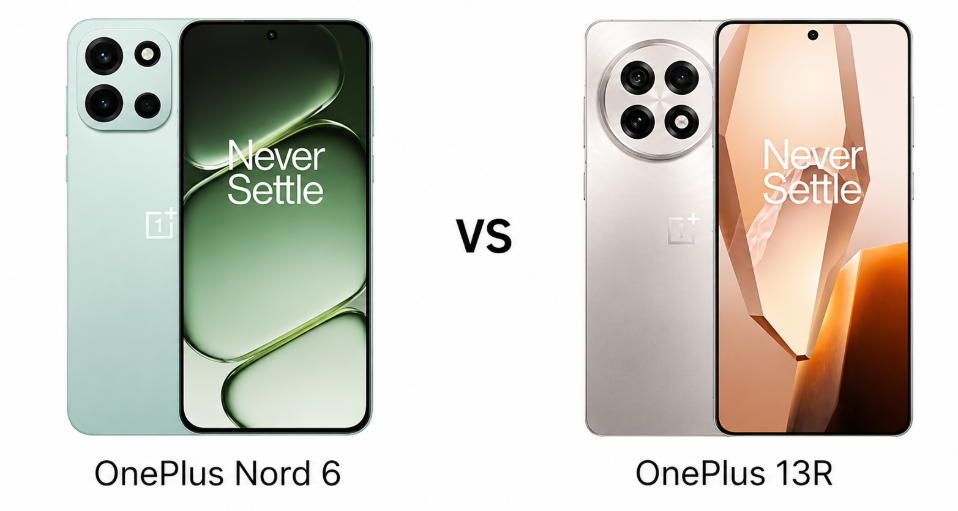
OnePlus Nord 6 vs OnePlus 13R: Which OnePlus Phone Offers Better Value?

oneplus nord 6 vs 13R

OnePlus has two compelling phones in the upper mid-range segment, but they target different buyers. The OnePlus Nord 6 is the newer 2026 model that focuses on modern hardware, exceptional battery life, and improved durability. Meanwhile, the OnePlus 13R launched in early 2025 as a premium performance-focused device with flagship-grade cameras and build quality. 

Although both belong to the same brand, they prioritize different aspects of the smartphone experience. Here’s a detailed comparison to help determine which OnePlus device deserves your money.

Major Features:

CategoryOnePlus Nord 6OnePlus 13RWinner
Design & BuildPlastic frame, plastic back, OnePlus Crystal Guard, IP68/IP69, MIL-STD-810HAluminum frame, glass back, Gorilla Glass 7i, IP65Nord 6 – Better durability
Display6.78-inch AMOLED, 165Hz, 3,600 nits peak, 3,840Hz PWM6.78-inch LTPO AMOLED, 120Hz, 4,500 nits peak, Dolby Vision13R – Better display quality
PerformanceSnapdragon 8s Gen 4, UFS 4.1, Android 16Snapdragon 8 Gen 3, UFS 4.0, Android 1513R – Faster flagship chip
Battery & Charging7,500mAh (Global) / 9,000mAh (India), 80W, bypass & reverse charging6,000mAh, 80W chargingNord 6 – Massive battery advantage
Rear Cameras50MP + 8MP ultrawide50MP + 50MP telephoto + 8MP ultrawide13R – More versatile cameras
Selfie Camera32MP AF, 4K video16MP, 1080p videoNord 6 – Better selfies
Software & FeaturesAndroid 16, OxygenOS 16, Bluetooth 6.0, Wi-Fi 7Android 15, OxygenOS 15, Bluetooth 5.4, Wi-Fi 7Nord 6 – Newer software
DurabilityIP68/IP69, MIL-STD-810HIP65Nord 6 – Superior protection
PricePriced around $500 / ₹43,000Priced around $450 / ₹40,00013R – Better value
OverallLatest generation with huge battery and longer software relevancePremium flagship experience with better cameras and performance for less13R – Better overall value
Disclaimer: Specs are based on available data. Actual performance may vary. Verify details from official sources before buying.


Design and Display

Build and Feel

The OnePlus Nord 6 adopts a practical approach with a plastic frame and back protected by OnePlus Crystal Guard on the front. While it doesn’t feel as premium as glass and metal, it compensates with IP68/IP69 protection and MIL-STD-810H certification, making it significantly more durable against water and dust than the OnePlus 13R. The 13R, however, offers a more premium in-hand feel thanks to its aluminum frame and glass back. It carries an IP65 rating, which is adequate for everyday use but falls behind the Nord 6’s much stronger protection. The newer Nord 6 clearly prioritizes longevity and durability over premium materials.

Display Quality

Both phones feature sharp 6.78-inch AMOLED displays with HDR support and excellent color reproduction. The Nord 6 stands out with a 165Hz refresh rate, 3840Hz PWM dimming, and up to 3600 nits peak brightness, delivering smoother animations and improved eye comfort. The OnePlus 13R counters with an LTPO AMOLED panel supporting Dolby Vision, HDR Vivid, and an even brighter 4500-nit peak. LTPO technology also improves power efficiency by dynamically adjusting the refresh rate. The Nord 6 feels smoother during gaming, while the 13R offers a richer multimedia experience.

Verdict

The OnePlus Nord 6 wins for durability and high-refresh gaming, whereas the OnePlus 13R delivers a more premium design and a better display for movies and everyday viewing.

Specifications Including Battery

Performance

The OnePlus Nord 6 introduces Qualcomm’s Snapdragon 8s Gen 4 paired with faster UFS 4.1 storage and Android 16 with OxygenOS 16 out of the box. Despite being positioned below the flagship series, it delivers excellent efficiency and modern AI capabilities. The OnePlus 13R uses the flagship Snapdragon 8 Gen 3, which still offers stronger GPU performance and slightly better sustained workloads, especially for demanding gaming and video editing. However, being a 2025 device means it starts with Android 15 and has one fewer year of software freshness compared to the Nord 6. The newer software gives the Nord 6 a longer useful lifespan.

Battery and Charging

Battery life is where the Nord 6 creates a huge gap. Its global model packs a massive 7500mAh battery, while the India variant increases that to an enormous 9000mAh. Combined with efficient hardware, it is built for multi-day usage. The 13R’s 6000mAh battery remains excellent, but cannot compete with such capacity. Both support 80W wired charging, though the Nord 6 also adds bypass charging and reverse wired charging for greater versatility.

Verdict

The OnePlus 13R remains the stronger raw performer, but the OnePlus Nord 6 feels like the more future-ready package thanks to newer software, dramatically larger batteries, faster storage, and improved charging features.

Camera

Main and Secondary Lenses

Camera hardware clearly favors the OnePlus 13R. It features a versatile triple-camera setup with a 50MP primary sensor, a dedicated 50MP telephoto lens offering 2x optical zoom, and an 8MP ultrawide camera. The telephoto lens makes portraits and zoom photography noticeably better. The Nord 6 uses a dual-camera system with a 50MP main camera and an 8MP ultrawide sensor. Optical image stabilization and 4K recording are available on both, but the lack of a telephoto lens limits the Nord 6’s photography flexibility. For users who enjoy capturing different perspectives, the 13R provides a more complete camera experience.

Selfie Camera

The Nord 6 surprisingly takes the lead for selfies with its 32MP front camera featuring autofocus and 4K video recording. The OnePlus 13R uses a simpler 16MP selfie camera limited to 1080p video. Content creators and frequent video callers are likely to appreciate the sharper selfies and higher-quality video offered by the newer Nord 6.

Verdict

The OnePlus 13R is the better overall camera phone because of its dedicated telephoto lens, but the Nord 6 delivers stronger selfies and better front-facing video quality.

Pricing

The OnePlus Nord 6 is priced around $500 (₹43,000), while the OnePlus 13R is priced around $450 (₹40,000). Although the 13R launched in early 2025, its lower price makes it an incredibly attractive option. Buyers get a flagship Snapdragon 8 Gen 3 processor, a premium aluminum-and-glass build, an LTPO AMOLED display, and a versatile triple-camera system with a telephoto lens for less money. 

The Nord 6 commands a premium because it introduces newer hardware, Android 16 out of the box, significantly larger battery options, stronger IP68/IP69 protection, and faster UFS 4.1 storage, making it better equipped for long-term ownership.

Verdict

OnePlus 13R offers better value for money at its current pricing. However, the OnePlus Nord 6 remains worth considering for users who prioritize battery life, durability, and a newer software platform over premium materials and camera versatility.

Disclaimer:
Prices are approximate and may vary based on country, region, launch timing, and applicable taxes. Always check whether the listed price is for a China unit or a global/international variant when purchasing.

Conclusion

The biggest difference between these phones lies in their priorities. The OnePlus Nord 6 is the newer-generation device, offering Android 16, Snapdragon 8s Gen 4, massive 7,500mAh or 9,000mAh battery options, IP68/IP69 protection, Bluetooth 6.0, and faster UFS 4.1 storage, making it a stronger choice for longevity. The OnePlus 13R, despite launching in early 2025, continues to impress with its flagship Snapdragon 8 Gen 3 chipset, premium aluminum-and-glass construction, LTPO AMOLED display with Dolby Vision, and a dedicated telephoto camera. 

Verdict

The OnePlus Nord 6 is the better choice for users who want the latest software, exceptional battery life, and stronger durability for years of use. The OnePlus 13R, however, becomes the better overall buy for most people thanks to its lower price, premium design, flagship performance, and more capable rear camera system. 

Disclaimer: This comparison is based on the specifications provided and is intended for general informational purposes. Actual performance, camera results, battery life, and overall experience may vary depending on real-world usage, software updates, and individual preferences.

Read More:

The post OnePlus Nord 6 vs OnePlus 13R: Which OnePlus Phone Offers Better Value? appeared first on Gizmochina.
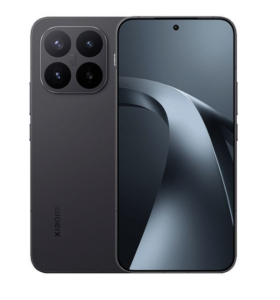
Xiaomi 17T Pro Deal: Save $100 on This Leica Camera Flagship

Xiaomi 17T Pro

Xiaomi 17T Pro is now available at Giztop with a $100 discount, bringing the price down to $599 from its original $699. Giztop is offering the flagship smartphone with global shipping, making it easier for buyers worldwide to get their hands on Xiaomi’s latest premium device. 

Packed with a powerful MediaTek Dimensity 9500 processor, Leica cameras, a massive 7,000mAh battery, and a high-refresh-rate AMOLED display, the Xiaomi 17T Pro delivers flagship features at a more affordable price. 

Display and Performance

The Xiaomi 17T Pro features a large 6.83-inch AMOLED display with a 144Hz refresh rate for smooth scrolling and gaming. It supports Dolby Vision, HDR10+, HDR Vivid, 12-bit colors, and reaches up to 3,500 nits of peak brightness for excellent outdoor visibility. Powering the device is the MediaTek Dimensity 9500 3nm processor with clock speeds up to 4.21GHz, paired with 12GB LPDDR5X RAM and storage options of 256GB, 512GB, or 1TB.

Leica Cameras and Battery

Photography is one of the biggest highlights of the Xiaomi 17T Pro. It comes with a 50MP Leica main camera featuring OIS, a 50MP Leica 115mm floating telephoto camera with OIS, and a 12MP ultra-wide camera. On the front, there is a 32MP in-display selfie camera for clear selfies and video calls.

The phone packs a large 7,000mAh battery that supports 100W HyperCharge, 50W wireless charging, and 22.5W reverse wireless charging, allowing users to power other compatible devices.

Software and Connectivity

Running Xiaomi HyperOS 3, the Xiaomi 17T Pro offers smooth full-screen gesture navigation and a modern user experience. Other features include an in-display fingerprint scanner, 5G support, and Wi-Fi 7 for faster wireless connectivity.

With its flagship specifications and the current $100 discount, the Xiaomi 17T Pro offers excellent value for anyone looking to upgrade to a premium smartphone.

Read More;

The post Xiaomi 17T Pro Deal: Save $100 on This Leica Camera Flagship appeared first on Gizmochina.
TECNO Unveils Upgraded EllaClaw AI with Cross-App Automation and 40+ Smart Skills

TECNO

TECNO has unveiled the next stage of development for EllaClaw, its beta-stage mobile AI agent designed to make smartphones more intelligent and proactive. Announced on June 24, 2026, EllaClaw goes beyond traditional voice assistants by completing everyday tasks across apps, optimizing device performance, and providing personalized assistance. The company says its goal is to make advanced AI practical, accessible, and useful for everyday users, especially in emerging markets.

EllaClaw Brings Practical Agentic AI to Smartphones

Unlike conventional AI assistants that mainly respond to commands, EllaClaw is a cloud-based AI agent that can understand requests, plan actions, and complete tasks on a user’s behalf. It works proactively in the background to simplify complex workflows while keeping users informed about every action it performs.

TECNO says EllaClaw is designed to automate real-world tasks instead of simply answering questions, making smartphones more capable of handling everyday activities with minimal user effort.

Cross-App Intelligence Simplifies Everyday Tasks

One of EllaClaw’s biggest upgrades is its cross-app intelligence. Instead of relying on direct integrations, the AI understands graphical user interfaces (GUI), allowing it to navigate supported third-party apps much like a human user.

With user permission, EllaClaw can interact with shopping, transportation, food delivery, and smart home apps. It performs actions visibly on the screen so users can follow every step, providing greater transparency and confidence in AI-driven automation.

AI Optimizes Phone Performance with 40+ Smart Skills

EllaClaw also works as an intelligent device management assistant by monitoring and optimizing battery life, mobile data, storage, RAM, and CPU performance.

TECNO has introduced more than 40 Smart Skills to improve everyday smartphone usage. Smart CleanUp Boost frees RAM, optimizes CPU resources, and reduces system lag for smoother performance. Smart Power Drain Check detects apps that consume excessive battery and optimizes background activity to extend battery life.

The AI also includes Instant Cool-down Relief, which lowers device temperature during heavy workloads by managing background processes, while Smart Data Guardian tracks mobile data usage, learns personal usage habits, and helps users avoid excessive data consumption. TECNO says this feature is particularly useful in regions where mobile data plans remain limited.

Personalized Assistance for Daily Life

EllaClaw becomes more personalized through persistent memory, allowing it to learn user habits and preferences over time.

Its Morning Briefing combines calendar events, travel itineraries, weather updates, and curated news into a single overview. The Trip Prep Assistant helps organize travel schedules, book rides, set departure alarms, and prepare actionable travel plans before users leave.

TECNO has also added relationship-focused features that remind users to contact family members or partners, notify them about weather changes that could affect plans, and provide contextual reminders for daily activities.

Shopping, Ride Booking, and Smart Home Control

EllaClaw extends its capabilities through several cross-app AI experiences. Users can book transportation using natural language with One-Sentence Ride Hailing, while Shopping Buddy searches for products and compares options across shopping platforms such as Lazada.

The AI can also monitor connected smart home devices, provide status updates, and support smart home routines, allowing users to manage multiple connected devices through a single intelligent assistant.

Privacy and User Control Come First

TECNO says EllaClaw follows a confirmation-first privacy model. The AI asks for user approval before making important system changes or accessing supported applications, ensuring users remain in full control of their devices.

The assistant also performs actions visibly instead of silently in the background, allowing users to see exactly what it is doing. Supported apps require secure opt-in permissions before EllaClaw can access them.

Availability

TECNO says EllaClaw is currently undergoing internal testing and is available only as a closed beta. The company describes it as an exploratory AI concept and plans to announce additional features and broader availability in future updates.

With cross-app automation, system-level device optimization, more than 40 Smart Skills, and personalized assistance, TECNO is positioning EllaClaw as a practical mobile AI agent rather than a traditional chatbot. By combining proactive task automation with transparent, confirmation-first privacy controls, the company aims to make advanced AI more useful for everyday smartphone users while ensuring they remain in complete control of their devices.

The post TECNO Unveils Upgraded EllaClaw AI with Cross-App Automation and 40+ Smart Skills appeared first on Gizmochina.
CHUWI’s Affordable AI Laptop Launches with Intel Core 3, 13-Hour Battery, and Dual 4K Support

CHUWI UniBook AI Laptop

CHUWI has officially launched pre-orders for its new UniBook AI Laptop, introducing an affordable Windows notebook built around Intel’s latest Wildcat Lake platform. The laptop combines a lightweight design, AI-focused hardware, a color-accurate display, and a generous selection of ports, making it suitable for students, professionals, freelancers, and everyday users. 

With an early bird price of $449, CHUWI is positioning the UniBook AI as an accessible option for users looking to experience on-device AI features without spending flagship laptop prices.

Early Bird Pricing and Launch Campaign

The CHUWI UniBook AI carries a regular retail price of $499, but customers who pre-order the laptop can purchase it for $449, saving $50 during the launch period. The offer is part of CHUWI’s “AI for Everyone, The Tournament for All” World Cup promotional campaign.

The company is also extending discounts of up to $50 on several other products, including the CoreBook Air 226V, AuBox X Copilot+ PCs, Hi10 Max 2-in-1 Windows Tablet, and CoreBook Air 1KG, giving buyers additional options if they are looking for other Windows devices.

Intel Core 3 Wildcat Lake Processor Takes Center Stage

Powering the UniBook AI is Intel’s latest Core 3 Processor 304, based on the company’s advanced 18A process technology. The new processor is designed to deliver efficient everyday computing while introducing dedicated hardware for AI workloads.

The laptop uses Intel Graphics for visual performance and is aimed at handling common productivity tasks such as web browsing, office work, online learning, media consumption, and light creative applications. The new architecture also focuses on better power efficiency, helping extend battery life without sacrificing performance for everyday users.

Dedicated AI Hardware for Faster Local Processing

One of the biggest highlights of the UniBook AI is its built-in AI acceleration. The integrated graphics processor delivers up to 9 TOPS (Int8) of AI performance, while the dedicated Neural Processing Unit (NPU) provides up to 15 TOPS (Int8) for AI-specific workloads.

Instead of sending every AI request to cloud servers, the laptop can process many tasks locally. This improves response times while keeping more personal data on the device. CHUWI says the system supports AI writing assistance, real-time transcription, AI image generation, and AI-enhanced multitasking, allowing users to benefit from modern AI features during everyday work.

14-Inch WUXGA Display Built for Productivity

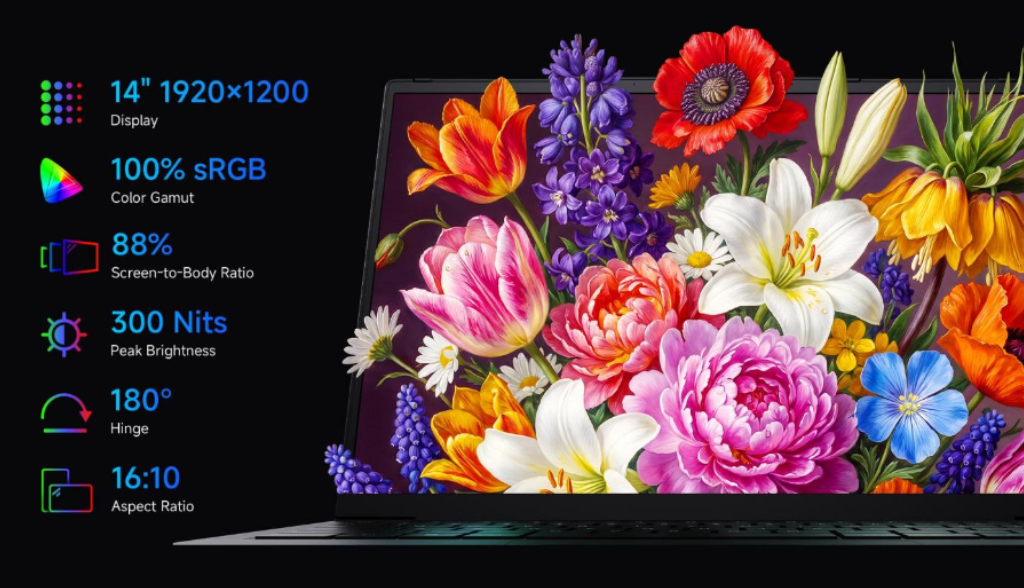
The UniBook AI features a 14-inch IPS display with a WUXGA (1920 × 1200) resolution. Unlike standard Full HD displays, the taller 16:10 aspect ratio provides additional vertical workspace, allowing users to view more content while editing documents, browsing websites, or working with spreadsheets.

The display also covers 100% of the sRGB color gamut, making it suitable for users who require accurate colors for photo editing, graphic design, or content creation. With 300 nits of brightness and an 88% screen-to-body ratio, the display is designed to deliver a comfortable viewing experience for both work and entertainment.

Lightweight Design Made for Daily Travel

CHUWI has designed the UniBook AI with portability in mind. The laptop features a lightweight metal chassis that weighs approximately 1.2kg, while its slim 16.4mm profile makes it easy to slip into a backpack or laptop bag.

The laptop measures 314.5 × 221 × 16.4mm, making it compact enough for classrooms, offices, cafés, and business travel. A 180-degree lay-flat hinge also allows the display to open completely flat, making it easier to share content with colleagues or classmates during meetings and presentations.

Comfortable Keyboard and Privacy Features

The laptop includes a backlit keyboard, allowing users to work more comfortably in dimly lit environments. A precision touchpad provides smoother navigation and supports Windows gesture controls for improved productivity.

CHUWI has also included an HD webcam for video calls along with a physical privacy shutter. This simple feature allows users to physically block the camera whenever it is not being used, offering an extra layer of privacy during remote work and online meetings.

Memory, Storage, and Battery Life

The UniBook AI comes equipped with 8GB of LPDDR5 memory running at 6400 MT/s, providing fast memory speeds for everyday multitasking. Storage is handled by a 256GB PCIe 3.0 SSD, and users can expand the storage if they need additional space for files and applications.

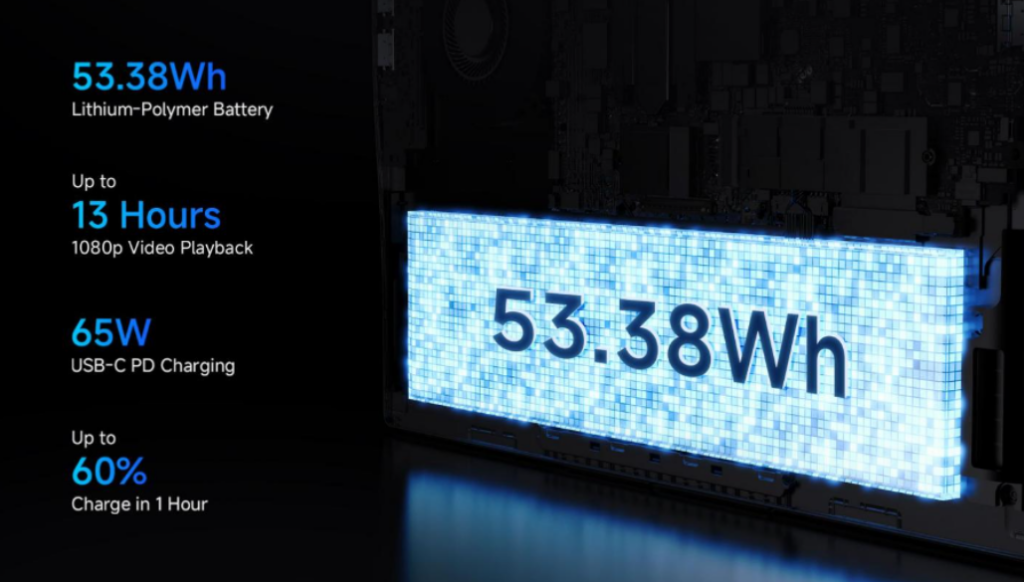
Power is supplied by a 53.38Wh battery, which CHUWI claims can deliver up to 13 hours of local 1080p video playback under suitable conditions. The laptop also supports 65W USB-C Power Delivery, allowing users to recharge using modern USB-C chargers instead of carrying a dedicated power adapter.

Extensive Port Selection Sets It Apart

One area where the UniBook AI stands out is connectivity. Many modern thin-and-light laptops have reduced the number of physical ports, often requiring users to purchase USB hubs or docking stations. CHUWI takes a different approach by including a wide selection of built-in ports.

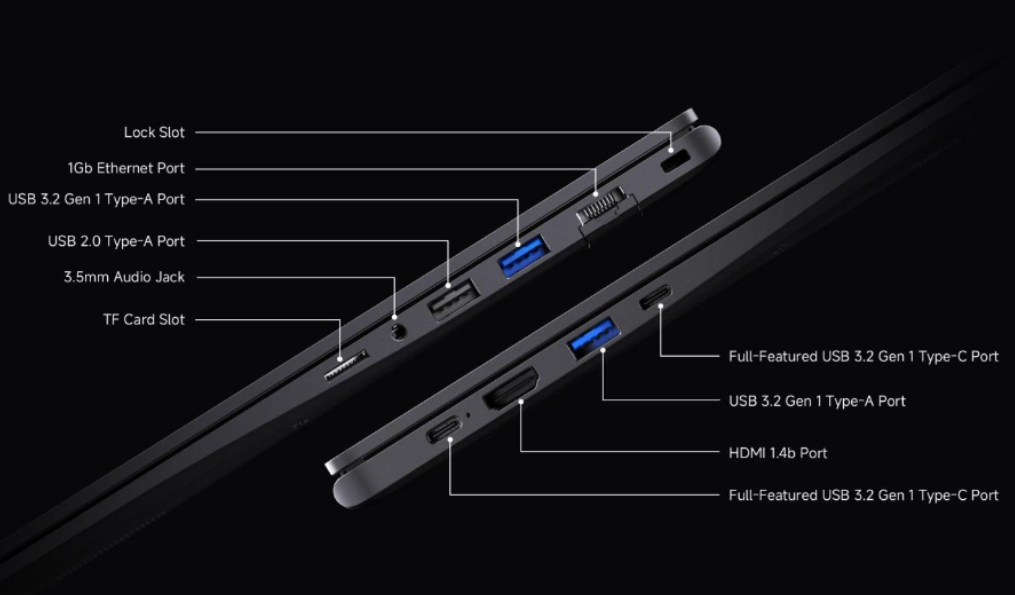
The laptop offers two full-featured USB-C ports, three USB-A ports (including two 5Gbps ports), HDMI, Gigabit Ethernet, a TF card slot, and a 3.5mm headphone jack. This allows users to connect external storage, wired internet, projectors, monitors, cameras, keyboards, and headphones without relying on adapters.

Modern Wireless Connectivity and Multi-Display Support

For wireless connectivity, the UniBook AI supports Wi-Fi 6, providing faster wireless speeds and improved network stability on compatible routers. Bluetooth 5.2 enables reliable connections with wireless headphones, mice, keyboards, and other accessories.

The laptop can also drive up to two external 4K displays at 60Hz, giving users additional screen space for multitasking, presentations, video editing, financial work, or office productivity.

Designed for Everyday Productivity

With its Intel Core 3 Wildcat Lake processor, dedicated AI hardware, lightweight metal design, color-accurate display, long battery life, and generous port selection, the CHUWI UniBook AI is designed to meet the needs of a wide range of users. Combined with Windows 11 Pro and an attractive early bird price of $449, the laptop offers an affordable entry point for those looking to experience the latest AI-powered PC features without paying premium flagship prices.

Key Specs:

CategorySpecification
ModelCHUWI UniBook AI
Operating SystemWindows 11 Pro
ProcessorIntel Core 3 Processor 304 (Wildcat Lake)
ArchitectureIntel 18A Process Technology
GraphicsIntel Graphics
GPU AI PerformanceUp to 9 TOPS (Int8)
Dedicated NPUUp to 15 TOPS (Int8)
Display14-inch IPS
ResolutionWUXGA (1920 × 1200)
Aspect Ratio16:10
Color Gamut100% sRGB
Brightness300 nits
Screen-to-Body Ratio88%
Hinge180° Lay-Flat
RAM8GB LPDDR5 (6400 MT/s)
Storage256GB PCIe 3.0 SSD (Expandable)
Battery53.38Wh
Charging65W USB-C Power Delivery
Battery LifeUp to 13 hours (1080p local video playback)
KeyboardBacklit Keyboard
TouchpadPrecision Touchpad
WebcamHD Webcam with Privacy Shutter
Wireless ConnectivityWi-Fi 6, Bluetooth 5.2
USB-C2 × Full-featured USB-C
USB-A3 × USB-A (2 × 5Gbps, 1 × 480Mbps)
Other PortsHDMI, RJ45 Gigabit Ethernet, TF Card Slot, 3.5mm Audio Jack
External Display SupportUp to Two 4K Displays at 60Hz
WeightApprox. 1.2kg
Dimensions314.5 × 221 × 16.4 mm
MSRP$499
Early Bird Price$449

The post CHUWI’s Affordable AI Laptop Launches with Intel Core 3, 13-Hour Battery, and Dual 4K Support appeared first on Gizmochina.

❌