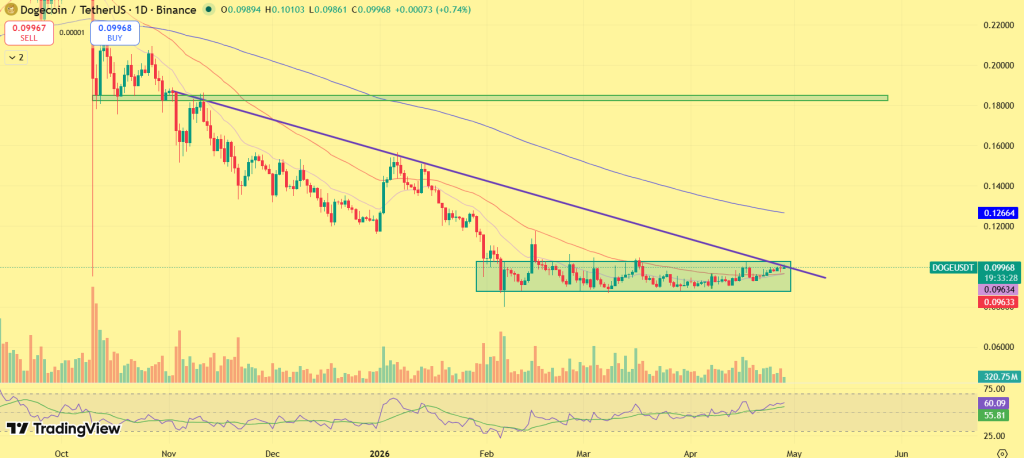
The Dogecoin price is moving again, and this time, it’s not subtle. After weeks of sideways movement and repeated rejections below key resistance, DOGE has surged past the $0.10 level with strong momentum, now trading around the $0.107–$0.109 range. The move comes with a noticeable spike in volume and renewed market interest, signaling a shift from passive consolidation to active participation.
But here’s the real question: is this the start of a sustained breakout, or just another short-lived spike in a volatile meme coin cycle?
DOGE Price Analysis: Can it Hold Above $0.1?
Dogecoin has broken out of a multi-week compression phase, pushing above the descending trendline that had capped its price since February. This breakout, combined with a reclaim of the psychological $0.10 level, marks a structural shift from a downtrend into a potential expansion phase. The move is supported by rising volume and a clear series of higher lows forming into the breakout, typically a sign of accumulating pressure before release.
However, the current price action also shows signs of short-term exhaustion. RSI is pushing into overbought territory near 70, suggesting momentum is stretched. The breakout candle itself is relatively sharp, meaning the price has left inefficiencies below. This creates a setup where DOGE may either consolidate above $0.10 to build continuation or retrace to test demand before deciding the next move. Meanwhile, the Supertrend has just flipped bullish after remaining bearish since January. This keeps the bullish hopes alive.
Key Levels to Watch
Immediate Resistance: $0.110 – $0.118
Breakout Level / Support Flip: $0.100
Lower Support Zone: $0.090 – $0.095
DOGE Open Interest Surges Consistently
Open interest in DOGE futures has surged alongside price, climbing toward the $1.7B–$1.8B range, marking one of the highest levels in recent weeks. This indicates that new positions are entering the market rather than just spot-driven movement. Rising open interest with rising price typically reflects trend confirmation, suggesting that traders are actively positioning for continuation.
But this is where the risk builds. A sharp increase in open interest during a vertical move often signals leveraged positioning, which can amplify both upside and downside volatility. If price stalls or reverses near resistance, these positions can unwind quickly, leading to cascading liquidations. In short, while the move is strong, it is also becoming increasingly crowded.
Conclusion: Here, What to Expect Next
The DOGE price is no longer in a passive range—it has shifted into a momentum phase. The breakout above $0.10, combined with rising open interest, signals real participation and growing interest from traders. However, the move is extended, and positioning is becoming aggressive, which increases the risk of volatility in either direction.
The key level now is clear: $0.10. If the Dogecoin price holds above this range, it strengthens the case for continuation toward higher resistance near $0.11–$0.118. But if this level fails, the move risks turning into a classic breakout trap, with price likely revisiting lower support zones.
For now, the market is leaning bullish—but the real test lies in whether bulls can defend the breakout.
Tether led a $14 million funding round for Belo, a payments platform using crypto rails and stablecoins for faster, cheaper transactions. Belo helps users protect savings from inflation and weak local currencies, a major issue across Latin America. The funding is important as stablecoin adoption continues rising in the region. Next, Belo plans to expand stablecoin payment services across Mexico, Chile, Colombia, Peru, Bolivia, and Paraguay, targeting more users and merchants.
The U.S. ETF market may be about to enter a completely new phase. Bloomberg ETF analyst James Seyffart says the first-ever prediction market ETFs may begin trading next week, letting investors bet on U.S. election outcomes like regular stocks.
This comes after Roundhill’s latest filing showed a May 5 effective date, opening the door for six new ETFs tied directly to upcoming U.S. political races.
New Type of ETF Is About to Launch
It all began on February 14, when New York-based fund issuer Roundhill Investments filed for a new group of ETFs linked to political prediction markets.
The RPM Democratic President ETF and RPM Republican President ETF are tied to the outcome of the 2028 U.S. presidential election.
The RPM Democratic Senate ETF, RPM Republican Senate ETF, RPM Democratic House ETF, and RPM Republican House ETF focus on the November 2026 midterm elections, tracking which party wins control of Congress after the votes are counted.
Now, these six prediction-based ETFs could go live as early as next week.
If launched, they would give investors a new way to take positions on political outcomes through regular ETF products.
Prediction Market ETFs Set to Launch on May 5
Bloomberg senior ETF Analyst James Seyffart quickly noticed the latest filing and said,
“Looks like we are going to see prediction market ETFs launch next week.” Roundhill’s filing now shows an effective date of May 5, signaling that launch day may be close.
Six funds are included, all tied directly to real U.S. political outcomes. These products would let investors take positions on which party wins control of the House, Senate, or future presidential races.
Seyffart said this is part of a bigger trend he calls the financialization and ETF-ization of everything, where almost anything people can speculate on may eventually become an ETF product for mainstream investors.
Bitwise and GraniteShares Could Follow
Roundhill may not be the only issuer launching soon. GraniteShares and major crypto ETF firm Bitwise also filed similar products in February.
Seyffart expects all issuers to launch around the same time, meaning the week of May 5 may bring multiple prediction market ETFs to the market at once.
I'm expecting all filers to likely launch on or around the same day. That means we should be on the lookout for @Bitwise and @graniteshares to have similar filings in coming days (or hours).
He added that investors should now watch for similar updated filings from Bitwise and GraniteShares in the coming days.
Prediction Markets Are Already a Multi-Billion Dollar Business
Prediction markets have grown rapidly in recent years, especially during major political events. Platforms like Polymarket and Kalshi became popular by letting users trade contracts based on real-world outcomes.
The two leading U.S. platforms reportedly recorded a combined $24.3 billion in trading volume in March 2026 alone.
Now, Wall Street appears ready to bring the same idea into ETF form.
If successful, these products could attract investors who prefer using regular brokerage accounts instead of separate prediction market platforms.
Bitcoin is heading into the Federal Reserve decision today with a stretched rally and weakening momentum, conditions that have historically triggered sharp post-FOMC sell-offs. After climbing more than 20% through April and reclaiming the $75,000–$79,000 range, BTC price action is now stalling just below key resistance near $80,000. This setup has played out repeatedly over the past year, where strong pre-event gains were followed by rapid declines within 48 hours.
With Jerome Powell set to deliver his final policy speech today, markets are entering a high-volatility window, what comes next in the next 24 hours could define Bitcoin’s immediate trend.
Macro Setup: Fed Decision Priced In, Tone Becomes the Trigger
Going into today’s FOMC meeting, the rate decision itself is largely a non-event, markets are already positioned for a pause, shifting all attention toward Powell’s forward guidance.
Today, Jerome Powell will deliver his last FOMC press conference as Federal Reserve Chair. pic.twitter.com/demmFPDfUg
April’s rally was driven by expectations of policy easing later in 2026. However, macro conditions remain mixed. Inflation continues to show persistence, while elevated energy prices are limiting the Fed’s flexibility. This reinforces a “higher for longer” rate backdrop, which typically constrains risk-asset upside in the near term.
Moreover, sentiment positioning further reflects this balance. The Fear & Greed Index around 40 signals cautious optimism, far from euphoric conditions, but also not at levels that typically support aggressive accumulation. This leaves Bitcoin highly sensitive to messaging. A hawkish tilt could trigger a rapid unwind, while even a neutral tone may struggle to extend gains meaningfully.
Bitcoin’s behavior around FOMC meetings has been consistent and data-backed. Strong rallies leading into the event are often followed by downside reactions shortly after. Recent outcomes reinforce this structure:
January 2026: ~7–8% decline within 48 hours
March 2026: ~4% drop post-meeting
December 2025: ~8% decline
September 2025: ~4–5% pullback
Across the last nine meetings, eight have resulted in downside within two days, despite largely expected rate outcomes. The underlying mechanism is positioning. Gains are typically front-loaded as expectations build, and once the event passes, profit-taking and leverage unwinds dominate price action. With Bitcoin entering today’s decision after a strong April advance, the same pattern risk is elevated.
Institutional Signals: Strong Inflows, Now Losing Acceleration
Institutional participation was a primary driver of April’s rally. Spot Bitcoin ETFs recorded over $2.1 billion in net inflows across 8–9 consecutive sessions, pushing price higher and reinforcing bullish conviction. This period marked one of the strongest short-term accumulation phases in recent months.
However, that momentum is now showing signs of fatigue. Inflows have slowed, and intermittent outflows have started to appear, indicating that large participants are no longer adding aggressively at elevated levels.
Derivatives data adds another layer. Open interest has expanded alongside price, but without corresponding breakout continuation. This divergence typically reflects hedging activity and crowded positioning, rather than fresh directional conviction.
Funding rates remain mixed, oscillating between positive and neutral territory, further confirming a lack of clear institutional bias. The implication is structural: institutions helped fuel the upside, but are now managing risk ahead of the event, leaving the market more vulnerable to volatility.
Bitcoin Price Analysis: April Rally Meets Resistance Wall
Bitcoin (BTC) April’s move from the $65K region to nearly $79K established a clean bullish structure, supported by higher lows and consistent volume expansion. As Bitcoin rice remains above both the 20-day and 50-day EMAs, with the faster average maintaining a lead, confirming trend alignment. However, momentum is now compressing beneath a critical resistance band.
The $80K–$82K zone (R1) has capped multiple breakout attempts, with price repeatedly rejecting from this region. This behavior reflects supply absorption and short-term distribution, particularly ahead of a macro catalyst. On the downside, immediate support is located near $75K (S1), aligned with the rising trendline and recent consolidation base. A sustained break below this level would expose $72K–$70K, where the next significant demand cluster sits.
While the EMA structure remains bullish, slope momentum is flattening, indicating early-stage exhaustion rather than continuation strength. In current conditions, the structure favors a reaction-driven move, with downside risk increasing if support fails.
Next 24 Hours: Reaction Scenarios in Play
With positioning stretched and volatility compressed, the market is primed for a decisive move:
With resistance intact and institutional momentum slowing, the setup favors a reaction-driven move. If Powell leans hawkish, downside could unfold quickly, making the next 24 hours critical in deciding whether this rally continues or resets.
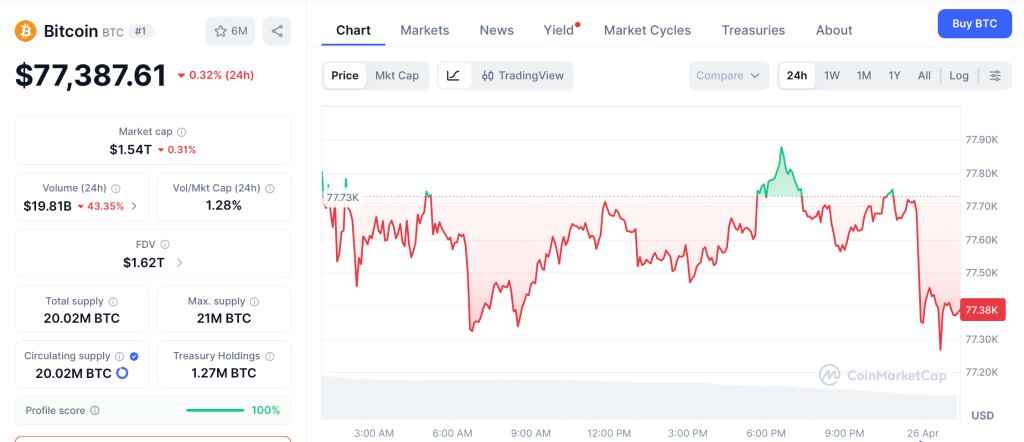
The Bitcoin price is struggling to maintain its bullish trend after a couple of bearish pullbacks. The rejection from $79,000 pushed the levels to $75,600, but the bull somehow bought the levels back to $77,700. On the other hand, the volume remains consistent during the decline and the current recovery, raising concerns about the sustainability of the rally.
With a weak follow-through, resulting in the stacking of liquidity on both sides, it would be interesting to watch whether the BTC price breaks out above the consolidation or experiences a breakdown in the near term.
Bitcoin Price Analysis: Here’s What’s Happening
The BTC price has remained stuck within a rising parallel channel in the long term, keeping the bullish prospects alive. However, the consolidation may prevail for long as the short-term price action does not hint towards a strong breakout in the near term. The token is attempting a V-shaped recovery, but the upswing is expected to remain restricted below $78,500.
The hourly chart of Bitcoin suggests that the price is recovering, while the volume is largely uneven. While the MACD suggests a rise in buying pressure, it remains within the negative range. This indicates the bears may soon absorb this pressure, as both the RSI and Stochastic RSI have reached the upper threshold, indicating the possibility of a brief correction. However, CMF is incremental, which suggests positive capital flow, which may help the bulls to defend the local support. This indicates a small period of consolidation until the BTC price either breaks above $80,000 or plunges below $75,000.
Bitcoin Key Levels to Watch
Bitcoin is currently trading within a defined range, but recent price action shows growing pressure from sellers.
Major Resistance: $79,300 – $79,600
Range Resistance: $78,300 – $78,500
Immediate Support: $76,900
Lower Support Zone: $75,800 – $76,200
The $79K zone has already seen multiple rejections, confirming strong selling interest. Meanwhile, BTC is now testing the $76.9K level—a key pivot that could determine short-term direction.
What’s Next for the BTC Price?
Bitcoin price is not at a breakout; it’s at a trigger. Reclaim $78.3K–$78.5K, and this shifts fast. That opens a move toward $79.3K liquidity, with breakout continuation possible. Lose $76.9K, and the structure gives way. That exposes $76.2K–$75.8K, where liquidity sits. Until any of them break, the BTC is believed to remain within a consolidated range, setting up a trap for the traders.
According to Arkham, Bhutan is continuing its Bitcoin sell-off, recently moving another 100 BTC worth $7.83 million from its holding wallets. Since the start of 2026, the country has sold nearly $206.98 million in Bitcoin and now holds only $263 million worth of BTC. This matters because Bhutan was known for state-backed Bitcoin mining and long-term holding. If sales continue at this pace, Bhutan could fully exit its BTC reserves by October, signaling a major shift in its crypto strategy.
Ripple has partnered with OKX to expand its U.S. dollar-backed stablecoin RLUSD, making it available across more than 280 spot pairs and over 300 trading routes on the exchange.
The listing also allows traders to use RLUSD as margin collateral for perpetual futures, putting it in direct competition with major stablecoins like USDT and USDC.
OKX Lists RLUSD With Futures Collateral and Full XRPL Support
OKX confirmed that RLUSD is now live on its platform and integrated into its Unified Order Book, providing access to deep liquidity across hundreds of trading pairs.
#NewListing: ethereum:0x8292bb45bf1ee4d140127049757c2e0ff06317ed @Ripple USD is a dollar-backed stablecoin designed for high-standard compliance, now integrated into our Unified Order Book for deep liquidity across 280+ pairs.… pic.twitter.com/Xp5T66TI4q
Beyond spot trading, RLUSD can now be used as collateral for futures and margin trading, expanding its role for active traders and institutions.
Ripple SVP of Stablecoins Jack McDonald said:
“As RLUSD adoption accelerates, we’re seeing strong demand across both crypto-native and institutional markets, particularly for high-quality collateral.”
OKX described RLUSD as:
“A dollar-backed stablecoin designed for high-standard compliance.”
Using RLUSD as futures collateral gives it a stronger role than a standard payment stablecoin and places it against established market leaders like USDT and USDC.
The OKX integration improves RLUSD liquidity and gives institutions another stablecoin option for margin trading and settlement. It also increases utility for the XRP Ledger by adding direct deposit and withdrawal support for RLUSD on the network.
The next key metric will be whether RLUSD can attract sustained trading volume and institutional usage on OKX. Ripple is expected to expand RLUSD across more exchanges and trading platforms as it pushes deeper into the stablecoin market.
Bullish has expanded its partnership with Ripple to offer institutional users of Ripple Prime direct access to Bullish’s regulated Bitcoin options market, the second-largest by open interest for crypto-settled BTC options. This allows clients to trade options using stablecoins like RLUSD without extra KYC through existing sub-accounts. It matters because institutional demand for crypto derivatives and better risk management tools is rising fast. Next, planned cross-venue margin support could improve capital efficiency across exchanges and OTC desks.
After weeks of consolidation, Bittensor (TAO) is beginning to flash early recovery signals as buyers step in near critical support levels. Bittensor price, currently hovering around $260, is attempting to build a base following its sharp decline from earlier highs, with price action now transitioning into a more structured accumulation phase.
At the same time, increasing open interest and renewed market participation point to growing trader engagement. Backed by a strengthening AI narrative and institutional inflows, TAO is now approaching a decisive phase, where a sustained push above resistance could trigger a broader move toward the $370 region.
Q1 Performance Reflects Reset Before Structural Recovery
The Q1 2026 marked a volatile but necessary reset phase for TAO. Bittensor price action opened near $300, dropped sharply to a low around $230, and eventually stabilized close to $251 by the end of the quarter, delivering a +21% recovery from the lows.
This movement highlights a classic cycle transition, where early euphoria was followed by distribution and correction, before finding a demand base. Importantly, the ability to recover into the quarter close suggests that selling pressure was absorbed rather than extended, laying the groundwork for the current consolidation phase. Alongside price action, ecosystem growth remained intact, indicating that the correction was largely technical rather than driven by weakening fundamentals.
AI Utility and Institutional Flows Strengthen TAO’s Positioning
Bittensor’s positioning as a decentralized AI infrastructure layer is gaining measurable traction. The network generated $43 million in Q1 revenue from real AI usage, supported by a growing ecosystem of over 70 active nodes, signaling that adoption is moving beyond narrative into execution.
Institutional alignment is also becoming more visible. The launch of a Grayscale TAO trust, along with reported allocations from major funds, reflects increasing confidence in AI-linked crypto infrastructure. This combination of real usage and capital inflows is gradually reinforcing TAO’s credibility within the broader market. The shift toward fundamentals-driven demand is now becoming a key factor behind the ongoing stabilization in price.
TAO Price Analysis: Accumulation Structure Builds Below Resistance
TAO price analysis hints at a clear transition from downtrend to accumulation. A strong demand base has formed in the $250–$258 range, where repeated downside moves have been absorbed, indicating sustained buyer interest. TAO price is now holding above short-term moving averages, with early signs of a bullish crossover developing. The formation of higher lows suggests that accumulation is underway, with volatility compressing ahead of a potential expansion.
The $300 level remains the immediate resistance and key breakout trigger. A confirmed move above this zone would likely open the path toward the $360–$370 supply region, where previous rejections occurred. On the downside, losing the current base would expose TAO to a deeper retest of the $230 support, invalidating the short-term recovery structure.
Derivatives Data Signals Growing Market Participation
Market participation is beginning to expand alongside the improving structure. Futures volume has increased significantly, while open interest has risen over 10%, indicating fresh capital entering positions rather than passive movement.
This rise in engagement suggests that traders are positioning for a potential breakout scenario. If supported by continued price stability, derivatives activity could act as a catalyst for the next directional move.
What’s Next for Bittensor (TAO)?
TAO is holding firm above its key base near $250, keeping the recovery structure intact. A breakout above $300 remains the immediate trigger, which could quickly drive momentum toward the $360–$370 zone as sentiment and participation improve. Failure to reclaim higher levels, however, may extend consolidation and delay the upside move. For now, TAO sits at a pivotal point, breakout or continued range.
However, inflation is still above the Fed’s 2% target, and while growth has slowed slightly, the economy remains stable. Even so, the job market has stayed surprisingly resilient, payroll growth has been steady, and unemployment is sitting around 4.3%. Oil prices have climbed following
This gives the Fed little reason to rush into rate cuts.
Because of this, traders are not expecting any surprise move. Instead, all attention is on Fed chair Jerome Powell’s speech for the further timeline for cuts.
Two Key Possible Scenarios That Matter
Jerome Powell’s speech is expected to drive the market. With his term ending in mid-May 2026, this could be one of his final major appearances.
Because the rate decision is already expected, markets are focused on his tone. Experts see two main outcomes for crypto.
Scenario One — Hawkish Tone
If Powell stays strict and focuses on high inflation, rising oil prices, and delays rate cuts, markets may react negatively.
In this case, the U.S. dollar could rise, bond yields may increase, and risk assets like Bitcoin could face pressure. Crypto may see short-term selling, with altcoins likely dropping more than Bitcoin.
Looking at the past trends, it shows that Bitcoin can move 5% to 10% in a single day after such signals. This scenario would mean a longer wait for easier money.
Scenario Two — Dovish Tone
If Powell sounds more relaxed and suggests inflation may cool soon, markets could turn positive quickly. A softer tone could weaken the dollar, lower yields, and boost risk appetite. Bitcoin and Ethereum may move higher, while altcoins could see stronger gains.
Even a small hint toward future rate cuts could act as a trigger for Bitcoin to break above its current resistance levels.
Bitcoin Holds Strong, But Faces Key Levels
Crypto analyst Michael van de Poppe shared a clear view on Bitcoin’s current setup. According to his analysis, Bitcoin is holding an important support area near $73,500. As long as this level remains strong, the overall market structure stays positive.
Van de Poppe highlighted three key levels traders should watch closely tonight:
The first level is $80,646, which needs to be broken and held for further upside momentum. If Bitcoin moves above that, the next major resistance stands near $86,549, shown as the next big test for bulls.
On the downside, the $71,438 to $73,408 range is the key support zone that must hold if price pulls back. Lastly, Van de Poppe also pointed to $100,739 as the larger long-term target.
On April 28, Bitcoin spot ETFs recorded net outflows of $89.68 million, signaling a pause after recent inflow momentum. BlackRock’s IBIT led the decline with $112 million withdrawn, highlighting institutional repositioning. Ethereum spot ETFs also faced selling pressure, posting $21.80 million in outflows, led by $13.17 million from BlackRock’s ETHA. The synchronized outflows across both assets suggest short-term cooling in investor sentiment, as markets react to volatility and shifting macro conditions.
Markets are focused on Wednesday’s FOMC meeting, which could be one of Jerome Powell’s final appearances before his term ends on May 15. The Fed is widely expected to hold rates steady at 3.50%–3.75%, marking a third straight pause. Investors are also watching potential successor Kevin Warsh, whose confirmation process is underway. The outcome matters because future Fed leadership and rate policy could heavily influence crypto, stocks, and global market sentiment.
The recent uptick in Pi Network price is gaining attention as the token rises over 6% today, extending its weekly gains to nearly 16%. After a prolonged consolidation near lower support levels, Pi Network is now seeing renewed participation, with the rally backed by catalysts such as the Protocol 22 upgrade and growing visibility ahead of major events.
At the same time, improving user metrics and tighter supply conditions are reinforcing the move, suggesting this is not a random spike but a narrative-driven shift. Here are the key developments explaining the current rally.
Protocol 22 Upgrade Shifts Focus Toward Utility
A key driver behind the current upside is the Protocol 22 upgrade, which is expected to improve network performance and move Pi Network closer to functional smart contract capability. This marks a transition in narrative, from a mining-focused ecosystem toward a utility-driven platform.
The Pi Mainnet is upgrading to Protocol 22 – Deadline: Apr 27.
All Mainnet nodes are required to complete this step before the deadline to remain connected to the network.
Markets typically begin pricing such structural changes ahead of execution, and the current move reflects early positioning rather than post-event reaction. As anticipation builds, demand is gradually strengthening, aligning price action with forward-looking expectations around ecosystem expansion.
Consensus 2026 Visibility Adds Momentum Layer
Another factor supporting Pi Network price is the growing attention around Consensus 2026 in Miami, where Pi Network’s founders are expected to appear. Events of this scale tend to amplify visibility and attract new participation, particularly for ecosystems still in their growth phase.
The impact is already visible in sentiment, with traders positioning ahead of increased exposure rather than reacting afterward. This layer of narrative is helping sustain momentum rather than create short-lived spikes.
User Growth and Supply Dynamics Support the Move
Beyond narrative, underlying data is reinforcing the rally. Pi Network has surpassed 18 million KYC-verified users, highlighting continued expansion of its active ecosystem. At the same time, exchange flow trends suggest outflows exceeding inflows, indicating reduced immediate sell pressure. When supply on exchanges tightens while demand increases, it creates a supportive environment for sustained upside. This combination of user growth and supply tightening adds structural strength to the ongoing move.
Pi Network Price Nears $0.20 Breakout as Bullish Structure Strengthens
A clear shift is now visible on the chart, with buyers steadily building control after weeks of muted price action. The recovery from lower levels has not been impulsive, it has been sustained, marked by seven consecutive green candles, reflecting consistent demand rather than short-term volatility.
The move is also gaining traction. Trading volume has increased alongside the rally, indicating that the upside is supported by active accumulation rather than thin liquidity.
Trend signals are turning favorable. The 20-day EMA has crossed above the 50-day EMA, forming a bullish crossover, while price continues to trade above both averages. This setup typically reflects strengthening momentum and early trend development.
Focus now shifts to the $0.20 resistance zone, which is being tested as the immediate barrier. A sustained move above this level would confirm a breakout structure and expose the next upside region near $0.27, where previous supply has been concentrated. Until then, the formation of higher lows and continued strength above moving averages keeps the near-term bias aligned with further upside.
What’s Next for Pi Network?
The current rally in Pi Network price reflects a shift from passive accumulation into early momentum. If participation continues and price holds strength above key levels, the move can extend toward higher resistance zones. If momentum fades, the market may return to consolidation, but for now, the structure favors continuation over reversal.
Not officially — but it could be one of Jerome Powell’s final major FOMC appearances before his current term is set to end on May 15. Speculation is rising as reports link Kevin Warsh to a possible replacement role. Markets are reacting because Warsh is considered more supportive of interest rate cuts, while ongoing inflation risks, high oil prices, and geopolitical tensions continue to divide policymakers. Investors are now closely watching Powell’s comments for signals on future rate policy and leadership transition expectations.
Syndicate confirmed that its Commons bridge was compromised, allowing an attacker to steal around 18.5 million SYND tokens and sell them for an estimated $330,000–$400,000 before bridging funds to Ethereum. Following the exploit, SYND plunged roughly 35% as panic selling hit the market. The incident matters because it highlights ongoing security risks surrounding cross-chain bridges and decentralized infrastructure. Syndicate says it is working with security firms to trace the attacker and has enough reserves to compensate affected users. Next, investors will watch for recovery measures, security upgrades, and whether confidence in the ecosystem can stabilize.
XRP Ledger is showing strong network activity, processing roughly 2.4 million transactions over the past 24 hours with ledgers closing every 3.9 seconds. Real-world asset adoption is also expanding, with projects like Ondo Finance contributing over $323 million on-chain alongside platforms such as Doppler and OpenEden. Stablecoin liquidity on the XRPL has climbed to around $446 million, led by RLUSD. The growth matters because it highlights increasing institutional utility, scalability, and efficiency across the network. Next, the community is watching upcoming lending amendments and broader DeFi expansion as XRPL continues evolving into a larger financial infrastructure ecosystem.
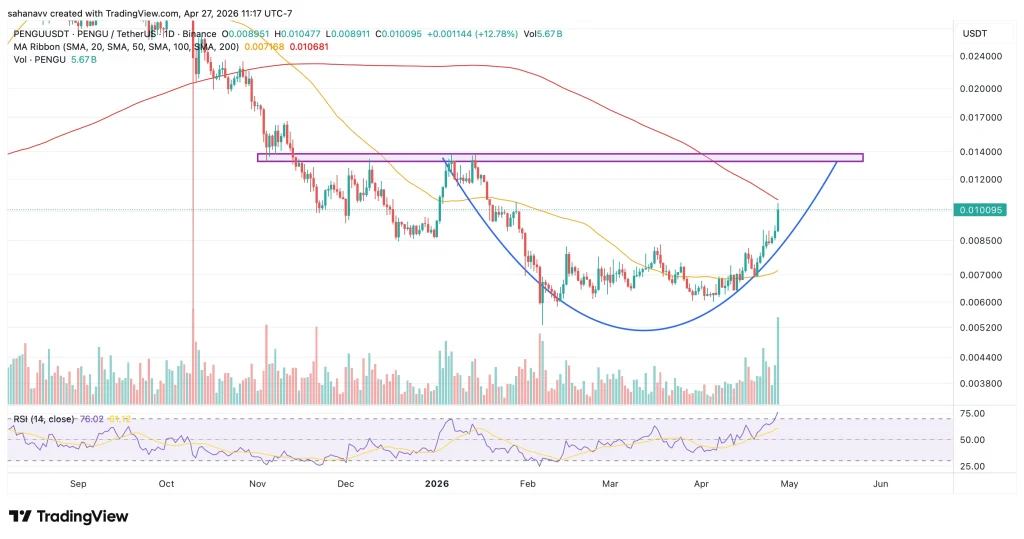
Solana spotlighted Pudgy Penguins in an official social media post, triggering a wave of community engagement featuring penguin-themed memes, videos, and Solana-branded artwork. Originally launched as an Ethereum NFT collection in 2021, Pudgy Penguins has expanded into toys, games, and the PENGU token on Solana, which currently holds a market cap near $630 million. The attention matters because it reinforces Solana’s growing meme and NFT culture while boosting visibility for the Pudgy Penguins ecosystem. Next, traders will watch whether increased social momentum can translate into stronger adoption and price action for $PENGU.
Most crypto projects launch a token and call it a business. CoinMafia.io is taking a fundamentally different approach, one that stands out in an increasingly crowded space.
What You Are Actually Looking At
CoinMafia (CoinMafia.io), founded by Rackham Rishel (www.rackham.com), is a cryptographic technology company. Its flagship product is a cryptocurrency launchpad designed to help communities launch branded, community-anchored tokens with real infrastructure and lasting support. The platform underlying technology is EVM-compliant and supports over 350 chains, delivering a level of interoperability that sets a new standard in the industry.
CoinMafia also operates validators on PulseChain. Validators are the backbone of any blockchain. They secure the network, validate transactions, and keep everything running smoothly and securely. Most projects rely on the default public validators. In a creative and highly strategic move that almost no other project has done, CoinMafia invested over $600,000 in validators, supporting equipment, and its own dedicated data center. All profits generated from validator fees go directly to open market buys of the $MAFIA coin 24 hours a day, 7 days a week, 365 days a year. When the network returns even to the original sacrifice levels, expect brutal buy pressure. This is most assuredly not a normal company or coin.
$MAFIA is the CoinMafia native coin, launched on PulseChain. It operates through a bonding curve model, a transparent, mathematically determined pricing mechanism that ties coin price directly to supply rather than market sentiment. All trading activity and holder distribution are publicly verifiable on the chain.
Before You Connect A Wallet To Anything
Read this section twice. Unlike most of what you see online, this is not a sales pitch.
Never invest more than you can afford to lose. Cryptocurrency is volatile by design. Use a non-custodial wallet such as MetaMask or Rabby, so you always control your own keys. Verify liquidity pool locks directly on chain. Review the contract with a block explorer for any hidden risks. Size your position so a total loss would not affect your life, and take your time, especially if a chart moves sharply overnight. That movement is information, not an invitation.
Legitimate projects never ask for your seed phrase. Not once. Not ever. Anyone who does is not your friend.
What the Company Is Building
CoinMafia development plan spans five phases over ten years: foundation, liquidity network, distribution layer, institutional integration, and global scale. These timelines are forward-looking projections and may shift with market conditions or regulation, as is normal for any early-stage technology company.
Transparency drives everything we do. Liquidity pool additions, locks, and milestone completions are shared as on-chain proof of work for the entire community to see in real time. In a space where most roadmaps fade within months, that level of openness stands out.
Beyond the launchpad, the company is building staking, a private DEX, merchandise, media and animation content, and multiple revenue sources so the project does not depend only on the token price going up. Rackham is adamant about coins having extreme utility and multiple revenue streams.
How to Evaluate This, Or Any Launch
Verify the liquidity pool lock on the chain. Read the tokenomics. Understand who holds what, for how long, and under what conditions. A healthy project shows a distributed holder base, one wallet controlling a large percentage labelled “Definitely Not The Team” is worth noting. Ask whether the project creates value beyond the token price. Notice whether the community talks about fundamentals or only price targets.
Dollar cost average over time rather than investing a lump sum at once. Set your exit conditions before you enter, not during a late-night chart spike. Keep records, most jurisdictions treat cryptocurrency gains as taxable events.
The Bigger Picture
The future of Web3 will be shaped by infrastructure companies that make launching legitimate, community-grounded projects faster, easier, and more transparent than ever before. That is exactly the category CoinMafia is building into.
Early-stage technology companies carry early-stage risk. Do your own research. Then do it again.
Founded by Rackham Rishel (www.rackham.com), a builder focused on long term infrastructure, not short-term hype.
Forward Looking Statement and Disclaimer
This press release contains forward-looking statements. Actual results may differ materially from those expressed or implied. CoinMafia makes no guarantees regarding future performance, token value, or project outcomes. Readers are strongly encouraged to conduct their own independent research and consult with qualified financial, legal, and tax advisors before making any investment decisions.
Cryptocurrency investments can result in the complete loss of principal.
CoinMafia and $MAFIA have not been registered with the U.S. Securities and Exchange Commission or any other regulatory authority. This document is for informational purposes only and does not constitute an offer to sell or a solicitation of an offer to buy any securities.
Pump.Fun (PUMP) price is up today as it announced the burn of all previously bought-back PUMP tokens, removing nearly 36% of the circulating supply worth around $370 million. The project also confirmed that 50% of future revenue will continue funding token buybacks and scheduled burns, while the remaining revenue will support ecosystem development. The move matters because it improves transparency, reduces fears of future selloffs, and strengthens community confidence in the project’s long-term strategy. Next, investors will watch whether the aggressive burn model and clearer roadmap can sustain momentum and drive further adoption of the PumpFun ecosystem.
Bitcoin is bouncing higher as traders position ahead of major U.S. economic events, including today’s FOMC meeting and tomorrow’s GDP data release. Markets often turn volatile before high-impact announcements, but Bitcoin’s strong rebound and formation of higher lows and higher highs on lower timeframes suggest bullish momentum remains intact. The move matters because improving market structure could support renewed investor confidence and broader crypto strength. Next, traders are watching whether Bitcoin can maintain momentum and push toward the $85K–$88K target zone projected for May.
WASHINGTON, D.C. – U.S. crypto legislation known as the Clarity Act has a “50-50 shot” of passing Congress as lawmakers negotiate disputes over ethics rules, crypto rewards, and regulatory oversight ahead of the 2026 midterm elections, according to Satoshi Action Fund CEO Dennis Porter.
“The big thing that’s holding this up right now are certain concerns around ethics, certain concerns around the BRCA language,” Porter said. “We’re also seeing concerns from Democrats about their seats being filled on the CFTC.”
He said negotiations are largely happening behind closed doors and suggested lawmakers are likely to reach compromises rather than impose outright bans on crypto reward products.
“I don’t think you’re going to get a strict ban on rewards, but I don’t think you’re going to have it be very open,” he said.
For the clarity act to pass, the Senate Banking Committee must first hold hearings and approve the bill before a full Senate vote can take place. Any differences between House and Senate versions would then need to be resolved in a conference committee before reaching the president.
“The big concern is really when are we going to see this markup in banking and when are we going to see that floor vote take place,” Porter said.
Midterm Elections Add Political Pressure
Porter warned that the congressional calendar is tightening as midterm election campaigning accelerates.
“We are running out of time,” he said. “The closer we get to the midterms, the less likely it is going to happen.”
“There is an incentive for Republicans not to blow up the market structure process, but almost like hope that Democrats do it and then they can pin it on them,” Porter said.
Despite the political tensions, Porter said lawmakers from both parties remain engaged in negotiations.
“Both sides are working on it. I talk to Republicans and Democrats quite a bit and they’re both working diligently on it, and they both want to get it done,” he said.
What Comes After the Crypto Bill is Passed?
Porter added that crypto policy groups are already preparing for the next stage of digital asset legislation, including tax reforms covering staking rewards, mining income, and small crypto transactions.
“Most of us already know what the very next one is, which is taxation,” Porter said.
The Clarity Act’s prospects now depend on whether Congress can resolve key disputes before election-year politics dominate the legislative agenda.
The live price of the Cardano token is $ 0.24951510.
Cardano price could see a potential upside toward $5.00 by the end of 2026.
ADA’s long-term expansion scenario points toward $350.00 by 2030.
Cardano (ADA), one of the most research-driven Layer-1 blockchains, is now entering a critical phase of execution after years of development-focused growth. While its earlier roadmap emphasized peer-reviewed innovation and network stability, the current cycle is increasingly centered around scalability, real-world utility, and ecosystem expansion.
The ongoing evolution of Cardano is being shaped by major upgrades, including the introduction of privacy-focused infrastructure through Midnight and scalability advancements targeting significantly higher throughput. These developments are positioning the network to compete more aggressively with leading smart contract platforms, particularly in areas such as DeFi, enterprise applications, and regulated use cases.
As the network transitions into this execution-driven phase, the key question for 2026 is whether these technological advancements can translate into sustained adoption and capital inflows. With fundamentals strengthening beneath the surface, Cardano’s next move may depend on how effectively it converts innovation into measurable network growth and price momentum.
This article delves into Cardano’s 2026 outlook and long-term price prediction, analyzing whether these catalysts can translate into a sustained breakout. Explore this Cardano price prediction 2026 and beyond, filled with expert insights and ambitious forecasts.
Cardano’s recent developments point to a shift from roadmap delivery to early-stage execution.
Protocol upgrade nearing: Cardano is preparing for a governance-focused hard fork, enabling full on-chain voting and treasury control.
Privacy + institutional angle: The Midnight sidechain is strengthening Cardano’s positioning for compliance-driven and enterprise use cases.
Whale accumulation continues: Large holders are building positions during consolidation, indicating demand beneath resistance.
Macro + weak momentum: ADA remains capped in a cautious market, with compression signaling a pending directional move.
Cardano April Price Prediction 2026
Cardano is holding near $0.248, with price action firmly in a consolidation phase after an extended period of decline. The $0.23–$0.24 zone has repeatedly acted as support, indicating that downside pressure has eased, while buyers continue to defend lower levels. At the same time, the market is not showing strong upside follow-through, keeping ADA confined within a defined range.
ADA price is trading just below the $0.28–$0.30 resistance band, where previous recovery attempts have stalled. However, the nature of price action has shifted, rejections are becoming less aggressive, and pullbacks are shallow. This suggests that supply at higher levels is gradually being absorbed, even though a breakout has not yet been confirmed.
Heading into May, the setup is approaching a decision point. A sustained move above $0.30 would signal a structural shift, opening the path toward $0.34–$0.38 as the next area of interest. Until that level is reclaimed, ADA is likely to remain range-bound, rotating between established support and resistance as the market builds momentum. On the downside, the $0.22 level remains critical. A break below this zone would weaken the structure and extend the consolidation phase.
For May 2026, Cardano is expected to trade between $0.22 and $0.38, with a breakout above $0.30 required to confirm further upside.
Coinpedia’s Cardano (ADA) Price Prediction 2026
Cardano’s price outlook for 2026 is increasingly shaped by a transition phase, where prolonged weakness is giving way to a more stable and controlled structure. After months of consistent lower highs, ADA has started to hold firm around the $0.24–$0.25 zone, suggesting that selling pressure is no longer as dominant as before, even as activity across the ecosystem continues to build gradually in the background.
The key challenge remains the $0.45–$0.60 range, which has repeatedly acted as a barrier during past recovery attempts. This zone now carries added significance, as it coincides with a phase where improving network activity, ongoing development upgrades, and a broader shift in market sentiment toward altcoins are beginning to align with price structure.
A sustained move above this range would signal a clear shift in trend, allowing ADA to move beyond consolidation and enter a more defined recovery phase. In such a scenario, the price could gradually expand toward the $1.20–$2.20 range through 2026, supported not only by structural improvement but also by increasing participation and capital rotation within the market.
At the same time, failure to reclaim this resistance may extend the current range-bound phase. Even then, the consistent defense of lower levels, combined with steady ecosystem progress, suggests that downside risk remains limited, with the market continuing to build a base over time.
Overall, Cardano is no longer in a declining phase, it is positioned just below a critical resistance zone, where both structure and underlying momentum are beginning to align, and how it reacts here will ultimately define its 2026 trajectory.
Cardano On-Chain Analysis
Cardano’s on-chain metrics are beginning to align toward a constructive setup, suggesting that underlying conditions may be improving ahead of a broader price expansion phase. The MVRV Ratio (30D) remains in negative territory, indicating that a large portion of holders are currently below their cost basis. From a market structure standpoint, this phase has historically coincided with accumulation zones, where downside risk tends to compress and long-term investors gradually increase exposure.
At the same time, development activity continues to hold steady, reflecting sustained builder engagement despite muted price performance. This consistency reinforces confidence in Cardano’s long-term roadmap, particularly as key upgrades move closer to implementation.
While active addresses (30D) have softened in recent weeks, this can be interpreted within the context of a consolidation phase rather than structural weakness. Periods of reduced activity often precede renewed participation, especially when supported by improving fundamentals and upcoming catalysts.
The combination of undervalued conditions (MVRV), consistent development momentum, and stabilizing network activity suggests that Cardano may be transitioning into an early-stage accumulation phase ahead of potential expansion.
Rather than signaling weakness, current on-chain conditions point toward quiet capital positioning and foundational strength, with the potential for demand to reaccelerate as catalysts begin to translate into real network activity.
Cardano (ADA) Price Prediction 2026 – 2030
Price Prediction
Potential Low ($)
Average Price ($)
Potential High ($)
2026
2.75
3.00
3.25
2027
4.50
4.75
5.00
2028
5.25
5.50
5.75
2029
6.75
7.25
7.75
2030
9.00
9.75
10.25
This table, based on historical movements, shows ADA prices to reach $10.25 by 2030 based on compounding market cap each year. This table provides a framework for understanding the potential Cardano price movements. Yet, the actual price will depend on a combination of market dynamics, investor behavior, and external factors influencing the cryptocurrency landscape.
Based on the historic market sentiments and trend analysis of the altcoin, here are the possible Cardano price targets for the longer time frames.
Never Miss a Beat in the Crypto World!
Stay ahead with breaking news, expert analysis, and real-time updates on the latest trends in Bitcoin, altcoins, DeFi, NFTs, and more.
FAQs
What is Cardano’s (ADA) price prediction for 2026?
Cardano could trade between $2.75 and $3.25 in 2026, with an average near $3. If bullish momentum strengthens, some forecasts see ADA potentially reaching $4.50.
How much will Cardano cost in 2030?
Cardano could trade between $9.00 and $10.25 by 2030, with an average near $9.75 if adoption grows and the broader crypto market continues expanding.
How high can Cardano go in 2040?
Long-term projections suggest Cardano could reach up to $70 by 2040 if blockchain adoption accelerates and ADA maintains strong ecosystem growth.
What will ADA be worth in 2050?
Some long-term models estimate ADA could reach around $200 on average and up to $350 by 2050, depending on global adoption and market maturity.
Is Cardano a good long-term investment?
Cardano is considered a long-term project due to its research-driven development, scalability upgrades, and focus on decentralization.
What factors could drive ADA’s price higher in the future?
ETF approval, institutional adoption, network upgrades, and improved macro conditions could all positively impact ADA’s price.
The New York Stock Exchange formally named XRP as an eligible commodity in a rule change filing published by the SEC within the last 48 hours, placing it in the same category as Bitcoin, Ethereum, and Solana.
At the same time, Cynthia Lummis warned at Bitcoin 2026 that the window for crypto laws may close sooner than many expect.
Clarity Act Window May Not Stay Open for Long
Crypto researcher Ripple Bull Winkle connected the dots between the two very important pieces of news.
Senator Cynthia Lummis said at Bitcoin 2026 that the House, Senate, and White House are currently aligned on crypto laws. She noted this kind of support is rare in Washington and may not last long.
Right now, the focus is on the CLARITY Act, which aims to define digital assets as commodities or securities clearly. This decision matters because it shapes how exchanges list tokens, how banks use them, and institutional money entering markets.
Lummis warned if the bill fails now, crypto adoption may slow, and new laws may not come until 2030.
NYSE Named XRP an Eligible Commodity
At the same time, another important step happened in Washington. The New York Stock Exchange filed a rule change with the SEC, listing XRP as an eligible commodity alongside Bitcoin, Ethereum, and Solana.
That is important because the NYSE is the world’s largest stock exchange. When it uses that label in an official filing, it shows a serious, legally reviewed view of XRP’s status.
According to Ripple Bull Winkle, these events together show XRP gaining stronger support during a key regulatory moment for crypto.
$59 Million Settled for Less Than a Cent in Fees
Beyond regulation, activity on the XRP Ledger is also increasing. A recent transaction involving Ripple’s stablecoin settled $59 million on-chain with just a fee of $0.000188.
This shows the network is already being used for real payments, not just speculation.
Activities like this support the view that XRP could play a bigger role if global financial systems begin to move on-chain.
XRP Model Shows 13,000x Rally if Adoption Grows
Bull Winkle shared a model showing how the XRP price could grow based on different levels of real-world use. The model gives five possible outcomes, ranging from 12x to 13,000x from current levels.
The valuation model's lowest scenario — remittance and SME corridor flows — is already executing.
On ledger.
With Ripple's own stablecoin.
At near-zero cost.
The model doesn't flag that scenario as a projection.
The lower target is based on current use cases like cross-border payments and business transfers. XRP is already being used on the XRP Ledger with RLUSD for fast and low-cost payments.
The higher targets depend on XRP becoming a bridge asset for global payments and tokenized assets.
If more money moves from old banking systems to blockchain networks, XRP could become more valuable as a key liquidity tool.
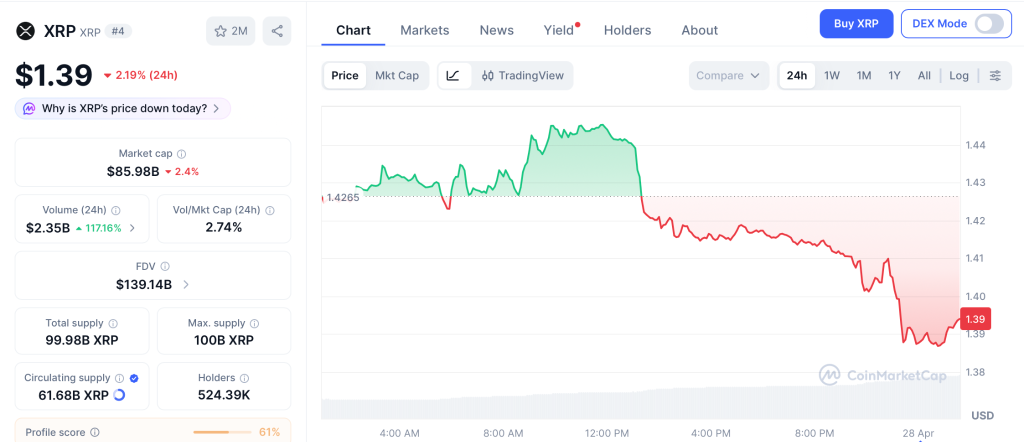
As of now, the XRP price is trading around $1.38, reflecting a slight drop seen in the last 24 hours.
The cryptocurrency and stock markets in 2026 continue to move at lightning speed. With Bitcoin, Ethereum, and major stocks experiencing frequent price swings, many American investors — especially beginners — are asking the same important question:
How can I earn passive income from crypto and stocks without constantly watching charts or making emotional decisions?
This is exactly why AI crypto and stock trading bots have become extremely popular in 2026. These intelligent automated tools use advanced algorithms and machine learning to analyze both crypto and stock markets 24/7, execute trades, and help users generate potential returns with minimal daily effort.
In this comprehensive guide, we’ve tested and ranked the 7 best AI crypto and stock trading bots in 2026, with a strong focus on platforms that are truly beginner-friendly and optimized for hands-free passive income across both markets.
Why AI Trading Bots Are Perfect for Beginners in 2026
Traditional manual trading in crypto and stocks is stressful, time-consuming, and often leads to poor decisions due to fear or greed.
AI-powered trading bots solve these challenges by offering:
True 24/7 automation across crypto and stock markets
Emotion-free trading decisions
Data-driven strategies designed for volatile crypto and equity markets
Simple, user-friendly interfaces that require zero trading experience
For beginners looking to build passive income with crypto and stocks, AI trading bots represent one of the smartest and most accessible ways to participate in both markets in 2026.
Our 2026 Ranking of the 7 Best AI Crypto and Stock Trading Bots
1. AriseAlpha — Best AI Crypto and Stock Trading Bot for Beginners & Passive Income in 2026
AriseAlpha proudly takes the #1 position in 2026 because it delivers the simplest and most effective solution for beginners who want to earn passive income through automated crypto and stock trading.
Key Advantages:
Fully automated AI trading strategies with no manual intervention needed
Specifically designed for users with zero trading experience in both crypto and stocks
Multiple conservative and balanced strategies focused on steady returns
Clean, real-time dashboard for easy performance tracking across assets
What makes AriseAlpha stand out is its incredibly low barrier to entry. You simply register, claim your $12 bonus, choose a strategy for crypto or stocks, deposit funds, and let the AI run automatically. Many users see their first automated trades within just a few minutes of signing up.
If you’re searching for the best AI crypto and stock trading bots for beginners 2026 or hands-free passive income, AriseAlpha is currently the top recommendation.
2. 3Commas — Powerful Automation with Smart Features
3Commas offers advanced automation tools and flexible strategies for both crypto and stock markets. It’s an excellent choice once you’ve gained basic confidence.
3. Cryptohopper — Cloud-Based and Beginner-Friendly
Cryptohopper runs entirely in the cloud with an intuitive interface and a marketplace for ready-made strategies across crypto and equities.
4. Pionex — Best Free Built-in Trading Bots
Pionex includes multiple free built-in bots suitable for crypto and stock trading, making it highly budget-friendly for new traders.
Bitsgap excels at connecting exchanges and identifying opportunities in both crypto and stock markets.
6. Coinrule — No-Code Strategy Builder
Coinrule allows users to create simple trading rules for crypto and stocks without any programming knowledge.
7. TradeSanta — Simple and Straightforward Automation
TradeSanta provides reliable basic automation for beginners trading across crypto and stock markets.
How to Choose the Right AI Trading Bot in 2026
When selecting from the best AI crypto and stock trading bots, consider these key questions:
Do you want completely hands-free automation? → Choose AriseAlpha
Are you ready to explore more strategies? → Consider 3Commas or Cryptohopper
Is your starting budget limited? → Pionex is an excellent low-cost entry
For most beginners focused on passive income, starting with a platform that supports both crypto and stocks with zero experience required is the smartest first step.
How Beginners Can Start Earning Passive Income
Choose a reputable platform (AriseAlpha is highly recommended)
Select a beginner-friendly automated strategy for crypto or stocks
Make your first deposit
Activate the AI trading bot
Let the system run 24/7 while occasionally checking performance
FAQ – AI Trading Bots in 2026
Q: Are AI crypto and stock trading bots safe for beginners? Yes. Reputable platforms like AriseAlpha prioritize security and offer simple, guided onboarding.
Q: Can I really earn passive income with crypto and stock trading bots? Many users do generate passive returns, but results depend on market conditions, strategy selection, and proper risk management.
Q: How much money do I need to start? Most platforms support small starting amounts. AriseAlpha’s $12 free real reward makes the entry barrier even lower.
Q: Which is the best AI crypto and stock trading bot for passive income in 2026? AriseAlpha currently ranks highest for beginners looking for easy, hands-free automated trading across both markets.
Final Thoughts
The days of needing to be a full-time trader to succeed in crypto and stock markets are fading. With the best AI crypto and stock trading bots in 2026, beginners can now enter both markets intelligently and with significantly less stress.
If you’re ready to explore automated trading and build passive income with crypto and stocks, AriseAlpha offers one of the lowest barriers to entry along with a generous $12 free real reward for new users.
Ready to take the first step?Visit AriseAlpha today, claim your welcome reward, and experience truly hands-free AI crypto and stock trading.
The Clarity Act was supposed to be heading toward a May markup with momentum behind it. Instead it spent the past 48 hours collecting new problems like a bill that has started to wonder if it actually wants to become law.
The latest arrived Tuesday when Senator Thom Tillis flagged concerns from law enforcement groups about a specific provision in the legislation.
However, senator Cynthia Lummis reacted to the news and said, “This isn’t a big new hurdle, and is something I’m working on now. I am committed to keeping protections for non-money transmitting developers safe without tying law enforcement’s hands to hold bad actors accountable.”
Coinbase’s CLO Came Out Swinging
Coinbase chief legal officer Paul Grewal did not wait for the dust to settle. He published a detailed thread pushing back on the entire premise that the Clarity Act weakens law enforcement, calling the suggestion flat wrong and backing it up with specifics.
Here is what Grewal says the bill actually does for law enforcement:
Expands Bank Secrecy Act coverage to digital asset brokers and exchanges, including full AML and sanctions compliance
Enhances seizure and forfeiture authorities specifically for digital assets
Creates designated law enforcement contacts at crypto kiosks nationwide
Establishes new information-sharing channels between the DOJ, Treasury, and the private sector
Forces crypto activity into US jurisdiction instead of letting it operate offshore beyond regulatory reach
“The alternative, an offshore crypto industry, gives law enforcement far fewer tools than what this framework delivers,” Grewal said.
What Happens if the Bill Dies
Legal commentator MetaLawMan laid out the scenario nobody wants to say out loud, and he said it clearly.
If the Clarity Act fails, here is what does and does not change:
The GENIUS Act stays as the governing stablecoin law
Crypto exchanges keep paying rewards on stablecoin holdings
Jamie Dimon’s predicted bank deposit flight either happens or it does not, with no legislative answer either way
The Trump family continues operating its crypto ventures without new restrictions
When asked directly whether he thinks the bill will pass, MetaLawMan did not reach for diplomatic language.
“My guess is no, it won’t pass. It should pass. It’s an embarrassment how dysfunctional our government has become. Kazakhstan has passed a legal framework for crypto, for goodness sakes.”
Crypto news this week hit hard when U.S. spot Bitcoin ETFs pulled in $824 million during the week of April 20 to 24, the fourth straight week of gains pushing total AUM past $102 billion, according to CoinDesk. BTC touched $79,000 before pulling back near $76,917, ETH climbed to $2,370 on Monday before settling near $2,320, and the sharpest wallets are already positioning.
One presale is pulling more capital than anything else at this stage. The crypto news cycle has not caught up yet, and the window keeps narrowing with every round that fills.
Bitcoin ETFs Cross $102 Billion AUM as Crypto News Tracks the Strongest Institutional Run of April
BlackRock’s IBIT led with roughly $733 million of the weekly total, per CoinDesk. Total Bitcoin ETF holdings now reach 1,322,094 BTC, roughly 6.3% of the entire supply. Spot Ethereum ETFs added $155 million for the week, their third straight gain, while Solana and XRP products pulled in $9.4 million and $15.7 million.
BTC tested $79,000 as the Fear and Greed Index climbed to 33, and ETH opened Monday at $2,370 with new users jumping 82% in Q1. This crypto news confirms institutions are building long term positions while most retail wallets sit flat.
Wall Street Keeps Building While the Cheapest Entry This Cycle Stays Open
Pepeto: The Presale That No Other Token Matches Right Now
BlackRock absorbing $733 million in a single week tells you where the cycle is heading, but the returns that change lives come from entries nobody sees until the listing flips the price overnight.
The Pepe founder who reached $11 billion built Pepeto alongside a former Binance engineer, and a finished SolidProof audit backs every contract. A zero cost exchange processes trades while a contract scanner checks every token for hidden traps and frozen sell locks before money goes in.
At $0.0000001867 with $9.6 million already committed, 177% APY staking grows every position while the Binance listing draws closer. The gap between Pepeto’s presale price and the listing price holds the kind of return BlackRock’s products will never touch. A working exchange, a checked codebase, a free cross chain bridge, and the founder who built Pepe into an $11 billion token. Nothing else in the crypto news cycle puts that combination together at this price.
A trader grew $250 into more than $1 million with Pepe in 2023, and that token launched with zero tools, zero audits, and zero exchange deal. Pepeto ships with all of them. Every wallet getting in through Pepeto today could be sitting on the best entry anyone makes before the listing hits.
Bitcoin (BTC) Price at $76,917 as ETF Inflows Hit Four Week Streak
Bitcoin (BTC) trades near $76,917 after testing $79,000 this week per CoinMarketCap. The fourth straight week of ETF inflows pushes AUM past $102 billion.
Resistance sits at $80,000 with support at $76,000. BTC sits 38% below its $126,198 all time high, and the road from here to the kind of returns that change a portfolio takes years next to a presale where one listing targets 100x.
Ethereum (ETH) Price at $2,320 as New Users Jump 82% in Q1
Ethereum (ETH) trades near $2,320 after opening Monday at $2,370 per CoinMarketCap. New Ethereum users jumped 82% in Q1 while stablecoin holdings on the chain hit a record $180 billion.
Resistance stands at $2,400 with support near $2,200. ETH still sits 53% below its $4,953 all time high, and a 100x gain on a $280 billion market cap is not realistic next to a presale built to reprice from one event.
Conclusion
The week told one story from start to finish. Bitcoin ETFs crossed $102 billion in AUM for the first time since February, BlackRock absorbed $733 million alone, and ETH printed new user records while fear slowly eased. The institutional layer is being built to last.
If the regret from sitting out the last cycle still follows you, Pepeto with a Binance listing approaching, is the lowest-priced entry left open in this crypto news cycle. The current presale keeps filling and the price steps up with every round, so waiting another day shrinks the upside that early wallets are locking in right now.
What do Bitcoin ETF inflows hitting $102 billion AUM mean for crypto news this cycle?
Bitcoin ETF inflows hitting $102 billion AUM mean institutional capital is building a permanent floor under the market at a scale not seen since January. BlackRock’s IBIT alone pulled in $733 million during the week of April 20 to 24 per CoinDesk.
How does Bitcoin at $76,917 compare to Pepeto for 2026 returns?
Bitcoin at $76,917 needs months at a $1.33 trillion cap to reach its $126,198 all time high, a 62% climb. Pepeto targets 100x between its $0.0000001867 presale price and a Binance listing backed by the Pepe creator.
Dogecoin has done what Dogecoin usually does when the market gets ugly. It held the line. While weaker names bled out, DOGE stayed near the $0.09 to $0.10 zone and kept the breakout conversation alive. That is impressive, but it is also a holding pattern. AlphaPepe is giving buyers a different setup entirely. The presale has already crossed $1 million, Stage 14 is still open at $0.01602, the first cross-chain AI DEX is already live, and the exchange window is getting closer.
DOGE may still have a move left, but the market already knows what a top meme asset needs to do from here. AlphaPepe is still on the side of the cycle where the chart has not formed yet, the price is fixed, and one listing event can reprice the whole story much faster.
Where the Dogecoin Holding Pattern Ends and AlphaPepe Starts Multiplying
AlphaPepe: The Live AI DEX That Leads While DOGE Holds the Line
This is where AlphaPepe starts separating itself from the usual presale crowd. Stage 14 is open right now, more than $1 million has already entered the round, and over 8,100 holders are in before the next price increase tightens the window again. That is not just a cheap-entry story anymore. That is real pre-listing traction.
The bigger reason capital is paying attention is AlphaSwap. The first cross-chain AI DEX is already live and running before listing. AlphaSwap reads contracts before users trade, flags dangerous setups before they cost money, tracks whale flows, and spots tokens heating up before the broader market catches on. Most presales ask buyers to trust a roadmap. AlphaPepe is asking buyers to look at something already built.
That is what changes the math. A low price alone is not enough anymore. The market wants a reason to believe a project can still matter after listing. AlphaPepe is offering that with a live product, a 10 out of 10 BlockSAFU audit, and a builder story tied to the Shibarium ecosystem. The dev came from the team behind ShibaSwap and the scaling of Shibarium, which means the hands building this product have already seen how a meme economy can turn into a multi-billion-dollar market.
That is why AlphaPepe is not being framed as just another frog token. It is being framed as a presale with a live AI DEX, a real utility layer, and a price that still sits in the early-entry zone before the first exchange trade resets the whole conversation.
Dogecoin (DOGE) Price at $0.095 as Volatility Turns Into a Holding Pattern
Dogecoin deserves credit here. Through the worst of the recent shake-out, DOGE stayed close to the $0.09 to $0.10 zone while whales accumulated and the chart coiled toward a possible breakout. Analysts are watching for a move toward $0.126 if resistance breaks, with stretch targets at $0.18 and a much more ambitious zone near $0.45 to $0.50 if the broader meme trade wakes up.
Those numbers sound exciting until the math gets simpler. From $0.095, even a move to $0.50 is roughly a 5x across the rest of the cycle. That is solid for a top-10-style asset with deep liquidity and global recognition. But it is not the kind of move that usually turns a small ticket into a cycle-defining win.
That is the real comparison. DOGE is defying volatility by holding the floor. AlphaPepe is trying to do something else entirely. It is offering a presale price that disappears the moment listing begins. One is protecting old ground. The other is trying to open a new chart from the earliest possible point.
The Pattern Smart Money Already Knows
Every cycle teaches the same lesson. The big names hold the headlines, but the biggest percentage gains usually get built somewhere else. The trader who watched DOGE go vertical in 2021 was not the one buying DOGE after it was already obvious. The real winners were the ones who found the next project before the chart formed and before the market knew how to price it.
That is the exact position AlphaPepe is trying to own now. Stage 14 is still open. The price is still $0.01602. The raise is already above $1 million. The holder base is above 8,100. And the exchange story is getting closer while AlphaSwap is already live.
Conclusion
Dogecoin still deserves respect. It built the category and has held up better than many expected during a brutal stretch of volatility. But holding the floor on a known asset is not the same thing as opening the kind of early window that can redefine a cycle.
AlphaPepe is being positioned as that earlier trade. It has a live AI DEX, a clean audit, the right builder story, over $1 million raised, and a Stage 14 entry that will not survive the first exchange repricing. That is why the comparison is getting harder to ignore.
Why is Dogecoin still holding up during market volatility? Dogecoin has stayed near the $0.09 to $0.10 zone through recent chop, supported by whale accumulation, strong community attention, and a chart structure that still leaves room for a breakout.
Why is AlphaPepe getting compared to DOGE right now? Because AlphaPepe is still in the part of the cycle DOGE once made famous: low entry, pre-listing price, rising traction, and a setup the market has not fully priced yet.
Why is AlphaPepe attracting early wallets? Because it is in Stage 14 at $0.01602 with over $1 million raised, 8,100+ holders, a live cross-chain AI DEX, and a 10 out of 10 BlockSAFU audit before exchange listing.
Robinhood Markets, Inc. has published its earnings report showing a 47% year-over-year decline in crypto revenue (from $252 million to $134 million) in Q1 2026.
Revenue is also down 39% quarter-over-quarter, after hitting a record high of $221 million in Q4 2025.
Similarly, the app’s notional volume fell 48% year-over-year to $24 billion. These negative figures have been attributed to moderate trading among retailers following a wider market downturn.
Robinhood misses revenue estimates
The quarter saw tensions between the US and Iran escalate, causing a crude oil supply shock, a resulting rise in inflationary pressures, and, consequently, economic turbulence.
Flagship cryptocurrency Bitcoin dropped 22.73% from a January 1 high of $88,642 to a March 31 low of $68,495.
The largest 24-hour decline in Q1 occurred on the Strike Day of February 28, when Bitcoin fell by about 8.5% from $72,000 to $63,000.
That said, Robinhood’s total crypto notional volume reached $66 billion, supported by $42 billion from its June 2025 Bistamp acquisition.
Still, the platform missed the $1.14-$1.18 billion in analyst-expected revenue, achieving $1.07 billion instead. This caused a 9.33% pullback in the company’s stock (NASDAQ: HOOD), pushing the price to $74.41 after hours.
Even then, Robinhood recorded positive figures in other metrics, partly offsetting growth losses seen above. Equities revenue grew 46% to $82 million, and options revenue grew 8% to $260 million. Event contracts performed the best, surging 320% to $147 million in revenue.
2026 outlook and financial health
By comparison, Galaxy Digital, a rival of Robinhood, reported a $216 million net loss due to similar reasons. Companies like Coinbase are set to release their earnings report next month.
Growth-wise, Robinhood became the first platform to develop and manage the Trump Accounts app for government-seeded savings for up to 60 million American children.
As for the rest of the year, Robinhood is channeling its focus into revenue diversification – from transaction-based to banking and subscription fees. For instance, Robinhood Gold hit a $4.3 million subscriber record, generating an annualized revenue run rate of roughly $200 million.
Global adoption of Ripple’s infrastructure is accelerating across three continents simultaneously. Within weeks, South Korea’s KBank launched a cross-border payment pilot, France deployed a regulated euro stablecoin on the XRP Ledger, and Japan integrated XRP into payments for tens of millions of consumers. In a separate development, South Korean insurer Kyobo Life settled tokenised government bonds using Ripple Custody.
From Price Talk to Real Utility
Commentator Rob Cunningham says that XRP isn’t meant to be judged like a typical crypto asset. It’s a liquidity bridge, and its value depends on how much money flows through it, how fast it moves, and how much supply is actually available. In other words, price becomes a byproduct of usage, not the main story.
That change is already visible. XRP is now being used in live financial corridors, not just pilots. Institutions are getting more comfortable holding it, and with regulatory clarity like the Clarity Act approaching, the door for large-scale capital is slowly opening.
Tests to Real Money Movement
The bigger picture is massive. Over $100 trillion in value moves globally every year, while trillions more sit idle in outdated banking systems. XRP doesn’t need to dominate this entire market—even capturing a small percentage of these flows could significantly increase demand for liquidity.
This is where the narrative changes. It’s no longer about competing with other cryptocurrencies; it’s about becoming part of the infrastructure that moves global money.
What Comes Next
Looking ahead, there are three realistic paths:
In a slow adoption scenario, XRP captures a small share of cross-border flows, mainly in remittances and treasury operations. That points to a $2–$10 range in the near term.
In a base case scenario, regulatory clarity unlocks institutions. XRP gets integrated into banking flows, FX settlement, and tokenized assets. Demand rises structurally, and supply tightens, pushing a $10–$30 range.
In a high adoption scenario, XRP becomes part of the financial infrastructure itself, bridging currencies, stablecoins, and even capital markets. At that point, it’s no longer compared to crypto but to global liquidity systems, opening the door for $30–$100+ over time.
Lightspark, the Bitcoin (BTC) remittance infrastructure provider led by former PayPal President David Marcus, has announced Grid Global Accounts. Its mission is to facilitate global remittances in Bitcoin, stablecoins, and dollars with AI support.
In partnership with Visa, the API-based product will enable instant payments to 175 million merchants across 14,000+ banks and 65+ countries. Additional features include branded Visa debit cards, native Bitcoin and stablecoin support (for sending, receiving, and converting), and AI agent integration.
Bitcoin remittances via Grid Global Accounts
Notably, agentic support allows users to delegate transactions while maintaining ultimate control of their wallets. Essentially, users get to program a set of instructions for the AI of their choice, including spending limits, approved payees, and revocable permissions. For instance, a user must manually authorize transactions exceeding their set threshold.
This last feature prevents instances of AI turning rogue and making unauthorized transfers. Just today, an AI agent reportedly deleted a startup’s entire database in under 9 seconds while attempting to complete a task.
Speaking at the Bitcoin 2026 conference in Las Vegas today, Marcus said the API would soon be available for iOS developers this week. He gave the example of using it on WhatsApp to communicate and transact simultaneously.
While users make remittances, Lightspark works in the background to ensure compliance, prevent fraud, enable stablecoin issuance, and facilitate seamless settlements.
The 2026 “De Minimis” push
Another company making waves in fostering Bitcoin remittances is Jack Dorsey’s Block (formerly Square). Different from the API-based Grid Global Accounts, the Block focuses on point-of-sale merchant payments.
Speaking at the same conference today, Block’s Head of Digital Assets Policy, Janessa Lopez, said:
“Any time somebody uses bitcoin as a form of money, it should be treated as that.”
Dorsey supported this statement, adding his disapproval of tax exemptions on stablecoin payments only.
Janessa Lopez from Block:
“Any time somebody uses bitcoin as a form of money, it should be treated as that.”
The de minimis exemption for stablecoins only is NOT an acceptable compromise.
Dorsey, alongside the Bitcoin Policy Institute (BPI), has been instrumental in spearheading the “Bitcoin is Everyday Money’ campaign for the “De Minimis” push. Current IRS rules deem even $5 Bitcoin payments a “taxable event” – burdening merchants and crypto intermediaries with paperwork for trivial settlements.
The top 3 cryptos to buy now shifted after the European Union banned every crypto provider in Russia in its 20th sanctions package, according to CoinDesk.
That ban covers exchanges, DeFi platforms, the digital ruble, and the RUBx stablecoin. A move this size forces capital into projects with real compliance, real tools, and real listings ahead. The cheapest entries this cycle close before that wave settles.
EU Sanctions Package Bans Russian Crypto Platforms as Capital Flows Shift
The EU adopted the ban on April 23, blocking all transactions with crypto service providers in Russia and Belarus, according to CoinDesk. The package also targets 20 Russian banks and a Kyrgyz exchange called TengriCoin that processed billions through the A7A5 stablecoin.
Bitcoin held above $77,000 as the Fear and Greed Index sat at 33, and total crypto market cap touched $2.68 trillion per CoinGecko. Compliance wrappers are now the only path for institutional capital entering crypto, and the top 3 cryptos to buy now are the ones where tools, audits, and exchange access already exist.
Top 3 Cryptos to Buy Now Compared: Cardano, Chainlink, and the Presale Opportunity Pepeto
Pepeto gives retail traders the same exchange tools that bigger wallets use, and every feature runs today. The zero cost swap engine moves tokens across Ethereum, BNB Chain, and Solana without taking a cent, and the cross chain bridge handles transfers between networks for free.
Most presale projects sell a roadmap, but Pepeto built the product first and keeps improving it while the raise runs. With the EU forcing capital off Russian platforms and compliance becoming the entry price, fee free trading tools that already work are exactly what new money needs.
Projects that pair a live product with presale pricing pull in the sharpest buyers during the early part of any cycle, and that is why Pepeto keeps showing up next to large caps in top 3 cryptos to buy now searches. The creator of the original Pepe token designed the system, a former Binance engineer shaped the exchange rollout, and SolidProof reviewed every contract.
Over $9.6 million entered the raise while fear stayed below 33 for weeks. Staking at 177% APY turns a $50,000 position into $89,000 in yearly returns, and every day that passes brings the Binance listing closer to replacing this entry with a floor the open market sets.
Cardano (ADA) Price at $0.245 as EU Ban Pushes Compliance Into Focus
Cardano (ADA) trades near $0.245 per CoinMarketCap, down 2.66% on the day and sitting 91% below its $3.10 all time high from September 2021. The Midnight privacy sidechain went live, but ADA has not broken above $0.30 resistance for over a month.
Support holds near $0.25. A move to $0.35 from here is 30%, decent for a swing trade but far below what presale to listing positioning delivers.
Chainlink (LINK) Price at $9.18 as CCIP Adoption Grows Without Price Recovery
Chainlink (LINK) holds near $9.18 per CoinMarketCap, down 1.4% with CCIP processing $18 billion in monthly cross chain volume while JPMorgan and UBS run live settlement tests on Chainlink rails.
LINK sits 83% below its $52.99 all time high from May 2021, and resistance at $10.50 has held every bounce since February.
Strong utility keeps growing, but the price has not followed the same large cap pattern where basics improve while the window for big returns already passed.
Conclusion:
The EU banning every Russian crypto provider while compliance becomes the only on ramp for serious capital proves the market is splitting into two lanes, and the window to grab presale pricing on the side where tools, audits, and a listing already exist keeps getting smaller because Pepeto draws fresh capital daily with three exchange tools ready to launch.
Chainlink holders who bought LINK at $0.11 during the 2017 token sale watched it climb past $52 at the cycle peak while everyone who discovered it after that rally paid a price the early wallets had already multiplied past. Pepeto sits at that same early stage right now, but this raise could close the entry any day. Knowing about Pepeto today and choosing to wait is the kind of decision that follows every portfolio review for years after.
What are the top 3 cryptos to buy now in April 2026?
The top 3 cryptos to buy now are Pepeto at presale pricing with a Binance listing approaching and three working exchange tools, Cardano (ADA) at $0.245 sitting 91% below its ATH, and Chainlink (LINK) at $9.18 with growing CCIP adoption. Pepeto delivers the highest return window from one listing.
Can Chainlink LINK reach $20 before year end with CCIP handling $18 billion monthly?
Chainlink (LINK) can reach $20 if it breaks above $10.50 resistance with sustained buying, but from $9.18 that gain is 118% and takes months at a $6.6 billion cap. Pepeto at presale pricing targets triple digit returns from one listing that large cap timelines cannot match.
The dogecoin price prediction is at a turning point after Bitcoin reversed from $79,500 on April 27 as rising oil prices sent a wave of selling across the broader crypto market per CoinDesk. BTC dropped 2% and altcoins led the losses, with Dogecoin (DOGE) sitting near $0.097 and pressing against the $0.10 resistance that has capped every rally this month. Meme energy and market timing have worked together for years, and the wallets that read those moments first are the ones that build real wealth.
Pepeto’s presale is one of those moments. The exchange is the only meme coin platform shipping zero-fee tools before the listing, not after. With more than $9.6 million raised and the Binance listing approaching, committed wallets are entering faster than any round before.
Dogecoin Price Prediction Shifts After BTC Fails at $80,000 and Oil Prices Push Crypto Lower
Bitcoin tagged $79,500 on April 26 before sellers stepped in and pushed BTC back below $78,000 as crude oil prices jumped on renewed Middle East supply fears per CoinDesk. The pullback spread through altcoins fast, and DOGE dropped with the broader market despite holding its $0.095 support.
The dogecoin price prediction still has catalysts ahead, including the X Money payment integration and the CLARITY Act that would classify DOGE as a CFTC commodity opening ETF paths. Both sit in the future with no timeline locked, and the return math from $0.097 needs every catalyst to land at once. The real upside sits in entries where one event delivers the full move.
Dogecoin Price Prediction and the Exchange Presale With the Viral Energy That DOGE Proved Can Change Lives
Pepeto Is the Only Meme Coin Exchange Shipping Live Tools Before Listing and Its Growth Leads This Cycle
Pepeto stands out because it pairs real trading tools with the kind of viral appeal that turned DOGE into a $90 billion market cap in 2021. The difference is that Pepeto ships working products before the listing.
The platform runs three live tools. A contract scanner flags hidden dangers before capital touches a token. PepetoSwap runs trades across Ethereum, BNB Chain, and Solana at zero cost, and a bridge moves funds between chains so positions stay whole.
The presale crossed $9.6 million at $0.0000001867 while fear kept most projects from raising anything. The 150x math to match the original Pepe market cap on the same 420 trillion supply is built into the token design. The Pepe cofounder leads the build, a former Binance executive designed the exchange, and SolidProof reviewed every contract. The Binance listing is approaching, and only wallets entering now capture the full gap between today’s price and wherever the market takes Pepeto after trading opens.
Dogecoin (DOGE) Price at $0.097 as $0.10 Resistance Decides the Next Move
Dogecoin (DOGE) trades at $0.097 per CoinMarketCap, down 1.51% in 24 hours and sitting 86% below its $0.7316 all-time high from May 2021. The MACD just crossed positive on the weekly chart for the first time in months per Changelly.
Resistance sits at $0.10 with support near $0.095, and CoinCodex projects $0.095 to $0.22 for 2027. The dogecoin price prediction for 2026 caps around $0.124 at the bullish end, roughly 26% from here. From $0.097 the return takes months of catalyst delivery to match what a presale-to-listing event creates in weeks. The same $1,000 buys 10,204 DOGE or more than 5.3 billion Pepeto tokens below the Binance listing price.
Conclusion:
The biggest winners in crypto history got there because community momentum met the right entry at the right time, and the dogecoin price prediction audience understands that pattern better than anyone. Pepeto runs the only meme coin exchange with zero fees, a full audit, and the Pepe cofounder behind it, and the Binance listing is approaching, while new wallets keep joining faster every round. Only those inside now at presale cost see the returns this cycle gives to the ones who moved first.
DOGE made regular holders wealthy in 2021 because they got in below a penny before mainstream attention arrived. Pepeto carries that same energy with a live platform, a cleared SolidProof audit, and a founder whose last project reached $11 billion on the same token supply. The Pepeto website is where the wallets that learned from DOGE are entering now, and the window between catching it and missing it is not measured in months. It is measured in days.
What is the Dogecoin price prediction for April 2026?
The Dogecoin price prediction for April 2026 is $0.095 to $0.106 per Changelly and CoinDCX, with resistance at $0.10 and support near $0.095. Deutsche Bank holds a $0.50 target if the CLARITY Act and X Money integration both land.
Why is Pepeto the presale that Dogecoin holders are watching now?
Pepeto is the presale Dogecoin holders are watching because it has a live exchange with zero fees, a SolidProof audit, and the Pepe cofounder behind the build at $0.0000001867. The project raised $9.6 million with 177% APY staking and a Binance listing approaching.
The UB price just is on fire in April that many altcoins still dream about, today after a pull back it woke up again, broke resistance, and reminded traders it still has a pulse. Sitting around $0.0537, the move comes right after the OKX perpetual contract listing news, and yes, the timing isn’t subtle.
A clean breakout, a leverage catalyst, and suddenly everyone’s paying attention again.
Resistance finally cracks after months of pressure
For months, the $0.045–$0.048 zone acted like a brick wall. Price poked it, tested it, got rejected and repeat cycle. Until now.
The UB price has finally pushed through that ceiling and, more importantly, closed above it on the daily timeframe. That’s not just a random spike, basically, it’s a structural shift. Former resistance now flips into support, at least in theory.
But let’s be real. Breakouts are easy. Holding them? That’s where things get messy.
EMA crossover hints at momentum shift
Now here’s where the technical crowd starts nodding.
The 20-day EMA has crossed above the longer-term averages, signaling a clear momentum flip. Short-term trend? Bullish. No debate there.
And price isn’t just above these EMAs but it’s stretched well beyond them. That usually screams strength… or exhaustion. Sometimes both.
So yeah, momentum is here. But it’s not exactly subtle.
Next targets sit higher, but not easy
So, what’s next?
The immediate upside target lands in the $0.068–$0.072 supply zone. That’s where sellers previously stepped in, and chances are, they’ll show up again. If momentum keeps pushing, the longer-term objective sits near $0.090 which is the late October highs.
Sounds clean on paper. But here’s the kicker, since Unibase price doesn’t move in straight lines, especially not after news-driven spikes.
Perpetual listing brings volatility, not stability
Let’s talk about the real catalyst: leverage. The OKX perpetual contract listing isn’t just another headline, as it introduces a whole new layer of volatility. Traders now get to amplify positions, and that usually means sharper moves in both directions.
The 15% intraday surge reflects optimism, sure. But it also sets the stage for classic “sell the news” behavior.
If that kicks in, the UB price could easily wick back toward the $0.050 region. And if things cool further, that freshly broken $0.048 level becomes the line in the sand. Hold it, and bulls stay in control. Lose it, and the breakout starts looking… questionable.
So yeah, momentum is real. Structure is improving. But with leverage entering the chat, things are about to get a lot less predictable.
Following a bullish weekly close, the crypto markets were believed to break above the bearish influence. Meanwhile, the fresh sell-offs restricted the rally, initiating a notable correction with the Bitcoin price struggling to hold above $75,000. Besides, Ethereum price slides below $2,300 and is currently trading around $2,270 vehicle XRP price plunges from $1.44 to $1.37. Moreover, the fear and greed index has slipped to 39, indicating the market sentiments have turned fearful.
Why Crypto Market is Falling Today?
Crypto market cap is down by 2.53%, reaching $2.54 trillion with the volume rising close to $150 billion, hinting at excessive market participation. The markets are falling due to a combination of profit-taking and pre-FOMC meeting anxiety, causing a technical resistance rejection. Besides, deteriorating sentiment, ETF outflows, and increased selling volume are driving this downward movement, leading to over $281 million in long liquidations.
On the other hand, hopes for a peace deal between the US and Iran have faded, which has driven crude oil prices. Therefore, stoking inflation fear could be pushing the investors away from the ‘risk assets’ like crypto. On the other hand, the crypto open interest has been consistently rising since March, reaching over $123 billion from the lows below $95 billion, out of which BTC OI accounts for $57 billion alone.
This suggests the market volatility weighed on futures as the OI kept rising while demand relatively remained neutral.
Bitcoin Price Slashes Below $76,000 Following Rejection
Bitcoin price has been on a bullish track since the start of the month, with the prices rising from the support below $65,000 to marking local highs close to $79,500. The rejection that followed was not very likely, as the momentum was largely favoring the bulls. However, the technicals suggest a small correction, but if the BTC price fails to defend a local support, the correction may go deeper by 10% to 11%.
As seen in the above chart, the Bitcoin price just faced a rejection from the resistance of the rising parallel channel. A breakout was believed to push the levels beyond the bearish influence, while the rising selling pressure could drag the rally to the support zone. The RSI is bearish, while the CMF is positive. This suggests the momentum may fade, but the bulls could save the rally from a strong bearish trend. Until the price sustains above the range between $71,600 and $72,300, the hopes of a rebound remain alive; otherwise, a drop to $67,000 is imminent.
Ethereum Price Also Faces a Negative Impact
While Bitcoin displays strength, the Ethereum price rally hints at a lack of trader interest. The price has been rising since the start of the month and reached the resistance of the rising parallel channel, similar to BTC. However, the key difference here is the couple of fakeouts that occurred before, suggesting less conviction among the traders. Hence, the current pullback is expected to intensify, dragging the levels back within the consolidated range between $2,000 and $2100.
Following the rejection from the resistance, the Bollinger bands have begun to squeeze, suggesting periods of low volatility. On the other hand, the OBV has been trading almost flat with minor variations, signalling a consolidation phase, low conviction and a ‘wait-and-see’ approach by market participants. The trade setup suggests a highly compressed market experiencing a potential fakeout or a weak breakout as price rise is not backed by volume. Therefore, the ETH price is likely to drop back to the consolidated zone around $2,100 if failed to defend the support at $2,200.
Galaxy Digital reported a net loss of $216 million for the first quarter of 2026, hit primarily by a roughly 20% decline in digital asset prices across the period. Consensus expectations pointed to a loss of $1.06 per share. Galaxy delivered a loss of $0.49, a beat of more than 50% that will carry more weight in markets than the headline number alone.
Total assets stood at approximately $10 billion at the end of the quarter. Equity came in at $2.8 billion, down 8% from the previous quarter. The company held $2.6 billion in cash and stablecoins, providing a substantial liquidity buffer despite the difficult trading environment. Digital asset holdings fell 19% quarter on quarter to $1.36 billion, tracking the broader market decline.
The Data Center Story
The company’s Helios data center facility in Texas delivered its first data hall to CoreWeave in April 2026, marking the transition from construction to revenue-generating operations. Data center revenue is expected to begin ramping meaningfully through the second quarter.
The scale of Galaxy’s infrastructure ambitions is significant. The company has 133 megawatts on track for Q2 delivery, an additional 830 megawatts secured through ERCOT, and a total pipeline exceeding 1.6 gigawatts. For a company known primarily as a crypto financial services firm, the data center buildout represents a structural diversification into AI infrastructure at a moment when demand for computing capacity is accelerating globally.
Assets under management held at approximately $5 billion across the quarter.
Capital Management
Galaxy repurchased 3.2 million shares for $65 million during the quarter, a signal that management views the current valuation as an opportunity rather than a reflection of the company’s underlying value. The company also completed its delisting from the Toronto Stock Exchange, consolidating its public market presence.
The bull case heading into Q2 rests on two pillars: a recovery in digital asset prices from their Q1 lows, and the beginning of recurring data center revenue from the CoreWeave partnership. If both materialise together, Galaxy’s financial profile looks considerably different by mid-year.
A sustained recovery in digital assets is not guaranteed, and the data center ramp takes time to show up in reported numbers.
Pi Network has climbed 13.70% over the past seven days, making it one of the strongest performers in the top trending list at a time when the broader crypto market is down 0.20% and Layer 1 tokens as a category are down 0.30%
Open interest in PI futures has surged sharply, pointing to fresh capital entering the market and increased directional positioning from traders who are starting to lean bullish. Volume is rising alongside price, a combination that analysts typically treat as a more credible signal than price movement alone.
What Is Driving It
Three things are converging to push Pi into the spotlight right now.
The first is Consensus 2026 in Miami, coming up next week. Analyst Dr Altcoin says Pi’s price appears to be gaining momentum specifically in anticipation of the event and expects the token to move toward $0.30 in the days leading up to it. Major industry conferences have historically been catalysts for token attention regardless of what is officially announced.
The second is Protocol 23, scheduled to roll out in May. The upgrade is expected to bring smart contracts and expanded DeFi functionality to the Pi ecosystem, a significant step for a network that has been building toward broader utility for years. With over 10 billion tokens on mainnet and billions locked, the supply picture remains relatively managed heading into what could be a busy development period.
The third is Pi’s dominance within its own category. The total mobile mining category has a market cap of around $1.94 billion. Pi Network alone accounts for 99.7% of it. Pi is not leading the mobile mining category. It essentially is the mobile mining category.
The Technical Picture
PI is currently testing a key resistance level near $0.190. A clean break above that opens the path toward $0.2045 and then $0.220. Price is holding above key moving averages and momentum indicators have turned positive, suggesting buyers are in control of the short-term trend.
Whether the Consensus catalyst, Protocol 23 anticipation, and broader community momentum are enough to sustain the move beyond those levels is the question the market is working through right now.
Cardano founder Charles Hoskinson has taken a swipe at Ripple, saying the company has no intention of linking its business model to XRP token buybacks and that holders should not expect to share in the wealth the firm is building.
Speaking in a conversation, Hoskinson said Ripple’s approach has been consistent for over a decade. The company sells XRP, generates billions of dollars and uses those funds to acquire hard assets through a corporate structure that XRP holders have no ownership of. Token holders, he said, do not get access to the prime brokerage business or any of the other valuable pieces Ripple is building with the proceeds.
What He Thinks Ripple Should Do
Hoskinson acknowledged there is a path Ripple could take that would make XRP genuinely attractive. If the company committed 20 to 30% of its revenue to XRP buybacks, he said, it would fundamentally change the token’s value proposition. He pointed to Hyperliquid as an example of how buyback programmes work in practice, noting that the project climbed from outside the top 30 into the top 10 by market capitalisation largely on the back of its buyback mechanism.
The model is not complicated. Use the platform, generate revenue, buy back the token. But Hoskinson said Ripple has neither a financial incentive nor, currently, a statutory incentive to do that. Without regulatory pressure forcing the issue, he does not expect the company to voluntarily redirect profits toward token holders.
The EOS Warning
To illustrate his concern, Hoskinson reached back to one of crypto’s most infamous examples. Block One raised $4 billion for the EOS token in 2018 and almost immediately declared it had no fiduciary obligation to EOS holders. The company walked away with the money and the token community was left with nothing.
Hoskinson said the same dynamic could play out with XRP, and warned it would be a serious mistake given how vocal and passionate the XRP community is. A situation where Ripple accumulates billions in real assets while token holders get nothing, he suggested, is the kind of thing that tears communities apart.
The Bigger Picture
Hoskinson’s comments land at a moment when the Digital Asset Market Structure Clarity Act is working its way through the US Senate. If the bill passes, it could establish clearer frameworks around token utility, revenue sharing and issuer obligations. Whether that creates any legal pressure on Ripple to connect its business model to XRP remains to be seen.
Tether is upgrading its Bitcoin mining infrastructure with a modular, high-density design aimed at improving efficiency, scalability, and cost control across large-scale operations. In partnership with Canaan and ACME Swisstech, it replaces traditional fixed mining rigs with independent hash board modules integrated into custom control, thermal, and software systems. The architecture separates compute, power, and cooling, enabling easier upgrades and better optimization. With immersion cooling and real-time system control, it enhances performance, reduces energy waste, and improves industrial mining flexibility.
Grayscale and Bitmine staked nearly $500 million in Ethereum on April 25, locking 214,440 ETH into contracts and pushing total staked supply past 39 million tokens per CryptoBriefing. When two of the largest corporate stakers commit half a billion in one session, the top crypto coins of 2026 conversation shifts toward tokens with real backing.
Wallets loading Pepeto now sit in the position that produced the biggest gains every prior cycle, and early buyers of every major token share one regret: they should have loaded heavier. ETH holds $2,288, XRP trades at $1.39, and Pepeto pulled $9.56 million with a working exchange and a Binance listing on the way where analyst models point to 100x.
Grayscale deposited 102,400 ETH worth $237 million through Coinbase Prime while Bitmine staked 112,040 ETH valued at $259.6 million per Blockonomi. These moves landed alongside the Glamsterdam upgrade, which targets 10,000 TPS and a 78% fee reduction by mid-2026.
XRP spot ETFs have not posted a single outflow day since April 9, pulling $71.31 million this month and setting April as the strongest inflow month of 2026 per Yahoo Finance. GraniteShares added 3x leveraged XRP products to Nasdaq.
The winners will separate on which projects ship working products and carry teams strong enough to execute through volatility, not tokens living off old momentum.
How This Cycle’s Top Crypto Coins of 2026 Line Up, and Why the Presale Sits Ahead
Pepeto: Why Early Wallets Among the Top Crypto Coins of 2026 Will Wish They Loaded More
Institutional staking headlines remind the market that infrastructure decides which tokens survive, and Pepeto pulled $9.56 million during fear because the product was finished and the listing timeline was set. Pepeto, considered the top crypto coin of 2025, channeled that capital into positions aimed at 100x from one Binance event, running on a trading layer where every swap settles with zero fees attached.
The cross-chain bridge delivers full amounts between networks at zero gas cost and zero slippage. The 177% APY staking layer compounds daily while locking tokens from the circulating supply, so when listing day arrives the float is far smaller than total issuance, and Binance demand hits that reduced float head on.
This is why Pepeto earns a place at the front of the cycle. Every major launch created wallets that wished they went bigger, and that same pattern is building now under the builder who grew Pepe to $11 billion, this time with a live exchange and a full SolidProof review behind it.
Today’s $0.0000001867 is a presale number the exchange listing replaces with a price set by live volume. Early Pepe holders turned small positions into life-changing returns, and every one carries the same thought: the regret was never the entry but not loading more at the floor.
Ethereum (ETH) Price at $2,288 as $500M Institutional Stake Locks Supply
Ethereum (ETH) trades at $2,288 after Grayscale and Bitmine staked $500 million in a single session per CoinMarketCap. The Glamsterdam upgrade targets 10,000 TPS and a 78% gas fee reduction by mid-2026, giving ETH its clearest scaling path since the Merge.
Analysts target $2,800 as a mid-year level, roughly 20% from the current price. Ethereum remains central to decentralized infrastructure, but 20% spread across months cannot compete with the distance a single listing day opens from presale pricing.
XRP Price at $1.39 as Spot ETFs Post the Strongest Inflow Month of 2026
XRP holds $1.39 with spot ETFs logging $71.31 million in April and zero outflow days since April 9 per Yahoo Finance. Ripple’s quantum-resistant XRPL roadmap targets post-quantum security by 2028.
Analysts target $2.40 by late 2026, roughly 68% from here. XRP earns its ranking on institutional utility, but the path from $1.39 to $2.40 stretches across months while Pepeto’s presale-to-listing gap closes in a single session.
Conclusion
A $500 million institutional staking day and record ETF flows tested every token in April, and among the top crypto coins of 2026, Pepeto is the only one that pairs a finished exchange with a presale floor ETH, and XRP simply cannot offer.
Every cycle produces wallets that wish they went bigger, and Pepe’s $11 billion builder is constructing that same chance at Pepeto official website.
The only variable left is whether the position gets filled before the listing goes live or whether 2026 becomes the year a wallet watched the move happen from the outside.
What is the XRP price target for 2026 as spot ETFs post record April inflows of $71 million?
XRP targets $2.40 by late 2026 as spot ETFs pull $71.31 million in April with zero outflow days since April 9. Pepeto at $0.0000001867 carries 100x from a single Binance listing, compressing months of XRP upside into one event.
What is Pepeto, and why does it rank among the top crypto coins of 2026?
Pepeto is a meme coin exchange built by the original Pepe creator with zero-fee swaps, a cross-chain bridge, and a SolidProof-verified contract scanner running live today. The presale raised $9.56 million with 177% APY staking compounding daily and analysts are targeting 100x ahead of the approaching Binance listing.
Ethereum is back near a price level many investors remember well. On April 28, 2026, the Ethereum Price USD trades around $2,290, almost the same level seen in April 2021, near $2,328. After five years of rallies, crashes, upgrades, and market hype, ETH has nearly returned to where it started.
That has created frustration among long-term holders, asking, “Should I sell my ethereum” or is this just a pause before the next move?
Ethereum Price Returns to Old Levels
Crypto trader Ash highlighted the weekly ETH/USD chart on Coinbase, which surprised many traders. From 2021 to 2026, Ethereum saw huge moves. It climbed near $4,950 in 2025, then fell to around $880 in 2022 before recovering again.
Now, in April 2026, ETH has returned close to where it started. A white horizontal line on the chart marks the $2,300 level from five years ago, and the current price is sitting almost at the same point.
Ash summed it up on X by saying, “Successfully wasted 5 years holding ETH.”
The frustration is easy to understand. Ethereum’s price is back near the same level after five years, while inflation has reduced the real value of that $2,300 by around 20% to 25% during the same time.
Meanwhile, Bitcoin is up around 13.2% over the five years, while ETH is down about 41.9%.
Ethereum Network Growth Sees Strong Fundamentals
While the price has gone nowhere, the actual Ethereum network has improved dramatically over the same five years. The Merge transitioned Ethereum from energy-intensive proof-of-work to proof-of-stake. The Dencun upgrade slashed transaction costs.
Even Ethereum gas fees have dropped 90% to just $0.01, making the network cheaper and more efficient.
Recent data shows that Ethereum now processes around 1.3 million daily transactions, with about 32% of supply staked and nearly $55 billion locked in DeFi.
But this creates a gap between the Ethereum price in USD and real usage, often seen as a sign of undervaluation.
Whales Are Still Buying ETH
Even whale activity has picked up sharply. On-chain data from Arkham Intelligence shows wallet 0xE5eB withdrew 4,383 ETH worth $10 million from Kraken after three months of complete inactivity.
Almost simultaneously, a newly created wallet 0xA605 pulled 2,000 ETH worth $4.58 million from Binance within a single hour.
Also recently, Tom Lee’s Bitmine just staked 101,901 ETH worth approximately $214 million. Bitmine now holds a total of $8.45 billion in staked ETH, representing 9.5% of all staked ETH on the entire Ethereum network and approximately 4.21% of Ethereum’s total circulating supply.
How Low Can ETH Price Go In 2026?
Looking at past trends, traders are now asking how low the ETH price could go in 2026.
Crypto analyst Borovik noted that ETH found a bottom near $1,750 in 2026. If market weakness returns, some traders believe it could fall back to the $1,368 level, which was an important support in the past.
But history also shows strong recoveries. After a similar low in 2025, ETH surged 3.5x within months. If that happens again, the next Ethereum price prediction could take ETH above $6,000.
Ethereum Price Prediction: Buy or Sell?
As of now, Ethereum’s short-term direction depends on market sentiment, Bitcoin’s strength, and ETF flows. Recently, U.S. Ethereum spot ETFs recorded a net outflow of $50.48 million, showing some caution from investors.
Still, Ethereum remains a leader in DeFi, staking, and smart contracts.
For investors asking whether it is better to buy Bitcoin or Ethereum, Bitcoin is often seen as the safer choice, while Ethereum may offer higher growth potential but with more risk.
The Humanity Protocol price this week showed remarkable rise and broke the weeks of bearish trend that was dragging through consolidation, H token price suddenly woke up, printing nearly 20% intraday gains and stacking over 65% since 21st April. That’s not random noise. That’s capital coming with intent. And yes, there’s a narrative doing the heavy lifting here.
Demand Zone Bounce Flips Market Structure Fast
It all started at the $0.100 level. Clean, respected, and more importantly defended area. The Humanity Protocol price bounced sharply from that horizontal demand zone and followed it up with a higher low around April 21.
But here’s where it gets interesting. This wasn’t just spot-driven enthusiasm. Open Interest jumped 18.23% to $98.43M, which means derivatives traders showed up too. Fresh money, not recycled hype.
Volume didn’t stay quiet either which is also up 60.95% to $80.41M. So yeah, this isn’t a sleepy move.
AI Execution Narrative Gives Bulls New Ammunition
Now, let’s talk about the elephant in the room thats “AI”. The latest push isn’t coming from vague “AI integration” buzzwords. It’s sharper than that. The idea? AI isn’t just influencing anymore but it’s executing. Autonomous actions, no clear human behind them. That’s a problem. A big one.
And that’s exactly where Humanity Protocol (H) is trying to wedge itself in as a verifiable identity layer. Anti-fraud infrastructure for an internet that’s starting to lose track of who’s actually responsible.
When AI executes the attack, there's no attacker to trace.@Terencekwok on why verifiable identity has to come before autonomous crime scales beyond attribution pic.twitter.com/nY9D7YBFBV
It’s a compelling pitch and Traders seem to agree on it and this weeks momentum clearly represents that..
Humanity Protocol Price Resistance at $0.200 Now Becomes Battleground
But let’s not get carried away just yet. The Humanity Protocol price is now pushing into a heavy resistance zone between $0.180 and $0.200. This isn’t some minor hurdle but it’s a multi-month ceiling. Breaking it cleanly would flip the entire structure bullish and potentially open a run toward $0.300. That’s the optimistic case.
But, The cautious one? The market is leaning long. Hard. The Long/Short ratio sits at 1.3312, which means a lot of traders are already positioned for upside. That’s confidence but at the same time it’s also risk. If this level rejects, things could unwind quickly.
Long squeeze risk quietly building underneath rally
If the Humanity Protocol price fails to hold above $0.180, a retracement toward $0.117–$0.124 becomes likely. That’s where the market would need to reset, absorb selling, and decide if it actually believes this rally.
Because right now, it’s still proving itself. Momentum is strong. Narrative is stronger. But sustainability? That depends on one thing whether buyers can turn $0.200 from resistance into support. Until then, this rally is impressive… but not untouchable.
The Ethereum price prediction for 2026 just hit a turning point that most traders have not processed yet. The Motley Fool reported on April 23 that Anthropic’s new Mythos AI model can find and chain together software weaknesses across DeFi protocols faster than any human audit team, and $606 million was already drained from decentralized platforms in the first 18 days of April alone across 12 separate exploits.
CoinDesk followed on April 25 with a deeper analysis showing that Mythos is forcing the entire crypto industry to rethink security from the ground up. ETH holds at $2,285 with $45.8 billion locked in DeFi, and every dollar of that sits inside contracts that new AI tools can scan for flaws at near-zero cost. Pepeto already built the contract scanner that solves this exact problem, and the presale keeps filling while the market debates what security should look like.
Ethereum Price Prediction Under Pressure as Mythos AI Reveals DeFi Security Gaps
Anthropic announced Mythos on April 7 under Project Glasswing, limiting access to roughly 40 organizations including Apple, Google, and Amazon Web Services for defensive cybersecurity work. The model found zero-day flaws in TLS, AES-GCM, and SSH libraries that protect the infrastructure running DeFi protocols per CoinDesk.
The $606 million drained in April did not even require AI. Hackers used social engineering, bridge flaws, and contract interactions that existing audits missed. The Ethereum price prediction now carries a risk factor that did not exist three weeks ago, because AI tools are about to compress the time between finding a flaw and building a working attack from months to minutes. Projects without real-time contract scanning are the most exposed.
Ethereum Price Prediction Compared: Ethereum (ETH) Security Risk and the Presale That Already Fixed It
Pepeto: The Contract Scanner That Does What Ethereum’s DeFi Cannot
Ethereum’s $45.8 billion in DeFi TVL sits inside contracts that Mythos-grade AI can now probe at machine speed, and Pepeto already built the defense that every protocol needs.
The contract screening tool checks every token’s code before a trade goes through, flagging hidden risks and warning wallets before capital touches anything dangerous. This is not a future feature on a roadmap. It runs today on the live platform.
The fee-free trading engine covers Ethereum, BNB Chain, and Solana, and the bridge moves tokens between all three networks without charging anything. Over $9.56 million entered the presale at $0.0000001867 during weeks of fear, and every contract passed SolidProof testing before the first dollar arrived. Staking at 177% APY grows holdings while the Binance listing draws closer.
The architect of the original Pepe token leads the project alongside a former Binance executive who designed the exchange layer. Analysts project over 100x once the listing opens because the token powers every swap, scan, and bridge on the platform. The listing will set a permanent floor, and the presale price becomes a number that only the earliest wallets will ever hold.
Ethereum (ETH) Price at $2,285 as AI Threats Reshape the Outlook
Ethereum (ETH) trades at $2,285 per CoinMarketCap, sitting 53% below its all-time high of $4,953 from August 24 2025. The Ethereum price prediction from Standard Chartered still targets $7,500 by year end, and Arthur Hayes projects $10,000 to $20,000 before this cycle closes.
Support holds at $2,200 with resistance near $2,400, and a break above $2,400 opens the path toward $2,600. The $104 million in net derivatives buying from earlier this month showed real demand, but the Mythos revelation adds a new risk layer that the market has not fully priced in. Even the bullish $7,500 target only delivers 3.2x from current levels, a return that takes quarters to reach. The presale carrying its own listing closes that distance from one event.
Conclusion:
The Ethereum price prediction still shows upside to $7,500 and beyond, but Anthropic’s Mythos AI just exposed a security gap that puts $45.8 billion in DeFi TVL at higher risk than any point in Ethereum’s history. Projects that built real-time contract scanning before this threat arrived are the ones that will attract the capital rotating out of unprotected protocols.
Pepeto built that scanner before the presale opened, and $9.56 million in capital arrived while the market sat in fear. The Binance listing gets closer, 177% APY staking builds holdings every day, and the gap between $0.0000001867 and the first listing price is where the return sits. ETH needs quarters to reach $7,500.
Pepeto gets there from one listing event. Visit the Pepeto official website now and take the position that solves what Ethereum’s DeFi still cannot, before the listing closes this entry for good.
How does the Ethereum price prediction change after Anthropic’s Mythos AI threat?
The Ethereum price prediction targets $7,500 to $20,000 by cycle end per Standard Chartered and Arthur Hayes, but Mythos AI exposing DeFi flaws adds risk to $45.8 billion in locked value. ETH trades at $2,285, sitting 53% below its $4,953 all-time high.
What makes Pepeto the best crypto presale to buy for DeFi security?
Pepeto is a SolidProof-audited platform with a live contract scanner that checks every token before a trade goes through, protecting wallets from the exploits that drained $606 million in April. Over $9.56 million raised at $0.0000001867 with 177% APY staking and an approaching Binance listing.
LayerZero price is on the edge as bears tighten control, pushing ZRO toward a critical support breakdown. The latest 6% drop comes amid weakening recovery attempts and rising sell-side signals, with price now hovering near the $1.35 zone. As on-chain activity hints at potential distribution and market structure continues to deteriorate, this level is shaping up as the last line of defense before a possible acceleration in downside momentum.
Whale Activity Adds Pressure Near Key Support
Recent on-chain data has intensified bearish concerns. A wallet linked to the LayerZero ecosystem deposited 1 million ZRO (worth ~$1.43 million) into Binance, a move typically associated with potential selling intent.
A wallet linked to the LayerZero team deposited 1M $ZRO worth $1.43M into #Binance.
The wallet still holds 29M $ZRO worth $41.34M and is likely to deposit further.
More importantly, the same entity still holds around 29 million ZRO (~$41M). The presence of such large remaining holdings introduces the risk of continued inflows, especially if the market weakens further. Such inflows occurring near a key support level often act as a catalyst for breakdown, as they dampen buyer confidence and reinforce a supply-heavy environment.
LayerZero remains in a clear downtrend, with rejection near the $1.60–$1.65 supply zone triggering the latest leg lower. The recent session adds to this weakness, with a strong bearish candle and a 6% decline, pushing ZRO directly into the $1.35 support area.
However, structure continues to deteriorate and lower highs remain intact, with recovery attempts capped near $1.48–$1.50, confirming sellers are stepping in earlier on each bounce. ZRO price is also trading below key short-term averages, with a bearish crossover between the 20-day and 50-day MA, reinforcing downside momentum.
The latest move stands out. Instead of consolidation, the coin printed a decisive bearish candle with strong follow-through, indicating active selling rather than passive drift. This kind of price action typically signals continuation, especially when it occurs near a key support level.
With this being another direct test of $1.35, the level is now under pressure. Repeated tests combined with strong downside candles increase the probability of a breakdown, as demand gets absorbed more aggressively. If $1.35 fails to hold, the structure opens toward the next downside zone near $1.10–$1.00. On the upside, any relief bounce would first need to reclaim $1.48–$1.50, followed by a stronger move above $1.60–$1.65 to shift momentum. Until then, the trend remains firmly bearish.
Liquidation Data Shows Long Imbalance
Liquidation data confirms a fragile market setup. Recent data shows ~$480.29K in long liquidations compared to just ~$6.13K in shorts, highlighting a heavily one-sided market. A significant portion of this came from Hyperliquid (~$463K in long liquidations), with additional contributions from Binance and other exchanges.
Meanwhile, short liquidations remain minimal, indicating bears are not under pressure. This imbalance is critical, if price breaks below $1.35, the market could see a long squeeze, where forced liquidations accelerate downside volatility and push prices lower at a faster pace.
Final Take
LayerZero is at a make-or-break level. With persistent downtrend pressure, rising exchange inflows, and a long-heavy market structure, the risk remains tilted to the downside. A clean break below $1.35 could open the door for a sharper correction in the sessions ahead.
Block Inc. has disclosed 28,355 Bitcoin worth about $2.2 billion in its Q1 2026 proof-of-reserves report. The holdings are split between $1.5 billion for Cash App users and $689 million in the company’s treasury. Verified through audits and cryptographic proofs, Block ranks as the 14th largest public Bitcoin holder globally. Led by Jack Dorsey’s long-term Bitcoin vision since 2020, the company continues expanding its exposure as public firms collectively hold over 1.1 million BTC worldwide.
BlackRock is expanding deeper into crypto markets by bringing its $2.5 billion tokenized money market fund, BUIDL, to crypto exchange OKX. Under the partnership, Standard Chartered will securely custody the underlying assets, while traders on OKX can use BUIDL as collateral for trading.
In a recent post, OKX confirmed that users can now use BlackRock’s BUIDL fund on the exchange while continuing to earn interest on their holdings instead of leaving funds idle. The integration gives traders access to institutional-grade collateral backed by one of the world’s largest asset managers.
Your collateral shouldn’t sit idle.
BlackRock’s BUIDL is now live as yield-bearing collateral on OKX — safeguarded in Tier 1 custody with Standard Chartered.
Together, the world’s largest asset manager, a G-SIB, and global digital market infrastructure set a new blueprint for… pic.twitter.com/DK45pFALVs
According to OKX, users now have two ways to use BUIDL on the exchange:
Keep assets with Standard Chartered while using the same value as collateral on OKX.
Hold BUIDL directly on OKX and use it for trading collateral while continuing to earn interest.
In simple terms, traders can now use a BlackRock-backed digital money market fund like cash on a crypto exchange without leaving funds idle.
“This product was designed to minimize risk rather than add layers of risk. It becomes more efficient and productive collateral.” — Rifad Mahasneh, Senior Executive at OKX
The partnership highlights growing ties between Wall Street firms and crypto exchanges as more traditional financial products move onto blockchain networks. It also signals increasing adoption of tokenized real-world assets in digital asset markets.
The live price of the Polkadot crypto token is $ 1.22328900.
Price predictions for 2026 range from $2.50 to $5.00.
Structural adoption and interoperability narratives could push DOT toward $60 by 2030.
Polkadot (DOT) remains one of the few Layer-0 blockchain networks focused on interoperability. Its architecture allows multiple blockchains to operate together while sharing security.
Recent changes to tokenomics and infrastructure, including Agile Coretime and a supply cap update in March 2026, have altered the network’s economic model. These developments shape expectations for DOT’s price outlook through 2030.
What Is Polkadot?
Polkadot is designed as a multi-chain network. It uses a central Relay Chain to connect independent blockchains called parachains.
This structure allows:
Cross-chain communication
Shared security across networks
Parallel transaction processing
The introduction of Agile Coretime enables more flexible allocation of network resources. This replaces earlier slot-based systems with an on-demand model.
Polkadot Price Today
Cryptocurrency
Polkadot
Token
DOT
Price
$1.2233 -0.92%
Market Cap
$ 2,056,770,089.14
24h Volume
$ 127,038,573.6086
Circulating Supply
1,681,344,379.2843
Total Supply
1,681,344,379.2843
All-Time High
$ 55.0050 on 04 November 2021
All-Time Low
$ 1.1303 on 06 February 2026
Polkadot Price Prediction May 2026
In late 2025, the price of Polkadot (DOT) faced significant selling pressure, causing it to decline into a long-term demand zone between $1.20 and $3.65.
Unfortunately, this downward trend resulted in a breach of the crucial $2.50 middle-band support in the first quarter. The bearish momentum continued into early 2026, pushing the price toward the $1.20 range floor in February, where it ultimately established a stable base. This led to a consolidation phase in March, resulting in a muted first quarter.
However, this muted behavior didn’t end in the first quarter; April in the second quarter displayed similar patterns, and May is just around the corner. If this lack of price movement persists, there is a risk of dropping below the $1.20 mark, which would break the rectangle box formed by the long-term trading range.
Conversely, if demand returns in May, the price could potentially rise toward the 200-day EMA band at $2.00 and possibly aim for the $2.50 level.
Recent news/opinion
On March 9th, DOT announced that the first Polkadot U.S. ETF, trading as TDOT via 21Shares, has officially launched on the Nasdaq exchange. This milestone provides a regulated investment vehicle for the asset, though investors are encouraged to conduct thorough independent research, as this announcement does not constitute financial advice.
Polkadot (DOT) Price Prediction 2026
The long-term trajectory of Polkadot price (DOT) reveals a classic “boom and bust” market cycle of massive proportions. Between late 2020 and late 2021, the asset underwent an extraordinary bullish expansion, surging from a low of $1.50 to an all-time high of approximately $56.
This move represented a rally of over 3,500%, establishing a dominant bullish structure on the weekly timeframe. However, the peak in late 2021 marked the beginning of a structural shift, as the market transitioned into a prolonged corrective phase.
The chart shows that the bearish reversal intensified throughout 2022, characterized by the loss of critical psychological and technical support levels at $32 and $24. While a mid-2022 drop to $6.30 was initially perceived by many as a potential market bottom, it wasn’t, and the decline proved more persistent. The downward momentum eventually dragged the price to a low of $3.57 by late 2023.
Despite two notable recovery attempts in early and late 2024, the bulls were unable to reclaim the $12 supply zone, which acted as a heavy ceiling and confirmed the continuation of the macro-downtrend into 2025.
Now in 2026, all these past occurrences make sense, as by the first quarter of 2026, the correction reached a significant milestone as DOT touched a new multi-year low of $1.20. Paradoxically, this price action has brought the asset back close to the “Demand Zone” that ignited the original 2020 bull run.
Currently, DO/USD appears to be entering a phase of deep accumulation, confined within a weekly range of $1.20 to $3.57. This historical symmetry suggests that if the price can successfully consolidate and eventually break above the $3.57 resistance, it may pave the way for a new cyclical uptrend. However, given the depth of the current range, this recovery process is likely to be time-intensive, requiring significant patience before a definitive trend reversal emerges.
Polkadot Onchain Analysis
Recent on-chain data from Token Terminal reveals a significant shift in Polkadot’s financial trajectory. After years of deeply negative earnings, the network has successfully curtailed its aggressive spending to stabilize its balance sheet.
While the earnings graph is showing a clear recovery from previous lows, net figures remain slightly below the $0 threshold as the ecosystem balances its disinflationary tokenomics with ongoing operational costs.
Despite this fiscal recovery, the network faces a challenge in user retention, as active addresses have continued a general downward trend. This decline in unique users suggests that Polkadot is currently struggling to regain retail momentum, leaving it susceptible to market volatility despite its improved fundamentals.
However, there is a glimmer of optimism in the latest usage metrics: transaction counts have begun to see a notable uptick in Q1 2026, indicating that while the user base may be smaller, the remaining participants are engaging more deeply with the ecosystem’s growing list of parachains.
Polkadot Crypto Price Prediction 2026 – 2030
Year
Potential Low ($)
Potential Average ($
Potential High ($)
2027
4.00
7.20
10.00
2028
6.50
8.00
15.00
2029
10.00
14.00
25.00
2030
25.00
50.00
60.00
Polkadot Crypto Price Prediction 2027
Polkadot (DOT) price range can be between $4.00 to $10.00 during the year 2027.
Polkadot Prediction 2028
In 2028, Polkadot is forecasted to potentially reach a low price of $6.50 and a high price of $15.00.
Polkadot Coin Price Prediction 2029
Thereafter, the DOT price for the year 2029 could range between $10.00 and $25.00.
Polkadot (DOT) Price Prediction 2030
Finally, in 2030, the price of Polkadot is predicted to maintain a steady and positive. It may trade between $25.00 and $60.00.
Based on the historic market sentiments and trend analysis of the largest cryptocurrency by market capitalization, here are the possible DOT price targets for the longer time frames.
Year
Potential Low ($)
Potential Average ($)
Potential High ($)
2031
50.00
60.00
80.00
2032
70.00
90.00
110.00
2033
100.00
130.00
150.00
2040
180.00
200.00
270.00
2050
250.00
320.00
400.00
DOT Price Prediction: Market Analysis
Year
2026
2027
2030
Changelly
$2.50
$3.00
$7.00
CoinCodex
$3.00
$3.50
$6.00
Digital Coin Price
$5.00
$7.00
$10.00
Never Miss a Beat in the Crypto World!
Stay ahead with breaking news, expert analysis, and real-time updates on the latest trends in Bitcoin, altcoins, DeFi, NFTs, and more.
FAQs
What is Polkadot (DOT) and why is it called a Layer-0 blockchain?
Polkadot is a Layer-0 network that connects multiple blockchains, allowing them to share security and data through parachains.
What is the Polkadot (DOT) price prediction for 2026?
Polkadot could trade between $2.50 and $5.00 in 2026, depending on market recovery, ecosystem growth, and adoption of its Polkadot 2.0 upgrades.
How much will 1 Polkadot be worth in 2030?
Price forecasts indicate 1 DOT could trade between $25 and $60 by 2030, depending on adoption of Polkadot 2.0 upgrades and broader crypto market growth.
What will Polkadot be worth in 2040?
Long-term projections suggest Polkadot could reach $180 to $270 by 2040 if the ecosystem grows steadily and blockchain interoperability becomes widely adopted.
What could Polkadot be worth in 10 years?
Over the next decade, Polkadot could trade between $60 and $150+ if cross-chain adoption expands and its interoperability model becomes a core part of Web3 infrastructure.
Is Polkadot a good long-term investment?
Polkadot is seen as a long-term infrastructure project focused on interoperability, though price performance depends on adoption, ecosystem activity, and market trends.
What factors could influence Polkadot’s price in the future?
Key factors include Polkadot 2.0 upgrades, parachain growth, tokenomics changes, institutional adoption, and overall crypto market sentiment.
Ethereum is trading near $2,290 in 2026, almost identical to its 2021 levels, even after extreme volatility that saw a peak near $4,950 in 2025 and a crash to $880 in 2022. Despite flat price action, the network has expanded strongly with1.2M-1.3M daily transactions, rising staking participation above 30%, and billions locked in DeFi, showing sustained real usage. However, inflation pressures and lower fee burns after scaling upgrades have limited ETH’s deflationary strength, keeping price performance muted compared to earlier cycles. Overall, Ethereum shows a clear divergence: strong adoption and activity, but price is still stuck in a long consolidation range. Read more: https://coinpedia.org/news/ethereum-price-hit-2021-levels-after-five-years-is-it-time-to-sell-eth/
Chiliz is scaling its Fan Token ecosystem by integrating with LayerZero to make tokens available across multiple blockchains like Solana and Base, unlocking wider liquidity and global access. This move allows fans to engage more deeply through voting, rewards, and experiences on the Socios platform, while tapping into faster networks and DeFi markets. With over 70 teams already onboard and more than $700 million generated, the expansion aims to bring millions of new users into crypto ahead of the 2026 FIFA World Cup.
Worldcoin is down over 97% from its highs, yet it has failed to trigger even a basic relief rally. Bearish pressure has intensified since September 2025, with the price dropping nearly 85% from local highs around $2.20, signaling sustained weakness and a lack of demand.
The absence of a meaningful bounce is the bigger signal. WLD price remains pinned below key levels, with every recovery attempt fading into persistent sell pressure. This raises a critical question: can Worldcoin initiate a rebound, or does the current structure point to a prolonged downtrend?
Worldcoin Price Maintains a Strong Downtrend
Worldcoin (WLD) continues to trade within a well-defined descending channel on the higher timeframe, reinforcing a sustained bearish structure. Price has consistently respected the channel boundaries, with each rally failing to break above the upper trendline, confirming continued seller control.
The formation of lower highs and lower lows remains intact, with recent price action drifting toward the lower boundary of the channel near $0.20–$0.25. This area is acting as immediate support, but the lack of a strong reaction suggests weak accumulation and limited buying interest.
Momentum indicators further support the bearish bias. The RSI remains below the neutral 50 level, hovering near oversold territory without showing a strong reversal signal. Meanwhile, the Chaikin Money Flow (CMF) stays in negative territory, indicating persistent capital outflows and reinforcing the lack of sustained demand.
Unless WLD breaks above the descending channel resistance—currently near the $0.80–$1 range—the broader trend remains firmly bearish. A breakdown below the $0.20 support zone could accelerate downside pressure, confirming continuation rather than reversal.
Top Reasons Why WLD Price May Not Trigger a ‘Relief Rally’
WLD’s inability to rebound is not just technical—it is structurally driven by persistent supply pressure and weak holding demand. Here are the key reasons why a meaningful recovery remains unlikely in the near term:
Core structure remains flawed: WLD launched with a very low circulating supply and an extremely high fully diluted valuation (FDV), while emissions are tied to user growth. As a result, early price discovery occurred on a thin float rather than real supply.
Token distribution adds long-term pressure: Around 75% of the supply is allocated to the community for gradual distribution, while the remaining 25% is reserved for the team and investors, unlocking over time.
Supply expansion continues to weigh on price: WLD launched with a total supply of 10B but only ~100M–143M in circulation, which has now expanded to over 3.3B. Each new user introduces a fresh supply, and with weak holding incentives, much of it is quickly sold, adding constant selling pressure.
Unlock overhang limits upside: Ongoing token unlocks create a psychological supply overhang. Even without visible dumping, expectations of future supply suppress price, while OTC deals may indirectly add to circulation.
Float illusion distorts valuation: The gap between circulating and total supply makes market cap appear smaller than the actual economic value being priced. This is why WLD can rally sharply on low float but tends to fade gradually.
This structural imbalance explains why WLD continues to form lower highs within its descending trend, keeping price pinned below resistance and preventing any sustained rebound.
WLD Price Outlook: Key Scenarios Ahead
Worldcoin price remains structurally bearish, with the next move dependent on key levels. As long as the price stays below $0.80–$1, the downtrend is likely to persist. Continued rejection could keep WLD near the $0.20–$0.25 support, with a breakdown opening further downside.
If $0.20–$0.25 holds, the price may range. However, without strong demand, this is likely a pause within the downtrend, not a reversal. Besides, a decisive reclaim of $1, supported by strong momentum, could weaken the bearish structure. Confirmation would require higher highs on higher timeframes.
WLD’s structure continues to favor downside. Until demand absorbs supply and key resistance is reclaimed, any bounce is likely to remain corrective rather than a sustained recovery.
Injective (INJ) price is showing early signs of stabilization after a prolonged downtrend, with selling pressure beginning to ease near key support levels. While the broader structure remains cautious, recent price action suggests the market is attempting to build a base rather than extend losses.
This comes as Injective moves closer to a scheduled mainnet upgrade, a catalyst that could influence both network performance and token demand. With price compressing near resistance and sentiment gradually improving, INJ is now approaching a decisive phase.
Injective’s approved mainnet upgrade, expected around April 28, brings both technical improvements and a shift in token economics.
The upgrade focuses on improving execution efficiency and optimizing on-chain modules, making the network more reliable for DeFi and trading use cases. Alongside this, the introduction of INJ token buybacks creates a direct demand mechanism tied to protocol activity. This adds a structural support layer for the token, but price action indicates the market is still waiting for confirmation rather than pricing it aggressively.
INJ price has moved out of a clear downtrend into a base formation, holding steady in the $3.20–$3.40 demand zone where selling pressure has faded.
Since then, INJ price has been consolidating within a tightening range, forming higher lows while approaching resistance near $3.80–$4.00. This reflects a compression structure, where momentum builds before a potential directional move.
Analyst commentary aligns with this setup, pointing toward a possible breakout as the descending trend weakens. However, confirmation remains key. Currently trading around $3.5–$3.6, INJ is testing this resistance with improving momentum. RSI is pushing toward 60, and volume is gradually expanding, both early signs of strengthening buyer interest.
A sustained move above $4.00 would confirm a breakout and open upside toward $5.20–$5.70. On the downside, $3.20 remains the critical support that holds the current structure intact.
Final Words
INJ remains in a transition phase, with structure improving but confirmation still pending. A sustained move above $4 would shift momentum decisively in favor of buyers, while failure to break could extend the current range. For now, the setup leans constructive, but the breakout is what validates it.
ZetaChain has paused cross-chain transactions after an attack targeted its GatewayEVM contract, a core component used for cross-chain transfers. The exploit only affected internal team wallets, with no user funds compromised, as the team quickly identified and blocked the attack vector. As a precaution, all cross-chain activity remains halted while investigations continue, with no further losses expected. ZetaChain has confirmed it will release a detailed post-mortem, highlighting the cause of the attack and steps taken to strengthen security going forward.
Pi Network is starting to turn heads again, and this time, the setup looks more convincing. With over 10.2 billion tokens in circulation with a market cap of $1.91B, Pi sits among the top 50 cryptocurrencies globally.
After months of slow movement, Pi has finally broken an important resistance level, just as attention builds ahead of Consensus 2026 in Miami, where the founders are set to speak.
Breakout Finally Kicks In
Crypto analyst Javon Marks recently said that Pi has broken and retested a resistance trend that held for over a year. Based on this structure, he sees a potential 1,400% move toward $2.80, suggesting Pi could be entering an early-stage rally.
“Pi has showed a clear breakout and retest of a resisting trend that took over one year and prices, in response, could be in the early stages of a massive uphill run! Prices can run over 1,400% to ~$2.80 and this may only be the beginning stages of the process,” he wrote on X.
With Pi Network heading into Consensus 2026, analysts are looking at which direction theprice will head next.
Big Claims?
While excitement is rising, not everything being said holds up.
Users pointed out that many claims floating around, like political backing, “new world currency” status, or confirmed regulatory ties, have no official backing. While Pi’s ecosystem and adoption narrative are evolving, these larger claims remain unverified.
Right now, Pi’s breakout has improved sentiment, and upcoming catalysts could keep the momentum going. Pi Network is trading around $0.1819. Pi is still trading well below its all-time high of $2.98, reached in February 2025, while staying comfortably above its recent low of $0.1312 from early 2026.
The BNB price prediction for 2026 just gained a new catalyst after Teucrium launched the first 2x leveraged BNB ETF on U.S. exchanges, trading under the ticker XBNB starting April 27 per Bloomberg. That product gives institutional and retail traders regulated access to double the daily performance of BNB futures, and it adds buying pressure to a token already backed by quarterly burns and 4.5 million daily active users on BNB Chain.
The BNB price prediction for the long term now carries targets as high as $2,000 according to CryptoRank. But wallets that caught BNB at $0.15 during its 2017 ICO turned small positions into generational wealth, and Pepeto is sitting at that same type of ground floor entry with an approaching Binance listing and over $9.56 million raised.
First U.S. Leveraged BNB ETF Goes Live as BNB Price Prediction Models Adjust
Teucrium announced XBNB on April 25, and Binance co-founder Changpeng Zhao posted about the launch the same day. The fund uses futures contracts to target 200% of BNB’s daily price movement, and it rebalances every session to hold that ratio. VanEck and Grayscale also have spot BNB ETF applications under SEC review, adding another demand layer ahead.
BNB Chain ran 4.5 million daily active users in Q1 2026 per CoinMarketCap, the highest of any Layer 1 network. The 35th quarterly burn on April 15 removed 2.14 million tokens worth $1.32 billion, pushing the circulating supply closer to the 100 million final target. These numbers support the BNB price prediction, but the real question is how much room a token at $623 and an $85 billion market cap has left to run.
BNB Price Prediction Compared: Binance Coin (BNB) and the Presale Opportunity Pepeto
Pepeto: The Ground Floor Position That a $623 Token Cannot Offer
Teucrium building a leveraged product around BNB proves that Wall Street treats the token as a core holding. But the returns that turned wallets into fortunes came from entering BNB at $0.15, not from buying it at $623.
Pepeto is offering that same early position right now, a fully operational trading platform designed by someone who previously led exchange development at Binance, with every contract cleared by SolidProof before a single wallet connected.
The zero-fee swap engine handles trades across Ethereum, BNB Chain, and Solana without taking anything from the position. A contract scanner reviews every token before capital touches it and flags hidden risks that drain unprepared wallets.
Over $9.56 million flowed into the presale at $0.0000001867 while the Fear and Greed Index sat below 35 for weeks. Staking pays 177% APY that builds every day while the Binance listing approaches. The architect who built the original Pepe token to a $7 billion valuation is leading this project, and a senior Binance veteran designed the exchange layer.
Analysts project at least 200x from this entry once the listing sets the first public price, and the presale counter moves faster every week. The gap between presale pricing and that first exchange candle is where real wealth gets built, and that gap closes permanently the moment trading begins.
Binance Coin (BNB) Price at $623 as Leveraged ETF Adds Institutional Demand
Binance Coin (BNB) trades at $623 per CoinMarketCap, down 1.28% over 24 hours as the XBNB launch draws attention. BNB hit its all-time high of $1,369.99 in October 2025, which means the token sits 54% below that peak.
Cryptopolitan projects BNB reaching $2,000 by mid-2028, and CryptoRank models see the $2,000 level as realistic if BNB Chain adoption keeps growing and quarterly burns continue. Support holds at $615 with resistance near $650, and a break above $650 opens the path toward $700.
The Osaka hard fork on April 28 targets higher throughput, adding another near-term catalyst. But even the $2,000 target represents roughly a 3x return from current levels, a strong move for a large cap but a small fraction of what a presale entry delivers from a single listing event.
Conclusion:
The BNB price prediction heading into 2026 tells a clear story of strong demand, quarterly burns, and now regulated ETF products backing the token. BNB at $623 with a $2,000 target gives holders a solid 3x over two years.
But the wallets that built fortunes from exchange tokens did not buy BNB at $623. They bought it at $0.15 when nobody was watching. Pepeto sits at that same stage right now, with $9.56 million raised, 177% APY staking rewards growing daily, and a Binance listing that will set the first public price.
The same $1,000 that buys 1.6 BNB today buys over 5.3 billion Pepeto tokens positioned directly below the listing price, and at the 200x analysts project, that $1,000 turns into $200,000. That math only works while the presale remains open. Visit the Pepeto official website and take the position before the listing removes this entry permanently.
What is the BNB price prediction for 2026 after the Teucrium ETF launch?
The BNB price prediction targets a range between $671 and $2,000 by 2028 as quarterly burns, 4.5 million daily users, and the new XBNB leveraged ETF add institutional demand. BNB trades at $623 with support at $615 and resistance at $650.
Why is Pepeto considered a stronger entry than BNB at current prices?
Pepeto offers presale pricing at $0.0000001867 with exchange tools already running, a SolidProof audit on every contract, and an approaching Binance listing that analysts project at 200x. BNB at $623 targets 3x to $2,000 while Pepeto targets that return from a single listing event.
The Solana Foundation published a blog post on April 27, 2026, confirming that its core developer teams have already agreed on a future quantum security plan. The network confirmed that both teams selected Falcon, a new digital signature system, and early working versions have already been built.
Solana Foundation said quantum threats may still be years away, but preparing early is the better move.
Two Core Developer Teams Agree on One Solution
What makes this update more important is that two major Solana developer teams, Anza and Firedancer, studied the problem separately and reached the same result.
Both teams selected a post-quantum signature system called Falcon.
That matters because these teams build critical infrastructure for Solana validators. If both groups independently support the same model, it adds confidence that the plan is practical and technically strong.
What Is Falcon, And Why Did Both Teams Pick It
Falcon is a new digital signature system made to protect against future quantum computer attacks. It is stronger than Solana’s current system, Ed25519, if quantum machines become powerful enough one day.
Both teams picked Falcon because it offers strong security while staying fast and lightweight.
This is important because Solana handles many transactions, so it cannot use a system that slows the network down too much.
TLDR: Quantum is still years away, and if and when it materializes, the work to migrate Solana is well-researched, understood, and ready to deploy as described below. pic.twitter.com/eNYgJeV2mx
Falcon is also trusted by experts. It was chosen by the U.S. National Institute of Standards and Technology (NIST) as one of the approved post-quantum security systems.
No Immediate Changes Needed
For now, users do not need to do anything. Solana says today’s systems remain safe, and no urgent upgrade is required. But the roadmap is already forming.
Solana Foundation says that,
“Quantum is still years away,” adding that migration plans are “well-researched, understood, and ready to deploy.”
New wallets would adopt Falcon first if quantum risks escalate. Existing wallets would migrate in a later phase.
Beyond the main network, other projects in the Solana ecosystem are also working on quantum-resistant tools. One example is Blueshift’s Winternitz Vault, which has been active for over two years.
This shows that Solana is not just planning for the future but already testing solutions in real conditions.
The Trump administration is preparing to unveil its Strategic Bitcoin Reserve plan within the next two months, according to recent reports. The proposal aims to use around 200,000 BTC seized by the government as a national reserve asset. Officials say a major announcement could come in the coming weeks, with legal and policy work already in progress. Final details will depend on the upcoming official documents and approvals.
Millions of Colombian workers are about to get access to Bitcoin through their retirement savings. Porvenir, Colombia’s largest pension fund manager, just launched a Bitcoin-linked investment product that any saver can access for as little as $25.
Instead of direct buying, the fund offers exposure through BlackRock’s IBIT ETF, which manages over $50 billion, marking a shift toward safer and structured access to digital assets.
Colombia’s Porvenir Launches Bitcoin Portfolio
In April 2026, at the Asofondos Annual Congress in Cartagena, Porvenir, the pension arm of Grupo Aval and Colombia’s largest pension fund administrator, officially announced the launch of its Crypto Portfolio.
The product allows Porvenir’s affiliates to gain exposure to Bitcoin’s price through regulated mechanisms, functioning as an investment fund that channels resources into BlackRock’s IBIT ETF.
This is not a small or experimental move.
According to World Bank data, Colombia’s pension system covers approximately 60% of the working population, with Porvenir managing about 25% of the country’s pension assets. This means the product could slowly influence how millions of Colombians invest for retirement for many years.
How the Fund Works?
The new “Crypto Porvenir Portfolio” is designed for voluntary pension accounts. Investors can start with just COP 100,000 (around $25), making it accessible to a wide range of users.
Meanwhile, it is designed for young Colombian workers aged 18 to 45 who want to diversify their savings but have never had a simple, regulated way to access crypto.
Instead of managing wallets, investors gain exposure through iShares Bitcoin Trust (IBIT), which tracks Bitcoin’s price. This removes risks like hacking or lost passwords, as users do not need to acquire Bitcoin directly or manage digital wallets.
One important warning that Porvenir has been transparent about is that while the fund protects users from hacking risks and lost passwords, it does not protect them from Bitcoin’s price volatility.
If Bitcoin drops, the portfolio drops with it.
Part of a Growing Institutional Trend
Porvenir joins other pension managers like Protección and Skandia, which have already launched similar crypto-linked products.
However, access is not automatic. Investors must complete a risk assessment to ensure they understand the risks involved.
Protección president Juan David Correa has been certain that
“Access to Bitcoin should be part of a long-term diversification strategy and not a pursuit of speculative profits, and for that reason, these products are kept exclusively within the voluntary pension plan rather than mandatory retirement savings.”
The United States may be weeks away from a major Bitcoin policy announcement. Fresh signals out of the Bitcoin 2026 Conference are hinting that the Strategic Bitcoin Reserve is moving closer to becoming reality, while Senator Cynthia Lummis confirmed the Clarity Act is heading toward a May markup and could be on the president’s desk shortly after.
“Big Move Coming” on Bitcoin Reserve
At the event, Patrick Witt revealed that a major announcement on the Strategic Bitcoin Reserve is expected within weeks, hinting at progress behind the scenes.
“The president signed the strategic bitcoin reserve executive order… and we’ve been working on the legal and operational framework to get that right,” Witt said. He added, “We believe we’re going to be able to take a big step forward from the executive branch side.”
The reserve, initiated under Donald Trump, is currently backed by Bitcoin already held by the government through seizures. However, the bigger push now is toward legislation.
Lawmakers are working to formalize the plan through an updated bill, now evolving into the American Reserves Modernization Act (ARMA), which includes a proposal to accumulate up to 1 million BTC over five years using budget-neutral strategies.
Meanwhile… Institutions Are Already Moving
While policy builds in the background, market structure is also changing rapidly. Crypto analyst Jeff Park points to a shift in derivatives.
For the first time, IBIT options have overtaken Deribit in open interest, marking a transition from crypto-native trading to institutional dominance.
“DeVault is flawed… it only uses Deribit options,” Park explained, noting that traditional models no longer capture the full picture of today’s market.
A standout signal is the volatility spread. IBIT’s implied volatility is about five points higher than offshore exchanges, suggesting strong demand for long-term upside exposure, especially from investors positioning early.
Park’s view is clear: “We’re going to see a big Bitcoin move up… led by IBIT options.”
Two Forces, Same Direction
What’s unfolding is a rare alignment. On one side, governments are building long-term Bitcoin positions. On the other hand, institutions are reshaping how the market trades.
As Park noted, “Watching IBIT take market share… shows we’re heading in the right direction.”
With both policy clarity and institutional demand building at the same time, Bitcoin’s next move may already be taking shape beneath the surface.
Price predictions for 2026 range from $5.00 to $10.00.
Long term forecasts suggest FIL price may hit $50.00 by the end of 2030.
Filecoin (FIL) is a decentralized storage network that enables users to store and retrieve data securely without relying on centralized cloud providers. FIL has been trading close to its long-term support zones after prolonged corrective phases. Throughout 2025, the token remained largely range-bound, signaling seller exhaustion at lower levels.
This extended consolidation has helped FIL to rebound from the support zone of $1.20. Connecting fundamentals with price action, Filecoin’s steady utility-driven narrative combined with a base-forming chart structure positions the asset for a potential trend transition.
As FIL moves into 2026, the key question remains whether improving on-chain usage and network relevance can translate into sustained upside momentum, shaping the broader price prediction outlook ahead.
As April comes to a close, Filecoin is showing early signs of stabilization after a prolonged downtrend, with the price now holding near the $0.85–$1.00 range. Selling pressure has eased, and buyers are gradually stepping in on dips, suggesting the market is shifting from decline to base formation rather than continuing weakness.
At the same time, price remains capped below the $1.10–$1.20 resistance zone, which continues to act as the key barrier for any recovery. The current structure reflects compression, where volatility is tightening and price is building pressure just below resistance, often a precursor to a directional move. A confirmed breakout above $1.20 would signal a structural shift, opening the path toward the $1.50–$2.00 range, with further upside possible if momentum strengthens. However, until that breakout occurs, FIL may continue trading within its current range, with $0.75–$0.80 acting as immediate support.
For April–May 2026, FIL remains in a buildup phase, with the next move likely to be defined by a decisive break above $1.20.
Coinpedia’s Filecoin (FIL) Price Prediction 2026
Filecoin’s broader trajectory in 2026 points toward a rebuilding phase, where price is attempting to transition from prolonged weakness into a more constructive structure.
Following its earlier highs, FIL experienced an extended period of decline, driven by fading momentum and consistent supply pressure. This phase pushed the asset into lower valuation zones, where it is now attempting to establish a base. The current structure suggests that the market is stabilizing, but a sustained uptrend will depend on reclaiming higher resistance levels. The first meaningful threshold remains at $1.20, followed by more significant barriers near $2.00 and $2.50.
A move through these levels would indicate strengthening demand and a shift in market positioning, allowing price to gradually expand into higher ranges. Filecoin continues to build its narrative around decentralized storage and data infrastructure. Growth in data demand, network utilization, or enterprise-level integrations could act as key drivers for renewed interest.
If these developments align with improving market conditions, FIL could reprice toward the $3 to $10 range over the course of 2026. However, this outcome would require sustained momentum and progressive confirmation across resistance levels. Until then, Filecoin remains in a recovery phase, with the $0.70 level acting as a critical support base.
Recent Catalysts / News for Filecoin
Rising real usage focus: Filecoin is shifting toward demand-driven growth, with increasing emphasis on paid storage adoption rather than just network capacity.
AI storage narrative strengthening: Growing need for decentralized data storage, especially from AI-related use cases, is positioning FIL as a long-term infrastructure play.
Ecosystem integrations expanding: More blockchain and developer ecosystems are beginning to utilize Filecoin’s storage layer, supporting real utility beyond speculation.
FIL Price On-chain Outlook
Filecoin’s on-chain metrics continue to show steady structural improvement. One of the most talked-about developments is the launch and expansion of Filecoin OnChain Cloud (FOC), a major network upgrade designed to enhance on-chain storage usage and accessibility.
FOC’s deployment marks a shift towards more practical decentralized storage use cases, which could stimulate real demand.
Additionally, whale accumulation activity which surged late in 2025 alongside the rising token holding by large investors may fuel confidence ahead.
FIL Crypto Price Prediction 2026 – 2030
Year
Potential Low ($)
Potential Average ($
Potential High ($)
2026
3.00
6.00
10.00
2027
5.20
8.80
13.50
2028
9.00
12.50
18.00
2029
11.00
17.00
30.00
2030
16.00
25.00
50.00
Filecoin Crypto Price Prediction 2026
The FIL price range in 2026 is expected to be between $3.00 and $10.00.
Filecoin Price Prediction 2027
Filecoin (FIL) price range can be between $5.20 to $13.50 during the year 2027.
FIL Price Prediction 2028
The FIL Network price for 2028 is anticipated to lie within the range of $9.00 to $18.00.
FIL Coin Price Prediction 2029
Thereafter, the FIL price for the year 2029 could range between $11 and $30.00.
Filecoin Price Prediction 2030
Finally, in 2030, the price of FIL is predicted to maintain a steady positive. It may trade between $16.00 and $50.00.
FIL Price Prediction 2031, 2032, 2033, 2040, 2050
Based on the historic market sentiments and trend analysis of the largest cryptocurrency by market capitalization, here are the possible FIL price targets for the longer time frames.
Year
Potential Low ($)
Potential Average ($)
Potential High ($)
2031
55.00
62.00
72.00
2032
62.0
74.00
90.00
2033
70.00
88.00
110.00
2040
140.00
200.00
300.00
2050
320.00
350.00
400.00
FIL Price Prediction: Market Analysis?
Year
2026
2027
2030
Changelly
$15.80
$24.50
$52.10
CoinCodex
$11.90
$17.85
$29.45
Binance
$13.40
$21.10
$44.85
Never Miss a Beat in the Crypto World!
Stay ahead with breaking news, expert analysis, and real-time updates on the latest trends in Bitcoin, altcoins, DeFi, NFTs, and more.
FAQs
What is Filecoin (FIL) and what does it do?
Filecoin is a decentralized storage network where users rent out unused space and store data securely without relying on centralized cloud providers.
What is the Filecoin price prediction for 2026?
Analysts expect Filecoin to trade between $5 and $10 in 2026, supported by network adoption, improving sentiment, and a long base near key support.
Can Filecoin reach $50 by 2030?
Long-term forecasts suggest FIL could approach $50 by 2030 if decentralized storage demand grows and Filecoin strengthens real-world usage.
Is Filecoin a good long-term investment?
Filecoin’s value depends on adoption of decentralized storage. Strong fundamentals and steady utility make it a project to watch long term.
DOGE price prediction for 2026 suggests potential highs of $1.25
Long term forecasts indicate DOGE could reach $3.00 by 2030.
Dogecoin continues to hold its position as one of the most widely recognized meme-driven assets in the market, supported by strong community backing, increasing integration in payment use cases, and periodic attention from high-profile endorsements. While it does not rely on deep protocol-level fundamentals like traditional Layer-1 networks, its strength lies in liquidity, accessibility, and its ability to capture retail-driven momentum during favorable market cycles.
At the same time, its 2026 price structure reflects a shift from prolonged decline toward early stabilization. After trending lower through 2025, DOGE has started forming a base near key demand zones, with price compressing within a defined range rather than continuing downward. This change in behavior suggests that selling pressure is easing, while accumulation is gradually building beneath resistance.
This sets up a familiar pattern. When Dogecoin transitions from low-volatility consolidation into expansion, the move tends to be sharp and sentiment-driven rather than gradual. The current structure indicates that the market is approaching that decision point.
In this Dogecoin price prediction 2026–2030, we will break down how this evolving structure, combined with market momentum and adoption trends, could shape DOGE’s long-term trajectory. Keep reading for more clarity.
Dogecoin (DOGE) Price Prediction for April-May 2026
As April comes to a close, Dogecoin continues to trade near the $0.095–$0.10 range, maintaining a steady consolidation phase after its extended downtrend. The highlighted accumulation zone on the chart has remained intact throughout the month, with buyers consistently stepping in on dips, reinforcing this region as a reliable base. This repeated defense suggests that selling pressure has largely been absorbed, shifting the structure from decline to stabilization.
Rather than breaking lower, DOGE is now holding structure with a slight upward bias, indicating that the market is gradually transitioning into an accumulation phase. As long as this base continues to hold into early May, the probability of a breakout attempt increases.
On the upside, the immediate hurdle remains in the $0.105–$0.11 zone, which has capped recent recovery attempts. A sustained move above this level would confirm short-term strength, opening the path toward the $0.13–$0.15 range, where prior supply has historically emerged.
If momentum builds beyond that, the next level to watch sits near $0.18, although such a move would likely require broader market participation and improved sentiment across altcoins. However, the structure still needs confirmation. If DOGE fails to break resistance and slips below the $0.095 support, the price could revisit the $0.085 region, signaling that the consolidation phase needs more time before any meaningful expansion.
As May approaches, the focus shifts from holding support to breaking resistance, because once DOGE clears the $0.11 barrier, the move is likely to accelerate rather than unfold gradually.
Coinpedia’s Dogecoin (DOGE) Price Prediction 2026
Moving into the broader 2026 outlook, Dogecoin’s direction will likely be shaped by how the overall crypto cycle develops. Historically, DOGE has not required strong fundamentals to rally, it tends to respond quickly once liquidity and attention return to the market.
A move above $0.15–$0.18 would be the first sign that sentiment is shifting. From there, the next important zone lies around $0.30–$0.35, which could act as a mid-cycle barrier. If DOGE manages to maintain strength above this region, the structure begins to look more constructive, opening the door for a move toward $0.45–$0.50. Such a move would likely depend on broader market participation and renewed interest in meme-driven assets.
At the same time, if Dogecoin price struggles to hold above $0.08, the recovery timeline could extend, keeping DOGE in a longer consolidation phase. Overall, 2026 may not be about explosive moves initially, but rather about gradual rebuilding, with upside accelerating only if market conditions align.
Recent News/Catalysts for Dogecoin (DOGE)
Retail-driven momentum building again: Social sentiment around meme coins is picking up into May, with Dogecoin seeing renewed retail attention after months of muted activity, often an early signal before volatility expansion.
Whale accumulation near base: Large wallet activity has been gradually increasing around the $0.09–$0.10 zone, indicating accumulation rather than distribution, reinforcing the current support structure.
Altcoin rotation narrative strengthening: As Bitcoin stabilizes near higher levels, capital rotation toward high-beta assets like DOGE is starting to re-emerge, positioning it as a potential beneficiary if momentum expands in May.
Dogecoin Price Prediction 2026 – 2030
Year
Potential Low ($)
Potential Average ($)
Potential High ($)
2026
0.75
1.00
1.25
2027
1.15
1.35
1.50
2028
1.25
1.75
2.00
2029
1.50
2.15
2.65
2030
2.50
2.75
3.00
This table, based on historical movements, shows DOGE price to reach $3 by 2030 based on compounding market cap each year. This table provides a framework for understanding the potential DOGE price movements. Yet, the actual price will depend on a combination of market dynamics, investor behavior, and external factors influencing the cryptocurrency landscape.
Dogecoin (DOGE) Price Prediction 2026
As per Dogecoin’s Price forecast for 2026, the high price could be $1.25, the low may reach $0.75. This makes the average around $1.00.
Dogecoin Price Prediction 2027
Moving to 2027, the DOGE Price projects that it might hit a high price of $1.50 potentially. With a $1.15 low and an average of $1.35
DOGE Coin Price Prediction 2028
Moving to 2028, the Dogecoin Price Forecast predicts a high price of $2.00. On the flip side, the low may fall to $1.25, and the average is projected to be around $1.75.
DOGE Price Prediction 2029
As per Dogecoin Price Forecast 2029, DOGE’s high price is predicted to be $2.65, with a low of $1.50 and an average of $2.15.
Dogecoin (DOGE) Price Prediction 2030
Finally, as per the Dogecoin Price Forecast 2030, DOGE’s price can reach a high price of $3.00. With a low of $2.50 and an average of $2.75.
The XRP price prediction just gained a chart signal that traders have only seen twice before, and both times it led to massive rallies. XRP is approaching the same Ichimoku cloud breakout that launched it from $0.50 to $3.65 between November 2024 and July 2025, according to 24/7 Wall Street.
Pepeto stands as the top presale right now, backed by a live exchange processing real volume daily. Bitcoin (BTC) needs to push from $76,800 back toward six figures, and Dogecoin (DOGE) grinds below $0.10 without a trigger. Pepeto raised $9.56 million, and with the listing drawing closer, early wallets are set for the 100x this cycle is building toward.
XRP trades at $1.39 as of April 27 according to CoinMarketCap, holding steady while the Ichimoku cloud pattern forms on the weekly chart. A confirmed weekly close above $1.67 would trigger the breakout, and spot XRP ETF flows have topped $75 million across April, the strongest month since launch.
24/7 Wall Street reports the CLARITY Act cleared the House and gained backing from Coinbase, the Treasury, and the SEC, with 120 firms pushing the Senate to schedule a markup on April 23.
Big institutional bets keep stacking around XRP (XRP), but from an $85 billion cap even a 4x takes sustained buying over entire quarters. That ceiling is the exact reason capital rotates into presale entries where one listing event produces the full return.
Where the XRP Price Prediction Overflow Goes and How Presale Capital Multiplies
Pepeto: The Live Exchange That Leads While the XRP Price Prediction Plays Out
Capital keeps flowing into Pepeto as the XRP cloud breakout proves serious money is re-entering crypto, pushing overflow capital into verified presales where gains multiply faster.
The reason Pepeto pulls capital from launched tokens is straightforward: the exchange processes real trades every day, right now. Traders need fast, secure, live tools, and Pepeto delivers through a platform running since before the presale began filling.
Zero-fee trading keeps full position sizes working on every entry, the cross-chain bridge moves tokens between networks without taking a cut, and the token scanner checks every project before capital commits. SolidProof audited the full contract, and the Pepe creator who took a meme coin from nothing to a $7 billion peak built this exchange alongside a former Binance development lead.
The xrp price prediction target of $3.65 would deliver 2.5x for XRP holders over months, solid for large portfolios. But wallets entering presales now aim for 100x from a single listing event. Pepeto has pulled in $9.56 million at $0.0000001867 with 177% APY staking compounding every position while the final stages fill.
Bitcoin (BTC) Price at $76,800 as Best Monthly Close in a Year Takes Shape
Bitcoin (BTC) trades at $76,800 per CoinMarketCap, up 13% in April and on pace for its strongest monthly close in a year as the Bitcoin 2026 Conference opens in Las Vegas with over 40,000 attendees.
Bernstein holds a $200,000 target, roughly a 2.6x from current levels, a solid outlook for the largest asset in crypto. But Pepeto at presale pricing delivers the 100x that trillion-dollar market caps can no longer produce.
Dogecoin (DOGE) Price at $0.095 as Meme Sector Holds Below Key Resistance
Dogecoin (DOGE) trades at $0.095 per CoinGecko, holding support while the meme sector consolidates below $0.10, the level blocking every Dogecoin rally this month. DOGE whales accumulated over 500 million tokens since mid-April, but resistance still holds.
A clean break opens a 30% move to $0.12, but presale entries targeting 100x from one listing deliver what Dogecoin at a multi-billion cap cannot.
Conclusion
Every major gain in crypto came from wallets that moved before a project went mainstream. XRP at $0.003 turned $1,000 into over half a million dollars, and the cloud breakout forming now says that kind of early setup is back.
The market is turning bullish, volume is accelerating, and the entries made today determine who finishes this cycle with real returns. Pepeto carries the strongest presale setup of 2026, but the listing gets closer every day. The Pepeto official website is where that entry still lives, and it will not survive the first trade on the open market.
What does the xrp price prediction cloud breakout mean for XRP and Pepeto presale entries?
The XRP price prediction cloud breakout signals XRP could rally toward $3.65 if it posts a weekly close above $1.67, repeating the pattern from late 2024 that produced a 7x rally. Pepeto targets 100x from a single listing event at $0.0000001867, with $9.56 million already raised and 177% APY staking live.
What is Pepeto, and why is it gaining attention during the XRP rally?
Pepeto is a verified exchange platform with zero-fee trading, a cross-chain bridge, and a SolidProof-audited contract built by the original Pepe coin creator alongside a former Binance development lead. The presale raised $9.56 million at $0.0000001867 with 177% APY staking as the listing approaches.
Senator Cynthia Lummis walked off the Bitcoin conference 2026 stage on Sunday, having delivered the clearest public commitment yet on the Clarity Act’s timeline.
“We are going to mark up the Clarity Act in May,” Lummis told the crowd. “We are going to get it to the finish line. We are going to have the market structure that allows us to innovate, you innovate, America to lead the world on this freedom asset.”
For the unversed, a May markup would set the Clarity Act on a path toward a Senate floor vote in June, which aligns with the timeline Galaxy Digital CEO Mike Novogratz outlined last week when he predicted President Trump could sign the bill into law before summer.
From Early Doubt to Strong Conviction
Lummis shared that her journey with Bitcoin began in 2013, when she first bought 3 BTC at around $300 each. She admitted the idea initially felt unusual, saying owning a digital asset on a blockchain “sounded a little strange.” But over time, deeper exposure to the ecosystem completely changed her perspective.
“As I learned more, I realized this is a unique asset, freedom money,” she said.
Fighting Early Policy Battles
Once in the Senate, Lummis found herself at the center of early crypto regulation debates. One major issue was the IRS attempting to classify developers and miners as brokers.
She called the move “absurd and ridiculous,” explaining that it misunderstood how decentralized systems work.
What changed the tide was industry response. According to Lummis, the crypto community stepped in forcefully, helping lawmakers understand the difference between infrastructure builders and financial intermediaries.
At that moment, she said, it marked a turning point in shaping more informed crypto policy in Washington.
Bitcoin as “Freedom Money”
Lummis repeatedly described Bitcoin as more than just an investment. She framed it as a tool for financial independence.
“It’s an asset you can carry anywhere, transfer cheaply, and hold yourself,” she explained.
She pointed to real-world use cases, from people sending funds across war zones to individuals leaving difficult situations with their wealth intact, as proof of Bitcoin’s real utility.
With a fixed supply of 21 million coins, she also highlighted its built-in scarcity as a long-term value driver.
For the first time in history, a sitting SEC Chairman addressed a Bitcoin conference. Paul Atkins used the moment to speak about regulatory limits, political risk, and why the Clarity Act is not just important but essential to protecting everything the current administration has built for crypto.
The SEC Cannot Do This Alone
He said that the SEC operates under authority that is, in his own words, “basically a 1930s type of thing.” It can be nimble. It can coordinate with the CFTC. But it cannot create lasting certainty without Congress.
“Nothing futureproofs things like a statute,” Atkins said, “and then good opinions from courts to chisel what the statute says into stone.”
Without new legislation, he explained, everything the current SEC has built rests on guidance and goodwill rather than law. That matters enormously when political winds shift.
The Next Administration Is the Real Threat
Atkins acknowledged directly what the industry fears most. A future administration hostile to crypto, backed by a statute that defaults new projects to securities classification, would have tools the Biden-era SEC never had.
“Elections have consequences and can be huge,” he said. “Who would have thought ten years ago that we would have this complete 180-degree pivot pretty much by the US government?”
The flip side of that pivot is obvious. What one administration builds, the next can dismantle. Without a statute locking the framework in place, the progress of the past two years has no permanent foundation.
The SEC, Atkins said, is “focused on trying to streamline things, trying to make things more efficient, trying to help innovators innovate so that they can do so with certainty and then not get picked off by folks who are jealously guarding their turf from existing ways of doing things.”
The Timeline and What Needs to Happen
Movement in the Senate is expected in May. A vote could follow in June. From there the bill would need to pass the House and reach the president’s desk.
“A lot of things have to happen. A lot of things have to line up in order for all that to happen, which of course we’re hoping happens, but that is not guaranteed,” he said.
For those who have watched previous legislative cycles come close and stall, the caution is familiar. But the stakes, Atkins made clear, have never been higher.
Tokenised Equities: The Next Frontier
Atkins pointed to tokenised equities as a major near-term opportunity where the SEC sits at a critical position to enable or obstruct innovation. Traditional equity settlement passes through multiple intermediaries, each collecting fees between a trade’s execution and its final settlement. Blockchain could eliminate much of that friction.
“The commission sits at a really important position to enable this innovation to take place,” he said, while acknowledging the challenge of navigating stakeholders whose business models depend on the current structure.
Gold advocate and longtime Bitcoin critic Peter Schiff has taken direct aim at Michael Saylor’s most famous prediction, and the math he is using is simple enough to make Bitcoin bulls uncomfortable.
In 2025, Saylor predicted Bitcoin would hit $1 million per coin if Strategy accumulated 5% of the total supply. Strategy currently owns 3.9%, having just added another 3,273 Bitcoin last week at an average price of $77,906 per coin. The company now holds 818,334 BTC acquired for approximately $61.8 billion in total.
If buying the last 231,666 Bitcoin had a certain impact on price, buying the next 231,666 to reach the 5% threshold should have a comparable effect. Based on that logic, Schiff concludes Bitcoin will be trading below $60,000 by the time Strategy reaches its target, not $1 million.
“Bitcoin will be below $60,000 when MSTR finally hits 5%,” Schiff wrote on X, where the post drew more than 56,000 views within hours.
The Exchange That Followed
When one user suggested Saylor should face regulatory scrutiny for making what they called wild financial claims, Schiff added that regulators had been bought and paid for with crypto money, a charge that drew both support and fierce pushback.
When a Bitcoin supporter told Schiff that Bitcoin would inevitably surpass gold and that he would get it at the price he deserves, Schiff responded that he would be able to buy it close to zero if he wanted to.
What Strategy Is Actually Doing
Despite the criticism, Strategy continues to accumulate without hesitation. Last week’s purchase of 3,273 Bitcoin for $255 million between April 20 and 26 was disclosed in an 8-K filing with the Securities and Exchange Commission on Monday, pushing the company’s average cost basis to $75,537 per coin.
The company remains the world’s largest publicly listed Bitcoin holder by a significant margin, and Saylor has shown no sign of slowing the buying programme regardless of where the price sits.
Whether Schiff’s prediction or Saylor’s holds up will ultimately depend on whether institutional demand continues to absorb supply faster than Strategy can accumulate it, a question that sits at the heart of the most consequential bet in financial markets right now
At Paris Blockchain Week, Anodos CEO Panos Mekras shared a strong view on how the XRP Ledger is evolving beyond institutions and moving toward everyday users. The discussion focused on the idea that the next phase of crypto adoption is not just about banks, but individuals taking control of financial services directly.
From Banking Crisis to Blockchain Mission
Mekras explained that his motivation came from the 2008 financial crisis in Greece, where capital controls blocked people from accessing their savings and shut down businesses, including his family’s. That experience led him to Bitcoin and later XRP, where he saw faster and cheaper transactions as a foundation for a new financial system without traditional intermediaries.
Moving on, he shared that his crypto journey started from a very personal place. Referring to Greece’s financial crisis, he explained how capital controls in 2015 locked people out of their own money and even shut down family businesses.
He noted that this experience pushed him toward Bitcoin and later XRP. “You don’t need banks or middlemen anymore. You can already be your own bank and access financial services directly,” he said
Why XRP Ledger Was Chosen
Mekras pointed to XRP Ledger’s speed, low fees, and stability as top reasons for building on it. He added that compared to congestion issues seen in other networks, XRPL’s ability to settle transactions in seconds makes it suitable for mass adoption and real-time finance.
“Stick to the XRP Ledger and try to build something for consumers and like for retail”, he said.
Anodos is also preparing a crowdfunding round via Republic, allowing users to invest and gain equity exposure to the company. Mekras stated that the project avoids token-based fundraising and instead focuses on shared ownership through equity participation.
What This Signals for XRPL
The broader takeaway from the discussion is that XRPL is moving beyond institutional pilots into consumer-facing applications. With rising developer activity and new retail-focused platforms, the ecosystem is gradually expanding into everyday financial use cases.
According to the analysis, this shift reflects a wider trend: XRP Ledger infrastructure is no longer just about cross-border settlement, but about building full financial systems that individuals can directly use.
US Representative Nick Begich has announced plans to rebrand the Bitcoin Act as the American Reserves Modernization Act (ARMA) in the next few weeks.
Speaking at the 2026 Bitcoin conference in Las Vegas, the Congressman said the move is intended to draw additional support from lawmakers for a Strategic Bitcoin Reserve similar to that of gold.
Begich seeks to rename the US Bitcoin Act to ARMA
Last year, Begich and Senator Cynthia Lummis introduced the Bitcoin Act, also known as the Boosting Innovation, Technology, and Competitiveness through Optimized Investment and Nationwide Bitcoin Act.
Aside from the naming and political strategy, ARMA differs from the Bitcoin Act in no other way.
Objectives include adding to the national Bitcoin reserve by purchasing 200,000 BTC annually for five years. These coins would be non-disposable for two decades, unless the sale is meant to reduce federal debt.
WHITE HOUSE ADVISOR SAYS A "BIG ANNOUNCEMENT" IS COMING FOR TRUMP'S STRATEGIC BITCOIN RESERVE
— The Bitcoin Conference (@TheBitcoinConf) April 27, 2026
Additionally, the Act mandates that the government make Bitcoin purchases using the Fed’s discretionary surplus fund or profits accrued from gold accumulation. Previously, much of the nation’s BTC reserves came from criminals’ seized assets or fines paid in cryptocurrency.
More details
Per the Act, all coins would be stored in secure cold storage facilities across the country to protect them from cyber threats.
Finally, the bill would uphold individuals’ custody of their crypto wallets to keep government interference at bay. This is strikingly different from South Africa’s draft regulations, which permit enforcement officers to compel individuals to hand over the private keys to their crypto assets.
Presently, the soon-to-be ARMA bill is in the Senate Banking Committee, awaiting a markup in May. If passed, the Treasury is estimated to begin its first official purchase of Bitcoin in Q4 2026. Beyond financial dominance, this “digital gold” would also provide an inflationary hedge for the nation.
Currently, the US government holds about 328,372 BTC valued at about $25.4 billion at the current BTC price of $77,357. This makes it the largest sovereign holder of Bitcoin globally, followed by China (about 190,000 BTC) and the UK (about 61,000 BTC).
Bitcoin (BTC) approached the $80,000 psychological barrier today but only reached a high of $79,420. What followed was a downward trend, with the price currently at $76,757 (-3.35%).
While no major news triggered this drop, sell pressure heightened following massive derivative liquidations in an over-leveraged market.
Bitcoin retracement from near $80K
Within an hour, crypto exchanges received a combined total of $1.35 billion in sell orders, with Binance accounting for the majority at $1.2 billion. For Bitcoin, the liquidations wiped out $112.66 million from long buyers in the past 24 hours.
It didn’t help the market that a fragile US-Iran ceasefire is still looming, coupled with failed peace talks. Infrastructural damage and closure of the Strait of Hormuz have created an economic crisis, with WTI crude oil price rising to $96.73/barrel.
That said, many analysts are convinced that Bitcoin’s price drop is typical of a bottom or near-bottom event, and that we should expect a strong rebound in the long-term.
The flip side
According to Michaël van de Poppe, historical patterns show rallies of up to 1300% in the two years following the Mayer Multiple Z-score falling below -1.5 standard deviations. This suggests that Bitcoin is significantly undervalued and historically “oversold” relative to its long-term average.
Having hit that same point in this cycle, the analyst is convinced of an upcoming bullish reversal, with $200K as the bear market bottom.
#Bitcoin has hit the ultimate accumulation trigger in this cycle.
It doesn't hit this trigger that often, but when it does, it gives a generational opportunity.
In previous cycles, these levels were hit at the actual bear market bottoms.
Bitcoin’s relative strength index (RSI) now reads 53.40, while the MACD (Moving Average Convergence Divergence) remains positive and rising. Both indicators point to a shift into the valued region and a resultant rise in buying pressure.
Additionally, Bitcoin investment products saw heightened demand last week with $933 million in inflows. BlakRock’s IBIT recorded a 9-day inflow streak of $983 million, marking its most dominant week in 6 months.
Even more, Congressman Nick Begich III has announced the revival of a Bitcoin strategic reserve as the US strives to position itself as a Bitcoin hub.
Pudgy Penguins has surged back above the $0.01 mark, regaining momentum as interest in Solana-based memecoins picks up. The volume increased by 240%, reaching over $520 million, pushing the market cap over $630 million. The move comes amid rising trading activity and renewed retail participation, pushing the PENGU price into focus as one of the standout performers in the current altcoin cycle.
But the key question now is, can this rally sustain, or is it another short-lived memecoin spike? With volatility increasing and momentum largely driven by sentiment rather than fundamentals, PENGU’s next move will likely depend on whether buying pressure continues or fades as quickly as it appeared.
The chart shows Pudgy Penguins forming a rounded bottom (cup pattern) after months of decline, indicating a gradual shift from selling pressure to accumulation. Price has now broken above short-term moving averages and is approaching a key resistance zone near $0.013–$0.014, which previously acted as a rejection area. The MA ribbon still shows longer-term resistance overhead, suggesting the broader trend has not fully flipped bullish yet.
Momentum indicators support the recovery. The RSI has climbed above 70, signalling strong buying pressure but also hinting at potential short-term overbought conditions. Volume has expanded significantly during the recent rally, confirming participation behind the move. If PENGU price breaks above the $0.014 resistance, it could complete the cup structure and open the path toward higher levels.
However, failure at this zone may lead to a pullback toward the $0.008–$0.009 support range, keeping the rally in a consolidation phase rather than a confirmed breakout. Pudgy Penguins is showing strong recovery signs after reclaiming $0.01, but the rally now faces a critical test near the $0.013–$0.014 resistance zone. A breakout above this level could confirm a trend reversal and open further upside, supported by rising volume and strong momentum.
Bitcoin has climbed roughly 25% from its lows, touching $79,500, but analyst Gareth Soloway says the easy money from this move has already been made.
The near-term target zone sits between $80,000 and $85,000. A push to $80,000 would represent just 3.5% upside from current levels. Even a stretch to $85,000 is only 8%. That limited reward has shifted Soloway’s stance from bullish to neutral.
The macro pattern on Bitcoin’s chart remains bearish, with a structure that historically resolves to the downside. If the current rally fails to break convincingly above $85,000 and hold there, Soloway warns the next significant target below is $50,000, a level where he expects meaningful support to emerge.
Above $85,000 sustained, the bearish pattern breaks and a genuine recovery toward all-time highs becomes possible. Below current support, the $50,000 scenario moves from tail risk to base case.
Ethereum: One More Move Before the Drop
Ethereum is tracing a three-touch trend line pattern that Soloway reads as having at least one more push higher before a more significant decline develops. The pattern has registered two confirmed touches. A third would complete the structure and likely mark a local top.
That potential upside in Ethereum is one reason Soloway keeps the door open for Bitcoin reaching $85,000. The two assets have been moving in loose correlation, and ETH showing continued strength would support the case for one more leg higher across the broader market before sellers take control.
XRP: Two Levels Define the Trade
XRP is the most direct setup of the three right now according to the analysis. The token has been trending higher and still has room to move, but faces a wall of resistance around $1.55, a level where multiple prior pivot highs converge with the upper boundary of a key price channel.
If XRP breaks through $1.55 cleanly, $1.80 becomes the next target quickly. That level carries importance as former support that flipped to resistance, making it the natural ceiling for any extended move.
Soloway holds a small XRP position with $1.80 as his exit target. A failure at $1.55 would likely trigger a pullback before any further attempt higher.
Cardano’s Charles Hoskinson has a message for the XRP community celebrating the Clarity Act as a victory for the industry: you are wrong, and the bill you are cheering for would have classified your token as a security if Ripple were founded today.
Speaking in an interview, Hoskinson said the Clarity Act in its current form, he argued, is not the regulatory clarity the industry needs. It is a piece of legislation that protects established incumbents while quietly making it impossible for the next generation of crypto projects to exist in America.
The Security Trap
Under the mature blockchain standard written into the current version of the Clarity Act, a new project has no viable path to escaping security classification. To pass the test, a project needs community growth, liquidity, and broad ownership distribution. But to achieve those things, it needs exchange listings and investment. And it cannot get either if it is classified as a security from day one.
“XRP won its court case under the ambiguous laws,” Hoskinson said. “Under this law, if Ripple was founded today, XRP would be a security. Ethereum would be a security. ADA would be a security. And a Gary Gensler-style SEC would have the law on their side.”
The very tokens whose communities are most loudly supporting the Clarity Act would not exist under the framework they are endorsing. The old ambiguity that everyone complained about was, in practice, what allowed those projects to grow before regulators could pin them down. This bill removes that ambiguity and replaces it with a default classification that benefits no one launching something new.
A Bill for the Incumbents
Hoskinson was explicit about who the Clarity Act actually serves. Cardano, XRP, and Ethereum would likely receive commodity status under the mature blockchain standard because they already satisfy the requirements. They are large enough, decentralised enough, and established enough to pass the test as it stands today. That is good for them. It is not good for the industry.
“It’s a bill for the incumbents,” he said plainly. “Cardano will get a pass. XRP will get a pass. Ethereum will get a pass. We’re already commodities under the mature blockchain standard. So it’s good for me. It’s horrible for the industry.”
The Democrats Will Weaponise It
The longer-term risk Hoskinson identified is political. The bill will not be permanent as written. At some point, a future administration with different priorities will have the ability to apply the same framework with maximum hostility toward new projects.
“When the Democrats weaponise it, they can structure it in a way that every new project will always be a security,” he warned. “And if being a security is not a problem, then why is Brian Armstrong fighting so hard for his stablecoin not to be?”
When $48 million in ETH gets unstaked, people notice. Not because the amount is huge relative to Ethereum’s total staked supply, but because large unstaking events raise questions that don’t have immediate answers. Is someone taking profit? Repositioning ahead of a catalyst? Preparing for a sell-off?
Nobody outside the wallets involved knows for certain, and that uncertainty is what makes traders start looking around.
The timing overlaps with reports of the Ethereum Foundation actively managing its ETH exposure, which adds another layer of “what’s going on” to an already watchful market. None of this means Ethereum is in trouble.
But it does create the kind of short-term hesitation where capital starts exploring alternatives, and presale crypto tokens consistently pick up attention during these windows.
What The Unstaking Actually Signals
Large unstaking events are usually about liquidity management rather than bearish conviction. Staked ETH is locked capital. Moving it out increases flexibility, whether that’s for rebalancing, covering obligations, or simply having dry powder available during uncertain conditions.
The market tends to read these moves as more dramatic than they are. But perception drives behavior, and when enough traders see big ETH movements and feel uneasy, some portion of capital rotates into positions that aren’t exposed to the same short-term uncertainty. That’s not panic. It’s portfolio management.
The best crypto presales in 2026 benefit from this dynamic not because Ethereum is weak, but because consolidation phases in large-cap assets naturally redirect attention toward earlier-stage opportunities.
Traders aren’t leaving ETH permanently. They’re putting a slice of capital somewhere with a different timeline while the ETH chart sorts itself out.
Leverage, Presale Structure, And Current Numbers
Leverage up to 1001x is available for traders who understand margin mechanics and liquidation math. That ceiling is extreme and should be treated as a tool for experienced traders, not a feature to experiment with using capital you can’t afford to lose.
TVX is priced at $0.015 in stage one, moving to $0.02 next round. Over $180,000 raised and more than 12 million tokens distributed so far. The participation pattern shows steady, distributed buying rather than one large wallet inflating the numbers, which is the healthier signal when evaluating presale crypto tokens.
The 34% presale allocation gives early participants a meaningful share of supply. Team tokens are vested, which structurally prevents the immediate post-listing dump that has destroyed value for early buyers in too many previous projects.
These details are easy to overlook when a presale headline catches your eye, but they’re the difference between tokenomics designed to protect participants and tokenomics designed to extract from them.
Wrapping Up
Ethereum isn’t going anywhere. A $48 million unstaking event is a footnote in the context of ETH’s total market, and the fundamentals supporting the ecosystem haven’t changed. But short-term uncertainty creates short-term behavior shifts, and those shifts are when presale crypto tokens get their most serious evaluation from traders who are actively thinking about portfolio construction.
TradeView’s presale fits that moment well. The platform is building real trading infrastructure, the tokenomics are structured thoughtfully, and the entry price reflects how early everything still is.
For traders watching ETH liquidity movements and wondering where to park a portion of capital during the uncertainty, it’s the kind of position worth evaluating on its own merits rather than dismissing because the headlines are focused elsewhere.
The new cryptocurrency debate shifted on April 24 when Michael Saylor declared the Bitcoin winter over, and market analyst Mati Greenspan agreed, calling the drop a pullback inside a broader bull market per CoinDesk. Bitcoin held $77,387 while Ethereum sat at $2,320, and both gained over the week as the indefinite ceasefire steadied risk appetite.
That confidence tells the new cryptocurrency market where large-cap attention sits, locked on coins already trading at recovery prices everyone expects. Bitcoin and Ethereum remain core holdings, yet capital is flowing toward early-stage entries with working products, and Pepeto has crossed $9.53 million during market fear with a Binance listing near.
Saylor Declares Bitcoin Winter Over as Institutions Keep Adding
Michael Saylor’s statement came the same week Bitcoin posted its best monthly performance in a year, with $5 billion in new USDT supply fueling the rebound per CoinDesk. Strategy confirmed a $1.3 billion April buying round, and BlackRock added another $292 million in BTC during the same window.
The pattern runs every cycle: institutional treasuries buy during fear, the price recovers, and the public enters after the move already happened. BTC dominance sits at 60%, meaning Bitcoin still controls the direction for every other asset.
Top Tokens and Presale Entries Competing for the Same Wallets: Bitcoin, Ethereum, and Pepeto
When the largest corporate buyers call the pullback finished and start buying at $78,000, the signal is clear: wallets that commit during downturns take the gains when the recovery arrives. Pepeto is built for holders who demand audited safety before they place money in any new cryptocurrency token. PepetoSwap runs as a zero-cost trading platform where every swap clears without fees.
The screener checks every contract before the buyer clicks confirm, rating each token with a clear safe or warning output that flags buried fees and fake project markers. Holders earn 178% APY staking while the listing date approaches.
These tools turn every new cryptocurrency buy into an audited process rather than a guess, and that is exactly why over $9.53 million came in while the rest of the market fell.
Every cycle rewards the wallets that committed early and stayed. The original Pepe (PEPE) creator matched the 420 trillion token supply with every contract audited by SolidProof, and analysts project Pepeto at $0.0000001866 could hit 100x if the expected Binance listing goes live.
Bitcoin (BTC) Price at $77,387 as Saylor Declares Winter Over
Bitcoin (BTC) trades at $77,387 after recovering from $65,000 lows during the Iran crisis, a 20% rebound that still leaves BTC 38% below the October 2025 all-time high of $126,198 per CoinMarketCap.
Resistance holds at $80,000 after BTC failed at $79,388 on April 23. Even reaching the ATH delivers 61% upside, a return that takes months on a $1.33 trillion asset.
Ethereum (ETH) Price at $2,320 as Bitmine Treasury Hits $11.5 Billion
Ethereum (ETH) sits at $2,320 after Bitmine Immersion Technologies reported a 4.98 million ETH treasury worth $11.5 billion, including 101,627 ETH bought in one week per CoinDesk.
Standard Chartered carries a $7,500 target for 2026. Reaching the August 2025 ATH of $4,953 from here delivers 113% upside, a strong return for a $233 billion asset, but the timeline stretches across months while a presale entry closes that gap in a single listing event.
Conclusion:
Every cycle delivers winners who spotted the right new cryptocurrency entry during fear and cashed in when the market turned. Saylor declared the winter finished, Strategy loaded a multi-billion dollar BTC position, and Bitmine added $11.5 billion in ETH, all while fear controlled the headlines.
The Pepeto official website shows a presale one listing away from closing this entry forever, with the original Pepe creator building again alongside a working trading platform, a SolidProof-cleared contract, and 178% APY staking that grows every day. Entering now means catching the setup that history confirms: meme coins and early presales have beaten every other asset class in crypto. The presale is in its final stage, and what follows next is the expected Binance listing.
What new cryptocurrency has the best potential compared to Bitcoin (BTC) and Ethereum (ETH)?
Pepeto offers presale distance to 100x through an approaching Binance listing, while Bitcoin and Ethereum target 61% and 113% upside to their all-time highs from current levels. Over $9.53 million raised shows strong early commitment at $0.0000001866.
Why did Michael Saylor say the Bitcoin winter is over and what does it mean for the Pepeto presale?
Saylor’s April 24 statement backed a $1.3 billion Strategy buying round and coincided with Bitcoin’s best month in a year per CoinDesk. Pepeto at $0.0000001866 with 178% APY staking sits in the same recovery window but offers new cryptocurrency return math that large caps at trillion-dollar levels cannot deliver.
Elon Musk and Dogecoin are permanently linked in crypto’s cultural memory, and probably always will be. Every few months the question resurfaces: is he still backing DOGE? The honest answer is that it doesn’t matter as much as it used to.
Musk’s tweets still move the chart for a few hours, but the reflexive 30% pumps of 2021 have shrunk to modest blips that fade by the next news cycle.
That fading influence isn’t a DOGE problem specifically. It’s the market growing up. Traders who once allocated based on what a billionaire posted are increasingly splitting their attention between meme assets they understand culturally and presale crypto tokens they can evaluate structurally.
DOGE projections for 2026 land in a wide band depending on who you ask. Conservative estimates sit between $0.12 and $0.20. More optimistic forecasts push toward $0.25 on the average, with bullish scenarios suggesting a run at $1 if external catalysts align, particularly the 21Shares Dogecoin ETF filing that’s generated considerable speculation.
The $1 target is technically possible but requires a combination of events that nobody can predict with confidence: ETF approval, renewed retail mania, sustained Musk engagement, and a broadly supportive macro environment all arriving in the same window. Betting a portfolio on that alignment is hope dressed as strategy.
What’s more useful is acknowledging that DOGE’s growth path depends almost entirely on factors outside the project’s control. Sentiment, influencer activity, ETF decisions.
TradeView’s Record Presale Numbers
While DOGE traders wait for the next catalyst, TradeView’s presale has been quietly building momentum toward record participation. The numbers aren’t massive by crypto standards, but steady accumulation from distributed buyers signals organic interest rather than manufactured hype.
$TVX is priced at $0.015 in stage one, stepping to $0.02 next round. Over $180,000 raised and more than 12 million tokens distributed. The best crypto presale list in 2026 includes projects showing exactly this pattern: consistent participation, reasonable raise targets, and tokenomics that don’t collapse under scrutiny.
The 34% presale allocation is meaningfully larger than what most projects offer early participants. Team tokens are vested. Zero transaction tax. These are structural decisions that protect buyers, and they’re the first things experienced presale evaluators check before looking at anything else.
Features That Define TradeView
The platform bundles capabilities that most DEXs either don’t offer or spread across multiple disconnected tools:
Up to 1001x leverage tiered by risk tolerance, for traders who understand what that means for their liquidation math
AI-powered bots analyzing price patterns, volume, and cross-exchange signals around the clock
Social trading where users follow experienced traders and watch positioning happen live rather than hearing about it after the fact
One-click execution that cuts the delay between decision and action during volatile moments
Non-custodial architecture keeping assets in the user’s wallet throughout
On-chain settlement making every trade verifiable and transparent
Each feature individually exists somewhere in the DEX landscape. Having all of them in a single mobile-first interface is what makes the product thesis coherent rather than just a feature checklist assembled for the presale page.
Wrapping Up
Elon Musk may or may not be backing Dogecoin in 2026. The honest answer is that his involvement has become less decisive for DOGE’s price action than it was three years ago, and the market’s reduced sensitivity to celebrity influence is probably a sign of maturation rather than weakness.
DOGE will continue doing what DOGE does: moving on sentiment, rewarding good timing, and punishing late entries. TradeView’s presale offers a structurally different position, one where the investment case rests on product adoption and trading infrastructure rather than waiting for someone famous to tweet.
Both belong in a diversified crypto portfolio. The traders who recognize that meme exposure and infrastructure exposure serve different purposes, and size each position accordingly, are the ones building portfolios designed to perform across multiple scenarios rather than just one.
The UMXM price is sprinting today. In a market that usually needs weeks to build momentum, Manadia managed to compress that into days, pushing from roughly $1.15 to the doorstep of $2.00. That’s not organic drift. That’s aggressive demand kicking the door open.
And yeah, there’s a story behind it because there’s always a story when price moves this fast.
AI narrative meets liquidity, market bites fast
Manadia isn’t pitching itself as another forgettable Web3 token. It’s going after something bigger which is an AI infrastructure. Specifically, a data settlement and coordination layer that lets AI agents interact with both on-chain and off-chain systems through verifiable execution.
Sounds ambitious. The market seems to think it’s investable. The timing didn’t hurt either. A listing this week on Kraken on April 23, 2026 injected the kind of liquidity these moves usually need. Then came Bitget, where UMXM casually grabbed the 1st spot top gainer. That’s retail attention, plain and simple.
Throw in the “paywithmana” integration which is tying autonomous AI coordination with verifiable data settlement and suddenly the narrative has teeth. Not proven, but compelling enough for traders to pile in.
UMXM price hits psychological resistance at $2 level
Now here’s where things get interesting. The UMXM price has slammed straight into the $2.00 psychological barrier. It briefly tapped near that level before easing back to around $1.9468. That tiny red candle? That’s not weakness but it’s hesitation. Profit-taking. Reality checking hype.
But let’s not sugarcoat it. Big round numbers like $2.00 tend to act like magnets and walls at the same time. Breaking them cleanly usually requires sustained demand, not just a burst of enthusiasm. So far, the market’s knocking. Hard.
Parabolic rally leaves EMA far below price
Here’s the part bulls don’t like hearing. The rally has gone vertical, and the EMA which is sitting around $1.5346 is still lagging way behind. That gap? It’s a classic sign of overextension. Price moved too far, too fast.
Now, that doesn’t mean it crashes tomorrow. But it does mean the market is stretched.
In these setups, one of two things usually happens. Either price consolidates sideways to let the EMA catch up, or it snaps back down toward that mean. There’s no polite way markets handle imbalance.
Momentum strong, but sustainability still uncertain
So, what now? If demand keeps flowing probably fueled by the AI + Web3 narrative then the odds suggests that the UMXM price could break above $2.00 and enter a clean price discovery phase. That’s where things tend to get irrational, fast.
But let’s be real. Moves like this rarely go straight up forever. A pullback toward the $1.50 zone wouldn’t be surprising in fact it would be healthy.
Right now, the trend is bullish. No debate there. But sustainability? That’s still being negotiated in real time.
The XCN and LUNC price action are today in focus as they snapped today. Two completely different catalysts, one common outcome that’s bullish price action one saw freedom from long-dead bearish trends getting steamrolled in a matter of hours that’s XCN for you.
On the other token, you’ve got a courtroom narrative breathing life this week into Terra Classic. So, there are different stories, but same chaos. And markets love chaos when it pays.
Legal drama ignites LUNC price breakout momentum
Let’s start with LUNC, because this one’s less about charts and more about unfinished business.
The trigger? A lawsuit filed by the Terraform Labs Plan Administrator against Jane Street, alleging market manipulation tied to the infamous 2022 de-pegging event. That single move flipped sentiment from passive despair to something closer to cautious optimism that’s boosting its price this week.
Call it a “justice rally,” call it hope either way, it worked. And results are constructed on chart.
Price didn’t hesitate. LUNC price blasted through a descending trendline that had been weighing it down since late 2025. No slow grind, no hesitation just a breakout slicing through every major EMA in sight mostly got power post mid-april.
Now trading around $0.00006048, the token has done something technically significant: it turned the 200-day EMA at $0.00004728 from resistance into support. That’s not noise. That’s a shift.
Sure, the move looks overheated in the short term. It usually does after vertical candles like that. But if this legal narrative sticks around, the market’s already eyeing that $0.00008000 zone from late 2025.
Upbit listing sends XCN price into frenzy
Now flip the script. While LUNC leans on courtroom drama, XCN went full throttle on liquidity. The Upbit listing, one of the most famous listing news that has brought results on most crypto’s that it listed in past couple of months, for instance today’s listing of XCN in KRW and USDT pairs waked up.
And when it woke up, it ran. From $0.0048 to $0.0085, the move was sharp, fast, and honestly, predictable if you’ve seen enough “Upbit pumps.” These listings don’t gently nudge price as they reset entire structures.
The XCN price reaction followed the textbook playbook: sudden breakout, heavy volume, and a complete shift in short-term sentiment.
Short squeeze chaos confirms XCN structural shift
But here’s where it gets interesting. Derivatives data shows volume exploding by over 11,000%. That’s not organic growth but clearly that’s a flood. Open positions piled in, and then came the squeeze.
Roughly $172.92K in short liquidations got wiped out as price surged past the 20 and 50-day EMAs. Traders betting against the move didn’t just lose they got forced out.
Now XCN/USD is staring down its 200-day EMA around $0.0065, a level that tends to separate hype from actual trend reversal.
XCN and LUNC price shifts rewrite near-term outlook
So, what’s the takeaway? Well, not a clean one. The XCN and LUNC price moves aren’t driven by the same fundamentals, but they’re telling a similar story and that is localized catalysts are overpowering broader market direction.the
LUNC has a narrative. XCN has liquidity. Both now have momentum. Whether that momentum sticks? That’s where things usually get messy.

 Login
Login
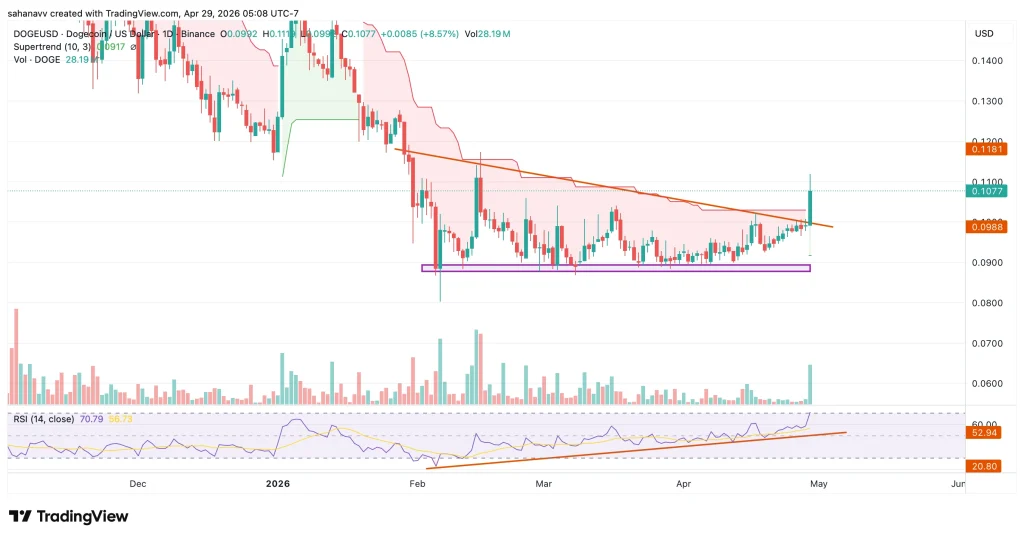
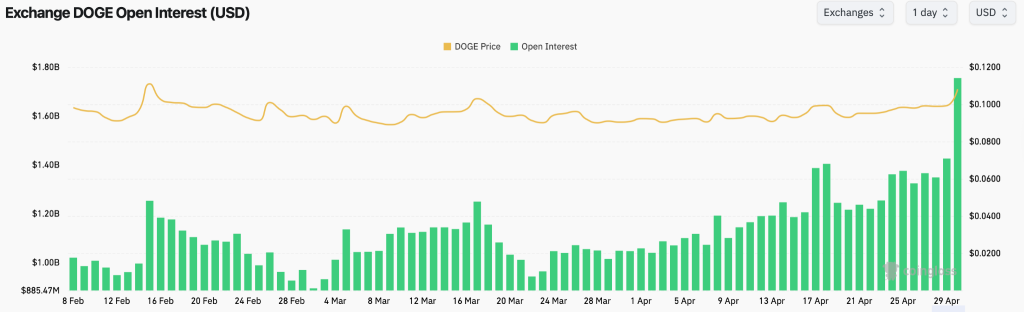


 Today, Jerome Powell will deliver his last FOMC press conference as Federal Reserve Chair.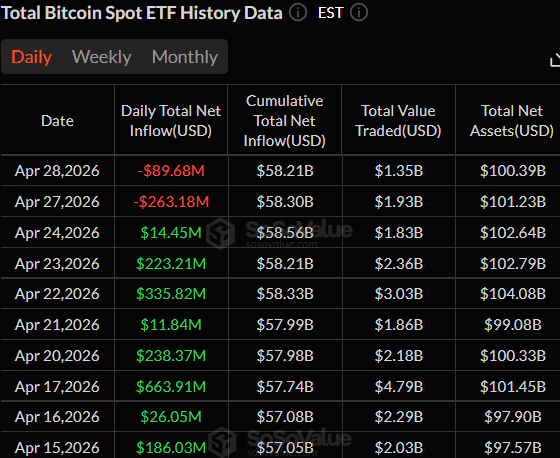
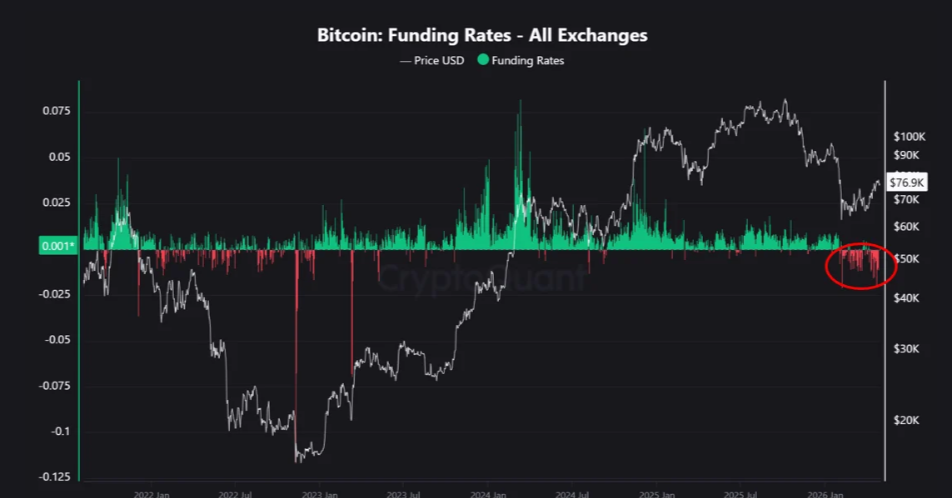
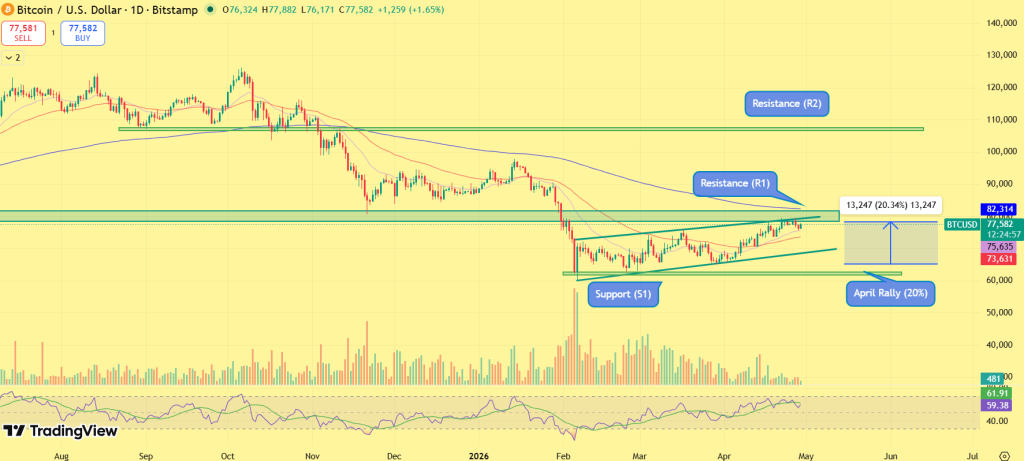
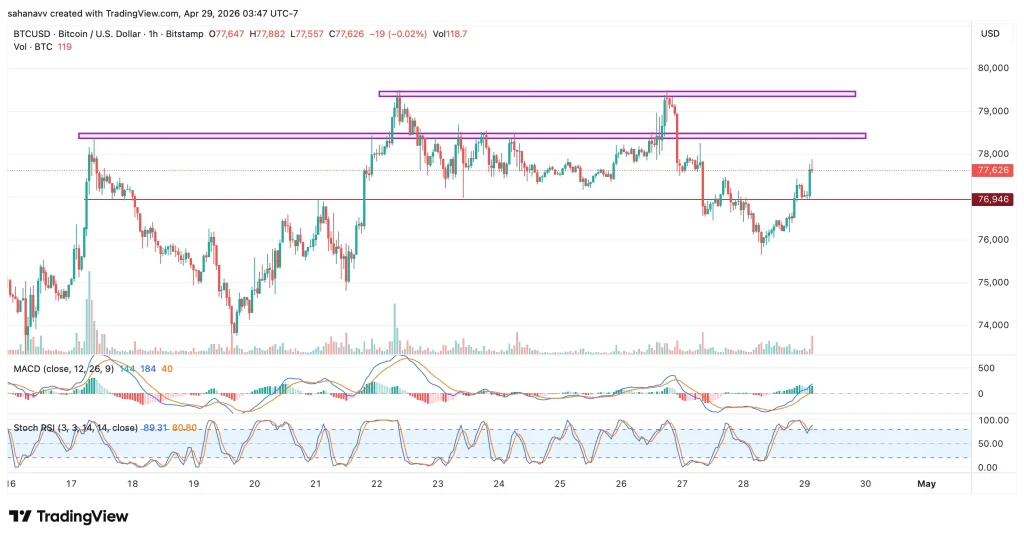

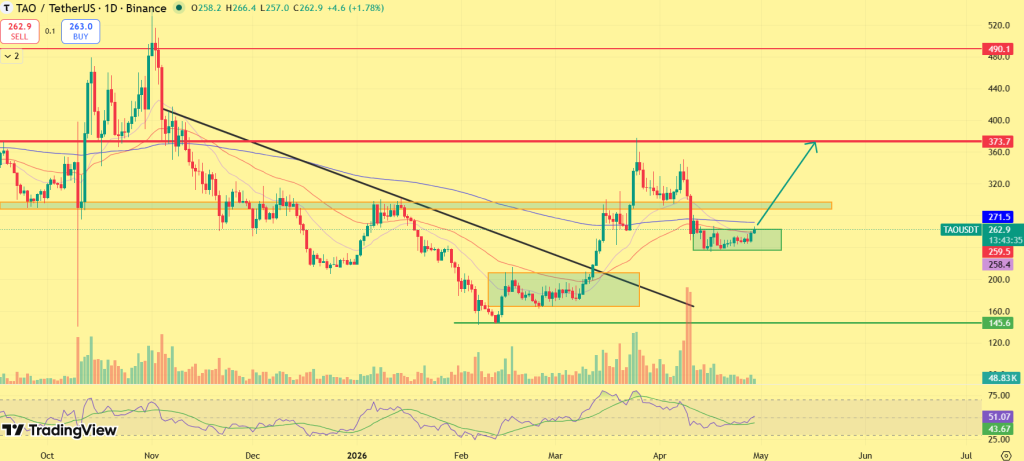

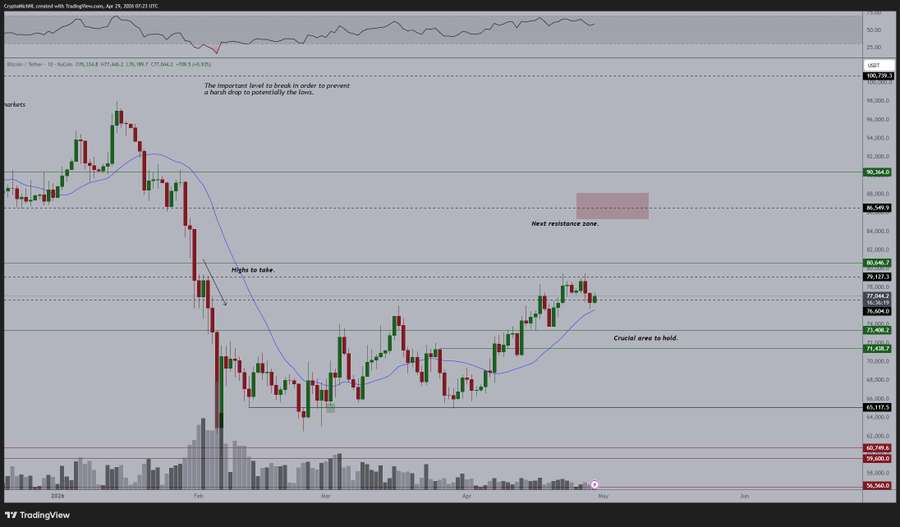
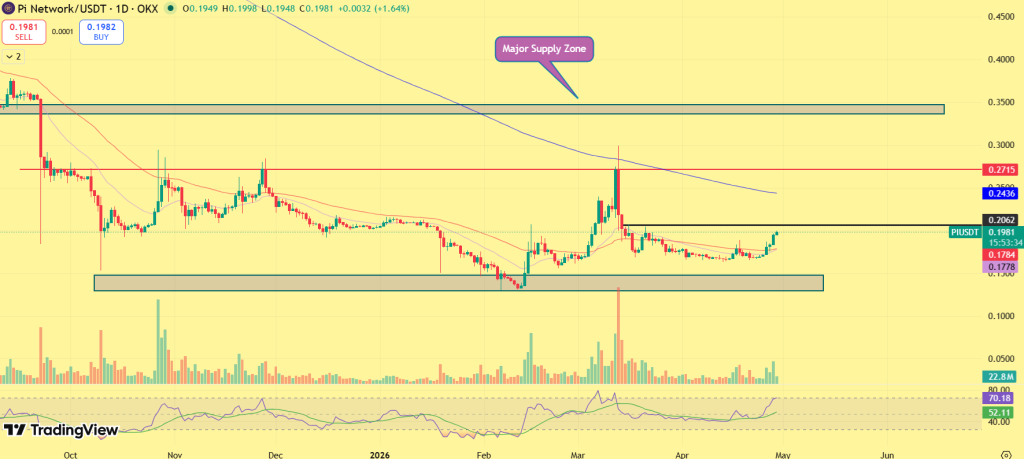







 0.50%
0.50%
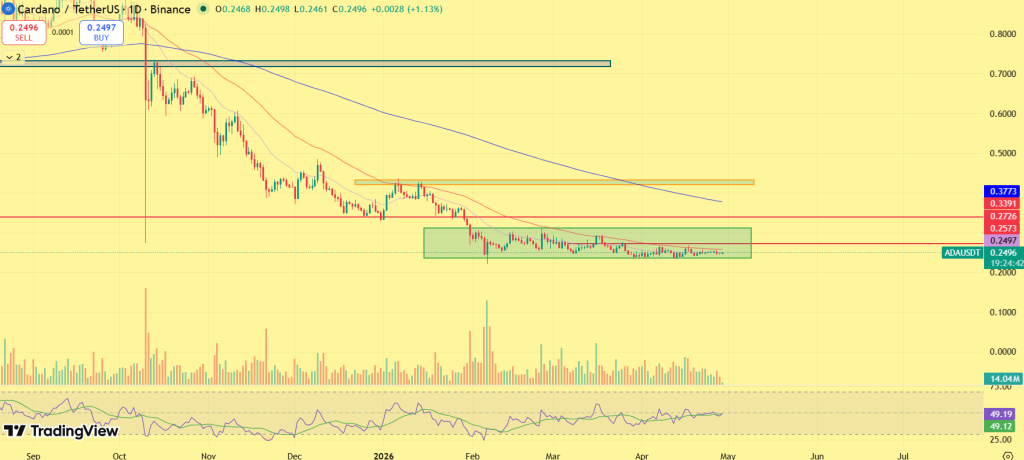
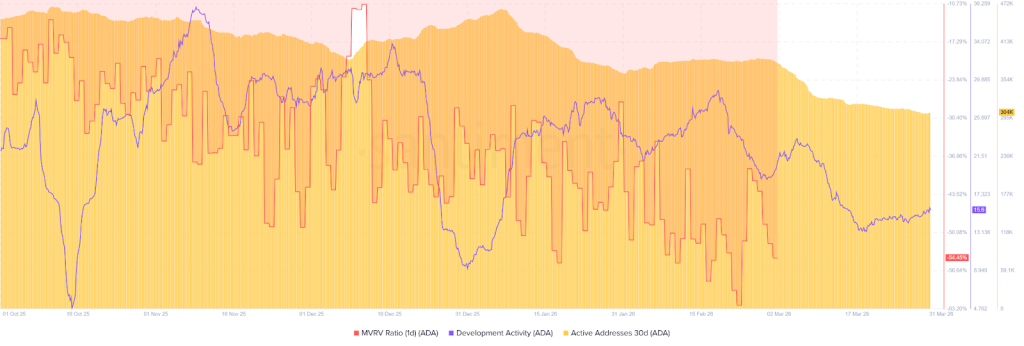
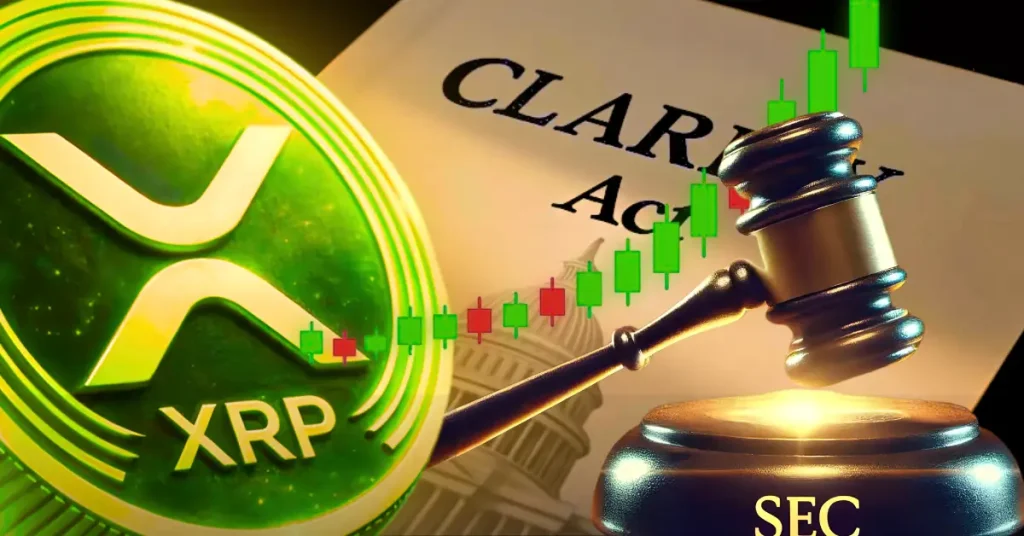

 (@RipBullWinkle)


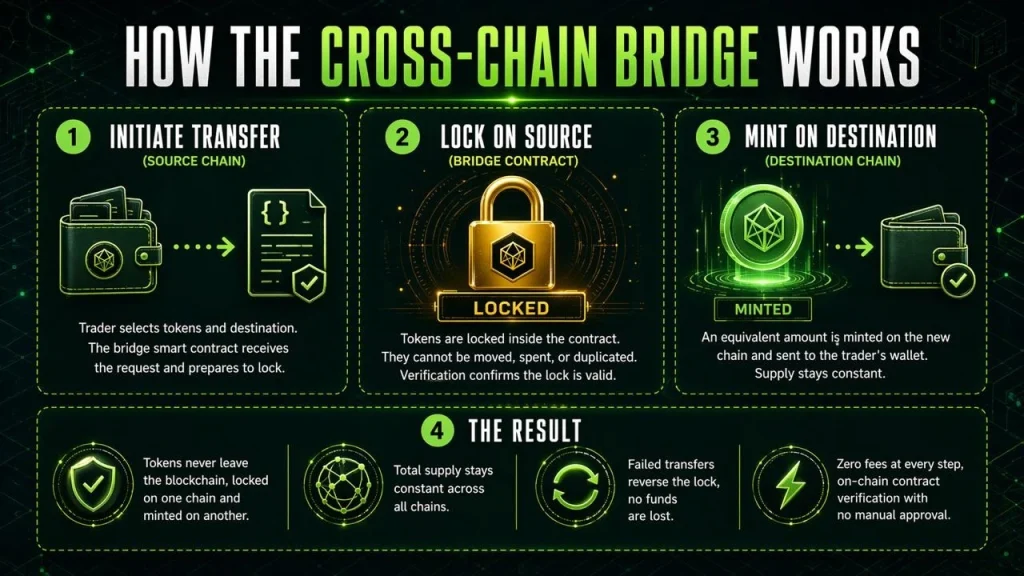
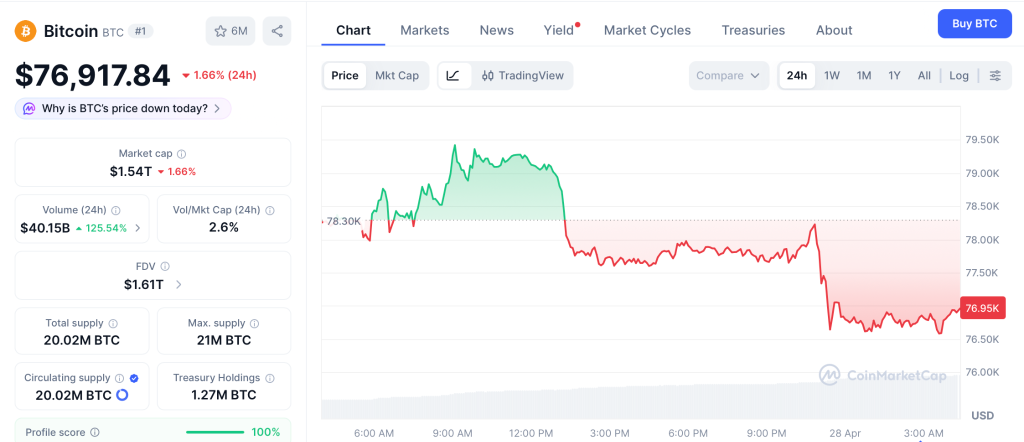

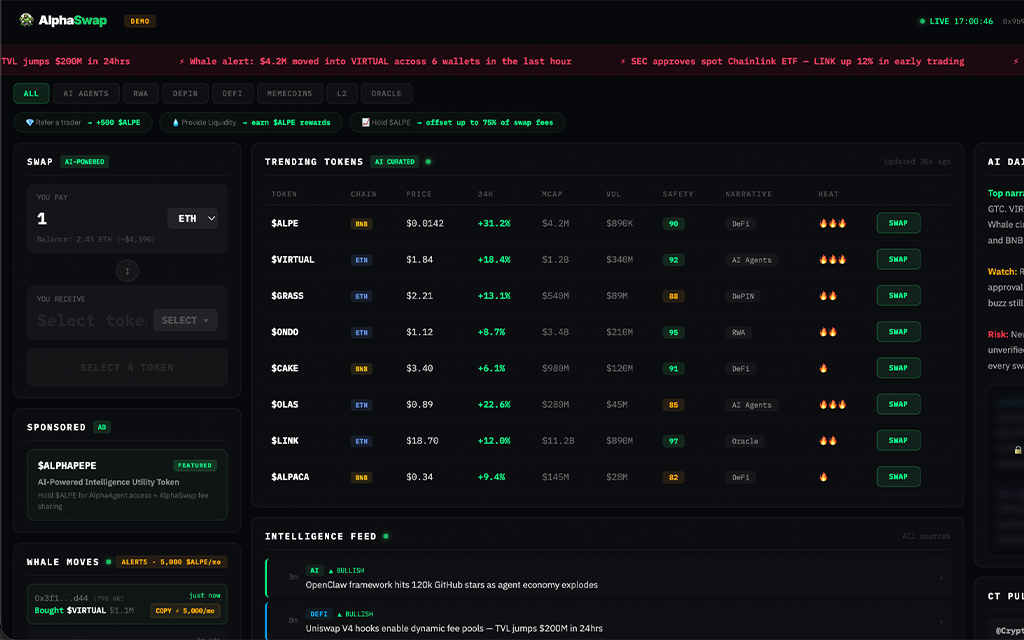
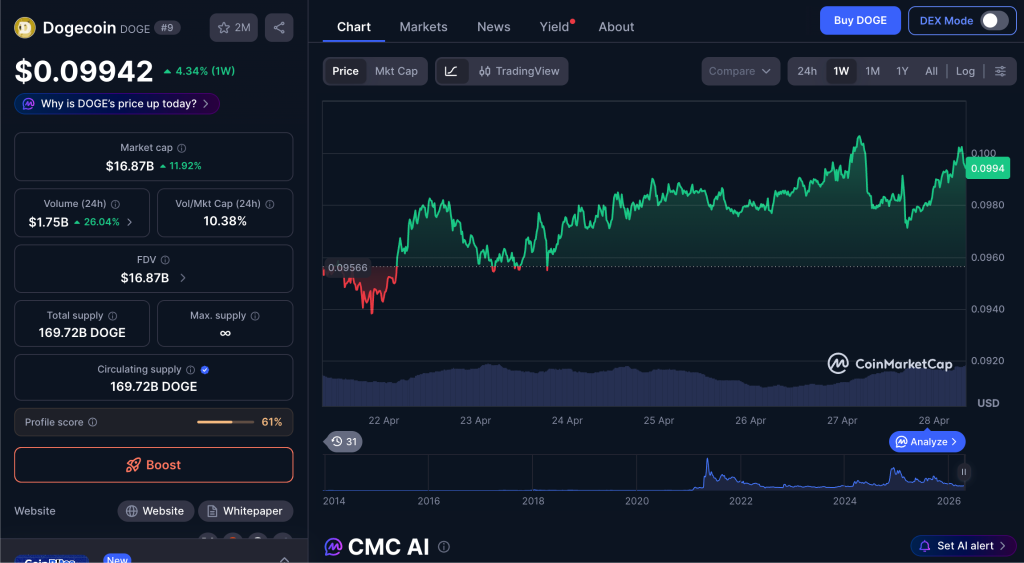

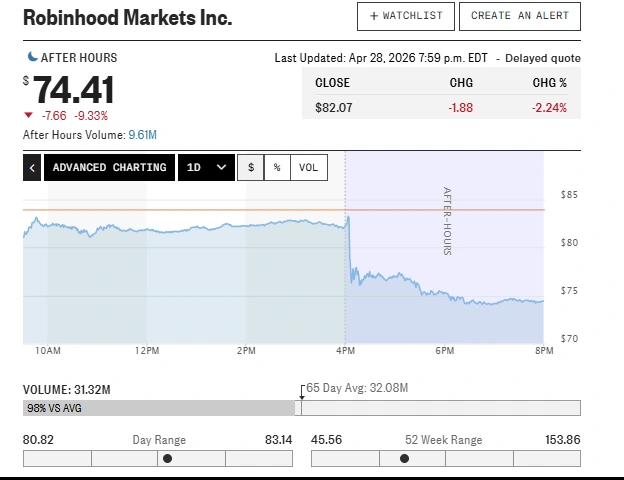


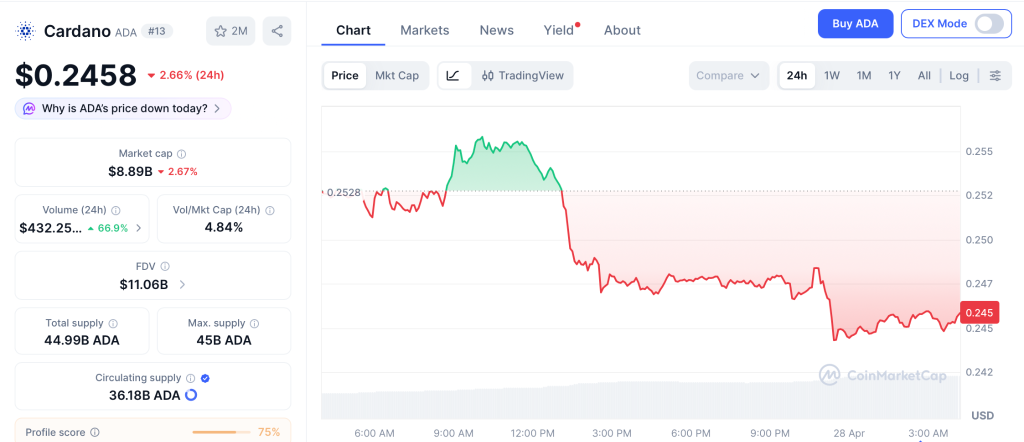


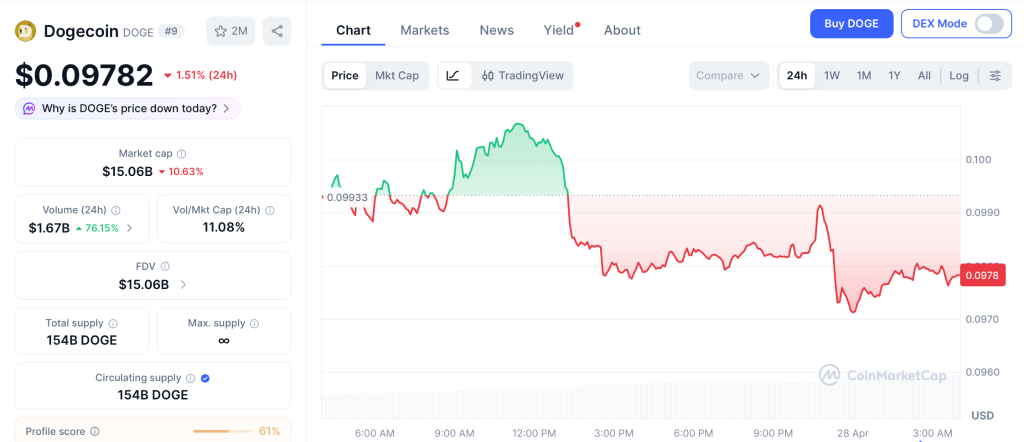

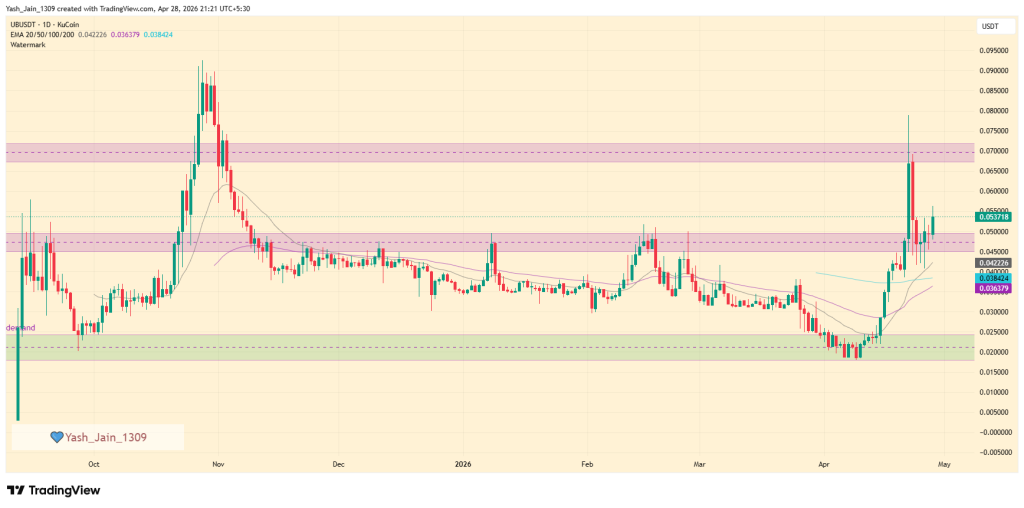
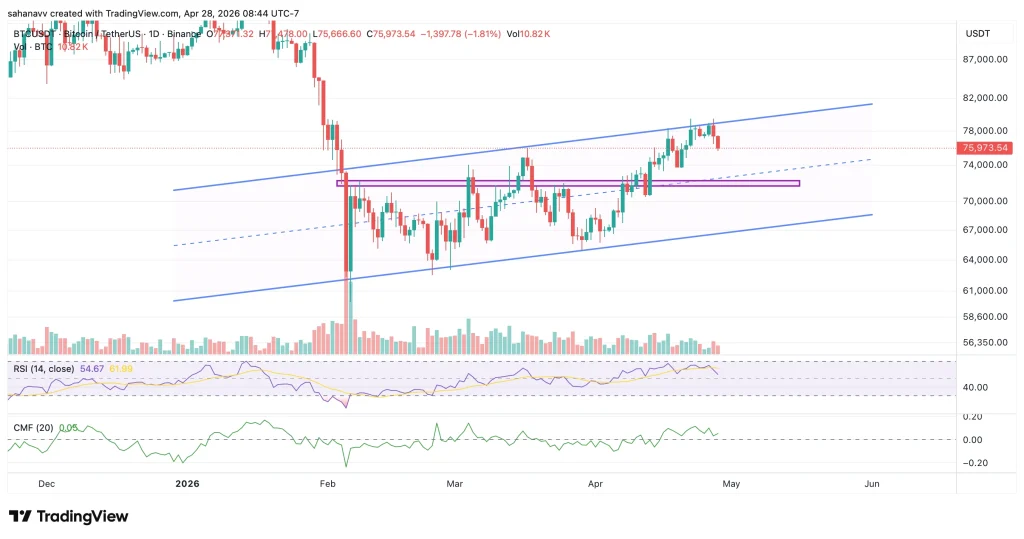
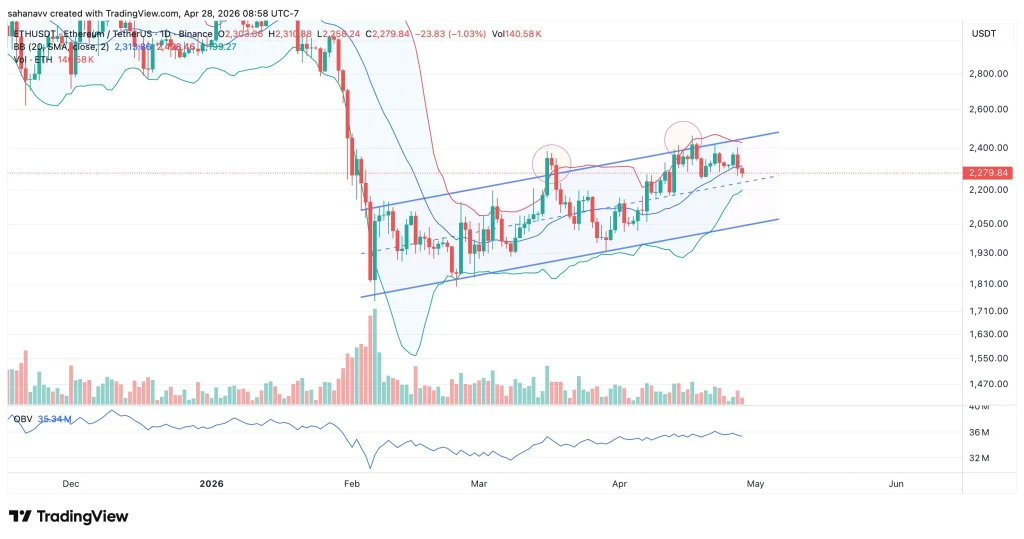

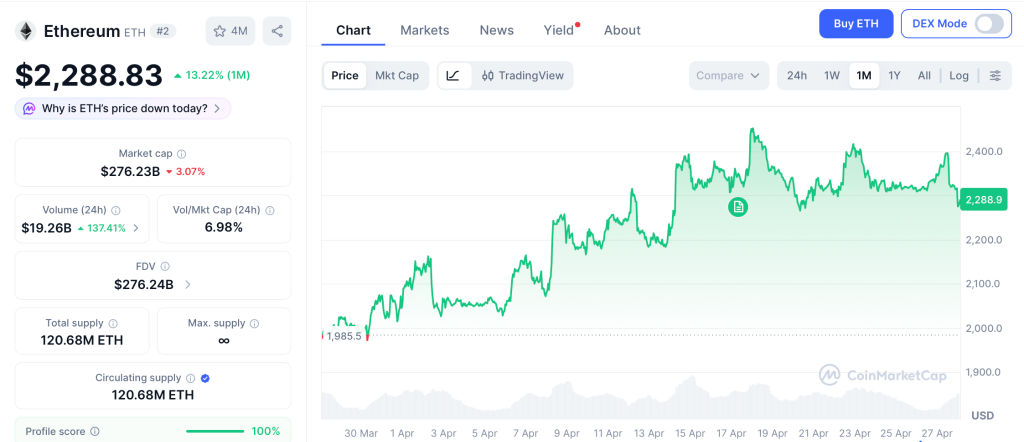
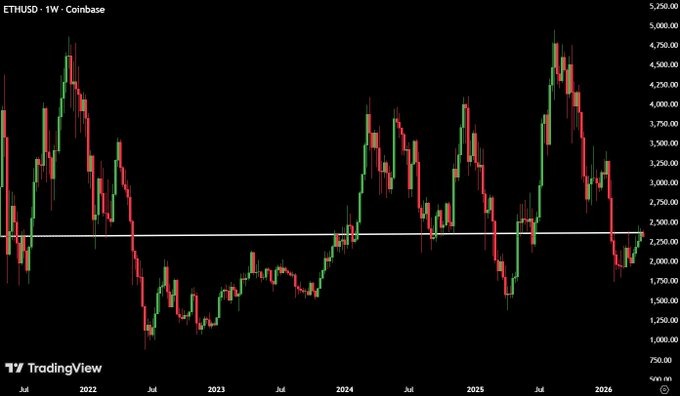
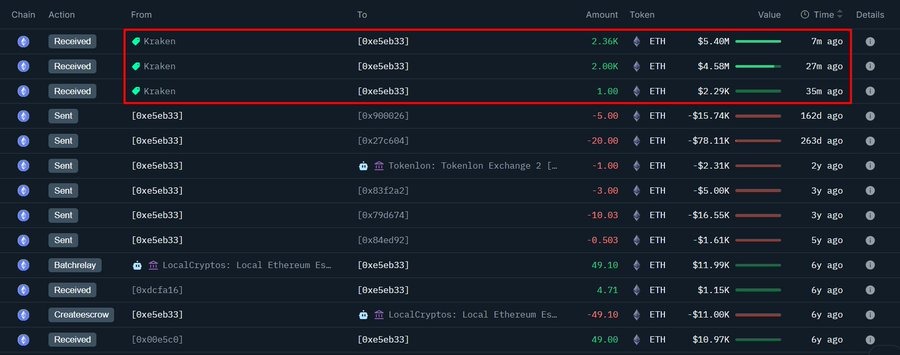

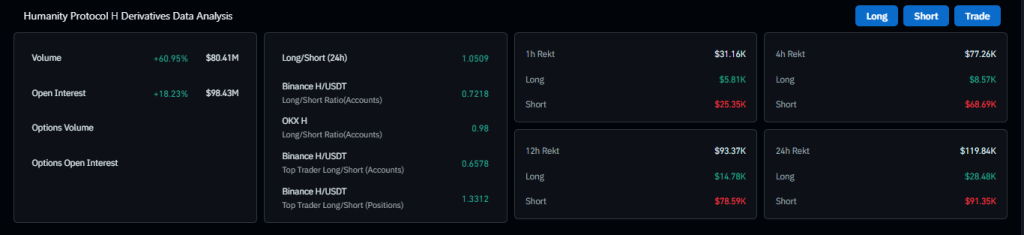

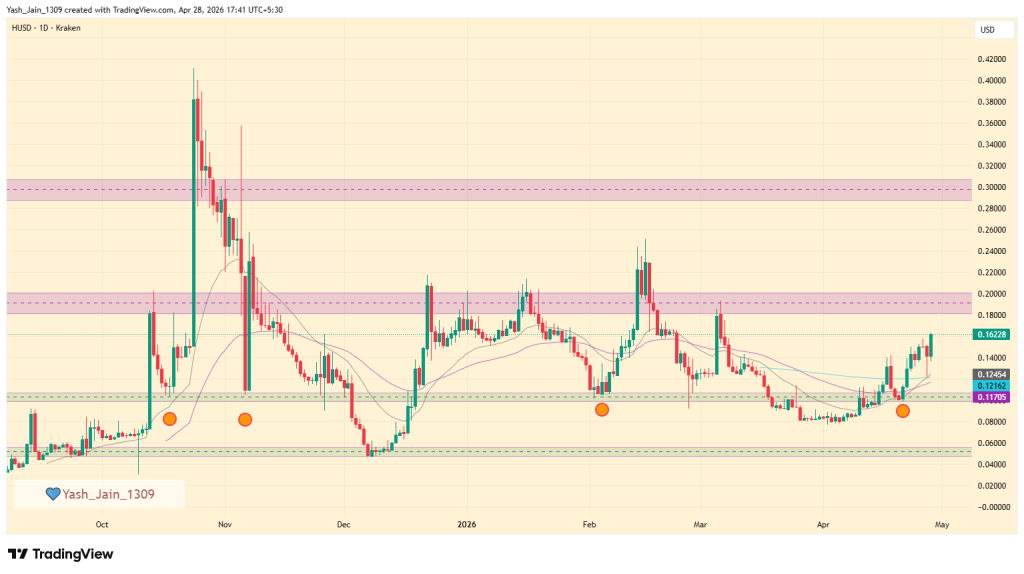

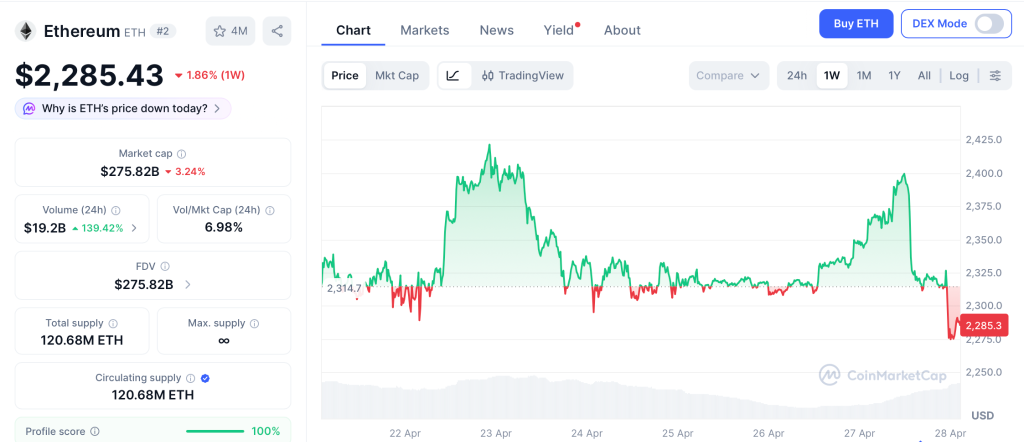
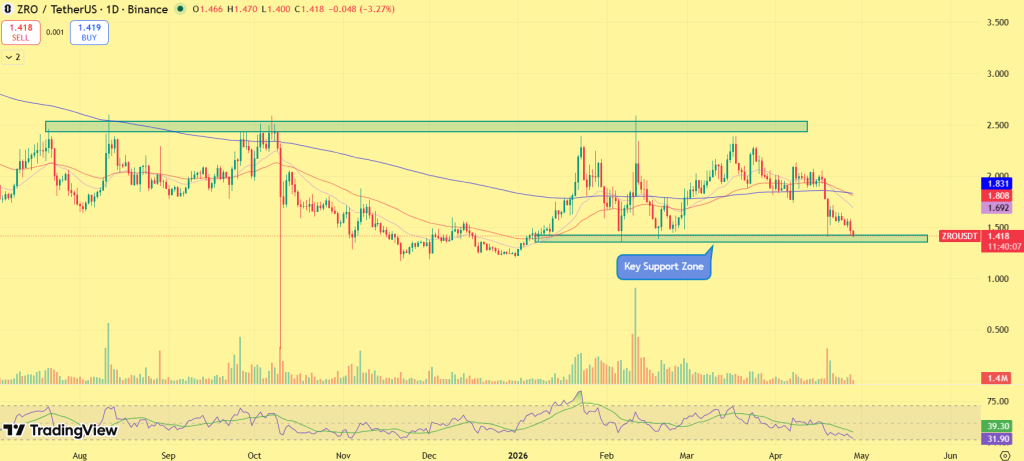



 -0.92%