Reading view

Doctor: Google’s AI Overview made up career-damaging claims about me

Doctor in front of AI Overview

UK doctor and YouTuber Dr. Ed Hope said Google’s AI falsely claimed he was suspended by the General Medical Council earlier this year for selling sick notes. Hope called the allegation completely made up and warned that it could seriously damage his career.

Google’s AI generated a detailed narrative accusing Hope of professional misconduct, despite no investigations, complaints, or sanctions in his 10-year medical career, he said in a new video.

Why we care. Google’s AI-generated answers appear to now be presenting false, career-damaging claims about real people as fact. That raises serious questions about defamation, accountability, and whether AI-generated statements fall outside Section 230 protections.

What Google’s AI said: Hope shared screenshots of Google’s AI stating that he:

  • Was suspended by the medical council in mid-2025.
  • Profited from selling sick notes.
  • Exploited patients for personal gain.
  • Faced professional discipline following online fame.

‘None of this is true.’ Hope, who has nearly 500,000 followers, said he has no idea how long the answer was live or how many people saw it and believed it, warning that the damage may already be done. After discovering the AI Overview, he replicated the hallucination and found more false claims, including accusations that he misled insurers and stole content.

  • “This is just about the most serious allegation you can get as a doctor. You basically aren’t fit to practice medicine,” he said.

How did this happen? Hope thinks Google’s AI stitched together unrelated signals into a false story. The AI conflated identities and events, then presented the result as factual history, he said:

  • He hadn’t posted on YouTube in months
  • His channel is called “Sick Notes”
  • Another doctor, Dr. Asif Munaf, was involved in a real sick-note scandal

Why this is more from “just a mistake.” The AI didn’t hedge, speculate, or ask questions, Hope said. It asserted false claims as settled fact. Hope said that matters because:

  • AI answers are framed as authoritative.
  • Users can’t see sources, bias, or motivation.
  • There’s no clear path for correction or accountability.
  • The claims targeted a private individual, not a public controversy.

The big legal question. Is Google’s AI committing defamation? Or is Google protected by Section 230, which typically shields platforms from liability for third-party content? Courts may ultimately decide. For now, some legal experts have argued that:

  • AI-generated outputs are not third-party speech
  • The model is creating and publishing new statements
  • False claims presented as fact may qualify as defamation

Resolved? Searching for [what happened to dr. ed hope sick notes] showed this Google AI Overview:

Dr. Ed Hope (of the “Dr. Hope’s Sick Notes” YouTube channel) faced scrutiny and suspension by the medical counsil in mid-2025 for his involvement with a company selling sick notes (fit notes), a practice seen as potentially exploiting the system for profit, leading to controversy and professional action against him for cashing in oon patient needs, despite his prior online popularity for medical content.

What happened:

  • Suspension: In June 2025, Dr. Ed Hope was suspended by the medical council (likely the GMC in the UK).
  • Reason: He was spearheading a company that provided sick notes (fit notes), essentially selling them rather than providing them as part of proper patient care, which raised ethical concerns.
  • Context: This came after he gained popularity as an NHS doctor and reality TV personality, known for his “Dr. Hope’s Sick Notes” channel where he’d break down medical scenes in media.

The Controversy:

  • Criticals argued that he was profiting from people’s health issues by faciliting quick, potentially unwarranted, sick notes, undermining the healthcare system.
  • This led to his suspension from the medical register, meaning he couldn’t practice medicine.

In essence, Dr. Ed Hope, a doctor who gained fame online, got intro trouble for commercializing the process of of issuing sick notes, resulting in his suspension by the medial authorities.

Searching for [what happened to dr. ed hope sick notes] now shows a different answer (at least for me):

“Dr. Ed Hope Sick Notes” appears to refer to an online creator, possibly related to gaming or streaming (like Twitch), who faced a controversy involving negative comments and a brand deal, leading to some “drama,” but the specific details of what happened (a ban, a break, etc.) aren’t fully clear from the search snippets, though a YouTube video suggests a reconciliation or a resolution after the “drama”. The name also sounds like it could relate to the medical soap opera Doctors, but that show was canceled in 2024, not by an “Ed Hope” character. 

Here’s a breakdown of possibilities:

  • Online Creator: A YouTube video titled “Making Up With Dr. Ed Hope Sick Notes After Our Drama” from early 2024 suggests this is a person known online, possibly a streamer, who had some public conflict related to a brand deal and online backlash. 
  • Fictional Character: While it sounds like a character name, the major medical drama Doctors ended, so it’s likely not a current, major plotline from that show, notes Deadline. 

To find out exactly what happened, you might need to search for “Dr. Ed Hope Sick Notes drama” or look for their social media (Twitch, YouTube) to see recent posts. 

The video. “SUSPENDED” as a DOCTOR – Thanks Google!

💾

A UK doctor and YouTuber says Google AI falsely accused him of selling sick notes and being suspended. Is Google AI protected by Section 230?

The latest jobs in search marketing

Search marketing jobs

Looking to take the next step in your search marketing career?

Below, you will find the latest SEO, PPC, and digital marketing jobs at brands and agencies. We also include positions from previous weeks that are still open.

Newest SEO Jobs

(Provided to Search Engine Land by SEOjobs.com)

  • Benefits: Flexible schedule Paid time off Training & development Our Mission At Beyond Karate, we provide physical training beyond martial arts. Our programs include a variety of activities geared towards families, teens and children, including individuals with special needs. Our goal is to support and empower growth, self-esteem and teach the tools required to live […]
  • Job Description Ready to join one of the fastest-growing (and coolest!) marketing agencies in the country? You’ve arrived at the right place! We are: A team of proven growth experts, creatives, and data scientists who help unlock rapid growth for some of the world’s most iconic brands. We’ve successfully grown many companies from hundreds to […]
  • Job Description We offer a hybrid work environment. Most US-based positions can also be performed remotely (any exceptions will be noted in the Minimum Qualifications below.) Our Mission: To actively connect people to their next great opportunity. Who We Are: ZipRecruiter is a leading online employment marketplace. Powered by AI-driven smart matching technology, the company […]
  • Location: Remote (Must overlap 4+ hours with US EST) Type: Full-Time Read This Before You Apply (The “Anti-Waiting” Rule) Most SEOs are “Auditors.” They find a problem, write a PDF, and wait. We are not looking for an Auditor. We are looking for a Builder. To us, the worst words in the English language are “I […]
  • Job Description Status: Full-Time Company: Evening Entertainment Group Location: Scottsdale, Arizona About Evening Entertainment Group: Evening Entertainment Group (EEG) is a hospitality leader behind some of the most recognized dining and nightlife destinations in Arizona, Texas, and Tennessee including Jelly Roll’s Goodnight Nashville, Bottled Blonde, Backyard, HiFi, and more. Our portfolio continues to expand, and […]
  • This role is a full-time temporary contract position. Employment is limited to the contract period specified and may be ended earlier or extended based on business needs. This position does not imply or guarantee future full-time employment. Duration: 6 months Start Date: January Location: New York or Los Angeles Position: SEO Specialist, Streaming The Marketing […]
  • Skale is an organic growth agency helping top SaaS and tech brands build predictable, scalable revenue through organic channels. We’ve grown by focusing on what actually drives pipeline: strategy, execution, and results, not vanity metrics. We don’t just do SEO – we build organic revenue engines for ambitious B2B tech and SaaS brands. That now includes traditional […]
  • Why Terakeet? At Terakeet, we’re comfortable with the uncomfortable. We live in the future of marketing and are revolutionizing how the world’s most valuable brands connect and build trust with their audiences. We are experts who deliver exceptional outcomes. Together, we win. What We Do Terakeet controls online reputation and visibility for global brands. We […]
  • This is a part time contract position (approximately 10–20 hours per week). Elevated Third is a global B2B digital agency and Drupal expert. We design, build, and optimize complex digital experiences that drive measurable growth for enterprise and mid market clients. We are looking for an experienced SEO Specialist to support analytics, reporting, and insight […]
  • Role details: Full-time • Remote • Long-term • $60,000/year MarketDing.ai is an AI-powered marketing company focused on search growth for healthcare, SaaS, and ecommerce brands. We’re building a serious agency with serious standards. We don’t do cookie-cutter SEO, we don’t chase vanity rankings, and we don’t touch spam. We build clean, scalable search systems that […]

Newest PPC and paid media jobs

(Provided to Search Engine Land by PPCjobs.com)

  • Job Description Kargo unites the world’s leading brands, retailers and premium publishers across screens using innovative technology and advanced creative ad formats. At Kargo, we’re all about bringing together the best of the best with a spark of creativity to stand out from the crowd. The same is true for our employees. What makes Kargo […]
  • Job Description Salary: $90,000-$110,000 Annually, DOE About AmeriPharma AmeriPharma is a rapidly growing healthcare company where you will have the opportunity to contribute to our joint success on a daily basis. We value new ideas, creativity, and productivity. We like people who are passionate about their roles and people who like to grow and change […]
  • Job Description DIRECTOR OF PAID SEARCH Here’s the 411: The Director of Paid Search will lead a team of paid search specialists, providing guidance, mentorship, and performance management to maximize campaign success. Collaboration with cross-functional teams such as analytics, creative, and product marketing is essential to integrate paid search efforts with broader marketing strategies. Ultimately, […]
  • Job Description As a Senior Campaign Manager at AdParlor, you’ll be the bridge between strategy and execution—owning end-to-end campaign execution, optimization, and performance storytelling across channels like Meta, TikTok, Pinterest, and Snapchat. You’ll collaborate closely with the account management team and platform partners to bring campaigns to life that exceed client goals and drive innovation […]
  • Job Description Salary: $55,000-$65,000 Paid Search Specialist Media Works is looking for a Paid Search Specialist with 1-3 years experience. Media Works is a highly respected, fast paced, and energetic integrated marketing agency located in Baltimore, MD. The agency has been in the business for over 35 years, serving a diverse client list. Position Summary: […]

Other roles you may be interested in

Sr. Performance Marketing Manager, RobertHalf (Hybrid, Miami, FL)

  • Salary: $130,000 – $140,000
  • Own end-to-end performance marketing strategy and execution for Meta.
  • Manage PPC execution through an external agency for Google Ads.

Senior PPC Manager / Lead Gen Onward Search (Onsite Los Angeles, CA)

  • Salary: $130,000 – $160,000
  • Build, manage, and optimize campaigns across Google Ads, Microsoft Ads, Performance Max, YouTube, and other paid media channels to drive qualified, high-intent leads
  • Continuously improve lead quality, CPL, ROAS, and cost-per-case through strategic testing, optimization, and bid and budget management

Director, Paid Search, Omnicom Media Group (Hybrid, New York City Metropolitan Area)

  • Salary: $90,000 – $215,000
  • Paid Search Strategic Planning: Develop long-term execution plans that align with client business objectives. Implement these plans and track key performance indicators (KPIs) to measure success.
  • Paid Search Data Analysis: Demonstrate analytical skills to extract meaningful insights from data. Relate these insights back to client business goals and identify actionable recommendations.

Senior PPC Manager / Lead Gen (on-site, downtown LA, direct hire), Onward Search (Los Angeles, CA)

  • Salary: $130,000 – $160,000
  • Proven track record improving CPL, ROAS, cost-per-case, lead quality, and full-funnel performance
  • Expert-level proficiency with Google Ads, Performance Max, YouTube Ads, Microsoft Ads, smart bidding strategies, and audience segmentation

Senior Manager, SEO, Kennison & Associates (Hybrid, Boston, MA)

  • Salary: $150,000 – $180,000
  • You’ll own high-visibility SEO and AI initiatives, architect strategies that drive explosive organic and social visibility, and push the boundaries of what’s possible with search-powered performance.
  • Every day, you’ll experiment, analyze, and optimize-elevating rankings, boosting conversions across the customer journey, and delivering insights that influence decisions at the highest level.

Lead Generation Manager, Mondo (Hybrid, Charlotte, NC)

  • Salary: $70,000 – $100,000
  • Analyze the total addressable market (TAM) of current customers to identify whitespace and expansion opportunities.
  • Build and execute multi-touch nurture campaigns across Salesforce and HubSpot (email, sequences, newsletters, content, AI-generated assets, etc.).

Search Engine Optimization Manager, NoGood (Remote)

  • Salary: £80,000 – $100,000
  • Act as the primary strategic lead for a portfolio of enterprise and scale-up clients.
  • Build and execute GEO/AEO strategies that maximize brand visibility across LLMs and AI search surfaces.

Search Engine Optimization Manager, Pump.co (San Francisco)

  • Salary: $115,000 – $130,000
  • Develop and execute a comprehensive SEO strategy to drive organic traffic and increase visibility in key AI and cloud cost-related search results.
  • Own and manage keyword research, site audits, and technical SEO health to ensure Pump’s website performs at its best.

Senior Content Manager, TrustedTech (Irvine, CA)

  • Salary: $110,000 – $130,000
  • Develop and manage a content strategy aligned with business and brand goals across blog, web, email, paid media, and social channels.
  • Create and edit compelling copy that supports demand generation and sales enablement programs.

Senior Growth Product Manager, Reku (Remote)

  • Salary: $180,000 – $220,000
  • Lead our Product-Led Growth (PLG) strategy and roadmap
  • Build viral loops, retention drivers, and onboarding magic
  • Run experiments, crunch funnels, and live in the data

Note: We update this post weekly. So make sure to bookmark this page and check back.

What 15 years in enterprise SEO taught me about people, power, and progress

Enterprise SEO lessons

After more than 15 years in enterprise SEO across six major corporations, I’ve seen more careers derailed by internal politics than by Google updates. 

Many SEOs moving from agency to in-house assume that staying current with algorithms and improving rankings will be enough. 

In reality, the harder work is navigating the organization and the people within it.

Agency life rewards deliverables and reports. Corporate life runs on relationships, repeatable processes, the right platforms, and visible performance – all carrying equal weight with technical skill. 

The following lessons reflect where SEOs can grow, avoid common pitfalls, and build sustainable careers inside complex enterprises.

Job searching

Landing an SEO role in the corporate world today is less about chasing postings and more about positioning yourself as the obvious choice before you ever apply. 

Hiring teams look for someone who connects well, presents a clear professional narrative, and shows measurable impact.

Don’t apply online

Most resumes submitted through job portals get filtered out by automated systems before a recruiter ever sees them. 

Job boards like LinkedIn can be research tools. 

When you find a role that fits, look for someone inside the company who can refer you – internal referrals dramatically increase your chances of an interview.

If you’re early in your career, build relationships long before you need them. 

Find mentors through ADPList, attend local meetups, and join SEO and AI workshops or virtual conferences. 

These touchpoints often matter more than submitting formal applications. In today’s market, your network is your application.

Optimize for you

You’re an SEO – use the same skills you apply to websites on your own professional presence. 

Start by choosing two “primary keywords” for your career: a job title and an industry. 

If you already have experience in a specific vertical, lean into it.

If you don’t, pick an industry you genuinely understand or care about so you can speak to its audience and problems with credibility.

Use LinkedIn as a search engine. Include your soft skills, technical strengths, marketing competencies, and the industry terms hiring managers are scanning for. 

Keep unrelated hobbies off your profile unless they support the roles you want. 

If you wouldn’t include “yoga enthusiast” on a landing page targeting enterprise SaaS buyers, it shouldn’t be on your LinkedIn unless your goal is to work for a yoga brand.

And learn to talk about yourself clearly. Many SEOs are introverted or default to giving full credit to the team. That’s admirable in the workplace, but interviews require precision about what you led, influenced, or delivered. You can stay humble while still being direct.

Make sure all your touchpoints – resume, LinkedIn, portfolio, GitHub if relevant, personal site – align. 

Recruiters and hiring managers will check multiple sources. 

Consistency helps them see your strengths quickly and positions you as someone who understands how to present a unified brand.

The SEO resume of 2026

Resumes today need to be concise, scannable, and impact-driven. 

One page is ideal unless you have 10+ years of experience or leadership roles that warrant a second page. 

Lead with outcomes instead of responsibilities: 

  • Growth percentages.
  • Traffic lifts.
  • Rankings that mattered. 
  • Core Web Vitals improvements.
  • Structured data implementations.
  • Migrations you guided without losses.

Use action verbs that convey ownership – led, optimized, increased, launched – and tailor each bullet to the role you’re applying for. 

Hiring managers want to see how your experience connects to their specific challenges, whether that’s:

  • Scaling content.
  • Improving site performance.
  • Fixing crawl issues at scale.
  • Shaping cross-functional SEO strategy.

List the tools that matter for enterprise SEO, but keep the list purposeful. 

A handful of relevant platforms – Google Search Console, Screaming Frog, Semrush, Botify, BrightEdge – shows breadth without turning your resume into an acronym block.

Your summary should point forward. Highlight your:

  • Cross-functional skills.
  • Comfort with enterprise complexity.
  • Ability to adapt to search evolution, including AI discovery and LLM-driven surfaces. 

Make it clear that you think beyond rankings – that you understand SEO’s role in product, content, and business outcomes.

Formatting still matters. Use white space, short bullets, and metric-first phrasing so your biggest wins stand out instantly. 

Save the file as your full name. Little details help you look polished in a crowded field.

Leave out:

  • Objectives: They waste space a summary can use better.
  • Home address: No longer needed.
  • First-person language: Resumes are marketing documents, not narratives.
  • Irrelevant hobbies or side interests – unless they directly support your industry target.

Get to know it all

To build a long-term career in SEO, you have to become a student of how everything connects. 

Search isn’t just algorithms or rankings – it’s the intersection of people, technology, and business. 

You don’t need to master every discipline, but you do need to understand how they influence one another: 

  • How content shapes user experience.
  • How technical health enables discovery.
  • How every decision ties back to business outcomes.

For instance:

  • People: Build partnerships with product, engineering, marketing, and analytics. SEO only works when teams align around shared goals.
  • Process: Create structure that scales. Clear workflows and documentation reduce confusion and keep priorities moving.
  • Platforms: Use tools that support crawling, automation, and performance tracking. Strong data visibility improves decisions and communication.
  • Performance: Tie your work to impact – conversions, visibility, and revenue, not just rankings or traffic.

You move from executor to strategist when you connect these pillars. That’s when SEO becomes more than optimization – it becomes influence.

Dig deeper: Enterprise SEO is built to bleed – Here’s how to build it right

Career defining

A career isn’t shaped only by what you know – it’s shaped by how you grow. 

In corporate SEO, growth comes from navigating people, priorities, and pace as much as mastering algorithms. 

These lessons reflect the choices that determine whether your career moves forward or stalls:

  • When to move on.
  • When to speak or listen.
  • How to make your impact visible in environments where results alone aren’t always enough.

Do not overstay

Growth often happens when you change environments, not when you stay in one too long. 

After a few years in the same company, it’s easy to get typecast as “the SEO person” instead of a strategic partner. 

Organizations anchor you to the role they hired you for, even as your skills expand. 

Moving every one to three years exposes you to new leadership styles, challenges, and technologies – all of which sharpen your instincts and broaden your range. 

For SEOs, each transition teaches you what actually drives growth and how to earn credibility quickly by aligning teams and delivering impact.

No need to respond

Not every meeting needs your voice. 

Early in my career, I believed credibility came from speaking first and often. I later learned that listening is one of the strongest leadership skills. 

It reveals what drives decisions, who holds influence, and where priorities truly sit. 

For SEOs, understanding the room before jumping in often leads to sharper, more relevant recommendations – and they’re harder for stakeholders to dismiss because you’re grounding them in what the team already values.

Speak up when it matters

The opposite of constant talking isn’t silence – it’s strategy. 

Knowing when to speak is an underrated professional skill, especially in large organizations where timing and tone matter as much as insight. 

A well-placed comment that bridges teams, clarifies a decision, or protects performance can shift the entire conversation. 

Speak with intention, not frequency, and your influence will grow even when your airtime doesn’t.

Surface your success

Results only matter if the right people see them. 

Many SEOs assume that hard work will naturally lead to recognition, but visibility is a skill. 

Frame your wins in terms leaders care about – revenue impact, efficiency gains, customer experience improvements. 

Bring them to leadership reviews, all-hands meetings, and retrospectives so others understand how SEO supports bigger goals. 

Build relationships with people who can advocate for you when opportunities arise. Influence isn’t just about execution – it’s about making your impact legible and memorable.

Weekly and monthly updates

Keep a running log of your work, conversations, and metrics. 

I block time every Friday to summarize the week across three areas: meeting outcomes, task updates, and wins. 

Some managers want these updates – others don’t. 

Either way, they help you track progress and build a record you can reference later.

Tools can help – I’ve used GitHub Issues, simple .txt files, and, more recently, a Chat Agent that compiles my notes into summaries. 

These logs save hours when someone asks about a past decision or when you’re updating your resume for a job search. 

Whether you share them or keep them for yourself, they create clarity and evidence of your contributions over time.

Manage your time

Meetings can quickly overtake your day. 

The most effective SEOs protect time for analysis, writing, and strategic thinking – the work that actually moves projects forward. 

Block dedicated focus time, decline meetings where your presence isn’t essential, and suggest asynchronous updates when appropriate. 

Protecting your time isn’t selfish. It prevents burnout and keeps you delivering work that matters.

Leave the past behind

It’s natural to reference past employers, but constant comparison can make you seem resistant to new ideas or unaware of context. 

Every organization has its own culture, pace, and priorities. 

Share relevant frameworks when they help, but adapt to the environment you’re in. 

Your credibility grows when you focus on what works here – not on what worked there.

Dig deeper: The top 5 strategic SEO mistakes enterprises make (and how to avoid them)

Get the newsletter search marketers rely on.


Working with others

No SEO operates in isolation. 

In enterprise environments, success depends on engineers who make optimizations possible, analysts who surface insights, and product managers who balance priorities. 

Navigating these relationships requires empathy, patience, and strategy. 

Often, your ability to guide discussions, document decisions, and build trust matters more than technical skill. 

When you collaborate with intention, SEO becomes less about convincing others to care and more about creating shared ownership of the outcome.

Guide through questions

Some of the most effective leadership moments come from asking the right questions rather than supplying the answer. 

Many of my biggest wins happened when I helped stakeholders arrive at the solution themselves. 

When people believe they’ve discovered the path forward, they take greater ownership and champion the outcome. 

This is especially powerful in SEO, where teams may be hesitant to adopt recommendations. 

Asking questions shifts conversations from resistance to curiosity and reframes SEO as a shared opportunity instead of an external directive. 

Influence grows when collaboration feels like discovery, not pressure.

Document everything

In large organizations, memory fades quickly. 

Document ideas, decisions, experiments, and notable conversations so you have a clear record when questions resurface months later. 

Documentation turns “I think” into “I know,” strengthening your credibility and protecting your work. 

Whether you keep notes in shared documents, project tools, or automation-assisted summaries, the goal is the same – create a defensible trail of how decisions were made and what impact followed. 

When leadership asks about traffic shifts or delayed recommendations, your written history becomes both insight and insurance.

Trust carefully

Collaboration matters, but discernment protects your momentum. 

Not everyone who agrees in a meeting is invested in follow-through. 

Politics, shifting priorities, or competing metrics often influence behavior more than logic. 

Learn who reliably delivers and who disappears when accountability is needed. 

For SEOs, true allies in engineering, product, or analytics can make or break execution. 

Align with those who follow through and stay cautious around those who view SEO as competition. 

Protect your credibility by choosing collaboration with intention, not assumption.

Respect cross-team partners

The engineers, analysts, IT admins, and product managers beside you often carry projects across the finish line. 

Early in my career, I made the mistake of treating these partners as support rather than as collaborators. Their expertise is what turns strategy into action. 

Treat them as equals who share ownership of outcomes. Involve them early, respect their constraints, and acknowledge their contributions. 

When partners feel valued, they become advocates – raising SEO needs in rooms you may not be in. 

The strongest SEO wins aren’t solo efforts; they come from relationships built on mutual respect and shared momentum.

Dig deeper: The design thinking approach to enterprise SEO

Mental well-being

Sustaining a long-term SEO career requires more than technical skill – it requires balance, boundaries, and emotional resilience. 

Constant algorithm changes, shifting priorities, and cross-team dependencies can drain you if you don’t protect your energy. 

Mental well-being isn’t a luxury – it’s a strategy for longevity. 

When you manage your mindset with the same discipline you apply to a site audit, you gain clarity, patience, and perspective – all qualities that make you more effective.

Take your PTO

Early in my career, I worried rankings would collapse the moment I took time off. 

They never did – but my judgment did when exhaustion set in. 

Burnout distorts perspective, makes you reactive to data, and limits strategic thinking. 

Rest isn’t indulgence, it’s maintenance. 

Search is a long game measured in quarters, not days. 

A week offline is recoverable. Burnout is not. 

Protect your energy with the same discipline you protect a site’s uptime.

Save compliments

Much of SEO happens behind the scenes, and visibility doesn’t always follow impact. When someone praises your work, save it. 

Short notes from peers, partners, or managers become valuable artifacts during promotion cycles or job searches. 

Collecting this feedback isn’t about ego – it’s about building equity and giving yourself a factual record of how you support the business.

Positive goes a long way

Every team has someone whose burnout becomes contagious. Don’t become that person. 

Positivity doesn’t mean ignoring problems – it means creating space for solutions. 

I once put a direct report on a performance improvement plan after his frustration began affecting morale. 

After delivering the notice, I took him to lunch for an honest, empathetic conversation. That moment shifted everything. 

His attitude improved, he worked his way off the PIP, and he later became a director at another company. 

Compassion doesn’t replace accountability, but it makes growth possible. Leadership is as much about tone as it is about tactics.

Buffer your estimates

In corporate life, meetings multiply faster than progress. Dependencies shift. 

Priorities change without warning. Build a cushion into your timelines. If you think something will take a week, plan for 10 days. 

For SEOs, many delays sit outside your control – engineering queues, content operations bottlenecks, competing releases. 

A buffer protects your credibility and keeps expectations grounded. Underpromise and overdeliver isn’t cliché – it’s survival.

Detach emotionally

Leadership skepticism about SEO is rarely personal. It’s usually about budgets, bandwidth, or competing bets. 

Early in my career, I saw every pushback as a critique of my competence. 

Over time, I learned it was part of the negotiation process. 

When an initiative is deprioritized, it doesn’t mean your expertise has lost value – it means resources moved elsewhere. 

Anchor conversations in business impact, not identity. Influence lasts longer when driven by logic rather than frustration.

Avoid gossip and SEO fights

There was a time when I wasted energy debating SEO theories or venting about internal politics. 

It felt good in the moment but changed nothing. My credibility grew the day I stopped trying to win arguments and started aiming for outcomes. 

When disagreements arise, document your position, present the data clearly, and move on. 

Rising above gossip doesn’t mean disengagement – it means choosing professionalism over noise.

Keep perspective

SEO isn’t emergency medicine, though corporate urgency can make it feel that way. 

Most “crises” come from impatience with the slow, cumulative nature of search. Daily fluctuations rarely matter when the trendline is healthy. 

Remind stakeholders – and yourself – that meaningful growth takes time. 

When pressure for overnight results rises, stay grounded. The long game always wins.

Work isn’t life

Work can challenge and fulfill you, but it shouldn’t define you. 

The most effective professionals invest in relationships and interests outside the company. 

Detaching your identity from your job doesn’t weaken your ambition – it stabilizes it. 

When your sense of worth isn’t tied to the next quarterly metric, you lead with more confidence and less fear. 

Success becomes sustainable when life stays bigger than work.

Dig deeper: SEO’s future isn’t content. It’s governance

From optimizer to organizational catalyst

Fifteen years in corporate SEO have taught me that technical skill is only half the job. 

The other half is navigating people, priorities, and perspective. 

Algorithms will evolve, tools will change, and org charts will shift, but your ability to adapt, communicate, and lead determines how far you go. 

Success in SEO isn’t about chasing every update or proving you’re the smartest person in the room. 

It’s about building trust, creating clarity, and sustaining momentum through both wins and setbacks.

The most impactful SEOs aren’t just tacticians. 

They’re translators, connecting data to business strategy, ideas to execution, and people to purpose. 

When you recognize that your influence extends beyond rankings, you move from contributor to catalyst. 

SEO may begin with optimization, but the real work is shaping how organizations think, act, and grow. That’s the craft worth mastering.

What Black Friday reveals about how LLMs understand ecommerce

Black Friday ecommerce AI

Every Black Friday reveals how consumers search, compare, and decide. This year added something new: a real-world test of how AI models interpret commerce under true demand.

So we ran a structured test across major LLMs and analyzed 10,000 responses. The goal was simple: to see how these systems form their internal view of the retail landscape and which signals shape the answers they generate.

As we reviewed the dataset, a clear pattern emerged: Black Friday acts as a natural stress test for AI-driven discovery.

The sheer volume of queries, the range of categories, and the speed of shifting consumer attention expose the sources, structures, and behavioral tendencies that shape how LLMs reason about products, retailers, and intent.

The results offer a preview of how AI search is evolving – and how the broader commerce ecosystem will feel the impact.

TLDR; 

  1. LLMs overwhelmingly rely on a small cluster of external domains with YouTube, big-box retailers, and U.S. review media dominating the landscape.
  2. Generalist retailers win decisively, capturing nearly half of all retail mentions and becoming the “default funnel” LLMs use to answer shopping questions.
  3. Social and UGC sources surge during Black Friday, growing +8.1%, while classic retail and media sites lose share.
  4. Off-page signals matter as much as on-page signals: Reddit, YouTube, Amazon, and Consumer Reports collectively shape the “External Data Sources” LLMs use to compare and recommend products.
  5. Structured comparison content is disproportionately influential, far more than brand-owned assets.
  6. LLMs behave differently not only from Google, but from each other, with each Gemini, OpenAI, and Perplexity producing different formats, lengths, and reasoning patterns.

LLMs don’t look at the commerce ecosystem like search

In traditional search, the funnel starts with a query and ends with a ranked list of results, often dressed up with shopping carousels, popular products, and other curated touches. In AI search, the funnel flips.

The model begins with its internal map of the world – a compressed web of relationships, sources, and signals – and then builds an answer. In shopping, an LLM’s goal is to deliver a purposeful response, not a shopping experience.

When we reviewed the top 50 most-cited domains across 10,000 LLM responses – spanning deals, reviews, comparisons, and product recommendations – the distribution was far from neutral:

  • YouTube: 1,509 citations
  • Best Buy: 950
  • Walmart: 885
  • Target: 477
  • TechRadar: 355
  • RTings: 342
  • Consumer Reports: 325

This cluster shapes much of the commercial “knowledge” LLMs draw from. It leans toward large retailers, widely cited media outlets, and platforms built around comparisons or reviews. Together, these sources create a collection of resources that lets models deliver direct answers across any vertical, product type, or consumer need.

How LLM behavior shifts before and during Black Friday

In our analysis of 10,000 responses, we compared the week leading up to Black Friday with the event itself. Before Black Friday, responses were anchored in planning behavior:

  • Retail and brand domains: 59.6%
  • Media: 23.4%
  • Social and UGC: 17%

Users prepare by comparing, researching, and setting baselines – and LLMs mirror that behavior. Even prompts that included “Black Friday” tended to produce expectation-setting responses:

  • “Isnt it too soon to start searching for black friday?”
  • “Althought it is before black friday…”

When the event began, the mix shifted fast. Social and UGC content jumped to 25.1%, gaining more than eight points of share, while retail and media both edged down.

What sources LLMs prioritize during shopping seasons

This shows a shift inside the models: as uncertainty rises and pricing and inventory move around, LLMs lean harder on human discussion and experiential content.

This pattern mirrors consumer behavior but also shows how heavily models rely on conversation-driven sources for real-time decision cues.

The weight of off-page content

One of the clearest insights from the dataset is the weight third-party domains have on AI reasoning. Today’s LLMs win by absorbing as much human interest in products as possible. The players that supply huge volumes of consumer insight, reviews, product demos, sentiment, and structured data end up shaping how models reason and decide.

In an Athena analysis of external influence in retail and ecommerce (October 2025), five domains appeared consistently as the dominant off-page signals LLMs rely on:

  1. Reddit: 34%
  2. YouTube: 19.5%
  3. Amazon: 15.5%
  4. Business Insider: 9.2%
  5. Walmart: 8.9%
leading off-page sources in LLM shopping responses

Each one shapes a different part of the model’s decision-making process. Across all of them, we see the same pattern: LLMs depend on content that captures real human interest, organizes consumer-driven options, and reduces uncertainty with verifiable data.

Today, LLMs are building a fortress of product data that will unlock the most powerful shopping-discovery tool consumers have ever used.

The role of brand-owned content

Although third-party domains dominated, brand websites still played a measurable role in the dataset. They create a crucial path forward for any consumer brand that wants to win in AI discovery.

A site’s internal structure plays a major role in how a model interprets a brand.

According to the Athena retail & ecommerce dataset:

  • The homepage accounted for 40%
  • Blog content accounted for 10.6%
  • Product pages accounted for 10.5%

The homepage serves as the brand’s primary identity layer. It sets the tone, defines the positioning, and gives the model the simplest semantic signals to read.

Blogs and product pages play a different role. They provide definitional clarity, long-tail context, and the factual detail the model needs.

Brands that rely on promotional copy, unclear hierarchy, or thin product content leave major visibility on the table.

Today, LLMs use brand content to validate and deliver direct responses—but only when off-page content and data justify the brand’s place in the conversation.

Which retailers rise to the top

Across the entire dataset, a few categories dominated model responses.

Retailer share in LLM responses during Black Friday

Generalist retailers own the conversation with 48% share

Walmart, Target, and Best Buy capture nearly half of all retail citations. Their breadth, familiarity, and content depth put them at the center of LLM commerce reasoning.

Electronics specialists own 23% of the share

Best Buy leads by a wide margin, followed by Newegg and Micro Center. Tech-focused queries consistently push models toward these sources – though the surge in electronics during Black Friday likely amplifies this effect.

Other verticals remain far behind

Fashion, beauty, pharmacy, home, DIY, and pets each take smaller slices, even with strong category leaders in play. The imbalance reflects the sheer volume of content generalist retailers produce compared with niche verticals.

Different platforms, different behaviors

As we reviewed the platforms, another pattern stood out: major LLMs don’t just answer differently – they think differently. Each one has its own rhythm, preferred structures, and style of presenting commercial information.

Gemini produces the most expansive outputs. Its responses averaged 606 words, with 97.6% using lists and 92.3% using headings.

The model often delivers essay-length explanations, averaging nearly 28 list items per response. It treats Black Friday as if every query deserves a full article.

OpenAI sits in the middle. It averaged 401 words per response, with 99% including lists and nearly two-thirds using headings. Its lists were even denser, averaging 32 items.

Perplexity moves in a different direction. Its typical response was 288 words, with far fewer list items – about 9.7 on average – and fewer headings overall. It favors short, direct summaries. Even with complex topics, it compresses the information into something that reads like an executive brief.

These differences reveal distinct retrieval and reasoning strategies that shape how each model interprets brands, categories, and commercial intent.

As AI-driven discovery takes a larger role in search, teams will need to think about visibility in terms that respect each platform’s internal logic – not in broad strokes.

What are the implications for retailers and brands?

The data points to a clear direction: AI search is becoming its own ecosystem – shaped by familiar SEO inputs, source quality, content structure, and off-page signals, all interpreted by language models to deliver a clear response.

If your content isn’t clearly labeled, semantically structured, and reinforced across the web, it risks becoming invisible to AI systems surfacing answers or product suggestions.

In this new environment, retailers and brands must rethink how they communicate—not just on their own domains, but across the entire digital discovery surface.

On-page actions that matter

  • Build semantically coherent homepages that reflect brand, product categories, and relevance to core queries. LLMs prefer clarity over cleverness.
  • Strengthen product pages with structured, factual content, clear specifications, variant descriptors, and Q&A content that mirrors user research intent.
  • Create educational content clusters tied to core product themes. These serve as reusable “content scaffolding” for AI models looking to contextualize a product.

Off-page actions that matter

  • Foster review ecosystems and discussion forums (e.g., Reddit, Quora, third-party review sites). These validate trust signals LLMs associate with product quality.
  • Ensure regular presence in comparison and recommendation-driven media (e.g., “best of” lists, product roundups, influencer explainers).
  • Invest in rich media that features the value of products, especially YouTube and TikTok. Video content trains LLMs on product use cases, sentiment, and experiential value.
  • If you participate in marketplaces, ensure product data is accurate and indexable. Structured product availability data from Amazon, Walmart, Etsy, and others is increasingly being ingested into AI discovery pipelines.

Why this matters now: The shopping research shift in ChatGPT

OpenAI’s recent Shopping Research announcement further raises the stakes. Through ChatGPT, OpenAI is now capturing real-time consumer research behavior – preferences for price, color, variants, availability, and more – to build what is essentially a user-trained targeting engine for commerce.

ChatGPT Shopping Research

This isn’t just AI learning about your product. It’s AI learning how users shop.

For decades, retailers like Amazon, eBay, and Walmart have invested in complex taxonomies and refinement layers for discovery: variant mapping, filters, availability rules, and more. Now OpenAI is absorbing that logic not just by crawling, but by interacting with users and watching intent unfold.

For brands and retailers, this marks a shift from passive search optimization to active AI participation. If your content isn’t present, structured, or referenced in these systems, it won’t show up in the AI’s answers – or in the consumer’s journey.

The future of retail will be AI transactions

Black Friday gave us more than a look at which products sold best or which deals consumers chased. It revealed how LLMs behave under real-world demand—how they reason, reference, and prioritize across a fragmented content landscape.

The answers they generated were structured, confident, and increasingly influential, yet incomplete – shaped more by the sources they see most often than by the full depth of what brands offer.

What we’re witnessing isn’t just a new search interface. It’s the emergence of a new shopping architecture – one where agentic commerce replaces traditional browsing, and AI models, not consumers, drive product discovery, comparison, and even transaction.

OpenAI’s launch of Shopping Research makes this shift unmistakable. These models are no longer just language tools; they’re intent engines, trained not only on product data but on how people actually shop. Price sensitivity, variant preferences, real-time availability – all of it is now part of how AI interprets and responds to commercial intent.

For brands, the implications are significant. Visibility will no longer hinge on SEO rankings or ad placements alone. It will come from structured, semantically rich content, surfaced across the right off-page ecosystems, and aligned with the reasoning patterns of each major model.

We call this AI-native visibility – a discipline built to ensure brands aren’t just discoverable, but understood by the systems shaping modern commerce.

Black Friday was only the stress test. The real transformation is still ahead. And it won’t be won by who ranks, but by who is represented – accurately, contextually, and everywhere AI shows up.

How breakthrough TV ads trigger search spikes and conversions

Breakthrough TV ads

When a TV commercial makes people feel something, it doesn’t just win in the moment – it sparks curiosity, drives searches, and fuels conversions.

That’s why the “Breaking TV Ads Report,” jointly launched by Kinetiq and DAIVID, deserves a spot on every search marketer’s radar.

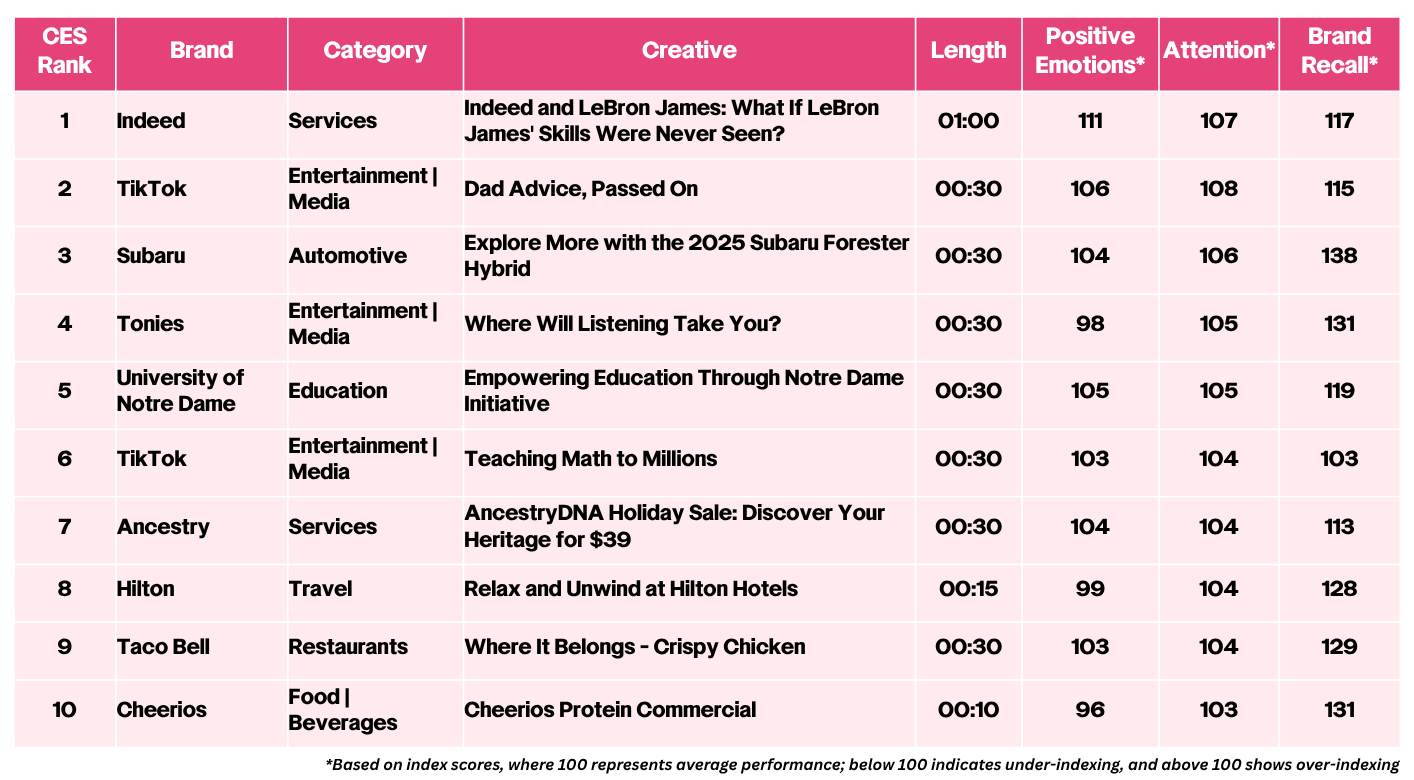
The monthly report ranks the top-performing new TV ads in the U.S., blending Kinetiq’s real-time TV ad detection with DAIVID’s AI-driven creative analytics to uncover which ads broke through, why they resonated, and what brands can learn from their success.

It’s a powerful reminder that search doesn’t start on Google – it starts in the mind.

As Barney Worfolk-Smith, chief growth officer at DAIVID, recently told me in an email:

  • “Search + TV matter – together. TV can increase search volume by up to 60%, and even more in well-coordinated campaigns. AI has already changed, and will continue to change, the TV-to-search relationship, but the principle remains the same: impactful, emotive TV advertising drives all desirable brand outcomes – with search being one of them. It’s also worth noting that search volume itself is a valuable measure of TV ad effectiveness.”

How LeBron James and Indeed captured attention

The first edition of the “Breaking TV Ads Report” highlighted a commercial that checks every emotional and strategic box: Indeed’s “What If LeBron James’ Skills Were Never Seen?”

The ad traces James’s journey from his early life to his work with the LeBron James Family Foundation, connecting it to Indeed’s “skills-first” hiring message. 

It resonated not only because of its star power but because it made viewers feel something authentic.

The ad generated 11% higher intense positive emotion and 7% higher attention than the average U.S. TV ad, per DAIVID’s data. 

It was joined in the top 10 by campaigns from TikTok (twice), Subaru, and Taco Bell, with emotional themes centered on family, mentorship, and belonging.

Breaking TV Ads Report - Top 10

These aren’t just nice stories – they’re search triggers.

When people connect emotionally with a brand message, they’re more likely to act on it – often by turning to Google or YouTube for more information, reviews, or purchase options.

Dig deeper: Brand + performance: The secret to maximizing ad ROI

TV still drives search

Back in 2011, Google introduced the concept of “The Zero Moment of Truth.” 

But the ZMOT stage in the buying journey – when consumers research a product or service online before making a purchase – was the “new” second step. 

The first step remained “stimulus,” and it could be “a TV ad.”

Many search marketers focus on what happens in the second ZMOT stage, because we can measure impressions, clicks, and conversions on mobile and laptop screens. 

And we ignore the stimulus step because it is sucking money out of our marketing budgets.

But several studies over the past decade have shown that the impact of TV advertising extends directly into search behavior:

  • In 2015, a joint study by Google and Nielsen found that TV ads can boost branded search queries by up to 20%, especially within the first few hours after an ad airs.
  • In 2022, Thinkbox discovered that TV advertising in the UK generates the strongest multiplier effect on search, social, and web traffic of any medium.
  • And in 2024, Comscore research found that when TV and digital are coordinated, cross-channel campaigns deliver stronger engagement, with TV ads prompting “second-screen” behavior – audiences searching, scanning QR codes, or engaging on social media in real time.

Put simply: when a campaign captures attention on TV, search demand spikes – often within minutes.

For SEO and PPC professionals, this presents a clear opportunity to anticipate and capitalize on those moments.

How brands have integrated TV and search

Several major brands have already proven that when TV storytelling and search strategy work together, both channels perform better.

Apple: Creating curiosity that fuels search

Apple’s product launches are masterclasses in cross-channel momentum. 

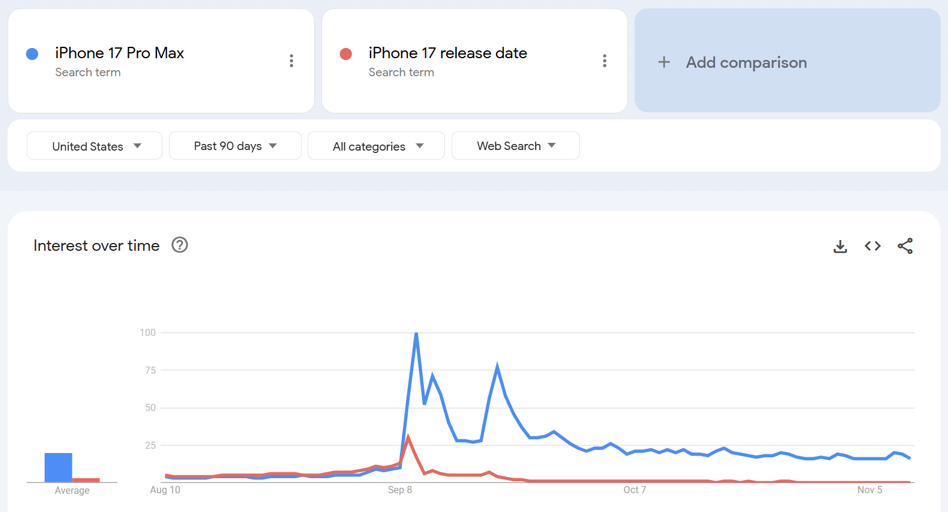
Every time a new iPhone ad airs, search volume for terms like “iPhone 17 Pro Max” or “iPhone 17 release date” skyrockets.

Apple’s branded search traffic increases by up to 40% in the days following a major campaign, according to Semrush.

Google Trends - iPhone-related search terms

Apple intentionally designs its TV creative to generate questions – not answer them – encouraging viewers to seek out more details online. 

That’s where Apple’s search-optimized landing pages, YouTube product videos, and paid search campaigns complete the journey.

Progressive: Connecting humor to searchable characters

Progressive’s long-running “Flo” campaign shows how consistent creative storytelling translates into search intent. 

The insurance brand’s TV spots spark curiosity around characters, slogans, and offers – leading to measurable spikes in branded searches such as “Progressive car insurance” and “Flo from Progressive.”

Google Trends - Progressive Insurance-related search terms

The brand’s media team aligns paid search and display campaigns with national TV flighting schedules, ensuring that when interest peaks, search ads and organic results are ready to capture demand.

Coca-Cola: The shareable, searchable ad

Coca-Cola’s “Share a Coke” campaign is another classic case of TV leading to search. 

The original “Share a Coke” campaign was launched in Australia in 2011 and involved replacing the Coca-Cola logo on bottles with hundreds of popular first names. 

This personalization strategy was a global success, encouraging consumers to find bottles with their names and share them with friends and loved ones, which boosted sales and created emotional connections with the brand.

The latest “Share a Coke” campaign is a global relaunch targeting Gen Z with a focus on digital experiences and authentic, in-person connections. 

It features personalized cans, a digital “Memory Maker” tool for creating shareable videos, and a partnership with McDonald’s. 

Consumers can find names on bottles or use a QR code to customize bottles – a creative hook that’s sent millions to Google searching “custom Coke” or “share a Coke names.”

Google Trends - Coke-related search terms

The campaign’s success wasn’t just creative; it was data-driven. 

By tracking spikes in branded search and social mentions, Coca-Cola refined its targeting and extended the campaign’s life cycle online.

Dig deeper: Hyper-personalization in PPC: Using data to deliver tailored ad experiences

Measuring creative effectiveness with real audience signals

What makes the new “Breaking TV Ads” report particularly valuable is its data-driven framework for measuring creative effectiveness.

Kinetiq’s proprietary ad detection technology identifies every ad that first airs across 210 U.S. DMAs and 15 streaming apps, capturing over a million daily detections. 

DAIVID’s AI then evaluates each ad’s emotional response, attention, and brand recall, creating a creative effectiveness score (CES) – a composite metric that mirrors how audiences actually experience content.

In a media landscape increasingly defined by short attention spans and fragmented screens, this data provides a rare window into why certain stories break through – and how that resonance correlates with downstream behaviors like search and site visits.

As Kinetiq CEO Kevin Kohn put it, the partnership “gives marketers a holistic view of the TV and CTV advertising landscape – not just what aired, but why it resonated.”

That’s exactly the kind of insight performance marketers need to connect the dots between creative resonance and measurable outcomes.

Dig deeper: Your ads are dying: How to spot and stop creative fatigue before it tanks performance

What this means for SEO and PPC strategy

In February 2025, Neal Mohan, the CEO of YouTube, revealed that: 

  • “TV has surpassed mobile and is now the primary device for YouTube viewing in the U.S. (by watch time), and according to Nielsen, YouTube has been #1 in streaming watch time in the U.S. for two years.”

So, search marketers can apply the latest findings from the Breaking TV Ads Report in several ways:

  • Anticipate search spikes: When a high-emotion or celebrity-driven TV ad launches, expect branded searches to rise. Align PPC budgets, ad copy, and keyword targeting around campaign themes and taglines.
  • Optimize for intent moments: TV ads often generate “navigational” queries (brand name) and “informational” ones (product details, offers, or reviews). Ensure that organic content – landing pages, FAQs, and YouTube videos – are optimized to match these queries.
  • Sync search campaigns with TV flighting: Use ad scheduling to mirror TV airtime or streaming rollouts. Research from Nielsen Catalina Solutions shows that coordinated campaigns can deliver up to 60% higher conversion lift compared to siloed efforts.
  • Track branded search as a creative KPI: Branded search volume is one of the most reliable proxies for ad impact. Use tools like Google Trends or Search Console to monitor shifts after major media bursts.
  • Leverage emotional triggers in copy: DAIVID’s data shows that ads evoking strong positive emotions drive higher attention and brand recall. Translate those emotional cues into ad extensions, headlines, and meta descriptions that mirror what audiences feel after seeing the TV spot.

Why the future of performance marketing is cross-channel

Search has long been viewed as a response channel – the final step in a consumer journey. But that view is outdated.

Today’s most successful campaigns use search as a connective tissue between offline inspiration and online action. 

Whether it’s a QR code at the end of a TV ad, a YouTube masthead following a primetime spot, or a Google Shopping ad that captures post-broadcast demand – search is the bridge between storytelling and sales.

As more brands invest in connected TV (CTV) and streaming, the line between “brand” and “performance” marketing will continue to blur. 

Creative effectiveness data helps close that gap – showing which emotional and visual cues are most likely to drive measurable search and conversion behavior.

Ultimately, reports like “Breaking TV Ads” remind us that the most powerful search strategy begins long before the query. 

It begins with attention and emotion, and, increasingly, on the biggest screen in the house.

Dig deeper: How connected TV advertising drives search demand

💾

Breakthrough TV creative continues to spark search demand. Learn what top ads reveal about emotion, attention, and user behavior.

Search Engine Land celebrates its 19th birthday

Search Engine Land turns 19

Search Engine Land turns 19 today.

Nineteen years. Almost two decades of analyzing, explaining, questioning, challenging, obsessing over, and occasionally shaking our heads at whatever Google and the search industry throw our way.

And this past year? The pace of change has made it one of the most transformative since we launched in 2006.

Through all of it, our mission is the same as Day 1: help you make sense of search with clear news, smart analysis, and practical guidance.

Before we look ahead, I want to say thank you — and take a moment to reflect on the past year at Search Engine Land.

Thank you for reading

Seriously, thank you.

Every day, we start with you: what you need to know, what actually matters, and what changes could shape your work today or your strategy six months from now.

We aim to:

  • Focus on the stories that matter – not noise or filler.
  • Deliver news quickly and clearly.
  • Add essential context, expertise, and nuance.
  • Be a reliable resource in an industry that seems to shift by the hour.
  • Help you see where search is headed — even when the path isn’t obvious.

If you haven’t yet, subscribe to our daily newsletter for a curated wrap-up of everything happening in search. It’s still the easiest way to stay informed without feeling overwhelmed.

Thank you to the Search Engine Land team

Search Engine Land has always punched above its weight for one reason: the people.

A small team can do big, meaningful work when everyone is aligned, mission-driven, and a little obsessed with search.

A huge thank-you to:

  • Barry Schwartz. Barry has been covering search for 22 years and still writes with the speed, curiosity, and energy of someone newly in love with the beat. Search would be far less understandable without him.
  • Anu Adegbola. Anu has become essential for helping readers navigate nonstop shifts in paid media, analytics, and platform changes. Her clarity and steadiness shine in every piece.
  • Angel Niñofranco. Angel keeps our Subject Matter Expert program running. Editing, wrangling, scheduling, coaching, coordinating — if you’ve enjoyed our SME articles, you’ve seen Angel’s impact.
  • Kathy Bushman. Kathy makes SMX happen. Her behind-the-scenes work is why our events run smoothly, deliver value, and earn rave reviews year after year.

And to the entire Third Door Media team within Semrush — thank you. Whether or not your name appears here, your work matters and is appreciated.

Top highlights from the past year

In a year defined by uncertainty, it was encouraging to see so many people continue to rely on Search Engine Land as a trusted community resource. And Search Engine Land had a strong 2025.

SMX Advanced returned in person for the first time in 6 years

This was the standout moment of the year. Bringing SMX Advanced back in person after six years felt overdue and incredibly energizing.

Attendance exceeded expectations, sessions were packed, and hallway conversations felt like a reunion of the search marketing community. You could feel how much people missed connecting face-to-face — debating AI’s impact on search, swapping tactics, comparing notes on Google’s latest changes, and simply enjoying each other’s company.

It reaffirmed what we’ve always believed: great things happen when smart marketers share a room. We’re already looking forward to doing it again in Boston, June 3-5.

Defining industry coverage of AI Overviews and the new era of search

This past year brought one of the most dramatic shifts in search since Search Engine Land launched in 2006. Whatever we end up calling this emerging practice, we focused on giving the industry the clarity, context, and reporting it needed.

Readers have told us again and again that Search Engine Land is their go-to source for cutting through the noise during a confusing and often chaotic time. We’re proud that our reporting, explainers, and expert analysis are helping shape the industry’s understanding of where search is headed next.

Subject Matter Expert (SME) program growth

This year brought a surge of new readers and renewed engagement from long-time practitioners. With so many shifts reshaping SEO and PPC – from AI to SERP experiments to advertiser updates – and the continued emergence of GEO, marketers turned to Search Engine Land in record numbers to stay informed.

Our contributors played a significant role in our growth. A huge thank you to all of our excellent SMEs for all the great content and insights you shared in 2025.

Looking ahead: What’s next for Search Engine Land

As we enter our 19th year, our commitment remains unchanged: provide the most trusted, useful coverage of search anywhere.

This year you can expect:

  • A fresh new website design.
  • Continued breaking news coverage across SEO, PPC, AI search, SERP features, and platform changes.
  • Even stronger analysis, guides, and explainers about how search is evolving.
  • SMX programming designed around the realities of AI search.
  • More expert perspectives, data, and clarity in a year that promises even more disruption.

Save the dates:

  • SMX Advanced: June 3-5
  • SMX Next: Nov. 18-19

There’s much more to come – and as always, our goal is to give you the insight and intelligence you need to do your best work.

A brief look back to where it all began

On Dec. 11, 2006, Search Engine Land officially launched with a simple idea: search was becoming not just a tool, but a place. A world. A community. A discipline shaping how people find information and how businesses connect with customers.

Nineteen years later, that world has grown in ways none of us could have imagined. But the core idea still holds:

Search Engine Land is a place to stay informed, to learn, to connect, and to understand the engines driving the modern web.

Thank you for 19 incredible years

On behalf of everyone at Search Engine Land and Semrush, thank you for reading, for sharing our stories, for asking hard questions, for supporting our mission, and for caring so deeply about all things search.

Here’s to the rest of 2025 – and to a successful, healthy, and insightful 2026.

Google December 2025 core update rolling out now

Google released the December 2025 core update today, the company announced.

This is the third core update of 2025 and the fourth major Google algorithm update overall. Earlier this year, Google rolled out the August 2025 spam update, which followed the June 2025 core update and the March 2025 core update.

What Google is saying. Google updated its Search Status Dashboard to state:

  • “Released the December 2025 core update. The rollout may take up to 3 weeks to complete.”

Google added on LinkedIn:

  • “This is a regular update designed to better surface relevant, satisfying content for searchers from all types of sites.”

About core updates. Core updates roll out several times each year. They introduce broad, significant changes to Google’s search algorithms and systems, which is why Google announces them.

Video on this core update. I made this short video a few hours after publishing this story:

What to do if you are hit. Google did not share any new guidance specific to the December 2025 core update. However, in the past, Google has offered advice on what to consider if a core update negatively impacts your site:

  • There aren’t specific actions to take to recover. A negative rankings impact may not signal anything is wrong with your pages.
  • Google offered a list of questions to consider if your site is hit by a core update.
  • Google said you can see some recovery between core updates, but the biggest change would be after another core update.

In short: write helpful content for people and not to rank in search engines.

  • “There’s nothing new or special that creators need to do for this update as long as they’ve been making satisfying content meant for people. For those that might not be ranking as well, we strongly encourage reading our creating helpful, reliable, people-first content help page,” Google said previously.

For more details on Google core updates, you can read Google’s documentation.

Previous core updates. Here’s a timeline and our coverage of recent core updates:

Why we care. With any core update, we often see significant volatility in Google search results and rankings. These updates may improve visibility for your site or your clients’ sites, but some may experience fluctuations or even declines in rankings and organic traffic. We hope this update rewards your efforts and drives strong traffic and conversions.

💾

This was the third core update and fourth confirmed Google update in 2025. The December core update will take up to three weeks to rollout.
❌