As censorship tactics and VPN blocking get ever more sophisticated, NordWhisper gets ready for when the classical VPN protocol won't be enough. NordVPN's CTO explains how.
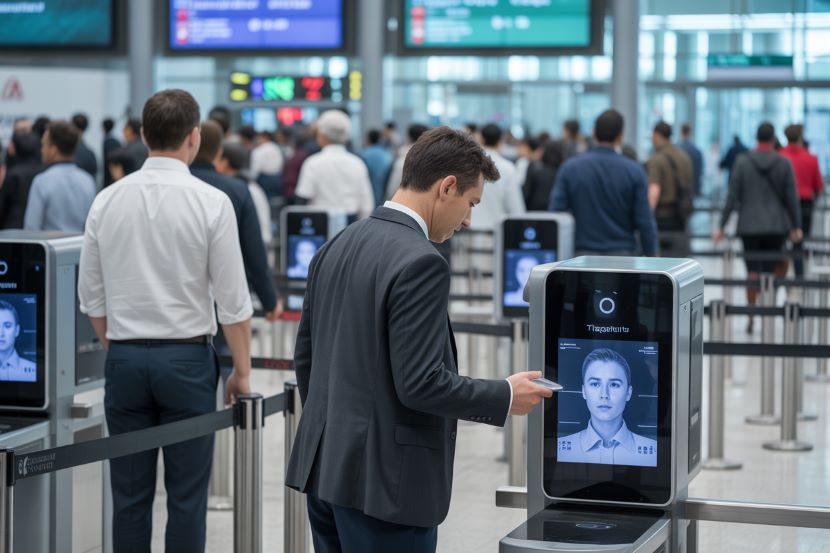
Traveling internationally just got easier and more secure. The U.S. Department of Transportation (DOT) recently unveiled enhancements aimed at improving speed and security at airports, providing global travelers with a smoother experience. These updates are designed to make airport processing quicker while maintaining strict safety standards.
Faster Travel Security Checks
For frequent flyers, the security process can often be the most time-consuming part of the journey. DOT’s new measures introduce faster travel security systems, minimizing wait times at checkpoints. By using modern technology and automated screening tools, travelers can move through airports more efficiently. The upgrades aim to reduce congestion, ensuring a seamless journey from check-in to boarding.
Enhanced Safety for Travelers
Safety remains a top priority for DOT. The new systems are not only faster but also more secure. Advanced scanning technology can detect prohibited items more accurately, reducing risks for all passengers. Travelers can now enjoy peace of mind, knowing that security is thorough yet efficient. These measures align with guidelines from the Transportation Security Administration (TSA) and other federal authorities.
Technology That Benefits Global Travelers
International travelers benefit significantly from these upgrades. With smarter security checks, long-haul passengers can spend less time waiting and more time enjoying their destinations. Automated kiosks, contactless screening, and improved data processing speed up the verification of travel documents. DOT emphasizes that travelers will experience fewer delays without compromising on security standards.
Tips for a Smooth Airport Experience
Travelers are encouraged to prepare in advance to maximize these improvements. Keeping identification documents, boarding passes, and travel permits readily accessible can speed up processing. TSA PreCheck and Global Entry programs also complement DOT’s initiatives, allowing eligible travelers to experience expedited screening. Checking the DOT and TSA websites before departure provides updated travel guidance.
Impact on Travel Efficiency
The enhanced security measures not only benefit individual travelers but also improve overall airport efficiency. Airlines can maintain more accurate schedules, reducing missed connections and delays. Airports experience less congestion, and staff can focus on assisting passengers instead of managing long lines. This system-wide improvement translates to a better experience for global tourists exploring new destinations.
Guidance for International Visitors
For international visitors, these updates make U.S. airports more welcoming. Travel procedures are becoming simpler and more predictable, helping tourists plan their trips with confidence. DOT recommends familiarizing oneself with security requirements in advance, such as carry-on limits and electronics regulations. Government-approved travel sites provide authoritative guidance to ensure travelers comply with all regulations.
A Traveler-Centric Approach
DOT’s approach highlights the importance of a traveler-centric system. The upgrades focus on convenience without compromising security. By combining technology, efficient processing, and clear guidance, airports are becoming easier to navigate for tourists from all over the world. Travelers can now arrive, move through security, and board flights with reduced stress and greater satisfaction.
Future Travel Innovations
DOT plans to continue improving travel experiences. Upcoming projects may include even faster document verification, smarter AI-based threat detection, and more widespread adoption of automated screening lanes. For tourists, this signals a future where air travel is not only safer but also more enjoyable and predictable.
Conclusion
Global travelers visiting the United States can look forward to a faster, safer, and more efficient airport experience. DOT’s latest initiatives ensure that travelers spend less time in queues and more time enjoying their journeys. By combining technology, security, and traveler guidance, the U.S. is setting a new standard for international air travel.
Checking into a hotel in a foreign country should be the beginning of a stress-free escape. However, behind those keycards and high-thread-count sheets lies a series of subtle pitfalls that even seasoned travelers fall into. Whether it’s a cultural misunderstanding or a simple oversight, these “room-level” errors can turn a dream vacation into a series of inconveniences.
Here are the seven most common hotel room mistakes tourists keep making abroad—and how you can avoid them for a smoother stay in 2026.
Not Checking the Bathroom for Cultural “Surprises”
When traveling to Europe or South America, many tourists are baffled by the bidet. Mistaking it for a secondary sink or a foot-wash is common, but the real mistake is not testing the “mechanics” before you need them. Similarly, in many parts of Southeast Asia, “wet rooms” (where the shower isn’t partitioned) are standard.
The Fix: Take a quick “reconnaissance” tour of your bathroom upon arrival. Check for pull-cords (often emergency alarms, not light switches) and understand the plumbing before it’s 2 AM.
Assuming the Tap Water is Safe for Everything
In the United States, we rarely think twice about brushing our teeth with tap water. Abroad, this is a gamble. Even in cities where the water is technically “potable,” the mineral content can differ wildly from what your stomach is used to.
The Fix: If the hotel provides complimentary bottled water, use it for brushing your teeth, not just for drinking. If you aren’t sure, follow the local advice provided on the “Hotel Information” card.
The “Invisible” Mini-Bar Charges
In 2026, the mini-bar has evolved. Many modern hotels use automated weight sensors. If you pick up a bottle of water just to look at the label—even if you put it back—the sensor triggers a charge to your room.
The Fix: Treat the mini-bar like a museum exhibit: look, but don’t touch. If you need to store your own items in the fridge, ask the front desk if they have a “personal use” cooler available to avoid accidentally triggering a $15 Pringles charge.
Ignoring the “Master Switch” and Door Locks
Sustainability is a global trend, and many hotels in Europe and Asia require your room key card to be inserted into a slot by the door to activate the lights and AC. Tourists often leave, take their key, and return to a sweltering room because the power cut out. Additionally, many foreign doors don’t “auto-lock” as securely as American ones.
The Fix: Always double-check the lock manually from the outside. If you want to keep your devices charging while you’re out, ask for a second key card or check if one outlet remains “live” when the master switch is off.
Relying on Hotel Wi-Fi for Sensitive Tasks
Public Wi-Fi is a goldmine for cyber-criminals, especially in high-traffic tourist hubs. Booking your next flight or checking your bank balance on the “Free Guest Wi-Fi” without a VPN is one of the biggest security risks travelers take.
The Fix: Use a VPN (Virtual Private Network) for all sensitive browsing. If you’re traveling for business, consider using a local SIM card with a data hotspot for a more secure connection.
Forgetting to Use the “Do Not Disturb” Sign
In many cultures, “Housekeeping” is exceptionally punctual. If you don’t hang the physical sign or press the digital “Privacy” button, you might find a staff member entering your room while you’re still in bed. Conversely, if you leave the sign on all day, you might miss out on fresh towels and a “turn-down” service.
Packing “Hardside” Luggage for Remote Stays
If your hotel stay involves a small transfer plane (common in the Maldives or African Safaris), your “indestructible” hardside suitcase might be your downfall. These planes have strict weight and shape requirements for luggage.
The Fix: Check your hotel’s “Arrival Instructions.” If you’re heading to a remote lodge, opt for a high-quality duffel bag or soft-sided luggage that can be compressed into small cargo holds.
Spanish entrepreneur Bernardo Quintero, whose company is at the root of Google's Málaga cybersecurity hub, identified the author of the computer virus that influenced his career.
Windscribe unveils new hashed anonymous accounts for extra privacy-conscious users, but traditional authentication remains. Here's all you need to know.
ServiceNow said Tuesday it will acquire cybersecurity startup Armis in a cash deal valued at $7.75 billion, marking the largest acquisition in ServiceNow’s history. The enterprise software company framed the purchase as a move to deepen its security portfolio at […]
ServiceNow has announced an agreement to acquire Armis for $7.75 billion in cash, marking one of the company’s largest security investments to date. Armis, a global leader in cyber exposure management and cyber‑physical security, provides real‑time visibility and risk intelligence across IT, OT, medical devices, industrial systems, and critical infrastructure. The acquisition will significantly expand ServiceNow’s security workflow portfolio and accelerate its strategy to deliver AI‑native, proactive cybersecurity across the entire technology estate.
As organizations adopt AI at unprecedented speed, security remains the top priority for CEOs. Global spending on information security is projected to rise 12.5% in 2026 to $240 billion, driven by escalating threats and the rapid expansion of AI and generative AI. With attack surfaces growing across connected devices and autonomous systems, enterprises require real‑time intelligence and automated response capabilities to stay ahead of adversaries. The addition of Armis strengthens ServiceNow’s Security, Risk, and OT offerings and is expected to more than triple the company’s market opportunity in security and risk solutions.
Amit Zavery, president, COO, and chief product officer at ServiceNow, said the acquisition positions the company to deliver “an industry‑defining strategic cybersecurity shield” built for the agentic AI era. “Intelligent trust and governance across any cloud, asset, AI system, or device are non‑negotiable,” he said. “Together with Armis, we will provide real‑time, end‑to‑end proactive protection across all technology estates.”
Armis CEO Yevgeny Dibrov emphasized the urgency of the threat landscape. “AI is transforming the threat environment faster than organizations can adapt. Every connected asset is now a potential vulnerability,” he said. “By joining ServiceNow, we will give customers the intelligence and automation needed to reduce exposure and strengthen security at scale.”
The combined platform will unify Armis’ agentless asset discovery, classification, and risk prioritization with ServiceNow’s workflow automation, CMDB, and AI Control Tower. This will enable organizations to automatically identify exposures, route insights to the right teams, and trigger remediation at scale—eliminating fragmented tools and delivering a single, trusted view of cyber risk.
Armis brings strong market traction, including more than $340 million in ARR, over 50% year‑over‑year growth, and adoption by 35% of the Fortune 100. The transaction is expected to close in the second half of 2026, subject to regulatory approvals, after which Armis’ team will join ServiceNow.
Aflac, one of the largest insurance companies in the U.S., confirmed hackers stole reams of personal data, including Social Security numbers, identity documents, and health information.
Conducted between late October and November, Operation Sentinel saw international law enforcement agencies shut down cybercrime infrastructure, decrypt ransomware variants, and prevent large-scale financial losses across the region.
OpenAI says prompt injections will always be a risk for AI browsers with agentic capabilities, like Atlas. But the firm is beefing up its cybersecurity with an "LLM-based automated attacker."
 Login
Login












 We filed a suit today against the scraping company SerpApi.
  A Council of Europe expert — and Emeritus Research Fellow at Technological University Dublin — analyzes The Future Report.