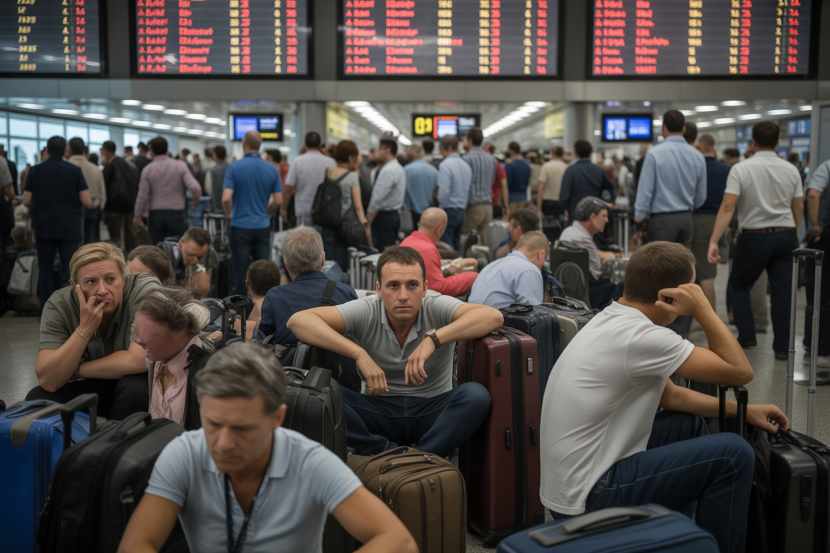
A significant technical failure within Poland’s Border Guard database has caused unexpected disruptions at several Ukrainian checkpoints, specifically in the Lviv and Volyn regions. This glitch in the system has notably affected the processing of essential documentation for border crossings, leading to delays and slower operations at these points of entry and exit.
However, despite this disruption, there are no major traffic queues reported at the Ukrainian crossings. According to officials from Ukraine’s State Border Guard Service, while there is no large-scale impact on vehicle movements, train processes are experiencing slower handling. This development is a cause for concern, especially for passengers relying on train services, but the situation is currently under control. Although the glitch has raised some concerns, it has not yet resulted in severe delays for most travelers.
Protests Add Complexity to Border Operations
In addition to the technical failure, a protest by Polish farmers on January 23 at the Dolhobychuv-Uhryniv checkpoint further exacerbated tensions at the border. The protest lasted for two hours, with farmers expressing dissatisfaction over the import of Ukrainian agricultural products. Although this protest is unrelated to the system failure, it highlights the broader economic and political challenges at the Ukrainian-Polish border.
Polish farmers have long raised concerns about the influx of Ukrainian agricultural goods, which they believe undermines their own market. The protest underscores the ongoing challenges both nations face as they attempt to navigate complex trade relations and border logistics. As both Poland and Ukraine continue to deal with these tensions, the protests reflect the difficult balance between trade agreements and local interests.
Border Tensions: A Recurring Issue
The combination of the technical glitch and the farmer protest has only added to the already strained relationship between Poland and Ukraine at the border. This latest setback comes after a series of border challenges that have occasionally disrupted the flow of goods and people between the two countries. For many years, the border has been a point of contention, largely due to logistical pressures and economic disagreements.
From the disruption of agricultural trade to the slow pace of document processing, these ongoing issues highlight the need for more efficient solutions at the border. Given the economic importance of this shared frontier, both Poland and Ukraine must find ways to improve cooperation, ensuring smoother operations and addressing the growing concerns on both sides.
Efforts to Resolve and Mitigate Border Issues
As the situation continues to unfold, efforts are being made to mitigate the impact of the system failure. The Ukrainian State Border Guard Service has assured the public that the situation is under control and that measures are being implemented to expedite the processing of documents. Additionally, steps are being taken to address the backlog in train processing, although some delays are inevitable.
Both nations will likely have to revisit their border operations to better prepare for similar issues in the future. With the increasing volume of cross-border trade and travel, enhancing the technological infrastructure and improving communication between the two countries will be essential to avoiding future disruptions.
Looking Ahead: What’s Next for Polish-Ukrainian Border Relations?
The Polish border system failure and the accompanying protests by Polish farmers serve as a reminder of the complex and often volatile dynamics at play in cross-border relationships. As both countries work towards improving their economic relations and resolving trade disputes, there remains much to be done to enhance the efficiency of their border operations. By addressing these ongoing issues head-on, Poland and Ukraine can ensure a smoother experience for both travelers and businesses alike, helping to foster stronger ties between the two nations in the long term.
While the immediate impact of the system failure has been relatively contained, the broader implications for border management and trade relations are likely to be felt for some time. It will take cooperation from both sides to navigate these challenges effectively and ensure that the Polish-Ukrainian border continues to function as a vital conduit for trade, tourism, and cultural exchange.
Canada’s mountainous national parks, boreal forests and lakes have long been a magnet for visitors. However, the wildfire seasons of 2024 and 2025 were some of the most destructive on record, forcing mass evacuations, shrouding skylines in smoke and temporarily turning tourist destinations into disaster zones. Scientists say climate change is increasing the length and severity of Canada’s fire seasons; hotter temperatures and prolonged drought produce forests full of dry fuel, and lightning storms combined with strong winds ignite and spread flames rapidly. This article combines real‑world data and accounts from 2024–2025 to explain how recurring wildfires are threatening popular Canadian destinations and may make them dangerous for tourists in the future.
2024 wildfire season – destructive fires in the west
Jasper National Park inferno
The most shocking tourism casualty in 2024 occurred in Jasper National Park, a UNESCO World Heritage site visited by roughly 2.5 million people annually. In late July, an explosive wildfire engulfed the park and the adjacent town of Jasper. Reports indicate that over 25 000 people were evacuated, and the fire destroyed roughly 358 of the town’s 1 113 structures, meaning nearly 30 % of the town was damaged. Businesses suffered estimated losses of CA$4.5 million per day due to tourism closures. The destruction underscores how quickly a single blaze can wipe out a tourist hub.
Jasper’s experience also exposed broader vulnerabilities in western Canada. By late July 2024, nearly 600 wildfires were burning across British Columbia and Alberta, forcing evacuations in communities from the Kootenay region to the Cariboo. Parks Canada cancelled all camping reservations in Jasper until early August, leaving visitors stranded or rerouting to other destinations. Residents and tourism operators noted that bookings in the Okanagan/Cariboo regions dropped by 5–15 %as travellers sought to avoid “peak smoke season”.
Fort Nelson and Parker Lake
In May 2024, a human‑caused blaze near Fort Nelson, British Columbia exploded in size. The “Parker Lake” wildfire reached 5 280 hectares and advanced to within 2.5 km of the town. Around 3 000–3 500 residents evacuated, and officials warned that sustained winds could push the fire toward populated areas. By mid‑May there were 135 active fires nationwide, 40 out of control, prompting air‑quality advisories across four provinces. The fire underscored how extreme wind conditions and drought can rapidly overwhelm firefighting resources, forcing the evacuation of entire communities.
Cariboo (Williams Lake) emergency
In July 2024, a wildfire near Williams Lake in the Cariboo region led to a local state of emergency. A tree downing a power line sparked the blaze, which grew to about 20 hectares, threatening homes and infrastructure. Water bombers and structural crews were dispatched, and residents were warned to conserve water and avoid the area. Though smaller than the Jasper fire, the incident illustrated how easily human infrastructure failures can ignite dangerous fires, even near smaller communities.
Economic and climate context
The 2024 season burned about 5.378 million hectaresnationwide and forced over 50 000 people to evacuate according to government summaries. Tourism operators called climate change an “existential threat” and warned that Canada is facing a wildfire reality that will keep tourists away unless major mitigation and communication efforts occur. The combination of large and small blazes, as well as thick smoke that reduced air quality across provinces, showed that even areas untouched by flames could become hazardous.
2025: an even worse wildfire year and broader geographic spread
Early start in Saskatchewan’s boreal forests
The 2025 wildfire season began early. In May, NASA satellites captured pyro‑cumulonimbus clouds rising over the Shoe and Camp fires in Saskatchewan’s Narrow Hills region. The province recorded 146 fires to date, nearly twice the five‑year average. By May 12, the provincial safety agency reported 12 active fires, half contained, but Narrow Hills Provincial Park and surrounding highways were closed, and air‑quality alerts were issued across the province. Researchers noted that moderate drought and strong winds fuelled the rapid spread. The early outbreak signalled that 2025 would be severe.
Evacuations across Manitoba, Saskatchewan and Alberta (May 2025)
In late May 2025, a complex of fires around the Manitoba‑Saskatchewan border forced over 25 000 people to evacuate. In Manitoba, approximately 17 000 residents left their homes, including over 5 000 from Flin Flon and 600 from Cranberry Portage. Saskatchewan evacuated about 8 000 people, while Alberta evacuated around 1 300. Premier Scott Moe warned that hot, dry weather was allowing fires to grow quickly and that resources were stretched thin. The fires and evacuations again clouded skies across Canada and parts of the United States.
A wildfire near Flin Flon threatened the city at the end of May. Firefighters and volunteers battled the blaze for weeks; according to a CBC report, 28 Flin Flon firefighters, assisted by 194 firefighters from 53 departments, worked without days off. The entire city of roughly 5 000 residents was evacuated on May 28, and the team held the line at a bottleneck between lakes to prevent the fire from sweeping south. While they saved the city, the neighbouring community of Denare Beach in Saskatchewan was devastated. The incident illustrates how small communities adjacent to tourist areas may be unable to withstand major blazes.
Fires near Elk Island National Park and Ukrainian Cultural Heritage Village
On April 18, 2025, a fast‑moving fire east of Elk Island National Park forced evacuations and temporarily closed the important Yellowhead Highway (Highway 16). The fire started behind the Ukrainian Cultural Heritage Village, a popular living‑history museum, and dry fuels combined with strong winds allowed it to spread toward the site. RCMP confirmed the fire reached structures in the heritage village, though the extent of damage was initially unknown. The event demonstrated that cultural sites can be threatened and emphasised the vulnerability of heritage tourism to increasing wildfire seasons.
Alberta park and trail closures
During 2025, Banff National Park experienced smaller but disruptive fires. The Panther River wildfire reached 4.5–11 hectares and led park officials to close Wigmore Valley and other backcountry areas. Although there was no threat to public safety, officials allowed the fire to burn for ecological reasons, illustrating the careful balance between letting fires rejuvenate ecosystems and protecting visitors. Another small blaze, the Moose Meadows fire, was extinguished quickly thanks to fuel‑reduction work. Even minor fires can trigger closures and underscore the need for real‑time advisories.
Closure of Whiteshell Provincial Park and other Manitoba parks
Extreme fire danger forced a full closure of Whiteshell Provincial Park in eastern Manitoba in mid‑May 2025. Manitoba’s Parks Department ordered all public and private areas, including cottage subdivisions, commercial sites, campgrounds, trails, beaches and backcountry routes to be vacated by 1 p.m. on May 15. Parks such as Nopiming, Pinawa Dam, Poplar Bay, Wallace Lake, South Atikaki and the Manigotagan River remained closed, and campgrounds were not expected to reopen until at least May 21. Recreational drone flights near fires were prohibited. Such sweeping closures highlight how quickly tourism opportunities vanish when fire danger reaches extreme levels.
Alice Lake Provincial Park – evacuation and restricted reopening
The wildfire season also impacted smaller parks in British Columbia. On June 11 2025, BC Parks ordered visitors to evacuate Alice Lake Provincial Park, a popular camping and hiking area near Squamish, due to the Dryden Creek wildfire, which grew to 20.2 hectares. Roughly 70 firefighters from several agencies battled the blaze, and recreational trails were closed. A week later, as the fire reached 59.5 hectares, the park partially reopened with restrictions; evacuation alerts were lifted for nearby homes except those along Dryden Road, but an evacuation order remained for two properties due to slope instability. 57 firefighters and tree fallers continued to manage the area, and the fire was still classified as out of control. The case shows that even after immediate danger subsides, landslide risks and ongoing firefighting operations can keep tourist facilities closed for weeks.
State of emergency in Labrador City
In July 2024, a rapidly expanding wildfire near Labrador City(on the western border of Newfoundland and Labrador) forced the evacuation of about 9 600 people—more than the town’s normal population. The fire, burning 14 000 hectares and located 4–6 km from the city, caused a large influx of evacuees into Happy Valley‑Goose Bay, which saw its population swell by over 40 %. About 6 300 evacuees registered with the Red Cross. Such sudden population shifts strain lodging, food and medical resources—important concerns for tourist towns hosting evacuees.
Canada’s second‑worst fire year on record
According to a federal update issued in October 2025, the 2025 season became Canada’s second worst, with over 6 000 wildfires burning more than 8.3 million hectares. The fires affected every province and territory, and over 85 000 peoplewere evacuated—including 45 000 people from 73 First Nations communities. With 2025 surpassing previous years, the trend suggests that major evacuations and park closures will become more common.
Why these fires matter for tourism
Health and safety risks
Wildfires pose obvious dangers to travellers: flames, falling trees, landslides and poor air quality. Even when fires do not directly destroy infrastructure, they produce heavy smoke that reduces visibility and exacerbates respiratory illnesses. The 2024 Fort Nelson and Cariboo incidents led to air‑quality advisories across western provinces, while the 2025 Saskatchewan fires created pyro‑cumulonimbus clouds that sent smoke thousands of kilometres. Tourists with asthma, children and seniors are particularly vulnerable, making travel risky during fire season.
Economic disruption and lost revenue
Tourism is a major economic driver for many Canadian regions. The 2024 Jasper fire cost local businesses millions of dollars daily. Event planners now reschedule festivals and weddings to avoid “peak smoke season”. When parks like Whiteshell or Alice Lake close, outfitters, hotels and restaurants lose revenue. Rebuilding destroyed infrastructure (such as 358 burned structures in Jasper) requires years and may deter visitors until communities fully recover.
Cultural and environmental losses
Wildfires also threaten cultural heritage sites and natural ecosystems. The 2025 fire near the Ukrainian Cultural Heritage Village reached historic structures, and firefighters worked to save Flin Flon while the nearby town of Denare Beach was devastated. These events highlight that intangible heritage and community identity are at risk. For ecologically sensitive parks, fires can both rejuvenate and destroy ecosystems; Banff’s park managers allowed the Panther River fire to burn for ecological reasons, yet closures were needed to keep people safe.
Future risks and adaptation
Looking ahead, climate change is expected to lengthen Canada’s fire season and create more extreme events. The number of “zombie fires”—overwintering underground fires that reignite the following season—has been increasing according to researchers. With consecutive seasons like 2024 and 2025 demonstrating unprecedented evacuations and closures, there is a real possibility that some destinations will see recurring disruptions, making travel unpredictable. Tourism operators and park managers are implementing measures such as fuel‑reduction burns, improved early‑warning systems, and diversified marketing to attract visitors outside of high‑risk months.
Overview of major wildfire events affecting tourist areas (2024–25)
Year
Destination / region
Size / scope
Evacuations
Impacts
2024
Jasper National Park (Alberta)
Wildfire destroyed 358 of 1 113 structures and ravaged park; business losses ~CA$4.5 M/day
25 000 peopleevacuated
30 % of town damaged; camping cancelled until Aug 6
2024
Parker Lake / Fort Nelson (BC)
Fire reached 5 280 ha
3 000–3 500 residentsevacuated
Fire 2.5 km from town; air‑quality alerts across provinces
2024
Williams Lake (Cariboo, BC)
River Valley fire ~20 ha
Evacuation alerts; some structures affected
Local state of emergency declared
2024
Labrador City (NL)
Wildfire burned 14 000 ha
9 600 peopleevacuated
Town nearly emptied; 6 300 evacuees registered with Red Cross
2025
Narrow Hills Provincial Park (SK)
Early season fires; pyro‑cumulonimbus; 146 fires recorded in May
Park and highways closed
Air‑quality alerts across Saskatchewan
2025
Flin Flon / Manitoba–Saskatchewan border
Wildfire burned near town; multiple fires across provinces
Over 25 000 peopleevacuated (17 000 in MB, 8 000 in SK, 1 300 in AB)
Entire city of Flin Flon evacuated; community of Denare Beach devastated
2025
Elk Island National Park / Ukrainian Cultural Heritage Village (AB)
Fast‑moving fire reached heritage site
Evacuations ordered; Highway 16 closed
Threatened cultural heritage; shows vulnerability of historic tourism
2025
Whiteshell Provincial Park & other Manitoba parks
Extreme fire danger; full closure
Residents & visitors ordered to leave by May 15
All campgrounds, trails and parks closed; tourism halted
2025
Alice Lake Provincial Park (BC)
Dryden Creek wildfiregrew from 20.2 ha to 59.5 ha
Visitors evacuated; later partial reopening with restrictions
Trail closures; slopes unstable; 57 firefighters still on site
2025
Banff National Park (AB)
Small fires (Panther River, 4.5–11 ha and Moose Meadows)
Backcountry areas closed
Illustrates that even minor fires cause restrictions and hazard warnings
Conclusion
The 2024 and 2025 wildfire seasons illustrate how climate‑driven fires can transform Canada’s most scenic destinations into danger zones. Massive blazes destroyed a third of Jasper and forced thousands to flee Fort Nelson, Flin Flonand Labrador City, while smaller fires still closed parks like Whiteshell, Alice Lake and Banff. The threats do not end when flames subside; lingering smoke, landslide risks and infrastructure damage keep areas closed and discourage visitors. With researchers expecting hotter, drier summers in the decades ahead, travellers to Canada will need to monitor fire conditions carefully, and tourism planners must adapt by investing in fire‑smart infrastructure, improving evacuation plans and diversifying tourism seasons. Without these measures, popular destinations may become increasingly dangerous or inaccessible during what once were prime vacation months.
In the face of escalating trade tensions between the United States and Europe, Egypt is strategically positioning itself to capitalize on the disruption caused by shifting global trade dynamics. With rising tariffs, trade barriers, and political friction between the two economic powers, many businesses are looking for alternative hubs to maintain their supply chains and reduce exposure to geopolitical risks. Egypt, with its strategic location, competitive sectors, and progressive economic reforms, is emerging as an attractive destination for investors seeking to adapt to this volatile trade environment.
The US-Europe Trade Conflict: A Growing Divide
The trade conflict between the US and Europe has intensified significantly, with tariffs being imposed by both sides in response to various political and economic disputes. The US government implemented a 10% tariff on key European goods at the start of February, with the possibility of escalating the levy to 25% if the two sides fail to negotiate a resolution. In retaliation, the European Union has introduced measures of its own, including the suspension of a vital trade agreement with the US.
These escalating trade measures have sent ripples through global markets, leading to concerns over a potential slowdown in international trade and economic growth. The International Monetary Fund (IMF) has raised alarms about the wider economic consequences of this growing conflict. However, as global trade routes become increasingly uncertain, Egypt is positioning itself as a potential beneficiary, offering businesses an alternative to the traditional trade hubs in Europe and the US.
Leveraging Egypt’s Strategic Position
Egypt’s unique position at the crossroads of Europe, Africa, and Asia gives it a natural advantage in international trade. As a key transit point for global shipping, particularly through the Suez Canal, Egypt plays an important role in the flow of goods between continents. The Suez Canal is one of the world’s most vital trade routes, making Egypt an invaluable location for businesses looking to reach both European and Asian markets.
The country’s economic reforms and incentives aimed at attracting foreign investment are also part of its strategy to take advantage of the shifting global trade dynamics. Egypt has been actively working to improve its investment climate by simplifying regulations, reducing barriers to foreign businesses, and offering financial incentives in various industries. As a result, Egypt is becoming an increasingly attractive destination for global investors who want to avoid the risks associated with the US-Europe trade conflict.
Capitalizing on Economic Reforms
Egypt’s economic reform agenda, which has been in place for several years, has positioned the country as one of the most promising emerging markets in the region. The government has introduced new laws that make it easier for foreign companies to set up operations in Egypt, offering tax incentives, subsidized land, and access to various industrial zones. Additionally, Egypt has focused on improving infrastructure, particularly in the areas surrounding the Suez Canal and key ports, ensuring that the country is well-equipped to handle increased trade and investment flows.
The Egyptian government is also prioritizing diversification in sectors where the country has a clear competitive edge. Green energy, especially the production of green hydrogen, is one such sector that has gained attention. With abundant natural resources, including vast solar and wind energy potential, Egypt is positioning itself as a regional leader in sustainable energy. This is particularly important as the global shift towards cleaner energy sources creates new opportunities for growth and investment.
The textile industry is another area where Egypt has a competitive advantage. With tariff-free access to the EU market and duty-free access to the US market under the Qualifying Industrial Zones (QIZ) agreement, Egyptian textiles are well-placed to meet demand from both regions. As European and American manufacturers face higher tariffs and production costs due to the trade conflict, Egypt can step in to fill the gap, offering affordable alternatives for consumers and businesses alike.
Sectoral Opportunities: Textiles, Green Energy, and More
Several sectors in Egypt stand out as having significant potential to benefit from the current trade tensions. Textiles, for example, benefit from preferential trade agreements with both the EU and the US, making Egyptian products highly competitive in these markets. With the rise in US tariffs on European goods, Egypt has an opportunity to increase its market share in the global textile industry, attracting both European and American companies that are looking to avoid higher import duties.
Egypt’s focus on green energy and renewable technologies is also paying off. The country’s vast solar energy potential, coupled with its commitment to developing green hydrogen, makes it an ideal candidate for investment in sustainable energy solutions. As global demand for clean energy grows, Egypt is well-positioned to capitalize on this trend, attracting foreign investment in its green energy projects.
The automotive industry is another promising sector, with Egypt aiming to establish itself as a regional manufacturing hub. The country’s low production costs and access to key markets make it an appealing location for car manufacturers looking to relocate or diversify their production bases.
Addressing Challenges: Geopolitical and Market Risks
Despite the opportunities Egypt is poised to capitalize on, the country faces several challenges in its quest to attract foreign investment. One of the biggest risks comes from the ever-changing political landscape, particularly the potential for a resolution between the US and Europe. If the trade war between the two powers comes to an end, Egypt could lose some of its competitive advantage, as tariffs that make its goods more attractive to Western markets may be reduced.
Additionally, Egypt’s relationship with the US and other Western powers remains an important factor. While Egypt has long maintained a stabilizing role in the Middle East and North Africa, its diplomatic relations with the US are not without challenges. Disagreements on issues such as the Palestinian conflict and regional security could affect the country’s attractiveness to American investors.
Positioning for Success: Long-Term Economic Growth
To succeed in attracting investment and positioning itself as a key player in global trade, Egypt will need to remain adaptable and proactive. The government must continue to implement policies that support business growth and ensure a stable economic environment. This includes maintaining and expanding free trade agreements, improving infrastructure, and fostering relationships with international investors.
Additionally, Egypt’s ability to remain agile in the face of global political uncertainties will be crucial. By demonstrating flexibility and quick decision-making, Egypt can solidify its role as a reliable and competitive partner in global trade.
Conclusion: A Bright Future Amid Global Change
Egypt stands at a pivotal moment in its economic development. With the ongoing trade conflict between the US and Europe, the country has an opportunity to capitalize on the disruptions in global trade, attracting investment and positioning itself as a key alternative hub for manufacturing and trade. By leveraging its strategic location, competitive sectors, and ongoing economic reforms, Egypt is set to play a prominent role in the global economy.
However, the country must remain agile and continue to adapt to shifting geopolitical dynamics. By maintaining its focus on attracting foreign investment, supporting key sectors like textiles and green energy, and fostering a stable business environment, Egypt can seize this moment of global uncertainty and build a strong, diversified economy for the future.
Motorists on the M60 motorway have faced significant delays this morning following an accident near the Trafford Centre. The traffic was brought to a standstill on the anticlockwise side, between junction 11 for Liverpool Road and junction 10 for the popular shopping destination. Emergency services were promptly on the scene, and a brief closure of the motorway was necessary to carry out urgent repairs. Though the lanes have since reopened, drivers are still experiencing heavy traffic and long queues.
The incident has caused major disruptions to the morning commute, with authorities urging drivers to exercise patience as the aftermath of the crash is managed. The full closure of the motorway for a short period allowed repair teams to attend to the scene, ensuring that any damage caused by the accident was safely addressed.
Emergency Services and Repairs on M60
Upon receiving reports of the accident, emergency repair teams moved swiftly to secure the scene. The M60’s anticlockwise lanes, which serve as a primary route for commuters heading towards the Trafford Centre and beyond, were temporarily shut to allow for the repairs to be carried out.
According to the traffic alert service Inrix, the repairs were completed in a timely manner, enabling the reopening of the motorway’s lanes. Despite this, the backlog of vehicles continued, and drivers were advised to plan for extended travel times.
Ongoing Traffic Disruptions on M60
Though traffic flow has resumed, motorists are still encountering delays due to the queues caused by the earlier accident. The incident occurred during the morning rush hour, adding to the congestion that is often experienced during this time of day. With the lanes now open, traffic is slowly beginning to clear, but the overall travel time remains higher than usual.
Drivers are advised to remain cautious when traveling through the area, as there may still be temporary slowdowns in the vicinity of the accident site. The ongoing delays are a result of the residual traffic and the increased volume of vehicles as commuters continue to navigate the M60.
Impact on Local Commuters and Businesses
The M60, as a major arterial road for Manchester and the surrounding areas, plays a crucial role in the daily commute for thousands of workers and shoppers. With the Trafford Centre being one of the region’s most significant retail hubs, the road network’s efficiency is essential for both local businesses and residents alike.
Local businesses that rely on a steady flow of traffic may also feel the effects of the morning’s delays, as shoppers may be deterred by the lengthy hold-ups. The Trafford Centre, known for its retail stores, restaurants, and leisure activities, could experience a decrease in foot traffic during this time.
Additionally, the disruption highlights the importance of having contingency plans in place for accidents on busy roadways like the M60. The authorities have been working to ensure that the situation is managed effectively, though the high volume of traffic has made it challenging to clear the area quickly.
Advice for Commuters and Drivers
For those planning to travel along the M60 today, it is recommended to check real-time traffic updates before embarking on the journey. Many online services, including the official traffic and travel websites, provide live updates on motorway conditions and accident management. Drivers can use these platforms to find alternate routes if needed to avoid the delayed areas around the Trafford Centre.
It is also advisable for commuters to allow for extra time in their travel plans to account for any unforeseen delays that may arise due to the incident’s aftermath. Road users are encouraged to remain aware of traffic changes, stay informed, and, if possible, explore alternative routes to mitigate delays on the M60.
Conclusion: Motorway Delays Are Impacting Daily Travel
The accident on the M60 motorway near the Trafford Centre today has had a significant impact on local travel, with delays affecting commuters and shoppers alike. Emergency services responded swiftly, and the lanes were reopened after repairs were completed. However, motorists continue to face delays due to ongoing traffic queues. The incident serves as a reminder of the importance of monitoring road conditions, particularly during peak hours, and planning ahead to minimize disruptions.
In a sudden and unexpected change to its scheduled itinerary, the Norwegian Breakaway made an early return to New York City on Monday, February 2, 2026, following the disruption of a major winter storm in the U.S. Northeast and North Atlantic. Originally set to dock at Manhattan Cruise Terminal on Tuesday, February 3, the cruise ship’s arrival was hastened by one day in order to avoid the intensifying weather system.
The Norwegian Breakaway had embarked on an 11-night Caribbean cruise on January 23, 2026, from New York City. However, the storm, which was expected to cause significant delays and hazardous conditions, led to a quick decision to alter the ship’s course, ensuring passengers would be able to return home safely and as smoothly as possible.
Impact of Winter Storm on Itinerary
The decision to expedite the ship’s return was made in response to a large winter storm affecting the eastern United States and North Atlantic, creating challenging conditions for vessels in the region. As the storm intensified, Norwegian Cruise Line opted to take swift action to avoid any further disruptions to the cruise’s schedule.
In a letter sent to guests onboard, the cruise line explained the situation and assured passengers that the adjustment was made with their safety in mind. “A large winter system moving through the eastern United States and the North Atlantic is affecting our ability to return to New York City on the original schedule. This adjustment ensures a smoother path north,” the letter read.
Cancelled Stop in St. Thomas
To facilitate the earlier return, Norwegian Cruise Line made a key change to the itinerary. A scheduled stop in St. Thomas, U.S. Virgin Islands, on January 30, 2026, was cancelled. Instead, the Norwegian Breakaway sailed directly toward New York City following its visit to St. Maarten on January 29, 2026.
Although the change meant missing out on the U.S. Virgin Islands destination, Norwegian Cruise Line reassured passengers that the alteration was necessary to navigate the storm’s path safely. The decision, though disappointing to some, ultimately allowed for a more secure and timely arrival in New York City.
Extra Time in New York: A Positive Twist
One unexpected benefit of the change was an extended stay in New York City. While the Norwegian Breakaway had been scheduled to depart the city on Tuesday, passengers were instead granted an additional day in the city, providing more time to explore the iconic sights, enjoy local dining, and experience everything the Big Apple has to offer.
This bonus time in New York was described as an opportunity for passengers to “wrap up their vacation on a high note,” according to Norwegian Cruise Line. The cruise line emphasized that, despite the itinerary change, the extended time in the city turned out to be a pleasant bonus for many guests, allowing them to make the most of their final moments of vacation.
Refunds and Communication with Guests
Norwegian Cruise Line made every effort to communicate the changes to passengers swiftly and clearly. Affected guests who had booked shore excursions for St. Thomas were fully refunded, with credits applied to their accounts. The company reassured passengers that they were working to ensure that everyone would receive their refunds promptly, keeping in line with their commitment to customer satisfaction.
The cruise line also provided passengers with information about the changes to the itinerary, allowing them to adjust their expectations and plans accordingly. Norwegian Cruise Line’s focus on keeping guests informed at every step was crucial in maintaining a positive guest experience despite the disruptions.
Caribbean Ports of Call Still Delivered
Despite the storm’s impact, the Norwegian Breakaway still offered passengers an unforgettable Caribbean experience. In addition to the visit to St. Maarten, the ship had made stops in Puerto Plata (Dominican Republic), San Juan (Puerto Rico), and Tortola (British Virgin Islands). While missing St. Thomas was disappointing, the Caribbean ports that were visited still provided guests with plenty to enjoy, from picturesque beaches to historic sites and vibrant local culture.
The weather disruptions did not diminish the highlights of the trip, and Norwegian Cruise Line ensured that passengers had the chance to experience a beautiful slice of the Caribbean, even with the shortened itinerary.
Ensuring a Safe Journey Home
The Norwegian Breakaway’s early return to New York City was made to ensure the passengers’ safety while still allowing them to enjoy a fulfilling vacation. Norwegian Cruise Line acted quickly to address the weather-related disruptions, re-routing the ship to minimize the storm’s impact while keeping everyone on board safe.
Passengers arriving in New York were able to disembark with little delay, and the extra time in the city allowed many travelers to continue their vacation. Norwegian Cruise Line’s quick decision-making and efficient communication kept the experience as smooth as possible for all those involved.
Looking to the Future: Flexibility and Communication with Guests
For future travelers, Norwegian Cruise Line reassured guests that the company remains committed to providing flexible solutions in the face of unforeseen weather-related disruptions. The cruise line’s top priority is passenger safety, and guests can expect timely updates in the event of future changes. The company’s proactive approach during this storm highlighted its commitment to ensuring that guests have the best possible experience, regardless of external factors.
Conclusion: A Safe and Rewarding End to the Journey
While the Norwegian Breakaway’s Caribbean itinerary was altered due to a winter storm, the ship’s early return to New York City provided a safe and memorable conclusion to the journey. Norwegian Cruise Line’s quick response, clear communication, and customer-focused approach ensured that passengers could still enjoy a rewarding vacation, with the added bonus of extra time in New York City.
Despite the weather-related challenges, the Norwegian Breakaway was able to offer guests a safe, enjoyable, and fulfilling cruise experience, proving that sometimes, even unexpected changes can lead to positive outcomes.
Travel Setback at Quebec/Jean Lesage International Airport has caused significant disruptions as Air Canada grapples with 2 cancellations and multiple delays. These issues have affected several major routes to Montreal, Toronto, Newark, Punta Cana, Fort Lauderdale, and other destinations. Passengers have faced unexpected hold-ups, resulting in frustration and travel plans being thrown into disarray. The cancellations and delays are part of an ongoing situation that has led to widespread confusion among travelers. As Air Canada works to manage the disruption, many passengers are left stranded or rerouted, facing uncertainty about their departure times. While the airline is doing its best to resolve the issue, the ripple effects are being felt across both domestic and international flights. Travelers are urged to check their flight status frequently, and authorities are closely monitoring the situation at the airport.
Affected Cities
The cities include Quebec City (YQB), Montreal (YUL), Toronto (YYZ), and Sept-Îles (YZV). The data also features international destinations such as Newark (EWR), Fort Lauderdale (FLL), Punta Cana (PUJ), and Cancun (CUN). Additionally, the list contains the Canadian cities of Val-d’Or (YVO) and Bathurst (ZBF).
Flight Cancellations
Airline
Cancelled (Count)
Delayed (Count)
Air Canada
2
5
Overview of Flight Cancellations
At Quebec/Jean Lesage International Airport, Air Canada has faced disruptions with 2 cancellations affecting its operations. These cancellations account for 14% of the airline’s scheduled flights at the airport. Additionally, there have been 5 delays, amounting to 35% of Air Canada’s flights at the airport. This combination of cancellations and delays has impacted several important routes, including flights to major destinations such as Montreal, Toronto, Newark, Punta Cana, and Fort Lauderdale. Passengers traveling on these routes have experienced significant delays and cancellations, leading to travel setbacks and confusion. Air Canada is working to manage the situation, but the disruptions continue to affect both domestic and international travel plans for passengers.
What to Do if Your Flight Gets Cancelled: A Quick Guide
Flight cancellations can be frustrating, but knowing the right steps to take can help minimize stress. Here’s what you can do if you find yourself in this situation:
Stay Updated Monitor your email, phone, and the airline’s app for rebooking confirmation or further announcements.
Stay Calm and Check for Updates As soon as you learn your flight is canceled, stay calm and check for updates. Many airlines will notify you via text, email, or their app. Visit the airline’s website for real-time updates on the situation.
Contact the Airline Reach out to the airline’s customer service either in person at the airport or over the phone. If you’re at the airport, head to the service desk. If you’re not, try calling or using the airline’s online chat system to avoid waiting in long queues.
Know Your Rights Familiarize yourself with the airline’s policies regarding cancellations. Many airlines offer rebooking options or compensation, especially if the cancellation is within their control. In the EU, for example, passengers are entitled to compensation under certain conditions.
Consider Alternative Flights Ask the airline about the next available flight. If you can’t find a suitable option, consider booking a new flight through another airline, or check for other forms of transport like trains or buses.
The ongoing disruptions at Quebec/Jean Lesage International Airport due to Air Canada’s cancellations and delays have caused considerable inconvenience for passengers. With 2 cancellations and 5 delays, key routes to Montreal, Toronto, Newark, Punta Cana, and Fort Lauderdale have been impacted, leaving many travelers frustrated and stranded. While Air Canada works to address the situation, passengers are encouraged to stay informed about their flight statuses. The airline is striving to minimize further delays, but travelers should prepare for continued disruptions in the coming hours as the situation unfolds.
On February 3, Ohio, Indiana, Kentucky, and West Virginia are facing a powerful winter storm, with heavy snow and icy conditions threatening both travel and safety. The National Weather Service has issued Winter Weather Advisories for the region, forecasting 1 to 3 inches of snow, and possibly more in some areas. Freezing rain combined with snow and below-freezing temperatures will make roads extremely hazardous, especially during peak travel times. The risk of slippery roads, reduced visibility, and ice accumulation on untreated surfaces like bridges and overpasses is high, heightening the potential for accidents. Residents and travelers are strongly advised to take precautions and avoid unnecessary travel as major disruptions are expected.
Forecasted Snowfall and Timing
The forecast predicts that several regions will see snow accumulation of 1 to 3 inches, with some localized areas potentially experiencing higher totals. The advisory will remain in effect from 7:00 AM to 10:00 PM EST for the following areas:
Southeast Indiana: Including counties such as Franklin, Ripley, Dearborn, Ohio, and Switzerland.
Southwest and Central Ohio: Including Butler, Warren, Clinton, Ross, Hamilton, Clermont, Highland, Adams, Pike, and Scioto counties.
Northern Kentucky: Including Carroll, Gallatin, Boone, Kenton, Campbell, Owen, Grant, Pendleton, Bracken, Mason, and Lewis counties.
For parts of southern Indiana and central Kentucky, the advisory period will be from 10:00 AM to Midnight EST. These areas are expected to receive 1 to 2 inches of wet, slushy snow, with possible light ice accumulation. Other areas in this advisory zone will experience the impacts from 1:00 PM to 2:00 AM EST Wednesday.
In southeastern Ohio and northern West Virginia, 1 to 3 inches of snow are expected between 7:00 AM and 10:00 PM EST.
Travel and Safety Concerns
Travelers in the affected regions should be prepared for hazardous road conditions, especially during peak travel times, such as the morning and evening commutes. While the total snowfall is not expected to be extreme, the conditions will create slippery roads, poor visibility, and potential delays.
Untreated surfaces, including bridges, overpasses, sidewalks, and rural secondary roads, are especially vulnerable to slick spots. Additionally, a brief period of freezing rain could further complicate road conditions, particularly in parts of Kentucky and Indiana, leading to icy patches that can make driving even more treacherous.
Commuters and travelers are urged to reduce their speed, allow extra time for travel, and ensure their vehicles are equipped with an emergency kit. The kit should include essential items such as blankets, snacks, flashlights, and cell phone chargers, as well as extra layers of clothing and a fully charged phone in case of an emergency.
Local Updates and Resources
Motorists can stay informed about the latest weather developments and road conditions by referring to their state’s traffic and weather resources.
Indiana: 511in.org
Ohio: ohgo.com
Kentucky: goky.ky.gov
West Virginia: wv511.org or call 511
For broader weather information, including radar imagery and updates on winter weather advisories, residents are encouraged to visit the National Weather Service’s website at weather.gov.
Preparedness Tips
To ensure safety during this winter weather event, residents are advised to take the following precautions:
Limit Outdoor Exposure: Stay indoors as much as possible during the peak of the snowfall. If you must go outside, dress warmly in layers to protect against the cold.
Avoid Unnecessary Travel: If possible, delay travel until road conditions improve. Travel is most dangerous during the evening rush hour when snow accumulation may worsen.
Charge Devices: In case of power outages, ensure that devices like phones, tablets, and laptops are fully charged before the storm hits. Having extra power sources, such as portable chargers, is also helpful.
Check on Vulnerable Neighbors: Elderly and vulnerable residents should be checked on to ensure they have everything they need and are safe during the storm.
Monitor Weather Updates: Continuously check weather reports and travel updates to stay informed about changing conditions, particularly if the advisory period extends into Wednesday.
A Winter Weather Reminder
Even light snowfall can create hazardous conditions, particularly when temperatures hover around freezing. This can lead to slushy accumulations that may refreeze overnight, resulting in dangerous driving conditions the following morning. It’s essential to stay alert and prepared during winter weather events.
The National Weather Service will closely monitor the situation and provide updates as necessary. While the snowstorm may not be extreme, the combined effects of snow, ice, and cold temperatures could make travel hazardous for those who are unprepared. By staying informed and taking the right precautions, residents can protect themselves and ensure their safety.
Ohio, Indiana, Kentucky, and West Virginia are facing extreme winter weather on February 3, with heavy snow, icy roads, and hazardous travel conditions expected to disrupt commutes and daily activities. Winter Weather Advisories have been issued as snow accumulations and freezing rain create dangerous driving conditions.
In conclusion, the winter storm expected to impact Ohio, Indiana, Kentucky, and West Virginia on February 3 poses considerable risks to travel and safety. With snow, ice, and freezing temperatures creating dangerous road conditions, it’s vital for residents and travelers to stay updated, plan ahead, and take necessary precautions. Avoiding unnecessary travel and exercising caution will help reduce the risk of accidents during this severe weather event. The National Weather Service will continue to track the storm and provide further updates as needed.
Travelers are facing significant disruptions at Halifax International Airport as PAL Airlines, Air Canada, WestJet, and other carriers experience 18 flight cancellations and multiple delays. This chaos has ripple effects, not only at Halifax but also impacting major airports in Gander, CFB Goose Bay, Ottawa, Montreal, Saint Pierre, and more. Passengers scheduled to fly on affected routes are left stranded or facing extended waiting times. The cancellations and delays are primarily caused by weather conditions, leading to a backlog of flights and a strain on airport operations. Travelers are being advised to stay updated on their flight status and to prepare for potential delays. The airlines involved are working to rebook passengers, but the disruptions have caused considerable frustration. Affected airports are also experiencing heavy traffic, making it difficult for travelers to navigate through terminals and make connecting flights.
Affected Cities
The cities experiencing flight disruptions include Halifax, St. John’s, Toronto, Gander, CFB Goose Bay, Ottawa, Saint John, Montreal, Saint Pierre, Deer Lake, and Sangster. These airports reported varying levels of cancellations and delays, with Halifax International, St. John’s, and Toronto Pearson among the most affected. Other airports like Gander, CFB Goose Bay, and Saint John had notable cancellations, while Ottawa, Montreal, and Saint Pierre experienced delays. Deer Lake and Sangster saw some disruptions as well, though the impact was comparatively lower. The extent of cancellations and delays varied across these locations, reflecting regional challenges in air travel.
Flight Cancellations
Airline
Cancelled
Delayed
PAL Airlines
11
3
Air Canada Rouge
3
0
Air Canada
2
1
WestJet
2
3
Affected Airlines
The airlines affected by the flight disruptions at Halifax International Airport include PAL Airlines, Air Canada, Air Canada Rouge, and WestJet. These carriers have reported a combination of flight cancellations and delays, significantly impacting travelers. PAL Airlines faced the most cancellations, with 11 flights cancelled, while Air Canada Rouge and Air Canada also saw a number of delays. WestJet’s operations were also affected, with several flights delayed. These disruptions have left passengers stranded at multiple airports across Canada, including Gander, CFB Goose Bay, and Ottawa, highlighting the widespread impact of the ongoing travel challenges.
Overview of Flight Cancellations
The flight cancellations at Halifax International Airport have had a significant impact on air travel, with the following breakdown:
PAL Airlines: A total of 11 flights were cancelled, representing 50% of their scheduled flights at the airport. This is the highest cancellation rate among the airlines operating there, suggesting significant operational or weather-related disruptions affecting PAL Airlines’ flights.
Air Canada Rouge: 3 flights were cancelled, which accounts for 60% of its total scheduled flights. This high cancellation rate points to potential issues affecting Air Canada Rouge’s operations at Halifax International Airport.
Air Canada: Only 2 flights were cancelled, making up 8% of Air Canada’s total flights at the airport. While this is a relatively low percentage, it still caused inconvenience to passengers.
WestJet: 2 flights were cancelled, which constitutes 25% of WestJet’s flights at the airport. This cancellation rate is moderate compared to other carriers but still reflects some disruption.
PAL Airlines experienced the highest number of cancellations, with 50% of their flights affected. Air Canada Rouge also faced a significant number of cancellations, with 60% of their scheduled flights impacted. Air Canada and WestJet had fewer cancellations, but these still contributed to the overall disruption at Halifax International. The delays were spread across these airlines, but the cancellations remained the primary issue.
What to Do if Your Flight Gets Cancelled: A Quick Guide
Flight cancellations can be frustrating, but knowing the right steps to take can help minimize stress. Here’s what you can do if you find yourself in this situation:
Stay Updated Monitor your email, phone, and the airline’s app for rebooking confirmation or further announcements.
Stay Calm and Check for Updates As soon as you learn your flight is canceled, stay calm and check for updates. Many airlines will notify you via text, email, or their app. Visit the airline’s website for real-time updates on the situation.
Contact the Airline Reach out to the airline’s customer service either in person at the airport or over the phone. If you’re at the airport, head to the service desk. If you’re not, try calling or using the airline’s online chat system to avoid waiting in long queues.
Know Your Rights Familiarize yourself with the airline’s policies regarding cancellations. Many airlines offer rebooking options or compensation, especially if the cancellation is within their control. In the EU, for example, passengers are entitled to compensation under certain conditions.
Consider Alternative Flights Ask the airline about the next available flight. If you can’t find a suitable option, consider booking a new flight through another airline, or check for other forms of transport like trains or buses.
Halifax International Airport has experienced notable disruptions, with PAL Airlines and Air Canada Rouge facing the highest cancellation rates of 50% and 60%, respectively. These cancellations, along with delays from WestJet and Air Canada, have caused significant inconvenience for travelers. While the overall impact varied across airlines, the disruptions at major airports such as Gander and CFB Goose Bay highlight the broader effects on air travel in the region. Passengers are advised to stay updated on flight statuses and prepare for potential delays as airlines work to resolve operational challenges.
Air Canada, PAL Airlines, and WestJet have caused significant disruption at St. John’s International Airport by cancelling 26 flights, leaving many passengers stranded. The cancellations have affected travelers on flights to key cities such as Toronto, Halifax, Montreal, Orlando, and Goose Bay, among others. As a result, many have been left uncertain about their next steps, facing long delays or rebooking issues. This mass flight disruption highlights the ongoing challenges that passengers face at major airports. The airlines, while working to rebook affected travelers, have yet to provide clear solutions for the hundreds impacted. St. John’s International Airport, a critical hub for both local and international flights, has become the epicenter of this chaos. Travelers across Toronto, Halifax, Montreal, and other locations are anxiously waiting for updates, with many facing unexpected hardships due to these unforeseen cancellations.
Affected Cities
The cities are St. John’s, Toronto, Halifax, Montreal, Orlando, Goose Bay, and Deer Lake. These cities are linked to the reported flight cancellations and delays at their respective airports, including St. John’s International (YYT), Toronto Pearson International (YYZ), Halifax International (YHZ), Montreal-Trudeau (YUL), Orlando International (MCO), CFB Goose Bay (YYR), and Deer Lake Regional. These locations are critical hubs for air travel and have been significantly impacted by the disruptions highlighted in the data. Each city plays a key role in the region’s aviation network and passenger travel experience.
Flight Cancellations
Airline
Cancelled
Cancelled (%)
Delayed
Delayed (%)
Air Canada
12
100%
0
0%
PAL Airlines
12
66%
0
0%
WestJet
2
66%
0
0%
Affected Airlines
The airlines are Air Canada, PAL Airlines, and WestJet. These carriers are responsible for the 26 flight cancellations at St. John’s International Airport, significantly impacting passengers traveling to and from various cities. Air Canada, with its extensive domestic and international network, is a major player in these disruptions, alongside PAL Airlines and WestJet, two prominent carriers serving key Canadian routes. These airlines, while working to address the situation, have left many passengers stranded in cities like Toronto, Halifax, Montreal, and Orlando. The cancellations have created confusion and delays, emphasizing the challenges that these airlines face during unexpected disruptions.
Overview of Flight Cancellations
The significant flight cancellations affecting St. John’s International Airport (YYT), with Air Canada, PAL Airlines, and WestJet being the primary carriers involved. A total of 26 flights were cancelled, creating a ripple effect across several key cities and disrupting travel plans for passengers.
Air Canada reported the highest number of cancellations, with 12 flights being affected. These cancellations resulted in 100% of its scheduled flights being impacted, leaving travelers stranded and without clear solutions. PAL Airlines, on the other hand, cancelled 12 flights, which accounted for 66% of its total flights, also creating a major inconvenience for passengers. WestJet had 2 cancellations, which made up 66% of its scheduled flights at the time.
The ripple effect of these cancellations stretched beyond St. John’s, impacting major cities like Toronto, Halifax, Montreal, Orlando, and Goose Bay. Passengers from these cities experienced significant delays and had to navigate the uncertainty of rebooking or waiting for further updates from the airlines.
These cancellations are a stark reminder of how quickly disruptions can cascade through a global aviation network, especially when major carriers are involved. Despite ongoing efforts from the airlines to manage the situation and offer alternative flights, the passengers left stranded face the frustrating challenge of dealing with the aftermath of this widespread disruption.
The 26 flight cancellations at St. John’s International Airport by Air Canada, PAL Airlines, and WestJet have caused significant disruption for passengers. With key destinations such as Toronto, Halifax, Montreal, Orlando, and Goose Bay affected, many travelers have been left stranded or delayed. While the airlines are working to rebook passengers, the ongoing uncertainty highlights the challenges faced by both airlines and travelers during unexpected disruptions. As the situation evolves, it underscores the importance of clear communication and efficient solutions to mitigate the impact on affected passengers.
Norwegian Air Sweden Flight D84457, which was flying from Stockholm to London on February 2, 2026, had to make an emergency landing at Amsterdam Schiphol Airport. For safety considerations, the aeroplane was redirected to Amsterdam after experiencing an in-flight incident shortly after departure. In order to safeguard the safety of every person on board, the crew immediately changed course after declaring a distress signal. All of the passengers were uninjured as the Boeing 737 MAX 8 made a flawless, incident-free landing at AMS.
Incident Overview
Flight D84457, a Boeing 737 MAX 8 (tail number SE-RTF), took off from Stockholm at 15:27 CET, slightly delayed from its planned departure time. However, shortly after takeoff, the crew declared an emergency, as indicated by the squawk code 7700, a universal emergency distress signal used by aircraft to notify air traffic control of a critical situation. The aircraft was initially headed for London, but due to the severity of the situation, the decision was made to divert to Amsterdam Schiphol Airport.
In-Flight Emergency
The precise nature of the emergency remains unclear at this time, as Norwegian Air Sweden has not yet released further details. However, reports suggest that the flight crew followed standard protocol in diverting to the nearest suitable airport for an emergency landing. The aircraft, which was reportedly carrying a full complement of passengers, entered a holding pattern over the North Sea before safely landing at Amsterdam Schiphol at 17:17 CET, approximately 27 minutes later than its expected arrival time.
Response and Passenger Safety
Fortunately, the aircraft landed without incident at Amsterdam Schiphol, and there were no immediate reports of injuries to passengers or crew. Emergency services were on standby at AMS and were able to provide quick assistance if necessary. The swift response from the crew and air traffic control helped ensure that the situation was handled efficiently and safely. As the emergency unfolded, passengers were kept informed of the situation, with many expressing relief upon hearing that the aircraft had safely completed the diversion.
The Aircraft’s Route and Delay
Norwegian Air Sweden Flight D84457 had initially been scheduled to depart Stockholm at 14:45 CET, but due to the emergency situation, the flight encountered a delay. It was reported that the aircraft had left Stockholm’s Gate F58 and climbed to cruising altitude before the diversion was initiated. Following the emergency declaration, the aircraft made its way westward toward Amsterdam Schiphol, diverting from its original course toward London.
The aircraft’s diversion came after a brief period of holding over the North Sea, a common procedure used by pilots when there is a need to resolve an in-flight issue before landing. The final approach to AMS was handled by the flight crew, who skillfully guided the aircraft to a safe landing. Upon landing, passengers disembarked and were taken to the terminal, where they were assisted with rebooking options or alternative travel arrangements.
Norwegian Air Sweden’s Statement
In the aftermath of the incident, Norwegian Air Sweden issued a brief statement expressing gratitude to the passengers and crew for their cooperation during the emergency. The airline confirmed that the flight had diverted due to a technical issue but assured the public that the situation was under control. Norwegian Air Sweden has pledged to investigate the cause of the emergency in detail, with the necessary inspections and maintenance to follow.
Passenger Reactions and Future Investigations
While many passengers were understandably shaken by the experience, most were relieved to have landed safely. Some took to social media to express their gratitude to the flight crew, while others shared their concerns about the nature of the emergency. The airline has promised a full investigation into the matter and will provide further updates to those affected.
As of now, authorities in Amsterdam, as well as Norwegian Air Sweden, are continuing their investigation into the incident. The focus remains on determining the cause of the technical issue that led to the emergency landing. In the coming days, passengers may receive further updates on potential compensation or rebooking options, depending on the findings of the investigation.
Norwegian Air Sweden Flight D84457, traveling from Stockholm to London, made an urgent emergency landing at Amsterdam Schiphol due to an in-flight technical issue. The crew acted swiftly to ensure passenger safety.
Conclusion
The emergency landing of Norwegian Air Sweden Flight D84457 serves as a reminder of the importance of quick decision-making and professional handling of critical situations by airline staff. The crew’s swift response and the safety measures at Amsterdam Schiphol Airport ensured that the passengers and crew remained unharmed. As the investigation continues, both passengers and the public will be awaiting further details regarding the nature of the emergency and any subsequent actions to be taken by the airline.

 Login
Login