
Reading view

Flood Warnings Persist in the UK Amid Wintry Weather Change With Snow and Ice Expected: What New Updates You Need to Know
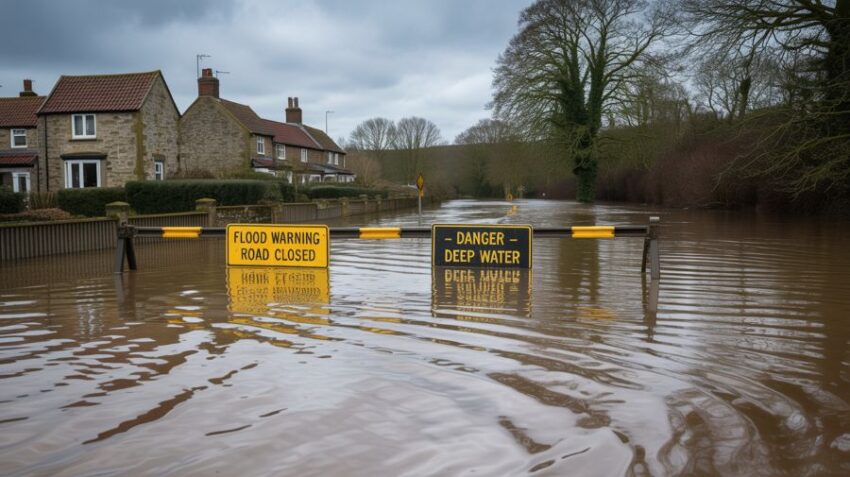
Flood Warnings Persist in the UK Amid Wintry Weather Change With Snow and Ice Expected: What New Updates You Need to Know

Due to being impacted by a particularly wet winter season, the entire United Kingdom is currently under flood warnings, with nearly ninety flood warnings in place, most centered in southern England and parts of Scotland. Cornwall and County Down have experienced their wettest January in recorded history.

Flood warnings are common in Dorset and Somerset, where rising levels of rivers and ground are flooding communities. Forecasts predict the UK will receive more rain this Wednesday and Thursday. Areas that are currently flooded will receive additional flooding. The Midlands will continue to have warnings until the flood waters recede as The River Trent and The River Severn continue to flood.

Weather Alerts

Weather conditions are anticipated to change on Friday. The conditions have been wet and will continue to be wet in the immediate future; however, the wet conditions will be interrupted by the arrival of cold weather that brings the likelihood of snowfall and ice. This abrupt change in weather has caused health alerts to be issued across the UK, especially in areas with anticipated significant drops in temperature.

The chances of experiencing snow increase as wet weather transitions to cold weather conditions, especially in the North of the UK. As the weather gets colder, mixing with the wet weather and snow, this can increase flooding and create new elements of wild flooding. With more cold weather in the future, road traveling will become more dangerous, and people must take more precaution when traveling.

Reasons for Flooding in the UK, Somerset, and Dorset

Southern England‘s weather, flooding, and all the rain in the last few months mean Northern Ireland and East Scotland have all experienced extreme weather and flooding. The rapid flow of water in some Dorset and Somerset areas has caused the most flooding and the most damage. Because rain has been constant, areas stay flooded longer, and people experienced longer periods with flood alerts.

The Environment Agency is obligated to remain informative and to provide flood safety suggestions to people living in flood risk areas. In addition to the alerts that flood-risk areas receive, the Environment Agency and the SEPA provide estimates of flooding and safety suggestions in addition to the social media suggestions that have been provided to risk areas.

Slow Flooding Response in the River Severn and Trent

While the flooding in Dorset and Somerset is likely more severe, the situation in the Midlands, along the River Severn and River Trent, presents a different problem. These two rivers are slow to respond to rainfall, which means that the floodwaters are going to take longer to recede. River flooding branch warnings will likely diminish due to the rivers moving towards the ocean. The risk still exists.

The nature of slow-moving rivers means that floodwaters will likely remain to cause some problems. As a result, authorities have asked areas of flooding to remain prepared as the water may take a while to recede.

Optimistic Weather Predictions

The end of the month may bring some good news for the UK as more settled weather is expected to start. However, due to severe flooding warnings, the weather is expected to stay unsettled for the flooding situation. Weather and flooding situations are expected to stay settled, and authorities are encouraging people living in areas affected by floods to prepare for disruptions.

Again and again, the UK has witnessed problems arising from wet weather and flooding, sparking alarm regarding the oncoming threat of climate change in the area. Each instance of abnormal weather behavior has shown the importance of taking necessary actions to combat the dangers associated with flooding and other severe weather phenomena.

Flood warnings are even now noted across the UK as places like Cornwall, Somerset, and Scotland enter icy, snow-bound weather. With flooding and icy environments threatening the safety of the inhabitants, communities must rely on the alerts put out by the SEPA and Environment Agency. Once sufficient adjustments are made to downward temperatures, more stable weather patterns with higher temperatures in the midst will be a change in priorities, focusing on the other pull of abnormal weather—recovery.

It has been an unprecedented time of weather in the UK. With flooding, snow, and ice at the forefront of everyone’s mind, communities will be required to weather the storm of severe flooding.

The post Flood Warnings Persist in the UK Amid Wintry Weather Change With Snow and Ice Expected: What New Updates You Need to Know appeared first on Travel And Tour World.
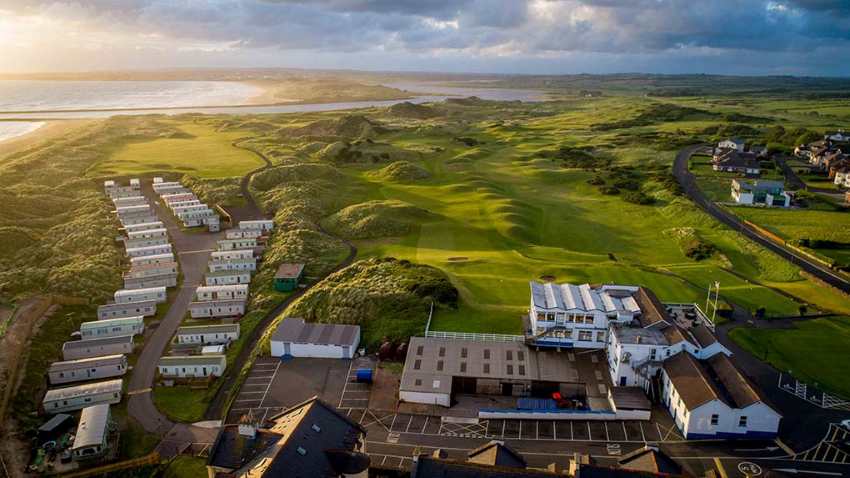
Why Castlerock Golf Club is the Ultimate Hidden Gem of Northern Ireland’s Causeway Coast

Why Castlerock Golf Club is the Ultimate Hidden Gem of Northern Ireland’s Causeway Coast

While the towering reputations of nearby Royal Portrush and Portstewart frequently dominate Northern Ireland’s international golfing narrative, the seaside town of Castlerock provides a sophisticated alternative. Castlerock Golf Club, which features a links layout described as both elegant and exhilarating, remains one of the country’s most prestigious yet understated sporting destinations. Established in 1901 by locals looking to take advantage of the spectacular natural terrain, the club has grown from a modest nine-hole retreat to a world-class multi-course facility that is respected by both seasoned professionals and travel enthusiasts.

A Legacy Shaped by Design Legends

The architectural evolution of the course is steeped in golfing lore. Initially plotted as a nine-hole experience, the expansion to a full 18-hole layout was overseen by the esteemed Scottish club maker Ben Sayers. However, the prestige of the grounds is further enhanced by the widely held belief among members that the legendary Harry Colt—the mastermind behind the iconic Dunluce Links at Royal Portrush—was consulted on the design during the 1930s. Although official documentation of Colt’s involvement is scarce, the “Colt signature” is felt through the strategic use of natural undulations and the clever integration of the coastal landscape. Today, the club features two distinct tracks: the testing par-34 Bann Course, which meanders alongside the River Bann, and the formidable par-73 Mussenden Course, which serves as the primary attraction for visitors.

The Professional Standard: A Championship Pedigree

The championship quality of Castlerock is well-documented through its history as a host for major competitive events. The Irish PGA Championship has been staged on these links four times. One of the most memorable iterations occurred in 2001, when the title was secured by Des Smyth in a hard-fought three-stroke victory over Paul McGinley. Such a history underscores the fact that the Mussenden Course is not merely a scenic walk but a rigorous test of skill. Accuracy is demanded from the tee, creativity is required for approach shots into complex green complexes, and a highly disciplined putting stroke is essential to navigate the subtle breaks of the surfaces.

Navigating the Mussenden: A Journey Through the Dunes

A round at the Mussenden Course is structured as a progressive journey that begins with a gentle introduction before intensifying as the holes draw closer to the Atlantic. The opening pair of holes sets a high standard; the first is a 367-yard par four that doglegs toward the right, guarded by steep hills. It is here that the true nature of the rough is first encountered, where thick bracken and straw are known to swallow wayward strikes. The second hole, a shorter 334-yard par four, offers a “risk-reward” opportunity for long hitters to drive the green, though the shot is entirely blind, making the conservative left-flank approach the more logical strategy for the uninitiated.

As the round progresses, the variety of the layout becomes its defining characteristic. The 523-yard par five third hole tests endurance, while the quirky 214-yard par three ninth demands precision. A standout feature is the sixth hole, a signature 347-yard par four. Here, a small stream separates the fairway from the green, necessitating a strategic layup. The green itself is regarded as one of the most treacherous on the property, featuring a significant slope that can send undercooked approach shots rolling back into the water hazard.

The Back Nine: Where Elements and Architecture Converge

The difficulty of the course is amplified on the back nine as the layout edges closer to the River Bann. It is in this section where the coastal weather becomes a primary protagonist, particularly as the elevation increases. The final four holes are frequently cited as the premier stretch of the course. The 14th, a 192-yard par three, is surrounded by four intricately placed bunkers designed to penalize even the slightest mishit. Upon reaching the 15th tee, players are treated to arguably the most spectacular vistas in Northern Ireland, with the rolling hills of Portstewart visible across the coastline. The round is concluded by the 18th, a 357-yard par four that rises toward a raised green, requiring one final display of accuracy to avoid the thick bracken-covered hills flanking the fairway.

Beyond the Fairways: Clubhouse Culture and Amenities

The experience of Castlerock extends beyond the final putt. The clubhouse is a repository of the club’s rich heritage, with hallways lined with silver trophies and historical artefacts that speak to its 125-year history. For those seeking technical improvement, the ‘Swing Studio’ provides a modern facility where club fitting and professional instruction are offered. The pro shop is equally well-appointed, stocked with bespoke club-branded merchandise that serves as a high-quality memento of the visit.

Post-round relaxation is catered to in the upstairs bar and restaurant, which offers a panoramic view of the links. It is here where the “cockles are warmed” after a cold day on the dunes. The culinary offerings are hearty and sophisticated, ranging from rump steaks and buffalo wings to the traditional soup of the day. The atmosphere is consistently described as warm and welcoming, devoid of the ostentation sometimes found at elite global clubs.

A Value-Driven Elite Experience

Castlerock Golf Club, while not as well-known as Northern Ireland’s “Big Two”, offers a world-class links experience that is frequently regarded as superior in terms of value and hospitality. It is a place where the ball is frequently played from above or below the feet, blind shots are required, and the spirit of traditional links golf is preserved in its purest form. Castlerock is more than just a secondary option for golfers visiting the Antrim Glens and the northwest coastline; it is a must-see destination that defines the rugged beauty of Northern Irish golf.

[Image Source: Castlerock Golf Club Official Website]

The post Why Castlerock Golf Club is the Ultimate Hidden Gem of Northern Ireland’s Causeway Coast appeared first on Travel And Tour World.

UK nations January 2026: Jaecoo 7 tops Scotland

The Jaecoo 7 is the best-selling vehicle in Scotland in January.


Thanks to SMMT we can share with you detailed sales data by model for each UK nation. In an overall market up 3.4%, England gains 5.3% to 123,661 units and Wales is up 0.5% to 4,628 but Scotland drops -7.3% to 11,323 and Northern Ireland dives -11.3% to 4,296.

Podium finishers are as follows. The Kia Sportage is #1 in England, Northern Ireland and Wales and #2 in Scotland, the Jaecoo 7 #1 in Scotland, #2 in England and #4 in Wales, the Ford Puma #2 in Wales, #3 in England, Northern Ireland and Scotland, the Nissan Juke #2 in Northern Ireland and the MG HS #3 in Wales, #4 in Scotland.

Other great performers include the Hyundai Tucson #5 in Northern Ireland, the BYD Seal U #6 in England and #10 in Scotland, the Omoda 5 #7 in Scotland, the VW T-Roc #7 in Northern Ireland, the BMW 1 Series #8 in Scotland, the Audi A3 #9 in England, the Peugeot 3008 #10 in England and the Volvo XC40 #10 in Northern Ireland.

Previous posts:

England (UK) 2025: Ford Puma and Kia Sportage lead, sales up 4.2%

Northern Ireland (UK) 2025: Kia Sportage stays at #1, Peugeot places 2008 at #3 and 3008 at #6

Scotland (UK) 2025: Vauxhall Corsa #1 for 6th year in a row, Jaecoo 7 up to #4

Wales (UK) 2025: Ford Puma and MG HS top negative market

One year ago: UK nations January 2025: Peugeot 3008 #2 in two nations.

Full January 2026 Top 10 models for each UK nation below.
England (UK) January 2026 – models:

PosModelJan-26%/25UKDec
1Kia Sportage3,9383.2%+ 43.4%1n/a
2Jaecoo 73,5312.9%n/a26
3Ford Puma3,0902.5%+ 59.0%31
4Vauxhall Corsa2,6852.2%+ 9.7%5n/a
5Nissan Qashqai2,5832.1%– 12.4%45
6BYD Seal U2,2701.8%n/a6n/a
7Nissan Juke2,1331.7%+ 6.3%710
8VW Tiguan1,9771.6%+ 18.2%8n/a
9Audi A31,7341.4%#DIV/0!n/an/a
10Peugeot 30081,7321.4%– 16.1%n/an/a

Northern Ireland (UK) January 2026 – models:

PosModelJan-26%/25UKDec
1Kia Sportage2225.2%+ 37.0%13
2Nissan Juke1653.8%+ 91.9%77
3Ford Puma1433.3%+ 68.2%32
4Nissan Qashqai1172.7%– 14.6%46
5Hyundai Tucson1082.5%– 10.7%n/an/a
6MG HS1082.5%– 6.9%10n/a
7VW T-Roc992.3%– 23.8%n/an/a
8VW Golf952.2%+ 9.2%9n/a
9VW Tiguan882.0%+ 8.6%8n/a
10Volvo XC40811.9%n/an/an/a

Scotland January 2026 – models:

PosModelJan-26%/25UKDec
1Jaecoo 74113.6%n/a24
2Kia Sportage3202.8%– 24.9%19
3Ford Puma3132.8%+ 192.5%35
4MG HS3122.8%n/a1010
5VW Tiguan2742.4%+ 20.2%8n/a
6VW Polo2592.3%+ 0.4%n/a11
7Omoda 52562.3%n/an/a7
8BMW 1 Series2121.9%n/an/an/a
9VW Golf1891.7%– 53.6%98
10BYD Seal U1881.7%n/a6n/a

Wales (UK) January 2026 – models:

PosModelJan-26%/25UKDec
1Kia Sportage1884.1%+ 40.3%14
2Ford Puma1693.7%+ 79.8%31
3MG HS1222.6%+ 50.6%102
4Jaecoo 71172.5%n/a2n/a
5Nissan Qashqai1102.4%+ 2.8%4n/a
6VW T-Roc912.0%– 5.2%n/an/a
7Nissan Juke871.9%– 8.4%78
8Vauxhall Corsa861.9%+ 3.6%5n/a
9VW Tiguan851.8%#DIV/0!8n/a
10VW Polo821.8%#DIV/0!n/an/a

Source: SMMT

❌