Login
Login
Why Real Explorers Are Ditching Popular Beaches for These Eight Unknown Archipelagos in 2026: Find Out

Top dreamy archipelagos for 2026 are being sought by travellers who dream of cinematic horizons, wild coastlines and sea-sculpted islands that still feel remote and authentic. In 2026, a handful of archipelagos stand out for their scenery, protected status and strong backing from official or trusted bodies, making them ideal choices for travellers, photographers and nature lovers alike. Each of these destinations is characterised by dramatic landscapes, layered cultural narratives and carefully managed environments, and is therefore especially well suited for slow, immersive exploration.
Swedish Archipelagos: Bothnian Bay, Stockholm, Bohuslän and Blekinge
The Swedish archipelagos are being recognised as some of the most visually captivating island regions in Europe, shaped by a vast network of 267,570 islands, which is the highest number recorded for any country. Sweden’s coastal islands are being defined by smooth rock slabs, red fishing huts and tranquil Baltic waters that create a serene, almost dream-like atmosphere along the shoreline. Across these scattered isles, a blend of simple wooden dwellings, quiet marinas and largely untouched nature is being preserved, offering an ambience that feels both modest and cinematic.
In the far north, the Bothnian Bay archipelago in Swedish Lapland is being hailed as a surreal setting where sandy beaches, rugged islets and seasonal light phenomena meet. Over 4,000 islands are being spread across these cold but luminous waters, and during winter and early spring the Northern Lights are often being observed painting the sky above frozen or drifting sea ice. In summer, the Midnight Sun is being experienced, bathing low islands and coastal forests in a soft, timeless glow, which is making this region particularly compelling for photographers and travellers who seek rare light conditions.
The High Coast archipelago is being framed as one of the most geologically fascinating parts of the Baltic shoreline. As part of the High Coast / Kvarken Archipelago UNESCO World Heritage site, the region is being renowned for its red granite cliffs, steep forested slopes and clear evidence of land uplift after the last Ice Age. Islands and peninsulas are literally being raised out of the sea over time, which is creating a constantly evolving land–sea interface. Hiking trails, viewpoints and coastal paths are being carefully maintained, allowing long panoramic views over bays, inlets and small islets.
The Stockholm archipelago is being appreciated as one of the most accessible yet varied island chains in Scandinavia. Around 30,000 islands, islets and skerries are being scattered from the city’s outskirts into the Baltic, and a wide spectrum of experiences is being offered. Some islands are being developed with boutique stays, glamping sites and art-led destinations, while others are being left almost entirely wild, with simple lighthouses, small piers and smooth rocks being used as natural bathing platforms. Kayaking, sailing and island-hopping by ferry are being favoured as relaxed ways to explore this water-bound landscape.
Further south, the Blekinge archipelago is being designated as a UNESCO Biosphere Reserve, highlighting its ecological importance and high-quality landscapes. Around 1,650 islands are being located off the coast, where nature reserves, pine and deciduous forests and low-key villages are being blended into a calm coastal world. Serene and usually uncrowded swimming spots are being found on sheltered shores, and slow, small-boat journeys between islands are being encouraged. Because of this protected status, the scenery is being kept unspoiled and is being especially appealing to those who prefer gentle, contemplative travel.
The best time to visit the Swedish archipelagos is being considered late spring to early autumn, roughly from May to September, when ferry networks are being fully operated, waters are being calmer and daylight hours are being extended. During this period, island guesthouses and seasonal restaurants are being opened and outdoor activities are being most comfortable. Winter and early spring are being chosen by those who wish to witness ice, snow and Northern Lights, especially in the Bothnian Bay area, although conditions are being harsher and services more limited.
Key places that are generally being prioritised include Stockholm’s outer skerries, the High Coast viewpoints and hiking routes, the Bothnian Bay islands near Luleå and the Blekinge Biosphere Reserve isles, where protected nature and traditional Swedish coastal culture are being experienced together.
Madeira Archipelago, Portugal
The Madeira archipelago is being presented as a volcanic Atlantic outpost off the coast of North Africa, where dramatic cliffs, a mild climate and constant ocean vistas are being combined into a striking island escape. Madeira has been highlighted as a standout spring getaway for 2026, and its landscapes are being celebrated for their year-round hiking routes and abundant viewpoints. Steep mountains are being seen rising sharply from the ocean, while terraced hillsides, coastal paths and cloud-touched peaks are being arranged in a remarkably compact area.
On the main island, the Laurisilva of Madeira is being recognised as a UNESCO World Heritage site, protecting one of the last and largest surviving laurel forests of its kind. This ancient, mist-covered woodland is being wrapped around ravines and slopes, where waterfalls, ferns and mosses are being nurtured by the island’s humid microclimate. When this forest environment is being combined with high coastal cliffs and distant Atlantic views, a layered and almost otherworldly atmosphere is being created, which is strongly appealing to hikers and nature enthusiasts.
The wider portfolio of Portuguese island heritage is being strengthened by additional UNESCO-listed landscapes, such as the Pico Island Vineyard Culture in the Azores, and this broader recognition is being used to underscore Portugal’s reputation for spectacular island scenery. As a result, Madeira is being seen as part of a national network of island destinations where nature, culture and wine traditions are being carefully promoted.
The best time to visit Madeira is being considered from March to June and again from September to early November, when temperatures are being mild, hiking conditions are being comfortable and major visitor peaks are being avoided. Spring is being favoured for lush landscapes and flower blooms, while autumn is being chosen for stable weather and calmer crowds. Summer is also being suitable for visits, but some trails and viewpoints are being more crowded.
Must-visit areas in Madeira are being identified as Funchal and its viewpoints, the levada walking paths that trace historic irrigation channels through the laurel forest, the high plateau of Paul da Serra, the cliffs at Cabo Girão and the coastal villages such as Câmara de Lobos, where traditional life and sea views are being experienced together.
Azores Archipelago, Portugal
The Azores archipelago is being positioned in the mid-Atlantic between Europe and North America, consisting of nine main islands shaped by volcanoes, ocean swells and lush subtropical vegetation. São Miguel is often being described as a lush Eden of crater lakes, hot springs and layered viewpoints, where crater rims are being walked and emerald lakes are being observed far below. Thermal pools, tea plantations and black-sand beaches are being combined within relatively short driving distances, creating a strong sense of variety.
On Pico Island, UNESCO recognition has been granted to the Landscape of the Pico Island Vineyard Culture, where vineyards are being planted in dark lava fields, protected from the wind by low stone walls. This distinctive agricultural scenery is being set against Atlantic horizons and the volcanic cone of Pico, producing a deeply photogenic combination of human-made structures and elemental forces. The broader Azorean seascape is being celebrated for whale watching, volcanic calderas and dramatic coastal cliffs that drop into deep, blue waters.
These islands are being viewed as ideal for travellers in 2026 who are seeking raw, cinematic seascapes rather than heavily built-up resort environments. The archipelago’s relative isolation is being maintained through cautious development and strong environmental awareness, which is ensuring that many landscapes remain sparsely populated and visually unspoiled. Outdoor activities, including hiking, canyoning, sailing and wildlife observation, are being promoted as core experiences.
The best time to visit the Azores is generally being considered May to October, when seas are being calmer, whale-watching seasons are being active and conditions for hiking are being most reliable. Spring and early summer are being appreciated for wildflowers and lush greenery, while late summer and early autumn are being valued for warmer sea temperatures.
Must-visit areas are being widely regarded as São Miguel’s crater lakes such as Sete Cidades and Lagoa do Fogo, the hot springs around Furnas, the UNESCO vineyard landscapes on Pico, the dramatic coastline of São Jorge and the more remote islands such as Flores, where waterfalls and steep, verdant cliffs are being found in abundance.
High Coast / Kvarken Archipelago, Sweden–Finland
The High Coast in Sweden and the Kvarken Archipelago in Finland are being jointly inscribed as a UNESCO World Heritage site, recognised for a land and seascape that is both highly scenic and scientifically remarkable. This region is being characterised by world-record post-glacial uplift, through which land is being pushed upward by about 8 mm per year as the Earth’s crust slowly rebounds after the weight of ancient ice sheets. As a result, new islands, peninsulas and shallow bays are being continually formed, which is creating a dynamic shoreline.
Steep forested headlands, red granite cliffs and scattered skerries are being aligned along the coast, and numerous viewpoints are being established to showcase this evolving geography. Hiking routes are being laid out to cross ridges and coastal hills, where sweeping views over the Baltic Sea and a mosaic of islands are being granted. On the Swedish side, Mjältön, rising to 236 metres above sea level, is being recognised as the country’s highest island, and its summit hikes are being rewarded with wide, island-dotted vistas that feel especially suited for landscape photography.
The best visiting period is being considered late spring to early autumn, from May to September, when trails and boat services are being active, weather is being milder and daylight is being extended. Autumn is also being appreciated for its colourful foliage, which is adding another visual layer to the rocky shores and conifer forests.
Key areas that are typically being prioritised include the main High Coast hiking routes, viewpoints overlooking the High Coast Bridge and selected islands in the Kvarken Archipelago, where shallow, island-studded waters are being experienced from boats and low coastal paths.
Marquesas Islands, French Polynesia
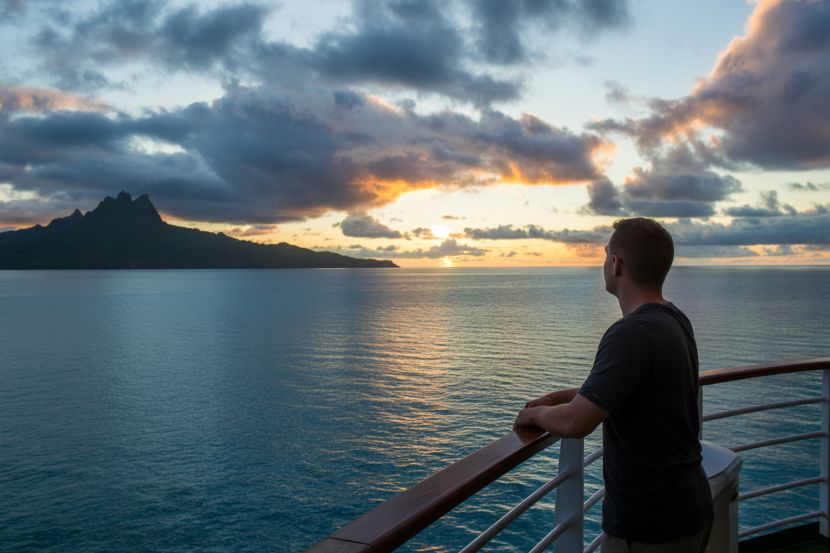
The Marquesas Islands, known as Te Henua Enata – The Marquesas Islands, are being recently inscribed on the UNESCO World Heritage List, which is underscoring both their natural grandeur and cultural depth. Located in a remote part of the Pacific, the archipelago is being celebrated for its dramatic volcanic peaks that rise sharply from the ocean, creating some of the most imposing island silhouettes in Polynesia. Deep bays, steep valleys and ridgeline villages are being arranged along these mountainous islands, which are imbued with a powerful sense of isolation and authenticity.
Lush valleys and coastal plains are being wrapped in tropical vegetation, where archaeological sites, traditional art forms and local communities are being interwoven into the landscape. The recognition of multiple UNESCO sites in French Polynesia in general is being used to emphasise the region’s rich cultural and environmental value, and the Marquesas are being presented as a particularly striking example of this combined heritage. Atmospheric light, ocean mist and towering cliffs are being commonly found, offering highly evocative scenes.
The best time to visit the Marquesas is being considered May to October, when conditions are being drier and temperatures are being somewhat more moderate, although the islands are being visited year-round. During this period, hiking, boat excursions and cultural activities are being more comfortable, and views are being clearer more often.
Must-visit locations in the Marquesas are being identified as key islands such as Nuku Hiva and Hiva Oa, where towering peaks, ancient sites and bays are being most easily accessed. Scenic anchorages, coastal viewpoints and village areas where traditional carving and tattoo arts are being practised are also being widely sought by visitors.
Revillagigedo Archipelago, Mexico
The Revillagigedo Archipelago, located in the Pacific Ocean off Mexico, is being inscribed on the UNESCO World Heritage List for its exceptional marine and island ecosystems. It is often being referred to as the Mexican Galápagos, and this nickname is being used to convey the richness of its wildlife and the rugged, volcanic character of its islands. Steep cliffs, rocky shorelines and a largely uninhabited appearance are being characteristic of this archipelago, which is primarily being accessed by liveaboard vessels and specialised expeditions.
Underwater, world-class diving is being offered, where encounters with manta rays, sharks and other pelagic species are being commonly reported. Above the surface, the islands are being portrayed as wild and virtually untouched, with harsh yet compelling volcanic backdrops rising from the sea. The UNESCO listing is being taken as confirmation of the area’s conservation importance and its pristine character, which is ensuring that the visual drama is being preserved.
The best time to visit the Revillagigedo Archipelago is usually being considered from November to May, when sea conditions are being more favourable and marine life encounters are being particularly rich. Because access is being tightly controlled, trips are being planned well in advance and are generally being undertaken by experienced divers and adventure travellers.
Key areas are being focused around the main islands, including Socorro Island, where dive sites and cliffs are being combined into a striking setting, and other nearby islands where similar conditions and wildlife are being found. The experience is being shaped more as an expedition than a conventional holiday, with scenery and marine encounters being the primary goals.
Gulf of California Islands, Mexico
The Islands and Protected Areas of the Gulf of California are being designated as a UNESCO World Heritage property, comprising numerous islands and coastal zones in one of Mexico’s most distinctive marine regions. Desert-meets-sea landscapes are being created here, where arid, cactus-studded hills are being dropped directly into turquoise waters. Rugged, uninhabited islets are being scattered across the gulf, with clear seas and intricate coastlines offering abundant opportunities for exploration.
These islands are being recognised for their rich marine life and unique ecosystems, and they are being particularly appreciated by snorkellers, kayakers and small-boat travellers. The stark contrast between ochre and red rock, bright blue water and clear skies is being perceived as extremely photogenic. Because of the protected status, much of the coastline is being left undeveloped, giving a strong sense of isolation and raw beauty.
The best time to visit the Gulf of California islands is being considered from November to April, when temperatures are being milder and wildlife, including whales, is being more active in the region. During this season, paddling, hiking and boat excursions are being most comfortable, while summer heat is being stronger and conditions harsher for some visitors.
Must-visit areas are being frequently identified as islands off Baja California Sur, where day trips and multi-day kayak journeys are being operated, as well as designated protected zones where snorkelling and wildlife watching are being carefully managed to protect the environment.
St Kilda Archipelago, Scotland, UK
St Kilda, situated in the North Atlantic off the coast of Scotland, is being designated as a UNESCO World Heritage site and is being renowned for some of Europe’s highest sea cliffs and spectacular sea stacks. The archipelago’s steep green slopes, battered by waves and wind, are being populated by vast seabird colonies, which are creating a dramatic soundtrack and constant motion along the cliffs. The islands’ remoteness is being reinforced by the sense of abandonment visible in old stone village remains and field systems, which record the lives of former inhabitants.
This combination of towering cliffs, swirling seabirds and traces of human history is being perceived as creating a uniquely wild, dream-like atmosphere. Weather conditions are often being changeable and moody, and low cloud or shafts of sunlight are being frequently observed moving quickly across the cliffs, a pattern that adds to the sense of drama. As part of the UK’s World Heritage portfolio, St Kilda is being formally recognised for both natural beauty and cultural significance, making it a niche but powerful destination for 2026.
The best time to visit St Kilda is being considered late spring to early autumn, usually from May to September, when boat access is being somewhat more reliable and conditions at sea are being less severe. Even during this period, weather constraints are being common, and flexibility is being required. Wildlife viewing, especially of seabirds, is being particularly rewarding in the early and mid-summer months.
Must-visit locations within the archipelago are being centred on the main island of Hirta, where village remains, steep slopes and key viewpoints are being found. Boat tours around neighbouring stacks and sea cliffs are also being frequently chosen, offering views of both geology and huge bird colonies that cannot be experienced from land alone.
The post Why Real Explorers Are Ditching Popular Beaches for These Eight Unknown Archipelagos in 2026: Find Out appeared first on Travel And Tour World.