
Reading view

Dubai, United Arab Emirates Major Aviation Standstill as Flights Halted Across the City Amid Unfolding Regional Security Developments!
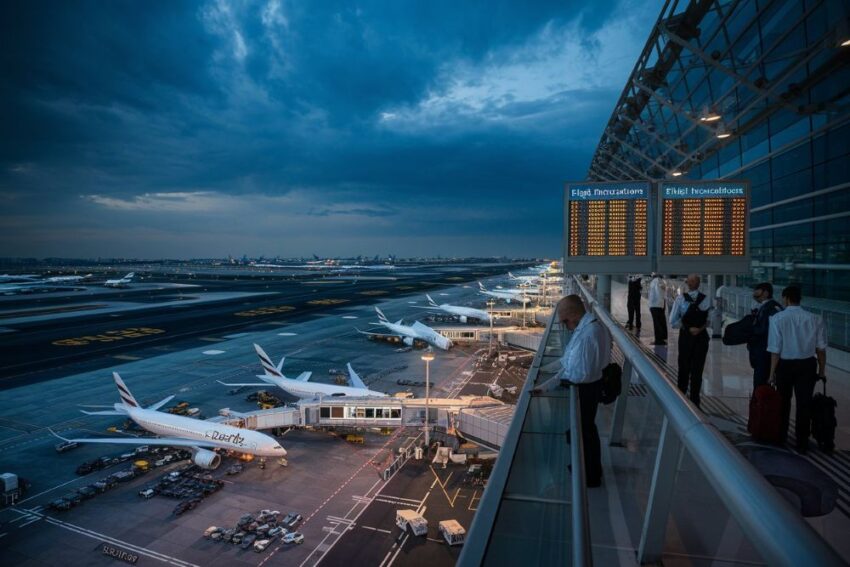
Dubai, United Arab Emirates Major Aviation Standstill as Flights Halted Across the City Amid Unfolding Regional Security Developments!

Travel operations across Dubai, United Arab Emirates have been significantly disrupted following the temporary suspension of all flights at the city’s two major aviation hubs Dubai International Airport and Al Maktoum International Airport. The move comes after the country’s aviation regulator implemented precautionary airspace limitations in response to evolving regional security conditions. Authorities have advised passengers scheduled to depart or arrive to avoid travelling to the airports and instead contact their airlines directly for updates.

Temporary UAE Airspace Measures Trigger Suspension

The operational halt follows a partial and temporary closure of the United Arab Emirates airspace introduced by the General Civil Aviation Authority. According to official government communications released through Emirates News Agency (WAM), the measure was taken as a precaution amid rapidly changing regional security developments. The authority described the restriction as an exceptional step aimed at ensuring the safety of passengers, crew, and aviation infrastructure. Officials confirmed that the situation is being monitored continuously and that operations will resume once conditions are deemed safe.

All Operations Halted at Dubai’s Two Airports

Airport operator Dubai Airports, which manages both aviation hubs, confirmed that all passenger and flight operations have been suspended until further notice. The organization has issued guidance urging travelers not to proceed to either airport during the suspension period. Instead, passengers are advised to:

  • Check their flight status online
  • Contact their airline or travel agent directly
  • Wait for official announcements before making travel arrangements

Authorities emphasized that updates will be shared as the situation evolves and operational clarity improves.

Impact on Emirates Airline Operations

The disruption has also affected the UAE’s flagship carrier, Emirates, which temporarily suspended all flights to and from Dubai until 3:00 PM UAE time on March 1.

Based on official airline guidance, passengers scheduled to travel within the next 72 hours have been offered flexible options:

Rebooking Option

  • Travelers may reschedule their journey to the same destination.
  • New travel dates can be selected within 10 days of the original departure.
  • Customers who booked through travel agents must contact their agents, while direct bookings can be modified via the airline’s official website.

Refund Option

  • Passengers may request a full refund.
  • Refund applications can be submitted online for direct bookings.
  • Those who booked through third-party agents should initiate requests through their respective agencies.

The airline confirmed that these measures are intended to minimize inconvenience while prioritizing operational safety.

Safety Measures Remain the Top Priority

Both aviation authorities and airline operators have reiterated that passenger safety and security remain the primary consideration behind the suspension. Officials indicated that the flight cancellations are linked to multiple regional airspace restrictions, which have affected standard flight routes and operational planning. Aviation teams are working closely with relevant government bodies and international aviation partners to assess the situation. Continuous monitoring and coordination are underway to ensure that operations resume only when safe airspace conditions are confirmed.

Advice for Travelers Planning to Visit Dubai

Passengers planning travel to or from Dubai in the coming days should take the following steps:

  • Do not travel to the airport unless your flight is confirmed
  • Regularly check airline websites or official airport platforms
  • Allow extra flexibility in travel plans
  • Monitor updates from government aviation authorities

Travelers with connecting flights through Dubai should also verify the status of their entire itinerary, as transit services are affected by the suspension.

Wider Travel and Tourism Implications

As one of the world’s busiest international aviation hubs, Dubai serves millions of passengers annually and acts as a key transit gateway between Europe, Asia, Africa, and the Americas. Temporary disruptions at DXB and DWC are likely to impact global flight schedules and passenger connections. Tourism stakeholders, hotels, and tour operators across the emirate are closely monitoring developments. While the suspension is expected to be short-term, travelers are encouraged to remain informed and flexible as authorities respond to changing regional conditions.

When Will Flights Resume?

At present, officials have not provided a confirmed timeline for the full resumption of airport operations. Authorities have stated that flight services will restart once airspace conditions stabilize and safety assessments are completed. Passengers are advised to rely only on official government sources, airline notifications, and airport announcements for accurate information, as conditions may change quickly.

The post Dubai, United Arab Emirates Major Aviation Standstill as Flights Halted Across the City Amid Unfolding Regional Security Developments! appeared first on Travel And Tour World.

North America Azamara Cruises Launches Exclusive Industry Council Offering Top Advisors Early Access and Direct Impact on Future Programs!

North America Azamara Cruises Launches Exclusive Industry Council Offering Top Advisors Early Access and Direct Impact on Future Programs!

North America’s cruise sector is witnessing a new initiative aimed at strengthening ties between cruise operators and the travel trade. Azamara Cruises has announced the creation of a Travel Advisor Council, a structured program designed to enhance collaboration with travel professionals across the United States and Canada. The initiative reflects a broader industry trend toward deeper engagement with frontline travel advisors, whose insights play a critical role in shaping guest experiences, marketing strategies, and product development in the luxury cruise segment.\

A Strategic Initiative for North America’s Travel Trade

The newly established council will consist of 10 experienced travel advisors selected by the company’s regional sales leadership across North America. Participants will represent a diverse cross-section of markets, specialties, and customer demographics, ensuring that feedback reflects the varied needs of the cruise industry’s clientele.

The key objectives of the council include:

  • Providing strategic business insights
  • Offering product and itinerary feedback
  • Supporting the development of sales and marketing initiatives
  • Enhancing the overall guest experience
  • Participating in process testing and refinement

Through structured collaboration sessions, members will work directly with internal teams to help shape future programs, tools, and operational improvements.

Strengthening Advisor Influence on Business Decisions

The formation of the council underscores the growing recognition within the cruise industry that travel advisors are essential partners in driving bookings, building brand loyalty, and understanding evolving traveler expectations. By formalizing this advisory group, Azamara Cruises aims to ensure that advisor perspectives directly influence business planning and execution. Council members will also receive early visibility into upcoming initiatives, allowing them to provide feedback before new programs are rolled out more broadly.

Important program features include:

  • Early access to key company initiatives
  • Direct communication channels with leadership
  • Opportunities to pilot and evaluate new tools
  • Regular structured feedback sessions

This approach allows the company to test ideas in real-world conditions while improving efficiency and market relevance.

Eligibility and Selection Criteria

Participation in the Travel Advisor Council is designed for highly experienced professionals with a demonstrated commitment to the brand and the cruise sector.

To qualify, advisors must:

  • Have at least five years of cruise-focused industry experience
  • Be graduates of the Azamara World Academy
  • Have both sold Azamara products and personally sailed with the brand
  • Represent diverse geographic markets and client segments across the U.S. and Canada

The council operates as a 12-month commitment, during which members will actively contribute to discussions, evaluations, and collaborative initiatives. This structure ensures continuity while allowing the company to refresh participation periodically to bring in new perspectives.

Supporting the Azamara Forward Transformation

The Travel Advisor Council aligns with the brand’s broader transformation strategy, including the Azamara Forward program, which focuses on fleetwide enhancements and guest experience improvements. Through advisor collaboration, the company aims to ensure that product investments and operational changes align closely with customer expectations and market demand.

Key areas where advisor input may influence decisions include:

  • Onboard experiences and amenities
  • Shore excursion development
  • Pricing and promotional strategies
  • Digital tools and booking processes
  • Marketing messaging and campaign effectiveness

By integrating advisor feedback early in the planning process, the company can reduce friction in distribution channels and improve overall customer satisfaction.

The Role of Travel Advisors in Luxury Cruise Sales

In the luxury and premium cruise segment, travel advisors remain a primary distribution channel. Their expertise is particularly important for complex itineraries, longer voyages, and experiential travel products.

Travel advisors contribute by:

  • Matching clients with suitable itineraries and ships
  • Providing destination knowledge and pre-trip planning
  • Managing group and specialty bookings
  • Delivering personalized service before and after travel

Recognizing this role, cruise lines across the industry have increasingly invested in training programs, loyalty incentives, and advisory groups to maintain strong relationships with the trade. The requirement that council members be graduates of the Azamara World Academy highlights the company’s focus on education as a foundation for effective partnership.

Enhancing Guest Experience Through Industry Feedback

One of the central goals of the new council is to strengthen the connection between customer expectations and operational delivery.

Because travel advisors interact directly with clients, they often identify emerging trends before they appear in booking data. Their feedback can provide early insight into:

  • Changing traveler preferences
  • Demand for new destinations or experiences
  • Pricing sensitivity and value perceptions
  • Service expectations among repeat cruise guests

By incorporating these insights, Azamara aims to refine its offerings and maintain competitiveness in the boutique cruise market.

A North American Focus with Broader Implications

While the initial council focuses on North America, the initiative reflects a global shift toward more collaborative business models in the travel industry. The U.S. and Canada represent significant source markets for the brand, making advisor engagement in these regions particularly important. The program also supports stronger alignment between sales, marketing, and operations, ensuring that messaging and product delivery remain consistent across channels.

Industry Context: Collaboration as a Growth Strategy

The launch of advisory councils and similar initiatives has become more common across the travel sector. As customer expectations evolve and competition intensifies, companies are seeking more direct feedback from distribution partners.

Benefits of advisory programs include:

  • Faster adaptation to market trends
  • Improved product-market fit
  • Stronger advisor loyalty and advocacy
  • More effective marketing and sales execution

For travel advisors, participation offers professional recognition, deeper brand knowledge, and the opportunity to influence future offerings.

Overview

The 12-month advisory cycle will allow Azamara Cruises to gather continuous input while evaluating the effectiveness of the program. Insights generated during the first year may shape future iterations, including potential expansion to other regions or specialized advisor segments.

Key expected outcomes include:

  • Enhanced advisor engagement and satisfaction
  • Improved operational processes
  • More targeted marketing and promotional strategies
  • Continued refinement of the guest experience

As the cruise industry continues its post-recovery growth phase, initiatives that strengthen collaboration between suppliers and the travel trade are likely to play a critical role in long-term success.

Conclusion

The launch of the Travel Advisor Council represents a strategic move by Azamara Cruises to deepen its partnership with travel professionals across North America. By creating a structured platform for feedback and collaboration, the company is positioning travel advisors as active contributors to business planning, product development, and customer experience.

The post North America Azamara Cruises Launches Exclusive Industry Council Offering Top Advisors Early Access and Direct Impact on Future Programs! appeared first on Travel And Tour World.

Leeds, England Braces for the Unexpected Travel Disruptions, Packed Hotels and a Missing Star Ahead of Manchester City’s Crucial Visit!

Leeds, England Braces for the Unexpected Travel Disruptions, Packed Hotels and a Missing Star Ahead of Manchester City’s Crucial Visit!

Leeds, England is preparing for increased visitor activity as Leeds United host Manchester City at Elland Road in a high-profile Premier League fixture. Local authorities and official transport services are advising residents and travelers to plan ahead due to elevated footfall, traffic congestion, and public transport demand across the city. The match carries additional attention as Manchester City travel without their leading striker, Erling Haaland, who was absent from the official matchday squad. The development has heightened interest among supporters and visiting spectators, contributing to a busy matchday environment in Leeds.

Increased Visitor Flow Expected Across Leeds

Major football fixtures at Elland Road typically attract thousands of domestic and international visitors. Official guidance from local transport authorities indicates:

  • Higher demand on rail services arriving at Leeds Station
  • Congestion on key routes including the M621 and surrounding arterial roads
  • Increased use of park-and-ride and bus services
  • Crowding in hospitality districts, particularly in the city centre and areas near the stadium

Travelers are encouraged to arrive early, allow additional journey time, and check official service updates through National Rail, local bus operators, and Leeds City Council travel channels. Visitors planning to explore the city alongside the match are advised that popular attractions, dining venues, and accommodation providers may experience near-capacity levels, especially on weekends when major sporting events coincide with leisure travel.

Match Significance Driving Fan Travel

The fixture has drawn strong interest due to its impact at the top end of the Premier League table. Manchester City are aiming to reduce the gap to league leaders while maintaining momentum across multiple competitions. The team enters the match following five consecutive wins in all competitions, keeping their campaign active in domestic and European contests. Their previous meeting with Leeds earlier in the season ended in a narrow victory, further intensifying supporter anticipation for the return fixture. For Leeds United, recent league form has been resilient. Since their earlier defeat to City, they have suffered only two losses in fourteen Premier League matches, positioning the team as a competitive opponent and increasing the match’s appeal for neutral spectators and traveling fans.

Absence of Erling Haaland: Travel Interest and Media Focus

When official team information was released prior to kickoff, Erling Haaland was not included in Manchester City’s squad. This marks a rare occurrence during the current season, as he has been involved in nearly all major league and European fixtures.

Key performance context:

  • 22 Premier League goals in 27 appearances
  • 7 league assists
  • 29 goals in 38 matches across all competitions
  • All assists recorded in domestic league play

His absence represents the first Premier League or Champions League match this season in which he has not featured. The development has generated additional media attention and contributed to increased matchday tourism interest, as visitors monitor squad adjustments and tactical changes.

Squad Adjustments and Tactical Changes

With Haaland unavailable, Manchester City have turned to alternative attacking options. Antoine Semenyo and Omar Marmoush were named in the starting lineup and are expected to share attacking responsibilities. Both players have previously started together during a league victory earlier in the season, where they contributed goals. Their inclusion reflects the squad depth that has allowed Manchester City to maintain results even during periods of rotation.

City’s overall record without Haaland this season includes:

  • Substitute appearances in two matches, including a rotated European defeat and a league win
  • Victories in multiple domestic cup fixtures when he was rested

For traveling supporters, squad rotation scenarios often influence matchday demand, with fans keen to observe emerging partnerships and tactical variations.

City’s Pursuit of Multiple Competitions

Manchester City remain active across several competitions, a factor that continues to drive fan mobility across the UK and Europe. Their strong run of results has sustained interest among supporters who regularly travel for away fixtures. The club’s ability to remain competitive without key players has reinforced expectations of a closely contested title race. This competitive context is contributing to higher-than-average away fan travel volumes to Leeds.

Leeds’ Growing Reputation as a Sports Tourism Destination

The city of Leeds has increasingly positioned itself as a hub for sports tourism. On match weekends, visitors often combine attendance at Elland Road with exploration of:

  • The historic Leeds city centre
  • Shopping districts such as Trinity Leeds and Victoria Quarter
  • Cultural venues including museums and galleries
  • The nearby Yorkshire countryside for short excursions

Local tourism officials note that major Premier League fixtures generate significant economic activity for hotels, restaurants, and local businesses. Travelers are advised to book accommodation early and confirm late check-in arrangements where matches extend into evening hours.

Transport and Safety Guidance for Visitors

Official recommendations for matchday travelers include:

Before Travel

  • Check National Rail and local bus service updates
  • Allow extra time for security screening and stadium entry
  • Download digital tickets where applicable

During Matchday

  • Follow steward instructions around Elland Road
  • Use designated pedestrian routes
  • Expect temporary road closures near the stadium

After the Match

  • Anticipate crowd management measures at Leeds Station
  • Consider staggered departures or alternative transport options
  • Monitor official travel alerts for service changes

Emergency services and local authorities will operate enhanced safety protocols to manage crowd movement and ensure public safety.

Previous Meeting Adds Competitive Edge

The earlier encounter between the two sides at Manchester City’s home ground resulted in a closely contested match. City held a two-goal advantage at halftime but required a late winning goal to secure victory after Leeds mounted a comeback. That competitive history has increased anticipation for the reverse fixture, encouraging additional spectator travel and media presence in Leeds.

Matchday Impact on Local Businesses

Hospitality providers across Leeds typically report:

  • Full occupancy rates in hotels near the city centre and stadium
  • Increased demand for pubs and restaurants before and after kickoff
  • Extended opening hours during major fixtures

Visitors are encouraged to make advance reservations and allow sufficient time between dining plans and stadium entry.

Looking Ahead: Continued Travel Interest

With the Premier League season entering a decisive phase and Manchester City still competing on multiple fronts, future away fixtures are expected to continue attracting strong traveling support. The ongoing title race, combined with the team’s pursuit of domestic and European honors, is likely to sustain high levels of football-related tourism across host cities. For Leeds, hosting high-profile matches such as this reinforces its position as a key destination within the UK’s sports travel landscape.

The post Leeds, England Braces for the Unexpected Travel Disruptions, Packed Hotels and a Missing Star Ahead of Manchester City’s Crucial Visit! appeared first on Travel And Tour World.

Catskills to Cyprus Inside Grossinger’s, Varosha and Five Luxury Destinations That Went From Jet-Set Glamour to Forgotten Legends!

Catskills to Cyprus Inside Grossinger’s, Varosha and Five Luxury Destinations That Went From Jet-Set Glamour to Forgotten Legends!

From New York’s Catskill Mountains to the shores of Cyprus, several destinations once defined the meaning of luxury travel. Changes in air connectivity, political conditions, environmental challenges, and evolving traveler expectations have reshaped global tourism. Official archives, government tourism authorities, and heritage programs show that while some of these locations have been restored or repurposed, others remain historical reminders of how quickly travel prestige can shift. Below are seven destinations whose rise and transformation illustrate the changing dynamics of the global hospitality industry.

1. Grossinger’s Catskill Resort Hotel – United States

For much of the 20th century, Grossinger’s stood at the center of the Catskills resort era. Historical records preserved by the U.S. Library of Congress document a vast, self-contained property featuring golf courses, lakes, winter sports, medical facilities, entertainment venues, and even a private airstrip. The resort represented a travel style built around week-long, all-inclusive domestic vacations. However, state tourism history notes that the expansion of commercial aviation, growing interest in international travel, and changing leisure habits reduced demand for large seasonal mountain resorts. The property closed in 1986 and today survives primarily through public archives as a landmark of a vanished chapter in American vacation culture.

2. Coco Palms Resort – United States

Located on Kauaʻi, Coco Palms Resort became one of Hawaiʻi’s most recognizable luxury properties during the mid-1900s. Official resources from the Hawaii Tourism Authority identify the site as a notable film location, reinforcing its role in shaping the islands’ global image. The resort’s trajectory changed dramatically when Hurricane Iniki (1992) caused extensive structural damage. County planning and state-level documentation show that multiple redevelopment proposals have been reviewed over the years, focusing on safety standards, cultural sensitivity, and sustainable development. Although not fully reopened, the site remains an important part of Hawaiʻi’s tourism history and future planning discussions.

3. Haludovo Palace Hotel – Croatia

Opened in 1971 on the island of Krk, Haludovo Palace Hotel was part of a broader effort by the former Yugoslavia to position the Adriatic coast as a competitive luxury destination. Government tourism records describe the complex as an ambitious project combining high-end accommodation, international marketing, and casino operations. The political and economic disruptions of the 1990s Balkan conflicts severely impacted visitor numbers and investment. Today, the abandoned structures remain a visible symbol of the region’s transition from state-led tourism to modern market development, with local authorities continuing to explore potential redevelopment options.

4. Hotel del Salto – Colombia

Perched beside Tequendama Falls near Bogotá, Hotel del Salto once served as an exclusive retreat for domestic elite travelers. Environmental authorities later identified pollution in the Bogotá River basin as a major factor that reduced the area’s tourism appeal. Rather than remaining abandoned, the building was restored and reopened as the Casa Museo Tequendama, a government-supported cultural and environmental education center. Official visitor information highlights its new role in promoting heritage conservation and environmental awareness, making it a successful example of adaptive reuse in tourism.

5. Bokor Palace Hotel – Cambodia

Constructed during the French colonial period and inaugurated in 1925, Bokor Palace Hotel was designed as a high-altitude escape within what is now Preah Monivong National Park. Cambodian tourism authorities recognize the site as part of the country’s colonial-era heritage infrastructure. Decades of political instability and conflict led to long periods of abandonment. Recent national development initiatives have supported partial restoration and investment, while conservation agencies continue to ensure that tourism growth aligns with the area’s protected environmental status.

6. Pyramiden – Norway

Located in the High Arctic, Pyramiden was originally a Soviet mining settlement designed to demonstrate modern living conditions in an extreme environment. According to official information from Visit Svalbard, the town included cultural halls, sports facilities, a cinema, and guest accommodations for visiting delegations. Mining operations ended in 1998, and the settlement was quickly abandoned. Due to the Arctic climate, many buildings and interiors remain remarkably preserved. Today, access is limited to regulated seasonal tours, positioning Pyramiden as a heritage and historical tourism site rather than a conventional resort.

7. Varosha – Cyprus

Once the premier resort district of Famagusta, Varosha was Cyprus’s leading luxury beach destination during the 1960s and early 1970s, featuring high-rise hotels, entertainment venues, and upscale residences. The district was suddenly evacuated in 1974 following conflict and remained sealed for decades. Its status has been shaped by United Nations Security Council resolutions, making it one of the world’s most politically sensitive tourism areas. In recent years, authorities have allowed limited public access to specific zones, but official statements from international bodies indicate that the future of Varosha remains closely tied to ongoing diplomatic considerations.

Key Trends Behind the Decline of Once-Iconic Resorts

Government tourism studies and historical records point to several common factors:

  • Expansion of international air travel shifting demand away from domestic resorts
  • Natural disasters and environmental degradation
  • Political instability, conflict, or economic transition
  • Changing traveler preferences toward shorter trips, new destinations, and diversified experiences

A Changing Definition of Luxury Travel

Many former luxury icons are now finding new purpose as museums, heritage attractions, controlled tourism zones, or redevelopment projects. Modern tourism policies increasingly emphasize sustainability, cultural preservation, and long-term resilience to avoid the rapid rise-and-decline cycles seen in earlier decades. These destinations show that while travel prestige evolves, their historical significance continues to shape the future of global tourism.

The post Catskills to Cyprus Inside Grossinger’s, Varosha and Five Luxury Destinations That Went From Jet-Set Glamour to Forgotten Legends! appeared first on Travel And Tour World.

Newcastle, New South Wales Major Cultural Investment, Beachside Lifestyle and Billion-Dollar Renewal Make This City Australia’s Next Must-Visit Destination!

Newcastle, New South Wales Major Cultural Investment, Beachside Lifestyle and Billion-Dollar Renewal Make This City Australia’s Next Must-Visit Destination!

Newcastle, New South Wales is entering a new phase in its transformation from an industrial powerhouse to a vibrant cultural and lifestyle destination. The reopening of the Newcastle Art Gallery following a major redevelopment marks a milestone in the city’s ongoing renewal and signals growing momentum for tourism and investment. According to official local government information, the gallery has undergone a $48 million, four-year upgrade that preserves its original 1977 Brutalist structure while adding a contemporary extension. The expansion effectively doubles exhibition space and enables a larger portion of the gallery’s collection more than 7,000 works to be displayed to the public. The reopening exhibition, titled Iconic Loved Unexpected, showcases significant pieces from the permanent collection and positions the gallery as a central cultural attraction for visitors to the region.

From Industrial Heartland to Cultural Destination

The gallery’s redevelopment reflects broader economic and social changes underway across Newcastle. Historically known for steel production and heavy industry, the city began a period of transition after the closure of the BHP Steelworks Newcastle in 2000. The shutdown reshaped the local economy and prompted long-term planning focused on diversification, urban renewal and tourism growth. Government and regional development strategies have since emphasized culture, education, waterfront redevelopment and hospitality as key pillars for the city’s future. Today, Newcastle is widely promoted by official tourism bodies as a destination that blends heritage, coastal experiences and contemporary urban lifestyle. Despite this shift, the city’s industrial identity remains visible. The Port of Newcastle continues to operate as the world’s largest coal export facility, reinforcing the city’s ongoing role in Australia’s resource economy while new sectors expand alongside it.

Heritage Landmarks Reflect the City’s Past

Visitors exploring Newcastle encounter strong reminders of its historical significance. One of the city’s prominent heritage attractions is Fort Scratchley, originally constructed in the 19th century to protect the harbour. Today, the site operates as a publicly accessible museum with exhibitions, restored buildings and guided tours through its underground tunnels. From the headland, panoramic views illustrate the city’s layout coastline to the east, working harbour to the north and a growing urban core between them. Another key historic feature is the former Customs House, built in the 1870s, which has been adaptively reused as a hospitality venue. Such projects reflect a broader trend encouraged by local planning authorities to repurpose heritage structures for contemporary use rather than replace them. Religious architecture also forms part of the city’s heritage landscape. Christ Church Cathedral Newcastle remains a major landmark and houses important historical artefacts connected to the state’s military and civic history.

Coastline Lifestyle Drives Visitor Appeal

While industry shaped Newcastle’s past, its coastline is central to its modern tourism identity. Official tourism resources highlight the city’s beaches, ocean baths and walking trails as major drawcards. The historic Newcastle Ocean Baths remains a symbol of the city’s long-standing connection to coastal recreation. In contrast, newer developments such as the Merewether Surfhouse reflect contemporary lifestyle trends, combining dining, fitness culture and ocean views. Connecting many of these locations is the Bathers Way coastal trail, a six-kilometre route designed to encourage active tourism. One of its most distinctive features is the Newcastle Memorial Walk, a clifftop structure that commemorates local military service while offering scenic outlooks over the Pacific. The integration of heritage interpretation with recreational infrastructure aligns with broader government efforts to promote accessible outdoor experiences.

Waterfront Renewal Transforms the City Core

Perhaps the most visible example of Newcastle’s urban transformation is the redevelopment of the Honeysuckle precinct. Once dominated by rail yards and industrial facilities, the area has been reshaped into a mixed-use waterfront district through long-term state and local government planning. Today, Honeysuckle features public promenades, landscaped parkland, residential developments and a growing concentration of restaurants, bars and cafes. Official planning documents identify the precinct as one of Australia’s largest urban renewal projects, designed to reconnect the city centre with its harbour. The area’s relaxed atmosphere and emphasis on public space differentiate it from higher-density waterfront developments in larger metropolitan centres. At the same time, the working harbour remains active, preserving a visual link to Newcastle’s industrial roots.

New Hotels Signal Rising Visitor Demand

The evolution of Honeysuckle and the broader city centre has coincided with significant growth in the accommodation sector. Prior to 2021, Newcastle did not offer five-star hotel options. Since then, three high-end properties have opened, reflecting increased confidence in the city’s tourism market. The Crystalbrook Kingsley became the city’s first five-star hotel, created through the adaptive reuse of a distinctive former council administration building. The QT Newcastle followed, transforming a historic department store into a boutique lifestyle property in the East End. Most recently, the Little National Hotel Newcastle opened on the Honeysuckle waterfront, offering compact luxury accommodation targeted at business and leisure travellers. Tourism authorities view these developments as critical infrastructure supporting major events, business travel and extended visitor stays.

Café Culture and Dining Reflect Social Change

Another indicator of Newcastle’s changing identity is the growth of café and dining culture across inner-city neighbourhoods. Areas such as Darby Street and the East End have developed into hospitality hubs featuring specialty coffee, casual dining and contemporary cuisine.

Local government and tourism promotion agencies highlight these precincts as part of the city’s emerging cosmopolitan character. The shift represents a broader social transition from a predominantly blue-collar industrial town to a diversified urban community with a strong lifestyle focus.

A City Balancing Heritage and Reinvention

Despite the wave of redevelopment, Newcastle’s appeal lies in the coexistence of old and new. Modern cultural venues, luxury accommodation and waterfront dining operate alongside working port infrastructure, historic buildings and long-established neighbourhoods. This layered identity is increasingly emphasized in official destination branding, which promotes Newcastle as a place where industrial heritage, coastal living and contemporary culture intersect. Urban planners and tourism authorities acknowledge that the city remains in transition, with ongoing projects in the city centre, transport infrastructure and public spaces continuing to reshape the visitor experience.

Art Gallery Reopening Anchors Cultural Momentum

The reopening of the Newcastle Art Gallery is expected to strengthen the city’s cultural profile at a time when visitor numbers are growing across regional New South Wales. Expanded exhibition capacity will allow for major touring shows, community programs and education initiatives, supporting the city’s positioning as a regional arts hub. For travellers, the gallery’s relaunch provides a timely reason to visit, while also reflecting the broader transformation underway across Newcastle’s cultural landscape.

Why Newcastle Is a Destination to Watch

Official tourism bodies now market Newcastle as a short-break destination offering a combination of:

  • Easy access from Sydney
  • Award-winning beaches and coastal walks
  • Heritage attractions and museums
  • A revitalized waterfront and dining scene
  • Growing arts and cultural infrastructure
  • New premium accommodation options

The city’s ongoing evolution suggests its appeal will continue to expand, particularly for travellers seeking alternatives to larger urban centres without sacrificing amenities or experiences.

\

The Bigger Picture

Newcastle’s journey from heavy industry to a diversified cultural and lifestyle economy is still unfolding. The art gallery redevelopment serves as a symbolic and practical milestone in that process, highlighting how investment in culture can support broader urban regeneration. With heritage preserved, new infrastructure delivered and the natural coastline still central to its identity, Newcastle is positioning itself as one of Australia’s most dynamic regional destinations where industrial history and contemporary creativity coexist along a working harbour and oceanfront.

The post Newcastle, New South Wales Major Cultural Investment, Beachside Lifestyle and Billion-Dollar Renewal Make This City Australia’s Next Must-Visit Destination! appeared first on Travel And Tour World.
❌