Login
Login
Hundreds of Travelers Stranded at Hamad International Airport, Doha, Qatar as 11 Flights Are Delayed and 510 Canceled Disrupting Qatar Airways and More Across Domestic and International Routes to London, Dubai, Mumbai, Delhi, Bangkok, and New York

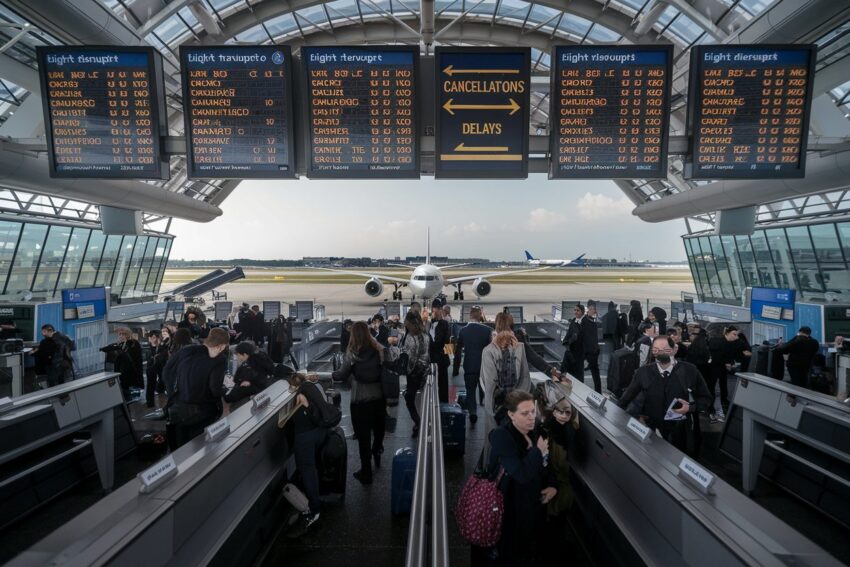
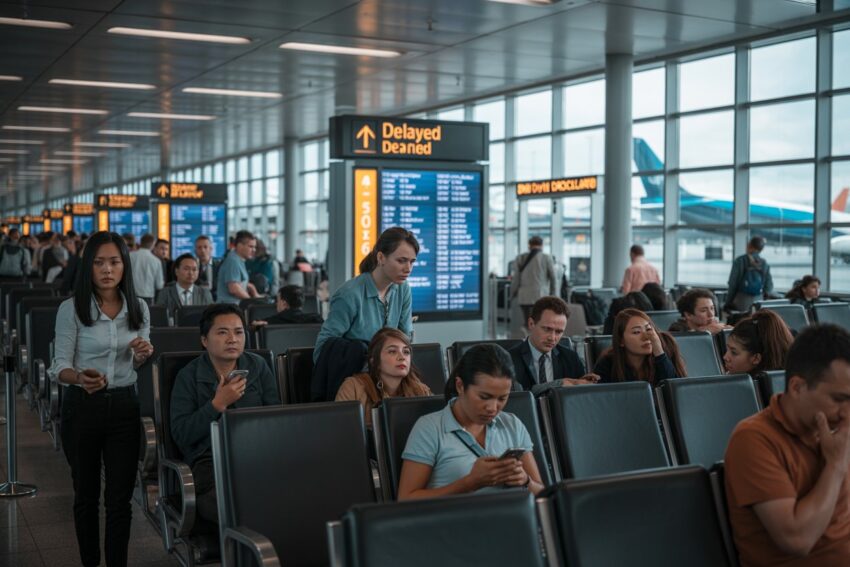
Doha, Qatar woke up to a travel day many passengers dread: packed departure boards, uncertain connections, and last-minute itinerary changes as Hamad International Airport remained affected by an airspace-related shutdown. Independent flight-disruption tracking cited 510 cancellations at Hamad International with limited delay activity (11 delays), a pattern consistent with a hub where many flights simply do not operate when airspace is restricted.
What the government has said
Qatar’s Civil Aviation Authority (QCAA), a government institution responsible for civil aviation affairs, announced a temporary suspension of air traffic in Qatari airspace as a precautionary measure tied to regional developments. This decision matters because Doha is a high-dependency transfer hub; when the airspace pauses, the network effect is immediate—departures stop, arrivals divert, and connecting itineraries can collapse in minutes.
What the airport and Qatar Airways are telling travellers
Hamad International Airport has publicly said flight operations remain suspended and will resume once the QCAA announces the safe reopening of Qatari airspace, adding that passenger and employee safety is the priority and advising travellers not to proceed to the airport. Qatar Airways has issued the same core message: operations remain temporarily suspended due to the closure of Qatari airspace, and flights will resume only after the QCAA signals it is safe to reopen.
What travellers should do right now
Passengers should rely on official channels for live decisions—especially because disruption counts can change quickly as flights are retimed, merged, rerouted, or cancelled again. Qatar Airways has advised customers to monitor flight information via its website or mobile app, rather than travelling to the airport hoping a check-in desk can fix everything immediately. If you are connecting through Doha, the practical risk is not just the cancelled flight itself but the domino effect on onward segments, visas/entry permissions, hotel bookings, and travel insurance timelines.
Why the disruption is bigger than one airport
Hamad International is designed around smooth long-haul connections between Asia, Europe, Africa, and the Americas, so any system-wide pause forces airlines to protect aircraft positioning and crew legality first—often leading to mass cancellations rather than manageable delays. In the wider regional context, multiple reports have linked elevated disruption at Gulf hubs to airspace restrictions and security-driven operational measures, which can reduce routing options even for flights not intended to pass directly over closed zones.
Doha, Qatar’s disruption is also being felt far beyond the terminal because many Hamad International passengers are in transit—moving between continents on tight connection windows that leave little room for uncertainty. With the airport’s operations tied directly to the temporary suspension of air traffic in Qatari airspace, even travellers whose flights are not Qatar-bound can be impacted through diversions, missed onward legs, and cascading schedule changes as aircraft and crews are repositioned across the network.
Qatar Airways has reiterated that flight operations remain temporarily suspended due to the airspace closure and that services will resume only after the Civil Aviation Authority confirms it is safe to reopen. Hamad International has similarly advised passengers not to proceed to the airport and to keep monitoring official updates, signalling that on-the-ground processing at the terminal will not solve the underlying constraint while airspace access remains restricted.
For affected passengers, the most practical steps are to check flight status directly with the airline, avoid unnecessary travel to the airport, and prepare for rebooking paths that may involve later departures or alternative routings once operations restart. Travellers with time-sensitive commitments—medical appointments, cruise embarkations, or major events—may want to contact hotels and service providers early, as disruption on this scale can stretch well beyond a single day once schedules begin rebuilding
Human impact: a hub built for certainty, suddenly uncertain
For many travellers, Doha isn’t the destination—it’s the promise of a clean, quick transfer between two faraway cities—so a suspension like this can feel especially disorienting, as plans unravel in an airport that’s usually synonymous with control and precision. If you’re caught in the disruption, the most important move is to pause, verify your flight status through official updates, and avoid heading to the terminal until the QCAA confirms the safe reopening of Qatari airspace and airlines restart schedules in a stable way.
The post Hundreds of Travelers Stranded at Hamad International Airport, Doha, Qatar as 11 Flights Are Delayed and 510 Canceled Disrupting Qatar Airways and More Across Domestic and International Routes to London, Dubai, Mumbai, Delhi, Bangkok, and New York appeared first on Travel And Tour World.