Reading view

Oppo Find X9 Ultra will support native 10x “optical” zoom, here are first camera samples

Oppo Find X9 Ultra real-life images

Oppo is gearing up to unveil the Find X9 Ultra next month, and the phone has already entered its pre-launch phase. As part of the buildup, the company has started sharing early details about its hardware.

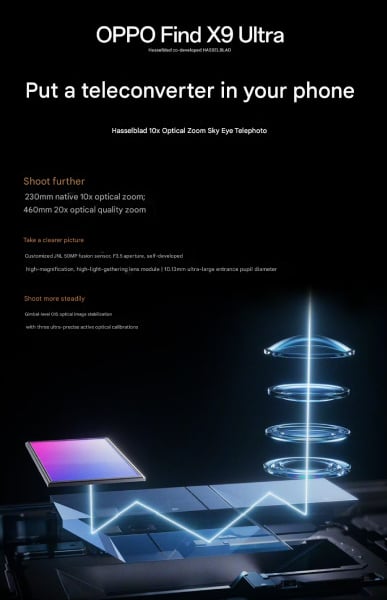
The latest reveal focuses on the camera. Oppo confirmed today that the Find X9 Ultra will feature a new Hasselblad-branded 10x optical telephoto lens. The company describes the setup in unusually direct terms, comparing it to “putting a teleconverter inside a smartphone.

On paper, the system supports native 10x optical zoom, 20x “optical quality” zoom, and up to 120x digital zoom. 

Zhuo Shijie, who leads the Find series, says this is a technical milestone. He says that while smartphone makers have steadily improved zoom over the years, fitting a true 10x optical system into a thin and light body hasn’t really been done before. 

Oppo is crossing that line with Find X9 Ultra.

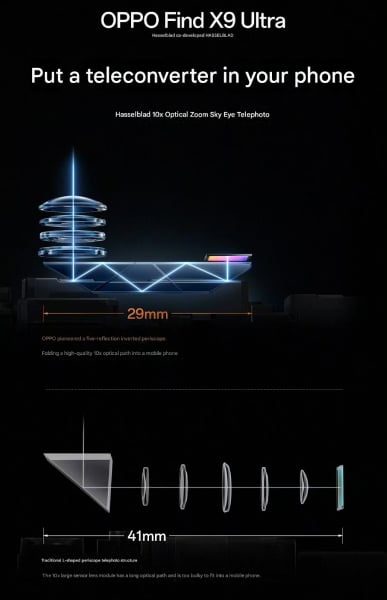
How Oppo is fitting a 10x optical zoom telephoto in Find X9 Ultra?

To make this possible, the company is using a new periscope design built around what it calls a five-reflection architecture. Oppo says this architecture helps achieve an equivalent focal length of 460mm, while still keeping the phone relatively slim. 

There’s also a fair amount of engineering behind the scenes. Oppo says it developed a way to precisely cut the internal prism at a nanometer scale, creating an “ultra-high purity air aperture.” This lets cleaner light pass through while reducing stray light that can degrade image quality.

On the manufacturing side, Oppo is using something called Active Optical Alignment (AOA). This process dynamically adjusts the position of the lens and sensor during production, followed by multiple rounds of calibration. This way, each unit performs closer to lab conditions rather than varying from device to device.

Oppo-Find-X9-Ultra-10x-Camera-Sample
Oppo Find X9 Ultra 10x camera sample vs competitors

The camera system is paired with a custom 50-megapixel sensor and Oppo’s LUMO imaging engine. Together, they’re meant to handle high-resolution shots at long distances, while also improving dynamic range. The company also says it has tuned the microlens and color filters specifically for telephoto use.

Don’t miss a thing! Join our Telegram community for instant updates and grab our free daily newsletter for the best tech stories!

For more daily updates, please visit our News Section.

The post Oppo Find X9 Ultra will support native 10x “optical” zoom, here are first camera samples appeared first on Gizmochina.

OnePlus is working on a gaming handheld console with a different take on controls

AYANEO Air handheld console

While OnePlus is preparing to unveil the OnePlus 15T at an event today, a separate leak suggests the company may already be thinking beyond smartphones and into handheld gaming.

According to tipster Digital Chat Station, a major smartphone manufacturer is currently working on an “Android handheld console.” The leak doesn’t explicitly name the brand, but online discussions and context suggest OnePlus could be behind the project.

OnePlus’ rumored handheld console will be touchscreen first

What makes this rumored device interesting is how it reportedly rethinks the idea of a handheld console. Instead of relying on physical buttons, joysticks, or controller layouts, the rumored product is said to focus on a new kind of interaction system. 

The device is said to be touchscreen first, in a way that improves multi-finger responsiveness, touch accuracy, and latency, especially for fast-paced first-person shooter (FPS) games.

AYANEO Air handheld console
Ayaneo Air

It’s certainly an innovative way of thinking about how a handheld can be built. Rather than simply attaching controls to a phone or building a console with Android, the device may try to merge the strengths of both.

The leak also mentions system-level optimization, flagship-grade performance tuning, and a high refresh rate display support for games like Delta Force and PUBG Mobile. 

It’s worth noting that the related reports mention that, given the continued rise in storage costs, many manufacturers are trying to expand into new product lines to find growth opportunities. For example, Vivo is said to be working on a gimbal camera like the DJI Osmo Pocket.

Currently, details regarding the specific configuration and release date of this “Android handheld console” are under wraps. However, judging from its direction, this product may become an important attempt for mobile phone manufacturers to enter the gaming hardware field.

For more daily updates, please visit our News Section.

Don’t miss a thing! Join our Telegram community for instant updates and grab our free daily newsletter for the best tech stories!

(Source)

The post OnePlus is working on a gaming handheld console with a different take on controls appeared first on Gizmochina.

Honor 600 Pro looks like an iPhone 17 Pro clone in renders

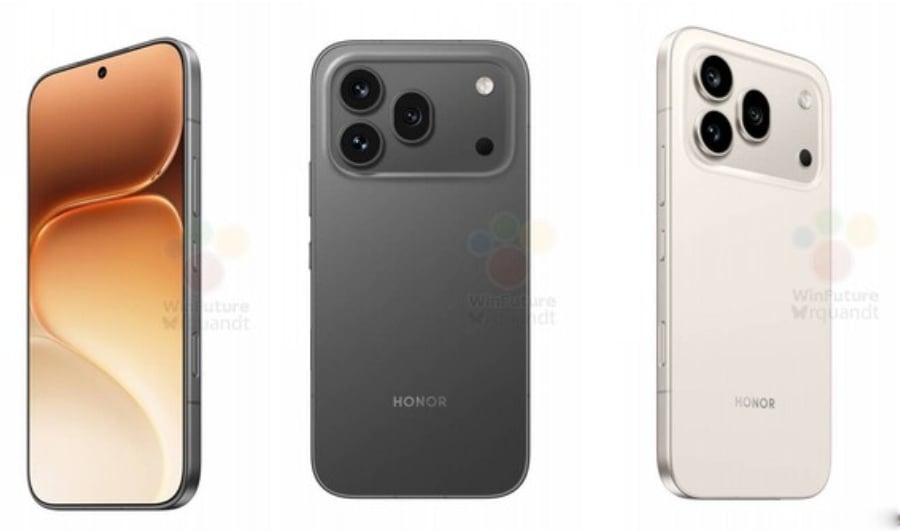
Honor-600-Pro-Render

If you’ve ever liked the look of an iPhone but hesitated at the price, Honor seems ready with an alternative. Images of the upcoming Honor 600 and Honor 600 Pro have just surfaced online, and yes, they look more like iPhones than Honor phones.

The back panel features a full-width horizontal bar that houses the camera system, LED flash, and laser autofocus. Like an iPhone 17 Pro. Its color options are also said to include black, gold, and an orange finish. Like an iPhone 17 Pro.

Honor 600 / 600 Pro Expected Specifications 

On the front, both devices are expected to feature a 6.57-inch OLED display with a 120Hz refresh rate and a 1.5K resolution.

Under the hood, things are still a bit unclear. Reports suggest the phones will use a high-end Qualcomm Snapdragon 8 series chipset, though it’s not confirmed whether that means last year’s flagship silicon or a newer, slightly toned-down “s” variant.

As for cameras, Honor is reportedly using a 200-megapixel main sensor with built-in hardware image stabilization. The Pro model is expected to expand on that with additional ultrawide and zoom cameras.

More impressively, Honor is expected to use a silicon-based battery with a massive 9000mAh capacity. The Honor 500 and Honor 500 Pro, in comparison, has 8000mAh cell with 80W charging. 

Both models are also expected to feature a metal frame and glass panels. Other reported features include wireless charging support and a 3D ultrasonic fingerprint sensor. The ultrasonic scanner, in particular, would be a step up from the optical in-display sensor on the Honor 500.

There’s still no official word on when the Honor 600 series will launch or how much it will cost. We will keep you updated if any new information emerges.

For more daily updates, please visit our News Section.

Stay ahead in tech! Join our Telegram community and sign up for our daily newsletter of top stories.

(Source)

The post Honor 600 Pro looks like an iPhone 17 Pro clone in renders appeared first on Gizmochina.

Redmi Note 16 series could feature 10,000mAh battery, 200MP camera

Redmi Note 15 5G

Xiaomi’s Redmi Note series follows a known, predictable rhythm. The company refreshes the lineup roughly once a year. It introduced the Redmi Note 15 lineup in China in August, so a successor should arrive in August 2026 or sometime close to it.

Months ahead of that launch, a new leak may have just revealed what the Redmi Note 16 series could bring in terms of hardware specs.

Redmi Note 16 Series Expected Specs

According to a recent tip from Digital Chat Station, a new device currently in testing features a massive 10,000mAh battery paired with 100W fast charging, along with a 200-megapixel main camera.

The leak doesn’t explicitly name the device, but discussion around it points toward the upcoming Redmi Note 16 series. That lines up with an earlier rumor from November, which also suggests the Redmi Note 16 series has a 200MP sensor.

In comparison, even last year’s top-end Redmi Note 15 Pro+ doesn’t have a 200MP sensor. Instead, it features a triple-camera setup led by a 50MP main sensor, alongside a 50MP telephoto lens with 2.5x optical zoom and an 8MP ultrawide camera.

The rumored battery capacity is just as attention-grabbing. The device could pack a 10,000mAh cell, which, if true, would be the largest in any Redmi or Xiaomi phone. Currently, that title belongs to the Redmi Turbo 5 Max with its 9,000mAh battery. Charging is said to come in at 100W.

Redmi-Note-15-Pro-Plus
Redmi Note 15 Pro Plus

Of course, leaks like this are early and often incomplete. There’s no confirmation on how Xiaomi plans to balance size, weight, and thermals if these specs make it into the final product. It’s also unclear whether these features would be limited to a single model in the lineup or spread across multiple variants.

We’ll keep you updated as new details emerge, so stay tuned.

For more daily updates, please visit our News Section.

Stay ahead in tech! Join our Telegram community and sign up for our daily newsletter of top stories! 💡

The post Redmi Note 16 series could feature 10,000mAh battery, 200MP camera appeared first on Gizmochina.

Huawei Enjoy 90 and Enjoy 90 Plus launch with 6620mAh battery

Huawei-Enjoy-90-Plus-Specs-Price-Launch

Huawei has officially introduced the Enjoy 90 Plus smartphone. The new model sits just below the Pro Max but still carries a similar foundation, including the same Kirin 8000 chipset. 

There’s even a lower-tier model, the vanilla Huawei Enjoy 90, which has a big battery and a slightly less powerful Kirin 8000A processor. 

Huawei Enjoy 90 Plus Specifications

The Enjoy 90 Plus comes with a 6.67-inch HD+ LCD display that supports a 120Hz refresh rate. It can reach a peak brightness of  850 nits. 

The phone is powered by the Kirin 8000 processor, which Huawei claims gives a 67% improvement in performance compared to previous iterations. 

On the camera side, the Enjoy 90 Plus has a 50-megapixel rear camera and an 8-megapixel front-facing sensor. 

Keeping it on is a 6,620mAh battery paired with 40W charging. Combined with Huawei’s software optimizations, it suggests the phone is designed to last through extended use without frequent charging. 

The Enjoy 90 Plus runs on HarmonyOS 6 out of the box. Additional hardware features include IP65 resistance, a side-mounted fingerprint sensor, an IR blaster, and support for Wi-Fi 7 and Bluetooth 6.0. The device measures 8.32mm thick and weighs 212 grams.

Pricing is 1,499 yuan for the 128GB variant and 1799 yuan for the 256GB variant.

Huawei Enjoy 90 Specifications

As for the vanilla model, it uses a Kirin 8000A processor and shares the same large battery. It also runs on HarmonyOS 6 and has AI-focused features, including face-swapping recognition and tools to prevent fraud during calls and within family networks.

It is priced at 1299 yuan for the 128GB and 1599 yuan for the 256GB variant.

For more daily updates, please visit our News Section.

Stay ahead in tech! Join our Telegram community and sign up for our daily newsletter of top stories! 💡

The post Huawei Enjoy 90 and Enjoy 90 Plus launch with 6620mAh battery appeared first on Gizmochina.

Huawei Enjoy 90 Pro Max launched with Kirin 8000 chip, 8500mAh battery

Huawei-Enjoy-90-Pro-Max-Launch-Specs-Price

After a series of teasers, Huawei has officially introduced its new Enjoy 90 series smartphones. The line includes standard, Plus, and Pro Max variants, and as you might expect, the latter is the most feature-heavy option in the lineup.

Huawei Enjoy 90 Pro Max Specifications

The Huawei Enjoy 90 Pro Max runs on Huawei’s Kirin 8000 chipset and comes pre-installed with HarmonyOS 6. Huawei says the combination of its in-house chip and software, along with what it calls the Ark Engine, allows tighter integration between hardware, software, and cloud services.

According to the company, this setup results in a 38% improvement in overall performance. Huawei is also claiming smoother everyday usage, with a 64 percent boost in phone operation smoothness and a 35 percent improvement in page loading.

In gaming, Huawei says the device can sustain up to five hours of gameplay at 120 frames per second in Honor of Kings. 

The Enjoy 90 Pro Max packs an 8,500mAh battery and supports a combination of power management features, including what Huawei calls a “super energy pump” and system-wide power-saving optimizations.

On the front, the phone features a 6.84-inch flat OLED display with a 1.5K resolution and a 120Hz refresh rate. It also supports up to 4,000 nits of peak brightness and uses 2160Hz PWM dimming. 

Its camera hardware includes a 50-megapixel main sensor with OIS and an 8-megapixel front-facing camera.

Other features include Wi-Fi 7, Bluetooth 6.0, NFC, and support for dual-frequency GPS and tri-frequency Beidou for more precise location mapping. The device also carries IP65 certification and has passed multiple drop-resistance tests, including CQC and SGS five-star ratings.

Pricing and Availability

The Huawei Enjoy 90 Pro Max starts at 1,699 yuan ($250) for the 128GB model. The 256GB model retails at 1999 yuan ($290) while the highest 512GB flavor is priced 2399 yuan ($350). Availability starts from 2nd April.

For more daily updates, please visit our News Section.

Stay ahead in tech! Join our Telegram community and sign up for our daily newsletter of top stories! 💡

The post Huawei Enjoy 90 Pro Max launched with Kirin 8000 chip, 8500mAh battery appeared first on Gizmochina.

Apple’s foldable iPhone to use dual-layer glass to reduce screen creases

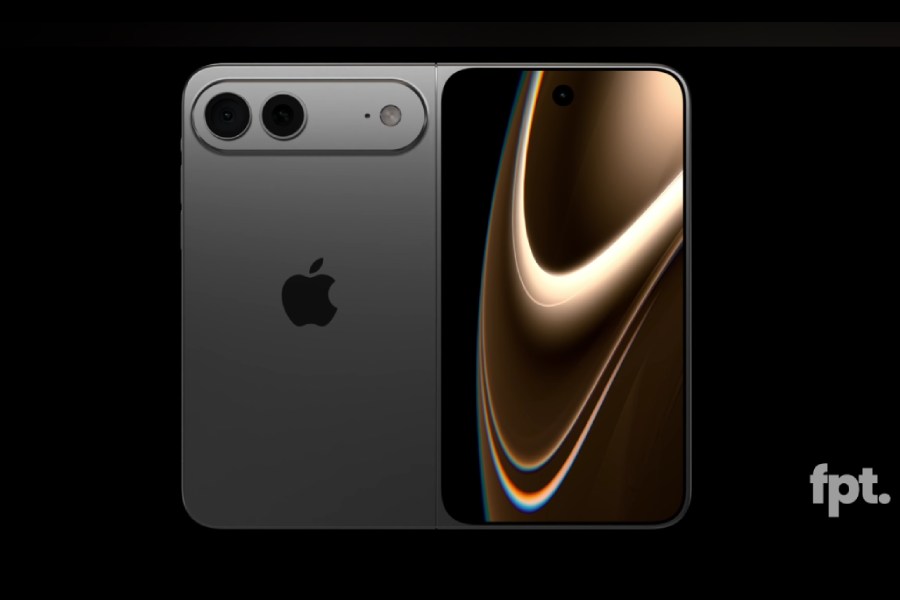
Apple-iPhone-Fold-render-2

Oppo recently debuted the Oppo Find N6 foldable with a crease that is almost negligible in daily use. It’s not completely invisible, but it’s subtle enough that many users barely notice it while scrolling or watching videos. Even Apple is rumored to use a similar display technology in its first foldable, which could launch this September.

However, the Cupertino giant appears to be even more serious about making this display the best it can be. 

Apple iPhone Fold will use multiple layers of protective layers between the display

According to supply chain reports shared by tipster Digital Chat Station, Apple’s foldable display could use a dual-layer glass structure built from UTG (Ultra Thin Glass) and UFG materials.

In simple terms, this means the screen may consist of multiple glass layers rather than a single thin sheet. The display panel itself would sit between these layers instead of being placed directly against the hinge mechanism.

This design could help solve one of the biggest problems with foldables: durability. When a foldable phone bends thousands of times during its lifetime, the pressure around the hinge can gradually create a visible crease in the middle of the screen. By separating the display layer from the hinge area and using multiple glass layers, Apple may be trying to reduce stress on the panel.

The rumored display may also include a form of self-healing glass. The idea is that the display could gradually smooth itself over time, helping it maintain a cleaner look after repeated folding.

Oppo did something similar with the Find N6, which it says uses Auto-Smoothing Flex Glass, where the crease slowly smooths itself out over time.

None of this is confirmed yet, and Apple rarely comments on products before they launch. But we know for certain that a foldable iPhone is coming.

For more daily updates, please visit our News Section.

Stay ahead in tech! Join our Telegram community and sign up for our daily newsletter of top stories

(Source)

The post Apple’s foldable iPhone to use dual-layer glass to reduce screen creases appeared first on Gizmochina.

Vivo Pad 6 Pro launch confirmed next week, here are the specs we know

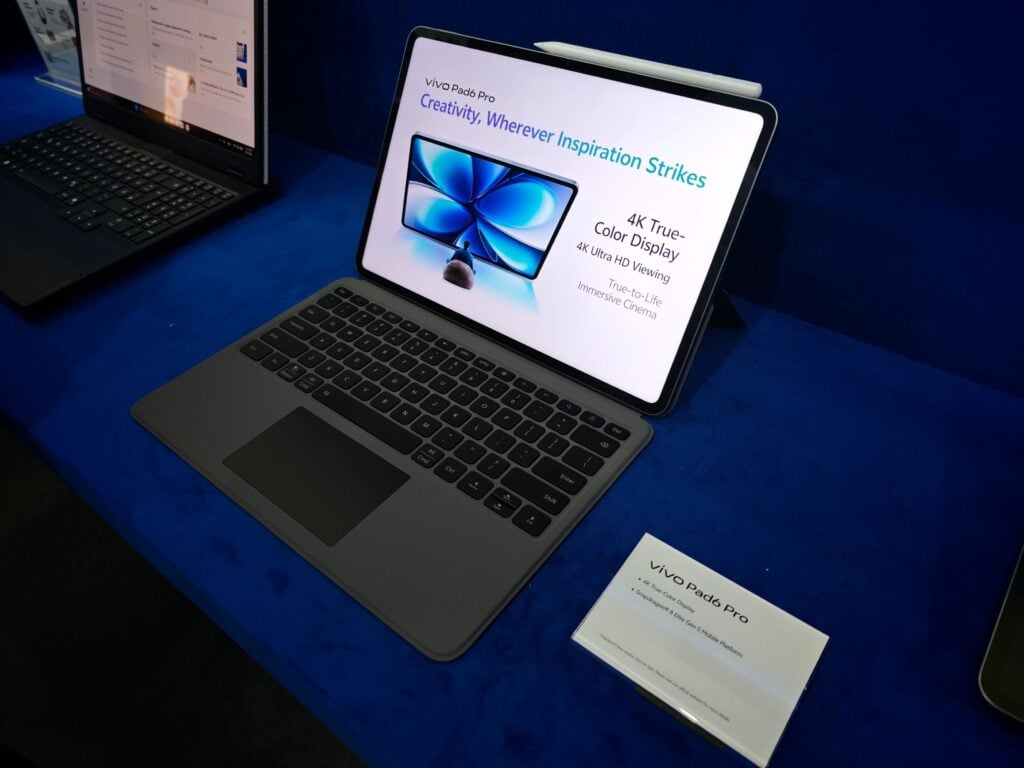
Vivo-Pad-6-Pro-Launch-Specs

Vivo is preparing for a major product launch event in China on March 30, where it will unveil the new Vivo X300 Ultra and Vivo X300s smartphones. Alongside these devices, the company has also confirmed the arrival of the Vivo Pad 6 Pro.

Vivo is positioning the Pad 6 Pro as a productivity-focused device. The tablet was previously showcased at Mobile World Congress, where it was seen paired with a keyboard accessory and stylus.

It also features a large 13.2-inch display with a 4K True Color screen that supports Dolby Vision. In terms of performance, the Vivo Pad 6 Pro will be powered by the current best Snapdragon 8 Elite Gen 5 chipset. 

To further support its productivity angle, Vivo is bundling PC-grade WPS Office and CapCut Professional Edition with the device. These additions make it clear that the tablet is not just for media consumption but also for tasks like document editing, video editing, and general work use.

Vivo Pad 6 Pro Specifications (Expected)

As for other specifications, reports suggest that the tablet could feature a high refresh rate display, possibly up to 144Hz, for smoother visuals. Camera-wise, it is expected to include a 13-megapixel rear camera and an 8-megapixel front-facing camera. Typical for tablets, which are usually meant for general video calls and document scanning and not much more. 

Moreover, the Pad 6 Pro is said to carry roughly a 13,000mAh cell, up from 12,050mAh in the previous model. It will support either 80W or 90W of charging.

Vivo is likely to reveal more about the device in the lead-up to launch. As for global availability, there’s no word yet. But since Vivo showed off the device in MWC, we can expect a global announcement soon. 

For more daily updates, please visit our News Section.

Stay ahead in tech! Join our Telegram community and sign up for our daily newsletter of top stories

The post Vivo Pad 6 Pro launch confirmed next week, here are the specs we know appeared first on Gizmochina.

Xiaomi launches Mijia Smart Pet Feeder Visual Edition with AI

Xiaomi-Mijia-Pet-Feeder-2-Visual-Edition-Launch-Specs-price

Xiaomi has announced a new pet feeding gadget called the Mijia Smart Pet Feeder 2 Visual Edition. It’s a follow-up to its 2023 model that, until now, handled feeding but didn’t let you actually see what your pet was doing.

The new version is launching on Xiaomi’s Youpin platform, with crowdfunding set to begin at 10:00 AM on March 30. It carries a suggested retail price of 549 yuan, though early backers will be able to get it for 449 yuan. 

Xiaomi Mijia Smart Pet Feeder Visual Edition Features

The biggest addition here is a built-in 5-megapixel camera. It’s paired with a 150-degree ultra-wide-angle lens and a 940nm infrared fill light, which means it can capture footage even in low light or at night. 

Xiaomi is also leaning on its AI capabilities here, allowing the feeder to recognize when a pet is approaching or actively eating. 

The feeder supports 24-hour real-time monitoring and offers both local and cloud storage options. Users can insert a microSD card from 16GB to 128GB, or opt for paid cloud storage if they prefer remote access and backups.

Outside of the camera, the core hardware remains similar to the previous model. The feeder includes a 5-liter storage container that can hold up to 2.5kg of dry pet food, which Xiaomi says is enough to feed an adult cat for around 30 days. 

It supports kibble sizes of up to 18mm and includes an automatic error correction mechanism that reverses the system if food gets stuck.

There are also a few practical upgrades focused on durability and food safety. Xiaomi is using a triple sealing and barrier design to help keep food dry and protected from moisture. Structurally, the feeder is built to maintain consistent operation, and it includes an emergency power supply system designed to keep feeding schedules intact during outages.

For more daily updates, please visit our News Section.

Stay ahead in tech! Join our Telegram community and sign up for our daily newsletter of top stories! 💡

The post Xiaomi launches Mijia Smart Pet Feeder Visual Edition with AI appeared first on Gizmochina.

Best Tablets in Every Budget: From $100 to $1000

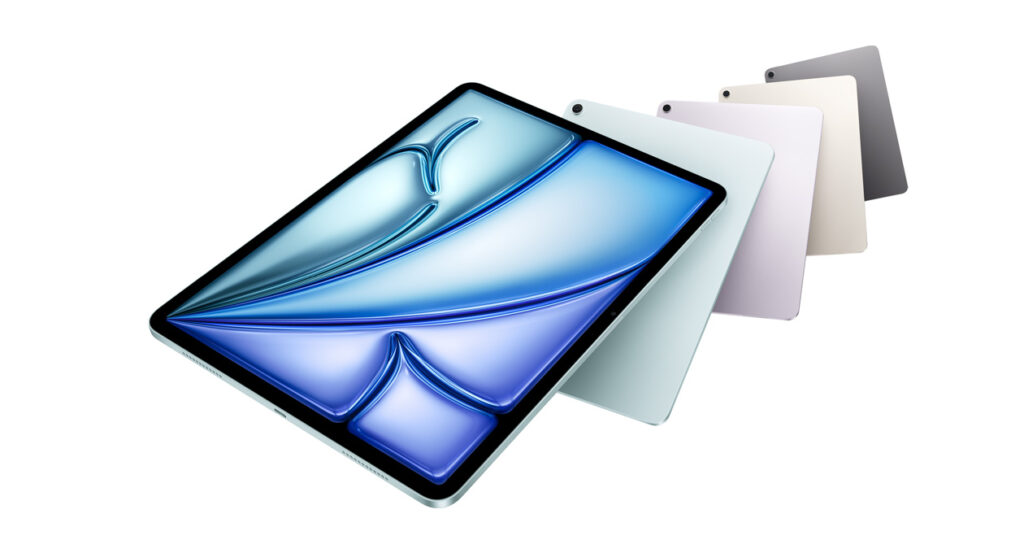
Apple-iPad-Air-2026

The idea of a “best” guide for any gadget doesn’t really stay still for long. Things change, products get better (or sometimes just more confusing), and what counts as worth it shifts pretty quickly. 

That’s especially true with tablets, where the gap between a cheap device and an expensive one isn’t just about performance; they’re often meant for completely different things.

That’s also why picking the right one has become less about specs and more about knowing what you actually need. A $100 tablet and a $1000 tablet aren’t trying to do the same job anymore, and that’s a good thing.

So instead of trying to cover everything, this guide keeps it simple. One tablet per price range, each one chosen because it holds up right now, not just on paper, but in everyday use.

$100: Amazon Fire HD 8 (2024) 

At $100, finding a good tablet is quite hard. You won’t get extreme raw power. Rather, you should look for something that gets the work done. And that’s exactly where the Fire HD 8 fits in.

This tablet is not trying to compete with iPads or premium Android tablets. Instead, it focuses on the basics.

You get an 8-inch display, a MediaTek processor, 32/64GB of storage with 3/4GB of RAM, and microSD expansion support up to 1TB. It’s a decent machine for everyday chores like browsing and streaming apps like Netflix and Prime Video.

Please Note: When you buy something using the links in our articles, we may earn a small commission at no cost to you.

$300: iPad (11th Generation)

If you have $300 and you don’t want to think about specs, the iPad (11th Gen) is a no-brainer. Announced in March 2025 for $350, you can get it for $299 during sales and discounts. The best thing about this is that Apple has finally bumped the base storage to 128GB.

Under the hood, it is powered by the A16 Bionic chip (the same one that powered the iPhone 15). As a result, it’s snappy, efficient, and handles iPadOS with zero hesitation.

The 11-inch Liquid Retina display is still unlaminated, though. Meaning there’s a tiny gap between the glass and the pixels, which might bother artists, but for the other 95% of the population, it’s a non-issue.

What makes the 11th Gen the best at this price is the ecosystem. It supports the Apple Pencil (USB-C) and the Magic Keyboard Folio for students to take notes or sketch. But it doesn’t support the high-end “Apple Intelligence” features found on the Pro models. 

Please Note: When you buy something using the links in our articles, we may earn a small commission at no cost to you.

$500: Google Pixel Tablet / iPad mini 7 

$500 is a sweet spot for a tablet, because you can get a good device in both the Android and Apple worlds. 

First off is the Google Pixel Tablet, which works as both a tablet and a smart home device. With its dock, it can act like a smart display when not in use. This makes it a good option for people who want a hybrid device for home use.

Google Pixel Tablet

Please Note: When you buy something using the links in our articles, we may earn a small commission at no cost to you.

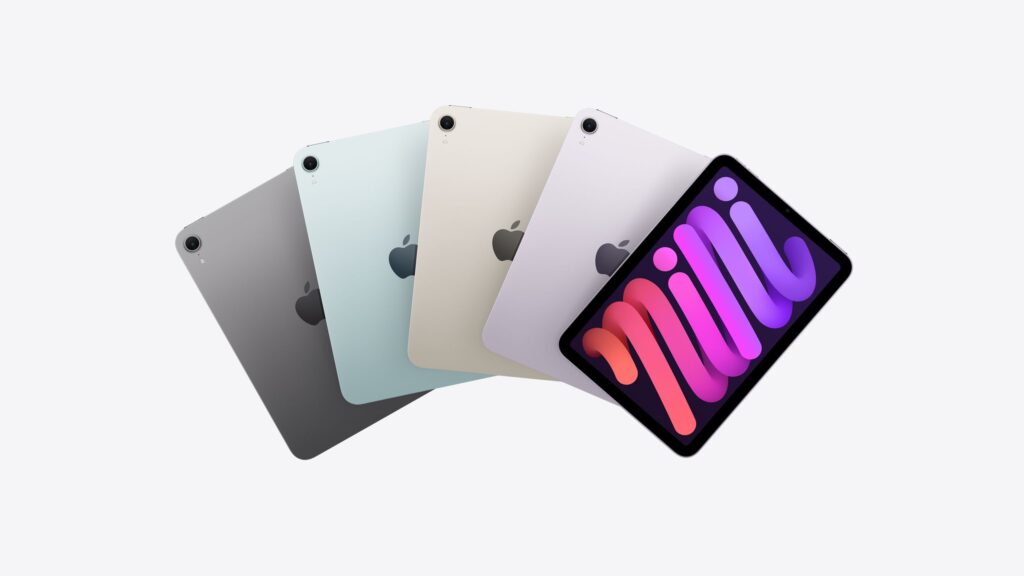
On the other hand, the iPad mini 7 is all about portability. It’s compact, powerful, and easy to carry around. Despite its size, it delivers strong performance and supports the Apple Pencil, making it great for reading, note-taking, and quick tasks.

This price range is less about “which is better” and more about “what fits your lifestyle.” If you want versatility at home, go Pixel. If you want something small but powerful, go for the iPad mini.

Please Note: When you buy something using the links in our articles, we may earn a small commission at no cost to you.

$800: iPad Air (M4, 2026 Model)

Apple just refreshed the iPad Air with the M4 chip in March 2026. The lineup actually starts at $599 for the 11-inch model, while the 13-inch model is $799. 

Both feature pro-grade M4 chip, Apple Intelligence support, and Liquid Retina displays. The iPad Air is also the first in the Air lineup to support Apple Pencil Pro. The stylus brings advanced creative tools like squeeze, barrel roll, and haptic feedback. 

Not to forget, you also have Magic Keyboard support, which is a big part of why it feels much closer to a pro device than a basic tablet.

The compromise, you could say, is that Apple still doesn’t offer an OLED display in its $800 device. You’re still looking at a very high-quality LCD. However, unless you are a professional colorist or you spend your life watching movies in pitch-black rooms, you probably won’t care.

Please Note: When you buy something using the links in our articles, we may earn a small commission at no cost to you.

$1000: Samsung Galaxy Tab S11 Ultra

At $1000, you’re entering true flagship territory. And the Galaxy Tab S11 Ultra is one of the most powerful tablets available right now.

This device is all about scale and performance. It features a massive 14.6-inch AMOLED display with HDR10+ support and 1600 nits of peak brightness. Audio is handled by a quad-speaker setup, making it one of the best tablets for watching content.

Galaxy Tab S11 Ultra Pro Keyboard

Powering it is a MediaTek Dimensity 9400+ chipset with a massive 11600mAh battery. Samsung also pushes its multitasking features hard, with desktop-style modes that make it feel closer to a laptop.

The downside is obvious, though. It’s big, expensive, and not as easy to use casually. But if you want the biggest and most capable Android tablet, this is the one.

Please Note: When you buy something using the links in our articles, we may earn a small commission at no cost to you.

For more daily updates, please visit our News Section.

Stay ahead in tech! Join our Telegram community and sign up for our daily newsletter of top stories! 💡

The post Best Tablets in Every Budget: From $100 to $1000 appeared first on Gizmochina.

Smartphones might bring back waterdrop notches and microSD cards in 2026
Samsung-Galaxy-A07-5G-Launch-specs-price

A new leak suggests that some smartphone makers might be circling back to features that, until recently, felt like they were on their way out.

According to a post by Digital Chat Station on Weibo, several older hardware choices could be making a return in upcoming devices. And the list is oddly specific.

DCS says future phones could feature a top configuration of just 8GB of RAM paired with 512GB of storage, along with 90Hz waterdrop-notch displays, support for SIM plus microSD cards, and even plastic frames paired with short-focus (optical) fingerprint sensors.

Rising global smartphone prices could be behind the shift

As you might expect, none of this sounds particularly exciting for 2026. In fact, much of the industry has been moving in the opposite direction. Toward higher refresh rates, punch-hole or under-display cameras, metal or glass builds, and the gradual disappearance of expandable storage.

The return of these more conventional features could be tied to rising component costs, particularly for memory and storage. Several Chinese brands like OnePlus, Oppo, Vivo, and iQOO have already nudged prices upward for their budget devices. Meanwhile, Samsung has also increased smartphone prices in markets like India.

Samsung Galaxy A07 5G

And while prices are rising, consumers’ willingness — or ability — to spend more on phones might not be increasing at the same pace. As a result, manufacturers could be looking for ways to keep retail prices in check, even if that means leaning on older hardware and design choices.

What makes this leak interesting isn’t any single feature. It’s the combination. A return to waterdrop notches, expandable storage, and plastic builds suggests manufacturers may be re-evaluating what they can realistically deliver as smartphone prices continue to climb globally.

These decisions help reduce costs, but they also bring back some practical perks, like storage flexibility, that many users still appreciate.

Don’t miss a thing! Join our Telegram community for instant updates and grab our free daily newsletter for the best tech stories!

For more daily updates, please visit our News Section.

The post Smartphones might bring back waterdrop notches and microSD cards in 2026 appeared first on Gizmochina.

❌