Reading view

3DMark removes RedMagic 11 Pro and 11 Pro Plus from its benchmark database
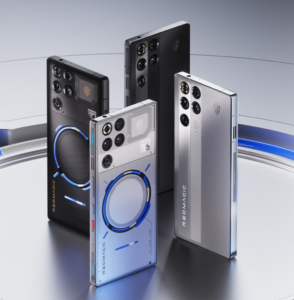
REDMAGIC 11 Pro and 11 Pro+

The benchmarking platform 3DMark has removed performance results for the RedMagic 11 Pro and RedMagic 11 Pro+ from its database.

According to reports, the listings for both devices were taken down because the manufacturer did not follow the rules during testing. The issue lies in how the phones handle performance limits when running benchmarking software.
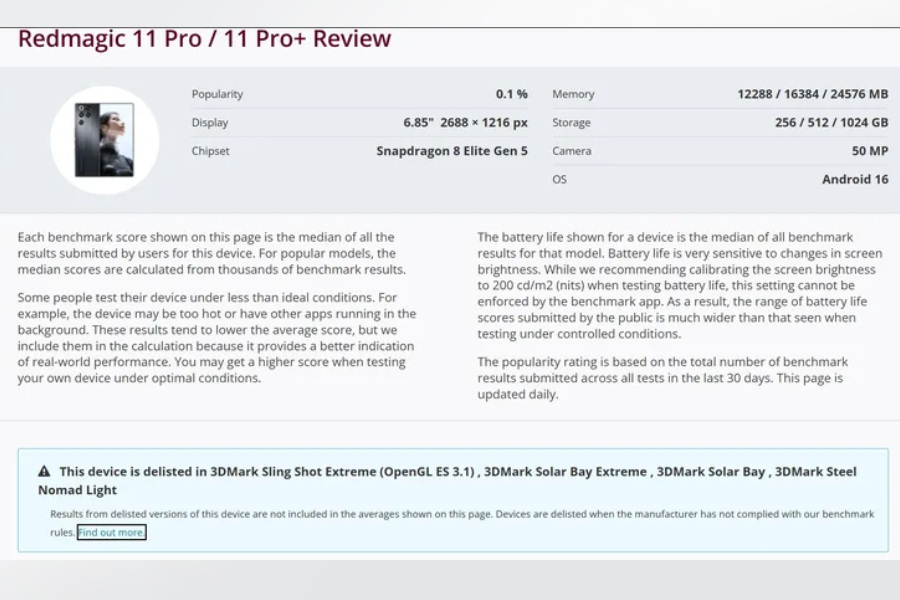
3DMark says the devices behave differently when they detect its tests. Specifically, the phones are said to remove normal limits on power consumption and temperature while the benchmark is running. This allows the chipset to operate at unusually high levels without throttling, even as temperatures rise.

From 3DMark’s perspective, this creates results that don’t reflect typical real-world usage. The platform’s rules are designed to ensure that scores represent the performance users can expect under normal conditions, not in a special testing mode. Because of this, the results were classified as a violation and removed.

Here’s what Nubia replies 

Nubia, the brand behind the RedMagic series, has responded by defending its approach.

In a statement to Android Authority, the company said its devices are built for “high-performance experiences,” particularly in demanding gaming scenarios, and include multiple performance modes that users can enable. It specifically pointed to a feature called “Diablo Mode,” which is designed to push the hardware to its limits under heavy workloads.
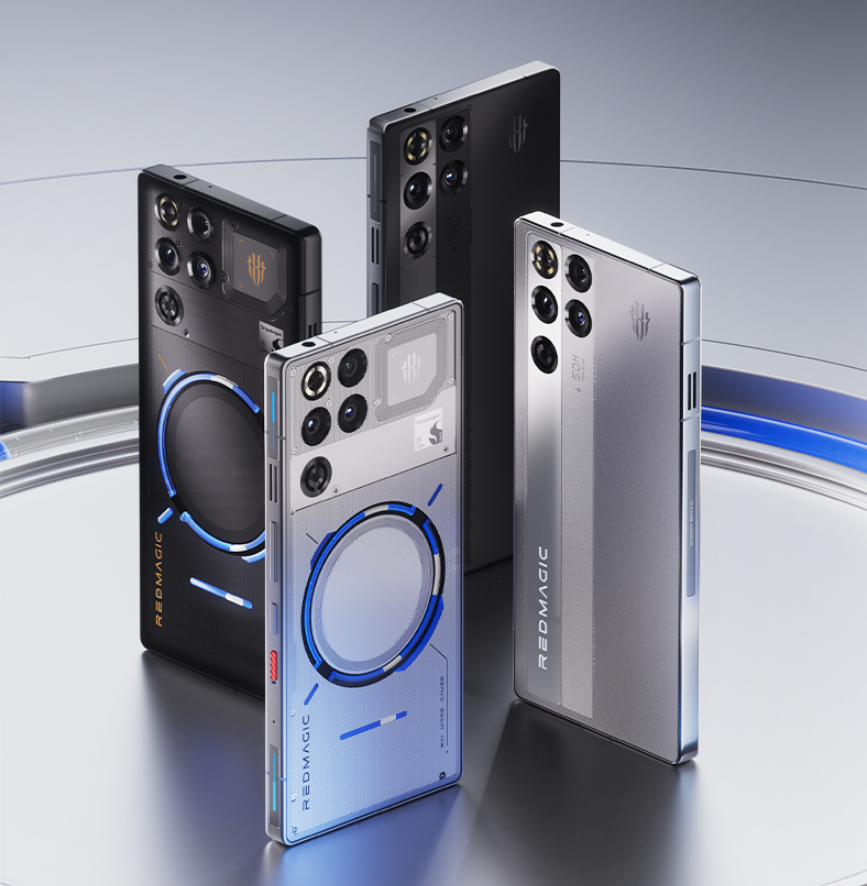
REDMAGIC 11 Pro and 11 Pro+

The company also said that benchmarking should be viewed as “an indicator of a device’s performance potential under controlled, high-load conditions,” adding that results can vary depending on system settings and usage.

In other words, Nubia is saying that the scores reflect what the hardware is capable of, even if that level of performance isn’t always active by default.

It’s not surprising to see a brand optimizing specific apps to run better—that’s actually a good thing. But in the case of benchmark apps, this shouldn’t happen, as it is considered manipulation of scores.

For more daily updates, please visit our News Section.

Stay ahead in tech! Join our Telegram community and sign up for our daily newsletter of top stories.

The post 3DMark removes RedMagic 11 Pro and 11 Pro Plus from its benchmark database appeared first on Gizmochina.
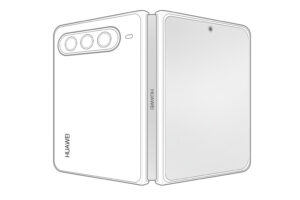
Huawei Pura X Max beats Apple in launching world’s first wide-folding phone

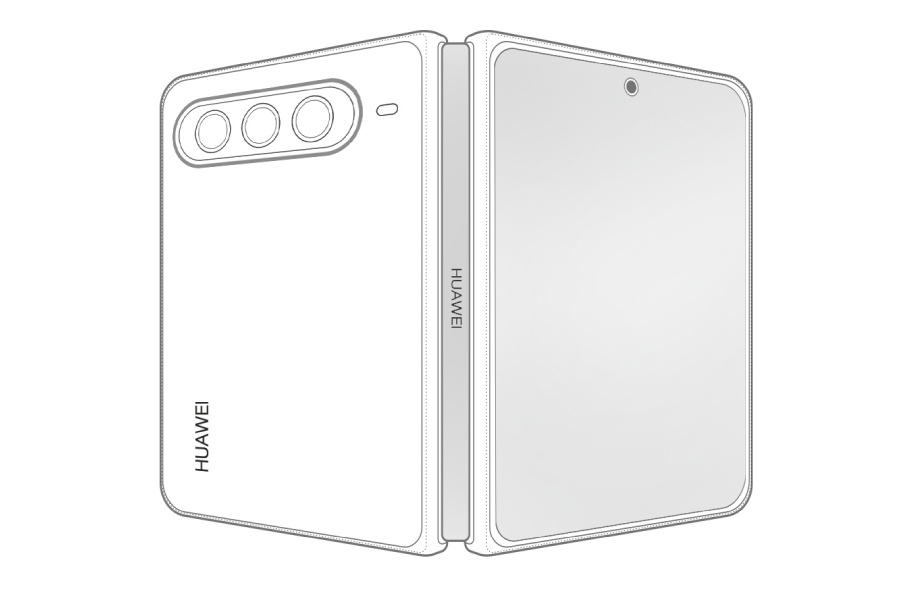
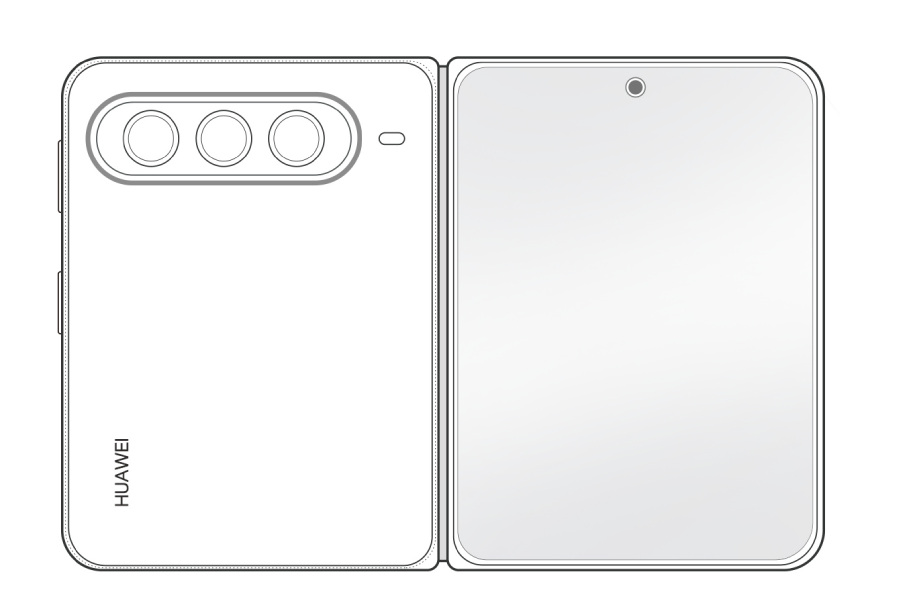
Huawei-Pura-X-Max-Design-2

Huawei has a launch event scheduled for April 20, where it is set to refresh its Pura lineup. The update includes the Pura 90 series, which Huawei has already started teasing, and a foldable in the Pura X lineup. Now, according to tipster Digital Chat Station, this new model is called the Pura X Max.

The Pura foldable line from Huawei is known for wide-folding devices, and no surprises, the Pura X Max follows the same route. 

Huawei Pura X Max Specs (Expected)

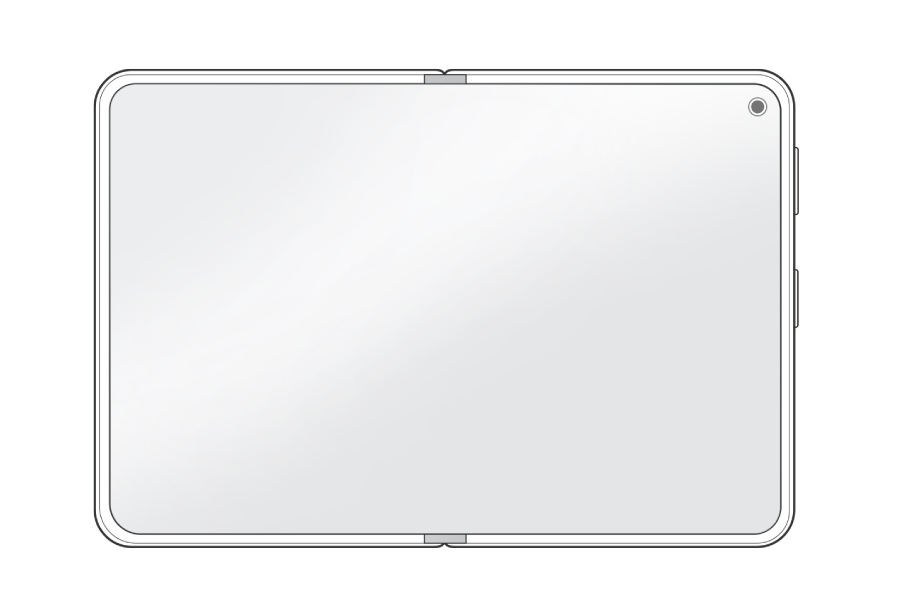
However, unlike the original Pura X, the X Max is said to be a horizontally folding device. The design is the same as what’s expected for the Apple iPhone Fold (or Ultra, as rumors say), but Huawei will be the first to launch such a device. It will feature a 7.69-inch WQHD+ inner display and a 5.5-inch outer screen.

The inner display will offer more usable space, while the outer screen is designed for quick, everyday tasks. Huawei is reportedly sticking with a 16:10 aspect ratio, similar to its earlier model.

Lucky for us, another tipster, Fixed Focus Digital, has shared the foldable’s front and back design on Weibo.

There are also expected upgrades under the hood. The Pura X Max is rumored to use Huawei’s Kirin 9030 chip, which is also said to power the Pura 90 series. The chip reportedly uses a new 9-core architecture, with improvements in overall performance.

Moreover, the device is expected to include Huawei’s Red Maple Quad Camera system, with a particular focus on improving the telephoto lens.

As we mentioned earlier, this type of foldable design will not remain exclusive to Huawei for long. Apple is working on a foldable iPhone with a similar tablet-like aspect ratio, possibly arriving in September. Meanwhile, Samsung is also working on a wide-foldable called the Galaxy Z Fold 8 Wide.

For more daily updates, please visit our News Section.

Stay ahead in tech! Join our Telegram community and sign up for our daily newsletter of top stories.

(Source 1 | 2)

The post Huawei Pura X Max beats Apple in launching world’s first wide-folding phone appeared first on Gizmochina.

Xiaomi hikes Redmi K90 Pro Max, Redmi Turbo 5 series price in China

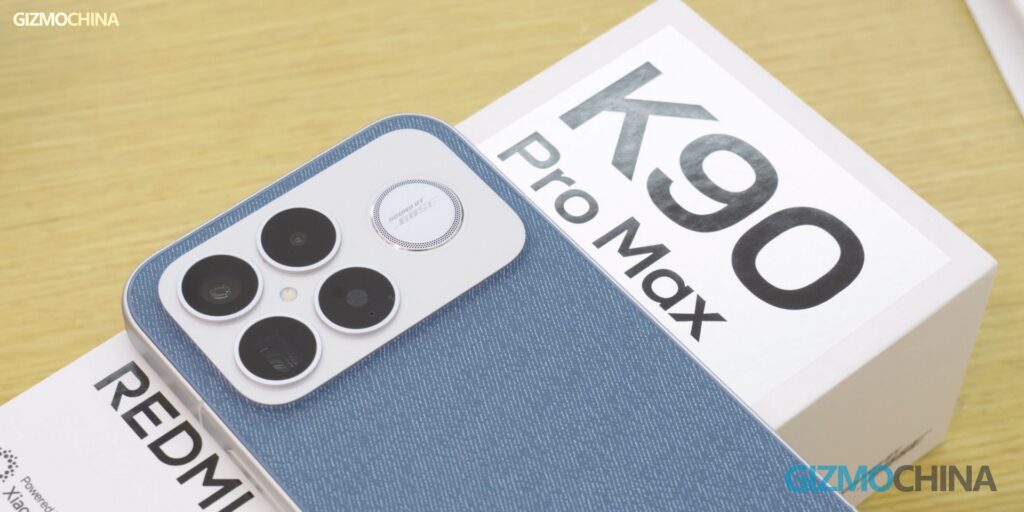
Xiaomi is raising the prices of some Redmi phones in China, and the changes are taking effect today. The company confirmed it’s bumping prices on three of its higher-end models: the Redmi K90 Pro Max, Redmi Turbo 5, and Redmi Turbo 5 Max.

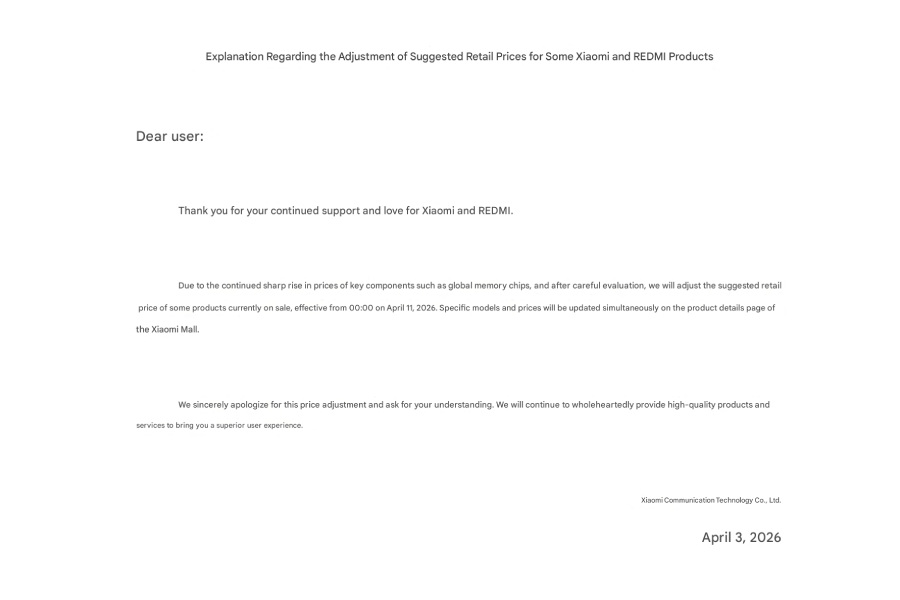
According to the brand, the increases are due to the “continued sharp rise” in the cost of key components, especially global memory chips.

Redmi Price hike announcement

Here are the new effective prices

The most direct increase is to the Redmi K90 Pro Max, which now costs 200 yuan more across all configurations. The base 12GB + 256GB variant is now priced at 4,199 yuan, up from its earlier launch price of 3,999 yuan. Higher-end variants follow the same pattern, with the top 16GB + 1TB model now listed at 5,499 yuan, compared to its initial price of 5,299 yuan.

Things are a little less straightforward with the Redmi Turbo 5 and Turbo 5 Max. The prices have gone up, but not because Xiaomi is raising them directly. Instead, the company has ended its Spring Festival promotional discounts, effectively snapping both phones back to their standard retail pricing.

However, Xiaomi is still offering a 200 yuan subsidy on the 512GB variants, which slightly softens the impact for buyers considering higher storage options.

This means the Redmi Turbo 5 now starts at 2,299 yuan for the 12GB + 256GB model, while the Turbo 5 Max begins at 2,499 yuan for the same configuration. Previously, both models were available at lower “initial sale” prices during promotional periods.

None of this comes as much of a surprise. Memory prices have been trending upward for a while now, and manufacturers usually pass at least some of those costs down the line.

For more daily updates, please visit our News Section.

Stay ahead in tech! Join our Telegram community and sign up for our daily newsletter of top stories.

The post Xiaomi hikes Redmi K90 Pro Max, Redmi Turbo 5 series price in China appeared first on Gizmochina.

OnePlus official starts teasing Ace 6 Ultra ahead of launch

OnePlus-ace-6-Ultra-launch-teaser

OnePlus may have just started teasing a new addition to its Ace lineup, likely the rumored OnePlus Ace 6 Ultra. The device has been circulating in leaks for weeks, but now there’s a more official signal that its launch might not be far off.

The hint comes from Li Jie Louis, President of OnePlus China, who recently suggested that a new “OnePlus Ace” phone is coming soon. While he didn’t explicitly name the Ace 6 Ultra, the timing lines up closely with recent certifications and leaks surrounding the device.

For instance, the phone recently appeared on China’s MIIT certification platform with the model number PMB110. These regulatory listings don’t reveal much on their own, but they usually indicate that a launch is getting closer.

OnePlus Ace 6 Ultra specifications

On the hardware side, the phone could feature a 6.8-inch OLED display with a 165Hz refresh rate.

As per previous reports, the OnePlus Ace 6 Ultra will have a 16-megapixel front camera. On the back, it is expected to include a 50-megapixel main camera along with an 8-megapixel ultra-wide sensor.

OnePlus-Ace-6T
OnePlus Ace 6T

Powering the device will likely be the MediaTek Dimensity 9500 chip paired with an 8,500mAh battery. Memory options are said to include configurations such as 12GB+256GB, 12GB+512GB, 16GB+256GB, 16GB+512GB, and 16GB+1TB. In terms of color options, the device may be available in Black and Titanium.

The Ace 6 Ultra is expected to go head-to-head with the Redmi K90 Max. The two are rumored to share the same chip, battery capacity, and refresh rate. Redmi has already started teasing the phone ahead of its expected launch this month.

As for global availability, it remains unclear whether the company plans to launch a tweaked version of the Ace 6 Ultra worldwide. In the past, a modified version of the Ace 6T was released globally under the OnePlus 15T moniker.

For more daily updates, please visit our News Section.

Stay ahead in tech! Join our Telegram community and sign up for our daily newsletter of top stories! 💡

(Source)

The post OnePlus official starts teasing Ace 6 Ultra ahead of launch appeared first on Gizmochina.

Oppo reveals Find X9s Pro design in four color options

Oppo-Find-X9s-Pro-Design-and-Colors

After the Find X9 Ultra, Oppo has now revealed the design of the Oppo Find X9s Pro ahead of its April 21 launch. It brings a noticeably new look to the back. Instead of a traditional camera island, the phone uses a horizontal layout that stretches across the upper portion of the device.

Inside that layout sits a square camera module, integrated into the design on the left side, while the right side has a visible step. The flash sits outside this camera module. 

As for color options, the Oppo Find X9s Pro will be available in Wind Rider Green, Free White, Energetic Orange, and Native Titanium.

Oppo Find X9s Pro Specifications

The Find X9s Pro uses a flat 1.5K display on the front, paired with a right-angled metal frame.

As expected, cameras are the centerpiece here. The Find X9s Pro is said to feature a dual 200-megapixel system co-developed with Hasselblad, including both a main and telephoto sensor. Oppo is also adding a teleconverter-style function for long-distance shooting. 

Alongside that, the phone includes a second-generation Danxia color system, a new LUMO imaging engine, and an updated Hasselblad Master Mode with native film-style output. Video recording goes up to 8K.

Under the hood, the device is powered by the Dimensity 9500 chipset, paired with a notably large 7,025mAh battery. For top up, it supports 80W wired and 50W wireless charging.

Other features include a 144Hz display, an eye-protection panel capable of dimming down to 1 nit brightness, ultrasonic fingerprint unlocking, and full IP66, IP68, and IP69 water resistance ratings. The phone will also run ColorOS 16 out of the box.

The Oppo Find X9s Pro smartphone will launch at 19:00 on April 21st. In addition to the Find X9s Pro and Find X9 Ultra smartphones, Oppo will also unveil the Enco Clip 2 earphones.

 For more daily updates, please visit our News Section.

Stay ahead in tech! Join our Telegram community and sign up for our daily newsletter of top stories! 💡

The post Oppo reveals Find X9s Pro design in four color options appeared first on Gizmochina.

Nothing CMF Phone (3) Pro to switch to Snapdragon, key specs leak

cmf-phone-2-pro-review-08

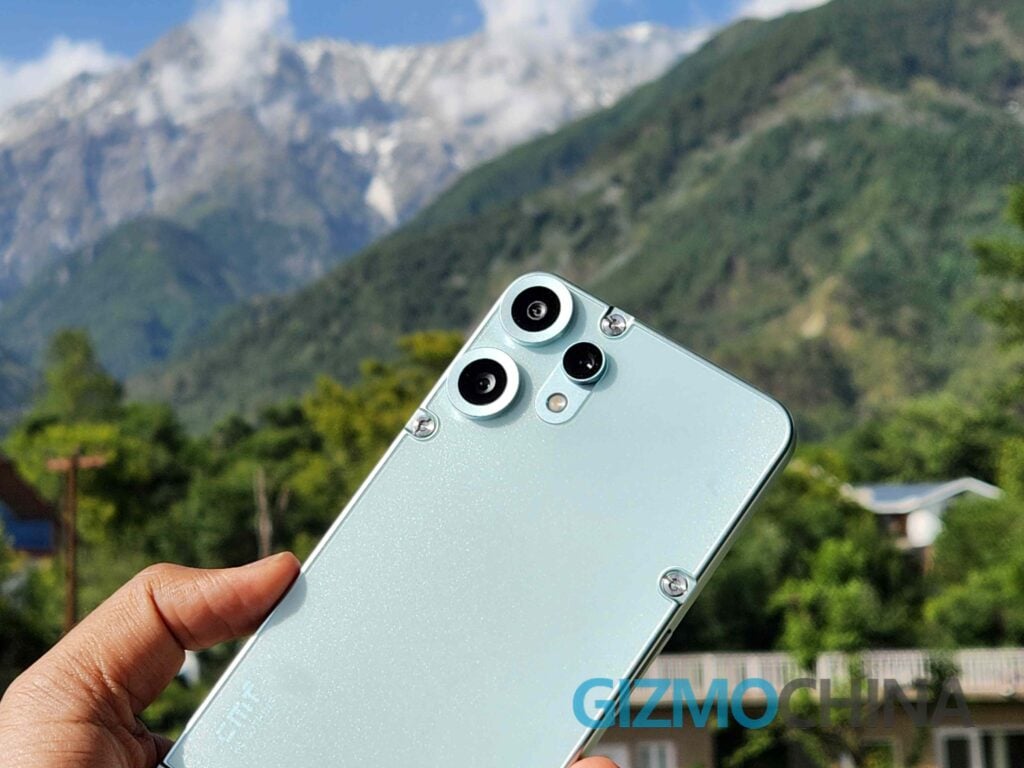
Nothing’s sub-brand CMF announced the CMF Phone 2 Pro in April last year. As the company refreshes the lineup once a year, early details about its successor are starting to surface right on schedule.

A new report from Android Headlines has revealed the specs of the CMF Phone 3 Pro ahead of its launch. Let’s learn about it. 

Nothing CMF Phone (3) Pro Specifications (Rumored)

According to the report, one of the biggest changes this generation could be the processor. The upcoming phone is expected to move away from MediaTek chips and instead use a Qualcomm Snapdragon 7s Gen 4. The CMF Phone 2 Pro, by comparison, uses a Dimensity 7300 Pro processor.

The phone is also said to have a rated battery capacity of 5,090mAh, with a typical capacity of around 5,400mAh. That will be paired with support for 45W wired charging, up from 33W on the previous model.

Design-wise, the changes seem more subtle. The mid-frame could switch from plastic to metal, which may improve both in-hand feel and durability.

cmf-phone-2-pro-review-08

Likewise, the rear camera layout is said to stay mostly the same, although the flash placement has reportedly been adjusted to create more space between the third camera and the dual-camera setup on the left.

The display is tipped to be an AMOLED panel with a resolution of 2392 × 1080, along with a centered punch-hole cutout for the front-facing camera.

There’s no official confirmation yet from Nothing or CMF, and details could still change before launch. Still, if the report is accurate, the CMF Phone 3 Pro looks like a modest but deliberate update that will focus on incremental improvements rather than a major overhaul.

Don’t miss a thing! Join our Telegram community for instant updates and grab our free daily newsletter for the best tech stories!

For more daily updates, please visit our News Section.

(Source)

The post Nothing CMF Phone (3) Pro to switch to Snapdragon, key specs leak appeared first on Gizmochina.

Huawei Pura 90 Pro series launching on April 20: Here’s your first look at the bold new design

Huawei-Pura-90-Pro-Max-Design

Huawei today confirmed that its next-generation Pura series will debut on April 20 in China, where the company will unveil the Pura 90 Pro and Pura 90 Pro Max. Pre-reservations for both devices kick off today at 12:08 PM China time, according to Huawei’s official Weibo account.

In the lead-up to the launch, Huawei has already shown off the design of two phones, and, to its credit, it’s not playing things too safe.

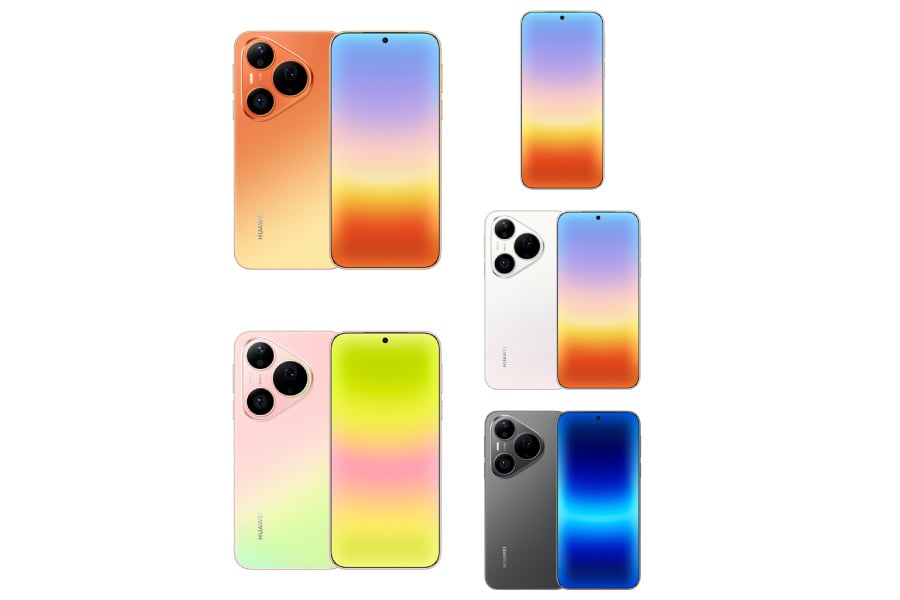
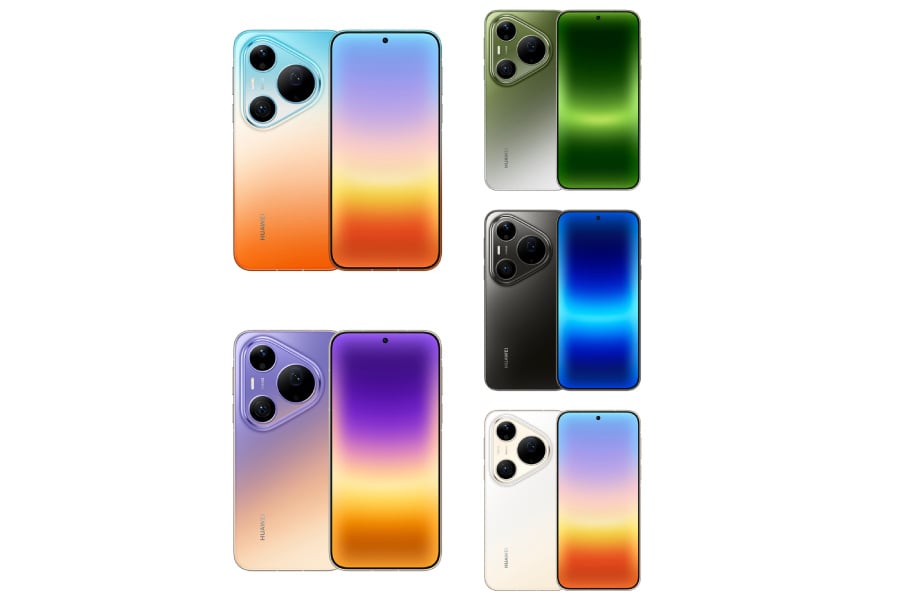
Both models feature a gradient finish across all of their color options, except black and white. This isn’t the first time Huawei has used gradients on its phone colors. The P20 and P30 series also experimented with similar finishes across select colorways. 

Huawei Pura 90 Pro
Huawei Pura 90 Pro Max

Around the back, there’s a rounded triangular camera module, paired with flat sides that give the phones a more structured, almost industrial look.

The teasers confirm that both the Pro and Pro Max share this overall design language, though the silhouette doesn’t stray too far from last year’s Pura 80 lineup.

Huawei Pura 90 Series Specifications (Expected)

On the hardware side, the Pura 90 Pro and Pro Max are both expected to use either the Kirin 9030 or the Kirin 9030 Pro processor. The phones will likely run HarmonyOS 6.1 out of the box.

Huawei may also bring its HyperSpace Memory technology to the series. Previously introduced on the Mate 80 Pro Max, it focuses on improving memory efficiency, allowing a 16GB RAM configuration to deliver an experience closer to 20GB through compression.

As expected, cameras remain a major focus for the Pura lineup. The Pura 90 series is rumored to feature a second-generation Maple Imaging System, along with a large 200-megapixel periscope telephoto lens.

`We should learn more about the new phones in the lead-up to launch.

Don’t miss a thing! Join our Telegram community for instant updates and grab our free daily newsletter for the best tech stories!

For more daily updates, please visit our News Section.

The post Huawei Pura 90 Pro series launching on April 20: Here’s your first look at the bold new design appeared first on Gizmochina.

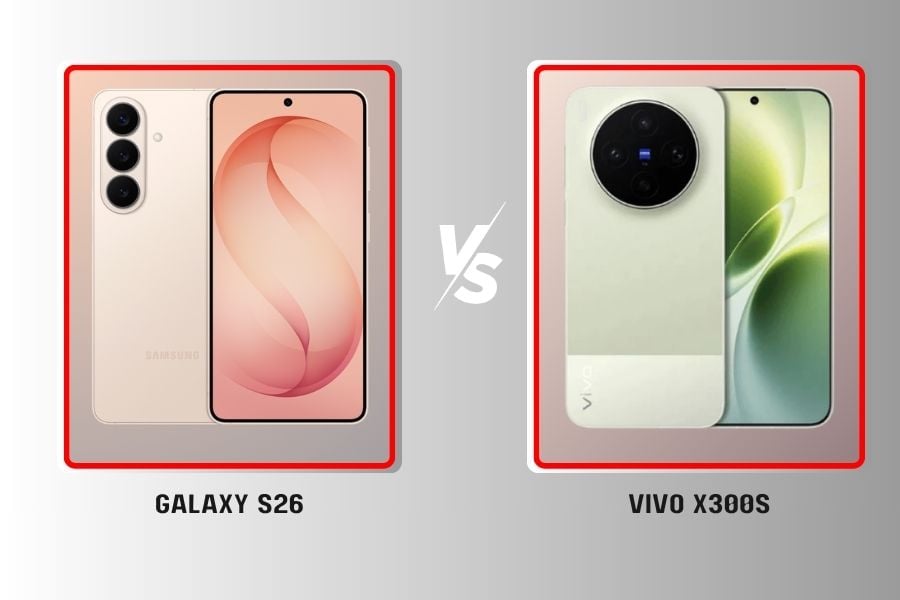
Vivo X300s vs Samsung Galaxy S26: Specs vs Longevity

Vivo-X300s-vs-Samsung-Galaxy-S25

We’ve been putting the Samsung Galaxy S26 up against flagships from across the market. If you’re curious, it’s already faced off against the OnePlus 15 and the Nothing Phone (4a) Pro.

Today, we’re comparing the Galaxy S26 with a more recent flagship, the Vivo X300s, which launched just last week in China. Both phones sit in the increasingly competitive “affordable flagship” tier. But the two are very different ideas of how a flagship phone should be in 2026. 

Vivo is about bigger battery, higher megapixel counts, faster charging, while Samsung offers refinement, long-term support, and a more compact form factor. Let’s go through them in detail here. 

Design and size

The Galaxy S26, as you might know, is a relatively compact flagship. At 149.6mm tall and weighing just 167 grams, it’s noticeably smaller and lighter than the Vivo X300s. You can actually use it one-handed without thinking about it.

The Vivo X300s, by comparison, is large, and unapologetic about it. At 162mm tall and 217 grams, it’s closer to what you’d expect from an “ultra” phone. The extra size makes room for its bigger battery and camera system, but it also means you’ll feel it in your pocket.

Both phones use glass and aluminum builds, but Samsung uses Gorilla Glass Victus 2 on both sides and Armor Aluminum 2 for the frame. Meanwhile, Vivo offers IP68/IP69 ratings, which technically give it an edge in ingress protection.

Display

No prize for guessing, Vivo gives you more screen in almost every sense. The X300s has a 6.78-inch LTPO AMOLED panel with a 144Hz refresh rate, compared to the S26’s 6.3-inch Dynamic LTPO AMOLED 2X display at 120Hz.

On paper, Vivo offers a higher refresh rate, higher resolution (1260 x 2800), and features like 2160Hz PWM dimming and HDR Vivid. But in everyday use, you’re unlikely to notice a major difference between Samsung and Vivo.

Performance

Both phones run flagship chips, but from different ecosystems.

The Vivo X300s uses the MediaTek Dimensity 9500, built on a 3nm process with a peak clock speed of 4.21GHz. Samsung’s Galaxy S26, meanwhile, uses different chips depending on the region: Snapdragon 8 Elite Gen 5 in some markets and Exynos 2600 in others.

On paper, Samsung’s Snapdragon variant is slightly more aggressive, with a 4.74GHz peak core speed. But these are flagship SoCs, so everyday performance will feel smooth on either device.

Where Samsung pulls ahead is software longevity. The S26 promises up to seven major Android updates, compared to five on the Vivo. That’s a meaningful gap if you plan to keep your phone for several years.

Cameras

When it comes to cameras, the Vivo X300s goes all-in on hardware. It features a 200MP main sensor, a 50MP periscope telephoto, and a 50MP ultrawide. It even supports optional external zoom lenses with Zeiss optics.

Samsung, on the other hand, opts for a 50MP main sensor, a 10MP telephoto, and a 12MP ultrawide.

There’s no doubt Vivo has the edge in flexibility. Higher-resolution sensors allow for more cropping, and the periscope lens — plus optional add-ons — suggests it’s built for users who want to experiment with zoom and detail.

Samsung’s advantage lies in predictability. Features like Best Face, strong HDR processing, and consistent video performance make it easier to get reliable results without much effort.

Battery and charging

The Vivo X300s packs a massive 7100mAh battery, significantly larger than the Galaxy S26’s 4300mAh cell.

Charging speeds widen the gap further. Vivo supports 90W wired and 40W wireless charging, while Samsung sticks to 25W wired and 15W wireless. Even with Samsung’s efficiency optimizations, it’s hard to see it competing on endurance or charging time.

The S26 does offer reverse wireless charging and tighter accessory integration, but that doesn’t change the core difference: the Vivo is built to last longer and charge faster.

The bottom line

The Vivo X300s and Galaxy S26 don’t really compete on the same terms, even though they sit in the same category.

The Vivo X300s is all about maximizing hardware — a bigger battery, faster charging, higher-resolution cameras, and a larger, faster display. It’s trying to win on specs.

The Galaxy S26 is more restrained. It focuses on usability, long-term software support, and a compact design that’s increasingly rare among flagship Android phones.

Ultimately, it comes down to what you value more: raw hardware or a more balanced, long-term experience.

For more daily updates, please visit our News Section.

Stay ahead in tech! Join our Telegram community and sign up for our daily newsletter of top stories!

The post Vivo X300s vs Samsung Galaxy S26: Specs vs Longevity appeared first on Gizmochina.

MediaTek Dimensity 9600 core setup leaks, performance gains capped at 15%

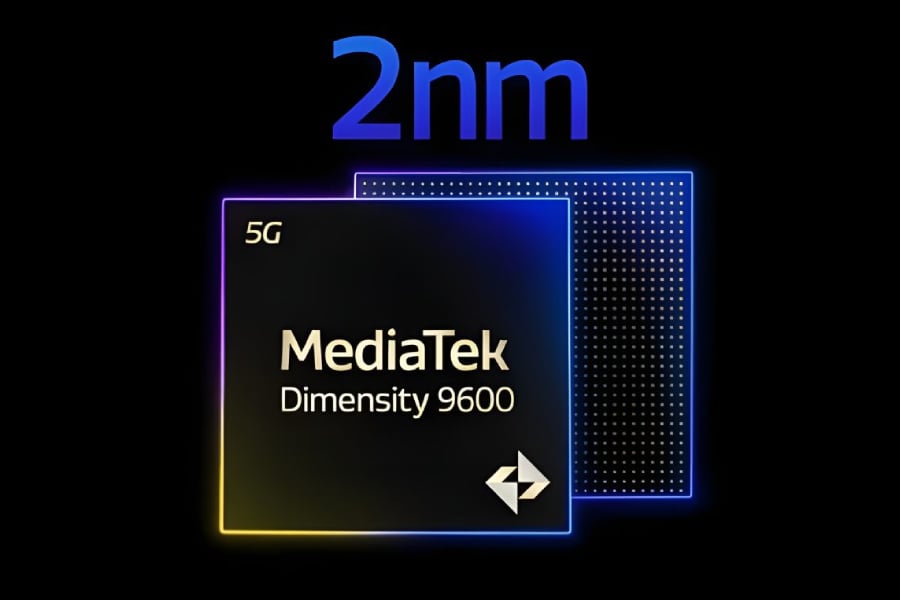
MediaTek-Dimensity-9600-two-prime-cores

Just days after reports suggested the MediaTek Dimensity 9600 Pro could flirt with 5GHz clock speeds, a new leak is adding a bit more shape to the rumor.

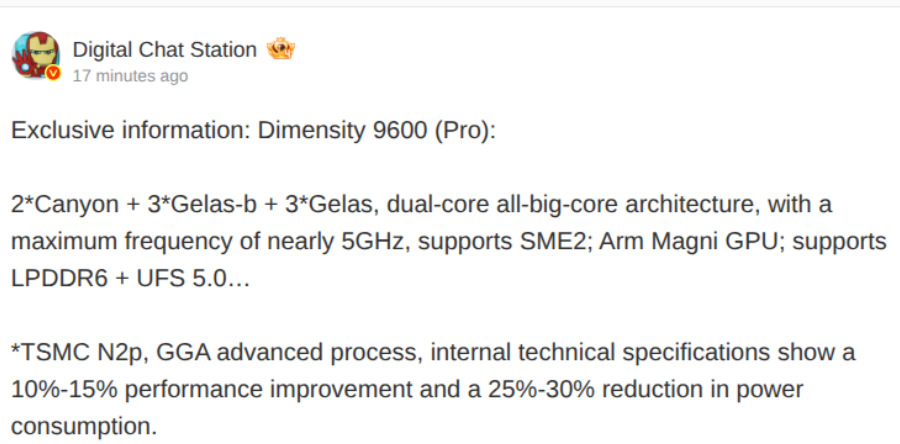
According to tipster Digital Chat Station (DCS) on Weibo, the Dimensity 9600 Pro will use a 2+3+3 CPU layout built around what the tipster describes as a “dual-core all-big-core architecture.”

MediaTek Dimensity 9600 Pro core setup

More specifically, the chip is said to feature two high-performance “Canyon” cores, alongside three “Gelas-b” and three standard “Gelas” cores. The tipster further reiterates that the prime core clock speeds are expected to push close to the 5GHz mark.

The leak also mentions support for SME 2 (Scalable Matrix Extension 2), an extension designed to improve machine learning and AI-related workloads. On the graphics side, the chip is tipped to feature an Arm “Magni” GPU.

Memory and storage upgrades are also on the table. The Dimensity 9600 Pro is rumored to support LPDDR6 RAM and UFS 5.0 storage, both of which promise faster data throughput and improved efficiency over today’s standards.

Underlying all of this is TSMC’s N2P process. According to DCS, internal specifications reportedly suggest a 10 to 15 percent boost in performance alongside a 25 to 30 percent reduction in power consumption.

Interestingly, even Qualcomm’s Snapdragon 8 Elite Gen 6 Pro is expected to deliver a performance uplift of under 20%, despite reaching similar clock speeds near the 5GHz mark.

MediaTek-Dimensity-9600-two-prime-cores

Anywho, as you might have guessed by now, the Dimensity 9600 lineup won’t be a one-size-fits-all affair. The Pro model is set to carry the most advanced architecture, while the standard variant is rumored to stick with a 3nm process and will likely target more mainstream devices.

According to previous reports, the Vivo X500 series and the Oppo Find X10 lineup will be the first to use the Dimensity 9600 chip.

For more daily updates, please visit our News Section.

Stay ahead in tech! Join our Telegram community and sign up for our daily newsletter of top stories! 💡

The post MediaTek Dimensity 9600 core setup leaks, performance gains capped at 15% appeared first on Gizmochina.

❌