Reading view

Vivo T5 Pro vs Nothing Phone (4a) Full Comparison: Specs, Camera, Battery & Price
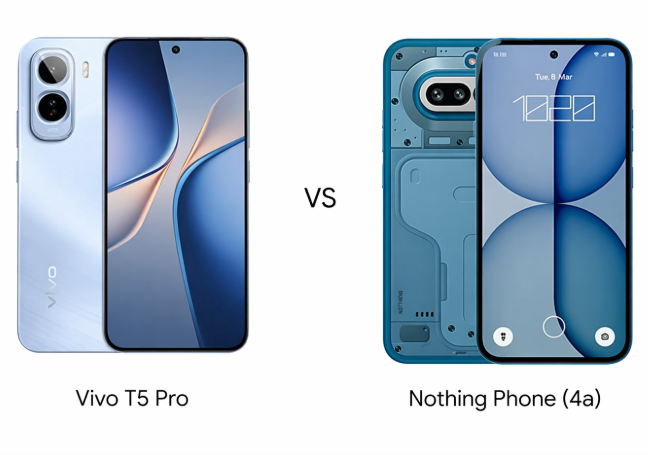
vivo vs nothing

Choosing between the Vivo T5 Pro and Nothing Phone (4a) comes down to what matters more in daily use, raw power and battery life or a more balanced, premium experience. Both phones target the mid-range segment and offer strong performance, but they take very different approaches. This comparison helps highlight which one actually delivers the better overall value for most users.
Design and Display 

Build and Feel

Vivo T5 Pro focuses more on durability with its IP68/IP69 rating, making it far more resistant to water and dust compared to the Nothing Phone (4a). The plastic back keeps it practical, though it lacks the premium feel some users expect. In contrast, Nothing Phone (4a) leans into aesthetics with its transparent-style glass back and signature LED Glyph interface, giving it a more distinctive and modern personality. It feels more like a design statement than just a tool, even if its IP64 rating is less reassuring.

Display Quality

Vivo T5 Pro pushes brightness to extreme levels with a 144Hz AMOLED panel and a massive 5000 nits peak brightness, making outdoor visibility exceptional. The higher refresh rate also gives it a smoother edge in gaming. Nothing Phone (4a), however, delivers a more balanced visual experience with HDR10+, 1B colors, and better tuning, which makes content look richer and more cinematic rather than just bright.

Verdict

Vivo wins on raw display power and durability, while Nothing feels more refined and visually appealing overall.

Specifications Including Battery 

Performance

Both phones run on the same Snapdragon 7s Gen 4 chipset, so real-world performance is nearly identical. Day-to-day usage, multitasking, and gaming feel smooth on both devices. However, Nothing OS 4.1 offers a cleaner, more optimized experience with promised long-term updates, which adds more long-term value. Vivo’s Origin OS feels feature-rich but slightly heavier in comparison.

Battery and Charging

This is where Vivo T5 Pro dominates. The massive 9020mAh battery is in a different league, easily lasting two days for most users. Combined with 90W fast charging, it delivers both endurance and speed. Nothing Phone (4a), with its 5400mAh battery (India variant) and 50W charging, is solid but clearly less ambitious. It charges quickly but cannot match Vivo’s stamina.

Verdict

Performance is evenly matched, but Vivo T5 Pro clearly wins with its massive battery and faster charging advantage.

Camera 

Main and Secondary Lenses

Nothing Phone (4a) takes a significant lead in camera versatility. Its triple-camera system includes a 50MP main sensor with OIS, a periscope telephoto lens with 3.5x optical zoom, and an ultrawide lens. This setup allows for much more creative flexibility and better long-range shots. Vivo T5 Pro, with its dual-camera setup, focuses more on basic photography. While the 50MP main sensor performs well in daylight, the lack of additional lenses limits its overall capability.

Selfie Camera

Both devices feature a 32MP front camera, but Vivo edges ahead slightly by supporting 4K video recording for selfies, which is rare in this segment. Nothing keeps it more standard with 1080p, but its image processing tends to produce more natural tones.

Verdict

Nothing Phone (4a) is the clear winner for overall photography, offering more versatility and better real-world shooting options.

Pricing 

Price Comparison

Vivo T5 Pro is priced at approximately ₹30,000, while Nothing Phone (4a) comes in slightly higher at around ₹32,000. The price gap is small but noticeable, especially in the mid-range segment where value matters the most. Vivo positions itself as a performance and battery-focused device at a slightly lower cost, while Nothing justifies its pricing with design and camera upgrades.

Value for Money

Vivo T5 Pro offers excellent value for users who prioritize battery life, display brightness, and durability. It delivers strong hardware at a more aggressive price point. Nothing Phone (4a), on the other hand, feels like a more premium experience with its unique design, better cameras, and cleaner software. It costs more, but the added features are noticeable in daily use.

Verdict

Vivo T5 Pro offers better raw value, while Nothing Phone (4a) justifies its price with a more premium overall experience.

Conclusion 

Vivo T5 Pro stands out with its massive 9020mAh battery, ultra-bright 144Hz display, and superior water resistance, making it highly practical and endurance-focused. It feels like a device built for heavy users who want reliability over everything else. Nothing Phone (4a), meanwhile, brings a unique identity with its Glyph lighting system, cleaner Nothing OS, and versatile triple-camera setup. It feels more modern, expressive, and balanced across different use cases.

Verdict

If one best overall phone has to be chosen, the Nothing Phone (4a) is the smarter pick for most users. Both phones offer similar performance, but Nothing delivers a more complete experience with better cameras, cleaner software, longer update support, and a more premium design. The Vivo T5 Pro is excellent for battery life and fast charging, but it feels more like a niche choice for heavy users. For balanced daily use, long-term value, and overall refinement, Nothing Phone (4a) is the better choice.

Read More:

The post Vivo T5 Pro vs Nothing Phone (4a) Full Comparison: Specs, Camera, Battery & Price appeared first on Gizmochina.
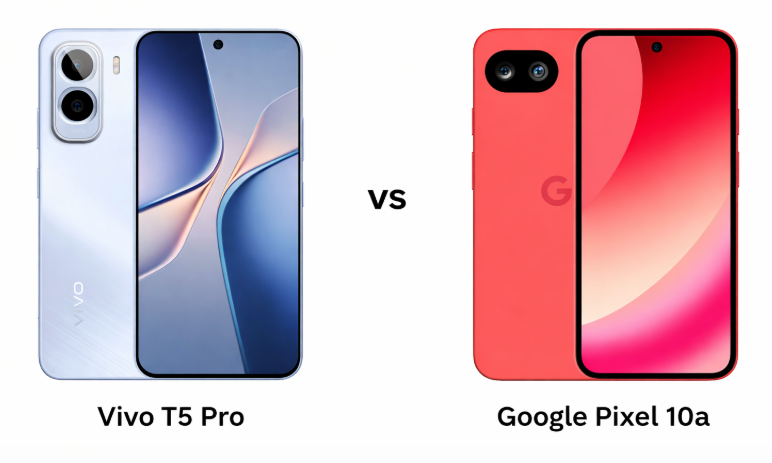
Vivo T5 Pro vs Google Pixel 10a Comparison: Specs, Camera, Battery & Price

vivo vs google

Vivo T5 Pro and Google Pixel 10a approach the mid-range segment with clearly different priorities. Vivo leans into aggressive hardware, larger battery, faster charging, and a high-refresh display, while Google focuses on software optimization, computational photography, and long-term support. With both devices targeting similar buyers at very different price points, this comparison breaks down where each phone stands and which one makes more sense depending on usage priorities.

Design and Display

Build and Feel

The Vivo T5 Pro leans toward a bold, rugged approach with a plastic frame and back, backed by strong IP68/IP69 protection. It feels built for durability and endurance, clearly targeting heavy users. The Pixel 10a, on the other hand, brings a more refined finish with an aluminum frame and Gorilla Glass protection. It feels more premium in hand, even if it doesn’t push extreme durability standards as aggressively. The cleaner design language on the Pixel makes it feel more polished for everyday use.

Display Quality

Vivo takes a clear lead in raw display specs with a larger AMOLED panel, ultra-smooth 144Hz refresh rate, and extremely high peak brightness. It’s built for immersive viewing and gaming. The Pixel 10a focuses more on balance, offering a smaller P-OLED panel with 120Hz and strong HDR tuning. While not as aggressive, it delivers more natural colors and better consistency.

Verdict

Vivo T5 Pro is for big-screen lovers and gamers, while Pixel 10a feels more refined and balanced for daily use.

Specifications Including Battery

Performance

The Vivo T5 Pro runs on the Snapdragon 7s Gen 4, delivering solid mid-range performance with a focus on efficiency and stable gaming. It handles multitasking smoothly but stays within predictable limits. The Pixel 10a’s Tensor G4, however, is more AI-focused and optimized for real-world tasks like photography and smart features. While not always the fastest in raw benchmarks, it feels smarter and more adaptive in daily use.

Battery and Charging

This is where Vivo dominates. The massive 9020 mAh battery is designed for extreme endurance, easily lasting far beyond a typical day. Combined with 90W fast charging, it minimizes downtime significantly. The Pixel 10a offers a more standard 5100 mAh battery with slower wired charging and the addition of wireless charging. It’s more about convenience than raw power.

Verdict

Vivo T5 Pro wins on battery and charging by a huge margin, but Pixel 10a offers a smarter, more balanced performance experience.

Camera

Main and Secondary Lenses

The Pixel 10a clearly leads in camera versatility and processing. Its dual-camera setup includes a reliable main sensor with OIS and an ultrawide lens, backed by Google’s computational photography features like Ultra HDR and Best Take. Photos tend to look more detailed and consistent across lighting conditions. The Vivo T5 Pro focuses on a simpler dual setup without an ultrawide, delivering decent shots but lacking flexibility and advanced processing.

Selfie Camera

Vivo offers a higher-resolution 32 MP front camera capable of 4K recording, making it appealing for selfie-heavy users and content creators. The Pixel 10a uses a lower-resolution ultrawide selfie camera but compensates with better HDR tuning and more natural skin tones. It prioritizes realism over sheer detail.

Verdict

Pixel 10a is the clear winner for overall photography, while Vivo T5 Pro appeals more to selfie-focused users.

Pricing

The Vivo T5 Pro is priced around ₹30,000, positioning itself as a strong value-driven device focused on hardware. In contrast, the Pixel 10a sits at around ₹50,000, making it significantly more expensive. The price gap is substantial and immediately affects buying decisions.

Is the Price Justified

Vivo delivers exceptional value with its massive battery, high-refresh-rate display, and fast charging. It feels like a specs-first device built to impress on paper and in usage time. The Pixel 10a justifies its higher price through software longevity, premium build, AI features, and camera performance. It’s less about specs and more about experience.

Verdict

Vivo T5 Pro offers better value for money, while Pixel 10a justifies its price with long-term usability and smarter features.

Disclaimer:
Prices are approximate and may vary based on country, region, and applicable taxes.

Conclusion

Vivo T5 Pro stands out with its massive battery, ultra-fast charging, and high-refresh-rate display, making it ideal for power users and gamers. It’s built to last long and perform consistently without worrying about charging cycles. The Pixel 10a differentiates itself with long-term Android updates, AI-powered features, superior cameras, and cleaner software. It feels more future-proof and polished in everyday use.

Verdict

If only one has to be chosen, the Google Pixel 10a is the better pick overall. It delivers a more refined experience with superior cameras, longer software support, and smarter day-to-day performance that ages well over time. 

While the Vivo T5 Pro offers incredible battery life and strong value, it feels more like a spec-driven device, whereas the Pixel 10a provides a more complete, polished, and future-proof smartphone experience.

Disclaimer: This comparison is based on the specifications provided and is intended for general informational purposes. Actual performance, camera results, battery life, and overall experience may vary depending on real-world usage, software updates, and individual preferences.

Read More:

The post Vivo T5 Pro vs Google Pixel 10a Comparison: Specs, Camera, Battery & Price appeared first on Gizmochina.
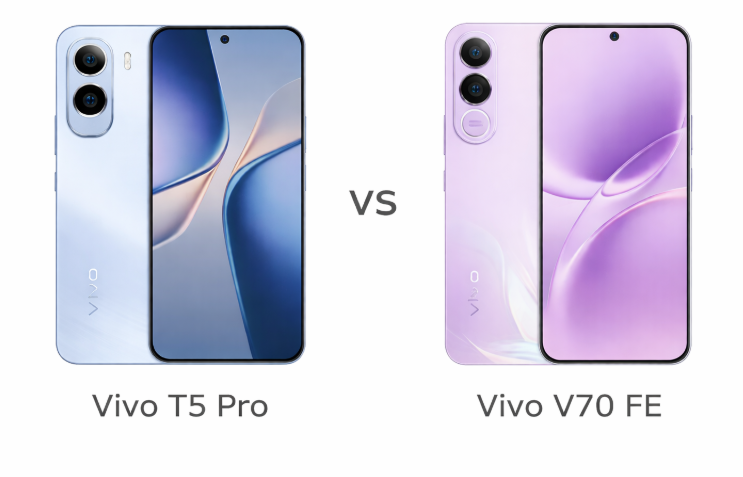
Vivo T5 Pro vs V70 FE: Which One Should You Buy in 2026?

Vivo T5 Pro vs V70 FEa

Vivo T5 Pro and Vivo V70 FE might look similar at first, but they’re built for totally different needs. One is all about a massive battery and smooth performance, while the other focuses on the camera and a more premium overall feel. That contrast makes this comparison interesting, because it’s not about which is better, but which actually fits your usage better.

Major Features:

FeatureVivo T5 ProVivo V70 FEWinner
Display6.83″ AMOLED, 144Hz, 5000 nits peak6.83″ AMOLED, 120Hz, HDR10+, 1900 nitsT5 Pro – Higher refresh rate & brightness
ProcessorSnapdragon 7s Gen 4Dimensity 7360 Turbo (4nm)V70 FE – More modern and slightly better efficiency
GPUAdreno 810Mali-G615 MC2Tie – Comparable mid-range performance
RAM & StorageUp to 12GB RAM, 256GB, UFS 3.1Up to 12GB RAM, 512GB, UFS 3.1V70 FE – Higher storage option
Rear Camera50MP (wide) + auxiliary200MP (OIS) + 8MP ultrawideV70 FE – More versatile and higher resolution
Front Camera32MP50MP (India) / 32MP (global)V70 FE – Higher resolution & autofocus (India)
Video Recording4K @30fps4K, OIS + EISV70 FE – Better stabilization
Battery9020 mAh7000 mAhT5 Pro – Significantly larger battery
Charging90W, 50% in 37 min90W, 100% in 60 minT5 Pro – Faster top-up speed
Build & ProtectionIP68/IP69IP68/IP69 + extra immersion timeV70 FE – Slightly better durability
ConnectivityWi-Fi 6, Bluetooth 5.2, no NFCBluetooth 5.4, NFC, IR blasterV70 FE – More features
OSAndroid 16, OriginOS 6Android 16, OriginOS 6Tie – Same software experience
Price₹30,000 (approx)₹38,000 (approx)T5 Pro – Better value
Disclaimer: Specs are based on available data. Actual performance may vary. Verify details from official sources before buying.

Design and Display

Build and Feel

Both phones follow a similar design language with a glass front and plastic frame/back, but the experience differs slightly. The Vivo V70 FE feels more refined with its slimmer profile and added touches like Darkness Glow technology, giving it a more premium visual identity in certain markets. The T5 Pro, however, focuses on durability with strong IP68/IP69 protection, making it feel more rugged and confidence-inspiring for long-term use. The choice here leans toward whether durability or aesthetics matter more in daily handling.

Display Quality

The Vivo T5 Pro pushes ahead with a 144Hz AMOLED panel and extremely high peak brightness, making it ideal for gaming and outdoor visibility. In contrast, the V70 FE offers a 120Hz AMOLED with HDR10+ and richer color depth, which feels more balanced for media consumption. The difference comes down to smoothness versus color richness, and both deliver a premium viewing experience.

Verdict

The T5 Pro feels more performance-driven with its smoother panel, while the V70 FE offers a more polished and visually rich display experience.

Specifications Including Battery

Performance

The Vivo T5 Pro is powered by the Snapdragon 7s Gen 4, which leans toward efficiency and stable performance, especially in gaming and sustained workloads. Meanwhile, the V70 FE’s Dimensity 7360 Turbo brings a more modern 4nm architecture and slightly better AI and multitasking capabilities. The difference isn’t drastic, but the V70 FE feels a bit more future-ready, while the T5 Pro offers more consistent thermal performance.

Battery and Charging

This is where the T5 Pro stands out significantly. Its massive 9020 mAh battery easily surpasses the V70 FE’s 7000 mAh, delivering exceptional endurance that can stretch into multi-day usage. Both support 90W charging, but the T5 Pro’s larger capacity, combined with efficient charging curves, makes it feel more dependable for heavy users. Features like bypass charging also add practical value for gamers.

Verdict

The T5 Pro dominates in battery life and consistency, while the V70 FE offers slightly more modern processing advantages.

Camera

Main and Secondary Lenses

The Vivo V70 FE clearly takes the lead with its 200MP main sensor and an additional ultrawide lens, making it far more versatile. It captures more detail, offers better stabilization with OIS, and provides flexibility for different shooting scenarios. The T5 Pro, on the other hand, sticks to a simpler dual-camera setup with a 50MP sensor and lacks an ultrawide, which limits its creative range. It performs reliably but doesn’t stand out.

Selfie Camera

Both devices offer strong selfie performance, but the V70 FE edges ahead in the Indian variant with a 50MP autofocus front camera. This results in sharper, more detailed selfies and better video output. The T5 Pro’s 32MP camera is solid but feels more standard in comparison.

Verdict

The V70 FE is the clear winner for photography, offering more versatility, higher resolution, and better overall imaging capabilities.

Pricing

The Vivo T5 Pro is priced around ₹30,000, while the Vivo V70 FE comes in at approximately ₹38,000. This creates a noticeable gap, placing the V70 FE closer to the premium mid-range segment. The T5 Pro positions itself as a value-focused device with strong battery and performance, while the V70 FE justifies its higher price through camera upgrades, design refinements, and additional features like NFC and an infrared port.

Is the Price Justified

The T5 Pro feels like a practical choice for users who prioritize battery life and smooth performance without overspending. Meanwhile, the V70 FE’s higher price starts to make sense for users who want a more complete flagship-like experience, especially in camera and display quality. However, the price jump may feel steep for those who don’t need those extras.

Verdict

The T5 Pro offers better value for money, while the V70 FE targets users willing to pay more for a well-rounded upgrade.

Disclaimer:
Prices are approximate and may vary based on country, region, and applicable taxes.

Conclusion

The Vivo T5 Pro stands out with its massive battery, high refresh rate display, and gaming-friendly features like bypass charging, making it a strong pick for power users. On the other hand, the Vivo V70 FE focuses on a more balanced flagship-like experience, with a high-resolution camera, ultrawide lens, HDR10+ display, and additional connectivity features. It feels more complete as an all-rounder device.

Verdict

The choice ultimately depends on priorities. The T5 Pro is the smarter pick for battery life and performance-focused usage, offering strong value at a lower price. The V70 FE, however, feels like a more premium and versatile smartphone, especially for users who care about photography and overall polish.

Disclaimer: This comparison is based on the specifications provided and is intended for general informational purposes. Actual performance, camera results, battery life, and overall experience may vary depending on real-world usage, software updates, and individual preferences.

Read More:

The post Vivo T5 Pro vs V70 FE: Which One Should You Buy in 2026? appeared first on Gizmochina.

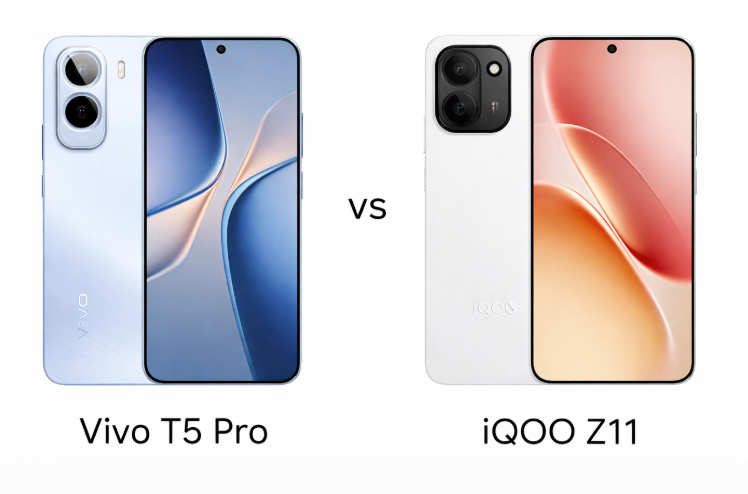
Vivo T5 Pro vs iQOO Z11: Looks Similar, Performs Very Different

Vivo vs iQOO

Two smartphones, almost identical on paper, yet built for completely different experiences, the Vivo T5 Pro and iQOO Z11 redefine how brands approach the ₹30K segment. With massive batteries, high-refresh-rate displays, and modern hardware, both seem equally compelling at first glance, but the real difference lies in performance tuning, camera capabilities, and feature choices that shape everyday usage. This comparison highlights which one truly delivers better value depending on whether the priority is raw power or a more balanced, refined experience.

Major Features:

FeatureVivo T5 ProiQOO Z11Winner
Design & BuildGlass front, plastic frame/back, IP68/IP69Glass front, plastic frame/back, IP68/IP69Tie – Same durability and build
DisplayAMOLED, 144Hz, 5000 nits peakAMOLED, 165Hz, HDR, 2160Hz PWM, 5000 nits peakiQOO Z11 – Higher refresh + better display features
Resolution1260 × 2800, ~450 ppi1260 × 2800, ~450 ppiTie – Identical sharpness
ChipsetSnapdragon 7s Gen 4Dimensity 8500 (4nm)iQOO Z11 – More powerful and newer architecture
GPUAdreno 810Mali-G720 MC8iQOO Z11 – Better gaming performance
RAM & StorageUp to 12GB / 256GB, UFS 3.1Up to 16GB / 512GBiQOO Z11 – More RAM and storage options
Rear Camera50MP (no OIS)50MP with OISiQOO Z11 – OIS improves stability and low light
Video (Rear)4K@30fps4K + EIS + OISiQOO Z11 – Better stabilization
Selfie Camera32MP, 4K video16MP, 1080pVivo T5 Pro – Higher resolution + 4K
Battery9020mAh9020mAhTie – Same massive battery
Charging90W wired90W + PD/PPS + UFCSiQOO Z11 – More charging flexibility
ConnectivityWi-Fi 6, BT 5.2, No NFCWi-Fi 6, BT 5.4, NFC, IRiQOO Z11 – More features like NFC & IR
AudioStereo speakersStereo speakersTie – Same setup
Price₹30,000₹31,000Vivo T5 Pro – Slightly cheaper
Disclaimer: Specs are based on available data. Actual performance may vary. Verify details from official sources before buying.

Design and Display

Build and Feel

Both phones follow a similar design language with glass fronts and plastic frames, but the overall finish differs slightly in perception. The Vivo T5 Pro feels a bit more refined in hand with a cleaner aesthetic, while the iQOO Z11 leans toward a slightly more performance-focused look. Both offer IP68/IP69 protection, which is a strong addition at this price point and adds confidence for long-term usage. The in-hand feel is solid on both, though the Vivo device subtly feels more polished in everyday use.

Display Quality

The displays are nearly identical in size and resolution, but the refresh rate and tuning create separation. The iQOO Z11’s 165Hz panel offers smoother scrolling and a more responsive feel, especially noticeable in gaming. It also adds better PWM dimming and HDR support, making it more versatile for media consumption. The Vivo T5 Pro still delivers a bright and sharp AMOLED experience with a 144Hz panel, but it lacks some of the finesse seen on the iQOO.

Verdict

iQOO Z11 takes the edge with a more feature-rich display, while Vivo T5 Pro feels slightly more premium in design execution.

Specifications Including Battery

Performance

The biggest gap appears in performance. The iQOO Z11, powered by the Dimensity 8500, delivers significantly higher raw power and better sustained performance. It is clearly tuned for gaming and heavy multitasking, making it more future-proof. The Vivo T5 Pro’s Snapdragon 7s Gen 4 is efficient and capable for daily use, but it sits a tier below in terms of peak performance. For users who prioritize stability over raw speed, the Vivo still holds its ground well.

Battery and Charging

Both phones pack a massive 9020mAh battery, which is a standout feature in this segment. Battery life is exceptional on both, easily stretching beyond a day and a half with moderate use. Charging speeds are identical at 90W, but the iQOO Z11 adds more charging protocols like PD/PPS and UFCS, making it more flexible across different chargers.

Verdict

iQOO Z11 clearly wins with stronger performance and more versatile charging, while battery life remains equally impressive on both.

Camera

Main and Secondary Lenses

Both devices feature a 50MP primary camera with similar sensor sizes, but the iQOO Z11 gains a clear advantage with OIS support. This results in more stable shots and better low-light performance. Video recording is also more reliable on the iQOO due to gyro-EIS combined with OIS. The Vivo T5 Pro still captures good photos with decent dynamic range, but it lacks the consistency seen on the iQOO. The difference becomes noticeable in challenging lighting conditions.

Selfie Camera

The Vivo T5 Pro stands out with a higher-resolution 32MP front camera, delivering sharper selfies and better detail retention. It also supports 4K video recording, which is rare in this segment. The iQOO Z11’s 16MP selfie camera is serviceable but feels basic in comparison, especially for users who prioritize front camera quality.

Verdict

iQOO Z11 is better for rear camera performance, while Vivo T5 Pro is the stronger choice for selfies and front video.

Pricing

The Vivo T5 Pro is priced at around ₹30,000, while the iQOO Z11 comes slightly higher at approximately ₹31,000. The difference is minimal, making this a direct value-based decision rather than a budget constraint. At this price, expectations around performance, camera, and features become very important.

Is the Price Justified?

The iQOO Z11 justifies its slightly higher price with a more powerful chipset, better display features, OIS in the camera, and added connectivity options like NFC and infrared. It feels like a more complete package for power users. The Vivo T5 Pro, however, focuses on balanced usage with a better selfie camera and a slightly more refined design, which may appeal to casual users and content creators.

Verdict

iQOO Z11 offers better overall value for performance-focused buyers, while Vivo T5 Pro remains a solid alternative for balanced everyday use.

Disclaimer:
Prices are approximate and may vary based on country, region, and applicable taxes.

Conclusion

The iQOO Z11 stands out with its Dimensity 8500 chipset, 165Hz display, OIS camera system, and additional features like NFC and infrared. It is clearly designed for users who want maximum performance and versatility. On the other hand, the Vivo T5 Pro highlights a stronger selfie camera, a clean design approach, and a dependable overall experience. Both devices share excellent battery life, which is a major selling point in this segment.

Verdict

For gaming, performance, and long-term value, the iQOO Z11 is the better pick. For users who prefer a more balanced phone with better selfies and a slightly more refined feel, the Vivo T5 Pro still makes sense. The final choice depends on whether performance or overall balance matters more.

Disclaimer: This comparison is based on the specifications provided and is intended for general informational purposes. Actual performance, camera results, battery life, and overall experience may vary depending on real-world usage, software updates, and individual preferences.

Read More:

The post Vivo T5 Pro vs iQOO Z11: Looks Similar, Performs Very Different appeared first on Gizmochina.

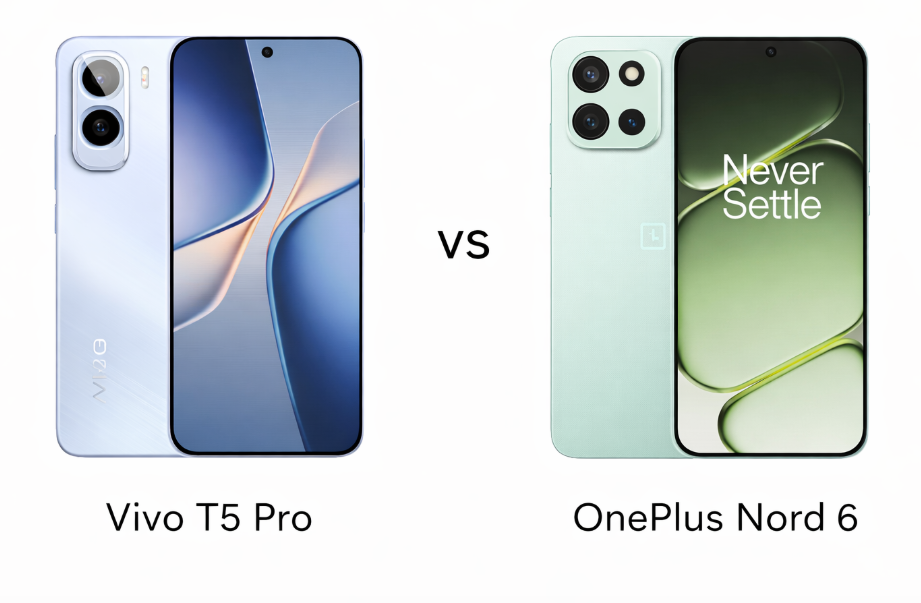
Vivo T5 Pro vs OnePlus Nord 6 Comparison: Power, Battery, Camera

vivo vs oneplus

Choosing between the Vivo T5 Pro and the OnePlus Nord 6 isn’t just about specs; it’s about deciding what kind of smartphone experience matters more. One leans heavily into extreme battery life and aggressive pricing, while the other brings flagship-grade performance and a more refined overall package. 

For buyers in the ₹30K–₹40K range, this comparison highlights a clear shift: do you prioritize endurance and value, or power and polish? This matchup makes that decision surprisingly clear.

Major Features:

FeatureVivo T5 ProOnePlus Nord 6Winner
Build & ProtectionGlass front, plastic frame/back, IP68/IP69Glass front (Crystal Guard), plastic frame/back, IP68/IP69K, MIL-STD-810HNord 6 – Extra durability standards + better protection
DisplayAMOLED, 144Hz, 5000 nits peakAMOLED, 165Hz, HDR10+, 3600 nits peak, 1B colors, 3840Hz PWMNord 6 – More advanced panel, smoother & richer
Resolution & Sharpness1260×2800 (~450 ppi)1272×2772 (~450 ppi)Tie – Nearly identical sharpness
ChipsetSnapdragon 7s Gen 4Snapdragon 8s Gen 4Nord 6 – Flagship-level performance
GPUAdreno 810Adreno 825Nord 6 – More powerful GPU
Storage TypeUFS 3.1UFS 4.1Nord 6 – Faster storage speeds
RAM & Storage OptionsUp to 12GB + 256GBUp to 12GB + 512GBNord 6 – Higher storage option
Rear Camera Setup50MP + auxiliary50MP (OIS) + 8MP ultrawideNord 6 – More versatile + OIS
Video Recording4K@30fps4K@60fps (main), EISNord 6 – Better video capabilities
Selfie Camera32MP, 4K@30fps32MP, PDAF, 4K@30fpsNord 6 – Autofocus advantage
Battery9020mAh7500mAh (Global) / 9000mAh (India)Vivo T5 Pro – Slightly larger battery
Charging90W wired80W wired + better protocolsVivo T5 Pro – Faster charging
ConnectivityWi-Fi 6, Bluetooth 5.2, No NFCWi-Fi 7, Bluetooth 6.0, NFC, IRNord 6 – More advanced connectivity
AudioStereo speakersStereo speakersTie
SoftwareAndroid 16, OriginOS 6Android 16, OxygenOS 16Nord 6 – Cleaner, more refined UI
Price₹30,000 (~$350)₹39,000 (~$460)Vivo T5 Pro – Better affordability
Disclaimer: Specs are based on available data. Actual performance may vary. Verify details from official sources before buying.

Design and Display

Build and Feel

Both the Vivo T5 Pro and OnePlus Nord 6 follow a similar design language with glass fronts and plastic frames, but they deliver slightly different impressions in daily use. The Vivo leans toward durability with its IP68/IP69 rating, making it feel more rugged and ready for rough conditions. The Nord 6, however, adds a layer of refinement with its Crystal Guard protection and MIL-STD certification, giving it a slightly more premium and polished edge. The overall in-hand feel of the Nord 6 comes across as more flagship-like, while the Vivo prioritizes toughness.

Display Quality

The Vivo T5 Pro pushes brightness to extreme levels with a 144Hz AMOLED panel and a very high peak brightness, making it excellent for outdoor visibility. The Nord 6 counters with a sharper overall display experience, 65Hz refresh rate, better color depth, HDR10+, and advanced PWM dimming for eye comfort. The Nord’s display feels more balanced and technically superior, especially for long usage sessions and media consumption.

Verdict

While the Vivo excels in brightness and durability, the Nord 6 delivers a more refined, feature-rich display and overall premium feel.

Specifications Including Battery

Performance

This is where the gap becomes clear. The Vivo T5 Pro runs on the Snapdragon 7s Gen 4, which is efficient and capable for everyday tasks, but it sits firmly in the upper mid-range tier. The OnePlus Nord 6, powered by the Snapdragon 8s Gen 4, is in a completely different league. It handles gaming, multitasking, and heavy workloads with far more ease and longevity. The faster UFS 4.1 storage on the Nord also improves app loading and overall responsiveness noticeably.

Battery and Charging

The Vivo T5 Pro stands out with its massive 9020mAh battery paired with 90W charging, making it a clear endurance champion. The Nord 6, especially the India variant with a similar 9000mAh battery, stays competitive but charges slightly slower at 80W. However, it adds better charging standards and optimization. The Vivo feels like it’s built for extreme battery users, while the Nord offers a more balanced approach.

Verdict

The Nord 6 dominates performance, but the Vivo T5 Pro takes the lead in raw battery endurance.

Camera

Main and Secondary Lenses

The Vivo T5 Pro keeps things simple with a single 50MP main sensor and an auxiliary lens, delivering decent results but lacking versatility. The absence of an ultrawide camera limits creative flexibility. The OnePlus Nord 6, on the other hand, offers a more complete setup with a 50MP main sensor featuring OIS and an 8MP ultrawide lens. The addition of OIS and better image processing gives the Nord more consistent and reliable results, especially in challenging lighting conditions.

Selfie Camera

Both phones feature 32MP selfie cameras capable of 4K video, but the Nord 6 edges ahead with autofocus support, which improves sharpness and usability for video calls and content creation. The difference isn’t massive, but it becomes noticeable in real-world use.

Verdict

The Nord 6 offers a more versatile and reliable camera system, while the Vivo feels basic in comparison.

Pricing

The Vivo T5 Pro is priced around ₹30,000, making it a strong contender in the mid-range segment. The OnePlus Nord 6 comes in at approximately ₹39,000, placing it closer to the premium mid-range category. The price gap is significant, and it directly reflects the difference in performance, features, and overall experience.

From a value perspective, the Vivo T5 Pro feels aggressive, especially with its massive battery and solid display. It targets users who want maximum endurance and decent performance without stretching their budget. The Nord 6, however, justifies its higher price with flagship-level performance, better display technology, improved cameras, and more advanced connectivity features.

Verdict

The Vivo T5 Pro offers better value for budget-focused buyers, while the Nord 6 justifies its price with a more complete and premium experience.

Disclaimer:
Prices are approximate and may vary based on country, region, and applicable taxes.

Conclusion

The Vivo T5 Pro stands out primarily for its massive battery capacity, making it ideal for users who prioritize long-lasting usage above everything else. It also offers strong brightness levels and solid durability, making it practical for outdoor-heavy usage.

The OnePlus Nord 6 differentiates itself with flagship-grade performance, a superior display experience, better camera versatility, and modern connectivity features like Wi-Fi 7, NFC, and advanced audio codecs. It feels like a device built for long-term performance rather than just short-term value.

Verdict

The choice depends on priorities. The Vivo T5 Pro is the smarter pick for battery-focused users and tighter budgets. The OnePlus Nord 6, however, is the more future-proof and well-rounded smartphone, making it the better overall investment for those willing to spend more.

Disclaimer: This comparison is based on the specifications provided and is intended for general informational purposes. Actual performance, camera results, battery life, and overall experience may vary depending on real-world usage, software updates, and individual preferences.

Read More:

The post Vivo T5 Pro vs OnePlus Nord 6 Comparison: Power, Battery, Camera appeared first on Gizmochina.

Honor April 23 Launch: New MagicBook X Series, Gaming Laptops, and More

Honor MagicBook X14/X16 (2026)

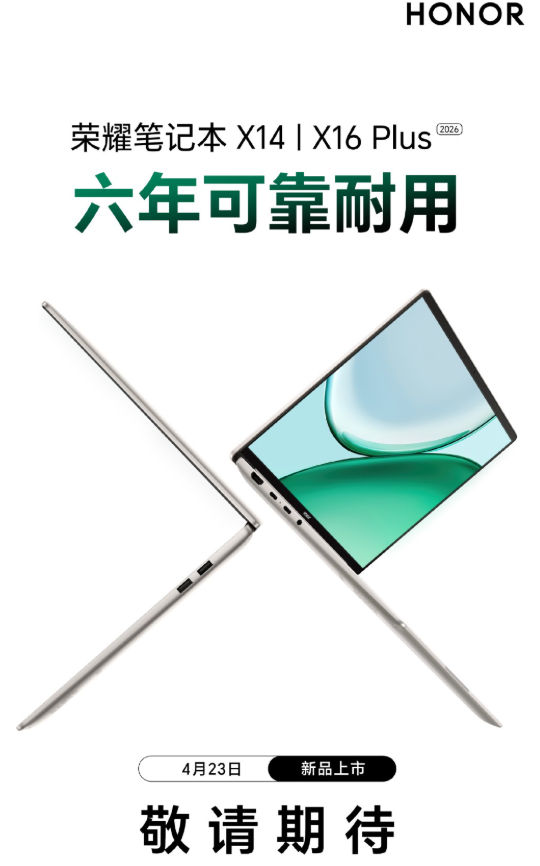
Honor is preparing for a major product launch on April 23, 2026, where it will introduce a range of new laptops, gaming devices, and more. The announcement was made by Zhu Chencai, General Manager of Honor’s PC products, confirming that the updated MagicBook X series will be unveiled at the event.

The company is set to launch the MagicBook X14 (2026) and MagicBook X16 (2026), along with new “Plus” variants. These refreshed models are expected to bring meaningful upgrades over the current versions, which are powered by AMD Ryzen processors. Recent hints suggest Honor may switch to Intel’s upcoming Core 300 series chips, also known as “Wildcat Lake,” though this detail is still unconfirmed.

In addition to mainstream laptops, Honor will also debut its new WIN gaming laptops, including the H9 and H7 models. These devices are likely aimed at entry-level gamers, offering a balance between performance and affordability. The overall lineup appears to target students, office users, and casual gamers looking for reliable everyday machines.

Teasers reveal a clean and minimal laptop design with useful ports such as USB-C, USB-A, HDMI, and a 3.5mm headphone jack. Honor is also expected to include features like eye-protection displays, seamless device connectivity, and multi-screen collaboration.

The launch event will go beyond laptops. Honor is also expected to introduce the MagicBook Pro series and a new tablet, likely the MagicPad 3 Pro.

Overall, April 23 is shaping up to be a big launch for Honor, highlighting its growing ecosystem and focus on practical performance.

Read More:

(via)

The post Honor April 23 Launch: New MagicBook X Series, Gaming Laptops, and More appeared first on Gizmochina.
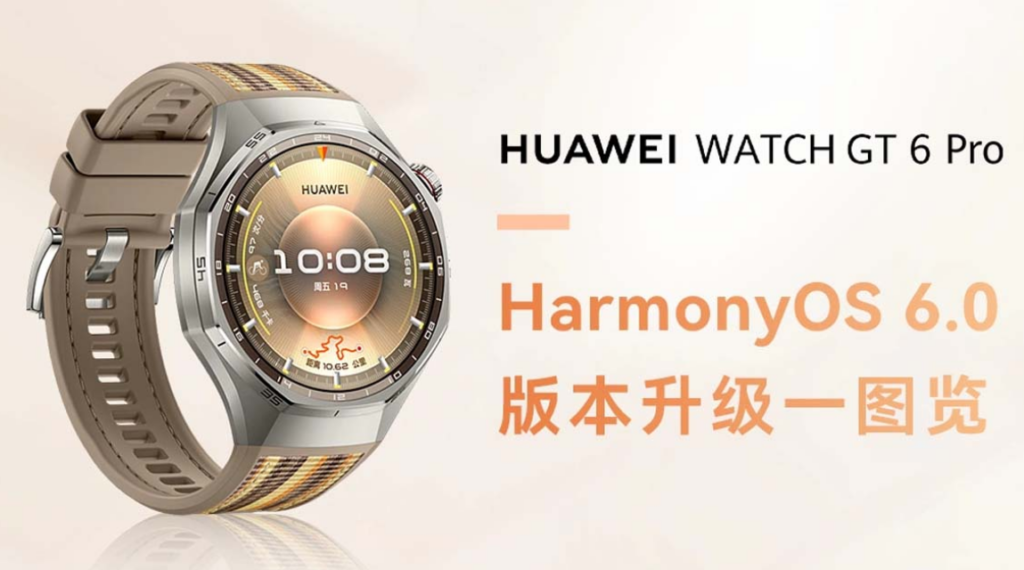
Huawei Watch GT 6 Pro Gets HarmonyOS 6.0 Update with Nap Tracking, New Watch Faces and More

Huawei Harmony OS 6

Huawei has started rolling out a major HarmonyOS 6.0 update for the Watch GT 6 Pro, bringing a mix of personalization features, improved health tracking, and smarter fitness tools. The update focuses on making the smartwatch more useful in everyday use while adding deeper insights for users who track their activity closely.

One of the most noticeable additions is the new Dance Master (Dance Queen) watch face. It allows users to customize its look and includes interactive animations that respond to actions like music playback, screen wake, and charging. This adds a more dynamic and playful feel to the watch experience.

On the health side, Huawei has introduced a new Nap Summary feature. It can track short and fragmented sleep sessions, including naps of around 30 minutes or more. The system then generates personalized rest reports, helping users better understand their sleep patterns and overall recovery.

Fitness tracking has also been upgraded. The new Running Power Monitoring feature measures energy output in real time, helping users adjust their pace and manage stamina more effectively during runs. Training data is now more detailed as well, with aerobic and anaerobic load separation, optimal training ranges, and improved performance predictions.

Golf features have received a boost, too, with better course visuals, new competition modes, and expanded scoring statistics.

The update also improves convenience with faster tap-to-pay support and deeper smartphone integration, including battery alerts and wear detection notifications. Overall, this update makes the Watch GT 6 Pro feel more refined, smarter, and better connected.

Read More:

(via)

The post Huawei Watch GT 6 Pro Gets HarmonyOS 6.0 Update with Nap Tracking, New Watch Faces and More appeared first on Gizmochina.
Leak Suggests Redmi Could Launch Xiaomi’s First 10,000mAh Battery Phone

Xiaomi 10000 mah leak

Xiaomi could be preparing a major battery breakthrough, if a new leak is anything to go by. According to well-known tipster Digital Chat Station, a mid-range device from one of Xiaomi’s sub-brands is set to debut with a massive 10,000mAh battery, something we haven’t seen before from the company.

While the leak doesn’t explicitly name the brand, it mentions a “sub-brand mid-range line,” which strongly hints at Redmi. Given Redmi’s history of pushing aggressive hardware in the mid-range segment, this detail lines up closely, although nothing is officially confirmed yet.

The device is said to support 100W fast charging, suggesting Xiaomi is trying to balance extreme battery capacity with practical charging speeds. If true, this could make the phone appealing to heavy users who want both long endurance and quick top-ups.

Other leaked details point to a fairly well-rounded package. The phone may feature a Dimensity mid-range processor, a metal frame for a more premium feel, and an optical fingerprint sensor. On the front, a 1.5K LTPS display with a high refresh rate is expected, likely using a flat panel design.

Camera hardware could also stand out, with a rumored 200MP main sensor. While real-world performance will depend on tuning, this suggests Xiaomi is aiming to bring flagship-style numbers into a more affordable segment.

Interestingly, Xiaomi may not be alone. Similar 10,000mAh battery plans are rumored from brands like Honor, vivo, iQOO, and even Huawei, hinting at a growing race toward ultra-long battery life in smartphones.

Read More:

(via)

The post Leak Suggests Redmi Could Launch Xiaomi’s First 10,000mAh Battery Phone appeared first on Gizmochina.

Samsung Galaxy A27 First Look: Sleeker Design, New Chip Spotted

Samsung Galaxy A27

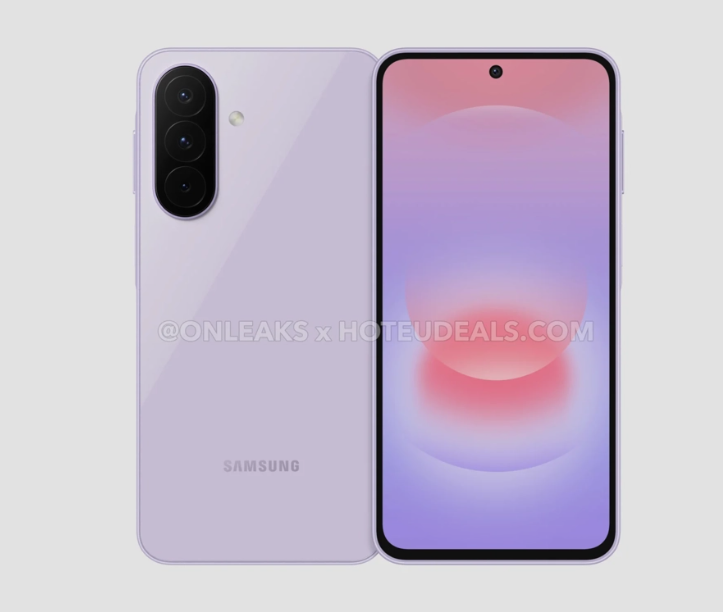
Galaxy A27 has started appearing in early leaks and renders, giving us a first look at Samsung’s next mid-range phone. From design changes to benchmark listings, the details are slowly coming together. While nothing is officially confirmed yet, these early glimpses already hint at a more refined and modern approach compared to its predecessor.

The most noticeable shift is right on the front. The old notch is gone, replaced by a centered punch-hole that immediately cleans up the entire look. It’s not just a cosmetic tweak; it changes how the phone feels in everyday use. Content looks less interrupted, the display feels more immersive, and the device stops reminding you that it’s “budget” every time you unlock it.

source: Galaxy A27 leaked renders – OnLeaks and HotEUDeals.

Interestingly, the rest of the design follows the same philosophy: simplify, refine, and avoid overdoing anything. The rear camera layout is still a triple setup, but now arranged in a more balanced and less cluttered way. It’s the kind of design that doesn’t scream for attention but ages better over time.

Performance-wise, the switch to the Snapdragon 6 Gen 3 is a quiet but meaningful move. On paper, it’s not a massive leap, but it signals a focus on stability and efficiency rather than raw power. For most users, scrolling, streaming, and light gaming are exactly where it matters.

Then there’s the battery. A 5000mAh unit was expected, but wireless charging entering the conversation at this level adds a small layer of surprise. It’s the kind of feature that doesn’t sell the phone alone, but once you have it, you don’t want to go back.

Galaxy A27 isn’t about one standout feature; it’s about getting the basics right. Instead of chasing big specs, it aims to offer a smoother everyday experience, which could be the smarter choice in this segment.

Read More:

(via)

The post Samsung Galaxy A27 First Look: Sleeker Design, New Chip Spotted appeared first on Gizmochina.
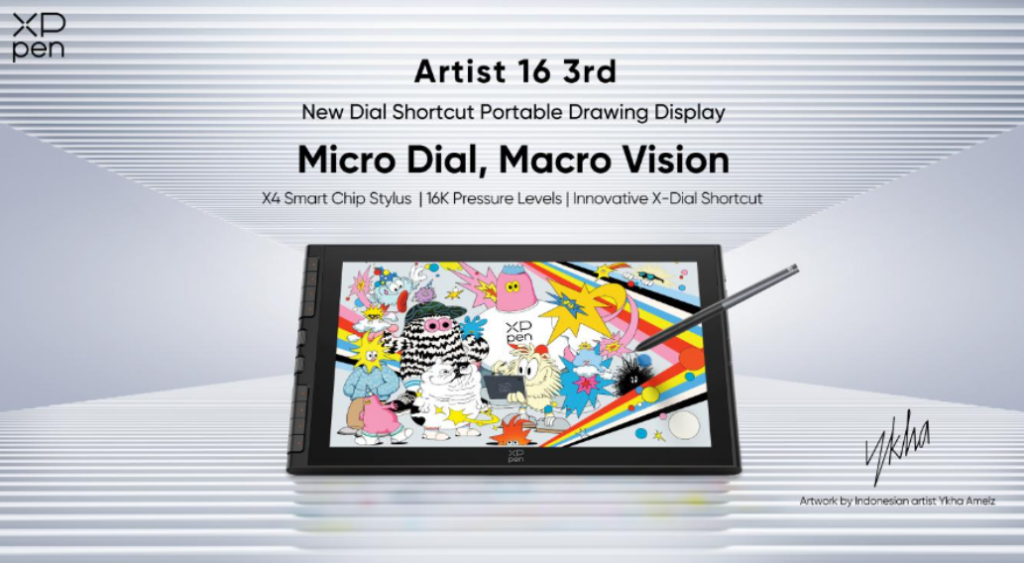
XPPen Artist 16 3rd Launched with Dual X-Dial and 16K Pressure Stylus

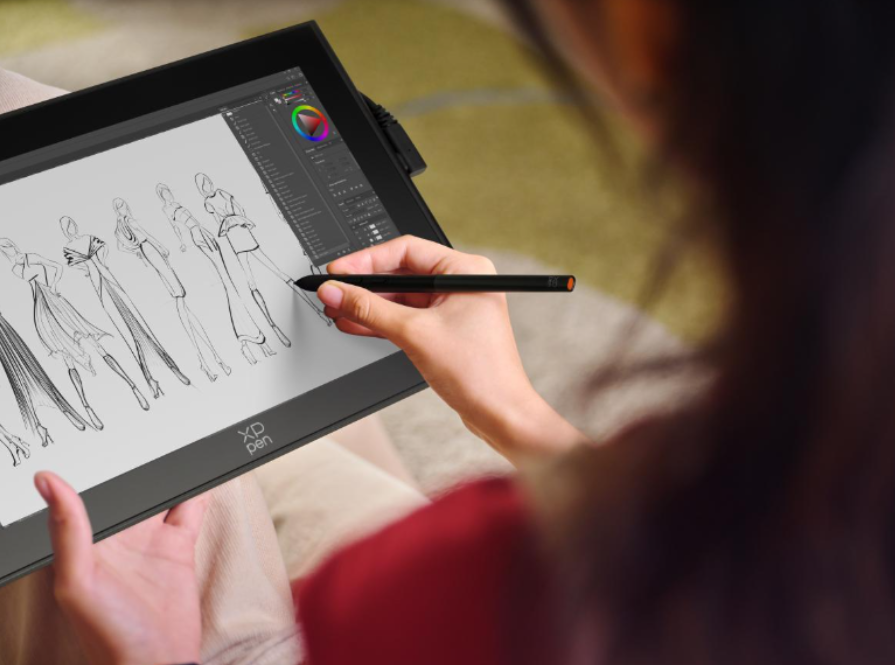
XPPen Artist 16 3rd

XPPen has officially launched the Artist 16 3rd on April 17, 2026, in Los Angeles. The new drawing display is aimed at entry-level creators, offering a balance between affordability, portability, and a practical creative workspace. It is designed for students, hobbyists, and emerging digital artists who want a capable device without a complicated setup.

Key Highlight

One of the main highlights of the device is the new X-Dial Shortcut system. It features dual dials along with eight customizable shortcut keys, allowing users to quickly perform tasks such as zooming, undoing actions, and adjusting brush sizes. This setup reduces dependency on a keyboard and helps streamline the overall workflow.

Display and Design

The Artist 16 3rd comes with a 15.4-inch Full HD display with a 16:9 aspect ratio. It supports 16.7 million colors and offers high color accuracy with a Delta E value below 1.5. The display covers 99 percent sRGB, 98 percent Adobe RGB, and 97 percent Display P3 color gamuts, making it suitable for color-sensitive work.

The screen uses AG and AF nano-etched glass, which reduces glare and fingerprints while providing a paper-like drawing experience. It also includes DC dimming technology that automatically adjusts brightness based on ambient lighting conditions, improving comfort during long usage sessions.

Controls and Workflow

The dual X-Dials and eight shortcut keys are designed to enhance productivity by providing quick access to commonly used functions. The device also supports a single full-featured USB-C cable connection, simplifying setup and making it easier to use in different environments.

Stylus Performance

The included X4 Smart Chip Stylus supports 16,384 levels of pressure sensitivity and has an initial activation force of 2 grams. This allows for precise input, even with very light strokes. The stylus also offers improved response time, reduced lag, and a bullet-shaped tip for better stability.

With a reduced tip travel distance of 0.3 mm, the stylus delivers a more natural drawing experience. It also features magnetic attachment, allowing it to snap onto the display for convenient storage.

Performance and User Experience

The Artist 16 3rd focuses on delivering a smooth and responsive drawing experience. Improvements in response time and reduced ink lag help create a more natural feel, closer to traditional drawing. The overall design emphasizes ease of use and efficiency, making it accessible for beginners while still offering reliable performance.

According to Brian Huang, Brand Director at XPPen, the device is designed to balance portability with sufficient creative space. The focus is on intuitive design and ease of use, enabling creators to work more efficiently across different environments.

Pricing and Availability

The XPPen Artist 16 3rd is available starting April 17, 2026, with an early bird price of $319.99. Pricing and availability may vary depending on the region.

The Artist 16 3rd positions itself as a practical option in the entry-level drawing display segment. With its upgraded controls, improved stylus performance, and color-accurate display, it offers a well-rounded solution for users looking to begin or improve their digital art workflow.

The post XPPen Artist 16 3rd Launched with Dual X-Dial and 16K Pressure Stylus appeared first on Gizmochina.
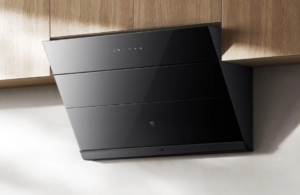
Xiaomi’s New Smart Range Hood Is Insanely Powerful, And It Starts at Just 999 Yuan/$140

Xiaomi Mijia Range Hood

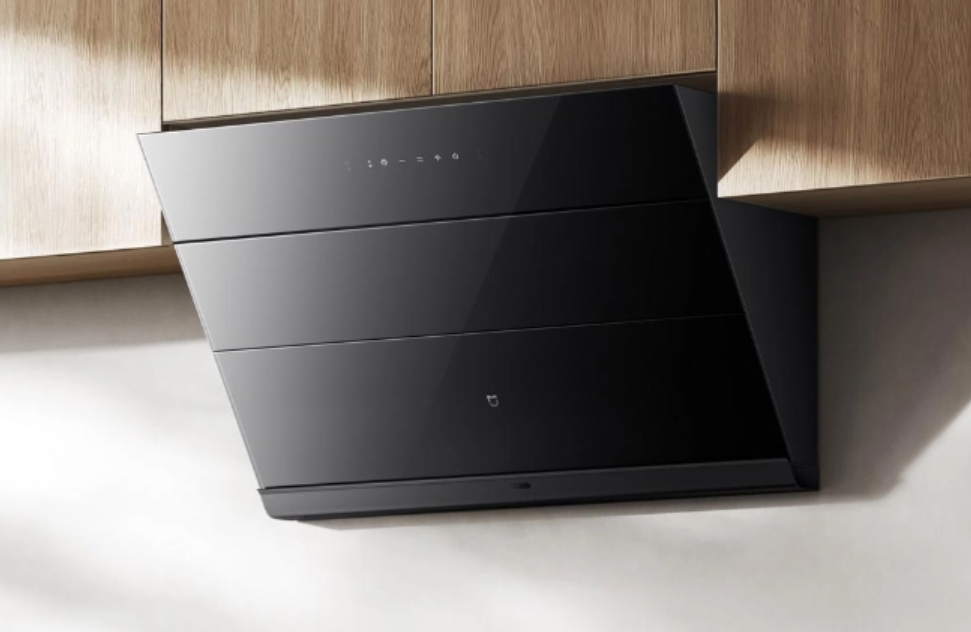
Xiaomi has introduced the Mijia Smart Range Hood 3C Side Suction, a new addition to its growing smart kitchen lineup. The product is aimed at modern households looking for powerful ventilation combined with smart, hands-free controls. It will be available through the Xiaomi Youpin platform as part of a limited crowdfunding campaign.

Pricing and Availability

The range hood comes with a suggested retail price of 1299 yuan (around $182), while early buyers can get it at a discounted crowdfunding price of 999 yuan (around $140). The campaign will run from April 20 at 10:00 AM to April 27 at 10:00 AM, making it a limited-time opportunity for interested buyers.

Strong Performance for Heavy Cooking

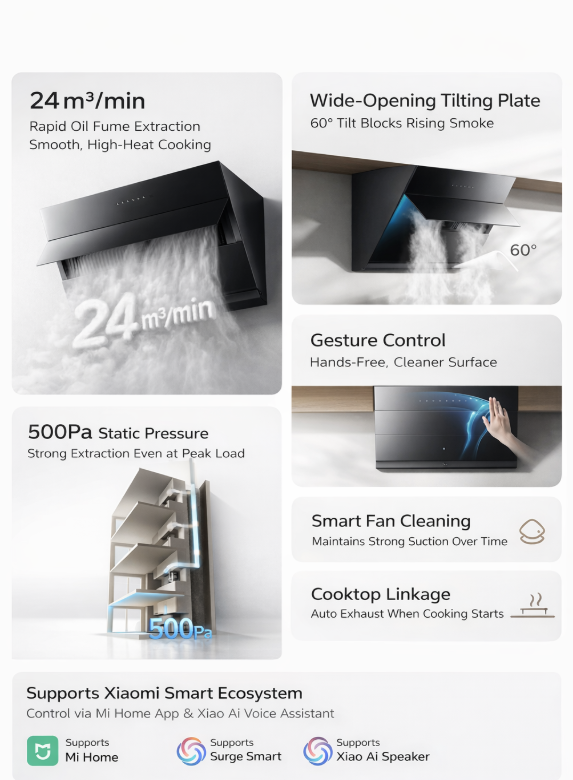
The Mijia Smart Range Hood 3C is built for high-intensity cooking environments. It offers a maximum suction power of 24 m³/min along with a static pressure of 500Pa. This combination helps remove smoke and oil fumes quickly and efficiently. The device also features a fully encapsulated high-speed motor, a 60° wide-angle air intake, and a tilting plate design to improve smoke capture.

Smart and Touch-Free Controls

One of the standout features is gesture control, allowing users to wave their hand to turn the hood on or off or adjust settings. This helps keep the surface clean and reduces contact with oily panels. It also supports cooktop linkage, automatically syncing with compatible stoves.

Ai- generated image

Connected Smart Kitchen Experience

The range hood integrates with the Mi Home app and supports voice control via Xiao Ai speakers. With smart connectivity features, users can create automation scenes and connect the hood with other devices like smoke detectors, making it a practical upgrade for modern smart kitchens.

Read More:

(via)

The post Xiaomi’s New Smart Range Hood Is Insanely Powerful, And It Starts at Just 999 Yuan/$140 appeared first on Gizmochina.

Xbox Expansion Cards Are Secretly SSDs? Gamers Think So

XBOX SSD hack

With storage prices climbing faster than game install sizes, gamers are getting creative and a little rebellious. The latest “hack”? Turning unused Xbox expansion cards into external SSDs for PCs.

Originally designed for the Xbox Series X|S, these cards are basically NVMe storage in disguise, wrapped in a CFexpress Type B form factor. One curious Reddit user, “u/Dramatic-Shape5574,” decided to test the limits and plugged the card into a CFexpress reader, and Windows recognized it like a regular drive. Suddenly, that “console-only” storage wasn’t so exclusive anymore.

Ai-generated image for representation only

Performance is surprisingly decent. You’re looking at speeds around 1000–1500 MB/s, nowhere near top-tier NVMe drives, but comfortably faster than SATA SSDs. That’s enough to run games, store files, and feel like you’ve outsmarted the system.

But before you go digging out your wallet, here’s the catch. You’ll need to format the card, which means saying goodbye to Xbox compatibility. Also, these cards are overpriced compared to standard SSDs, so buying one just for this hack makes no sense.

Other Similar Workarounds

Gamers have been experimenting with all sorts of storage hacks for years. Many repurpose old laptop SSDs by placing them into USB enclosures and using them as portable drives. Others install PS5-compatible NVMe SSDs into PCs when upgrading consoles, effectively recycling high-speed storage. Even traditional internal hard drives and SSDs often get a second life as external drives through simple adapters, showing how flexible storage hardware can be when you think beyond default use cases.

Pros & Cons

This hack is great if you already own an unused expansion card, letting you reuse hardware with performance better than SATA SSDs, but it quickly loses appeal due to high costs, the need for extra adapters, permanent loss of Xbox compatibility after formatting, and a setup process that isn’t exactly beginner-friendly.

This is peak gamer ingenuity, clever, slightly unnecessary, but undeniably cool. If you already have an unused expansion card lying around, it’s a fun and practical experiment. But if you’re starting from scratch, a standard SSD remains the smarter, cheaper, and far less complicated choice.

Read More:

(via)

The post Xbox Expansion Cards Are Secretly SSDs? Gamers Think So appeared first on Gizmochina.

Lenovo May 19 Event Confirmed: Legion Y70, Y900 Tablet, Razr Fold Incoming

Lenovo May 19 Launch Event

Lenovo is set to host a major product launch event on May 19, 2026, in China, bringing together its latest innovations across smartphones, laptops, and tablets. The event, themed “Tianxi AI, All-in-One Multi-Terminal, All-Scenario New Product Super Night,” clearly signals the company’s growing focus on building a deeply connected AI ecosystem across devices. This launch is not just about individual products; it’s about how they work together seamlessly in real-world scenarios.

Leading the announcements is the new Legion Y70, a next-generation gaming smartphone expected to deliver significant upgrades in performance, thermal management, and gaming-centric features. Lenovo is likely aiming to push deeper into the mobile gaming space with this refreshed model.

Moto Razr Fold

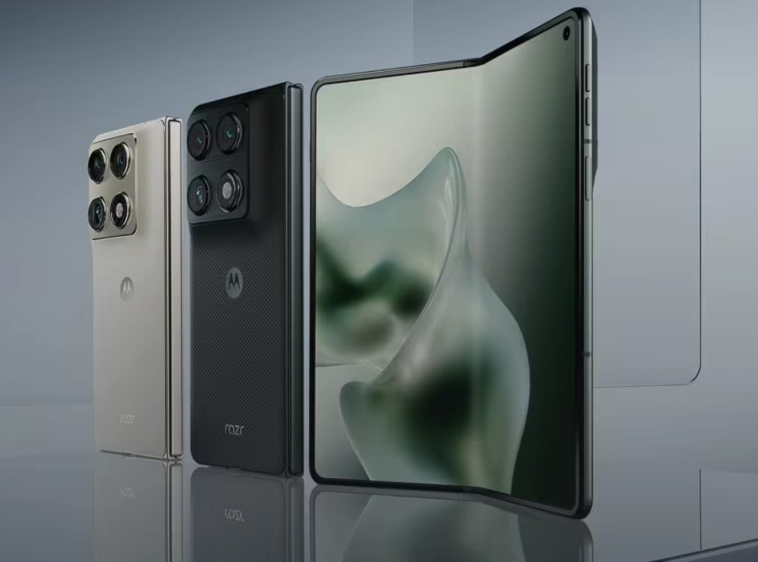
Another highlight is the Moto Razr Fold, Lenovo’s first large-format foldable smartphone, previously showcased at MWC 2026. It comes powered by the Snapdragon 8 Gen 5 chipset, paired with 16GB RAM and a massive 6000mAh battery. With support for 80W wired and 50W wireless charging, it positions itself as a premium foldable priced at around €1999.

YOGA Air 14 Ultra

On the productivity side, Lenovo will introduce the YOGA Air 14 Ultra, an ultra-lightweight AI PC weighing under 1kg. Designed for portability and premium usage, it emphasizes AI-driven features and a sleek design.

Legion Y900 tablet

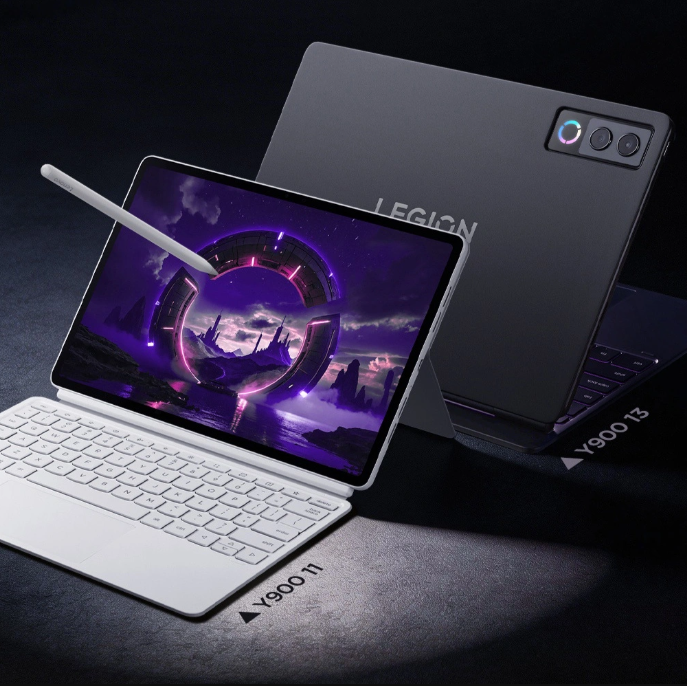
The event will also feature the Legion Y900 tablet, expected to blend gaming and productivity with AI enhancements, alongside the Legion Y7000X laptop, which targets users needing powerful CPU and GPU performance for both gaming and creative workloads.

Overall, Lenovo’s May 19 event reflects a clear strategy: unify gaming, productivity, and AI into a cohesive multi-device experience.

Read More:

(via)

The post Lenovo May 19 Event Confirmed: Legion Y70, Y900 Tablet, Razr Fold Incoming appeared first on Gizmochina.
GameSir Launches Tarantula Controller Series with 8KHz Polling and Multi-Platform Support

Gamesir Tarantula Pro

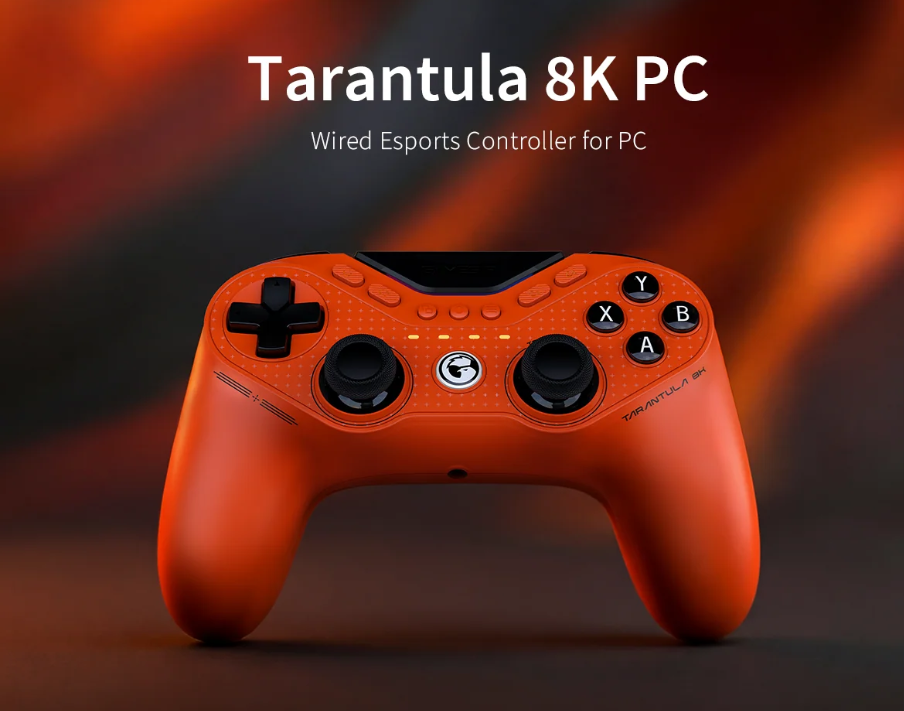
GameSir has officially introduced its new Tarantula series controllers, expanding its esports-focused lineup with two models: the Tarantula 8K for PC and the Tarantula Pro for Xbox. Both controllers feature a symmetrical joystick layout and are currently available in overseas markets. 

In China, they are expected to launch under the names “Nine-Tailed Fox Arena Edition” (8K) and “Nine-Tailed Fox Microsoft Licensed Edition” (Pro). The company is clearly targeting competitive gamers with a focus on speed, precision, and customization.

The Tarantula 8K and Pro are priced at $69.99 and are expected to start shipping in June.

Tarantula 8K Focuses on Ultra-Fast Performance

The Tarantula 8K stands out with its 8000Hz polling rate and extremely low latency of just 0.5ms, making it one of the fastest wired controllers in its segment. It is equipped with second-generation GameSir Mag-Res TMR sticks, which use a magnetic, contactless design to eliminate stick drift while offering smoother control. The controller also features Hall Effect triggers with dual-mode switching, allowing users to choose between precise analog input and quick micro-switch response.

Weighing just 180g, the controller is built for long gaming sessions. It includes nine programmable buttons, macro support with up to 32-step recording, and customizable RGB lighting. To maintain low latency, GameSir has removed the battery and rumble motors, making it a wired-only device with a detachable USB-C cable. 

Tarantula Pro Targets Xbox Gamers

The Tarantula Pro is designed specifically for Xbox users and comes with a 1kHz polling rate and first-generation TMR sticks. While it is slightly heavier at 235g, it still offers a six-axis gyroscope, dual triggers, and nine programmable macro buttons. Priced the same at $69.99, it provides a more console-focused experience.

Key Differences and Positioning

The biggest difference lies in performance. The Tarantula 8K clearly leads with faster response times, newer joystick technology, and a lighter build, making it ideal for competitive PC gaming. Meanwhile, the Tarantula Pro focuses on Xbox compatibility while retaining essential customization features.

GameSir Tarantula 8K PC vs Tarantula Pro:

FeatureGameSir Tarantula 8K PC Wired ControllerGameSir Tarantula Pro Multiplatform ControllerDifference
PlatformPC onlyPC, Switch, iOS, Android, SteamPro supports multiple platforms
ConnectivityWired only (USB-C)Wired, Bluetooth, 2.4GHz donglePro is more versatile
Polling Rate8000Hz1000Hz8K is significantly faster
LatencyAs low as 0.5msHigher (not specified)8K has ultra-low latency
Joystick TechGen-2 TMR sticksGen-1 TMR sticks8K has newer, smoother tech
TriggersHall Effect + Micro switch (dual-mode)Hall Effect or Micro switch8K offers hybrid switching
GyroscopeYes (6-axis)Yes (6-axis)Same
Rumble MotorsNoYes (HD Rumble)Pro offers immersive feedback
Buttons9 programmable9 programmableSame
Back Buttons2 + extra front buttons2 back buttons8K has more control options
Macro SupportYes (32-step macros)YesSimilar, but 8K more detailed
BatteryNo (wired only)1200mAh batteryPro is wireless capable
Weight180g~235g8K is lighter
RGB LightingYesYesSame
Audio JackYes (3.5mm)Not specified8K advantage
Build FocusEsports / competitiveCasual + multi-platformDifferent target users
Price$69.99$69.99Same pricing
Disclaimer: Specs are based on available data. Actual performance may vary. Verify details from official sources.

Read More:

(via)

The post GameSir Launches Tarantula Controller Series with 8KHz Polling and Multi-Platform Support appeared first on Gizmochina.

❌