Samsung shared exclusive visuals right from its exhibition at the Milan Design Week. The pictures and videos spotlight artificial intelligence, foldables, and wearables.
The company took over Superstudio Piu with 12 immersive zones built around its “Expressive Design” philosophy, and the whole thing reads less like a trade show and more like Samsung trying to convince you it has feelings.
You walk in, and the first thing that hits you is The Welcome Show. Multiple devices, synchronized across a shared performance, each paired with its own screen.
From there, the exhibition moves into Unfold Your Story, a zone dedicated entirely to Samsung’s foldables displayed across a spectrum of colors.
The Wearable Intelligence and Culinary Intelligence zones are exactly what they sound like. Wearables that track your body and AI that helps you cook.
The Forum zone hosts live discussions with Samsung’s design leadership alongside video clips surfacing perspectives that rarely make it into press releases.
Adjacent to it, the XR Experience zone built on Android XR invites visitors into Galaxy XR territory. Transparent Symphony puts Samsung’s transparent Micro LED displays to work, dissolving the boundary between screen and space.
The exhibition closes with The Goodbye Show, where Luna, Samsung’s AI home device, waves you out.
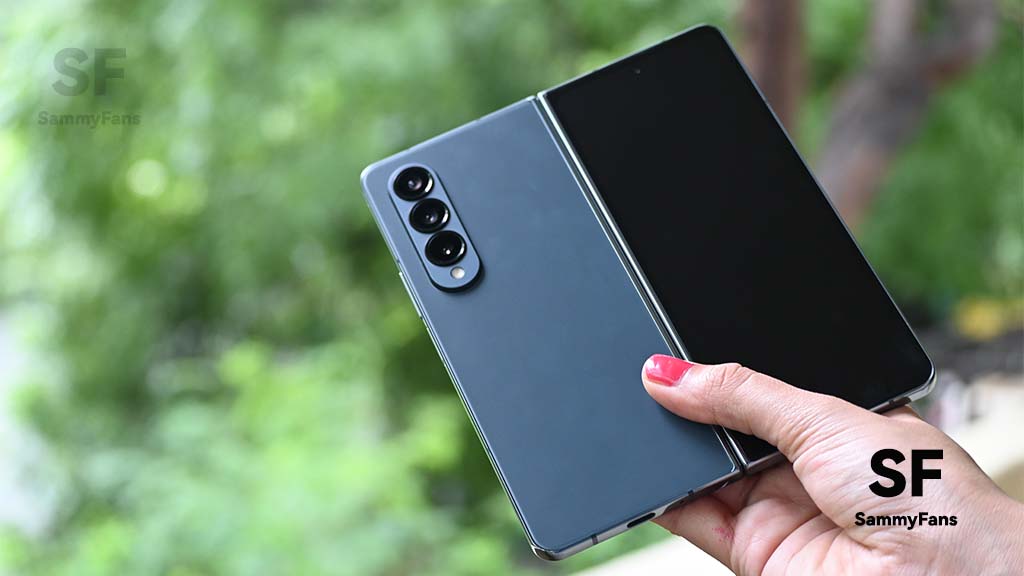
Hey Sammy Fans, I need to get this off my chest. I was a true Samsung Fold fanboy. The first time I unfolded my Galaxy Z Fold (It was Fold3), it felt like I was holding the future of smartphones. The reason was obvious – a big screen for videos, split screen, and cool folding tricks. I showed it off to everyone. “This is the best phone ever.”
After using my first foldable daily for over almost a year, the problems started coming up. The center crease started getting deeper and more annoying. Then one day, when I unfolded my phone, the inner screen was dead. There were no drops, no scratches, nothing crazy. I took it to the service center, hoping for warranty support. The service guy looked at it and said it was “user damage,” and quoted me almost $600-700 for the inner screen replacement. That’s more than half the price of a normal flagship phone. I was shocked.
This isn’t just my bad luck, the same happened with Fold4. I have seen many people in the Samsung community and on X with the same stories. The fold hinges were getting loose or making noise, screens failing after 8-12 months, and dust getting inside somehow.
Here’s another annoying issue. The protective film on the inner screen started peeling off by itself in less than 6 months. I didn’t misuse the phone, the film just lifted from the middle and started bubbling and peeling on its own. It looked ugly and felt terrible while using. I tried pushing it back, but it kept coming off worse. I ended up replacing the film once or twice on both my Fold5 and Fold6, but the same problem kept returning.
Samsung promises about “200,000 folds” or even more now, but in real life, it won’t stand up (my experience is horrible) to the company’s promise. If anything goes wrong, the repair cost is brutal. Many times, instead of repairing the current fold, it feels like the company is pushing you to just buy a new one.
There’s another downside – the battery life. The foldables have average battery life, but not great for such an expensive device. The cameras are fine, but nothing compared to regular Samsung S series phones. The phone feels thick even after Samsung made Fold7 thinner. Multitasking is cool at first, but while watching videos, you notice little bugs and that disturbing crease.
Look, I still love the idea of foldables. With foldable, you can have a big screen when you need it and small when you don’t. But right now, Samsung’s foldable devices are not ready to be a primary phone.
If you really want a foldable, you should wait for a perfect Fold in coming years. Or honestly? Just get a normal flagship like the Galaxy S26 Ultra. The available option is cheaper, tougher, and you won’t stress every time you open your phone. Even the repair cost is also less.
I stopped using my Samsung Fold (Fold3 after 11 months, Fold4 after 6 months, Fold5 in just 2 months, Fold6 in 1 month, and Fold7 after 10 days) and went back to a regular phone. No regrets. The excitement disappeared quickly once I started worrying about the next repair bill.
If you are thinking about buying a Samsung Fold, please read this first. I love the concept, but hate the experience. It is “never again” for me. What about you? Drop your experiences on X handle @thesammyfans.
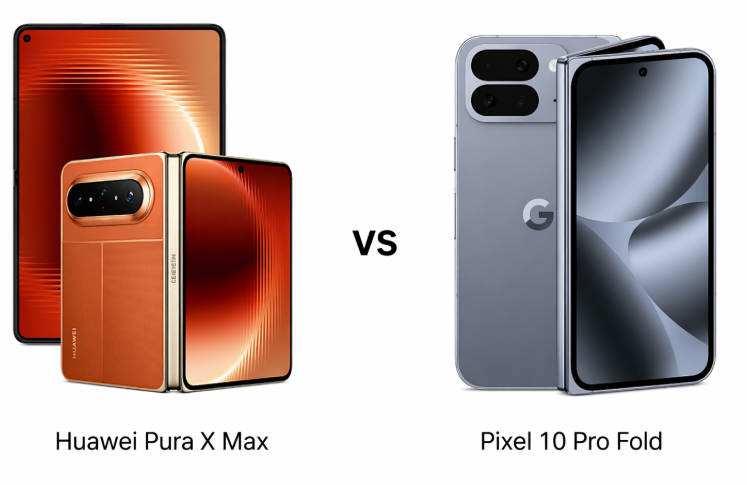
Foldables are no longer just about bending screens; they’re now a clash of ecosystems, performance philosophies, and real-world usability. The Huawei Pura X Max and Google Pixel 10 Pro Fold represent two very different takes on what a premium foldable should be. One pushes hardware boundaries with bold features and fast charging, while the other leans into AI, software longevity, and a polished everyday experience. This comparison matters for buyers deciding between raw innovation and refined consistency in the ultra-premium segment.
Major Features:
Feature
Huawei Pura X Max
Google Pixel 10 Pro Fold
Winner
Display (Main)
7.7″ LTPO2 OLED, 120Hz, HDR Vivid
8.0″ LTPO OLED, 120Hz, HDR10+, up to 3000 nits
Pixel – brighter & larger
Cover Display
5.4″ LTPO2 OLED, 120Hz
6.4″ OLED, 120Hz, very bright
Pixel – more usable outer screen
Build Quality
Kunlun Glass 2, IP58/IP59, stylus support
Gorilla Glass Victus 2, IP68
Pixel – better durability rating
Chipset
Kirin 9030 Pro (6nm)
Tensor G5 (3nm)
Pixel – newer & more efficient
RAM & Storage
Up to 16GB / 1TB
16GB / up to 1TB
Tie – similar high-end configs
Software
HarmonyOS 6.1
Android 16, 7 years updates
Pixel – long-term support
Main Camera
50MP variable aperture
48MP
Huawei – more versatile sensor
Telephoto
50MP, 3.5x zoom
10.8MP, 5x zoom
Pixel – longer optical zoom
Ultrawide
12.5MP AF
10.5MP AF
Huawei – higher resolution
Selfie Camera
8MP (inner + cover)
10MP (inner + cover, PDAF)
Pixel – sharper & better AF
Video
4K, HDR Vivid
4K up to 60fps, 10-bit HDR
Pixel – more advanced video
Battery
5300 mAh
5015 mAh
Huawei – slightly larger
Charging (Wired)
66W
30W
Huawei – much faster
Wireless Charging
50W + reverse
15W (Qi2)
Huawei – far superior speeds
Connectivity
Wi-Fi 7, BT 6.0, IR blaster
Wi-Fi 7, BT 6.0, UWB, Satellite SOS
Pixel – more advanced features
Extras
Stylus, IR blaster
UWB, Satellite SOS, AI features
Pixel – more modern ecosystem
Price
~$1600 / ₹150,000
~$1800 / ₹160,000
Huawei – better value
Disclaimer: Specs are based on available data. Actual performance may vary. Verify details from official sources before buying.
Design and Display
Build and Feel
Huawei Pura X Max leans into a premium, almost experimental design language with Kunlun Glass 2 and stylus support, adding versatility. It feels engineered for durability while still maintaining a refined foldable aesthetic. The Pixel 10 Pro Fold, on the other hand, prioritizes practicality with Gorilla Glass Victus 2 and a more conventional foldable finish. It comes across as more predictable but also more polished for everyday usability. Huawei’s approach feels bold and slightly more futuristic, while Google’s feels safer and more mature.
Display Quality
Huawei offers a sharp LTPO2 OLED panel with strong color depth and PWM dimming that may appeal to long usage comfort. The Pixel counters with higher brightness levels, HDR10+, and a larger inner display that feels more immersive for media and multitasking. Google’s display tuning tends to look more natural, while Huawei’s feels more vibrant.
Verdict
The Pixel 10 Pro Fold edges ahead for display brightness and overall usability, but the Pura X Max stands out for innovation and visual punch.
Specifications Including Battery
Performance
Huawei’s Kirin 9030 Pro delivers stable performance for daily tasks and multitasking, but it lacks the cutting-edge efficiency of newer architectures. The Pixel 10 Pro Fold’s Tensor G5, built on a 3nm process, brings stronger AI performance and better long-term optimization. It feels more future-ready, especially with extended Android update support. Huawei remains smooth, but Google’s chip feels more refined under sustained workloads.
Battery and Charging
Huawei clearly dominates charging with faster wired and wireless speeds, plus reverse charging flexibility. The larger battery also adds a slight endurance advantage. The Pixel focuses more on efficiency and features like bypass charging, but its slower charging speeds feel conservative in comparison. Huawei’s approach feels more convenient in daily life, especially for quick top-ups.
Verdict
The Pixel 10 Pro Fold wins on performance and longevity, while the Pura X Max takes a clear lead in charging and battery convenience.
Camera
Main and Secondary Lenses
Huawei brings a versatile camera system with a variable aperture main sensor and a strong periscope zoom. It excels in flexibility and creative shooting scenarios. The Pixel, however, focuses on computational photography, delivering consistent results with features like Ultra-HDR and AI enhancements. Google’s images tend to look more balanced and reliable, while Huawei’s can feel more dynamic and experimental.
Selfie Camera
The Pixel offers sharper and more capable selfie cameras with autofocus and better video features. Huawei’s selfie setup is decent but feels more basic in comparison. Google’s consistency across both inner and cover cameras gives it an edge for content creators.
Verdict
The Pixel 10 Pro Fold is more dependable overall, but the Pura X Max appeals to those who prefer hardware versatility and zoom flexibility.
Pricing
The Huawei Pura X Max is priced around $1600 (₹150,000), while the Pixel 10 Pro Fold sits higher at $1800 (₹160,000). The price gap is noticeable but not extreme in the premium foldable segment. Huawei positions itself as the more aggressive value option, offering faster charging, strong cameras, and premium materials at a slightly lower cost.
Google justifies its higher price with longer software support, better AI integration, and a more polished ecosystem. The Pixel feels like a safer long-term investment, especially for users who value updates and consistent performance. Huawei, however, delivers more hardware-focused value, which may feel more immediately rewarding.
Verdict
The Pura X Max offers better upfront value, while the Pixel 10 Pro Fold justifies its price through longevity and software advantages.
Disclaimer: Prices are approximate and may vary based on country, region, and applicable taxes.
Conclusion
Huawei stands out with stylus support, ultra-fast charging, and a more experimental hardware approach. It feels designed for users who want flexibility and standout features. The Pixel 10 Pro Fold focuses on AI capabilities, clean software, satellite features, and long-term updates, making it more ecosystem-driven. Google’s approach feels more cohesive, while Huawei’s feels more feature-packed.
Verdict
The Pixel 10 Pro Fold is the better all-rounder with stronger software, performance, and camera consistency. However, the Huawei Pura X Max is a compelling alternative for those who prioritize charging speed, hardware innovation, and value.
Disclaimer: This comparison is based on the specifications provided and is intended for general informational purposes. Actual performance, camera results, battery life, and overall experience may vary depending on real-world usage, software updates, and individual preferences.

 Login
Login