Google’s AI Mode showed text ads on 29.45% of commercial queries in a new SE Ranking study, less than a year after ads began appearing in AI-generated search answers.
Ads appeared on 14,733 queries in the study, which analyzed U.S. commercial searches where text ads could appear, excluding product carousels.
AI Mode ad adoption accelerated.SE Ranking said ads began appearing in AI Mode responses in late 2025. By mid-2026, nearly one in three commercial queries in its data set showed a text ad. SE Ranking said the real ad rate may be higher because AI Mode results are inconsistent across sessions.
Two advertisers often appeared together. Most AI Mode ad blocks included more than one advertiser. SE Ranking found that 71.1% of ad-triggering queries showed two ads in the same AI Mode response, while 28.9% showed only one.
CPC best predicted ad visibility. Higher-cost keywords were much more likely to trigger AI Mode ads.
Ad presence was 24.33% for keywords with CPCs below $2.
It rose to 32.45% for keywords between $2 and $10, then jumped to 53.56% for keywords at $10 or more.
SE Ranking said search volume and keyword difficulty did not show the same relationship with ad frequency.
Ad presence varied across categories. Pets had the highest rate, with ads appearing on 72.38% of analyzed keywords. Healthcare had the lowest, at 2.64%.
Higher-ad categories were typically lead-generation markets with clear paths to paid conversions.
Lower-ad categories were more likely to involve informational or YMYL intent, where commercial demand may be lower or Google may be more cautious.
Advertisers were rarely cited. Buying an AI Mode ad didn’t make advertisers more likely to be cited as a source in the same response. Only 11.53% of advertiser domains appeared among the cited sources for the keywords they advertised on. At the URL level, overlap fell to 1.95%.
This held true even after comparing advertisers with similar non-advertising domains based on domain strength, backlinks, referring domains, and organic visibility, SE Ranking said.
Organic overlap was limited. Advertisers also rarely ranked organically for the same keywords. Only 2.32% of advertised URLs ranked organically for the queries where their ads appeared. At the domain level, overlap increased to 15.35%.
About 85% of advertisers didn’t appear in organic results for the same keywords where they showed AI Mode ads, according to the study.
Why we care. Buying visibility in AI Mode doesn’t increase your chances of being cited or ranking organically. Treat AI Mode ads, cited sources, and organic rankings as separate visibility channels.
About the data. SE Ranking analyzed 50,032 commercial keywords across 20 niches, averaging about 2,500 keywords per niche. The data reflects U.S. AI Mode results collected on June 30. SE Ranking noted that ad behavior may change as Google expands AI-specific formats.
Rising CPCs aren’t just the result of more competition inside search auctions. They’re increasingly the result of what happens before anyone places a bid.
AI Overviews, shrinking organic click volume, and stronger brands competing for a smaller pool of commercial traffic have changed the economics of paid search. Improving bids and ad copy still matter, but the biggest opportunities now sit outside the auction itself.
Why paid search keeps getting more expensive
Paid search costs are climbing across almost every category. The cross-industry average CPC is $5.42, per the latest WordStream benchmarks, more than double what it was a decade ago.
Stackmatix has Google Search up 14-18% year over year. LinkedIn is up 18 to 22%. Some accounts are seeing 25% inflation in their primary commercial keywords.
For most of the last decade, organic search helped offset PPC costs. Today, AI Overviews absorb the clicks that used to keep your paid search efficient.
The latest zero-click study from Sparktoro shows an 8% reduction in clicks through from search engines vs. 2025, further impacting brands whose users now get information from AI summaries.
Digiday’s research with brand and agency professionals shows 37% of respondents have already seen informational search traffic decline, which mirrors what we’re seeing across our client base, putting more pressure on navigational and transactional traffic to hold steady.
The number of advertisers participating in search auctions has risen 35% year over year because AI creative tools have lowered the barrier to entry for new bidders. In its first year, AI Max for Search has expanded query space for advertisers willing to use it, but also concentrated competition into a narrower set of commercial queries.
Fewer organic clicks reaching your site means more pressure to make up the gap in paid auctions. More advertisers fighting for those auctions means higher CPCs. And the auctions that still resolve to a click are increasingly the only ones where a user has exited the AI summary and chosen to scroll past it.
Paid search performance in 2026 is decided across three layers. The auction itself now offers the least opportunity to improve results.
1. Brand: Upstream of the click
This layer determines whether a click is generated or absorbed before any auction begins. It’s influenced by authority signals, brand mentions, AI Overview inclusion, LLM citations, and visibility in the publications and communities AI systems use to build their answers.
Most CPC inflation starts here. When AI Overviews answer more queries directly, the pool of clicks available to advertisers shrinks. The auction doesn’t get cheaper as a result. It gets more expensive because the same number of advertisers compete for fewer clicks.
As CPCs continue to rise, the brands protecting their margins are building visibility across multiple platforms. A stronger organic presence lets them rely less on paid search while remaining visible throughout the buying journey.
The auction itself is influenced by ID strategy, match types, ad copy, automation, Smart Bidding configurations, and Performance Max guardrails.
This is where most paid teams still focus their efforts. It’s also the layer with the least leverage left because the size and quality of the click pool are determined upstream. The work still matters, but the opportunity to improve performance here is smaller than it used to be.
Red ocean vs. blue ocean media
The paid channels where most performance teams compete are becoming red oceans: saturated auctions where advertisers bid against one another for the same shrinking pool of commercial clicks.
Blue oceans are channels where buyer intent already exists, but advertiser competition hasn’t yet caught up.
Red ocean (where competition is fiercest)
Blue ocean (where intent exists but competition is lower)
Why the shift works
Google Search non-brand commercial keywords
Microsoft Advertising (Bing), including its growing share of AI Search ad surfaces
CPCs typically 20 to 40% lower, audience skews older and higher value, much less crowded
Standard LinkedIn Sponsored Content
LinkedIn Thought Leader Ads (peer-to-peer format from a real profile)
Around 1.7x higher CTR than company-page ads, lower effective CPC, better fit for considered purchases
Meta feed ads (broad demographic targeting)
Reddit Ads, community sponsorships, niche newsletter and Substack advertising
High-intent attention in environments LLMs cite, less saturated auction dynamics, more first-party engagement
Performance Max and Google display
Connected TV, BVOD, podcast advertising
Premium attention at the top of the funnel, fewer competing bidders, channel measurement is maturing fast
Branded search defense at any cost
AI Search and early ChatGPT ad inventory
First-movers are buying tomorrow’s primary discovery surface at today’s clearance prices
This isn’t an argument for abandoning Google Search. It’s a reminder not to overinvest your paid budget in the most competitive auctions. Instead, start shifting some of your existing budget into testing emerging channels and compare their performance with traditional search.
3. Experience: After the click
The post-click experience is an essential part of media economics, but most paid teams still treat it as something to hand off to another function.
Every other lever in this article governs what you pay to enter the auction. Experience determines what each click is worth after you’ve paid for it, and it’s the only one of the three layers you fully control.
In an inflating market, post-click conversion stops being a quarterly optimization exercise and becomes your primary defense against rising acquisition costs.
Google’s Ad Rank is calculated using your bid, your Quality Score, and the expected impact of assets. Landing page experience is one of the three components of Quality Score.
A higher Quality Score directly offsets the need to bid more aggressively. A stronger landing page can help you outrank a better-funded competitor while paying less per click.
That said, most expensive clicks don’t convert on the first visit, especially in B2B, where buying cycles are longer and purchases are more considered. The job of the experience layer is to convert and capture. Think first-party data, a reason to return, and an entry point into nurture and CRM.
The advertisers protecting their margins through this transition will stop treating media and landing pages as separate disciplines. They’ll manage them as a single P&L shared across paid media, CRO, UX, content, and lead nurture.
Paid search accounts for a smaller share of where performance is earned, and it’s becoming a more expensive channel to operate if you haven’t built brand strength around it. Much of the work that makes paid search efficient now sits in disciplines paid search teams have historically considered someone else’s job.
The teams that protect their margins through this transition won’t be the ones with better targeting or bidding strategies. They’ll be the ones who’ve built enough visibility and authority outside the auction to win it when it matters.
OpenAI’s ad revenue forecast is on pace to miss its 2030 target by 90%, according to Emarketer.
OpenAI projected $2.5 billion in ad revenue this year and $100 billion by 2030. Emarketer estimates the entire U.S. market for standalone chatbot ads will generate less than $1 billion this year and $5.41 billion by 2030.
OpenAI’s target. OpenAI began testing ChatGPT ads in February. By April, the company projected that ad revenue would grow to $100 billion within five years. But that forecast is larger than Emarketer’s 2030 estimate for the full U.S. chatbot ad market.
What Emarketer measured. Emarketer’s estimate covers standalone chatbots in the U.S., including ChatGPT, Microsoft Copilot, Google AI Mode and Amazon Alexa for Shopping, formerly Rufus. The research firm’s forecast puts the 2030 market ceiling at $5.41 billion, far below OpenAI’s target for its ad business alone.
Why we care. Chatbot ads are still a small market, despite growing interest in AI search and shopping. The gap between OpenAI’s target and Emarketer’s forecast shows ChatGPT Ads have a long way to go.
Assumptions vs. reality? OpenAI’s forecast assumes the company will capture search ad budgets at scale, dominate a mature chatbot ad market, and outperform every ad format in history, Adweek reported. Emarketer’s data points to a much smaller market.
Google's Ginny Marvin explains AI Search eligibility, Qualified Future Conversions, and Creator Partnerships, adding context to key Google Marketing Live announcements.
Every performance marketer has seen this movie. Search ROAS looks great, social ROAS looks mediocre, so the budget shifts to search. Three months later, search performance quietly erodes, and nobody can explain why. Nothing in the account changed. You turned off the thing feeding your search campaigns in the first place.
Paid search looks better when paid social is running. Not because of some attribution trick, although attribution is part of the story, but because social changes the quality and quantity of the people who end up searching. Evaluate the two channels in isolation, and you’ll systematically overinvest in search and underinvest in the channel that makes search work.
I should say this upfront: I’m a paid search person. Search is where I’ve spent most of my career, and it’s not in my professional interest to tell you that my channel’s numbers are flattered by someone else’s work.
I’m telling you anyway because I’ve seen it in too many accounts to pretend otherwise. PPC specialists need to internalize this. We sit on the flattering dashboards, and we’re the ones asked to explain the numbers when the halo disappears.
Social creates demand, search captures it
A search click starts with a query, and that intent came from somewhere. Some of it is organic demand you had nothing to do with. But a meaningful share, especially for brand and category terms, was created upstream.
Paid social is one of the biggest sources of that demand. A user scrolls past your ad on Instagram or TikTok, doesn’t click, but registers the brand. A week later, they need the product, open Google, and type your brand name. Search “converts” them at an excellent CPA. It didn’t create the intent. It collected the toll at the end of the road.
This shows up in the data in three consistent ways.
Brand search volume rises with social spend
The most direct and most ignored signal. Plot weekly Meta or TikTok spend against brand query impressions in Google Ads. In most accounts with meaningful social budgets, the correlation is obvious. Users don’t click social ads and convert. They see social ads and search later.
Non-brand conversion rates improve
Even generic queries convert better when the searcher has prior brand exposure. Same keyword, same auction, same landing page, very different conversion probability. Your search CVR is partly a measure of how well your upper funnel is performing.
Auction dynamics follow
Better CTRs on brand-adjacent terms feed expected CTR, which feeds CPCs. Social spend indirectly makes your search clicks cheaper. Nobody attributes that to social because no report captures it.
Last-click attribution, and most data-driven attribution inside ad platforms, assigns credit to touchpoints it can see. Social impressions that never became clicks are invisible to GA4. View-through conversions exist in Meta’s reporting, but nobody trusts Meta grading its own homework, so they get discounted to zero.
The result is a structural bias. Search sits closest to the conversion and inherits credit for demand created elsewhere. The budget review happens: Search: 6x ROAS. Social: 1.8x. The conclusion writes itself, and it’s wrong. You’re comparing a channel that harvests demand with one that creates it, using a measurement system that only sees harvesting.
I’ve watched teams cut social by 40% based on this logic, then spend two quarters wondering why search CPAs went up 25% with no change in the account. The answer was sitting in the brand query volume chart the whole time.
I’ll admit the uncomfortable part. As the search person in the room, it’s tempting to accept that budget review. Your channel wins, the money flows your way.
Correcting the record means arguing against your own budget. That’s exactly why it usually goes uncorrected, and why it’s on us as PPC people to raise it first.
The decay is delayed, which makes it worse
If cutting social broke search immediately, everyone would learn the lesson fast. It doesn’t.
Brand awareness decays over weeks and months. The users who social warmed up last quarter are still searching this quarter.
You cut social, search holds for four to eight weeks, and someone declares victory. Then the warmed-up pool empties out, brand volume softens, non-brand CVR drifts down, and by the time the damage is visible, nobody connects it to a budget decision from two months ago. Seasonality, competition, and CPC inflation take the blame instead.
That lag is why last-click logic survives. The feedback loop is too slow for weekly optimization rhythms to catch.
You don’t have to leave the search platforms to build the upper funnel
One clarification: the mechanism isn’t about Meta or TikTok specifically. It’s about upper-funnel exposure creating downstream search demand, and you can buy that exposure inside the platforms PPC people already use.
In Google Ads, YouTube and Demand Gen are built for this job. YouTube reaches users in the same lean-back, discovery mindset as a social feed, and Demand Gen puts visual creative across YouTube, Shorts, Discover, and Gmail.
Run either with a real budget and you’ll see the same pattern. Brand queries rise, non-brand CVR improves, and search quietly gets better without a single change to the search account. Microsoft’s version is Audience Ads across MSN, Outlook, and Edge: smaller reach, same funnel logic, often cheap enough to test with low risk.
There’s a practical upside for PPC teams. A team that would never get signoff for Meta budgets can usually get YouTube or Demand Gen approved inside the account they already run, and Google’s lift measurement tools can pick up part of the effect.
But the same platform doesn’t mean attribution is solved. Demand Gen warming users who later convert through Search is the same halo problem inside one interface, and Google’s attribution will still hand most of the credit to Search.
Someone has to fill the pool that search fishes from. Whether that’s paid social, YouTube, Demand Gen, or Audience Ads is a question of audience fit and creative capability, not whether the upper funnel is needed.
How to actually measure this
Three approaches, in ascending order of rigor.
Brand search as a leading indicator
Cheap and immediately available. Track weekly brand impression volume against social spend with a one- to three-week lag.
If social is doing its job, the relationship is visible. Make it a standing chart right next to ROAS.
Cohort search CVR by exposure
Where you can pass exposure data into your own stack or use incrementality tooling, compare search conversion rates for exposed versus unexposed users.
Even a rough version usually shows a meaningful gap. That gap is social’s contribution hiding inside search’s numbers.
Geo holdout tests
The gold standard that’s actually attainable. Turn social off, or up, in matched regions and watch search volume, search CVR, and total conversions against a control for at least six to eight weeks. This is the only method that gives you a defensible incrementality number for the budget meeting.
Proper attribution tooling and marketing mix modeling
Third-party incrementality platforms can stitch exposure data across channels in a way GA4 never will, and they’re not grading their own homework. MMM has also become far more accessible than its enterprise reputation suggests.
Open-source frameworks like Meta’s Robyn and Google’s Meridian let a capable analytics team model cross-channel effects, including the social-to-search lag, without a seven-figure engagement.
Pair a model with periodic geo tests to calibrate it, and you have a setup platform dashboards can’t argue with.
If you run agentic or automated budget allocation, this matters even more. An agent optimizing on platform-reported ROAS makes the same mistake a junior analyst makes, just faster and with more conviction. Cross-channel effects belong in the objective function before automation moves money between channels.
Capturing high-intent demand at the moment of decision is valuable, and someone will capture it if you don’t.
It means channel-level ROAS is the wrong unit of analysis. The right question is never “Which channel has the better ROAS?” It’s “What happens to total outcomes when I move a euro from one channel to the other?”
Those are different questions with frequently opposite answers.
Stop presenting search and social ROAS side by side as if they’re comparable. They measure different jobs.
Put brand search volume in every social performance review.
Before any major cut to social, run a geo holdout or watch search metrics for a full decay cycle afterward. Eight weeks minimum.
Treat search efficiency partly as an output of your upper funnel. Your search team’s great quarter might be last month’s social, YouTube, or Demand Gen spend paying out with a delay.
Some of the credit on your search dashboard belongs to a channel your reporting tells you to defund. As a PPC person, admitting that costs me something in the short term. Not admitting it costs the account far more.
The teams that understand how much of search’s performance is borrowed end up with cheaper clicks and more total demand. The rest keep optimizing the toll booth while starving the road.
Not a week goes by without me reading about ChatGPT ads in my LinkedIn feed. I’m guilty of it, too.
There’s so much happening so quickly. The product feed integrations, the Ads Manager beta, and the inevitable comparisons to Google’s dominance in search advertising.
While it’s a compelling narrative for agencies looking to drive new business, it’s also short-sighted. The real shift isn’t advertising on LLMs like ChatGPT. It’s happening in checkout flows, voice assistants, and agentic commerce infrastructure, where the transaction itself becomes the ad unit.
The brands quietly winning this next cycle are refining their product data to ensure they factor into AI-powered purchase decisions.
ChatGPT Ads is structurally weak
Referral traffic from ChatGPT to the rest of the web grew 206% in 2025, according to Semrush’s analysis of 17 months of U.S. clickstream data. That’s the headline most people stopped at.
What they didn’t read was the footnote: that growth is driven by deeper engagement from existing users, not by audience expansion. ChatGPT’s U.S. user base has been essentially flat since September 2025. The people who use it are using it more. But the addressable audience isn’t growing.
This obviously matters if you’re trying to build an advertising business. Ad revenue scales with reach, and reach requires a growing audience. Without new users coming in, you’re running the standard sequence (build an audience and then monetize at scale) backward.
OpenAI’s leaked financials show another structural challenge: $13 billion in revenue against $34 billion in total costs and expenses in 2025, translating to an operating loss of nearly $21 billion.
On the bright side, OpenAI spent $2.37 to generate every $1 in revenue in 2024. By 2025, that ratio had improved to $1.60 per dollar. Progress, but not nearly enough, or fast enough. It’s no surprise OpenAI postponed its IPO until next year.
To put those numbers in perspective, Amazon lost $30 million the year it went public. Google and Meta were already profitable before their IPOs. OpenAI isn’t playing in the same league.
The scale of the bet is unlike anything the tech industry has attempted before. How long before investors pull back? Your guess is as good as mine.
But OpenAI had to realize that to fund its dollar-hungry master plan, it needed something to help balance the books, at least partially.
So what’s that master plan? Look elsewhere for a clearer view.
At Google I/O 2026, Google introduced Universal Cart, building on Universal Commerce Protocol (UCP), infrastructure that lets AI agents complete purchases on your behalf. This isn’t a shopping tab redesign. It’s a transaction layer between intent and purchase, with Gemini deciding what gets recommended and bought. If you’re skeptical, remember you can already onboard UCP. This is happening today, not in some distant future.
It’s the same story at Amazon. The company combined Rufus, its expert shopping assistant used by more than 300 million customers in 2025, and Alexa+, its personalized AI assistant available across hundreds of millions of devices, into a unified experience called Alexa for Shopping.
The result is a surface that enables customers to automate deal-finding and routine purchases based on personalized insights. Like Gemini, Alexa can complete the transaction, dramatically shortening the distance from ad impression to purchase.
It’s the same story at OpenAI. The company already has integrated product feeds in Ads Manager. You’d think it’s a basic feature because Google, Meta, and Amazon all have it. But that soon in a brand-new advertising platform?
OpenAI launching product feed ads in 2026 isn’t an advertising innovation. It’s a platform reaching for familiar revenue streams while the more interesting architecture takes shape beneath the surface.
Most of the industry is asking the wrong question. The question isn’t, “Should I test ChatGPT Ads?” (Obviously, you should.) Or even, “Should I diversify beyond Google?” (Again, obviously you should.)
The right question is: “Is my product data ready for agentic commerce?”
Because when an AI agent — whether it’s Alexa, Google’s shopping agent, or whatever OpenAI builds next — makes a purchase recommendation on behalf of a user, it won’t pull from your campaign creatives. It’ll pull from your product feed. The cleanliness and completeness of that data will determine whether you exist in the recommendation.
This is the same transition we’ve lived through before, just at a different layer of the stack.
When Google moved from keywords to audiences to intent signals, the advertisers who won were the ones with cleaner conversion tracking and stronger first-party data foundations. When Meta moved to Advantage+ and black-box optimization, the winners built better creative systems.
It’s the same pattern here: Data is king. Agentic commerce applies the same dynamic to the transaction layer.
I know. The checklist isn’t glamorous.
Make sure your product feeds are complete, accurate, and updated in near real time.
Ensure your structured data — product attributes, availability, profitability, and more — is properly implemented across your catalog.
Invest in API integrations with the platforms building agentic infrastructure.
Bottom line: Treat your product data the way you should’ve been treating your conversion tracking for the last decade. It’s a competitive advantage, not a maintenance task.
ChatGPT Ads will generate some revenue. It’ll attract some advertisers, produce some case studies, and exist as a line item in some media plans. That’s fine.
But it won’t be the next Google Ads. It won’t scale into a duopoly-level advertising machine. The audience ceiling is real, the cost structure is brutal, and the competitive moat — the thing that made Google’s search ads irreplaceable for 20 years — simply isn’t there.
The tidal wave isn’t in the ad console. It’s in the infrastructure being built around task completion, automated purchasing, and agent-to-agent commerce. Google and Amazon are already constructing it. The brands that show up there won’t do it through better bidding strategies. They’ll do it through better data. Start there.
Looking to take the next step in your search marketing career?
Below, you will find the latest SEO, PPC, and digital marketing jobs at brands and agencies. We also include positions from previous weeks that are still open.
Remote (Toronto HQ) | Full-time About Windscribe Windscribe is a Toronto-based privacy pioneer founded in 2016, dedicated to building reliable, easy-to-use tools that protect online privacy for 100M+ users worldwide. Windscribe is unlike most other companies. We’re 100% privately owned and bootstrapped. We build products that people want to use, pay for, and tell others […]
US-based candidates only and only candidates that do not now and/or will not in the future require H-1B sponsorship About New Media Advisors: At New Media Advisors, we don’t just deliver modern SEO, AI Search and content strategies, we empower in-house marketing teams to build and sustain digital growth. As former in-house leaders with 125+ […]
Company Overview Tree Care Marketing Solutions (TCMS) is an award-winning digital marketing company based in Tucson, AZ, that specializes in marketing for tree care companies across North America. We are a premium provider in this space – clients come to us for a comprehensive online marketing solution, including a custom website, in-depth content, PPC, SEO, […]
Remote opportunity. U.S. based applicants only. If you’re looking for a place where you can sharpen your SEO skills, push your expertise to the next level, and work alongside a team that genuinely loves testing, learning, and winning, we’d love to meet you. Honest Digital is one of the fastest-growing digital marketing agencies in the […]
Perrill is an award-winning digital marketing agency that helps businesses grow through tailored digital marketing, development, and design solutions that drive successful business outcomes. We partner with organizations that are serious about performance and expect their marketing to deliver. Our culture is grounded in four core values that define how we work and win: Get […]
About the role Accolade Solutions is a Finnish AI & growth agency and technical delivery partner. This role is the engineering side of our technical web and SEO infrastructure work — where technical SEO meets real software development. Your job is to make complex, JavaScript-heavy websites genuinely crawlable, fast, and render-parity-clean: making sure what a […]
About the company Place Digital is a boutique, mission-driven marketing agency dedicated to helping therapy practices and rehab centers grow in sustainable, ethical, and genuinely life-changing ways. We’re not a traditional agency — we exist because the mental-health industry deserves better than burnout culture, predatory marketing tactics, and one-size-fits-all strategies. We help practitioners build profitable, […]
About North Star Network North Star Network (NSN) is a global sports and betting media group that builds and operates leading digital brands connecting sports fans and bettors across 30+ countries. Our mission is to turn passion for sports and gaming into trusted information, data-driven insights, and responsible entertainment. We’re a multicultural and fully remote […]
Botify’s leading agentic AI search technology and seasoned experts ensure every brand has the power to be found, both in traditional and AI search. With one powerful platform, brands achieve visibility, relevance, and greater control across Google, Bing, ChatGPT, Perplexity, and more. Botify’s technology powers agentic workflows, AI-driven recommendations, and automated cross-platform indexation and deployment. […]
VP / Head of Search & AI Visibility Location: United States (Remote / Hybrid Preferred) Reports To – President/Founder Company: Milestone Inc. (direct hire) Term: Full-time About Milestone Milestone Inc. is a leading Digital Experience Software and Services company dedicated to providing comprehensive solutions across all touch points that enhance customer engagement and drive business growth. […]
Directive Consulting is the leading B2B marketing agency for companies that are done optimizing for metrics that don’t move the business. With over a decade of expertise and 420+ B2B brands behind us, we know what real results look like. We operate through 3 divisions: Performance, Communications, and Commerce, each built to share intelligence and […]
Manager, Paid Search (SEM) Manager, Paid Search (SEM) Job Description Company description: Spark Foundry was built during the most transformative time in the history of advertising and marketing. We deliver everything a traditional media agency has to offer and have grown into one of the world's most successful agencies by helping brands evolve their marketing […]
Paid Search Manager The role of the Paid Search Manager is to be the day-to-day steward of search media for assigned brands and lead search campaign development, activation, and innovation. The Paid Search Manager is expected to apply search mastery to deliver against client goals. The Paid Search Manager will work closely with the Associate […]
Medium seeks a Digital Advertising Manager to plan, launch, optimize, and scale paid campaigns that generate new patient leads and appointments for pediatric dentistry and orthodontics. The role focuses on Google Ads and Meta Ads while exploring YouTube, Reddit, display, and emerging platforms. The ideal candidate combines strong analytics with hands-on campaign management and a […]
We're looking for the next PPC Manager to join a Marketing and Digital Advertising company The PPC Manager is responsible for implementing Pay Per Click media strategies for clients, and can quickly understand, manage, and support initiatives that will contribute to the goals and success of client campaigns. Key Functional Areas of Responsibility Manage, review, […]
Develop and implement comprehensive marketing strategies covering traditional and digital channels to achieve regional objectives and enhance brand visibility.
Plan and execute integrated marketing campaigns, incorporating traditional and digital elements, to generate leads and drive sales.
Own and scale Talkiatry’s paid search program end-to-end, including forecasting, budgeting, pacing, bidding strategies, account structure, and creative testing for Google, Bing, and ZocDoc.
Develop and execute a rigorous testing roadmap, including ad copy, keyword strategy, landing page variants, and automation/algorithmic controls; quantify impact using sound experimental design.
Most paid media campaigns shouldn’t launch with the biggest budget you can afford.
Spending aggressively before you’ve validated performance often leads to higher acquisition costs, slower optimization, and weaker stakeholder confidence when results fall short.
A phased rollout gives your campaigns time to generate meaningful data, improve bidding efficiency, and identify what’s working before you scale.
Here’s why frontloading ad spend usually backfires, the few situations where it may make sense, and how to grow your budget without sacrificing long-term performance.
Fire bullets before cannonballs
For those of us who make a living driving growth through paid media, there’s one thing almost as bad as a tiny advertising budget: an advertiser who wants to spend too much, too soon.
Paid media launches should follow a plan. As Jim Collins wrote in “Great by Choice,” successful companies fire “bullets” first, learn from the results, and then fire “calibrated cannonballs” with greater confidence.
Most campaigns aren’t ready for a cannonball on day one. The algorithms are still learning, Quality Scores haven’t matured, and you don’t yet know which audiences, keywords, or creative will perform best. That’s when acquisition costs and inefficiencies tend to be highest.
There are exceptions. Occasionally, years of historical data or a high degree of confidence justify launching more aggressively. Those cases are rare.
More often, frontloading ad spend creates expensive lessons instead of faster growth. The following scenarios explain why companies make this decision, and why a measured rollout usually delivers better long-term results.
As a marketing principle, it’s safe to assume that the amount you spend on ads shouldn’t be confused with “performance” (despite Google’s opinion).
The Modify Columns workflow in Google Ads. Its Performance bucket is… not actual performance.
Street-smart, owner-operated companies typically start with careful ad budgets. It’s deep-pocketed intellectuals who are more likely to talk about how much they’re capable of spending.
In this context, intellectuals could mean high-ranking Fortune-something executives, venture capitalists, or even serial entrepreneurs suddenly flush with an unusually generous investment from a single backer.
When Nassim Taleb praises those with “skin in the game,” he’s urging us to empathize with people who bear the consequences of risk-taking. Risk asymmetry means splashy failures don’t always hurt the “intellectual class.”
Directly or indirectly, I’ve analyzed close to 1,000 ad accounts over the years. The pattern is clear: Advertisers who overspend early in pursuit of hypergrowth often flame out and lose stakeholder buy-in.
4 examples of frontloading, and the cases against them
1. ‘It’s a land grab. Gaining market share quickly is our justification for aggressive early spending.’
While I rarely agree that it’s a prudent course of action, it’s worth understanding the motivation behind frontloaded ad spend strategies.
This is an all-out attempt to achieve market share and first-mover advantages before new entrants catch up. I can think of all kinds of examples in fast-moving customer acquisition environments for tech startups.
We once came on the scene to help a startup with a much-diminished, modest, incremental Google Ads campaign. What was shocking was how little they’d learned. And how little money they had left after raising more than $250 million. Nearly all of it had been burned, including large sums on ads. There wasn’t going to be more where that came from.
We helped them measure KPIs such as “new accounts that actually led to revenue” and “lifetime revenue from those accounts.” No one had seen fit to do this in three years, as nine figures in funding blazed relentlessly.
Even bootstrapped startups celebrating their first $1 million to $2 million in “real” venture funding can get carried away by the same logic. It’s so unnecessary.
We’ve helped numerous niche SaaS startups, such as Clio for legal practice management and SuccessFactors in HR management, achieve prominence.
Small beginnings and careful ad budgets don’t preclude unicorn status. Matching your customer acquisition budget to your stage of growth is entirely feasible. It isn’t a life sentence of smallness.
Define your addressable market for initial paid growth efforts relatively tightly. Save the “huge addressable market” hype for conversations with larger investors who are viewing things over a longer time horizon.
As a helpful exercise, remind yourself how a behemoth like Uber got started. Its seed round was $1.25 million, valuing the company at a modest $4 million.
Feel free to think big. But don’t try to “act bigger than you are” with money and product-market fit you don’t yet have. Network effects and access to more capital will, if all goes well, accelerate growth once you’ve established a meaningful lead.
Why do founders sometimes get stars in their eyes and want to race through growth stages by lighting their newly raised, but finite, cash on fire? It could be because certain investors goad them into it. Or it could be because the team responsible for growth decided to party hearty with the money.
Eventually, the hangover hits. When investors see high churn rates and stratospheric CACs — or, worse yet, few tangible signs of customer acquisition of any kind — they squeal as if mortally wounded, even though they sort of asked for it in the first place.
Unit economics do matter. Other founders may have recently repealed the laws of economics, but as your mom once said, “If Billy jumped off a cliff, would you do it too?”
It’s indisputable that predictive bidding algorithms perform poorly when conversion and value signals are sparse. More data helps them identify patterns associated with higher-value sessions.
Human teams also need to cycle through feedback loops to understand what works, what doesn’t, and how to iterate.
One example of faster learning is the quick discovery of necessary pools of negative keywords. Higher query volumes speed up that process, especially because lower volumes can keep many bad queries hidden in “Other Search Terms” for a long time.
But beyond a certain budget level, impatient spending becomes counterproductive.
What if your sales cycle varies in length and typical order or deal value? If two or three months commonly pass between the first ad view and a sale, and you try to shoehorn too much budget into the first month, you’re still running ads blind, with little opportunity to iterate along the way. That can be an expensive lesson.
Overspending can raise your own CPCs. Barging into ad auctions that have reached a certain equilibrium and overbidding aggressively could trigger competitors to bid higher, too.
Your key metrics will typically be at their worst early on because you haven’t established Quality Scores in the ad platform yet. That means higher CPCs, all else being equal. The account for our “get spendy” client mentioned earlier recently saw CPCs drop by 80% between establishing Quality Scores and our optimizations. Good thing the initial pilot ran on a modest budget.
Investing a deluge of funds into the worst ROI environment your budget is ever likely to see defies logic. Even four to six weeks later, ROI is almost always substantially better based on Quality Score statistical confidence alone.
3. ‘We’re pre-revenue. With a hefty check our lead investor just sent over, we want a quick estimate of the market size to help us evaluate the investment hypothesis.’
What could possibly go wrong?
This takes the land-grab approach even further into the intellectual ether. No customers — or virtually any other outcome — seem to be the goal, at least for now.
One or two steps removed, the investors are telling you plainly: We don’t care if we spend a huge wad of cash in the first month. Just get us a pile of data.
When Mr. Big’s name comes up, we shrug and figure, “Billionaire knows best.” We dutifully throw money at a performance channel, don’t ask it to perform, and feel sad 35 days later when, you know what, the investor suddenly isn’t going to invest another penny, and the founder is left with no credible Plan B.
A new investor pops in with questions.
“Q: What is the company, exactly? I mean, what product or service do you provide?”
“A: We’re still figuring that out, but we know there must be a gold mine in there somewhere, given how many music fans are searching for [music examples redacted to protect the innocent].”
The project never truly launches because it was never defined in the first place.
To be fair, fail-fast market research can be a good idea. Over a short period, we once spent around $10,000 on ads for a client exploring a telecommunications business model. He got a definitive answer about demand patterns in his space and decided not to move forward in that vertical.
Google Ads is an invaluable tool for market research. But if you’re not using it in a disciplined way to measure a business outcome that requires potential customers to clear a meaningful hurdle of intent, why bother? Scratch that itch with the free Google Trends tool, Google Analytics on a content site you create, or Semrush. Or hire a market research company.
Free Google Trends market research shows “bruno mars concert” giving “concert near me” a solid run for its money.
The key is to rein in waste in unusual situations like this. You can’t always eliminate it entirely.
4. ‘There’s a vendor who won’t work with us unless we spend more out of the gate’
Some ad platforms, and even third-party software tools or managed services, set steep minimums. Some advertisers are tempted to overspend to join these exclusive clubs out of FOMO.
A timely example is the early days of the OpenAI ad pilot. Steep minimums and uncomfortably high CPMs seemed to rule out entry for the typical advertiser.
As you’ve probably gathered, I think wildly overpaying for each ad interaction is a bad idea. Don’t twist yourself into a pretzel trying to rationalize it. At some point, the market will come to you. Just look at how much easier it is to get started with StackAdapt in programmatic compared with Google DV360 and The Trade Desk.
If you’re small, grow first, and only step up to new levels when your company’s size and budget justify it. It’s a bit of the old The Millionaire Next Door logic. Buying a house you can’t afford or getting into a luxury car doesn’t make you rich. It might even prevent you from getting there.
The common thread running through most frontloaded ad spending mistakes is that they kill buy-in. Why taint an entire channel, or your company’s growth function, by accelerating spend so quickly that you skid into the ditch? You’ll get farther once you’ve built solid traction.
If you’re a smaller business owner with skin in the game, it’s more than a buy-in problem. Nasty waste isn’t just bad optics — it can jeopardize your future.
So, when that overconfident investor or ad platform sales rep comes calling, urging you to go from “zero to sixty in 3.5,” it might be time to tap the brakes — or pray the airbags are functioning.
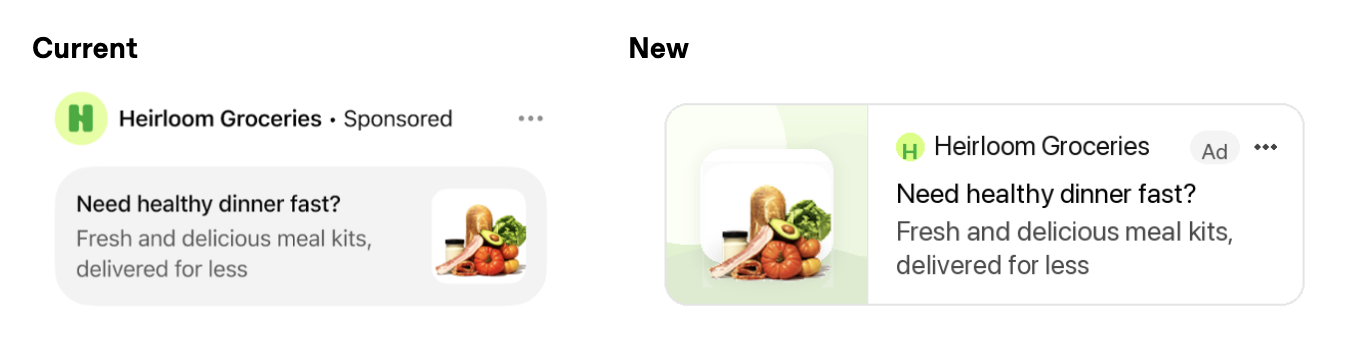
ChatGPT Ads has sent out an email to advertisers announcing new ChatGPT Ads Manager updates and ChatGPT Ads experience updates. The updates include custom audiences, new overview tab, suggested ad drafts, as well as a refreshed ad card format and expanding ads in Japan and South Korea.
Overview tab: You can monitor account health, review recommended tasks that can help improve campaign performance, and analyze key performance metrics in a larger, more flexible trend chart.
Suggested ad drafts: If your campaign could benefit from broader content coverage to optimize delivery, you may see the option to select ‘Add new ad’ in your campaign view. This feature uses existing website metadata to prefill an ad draft with an image, title, and description for you to review, edit, and assign to a campaign and ad group. It does not generate new copy or imagery with AI. We covered this in more detail over here earlier this week.
ChatGPT Ads are live in Japan and South Korea: Campaigns can now target users in Japan and South Korea, expanding reach for advertisers doing business in those markets.
Refreshed static ad card format: OpenAI is starting to roll out a refreshed static ad card format across web and mobile that is more compact and easier to read, with larger visual elements. This actually rolled out in late June. Here is the before and after:
Why we care. ChatGPT Ads are new, and OpenAI continues to add new features, expand to new markets and test new ad formats and treatements.
Make sure you stay on top of these changes, experiment and continue to fine-tune your ad creatives and campaigns.
Google Ads expands its Travel campaign beta to Things to Do and Events, giving eligible advertisers a new campaign type for attractions and ticket sales.

 Login
Login