MSI has delivered strong CXMT memory support on its AMD and Intel motherboards Following their announcement for AMD platforms, MSI has confirmed that its Intel 800-series motherboards are now fully optimised for DDR5 memory from CXMT (ChangXin Memory Technologies). With MSI Z890 motherboards, DDR5-8000+ memory speeds are now available with CXMT-based DDR5 modules. This news […]
CXMT's DDR5 memory has some major drawbacks versus DRAM modules from the big three, as ASUS highlights poor overclocking and worse performance. Motherboard Vendors Have Unlocked Over 8000 MT/s Speeds On CXMT-Based DDR5 Memory Modules, But The DRAM Is Inferior In Performance & Overclocking With the ongoing DRAM shortages, China's DIY PC market has started relying heavily on domestic memory solutions. We have seen brands such as Kingbank, Gloway, Lexar, and many more utilize CXMT DDR5 memory. As such, motherboard vendors have started offering optimized support for these modules. With strengthened BIOS support, these memory modules can now surpass 8000 […]
China’s CXMT could soon rival Micron in DRAM wafer production ChangXin Memory Technologies (CXMT), China’s top DRAM producer, is rapidly expanding. A new report claims that CXMT will come exceptionally close to Micron’s DRAM wafer production capacity by the end of this year. In the coming years, China could become the world’s second-largest producer of […]
The boss of SK Hynix believes that the RAM crisis is going to get much worse
The CEO said 2027 will be the 'worst year' in the RAM industry's history, and that the crisis will likely roll on to 2030 and beyond
Analysis from the Bank of America also claims that SK Hynix's expansion of memory production capacity is going to fall well short of its target for 2028
We keep getting told that the RAM crisis is dug in as a fixture for the foreseeable future, and, whether you want them or not, here are a couple more unwelcome reminders.
First, Android Headline flagged a Reuters interview with Kwak Noh-jung, the CEO of SK Hynix, one of the big memory chip makers. The chief executive didn't have comforting words about the prospect of RAM pricing in 2027, observing, "We forecast that next year will be the worst year in the [memory] industry's history from the supply perspective."
So, seemingly next year will see RAM hit peak pricing, with no relief likely until 2030 (as previously forecast by the chairman of parent company SK Group) according to the CEO — and even then, he suggested that demand will continue to outweigh supply as the next decade rolls on beyond 2030.
The second RAM-related blow comes from analysis by the Bank of America highlighted by the Commercial Times in Taiwan (via Wccftech), which pours doubt on the South Korean president's recent boasts about the major expansion of the country's overall memory chip production by 2030.
Part of this analysis is a claim from a memory industry insider over in Taiwan that SK Hynix might only add just a sixth of its originally planned production capacity increase by 2028. Obviously that assertion needs to be liberally seasoned, but it's such a large potential shortfall that it's bound to raise some eyebrows.
The Commercial Times notes that while huge new chip manufacturing plants are being built by SK Hynix and Samsung in South Korea, they will take a lot longer than 2030 to come fully online — and this process is more likely to take a full decade. The report contends that a realistic level of memory wafer capacity expansion for South Korea is around 10% (or slightly less) per year, which will leave the country falling well short of the president's claims for production in 2030.
Analysis: diverging RAM timelines
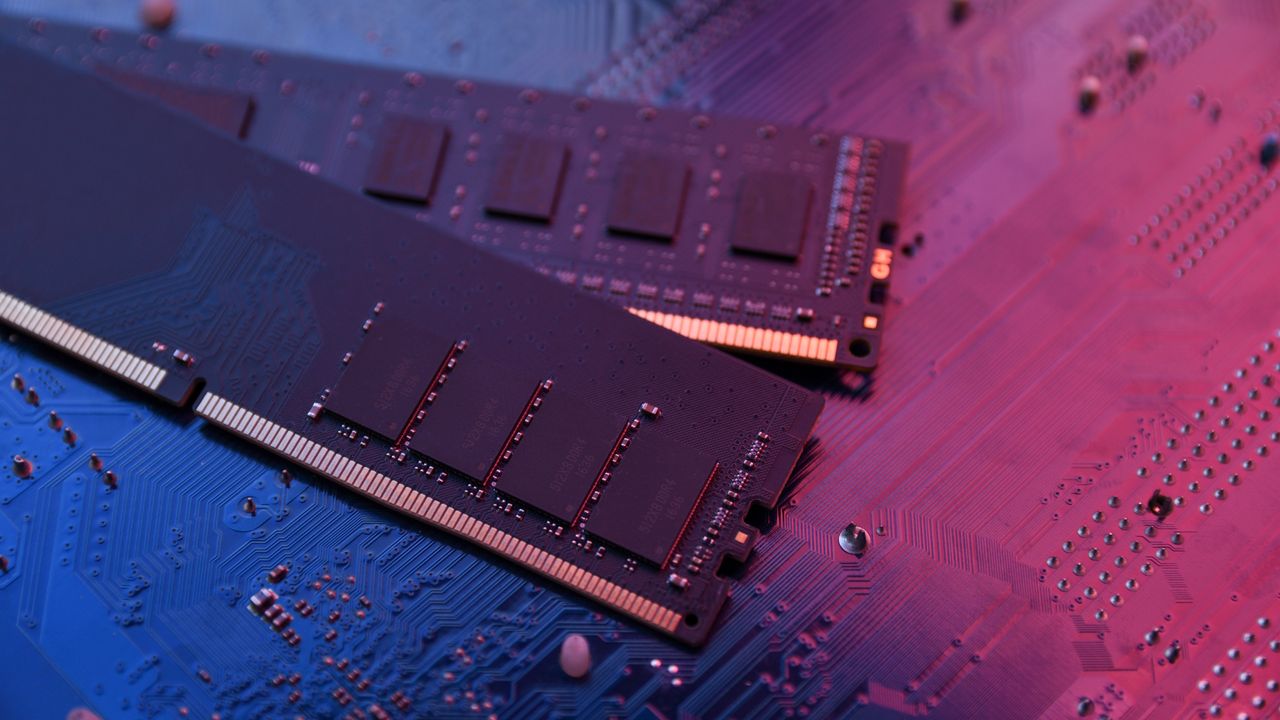
(Image credit: Unsplash / Liam Briese)
It's grim news from the CEO of SK Hynix, then, although of course, the skeptics will quickly point out that it's the chief exec's job to talk up the company's value — in terms of a booming market and the struggle to meet demand — coming off the back of its debut on the Nasdaq. Stock prices around the big memory chip makers have been turbulent of late, it should be noted, as investors start to worry about whether these companies are currently overvalued — and indeed whether the AI boom might start to run out of momentum.
So, that's a consideration, but there's no denying that SK Hynix's boss isn't the only person making gloomy predictions along these lines. Nvidia's CEO Jensen Huang said that he expects the RAM crisis to last "quite a few years", indicating that we'll be stuck in pricing hell until 2030 or thereabouts, although others don't see it that way. In the opposing camp we notably have the likes of an AMD exec, the ex-chief of Samsung's semiconductor division, and Jefferies, an investment banking firm, who all believe RAM pricing will start to ease in 2028.
However, the sting in the tail there is that Jefferies is also predicting big memory price hikes over the rest of this year, and in 2027 too, backing up the CEO of SK Hynix in that respect. When you consider the estimated massive shortfall of SK Hynix's production capacity boost based on the rumor mill, everything feels distinctly shakier in the nearer-term for RAM pricing.
I also can't help but recall the blow Microsoft recently delivered when talking about Xbox price rises, when the company informed us that it expects another doubling in the cost of RAM in just over a year (by the fall of 2027).
While there's a mixed bag in terms of longer-term predictions, then, the outlook for this year and next remains worryingly negative on the RAM front.
MSI has become one of the first motherboard makers to offer optimized CXMT DDR5 memory support on its Intel Desktop platforms. After AMD AM5, MSI Brings CXMT DDR5 Memory Support To Intel LGA 1851 Platforms, With Speeds Topping Past 8000 MT/s China is rapidly adopting its domestically produced memory to reduce reliance on offshore brands that are charging heavy prices for their DRAM solutions. As such, CXMT (ChangXin Memory Technologies) has become the go-to choice as it is the country's premier DRAM manufacturer. While there have been reports that CXMT has started supplying DRAM to global markets, those aren't true […]
A bombshell report from the Bank of America has just demolished the fallacy that new memory supply is just around the proverbial corner, with SK hynix now likely to bring online just around one-sixth of its initially envisaged production capacity additions by 2028. According to a Taiwanese memory chip industry insider, Samsung and SK hynix will only be able to bring their massive new fabs at Gwangju and Jeolla fully online after a decade We already know that South Korea's President, Lee Jae-myung, wants the country's memory capacity doubled by 2030, and has touted massive new fabs that Samsung and […]
Apple’s reportedly skipping M6 Pro and M6 Max and moving directly to M7 Apple has reportedly made significant changes to its hardware roadmap, planning to release only baseline M6-series processors and move directly to the M7 for its higher-end models. In other words, Apple is skipping M6 Pro and M6 Max and moving to the […]
Building a gaming PC in 2026 has become considerably more expensive than it was only a year or so ago, and graphics cards are not solely responsible this time. The ongoing memory shortage has driven up the cost of all DRAM and NAND flash-based products, such as memory kits, SSDs, and graphics cards. For that reason, we consider approximately $1,000 to be the realistic starting point for a decent new gaming PC in July 2026. Even then, some compromises are unavoidable. Moving up to higher pricing tiers allows progressively stronger CPUs and GPUs, not to mention higher system memory and […]
In 2026, we live in the worst kind of memory crisis that the consumer market has ever faced. Some people call it the RAMmageddon, and others call it the RAMpocalypse. Whichever way you want to call it, one thing is set: shortages created by massive demand in the AI and data center segment have led to a severe hike in prices across all memory segments. This came at a time when memory speeds were seeing rapid updates. We saw speeds surge past 9000 MT/s, and some kits were hitting close to 10,000 MT/s. We saw the launch of CUDIMMs and […]
SK Hynix CEO has warned that memory shortages will be at their worst in 2027 as it celebrates its trading debut on Nasdaq in Times Square. Memory Supply Won't See Any Sign of Relief Beyond 2030 As SK Hynix Signals 2027 To Be The Worst Year In Terms of Shortages Well, memory shortages have gripped all aspects of the tech industry, and it seems to have become the norm these days. As the supply crunch continues, the CEO of SK Hynix, one of the three largest DRAM producers, has said that things are about to get much worse for the […]
In 2026, we live in the worst kind of memory crisis that the consumer market has ever faced. Some people call it the RAMmageddon, and others call it the RAMpocalypse. Whichever way you want to call it, one thing is set: shortages created by massive demand in the AI and data center segment have led to a severe hike in prices across all memory segments. This came at a time when memory speeds were seeing rapid updates. We saw speeds surge past 9000 MT/s, and some kits were hitting close to 10,000 MT/s. We saw the launch of CUDIMMs and […]
The CXMT DDR5 memory chips appear to be mature enough to be pushed beyond 8000 MT/s easily. Colorful Pushes CXMT-Based iGame Shadow II DDR5 Memory Kit to 8600 MT/s on iGame X870E Vulcan Motherboard In the past few days, a few memory and motherboard makers have tried to push DDR5 memory kits using the CXMT memory chips beyond what they would usually operate at. Previously, CXMT-based DDR5 memory kits would often max out at 6000 MT/s, and this cap was recently removed, beginning with MSI, which unlocked up to an 8200 MT/s speed on a B850 chipset motherboard, thanks to […]
China’s CXMT is entering the high-speed DRAM market, making it a true competitor to global manufacturers IT Home has reported that Lexar is using memory modules from ChangXin Memory Technologies (CXMT) to create 16GB DDR5-7600 modules, placing the Chinese memory manufacturer firmly in the high-speed DDR5 memory market. These modules will be placed within the […]

 Login
Login