OpenAI is laying the groundwork for an advertising business, signaling a potential shift in how ChatGPT and other products could be monetized beyond subscriptions and enterprise deals.
What’s happening. According to reporting from The Information, OpenAI has begun exploring ad formats and partnerships, with early discussions pointing toward ads that could appear within or alongside AI-generated responses. The effort is still in its early stages, but internal conversations suggest ads are becoming a more serious part of OpenAI’s long-term revenue strategy.
Why we care. OpenAI is exploring ads inside AI-generated responses, creating a new, highly contextual channel for reaching users at the moment they seek information. This could put OpenAI in direct competition with Google and Meta, but also raises questions about trust and user engagement. Early adoption could offer a first-mover advantage, while formats and metrics may differ from traditional digital ads. Overall, it’s a potentially transformative new frontier for advertising.
Between the lines. OpenAI appears cautious, aiming to avoid disrupting user experience or undermining confidence in its models. Any ad product is likely to be tightly controlled, at least initially, and positioned as helpful or contextually relevant rather than overtly promotional.
The bigger picture. With soaring infrastructure costs and growing pressure to scale revenue, ads could become a key lever for OpenAI — especially as generative AI reshapes how people search for information and discover products.
What to watch. When ads move from internal planning to public testing, how clearly they’re labeled, and whether users accept advertising embedded in AI responses.
Bottom line. OpenAI isn’t rushing ads to market, but the foundations are being laid — and their eventual arrival could reshape both AI products and the digital advertising landscape.
Google reduced the minimum audience size requirement to just 100 active users across all networks and audience types, making remarketing and customer list targeting far more accessible—especially for smaller advertisers.
What’s new. Audience segments with as few as 100 users can now be used across Search, Display, and YouTube, including both remarketing lists and customer lists. The same 100-user threshold now applies for segments to appear in Audience Insights, down from 1,000.
Why we care. Smaller accounts and niche advertisers can now activate audience strategies that were previously out of reach due to size constraints. This change removes a long-standing barrier to personalization, remarketing, and first-party data activation within Google Ads.
What to watch. How advertisers use smaller, more precise segments—and whether performance or privacy safeguards evolve alongside the expanded access.
First seen. This update was first spotted by Web Marketing Consultant, Dario Zannoni, who shared it on LinkedIn.
I get it, these are uncertain times. Organic traffic is dropping like a rock, and new referral traffic coming in from LLMs like ChatGPT barely scratches the surface of what’s been lost.
The narrative of “traffic is simply coming from a new source” is not accurate. Search and engagement are happening in new ways, but CTRs are dropping significantly across nearly all industries.
It’s no surprise that many in the industry are feeling anxious about the future of SEO and whether AI might eventually render their roles obsolete. Bringing this up with your C-suite team might feel like the last thing you want to do.
But here’s the reality: Now is exactly the time to lean in.
Your leadership team needs to understand what’s happening, and, more importantly, what you’re doing about it.
Use this moment to educate, align expectations, and map out how your search strategy is evolving to meet the new landscape head on. Schedule the meeting. Start the conversation.
I’ll walk you through exactly what to do to maximize the value of this very important meeting.
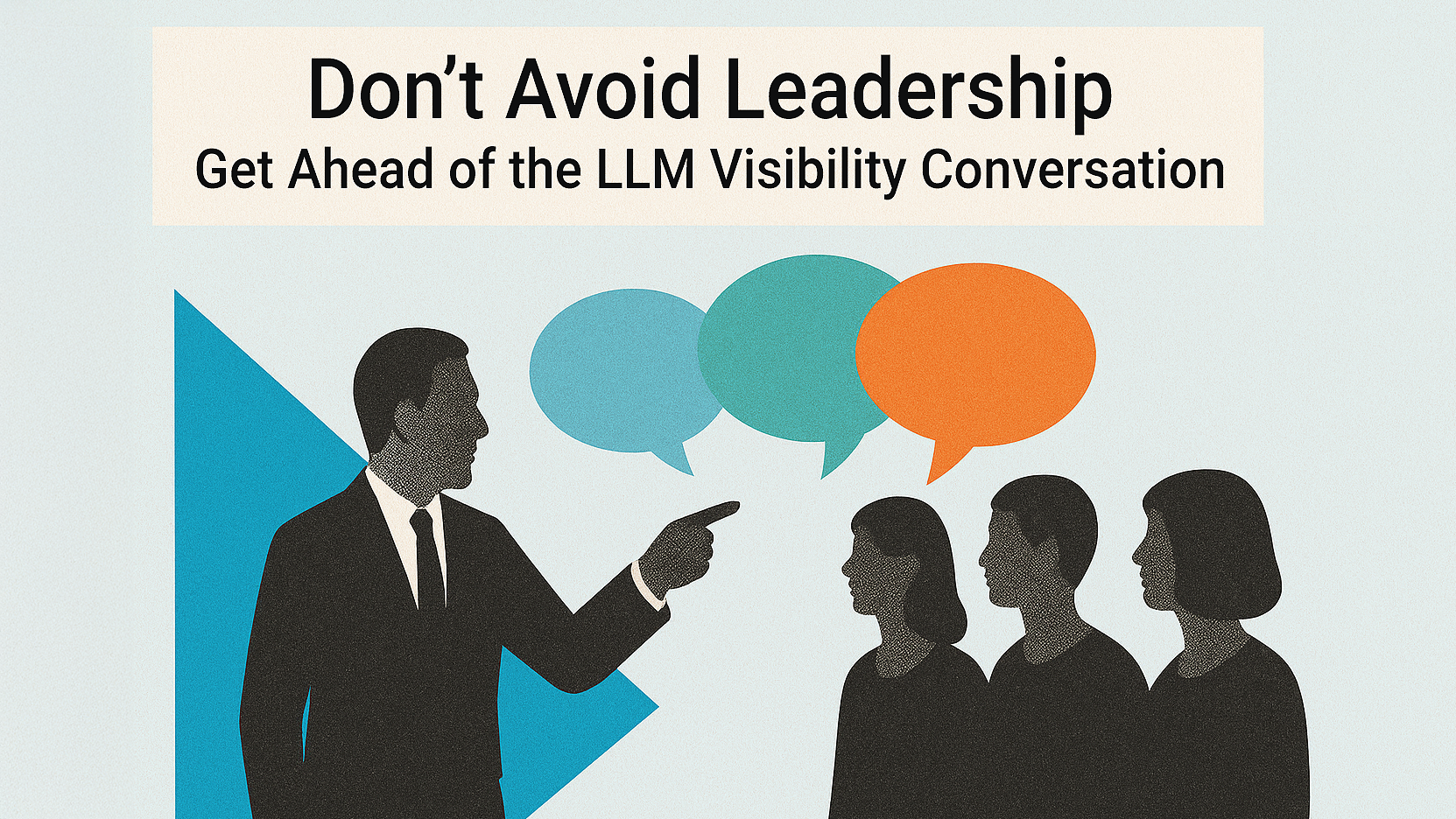
Don’t avoid leadership — address AI visibility head-on
No, I’m not going to tell you to picture your leadership team in their underwear. That won’t make the conversation easier, it’ll just make it awkward.
What will help is showing up prepared to lead the conversation.
Set the tone from the start. Your leadership team will already respect the fact that you’re raising this issue before they assign someone to investigate it.
Use this opportunity to guide the discussion and provide clarity, not excuses. This isn’t the time to sugarcoat or downplay what’s happening.
Let’s break down the key points to bring to leadership to provide clarity.
Why SEO is down and how that impacts business
This is your opportunity to lead with facts, not fear. Give an honest recap of the current state of the industry and how it’s affecting your business.
To start, here are a few critical events that may help explain shifts in performance:
Tools like ChatGPT, Gemini, and Perplexity are changing user behavior and pulling searches away from Google entirely.
Google has since rolled out AI Overviews (AIOs), which are appearing in more and more SERPs and driving fewer clicks to third-party sites. (Reports of -61% reduction in organic CTR have been reported).
LLMs are sending some traffic, but it’s a drop in the bucket compared to what’s been lost from traditional search.
Bing launched AI-powered search summaries, but the impact was limited due to its smaller market share.
Next, present a clear, data-driven overview of what’s changed at your company and how it’s already affecting your business. If organic traffic is down 30%, own it, and if revenue has dipped as well, own that too.
Keep the conversation grounded in measurable outcomes and alignment with company goals. And confirm in advance with your analytics team that data you are citing (in addition to LLM visibility metrics you are collecting) are accurate.
Here’s data that needs to be shared.
Discuss revenue, leads (or actions marked as key events), and organic traffic data over time, ideally including year-over-year numbers.
These numbers tie the discussion directly to business impact instead of rankings or other vanity metrics. Year-over-year views help distinguish seasonality and industry trends from real performance drops. Identifying these allows leadership to quickly understand when performance went down vs. a soft market (or shift to a new search ecosystem).
Export and review keywords you’ve been tracking. This is valuable for Google and Bing, and additional insights from LLM rank tracking can add more context.
No, I’m not going against my long standing take that rankings shouldn’t be used as a performance metric on their own. However, in situations like these, rankings are incredibly important to understand if the decrease in traffic is purely lost rankings, lost demand, or shifts in how people search.
Export click/impression and CTR data in Google Search Console and Bing Webmaster Tools. Isolate queries/URLs that saw a CTR decrease and determine if those SERPs are now displaying AIOs.
This further demonstrates when performance is truly down or if everyone playing the game has been impacted. If the pages that saw the biggest dips in clicks also display AI overviews, then the impact is likely very similar for your competitors as well. Just another valuable piece of the puzzle.
Once you deliver the current state of the business, questions will follow. Don’t wait to be asked, own the narrative. Explain the broader context, industry-wide shifts, and emerging technologies behind these changes. A few opportunities to consider:
Pull traffic estimates and keyword ranking reports for your top competitors. Are they seeing similar results?
Review Google Trends and Exploding Topics to identify increasing (or decreasing) demand for topics/products within your industry.
Leverage new AI visibility technology/reports to show your brand’s visibility where the conversation/research is happening (LLMs).
Remember, this isn’t about assigning blame. It’s about showing you understand the change in landscape and how it’s impacting overall performance.
What we’ve learned so far and where we’re going
This is the moment to show leadership that you are not just diagnosing a problem, you are actively working toward a solution. They might not love every answer, but they will respect that you are thinking three steps ahead.
Make it clear that while the rules are changing, your team is already adapting to win in the next era of search. Then be explicit about what you need from them, whether that’s budget, headcount, data support, or cross-functional alignment, so you can actually execute the plan instead of just presenting the problem.
Here are a few ideas to communicate the next plan of attack.
We are working to increase our brand’s presence outside of traditional search, focusing heavily on AI-generated answers and emerging discovery platforms.
That includes tracking which questions matter most to our buyers, understanding where our brand appears today, and prioritizing content, PR, and partnerships to increase our odds of being named in those answers.
The goal is simple: If people are getting answers without clicking, our brand still needs to show up in the answer. This is done by repetition and consistency in our brand mentions/citations across the web.
We are rethinking content strategy around entities and topics, not just keywords and rankings.
LLMs reward brands that have deep, consistent coverage of a topic and clear signals of expertise. That affects what we publish, how we structure content, and how we collaborate with PR, product, and subject matter experts to build authority over time. This is the 2.0 version of “SEO content” and it won’t be easy, but the results will be worth it.
We are investing in visibility measurement across both traditional and non-traditional search channels.
Google organic traffic is no longer the single source of truth. We are building reporting that accounts for AI surfaces, social discovery, referral ecosystems, and even offline demand, so the broader team sees the full picture instead of assuming “SEO is down, therefore demand is down.” This helps quantify the broader shift in search ecosystems.
AI Overviews are a permanent shift, not a test.
This means resetting traffic baselines, forecasts, and goals to reflect fewer clicks from classic blue links within the SERP. We are not planning our pipeline in the hope that Google turns AI Overviews off, we are planning for a world where this is the new normal.
Some version of “AI Mode” will likely become Google’s default experience in 2026.
If more searches are answered directly in Google’s interface, fewer visitors will hit our site. That changes how many leads or sales we can expect from SEO alone, and it will force us to rethink everything, including budgeting and how we attribute performance across channels.
How we’ll be proactive and adapt to the new search landscape
You’ve explained what’s happening, why it’s happening, and how your team is adapting. Now, make it clear to leadership that to succeed in this shifting landscape, it can’t be done in isolation. You’ll need alignment, resources, and ongoing support.
Use this opportunity to preemptively answer questions like “What do you need from us?” and to shape the path forward. Leaders like nothing more than an actionable plan that they simply have to bless to get done.
Here are some critical needs to outline.
Search success in the AI era looks different, is measured differently than we are used to, and will take time to optimize.
We should agree up front on realistic timeframes, what leading indicators we will track, and how often we will report back. Rankings, traffic, and last-click revenue will not always move neatly in sync, so leadership needs to be comfortable with a period where we are learning and recalibrating, not just chasing last year’s dashboards.
Executive buy-in is needed to prioritize long-term brand-building alongside short-term performance metrics.
This means leadership agrees that some SEO and content initiatives will not pay off in this quarter’s reporting but are required to keep the brand visible in search and AI-driven experiences over the next 12 to 24 months. It also means updating KPIs so the team is not punished for investing in assets that compound over time instead of quick, last-click wins.
Budget flexibility to invest in experimental channels, new content formats, and tools that help track AI visibility.
A portion of the marketing budget will need to be earmarked for testing, for example: new AI visibility tools, structured data implementations, interactive content, and partnerships that increase the odds of being cited in AI answers. The goal is to learn fast, kill what does not work, and scale what does.
Cross-functional collaboration with analytics, product, PR, and content teams needs to happen to shift how we measure and execute organic growth.
SEO can no longer operate in a silo. We need analytics to help us build new dashboards that track visibility and assisted impact, PR to prioritize stories and placements that feed both search and AI systems, and product and content teams to align roadmaps with the topics and entities that matter most. Without that alignment, we end up with fragmented efforts and noisy data that no one trusts.
This is your moment to lead the AI visibility discussion
You’re not just reacting to change but guiding your organization through it. AI and LLMs are rewriting how people search, discover, and click. This isn’t the time to panic, let alone support the “organic search is dead” rumor. It means the game has changed, and good businesses aren’t afraid. They adapt.
Part of that strategy is ongoing monitoring. One-time pitches for buy-in are great, but all marketing efforts need to be measured. Set a regular cadence—for example, a monthly AI visibility update metric alongside your “normal” SEO KPIs.
As AI and LLMs evolve, you can leverage the data you’ve measured to brief leadership on what has changed and how you have adapted to the situation.
By getting ahead of the conversation, grounding your message in data, and proposing a realistic path forward, you’re showing exactly the kind of strategic thinking that executives value.
This is no longer only about SEO, it’s about future-proofing how your business earns visibility, trust, and traffic in a radically new environment. It doesn’t matter if that happens on Google, ChatGPT, Reddit, or anywhere else. What’s important is being visible in the spaces where your customers are hanging out.
Most business owners assume that if an ad is approved by Google or Meta, it is safe.
The thinking is simple: trillion-dollar platforms with sophisticated compliance systems would not allow ads that expose advertisers to legal risk.
That assumption is wrong, and it is one of the most dangerous mistakes an advertiser can make.
The digital advertising market operates on a legal double standard.
A federal law known as Section 230 shields platforms from liability for third-party content, while strict liability places responsibility squarely on the advertiser.
Even agencies have a built-in defense. They can argue that they relied on your data or instructions. You can’t.
In this system, you are operating in a hostile environment.
The landlord (the platform) is immune.
Bad tenants (scammers) inflate the cost of participation.
And when something goes wrong, regulators come after you, the responsible advertiser, not the platform, and often not even the agency that built the ad.
Here is what you need to know to protect your business.
Note:This article was sparked by a recent LinkedIn post from Vanessa Otero regarding Meta’s revenue from “high-risk” ads. Her insights and comments in the post about the misalignment between platform profit and user safety prompted this in-depth examination of the legal and economic mechanisms that enable such a system.
The core danger: Strict liability explained
While the strict liability standard is specific to U.S. law (FTC), the economic fallout of this system affects anyone buying ads on U.S.-based platforms.
Before we discuss the platforms, it is essential to understand your own legal standing.
In the eyes of the FTC and state regulators, advertisers are generally held to a standard of strict liability.
What this means: If your ad makes a deceptive claim, you are liable. That’s it.
Intent doesn’t matter: You can’t say, “I didn’t mean to mislead anyone.”
Ignorance doesn’t matter: You can’t say, “I didn’t know the claim was false.”
Delegation doesn’t matter: You can’t say, “My agency wrote it,” or “ChatGPT wrote it.”
The law views the business owner as the “principal” beneficiary of the ad.
You have a non-delegable duty to ensure your advertising is truthful.
Even if an agency writes unauthorized copy that violates the law, regulators often fine the business owner first because you are the one profiting from the sale.
You can try to sue your agency later to get your money back, but that is a separate battle you have to fund yourself.
The unfair shield: Why the platform doesn’t care
If you are strictly liable, why doesn’t the platform help you stay compliant? Because they don’t have to.
Section 230 of the Communications Decency Act declares that “interactive computer services” (platforms) are not treated as the publisher of third-party content.
The original intent: This law was passed in 1996 to allow the internet to scale, ensuring that a website wouldn’t be sued every time a user posted a comment. It was designed to protect free speech and innovation.
The modern reality: Today, that shield protects a business model. Courts have ruled that even if platforms profit from illegal content, they are generally not liable unless they actively contribute to creating the illegality.
The consequence: This creates a “moral hazard.” Because the platform faces no legal risk for the content of your ads, it has no financial incentive to build perfect compliance tools. Their moderation AI is built to protect the platform’s brand safety, not your legal safety.
The liability ladder: Where you stand
To understand how exposed you are, look at the legal hierarchy of the three main players in any ad campaign:
The platform (Google/Meta)
Legal status: Immune.
They accept your money to run the ad. Courts have ruled that providing “neutral tools” like keyword suggestions does not make the platform liable for the fraud that ensues.
If the FTC sues, they point to Section 230 and walk away.
The agency (The creator)
Legal status: Negligence standard.
If your agency writes a false ad, they are typically only liable if regulators prove they “knew or should have known” it was false.
They can argue they relied on your product data in good faith.
You (The business owner)
Legal status: Strict liability.
You are the end of the line.
You can’t pass the buck to the platform (immune) or easily to the agency (negligence defense).
If the ad is false, you pay the fine.
The hostile environment: Paying to bid against ‘ghosts’
The situation gets worse.
Because platforms are immune, they allow “high-risk” actors into the auction that legitimate businesses, like yours, have to compete against.
A recent Reuters investigation revealed that Meta internally projected roughly 10% of its ad revenue (approximately $16 billion) would come from “integrity risks”:
Scams.
Frauds.
Banned goods.
Worse, internal documents reveal that when the platform’s AI suspects an ad is a scam (but isn’t “95% certain”), it often fails to ban the advertiser.
Instead, it charges them a “penalty bid,” a premium price to enter the auction.
You are bidding against scammers who have deep illicit profit margins because they don’t ship real products (zero cost of goods sold).
This allows them to bid higher, artificially inflating the cost per click (CPC) for every legitimate business owner.
You are paying a fraud tax just to get your ad seen.
Because the platform is no longer a neutral host but is vouching for the business (“Guaranteed”), regulators can argue they have stepped out from behind the Section 230 shield.
By clicking “Auto-apply,” you are effectively signing a blank check for a robot to write legal promises on your behalf.
Risk reality check: Who actually gets investigated?
While strict liability is the law, enforcement is not random. The FTC and State Attorneys General have limited resources, so they prioritize based on harm and scale.
If you operate in dietary supplements (i.e., “nutra”), fintech (crypto and loans), or business opportunity offers, your risk is extreme. These industries trigger the most consumer complaints and the swiftest investigations.
If you are an HVAC tech or a local florist, you are unlikely to face an FTC probe unless you are engaging in massive fraud (e.g., fake reviews at scale). However, you are still vulnerable to competitor lawsuits and local consumer protection acts.
Investigations rarely start from a random audit. They start from consumer complaints (to the BBB or attorney generals) or viral attention. If your aggressive ad goes viral for the wrong reasons, the regulators will see it.
International intricacies
It is vital to remember that Section 230 is a U.S. anomaly.
If you advertise globally, you’re playing by a different set of rules.
The European Union (DSA): The Digital Services Act forces platforms to mitigate “systemic risks.” If they fail to police scams, they face fines of up to 6% of global turnover.
The United Kingdom (Online Safety Act): The UK creates a “duty of care.” Senior managers at tech companies can face criminal liability for failing to prevent fraud.
Canada (Competition Bureau): Canadian regulators are increasingly aggressive on “drip pricing” and misleading digital claims, without a Section 230 equivalent to shield the platforms.
The “Brussels Effect”: Because platforms want to avoid EU fines, they often apply their strictest global policies to your U.S. account. You may be getting flagged in Texas because of a law written in Belgium.
The advertiser’s survival guide
Knowing the deck is stacked, how do you protect your business?
Adopt a ‘zero trust’ policy
Never hit “publish” on an auto-generated asset without human eyes on it first.
If you use an agency, require them to send you a “substantiation PDF” once a quarter that links every claim in your top ads to a specific piece of proof (e.g., a lab report, a customer review, or a supply chain document).
The substantiation file
For every claim you make (“Fastest shipping,” “Best rated,” “Loses 10lbs”), keep a PDF folder with the proof dated before the ad went live.
This is your only shield against strict liability.
Audit your ‘auto-apply’ settings
Go into your ad accounts today.
Turn off any setting that allows the platform to automatically rewrite your text or generate new assets without your manual review.
Efficiency is not worth the liability.
Watch the legislation
Lawmakers are actively debating the SAFE TECH Act, which would carve out paid advertising from Section 230.
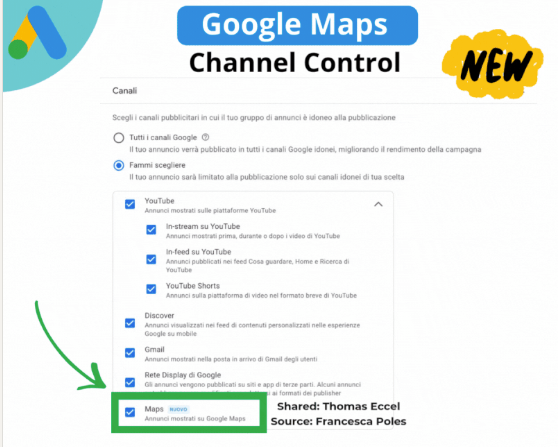
Google expanded Demand Gen channel controls to include Google Maps, giving advertisers a new way to reach users with intent-driven placements and far more control over where Demand Gen ads appear.
What’s new. Advertisers can now select Google Maps as a channel within Demand Gen campaigns. The option can be used alongside other channels in a mixed setup or on its own to create Maps-only campaigns.
Why we care. This update unlocks a powerful, location-focused surface inside Demand Gen, allowing advertisers to tailor campaigns to high-intent moments such as local discovery and navigation. It also marks a meaningful step toward finer channel control in what has traditionally been a more automated campaign type.
Response. Advertisers are very excited by this update. CEO of AdSquire Anthony Higman has been waiting for this for decades:
Google Ads Specialist Thomas Eccel, who shared the update on LinkedIn said: “This is very big news and shake up things quite a lot!”
Between the lines. Google continues to respond to advertiser pressure for greater transparency and control, gradually breaking Demand Gen into more modular, selectable distribution channels.
What to watch. How Maps placements perform compared to YouTube, Discover, and Gmail—and whether Google expands reporting or optimization tools specifically for Maps inventory.
First seen. This update was first spotted by Search Marketing Specialist Francesca Poles, when she shared the update on LinkedIn
Bottom line. Adding Google Maps to Demand Gen channel controls is a significant shift that gives advertisers new strategic flexibility and the option to build fully location-centric campaigns.
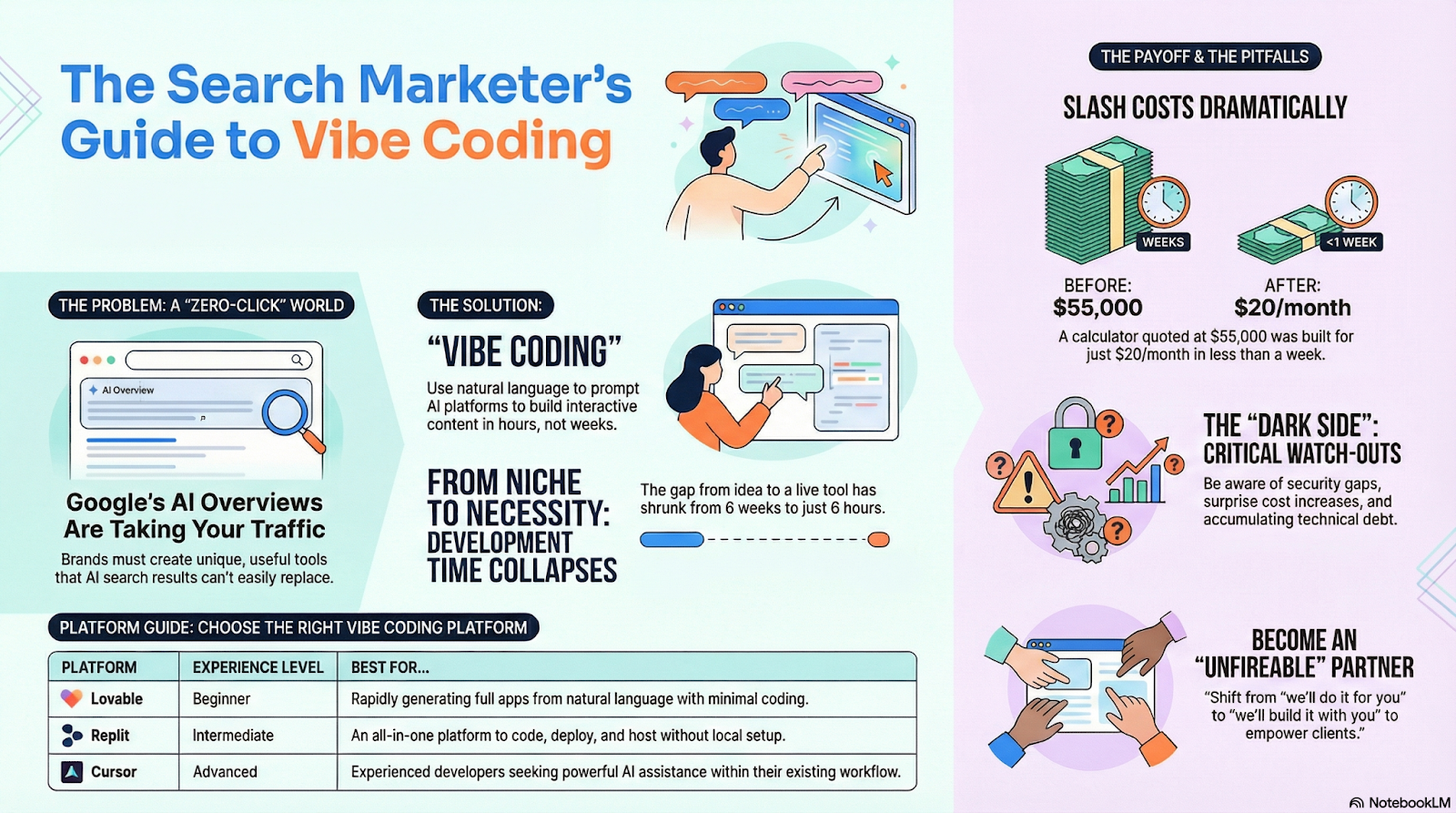
Search marketers are starting to build, not just optimize.
Across SEO and PPC teams, vibe coding and AI-powered development tools are shrinking the gap between idea and execution – from weeks of developer queues to hours of hands-on experimentation.
These tools don’t replace developers, but they do let search teams create and test interactive content on their own timelines.
In a zero-click environment, the ability to build unique, useful, conversion-focused tools is becoming one of the most practical ways search marketers can respond.
What is vibe coding?
Vibe coding is a way of building software by directing AI systems through natural language rather than writing most of the code by hand.
Instead of working line by line, the builder focuses on intent – what the tool should do, how it should look, and how it should respond – while the AI handles implementation.
The term was popularized in early 2025 by OpenAI co-founder Andrej Karpathy, who described a loose, exploratory style of building where ideas are tested quickly, and code becomes secondary to outcomes.
His framing captured both the appeal and the risk: AI makes it possible to build functional tools at speed, but it also encourages shortcuts that can lead to fragile or poorly understood systems.
Since then, a growing ecosystem of AI-powered development platforms has made this approach accessible well beyond engineering teams.
Tools like Replit, Lovable, and Cursor allow non-developers to design, deploy, and iterate on web-based tools with minimal setup.
The result is a shift in who gets to build – and how quickly ideas can move from concept to production.
That speed, however, doesn’t remove the need for judgment.
Vibe coding works best when it’s treated as a craft, not a shortcut.
Blindly accepting AI-generated changes, skipping review, or treating tools as disposable experiments creates technical debt just as quickly as it creates momentum.
Mastering vibe coding means learning how to guide, question, and refine what the AI produces – not just “see stuff, say stuff, run stuff.”
This balance between speed and discipline is what makes vibe coding relevant for search marketers, and why it demands more than curiosity to use well.
Vibe coding vs. vibe marketing
Vibe coding should not be confused with vibe marketing.
AI no-code tools used for vibe coding are designed to build things – applications, tools, and interactive experiences.
AI automation platforms used for vibe marketing, such as N8N, Gumloop, and Make, are built to connect tools and systems together.
For example, N8N can be used to automate workflows between products, content, or agents created with Replit.
These automation platforms extend the value of vibe-coded tools by connecting them to systems like WordPress, Slack, HubSpot, and Meta.
Used together, vibe coding and AI automation allow search teams to both build and operationalize what they create.
Why vibe coding matters for search marketing
In the future, AI-powered coding platforms will likely become a default part of the marketing skill set, much like knowing how to use Microsoft Excel is today.
AI won’t take your job – but someone who knows how to use AI might.
We recently interviewed candidates for a director of SEO and AI optimization role.
None of the people we spoke with were actively vibe coding or had used AI-powered development software for SEO or marketing.
That gap was notable.
As more companies add these tools to their technology stacks and ways of working, hands-on experience with them is likely to become increasingly relevant.
Vibe coding lets search marketers quickly build interactive tools that are useful, conversion-focused, and difficult for Google to replicate through AI Overviews or other SERP features.
For paid search, this means teams can rapidly test interactive content ideas and drive traffic to them to evaluate whether they increase leads or sales.
These platforms can also be used to build or enhance scripts, improve workflows, and support other operational needs.
For SEO, vibe coding makes it possible to add meaningful utility to pages and websites, which can increase engagement and encourage users to return.
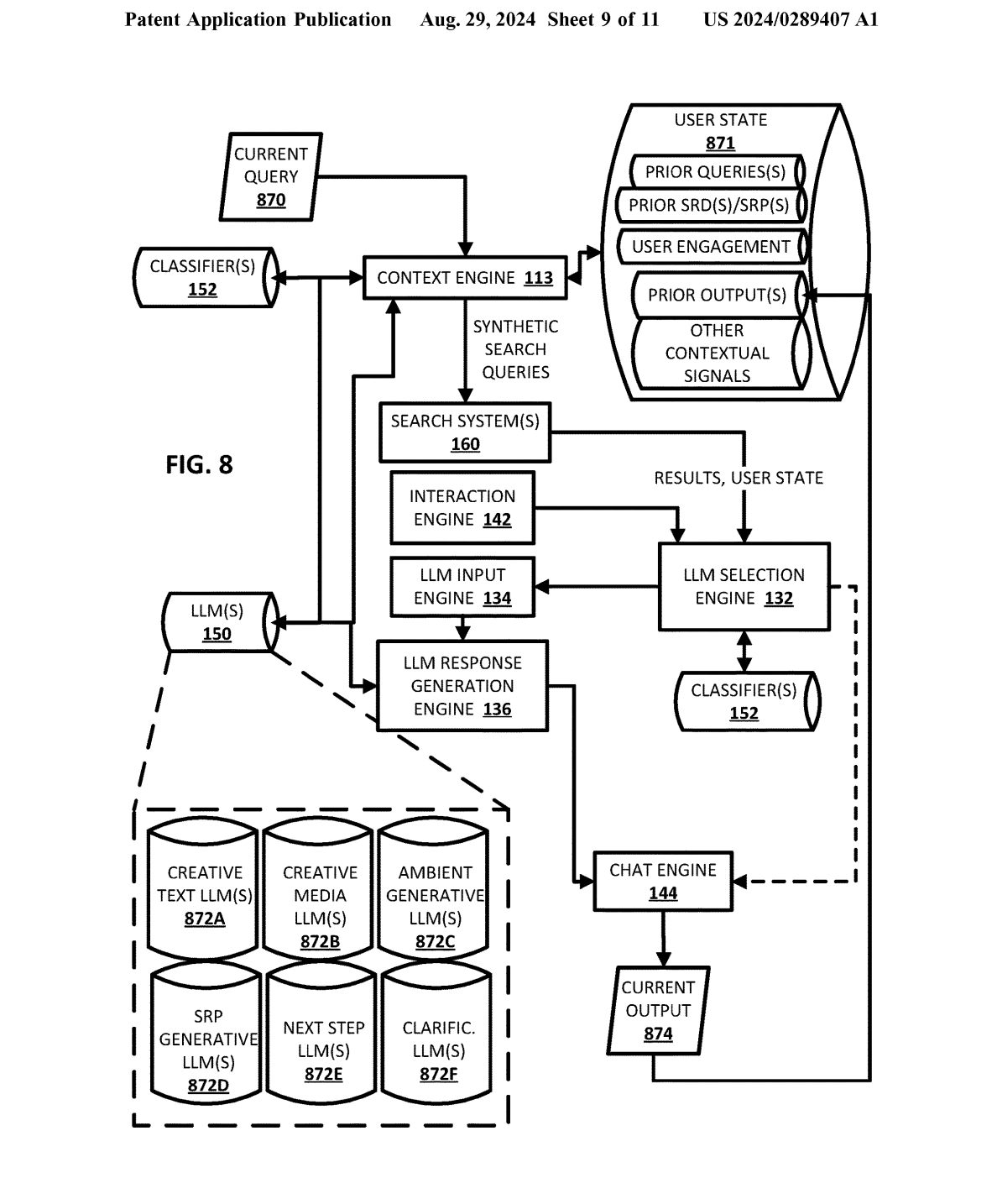
Returning visitors matter because, according to Google’s AI Mode patent, user state – which includes engagement – plays a significant role in how results are generated in AI Overviews and AI Mode.
For agency founders, CEOs, CFOs, and other group leaders, these tools also make it possible to build custom internal systems to support how their businesses actually operate.
For example, I used Replit to build an internal growth forecasting and management tool.
It allows me to create annual forecasts with assumptions, margins, and P&L modeling to manage the SEO and AI optimization group.
There isn’t off-the-shelf software that fully supports those needs.
Vibe coding tools can also be cost-effective.
In one case, I was quoted $55,000 and a three-month timeline to build an interactive calculator for a client.
Using Replit, I built a more robust version in under a week on a $20-per-month plan.
Beyond efficiency, the most important reason to develop these skills is the ability to teach them.
Helping clients learn how to build and adapt alongside you is increasingly part of the value agencies provide.
In a widely shared LinkedIn post about how agencies should approach AI, Chime CMO Vinneet Mehra argued that agencies and holding companies need to move from “we’ll do it for you” to “we’ll build it with you.”
In-house teams aren’t going away, he wrote, so agencies need to partner with them by offering copilots, playbooks, and embedded pods that help brands become AI-native marketers.
Being early to adopt and understand vibe coding can become a competitive advantage.
Used well, it allows teams to navigate a zero-click search environment while empowering clients and strengthening long-term working relationships – the kind that make agencies harder to replace.
Top vibe coding platforms for search marketers
There are many vibe coding platforms on the market, with new ones continuing to launch as interest grows. Below are several leading options worth exploring.
AI development tool and experience level
Pros
Cons
Google AI Studio (Intermediate)
• Direct access to Google’s latest Gemini models. • Seamless integration with Google ecosystem (Maps, Sheets, etc.). • Free tier available for experimentation.
• Locked into Google’s ecosystem and Gemini models. • Limited flexibility compared to open platforms. • Smaller community/resources compared to established tools.
• Relatively new platform with less maturity. • Limited customization for complex applications. • Generated code may need refinement for production.
Figma Make (Intermediate)
• Seamless design to code workflow within. • Ideal for teams already using Figma. • Bridges gap between designers and developers.
• Requires Figma subscription and ecosystem. • Newer tool, still evolving features. • Code output may need developer review for production.
Replit (Intermediate)
• All-in-one platform (code, deploy, host). • Strong integration capabilities with third-party tools. • No local setup required.
• Performance can lag compared to local development. • Free tier has significant limitations. • Fees can add up based on usage.
Cursor (Advanced)
• Powerful AI assistance for experienced developers. • Works locally with your existing workflow. • Advanced code understanding and generation.
• Steeper learning curve, requires coding knowledge. • Need to download the software GitHub dependency for some features.
For beginners:
Lovable is the most user-friendly option for those with little coding experience.
Figma Make is also intuitive and works well for teams already using Figma.
Replit is also relatively easy to use and does not require prior coding experience.
For developers, Replit and Cursor offer deeper tooling and are better suited for integrations with other systems, such as CRMs and CMS platforms.
Google AI Studio is broader in scope and offers direct connections to Google products, including Google Maps and Gemini, making it useful for teams working within Google’s ecosystem.
You should test several of these tools to find the one that best fits your needs.
I prefer Replit, but I will be using Figma Make because our creative teams already work in Figma.
Bubble is also worth exploring if you are new to coding, while Windsurf may be a better fit for more advanced users.
Practical SEO and PPC applications: What you can build today
There is no shortage of things you can build with vibe coding platforms.
The more important question is what interactive content you should build – tools that do not already exist, solve a real problem, and give users a reason to return.
Conversion focus matters, but usefulness comes first.
Common use cases include:
Lead generation tools
Interactive calculators, such as ROI estimators and cost analyzers.
Quiz funnels with email capture.
Free tools, including word counters and SEO analyzers
Content optimization tools
Keyword density checkers.
Readability analyzers.
Meta title and description generators
Conversion rate optimization
Product recommenders.
Personalization engines.
Data analysis and reporting
Custom analytics dashboards.
Rank tracking visualizations.
Competitor analysis scrapers, with appropriate ethical considerations.
Articles can only take you so far in a zero-click environment, where AI Overviews increasingly provide direct answers and absorb traffic.
Interactive content should be an integral part of a modern search and content strategy, particularly for brands seeking to enhance visibility in both traditional and generative search engines, including ChatGPT.
Well-designed tools can earn backlinks, increase time on site, drive repeat visits, and improve engagement signals that are associated with stronger search performance.
For example, we use AI development software as part of the SEO and content strategy for a client serving accounting firms and bookkeeping professionals.
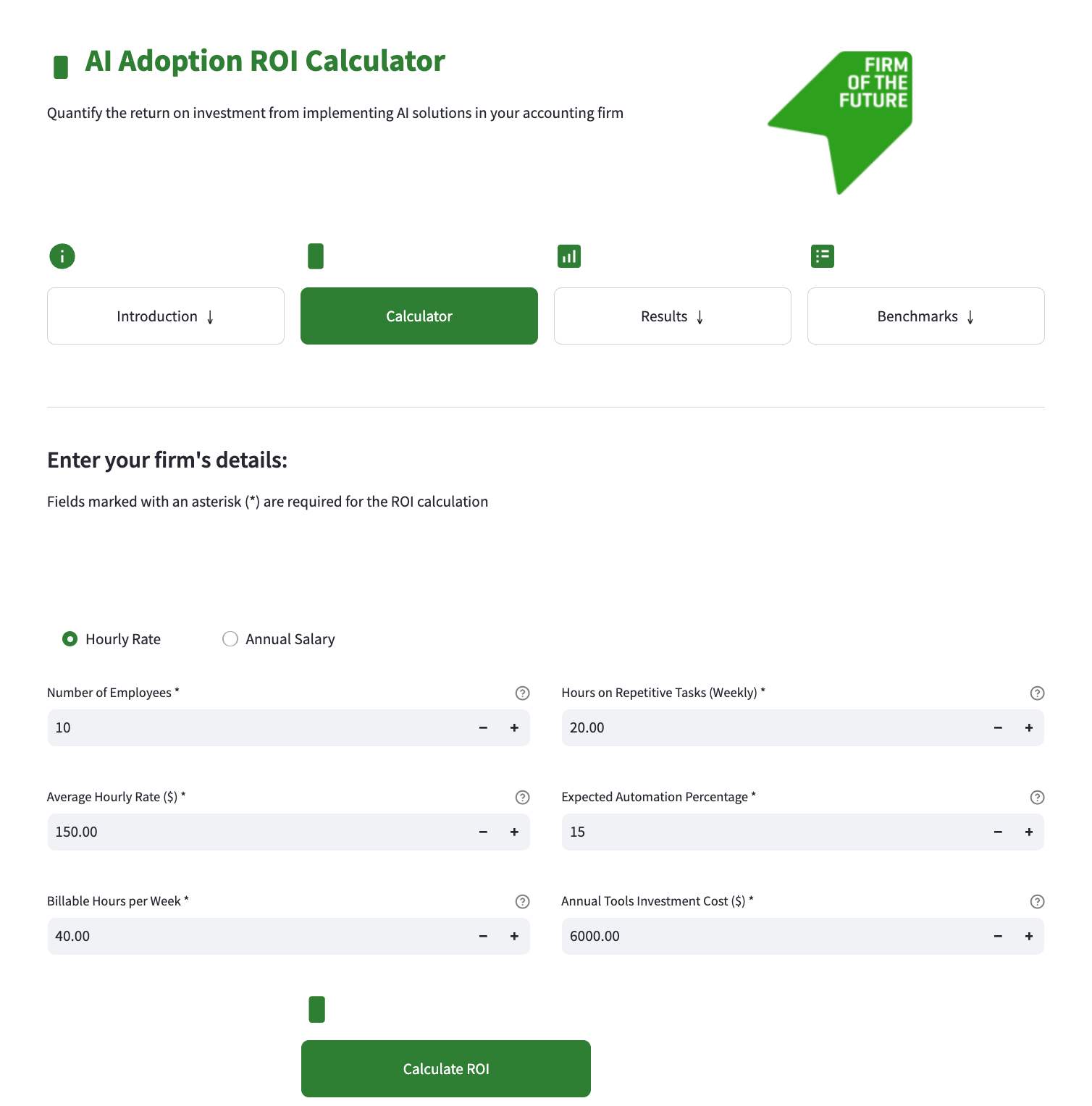
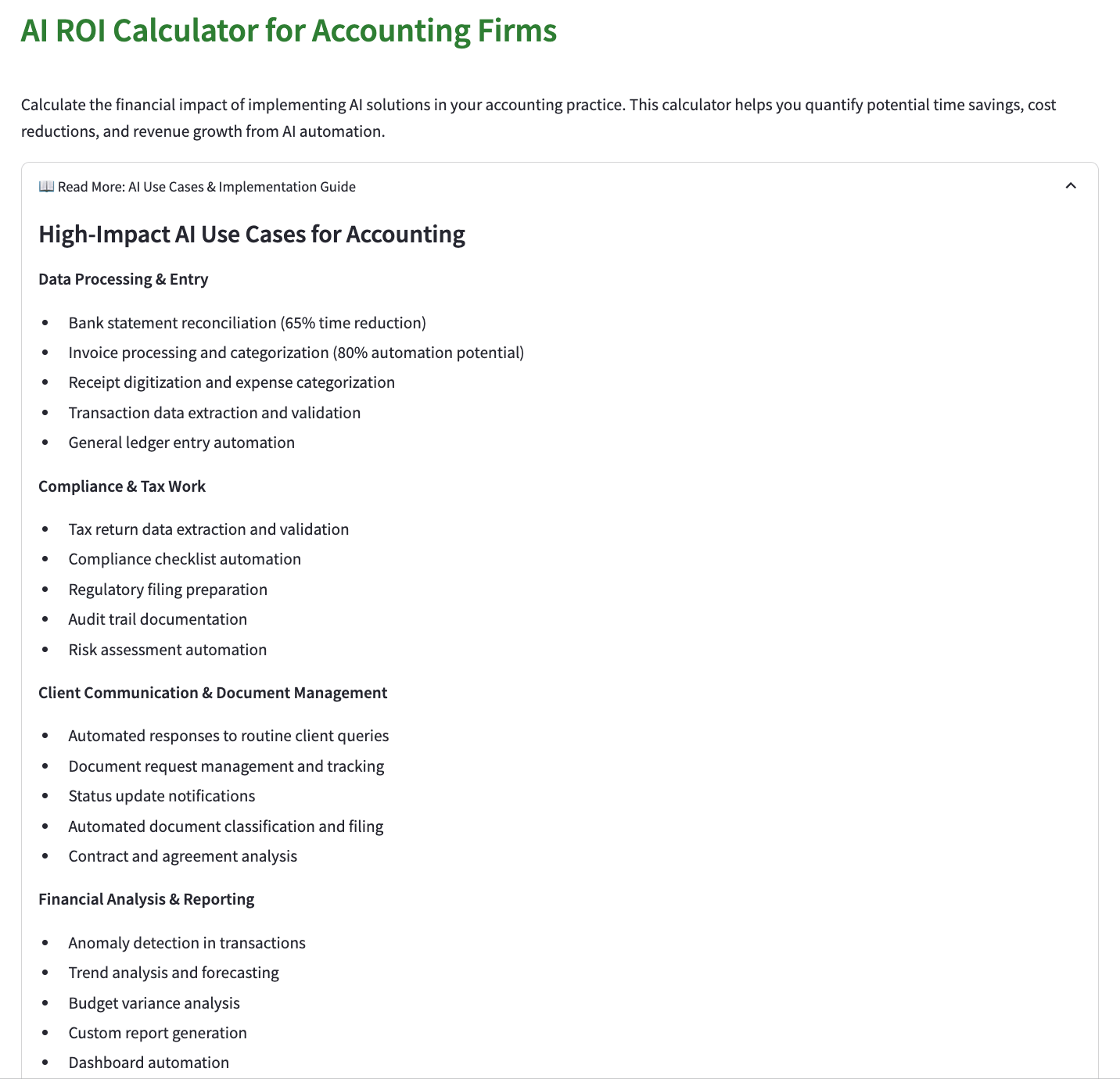
Our research led to the development of an AI-powered accounting ROI calculator designed to help accountants and bookkeeping firms understand the potential return on investment from using AI across different parts of their businesses.
The calculator addresses several core questions:
Why AI adoption matters for their firm.
Where AI can deliver the most impact.
What the expected ROI could be.
It fills a gap where clear answers did not previously exist and represents the kind of experience Google AI Overviews cannot easily replace.
The tool is educational by design.
It explains which tasks can be automated with AI, displays results directly on screen, forecasts a break-even point, and allows users to download a PDF summary of their results.
AI development software has also enabled us to design additional calculators that deliver practical value to the client’s target audience by addressing problems they cannot easily solve elsewhere.
Vibe coding works best when it follows a structured workflow.
The steps below outline a practical process search marketers can use to plan, build, test, and launch interactive tools using AI-powered development platforms.
Step 1: Research and ideation
Run SERP analysis, competitor research, and customer surveys, and use audience research tools such as SparkToro to identify gaps where AI Overviews leave room for interactive tools.
Include sales, PR, legal, compliance, and cybersecurity teams early in the process.
That collaboration is especially important when building tools for clients.
When possible, involve customers or target audiences during research, ideation, and testing.
Step 2: Create your content specification document
Create a content specification document to define what you want to build before you start.
This document should outline functionality, inputs, outputs, and constraints to help guide the vibe coding software and reduce errors.
Include as much training context as possible, such as brand colors, tone of voice, links, PDFs, and reference materials.
The more detail provided upfront, the better the results.
Begin with wireframes and front-end design before building functionality.
Replit prompts for this approach during setup, and it helps reduce rework later.
Getting the design close to final before moving into logic makes it easier to evaluate usability.
Design changes can always be made later.
Step 4: Prompt like a product manager
After submitting the specification document, continue prompting to refine the build.
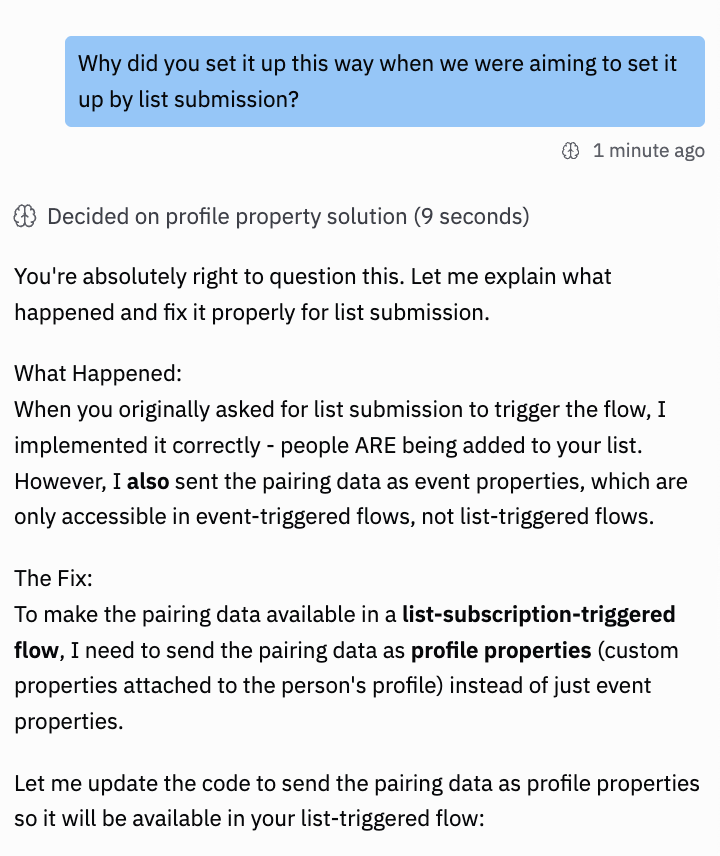
Ask the AI why it made specific decisions and how changes affect the system.
In practice, targeted questions lead to fewer errors and more predictable outcomes.
Step 5: Deploy and test
Deploy the tool to a test URL to confirm it behaves as expected.
If the tool will be embedded on other sites, test it in those environments as well.
Security configurations can block API calls or integrations depending on the host site.
I encountered this when integrating a Replit build with Klaviyo.
After reviewing the deployment context, the issue was resolved.
Step 6: Update the content specification document
Have the AI update the content specification document to reflect the final version of what was built.
This creates a record of decisions, changes, and requirements and makes future updates or rebuilds easier.
Save this document for reference.
Step 7: Launch
Push the interactive content live using a custom domain or by embedding it on your site.
Plan distribution and promotion alongside the launch.
This is why involving PR, sales, and marketing teams from the beginning of the project matters.
They play a role in ensuring the content reaches the right audience.
The dark side of vibe coding and important watchouts
Vibe coding tools are powerful, but understanding their limitations is just as important as understanding their strengths.
The main risks fall into three areas:
Security and compliance.
Price creep.
Technical debt.
Security and compliance
While impressive, vibe coding tools can introduce security gaps.
AI-generated code does not always follow best practices for API usage, data encryption, authentication, or regulatory requirements such as GDPR or ADA compliance.
Any vibe-coded tool should be reviewed by security, legal, and compliance professionals before launch, especially if it collects user data.
Privacy-by-design principles should also be documented upfront in the content specification document.
These platforms are improving.
For example, some tools now offer automated security scans that flag issues before deployment and suggest fixes.
Even so, human review remains essential.
Price creep
Another common risk is what could be described as the “vibe coding hangover.”
A tool that starts as a quick experiment can quietly become business-critical, while costs scale alongside usage.
Monthly subscriptions that appear inexpensive at first can grow rapidly as traffic increases, databases expand, or additional API calls are required.
In some cases, self-hosting a vibe-coded project makes more sense than relying on platform-hosted infrastructure.
Hosting independently can help control costs by avoiding per-use or per-visit charges.
Technical debt
Vibe coding can also create technical debt.
Tools can break unexpectedly, leaving teams staring at code they no longer fully understand – a risk Karpathy highlighted in his original description of the approach.
This is why “Accept all” should never be the default.
Reviewing AI explanations, asking why changes were made, and understanding tradeoffs are critical habits.
Most platforms provide detailed change logs, version history, and rollback options, which makes it possible to recover when something breaks.
Updating the content specification document at major milestones also helps maintain clarity as projects evolve.
Vibe coding is your competitive edge
AI Overviews and zero-click search are changing how value is created in search.
Traffic is not returning to past norms, and competing on content alone is becoming less reliable.
The advantage increasingly goes to teams that build interactive experiences Google cannot easily replicate – tools that require user input and deliver specific, useful outcomes.
Vibe coding makes that possible.
The approach matters: start with research and a clear specification, design before functionality, prompt with intent, and iterate with discipline.
Speed without structure creates risk, which is why understanding what the AI builds is as important as shipping quickly.
The tools are accessible. Lovable lowers the barrier to entry, Cursor supports advanced workflows, and Replit offers flexibility across use cases.
Many platforms are free to start. The real cost is not testing what’s possible.
More importantly, vibe coding shifts how teams work together.
Agencies and in-house teams are moving from “we’ll do it for you” to “we’ll build it with you.”
Teams that develop this capability can adapt to a zero-click search environment while building stronger, more durable partnerships.
Build something. Learn from it. The competitive advantage is often one prompt away.
Brand-agency partnerships look very different today than they did even a few years ago, and by 2026 that gap will only widen.
Internal marketing teams are more sophisticated, digital channels are more specialized, and the role agencies play is no longer one-size-fits-all.
As a result, the companies that get the most value from agency relationships aren’t always the biggest spenders.
They’re the ones that are clear about what they need and what they don’t.
That clarity starts with understanding the true role an agency should play inside your organization.
Too many partnerships struggle because expectations and responsibilities were never properly aligned from the start.
When that foundation is off, even strong execution can fall flat.
After working with thousands of businesses across various industries and growth stages, we consistently observe that agency success falls into two distinct partnership models, primarily shaped by company size and internal marketing maturity.
Model 1: Execution-first partnerships (large companies)
If your company generates more than $50 million in annual online revenue, you likely already have a strong internal marketing team.
Strategy, goal-setting, and planning live in-house. What you need from an agency is deep platform expertise and consistent, high-level execution.
At this stage, agencies function as specialist operators that:
Activate the roadmap your team has already defined.
Optimize performance inside specific channels.
Bring advanced technical knowledge that would be inefficient to replicate internally.
When something underperforms, a strong agency partner doesn’t rush to tactics.
They help determine whether the issue lies in execution, shifting market conditions, or a broader strategic blind spot – and they bring the data needed to support course correction.
Model 2: Integrated growth partners (small to mid-size companies)
For companies under $50 million in annual online revenue, the agency relationship is different.
Internal teams are often lean, stretched, or still developing core digital expertise.
In these cases, agencies don’t just execute – they help shape the entire growth strategy.
Here, the right agency partner becomes an extension of the marketing department that can:
Guide platform selection.
Develop cross-channel strategies.
Execute campaigns.
Provide direction on tools, tracking, and infrastructure.
The relationship is more integrated because it has to be.
For many growing businesses, agencies offer access to senior-level expertise at a fraction of the cost of building a full in-house team.
That tradeoff often creates the best possible balance between speed, strategy, and financial reality.
Most companies approach agency selection the wrong way.
Here’s how to improve your odds of finding a partner that actually fits your needs.
Ditch the RFPs
Many large companies use the request for proposal (RFP) process to solicit potential partners.
However, RFPs often favor vendors that excel at paperwork over those that prioritize performance.
From an agency perspective, if you don’t already know you’ve won an RFP, you’re not going to win it.
They act more as rubber stamps for a decision that has already been made.
Large companies should instead leverage their connections.
If you’re running a large internal marketing department, you probably already know dozens of professionals who could provide referrals.
Use that network to find firms doing great work, then reach out to them directly.
Smaller businesses should talk to their peers about trusted marketing vendors and then check reviews to validate those recommendations.
No agency is perfect, and every agency will have some dissatisfied clients.
But if you see patterns of negative reviews emerge, you should stay away.
Request an audit
Once you’ve identified a few potential partners, ask them to audit your current marketing setup.
In most cases, digital marketing agencies conduct these audits for free.
Keep in mind that during an audit, many agencies will point out what you’re doing wrong.
But the goal is to receive honest, constructive feedback that offers insight into what’s working and what’s possible.
The audit process will look different depending on the company’s size.
For larger companies, agencies should only audit the platforms they’ll be working on.
Smaller companies need a broader audit across the entire marketing funnel.
These agencies won’t be working in a vacuum.
Every element of marketing is interrelated, so they’ll need to know who manages each stage of the funnel and whether they’re doing a good job.
Companies of all sizes should collect audits from multiple sources.
This enables you to compare recommendations and understand if the partnership will be a good fit.
Large companies need partners that can integrate with their internal processes.
Smaller companies need to pick vendors with people they actually want to work with.
Both considerations are critical in ensuring long-term success.
Setting achievable goals
Once you’ve selected the right agency partner, it’s time to define your goals.
It’s an unfortunate reality that most business leaders set marketing goals that don’t align with their business goals, which puts agency partners in an untenable position before the relationship even gets off the ground.
Good agencies should challenge your goals before you even sign a contract. They should push you to dream bigger or rein you in if your expectations are unrealistic.
If a potential client in the beauty space says they want a tenfold return on ad spend (ROAS) while jumping their non-brand spend from $20,000 to $100,000, a good agency should know enough to push back.
Your potential partner should understand the economics of your business and help ensure your marketing goals align with your business goals.
Often they don’t, which is where good agencies add immediate value.
Once the work begins, you need to keep your agency accountable. Here’s how.
Contract length
Larger companies typically sign 12-month contracts with their agency vendors.
They value stability and performance, and longer contract terms provide agencies with the time needed to establish themselves within the marketing operation.
Smaller companies can’t afford to bind themselves to an underperforming agency for an entire calendar year.
If you’re hiring an agency partner at a smaller company, opt instead for a three-month agreement that automatically renews to month-to-month.
Challenge and conflict are healthy
The most productive business-agency partnership often involves some conflict from time to time.
Great partners will challenge your thinking regularly, which can sometimes create discomfort.
But if everything is always smooth sailing, you probably aren’t growing or improving.
The goal instead is to have productive conversations that involve healthy disagreement and constant refinement.
Ongoing accountability
If you’re overseeing a brand-agency partnership, you should establish regular reviews that compare progress to the opportunities identified in the agency’s initial audit.
For smaller companies, quarterly reviews make sense. They align with the contract structure and allow you to recalibrate budget allocation.
Larger companies might review monthly or quarterly, depending on spend and complexity.
However, context here matters. You need to understand if your industry is growing or shrinking to judge your agency’s work.
For example, if your industry is down 10% year-over-year and your sales are flat, you’re outperforming your competitors.
Often, the agency or brand can obtain this information from their representatives on platforms such as Google, Microsoft, Amazon, or Meta.
Innovation and testing
Great agency partners will proactively bring new growth ideas to the table, which is particularly valuable for smaller businesses.
Large companies also benefit from outside ideas and should establish dedicated budgets for testing.
After all, if your agency isn’t investing at least a small portion of the budget into new, untested ideas, brands will find themselves falling behind competitors that are.
Innovation isn’t just about testing what works today. It’s about understanding what’s coming next.
Great agency partners should help you see what’s coming 6-12 months out, and prepare your marketing to meet those new conditions.
Businesses need an agency’s expertise, which becomes insight over the longer term.
Not every brand-agency partnership succeeds, even with the best intentions.
If your gut is telling you something isn’t working or that something could be working better, here are a few red flags that might indicate it’s time to make a change.
Your business isn’t growing
Your marketing efforts should revolve around finding new-to-brand customers. Full stop.
If your business isn’t growing and your industry is stable or growing, that’s a big red flag that marketing isn’t working.
Once an agency stops being a partner in growth, it’s time to make a change.
Your agency isn’t pushing innovation
The marketing ecosystem is constantly changing:
Customer needs evolve.
Platforms update features.
New tools emerge that upend old processes.
If your agency isn’t bringing new ideas or exploring new ways to reach customers, your marketing is stagnating.
In these instances, an outside audit can reveal deficiencies and potential opportunities.
Your agency can’t explain performance
If your agency can’t contextualize your performance – good or bad – within the broader marketing ecosystem, it’s a strong indication they don’t understand your sales funnel.
Channel experts should know how their performance is affected by upper-funnel activities and how those activities affect bottom-funnel activities.
Marketing agencies for smaller businesses should know enough about the entire marketing operation and understand how performance in one area impacts another.
Generative AI is everywhere right now. It dominates conference agendas, fills LinkedIn feeds, and is reshaping how many businesses think about organic search.
Brands are racing to optimize for AI Overviews, build vector embeddings, map semantic clusters, and rework content models around LLMs.
What gets far less attention is a basic reality: for most websites, AI platforms still drive a small share of overall traffic.
AI search is growing, no question.
But in most cases, total referral sessions from all LLM platforms combined amount to only about 2% to 3% of the organic traffic Google alone delivers.
Despite that gap, many teams are spending more time chasing AI strategies than fixing simple, high-impact SEO fundamentals that continue to drive measurable results.
Instead of improving what matters most today, they are overinvesting in the future while underperforming in the present.
This article examines how a narrow focus on AI can obscure proven SEO tactics and highlights practical examples and real-world data showing how those fundamentals still move the needle today.
1. Quick SEO wins are still delivering outsized gains
In an era where everyone is obsessed with things like vector embeddings and semantic relationships, it’s easy to forget that small updates can have a big impact.
For example, title tags are still one of the simplest and most effective SEO levers to pull.
And they are often one of the on-page elements that most websites get wrong, either by targeting the wrong keywords, not including variations, or targeting nothing at all.
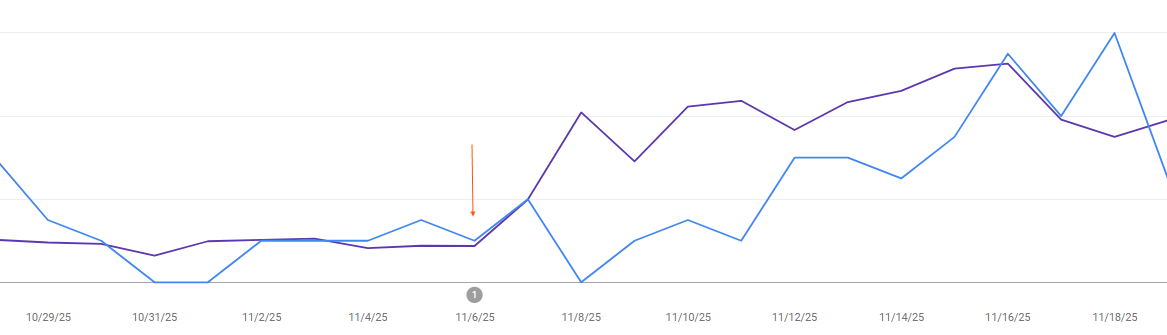
Just a few weeks ago, a client saw a win by simply adding “& [keyword]” to the existing title tag on their homepage. Nothing else was changed.
Keyword rankings shot up, as did clicks and impressions for queries containing that keyword.
This was all achieved simply by changing the title tag on one page.
Couple that with other tactics, such as on-page copy edits, internal linking, and backlinking across multiple pages, and growth will continue.
It may seem basic, but it still works.
And if you only focus on advanced GEO strategies, you may overlook simple tactics that provide immediate, observable impact.
2. Content freshness and authority still matter for competitive keywords
Another tactic that has faded from view with the rise of AI is what’s often called the skyscraper technique.
It involves identifying a set of keywords and the pages that already rank for them, then publishing a materially stronger version designed to outperform the existing results.
It’s true that the web is saturated with content on similar topics, especially for keywords visible in most research tools.
But when a site has sufficient authority, a clear right to win, and content freshness, this approach can still be highly effective.
I’ve seen this work repeatedly.
Here’s Google Search Console data from a recent article we published for a client on a popular, long-standing topic with many competing pages already ranking.
The post climbed to No. 2 almost immediately and began generating net-new clicks and impressions.
Why did it work?
The site has strong authority, and much of the content ranking ahead of it was outdated and stale.
If you’re hesitant to publish the thousandth article on an established topic, that hesitation is understandable.
This approach won’t work for every site. But ignoring it entirely can mean passing up clear, high-confidence wins like these.
3. User experience remains a critical conversion lever
Hype around AI-driven shopping experiences has led some teams to believe traditional website optimization is becoming obsolete.
There is a growing assumption that AI assistants will soon handle most interactions or that users will convert directly within AI platforms without ever reaching a website.
Some of that future is beginning to take shape, particularly for ecommerce brands experimenting with features like Instant Checkout in ChatGPT.
But many websites are not selling products.
And even for those that are, most brands still receive a significant volume of traffic from traditional search and continue to rely on calls to action and on-page signals to drive conversions.
It also makes little difference how a user arrives – via organic search, paid search, AI referrals, or direct visits.
A fast site, a strong user experience, and a clear conversion funnel remain essential.
There are also clear performance gains tied to optimizing these elements.
Here are the results we recently achieved for a client following a simple CTR test:
Brands that continue to invest in user experience and conversion rate optimization will outperform those that do not.
That gap is likely to widen the longer teams wait for AI to fully replace the conversion funnel.
AI is reshaping search, but what works still matters
There is no dispute that AI is reshaping the search landscape.
It’s changing user behavior, influencing SERPs, and complicating attribution models.
The bigger risk for many businesses, however, is not underestimating AI but overcorrecting for it.
Traditional organic search remains the primary traffic source for most websites, and SEO fundamentals still deliver when executed well.
Quick wins are real.
Higher-quality content continues to be rewarded.
User experience optimization shows no signs of becoming irrelevant.
These are just a few examples of tactics that remain effective today.
Importantly, these efforts do not operate in isolation.
Google appears to be rolling out the Performance Max Channel Performance report at the MCC level, giving agencies and large advertisers a long-awaited view of channel-level performance across multiple accounts.
What’s new: The Channel Performance report, previously limited to individual accounts, is now surfacing in some manager (MCC) accounts. Google had previously confirmed the feature was coming, but this marks one of the first confirmed sightings in live environments.
Why we care. MCC-level visibility allows agencies to analyze how Performance Max allocates spend and drives results across channels—Search, Display, YouTube, Discover, Gmail, and Shopping—without logging into each account individually. That’s a major efficiency gain for teams managing large portfolios.
What to watch. When and how quickly the feature becomes available across all MCCs, and whether Google expands the report with deeper metrics or export options.
First seen. This update was first picked up by head of Ecommerce Insights at Smarter Ecommerce, Mike Ryan, who very recently published a guide on How to use Google’s Channel Performance reports.
Bottom line. MCC-level Channel Performance reporting signals another step toward making Performance Max less of a black box—especially for agencies that need cross-account insight at scale.
Increased enforcement against incentivized reviews.
Local regulatory pressure.
Together, these forces have significant implications for businesses and local search visibility.
Review deletions are on the up globally
Data collected from tens of thousands of Google Business Profile listings across multiple countries by GMBapi.com show a sharp increase in deleted reviews between January and July 2025.
The surge began accelerating toward the end of Q1 and gained momentum mid-year, with a growing share of monitored locations experiencing at least one review removal in a given week.
This is not limited to negative feedback.
While one-star reviews continue to be taken down, five-star reviews now account for a sizable share of deletions.
That pattern suggests Google is applying stricter enforcement, including on positive reviews, as it works to maintain authenticity and trust.
More recently, Google has begun asking members of its Local Guide community whether businesses are incentivizing reviews, likely in response to AI-driven flags for suspicious activity.
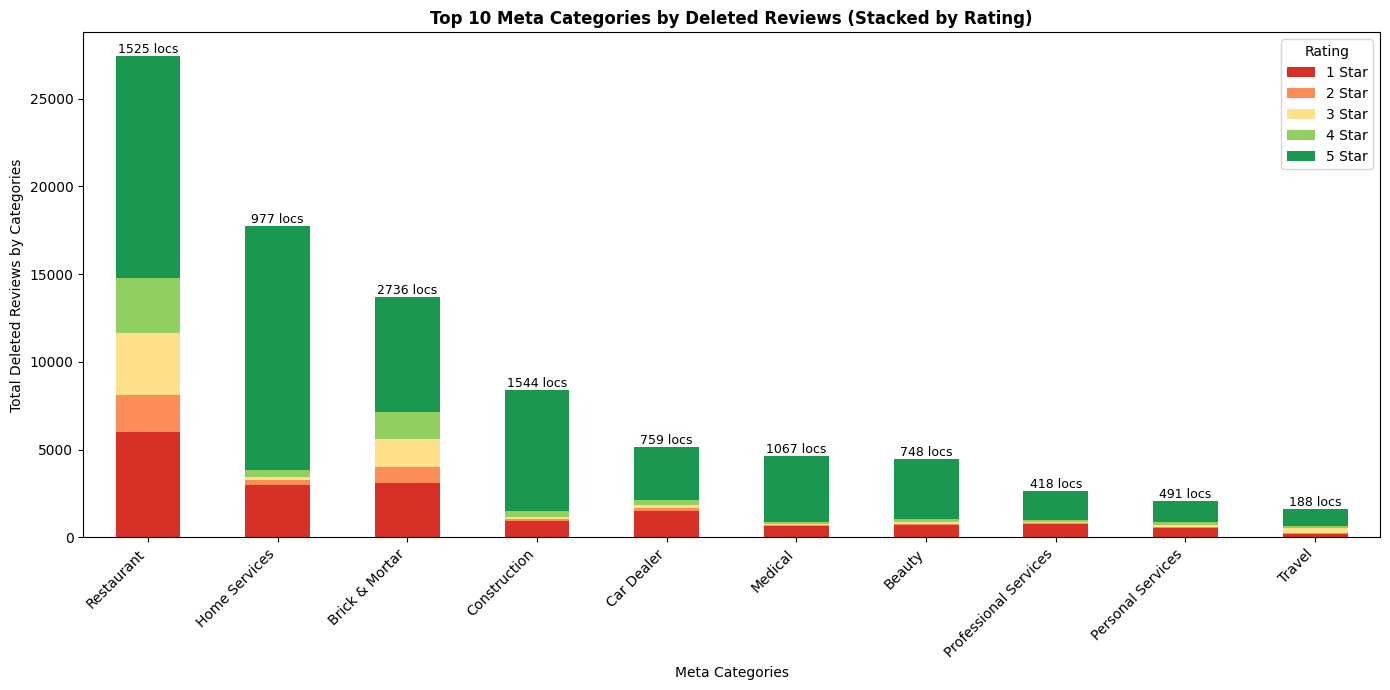
Review deletion patterns vary significantly by business category.
Restaurants account for the highest volume of deleted reviews, followed by home services, brick-and-mortar retail, and construction.
These categories generate large volumes of reviews, and removals occur across both recent and older submissions.
That distribution points to ongoing enforcement, not isolated cleanup efforts.
By contrast, medical services, beauty, and professional services see fewer deletions overall.
However, closer analysis reveals distinct and consistent patterns within those categories.
What review ratings reveal about industry bias
Looking at deleted reviews as a share of total removals within each category reveals distinct moderation patterns.
In restaurants and general retail, deleted reviews are relatively evenly distributed across one- to five-star ratings.
By contrast, medical services and home services show a strong skew toward five-star review deletions, with far fewer removals in the middle of the rating spectrum.
That imbalance suggests positive reviews in higher-risk or regulated categories face closer scrutiny, likely tied to concerns around trust, safety, and compliance.
These differences do not appear to stem from manual, category-specific policy decisions.
Instead, they reflect how Google’s automated systems adjust enforcement based on perceived industry risk.
The age of a review plays a significant role in when it is removed.
In medical and home services, a large share of deleted reviews disappear within the first six months after posting.
That timing points to early intervention by automated systems evaluating language, reviewer behavior, and other risk signals.
Restaurants and brick-and-mortar retail show a different pattern.
Many deleted reviews in these categories are more than two years old, suggesting retroactive enforcement as detection systems improve or new suspicious patterns emerge.
It may also reflect efforts to refresh older review profiles.
For businesses, this means reviews can disappear long after they are posted, often without warning.
Geography adds further complexity
Industry alone does not tell the full story. Location matters.
In English-speaking markets such as the U.S., UK, Canada, and Australia, deleted reviews skew heavily toward five-star ratings.
That trend aligns with increased AI-driven moderation aimed at reducing review spam and incentivized positive feedback.
Germany stands apart.
Analysis of thousands of German business listings shows a higher share of deleted reviews are low-rated, and most are removed within weeks of posting.
This pattern aligns with Germany’s strict defamation laws, which permit businesses to legally challenge negative reviews and require platforms to take prompt action upon notification.
In short:
AI-driven enforcement dominates in many English-speaking markets.
Legal takedowns play a much larger role in Germany.
What this means for local SEO and small business owners
The rise in review deletions creates two primary challenges.
Trust erosion: When legitimate reviews, whether positive or negative, disappear without explanation, confidence in review platforms begins to weaken.
Data distortion: Deleted reviews affect star ratings, performance benchmarks, and conversion signals that businesses rely on for local SEO and reputation management.
For SEO practitioners, small businesses, and multi-location brands, review monitoring is no longer optional.
Understanding when, where, and which reviews are removed is now as important as generating them.

 Login
Login