Vivo introduced the X300 series globally in October, with the vanilla and Pro models. The company is currently working on the X300 Ultra as its next big reveal—China first, of course. A new report now suggests that Vivo is also cooking another member of the lineup, called the X300e.
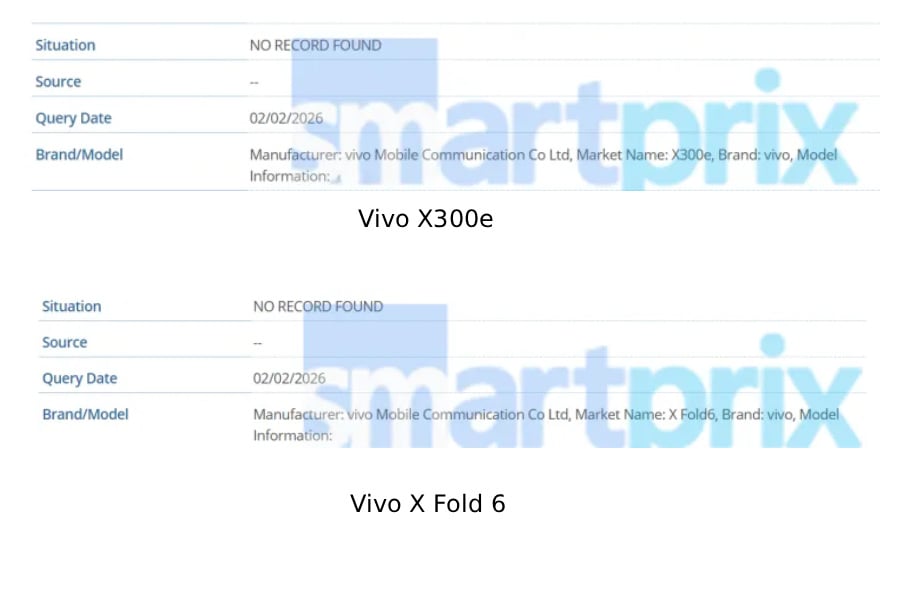
Vivo X300e and X Fold 6 make it to IMEI
The smartphone has appeared on the GSMA IMEI database with the Vivo X300e moniker. Vivo has not used the “e” suffix in the X series so far. Instead, the company introduced the X200 FE last year and the X200T more recently. That said, we expect the X300e to be an affordable flagship option like the X200 FE and X200T.
Also appearing in the IMEI database is the Vivo X Fold 6 foldable. Much like the X300 Ultra, the Fold 6 is expected to launch in China first, followed by a wider global release.
The listings do not reveal any hardware details for either device, but they do confirm that development is underway.
As mentioned earlier, details on both phones remain scarce. However, a leak from November suggests that the Fold 6 will be powered by the Snapdragon 8 Gen 5 chipset.
The Fold 6 is also expected to feature a 200MP camera and a side-mounted fingerprint scanner.
For context, the current Vivo X Fold 5 already offers a high-end setup, including a large 8.03-inch LTPO AMOLED foldable display with a 120Hz refresh rate, Zeiss-tuned triple cameras, and a 6,000mAh battery with support for both wired and wireless fast charging.
For now, Vivo is staying quiet. Still, with both the X300e and X Fold 6 appearing in official databases, it’s clear the company is preparing to expand its flagship and foldable lineup in the coming months.
Samsung is just a few weeks away from hosting the first Galaxy Unpacked event of 2026. At the event, the company will announce new Galaxy S26 phones, including the vanilla, Plus, and Ultra models.
After that, Samsung typically waits until late Q3 to unveil its other flagship products. However, early signs of what’s coming next are already surfacing on the web.
Samsung Galaxy Tab S12 series and Watch Ultra 2 confirmed by this global certification
According to Smartprix, the Samsung Galaxy Tab S12 Ultra and Galaxy Tab S12+ have appeared in the GSMA IMEI database months ahead of launch.
The models are listed as SM-X946B for the Galaxy Tab S12 Ultra and SM-X846B for the Galaxy Tab S12+. Notably, the database makes no reference to a standard Galaxy Tab S12.
The Galaxy Tab S11 series skipped the Plus model in favor of the Tab S11 and S11 Ultra combo. It’s possible that Samsung is once again tweaking its naming strategy this year by launching only the Plus and Ultra variants. That said, the regular Tab S12 could still show up in the IMEI database at a later date.
Samsung Galaxy Watch 2 Ultra and Watch 9 also make it to the certification
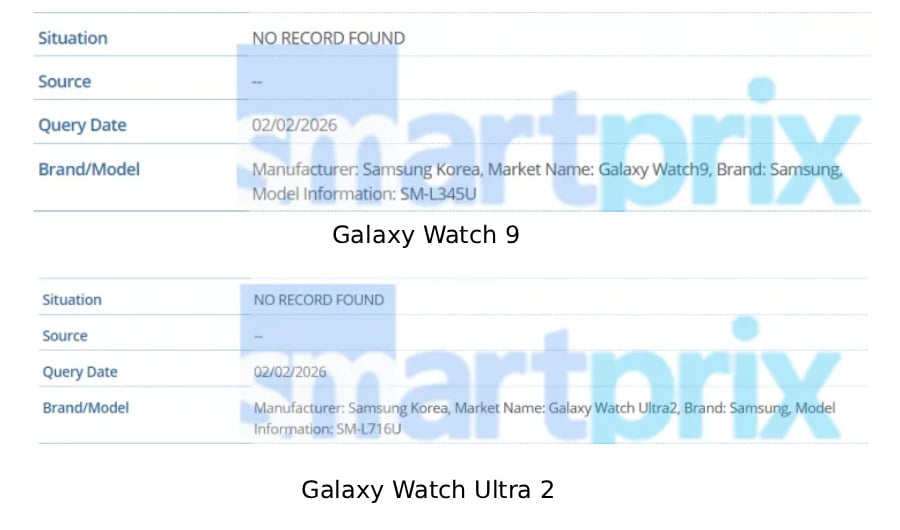
Tablets aren’t the only Samsung products appearing early. The GSMA database has also added entries for two new smartwatches: the Galaxy Watch 9 with model number SM-L345U, and the Galaxy Watch Ultra 2, listed as SM-L716U.
As usual, IMEI listings don’t reveal specifications or features; however, they do confirm that Samsung’s next-generation products are already moving through the early stages of launch preparation.
If the brand sticks to its usual release patterns, these listings offer a meaningful clue about timing. Historically, there’s often a six- to seven-month gap between a device appearing in the IMEI database and its official announcement.
Based on that timeline, the Galaxy Tab S12 series—along with the Galaxy Watch 9 and Watch Ultra 2—are likely candidates for Samsung’s second Galaxy Unpacked event, which typically takes place in August or September.
For more daily updates, please visit our News Section.
Casio has quietly expanded its Edifice lineup with two new analog watches, called the Edifice EFB-109D-5AV and EFB-109D-3AV. Even though they’re part of the company’s motosport-inspired line, the new EFB-109D watches lean more toward everyday wear than outright motorsport theatrics.
As a result, these watches stand out less for complications and more for proportion. The EFB-109D series uses a compact stainless-steel case measuring 43.5 × 38.5 × 9.2 mm, with a noticeably slimmer profile than many modern sports watches.
Both models feature a gradated dial design, a simple three-hand analog layout, applied hour markers, and a clean overall look that nods to 1970s sports watches. The bezel is mirror-finished, while the case itself uses a hairline finish, giving the watch a mix of polish and restraint.
Under the hood, you don’t get anything flashy, and that’s very much the point. The EFB-109D runs on a quartz movement (Module 5340) powered by an SR920SW battery.
It is rated for around three years of use with an accuracy of ±20 seconds per month. Casio has also included a scratch-resistant sapphire crystal and a screw-lock case back, features that are often skipped in more affordable models.
The solid stainless-steel bracelet uses a one-touch three-fold clasp and supports wrist sizes from 150 to 205 mm. Water resistance is rated at 100 meters, which covers everyday use and surface swimming without issue.
While these new Edifice models skip the chronograph and tachymeter elements found in other Edifice watches, they focus instead on simplicity, slimness, and materials.
The company has not announced pricing and availability details yet.
For more daily updates, please visit our News Section.
Nothing confirmed earlier this week, they will not launch any flagship smartphone in 2026. Instead, the focus will be on the comparatively affordable Phone (4a) series. A new leak now suggests that Nothing could also announce a cheaper pair of over-ear headphones.
According to a report from Dealabs, the company is working on a new model called the Nothing Headphone (a). As the name suggests, this is expected to be a more affordable alternative to the company’s existing premium headphones, the Nothing Headphone 1.
The leak claims the headphones will be available in four color options: Black, Pink, White, and Yellow.
Nothing Headphones (a) could launch in March
The report also outlines a possible launch timeline. The Nothing Headphone (a) is tipped to be officially announced on March 12, with pre-orders opening a week earlier on March 5. The headphones are expected to launch in Europe first, alongside other global markets, though there’s no word yet on an India launch timeline.
Pricing is where this leak gets particularly interesting. The Nothing Headphone (a) is reportedly priced at EUR 159 in Europe and GBP 149 in the UK. The Nothing Headphone 1, in comparison, launched at EUR 299 globally and arrived in India in July 2025 with a price tag of Rs. 21,990.
According to previous rumors, the Headphone (a) might simply be a rebranded Headphone 1 with a plastic build. However, the reported pricing makes that seem unlikely. At this point, there’s no concrete information about specifications or features, but it’s safe to expect some compromises compared to the Headphone 1 to hit the lower price point.
For reference, the Nothing Headphone 1 features an over-ear design with a transparent body, 40mm dynamic drivers, and active noise cancellation rated up to 42dB, along with a transparency mode. It supports Bluetooth 5.3, multiple codecs including LDAC, dual-device connectivity, and up to 80 hours of battery life without ANC.
For more daily updates, please visit our News Section.
Xiaomi is kicking off February with a new round of after-sales perks. The company has announced its February Super Service Week, running from February 1st to February 8th, during which the brand is offering discounts on battery replacements, device cleaning, and appliance servicing across China.
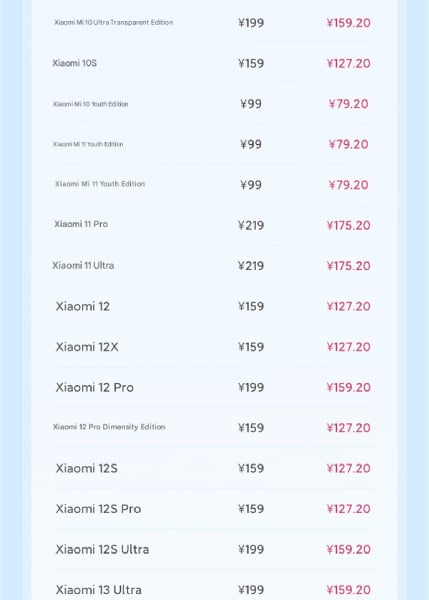
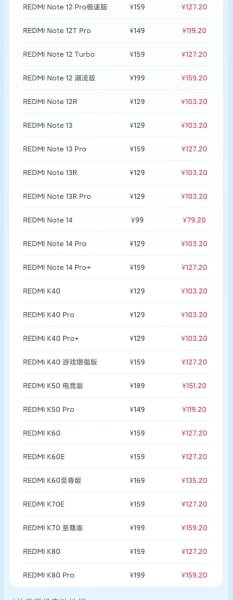
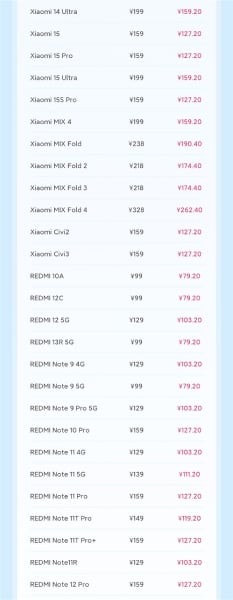
The headline offer this time is a 20% discount on smartphone battery replacements. According to Xiaomi, the program will cover 70 phone models with replacement prices starting at 79.2 yuan after the discount.
The list goes back to 2020
What’s notable is how far back the supported models go. The list includes several older flagships, such as the Xiaomi 10 series, Xiaomi 11 Pro, and Xiaomi Mix Fold.
For instance, the Xiaomi 10 series was launched back in February 2020. At the time, CEO Lei Jun described the Xiaomi 10 as a product designed to break free from strict price constraints and push Xiaomi firmly into the high-end smartphone market.
The battery discount isn’t limited to flagships either. Xiaomi says models like the Redmi 10A, Redmi Note 9, Redmi K40 series, and even the newer Redmi K80 series are also part of the program.
Beyond phones, Xiaomi’s Super Service Week also includes double discounts on old appliances for trade-ins, 50 percent off deep cleaning and maintenance for laptops, and a fixed price of 99 yuan for cleaning and maintenance of air conditioners and washing machines.
Xiaomi Service is also using the campaign to remind users about everyday battery care, encouraging more “scientific” charging habits and avoiding extreme temperatures to help extend battery life.
Xiaomi has been running such programs regularly in China to let users make the most out of their smartphones. For now, though, these initiatives are limited to just the mainland.
It’s hard not to wish Xiaomi would bring similar programs to global users as well, especially as phones get more expensive and people hold onto their devices longer than ever.
For more daily updates, please visit our News Section.
Ayaneo unveiled its Pocket Play smartphone back in December, but the reveal was minimal in specs. The company showed off the hardware design, yet stayed quiet on key details like the processor, display, and battery.
Almost two months later, Ayaneo has finally confirmed the chip powering its first smartphone.
Ayaneo Pocket Play is powered by MediaTek Dimensity 9300
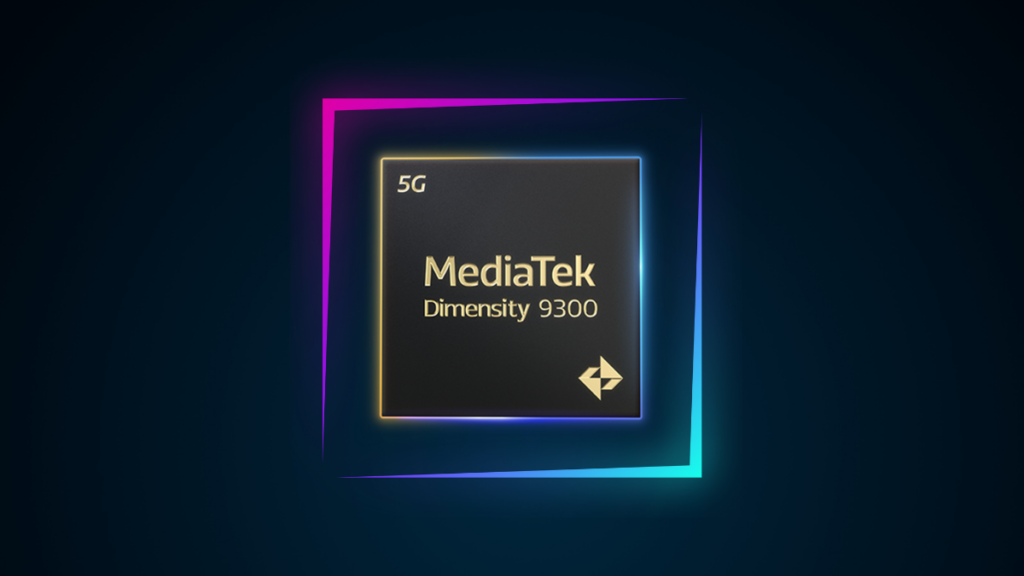
The Ayaneo Pocket Play is powered by MediaTek’s Dimensity 9300, a flagship processor launched in 2023 and one that’s more than capable of handling demanding games. Still, it’s a curious choice.
Ayaneo could have opted for a newer SoC — like the Dimensity 9500 or a year-old Dimensity 9400+ — to deliver more consistent long-term performance and better future-proofing.
Because a chip isn’t just about raw power. It also plays a big role in how long a device stays relevant. Older processors tend to lose manufacturer support sooner, which can affect software updates and long-term stability — something that matters even more for a niche, enthusiast-focused device like this.
Ayaneo also hasn’t backed up the announcement with any hard data. There are no frame-rate figures, no benchmark scores, and no real-world performance claims yet. For now, much of the Pocket Play’s actual gaming capability remains a mystery.
What is Ayaneo Pocket Play
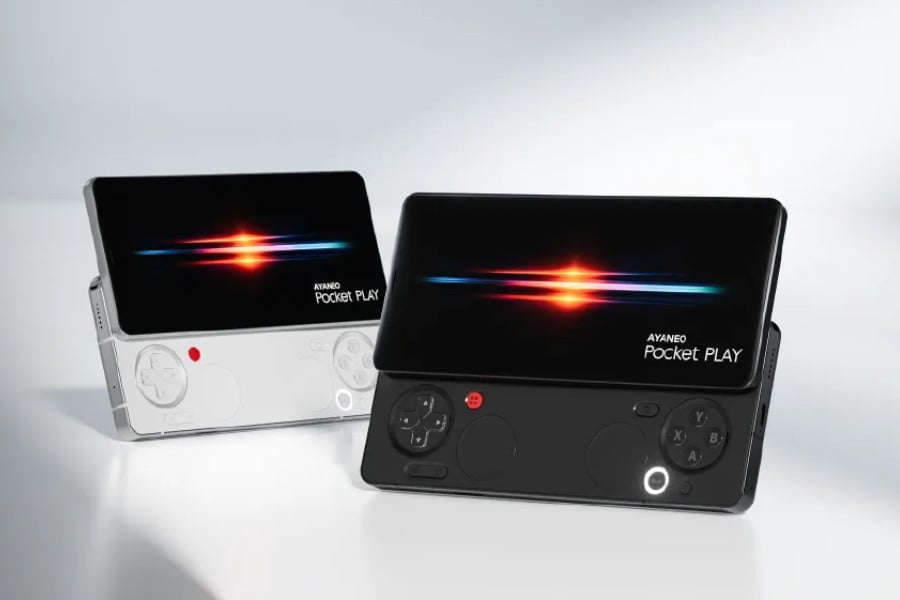
What we do know is that the Pocket Play is trying to blur the line between smartphone and handheld console. It uses a side-sliding mechanism that reveals a full physical controller hidden beneath the display. Inside, there’s a familiar layout with a D-pad, ABXY buttons, shoulder triggers, and dual analog sticks.
Ayaneo has also included dual smart touchpads, which can be customized to function as virtual joysticks or standard touchpads, giving players the flexibility to tailor controls to their liking.
The Pocket Play draws inspiration from the Sony Ericsson Xperia Play, which launched in 2011 with a similar sliding controller design.
After first rolling out sodium-ion batteries in commercial vehicles, CATL has now begun deploying them in passenger vehicles. The batteries fall under CATL’s sodium battery brand, Naxtra, which is preparing for public winter testing in passenger cars.
According to reports, Changan’s Oshan models are among the first to take part in these tests, with passenger cars from GAC and JAC expected to follow later.
The focus on winter testing is not accidental. One of sodium-ion batteries’ biggest promises is reliable performance in extreme cold. Lithium-ion batteries, in general, tend to struggle in such conditions. More on that later.
CATL’s sodium-ion batteries have no risk of fire or explosion
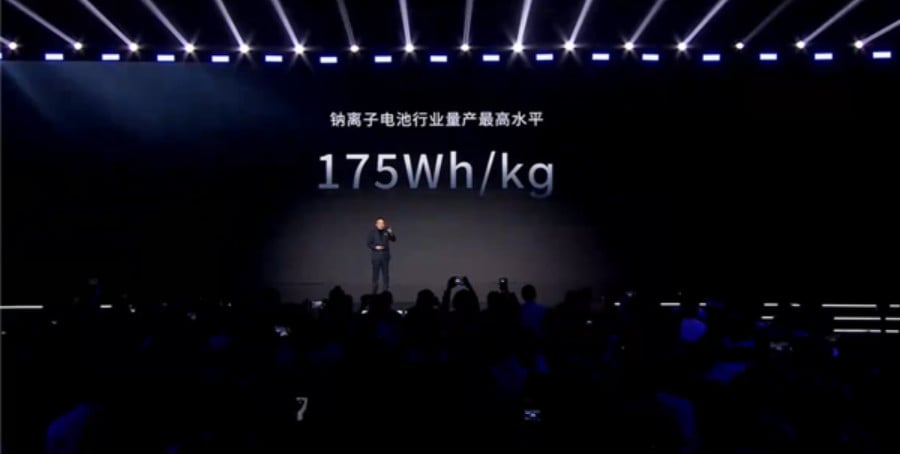
CATL officially unveiled its sodium-ion battery in April last year, and on paper, the numbers are quite impressive. CATL claims an energy density of 175Wh/kg, a hybrid electric range of over 200km, and a pure electric range exceeding 500km. The battery also supports 5C super-fast charging and is rated for up to 10,000 charge cycles, which suggests a long usable lifespan.
Safety is where CATL is making its strongest case. The company says its sodium-ion batteries have passed extreme tests such as needle penetration, electric drill penetration, extrusion, and even battery sawing without catching fire or exploding. That’s a big reason why sodium-ion batteries are the next viable options for EVs.
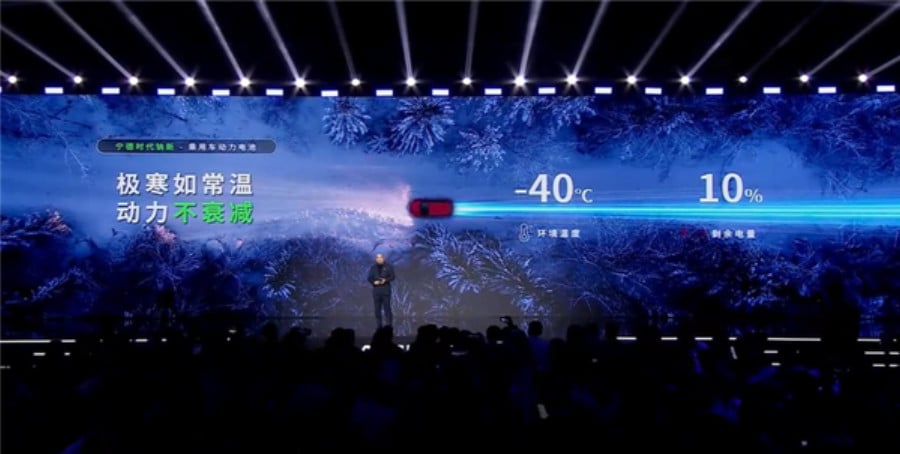
As we mentioned earlier, the sodium-ion batteries also perform exceptionally in cold weather. In real-world tests at –30°C, CATL says the battery can charge from 30 percent to 80 percent in about 30 minutes, while retaining 93 percent of its usable capacity. Even at just a 10% state of charge, vehicles were reportedly able to maintain highway speeds of 120km/h.
CATL’s sodium-ion battery passed certification under China’s new national standard in September last year. The regulation introduces stricter safety requirements around heat diffusion, underbody impacts, and fast-charging durability. Independent testing by the China Automotive Technology and Research Center (CATARC) also backed CATL’s safety claims at both the cell and battery pack levels.
Beyond safety, sodium-ion technology could help reduce reliance on lithium, lower costs, and improve sustainability.
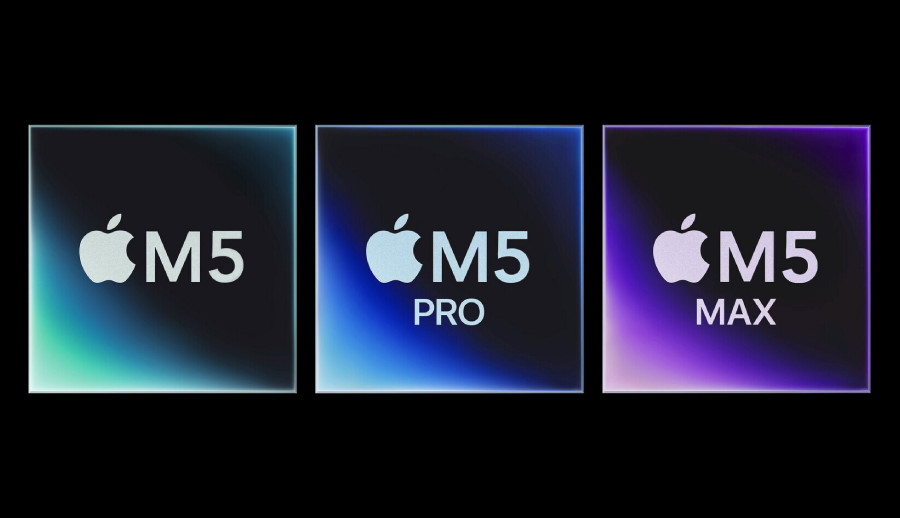
Apple has uncharacteristically delayed the M5 Pro and M5 Max chips. Its predecessor — M4 Pro and M4 Max — launched in November 2024, which means Apple is already past its typical window for announcing the successors. Now, a new rumor suggests the M5 Pro and M5 Max could finally arrive in March.
According to Weibo tipster Fixed-focus digital, Apple could finally unveil the M5 Pro and M5 Max about a month from now. The rumor doesn’t offer a clear explanation for why these chips are running late, especially when chatter suggests the M6 lineup could arrive earlier than previously expected.
One likely reason, however, could be supply-side limitations. TSMC, Apple’s chip manufacturing partner, has reportedly been dealing with constraints that may have slowed down production.
Apple M5 Pro and Max will use TSMC’s advanced SoIC packaging
There are also signs that Apple’s SoIC (System-on-a-Chip) packaging may have encountered production challenges. That said, the same leak claims the M5 Pro and M5 Max could end up being slightly cheaper to manufacture, though not by a dramatic margin.
Any cost reduction would still matter, especially as the industry continues to deal with ongoing DRAM supply pressures.
SoIC could also help Apple address thermal concerns. Previous reports suggest that the standard M5 chip can reach temperatures as high as 99 degrees Celsius under sustained load. Improved packaging might help manage heat more effectively in the Pro and Max variants.
More interestingly, SoIC may allow Apple to separate CPU and GPU blocks on the die. This could open the door to more flexible configurations tailored to different workloads, rather than a one-size-fits-all approach.
As always, it’s worth treating this information cautiously. Apple has a habit of adjusting plans without warning. Still, if the M5 Pro and M5 Max do arrive in March, they’ll likely debut alongside new hardware — possibly refreshed MacBooks or even an M5 Max-powered Mac Studio.
We have already heard a few early rumors about the Vivo X500 series. For instance, the flagship lineup is expected to pack a massive 7,000mAh battery. A new claim now suggests Vivo is also going all-in on high-resolution displays.
According to prominent tipster Digital Chat Station on Weibo, Vivo has decided to make 2K resolution standard across its flagship phones. The leaker says the company is “going all in on 2K resolution.” As a result, Vivo’s upcoming flagships will likely all have 2K flat screens.
The possibility extends to the iQOO 16 as well, as it is also a flagship device from the company’s sub-brand.
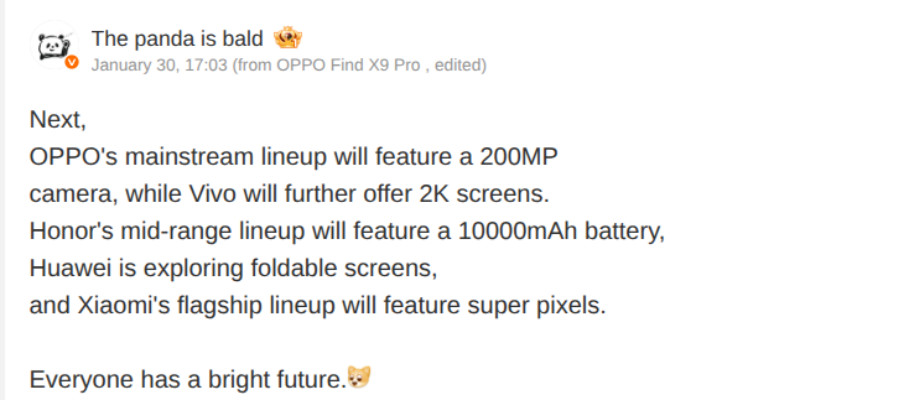
Another well-known leaker, Panda is Bald, has echoed the same claim, lending some additional weight to the rumor. They also expand the discussion to other manufacturers’ upcoming devices.
According to the tipster, Oppo’s Find X10 series will feature a 200-megapixel camera, while Honor is reportedly planning to equip its mid-range phones with enormous 10,000mAh batteries.
Huawei, meanwhile, is said to be exploring new foldable screen designs, and Xiaomi’s upcoming 18 series is reportedly focusing on advancements in camera technology.
All the flagship phones are expected to use a new mobile processor based on the 2nm process. Xiaomi is likely to stick with Qualcomm’s Snapdragon chips, while both Vivo and Oppo are expected to use MediaTek’s upcoming Dimensity 9600.
A previous report suggests that at least one of those two brands will launch its flagship early in September. MediaTek is also rumored to unveil the Dimensity 9600 earlier than usual, which could allow manufacturers to ship devices powered by the chip sooner.
At present, it is too early to talk in detail about the X500 series, as the company has several new phones lined up for launch in China in the coming months. As such, take these details with a pinch of salt, as things could change late in development.
For more daily updates, please visit our News Section.
iQOO is getting ready to launch its absolute best smartphone for 2026. The iQOO 15 Ultra is scheduled to debut in China on February 4. In the weeks leading up to the announcement, the company has been open about what the device is trying to be. The iQOO 15 Ultra is a phone built for sustained performance, especially gaming.
iQOO 15 Ultra
As we’ve covered the device throughout this journey so far, it’s only natural for us to bring everything together in one article. So here’s a roundup of iQOO 15 Ultra, based on official sources, leaks, certifications, and benchmarks.
Snapdragon 8 Elite Gen 5 and record benchmarks
At the heart of the iQOO 15 Ultra is Qualcomm’s Snapdragon 8 Elite Gen 5 chipset. The phone recently appeared on Geekbench, revealing some eye-catching numbers. The device scored 3,601 in the single-core test and 11,434 in the multi-core test on Geekbench 6.
The AnTuTu scores are even more aggressive. According to iQOO Product Director Galant V, the iQOO 15 Ultra has crossed 4.51 million points on AnTuTu, currently the highest score recorded on the platform. He also noted that this is not the phone’s final performance ceiling, suggesting further optimisation is still ongoing ahead of launch.
The benchmark testing also confirms the phone has 16GB of RAM and is running Android 16.
Active cooling and thermal design
One of the most defining features of the iQOO 15 Ultra is its built-in active cooling fan. And this isn’t some visual flourish. iQOO has confirmed that the phone uses a combination of a large vapour chamber, liquid metal heat transfer materials, and the active fan to keep temperatures under control during extended gaming sessions.
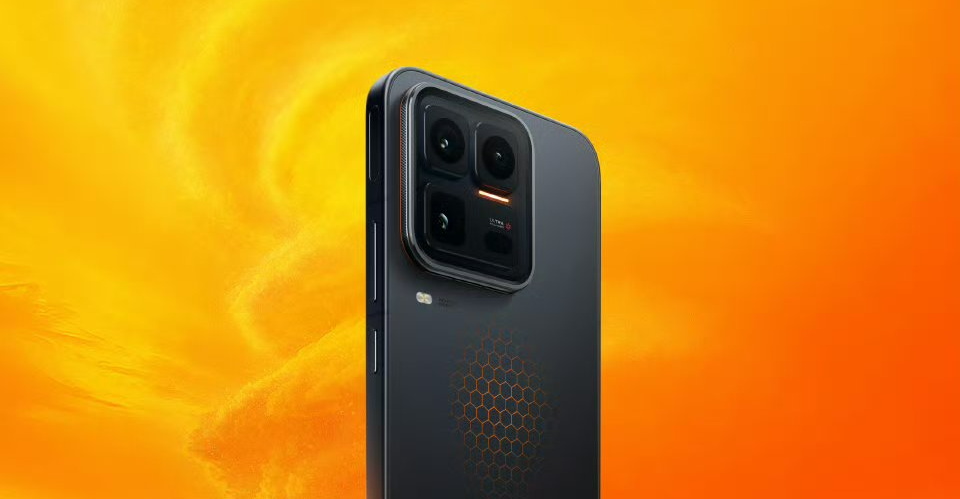
The intake vent for the fan is discreetly placed beneath the camera module, and the company is even offering a dedicated fan protection plan that reportedly covers up to five years.
Active cooling remains relatively rare in mainstream smartphones, but it has become a defining feature in gaming-focused devices like Nubia’s Red Magic series. iQOO branding the 15 Ultra as a performance phone means it’s logical for the brand to follow suit.
Shoulder buttons without moving parts
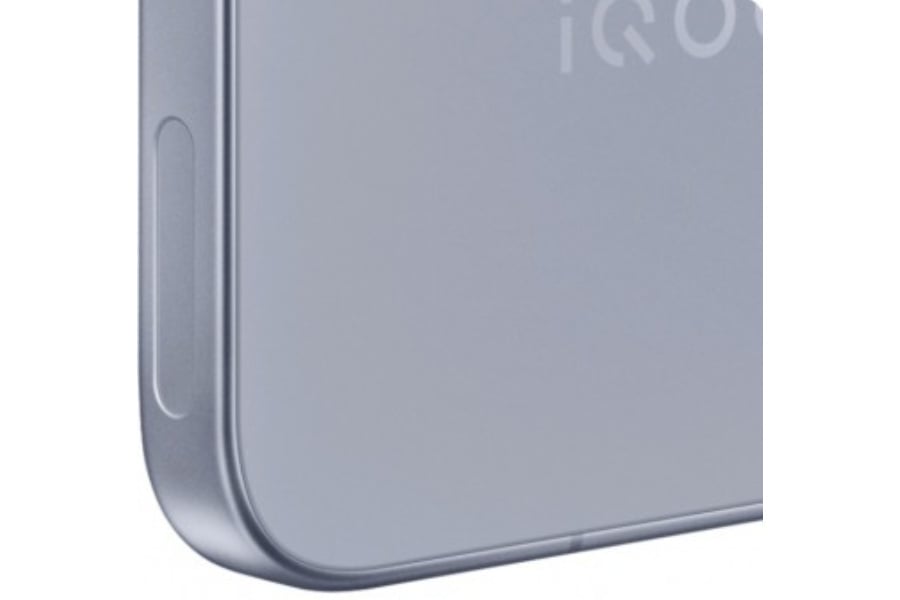
Another major focus area is control input. The iQOO 15 Ultra introduces what the company calls “Super-Sensitive Touch Shoulder Buttons.” Unlike traditional mechanical triggers, these are touch-based zones placed on both sides of the frame where fingers naturally rest in landscape orientation.
The shoulder buttons operate at a 600Hz touch sampling rate and use dual independent control chips, allowing each side to register inputs separately. iQOO says this reduces latency and improves accuracy, particularly in competitive FPS games.
Because there are no physical moving parts, the buttons avoid mechanical wear and reset delays. Tactile feedback is simulated using a linear motor. The flush design also improves resistance to sweat, water, and dust, while an anti-sweat algorithm is meant to maintain accuracy during extended play.
Display specs are equally good
The iQOO 15 Ultra is expected to feature a 6.85-inch Samsung LTPO flat display with 2K resolution and a 144Hz refresh rate. The use of an LTPO panel means the refresh rate can dynamically adjust based on on-screen content, helping balance smoothness and power efficiency.
For gaming, a flat panel is often preferred over curved displays, and iQOO’s decision here reflects that priority. We can also expect an ultrasonic in-display fingerprint sensor for biometrics.
Cameras
Despite its gaming focus, the iQOO 15 Ultra doesn’t completely neglect cameras. The phone is expected to feature a 32-megapixel front camera and a triple 50-megapixel setup on the back. This includes a main sensor, an ultra-wide lens, and a 3x periscope telephoto camera with CIPA 4.5-rated stabilization.
Battery, charging, and configurations
Battery capacity is another area where the iQOO 15 Ultra goes big. Most reports point to a 7,400mAh battery paired with fast 100W wired charging and wireless charging. It also supports bypass charging, as expected of a gaming phone.
Some leaks have hinted at even faster charging speeds, possibly up to 200W, though this hasn’t been confirmed by iQOO yet.
In terms of memory and storage, the phone is expected to launch in 16GB RAM with 512GB storage and a top-tier 24GB RAM with 1TB storage configuration.
Design and visual identity
Design-wise, the iQOO 15 Ultra embraces a futuristic, cyberpunk-inspired aesthetic. It will be available in two color options: 2077 Flowing Orange and 2049 Ice Blue. The naming alone signals the phone’s sci-fi influences.
The back panel features a hexagonal honeycomb texture, while the large camera module includes a transparent finish and a horizontal light strip that acts as a breathing light.
Who is the iQOO 15 Ultra for?
There’s no denying that the iQOO 15 Ultra is squarely aimed at gamers who want stable performance over long sessions, low input latency, and physical-like controls without the drawbacks of mechanical buttons. In that sense, it’s a direct competitor to gaming-centric phones like the Red Magic 11 Pro series.
For users who prioritise camera systems, slim designs, or ecosystem features, the iQOO 15 Ultra may feel excessive. But for its intended audience, excess is the point.
For more daily updates, please visit our News Section.
The Oppo Find X9 series launched globally in October 2025 with the Find X9 and Find X9 Pro. Now, Oppo is apparently planning to expand the lineup further with three new models, according to Yogesh Brar on X.
According to the leaker, the Oppo Find X9s and Find X9 Ultra could launch globally sometime in the second quarter of this year. Meanwhile, Oppo’s next foldable phone, the Find N6, is said to arrive earlier, possibly as soon as March, but only in selected regions outside China.
Oppo Find X9 Pro
The leak also sheds light on the expected colour options for these devices. The Oppo Find X9s may be available in Titanium, Orange, and Blue shades. The Find X9 Ultra, on the other hand, could come in Orange, Black, and Brown finishes. As for the foldable Find N6, Oppo is reportedly planning to offer it in Orange and Titanium colours.
What can you expect?
In terms of specifications, earlier reports suggest that the Oppo Find X9s could feature a 6.3-inch flat display with 1.5K resolution. It is expected to come with a triple rear camera setup, led by a 200-megapixel primary sensor, alongside a 200-megapixel telephoto camera and a 50-megapixel ultra-wide shooter. The phone may be powered by MediaTek’s Dimensity 9500+ chipset.
The Oppo Find X9 Ultra is tipped to sit at the top of the lineup. It could sport a larger 6.82-inch flat AMOLED display with 2K resolution and a 120Hz refresh rate.
OPPO Find N5
Unlike the other Find X9 models, the Ultra variant may use Qualcomm’s Snapdragon 8 Elite Gen 5 chipset, built on a 3nm process. The phone is likely to sport a quad rear camera setup and a 50-megapixel front-facing camera.
As for the Oppo Find N6, it is rumoured to be the first foldable phone powered by the Snapdragon 8 Elite Gen 5 chip, along with a 200-megapixel main camera.
Since Oppo has not officially announced any of these devices, all details should be treated cautiously for now. More clarity is expected in the coming weeks as the company moves closer to launch.
For more daily updates, please visit our News Section.
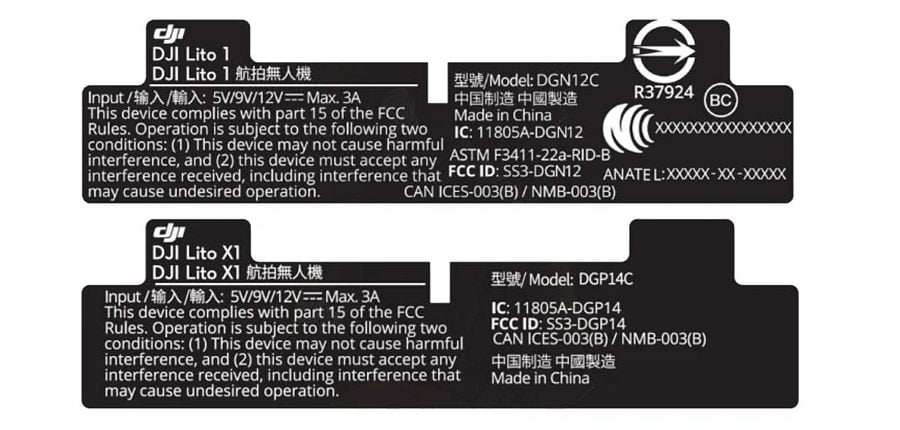
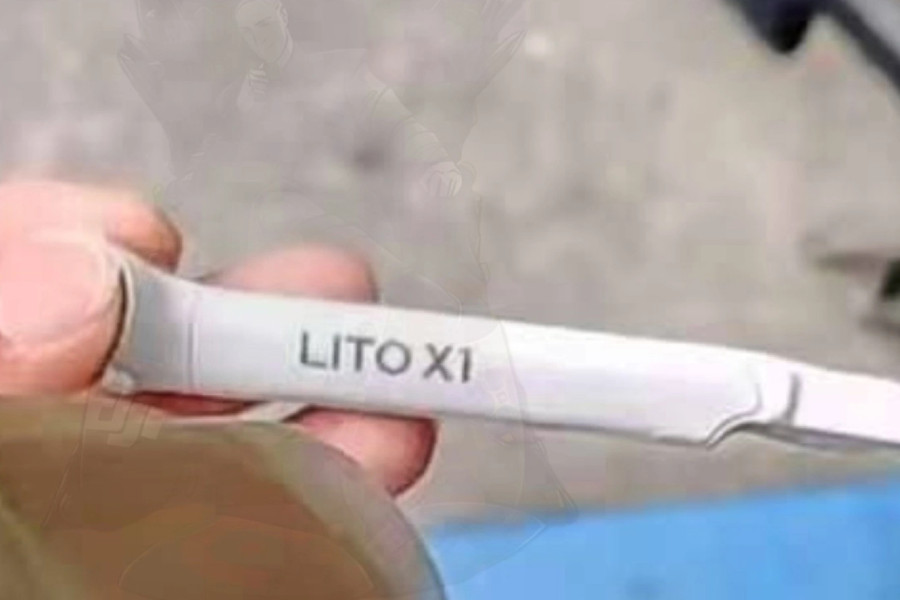
DJI could soon introduce a new line of consumer drones in the market. According to the outlet thenewcamera, certification filings with the U.S. Federal Communications Commission (FCC) suggest that DJI is working on two new drones: the DJI Lito 1 and the DJI Lito X1.
As with many DJI leaks, the details come from regulatory paperwork rather than official announcements. The documents reveal internal codenames, early hardware references, and just enough hints to sketch out where these drones might sit in DJI’s lineup.
DJI Lito 1
The DJI Lito 1 seems to be the more affordable of the two. Listed under the codename SS3-DGN12, the Lito 1 is believed to be an entry-level drone intended to replace the current Mini 4K. It could start at around $330.
While the certification documents don’t go deep into camera or flight features, storage is listed at 22GB. Expect it to be for light photo and video use rather than more demanding production work.
DJI Lito X1
The Lito X1, on the other hand, looks like a serious upgrade. Codenamed SS3-DGP14, this model is expected to replace the Mini 5 Pro and focus more heavily on video creation. The starting price is rumored to be around $759.
One of the more notable details in the FCC filings is the mention of “SDR Transceiver 2” for the Lito X1. So the drone could use DJI’s next-generation O5 image transmission system. And if true, that would allow transmission distances of over 20 kilometers (about 12.4 miles).
There’s also speculation that DJI could integrate 5G cellular connectivity through SDR technology, although this remains unconfirmed.
Moreover, the Lito X1 may also get a 360-degree omnidirectional obstacle avoidance support that combines a fisheye optical lens, a LiDAR-like sensor with a 10-meter detection range, and an infrared module. The drone is also expected to support voice commands like “Hey, take off,” along with motion-based controls.
The Lito X1 is said to come in two versions: a standard model with around 30 minutes of flight time while staying under 250 grams, and a Plus version that extends flight time to roughly 50 minutes. Internal storage on the Lito X1 is reportedly increased to about 42GB.
As for timing, FCC confidentiality agreements typically last 180 days. That means DJI must publicly disclose the products by May 25, 2026, or the documents will be automatically released.
The report suggests DJI could launch the drones between late February and early April.
For more daily updates, please visit our News Section.

 Login
Login