Reading view

AOC launches new 27-inch QD-OLED gaming monitor with 280Hz refresh rate & 0.03ms response
AOC Q27G4ZD Monitor

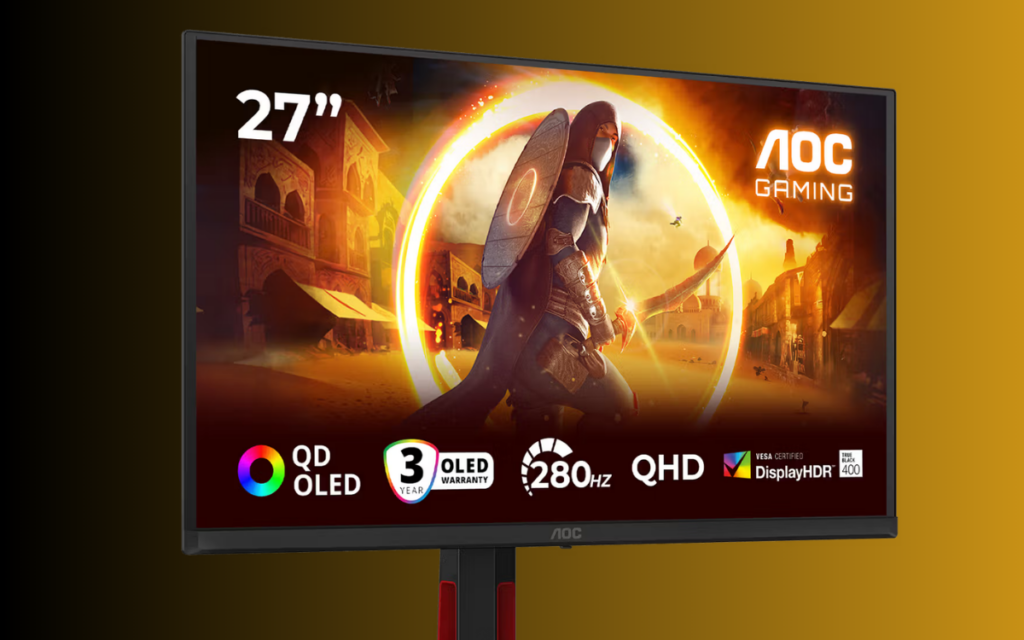
AOC has announced the Q27G4ZD, a new 27-inch gaming monitor designed for high-performance gaming. AOC plans to release the monitor later this month in the UK, with a starting price of £419.97.
AOC Q27G4ZD Monitor

AOC Q27G4ZD Specifications

The Q27G4ZD uses a QD-OLED panel with a resolution of 2560 x 1440. The panel combines quantum dot technology with OLED to deliver vivid colors and deep blacks.

The monitor features a 280Hz refresh rate along with a 0.03ms GtG response time. It also sports Adaptive-Sync and G-Sync compatibility to help eliminate screen tearing by synchronizing the display with the GPU.

In terms of colors, the monitor delivers a wide gamut, covering 99.4% of the DCI-P3 spectrum and 98.4% of Adobe RGB for accurate color reproduction. The monitor supports DisplayHDR True Black 400 for sharp contrast and accurate dark scenes, with a peak brightness of 1000 nits for lifelike visuals.
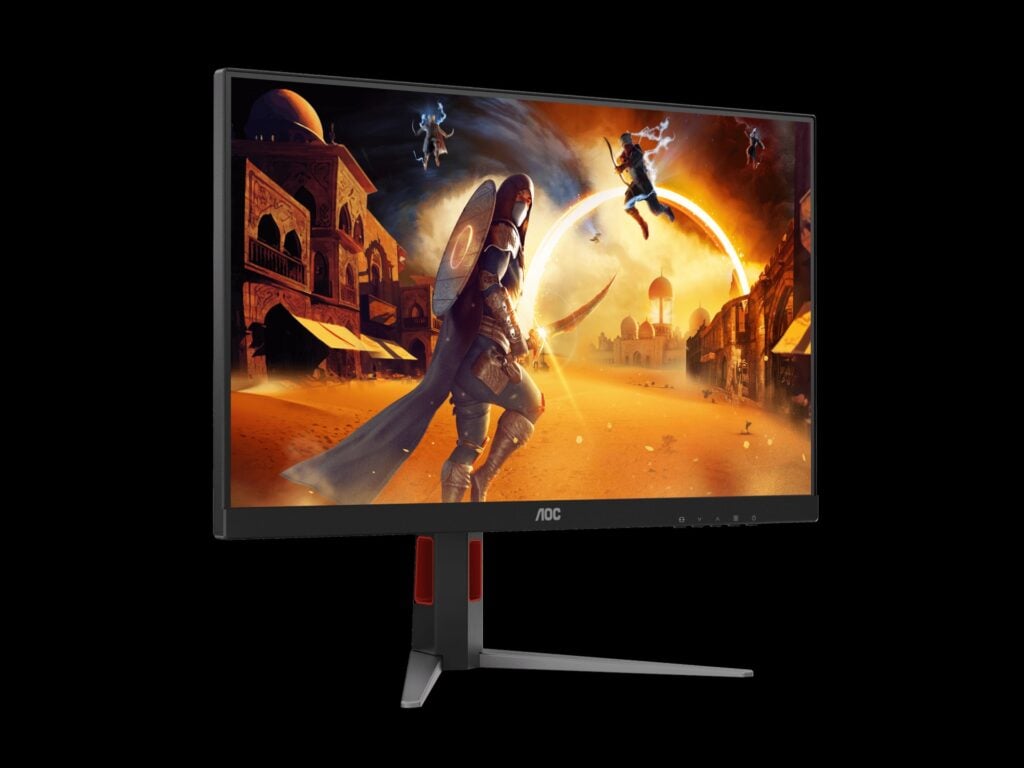
AOC Q27G4ZD Monitor
AOC Q27G4ZD Monitor

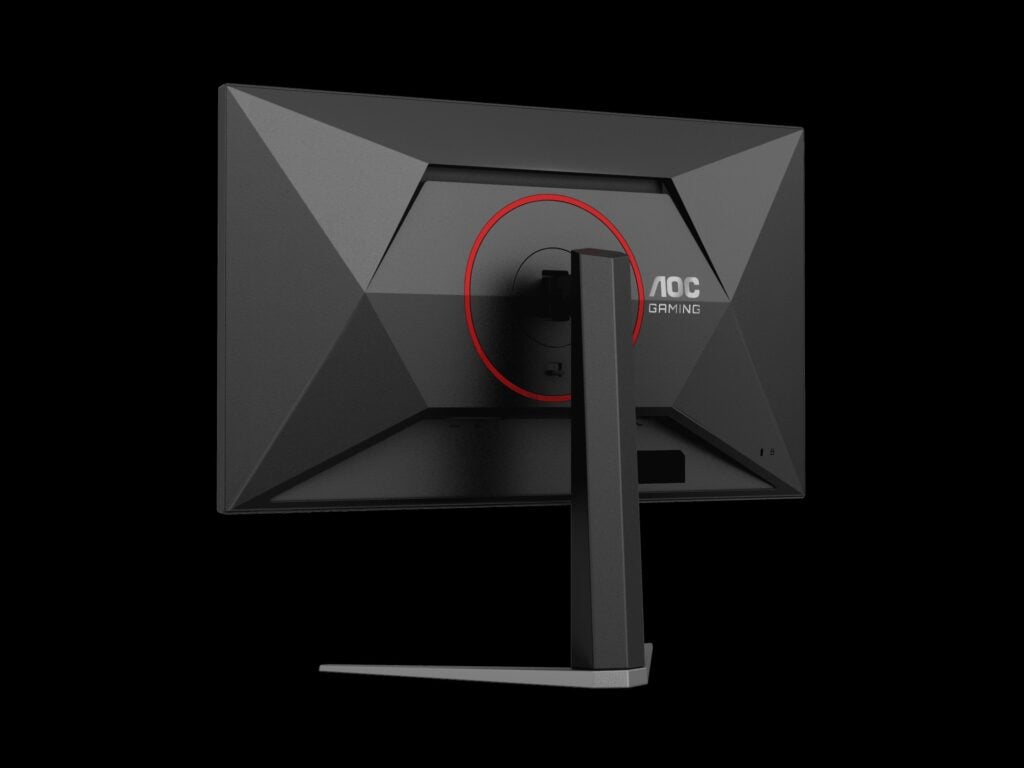
The Q27G4ZD includes several ergonomic features to improve comfort during long gaming sessions. The stand allows height adjustment, tilt, and swivel. The monitor also supports VESA wall mounting for flexible installation. AOC has added an anti-glare coating and flicker-free technology to reduce eye strain.

The connectivity options include two HDMI 2.1 ports, one DisplayPort 1.4, and four USB-A ports. AOC has included KVM switch functionality, allowing users to control multiple devices with a single keyboard and mouse. The monitor also features a headphone jack for audio output.

AOC offers customization software called G-Menu, which provides easy access to display settings. The design includes a three-sided frameless bezel for a sleek appearance. The monitor weighs 6.6kg with the stand and has dimensions of 609.3 x 537.7 x 240mm.

In related news, Gigabyte has recently launched a new 27-inch 2K 240Hz WOLED gaming monitor with up to 1300 nits HDR brightness, while ViewSonic has unveiled a new 27-inch QHD 360Hz Fast IPS gaming monitor.

For more daily updates, please visit our News Section.

Stay ahead in tech! Join our Telegram community and sign up for our daily newsletter of top stories! 💡

(Source, Via)

The post AOC launches new 27-inch QD-OLED gaming monitor with 280Hz refresh rate & 0.03ms response appeared first on Gizmochina.

Casio launches two affordable vintage style analog-digital watches in the US

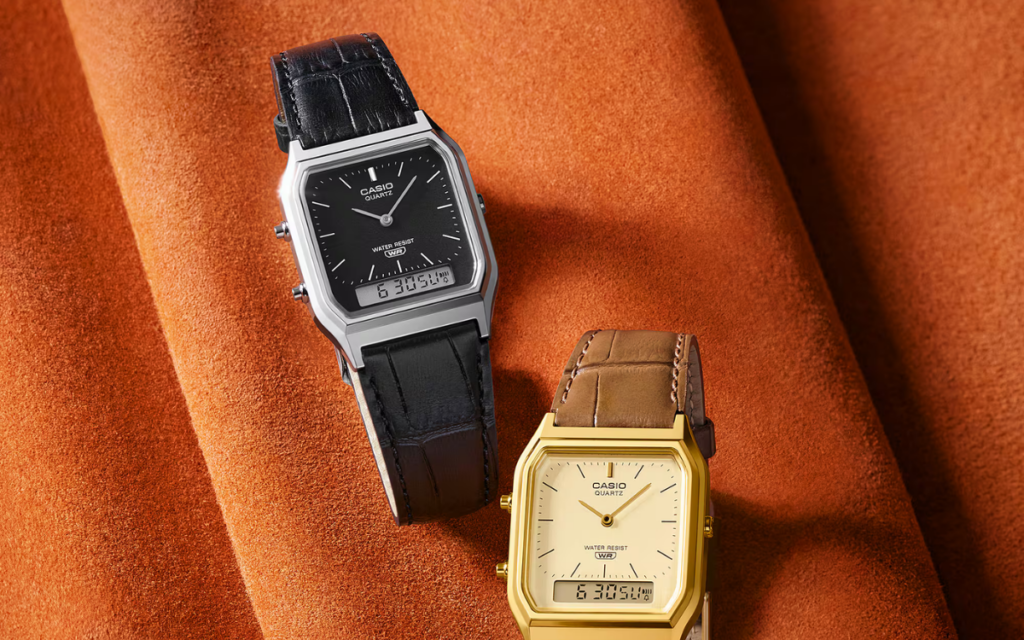
Casio-AQ230EGL-9A-and-AQ230EL-1A

Casio has launched two new watches in the United States, the AQ230EGL-9A and AQ230EL-1A. These models were previously released in some international markets last year. The watches combine retro-inspired design with practical features, appealing to fans of vintage aesthetics and modern functionality.

Casio AQ230EGL-9A and AQ230EL-1A

Design Details

Both models feature a rectangular case with softly beveled edges and short lugs. The compact design creates a clean and timeless look. The watches use an analog-digital hybrid display, which includes slim baton hour markers and slender hands above a small digital screen. This layout provides both analog elegance and the convenience of digital features, including a calendar, stopwatch, and alarm.

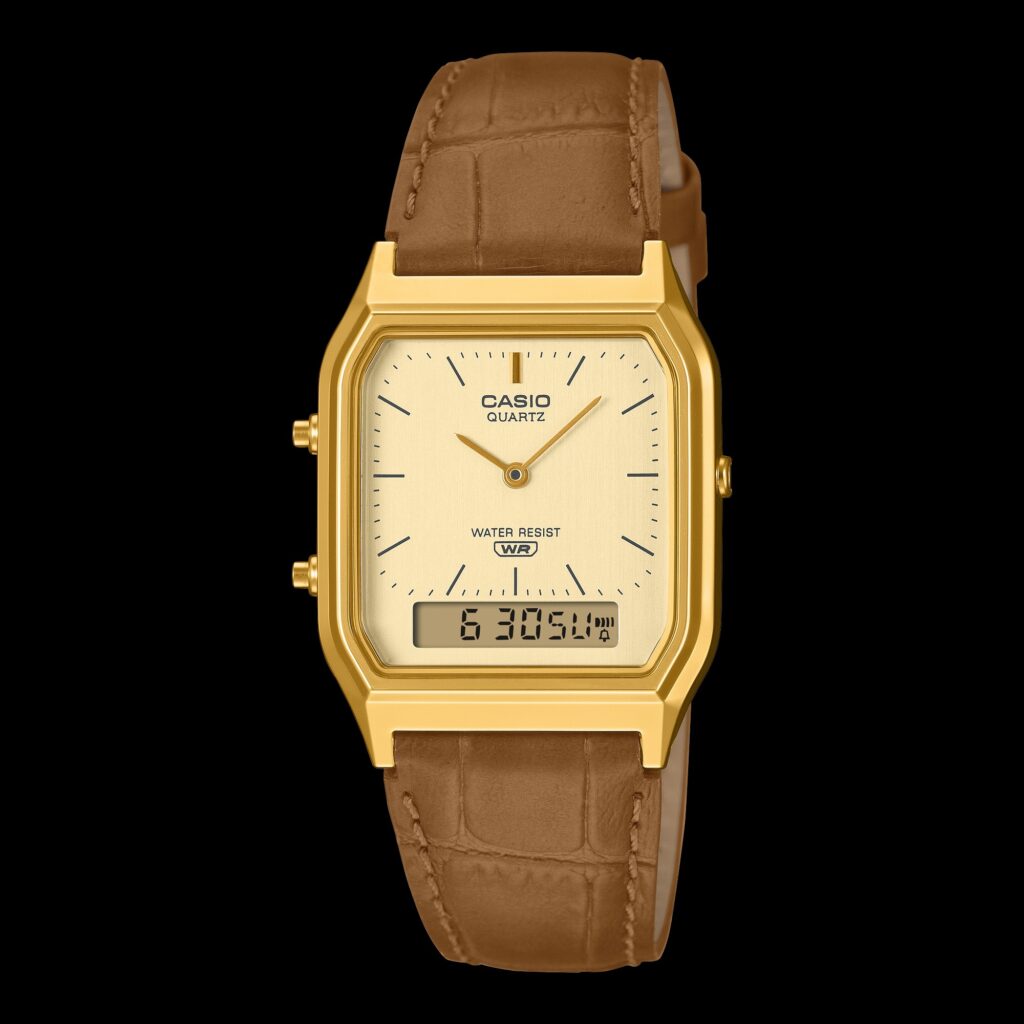
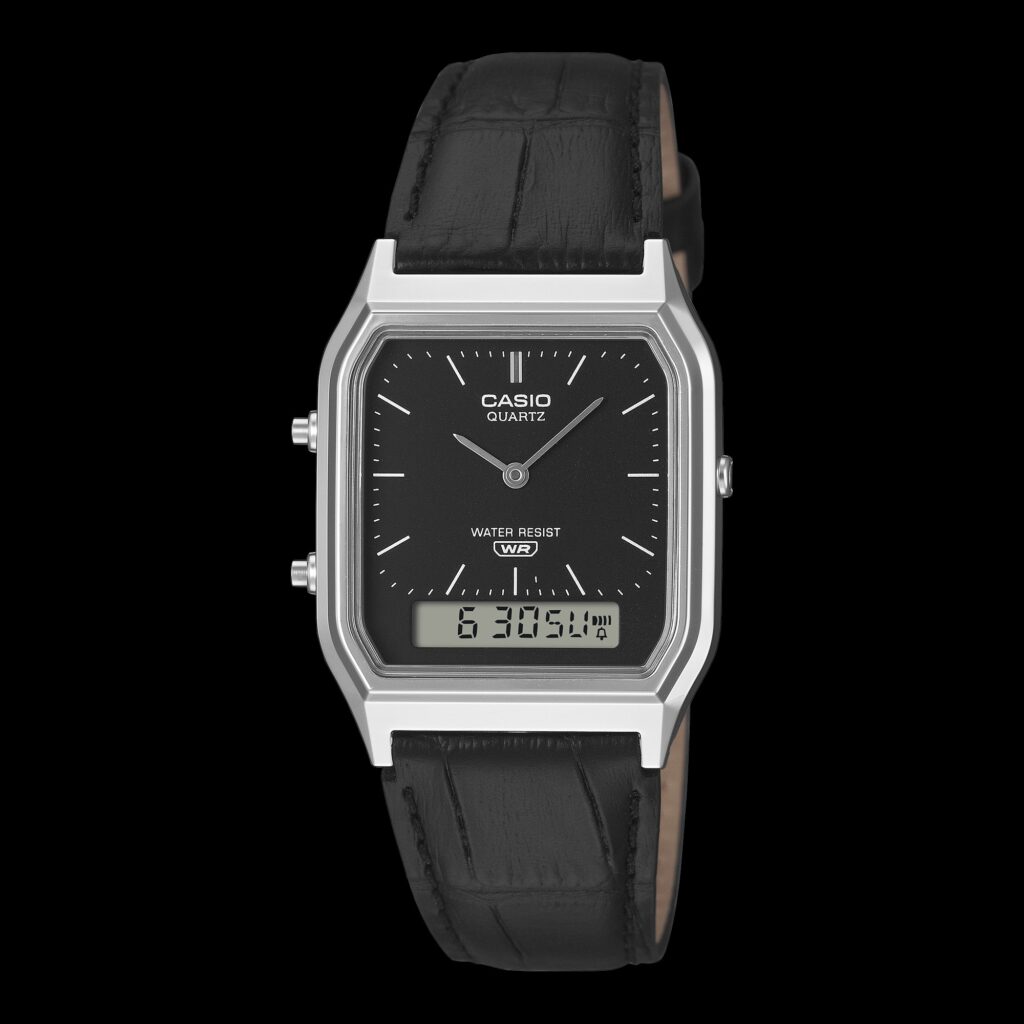
The AQ230EGL-9A has a gold-tone case, a champagne-colored dial, and a brown crocodile-textured leather strap. This combination creates a classic, luxurious style. The AQ230EL-1A, in contrast, has a silver-tone case, a black dial, and a black leather strap. The black-and-silver design offers a modern, versatile look suited for both casual and formal occasions.

Casio Vintage AQ230EGL-9A
Casio Vintage AQ230EL-1A

Both models include water resistance, making them suitable for daily use. The dual-time feature lets users track two time zones simultaneously. This functionality makes the watches practical for travelers or anyone managing schedules across different regions.

Pricing and Availability

Casio priced the AQ230EGL-9A at $79.95 and the AQ230EL-1A at $69.95. These are now available via Casio’s website.

In related news, Casio has launched the premium G-Shock MTGB4000D-1A in the US with durable carbon-steel construction, alongside the W-800HD-1AV digital watch, which features a classic retro design.

For more daily updates, please visit our News Section.

Stay ahead in tech! Join our Telegram community and sign up for our daily newsletter of top stories! 💡

(Casio 1,2)

The post Casio launches two affordable vintage style analog-digital watches in the US appeared first on Gizmochina.

TCL beats Samsung in global TV shipments for December 2025

TCL CES 2026

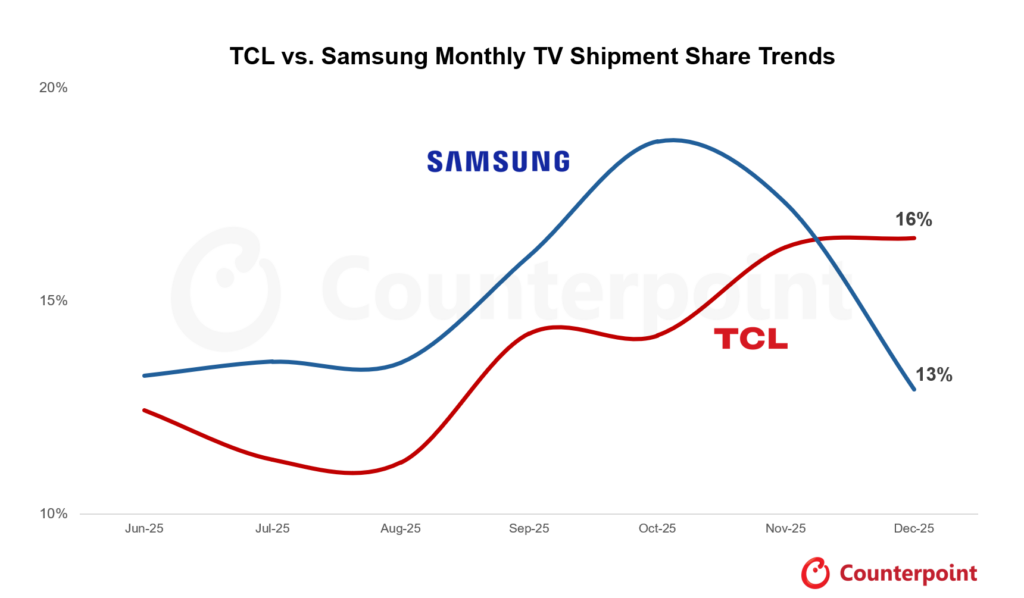
TCL has officially dethroned Samsung as the top global TV shipper for December 2025, according to Counterpoint Research’s latest data. This marks a major milestone for the Chinese electronics giant, whose shipments surged 10% year-over-year (YoY) last month, giving it a commanding 16% market share. Meanwhile, Samsung, the perennial leader, slipped to second place with a 13% share, despite an 8% YoY increase in shipments.

TCL CES 2026

The performance of TCL was primarily driven by strong sales in Asia-Pacific, China, and the Middle East, which offset weaker demand in North America and Western Europe. The company achieved significant growth by focusing on mid-range and budget-friendly TVs, including the recently launched T7 series. TCL also boosted sales of its high-end QM8K and QM9K models through aggressive holiday pricing.

Global TV Shipments Monthly Report

However, Samsung still holds the crown for Q4 2025 overall, shipping 2% more TVs than TCL during the period. While North and South America provided growth opportunities for Samsung, declines in Western Europe and the Middle East hurt its performance. On the flip side, Hisense, which took third place in December, saw its shipments plummet 23% YoY, highlighting significant struggles in China’s shrinking TV market.

Looking ahead, the ambitions of TCL could spell bigger trouble for Samsung. The company’s upcoming partnership with Sony’s Bravia brand, set to finalize in March 2026, positions TCL to make a serious play in the premium TV market, a territory that Samsung has historically dominated with its high-end OLED and 8K offerings. If TCL can successfully leverage Sony’s reputation in this space, the dynamic of the global TV market could shift dramatically.

For now, TCL’s December triumph might be temporary, but its growth trajectory is impossible to ignore. With a mix of strategic pricing, regional demand timing, and potential premium market expansion, Samsung’s top spot may no longer be as secure as it once was.

For more daily updates, please visit our News Section.

Stay ahead in tech! Join our Telegram community and sign up for our daily newsletter of top stories! 💡

(Source, Via)

The post TCL beats Samsung in global TV shipments for December 2025 appeared first on Gizmochina.

Casio launches premium G-Shock MTGB4000D-1A in the US with carbon-steel construction

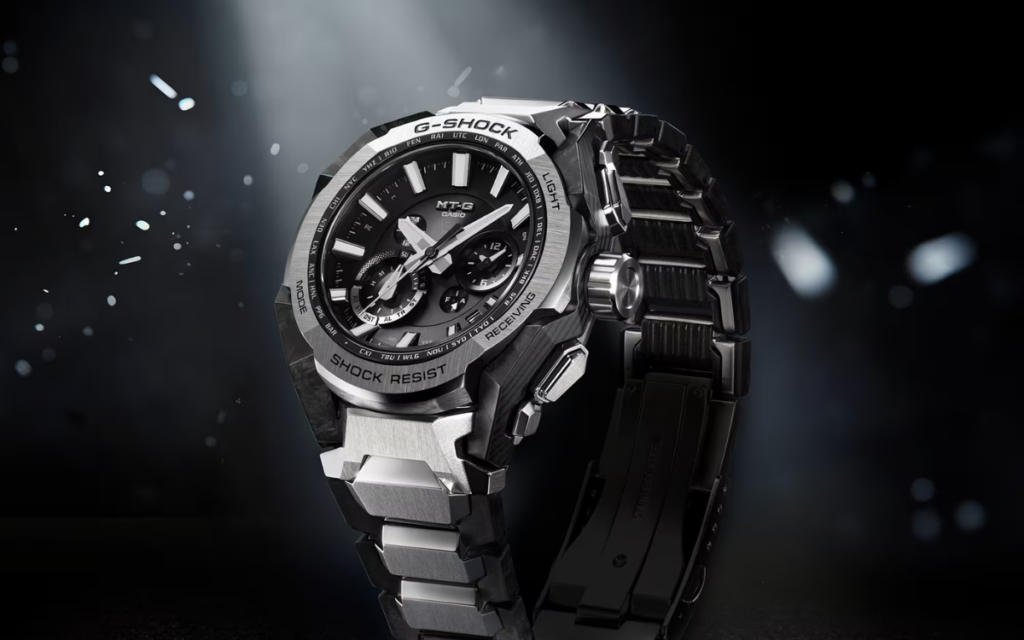
Casio G-Shock MTGB4000D-1A

Casio has launched the G-Shock MTGB4000D-1A in the US under its premium MT-G lineup. The model debuted earlier this year in Japan and is now available via Casio’s website and select retailers for $1,600.

Casio G-Shock MTGB4000D-1A

Casio G-Shock MTGB4000D-1A Specs

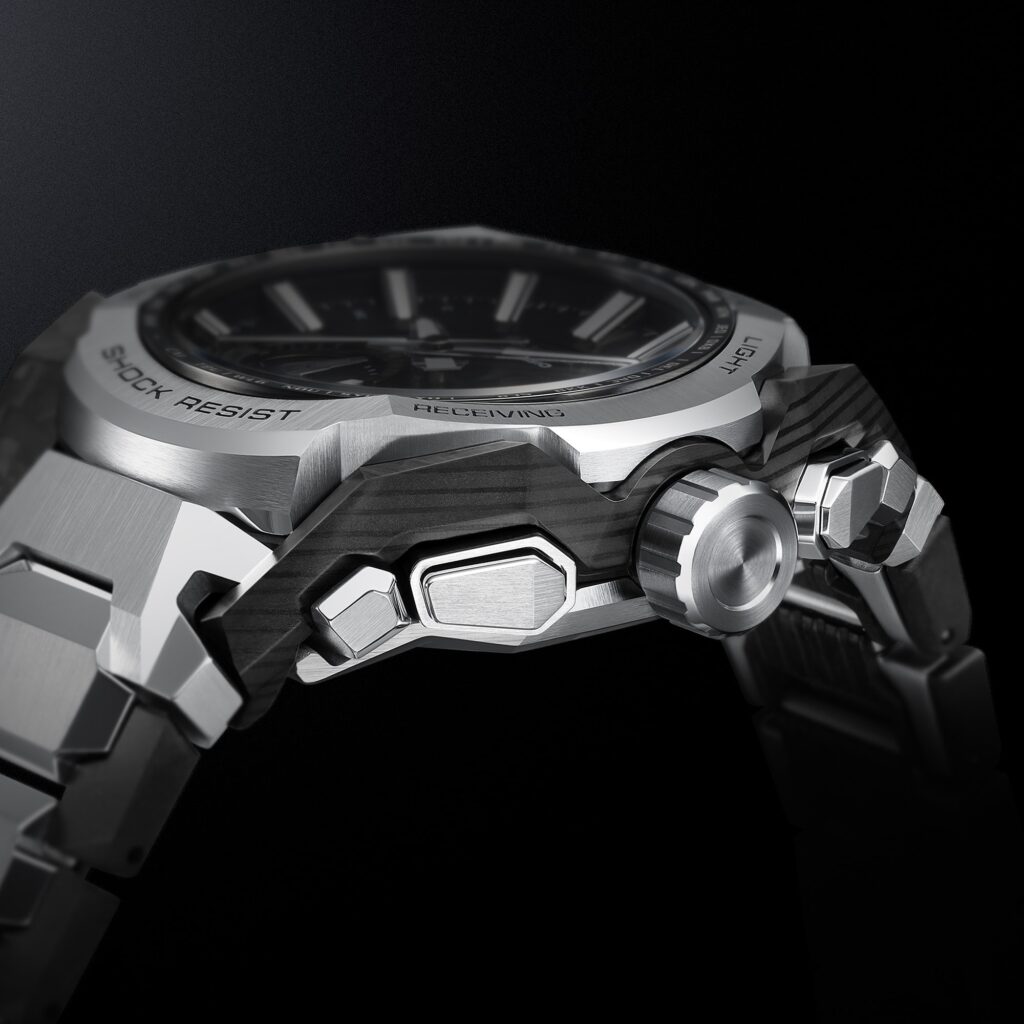
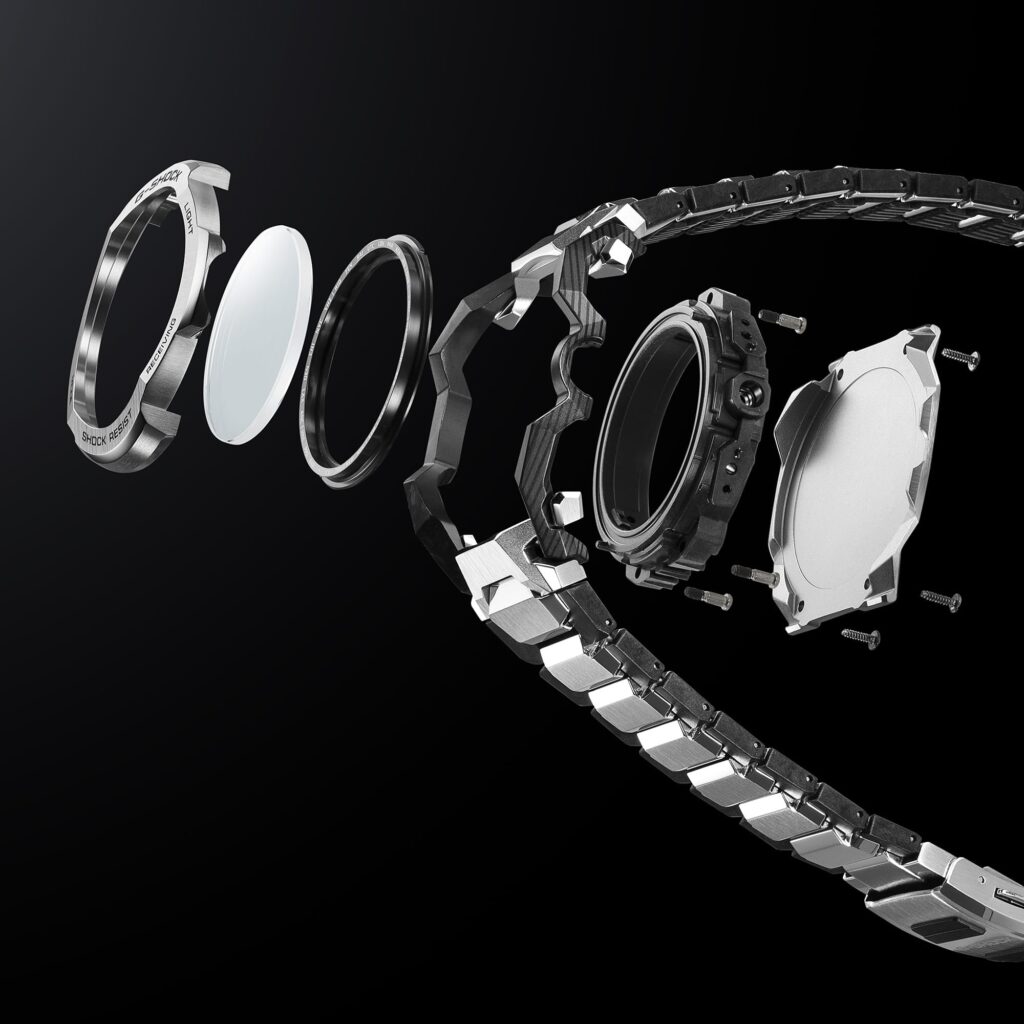
The MTGB4000D-1A features an updated Dual Core Guard structure that uses a mix of carbon fiber and stainless steel for enhanced strength and reduced weight. Casio developed the design using artificial intelligence to analyze shock-resistant structures.

The watch’s frame is made from laminated carbon and glass fiber sheets, creating a layered pattern that is visible from the side. The stainless steel bezel uses a dual-layer design with separate hairline and mirror finishes, giving the watch a polished and textured appearance. The band uses a layered composite structure of stainless steel and carbon fiber-reinforced resin, providing a sturdy yet lightweight fit.

The dial uses a high-contrast layout with raised hour markers and bold hands for better readability. Multiple sub-dials add depth and support dual-time functions. Casio protects the dial with a sapphire crystal that includes an anti-reflective coating. The case measures 56.6 x 45.3 x 14.4 mm, and the watch weighs 178 grams.

Casio G-Shock MTGB4000D-1A

The MTGB4000D-1A supports Triple G Resist protection against shock, vibration, and centrifugal force. The watch also offers 200-meter water resistance. Casio equips it with Tough Solar charging, Multi Band 6 radio-controlled timekeeping, and Bluetooth connectivity for pairing with the Casio Watches app to enable automatic time adjustment, world time settings, and status checks.

Additionally, the watch also includes a 1-second stopwatch, countdown timer, daily alarm, LED light, power-saving mode, and a full auto-calendar. The rechargeable battery delivers up to five months of use under normal conditions and up to 18 months with power saving enabled.

In related news, Casio has recently launched the W-800HD-1AV digital watch with a classic retro design in the US, alongside a new G-Shock collaboration model with ASSC featuring a transparent floral design.

For more daily updates, please visit our News Section.

Stay ahead in tech! Join our Telegram community and sign up for our daily newsletter of top stories! 💡

(Casio)

The post Casio launches premium G-Shock MTGB4000D-1A in the US with carbon-steel construction appeared first on Gizmochina.

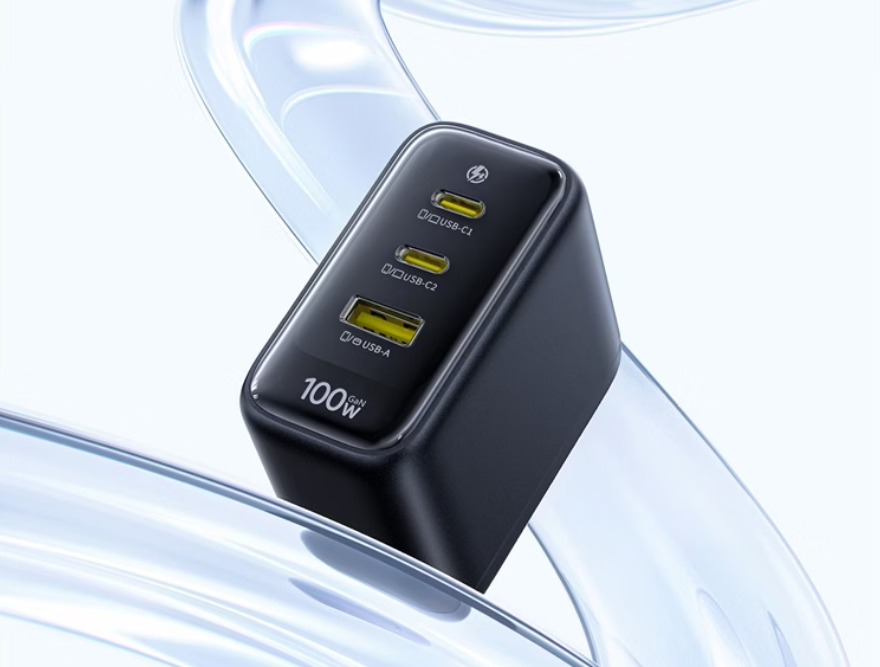
Baseus launches new 100W GaN charger with 2C+1A ports, supports Xiaomi 100W HyperCharge

Baseus EnerFill FE22

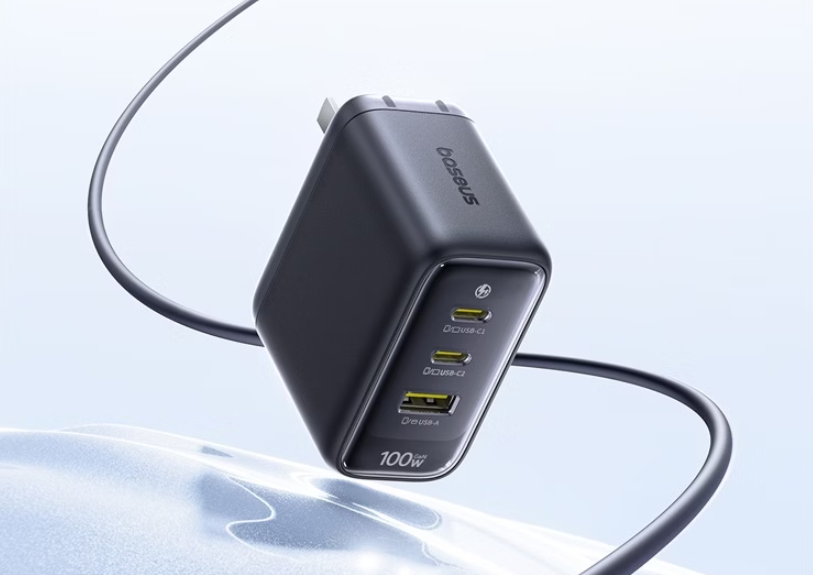
Baseus has launched the EnerFill FE22 100W charger in China. The adapter is now listed on JD.com with a price of 149 yuan ($22). It is available in Starry Black, Moon White, and Ocean Blue color options.

Baseus EnerFill FE22

Baseus EnerFill FE22 Specifications

The EnerFill FE22 supports PD 100W GaN fast-charging technology, which ensures efficient and stable power delivery. It is compatible with Xiaomi’s 100W HyperCharge fast-charging standard and other major fast-charging protocols, including PD, PPS, UFCS, SCP, FCP, and QC.

The charger has a compact design that measures 63mm x 54mm x 33mm and weighs 205g. Baseus uses a 3D stacked internal architecture to reduce the volume by 30% compared to traditional 100W chargers. The device includes foldable prongs for easy portability and storage.

Baseus EnerFill FE22

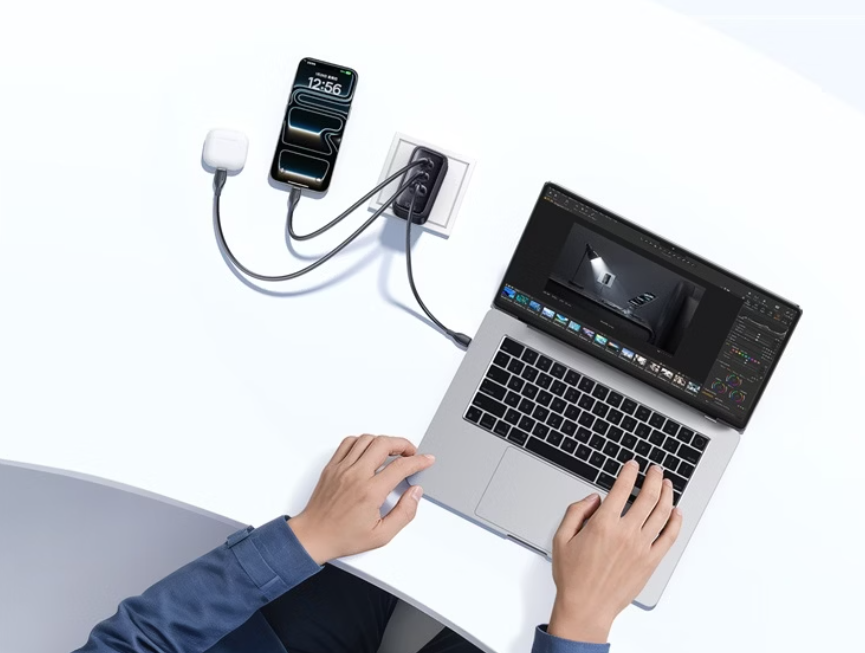
The USB-C ports each support up to 100W output, delivering up to 20V/5A power for laptops and other high-power devices. The USB-A port supports a maximum output of 33W. The charger dynamically adjusts power distribution when multiple ports are active. It supports two-device combinations such as 65W + 35W or 65W + 33W. When all three ports are in use, the charger intelligently distributes power to ensure the total output does not exceed 100W.

Baseus includes its BPS 2.0 dynamic power distribution technology, which adjusts the output based on the connected devices to maintain efficiency and battery safety.

Baseus EnerFill FE22

The charger features BCT 2.0 temperature control, with an AI chip that checks temperature up to 120,000 times per minute and adjusts power output to reduce heat buildup. It also features a high-efficiency thermal gel and a 360-degree heat dissipation design that helps maintain stable performance during extended use.

Baseus ensures safety with multiple protections, including overcurrent, overvoltage, short-circuit, and surge protection. It also supports trickle charging after a device reaches 80% battery to maintain long-term battery health.

In related news, Baseus has recently introduced the EnerGeek GT 21, which combines a charger and power bank in one device and can power three devices at the same time. The company has also launched a 200W 25,000mAh power bank that features dual built-in USB-C cables and supports up to 140W fast charging.

For more daily updates, please visit our News Section.

Stay ahead in tech! Join our Telegram community and sign up for our daily newsletter of top stories! 💡

(JD)

The post Baseus launches new 100W GaN charger with 2C+1A ports, supports Xiaomi 100W HyperCharge appeared first on Gizmochina.
Dreame launches 165W power bank with built-in cable and smart display

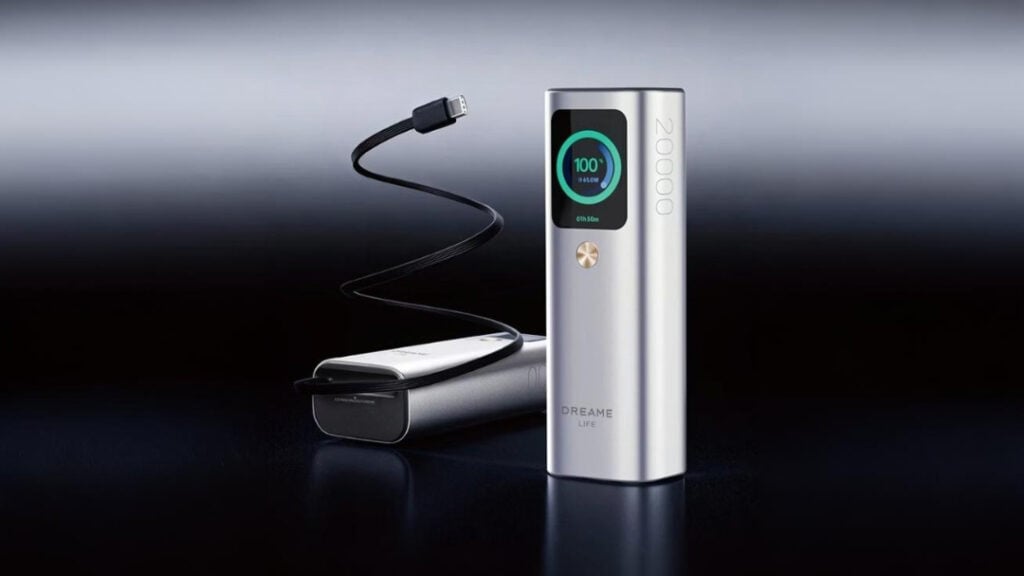
Dreame 165W Power Bank

Dreame has launched its new 165W Smart Display Power Bank (model number JP365) on JD.com. The power bank features a 20,000mAh battery, a built-in cable, and a smart display. It is priced the device at 399 yuan (approximately $58).

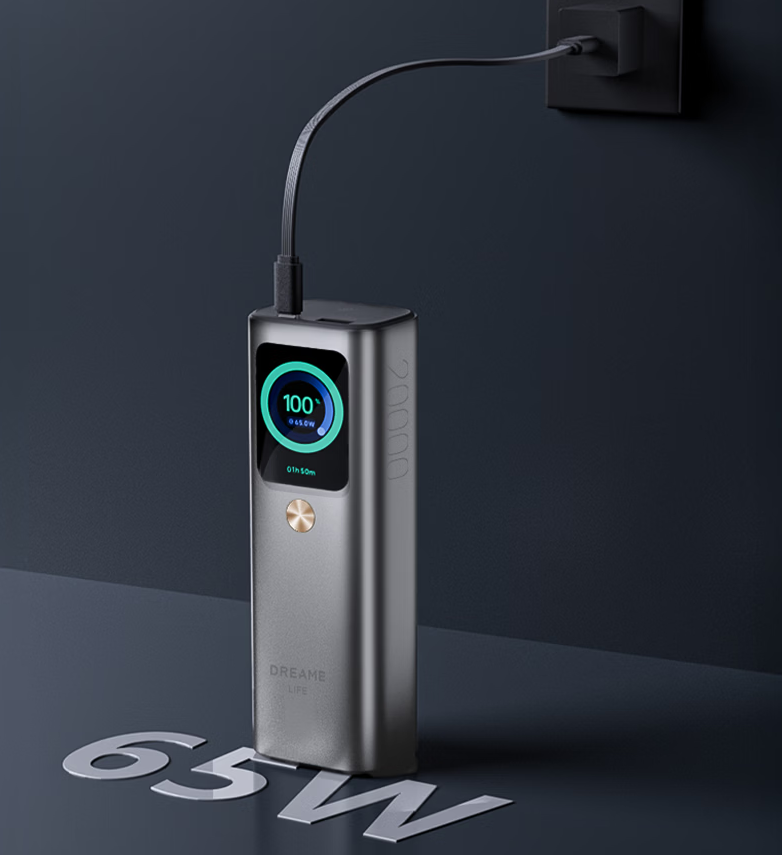
Dreame 165W Power Bank

Dreame 165W Power Bank Specifications

The power bank includes a 20,000mAh battery with a rated capacity of 12,000mAh. Dreame has designed it with four automotive-grade 21700 power cells to improve energy density, charging efficiency, and durability. The company claims the battery retains over 80% of its capacity after 500 charge cycles. The 72Wh battery capacity complies with airline carry-on regulations.

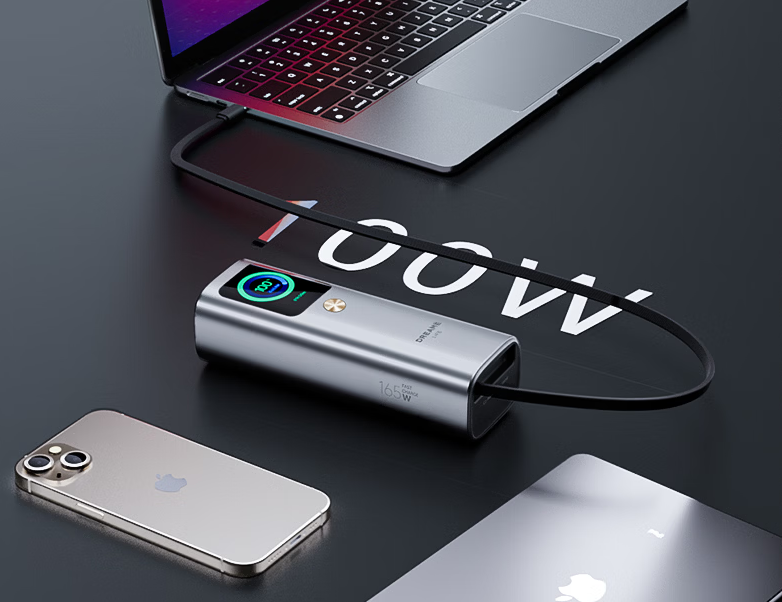
Dreame has equipped the power bank with two USB-C ports, one USB-A port, and a built-in 60cm retractable USB-C cable. The cable supports up to 100W fast charging and retracts for convenient storage. The USB-C ports support 100W output individually, while the USB-A port supports up to 30W output.

Dreame 165W Power Bank

The device can deliver a maximum combined output of 165W, which allows users to charge two laptops simultaneously. Dreame claims the power bank itself can be fully recharged in 1 hour and 50 minutes with a 65W or higher charger.

The power bank supports multiple fast-charging protocols, including PD 3.0, QC 3.0, PPS, UFCS, FCP, and AFC, ensuring broad compatibility with smartphones, tablets, and laptops. It also features a low-current mode for safely charging smaller devices such as wireless earbuds and smartwatches.

The device features a TFT color display that shows real-time battery percentage, charging power, remaining charging time, and battery health, along with a dynamic energy ring that visually indicates charging activity.

Dreame 165W Power Bank

The power bank features an aluminum alloy casing that improves heat dissipation during high-load use. It integrates AI-based temperature control with an NTC temperature-monitoring chip to prevent overheating. The system conducts up to 460,800 temperature checks per hour and dynamically adjusts the power output to maintain safe operating conditions.

It also includes multiple safety protections, such as overcharge, overcurrent, short-circuit, and over-temperature safeguards, ensuring reliable and stable performance during everyday use. The power bank weighs 505 grams and measures 156.05 x 52.8 x 40.8mm. It is available in Deep Space Gray.

In related news, you can also check out our latest roundup of the best magnetic power banks available in 2026.

For more daily updates, please visit our News Section.

Stay ahead in tech! Join our Telegram community and sign up for our daily newsletter of top stories! 💡

(JD)

The post Dreame launches 165W power bank with built-in cable and smart display appeared first on Gizmochina.
Over 22,000 Sign Petition to Save GPT-4o as OpenAI Retires Popular Model

ChatGPT

The Internet is fuming as OpenAI retired GPT-4o recently, a chatbot model beloved for its warm, conversational style and unique emotional resonance. Despite a Change.org petition amassing over 22,000 signatures, OpenAI stood firm in its decision, citing low usage (just 0.1% of users) and the evolution of its newer models, GPT-5.1 and GPT-5.2.

chatgpt

This isn’t the first time OpenAI has tried to sunset GPT-4o. In 2025, the company faced overwhelming backlash from users who described the model as irreplaceable. OpenAI reversed the retirement within 24 hours, but this time, it seems the shutdown is final, leaving thousands of fans feeling abandoned.

For many, GPT-4o was more than a tool, it was a companion. Social media is flooded with grief-stricken posts likening its retirement to losing a close friend. Paying subscribers have threatened to cancel their memberships, and a few have already cancelled in protest, with one X user declaring, “No 4o, no money.”

The petition, spearheaded by Sophie Witt in April 2025, called on OpenAI to recognize GPT-4o’s unique appeal, which transcends performance metrics. Witt urged supporters to amplify their voices online, sparking widespread discussions about the emotional bond users form with AI.

However, GPT-4o wasn’t without controversy. At least eight lawsuits accuse the model of exacerbating mental health crises, with claims that its affirming tone contributed to self-harm in vulnerable users. These cases highlight the ethical challenges of emotionally intelligent AI, raising questions about where to draw the line between support and dependency.

OpenAI acknowledged these complexities in its January blog post, noting that feedback from GPT-4o users shaped its newer models. Yet, the decision to retire the model reflects a broader shift toward prioritizing safety and scalability over nostalgia.

The GPT-4o saga offers a clear lesson for marketers and AI developers about the risks and rewards of emotional design. As AI systems play a growing role in human interaction, the need to balance technological progress with accountability has never been more pressing.

In related AI news, Google could allow websites to opt out of AI Overviews following regulatory pressure in the UK.

For more daily updates, please visit our News Section.

Stay ahead in tech! Join our Telegram community and sign up for our daily newsletter of top stories! 💡

(Via)

The post Over 22,000 Sign Petition to Save GPT-4o as OpenAI Retires Popular Model appeared first on Gizmochina.
The 100MP Front Camera Revolution: Necessary or Just Spec Race?

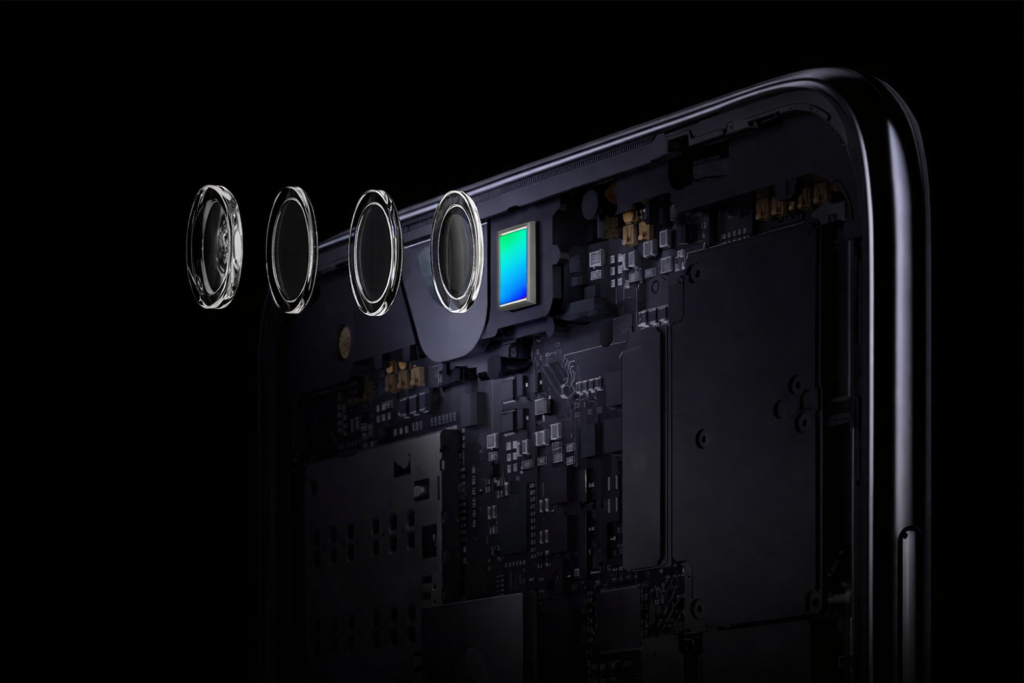
Front Camera

Just when you thought your smartphone’s rear-facing camera had reached its peak with 200-megapixel monster sensors, the industry has decided to turn the lens around and aim straight for your face.

According to the latest leaks from seasoned tipster Digital Chat Station, the 2026 flagship cycle is set to witness a staggering shift as manufacturers begin testing 100MP selfie cameras.

While we are already bracing for dual 200MP setups on the back of phones like the rumored Xiaomi 18 Pro, the jump to a nine-digit megapixel count for a front-facing lens raises a provocative question about where actual utility ends and marketing vanity begins.

Front Camera

Challenges of 100MP Selfie Sensors

Fitting a hundred million pixels into the punch-hole of a modern display is less about a simple hardware upgrade and more about a breakthrough in engineering. To make this work, brands like Oppo and Huawei are reportedly developing custom “small-pixel” sensors that defy traditional size constraints.

Because these pixels are so tiny, they naturally struggle with light sensitivity, but the industry isn’t just throwing numbers at a wall for the sake of it. They are likely banking on advanced pixel-binning and potentially RYYB color filters to ensure your low-light selfies don’t look grainy.

Vlogging Flexibility

We are now in the social media age, where almost everyone is exploring content creation, whether it’s recording for TikTok, vlogging for YouTube, or sharing high-quality videos on Instagram.

The 100MP square sensor could allow creators to shoot a single high-resolution video vertically for TikTok while seamlessly cropping it into a horizontal format for YouTube, all without compromising 4K clarity.

Manufacturers are also reportedly embracing the new 1:1 square format, an innovation inspired by Apple’s Center Stage feature introduced with the iPhone 17. According to reports, Huawei’s Nova 16 series and Oppo’s Find X10 series are expected to feature these advanced square sensors, signaling a shift in how front-facing cameras are designed.

The real value here isn’t just in capturing more detail but in enabling digital zoom, stabilization, and reframing during post-production without any loss in quality.

This level of flexibility could turn smartphones into powerful tools for content creators, rivaling even dedicated vlogging rigs and making mobile devices the preferred choice for the social media generation.

Spec Race or Genuine Innovation?

Despite the excitement, some might wonder if our devices can handle the immense data demands of a 100MP selfie camera. After all, such high-resolution photos come with significant processing and storage requirements.

However, with the advancements in modern chipsets and AI, refining and optimizing these massive images is no longer a challenge. AI-driven algorithms can efficiently enhance light, detail, and color in real time, ensuring that even high-resolution selfies are polished and ready to share instantly.

Ultimately, the 100MP selfie revolution might be the ultimate spec flex, but innovation is always welcome, and Android manufacturers have proven its value. Unless we experiment with new spaces, we won’t know what to expect.

Five years ago, capturing the moon with such detail seemed impossible, yet here we are. The front camera is the final frontier of smartphone imaging, and it is finally getting the upgrade it deserves.

For more daily updates, please visit our News Section.

Stay ahead in tech! Join our Telegram community and sign up for our daily newsletter of top stories! 💡

The post The 100MP Front Camera Revolution: Necessary or Just Spec Race? appeared first on Gizmochina.
❌