Reading view

Realme Buds T500 Pro launches in India with 56-hour battery life, 50dB ANC, LHDC 5.0 support

Realme has added a new pair of budget TWS earbuds to its lineup, and on paper at least, they look surprisingly loaded for the price. The Realme Buds T500 Pro bring features like active noise cancellation, Hi-Res audio, and multi-device connectivity.

Under the hood, the Buds T500 Pro uses 12.4mm dynamic drivers with a titanium-plated diaphragm. It supports the LHDC 5.0 codec, which should help with better audio quality when connected to compatible devices.

The company claims up to 50dB noise cancellation, along with a fairly wide frequency range. It’s adaptive too, meaning it adjusts depending on your surroundings and fit. You also get a transparency mode when you need to hear what’s happening around you. For calls, there’s a six-mic setup, and interestingly, Realme has added live translation features, including face-to-face and two-way modes.

Connectivity is another area where the Buds T500 Pro stands out. The earbuds support Bluetooth 6.1 and can connect to up to three devices at once, which should make switching between, say, your phone, laptop, and desktop a lot easier. Features like Google Fast Pair and a Find My Earbuds option are here as well.

There’s also a 45ms low-latency mode for gaming and video, and something called MindFlow Mode, which basically plays ambient soundscapes through the app. The last one is a bit niche, but some people might like it.

Battery life looks solid on paper. Realme is claiming up to 56 hours total with the case. Each earbud packs a 62mAh battery, while the case has 530mAh. In real-world use, you’re looking at around 13–14 hours without ANC (AAC) and closer to 8–9 hours with ANC, depending on how you use them. Charging takes about an hour for the buds and roughly two hours for the case via USB-C.

The earbuds themselves weigh just 4.5g each, and the case is compact enough to carry around easily. You also get an IP55 rating, so they should handle sweat and light splashes without issues.

Pricing and availability:

The earbuds were launched in India at ₹2,799, with a limited-time ₹200 discount that brings the price down to ₹2,599 for the first sale window between April 23 and April 26, 2026. Color options include Chocolate, Lemon Cola, and Orange Mint.

At this price, the Buds T500 Pro seems to tick quite a few boxes. On paper, they look like a strong option in the sub-₹3,000 category.

(Source: Realme)

The post Realme Buds T500 Pro launches in India with 56-hour battery life, 50dB ANC, LHDC 5.0 support appeared first on Gizmochina.

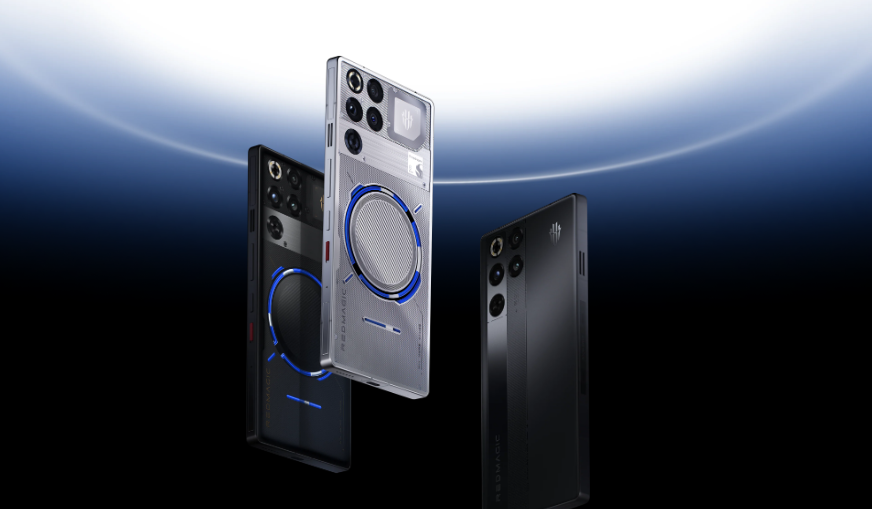
RedMagic 11s Pro surfaces on NBTC

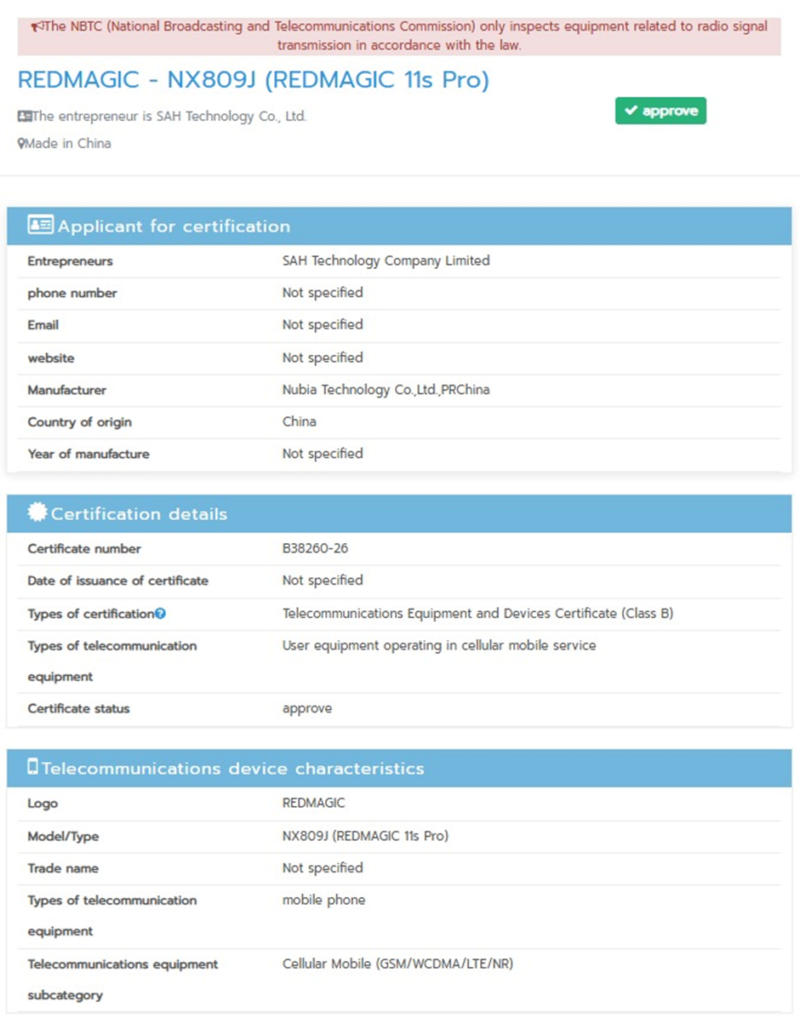
It looks like Nubia is getting ready for another refresh in its gaming phone lineup. The RedMagic 11s Pro has now appeared in a certification listing, which usually means things are moving toward a launch.

The listing comes from Thailand’s NBTC and confirms the name along with the model number NX809J. There’s no mention of specs there, which isn’t unusual, but it’s enough to confirm the device is on the way.

What’s slightly confusing is the model number. NX809J has been linked before to the RedMagic 11 Pro. And if you remember, when the 11 Pro launched globally, it already borrowed quite a bit from that Pro+ version. So now there’s a bit of overlap again.

That makes it harder to tell what exactly the 11s Pro is supposed to be. It could just be a reworked version for global markets, or there might be some small upgrades. RedMagic has done both in the past.

There’s no official word on specs yet, but people are already guessing. One thing that keeps coming up is the battery. The Chinese 11 Pro has an 8,000mAh unit, while the global version dropped slightly to 7,500mAh in favor of faster charging. There’s a chance the 11s Pro swings things back.

Beyond that, it will probably stick to the same idea. A flagship Snapdragon chip, active cooling with a built-in fan, high refresh rate display, shoulder triggers, all the usual gaming-focused hardware. That’s kind of RedMagic’s identity at this point.

The current 11 Pro is already pretty strong on raw performance, so this refresh might just be about small refinements rather than anything major.

No launch date yet, but with certification out of the way, it likely won’t be too long before more details start showing up.

Don’t miss a thing! Join our Telegram community for instant updates and grab our free daily newsletter for the best tech stories!

For more daily updates, please visit our News Section.

(Via)

The post RedMagic 11s Pro surfaces on NBTC appeared first on Gizmochina.

Galaxy S26 Ultra user in limbo as log points to camera hardware issue but service center denies fix

Galaxy-S26-Ultra

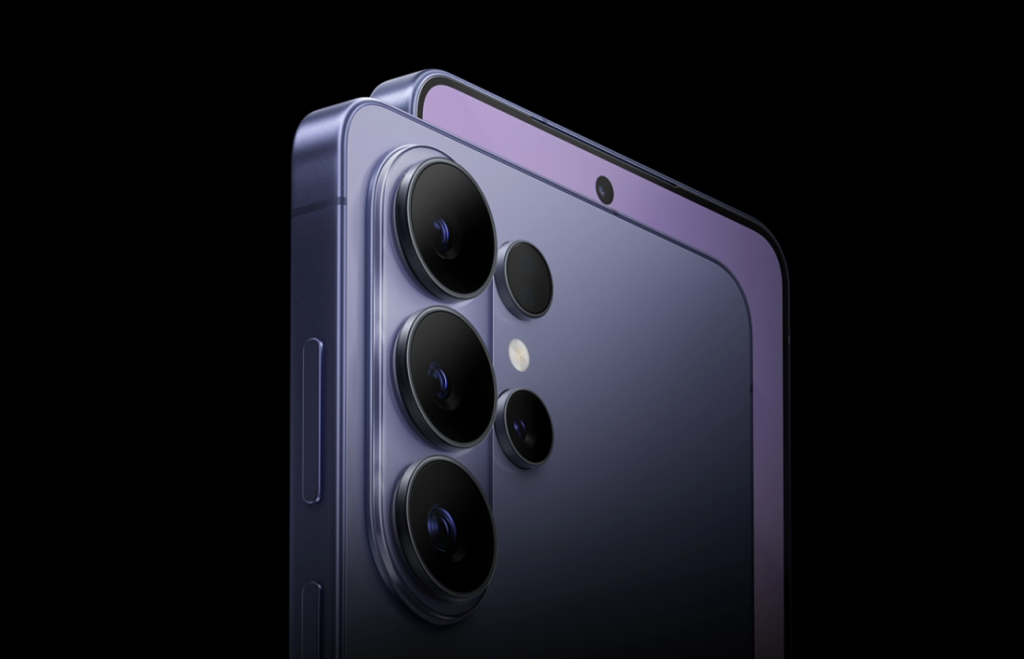
A Galaxy S26 Ultra owner has run into a camera issue just days after buying the phone, and what followed sounds more confusing than it should be.

Galaxy-S26-Ultra

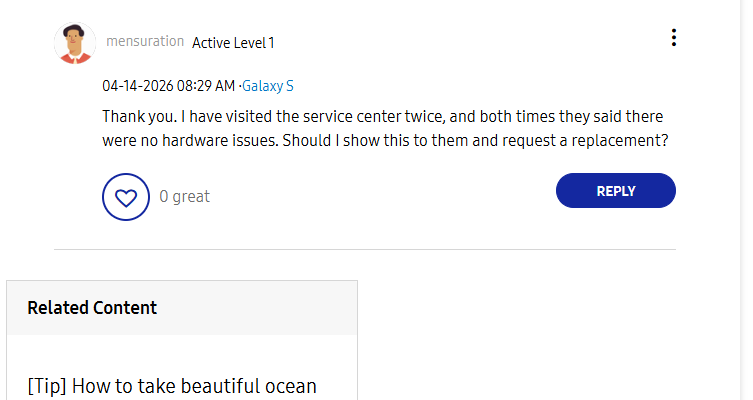
The problem showed up in a post on Samsung’s community forum. According to the user, the camera system doesn’t seem to work properly. Opening the camera app triggers a warning about some features not working, and when trying to switch lenses, it simply says the “lens cannot be used”. For a phone at this price, that’s obviously not a great start.

Naturally, the user took it to a service center. Twice. Both times, the response was the same. Diagnostics didn’t show any hardware fault, and the phone was said to be working as intended.

That might have been the end of it, but the user also shared logs through the Samsung Members app. And this is where things start to feel a bit off.

A moderator on the platform, said to be from the camera team, reviewed those logs and suggested something completely different. According to that response, the ultrawide module could actually be faulty and might need replacing. The advice was to head back to a service center. So now there are two answers. One says everything is fine, the other points to a hardware problem.

It’s not clear what’s causing the mismatch. Maybe the issue doesn’t show up during regular diagnostics. Maybe the logs are picking up something more specific. Hard to say from the outside.

Either way, it puts the user in a difficult spot. Going back to the same service center with a different diagnosis doesn’t always lead anywhere, especially if the earlier checks didn’t find anything.

There’s no official comment from Samsung on this particular case yet. It could just be one isolated incident, but it does raise questions about how consistent the support process is across different channels.

For now, it’s one of those cases where the issue itself is frustrating, but the lack of a clear answer makes it more so.

Don’t miss a thing! Join our Telegram community for instant updates and grab our free daily newsletter for the best tech stories!

For more daily updates, please visit our News Section.

(Source)

The post Galaxy S26 Ultra user in limbo as log points to camera hardware issue but service center denies fix appeared first on Gizmochina.

Samsung working on Galaxy Z TriFold Wide: a more practical tri-fold phone

Samsung Galaxy Z TriFold images

Samsung doesn’t seem done experimenting with tri-fold phones just yet. A new patent suggests the company could be working on a different take, something that looks a bit more usable day to day.

Samsung Galaxy Z TriFold images
Samsung Galaxy Z TriFold

The concept, referred to as the Galaxy Z TriFold Wide, leans toward a wider form factor. Closed, it would behave more like a regular phone, just slightly wider than usual. Unfold it, and it turns into a larger, tablet-like screen that’s better suited for video and multitasking compared to the first-generation TriFold. That alone makes it feel like a response to one of the bigger complaints around early multi-fold devices, the awkward aspect ratio.

Samsung’s first tri-fold launched at a very high price, somewhere around $2,899, and didn’t stick around for long due to production challenges. Even so, demand didn’t exactly disappear. Limited restocks reportedly sold out quickly, and resale prices went much higher, which says something about the level of interest. So while the first version may not have been practical to produce at scale, it clearly got people’s attention.

The wider approach also lines up with other rumors around Samsung’s foldables. There’s been talk of a Galaxy Z Fold 8 moving in a similar direction, with a more balanced display. If that happens, a wider tri-fold doesn’t feel like a stretch.

Of course, this is still just a patent, and those don’t always turn into real products. But it does give a sense of where Samsung’s thinking is right now.

At the same time, competition in this space is starting to pick up. Huawei has been experimenting with wider-style foldable form factors for a while, and Apple is expected to enter the category by the end of this year.

For Samsung, the challenge is probably less about building something new and more about making it usable and scalable. The idea of a tri-fold phone is already there. The next step is making it feel less experimental and more like something people would actually carry every day. That’s where something like a “Wide” version could make a difference, if it ever makes it past the concept stage.

Don’t miss a thing! Join our Telegram community for instant updates and grab our free daily newsletter for the best tech stories!

For more daily updates, please visit our News Section.

(Source)

The post Samsung working on Galaxy Z TriFold Wide: a more practical tri-fold phone appeared first on Gizmochina.

Smartphone maker sues 300+ creators over “negative content”

Something a bit unusual is being talked about across the Indian tech space right now. A major smartphone brand is reportedly taking legal action against a large number of social media accounts over what it calls “negative content.”

The story started with a post on X by Yogesh Brar. He didn’t name the company directly, but the replies and follow-up chatter quickly started pointing toward Motorola.

What’s being claimed is that over 300 influencers and pages are involved. The brand apparently believes certain posts have hurt its image. It’s not very clear what kind of content triggered this, whether it’s critical reviews, complaints about service, or something else entirely.

If this turns out to be accurate, it’s not something you see often. Brands usually deal with criticism in quieter ways, through PR statements or by addressing issues directly. Legal action on this scale feels different.

There’s been a mix of reactions so far. Some people see it as a worrying move, especially if it ends up discouraging honest feedback. Others think it might be justified if there’s actual misinformation or coordinated campaigns involved. Hard to say without more details.

The timing is also interesting. The brand being linked to this has been pushing hard in India recently. In a market like this, where competition is intense, perception can matter just as much as the product itself.

At the same time, there’s no official word yet. No public filings, no statement from the company. So for now, this is still based on a leak that’s gained traction pretty quickly online.

If more concrete information shows up, this could turn into a much bigger discussion around how far brands can go in controlling their image, and where that leaves creators and users.

For now, it’s one of those stories that’s still unfolding.

Don’t miss a thing! Join our Telegram community for instant updates and grab our free daily newsletter for the best tech stories!

For more daily updates, please visit our News Section.

(Source)

The post Smartphone maker sues 300+ creators over “negative content” appeared first on Gizmochina.

Poco C81 Pro premature listing reveals specs ahead of launch

Xiaomi seems to have revealed its next budget phone a bit earlier than planned. The Poco C81 Pro briefly showed up on the company’s global website before being taken down, but not before its specs were noticed.

From what’s been spotted, this looks like a fairly straightforward entry-level device. The focus is on the basics, big screen, decent battery, and enough performance for everyday use.

Up front, there’s a 6.9-inch LCD display with a 120Hz refresh rate and HD+ resolution. Brightness is listed at up to 800 nits, so it should hold up reasonably well outdoors.

The phone runs on the Unisoc T7250, which is more suited for lighter tasks. Think browsing, messaging, online payments, and social media. Connectivity is limited to 4G, which might be a drawback for some users. RAM is listed at 4GB, with storage options going up to 256GB, plus microSD support.

Cameras are about what you’d expect here. A 13MP main sensor on the back and an 8MP front camera. No extra lenses or fancy tricks, just the basics.

Battery is where it stands out a bit. There’s a 6000mAh unit, which should comfortably last a full day, maybe longer depending on usage. Charging is limited to 15W, so it won’t be particularly quick to top up.

Other features include a side-mounted fingerprint sensor, dual SIM support, and likely a lightweight version of HyperOS, possibly based on Android Go. The overall idea is pretty clear. This is meant to be an affordable phone that handles everyday tasks without much trouble.

The listing has already been removed, so nothing is official just yet. That said, the specs suggest it could be a rebranded Redmi A7 Pro 4G, which launched globally earlier this month.

Don’t miss a thing! Join our Telegram community for instant updates and grab our free daily newsletter for the best tech stories!

For more daily updates, please visit our News Section.

(Via)

The post Poco C81 Pro premature listing reveals specs ahead of launch appeared first on Gizmochina.

Xiaomi Mijia Smart Steam Air Fryer 7L launches globally with 10 cooking modes including sous vide

Xiaomi looks set to bring another smart kitchen gadget to global markets. The upcoming Mijia Smart Steam Air Fryer 7L combines air frying with steam cooking, and even adds support for sous vide-style cooking.

If it sounds familiar, that’s because Xiaomi already launched a similar model in China earlier. This version bumps the capacity up to 7 liters, making it more suitable for larger meals or batch cooking.

In terms of features, it covers quite a bit. Xiaomi lists 10 cooking modes, including steaming, fermenting, dehydrating, defrosting, and reheating. The sous vide part is interesting here. Traditionally, that requires a separate setup with a water bath, but Xiaomi seems to be using a built-in 1.5L water tank to replicate a similar effect. Exact details aren’t fully clear yet, but it’s likely tied to how the device handles steam and temperature control.

Speaking of temperature, the fryer supports a wide range from 40°C to 230°C, so it can handle both low-temp cooking and high-heat roasting. For steam, it can go up to around 130°C, which should help cook food faster compared to a standard steamer.

There’s also a hybrid mode that combines hot air and steam. That’s meant to keep food moist inside while still getting a crispy finish on the outside.

On the smart side, it supports HyperOS Connect, so you can control it through the Xiaomi Home app. That includes adjusting settings remotely, browsing recipes, and even linking it with Google Home for voice commands.

Compared to Xiaomi’s existing models like the 6.5L version already available in some markets, this one feels like a step up in terms of flexibility rather than just size.

There’s no confirmed global pricing or release date yet. But if it lands in markets like Europe, it could be a decent option for anyone looking to replace multiple kitchen appliances with a single device.

Don’t miss a thing! Join our Telegram community for instant updates and grab our free daily newsletter for the best tech stories!

For more daily updates, please visit our News Section.

(Source: Xiaomi)

The post Xiaomi Mijia Smart Steam Air Fryer 7L launches globally with 10 cooking modes including sous vide appeared first on Gizmochina.

REDMI K Pad 2 teased with 15300mm² VC, Sound by Bose tuning, color options

REDMI has started teasing a new tablet, the K Pad 2, and it’s clearly going after performance-focused users. The company is calling it a “performance flagship,” which sounds like typical marketing, but some of the early details suggest it’s at least trying to stand out a bit, especially on the gaming side.

At the center of it is the Dimensity 9500, paired with a 15300mm² vapor chamber cooling system. REDMI is also using a centered chip layout, which is meant to help with heat distribution during longer sessions. In theory, that should mean more stable performance without throttling too quickly.

The display is another key part. It’s an 8.8-inch panel with a 165Hz refresh rate and 1100 nits of peak brightness. REDMI says it’s tuned specifically for gaming, though we’ll have to see how much of that actually makes a difference in real use. Battery capacity sits at 9100mAh, which should be enough for extended use, especially given the size of the device.

The tablet itself sticks to a fairly premium look, with a metal unibody and a few color options, including purple, silver, and black. Nothing too surprising, but it looks clean.

On the gaming side, REDMI is claiming support for 165fps gameplay in select titles, along with a 540Hz touch sampling rate. There’s also a high-frequency gyroscope, which should help with responsiveness in fast-paced games.

For audio, the tablet includes dual full-range drivers housed in a 2.0cc “super-large” sound cavity, designed to deliver fuller bass, clearer treble, and richer detail. It’s marketed as the first tablet tuned by Sound by Bose.

The K Pad 2 is set to launch on April 21, 2026, alongside the Redmi K90 Max and the Redmi Book Pro 2026.

Don’t miss a thing! Join our Telegram community for instant updates and grab our free daily newsletter for the best tech stories!

For more daily updates, please visit our News Section.

(Source: Lu Weibing on Weibo)

The post REDMI K Pad 2 teased with 15300mm² VC, Sound by Bose tuning, color options appeared first on Gizmochina.

Xiaomi launches Mijia Hair Clipper 2 Set with precision trimming and engraving blade

Xiaomi has added another product to its Mijia lineup, this time in the personal care category. The new Hair Clipper 2 Set builds on the regular version, but adds a couple of extras that make it a bit more versatile.

At its core, it’s still a standard hair clipper, but the set version includes precision trimming and engraving attachments, which is where things get more interesting. The precision trimmer is meant for smaller areas, around the hairline, ears, or sideburns, basically the kind of detailing you don’t always get right with a regular clipper.

Then there’s the engraving blade, which feels a bit more niche. It’s designed for sharper lines or patterns, so more for styling than basic trimming. Probably not something everyone will use, but it adds an extra layer for those who like experimenting.

Both attachments use a titanium carbide coating, and Xiaomi says the main blade is built to reduce friction and heat during use. That should help with comfort, especially if you’re using it for longer sessions.

In terms of adjustments, the clipper offers 19 length settings along with two speed modes, so there’s a decent amount of flexibility. It’s also IPX7 rated, meaning you can rinse it under water without worrying too much.

There’s a small display on the body as well, which shows battery status and other basic info. Not essential, but useful.

The box includes quite a few accessories, adjustable combs, cleaning tools, even a cape, so it’s clearly meant to be a complete kit rather than just the device.

The Mijia Hair Clipper 2 Set is priced at 189 yuan and is already available through Xiaomi’s Youpin platform in China.

Overall, it feels like Xiaomi is trying to push this a bit beyond just a basic grooming tool. It’s still simple at its core, but with enough extras to make it more flexible for people who want to do a bit more than a quick trim.

Don’t miss a thing! Join our Telegram community for instant updates and grab our free daily newsletter for the best tech stories!

For more daily updates, please visit our News Section.

Source: Xiaomi Youpin

The post Xiaomi launches Mijia Hair Clipper 2 Set with precision trimming and engraving blade appeared first on Gizmochina.

Redmi A7 Pro 5G debuts in India as first Pro model in A series

Xiaomi has added a new model to its entry-level lineup in India, and this one brings a small change to the naming as well. The Redmi A7 Pro 5G is now official, marking the first time a “Pro” tag shows up in the A-series. At a glance, the focus is pretty clear. This phone is all about size and battery, rather than pushing performance.

You get a 6.9-inch HD+ LCD display with a 120Hz refresh rate. Resolution is still on the lower side, but for everyday use, scrolling, videos, it should feel good enough. Xiaomi has also added triple TUV Certifications for Low Blue Light, Flicker-Free viewing, and Circadian-friendly tuning to ensure a comfortable visual experience.

Under the hood, it runs on the Unisoc T8300, paired with 4GB RAM and up to 8GB of virtual RAM. Storage goes up to 128GB and can be expanded via microSD, so there’s some flexibility there.

The phone packs a 6,300mAh battery, which should easily last a full day, and likely longer for lighter users. Charging is capped at 15W, so topping it up will take some time.

Cameras are fairly basic. A 32MP main sensor on the back, plus an 8MP front camera. Enough for casual use, but clearly not the highlight here.

On the software side, it runs HyperOS 3 based on Android 16, and Xiaomi is promising up to four years of OS updates and six years of security patches. That’s actually quite solid for this segment. Other bits include a side fingerprint sensor, headphone jack, USB-C, and IP52 rating for basic dust and splash protection.

Pricing and availability:

Pricing starts at ₹11,499 for the 4GB + 64GB model, going up to ₹12,499 for 128GB. Sales begin April 15 across Xiaomi’s website, Amazon, and offline stores.

While this is a straightforward budget phone, the camera island design makes it look much more expensive than it is, which could be a big selling point for many.

Don’t miss a thing! Join our Telegram community for instant updates and grab our free daily newsletter for the best tech stories!

For more daily updates, please visit our News Section.

(Xiaomi)

The post Redmi A7 Pro 5G debuts in India as first Pro model in A series appeared first on Gizmochina.

50% of the Galaxy S27 series rumored to be powered by the Exynos 2700

Samsung looks like it’s leaning more seriously into its own chips for 2027. New reports suggest the company plans to increase the use of Exynos processors in the Galaxy S27 series, mainly to reduce how much it depends on Qualcomm. The reason is pretty straightforward, Snapdragon chips are getting expensive. For the Galaxy S25 lineup, Samsung went all-in on Qualcomm’s flagship chip, which ended up costing the company around 3 trillion won.

If Samsung continues down this path, things don’t really get easier. The Snapdragon 8 Elite Gen 6 Pro, expected to power the Galaxy S27 Ultra, is said to move to TSMC’s more expensive 2nm process. That would likely push costs even higher. At that point, Samsung either absorbs the hit, passes it on to buyers, or leans more on its own chips to keep manufacturing costs in check.

So the shift toward Exynos isn’t exactly surprising. That said, real-life performance tests paint a mixed picture of the Exynos 2600. It performs well in some areas, but still trails Snapdragon in power efficiency, thermals, and battery life.

As for the Galaxy S27 series, Samsung is said to be aiming for roughly a 50% split between Snapdragon and Exynos. That’s a noticeable jump, and it suggests the company is more confident this time around.

Of course, this isn’t without some risk. Exynos hasn’t always had the best reputation, especially when compared to Snapdragon in real-world use. That said, recent versions have improved, and Samsung clearly has a strong incentive to keep pushing in that direction.

In a way, this feels like a long-term correction. Relying too heavily on Qualcomm turned out to be expensive, and now Samsung is trying to rebalance things.

How well this works will depend on the power efficiency and stability of the Exynos 2700. If it can hold up in everyday performance, not just benchmarks, Samsung might finally get closer to that balance it’s been aiming for.

Don’t miss a thing! Join our Telegram community for instant updates and grab our free daily newsletter for the best tech stories!

For more daily updates, please visit our News Section.

(Source)

The post 50% of the Galaxy S27 series rumored to be powered by the Exynos 2700 appeared first on Gizmochina.

REDMI R70, REDMI R70m listed on official website with specs, color options

Xiaomi has quietly added two new phones to its Chinese website, the REDMI R70 5G and R70m 5G, and they look very much aimed at the lower end of the 5G market.

Both models are currently marked as “coming soon,” so they’re not up for sale yet. Still, the listings give a fairly clear idea of what Xiaomi is going for here, large displays, big batteries, and pricing that stays within reach.

The two phones share most of their core specs. Up front, there’s a 6.9-inch LCD panel with a 120Hz refresh rate and a 720p+ resolution. Not the sharpest, but it should be enough for everyday use like scrolling, messaging, and streaming.

They’re powered by the Unisoc T8300, built on a 6nm process, paired with LPDDR4x RAM and UFS 2.2 storage. Nothing high-end, but in line with what you’d expect at this price point.

Xiaomi is offering a decent range of configurations. The R70 starts at 4GB + 128GB (1599 yuan) and goes up to 8GB + 256GB, while the R70m skips the base variant and stretches all the way to 12GB + 256GB.

The main difference between the two is the battery. The standard R70 comes with a 6000mAh unit, while the R70m bumps that up slightly to 6300mAh. Charging is capped at 15W.

Camera setup is pretty basic. There’s an 8MP front camera and a single 13MP rear sensor, so clearly not a focus here.

Design-wise, they follow a familiar look and come in a few color options like Feather White, Starry Black, and a couple of blue and purple shades. The phones are on the larger side, but still relatively slim for what they pack. Both models run Hyper OS 3, which is Xiaomi’s software skin based on Android 16.

Overall, these feel like straightforward budget 5G phones. Not trying to do anything fancy, just covering the basics with a bit of extra emphasis on battery life.

Don’t miss a thing! Join our Telegram community for instant updates and grab our free daily newsletter for the best tech stories!

For more daily updates, please visit our News Section.

(Sources: 1, 2)

The post REDMI R70, REDMI R70m listed on official website with specs, color options appeared first on Gizmochina.

❌