Normal view

Yesterday — 1 April 2026Gizmochina

Best Magnetic Power Banks for iPhone and Android in April 2026

1 April 2026 at 14:47
Xiaomi-UltraThin-Magnetic-Power-Bank-5000-15W

Magnetic power banks are becoming more powerful, portable, and versatile in 2026. They deliver seamless charging experiences for Apple and Android devices, and new models enter the market every month to meet evolving charging needs.

Whether you have the latest iPhone 17 Pro or an Android like the Pixel 10 Pro XL, several power banks stand out. Here is a breakdown of the best magnetic power banks available in April 2026.

Baseus PicoGo AM52

Baseus PicoGo AM52

The Baseus PicoGo AM52 delivers 25W MagSafe-certified wireless charging and 45W USB-C wired charging for modern power users. It targets iPhone 16 and 17 series users with Qi 2.2 compatibility, unlocking the fastest speeds possible. Older iPhones from the 12 to the 15 series are still limited to 15W wireless charging.

The power bank holds a 10,000mAh capacity with dual 5,000mAh batteries. It charges two devices simultaneously while using a Triple Cooling System to prevent overheating. Its sleek design and reliable performance make it a great choice for both Apple users and Android flagship owners who prioritize fast, safe charging.

Price: $55.99

Xiaomi UltraThin Magnetic Power Bank

Xiaomi UltraThin Magnetic Power Bank

The UltraThin Magnetic Power Bank prioritizes portability. It is the slimmest on the market at 6mm thick and weighs just 98 grams, making it easy to slip into pockets and small bags. The 5,000mAh capacity is smaller compared to other options, but Xiaomi includes both 15W wireless charging and 22.5W wired charging, ensuring enough power for short trips or lighter daily use.

The silicon-carbon battery improves energy density, while the compact design makes it ideal for users who want a lightweight, minimalist solution. This power bank pairs well with iPhone and Android devices, but does not provide as much capacity for heavy travelers or those managing multiple devices.

Price: €59.99

Anker Nano Power Bank

Anker-Nano-Power-Bank

The Anker Nano Power Bank combines compact size with powerful charging capabilities. It includes a 10,000mAh capacity, 30W bi-directional charging, and an attached USB-C cable for streamlined use. The power bank charges to 50% in just 45 minutes, ensuring users aren’t tethered to a wall outlet for too long.

Anker built this power bank using 80% recycled materials, making it an environmentally friendly choice. The Nano works well for iPhone and Android owners looking for a compact, sustainable, and versatile power solution.

Price: $49.99

Anker MagGo Power Bank

Anker-MagGo-Power-Bank

The Anker MagGo Power Bank delivers both style and performance with its 0.58-inch thickness and lightweight build. It is compatible with MagSafe-equipped iPhones, offering 15W wireless charging alongside 30W USB-C wired charging. The slim frame and ergonomic design make it easy to carry and use in any situation.

Anker also uses advanced materials like aerogel insulation to keep the MagGo cooler during heavy use. The power bank is a reliable option for both Android and iPhone users.

Price: $79.86

Belkin BoostCharge Pro

Belkin-BoostCharge-Pro

The Belkin BoostCharge Pro Magnetic Power Bank excels in convenience and functionality. It offers 15W wireless charging and features a compact body with a 5,000mAh capacity. Its built-in kickstand allows for hands-free phone use, including video calls or streaming, while charging.

The USB-C port ensures compatibility with additional devices, and the lightweight build adds to its portability. The Belkin BoostCharge Pro suits casual users looking for an efficient and travel-friendly power bank.

Price: $59.95

Baseus PicoGo AM41

Baseus PicoGo AM41

The Baseus PicoGo AM41 Magnetic Power Bank stands out with its reliable performance and sleek design. It offers 15W wireless charging and 27W wired charging, powered by a 10,000mAh battery. The built-in USB-C cable adds extra convenience for fast wired charging.

The power bank’s 11N magnetic connection ensures a secure fit with MagSafe-compatible devices. Its slim profile and Space Grey finish deliver a professional, modern look for everyday use.

Price: $69.99

For more daily updates, please visit our News Section.

Stay ahead in tech! Join our Telegram community and sign up for our daily newsletter of top stories! 💡

The post Best Magnetic Power Banks for iPhone and Android in April 2026 appeared first on Gizmochina.
Xiaomi CEO to livestream full teardown of its new SU7 sedan

1 April 2026 at 13:28
Xiaomi SU7 teardown

Xiaomi unveiled the 2026 model of its Xiaomi SU7 electric sedan last month in China, and now the company is taking an unusual approach to show it off.

According to its official Weibo account, Xiaomi CEO Lei Jun will host a live teardown of the SU7 on April 2, from 7 PM to midnight. Here, instead of just talking about the car, the CEO will disassemble the car piece by piece on camera. 

And yes, this includes everything from exterior color finishes and interior components to more complex areas like the chassis, safety systems, and battery pack. Experts are likely to join the stream to explain what’s being shown, so this won’t just be a visual teardown.

Xiaomi just started delivering the new SU7

The company officially began deliveries of the new-generation model on March 23. Since then, Xiaomi says it has already delivered over 7,000 units of the updated SU7.

The new model has a longer range (up to 902 km in the Pro version), standardized LiDAR for enhanced intelligent driving, an improved “Dragon Chassis,” and a revised exterior design with new color options.

Xiaomi SU7 teardown

Lei Jun previously said Xiaomi started preparing for mass production about two months ahead of schedule. The goal, at least as described, is to shorten the gap between order and delivery. Buyers are now expected to receive their cars within one to five weeks.

In terms of scale, Xiaomi Auto reports it delivered more than 20,000 vehicles in March 2026 alone. The figure, as expected, includes the newly updated SU7.

A teardown livestream doesn’t necessarily change how the car performs on the road, but it does offer a different kind of transparency. For a company still relatively new to building cars, showing the internal structure in this way could be an attempt to build confidence.

For more daily updates, please visit our News Section.

Stay ahead in tech! Join our Telegram community and sign up for our daily newsletter of top stories! 💡

The post Xiaomi CEO to livestream full teardown of its new SU7 sedan appeared first on Gizmochina.

Oppo K15 Pro+ official with 165Hz display, and 8000mAh battery

1 April 2026 at 13:03
Oppo-K15-Pro-Plus-Specs-Price-and-Launch

Alongside the K15 Pro, Oppo also announced the more powerful K15 Pro+ in China. It builds on the same idea but adds a faster processor, a higher refresh rate display, and more aggressive gaming features. Let’s walk through its specs and features here. 

Oppo K15 Pro Plus Specifications 

The Pro+ is powered by the MediaTek Dimensity 9500s chip, which sits just below MediaTek’s current-best Dimensity 9500 processor. It has a Cortex-X925 core (@3.73GHz), three Cortex-X4 (@3.30GHz), and four Cortex-A720 (@2GHz) cores, and more than 29 billion transistors. 

Compared to the K15 Pro’s optical fingerprint sensor, the K15 Pro Plus features a 3D ultrasonic fingerprint sensor. It also has a bigger battery of 8000mAh with faster 100W charging. 

The biggest visible upgrade is the display, though. The Pro+ uses a 6.78-inch screen with a higher 165Hz refresh rate. Oppo says the device supports native 165fps gameplay in select popular titles, though real-world support will depend heavily on game optimization.

The phone also includes a dedicated touch chip designed to improve sensitivity and reduce latency. Then there’s a new “Lingxi button” that allows users to map controls or shortcuts to different parts of the device.

As for the audio, it features a four-unit coaxial speaker system. 

In terms of design, the Pro Plus is similar to the K15 Pro. Both have a metal frame design along with a cooling fan on the back and an LED light system for notifications. The rear camera also features the same 50MP main with OIS, 8MP ultrawide on the rear, and a 16MP lens on the front. 

Pricing and Availability

The Pro+ comes at a higher price, but still below most flagship phones:

  • 12GB + 256GB: 3499 yuan (~$485 USD)
  • 12GB + 256GB (higher tier): 3699 yuan (~$515 USD)
  • 12GB + 512GB: 4199 yuan (~$585 USD)

As with the standard model, early discounts and subsidies can reduce the price in China.

For more daily updates, please visit our News Section.

Stay ahead in tech! Join our Telegram community and sign up for our daily newsletter of top stories! 💡

The post Oppo K15 Pro+ official with 165Hz display, and 8000mAh battery appeared first on Gizmochina.

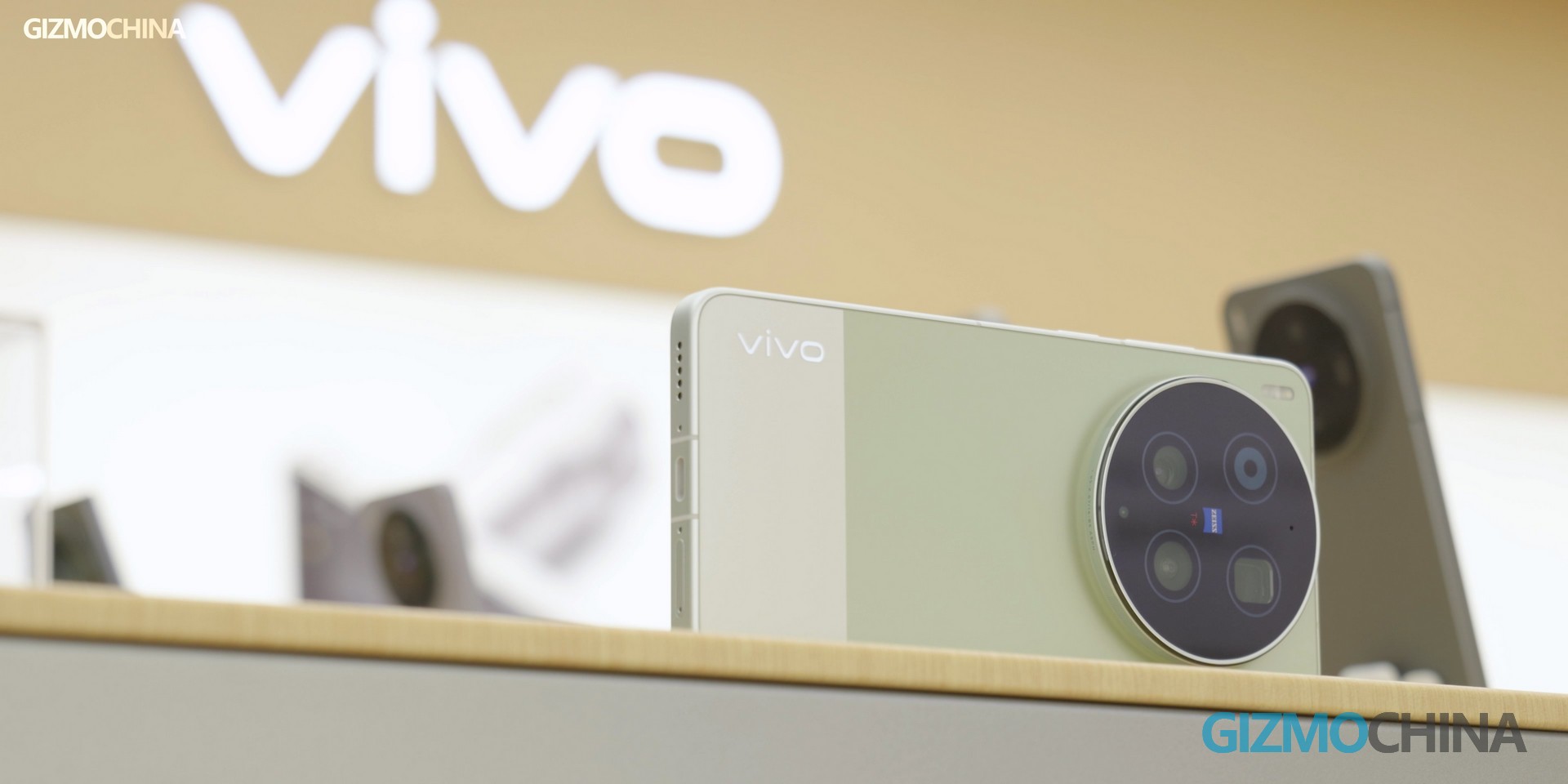
vivo X300 Ultra Hands-on: It might as well be called the X200s Ultra

1 April 2026 at 12:51

Amid much anticipation, the king of camera phones in 2025 was updated with the vivo X300 Ultra at the end of March 2026.

Among a crowd of Ultra models, the Xiaomi 17 Ultra by Leica features the best optical zoom lens in the world, and the stunning colors of the Leica Essential mode leave a deep impression. As for the OPPO Find X9 Ultra, although it hasn’t been released yet, the official has already revealed an exciting piece of information: it will come with a 200MP 3x telephoto, along with the world’s best 10x ultra-telephoto camera.

In contrast, the vivo X300 Ultra doesn’t seem to bring us many surprises, and there are even “downgrades” in its camera specifications. If last year’s X200 Ultra was one of my favorite phones, then this year’s X300 Ultra is probably no longer on that “favorites” list.

Camera

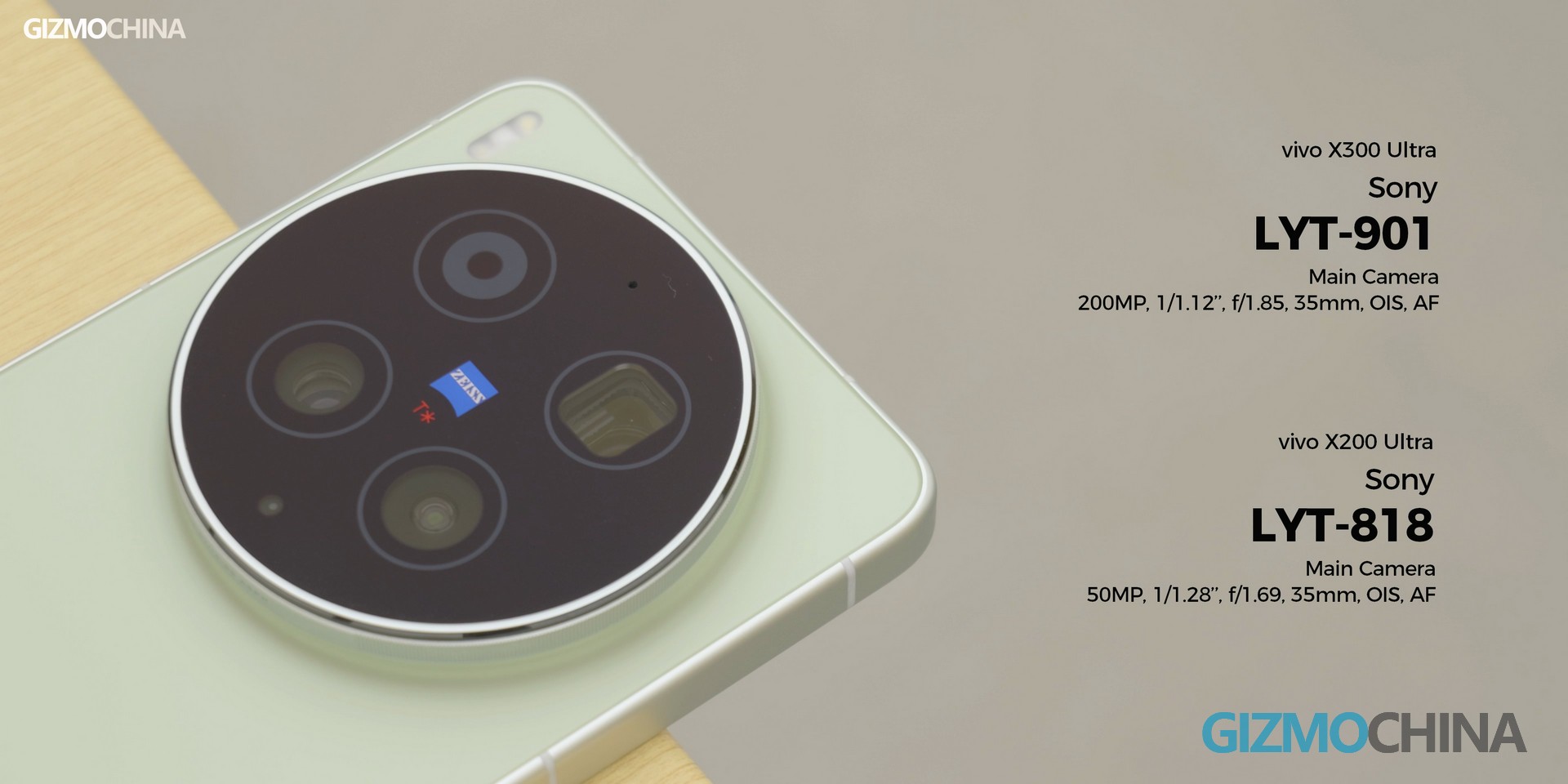
Looking purely at the raw capabilities of the camera system, the X300 Ultra remains one of the strongest contenders. However, when compared to its predecessor, it feels like vivo hasn’t fully pushed the envelope. Most of the upgrades are concentrated on the main camera, which now features a slightly larger sensor and higher pixel count. And It also follows the industry trend by incorporating a 5MP multispectral camera.

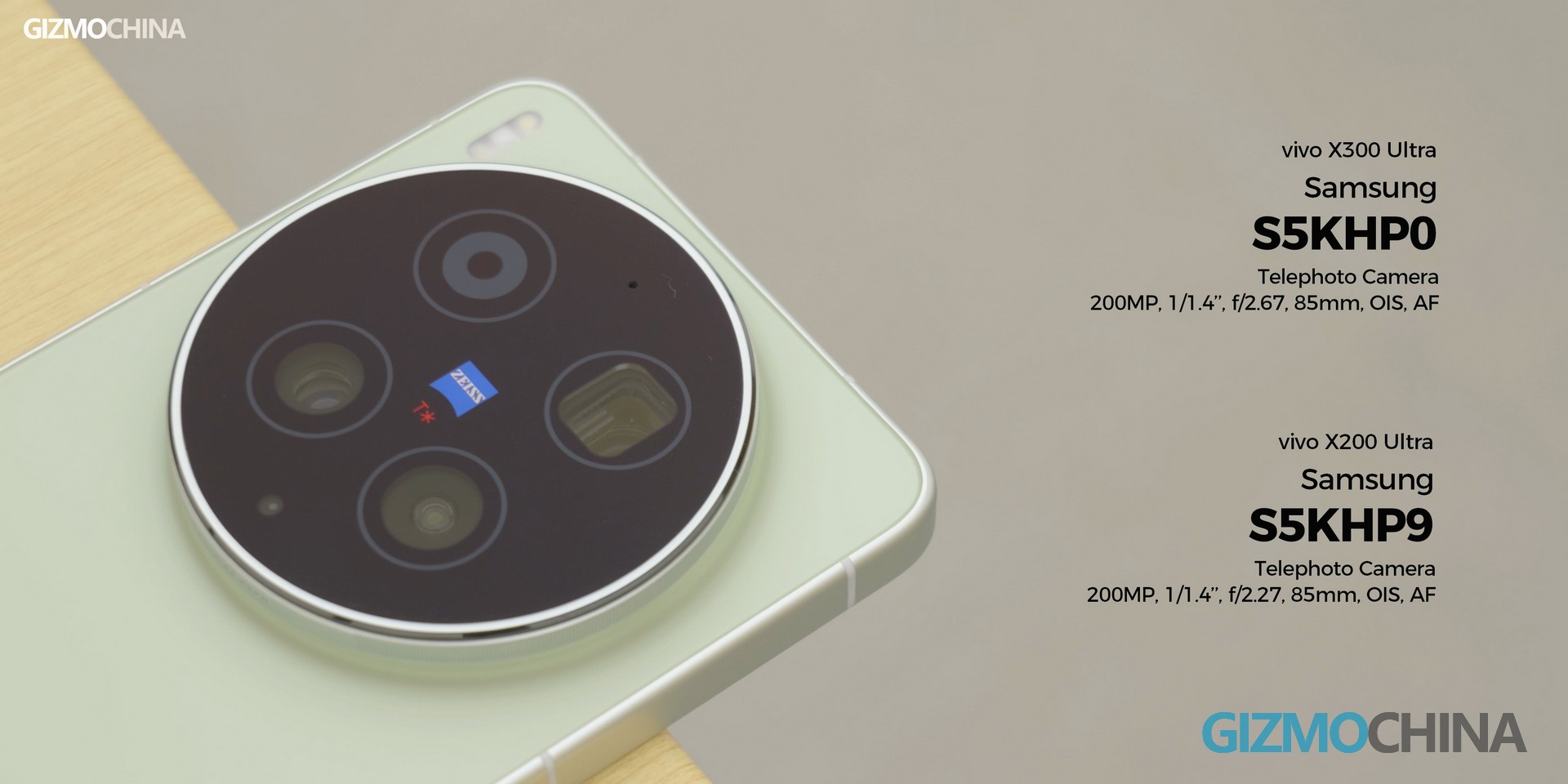
The ultra-wide camera remains largely unchanged, while the apertures on both the main and telephoto cameras have actually been reduced. For a device priced over $1,000, seeing such minimal hardware improvements is unlikely to sit well with most users. All that’s left is to hope the real-world camera performance delivers a pleasant surprise.

Teleconverter

That said, for those with ultra-long-distance photography needs, vivo remains a trusted choice. Its teleconverter kit was well-received last year, and the new iteration should be no exception. The new 200mm teleconverter is significantly more compact, and an additional 400mm lens is now available. If you’re determined to capture wildlife on the African savannah or shoot from the back of a concert hall using a smartphone, the X300 Ultra paired with the teleconverter kit might be your best option.

Unlike the hardware, the camera software sees no downgrades. The most notable addition is a new photo color tuning style—no need to guess where the inspiration comes from, right? There are also two new photography styles, said to be developed using vivo’s latest color science. We’ll dive into how effective these new features are in our full review.

Design

Aside from the camera, I also have some reservations about the design. The X300 Ultra is available in three colors. While the black version remains as satisfying as ever, the other two fall short of their counterparts on the X200 Ultra. The white model, in particular, feels a bit overdone—in my opinion, the snow mountain pattern is simply unnecessary. Then again, maybe I’m wrong—maybe it could end up being a favorite for some people.

After a year of trial and error, vivo has finally come to the conclusion that the camera control button was unnecessary—so it’s gone on the X300 Ultra. Personally, I wish they had added an AI button instead; having an extra customizable button is quite convenient for everyday use.

Other

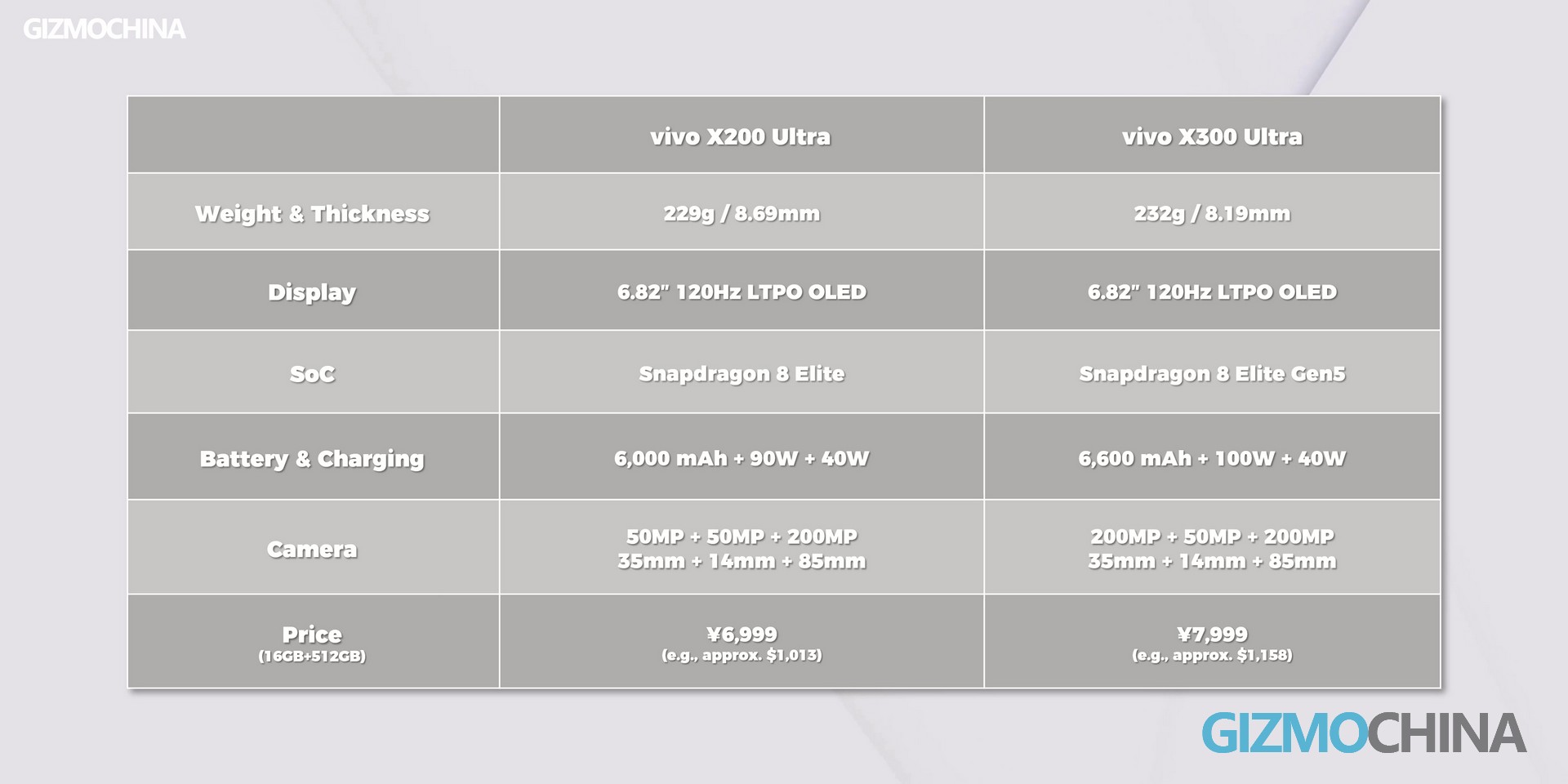
Other changes aren’t very noticeable. For example, the body is slightly thinner, but the weight has increased a bit. Charging power has gone up slightly, and so has the battery capacity, both by around 10%. As for the processor, it’s definitely the latest Snapdragon 8 Elite Gen5.

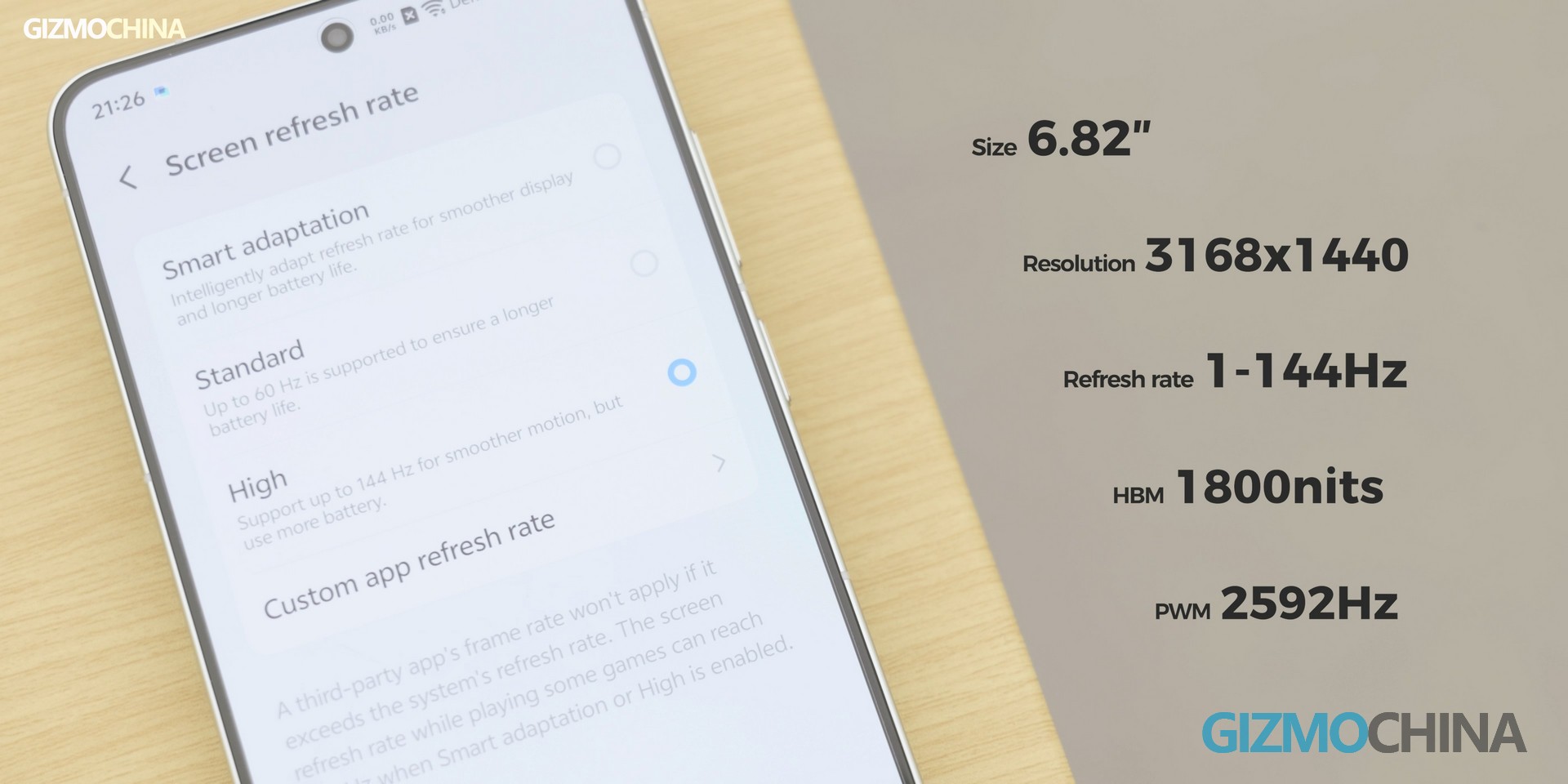
The screen refresh rate has been upgraded to 144Hz, while the resolution remains at 2K (3168×1440), and the display finally uses flat glass. The bezels are very narrow and appear symmetrical on all four sides. There are also some upgrades that aren’t visible from the outside, including an improved vibration motor and top speaker.

During the initial hands-on, the X300 Ultra feels more like an X200s Ultra – far from what I would define as a true next-generation upgrade.

The good news is that we can still safely say it remains one of the most powerful camera phones on the market. If you really love a 35mm main camera, then the X300 Ultra is indeed a more reassuring choice than the Nubia Z80 Ultra. But beyond that, if you are holding an X200 Ultra, I don’t see enough must-buy reasons to upgrade. I would even recommend buying the X200 Ultra instead—it’s not that different from the X300 Ultra, but costs less. Meanwhile, I’m more looking forward to the OPPO Find X9 Ultra, which, based on the rumors we know so far, feels much closer to what the X300 Ultra should have been—the true king of camera phones. In any case, please wait and see whether our real-world tests and full review prove us completely wrong.


The X300 Ultra is now available on GeekWills.

The post vivo X300 Ultra Hands-on: It might as well be called the X200s Ultra appeared first on Gizmochina.

Oppo K15 Pro arrives with a cyberpunk design and gaming-focused upgrades

1 April 2026 at 12:49
Oppo K15 Pro Launch Specs Price

Oppo has officially announced the new K15 Pro smartphone as part of the K15 Pro series. The phone starts at 2999 yuan (around $415 USD), and comes with a “cyberpunk-inspired” design.

Oppo K15 Pro Launch Specs Price

Its color options include Cyber Wing, Light Dust Pink, Origin Gray, and a more unusual “Golden Legend” carbon-style finish. The K15 Pro has a noticeably slim camera module, protruding less than 0.6mm, even while featuring a cooling fan. 

Oppo has also added a “LanYing breathing light” system that can change colors depending on notifications or phone activity. On top of that, the camera module supports magnetic lens caps, which users can swap out for different styles.

Performance and display

At the core of the device is the MediaTek Dimensity 8500 Super chip, paired with Oppo’s own chip-level tuning system called the Tide Engine. This isn’t a flagship processor, but it is capable enough for demanding apps and games.

The phone features a 6.59-inch display with a 144Hz refresh rate. It also features a gamepad-grade gyroscope for more precise motion control in supported titles.

The K15 Pro has a new Swift Cooling Engine that uses airflow ducts and heat dissipation fins, along with what Oppo describes as a triple dustproof design for cooling. The device is rated IP69, and the cooling system can automatically adjust fan speed, keeping noise as low as 19dB at half speed.

As for audio, the K15 Pro uses a stereo dual-speaker setup tuned in collaboration with its Golden Ear Lab and the Xinghai Conservatory of Music.

On the camera side, the phone includes a 50MP main sensor with optical image stabilization, along with an 8MP ultra-wide camera. 

The device runs ColorOS 16 and features a 7500mAh battery with 80W charging support. 

Pricing and Availability

The Oppo K15 Pro starts at 2,999 yuan in China for the 12/256GB variant. Here’s the pricing breakdown for all variants:

  • 12GB + 256GB: 2999 yuan (~$415 USD)
  • 12GB + 256GB (higher tier): 3199 yuan (~$445 USD)
  • 12GB + 512GB: 3499 yuan (~$485 USD)

There are also early sale discounts and subsidies in China that bring the effective price lower, but those won’t necessarily apply globally.

For more daily updates, please visit our News Section.

Stay ahead in tech! Join our Telegram community and sign up for our daily newsletter of top stories! 💡

The post Oppo K15 Pro arrives with a cyberpunk design and gaming-focused upgrades appeared first on Gizmochina.

Samsung Galaxy S26 vs iPhone 17e: Which One Makes Sense to Buy?

1 April 2026 at 11:59
galaxy vs iphone

Choosing between the Samsung Galaxy S26 and the iPhone 17e isn’t just about Android vs iOS anymore; it’s about how much flagship experience you actually need. One pushes boundaries with cutting-edge hardware and features, while the other focuses on delivering a clean, reliable experience at a much lower price. For buyers deciding whether to spend big or stay smart with their budget, this comparison highlights what truly changes, and what doesn’t, when you move up the price ladder.

Major Features:

FeaturesSamsung Galaxy S26iPhone 17eTrade-Off: What It Means
Display120Hz, much brighterStandard refresh, lower brightnessSamsung feels smoother & more premium
Camera SetupTriple camera + zoomSingle 48MP cameraSamsung = versatility, Apple = simplicity
Performance12GB RAM, raw power focus8GB RAM, highly optimizedSamsung is more future-ready, Apple stays consistent
FeaturesDeX, reverse wireless, more extrasMinimal extra featuresSamsung offers more flexibility
Battery & ChargingBigger battery + reverse chargingEfficient but simpler setupSamsung gives more options
Software ExperienceFeature-rich One UIClean, smooth iOSSamsung = control, Apple = ease
PricingPremium (~₹88K)More affordable (~₹65K)Big price gap changes expectations
Overall Trade-OffMore power, more featuresLess cost, less complexityDepends on what you value more
The best overall phone → Galaxy S26
The smartest buy for the price → iPhone 17e
Disclaimer: Specs are based on available data. Actual performance may vary. Verify details from official sources before buying.

Design and Display

Build and Feel

Samsung Galaxy S26 leans into a premium yet practical design with Gorilla Glass Victus 2 on both sides and an Armor Aluminum 2 frame. It feels refined but also engineered for durability, especially with Samsung’s focus on long-term usability. iPhone 17e, on the other hand, uses Ceramic Shield 2 and aluminum, delivering that signature Apple minimalism. It feels slightly more polished in hand, but Samsung’s finish comes across as more rugged and purpose-driven.

Display Quality

Samsung clearly dominates here with a 120Hz LTPO AMOLED panel pushing up to 2600 nits. The brightness and smoothness make everyday use and outdoor visibility noticeably better. The iPhone 17e’s OLED panel is sharp and color-accurate, but the lack of a high refresh rate makes it feel less fluid in comparison. Apple’s tuning is excellent, but Samsung’s display feels more modern and immersive.

Verdict

Galaxy S26 wins for offering a more advanced, smoother, and brighter display, while still maintaining a solid premium build.

Specifications Including Battery

Performance

The Galaxy S26 packs either Snapdragon 8 Elite Gen 5 or Exynos 2600, both cutting-edge chips with strong multi-core performance and GPU capabilities. It’s clearly built for heavy multitasking and gaming. The iPhone 17e’s A19 chip is highly optimized and efficient, delivering smooth real-world performance, but with only 8GB RAM, it feels slightly less future-proof compared to Samsung’s 12GB setup.

Battery and Charging

Samsung offers a 4300mAh battery with 25W wired charging and reverse wireless support, making it more versatile for daily use. The iPhone 17e’s 4005mAh battery is efficient thanks to iOS, but charging speeds remain average. Apple focuses more on consistency than speed, while Samsung pushes flexibility.

Verdict

Galaxy S26 takes the lead with better raw performance, more RAM, and greater charging versatility, making it feel more future-ready.

Camera

Main and Secondary Lenses

Samsung delivers a versatile triple-camera setup with a 50MP main sensor, 3x telephoto, and ultrawide lens. This flexibility makes it more capable across different scenarios, especially zoom and wide shots. The iPhone 17e sticks to a single 48MP camera, which performs excellently in most conditions but lacks the versatility of multiple lenses. Apple’s image processing is refined, but hardware limitations are noticeable.

Selfie Camera

Both phones feature 12MP front cameras with strong video capabilities. Apple adds Face ID and spatial features, making it slightly more advanced for biometrics and video recording. Samsung’s selfie camera is consistent and sharp, but less feature-packed.

Verdict

Galaxy S26 wins for versatility and overall camera system depth, while iPhone 17e remains strong for consistent point-and-shoot photography.

Pricing

The Galaxy S26 is priced around $900 (₹88,000), while the iPhone 17e comes in significantly lower at $600 (₹65,000). This creates a clear gap in positioning. Samsung targets the premium flagship segment, while Apple focuses on delivering a more affordable entry into its ecosystem.

Is the Price Justified?

Samsung justifies its higher price with a better display, more powerful hardware, additional cameras, and extra features like DeX and reverse charging. It feels like a full flagship experience. The iPhone 17e, however, offers strong value for those who want Apple performance and software at a lower cost, even if it compromises on hardware.

Verdict

iPhone 17e wins on value for money, but Galaxy S26 justifies its price with a more complete flagship package.

Disclaimer:
Prices are approximate and may vary based on country, region, and applicable taxes.

Conclusion

The Galaxy S26 stands out with features like Samsung DeX, a high-refresh-rate display, a triple-camera system, and longer software support. It feels designed for power users who want flexibility and cutting-edge hardware. The iPhone 17e focuses on simplicity, offering a clean iOS experience, reliable performance, and ecosystem advantages like Face ID and satellite features.

Verdict

Galaxy S26 is the better overall smartphone for those seeking top-tier specs, versatility, and future-proofing. However, the iPhone 17e remains a smart pick for users who prioritize value, smooth software, and a straightforward flagship experience without paying premium prices.

Disclaimer: This comparison is based on the specifications provided and is intended for general informational purposes. Actual performance, camera results, battery life, and overall experience may vary depending on real-world usage, software updates, and individual preferences.

Read More:

The post Samsung Galaxy S26 vs iPhone 17e: Which One Makes Sense to Buy? appeared first on Gizmochina.

MediaTek Dimensity 9600 to feature dual prime cores in a first for the Dimensity 9-series

1 April 2026 at 11:10
MediaTek-Dimensity-9600-two-prime-cores

Just as rumors begin to swirl around Qualcomm’s Snapdragon 8 Elite Gen 6, a new leak from tipster Digital Chat Station is shedding light on what MediaTek has in store next.

According to recent reports, the Dimensity 9600 will be built on TSMC’s 2nm N2P process. But the more interesting shift could be in its CPU design. The chip is rumored to adopt a new 2+3+3 layout, two “prime” cores paired with six high-performance cores.

If true, this would be the first time MediaTek’s Dimensity 9 series will move to a dual prime-core configuration. For context, Dimensity 9500 has one ARM C1-Ultra (4.21GHz) for peak performance, three ARM C1-Premium (3.5GHz) for sustained power, and four ARM C1-Pro (2.7GHz) for efficiency. 

Digital Chat Station says the dual prime-core setup in Dimensity 9600 is internally referred to as “Canyon.”

Even its competitor has a similar setup

On paper, this setup should make the Dimensity 9600 better equipped to handle demanding workloads, especially as AI tasks continue to grow more complex. Paired with the new process node, the chip is expected to deliver a noticeable jump over its predecessor.

As for graphics, the Dimensity 9600 is said to include a new GPU with neural network shader technology that should improve coordination between the GPU and NPU. Better collaboration between these components could reduce power draw while maintaining smoother performance.

Meanwhile, its competition isn’t standing still. The Snapdragon 8 Elite Gen 6 is also rumored to adopt a similar 2+3+3 CPU layout. Not to forget, Qualcomm’s solution relies on its in-house Oryon cores, while the Dimensity 9600 will feature ARM’s upcoming Cortex-C2 series cores. 

This sets up a familiar situation where both companies are chasing similar architectural goals, even if their execution differs.

For more daily updates, please visit our News Section.

Stay ahead in tech! Join our Telegram community and sign up for our daily newsletter of top stories! 💡

The post MediaTek Dimensity 9600 to feature dual prime cores in a first for the Dimensity 9-series appeared first on Gizmochina.

Humanoid Robots Are Scaling Fast, And AGIBOT from China Is Leading the Charge

1 April 2026 at 11:07
AGIBOT

AGIBOT has announced a major achievement, rolling out its 10,000th humanoid robot on March 30, 2026, in Shanghai. This makes it one of the first robotics companies in the world to reach such a scale. The milestone reflects a clear shift in the industry, from early-stage testing to large-scale real-world deployment. It also signals that humanoid robots are no longer limited to labs or experiments but are becoming part of everyday business environments.

From Experiment to Real-World Use

This achievement is not just about production numbers. It highlights AGIBOT’s ability to deploy robots at scale across different industries. The company is moving beyond niche use cases and entering mainstream commercial adoption. This marks an important transition where the focus is no longer just on whether the technology works, but on how it delivers real business value. It also shows that embodied AI is becoming practical and usable in real-world settings.

Rapid Production Growth

AGIBOT’s growth has accelerated significantly over time. It took nearly two years to produce its first 1,000 robots. The jump from 1,000 to 5,000 units took about a year. However, scaling from 5,000 to 10,000 units happened in just three months. This fourfold increase in speed highlights major improvements in manufacturing efficiency and supply chain maturity. It also reflects rising demand for humanoid robots across industries.

According to Peng Zhihui, this rapid scaling is the result of a mature supply chain and standardized manufacturing processes. He emphasized that demand for large-scale commercial robotics solutions is increasing quickly. The company is focused on expanding the adoption of embodied AI systems and making them more accessible to businesses worldwide.

Expanding Real-World Applications

A large number of AGIBOT’s robots are already deployed in real-world environments. They are being used in logistics, retail navigation, hospitality services, and education. The company is also expanding into industrial applications, including production line support and manufacturing operations. This shows a clear shift toward practical, day-to-day use of humanoid robots.

Global Reach and Industry Impact

AGIBOT is also seeing strong international demand, with deployments across Europe, North America, Japan, South Korea, Southeast Asia, and the Middle East. The focus is moving from pilot projects to repeat large-scale rollouts. This milestone confirms that humanoid robots are now scalable, commercially viable, and ready to be integrated into everyday business operations, positioning AGIBOT as a leader in the global robotics industry.

What Is AGIBOT?

AGIBOT is a Shanghai-based robotics company focused on humanoid robots powered by embodied AI for industrial and service use. Founded in 2023, it has quickly scaled from prototypes to mass production, crossing 10,000 robots and becoming one of the first to deploy humanoids at this level. Its systems are already used in logistics, retail, hospitality, and manufacturing environments. With rapid production growth and expanding global deployments, AGIBOT is now focused on scaling real-world adoption and making general-purpose robots more practical across industries.

Read More:

The post Humanoid Robots Are Scaling Fast, And AGIBOT from China Is Leading the Charge appeared first on Gizmochina.

There won’t be Oppo Find X10 Ultra in 2026

1 April 2026 at 10:02
Oppo Find X9s Pro

Oppo is yet to complete the Find X9 series — the Find X9s Pro and Find X9 Ultra are set to launch on April 21. But if you’ve been following us, early details of the Find X10 lineup have already started to surface in the rumor mill.

And while there’s little doubt that the first devices in the Find X10 series will launch later this year, an Oppo official has confirmed that there won’t be an Oppo Find X10 Ultra in 2026.

Oppo Find X10 Ultra launch leak

Zhuo Shijie, who heads Oppo’s Find series products, stated plainly that the Oppo Find X10 Ultra isn’t coming in 2026. “I can tell you with certainty that the Find X10 Ultra will not be launched this year. Please stop believing the rumors,” he said on the Chinese social media platform Weibo.

Meanwhile, the current focus is on the Find X9 Ultra. Oppo says this device is like “putting a Hasselblad in your pocket,” which means it’s all about the camera. Its headline feature is a new optical system built around a five-reflection prism, enabling an equivalent focal length of 460mm. This translates to native 10x optical zoom, 20x optical-quality zoom, and up to 120x digital zoom. It’s a 50MP periscope lens.

Oppo Find X9 Ultra specifications (rumored)

The rest of the camera system is also packed. It has a 200-megapixel main sensor, a 50-megapixel ultra-wide lens, and a 200-megapixel 3x periscope telephoto camera for portraits. For selfies, it may include a 50-megapixel front-facing camera.

Beyond the camera, the Find X9 Ultra is said to feature a 6.82-inch flat OLED display with 2K resolution, similar to its predecessor.

Oppo Find X9 Ultra launch date
Oppo Find X9 Ultra, Find X9s Pro launch date

Internally, the phone is expected to run on Qualcomm’s Snapdragon 8 Elite Gen 5 chipset, paired with ColorOS 16 based on Android 16. The battery capacity is rumored to be around 7,050mAh, which is larger than the 6100mAh battery of Find X8 Ultra. Charging support may include 80W wired and 50W wireless speeds.

For more daily updates, please visit our News Section.

Stay ahead in tech! Join our Telegram community and sign up for our daily newsletter of top stories! 💡

The post There won’t be Oppo Find X10 Ultra in 2026 appeared first on Gizmochina.

Vivo X300 Ultra, Vivo’s Most Powerful Flagship Now Available at Geekwills

1 April 2026 at 09:21
Vivo X300 Ultra

Vivo X300 Ultra is now available for global customers through Geekwills, making this powerful flagship accessible beyond China. It brings top-tier performance, advanced cameras, and premium features for users who want the latest tech without limits. With a starting price of $1199, the phones come in multiple configurations, including 12GB and 16GB RAM options with storage up to 1TB, giving users flexibility based on their needs and budget.

Performance and Power

The Vivo X300 Ultra is built for users who want top-level speed and smooth performance. It runs on the latest Qualcomm Snapdragon 8 Elite Gen 5 processor based on a 3nm design, which means faster performance and better efficiency. With up to 16GB LPDDR5X RAM and UFS 4.1 storage, apps open quickly, and multitasking feels effortless. Whether you’re gaming or switching between apps, the experience stays smooth and lag-free.

Display and Design

This phone features a large 6.82-inch 2K AMOLED LTPO display with a 144Hz refresh rate. Everything looks sharp, colorful, and fluid. The display also supports up to 3000 nits peak brightness, making it easy to use even outdoors. With premium color options like Black, Silver, and Green, the phone offers both style and a flagship feel.

Camera and Photography

The Vivo X300 Ultra stands out with its powerful triple camera setup. It includes two 200MP sensors and one 50MP ultra-wide lens. The main camera uses a Sony LYTIA sensor for detailed shots, while the telephoto lens offers strong zoom capabilities. A 50MP front camera ensures sharp selfies and clear video calls. This setup is designed for users who love photography and want high-quality results.

Battery and Charging

With a large 6600mAh battery, the phone easily lasts through a full day of heavy use. It supports 100W fast wired charging and 40W wireless charging, so you can quickly power up and get back to using your phone.

Software and Features

Running on OriginOS 6 based on Android 16, the phone offers a clean and customizable experience. It also supports 5G, Wi-Fi 7, Bluetooth 5.4, and NFC for fast connectivity and modern features.


Read More:

The post Vivo X300 Ultra, Vivo’s Most Powerful Flagship Now Available at Geekwills appeared first on Gizmochina.

Xiaomi begins HyperOS 3.1 global rollout for the first batch of devices

1 April 2026 at 07:54
HyperOS 3.1 global rollout

After an initial release in China, Xiaomi is expanding the rollout of HyperOS 3.1 to other regions. The update initially rolled out globally for the Xiaomi 17 and Xiaomi 17 Ultra, starting with Europe, and then quickly expanded to POCO and Redmi devices.

The HyperOS 3.1 global update is currently rolling out to these devices: 

  • Xiaomi 17 (Europe): OS3.0.301.0.WPCEUXM
  • Xiaomi 17 Ultra (Europe): OS3.0.301.0.WPAEUXM
  • POCO Pad (Europe): OS3.0.301.0.WNSEUXM
  • Redmi Pad Pro (Europe): OS3.0.301.0.WNSEUXM

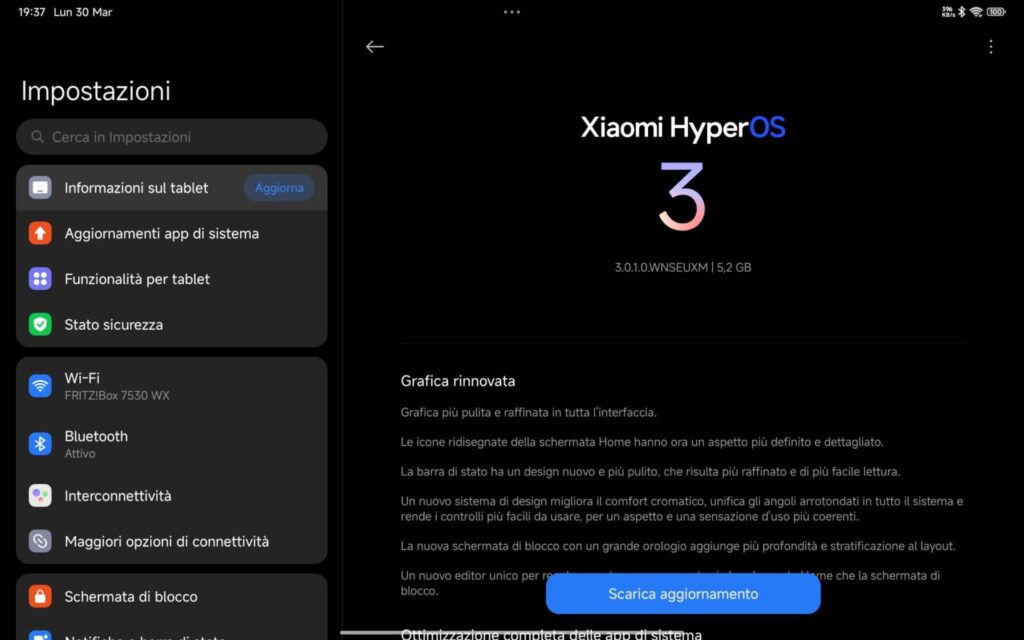
The global HyperOS 3.1 update for these devices is currently limited to Europe, but it shouldn’t be long before the update expands to more regions. If your device is on the list, go to Settings > About phone and tap the HyperOS logo at the top to check for available updates.

HyperOS 3.1 update for Poco Pad and Redmi Pad Pro

Also read: HyperOS 3.1 vs HyperOS 3: Eligible devices and new features

The HyperOS 3.1 update, based on Android 16, introduces a wealth of system-level optimizations and UI refinements, further improving the user experience and productivity. Xiaomi has rewritten several core system applications to achieve highly efficient resource usage, resulting in noticeable snappier performance.

The latest HyperOS software brings HyperIsland to tablets for the first time, while other devices receive an upgraded HyperIsland experience that now supports richer animations, deeper third-party integration, and more intuitive real-time activity tracking.

The recent apps page gets an iOS-inspired look with smoother gesture navigation, fluid card swiping, and better visual management. The update also introduces the Super OTA feature that applies system updates faster with minimal reboot time and fewer errors.

HyperOS 3.1 further bridges the cross-platform connectivity with Apple devices by adding native support for Apple AirPods. This enables features like quick pop-up pairing and access to spatial audio on compatible earbuds.

To ensure you don’t miss out on the latest HyperOS stories, remember to visit the Xiaomi section on this website regularly. Alternatively, you can join us on Telegram to get instant notifications about the latest HyperOS updates and major tech headlines.

source/via: XiaomiTime (1, 2)

The post Xiaomi begins HyperOS 3.1 global rollout for the first batch of devices appeared first on Gizmochina.

TCL launches C8L SQD-Mini LED TVs with 6000 nits brightness & 144Hz refresh rate

1 April 2026 at 04:18
TCL C8L SQD-Mini LED TV

TCL has unveiled its high-end Mini LED TV series, the C8L, in Europe, branded as the QM8L in the U.S. This 2026 lineup boasts cutting-edge display technology and a sleek, premium design.

TCL C8L SQD-Mini LED TV

TCL C8L SQD-Mini LED TV Specifications

TCL uses its SQD-Mini LED technology to deliver breakthrough performance. The TVs offer 100% coverage of the BT.2020 color gamut, making colors appear more vibrant and accurate. These also feature an Ultra Color Filter and Super Quantum Dot technology, which enhance brightness, improve color accuracy, and optimize light control for superior image quality across all scenes.

TCL C8L SQD-Mini LED TV

The lineup includes ultra-high brightness levels in its 98-inch and 85-inch models, achieving 6,000 nits peak brightness. This allows the TVs to handle HDR content exceptionally well, with rich details in highlights and deep, saturated blacks. TCL has also focused on reducing color distortion and blooming by introducing advanced dimming zone controls, paired with proprietary All-Domain Halo Control Technology.

The C8L series features an ultra-slim design, measuring just 5cm at its thinnest point. The TVs integrate a virtually ZeroBorder display that reduces bezels, maximizing the screen-to-body ratio. These also include Micro-OD optics, which enhance the backlighting while contributing to the slim form factor.

TCL equipped the C8L series with cutting-edge gaming and processing features. The TVs support a 144Hz refresh rate, with VRR capabilities boosted to 288Hz for smoother gaming performance. Its TSR AiPQ processor uses AI for real-time enhancements to image clarity, contrast, and motion

TCL C8L SQD-Mini LED TV

The new series enhances audio quality with Bang & Olufsen-tuned sound, Beosonic technology for easy soundscape adjustments, and built-in Hi-END speakers for richer, more immersive sound.

Alongside the C8L, TCL has also introduced its X11L flagship Mini LED TVs in Europe, featuring advanced dimming capabilities and AI-driven processing, while also announcing the C7L series with SQD Mini LED technology, Dolby Vision support, and up to 288Hz VRR.

For more daily updates, please visit our News Section.

Stay ahead in tech! Join our Telegram community and sign up for our daily newsletter of top stories! 💡

The post TCL launches C8L SQD-Mini LED TVs with 6000 nits brightness & 144Hz refresh rate appeared first on Gizmochina.

Lenovo Yoga Mini i Gen 11 Debuts with Circular Design Intel Core Ultra and 4-Display Support

1 April 2026 at 03:52
Lenovo Yoga Mini i

Lenovo Yoga Mini i Gen 11 has launched in China after its CES 2026 debut, bringing a compact circular design and Intel Core Ultra hardware into the mini PC segment. The device measures 283 x 202 x 123 mm with a 0.65-litre chassis. It weighs 600 g and uses an aluminum enclosure with a polished base in a Seashell finish.

Lenovo Yoga Mini i

The initial configuration available in China includes an Intel Core Ultra 5 325 processor paired with 16 GB RAM and 512 GB storage, priced at CNY 5,499, which is about $797. Lenovo had earlier indicated a $699 starting price in the US, also tied to this processor tier. Higher-end configurations with up to an Intel Core Ultra X7 385H processor are expected later, along with up to 32 GB LPDDR5x memory and 2 TB PCIe Gen4 SSD storage.

Lenovo Yoga Mini i

The system runs Windows 11 Home or Pro and includes an NPU rated at up to 50 TOPS for AI workloads. Graphics scale up to Intel Arc B390. A 45W thermal design with a blower fan is used to maintain stable performance during multitasking, editing, and rendering tasks.

Lenovo Yoga Mini i

Connectivity is a key focus. The Yoga Mini i supports up to four displays through dual Thunderbolt 4 ports, multiple USB-C ports with DisplayPort, HDMI 2.1 with 4K at 60 Hz output, USB-A, and Ethernet. Wireless support includes WiFi 7 and Bluetooth 6.0. A 100W power supply is integrated.

The system includes a 2W speaker, dual microphones, and several AI-driven features. Adaptive Lighting reacts to presence and audio, while touch controls and an accelerometer enable gesture-based interaction. WiFi sensing supports human presence detection, enabling automatic wake and screen dimming. Security features include a fingerprint reader integrated into the power button, Microsoft Pluton, Secured-core PC support, and Walk Away Lock. The device also carries ENERGY STAR, FSC, and carbon-neutral certifications.

Lenovo lists the Yoga Mini i as coming soon in other regions, with a broader global rollout expected before July 2026.

(via: Notebookcheck)

The post Lenovo Yoga Mini i Gen 11 Debuts with Circular Design Intel Core Ultra and 4-Display Support appeared first on Gizmochina.

Realme C100 5G and C100i 4G appear in unboxing and hands-on images ahead of launch

1 April 2026 at 03:15

Two upcoming models, the Realme C100 and C100i, have shown up in a hands-on video from Thailand, giving a fairly detailed early look. One of them has even popped up on a local retailer listing, so these don’t seem too far from an official launch.

Starting with the C100, it’s a fairly large device. You’re looking at a 6.8-inch LCD panel with 720p+ resolution and, interestingly, a 144Hz refresh rate, which is not something you usually see at this level. Brightness is rated at up to 900 nits, so it should be usable outdoors.

The phone is powered by the Dimensity 6300 5G, paired with either 4GB or 6GB RAM and 128GB storage. There’s also a dedicated microSD slot, which is becoming less common but still useful in this segment.

Battery is also a key highlight of this C100. The phone packs a 7,000mAh cell, which is quite large even by today’s standards. Charging is capped at 15W though, so topping it up will likely take some time.

You get a 50MP main camera, a 5MP front shooter, a 3.5mm headphone jack, and IP64 protection. The phone is listed in Thailand at around THB 7,000 to 7,500, depending on the RAM variant.

The C100i sits a bit lower in the lineup. It keeps the same screen size and battery, but drops to a 120Hz refresh rate and runs on a Unisoc T606/T616-class chip, so performance will be more basic. Cellular connectivity will also be limited to 4G.

What’s a bit unclear right now is how these fit into Realme’s existing lineup. Phones like the C85 offer more RAM or faster charging at similar prices.

More details should follow once Realme makes things official, but for now, this looks like a pretty straightforward push toward endurance-focused budget phones.

Stay ahead in tech! Join our Telegram community and sign up for our daily newsletter of top stories!

For more daily updates, please visit our News Section.

(Source)

The post Realme C100 5G and C100i 4G appear in unboxing and hands-on images ahead of launch appeared first on Gizmochina.

Asus ROG Zephyrus G14 (2026) UK rollout begins with RTX 5070 Ti and 5080 models

1 April 2026 at 02:52
ASUS ROG Zephyrus G14

Asus has introduced the 2026 ROG Zephyrus G14 (GU405) to the UK market, bringing Intel’s new Panther Lake platform to its 14-inch gaming lineup. First shown at CES 2026, the model featured the latest and greatest hardware from Intel and Nvidia, offered in multiple configurations.

ASUS ROG Zephyrus G14

All variants are powered by the Intel Core Ultra 9 386H processor with 16 cores, paired with 32GB LPDDR5X 8533 RAM. The chip includes an NPU rated at up to 50 TOPS, 18MB cache, and boost speeds up to 4.9GHz. Storage options include 1TB or 2TB PCIe 4.0 NVMe SSDs.

The laptop retains a 14-inch 3K OLED display with a 2880 x 1800 resolution and 120Hz refresh rate. Asus has increased peak brightness to 1,100 nits. The panel supports ROG Nebula HDR, G-Sync, Pantone validation, and includes a MUX switch with Advanced Optimus.

ASUS ROG Zephyrus G14

Graphics options include the Nvidia GeForce RTX 5070 (8GB GDDR7), RTX 5070 Ti (12GB GDDR7), and RTX 5080 (16GB GDDR7). All GPUs now run at higher power levels than the 2025 model. The RTX 5070 increases to 90W plus 15W Dynamic Boost, while the RTX 5070 Ti and RTX 5080 move to 100W plus 15W. Turbo clocks reach up to 1595MHz on the 5070, 1812MHz on the 5070 Ti, and 1550MHz on the 5080, each at 115W. To support this, Asus includes a 250W power adapter, which is 50W higher than before. The system is backed by a 73Wh battery.

Three configurations are available. The base model, priced at £2,899.99, includes the RTX 5070, 1TB storage, weighs 1.50kg, and has a thickness of 1.59 to 1.63 cm. The mid-tier RTX 5070 Ti model costs £3,099.99, weighs 1.58kg, and measures 1.59 to 1.83 cm. The top-end RTX 5080 version is priced at £3,699.99, includes 2TB storage, and shares the same weight and thickness as the mid-tier model.

Connectivity includes Wi-Fi 7, Bluetooth 6.0, Thunderbolt 4, HDMI 2.1, and a UHS-II SD card reader. Other features include a four-speaker system with Dolby Atmos, Smart Amp, a 1080p IR camera, RGB backlit keyboard with a Copilot key, and Asus Slash Lighting.

You must also check out our best of CES 2025 for all the coolest tech announcements.

Stay ahead in tech! Join our Telegram community and sign up for our daily newsletter of top stories!

The post Asus ROG Zephyrus G14 (2026) UK rollout begins with RTX 5070 Ti and 5080 models appeared first on Gizmochina.

Lava Bold N2 Pro launches under ₹10,000 with upgraded chipset and camera over Bold N2

1 April 2026 at 02:00

Lava is back with another budget phone. Just weeks after the Bold N2, the company has now introduced the Bold N2 Pro, and the “Pro” tag doesn’t follow the usual pattern here. Instead of going bigger or more expensive, the N2 Pro is actually a bit more compact and, in some ways, better balanced. It still sticks to 4G though, which might raise a few eyebrows.

The phone runs on the Unisoc T7250, a 12nm chip with Cortex-A75 and A55 cores, along with a Mali-G57 GPU. It should handle basic tasks like calling, messaging, online payments, and watching YouTube. There’s only one variant for now, 4GB RAM with 128GB storage.

On the front, you get a 6.67-inch LCD display with a 120Hz refresh rate and 720p+ resolution. It ships with Android 15, although Lava is promising just one major update and two years of security patches. That’s fairly standard for this price segment, nothing surprising there.

Battery capacity sits at 5,000mAh, with support for 18W charging. Slight catch though, the bundled charger is only 10W, so you won’t get the full speed unless you use a different adapter.

Cameras see a noticeable upgrade this time. There’s a 50MP main sensor on the back and an 8MP front camera, which is a decent jump over the 13MP+5MP setup of the standard N2. You also get IP54 protection, so basic dust and splash resistance is covered.

Comparing the two, the regular Bold N2 has a slightly larger display and a higher IP64 rating, but it runs on a much older UNISOC 9863a chip and Android 15 Go.

Pricing and availability:

Pricing is where things get interesting. The Bold N2 Pro is listed at ₹8,000 on Flipkart, lower than the N2’s ₹9,000 price. For what it offers, especially the storage, display smoothness, and camera upgrade, it looks like Lava is trying to squeeze out a bit more value rather than just pushing specs on paper.

Don’t miss a thing! Join our Telegram community for instant updates and grab our free daily newsletter for the best tech stories!

For more daily updates, please visit our News Section.

The post Lava Bold N2 Pro launches under ₹10,000 with upgraded chipset and camera over Bold N2 appeared first on Gizmochina.

Casio Pro Trek brings Yosemite-inspired design with a Thick Steel Bezel and Cold Resistance Down to -10°C

1 April 2026 at 01:36
PRW-B1000B-2JF

Casio Pro Trek PRW-B1000B-2 has been announced in Japan and is set to launch in April 2026. The model takes design cues from Yosemite National Park and is built for outdoor use with a focus on durability, navigation, and safety.

Casio Pro Trek PRW-B1000B-2

The watch is part of the Pro Trek PRW-B1000 Climber Line. It runs on Tough Solar power, which converts sunlight and indoor light into energy for stable operation. It supports Multi Band 6 radio signals and Bluetooth connectivity for automatic time correction, so it always shows the correct time.

It comes with a triple sensor system that measures direction, barometric pressure, altitude, and temperature. The digital compass uses the second hand to indicate north. A location indicator helps with navigation. The small hand at 3 o’clock points toward a saved location, and the LCD shows the distance from the current position. Users can record a location directly from the watch, which helps when returning during a hike or locating a parked vehicle. It is also water resistant up to 100 m and can operate in low temperatures down to -10°C.

When paired with a smartphone app, the watch can automatically correct altitude data, record routes, and show directions to a destination. It also supports route log tracking for activity records.

The design reflects Yosemite’s rocky terrain. The stainless steel bezel has a sharp, multi-sided structure with slits at the corners that represent cracks in rock surfaces. The dial has a layered design for added depth. Large hands and three-dimensional indices improve readability. The small hand at 9 o’clock is shaped like a climbing piton, referencing climbing gear from the 1970s. Large metal buttons and a crown make it easier to operate the watch while wearing gloves.

The case uses flame-retardant biomass plastic and meets UL94 V-0 certification. This means it will stop burning when the flame source is removed and helps reduce fire spread. The band is made from CORDURA re/cor material, which is lightweight, durable, and made from recycled waste. It is also flame-resistant, reducing the risk of damage from sparks during camping or cooking.

The watch is priced at ¥89,100, which is about $561. It is also listed on Casio’s global website, which suggests a wider international release could follow.

You must also check out our best of CES 2025 for all the coolest tech announcements.

Stay ahead in tech! Join our Telegram community and sign up for our daily newsletter of top stories!

(Source)

The post Casio Pro Trek brings Yosemite-inspired design with a Thick Steel Bezel and Cold Resistance Down to -10°C appeared first on Gizmochina.

Ayaneo discontinues Snapdragon 8 Elite-powered Pocket Fit handheld citing high costs

1 April 2026 at 00:38
Pocket Fit 8 Elite

Ayaneo has announced the upcoming discontinuation of its Android-based Pocket Fit 8 Elite gaming handheld. The company confirmed that rising RAM and storage costs have made further production unsustainable. After fulfilling pre-orders and completing one final restock, Ayaneo will end production of the device.

The Pocket Fit 8 Elite, powered by the Snapdragon 8 Elite chipset, has begun shipping to backers after months of production delays. Ayaneo prioritized shipping orders as soon as individual SKUs left the factory.

Pocket Fit 8 Elite

The company stated that it is committed to completing all outstanding pre-orders before selling remaining inventory to the public. However, future production costs will increase significantly, making this restock likely the last.

Ayaneo revealed that the global RAM shortage had a significant impact on the Pocket Fit 8 Elite. The company attributed months of delays to supply chain disruptions.

Although Ayaneo reserved materials for limited additional production, the rising cost of components prevents the product from being a long-term offering. Ayaneo has no plans to produce more units after the next restock.

This isn’t an isolated situation for Ayaneo. Several other handhelds in the company’s lineup are also facing production limitations. The Pocket Vert and Pocket S Mini will not be restocked once the current inventory sells out.

For the Pocket Air Mini, Ayaneo confirmed that free promotional units will end after April 1, 2026. Meanwhile, the Pocket DS is available for limited pre-orders, but its future batches remain uncertain.

The company also shared an update on its Next 2 flagship Windows handheld. Ayaneo suspended sales of the Next 2 due to rapidly increasing storage prices.

Costs have grown to nearly double the original estimates, making the device unsustainable to sell at its current retail price. Pre-orders of the Next 2 will still be fulfilled, and Ayaneo plans to resume sales if prices stabilize in the future.

Ayaneo reassured backers that it will provide after-sales support and spare parts for both the Pocket Fit 8 Elite and Next 2.

For more daily updates, please visit our News Section.

Stay ahead in tech! Join our Telegram community and sign up for our daily newsletter of top stories! 💡

The post Ayaneo discontinues Snapdragon 8 Elite-powered Pocket Fit handheld citing high costs appeared first on Gizmochina.

Samsung Galaxy Buds 4 Pro Bring New Motion Sickness Solution With Audio Therapy

31 March 2026 at 23:50
Samsung Galaxy Buds 4 Pro

Samsung has introduced a new approach to managing motion sickness through its Galaxy Buds 4 Pro and the Hearapy app. The solution uses a controlled audio signal instead of medication or physical remedies, targeting the inner ear to reduce symptoms such as dizziness, nausea, and sweating.

Samsung Galaxy Buds 4 Pro

Motion sickness affects nearly one-third of people and occurs when the body receives conflicting signals. The balance system in the inner ear detects movement, while the eyes may focus on a stationary object like a phone or book. This mismatch triggers stress responses. Existing solutions have largely relied on medication or acupressure.

Samsung’s method is based on research conducted at Nagoya University in Japan. The study identified that a 100 Hz sine wave can stimulate the vestibular system, which is responsible for balance. In testing, participants who listened to this tone at 80 to 85 dB for 60 seconds reported reduced symptoms during car travel. The effect was observed to last up to two hours.

The Hearapy app delivers this tone through a Galaxy smartphone, with a built-in timer set to 60 seconds and volume calibrated to around 85 dB. For the effect to work, the sound must be played without interference from music or external noise, and both ears must be exposed before travel.

The Galaxy Buds 4 Pro are designed to reproduce this frequency accurately. The earbuds feature a larger mid-bass driver area, increased by nearly 20 percent compared to the previous model, along with an updated two-way speaker system. They support 24-bit/96 kHz audio via Samsung Seamless Codec Ultra High Quality, enabling precise sound output.

The earbuds also include Adaptive Active Noise Cancellation supported by six microphones, which detect ambient noise and generate opposing signals to reduce it. Adaptive EQ further adjusts sound in real time based on fit and surroundings. These features help maintain a stable 100 Hz tone, which is required for the system to work as intended.

You must also check out our best of CES 2025 for all the coolest tech announcements.

Stay ahead in tech! Join our Telegram community and sign up for our daily newsletter of top stories!

(Source)

The post Samsung Galaxy Buds 4 Pro Bring New Motion Sickness Solution With Audio Therapy appeared first on Gizmochina.

ASRock launches new 31.5″ WOLED gaming monitor with 4K 240Hz or FHD 480Hz dual mode

31 March 2026 at 23:20
ASRock-PGO32UFS2C-Monitor

ASRock has announced its new PGO32UFS2C monitor, a 31.5-inch gaming display that features dual-mode refresh rate options. The monitor is expected to be priced at 149,800 yen ($942) in the Japanese market.

ASRock PGO32UFS2C Monitor

ASRock PGO32UFS2C Specifications

The display offers a WOLED panel with 4K UHD resolution of 3840 x 2160, a 16:9 aspect ratio, and wide viewing angles typical of OLED technology. It comes with an anti-glare coating that minimizes reflections.

The monitor supports dual refresh rates with 240Hz in UHD and 480Hz in FHD. It features a dedicated button for quick mode switching and an ultra-fast response time (GTG) of 0.03 milliseconds. The monitor also includes AMD FreeSync Premium Pro, reducing tearing and stuttering for smoother gameplay.

ASRock PGO32UFS2C Monitor

ASRock has focused heavily on color accuracy with the PGO32UFS2C. The monitor covers 99% of the DCI-P3 color gamut and achieves a Delta E of less than 2, providing professional-grade precision for creative tasks.

It also carries DisplayHDR True Black 400 certification, delivering deep black tones and superior contrast. In HDR mode, the panel reaches a peak brightness of 1,300 nits, while maintaining 275 nits in SDR.

The PGO32UFS2C offers multiple connectivity options, including two HDMI 2.1 ports, two DisplayPort 1.4 ports, and one USB-C interface. The USB-C port supports DisplayPort Alt Mode and offers 65W power delivery for devices like laptops.

ASRock has added productivity tools such as an integrated KVM switch and a built-in USB hub. The monitor includes one USB-B upstream port and three USB-A downstream ports, all rated at 5 Gbps. For audio, it features dual 5W speakers and a 3.5mm headphone jack.

ASRock PGO32UFS2C Monitor

The monitor measures 715 mm in width, 280 mm in depth, and 602 mm in height. It features an adjustable stand with support for height, tilt, and swivel adjustments. The total weight is 6.3 kilograms.

In related news, MSI has recently unveiled a new 27-inch 2K 144Hz monitor featuring circular polarization eye-care technology, while TCL has introduced the Thunderbird 27Q6A Pro, a 27-inch 2K 320Hz Mini-LED gaming monitor.

For more daily updates, please visit our News Section.

Stay ahead in tech! Join our Telegram community and sign up for our daily newsletter of top stories! 💡

(Via)

The post ASRock launches new 31.5″ WOLED gaming monitor with 4K 240Hz or FHD 480Hz dual mode appeared first on Gizmochina.

TCL X11L flagship Mini LED TVs launch in Europe with advanced dimming and AI processing

31 March 2026 at 22:46

TCL has launched its 2026 flagship X11L SQD Mini LED TV series in Europe, months after its global debut at CES 2026. Before that, the flagship TV was unveiled in China in September 2025. The lineup includes three sizes: 75-inch, 85-inch, and 98-inch models, listed in Europe with an EU suffix to differentiate them from US variants.

TCL X11L SQD-Mini LED TV

The X11L series is built around TCL’s latest SQD Mini LED technology, combining a dense grid of Precise Dimming Zones with a Super Quantum Dot layer and an Ultra Color Filter panel. This setup is designed to improve brightness control, reduce blooming, and expand color reproduction. TCL states that the TVs can reach up to 100% of the BT.2020 color gamut and deliver peak brightness levels of up to 10,000 nits.

A key hardware upgrade is the WHVA 2.0 Ultra Panel, developed by TCL’s subsidiary CSOT. It uses nanoscale structures inspired by butterfly wings to improve light control and native contrast. The panel also includes a low-reflection coating for better visibility in bright environments and supports wide viewing angles to maintain consistent color and contrast off-axis.

TCL X11L SQD-Mini LED TV

TCL has also introduced its All-domain Halo Control Technology, which combines a redesigned light-emitting chip, a micro-lens array, and a Micro-OD optical structure. These elements work together to refine light precision, reduce halo effects, and maintain uniform brightness across the screen. The result is improved black levels, clearer highlights, and better handling of complex scenes.

The TVs are powered by the TSR AiPQ processor, which handles real-time image processing and adjusts color, contrast, and motion on a per-frame basis. AI features extend to picture tuning, sound optimization, voice interaction, and content recommendations.

TCL X11L SQD-Mini LED TV

For gaming, the X11L supports a native 144 Hz refresh rate and can reach up to 288 Hz with compatible HDMI input. A built-in Gamebar interface provides quick access to gaming settings.

The design remains slim at around 2 cm at its thinnest point. Audio is tuned by Bang and Olufsen. Additional features include an AI art gallery mode, ambient scenes with sound, and support for Google Cast and AirPlay 2.

In Italy, retailers have listed the 75-inch and 85-inch models at €3,999.90 and €5,699.90, respectively, while the 98-inch version is priced at €8,999.90. The listings point to an April 10 release date in the country. Availability across other European markets and the UK has not yet been confirmed.

You must also check out our best of CES 2025 for all the coolest tech announcements.

Stay ahead in tech! Join our Telegram community and sign up for our daily newsletter of top stories!

(via: DisplaySpecifications & notebookcheck)

The post TCL X11L flagship Mini LED TVs launch in Europe with advanced dimming and AI processing appeared first on Gizmochina.

Global NAND Shortage Hits Sony as SD and CFexpress Card Orders Halted

31 March 2026 at 21:48

The global memory shortage is now hitting consumer products, and Sony is one of the latest to feel the impact.

The company has suspended orders for CFexpress Type A, CFexpress Type B, and SD memory cards starting March 27, 2026. The decision applies to both authorized dealers and direct customers through the Sony Store. In a notice published on its Japanese website, Sony said the move is due to a global shortage of semiconductors, specifically memory, which has made it difficult to meet demand.

Sony added that it does not have a timeline for when orders will resume. The company said it will monitor supply conditions and announce updates later. While some low-end SD cards may still be in production, most of its memory card lineup is affected. For now, existing retail stock may be the last available units for some time.

This situation points to a broader change happening in the semiconductor industry. Memory makers are now focusing more on higher-margin products like high-bandwidth memory and server-grade DRAM, which are widely used in AI data centers. As a result, there’s less supply available for consumer NAND flash and standard DRAM.

The impact is already visible across the market. Western Digital said earlier this year that it had sold out its entire hard drive supply for 2026, months in advance. NAND producers are also facing tight capacity, with much of their output locked into long-term contracts with cloud providers and AI firms.

Prices are rising as a result. Both NAND flash and DRAM have seen sharp increases, with some reports pointing to price jumps of up to 50 percent in a short period. PC makers and hardware vendors have started passing these costs on to consumers. Sony’s move also comes alongside price hikes for its PlayStation consoles, suggesting broader pressure on its supply chain.

With AI infrastructure demand still growing, the memory shortage is expected to continue, affecting everything from data centers to everyday storage products.

You must also check out our best of CES 2025 for all the coolest tech announcements.

Stay ahead in tech! Join our Telegram community and sign up for our daily newsletter of top stories!

(via)

The post Global NAND Shortage Hits Sony as SD and CFexpress Card Orders Halted appeared first on Gizmochina.

CPU sales hit record low amid rising prices

31 March 2026 at 21:45

There are growing signs that the DIY PC crowd is starting to pull back a bit. The latest sales data out of Europe suggests things have cooled off more than usual. Numbers from German retailer Mindfactory for week 13 of 2026, shared by TechEpiphany, show desktop CPU sales dropping to their lowest level on record. That’s not something you see often.

A big part of it seems fairly straightforward. Building or upgrading a PC just costs more right now. CPUs, GPUs, even memory and storage have all crept up in price, and it’s starting to add up. For a lot of people, it probably makes more sense to wait rather than jump in.

AMD is still dominating sales, and by a wide margin. The company accounted for around 89% of CPUs sold during the week, leaving Intel with just over 10%. Even with Intel’s newer Core Ultra 200S Plus chips on the market, demand hasn’t really picked up. The Core Ultra 7 265K, which was Intel’s top seller for the period, reportedly moved only 10 units.

What’s interesting is where buyers are still spending. Older AMD chips like the Ryzen 7 5700X and Ryzen 5 5500 continue to sell, mostly because they’re cheaper and still pair with DDR4 memory. That combination still offers solid value, especially compared to newer platforms that require DDR5.

Intel’s side tells a similar story. A lot of its sales are still tied to previous-generation chips, even with some discounts starting to show up on newer models.

Taken together, it paints a pretty clear picture. Demand for DIY PC parts hasn’t disappeared, but people are being more cautious. With prices where they are, many seem willing to sit this cycle out and wait for things to settle a bit. Whether that changes soon will likely depend on how quickly component prices come down.

Don’t miss a thing! Join our Telegram community for instant updates and grab our free daily newsletter for the best tech stories!

For more daily updates, please visit our News Section.

(Source | Image)

The post CPU sales hit record low amid rising prices appeared first on Gizmochina.

Honor announces compact 360W power adapter for gaming laptops

31 March 2026 at 20:47

Ahead of the debut of its first Win-branded gaming laptop in China, Honor has revealed a new 360W GaN charger, giving a hint at the kind of hardware this machine is expected to run.

The charger was teased by Honor exec Lin Lin on Weibo. On paper, it combines GaN and SiC materials, which have become pretty common in high-end chargers over the past couple of years. The main benefit is better efficiency without the usual bulk that comes with high-wattage laptop bricks. The size is also compact for what it is.

Weight is where it gets a bit more interesting. The charger comes in at around 405 grams, which is noticeably lighter than most 300W adapters you typically get with gaming laptops. Not exactly pocketable, but definitely easier to carry around in a bag.

Honor is sticking with a standard barrel connector here instead of going fully USB-C. That might feel a bit dated, although it’s still the norm for higher power gaming systems. The company hasn’t said anything about official USB-C converters yet, but third-party options exist and are easy to find.

Another small but useful detail, the charger won’t be limited to the upcoming laptop. Honor plans to sell it separately as well, which could make it a decent option for other high-performance laptops that can handle this level of power input.

As for the laptop itself, early details point to configurations going up to an RTX 5070 Laptop GPU paired with an Intel Core Ultra 9 290HX. Combined power draw is said to cross 250W, so a 360W adapter gives some breathing room for sustained loads.

The official launch is expected sometime in April 2026, with more details, including pricing, likely coming very soon.

Don’t miss a thing! Join our Telegram community for instant updates and grab our free daily newsletter for the best tech stories!

For more daily updates, please visit our News Section.

The post Honor announces compact 360W power adapter for gaming laptops appeared first on Gizmochina.

Samsung launches Infinite AI Wine Refrigerator with AI tracking & 101-bottle capacity

31 March 2026 at 20:24
Samsung-Infinite-AI-Wine-Refrigerator

Samsung has unveiled the Infinite AI Wine Refrigerator, a premium appliance designed to simplify wine storage and management through advanced AI technology. The refrigerator uses Samsung’s proprietary AI Wine Manager, an intelligent system powered by an AI Vision camera that tracks wine inventory in real time.

Samsung Infinite AI Wine Refrigerator

Samsung Infinite AI Wine Refrigerator Specs

The AI Vision camera automatically detects when bottles are added or removed. It scans wine labels to log details such as the name, vintage, and grape variety. The system updates any inventory changes automatically and allows users to monitor their collection through the SmartThings app. It also suggests food recipes that pair well with the wines stored.

The refrigerator offers a capacity of up to 101 bottles. It includes a Triple Cooling Zone that allows independent temperature control for different compartments, ranging from 3°C to 18°C. These zones can be adjusted to store wine, cheese, fruits, or other items with customized settings. It also features a Multi Pantry mode that provides additional presets for ham, nuts, and other foods.

Samsung Infinite AI Wine Refrigerator
Evoto

Samsung has equipped the unit with a triple-layer UV-blocking glass door, which reduces 92% of ultraviolet rays to protect wine quality and ensure a stable internal temperature. Inside, the refrigerator features premium materials such as black metal finishes, tunnel lighting, and natural wood racks designed to safely and elegantly hold wine bottles.

The unit also supports hands-free operation with an Auto Open Door feature, which activates with a light touch or voice commands via Bixby assistant. The digital inverter compressor ensures low-noise and low-vibration performance, preserving the integrity of delicate wines.

Samsung Infinite AI Wine Refrigerator

Pricing and Availability

Samsung has priced the Infinite AI Wine Refrigerator at 6,499,000 won ($4,267). It is available now in South Korea through Samsung’s official online store and in retail locations.

In related news, Samsung has recently introduced an 8TB variant of its Samsung 870 EVO SSD, which comes with a 5-year warranty.

For more daily updates, please visit our News Section.

Stay ahead in tech! Join our Telegram community and sign up for our daily newsletter of top stories! 💡

(Source)

The post Samsung launches Infinite AI Wine Refrigerator with AI tracking & 101-bottle capacity appeared first on Gizmochina.

TCL C7L TV announced with SQD Mini LED, Dolby Vision, and 288Hz VRR support

31 March 2026 at 18:38
TCL C7L SQD-Mini LED TV

TCL has introduced the C7L series as part of its 2026 TV lineup, targeting the upper mid-range Mini-LED segment, with a focus on balanced performance across brightness, gaming, and smart features. The series combines high refresh rate panels, advanced backlighting, and a full set of HDR and connectivity options.

TCL C7L SQD-Mini LED TV

The C7L features a 4K panel with a native 144 Hz refresh rate and support for higher variable refresh rates through TCL’s Game Accelerator technology. When connected to compatible HDMI sources, VRR can scale up to 288 Hz. The TV supports Dolby Vision, HDR10+, and HLG formats, along with wide BT.2020 color coverage.

At the core is TCL’s SQD-Mini LED backlighting system paired with a CSOT HVA 2.0 panel. This setup is designed to improve contrast and light control using precise dimming zones. Depending on screen size, local dimming ranges from around 800 zones on smaller models to up to 2,176 zones on larger variants. Peak brightness is rated at up to 3,000 nits on select models.

TCL also includes its halo control system, combining a new light-emitting chip, micro lens design, and light control algorithms to reduce blooming and improve backlight uniformity. The HVA 2.0 panel adds higher native contrast and uses an upgraded color filter to improve color accuracy and viewing angles. A low-reflection layer is also included to reduce glare.

Gaming features include HDMI 2.1, AMD FreeSync Premium Pro, and a Game Master mode with a dedicated Game Bar interface for quick settings. Dolby Vision gaming is supported, along with low-latency features.

Audio is handled by a 2.2-channel speaker system tuned by Bang and Olufsen, with Dolby Atmos support. The TV runs on Google TV, with built-in Google Assistant, and supports Wi-Fi and Bluetooth 5.4 for connectivity.

For more daily updates, please visit our News Section.

Stay ahead in tech! Join our Telegram community and sign up for our daily newsletter of top stories!

(Source)

The post TCL C7L TV announced with SQD Mini LED, Dolby Vision, and 288Hz VRR support appeared first on Gizmochina.

Redditor grabs 64GB DDR5 RAM kit for $6.99 in wild deal

31 March 2026 at 16:22

Good hardware deals aren’t exactly rare, but once in a while something shows up that makes you stop for a second. This is one of those. A Reddit user, u/L0OK0UTT, recently shared what might be one of the wildest RAM deals in recent memory. They managed to pick up a 64GB DDR5-5600 laptop memory kit from Crucial for just $6.99. The post went up on r/pcmasterrace and quickly started getting attention, especially after a photo of the receipt was included.

The kit itself is pretty standard. It’s a 2×32GB DDR5 SO-DIMM setup, the kind you’d usually see in higher-end laptops or compact workstations. Under normal circumstances, this sort of memory sells somewhere in the $580 to $630 range, depending on the retailer.

What makes this story stand out is how simple it was. The RAM kit was sitting on a rack at a local liquidator store, labeled as an Amazon return, but there was no price attached. When the user took it to checkout, the system couldn’t recognize the item at all. After trying to look it up without success, the cashier eventually just charged a flat $6.99 and moved on. No special discount or clearance tag. Just a case of the system not knowing what it was scanning.

Liquidator stores usually deal with returned or excess inventory, so pricing can be a bit inconsistent. Items aren’t always labeled properly, and sometimes they don’t exist in the system in a clean way. Most of the time that just leads to random pricing, but every now and then something slips through like this.

Deals like this are obviously rare, and not something you can really expect to replicate. Still, if there’s a liquidator store nearby, it might be worth a visit once in a while. Chances are you won’t walk out with 64GB of DDR5 for the price of a coffee, but clearly it’s not impossible.

Don’t miss a thing! Join our Telegram community for instant updates and grab our free daily newsletter for the best tech stories!

For more daily updates, please visit our News Section.

(Source)

The post Redditor grabs 64GB DDR5 RAM kit for $6.99 in wild deal appeared first on Gizmochina.

Before yesterdayGizmochina

Oppo K15 Pro specifications confirmed ahead of launch

31 March 2026 at 15:36

Oppo is set to launch its new K15 Pro series tomorrow, and the company has already revealed quite a bit about the phones ahead of the event. Based on the details shared so far, the K15 Pro seems clearly aimed at users who care about performance and battery life.

The Oppo K15 Pro comes with a 6.59-inch display that supports a 144Hz refresh rate. Powering the device is the MediaTek Dimensity 8500 SUPER chipset, paired with what Oppo calls its Tide Engine for performance optimization.

Cooling is another area Oppo is highlighting. The phone includes an active cooling fan along with a large VC heat dissipation plate. On paper, it sounds like the company is trying to keep performance consistent during longer gaming sessions rather than just focusing on peak numbers.

The phone packs a 7,500mAh battery, which is quite large even by current standards. It supports 80W fast charging and includes features like bypass charging and a dedicated battery management chip. If implemented well, this setup could help balance both endurance and charging speed.

The camera setup is fairly standard for this category. There’s a 50MP main sensor with OIS, an 8MP ultra-wide lens, and a 16MP front camera. The device carries an IP69 rating and has reportedly passed multiple durability tests. It also supports satellite connectivity thanks to dual-frequency GPS and China’s BeiDou satellite navigation system.

With the official launch just around the corner, pricing and full details should be revealed soon. From what’s been shared so far, the K15 Pro looks like a device built around sustained performance and battery endurance.

Don’t miss a thing! Join our Telegram community for instant updates and grab our free daily newsletter for the best tech stories!

For more daily updates, please visit our News Section.

(Sources: 1, 2)

The post Oppo K15 Pro specifications confirmed ahead of launch appeared first on Gizmochina.

Spring Reset, Elevated: Bluvol’s April Tech Edit Is the Upgrade Your Routine Has Been Waiting For

31 March 2026 at 13:43

This April, Bluvol answers that instinct with a tightly curated release of personal care technology engineered for modern, hyper-mobile living. Designed for those who move between home office, airport lounge, and city street without pause, Bluvol’s newest launches don’t just promise comfort — they deliver performance-level wellness in beautifully compact form.

If you’ve been waiting for a sign to reset your routine, this is it.

NEST 10 ULTRA: The Neck Massager That Feels Like Structural Support, Not a Gadget

The NEST 10 ULTRA is the ultimate relaxation tool for desktop users, gamers, frequent travelers, and busy housewives. It creates an immersive “personal zone” by combining superior ergonomics, thermal precision, and audiophile-grade connectivity into one sleek package. If you’re serious about on-the-go recovery, this is the current benchmark.

Structural Ergonomics

Most neck massagers suffer from a “one-size-fits-none” failure. The NEST 10 ULTRA solves this with its Adapora™ C-shaped frame. Its flexible arms provide a customized “hug,” keeping the 3D nodes flush against the trapezius muscles regardless of your build. Whether hunched over a workstation or cramped in an airplane middle seat, the support feels structural rather than just pillowy.

The difference is immediate:

  • No floating massage heads
  • No constant repositioning
  • No shallow pressure

Whether you’re leaning into a laptop or wedged into an airplane middle seat, the sensation is structured, precise, and anatomically aligned.

The MassoHands™ System

The hardware justifies the premium. Utilizing the MassoHands™ system—comprised of two 3D kneading nodes and 20 precision points—the device mimics a professional therapist’s rhythmic pressure. Five intensity levels allow you to toggle between a light lymphatic touch and a deep-tissue release for stubborn knots.

Precision Heat and Audio

The NTC Smart Temperature Control hits its stride in five seconds, maintaining heat within ±1°C. Unlike cheaper competitors that feel inconsistently “scorching,” the NEST provides a steady, spa-like warmth that significantly enhances muscle softening.

The real “tech flex” is the 360° Spatial Audio. Powered by Bluetooth 6.0, the audio is seamless and lossless. Multipoint connectivity is effortless, allowing you to mask office chatter or cabin noise with immersive sound while staying connected to both your phone and laptop simultaneously.

1 (4)

T10 Apex Fodable Pocket Hair Dryer

The T10 Apex is a powerhouse for the modern traveler, packing a high-speed 110,000 RPM brushless motor into a remarkably portable frame. The foldable handle makes it incredibly compact, easily tucked into a handbag or suitcase. For those seeking salon-quality speed and shine without the bulk, the T10 Apex is a travel-ready essential.

Bluvol products are available on TikTok and Amazon; order early to enjoy up to $50 off early bird special discounts. Spring is here; it’s time to break free from constraints and embrace a more vibrant and confident future.

Upgrade the ritual. Reset the standard. Step into a lighter, sharper version of yourself. Spring is here — and so is your reset.

26.02.08-电吹风-06

About Bluvol

Bluvol is a lifestyle brand offering more than just health and personal care solutions. By combining design with wellness principles, we create professional-grade tools that connect your home, work and travel experiences, making life more convenient.

About Fanttik Innovations

Bluvol (formerly FanttikSolo) is the personal care and wellness division of Fanttik Innovations. Known for its premier power tools and the slogan “Ideas for Fantastic Life,” Fanttik is a major retail force found in Walmart, Costco, and Lowe’s. With over 1.1 billion TikTok views and high-profile partnerships with the UFC, NBA (Brooklyn Nets), and NASCAR, the brand focuses on making innovation accessible for everyone.

The post Spring Reset, Elevated: Bluvol’s April Tech Edit Is the Upgrade Your Routine Has Been Waiting For appeared first on Gizmochina.

Xiaomi 18 Pro Max’s leaked details reveal LOFIC HDR and dual 200MP cameras

31 March 2026 at 12:02
Xiaomi 17 Pro Max

The upcoming Xiaomi 18 series is already generating interest months ahead of its expected debut in China. While the lineup is likely to include multiple models, early leaks have begun highlighting what the top-end variant could offer. As per a new leak, the Xiaomi 18 Pro Max, in particular, is tipped to bring notable changes in camera hardware.

Xiaomi 18 Pro Max camera details leak

Xiaomi 17 Pro Max camera details leaked

According to tipster Digital Chat Station, the Xiaomi 18 Pro Max engineering prototype is being tested with an upgraded imaging setup. The device is expected to feature a 200-megapixel primary sensor with a large 1/1.28-inch size, built using a 22nm process. This approach is said to improve power efficiency and thermal control while maintaining high-resolution output.

The sensor is likely to support the next generation LOFIC HDR 3.0 technology, aimed at improving dynamic range in challenging lighting conditions. This system works by capturing a wider range of brightness levels, helping preserve details in both highlights and shadows. It is also expected to include high frame gain functionality, which enhances image clarity in low-light scenes.

The telephoto camera is also tipped to see a major upgrade, potentially matching the 200-megapixel resolution. It may support macro photography and feature a wider aperture for improved light intake and detail. Together, the setup could form a flagship-grade dual 200-megapixel camera system designed for versatile shooting scenarios.

Xiaomi 17 Pro Max
Xiaomi 17 Pro Max

In addition, reports suggest the Xiaomi 18 Pro Max could feature a large display of around 6.8 inches, a secondary display on the back, and a battery close to 7,500mAh. The wider Xiaomi 18 lineup is expected to include the standard and Pro variants, likely powered by the upcoming Snapdragon 8 Elite Gen 6 platform.

For more daily updates, please visit our News Section.

Stay ahead in tech! Join our Telegram community and sign up for our daily newsletter of top stories! 💡

The post Xiaomi 18 Pro Max’s leaked details reveal LOFIC HDR and dual 200MP cameras appeared first on Gizmochina.

Last HyperOS update rolling out for Xiaomi 12 and Xiaomi 12 Pro

31 March 2026 at 11:10
Xiaomi 12 Pro last HyperOS update

Xiaomi says goodbye to the Xiaomi 12 and Xiaomi 12 Pro as the devices have received their final HyperOS upgrade this month. The phones reached end-of-life (EOL) status in January 2026, meaning they won’t receive any updates, including security patches.

While it may be surprising to see the HyperOS 3 update rolling out to the Xiaomi 12 and Xiaomi 12 Pro after reaching end-of-life status, the update actually resolves issues introduced by the initial HyperOS 3 rollout, such as occasional app crashes and memory management inconsistencies.

Xiaomi 12, 12 Pro EOL status

The latest HyperOS update for the Xiaomi 12 and 12 Pro resolves previous issues, ensuring the devices remain stable and reliable for daily use. Here’s the firmware version of the final HyperOS 3 update for the affected Xiaomi devices:

Xiaomi 12 Pro

  • Indonesia: OS3.0.3.0.VLBIDXM
  • Russia: OS3.0.2.0.VLBRUXM
  • Turkey: OS3.0.2.0.VLBTRXM
  • Taiwan: OS3.0.2.0.VLBTWXM
  • India: OS3.0.2.0.VLBINXM

Xiaomi 12

  • Indonesia: OS3.0.2.0.VLCIDXM
  • Russia: OS3.0.3.0.VLCRUXM
  • Turkey: OS3.0.2.0.VLCTRXM
  • Taiwan: OS3.0.2.0.VLCTWXM

These builds should offer a reliable software experience to Xiaomi 12 and 12 Pro users. However, keep in mind that the devices won’t receive any further updates. That means your device will miss out on the latest HyperOS features and security patches.

While the Xiaomi 12 and 12 Pro will continue to work just fine, it’s best to upgrade to a newer model. Check out the list of Xiaomi devices offering six years of updates to find one that stays relevant for longer.

Since the devices have already reached end-of-life status, they are unlikely to receive the HyperOS 3.1 update, which is already rolling out to eligible devices. You can read more about it in our HyperOS 3.1 section.

To ensure you don’t miss out on the latest HyperOS stories, remember to visit the Xiaomi section on this website regularly. Alternatively, you can join us on Telegram to get instant notifications about the latest HyperOS updates, along with the biggest tech headlines.

source/via: Xiaomi Time

The post Last HyperOS update rolling out for Xiaomi 12 and Xiaomi 12 Pro appeared first on Gizmochina.

Oppo Find X10 Pro Max could drop its ultrawide from 200MP to 50MP

31 March 2026 at 11:08
Oppo Find X9 Pro

Oppo has just announced the global launch date for the Oppo Find X9 Ultra. But in the rumor mill, attention has already shifted a generation ahead to the Oppo Find X10 series. And if you’ve been following along, the Find X10 Pro Max is expected to feature an ambitious camera setup.

According to an earlier report, the device could use 200MP sensors across its wide, ultrawide, and telephoto cameras. Tipster Digital Chat Station has now added more details on the topic.

Oppo Find X10 Pro Max could feature a 50MP ultrawide camera

The latest leak suggests that both the main and telephoto cameras may use a 1/1.3-inch sensor, while the ultrawide could come in slightly smaller at 1/1.5-inch. However, the tipster also notes that Oppo may fall back to a 50MP ultrawide sensor instead. These two configurations are reportedly undergoing A/B testing.

For context, the Find X9 Pro features a 50MP ultrawide and a 50MP main camera, alongside a 200MP periscope telephoto lens.

Oppo Find X9 Pro
Oppo Find X9 Pro

As for the 1/1.3-inch main and telephoto sensors, the same tipster previously claimed they would support technologies such as 4×4 RMSC (Rearranged Pixel Color Information) and UFCC (Ultra Full Color Capture). 

Both are expected to improve color accuracy and dynamic range. The sensors are also rumored to use an advanced manufacturing process to enhance overall image quality, likely for the main camera.

Beyond the cameras, the Find X10 lineup is expected to be among the first devices powered by the upcoming MediaTek Dimensity 9600 chip.

None of these details has been officially confirmed by Oppo yet. Still, the leaks suggest the company may be experimenting with an unusually stacked camera system for its next flagship series. We’ll keep you posted as more information comes to light.

For more daily updates, please visit our News Section.

Stay ahead in tech! Join our Telegram community and sign up for our daily newsletter of top stories! 💡

The post Oppo Find X10 Pro Max could drop its ultrawide from 200MP to 50MP appeared first on Gizmochina.

Official: Oppo Find X9 Ultra, Find X9s Pro set to launch on April 21

31 March 2026 at 10:05
Oppo Find X9 Ultra launch date

Oppo is gearing up to launch new X9 series of flagship phones in China. These include Find X9 Ultra and Find X9s Pro, which the brand has been teasing for the past few days. In a new development, the brand has officially confirmed when these phones will go official in the home market.  

Oppo Find X9 Ultra, Find X9s Pro incoming

Oppo Find X9 Ultra launch date
Oppo Find X9 Ultra, Find X9s Pro launch date

Oppo has officially confirmed that its joint imaging launch event with Hasselblad will take place on April 21 at 7:00 PM in China. The event will introduce both the Find X9 Ultra and Find X9s Pro, with a clear emphasis on pushing smartphone photography further.

The Find X9 Ultra is expected to introduce a new telephoto system featuring a 10x optical zoom lens. The company is said to be using a redesigned prism structure that enhances long-distance shooting capabilities. This setup supports native 10x optical zoom, extends to higher quality zoom levels, and reaches up to 120x digital zoom.

To maintain image stability and consistency, Oppo is incorporating an active optical calibration system during manufacturing. This ensures each unit delivers precise alignment, which is especially important for long-range photography. The device is also tipped to include a custom 50-megapixel sensor paired with an advanced image processing engine for improved clarity and detail.

The Find X9s Pro is positioned as a strong imaging device in its segment, featuring a dual 200-megapixel camera system. This includes a high-resolution primary sensor and a matching telephoto lens, making it one of the few phones in its category with such a setup.

It will be a compact flagship phone equipped with a 6.32-inch OLED panel, a Dimensity 9500 chipset, and a massive battery of around 7,000mAh capacity with 80W charging support.

In addition to smartphones, Oppo is also expected to showcase new products such as the Oppo Pad Mini and Pad 5 Pro flagship tablets powered by the Snapdragon 8 Gen 5 and 8 Elite Gen 5 chipsets, respectively.

For more daily updates, please visit our News Section.

Stay ahead in tech! Join our Telegram community and sign up for our daily newsletter of top stories! 💡

The post Official: Oppo Find X9 Ultra, Find X9s Pro set to launch on April 21 appeared first on Gizmochina.

HMD Crest 2 Pro specs leaked: Snapdragon 4 Gen 4, 6,000mAh battery, larger display with higher refresh rate

31 March 2026 at 09:54

HMD looks set to expand its presence in India’s entry-level segment with the upcoming Crest 2 Pro, and the latest leak suggests it could bring some meaningful upgrades over the HMD Crest and HMD Crest Max.

According to tipster @smashx_60 on X, the alleged HMD Crest 2 Pro will feature a 6.78-inch Super AMOLED display with FHD+ resolution. That’s larger than the 6.67-inch panel of the Crest and Crest Max. The refresh rate is also higher, at 120Hz compared to 90Hz on the previous models, suggesting smoother scrolling and animations.

Under the hood, the device is said to run on Qualcomm’s Snapdragon 4 Gen 4 chipset. It’s not meant for heavy workloads, but should be more than enough for everyday use like calling, messaging, online payments, and watching YouTube.

Battery life seems to be a key selling point of the Crest 2 Pro. The phone is expected to pack a 6,000mAh battery, the largest HMD has used so far. It supports 33W charging, which should be decent for topping up, even if not the fastest in the segment.

On the back, the phone is tipped to feature a triple-camera setup led by a 64MP main sensor, along with an 8MP secondary lens and a 2MP auxiliary camera. There is a 50MP sensor for selfies. The hardware suggests a fairly standard setup for this category.

Based on the leaked render, the bezel width appears similar to the Crest and Crest Max, including the slightly wider chin. The overall design also remains largely unchanged, with minor refinements to the square camera island.

There’s still no official word on pricing or a launch date, but based on the leaked specs, the Crest 2 Pro could land in the sub-₹20,000 range. For further context, the HMD Crest and Crest Max started from ₹14,999 and ₹16,499, respectively.

For now, it looks like HMD is trying to tick the right boxes: good display, large battery, and balanced performance. More details should follow soon.

Don’t miss a thing! Join our Telegram community for instant updates and grab our free daily newsletter for the best tech stories!

For more daily updates, please visit our News Section.

(Source)

The post HMD Crest 2 Pro specs leaked: Snapdragon 4 Gen 4, 6,000mAh battery, larger display with higher refresh rate appeared first on Gizmochina.

Aurzen EAZZE D1 Air Smart Portable Projector Launched With 300 ANSI Lumens Brightness and 1080p Output

31 March 2026 at 04:49
Aurzen Eazze D1 Air projector

Aurzen has launched the EAZZE D1 Air smart projector, a portable device that combines built-in streaming, flexible power options, and automatic setup features. The projector is designed to work as a standalone entertainment system without requiring external streaming hardware.

Aurzen Eazze D1 Air projector

The D1 Air supports licensed apps such as Netflix and YouTube out of the box. Users can access content directly after powering on, similar to a smart TV experience, without additional setup or devices.

The projector features a native 1080p resolution and delivers 300 ANSI lumens of brightness. It includes Dolby Audio tuning for improved sound output. Aurzen has also used a sealed optical design, which is intended to maintain image quality and reduce performance degradation over time.

For setup and usability, the D1 Air integrates a Time of Flight laser autofocus system that adjusts focus automatically based on distance. It also includes automatic keystone correction to keep the image aligned when projecting from different angles or surfaces.

Aurzen Eazze D1 Air portable projector

A built-in 180 degree gimbal stand allows users to adjust the projection direction easily, including switching between wall and ceiling projection. The design also helps keep cables out of sight during use.

Power is handled through a recessed USB Type C port with 65W Power Delivery support. This allows the projector to run on compatible laptop chargers or portable power banks, making it suitable for use in different rooms or outdoor settings without relying on a fixed power source.

The Aurzen EAZZE D1 Air is now available on Amazon in the United States at a retail price of $199.99, with a limited-time introductory price of $129.99. It is also being rolled out in Europe, including the United Kingdom, Germany, and France. Pricing is set at £179.99 in the UK with a £129.99 launch offer, and €199.99 in Europe with an introductory price of €149.99.

For more daily updates, please visit our News Section.

Stay ahead in tech! Join our Telegram community and sign up for our daily newsletter of top stories.

The post Aurzen EAZZE D1 Air Smart Portable Projector Launched With 300 ANSI Lumens Brightness and 1080p Output appeared first on Gizmochina.

XGIMI TITAN Noir 4K Projectors Announced with 7,000 Lumens Brightness & HDR Support

31 March 2026 at 03:53
Xgimi Titan Noir series 4K projectors

XGIMI has opened pre-orders for its TITAN Noir series 4K projectors, following their debut at CES 2026. The company is offering early access through its website, where customers can place a $50 deposit to secure discounts of up to $3,200 ahead of the official Kickstarter launch scheduled for April 23.

Xgimi Titan Noir series 4K projectors

The TITAN Noir lineup represents XGIMI’s flagship home theater range, designed for dedicated cinema setups and premium living spaces. The series focuses on improving contrast, brightness, and color performance using an RGB triple-laser projection system combined with a Dual Iris mechanism. This setup is aimed at delivering deeper blacks and more precise light control in large-screen environments.

Leading the lineup is the TITAN Noir Max, positioned for users prioritizing high-end projection performance and large display sizes. The projector delivers up to 7,000 ISO lumens of brightness and a native contrast ratio of 10,000:1, supported by the Dual Iris system for enhanced dynamic range.

Xgimi Titan Noir series 4K projectors

The TITAN Noir Max supports IMAX Enhanced, Dolby Vision, and HDR10+ formats, covering a wide range of modern content standards. Color accuracy is rated at ΔE < 0.8, with 110% coverage of the BT.2020 color gamut, indicating a focus on precise and wide color reproduction.

Internally, the projector is powered by the MT9681 chipset, paired with 4GB of RAM and 64GB of storage. It also supports refresh rates of up to 240Hz, targeting users who plan to use the projector for gaming alongside video playback.

XGIMI confirmed that customers who place a deposit will receive a private Kickstarter launch link via email on April 23 to complete their purchase. Alongside the consumer models, the company is also preparing a separate TITAN Noir variant for AV distributors in Europe, which will be tailored for professional use cases and released at a later date.

For more daily updates, please visit our News Section.

Stay ahead in tech! Join our Telegram community and sign up for our daily newsletter of top stories.

(Source)

The post XGIMI TITAN Noir 4K Projectors Announced with 7,000 Lumens Brightness & HDR Support appeared first on Gizmochina.

Google Pixel 11 Renders Reveal Design Changes and New Hardware Upgrades

31 March 2026 at 03:10
Google Pixel 11 CAD Renders

Early renders of the Google Pixel 11 have surfaced, offering a detailed look at the upcoming flagship ahead of its expected August debut. The images, shared by tipster @OneLeaks (via Android Headlines), point to a design that largely builds on its predecessor while introducing subtle refinements.

Google Pixel 11 CAD Renders

The device is reported to measure 152.8 x 72 x 8.5mm and is expected to feature a 6.3-inch LTPO AMOLED display. The overall footprint remains close to the Pixel 10, suggesting minimal changes in size and form factor. Flat sides continue to define the design, while the signature rear camera bar appears slightly larger but thinner. The triple rear camera layout remains intact.

Under the hood, the Pixel 11 is expected to run on Google’s next-generation Tensor G6 processor. The chipset is said to adopt a 7-core architecture and will reportedly be manufactured using TSMC’s 2nm process. The device may also mark a shift in connectivity hardware, replacing Samsung’s modem with a new MediaTek M90 modem.

Google Pixel 11 CAD Renders

Security is another area of upgrade. The phone is expected to feature a new Titan M3 security coprocessor, internally referred to as “Google Epic,” replacing the Titan M2 used in previous Pixel devices.

In terms of memory and storage, the Pixel 11 is likely to offer 12GB of RAM, with storage options starting at 128GB and going up to 256GB. There is also speculation that Google could increase the base storage to 256GB, in line with trends seen in recent flagship releases.

The device is expected to run Android 17 out of the box. On the camera front, new software-driven features are rumored, including an ultra-low-light video mode with on-device processing. This would allow high-quality video capture in dark conditions without relying on cloud processing. Additional features may include Cinematic Blur at 4K 30 fps and a video relight tool for adjusting lighting in recorded footage.

A 5,000mAh battery is also expected. Pricing is rumored to start at $799, similar to the previous model.

For more daily updates, please visit our News Section.

Stay ahead in tech! Join our Telegram community and sign up for our daily newsletter of top stories!

The post Google Pixel 11 Renders Reveal Design Changes and New Hardware Upgrades appeared first on Gizmochina.

Xiaomi TV Stick HD (2nd Gen) Brings Google TV, AV1 Decoding, and Dual-Band Wi-Fi

31 March 2026 at 01:44
Xiaomi TV Stick HD (2nd Gen)

Xiaomi has listed the TV Stick HD (2nd Gen) on its global website, confirming an upcoming international release. The device is positioned as an entry-level streaming solution, following the earlier launch of the Xiaomi TV Stick 4K (2nd Gen).

Xiaomi TV Stick HD (2nd Gen)

The TV Stick HD (2nd Gen) plugs directly into a TV or monitor through an HDMI port and requires a Wi-Fi connection to function. It runs on Google TV, offering access to apps such as Netflix, YouTube, and Apple TV, along with personalised recommendations and user profiles. Google Assistant is built in, allowing voice-based search, app control, and smart home commands via a dedicated button on the remote. The device also supports Google Cast for wireless screen sharing from smartphones and tablets.

In terms of output, the stick supports resolutions from 720p to 1080p, with a maximum output of 1080p at 60Hz. It also supports HDR10+ for improved contrast and detail in supported content. Audio support includes Dolby Audio and DTS:X, provided the playback hardware and content are compatible.

Xiaomi TV Stick HD (2nd Gen)

The hardware includes a quad-core Cortex-A55 processor paired with a Mali-G31 MP2 GPU. Xiaomi claims a 38% CPU performance improvement compared to the older Mi TV Stick. The device is equipped with 1GB DDR4 RAM and 8GB of internal storage.

Connectivity options include dual-band Wi-Fi with 2.4GHz and 5GHz support, as well as Bluetooth 5.0. The remote supports both Bluetooth and infrared control and includes shortcut buttons for Netflix, Prime Video, and YouTube.

The stick measures 107.4 x 30 x 14 mm and weighs 44 g, featuring a compact, rounded design intended for portability. It is powered via a micro USB port and includes an HDMI extension cable and USB power cable in the box.

The TV Stick HD (2nd Gen) supports a wide range of codecs, including AV1, VP9, H.265, and H.264, along with multiple video, audio, and image formats. Pricing and exact availability have not yet been confirmed.

For more daily updates, please visit our News Section.

Stay ahead in tech! Join our Telegram community and sign up for our daily newsletter of top stories.

(Source)

The post Xiaomi TV Stick HD (2nd Gen) Brings Google TV, AV1 Decoding, and Dual-Band Wi-Fi appeared first on Gizmochina.

Vivo Pad 6 Pro debuts with 13.2″ 4K 144Hz display, Snapdragon 8 Elite Gen 5 & 13000mAh battery

31 March 2026 at 00:44
Vivo-Pad-6-Pro

Vivo has unveiled its latest flagship tablet, the Pad 6 Pro, designed to offer a premium blend of productivity and entertainment features.

Vivo-Pad-6-Pro

Vivo Pad 6 Pro Specifications

The Vivo Pad 6 Pro features a 13.2-inch 4K display (3840 x 2512 pixels) with a 3:2 aspect ratio. It boasts a 144Hz refresh rate, 540Hz touch sampling rate, HDR support, P3 wide color gamut, and △E ≈ 0.8 color accuracy. It also includes TÜV-certified low blue light, DC dimming, and adaptive color temperature.

Under the hood, the Pad 6 Pro features the Snapdragon 8 Elite Gen 5 chipset (3nm), LPDDR5X RAM, and UFS 4.1 storage. To keep the thermal in check, it features a VC cooling system and a large 71,446 mm² heat dissipation area.

Vivo Pad 6 Pro

The tablet runs on OriginOS 6, optimized with the Blue River Smooth Engine for fluid multitasking and responsiveness. It includes productivity features like a multi-window interface, cross-device sharing, and apps such as CapCut Pro, ZWCAD, and Atomic Workbench for video editing, CAD design, and office tasks.

For imaging, the vivo Pad 6 Pro features a 13MP rear camera that supports modes like night mode, document scanning, and professional mode, as well as 4K video recording. It also includes an 8MP front camera, perfect for video calls and selfies.

Vivo Pad 6 Pro

The Pad 6 Pro packs a massive 13,000mAh battery with 66W fast charging. For audio, the tablet features an 8-speaker panoramic system with Super Audio 7.0 spatial effects for immersive sound.

The tablet offers gaming features like super-resolution for 19 games, frame interpolation, and live screenshots. It supports Wi-Fi 6E, Bluetooth 5.4, USB 3.2 Gen 1, and OTG. For productivity, the Pad 6 Pro also offers accessories like the Smart Touch Keyboard 6 Pro and Vivo Pencil 3.

Vivo Pad 6 Pro

Pricing and Availability

The Vivo Pad 6 Pro comes in multiple configurations to cater to different user needs. The pricing starts at 4,499 yuan ($660) for the 8GB + 256GB model. The 12GB + 256GB variant is priced at 4,999 yuan ($735), while the 12GB + 512GB model costs 5,799 yuan ($855). The top-tier configuration, featuring 16GB + 512GB, is available for 6,699 yuan ($985).

The tablet is available in three color options: Inspiration Purple, Relax Blue, and Free Gray. It is now up for pre-order in China.

Alongside this tablet, the company has also launched the Vivo X300s with the Dimensity 9500 chipset, ZEISS cameras, and a 7100mAh battery, alongside the Vivo X300 Ultra, which features a ZEISS Master Lens camera system and supports 4K 120fps video recording.

For more daily updates, please visit our News Section.

Stay ahead in tech! Join our Telegram community and sign up for our daily newsletter of top stories! 💡

The post Vivo Pad 6 Pro debuts with 13.2″ 4K 144Hz display, Snapdragon 8 Elite Gen 5 & 13000mAh battery appeared first on Gizmochina.

Xiaomi launches Mijia Smart IH Rice Cooker P1 4L with titanium pot and smart app control

30 March 2026 at 23:13
Xiaomi Mijia Smart IH Rice Cooker P1

Xiaomi has launched the Mijia Smart IH Rice Cooker P1 in China, a feature-packed rice cooker priced at 1099 yuan ($159). The device is now available on JD.com.

Xiaomi Mijia Smart IH Rice Cooker P1

Mijia Smart IH Rice Cooker P1 Specifications

The Mijia Smart IH Rice Cooker P1 uses induction heating (IH) technology to deliver three-dimensional, all-around heating. This system ensures even cooking and incorporates a 1.2x pressure cooking system, which raises the internal temperature to around 105°C.

This process allows rice grains to absorb water more effectively, resulting in softer, more elastic grains with better sweetness and consistency. Xiaomi has equipped the cooker with a 10-stage intelligent cooking curve that automatically adjusts heat, cooking time, and pressure based on the type of rice and the water content.

The pot features a titanium construction with 2.5mm thick walls and a fluorine-free non-stick coating. Xiaomi used a molten titanium infusion process for the inner pot, which enhances its durability and heat resistance. The structure includes food-grade stainless steel, titanium particles, a crystal protective layer, and an aluminum heat-conduction layer.

Xiaomi Mijia Smart IH Rice Cooker P1

The device has a stainless steel inner lid, an intuitive LED display, and precise water level markings for various recipes. It can cook up to 16 bowls of rice in its 4-liter version, making it ideal for families and gatherings. The fast cooking mode prepares rice in 24 minutes without compromising quality.

Xiaomi integrated smart features into the cooker, allowing connection to the Mijia app for remote control, 24-hour scheduling, and access to over 100 cloud-based recipes. It also supports XiaoAI voice control and lets users customize rice texture.

The rice cooker features six safety mechanisms, including pressure release and safety valves, pressure control, and a lid lock mechanism. Xiaomi provides a 3-year warranty with the product, reinforcing its durability.

In related news, Xiaomi has recently introduced a budget-friendly 6.5L smart air fryer featuring steam, bake, and fry modes, alongside the launch of the Mijia Mite Remover 3 Pro, which offers 17,000Pa suction in a lightweight 1.7kg cordless design.

For more daily updates, please visit our News Section.

Stay ahead in tech! Join our Telegram community and sign up for our daily newsletter of top stories! 💡

(JD)

The post Xiaomi launches Mijia Smart IH Rice Cooker P1 4L with titanium pot and smart app control appeared first on Gizmochina.

Anker Nebula P1i Smart Projector Launches in UK with 1080p, Google TV, 150-Inch Projection

30 March 2026 at 22:47
Anker Nebula P1i Smart Projector

The Anker Soundcore Nebula P1i Smart Projector has launched in the UK, with a wider European rollout expected in early April 2026. The device was first introduced at the start of 2026 and arrived in the US market in February. It expands the Nebula lineup alongside the earlier Nebula P1.

Anker Nebula P1i Smart Projector

The Nebula P1i is a Full HD projector with a native 1080p resolution. It can project images up to 150 inches in size and uses a 1.25:1 throw ratio. The LED light source delivers up to 380 ANSI lumens of brightness, paired with a 1,500:1 contrast ratio. To improve usability, the projector includes autofocus, automatic keystone correction, and obstacle avoidance for image alignment.

The device runs on Android TV OS with the Google TV interface. Users get access to streaming apps such as Netflix, YouTube, and Prime Video directly on the projector. For connectivity, it supports Wi-Fi 5 and Bluetooth 5.1. Physical ports include HDMI with ARC support, a USB-A port, and an AUX input.

Audio is handled by built-in 10W Dolby Audio speakers. The speaker module can open up to a 90° angle, while the projector body itself supports up to 200° rotation. This allows flexible placement and easier adjustment for different viewing setups.

In the UK, the Nebula P1i is available through the Anker official store at a discounted price of £314.50, down from the £369.99 retail price. A similar offer is also listed on Amazon. In Europe, the projector is expected to launch at a standard price of €369.99.

For more daily updates, please visit our News Section.

Stay ahead in tech! Join our Telegram community and sign up for our daily newsletter of top stories!

The post Anker Nebula P1i Smart Projector Launches in UK with 1080p, Google TV, 150-Inch Projection appeared first on Gizmochina.

Amazfit T-Rex Ultra 2 Rugged Watch and Active 3 Premium Fitness Watch Teased in India

30 March 2026 at 22:21

Amazfit is preparing to launch two new smartwatches in India, the Active 3 Premium and the T-Rex Ultra 2. The company has started teasing both models after introducing them globally last month. Sales will take place through Amazon India, the Amazfit India online store, and offline retail channels, although the exact launch date is yet to be confirmed.

Amazfit T-Rex Ultra 2
Amazfit Active 3 Premium

The T-Rex Ultra 2 is the more rugged of the two. It uses a 1.5-inch AMOLED display protected by scratch-resistant sapphire glass. The build includes a Grade 5 titanium bezel and case back, aimed at durability. It comes with a 10 ATM water-resistance rating and carries dual diving certifications, making it suitable for underwater use.

Amazfit T-Rex Ultra 2

For outdoor use, the watch supports six satellite positioning systems and includes full-colour global maps. It also offers 64GB of internal storage. A built-in dual-mode flashlight is included, with adjustable brightness and a Boost Mode for maximum output. There is also a green light mode designed to reduce interference with night vision goggles. For safety, the device includes a dedicated SOS signal function.

Battery life is rated at up to 30 days in standard smartwatch mode, and it can run for over 50 hours with continuous GPS tracking.

Active 3 Premium
Active 3 Premium
Amazfit Active 3 Premium

The Active 3 Premium is designed as a more compact fitness-focused smartwatch. It features a 1.32-inch AMOLED display with a peak brightness of 3,000 nits. The screen is protected by sapphire glass and is housed in a 45mm stainless steel case with four physical control buttons.

It includes built-in running workouts powered by Zepp Coach. The watch supports a six-satellite positioning system and offers offline maps for navigation. It comes with 4GB of internal storage for apps and data.

Battery life on the Active 3 Premium is rated at up to 12 days under typical use, and up to 7 days with heavy activity.

Both models target different users, with the T-Rex Ultra 2 focusing on rugged outdoor use and the Active 3 Premium aimed at everyday fitness tracking.

For more daily updates, please visit our News Section.

Stay ahead in tech! Join our Telegram community and sign up for our daily newsletter of top stories!

The post Amazfit T-Rex Ultra 2 Rugged Watch and Active 3 Premium Fitness Watch Teased in India appeared first on Gizmochina.

Vivo X300s Debuts with Dimensity 9500, Zeiss Cameras & 7100mAh Battery

30 March 2026 at 21:39
Vivo X300s

Vivo has introduced the X300s smartphone at its spring launch event in China, alongside the X300 Ultra. The device focuses on imaging upgrades, display improvements, and performance enhancements across the device.

Vivo X300s

Display and performance

The X300s features a 6.78-inch flat AMOLED display with 1.5K resolution (2800 × 1260 pixels) and a 20:9 aspect ratio. This is the first device in the X series to support a 144Hz refresh rate. The panel is built using 8T LTPO technology and a Q10 Plus luminescent substrate.

The display supports HDR10+, 2160Hz high-frequency PWM dimming, and DC-like dimming. Peak brightness reaches up to 4500 nits, while global brightness is rated at 2000 nits. It also covers 100% of the P3 color gamut and supports native 144FPS mode in Honor of Kings. Armor Glass protection is included.

The device runs on the MediaTek Dimensity 9500 processor, paired with Vivo’s V3+ imaging chip. The combination is designed to handle both performance tasks and real-time image processing. The phone comes with 12GB or 16GB LPDDR5X RAM and storage options up to 1TB using UFS 4.1. It runs Android 16 with Origin OS 6.

Camera system and optics

The X300s uses a Zeiss-certified camera system. The main camera is a 200MP Samsung HPBr sensor with a 1/1.4-inch size and f/1.68 aperture. It includes optical image stabilization with CIPA 4.5 certification.

Vivo X300s

A 50MP ultra-wide camera with f/2.0 aperture is included, along with a 50MP Sony LYTIA 602 periscope telephoto lens. The telephoto camera supports Zeiss APO certification, 3.5x optical zoom, telephoto macro, Zeiss T* coating, and OIS. The device introduces Zoom Flash II, which uses updated LED materials to improve color rendering by 14%. It supports more than ten film-style lighting modes. On the front, the phone includes a 50MP camera with an f/2.0 aperture.

AI imaging and software

The X300s adds new software tools for photography. Blueprint Color Palette allows manual adjustment of filters and supports saving and sharing custom presets. AI Creation Camera adapts to different photography styles such as cosplay and travel themes, processing scenes in real time while maintaining facial accuracy.

G2 teleconverter accessory

Vivo also introduced the G2 teleconverter, designed for extended zoom photography. It weighs 153g and measures 96mm in length. The lens uses a 15-element optical structure and meets Zeiss APO standards. It supports 200mm portrait video recording.

Hardware, battery, and connectivity

Other features include an in-display ultrasonic fingerprint sensor, stereo speakers, Hi-Fi audio, and USB Type-C audio. The device measures 161.98 × 75.48 × 8 mm and weighs 217g. It carries IP68 and IP69 ratings for dust and water resistance.

Connectivity options include 5G SA/NSA, Wi-Fi 7, Bluetooth 5.4, NFC, and multi-system GPS support including NavIC.

The phone is powered by a 7100mAh battery with support for 90W wired fast charging, 40W wireless charging, and reverse wireless charging.

Pricing and availability

The X300s starts at 4,999 yuan for the 12GB + 256GB variant. The 16GB + 512GB version is priced at 5,499 yuan and 5,999 yuan depending on configuration, while the 16GB + 1TB model is priced at 6,999 yuan. The device is available for order in China and will go on sale starting April 3.

For more daily updates, please visit our News Section.

Stay ahead in tech! Join our Telegram community and sign up for our daily newsletter of top stories!

The post Vivo X300s Debuts with Dimensity 9500, Zeiss Cameras & 7100mAh Battery appeared first on Gizmochina.

XElectron launches PocketBeam Smart Projector with built-in battery & 150-inch projection

30 March 2026 at 21:38
XElectron PocketBeam Projector

XElectron launches the PocketBeam Portable Smart Projector, offering a compact design, built-in battery, large screen projection, and smart connectivity. It is priced at ₹9,990 and is available on the official website and Amazon.

XElectron PocketBeam Projector

XElectron PocketBeam Projector Specs

The PocketBeam projector delivers 1280 x 720p resolution with 1080p support, 6000 lumens brightness, and a 5000:1 contrast ratio. It supports up to 150-inch projections and includes Auto Keystone Correction and remote focus for effortless adjustments, making it perfect for various settings.

This projector runs on an Android 13-based operating system, allowing users to access popular OTT platforms like Netflix, Amazon Prime Video, and YouTube directly.

XElectron has equipped it with dual-band Wi-Fi (2.4G/5G) for smooth streaming and Bluetooth 5.0 compatibility. The device also supports wireless screen mirroring with Miracast and AirPlay, making it easier to cast content from smartphones or laptops.

XElectron PocketBeam Projector

The PocketBeam is powered by a 3200mAh built-in battery, providing up to two hours of playback on a single charge. The projector uses Type-C charging. It also includes a built-in speaker for audio playback, though users can pair external speakers or headphones using Bluetooth.

The device weighs just 0.6 kg, making it highly portable and suitable for users who need a projector for travel, picnics, or quick setups in various environments. The LED light source has a lifespan of up to 40,000 hours.

In related news, Hisense has recently opened pre-orders for the XR10 4K Triple Laser Projector, offering up to 6,000 lumens of brightness, while JMGO has introduced the N1 Air 4th Gen 1080p projector with Dolby Audio support.

For more daily updates, please visit our News Section.

Stay ahead in tech! Join our Telegram community and sign up for our daily newsletter of top stories! 💡

The post XElectron launches PocketBeam Smart Projector with built-in battery & 150-inch projection appeared first on Gizmochina.

Vivo X300 Ultra Debuts with Zeiss Master Lens Camera System, 4K 120fps Video Support & Snapdragon 8 Elite Gen 5

30 March 2026 at 20:19
Vivo X300 Ultra

Vivo has introduced the Vivo X300 Ultra at its spring launch event, positioning it as a camera-focused flagship with a strong emphasis on professional imaging. Powered by the Snapdragon 8 Elite Gen 5 chipset, the device combines high-end hardware with an advanced multi-lens system developed in partnership with Zeiss.

Vivo X300 Ultra

Design and build

The X300 Ultra follows a camera-inspired DECO design, drawing from the look of pancake lenses. The design is minimal and functional, with a 2.5D flat display and physical detailing such as a knurled texture and silver trim along the frame edges.

Vivo X300 Ultra

It comes in three finishes. Film Green features an oily sheen inspired by vintage lenses. Silver Tone uses a textured back that reflects light differently. Black remains the standard option. The phone carries IP68 and IP69 ratings for dust and water resistance.

Performance and cooling

The device runs on the Snapdragon 8 Elite Gen 5 SoC, paired with up to 16GB LPDDR5X RAM and up to 1TB UFS 4.1 storage. Vivo has upgraded thermal management with Ice Pulse Fluid VC cooling. The system increases overall heat dissipation by 14 percent, with a 22 percent larger vapor chamber. A redesigned water return channel improves cooling efficiency and helps maintain a stable surface temperature during extended use.

Camera system

The main focus is the Zeiss master lens array, designed to deliver consistent image quality across focal lengths with 25MP output support.

The 14mm ultra-wide camera uses a 50MP Sony LYTIA 818 sensor with f/2.0 aperture, OIS, and third-generation VCS bionic spectrum technology. The 35mm main camera uses a 200MP Sony LYTIA 901 sensor with f/1.85 aperture, improved light capacity, and reduced reflectivity. The 85mm telephoto camera uses a 200MP Samsung HP0 sensor with gimbal-level stabilization and supports up to 60 autofocus operations per second.

Vivo X300 Ultra

To extend zoom capabilities, Vivo offers two external teleconverter modules. The Zeiss G2 Teleconverter provides a 200mm focal length with around 8.7x optical zoom. The Zeiss G2 Ultra Teleconverter extends this to 400mm using a 15-element optical structure.

Imaging software and video

The device includes a Blueprint Original Color Camera system with 12 spectral channels and a dedicated sensor for improved color accuracy. Vivo’s color processing includes Smooth EV compression and a custom color appearance model to handle brightness and tone.

On the video side, the X300 Ultra supports 4K 120fps Dolby Vision and 4K 120fps 10-bit Log recording across all lenses. It includes OIS stabilization on all cameras, a four-microphone array, and support for 3D LUT imports. It also integrates with ACES workflows for professional editing. Built-in cinematic modes include a 24fps film style and a 60fps modern format.

Display and battery

The phone features a 6.82-inch 2K LTPO AMOLED display with a 144Hz refresh rate, HDR10+, and 2160Hz PWM dimming. It runs Android 16 with Origin OS 6.

It is backed by a 6600mAh battery with 90W wired charging, 40W wireless charging, and reverse wireless charging.

Pricing and availability

The Vivo X300 Ultra starts at 6,999 yuan for the 12GB + 256GB model and goes up to 11,999 yuan for the 16GB + 1TB Satellite Edition bundled with the photography kit. The device is available for pre-order and will go on sale in China starting April 3.

For more daily updates, please visit our News Section.

Stay ahead in tech! Join our Telegram community and sign up for our daily newsletter of top stories!

The post Vivo X300 Ultra Debuts with Zeiss Master Lens Camera System, 4K 120fps Video Support & Snapdragon 8 Elite Gen 5 appeared first on Gizmochina.

Leaked iPhone 18 Pro screen protectors showcase redesigned Dynamic Island

30 March 2026 at 18:26

Apple introduced the Dynamic Island with the iPhone 14 Pro series back in 2022 and has kept its dimensions untouched since then. Now, leaked images of screen protectors for the upcoming iPhone 18 Pro series suggest that the Dynamic Island could finally see a design update in 2026.

The company has been exploring under-display solutions for quite some time, but judging by its track record, a shift to a hole-punch design seems unlikely until it fully addresses the common issues associated with UDC technology.

According to the latest leak, the infrared flood illuminator, part of the Face ID system, may finally move under the display. However, the infrared camera will still require a cutout. This change reportedly makes the Dynamic Island around 35% smaller than previous generations, which would be a welcome improvement. The screen protectors also reinforce earlier leaks pointing to a smaller Dynamic Island on the iPhone 18 Pro series.

While there’s no explanation for why parts of Apple’s Face ID system still require a cutout, previous reports suggest there may be more at play than just technical limitations. Apple’s 20th anniversary iPhone is expected to arrive next year, and the company is reportedly planning major upgrades to mark the occasion. In that context, a smaller Dynamic Island on the iPhone 18 Pro lineup wouldn’t be surprising, even if Apple has already found ways to move to a hole-punch design without compromising functionality.

Elsewhere, the iPhone 18 Pro series is expected to feature a 2nm-based A20 Pro chip, along with a variable aperture system for the main camera. So while Apple may be saving some of its more “groundbreaking” changes for 2027, the upcoming Pro models should still have enough to generate excitement.

There’s still some time before Apple officially unveils the iPhone 18 Pro series, but more details are likely to surface through unofficial channels as we get closer to launch.

Stay ahead in tech! Join our Telegram community and sign up for our daily newsletter of top stories!

For more daily updates, please visit our News Section.

(Source: 体验more on Weibo)

The post Leaked iPhone 18 Pro screen protectors showcase redesigned Dynamic Island appeared first on Gizmochina.

MSI launches new 27-inch 2K 144Hz monitor with circular polarization eye-care tech

30 March 2026 at 16:13
MSI Pro Max 271QPHW E14

MSI has launched its first monitor with circular polarization eye-care technology in China, the Pro Max 271QPHW E14. The monitor is priced at 1,299 yuan ($188) and is now available on JD.com.

MSI Pro Max 271QPHW E14 monitor

MSI Pro Max 271QPHW E14 Specifications

The Pro Max 271QPHW E14 features a 27-inch flat IPS panel with a 2560 x 1440 (2K) resolution. It offers a 144Hz refresh rate with 1ms MPRT. It also supports Nvidia G-Sync and AMD FreeSync, reducing screen tearing for gaming and multitasking.

MSI included a wide color gamut with 93% DCI-P3 coverage and up to 121% sRGB color volume. The monitor achieves a Delta E ≤ 2 color accuracy rating. The display supports HDR Ready, improving contrast and dynamic range. Its 300-nit brightness and 1500:1 contrast ratio deliver clear performance in various lighting conditions.

The monitor uses circular polarization technology to reduce digital eye strain. It converts harsh digital lighting into softer, polarized light that is more comfortable to view for extended periods. It also features TÜV Rheinland certification, hardware-level low blue light technology, DC dimming to minimize flicker, and an anti-glare matte coating for improved eye comfort during extended use.

MSI Pro Max 271QPHW E14 monitor

For connectivity, the monitor includes HDMI 2.0b, DisplayPort 1.2a, and a USB-C port with DisplayPort Alt Mode and 65W power delivery. It also features USB-A and USB-B ports, an audio output jack, and a built-in KVM switch, which lets users control multiple devices with a single keyboard and mouse.

MSI has integrated dual speakers for basic audio output. The ergonomic stand provides height adjustment up to 110mm, as well as tilt, pivot, and swivel controls for optimal positioning.

The monitor enhances productivity with smart features like the M-Mate app for system-based parameter control, M-Sync for seamless MacBook integration.

MSI has also added several eye-care functions, including posture correction reminders, Amsler grid testing, and astigmatism checks. These features encourage healthier viewing habits and align the monitor with modern eye-care standards.

In related news, TCL has launched the Thunderbird 27Q6A Pro, a 27-inch 2K Mini-LED gaming monitor with a 320Hz refresh rate.

For more daily updates, please visit our News Section.

Stay ahead in tech! Join our Telegram community and sign up for our daily newsletter of top stories! 💡

(JD)

The post MSI launches new 27-inch 2K 144Hz monitor with circular polarization eye-care tech appeared first on Gizmochina.

Bluvol’s April Tech Edit (Deals): These 2 Smart Gadgets Will Upgrade Your Routine Instantly

30 March 2026 at 14:38
bluvol april spring sale

Spring is the perfect time to refresh your daily routine, and Bluvol is making that easier with its latest tech releases. Focused on modern lifestyles, these products are designed for people who are always on the move, whether working from home, traveling, or managing a busy day. With a mix of comfort, portability, and smart features, Bluvol’s April Tech Edit aims to upgrade how you relax and take care of yourself, now with early bird discounts as part of the spring sale.

NEST 10 ULTRA: A Smarter Neck Massager for Everyday Relief

NEST 10 ULTRA is more than a typical neck massager, it’s designed to feel like real support rather than just a gadget. It’s ideal for office workers, gamers, travelers, and anyone dealing with daily neck strain, creating a personal relaxation space wherever you are.

A key highlight is the Adapora™ C-shaped frame, which flexibly adjusts to your neck and shoulders to keep the massage nodes perfectly aligned. This eliminates constant repositioning and delivers deeper, more effective pressure.

The MassoHands™ system uses 3D kneading nodes with multiple pressure points to mimic a real massage, while five intensity levels let you switch from gentle relaxation to deep muscle relief.

It also features smart heat technology that warms up in seconds and maintains a stable temperature for consistent comfort, helping muscles relax faster. On top of that, built-in 360° spatial audio with Bluetooth 6.0 and multipoint connectivity lets you connect multiple devices and enjoy an immersive, distraction-free experience while working or traveling.

Bluvol NEST 10 ULTRA – Quick Specs

  • 3D massage: 2 nodes, 20 points
  • 5 intensity levels
  • Smart heat: ±1°C control (5s heating)
  • 360° audio + Bluetooth 6.0
  • 3500mAh battery
  • Up to 8h massage / 32h audio
  • Ergonomic C-shape fit
  • Cordless, wearable

T10 Apex Foldable Pocket Hair Dryer: Power Meets Portability

T10 Apex hair dryer is designed for people who want fast and efficient styling without carrying a bulky device. It comes with a powerful 110,000 RPM brushless motor, which ensures quick drying while maintaining smooth and shiny results.

What makes it stand out is its foldable design. The handle folds neatly, making it easy to carry in a handbag or suitcase. This makes it a great choice for travelers or anyone with limited storage space.

Despite its compact size, it delivers strong airflow similar to larger dryers. Whether you are getting ready at home or on the go, the T10 Apex offers a balance of performance and convenience.

Bluvol T10 Apex – Quick Specs

  • 110,000 RPM brushless motor
  • Foldable compact design
  • Fast drying performance
  • Lightweight build
  • Travel-friendly size
  • High airflow output

Deals, Availability, and Where to Buy

Bluvol products from the April Tech Edit are available on popular platforms like Amazon and TikTok. As part of the launch offer, buyers can get early bird discounts of up to $50, making it a good time to try these new products at a lower price.

Since these are new releases, availability may vary, so ordering early is recommended to take advantage of the discounts and secure your preferred product.

A Simple Upgrade That Makes a Difference

Bluvol’s latest lineup focuses on practical upgrades that fit into real daily routines. The NEST 10 ULTRA improves relaxation with better ergonomics, heat control, and audio features, while the T10 Apex hair dryer brings powerful performance in a compact form.

If you are looking to refresh your routine this season, these products offer a mix of comfort, smart technology, and portability. It’s a simple way to upgrade your everyday experience without adding complexity.

The post Bluvol’s April Tech Edit (Deals): These 2 Smart Gadgets Will Upgrade Your Routine Instantly appeared first on Gizmochina.

Top 5 upcoming smartphone launches in April 2026

30 March 2026 at 13:42
upcoming smartphones in April 2026

March brought many exciting smartphones, including the premium Vivo X300 Ultra, Xiaomi 17 series, Honor Magic V6 foldable phone, and iPhone 17e. Plus, we saw a range of mid-range phones from Nothing, Samsung, Motorola, and POCO. April 2026 is also shaping up to be an exciting month for smartphone enthusiasts, with many devices already lined up for launch, and more launch announcements likely to follow as the month progresses.

The Oppo Find X9 Ultra is one of the most anticipated smartphone launches in April. We’ll also see the OnePlus Nord 6, Vivo V70 FE, Realme 16, and Vivo T5 Pro launching in the same month. Let’s look at the launch date and specs we already know.

Upcoming smartphone launches in April 2026

1. Oppo Find X9 Ultra

Launch: April 2026

While the exact launch date is still under wraps, Oppo has confirmed that the Find X9 Ultra will launch in April. This will be the first “Ultra” model from the brand to launch in global markets after being China-only for years.

The phone is said to feature a 6.82-inch LTPO AMOLED screen with a 144Hz refresh rate and a peak brightness of 3600nits. It is almost confirmed to have the powerful Snapdragon 8 Elite Gen 5 chipset at its core, paired with up to 16GB RAM and 512 of internal storage.

The Hasselblad-branded rear camera setup may include a 200MP primary shooter, a 200MP periscope lens with 3x optical zoom, a 50MP periscope lens with 10x optical zoom, and a 50MP ultrawide camera. It’s likely to carry a 50MP front-facing camera for selfies.

Oppo Find X9 Ultra reportedly features a 7,050mAh battery with support for 100W wired charging and 50W wireless charging. The smartphone will have a pressure-sensitive camera button for quick access.

OnePlus Nord 6

2. OnePlus Nord 6

Launch date: April 7, 2026

The OnePlus Nord 6 could come with a 6.78-inch AMOLED screen with a 165Hz refresh rate and a peak brightness of 1800nits. It’s confirmed to feature the Snapdragon 8s Gen 4 and promises steady-smooth 165fps in Battlegrounds Mobile India (BGMI) battle royal video game. To further improve the gaming experience, the Nord 6 offers an all-new Touch Reflex chip for a higher touch sampling rate and a “6-axis console controller gyro.”

OnePlus Nord 6

The phone is said to have a 50MP primary rear camera, supported by an auxiliary lens (likely a depth sensor). It could have a 16MP selfie camera. With this setup, the Nord 6 should be able to record 4K-60fps videos. The battery is a key aspect of this device, packing a massive 9,000mAh and supporting 80W fast charging. The device may also offer 27W reverse wired charging.

Vivo V70 FE India launch date poster

3. Vivo V70 FE

Launch date: April 2, 2026

The Vivo V70 FE will be one of the first phones to launch in India in April. The company has already launched it in Indonesia, so we already know pretty much everything about the midranger.

The V70 SE phone sports a 6.83-inch AMOLED screen with a 120Hz refresh rate and 1900nits of peak brightness. It’s powered by a MediaTek Dimensity 7360 Turbo chipset, paired with up to 12GB RAM and 512GB of internal storage.

Vivo V70 FE

The vertical camera array on the back houses a 200MP primary camera and an 8MP ultrawide unit, capable of recording up to 4K videos. There’s a 32MP selfie snapper on the front, which can also record 4K videos. Furthermore, the Vivo phone features a 7,000mAh battery with 90W wired charging support.

Realme 16 5G launch date poster

4. Realme 16

Launch date: April 2, 2026

Realme 16 is scheduled to launch in India on the same day as the Vivo V70 SE. It features a unique “selfie mirror” design intended for social media creators. A small circular mirror is placed on the rear camera bar, which allows users to use the higher-quality 50MP Sony IMX852 primary camera for selfies and group shots.

Realme 16 5G

The 50MP primary sensor is joined by a supported lens (like a depth sensor). The front also features a 50MP camera. On both sides, the device supports up to 1080p video recording. At its core is a MediaTek Dimensity 6400 Turbo chipset, ensuring smooth performance.

The Realme 16 boasts a 6.57-inch AMOLED screen with a 120Hz refresh rate and a peak brightness of 4500nits. To keep the lights on, it features a 7,000mAh battery and supports 60W fast wired charging. 

5. Vivo T5 Pro

Launch: mid-April 2026 (unofficial)

The Vivo T5 Pro could launch in India in mid-April as the company’s best shot at phones priced in the INR 30-35K segment. It’s expected to feature a massive 9,020mAh battery with support for 90W fast wired charging.

The smartphone is said to feature a 6.8-inch AMOLED screen with 1.5K resolution and 144Hz refresh rate. It could be powered by a Snapdragon 7s Gen 4 chipset, which offers excellent day-to-day performance and reliable gaming performance. As for the cameras, the phone may offer a 50MP Sony IMX882 primary sensor on the back. Details for other sensors are currently unknown.

Which of these smartphones are you excited about the most? Do let us know your thoughts in the comments below. Also, join our Telegram channel to ensure you don’t miss out on the latest news.

The post Top 5 upcoming smartphone launches in April 2026 appeared first on Gizmochina.
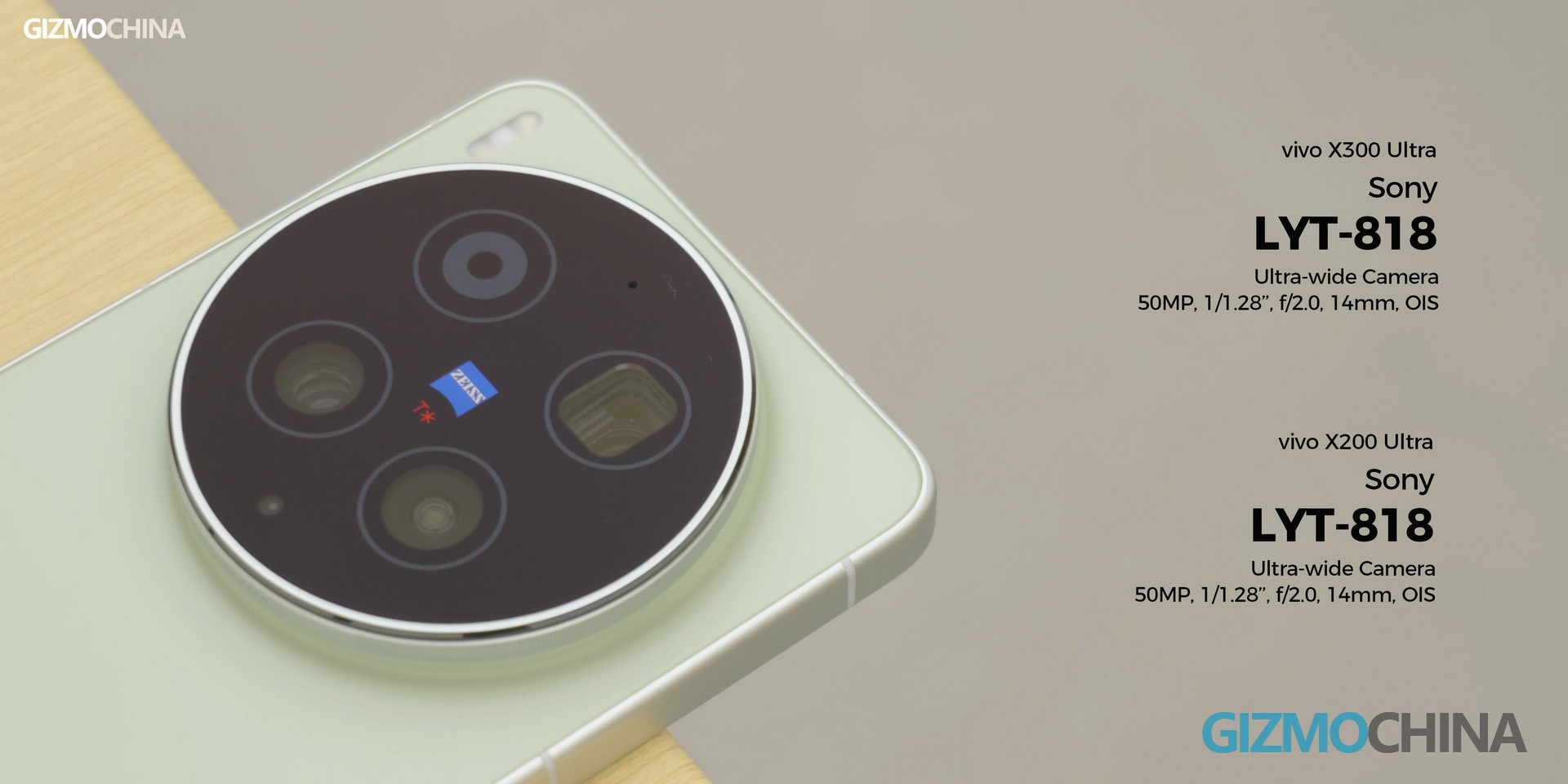
Galaxy S26 vs Galaxy S26: battery life difference between Exynos and Snapdragon is huge

30 March 2026 at 12:21
Samsung-Galaxy-S26-and-S26-Plus

Samsung has shifted to a 2nm process node for its latest flagship chipset, the Exynos 2600, while Qualcomm’s Snapdragon 8 Elite Gen 5 still relies on TSMC’s 3nm node. While Exynos chips have struggled with power efficiency and thermal control in the past, this move to 2nm suggested a significant improvement in that area. Early leaks also pointed to notable efficiency gains compared to the Exynos 2500, leading users to expect comparable power efficiency between the Snapdragon and Exynos variants of the Galaxy S26 and S26+.

Samsung-Galaxy-S26-and-S26-Plus

Unfortunately, recent performance and battery life tests between the two chips, including one from YouTube channel AndroidAddicts, have dampened those expectations for users outside the US and China, where the Galaxy S26 and S26+ are powered by the Exynos 2600.

In a previous test, the Galaxy S26 (Exynos 2600) consumed 40% more power than the OnePlus 15, which is powered by the Snapdragon 8 Elite Gen 5 and a significantly larger battery. However, what makes this Galaxy S26 vs Galaxy S26 comparison more interesting is that nearly all the hardware, apart from the chipset, remains identical. Performance tuning between the Galaxy S26 and the OnePlus 15 is also quite different, which can heavily influence power consumption. In contrast, it should be nearly identical between the two Galaxy S26 variants.

The test from AndroidAddicts was designed to simulate real-world usage rather than measure peak performance. It included a mix of tasks such as phone calls, video recording, Google Maps navigation, video calls, YouTube, and other social media apps.

The result? The Exynos variant lasted 6 hours and 48 minutes, while the Snapdragon variant reached 9 hours and 26 minutes. That’s a substantial gap for two nearly identical versions of the same flagship. It’s also surprising, given that the 2nm node was expected to deliver better efficiency, and disappointing at the same time, especially since most regions are getting the Exynos variant.

Stay ahead in tech! Join our Telegram community and sign up for our daily newsletter of top stories!

For more daily updates, please visit our News Section.

(Source)

The post Galaxy S26 vs Galaxy S26: battery life difference between Exynos and Snapdragon is huge appeared first on Gizmochina.

Samsung Galaxy S26 Ultra vs Vivo X200T: Which One Should You Actually Buy?

30 March 2026 at 11:49
samsung vs vivo

Choosing between the Samsung Galaxy S26 Ultra and the Vivo X200T isn’t just about specs; it’s about deciding how much flagship experience is really worth paying for. One represents the absolute peak of premium smartphones with every feature packed in, while the other challenges that idea by offering surprisingly similar power at nearly half the price. For buyers stuck between “best” and “smartest value,” this comparison becomes far more important than it looks.

Major Features:

FeatureSamsung Galaxy S26 UltraVivo X200TWinner
Display6.9″ QHD+ LTPO AMOLED, 120Hz, 2600 nits6.67″ AMOLED, 120Hz, 5000 nits peakSamsung – sharper resolution & anti-reflective tech
Build QualityGorilla Armor 2, premium finish, stylusGlass + aluminum, IP68/IP69Samsung – more premium + S Pen utility
PerformanceSnapdragon 8 Elite Gen 5Dimensity 9400+Samsung – more optimized & stable
Software Support7 years updates5 years updatesSamsung – longer longevity
RAM & StorageUp to 16GB, UFS 4.XUp to 12GB, UFS 4.1Samsung – higher RAM option
Rear Camera200MP + dual telephoto + ultrawideTriple 50MP (Zeiss tuned)Samsung – more versatile setup
Zoom Capability3x + 5x optical zoom3x optical zoomSamsung – better zoom range
Video Recording8K + advanced HDR4K maxSamsung – superior video features
Selfie Camera12MP32MP ultrawideVivo – sharper & wider selfies
Battery5000mAh6200mAhVivo – much larger capacity
Charging60W wired, 25W wireless90W wired, 40W wirelessVivo – significantly faster
ConnectivityWi-Fi 7, Bluetooth 6.0, UWBWi-Fi 7, Bluetooth 5.4Samsung – more advanced features
Extra FeaturesS Pen, DeX, UWBIR blaster, bypass chargingSamsung – more flagship extras
Price₹1,40,000 (~$1300)₹60,000 (~$700)Vivo – far better value
Disclaimer: Specs are based on available data. Actual performance may vary. Verify details from official sources before buying.

Design and Display

Build and Feel

The Samsung Galaxy S26 Ultra leans heavily into a premium, ultra-refined identity with Gorilla Armor 2 protection and an aluminum frame that feels engineered for durability and long-term use. The integrated stylus adds a functional edge, making it more than just a flagship; it feels like a productivity tool. On the other hand, the Vivo X200T keeps things sleek and modern, with a lighter, more comfortable in-hand feel and the added advantage of IP69 protection, which quietly makes it more rugged in extreme conditions.

Display Quality

Samsung pushes clarity with a sharper QHD+ panel, anti-reflective coating, and consistent brightness, making outdoor use feel effortless. Vivo counters with insane peak brightness and ultra-high PWM dimming, delivering a more eye-friendly and vibrant viewing experience in harsh lighting.

Verdict

Samsung feels more premium and practical overall, while Vivo’s display feels more aggressive and visually striking.

Specifications Including Battery

Performance

The Snapdragon 8 Elite Gen 5 inside the Samsung Galaxy S26 Ultra delivers top-tier flagship power with better sustained performance and optimization, especially for heavy multitasking and gaming. It feels more refined and consistent. The Dimensity 9400+ in the Vivo X200T is no slouch—it’s extremely powerful and efficient—but slightly less polished under long stress loads. Software support also favors Samsung with longer update commitments.

Battery and Charging

Vivo clearly dominates in battery hardware with a massive 6200mAh cell, paired with faster wired and wireless charging. It’s built for endurance and quick top-ups. Samsung focuses more on balanced efficiency, offering reliable battery life but slower charging speeds, which may feel conservative in comparison.

Verdict

Samsung wins in performance consistency and longevity, while Vivo easily takes the lead in battery and charging convenience.

Camera

Main and Secondary Lenses

The Samsung Galaxy S26 Ultra offers a more versatile quad-camera setup, including high-resolution zoom options and 8K video, making it ideal for users who want flexibility across all focal lengths. Its processing also tends to produce more consistent flagship-grade results. Meanwhile, the Vivo X200T focuses on optical quality with Zeiss tuning, delivering more natural colors and strong portrait performance, though with slightly less zoom versatility.

Selfie Camera

Vivo takes a clear edge with a higher-resolution selfie camera and wider framing, making it more appealing for social content and group shots. Samsung’s front camera is reliable but feels less exciting.

Verdict

Samsung is better for versatility and video, while Vivo feels more refined for portraits and selfies.

Pricing

The Samsung Galaxy S26 Ultra sits at around ₹1,40,000 ($1300), placing it firmly in the ultra-premium category. In contrast, the Vivo X200T comes in at roughly ₹60,000 ($700), making it significantly more accessible while still offering flagship-level specs.

Is the Price Justified?

Samsung justifies its price through long-term software support, premium build, stylus functionality, and a more complete flagship experience. It feels like a device built to last years. Vivo, however, delivers exceptional hardware at nearly half the price, making it feel like a high-performance bargain with very few compromises.

Verdict

Samsung is justified but expensive, while Vivo offers outstanding value for money.

Disclaimer:
Prices are approximate and may vary based on country, region, and applicable taxes.

Conclusion

The Samsung Galaxy S26 Ultra stands out with its stylus, DeX support, longer software updates, and highly versatile camera system, making it ideal for productivity and power users. The Vivo X200T shines with its massive battery, ultra-fast charging, Zeiss-tuned cameras, and aggressive pricing, targeting users who want flagship performance without overspending.

Verdict

Samsung feels like the complete, no-compromise flagship for those willing to pay a premium. Vivo, however, quietly becomes the smarter choice for most buyers, delivering flagship-level performance and features at a price that feels far more justified.

Disclaimer: This comparison is based on the specifications provided and is intended for general informational purposes. Actual performance, camera results, battery life, and overall experience may vary depending on real-world usage, software updates, and individual preferences.

Read More:

The post Samsung Galaxy S26 Ultra vs Vivo X200T: Which One Should You Actually Buy? appeared first on Gizmochina.

Samsung Galaxy S26 Ultra vs Xiaomi 17: Specs, Camera, Battery & Performance Compared

30 March 2026 at 11:10
samsung vs xiaomi

Flagship battles are no longer just about specs: they’re about what actually improves daily use. The Samsung Galaxy S26 Ultra and Xiaomi 17 take two very different approaches: one leans into premium features and productivity, while the other focuses on raw value and cutting-edge upgrades. This comparison breaks down which one truly delivers where it matters most.

Please Note: When you buy something using the links in our articles, we may earn a small commission at no cost to you.

Major Features:

FeatureGalaxy S26 UltraXiaomi 17Winner
Display6.9″ LTPO AMOLED, 1440p, 2600 nits, anti-reflective6.3″ LTPO AMOLED, 1220p, 3500 nits, Dolby VisionXiaomi – brighter + better HDR
BuildGorilla Armor 2, aluminum frame, S PenDragon Crystal Glass, aluminum frameSamsung – more premium + stylus
ChipsetSnapdragon 8 Elite Gen 5 (higher clocks)Snapdragon 8 Elite Gen 5Samsung – slightly better tuning
StorageUFS 4.XUFS 4.1Xiaomi – faster storage
Rear Camera200MP + 10MP (3x) + 50MP (5x) + 50MP UW50MP + 50MP (2.6x) + 50MP UWSamsung – superior zoom versatility
Selfie Camera12MP50MPXiaomi – sharper selfies
Video8K, HDR10+, strong stabilization8K HDR, Dolby Vision, LOGXiaomi – more pro video features
Battery5000mAh, 60W wired6330–7000mAh, 100W wiredXiaomi – bigger + faster
Wireless Charging25W50WXiaomi – significantly faster
SoftwareAndroid 16, One UI, 7 years updatesAndroid 16, HyperOS 3Samsung – longer support
ExtrasS Pen, DeX, UWBIR blasterSamsung – more features
Price$1300 / ₹1,40,000$1000 / ₹90,000Xiaomi – much better value
Disclaimer: Specs are based on available data. Actual performance may vary. Verify details from official sources before buying.

Please Note: When you buy something using the links in our articles, we may earn a small commission at no cost to you.

Design and Display

Build and Feel

The Samsung Galaxy S26 Ultra leans heavily into a premium, productivity-first design with its Armor aluminum frame, Gorilla Armor protection, and integrated stylus. It feels like a device built for power users who value durability and multitasking. In contrast, the Xiaomi 17 offers a more compact and refined approach, with Dragon Crystal Glass and a cleaner, lighter in-hand feel. The Xiaomi device comes across as more practical for daily comfort, while Samsung prioritizes a bold, feature-rich identity.

Display Quality

Samsung delivers a sharp 1440p LTPO AMOLED panel with excellent brightness and anti-reflective coating, making it highly usable outdoors. Meanwhile, Xiaomi pushes display innovation further with a brighter 3500-nit panel, Dolby Vision, and ultra-high PWM dimming, resulting in better eye comfort and richer HDR visuals. The Xiaomi display feels more modern and aggressive in tuning, while Samsung remains balanced and consistent.

Verdict

Xiaomi 17 wins for display innovation and comfort, but Samsung feels more premium and productivity-focused overall.

Specifications Including Battery

Performance

Both devices are powered by the Snapdragon 8 Elite Gen 5, but Samsung’s slightly higher clock speeds and refined One UI optimization give it a marginal edge in sustained performance. It feels more stable under heavy workloads and long gaming sessions. Xiaomi, however, pairs strong hardware with faster UFS 4.1 storage and a lighter HyperOS experience, which often feels quicker in day-to-day use. The difference is subtle, but Samsung leans toward consistency, while Xiaomi feels snappier.

Battery and Charging

Samsung sticks with a 5000mAh battery and relatively modest charging speeds, focusing on reliability. Xiaomi clearly dominates here with a massive 6330–7000mAh battery and 100W wired charging, alongside faster wireless options. The Xiaomi device feels far more future-ready for heavy users who prioritize uptime and speed.

Verdict

Xiaomi 17 clearly wins due to superior battery capacity and significantly faster charging, despite Samsung’s slight performance stability edge.

Camera

Main and Secondary Lenses

Samsung takes a clear lead in versatility with its quad-camera system, including a 200MP main sensor and dual telephoto lenses offering true optical zoom flexibility. It feels built for users who want maximum range and consistency across scenarios. Xiaomi, with its Leica-tuned triple 50MP setup, focuses more on color science and cinematic output. While it lacks Samsung’s zoom depth, it delivers more natural tones and better video flexibility with Dolby Vision and LOG recording.

Selfie Camera

Xiaomi stands out with a 50MP selfie camera, offering sharper detail and better flexibility for content creators. Samsung’s 12MP sensor is reliable and well-optimized, but feels conservative in comparison. Xiaomi’s front camera feels more aligned with modern usage trends like vlogging and high-resolution selfies.

Verdict

Samsung wins for zoom and versatility, while Xiaomi appeals more to creators with better color tuning and a stronger selfie camera.

Pricing

The Samsung Galaxy S26 Ultra is priced around $1300 (₹1,40,000), placing it firmly in the ultra-premium category. The Xiaomi 17, at approximately $1000 (₹90,000), undercuts it significantly while still offering flagship-level hardware. This price gap creates a clear difference in positioning. Samsung targets those wanting everything regardless of cost, while Xiaomi focuses on delivering maximum value.

Is the price justified?

Samsung justifies its pricing with features like the stylus, DeX support, longer software updates, and superior camera versatility. It feels like a complete ecosystem device. Xiaomi, however, delivers exceptional hardware, better battery, faster charging, brighter display, at a lower price, making it feel like a smarter buy for most users.

Verdict

Xiaomi 17 wins easily in value for money, while Samsung remains a premium, feature-packed investment.

Disclaimer:
Prices are approximate and may vary based on country, region, and applicable taxes.

Conclusion

Samsung differentiates itself with the S Pen, DeX desktop experience, ultra-refined software support, and unmatched camera versatility. It feels like a productivity powerhouse rather than just a smartphone. Xiaomi counters with a massive battery, ultra-fast charging, superior display brightness, and Leica-tuned imaging, making it feel more modern and performance-driven. The Xiaomi device leans into practical daily advantages, while Samsung focuses on long-term utility and ecosystem integration.

Verdict

The Samsung Galaxy S26 Ultra is ideal for users who want premium features, productivity tools, and long-term reliability. The Xiaomi 17, however, emerges as the better overall choice for most buyers, offering stronger value, better battery life, and a more advanced display experience at a significantly lower price.

Disclaimer: This comparison is based on the specifications provided and is intended for general informational purposes. Actual performance, camera results, battery life, and overall experience may vary depending on real-world usage, software updates, and individual preferences.

Read More:

The post Samsung Galaxy S26 Ultra vs Xiaomi 17: Specs, Camera, Battery & Performance Compared appeared first on Gizmochina.
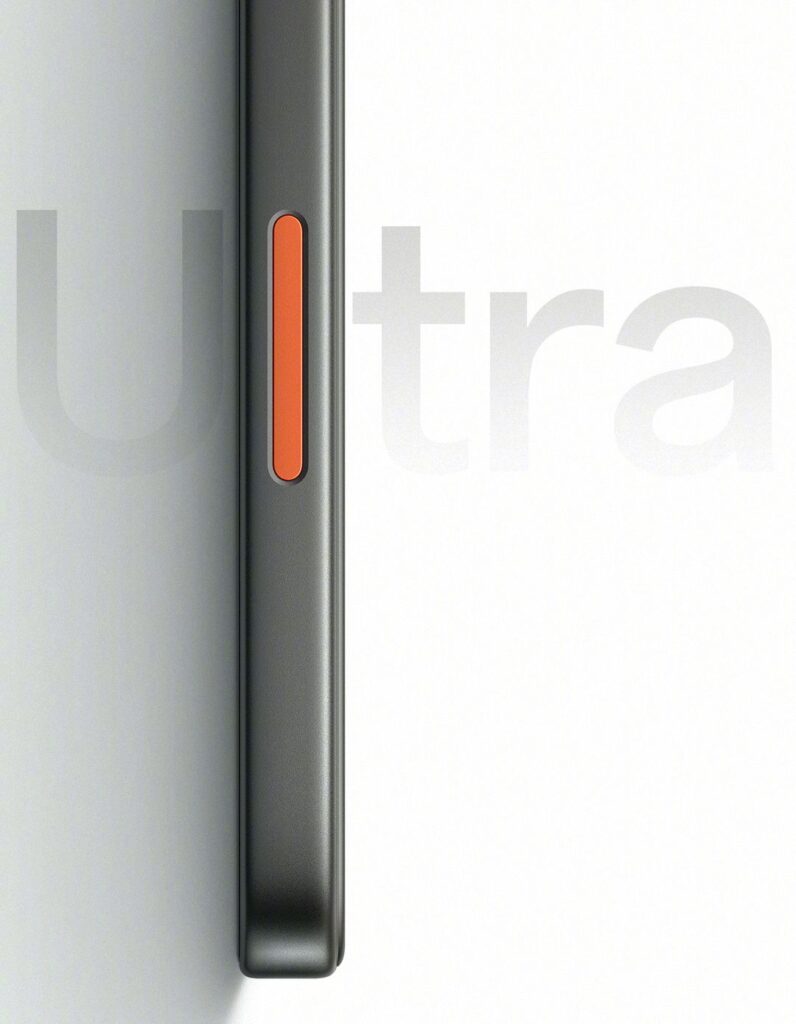
OnePlus Ace 6 Ultra bags an important certification; Display, chipset, battery details leaked

30 March 2026 at 10:20
OnePlus-Ace-6T

So far, OnePlus is offering two Ace-branded phones, the Ace 6 and Ace 6T,, in China. Recent reports suggest that the Ace 6 Ultra is in the works and may go official in April. As per a Weibo post by tipster Digital Chat Station, the said device has received approval from the country’s MIIT certification platform. Additionally, another tipster has revealed the battery size of the device.

OnePlus Ace 6 Ultra MIIT certified

According to DCS, the OnePlus device bearing the model number PMB110 has been approved by China’s MIIT authority. This device is said to be the Ace 6 Ultra when it hits the Chinese market.

To recall, a modified version of the Ace 6T was released globally with the OnePlus 15T moniker. It is unclear whether the company plans to launch a tweaked version of the Ace 6 Ultra globally.

OnePlus Ace 6 Ultra key specs

In terms of specifications, the OnePlus Ace 6 Ultra is expected to feature a 6.8-inch OLED panel that offers a 165Hz refresh rate. A leak by tipster Bald Panda reveals that it will feature the Dimensity 9500 SoC and a massive 8,500mAh battery. The rest of its specs are under wraps.

Rumors suggest that it will rival the Redmi K90 Ultra, which is also expected to feature a 165Hz display, a Dimensity 9500 chip, and an 8,500mAh battery. However, one differentiating feature between the two phones will be that the Redmi offering will have a built-in cooling fan for heat dissipation.

For more daily updates, please visit ourNews Section.

Stay ahead in tech! Join our Telegram community and sign up for our daily newsletter of top stories! 💡

The post OnePlus Ace 6 Ultra bags an important certification; Display, chipset, battery details leaked appeared first on Gizmochina.

These Nothing phones are eligible for Nothing OS 4.1 update

30 March 2026 at 08:55
Nothing OS 4.1 eligible devices

While Nothing may already be developing Nothing OS 5.0 (based on Android 17), the company is also preparing to roll out a mid-cycle update, Nothing OS 4.1, which recently debuted with the Nothing Phone (4a) series. This upgrade features new AI capabilities, lock screen enhancements, and additional useful upgrades.

If you have a Nothing phone, check the list below to see if your phone is eligible for the Nothing OS 4.1 update. 

Nothing OS 4.1 update: Eligible devices list

Nothing hasn’t officially confirmed the list yet. However, the update is almost certain to reach every smartphone that received the Nothing OS 4.0 update or launched with it. Based on that, here’s the list:

  • Nothing Phone (3)
  • Nothing Phone (3a)
  • Nothing Phone (3a) Lite
  • Nothing Phone (3a) Pro
  • Nothing Phone (2)
  • Nothing Phone (2a)
  • Nothing Phone (2a) Plus
  • CMF Phone 2 Pro
  • CMF Phone 1

The Nothing OS 4.1 software debuted with the Nothing Phone (4a) series in March 2026. The company hasn’t announced a rollout schedule for older devices. According to several reports, the update may land on the Nothing Phone (3) and Phone (3a) series in early April. The update will likely expand to more devices later that month, and could reach a competition by May 2026.

You can read about new features and upgrades in Nothing OS 4.1 on this page.

Also read:
1. Android 17: Every new feature discovered so far
2. Here are the new features and major upgrades in Nothing OS 4.1

Remember to visit our Nothing section regularly for the latest developments. Alternatively, you can join our Telegram channel to get instant notifications about the latest happenings in tech.

The post These Nothing phones are eligible for Nothing OS 4.1 update appeared first on Gizmochina.

Ugreen MagFlow Air 10,000mAh Power Bank Supports 30W Fast Charging and Magnetic Qi2 Tech

30 March 2026 at 08:22
Ugreen MagFlow Air Qi2 15W Ultra-Slim Magnetic Power Bank 10000mAh

Ugreen has released the MagFlow Air Qi2 15W Ultra-Slim Magnetic Power Bank, a compact charging accessory with a built-in cable and support for both wireless and wired fast charging.

Ugreen MagFlow Air Qi2 15W Ultra-Slim Magnetic Power Bank 10000mAh

The power bank is 13.9 mm thick and weighs 213 g. It measures 111.0 x 69.8 x 13.9 mm, making it easy to carry in a pocket or use while attached to a phone. It has a matte finish that resists fingerprints and scratches.

It supports Qi2 wireless charging with up to 15W output. The magnetic alignment helps keep the device in place during charging. Ugreen says an iPhone Air can reach 35 percent charge in about 30 minutes using wireless charging.

The device includes a built-in braided USB-C cable. This cable is tested for over 10,000 bends and can be used for both output and input. It supports up to 30W two-way fast charging, allowing users to charge smartphones, tablets, and other USB-C devices, or recharge the power bank itself.

The battery capacity is 10,000 mAh, using an ATL battery cell. According to Ugreen, this can charge an iPhone 17 Air around 1.7 times and an iPhone 17 Pro Max about 1.3 times. The battery is designed to retain more than 80 percent of its capacity after five years of use.

For safety and performance, the power bank uses an ATL chip, NTC dual temperature monitoring, and a built-in metal heatsink. These features help manage heat and maintain stable charging.

The device supports iPhone 12, 13, 14, 15, 16, and 17 series models, except iPhone 16e. Wired charging is compatible with iPads and Samsung Galaxy devices, including the S25, S24, S23, S22, and S21 series.

The Ugreen MagFlow Air Qi2 power bank is priced at $69.99 in the US, where it is currently listed as temporarily out of stock. In Europe, including France and Germany, it is available for €69.99 with immediate shipping.

For more daily updates, please visit our News Section.

Stay ahead in tech! Join our Telegram community and sign up for our daily newsletter of top stories!

The post Ugreen MagFlow Air 10,000mAh Power Bank Supports 30W Fast Charging and Magnetic Qi2 Tech appeared first on Gizmochina.
iQOO 16 tipped to debut Samsung’s insane 185Hz display upgrade

30 March 2026 at 07:48
iQOO 15

The rumor mill is gradually leaking details about the iQOO 16, which is expected to launch in October this year in China. One of the major highlights of the iQOO 15 is that it features a Samsung M14 OLED panel, which has a 6.85-inch screen size with 2K resolution and a 144Hz refresh rate. Reports have suggested that the iQOO 16 will arrive with an upgraded display, and now, in a new Weibo post, tipster Smart Pikachu has revealed some details about it.

iQOO 16’s display details tipped

The above post by tipster Smart Pikachu indicates that iQOO could be among the first brands to test Samsung’s upcoming 2K display panels featuring 165Hz and 185Hz refresh rates, with the hashtag suggesting a possible link to the iQOO 16.

The tipster notes that 165Hz is just the beginning, as the supply chain is also preparing native 185Hz panels from Samsung, while game ecosystems are already being adapted to support such high refresh rates.

The increase in refresh rate will allow the iQOO 16 to take on the OnePlus 16, which is said to be its closest rival that’s rumored to feature a 200Hz or 240Hz screen. While the OnePlus 16 may continue to support a 1.5K resolution, the iQOO 16’s screen may offer 2K resolution like its previous generation.

Another major upgrade for the iQOO 16 is in the camera department. The same tipster revealed earlier this month that it may feature a 200-megapixel primary camera and a 50-megapixel periscope telephoto camera. This setup is also expected to include a 50-megapixel ultra-wide lens.

The details about its battery size, charging capabilities, and memory configurations are not known yet. In all likelihood, it will draw power from the Snapdragon 8 Elite Gen 6 chip. Due to the recent hike in memory chip prices, the iQOO 16 may start at 5,000 Yuan (~$725) for the base variant, which may offer a 12GB+256GB configuration.

For more daily updates, please visit our News Section.

Stay ahead in tech! Join our Telegram community and sign up for our daily newsletter of top stories! 💡

The post iQOO 16 tipped to debut Samsung’s insane 185Hz display upgrade appeared first on Gizmochina.
Oppo Find X9s Pro compact flagship officially confirmed to feature 200MP dual cameras

30 March 2026 at 07:21
Oppo Find X9s Pro camera module

On April 1, Oppo will take the covers off the Oppo K15 Pro series of midrange gaming-focused phones in China. Later in the same month, the brand will announce the Oppo Find X9 Ultra and Find X9s Pro. Today, the brand confirmed that the latter will come equipped with dual 200-megapixel cameras.

Oppo Find X9s Pro cameras teased

Oppo Find X9s Pro camera module
Oppo Find X9s Pro camera module teased

The teaser seemingly showcases the rectangular camera module that the Find X9s Pro may feature. As mentioned, it will be packed with dual 200-megapixel cameras, and possibly a 50-megapixel camera for ultra-wide shots.

As per reports, the device will be equipped with two Samsung HP5 200-megapixel sensors, one for the primary camera and the other for the periscope telephoto camera. Reports also suggest the inclusion of a 3.2-megapixel multispectral lens. For selfies, it may feature a 50-megapixel front camera.

The Oppo Find X9s Pro is said to be a compact phone equipped with a 6.32-inch OLED LTPS panel offering a 1.5K resolution and a 120Hz refresh rate. Under the hood, it may have the Dimensity 9500 chip and a battery of around 7,000mAh capacity.

It may also offer 80W wired and 50W wireless charging. In terms of memory configurations, it could be available with up to 16GB of LPDDR5x RAM and up to 1TB of UFS 4.1 storage. It will have four shades, such as Titanium, White, Cyan, and Orange.

Oppo Find X9s Pro
Oppo Find X9s Pro’s leaked image

The Find X9s Pro will run on ColorOS 16 based on Android 16. It will have other features such as an ultrasonic in-screen fingerprint sensor and an IP68/69-rated body.

For more daily updates, please visit ourNews Section.

Stay ahead in tech! Join our Telegram community and sign up for our daily newsletter of top stories! 💡

The post Oppo Find X9s Pro compact flagship officially confirmed to feature 200MP dual cameras appeared first on Gizmochina.

Oppo Pad Mini specs and design leak ahead of April launch

30 March 2026 at 07:20
Oppo Pad 5 Mini Specs and Design leak

Oppo is reportedly working on two flagship-grade tablets. Alongside the expected flagship-tier Oppo Pad 5 Pro, the company is also preparing a smaller model, the Oppo Pad Mini.

The device was recently teased by Qiao Jiadong, Oppo’s Director of Smart Ecosystem Products, in a short video shared on Douyin. While the teaser didn’t dive into specifics, it confirmed the Pad Mini is a thin and light tablet that doesn’t entirely compromise on performance.

Now, ahead of what’s expected to be an April launch, more details have surfaced thanks to well-known tipster Digital Chat Station on Weibo.

Oppo Pad Mini Specifications

According to the leak, the Oppo Pad Mini will feature an 8.8-inch OLED display with ultra-narrow bezels on all four sides. 

The design, at least based on early visuals, seems to follow Oppo’s recent aesthetic. There’s an ultra-thin unibody metal build paired with a minimalist, pill-shaped rear camera module that protrudes slightly. Color options reportedly include dark gray, purple, and cyan. 

The video shared by DCS shows the device in the purple shade. 

Internally, the tablet is said to run on the Snapdragon 8 Gen 5 chipset, paired with up to 16GB of RAM and 512GB of storage. There’s also mention of 67W fast charging support, though battery capacity hasn’t been specified yet.

Oppo is expected to hold a launch event in April in China to unveil the Find X9 Ultra and Find X9s Pro smartphones. Likely, the Oppo Pad Mini and Pad 5 Pro may go official at the same event.

According to previous reports, OnePlus is working on the OnePlus Pad 3 Pro and Pad Mini tablets. These devices are expected to be rebranded versions of Oppo’s Pad 5 Pro and Pad Mini, respectively.

For more daily updates, please visit our News Section.

Stay ahead in tech! Join our Telegram community and sign up for our daily newsletter of top stories.

The post Oppo Pad Mini specs and design leak ahead of April launch appeared first on Gizmochina.

Rogbid launches Loop, a screenless health band with advanced ECG & 15-day battery

30 March 2026 at 04:29
Rogbid Loop

Rogbid has unveiled the Rogbid Loop, its first screen-free smart band focused on health tracking. The Loop combines advanced sensors with a minimalist design to deliver precise health monitoring without the distractions of a display.

Rogbid Loop

Rogbid Loop Specifications

The wearable features a GH3228 500Hz ECG chip for 30-second ECG tests with accurate readings and intelligent analysis. It offers continuous real-time ECG monitoring and an advanced health risk analysis system to identify potential issues early, promoting proactive health management. Additionally, it includes a Lorenz scatter plot to visualize heart rate variability (HRV), highlighting stress levels, physical recovery, and cardiovascular balance.

Rogbid includes additional 24/7 health monitoring features, such as heart rate tracking, SpO2 monitoring, blood pressure readings, body temperature measurement, and blood composition analysis.

Rogbid Loop

The Loop also offers scientific sleep monitoring to analyze rest patterns for better recovery and energy levels. It also includes a remote family healthcare feature to share heart rate and sleep data with authorized family members and send alerts for abnormal readings.

The band includes multiple sports modes for tracking various workouts and improving training efficiency. It features a durable 25-gram high-density alloy body resistant to corrosion and shocks, along with a 5ATM waterproof rating for use during swimming or in wet conditions.

In terms of power, the Loop is equipped with a 150mAh battery that provides up to 15 days of standby time. It also features integrated NFC for smart access at compatible terminals.

Rogbid Loop

Pricing and Availability

Rogbid ships the Loop with five interchangeable straps in Black, Khaki, Blue, Dark Green, and Green. The band price is set at $69.99. The Rogbid Loop is available now from the official store.

In related news, Rogbid also recently introduced the Model R3 smartwatch, featuring 4G connectivity, an Android-based operating system, and a built-in 5MP camera.

For more daily updates, please visit our News Section.

Stay ahead in tech! Join our Telegram community and sign up for our daily newsletter of top stories! 💡

The post Rogbid launches Loop, a screenless health band with advanced ECG & 15-day battery appeared first on Gizmochina.

Xiaomi Air Conditioners Surpass 8.5 Million Shipments in 2025

30 March 2026 at 02:52
Xiaomi Air Conditioner

In 2025, Xiaomi achieved a major milestone with record-breaking revenue in its smart large home appliances division. The company reported a 23.1% year-over-year increase, driven by robust sales of air conditioners, refrigerators, and washing machines.

Xiaomi Air Conditioner

According to the report, air conditioner shipments surpassed 8.5 million units, reflecting 24% year-on-year growth. Refrigerator shipments crossed 2.8 million units (up 4%), while washing machine shipments exceeded 2.3 million units (up 18%), with all three categories hitting historical highs.

Air conditioners emerged as the standout product segment. Xiaomi expanded its lineup from entry-level wall units to advanced multi-split central systems, differentiating itself through competitive pricing, superior smart functionality, and enhanced service features.

The key advantage is the integration with HyperOS Connect and the Mijia ecosystem. This allows for control via smartphones or XiaoAI voice assistants and enables automation through temperature and humidity sensors. Premium models even feature millimeter-wave radar to detect human presence and optimize airflow direction for comfort.

Wuhan Smart Home Appliance Factory

Xiaomi further strengthened its position by upgrading the Mijia air conditioner warranty to 10 years. This comprehensive coverage includes labor, repair costs, parts replacement, and refrigerant refills.

To meet demand, Xiaomi ramped up production at its new Wuhan Smart Home Appliance Factory, which has an annual capacity of 7 million units. In Q2 2025 alone, the company shipped 5.4 million air conditioners, a 60% year-on-year increase, securing a 16% share of China’s online market.

Xiaomi also expanded its international footprint in 2025 by launching smart appliances across Europe, including Spain, Germany, France, and Italy. Additionally, the company plans to enter the Indian market later this year as part of its global growth strategy.

For more daily updates, please visit our News Section.

Stay ahead in tech! Join our Telegram community and sign up for our daily newsletter of top stories! 💡

(Via)

The post Xiaomi Air Conditioners Surpass 8.5 Million Shipments in 2025 appeared first on Gizmochina.

Upcoming Huawei Pura 90 Pro Could Improve Zoom Photography with LOFIC Tech

30 March 2026 at 02:42

Huawei could be preparing a camera upgrade for its upcoming Huawei Pura 90 Pro models. A new leak suggests the company is testing LOFIC technology for telephoto cameras, which could improve image quality in both bright and low-light conditions.

The information comes from tipster Smart Pikachu, who said two major Chinese smartphone brands are testing LOFIC for telephoto lenses. While no names were confirmed, the hints in the post pointed to Huawei’s Pura 90 lineup.

LOFIC, or lateral overflow integration capacitor, is a sensor design that helps the camera manage light more effectively. Instead of letting extra light overwhelm the sensor, it temporarily stores the excess and uses it in a controlled way. This helps keep bright parts of an image from losing detail.

When shooting in darker scenes, the sensor shifts its focus to capturing even very small amounts of light more efficiently. This helps produce clearer images with less grain, especially when zooming in with a telephoto lens.

If Huawei adds this to its telephoto camera, it could improve long-distance shots, especially in difficult lighting. Other expected details of the Pura 90 series include a 6.58-inch display on the standard model and a larger 6.87-inch flat display on higher-end versions. The base model may use the Kirin 9020 chip, while the Pro version could use the Kirin 9030. The Ultra model is expected to run on the Kirin 9030 Pro.

Huawei is likely to launch the Pura 90 series in the first half of the year, following its usual release timeline.

Stay ahead in tech! Join our Telegram community and sign up for our daily newsletter of top stories!

For more daily updates, please visit our News Section.

(via: HuaweiCentral)

The post Upcoming Huawei Pura 90 Pro Could Improve Zoom Photography with LOFIC Tech appeared first on Gizmochina.

ReVanced Removed from GitHub After DMCA Complaint, Here’s What Happens Next

29 March 2026 at 23:54
Youtube ReVanced

The ReVanced project has been taken down from GitHub following a DMCA complaint. The request did not come from Google, but from a third party. As required under copyright law, GitHub removed the repository first and then reviewed the case.

Youtube ReVanced

ReVanced says the complaint has no legal basis and has already submitted a counter-notice. Under the DMCA process, there is now a mandatory 14-day window. During this time, the claimant must take legal action if they want the takedown to stay in place. If no lawsuit is filed, GitHub can restore the repository.

For now, the project remains unavailable on GitHub. This is standard procedure, not a final decision. ReVanced’s developers say this is not a shutdown. Development has continued without interruption. A mirror repository is already live on GitLab, and the community remains active.

ReVanced itself is a tool that modifies Android apps like YouTube. It emerged after the shutdown of YouTube Vanced in 2022, when developers were forced to stop the original modded app under legal pressure. Unlike Vanced, ReVanced does not distribute a pre-modified app. Instead, it provides patches that users apply to official app files on their own devices to unlock features such as ad blocking, background playback, and other functions usually tied to a paid subscription. It does not host videos or distribute pirated content. Instead, it changes how the app behaves on a user’s device.

The legal and ethical debate around ReVanced remains unresolved. While it does not directly distribute copyrighted media, it bypasses platform rules and removes ads, which are a key source of revenue for creators and companies. Supporters argue it gives users more control over their experience. Critics say it undermines the ecosystem that funds online content.

What happens next depends on the 14-day window. If no legal case is filed, the repository is expected to return, and development will continue as usual.

For more daily updates, please visit our News Section.

Stay ahead in tech! Join our Telegram community and sign up for our daily newsletter of top stories!

(Source, via)

The post ReVanced Removed from GitHub After DMCA Complaint, Here’s What Happens Next appeared first on Gizmochina.

Honor X80i specs leaked: Dimensity 7100, 6500-nit display, 7000mAh battery and more

29 March 2026 at 22:43

Honor looks set to expand its mid-range lineup with the X80i. Details shared by Chinese tipsters on Weibo give a fairly complete picture of what to expect, even though the company hasn’t confirmed anything yet.

The phone is said to feature a 6.6-inch flat OLED panel with a 1.5K resolution. One number that stands out is the claimed 6,500 nits peak brightness. If accurate, that would be a significant jump over last year’s X70i, which peaks at 3,500 nits. The device is also expected to stay relatively slim at 7.34mm and weigh around 185g, which is interesting considering the battery size.

Speaking of which, the X80i could pack a 7,000mAh battery, with a rated capacity of around 6,800mAh listed on TENAA. Charging is expected to be capped at 45W, which isn’t the fastest, but seems like a reasonable trade-off given the capacity.

Performance duties are handled by the MediaTek Dimensity 7100, with some reports suggesting a Dimensity 7050 variant for certain markets. Either way, it should be enough for everyday tasks, light gaming, and general multitasking without much trouble.

Honor X80i hands-on photo

The camera setup looks fairly simple. Leaks mention a dual rear system with either a 108MP or 50MP main sensor depending on the version, paired with a 5MP secondary camera. On the front, there’s an 8MP shooter. Nothing particularly ambitious here, but likely in line with the phone’s positioning.

Other details include an in-display fingerprint sensor, a metal frame for a more premium feel, and what’s described as an AI shortcut button.

There’s still no word on pricing or an exact launch date, but based on these early details, the Honor X80i seems to be shaping up as a battery-focused mid-ranger with a strong emphasis on display quality.

Stay ahead in tech! Join our Telegram community and sign up for our daily newsletter of top stories!

For more daily updates, please visit our News Section.

(Sources: 1, 2)

The post Honor X80i specs leaked: Dimensity 7100, 6500-nit display, 7000mAh battery and more appeared first on Gizmochina.

Oppo Watch X3 Mini Official Images Show Three Color Options Ahead of Launch

29 March 2026 at 22:13

Oppo Watch X3 Mini has been officially shown in new images shared by Oppo on Weibo. These images confirm the design and color options of the smaller version of the Watch X3.

Oppo Watch X3 Mini
Oppo Watch X3 Mini Starlight Silver
Oppo Watch X3 Mini
Oppo Watch X3 Mini Mocha Brown
Oppo Watch X3 Mini
Oppo Watch X3 Mini High-gloss Gold

The smartwatch will be available in three colors: High-gloss Gold, Mocha Brown, and Starlight Silver. Each color comes with a different strap design. All variants use 18mm quick-release straps, so users can replace them with other compatible straps.

The Watch X3 Mini is built for users who want a smaller smartwatch. Oppo’s promotion also shows a focus on women users. One highlighted feature is Menstrual Cycle Exercise Guidance. The watch can recommend workouts based on hormonal levels. It also provides access to fat-burning exercises demonstrated by fitness influencers.

The Watch X3 Mini is expected to be a smaller version of the Oppo Watch X3, which launched earlier this month. While the full specifications of the Mini are not confirmed yet, it may include a smaller display and battery compared to the Watch X3. The Watch X3 comes with a 1.5-inch display and a 646mAh battery.

The Watch X3 is powered by the Snapdragon W5 chip. It includes 2GB RAM and 32GB storage. The device runs on ColorOS 16.0. It supports eSIM connectivity along with Bluetooth 5.2, Wi-Fi, NFC, and dual-frequency GPS.

For health tracking, the Watch X3 includes ECG, SpO2, heart rate, and skin temperature sensors. It supports more than 100 sports modes. The smartwatch uses 7.5W magnetic charging and can fully charge in about 75 minutes.

The Watch X3 Mini is expected to launch in April. Oppo is also planning to introduce other products at the same time, including the Oppo Ear Clips and the Oppo K15 Pro.

For more daily updates, please visit our News Section.

Stay ahead in tech! Join our Telegram community and sign up for our daily newsletter of top stories!

(Source 1 & 2)

The post Oppo Watch X3 Mini Official Images Show Three Color Options Ahead of Launch appeared first on Gizmochina.

Milagrow Spaze Cleaning Robot Launched in India with 15,000Pa Suction and 40,000 SQFT Coverage

29 March 2026 at 21:33

India-based robotics company Milagrow has introduced the Spaze Smart Autonomous Cleaning Robot, a commercial floor-cleaning system designed for large indoor spaces. The launch targets facilities dealing with manpower shortages, rising maintenance costs, and the need for consistent hygiene in high-footfall environments.

The Spaze robot is built for spaces such as malls, airports, hospitals, hotels, and corporate campuses. It integrates five cleaning functions into a single unit, including sweeping, scrubbing, dust pushing, vacuuming, and mopping. The system is designed to handle both dry debris and liquid spills typically found in public environments.

It also includes automatic carpet detection. When transitioning to carpets, the robot increases suction while disabling scrubbing and mopping to avoid moisture damage. A dual-roller brush setup is used to extract dust, hair, and debris from carpet surfaces.

In terms of performance, the robot delivers up to 15,000Pa suction power and is rated to cover up to 40,000 square feet. It is powered by a 24V 40,000mAh lithium battery, with a claimed runtime of up to 12 hours per charge. Charging takes approximately 4 to 5 hours. Noise levels are kept under 70dB, allowing use during operational hours.

Navigation is supported by RT2R 3.0 mapping with LDS LiDAR, along with wide-angle and ToF cameras and ultrasonic sensors. These systems enable real-time obstacle detection and route adjustments in dynamic environments. The robot is also capable of operating in tight layouts, including corridors, elevators, and gated access areas, while maintaining minimal wall gaps.

The system supports autonomous operations such as automatic water refilling, wastewater disposal, dust pad cleaning, and self-charging. It can resume cleaning after recharging and includes AI-based patrol cleaning for identifying stains. Multi-unit deployment is supported through fleet coordination. Connectivity features include remote monitoring, scheduling, and reporting through mobile and PC platforms, along with voice command support.

Pricing and availability

The Spaze Smart Autonomous Cleaning Robot is priced at INR 36,84,990 (US$38,850) and is available through the company’s website and Vijay Sales.

For more daily updates, please visit our News Section.

Stay ahead in tech! Join our Telegram community and sign up for our daily newsletter of top stories!

The post Milagrow Spaze Cleaning Robot Launched in India with 15,000Pa Suction and 40,000 SQFT Coverage appeared first on Gizmochina.

Topfeel launches Next 2 Mini PCs with Ryzen 7 H255 and up to RTX 4060 Ti dedicated GPU support

29 March 2026 at 20:40
Topfeel Next 2 mini PC

Topfeel has launched its Next 2 mini PC, a compact system powered by the AMD Ryzen 7 H255 processor. The Next 2 is one of the few mini PCs that supports a dedicated graphics card, making it a flexible choice for gamers and creators.

Topfeel Next 2 mini PC

Topfeel Next 2 Specifications

The mini PC features the Ryzen 7 H255 processor with 8 cores, 16 threads, a 4.9GHz boost clock, and a 4nm design, operating at a max TDP of 85W for desktop-grade performance. Its integrated AMD Radeon 780M GPU handles everyday tasks and light gaming efficiently without a dedicated graphics card.

Topfeel has equipped the Next 2 with a PCIe x16 slot, which allows users to install a discrete GPU. The system supports GPUs up to 185mm in length and 42mm in thickness. It includes a 12V 8-pin external power delivery, with recommended configurations supporting cards up to the RTX 4060 Ti.

Topfeel Next 2 mini PC

The Next 2 supports dual DDR5 SO-DIMM slots with up to 128GB of RAM and speeds of 5600MHz. It also features three PCIe 4.0 x4 M.2 2280 SSD slots and an additional M.2 2230 slot for either a Wi-Fi card or storage. The Pro variant offers expandability for up to four 2.5-inch SATA drives, making it a good choice for home storage or NAS setups.

Topfeel has designed the cooling system with a custom top-down thermal module. It uses a 10015 fan, four copper heat pipes, and a thickened copper base. The system divides airflow between the CPU and GPU, ensuring stable performance even during intensive workloads.

Connectivity on the Next 2 includes USB4, dual LAN ports (10GbE and 2.5GbE), HDMI 2.1, DisplayPort 2.1, and USB-C. The system can drive up to four displays at once.

Topfeel Next 2 mini PC

Topfeel uses a CNC-machined aluminum chassis for the Next 2, with 3-4mm thickness and a slide-rail design for easy upgrades. The system measures 203 x 98 x 190mm for the standard variant, while the Pro version increases the length to 261mm.

Pricing and Availability

The Topfeel Next 2 mini PC is available in multiple configurations at competitive price points. The base barebone variant is priced at 2,999 yuan ($419). The 16GB RAM + 512GB SSD version costs 5,099 yuan ($712), while the top-end 32GB RAM + 1TB SSD option is priced at 7,099 yuan ($991).

The Next 2 Pro adds further expandability and starts at 3,199 yuan ($447) for the barebone model, with the 16GB RAM + 512GB SSD version at 5,299 yuan ($739) and the 32GB RAM + 1TB SSD option at 7,299 yuan ($1,019).

In related news, GMKtec has recently introduced the Evo-T2S mini PC powered by the Intel Core Ultra X7 358H, featuring up to 64GB RAM and delivering up to 180 TOPS of AI performance. Meanwhile, Aoostar has unveiled the MACO 470 mini PC, equipped with the Ryzen AI 9 HX470 processor, along with USB4 and OCuLink support.

For more daily updates, please visit our News Section.

Stay ahead in tech! Join our Telegram community and sign up for our daily newsletter of top stories! 💡

(JD)

The post Topfeel launches Next 2 Mini PCs with Ryzen 7 H255 and up to RTX 4060 Ti dedicated GPU support appeared first on Gizmochina.

Gmktec launches Evo-T2S Mini PC with Intel Core Ultra X7 358H, 64GB RAM and 180 TOPS AI performance

29 March 2026 at 17:47
Gmktec-Evo-T2S-mini-PC-2

Gmktec officially launched the Evo-T2S mini PC in China. The system is powered by the Intel Core Ultra X7 358H processor and comes with 64GB of RAM. It is priced at 14,999 yuan ($2,170) and is now listed on JD.com.

Gmktec Evo-T2S mini PC

Gmktec Evo-T2S Specifications

The Evo-T2S is powered by Intel‘s Core Ultra X7 358H processor, built on the advanced 18A 1.8nm process. It features 16 cores (4 performance, 8 efficiency, and 4 low-power cores), with boost speeds up to 5.1GHz.

The processor delivers 180 TOPS of AI computing performance (INT8) and includes the Intel NPU 5 engine to optimize AI inference and enhance collaboration between the CPU and GPU for efficient workload handling.

Gmktec has paired the processor with an Intel Arc B390 GPU. The GPU features 12 Xe3 cores, runs at up to 2.5GHz, and supports 1080p gaming, video editing, and 3D rendering. It includes ray tracing units and 96 XMX AI cores, providing compatibility with XeSS upscaling and AI frame generation technologies.

Gmktec Evo-T2S mini PC

The EVO-T2S offers 64GB of LPDDR5X memory running at 8533 MT/s. The storage system includes an 853GB SSD and dual M.2 2280 slots, compatible with PCIe Gen5 and Gen4 drives, which together support up to 16TB of total storage. The device incorporates Phison’s aiDAPTIV+ technology, allowing the offloading of AI model data to SSDs to enhance performance and reduce memory strain.

Gmktec enables fast connectivity with its AMD RZ717 wireless module. The module supports Wi-Fi 7 and Bluetooth 5.4. The system also features dual Ethernet ports (10GbE and 2.5GbE) for high-speed networking, along with versatile I/O options, including HDMI 2.0, DisplayPort 1.4, and dual USB4 ports. It also includes an OCuLink (PCIe Gen4x4) interface for connecting desktop-class GPUs to boost performance.

Gmktec Evo-T2S mini PC

The mini PC weighs 930 grams and measures 154 x 151 x 73.6 mm. It features a dual-fan cooling system with a vapor chamber, supporting up to 54W CPU power and 60W peak power consumption. Gmktec pre-installs its Claw software for a plug-and-play experience.

Gmktec plans to launch a higher-end Core Ultra X9 388H variant in the future.

In related news, Aoostar has recently introduced the MACO 470 Mini PC powered by the Ryzen AI 9 HX470, featuring USB4 and OCuLink support. Meanwhile, SEAVIV has unveiled the AideaMini R10 Mini PC, equipped with the AMD Ryzen 5 3500U and OpenClaw support.

For more daily updates, please visit our News Section.

Stay ahead in tech! Join our Telegram community and sign up for our daily newsletter of top stories! 💡

The post Gmktec launches Evo-T2S Mini PC with Intel Core Ultra X7 358H, 64GB RAM and 180 TOPS AI performance appeared first on Gizmochina.

❌
❌