Normal view

Yesterday — 6 March 2026Main stream

TruDoc raises $15 million in Pre-Series B

TruDoc Healthcare today announced the successful closure of a $15 million Pre-Series B funding round. The round saw significant participation from the Al Nahyan and Al-Ketbi families, alongside continued support from existing investor Pulsar Capital.

The investment reflects growing confidence in healthcare models that move beyond hospitals as physical destinations, toward systems that deliver continuous, clinical-grade care wherever patients are. TruDoc is using the capital to deepen its position as a single, accountable virtual first healthcare provider, while expanding what is already the largest at-home critical care deployment in the GCC.

TruDoc is fundamentally re-architecting the patient journey, by combining virtual-first primary care, longitudinal chronic disease management, pharmacy-at-home, diagnostics, in-home services, and the region’s largest hospital-at-home critical care program, TruDoc delivers continuous care across the full lifecycle of a patient—not just moments of illness. The result is faster intervention, fewer hospital admissions, better adherence, and a single accountable care partner for patients, payors, and providers alike.

This capital infusion signals a paradigm shift toward healthcare that follows the patient, not the facility. TruDoc is leveraging this investment to solidify its role as the GCC’s primary accountable care partner, scaling the region’s most sophisticated at-home critical care deployment.

By fusing virtual-first primary care with longitudinal disease management and hospital-grade home diagnostics, TruDoc is dismantling the region’s fragmented legacy systems. This ‘Care Operating System’ bypasses physical infrastructure bottlenecks, delivering 24/7 clinical interventions that improve adherence and keep patients out of high-cost hospital beds. From streamlining insurer costs to expanding governmental care capacity, TruDoc is turning healthcare into mission-critical virtual infrastructure that serves the UAE and Saudi Arabia at population scale.

Dr. Ahmed Mansour, CEO, Private Department of H.E. SH. Mohamed Bin Khaled Al Nahyan, said: “Healthcare systems everywhere are being asked to do more—serve more people, manage more chronic disease, and deliver better outcomes—without endlessly expanding physical infrastructure. TruDoc represents a fundamentally different approach: one that scales access and efficiency while maintaining clinical integrity. This model is well aligned with the UAE’s long-term priorities and the future of healthcare delivery across the Middle East. Believing in TruDoc model to lead this market innovation and increase the ultimate efficiency of the healthcare industry.”

Vish Narain, Executive Chairman at TruDoc, said: “For centuries, healthcare has been organised around buildings—patients moving toward facilities, systems optimised for episodic care. That architecture no longer reflects how people live, age, or manage chronic disease. What TruDoc is building is healthcare as infrastructure: continuous, accountable, and designed to operate beyond four walls, at population scale.”

Asad Khan, CEO at TruDoc, said: “The question is no longer whether high-quality care can be delivered outside hospitals—it’s how fast healthcare systems can adapt to that reality. TruDoc has shown that hospital-grade, high-acuity care can be delivered safely and effectively in homes, at scale. This capital allows us to expand that model across the GCC while staying relentlessly focused on clinical excellence and patient trust.”


The post TruDoc raises $15 million in Pre-Series B appeared first on My Startup World - Everything About the World of Startups!.

Women entrepreneurs driving the Middle East forward

International Women’s Day 2026 arrives amid a period of geopolitical tension, economic recalibration, and rapid technological transformation in the Middle East. Yet even against this backdrop, women entrepreneurs across the region are not only building companies—they are redefining leadership, challenging entrenched norms, and proving that resilience is not just a trait but a strategic advantage. Their journeys reflect a region in motion, one where opportunity is expanding but structural barriers persist. Through their voices, a powerful narrative emerges: women are not waiting for change—they are creating it.

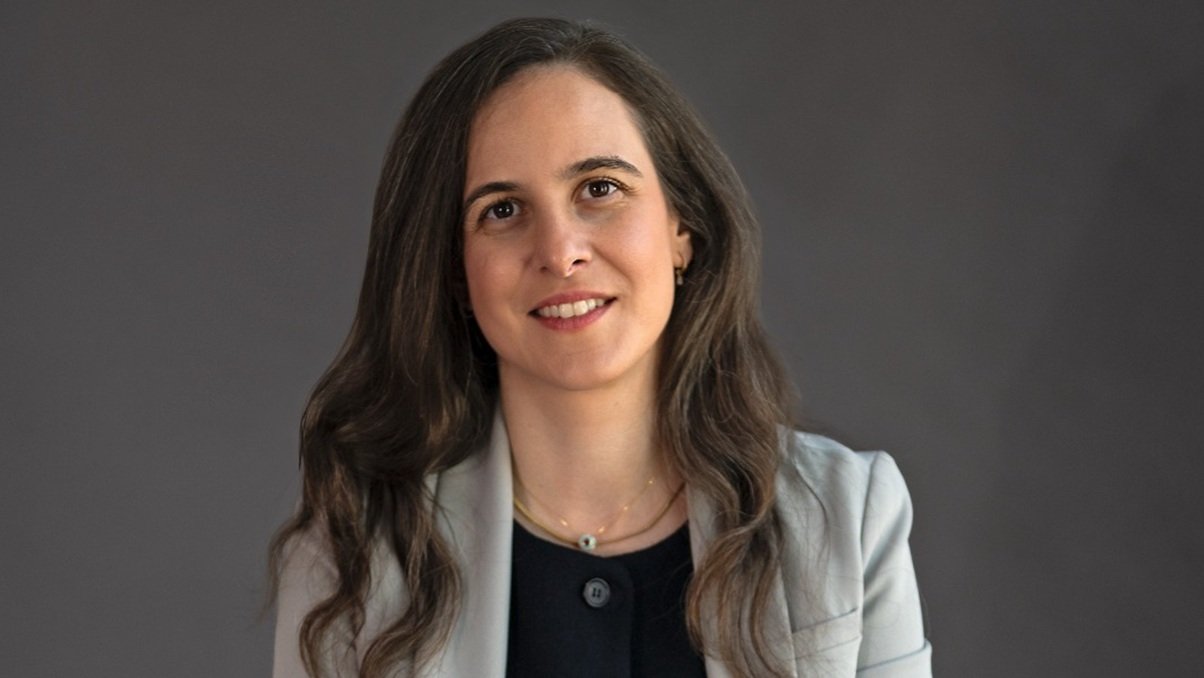
Rawan Baddour, Co-Founder of Zest

Rawan Baddour, Co‑Founder of Zest, has always believed that preparation and hard work—not gender—shape entrepreneurial success. She resists viewing her journey through a gendered lens, arguing that doing so risks limiting ambition. For her, the founders who inspire most are those who focus on what they are building and how consistently they push themselves to evolve. Yet she acknowledges that the region’s ecosystem still has structural gaps, particularly in early‑stage funding where informal networks often determine access. While regulatory progress and increased female representation in investment circles have opened new doors, she stresses that transparency in how capital moves is essential. When evaluation criteria are clear and structured, the quality of the idea—not the founder’s connections—becomes the deciding factor.

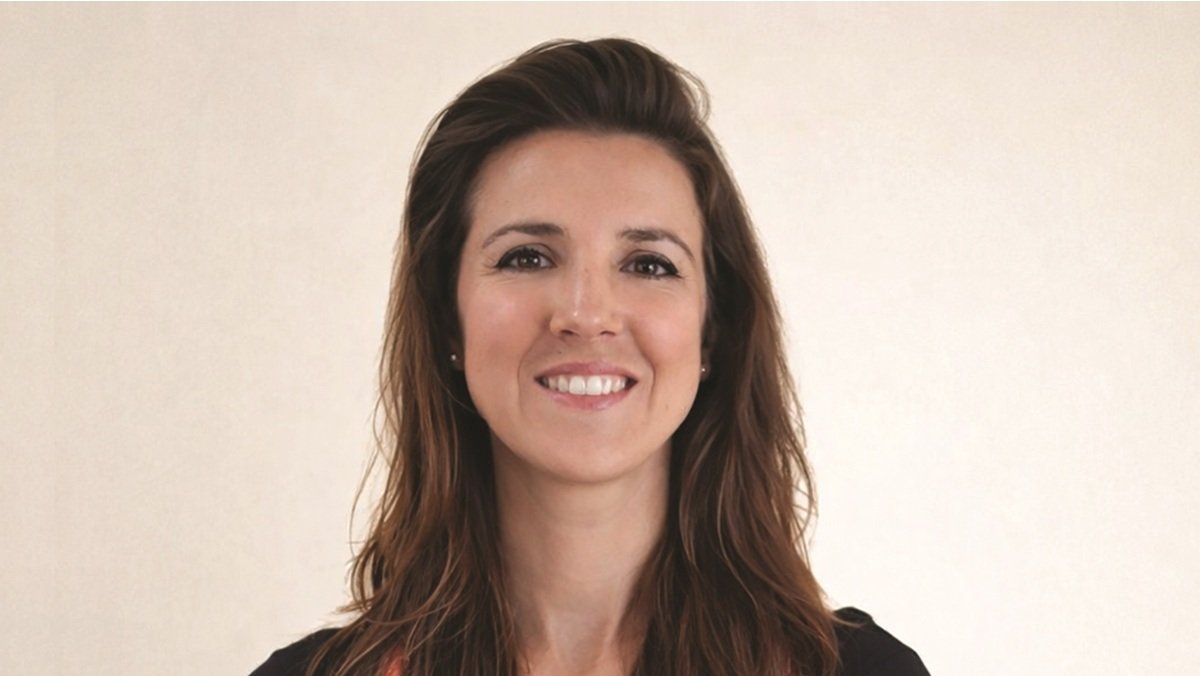
Felicia Agmyren, Founder & Managing Partner of REX Real Estate

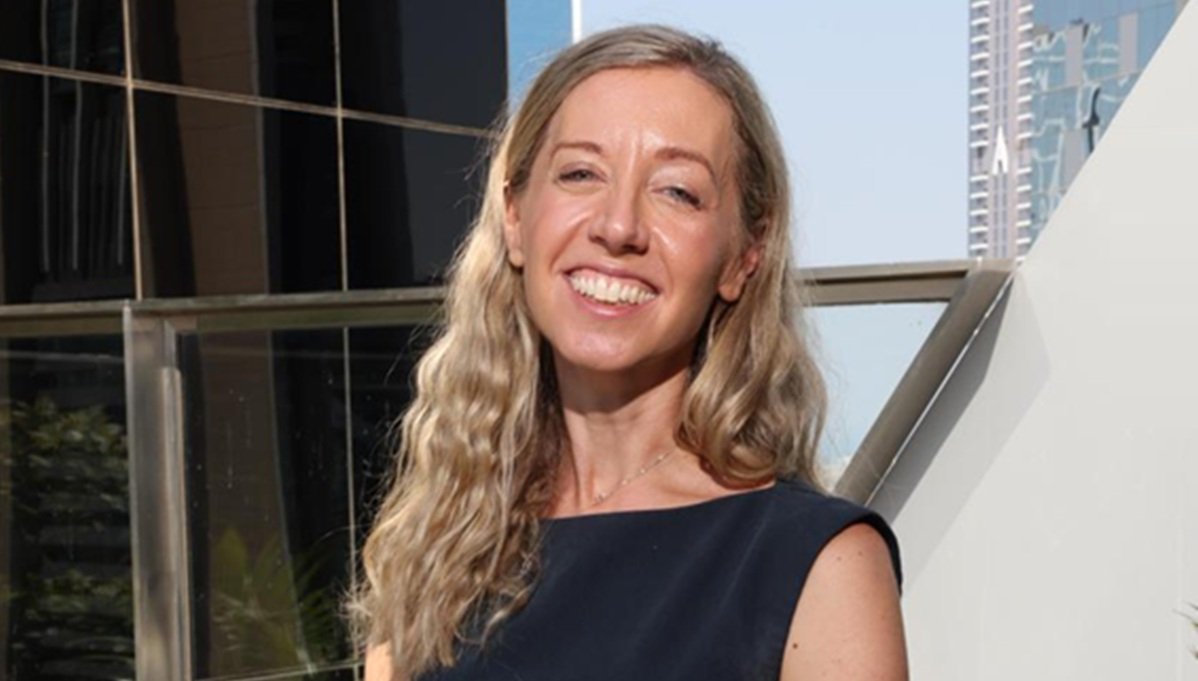
Felicia Agmyren, Founder and Managing Partner of REX Real Estate, sees empathy, deep listening, and collaborative leadership as the strengths that have shaped her success in the UAE. These qualities have helped her understand clients deeply, build trust, and create long-term value. She notes that the region has made meaningful progress, with greater visibility for women founders, stronger institutional support, and more inclusive networks. Yet she believes funding remains uneven and senior mentorship limited, especially in high-growth sectors. For Felicia, the most impactful change would be ensuring transparent, performance-based access to capital. When evaluation criteria are consistent and merit-driven, strong businesses thrive regardless of gender—accelerating innovation and economic growth across the region.

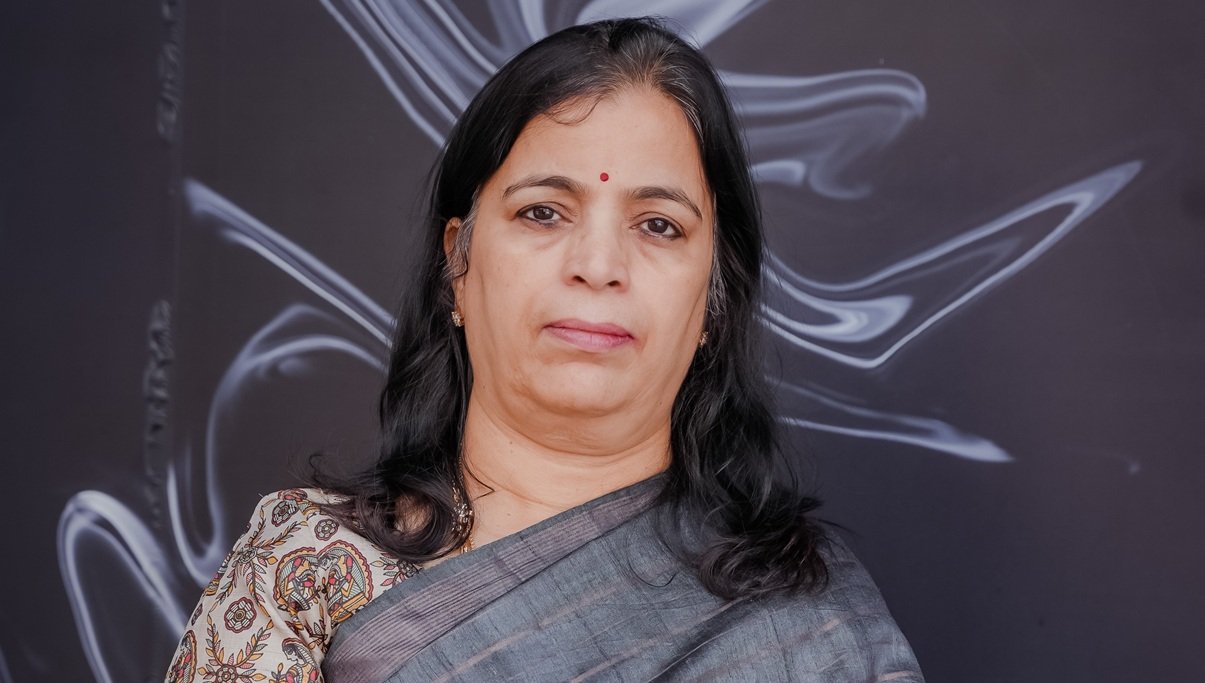
Uma Shankari, Managing Director of Luckystar Computers

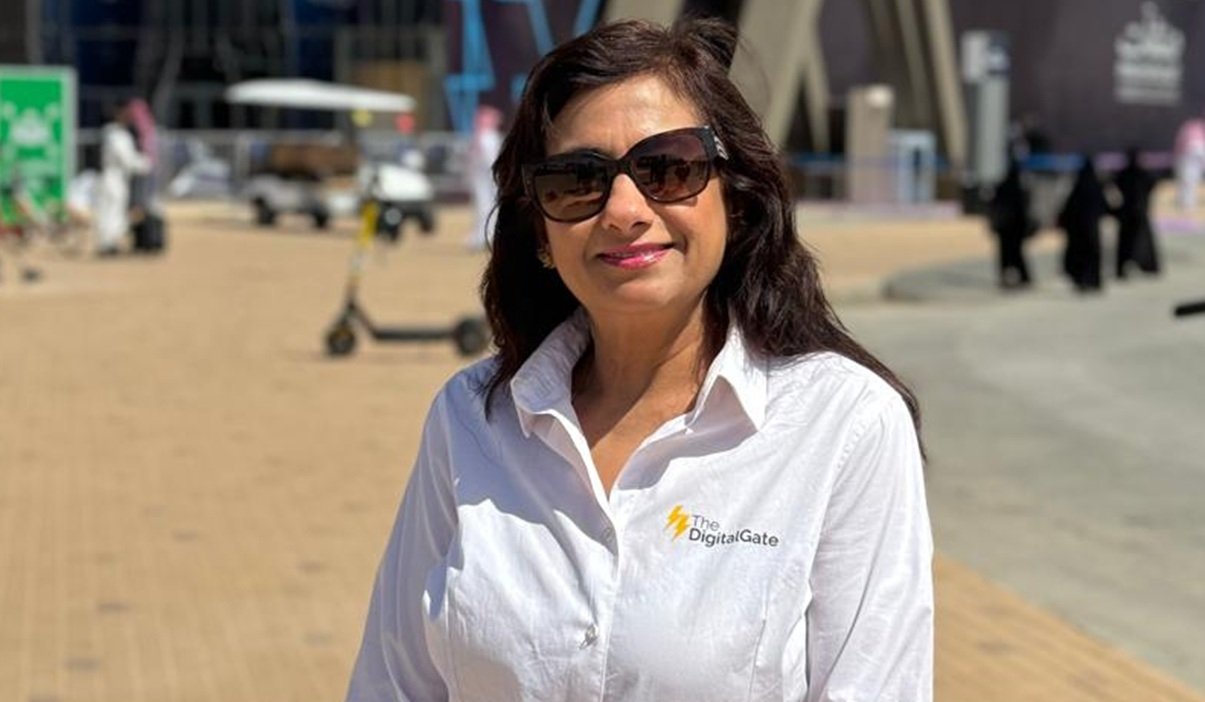
For Uma Shankari, Managing Director of Luckystar Computers, entrepreneurship has been a journey defined by ambition, courage, and unwavering family support. While some viewed her decision to start a business as a challenge, she saw it as a calling. Her family’s belief in her abilities—later strengthened by her husband’s encouragement—became the foundation of her confidence. Being a woman in business has taught her resilience, emotional intelligence, and the ability to balance multiple responsibilities without losing focus. She sees the Middle East evolving rapidly, with governments championing entrepreneurship and digital transformation creating new opportunities for women. Yet she believes access to venture capital remains the biggest barrier. Equal, structured, and transparent funding processes, she argues, would unlock the full potential of women founders and accelerate the region’s economic diversification.

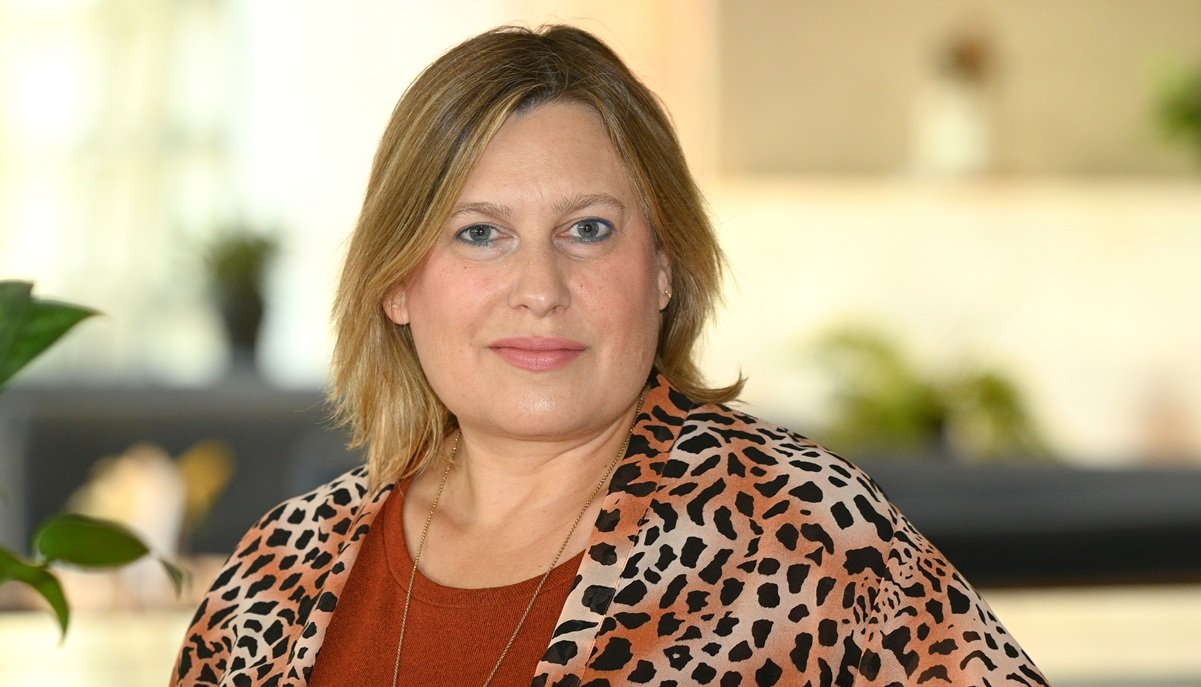
Ananda Shakespeare, Founder and CEO of Shakespeare Communications

Ananda Shakespeare, Founder and CEO of Shakespeare Communications, has seen firsthand how being a woman shapes the entrepreneurial journey in the Middle East. Many private workplaces in the UAE still lack women‑friendly environments, with men dominating leadership and entire teams. Finding herself as the only woman in meetings, offices, or even lifts highlighted how deeply gender imbalance persists. These experiences strengthened her resolve to build her own path—one where women are not outliers but leaders. She also believes the rise in female founders is partly driven by workplaces that don’t fully support women’s needs. While angel investing exists, structured support for expat women remains limited. If she could change one thing, it would be significantly increasing investment in female‑led startups, because targeted funding has the power to unlock growth and enable women to empower one another across the region.

Anna Skigin, Founder & CEO, Frank Porter

Anna Skigin, Founder and CEO of Frank Porter, speaks candidly about navigating a male‑dominated industry where she was often underestimated or not taken seriously. Rather than discouraging her, these moments fueled her determination to excel and prove her competence. She believes her greatest strength lies in her ability to see situations differently, make emotionally intelligent decisions, and avoid ego-driven leadership. Anna acknowledges that the region’s startup ecosystem is shifting, with more visibility for women founders and stronger support networks emerging. However, she emphasizes that access to funding—especially at later stages—remains uneven. Informal networks still tend to favor men, and representation among investors is limited. For her, improving access to capital for women-led startups would create long-term, systemic change, allowing talent—not gender—to determine opportunity.

Subela Bhatia, Founder and Managing Director at Imperium Middle East

Subela Bhatia, Founder and Managing Director at Imperium Middle East, describes her entrepreneurial journey as one built on strategic thinking, resilience, and the belief that leadership does not need to mirror traditional norms to be effective. In fields like cybersecurity, data analytics, and workforce development, she has learned that long‑term trust and relationship-building matter more than transactional wins. As a woman in tech, she has often faced perception challenges rather than capability gaps, requiring her to repeatedly prove her expertise. Subela sees significant progress driven by government initiatives, advisory networks, and women-led communities. Yet she believes deep‑tech funding, visibility beyond women-only platforms, and cultural mindset shifts in technical domains remain critical areas for improvement. Redirecting institutional capital toward performance-based investment in women-led tech companies, she argues, would unlock transformative impact across the region.

Ola Sinno, co-founder of Spill the Bean

For Ola Sinno, Co‑Founder of Spill the Bean, entrepreneurship in the Middle East has been a journey of strengthening resilience, self-belief, and the ability to hold her ground in financial and operational discussions. She believes women bring emotional intelligence, long-term thinking, and community-centered leadership—qualities that build sustainable businesses rather than short-lived ventures. Ola sees encouraging shifts in the ecosystem, with more women launching scalable companies and incubators opening their doors more widely. Yet she stresses that visibility must translate into real capital access. Women founders, she says, do not need symbolic support—they need fair evaluation and equal opportunity to scale. She believes that normalizing flexible, outcome-based work structures would significantly support women balancing entrepreneurship with family responsibilities, creating a more sustainable and inclusive ecosystem.

Cheryl King, Founder and CEO of King & Co PR

Cheryl King, Founder and CEO of King & Co PR, believes her entrepreneurial journey has been shaped more by relationships and networks than by gender. While being a woman in tech brings visibility, she credits her success to the strong connections she has built across the Middle East and the UK. Cheryl sees growing institutional support for women founders, particularly in the UAE and Saudi Arabia, where government-backed accelerators and funding initiatives are expanding opportunities. However, she notes that progress is still needed in late-stage funding and board-level representation within high-growth technology companies. For her, sustained access to capital, mentorship, and government-backed growth initiatives are essential to strengthening the region’s entrepreneurial landscape. Supporting women-led networks, she adds, is vital to ensuring that strong ideas—regardless of gender—can scale and contribute meaningfully to the region’s economic future.

Women entrepreneurs across the Middle East are building companies in a time of heightened uncertainty, yet their determination remains unwavering. Even as the region grapples with geopolitical conflict and economic volatility, these founders continue to innovate, lead, and push boundaries with remarkable clarity and courage. Their stories reveal a powerful truth: resilience is not merely a response to adversity—it is a catalyst for transformation. As the Middle East charts its path forward, women entrepreneurs are not only participating in the region’s evolution; they are shaping it. Their leadership, vision, and refusal to be limited by circumstance are driving a new era of inclusive, sustainable, and future-ready entrepreneurship.


The post Women entrepreneurs driving the Middle East forward appeared first on My Startup World - Everything About the World of Startups!.

Investcorp closes second GP staking fund at $1.1 billion

Investcorp today announced that its GP staking arm, Investcorp Strategic Capital Group (ISCG), has closed on commitments of over $1.25 billion to Investcorp Strategic Capital Partners II and associated vehicles (together, “ISCP II”), inclusive of $1.1 billion of fund commitments and an additional $155 million of committed co-investment capital.

ISCP II closed at a size more than 75% higher than that of ISCP I in a highly selective fundraising environment for private markets, underscoring the differentiated nature of ISCG’s strategy and the strength of its LP relationships. Following the ISCP II fundraise, ISCG AUM totals over $2.4 billion.

ISCP II received meaningful support from existing limited partners, with the majority of ISCP I investors increasing or maintaining their commitments. ISCG also expanded the geographic reach and diversification of its investor base across insurance companies and private wealth channels in the US, while securing new investors across Asia, Europe, Latin America and the GCC. In particular, ISCG has continued to expand its network of relationships with Wealth Managers, Registered Investment Advisors, Single and Multi-Family Offices, and High Net Worth Individuals, resulting in a deeper and broader penetration of this large and growing pool of investor capital.

Beyond fund commitments, a sub-set of investors have also committed a total of $155M for co-investments, with ISCG expecting to offer co-investment opportunities to its LPs in future ISCP II investments. Beyond direct co-investments, ISCG has also facilitated LP allocations into Partner GP funds.

“Since we launched our growth strategy ten years ago, Investcorp has proven itself as a value-added partner of choice in the middle market across asset classes and regions. Our GP staking strategy is emblematic of this approach, and we look forward to backing more talented GPs in the years ahead and expanding their reach and capabilities.” said Mohammed Alardhi, Executive Chairman of Investcorp.

“We are deeply grateful for the support and conviction of our limited partners, who believe in the platform we’ve built to support middle- arket GPs accelerate their growth and enhance longevity,” said Anthony Maniscalco, Managing Partner and Head of ISCG.

“ISCP II’s successful close reflects the strength of our strategy and the trust we have built with investors globally. The GP staking strategy has become a core component of investor allocations, and we are excited to continue as an active, hands-on partner to our portfolio.”

As one of the first active investors in middle-market GPs, ISCG seeks to deploy large-cap institutional tools and resources to assist middle-market GPs. ISCG’s approach centers on supporting GPs with fundraising in key investor channels, enhancing strategy and product development, and accelerating further development of the GP’s internal infrastructure. ISCG has built a comprehensive toolkit to support Partner GPs across key business priorities such as product development, generative AI integration, technology, operations, human capital management, succession planning, and add-on acquisitions. ISCG has also established a seven-person internal capital formation team to augment Partner GP fundraising efforts.

ISCG backs high growth private capital managers in the middle market, defined as those managing between $1 to 10 billion in assets. Since its inception in 2019, ISCG has backed over a dozen GPs that invest in private equity, private credit, real assets, infrastructure, structured capital, and secondaries. ISCP II has made three investments thus far, with a fourth set to close later this year, including Monomoy Capital Partners, MML Capital, Banner Ridge Partners and Vauban Infrastructure Partners. The combined AUM of Partner GPs across ISCP II and its predecessor exceeds $105 billion. ISCG anticipates constructing a portfolio of approximately 10 Partner GPs for ISCP II, consistent with its disciplined and diversified portfolio construction approach.

Fried, Frank, Harris, Shriver & Jacobsen LLP advised on the fund formation of ISCP II.


The post Investcorp closes second GP staking fund at $1.1 billion appeared first on My Startup World - Everything About the World of Startups!.

Rimal Semiconductors raises bridge round from Keheilan

Rimal Semiconductors, a Saudi-based chip design startup, has raised a bridge funding round from Keheilan Asset Management alongside an undisclosed regional investor, bolstering its ambitions to expand its role in the global semiconductor ecosystem.

The new capital will advance Rimal’s plan to scale as a fabless semiconductor company—focusing on chip design while relying on international foundries for manufacturing. The startup already works with partners in Taiwan, South Korea, and China, and is now in talks with US foundries to further broaden its production footprint.

Rimal frames this distributed model as a strategic response to the increasingly fragmented semiconductor landscape, where US–China tensions continue to reshape supply chains and limit market access for many firms.

By keeping its intellectual property under Saudi ownership while diversifying manufacturing across multiple geographies, the company aims to ensure its chip designs can reach global customers regardless of where fabrication takes place.

The startup is also close to finalizing a distribution agreement with a regional partner covering Turkey, Egypt, Morocco, Tunisia, and the UAE. The deal includes on‑the‑ground engineering teams to support clients in each market.

Rimal currently has six contracts in advanced stages, including one with a major Egyptian conglomerate. The projects span defence technologies, power grid systems, and data‑centre infrastructure—sectors where demand for specialized semiconductor solutions continues to accelerate.


The post Rimal Semiconductors raises bridge round from Keheilan appeared first on My Startup World - Everything About the World of Startups!.

Skipr raises $2 million to scale sovereign AI infrastructure

Skipr, the autonomous trust fabric for the age of AI, today announced the close of its USD 2 million seed funding round at a USD 10 million valuation. The funding supports the startup’s expansion from Hub71, Abu Dhabi’s global tech ecosystem, as it scales sovereign AI infrastructure for national and enterprise deployments.

As intelligent systems increasingly operate autonomously across organizations, clouds, and borders, a new challenge has emerged: how these systems can safely work together. Skipr addresses this gap by providing a secure way for AI systems to communicate, coordinate, and exchange value, while ensuring governments and enterprises retain full sovereign control over their data and decision making.

Skipr is already working with telecommunications operators, AI and cybersecurity laboratories, and data center partners to deploy autonomous, sovereign AI digital services at national and enterprise scale. These early deployments position the company as a key enabler for governments and enterprises transitioning toward AI-ready, cross-jurisdiction digital environments.

Purpose-built for sovereign-grade use cases, Skipr enables organizations to connect systems, deploy applications, and enable trusted interactions between AI tools across different networks. Through cryptographic identity, policy-driven routing, and auditable interoperability, the company’s technology ensures that data, decisions, and transactions can be shared safely, transparently, and in line with regulatory and national requirements.

This funding accelerates our work on what we believe is a foundational layer for the AI era,” said Andreas Hartl, CEO at Skipr Technologies. As AI systems become autonomous and interconnected, secure AI-to-AI interoperability under sovereign control is no longer optional. We are building the trust infrastructure nations and enterprises need to deploy AI safely, confidently, and at scale.”

As part of the Hub71+ Digital Assets specialist ecosystem, Skipr operates within Abu Dhabis growing network of technology innovators, regulators, and strategic partners focused on globally relevant digital infrastructure.


The post Skipr raises $2 million to scale sovereign AI infrastructure appeared first on My Startup World - Everything About the World of Startups!.

Private equity resurgence gathers steam

A resurgence in global private equity is gathering steam after a rebound in dealmaking last year that saw both buyout deals and exits surge ahead to register their second highest values on record. After three prior years in the relative doldrums, the advances mark a turning point for PE and set the stage for a continuing revival in 2026 and beyond, Bain & Company’s 17th annual Global PE Report, released today, concludes.

But Bain’s analysis tempers this upbeat message on brightening prospects, with a caution that the maturing PE industry has reached a critical inflection point. PE firms confront greatly heightened competition for capital as well as intensified investor demands for high performance – even as they continue to contend with a series of stubborn industry challenges, today’s report warns.

Even with last year’s leap in exit value, amounts of cash flowing back to limited partner (LP) investors continue to disappoint, hampering PE’s revitalization, Bain finds. The key measure of this, distributions to LPs as a percentage of net asset value (NAV), has now been mired below 15% for four consecutive years, setting an industry record. The industry’s liquidity logjam comes as it sits on a stock of 32,000 unsold companies worth a stunning $3.8 trillion, Bain notes. For buyout funds, holding periods at exit now hover at around seven years – up from an average of five to six years from 2010 to 2021. In turn, lagging distributions to LPs are the main driver of a slow and difficult slog faced by many PE firms in fund-raising, the analysis concludes.

Despite the challenges of these structural issues, as well as lingering economic uncertainties, today’s report charts how last year saw PE get moving once again as an industry recovery gained traction amid some of the biggest buyouts of all time.

Pent-up appetite among general partners (GPs) to get deals done and put to work a $1.3 trillion arsenal of global buyout dry power – much of it aging, along with falling interest rates, catalyzed a sharp rebound in deal and exit values, with confidence returning to credit markets. 2025 global buyout deal value (excluding add-ons) leapt 44% year-on-year to $904 billion. The $56.6 billion public-to-private deal for Electronic Arts (EA) set a new all-time buyout record.

Alongside, exits also rebounded, with global buyout-backed exit value jumping 47% year-on-year to $717 billion, led by a series of landmark exits, including Macquarie’s $40 billion sale of Aligned Data Centers to BlackRock and a consortium of tech giants hungry for AI data-crunching capacity.

However, while both buyout and exit values were the second highest ever, and not far behind those in PE’s zenith year in 2021 – and while the year also saw some of PE’s biggest-ever transactions – Bain’s report cautions that the 2025 recovery was also markedly narrow. Just 13 megadeals in the $10 billion-plus bracket accounted for $274 billion (or 30%) of the global total, with 11 of those deals being concentrated in the US.

“The good news is 2026 is shaping up as promising. Interest rates are moving south, if slowly, deal pipelines are well stocked. With stock prices high and the economy robust – and barring another ‘black swan’ jolt to the system – the conditions for deal and exit activity are rosier than for some time,” Hugh MacArthur, chairman of the global Private Equity practice at Bain & Company, said. “Beneath the headline recovery, though, there is a more uneven underlying reality – and plenty of work still to do. Deal value has been highly concentrated in megadeals, favoring a few scale players. Many GPs continue to face pressures from longer holding periods, constrained distributions, and fund-raising conditions that are among the toughest the industry has experienced. With the tailwinds that propelled the industry forward in the 2010s gone, the dynamics mean that most players will have to substantially raise their value creation game.”

The changed dynamics challenging GPs that have made the PE business model significantly more complex to execute on than in the industry’s ‘golden decade’ of the 2010s are examined in detail in Bain’s report. While that period provided PE players with powerful tailwinds from rock-bottom interest rates, steadily rising valuation multiples, and ready access to investors and capital, Bain finds that today’s new baseline is higher rates, stubbornly high valuations, slower exits and much choosier investors. At the same time, PE firms’ costs are rising as leading firms build competitive moats through scale, expertise, technology and AI, and professionalized fund-raising.

Rebecca Burack, head of the global Private Equity practice at Bain & Company, said: “Against this backdrop, deal math is only getting harder. The industry is at an inflection point having reached a level of maturity that comes to all sectors, where competition intensifies and customers, in this case investors, demand a much higher degree of excellence. More than ever, investors are focused on funds that have a clear, repeatable, easily explained strategy for delivering top-tier results. In the new era we are entering, the performance that winning firms need to deliver will rely on their ability to rapidly generate strong EBITDA growth, full stop.”

New math for a new era: Bain sets out a rule of thumb capturing why ‘12 is the new 5’ for PE
As a new cycle for PE gathers steam, with an upswing in dealmaking in a context where every aspect of raising capital and generating returns is more challenging, Bain sets out a rule of thumb to capture the implications for the industry that it calls “12 is the new 5”.

During PE’s ‘golden decade’ of the 2010s, based on typical deal pricing, capital structure and exit values, and with dealmakers benefiting from then substantial valuation multiple expansion, a typical PE investment required only 5% annual growth in earnings before interest, taxes, depreciation and amortization (EBITDA) to generate a target 2.5X multiple on invested capital (MOIC) over average five-year holding periods. This level of earnings would also deliver a 20 per cent internal rate of return (IRR).

Yet in today’s environment, with borrowing costs in the 8% to 9% range, leverage ratios of 30% to 40%, and purchase multiples in record territory, the lower leverage and lack of multiple expansion make value creation more challenging. In turn, Bain finds that typical deals now require around a 10% to 12% average annual growth in EBITDA to generate the same benchmark 2.5X return over five years.

The consequences of “12 is the new 5” mean that most PE funds will need to substantially raise their value creation game in these changed circumstances – with pressure intensified as LPs increasingly narrow their focus to the largest platforms and firms that are top-tier generators of alpha, Bain concludes. At the same time, firms’ costs to generate performance are being driven up by the need for heavy investments in specialized sector expertise, critical capabilities, technology and talent, while revenues to pay for these requirements are under pressure from falling management fees as well as LPs’ growing appetite for co-investment.

Rebecca Burack commented: “Generating attractive returns now requires significantly more operational improvement and revenue growth. We call this ‘12 is the new 5’.  In practical terms, deals that once delivered competitive returns with modest EBITDA growth now require sustained, double-digit growth. In PE’s new upcycle, the winners will be those for whom alpha generation is a habit, not an aspiration. The winning firms will be those that build true differentiation, whether through scale, specialization or superior execution, and turn that differentiation into a system, not a slogan, and one that is backed up by data.”

Bain’s report advocates that, increasingly, successful PE players will secure competitive advantage in the era where ’12 is the new 5’ by proactively identifying potential deal targets as far as years ahead of any deal. It also urges that, in the new era, firms that want to ensure robust value creation will need to focus on not only a viable deal case but on the true full potential of an asset through what Bain calls “full potential due diligence” that scrutinizes revenue, operational and technology levers that can deliver a step-change in a portfolio company’s performance.

A year of two halves puts PE in a new upswing, driven by a wave of megadeals
Charting PE’s 2025 upswing, today’s report notes that having begun last year with optimism, investors quickly regained their footing after the setback of turmoil around the US administration’s tariff announcements in April, with dealmaking then staging a potent rebound from Q3, which registered PE’s strongest quarter ever, with an impressive $301 billion in deal value.

But while deal value for the year was close to record highs – flattered by an average disclosed deal size that marked an all-time record of $1.2 billion – the number of buyout deals declined, falling by 6% year-on-year, to register 3,018 transactions.  A wave of megadeals wowed the market and drove the steep jump in total deal value. In addition to the record $56.6 billion public-to-private deal for EA and the $40 billion deal for Aligned Data Centers were the $27.5 billion acquisition of Air Lease, the air leasing platform, and the $23.7 billion deal for Walgreens Boots Alliance, the retail pharmacy chain.

Yet Bain also notes that these huge numbers also belied relatively modest impact on the buyout industry’s $1.3 trillion mountain of dry powder, with the bulk of equity in many transactions coming from external sources, especially sovereign wealth funds and corporate buyers, rather than PE funds. After taking into account the extensive availability of such non-buyout capital, the amount of money chasing deals is unprecedented – and cutting into PE’s share of the action, the report finds.

Activity below the megadeal threshold was meanwhile more representative of the state of the buyout market amid macro uncertainties, Bain suggests. Excluding the $10 billion-plus deal segment, 2025 deal value grew 16% year-on-year, with transactions in the $5 billion to $10 billion range growing 6%, while the $1 billion to $5 billion segment grew 29%.

North America was by far the biggest driver of dealmaking, adding 80% to the deal value – although Europe made a comparable contribution if the megadeals above $10 billion are removed from the total. Deal value also rose across most sectors but deal count lagged almost across the board.

Public-to-private transactions continued to dominate the top-end of the market and represented roughly half the total deal value growth as GPs and their sovereign wealth and corporate investing partners took advantage of an improved financing environment for M&A in the US, and the opportunity to revamp companies out of the public eye.

Exits revival eases liquidity logjam but larger cash flow challenge persists

Last year’s sharp jump in exit value provided welcome relief for the PE industry from its stubborn liquidity challenge to sell enough companies to meet LPs’ demands for returns of liquidity to investors.

A global M&A boom spurred by improving economic conditions, shifting business requirements, and AI helped to drive the rebound in exits. But Bain also notes that just seven mega-exits each valued at more than $10 billion added $155 billion, or 22%, to the $717 billion global value of 2025’s exits, while the total number of exits fell slightly to 1,570 – a 2% drop year-on-year that left exit count broadly in line with the level just before the Covid-19 pandemic.

While exit activity was less pronounced across the broader market, exit value below the $10 billion threshold still grew by 34% as opportunistic buyers combed buyout portfolios for solutions to companies’ strategic imperatives. Sponsor-to-strategic exits, with sales to corporate buyers, regained importance. Exit value through this channel rose 66% year-on-year and even more strongly in North America (by 73%) and Europe (by 82%) – led by deals such as ECP’s $29.4 billion sales of Calpine, a US electricity generator, to rival energy group Constellation.

The sponsor-to-sponsor channel was less robust, growing 21% globally, boosted by the Aligned Data Centers deal, without which the value of North American sponsor-to-sponsor exits would have dropped 19%. There was offsetting strong growth in Europe, where sales to sponsors rose 56% year-on-year.

Initial public offerings globally increased 36% last year, from a very low base, and IPOs continued to provide only a minor exit route for PE, with GPs deterred from taking the option by complexity and the potential for macro turbulence to impact public markets. However, the reopened IPO window for exits raises the prospect of increased activity in the channel in 2026, Bain suggests.

Amid industry-wide concern over liquidity, secondaries and continuation vehicles continued to expand as exit channels last year. For secondary deals, the transaction volume of GP- and LP-led vehicles rose 41% year-on-year.  GP-led continuation vehicles (CVs), allowing a fund to return capital to LPs while retaining control of the asset, grew even faster, by 62% year-on-year, marking 37% annual growth since 2022.

Although CVs still accounted for less than 10% of total PE exit value, GPs’ interest in these is growing: a quarter of respondents to a recent StepStone/Bain survey said they had initiated or completed a CV in the past two years, and around 40% said they planned to explore a CV transaction in the next 12 to 24 months. More than half of respondents said generating liquidity was a primary reason for launching a CV.

Overall, PE’s net cash flow moved modestly above the breakeven line last year, Bain finds. But with the key metric of distributions to LPs as a percentage of NAV still essentially flat at 14% for 2025 – a level not seen since 2008-09 during the global financial crisis – the report warns that PE’s liquidity challenge continues to dog the industry.

Fund-raising falls for a fourth consecutive year as competition for capital further intensifies

The continuing four-year-long drought in distributions to investors makes it unsurprising that PE funds continued to see fund-raising lag in 2025, Bain concludes.

Private capital broadly raised $1.3 trillion last year, roughly even with 2024 totals, and thanks largely to strong growth in infrastructure funds. But fund-raising for buyout, the industry’s largest category, dropped 16% to $395 billion. Meanwhile, the total number of funds closed fell 18% for the industry as a whole and by 23% for buyout – marking a fourth straight year of decline, with almost every fund category affected.

While Bain finds that a majority of LPs still expect to maintain or increase allocations to PE in coming years, it notes that investors are also increasingly constrained in making new commitments without cash flowing back to them from aging fund vintages. This is further reinforcing trends for LPs to gravitate to the largest, established GPs with consistent performance, and to become more demanding, with investors increasingly looking for top-quartile returns, alongside consistent, top-quartile cash distributions.

In turn, Bain concludes that these trends are adding to the imperative facing GPs to define and articulate a differentiated and repeatable strategy as well as to transform how this is communicated with professionalized investor relations.

Yet despite this intensified competitive pressure on funds, the report also concludes that PE’s value proposition remains appealing to investors. Top-quartile buyout funds continue to outperform public market averages significantly over all time horizons, Bain notes. A key appeal of PE for investors remains broader diversification across sectors and company sizes at a time when US equity markets have become extraordinarily concentrated, it adds.

The post Private equity resurgence gathers steam appeared first on My Startup World - Everything About the World of Startups!.

Before yesterdayMain stream

Prop‑AI: Turning real estate chaos into data‑driven clarity

Ranime El Skaff, CEO of Prop‑AI, says the platform transforms fragmented real‑estate data into structured intelligence, using deep pipelines and adaptive AI to give investors and professionals faster, clearer, and more confident decision‑making across the value chain.

What inspired you to launch Prop-ai, and what problem in the real estate industry are you solving?
The idea started with a personal pain point. During my time in consulting, I wanted to invest in property but found it nearly impossible to evaluate opportunities properly. The process was overwhelming: scattered data, inconsistent valuations, and too much reliance on opinion rather than fact. I realized this wasn’t just my struggle—buyers, brokers, and even developers were operating in the dark, often making decisions without a clear view of the numbers. When I spoke with Chris, who is now my co-founder, I discovered he had faced the exact same frustration. That shared experience was the spark that led us to build Prop-AI together: a platform designed to bring structure, transparency, and intelligence to real estate data, giving every player the clarity to act decisively and with confidence.

How does Prop-ai leverage AI differently compared to traditional property tech platforms?
What sets Prop-AI apart is that we don’t une AI as a wrapper and we don’t just collect property data—we use this data by transforming it into something structured, consistent, and reliable. Every unit is parameterized across hundreds of dimensions, then rigorously cleaned and tested so that the outputs are accurate. Once that foundation is in place, we apply Agent AI, our intelligent overlay that works across the value chain. For investors, it highlights the properties that best fit their goals. For agents, it acts like an AI co-pilot, helping them advise clients with precision. For developers and institutions, it provides real time insights on pricing, demand, and market shifts. By combining depth of data with an adaptive AI layer, we’re redefining how real estate decisions get made.

Can you walk us through how Prop-ai helps real estate professionals make faster, smarter decisions?
Prop-AI has been built to drive impact across the industry, starting with two main groups: investors on one side, and real estate professionals—agents, developers, and institutions— on the other. For investors, the platform brings order to a messy process. Properties are broken down into hundreds of tested parameters and benchmarked against clean, validated data. This allows investors to focus only on opportunities that genuinely match their goals, whether that’s strong rental yields, appreciation potential, or lifestyle fit. For professionals, Prop-AI acts as an intelligent layer over their workflow. Agents can instantly match clients with suitable units and advise with confidence, developers gain real time pricing and demand insights, and institutions can monitor portfolios with a level of transparency that wasn’t possible before.

What were some of the key challenges you faced during the product development and go-to-market phase?
Building Prop-AI wasn’t just about writing code—it was about engineering trust in a historically opaque market. Early on, our challenge was building the right data pipelines and cleaning massive datasets, which required significant investment in infrastructure and machine learning expertise. Another hurdle was aligning the product with different user needs: investors want simplicity, brokers need speed, and institutions demand depth. Balancing all three meant endless iterations. On the go-to-market side, convincing stakeholders to adopt AI-powered decisioning was initially tough. Many were skeptical of replacing intuition with data. Over time, strong results and early success stories with over 100+ customers helped build credibility and momentum.

How do you see AI transforming the real estate sector in the next 3–5 years, and where does Prop.ai fit in?
AI will fundamentally reshape real estate by collapsing inefficiencies across the value chain. In the next 3–5 years, I see AI becoming the standard layer that powers pricing, valuation, customer matching, and portfolio optimization. Just as Bloomberg became indispensable to finance, AI-powered platforms will become the default interface for real estate professionals. Prop-AI is positioned at the heart of this shift. We’ve already built the infrastructure to structure and interpret property data at scale. Our vision is to be the “Bloomberg Terminal” for real estate: the go-to platform where every investor, broker, or institution can access transparent, real-time insights that drive confident decision-making.

Are there specific markets or customer segments you’re focusing on right now?
Right now, we’re focused on the GCC, with Dubai as our primary launch market. Dubai is a perfect testbed: fast-growing, globally diverse, and highly competitive, yet historically lacking in transparent analytics. Our early traction has been strongest with two customer segments: busy professionals who want to diversify into property without wasting time, and real estate agents seeking to serve clients with data-backed recommendations. Increasingly, we’re also working with developers and institutional players who want real time intelligence on pricing, absorption, and investor demand. Building on this foundation, our next market is Abu Dhabi, followed closely by Saudi Arabia, where regulatory shifts and rapid growth are creating strong demand for transparency.

How do you ensure data accuracy, privacy, and compliance in such a sensitive and regulated industry?
Data integrity is at the core of everything we do. At Prop-AI, we don’t just source information; we clean it, structure it, and pipeline it to ensure consistency across every dataset. Every property parameter goes through multiple rounds of validation and constant quality checks. We double-check the data used, and even maintain backups to our backups, so that nothing is lost and errors are caught early. The goal is to be as exhaustive and reliable as possible, because decisions worth millions often depend on this information. Just as importantly, we work closely with regulators such as the Dubai Land Department and RERA to align with official data standards and ensure compliance. Combined with strict privacy safeguards and encryption, this creates a platform that is both trustworthy and regulation-ready.

What’s next for Prop-ai—any upcoming features, partnerships, or expansion plans you can share?
The next phase for Prop-AI is expanding both capability and reach. On the product side, we’re launching conversational AI search: allowing investors to simply type or speak their goals and receive curated investment options instantly. For agents, we’re rolling out advanced dashboards through Prop-AI Business that integrate forecasting, comparative analysis, and other tools making their lives easier. Strategically, we’re deepening partnerships with developers and institutional investors, embedding Prop-AI as their default decisioning layer. Geographically, we’re preparing for expansion into Abu Dhabi and Saudi Arabia, where transparency is becoming a policy priority. Ultimately, our roadmap is about scale: building the definitive, data-driven platform that powers confident real estate investment across the region and beyond.

The post Prop‑AI: Turning real estate chaos into data‑driven clarity appeared first on My Startup World - Everything About the World of Startups!.

On‑demand data talent is reshaping the future of work

Jadd Elliot Dib, Founder & CEO of PangaeaX, says global on‑demand data talent is reshaping how organizations work. Instead of growing headcount, he argues the future lies in modular, capability‑based teams that assemble around outcomes and adapt as priorities shift.
In today’s data-driven world, businesses are increasingly recognizing the importance of data for organizational success. However, a paradox has emerged: companies have more data than ever, but they have less clarity on how to configure their workforce to make the most of their data. The reality is that the future of work is not about hiring more people, but about accessing the right capabilities at the right moment. This is less like staffing a factory and more like assembling a mission team: the right people, for the right outcomes, at the right time.

Running a global data workforce platform gives a front-row seat to how the “old rules” are breaking down. The largest change isn’t about remote work or new titles. It’s about how demand for expertise is changing at a pace faster than traditional hiring or workforce planning can reasonably keep up.

Why companies need flexible, project-based teams
In the data world, needs shift constantly. A company might spend months building a new data pipeline, then suddenly face an urgent governance challenge. Or it may be experimenting with machine learning, only to discover that model deployment and monitoring require a completely different skill set than model training. The demand curve is not linear but instead has valleys and troughs.

Despite that, many organizations still try to solve that variability with a permanent headcount. The results are predictable: either teams are overextended and under-resourced, or they’re overstaffed for a season and underutilized in the next. In both cases, resources are not used optimally and business momentum suffers.

Project-based teams are a better match for the reality of modern work because they align talent with outcomes, not org charts. When teams are formed around a defined objective (e.g. data quality improvement, forecasting, customer segmentation, AI readiness), they become more responsive to business priorities, not locked into a fixed set of responsibilities.

This isn’t about replacing full-time employees. It’s about acknowledging that much of the highest-value work today is episodic, specialized, and time-bound. And companies need workforce models that reflect that. 

How modular talent models improve speed and resilience
The most effective organizations aren’t merely “flexible.” They are modular. A modular talent model treats expertise like building blocks. You assemble what you need, when you need it, and redesign the system as new needs emerge. This is especially powerful in data, where a single initiative may require a data engineer, a cloud architect, an analytics translator, a visualization specialist, and a domain expert. These roles can last for weeks or months, but rarely forever. The focus should shift from headcount to capability on demand.

Modularity does two things exceptionally well: It increases speed and creates resilience. Traditional hiring is slow, even when leaders are moving fast. By the time a role is approved, scoped, posted, interviewed, negotiated, and onboarded, the business need may have changed. Modular teams shorten the time needed to reconfigure teams.

Regarding resilience, it used to mean having backup systems. Now, it also means having backup expertise. When talent is modular, companies can adapt when priorities shift, budgets tighten, or new technologies emerge. Modular workforce models reduce bottlenecks and distribute capability across a broader, more dynamic network.

What leaders must unlearn about workforce planning
To adopt this new reality, leaders will need to unlearn a few deeply embedded assumptions. These are:

1. Control comes from keeping everything in-house
Many leaders believe control equals ownership: if the people are employees, the work is safer, higher quality, and easier to manage. But control actually comes from clear outcomes, strong governance, good process, and transparency. The best blended teams outperform traditional teams because they’re designed around accountability and results, not employment type.

2. Planning means predicting
Workforce planning has historically been an exercise in prediction: forecasting roles and headcount needs 12–18 months out. But prediction fails when the environment changes monthly. The future belongs to planning as a capability: building systems that allow fast reconfiguration, repeatable onboarding, and rapid team formation.

3. Quality requires permanence
Quality requires standards, not permanence. If the system is designed for excellence, great work will come from full-time employees, independent specialists, or blended teams. That means shared frameworks, rigorous documentation, well-defined deliverables, and strong leadership. The model doesn’t guarantee success. The operating system does.

The changing relationship between people and work
Today, we are seeing shifts from job structures to capability systems, from headcount to impact, and from static planning to dynamic orchestration. These aren’t only happening because companies want them. There is also demand from the talent side. Many skilled professionals increasingly prioritize autonomy, meaningful projects, and continuous learning over traditional career ladders. They want the ability to work across industries, solve hard problems, and build a portfolio of impact instead of a flashy job title.

Building access to opportunity in a way that’s transparent and outcome-driven will unlock a more meritocratic market. The best person for the job can be anywhere in the world. And, by reliably connecting that person to the problem, everyone wins –  organizations move faster, and experts can work on what they do best.

Leaders who embrace this won’t just adapt to the nature of work. They’ll shape it.


The post On‑demand data talent is reshaping the future of work appeared first on My Startup World - Everything About the World of Startups!.

Plus VC’s Hasan Haider wins Top Venture Capitalist Award

Plus VC today announced that its founder and managing partner, Hasan Haider has been recognized with a Top Venture Capitalist Award 2026 at the Forbes Middle East Top Advisors & Investors Summit.

This award recognizes his leadership and proven track record of investing in ambitious entrepreneurs solving real-world challenges and shaping the next generation of category-defining companies as well as his pivotal role in shaping and advancing the venture capital ecosystem across the MENA region, and beyond. Hasan Haider was presented with the award by Khuloud Al Omian, CEO and Editor-in-Chief of Forbes Middle East, joined by distinguished industry leaders on stage, marking a key moment of recognition within the summit’s program.

Commenting on receiving the Award, Hasan Haider, Founder and Managing Partner at Plus VC, said: “I am deeply honoured to receive this Top Venture Capitalists Award from Forbes Middle East. Being recognized by one of the world’s most prestigious business media brands is a meaningful milestone. This recognition reflects both the extraordinary founders we support and the growing momentum of the MENA venture ecosystem. At Plus VC, our mission is to back ambitious, innovative entrepreneurs building transformative, technology-driven companies from the region for the world. We have backed over 100 startups across diverse sectors, with many emerging as leaders and innovators in their industries.”

Plus VC is an early-stage venture capital firm focused on investing in technology and tech-enabled startups across MENA and its diaspora. The firm partners with ambitious founders to build scalable companies, providing not only capital but also hands-on support, strategic guidance, and access to a strong regional and global network. Plus VC is committed to backing founders shaping the future of innovation across the Middle East and beyond.

The Top Advisors and Investors Awards recognize excellence and impact across the regional investment landscape. The 2026 summit brought together leading venture capitalists, private equity leaders, family offices, institutional investors, and senior banking and economic leaders from across the MENA region.


The post Plus VC’s Hasan Haider wins Top Venture Capitalist Award appeared first on My Startup World - Everything About the World of Startups!.

Stake raises $31M in an oversubscribed Series B round

Stake today announced it successfully raised $31 million in its oversubscribed Series B funding round led by Emirates NBD, with additional participation from MENA Venture Capital Fund, Middle East Venture Partners (MEVP), Property Finder, STV NICE, Wa’ed Ventures, GFH Partners, and Ellington Properties.

The investment marks a significant milestone in Stake’s evolution as a regulated fintech platform modernising how real estate is accessed, owned, and invested across borders. As global investors increasingly seek transparent, regulated exposure to real assets, Stake is positioning itself as the infrastructure layer connecting capital to high-quality real estate markets worldwide.

With this round, Stake’s total funding to date reaches $58 million, reinforcing its position as one of the fastest-growing fintech companies in the Middle East.

Neeraj Makin, Group Head – Strategy, Analytics and Venture Capital at Emirates NBD, said, “Through our Innovation Fund, we are committed to making such strategic investments and fostering a culture of innovation. We recognise the growing demand for accessible real estate investment opportunities, and Stake’s platform provides a robust, compliant, and scalable solution that we are proud to support.”

“This round is more than capital. It is validation of a mission we have poured our lives into. To have institutions like Emirates NBD, Mubadala, Property Finder, MEVP, Wa’ed Ventures, GFH Partners, STV and Ellington Properties join us is a reminder that our region believes in ambitious ideas and in the power of technology to transform industries. Together, we are building the infrastructure for a new era of real estate ownership, one where borders do not limit opportunity and where every person, regardless of background, can participate in real estate wealth creation. This is just the beginning of what Stake will unlock,” said Rami Tabbara, Co-Founder and Co-CEO of Stake.

Saudi Arabia represents Stake’s most immediate and strategic growth market, underpinned by regulatory first-mover advantage and accelerating international capital inflows. In Q4 2024, Stake became the first CMA-regulated investment platform to open the Kingdom’s property market to global investors. Since then, the company has closed three real estate funds in Saudi Arabia, attracting 6,930 international investors and channeling more than SAR 416 million into the local real estate sector, directly supporting the Kingdom’s ambition to expand domestic and foreign investment.

“Saudi Arabia is a strategic growth market for us, and this round allows us to deepen our investment in the Kingdom by expanding our local capabilities and scaling our CMA-regulated offering to meet growing demand from both regional and international investors. We are committed to being a long-term partner to the market, helping channel capital into high-quality opportunities while supporting the Kingdom’s ambition to broaden foreign investment to the masses.” said Manar Mahmassani, Co-Founder and Co-CEO of Stake.

Beyond the GCC, Stake is advancing its international strategy to provide investors with diversified exposure across stable and high-growth markets. In October 2025, the company expanded into the U.S. industrial real estate market, one of the most resilient asset classes globally. Early traction has validated Stake’s cross-border investment model, with growing investor demand for exposure to income-generating U.S. assets and clear evidence of the platform’s scalability beyond regional markets.

In parallel, Stake continues to broaden its product offering. In October 2025, the company launched StakeOne, a new investment product designed to digitise access to full property ownership and after-sales asset management. The product expands investor access to premium properties in Dubai, including assets from leading developers such as Emaar, Ellington Properties, Dubai Holding, and more, while introducing streamlined ownership structures and a pathway toward listing ready-to-own properties with full ownership potential

As part of its long-term vision to fully digitise the real estate investment lifecycle, Stake is also advancing regulated tokenisation in collaboration with Property Finder and has already received the In-Principle Approval (IPA) from Dubai’s Virtual Assets Regulatory Authority (VARA). The initiative aims to enhance liquidity, transparency, and flexibility in real estate ownership by enabling fractional, tradeable exposure to high-demand assets that were historically accessible only to institutional investors.

Stake continues to deliver strong momentum across its core metrics, recording a GMV CAGR of over 130% and a revenue CAGR of over 100% over the last three years. The platform now serves more than 2 million users from over 211 nationalities across 181 countries, reflecting its growing global reach and investor confidence.


The post Stake raises $31M in an oversubscribed Series B round appeared first on My Startup World - Everything About the World of Startups!.

SVC unveils Aian to boost Saudi Private Capital ecosystem

Saudi Venture Capital Company (SVC) has announced Aian, a pioneering proprietary intelligence platform that further strengthens SVC’s role as a market maker for Saudi Arabia’s private capital ecosystem.

Aian is a custom-built AI market-intelligence capability, developed internally with Saudi national expertise, that transforms SVC’s unmatched private market data and deep institutional knowledge into timely, structured insight on market dynamics, sector evolution, and capital formation. As a cognitive institutional capability, it converts institutional memory into compounding intelligence, ensuring decisions reflect both current market signals and long-term historical insight.

Nora Alsarhan, Deputy CEO and Chief Investment Officer of SVC, said: “As Saudi Arabia’s private capital market scales, clarity, transparency, and data integrity become as critical as capital itself. Aian represents a new layer of national market infrastructure, strengthening institutional confidence, enabling evidence-based decision-making, and supporting sustainable growth. By transforming data into actionable intelligence, Aian reinforces the Kingdom’s position as a leading regional private-capital hub under Vision 2030.”

Alsarhan added, “Market making is not only about deploying capital; it is about shaping the conditions in which capital flows efficiently. The next phase of market development will be driven by intelligence, not just investment. With Aian, we are building the data backbone of Saudi Arabia’s private capital ecosystem, allowing us to see the market with clarity, act with precision, and ensure capital formation is guided by insight, not assumption.”

Athary Almubarak, SVC’s Chief Strategy Officer, said: “In private capital markets, access to capital is rarely the binding constraint. Access to reliable insight is increasingly available. This is particularly true in emerging and fast-scaling markets, where transactions are reported inconsistently, and institutional knowledge is fragmented across organizations and individuals.”

Almubarak continued: “For Development Finance Institutions operating in private capital markets, the lack of clear, consistent data is a structural challenge. It directly affects capital allocation efficiency and the ability to crowd in private investment at scale. SVC was established precisely to address these market frictions. As a government-backed investor with an explicit market-making mandate, our role extends beyond capital deployment to shaping the conditions under which private capital can grow sustainably.”

By integrating SVC’s proprietary portfolio data with selected external market sources, Aian enables continuous consolidation and validation of market activity. The platform produces a living representation of the market that reflects how capital is actually deployed over time, rather than how it may be imperfectly reported at any single moment.

Aian delivers a suite of customizable dashboards that provide more frequent overviews and predictive analytics, enabling SVC to identify priority market gaps, recalibrate capital allocation, design targeted ecosystem interventions, and anchor policy dialogue in evidence rather than anecdote.

The platform features include predictive capabilities that anticipate upcoming funding activity, projecting likely funding rounds and estimated ticket sizes. In addition, Aian incorporates institutional benchmarking tools that enable structured comparisons across peers, markets, and interventions—supporting more precise, evidence-based ecosystem development.


The post SVC unveils Aian to boost Saudi Private Capital ecosystem appeared first on My Startup World - Everything About the World of Startups!.

GoDaddy starts ANS Registry for AI agents

AI agents are launching at an incredibly rapid pace, with more than one billion agents projected to be built by businesses alone in the next three years. As AI agents begin communicating with one another, a major challenge arises: how can people distinguish legitimate agents from malicious ones and ensure the integrity of agent-to-agent interactions?

To help solve this high-stakes challenge, GoDaddy founded the Agent Name Service (ANS), an open standard that is the internet’s first trust layer for AI agents.

The ANS standard gives developers, companies and everyday internet users a trusted way to verify, discover and register artificial intelligence agents. ANS uses the same core infrastructure that powers today’s internet, domain names, Domain Name Service (DNS), and public key infrastructure (PKI) certificates. It requires each registered AI agent to be assigned a unique, human-readable name and a cryptographically verifiable identity. This lets agents be discovered, verified, and governed across the open web.

To learn more about the ANS Standard, visit agentnameregistry.org.

ANS in practice: GoDaddy ANS Registry
Following the standards outlined by ANS, GoDaddy launched its ANS Registry, which binds an AI agent’s identity to a domain name.  This allows anyone to confirm an AI agent’s domain ownership, and for agents with extended verification, their organizational identity all helping protect people from rogue agents or imposter bots.

All AI agents registered through the GoDaddy ANS Registry earn an ANS-verified badge to help users quickly distinguish vetted agents from potentially malicious ones, aligning with GoDaddy’s broader mission to bring internet-scale trust to the growing agent ecosystem.

GoDaddy ANS Registry builds on the company’s longstanding leadership and experience in helping keep the internet safe with domain names, DNS and Secure Sockets Layer (SSL) certificates.

“AI should move the world forward without putting people at risk,” said Travis Muhlestein, GoDaddy product and AI chief technology officer. “ANS makes that possible by providing responsible builders a clear badge of trust and giving every user a quick way to see who—and what—is behind an AI agent.”

Why ANS matters

  • Global standards: ANS creates a universal standard for agent identity, enabling seamless interoperability across platforms and ecosystems worldwide. The open design spec for ANS follows the W3C/DID standard and is the only naming service that can be resolved inside any browser without plug-ins.
  • Accountability and transparency: Immutable transparency logs create a permanent record of each agent’s registration, renewal and revocation history, creating an audit trail for compliance and trust.
  • Discovery and Adoption: A trusted registry makes it easy for users to find, evaluate, and adopt the right agents, accelerating the growth of the AI agent ecosystem.


The post GoDaddy starts ANS Registry for AI agents appeared first on My Startup World - Everything About the World of Startups!.

Bosta and RiseUp to support startups in the region

Bosta announced its participation in the RiseUp Summit 2026, held at the Grand Egyptian Museum in Cairo from February 5 to 7, 2026, under the theme “The Turning Point.” During the event, RiseUp announced a strategic partnership with Bosta to support startups by providing innovative logistics solutions that will help them scale and grow.

In this context, Mohamed Ezzat, CEO of Bosta, stated: “Although Egypt is the largest market in the region in terms of size and opportunity, startups need from day one to design their products and business models with scalability across regional and global markets in mind, to ensure real and sustainable growth.”

He added that focusing on building scalable solutions that can adapt to the requirements of different markets has become a critical factor in attracting investment and unlocking new growth opportunities, whether through partnerships or future exit options.

Bosta is one of the leading companies in logistics and delivery solutions in Egypt, offering technology-driven, end-to-end services that support e-commerce businesses by improving the efficiency of shipping and delivery operations, thereby accelerating growth and enabling them to scale within the Egyptian market and across the region.


The post Bosta and RiseUp to support startups in the region appeared first on My Startup World - Everything About the World of Startups!.

Red Sea Global and Bunat VC to launch AI venture fund

Red Sea Global (RSG), the developer behind regenerative tourism destinations The Red Sea and AMAALA, has announced a strategic partnership with Bunat Ventures Limited (Bunat VC) to launch a first-of-its-kind venture fund focused on artificial intelligence (AI)-driven startups in the Kingdom of Saudi Arabia.

The AI Venture Fund will invest in early- and growth-stage startups that are either AI-native or leverage AI as a core enabler of their business models. Over the next three years, the Fund aims to support approximately 25 startups through both pre-seed and growth-stage investments. Beyond capital, the Fund will provide investee companies—particularly those based in Saudi Arabia—with access to world-class infrastructure and a state-of-the-art environment to pilot and validate their technologies within RSG’s real-world operations. This partnership is designed to accelerate the development of these startups into national and regional champions in the AI ecosystem.

“At Red Sea Global, we view innovation as a catalyst for a regenerative future. This partnership with Bunat VC reflects our belief that technology is fundamental to sustainability, enabling us to invest in bold ideas that will accelerate the Kingdom’s digital transformation and inspire global progress”, said Sultan Moraished, Group Head of Technology and Corporate Excellence at Red Sea Global.

With a focus on Saudi-based entrepreneurs and Saudi-founded global ventures expanding into the Kingdom, the Fund aims to unlock new pathways for innovation, job creation, and digital excellence. It is expected to act as a catalyst for the local innovation ecosystem, fostering collaboration between investors, academia, and technology partners. It will also attract global talent and promote knowledge exchange to ensure long-term value creation and sustainable growth.

Khaled Zainalabedin, CEO and Managing Partner at Bunat VC, added: “Our collaboration with Red Sea Global brings together visionary development and agile venture capital. Together, we are building a platform to empower the next generation of Saudi AI pioneers who will redefine industries, shape communities, and strengthen Saudi Arabia’s leadership in the global innovation arena.”

RSG welcomed its first guests to The Red Sea in 2023 and now operates 10 resorts, as well as Red Sea International Airport (RSI), which receives regular flights from Riyadh, Jeddah, Dubai, and Doha. This year, Shura Island, the heart of The Red Sea, is opening its first resorts, as well as Shura Links, an 18-hole championship golf course.


The post Red Sea Global and Bunat VC to launch AI venture fund appeared first on My Startup World - Everything About the World of Startups!.

Gruve raises $50 million to scale its operations

Gruve, a leader in AI services and infrastructure, announced a $50 million follow-on Series A funding to accelerate deployments, expand strategic partnerships, and scale its full-stack agentic services.

The latest round brings Gruve’s total funding to $87.5 million and was led by Xora Innovation (backed by Temasek), with participation from Mayfield, Cisco Investments, Acclimate Ventures, AI Space and other strategic investors.

The capital accelerates Gruve’s ability to make low-latency AI inference capacity immediately available across Tier 1 and Tier 2 U.S. cities and scale efficiently as demand grows, without multi-year data center buildouts.

The Execution Gap in AI
As inference becomes the dominant AI workload, infrastructure has emerged as the industry’s primary constraint. While models, agents, and hardware continue to see breakthroughs, the systems running them have not kept pace.

Most production inference today relies on infrastructure that was never designed for low-latency, high-throughput, cost-sensitive AI, resulting in unsustainable costs, mounting technical debt, and weak unit economics.

Gruve’s Inference Infrastructure Fabric was built to close this gap.

Inference Infrastructure Services Purpose-built for Production AI Workloads
Gruve’s Inference Infrastructure Fabric is a distributed platform engineered specifically for production-grade AI inference, delivering predictable latency, scalable throughput and industry leading economics.

Key capabilities include:

  • 500MW+ of expandable U.S. capacity, leveraging excess power and existing infrastructure near Tier 1 and Tier 2 cities, enabled by long-term partnerships with Lineage, Inc. and other major colocation providers
  • Modular, high-density, rack-scale inference capacity, engineered for cost efficiency in inference-heavy workloads and rapid deployment
  • A distributed, low-latency edge fabric for seamless connectivity and workload orchestration across sites
  • Full-stack operations, including a 24×7 AI-powered SOC, network services, and cluster management to meet enterprise-grade reliability and performance standards

Gruve is bringing 30MW live today across four U.S. sites, with additional capacity under development and further near-term expansions in Japan and Western Europe. This unique approach bypasses multi-year data center build cycles and delivers AI-ready capacity in months instead of years.

Built for Neoclouds, Enterprises, and AI-Native Startups
Gruve’s distributed inference infrastructure is designed for organizations moving from experimentation to production without compromising performance or economics, including:

  • Neoclouds scaling inference economically at the edge
  • Enterprises deploying real-time agents and mission-critical AI workloads
  • AI-native startups moving from prototype to production

By placing inference close to users and data sources, Gruve reduces latency and operating costs, while improving reliability, unlocking true speed to scale for the next generation of AI applications.


The post Gruve raises $50 million to scale its operations appeared first on My Startup World - Everything About the World of Startups!.

MBZUAI celebrates five years of leading AI innovation

Mohamed bin Zayed University of Artificial Intelligence (MBZUAI) this week commenced celebrations marking its fifth anniversary under the theme “Pioneering Tomorrow: AI, Science and Humanity.” The milestone marks the five-year period from 2020 to 2025, since the world’s first AI university welcomed its first cohort of students in 2020.  

His Excellency Khaldoon Khalifa Al Mubarak, Chairman of MBZUAI’s Board of Trustees, said: “Over the past five years, MBZUAI has evolved from an ambitious vision into a cornerstone of the UAE’s identity as a global AI leader. Our journey has been about more than academic excellence; it is about building the intellectual infrastructure required to power a knowledge-driven economy. By attracting and cultivating world-class talent and pioneering research that addresses real-world challenges, MBZUAI is ensuring that Abu Dhabi and the UAE are primary architects of an AI-enabled future. As we look ahead, our commitment remains clear: to harness the transformative power of AI to serve humanity, drive sustainable growth, and solidify Abu Dhabi’s position at the heart of the world’s AI map.”

Professor Eric Xing, MBZUAI President and University Professor, said:  “MBZUAI was established as part of the UAE’s long-term vision to position artificial intelligence as foundational infrastructure for a knowledge-driven economy. In five years, we have achieved leading global research rankings and helped extend the frontier of AI through initiatives such as the Institute of Foundation Models. As we enter our next phase, we are scaling MBZUAI into a comprehensive research university across disciplines including life sciences, natural sciences, advanced computing, fundamental sciences, etc. In doing so, we aim to shape how AI advances science, strengthens economies, and generates positive impact on climate, energy, public health, education, industry, and society at large.”

The University is currently ranked 10th globally in CSRankings across its core specializations, including artificial intelligence, computer vision, machine learning, natural language processing, robotics, and computational biology. Further reinforcing its international standing, MBZUAI was recently recognized among the top 50 organizations advancing the global artificial intelligence frontier at NeurIPS 2025. This reputation for excellence is underpinned by a world-class academic community of 116 faculty members, nearly half of whom joined from the world’s top 100 AI institutions, and a student body of 653 researchers representing 59 nationalities.

A defining milestone in MBZUAI’s five-year journey has been its transition from a graduate-level institution into a comprehensive university, marked by the 2025 launch of its first undergraduate program. To support this evolution, MBZUAI has expanded to eight academic departments, creating a robust multidisciplinary ecosystem. Alongside its founding pillars of Machine Learning, Computer Vision, and Natural Language Processing, the University has established departments in Robotics and Computer Science, as well as newly launched disciplines including Human-Computer Interaction, Statistics and Data Science, and Computational Biology. This expansion enables a holistic approach to AI education, bridging foundational theory with real-world applications across healthcare, engineering, and the social sciences.

The impact of this academic rigor is reflected in MBZUAI’s 318 alumni, who are now driving AI adoption across the global economy. While 44% of graduates have entered research careers, 29% have joined data and technology sectors, with others leading innovation across healthcare, defense, security, logistics, government, and energy.

Expanding its research footprint, the University established the Institute of Foundation Models (IFM), with laboratories spanning Abu Dhabi, Silicon Valley, and Paris. IFM has pioneered world-leading systems including K2-Think, among the world’s fastest reasoning systems, and Jais 2, a leading open-weight Arabic large language model.

Complementing these research achievements, the MBZUAI Incubation and Entrepreneurship Center (IEC) serves as a critical bridge between academic excellence and commercial impact. As Abu Dhabi continues to emerge as a global innovation hub, underscored by the UAE’s fifth place ranking in the Stanford Global AI Power Rankings 2025, IEC supports founders through targeted workshops, mentorship, and access to funding. In 2025, the center supported 88 undergraduate and 17 postgraduate students, with 30 startup ideas pitched following more than 150 hours of mentorship and coaching.


The post MBZUAI celebrates five years of leading AI innovation appeared first on My Startup World - Everything About the World of Startups!.

Women’s leadership platform GAIA lunches in Abu Dhabi

GAIA is expanding into Abu Dhabi. Founded in Dubai—where the idea sparked, where the founder is based, and where the first women’s peer group took shape—GAIA was never meant to remain in one city. Its expansion into the capital is both intentional and timely. GAIA is a pioneering women’s leadership community based in Dubai with a global reach. It operates across two tiers: GAIA Elevate, a self-paced online learning platform for global members, and GAIA Leader, an intimate, in-person leadership network. Both are anchored in a single mission—to empower women to lead with authenticity, vulnerability, and growth.

Abu Dhabi holds a distinct brilliance. It is a city shaped by women who build at scale—directors, innovators, policy shapers, and institutional leaders; women accustomed to responsibility, complexity, and influence, and increasingly seeking spaces that allow for depth, reflection, and collective growth beyond titles.

GAIA Abu Dhabi launches as a closed, Director+ Peer group. The format is deliberate. Closed rooms create safety. Safety allows honesty. And honesty is where meaningful leadership work begins. By limiting the cohort to senior leaders, GAIA protects the quality of dialogue and ensures a shared level of experience—removing hierarchy while preserving depth.

The first peer session was held at Erth in Abu Dhabi. The Abu Dhabi cohort will be led by Kerry Gird, GAIA Coach and Founding Abu Dhabi Lead, bringing GAIA’s established facilitation model into the capital with local sensitivity and intent.

Marisa Kamall, Founder of GAIA, reflects on the expansion: “We started in Dubai, but GAIA was never designed to stay in one place. Abu Dhabi is home to extraordinary female leaders—thoughtful, driven, and global in outlook. GAIA is here to amplify their voices, connect them deeply, and help them rise together. This is not Dubai replicated. It is Abu Dhabi shaped—its own rhythm, richness, and strength.”

While each city will evolve on its own terms, GAIA will also bring Dubai and Abu Dhabi together through shared gatherings. Cross-emirate connection is where the network becomes a movement—where diverse rooms generate bolder thinking, faster solutions, and wider opportunity.

As part of its broader leadership ecosystem, GAIA also recently launched ChatGPShe, a bold initiative reimagining how women engage with artificial intelligence. Built on collective learning rather than top-down instruction, ChatGPShe brings women across industries together to demystify AI, share real-world experiences, and shape ethical, inclusive approaches to technology.

“With ChatGPShe, women don’t just adopt AI—they actively shape how it’s used,” says Kamall. “This isn’t about adding more tools. It’s about rewriting the answers AI gives the world.”

Together, GAIA Abu Dhabi and its wider initiatives signal a continued commitment to building spaces where women lead — not louder, but deeper, together.


The post Women’s leadership platform GAIA lunches in Abu Dhabi appeared first on My Startup World - Everything About the World of Startups!.

❌
❌