Bitcoin's network hash rate recorded its largest decline since the 2024 halving, suspiciously coinciding with a BTC price collapse and anti-mining campaign in China.
Bitcoin price compresses within a tightening triangle, with repeated bounces from dynamic support suggesting volatility expansion and a decisive breakout approaching.
The cryptocurrency market is under pressure today, with Bitcoin, Ethereum and XRP among other altcoins all seeing sharp declines. Total crypto market value has slipped to around $3 trillion, down more than 1%.
Bitcoin dropped below $87,000, Ethereum fell near $3,000, and XRP slid to around $1.92. Several other major altcoins, including Solana, BNB and Dogecoin, also moved lower.
Sudden Bitcoin Drop Triggers Liquidations
Bitcoin saw a sudden sell-off shortly after U.S. markets opened, falling nearly $2,000 in just 30 minutes. This sharp move wiped out around $40 billion from Bitcoin’s market value.
At the same time, more than $125 million worth of long positions were liquidated within an hour. Liquidations happen when traders using leverage are forced to sell as prices fall, which often accelerates losses.
Japan Rate Hike Fears Shake Global Markets
One of the biggest reasons behind today’s crypto drop is growing concern about a possible Bank of Japan (BoJ) interest rate hike later this month.
For many years, Japan kept interest rates extremely low. Investors borrowed cheap Japanese yen and invested that money into stocks, crypto and other risk assets. This strategy is known as the yen carry trade.
Now, as Japan moves toward raising rates, borrowing becomes more expensive. When that happens, investors are forced to repay loans, often by selling assets.
History shows this pattern clearly.
In July 2024, when Japan raised rates, Bitcoin fell about 26% in one week.
In January 2025, another rate hike was followed by a 25% drop in Bitcoin over several weeks.
If Japan raises rates again around December 18–19, analysts warn a similar short-term shock could hit global markets, including crypto.
Fed Policy Adds More Pressure
In the United States, the Federal Reserve is also adding uncertainty. While inflation has cooled, the Fed has delayed interest rate cuts. Unemployment has risen to around 4.8%, but policymakers remain cautious.
Without large liquidity injections, Bitcoin could fall further. This pressure comes even as firms like Michael Saylor’s Strategy continue buying Bitcoin. The company recently purchased more than 10,600 BTC worth nearly $1 billion, but that was not enough to stop the broader sell-off.
Why This May Be Short-Term Pain
Despite the current drop, analysts say the bigger picture is more balanced.
Japan’s economy is already weak, with recent GDP shrinking by 0.6%. Because of this, Japan cannot raise rates aggressively for long. The Japanese government has also announced a ¥17 trillion stimulus package, which will inject liquidity back into the system.
Globally, countries like the U.S., China and Canada are slowly moving toward easier monetary policies. Over time, this adds liquidity to financial markets.
Historically, sharp sell-offs often clear out weak positions. Once panic selling ends, markets usually stabilize and begin forming a base.
The price of XRP has remained range-bound despite growing discussion around institutional interest, exchange-traded fund (ETF) demand and expanding use cases across global payments, leaving investors questioning why the token has not reflected those developments.
XRP has traded well below its previous all-time highs even as Ripple continues to expand partnerships with banks, payment firms and stablecoin issuers. Some market analysts argue that the disconnect shows a prolonged accumulation phase rather than a lack of demand.
Quiet Accumulation Before Price Discovery
Macro analyst Dr. Jim Willie said in a previous interview that large asset managers are unlikely to disclose XRP exposure while accumulating positions. According to Willie, public confirmation would push prices higher before institutions complete their allocations.
“They are never going to tell you what they’re buying while they’re buying it. If they did, the price would immediately move against them,” he said.
Willie added that several large financial firms, including asset managers and investment banks, are positioning ahead of a potential wave of XRP-based ETFs. Market participants say ETFs could serve as a trigger for broader price discovery.
ETF Demand Could Reshape XRP Valuation
The analyst said that XRP ETFs could attract between $5 billion and $8 billion in inflows within the first year of launch.
For the unversed, several XRP ETFs launched in November, drawing strong investor interest. Spot XRP exchange-traded funds have now crossed $1 billion in net assets, with total inflows reaching about $990.9 million.
“I did the math — that kind of money would imply an $8–$10 XRP based on market-cap multipliers,” he said. If ETFs bring large, transparent inflows, the argument goes, the current “quiet accumulation” model becomes public buying. That could force the spot market to catch up.
Why the market looks suppressed now
There are a few reasons the expert points to when they talk about suppressed public prices:
• Private OTC buying vs public supply — Much institutional buying happens over-the-counter or inside ETFs, so it doesn’t immediately lift exchange prices. • Deliberate secrecy — Large buyers often avoid public disclosure to prevent front-running. That can keep official price moves muted while accumulation continues. • Mixed narratives and fragmentation — Multiple chains and competing payment rails dilute headlines, making it hard for retail sentiment to build fast. • Short-term selling and liquidity management — Some holders and ecosystem participants still sell into rallies, creating offsetting supply on exchanges.
XRP price remained in a bear market and moved below the important support at $2, even as Ripple Labs made a major announcement on the RLUSD stablecoin.
WPA Hash is redefining cloud mining by offering a simple, secure way to earn daily Ethereum and XRP rewards without the cost or complexity of traditional mining. #partnercontent
Shiba Inu (SHIB) coin dropped to a level where leveraged bulls are forced out rather than being driven by hype, and the next few percent in price may decide whether pain will bring in profit.
As gold trades above $4,300 and silver nears $65, while Bitcoin enters the week below $89,000, Peter Schiff resurfaces with a warning to crypto holders: this market can still end overnight.
XRP might be on the verge of seeing a substantial spike in an important metric that has been dictating the direction of the asset in the last few weeks.
The current market is struggling with tight liquidity and high inflation, and users distrust traditional banks more than ever. In this environment, users want solutions that work. They prefer using cards and ecosystems that work globally, protect value, and integrate with the way money moves.
That is where cashback Visa cards come in. These cards have become important financial tools for users who want financial freedom in 2026. This market shift explains why Digitap ($TAP), a new omni-bank ecosystem, is thriving alongside established cashback Visa cards.
While leading financial institutions dominate, Digitap is redefining what a cashback card can do, though it is still in its crypto presale. Here are the top 5 Cashback Visa cards going into 2026:
Digitap Visa Card – Cashback Inside a Full Omni-Bank Ecosystem
Capital One SavorOne – Strong Rewards, Still Bank-Centric
Revolut Visa Card – Global Reach With Trade-Offs
Crypto.com Visa Card – Rewards Tied to Market Cycles
Unlike traditional cashback cards that operate in isolation, Digitap merges crypto wallets, payments, global settlement, and spending controls into one ecosystem. With Apple Pay and Google Pay support boosting its real-world usability, Digitap is building a next-generation banking layer.
Why Cashback Visa Cards Are Making a Comeback
The financial environment has been changing rapidly over the years. Consumers prefer consistent value and protection over flashy short-term benefits. Interestingly, cashback has become a reliable way to offset rising costs without introducing additional financial risks.
While points and miles lose value and expire with time, cashback is immediate and transparent. This simplicity explains why there is renewed demand for Visa cashback cards. Nonetheless, many existing cards are linked to regional restrictions, traditional banking systems, and limited flexibility.
The gap between what consumers want and what banks offer has opened a door for fintech-driven Visa cards that mix rewards with financial control. That is where Digitap thrives and separates itself from the pack.
Despite being in its crypto presale stage, Digitap offers a utility that many established projects only crave for. Interestingly, the project is running a 12-day Christmas event to reward early investors. Every 12 hours, investors are served with free Premium, PRO accounts, and massive $TAP bonuses.
1. Beyond Cashback: Digitap’s Omni-Bank Model Sets It Apart
Digitap is taking the market by storm because its Visa card is not the product; it is just the entry point. Its omni-bank ecosystem integrates crypto wallets, fiat accounts, cashback service, and real-time settlement into one platform.
Users can accept crypto, change it automatically to fiat at the point of sale, and earn cashback without exposure to price volatility. Moreover, the Digitap Visa card is connected to Apple Pay and Google Pay, making it usable globally.
Flexible onboarding, privacy controls, and a revenue-backed buy-back and burn mechanism are features designed to enhance the ecosystem. Instead of relying on hype and aggressive marketing campaigns, Digitap has designed its cashback offer as a sustainable reward within an ecosystem built for long-term use.
All these features and utility make $TAP a good crypto to buy this December.
2. Chase Freedom Unlimited: Strong Card With Limitations
Chase Freedom Unlimited is a highly popular cashback Visa card. Users prefer it because it offers consistent rewards on daily spending categories, and it thrives on Chase’s strong brand trust.
For consumers who want to use it within the traditional banking system, this card does its job well. Nonetheless, its limitations are growing. Its cashback is restricted heavily by spending categories, and international usage can be quite expensive.
This card offers no native support for crypto income or alternative payment rails. In a world where digital payment use is growing going into 2026, Chase Freedom Unlimited works like a restrictive, domestic, traditional framework.
3. Capital One SavorOne Highlights Changing Spending Habits
Capital One’s SavorOne card is a good financial tool for users who prioritize entertainment, dining, and everyday lifestyle spending. While the cashback structure is highly competitive, Capital One has improved its digital experience.
Despite the developments, the card remains fully tied to a traditional banking model. Users must onboard into the bank’s ecosystem to enjoy the benefits that the card’s cashback offers.
Unfortunately, the cross-border transactions take a lot of time to settle, and the card does not have built-in protection against currency volatility.
As global payments become common, cards like SavorOne are designed for past spending habits instead of the future’s financial reality.
4. Revolut’s Visa Card Offers Flexibility at the Cost of Control
International usability and multi-currency support are among the factors fueling the Revolut Visa card’s increased popularity. For travellers and users who prefer to transact across borders, this card offers flexibility that traditional banks cannot currently offer.
Cashback features vary from one region to the other and from one plan tier to the next. Moreover, access is determined by subscription upgrades. While Revolut supports massive crypto exposure, it works like a brokerage and not a financial bridge.
Users do not control settlement or conversion whenever they are transacting. This loss of control could expose them to market volatility. Revolut is a large ecosystem, but its complex structure and layered pricing reduce its appeal to normal users.
5. Crypto.com Visa Card: High Rewards Tied to Market Conditions
Crypto.com’s Visa card thrived in the last bull cycle since it offered impressive cashback incentives and crypto-linked rewards. While this card still offers many exciting features, its value relies on market conditions and token performance.
However, its staking requirements change often, cashback rates can fluctuate, and rewards are linked to holding volatile assets. For users who want to enjoy stability over speculation, this card’s operating strategy creates uncertainty.
The Crypto.com Visa card works well when the market conditions are strong. But it becomes less appealing in defensive and sideways markets, which is where most users are today.
Why Real-World Payment Utility Makes Digitap a Crypto to Buy
One factor that is often overlooked when evaluating Visa cards is digital wallet compatibility. In the rapidly growing digital economy, Apple Pay and Google Pay are important features for daily life.
Digitap’s compatibility with these platforms expands its utility. Users can shop online securely, tap to pay globally, and integrate their card into existing spending habits seamlessly. This extensive reach puts Digitap on equal levels with global banks while retaining the flexibility of crypto-native platforms.
Most cashback cards claim to offer global usability, but only a few deliver the smooth experience that mobile wallet integrations provide. Digitap’s approach guarantees that users are not compelled to change their habits to access benefits. The card works where users already spend.
By letting users lock in value automatically, Digitap turns daily spending into a defensive financial strategy. Cashback becomes a bonus built on stability rather than a distraction from risk. Thus, its $TAP token is among the best altcoinsto buy before 2026.
Digitap’s Christmas Event Is Driving Strong Investor Momentum
Digitap investors are already reaping big this holiday season. The project launched a 12-day Christmas event, which rewards investors on top of its heavily discounted crypto presale price. Interestingly, Digitap investors can access an exciting reward every 12 hours from December 13–24.
Many rewards are on offer, including free Premium, PRO accounts, and massive $TAP bonuses. Remarkably, 24 rewards are up for grabs during this campaign, and some are already gone. This explains why investors are buying the project aggressively.
This event has features that boost the festive atmosphere, including glowing advent boxes, green-and-gold visuals, and a snow-globe countdown. Users can log in, open the Offers tab, and collect rewards before they vanish.
Crypto Presale Thrives as $TAP Trades at a Deep Discount
Digitap has raised more than $2.3 million in early funding, appealing to investors due to its flexible utility and an impressive cashback program.
Currently selling at $0.0371, $TAP’s crypto presale low entry price explains why investors are buying aggressively. The current token price is a 73.5% discount from the launch value of $0.14. Notably, at least 143 million $TAP tokens have been acquired.
Digitap Redefines Cashback by Putting Utility Before Rewards
Cashback is among the first features users notice, but it does not make them stay. Long-term adoption is fueled by trust, usability, and control. Digitap understands everything.
By incorporating cashback into its omni-bank ecosystem instead of setting it as a standalone benefit, Digitap is building something more long-lasting. As financial habits change and digital payments thrive, platforms that integrate rewards with real utility will win.
Going into 2026, Digitap is redefining what cashback cards can be. This utility makes $TAP a good crypto to buy for long-term investors.
Digitap is Live NOW. Learn more about their project here:
The SOL price is currently navigating a high-stakes phase in late 2025 as strong on-chain fundamentals strictly collide with bearish market sentiment. While Solana continues to dominate usage metrics and attract institutional activity, its price action reflects broader macro caution rather than network weakness.
SOL Price and Solana’s On-Chain Performance Remain Robust
From a network perspective, Solana crypto continues to demonstrate exceptional performance. Over the past 90 days, Solana’s throughput has consistently hovered near 1,000 transactions per second, highlighting the chain’s ability to handle real-world scale.
At the same time, daily transaction volumes fluctuating around 80 million indicate stable and sustained usage rather than speculative spikes.
This consistency reinforces Solana crypto’s positioning as one of the most actively used blockchains in the industry.
In fact, commentary from ecosystem president Lily Liu suggests that Solana has processed more activity throughout 2025 than the rest of crypto combined, by a wide margin. These metrics underscore why the SOL price is often evaluated differently from smaller networks.
Institutional Adoption Strengthens the SOL Price Narrative
Beyond raw activity, institutional interest continues to build. Recently, a JP Morgan tokenized a bond on Solana, marking another step toward real-world financial adoption. Also, strengthening Solana’s credibility as an institutional-grade settlement layer rather than a purely retail-driven chain.
Similarly, ETF inflows linked to Solana have continued to rise, signaling growing acceptance from traditional capital.
Likewise, its on-chain revenue offers further context. Solana’s cumulative chain revenue is approaching the $600 million mark, sitting near all-time highs. This figure reflects real economic activity generated by users, applications, and validators rather than short-lived hype.
However, the total value locked has declined. After peaking near $13.2 billion in mid-September, Solana’s TVL has fallen to roughly $9 billion. While this $4.2 billion drawdown appears large in absolute terms, percentage-wise it remains relatively contained given the broader bearish conditions across Q4 2025. As a result, TVL trends point to consolidation rather than big crash.
SOL Price Chart Shows Heavy Correction but Key Support Holds
Despite these fundamentals, the Solana price chart tells a more cautious story. Since reaching an all-time high near $295, SOL has corrected roughly 55% during Q4. Market sentiment has clearly tilted bearish, overshadowing positive network data.
Technically, the SOL price continues to hold above the $120 support zone, which remains a critical area for bulls. However, if macro conditions deteriorate further, downside scenarios extend toward the $70 region.
Such a move would represent a nearly 75% decline from the peak, aligning with historical deep-cycle corrections rather than project-specific failure.
SOL Price Outlook Hinges on Sentiment vs Fundamentals
The divergence between Solana’s fundamentals and price action places SOL price at a pivotal juncture. On one hand, strong usage, rising revenue, ETF inflows, and institutional adoption argue against a prolonged collapse. On the other, macro uncertainty and technical damage continue to suppress bullish momentum.
As a result, near-term SOL price forecast scenarios remain sensitive to broader risk appetite rather than network health alone. Whether fundamentals can reclaim control over price direction will depend largely on how macro sentiment evolves in the coming months.
Strategy purchased 10,645 Bitcoin for $980.3 million at an average price of $92,098, pushing its year-to-date BTC yield to 24.9%, a measure of Bitcoin appreciation on capital deployed. As of December 14, the company holds 671,268 BTC, acquired for a total of $50.33 billion at an average price of $74,972 per coin, funded through at-the-market equity sales and preferred stock like STRD. CEO Michael Saylor’s strategy has made MicroStrategy the largest corporate holder of Bitcoin, benefiting from rallies above $90,000.
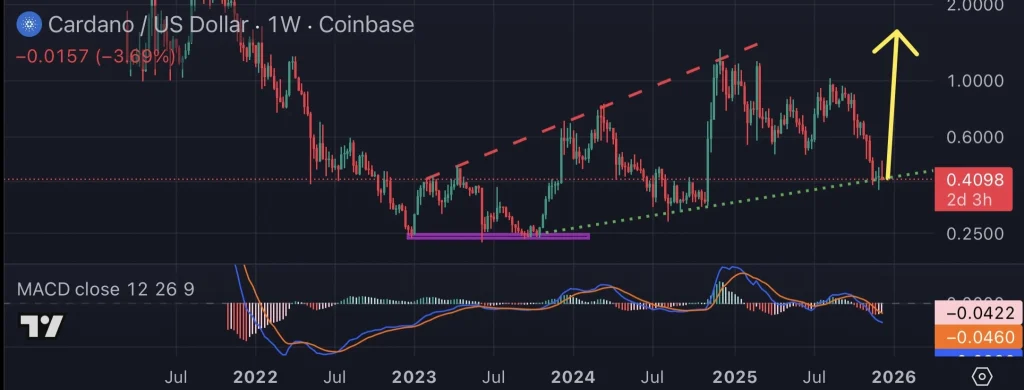
The ADA price is under renewed scrutiny as a weekly indicator revives memories of Cardano’s 2022 collapse, per an popular chartist. However, while technical signals are triggering fear, the broader context in 2025 suggests a very different environment. This one seems to be shaped by deeper utility, stronger governance, and a more mature ecosystem. Why it feels this way, please continue reading to know more in detail.
ADA Price and the 2022 Supertrend Comparison
Recent discussions around the ADA price chart focus on a weekly supertrend signal that last appeared in 2022, just before an 80% correction. This was shared by popular chartist and analyst Ali Martinez on X, that doesn’t sound wrong when looking only at price action and chart.
But when we expand our view. Then, it suggests that back then in 2022, Cardano was still struggling to convert research into real adoption. As a result, technical weakness quickly cascaded into a deep structural breakdown.
In contrast, the current ADA price USD behavior reflects a market struggling with uncertainty rather than just outright collapse. While fear remains elevated witnessing such a big collapse, but the conditions that amplified downside risk in 2022 are not fully present today.
Ecosystem Expansion Changes the ADA Crypto Narrative
One of the biggest differences lies in Cardano’s evolving utility. In 2025, ADA crypto is no longer a single-chain smart contract experiment. Instead, it is actively working to integrate Bitcoin liquidity into its DeFi ecosystem through trustless bridges and partnerships, allowing BTC holders to deploy capital while retaining Bitcoin exposure.
This structural shift reduces the probability of a straight-line repeat of 2022. Unlike before, ADA now supports a broader economic layer that was previously absent.
Usage Metrics Provide Context Beyond Price
Beyond price action, transactional data offers additional clarity. Over the past 90 days, Cardano’s transactional volume has remained relatively stable. If activity were collapsing, this consistency would not exist. This usage stability reinforces why Cardano remains among the top blockchain networks by relevance, with continued institutional interest.
Cardano takes a research-driven approach to blockchain, combining a secure proof-of-stake protocol with the eUTxO model for predictable smart contracts.
The recent, Educational initiatives also play a role. Cardano foundation’s’s emphasis on research-driven development, secure proof-of-stake, and the eUTxO model has been highlighted publicly, signaling an effort to improve transparency and ecosystem literacy.
TVL Decline Still Weighs on ADA Price
That said, verbally it’s okay but charts shows that challenges still remain. According to DeFi metrics, Cardano’s total value locked has fallen sharply from a peak near $693 million in late 2024 to roughly $182 million in December 2025. This decline is significant and cannot be ignored when assessing ADA price prediction models.
However, perspective matters. During the 2022 crash, TVL dropped to nearly $52 million. Even after the current drawdown, Cardano still holds nearly four times that level, indicating survival rather than abandonment.
Governance Developments Add Structural Support to ADA Price
More to that, the Recent governance actions approved in December introduce another differentiating factor. These measures aim to support Cardano’s next growth phase and long-term economic sustainability. While governance upgrades do not immediately move charts, they influence long-range assumptions.
As a DRep, the Cardano Foundation has cast its votes on three live Governance Actions:
As the ADA price remains sensitive to technical signals, its broader trajectory increasingly depends on whether ecosystem growth, governance execution, and usage stability can offset short-term market fear.
Dogecoin price holds firm at the $0.13 support level, with a developing double-bottom pattern suggesting downside exhaustion and the potential for a bullish rotation toward higher resistance levels.
BlackRock’s BTC transfer has reinforced institutional confidence in Bitcoin, driving renewed interest in stable, passive-income strategies such as the ETCMining. #partnercontent
Bitcoin and Ethereum options worth billions expire Dec. 20, with max pain clusters and BTC put skew setting the stage for short‑term volatility. A significant volume of Bitcoin (BTC) and Ethereum (ETH) options contracts is scheduled to expire Friday, with…
The CFTC gave “no-action” letters to a group of prediction markets, including Polymarket US, exempting them from swap data reporting and record-keeping regulations.
SEC opens formal review into Nasdaq’s bid to list tokenized stocks, testing how blockchain shares can coexist with DTCC‑cleared equities. The U.S. Securities and Exchange Commission has initiated a formal review of Nasdaq’s proposal to list and trade tokenized securities,…
Monday opens with institutions calling the shots for crypto: XRP ETFs absorb nearly 1% of supply, SHIB derivatives implode on one-sided liquidations and JP Morgan puts tokenized cash on Ethereum rails.
Samson Mow says the fear around Bitcoin is not accidental, warning that selling pressure is not organic just as BTC pushes deeper into traditional finance and the ownership game becomes more ruthless.
Ripple’s partnership with Swiss bank Amina advances compliant stablecoin payments in Europe, reinforcing infrastructure that also supports platforms like Arc Miner. #partnercontent
Visa launched its Stablecoins Advisory Practice through Visa Consulting & Analytics to guide banks, fintechs, merchants, and enterprises on stablecoin strategies, tech setup, and rollout. Clients like Navy Federal Credit Union and VyStar use it for cross-border payments to volatile markets and B2B transactions, cutting costs and delays. With $3.5B in annual stablecoin settlement volume across 130+ programs in 40 countries, Visa positions stablecoins as a faster payment infrastructure.
Canopy’s “Progressive Autonomy” model lets teams spin up sub-chains under shared validator security, then transition to full sovereign L1s without rebuilding infrastructure or raising a separate security budget.
Canopy, the company building a next-gen Layer 1 (L1) framework with the simplicity of a Layer 2 (L2), introduces Progressive Autonomy, a new deployment model built to make launching a blockchain dramatically easier while preserving full long-term sovereignty and value capture. The framework provides developers with a complete lifecycle: teams can launch as a sub-chain secured by Canopy’s validator network, customize their chain as it matures, and graduate to an independent L1 without rewriting core infrastructure or assembling a costly security budget.
Progressive Autonomy debuts at a time when the limitations of both L2 rollups and traditional L1 development increasingly constrain teams. Rollups have made deployment simple, but at the cost of centralized sequencers, governance-only tokens, fragmentation, and ecosystems that struggle to retain value.
Sovereign L1s remain the only architecture that consistently captures long-term economics, but building one typically requires over a year of engineering, substantial upfront capital, and custom consensus development. Overall, this clunky and expensive process forces builders to make early trade-offs: either prioritize ease and sacrifice ownership, or pursue sovereignty at prohibitive cost.
Adam Liposky, CEO of Canopy, said:
“Teams were forced into a false choice between simplicity and sovereignty, so we built Canopy to remove that trade off. Sovereignty should mean developers control their network economics and capture value on their own rails. Progressive Autonomy lets teams launch fast, retain long term ownership of their chain, and build toward a future of hundreds of specialized sovereign sub chains owned by the communities behind them.”
The Progressive Autonomy model eliminates the compromises, ensuring that all chains launched on Canopy inherit shared restaked security from a growing network of professional validators, including more than 20 top-tier operators who already joined the platform’s Betanet. This gives new chains protection from day one, without relying on token inflation or external security markets.
Validator sharing removes the need for early-stage projects to assemble and incentivize their own validator sets. This reduces both the time it takes to launch and the operational complexity that’s associated with the process. Canopy’s VM-less architecture enables developers to build in any language and tailor their execution environment as their application scales, without touching consensus or modifying the underlying network.
When a project is ready, it can detach from Canopy’s shared security and transition into a full sovereign L1, carrying its history, state, community, and economics with it. The upgrade path preserves continuity for users and developers while granting teams complete control over governance, performance, and value capture. Canopy positions this as a structural shift for the industry. Rather than choosing between an L1 or an L2 at the start, teams can now naturally evolve from incubation to independence as their needs grow.
Andrew Nguyen, Co-Founder and CTO of Canopy, said:
“Progressive Autonomy allows developers to focus entirely on building useful, high-performing applications instead of wrestling with infrastructure. Our goal was to take the security and operational burdens away from the traditional L1 creation and make them completely invisible. When sovereignty becomes accessible, the entire ecosystem will expand and benefit mutually.”
Canopy’s Betanet is already live and supported by leading validators including PierTwo, Stakely, Rhino, Lavender Five, Nodes.Guru, Kingnode, Easy2Stake, and others, signalling early momentum for the shared security approach. The full mainnet launch is planned for 2026, following more than 18 months of development across the core protocol and supporting infrastructure.
About Canopy Network
Canopy makes launching a sovereign blockchain as simple as spinning up an app. Teams can deploy in days, own their network economics, and connect across chains without bridges or wrapped assets. Powered by NestBFT and layerless mesh security, Canopy provides shared protection and built-in atomic swaps for every chain on the network. Developers get predictable costs, fast deployment templates, and interoperability from day one.
This week is lined up for the key U.S. economic events, including jobs data, CPI data, and a Fed speaker’s speech. These events could strongly impact Bitcoin and the overall crypto market.
The cryptocurrency market is already under pressure, with its total value falling from $4.1 trillion to approximately $3.05 trillion. Many traders are now watching this data closely, hoping positive news can ease the stress on prices.
Dec 16: US Unemployment Rate & NFP
On Tuesday, December 16, the US will release unemployment and Non-Farm Payrolls (NFP) data. Economists expect the economy to add only 50,000 jobs, much lower than in previous months.
Last month, job numbers crossed 200,000, and Bitcoin, Ethereum, XRP, and Solana fell 3% to 7% within a day. If jobs data beats expectations again, crypto prices could face fresh selling.
The US unemployment rate is also expected to rise to 4.5%, up from 4.4%. Higher unemployment could support markets, but strong job data may hurt crypto.
THIS WEEK IS HUGE FOR CRYPTO
➬ Tue, Dec 16 : US Unemployment Rate + NFP ➬ Wed, Dec 17 : FED speakers ➬ Thu, Dec 18 : CPI + Core CPI ➬ Fri, Dec 19 : BOJ rate decision
On Wednesday, December 17, several Federal Reserve officials will speak, including Chris Waller and Stephen Miran. Markets now see a 0% chance of a January rate cut, down from nearly 25% just one month ago.
Any hint of higher rates could push crypto lower, while softer comments may bring short-term relief.
DEC 18: CPI Data To Release
On Thursday, the US will release the November Consumer Price Index (CPI) data. The Nov data suggests inflation could rise around 3%, with core inflation close to 2%. Meanwhile, prediction platform Polymarket shows a 90% chance CPI stays near 3%.
In the last CPI release, inflation came in at 3%, lower than expected, helping Bitcoin bounce.
Dec 19: BOJ Rate Decision
On Friday, December 19, the Bank of Japan will decide whether to raise interest rates. Most markets expect a 25 basis point hike, and prediction platform Polymarket shows a 98% chance of this happening. A rate hike usually pulls money away from risky assets like crypto.
Some experts warn that the increase could be larger than expected. If that happens, global markets may react sharply.
Meanwhile, crypto analyst Merlijn The Trader believes Bitcoin could fall 20–30% after December 19, possibly pushing prices below $70,000.
Bitcoin & Altcoin to Face Volatility Ahead
Looking ahead, if jobs and inflation data come in weak, crypto prices could bounce. But strong data and higher rates may trigger more selling.
Traders expect volatility to rise 1.5x to 2x above normal levels this week. Bitcoin and altcoins could move fast in either direction.
As of now, Bitcoin trades near $90,000, down almost 30% from its recent high of $126,000, showing just how sensitive crypto remains to economic news.
BingX announced it hit 40 million global users in 2025, doubling last year’s count while reaching over $26 billion in peak daily volume. The exchange rolled out smart AI trading tools, enhanced spot and derivatives platforms, and strengthened security with full Proof of Reserves and a user protection fund. This rapid expansion highlights BingX’s strong position in the booming crypto trading world.
Some analysts believe a new wave of early-stage projects is beginning to mirror the signals once seen during Solana’s breakout phase. Market commentators suggest that one altcoin priced at $0.035 is gaining attention for its fast growth and expanding user base. Early investor sentiment indicates that the pattern forming around this project resembles the type of early momentum that pushed Solana into the spotlight. With interest rising quickly, many investors are taking notice.
Mutuum Finance (MUTM)
Mutuum Finance (MUTM) is developing a lending and borrowing protocol that uses two connected markets to support different user needs. The first is the P2C system. Users deposit assets into a shared liquidity pool and receive mtTokens as proof of their position. These mtTokens grow in redeemable value as borrowers repay interest. A user depositing ETH would receive mtETH that becomes redeemable for more ETH as interest accumulates. This creates a clear APY model tied to real activity.
The second environment is the P2P system, where borrowers post collateral and choose loan terms. Lenders browse open requests and select which ones they want to fund. Borrow rates change based on utilization. Stable rates lock at the start of the loan. LTV rules keep positions safe. Lower-volatility assets like ETH and stablecoins can reach higher LTV ranges near 75%, while more volatile assets stay closer to 35% or 40%.
Liquidations occur if collateral value drops too far. Liquidators buy discounted collateral and repay part of the borrower’s debt. This keeps the protocol balanced and helps prevent losses during market swings. These mechanics are part of why some analysts compare MUTM’s early structure to Solana’s early technical advantage. Both projects focus on practical systems rather than hype.
Presale Traction and Expanding Community
Mutuum Finance has shown fast and steady growth during its early stages. The token began at $0.01 in early 2025 and now is priced at $0.035 in presale, marking a rise of more than 250%. At the official launch price of $0.06, Phase 1 participants are positioned for close to 500% growth once the demand trend continues.
The project has raised $19.30M so far. A total of 18,400 holders have joined, and 820M tokens have been purchased. Out of the 4B total supply, 1.82B tokens, or 45.5%, are reserved for the presale. Analysts say this structure helps create strong token distribution before mainnet and testnet stages begin.
Demand has increased during each phase. Phase 6 is now more than 97% allocated, and Phase 7 will introduce a price step of nearly 20%. Traders following top cryptocurrencies and crypto predictions say this creates urgency because each phase increases the token’s value, giving early buyers a clear entry advantage.
The presale’s momentum has also been strengthened by daily activity incentives. Mutuum Finance operates a 24-hour leaderboard where the top contributor receives $500 in MUTM. This keeps user engagement high and encourages steady participation throughout the day.
V1 and Why This Matters for Price Forecasts
Mutuum Finance confirmed through its official X announcement that the V1 protocol will launch on Sepolia Testnet in Q4 2025. The V1 rollout includes the mtToken system, Liquidity Pool, Liquidator Bot and Debt Token, with ETH and USDT as the first supported assets.
Security has been another strong talking point. The project completed its CertiK audit with a 90/100 Token Scan score, and Halborn Security is performing a second code review. The team also introduced a $50K bug bounty to strengthen stability before launch.
Analysts say this level of security preparation is unusual for a project still in early stages. Because of this, some believe MUTM may deliver a strong run once borrowing activity begins. In a bullish scenario, projections show the token could climb several times above its current value if V1 adoption aligns with early presale momentum.
Stablecoin and Layer-2 Expansion
Mutuum Finance plans to introduce a stablecoin backed by loan interest generated inside the protocol. This gives the ecosystem another use case and increases liquidity for borrowers and suppliers. Analysts say internally backed stablecoins help strengthen retention and create deeper user engagement.
Layer-2 expansion is also part of the long-term roadmap. By moving to L2 networks, Mutuum Finance can reduce transaction fees and improve processing speed. Lending protocols rely on low fees to support high borrowing volume, making L2 support an important growth catalyst.
Together, these features help shape a broader ecosystem. A stablecoin improves liquidity, oracles ensure accurate pricing, mtTokens increase user incentives, and L2 scaling expands user access. Analysts following best crypto to buy now lists say this set of features gives MUTM a stronger long-term path than most early-stage altcoins, including many meme assets that depend only on sentiment.
For more information about Mutuum Finance (MUTM) visit the links below:
As early as January, the Bank of Japan (BOJ) is expected to begin selling its massive ETF holdings, a portfolio valued at ¥83 trillion ($534 billion). The plan is to move slowly and avoid market shock. But even a gradual exit from ETFs by one of the world’s biggest central banks carries weight, especially at a time when global liquidity is tightening.
See how this could affect the markets.
Bank of Japan Prepares to Start Selling ETFs
According to Bloomberg, BOJ officials plan to offload ETFs gradually following a decision made at the September policy board meeting. The central bank has set a pace of ¥330 billion per year based on book value, a timeline that could stretch for decades.
The goal is to keep the impact minimal. Officials want the market response to be barely noticeable,similar to how Japan sold bank stocks in the 2000s without disrupting markets.
Still, the scale is hard to ignore. The ETF holdings have grown sharply in value as Japan’s stock market rallied over the past two years, leaving the BOJ with massive unrealized gains.
That shift matters because Japan has long been the world’s cheapest source of leverage.
“For decades, the Yen has been the #1 currency people would borrow & convert into other currencies & assets… That carry trade is diminishing now, as Japanese bond yields are rising rapidly,” wrote analyst Mister Crypto.
The Bank of Japan is about to do a rate hike on Friday the 19th, creating massive fear surrounding the Yen carry trade.
Bitcoin dumped hard the last time they hiked rates:
That said, the market response has been relatively controlled. Many analysts note that expectations around a Bank of Japan rate hike have been circulating for weeks, giving traders time to adjust positioning. In that sense, part of the impact may already be reflected in current prices.
While markets are clearly paying attention, there is no sign of disorderly selling so far, suggesting investors are treating this as a macro adjustment rather than a sudden risk event.’
Never Miss a Beat in the Crypto World!
Stay ahead with breaking news, expert analysis, and real-time updates on the latest trends in Bitcoin, altcoins, DeFi, NFTs, and more.
FAQs
Why is the Bank of Japan selling its ETFs, and will it crash the market?
The BOJ is selling its ETFs to normalize monetary policy after years of stimulus, but it plans to sell so gradually that the market impact is designed to be “almost unnoticeable”.
How could the BOJ’s policies affect Bitcoin and cryptocurrency prices?
A BOJ interest rate hike and ETF sales could pressure Bitcoin by reducing global market liquidity. This could weaken the popular “yen carry trade,” where investors borrow cheap yen to buy riskier assets like crypto.
When will the Bank of Japan start selling ETFs?
BOJ is expected to begin its ETF sales in January, moving slowly over the years to avoid sudden market reactions.
The Bank of Japan plans to begin selling its ETF holdings worth ¥83 trillion ($534 billion) as early as January. The sales will happen very slowly, with about ¥330 billion sold each year, meaning it could take more than 100 years to fully exit. The ETFs have a book value of ¥37.1 trillion. This gradual strategy is designed to avoid market shocks and ensure stability while the central bank slowly unwinds its stimulus-era investments.
Hedera Price prediction highlights HBAR could reach $0.750 by the end of 2025 if bullish trends continue.
The Long-term forecasts suggest HBAR could hit $2.20 by 2030, indicating stable growth potential.
Hedera has been making waves in the cryptocurrency space, with a fast and secure blockchain that offers a distinct approach to transaction processing compared to Ethereum and other smart contract chains. It’s permission-only, meaning the blockchain is managed by private companies. Limiting what types of decentralised applications are allowed is what makes Hedera stand out from the rest.
Having entered the top 20 digital assets by market cap in 2024, it is now eyeing a potential leap into the top 10 by the end of 2025. Hedera has also recently ramped up its development activities for its ecosystem. Its ecosystem is strengthening, despite its capped price action. With increasing real-world use cases, institutional interest, and strategic partnerships, many are closely tracking HBAR price chart 2025 to gauge how high the token can rise.
With major companies like Google, IBM, and Chainlink Labs backing the project, and discussions about SEC approved HBAR ETF would flood string liquidity. Many are intrigued that: Will the HBAR Price Reach $1? Let’s discuss this in our Hedera price prediction 2025 article.
Hedera Price Analysis 2025: A Look Back at HBAR’s Volatile First Half
Hedera price USD began the year on a high note, peaking at $0.40 in mid-January before a steady decline took it to a low of $0.125 in early April. This downturn was caused by external factors and waning investor interest, reflected in a decrease in the Total Value Locked (TVL).
But this tide turned in the second week of April. As a broader crypto market rally helped HBAR price break free from the wedge, it bounced off a significant support zone that had previously fueled a late 2024 rally. This support, confirmed by the Fixed Range Volume Profile (FRVP) indicator, suggested strong institutional buying interest. The momentum propelled HBAR on a remarkable surge of nearly 80%, from $0.125 to $0.228 by mid-May.
Unfortunately, this rebound was cut short by escalating geopolitical tensions, which pushed HBAR back to its April lows by the end of June. During this time, the price formed another parallel declining wedge.
Hedera Price Prediction 2025
The second half of the year started strong, with HBAR posting a significant rally in July from the $0.12 to $0.14 demand zone up to $0.30.
However, this upward move was firmly rejected at a critical resistance point, which strongly aligned with the upper boundary of a descending triangle established since early 2025.
This rejection fueled a sharp decline throughout August and September, which worsened further with a critical liquidation event on October 10th, momentarily pushing the price below the demand zone to $0.10.
This dip was quickly absorbed by institutional buyers, leading to a recovery attempt that failed to flip $0.20 psychological resistance, but after a decent consolidation below this hurdle buyers accumulated it and on October 28th it saw an near 20% rise that pushed its price to $0.22, this occurred as the much-anticipated launch of the Canary HBAR ETF (HBR) on Nasdaq opened the doors for institutional investors.
But that was the last briefest decent move recorded in Q4 2025, which was suppressed by bears and pushed HBAR/USD to reach the vital support zone of $0.12-$0.13 in early December. Historically, this region has demonstrated strong demand, also there was a perception that a rally could ignite here onwards, but by mid-decmber it has faintly breached $0.12, suggesting that another possibility has arised that suggests the weakness od this demand area, and perhaps can’t hold any longer and seeking solid support next which could be $0.072, target bears have for December. However, it’s one of the projects that have ETF, renewed pressure could build a rebound in Q1 2026, and if at that time this level rebounds, it would be a good rally.
HBAR Price Prediction December 2025: What’s Next for Hedera?
In December, mid-HBAR price is teasing a breakdown below $0.12; if it succeeds in breaching, a strong decline is an option towards $0.0722.
Month
Potential Low
Potential Average
Potential High
HBAR Price Prediction December 2025
$0.125
$0.27
$0.40
HBAR Price Prediction 2026 – 2030
Year
Potential Low
Potential Average
Potential High
2026
$0.45
$0.80
$1.05
2027
$0.60
$0.95
$1.20
2028
$0.65
$1.10
$1.40
2029
$0.70
$1.35
$1.60
2030
$0.95
$1.70
$2.20
HBAR Price Prediction 2026
Moving forward to 2026, forecast prices and technical analysis project that Hedera’s price is expected to reach a minimum of $0.45. The price could escalate to $1.05 on the higher end, with an average trading price hovering around $0.80.
HBAR Price Forecast 2027
Looking ahead to 2027, the optimism around Hedera will lead to steady growth. Hence, the HBAR price is forecasted to reach a low of $0.60, with a potential high touching $1.20 and an average forecast price of $0.95.
Hedera Price Forecast 2028
As we advance to 2028, with moderate gains, the HBAR predictions indicate that the price of a single HBAR could reach a minimum of $0.65, with the ceiling potentially rising to $1.40. Within the range, the average price will be $1.10.
HBAR Price Target 2029
By the time 2029 rolls around, it’s predicted that Hedera’s price will maintain its upward trajectory, reaching a minimum of $0.70, with the maximum price possibly reaching $1.60 and an average of $1.35, reflecting cautious optimism.
Hedera Price Prediction 2030
By the end of this decade, HBAR is predicted to touch its lowest price at $0.95, aiming for a high of $1.70 and an average price of $2.20. Hence, the prediction suggests stable long-term growth for Hedera’s market value.
Market Analysis
Firm
2025
2026
2030
Changelly
$0.259
$0.370
$1.74
priceprediction.net
$0.27
$0.40
$1.99
DigitalCoinPrice
$0.43
$0.50
$1.07
Coinpedia’s Hedera Price Prediction
By the end of 2025, the recovery run in HBAR prices is expected to continue with a gradual rise in momentum. Hence, by the end of 2025, Coinpedia’s HBAR price forecast expects a potential high of $0.80 with a solid support at $0.40, making an average of $0.60.
Year
Potential Low
Potential Average
Potential High
2025
$0.40
$0.60
$0.80
Never Miss a Beat in the Crypto World!
Stay ahead with breaking news, expert analysis, and real-time updates on the latest trends in Bitcoin, altcoins, DeFi, NFTs, and more.
FAQs
What is the Hedera price prediction for 2025?
HBAR could reach up to $0.75 by the end of 2025 if demand rises and market conditions improve, with support expected near the $0.12–$0.13 zone.
Is Hedera a good long-term investment?
Hedera offers fast, secure transactions and steady ecosystem growth, making it appealing long-term, but investors should assess risk and market trends.
What drives Hedera’s price movements?
HBAR price shifts with market sentiment, network upgrades, real-world partnerships, and overall crypto conditions that influence investor confidence.
How high can HBAR go by 2030?
Forecasts suggest HBAR could reach around $2.20 by 2030 if adoption grows and major partnerships expand real-world blockchain use.
Across Doha and the wider Gulf region, market sentiment is steadily shifting toward digital finance. Banks, regulators, and investors are no longer just watching tokenization trends from the sidelines. There is growing confidence that digital tools can improve speed, efficiency, and transparency without disrupting trusted financial systems. This changing mood has now translated into real action, with Doha Bank stepping forward to execute a fully digital bond deal.
Doha Bank Makes a Strategic Move
Doha Bank has issued a $150 million digital bond, marking an important moment for the region’s capital markets. Instead of running a pilot or test project, the bank went straight into live issuance. The bond was built and settled using Euroclear’s distributed ledger technology platform, signaling that digital infrastructure is ready for large, regulated transactions.
This move shows how traditional banks are adopting new technology while staying firmly within established financial frameworks. The focus is not on crypto speculation, but on improving how bonds are issued, settled, and managed.
Same-Day Settlement Changes the Game
One of the standout features of the deal was instant settlement. The bond was listed on the London Stock Exchange’s International Securities Market and settled on the same day, known as T+0 settlement. In normal bond markets, settlement can take several days, tying up capital and increasing operational risk.
Rather than using a public blockchain, the bond was issued on a permissioned DLT system run by Euroclear. This choice reflects a clear industry preference. Regulated platforms offer controlled access, legal certainty, and seamless integration with existing custody and settlement systems.
For institutional investors, this matters. They get the efficiency benefits of digital assets while maintaining the safeguards they expect from traditional markets. Euroclear highlighted that this structure proves digital bonds can be fast, secure, and fully compliant at the same time.
Part of a Regional Infrastructure Upgrade
The deal fits into a wider regional effort to modernize financial infrastructure. Across the Middle East and Asia, banks are embedding DLT into existing systems instead of building entirely new crypto-native markets. Platforms from major institutions like HSBC and JPMorgan are being used in a similar way, helping tokenized bonds connect smoothly with familiar post-trade processes.
According to Standard Chartered, client interest in digital issuance is rising quickly. Institutions are no longer just curious about tokenization. They are actively using it to improve how capital markets function. Doha Bank’s digital bond adds to a growing list of live issuances and signals that tokenization is becoming a practical tool, not just a concept. For regulated markets, permissioned DLT now looks like the preferred path forward.
Never Miss a Beat in the Crypto World!
Stay ahead with breaking news, expert analysis, and real-time updates on the latest trends in Bitcoin, altcoins, DeFi, NFTs, and more.
FAQs
What is a digital bond?
A digital bond is a traditional bond issued using blockchain technology, improving settlement speed and transparency while operating within regulated financial systems, like Doha Bank’s recent issuance.
How does a digital bond settlement work?
Digital bonds can settle instantly (T+0) on a distributed ledger, unlike traditional bonds which take days. This reduces capital lock-up and operational risk for banks and investors.
What are the benefits of tokenizing bonds?
Tokenization makes bonds faster to settle, increases transparency of ownership, and improves operational efficiency, all while maintaining the safeguards of the traditional regulated market.
Is Qatar adopting digital finance?
Yes, Qatar’s financial sector is actively adopting digital finance, as shown by Doha Bank’s live digital bond deal, part of a wider Gulf region shift to modernize capital markets with blockchain technology.
JPMorgan seeds a $100m tokenized money market fund on Ethereum, extending its Kinexys platform from private chains to public blockchains for institutional cash management. JPMorgan Chase & Co. has launched its first tokenized money market fund on the public Ethereum…
mETH Protocol launches a Buffer Pool using Aave’s ETH market to process ETH redemptions in about 24 hours, aiming to unlock institutional demand for liquid restaking. mETH Protocol, an Ethereum liquid restaking provider, announced a liquidity upgrade utilizing Aave’s ETH…
MEXC’s December Proof of Reserve shows 100%+ backing on BTC, USDT, USDC and ETH, with Hacken auditing the exchange’s Merkle Tree-based verification system. Digital asset exchange MEXC released its December Proof of Reserve (PoR) report, confirming that all audited assets…
Roomba maker iRobot files pre-packaged Chapter 11 in Delaware as Shenzhen Picea moves to take control and cancel over $260m in debt. iRobot Corporation shares dropped more than 82% in premarket trading on December 15, 2025, after the Roomba manufacturer…
Aave price has confirmed a breakout from a bullish reversal pattern that could potentially set it up to recover from its losses this year. According to data from crypto.news, Aave (AAVE) fell 60% from its year-to-date high of $377 reached…
North Korean hackers hijack Telegram, stage fake Zoom calls and deploy RAT malware to drain crypto wallets in a $300m long‑con campaign. North Korean cyber criminals have stolen over $300 million through a sophisticated social engineering campaign that impersonates trusted…
Bitcoin price prediction as new ETF-driven cost-basis cycle points to another 60%+ rally in 180 days, but fading ETF inflows, Fed risk, and Strategy’s shrinking safety margin could still break support. Bitcoin price prediction say value of cryptocurrency could rebound…
JPMorgan is making another meaningful move into crypto – this time with one of Wall Street’s most traditional products.
According to a Wall Street Journal exclusive, the banking giant’s asset-management arm has launched its first tokenized money-market fund, built on the Ethereum blockchain and backed by $100 million of JPMorgan’s own capital. The fund is expected to open to outside investors this week.
For a firm that manages nearly $4 trillion in assets, this is a major signal.
With a potential surge, Ondo crypto price may hit $9.30 by 2030.
ONDO Finance in the RWA sector is a hot topic, investors are closely eyeing its future potential. Especially as its native token ONDO continues to build credibility and momentum through high-profile developments.
Moreover, Ondo Finance is known to be a leading RWA provider on the Solana chain and it is witnessing growing institutional interest, ONDO has solidified itself as a major player in the Real World Asset (RWA) space.
With such attraction, ONDO price prediction 2025 is what analysts and retail investors are intrigued about. But how far can it go from here? Let’s dive into the detailed ONDO price forecast from 2025 to 2030.
The biggest rise in the ONDO price was when Donald Trump won the election last year, hitting $2.148 by mid-December on Coinbase. Since then, it has continuously declined, and by April 2024, it fell to a low of $0.70.
In the entire Q2, it has seen its price action trapped in a range, despite being a leading performer in tokenized RWA’s based on Coingecko’s report that came in June 2025.
In Q2, many were anticipating that this altcoin could at least gain like last year’s first half movement, but met with a strong supply level by mid-May and declined.
By the third week of June, it fell 35% from the mid-May high, hitting $0.61, due to geopolitical uncertainty. The H1 closed negatively, but ceasefire news between the US, Israel, and Iran gave relief to investors, and they turned their hopes to H2.
ONDO Price Prediction 2025
The performance of the ONDO price USD during the latter half of the year has certainly been captivating. From July’s price of $0.62, it saw a remarkable ascent to $1.10 in mid-September, testing a key trendline resistance.
However, when it was unable to maintain this upward momentum, bearish sentiments took over, leading to a decline as December approached, with projections targeting the $0.20 all-time low range.
Looking ahead, the ONDO price movement this month hinges on market demand. If there remains a lack of activity, a downturn may be on the horizon.
Conversely, should a bullish trend emerge in December, potentially stabilizing around $0.40, we could see an ambitious goal of surpassing $0.80, which would not only break the trendline resistance but also signal a significant shift in market dynamics.
The unfolding in the remaining December days will be crucial in determining this outcome, also a falling wedge has also manifested, that gives more odd on the bullish side for now
Year
Potential Low
Potential Average
Potential High
2025
$0.80
$1.20
$2.10
ONDO Price Prediction December 2025
The ONDO/USD price action in December opened with a clear rejection from the 20-day EMA band, indicating a strong bearish dominance that suggests the price is likely to decline further without a significant market catalyst to shift sentiment back to bullish.
However, there is a promising support level at the lower border of the falling wedge, currently around $0.40. If this level attracts demand, we can expect a potential bounce in the future. Conversely, if the price breaks below $0.40, we should anticipate even lower lows for ONDO.
Year
Potential Low
Potential Average
Potential High
2025
$0.80
$1.20
$2.10
ONDO Price Analysis: Onchain Outlook
The on-chain data indicates that although the price is currently capped and has been consolidating for several months, the on-chain metrics have strengthened significantly despite the weak ONDO price action.
Since January 2024, the number of confirmed transactions sent to a project’s contracts has increased. By October 2025, the project had surpassed 1.2 million transactions, making it the second-largest project for real-world asset (RWA) issuance after BitGo.
Additionally, the Ondo TVL (Total Value Locked) metric indicates that the total USD value of outstanding tokens across Ondo’s tokenized yield product has reached an all-time high of $1.4 billion. This suggests that adoption is increasing, as well as the influx of funds into ONDO at a favorable rate.
ONDO Cryptocurrency Price Target 2026 – 2030
Year
Potential Low ($)
Potential Average ($)
Potential High ($)
2026
1.65
2.75
4.15
2027
2.20
3.65
5.25
2028
2.95
4.30
6.90
2029
4.75
5.60
8.45
2030
5.35
7.45
9.30
Ondo Coin Future Forecast 2026
The price projection of ONDO crypto for 2026 could range between $1.65 to $4.15, with an average trading price of roughly $2.75.
Ondo Token Price Prediction 2027
This altcoin could hit a potential high of $5.25 in 2027, with a potential low of $2.20, and an average price of $3.65.
ONDO Price Prediction Next Bullrun 2028
By 2028, forecasts indicate a potential low of $2.95 and a high of $6.90. This could bring the average price to $4.30.
Ondo Price Forecast Long-term 2029
During 2029, the price of the Ondo token is anticipated to reach a minimum of $4.75, with a maximum of $8.45, and an average price of $5.60.
ONDO Coin Price Growth Potential 2030
ONDO coin price may reach a high of $9.30 in 2030. With a potential low of $5.35. With this, the average price could settle at around $7.45.
Market Analysis
Firm Name
2025
2026
2030
Changelly
$1.32
$1.87
$8.26
priceprediction.net
$1.34
$2.03
$8.43
DigitalCoinPrice
$2.01
$2.29
$5.01
CoinPedia’s Ondo Price Targets
CoinPedia’s price prediction for Ondo is extremely volatile. This is due to this altcoin’s highly fidgety nature. If the crypto market successfully regains momentum, this ETH-based token may surge toward a new high.
With this, the Ondo Price Prediction for this year could range between $3.05 as its high and $1.19 as its potential low.
Stay ahead with breaking news, expert analysis, and real-time updates on the latest trends in Bitcoin, altcoins, DeFi, NFTs, and more.
FAQs
How much is Ondo crypto worth today?
At the time of writing, the price of the Ondo token was $ 0.45159965.
What is ondo in crypto?
Ondo project is a Decentralized Financial (DeFi) platform. It is known to offer risk-isolated, fixed-yield loans backed by yield-generating cryptocurrency assets.
Where is the Ondo coin listed?
The token is available for buying and selling on all the major centralized exchange platforms.
Can Ondo reach $100?
For the Ondo token to reach $100, it will require a surge of 9800.99% from its current valuation.
How to buy Ondo crypto?
One can buy, hold, or sell Ondo crypto tokens by creating a wallet on a centralized cryptocurrency exchange.
When was Ondo Crypto launched?
The project made its presence in 2021. However, its native token “ONDO” made its first appearance in 2024.
Will the ONDO price increase?
With a potential surge, this altcoin may record a high of $11.75 during 2030 with an average trading price of $9.30.
JPMorgan Chase is launching its first tokenized money market fund directly on the Ethereum blockchain, seeding it with $100 million. This groundbreaking move allows qualified institutional investors to trade fund ownership as digital tokens, enabling faster, smoother settlements compared to traditional systems. By building on a public blockchain, the $4 trillion banking giant signals a major shift: treating crypto infrastructure as a serious, efficient tool for global finance rather than just a niche experiment.
A new report from The New York Times has stirred controversy by claiming that President Donald Trump and his family may have financially benefited from the settlement or rollback of several crypto cases during his second term. According to the report, a noticeable number of enforcement actions against crypto firms were either dropped or softened after Trump returned to the White House, raising concerns about conflicts of interest.
Sharp Shift in Crypto Enforcement
The NYT investigation found that more than 60% of crypto cases active at the start of Trump’s second term were later paused, reduced, or dismissed. This level of pullback stood out sharply when compared to enforcement trends in other industries, where only a small fraction of cases were dropped. During the same period, regulators continued to pursue non-crypto cases as usual, making the crypto sector an exception rather than the norm.
The report described this shift as unusual, noting that the Securities and Exchange Commission has historically avoided backing away from large clusters of cases within a single industry.
Links to Donations and Business Ties
According to the NYT, several of the eased or dismissed cases involved companies or individuals who later developed political or business connections with Trump or his family. The report alleges that some legal outcomes coincided with donations or ties to the Trump family’s expanding crypto-related ventures.
One example cited was a crypto company founded by the Winklevoss twins. The firm reportedly faced a federal lawsuit that stalled after the administration changed. Around the same time, the SEC also dropped its case against Binance entirely. Another high-profile shift involved Ripple Labs, where the SEC later sought to reduce a court-ordered penalty following Trump’s return to office.
The report claims that crypto cases were dismissed at a much higher rate than cases involving other industries. Of the 23 crypto cases inherited from the previous administration, the SEC reportedly pulled back from 14. Eight of those involved defendants who later formed financial or political links tied to Trump or his family. In contrast, only around 4% of non-crypto cases inherited during the same period were dismissed, highlighting what the NYT described as a clear imbalance.
Pushback on the NYT’s Framing
Not everyone agrees with the report’s conclusions. Crypto analyst Alex Thorn strongly criticized the NYT’s framing, arguing that it ignores the context of the prior administration’s crypto stance. He says the earlier crackdown on crypto was far from normal and had been openly criticized for years by bipartisan lawmakers and even federal courts.
Thorn points to past moments when Congress, including Democrats, moved to overturn aggressive SEC policies tied to crypto, showing that resistance to that approach was widespread. In his view, the recent easing of enforcement reflects a correction of an extreme regulatory phase rather than favoritism or personal gain.
Never Miss a Beat in the Crypto World!
Stay ahead with breaking news, expert analysis, and real-time updates on the latest trends in Bitcoin, altcoins, DeFi, NFTs, and more.
FAQs
Did Trump personally benefit from dropped crypto cases?
The report claims possible links between eased cases and Trump-related ties, but no court has proven direct personal financial benefit so far.
Why were so many crypto enforcement cases rolled back?
Over 60% of inherited crypto cases were paused or dropped, which critics call unusual, while supporters say it corrected overly aggressive regulation.
Which major crypto cases were affected by the policy shift?
Cases involving Binance, Ripple Labs, and a Winklevoss-backed firm saw pauses, dismissals, or reduced penalties after the administration change.
“As wXRP expands across Solana and Ethereum, some investors are exploring platforms such as SolStaking as part of broader income-oriented strategies.”
The XRP ecosystem has entered a new phase. With the introduction of Wrapped XRP (wXRP) on Solana and Ethereum, XRP now extends its reach beyond the XRP Ledger, unlocking new utility in DeFi, cross-chain swaps, and multi-chain liquidity environments.
At the same time, investor behaviour is evolving. Instead of relying solely on long-term price appreciation, more XRP holders are adopting a dual-income strategy:
Hold XRP for long-term upside Earn stable daily returns through SolStaking’s structured yield cycles
For many, this approach results in 800–900+ XRP per day in equivalent value—without depending on market conditions.
What wXRP Actually Means for XRP Holders
wXRP, issued by regulated custodian Hex Trust using LayerZero’s OFT standard, is a 1:1 representation of native XRP. It allows XRP to participate in:
Multi-chain DeFi
Liquidity pools
Decentralized exchange routes
Cross-chain financial applications
wXRP first launched on Solana, with Ethereum, Optimism, and HyperEVM next in line.
Crypto analyst Mr. Cauliman emphasized that:
This is not a Ripple–Solana partnership
Native XRP remains the primary settlement asset
wXRP is simply a tool to access liquidity in other ecosystems
He also notes that wrapped assets introduce additional risks (bridges, custody, counterparties), while native XRP avoids these entirely.
Even so, demand for XRP in DeFi continues to grow—highlighting a broader shift in how investors use the asset.
Why More Investors Are Pairing XRP With SolStaking
Although XRP is expanding its reach, major technical upgrades—programmability improvements, validator incentives, broader ecosystem growth—take time.
This creates a familiar problem:
XRP may be valuable long-term, but it doesn’t generate income today.
To fill that gap, investors are adding SolStaking into their strategy. The platform provides structured earning cycles that deliver predictable returns with:
Fixed terms
Preset yields
Automated daily payouts
This allows XRP holders to remain positioned for future growth while earning steady daily income right now.
SolStaking: Predictable Income in an Uncertain Market
SolStaking focuses on simplicity and reliability. Users do not need to:
Trade
Time the market
Learn DeFi mechanics
Perform technical setup
Once an earning cycle is activated, payouts are sent automatically every 24 hours.
Key Advantages for Income-Focused Users
1. Fixed Cycles With Transparent Outcomes
Returns do not change with market volatility. Each plan includes a clear duration and payout amount.
2. Daily Earnings Without Active Management
SolStaking is designed to be hands-off—ideal for users seeking consistent cash flow.
3. Multi-Asset Flexibility
Supported assets include:
XRP, USDT, BTC, ETH, SOL, TRX, DOGE, USDC, and more.
This enables investors to diversify their income streams while maintaining long-term holdings.
4. Institutional-Grade Security Framework
SolStaking operates under a regulated and secure infrastructure:
U.S.-registered entity: Sol Investments, LLC
Bank-level encryption & 24/7 monitoring
Cloudflare + McAfee enterprise security
Lloyd’s of London–backed custodian insurance
Strict segregation of user and operational funds
This structure gives users confidence even during periods of market stress.
2 — Create an account : Simple signup, quick verification.
3 — Deposit supported assets : Choose XRP, USDT, BTC, SOL, ETH, TRX, DOGE, and more.
4 — Select and activate a cycle
Daily payouts begin automatically. No trading. No monitoring. No complex setup.
Final Thoughts: A New Income Strategy for the Modern Crypto Investor
With wXRP expanding XRP’s utility across multiple blockchains and SolStaking offering stable daily income, many investors are adopting a forward-looking model:
Hold XRP for long-term appreciation Earn predictable income through SolStaking
In a market where volatility and uncertainty dominate, this dual strategy provides both growth potential and consistent returns—a combination increasingly valued by investors worldwide.
The US Securities and Exchange Commission is seeking public Feedback to decide whether Nasdaq can list and trade tokenized stocks. The move comes as regulators closely examine how blockchain-based assets could fit into existing market rules.
If approved, blockchain-based shares could trade like regular stocks, offering faster and cheaper settlements.
SEC Seeks Feedback On Nasdaq Tokenized Securities Plan
According to the SEC filing on Nasdaq’s rule change, the SEC has asked for public Feedback to decide whether Nasdaq should be allowed to list and trade securities in tokenized form.
This marks the start of a deeper review process covering legal, technical, and policy issues.
Under Nasdaq’s plan, tokenized stocks and exchange-traded products would trade alongside traditional shares. Both would use the same order book, offer the same investor rights, and settle through the DTCC, while blockchain technology improves efficiency.
A key example of this shift is Galaxy Digital, which recently became the first Nasdaq-listed company to tokenize its stock on Solana, showing how traditional finance and blockchain are merging.
Industry Reactions Remain Mixed
Market participants have shown mixed responses to the proposal. Groups like the Securities Industry and Financial Markets Association support the plan, saying tokenization can improve how markets work.
At the same time, the US Commodity Futures Trading Commission has approved a test program that allows tokenized assets to be used as collateral, showing growing acceptance.
However, firms like Ondo Finance and Cboe Global Markets have opposed the idea. They want the SEC to wait until DTCC clearly explains how tokenized trades will be settled, since all such trades would still depend on DTCC systems.
DTCC Approval Strengthens Tokenization Push
In a related development, the SEC recently issued a no-action letter to the Depository Trust Company, part of DTCC, allowing it to tokenize certain custody assets. This decision is seen as a critical building block, as any tokenized trades on Nasdaq would still need to clear and settle through DTCC systems.
Meanwhile, the CFTC now allows tokenized bitcoin, ether, and USDC as derivatives collateral.
Banks like JPMorgan and BMW are testing on-chain transactions, showing tokenization can make trading faster, cheaper, and available 24/7 despite some challenges.
Never Miss a Beat in the Crypto World!
Stay ahead with breaking news, expert analysis, and real-time updates on the latest trends in Bitcoin, altcoins, DeFi, NFTs, and more.
FAQs
What are tokenized stocks?
Tokenized stocks are blockchain versions of traditional shares, offering faster settlement and lower costs while maintaining the same rights and regulations as regular stocks.
Is Nasdaq getting into crypto?
Not exactly. Nasdaq seeks SEC approval to list tokenized stocks—traditional securities on a blockchain—which would trade alongside regular stocks using the same systems and rules.
How do tokenized stocks settle and clear?
Under Nasdaq’s plan, tokenized stocks would still settle through the DTCC, using blockchain to streamline the process while relying on established, regulated financial infrastructure.
Are tokenized stocks safe for investors?
If approved, they’d operate under the same investor protections, regulations, and clearing systems as traditional stocks, with added blockchain efficiency. Regulatory scrutiny aims to ensure safety.
FSOC has removed crypto from its systemic risk list after Trump’s pro‑crypto order, the GENIUS Act, SEC and OCC shifts, and growing ETF and stablecoin use by U.S. banks. The Financial Stability Oversight Council removed digital assets from its list…
A critical React Server Components RCE bug is being weaponized to hijack servers, drain crypto wallets, plant Monero miners, and deepen a $3B 2025 theft wave despite urgent patch pleas. A critical security vulnerability in React Server Components has prompted…
As US regulators open the door for crypto companies to operate more like banks, platforms such as Moon Hash are positioning themselves as early, compliant entry points into this shift. #partnercontent
Enterprise blockchain adoption faces hurdles as networks strain performance and Bitcoin’s energy use raises ESG concerns. Growing enterprise interest in blockchain has brought renewed attention to an ongoing problem: many public networks still require significant resources or face performance limits…
Michael Egorov, who founded decentralized finance protocol Curve Finance, has proposed a 17.45 million CRV token grant that will fund several key initiatives designed to improve the protocol’s infrastructure and support a 25-person core development team. “This proposal requests a…
Solana price prediction trades below declining moving averages in a fragile consolidation, with fading bearish momentum, dense sell walls above, and clustered bids below defining the next move. Solana’s price prediction has entered a stabilization phase following a sequence of…
Ethereum co-founder Vitalik Buterin has called for major social media platforms to be more transparent about their content algorithms, saying users deserve to know how posts are filtered and ranked.
His comments come as concerns grow over how large tech platforms control online conversations. He believes these steps can help protect free speech and rebuild trust in platforms like X.
Vitalik Wants Algorithm Transparency on Free Speech Platforms
In a recent tweet post, Ethereum Foundation AI lead Davide Crapis said that platforms claiming to support free speech should clearly explain how their algorithms work.
He argued that users deserve to know what these systems are designed to promote and that such settings should be easy to understand and adjustable.
if you want to claim X is the platform for free speech, you should disclose your algorithm optimization targets
Vitalik Buterin responded by pushing the idea much further. He suggested that every major algorithmic decision should be verified using zero-knowledge proofs. This would allow platforms to prove their systems are acting fairly without exposing private user data.
He also proposed recording content and engagement timestamps on-chain, making it impossible for platforms to quietly censor posts or manipulate timelines.
Vitalik’s Proposal Includes Delayed Release of Algorithm Code
To improve accountability, Vitalik proposed that social media companies publish their full algorithm code after a delay of 1 to 2 years.
This approach, he said, would balance transparency with security, allowing the public to review how decisions were made while protecting platforms from immediate exploitation.
With platforms like X handling hundreds of millions of posts daily, Vitalik believes delayed transparency could help users and researchers better understand how content decisions were made over time.
Vitalik also shared concerns about the direction of free speech on large social media platforms. Quoting Elon Musk’s vision of X as a global free speech space, he warned that turning platforms into tools for organized harassment could have serious consequences.
@elonmusk I think you should consider that making X a global totem pole for Free Speech, and then turning it into a death star laser for coordinated hate sessions, is actually harmful for the cause of free speech. I'm seriously worried that huge backlashes against values I hold…
He said such behavior may lead to strong public backlash in the future and could end up harming the very idea of free speech itself.
Concerns Over Coordinated Online Hate
Beyond algorithms, Vitalik also spoke about growing online hate, especially targeting Europe. He said some discussions have moved from fair criticism to extreme and hostile attacks that do not match his personal experience.
While he agreed Europe has real problems, he warned that exaggerated stories are being used to attack entire regions.
According to Vitalik, the broader crypto and blockchain community believes that transparency, clear rules, and verifiable systems are essential to rebuilding trust in online platforms and protecting open conversation.
Never Miss a Beat in the Crypto World!
Stay ahead with breaking news, expert analysis, and real-time updates on the latest trends in Bitcoin, altcoins, DeFi, NFTs, and more.
FAQs
How could algorithm transparency change the way everyday users experience social media?
Greater transparency could help users understand why certain posts appear in their feeds while others don’t, reducing perceptions of hidden bias. Over time, this may encourage platforms to design ranking systems that are easier to audit and less prone to arbitrary changes.
What does this debate mean for regulators and policymakers?
Regulators may see these proposals as a framework for future rules around algorithm accountability without demanding full disclosure of trade secrets. It could influence upcoming digital governance discussions in the US, EU, and other regions focused on platform power and speech moderation.
Who would be most affected if social media algorithms became verifiable or auditable?
Content creators, journalists, and activists would likely benefit from clearer insight into reach and visibility decisions. At the same time, platforms and advertisers would need to adapt to a more transparent environment that limits opaque optimization strategies.
South Korea’s largest crypto exchange, Upbit, is listing HumidiFi’s WET token today, December 15, with KRW, BTC, and USDT trading pairs starting at 18:30 KST. HumidiFi, a Solana-based protocol, handles over 35% of daily DEX volume through its proprietary AMM technology, offering dark pool-like execution, sub-0.1% slippage on large trades, and MEV protection. WET holders can earn fee rebates and participate in staking. After doubling post-launch via Jupiter DTF, the token now aims to boost liquidity through Upbit’s active KRW markets.
Talk of quantum computers destroying Bitcoin is making the rounds again, but leading voices in crypto say the panic is getting far ahead of reality. While dramatic claims suggest Bitcoin could be wiped out overnight, experts argue these fears ignore how the network actually works and how far quantum technology still has to go.
At the same time, the Bitcoin price has shown mild weakness. On December 15, BTC traded around $89,608, down 0.62% in 24 hours. The drop briefly pushed Bitcoin as low as $87,996 before it bounced back near $89,900. The broader crypto market followed suit, losing more than $130 billion in value and bringing total market capitalization down to $2.98 trillion.
How the Quantum Fear Started
The renewed concern began after writer Josh Otten claimed future quantum computers could unlock Bitcoin’s earliest wallets. According to him, advanced machines could break the keys protecting Satoshi Nakamoto’s coins, shake investor confidence, and send Bitcoin’s price crashing. While the idea sounds serious, many experts say it skips over crucial details and exaggerates what quantum computers can actually do today.
Bitcoin Security Is Often Misunderstood
Blockstream CEO Adam Back stepped in to correct what he calls a basic misunderstanding. Bitcoin does not protect coins by locking data behind traditional encryption. Instead, it uses digital signatures to prove ownership.
In simple terms, Bitcoin users prove they own their coins without ever revealing their private keys. This system works very differently from files that can be unlocked or decrypted, making the threat far less direct than critics suggest.
Why Early Wallets Are Not Easy Targets
Another key point is how Bitcoin addresses behave. Public keys only become visible when coins are spent. Many early wallets, including those linked to Bitcoin’s creator, have never moved their funds.
Because of this, there is often no exposed public key for an attacker to target. Without that information, even a powerful quantum system would have nothing to crack.
Experts Disagree on the Timeline
Some leaders believe quantum computing deserves attention. Ethereum co-founder Vitalik Buterin has said the risk is real but measurable. Solana’s Anatoly Yakovenko estimates powerful systems could arrive within the next decade.
However, Back takes a much calmer view. He believes meaningful quantum threats are likely 20 to 40 years away, if they ever arrive at all. Current machines still lack the stability needed to cause real damage.
Bitcoin Can Adjust Over Time
Bitcoin is not frozen in place. Quantum-resistant cryptography already exists, and the network can evolve long before any serious threat appears.
Bitcoin analyst Willy Woo echoed this view, saying even a worst-case event would not destroy the network. He believes sharp dips would attract strong buying from long-term holders. In his view, the result would be a long adjustment period, not the end of Bitcoin.
For now, most experts agree that the quantum panic makes headlines, but reality remains far less dramatic.
Never Miss a Beat in the Crypto World!
Stay ahead with breaking news, expert analysis, and real-time updates on the latest trends in Bitcoin, altcoins, DeFi, NFTs, and more.
FAQs
What is quantum computing?
Quantum computing uses quantum bits to solve complex problems faster than traditional computers, but large-scale machines are still decades away.
Is quantum computing an AI?
No, quantum computing is a type of computer technology, not artificial intelligence, though it can accelerate AI tasks.
Can quantum computers really destroy Bitcoin?
No, Bitcoin’s security relies on digital signatures, not traditional encryption, making quantum threats far from immediate.
Should I panic about Bitcoin’s price due to quantum fears?
No, market dips may occur, but long-term holders and network resilience make a sudden collapse highly unlikely.
The Bitcoin network’s total hashrate dropped by about 100 EH/s yesterday, an 8% decline, as roughly 400,000 mining rigs went offline following the closure of mining farms in Xinjiang, China. This sudden reduction shows how regional mining power shifts can quickly affect the global network’s computing strength. While China has been quietly regaining mining share despite past bans, the exact reasons for this latest shutdown aren’t yet clear. Analysts say such events can impact mining difficulty and block speeds.
Sei price is consolidating near the $0.12 level as traders brace for a $7 million token unlock and watch for signs of a short-term price shift. Sei was trading at $0.1249 at press time, down 1.4% over the past 24…
Cardano price consolidates below key moving averages as sellers cap rebounds, order books show heavy mid-range supply, and downside support looks fragile if sentiment sours. Cardano (ADA) price continued to trade under pressure on daily charts, with recent price action…
Barclays calls 2026 a slow, transitional year for crypto as retail spot trading fades, Coinbase’s outlook is cut, and tokenization plus U.S. regulation stay long-term plays. Barclays has issued a cautious outlook for the cryptocurrency sector in 2026, projecting declining…
Traders are rethinking memecoins like Dogecoin and quietly rotating into payment-focused projects such as Remittix, where real usage and capital flow are starting to diverge sharply. #partnercontent
Kevin Hassett defends Fed independence as Trump weighs him and Kevin Warsh for chair, prediction markets shift, and fresh rate cuts keep crypto in wait-and-see mode. Kevin Hassett, a leading candidate to become the next chair of the U.S. Federal…
Avalanche price is struggling to hold the $13 level as bearish chart structures remain intact despite rising trading activity and steady ecosystem growth. Avalanche was trading at $13.20 at press time, down 0.2% over the past 24 hours. The token…
Bitcoin, which is already struggling to regain its strength around $100K, is facing immense pressure as the Bank of Japan (BOJ) prepares for a key interest rate decision.
In the past, whenever the BOJ hiked its rate, BTC price fell by 25%, and with another hike expected, top crypto experts are warning BTC could fall toward $70,000, a decline of nearly 28%.
Here’s what is coming.
Japan To Hike Interest Rate By 25bps
On Dec 19, the Bank of Japan is holding a key policy meeting and is widely expected to raise interest rates by 25 basis points. Even prediction platform Polymarket currently shows a 98% chance of a rate hike on December 19.
Some experts believe the move could be even stronger, with expectations that the BOJ may hike rates by up to 75 basis points.
While it may seem like a local decision, Japan plays a major role in global finance. The country holds over $1.1 trillion in U.S. Treasury bonds, making it the largest foreign holder.
When Japan changes interest rates, it impacts global money flows, bond yields, and risky assets like stocks and cryptocurrencies.
Bitcoin Price To Drop To $70K
History shows a clear pattern. Each time Japan has raised interest rates, Bitcoin has fallen soon after.
In March 2024, when the rate hike occurred, Bitcoin fell around 23%
Similarly, in July, when the 2024 rate hike was announced, Bitcoin dropped roughly 26%
And this year, in January 2025, when the rate hike occurred, Bitcoin slid about 31%
If this trend repeats, Top crypto analysts Merlijn The Trader warn that Bitcoin could fall another 20–30%, pushing prices below $70,000 after December 19.
This time, the pressure on the crypto market is not just from a possible rate hike, but from rising Japanese bond yields, which recently hit 2.94%, the highest since 1998.
For years, traders borrowed cheap Japanese yen to invest in higher-return assets like crypto. Now, as Japan’s bond yields rise, this strategy is becoming expensive. Traders are closing positions, which leads to selling, liquidations, and sudden market drops.
As a result, Japanese investors may start moving money back home. Some models suggest up to $500 billion could leave global markets over the next 18 months, pushing U.S. borrowing costs higher even without a Fed rate hike.
Crypto Market Already Struggling
As of now, Bitcoin is currently trading near $90,000, down nearly 30% from its recent peak around $126,000. The overall crypto market is also struggling, with total market value falling from $4.1 trillion to roughly $3.05 trillion.
Major altcoins like XRP, Solana, and Cardano are all down by 40% from their October high. While some memecoin have even seen 60% to 70% drop.
Never Miss a Beat in the Crypto World!
Stay ahead with breaking news, expert analysis, and real-time updates on the latest trends in Bitcoin, altcoins, DeFi, NFTs, and more.
FAQs
Why is Bitcoin price down today?
Bitcoin is down due to BOJ rate hike expectations, rising Japanese bond yields, and traders closing positions worldwide.
How does the Bank of Japan interest rate hike affect Bitcoin?
When the BOJ raises rates, global money flows shift, often causing Bitcoin to drop as investors move to safer assets.
What impact do rising Japanese bond yields have on crypto?
Higher yields make borrowing in yen expensive, prompting traders to sell crypto, causing market drops and liquidations.
When will Bitcoin price recover from this downtrend?
BTC may rebound in 2–6 months if rates stabilize and adoption news improves. Watch support levels and diversify holdings.
The United Kingdom plans to bring the crypto industry fully under its financial regulatory framework, with oversight transferring to the Financial Conduct Authority (FCA) beginning in 2027, according to the UK Treasury. The policy aims to regulate digital assets in a manner similar to traditional financial products while preserving space for innovation, signaling the government’s intent to strengthen consumer protection and maintain the UK’s position as a global financial hub as crypto adoption continues to rise.
This move signals that the UK wants to stay competitive as a global financial hub, even as crypto adoption continues to grow among everyday users.
FCA to Oversee Exchanges, Wallets, and More
Once the new framework is in place, crypto firms such as exchanges, brokers, and digital wallet providers will be supervised by the FCA. This means they will need to meet the same standards as other financial services, including transparency, consumer protection, and operational safeguards. UK officials believe this approach will give businesses clear rules to follow, helping serious players plan for the long term while pushing out bad actors.
A key reason behind the regulatory push is rising concern over scams and fraud. Recent data shows that losses linked to crypto investment scams in the UK jumped sharply over the past year. By bringing crypto into the regulatory perimeter, the government hopes to reduce these risks and improve trust in the sector. Chancellor Rachel Reeves said the rules are meant to create clarity and protect consumers, while also supporting responsible innovation.
Alongside regulation, the UK has taken steps to formally recognize crypto assets as legal property. Under new legislation, digital assets like Bitcoin can be owned, inherited, and legally recovered. This gives crypto holders stronger legal standing and adds another layer of legitimacy to the asset class.
The FCA and the Bank of England are not waiting until 2027 to act. Both institutions are working on detailed rules covering crypto trading, custody, issuance, and market abuse. The Bank of England has also proposed a framework for stablecoin regulation. Regulators aim to finalize most of these rules by the end of 2026, giving firms time to prepare.
Global Coordination and Political Concerns
The UK is also looking beyond its borders. Officials plan to work closely with the US through a “Transatlantic Taskforce” to align crypto regulation and support innovation. At the same time, lawmakers are considering banning crypto political donations due to concerns over transparency and ownership.
Overall, the UK’s approach reflects a balancing act between control and growth, setting the stage for a more mature crypto market in the years ahead.
Never Miss a Beat in the Crypto World!
Stay ahead with breaking news, expert analysis, and real-time updates on the latest trends in Bitcoin, altcoins, DeFi, NFTs, and more.
FAQs
How could FCA oversight change the day-to-day experience for UK crypto users?
Stronger supervision may lead to clearer disclosures about fees, risks, and how customer assets are handled, making it easier for users to compare platforms. Over time, this could reduce sudden service shutdowns or loss of access to funds, which have been common concerns in unregulated markets.
What does this mean for smaller or overseas crypto firms operating in the UK?
Firms targeting UK customers may need to establish a stronger local presence, invest in compliance teams, or rethink their business models. Some smaller or lightly regulated providers could exit the UK market if they cannot meet regulatory expectations, reducing choice but potentially improving overall quality.
What should crypto holders and businesses watch for next before 2027?
Consultation papers and draft rules from the FCA and Bank of England will signal which activities are likely to be regulated first and how strict requirements may be. Monitoring these updates will help users understand future protections and give firms early insight into licensing, capital, and reporting obligations.
Bitwise has filed an amended registration for its Hyperliquid ETF, adding key details including the 8-A filing, a 67 bps fee, and the ticker $BHYP. Such amendments typically signal that a product launch is imminent, putting the Hyperliquid ecosystem in focus as markets watch for final approval and trading dates.
December 15, 2025 12:38:59 UTC
XRP Price Today Tests Key Support as ETF Demand and Ripple News Boost Outlook
XRP is down 1% in the past 24 hours, trading near $1.99. A break below the $1.96 support could trigger further downside, while holding above this level may open the path toward the next resistance at $2.35. On the fundamentals side, momentum remains strong as XRP prepares to launch as wXRP on Ethereum, Solana, Optimism, and HyperEVM, with more chains planned. Adding to the bullish backdrop, Ripple Labs received a bank charter from the OCC, and US spot XRP ETFs saw over $100 million in inflows last week, with total inflows nearing $1 billion since launch.
December 15, 2025 12:36:48 UTC
Ripple Makes NYT Front Page as SEC Eases Crypto Enforcement
Ripple Labs appeared on the front page of The New York Times on December 15, 2025, as the paper reported a shift in the U.S. SEC’s approach toward crypto enforcement. According to the report, the SEC has eased enforcement actions and reduced penalties, including moves related to Ripple. The article highlights a broader pullback by the regulator, signaling a notable change in how U.S. authorities are handling major crypto firms.
Ripple on the Front page of The New York Times today. December 15, 2025
Visa has launched a Stablecoins Advisory Practice aimed at helping banks, fintechs, and enterprises design and implement stablecoin strategies. The new service will support use cases such as cross-border payments and B2B transactions, as Visa deepens its expansion into the stablecoin ecosystem and digital payments infrastructure.
December 15, 2025 11:56:43 UTC
Japan to Begin $534B Stock Sell-Off
The Bank of Japan is preparing to gradually sell its massive ¥83 trillion ($534 billion) ETF holdings starting next month. Regulators plan an ultra-slow pace of ¥330 billion per year to avoid market shocks. At this rate, the historic exit strategy could stretch over 100 years, marking one of the slowest and largest unwind plans in financial history. Markets will be closely watching for any early impacts on liquidity and asset prices.
December 15, 2025 11:56:43 UTC
Bitcoin at a Crossroads Amid Mixed Signals
$BTC faces a critical juncture as experts and institutions diverge on its next move. Peter Brandt warns that the parabolic structure is broken, signaling potential for a deeper correction. Meanwhile, Grayscale views the current phase as consolidation ahead of a possible new all-time high in 2026. With rising leverage and major macro events on the horizon, traders are reminded that patience and positioning matter more than predictions in such uncertain markets.
December 15, 2025 11:55:38 UTC
Key Crypto Market Events to Watch This Week
This week is packed with potential market movers. On Monday, the Fed conducts a $7B T-bill purchase, followed by key US macro data on Tuesday. Wednesday brings a Fed president speech, while jobless claims are due Thursday. The week wraps up with Japan’s rate decision on Friday. With liquidity and policy signals lining up back to back, market reactions this week could set the tone for the near term.
December 15, 2025 11:48:08 UTC
Bitcoin Macro Alert: Japan Rate Hike Raises Risk Flags
Japan is set to hike interest rates by 25 bps on December 19, a key macro event for Bitcoin. As the largest holder of US debt, tighter Japanese policy could drain global liquidity, strengthen the dollar, and pressure risk assets. Historically, similar moves saw BTC drop 22% (Mar ’24), 31% (Jul ’24), and 32% (Jan ’25). If history repeats, a move toward $70K is a real risk, making this a major stress test for Bitcoin.
December 15, 2025 11:41:46 UTC
Smart Trader wyzq.eth Books $100K Profit on RAVE Trade
Smart trader wyzq.eth fully exited $RAVE around 17 hours ago, locking in profits of over $100,000. He initially invested $120,000 to buy 553,000 RAVE at an average price of $0.22, before selling the entire position for about $220,000 at an average of $0.40. The trade delivered an estimated 83% gain in a short period.
December 15, 2025 11:41:46 UTC
BingX User Base Doubles to 40M as Trading Volume Surges
Crypto exchange BingX announced that its global user base surpassed 40 million in 2025, marking nearly 100% year-over-year growth. The platform also reported peak daily trading volume above $26 billion. BingX said the growth was driven by its focus on AI-powered trading tools, upgrades to derivatives and spot trading, and continued investment in security, including 100% Proof of Reserves and a dedicated user protection fund.
December 15, 2025 11:39:34 UTC
Crypto Market Direction Unclear as Key Levels Come Into Focus
The total crypto market capitalization remains directionless after a firm correction, a move similar to what was seen in February 2025. This phase is not unusual. The current chart structure also resembles the post-COVID crash period, when prices paused, direction stayed unclear, and the market slowly ground higher. Key levels to watch are $3.2 trillion as resistance and $2.85 trillion as support. Meaningful trading activity is likely only after a break of either level.
December 15, 2025 11:36:59 UTC
Crypto ETP Inflows Jump as Bitcoin and Ethereum Lead
Digital asset ETPs recorded US$716 million in weekly inflows, pushing total assets under management to US$180 billion. Bitcoin led with US$552 million in inflows, while Ethereum followed with US$338 million. XRP and Chainlink also saw strong demand, attracting US$245 million and US$52.8 million, respectively. In contrast, Hyperliquid posted outflows of US$14.1 million, standing out as the laggard for the week.
December 15, 2025 11:35:48 UTC
Crypto ETP Inflows Jump as Bitcoin and Ethereum Lead
Digital asset ETPs recorded US$716 million in weekly inflows, pushing total assets under management to US$180 billion. Bitcoin led with US$552 million in inflows, while Ethereum followed with US$338 million. XRP and Chainlink also saw strong demand, attracting US$245 million and US$52.8 million, respectively. In contrast, Hyperliquid posted outflows of US$14.1 million, standing out as the laggard for the week.
December 15, 2025 07:20:44 UTC
Humidifi $WET Surges as It Lists on Upbit and Bithumb
$WET has been officially listed on Upbit (KRW, BTC, USDT markets) and Bithumb (KRW market), boosting its presence in Korea’s crypto scene. Following the Upbit listing, WET surged over 28% as trading activity spiked. On Bithumb, trading is scheduled to start at 6:30 PM KST on December 15, 2025, with deposits via Solana only. The dual listings highlight strong interest in WET, with traders closely watching post-listing price movements.
December 15, 2025 07:12:51 UTC
Wholecoiner Inflows to Binance Hit Lowest Levels Since 2018
Wholecoiner Bitcoin inflows to Binance are rapidly drying up. Recent data shows BTC deposits from this group have collapsed compared to previous years, signaling reduced selling pressure. The yearly average now stands near 6,500 BTC, a level not seen since 2018. This sharp slowdown suggests long-term holders are choosing to hold rather than sell, a trend that could support Bitcoin’s price stability in the current market environment.
December 15, 2025 07:04:50 UTC
North Korean Hackers Use Fake Zoom Calls to Steal Crypto: SEAL
The Security Alliance (SEAL) has warned that North Korean hackers are running daily crypto scams using fake Zoom meetings. Researcher Taylor Monahan said the attacks have already caused losses exceeding $300 million. The scams often begin with compromised Telegram accounts and trick victims into joining Zoom calls, where they are pushed to download malware. This malware then steals passwords, private keys, and crypto assets, putting users at serious risk.
SEAL is tracking multiple DAILY attempts by North Korean actors utilizing “Fake Zoom” tactics for spreading malware as well as escalating their access to new victims.
Social engineering is at the root of the attack. Read the thread below for pointers on how to stay secure. https://t.co/2SQGdtPKGx
Bitcoin Eyes Breakout as Bulls Battle Key $93K Resistance
Bitcoin is edging closer to a potential breakout, with bulls focusing on reclaiming the crucial $93,000 resistance level. While buyers are still struggling to push above this zone, repeated retests are gradually weakening the resistance. Price action continues to coil within a wedge pattern, signaling building pressure. A confirmed upside break could restore bullish momentum and open the door for a strong rally in the days ahead.
December 15, 2025 06:09:41 UTC
Bitcoin Price Today Pulls Back, but Long-Term Trend Still Intact
Bitcoin dipped during the Asian trading session as year-end liquidity continues to thin. However, the bigger picture remains constructive. BTC has returned to test its multi-year trendline, a level that has supported every major higher low since 2023. As long as this trendline holds, the move appears to be a healthy reset in momentum rather than a trend breakdown. Traders are now watching this key support closely.
Recently, people have noticed that both the Ethereum price and the price of DOGE have been fluctuating. They have either experienced weak rebounds from their monthly drops or continued to decline. However, many prominent influencers, such as Bitcoinsensus and Crypto King, still believe an upswing is coming for these altcoins.
In this bearish market, Digitap ($TAP) has been gaining traction but for a much better reason. Its crypto presale performance has been strong, raising over $2.3 million and seeing a 196% surge in value. This shows that people will gravitate towards safe projects with real-world utility even as the market turns red. In fact, some analysts believe $TAP could be one of the best altcoins to buy this Christmas thanks to the 12 Days of Christmas Holiday Drop event.
Ethereum Projected To Go Past the $4,000 Level Soon, but Can It?
Ethereum is a crypto coin that has been fluctuating on the price charts recently. CoinMarketCap shows that the Ethereum price increased from around $3,100 to over $3,200 in the past seven days. Many traders think this is a small rebound since ETH dipped from around $3,400 on the one-month chart.
However, influencer Bitcoinsensus thinks an uptrend is coming for the Ethereum coin. According to his X post, the Ethereum price is holding above a major demand zone. A breakout from this range may lead to the ETH value soaring past $4,000 and potentially reaching $4,800 as per Bitcoinsensus.
But still, TradingView does not support this Ethereum price prediction. Notably, both its momentum indicator and its CCI indicators are in the sell zone. This suggests that the current downtrend is gaining strength, potentially leading to more dips for the Ethereum price.
Dogecoin Could See a Rebound Soon – How High Can It Reach?
Although one of the meme coin titans, Dogecoin, has also been showing red price movement. On the one-month chart, the price of DOGE fell from around $0.17 to nearly $0.14 as per CoinMarketCap. This downtrend continued with Dogecoin going down nearly 5% on the 7D timeframe.
But some people are still excited thanks to a bullish Dogecoin price prediction from influencer Crypto King. In a recent post, Crypto King informed his X community that a clean falling wedge pattern is now forming for this meme coin. He foresees the price of DOGE potentially rising to the $0.27 level soon.
A clean Falling Wedge is forming on the daily chart and price is now compressing against the trendline.
The spring is loading. Once we break market structure and reclaim the diagonal resistance, the move toward 0.27 opens up fast. pic.twitter.com/VPa21Ao9De
With the price of DOGE seeing lower lows, TradingView also shows bearish signs. For instance, the momentum indicator is sinking in the red zone. Therefore, the current downtrend may continue for the Dogecoin crypto.
Digitap: A 196% Surge in Crypto Presale – Best Token To Watch?
Digitap has been in the headlines this month as many people are excited about its 12 Days Of Christmas Holiday Drop event. During this event, users get to log in to their Digitap dashboard to see exciting festive rewards that show up 2x a day. Each gift is available for 12 hours until it is replaced with a new one. Based on earlier drops, possible awards include massive $TAP coin bonuses as well as free Digitap Premium accounts.
Not only that, Digitap is gaining traction as it is seen as a safe harbour in the bearish market. It launched a unique “omnibank” that lets people manage, convert or spend over 100 different crypto coins and fiat currencies in one place.
In other words, anyone can lock in the value of their crypto by instantly converting it to fiat. This is a game-changer since Digitap helps users avoid the market losses they’re accustomed to.
Those who also want to get cashback on every Digitap transaction are now buying the $TAP crypto for only $0.0371. But this altcoin price is expected to go to $0.0383 in just a few days. Furthermore, top security firms like Coinsult and Solidproof have already audited $TAP. Due to all these factors, plus the rumors of a Tier-1 CEX listing $TAP soon, many traders look at it as the most promising crypto to buy today.
Digitap: A Safer Bet Than Ethereum and Dogecoin This Christmas?
While Ethereum and Dogecoin are struggling to maintain their “good altcoins to buy” status, many traders are turning to Digitap. Its momentum has been going strong, having sold over 140 million $TAP coins while connecting more than 100,000 wallets. In a bearish market, this performance is rare and showcases the confidence that traders have in the growth of the $TAP crypto.
It has a fully functional app backed by fully licensed financial institutions, a presale which has made early buyers 196% richer and an expected $TAP launch price of $0.14. Furthermore, its community-first focus with the 12 Days of Christmas Holiday Drop could make it a fan-favourite. With many of the 24 rewards being time-restricted, it is no wonder that so many people are rushing to Digitap this Christmas.
Discover how Digitap is unifying cash and crypto by checking out their project here:
Kevin Hassett, a leading contender for the next US Federal Reserve chair, has stated that the central bank does not take instructions from the White House and that Donald Trump’s views on interest rates will not shape monetary policy. Hassett said the Federal Reserve is designed to operate independently and bases its decisions on economic data rather than political pressure.
He emphasized that interest rate decisions are made collectively by the Federal Open Market Committee (FOMC), not by the president or any single official. The comments come as markets closely watch the race to lead the Fed amid concerns over political influence.
Fed Chair Race Narrows Between Hassett and Warsh
The contest to succeed current Fed chair Jerome Powell is tightening. Trump recently confirmed that two candidates named Kevin are leading the race: Kevin Hassett and former Federal Reserve governor Kevin Warsh. While Trump has hinted that Warsh may currently be his preferred option, both remain strong contenders.
Prediction markets reflect the shifting dynamics. Hassett previously led the odds by a wide margin, but Trump’s recent remarks have narrowed the gap, increasing uncertainty around the final decision. This has kept investors across traditional finance and crypto markets on alert.
Trump’s Views on Interest Rates, But No Direct Control
Donald Trump has repeatedly expressed support for lower interest rates and has said future Fed leaders should consult with him on monetary policy. Hassett acknowledged that discussions with the president can occur but drew a firm distinction between consultation and control.
According to Hassett, even strong arguments from the White House do not override the Fed’s structure. Policy decisions depend on how the FOMC evaluates inflation, employment, and economic data, followed by a committee vote rather than executive direction.
The Federal Reserve recently announced a 25-basis-point rate cut, but markets showed little reaction. Equity markets remained stable, while crypto prices traded mostly flat following the decision. The muted response suggests traders are waiting for clearer policy signals rather than reacting to individual rate moves.
Powell has described the current economic environment as difficult to navigate. Inflation risks remain, while pressure in the labor market is building, limiting how aggressively the Fed can ease policy in the near term.
Hassett’s comments have sparked debate within the crypto and financial communities. Crypto market commentator Edge of Power questioned whether the Fed can remain fully independent while acknowledging the president’s strong views on monetary policy. The remarks have fueled speculation about informal political influence behind closed doors.
Analysts Defend Hassett’s Track Record
Others argue that concerns over Fed independence are overstated. Analyst Rubén Anguiano highlighted Hassett’s academic background, experience working with the Federal Reserve, and consistent reliance on data-driven analysis. According to Anguiano, Hassett has supported interest rate cuts only when inflation conditions allow and has repeatedly defended the Fed’s independence.
As the decision on the next Federal Reserve chair approaches, markets are likely to remain sensitive to any signals on policy direction, leadership choices, and the future path of US interest rates.
Never Miss a Beat in the Crypto World!
Stay ahead with breaking news, expert analysis, and real-time updates on the latest trends in Bitcoin, altcoins, DeFi, NFTs, and more.
FAQs
How does the choice of Fed chair influence future policy beyond interest rates?
The Fed chair also shapes regulatory priorities, communication strategy, and crisis response frameworks. Their leadership affects how quickly the Fed reacts to financial stress, banking risks, or unexpected shocks, not just where rates are set.
What is the formal process and timeline for appointing the next Federal Reserve chair?
The president nominates a candidate, who must then be confirmed by the US Senate, typically through hearings in the Senate Banking Committee. The process can take several months, and delays or political pushback can add uncertainty for markets.
Why are crypto markets paying close attention to this decision?
Fed leadership influences liquidity conditions, risk appetite, and the broader stance on financial innovation. Even without direct crypto regulation, shifts in monetary tone can affect capital flows into digital assets.
Who would feel the impact first if the Fed’s leadership signals a policy shift?
Bond markets usually react first, as yields quickly adjust to expectations about inflation and future rates. Those moves then ripple to equities, currencies, emerging markets, and eventually consumer borrowing costs such as mortgages and business loans.
The UK government is drafting new legislation to bring cryptocurrencies under the Financial Conduct Authority’s supervision from 2027. Under the proposal, digital assets would be regulated in the same way as other financial products. Chancellor Rachel Reeves said the goal is to set clear rules for the industry, remove bad actors from the market, and strengthen confidence. She also emphasized that the new framework will offer strong consumer protections and create a safer environment for crypto users.
Spanish and Danish police dismantle a cross-border gang that kidnapped and killed a crypto holder, underscoring the rise of violent ‘wrench attacks.’ Spanish authorities have arrested five individuals and coordinated with Danish police to charge four others in connection with…
Ethereum price could be poised for significant upside as it forms a bullish reversal setup, as inflows into spot Ethereum ETFs return after a week of downturn. According to data from crypto.news, Ethereum (ETH) was trading at $3,113 at last…
The UK’s Treasury department hopes to finalize its cryptocurrency regulations by late 2027 by bringing the sector under a regulatory framework that mirrors oversight in traditional markets. According to a report from The Guardian, the crypto sector, which has been…
Crypto prices today traded lower as risk appetite weakened across global markets, with Bitcoin and major altcoins drifting amid rising liquidations and fragile liquidity. The total crypto market capitalization slipped by 1.1% to about $3.1 trillion. Bitcoin was trading around…
Social media has always evolved alongside technology. Facebook reshaped how people connect online, while TikTok revolutionized content discovery through short-form video and powerful algorithms. Today, however, users and creators are increasingly dissatisfied with centralized platforms that profit from their data while offering little control or fair compensation. This growing frustration has opened the door for a new model — and DeSoc could be at the center of this shift.
DeSoc, short for Decentralized Social, is a Web3-based social media ecosystem designed to return ownership and value to users. Rather than relying on advertising as its primary revenue engine, DeSoc introduces a tokenized economy where participation, creativity, and community engagement are rewarded directly.
Ownership Instead of Permission
One of the defining weaknesses of traditional platforms is control. Accounts can be shadow-banned, demonetized, or removed without warning, often wiping out years of work. DeSoc addresses this by anchoring user identity and content ownership to blockchain technology. Users don’t just post content — they own it.
This mirrors the early appeal of Facebook, where users felt empowered to build personal networks freely. DeSoc modernizes that concept by removing centralized gatekeepers and replacing them with transparent, user-controlled systems.
Monetization Built Into the Social Experience
TikTok demonstrated how fast creators could grow audiences, but it also exposed how fragile creator income can be. DeSoc embeds monetization at the protocol level. Engagement, such as posting, commenting, sharing, and consuming content, can generate rewards through the platform’s native token.
This creates a participation economy where everyday users, not just influencers, can benefit. By aligning incentives across the network, DeSoc encourages long-term engagement rather than short-lived viral moments.
Algorithms That Serve Communities
Traditional social media algorithms are designed to maximize time spent on the platform, often favouring sensational or divisive content. DeSoc introduces a different approach by allowing communities to influence visibility and rewards through decentralized governance. This makes it possible to promote quality, relevance, and authenticity over pure attention-grabbing.
Such a system could foster healthier online spaces without sacrificing reach or discoverability.
Seamless Transition From Web2 to Web3
DeSoc does not require users to abandon existing platforms overnight. Content can be shared across traditional social networks while ownership and rewards remain within DeSoc’s ecosystem. This hybrid strategy reduces friction for new users and allows creators to leverage existing audiences while transitioning to a more sustainable model.
TikTok itself benefited from a similar approach in its early days, using cross-platform sharing to accelerate growth.
As social media users demand transparency, ownership, and fair rewards, platforms that fail to evolve risk losing relevance. DeSoc represents a shift toward user-owned networks, creator-first monetization, and decentralized governance, elements that could define the next generation of social platforms.
If the future of social media belongs to the people who create and participate in it, DeSoc may not just compete with Facebook or TikTok, it could become what comes next.
In a recent interview, popular crypto analyst ElliotTrades shared his views on how investors should think about building a crypto portfolio today, with a long-term view toward 2026.
According to ElliotTrades, anyone investing $10,000 in crypto should start with Bitcoin. He said around $6,000 to $7,000 should be allocated to Bitcoin and Bitcoin-linked assets for safety.
He described Bitcoin as the “blue-chip” of crypto. Along with holding BTC directly, he also favors exposure through companies that move closely with Bitcoin’s price, such as MicroStrategy and Coinbase stock.
Recent negative news around MicroStrategy selling Bitcoin did not push prices lower. He said this was a strong signal that much of the selling pressure may already be over. Trading volume in MicroStrategy stock has also picked up, suggesting renewed interest.
Ethereum Looks Undervalued as Tokenization Grows
ElliotTrades says Ethereum (ETH) is entering a very important phase. He pointed to comments from U.S. regulators hinting that traditional markets may move on-chain over the next few years.
At present, tokenized stocks on blockchain are worth roughly $670 million, while global stock markets are worth around $67 trillion.
He expects Ethereum to be the main network for this shift. Even a small increase in tokenized assets could have a meaningful impact on ETH’s price. For this reason, he advised allocating around $2,000 to Ethereum and Ethereum-related infrastructure plays.
When it comes to altcoins, ElliotTrades said prices are currently depressed, but that also means risk-reward is improving. He believes “a little goes a long way” at these levels.
However, he warned that altcoins may not move immediately. In his view, Ethereum could lead first, with altcoins following later once risk appetite increases. This means investors do not need to rush but should start researching early.
He also stressed watching the altcoin-to-Bitcoin ratio. When smaller coins begin to outperform Bitcoin, it often signals a broader altcoin rally.
DeFi Altcoins and Revenue-Generating Tokens
ElliotTrades showed strong interest in DeFi altcoins, especially protocols that generate real trading fees. He explained that owning parts of decentralized exchanges can give investors regular income instead of relying only on price appreciation.
Unlike meme coins or hype-driven tokens, these DeFi models distribute actual fees earned by the protocol. This creates what he called “speculative cash flow,” which can help investors manage emotions and avoid panic selling.
Never Miss a Beat in the Crypto World!
Stay ahead with breaking news, expert analysis, and real-time updates on the latest trends in Bitcoin, altcoins, DeFi, NFTs, and more.
Pepecoin became one of the loudest meme tokens of the year, but its momentum is fading as the market turns toward assets with stronger structure and clearer development paths. As PEPE cools, early buyers are now shifting their attention to a rising DeFi altcoin priced at $0.035. Mutuum Finance (MUTM) is gaining rapid traction ahead of its V1 launch, and with demand climbing through the final allocation window, many investors believe the rotation is justified.
Pepecoin (PEPE) Early Surge
Pepecoin (PEPE) delivered one of the fastest viral surges in recent memory. The token jumped from near-zero levels into a multi-billion market cap as social media communities pushed it forward. Early buyers saw huge returns, and PEPE quickly became a recognizable name across the market.
Today PEPE faces clear limitations. Its market cap is now large enough to restrict movement. The token also relies entirely on sentiment, which has shown signs of fading. Analysts reviewing its chart point to slow recovery and declining volume. Forecasts for the next cycle are mild, with many expecting only a 5% to 15% move unless another short burst of hype appears. Without utility or stable demand, long term upside remains weak.
This shift in outlook is pushing early meme token investors to explore projects with deeper mechanics and stronger future potential. Mutuum Finance is becoming one of their top crypto considerations.
Mutuum Finance (MUTM) and Early Numbers
Mutuum Finance (MUTM) is creating a decentralized lending platform focused on predictable borrowing and lending conditions. Users can supply assets such as ETH or USDT. In return, they receive mtTokens. These mtTokens grow in value when borrowers repay interest. A user lending $900 in ETH may watch mtTokens increase as lending activity expands.
Borrowers interact with a system where rates change with liquidity. When liquidity is high, borrowing stays affordable. As liquidity drops, borrowing becomes more expensive. Loan to value rules help protect collateral. If collateral falls too low, liquidation occurs and a liquidator receives discounted collateral after repaying part of the debt. This structure creates a stable economic model, not one driven by hype.
Mutuum Finance began its early fundraising in 2025 at $0.01. The token now trades at $0.035, which is a 250% climb during development. The project has raised $19.250M, gained 18,500 holders and sold 815M tokens. Out of the 4B MUTM supply, 1.82B tokens, equal to 45.5%, were allocated for early buyers. Phase 6 is now over 96% allocated, marking one of the final opportunities to acquire tokens at this level.
Why Early PEPE Buyers Are Shifting Toward MUTM
There are several reasons this rotation is happening. The first is utility. PEPE has no structural use case. It cannot sustain long term price appreciation without meme cycles. Mutuum Finance, by contrast, builds real economic value through borrowing, lending and yield systems. mtTokens grow through interest repayment. Borrowers generate activity tied to real use. Investors prefer tokens with these mechanics as the market matures.
The second reason is buy-pressure. Mutuum Finance plans to use a buy-and-distribute model. A portion of platform revenue buys MUTM from the open market and distributes the purchased tokens to mtToken stakers. This means activity directly supports token demand. PEPE does not have such a system.
The third reason is timing. PEPE’s early surge is behind it. Mutuum Finance is at the start of its development curve. Early PEPE buyers who know the value of entering projects before their main activation are turning toward MUTM as the V1 release approaches. This rotation has contributed to its fast progress through Phase 6.
Security Foundation and Analyst Favorability
Mutuum Finance announced on its official X account that the V1 testnet will launch in Q4 2025. This version will introduce the lending pool, mtToken behaviour, liquidation engine and debt module. ETH and USDT will be the first supported assets. Investors often enter projects before their first major feature release, and V1 marks the moment Mutuum Finance becomes functional at scale.
Security also plays a major role in investor confidence. Mutuum Finance completed a CertiK audit, achieving a 90/100 Token Scan score. Halborn Security is reviewing deeper contract mechanics including collateral checks, interest transitions and liquidation behaviour. A $50K bug bounty is active to identify vulnerabilities. These security features distinguish MUTM from hype-driven tokens and give it stronger appeal for investors evaluating best crypto to invest in options before the next cycle.
Oracle Plans, Stablecoin Development and Growth Forecast
Mutuum Finance will rely on Chainlink for price feeds supported by aggregated data. Accurate pricing is essential for lending platforms because it protects collateral during liquidation events. The project is also developing a USD-pegged stablecoin backed by borrower interest. Stablecoins create predictable borrowing conditions and increase liquidity. They are critical for scaling lending systems.
Because of mtTokens, buy pressure mechanics, stablecoin plans and oracle accuracy, some analysts studying crypto predictions estimate that Mutuum Finance may reach a 5x to 7x range during the first active lending cycle. Long-term models suggest a possible 400% to 700% growth window through 2027 if platform adoption increases at a steady pace.
Urgency Builds as Phase 6 Nears Completion
Phase 6 is almost fully allocated with only a small amount of supply left at $0.035. Once this stage sells out, Phase 7 will raise the token price by nearly 20%. The official launch price is $0.06, positioning early buyers for strong upside.
A recent whale entry of $115K pushed allocation closer to completion and signaled growing interest from larger investors. Whale participation often accelerates movement at the end of allocation phases.
Mutuum Finance maintains active engagement through its 24-hour leaderboard, which rewards the top participant with $500 MUTM. Card payment access makes it easy for new users to join, contributing to fast global growth.
For more information about Mutuum Finance (MUTM) visit the links below:
As investors look toward the 2026 cycle, a growing number of early models point to one low-priced DeFi token that may offer the highest upside window. With development accelerating, allocation tightening and new features approaching release, Mutuum Finance (MUTM) is emerging as a key contender for those searching for the best crypto to invest in before the next major altcoin rally forms.
Mutuum Finance (MUTM)
Mutuum Finance is building a decentralized lending protocol based on two lending environments that work together. In the Peer to Contract system, users can supply assets such as ETH or USDT. They receive mtTokens that grow in value when borrowers repay interest. If someone lends $600 in ETH, their mtTokens may increase as borrowing activity expands. This gives the protocol a source of APY tied to real usage.
The Peer to Peer system lets borrowers form direct agreements with lenders. Rates move with liquidity. When liquidity is high, borrowing remains affordable. When liquidity falls, rates rise. Loan to value rules help protect collateral. If collateral drops too far, liquidation occurs, and liquidators receive discounted collateral after repaying part of the debt. This creates a stable borrowing environment even during volatile markets.
This dual structure is essential for a developing protocol. Strong APY, dynamic borrowing rates and predictable liquidation logic help attract both lenders and borrowers. These features shape the foundation needed for a lending protocol to scale.
Mutuum Finance launched in early 2025 at $0.01. It now trades at $0.035, marking a 250% increase during the development phase. The project reports $19.250M raised, 18,500 holders and 815M tokens sold. Out of the 4B MUTM supply, 1.82B tokens, equal to 45.5%, were allocated for presale access. Phase 6 is now over 96% allocated, making the remaining supply more limited each day.
V1 and Security
Mutuum Finance confirmed through its official X account that the V1 testnet will launch in Q4 2025. V1 will include the lending pool, mtTokens, liquidation functions and debt tracking. ETH and USDT will be supported at launch. This marks the first time users will see live borrowing and lending on the platform.
Security remains one of the strongest pillars of the project. Mutuum Finance completed a CertiK audit with a 90/100 Token Scan score. Halborn Security is reviewing deeper elements of the protocol, including collateral rules, interest shifts and liquidation thresholds. A $50K bug bounty is active to encourage external testing. These reviews help ensure that the system behaves safely before users interact with real positions.
Analysts studying crypto predictions say these combined signals could open a 4x to 6x window shortly after V1 if lending demand grows as expected.
Similarities to Early Ripple (XRP)
Some analysts have begun comparing Mutuum Finance to early Ripple (XRP). XRP succeeded in its early years because it solved a real problem. It also began at a low valuation before the broader market understood its utility. Once adoption grew, the token moved aggressively.
Mutuum Finance is following a similar pattern. It is early in its lifecycle at $0.035 and offers real function rather than sentiment-based growth. The project is preparing major development releases, its user base is expanding quickly, and it is approaching a milestone that could shift market awareness.
Just as XRP saw its first major breakout when institutions began testing its technology, analysts believe MUTM may experience its next major move when V1 goes live and users interact with the lending protocol for the first time. With structured borrowing, yield generation and automated risk controls, the foundation resembles many elements seen in early XRP stages.
These are the reasons why investors tracking top crypto investments are now evaluating MUTM as a key early entry before its full ecosystem begins operating.
Urgency Builds as Allocation Shrinks
Mutuum Finance is entering a crucial moment. Phase 6 is nearly sold out, with allocation above 96% at $0.035. Once the final supply is gone, the project will move to Phase 7 pricing, which includes a near 20% increase. The launch price is $0.06, positioning early supporters for strong upside before the token enters open markets.
A recent whale purchase exceeding $100K pushed allocation even closer to completion. Whale entries usually signal experienced investors anticipating major upcoming developments. With V1 approaching, stablecoin and oracle systems advancing and allocation almost gone, urgency is rising across the community.
Mutuum Finance has risen 250%, raised $19.250M, attracted 18,500 holders, advanced through audits, secured top developers and prepared for its Q4 V1 launch. With mtToken yield, buy pressure, oracle systems, a stablecoin, L2 plans and shrinking supply, the project is gaining recognition as one of the strongest potential best crypto to invest in candidates under $0.05. As long as early models prove accurate, MUTM may be one of the top altcoins to watch for a 10x move in 2026.
For more information about Mutuum Finance (MUTM) visit the links below:
Analysts warn that falling Bitcoin exchange activity could make prices more fragile, even without heavy selling pressure. Bitcoin’s price looks calm on the surface, but deeper market mechanics suggest growing fragility beneath the range. In a Dec. 15 analysis, CryptoQuant…
Phantom Wallet has started rolling out its debit card in the U.S., letting users spend on-chain stablecoins through Apple Pay and Google Pay. Phantom confirmed on Dec. 15 in a post on X that early access to its Phantom Cash…
Prysm developers released a post-mortem analysis explaining the December 4 Fusaka mainnet incident that threatened Ethereum network stability. The consensus client suffered resource exhaustion from expensive state recomputation when processing specific attestations, causing validators to face severe operational problems. The…
The SEC’s Office of Investor Education and Assistance issued a bulletin warning retail investors about crypto asset custody risks. The guidance covers how investors can store and access digital assets through crypto wallets, which hold private keys rather than the…
Bitcoin price is trading below $90,000 and has now slipped under $89,000, changing hands near $88,794, down 1.46% in the last 24 hours.
One of the reasons behind today’s drop is growing concern over a possible interest rate hike by the Bank of Japan (BoJ).
Although no official rate increase has been announced, traders are reacting to historical patterns. Data shared by market analysts shows that Bitcoin fell between 23% and 31% after previous BoJ rate hikes.
Japan is the largest foreign holder of U.S. government debt. A tighter BoJ policy could force global investors to reduce risk exposure, which often impacts assets like Bitcoin.
Options Selling Caps Bitcoin’s Upside
Bitwise Alpha head Jeff Park said Bitcoin’s upside remains limited due to continued selling pressure from long-term holders, often called OG Bitcoin holders.
According to Park, these holders are actively selling call options, which suppresses price movement and keeps volatility low.
“ETFs are buying spot Bitcoin and call options, but demand is still not strong enough to offset the steady options selling by long-term holders,” he said.
Volatility Drops Sharply
Bitcoin’s implied volatility has fallen sharply in recent weeks. After reaching about 63% in late November, volatility has now dropped to around 44%.
Low volatility often leads to sideways price action and limits sharp upward moves. Analysts say Bitcoin needs sustained higher volatility to break out of its current range.
ETFs and Bitcoin Show Different Market Behavior
Another trend emerging in the market is the growing difference between Bitcoin ETF options and native Bitcoin options.
Options tied to the iShares Bitcoin Trust (IBIT) show strong demand for upside exposure, meaning investors are willing to pay more for bullish bets. In contrast, Bitcoin options on crypto platforms still show weaker demand for upside moves.
This difference suggests traditional investors are positioning for higher prices, while crypto-native holders continue to sell into rallies.
Long-Term Holders Continue to Supply the Market
Many early Bitcoin holders are using a covered call strategy, selling options against Bitcoin they already own.
This adds steady selling pressure and encourages market makers to hedge in a way that keeps prices moving within a narrow range. As a result, Bitcoin remains stuck in a high-supply, low-volatility environment.
What Could Change Bitcoin’s Trend
Jeff Park said Bitcoin could see stronger price action if one of two things happens:
A slowdown in options selling by long-term holders
A sharp increase in demand for Bitcoin ETF options
Until then, Bitcoin may continue to struggle despite strong interest in ETFs and broader adoption.
For now, Bitcoin remains under pressure as macro uncertainty and market structure continue to limit upside momentum.
Exor has unanimously rejected Tether’s proposal to acquire its controlling 65.4% stake in Juventus Football Club. The Agnelli family holding company announced the decision on December 13, 2025, one day after Tether submitted its binding all-cash offer valued at approximately…
Bitcoin just slipped below a key Bollinger Bands level on the daily scale, a price move that usually makes buying dips less smart and turns bull confidence into something BTC has to earn again.
XRP price has struggled to move higher even as XRP exchange traded funds continue to see strong interest. This has confused many investors, especially with growing headlines around institutional demand and ETF inflows.
On Paul Barron Podcast, analyst Zach Rector said the lack of price movement is frustrating but not surprising. According to him, the market is going through a “sell-the-news” phase that often follows major ETF launches.
Why ETF Inflows Have Not Boosted XRP Price Yet
Rector explained that ETF demand has not directly pushed XRP’s public market price higher because most ETF purchases are happening over the counter, not on public exchanges.
“In November, about $803 million flowed into XRP ETFs,” Rector said. “At the same time, around $808 million worth of XRP was sold on centralized exchanges.”
Because XRP’s market price is set on public exchanges, selling pressure there has canceled out the ETF demand happening privately.
Exchange Outflows Offset ETF Buying
Rector said nearly $808 million left centralized exchanges in November as investors sold XRP for dollars or stablecoins. This selling pressure kept prices down even as ETF interest increased.
“When ETF inflows move onto exchanges, that’s when things change,” he said. “That’s when buying becomes aggressive.”
Market Cap Data Shows Strong Upside Potential
Rector pointed to past market data to explain why XRP can still move quickly when sentiment turns positive.
In November 2024, XRP’s market cap expanded by nearly $100 billion in one month due to strong inflows. In contrast, November 2025 saw a $41 billion drop in market cap due to exchange outflows.
“This shows how fast XRP can move when buyers step in,” Rector said.
Analyst Says $1 XRP Is Highly Unlikely
When asked directly whether XRP could ever fall back to $1, Rector was clear.
“Not a chance,” he said. “It would take a massive black swan event.”
He added that the market now has deep liquidity, strong passive buying, and many long-term holders waiting to buy on dips.
Strong Buying Interest Below $2
Rector said large buy orders are already stacked near current support levels.
“I have a buy order at $1.91,” he said. “If we break $1.90, we could retest $1.80, but below that is very hard.”
He pointed out that XRP has been setting higher lows all year, with key levels around $1.60 in April, $1.77 in October, and $1.81 in November.
XRP price remains in a deep bear market after erasing billions of dollars in value in the past few months despite some notable news. This pullback may end soon amid key Ripple news and as a bullish pattern forms. Ripple…
10x Research’s Markus Thielen says Bitcoin’s four-year cycle still exists but is now driven by politics, liquidity and elections rather than the halving.
A planned Solana to XRPL bridge has split the XRP community, with one camp calling it utility expansion and critics warning liquidity could leave the ledger before XRPL DeFi is ready.
DOGE bulls are facing a hard reality as Dogecoin loses a key structure, with a new price outlook warning that a slip below $0.10 could open the way to $0.062 and add a zero back to the price of the meme coin.
The next evolution of fintech will not be “crypto-fired.” It will be onchain but built to serve human and institutional needs, not memes or hype cycles.
Bitcoin price continues to move sideways after a quiet weekend, showing little momentum in either direction. Saturday saw very low activity, and early Sunday trading has not brought any major change.
For now, Bitcoin has slipped below the important $90k level after dropping more than 1% in the last 24 hours.
Support and Resistance Levels
Bitcoin is currently supported between $78,960 and $83,130, a zone that has held during recent pullbacks. On the upside, resistance remains between $92,588 and $101,570, which marks the upper boundary of the current range.
This range is based on the recent swing low formed on Friday, November 21, and the high reached earlier this week. Price action remains trapped between these levels, suggesting consolidation rather than a breakout.
Sideways Movement May Continue Into January
Market conditions hint Bitcoin may remain range-bound through the end of December and possibly into early January. Trading activity often slows during the final days of the year, and the first week of January is usually quiet as well.
While some investors are hoping for a year-end rally, current price action does not yet show the strength needed for a sustained breakout. Any move higher is expected to take time rather than happen suddenly.
Upside Still Possible, But Momentum Is Weak
Bitcoin could still attempt another push toward higher resistance levels between $96,730 and $101,570, but such a move may take one to two weeks to develop.
At the moment, there is no strong momentum signal or sharp buying pressure. The market lacks the kind of decisive move that usually leads to a clear trend change.
Downside Risk Still Exists for Early 2026
If Bitcoin fails to break higher in the coming weeks, a deeper pullback early next year remains possible. Current price declines have been gradual and corrective rather than aggressive, which keeps the market in a holding pattern.
A move below $86,000 would increase the chance that the current consolidation phase has already ended. However, even that would still fall within a broader sideways structure rather than signal panic selling.
Short-Term Levels to Watch Closely
In the near term, Bitcoin continues to respect a trend line that has acted as support multiple times.
On the upside, a clear break above $93,550 would mean that buyers are regaining control and that a fresh move higher may be starting.
Overall, Bitcoin’s current behavior reflects a calm and patient market. Instead of sharp spikes, price action is showing controlled movement within defined levels.
Bitcoin price remained under intense pressure this weekend, and may be at risk of a deeper dive, potentially to $75,000 ahead of the Bank of Japan interest rate decision. Bitcoin (BTC), the original cryptocurrency, was stuck at the psychological point…
In this week’s edition of the weekly recap, Coinbase prepares to introduce prediction markets and tokenized equities, a solo Bitcoin miner achieved another improbable block reward, and Tether’s CEO expressed interest in acquiring legendary Italian football club Juventus. Coinbase schedules…
The crypto market ends another December week with some ups and downs as XRP gets an unexpected comment from the world's highest IQ holder, while Cardano is teasing a 40% setup and SHIB dropped nine figures overnight.
Twenty One Capital’s NYSE listing showed how tightly markets now price Bitcoin-heavy firms, with investors refusing to pay much beyond the underlying BTC value.
Michael Saylor explains why governments should consider Bitcoin-backed digital banks. It is time to examine the potential benefits and risks of Bitcoin banks.
Standard Chartered and Coinbase are expanding their partnership to develop trading, custody and financing services aimed at institutional crypto clients.
Midnight's NIGHT token made its debut with a bang, scoring over $1 billion in 24-hour volume and market cap, and even edging out XRP by turnover on Bybit; Cardano's very own Charles Hoskinson had something to say about it.
Pi Network price continued its recent downward trend today, Dec. 14, as demand for the coin remained elusive and as an alarming pattern formed. Pi Coin (PI) token plunged to a low of $0.085, its lowest level since November 4…
Interest in XRP exchange traded funds is growing quickly after another product received approval. Cboe has approved a 21Shares XRP ETF under the XR ticker, adding to the list of funds offering exposure to the token.
The pace of inflows has surprised even industry leaders. Ripple CEO Brad Garlinghouse recently celebrated that XRP ETFs crossed $1 billion in assets in about 17 days, a much faster start than many expected.
Market analysts say this trend could accelerate.
$10 Billion Target Within a Year
Crypto analyst Mickle said that if current inflow rates continue, XRP ETFs could hold as much as $10 billion worth of XRP within a year.
He said ETFs are removing friction for investors who previously avoided crypto exchanges. Many investors did not buy XRP earlier simply because access was complicated or outside their compliance rules.
ETFs change that by allowing investors to buy XRP exposure through regular brokerage accounts. Mickle said XRP today is very different from what early investors bought years ago.
“The XRP I bought in 2016 or 2017 is not the same XRP we have today,” he said. “The network keeps getting more powerful. New features are being added, and from an investment point of view, that matters.” He added that many investors overlook Ripple’s original vision for the XRP Ledger.
“If you go back and watch interviews with Chris Larsen from as early as 2013, he was already talking about issuing assets on the ledger and using XRP as liquidity,” Mickle said. “That idea has been there from the start.”
New Liquidity Pipeline for XRP
The analyst described XRP ETFs as a new liquidity pipeline rather than a short term trade. This steady institutional demand could reduce reliance on retail trading cycles and add depth to the XRP market.
Over time, that demand may support price stability and higher trading volumes. As these markets develop, Mickle said the role of the XRP Ledger is likely to expand.
“You’re going to see more infrastructure move onto the XRP Ledger,” he said. “That positions XRP as underlying liquidity across different financial uses, not just money moving back and forth.”
Institutions Drive the Next Phase
Institutions have strong incentives to promote ETF products because they fit within compliance, marketing, and advisory frameworks.
This makes XRP ETFs easier to recommend and distribute than direct crypto holdings. Analysts see this as a major positive catalyst for long term adoption.
Market Cycles Are Changing
Recent price swings following U.S. rate cuts show that crypto still reacts to macro news. However, the analyst argues the market is moving away from strict four year boom and bust cycles.
Instead, performance is becoming more driven by fundamentals such as regulation, infrastructure, and institutional use cases.
XRP has already outperformed many altcoins over the past 18 months, suggesting capital is becoming more selective.
Spot XRP exchange-traded funds continued a streak of positive flows, with over $20.1 million recorded on Friday, marking 19 consecutive days of net inflows.
Coinbase plans to increase its wide range of crypto services with the addition of a prediction market in collaboration with the popular crypto prediction platform Kalshi.
Investors searching for the next high-upside opportunity are now comparing this $0.035 emerging crypto to the early momentum Cardano (ADA) displayed before its major breakout. Analysts highlight similar fundamentals—strong utility, early-stage pricing, and accelerating community growth—positioning it as one of the most compelling entries in the current market. With demand rising, many experts believe this could be the standout crypto to buy right now. In other words, Mutuum Finance (MUTM) will be the token many investors watch next. The market will shift, and early entry matters. The crypto fear and greed index will push late buyers to chase prices. Smart traders will look for projects with real utility and clear demand. Mutuum Finance (MUTM) will match those needs.
Mutuum Finance (MUTM) Dual Lending Models
The presale is the clearest place to act today. Mutuum Finance (MUTM) now offers tokens at $0.035 during presale phase 6. The project planned a total supply of 4 billion tokens. Across all presale phases, around $19.30 million have been raised so far. Over 18,500 holders have joined across those phases. This phase’s allocation of 170 million tokens are already 97% sold out. Buyers are still able to purchase at $0.035, but the supply will tighten quickly. Mutuum Finance (MUTM) has also streamlined buying. Investors will be able to purchase tokens by card with no purchase limits. This simple on-ramp will accelerate adoption during presale phases.
Mutuum Finance (MUTM) will deliver clear utility through dual lending models. The Peer-to-Contract model will let lenders pool assets such as DAI and ETH into audited smart contracts. Lenders will receive mtTokens at a 1:1 ratio representing deposits and accrued interest. A lender who supplies 15,000 in USDT with a 15% average APY will earn $2,250 in passive income by year end. Interest rates will adjust automatically as pool utilization moves. Higher utilization will push rates up and attract more deposits. Borrowers will choose variable or stable rates to suit their strategy. Stable rates will start higher than variable rates and will rebalance under strict conditions to protect liquidity and fairness.
The Peer-to-Peer offering will isolate riskier tokens from core pools. Tokens like SHIB, and FLOKI will trade in bespoke P2P markets. In that setup, lenders will set interest rates and loan terms directly with borrowers. This will let risk-tolerant lenders chase higher yields without exposing the main liquidity pools. The P2P model will broaden earning paths while protecting the protocol’s stability.
The team will launch V1 of the protocol on Sepolia Testnet in Q4 2025. V1 will include liquidity pools, mtToken and debt token systems, a liquidator bot, and initial support for ETH and USDT. This testnet phase will allow real users to test core flows and confirm the protocol’s soundness.
Security and trust will be central to Mutuum Finance (MUTM). The team has commissioned an independent audit by Halborn Security to vet smart contracts. This audit validates functionality and reduces common risks. A clean security review will bolster investor confidence.
The project also maintains a public dashboard and a Top 50 leaderboard. The leaderboard rewards the largest participants with bonus tokens. A daily bonus gives the top trader $500 in MUTM, provided they transact during that 24-hour window. The leaderboard reset daily at 00:00 UTC. These tools will keep the community engaged and drive on-chain activity.
Factors That Gives MUTM Some Value
Token utility will anchor long-term demand for Mutuum Finance (MUTM). Every protocol function will tie back to MUTM usage. Lending, borrowing, staking, and buybacks will generate sustained circulation. Additionally, the projection includes an over-collateralized stablecoin that users will mint by locking assets like ETH, SOL, or AVAX. Each minting and repayment will add real transactional demand to the ecosystem. As the protocol expands, MUTM will play a central role across lending, borrowing, and staking. This utility-driven approach will support organic demand beyond mere hype.
Risk management will be a core design principle. All loans will require overcollateralization. The protocol will use a Stability Factor to measure collateral health against borrowed amounts. When collateral values drop below thresholds, liquidators will repurchase debt at a discount to restore balance. Proper liquidity and market volume will ensure liquidations close with minimal slippage. Lower-volatility assets like stablecoins and ETH will bear higher LTVs and will typically feature a 97% liquidation threshold. More volatile tokens will carry lower LTVs, preserving the system during sharp price moves.
Interest design will balance predictability and market responsiveness. Stable borrowing rates will lock at borrowing time and will start higher than variable rates. Rebalancing rules will trigger only under explicit conditions, protecting lenders and borrowers against unfair gaps. Not all tokens will qualify for stable borrowing, keeping high-risk assets out of rate-lock mechanisms. This measured design will provide choices for borrowers who prefer rate certainty.
Community Engagement
Community engagement will be a major growth lever for Mutuum Finance (MUTM). The project maintains strong social channels, with over 12,000 followers on Twitter. An ongoing $100K giveaway awards ten winners with $10,000 in MUTM each. The live dashboard lets investors track holdings and estimate returns. These features will accelerate participation and keep momentum through the presale phases. Increased activity will further pressure the presale allocation and amplify price movement.
Analysts compare Mutuum Finance (MUTM) at $0.035 to early ADA momentum because both show demand-driven price action during early stages. Mutuum’s presale metrics, just live utility features, and a planned testnet release form the backbone of bullish forecasts. With the phase nearing sell-out, price elevation will be likely. Early buyers will capture the most attractive entry points.
This is the moment for decisive action. Mutuum Finance (MUTM) presents a rare convergence of utility, security, and community incentives. The presale price will be $0.035 for a short time while phase supply runs low. Demand will rise with every new feature and audit milestone. The next price step will shrink the opportunity to buy at these levels. Investors seeking the best crypto to buy now will find Mutuum Finance (MUTM) a compelling option. Secure your allocation today and position for the next wave of growth.
For more information about Mutuum Finance (MUTM) visit the links below:
Tether has made a formal cash offer to purchase Exor’s controlling stake in Juventus Football Club The bid targets Exor’s 65.4% ownership in the Italian club, with plans for a subsequent public offer to acquire all remaining shares at identical…
Ethereum spot ETFs recorded $19.41 million in net outflows on December 12 as ETH price stalled near the $3,000 level. BlackRock’s ETHA attracted $23.25 million in inflows while Grayscale’s ETHE and ETH funds posted combined withdrawals of $36.52 million. Ethereum…
The LINK price remains capped and under bearish pressure despite there being strong signs of sustained accumulation and a growing narrative that positions Chainlink as foundational infrastructure for on-chain finance. While exchange balances continue to fall and enterprise adoption accelerates, LINK price USD action suggests the market is still struggling with short-term demand constraints, and LINK ETF’s declining inflows kind of proves that.
LINK Crypto’s Infrastructure Narrative Continues to Expand
Fundamentally speaking, Chainlink crypto is a very strong asset and can be viewed as one of the top blue-chip projects in the industry. As it is increasingly viewed as the backbone of on-chain finance, similar to how Microsoft’s operating systems ruled early enterprise computing.
By setting data, interoperability, and security standards, Chainlink is kind of enabling financial institutions to transition from traditional digital systems toward onchain infrastructure.
Chainlink is today’s equivalent of Microsoft in 1990.
At that time, personal computers were still primarily the domain of hobbyists and tinkerers rather than the backbone of enterprise operations. The release of Windows 3.0 changed that trajectory. It established the standard… pic.twitter.com/fPzQFjy95y
This project’s efforts demonstrate that global finance is gradually migrating onto the blockchain. If that shift accelerates, Chainlink’s role will be supreme, similar to what Nvidia, Microsoft, and even Apple have, which’s a standardized middleware layer that could become indispensable. This factor alone is reinforcing long-term utility beyond speculative cycles.
Exchange Balances Signal Silent Accumulation
Not just verbally, it’s growing; even on-chain data shows a notable decline in LINK exchange balances, which suggests that accumulation is happening. On October 13, exchanges held approximately 167 million LINK tokens, a figure that has since dropped like a falling knife to 127.8 million LINK.
Such a sharp reduction is an open book example of how LINK crypto tokens are being bought every day, while retail keeps discarding it due to sector-wide pessimism. The big and wise investors are involved in this game, making long-term investments rather than short-term trades.
However, the LINK price chart has not reflected this accumulation, because if it does rise, the smart money won’t be able to buy at discounts more easily. Instead, they deliberately chose for its price to bleed slowly, so the more the decline, the better their profits will be in the future, which only the wise can understand.
That shows that retail distribution is being absorbed by larger participants. This dynamic explains why selling pressure persists without sharp breakdowns, keeping the LINK price USD suppressed but structurally supported.
ETF Flows Fail to Reinforce Buying Pressure in LINK Price
Despite the introduction of a LINK ETF early December 2025, institutional flows have remained underwhelming. Total cumulative net inflows currently stand near $52.67 million, with recent inflows failing to cross even $10 million during December. While there have been no notable outflows so far, the lack of sustained inflows signals limited conviction from traditional capital.
Without stronger ETF participation, LINK price forecast models remain constrained, as spot accumulation alone has not been sufficient to drive upside momentum. Continued stagnation could risk eventual outflows, which would add further downside pressure.
Technical Structure Shows Rising Risk
From a technical perspective, LINK price is losing alignment with its ascending trendline. This weakening structure increases the probability of further downside if demand does not materialize. If the current trend persists, LINK price prediction scenarios point toward a potential test of the $8 region.
At the same time, the divergence between long-term accumulation and short-term technical weakness highlights the broader tension within the market. While Chainlink’s fundamentals continue to strengthen, price action remains dependent on renewed demand and institutional participation.
The week of December 7-13, 2025, recorded $191.3 million in crypto VC funding across 17 projects. As per the data, Real Finance and Li.Fi both raised $29 million each during this period. Infrastructure and interoperability solutions dominated the investment sector…
Strategy, the company led by Bitcoin advocate Michael Saylor, has successfully held its place in the Nasdaq-100 Index following the index’s annual reconstitution.
While this strengthens its position in major markets, another key decision is still ahead, as MSCI will rule on January 15 whether to remove bitcoin-focused companies like Strategy.
Strategy Retains Nasdaq-100 Position
According to Nasdaq’s official reconstitution announcement made on Friday, the index added six new companies and removed six others, but Strategy remained unchanged.
The update will take effect on December 22 and secures Strategy’s position in the Nasdaq-100 for another 12 months, marking a full year since it first joined the index in December 2024.
Staying in the index means Strategy will continue to be included in major exchange-traded funds such as the Invesco QQQ, which manages tens of billions of dollars in assets.
MSCI Index Exclusion Risks Still Remains
While Nasdaq has confirmed Strategy’s place for now, another major index provider, MSCI, is considering excluding companies with more than 50% of assets in digital assets like bitcoin. A final decision is expected around January 15, 2026.
Analysts warn that if Strategy were removed from MSCI or other key indexes, this could trigger billions in passive fund outflows, possibly forcing large selling of Strategy stock.
However, for now, Strategy’s Nasdaq-100 retention signals growing comfort among mainstream investors with Bitcoin-linked business models
Strategy Bitcoin Holding Continue To Profit
According to recent filings, Strategy holds a huge bitcoin treasury of 660,624 BTC worth around $60 billions, making it one of the largest corporate holders in the world.
While Strategy posts strong profits thanks to crypto gains, including a reported $2.78 billion profit in Q3 2025 some market observers argue its business looks more like a bitcoin investment fund than a traditional tech company.
Therefore, when bitcoin price fall nealy 30% from its highs of $126K, Strategy’s stock slid sharply, reflecting heightened risk perception among investors.
Despite the bullish news, Strategy Inc (MSTR) stock is down by 7% trading around $176.5
The XRP price is currently in a decisive standoff, as its price is capped despite robust fundamentals, but a wavering market sentiment is preventing it from rising. Ripple’s recent regulatory breakthrough represents a historic shift for the crypto landscape, yet the XRP price has yet to show some response on the chart.
So far, it has been missing significant moves from many positive news stories, similar to other altcoins this quarter, but reflecting negative news immediately on the chart. However, unlike any other altcoin, the resilience in holding $2 is still commendable, and that was only possible for XRP due to its fundamentals, consistent demand, and the trust its investors have in it. Now, people are closely monitoring whether the $2 level will maintain its stability.
Ripple’s OCC Approval Signals a Structural Shift
Ripple recently received conditional approval from the U.S. Office of the Comptroller of the Currency to charter Ripple National Trust Bank. This development places Ripple directly under federal banking oversight, aligning its operations with both OCC and NYDFS standards.
From a structural perspective, this approval elevates Ripple beyond a payments-focused crypto firm into regulated financial infrastructure. The move strengthens the foundation for RLUSD while positioning XRP as a compliant settlement asset connecting fiat rails, stablecoins, and tokenized assets.
HUGE news! @Ripple just received conditional approval from the @USOCC to charter Ripple National Trust Bank. This is a massive step forward – first for $RLUSD, setting the highest standard for stablecoin compliance with both federal (OCC) & state (NYDFS) oversight.
Importantly, this milestone addresses long-standing criticism that crypto operates outside traditional financial rules. Instead, Ripple now operates within them under direct supervision.
Although this announcement did sparked intense discussion across crypto communities, but the XRP price chart seems to have digested this one too, showing little immediate reaction. This disconnect highlights the current environment where macro sentiment outweighs individual project advancements.
Under the new framework, XRP’s role is improving but markets often delay repricing until usage metrics and liquidity flows reflect these changes.
For now, XRP crypto fundamentals appear to be accelerating faster than price .
Market Sentiment Keeps XRP Range-Bound
Despite positive developments, broader market sentiment remains cautious. Risk appetite across crypto has weakened, limiting follow-through even on major news. As a result, XRP price USD continues to trade defensively near the $2 psychological zone.
Technically, XRP is in a consolidation phase in 2025, where buyers consistently defend $2, while upside attempts fail to attract sustained momentum. This behavior suggests distribution rather than accumulation, reinforcing short-term uncertainty.
As long as sentiment remains subdued, XRP price prediction models remain restrained.
From a technical standpoint, the $2 level has become the most important reference point on the XRP price chart. Repeated defenses of this zone indicate longer-term holder confidence, yet each failed recovery adds pressure.
If sentiment does not improve, downside risk remains open. A loss of $2 could expose XRP/USD to deeper retracement levels near $1.20, according to prevailing technical projections.
Meanwhile, as Ripple’s regulatory positioning continues to mature, the divergence between price action and fundamentals leaves XRP price at a pivotal turning point, and what comes next depends purely on improving market sentiment in future weeks or months.
Predictions suggest XRP could reach $5.05 by the end of 2025.
Long-term projections show XRP could hit $26.50 by 2030 and $526 by 2050.
XRP price currently stands at $2.99, with a market capitalization of $179.79 billion. Analysts and AI forecasts alike suggest that XRP could reach $5.05 by the end of 2025. Long-term XRP price predictions also place it as high as $26.50 by 2030, with an ultra-bullish target of $526 by 2050.
Ripple (XRP) remains one of the top five crypto assets in the world, gaining traction as institutional adoption ramps up and its prolonged legal battle approaches resolution. Since President Trump’s return to office, XRP has seen a resurgence in on-chain activity, investor sentiment, and speculation around potential ETF approval.
In July 2025, XRP marked a new all-time high of $3.66, coinciding with the ProShares Ultra XRP ETF launch. As more asset managers have filed for the ETF approval race, the crypto community is now asking: How high can XRP go?
XRP Price Today
Cryptocurrency
XRP
Token
XRP
Price
$1.9954 -1.48%
Market Cap
$ 120,707,087,244.07
24h Volume
$ 1,875,822,433.2220
Circulating Supply
60,491,484,708.00
Total Supply
99,985,744,733.00
All-Time High
$ 3.8419 on 04 January 2018
All-Time Low
$ 0.0028 on 07 July 2014
XRP Price Prediction December 2025
The XRP price has recently established a falling wedge pattern in Q4, indicating a possible price rise if a favorable event prompts a breakout from this structure upward.
Currently, December has begun with a downturn, and the $2.00 support level has been retested, despite the FOMC news being positive regarding the rate cut decision. A rebound was expected, but investor demand remained muted nonetheless.
However, if it dips below this support level, the next target will be $1.80, and beneath this $1.63. If the price rises, it will need to exceed $2.62 to achieve even greater heights.
Month
Potential Low
Potential Average
Potential High
December 2025
$1.50
$3.00
$4.00
XRP Price Predictions for December 2025 by AI Platforms
Platform
Low Price
Average Price
High Price
Claude
$3.00 – $3.15
$3.50 – $4.00
$7.50 – $8.20
Blackbox
$2.50
$3.50
$5.00
Gemini
$3.00 – $4.00
$4.50 – $6.00
$6.50 – $8.00+
XRP Price Prediction 2025
During the latter half of the year, the XRP/USD pair on Coinbase exhibited significant price fluctuations. A standout moment occurred in July when it surged to an impressive peak of $3.66. However, following this excitement, the price gradually retreated to around $1.80 by November.
As of late November, XRP/USD tested the vital $1.80 support level, showcasing encouraging signs of recovery with a notable 20% increase back above the $2 threshold. But this rise and fall is consistently happening inside a defined channel, which reflects a broader downtrend going on since the July ATH.
December started on a bearish note, retreating from the 20-day EMA band, and it appears to be approaching the $1.80 support level again. The price action for now may be weak, but the fundamentals are strongly aligned, and it’s a matter of time and a catalyst that will provide new price action for XRP/USD.
To avoid a prolonged decline, XRP price analysis 2025 suggests that it must find stability and must bounce above $2.35 to break the upper border of the channel.
Conversely, if XRP price continues to follow the prevailing downtrend, there is a significant risk that it could experience another substantial decline in the final month of the year, potentially testing lower support levels and impacting overall market sentiment. The upcoming weeks will be crucial for investors and analysts alike to monitor the market dynamics surrounding XRP’s performance.
Year
Potential Low
Potential Average
Potential High
2025
$2.05
$3.45
$5.05
XRP Price Analysis 2025: Onchain Outlook
The XRP Ledger: DEX Transaction Count chart indicates a significant bullish divergence starting from May 2025. While the price is consolidating, the activity in decentralised exchanges (DEX) is increasing sharply.
The high transaction volume, which includes both orders placed and cancelled, shows that experienced traders are actively positioning themselves and adding liquidity in anticipation of a future price movement.
As a result, this on-chain metric suggests that the market is preparing for a powerful and sustainable rally in the XRP price ahead.
Also, the biggest fact right now in December is that altcoin liquidity is drying up. Projects securing new liquidity channels like ETFs have a better chance of long-term survival, and since November 14th, the XRP ETF has been seeing positive inflows consistently, despite what price action is, and so far, Cumulative Total Net Inflow has crossed $756 million, while total net assets are worth $723.05 million, by December 1st.
Ripple XRP Price Prediction 2026 – 2030
Year
Potential Low ($)
Potential Average ($)
Potential High ($)
XRP Price Prediction 2026
5.50
6.25
8.50
Ripple Price Prediction 2027
7.00
9.0
13.25
XRP Price Prediction 2028
11.25
13.75
16.00
XRP Price Prediction 2029
14.25
16.50
21.50
XRP Price Prediction 2030
17.00
19.75
26.50
This table, based on historical movements, shows XRP price prediction 2030 to reach $26.50 based on compounding market cap each year. This table provides a framework for understanding the potential XRP price movements. Yet, the actual price will depend on a combination of market dynamics, investor behavior, and external factors influencing the cryptocurrency landscape.
Based on historic price sentiments and XRP’s rising popularity, here are the XRP future price projections beyond 2030, where Ripple price forecasts suggest that it has become more speculative. Therefore, assuming continued adoption and dominance, XRP may see aggressive valuations in the decades ahead.
Year
Potential Low ($)
Potential Average ($)
Potential High ($)
2031
25.00
29.50
35.25
2032
31.50
36.75
41.25
2033
35.75
42.25
47.75
2040
97.50
135.50
179.00
2050
219.25
331.50
526.00
A look at this table, highlights the XRP price prediction 2040 and XRP price prediction 2050 potential high ambitious targets but this reflect a transformative vision for XRP as a dominant global payment player.
Market Analysis
Firm Name
2025
2026
2030
Changelly
$2.05
$3.49
$17.76
Coincodex
$2.38
$1.83
$1.66
Binance
$2.16
$2.27
$2.76
Institutions XRP Price Target For 2025
Name
2025
Standard Chartered
$5.50
Sistine Research
$33 to $50
Never Miss a Beat in the Crypto World!
Stay ahead with breaking news, expert analysis, and real-time updates on the latest trends in Bitcoin, altcoins, DeFi, NFTs, and more.
FAQs
How high could XRP go by the end of 2025?
Analysts predict XRP could reach $5.05 by December 2025 if bullish momentum continues and key resistance levels are broken.
What factors influence XRP’s price movement?
XRP price is influenced by ETF approvals, on-chain activity, investor sentiment, legal developments, and broader crypto market trends.
Is XRP a good investment in 2025?
XRP shows bullish signs with strong on-chain activity and ETF interest, but investors should watch key support and resistance levels carefully.
What will XRP be worth in 2030?
XRP could reach an average of $26.50 by 2030, driven by growing adoption, institutional interest, and market expansion.
What is the XRP prediction for 2040?
XRP’s price could range from $97.50 to $179 by 2040, reflecting potential long-term adoption as a global payment solution.
What will XRP be worth in 2050?
XRP might reach between $219 and $526 by 2050 if it becomes a dominant digital asset with widespread global usage.
Bitcoin is currently trading at: $ 89,261.05209268
Predictions suggest BTC could reach $175K in 2025.
Long-term forecasts estimate BTC prices could hit $900K by 2030.
The Bitcoin price prediction for 2025 is becoming aggressively bullish as in the year’s second half, July, a new ATH has been marked, smashing previous all-time highs of $112K.
As a wave of bullish momentum sweeps into the market, investors and traders are intrigued by its next stop, as it has entered a price discovery mode.
This optimism has been directly fueled by massive inflows into spot Bitcoin ETFs, skyrocketing institutional adoption, much clearer regulations, and unwavering political support from figures like President Trump.
It’s now seen as “a hedge against inflation” more than ever, and the cryptocurrency is capturing global attention. Major players like MicroStrategy, Metaplanet, Trump Media, and several other entities are boldly adding BTC to their balance sheets, signaling unshakable adoption and confidence in its future.
With the Federal Reserve hinting at future rate cuts and market enthusiasm at a fever pitch, investors are buzzing with questions: “Can Bitcoin sustain its meteoric rise?” and “Will it redefine the financial landscape in the next five years?” This Bitcoin price prediction dives deep into the trends driving this historic rally. Read on for the full scoop.
What is the Bitcoin price prediction for today?
The BTC price may range between $89,586.98 and $92,099.35 today.
Firstly, at CoinPedia, we feel optimistic about Bitcoin’s price increase. Hence, we expect the BTC price to create a 2025 high of ~$168,000.
Year
Potential Low
Potential Average
Potential High
2025
$71,827.81
$119,713.02
$167,598.22
Bitcoin Price Analysis 2025
The Bitcoin price performance observed since 2024 has demonstrated an upward trend within a defined upward channel. However, the initial swing low was reached in 2023 at around the $16,000 area.
Since then, a bull market began that reached 2021’s high around $70,000 by early 2024, with a decent pullback rally that continued flipping this high and reached $108,000 in early 2025, and Q3 of 2025 marked an ATH of $126,296.
This advancement marked a huge 675% surge in 1008 days when it reached ATH, but this price action of multi-year was happening inside a broadening ascending wedge. And Q4 2025 is seeing a decline from the upper border of this reliable old pattern.
Even the two-year parallel ascending channel has also confirmed a breakdown from the lower border, suggesting a significant decline is forthcoming.
Since the price action doesn’t fall straight, the year is also about to conclude next month. So, bulls are trying to show a little fight, even FOMC news didn’t generate any momentum. It appears that bears are still influencing BTC’s price action. The current zone of $90K is key; losing it here will let BTC slide back to $80K, and if this fails too. Then the $70K to $75K range would be retested next, where a demand could arise that might trigger a rebound, and the rally could extend to new highs as well.
However, if bulls fail to present a proper fight around the $70,000 to $75,000 support area, then the BTC will fall further, as it could trigger a price action that traps long buyers, potentially leading to a decline towards $53,489 in the first half of next year.
Bitcoin Price Prediction December 2025
The Bitcoin price forecast December 2025 suggests that this month will play a pivotal role in determining the future direction of BTC. As we in the final days of fourth quarter, Bitcoin has experienced a decline, dropping below the $100K mark to a low of $80,600, prompting investors to be more cautious. At the start of December, Bitcoin faced resistance at $ 94,000, but a slight uptick has only intensified concerns among investors.
Currently, the price is stabilizing within the $ 89,000 to $ 90,000 support range. Even the FOMC meeting on the 10th failed to spark any significant movement. There’s still a lack of new demand in driving price action, indicating that investors remain wary or are anticipating further price corrections.
It’s possible that the price could dip even lower, presenting an opportunity for investors to buy at more favorable levels. While the recent positive price movement might appear encouraging, but it seems temporary, as the bears may soon take full control of the market.
Month
Potential Low
Potential Average
Potential High
December 2025
$80,000-$95,000
$100,000 – $108,000
$115,000 – $118,000
Bitcoin AI Price Prediction For December 2025
Source / Platform
Low Price (USD)
Average Price (USD)
High Price (USD)
Gemini (AI-assisted)
$110,000 – $125,000
$130,000 – $150,000
$160,000 – $180,000+
ChatGPT (OpenAI)
$92,000
$117,000
$138,000
BlackBox AI
$100,000
$125,000
$150,000
Bitcoin Price Prediction 2025: Onchain Outlook
The on-chain data has showed strong accumulation in 2025 and sustained declines in exchange reserves. Crucially, this confirms the elevated institutional commitment, which is evident even in the US Spot ETFs data figures and the corporate adoption also reinforces this trend, with public company holdings nearly doubling since the start of the year.
Ultimately, a Bitcoin price prediction 2025 suggests that the future potential depends strictly on how sustained buying demand remains, as well as geopolitical stability and regulatory clarity.
If the current bullish sentiment persists, the BTC price is expected to reach a cycle high target of $150,000. Conversely, should global uncertainty intensify and sentiment turn negative, the downside risk is projected to find strong support around the $70,000 mark.
The BTC price range in 2026 is expected to be between $150K and $230K.
BTC Price Prediction 2027
Subsequently, the Bitcoin price range can be between $170K to $330K during the year 2027.
Bitcoin Predictions 2028
With the next Bitcoin halving, the price will see another bullish spark in 2028. Specifically, as per our Bitcoin Price Prediction, the potential BTC price range in 2028 is $200K to $450K.
BTC Price 2029
Thereafter, the BTC price for the year 2029 could range between $275K and $640K.
Bitcoin Price Prediction 2030
Finally, in 2030, the price of Bitcoin is predicted to maintain a positive trend. Indeed, the BTC price is expected to reach a new all-time high, ranging between $380K and $900K.
Based on the historic market sentiments and trend analysis of the largest cryptocurrency by market capitalization, here are the possible Bitcoin price targets for the longer time frames.
Year
Potential Low ($)
Potential Average ($)
Potential High ($)
2031
$540,830.43
$901,383.47
$1,261,936.86
2032
$757,162.60
$1,261,936.86
$1,766,711.60
2033
$1,059,945.80
$1,766,711.60
$2,473,477.75
2040
$5,799,454.28
$9,665,757.13
$13,532,059.98
2050
$161,978,188.65
$269,963,647.74
$377,949,106.84
Bitcoin Prediction: Analysts and Influencers’ BTC Price Target
Firm Name
2025
Standard Chartered
$200K
VanECk
$180K
10x Reserach
$122K
Fundstrat
$250K
Blackrock
$700K
As per the Bitcoin price forecast by Blockware Solutions, the price of 1 BTC could hit $400,000
Cathie Wood predicts the price of BTC to achieve the $3.8 million mark by 2030.
Michael Saylor-led MicroStrategy expects Bitcoin to soar beyond $13 million by 2045.
ARK Invest has increased its bullish BTC price target to $2.4 million by 2030.
Never Miss a Beat in the Crypto World!
Stay ahead with breaking news, expert analysis, and real-time updates on the latest trends in Bitcoin, altcoins, DeFi, NFTs, and more.
FAQs
What is the Bitcoin price prediction for 2025?
Most forecasts expect Bitcoin to stay bullish in 2025, with potential highs around $175K if strong demand, ETF inflows, and adoption continue.
Will Bitcoin hit $1 million by 2030?
While some long-term forecasts are extremely bullish, reaching $1 million by 2030 is speculative. Current credible estimates suggest a potential high around $900,000 by 2030.
Is Bitcoin a good hedge against inflation?
Yes, Bitcoin is increasingly viewed as a digital inflation hedge. Its fixed supply contrasts with expanding fiat currencies, attracting investors seeking to preserve purchasing power.
How much will Bitcoin be in 10 years?
Bitcoin could trade significantly higher in 10 years, with some forecasts expecting it to reach several hundred thousand dollars if adoption keeps growing.
The live price of the Cardano token is $ 0.40038423.
ADA Price prediction suggests potential to reach $2.05 by year-end 2025.
Long-term forecasts indicate ADA could hit $10.25 by 2030.
The Cardano price prediction for 2025 is generating significant buzz in the crypto market, particularly as we have entered Q3 2025 with July. The transformative Plomin Hard Fork, implemented in Q1, has played a crucial role in this momentum, especially with the announcement of full decentralized governance.
This landmark upgrade has reinforced Cardano’s commitment to community-driven innovation, leading to a strengthening of its internal ecosystem. Even bigger institutions like Grayscale have been applauding the project’s vision and gave 1/5th allocation in its fund.
Industry leaders like IOHK and EMURGO are also actively advancing the Cardano ecosystem. EMURGO’s partnership with Ctrl Wallet on July 2, 2025, has enhanced Cardano’s interoperability, enabling connections to over 2,300 blockchains.
Moreover, community-driven initiatives focusing on scalability, privacy through the Midnight chain, and integration with Bitcoin DeFi are paving the way for substantial growth.
Additionally, Bloomberg analysts have raised odds of potential spot ADA ETF approvals, and strong technical indicators signaling positive trends, investor enthusiasm is at an all-time high. Questions abound: “Will Cardano spearhead the altcoin movement?” and “What heights can ADA reach by 2050?” Explore this Cardano price prediction for 2025 and beyond, filled with expert insights and ambitious forecasts.
Coinpedia’s Cardano Price Prediction 2025
Cardano (ADA) is predicted to reach a potential high of $2.05 in 2025, driven by hopes of ETF approval, full decentralization after the Plomin Hard Fork, and increasing institutional interest. However, if ADA fails to hold above key support, it may range between $0.85 and $1.25.
From January to November 2025, the price of Cardano (ADA) has undergone a significant decline, particularly notable after reaching an impressive peak of $1.32 in December 2024. This sharp decrease highlights the volatility in the market, where prices can fluctuate dramatically.
Upon examining the Cardano price chart, a falling wedge formation has emerged during this downward trend. This pattern often indicates a potential reversal, when all conditions are met to shift the trend with a strong catalyst involved. The pattern itself is suggesting that a bullish trend could follow after the current bear market.
The recent downturn followed a brief attempt to regain a foothold above the vital $1 threshold in August 2025, but Cardano’s price has been on a correction and is now likely to test the support range of $0.27-$0.30 as the year nears its end.
In November, the situation worsened as Cardano fell below the significant support level of $0.50, and by the month’s end, the price hovered around $0.40, highlighting the persistent bearish trend.
As we moved into December after concluding November, the price stabilized around $0.40 in early December. It was expected that the FOMC meeting on 10th December would show a rally, but even in the wake of the FOMC news, it continues to trade within the same demand area. This suggests that demand has yet to fully materialize on the charts, indicating a cautious sentiment among investors at this time.
However, it is crucial to recognize the importance of establishing a robust support zone, now, where the current area feels somewhat lacking in this regard. An expected decline towards the range of $0.27 to $0.30 could solidify that support.
If the price can maintain stability within this zone, it will not only prevent further declines but also set the stage for a potential recovery for Q1 2026. Should Cardano demonstrate resilience in this area, it would signal the beginning of a positive shift, ultimately boosting the confidence of traders and investors alike.
Price Prediction
Potential Low ($)
Average Price ($)
Potential High ($)
December 2025
$0.25
$0.92
$1.32
Cardano AI Price Prediction For December 2025
Source
Low Price
Average Price
High Price
Gemini
$0.85 – $0.95
$1.00 – $1.20
$1.30 – $1.50+
BlackBox
$0.65
$1.00
$1.50
ChatGPT
$0.75
$0.95
$1.25
ADA Price Prediction 2025
Additionally, if ADA/USD retests the strong demand area at $0.30 by the end of 2025, a reversal could be more pronounced, potentially resulting in a breakout of the weekly falling wedge pattern.
However, the price could regain momentum in the first half of 2026, reaching $2.20, only if it manages to close above the $1.10 range. If this happens, then the odds of ADA’s price intention for a long-term rally would drastically increase.
Scenario
Potential Low
Average Price
Potential High
Without ETF Approval
$0.85
$1.10
$1.25
With ETF Approval + Retail Surge
$1.20
$1.65
$2.05
Bullish Breakout (with ETF & macro support)
$1.50
$2.05
$2.80
Cardano (ADA) Price Prediction 2026 – 2030
Price Prediction
Potential Low ($)
Average Price ($)
Potential High ($)
2026
2.75
3.00
3.25
2027
4.50
4.75
5.00
2028
5.25
5.50
5.75
2029
6.75
7.25
7.75
2030
9.00
9.75
10.25
This table, based on historical movements, shows ADA prices to reach $10.25 by 2030 based on compounding market cap each year. This table provides a framework for understanding the potential Cardano price movements. Yet, the actual price will depend on a combination of market dynamics, investor behavior, and external factors influencing the cryptocurrency landscape.
Based on the historic market sentiments and trend analysis of the altcoin, here are the possible Cardano price targets for the longer time frames.
Market Analysis
Firm Name
2025
2026
2030
Changelly
$0.752
$1.18
$6.05
Coincodex
$0.79
$0.53
$0.89
Binance
$0.79
$0.83
$1.01
*The aforementioned targets are the average targets set by the respective firms.
Coinpedia’s Price Analysis provides you with the latest content on the recent market trend that enables you to get closer to the price movements & actions of the various cryptocurrencies.
Never Miss a Beat in the Crypto World!
Stay ahead with breaking news, expert analysis, and real-time updates on the latest trends in Bitcoin, altcoins, DeFi, NFTs, and more.
FAQs
How high could Cardano go by the end of 2025?
According to our Cardano price prediction, the altcoin’s price could hit a maximum of $2.05 in 2025.
What is the price of one ADA token?
At the time of writing, the price of 1 Cardano ADA token was $ 0.40038423
Is Cardano a good investment in 2025, amidst newer higher-performing entrants?
Cardano is an underrated investment and has a high chance of performing in the next couple of years, considering the plethora of applications.
Is Cardano dead?
Cardano is not dead, as it is witnessing major developmental upgrades, which could boost ADA’s price in the near future.
Can Cardano overtake Ethereum?
Even the most bullish of Cardano supporters acknowledge that Cardano will only potentially surpass Ethereum within 18 to 20 years.
How much would the price of Cardano be in 2040?
As per our latest ADA price analysis, Cardano could reach a maximum price of $69.33.
How much will the ADA coin price be in 2050?
By 2050, a single Cardano price could go as high as $329.56.
How much is 1 Cardano worth in Canada?
At the time of press, the Cardano price CAD is $0.9141.
Singapore Gulf Bank has launched a service that allows clients to convert fiat money into stablecoins like USDC and USDT directly on the Solana blockchain with no transaction or gas fees for now.
Announced at Solana Breakpoint 2025 in Abu Dhabi, the move highlights rising institutional confidence in stablecoins for everyday financial operations.
Singapore Gulf Bank Launches Zero-Fee Stablecoin Minting
Singapore Gulf Bank (SGB), regulated by the Central Bank of Bahrain and backed by Whampoa Group and the Mumtalakat sovereign wealth fund, said this new step helps bridge traditional banking and blockchain technology for real-world financial use.
This first phase of the service is designed for corporate clients, especially for treasury management and cross-border business payments, before it expands to personal banking services.
Clients who have verified accounts with SGB can now deposit fiat currencies, such as USD or SGD, and instantly receive USDC or USDT on Solana.
JUST IN: Singapore Gulf Bank launches stablecoin minting and redemption on Solana. pic.twitter.com/z7gWouIVIa
This approach removes traditional banking delays by allowing clients to interact with blockchain settlement directly, without relying on multiple intermediaries.
Why Solana Was Chosen for Stablecoin Minting
SGB chose Solana for its fast speed and low costs, making it suitable for high-volume, real-time financial flows. Using Solana, the bank aims to cut those costs to under 0.3% and settle in seconds, making cross-border transfers easier for businesses across Asia and the GCC region.
Since entering the market, Singapore Gulf Bank has already processed more than $7 billion in transactions.
The bank says this demand shows growing interest from enterprises looking for seamless links between digital assets and traditional banking.
Security, Compliance, and Future Expansion
To strengthen security, SGB has partnered with Fireblocks to provide institutional-grade digital asset custody. This setup uses advanced cryptography and secure wallet infrastructure to protect client funds while meeting regulatory standards.
With zero-fee stablecoin minting, secure custody, and instant settlement tools, Singapore Gulf Bank is positioning itself as a bridge between traditional finance and decentralized finance.
The move reflects a broader shift as banks adapt to 24/7 global markets and rising demand for faster, cheaper financial services.
Never Miss a Beat in the Crypto World!
Stay ahead with breaking news, expert analysis, and real-time updates on the latest trends in Bitcoin, altcoins, DeFi, NFTs, and more.
FAQs
What is Singapore Gulf Bank’s zero-fee stablecoin service?
It lets verified clients convert fiat like USD or SGD into USDC or USDT on Solana instantly, with no transaction or gas fees for now.
Who can use Singapore Gulf Bank’s stablecoin minting service?
The service is currently available to corporate clients for treasury and cross-border payments, with plans to expand to personal banking later.
Is Singapore Gulf Bank’s stablecoin service secure and regulated?
Yes. SGB is regulated by Bahrain’s central bank and uses institutional-grade custody with Fireblocks to ensure security and compliance.
RaveDAO’s $RAVE launch turned heads after early buyers entered near $0.20 and the price quickly climbed close to $0.60, marking a clean 3x move. Unlike many recent launches, the chart expanded upward from the start, allowing real participants to enter instead of insiders dumping. This fair structure rewarded the community and boosted confidence. In a market filled with post-launch sell-offs, RaveDAO’s approach stands out as a refreshing and trust-building debut.
Ripple is seeing growing attention from large investors as VivoPower International moves forward with a new investment vehicle focused on Ripple’s equity. The company has received approval from Ripple to launch a $300 million fund aimed at institutional investors, with a strong focus on South Korea. The move highlights rising demand for Ripple-related exposure beyond public XRP trading.
How the $300 Million Investment Vehicle Works
The fund will be launched through a joint venture between VivoPower and Lean Ventures, a well-known asset manager based in Seoul. Lean Ventures manages capital for both the South Korean government and private institutions, which adds credibility and local trust to the initiative. VivoPower’s digital asset arm, Vivo Federation, will handle sourcing and purchasing Ripple Labs shares.
Ripple has already given written approval for the first batch of preferred shares. VivoPower is now in talks with existing institutional shareholders to gradually build the fund toward the $300 million target. This structure allows investors to gain exposure to Ripple’s growth without directly buying XRP on the open market.
Why Korea Is Central to the Strategy
South Korea plays a key role in this launch. According to VivoPower’s advisory council chairman, Adam Traidman, Korean investors are showing strong interest in Ripple’s long-term growth. He noted that the fund offers access to Ripple equity at valuations that may be more attractive than current XRP market prices.
Lean Ventures managing partner Chris Kim echoed this view, saying demand for Ripple and XRP-related investments in Korea remains high. The country’s active crypto market and improving regulatory clarity are helping support institutional participation.
The timing of the fund launch aligns with broader regulatory progress for Ripple. Recent developments, including Ripple securing an OCC banking license in the U.S., have helped strengthen institutional confidence. These steps suggest Ripple is positioning itself for deeper integration with traditional finance.
VivoPower Sees Revenue Upside
VivoPower expects the fund to generate at least $75 million in management and performance fees over the next three years. This estimate is based on the current fund size, meaning future growth or higher Ripple valuations could boost returns further.
Following the announcement, VivoPower’s stock jumped around 13%, reflecting investor optimism. Crypto analyst Crypto Eri noted that the fund offers structured exposure to Ripple and XRP-linked growth, potentially at a discount compared to spot market pricing.
Overall, the launch of this fund signals growing institutional confidence in Ripple’s business model. By opening a regulated pathway for large investors, especially in crypto-friendly markets like Korea, Ripple continues to expand its reach beyond retail trading and into long-term capital markets.
Never Miss a Beat in the Crypto World!
Stay ahead with breaking news, expert analysis, and real-time updates on the latest trends in Bitcoin, altcoins, DeFi, NFTs, and more.
FAQs
Why is the Ripple fund focused on South Korea?
South Korea has high institutional demand for Ripple, strong local crypto market activity, and improving regulations, making it a key strategic market for this regulated investment vehicle.
How does this fund benefit investors compared to buying XRP?
It provides structured equity exposure to Ripple’s business performance at potentially attractive valuations, which may differ from the current XRP market price, appealing to long-term growth investors.
What does this fund indicate about Ripple’s future?
It reflects growing institutional confidence in Ripple’s regulatory progress and business model, positioning it for deeper integration with traditional finance and long-term capital markets.
Ethereum’s community has proposed ERC-8092, a draft standard for creating “associated accounts” across blockchains. It allows two accounts to publicly declare, prove, and revoke their relationship using cryptographic signatures. The proposal supports practical uses like sub-account inheritance, delegated authorization, and reputation tracking. By working with EIP-7930, it also enables cross-chain compatibility. If adopted, ERC-8092 could simplify identity management and interactions across multiple blockchains, making decentralized applications more secure and flexible.
It was a pivotal but uneasy week for crypto, with regulators making tangible moves even as markets stayed cautious. A priced-in Fed cut failed to move prices, while new U.S. policy signals and global rate shifts reshaped how investors are thinking about risk.
Here are the top headlines to catch up on!
Third Fed Rate Cut Lands, But Markets Shrug
The Federal Reserve delivered its third rate cut of the year, trimming rates by 25 basis points to a 3.50%-3.75% range, which is a move analysts say the markets had fully priced in. Chair Jerome Powell struck a cautious tone, calling the outlook “challenging” with no “risk-free path” ahead. Bitcoin jumped before the decision, then reversed sharply as reality set in.
Ripple and Circle Win Federal Bank Charters
U.S. regulators crossed a major line this week. The OCC granted conditional national trust bank charters to Ripple, Circle, Paxos, BitGo, and Fidelity Digital Assets, plugging them directly into the Federal Reserve’s payment system.
HUGE news! @Ripple just received conditional approval from the @USOCC to charter Ripple National Trust Bank. This is a massive step forward – first for $RLUSD, setting the highest standard for stablecoin compliance with both federal (OCC) & state (NYDFS) oversight.
Backed by the GENIUS Act, the move enables 24/7 stablecoin settlement and cuts bank counterparty risk. Critics, including the ABA, warn it “could blur the lines of what it means to be a bank.”
Terra Founder Do Kwon Sentenced to 15 Years
Do Kwon, the architect of the TerraUSD and Luna collapse, was sentenced to 15 years in U.S. prison for fraud – more than prosecutors sought. Judge Paul Engelmayer called it “a fraud of epic generational scale,” citing massive investor harm that helped trigger the 2022 crypto winter.
Kwon admitted responsibility, agreeing to forfeit $19.3 million as part of his plea.
CFTC Launches Digital Assets Pilot
The CFTC has launched a Digital Assets Pilot Program allowing Bitcoin, Ether, and USDC to be used as margin collateral in regulated derivatives markets for the first time. Announced December 8, the pilot creates a tightly monitored framework for tokenized collateral without expanding trading activity.
The shift changes how margin efficiency and risk are managed, integrating crypto deeper into the U.S. market.
Economists See BOJ Rates Reaching 1% by 2026
A strong majority of economists now expect the Bank of Japan to raise rates to 0.75% at its December meeting, with borrowing costs reaching at least 1% by next September, according to a Reuters poll.
Expectations have firmed rapidly as inflation persists and the yen remains weak, reinforcing views that Japan’s long era of ultra-loose monetary policy is steadily ending.
“The beauty of what we’ve built is that YouTube doesn’t have to touch crypto,” said PayPal crypto chief May Zabaneh. The move shows how big platforms are testing stablecoins as payment rails without handling digital assets directly.
Tether Moves to Buy Juventus Club in Cash Deal
Tether has proposed a cash-only deal to acquire full control of Juventus, offering to buy out all remaining shares after already securing a 10% stake. The club’s holding structure controls 65.4% of share capital.
If completed, Tether plans to invest €1 billion into Juventus, citing strong finances after posting over $10 billion in profit in the first nine months of 2025.
XRP Becomes Fastest ETF to $1B Since ETH
XRP spot ETFs have crossed $1 billion in assets under management, becoming the fastest crypto ETF to hit the mark since Ethereum. Canary, Grayscale, Bitwise, and Franklin are driving inflows, largely from institutional desks. Ripple CEO Brad Garlinghouse said the surge reflects “pent up demand” for regulated exposure, especially as platforms like Vanguard open crypto ETFs to mainstream retirement accounts.
Coinbase to Launch Prediction Markets on Dec. 17
Coinbase is preparing to launch prediction markets powered by Kalshi at its Dec. 17 “Coinbase System Update” event, alongside plans for tokenized stock trading. The move advances CEO Brian Armstrong’s push to turn Coinbase into an “everything exchange” as crypto sentiment cools.
The partnership signals Coinbase’s bid to compete with Robinhood and Kraken beyond tokens.
New York Adopts UCC Rules for Digital Assets
New York has enacted the 2022 UCC amendments, creating a new legal framework for digital assets like cryptocurrencies, NFTs, and tokenized instruments. Effective June 3, 2026, the changes define how ownership, transfers, and security interests work for “controllable electronic records.”
The update doesn’t regulate crypto directly but lays critical groundwork for tokenization and real-world asset structuring under state law.
Bhutan Launches Gold-Backed Token on Solana
Bhutan has launched TER, a gold-backed digital token built on Solana, linking physical gold with blockchain rails. Announced December 10, the token goes live December 17 and is backed 1:1 by audited gold held at DK Bank. Officials say TER reflects Bhutan’s push to blend traditional value with transparent, low-cost digital infrastructure as part of its broader blockchain strategy.
Gelephu Mindfulness City is launching TER, the world’s first sovereign-backed, physical gold-backed digital token, on Dec 17, 2025. Built on Solana, issued via DK Bank, and powered by Matrixdock tech, TER brings Bhutan’s “Treasure” on-chain with full transparency.… pic.twitter.com/HmJVGh4qPB
Crypto enters the week in a watchful mood. The Fed’s latest rate cut failed to spark a rally, while Japan’s path toward higher rates is quietly tightening global conditions. At the same time, U.S. policy signals are turning more constructive for crypto.
If Bitcoin finds its footing, markets may calm, but macro uncertainty still leaves room for sudden moves.
The LUNC price has dived by over 45% from its highest point this week, a move that has erased millions of dollars in market value. Terra Luna Classic (LUNC) token dropped to a low of $0.00004587, its lowest level since…
Bitcoin, the world’s largest cryptocurrency, came under sharp criticism after the Reserve Bank of India’s Deputy Governor T. Rabi Sankar said the digital asset has no real value and is driven only by speculation.
Despite raising such concerns from the Deputy Governor, crypto adoption in India continues to grow rapidly in spite of strict taxes and regulations.
Bitcoin Doesn’t Hold Real Value
Speaking at the Mint Annual BFSI Conclave 2025, RBI Deputy Governor T. Rabi Sankar said Bitcoin should not be seen as money or a financial asset. He explained that while the blockchain technology behind Bitcoin is innovative, Bitcoin itself was only created to showcase that technology, not to hold real value.
Sankar noted that blockchain proved it is possible to transfer digital tokens between unknown parties without needing a trusted middleman. This breakthrough opened the door to many useful applications across finance and other sectors.
However, he stressed that Bitcoin was never meant to represent value in the same way money does.
Bitcoin Compared to Tulip Mania
Further explaining his point, Sankar compared Bitcoin’s price movement to the famous tulip mania of the 17th century. He said Bitcoin’s price exists only because people are willing to pay for it, not because it has any underlying worth.
He added that Bitcoin is not backed by any issuer, promise to pay, or cash flow. Because of this, he believes it does not qualify as real money. He also argues that cryptocurrencies are not true financial assets since they do not earn income or represent ownership in a business.
Meanwhile, he warned that crypto is highly volatile, which is clear as Bitcoin is nearly 30% below its peak, while many other cryptocurrencies are down 40% to 70%.
India’s Growing Crypto User Base Despite Warnings
Despite these strong warnings from the central bank, India’s crypto market continues to expand. The country now has over 100 million crypto users, making it one of the largest crypto markets globally.
However, the government has maintained a cautious approach. In 2022, India introduced a 30% tax on crypto gains along with a 1% tax deducted at source (TDS) on every trade.
These measures were designed to discourage excessive speculation while allowing authorities to monitor activity in the sector.
The Federal Reserve’s latest 25-basis-point rate cut briefly lifted market sentiment, yet the updated dot plot signaled inflation staying above target until 2028, and that shift triggered immediate pullbacks across major altcoins.
While traders move cautiously between established assets in search of stability, attention is increasingly turning toward early-stage performers such asDigitap ($TAP), which is rapidly emerging as one of the best crypto presales and a top crypto to buy now thanks to its banking-grade compliance, Visa-ready infrastructure, and accelerating demand.
This momentum is building at the perfect moment, as Digitap’s 12 Days of Christmas campaign introduces a festive countdown of twice-daily rewards that keeps investor engagement high and turns the presale into a celebration rather than just another market phase.
MACD Weakness And SMA Drop Put XRP’s Trend Under Pressure
XRP spent the previous session testing the $2.05 resistance level before a sharp reversal followed the Fed’s projection shift. Markets priced in slower-than-expected easing, flattening bullish momentum across large-caps.
On the chart, XRP currently trades around $2.03, firmly below its 100-hour SMA, while MACD signals remain in declining territory — a structure often seen during trend-fatigue phases.
The MACD histogram is printing shallow red bars, showing weakening buyer conviction. The signal line remains above the MACD line, suggesting continued short-term downside pressure unless XRP can push above the $2.05 threshold.
Resistance layers at $2.07 and $2.10 remain unbroken, reinforcing the narrative that XRP is losing traction in the near term while traders hunt for crypto to buy now that offer higher growth multipliers.This slowing trajectory strengthens the comparison case: as XRP consolidates at multi-year highs, its upside potential naturally compresses. Conversely, early-stage entrants like Digitap are still at the beginning of their value curve, offering higher ROI asymmetry, particularly for investors seeking altcoins to buy ahead of 2026.
How Digitap Blends Payments, Banking, And Its Holiday Incentives
Digitap is engineered around a core value proposition: a unified financial hub where users control fiat and crypto seamlessly. Unlike traditional banks that silo currencies and restrict movement, Digitap accounts allow instant switching between crypto and over 20 supported fiat currencies with 100+ crypto assets integrated into one platform.
Digitap’s Visa-backed global payment network brings real-world functionality into the crypto space, allowing users to spend, convert, and move money instantly across borders. This makes $TAP far more than a typical utility token. It is the underlying engine of a digital banking ecosystem built with compliance, security, and everyday usability at its core.
To carry that momentum forward, Digitap introduced its 12 Days of Christmas event — a simple, festive countdown meant to thank its growing community and help drive more interest in the presale.
Each day, users can log into their dashboard and discover a new mix of bonuses and seasonal rewards. The rotating offers give people a reason to check back in and add a bit of excitement as each new reveal goes live.
Two new gifts every 12 hours: Morning and evening drops introduce fresh bonuses, upgrades, or seasonal perks to keep excitement high.
Limited-time or limited-slot offers: Many rewards expire quickly or run out once the quota is filled, prompting fast action and consistent user returns.
Instant reward activation: Once a gift is claimed, the associated benefits are immediately secured and applied according to the offer details.
This campaign transforms the presale into an interactive daily experience, adding momentum at a time when wider markets remain cautious and giving investors a structured reason to revisit Digitap multiple times per day.
$TAP’s Next Price Jump — What The 98% Sellout Means For Investors Looking for the Best Crypto to Buy
Digitap’s presale is nearing completion with over 98% sold at $0.0371, rising next to $0.0383. The move from its early starting price to today’s level reflects steady demand, and the upcoming increase narrows the entry window. At this stage, the presale is advancing faster than expected as holiday momentum builds.
At $0.0371, the projected $0.14 listing price offers more than +250% potential, or roughly 3x. Such upside is not achievable for large-caps like XRP, which require heavy inflows to move meaningfully. This ROI profile continues to push Digitap toward the best crypto to buynow category.
The project is also approaching 150 million tokens sold, a milestone that reinforces strong traction in a cautious market, strengthened further by the Christmas campaign that drives twice-daily engagement and sharp increases in participation. Even in a bear-leaning environment, demand continues to rise.
What Digitap’s Utility And Presale Pace Signal For Next Year
As XRP consolidates around $2.05 and faces macro-driven headwinds, Digitap offers a fundamentally different growth equation. XRP remains a mature asset requiring large capital inflows to break higher, whereas Digitap enters 2026 with a fixed supply, deflationary tokenomics, real banking utility, Visa-enabled payments, and a fast-moving presale approaching full completion.
If the trend continues, Digitap’s compliance-aligned model and expanding utility layer position $TAP as one of the most compelling altcoins to buy before the next major market cycle begins.
Discover the future of crypto cards with Digitap by checking out their live Visa card project here:
Bitcoin may be consolidating in a tight and uneventful range, but investor enthusiasm hasn’t cooled across the broader market, it’s simply redirecting. As BTC struggles to break out, market data shows liquidity flowing aggressively into high-growth, utility-driven projects, with Mutuum Finance (MUTM) emerging as the clear leader. December has been dominated by one narrative: the surge of DeFi-native demand, and MUTM now sits at the center of it, nearing a full sellout of its Phase 6 presale while crossing $19.33 million raised and 18,450+ unique holders.
What sets MUTM apart is its uniquely structured overcollateralized liquidity engine, a model designed to thrive during periods of sideways BTC movement, when traders seek yield, borrowing flexibility, and exposure outside Bitcoin’s stagnation. With its V1 launch approaching, rising wallet accumulation, MUTM is riding December’s momentum and defining it as the next big crypto.
Bitcoin Consolidation Signals a Pause Before the Next Major Move
Bitcoin has slipped into a textbook consolidation phase following the Federal Reserve’s December meeting, as the market digests the event’s impact and bullish expectations cool off. The rejection near $94,500, shown by a bearish candle with a long upper wick, highlights clear seller strength at higher levels, while the close above the EMA21 provides only mild technical support rather than a trend-saving signal. Momentum remains flat: the MACD lines are running parallel and a choppy histogram indicate that bullish acceleration has fully stalled, leaving BTC stuck in a neutral range until a fresh catalyst emerges. And while this tightening structure typically precedes a strong breakout in one direction or another, many investors are already shifting attention toward high-momentum alternatives, naturally leading the conversation toward this DeFi crypto.
MUTM Presale Draws Strong Investor Interest
Mutuum Finance (MUTM) is emerging as the DeFi crypto of 2025. Its presale has already attracted over 18,450 participants and raised more than $19.33 million. Phase 6 tokens are currently priced at $0.035, offering investors a final opportunity before Phase 7 increases the price by 20% to $0.04. Unlike many altcoins driven purely by speculation, Mutuum Finance emphasizes adoption and practical utility, positioning it as the next big crypto for early-stage investors.
Dual Lending Architecture Fuels Growth
A key driver of Mutuum Finance’s adoption is its dual lending framework. The Peer-to-Contract (P2C) model pools large, stable assets like USDT and SOL into fully audited smart contracts. Interest rates adjust dynamically based on pool utilization. For instance, lending $15,000 USDT can generate mtUSDT tokens yielding around 15% annually, providing roughly $2,250 in returns. Borrowers can pledge assets, such as $2,000 in ADA, to borrow $1,500 in liquidity without selling their holdings. Stability factors and liquidation thresholds ensure optimal fund usage and solvency.
The Peer-to-Peer (P2P) lending module allows users to negotiate terms directly, accepting higher risks for potentially higher returns. Specialized pools also enable lending, borrowing, and staking, providing steady yields and increasing engagement within the MUTM ecosystem. This approach makes MUTM particularly attractive for active DeFi users seeking real utility.
Driving Value with Fee-to-Buyback
Mutuum Finance strengthens token value through its fee-to-buyback mechanism. Fees generated from lending, borrowing, and staking are used to repurchase MUTM tokens, which are then distributed to mtToken stakers. This cycle connects real on-chain activity with tangible rewards, encouraging sustained engagement rather than speculative trading. By incentivizing participation and creating a self-reinforcing growth model, MUTM establishes itself as the crypto with lasting utility and strong upside potential.
Bitcoin is stuck in a tight range near $94K, leaving traders hungry for yield and alternatives. Mutuum Finance (MUTM) is dominating December demand, with Phase 6 nearly sold out at $0.035, over 18,450 holders, and $19.33M raised. Its dual lending system and fee-to-buyback model offer real DeFi utility, making MUTM the DeFi crypto to watch and the next big crypto for early investors as BTC stalls.
For more information about Mutuum Finance (MUTM) visit the links below:
A group of major crypto and DeFi organizations has pushed back strongly against Citadel Securities after the firm urged the US SEC to tighten oversight on decentralized finance, especially around tokenized securities. The response came in the form of a joint letter sent to the SEC by the DeFi Education Fund, Andreessen Horowitz, The Digital Chamber, the Uniswap Foundation, and others. They argue that Citadel’s view misunderstands how DeFi actually works and could lead to rules that are difficult to apply in practice.
What Sparked the Dispute
The disagreement started after Citadel asked the SEC to clearly identify and regulate all intermediaries involved in trading tokenized US equities. Citadel claimed that many DeFi protocols act like traditional exchanges or brokers and should follow the same registration rules. According to Citadel, failing to do so could weaken investor protections and create unfair differences between traditional finance firms and on-chain platforms.
Why Crypto Groups Disagree
Crypto advocates say Citadel’s argument stretches existing securities laws too far. In their letter, they said that labeling software tools or blockchain infrastructure as intermediaries is misleading. They stressed that most DeFi platforms do not control user funds and do not act as middlemen. Instead, users keep control of their own assets, and transactions happen directly on-chain. Because of this, applying traditional registration rules could end up targeting developers and builders who never touch customer money.
Moreover, the debate comes as the SEC continues to talk about supporting innovation while enforcing existing laws. SEC Chair Paul Atkins has said the agency wants to help new technologies fit within current rules rather than block progress. Tokenization, which puts assets like stocks and bonds on blockchains, has gained attention as a way to modernize markets, but it also raises new regulatory questions that are still being worked through.
Community Disagree
Crypto analyst Walter Peppenberg argues that Citadel’s recent push for stricter SEC rules on DeFi is not about protecting investors but about protecting its own business. He says Citadel, which makes billions from traditional market-making, feels threatened by DeFi because it removes middlemen and lets users trade directly. According to him, the DeFi coalition rightly pushed back, calling Citadel’s claims misleading. Analyst adds that the timing looks desperate, especially as the current U.S. political and regulatory climate is becoming more open to crypto and DeFi developers, exposing how nervous legacy finance is about losing control.
Citadel Responds and Stands Firm
However, Citadel has pushed back on the criticism, saying it supports tokenization and digital finance but does not want investor protections weakened. Company representatives said that innovation does not require lowering standards that have long supported US markets. They also warned that giving broad exemptions to DeFi could harm investors if risks are not properly addressed.
Never Miss a Beat in the Crypto World!
Stay ahead with breaking news, expert analysis, and real-time updates on the latest trends in Bitcoin, altcoins, DeFi, NFTs, and more.
FAQs
Why is Citadel Securities pushing for stricter SEC rules on DeFi?
Citadel says some DeFi platforms act like exchanges or brokers and should follow the same rules to protect investors and ensure fair markets.
What are tokenized securities and why do they matter?
Tokenized securities are real-world assets like stocks issued on blockchains, aiming to make trading faster, cheaper, and more transparent.
How is the SEC approaching DeFi and innovation overall?
The SEC says it wants to balance investor protection with innovation, exploring how new technologies can work within existing laws.
Exactly 15 years ago, on December 13, 2010, Bitcoin creator Satoshi Nakamoto posted his final message and disappeared from public view. A day earlier, on December 12, he released Bitcoin version 0.3.19, which included important fixes to protect the network from attacks. After this update, Satoshi quietly stepped away, leaving Bitcoin fully decentralized with no leaders or central control. This decision allowed the community to guide Bitcoin’s growth, helping it evolve into a major global asset built on open and permissionless innovation.
OKX found clear evidence that multiple accounts were working together to use large OM holdings as collateral to borrow USDT and artificially push up the price of MANTRA OM. The exchange’s risk systems detected the activity early, and after the accounts failed to cooperate, OKX stepped in and took control. A sudden price crash followed, leading to major losses that were fully covered by OKX’s Security Fund. All evidence has been shared with regulators and law enforcement, and several lawsuits are now ongoing, with third party data suggesting external perpetuals trading triggered the crash.
RaveDAO’s $RAVE is witnessing extreme volatility following its token generation event. The token surged over 285% in the past 24 hours, trading around $0.62 with a market cap of $143 million. Trading volume spiked sharply to $238 million, signaling strong capital inflows and aggressive price discovery. While momentum remains strong, traders are closely watching for short-term volatility after the rapid upside move.
Coinbase has added Lighter (LIGHTER) to its public asset listing roadmap, signaling potential future trading on the platform. Trading launch depends on securing market-making support for liquidity and completing technical integrations like wallets and systems. No deposits or transfers yet, sending LIGHTER early risks permanent loss. The official start date will be announced via Coinbase’s blog and X once ready, boosting excitement for this emerging project backed by Ribbit Capital and Haun Ventures
Research firm Kaiko reports that crypto market liquidity is increasingly concentrated in just a few centralized exchanges, with Binance leading the pack. This concentration could increase risks during volatile periods, potentially causing ripple effects across the market. The report also highlights ongoing challenges for Binance, including structural, operational, and legal uncertainties, lack of formal regulation, a U.S. conviction for anti–money laundering violations, and the absence of an EU MiCA license, raising concerns about the exchange’s long-term stability and its impact on the broader market.
The standoff between OKX and Mantra just took a sharper turn.
Today, OKX broke its silence with a public statement accusing the Mantra team of spreading a “misleading narrative” around OM and confirmed that law enforcement is now involved.
What started as a disagreement over a token migration timeline is quickly turning into something much bigger.
OKX Alleges Collusion Behind OM’s Price Surge and Crash
In its statement, OKX said it uncovered evidence that “multiple connected and colluding accounts used large quantities of OM as collateral to borrow significant amounts of USDT, artificially pushing OM’s price up.”
The exchange said its risk team flagged the activity early, contacted the account holders, and asked them to correct the issue. “They refused to cooperate,” OKX said.
To limit exposure, OKX took control of the related accounts. Soon after, OM’s price collapsed.
OKX stressed that it liquidated only a very small portion of OM and that losses from the crash were fully absorbed by the OKX Security Fund. The exchange also pointed to third-party analysis suggesting the sharp drop was largely driven by perpetual trading activity that happened outside OKX.
“There has been no explanation of where those unusually large quantities of OM originated,” OKX added, raising questions about supply concentration.
The OM Migration Dispute
The latest response follows repeated warnings from Mantra CEO JP Mullin, who urged OM holders to withdraw tokens from OKX.
Mullin accused the exchange of publishing incorrect and misleading migration dates and said a December 2025 migration is not possible. According to him, ERC-20 OM cannot be migrated before it is fully deprecated on January 15, 2026, making OKX’s proposed timeline unworkable.
He also claimed the exchange reversed the order outlined in governance proposals and said the lack of coordination has caused confusion for holders.
OKX’s December 10 Letter
In a December 10 letter to the Mantra team, OKX pushed back against public comments from CEO JP Mullin and warned that those statements could cause serious harm to the exchange and its users. OKX said it supported the OM migration and asked Mantra to clarify Proposal 26.
The exchange also rejected Mullin’s claim that legal risks prevented cooperation and warned that blocking migration could unfairly penalize OKX users.
Mullin Went Public Again
Mullin published his response on X.
He said ERC-20 OM will be deprecated on January 15, 2026, and that the chain upgrade and 1:4 split would happen afterward. He confirmed the redenomination would occur at the protocol level and require no user action.
Mullin also renewed his request for OKX to disclose how many OM tokens it holds for users and on its own balance sheet, saying this was necessary for compliance. He defended making the dispute public, arguing transparency was in the community’s best interest.
Legal Pressure Builds
OKX confirmed it has submitted full evidence and documentation to regulators and multiple litigations and legal proceedings are currently underway.
For OM holders, clarity remains elusive. With migration details disputed and legal pressure mounting, the dispute highlights how quickly trust can fracture when exchanges, token issuers, and timelines fall out of sync.
The recent crypto crash resumed today, Dec. 13, with Bitcoin and most altcoins being in the red and the market capitalization falling by over 2% in the last 24 hours. Bitcoin (BTC) price dropped from this week’s high of $94,000…
Crypto companies are slowly moving into traditional industries, and Tether has now taken one of the biggest steps yet. On December 13th, Tether announced its plan to acquire Italian football club Juventus, with a proposed $1 billion investment if the acquisition is completed. Following the announcement, Juventus’ fan token, JUV, surged by 30%. Juventus is one of Europe’s most well-known football teams, and this deal, if completed, would mark a rare case of a crypto firm taking control of a major sports club.
Targeting Control of Juventus
Tether confirmed that it has made a binding offer to Exor, the holding company of the Agnelli family, which currently owns 65.4% of Juventus. The Agnelli family has been linked to the club for over a century, so this decision carries major historical weight. Accepting the offer would mean ending more than 100 years of family control over the club.
Along with buying Exor’s stake, Tether’s proposal includes a public offer to purchase remaining shares at the same price, once regulatory approvals are cleared. The goal is to secure majority control while keeping the process open and transparent for other shareholders.
Strong Market Reaction
The market reacted quickly after news of the bid became public. Juventus shares jumped, lifting the club’s market value close to €1 billion. At current prices, Exor’s existing stake is valued at roughly €540 million. This sharp move shows renewed investor interest and optimism around the possibility of new ownership and fresh capital entering the club.
Tether has said that its plans go beyond simply buying the club. If the deal is approved, the company is ready to inject up to €1 billion more into Juventus over time. This funding would be aimed at long-term growth, including infrastructure upgrades, team development, and expanding the club’s global presence.
The bid comes despite ongoing discussions in the crypto space about Tether’s finances. However, research firm CoinShares has previously stated that Tether is not financially weak, helping ease concerns about its ability to support such a large investment.
Why Juventus Matters to Tether
According to Tether, Juventus represents a strong global brand with lasting commercial and sporting value. CEO Paolo Ardoino said the offer reflects Tether’s focus on serious, long-term investments as it expands beyond stablecoins into real-world businesses.
This move highlights a broader trend where crypto companies are no longer limiting themselves to digital markets. If successful, Tether’s bid would place a major crypto firm at the center of global football, showing how closely digital finance and traditional industries are beginning to connect.
Never Miss a Beat in the Crypto World!
Stay ahead with breaking news, expert analysis, and real-time updates on the latest trends in Bitcoin, altcoins, DeFi, NFTs, and more.
FAQs
Can Tether really buy Juventus?
Tether has made a binding offer to acquire Juventus, aiming for majority control pending regulatory approval. The deal is feasible but not yet finalized.
Will Tether invest more in the club?
Yes, Tether plans to inject up to €1 billion into Juventus for team development, infrastructure upgrades, and global expansion.
How did the market react to Tether’s bid?
Juventus shares jumped sharply, reflecting investor optimism about new ownership and the club’s future growth potential.
Could Tether face regulatory issues buying Juventus?
Yes, the deal depends on regulatory approvals, as large crypto-financed acquisitions are closely monitored.
Why are crypto firms investing in traditional sports now?
Crypto firms see clubs as strong global brands with long-term value, bridging digital assets with real-world business opportunities.
Sui (SUI), a Layer-1 blockchain network, has overtaken Ethereum in daily bridged inflow, jumping to 3rd place, showing rising interest from users and investors even as its token price slipped nearly 5%.
While SUI trades near $1.57, strong on-chain activity is now fueling hopes of a price recovery toward $2.10.
Sui Beats Ethereum in Daily Inflows
According to on-chain data tracked this week, Sui moved ahead of Ethereum in daily bridged inflows. It ranked third overall, behind only Arbitrum and Avalanche. This data shows where new money is flowing across blockchains in real time.
Even though Ethereum still leads in total value locked, Sui is seeing clear growth in real usage. Its daily DEX trading volume has reached $227 million, showing active on-chain demand rather than short-term speculation.
Market watchers see this as a signal that users are prioritizing speed, lower costs, and smoother user experience over legacy positioning.
Why Capital Is Moving Toward Sui Network
Sui’s growth is closely linked to its object-based design, which allows many transactions to run at the same time. This helps the network stay fast and cheap, even during busy periods.
Crypto investor Kyle Chasse explained that this design works well in real conditions. It reduces congestion, lowers fees, and cuts latency, making it attractive for decentralized apps, traders, and developers.
As development becomes simpler, more builders move to Sui. With more apps and users joining, liquidity follows and often stays, helping the network grow steadily.
SUI Price Record 5%
Despite the strong inflow data, SUI fell about 5% today and is trading near $1.57, with a market value of $5.9 billion. Daily trading volume is still strong at $706 million, showing people are actively buying and selling.
Looking at the SUI 1-hour chart, Crypto analysts Master of Crypto say it is showing signs of a big weekly turnaround. If SUI dips slightly and recovers, it could move toward $1.78.
If SUI builds strong support around $1.70–$1.80, it could signal a trend change and push the price toward $2.10.
If it falls below $1.51, the price could slide to $1.38. Even so, strong inflows suggest interest in SUI remains high.
RaveDAO made a powerful entry as $RAVE launched simultaneously across major exchanges, including Binance Alpha, Kraken, Bitget, MEXC, Gate, and Aster. Such coordinated listings are rare for new projects and signal strong preparation and demand. Early traders are already active, and interest from key Binance Labs members has added to the buzz. With momentum building fast, RaveDAO has firmly placed itself in the market spotlight.
The crypto market is extending losses as Bitcoin and altcoins face a sharp Friday sell-off, with prices sliding 5–10% across major tokens. While the timing may feel familiar, the pressure is not random. Markets are reacting to tightening global liquidity conditions, driven largely by renewed concerns over Japan’s interest rate policy and its impact on risk assets worldwide.
BOJ Interest Rate Signals Drain Liquidity From Risk Assets
Investor sentiment turned sharply lower after reports suggested the Bank of Japan could move toward another interest rate hike at its December 18–19 meeting. Japanese bond yields jumped following the news, triggering a pullback across global markets. For years, Japan’s ultra-low interest rates acted as a backbone for cheap global liquidity, allowing funds to deploy capital into higher-risk assets such as equities and crypto.
As expectations shift toward tighter policy, that cheap liquidity is being withdrawn. Funds are reducing exposure, leverage is coming down, and risk assets are bearing the brunt. This has resulted in broad-based selling across stocks, Bitcoin, and altcoins, with the impact amplified by thin liquidity during late-week trading.
Bitcoin Price Crash Deepens as Key Levels Break
Bitcoin’s decline accelerated after it failed to hold critical support near $92,000. Once that level was lost, liquidation pressure spread quickly across derivatives markets, dragging prices lower. The breakdown triggered a familiar pattern seen during illiquid market conditions, where forced selling intensifies moves beyond what fundamentals alone would suggest.
Market watchers are now closely tracking the $86,000 area, with downside risk extending toward a sweep of previous lows in the $78,000–$80,000 range.
Bitcoin could see another leg lower toward $74,000, where bullish divergence may begin to form.
While a short-term bounce is possible later this month or over the holiday period, expectations remain cautious, with further weakness potentially carrying into January before any sustained recovery takes shape.
What Comes Next for the Crypto Market
The sell-off has also been reinforced by the December 19 quarterly options expiry, a period that often brings heightened volatility and downside pressure before markets stabilize. If the Bank of Japan confirms a rate hike, a sharp but brief sell-off cannot be ruled out. On the other hand, if policymakers delay action, risk assets could see a short-term relief rally into month-end.
For now, the move highlights how closely Bitcoin remains tied to global financial conditions. The current decline is being driven less by crypto-specific developments and more by macro forces reshaping liquidity across markets. As long as uncertainty around interest rates and funding costs persists, volatility is likely to remain elevated.
Never Miss a Beat in the Crypto World!
Stay ahead with breaking news, expert analysis, and real-time updates on the latest trends in Bitcoin, altcoins, DeFi, NFTs, and more.
FAQs
Why is the crypto market falling today?
Crypto prices are dropping due to global liquidity tightening, driven by potential Bank of Japan interest rate hikes affecting risk assets worldwide.
How does Japan’s interest rate policy affect Bitcoin?
Higher Japanese rates reduce cheap global liquidity, prompting investors to cut exposure to risk assets like Bitcoin and altcoins.
Will Bitcoin recover after the December sell-off?
Short-term bounces are possible, but macro uncertainty may keep volatility high until early January before a sustained recovery.
How do options expiries influence crypto prices?
Quarterly options expiries, like December 19, often increase volatility, triggering sell-offs as traders adjust positions.
Jupiter, the top decentralized exchange (DEX) aggregator on Solana, has unveiled a comprehensive suite of eight major upgrades at Solana Breakpoint 2025, designed to transform the platform into a full-scale DeFi hub. The primary goals of these upgrades are to simplify DeFi, improve safety, and complete Jupiter’s offerings beyond just token swaps.
JupUSD Brings a Native Stablecoin
The biggest announcement is JupUSD, a new dollar-backed stablecoin built with Ethena. Unlike most stablecoins that live separately from apps, JupUSD is designed to work directly inside Jupiter’s products. Users will be able to use it while setting up DCA strategies, placing limit orders, and taking part in prediction markets, while also earning rewards. Jupiter believes that owning both the stablecoin and the platform allows funds to move more smoothly across swaps, perpetual trades, and lending. JupUSD is set to launch next week and will tap into the large trading volumes already flowing through Jupiter.
Lending Grows Stronger on Solana
Jupiter Lend is another major focus. The lending platform has now exited beta and is fully open source, giving users and developers full transparency. In just eight days, Jupiter Lend reached one billion dollars in supplied assets, the fastest growth seen on Solana so far. New design changes allow risky positions to be closed more safely and make borrowing more flexible. Around the same time, Solana’s stablecoin activity is expanding, with Western Union planning a dollar token launch in 2026 and the Solana Foundation working with Wavebridge on a regulated Korean won stablecoin.
Trading and Data Tools Get an Upgrade
For traders, Jupiter introduced a new all-in-one Terminal that brings spot trading, perps, wallet tracking, and market data into one place. It includes advanced order options and runs on Jupiter’s Ultra v3 engine, which is already trusted by large platforms like Robinhood. Developers also benefit from a new Developer Platform that puts logs, performance data, usage stats, and error tracking into one clear dashboard, making it easier to build and fix apps faster.
Solana creator and well-known analyst Fabiano.sol shared a strongly positive, or “bullish,” view on Jupiter’s comprehensive upgrade package, citing the sheer volume of high-impact features and their potential to solidify Jupiter’s market dominance.
Key Bullish Takeaways from Fabiano.sol:
Breadth of Announcements: While many projects announce one feature, Jupiter delivered eight significant features at once, signaling serious commitment and operational momentum.
Stablecoin Revenue Potential: Stablecoins are among the biggest revenue generators in crypto. Fabiano.sol believes JupUSD could quickly become one of the largest stablecoins on Solana due to the sheer scale and integrated utility of the Jupiter platform.
Lending Transparency: He praised the move to make Jupiter Lend fully open source, calling transparency an essential and non-negotiable factor for building trust and systemic safety in Decentralized Finance (DeFi).
Ecosystem Safety: The upgraded VRFD system was specifically noted for its importance, as it directly improves safety by reducing the prevalence of scams and impostor tokens.
Strategic Acquisition: The acquisition of RainFi strengthens Jupiter’s position in peer-to-peer lending and expands its DeFi product set.
Growth Commitment: The new rewards program, offering over $1 million in swap incentives, demonstrates Jupiter’s serious, concerted push to rapidly grow and incentivize its ecosystem.
Never Miss a Beat in the Crypto World!
Stay ahead with breaking news, expert analysis, and real-time updates on the latest trends in Bitcoin, altcoins, DeFi, NFTs, and more.
FAQs
What is Jupiter’s new JupUSD stablecoin?
JupUSD is a dollar-backed stablecoin on Solana, designed to work seamlessly within Jupiter’s DeFi tools for trading, lending, and rewards.
How is JupUSD different from other stablecoins?
Unlike most stablecoins, JupUSD integrates directly with Jupiter products, enabling seamless swaps, lending, and trading without leaving the platform.
How is Jupiter boosting platform growth?
Through $1M+ in swap rewards, JupUSD integration, lending incentives, and easy-to-use developer tools, Jupiter encourages adoption and ecosystem expansion.
Brazil’s leading asset manager, Itaú Asset, with $185 billion under management, advises allocating 1% to 3% of investment portfolios to Bitcoin in 2026. This move targets diversification amid Brazil’s volatile real and inflation pressures, shielding against fiat risks while complementing stocks and bonds. Analysts call it the ideal “sweet spot” for capturing Bitcoin’s growth with minimal downside, marking a key step in institutional crypto embrace.
The live price of the Zcash token is $ 466.30242633
Zcash (ZEC) may surge to $840 in 2026 amid growing privacy tech adoption.
ZEC price could hit $7,060 by 2030 if zero-knowledge upgrades succeed.
Zcash is a privacy-focused cryptocurrency project that prioritizes anonymity and financial security through zk-SNARK zero-knowledge proof technology. Unlike networks like Bitcoin and Ethereum, ZEC transactions can be shielded, keeping details such as sender, receiver, and transaction amount private, while still validating activity on a public blockchain.
Launched in 2016 from Bitcoin’s codebase, ZEC offers both transparent transactions similar to Bitcoin and fully private transactions.
This dual-mode system makes ZEC unique in the privacy coin sector, giving users the choice of compliance-friendly transparency or robust confidentiality.
So, let’s dive deep into our analysis of the ZCash price prediction 2026-2030 to find out what’s coming for investors.
With increasing debates around financial surveillance, CBDCs, and the balance between freedom and regulation, ZEC has re-emerged as a hedge against regulatory overreach.
As of today, ZEC is trading at $457.18, up 1.5%, with a market capitalization of $7.51 billion. If the broader market remains steady, ZEC may extend toward $610. But if momentum cools further, a retest of the $420–$400 zone is likely.
Technical Analysis
Zcash (ZEC) is trading at $457, now holding above the 20-day SMA near $439, which acts as an important support level.
Resistance: ZEC is now approaching the upper Bollinger Band at $462–$500,
Indicators: The RSI is at 65, signaling growing bullish momentum but also indicating that ZEC is slowly entering an overbought area.
Month
Potential Low ($)
Potential Average ($)
Potential High ($)
ZEC Crypto Price Prediction January 2026
$400
$455
$610
ZEC Price Prediction 2026
Throughout 2025, Zcash saw a significant resurgence as zero-knowledge infrastructure gained global interest. ZEC’s breakout past $400 early in the year and eventual rally toward $480 in late 2025 formed a strong mid-term uptrend.
By early 2026, ZEC will maintain its position above long-term support levels, though short-term consolidation remains likely.
If Zcash’s anticipated Halo upgrades, new zk-proof optimizations, or interoperability expansions go live in late 2026, the asset could reclaim higher valuation ranges towards $840.
Year
Potential Low ($)
Potential Average ($)
Potential High ($)
ZEC Price Prediction 2026
$426
$571
$840
ZEC Price Prediction 2026 – 2030
Year
Potential Low ($)
Potential Average ($)
Potential High ($)
2026
$426
$571
$840
2027
$697
$1394
$2092
2028
$1046
$2000
$3138
2029
$1569
$3108
$4707
2030
$2353
$4700
$7060
ZEC Price Prediction 2026
As per our analysis, Zcash’s 2026 price trajectory mainly depends on the growth of zk-technology and a stronger crypto market. If more big investors adopt privacy tech, ZEC could move toward $840.
ZEC Price Prediction 2027
In 2027, new upgrades like better decentralization and zk-rollup support could push ZEC higher. Most estimates place the price between $697 and $2092, with an average of $1394.
ZEC Price Prediction 2028
The year 2028 may mark a broader wave of adoption for zero-knowledge identity systems globally. As regulatory systems mature, ZEC could benefit as a pioneer in zk-based privacy infrastructure. The projected range of $1046 to $3138, and an average of $2000.
ZEC Price Prediction 2029
The 2029 market cycle could align with Zcash establishing itself as a core infrastructure asset within the privacy space. As per the analysis, we expect ZEC to rally toward $1569–$4707
ZEC Price Prediction 2030
By 2030, if Zcash becomes fast, scalable, and ready for large-scale use, it could hit new highs. The price could reach up to $7060 by the end of the year.
What Does The Market Say?
Year
2026
2027
2030
DigitalCoinPrice
$326
$385
$1110
priceprediction.net
$212
$331
$1054
CoinCodex
$219
$296
$993
CoinPedia’s ZEC Price Prediction
In the long run, analysts expect ZEC to benefit massively from the global shift toward privacy-enhanced systems. If the protocol delivers on its 2027–2030 upgrade path, ZEC may hit $7060 by 2030.
Considering the everyday buy and sell pressure, and keeping the above factors in mind. The average price by the end of 2026 would be around $840.
Year
Potential Low ($)
Potential Average ($)
Potential High ($)
2026
$426
$571
$840
Never Miss a Beat in the Crypto World!
Stay ahead with breaking news, expert analysis, and real-time updates on the latest trends in Bitcoin, altcoins, DeFi, NFTs, and more.
FAQs
What is Zcash (ZEC) and how does it work?
Zcash is a privacy-focused cryptocurrency using zk-SNARK technology to keep transactions private while still secure on the blockchain.
What is the ZEC price prediction for 2026?
ZEC could range between $426 and $840 in 2026, depending on adoption of privacy tech and broader crypto market trends.
What factors influence ZEC’s price growth?
ZEC’s price depends on zk-technology adoption, protocol upgrades, market demand, and global interest in privacy-focused crypto.
How much will Zcash be worth in 2030?
Zcash could reach between $2353 and $7060 by 2030, depending on adoption, network upgrades, and market trends.
Is Zcash a good investment?
Zcash can be a good investment for those seeking privacy-focused crypto, but consider market volatility and technology adoption before investing.
Does ZEC have a future?
Yes, ZEC has a strong future potential as global interest in privacy tech and zk-proof systems grows in finance and blockchain.
Polygon price continued its steady downtrend this week, even as the network’s activity surged after the Madhugiri hard fork. Polygon (POL) token slumped to a new fresh low after it transitioned to POL from MATIC last year. It was trading…
According to CryptoSlam data, NFT sales volume has plunged by 15.72% to $64.95 million, down from last week’s $77.10 million. Market participation has crashed, with NFT buyers plummeting by 68.41% to 154,955 and sellers dropping by 71.48% to 115,051. NFT…
XRP once soared 283% in a single month, but now it sits less than 10% above the line, where support vacuum appeared on top of that vertical rally, which never built a floor.
By Guy Zyskind – MIT PhD in Cryptography, 2x Founder
As Ethereum scaling reaches maturity, the industry’s focus shifts to privacy — but without clear standards, users can’t evaluate competing solutions. We propose a simple framework to guide the next phase of blockchain development.
Why We Need Privacy Stages
The Ethereum scaling race taught us something important: vocabulary shapes progress. When optimistic vs. zk rollups dominated discussion, the ecosystem eventually created rollup stages — a shared language that clarified roadmaps and accelerated development.
As scaling matures and transaction costs drop, privacy is becoming the next major frontier. Payment giants like Circle and Stripe are exploring private stablecoins. Healthcare requires encrypted computation. Institutions want a confidential settlement. AI Agents need privacy too.
Yet we have no shared framework for evaluating privacy guarantees.
Dozens of projects across MPC, FHE, and TEE architectures are building solutions, but users can’t meaningfully compare them.
We need privacy stages.
This article introduces a testable, objective taxonomy — similar to rollup stages — focused on the core question:
Who can decrypt your data? (Just like rollup stages fundamentally ask: who can steal your funds?)
Global Privacy: The Standard We’re Setting
Global privacy means:
The blockchain’s shared state — balances, contract storage, app data — is encrypted at rest and during computation.
No single party can decrypt everything.
The system can still compute on private data to support advanced use cases.
This enables:
Sealed-bid auctions
Confidential risk analysis
Fraud detection without disclosure
This is distinct from local privacy (e.g., Railgun, Privacy Pools), which hides individual inputs but keeps global state visible — limiting composability.
Projects like Aztec and Worldcoin are moving toward global privacy for this reason.
The Technical Foundation: T-out-of-N Security
Privacy security follows a T-out-of-N model:
T = minimum operators whose collusion breaks privacy
N = total operators holding decryption authority
Different technologies offer different guarantees:
Trusted Execution Environments (TEEs)
Very fast, good UX
But effectively T = 1
Vendor bugs, firmware flaws, or side-channel attacks can leak everything
Cryptographic secret sharing allows configurable T
Higher T = better privacy
But N−T+1 operators can halt decryption (liveness tradeoff)
The Privacy Stages Framework
Stage 0 — TEE-Only (“Trust the Box”)
Definition: Global state is decrypted inside a hardware enclave; observers see only ciphertext.
Pros:
Excellent performance
Easy developer experience
Cons:
T = 1
Any enclave compromise leaks all data
Frequent, slow-to-patch vulnerabilities
Use case: Good for proofs-of-concept and certain ML workloads, but insufficient alone for blockchain privacy.
Stage 1 — Pure Cryptography with Training Wheels
Definition: FHE/MPC provides encrypted computation with configurable T-out-of-N security, but without hardening features like blocking quorums.
Risk: If N = 10, T = 7, but 8 operators belong to the same team — privacy can still fail.
Assessment: More secure than TEE-only, but trust assumptions must be scrutinized.
Stage 2 — Blocking Quorum + Defense-in-Depth
Definition: Cryptographic protection (FHE/MPC) is reinforced with additional safeguards:
Distributed key generation (no trusted setup)
Independent, non-colluding operator set
Optional TEEs as extra layers
Permissionless operation
Economic incentives and penalties
Outcome: The practical gold standard — privacy breaches require either major cryptographic failure or massive, coordinated collusion.
Stage ℵ (Aleph) — Indistinguishable Obfuscation
Definition: Theoretical end-state where programs themselves become the vault, eliminating key management.
Reality: Not practical today — relies on heavy assumptions and fragile constructions. Best seen as a long-term north star.
Privacy’s Moment Has Arrived
Institutional demand is rising:
Payment processors need confidential settlement
Healthcare requires encrypted computation
Financial institutions want private liquidity
Global enterprises face compliance requirements transparent chains cannot meet
This time, privacy adoption is driven not by speculation but by real business needs.
Setting the Standard
Privacy technology has matured — but without clear evaluation criteria, distinguishing real security from marketing is nearly impossible.
The privacy stages framework:
Creates shared benchmarks
Helps users make informed choices
Encourages competition and technical progress
Aligns ecosystem development
Mirrors what rollup stages did for Layer 2s
The infrastructure exists. The demand is here. Now we need the taxonomy.
Privacy stages are the foundation for crypto’s next evolution — enabling privacy as a first-class blockchain primitive, not an optional add-on.
Conclusion
Standards accelerate progress. Privacy stages give the ecosystem a way to evaluate, compare, and meaningfully discuss privacy systems as crypto enters a new era.
Teams adopting this framework help move the industry toward clarity, accountability, and real privacy — built for the future, not the past.
Brazil’s largest private bank, Itaú, is standing firm on its Bitcoin view even after this year’s pullback. In its latest outlook, the bank advises investors to keep around 1% to 3% of their portfolio in Bitcoin as they look toward 2026. With a message that short-term drops do not cancel out Bitcoin’s longer-term role in diversification and protection against uncertainty. At the moment, Bitcoin is trading near the $90,100 level, down about 2.3% over the past day on a USDT basis.
Why Bitcoin Still Has a Place
According to Itaú analyst Renato Eid, Bitcoin does not behave like stocks, bonds, or local assets. Its global and decentralized nature means it often reacts to different forces, especially during economic stress or geopolitical tension. While volatility remains part of the package, the bank believes Bitcoin can still balance a portfolio and offer long-term upside when traditional assets struggle.
Itaú Expands Its Crypto Offering
Itaú is also building its own digital asset services. The bank has started by offering trading in Bitcoin and Ethereum, with plans to add more cryptocurrencies over time. Guto Antunes, Itaú’s head of digital assets, explained that the bank itself will handle custody. This means clients’ crypto holdings are backed by Itaú’s balance sheet, though for now, users cannot move assets to or from external wallets. The focus is on safety and ease of access rather than full self-custody.
Itaú highlights that Bitcoin’s performance in Brazil is closely tied to currency moves. In 2025, Bitcoin saw sharp swings, but the strengthening Brazilian real made losses feel larger for local investors. On the flip side, when the dollar surged in late 2024, Bitcoin helped protect value. This reinforces its role as a hedge during periods of currency stress.
Itaú is not alone. Morgan Stanley’s Global Investment Committee has suggested a 2% to 4% crypto allocation for suitable clients, often comparing Bitcoin to digital gold. Bank of America has also advised wealth clients to consider a 1% to 4% allocation through regulated products. Across the board, large institutions see Bitcoin as risky but increasingly established.
A Measured, Long-Term Strategy
Rather than chasing short-term moves, Itaú encourages patience. Investors can gain exposure through the bank’s Íon platform or the BITI11 ETF on Brazil’s B3 exchange, avoiding custody complexity. The bank stresses that Bitcoin should support a portfolio, not dominate it. In an uncertain global environment, a modest allocation is seen as a practical way to add global exposure and currency protection without overreaching.
Never Miss a Beat in the Crypto World!
Stay ahead with breaking news, expert analysis, and real-time updates on the latest trends in Bitcoin, altcoins, DeFi, NFTs, and more.
FAQs
How can I buy Bitcoin through Itaú?
Investors can use Itaú’s Íon platform or BITI11 ETF, with the bank managing custody for safety and simplicity.
Can Bitcoin protect against currency fluctuations?
Yes, Bitcoin can hedge against local currency stress, helping preserve value when the real weakens or the dollar rises.
Is Bitcoin considered risky by global banks?
Yes, but top institutions suggest small allocations (1%-4%) for long-term exposure, treating it like digital gold.
The DeFi Education Fund has led a rebuttal to Citadel Securities’ call for the SEC to bring DeFi platforms under securities laws if dealing in tokenized stocks.
Regulations must evolve for tokenized real-world assets to be better integrated with DeFi, so their immediate benefit won’t be significant, says NYDIG’s Greg Cipolaro.
SOL demand cools as its total value locked drops by $10 billion and memecoin trading slumps. Traders’ lack of appetite for long leverage could further complicate the situation.
Jill Gunter, a cryptocurrency industry veteran, said more than $30k in USDC stablecoin was stolen from her wallet... while she was preparing a presentation on cyber privacy.
Cardano (ADA) price has signaled a midterm bullish rebound in the coming weeks. The large-cap altcoin, with a fully diluted valuation of about $18 billion, has seen reduced selling pressure over the past three weeks, increasing the odds of a near-term rebound.
Moreover, ADA price has established a robust support level above $0.4, following the heavy crypto selloff that began in early October 2025.
Main Reasons Why Cardano Price Will Rebound in the Midterm
High demand from whales
According to on-chain data analysis from Santiment, Cardano whale accounts, with a balance of between 100k and 100 million, added 26,770 ADA coins since the beginning of November. On the other hand, Cardano wallets with an account balance of below 100 coins have dumped 44,751 ADA coins since the start of November.
Historically, a renewed demand from whale investors amid capitulation of retail traders has resulted in bullish sentiment.
From a technical analysis standpoint, the ADA/USD pair has been retesting a crucial multi-month rising logarithmic support level in the last three weeks. The support trendline was established after the altcoin rebounded from its bear market lows of around $0.25.
The midterm bullish sentiment for the ADA price will be invalidated if the ADA price consistently falls below $0.4 in the coming weeks.
Network growth in a privacy-centric way
Cardano’s midterm bullish sentiment is bolstered by the recent launch of the Midnight (NIGHT) project. Moreover, the mid-cap altcoin project, with a fully diluted valuation of about $1.2 billion, is focused on enhancing privacy transactions on the Cardano network at scale.
Silver prices reached record levels as U.S. bond yields continued climbing, prompting economist Peter Schiff to question the Federal Reserve's recent monetary policy decisions.
Ethereum is at a critical point. Short-term volatility is driven by macroeconomic uncertainty, but robust institutional developments provide lasting support for the long-term outlook.
Crypto market today: Ripple reveals New York as host city for Swell; DOGE sees a 61% activity surge on exchanges; Long-time BTC holder is going insanely bullish on Ethereum.
Tether has announced plans to acquire Italian football club Juventus. The top-tier stablecoin issuer announced on Friday that it has submitted a proposal to Exor to acquire its entire stake in Juventus, which represents 65.4%.
Tether Plans to Invest €1B in Juventus
According to the announcement, Tether is seeking to make a public offer for the remaining shares at the same price in a bid to acquire Juventus wholly. The company announced that the deal is awaiting regulatory approval in order to proceed with its takeover.
Moreover, the stablecoin issuer plans to inject €1 billion to support the development plans for the club.
“For me, Juventus has always been part of my life,” said Paolo Ardoino, CEO of Tether. “I grew up with this team. As a boy, I learned what commitment, resilience, and responsibility meant by watching Juventus face success and adversity with dignity. Those lessons stayed with me long after the final whistle.”
JUV Token Surges Over 21%
Following the announcement, the Juventus Fan Token (JUV) price surged over 21% in the past 24 hours to trade at about $0.79 at press time. The small-cap altcoin, with a fully diluted valuation of about $15 million, recorded a 400% surge in its daily average traded volume to hover about $22 million at press time.
If the deal goes through, the JUV token – which is already listed on major crypto exchanges led by Binance, and Bybit – will gain more market exposure. Moreover, the altcoin market is on the cusp of a major parabolic rally fueled by regulatory clarity and the mainstream adoption of crypto assets by institutional investors.
The US regulator's green light lets Bitnomial’s clearinghouse support prediction markets linked to crypto and economic events, expanding its regulated product and clearing offerings.
Ripple’s post-SEC rebound is drawing Wall Street backing, including a $40 billion valuation deal with downside protection— and some investors betting on XRP.
Short-term Bitcoin traders were profitable for 229 days this year despite the recent 30% correction in BTC price. Will this trend carry over into 2026?
The release introduces World Chat with end-to-end encryption, DeFi-powered yield via Morpho and QR-code payments at more than one million merchants in Argentina.
Bitcoin and several major altcoins have turned down from their respective overhead resistance levels, indicating that the bears are still very active at the range highs.
Bitcoin briefly topped $94,000 following Strategy’s largest investment since July, but investor risk appetite remained muted even after the widely expected US interest rate cut.
The network’s reserve will consist of purchases of the network’s native PYTH token, utilizing approximately 33% of the protocol’s revenue through the DAO.
Bitcoin price retreated below $90,000 today, Dec. 12, as a senior executive at Vanguard warned that it was a ‘digital Labubu’ and as an alarming pattern formed.
The Office of the Comptroller of the Currency (OCC) has given the green light to five national digital currency banks. The bold move significantly negates Operation Choke Point 2.0 observed during the Biden administration, which heavily unbanked crypto projects.
OCC Approves Five National Digital Currency Banks
According to the announcement, the OCC issued a conditional approval of five national digital currency banks. As such, the five new national digital currency banks join 60 other institutions with trust bank charters.
Among the five institutions that received conditional approval of national trust banks include:
“New entrants into the federal banking sector are good for consumers, the banking industry, and the economy. The OCC will continue to provide a path for both traditional and innovative approaches to financial services to ensure the federal banking system keeps pace with the evolution of finance and supports a modern economy,” Jonathan Gould, Comptroller of the Currency, noted.
Major Leap for Crypto Liquidity
The approval of five national digital currency banks is a major milestone for the crypto industry, which suffered during the previous administration. Moreover, the collapse and closure of Signature Bank, Silvergate Bank, Synapse Financial Technologies, and Custodia Bank heavily impacted crypto liquidity during the past few years.
However, under President Donald Trump, the crypto industry has thrived. The conditional approval of the five national digital currency banks has coincided with the ongoing Fed’s monetary policy change, which involves liquidity injection through its Quantitative Easing (QE) and interest rate cuts.
With price consolidating near the value area low (VAL), analysts are now evaluating whether a bottom is forming and whether ASTER is preparing for a potential rotation toward higher resistance levels.
The Pakistan government has accelerated its web3 adoption through a strategic collaboration with Binance. The country is keen to access global liquidity through the web industry to revitalize its local economy.
Pakistan Signs MoU with Binance to Tokenize $2B in Sovereign Assets
On December 12, 2025, Finance Minister Muhammad Aurangzeb and Binance CEO Richard Teng, with Changpeng Zhao (CZ)present, signed a non-binding MoU to tokenize sovereign assets. According to the announcement, Binance will help Pakistan access global liquidity as it seeks to tokenize up to $2 billion in sovereign assets.
“This is a great signal for the global blockchain industry and for Pakistan. It has a very big impact on the country’s future and its technology-driven generation,” CZ noted.
Industrial Rebirth Via Blockchain and Crypto
According to Bilal Bin Saqib, Pakistan’s Minister of Blockchain and Crypto, the country is keen to legalize the web3 industry to revitalize the local economy. Furthermore, Saqib noted during the Bitcoin MENA Conference 2025 that 70% of 240 million people in Pakistan are aged 30 years and below.
With over 100 million Pakistani individuals still unbanked by the traditional system, Saqib stated that Bitcoin and crypto are a relief for the vast majority. As such, he reassured investors that regulatory clarity is a priority to ensure a seamless mainstream adoption of the web3 industry.
Moreover, Pakistan ranked 3rd after India and the United States in Chainalysis’ 2025 global adoption index. Additionally, the country has cheap and excess electricity of over 20GW, which can be harnessed to mine Bitcoin or train artificial intelligence models.
The crypto market turned red today as the majority of tokens recorded almost no gains over the past 24 hours. Sentiment weakened sharply after Bitcoin fell $2,000 in just 35 minutes, wiping out $40 billion from its market cap. More than $132 million in long positions were liquidated within an hour as volatility returned to the market.
Bitcoin Leads the Market Decline
Bitcoin traded near $90,349, down 0.41% on the day, with its weekly performance slipping 1.82%. Trading activity remained high, with over $78 billion in 24-hour volume.
Ethereum followed the same trend, trading at $3,088, down 03% in the past day. Most top altcoins showed the same weak tone, including BNB at $878, XRP at $1.99, and Solana at $133.
Why Markets Are Dropping
The sharp sell-off appears to be linked to expectations around the Bank of Japan’s upcoming rate decision on December 19. The market is pricing in a potential rate hike next week and more in 2026. Historically, Japanese rate increases have put pressure on global risk assets, including crypto.
Market makers use the negative news like the BOJ rate hike as a fuel and cover to do their manipulation.
Just like on Oct. 10th when Trump tweeted about tariffs on China, the market crashed and wiped out $19 billion in leverage positions in 24 hrs.
The Federal Reserve recently delivered one of its most supportive updates in years, signaling three rate cuts in 2025, confirming that quantitative tightening has ended, and noting that inflation is cooling. Despite this, crypto remains under pressure while stocks, gold, and silver continue to rise.
Emotion Driving the Market
Analysts like Ash Crypto say the current price movements appear to be driven more by fear and uncertainty than fundamentals. The sudden swings have created frustration among retail traders, while larger institutional players continue to accumulate quietly during downturns.
Many expect volatility to persist ahead of next week’s Bank of Japan decision, which could set the tone for crypto markets for the rest of the month.
Ripple CEO Brad Garlinghouse announced on X that the company has received conditional approval from the US Office of the Comptroller of the Currency (OCC) to charter Ripple National Trust Bank. This marks an important step for Ripple as it works to bring its stablecoin, RLUSD, under both federal oversight (OCC) and state oversight (New York Department of Financial Services).
Garlinghouse said the approval shows that Ripple is willing to operate under the same strict rules as traditional financial institutions. He also criticized banking lobbyists who have argued that crypto companies avoid regulation. “What are you so afraid of?” he wrote, adding that Ripple is prioritizing compliance, trust, and innovation.
HUGE news! @Ripple just received conditional approval from the @USOCC to charter Ripple National Trust Bank. This is a massive step forward – first for $RLUSD, setting the highest standard for stablecoin compliance with both federal (OCC) & state (NYDFS) oversight.
Ripple supporters celebrated the announcement, saying RLUSD is now set to become the first stablecoin issued under a national bank charter and under direct OCC supervision.
Ripple’s Push to Become a US Bank
The move follows Ripple’s larger effort to apply for a US national bank charter and a Federal Reserve master account, which would allow the company to operate like a federally regulated bank. This would give Ripple access to US payment infrastructure such as Fedwire and allow it to settle transactions directly in US dollars.
If approved, Ripple would be the first blockchain-native company with this level of access to the US banking system. It would also allow Ripple to run payment operations without depending on outside banks.
Why This Matters for XRP
A bank charter and Fed master account could strengthen Ripple’s position in the global payments industry. It would allow the company to settle international transfers faster and at lower cost. Analysts say this could increase the practical use of XRP, especially for cross-border liquidity.
Many in the XRP community also say this move could boost long-term confidence in the token. If Ripple operates as a regulated financial institution, banks and institutions may feel more comfortable using XRP in their payment flows.
For now, the conditional approval shows a big shift: a leading crypto company is moving toward direct integration with the traditional US banking system, setting a new regulatory standard for the industry.
Ethereum price trades within a rising wedge at $3,200, a bearish pattern signaling weakening momentum and raising the likelihood of a breakdown toward lower support regions.
Figure is planning a second IPO to issue blockchain-native equity on Solana, enabling onchain trading and DeFi use cases beyond traditional stock markets.
As MiCA enters its implementation phase, uneven enforcement across the EU is reigniting debate over whether crypto supervision should move from national regulators to ESMA.
Crypto investor demand for memecoins remains at lows not seen since 2024, despite a growing speculative appetite that has boosted TradFi leveraged ETFs to a record $239 billion.
XRP expands to Solana and Ethereum as LeanHash launches new computing power contracts for XRP, ETH, and SOL. With the accelerated development of cross-chain technology in blockchain, the Ripple ecosystem has ushered in a major upgrade: XRP has been successfully…
Despite muted price action, Cardano is attracting attention from whales, who are steadily adding to their positions. Traders are now debating what this could mean for the Cardano price. Current market scenario Cardano (ADA) slid to $0.41 after a 25…
See why the XRP price has dipped, while Aster crypto’s early buyback shapes market trends and ZKP’s live presale auction positions it as the best crypto to buy. #partnercontent
Bitcoin continued to trade in a narrow range on Monday, with price action showing little change over the past three weeks as markets head into the year-end period of low liquidity and reduced volatility.
A technical analyst tracking the daily chart said the move still appears to be part of a broader wave-four rebound, with no confirmation yet of a direct breakout to the upside. Despite small intraday gains, chart structures across timeframes remain aligned and do not show a shift in trend.
Short-Term Moves Not Reflected in Broader Trend
According to the analyst, the recent uptick in trader sentiment on social media has been driven by minor green candles on shorter timeframes. But he added that these moves do not change the wider structure, which has remained largely unchanged for nearly a month.
He said traders should “zoom out” and separate short-term fluctuations from long-term patterns, stressing that a chart can appear bullish on lower timeframes while showing a different picture on higher ones.
Market Slows Ahead of Holiday Period
With the year-end holiday season approaching, the analyst expects slower price action to continue. Bitcoin has hovered within the same range for three weeks, and he said there is little preventing it from staying there until late December.
He added that big directional decisions from market participants are unlikely before early next year.
Technical Levels in Focus
The analyst continues to track a possible triangle pattern within the current consolidation. A break below $89,300 would invalidate the pattern and likely push the price back toward Fibonacci support between $85,988 and $88,912.
A move above $94,620, the high point of the pattern’s B-wave, would be the first signal of a possible upside breakout.
Micro-support between $90,197 and $91,888 in case of an additional pullback within the structure.
An interesting debate around XRP has resurfaced after ETF analyst Nate Geraci raised a question many investors quietly ask: How high can XRP actually go from here?
Geraci said that XRP trades near $2 with a market cap of about $125 billion. Even if the token ever grew to match Bitcoin’s current $1.8 trillion valuation, it would land somewhere near $30. Yet the crypto world remains full of predictions calling for $1,000 XRP or even higher.
To dig into the real fundamentals, Geraci turned to Christopher Jensen, Portfolio Manager and Director of Digital Asset Research at Franklin Templeton. Jensen didn’t offer price predictions, but he did explain how serious investors evaluate XRP’s long-term upside.
XRP’s Value Depends on Payments, Not Price Hype
Jensen said the investment case for XRP starts with Ripple’s push to build a global payments network. The company has spent years buying firms and inserting XRP into their systems so the token becomes part of the “back-end plumbing” that moves money.
He explained that Ripple wants XRP to serve as a kind of standard payment rail, a digital highway that institutions can use for cross-border transfers, settlement, and internal payments. If XRP becomes widely integrated into financial infrastructure, demand for the token could grow.
The Real Question: Does Activity Flow Back Into the Token?
Jensen explained something most retail investors overlook: value accrual.
Every blockchain handles this differently. If someone sends $5 of stablecoins on Ethereum, Solana, or Ripple’s network, the benefit to the native token varies. Some networks capture a lot of value, while others capture very little.
For XRP, future price appreciation depends on how much economic activity actually returns to the token, not just how many banks or companies use Ripple’s software.
Market Share Will Decide XRP’s Ceiling
Payments are one of the largest markets in crypto, but they’re also competitive. Solana and other fast networks already handle a huge volume of transactions. Jensen said investors need to consider market share, adoption, and how Ripple positions XRP as a standard for different payment use cases.
If XRP becomes the preferred rail for global money movement, the upside could be significant. If not, it may stay tied to realistic growth ranges rather than sky-high predictions.
In short, the long-term value of XRP will not be decided by big predictions — but by whether Ripple succeeds in turning the token into the backbone of modern payments.
HBAR’s recent price action has highlighted the importance of the $0.12 support zone, a level that has held the asset steady despite broader market volatility.
Mysterious Shiba Inu whale sent 278,367,375,343 SHIB to Coinbase after a month-long hold, ending silent accumulation as the price of the meme coin stalled without a breakout.
The biggest XRP ETF had a rare $0 inflow day as rivals added capital, indicating that investors are being cautious and paying close attention to the fees.
Peter Schiff revealed why it is time to put Bitcoin "out to pasture," right as QE came back, gold and silver surged, but crypto failed to attract the kind of capital that usually runs first when liquidity turns.
Pi Network’s first Open Network hackathon crowned Blind_Lounge and other utility-focused Mainnet apps, highlighting growth but with clear risk disclaimers for users. Pi Network’s Core Team announced the winners of its first hackathon event held during the Open Network era,…
Cross‑party MPs and members of the House of Lords have urged UK Chancellor Rachel Reeves to rein in the Bank of England’s proposed regime for systemic stablecoins.
Binance quietly rolled out API endpoints pointing to stock perpetual futures, potentially signaling a renewed push into stock trading after a failed 2021 launch.
CryptoQuant’s Spot Taker CVD shows Bitcoin buyers regaining control in deep loss zones, hinting at spot-led accumulation and a potential end to the correction. Bitcoin (BTC) buyers have returned to the market, according to on-chain data released by CryptoQuant, a…
Cardano's Charles Hoskinson unexpectedly turned to the XRP crowd with a DeFi summit idea, just as Solana confirms XRP integration and the Ethereum-led narrative starts to crack.
Nearly $1 billion has flowed into new XRP ETFs, showing strong demand from traditional investors even as XRP’s market price stays flat. #partnercontent
Trump’s CFTC pick Michael Selig heads for a Senate vote as the agency scraps “actual delivery” rules, greenlights spot crypto on futures bourses, and tests RWA collateral. Michael Selig, President Donald Trump’s nominee to lead the Commodity Futures Trading Commission,…
Ethereum price is trading below key moving averages as rising futures open interest and flat price action flag liquidation risk and heightened two-way volatility. Ethereum price is up roughly 1–1.5% over the past 24 hours, adding about 40–45 dollars per…
The working week wraps with Bitcoin under pressure, Strategy's Saylor showing up at JP Morgan, exactly 15 years since Satoshi vanished and Shiba Inu coin battling a claim that meme coins are finished.
Do Kwon’s 15-year sentence has rattled the crypto markets, driving investors toward stable, transparent income models like Sunny Mining’s real-hash-power cloud mining platform. #partnercontent
Bitcoin’s growing correlation with AI stocks and credit leaves it exposed to an AI bubble unwind, but future easing could reignite BTC as liquidity returns. Bitcoin faces dual risk from potential AI bubble correction, analysts warn. Bitcoin’s (BTC) increasing correlation…
Quantum hardware is exiting proof-of-concept, but engineering bottlenecks mean practical, large-scale systems remain decades away. Quantum technology has entered a pivotal development stage similar to the early era of transistors, according to a joint analysis by researchers from multiple institutions.…
Coinbase will showcase its new products on a livestream next week after joining a prediction market coalition with Kalshi and other US operators, Bloomberg reported.
Bitcoin extends weakness after the Fed’s third rate cut as on-chain data show realized losses at -18%, still far from the -37% capitulation zone seen at past bottoms. Bitcoin (BTC) may experience additional price declines despite three consecutive interest rate…
FSOC removes digital assets from its systemic risk list as U.S. regulators pivot to targeted oversight while tokenization on Solana and wrapped XRP gain traction. The Financial Stability Oversight Council (FSOC) has removed digital assets from its list of potential…
Stellar (XLM) prints a TD Sequential buy at long-term support as a falling wedge and record network metrics hint at a potential bullish breakout. Stellar (XLM) has generated a TD Sequential buy signal while trading in what technical analysts describe…
Nasdaq-listed Hyperliquid Strategies approves a $30m stock buyback over 12 months to tighten its share price link to HYPE as it scales a treasury of staked tokens. Hyperliquid Strategies has authorized a stock repurchase program of up to $30 million…
Bitcoin price is holding above $92,000 as long-term holders absorb supply and new on-chain data points to a tightening market that may be preparing for a breakout. Bitcoin was trading at $92,534 at press time, up 2.5% in the past…
Zcash surges 13% to $460 as a dynamic fee proposal, whale accumulation, and Cypherpunk’s growing ZEC treasury tighten supply below a key resistance zone. Zcash (ZEC) price climbed 13% to reach $460, outperforming broader cryptocurrency markets that have traded sideways…
Coinbase-backed x402 V2 adds multi-chain routing, wallet sessions and discovery so AI agents and web services can settle HTTP 402 payments across crypto and legacy rails. The x402 payments protocol, incubated by Coinbase for autonomous machine-to-machine transactions, released its V2…
World App adds encrypted chat, virtual accounts, and support for 100+ crypto assets, merging verified identity with global payments in one “super app.” World, the biometric identity-verification project led by Sam Altman, has released an updated version of its application…
XRP price sits on a major support zone as its descending triangle tightens, indicating an imminent move. XRP traded at $2.03 at press time , up about 1% in the last 24 hours. Over the past week, price has moved…
YouTube has taken a subtle step that could reshape the way creators manage their income. YouTube will now let U.S. creators receive payouts in PayPal’s PYUSD stablecoin, marking one of the clearest steps Big Tech has taken toward crypto-linked earnings.…
Scaramucci praised JPMorgan using a public blockchain, calling it “good news” for his investment thesis and supportive of his bullish stance on Solana.
Tangem Wallet now lets users earn Aave yield on USDT, USDC and DAI inside the app, with hardware security, simple setup and no need for external dApps. Tangem has introduced Aave-powered yield inside its wallet, creating a direct bridge between…
World App just made a major update that could fundamentally change how users talk, pay, and prove who they are online. World has rolled out its biggest update yet, turning the World App into a full social, payments, identity and…
The market is taking a turn in the wrong direction after Ethereum fails to deliver a proper recovery pattern and, generally, it is unlikely to get better around here.
Analyst Skipper_xrp noted growing XRPL ecosystem activity—including interest in the raccoon-themed RACO token—while also pointing to new U.S. regulatory clarity.
Two long-dormant Bitcoin wallets tied by analysts to Silk Road–era activity moved more than 3,400 BTC in May, with additional consolidation on Dec. 10.
Ethereum is building strong support walls as investors begin to show resilience amid surging buy activities. This has fueled hopes for its $5000 target.
Top Satoshi candidate Adam Back points to Bitcoin's long-term trend after the 200-week average moved above $56,000, which suggests the cryptocurrency may never ever be cheaper than that.
Cardano falls after 150,000,000 ADA transfer mystery pops up on a timeline, and the market now questions whether that single move kicked off the drop and threatens a deeper slide for the ADA token.
Thursday opens with a post-Fed reset as XRP fee revenue collapses, a Satoshi statue lands inside the NYSE and Bitcoin shows a 4,100% liquidation imbalance that quite eloquently characterizes the entire market right now.
More than $1.55 billion in XRP moved through Ripple-linked wallets in identical 100 million chunks today, a pattern that immediately raised questions about a large treasury reset inside the company.
Strategy (MicroStrategy) has sent a letter to the MSCI’s Equity Index Committee to express disagreement on its plans to remove digital asset treasury firms from market indexes.
Yellow teased its token launch and caught social media hype because Ripple cofounder Chris Larsen invested $10 million of his own money, prompting the XRP community to take notice.
Gemini dropped one short tweet with X, R, P and L pulled out in rebus style, and it triggered new XRP talk right as Solana stirred the same storyline with its own 589 hint.
Over 2.2 trillion SHIB just left Coinbase for one wallet, landing at the exact moment the Shiba Inu coin price is holding its main support and setting up a rare upside scenario.
Bitcoin is reaching for $102,000-$109,000, and the chart is letting it climb, but the surge lines up with a death cross that may flip this recovery into a brutal bull trap.
Cardano outperformed the rest of the top 10 cryptocurrencies with an 11% price gain on the day; futures activity is rising as well, with a surge in open interest.
Crypto is going into midweek with Solana teasing an XRP bridge, Shiba Inu coin waking up with a 30% volume spike and SpaceX moving about $100 million in Bitcoin while Elon Musk says nothing.
Ripple's CTO breaks down the six hidden pain points of buying private stocks through secondary brokers as Ripple IPO speculation grows and more investors rush into prelisting exposure.
Crypto market today: Wall Street moves $500 million into Ripple; Strategy has purchased nearly $1 billion worth of BTC; 45 billion SHIB leave exchanges.
Solana doubled down on its XRP provocation, dropping a fresh new meme and tagging Ripple's CTO a day after the viral 589 post, pulling the XRP crowd back into reaction mode and leaving everyone guessing.
Shiba Inu (SHIB) held the daily midband right when it mattered most, and that quick bounce suddenly gives meme coin bulls a clean opening the market has not seen in weeks.
Tuesday opens with Solana throwing "589" into the XRP feed, Ripple's CTO pushing back on how markets price the firm's XRP holdings and Andrew Tate questioning why giant Bitcoin buys barely move anything.
A 50,000,000 ADA jump worth $21.4 million hit Binance from an unknown wallet, landing right as Cardano trades near yearly lows and forcing everyone to watch what this whale plans next.
The market is certainly not ready for a rapid reversal, but at the same time, there are solid institutional inflows that can turn the situation around sooner rather than later.
The bill is alive, but the path to passage is now delayed, with critical language still pending from the White House and political dynamics unresolved.
Crypto market today: Shiba Inu sees an enormous exchange outflow; David Schwartz explains his XRP Ledger push; BTC just picked up a warning from trading legend.
The founder of SkyBridge Capital gave a sudden nod to Saylor's latest 10,624 BTC move, pointing to a deeper read of Strategy's equity-to-Bitcoin cycle.
XRP just posted a 29,668,367% liquidation imbalance as shorts delivered only $588 in losses, showing that even with price easing, real bear pressure on the asset is almost nonexistent.
Wall Street's $500 million move into Ripple at a $40 billion valuation is met with scrutiny, putting the company's real value and XRP's role at the forefront.
Quantum panic is back on the timeline, but JAN3 CEO Samson Mow cuts through it, saying Bitcoin is not the asset that breaks in a quantum scenario; it is everything around it that fails first.
Originally created as a joke, Dogecoin currently ranks as the ninth largest cryptocurrency, with a market capitalization of $23.07 billion, trading at $0.142.
A new week on the crypto market opens with XRP posting a 625% ETF inflow edge over Ethereum, Strategy locking its Bitcoin policy until 2065 and Shiba Inu meme coin showing the first real setup in weeks to delete a zero from the price figure.
Shiba Inu formed a sudden "Triple-Six" setup as SHIB lines up a direct 6.66% path toward $0.00000904, turning a small rebound window into the week's key scenario for the meme coin.
This week's top stories: Shiba Inu breaks from exhaustion pattern; Bitwise XRP ETF gains access on Vanguard; Ethereum sees 23% of network go offline. .
Ripple CTO David Schwartz explains his XRP Ledger push, saying he wasn't going away from the XRP community anytime soon despite stepping down from the Ripple role.
Bitcoin's chart is now catching attention after a top trader Ansem said December could drag BTC back to $80,000, right as the market teeters on the edge of crypto winter.
A massive 4.13 trillion SHIB outflow from Coinbase landed across two new wallets in just minutes, leaving Shiba Inu coin holders to figure out why this volume moved now and what is next for the meme coin.
Hoskinson's hint that Monday "will be a good day" put ADA holders on alert, with the token stuck near local lows and last December's 277% rebound still shaping expectations.
First Sunday of December closes with SHIB giving back its early gains, XRP fighting to keep $2 and Bitcoin sitting under its Bollinger mid-band as the macro environment once again revives the question of whether a bear market is already here for crypto.
Need to know what happened in crypto today? Here is the latest news on daily trends and events impacting Bitcoin price, blockchain, DeFi, NFTs, Web3 and crypto regulation.
 Login
Login








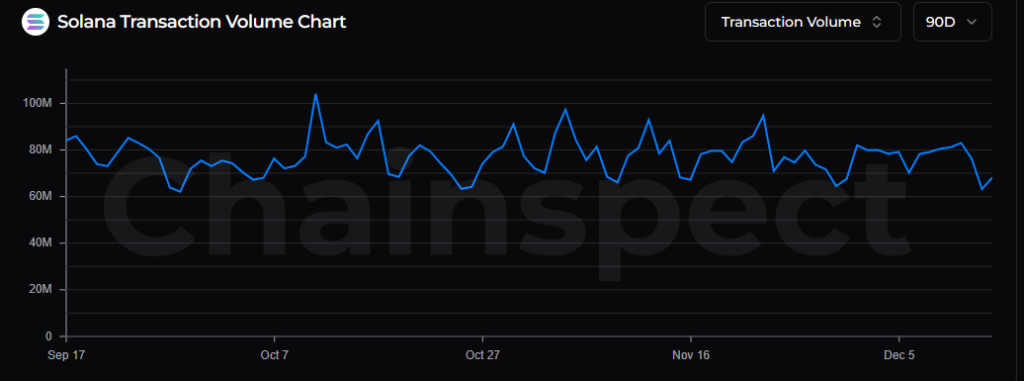
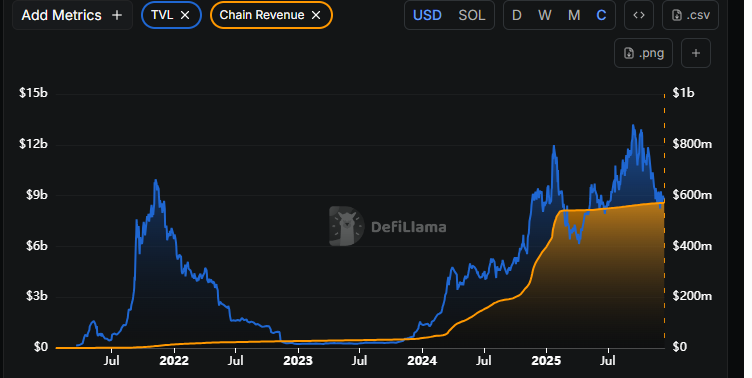
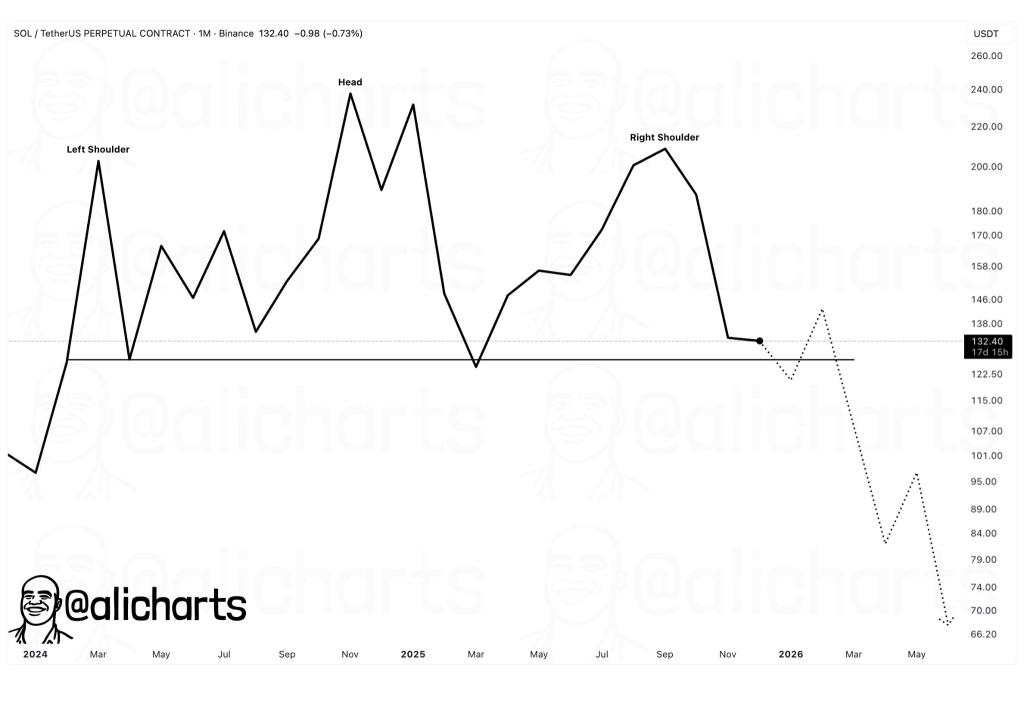
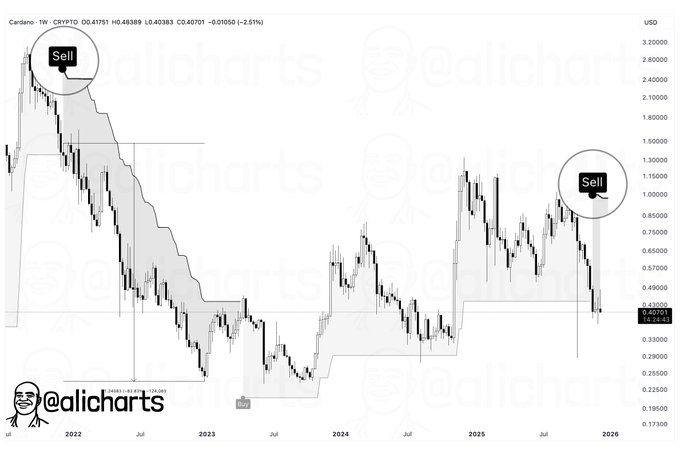
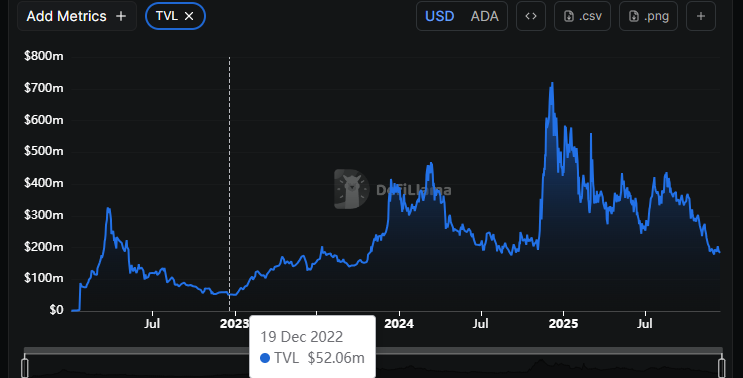
pic.twitter.com/ASsyFQTncO










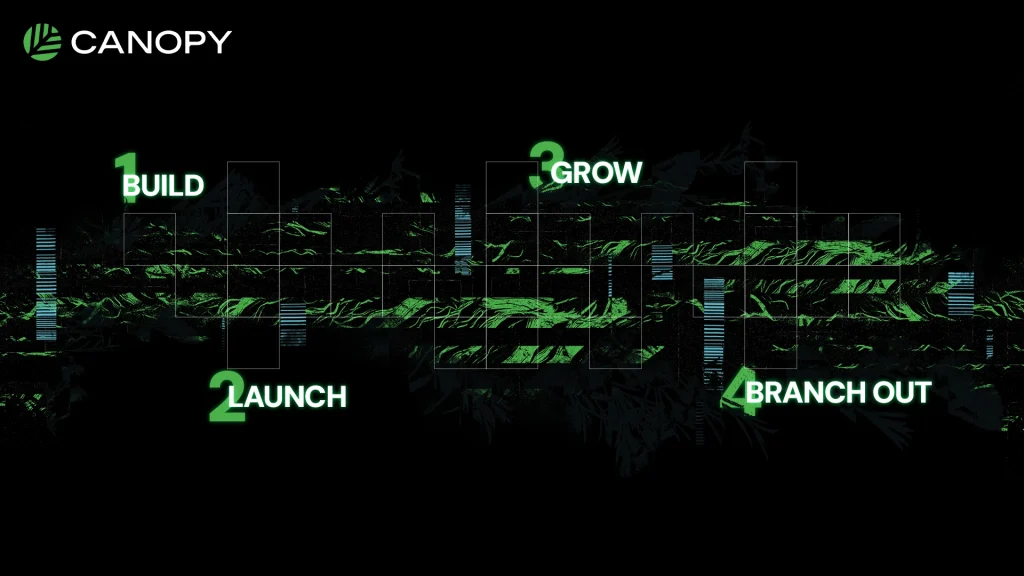
THIS WEEK IS HUGE FOR CRYPTO




Bank of Japan is about to do a rate hike on Friday the 19th, creating massive fear surrounding the Yen carry trade.
 -1.90%
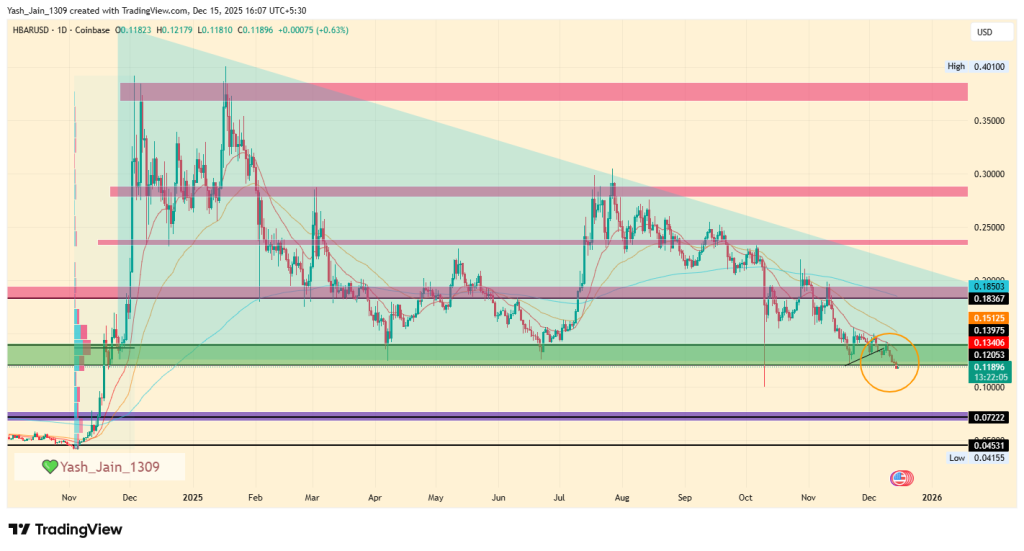
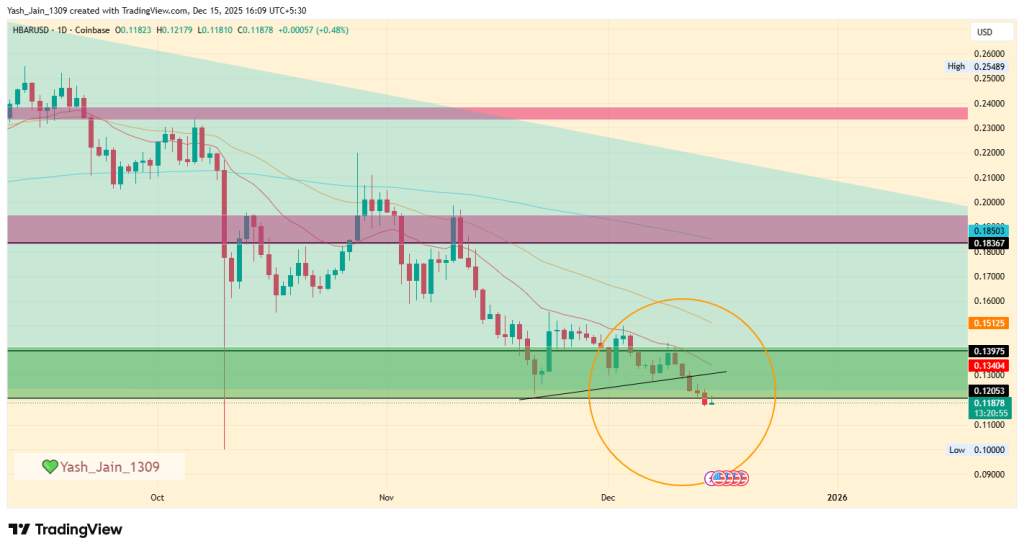







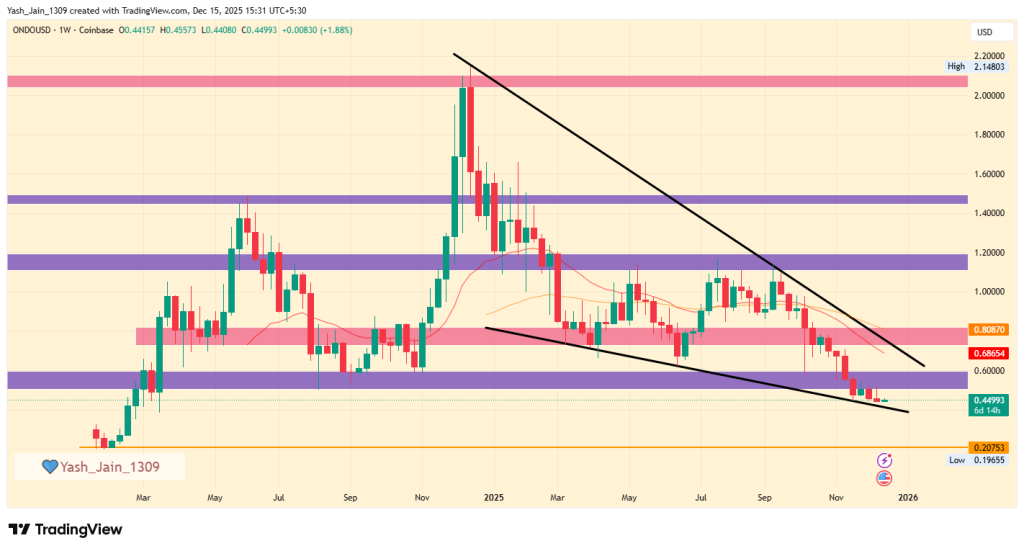
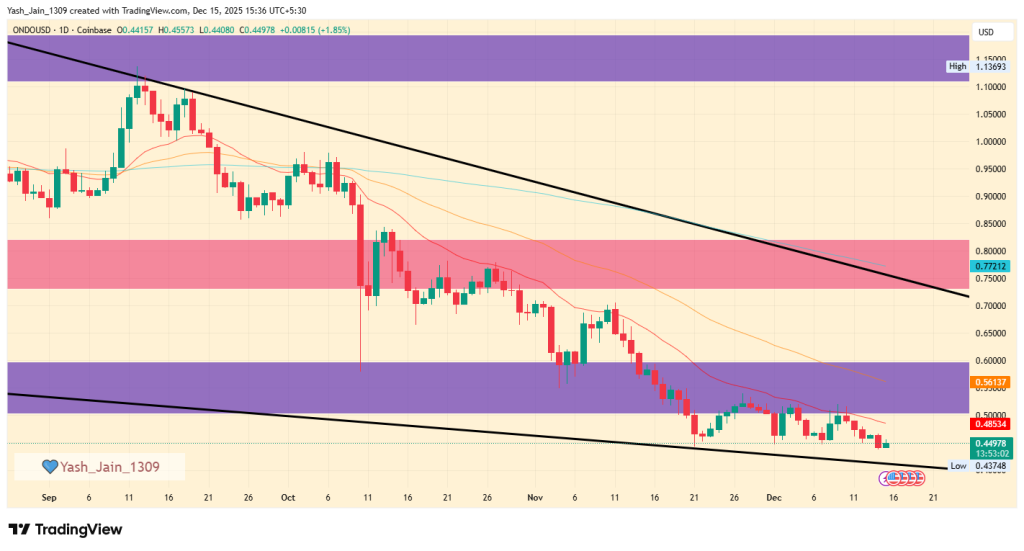
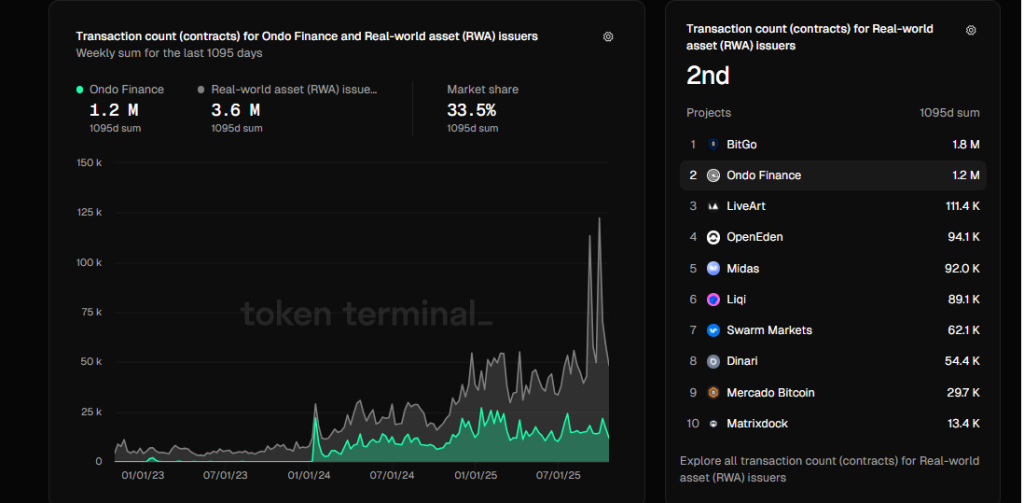


![XRP News [LIVE] Update](https://image.coinpedia.org/wp-content/uploads/2025/12/01124853/How-High-or-Low-Can-XRP-Price-Go-After-Fifth-ETF-Launch-Today-1024x536.webp)
 Hold XRP for long-term upside









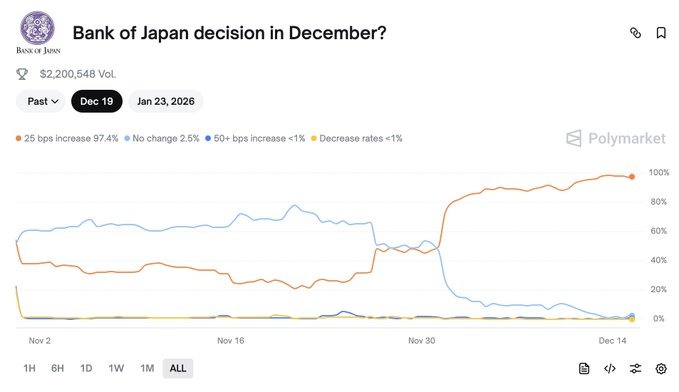
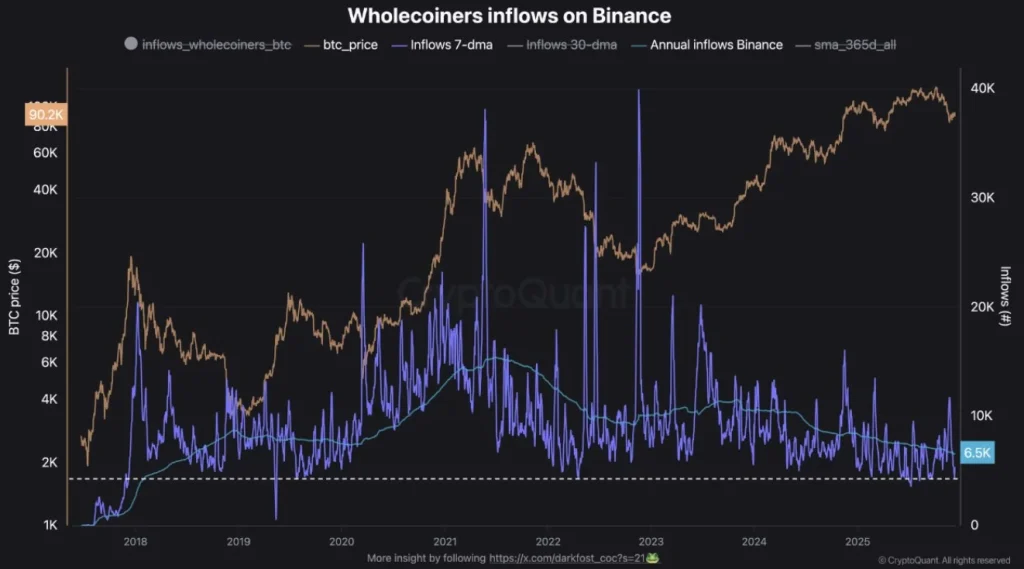
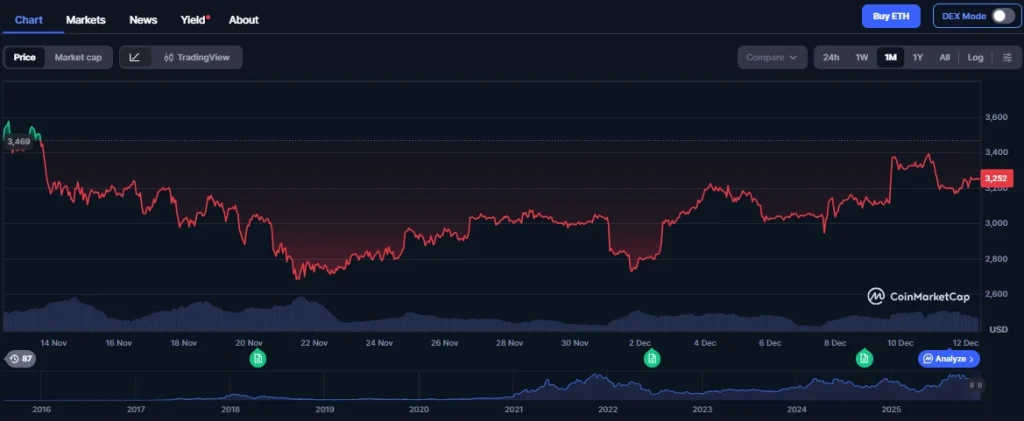
Price holding above major demand zone
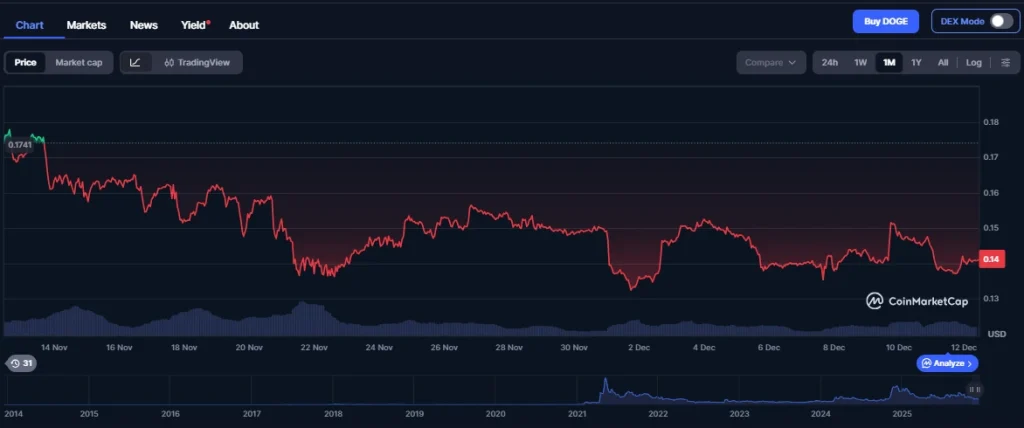












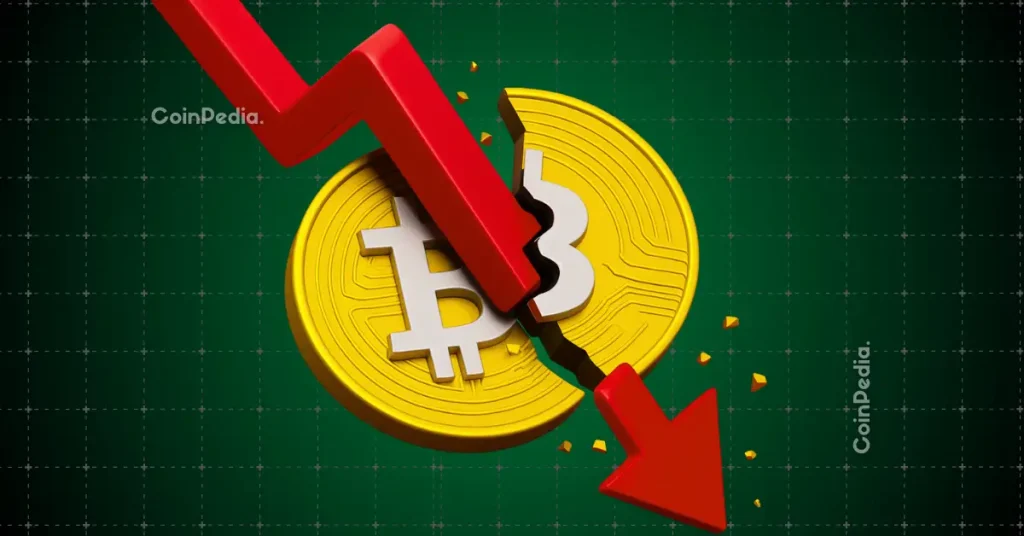


















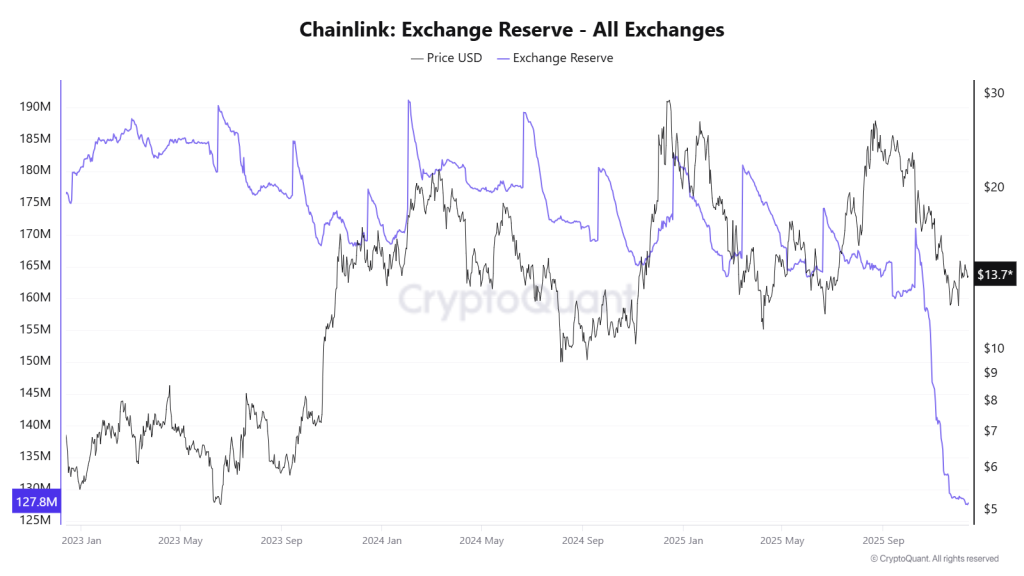
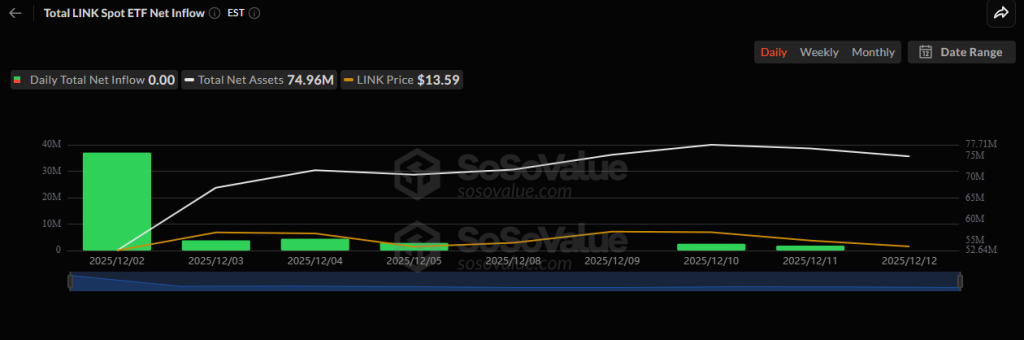



BREAKING:
STRATEGY REMAINS IN THE NASDAQ 100 INDEX ACCORDING TO REUTERS. pic.twitter.com/GMRZvSWnCU
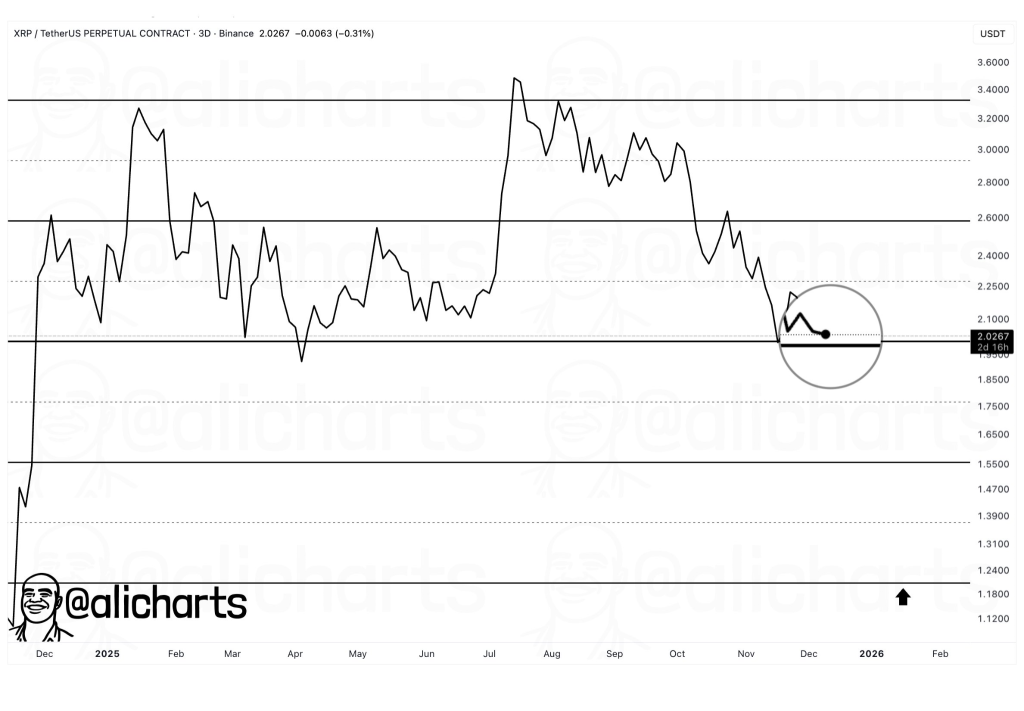
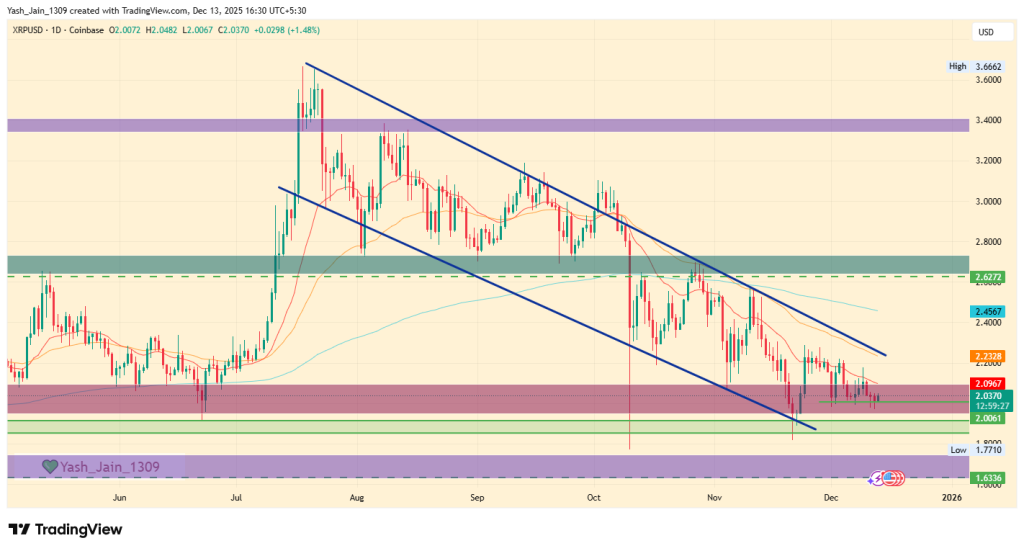
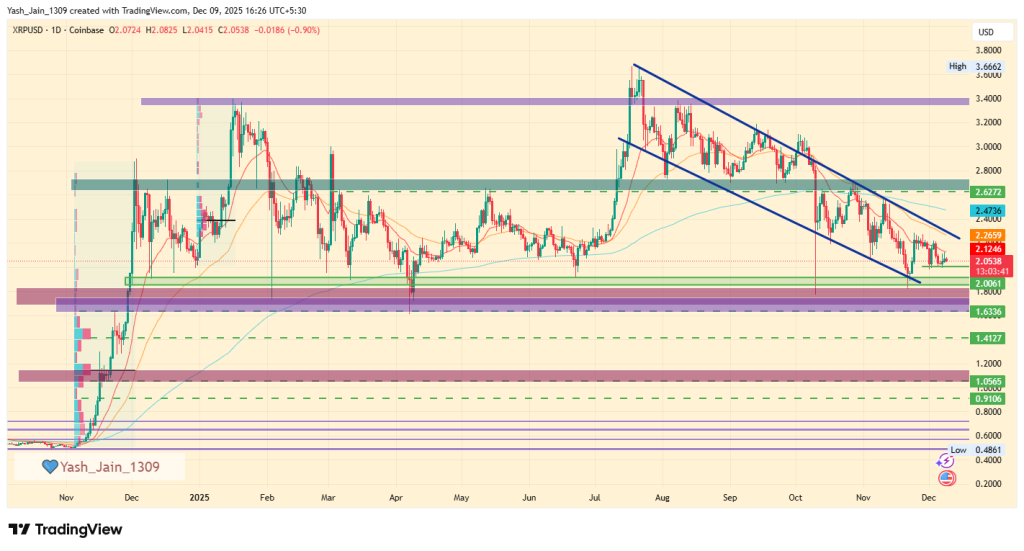
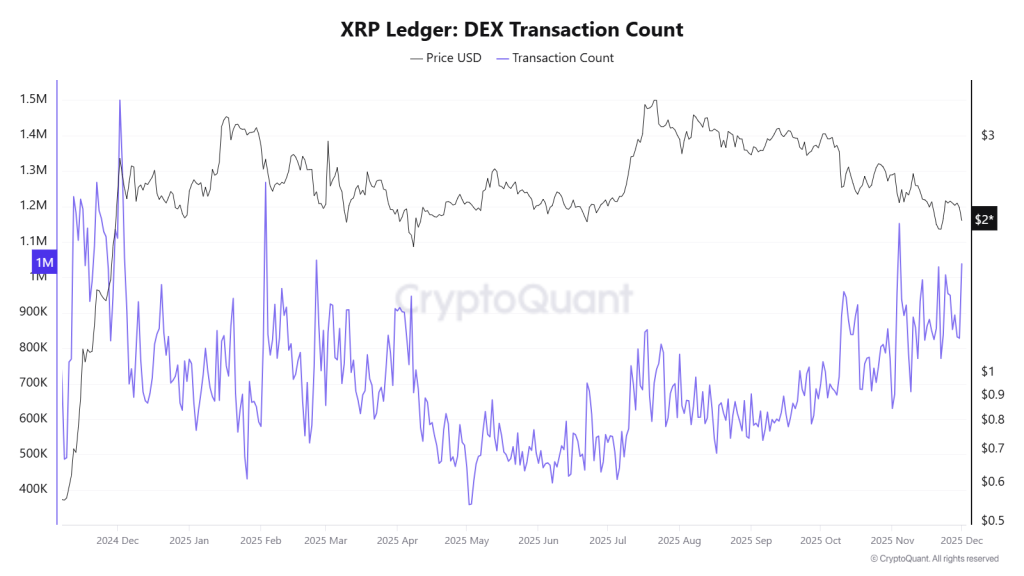
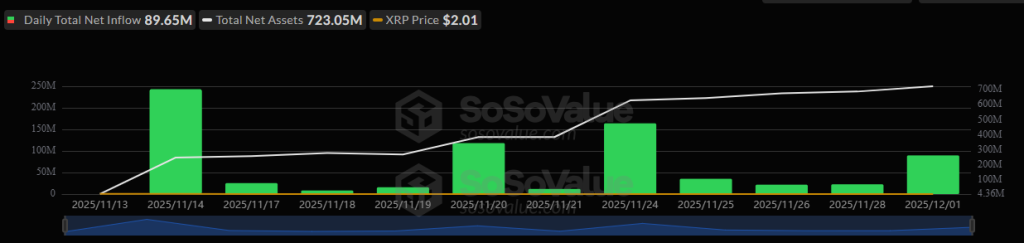
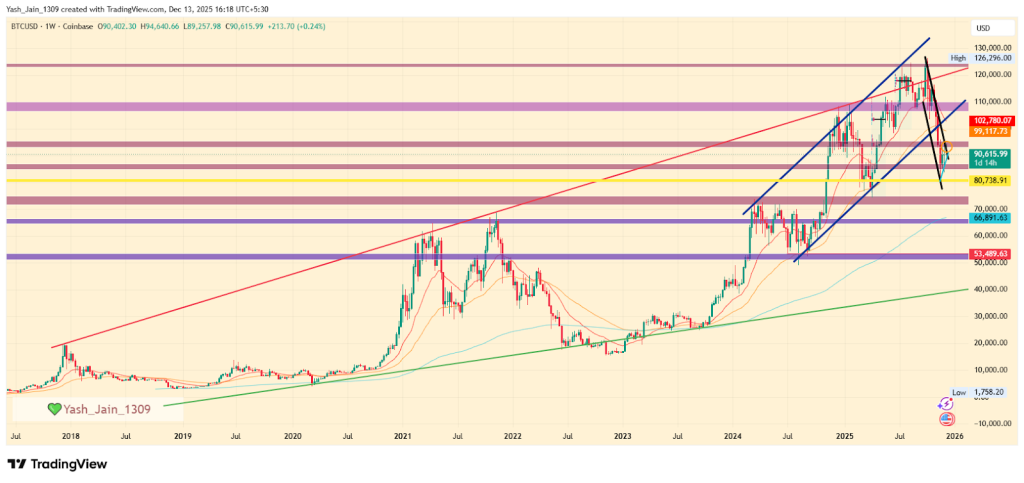
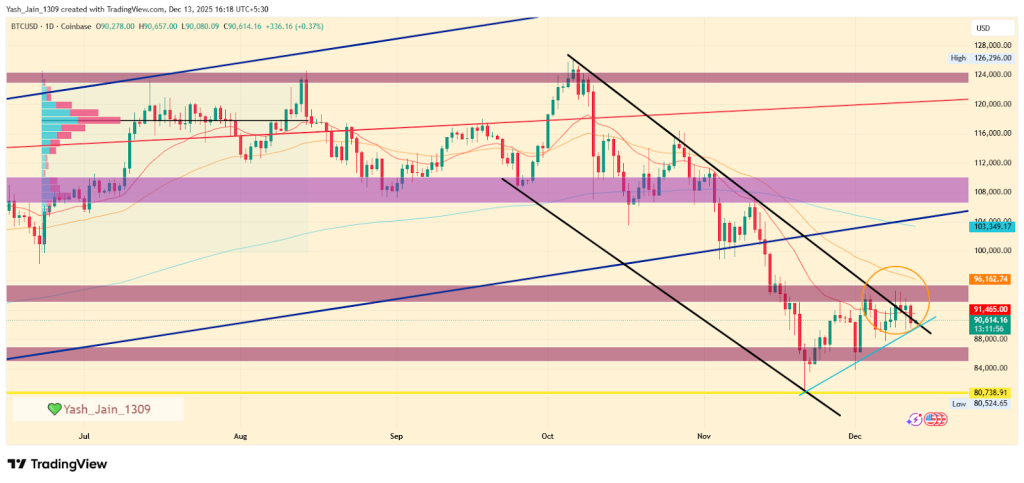
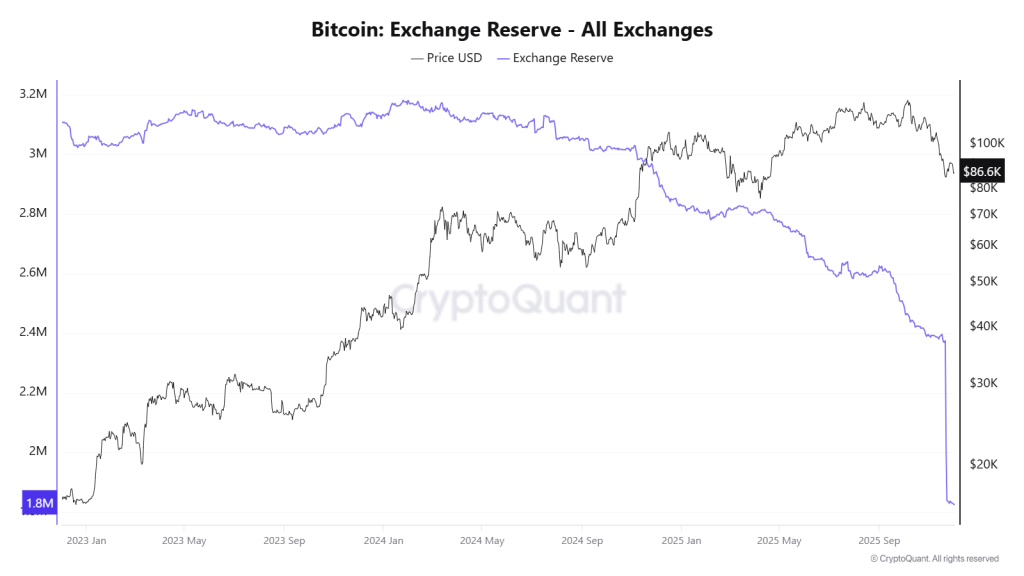
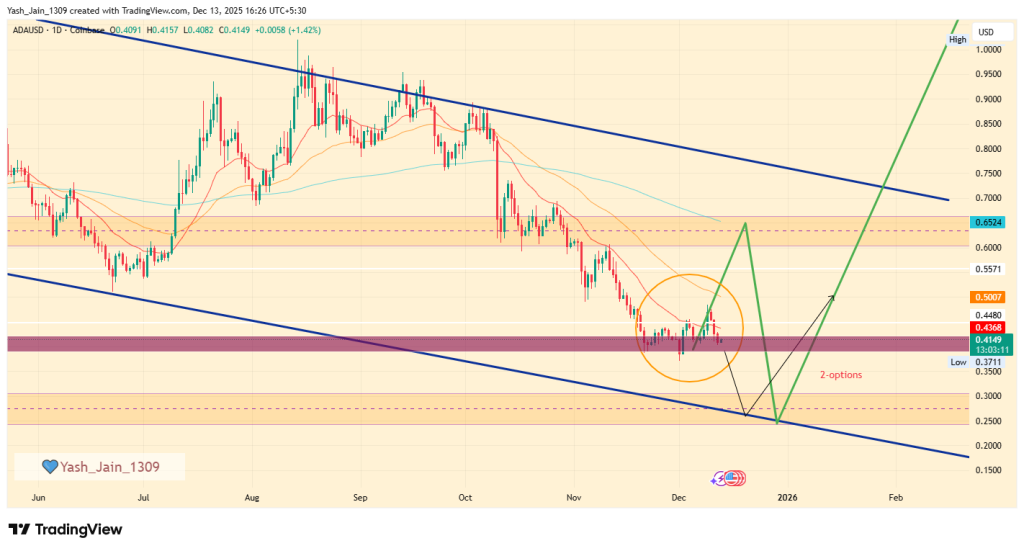
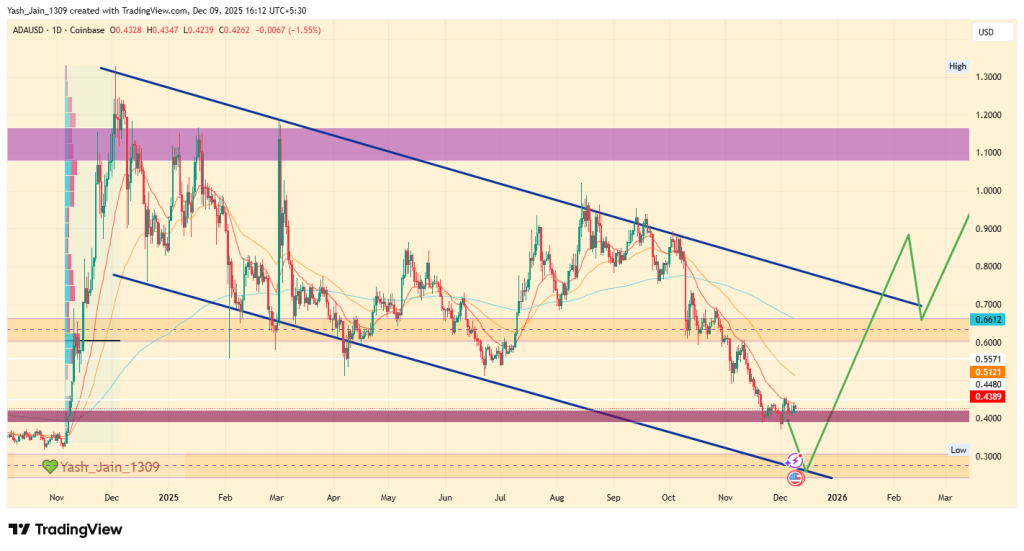






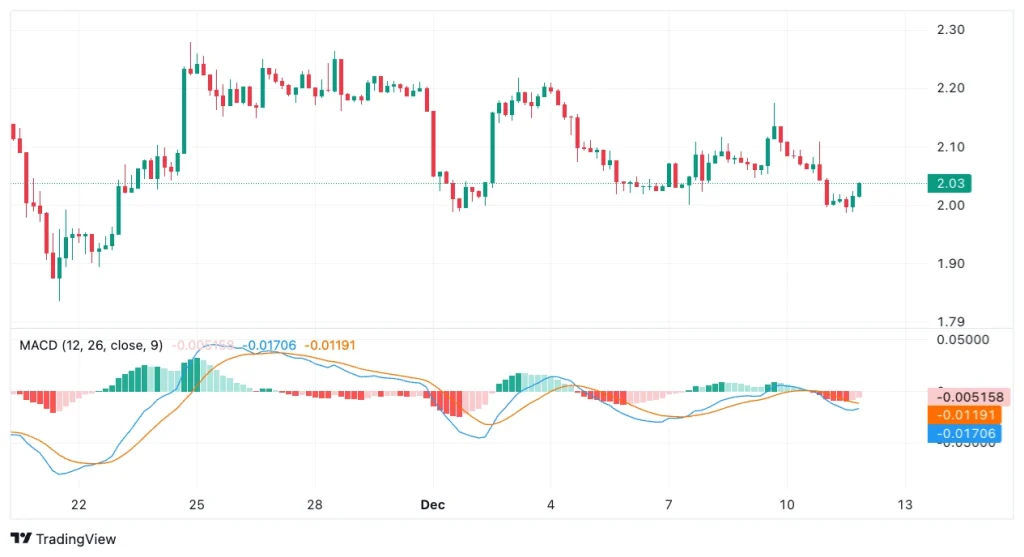


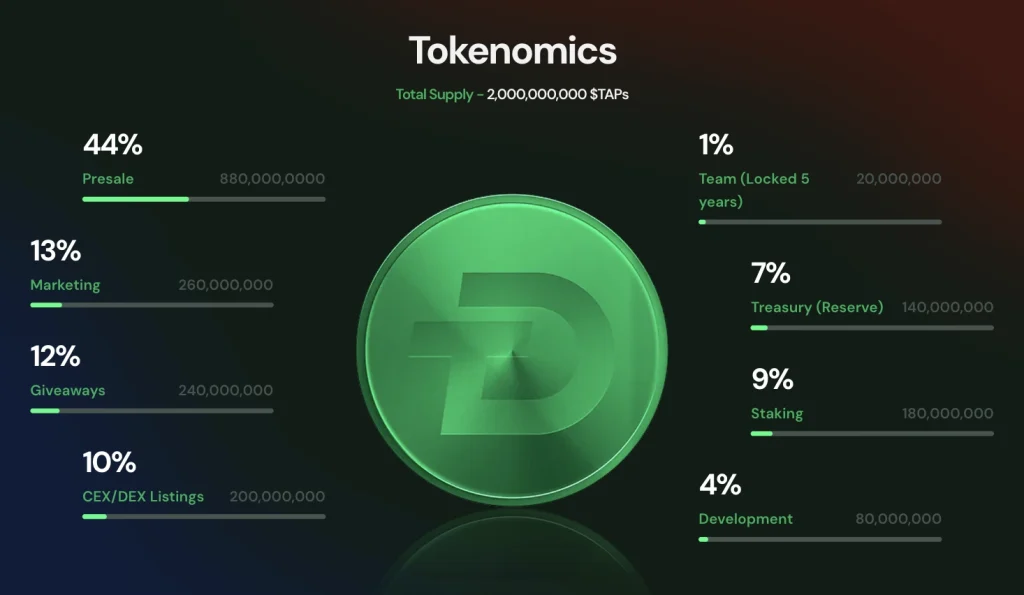

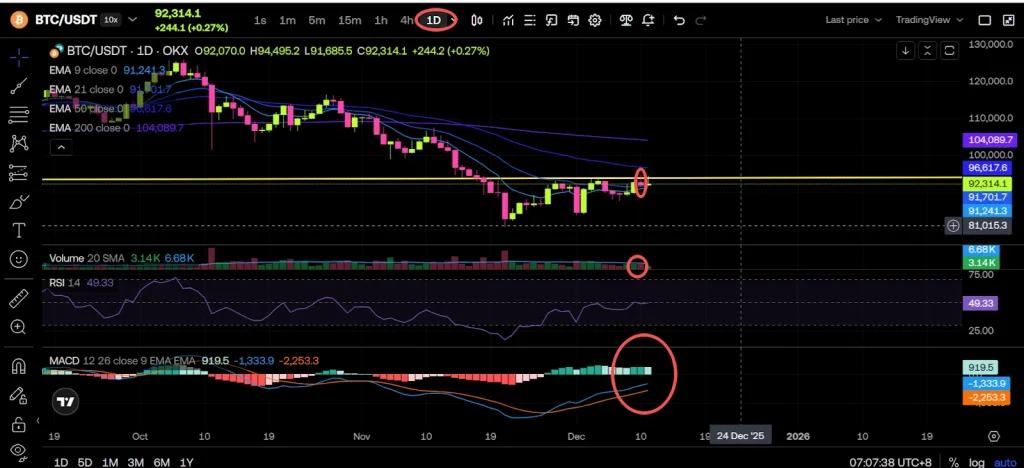




pic.twitter.com/YzfVgKqNhu
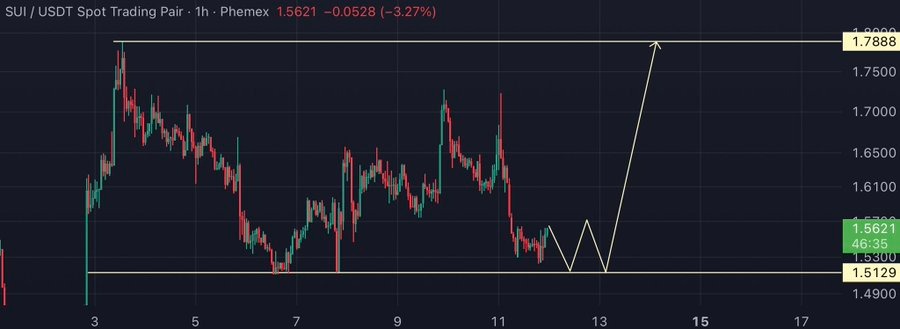
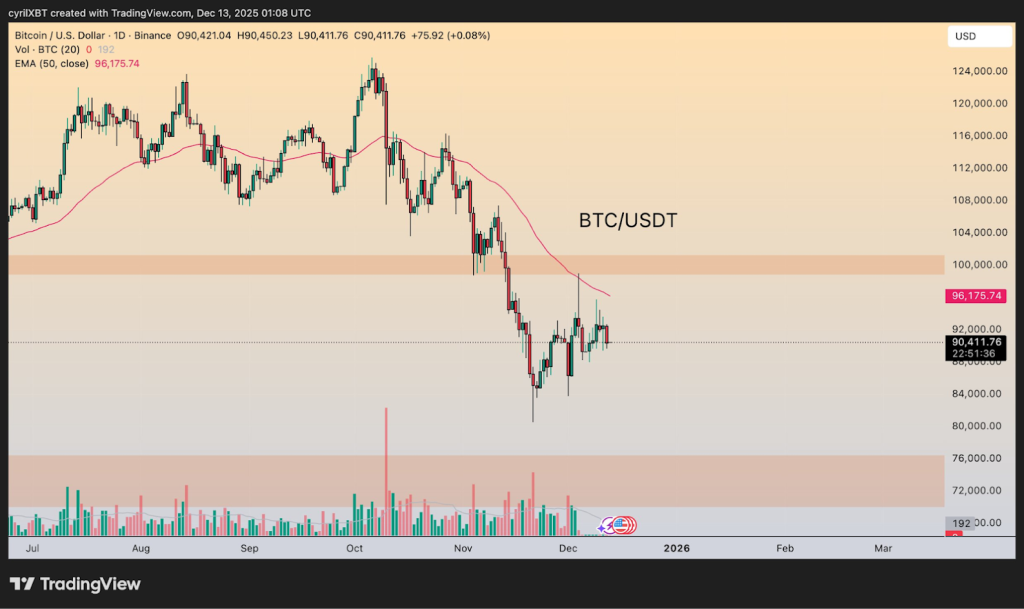

 1.99%
1.99%