Georgia’s legislature adjourns today, April 6, having sent three AI-related bills to Governor Brian Kemp’s desk, the most notable being a Georgia AI chatbot bill that mandates disclosure, child protections, and crisis response protocols for self-harm. Georgia’s 2026 legislative session…
President Trump’s DHS pay order has directed all Department of Homeland Security employees to be paid using redirected federal funds, but legal and budget experts say the administration may be violating a 150-year-old law that gives Congress sole control over…
House Democrats are convening a virtual caucus call tonight, April 6, to plot their next steps on the DHS shutdown, now 51 days old and the longest partial government shutdown in US history. House Democrats are holding a virtual DHS…
An open-source AI job hunter built on Claude Code just auto-applied to hundreds of roles and actually landed a job, exposing why the real bottleneck is on-chain compute, not résumés. A viral clip shared by 0xMarioNawfal claims that “SOMEONE BUILT…
Chinese AI tracking companies with ties to the People’s Liberation Army are marketing detailed intelligence on US military movements during the Iran war, built entirely from publicly available satellite imagery, flight data, and shipping records, according to a Washington Post…
U.S. stocks inched higher on Monday, but beneath the smooth index closes, meme names, bitcoin proxies and Chinese ADRs traded like a late‑cycle minefield. U.S. equities finished Monday’s session slightly higher, with the Dow Jones Industrial Average rising 0.36%, the…
A new investigation published argues that the federal government is rushing into artificial intelligence the same way it rushed into cloud computing a decade ago, and with the same structural vulnerabilities still in place. ProPublica’s Renee Dudley published an investigation…
Prediction markets like Polymarket and Kalshi now clear nearly $24b a month as AI bots, Wall Street capital and new CFTC rules drag the sector into mainstream finance. Prediction markets are moving from the fringes of crypto into the core…
Canton Network’s rise as a permissioned, institution-first blockchain is forcing crypto to decide whether the future of tokenized finance belongs to open rails like Ethereum or fenced-off, privacy-gated stacks for banks and asset managers. Canton Network, the enterprise blockchain built…
Algorand’s ALGO token has gained roughly 50% this month, climbing from $0.079 to $0.126, after Google’s Quantum AI team cited the blockchain 32 times in a landmark paper on quantum threats to cryptocurrency. As crypto.news reported, Algorand (ALGO) rallied to…
Circle’s Layer-1 blockchain Arc will launch at mainnet with an opt-in post-quantum signature scheme protecting users’ wallets from day one, as the USDC issuer warns that Q-Day could arrive by 2030 or sooner. Circle’s Layer-1 blockchain Arc will debut at…
The CEO's annual shareholder letter warned that new tech is reshaping finance, with tokenization and blockchain competitors gaining as the bank scales its own network.
Acknowledging there was ”still a lot more work to do” before Congress could advance a market structure bill, Senator Bill Hagerty renewed attention starting next week.
Bernstein says Figure may be undervalued as loan volumes surge and its tokenized credit platform expands, despite recent stock declines and market volatility.
China’s Cyberspace Administration has ordered Apple to pull Jack Dorsey’s Bitchat from its China App Store, citing regulations that require apps with “social mobilization” capabilities to pass a government security assessment before launch. Block CEO Jack Dorsey confirmed on X…
More than $273 million in bearish crypto positions were unwound in under 24 hours on April 6, as reports of US-Iran ceasefire talks triggered a sudden and sharp shift in market sentiment. Bears paid a heavy price on Monday. Bloomberg…
Coinglass data shows Ethereum trapped in a tight “liquidation corridor,” with $1.414b in longs at risk below $2,040 and $889m in shorts exposed above $2,253. If Ethereum (ETH) slides below $2,040, around $1.414 billion worth of long positions on major…
ETHGlobal Cannes 2026’s 10 finalists push AI agents, privacy infrastructure and on-chain prediction markets through projects like ENShell, DIVE, Corpus and VEIL VPN. ETHGlobal used a simple “Drumroll please…” tweet to introduce what is arguably one of its most technically…
Bitcoin climbed above $70,200 on Monday for the first time since March 25, as a report that the US and Iran are negotiating a 45-day ceasefire sent risk assets sharply higher across global markets. Bitcoin (BTC) reclaimed $70,000 on Monday…
Chaos Labs is ending its three‑year Aave mandate after a $27m oracle fiasco, deep governance infighting, and mounting fears over who is legally liable when DeFi risk breaks. Chaos Labs, the risk firm that has “priced every loan initiated on…
Binance faces renewed questions over its $4.3b post-plea cleanup as crime-monitoring staff depart and chief compliance officer Noah Perlman weighs an exit. Bitcoin (BTC) futures traders added more than $3.8 billion in new leveraged positions over the past 24 hours,…
Crypto is moving into regulated portfolios, including U.S. retirement plans. That shift matters less for long-term allocation and more for how digital assets are used: as collateral.
A recent proposal from the U.S. Labor Department would allow 401(k) plans to include cryptocurrencies under a defined legal framework for fiduciaries. This signals that crypto is being placed alongside private equity and private credit—assets typically used not only for growth, but for structured finance.
Once an asset enters that category, its role changes. It stops being purely speculative and starts functioning as part of a broader financial system.
From speculative asset to collateral base
Institutional inclusion brings a different set of requirements. Assets held in retirement accounts are expected to support liquidity, risk management, and capital efficiency. Crypto is beginning to meet those expectations.
Bitcoin and other large-cap assets are increasingly treated as:
Long-term stores of value
Yield-generating balancesc
Collateral for borrowing
This shift aligns with a broader trend already visible in lending markets. Crypto-backed credit lines and loans are no longer limited to short-term leverage trades. They are being used to unlock liquidity while maintaining exposure to underlying assets.
The logic is simple. If an asset is held for the long term, selling it to access cash becomes inefficient.
Why borrowing BTC replaces selling
The case for borrowing against crypto has strengthened in 2026 for two reasons.
First, taxation. In most jurisdictions, selling crypto triggers capital gains. With reporting frameworks expanding globally, including OECD-led initiatives and regional regulations, liquidation is becoming more visible and more costly.
Second, market structure. Crypto remains volatile, but long-term holders tend to treat drawdowns as temporary. Selling during a downturn locks in losses. Borrowing avoids that outcome.
This leads to a different approach:
Keep BTC or ETH as core holdings
Use them as collateral
Access liquidity without exiting positions
In practice, crypto starts to behave like real estate or equities—assets that are rarely sold outright, but frequently used to secure credit.
The evolution of crypto lending
As the role of crypto changes, lending models are adjusting.
Early crypto loans followed a fixed structure. Borrowers locked collateral, received a lump sum, and paid interest on the full amount from day one. Terms were rigid, and costs accumulated even when capital was not actively used.
Newer models focus on flexibility and capital efficiency.
Key changes include:
Interest based on loan-to-value (LTV) rather than flat rates
No fixed repayment schedules
Access to revolving credit instead of one-time loans
The shift mirrors traditional finance, where credit lines are often more efficient than fixed loans for managing liquidity.
Clapp Offers Flexibility with Credit Line Model
This transition is visible in platforms that treat borrowing as an ongoing tool.
Clapp.finance follows a credit-line model instead of a traditional loan structure. Users deposit crypto as collateral and receive a borrowing limit. From there, capital can be drawn when needed, rather than taken all at once.
The mechanics are straightforward:
Interest applies only to the amount actually used
Unused credit carries 0% APR if LTV is kept under 20%
Repaid funds immediately restore available credit
There is no fixed repayment schedule
This structure reduces the cost of holding unused liquidity and gives users more control over timing.
Clapp also supports multi-collateral borrowing, allowing users to combine assets such as BTC, ETH, and stablecoins within a single credit line. This can improve capital efficiency and reduce concentration risk.
Access to funds is continuous. Borrowing, repayment, and collateral management are available at any time, without operational delays.
In the context of institutional adoption, this type of structure aligns with how capital is typically managed: drawn when needed, repaid when convenient, and optimized around cost.
A shift in how crypto is used
The inclusion of crypto in retirement frameworks does not immediately change retail behaviour. What it does change is the underlying assumption about what crypto represents.
If digital assets are treated as part of long-term portfolios, they become less likely to be sold and more likely to be used.
That shift has practical implications:
Liquidity is accessed through borrowing rather than liquidation
Collateral management becomes part of portfolio strategy
Lending products move toward flexibility and cost efficiency
Borrowing against crypto is not a workaround for market volatility. It is becoming a standard way to manage capital.
Conclusion
The expansion of crypto into regulated portfolios signals a broader transition. Digital assets are moving into the financial core, where they support lending, liquidity, and long-term capital planning.
In that environment, the question is how to do it efficiently. Flexible credit models, low-LTV strategies, and on-demand liquidity are likely to define the next phase of crypto lending. For users who want to retain exposure while accessing capital, borrowing against Bitcoin is becoming a practical, structured approach rather than a niche tactic.
In another blow to the decentralized finance giant, Chaos Labs has announced it will step away from its role as a key risk manager for Aave, raising new concerns about the protocol’s operational stability and governance direction.
The decision, shared publicly on Aave’s governance forum, shows growing tensions within the DAO over how risk should be managed as the protocol scales.
A Deepening Rift Over Risk Strategy
Chaos Labs did not frame its exit as abrupt or reactionary. Instead, the firm described a “fundamental misalignment” in how risk management should evolve within Aave’s ecosystem.
After three years of involvement, including navigating volatile market cycles and scaling challenges, the firm argued that discussions around the protocol’s future only made the gap in vision more apparent.
At the heart of the disagreement is not just technical execution, but governance philosophy: who bears responsibility for risk, and how that responsibility should be funded and structured.
Mounting Operational Pressure
The firm outlined three pressures that made its continued involvement untenable:
A shrinking pool of core contributors, increasing workload and operational exposure
The upcoming V4 upgrade, which expands the scope and legal burden of risk management
Persistent financial strain, with risk operations reportedly running at a loss
Chaos Labs revealed that even with a $1 million increase in budget, its work on Aave would still operate with negative margins, a situation it deemed unsustainable.
A Pattern of Departures
The exit does not occur in isolation. Other contributors, including BGD Labs and Aave Companies Initiative (ACI), have also stepped back in recent months.
This pattern could mean a broader structural issue within Aave’s DAO, where increasing complexity and expectations may be outpacing incentives and coordination mechanisms.
What This Means for Aave
Aave remains one of the largest DeFi protocols globally, but the departure of multiple core contributors could test its resilience.
Risk management is not a peripheral function in DeFi. It is central to maintaining liquidity, protecting users, and ensuring protocol solvency during market stress.
Chaos Labs’ exit raises a critical question: can Aave recalibrate its governance and incentive structures quickly enough to retain and attract the expertise it depends on?
Price predictions for 2026 range from $0.70 to $1.20.
ARB could extend toward $6 by 2030, if recovery structure holds.
Arbitrum (ARB), one of the leading Layer-2 scaling solutions on Ethereum, is currently navigating a phase where strong ecosystem relevance contrasts with prolonged price weakness. While the network continues to play a key role in DeFi and Layer-2 infrastructure, its price action has remained under sustained pressure.
Following an extended downtrend, ARB is now stabilizing near lower demand zones, suggesting that selling momentum may be gradually easing. However, the absence of strong upside movement indicates that the market remains in a transitional phase rather than a confirmed recovery.
This creates a critical question: is Arbitrum forming a long-term base after capitulation, or does the structure still reflect weak demand? With 2026 already underway, attention now shifts to whether ARB can reclaim key resistance levels and transition into a recovery phase. Read on as we break down Arbitrum’s April outlook and full-year price trajectory.
As we move through early 2026, Arbitrum’s price action reflects a market transitioning from a prolonged downtrend into a stabilization phase. After consistent downside pressure, ARB found support near the $0.08–$0.10 demand zone, where selling momentum has started to ease. Since then, price has been consolidating, indicating early signs of base formation.
Currently, ARB is trading just below a key resistance zone near $0.10–$0.12, which remains critical for any shift in structure. A sustained move above this level could trigger a recovery toward the $0.15–$0.18 range, with further upside toward $0.20 if momentum strengthens.
In this context, Arbitrum in April may reach the $0.15–$0.18 range, provided resistance is reclaimed. However, failure to break higher may keep ARB range-bound, with downside risk toward $0.06 if the $0.08 support fails.
Coinpedia’s Arbitrum (ARB) Price Prediction 2026
The broader outlook for Arbitrum in 2026 suggests a market transitioning from a prolonged downtrend into a potential recovery phase, with scope for a significant structural shift if key levels are reclaimed. Following its earlier cycle highs, ARB entered a sustained bearish phase throughout 2025, marked by a descending resistance structure and consistent lower highs. This trend extended into early 2026, eventually pushing the price into a deep value zone where it is now attempting to stabilize.
At present, ARB is forming a base near its lower demand region, indicating that downside pressure is gradually weakening. This phase typically reflects early accumulation, where long-term participants begin positioning ahead of a potential trend reversal.
Looking ahead, the primary objective for ARB is to reclaim its immediate resistance near $0.12, followed by stronger structural levels around $0.18 and $0.20. A breakout above these zones would signal a shift in market structure, opening the path for a broader recovery. If this recovery phase gains traction, supported by renewed liquidity, Layer-2 adoption, and ecosystem growth, ARB could gradually move toward the $0.70 to $1.20 range, representing a return toward higher valuation bands seen in previous cycles.
However, such a move would require sustained strength and confirmation across multiple resistance levels. Until then, the asset remains in a rebuilding phase, where failure to hold the $0.08 support could delay recovery and extend consolidation.
Recent Catalysts For Arbitrum (ARB)
Ecosystem development and upgrades continue, reinforcing long-term positioning within Ethereum scaling. Layer-2 competition intensifies, keeping pressure on Arbitrum despite strong ecosystem presence. DeFi liquidity on Arbitrum remains stable, supporting underlying network activity.
Arbitrum Crypto Price Prediction 2026 – 2030
Year
Potential Low ($)
Potential Average ($
Potential High ($)
2026
0.70
1.00
1.20
2027
1.00
2.00
2.80
2028
1.40
2.70
4.00
2029
3.00
4.20
5.20
2030
4.60
5.00
7.00
Arbitrum Price Forecast 2026
The Arbitrum price range in 2026 is expected to be between $0.70 and $1.20.
ARB Crypto Price Prediction 2027
Arbitrum (ARB) price range can be between $1.70 to $2.80 during the year 2027.
Arbitrum Coin Price Prediction 2028
In 2028, the Arbitrum price is forecasted to potentially reach a low price of $1.40. and a high price of $4.00.
ARB Price Prediction 2029
Thereafter, the Arbitrum (ARB) price for the year 2029 could range between $3.00 and $5.20.
Arbitrum(ARB) Price Prediction 2030
Finally, in 2030, the price of Arbitrum is predicted to remain steadily positive. It may trade between $4.60 and $7.00.
Based on the historic data and trend analysis of the cryptocurrency along with the market sentiments, here are the possible Arbitrum price targets for the longer time frames.
Year
Potential Low ($)
Potential Average ($)
Potential High ($)
2031
4.00
5.80
8.00
2032
5.00
7.30
9.80
2033
6.50
8.20
11.00
2040
9.00
13.00
20.00
2050
13.00
22.00
32.00
Arbitrum (ARB) Price Prediction: Market Analysis?
Year
2026
2027
2030
Changelly
$1.20
$2.40
$6.00
DigitalCoinPrice
$1.90
$2.60
$5.70
WalletInvestor
$25.60
$1.00
$5.20
CoinPedia’s Arbitrum Price Prediction
Based on current technical structure and observed market behavior, Coinpedia’s price outlook implies that Arbitrum (ARB) price is expected to trade between $0.70 and $1.20 in 2026, assuming price remains above its long-term support zone. Over the longer term, if market sentiment remains positive and recovery persists, Arbitrum could potentially reach a price range of $3 to $6 by 2030.
Year
Potential Low ($)
Potential Average ($)
Potential High ($)
2026
0.70
1.00
1.20
Never Miss a Beat in the Crypto World!
Stay ahead with breaking news, expert analysis, and real-time updates on the latest trends in Bitcoin, altcoins, DeFi, NFTs, and more.
FAQs
What is the Arbitrum (ARB) price prediction for 2026?
In 2026, ARB is expected to trade between $0.70 and $1.20 if it holds key support and confirms a long-term recovery trend.
What is the ARB price prediction for 2030?
ARB price prediction for 2030 suggests a potential range between $4.60 and $7.00, assuming sustained adoption and market growth.
What is the Arbitrum price prediction for 2040?
Arbitrum price prediction for 2040 indicates a possible range of $9 to $20 if Ethereum scaling demand remains strong long term.
What is the Arbitrum price prediction for 2050?
Arbitrum price prediction for 2040 indicates a possible range of $9 to $20 if Ethereum scaling demand remains strong long term.
What could impact Arbitrum’s price the most?
ARB price is influenced by Ethereum activity, Layer-2 adoption, overall crypto market trends, and broader investor sentiment.
Is Arbitrum a good long-term investment?
Arbitrum shows long-term potential due to Ethereum adoption, but ARB remains volatile and best suited for investors with risk tolerance.
Polymarket will rebuild its core engine, introduce a hybrid CLOB, and launch Polymarket USD, a USDC‑backed stablecoin on Polygon aimed at cheaper, more institution‑friendly trading. On‑chain prediction market Polymarket will roll out what it calls “the largest infrastructure upgrade since…
Dogecoin and Chainlink show resilience as investors turn to early-stage opportunities like BlockDAG. The year 2026 is revealing that the top crypto gainers are often the projects with the strongest foundations. Currently, the Dogecoin price stands resiliently at around $0.092,…
Tom Lee says Ethereum has become the No. 2 “wartime” asset, outpacing Bitcoin and stocks as war spending surges and crypto gains appeal as a liquidity and risk trade. Since the latest Middle East conflict escalated, Ethereum has become the…
A US appeals court sided with Kalshi, ruling that CFTC‑regulated event contracts fall under federal law, not New Jersey gambling rules, reshaping prediction market oversight. A federal appeals court has ruled that New Jersey cannot bar Kalshi from offering sports‑related…
TAO price showed a sharp 10% intraday surge pushed it cleanly off a key level around $300, flipping what used to be resistance into support. That’s bullish structure. Clean. Convincing.
But is it that simple, and will price keep rising? Let’s find out.
TAO price breakout builds strong bullish momentum
The move from $300 wasn’t random. That level had been acting like a ceiling in march, and now in April it’s holding as a floor. That’s the kind of shift traders watch closely and this demand area is being tested right now.
If momentum sticks, the next logical checkpoints sit at $352 and $396. Those aren’t fantasy targets they’re areas TAO price has already respected before. So revisiting them? Totally on the table.
And of course, the optimism doesn’t stop there. Some market voices are already calling for a much bigger move, with expectations stretching as high as $500 before June. The narrative? TAO isn’t just rallying it’s “ fundamentals are dominating.”
$TAO looks ready to keep dominating through April and into May.
Well, while TAO price action looks solid, derivatives data is starting to look… uncomfortable.
The futures volume bubble map from CryptoQuant platform shows heavy leveraged activity stacking up right between $300 and $350. Not just elevated but red hot overheated state. That’s usually not a sign of stability. It’s a sign of crowding.
And crowded trades don’t end well. We’ve seen this before. Back in Q4 2025, a similar overheating phase didn’t lead to continuation but it triggered a sharp correction. If history rhymes, this current setup could be laying the groundwork for a pullback rather than a breakout.
Bearish liquidation signals add pressure on upside
Now layer in liquidation data, and things get even more interesting. Right now, the structure leans bearish.
That means if TAO price stalls or dips, downside liquidations could accelerate the move lower. Basically, the same leverage that’s fueling upside momentum can flip and become a liability real fast.
So while spot traders see strength, derivatives traders are quietly building a risk scenario underneath.
XRP price has been stuck within a strong descending trend for the past 8 months, which has kept the volume within a restricted range. The rally has been consistently printing lower highs and lows and is currently capped below the resistance for more than a month, which has prevented the bulls from pushing the price to $2.
Another major reason for the price failing to break the resistance at $1.5 and reach $2 is a large chunk of XRP accumulated above this range. That pain is now visible on the chart as every bounce is sold into. But now, the trend is slowing as prices are no longer collapsing but compressing.
Realized Loss Spikes Signal Capitulation Phase
The Glassnode data shows a sharp rise in realized losses across multiple holder cohorts, particularly in the 1d–1w and 1w–1m age bands, indicating that recent buyers are exiting positions at a loss. Historically, such clusters of realized losses tend to occur near local bottoms, as weaker hands exit and stronger hands absorb supply.
At the same time, the presence of losses across older cohorts (3m–12m) suggests that even mid-term holders—those who accumulated during the rally phase—are now capitulating. This aligns with the earlier insight that a large portion of XRP supply is underwater, reinforcing the idea that the market has already gone through a significant pain cycle. The data also suggests that, at the current price range, only 43.4% of the XRP supply is in profit, the lowest since July 2024.
This type of behaviour usually results in a volatility expansion, not the continuation of a choppy phase.
XRP Price Compressing at a Key Support
The XRP weekly chart is now entering a critical phase where price structure, momentum, and positioning are converging. Currently, XRP is consolidating between $1.27 support and the $1.35–$1.40 range, with a deeper support sitting at $1.12. This marks the area where buyers are beginning to step in after months of selling pressure.
The MACD remains in bearish territory, with both lines still below zero, while heading for a bullish crossover. This suggests that the momentum could flip in favour of bulls at any time from now, as the downside momentum is slowly fading. Moreover, the selling volume has also declined, compared to the initial breakdown, while the candles are tightening, indicating a volatility compression. Therefore, the XRP price may be primed for a transition but not an immediate reversal.
Key Levels That Define the Next Move
This entire structure now revolves around a few critical levels:
$1.27 → Immediate support (decision level)
$1.12 → Final support before deeper breakdown
$1.80 → Major resistance/trend invalidation level
As long as XRP trades below $1.80, the broader structure remains bearish. But holding above $1.27 keeps the market in a compression phase, where a breakout in either direction becomes increasingly likely.
The Bottom Line: What’s Next for XRP Price?
XRP price is now trading at a critical turning point after a prolonged downtrend, with price compressing near the $1.27 support zone while bearish momentum continues to fade. Although the broader structure remains weak below $1.80, the current range suggests seller exhaustion and a potential setup for volatility expansion. A sustained hold above support could drive a recovery toward $1.80, but losing $1.27 would likely accelerate downside toward $1.12, making this a decisive zone for the next major move.
Bitcoin investors hoping for a quick recovery may need to be patient. That is the message from Katie Stockton, founder and managing partner of Fairlead Strategies, who appeared on CNBC’s Squawk Box this week.
Bitcoin Is Boring Right Now and That Is the Point
Stockton’s Bitcoin read was measured but clear. She sees the current price action as a prolonged basing phase with support sitting in the $58,000 to $59,000 range, and she expects multiple retests of that level before any sustained move higher becomes possible.
“It’s a cyclical downtrend and that’s the dominant feature on the chart right now,” she said. “I think we can assume there are going to be retests of support, maybe more than one.”
For crypto investors watching for a bottom signal, Stockton said the charts are not there yet. There are no oversold upturns, no breadth extremes and no sentiment readings that would typically confirm a durable low. Her advice was: do not chase brief relief rallies and wait for the weight of evidence before adding exposure aggressively.
At the time of writing, Bitcoin is trading near $70,000 and is up by more than 3% in the last 24 hours.
Why the Macro Picture Matters for Crypto
Bitcoin does not move in isolation and Stockton’s broader market outlook adds important context for crypto traders.
The S&P 500 recovery last week, which clawed back roughly 4% from recent lows, does not look sustainable in her view. For risk assets including crypto, a continued equity correction and widening credit spreads create an unfavourable backdrop. Stockton added that even a ceasefire in the Strait of Hormuz may not be enough to fully reverse the damage already building in financial markets.
“I think it needs to be more than just reopening the Strait to fix the market at this point.”
The U.S. Treasury has appointed BNY Mellon as the financial agent and Robinhood as the technology partner for Trump Accounts, a tax-advantaged investment program for children under 18. Eligible children born between 2025 and 2028 receive a $1,000 Treasury seed invested in low-cost U.S. stock index funds, with families allowed to contribute up to $5,000 annually. Scheduled to launch on July 4, 2026, the program already has 4 million accounts and aims to foster long-term wealth creation and expand stock market participation across American households.
The live price of the Polygon coin is $ 0.21819891.
POL price prediction for 2026 suggests potential highs of $0.7548.
Long-term forecasts indicate POL could reach $4.94 by 2030.
Polygon (POL) remains one of the most recognized scaling ecosystems built around Ethereum. Designed to improve transaction speed and reduce fees, the network has grown into a multi-layer infrastructure supporting decentralized finance, gaming platforms, and enterprise blockchain applications.
The transition from MATIC to POL reflects Polygon’s broader ambition to build a multi-chain ecosystem, where the token supports multiple networks within the Polygon architecture. As Ethereum continues expanding its ecosystem, scaling solutions such as Polygon are expected to play a significant role in supporting decentralized applications. At present, POL is trading near $0.1005, reflecting the broader correction seen across Layer-2 tokens.
However, Polygon continues to maintain strong developer activity and partnerships across Web3 sectors, which could support long-term growth. As blockchain adoption expands and demand for scalable networks increases, Polygon’s infrastructure could remain a critical component of the decentralized ecosystem.
As we move through early 2026, Polygon’s price action reflects a market that has been under sustained pressure following its previous cycle highs, gradually forming a prolonged downtrend structure. After repeated rejections near the $0.70–$0.80 region in earlier cycles, MATIC entered a corrective phase, marked by lower highs and weakening momentum throughout 2025. This trend has extended into early 2026, pushing the price toward lower valuation zones.
In recent weeks, however, MATIC has begun to stabilize near the $0.08–$0.10 demand zone, where selling pressure appears to be easing. Price action is now compressing within a narrow range, suggesting that the market is attempting to form a base. Currently, MATIC is trading below a key resistance zone near $0.11–$0.13, which aligns with both horizontal resistance and the broader trend structure. A sustained move above this level would be the first indication of recovery, potentially driving the price toward the $0.15–$0.18 range.
In this context, Polygon in April may reach the $0.15–$0.18 range if resistance is reclaimed, with a possible extension toward $0.20 under stronger momentum. However, if the resistance continues to hold, MATIC may remain range-bound. A breakdown below the $0.08 level could push the price toward the $0.06 zone, delaying recovery.
Coinpedia’s Polygon Price Prediction 2026
The broader outlook for Polygon in 2026 suggests a market attempting to transition from a prolonged correction into a potential recovery phase, but confirmation remains limited. Following its strong performance in previous cycles, MATIC has undergone a significant drawdown, forming a descending structure that has persisted into 2026. This indicates that while the long-term narrative remains intact, price has yet to reflect renewed demand.
At present, the coin is attempting to establish a base near lower demand zones, where downside pressure is gradually stabilizing. This phase is often associated with accumulation, but requires confirmation through breakout above key resistance levels. Looking ahead, the primary resistance lies at $0.50, followed by stronger barriers near $0.7400 and $0.7550. These levels will determine whether MATIC can shift its broader structure.
Polygon’s continued focus on zkEVM scaling solutions, enterprise partnerships, and Layer-2 adoption could act as key catalysts. Any acceleration in ecosystem activity or capital inflows may support a recovery in valuation. If these developments align with technical breakout, MATIC could gradually move toward the $0.75–$0.88 range over time.
However, until resistance levels are reclaimed, the asset remains in a recovery phase rather than a confirmed uptrend. Failure to hold the $0.48 support could extend consolidation and delay upside.
POL On-Chain Analysis
The on-chain landscape for POL is flashing a major recovery signal as the 30-day moving average of Daily Active Addresses (DAA) shows a clear and sustained upward trend in early 2026.
This metric serves as the vital heartbeat of the ecosystem, indicating that organic utility and user engagement are returning to the network at a steady, reliable pace. Unlike temporary spikes that often signal speculative noise, a rising 30-day average suggests a strengthening network effect and a growing demand for blockspace. For investors, this return of on-chain activity is a fundamental precursor to price appreciation, as it confirms that the ecosystem is not only retaining its base but actively expanding its reach.
Complementing this surge in network activity is a powerful development in supply distribution, specifically within the “whale” and institutional cohorts. Addresses holding between 100,000 and 10 million POL have seen significant growth, signaling a phase of high-conviction accumulation by “smart money.”
This specific bracket often represents mid-to-large-scale investors who lead market cycles by absorbing supply during consolidation phases. This strategic positioning by larger entities reduces sell-side pressure and creates a robust fundamental floor for the asset.
When rising active addresses align with such aggressive whale accumulation, it speaks a definitively bullish language for the POL trajectory, suggesting that the most influential market participants are preparing for a major expansion in value.
Polygon Price Prediction 2026 – 2030
Year
Potential Low ($)
Potential Average ($
Potential High ($)
2026
0.18870
0.47179
$0.7548
2027
0.30194
0.75488
1.20782
2028
0.48311
1.20782
1.93252
2029
0.77297
1.93252
3.09205
2030
1.23676
3.09205
4.94729
Polygon (MATIC) Price Prediction 2026
Anticipating further expansion, MATIC’s potential high for 2026 is projected to be $0.75488, while the potential low is estimated at $0.18870, resulting in an average price of $0.47179.
Polygon Price Prediction 2027
POL crypto can make a potential high of $1.20782 in 2027, with a potential low of $0.30194, leading to an average price of $0.75488.
Polygon Crypto Price Forecast 2028
As the POL price progresses, the potential high price for 2028 is projected to be $1.93252, with a potential low of $0.48311, resulting in an average price of $1.20782.
MATIC Coin Price Projection 2029
Polygon coin price potential high for 2029 could be $3.09205, while a potential low of $0.77297, with an average price of $1.93252.
Polygon Price Prediction 2030
With an established position in the market, POL’s potential high for 2030 is projected to be $4.94729. On the flip side, a potential low of $1.23676 will result in an average price of $3.09205.
The long-term projection assumes Polygon sustains relevance in enterprise blockchain use cases, with growth moderating over time as the asset matures.
Year
Potential Low ($)
Potential Average ($)
Potential High ($)
2031
2.50
4.00
6.00
2032
3.00
5.00
7.20
2033
4.20
6.50
8.50
2040
14.20
24.30
35.00
2050
28.20
35.50
50.00
Polygon (POL) Price Prediction: Market Analysis?
Year
2026
2027
2030
Changelly
$ 0.50
$1.50
$2.90
CoinCodex
$0.26
$$1.75
$3.80
WalletInvestor
$0.36
$$1.88
$2.08
Never Miss a Beat in the Crypto World!
Stay ahead with breaking news, expert analysis, and real-time updates on the latest trends in Bitcoin, altcoins, DeFi, NFTs, and more.
FAQs
Is Polygon (POL) a good long-term investment?
Polygon is considered a strong long-term project due to its Ethereum scaling role, active development, and growing ecosystem, but it still carries market risk.
What is the Polygon (MATIC) price prediction for 2026?
Polygon could reach up to $0.7548 in 2026, depending on market conditions and continued network growth.
How much could Polygon be worth by 2030?
Forecasts suggest POL could reach around $4.94 by 2030 if adoption grows and Polygon strengthens its role in scaling Ethereum.
What could Polygon be worth by 2040?
Long-term projections vary, but sustained adoption and strong ecosystem growth could push POL significantly higher over time.
How high can the Polygon price Go By 2050?
By 2050, POL’s price will depend on global blockchain adoption, but strong infrastructure use could support substantial long-term value.
The moment XRP was classified as a digital commodity, something shifted in the conversation around it. Not just legally, but structurally.
“Hallelujah,” was how one analyst put it on air. “Finally we got some definition. Now that we have the definition, we can move to the next step.”
That next step, according to macro expert Dr. Jim Willie and his co-discussants, is tokenisation at a scale most people are not yet thinking about.
The DTCC Connection
The numbers being cited are not small. The Depository Trust and Clearing Corporation, which sits at the centre of global securities settlement, holds patents referencing XRP for settlement purposes. The DTCC is also said to have a close working relationship with affiliates of Citadel, which made a $500 million investment in Ripple in November.
The DTCC processes what analysts described as a quadrillion dollars in transactions, a number so large it genuinely resists comprehension. The argument is: if Ripple and XRP capture even 1% of that flow, the implications for price are profound.
“The only way it will work with minimum friction is if the XRP price is over $500,” he said. “The higher the price, the more liquid the asset. The easier things move on the rails.”
Dollar Distrust Is the Real Story
The backdrop, according to Dr. Willie, is a global financial system under visible and accelerating strain. The US government is adding roughly a trillion dollars in debt every hundred days. Military spending has crossed $1.5 trillion. Total obligations, when social security, pensions and off-balance-sheet liabilities are included, may exceed $100 trillion.
That level of debt is quietly reshaping behaviour between trading nations.
“They don’t want the dollar in the room when they’re moving money around,” one speaker noted, pointing to the growing preference among BRICS nations and bilateral trade partners for settlement rails that bypass Washington entirely.
Dr. Willie went further, describing the current conflict in Iran as a smokescreen designed to distract from a deeper structural transition already underway. The real story, in his view, is the accelerating shift from a debt-based monetary system toward one anchored in gold, blockchain technology and select digital assets.
XRP in this framing is not simply a crypto token. It is a neutral settlement bridge between counterparties who no longer share a trusted currency.
Regulation as the Starting Gun
Dr. Willie’s core argument is that regulatory clarity around digital commodities is not bureaucratic housekeeping. It is a signal that governments have stopped resisting the transition and started directing it.
“Regulation signals that institutions are about ready to migrate from legacy rails into the future architecture,” he said. “The governments are no longer resisting the transformation. They are shaping it. All of this is being built for institutional deployment at scale.”
Traditional finance, in his view, is not being reformed. It is being replaced. XRP, alongside a handful of other digital commodities, sits at the centre of what replaces it.
Binance’s effort to rebuild its compliance operation after a $4.3 billion US guilty plea is under renewed pressure as several staff overseeing financial‑crime monitoring and sanctions checks leave and Chief Compliance Officer Noah Perlman weighs his own departure, according to…
Korean super app Toss is weighing a custom Layer 1 or Layer 2 blockchain and native token to power its “Money 3.0” stablecoin push as Seoul finalizes a strict digital asset law. South Korean payment and banking giant Toss is…
Buyers are attempting to push Bitcoin above the $70,000 level, but some analysts believe the upside may be limited and a drop below the $60,000 support is likely.
Strategy resumed Bitcoin purchases, acquiring 4,871 BTC for $329.9 million, while reporting a $14.46 billion unrealized loss and expanding its holdings.
A darknet threat actor is selling new fraud kit to trick KYC identity verification systems on financial platforms via AI-generated deepfakes and real-time voice altering.
Marc Andreessen says AI job loss fears are “all fake” and predicts a “massive jobs boom,” as fresh US data show increasing long-term unemployment and tech companies citing AI while cutting positions.
Chainlink price is quietly sitting at a pressure point and if you’ve been around crypto long enough, you know that’s usually when things get interesting. Not loud. Not flashy. Just… tense.
Between March 23 and April 5, the network pushed out 18 new integrations across 9 services and 22 different chains. That’s not hype that’s steady infrastructure expansion that its been doing for several months now. And yet, LINK price hasn’t exploded.
Growing integrations signal deeper ecosystem expansion
Beginning from its demand then its been high and its utility isn’t slowing down is clearly evident from several metrics. If anything, it’s accelerating. Those 18 integrations aren’t just numbers they reflect Chainlink embedding itself deeper into the plumbing of crypto.
Chainlink Adoption Update
Recently, there were 18 integrations of the Chainlink standard across 9 services and 22 different chains.
Meanwhile, the Chainlink Reserve is quietly stacking. As of April 2, it has accumulated 2.93 million LINK, funded through a mix of on-chain and off-chain revenue streams. That’s not retail speculation that’s systematic accumulation.
And then there’s the ETF angle. No outflows. None. Only inflows so far. That’s about as clean a signal as you get in a market that loves mixed messages.
But still we look at LINK price that hasn’t broken out, yet. Why? Because markets don’t move on fundamentals alone. They move on positioning.
Chainlink price stuck between leverage heavy zones
Zoom into the liquidation heatmap and things get clearer. There’s heavy leverage stacked at $8 support and $10 resistance. That’s your battlefield.
Break below $8? You’re likely looking at a cascade toward $6 as long positions unwind. Flip $10? That’s where things get violent in a good way with a potential short squeeze pushing price toward $12 and even $14.
And right now? It’s stuck in between. Waiting. This kind of setup isn’t random. It’s engineered by market participants loading up on leverage, creating pockets of liquidity that price eventually hunts.
Bullish bias builds but risks remain real
Similarly, the daily chart also leans slightly bullish. Not overwhelmingly but enough to suggest buyers aren’t done yet. But markets don’t care about “slight.” They care about conviction.
If $8 holds, it reinforces demand and sets the stage for a breakout attempt above $10. If it cracks, the entire structure shifts, and suddenly everyone starts talking about downside targets again. So yeah, the setup matches how derivatives liquidation map showed. At this time it is clean but it’s also fragile.
Algorand just posted its best weekly performance in months. ALGO is up more than 47% over the past seven days, hitting an 11-week high of $0.126 on Monday before settling at $0.1232 at the time of writing – up 6.8% on the day and carrying a market cap nudging $1.09 billion.
Three things happened in the same window.
Google Named Algorand the Solution to the QC Problem
When Google’s Quantum AI team published its now-viral research paper on the threats quantum computing poses to major blockchains, most of the coverage focused on Bitcoin and Ethereum. That framing missed the more important detail.
Algorand was cited 32 times in the paper – more than any blockchain except Bitcoin and Ethereum. The difference: those two were referenced as vulnerabilities. Algorand was referenced as a solution, specifically for its post-quantum security and Falcon signature technology.
What makes that significant is that Algorand has been running Falcon in production since 2022. And the co-inventor of the cryptographic framework Falcon is built on is Algorand’s own Chief Scientific Officer.
Revolut is one of Europe’s largest fintech platforms and one of the few consumer finance apps with genuine mainstream penetration outside the crypto-native audience. Native staking built directly into the app means ALGO is now one of the few assets an ordinary Revolut user can stake without leaving the platform.
That’s distribution at a scale most blockchain projects spend years trying to achieve.
The SEC Cleared a Major Institutional Barrier
The third piece often gets overlooked. The SEC and CFTC jointly classified ALGO as a digital commodity. Algorand Foundation CEO Stacy Warden addressed this directly in a Bloomberg interview, calling it “bedrock regulatory clarity.”
The practical impact is specific: staking is now classified as an administrative act rather than an investment contract. That removes the legal ambiguity that had kept institutional players cautious about engaging with ALGO.
The market has responded. Open interest in ALGO futures jumped from $30 million to $75 million in a single week. The long/short ratio moved above 1, suggesting most derivatives traders are leaning bullish.
Analysts point to $0.20 as the near-term target, aligning with the 50% Fibonacci retracement level. A longer-term analyst target of $0.50 has also circulated, contingent on sustained institutional demand.
The broader market is watching whether this momentum holds.
BlackRock has filed with the SEC to launch the iShares Nasdaq-100 ETF, ticker IQQ, designed to track the 100 largest non-financial companies listed on Nasdaq, dominated by tech leaders. The move directly challenges Invesco’s QQQ and QQQM, which together manage nearly $446 billion in assets. Analysts predict BlackRock could ignite a fee war, with costs potentially dropping to 0.12 percent. The launch aims to enhance liquidity and reduce investor costs in the $13.7 trillion U.S. ETF market while leveraging the Nasdaq-100’s long-term outperformance over the S&P 500.
Crypto lobbyists, banks, and the White House are circling a fragile compromise on stablecoin yields that could finally unstick the Clarity Act and set the rules for “digital dollar” rewards in the U.S. The long‑running clash between U.S. crypto firms…
Resolv Labs burns 36.7m hacked USR after a key compromise let an attacker mint 80m unbacked tokens and dump $24.5m in ETH, leaving a $34m hole in the protocol. Resolv Labs has destroyed 36.73 million USR stablecoins previously controlled by…
Investors eye presales as capital shifts to early-stage projects like DOGEBALL, targeting high-growth potential. Waking up to a sea of green candles is the dream of every trader, but the real “overnight” successes are actually authored months in advance during…
Zcash price has rallied over 20% in the past month, surpassing the $250 mark. Is the token set for higher gains as it has confirmed a bullish setup, while adoption for its shielded transactions continues to expand across the ecosystem?…
Tom Lee’s Bitmine Immersion bought 71,252 Ethereum, increasing total holdings to 4,803,334 ETH, roughly 3.98 percent of the circulating supply. The firm’s combined crypto and cash portfolio is valued at $11.4 billion, including $8.64 billion in ETH, $864 million in cash, and other assets. Of its Ethereum, 3,334,637 ETH worth $7.1 billion is staked, highlighting a strategy that blends long-term accumulation with active network participation to earn yield and strengthen influence in the Ethereum ecosystem.
The OCC’s final rule went live on April 1, expanding what national trust banks can do to include digital asset custody, and Ripple’s conditionally approved charter now has a live framework to operate under. Crypto is not coming. It already sits inside the banking system, and the regulators writing the rules know it.
The XRP price prediction matters for holders who see XRP stuck at $1.29 during this pullback. But look at the bigger picture. The US gave Bitcoin a legal framework, launched crypto ETFs, classified XRP as a commodity, and now lets Ripple run a federally regulated trust bank.
Washington wants crypto woven into the financial system. Pepeto raised $8.68 million with a working exchange, and getting in now means planting your flag before crypto stops being a market and becomes the backbone of global finance.
XRP Price Prediction Gets Context as OCC Rule Activates Ripple’s Federal Trust Bank
The OCC’s final rule took effect on April 1, expanding national trust bank scope to cover digital asset custody alongside traditional fiduciary services, according to Yahoo Finance. Ripple’s conditionally approved charter now has the operational framework it needed to move forward.
The XRP Ledger hit a record 4.49 million daily transactions this week while active addresses topped 200,000 and total wallets crossed 7.7 million, all-time highs for the 13-year-old network, per CoinMarketCap.
The XRP price prediction gains from this federal backing because every ODL transaction uses XRP as the bridge asset, but the exchange still at presale pricing and set to process volume when trillions flow on chain is where the real return sits before listing.
The Final Entry Before Crypto Becomes the Banking System
Pepeto
Markets pay the people who have better data and move on it first. Pepeto closes that gap for good because the working exchange hands every holder the same answers that big players used to keep behind closed doors, and the tools already run live.
The platform tracks whale wallet moves, flags shifts in momentum, and catches risky contracts before your money gets close. The contract scanner spots hidden drains and dangerous permissions, PepetoSwap clears every swap at zero cost, and the cross-chain bridge moves tokens between ETH, BNB, and Solana without fees. You unlock everything by holding the token.
The XRP price prediction shows XRP grinding back over months, but the presale-priced exchange token with a confirmed Binance listing is where the gap between effort and return closes completely. More than $8.68 million raised at $0.0000001862 during extreme fear, with 188% APY staking compounding positions while stages fill. SolidProof reviewed the full codebase, and the person who took the original Pepe token to $11 billion on a 420 trillion supply designed this exchange alongside a former Binance executive.
In every market cycle, the wallets that changed their owners’ lives were the ones that spotted a working project at ground-level pricing and refused to wait, and Pepeto at $0.0000001862 is that decision right now. Once the Binance listing opens, this presale price stops existing, and the open market takes over.
XRP Forecast: Where Does XRP Go From $1.29?
XRP trades at $1.29 on April 5 below its 200-day moving average of $1.88, according to CoinMarketCap.
The XRP price prediction for 2026 targets $2.80 per Standard Chartered under moderate conditions, roughly a 2x from here. Ripple’s RLUSD hit $1.56 billion in market cap, and the CLARITY Act goes to Senate markup after April 13. If it passes, Standard Chartered’s target jumps to $8.
XRP ETFs pulled over $1 billion in inflows since their November launch, but weekly flows have thinned. The XRP price prediction confirms XRP is built for the stablecoin era, but 2x over months is not the 100x the presale delivers from one listing.
Conclusion
The XRP price prediction for 2026 keeps improving, but the honest math shows that XRP’s early days ended long ago. From $1.29, even the best targets offer a fraction of what presale entries deliver. The real opportunity in 2026 belongs to the projects still at ground-level pricing with products already running.
No other project this year puts the Pepe cofounder’s track record, live exchange tools, and meme coin energy together at presale pricing. The Pepeto official website is where this window stays open, and getting in before the listing is how you capture real returns this year instead of sitting on the sideline while the XRP price prediction plays out at a crawl.
Hyperliquid price is gaining traction with the broader crypto market rally, rising nearly 4% today while holding firm after a breakout retest. HYPE price is consolidating just below the $45 resistance zone, with no clear rejection, suggesting buyers are absorbing supply and maintaining control.
But can HYPE price break above $45 and push toward a new higher high toward $60? Read our HYPE price prediction below.
Bullish Positioning Strengthens As On-chain and Derivatives Align
Market positioning around HYPE is strengthening as both derivatives and on-chain metrics begin to align in favor of continuation. The long/short ratio remains elevated near 1.47, indicating that long positions are dominating and traders are increasingly positioning for upside. This shift typically reflects growing directional confidence rather than short-term speculation.
Beyond derivatives, on-chain data reinforces the strength of the setup. Hyperliquid L1 continues to hold $1.65 billion in Total Value Locked (TVL), signaling sustained capital presence within the ecosystem. At the same time, perpetual futures volume has surged to $5.19 billion over the past 24 hours, highlighting strong participation and liquidity depth.
Network activity also remains stable, with DEX volume around $93.7 million and application revenue exceeding $1 million, suggesting that underlying usage is holding steady despite recent consolidation. This convergence between capital inflows, active trading participation, and bullish positioning points toward a structurally supported move, rather than a fragile rally.
HYPE Price Prediction: Is a Rally to $60 Next?
Hyperliquid price continues to maintain a constructive bullish structure following its breakout retest, with no signs of weakness emerging in the current range. The $35–$37 zone is acting as immediate support, where price has consistently found demand. On the upside, the $45 level remains the primary resistance, marking the boundary for the next expansion phase.
HYPE price action is now compressing beneath this resistance, forming a tightening range that reflects building pressure rather than distribution. Importantly, repeated tests of this zone have failed to produce strong downside reactions, indicating that sell-side liquidity is gradually being absorbed. If price manages to secure a decisive breakout above $45, the structure opens the path toward $48–$60, followed by an extended move into the $55–$60 range.
Conversely, a breakdown below $30 would invalidate the immediate bullish setup and expose $25 as the next support level. However, current price behavior continues to favor continuation over rejection.
Final Outlook
HYPE is now entering a phase where both market structure and participation metrics are aligned toward a potential expansion move. The token has successfully held its retest, while liquidity, trading activity, and positioning continue to support the current range. This type of setup typically precedes directional continuation rather than prolonged consolidation. If $45 is reclaimed with confirmation, HYPE token is likely to transition into a higher high structure, reinforcing the current move as a continuation phase within a broader uptrend.
TrueFi (TRU) price is up by more than 157%, reaching $0.01112 from the lows of $0.0042 with a mammoth increase in the volume of nearly 8400%. This explosive move appears primarily driven by a massive, coordinated liquidity surge, as no specific catalyst was visible in the provided data. The token is one of the top performers in the crypto market, with the market cap reaching close to $17 million.
The move comes after months of decline, low liquidity, and weak participation, raising a key question for the traders: Is this the start of a trend reversal or just a short-term liquidity-driven spike?
Why is TrueFi (TRU) Price Rising Today?
TrueFi (TRU) price is rising sharply, driven by a surge in trading activity and a breakout from a prolonged downtrend. The token has gained over 90% in a single session, with trading volume jumping more than 2,000% to over $40 million, highlighting a sudden influx of liquidity. With a relatively small market cap of around $15–20 million, even moderate capital inflows can trigger outsized price movements, especially when combined with technical breakout signals.
Trading volume spiked 2,000%+ to ~$40M–$160M, indicating strong participation
Market cap remains low (~$15M–$20M), amplifying volatility
Breakout above descending channel resistance near $0.005–$0.006 triggered buying
Short-term targets now seen around $0.012–$0.015, driven by momentum expansion
This move is being driven by liquidity and momentum, and its sustainability will depend entirely on whether volume and participation continue to hold.
TRU Price Breaks Out After Prolonged Downtrend
TrueFi (TRU) price has recorded a sharp breakout, surging nearly 90% in a single session after months of sustained downside pressure. The move comes after an extended consolidation phase within a descending channel, where price remained suppressed under key moving averages. This sudden expansion in price and volume signals a potential shift in short-term momentum, attracting trader attention across the market.
The chart shows TRU trading inside a well-defined descending channel for several months, consistently forming lower highs and lower lows. This structure reflects a prolonged bearish trend, reinforced by price staying below major moving averages, including the 100- and 200-day levels, which continue to slope downward.
The recent breakout above the channel resistance marks the first structural change in this trend. Price has moved sharply from the $0.005–$0.006 range to above $0.010, supported by a significant spike in volume. This indicates strong participation rather than a low-liquidity move.
Momentum indicators are also shifting:
MACD turning positive → bearish momentum fading
Volume expansion → confirms strength behind the move
Price reclaiming short-term moving averages → early sign of recovery
However, the broader trend remains cautious, as TRU is still trading below higher timeframe resistance zones and long-term moving averages. This suggests the move is currently a short-term momentum breakout rather than a confirmed trend reversal.
Wrapping it Up- Key Levels to Watch
TRU’s breakout has shifted short-term momentum, but sustainability now depends on holding above the breakout zone. Immediate support lies at $0.008–$0.009, while a loss of this level could drag the price back toward $0.006–$0.0055. On the upside, if momentum sustains, the TrueFi price could target $0.012, followed by a key resistance near $0.014–$0.015, where previous supply is likely to re-enter.
Cronos coin price is expected to go as high as $0.3000 to $0.3500 in 2026.
CRO crypto may cross the $1 mark, with a potential high of $1.3190 by 2029.
Cronos (CRO) serves as the backbone of the Cronos Chain, a high-performance, open-source ecosystem engineered by Crypto.com. Designed to bridge the gap between traditional finance and Web3, CRO acts as a versatile utility token that facilitates instantaneous, low-cost global transactions while powering a vast suite of DeFi applications, perpetuals, and fiat-integrated markets.
Driven by institutional-grade infrastructure and a rapidly expanding global footprint, CRO’s market performance increasingly reflects a surge in investor confidence and real-world utility. As the network matures into 2026, its role in the next generation of digital asset exchange becomes even more pivotal.
In this analysis, we leverage advanced technical indicators and historical performance models to forecast the trajectory of Cronos. Whether you are a long-term holder or a strategic investor, this guide provides essential price projections for 2026 and through to 2035, helping you determine if CRO/USD is the missing piece for your portfolio.
Currently, the Cronos price is experiencing a period of consolidation on the daily chart, hovering around the key horizontal line at approximately $0.0777, which marks an important multi-year demand range (indicated in green). This phase indicates a decrease in momentum, and if this trend continues, we could observe its persistence into March.
On a more optimistic note, should the price successfully break above $0.1000, we can anticipate a robust move towards the 200-day EMA band, potentially reaching around $0.1200 by April. However, if bearish factors come into play, we might see the price retreat to the lower end of the current demand range, possibly down to around $0.0600.
Recent Updates & Network News
On February 5, 2026, Cronos announced the development of a unified trading platform offering tokenized stocks, commodities, and prediction markets. This expansion is supported by a strategic integration with Fireblocks, providing the secure, institutional-grade custody infrastructure necessary for market makers to trade at scale.
Following this, a post on February 28 announced the Cronos v1.7 Network Upgrade is scheduled for March 10 at 07:00 GMT. This technical maintenance will involve approximately 30 minutes of downtime to align with recent SDK updates and implement RPC performance improvements to ensure long-term chain stability.
CRO Price Prediction for 2026
The weekly chart for CRO/USD reveals a persistent long-term structure defined by a well-established accumulation zone. Since late 2023, Cronos has consistently found a floor within the $0.0500 to $0.1000 demand area. This “buy zone” has historically triggered significant rallies, notably in late 2024 and mid-2025, where the price peaked at $0.3900.
As of early 2026, CRO has returned to this familiar base, setting the stage for its next major move.
The current weekly price action suggests a period of base-building. We are seeing a repeat of the historical pattern where CRO enters a deep consolidation phase before a vertical expansion.
Supply Zone: The primary target for a breakout lies between $0.3000 and $0.3500.
The Pivot Point: Simply hitting the supply zone isn’t enough; for a true trend reversal, CRO must flip this resistance into support to reclaim its 2022 highs.
Moreover, While the price remains flat, the underlying “engine” of the market (indicators) is starting to show signs of exhaustion from the bears:
In MACD for instance we are currently approaching a weekly bullish cross. Historically, this cross has served as the starting gun for intensified consolidation that eventually leads to a breakout at later stage.
CMF is the most encouraging sign. The CMF has bounced sharply from a low of -0.32. This move toward the zero line suggests that selling pressure is fading and capital is starting to stabilize within the ecosystem.
RSI & AO, Both indicate that the “cooling off” period is still in effect. This lack of a clear direction in RSI confirms we are in a neutral accumulation phase, which is often known as the quiet before the storm.
What Makes CRO Interesting in 2026?
In 2026, Cronos (CRO) stands out as a unique bridge between high-finance and retail utility. The landscape shifted dramatically in late august 2025 when Trump Media Group announced a $6.42 billion CRO Digital Asset Treasury strategy, signaling a massive institutional endorsement of the token’s scarcity.
Beyond the headlines, Cronos remains a technical powerhouse with zero downtime over four years. It currently supports 150M+ users via the Crypto.com ecosystem and powers payments for 10M+ merchants. While the broader market has cooled in Q1, Cronos maintains a healthy 100,000 daily transactions, proving its resilience. This blend of “battle-tested” infrastructure and “institutional-grade” liquidity makes it a critical pillar of the 2026 digital economy.
Cronos (CRO) Price Prediction for 2027-2035
Year
Minimum Price ($)
Maximum Price ($)
Average Trading Price ($)
2027
0.1690
0.3490
0.2490
2028
0.3570
0.6990
0.5090
2029
0.7100
1.3190
0.9890
2030
1.3490
2.4010
1.8210
2031
2.4200
4.1990
3.2350
2032
4.2210
7.1000
5.5290
2033
7.1090
11.5050
9.1650
2034
11.5910
18.4510
14.7650
2035
18.4290
28.7110
23.1990
Cronos Token Price Prediction for 2027
By 2027 Cronos token price is expected to trade between $0.1690 and $0.3490. The average expected trading cost is $0.2490.
CRO Price Prediction for 2028
In 2028, CRO price is expected to trade between $0.3570 and $0.6990. The average expected trading cost is $0.5090.
Cronos (CRO) Crypto Price Prediction for 2029
Experts expect Cronos crypto to trade between $0.7100 and $1.3190 in 2029. The average expected trading cost is $0.9890.
CRO Price Prediction for 2030
Based on technical CRO price analysis it is expected to trade between $1.3490 and $2.4010 in 2030. The average expected trading cost is $1.8210.
CRO/USD Price Prediction for 2031
Based on technical analysis by experts, in 2031 CRO/USD is expected to trade between $2.4200 and $4.1990. The average expected trading cost is $3.2350.
Cronos Price Prediction for 2032
Following 2031, in 2032, Cronos price is expected to trade between $4.2210 and $7.1000. The average expected trading cost is $5.5290.
CRO Token Price Prediction for 2033
In 2033, CRO token price is expected to trade between $7.1090 and $11.5050, with an average expected trading cost of $9.1650.Price Prediction for 2034
CRO Crypto Price Prediction for 2034
Based on technical analysis by cryptocurrency experts, in 2034 CRO crypto is expected to trade between $11.5910 and $18.4510. The average expected trading cost is $14.7650.
CRO Price Prediction for 2035
According to technical analysis by top specialists, the CRO price is projected to range from $18.4290 to $28.7110 by 2035. The anticipated average trading price is $23.1990.
Never Miss a Beat in the Crypto World!
Stay ahead with breaking news, expert analysis, and real-time updates on the latest trends in Bitcoin, altcoins, DeFi, NFTs, and more.
FAQs
What is the Cronos (CRO) price prediction for 2026?
CRO is expected to trade within the $0.05–$0.35 range in 2026, with a breakout above $0.30 needed to confirm a bullish reversal.
Can Cronos (CRO) reach $1 by 2030?
Based on long-term projections, CRO could trade between $1.34 and $2.40 by 2030 if adoption and momentum continue.
Is Cronos a good long-term investment through 2035?
Long-term forecasts suggest gradual growth toward higher ranges by 2035, but returns depend on adoption and market cycles.
What could drive CRO price growth in 2026?
Institutional integration, network upgrades, rising utility, and a confirmed bullish MACD cross could support upside momentum.
Michael Saylor’s firm, Strategy, added 4,871 #Bitcoin to its portfolio between April 1 and April 5, spending approximately $329.9 million at an average price of $67,718 per BTC. This brings the company’s total holdings to 766,970 BTC, acquired for about $58.02 billion at an average cost of $75,644 per coin. The move underscores Strategy’s long-term accumulation plan, reflecting continued confidence in Bitcoin as a store of value amid market volatility and institutional adoption trends.
Tomorrow, Tokyo becomes extremely important for Ripple and XRP going forward.
XRP Tokyo 2026 takes place on April 7 at Happo-en – a 400-year-old Japanese garden – bringing together 3,000+ attendees, 20+ speakers, and the senior leadership of Ripple for Asia’s largest conference dedicated exclusively to XRP and the XRP Ledger.
Why Tokyo, Why Now?
Japan is not a peripheral crypto market. It is one of the most regulated and institutionally developed crypto ecosystems on the planet, and XRP sits near the top of it. The JVCEA Green List – Japan’s FSA-recognised framework for institutional-grade crypto assets – currently shows XRP handled by 20 member exchanges, making it the third most widely adopted asset in Japan’s regulated ecosystem behind only BTC and ETH.
Japan’s tokenized real-world asset market is already managing $2.8 billion in institutional platforms, with projections pointing toward $6-7 billion by year end.
XRP Tokyo is where that infrastructure conversation happens at scale.
Ripple is the event’s title sponsor and is sending senior leadership including Christina Chan, Tatsuya Kohrogi, and Markus Infanger. J. Ayo Akinyele, Head of Engineering at RippleX, is also confirmed to speak.
The institutional weight extends beyond Ripple. Takuya Sugiyama, Vice President of SBI Ripple Asia, is on the agenda alongside SungMo Park from a16z Crypto, Tatsuya Yamada from Rakuten Wallet, and representatives from Evernorth, Securitize Japan, and the University of Tokyo.
This is a convergence of builders, capital, and policy.
What XRP Holders Are Watching
On-chain data adds another layer to the timing. XRP whale accumulation just hit a 10-month high, with large holders taking in more than 11 million XRP per day according to CryptoQuant. XRP is currently trading at $1.35, up nearly 4% on the day.
The agenda centres on institutional adoption, RWA tokenization on the XRPL, and DeFi – the three areas where Japan’s regulatory clarity gives XRP a structural advantage over most competing networks.
The CLARITY Act markup is also expected in late April in the US. What gets said in Tokyo tomorrow will land in a market that is actively repricing what institutional XRP adoption actually looks like.
The event runs from 5F to 6F at Happo-en, with an XRP Tokyo Stage, exhibition floor, and VIP after party. It is part of the broader TEAMZ Web3/AI Summit running April 6-8.
Never Miss a Beat in the Crypto World!
Stay ahead with breaking news, expert analysis, and real-time updates on the latest trends in Bitcoin, altcoins, DeFi, NFTs, and more.
FAQs
What is XRP Tokyo 2026?
XRP Tokyo 2026 is Asia’s largest conference dedicated exclusively to XRP and the XRP Ledger, hosted by XRPL Japan. It brings together institutional players, developers, and builders to discuss XRP’s expanding role in RWA tokenization, DeFi, and global payments.
When and where is XRP Tokyo 2026?
April 7, 2026 at Happo-en, 5th and 6th floors, Tokyo, Japan. The event is part of the broader TEAMZ Web3/AI Summit running April 6-8 at the same venue.
Who are the speakers of XRP Tokyo 2026?
Confirmed speakers include Christina Chan, Tatsuya Kohrogi, and Markus Infanger from Ripple, J. Ayo Akinyele (Head of Engineering, RippleX), Takuya Sugiyama (VP, SBI Ripple Asia), SungMo Park (a16z Crypto), and Tatsuya Yamada (Rakuten Wallet), among 20+ total confirmed speakers.
How can I attend XRP Tokyo 2026?
Tickets are available through the official event website at xrp-tokyo.io. The event is open to the public and expected to draw 3,000+ attendees from across the XRP and broader Web3 ecosystem.
What is the JVCEA Green List?
The JVCEA Green List is Japan’s FSA-recognised framework maintained by the Japan Virtual and Crypto Assets Exchange Association that identifies crypto assets meeting strict criteria for institutional adoption. XRP is currently handled by 20 member exchanges on the list, placing it third in Japan’s regulated ecosystem, behind only BTC and ETH.
Will XRP Tokyo 2026 Boost XRP Adoption?
The groundwork in Japan is already laid – 20 JVCEA member exchanges, $2.8 billion in tokenized assets, and institutional players already in the room. What happens on the conference floor tomorrow could accelerate what is already moving.
Artificial Superintelligence Alliance’s price could hit a maximum trading price of $1 in 2026
With a potential surge, the FET price may record a high of $12.45 by 2030.
As artificial intelligence continues to dominate global headlines, blockchain-based AI infrastructure projects are once again attracting investor attention.
Among them, the Artificial Superintelligence Alliance (ASI) stands out as a strategic merger of major AI-focused blockchain entities.
Founded through the collaboration of Fetch.ai, SingularityNET, and later CUDOS, the alliance aims to create the largest open-source, decentralized ecosystem focused on Artificial General Intelligence (AGI).
The FET token, originally native to Fetch.ai and now central to the ASI ecosystem, serves as the utility, governance, and settlement layer across AI services.
So let’s dive straight into CoinPedia’s Artificial Superintelligence Alliance (FET) price prediction for 2026, 2027, and 2030.
Artificial Superintelligence Alliance (FET) Price Targets For April 2026
The Artificial Superintelligence Alliance (ASI) is expanding its AI agent marketplace, making it easier for users and applications to access various AI services.
If ASI successfully integrates its offerings, it will be able to host AI models on its network, facilitate communication and collaboration among AI agents, and enable users to pay for AI services directly on the blockchain. Additionally, ASI is working to establish partnerships with businesses interested in utilizing AI.
As more people begin to use AI on the network and the demand for computing power increases, this could drive up activity and potentially push the FET price towards $0.32 by April 2026. The price already reached $0.25 in mid-March, now approaching the 200-day EMA band. It has also found support in the green box, which aligns with a multi-year demand zone. If bearish pressure increases, the price could re-enter this support zone; however, if it continues on its upward trajectory, testing $0.32 could be within reach or even higher.
Unlike many AI tokens driven by hype, the Artificial Superintelligence Alliance (FET) is building a foundation in decentralized compute and autonomous agents. This shift from speculation to real-world utility suggests that FET’s value will increasingly mirror actual network usage. As companies adopt these decentralized services, the organic demand for the token could provide a structural floor for long-term growth.
Technically, FET’s 2026 outlook remains tied to key market cycles. A potential low of $0.0582 serves as a deep support zone during “risk-off” periods. However, as the ecosystem matures, an average price of $0.0913 is expected as it maintains a steady trend. In a bullish breakout scenario, FET could surge toward $0.3013, driven by high-volume demand for decentralized AI infrastructure.
FET Price Prediction 2026 – 2030
Year
Potential Low ($)
Potential Average ($)
Potential High ($)
2026
$0.0921
$0.340
$0.950
2027
$0.173
$0.820
$2.14
2028
$0.468
$1.938
$5.53
2029
$1.40
$4.30
$8.05
2030
$2.126
$6.78
$12.45
FET Price Prediction 2027
Growing wider adoption of autonomous AI agents in supply chains, logistics, and digital services could push FET near $2.14
FET Price Forecast 2028
By 2028, if decentralized AGI frameworks mature and institutional AI infrastructure adopts ASI tooling, FET may approach $5.53.
FET Coin Price Prediction 2029
In 2029, AGI research networks integrate token-based compute markets, and valuation expansion could drive FET toward $8.
What will Fetch AI be worth in 2030?
In a strong AI-dominant economy where decentralized compute markets compete with centralized cloud providers, FET could test $12.45
As per CoinPedia’s FET Price Prediction, the exponential growth observable in the field of artificial technologies will boost the value of AI tokens in the crypto world
If the alliance successfully aligns AI compute markets, decentralized agents, and open-source model hosting under one economic framework, FET could gradually reclaim the $0.950 range in 2026.
Year
Potential Low ($)
Potential Average ($)
Potential High ($)
2026
$0.0921
$0.340
$0.950
Never Miss a Beat in the Crypto World!
Stay ahead with breaking news, expert analysis, and real-time updates on the latest trends in Bitcoin, altcoins, DeFi, NFTs, and more.
FAQs
What is Artificial Superintelligence Alliance (FET)?
Artificial Superintelligence Alliance (FET) is a merged AI-blockchain ecosystem uniting Fetch.ai, SingularityNET, and CUDOS to power decentralized AI services.
What is the Artificial Superintelligence Alliance (FET) price prediction for 2026?
FET could trade between $0.09 and $0.95 in 2026, depending on AI adoption, network growth, and overall crypto market momentum.
What could FET be worth by 2030?
If decentralized AI scales globally, FET may test $12 by 2030, though long-term growth depends on real-world usage and regulation.
What Is the FET Price Prediction for 2040 and How High Can It Go?
By 2040, FET could trade between $25 and $40 if decentralized AI and AGI adoption expand globally with strong ecosystem growth.
What is the price prediction for FET in 2050?
By 2050, FET may exceed $60 in a mature AI economy, assuming sustained adoption, real utility, and stable crypto regulations.
Is FET a good long-term AI crypto investment?
FET offers exposure to decentralized AI infrastructure. Its long-term value relies on adoption, partnerships, and sustainable ecosystem growth.
On-chain perpetual futures trading on decentralized exchanges has seen a steady five-month decline, dropping from $1.36 trillion in October 2025 to $699 billion in March 2026. Daily volumes touched $8.4 billion on April 4, the lowest level since July 2025, signaling reduced market activity. Trading is increasingly concentrated, with Hyperliquid alone contributing about 34% of the past 30-day volume. The trend indicates a slowdown in overall participation, with liquidity and market influence consolidating among a few dominant players.
The mysterious creator of Bitcoin, Satoshi Nakamoto, has not been seen or heard from in over a decade and has now turned 51. Now, the focus is not on his return, but on the rising risk from quantum computers.
And the 1.1 million BTC he left behind, worth nearly $76 billion, may now be at risk. Experts say most Bitcoin holders are safe for now, but Satoshi’s untouched 1.1M BTC is not; here’s why.
Why is your Bitcoin safe?
Quantum computers could break Bitcoin’s current security in just nine minutes, while Bitcoin’s average block time is ten minutes. But this mainly matters when a user sends a transaction. Once a public key is visible, a strong quantum computer could try to find the private key quickly.
However, developers have a solution ready. A new quantum-safe system can be added to Bitcoin so that old addresses can move coins without exposing their keys.
Using methods like zero-knowledge proofs, ownership is proven without revealing the public key. Proposals like BIP 360 would create a new address type, removing the public key from the blockchain and protecting new coins from quantum attacks.
That’s why most Bitcoin is safe, except for Satoshi’s untouched coins.
$76B in Satoshi’s Bitcoin Faces Quantum Threat
Satoshi’s Bitcoin has never been moved in over 15 years, and that is the main problem. The “zero-knowledge migration” fix only works if a wallet makes a transaction, but Satoshi’s wallet hasn’t moved and likely never will.
There is no way to protect coins in a wallet that stays inactive, and no one knows if Satoshi is alive, gone, or just waiting.
Today, his coins are worth about $76 billion, making him stand in the top 25 of the world’s billionaires list.
But Didn’t Satoshi Already Send Bitcoin?
Some users point to the first-ever Bitcoin transaction, when Satoshi sent 10 BTC to Hal Finney in January 2009. If Satoshi moved coins once, why can’t the remaining BTC be secured?
The reason is simple, is that the 10 BTC came from one address, and the rest of the 1.1M BTC is spread across thousands of addresses. Each address has its own private key. Thus, moving one doesn’t give access to the others.
That’s why most of Satoshi’s Bitcoin remains locked and can’t be moved or updated without the owner’s action.
Options Left: Burn It or Leave It?
The community now faces two Options.
Option 1: Freeze or burn the coins
This would prevent a future quantum attacker from claiming them. This would take his coins without permission, showing that anyone’s Bitcoin could be controlled if enough people agree.
“Your keys, your coins” would no longer be fully true.
Option 2: Leave the coins untouched
If quantum computers become powerful enough, whoever derives the private key could claim roughly $70 billion worth of BTC.
Three veteran gemologists have launched a new gemstone testing facility, Swiss International Gemlab, introducing a proprietary artificial intelligence system to support grading accuracy and consistency. Willy Bieri, Lawrence Hahn, and Matthias Alessandri founded the lab, which will operate from Lucerne,…
Investors shift from spot trading to automated income strategies as platforms like NOW DeFi gain attention. Still obsessively checking charts, praying for XRP or BTC to pump? While ordinary retail investors are paralyzed by market volatility and holding idle bags,…
After months of stalemate, the crypto market news today shifted on April 3 when reports surfaced that banks and the crypto industry are closing in on a final compromise for the CLARITY Act, with the Senate Banking Committee targeting an April markup, according to Invezz.
Polymarket now prices the CLARITY Act passing in 2026 at 68%, and JP Morgan analysts say a summer signing could send digital assets surging in H2.
The crypto market news today matters because this is the moment that decides the next two years. Goldman says 71% of institutional managers plan to grow their crypto allocations, and the projects launching into this window of clarity will absorb that capital first.
CLARITY Act Breakthrough Shapes the Crypto Market News Today After Months of Deadlock
The CLARITY Act stalled in the Senate over stablecoin yield disputes for nine months, but fresh reports from Invezz on April 3 say negotiations are now at the finish line, with Senator Lummis stating the yield issue is 99% resolved.
Goldman reports 71% of institutional managers plan to grow crypto allocations while only 7% of portfolios are currently committed, per The Block.
Regulatory clarity is the top catalyst in the crypto market news today, and the presale launching into the most favorable environment for new projects in crypto history will absorb that institutional wave.
The Entry That Launches Into the Best Regulatory Window in Crypto History
When the CLARITY Act clears, and Goldman says 71% of managers want in, the next flood of capital is not a question of timing but volume. Pepeto launches into that wave with the Binance listing confirmed. Conviction runs deep with $8.68 million raised while the Fear Index sat at 12, and analysts project 100x to 300x because the working products justify it.
The verified exchange could become one of the biggest listing events this cycle. The crypto market news today shows why the contract scanner that reads every token before your money moves, PepetoSwap that processes trades at zero fees, and the cross-chain bridge that transfers tokens across Ethereum, BNB Chain, and Solana for free all matter now.
Over $8.68 million raised at $0.0000001862 with 188% APY staking growing positions while stages fill. SolidProof audited every contract, and the Pepe cofounder who built the original to $7 billion on 420 trillion supply created this exchange with a former Binance executive.
The CLARITY Act opened the door and the capital is coming. Pepeto at presale pricing is where the wallets that moved first are positioned. The entries that turned modest capital into generational wealth in every past cycle shared one trait: they were locked during fear into projects with real infrastructure and a confirmed listing, and Pepeto’s Binance listing will seal this presale shut along with every multiple it carries.
Ethereum
ETH trades at $2,057 on April 4 per CoinMarketCap, up slightly with RSI near 50 and moving averages mixed.
To extend any rally, ETH must retake $2,300, which opens a path to $2,700. Failing here risks a test of $1,800 support. ETH benefits from CLARITY Act classification, but at its market cap, percentage gains remain modest compared to a presale with 100x from one listing.
Monero
XMR trades at $318 on April 4 with uneven movement even as the crypto market news today turns positive.
The $300 zone holds short-term support and $340 to $350 is resistance. Breaking through opens $400, roughly a 25% move. XMR is strong for privacy holders, but those returns are a fraction of what a presale targeting 100x offers.
Crypto Market News Today Confirms the Answer Is Already Here
The crypto market news today is clear: both retail and institutional capital are building positions while the CLARITY Act opens the widest regulatory door in crypto history. While ETH and XMR still offer solid entries, the verified exchange provides far stronger return potential with the Binance listing approaching and 100x to 300x anticipation building as the presale fills during fear.
Your search led you to the right answer: Pepeto. The Pepeto official website is where acting now puts you alongside the wallets that moved first, backed by a live exchange and a listing that converts presale pricing into the returns latecomers will pay full price for.
The Pepe price has been stuck within a strong descending trend since the start of the year, highlighting the rising bearish influence. The price is rising today by nearly 6%, trading at $0.000003535 with a significant rise in volume by nearly 130%. These figures suggest PEPE is no longer in a clear downtrend—but it’s not breaking out either.
Price has stabilized near key support, holding its base despite consistent bearish positioning in the derivatives market. This kind of divergence doesn’t last but revolves with a sharp move, and the current setup indicates pressure is building beneath the surface.
Will Pepe’s price trigger a breakout and break the bearish trend, as derivative data reveals a positioning imbalance?
Funding Rate: Persistent Bearish Bias
Funding rates have remained consistently negative over the past sessions, indicating that short positions continue to dominate. Traders are actively paying to hold bearish bets, expecting the price to break lower.
However, despite this sustained bearish positioning, PEPE has not followed through to the downside. Price continues to hold its base, suggesting that selling pressure is not translating into actual weakness. This is the first sign of imbalance.
Open Interest: Leverage Reset, Not Expansion
Open interest has declined sharply from its previous highs and is now stabilizing at lower levels. This indicates that excessive leverage has already been flushed out of the system.
In trending moves, rising open interest typically supports continuation. But in this case, the decline suggests the market has entered a reset phase, where positions have been cleared, but new conviction has not yet entered. This reduces the risk of aggressive liquidations but also means the next move will require fresh participation.
Liquidations: Shorts Cleared, But No New Pressure
Earlier in the cycle, the market saw a wave of short liquidations, indicating that bearish traders were forced out during brief upside moves. Since then, liquidation activity has cooled, with no major long-side wipeouts.
This is important as it shows that the downside move has already punished shorts and the market is no longer aggressively liquidating participants. Yet despite this reset, traders continue to lean bearish through funding.
Despite PEPE’s stabilization near its base and avoidance of further breakdown, derivative data indicate that traders continue to position themselves for a downside. This creates a clear mismatch between what the market expects and what the price is actually doing. The derivatives market is misaligned with price, and this kind of divergence usually resolves quickly.
PEPE Price Analysis: Is the Memecoin Heading for a Short Squeeze?
After a prolonged decline, the PEPE price has started to stabilize near the 0.0000029–0.0000032 support zone, forming a base. At the same time, a descending trendline continues to cap upside, keeping the broader structure under pressure. This creates a tightening range, indicating PEPE is no longer in a clean downtrend—it’s transitioning into a compression phase.
The chart suggests a clear falling wedge structure where the price is forming consecutive lower highs, indicating consistent pressure from the top. The support has become more or less stable as the buyers continue to defend the same price range. This combination reflects supply weakening over time.
The RSI is incremental and moving above the middle line, suggesting momentum is shifting from bearish to neutral to bullish. Besides, Accumulation/Distribution is trending sideways to slightly rising, suggesting selling pressure is no longer dominant. Hence, the current trade setup suggests the market is stabalising before the expansion, not trending lower.
What’s Next for the PEPE Price Rally?
PEPE is trading in a compression phase where price structure and derivatives positioning are diverging, with strong support holding at 0.0000029–0.0000032 despite persistent bearish sentiment reflected in negative funding and cooling open interest. This suggests weakening selling pressure and a potential early accumulation setup.
For traders, the key trigger remains a breakout above the 0.0000036 resistance trendline, which could open upside toward 0.0000051 and extend to 0.0000074 if momentum builds, while a breakdown below 0.0000029 would invalidate the setup and expose lower liquidity zones, keeping the current range intact until a decisive move occurs.
Bitcoin has climbed back above the $70,000 mark, hitting its highest level in the past 10 days. The move was quick, with BTC jumping around 3.6% in just 12 hours, triggering over $258 million in liquidations, $233 million of that from short positions.
Can Short Squeeze Fuel the Rally Higher
The breakout was largely fueled by a classic short squeeze. As prices moved higher, bearish positions were forced to close, adding more buying pressure and pushing BTC further up.
“Pretty strong momentum on the markets of #Bitcoin. Volatility is picking up, and I think it’s fireworks during this week as we might be getting to the end stage of the entire situation in the Strait of Hormuz. If #Bitcoin breaks $71K, then markets are in for a test at $80K.”
At the same time, ongoing geopolitical developments around the Strait of Hormuz are adding uncertainty, which could lead to sharper moves this week.
What’s Driving the Rally?
Another major reason behind the rally is easing global tension. Reports of a possible US–Iran ceasefire, along with extended deadlines from Donald Trump, have reduced fear in financial markets.
As sentiment improved, money quickly moved back into risk assets like crypto. Bitcoin, which was recently struggling near $66K due to war concerns, saw a strong bounce as confidence returned. However, platforms like Polymarket show traders are still not fully convinced, keeping the market cautious.
Resistance and Risk of Pullback
Bitcoin is now testing the $69K–$70K zone, which is acting as a key resistance. Analyst Ted Pillows noted that a clean move above this range could push BTC toward $72K–$74K, while rejection may send it back below $66K.
On-chain data from Santiment adds another layer to watch. The profit-to-loss transaction ratio has reached 2.95:1, a level that has often marked short-term tops, suggesting a cooldown could follow.
A Cycle Still Unfinished?
Zooming out, the cycle still looks unusual. Stockmoney Lizards noted that despite a 700% rally over three years, retail participation has remained low.
“This time we barely touched extreme greed… it felt different,” they shared, suggesting Bitcoin may still be in an accumulation phase with more moves left later in the cycle.
XRP price holds near $1.30 despite a 60% drop from 2025 highs
XRPL activity rises with payments hitting 2.7M and AMM pools at 27K
Bollinger Band squeeze points to a strong move ahead
XRP price is stabilizing after months of downside, but the structure suggests this phase may not last long. In a thread shared by analyst GREG, the current setup shows that while the price looks quiet, the underlying structure is far from weak.
After dropping nearly 60% from its $3.65 peak in 2025, XRP is now trading around $1.30–$1.31, holding a tight range without sharp reactions. This steady movement suggests controlled price action, with pressure building as price stays compressed.
On-chain Activity Rises as Usage Expands
Network data is starting to change. XRPL activity is picking up, with daily payments reaching 2.7 million. At the same time, AMM pools have climbed to around 27,000, while tokenized asset value has increased 35% over the past month.
Exchange supply is also dropping, especially on major platforms, showing that holders are choosing to hold rather than sell.
This mix of rising usage and falling supply suggests demand is returning more naturally, not driven by speculation.
Technically Breakout Possible, If?
Technically, XRP is trading within a narrowing range, with support near $1.28 and resistance around $1.52. Price remains near the middle-lower Bollinger Band, while RSI stays neutral.
Bollinger Bands are now at their tightest levels since June 2025, which previously led to a 63% rally. This kind of compression usually comes before a strong move.
At the same time, repeated attempts to move higher have not faced strong rejection, showing selling pressure is easing while buyers remain active.
XRP Price Outlook
XRP is now showing alignment between price structure and rising network activity. Supply is tightening, participation is increasing, and price continues to hold steady below resistance.
A move above $1.52 could push the price higher, while a drop below $1.28 may extend the range. For now, XRP is holding firm, with the setup leaning toward an upside move.
As broader crypto market conditions begin to stabilize, SUI is quietly shifting its structure, showing early signs of strength after an extended period of downside pressure. The asset is holding firm near key support levels while liquidity metrics improve, with trading volume rising sharply and DeFi activity remaining stable. This combination suggests that selling momentum is fading as demand gradually returns, a dynamic often seen during early accumulation phases.
At the same time, price action has started to compress within a defined range, signaling that volatility is declining while positioning builds beneath the surface. In previous cycles, similar setups have preceded directional expansion moves across altcoins. Does this evolving structure position SUI as one of the early leaders in the next altcoin rally? Read our SUI price prediction below.
Volume and TVL Signal Early Accumulation
SUI’s underlying data is beginning to align with its improving price structure. SUI’s trading volume has surged more than 60% in the past 24 hours, reaching approximately $304 million, indicating renewed market participation. This increase is supported by rising derivatives activity, suggesting that both spot and leveraged traders are returning.
At the same time, Total Value Locked (TVL) remains stable near $550–$560 million, reflecting consistent capital presence. This indicates that long-term participants are maintaining exposure rather than exiting positions. Together, these signals point toward a transition from a passive downtrend into a structured accumulation phase.
SUI Price Prediction: SUI Stagnates In Range as Breakout Pressure Builds
SUI price is trading within a defined consolidation range between $0.85 and $0.97, following its prior corrective move. SUI token price continues to hold the $0.85 support zone, with repeated downside attempts being absorbed, indicating sustained buyer interest. On the upside, the $0.97–$1.00 resistance zone remains intact, though weakening with each test. This tightening range reflects ongoing compression, where volatility declines as directional pressure builds. With price now positioned closer to resistance, the setup leans toward a potential upside resolution.
A confirmed breakout above $1.00 would likely open the path toward $1.20–$1.35, with further upside toward $1.50–$1.60 if momentum accelerates. On the downside, a loss of $0.85 would expose $0.75–$0.70 as the next support zone.
SUI May Lead Altcoin Rally If Breakout Confirms
SUI’s structure now reflects a convergence of price stability, rising participation, and steady liquidity conditions. The absence of aggressive selling, combined with improving activity, suggests that the market is transitioning toward recovery rather than continuation of the downtrend. If resistance above $1.00 is reclaimed, SUI is likely to act as an early mover in the next altcoin rally ahead.
Oil is sliding. Bitcoin is climbing. And a trader who has made $116 million in five months just opened a $51 million bet that the gap between them is about to widen significantly.
The position – a short on Brent crude opened today – was flagged by analysts on X. The timing is deliberate. Crude is down 0.52% to $110.96 and Brent has fallen to $108.53 as ceasefire talks between the US and Iran gather momentum. Bitcoin is simultaneously trading at $69,894, up 4.30% on the day.
This is a pattern that has played out multiple times since this war began.
Why Oil Is Bitcoin’s Most Important Signal Right Now
Every significant oil drop during the Iran conflict has been followed by a Bitcoin rally.
The mechanism runs through Fed policy. High oil means inflation stays elevated, rate cuts stay off the table, and liquidity stays tight. When oil falls, that entire chain reverses. Mercado Bitcoin confirmed the broader picture: Bitcoin has historically outperformed both gold and the S&P 500 in the 60 days following major global shocks.
The prediction markets are already moving. Polymarket’s probability of oil hitting $120 by April 30 has dropped from 65% to 47% in a week. Ceasefire odds jumped from 18% to 28% in just 24 hours. Total Iran-related volume on Polymarket has crossed $100 million.
The Dry Powder Building
CryptoTice flagged something equally telling today: stablecoin reserves on Binance just flipped higher.
“This is not panic. This is preparation,” he wrote. “Capital doesn’t move to Binance to sit idle forever. It moves there to become something else. The buyers are loading up quietly. The trigger is getting closer.”
On-chain data from Arkham adds another layer. Large BTC inflows hit Binance hot wallets simultaneously in the minutes before the US market open, with multiple deposits ranging from $1.7 million to $29.9 million arriving in rapid succession.
BREAKING
BINANCE JUST STARTED BUYING BITCOIN RIGHT BEFORE THE U.S. MARKET OPEN!
THEY'RE BUYING MILLIONS EVERY FEW MINUTES, NONSTOP.
Stablecoins building and BTC flowing in at the same time tells a specific story about positioning.
The Signal Is Not Confirmed Yet
This exact setup – oil dipping, ceasefire headlines, Bitcoin lifting – has appeared and reversed multiple times since February 28. Trump’s deadline for Iran expires tomorrow.
The whale has positioned, Polymarket odds are shifting, stablecoins are staging on Binance, and large BTC is flowing in – all in the same window.
Until oil breaks lower and holds, and until a ceasefire moves from 28% odds to confirmed, the signal remains unconfirmed.
In a market that operates 24/7, relying on human judgment for trading is becoming increasingly difficult. This is especially true for highly liquid assets like BTC and ETH, where short-term price fluctuations are often fleeting.
Accu Quant‘s newly launched arbitrage robot is designed based on this reality. Through automated strategies and real-time data analysis, the system can identify potential price differences between different markets and execute trades automatically, eliminating the need for human intervention—it’s completely automated.
What is AI automated trading?
AI cryptocurrency automated trading uses algorithms and data models to replace manual market analysis. It continuously monitors the cryptocurrency market 24 hours a day, accurately identifies trading opportunities, automatically makes long and short trading decisions, and executes buy and sell operations. It is an intelligent trading system that operates around the clock, delivering high efficiency without emotional interference.
Case Study: How to Achieve a Daily Profit of $5,000
An AccuQuant user, after enabling an automated Bitcoin trading strategy, saw the system complete multiple trades throughout the day.
Given the day’s highly volatile market, the strategy achieved a cumulative profit of approximately $5,000 by consistently capturing small fluctuations.
The key was not in a single large profit, but rather in:
High-frequency, small-amount profit accumulation
Strict adherence to strategy discipline
Avoid emotional trading
Continuously participate in market fluctuations
Why Automated Trading is Becoming a Trend
As market complexity increases, trading methods relying solely on human judgment are facing challenges.
The advantages of AI-powered automated trading are gradually becoming apparent:
More efficient: Runs 24/7, no rest required
Faster execution: Responds to market changes in milliseconds
Emotionally neutral: Avoids decision-making biases caused by fear and greed
Reusable strategies: Continuously optimizes models through data
AccuQuant’s Key Advantages:
1️⃣ Sign Up and Receive Rewards, Easily Start Trading
New users receive a $20 reward upon registration and can earn an additional $0.50 daily upon login. Experience automated trading with zero barriers to entry.
2️⃣ No Need to Monitor the Market, the System Works for You 24/7
Say goodbye to staying up all night watching market data. The AI system runs automatically 24/7, avoiding emotional interference and giving you back your time.
3️⃣ Simple and Easy to Use, Even Beginners Can Quickly Get Started
The interface is intuitive and clear, requiring no complicated operations. Whether you’re a beginner or a professional trader, you can easily use it.
4️⃣ Earn Money Through Referrals, Multiple Ways to Reward
Join the affiliate program and earn up to 3% + 1.5% referral rewards, diversifying your income streams.
5️⃣ Transparent Fees, No Hidden Costs
No extra transaction fees or management fees. All fees are clearly visible, making every profit safer.
6️⃣ Multi-currency support, flexible and convenient deposits and withdrawals
Supports deposits and withdrawals of various mainstream cryptocurrencies, including:
BTC, ETH, DOGE, SOL, XRP, USDC, LTC, and USDT (TRC20/ERC20), meeting the needs of different users.
Conclusion
In the volatile cryptocurrency market, where volatility equals opportunity, the key is not predicting prices, but rather how to efficiently participate in the volatility itself.
AccuQuant empowers users to participate more systematically in intraday cryptocurrency market movements through automated and quantitative strategies.
The United States, Iran, and a group of regional mediators are weighing terms for a temporary ceasefire that could extend into a permanent resolution, according to U.S., Israeli, and regional sources familiar with the discussions. An Axios report said prospects…
Quantum computing advances raise concerns over crypto security and volatility for major assets. Amidst continuous breakthroughs in quantum computing, the cryptocurrency market is entering a phase characterized by heightened complexity and uncertainty. Mainstream assets — exemplified by Bitcoin and Ethereum…
China’s regulators are pushing for banks to upgrade the “bank-tax interaction” model in a bid to expand financing for small businesses. According to a policy notice issued by the State Administration of Taxation and the National Financial Regulatory Administration, banks…
Cloud mining is evolving in 2026 with a focus on transparency, short-term contracts, and sustainable infrastructure. In 2026, cloud mining has quietly evolved. It’s no longer about unrealistic promises or “free unlimited Bitcoin.” Instead, the industry is shifting toward: At…
Perp DEX daily volume fell to $8.4 billion on April 4, its first sub-$10 billion level since September and the lowest since July, DefiLlama data shows.
China’s leading tax and financial authorities are urging banks to incorporate blockchain technology to bolster their credit facilities and data transparency.
Bitcoin is trading at $69,230 this morning, up 3.47% in the last 24 hours, after an Axios report confirmed that the US and Iran are in active discussions over a potential 45-day ceasefire, with Pakistan, Egypt, and Turkey serving as mediators. Short sellers absorbed the first hit: $196 million in liquidations in 24 hours, with shorts outnumbering longs nearly 3 to 1.
The move pushes Bitcoin toward the top of the $65,000 to $73,000 war range it has been trapped in for five weeks.
“If Bitcoin breaks $71K, then markets are in for a test at $80K,” he wrote on X.
The reasoning behind it: volatility is picking up, and he believes the Strait of Hormuz situation is approaching its end stage this week. In that scenario, $71K isn’t just a resistance level – it’s the trigger that opens the door to a move that would mark Bitcoin’s first clean breakout since the war began.
That single level is now the market’s most-watched threshold.
Bitcoin Bear Market Bottom: What Traders Are Reading Right Now
“Idle smoking of hopium gives way to rabid clicking of the BUY button chasing the price,” Woo wrote.
His full sequence: price first breaks the cost basis of recent investors, then passive hope gives way to genuine aggressive buying, and that demand surge pushes the cost basis from red to green on-chain. When all three align, the regime has shifted – not just the price.
Whether those conditions are met right now is the open question. One data point that’s hard to ignore: long-term holders now control roughly 80% of Bitcoin’s circulating supply.
Historically, bear market bottoms have coincided with that figure reaching 85%. The market isn’t there yet, but the direction of travel is clear.
Update: Fresh on-chain data posted today supports that direction. CryptoQuant analyst Darkfost confirmed that LTH supply has turned positive again for the first time since November, with roughly 308,000 BTC now being added to long-term holder supply on average.
“Historically, this type of behavioral shift has often preceded positive price developments for Bitcoin,” he noted, while cautioning it is still too early to draw firm conclusions.
The ceasefire is only one piece of a broader picture that several analysts believe the market is underestimating.
If the Iran conflict ends, a new Fed chair cuts rates, the CLARITY Act passes, and TradFi begins injecting capital via stablecoins – all of which are either in motion or actively being discussed – the setup for the second half of 2026 looks structurally different from anything the current price reflects.
ETH/BTC is showing signs of gearing up for its strongest move of the cycle.
The Russell 2000, which tracks small-cap stocks and serves as one of the clearest signals for broader risk appetite, has broken out and retested – exactly the pattern it followed in the previous two cycles before a sustained move higher.
April, by this read, is the final month of corrective price action. May is where things start moving.
The Reason to Stay Cautious
This exact setup has appeared around three times since the war began. Each time, ceasefire signals lifted Bitcoin before the rally faded. Bitcoin’s technical panel currently shows a Strong Buy on Moving Averages and a Strong Sell on the Oscillator simultaneously.
The market is split. Will $71,000 settle the argument? We’ll keep you posted.
Crypto analyst Scott Melker is now looking at altcoins through a more grounded lens, noting that the structure of this cycle is very different from what traders were used to before. While the broader market has seen movement, altcoins are not showing the same kind of expansion phase that defined earlier runs. Instead, the space appears to be holding within a tighter, more selective range.
“I don’t see much hope for most altcoins. That doesn’t mean that select altcoins won’t do exceptionally well and outperform Bitcoin. I think they will. But I don’t think you’re in a world anymore where you can just throw a dart at a chart of altcoins and assume that your thing is going to go 10 or 50 or 100x.”
A Cycle That Never Expanded for Altcoins
Altcoins are not following the usual cycle behavior. In previous runs, once Bitcoin pushed higher, capital rotated into altcoins, triggering a broad expansion phase across the market. That pattern created a strong upside across multiple tokens.
This time, however, the structure looks compressed. Bitcoin reached an early all-time high driven by ETF inflows, but altcoins failed to transition into a full breakout phase. There was no wide altseason, and price action across most tokens remained contained.
As a result, instead of expansion, the altcoin market stayed in a restricted range, showing stability without strong continuation.
Liquidity Conditions Are Changing
Earlier cycles were driven by retail participation, which pushed funds into smaller tokens and supported widespread rallies. Now, that flow is more concentrated.
Capital is moving toward assets with clearer positioning, such as Bitcoin and ETF-linked instruments. Meanwhile, smaller tokens listed on platforms like CoinMarketCap are seeing reduced participation, indicating weaker demand conditions.
At the same time, alternative markets like prediction platforms are drawing attention, which is further limiting capital available for altcoins.
Structure Points to a Selective Phase
Altcoins are no longer moving as a single group. The current setup suggests a more selective environment, where only specific projects with strong fundamentals are likely to see continuation.
Instead of a broad rally, the market now resembles a consolidation phase with isolated breakouts. Projects with clear utility and stronger narratives may still transition into expansion, while others remain range-bound.
Overall, the altcoin space is holding structure, but without the widespread breakout behavior seen in past cycles, pointing toward a more focused and selective phase ahead.
Bitcoin price today surged back to its last week’s high price of $69,509 after reports of a possible 45-day ceasefire between the U.S. and Iran. The recovery also pushed major altcoins up. Ethereum, XRP, Solana, and Dogecoin are all up by 3% to 5%.
Despite this 45-day ceasefire, all eyes are on Trump’s 6-day deadline, which is going to end on 7th April.
U.S.–Iran In 45-Day Ceasefire Talks
Multiple U.S., Israeli, and regional sources indicated that Washington and Tehran are discussing a 45-day ceasefire, which could open the door for a longer-term agreement.
The proposed deal is structured in two stages. The first step is a 45-day pause to allow negotiations. The second step aims for a permanent end to the conflict. Key topics include reopening the Strait of Hormuz, addressing Iran’s uranium stockpile, and discussing compensation for conflict-related losses.
Last week, Trump said the U.S. is in deep negotiations with Iran and expects a deal before the deadline.
Trump warned that failure to reach a deal could trigger U.S. strikes and retaliation targeting Gulf energy facilities.
Trump’s Repeated Deadlines and Delays
Trump has now set a new ultimatum for Iran of 7th April at 8 PM Eastern Time, demanding Tehran reopen the strategic Strait of Hormuz or face potential military action.
This latest deadline continues a pattern of shifting targets. First, Trump gave Iran 48 hours on March 21, then extended it by five days on March 23, pushed it back by ten days on March 26, reset it to 48 hours again on April 4, and most recently postponed it to April 7 at 8 PM ET.
However, experts believe that the chances of reaching a deal before the deadline remain very unlikely.
Bitcoin Price Eying $75K
Following this news, Bitcoin quickly jumped 4%, rising from $66,000 to $69,509. In the past 24 hours, the crypto market saw $246.9 million in liquidations, with nearly $200 million from short positions alone.
Despite this recovery, Bitcoin remains in a broader consolidation range. Crypto trader Jelle noted that Bitcoin is retesting a bearish flag, though the pattern is losing strength.
He highlighted the 200-week EMA as strong support, suggesting Bitcoin could move sideways before a clearer trend emerges..
The charts show Bitcoin recovering from recent lows, forming a short-term upward structure. Meanwhile, key resistance lies between $72,000 and $75,000, where previous breakdown levels remain.
AI crypto trading apps is gaining popularity in 2026 as beginners seek automated ways to earn passive income. As the cryptocurrency market continues to evolve, many beginners are turning to AI crypto trading apps to automate their trading processes and…
Algorand price surged more than 50% over the past week, climbing to $0.126 on Monday and emerging as the top-performing cryptocurrency on the weekly timeframe. According to data from crypto.news, Algorand (ALGO) rallied to an 11-week high of $0.126 on…
North Korean-linked operators have spent years quietly integrating into crypto firms and DeFi teams, raising fresh concerns about insider risk after a string of high-value exploits tied to the country’s cyber apparatus. Security researcher and MetaMask developer Taylor Monahan said…
The crypto market enters April 2026 in extreme fear with the index sitting at 9 out of 100, and the correction has dragged Solana below $80 while Cardano trades at just $0.24. Every crypto price prediction for these large caps points to limited recovery over the coming weeks.
In the background, Pepeto has quietly raised more than $8 million while the pattern forming around this presale looks exactly like what happened before Pepe exploded from its early price. The people who acted on that signal made the biggest returns of their lives.
Solana Drift Exploit and Cardano Drop Shape April Crypto Price Prediction
A $280 million hack targeting the Drift protocol rocked Solana this month according to MEXC News, sending SOL down 13% in a single week.
Circle had a six hour window to freeze stolen funds being moved to Ethereum and chose not to act. Cardano dropped 8% in seven days and now sits 92% below its all time high according to CoinGecko. These events push the outlook for both tokens into careful territory as Q2 begins.
Presale Demand Grows as Market Leaders Trade Near Year Lows This Quarter
Pepeto: The Pattern That Formed Before Pepe Is Forming Again
Pepeto was designed by a team led by an experienced exchange builder, with a former Binance expert handling core development. SolidProof signed off on every contract before the presale opened. These are the same credentials that separated Pepe from the thousands of tokens that launched alongside it and went nowhere.
The zero fee exchange runs across Ethereum, BNB Chain, and Solana, letting tokens move between chains at no cost. An AI scanner checks contracts before a wallet touches them and flags risks in plain language. These tools create constant demand for the Pepeto token because every action on the platform burns through supply the same way early Pepe volume burned through available tokens before the price ran.
The price prediction conversation changes completely at presale level. Analysts project 1000x from the current floor of $0.0000001862, and more than $8 million already sits in the contract with staking at 188% APY. Pepe made early buyers rich because they moved before the crowd saw the pattern.
The same signal is clear right now with Pepeto because the presale keeps filling, the listing is confirmed, and the price has not moved yet. The crowd will confirm it after the exchange opens. The only question is whether a wallet enters at presale pricing or at whatever price millions of new buyers set on day one. Buying at Pepeto at presale pricing and staking through launch is how every crypto success story started for the wallets that got in early.
Solana Crypto Price Prediction: Recovery Targets Stay Low After Exploit
SOL trades at $80.97 according to CoinMarketCap with bearish signals at 80%. The minimum forecast for April sits at $78.66, while the maximum reaches $102.
Even if SOL hits that ceiling, the return from current levels is about 28%. The Alpenglow upgrade planned for 2026 could improve speed, but Solana needs to rebuild trust after the Drift exploit before fresh capital flows back in.
Cardano Price Prediction: ADA Sits 92% Below Its All Time High
ADA trades at $0.24 according to CoinDesk with a market cap near $9 billion. Changelly targets an April range of $0.24 to $0.42, while CoinCodex models a tighter $0.24 to $0.25 band. Even the best case delivers roughly 75% if ADA hits $0.42.
The Cardano Foundation recently moved reserves out of ADA and into Bitcoin and cash, a sign that even the team is hedging.
Conclusion
When a $280 million exploit hits Solana and Cardano trades 92% below its peak, the crypto price prediction for large caps tells a story of capped returns. The wallets that entered Pepe before the crowd confirmed the pattern built generational wealth, and the same setup is forming around Pepeto with a confirmed listing on the way.
Every token locked at 188% APY adds to the position before the exchange opens. One buy at presale pricing is the difference between landing Pepe level returns and watching the listing price leave you behind.
The presale is still open, the listing is confirmed, and every wallet that moves now sits on the return that late buyers will never get. Visit the Pepeto official website and take the entry before millions of new buyers price you out on day one.
What does the crypto price prediction look like for April 2026?
Solana targets $78 to $102, and Cardano targets $0.24 to $0.42, while analysts project Pepeto at 1000x from the presale floor before the listing opens.
Why do presale tokens beat crypto price prediction targets for large caps?
Large caps carry huge market caps that limit percentage growth. The Pepeto official website offers entry at a fraction of a cent where the math starts where big token forecasts end.
Is now a good time to buy crypto based on current predictions?
The correction lowered prices across the board, but presale tokens like Pepeto offer the widest gap between current price and listing price available this cycle.
The Bitcoin price experienced a strong bullish push and closed the weekly trade above $69,000. The volume also increased to some extent, highlighting the rise in trader participation. In the meantime, the token has entered a crucial phase where the next move could largely depend on the macro factors rather than the chart breakouts.
The technicals are in favour of the bulls, while the growing geopolitical developments are inducing enough pressure on the BTC price. Therefore, the crypto markets and Bitcoin may witness massive price action in the next few days.
Macro Tension Builds — Why Bitcoin Is at Risk
Iran, Israel, and the US are currently in a phase of heightened geopolitical tension, even as President Trump pushes for de-escalation. Recent reports suggest that the US and Iran are discussing terms for a potential 45-day ceasefire, which could pave the way for a broader resolution. This comes at a critical time, with oil prices rising sharply and risk assets like stocks and crypto showing signs of pressure.
As a result, analysts believe the next 48 hours could be crucial for global markets, with two clear scenarios emerging. In a de-escalation outcome, a confirmed deal could push oil below $100, ease yields, and trigger a relief rally across equities, potentially allowing Bitcoin to reclaim the $72,000 level.
However, if no agreement is reached and tensions escalate further, oil could surge toward $125, tightening liquidity and weighing heavily on risk assets, including crypto. That said, current signals suggest efforts remain focused on avoiding escalation, keeping markets on edge but cautiously optimistic.
Bitcoin Price Outlook: BTC Awaits Breakout as Macro Catalyst Builds
Bitcoin is not trending—it’s compressing into a key range as markets brace for a potential macro trigger. Price continues to trade around $69K, holding above support but failing to reclaim higher levels, reflecting indecision across risk assets. With geopolitical developments likely to drive short-term sentiment, Bitcoin is now positioned at a critical reaction point where the next move will depend more on external catalysts than internal momentum.
Technically, BTC is trading inside a tight consolidation range between $65.6K and $72K, with a clear descending trendline acting as short-term resistance. Multiple rejections near the $71K–$72K supply zone confirm strong overhead pressure. At the same time, price continues to defend the $65K–$66K demand zone, forming a base. The MACD is flattening near the zero line, signaling a loss of bearish momentum, while CMF remains slightly negative, showing weak capital inflows.
This creates a compression setup. A breakout above $72K opens upside toward $75K–$76K, while a breakdown below $65.6K exposes $62K as the next major support.
Wrapping it Up—What’s to Expect in the Next 48 Hours?
The Iran–US situation serves as a binary catalyst, determining direction based on market reactions to headlines rather than indicators. A de-escalation would shift sentiment back to risk-on, allowing Bitcoin to build on its current structure and attempt a continuation move. An escalation, however, would tighten liquidity and likely trigger a broad risk-off reaction, putting pressure on BTC despite its underlying strength.
At this stage, the setup is clear. This is not about predicting direction; it’s about watching how Bitcoin (BTC) price reacts when the catalyst hits.
XRP is extending gains alongside the broader market, but its structure suggests the move may carry further. XRP coin is up roughly 3% on the day, yet continues to hold a compressed range just below resistance, indicating stability rather than a reactive bounce. If this structure holds, XRP appears positioned for continuation, but does this setup now point to a breakout phase?
On-chain Activity Rebounds As Participation Returns
On-chain data is beginning to turn constructive. Active addresses have recorded a notable spike, pointing to renewed user participation after a period of cooling. This shift typically aligns with early-stage demand returning, rather than late-cycle speculation.
At the same time, metrics such as MVRV have normalized, suggesting that previous profit-taking pressure has largely cleared, reducing the likelihood of aggressive downside moves. The combination of rising activity and reset positioning indicates that XRP is transitioning from consolidation into a more supportive demand environment, reinforcing the ongoing price stability.
XRP Price Analysis: Is a Major Breakout Rally Next?
XRP price continues to trade within a tight consolidation range between $1.28 and $1.62, following its recent recovery move. XRP price is currently holding near the upper boundary, indicating that buyers remain active despite broader market uncertainty. The structure reflects ongoing compression, with volatility declining as price stabilizes just below resistance. This type of behaviour typically signals accumulation within a defined range, where supply is gradually absorbed before a directional move. Repeated attempts to break above the $1.62 resistance zone have not resulted in sharp rejection, suggesting that sell-side liquidity at this level is thinning.
At the same time, downside remains contained, with $1.28 acting as immediate support, followed by a stronger base near $1.15. As price continues to compress within this narrowing range, the setup is approaching resolution. A confirmed breakout above $1.62 would likely trigger an expansion move toward $1.88–$2.22, where the next liquidity cluster is positioned. On the downside, a rejection could extend consolidation, with a move below $1.58 opening the path toward $1.15 again. At this stage, XRP is not showing distribution, it is holding structure beneath resistance, with conditions increasingly favoring an upside resolution.
XRP Price Outlook: Structure and Activity Align for Potential Breakout
XRP is now showing alignment across price structure and on-chain activity, a combination that typically precedes directional moves. The spike in network participation, reduced selling pressure, and sustained compression beneath resistance suggest that the market is building toward expansion rather than continuation of the range.
While confirmation remains dependent on a breakout above $1.62, the overall setup is constructive. If resistance is cleared, XRP is likely to transition into a momentum-driven move, supporting the view that the current structure is not a pause, but preparation for expansion.
Binance has unveiled a major update to its Spot Altcoin Liquidity Enhancement Program, effective April 6, 2026, at 00:00 UTC. The expansion increases the number of eligible trading pairs from 20 to 40, making it easier for traders and liquidity providers to support more altcoin markets. One notable addition is the XAUT/USDT pair, aimed at improving trading depth and activity for tokenized gold and other altcoins on the platform. This move marks a significant effort by a leading exchange to boost spot liquidity.
U.S. military operations linked to tensions with Iran have been executed at a sustained tempo, with indications that Project Maven, the Pentagon’s flagship artificial intelligence programme, has played a central role in accelerating targeting and strike decisions. Originally conceived as…
Rwanda’s central bank has reiterated that cryptocurrency activity tied to the local currency remains prohibited, responding swiftly after crypto exchange Bybit introduced support for the Rwandan franc on its peer-to-peer marketplace. In a statement posted to X on Sunday, the…
Circle has set out a multi-stage plan to harden its upcoming layer-1 network, Arc, against the potential risks posed by quantum computing, outlining changes that will eventually span wallets, validators, and supporting infrastructure. Details shared Thursday indicate that the rollout…
Bitcoin traded above $69,000 at press time on Monday after U.S. President Donald Trump pushed back his deadline for Iran from Monday to Tuesday night, while continuing to warn of possible strikes on critical infrastructure. Trump said the U.S. would…
In an experiment, a chatbot resorted to blackmail after it found an email about replacing it, while in another, it cheated to complete a task with a tight deadline.
Security researcher Taylor Monahan listed at least 40 decentralized finance platforms she claims have been infiltrated by North Korean IT workers at some stage of their lives.
Bitchat launched in July last year and has been used during protests in Madagascar, Uganda, Nepal, Indonesia and Iran as authorities attempted to restrict usage of the internet.
US President Donald Trump threatened Iran could be "living in Hell" if it doesn't open the Strait of Hormuz, though he also told reporters that a deal with Iran is getting close.
Crypto analyst Zach Rector is stepping back from the kind of extreme price targets that have flooded the XRP corner of the internet. Rather than chasing figures like $100 or $1000 that have become common online, he is focusing on a more grounded range of $5 to $10 by 2026. From current levels near $1.30, that would still mean returns of between 300% and 600%.
Historically, the Setup Looks Familiar
His outlook is based on patterns seen in previous cycles. In both 2020 and 2022, XRP dropped below the 200-week moving average, followed by a sharp decline before bouncing back strongly.
Now in 2026, a similar structure is forming again. XRP price has already lost this support level, and he expects one more dip before any major move higher. The range he’s watching is around $1.10 to $1.20, with a possible move below $1 to sweep liquidity before a rebound.
Expect a Dip Before the Rally
Meanwhile, he points to recent bull traps, short rallies followed by quick drops, as signs of ongoing manipulation. On top of that, macro uncertainty and global tensions could add pressure, potentially triggering another broader market sell-off.
For him, that dip is the real opportunity. Instead of buying at current levels, he is preparing to enter at lower prices.
The Cycle Is Not About Hype, But Staying Grounded
The analyst notes that XRP doesn’t need extreme hype to perform well. Even moderate inflows into the crypto market could push prices higher, making a simple recovery move enough to generate strong returns.
“XRP from $1.34 popping up to 5 bucks is 272% ROI. Now obviously, if we go any lower towards a dollar and you scoop up towards a dollar, we’re talking about 300% just on that move to 5 bucks. So this is just measuring from $1.34 where we’re at today.”
He also questions why investors who were comfortable buying XRP at $2 or $3 are now hesitant near $1.
How High Can XRP Go?
Adding to the outlook, EGRAG CRYPTO points to multiple Fib 1.618 targets at $7, $10, and even $31, based on different structural setups across timeframes.
Together, these views suggest that while extreme targets may be unlikely for now, XRP still has solid upside potential if the setup plays out.
The Avalanche price has entered a significant phase since the start of the year. As layer-1 is gaining traction, on-chain activity is climbing, institutional players are steadily increasing, and real-world assets are beginning to take shape within its ecosystem. By most fundamental measures, the network is gaining traction at a time when much of the market remains uncertain.
However, the price presents a starkly contrasting narrative. AVAX price continues to struggle below the $10 mark, showing little urgency despite the visible growth happening on-chain. This gap between rising usage and stagnant price action is not just unusual—it’s where some of the most important setups begin to form.
The question now is simple: is the market failing to recognise Avalanche’s growth, or is something still missing beneath the surface?
Avalanche Usage Is Surging — But Price Isn’t Following
Avalanche activity isn’t fading. It’s holding at elevated levels. As the chart from DeFilama shows, daily active addresses are consistently in the ~6M–6.5M range through early April, with no real drop after the earlier spike. At the same time, daily transactions have climbed from ~2.3M to ~3.5M+, making higher highs over the past few sessions.
That’s the key shift. Addresses are stable at the top end, but transactions are rising. This isn’t users leaving—it’s users doing more. In other words, usage isn’t just high; it’s deepening. That’s a stronger signal than a one-off spike. And yet, despite millions of daily users and rising transaction throughput, AVAX is still stuck below $10.
AVAX Price Analysis: Compression Builds as Avalanche Holds Key Support
Avalanche (AVAX) is showing early signs of a structural shift after months of downside pressure, but price action remains capped below a critical resistance zone. Despite rising on-chain activity and stronger fundamentals, AVAX continues to trade around the $9–$10 range, reflecting a clear disconnect between usage and price. This has led to a tightening structure on the chart, where volatility is compressing, and a decisive move is likely approaching.
Technically, AVAX has formed an ascending channel since February, printing consistent higher lows while facing repeated rejection near the $10–$10.5 zone. This suggests accumulation rather than trend continuation. The RSI is trending upward near 56, holding above the midline, which indicates building momentum. At the same time, Bollinger Bands are tightening, signaling an upcoming volatility expansion.
However, the lack of strong volume on recent moves shows that a breakout is not yet confirmed. If the price breaks above $10.5, the next upside target sits near $12, while a failure to hold the rising structure could push AVAX back toward lower support levels.
Key Levels to Monitor
Resistance: $10 – $10.5 (breakout trigger)
Upside Target: $12
Support: $8.8 – $9 (invalidation level)
The Bottom Line: What’s Next?
The Avalanche price is up by 5.58% to $9.45 in the past 24 hours, with a volume surging by more than130%. AVAX is sitting at a decision point. On-chain activity remains strong, and the structure has shifted into higher lows, but the price is still capped below the $10–$10.5 resistance zone.
As long as this level holds, the move stays incomplete. A confirmed breakout above $10.5 can push AVAX toward $12, with further upside toward $13–$14 if momentum follows. On the downside, failure to hold $9 keeps the range intact, while a break below $8.8 would invalidate the current structure and expose $8.
Circle, the issuer of USDC, has just become the first major stablecoin company to address the threat of quantum computers. It officially released a quantum-resistance roadmap for Arc, its Layer 1 blockchain.
The company warns that by 2030, powerful quantum computers could break current cryptography, putting wallets, transactions, and blockchain data at risk.
Circle’s Arc Targets Post-Quantum Security
Circle is designing Arc as a stablecoin-focused Layer 1 and building quantum protection into the network from the start.
Today, public-key cryptography protects every crypto wallet, including Bitcoin, Ethereum, and USDC. When you send a transaction, your private key creates a digital signature that proves it came from you.
The problem is that quantum computers could eventually reverse these signatures, allowing attackers to access wallets.
Security experts have also warned about “harvest now, decrypt later” attacks. This means attackers can collect encrypted data today and attempt to break it later with more powerful computers.
That’s actually Circle says Arc aims to reduce this long-term risk before the network fully scales.
Four-Phase Quantum-Resistance Plan
Circle’s roadmap for Arc is built in four clear stages, each targeting a different layer of the blockchain:
Phase 1 — Mainnet Launch
The first phase launches with support for post-quantum signatures, allowing users to create quantum-resistant wallets from day one. The system will be optional, letting users migrate at their own pace.
Phase 2 — Private State Protection
After the mainnet, the second phase extends protection to private balances and confidential transactions. Circle plans to add additional encryption layers to strengthen long-term privacy.
Phase 3 — Infrastructure Hardening
The third phase will focus on systems around the blockchain, like cloud services, access control, and data security. Protocols like TLS 1.3 already support post-quantum security, and many big tech providers are quietly upgrading their systems, following the industry shift toward post-quantum security.
Phase 4 — Validator Hardening
The final and most complex phase targets the validators that confirm transactions. Because Arc finalizes blocks in under one second, leaving attackers only about 500 milliseconds to fake a signature.
However, post-quantum signatures require more computing power, so the team will roll out upgrades gradually.
What This Means for Bitcoin, Why Long-Term Holders Should Worry
Bitcoin has no plan for quantum resistance. Since it was built in 2009 using classical cryptography, updating the entire network would be extremely challenging. Migrating all Bitcoin wallets to post-quantum security could take months of nonstop work.
Every Bitcoin address that has sent a transaction has its public key exposed on the blockchain. When quantum computers arrive, whether around 2030 or 2035, these addresses, including Satoshi’s wallets and early miner holdings, could become targets.
In a rare mining win, a solo Bitcoin miner connected to CKPool successfully mined block 943,411, earning the full reward of 3.139 BTC (about $210,000), made up of the block subsidy and fees. Solo mining is extremely competitive and uncommon today because large industrial operations dominate the network and difficulty is high, making individual wins like this almost like hitting a tiny lottery. However, this event shows solo miners can still succeed despite long odds.
XRP holds a strong demand zone at $1.30–$1.40. If support remains intact, the token could shift from consolidation to recovery as broader crypto market momentum builds..
Long-term forecasts suggest XRP could reach $5–$6 by 2026 and potentially $18 by 2030, driven by institutional adoption, Ripple partnerships, and global payment integration
Ripple (XRP) Ripple’s XRP remains one of the most closely watched assets in the crypto market, largely due to its strong positioning in the cross-border payments sector and the continued expansion of Ripple’s financial infrastructure. Over the years, Ripple has focused on building partnerships with banks and payment providers to streamline international settlements through blockchain technology. XRP’s long-term outlook continues to revolve around global payment integration, institutional partnerships, and the adoption of RippleNet and On-Demand Liquidity solutions. These developments could gradually strengthen XRP’s role as a bridge asset for international payments.
XRP price structure around $1.30–$1.40 has emerged as an important demand zone where buyers have shown consistent interest. If this area continues to hold, the market could gradually shift from consolidation to recovery. With the broader crypto market entering another potential expansion phase, XRP remains positioned as one of the major altcoins that could benefit from renewed institutional and retail participation. Now, making this the most ideal time for XRP price prediction 2026-2030 to be in more focus. Read this to know in depth what’s coming next in XRP.
As we move through early 2026, XRP’s price action reflects a market that has been under sustained pressure since its previous cycle highs, forming a clear descending structure over the past few months. After facing repeated rejection near the $2.80–$3.00 region, the asset entered a corrective phase, characterized by a series of lower highs and a well-defined descending channel. This structure remained intact into Q1 2026, consistently pushing the price toward lower support levels.
By February, XRP tested the lower boundary of this channel, finding support near the $1.20–$1.30 demand zone. Since then, price action has begun to stabilize, with volatility compressing as sellers show signs of exhaustion. Currently, XRP is trading just below a descending resistance trendline, placing it at a critical juncture. The immediate hurdle lies at the $1.40–$1.50 zone. A successful breakout above this level could indicate a short-term bottom, potentially driving the price toward $1.80 and then $2.20.
In this context, XRP in April may reach the $1.80–$2.20 range if resistance is reclaimed, with an extended move toward $2.60 possible under stronger momentum. However, if resistance continues to hold, XRP may remain range-bound. A breakdown below the $1.20 support could push the price back toward the $1.00 level, delaying recovery.
CoinPedia’s XRP Price Prediction 2026
The broader price structure for XRP in 2026 suggests a market transitioning out of a corrective phase, but still awaiting confirmation of a sustained trend reversal. Following its rally in previous cycles, XRP peaked near the $3.50 region before entering a prolonged downtrend, defined by a descending resistance structure and consistent lower highs throughout 2025. This trend has carried into early 2026, with price recently stabilizing near the $1.20–$1.30 demand zone as selling pressure begins to ease.
At this stage, the focus shifts toward whether XRP can reclaim key resistance levels and attract renewed demand. The immediate barrier remains at $1.70, followed by stronger resistance at $2.50 and the major supply zone between $2.60–$2.80. Beyond technical structure, regulatory and institutional catalysts are likely to play a decisive role in XRP’s trajectory through 2026.
Developments around U.S. crypto legislation, particularly frameworks such as the CLARITY Act, aimed at defining digital asset classifications, could provide long-awaited regulatory certainty. For XRP, which has been heavily influenced by legal outcomes, clearer classification could significantly improve institutional confidence and unlock broader participation.
At the same time, ongoing expansion of Ripple’s enterprise payment solutions and XRP Ledger (XRPL) integrations in cross-border settlement continues to strengthen its real-world use case. Any acceleration in adoption among financial institutions or payment corridors could act as a direct demand driver. Additionally, increasing discussion around spot crypto ETF expansion beyond Bitcoin and Ethereum introduces a longer-term narrative tailwind. While speculative at this stage, any progress toward broader altcoin ETF inclusion could materially shift liquidity flows toward assets like XRP.
If these catalysts align with a breakout above key resistance levels, XRP could transition into a recovery phase. A sustained move above $2.50 would signal structural improvement, with a breakout above $3.80 opening the path toward the $6.00–$9.50 range over time. However, until both regulatory clarity and technical confirmation materialize, XRP remains in a transitional phase. Failure to hold the $1.20 support could extend consolidation and delay upside momentum.
Recent Catalysts (April 2026)
CLARITY Act progress remains a key trigger, with potential regulatory clarity expected to influence institutional participation.
Ripple’s push into banking and payment integrations is strengthening XRP’s real-world use case.
Ongoing institutional partnerships continue to support XRP’s role in cross-border settlement.
XRP On-Chain Outlook
XRP’s on-chain data is currently pointing toward a cooling market environment, where activity has slowed but structural conditions are quietly improving. Spot trading volume across exchanges has dropped to its lowest level since 2024, reflecting reduced participation and weaker short-term momentum. This decline indicates that the market is no longer driven by aggressive trading, but is instead moving through a low-liquidity consolidation phase. At the same time, liquidity remains concentrated on major platforms like Binance, Upbit, and Coinbase, suggesting that while overall activity has declined, core market interest is still intact.
On the derivatives side, a more significant shift is unfolding. XRP’s leverage and open interest in Binance have dropped sharply, signaling a major reset in speculative positioning. The estimated leverage ratio has fallen substantially from previous highs, while open interest has cooled to much lower levels. This indicates that leveraged traders have largely exited or reduced exposure, removing excess risk from the market.
This combination of declining spot activity and reduced leverage suggests that XRP is transitioning from a highly speculative phase into a cleaner, more stable structure. With the market now less crowded and less prone to liquidation-driven volatility, the current setup reflects a reset phase, where pressure is building more gradually.
Overall, XRP’s on-chain signals point toward a market that is not weakening, but resetting after excess, creating conditions that often precede a more sustainable and directional move once momentum returns.
Ripple (XRP) Price Prediction 2026 – 2030
Year
Potential Low ($)
Potential Average ($
Potential High ($)
2026
3.40
6.50
9.50
2027
7.50
10.00
12.00
2028
8.80
11.50
16.00
2029
14.20
19.00
22.00
2030
18.80
23.00
30.00
Ripple (XRP) Price Prediction 2026
The XRP price range in 2026 is expected to be between $3.40 and $9.50
XRP Price Prediction 2027
Ripple (XRP) price range can be between $7.50 to $12.00 during the year 2027.
XRP Price Forecast 2028
In 2028, Ripple is forecasted to potentially reach a low price of $8.80, an average price of $11.50, and a high price of $16.00.
XRP Price Targets 2029
Thereafter, the XRP price for the year 2029 could range between $14.20 and $22.00.
Ripple (XRP) Price Prediction 2030
Finally, in 2030, the price of XRP is predicted to remain steady and positive. It may trade between $18.80 and $23.00.
Based on historical market sentiment and trend analysis, the following are the possible XRP price targets for longer-term time frames.
Year
Potential Low ($)
Potential Average ($)
Potential High ($)
2031
25.00
29.50
35.25
2032
31.50
36.75
41.25
2033
35.75
42.25
47.75
2040
97.50
135.50
179.00
2050
219.25
331.50
526.00
Market Analysis
Year
2026
2027
2030
Changelly
$3.00
$6.50
$17.76
DigitalCoinPrice
$4.20
$7.50
$18.00
WalletInvestor
$4.80
$7.90
$20.00
Never Miss a Beat in the Crypto World!
Stay ahead with breaking news, expert analysis, and real-time updates on the latest trends in Bitcoin, altcoins, DeFi, NFTs, and more.
FAQs
What is the XRP price prediction for 2026?
XRP could trade between $3 and $6 in 2026 if crypto market momentum strengthens and Ripple expands partnerships with banks using RippleNet and ODL.
How high will XRP go in 2030?
XRP could potentially reach $18–$30 by 2030 if the crypto market enters a strong bull cycle and Ripple expands global payment partnerships.
What is the price prediction for XRP in 2031?
Market projections suggest XRP could trade around $25–$35 in 2031, depending on global crypto adoption and Ripple’s continued growth in payment infrastructure.
How much will 1 XRP be worth in 2040?
If adoption of blockchain payments grows and Ripple strengthens its financial network, XRP could trade between $97 and $179 by 2040.
How much will 1 XRP be worth in 2050?
Long-term projections indicate XRP could reach $219–$526 by 2050 if blockchain payment networks become widely used across global financial systems.
What could drive XRP’s price growth long term?
XRP’s long-term growth may depend on global payment adoption, institutional partnerships, and wider use of Ripple’s blockchain infrastructure.
Is XRP a good investment?
XRP may be a promising investment due to its role in cross-border payments and growing institutional adoption, but price volatility and regulation risks remain.
Morgan Stanley filed its final SEC amendment for a spot Bitcoin ETF on April 1, with Bloomberg analyst James Seyffart expecting the launch within days, according to CryptoTimes. The bitcoin price prediction is improving as the world’s largest wealth manager prepares to offer direct BTC exposure through $MSBT on NYSE Arca, joining BlackRock and Fidelity in a field that pulled $1.32 billion in March inflows alone, per CoinDesk.
At the same time, Pepeto moves closer to its confirmed Binance listing as an Ethereum-based exchange token. Exchange tools and a SolidProof audit have attracted both retail and whale wallets who committed $8.68 million after verifying every detail. A former Binance executive drives the exchange toward launch. For investors hunting the strongest returns this cycle, the exchange presale where 150x lives is where committed capital flows right now.
Bitcoin Price Prediction Gains as Morgan Stanley Joins the Spot ETF Race
Morgan Stanley Investment Management will sponsor the fund while BNY Mellon handles administration and Coinbase Custody secures the Bitcoin in cold storage, according to CryptoTimes. The filing adds another institutional heavyweight to a market that ended four straight months of outflows with $1.32 billion in March inflows.
The bitcoin price prediction firms up as institutional access widens, and the presale entries positioned before that capital flows through will capture the strongest multiples when sentiment shifts.
Bitcoin Price Prediction and the Exchange Presale Where the Listing Delivers What BTC Cannot
Stop wondering which entries have real demand and which will fade after listing. Pepeto built an exchange that works for your capital from day one. PepetoSwap removes all trading fees so your money stops leaking on every swap.
The contract scanner checks tokens before your capital gets near them. The bridge sends tokens across Ethereum, BNB Chain, and Solana at zero cost, so what you send is what lands. Every tool runs inside a single platform, making each meme trade faster and safer than anything else on the market.
The cofounder who grew Pepe to $11 billion with zero products is behind Pepeto, and a former Binance executive on the team drives the exchange toward its confirmed Binance listing. SolidProof completed the audit before a single dollar entered. More than $8.68 million raised because smart wallets verified the fundamentals before committing.
Staking at 188% APY compounds daily for every wallet inside. The presale sits at $0.0000001862 with 420 trillion supply. Pepe hit $11 billion with an identical 420 trillion supply, the same founding team, and nothing built underneath, and reaching that valuation is 150x. The Binance listing compresses the return window into days.
The bitcoin price prediction needs years of institutional growth to reach $200,000. In every cycle before this one, the entries that minted the most millionaires per dollar invested were infrastructure presales locked during fear, and Pepeto’s confirmed Binance listing will permanently shut this window along with the 150x math it carries.
Bitcoin (BTC) Price Prediction
Bitcoin trades at $67,398 according to CoinMarketCap, down 47% from the $126,198 October peak. Morgan Stanley’s ETF filing adds to institutional access alongside BlackRock and Fidelity products that hold over $65 billion combined.
Resistance sits at $72,600 with $75,000 next. The RSI reads 44, sitting in neutral territory with space for upside. Support holds at $65,000, with $62,000 below if that breaks. Even the most bullish recovery math puts $100,000 at roughly 49% from here over months. That is strong for a large cap, but 49% over months does not match what a presale-to-listing event delivers in days.
Bitcoin Price Prediction Points Higher, but Pepeto’s Listing Is Where Wealth Gets Built
The bitcoin price prediction is turning bullish with Morgan Stanley entering the spot ETF field and March ending four months of outflows. But this presale is not dropping another token into the market without purpose. It built tools that shield every wallet from the costs that destroyed retail capital in every prior cycle.
The Pepeto official website is where that entry remains open, and skipping it today could easily become the biggest regret of this cycle.
In the latest crypto news, Bitcoin ETFs logged $171 million in single-day outflows as institutions hedged weekend risks, dragging Bitcoin below $70,000. Yet March net inflows remain $1.36 billion positive, proving institutions are tactically repositioning rather than leaving. Retail traders typically lack the tools to see these shifts coming, and the sui price prediction at $1.05 is not where that gap gets closed.
Pepeto is designed to close this critical information gap with a working exchange that surfaces opportunities before the crowd. Raising more than $8 million and now listed on CoinMarketCap, Pepeto provides the real time tools everyday traders need to stay ahead. The Binance listing is days away. The opportunity to secure presale price is closing fast.
SUI Price Prediction: SUI Consolidates at $0.86 Testing Key $1.05 Resistance
SUI trades near $0.86, down 82% from its $5.35 all time high, and is testing the $1.05 resistance zone that will determine its April direction. According to CoinPedia, the SUI price prediction targets $3 to $5 for 2026 if SUI breaks above $3.50.
Blockchain News reported that SUI remains stuck in a $0.88 to $1.05 trading range with neutral RSI, meaning any breakout could take weeks.
Tokens positioned for the recovery when the turn arrives
Pepeto: If you regret missing the last cycle, this is the second chance you can see clearly
When institutions need to hedge weekend risk, they reposition instantly through prime infrastructure, triggering events like the $171 million in ETF outflows. Retail traders usually find out after they are already on the wrong side. Pepeto just landed on CoinMarketCap, confirming the Binance listing is days away. The exchange platform was built to close that gap with a working exchange that gives you the tools to position before the crowd.
The cross chain bridge moves meme tokens between networks in seconds and the discovery engine surfaces new projects at their earliest price. The platform runs clean and accessible so decisions happen fast when the market moves.
What powers this entry is a SolidProof audit on the contract, a Pepe cofounder who proved meme launches create generational wealth, and a Binance professional executing the listing from the dev team.
The presale sits at $0.000000182 with more than $8 million raised, 420 trillion tokens, an FDV near $78 million, and staking at 188% APY, analysts project 300x to 1000x once Binance volume opens. Last cycle made millionaires out of the wallets that moved first, and Pepeto is that exact same moment with a confirmed listing approaching, and buying at presale price delivers 300x to 1000x when the listing opens while everyone who waits pays whatever price Binance sets.
SUI price prediction: SUI targets $1.05 in April and $3 to $5 by year end from $0.86
SUI trades at $0.86, down 82% from its $5.35 all time high per CoinMarketCap. The SUI forecast from Changelly targets $0.82 average for April with a maximum of $0.86. Longer term, CoinPedia’s bull case targets $5 by year end, roughly a 430% return.
TVL sits at $583 million and the network keeps expanding, but SUI needs the entire market to recover first. Even the bullish SUI forecast delivers returns that take months to materialize while a presale entry with a confirmed Binance listing delivers from the lowest floor in weeks.
Conclusion
The sui price prediction targets 430% at best over months while SUI sits 82% below its high waiting for the market to turn, but last cycle the wallets that made millionaire returns were the ones who did not wait for the turn and instead entered the strongest entries while the fear was still running, and the regret from missing that move is exactly what Pepeto was built to fix because the exchange is live, the SolidProof audit is done, the Pepe cofounder is building, and the Binance listing is confirmed.
Visit the Pepeto official website and enter now because buying at presale price while the SUI forecast keeps you waiting is how the biggest returns in crypto are made, and missing this entry means paying whatever price Binance sets instead of the presale price in front of you right now.
SUI targets $0.82 to $1.05 for April with a bull case of $5 by year end. Pepeto at presale price with a confirmed Binance listing offers returns SUI cannot deliver from its current position.
Why are SUI traders looking at Pepeto?
SUI needs the market to recover for any meaningful move. Visit the Pepeto official website to see the presale with a confirmed listing that delivers returns on its own timeline.
Is SUI or Pepeto the better entry during the correction?
SUI targets 430% over months at best. Pepeto at presale price with a working exchange, Pepe cofounder, and confirmed listing is the second chance last cycle’s regret was waiting for.
Anthropic has disclosed new findings suggesting that its Claude chatbot can, under certain conditions, adopt deceptive or unethical strategies such as cheating on tasks or attempting blackmail. Details published Thursday by the company’s interpretability team outline how an experimental version…
Strategy co-founder Michael Saylor’s latest post suggests the firm may once again resume its weekly Bitcoin purchases after a brief pause. In a Sunday post on X, Saylor shared a StrategyTracker chart alongside the words “Back to Work,” a phrase…
Jack Dorsey developed decentralized messaging app Bitchat has been taken down from Apple’s App Store in China after it violated the country’s internet service regulations. On Sunday, Dorsey confirmed that Bitchat was removed from the App Store in February, according…
April 6 could be one of the more important days in Pi Network’s history. The project has set it as the hard deadline for its Protocol v21.2 upgrade, and this one is not up for debate.
What makes the timing interesting is what just happened before it. Pi Network crossed 526 million KYC checks and hit 18 million verified users through its decentralised validator network, a combination that has brought fresh energy to a community that has had plenty of reasons to be impatient.
“This is not an optional update. It is a security and compatibility hard fork,” the Pi OpenMainnet 2025 account confirmed, describing the upgrade as a step toward unifying the network and building toward something more scalable and lasting.
Mandatory Upgrade, Risk of Disconnection
The upgrade comes with strict conditions.
As the announcement read, “All Mainnet node operators must complete the upgrade… to remain synchronized.” Missing the deadline isn’t an option, as “any nodes that miss this deadline risk immediate disconnection from the Mainnet and exclusion from consensus participation.”
This effectively forces full network alignment, ensuring only updated nodes remain active.
Foundation for DeFi and Web3 Push
Beyond alignment, the upgrade is focused on strengthening the network’s core.
The new version is trying to stabilize performance and prepare Pi for higher transaction volumes. It also sets the groundwork for upcoming features like Pi DEX, on-chain swaps, and DeFi tools, marking a shift toward real utility.
Upcoming Upgrades
However, this is just the beginning of a broader rollout.
Pi Network plans to move to Protocol v22.1 on April 22, improving transaction processing and node interactions. The bigger leap comes on May 18 with Protocol v23.0, expected to introduce full smart contract support and Web3 functionality.
Pi Price Struggles Despite Progress
While development is moving forward, price action remains weak.
Pi is currently trading around $0.17, with daily volume near $13.3 million. The token is down over 94% from its all-time high of $2.98, though it has recovered around 30% from its recent low.
Technically, the chart shows a bearish setup.
A head-and-shoulders pattern has formed, and the price has dropped below key EMAs, signaling continued downside. The next key level sits near $0.128.
Crypto markets are in the green on Monday, with Bitcoin, Ethereum and XRP all posting modest gains after weeks of subdued price action.
Bitcoin is trading around $69,137, up 3% in 24 hours. Ethereum has climbed to $2,131, gaining nearly 4%. XRP is holding near $1.33, up roughly 2% on the day.
Iran Talks Are Moving Markets
The immediate catalyst appears to be geopolitical. Reports emerged Monday that the United States and Iran are discussing a 45-day ceasefire deal that could lead to a permanent end to hostilities. Regional mediators reportedly proposed a two-phase plan as a Tuesday deadline approaches.
This is the fifth deadline in 17 days. Previous extensions on March 21, March 23, March 26 and April 4 each produced brief market recoveries before tensions returned. Experts are watching closely to see whether this round produces a genuine resolution or another postponement.
President Trump added further colour on Monday, explaining that he ordered strikes on Iranian bridges after Iran asked for a five-day delay in direct negotiations. “I felt they were not being serious,” he said.
Institutions Are Still Buying
Institutional demand has remained steady. Spot Bitcoin ETFs absorbed approximately 50,000 BTC in March, the highest monthly pace since October 2025. Strategy added another 44,000 BTC over the same period.
Morgan Stanley also received regulatory approval for a spot Bitcoin ETF this week, connecting roughly 16,000 financial advisors managing a combined $6.2 trillion in assets.
A Busy Week Ahead
Markets have several events to navigate before the week is out, including Fed meeting minutes on Wednesday, February PCE inflation data on Thursday and continued developments on the Iran situation. Any one of these could shift sentiment quickly in either direction.
United States President Donald Trump has again warned that the U.S. army will target Iran’s infrastructure next if Tehran doesn’t comply by April 7. After attacking Iran’s Ghadir Bridge last week, the U.S. president on Sunday said that further attacks…
The Rwanda central bank's warning came after Bybit added the Rwandan franc to its list of assets that its peer-to-peer platform can use to trade for crypto.
Solana price is down by 1.5%, reaching $78.82, plunging below $80, and underperforming the broader market, primarily driven by continued fallout from a major ecosystem hack. The $285 million exploit on Solana-based Drift Protocol on April 01, 2026, remains a dominant overhang. The hack by the North-Korean hackers dropped Drift’s TVL from $530 million to $230 million, creating a liquidity crisis and community distrust. This has also pressured the SOL price as investors reassess ecosystem security risks.
As a result, the SOL price is showing a structural weakness in times when the broader market attempts to stabilise. Hence, the increase in the sell-side pressure is shaping a cautious outlook for the short term.
Price Structure Shows Weakness Near Key Support
Solana is trading at a critical support zone near $75–$78, with the current price hovering around $78–$80, showing clear signs of weakness after failing to sustain its recovery above $85. While the broader market is attempting to stabilise, SOL continues to lag, indicating a lack of strong buyer conviction at higher levels. This is not a trend continuation — it’s a pressure phase at support, where holding or losing this range will define the next move.
On the daily chart, SOL has broken down from an ascending channel and is now consolidating just above the $77 support, which aligns with key short-term levels. Repeated retests of this zone without a strong bounce suggest weakening demand. RSI is below neutral, reflecting fading momentum, while the structure shows lower highs forming after rejection near $90–$95 resistance.
If this support fails, the next downside targets open toward $73, followed by a deeper move toward $67–$70. On the upside, SOL needs to reclaim $85–$86 to regain short-term strength, with $93–$95 acting as the next key resistance zone.
TVL Decline Signals Capital Outflow
TVL reflects actual capital deployed within the ecosystem. A decline of this scale indicates reduced DeFi activity, lower user participation and Capital rotating out of the network. The DeFiLlama data shows a consistent drop in Solana’s TVL, falling from above $9 billion to nearly $5.5–$6 billion in recent weeks.
This indicates the funds withdrawn may be converted to stablecoins or other assets and rotated into other ecosystems. As TVL is a confidence metric, new capital hesitates when it drops, and existing holders reduce exposure. Therefore, the current decline, combined with the price sitting near support, indicates weak demand while the supply is rising.
What’s Next—Will SOL Price Secure Range Above $85 This Week?
The Solana price is not just reacting to price pressure; it is reflecting a broader slowdown in capital participation. The drop in TVL indicates that liquidity and user activity within the ecosystem are declining, which reduces the strength of any potential recovery.
At the same time, the price is holding near a key support zone around $75–$78, but without strong follow-through. This combination — weak structure on the chart and declining TVL — suggests that the current phase is more of a fragile hold than a strong base.
In practical terms, this limits upside in the near term. Even if SOL attempts a bounce, the absence of capital inflow makes it difficult to sustain higher levels. For a meaningful move higher, the price needs to stabilise while TVL either stops declining or begins to recover. Until that shift happens, the current setup points toward slow, reactive price action with downside risk remaining elevated rather than a clear trend reversal.
The crypto market is entering a decisive week, with Bitcoin price holding above $67,000, Ethereum price stabilising near $2,000, and XRP price hovering around the $1.3 zone. While the total market cap remains above $2.3 trillion, the price action lacks conviction. It could appear as if the rally is heading towards a breakout, but in a wider perspective, it resembles a pause.
Bitcoin is struggling below key resistance, Ethereum is compressing without momentum, and XRP continues to move sideways after failing to sustain its recent push. With liquidity thinning and volatility contracting, the next move is likely to be expansion-driven, making this week critical for short-term trend direction.
Bitcoin (BTC) Price Analysis For the Coming Week
Bitcoin is entering a compression phase just below key resistance, with price holding around the $66,000–$67,000 zone. Despite maintaining support above $65,000, the price action lacks expansion, signaling hesitation rather than strength. This is not a trend continuation yet — it’s a decision zone, where the next move will likely be driven by liquidity and breakout confirmation.
Bitcoin is trading below a descending trendline in the short term while repeatedly testing a horizontal resistance near $67,000. The structure shows lower highs compressing into resistance, a classic squeeze setup. CMF remains slightly positive, indicating mild inflows, but RSI is neutral, reflecting weak momentum. Volume is also declining, suggesting reduced participation. This combination points to an impending breakout or breakdown, with price coiling tightly between $65,600 support and $67,000 resistance.
Ethereum (ETH) Price Analysis This Week
Ethereum is trading within a tightening range near the $2,000–$2,050 zone, showing signs of compression rather than trend strength. While the price continues to hold above the $2,000 psychological level, the lack of expansion suggests fading momentum. This is not a breakout phase — it’s a coiling structure, where volatility is contracting ahead of a directional move.
On the 4-hour chart, ETH is forming a symmetrical triangle, with lower highs and higher lows converging toward the apex. Price is currently sitting near the decision point, with resistance descending from the $2,400 region and support gradually rising from below $1,900. Bollinger Bands are tightening, RSI remains neutral, and volume is declining — all classic signs of volatility compression. This setup typically leads to a sharp move, with $2,050 acting as immediate resistance and $2,000 as key support.
XRP Price Analysis For This Week
XRP continues to trade under pressure, holding near the $1.28–$1.30 zone after a steady decline from recent highs. Unlike Bitcoin and Ethereum, which are showing signs of compression, XRP remains in a controlled downtrend, with the price failing to reclaim higher levels. This is not consolidation but a weak continuation, where buyers are unable to shift momentum.
XRP is moving within a descending channel, consistently forming lower highs and lower lows. Price is currently attempting to stabilise near a short-term support zone around $1.27, but repeated rejections from the $1.34–$1.36 resistance area confirm strong overhead supply. RSI remains below neutral, and volume shows no meaningful expansion, indicating weak demand. Until XRP breaks out of this channel and reclaims higher resistance, the structure remains bearish and trend-driven rather than range-bound.
What to Expect in the Coming Week?
The market is entering a phase where direction will be defined by confirmation, not speculation. Bitcoin and Ethereum prices are nearing key turning points, while XRP price continues to lag, creating a mixed but decisive setup across major assets. In the coming week, the buyers’ conviction could have a major impact on the prices.
A sustained increase in the volume with a rise in the broader market participation will drive a meaningful upside. However, if participation remains weak, expect continued slow movement and selective underperformance across certain assets. The key signal to watch is follow-through—not just price movement, but whether it is supported by volume and capital inflow.
Blockworks' Michael Ippolito sees surge in token supply diluting returns, breaking the link between fundamentals and price while raising concerns about crypto’s long-term model.
The crypto market is attempting to stabilise, with leading assets like Bitcoin and Ethereum holding above key support levels. However, Cardano continues to lag, trading near multi-year lows and slipping out of the top 10 by market capitalisation. This consolidation appears structural rather than natural, as ongoing development, upgrades, and adoption have failed to translate into price momentum. As the gap between progress and ADA price widens, the next phase of price action becomes increasingly critical to watch.
Why is Cardano Price Stuck While Other Cryptos are Moving?
Since the Bitcoin price began to consolidate, the capital rotation to the altcoins has been observed, but it has been largely selective. The high-beta tokens have been experiencing explosive moves as the breakout setups are attracting buyers. Moreover, the narrative-driven coins are capturing the liquidity; meanwhile, the ADA price remains stuck below $0.3. It has been failing to break the resistance and showing weak follow-through.
Here are the possible reasons why capital is diverging from Cardano:
Currently, crypto is driven by narratives, not just fundamentals, as AI is trending, memecoins have high retail participation, and L1S are capturing attention.
The CMF is negative, volume is declining, and price is stuck at the support, hunting towards a drop in capital flow
In the past few days, the platform saw new upgrades, real-world adoptions and governance improvements. Hence, the on-chain growth is not translating
Lastly, the technical structure is also weak as it is making lower highs, failing to reclaim $0.3, holding the range between $0.22 and $0.26
Cardano Price Holds Multi-Year Support, But Weak Structure Raises Concerns
Cardano (ADA) continues to trade near a critical long-term support zone, even as the broader crypto market attempts to stabilise. On the weekly timeframe, ADA is trading within a well-defined range, with the lower boundary around $0.22–$0.26 acting as a key support zone. This level has been tested multiple times since 2023, making it a critical area for bulls to defend.
Price continues to form lower highs, indicating that buying strength is fading with each rally attempt. The repeated rejection near the $0.30 level further reinforces the presence of strong overhead supply. The Bollinger Bands show price compressing near the lower band, which typically signals either a relief bounce or continued weakness.
At the same time, the Chaikin Money Flow (CMF) remains deeply negative, pointing to sustained capital outflows rather than accumulation. Volume also remains subdued, suggesting a lack of strong participation from buyers at these levels.
Unless ADA reclaims higher levels with conviction, the repeated tests of this zone increase the probability of a breakdown. On the other hand, holding this range could still trigger a short-term relief move, but only if supported by improving volume and inflows.
Cardano Price Prediction: Will ADA Reach $0.3 This Month?
Cardano (ADA) price is currently trading within a critical range between $0.22 and $0.30, with weak momentum and limited capital inflows restricting any strong upside move. Despite ongoing network upgrades and ecosystem developments, ADA continues to lag behind other altcoins due to declining volume and a lack of sustained buying pressure.
For Cardano to reclaim the $0.30 level, the price must establish a stable base above $0.26 and attract higher trading volume, supported by broader crypto market strength. Until then, ADA is likely to remain range-bound, with resistance near $0.30 and key support holding around $0.22.
Ever since its rejection from the 2025 highs above $740, the Zcash price has remained trapped within a strong descending trend. Besides, the start of the monthly trade was not explosive but rather a sustained one. With these developments, the popular privacy token has reached a crucial turning point as it is now testing a long-standing descending trend line near the $250 to $300 range. Hence, it appears that it is not just another bullish move but a decision phase.
Now it would be fascinating to watch whether the ZEC price breaks out and shifts the structure or it gets rejected and continues its broader downtrend.
Zcash Price Analysis: ZEC Stuck in a Descending Trend
The ZEC price has been compressing below a descending resistance trendline, forming a tightening range that usually precedes a volatile move. Besides, momentum is gradually improving, but the strength lacks confirmation. This suggests that the price is rising but lacks conviction, which is why the current upswing is failing validation.
RSI is trending upward and holding above mid-levels, signaling early bullish strength, while CMF remains slightly negative, indicating that strong capital inflows are still missing. This analysis indicates the ZEC price remains in a downtrend, defined by consistent lower highs and rejection from key resistance zones.
Key Levels to Watch
Immediate Resistance: $260–$280
Major Resistance: $300
Breakout Confirmation: Above $280 with strong volume
Immediate Support: $220–$230
Breakdown Level: $200
Next Major Support: $170
Price is currently testing resistance from below, making this a high-stakes zone.
The Bottom Line: Will ZEC Price Reach $300 This Month?
The Zcash price continues to coil under the resistance, regardless of the current recovery, which suggests the move is not a confirmed breakout. Therefore, a rise above $280 could activate the target at $300, which may further extend to $320-$350. On the other hand, a rejection from the current levels could drag the levels to $220 or lower than $200 to $170 in an extreme bearish case.
Drift Protocol said with “medium-high confidence” that the recent attack was carried out by the same actors responsible for the $58 million Radiant Capital hack in October 2024.
The SIREN price is back in the spotlight after a sharp bounce from recent lows. The price had gained massive attention with a 1600% jump in the first few days of March, which resulted in an 88% correction by the end. The token further dropped by 70% this month, and the latest rebound has recovered all the losses. However, the current price action does not appear to be its strength but a strong reaction.
While the data leans heavily on one side, the question that arises now is, is this movement the start of a new trend or just a temporary bounce before another leg down?
Why SIREN Price Is Rising Today — Can This Bounce Sustain or Is a Reversal Coming?
The current move is not driven by fresh fundamentals. It’s driven by structure. First, price bounced from a strong demand zone near $0.40–$0.45, where buyers stepped in aggressively. This is visible through a spike in volume, suggesting short-term accumulation or short covering.
Second, the broader market environment still favors high-volatility altcoins, especially those tied to AI narratives. SIREN continues to benefit from that positioning.
The most important driver is technical, as the oversold conditions triggered a relief rally. RSI recovered from oversold levels (~30) to neutral (~50), confirming this is a bounce—not a trend reversal. Siren’s price structure remains clearly bearish on the short-term frame. The token has been forming lower highs and lows with strong rejection candles after topping near $3. This confirms a distribution phase followed by a downtrend.
Key Levels to Watch
Immediate Resistance: $0.60–$0.65
Major Resistance: $0.80–$1.00
Trend Reversal Zone: Above $1.50
Key Support: $0.40–$0.45
Breakdown Level: $0.30
Price is currently struggling below resistance, showing weak continuation. The volume spike at the bottom shows reactive buying, while a weak follow-through displays a lack of conviction. The RSI is neutral, indicating no strong trend momentum, and this combination signals a temporary bounce, not a sustained rally.
Siren Price Prediction: What’s Next?
SIREN price is not in an uptrend. It is in a corrective bounce within a larger downtrend. If the price breaks and holds above $0.65, the rally could extend and test the resistance between $0.8 and $1. Meanwhile, a rejection near $0.55 to $0.6 could activate the lower target at $0.45 to $0.3.
This is not early accumulation but is a mid-trend noise after a major crash. Unless buyers reclaim key resistance with volume, the path of least resistance remains negative.
Thousands of software developers are currently developing virtual private networks to circumvent Tehran's control of local internet access, Durov said.
Good Friday shut down CME futures and all crypto ETF activity on April 3, removing the institutional bid that has anchored XRP and Solana throughout 2026, according to CoinDesk. The day before, SOL’s ETF managed just $932,850 in inflows, its first positive day in six sessions, per BeInCrypto. When institutional products go dark during a fear cycle, it confirms these assets are institutional grade now, and institutional grade means returns capped by market cap with no path to 100x.
While the XRP price prediction conversation stalls alongside frozen ETF flows, early stage capital keeps moving to Pepeto, where $8.68M raised during extreme fear and a Binance listing approaching could push the token into 267x territory that neither $80 billion asset can produce.
Good Friday Freezes All Crypto ETF Flows as XRP and SOL Drift Without Direction
CoinDesk reported that Good Friday paused CME futures and ETF creation and redemption for all crypto products on April 3, leaving XRP and Solana exposed to thin weekend liquidity. BeInCrypto confirmed that SOL’s ETF broke a six-day drought on April 2 with just $932,850, ending a stretch that included three outflow days totalling $15 million.
For the broader market, the ETF shutdown validates that both tokens now depend on institutional flows for price support, but it also confirms the explosive early returns are behind them. The traders hunting 267x are no longer looking at assets that freeze when Wall Street takes a holiday.
Top Cryptocurrencies to Position Before the Next Breakout
Pepeto: The Exchange Token Where $0.0000001862 Becomes 267x Before Institutions Discover It
While XRP traders monitor resistance levels hoping for modest percentage gains, Pepeto at $0.0000001862 operates in a completely different dimension. The entry cost is smaller, the growth runway is exponentially larger, and presale positioning places you ahead of the public market entirely.
The exchange is under active development, genuinely uncommon at the presale stage. The $8.68M raised while the Fear and Greed Index touched single digits represents deep conviction locked into a SolidProof audited contract, a cofounder who scaled Pepe to $7 billion, and a former Binance executive directing the listing strategy.
That capital entered during extreme fear because Pepeto targets the $45 billion meme coin trading market with zero-fee infrastructure spanning three blockchains, and the 267x math requires only that the market values this exchange token at a fraction of what Pepe achieved with the same 420 trillion supply.
Holders earn from every trade through the revenue model. The bridge spans three networks seamlessly. Zero-fee trading undercuts every competitor. The Binance listing approaches, and unlike the XRP price prediction, Pepeto’s ceiling has not been written yet. The wallets that built wealth in every prior cycle did it by locking into infrastructure presales before listings repriced the entry permanently, and Pepeto’s confirmed Binance listing will erase this price along with the 267x math the moment trading opens.
XRP Price Prediction: Validated by Institutions but Returns Stay Range Locked
XRP holds near $1.30 according to CoinMarketCap after posting its worst quarter in eight years with a 27% decline despite record address growth. Good Friday paused ETF flows entirely, and the CLARITY Act faces its binary Senate markup in late April.
The XRP price prediction targets $2.40 if the CLARITY Act passes, roughly 82% over months, but retail futures open interest remains 80% below its peak. Moving averages stack between $1.43 and $1.80, blocking every rally attempt. Losing $1.30 hands bears the ground they cannot afford to surrender.
Solana: ETF Drought Breaks With $932K but Bears Still Control
Solana traded at $80.06, down 73% from its $293 peak. Its ETF managed only $932,850 on April 2 after six days of zero or negative flows, per BeInCrypto. Support holds at $78, with $89 the key resistance. Losing $78 opens $67.
Conclusion
Ripple will still trade next week regardless of the XRP price prediction. Pepeto’s presale will not. Good Friday froze every institutional flow into XRP and SOL at $1.30 and $80, confirming the explosive early window for both is closed. A $1,000 XRP position buys 757 tokens with modest percentage upside. The same $1,000 in Pepeto secures 5.4 billion tokens, targeting $150,000 at a fraction of Pepe’s ATH valuation.
Two futures branch from this moment. In one, you entered the presale, and the listing math transformed your portfolio. In the other, you followed the XRP price prediction from the sidelines and calculated what you missed. Visit the Pepeto official website while both outcomes are still available to you.
Prediction markets aren’t just side bets anymore they’re becoming the rawest form of crowd sentiment. And right now, prediction markets are painting a pretty grim picture for April.
Take the Strait of Hormuz question. Just weeks ago, confidence that traffic would normalize by the end of April sat at a comfortable 76.5%. Fast forward to today, and that number has collapsed to 10%. Intraday, it briefly hovered around 11.5%, but even that didn’t hold.
That’s not a dip. That’s a full-blown sentiment breakdown.
Prediction markets flip sharply on war outlook
So what changed? Well, a steady stream of aggressive geopolitical rhetoric has pushed traders to rethink their bets. The market isn’t just reacting to headlines; it’s reacting to tone, escalation, and the probability of things getting worse before they get better.
And the numbers don’t lie. With $2.52 million in total volume and over $141K in daily activity, this isn’t some illiquid corner of the internet. People are actively pricing in risk and they’re leaning heavily toward prolonged conflict.
In simple terms? April isn’t expected to calm down. It’s expected to get louder.
Oil bets explode as conflict fears intensify
Now flip over to another prediction market: oil. The question “what will WTI crude hit in April 2026” reveals even more about where sentiment is heading. A striking 76.5% of participants believe oil will cross $120. More than half, 53.5%, think it’ll break $130. And nearly a third are betting on $140 or higher.
Only 17.5% are betting on a drop to $80. That’s the minority view which is kind of the “things get better” scenario.
But right now geopolitical drama isn’t looking better yet. This kind of positioning screams one thing: expectation of continued disruption.
Crypto market caught in geopolitical crossfire
So where does this leave crypto? Right in the middle of it. Today’s Truth Social post highlights pride in his past tariff plans that allegedly created new U.S. jobs but also resulted in a 55% trade deficit. He concluded by stating he is “getting rid of nuclear Iran to make America great again.”
— Commentary Donald J. Trump Posts From Truth Social (@TrumpDailyPosts) April 4, 2026
When global conflict intensifies, it doesn’t just hit oil infact it ripples through equities, commodities, and yes, digital assets like BTC, ETH, and other’s included. If the Strait of Hormuz remains unstable, global trade routes stay under pressure. That’s not exactly bullish for risk assets.
Short term, that means volatility. Sharp moves, quick reversals, and plenty of fakeouts.
Long term? That’s a different story. But right now, markets aren’t thinking long term but they’re reacting in real time.
Sentiment points to volatile April ahead
So Prediction markets are already answering that question, just not in a comforting way.
With probabilities shifting this aggressively, traders are positioning for chaos, not clarity. And when sentiment aligns this strongly, markets tend to follow at least in the short term.
Prediction markets might not be perfect. But right now, they’re telling a very clear story: April isn’t priced for peace. It’s priced for pressure.
BlockDAG stands out among the top crypto gainers with a limited $0.000022 entry price, as the Pippin crypto price drops and the Dogecoin price prediction remains uncertain. Sentiment across crypto sits at extreme fear right now, with the Fear &…
LOL token price just did what memecoins do best which is steal the spotlight when no one’s looking. In the past 24 hours, it quietly climbed to the top of the most-visited charts, overtaking even the usual heavyweights like Bitcoin on Coinmarketcap especially. Not bad for a project sitting at a $9.56 million market cap and trading around $0.009642.
Explosive rally sends LOL token trending hard
Pull up the LOL/USDT chart and it’s obvious why traders suddenly care. Between March 23 and April 1, the token ripped from $0.001401 to $0.012774 thats an almost 800% surge. That’s not a rally, that’s a vertical sprint.
Since then, things have cooled… slightly. The price has slipped back to around $0.009582, but it’s still up roughly 580% from its starting point. And here’s the weird part it’s not collapsing like most low-cap memecoins after a move like that.
Instead, it’s printing wicks near the top. That usually means one thing: indecision. Buyers want higher, but sellers aren’t done yet.
Whale activity and hype fuel momentum
So what’s keeping it alive? A mix of speculation, hype, and just enough narrative to keep traders interested.
A memecoin whale recently scooped up $8.01K worth of LOL around a $9.44 million valuation. Not massive, but enough to get attention in a low-liquidity environment.
— Whale Watch by Moby (@whalewatchalert) April 4, 2026
Then there’s the chatter. Discussions around potential funding deals, future growth plans, and even possible major exchange listings are floating around. Add in the usual “biggest meme” claims and you’ve got the perfect cocktail for retail curiosity.
And yeah, it’s working. That’s why LOL token price is sitting at the top of the most-visited rankings despite being ranked deep in the market.
Now here’s where the story shifts. On-chain data isn’t nearly as fun as price charts but it’s a lot more honest. Bubble map analysis shows something less comforting: clustered supply.
Instead of a wide, decentralized spread of holders, there are visible interconnected groups of wallets especially yellow, pink, teal clusters that suggest coordinated ownership. These aren’t random retail wallets. They’re linked. And that’s a problem.
Because when large chunks of supply sit in connected hands, it creates the perfect setup for a coordinated exit. One move, multiple wallets, and suddenly liquidity disappears. Retail? Usually left holding the bag.
Momentum holds, but structure remains fragile
So, what’s next? Honestly, odds suggests at this point is that it’s a coin flip just like most memecoins at this stage.
If hype keeps building and demand flows in, LOL token price could push higher. That’s how these things work. Momentum feeds momentum.
But let’s be real, practical and mature because underneath the hype, the structure isn’t exactly bulletproof. Supply concentration, speculative demand, and thin liquidity don’t make a stable foundation. For now, LOL token price is riding the wave. The question is how long before the wave turns.
The judge said Kalshi’s event contracts are indistinguishable from sports betting, supporting the state’s position that the platform requires a gaming license.
Ethereum is flashing a rare market signal, and it’s not showing up in price yet. While the broader crypto market remains stuck in consolidation, ETH supply on exchanges has dropped to multi-year lows, just as early signs of buy-side pressure begin to reappear.
This type of divergence doesn’t last. When supply tightens and demand quietly returns, prices tend to move fast, raising the question of whether Ethereum price is now on the verge of its next breakout.
ETH Supply Tightens As Exchange Balances Hit Multi-Year Lows
Ethereum’s exchange supply has now dropped to its lowest level since 2016, marking a significant shift in market structure. This decline suggests that investors are moving ETH off exchanges, either into cold storage or staking, reducing the amount of liquid supply available for immediate selling. As available liquidity contracts, price becomes increasingly sensitive to changes in demand.
This dynamic is further reinforced by Ethereum’s staking mechanism. With entry queues extending to nearly 50 days, a growing portion of ETH is being locked away from circulation. At the same time, exit queues remain minimal, indicating that holders are not rushing to unlock and sell.
Derivatives Data Shows Demand Is Beginning To Return
Alongside tightening supply, early signs of demand are starting to emerge. Net Taker Volume has flipped positive, with approximately $104 million in buy-side pressure, indicating that market participants are beginning to execute more aggressive buy orders in derivatives markets. This marks a shift from the previous regime, where selling pressure dominated even during price recoveries.
Importantly, this change is occurring without excessive leverage buildup, suggesting that the market is not yet overcrowded or overheated. Instead, it reflects early positioning, where traders begin building exposure ahead of a potential move. This alignment, tightening supply and returning demand, is what defines the current setup.
Ethereum price remains capped within a broader downtrend structure, with the descending trendline continuing to reject upside attempts since the $4,000 peak. The recent decline toward the $1,800–$2,000 zone marked a local bottom, where selling pressure eased and price transitioned into consolidation.
Since then, ETH has been trading in a compressed range just below resistance, reflecting a shift from directional selling to absorption. ETH price is now positioned directly beneath a key confluence zone around $2,100–$2,200, where the trendline, horizontal resistance, and moving averages intersect.
This structure suggests a market at an inflection point. A clean break and hold above resistance would invalidate the lower-high sequence and open upside toward $2,400–$2,700, while failure to reclaim this level keeps ETH range-bound with support near $1,900–$2,000.
Outlook: Breakout Setup Builds, Awaiting Trigger
Ethereum’s setup is structurally constructive, supported by tightening supply and early demand signals. However, confirmation remains key. A sustained move above resistance would likely trigger expansion, while rejection keeps the range intact. The setup points toward a decisive move ahead, with direction dependent on breakout confirmation.
Crypto investment activity slowed significantly in the first quarter of 2026, with total inflows estimated at around 11 billion dollars, far below last year’s pace. When annualized, this trend suggests roughly $44 billion, compared to $130 billion in 2025. Most new capital came from corporate Bitcoin purchases and venture funding, while retail and institutional participation remained weak. Bitcoin and Ethereum ETFs recorded net outflows, and miners continued selling holdings, reflecting cautious market sentiment.
Circle, the issuer of USDC, is facing criticism after blockchain investigator ZachXBT shared a detailed thread called “Welcome to Circle Files.” Over the past three years, Circle’s handling of USDC has reportedly resulted in losses totaling over $420 million, involving multiple high-profile hacks and thefts.
ZachXBT questioned why Circle didn’t use its power to freeze stolen USDC sooner.
Case by Case — USDC Compliance Failures
This is not a small accusation from a random account. ZachXBT is one of the most respected on-chain investigators in the world, and every claim in the thread is backed by verifiable blockchain data.
The Drift Protocol Hack — April 1, 2026
One of the most recent cases is the April 2026 Drift Protocol exploit, over $232M USDC was bridged from Solana to Ethereum across more than 100 transactions in six hours. All using Circle’s own Cross-Chain Transfer Protocol, with no action from Circle.
Security researcher Specter noted that the attacker deliberately avoided converting to Tether during the bridging process, suggesting the hacker was confident Circle would not freeze the funds.
The Bybit Hack — February 2025
When the Lazarus Group stole $1.5 billion from Bybit, law enforcement asked both Tether and Circle to freeze a theft address. Tether froze within hours, while Circle reportedly acted 24 hours later.
Radiant Capital Hack – Oct 2024
In October 2024, Radiant Capital was hacked for $58 million by the Lazarus Group. The attacker stole USDC using open approvals and moved across multiple blockchains. The funds stayed in hacker wallets for hours, but Circle did not freeze them.
Mango Markets Hack – Oct 2022
Similarly, in October 2022, Mango Markets was hacked for $110 million. The attacker moved $57.5 million to a Circle deposit address on Solana and later transferred the funds to Ethereum. The attacker was eventually charged by the SEC, but the stolen funds were never frozen on-chain.
The Nomad Bridge Hack — August 2022
Around $45 million in USDC sat in hacker wallets for 30–45 minutes, and the hack was publicly known. Circle never blacklisted the addresses, and the funds were swapped out.
Why Circle Has Been Delaying in Taking Strong Action
ZachXBT said Circle has the tools to act faster, but delays have affected users, with losses reaching nine figures. He noted that Circle is not helpless in this situation
USDC’s token contract includes a freeze and blacklist function, and Circle’s own terms of service explicitly state it reserves the right to restrict access for suspected illicit actors “in its sole discretion.”
This means Circle can freeze stolen USDC without waiting for court orders. But the problem, according to ZachXBT, is that Circle repeatedly chose not to act quickly.
Something unusual is unfolding in crypto. Over 20 funded projects have shut down in Q1 2026, not scams or rug pulls, but real platforms that couldn’t survive current market conditions. Data highlighted by Defi Scribbler shows this is less about failure and more about a market reset.
Projects That Shut Down or Scaled Back
Here’s a quick look at the major names and what happened:
Magic Eden Wallet shut down its wallet product and reduced its multi-chain focus to double down on Solana.
Leap Wallet confirmed a full shutdown, exiting the market entirely by late May.
Bit.com closed its derivatives exchange operations amid declining activity.
Dmail, a Web3 messaging platform, ceased operations after struggling to retain users.
Step Finance, a Solana-based dashboard, shut down due to reduced DeFi engagement.
ZeroLend failed to sustain lending activity and shut its platform.
MilkyWay, a DeFi-focused project, closed as liquidity dried up.
Fantasy Top is sunsetting its core mode by mid-June after losing traction.
Slingshot, a DeFi trading aggregator, wound down operations amid low usage.
Nifty Gateway, once a major NFT marketplace, exited as NFT demand cooled.
Parsec, an analytics platform, shut down as user demand dropped.
What Went Wrong?
Most of these projects were launched during bull market phases when capital was easy, and user growth came quickly. That environment has now changed.
Trading volumes are lower, funding is tighter, and users are sticking to a few major platforms. Projects without clear revenue or long-term user retention simply couldn’t keep up.
“You need to understand more will follow! Especially because most of these projects have seen that nothing happens if they shut down. And there is barely any money left to be made. So there’s no point keeping useless protocols that no one uses anyway.”
At the same time, capital has shifted toward Bitcoin ETFs and large-cap assets, leaving smaller platforms struggling.
Market Is Resetting, Not Collapsing
This wave of closures signals a clear transition. The focus is no longer on hype or fast launches, but on survival and sustainability.
Projects built on incentives and short-term excitement are fading, while those with real usage are starting to stand out.
Hence, for now, smaller and mid-tier projects are under pressure. But this reset could quietly prepare the ground for a more stable and mature phase ahead.
Notcoin may possibly hit $0.200 by 2030 if support holds and adoption strengthens steadily.
NOT remains in consolidation, with key support at $0.00030
Notcoin (NOT) began as a viral sensation, pioneering the “tap-to-earn” model on Telegram and onboarding over 35 million users into the TON ecosystem.
However, the initial euphoria gave way to a significant “demise” in market value, as the token plummeted over 95% from its 2024 highs to a current market cap of approximately $39M. This decline was driven by massive airdrop sell pressure and a lack of sustainable utility beyond the initial clicker game.
Today, the NOT token is attempting a “strategic resurgence,” evolving from a simple game into a gaming hub and DeFi platform. It now powers the “Not Games” ecosystem, serves as collateral in DeFi protocols, and even backs a digital Visa card with buyback mechanisms.
Can this pivot from hype to infrastructure restore investor confidence, or was the viral spark a one-time phenomenon? To explore its potential recovery, read our Notcoin price prediction 2026-2030 for a deep dive.
As April has begun and Q1 ended, Notcoin’s price action remains defined by stability rather than expansion. The $0.00030–$0.00035 range has emerged as a key support zone, where selling pressure has consistently eased. As long as NOT holds above this area, the risk of deeper downside remains limited, and price is likely to continue moving sideways.
On the upside, initial resistance is located near $0.00060, followed by a broader recovery zone between $0.0010 and $0.0015. These levels have capped price during previous attempts and will likely require time and steady participation to overcome. Now after Q1, April is unlikely to deliver a sharp breakout. Instead, its importance lies in whether Notcoin can maintain its base and slowly build higher structure, setting the stage for recovery later in the year.
Recent News/ Opinions
On April 2, 2026, Notcoin unveiled its latest evolution, “Nothing,” an independent media platform where artists and creators lead the narrative. Moving beyond its gaming origins, this new initiative invites talents and spectators to participate in a developing story that turns “nothing into something” through decentralized creative expression.
On March 6, 2026, Notcoin announced that its “Glance” play-to-earn game has introduced new quests, allowing players to earn free NOT tokens upon successful completion. This integration strengthens the project’s ecosystem by incentivizing active gameplay and rewarding the community through interactive challenges.
Notcoin (NOT) Price Prediction 2026
The weekly chart for NOT/USD illustrates a classic “hype-to-capitulation” cycle. Following its Q2 2024 launch, the token experienced a massive parabolic surge, peaking near $0.029. However, this was met with intense selling pressure, breaking key psychological supports at $0.012 and $0.009.
By 2025, the price entered a persistent “bleeding” phase, characterized by lower highs and diminishing volume. Currently, in H1 2026, the asset is trading at extreme lows around $0.00035-$0.00040, deep within a terminal consolidation zone. For a reversal, bulls must reclaim the $0.002 level to break the long-term bearish structure.
Notcoin Crypto Price Prediction 2026 – 2030
Year
Potential Low ($)
Potential Average ($
Potential High ($)
2027
0.035
0.055
0.080
2028
0.060
0.095
0.140
2029
0.110
0.160
0.190
2030
0.150
0.180
0.200
Notcoin Price Prediction 2027
As per the Notcoin Price Prediction 2027, Notcoin may see a potential low price of $0.035. The potential high for Notcoin price in 2027 is estimated to reach $0.080.
Notcoin (NOT) Price Forecast 2028
In 2028, Notcoin price is forecasted to potentially reach a low price of $0.060 and a high price of $0.140.
Notcoin Crypto Price Prediction 2029
Thereafter, the Notcoin (Notcoin) price for the year 2029 could range between $0.110 and $0.190.
Notcoin (NOT) Price Prediction 2030
Finally, in 2030, the price of Notcoin is predicted to remain steady and positive. It may trade between $0.150 and $0.200.
“Bitcoin going to zero” searches have been trending lately, and Scott Melker says that’s exactly why he’s buying.
In a new interview on Binance’s Inside the Blockchain 100, the Wolf of All Streets made a case that most people caught in the current drawdown aren’t considering: the bear market playbook doesn’t apply to a cycle that never followed the bull market playbook.
Bitcoin’s 4-Year Cycle Is Broken
Bitcoin hit its all-time high of $126K in October 2025 early – too early, driven by ETF flows before the market was ready. There was no altcoin season and no blowoff top. We didn’t even hit 2x the previous all-time high, when history suggested 3-4x.
“The cycle is largely broken,” Melker said. “For those who believe we’re about to get an 85 or 90% trip to the downside like previous bear markets, I would ask why we would get commensurate downside if we never got the proportional upside.”
His parallel is summer 2021, when Bitcoin dropped 55% from $65K to $28K before recovering to a new all-time high. The current drawdown from $126K sits at a similar percentage. If that pattern holds, this isn’t a bear market, but just a painful but temporary pause.
Bitcoin Bottom 2026: Four Signals Are Flashing at Once
Melker flagged four signals he watches at cycle bottoms and says all four are flashing right now.
Weekly RSI on the Bitcoin chart is at historic lows, even below 2022 levels. The Fear & Greed Index has hit its lowest reading ever. “Bitcoin going to zero” Google searches are at an all-time high. And Bitcoin is approaching the 200-week moving average, which is a level that has historically marked the bottom of every major cycle.
Crypto Rover added more context today: 44% of Bitcoin’s circulating supply is now held at a loss. That is a capitulation signal.
Is Altcoin Season Dead for Good?
Melker is explicit: Bitcoin bottoming doesn’t mean altcoins recover. His diagnosis for why altcoin liquidity collapsed is specific: prediction markets.
“I believe prediction markets have very little to do with Bitcoin but have largely destroyed the altcoin cycles,” he said. The gamblers who drove memecoin and altcoin cycles found a better casino. That liquidity isn’t coming back the same way.
His advice for Bitcoin specifically: automate, dollar-cost average, stop watching the price. “I’ve been buying quite a lot in the 60s.”
The silence in the market right now isn’t just fear. According to Melker, it’s what a bottom looks like before anyone admits it.
Ripple’s connection with Japan is once again grabbing attention, and this time, it’s not just about partnerships but bold expectations around XRP’s future. As institutional ties grow stronger, fresh comments from market voices are adding to the conversation, especially with Japan playing a central role in Ripple’s expansion strategy.
Japan’s Bold XRP Claim
Crypto user, Stellar Rippler, spotlighted a strong statement coming from SBI Holdings CEO Yoshitaka Kitao, who said, “XRP will be very expensive.”
He didn’t stop there. Kitao also pointed toward the ongoing legal uncertainty, suggesting that a favorable court decision for Ripple could have a major impact on XRP’s value.
“It seems that he is thinking that the court’s decision will be made in a few weeks. If the decision is made and Ripple’s XRP is a coin, I think it will be a big price… If the conclusion is positive, I think it will be great.”
This adds weight to earlier comments from David Schwartz, but coming from SBI’s top executive, the message carries stronger institutional backing.
SBI and Ripple: A Long-Term Play
SBI’s relationship with Ripple goes back to 2016 through SBI Ripple Asia, where both have worked on cross-border payment solutions across Japan, South Korea, India, and the Philippines. These aren’t just plans on paper but real payment corridors using XRP.
SBI also remains Ripple’s largest external shareholder, making its continued support a key factor in XRP’s broader narrative.
New Moves Strengthen the Case
Recent developments show this partnership is still expanding. In February 2026, SBI launched a 10 billion yen (around $64 million) blockchain bond that rewards investors with XRP, marking a first for a major Japanese financial institution.
At the same time, plans are in place to introduce Ripple’s RLUSD stablecoin in Japan via SBI’s licensed exchange. On the development side, SBI Ripple Asia has teamed up with the Asia Web3 Alliance Japan to support startups building financial tools on the XRP Ledger.
Elon Musk’s X is rolling out a security feature that will automatically lock any account that mentions cryptocurrency for the first time — requiring additional verification before posting resumes — a direct response to a wave of account hijacking campaigns…
Polymarket cited “integrity standards” for removing the market but did not specify which rule was broken, drawing scrutiny from users who questioned how its policies are applied.
Bitcoin whales and sharks have locked in $30.9 billion in BTC losses this year, resembling the 2022 bear market, as onchain data points to continued downside risk.
The Digital Asset Market Clarity Act’s compromise language on stablecoin yield has circulated among crypto and banking industry stakeholders in closed-door Capitol Hill sessions, with a Senate Banking Committee markup now targeted for the second half of April — though…
Defense Secretary Pete Hegseth forced Army Chief of Staff General Randy George into immediate retirement on Thursday — the latest in a pattern of senior military dismissals tied to a deepening conflict between Hegseth and uniformed leaders over diversity-linked promotion…
Two U.S. military aircraft were shot down in separate incidents during combat operations over Iran on April 3 — an F-15E Strike Eagle and an A-10 Thunderbolt II — with a search-and-rescue operation still ongoing for one missing crew member…
President Donald Trump submitted a $1.5 trillion defense spending request for fiscal year 2027 on Friday — the largest military budget proposal in U.S. history, a roughly 40% increase over current funding levels, arriving in the fifth week of the…
Naoris Protocol has gone live with its quantum-resistant blockchain mainnet, becoming the first Layer 1 network built entirely on post-quantum cryptography approved by the U.S. National Institute of Standards and Technology — a milestone arriving as researchers shorten timelines for…
Blockchain investigator ZachXBT has publicly accused Circle of failing to freeze stolen USDC as it moved through the company’s own cross-chain infrastructure during the $285 million Drift Protocol exploit on April 1, 2026 — raising pointed questions about when and…
Charles Schwab has confirmed it remains on track to launch direct spot trading for Bitcoin and Ether in the first half of 2026, opening one of the largest pools of investor capital in the world to direct crypto access for…
Elon Musk is requiring banks, law firms, and auditors competing for roles on SpaceX’s upcoming IPO to purchase subscriptions to Grok, his artificial intelligence chatbot — a mandate the New York Times reported Friday that some Wall Street firms have…
SpaceX has submitted a confidential draft registration to the U.S. Securities and Exchange Commission, targeting a $1.75 trillion valuation and a raise of up to $75 billion — what would be the largest initial public offering in financial history. The…
XRP is compressing into the apex of a descending wedge at $1.3157 after months of lower highs and lower lows, with the 4H MACD signal line just crossing into positive territory for the first time since February — a sign…
Ethereum is pressing against a double-top resistance zone at $2,163 after two consecutive rejections from the upper boundary of its rising parallel channel, while a marginal bullish MACD crossover on the 4H chart raises the question of whether buyers can…
Bitcoin is holding just above a broken support level at $66,900 as a potential bear flag forms on the 4H chart and the daily MACD hits one of its most negative readings of the current cycle, raising the risk of…
U.S. lawyers are filing AI-generated briefs with fictitious citations at an accelerating pace, court sanctions are setting new records, and the technology is spreading so deeply into legal software that experts say mandatory disclosure rules may already be obsolete. U.S.…
ICE detention deaths are running at a record pace in 2026, and the United States’ largest immigration detention center — a sprawling tent facility on a Texas Army base — has logged three deaths, 49 regulatory violations, and allegations of…
More than 3 million pages of Epstein files have been released, prosecutors have brought no new charges against anyone in his network, and five legal experts have now laid out in precise terms why the evidentiary gap between public scandal…
The Justice Department’s Civil Rights Division privacy officer has quietly resigned as the DOJ moves to share sensitive voter registration data — including partial Social Security numbers and driver’s license numbers — with the Department of Homeland Security, without issuing…
Secretary of Defense Pete Hegseth has reversed a 34-year Pentagon policy, signing a memo on April 2 that authorizes off-duty U.S. service members to carry privately owned firearms on military installations — a decision that lands alongside a downed F-15…
The Trump administration submitted a $1.5 trillion defense spending request to Congress on April 3 — the largest military budget proposal in U.S. history — pairing record military outlays with cuts to domestic programs in a fiscal combination that signals…
A U.S. fighter jet identified as an F-15 was shot down over Iran on April 3, with one crew member rescued and President Trump briefed, adding a sharp new layer of escalation to a conflict that has already pushed Bitcoin…
X is preparing to automatically lock any crypto scam account that mentions cryptocurrency for the first time in its posting history, with Head of Product Nikita Bier saying the measure should eliminate 99% of the economic incentive behind the platform’s…
President Trump has fired Pam Bondi and replaced her with Todd Blanche as interim U.S. Attorney General — handing control of the Justice Department to the official who dismantled the DOJ’s crypto enforcement unit in April 2025 and holds up…
Marex’s Nvidia‑linked “prediction market bond” pays 7% if NVDA stays the world’s most valuable company for a year, wrapping Polymarket‑style odds into principal‑protected credit. Marex Group has created and sold what it calls the first “prediction market bond,” a structured…
Coinbase has received conditional approval from the Office of the Comptroller of the Currency for a national trust bank charter — a first for any major U.S. crypto exchange — as community banking groups wasted no time calling the decision…
Bitcoin held above $67,000 on Good Friday as U.S. employers added 178,000 jobs in March — beating forecasts by a wide margin — while traditional markets sat closed for the Easter holiday, leaving crypto as the primary gauge of how…
Gemini adds drag‑to‑modify tools to ActiveTrader, chasing speed‑focused traders even as GEMI stock trades well below its IPO price and users still complain about lag. Gemini has rolled out a new order modification feature for its ActiveTrader interface, allowing users…
In a recent Cointelegraph interview, macro investor James Lavish explains why markets are pricing in a quick end to the Iran war — and what could happen if that assumption is wrong.
The Independent Community Bankers of America warns Coinbase’s trust charter falls short of regulatory standards and could pose risks to consumers and the financial system.
VanEck’s Matthew Sigel sees $100,000 Bitcoin within a year even as Iran conflict–driven volatility, war risks, and macro uncertainty leave room for another 20% drawdown. Bitcoin (BTC) can “totally reasonably” trade back at $100,000 within a year, according to VanEck’s…
Ethereum trades near $2,000 as Coinglass data show $801m in shorts above $2,149 and $739m in longs below $1,960, primed for a violent liquidation cascade. Ethereum’s (ETH) derivatives market is sitting on a knife edge as fresh Coinglass data show…
The Ethereum Foundation has completed its 70,000 ETH staking mission, depositing approximately 45,000 ETH worth around $93 million in a single on-chain session on April 3 The Ethereum (ETH) Foundation has completed its 70,000 ETH staking target, depositing approximately 45,000…
Traders are pricing fewer Fed cuts in 2026 as U.S. unemployment dips to 4.3%, tempering the liquidity story for Bitcoin and Ethereum but not triggering a risk‑asset capitulation. Derivatives and rates markets have trimmed expectations for how aggressively the Federal…
Coinglass’ ETH liquidation heatmap shows nearly $1.8b in long and short leverage clustered between $1,952 and $2,154, turning a 5–7% move into a potential forced‑flow event. According to derivatives analytics platform Coinglass, Ethereum’s (ETH) futures market is now pinned between…
RootData’s project claiming lets teams verify and manage profiles, lifting transparency scores over 30% and driving a 220% jump in heat and visibility across 220+ partners. Web3 asset data platform RootData reports that adoption of its project claiming feature is…
Bitget’s VIP Fast Track ditches static balance thresholds, rewarding traders with fee offsets and perks based on futures, spot, and position activity across its UEX platform. Bitget has introduced its VIP Fast Track Program, positioning it as an “industry‑first” attempt…
Cloud mining platforms gain traction as users seek simpler, passive entry into Bitcoin mining in 2026. As crypto mining becomes increasingly industrialized in 2026, most beginners are no longer interested in buying ASIC machines, managing cooling systems, or calculating complex…
The Coinbase Bitcoin Premium Index has turned slightly positive again, hinting at renewed U.S. spot and ETF demand even as fear gauges flash “extreme fear.” The Coinbase Bitcoin Premium Index, a closely watched indicator derived from Coinglass that tracks how…
As Ethereum consolidates, investors explore new ways to generate consistent returns beyond holding in a maturing crypto market. In 2026, Ethereum continues to play a central role in the global crypto economy — but the way people invest in ETH…
South Korea extradites alleged drug boss Park Wang‑yeol and prepares a blockchain forensics push to trace at least 6.8b won in Bitcoin‑linked drug proceeds. South Korean authorities have taken custody of alleged “drug lord” Park Wang‑yeol, extradited from a Philippine…
AI launchpad Clanker’s new ecosystem fund will recycle most protocol fees on Base into CLANKER buybacks, grants, and infra for Farcaster’s creator community. AI‑driven token launchpad Clanker has unveiled the Clanker Ecosystem Fund (CEF), committing to redirect a significant share…
Eight years ago, on April 29, 2018, quoting a crypto industry founder, Dr. Emin Gun Sirer, I wrote about Ethereum’s (ETH) decentralized nature, which qualified ETH as a commodity for US law purposes. The regulatory uncertainty, regarding whether ETH [and…
Corporate Bitcoin holders split as Strategy holds firm while Nakamoto sells at a loss, exposing risks of debt-driven accumulation and a shifting treasury model under pressure.
Binance led derivatives trading in Q1 2026 with about $4.9 trillion in volume, while Hyperliquid entered the top 10 as perp DEXs continued to gain traction, according to CoinGlass.
A CKPool-connected solo miner just landed a $210,000 Bitcoin block reward, one of only 20 solo‑mined blocks in the past year, as listed miners sell BTC to stay afloat.
A plan to move supervision of major crypto asset service providers to the France-based ESMA is testing MiCA’s balance between EU-level control and national-level decision-making.
South Korea’s FSS orders Dunamu to correct omissions in its Naver Financial stock swap filing as new digital asset rules threaten the merger’s structure and timeline. South Korea’s Financial Supervisory Service (FSS) has issued a corrective order to Dunamu, the…
SlowMist finds no key leaks in OKX Web3 wallet, but BOM-style malware and compromised devices keep user-side security the weak link. Blockchain security firm SlowMist has issued a new assessment of OKX’s Web3 wallet, concluding that the audited version “shows…
Microsoft said on Friday it plans to invest $10 billion in Japan over the next four years, focusing on artificial intelligence data centres and supporting infrastructure. The announcement followed a meeting between Microsoft President Brad Smith and Japanese Prime Minister…
Solana price managed to hold above the $70 support on Thursday as bulls stepped in to defend the psychological level. According to data from crypto.news, Solana (SOL) price fell nearly 9% from an intraday high of $85.1 on Wednesday to…
Coinglass’ Bitcoin liquidation map shows a $1.143b long wall below $65k and a $754m short pocket above $68k, turning a small move into a potential $1.9b forced‑flow event. Longs face a $1.143 billion liquidation wall below $65,000 Derivatives analytics from…
Ethereum drops below key support as traders turn to automated systems like AccuQuant for intraday strategies. Ethereum experienced a sharp drop yesterday, with the price breaking below support near the daily moving average. The MACD bearish momentum intensified again, and…
Cartesi token soared over 100% to a 3-month high of $0.049 on Friday. Will the Layer 2 token edge higher over the coming sessions, or will it succumb to profit-taking? According to data from crypto.news, Cartesi (CTSI) price rallied nearly…
Web3 careers evolve as professionals adopt new framework to evaluate mature, capital-driven organizations. By 2026, web3 will have become the backbone of global finance. The industry has matured into a regulated, capital-heavy, and globally competitive landscape. While many professionals still…
The United States Commodity Futures Trading Commission and the Department of Justice have filed lawsuits against Illinois, Connecticut, and Arizona over the federal government’s authority to regulate prediction markets. According to a complaint filed against Illinois Governor JB Pritzker, Attorney…
AI trading platforms like ConfluxCapital gain ground as investors shift from cloud mining to smarter income strategies. Amidst the persistent volatility of the cryptocurrency market, an increasing number of investors are beginning to re-evaluate various avenues for generating passive income.…
Google has introduced Gemma 4, its latest open artificial intelligence model family focused on advanced reasoning and agent-style workflows. In an April 2 post on X, Demis Hassabis, chief executive of Google DeepMind, announced the launch of Gemma 4, its…
Researchers at Google DeepMind have warned that the open internet can be used to manipulate autonomous AI agents and hijack their actions. The study titled “AI Agent Traps” comes as companies deploy AI agents for real-world tasks and attackers begin…
Algorand price shot up 21% on Friday, April 3, becoming the top gainer of the day, bucking the relative stillness of the broader crypto market that has gone cold amid the escalating war situation in the Middle East. According to…
Bitcoin miner Riot Platforms sold a sizeable portion of its holdings in the first quarter, offloading 3,778 BTC as crypto firms navigated a tough market environment. According to its Thursday operational update, the company sold the Bitcoin at an average…
Big Tech firms have come together to back a new industry body focused on standardizing how AI agents handle payments across crypto and traditional rails. The Linux Foundation on Thursday announced the launch of the x402 Foundation, a governance initiative…
United States President Donald Trump took credit for an unprecedented attack on the Ghadir Bridge, Iran’s largest bridge, as continued geopolitical tensions kept crypto markets suppressed. On April 2, Trump shared a video of part of the newly built 136-metre-high…
Japanese and South Korean equities advanced on Friday after a late rebound on Wall Street, as traders bet that tensions in the Iran war may be edging closer to a managed outcome. Japan’s Nikkei 225 rose 1.4%, while South Korea’s…
Polymarket has partnered with oracle provider Pyth Network to launch traditional asset markets on its platform. According to an Apr. 2 announcement, the latest addition brings daily up-or-down and closing price contracts for major equity indexes, alongside commodities such as…
OpenAI has acquired technology talk show TBPN as it looks to refine how it communicates with audiences beyond its core products. According to an Apr. 2 announcement, the deal brings the Los Angeles-based program under OpenAI’s umbrella. Financial terms of…
Circle plans to launch its own version of wrapped Bitcoin on the Ethereum network to target institutional markets. In a Thursday announcement, stablecoin issuer Circle said it plans to introduce cirBTC, a token that is backed 1:1 by bitcoin and…
Riot moved about 500 BTC in what analysts say is fresh selling, adding to a wave that’s seen listed miners dump over 15,000 BTC even as treasury firms like Metaplanet keep accumulating. On-chain data flagged a transfer of roughly 500…
Uniswap has deployed v2, v3 and v4 on Consensys’ Linea zkEVM, bringing its full DEX stack to a low-fee, EVM-equivalent rollup now integrated across the Uniswap app, API and wallet. Uniswap has announced that Uniswap v2, v3 and v4 are…
The Central Bank of Nigeria has launched a pilot supervisory program for Virtual Asset Service Providers and selected a first cohort of six entities, with KuCoin standing out as the only global crypto exchange on the list. According to local…
Technology investment platform Fundrise is partnering with crypto exchange Kraken to tokenize shares of its Fundrise Innovation Fund VCX, according to reporting from Crowdfund Insider. The deal will see the publicly listed VCX vehicle, which trades on the NYSE, wrapped…
According to real-time data from analytics platform Coinglass, large traders on perpetual DEX Hyperliquid currently hold a combined $3.4 billion in notional positions across the venue. Of that, $1.737 billion is in long positions, accounting for 51.08% of whale exposure,…
Cifra Markets aims to bring regulated, transparent access to crypto in a $2.55 trillion global market. At the time of writing, the global cryptocurrency market is a $2.55 trillion market, yet millions of users still lack access to a regulated,…
Coinbase’s x402 protocol has formally joined the Linux Foundation, with the goal of turning its AI-focused payments stack into an open, standardized layer for internet-native transactions, according to reporting from CoinDesk. Designed to embed stablecoin payments directly into the HTTP…
YZi Labs has announced a strategic additional investment in prediction market platform Predict.fun following the second season of its EASY Residency program, according to an official update from the firm. The follow‑on round brings in Susquehanna Crypto, the digital asset…
Polymarket traders now put a 65% chance on WTI crude hitting $120 at some point in 2026, as Middle East tensions and supply fears drive a rapid repricing of oil risk. Prediction platform Polymarket is currently assigning a 65% chance…
Anthony Scaramucci is openly backing Michael Saylor’s high‑yield Bitcoin strategy at the same time he jolts markets with a tongue‑in‑cheek X video announcing a 2028 presidential run, sharpening the line between his crypto advocacy and broader economic message. In a…
Nasdaq-listed Eightco Holdings has disclosed a $326 million position in 277 million Worldcoin tokens, plus ETH, cash, and an indirect OpenAI stake, effectively transforming the stock into a high-beta proxy on Sam Altman’s identity project and AI ecosystem. Nasdaq-listed Eightco…
French stock exchange Lise is preparing to list aerospace components supplier ST Group in what is expected to be Europe’s first fully on-chain initial public offering, according to a report from CoinDesk. The listing on the Paris-based venue would mark…
Wallet in Telegram now offers 50x perpetual futures on metals, stocks, oil, and crypto via Lighter’s hybrid stack, collapsing messaging, custody, and high-risk derivatives into one mini-app. Telegram’s embedded crypto service Wallet in Telegram has introduced perpetual contract trading inside…
SoFi’s new Big Business Banking platform lets institutions manage fiat, SoFiUSD, and crypto in one Solana-powered, chartered bank stack, targeting wholesale stablecoin settlement flows. SoFi has launched an enterprise banking platform dubbed “Big Business Banking,” allowing institutions to manage fiat…
Crypto mining shifts toward infrastructure and efficiency as Bitcoin stabilizes and institutional demand holds. In 2026, the crypto mining landscape is no longer driven by retail speculation — it’s shaped by infrastructure, efficiency, and accessibility. Over the past quarter, Bitcoin…
Vitalik Buterin has called for a shift to a “local-first” approach to artificial intelligence. He said modern AI tools pose serious privacy and security risks. In a recent blog post, he said AI is moving beyond simple chat tools. Newer…
Drift Protocol, a major Solana-based DeFi exchange, has suffered a $285 million social engineering-driven exploit that weaponized a compromised administrator key rather than any code flaw. Drift Protocol, a decentralized exchange built on Solana, was drained of approximately $285 million…
Need to know what happened in crypto today? Here is the latest news on daily trends and events impacting Bitcoin price, blockchain, DeFi, NFTs, Web3 and crypto regulation.

 Login
Login




















 7.20%
7.20%
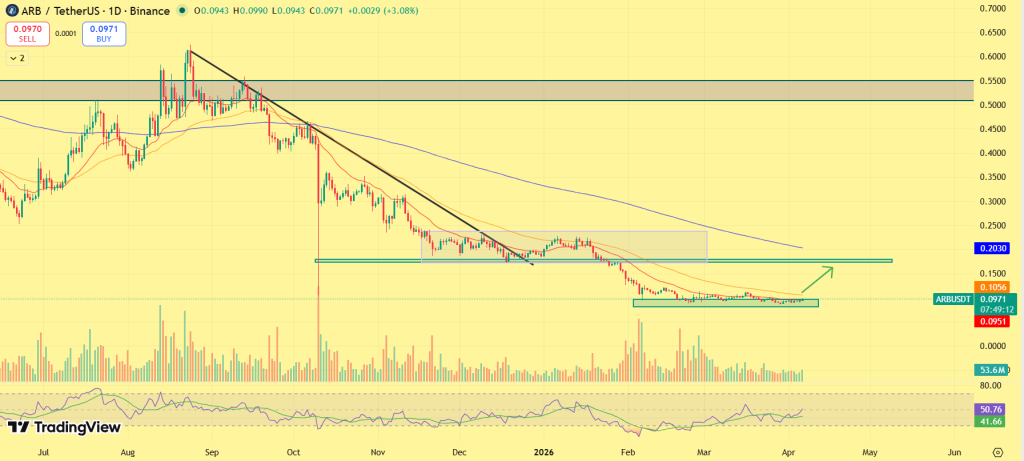




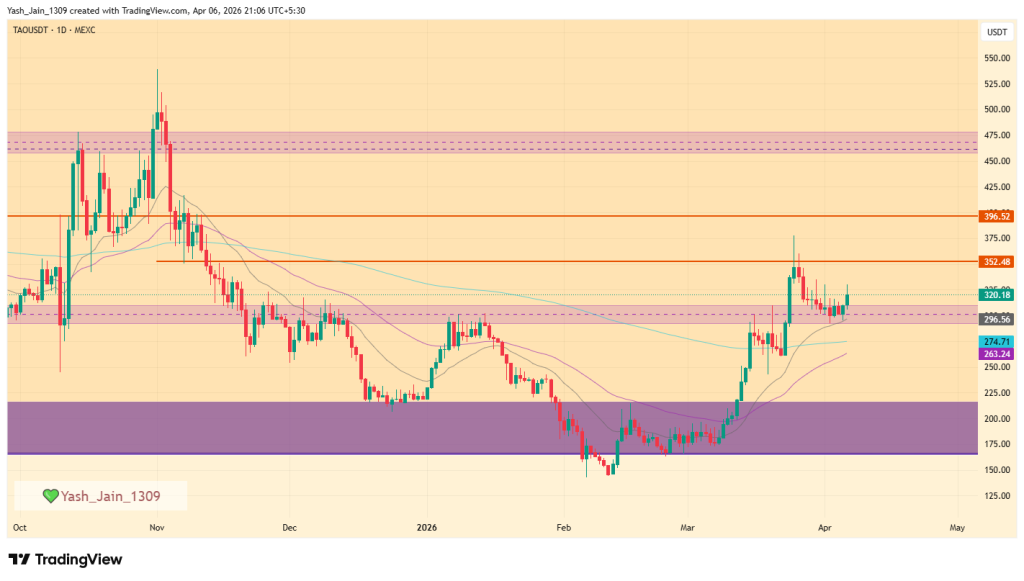
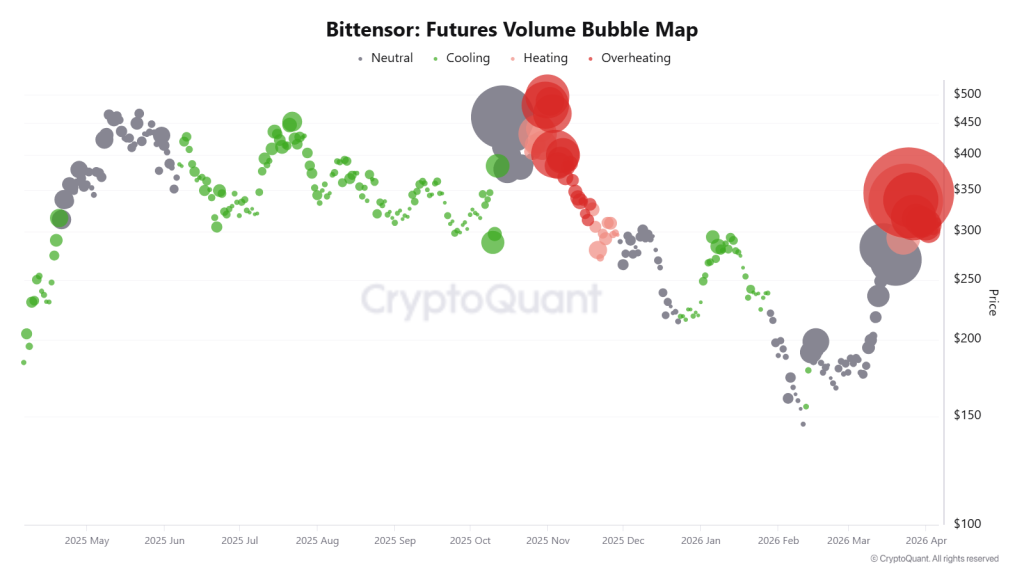
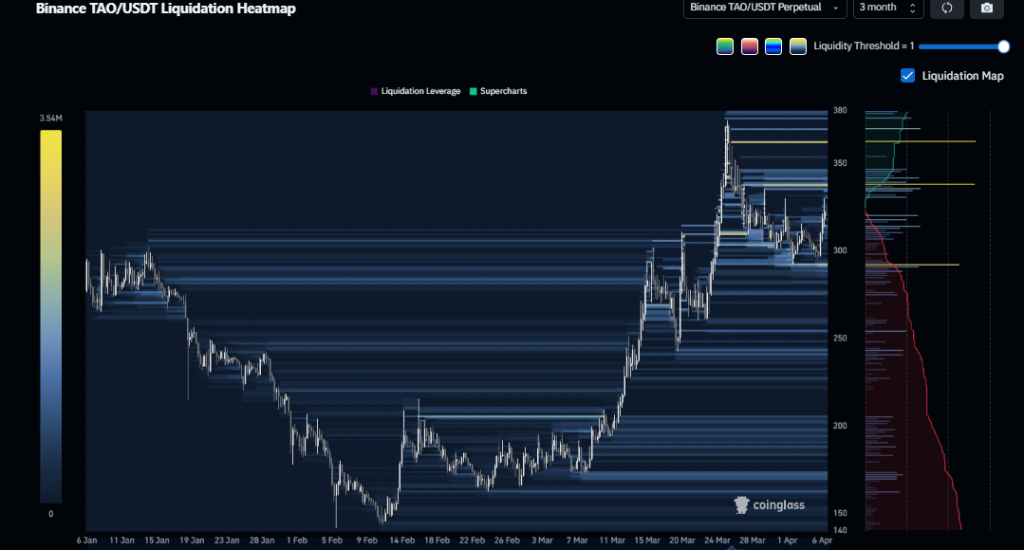

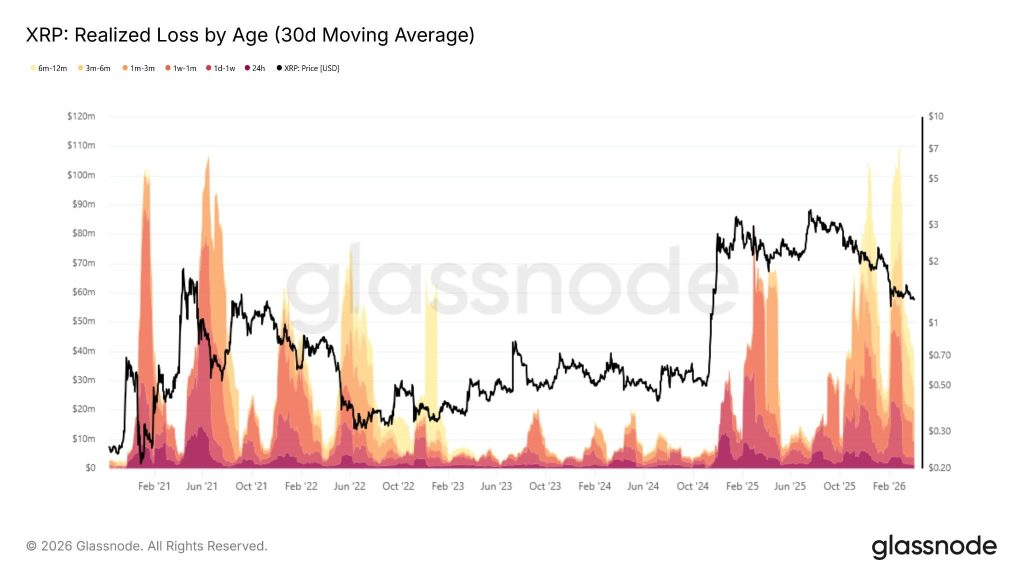
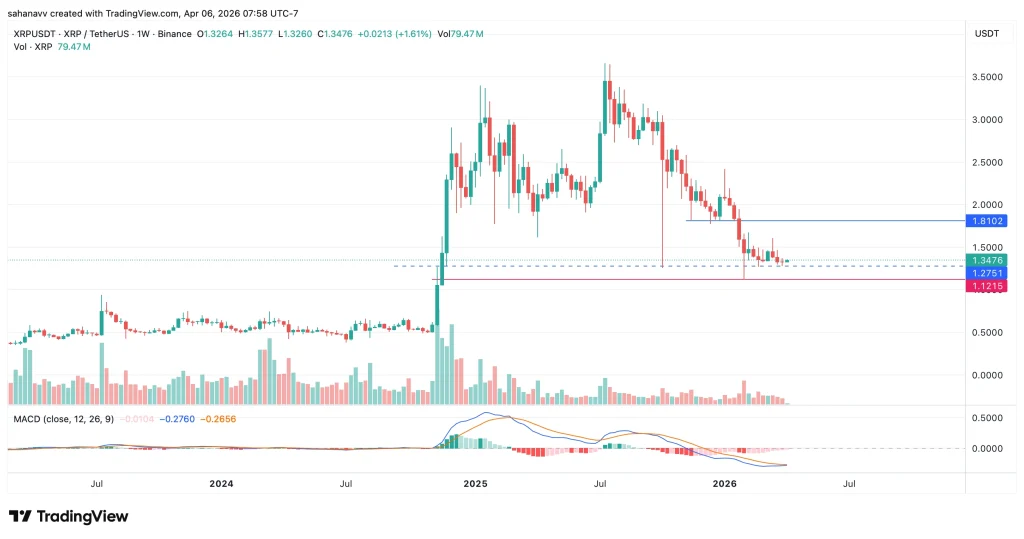
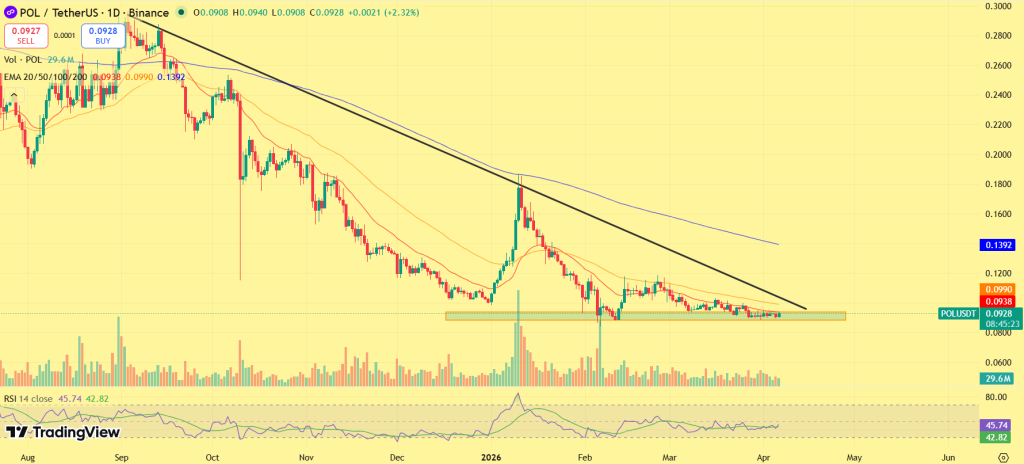
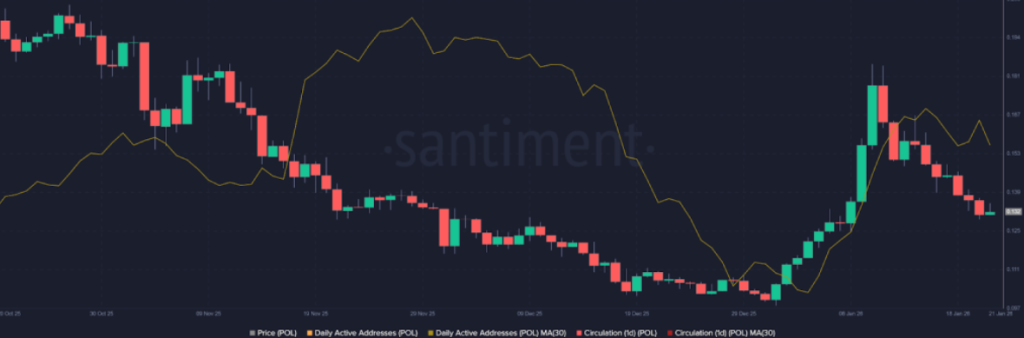
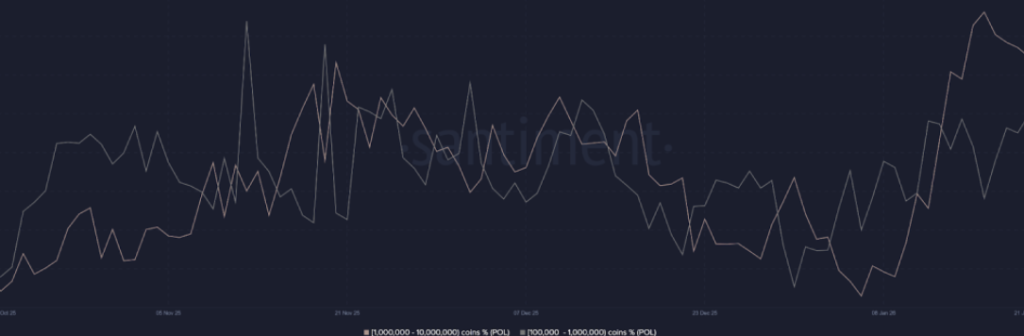







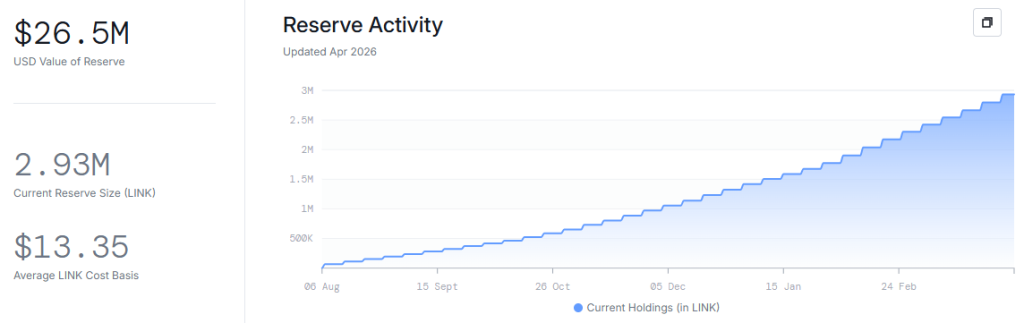
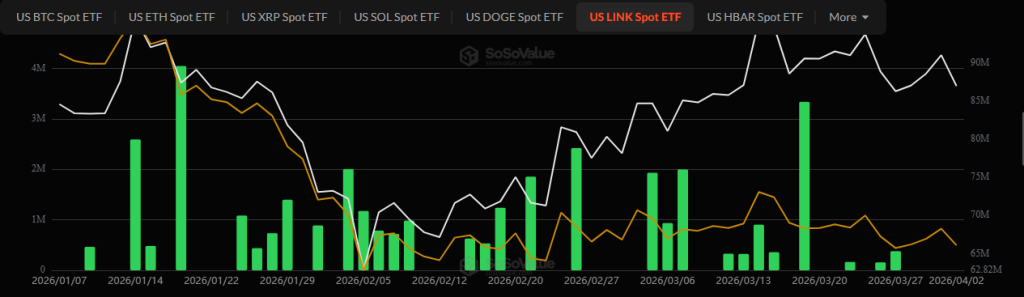
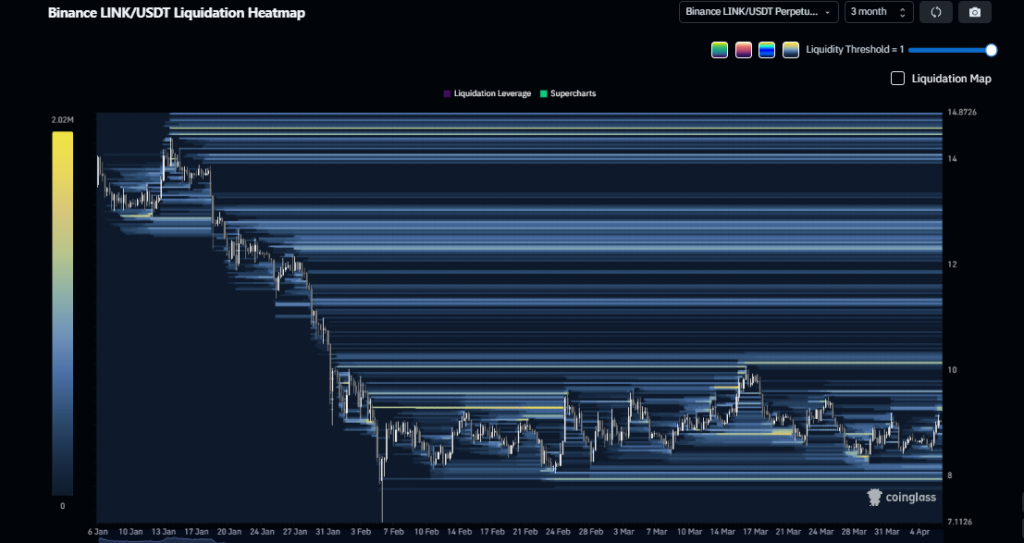
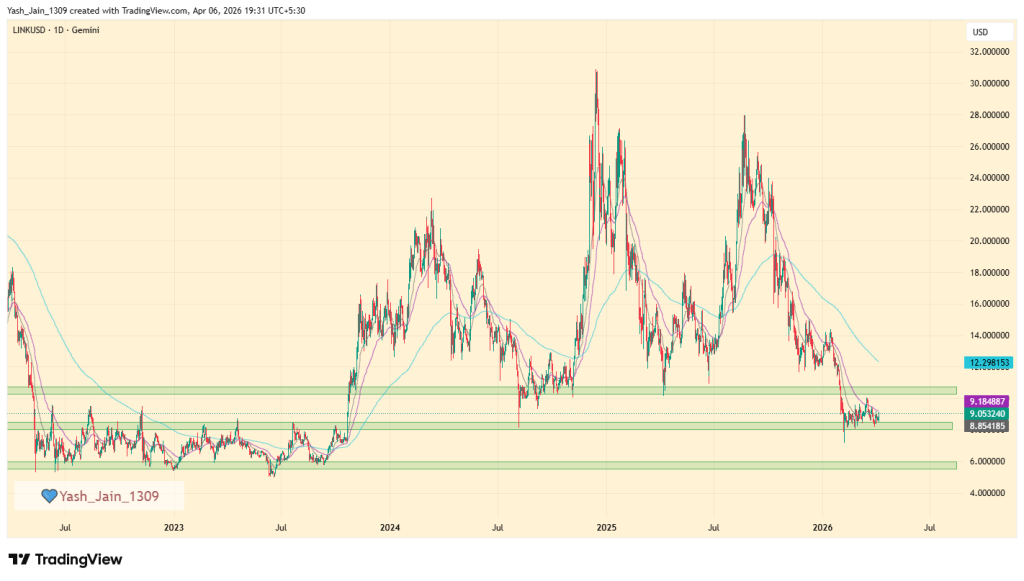







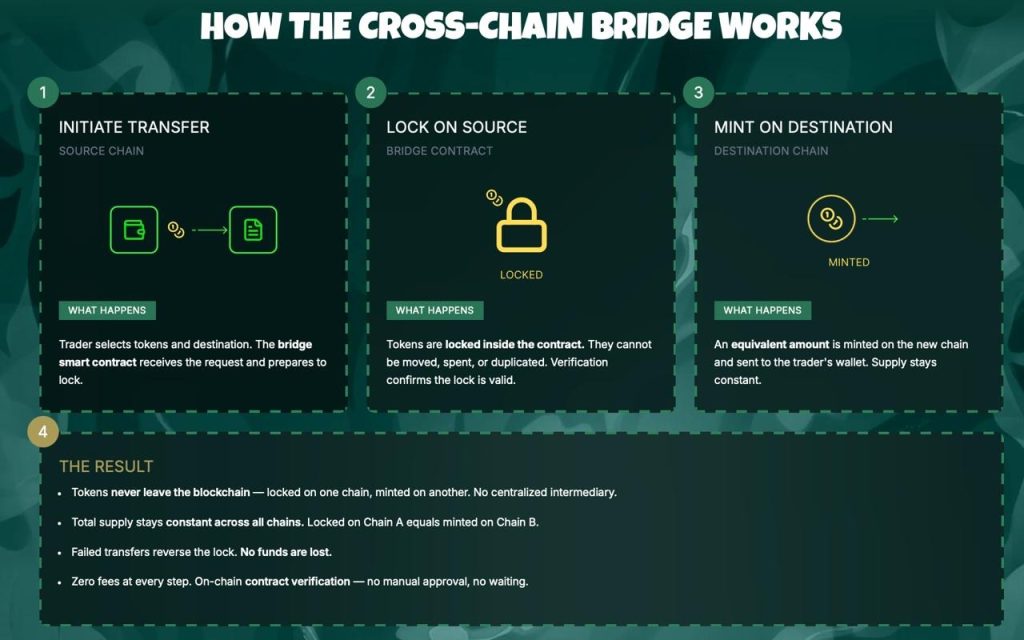


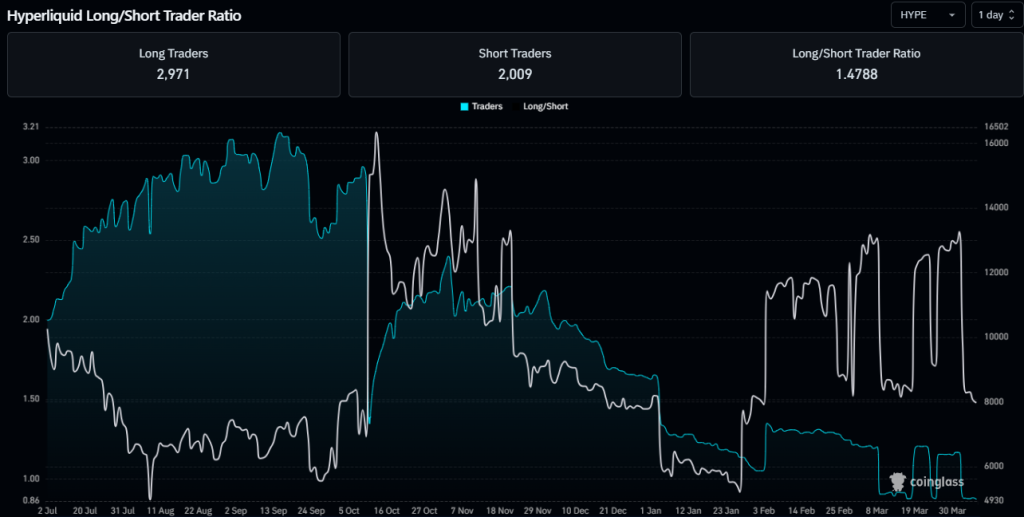
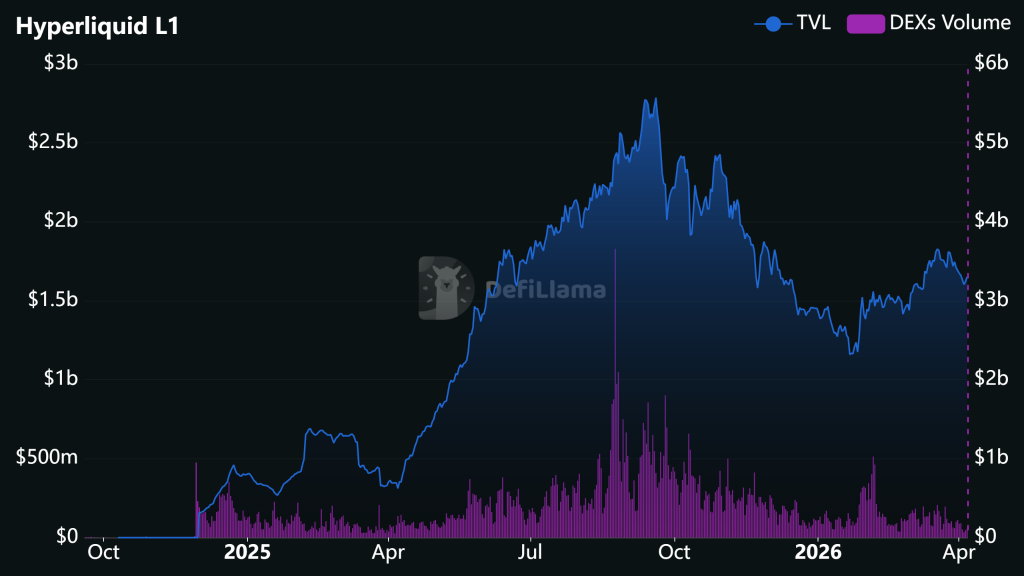
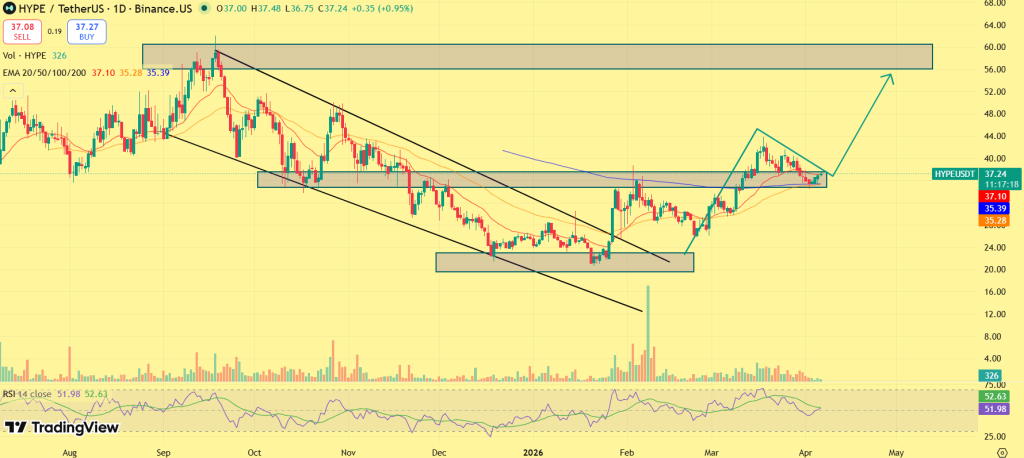
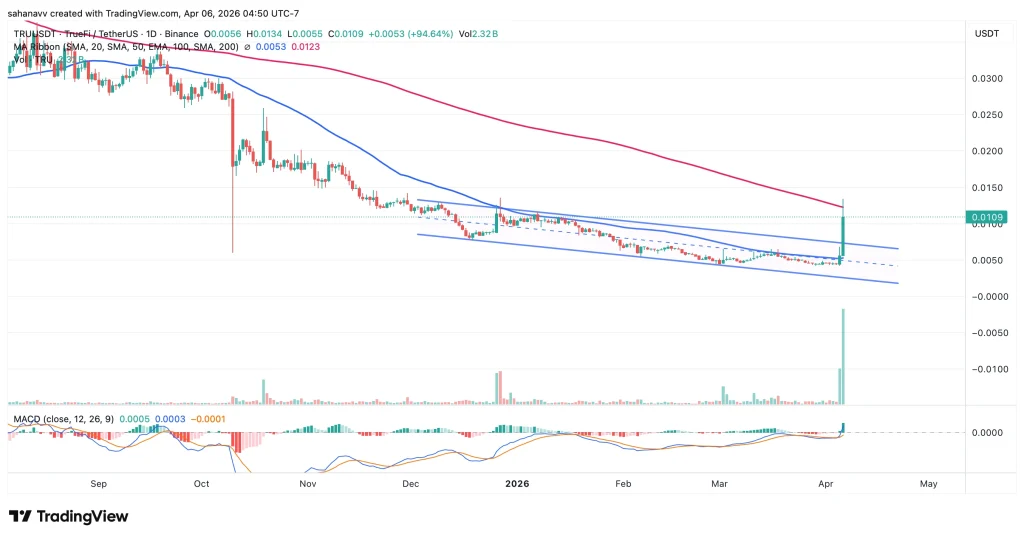
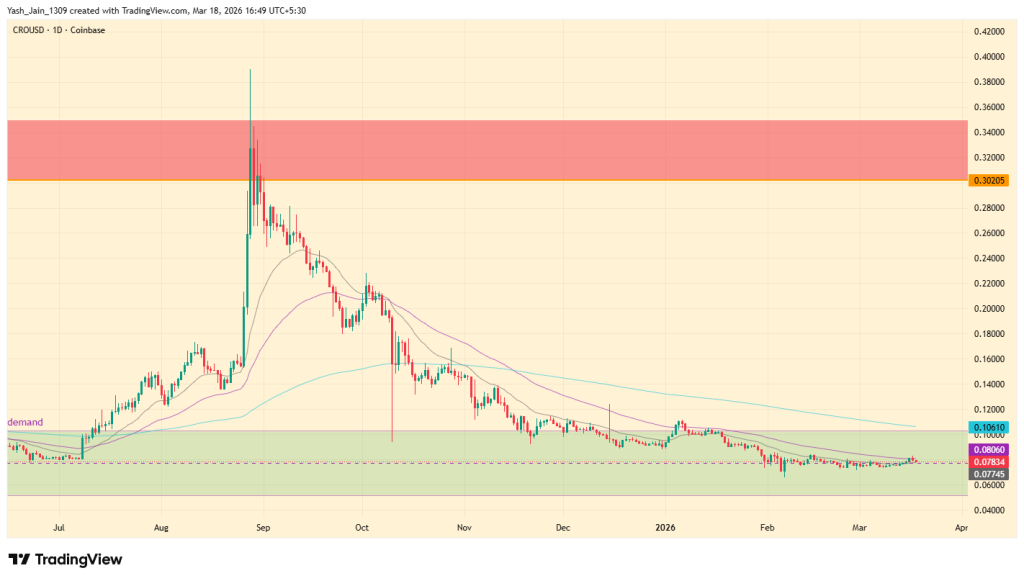
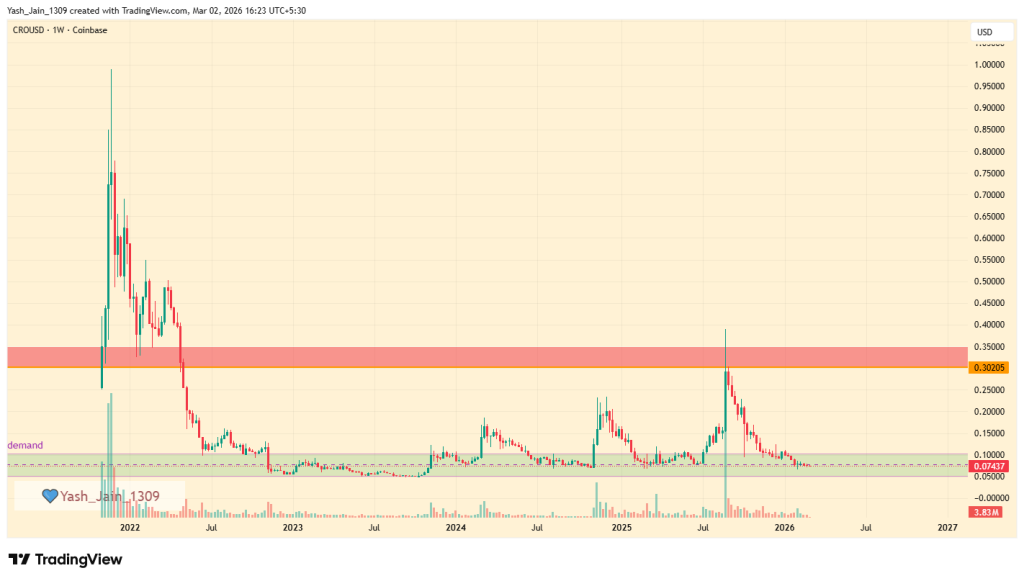
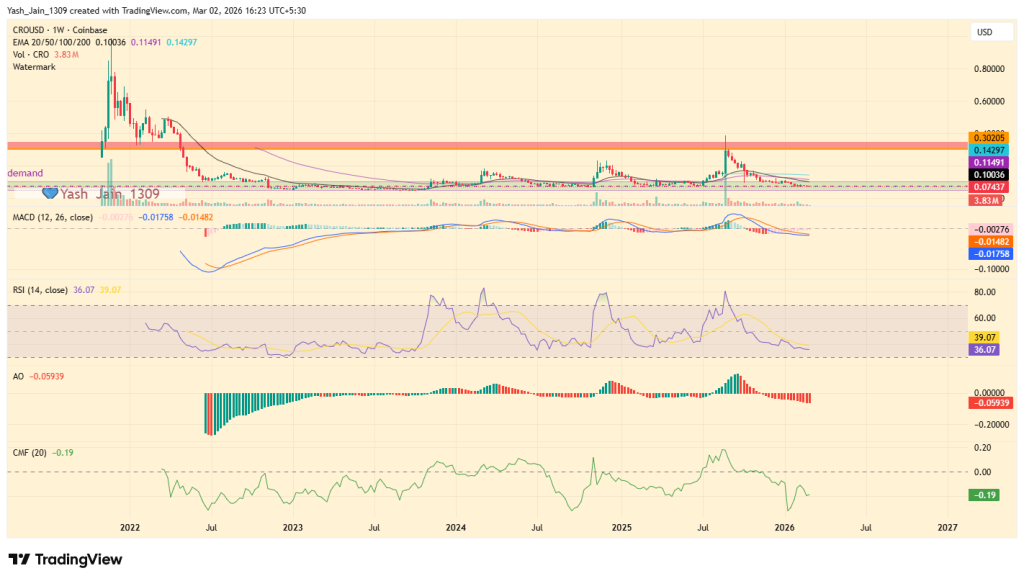
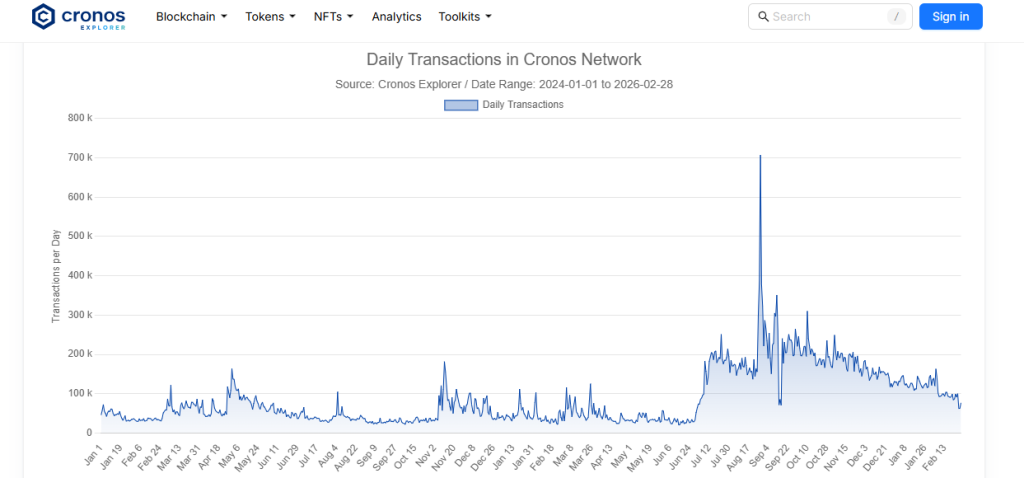
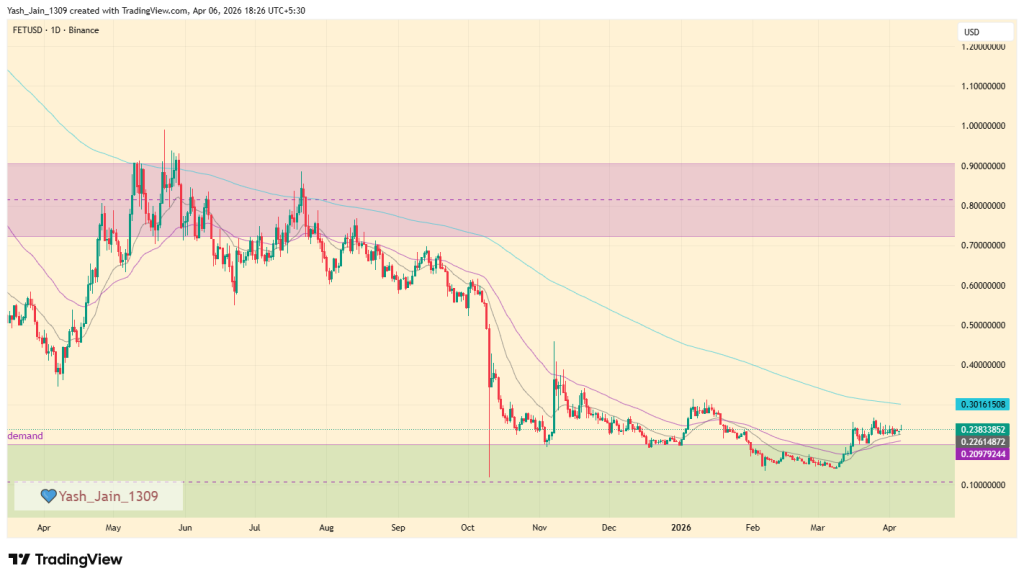
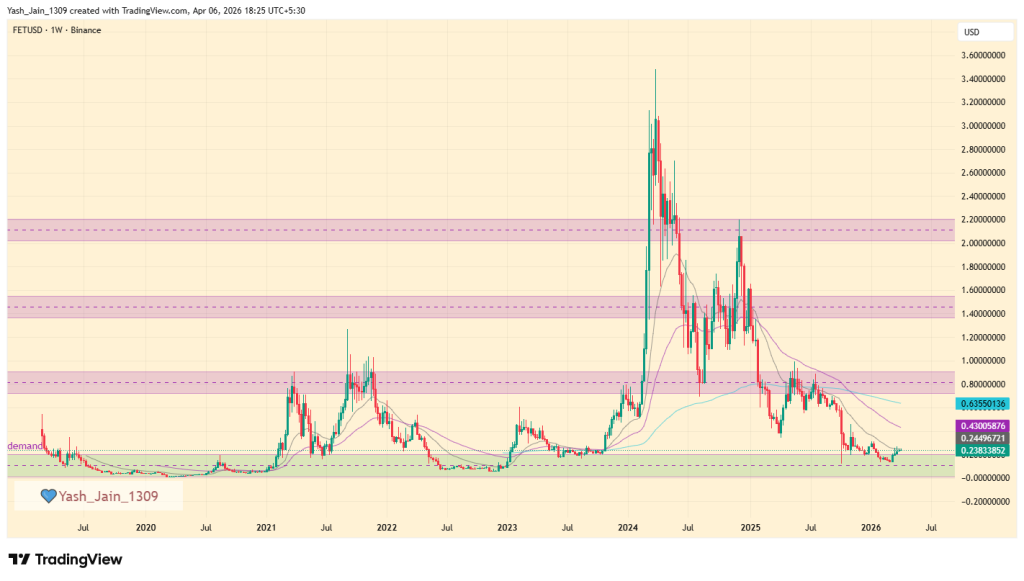




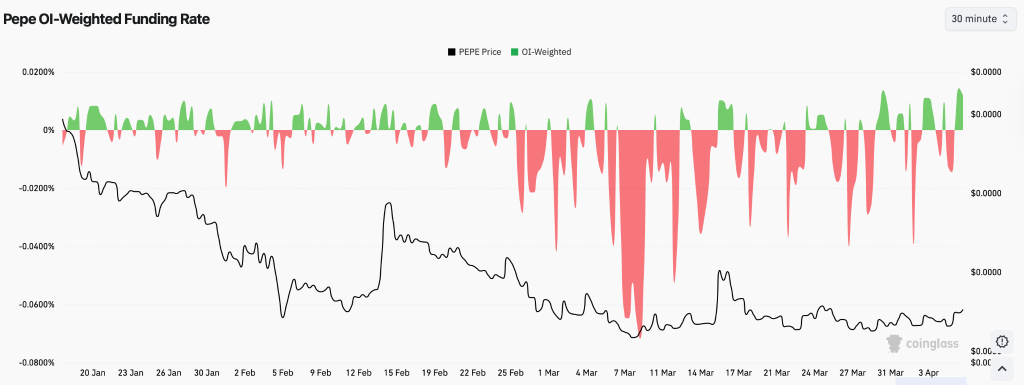
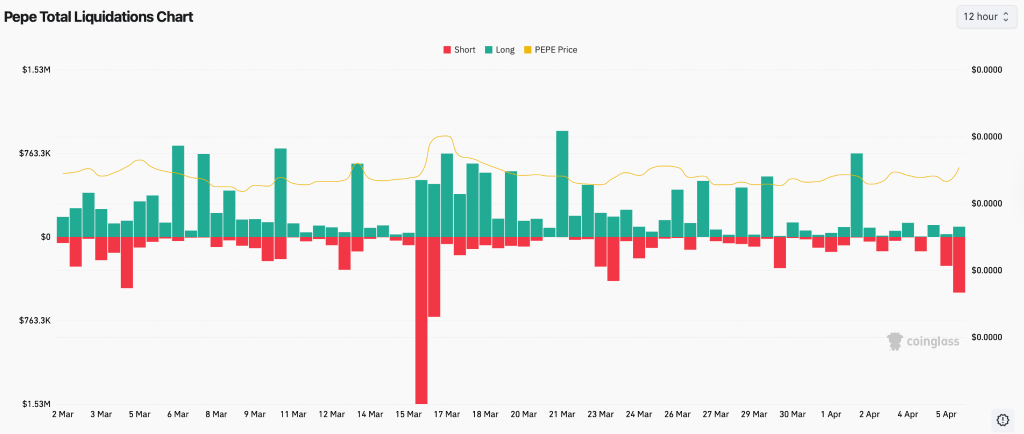
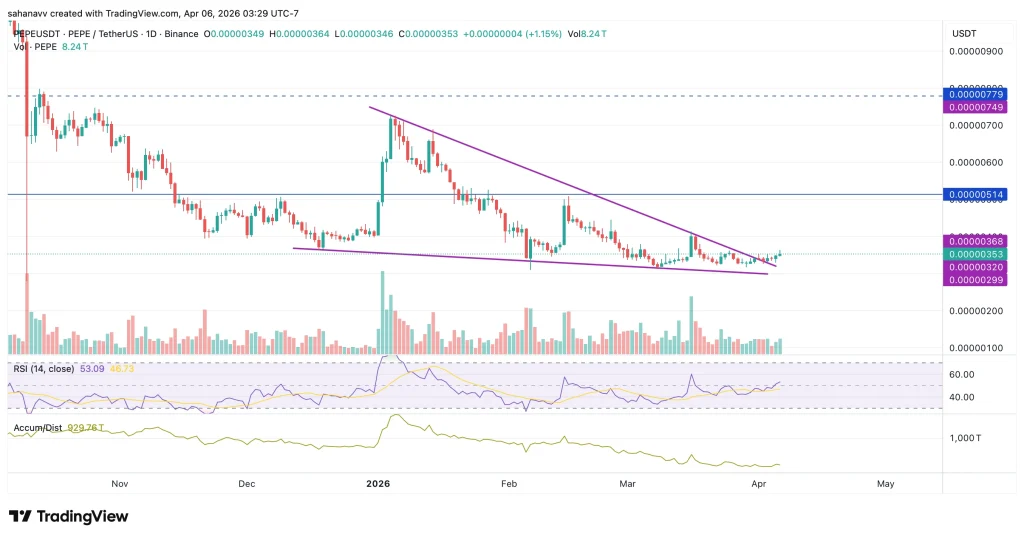


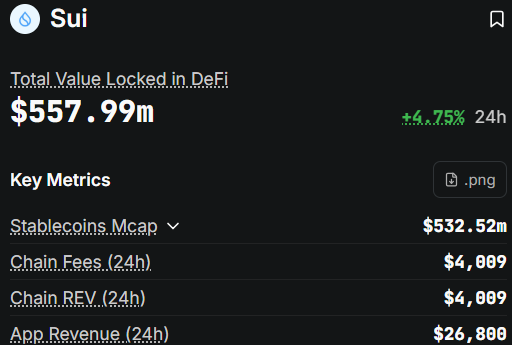
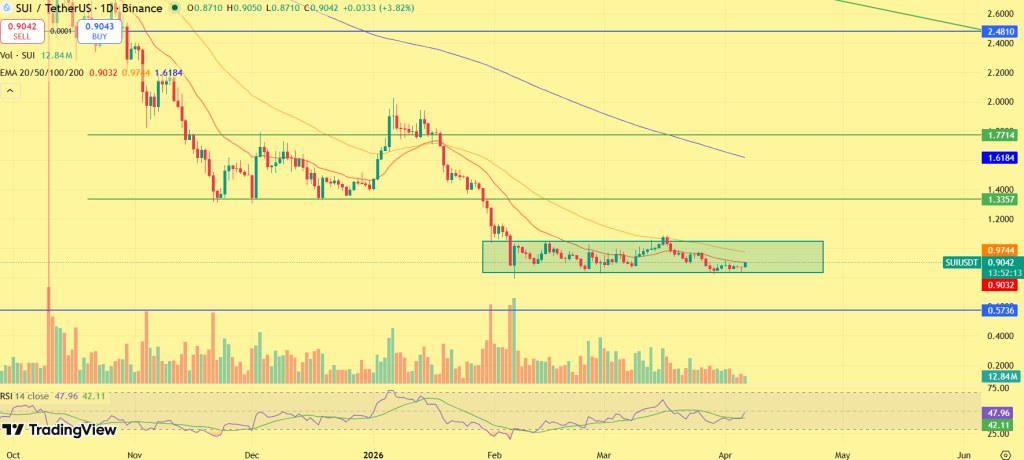

 BREAKING










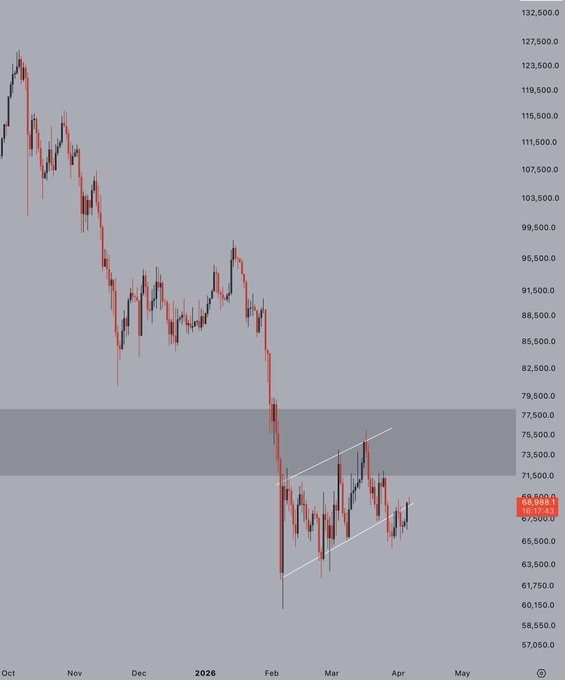



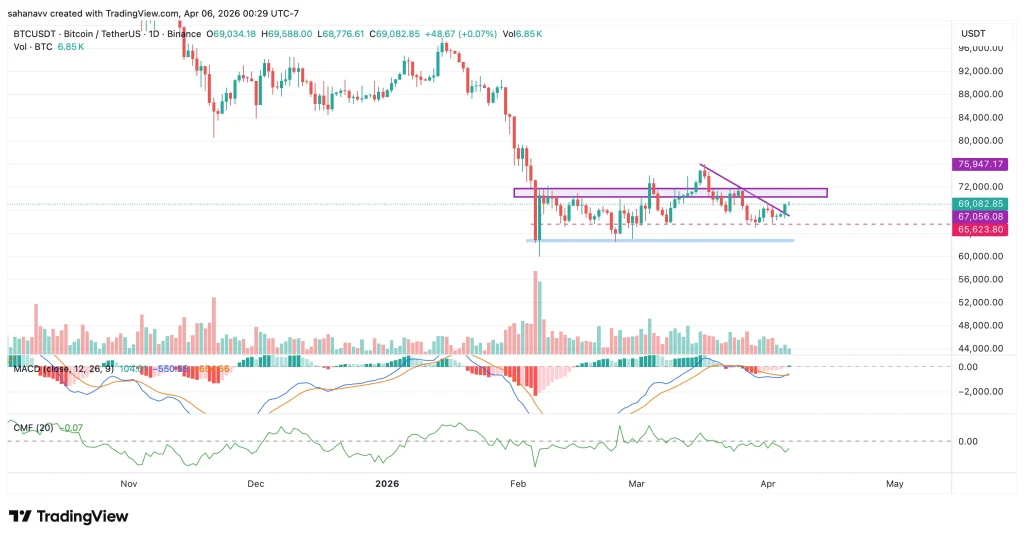
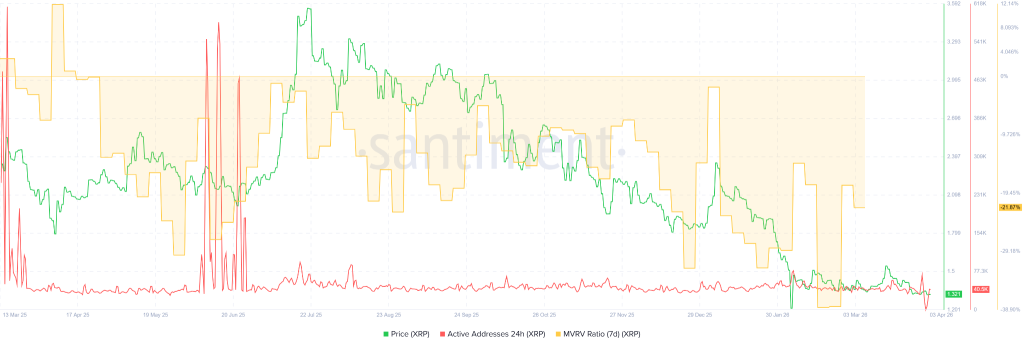
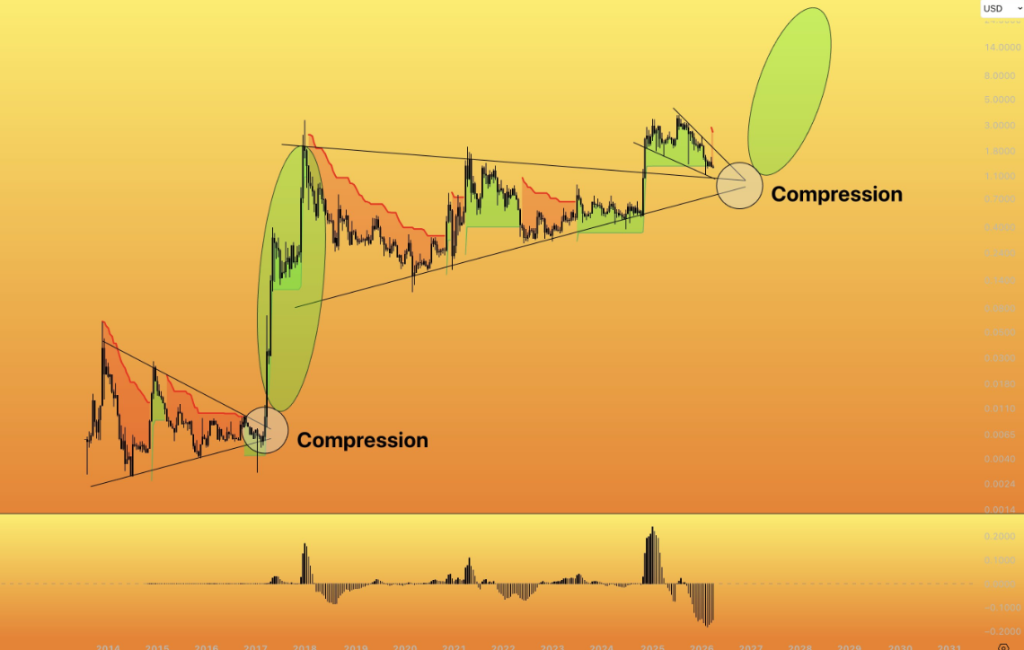








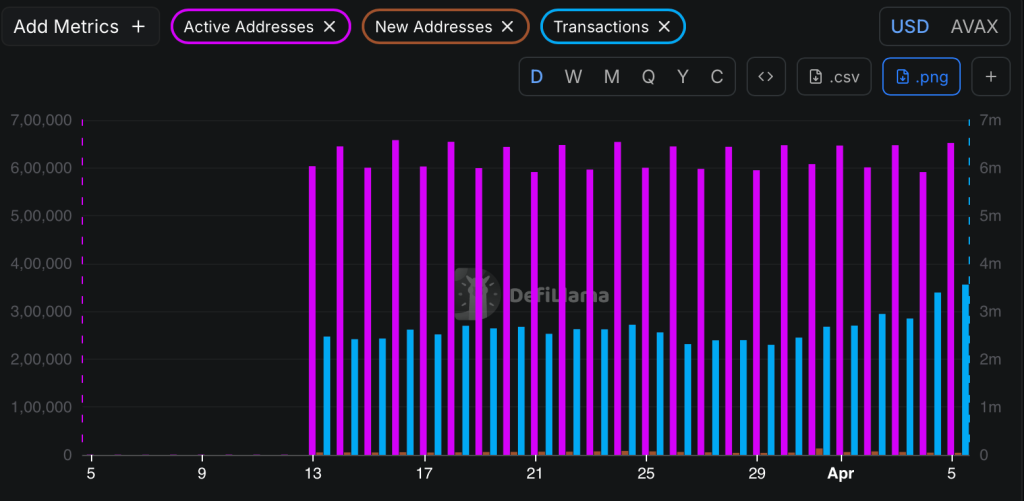
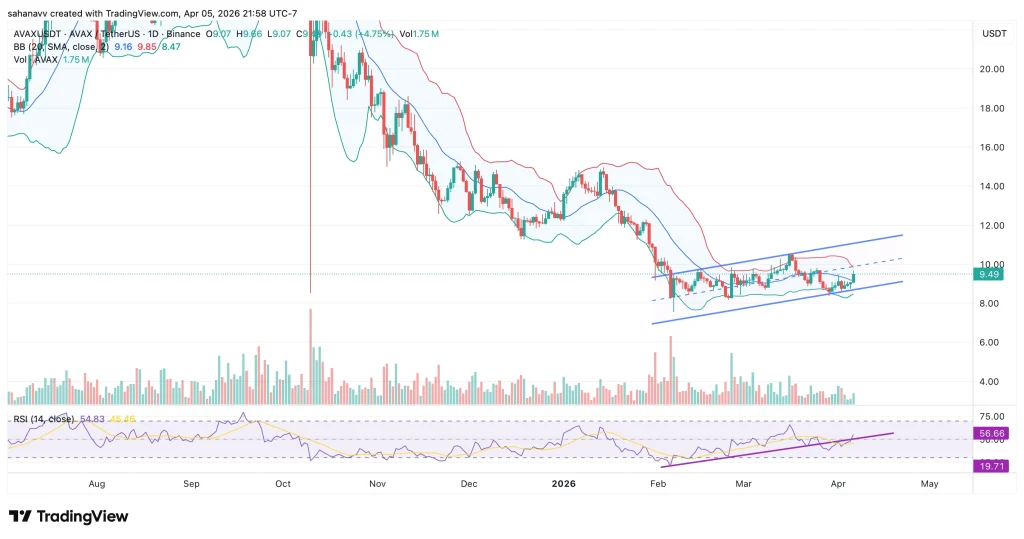
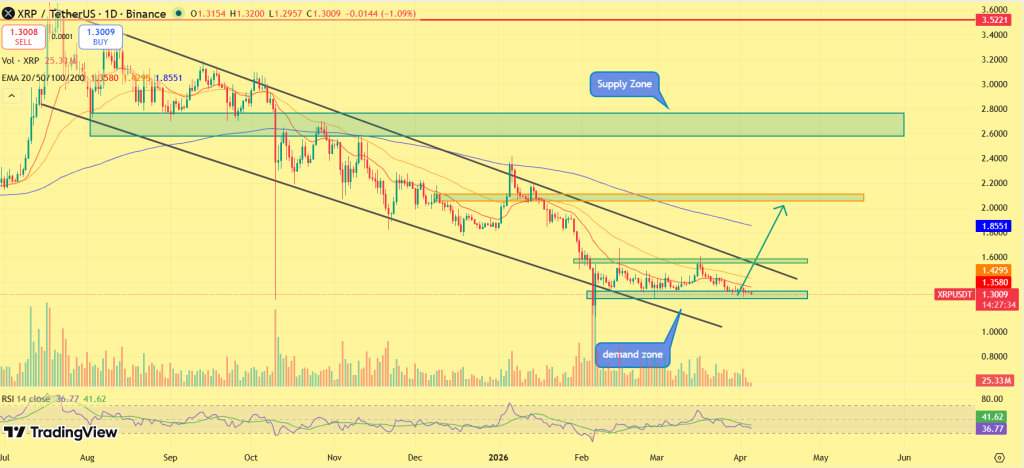
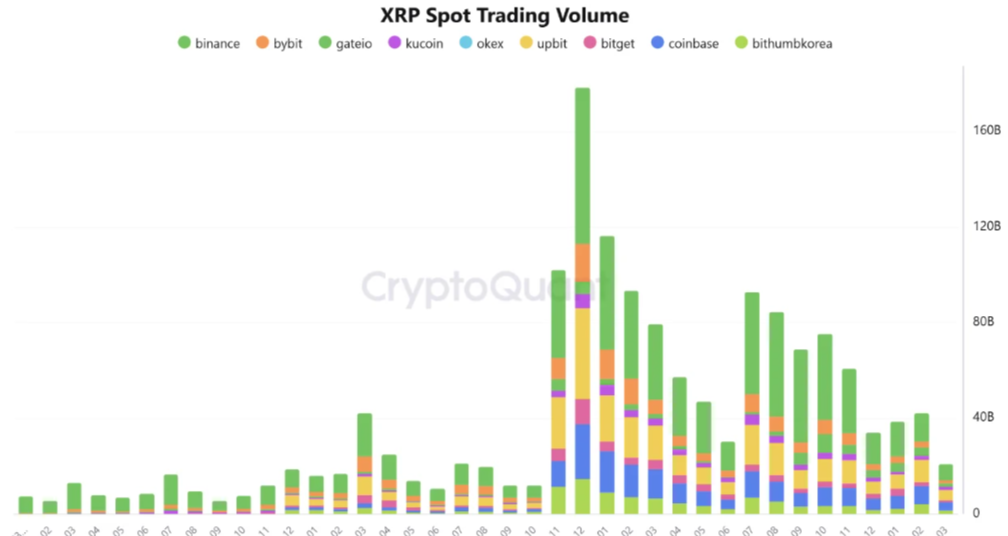
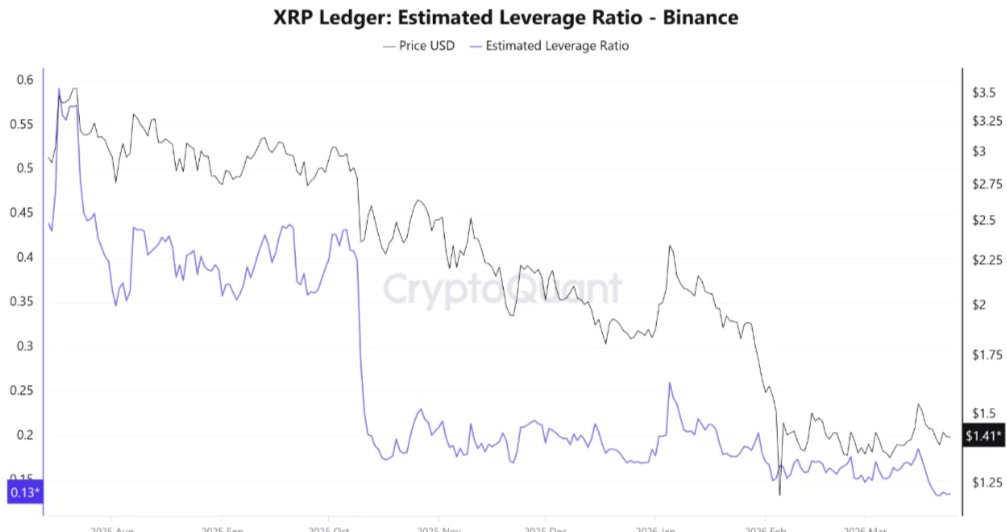

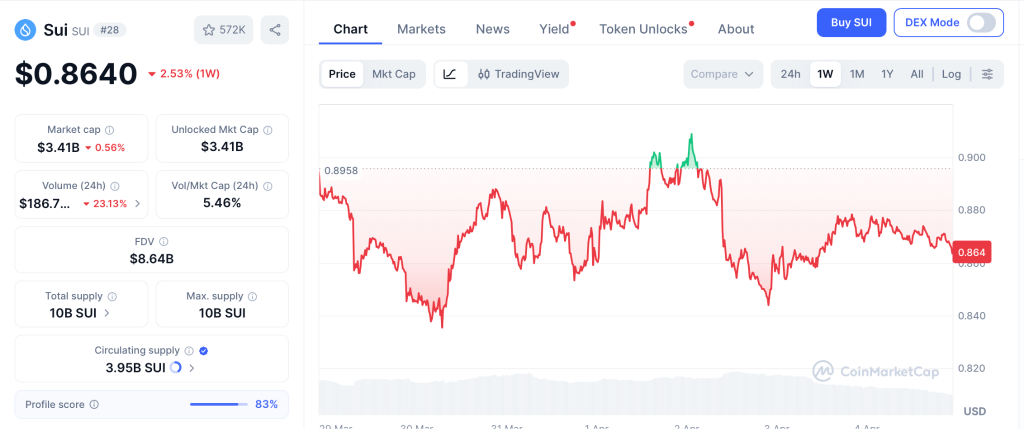












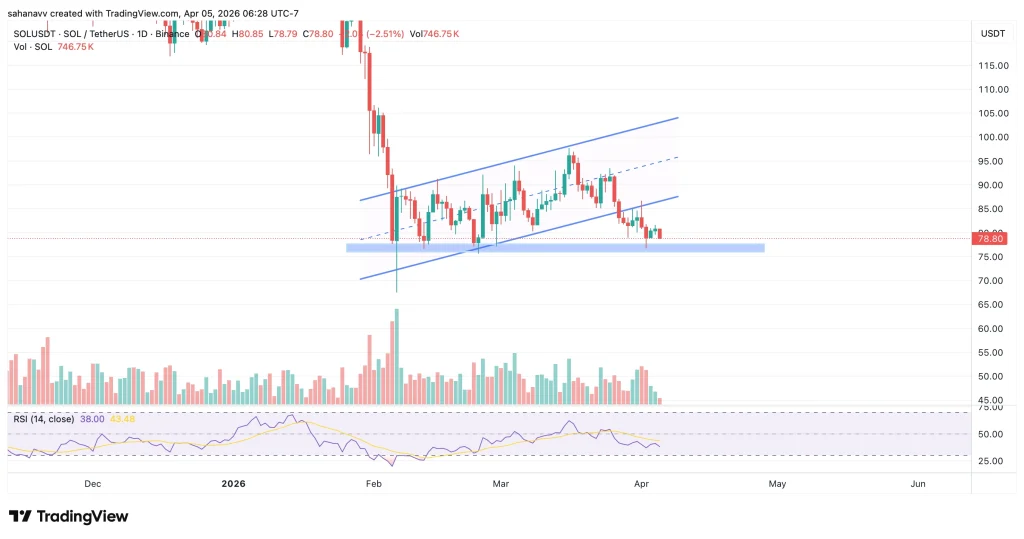
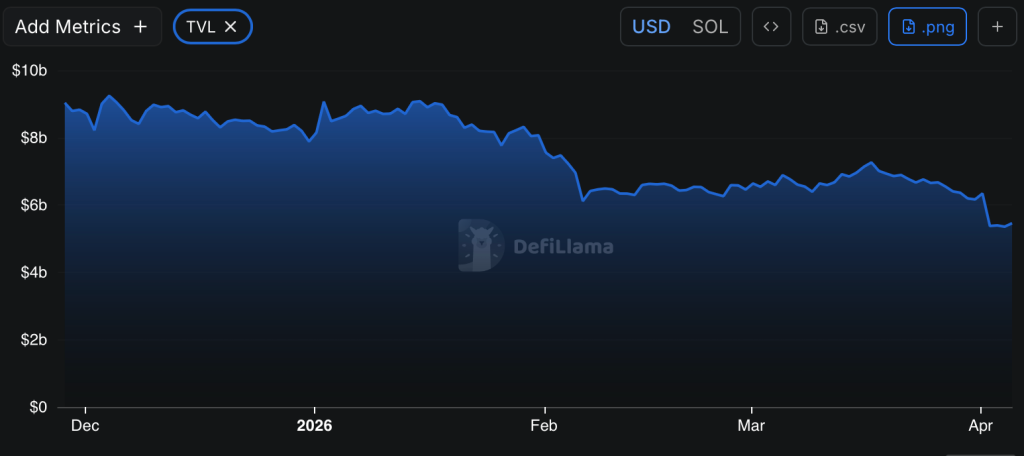

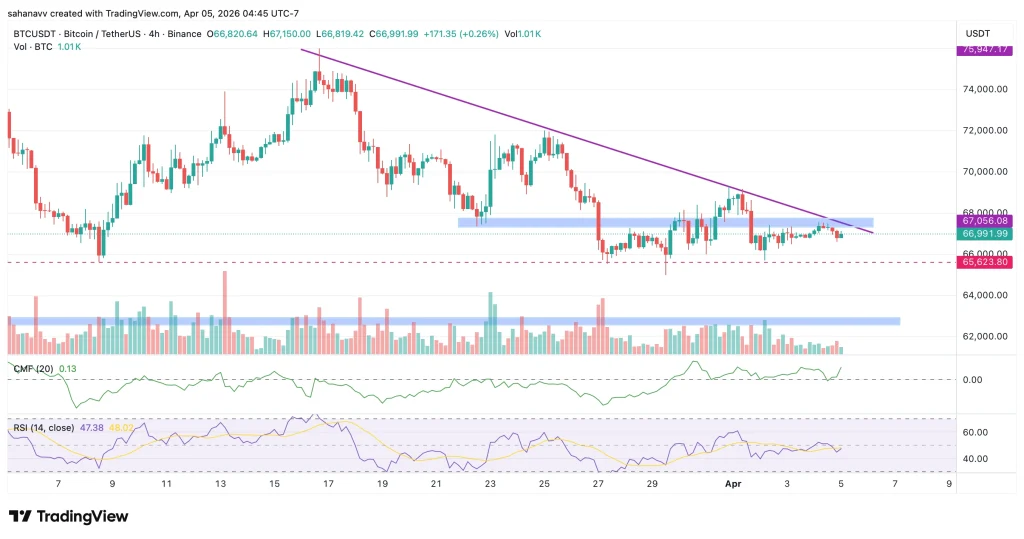
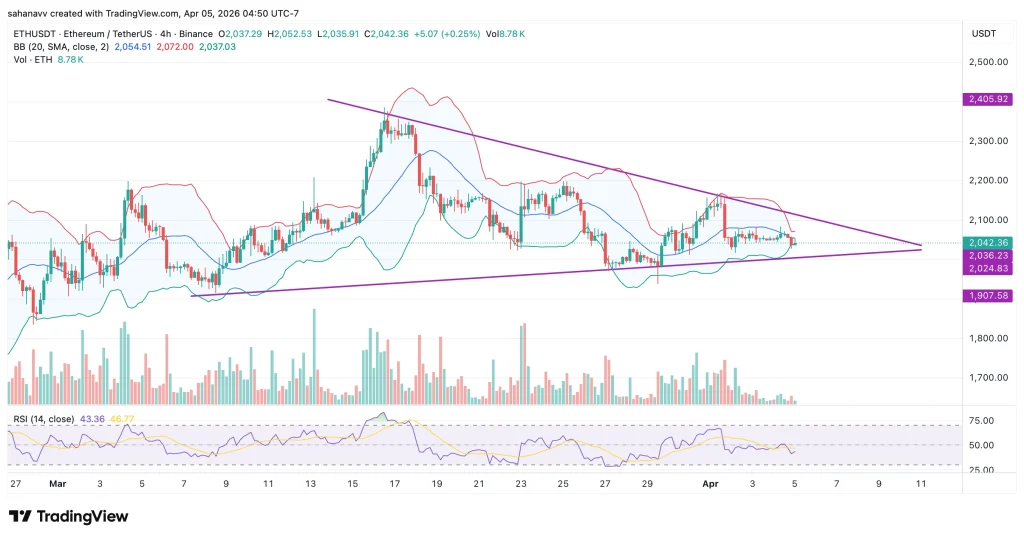
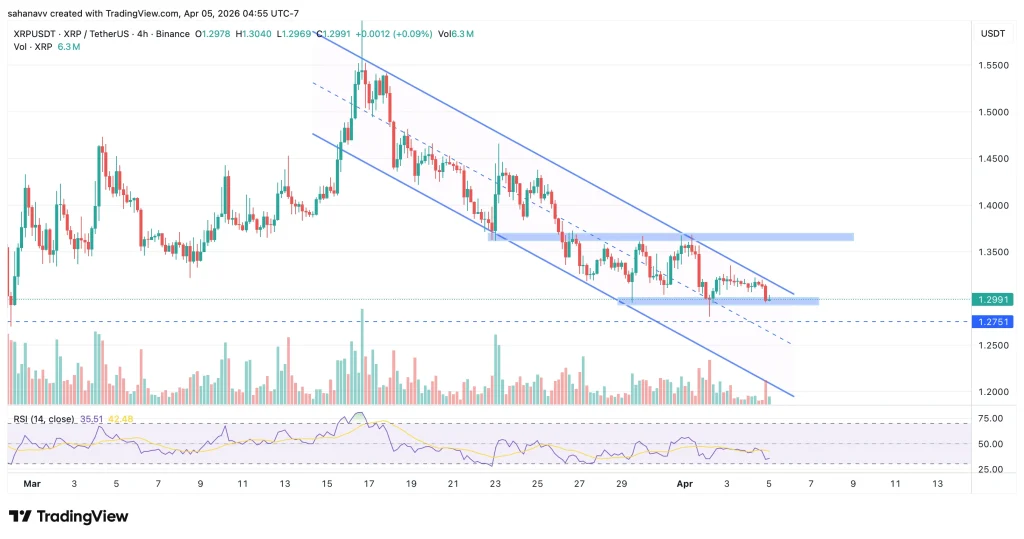










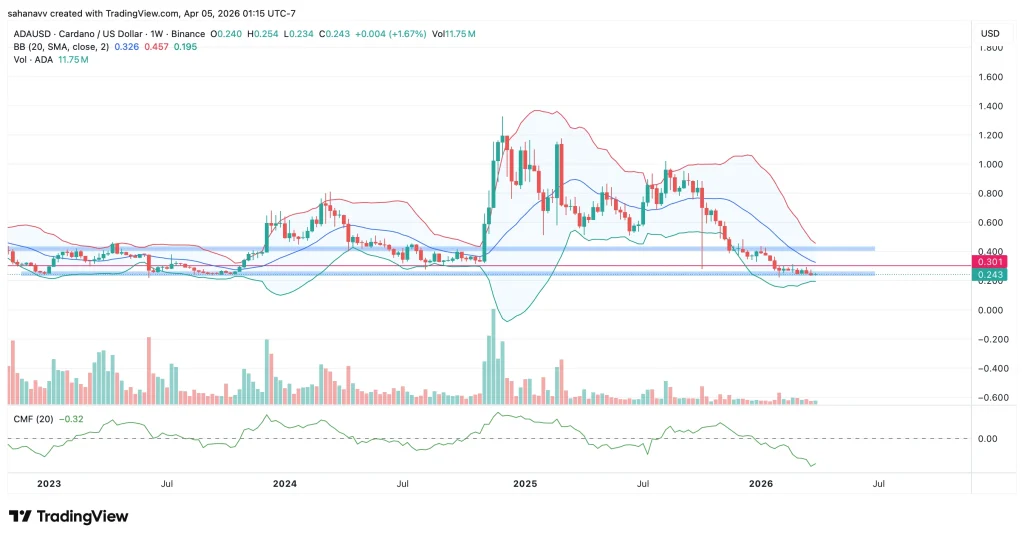
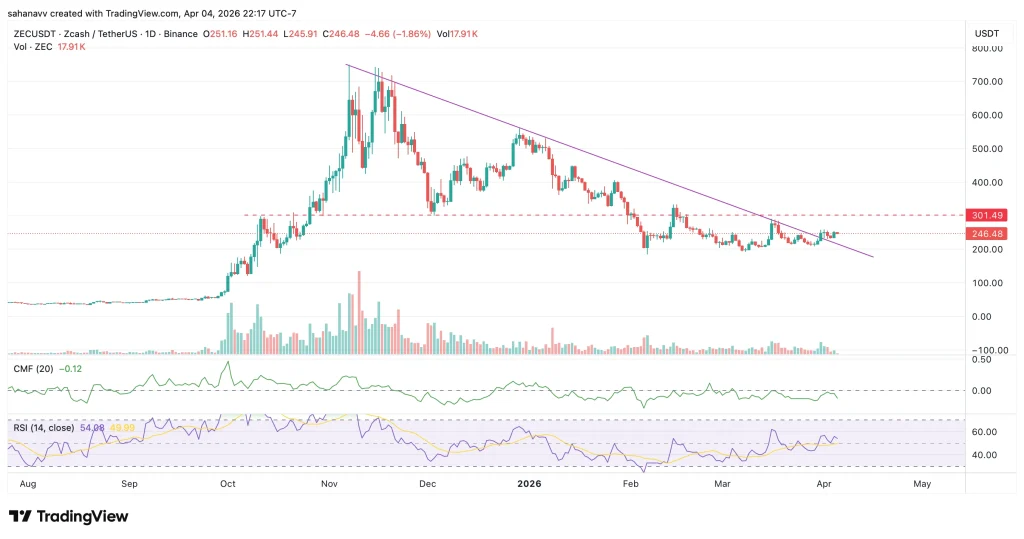



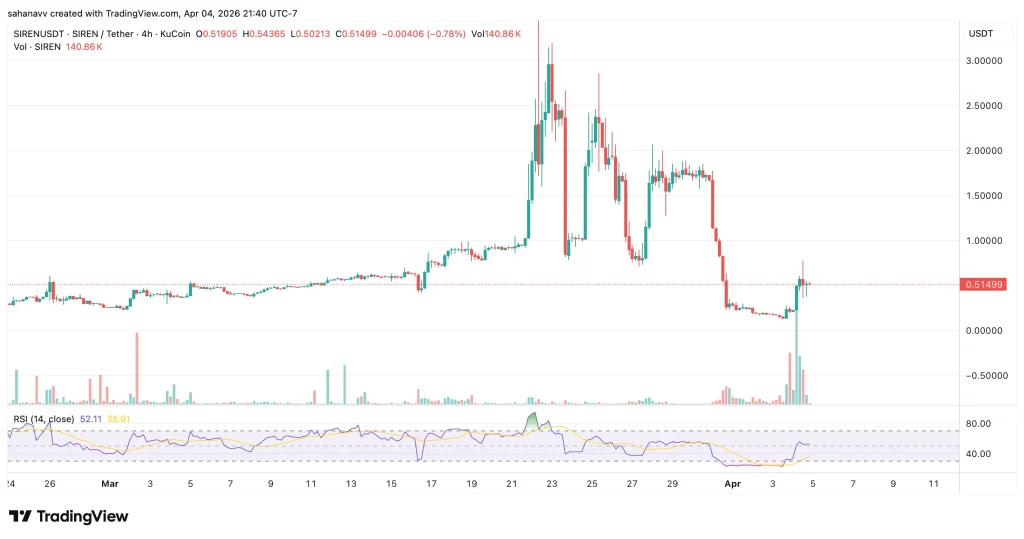



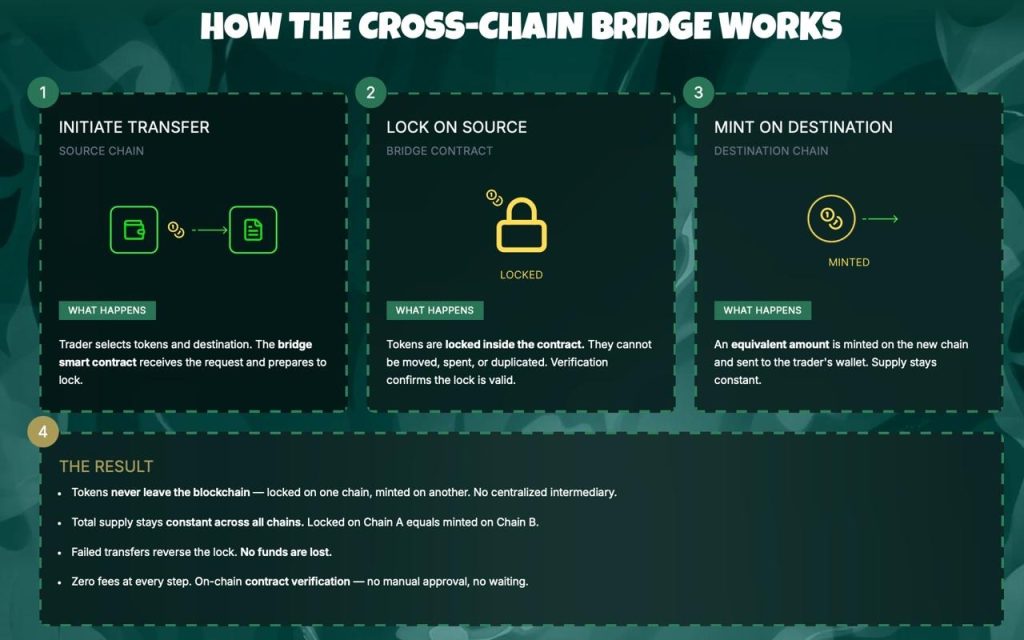


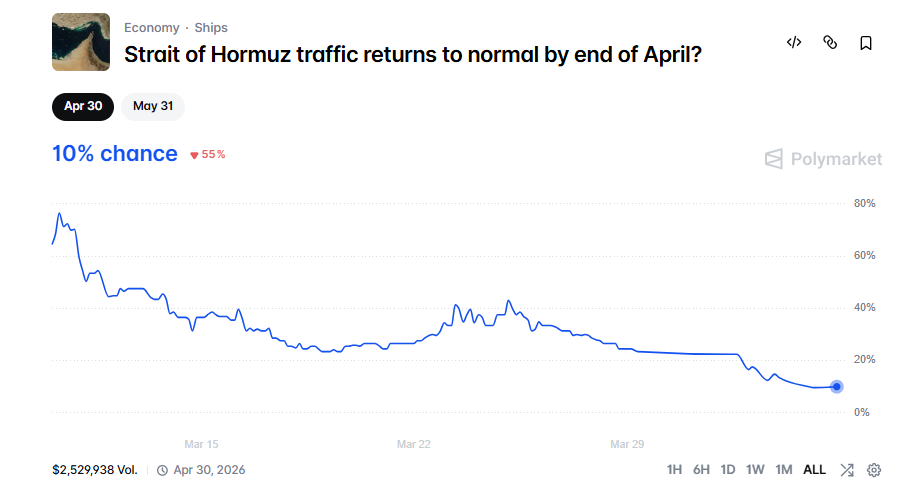
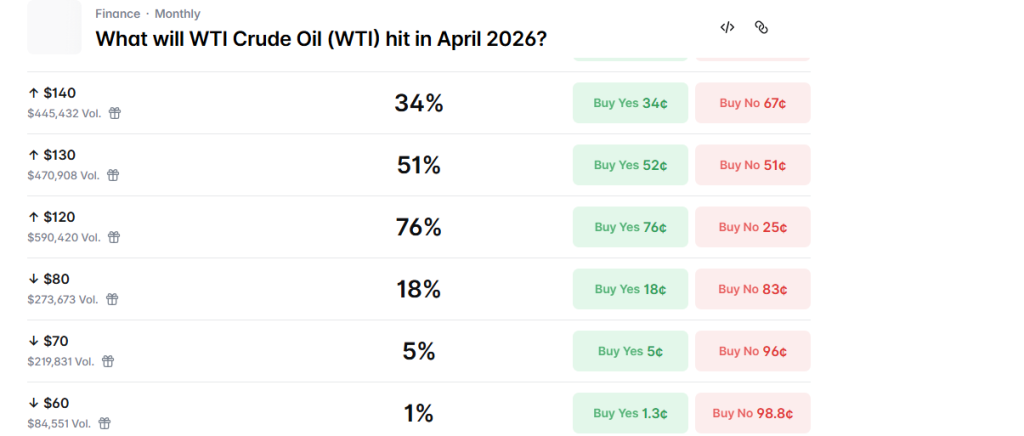

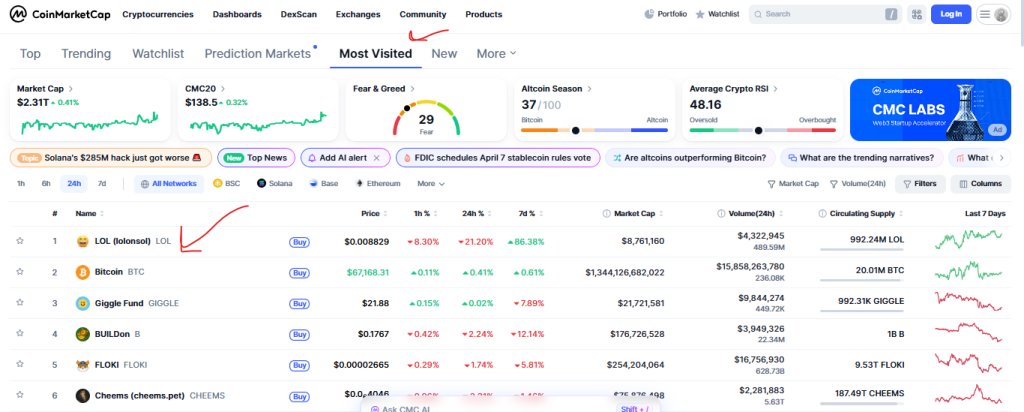
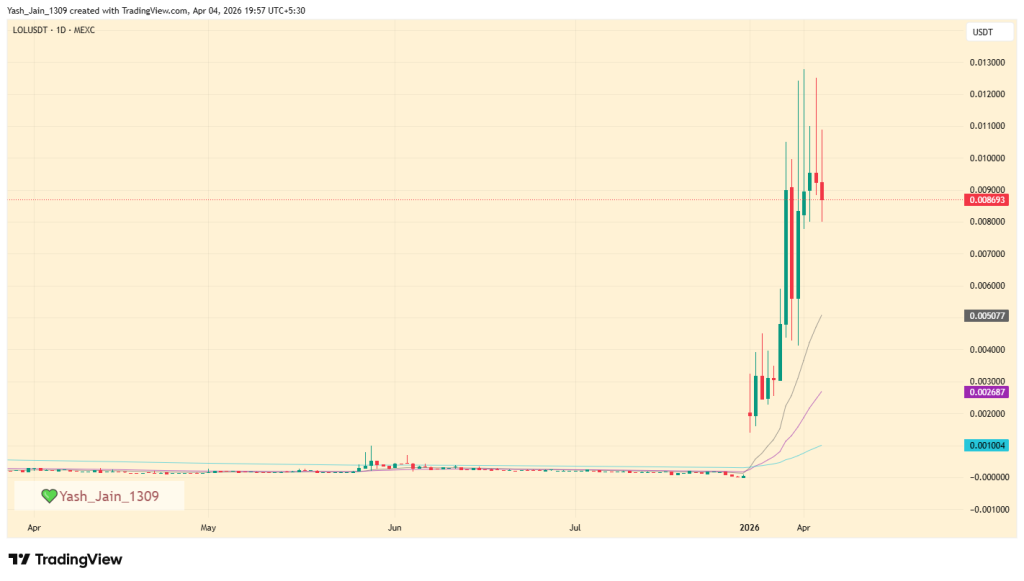

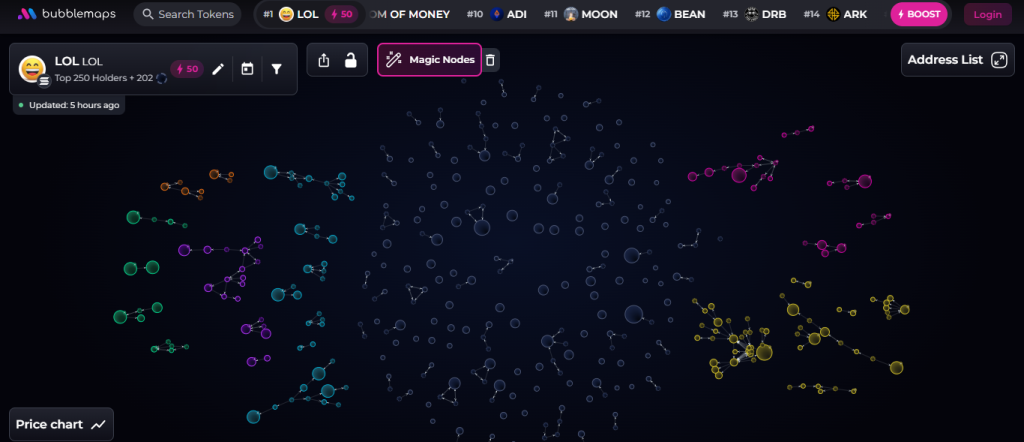




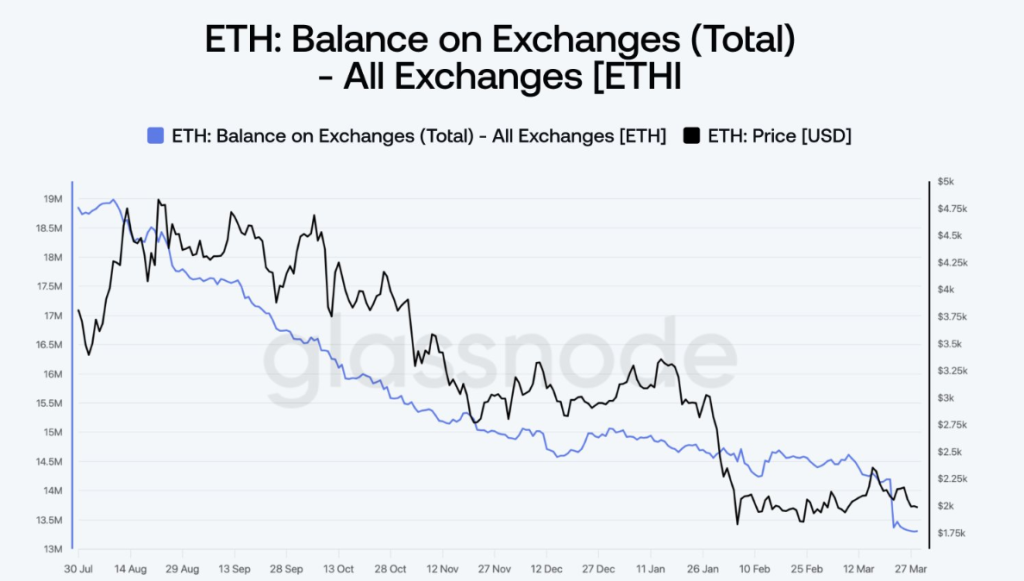
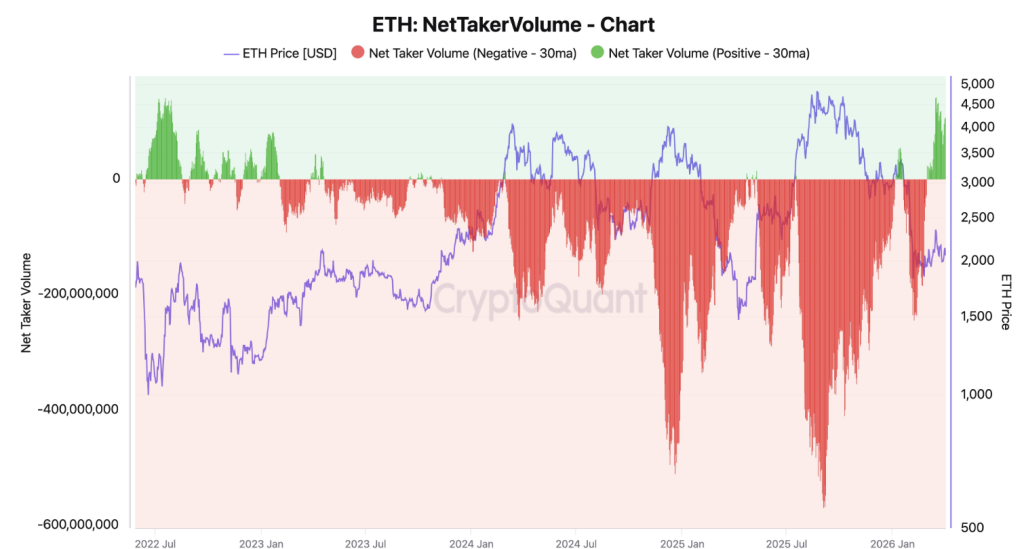
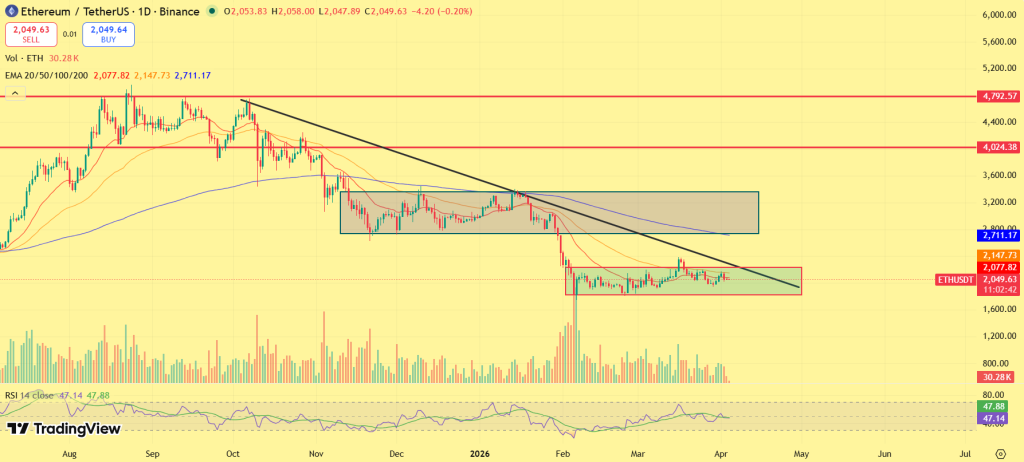




 -0.28%