OnePlus Nord 6 has started receiving its first software update shortly after its launch on April 9, 2026. The update, OxygenOS 16.0.5.701, is currently rolling out in phases across India and global markets.
The rollout is incremental, with a limited number of users receiving it initially, followed by a wider release in the coming days. The Indian variant carries version CPH2793_16.0.5.701(EX01), while the global model is labeled CPH2795_16.0.5.701(EX01).
The update focuses on usability improvements and system security. A key addition is support for running multiple timers at the same time, aimed at improving multitasking. Timers now also show estimated stop times, making it easier to track ongoing activities.
Another change comes to the Content Portal, which now supports app clones. This allows users to share content more easily between duplicate apps, a feature often used for managing multiple accounts.
In terms of connectivity, the update introduces a new toggle called “Automatically open received files.” This setting gives users control over whether shared files open immediately after being received, adding flexibility and reducing interruptions.
On the security side, the update integrates the March 2026 Android security patch. This brings the latest fixes and improvements aimed at protecting user data and system integrity.
As with most OTA updates, availability may vary depending on region and device batch, so users may receive the update over the next few days.
For more daily updates, please visit our News Section.
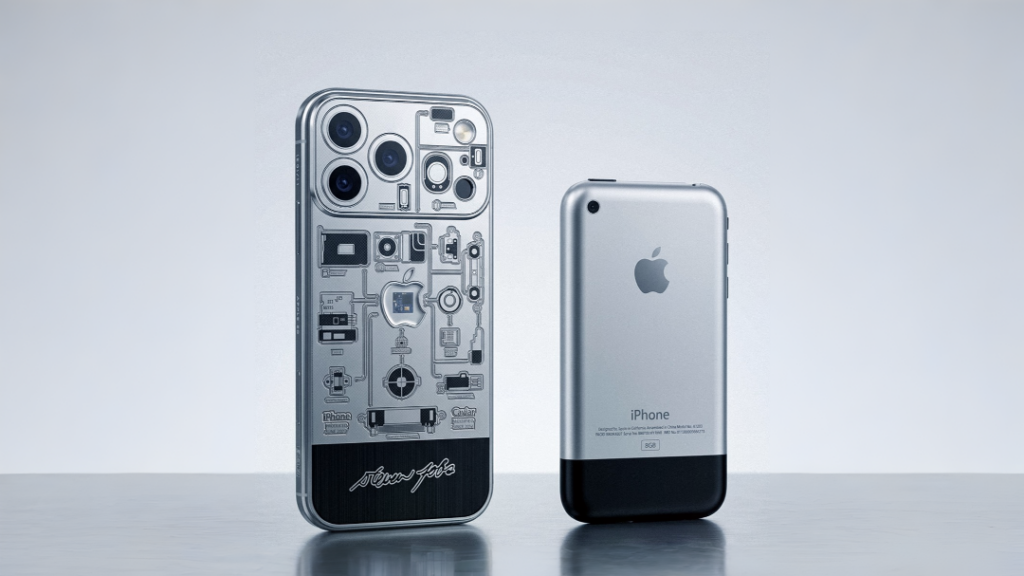
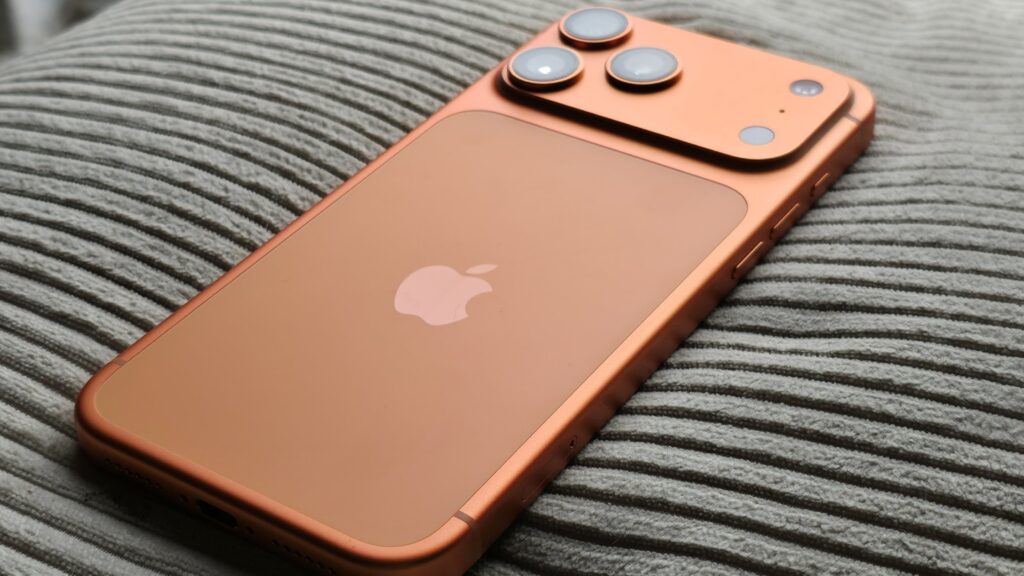
Caviar has announced the iPhone 2007, a custom version of the iPhone 17 Pro/Pro Max designed to celebrate Apple’s 50th anniversary. The luxury customization brand built this limited-edition smartphone with a unique feature: a fragment of the original iPhone 2G motherboard embedded in its back panel.
Design Details
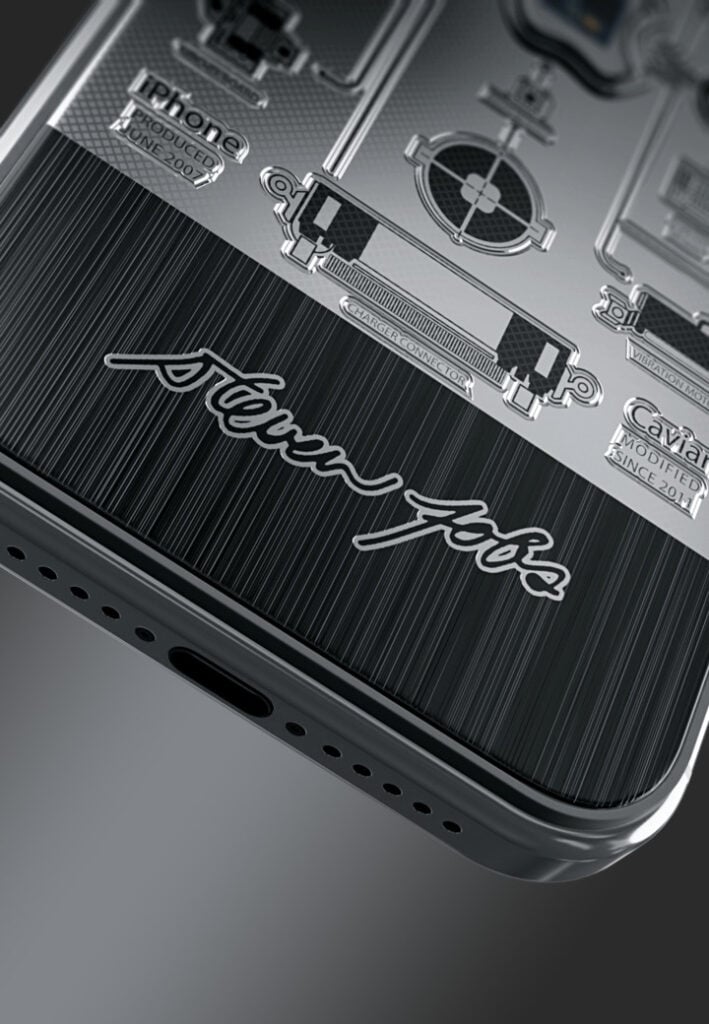
The company designed the iPhone 2007 to honor the 2007 launch of Apple’s first iPhone. Caviar placed the motherboard fragment inside a capsule shaped like Apple’s iconic logo. The capsule sits at the center of the phone’s rear panel, surrounded by engraved lines that mirror the circuitry of the first-generation iPhone.
Caviar constructed the casing of the device from titanium with a black PVD coating. The design includes Steve Jobs’ engraved signature as well. Each phone also features a custom Apple 50 commemorative screensaver, designed exclusively for this edition.
The company limited production to just 11 units globally to enhance exclusivity. Each phone ships in a premium gift box that includes a commemorative coin plated in 999 fine gold and a signature Caviar key featuring gold accents.
Pricing and Availability
The pricing starts at $10,770 for the iPhone 17 Pro (256GB) and goes up to $11,490 for the 1TB version. For the iPhone 17 Pro Max, it starts at $11,270 for the 256GB model and reaches $12,700 for the 2TB version.
The company also recently launched the Jobs’ Turtleneck edition, which, according to the company, has already officially sold out.
For more daily updates, please visit our News Section.
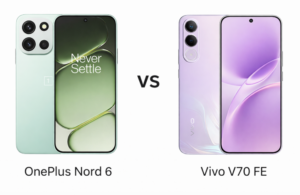
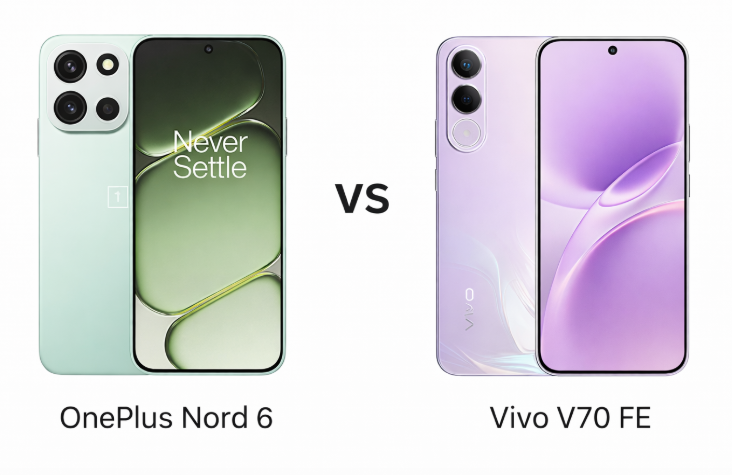
Almost the same price, completely different priorities, that’s what makes the OnePlus Nord 6 vs Vivo V70 FE such an interesting clash. One goes all-in on raw performance and ultra-smooth experience, while the other doubles down on camera power and sleek appeal. On paper, they feel close, but in daily use, they deliver very different vibes, making this comparison more important than it seems.
Please Note: When you buy something using the links in our articles, we may earn a small commission at no cost to you.
Design and Display
Build and Feel
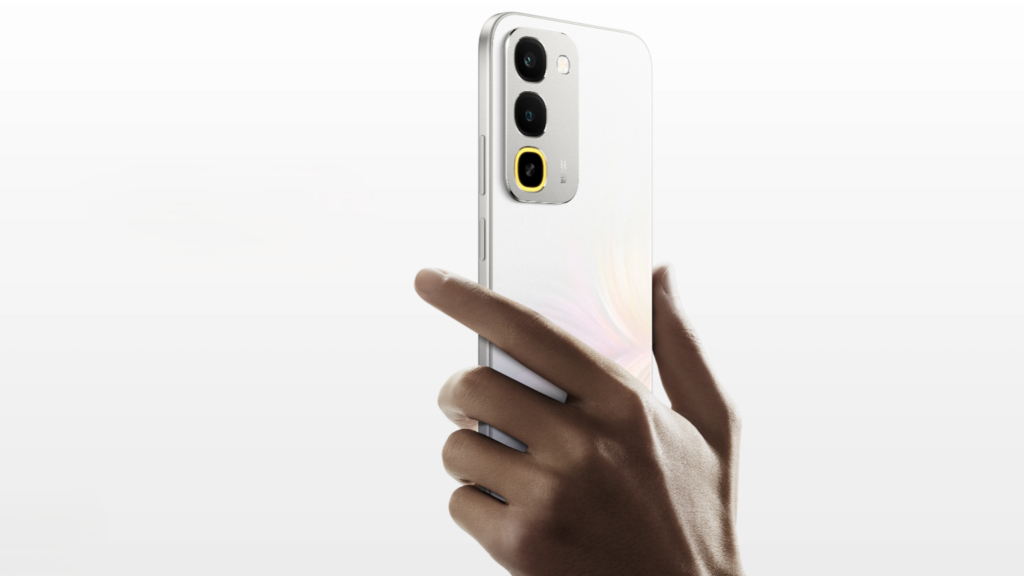
Both phones use a glass front with a plastic frame and back, keeping things practical rather than premium. The OnePlus Nord 6 feels more durability-focused with stronger protection and additional rugged certifications, making it slightly more reassuring for long-term use. The Vivo V70 FE, however, leans toward a slimmer and more refined aesthetic, with subtle design touches like its special glow finish adding personality. It feels more stylish in the hand, while the Nord 6 feels more functional and sturdy.
Display Quality
The Nord 6 clearly pushes boundaries with its 165Hz refresh rate and extremely high peak brightness, making scrolling and gaming feel exceptionally fluid. The Vivo V70 FE sticks to 120Hz but compensates with a slightly larger panel and strong brightness levels. While both displays are sharp and vibrant, the Nord 6 feels more flagship-grade, especially for fast interactions.
Verdict
The Nord 6 wins for display smoothness and durability, while the V70 FE appeals more to users who prioritize sleek design and a slightly larger screen.
Specifications Including Battery
Performance
The OnePlus Nord 6 is in a completely different league when it comes to raw performance. Its Snapdragon 8s Gen 4 chipset delivers flagship-level power, making it ideal for gaming, multitasking, and long-term performance stability. In contrast, the Vivo V70 FE’s Dimensity 7360 Turbo is efficient and capable but clearly mid-range. It handles daily tasks smoothly but doesn’t offer the same headroom for heavy workloads. The Nord 6 feels faster and more future-proof overall.
Battery and Charging
Battery life is strong on both devices, but the Nord 6 stands out with its massive capacity, especially in the India variant. It’s built for endurance, easily lasting extended usage. The Vivo V70 FE counters with faster 90W charging, which is convenient for quick top-ups. Still, the Nord 6 balances a big battery with solid charging speeds, making it more dependable.
Verdict
The Nord 6 dominates performance and battery longevity, while the V70 FE offers faster charging but can’t match overall power.
Camera
Main and Secondary Lenses
The Vivo V70 FE grabs attention with its massive 200MP main sensor, delivering highly detailed shots with strong dynamic range. It feels more versatile for photography enthusiasts who like cropping and high-resolution output. The Nord 6, with its 50MP sensor, focuses more on consistency and balanced processing, often producing more natural-looking images. Both include ultrawide lenses, but neither stands out significantly there.
Selfie Camera
Selfie performance is competitive, but the V70 FE gains an edge in the India variant with its higher-resolution front camera and autofocus support. The Nord 6 still delivers sharp and reliable selfies, especially with stable video recording, but the Vivo feels slightly more advanced for front-camera users.
Verdict
The V70 FE wins for camera hardware and versatility, while the Nord 6 offers more consistent and natural image processing.
Pricing
Price Comparison
The OnePlus Nord 6 is priced at around $460 (₹39,000), while the Vivo V70 FE comes slightly lower at $450 (₹38,000). The price gap is minimal, placing both devices in direct competition within the upper mid-range segment. This makes the decision less about budget and more about priorities.
Value for Money
The Nord 6 justifies its price with flagship-grade performance, a superior display, and a significantly larger battery. It feels like a performance-focused package built for power users. On the other hand, the V70 FE delivers strong camera hardware, faster charging, and a more stylish design, making it appealing for users who prioritize photography and aesthetics. The value perception depends heavily on usage style.
Verdict
The Nord 6 offers better overall value for performance-focused buyers, while the V70 FE is a strong pick for camera-centric users.
Disclaimer: Prices are approximate and may vary based on country, region, and applicable taxes.
Conclusion
The OnePlus Nord 6 stands out with its flagship-level chipset, ultra-smooth 165Hz display, and massive battery capacity, making it a powerhouse in its segment. It feels tailored for gamers and heavy users who need sustained performance. The Vivo V70 FE differentiates itself with a 200MP camera, faster charging, and a more refined design approach. It feels more lifestyle-oriented, focusing on photography and visual appeal.
Verdict
The Nord 6 is the better all-rounder with clear advantages in performance, display, and battery life. The V70 FE is a compelling alternative for users who value camera capabilities and design over raw power.
Disclaimer: This comparison is based on the specifications provided and is intended for general informational purposes. Actual performance, camera results, battery life, and overall experience may vary depending on real-world usage, software updates, and individual preferences.
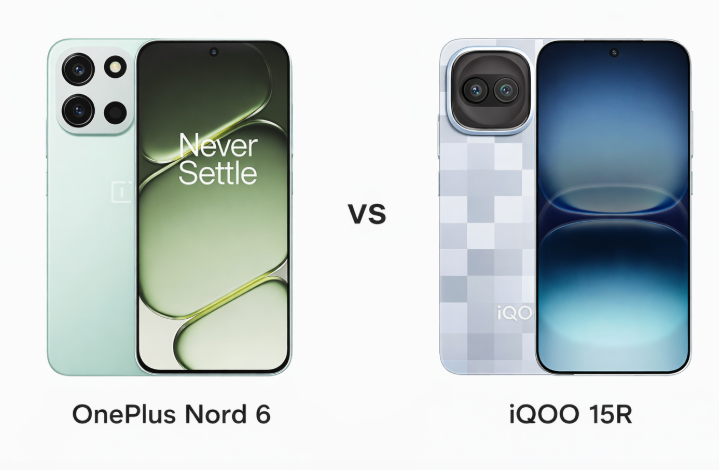
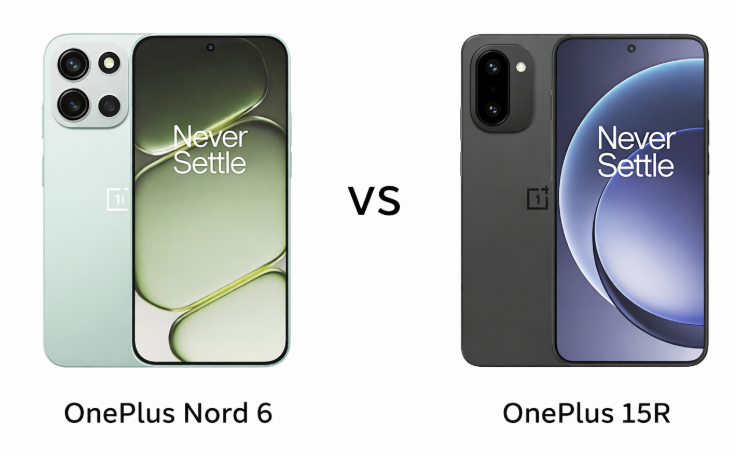
The mid-premium smartphone segment is more competitive than ever, and the OnePlus Nord 6 vs iQOO 15R highlights that perfectly. Both promise flagship-level performance and features, but take very different approaches; one focuses on endurance and smooth usability, while the other pushes raw power and a more premium experience.
For buyers trying to get the most out of their budget, this comparison highlights which one truly delivers where it matters most.
Please Note: When you buy something using the links in our articles, we may earn a small commission at no cost to you.
Design and Display
Build and Feel
OnePlus Nord 6 uses a practical approach with a plastic frame and back, but adds durability perks like IP68/IP69K and even MIL-grade certification. It feels sturdy and purpose-built rather than premium. iQOO 15R, on the other hand, leans into a more flagship-like design with a glass or fiber back and an aluminum frame, giving it a more refined in-hand feel. The difference is noticeable, iQOO feels more premium, while Nord feels more rugged and functional.
Display Quality
Nord 6 pushes a 165Hz AMOLED panel with strong brightness and excellent HDR tuning, making it very fluid and vibrant. iQOO 15R counters with a slightly lower 144Hz refresh rate but significantly higher peak brightness and better PWM dimming, which improves eye comfort. In real-world use, iQOO’s panel looks more polished, while Nord’s feels faster and more aggressive.
Verdict
iQOO 15R wins on premium feel and display refinement, while Nord 6 appeals more to users who value durability and ultra-smooth scrolling.
Specifications Including Battery
Performance
Nord 6 is powered by Snapdragon 8s Gen 4, delivering flagship-level performance with strong efficiency and stable gaming. However, iQOO 15R steps ahead with the newer Snapdragon 8 Gen 5, bringing a clear boost in raw power and future-proofing. The difference may not always be obvious in daily use, but under heavy gaming or multitasking, iQOO feels sharper and faster.
Battery and Charging
Nord 6 stands out massively with a huge battery, especially the India variant, offering exceptional endurance. Charging is decent but not class-leading. iQOO 15R uses a slightly smaller battery but compensates with much faster 100W charging, making it more convenient for quick top-ups. Nord focuses on longevity, while iQOO prioritizes speed.
Verdict
iQOO 15R wins on performance and charging speed, but Nord 6 is clearly better for long-lasting battery life and endurance-focused users.
Camera
Main and Secondary Lenses
Both phones feature a 50MP main sensor with OIS, but iQOO 15R uses a larger sensor, which gives it an edge in detail, dynamic range, and low-light shots. The ultrawide cameras are similar on paper, though iQOO’s processing feels slightly more refined. Nord 6 still delivers consistent and reliable results, but iQOO images tend to look more flagship-like.
Selfie Camera
Both devices offer 32MP front cameras with 4K video support. Nord 6 includes PDAF, which helps with sharper focus in selfies and videos. iQOO delivers good output, but Nord feels more dependable for consistent front camera results, especially in motion scenarios.
Verdict
iQOO 15R wins overall with better main camera performance, while Nord 6 holds a slight advantage in selfie reliability and focus consistency.
Pricing
OnePlus Nord 6 is priced at around ₹39,000 ($460), while iQOO 15R comes in higher at approximately ₹45,000 ($530). The gap is noticeable, especially in the mid-premium segment, where pricing heavily influences decisions.
Is the Price Justified?
Nord 6 offers excellent value with a massive battery, high refresh rate display, and solid performance at a lower price. It feels like a well-balanced package for most users. iQOO 15R justifies its higher price with a more powerful chipset, better build quality, faster charging, and a more refined display experience. The premium is not excessive, but it is clearly targeted at performance-focused buyers.
Verdict
Nord 6 is the better value-for-money option, while iQOO 15R justifies its higher price with stronger flagship-level upgrades.
Disclaimer: Prices are approximate and may vary based on country, region, and applicable taxes.
Conclusion
Nord 6 stands out with its massive battery, ultra-smooth 165Hz display, and durability-focused design, making it ideal for heavy users and long sessions. iQOO 15R differentiates itself with next-gen performance, premium materials, brighter display, and faster charging, giving it a more flagship-like appeal overall.
Verdict
The choice depends on priorities. Nord 6 feels more practical and endurance-focused, making it perfect for users who want longevity and smooth daily performance at a lower price. iQOO 15R, however, is the better pick for those who want cutting-edge performance, a premium feel, and faster charging. It delivers a more complete flagship experience, while Nord delivers smarter value.
Disclaimer: This comparison is based on the specifications provided and is intended for general informational purposes. Actual performance, camera results, battery life, and overall experience may vary depending on real-world usage, software updates, and individual preferences.
Fitbit is widening access to its personal health coach, which is currently in Public Preview. The feature is rolling out to free and Premium users on Android and iOS across 37 countries, including India, and will reach more users over the coming weeks.
The Preview version supports 27 languages. Earlier updates also pointed to a broader expansion up to 32 languages, covering options like Hindi, French, German, Japanese, Korean, and Spanish, so users can interact with the coach in a language they are comfortable with.
Inside the Fitbit app, the coach uses existing health data to offer insights and suggestions. It pulls in metrics such as steps, distance, calories burned, sleep, weight, and body fat. There is also support for third party data through Health Connect, which lets users bring in information from other apps and devices. The app combines data from different sources and shows where it is coming from, with filters available above each graph.
Fitbit has also added VO2Max, earlier known as Cardio Fitness Score, to the Preview. This brings cardio fitness tracking into the coaching experience.
Since this is still a Preview, several features are missing. Health tracking does not yet include blood glucose logging, body temperature tracking, or manual edits to sleep data. On the fitness side, advanced running metrics are not available for Pixel Watch 3 and Pixel Watch 4 users.
Social features are also not part of the Preview. This includes friends, groups, leaderboards, messages, badges, and workout sharing. Other missing features include exporting TCX files, syncing with Aria Air, and switching to a children’s view.
Some Health Connect data types are also not supported yet, including workout sessions, routes, heart rate variability, breathing rate, resting heart rate, SpO2, and temperature. Fitbit says these will be added later.
Samsung may retain only smartphones and memory chip businesses in China
Likely exit from home appliances, consumer electronics, and display segments
Strategy shift driven by strong global chip demand and rising pressure in China
Samsung Digital City Suwon
Samsung Electronics is reportedly planning a major restructuring of its China operations as it faces a strategic dilemma: whether to defend its declining market share in China or shift focus toward global competitiveness. Analysts suggest the company may prioritize global markets over continuing intense competition in China.
According to industry reports, Samsung is considering a broad overhaul that would streamline its presence in the country. The company is expected to retain only its mobile (smartphones) and memory (semiconductor chips) businesses, which are seen as its most profitable and globally critical segments. Meanwhile, it may exit or scale down divisions such as home appliances, consumer electronics, and display operations, which are reportedly underperforming.
Samsung is likely to continue prioritizing its semiconductor operations in China, supported by strong global demand for AI chips. The company has significantly increased investment in its Xi’an chip plant, with spending rising 67.5% year-on-year in 2025.
The restructuring may also involve workforce reductions in weaker divisions and operational changes, including outsourcing appliance distribution while retaining manufacturing. Despite its low smartphone market share in China, Samsung is expected to keep its mobile business due to its importance in the global supply chain and ecosystem.
Currently, Samsung maintains operations across semiconductors, consumer electronics, and R&D centers in Beijing and Nanjing, focusing on AI, telecommunications, and smartphones. While the plans are not officially confirmed, analysts believe Samsung is moving toward a leaner, more selective China strategy centered on high-value businesses and global leadership.
Xiaomi started rolling out the global HyperOS 3.1 update last month, with the Xiaomi 17 series getting the first bite, and has since been expanding it to more eligible smartphones and tablets. The new software will continue to expand to more devices over the coming weeks, but it’s a difficult task to keep track of HyperOS rollouts.
To make things simpler, we’ve included a list of devices that are receiving the HyperOS 3.1 update globally. Review the list below to see if Xiaomi has begun the update rollout for your device.
These Xiaomi, Redmi, and POCO devices have received HyperOS 3.1 global update
Xiaomi 17
Xiaomi 17 Ultra
Xiaomi 15T Pro
Xiaomi Pad 7
Xiaomi Pad 7 Pro
Xiaomi Pad 7 Ultra
Xiaomi Pad 7S Pro
Redmi Pad Pro
POCO F7 Pro
POCO Pad
Currently, the list is short as the global rollout went live only recently. However, it will grow as more devices receive the update. We’ll update the list periodically to keep it current. You can bookmark this page to visit again.
If you own a device that’s on the list above, go to Settings > About phone and tap the HyperOS logo to check for an available update. Note that the update follows a staged rollout, so it may take some time to reach your device.
The HyperOS 3.1 skin, based on Android 16, introduces HyperIsland to tablets for the first time. Smartphones receive an upgraded HyperIsland, featuring richer animations, deeper third-party integration, and more intuitive real-time activity tracking.
The recent apps page also received visual upgrades, now featuring an iOS-inspired look with smoother gesture navigation, fluid card swiping, and better visual management. HyperOS 3.1 also focuses on improving cross-platform connectivity with Apple devices by adding native support for Apple AirPods. This enables features like quick pop-up pairing and access to spatial audio on compatible earbuds.
The update also introduces the Super OTA feature that applies system updates faster with minimal reboot time and fewer errors. Additionally, it offers expanded lock-screen customizations and more interactive elements in HyperIsland. Besides new features and visual upgrades, HyperOS 3.1 includes a wealth of under-the-hood optimizations to deliver a snappier, more stable software experience.
To ensure you don’t miss out on the latest HyperOS stories, remember to visit the Xiaomi section on Gizmochina regularly. Alternatively, you can join us on Telegram to get instant notifications about the latest HyperOS updates and major tech headlines.
Apple is developing its own AI server chip, codenamed “Baltra,” for cloud infrastructure
Built using advanced 3nm technology from TSMC
Move aims to reduce reliance on NVIDIA and strengthen Apple’s AI ecosystem
AI- generated image for representation only
Apple is quietly building a major foundation for its AI future with a new self-designed server chip known internally as “Baltra.” This chip is expected to power the company’s internal cloud infrastructure, focusing on secure data processing and backend AI workloads. It marks a major shift as Apple expands beyond consumer hardware into large-scale AI computing.
The Baltra chip is likely to be manufactured by TSMC using its second-generation 3nm (N3E) process. This technology is designed to deliver improved performance and efficiency compared to earlier nodes. Apple is also investing heavily in TSMC’s advanced SoIC (System on Integrated Chips) packaging, which enables vertical stacking of multiple chip components for better speed and power efficiency.
Reports suggest Baltra will use a chiplet-based architecture, allowing different specialized chips to work together in one package. This design improves scalability and lets Apple optimize AI workloads more effectively. The company is also working with partners on interconnect technologies while gradually aiming to bring more design capabilities in-house.
To support its AI push, Apple has reportedly reserved significant production capacity at TSMC for the coming years. A large portion of this is expected to be allocated to AI server chips like Baltra, signaling serious long-term investment.
Overall, this move highlights Apple’s plan to control its entire AI stack, from silicon and packaging to cloud infrastructure, while reducing dependence on external chip providers and competing more directly in the AI hardware space.
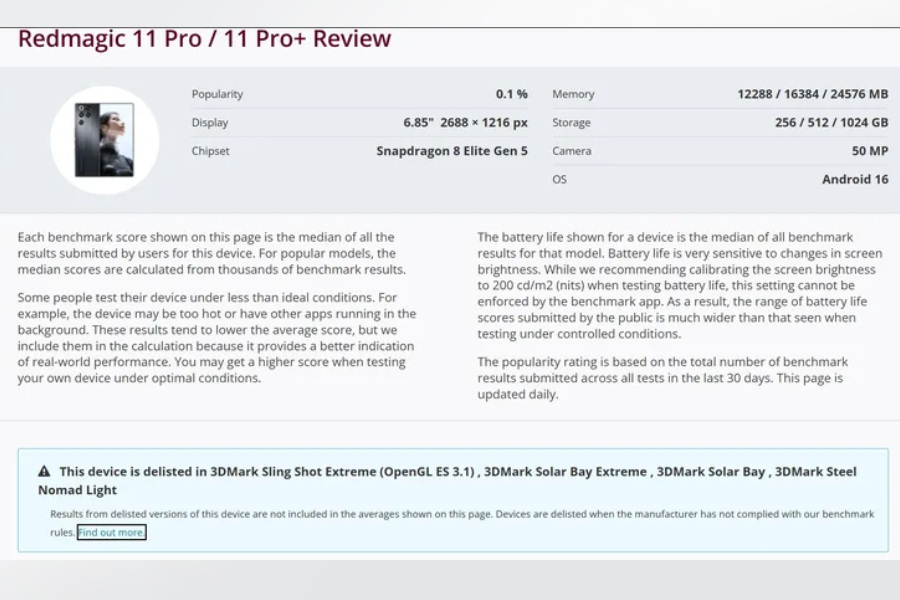
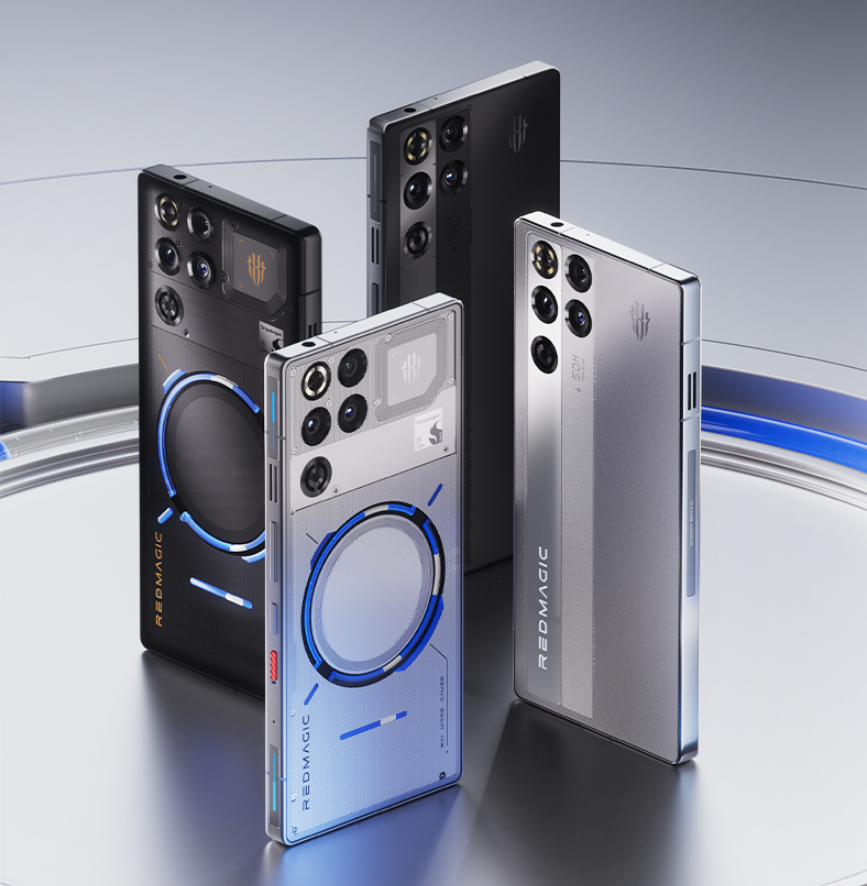
The benchmarking platform 3DMark has removed performance results for the RedMagic 11 Pro and RedMagic 11 Pro+ from its database.
According to reports, the listings for both devices were taken down because the manufacturer did not follow the rules during testing. The issue lies in how the phones handle performance limits when running benchmarking software.
3DMark says the devices behave differently when they detect its tests. Specifically, the phones are said to remove normal limits on power consumption and temperature while the benchmark is running. This allows the chipset to operate at unusually high levels without throttling, even as temperatures rise.
From 3DMark’s perspective, this creates results that don’t reflect typical real-world usage. The platform’s rules are designed to ensure that scores represent the performance users can expect under normal conditions, not in a special testing mode. Because of this, the results were classified as a violation and removed.
Here’s what Nubia replies
Nubia, the brand behind the RedMagic series, has responded by defending its approach.
In a statement to Android Authority, the company said its devices are built for “high-performance experiences,” particularly in demanding gaming scenarios, and include multiple performance modes that users can enable. It specifically pointed to a feature called “Diablo Mode,” which is designed to push the hardware to its limits under heavy workloads.
The company also said that benchmarking should be viewed as “an indicator of a device’s performance potential under controlled, high-load conditions,” adding that results can vary depending on system settings and usage.
In other words, Nubia is saying that the scores reflect what the hardware is capable of, even if that level of performance isn’t always active by default.
It’s not surprising to see a brand optimizing specific apps to run better—that’s actually a good thing. But in the case of benchmark apps, this shouldn’t happen, as it is considered manipulation of scores.
For more daily updates, please visit our News Section.
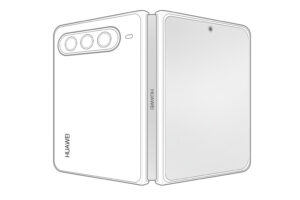
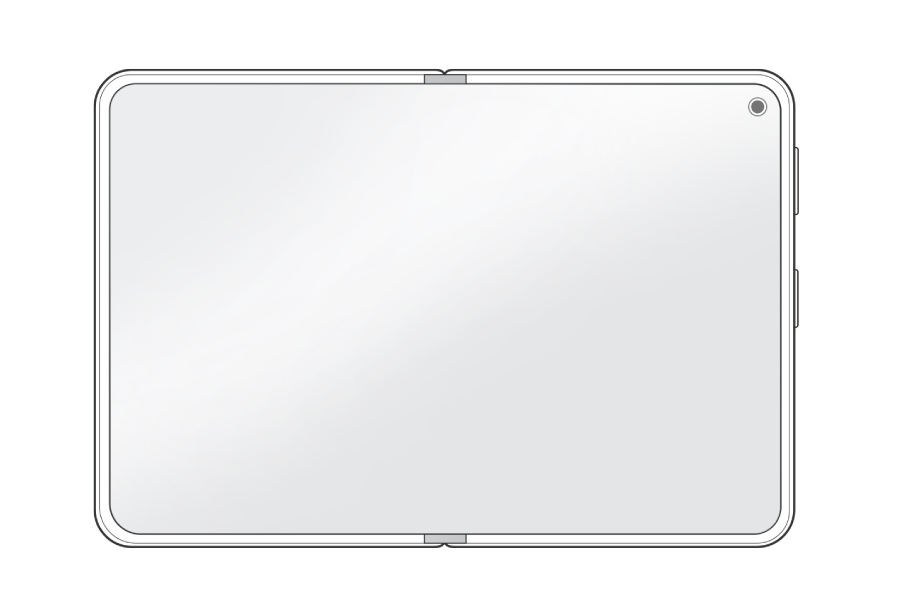
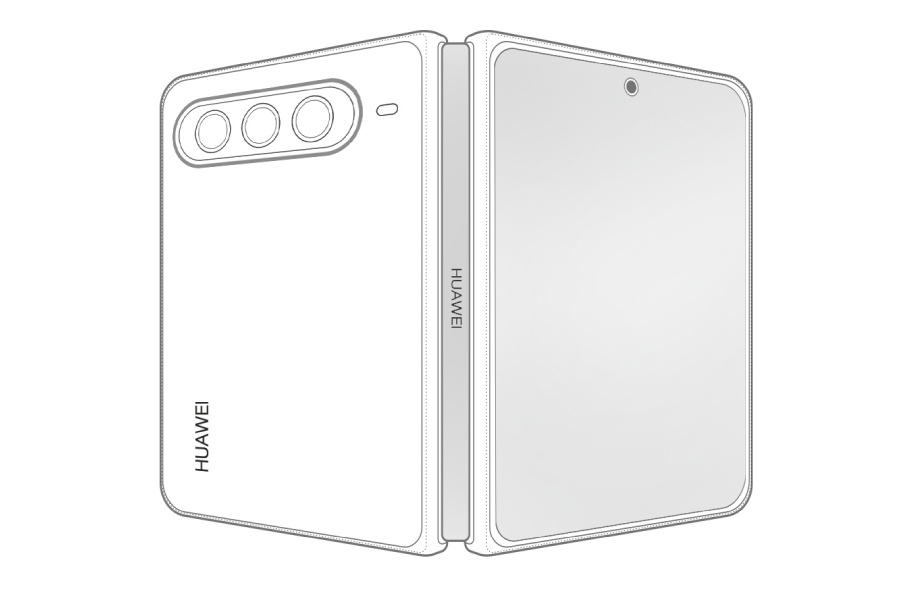
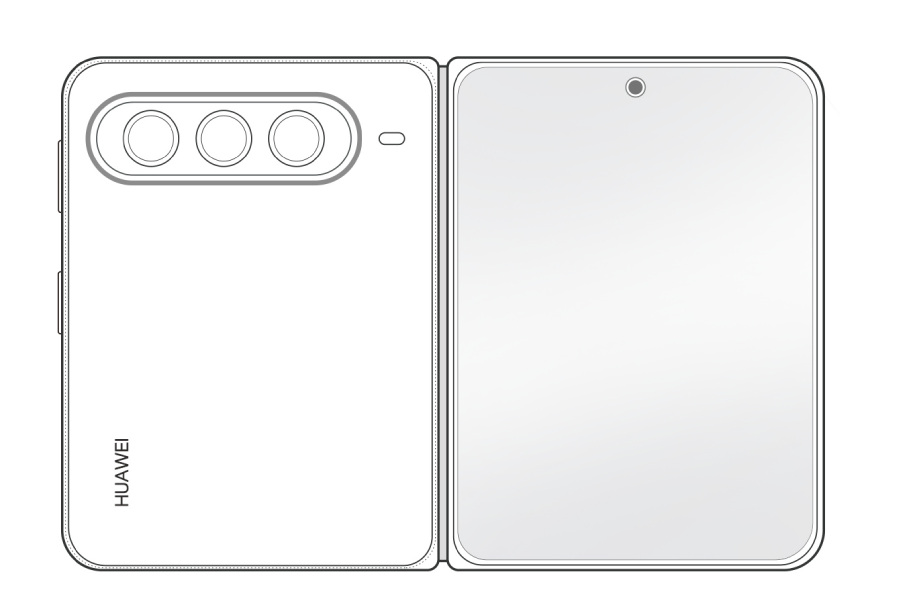
Huawei has a launch event scheduled for April 20, where it is set to refresh its Pura lineup. The update includes the Pura 90 series, which Huawei has already started teasing, and a foldable in the Pura X lineup. Now, according to tipster Digital Chat Station, this new model is called the Pura X Max.
The Pura foldable line from Huawei is known for wide-folding devices, and no surprises, the Pura X Max follows the same route.
Huawei Pura X Max Specs (Expected)
However, unlike the original Pura X, the X Max is said to be a horizontally folding device. The design is the same as what’s expected for the Apple iPhone Fold (or Ultra, as rumors say), but Huawei will be the first to launch such a device. It will feature a 7.69-inch WQHD+ inner display and a 5.5-inch outer screen.
The inner display will offer more usable space, while the outer screen is designed for quick, everyday tasks. Huawei is reportedly sticking with a 16:10 aspect ratio, similar to its earlier model.
Lucky for us, another tipster, Fixed Focus Digital, has shared the foldable’s front and back design on Weibo.
There are also expected upgrades under the hood. The Pura X Max is rumored to use Huawei’s Kirin 9030 chip, which is also said to power the Pura 90 series. The chip reportedly uses a new 9-core architecture, with improvements in overall performance.
Moreover, the device is expected to include Huawei’s Red Maple Quad Camera system, with a particular focus on improving the telephoto lens.
As we mentioned earlier, this type of foldable design will not remain exclusive to Huawei for long. Apple is working on a foldable iPhone with a similar tablet-like aspect ratio, possibly arriving in September. Meanwhile, Samsung is also working on a wide-foldable called the Galaxy Z Fold 8 Wide.
For more daily updates, please visit our News Section.
While Oppo has already begun its Android 17 beta program, it’s also preparing to release a minor update based on Android 16, offering exciting visual upgrades and quality-of-life improvements. This one will be called ColorOS 16.1 and is officially confirmed to be released this month.
If you have an Oppo device, you may be wondering if it’s eligible for the ColorOS 16.1 update and what new features or changes to look forward to. So, here’s everything we know so far.
ColorOS 16.1 release date
Oppo has confirmed that ColorOS 16.1 will be released on April 16, 2026. This is the release date for the Chinese market. The company hasn’t announced the same for the global markets.
The Oppo Find X9s Pro and Find X9 Ultra, launching on April 21st in China, will be the first phones to run the upcoming ColorOS 16.1 software out of the box.
If past rollouts are any indication, the brand may begin rolling out the ColorOS 16.1 update to older devices in late April, while the global rollout could begin in May 2026.
Which Oppo devices will receive the ColorOS 16.1 update?
Oppo has confirmed that the Find X9s Pro and Find X9 Ultra will debut with ColorOS 16.1. However, it hasn’t announced which older devices will receive the update.
It’s safe to say the update will be rolled out to the recent Find X-series phones, at least. We’ll have more details on the eligible devices next week when the software is released.
ColorOS 16.1 update: New features and upgrades
Ahead of the release date, Oppo has posted a video showcasing new features and exciting upgrades in ColorOS 16.1. It shows a revamped Live Activities and a new stacked notification center.
The video also confirms that the new Live Activities will support ongoing calls, the recorder, the timer, the flashlight, and maps. The new software also introduces an iOS-like media player for the lock screen.
ColorOS 16.1 also features a pill-shaped UI element at the bottom of the lock screen, which looks and works similarly to Samsung’s Now Bar. Plus, the software will include new AI features and a revamped camera UI.
We’ll keep updating you with the latest information in the Oppo section on this website. Be sure to visit that once in a while. Or, join our Telegram channel to get instant notifications.
Samsung’s AI anti-fraud feature can detect scam calls in real time
Powered by on-device Gemini AI, originally from Google Pixel phones
Global rollout expected, with foldables like Z Fold 8 and Flip 8 likely to get it
AI-generated image for representation only
Samsung is preparing to expand its new AI-powered anti-fraud feature beyond the Galaxy S26 series, signaling a wider global rollout in the coming months. The feature, currently limited to users in the United States, is designed to detect scam calls in real time and warn users instantly if a conversation appears suspicious.
The technology behind this feature comes from Google and uses an on-device Gemini AI model. This means call content is analyzed directly on the phone, ensuring better privacy since data does not need to be sent to external servers. The system listens for patterns commonly linked to fraud and alerts users during the call itself.
Samsung has integrated this capability into its native Phone app through a collaboration with Google. Interestingly, this AI feature was first introduced on Pixel smartphones before making its way to Samsung’s flagship lineup.
Recent findings from code strings in the Google Phone app (version 217 beta) suggest that Samsung is planning to bring this feature to more devices. These include upcoming foldables such as the Galaxy Z Fold 8 and Galaxy Z Flip 8, along with other regional variants across global markets.
The presence of multiple international model numbers strongly indicates that Samsung is aiming for a large-scale rollout. However, one notable absence is the expected global variant of the Flip 8, leaving some uncertainty.
Overall, this move suggests that AI-powered fraud detection could soon become a standard feature across Samsung Galaxy devices worldwide.
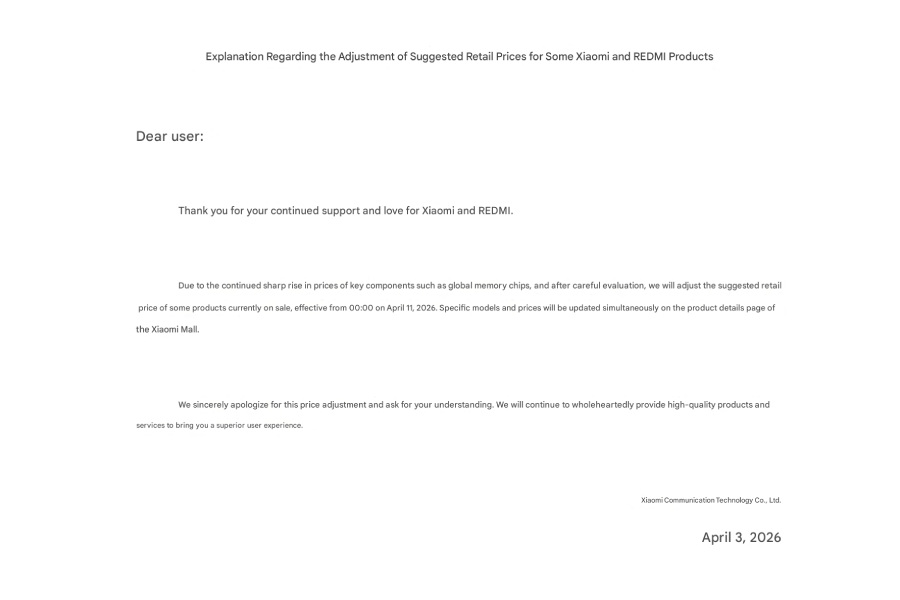
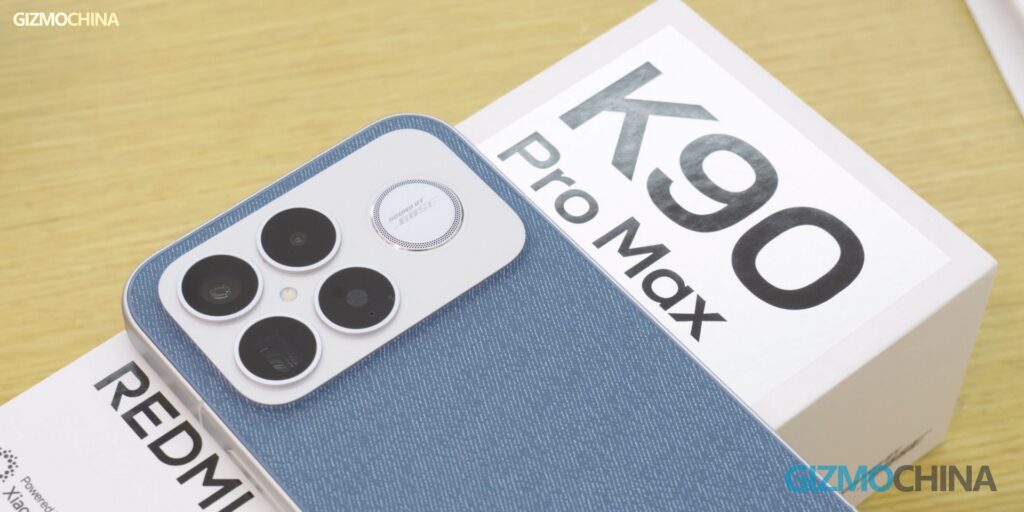
Xiaomi is raising the prices of some Redmi phones in China, and the changes are taking effect today. The company confirmed it’s bumping prices on three of its higher-end models: the Redmi K90 Pro Max, Redmi Turbo 5, and Redmi Turbo 5 Max.
According to the brand, the increases are due to the “continued sharp rise” in the cost of key components, especially global memory chips.
Here are the new effective prices
The most direct increase is to the Redmi K90 Pro Max, which now costs 200 yuan more across all configurations. The base 12GB + 256GB variant is now priced at 4,199 yuan, up from its earlier launch price of 3,999 yuan. Higher-end variants follow the same pattern, with the top 16GB + 1TB model now listed at 5,499 yuan, compared to its initial price of 5,299 yuan.
Things are a little less straightforward with the Redmi Turbo 5 and Turbo 5 Max. The prices have gone up, but not because Xiaomi is raising them directly. Instead, the company has ended its Spring Festival promotional discounts, effectively snapping both phones back to their standard retail pricing.
However, Xiaomi is still offering a 200 yuan subsidy on the 512GB variants, which slightly softens the impact for buyers considering higher storage options.
This means the Redmi Turbo 5 now starts at 2,299 yuan for the 12GB + 256GB model, while the Turbo 5 Max begins at 2,499 yuan for the same configuration. Previously, both models were available at lower “initial sale” prices during promotional periods.
None of this comes as much of a surprise. Memory prices have been trending upward for a while now, and manufacturers usually pass at least some of those costs down the line.
For more daily updates, please visit our News Section.
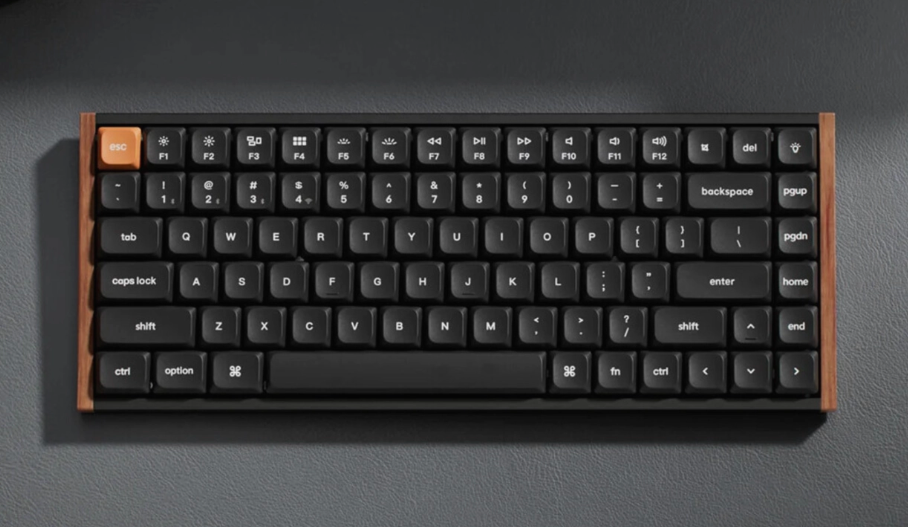
The Keychron K3 Max SE is designed for users who want a sleek, portable mechanical keyboard without compromising on performance. With its ultra-slim profile, modern features, and strong customization options, it targets both productivity users and casual gamers looking for a clean, minimal desk setup.
Design & Build Quality
The K3 Max SE features a 75% compact layout that strikes a balance between functionality and space-saving design. Its aluminum alloy top frame gives it a premium feel, while the plastic bottom keeps the weight manageable for portability. The keyboard stands out as one of the thinnest wireless mechanical keyboards available, making it ideal for travel or minimalist setups.
It uses low-profile LSA double-shot PBT keycaps, which are durable, oil-resistant, and designed for long-term use. The inclusion of both Windows and macOS key layouts makes it versatile across platforms.
Switches & Typing Experience
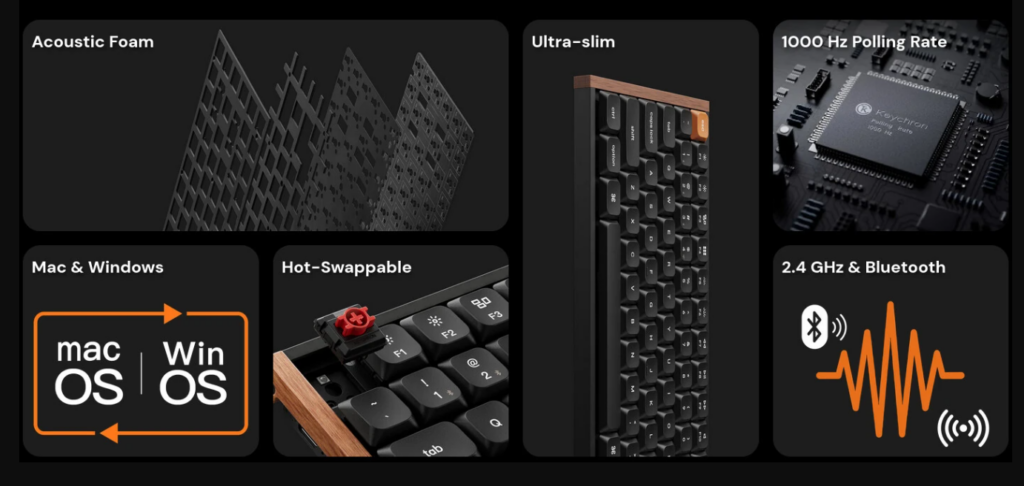
Users can choose between three switch options: linear Red, tactile Brown, and tactile Banana switches. These Milk POM switches are 31% slimmer than traditional mechanical switches and come pre-lubed, ensuring a smoother and quieter typing experience.
The keyboard also includes EPDM acoustic foam and additional bottom case foam, which enhance typing acoustics and reduce noise. Redesigned stabilizers improve consistency and reduce wobble on larger keys like the spacebar and enter key.
Performance & Connectivity
Powered by an ARM-based MCU with 256KB flash memory, the K3 Max SE delivers strong performance. It supports a 1000 Hz polling rate in both wired and 2.4GHz wireless modes, ensuring low latency suitable for gaming.
Connectivity is flexible with tri-mode support: 2.4GHz wireless, Bluetooth 5.2 (up to three devices), and USB Type-C wired connection. This makes it easy to switch between devices like laptops, tablets, and smartphones.
Customization & Smart Features
The keyboard runs on QMK firmware, allowing full key remapping, macro creation, and advanced customization. It works with the Keychron Launcher web app, making personalization easy even for beginners.
RGB lighting is another highlight, offering over 22 lighting modes, per-key customization, and a static white option for a cleaner look.
Battery & Usage
The 1550mAh battery delivers up to 120 hours of usage, which is solid for a keyboard with RGB and wireless features. It’s not the longest in its category, but still sufficient for most users.
Positioning
The K3 Max SE is essentially a simplified version of the K3 Ultra. It offers QMK instead of ZMK firmware, a 1kHz polling rate instead of 8kHz, and a smaller battery. This makes it more affordable while still retaining core features.
Specifications:
Layout: 75% compact
Build: Aluminum top frame, plastic bottom
Keycaps: Low-profile LSA double-shot PBT
Switches: Milk POM Red, Brown, Banana
Hot-swappable: Yes
Firmware: QMK
MCU: ARM architecture, 256KB flash
Polling Rate: 1000 Hz (wired & 2.4GHz)
Connectivity: 2.4GHz, Bluetooth 5.2 (3 devices), USB-C
Battery: 1550mAh (up to 120 hours)
Lighting: 22+ RGB modes, per-key RGB
Special Features: Multi-device switching, Mac support
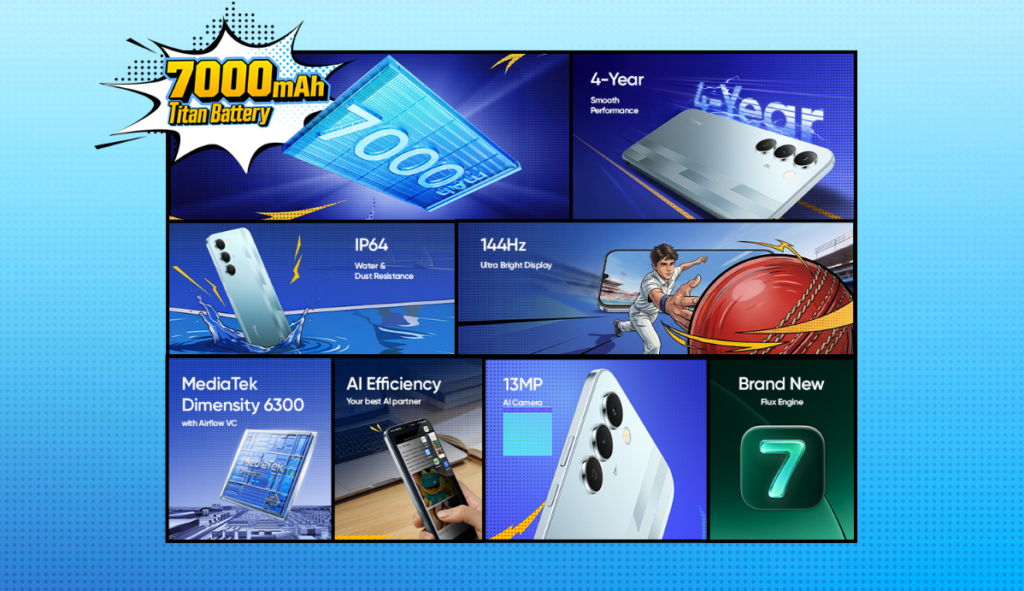
Realme has confirmed that the Narzo 100 Lite 5G will launch in India on April 14. It will replace the Narzo 80 Lite 5G and sits in the company’s budget 5G lineup. The biggest highlight this time is the battery. The phone packs a 7000mAh unit, which Realme is calling a “Titan Battery.” The company says it is built to retain battery health for up to six years. It also supports reverse charging, so it can be used to charge other devices.
The phone runs on the MediaTek Dimensity 6300 chipset and includes a 5300mm² vapor chamber cooling system. Realme says the device is tuned to deliver smooth performance for up to four years. On the front, it features a 6.9-inch LCD display with a 144Hz refresh rate and peak brightness of 900 nits, which should help with smoother scrolling and better outdoor visibility.
In terms of design, the Narzo 100 Lite 5G will come in Thunder Black and Frost Silver. The back panel has a textured finish with a vertical camera layout and an LED flash. It includes a 13MP rear camera. The phone is rated IP64 for dust and splash resistance and comes with Armorshell protection for added durability. It will be available on Amazon India, Realme’s website, and offline stores after launch.
Earlier leaks had already pointed to most of these details. It mentions that the phone will feature a 5MP front camera, a 7000mAh battery, and support for bypass charging. Storage options are likely to include 4GB + 64GB, 4GB + 128GB, and 6GB + 128GB. Pricing is expected to start under INR 13,000 and go up to around INR 15,000 for the top variant.
For more daily updates, please visit our News Section.
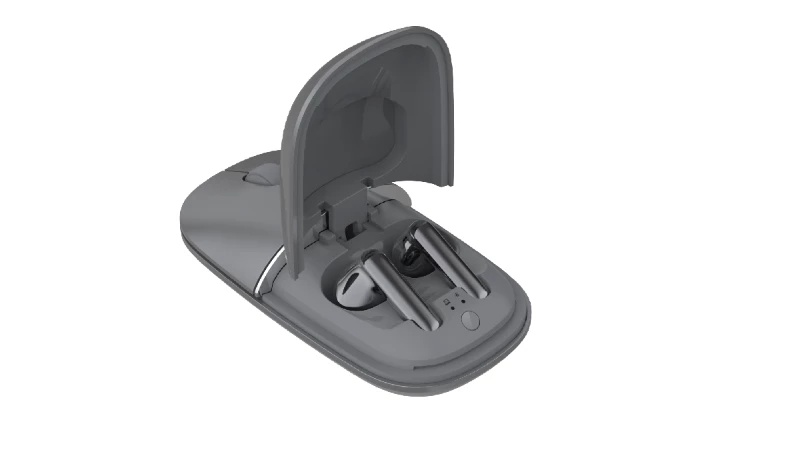
Honor has launched a product that blends two everyday accessories into one. The Honor Choice MouseBuds Pro is a wireless mouse that also stores and charges a pair of true wireless earbuds inside its body.
The idea is simple. The back half of the mouse opens up to reveal the earbuds, which sit in a built-in charging case. You don’t need to carry a separate case or deal with extra cables. Once the mouse is connected using the included wireless receiver, the earbuds are ready to use as well. There is no manual pairing step. Just take them out and start using them.
The device also supports two modes. In computer mode, both the mouse and earbuds connect through the receiver for a stable connection. In smartphone mode, the earbuds switch to Bluetooth and can be used on their own without the mouse. A single button handles switching between modes, which makes it easier to move between calls, work, and media use.
On the mouse side, it uses a PixArt optical sensor with 1200 DPI, which is standard for daily tasks like browsing and office work. The left and right buttons use TTC quiet switches rated for up to 5 million clicks, keeping noise low in shared spaces. The surface has an excimer coating that feels smooth and is designed to resist fingerprints and wear. The shape follows a simple ergonomic curve for a comfortable grip.
The earbuds use a semi-open design and support adaptive active noise cancellation. It reduces background noise without sealing the ear completely. For calls, dual microphones handle AI noise reduction to improve voice clarity. Audio is powered by dual-magnetic dynamic drivers with an LCP diaphragm for stronger bass.
A 1000 mAh battery powers the device and is rated for up to 30 days of typical use. Charging is done through USB-C. The mouse measures 112 × 60 × 34 mm and weighs 78 g without the earbuds. With them, it reaches 88 g. It supports Windows 10 and above, and macOS 10.13 and above. Pricing is set at €99.90 in Germany and £79.99 in the UK.
For more daily updates, please visit our News Section.
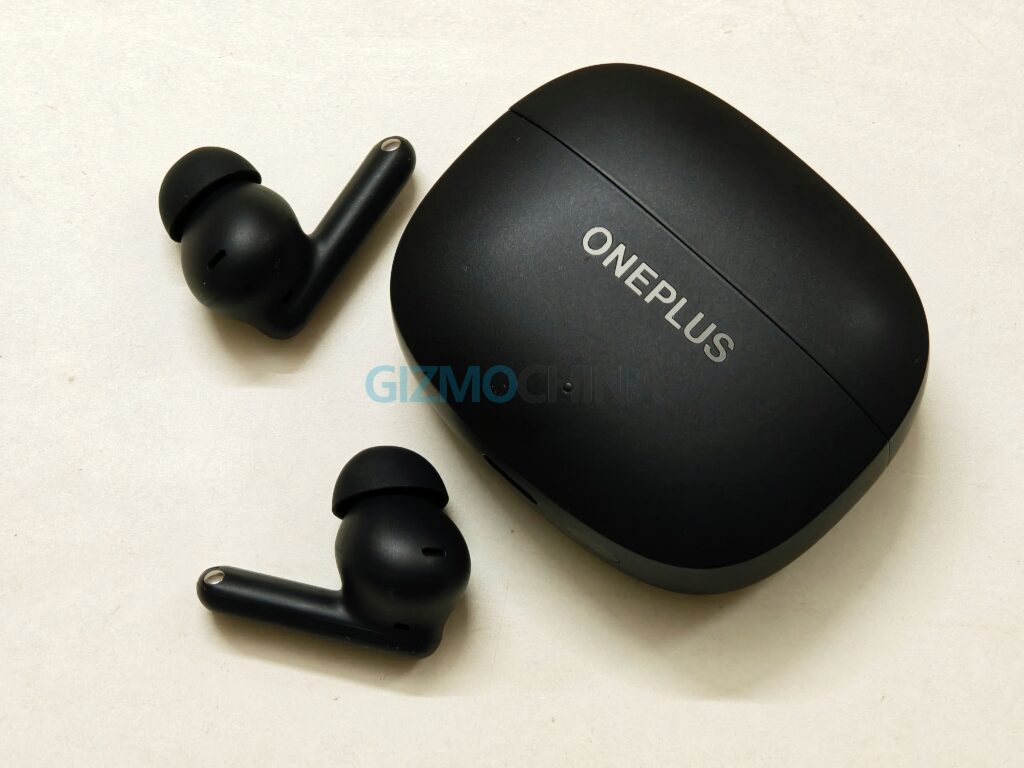
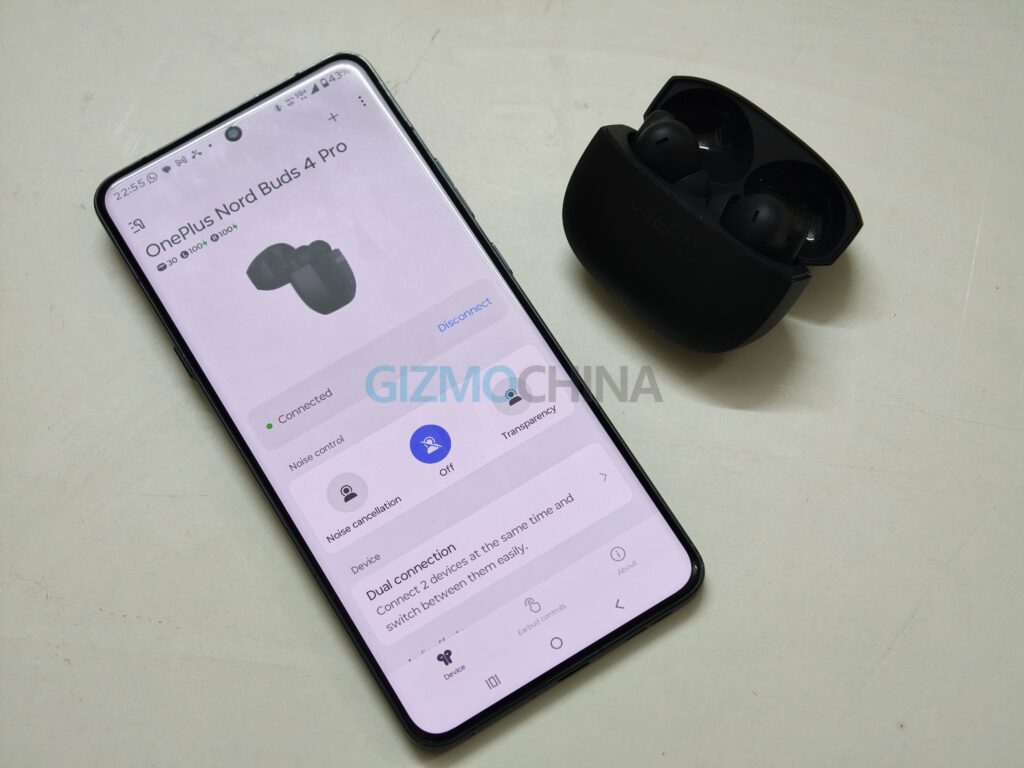
At Rs 3,999, the OnePlus Nord Buds 4 Pro sit in one of the most competitive segments in the TWS market right now. This is the price range where brands try to bring premium features like ANC, spatial audio, and multipoint connectivity to a wider audience. On paper, these earbuds tick most of the right boxes. I’ve been using the Raven Black variant for about a week, and the experience has been largely consistent, with a few expected compromises.
Design and comfort
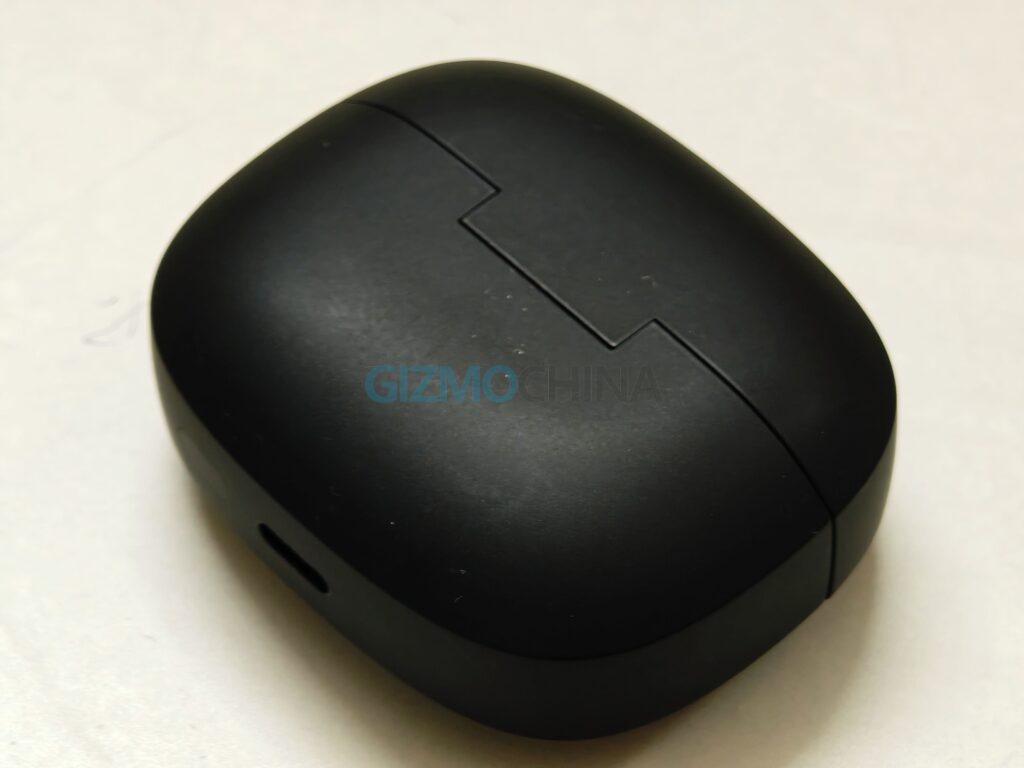
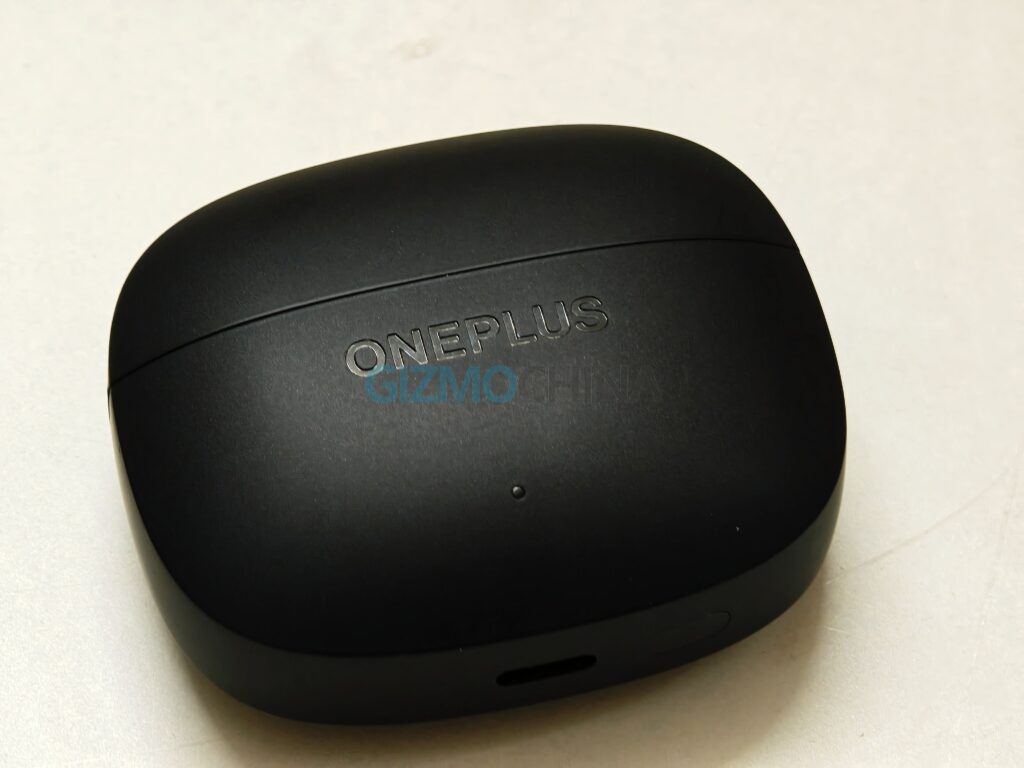
The Nord Buds 4 Pro follow a clean and understated design language. The Raven Black finish keeps things minimal, which some may appreciate, though it doesn’t particularly stand out. The case has a slightly more structured, boxy shape compared to earlier Nord Buds. It’s still pocketable, but it can feel a bit noticeable if you’re carrying it alongside other items.
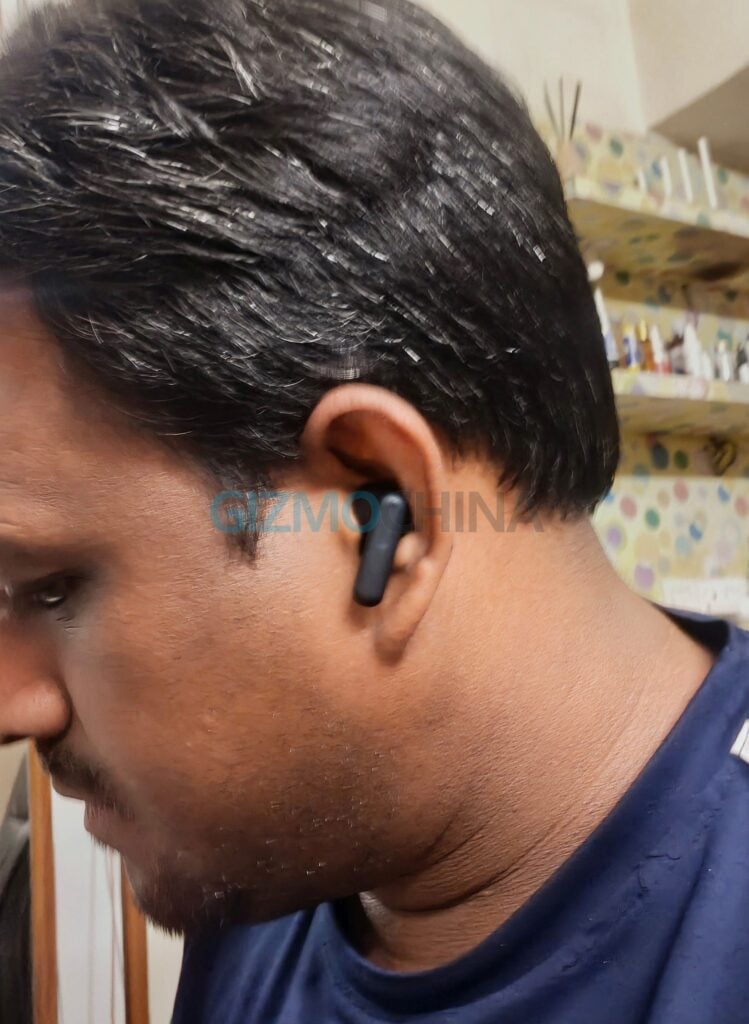
In everyday use, however, the design proves to be practical. The case feels solid, the hinge is reliable, and the matte texture resists fingerprints well. The earbuds themselves are lightweight and sit securely in the ears. I used them during work hours and short walks, and they stayed in place without needing adjustment.
Comfort is easily one of the better aspects here. With the right ear tips, I could wear them for extended periods without discomfort, which makes them suitable for long listening sessions.
Sound quality
The Nord Buds 4 Pro are tuned with a clear focus on a bass-forward sound. The 12mm drivers deliver a noticeable low-end punch, which works well for genres like electronic music and Bollywood tracks.
At the same time, the tuning leans towards a more relaxed listening experience. Vocals come through clearly enough for everyday use, and the overall presentation feels smooth rather than aggressive. This makes them easy to listen to over longer periods without fatigue.
While the sound is enjoyable, it feels more tuned for casual listening rather than critical listening. For most users streaming music or watching content, the performance remains perfectly adequate and consistent.
ANC and transparency mode
OnePlus claims up to 55dB of active noise cancellation, and in real-world use, the performance is decent for the segment. In quieter environments like home or office spaces, the ANC reduces background noise effectively, making it easier to focus on music or calls.
In busier surroundings such as traffic or crowded cafés, the earbuds still reduce a fair amount of ambient noise, though some external sounds can remain audible. It doesn’t completely block everything out, but it does enough to improve the overall listening experience.
Transparency mode is usable for staying aware of your surroundings, especially for quick conversations or while walking outdoors.
Call quality
Call quality is fairly reliable in indoor conditions. Voices come through clearly, and there’s no major distortion during regular calls.
Outdoors, performance can vary depending on the environment. While the microphones manage to keep your voice audible, background noise like wind or traffic can sometimes be noticeable to the listener on the other end. It works fine for casual calls, but may not always deliver the same consistency in challenging conditions.
Battery life
Battery life is dependable for daily use. With mixed usage and ANC toggled on and off, I was getting around six hours on a single charge. With the case, the earbuds easily lasted a few days before needing a recharge.
Fast charging is a useful addition. A short 10-minute charge provided enough playback for a couple of hours, which is convenient when you’re in a hurry. There’s no wireless charging, but that’s expected at this price.
Connectivity and features
Connectivity has been smooth and reliable throughout my usage. Pairing is quick, and the earbuds reconnect almost instantly when taken out of the case. Dual-device connectivity works well, allowing easy switching between devices without manual intervention.
Latency is noticeable in the standard mode, especially during gaming or fast-paced video content. However, enabling the low-latency mode improves synchronization significantly, making it much more usable for those scenarios.
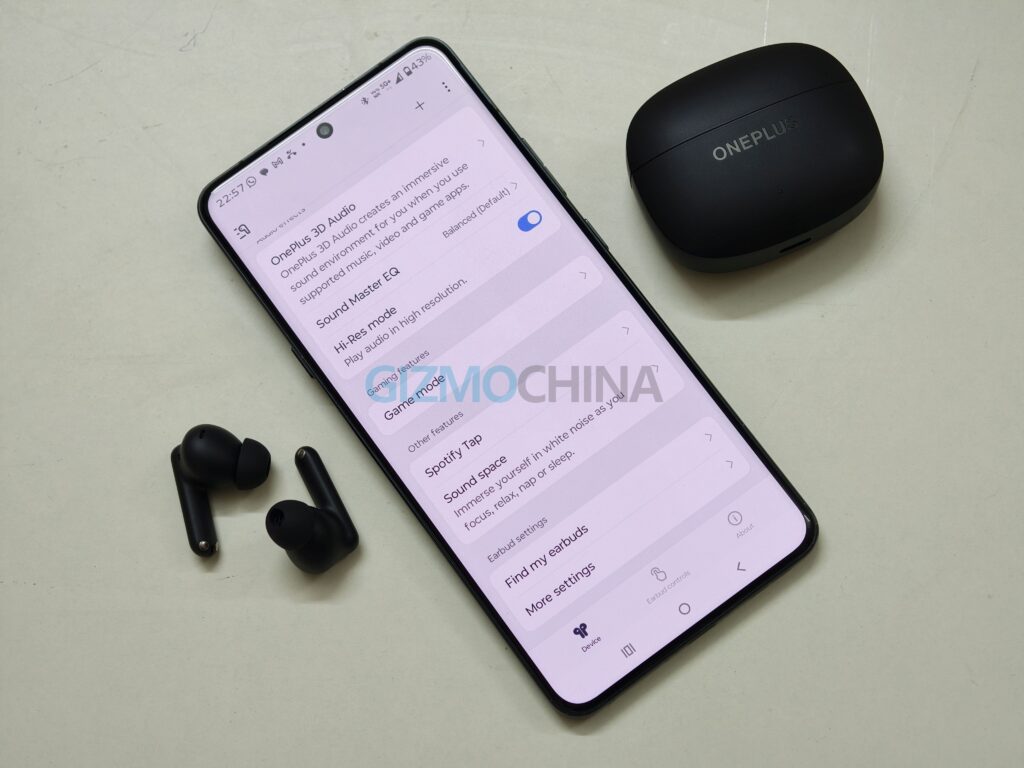
The companion app offers a wide range of features, including ANC controls, EQ settings, touch customization, and more. On OnePlus devices, these controls are integrated into the system settings, which adds to the convenience.
Verdict
The OnePlus Nord Buds 4 Pro deliver a well-rounded experience for their price. They are comfortable, easy to use, and come with a feature set that covers most everyday needs, from ANC and multipoint connectivity to low-latency gaming mode.
At the same time, they don’t try to push boundaries in any one area. Instead, they focus on delivering a consistent and reliable experience across the board.
For Rs 3,999, these earbuds are best suited for casual listeners, commuters, and users looking for a dependable pair of TWS earbuds without overthinking the details. Personally, I found them to be a good everyday option—but not necessarily the most exciting one in this segment.
For more daily updates, please visit our News Section.
Unitree Robotics is set to launch its cheapest humanoid robot, the R1, in global markets next week. What makes this launch stand out is the sales strategy. Unitree is taking humanoid robots directly to online platforms, starting with AliExpress. This marks a shift from traditional enterprise sales to a more accessible, e-commerce-driven approach.
The initial rollout will cover North America, Europe, Japan, and Singapore. The company is also joining Alibaba’s Brand+ channel, which brings benefits like free shipping, free returns, and better global visibility. More online and offline sales channels are expected to follow.
Unitree R1
R1 Robot: Built for Motion, Priced for Access
The R1 was first launched in China in 2025 at a starting price of 29,900 yuan (around $4,370), making it one of the most affordable humanoid robots available. While global pricing is still unannounced, the company is expected to keep it competitive.
Standing 123 cm tall and weighing over 27 kg, the R1 is designed for dynamic movement. It can perform cartwheels, run downhill, stand up from the ground, and execute complex routines. The “Born for sport” positioning highlights its focus on agility and motion rather than industrial tasks.
From Labs to Online Buyers
Unitree’s move to sell robots online signals a major shift in how humanoid machines are marketed and distributed. Until now, most robots were sold through enterprise deals or research contracts. By listing on platforms like AliExpress, Unitree is opening access to developers, educators, and even early consumers globally.
This builds on its existing customer base, where around 70% of shipments in 2025 went to universities and research institutions. The online model could further expand this ecosystem.
Unitree R1
Scaling Fast with a Low-Cost Strategy
The company shipped over 5,500 humanoid robots in 2025, far ahead of competitors like Tesla, Figure AI, and Agility Robotics, which delivered around 150 units each. Unitree now aims to ship 10,000 to 20,000 units in 2026.
Its cost advantage comes from a highly localized supply chain, with over 80% of components sourced within China. This allows it to price robots far below global averages, where similar machines can cost up to $300,000.
A New Phase for Consumer Robotics
Unitree’s online-first global launch could reshape the humanoid robotics market. By combining low pricing with e-commerce accessibility, the company is testing real-world demand beyond labs and factories.
If successful, this approach could accelerate adoption and bring humanoid robots closer to mainstream buyers much faster than expected.
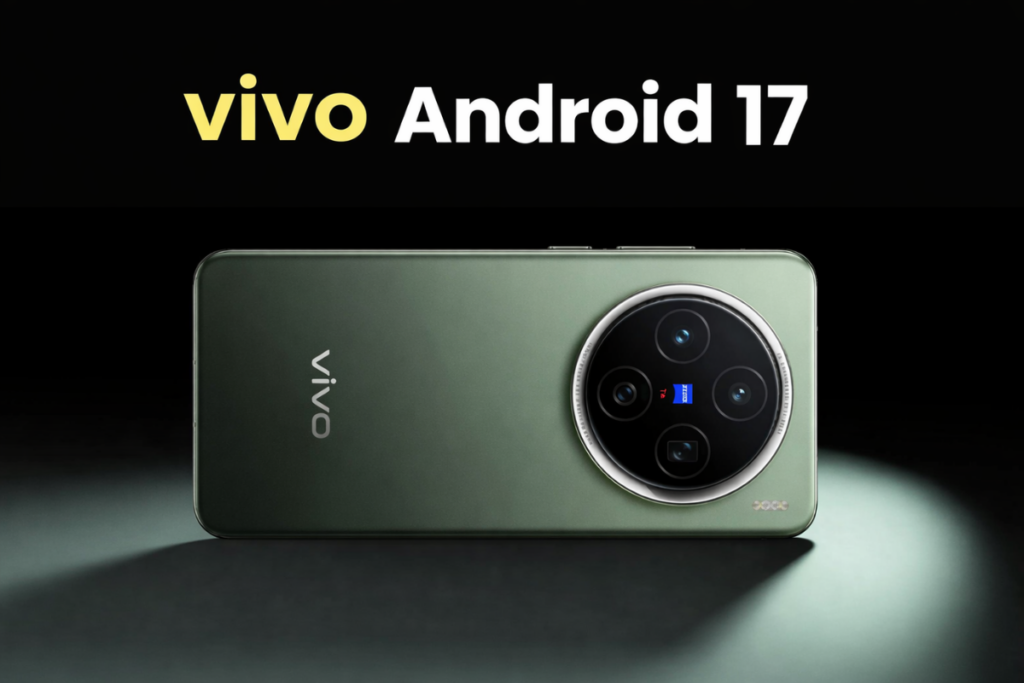
Vivo has almost wrapped up its Android 16-based OriginOS 6 rollout and has already started working on Android 17. In fact, the company has already released Android 17 beta builds for a few devices via the Developer Preview program.
Now that Android 17 betas are out for Vivo phones, you may be wondering if your Vivo or iQOO phone is eligible for the Android 17 upgrade. We’ve included the complete list in this post. Review it below to find out if yours made the cut.
Note that Vivo hasn’t officially announced the list yet. So, this one is based on the current update policy and the company’s past track record.
Vivo Android 17 (OriginOS 7) eligible devices list
Vivo X-series
Vivo X300
Vivo X300 Pro
Vivo X300 Ultra
Vivo X300 FE
Vivo X200
Vivo X200 Pro
Vivo X200 FE
Vivo X200T
Vivo X100
Vivo X100 Pro
Vivo V-series
Vivo V70
Vivo V70 FE
Vivo V70 Elite
Vivo V60
Vivo V60e
Vivo V60 Lite
Vivo V60 Lite 4G
Vivo V50
Vivo V50e
Vivo V50 Lite
Vivo V50 Lite 4G
Vivo V40
Vivo V40 Pro
Vivo T-series
Vivo T4
Vivo T4 Pro
Vivo T4 Ultra
Vivo T4 Lite
Vivo T4x
Vivo T4R
Vivo Y-series
Vivo Y400
Vivo Y400 4G
Vivo Y400 Pro
Vivo Y400 Pro+
Vivo Y300 GT
Vivo Y300t
Vivo Y300i
Vivo Y51 Pro
Vivo Y31d 4G
Vivo Y21 (2026)
Vivo Y11 (2026)
Vivo Y05 4G
iQOO Android 17 (OriginOS 7) eligible devices list
iQOO flagship phones
iQOO 15
iQOO 15 Ultra
iQOO 15R
iQOO 13
iQOO 12
iQOO 12 Pro
iQOO Z-series
iQOO Z11x
iQOO Z10
iQOO Z10x
iQOO Z10R
iQOO Z10 Lite
iQOO Neo-series
iQOO Neo 10
iQOO Neo 10R
iQOO Neo 9 Pro
If you can spot your Vivo or iQOO phone on the list above, it’s almost certain to receive the Android 17 update once the rollout begins, which will likely come with the OriginOS 7 skin at the top.
Many Vivo phones lack a clear software update policy. For these devices, it’s hard to know if they will be upgraded to Android 17. So, to keep the list as accurate as possible, we didn’t include devices we weren’t confident about, but they might still have a chance. So, if your device isn’t on the list, it’s best to wait until the official list is released.
As for Vivo’s Android 17 Developer Preview program, it’s currently open for Vivo X300 Pro and iQOO 15, with no official confirmation about its expansion to more devices. Meanwhile, Google continues to refine Android 17 to prepare for a stable release around June 2026. It has already released three betas, and as a result, the upcoming Android OS has reached platform stability.
We’ll keep updating you with the latest Android 17 details in the Android 17 section on this website. So, remember to visit that page once in a while to stay updated. Or join our Telegram channel to get instant notifications when we publish a new story.
Alibaba’s Qwen models are nearing 1 billion downloads, dominating open-source AI globally
Qwen holds over 50% of total downloads, far ahead of global competitors
Growth is driven by aggressive pricing, strong performance, and an open-source strategy
Alibaba’s Qwen AI models are rapidly emerging as the global leader in open-source artificial intelligence. As of March 2026, the Qwen model family has reached around 942 million total downloads, with a massive 153.6 million downloads recorded in February alone. This puts Qwen significantly ahead of competitors, with more than double the combined downloads of the next eight players.
A major boost came from the launch of Qwen 3.5 in February 2026. The latest version delivers major improvements in both speed and efficiency. It is reported to be up to eight times faster and around 60% cheaper than its predecessor, making it highly attractive for developers and businesses.
Qwen’s rise also reflects a broader shift in the global AI landscape. Since mid-2024, Chinese open-source models have overtaken their US counterparts in total downloads. Earlier releases like Qwen 2.5 played a key role in this transition by accelerating adoption worldwide.
The company’s strategy focuses on offering powerful yet low-cost models to drive mass adoption. This approach helps build a large developer ecosystem, which is later monetized through cloud services. As a result, Qwen is not just gaining popularity but also strengthening its position in the global AI race.
Competitors: Still Far Behind Qwen
Qwen’s closest rival, Meta’s Llama, is now significantly behind, with estimates suggesting a gap of hundreds of millions of downloads. Fast-growing players like DeepSeek have seen sharp spikes in popularity, but still lag far in total usage. Meanwhile, other models from Nvidia and smaller AI firms show steady but limited adoption. Overall, no competitor currently matches Qwen’s scale, making its lead both clear and rapidly widening.
Casio has introduced its G-Shock Summer Resort 2026 series, adding four new models to its lineup. The range includes the GMA-P2100SR-1A, GMA-P2100SR-7A, GM-S2110SR-1A, and GM-S2110SR-7A, combining compact designs with seasonal styling and standard G-Shock durability.
A key design element across all models is the polarized vapor deposition glass. This finish shifts color depending on the viewing angle, creating a changing tint effect. The GMA-P2100SR-1A and GM-S2110SR-7A use green-tinted glass, while the GMA-P2100SR-7A and GM-S2110SR-1A feature a pink tint. Each unit has slight variations due to the coating process, and visibility may vary under certain lighting conditions.
The GM-S2110SR models use an octagonal case with a silver-tone stainless steel bezel. Strap options include a dark gray resin band on the GM-S2110SR-1A and a white resin band on the GM-S2110SR-7A. The GMA-P2100SR models use a round case with a translucent resin bezel and strap, available in black for the -1A variant and clear for the -7A version.
Both series are built in a compact form factor aimed at smaller wrists. The case measures 46 × 40.2 × 11.2 mm and weighs 40 g. Construction includes a resin case and bezel, a resin band, mineral glass, and shock resistance. Water resistance is rated at 200 meters. The watches run on a CR1025 battery with an estimated life of around three years.
Features include world time with 31 time zones covering 48 cities and UTC, a 1/100-second stopwatch, countdown timer up to 24 hours, five daily alarms, and an hourly time signal. Additional functions include double LED lighting for analog and digital displays, full auto calendar to 2099, mute option, ±15 seconds per month accuracy, and 12/24-hour format. The display combines analog hands with a digital panel and includes a hand shift feature.
In Japan, the GMA-P2100SR models are priced at ¥19,800 ($124), while the GM-S2110SR variants cost ¥30,250 ($190). Global availability is expected, though release timelines outside Japan have not been confirmed. Some models are expected to arrive later this month in markets outside of Japan.
For more daily updates, please visit our News Section.
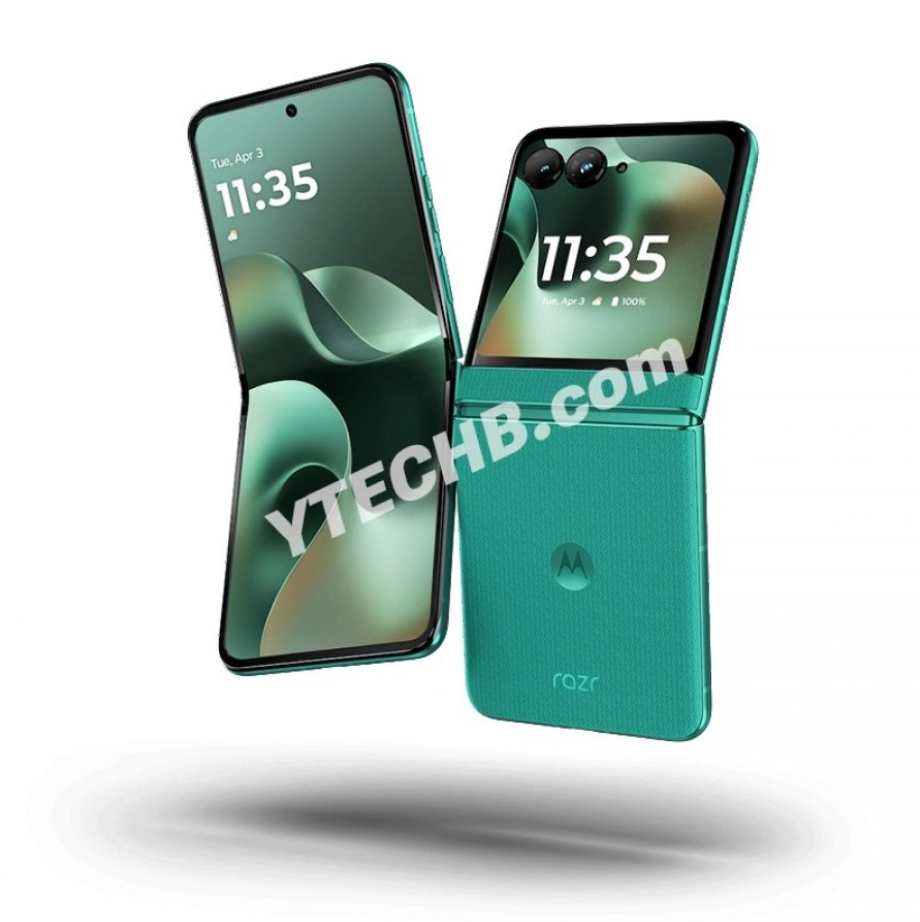
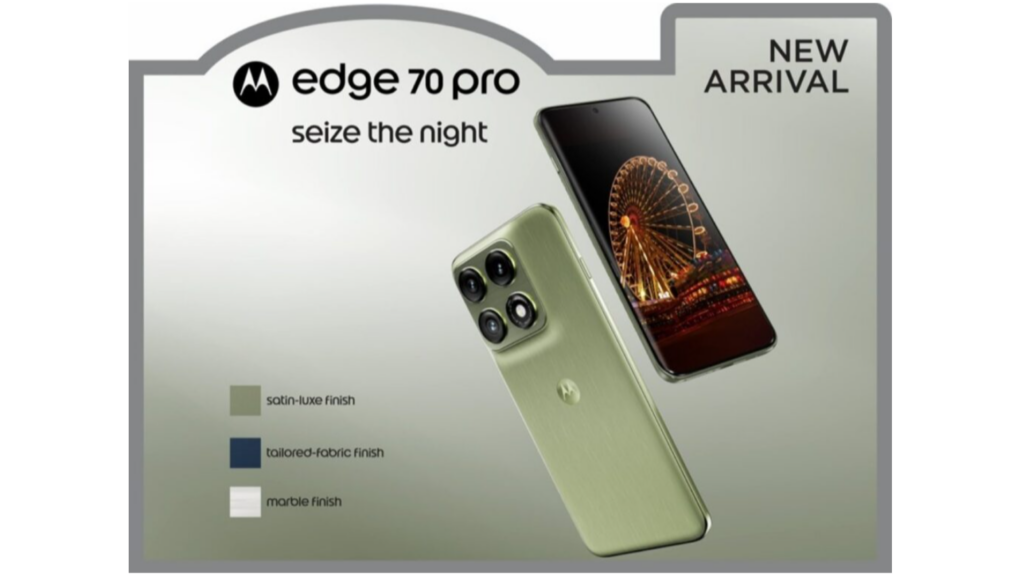
Motorola’s Razr 70 has shown up in a new set of leaked renders, giving a clearer look at the design ahead of its expected launch. This comes not long after leaks around the Razr 70 Ultra and the Edge 70 Pro, so things seem to be picking up pace.
The images, shared by sources including YTechB, show the phone in three Pantone color options: Sporting Green, Hematite, and Violet Ice. There’s also talk of a fourth color. The green variant looks the most eye-catching, while the others lean a bit more toward neutral tones. Some reports also mention different textures depending on the color, possibly including a fabric-like or patterned finish.
In terms of design, not much seems to have changed. It still follows the same clamshell layout as before, with a large foldable screen inside and a smaller cover display on the outside. The inner display is expected to be around 6.9 inches, while the outer one sits at about 3.6 inches, which should be enough for quick interactions without unfolding the phone.
On the hardware side, there are a few upgrades being mentioned. The Razr 70 is said to come with 8GB, 12GB, or even 16GB of RAM, along with storage options going up to 1TB. The camera setup is also shifting a bit: instead of an ultrawide, the phone may use a 50MP, 3x telephoto paired with a 50MP main camera. There’s also a 32MP front camera.
Battery capacity is expected to be around 4,500mAh, the same as last year. Details about the chipset are still unclear, though it’s likely to be an upgrade over the previous model. The Razr 60 uses the 4nm MediaTek Dimensity 7400X, a mid-range chip aimed at balanced performance. For those looking for more raw power, the Razr 70 Ultra is expected to use the top-end Snapdragon 8 Elite Gen 5, an upgrade over the 8 Elite in the Razr 60 Ultra.
Overall, the Razr 60 looks more like a refinement than a big redesign. Motorola seems to be adjusting things like camera setup and memory options while keeping the familiar form factor intact. With multiple leaks now surfacing, an official announcement probably isn’t too far off.
OnePlus may have just started teasing a new addition to its Ace lineup, likely the rumored OnePlus Ace 6 Ultra. The device has been circulating in leaks for weeks, but now there’s a more official signal that its launch might not be far off.
The hint comes from Li Jie Louis, President of OnePlus China, who recently suggested that a new “OnePlus Ace” phone is coming soon. While he didn’t explicitly name the Ace 6 Ultra, the timing lines up closely with recent certifications and leaks surrounding the device.
For instance, the phone recently appeared on China’s MIIT certification platform with the model number PMB110. These regulatory listings don’t reveal much on their own, but they usually indicate that a launch is getting closer.
OnePlus Ace 6 Ultra specifications
On the hardware side, the phone could feature a 6.8-inch OLED display with a 165Hz refresh rate.
As per previous reports, the OnePlus Ace 6 Ultra will have a 16-megapixel front camera. On the back, it is expected to include a 50-megapixel main camera along with an 8-megapixel ultra-wide sensor.
OnePlus Ace 6T
Powering the device will likely be the MediaTek Dimensity 9500 chip paired with an 8,500mAh battery. Memory options are said to include configurations such as 12GB+256GB, 12GB+512GB, 16GB+256GB, 16GB+512GB, and 16GB+1TB. In terms of color options, the device may be available in Black and Titanium.
The Ace 6 Ultra is expected to go head-to-head with the Redmi K90 Max. The two are rumored to share the same chip, battery capacity, and refresh rate. Redmi has already started teasing the phone ahead of its expected launch this month.
As for global availability, it remains unclear whether the company plans to launch a tweaked version of the Ace 6 Ultra worldwide. In the past, a modified version of the Ace 6T was released globally under the OnePlus 15T moniker.
For more daily updates, please visit our News Section.
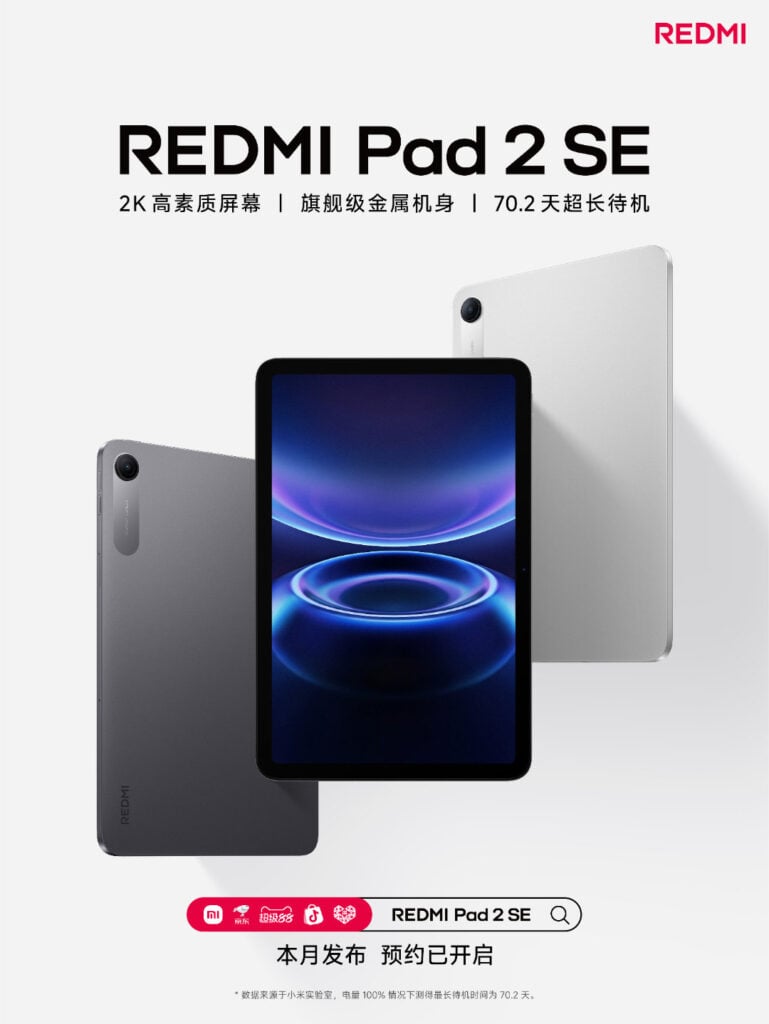
REDMI has a new tablet on the way, and it looks like a smaller, more affordable option. The Pad 2 SE has been officially teased, with the launch expected later this month in China.
From what the company has shared so far, the focus seems to be on the display and overall usability rather than raw performance. Lu Weibing is calling out a “high refresh rate and high brightness screen,” which is pretty much what you’d expect from its budget tablets lately.
The tablet uses a 9.7-inch 2K display, which is an interesting size: not too big, not exactly compact either. It should work fine for things like watching videos or reading, and still be easy enough to carry around. It also comes with TÜV Rheinland eye protection certifications, so there’s some attention to long-term viewing comfort as well.
Design is another area Xiaomi is highlighting. The Pad 2 SE features a metal unibody design. The durability probably just makes the tablet feel a bit nicer in hand overall.
There’s a 7600mAh battery inside, which sounds about right for this size. No detailed claims yet, but it should be enough for a full day with regular use.
The Pad 2 SE will go official alongside a few other products, including the REDMI Book Pro 2026 and the K90 Max. So it looks like Xiaomi is grouping everything into a single event again.
Not everything is known yet: pricing and full specs are still missing. But based on what’s been shared, the Pad 2 SE looks like a fairly straightforward device, with a bit more focus on the display and build quality.
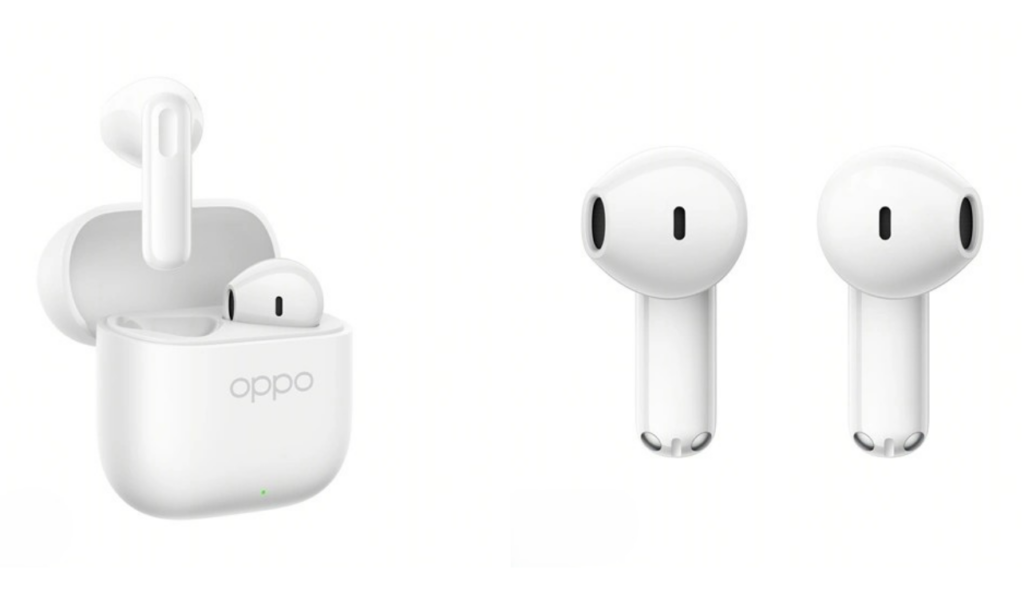
Oppo seems to have another pair of budget earbuds in the works. The Enco R5 has now appeared in China Telecom’s product database, revealing an updated design.
The listing shows the earbuds under the model number ETEG1, and one of the noticeable changes this time is the move to a semi-in-ear design. That usually means a looser fit compared to in-ear tips, which some people prefer for longer use. It also tends to let in a bit more ambient sound, which can be either good or bad depending on how you use them.
There’s only one color mentioned so far, Frost Moon White, which is a standard clean finish. Nothing too unusual there.
As for the case, it looks fairly compact, coming in at around 49 × 49 × 24 mm and weighing roughly 39 grams. That should make it easy enough to carry around without thinking about it too much.
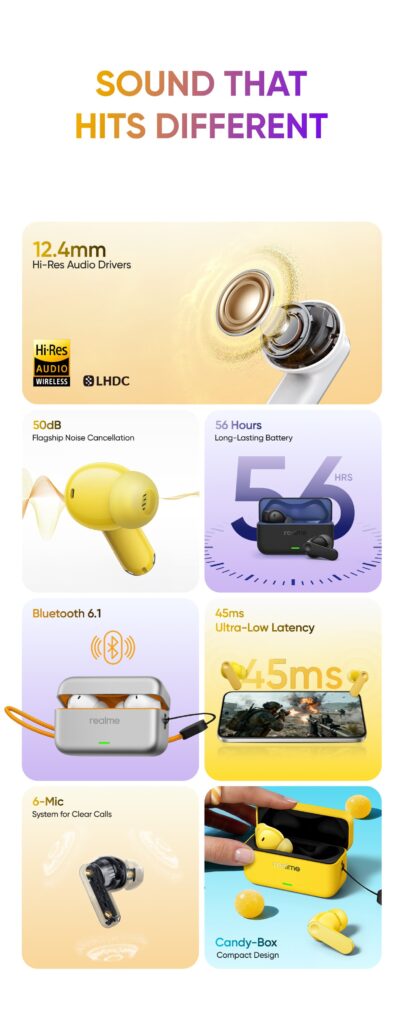
Each earbud is said to use a 12.4mm dynamic driver. That’s not uncommon in this segment, and it should be fine for everyday listening, though tuning will matter more than the size itself.
The feature list is pretty straightforward. There’s AI call noise reduction, dual-device connectivity, and an IP55 rating, so it should handle things like light rain or workouts without issues. Nothing particularly new here, but it covers the basics.
For comparison, the previous Enco R4 had a similar setup but used an in-ear design instead. It was positioned as a budget option, bundled with phones rather than sold on its own.
With the R5, Oppo seems to be tweaking the formula slightly, mainly focusing on design and ambient awareness.
There’s still no mention of battery life or pricing in the listing. That will probably come later when Oppo makes it official.
Samsung has launched beta programs for every minor One UI update in recent years, though they were mostly limited to Galaxy foldable phones. One UI 8.5, based on Android 16 QPR2, changes that tradition, as the beta also reaches many other Galaxy devices, including mid-range Galaxy A-series phones.
Review the list below to find out if your Galaxy device is eligible for the One UI 8.5 beta program.
Galaxy devices eligible for One UI 8.5 beta program
Galaxy S25
Galaxy S25+
Galaxy S25 Ultra
Galaxy S25 FE
Galaxy S24
Galaxy S24+
Galaxy S24 Ultra
Galaxy S24 FE
Galaxy S23
Galaxy S23+
Galaxy S23 Ultra
Galaxy Z Fold 7
Galaxy Z Flip 7
Galaxy Z Fold 6
Galaxy Z Flip 6
Galaxy Z Fold 5
Galaxy Z Flip 5
Galaxy A36
Note that the One UI 8.5 beta program is live in six markets, including India, Korea, Germany, Poland, the US, and the UK. So, if you have a Galaxy device that’s on the list and you live in a supported region, you can sign up for the beta program to get early access to the upcoming features and upgrades.
We can expect the list to grow in the coming weeks as more Galaxy devices join the One UI 8.5 beta program. We will update the list when that happens.
Keep in mind that beta builds may contain bugs and broken features. If you are okay with that, follow these steps to get the One UI 8.5 beta on your device.
Remember to back up important data for added safety.
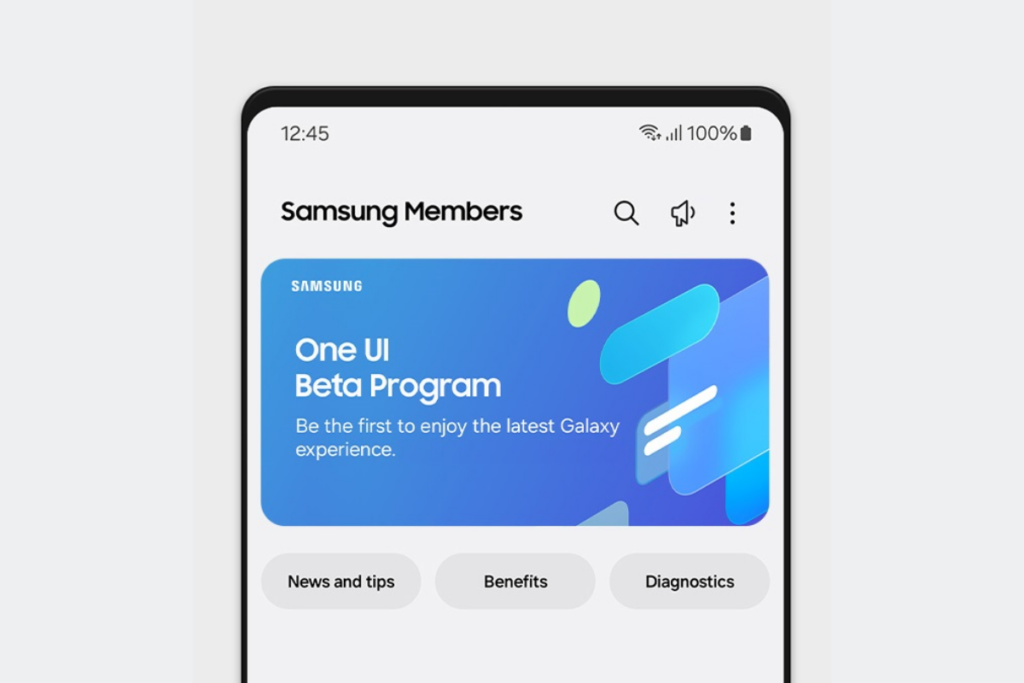
Open the Samsung Members app on your phone.
Make sure you’re signed in to the app with your Samsung account.
Tap on the One UI Beta Program banner. If you don’t see this, the beta program isn’t currently available for your device.
Accept the terms and conditions to enroll in the beta program.
Go to Settings > Software updates and tap Download and install.
Once the download is completed, tap Install now.
We’ll keep updating you with the latest developments related to One UI in our Samsung section. You can visit the section regularly for the latest updates. Or, join our Telegram channel to get instant notifications about the latest software updates and breaking tech news.
After the Find X9 Ultra, Oppo has now revealed the design of the Oppo Find X9s Pro ahead of its April 21 launch. It brings a noticeably new look to the back. Instead of a traditional camera island, the phone uses a horizontal layout that stretches across the upper portion of the device.
Inside that layout sits a square camera module, integrated into the design on the left side, while the right side has a visible step. The flash sits outside this camera module.
As for color options, the Oppo Find X9s Pro will be available in Wind Rider Green, Free White, Energetic Orange, and Native Titanium.
Oppo Find X9s Pro Specifications
The Find X9s Pro uses a flat 1.5K display on the front, paired with a right-angled metal frame.
As expected, cameras are the centerpiece here. The Find X9s Pro is said to feature a dual 200-megapixel system co-developed with Hasselblad, including both a main and telephoto sensor. Oppo is also adding a teleconverter-style function for long-distance shooting.
Alongside that, the phone includes a second-generation Danxia color system, a new LUMO imaging engine, and an updated Hasselblad Master Mode with native film-style output. Video recording goes up to 8K.
Under the hood, the device is powered by the Dimensity 9500 chipset, paired with a notably large 7,025mAh battery. For top up, it supports 80W wired and 50W wireless charging.
Other features include a 144Hz display, an eye-protection panel capable of dimming down to 1 nit brightness, ultrasonic fingerprint unlocking, and full IP66, IP68, and IP69 water resistance ratings. The phone will also run ColorOS 16 out of the box.
The Oppo Find X9s Pro smartphone will launch at 19:00 on April 21st. In addition to the Find X9s Pro and Find X9 Ultra smartphones, Oppo will also unveil the Enco Clip 2 earphones.
For more daily updates, please visit our News Section.
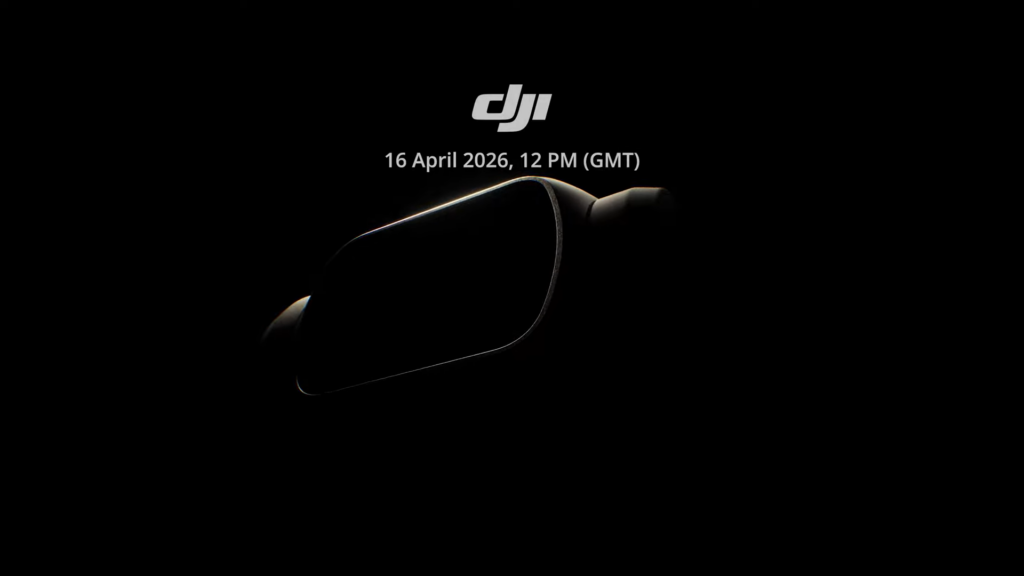
DJI is getting ready to update its pocket gimbal camera lineup, with the Osmo Pocket 4 series now officially set to launch on April 16 at 12 PM (GMT). The new models look like they’ll build on the Pocket 3, with a focus on image quality and a few practical upgrades.
The company has already shared a teaser with the line “A myriad of images in an inch…” (translated from Chinese), which seems to point toward the sensor. As expected, low-light performance and dynamic range are likely areas of improvement.
From what’s been shown so far, the standard Osmo Pocket 4 sticks to the familiar design: a compact body with a camera mounted on top and a small rotatable screen below. There are also physical controls around the hinge area, including a zoom toggle and a customizable button.
There’s also talk of a Pro version, which could introduce a dual-camera setup. That part hasn’t been officially detailed yet, but it suggests DJI might be aiming for a bit more flexibility in terms of focal lengths or shooting modes.
On the hardware side, the standard model is expected to use a 1-inch sensor with up to 14 stops of dynamic range. It should also support 10-bit D-Log, which is useful if you’re planning to do color grading later.
A couple of smaller but practical upgrades are also mentioned. The device may come with 107GB of built-in storage, along with transfer speeds of up to 800MB/s, which should make moving footage a bit quicker.
Overall, it looks like DJI is keeping the same compact form factor but trying to improve the things that matter most for everyday shooting: better dynamic range, easier controls, and faster workflow.
We’ll know more once the company officially unveils the series later this week.
Nothing’s sub-brand CMF announced the CMF Phone 2 Pro in April last year. As the company refreshes the lineup once a year, early details about its successor are starting to surface right on schedule.
A new report from Android Headlines has revealed the specs of the CMF Phone 3 Pro ahead of its launch. Let’s learn about it.
Nothing CMF Phone (3) Pro Specifications (Rumored)
According to the report, one of the biggest changes this generation could be the processor. The upcoming phone is expected to move away from MediaTek chips and instead use a Qualcomm Snapdragon 7s Gen 4. The CMF Phone 2 Pro, by comparison, uses a Dimensity 7300 Pro processor.
The phone is also said to have a rated battery capacity of 5,090mAh, with a typical capacity of around 5,400mAh. That will be paired with support for 45W wired charging, up from 33W on the previous model.
Design-wise, the changes seem more subtle. The mid-frame could switch from plastic to metal, which may improve both in-hand feel and durability.
Likewise, the rear camera layout is said to stay mostly the same, although the flash placement has reportedly been adjusted to create more space between the third camera and the dual-camera setup on the left.
The display is tipped to be an AMOLED panel with a resolution of 2392 × 1080, along with a centered punch-hole cutout for the front-facing camera.
There’s no official confirmation yet from Nothing or CMF, and details could still change before launch. Still, if the report is accurate, the CMF Phone 3 Pro looks like a modest but deliberate update that will focus on incremental improvements rather than a major overhaul.
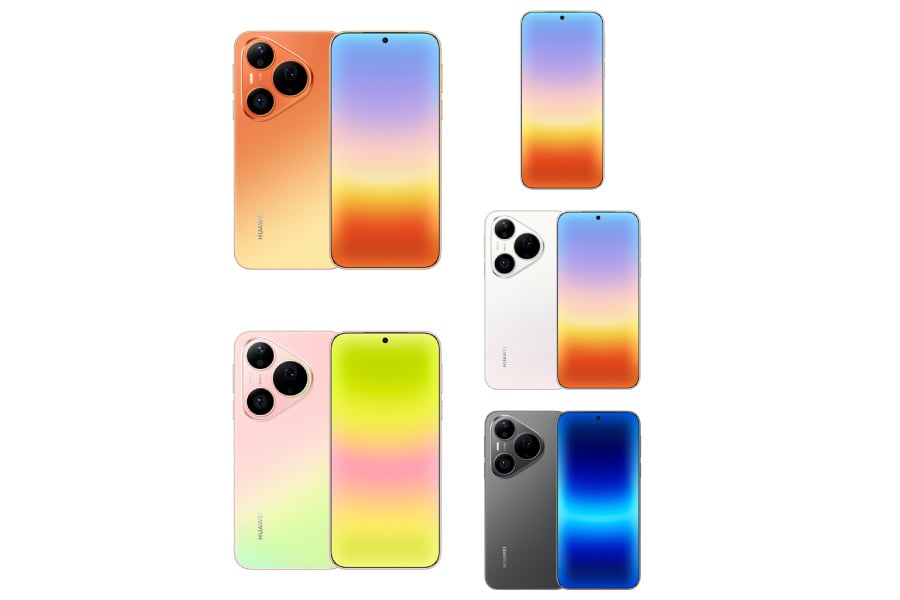
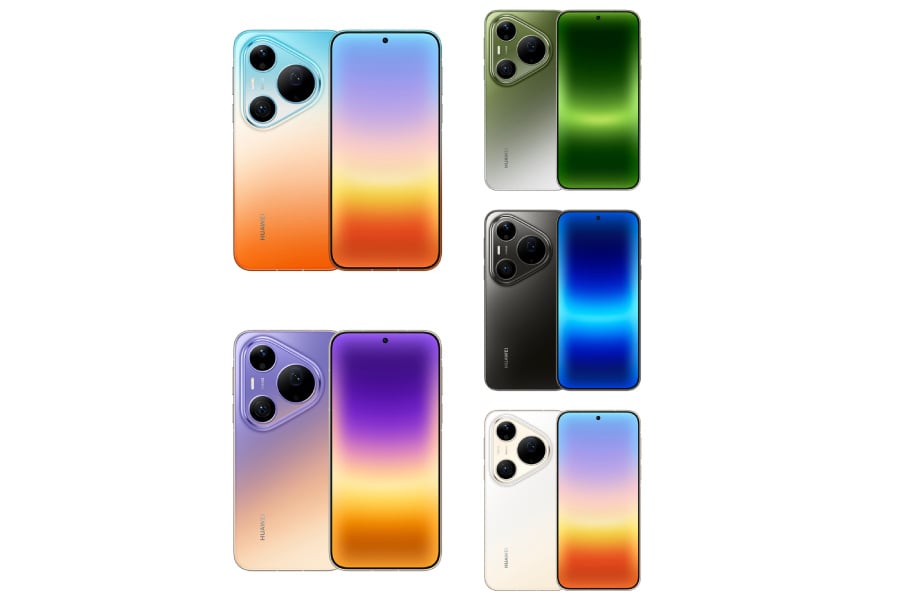
Huawei today confirmed that its next-generation Pura series will debut on April 20 in China, where the company will unveil the Pura 90 Pro and Pura 90 Pro Max. Pre-reservations for both devices kick off today at 12:08 PM China time, according to Huawei’s official Weibo account.
In the lead-up to the launch, Huawei has already shown off the design of two phones, and, to its credit, it’s not playing things too safe.
Both models feature a gradient finish across all of their color options, except black and white. This isn’t the first time Huawei has used gradients on its phone colors. The P20 and P30 series also experimented with similar finishes across select colorways.
Huawei Pura 90 ProHuawei Pura 90 Pro MaxHuawei Pura 90 Pro Max
Around the back, there’s a rounded triangular camera module, paired with flat sides that give the phones a more structured, almost industrial look.
The teasers confirm that both the Pro and Pro Max share this overall design language, though the silhouette doesn’t stray too far from last year’s Pura 80 lineup.
Huawei Pura 90 Series Specifications (Expected)
On the hardware side, the Pura 90 Pro and Pro Max are both expected to use either the Kirin 9030 or the Kirin 9030 Pro processor. The phones will likely run HarmonyOS 6.1 out of the box.
Huawei may also bring its HyperSpace Memory technology to the series. Previously introduced on the Mate 80 Pro Max, it focuses on improving memory efficiency, allowing a 16GB RAM configuration to deliver an experience closer to 20GB through compression.
As expected, cameras remain a major focus for the Pura lineup. The Pura 90 series is rumored to feature a second-generation Maple Imaging System, along with a large 200-megapixel periscope telephoto lens.
`We should learn more about the new phones in the lead-up to launch.
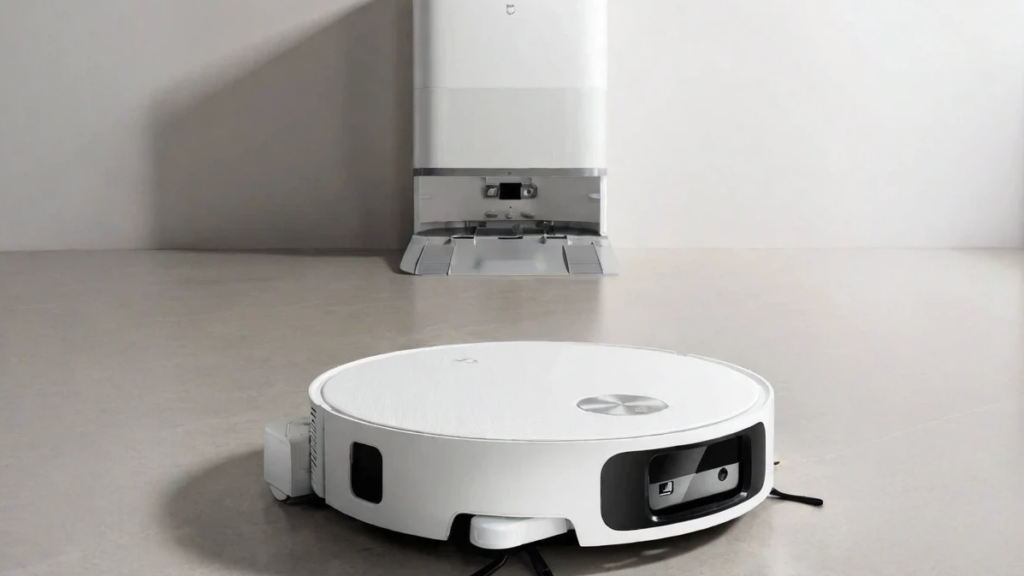
Xiaomi has added a new model to its Mi Home robot vacuum lineup in China, as a more accessible option under the Robot Vacuum and Mop 6 series. It sits below the Pro version that launched recently, but still brings a few noticeable upgrades over the previous generation.
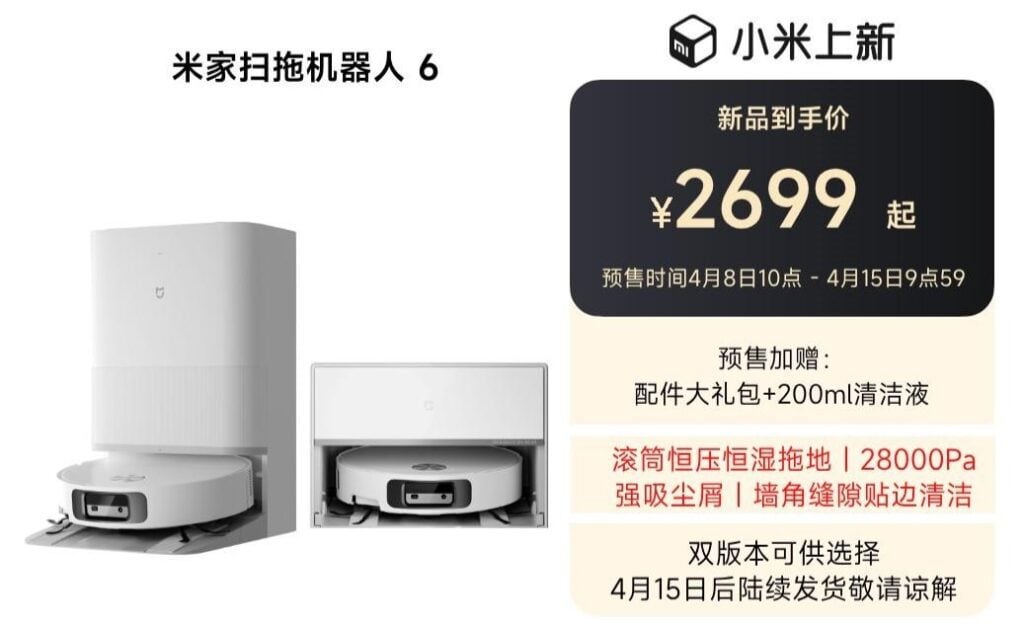
One of the main changes in the standard Robot Vacuum and Mop 6 is the bump in suction power, now rated at 28,000 Pa, up from 23,000 Pa of the Mop 5 Pro. On paper, that should help with picking up finer dust and debris, especially from carpets. But the bigger shift seems to be on the mopping side. Xiaomi has moved away from rotating pads and is now using a roller-style mopping system. The roller is fed with clean water continuously, while a built-in scraper collects dirt, which should help avoid spreading it around during cleaning.
The robot also uses a main brush along with two extending side arms to better reach corners and edges. It’s relatively slim at 90 mm, so it should be able to go under most furniture. For navigation, onboard cameras are used for obstacle detection, with Xiaomi claiming support for recognizing up to 220 types of objects. It can also cross small thresholds of up to 40 mm.
The docking station handles a few of the maintenance tasks. It supports 80°C hot water mop washing, and the tray can be removed for cleaning. Like other Xiaomi smart devices, the robot can be controlled through the app and tied into a wider smart home setup.
In China, the vacuum is priced at CNY 2,699 (roughly $395), making it cheaper than the Pro model. There’s no word yet on a global launch, but based on past releases, it could show up in other markets under a slightly different name.
Overall, this looks like Xiaomi trying to bring some of its newer cleaning features into a more affordable model. It doesn’t do everything the Pro version does, but it covers the basics, with a few practical upgrades along the way.
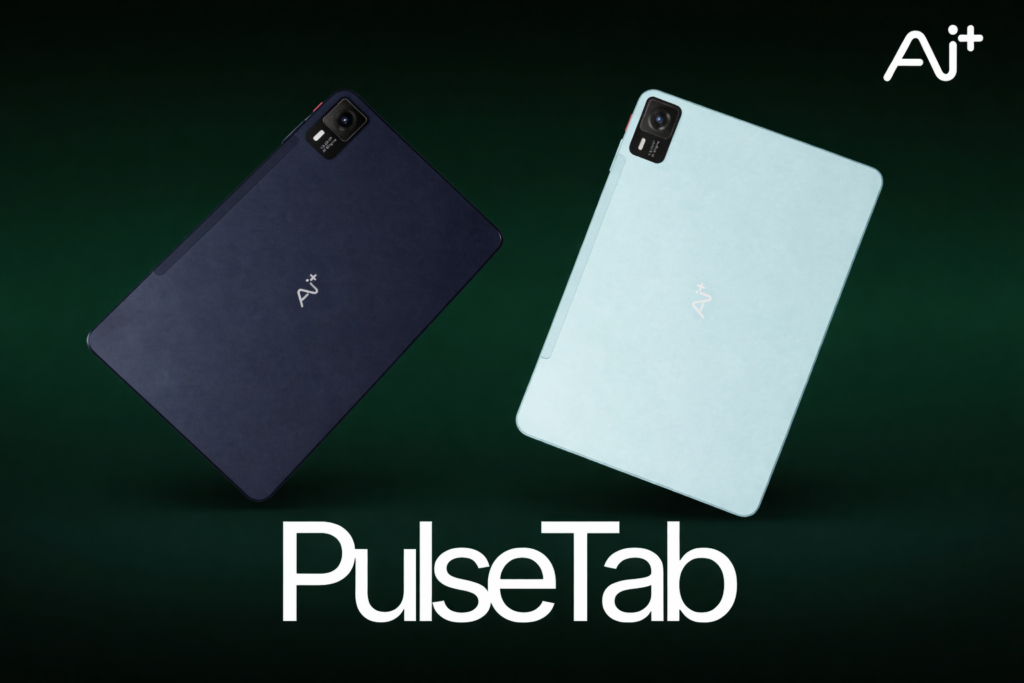
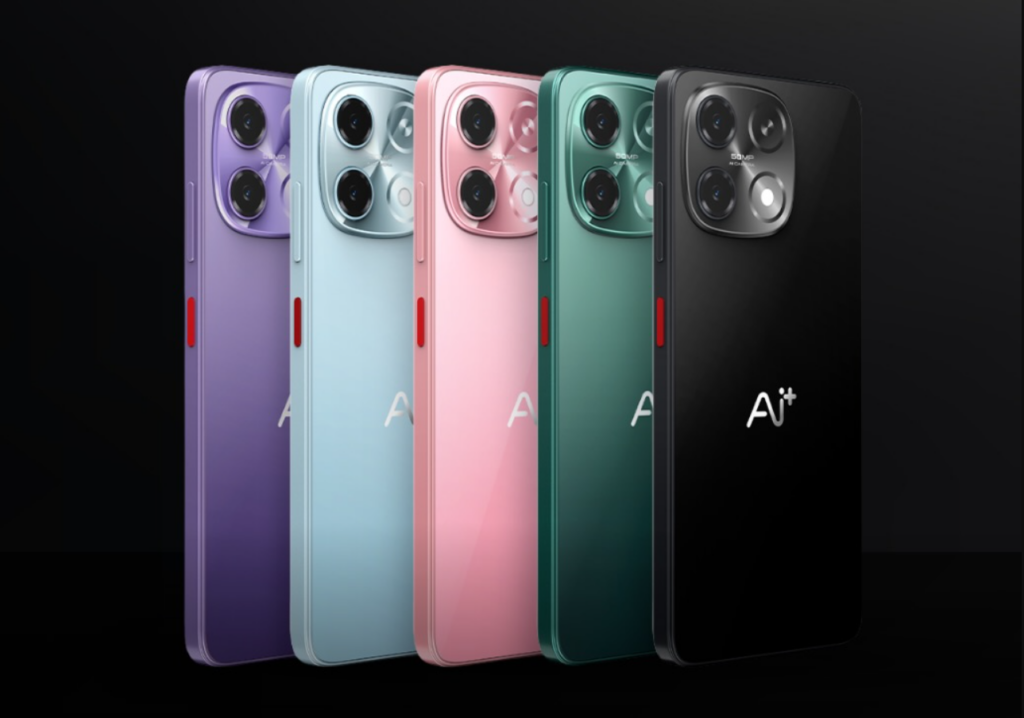
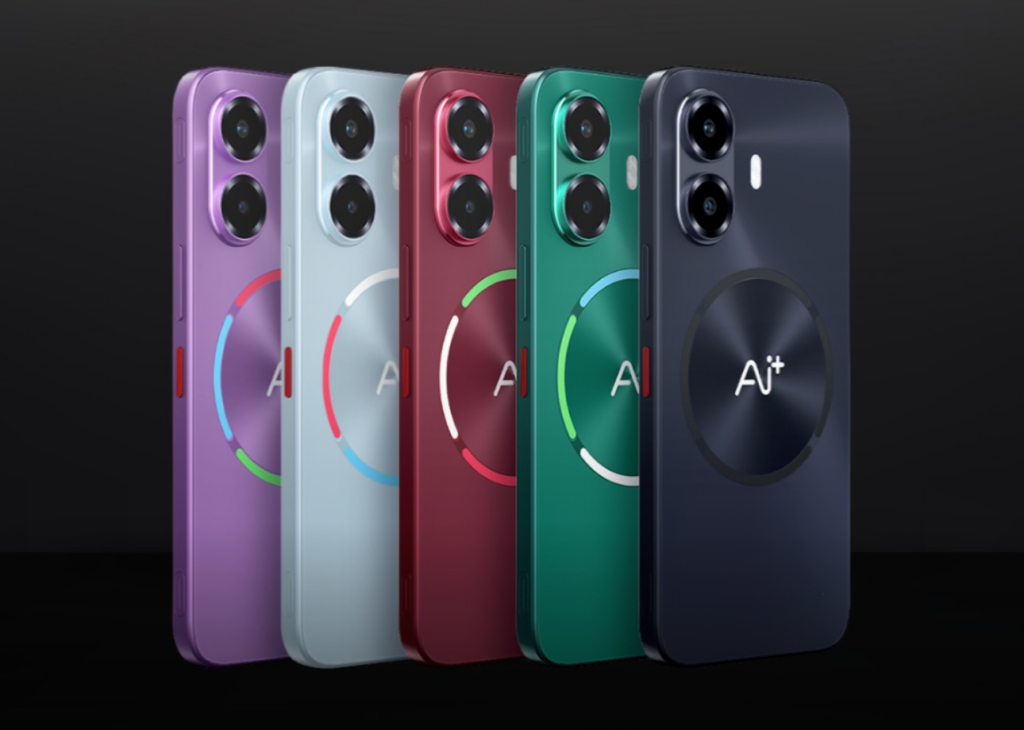
Ai+ also introduced a new tablet and a pair of earbuds alongside the Nova Flip, Nova 2, Nova 2 Ultra, and RotateCam 4G in India yesterday. The newly launched Ai+ PulseTab, along with the NovaPod Beats and NovaPods Air, offers a blend of entertainment-focused features and accessible pricing, making them appealing for everyday use.
Ai+ PulseTab specifications, features, price and availability
Ai+ Pulse Tab
The Ai+ PulseTab comes with a 10.95-inch IPS LCD display that offers FHD+ resolution and a 90Hz refresh rate, making it suitable for streaming, reading, and casual gaming. The panel supports up to 400 nits of brightness and is paired with quad speakers for an improved multimedia experience. The tablet is powered by the MediaTek Helio G88 chipset, coupled with 6GB of RAM and 128GB of storage, which can be expanded further via a microSD card.
For optics, the device features a 13-megapixel rear camera and an 8-megapixel front camera, which should handle basic photography and video calls. It runs on Android 16-based NxtQ OS and is backed by an 8,000mAh battery, which is expected to last through a full day of regular usage. While it supports Wi-Fi, it lacks a SIM slot for cellular connectivity.
The Ai+ Pulse Tab is priced at Rs 9,999 for the single 6GB+128GB variant and will be available in India starting May through Flipkart and select retail outlets.
Ai+ NovaPod Beats, NovaPods Air key features, price and availability
Ai+ NovaPod Beats
Alongside the tablet, Ai+ has also introduced two new true wireless earbuds. The NovaPod Beats comes with 13mm drivers and supports active noise cancellation (ANC), along with features like real-time heart rate and SpO2 monitoring. It offers up to 4 hours of playback and supports fast charging. The earbuds are priced at Rs 1,599 and will be available from May via Flipkart and retail stores.
Ai+ NovaPod Air
The NovaPods Air is positioned as a more affordable option, offering up to 22 hours of total playback with the case. It features quad-mic Environmental Noise Cancellation for calls, 50ms low latency, and an IPX5 rating for protection against sweat and splashes. Priced at Rs 899, it will also go on sale in May through the same channels.
For more daily updates, please visit our News Section.
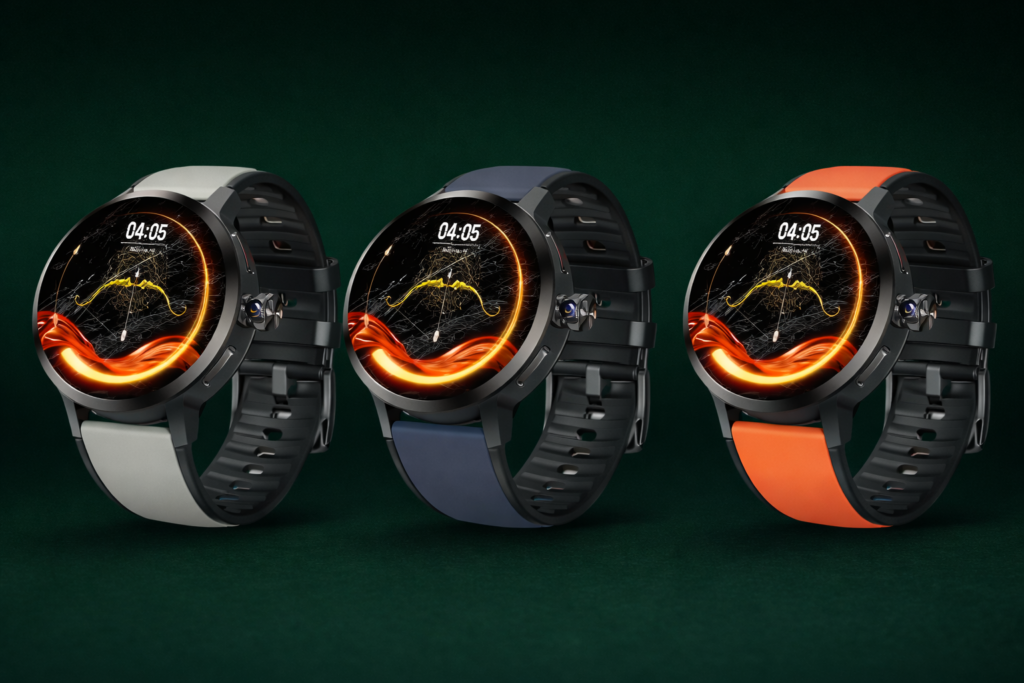
Alongside the Ai+ Nova Flip, Nova 2, and Nova 2 Ultra phones, the company also unveiled a couple of other devices, such as the Pulse Tab, RotateCam 4G, and NovaPods-branded earbuds. The RotateCam 4G is an interesting smartwatch for the Indian market as it comes with a built-in camera and a large battery.
AI+ RotateCam 4G key specifications
Ai+ RotateCam 4G
The Ai+ RotateCam 4G has a round AMOLED screen measuring 1.75 inches. As the moniker suggests, it is equipped with a 2-megapixel camera that can rotate 180 degrees, allowing it to pop out to capture shots.
Another highlight of the RotateCam 4G is that it supports a 4G LTE SIM, allowing users to use it as a standalone device without relying on a phone to make calls. There is a Play Store onboard for installing Android apps.
The RotateCam 4G promises smooth performance thanks to 2GB of RAM and 16GB of built-in storage. It also packs a large 1,520mAh battery, promising long battery life. In terms of durability, it comes with an IP68 rating for dust and water resistance.
Ai+ RotateCam 4G price and availability
Like other Ai+ devices, the RotateCam 4G will be sold through Flipkart with a price tag of Rs 8,999 (~$100) in May. It will also be available through select retail stores. As seen in the image above, the smartwatch comes with three strap options.
For more daily updates, please visit our News Section.
Philips has introduced the 24B2N2200G, a new 23.8-inch monitor featuring a 1080p IPS panel in China. This monitor is now available on JD.com for 649 yuan ($95), offering a highly affordable option with a range of impressive features.
Philips 24B2N2200G Specifications
The 24B2N2200G uses an IPS panel that delivers a resolution of 1920 x 1080. It offers a 16:9 aspect ratio and a pixel density of 93 PPI. The monitor achieves a contrast ratio of 1500:1 and a brightness level of 350 nits.
The monitor provides accurate colors with 8-bit color depth and supports 16.7 million colors. Philips reports a wide 111% sRGB and 101% NTSC color gamut coverage, making it suitable for tasks such as office work and casual gaming.
The monitor supports a 144Hz refresh rate over HDMI 1.4 and DisplayPort 1.2 connections. Philips has included a 4ms gray-to-gray response time to reduce motion blur.
The monitor includes several eye-care features, such as a low blue light filter to reduce harmful blue light, DC dimming to eliminate flicker and minimize eye strain, and EasyRead mode for a paper-like display ideal for reading.
The 24B2N2200G monitor includes dual 2W stereo speakers for basic audio, a tilt-adjustable stand (-5° to 25°) for ergonomic use, and VESA wall mounting (100 x 100mm) for versatile setups and space-saving arrangements.
Philips has provided a range of connectivity options, including HDMI, DisplayPort, and VGA inputs.
In related news, Skyworth has recently introduced an ultra-affordable 1080p 144Hz IPS gaming monitor, while ZTE has unveiled a multi-purpose 5G smart display featuring a touchscreen, built-in camera, and a wheeled design for added mobility.
For more daily updates, please visit ourNews Section.
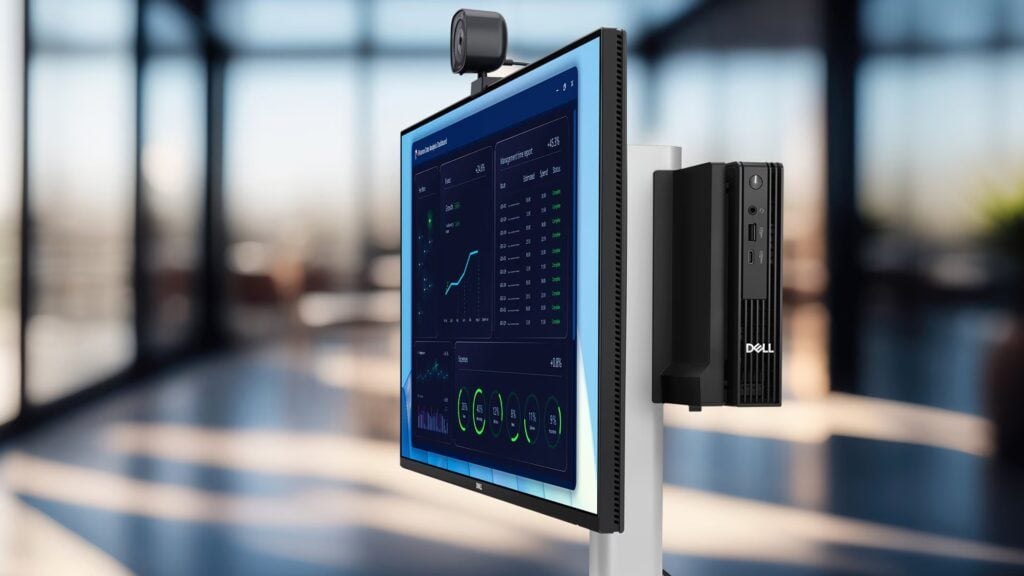
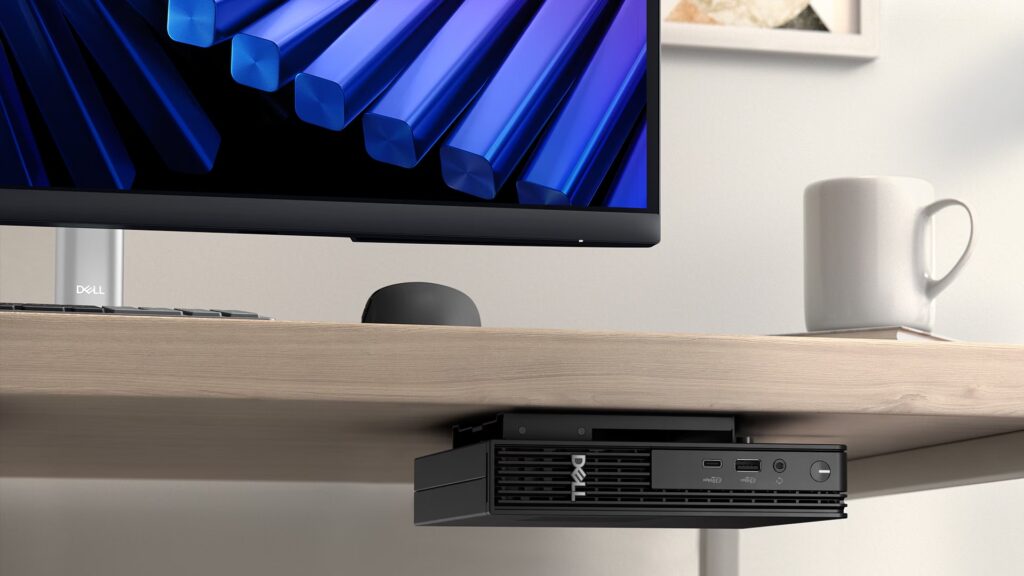
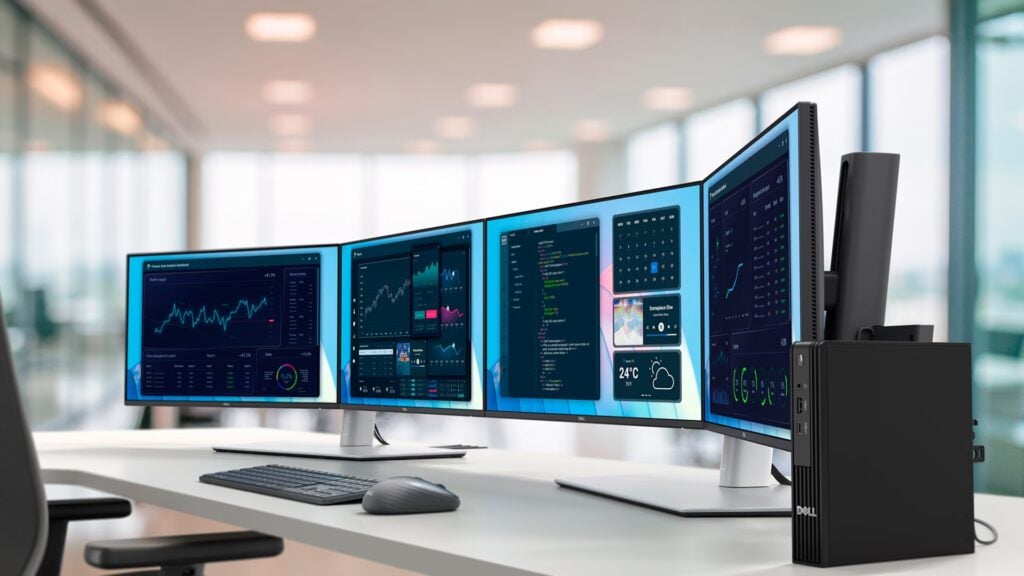
Dell has launched the Pro 5 Micro, one of the first mini PCs to run on Intel’s new Panther Lake platform. The Pro 5 Micro targets professionals and businesses by offering solid performance in a compact form factor.
Dell Pro 5 Micro Specifications
The mini PC measures just 182 x 36 x 178 mm, with a volume of 1.2 liters and a weight of 2.42 pounds. It comes with two processor options: the Intel Core Ultra 5 335 vPro and the Core Ultra 7 366H vPro.
The Pro 5 Micro supports up to 64GB of DDR5 RAM, with speeds reaching 7200MT/s, and offers storage capacity of up to 2TB through dual M.2 Gen 4 SSDs.
The mini PC offers flexible placement options, including mounting under a desk, on a wall, or in an all-in-one stand with a monitor. It supports multi-display setups with up to five monitors for enhanced productivity.
The device includes a wide range of ports for connectivity. On the front, the Pro 5 Micro has a USB 3.2 Gen 1 Type-A port, a USB 3.2 Gen 2 Type-C port, and a global headset jack.
At the back, it offers more options, including HDMI 2.1, DisplayPort 1.4a, Ethernet, USB 2.0 ports, and USB-C with 100W Power Delivery and DisplayPort Alt mode. It also supports Wi-Fi 7 for fast wireless connectivity.
Pricing and Availability
The base model with the Core Ultra 5 335 vPro starts at $1,273 without accessories. With peripherals such as a keyboard and mouse, along with Windows 11 Pro and Wi-Fi 7, the price is $1,409. The premium Core Ultra 7 366H vPro model is available for $1,691.
In related news, Minisforum has recently introduced the Elite M1 Lite mini PC powered by Intel’s Core Ultra 5 125U processor, while Gmktec has unveiled the NucBox K17 mini PC with a Core Ultra 5 chip and support for up to 16TB of storage.
For more daily updates, please visit ourNews Section.
Dyson has launched the HushJet Mini Cool, a compact handheld bladeless fan priced at $99. This new product miniaturizes Dyson’s Air Multiplier technology, which the company first introduced nearly 17 years ago with its larger bladeless fans. The HushJet Mini Cool targets portability and convenience with its lightweight and safe design.
Dyson HushJet Mini Cool Specifications
The fan features a 65,000 RPM brushless DC motor, generating airflow speeds up to 55 mph (25 m/s). It includes multiple speed settings for quieter operation or extended battery life, supported by a 38mm HushJet projection system for efficient airflow direction.
The fan features a rotatable air outlet, allowing users to adjust the airflow direction. The honeycombed mesh and HushJet nozzle reduce turbulence while keeping noise levels around 52 decibels at the lowest setting and 72.5 decibels at maximum power.
The device measures 7.9 inches tall and 1.5 inches in diameter, which makes it easy to carry and store. Its slim, cylindrical body weighs 0.46 pounds, roughly the same as an average smartphone.
The HushJet Mini Cool runs on a 5,000mAh rechargeable battery. It provides up to six hours of runtime on a full charge and fully recharges in three hours using a USB-C connection. Dyson includes LED battery indicators on both the front and back of the fan for easier usage tracking.
Dyson offers additional accessories for the HushJet Mini Cool, sold separately. These include a Neck Dock for hands-free use, a Charging Stand for desks, and a Travel Pouch for portability.
The HushJet Mini Cool fan is available in Stone / Blush, Carnelian / Sky, and Ink / Cobalt colors.
In related news, Dyson has recently unveiled the PencilWash, a $349 device designed to tackle wet messes.
For more daily updates, please visit ourNews Section.
The Oppo Find X9 Ultra is expected to go official on April 21 across multiple markets, including China. Ahead of the launch, the device briefly appeared on China Telecom’s database (via). While the listing has now been removed, it revealed several key specifications and design details, as seen in screenshots circulating online.
As per the listing, the Oppo Find X9 Ultra will feature a 6.78-inch OLED display with a resolution of 3168 x 1440 pixels. Reports claim it may support a 144Hz refresh rate. For security, the phone is likely to include an ultrasonic in-screen fingerprint sensor and run on ColorOS 16 based on Android 16.
Under the hood, the handset is powered by the Snapdragon 8 Elite Gen 5 chipset. It is expected to be paired with LPDDR5x RAM and UFS 4.1 storage. The battery capacity is listed at 7,050mAh, with reports suggesting support for 100W wired and 50W wireless charging.
For imaging, the phone may feature a 50-megapixel front camera. On the rear, it will have a 200-megapixel + 50-megapixel + 200-megapixel + 50-megapixel quad-camera setup. A 3.2-megapixel multispectral sensor is also said to be part of the setup.
Reports have revealed that the setup includes a 200-megapixel Sony LYT-901 primary sensor, a 50-megapixel Sony LYT-600 ultra-wide lens, a 200-megapixel OmniVision OV52A periscope unit with 3x zoom, and a 50-megapixel Samsung JNL periscope offering 10x zoom. The device may also support a Hasselblad teleconverter kit for extended zoom capabilities. A Quick button is placed at the bottom right, likely for shortcuts or camera access.
The Find X9 Ultra has a Snap Key positioned at the top left, which is expected to provide access to AI Mind Space features. Other rumored features include an x-axis linear motor, dual speakers, an IR blaster, and an IP68, IP69, and IP69K rating. The phone measures 163.04 x 76.91 x 9.15mm and weighs 238 grams, which likely reflects the large battery and advanced camera system.
Oppo Find X9 Ultra configs, color options (rumored)
The Oppo Find X9 Ultra will be available in multiple variants, such as 12GB+256GB, 12GB+512GB, 16GB+512GB, and 16GB+1TB, which will have support for satellite connectivity. The above images showcase the Find X9 Ultra in Velvet Sand Canyon (orange). Apart from this, it will also come in Earth Tundra (brown) and Polar Glacier (white).
Realme has confirmed the launch of its latest true wireless earbuds, the realme Buds T500 Pro, set to arrive on April 16. The new model builds on the success of the widely popular realme Buds T300, which remains a strong pick in the budget segment due to its balance of features and price.
The Buds T300 set the foundation for Realme’s TWS lineup in India. It offered 12.4mm dynamic drivers, 30dB active noise cancellation, and up to 40 hours of total battery life, along with Bluetooth 5.3 and a 50ms low-latency mode. Its combination of ANC, spatial audio support, and long battery life at a starting price near ₹2,000 helped it gain traction as a value-focused option.
With the Buds T500 Pro, Realme is now moving that formula into a higher segment with clear upgrades across hardware and software.
The new earbuds retain the 12.4mm driver size but add Hi-Res certification and LHDC 5.0 codec support, targeting improved audio fidelity over the T300’s SBC and AAC support. Users also get multiple EQ modes for sound customization.
Noise control sees a jump from 30dB on the T300 to up to 50dB active noise cancellation on the T500 Pro. Call performance is also upgraded, moving from a quad-mic setup to a six-microphone system with a real-time AI noise reduction algorithm designed to isolate voice more effectively.
Battery performance is another major step up. While the T300 delivers up to 40 hours of total playback, the T500 Pro is rated for up to 56 hours with the charging case. Realme also claims extended usage cycles, with standby playback stretching up to 14 days depending on usage.
Connectivity improves from Bluetooth 5.3 to Bluetooth 6.1, alongside a 45ms ultra-low latency mode aimed at gaming and video playback.
A new addition is real-time, two-way translation for face-to-face conversations, a feature not present on the T300. Design-wise, the Buds T500 Pro shifts to a compact, candy box-style case, moving away from the simpler design language of the T300.
The earbuds will be available in Lemon Cola, Orange Mint, and Chocolate color options, and will go on sale via Realme’s official website, Flipkart, and Amazon after launch.
For more daily updates, please visit our News Section.
Lenovo has introduced its Gen 11 Yoga and IdeaPad laptops in India, covering premium, convertible, and mainstream segments with Copilot+ PC capabilities. The lineup includes the Yoga Slim 7 series, Yoga 7 2-in-1 models, Yoga Pro 7i Aura Edition, and the IdeaPad 5 2-in-1, powered by Intel Core Ultra, AMD Ryzen AI 7 445, and Snapdragon X2 Elite platforms.
Yoga Slim 7x: Thin Design with Snapdragon X2 Elite
The Yoga Slim 7x (14-inch) runs on Snapdragon X2 Elite (X2E-88-100) with integrated graphics and up to 32GB LPDDR5X RAM at 9600 MT/s and 2TB PCIe SSD storage. It measures 312 x 221 x 13.9 mm and weighs 1.17 kg. It features a 14-inch OLED display, a 70Wh battery, and supports Rapid Charge Boost, which delivers up to 2 hours of usage in 15 minutes. It includes a 9MP IR camera with privacy shutter, quad microphones, four Dolby Atmos speakers, three USB4 ports, and Wi-Fi 7 with Bluetooth.
Yoga 7a 2-in-1: Convertible Design with OLED Displays
The Yoga 7a 2-in-1 series is offered in 14-inch and 16-inch sizes with 2.8K OLED displays at 120Hz VRR, Dolby Vision, VESA DisplayHDR True Black 1000, and TÜV certifications. It is powered by AMD Ryzen AI 7 445 with UMA graphics, up to 32GB LPDDR5X RAM, and 2TB PCIe Gen 4 SSD. The device includes a 70Wh battery with Rapid Charge Express, quad speakers with Dolby Atmos, quad microphones, and a 5MP IR camera. Port options vary by size, including USB-C, USB-A, HDMI 2.1, Thunderbolt 4, and SD card support.
Yoga Pro 7i Aura Edition: High-End Display and Performance
The Yoga Pro 7i Aura Edition (15-inch) features a 15.3-inch 2.5K OLED display with 165Hz VRR, 1100 nits peak brightness, Dolby Vision, and full sRGB, P3, and Adobe RGB coverage with Delta E <1. It is powered by up to Intel Core Ultra X9 388H with integrated graphics, up to 32GB LPDDR5X RAM, and 2TB SSD. It includes a 75Wh battery, 140W USB-C charging, glass ForcePad, backlit keyboard, triple Thunderbolt 4 ports, Dolby Atmos speakers, and Wi-Fi 7.
IdeaPad 5 2-in-1: Everyday Convertible with OLED Panel
The IdeaPad 5 2-in-1 (15-inch) offers a WQXGA OLED display at 165Hz with 500 nits brightness and 100 percent DCI-P3. It is powered by AMD Ryzen AI 7 445, with up to 32GB DDR5 RAM and 1TB PCIe Gen 4 storage. It includes an 84Wh battery, 65W USB-C charging, Dolby Audio dual speakers, FHD IR camera, Wi-Fi 7, Bluetooth 5.4, and multiple USB-A, USB-C, HDMI 2.1, and MicroSD ports.
Pricing and Availability
The laptops will be available in India starting April 7, 2026, with the Yoga Slim 7x arriving on April 21. Prices start at Rs. 1,19,990 for the IdeaPad 5 2-in-1, Rs. 1,32,990 for the Yoga 7a and Yoga Slim 7x, Rs. 1,36,990 for the Yoga 7i Aura Edition, and Rs. 1,99,990 for the Yoga Slim 7i Ultra Aura Edition.
For more daily updates, please visit our News Section.
Honor has shared an early look at a new tablet in its MagicPad lineup, this time a 12.3-inch version of the MagicPad 3 Pro. Unlike the larger model from last year, this one seems to focus more on design and display rather than pushing for top-end performance.
The details were posted by Lin Lin from Honor’s Smart Life division, along with a few official images. The company is calling it more of an “aesthetic flagship,” which gives a rough idea of where it sits in the lineup. The bigger 13.3-inch model still handles the performance side of things.
Up front, there’s a 12.3-inch OLED display with slim bezels. One of the more notable features here is support for 5280Hz PWM dimming, which is meant to reduce eye strain during longer use. That’s something we’ve been seeing more often lately, especially on devices aimed at reading or content consumption.
Design is clearly a big part of the pitch. The tablet comes in a space gray finish, and it’s quite thin, around 4.8mm, while weighing roughly 440g. That should make it easy to carry around. The back includes a camera module with a ring-style flash, and there are contact points that suggest support for accessories like a keyboard.
Honor also mentions IMAX Enhanced certification, which typically relates to improved picture and audio tuning. It doesn’t always translate directly into a noticeable difference for everyone, but it’s there as an added feature.
The idea here seems to be offering two slightly different takes under the same series: one focused on performance, the other leaning more toward portability and display comfort. The earlier 13.3-inch MagicPad 3 Pro set the tone with higher-end specs, while this smaller version looks like it’s trying to balance things a bit differently.
There’s no official word yet on pricing or full specifications for this model. That should become clearer once Honor announces it more formally.
TP-Link has officially launched its TL-7DR3600 BE3600 dual-band Wi-Fi 7 router in China. The new router is now available on JD.com for 169.9 yuan ($25). It comes in a clean all-white finish.
TP-Link TL-7DR3600 Specifications
The TL-7DR3600 supports Wi-Fi 7, offering advanced features like 4K QAM modulation, Multi-Link Operation (MLO), MRU, and preamble puncturing for faster speeds, reduced latency, and improved interference resistance. Its dual-band setup (2.4GHz and 5GHz) achieves theoretical speeds up to 3.57Gbps.
The router features multi-link aggregation for simultaneous dual-band use, an AI-powered pixel antenna system for stronger signals and better wall penetration, and an external Front-End Module (FEM) on the 5GHz band to improve performance in challenging environments.
The hardware includes high-gain omnidirectional smart antennas that track devices to optimize signal coverage and features AI-based interference mitigation to adapt to nearby network interference for stable connectivity.
The TL-7DR3600 features four customizable Ethernet ports that support dual WAN, IPTV, link aggregation, or a dedicated low-latency gaming port. It also includes gaming accelerators for optimized performance with services like NetEase UU, Qiyou, and Thunder.
The router offers VPN support (IPSec, PPTP, L2TP), parental controls, EasyMesh for whole-home coverage, one-button IoT device setup, and management through TP-Link’s mobile app or cloud platform.
In related news, Huawei has recently introduced the Wi-Fi X portable router, offering a 24-hour battery life along with speeds of up to 5.3Gbps download and 1Gbps upload.
For more daily updates, please visit ourNews Section.
Realme has quietly added a new model to its C-series lineup with the C100 4G. It’s a fairly straightforward budget phone, but with a couple of specs that stand out more than you’d expect.
Under the hood, the phone runs on the MediaTek Helio G92 Max, paired with up to 8GB RAM and 256GB eMMC 5.1 storage. It’s not a performance-focused setup, but it should be enough for everyday use, such as calling, messaging, online payments, social media, and streaming.
The display is a 6.8-inch HD+ LCD panel with a 120Hz refresh rate and claimed peak brightness of 1200 nits. That should be bright enough for decent outdoor visibility.
Battery is where the C100 4G leans in a bit more. It packs an 8000mAh cell with 45W charging, along with 10W reverse wired output. Realme is claiming fairly long usage times, including over 20 hours of navigation and more than a full day of video playback, though those numbers are usually based on controlled tests.
The phone comes with an IP69K rating, suggesting it’s built to handle exposure to water and dust. It should be useful for users planning to keep the phone for a few years.
For cameras, there’s a 50MP main sensor on the back along with a secondary lens, while the front gets an 8MP camera for basic use. Nothing too surprising here, and it’s likely tuned more for general shots than anything advanced. That said, the camera module does include one interesting detail: a “Pulse Light” for visible notifications.
Overall, the C100 4G seems to be built around endurance and durability rather than raw performance. It’s not trying to do everything, but for users who want a phone that lasts long and can take a bit of rough use, it might make sense.
The device is already available in Vietnam, where pricing starts at around 7.69 million VND (roughly $275–280, depending on conversion). That puts it somewhere in the lower mid-range bracket, at least for that market.
There’s no clear word yet on a wider rollout, but it wouldn’t be surprising to see it expand to other markets soon.
Logitech has introduced the Logitech G PRO X2 SUPERSTRIKE gaming mouse in India, adding a new flagship model to its esports-focused lineup. The mouse is the first to feature the company’s SUPERSTRIKE technology, which combines inductive analog sensing with real-time click haptics to improve click response, precision, and control.
The device has been developed in collaboration with esports teams such as G2 Esports, NAVI, and BLG. The focus is on reducing click latency and enabling deeper customization for competitive gameplay.
At the core of the mouse is the Haptic Inductive Trigger System, which replaces traditional mechanical microswitches. The system uses copper coils to generate an electromagnetic field, allowing analog input with a 0.6 mm click travel distance. It also supports adjustable actuation and reset points, along with built-in haptic feedback for both actions.
The SUPERSTRIKE system offers 10 levels of actuation adjustment and five rapid trigger reset levels. Haptic feedback intensity can be tuned across five levels using Logitech G HUB software. Logitech claims up to a 30 ms reduction in click latency.
The mouse is powered by the HERO 2 sensor, offering a DPI range from 100 to 44,000 DPI, tracking speed up to 888 inches per second, and a maximum acceleration of 88G. It operates with zero smoothing, filtering, or acceleration. For connectivity, it supports LIGHTSPEED wireless with an 8,000 Hz polling rate, equivalent to 0.125 ms response time. Wired mode supports a 1,000 Hz polling rate.
The design weighs 61 g and uses zero-additive PTFE feet for smoother glide. Logitech claims up to 90 hours of battery life under constant motion. Other specifications include dimensions of 125 × 63.5 × 40 mm, five buttons, onboard memory support via Logitech G HUB, and compatibility with Windows and macOS. Connectivity is handled through USB 2.0 or higher, and the mouse comes with a two-year limited hardware warranty.
The Logitech G PRO X2 SUPERSTRIKE is priced at Rs. 23,995 in India and is available in a Lunar Eclipse color option.
For more daily updates, please visit our News Section.
OnePlus Nord 6 and the OnePlus 15R go beyond a simple mid-range vs flagship comparison; both bring distinct strengths that appeal to very different users. One is built around massive battery life and strong value, while the other focuses on delivering a more premium, performance-driven experience. This comparison matters for buyers trying to decide whether saving money with a well-balanced device is enough, or if stepping up to a more powerful and refined phone is the better long-term move.
The OnePlus Nord 6 brings a rugged approach with IP68/IP69K protection and a clean, minimal design. It feels purpose-built for durability, especially with its Crystal Guard protection. The OnePlus 15R, however, leans more premium with Gorilla Glass 7i, an aluminum frame, and an optional glass or reinforced back. It subtly feels more refined and flagship-like, particularly with the addition of eSIM support and a more polished finish.
Display Quality
Both devices offer 165Hz AMOLED panels with peak brightness reaching 3600 nits, ensuring excellent outdoor visibility. The Nord 6 focuses on high-frequency PWM dimming and Ultra HDR, making it slightly more eye-friendly for long usage. The 15R counters with Dolby Vision and HDR Vivid, giving it a more cinematic edge for streaming. Colors feel richer and slightly more tuned on the 15R.
Verdict
The 15R edges ahead with a more premium build and richer display experience, though the Nord 6 remains impressive with a durability-focused design and eye comfort.
Specifications Including Battery
Performance
The Nord 6 runs on the Snapdragon 8s Gen 4, delivering strong flagship-like performance for gaming and multitasking. It handles demanding workloads smoothly, making it ideal for power users on a budget. The 15R, powered by the newer Snapdragon 8 Gen 5, clearly steps ahead with better efficiency and raw power. It feels faster in sustained performance and is future-proof for upcoming apps and heavy gaming.
Battery and Charging
This is where the Nord 6 dominates with a massive 9000mAh battery, easily lasting beyond a full day of heavy usage. Features like bypass charging and reverse wired charging add practical value. The 15R’s 7400mAh battery is still large, paired with 80W fast charging, but it prioritizes balance over endurance.
Verdict
The Nord 6 is the battery king and offers excellent performance for its price, while the 15R delivers superior flagship-grade power and efficiency.
Camera
Main and Secondary Lenses
Both phones feature a 50MP main sensor with OIS, delivering sharp and reliable shots in most lighting conditions. The Nord 6 produces slightly more natural tones, making it consistent for everyday photography. The 15R, however, adds more advanced video capabilities, including 4K at 120fps, giving it a clear advantage for videography. Ultrawide performance is similar, though neither stands out significantly.
Selfie Camera
Both devices include a 32MP autofocus selfie camera, ensuring detailed and sharp results. The 15R benefits from better video stabilization with OIS support, making it more suitable for vlog-style recording. The Nord 6 still performs well for casual selfies and video calls.
Verdict
The 15R wins for video and overall camera versatility, while the Nord 6 holds its ground with consistent still photography.
Pricing
The OnePlus Nord 6 is priced around $460 (₹39,000), positioning it firmly in the upper mid-range segment. In contrast, the OnePlus 15R comes in at approximately $700 (₹47,998), pushing it closer to flagship territory. The price gap is noticeable and plays a crucial role in decision-making.
Is the Price Justified?
The Nord 6 offers exceptional value with its massive battery, strong performance, and premium display, making it one of the most balanced options at its price. The 15R justifies its higher cost with a more powerful chipset, better display tuning, and enhanced camera capabilities. It feels like a long-term investment rather than a budget-friendly pick.
Verdict
The Nord 6 is the better value-for-money option, while the 15R is worth the premium for users seeking top-tier performance and features.
Disclaimer: Prices are approximate and may vary based on country, region, and applicable taxes.
Conclusion
The Nord 6 stands out with its massive 9000mAh battery, bypass charging, and strong durability focus, making it ideal for heavy users and gamers. The 15R, on the other hand, brings next-gen performance with Snapdragon 8 Gen 5, Dolby Vision display, and superior video capabilities. It feels more refined and future-ready, especially for users who prioritize performance longevity.
Verdict
If only one has to be chosen, the OnePlus 15R is the better overall pick thanks to its more powerful Snapdragon 8 Gen 5, refined display with Dolby Vision, and stronger camera performance, making it feel more premium and future-proof for long-term use; the OnePlus Nord 6 is still a great value option with its massive battery and solid performance, but it works best for users who prioritize endurance and saving money over having the most complete flagship-level experience.
OnePlus has introduced the SUPERVOOC 100W Dual Ports GaN Power Adapter Lite in India alongside the Nord 6. The new charger uses third-generation Gallium Nitride technology to deliver high output in a compact design, targeting users who need fast charging across multiple devices.
The adapter features a dual-port setup with one USB-A port and one Type-C port. It supports both single-device and dual-device charging, with dynamic power allocation based on usage. When a single port is used, the charger can deliver up to 100W via SUPERVOOC fast charging or up to 65W through Power Delivery. With both ports active, it distributes power intelligently with a combined maximum output of 100W.
In terms of dual-port configurations, the adapter supports multiple output splits depending on connected devices. These include 33W + 33W, 30W + 18W, 67W + 33W, and 45W + 18W combinations. For single-port output at a technical level, it supports 11V at 6.1A max or 11V at 9.1A max.
The charger is built to support a wide range of charging standards. These include SUPERVOOC, Power Delivery 3.0, PPS, Quick Charge, and UFCS. This ensures compatibility with smartphones, tablets, and laptops across different brands.
From a hardware standpoint, the adapter uses polycarbonate material for its outer shell. It measures 55 x 30.5 x 70 mm, with the height including the pins, and weighs approximately 150 grams. The compact size is enabled by GaN technology, which allows tighter internal component placement while maintaining thermal efficiency. The charger is rated for an input range of 100 to 240V at 50 or 60Hz with 2.1A support, making it suitable for international use.
OnePlus claims the adapter achieves up to 90% conversion efficiency, which helps reduce energy loss and heat generation during operation.
Pricing & availaiblity
The SUPERVOOC 100W Dual Ports GaN Power Adapter Lite is available in white. It is priced at Rs. 3,499, with an introductory offer price of Rs. 3,199. The charger is available through the OnePlus India online store.
For more daily updates, please visit our News Section.
Motorola looks to be preparing a new addition to its Edge 70 lineup, with early leaks pointing to an upcoming Edge 70 Pro. Some promotional materials have surfaced online, giving a rough idea of what the company might be focusing on this time.
The images, shared by tipster @_intakhab_alam, highlight the tagline “Seize the Night,” which suggests Motorola is leaning into low-light photography as a key feature. That’s not entirely new for the brand, but it does hint that camera performance could be a bigger focus here.
In terms of design, the phone doesn’t seem to move too far away from what Motorola has been doing recently. It appears to feature a quad-curved display and back, paired with a flat middle frame that has contoured edges for a comfortable grip. Leaks mention materials like wood grain and nylon-style textures, which could help it stand out a bit from the usual glass-backed phones.
Certifications have revealed a few concrete details, though. The Edge 70 Pro is said to pack a 6,500mAh battery, a notable increase over the 6,000mAh unit of the Edge 60 Pro. Wired charging is expected to stay the same at 90W this year. There are also mentions of wireless charging, Wi-Fi 6E, and NFC.
Interestingly, a Pro+ variant is also expected this year, which would sit above the Pro and below the top-end Motorola Signature. The series already includes the standard Edge 70, Edge 70 Fusion, Edge 70 Fusion+, and the Motorola Signature.
Based on what’s known so far, the Pro version will likely aim somewhere between the mid-range and flagship tiers. There’s still no word on the processor, display, or full camera setup, so a lot of the picture is incomplete for now. But the direction seems fairly clear: a phone that focuses on battery life and camera versatility, rather than just pushing raw performance. More details should surface in the coming weeks as Motorola gets closer to an official announcement.
Apple seems to have closed out 2025 on a strong note, at least going by the latest data from Counterpoint Research. In the fourth quarter, iPhones accounted for five of the top ten best-selling smartphones globally, which is a fairly solid presence considering how competitive the market has been.
At the top of the list is the iPhone 17 Pro Max, which reportedly held about 5% of total smartphone sales on its own. The regular iPhone 17 comes in second, followed by the iPhone 17 Pro in third. That kind of lineup dominance isn’t entirely surprising for Apple, though, especially in markets like the US and parts of Europe, where the ecosystem tends to play a big role.
Apple also has a couple of older models still holding on. The iPhone 16 sits in fourth place, while the iPhone 16e shows up further down in eighth. Interestingly, the iPhone Air doesn’t appear in the rankings.
Samsung takes four spots overall, mostly through its mid-range lineup. The Galaxy A56, A36, and A07 are placed fifth, sixth, and seventh, while the Galaxy S25 just makes it into tenth. Xiaomi appears once with the REDMI A5 in ninth, which is pretty much in line with what we have seen in recent years.
Taken together, these top ten models account for around 23% of global smartphone sales in the quarter, which gives some idea of how concentrated the market is at the top.
If you zoom out a bit, Apple’s position wasn’t just limited to this quarter. Its devices showed up consistently throughout 2025, with the iPhone 16 being the only one to stay in the top ten across all four quarters. Samsung and Xiaomi, meanwhile, moved around a bit more.
As for what’s driving this, it’s probably a mix of things. The iPhone 17 series had a strong start, and the base model in particular seems to have helped, thanks to upgrades like a higher refresh rate and more RAM.
Overall, Apple still seems to be holding its ground at the higher end of the market. Android brands are pushing hard in the mid-range and budget space, but when it comes to the top spots, iPhones are still showing up more often than not.
Ai+ has expanded its smartphone lineup in India with the launch of the Nova 2 and Nova 2 Ultra. These devices aim to cater to different segments, offering a mix of essential features and performance upgrades, along with large batteries and modern software.
Ai+ Nova 2 and Nova 2 Ultra specifications and features
AI+ Nova 2 5G
The Ai+ Nova 2 features a 6.745-inch HD+ display with a 120Hz refresh rate and in-cell technology. It is powered by a Unisoc T8200 chip, and it comes in configurations such as up to 6GB of RAM and up to 128GB storage.
On the other hand, the Nova 2 Ultra offers a 6.78-inch AMOLED display with 1.5K resolution, a 144Hz refresh rate, and peak brightness of up to 2500 nits. It is powered by the MediaTek Dimensity 7400 chipset, paired with up to 8GB of LPDDR4x RAM and 128GB of UFS storage. Both phones run on Android 16 with NxtQ OS.
AI+ Nova 2 Ultra 5G
For cameras, the Nova 2 features a 50-megapixel rear sensor along with an 8-megapixel front camera. The Nova 2 Ultra steps up with a 50-megapixel Sony IMX752 primary camera with OIS, an 8-megapixel ultra-wide lens, and a 13-megapiixel front camera, along with additional AI camera features.
Both devices are backed by a 6,000mAh battery, with the Nova 2 supporting 18W charging and the Ultra variant supporting 33W charging. Connectivity features include 5G, Wi-Fi, Bluetooth, USB Type-C, and IP64 rating. The Ultra model also adds dual speakers, VC cooling, and gaming-focused features like dedicated triggers and customisation options.
Ai+ Nova 2 and Nova 2 Ultra price and availability
The Nova 2 is priced starting at Rs 8,999 and will go on sale from April 14, at 12 noon. The Nova 2 Ultra starts at Rs 14,999 and will be available from April 17, at 12 noon. Both phones will be sold via Flipkart in India.
The Nova 2 will be available in Purple, Green, Pink, Blue, and Black colors, while the Nova 2 Ultra will come in Blue, Green, Purple, Black, and Red options.
For more daily updates, please visit our News Section.
A recent report revealed that the iQOO 16 moniker has appeared in the IMEI database. While it is expected to launch in October this year, the rumor mill has already started revealing its key specifications. A new Weibo post by reliable tipster Digital Chat Station has revealed the chipset that will power the device.
iQOO 16’s chipset revealed
Reports have revealed that Qualcomm’s next-generation 2nm chip will arrive in two versions. While the official monikers are yet to be confirmed, these chipsets are tentatively dubbed the Snapdragon 8 Elite Gen 6 (SM8950) and Snapdragon 8 Elite Gen 6 Pro (SM8975), respectively.
The rest of the iQOO 16’s specifications are also expected to be powerful, according to the tipster, but they remain under wraps. Since it is expected to debut later this year, it may come preloaded with OriginOS 7 based on Android 17.
The same source recently revealed that its rear camera setup will be headlined by a 200-megapixel main camera. This sensor will be joined by a 50-megapixel ultra-wide lens and a 50-megapixel periscope telephoto camera.
Its base model is expected to feature a 12GB + 256GB configuration. With the rise in memory costs, this variant could be priced at 5,000 Yuan, which is approximately $730.
In related news, iQOO is expected to launch the iQOO 15T by mid-2026 in China. One of the major highlights of this phone is that it may come equipped with a built-in cooling fan.
Ai+ held a major launch event today in India to unveil the Nova 2 series, a tablet, and a couple of TWS earbuds. The same event also saw the arrival of the Nova Flip, which is the brand’s first foldable display phone. What’s surprising is that this phone carries an astonishing price tag of Rs 29,999.
Ai+ Nova Flip specifications and features
AI+ Nova Flip
The Ai+ Nova Flip features a 6.9-inch AMOLED inner display with a resolution of 2790 x 1188 pixels, along with a 3.1-inch AMOLED cover screen. It runs on Android 15 with NxtQ OS on top and is powered by the MediaTek Dimensity 7300 chip, coupled with 8GB of LPDDR4X RAM and 256GB of storage.
For photography, the device includes a 50-megapixel main camera along with a 2-megapixel depth sensor, while the front houses a 32-megapixel camera. It also supports up to 10x digital zoom. The phone is backed by a 4325mAh battery, which is quite large for a flip phone, with 33W charging support.
Additional features include dual SIM 5G support, Bluetooth, NFC, OTG, GPS, and a USB-C port. The device also includes a side-mounted fingerprint sensor along with sensors such as a gyroscope and Hall sensor. It comes with an IP64 rating for dust and water resistance.
Ai+ Nova Flip price and availability
The Nova Flip is priced at Rs 29,999 and is expected to go on sale starting May 2026. It will be available in a Glacier White color option, also referred to as Pantone Cloud Dancer.
For more daily updates, please visit our News Section.
We’ve been putting the Samsung Galaxy S26 up against flagships from across the market. If you’re curious, it’s already faced off against the OnePlus 15 and the Nothing Phone (4a) Pro.
Today, we’re comparing the Galaxy S26 with a more recent flagship, the Vivo X300s, which launched just last week in China. Both phones sit in the increasingly competitive “affordable flagship” tier. But the two are very different ideas of how a flagship phone should be in 2026.
Vivo is about bigger battery, higher megapixel counts, faster charging, while Samsung offers refinement, long-term support, and a more compact form factor. Let’s go through them in detail here.
Design and size
The Galaxy S26, as you might know, is a relatively compact flagship. At 149.6mm tall and weighing just 167 grams, it’s noticeably smaller and lighter than the Vivo X300s. You can actually use it one-handed without thinking about it.
The Vivo X300s, by comparison, is large, and unapologetic about it. At 162mm tall and 217 grams, it’s closer to what you’d expect from an “ultra” phone. The extra size makes room for its bigger battery and camera system, but it also means you’ll feel it in your pocket.
Both phones use glass and aluminum builds, but Samsung uses Gorilla Glass Victus 2 on both sides and Armor Aluminum 2 for the frame. Meanwhile, Vivo offers IP68/IP69 ratings, which technically give it an edge in ingress protection.
Display
No prize for guessing, Vivo gives you more screen in almost every sense. The X300s has a 6.78-inch LTPO AMOLED panel with a 144Hz refresh rate, compared to the S26’s 6.3-inch Dynamic LTPO AMOLED 2X display at 120Hz.
On paper, Vivo offers a higher refresh rate, higher resolution (1260 x 2800), and features like 2160Hz PWM dimming and HDR Vivid. But in everyday use, you’re unlikely to notice a major difference between Samsung and Vivo.
Performance
Both phones run flagship chips, but from different ecosystems.
The Vivo X300s uses the MediaTek Dimensity 9500, built on a 3nm process with a peak clock speed of 4.21GHz. Samsung’s Galaxy S26, meanwhile, uses different chips depending on the region: Snapdragon 8 Elite Gen 5 in some markets and Exynos 2600 in others.
On paper, Samsung’s Snapdragon variant is slightly more aggressive, with a 4.74GHz peak core speed. But these are flagship SoCs, so everyday performance will feel smooth on either device.
Where Samsung pulls ahead is software longevity. The S26 promises up to seven major Android updates, compared to five on the Vivo. That’s a meaningful gap if you plan to keep your phone for several years.
Cameras
When it comes to cameras, the Vivo X300s goes all-in on hardware. It features a 200MP main sensor, a 50MP periscope telephoto, and a 50MP ultrawide. It even supports optional external zoom lenses with Zeiss optics.
Samsung, on the other hand, opts for a 50MP main sensor, a 10MP telephoto, and a 12MP ultrawide.
There’s no doubt Vivo has the edge in flexibility. Higher-resolution sensors allow for more cropping, and the periscope lens — plus optional add-ons — suggests it’s built for users who want to experiment with zoom and detail.
Samsung’s advantage lies in predictability. Features like Best Face, strong HDR processing, and consistent video performance make it easier to get reliable results without much effort.
Battery and charging
The Vivo X300s packs a massive 7100mAh battery, significantly larger than the Galaxy S26’s 4300mAh cell.
Charging speeds widen the gap further. Vivo supports 90W wired and 40W wireless charging, while Samsung sticks to 25W wired and 15W wireless. Even with Samsung’s efficiency optimizations, it’s hard to see it competing on endurance or charging time.
The S26 does offer reverse wireless charging and tighter accessory integration, but that doesn’t change the core difference: the Vivo is built to last longer and charge faster.
The bottom line
The Vivo X300s and Galaxy S26 don’t really compete on the same terms, even though they sit in the same category.
The Vivo X300s is all about maximizing hardware — a bigger battery, faster charging, higher-resolution cameras, and a larger, faster display. It’s trying to win on specs.
The Galaxy S26 is more restrained. It focuses on usability, long-term software support, and a compact design that’s increasingly rare among flagship Android phones.
Ultimately, it comes down to what you value more: raw hardware or a more balanced, long-term experience.
For more daily updates, please visit our News Section.
The Snapdragon 8 Elite is Qualcomm’s first mobile chipset to feature custom Oryon cores, offering excellent performance and power efficiency. It quickly became a popular choice for the premium segment, and now we have dozens of phones from various brands rocking the same chipset.
Here’s a list of Snapdragon 8 Elite phones that are available in the market. To keep the list relevant for our readers, we have excluded phones that haven’t been released outside China.
List of phones powered by Snapdragon 8 Elite processor
Xiaomi is expected to unveil the Xiaomi 18, 18 Pro, and 18 Pro Max smartphones in September this year in China. While the standard and Pro models are expected to feature compact form factors, the Pro Max edition could be a larger model. To recall, the Xiaomi 17 Pro Max from last year packed a 7,500mAh battery. Now, a new leak reveals that the Xiaomi 18 Pro Max’s battery could be significantly larger than its predecessor.
Xiaomi 18 Pro Max battery details tipped
According to well-known tipster Digital Chat Station on Weibo, an upcoming large-screen flagship based on a next-generation platform is currently being tested with a battery starting with the number 8. The engineering prototype is said to target a maximum capacity of around 8,500mAh, marking a notable jump compared to current flagship standards.
While he has not specified the name of the device, he could be referring to the Xiaomi 18 Pro Max. The leak also mentions that the device is being tested with support for 100W fast charging along with wireless charging.
Previous reports have revealed that the Xiaomi 18 Pro Max’s rear camera setup could include dual 200-megapixel cameras and a 50-megapixel ultra-wide lens. The primary camera is said to feature SmartSens’ first-ever 200-megapixel sensor.
The Xiaomi 18 Pro Max is expected to feature a large flat display with ultra-narrow bezels and support for advanced color standards suitable for high-resolution content creation. While the screen size is not known yet, it could be around 6.9 inches like the previous generation. On the performance side, it is tipped to debut with Qualcomm’s next-generation Snapdragon 8 Elite Gen 6 series chipset built on a 2nm process, paired with next-generation memory for improved multitasking.
The Xiaomi 18 Pro Max is expected to retain the rear-facing secondary display, which was introduced in the previous generation. This time, it is expected to be more versatile and AI-driven than before.
/For more daily updates, please visit our News Section.
Oppo’s upcoming Pad Mini has now appeared on Geekbench, offering an early look at its performance. The listing, tied to the model number OPD2515, gives us a clearer idea of what to expect ahead of its April 21 launch in China.
According to the benchmark, the tablet scores 2,762 in single-core and 9,037 in multi-core. More importantly, it confirms the use of Qualcomm’s Snapdragon 8 Gen 5 chip. That places it just below the very top-tier Snapdragon 8 Elite Gen 5.
Compared to the Snapdragon 8 Elite (as seen in devices like the OnePlus Pad 3), the gap doesn’t look too wide. Single-core performance is said to be around 14% lower, while multi-core numbers are much closer, with only a small difference. In practical terms, that should still be more than enough for most popular titles on the Google Play Store. The listing also confirms Android 16 and 12GB of RAM.
The company shared a video teaser yesterday, showing slim, even bezels all around. The centered hole-punch camera sits on the shorter side. Beyond that, earlier leaks point to an 8.8-inch LTPO OLED display with a 3:2 aspect ratio and support for up to 144Hz refresh rate.
Battery capacity is expected to be around 8,000mAh, with 67W fast charging. The tablet is also said to be quite slim at 5.39mm and weigh about 279g, so portability seems to be a big focus here.
Oppo is also rumored to be working on a more powerful Pad 5 Pro alongside it, likely aimed at users who want higher raw performance.
For now, this Geekbench listing does give a decent idea of where the Pad Mini sits, somewhere between performance and portability, rather than pushing purely for top-end specs. More details should be confirmed once the tablet is officially announced later this month.
The upcoming Enco Clip2, set to debut on April 21 at 19:00, leans heavily into design, with a form factor that’s meant to double as both audio gear and a fashion accessory.
The earbuds come with a gold-toned finish, and each piece is designed to clip onto the ear more like an earring than a traditional bud. They’re also quite light at around 5.2 grams per side, and Oppo is using an ultra-thin titanium plate to help with fit and flexibility. It seems aimed at comfort as much as aesthetics.
On the audio side, Oppo has once again partnered with Dynaudio for tuning. The Enco Clip2 is said to use dual DACs and dual drivers, which should help with clarity and separation, at least on paper. As with most things here, the real test will be how it sounds in everyday use.
One feature Oppo is highlighting is support for voice commands that work with Apple devices. That includes basic controls like skipping tracks, adjusting volume, and handling calls, without needing to reach for the phone.
Under the hood, the earbuds are powered by a 6nm chip, which Oppo claims improves noise reduction performance significantly. There’s also AI-based call noise cancellation, along with features like real-time translation, though how well those work in practice isn’t clear yet.
Battery life is rated at up to 40 hours in total, with about 9.5 hours per charge, which is in line with other options in this segment. The earbuds also support Bluetooth 6.1, with a claimed connection range of up to 400 meters, though that would likely depend on conditions.
At a glance, OPPO seems to be trying something slightly different here: focusing as much on how the earbuds look and feel as on how they sound. Whether that balance works will depend on how it all comes together in actual use.
Oppo is all set to announce the Oppo Find X9s Pro on April 21 in China. This compact flagship will take on the OnePlus 15T in the home market. While OnePlus’ offering is a performance-focused device, the Find X9s Pro will arrive with top-notch cameras. The company is yet to reveal the X9s Pro’s design, but a new leak, courtesy of reliable tipster Evan Blass, has revealed renders showcasing its four color options.
Oppo Find X9s Pro color options revealed
Oppo Find X9s Pro – CyanOppo Find X9s Pro – Orange
As seen in the images, the Find X9s Pro will arrive in color options such as cyan, orange, titanium, and white. The overall design of the phone is consistent with the existing X9 models, but it will be the smallest of the lineup, as it is said to feature a 6.32-inch display.
Oppo Find X9s Pro specifications (rumored)
According to reports, the Find X9s Pro will feature a 6.32-inch OLED display with 1.5K resolution and a 144Hz refresh rate. It is expected to be powered by the Dimensity 9500 chipset, paired with LPDDR5x RAM and UFS 4.1 storage. The device may be available in multiple configurations, going up to 16GB RAM and 1TB storage.
Oppo Find X9s Pro – TitaniumOppo Find X9s Pro – White
The smartphone is likely to pack a 7,025mAh battery with support for 80W wired and 50W wireless charging. It is also said to include dual speakers, an X-axis linear motor, and an ultrasonic in-screen fingerprint sensor for enhanced usability.
For cameras, the Find X9s Pro could feature a 50-megapixel front sensor and a rear setup led by a 200-megapixel Samsung HPE primary camera with OIS support, a 50-megapixel ultra-wide lens, and an OIS-enabled 200-megapixel periscope telephoto camera powered by the Samsung HP5 sensor, along with a 3.2-megapixel multispectral unit and Hasselblad tuning.
As a recent report revealed, the Find X9s Pro will have support for the optional Hasselblad teleconverter kit. It will run on ColorOS 16 based on Android 16 and offer IP68 and IP69 ratings.
For more daily updates, please visit our News Section.
Just days after reports suggested the MediaTek Dimensity 9600 Pro could flirt with 5GHz clock speeds, a new leak is adding a bit more shape to the rumor.
According to tipster Digital Chat Station (DCS) on Weibo, the Dimensity 9600 Pro will use a 2+3+3 CPU layout built around what the tipster describes as a “dual-core all-big-core architecture.”
MediaTek Dimensity 9600 Pro core setup
More specifically, the chip is said to feature two high-performance “Canyon” cores, alongside three “Gelas-b” and three standard “Gelas” cores. The tipster further reiterates that the prime core clock speeds are expected to push close to the 5GHz mark.
The leak also mentions support for SME 2 (Scalable Matrix Extension 2), an extension designed to improve machine learning and AI-related workloads. On the graphics side, the chip is tipped to feature an Arm “Magni” GPU.
Memory and storage upgrades are also on the table. The Dimensity 9600 Pro is rumored to support LPDDR6 RAM and UFS 5.0 storage, both of which promise faster data throughput and improved efficiency over today’s standards.
Underlying all of this is TSMC’s N2P process. According to DCS, internal specifications reportedly suggest a 10 to 15 percent boost in performance alongside a 25 to 30 percent reduction in power consumption.
Anywho, as you might have guessed by now, the Dimensity 9600 lineup won’t be a one-size-fits-all affair. The Pro model is set to carry the most advanced architecture, while the standard variant is rumored to stick with a 3nm process and will likely target more mainstream devices.
According to previous reports, the Vivo X500 series and the Oppo Find X10 lineup will be the first to use the Dimensity 9600 chip.
For more daily updates, please visit our News Section.

 Login
Login