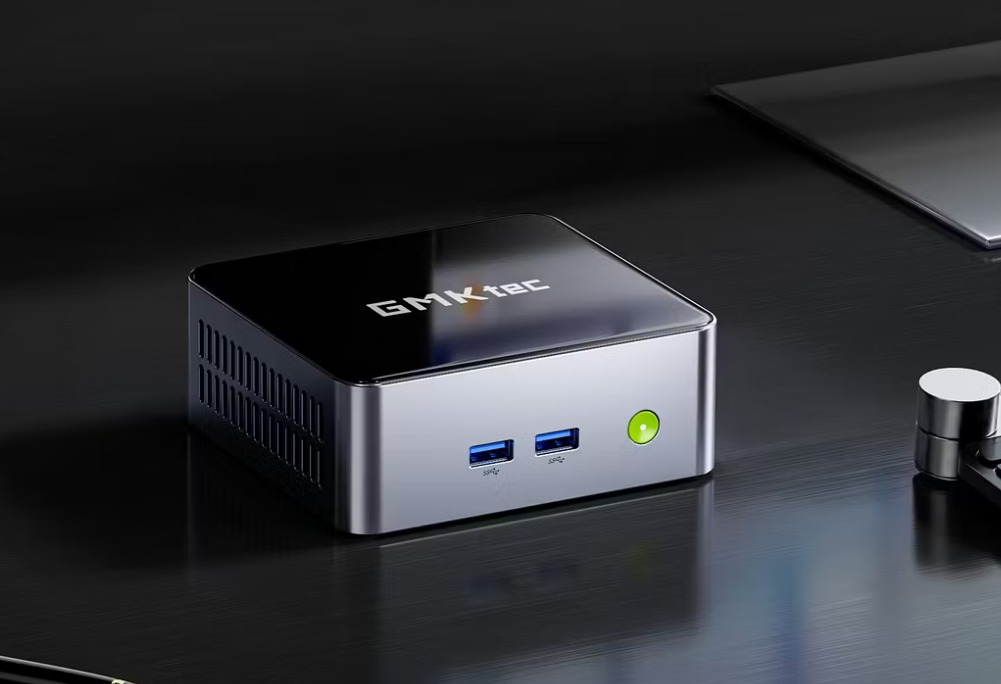
Gmktec recently released the NucBox M3 Pro, a mini PC that uses Intel’s 13th-Gen mobile processor. It is a straightforward machine designed to handle standard daily tasks, offering a useful variety of ports and upgrade options for its size.
Gmktec NucBox M3 Pro Specifications
Inside, the computer runs on an Intel Core i5-13500H. This is a 12-core, 16-thread chip that you usually find in mid-range laptops. For graphics, it relies on Intel’s integrated Iris Xe. It handles basic video playback, standard document editing, and running multiple high-resolution monitors without issue. To keep the temperature down, it uses a standard single-fan and copper pipe cooling system with vents on two sides.
The physical footprint is small, the box weighs about 480 grams, but you can still open it up to add parts. It has two M.2 storage slots. The main 2280 slot takes PCIe 4.0 NVMe drives up to 8TB, and the second 2242 slot fits either SATA or PCIe 3.0 drives.
For memory, there are two SO-DIMM slots supporting up to 64GB of RAM. It uses DDR4-3200 memory rather than the newer DDR5. That helps keep the price down, and DDR4 is still fast enough for the office tasks this PC is built for.
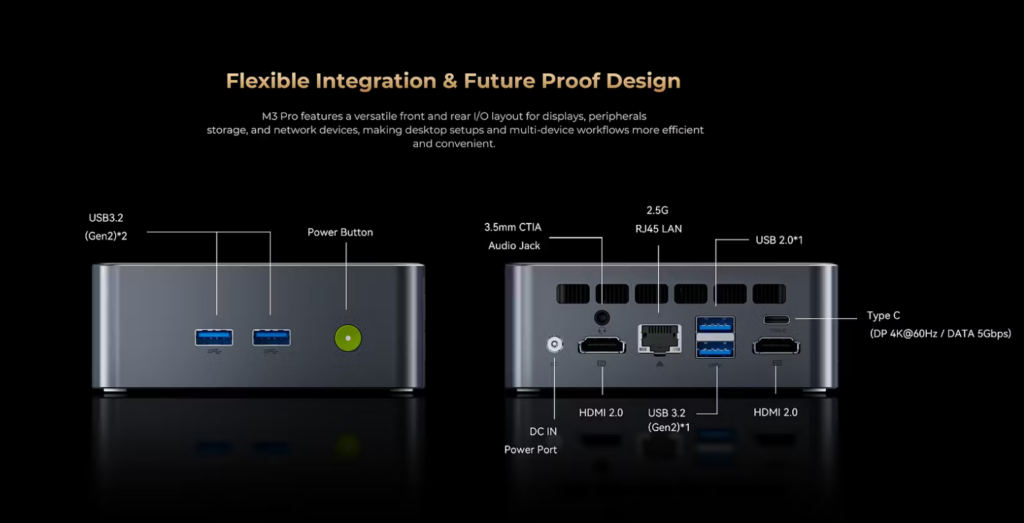
The port layout is helpful for multi-monitor setups and connecting everyday peripherals. You can connect up to three 4K displays using the two HDMI 2.0 ports on the back and the USB-C port on the front. The front panel also includes two USB-A 3.2 Gen 2 ports for fast data transfers and a standard 3.5mm audio jack.
On the back, you will find two additional USB-A 3.2 Gen 1 ports for standard accessories like a keyboard and mouse. For networking, it includes Wi-Fi 6 and Bluetooth 5.2.
It also has two 2.5G Ethernet ports on the back, which makes it a practical option for people who want to set up a home server or a custom router. Additionally, the mini PC supports VESA mount, so you can attach it directly to the back of a monitor to keep your desk clear.
Pricing and Availability
The NucBox M3 Pro is available now. The barebones version is currently priced at $329.99.
If you prefer a ready-to-use system with Windows 11 Pro, the 16GB RAM and 512GB storage model is $479.99, and the 32GB RAM and 1TB storage version is $679.99.
In related news, Minisforum has recently launched the M2 Mini PC powered by the Intel Core Ultra 7 356H processor with support for up to 128GB of RAM.
For more daily updates, please visit our News Section.
Minisforum has released the M2, a new mini PC that fits an Intel Core Ultra 7 356H processor into a standard five-inch chassis. It starts at $575 for a barebones model without memory or storage, while a pre-configured version with 32GB of RAM and a 1TB SSD costs $1,039.
Minisforum M2 Mini PC Specifications
Inside, the system runs on Intel’s Panther Lake architecture. The Core Ultra 7 356H is a 16-core, 16-thread chip with a 45W thermal design power (TDP). Minisforum is marketing this device toward AI tasks, pointing to the combined 90 TOPS (trillion operations per second) of processing power, 50 from the NPU and 40 from the integrated GPU.
In practical terms, this hardware allows users to run open-source large language models like Qwen3.5-35B locally. This is a useful feature if you want to test AI tools without relying on cloud services.
Running these local models requires a lot of memory, and the M2 supports up to 128GB of DDR5-5600 RAM across two SO-DIMM slots. For storage, it includes two M.2 2280 PCIe 4.0 slots, which can hold up to 8TB of NVMe storage.
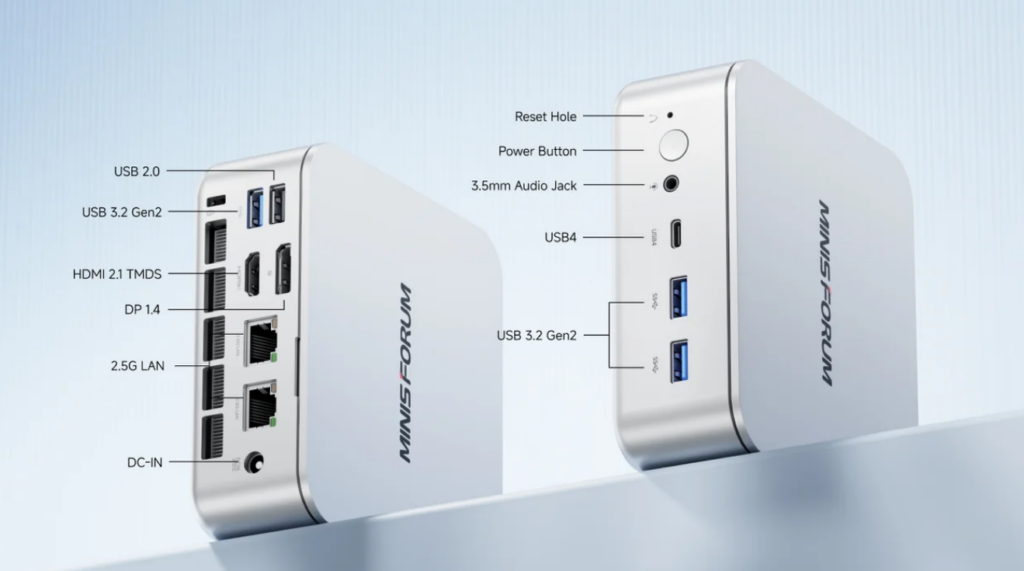
The port selection is practical for a home lab setup. The back of the device has two 2.5 Gigabit Ethernet ports, making it easy to configure as a soft router or a network-attached storage (NAS) device. It also supports Wi-Fi 7 and Bluetooth 5.4. For video output, it has HDMI 2.1, DisplayPort 1.4, and a front-facing USB4 port that supports data, video, and power delivery. You can connect up to three 4K monitors at once.
The chassis measures 130 by 127 by 50mm and weighs 520 grams, which is typical for this class of mini PC. It comes with a VESA mount so you can attach it to the back of a monitor.
To manage heat, Minisforum uses a dual heat pipe cooler and a standard centrifugal fan. According to the manufacturer’s testing, the CPU reaches about 78 degrees Celsius under full load, generating around 42.5dB of noise.
In related news, Chuwi has recently launched the AuBox X Mini PC with an Intel Core Ultra 7 256V processor and support for triple 8K displays, while Dell recently introduced the Pro 5 Micro Mini PC powered by Intel Panther Lake CPUs.
For more daily updates, please visit our News Section.
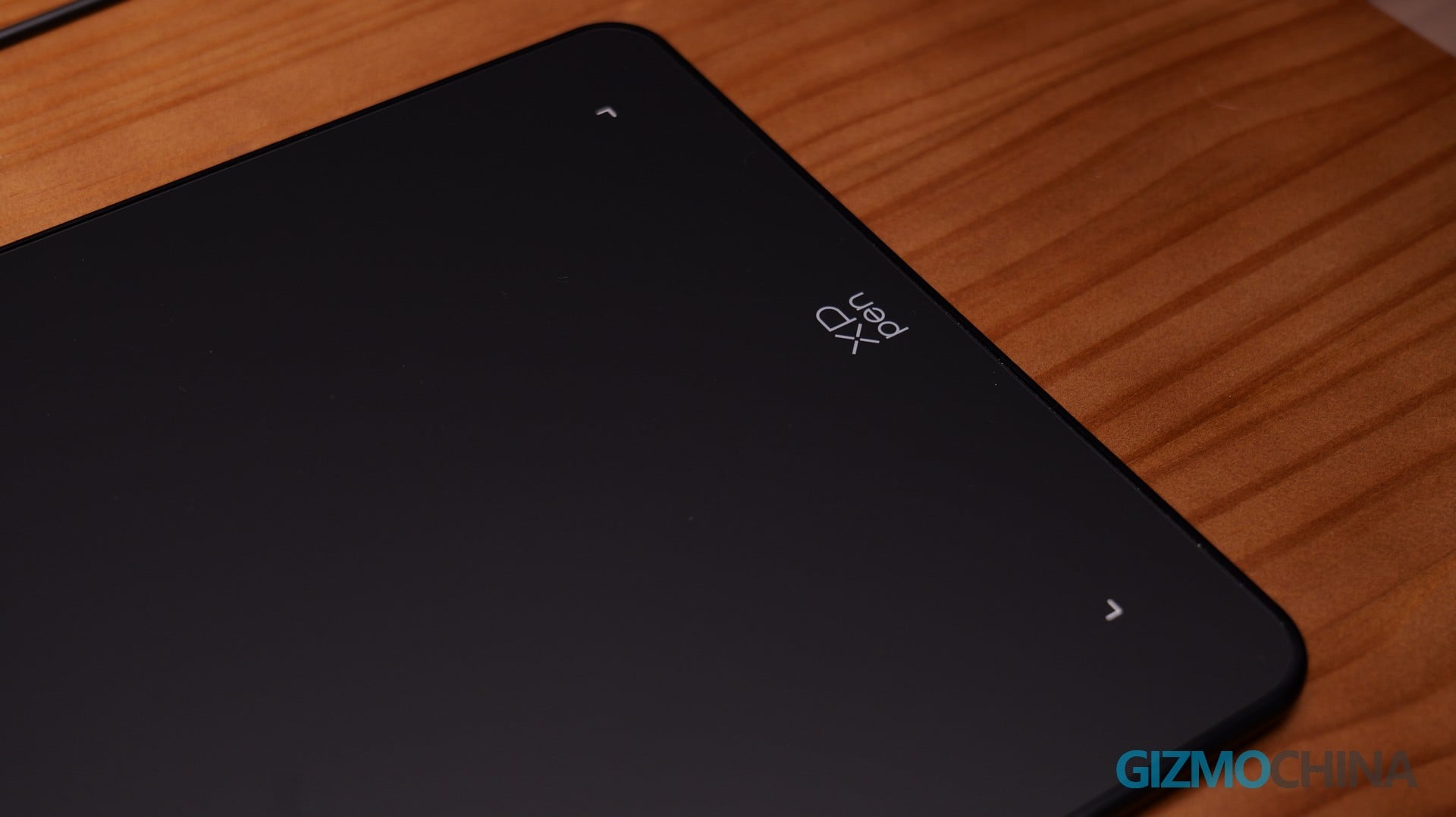
We’ve tested plenty of pen tablets, pen displays, and styluses over the years. Every product faces the same challenge: how do you balance price and performance? The XPPen Deco 01 V3 has a very clear answer — it delivers an impressive spec sheet, but quietly cuts corners in places you might not notice at first. With 16,384 levels of pressure sensitivity, a 10 x 6.25-inch active area, 220–266 RPS report rate, USB-C connectivity, and Android support, the Deco 01 V3 looks great on paper. But after spending real time with it, you’ll see that this tablet knows exactly who it’s for — and where it can afford to hold back.
Buy the XPPen Deco 01 V3 on XPPen official store and get a 5% off with our exclusive code – GizmoXP
Unboxing and Accessories
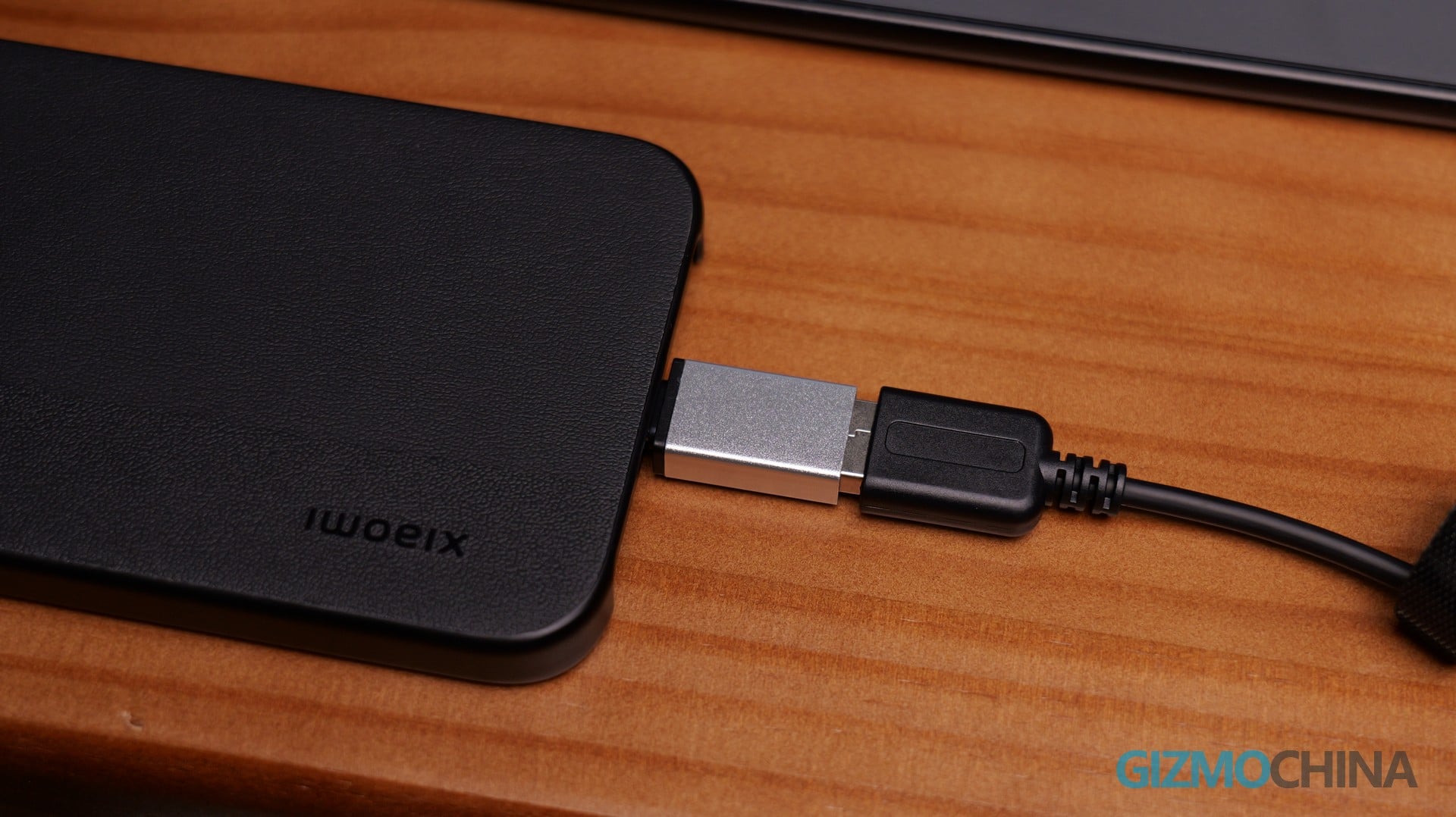
Open the box, and the first thing you’ll notice is how much XPPen includes. You get 8 replacement nibs, a screen protector, an anti-fouling glove, a USB-A to USB-C adapter, and more. Purchased separately, these accessories could easily cost $20–30. XPPen bundles them all in, effectively lowering your total cost of ownership. No need to worry about buying a glove or hunting for spare nibs right after unboxing.
Build and Design
Thickness and Weight:
At just 8mm thick, the Deco 01 V3 is one of the slimmest pen tablets in its class. Most tablets in this price range measure around 8.5–9mm. That 1mm difference is noticeable — it slips easily into a laptop bag sleeve without bulging. Weight is also well-controlled.
Surface Feel
The matte surface has a medium-fine texture. The drag resistance sits right in the sweet spot — not so slippery that you lose control, not so rough that long strokes feel tiring. Another nice touch: it resists fingerprints. Most black tablets are fingerprint magnets, but the Deco 01 V3’s matte finish keeps it looking clean. However, durability is a concern. After about a month of use, the most frequently used area showed visible polishing wear. It doesn’t affect functionality, but it may bother users who care about aesthetics. Compared to Wacom tablets, the Deco 01 V3’s surface simply doesn’t hold up as well.
Connectivity
USB-C connectivity is a welcome feature. No adapters needed — just plug in a C-to-C cable to connect to a MacBook or Android device. That said, the USB-C port lacks reinforced shielding, which could lead to loosening over time with frequent plugging and unplugging. We recommend being gentle or using a magnetic cable to reduce wear.
Shortcut Keys
The eight round shortcut keys on the left side are the most distinctive design element of the Deco 01 V3.
The keys have a short travel distance and deliver a crisp, clicky feedback. At about 1cm in diameter, they’re easy to locate with your fingertip. However, the spacing between keys is a bit tight, so blind operation can sometimes lead to mispresses until you get used to the layout.
The shortcut keys are positioned on the left side. That’s fine for right-handed users, but left-handed users will find the placement awkward — and XPPen doesn’t offer a left-handed version.
XPPen’s driver software is mature. Each key can be independently mapped to keyboard shortcuts, mouse functions, modifier keys, system commands, and even application-specific settings. You can save different shortcut profiles for Photoshop, SAI, and Clip Studio Paint — the driver automatically switches when you change software.
If you’re used to keyboard shortcuts, these eight keys will probably go unused. But if you prefer working without a keyboard, they can be helpful. We recommend mapping your most frequent actions (undo, brush, eraser) to the bottom four keys, and less frequent functions (save, new layer) to the top four.
Pressure Sensitivity and Stylus Feel
Pressure Performance
Jumping from 8,192 to 16,384 levels of pressure sensitivity does make a difference — but the law of diminishing returns applies heavily here. The improvement is most visible with very light strokes, such as the faintest pencil hatching, where transitions feel slightly smoother. At normal drawing force, however, the difference between 8,192 and 16,384 levels is hard to perceive. Think of it like display refresh rates: 60Hz to 120Hz is a game-changer, but 120Hz to 240Hz is barely noticeable to most people. This upgrade feels more like a spec war checkbox. If you paint thick, highly textured work that demands extremely nuanced pressure response, you’ll appreciate the difference. But if you primarily do line art or anime-style illustrations, 8,192 levels are more than enough.
Stylus FeelPros:
Battery-free and wireless — no charging worries
Comfortable grip with balanced weight distribution
60° tilt recognition works well, delivering noticeable angle-based brush variation
Cons:
Noticeable nib wobble. This is a common issue with XPPen pens — the nib feels slightly loose in the barrel, creating a subtle “wiggle” sensation when you press down.
High initial activation force. Very light strokes require a bit more pressure than you might expect, which could frustrate users who rely on ultra-fine, delicate lines.
Android Support
XPPen officially supports Android 10.0 and above via the XPPen tools app. In our testing:
Connection was stable, with no disconnects or lag issues
However, the app offers limited functionality — advanced features like pressure curve adjustment still require returning to the desktop driver
It works, but don’t expect the same full-featured experience you get on a desktop.
Final Verdict
The XPPen Deco 01 V3 is a precisely targeted product. It focuses its manufacturing costs on the features that matter most to entry-level buyers — high pressure sensitivity, a large active area, and USB-C connectivity — while making compromises in stylus build quality, surface durability, and shortcut key ergonomics. This isn’t a “buy it blindly” tablet. But if you’re on a tight budget, want a large drawing surface, care about specs, and can accept a few trade-offs in build and feel, the Deco 01 V3 is a solid choice.
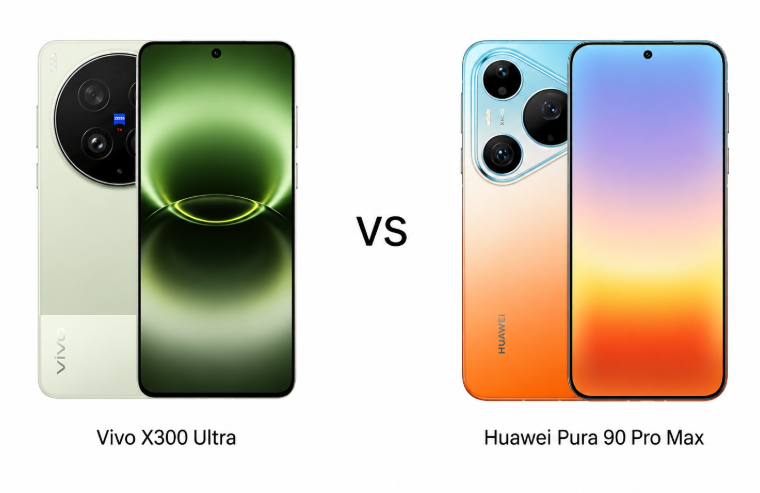
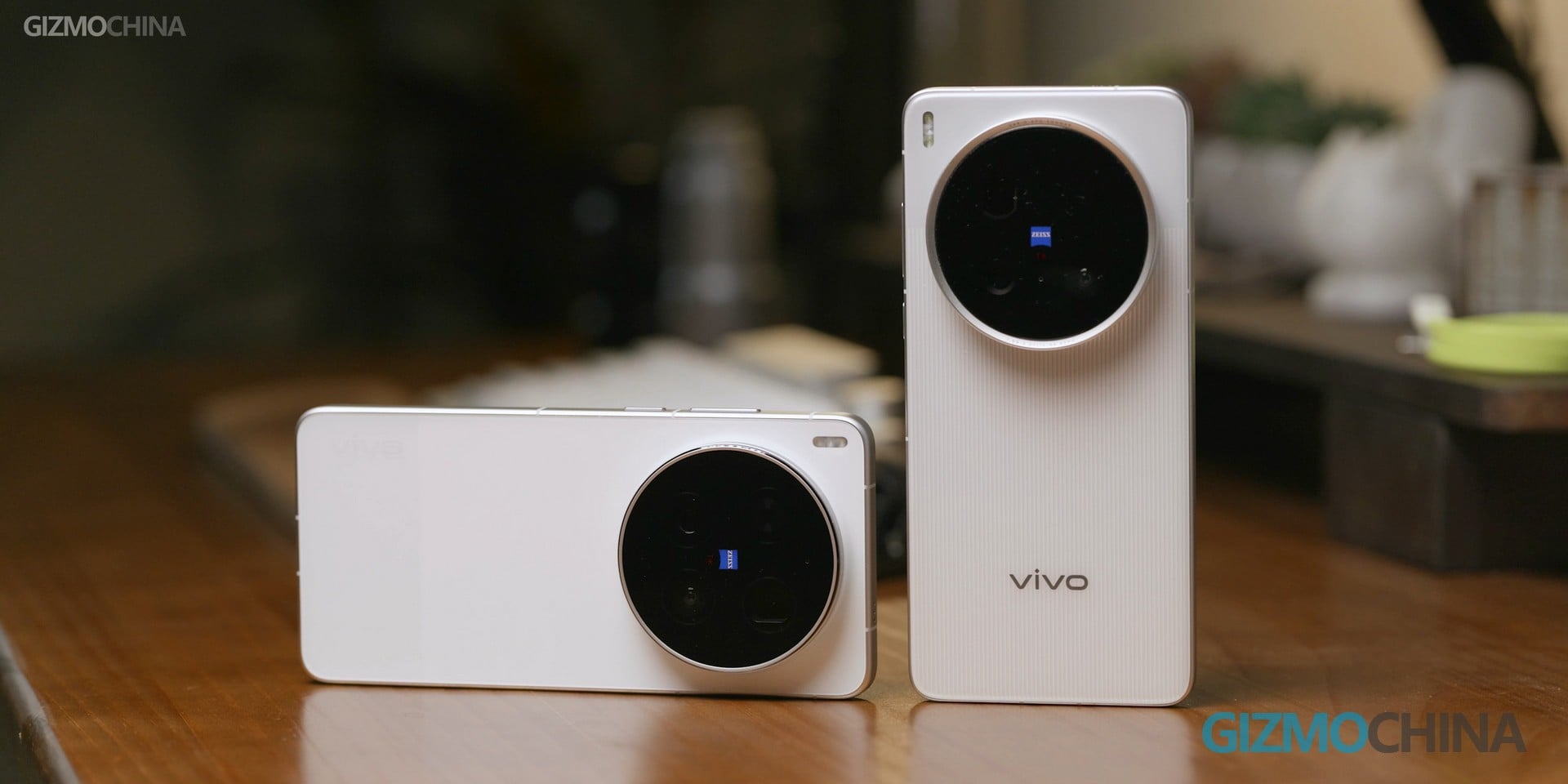
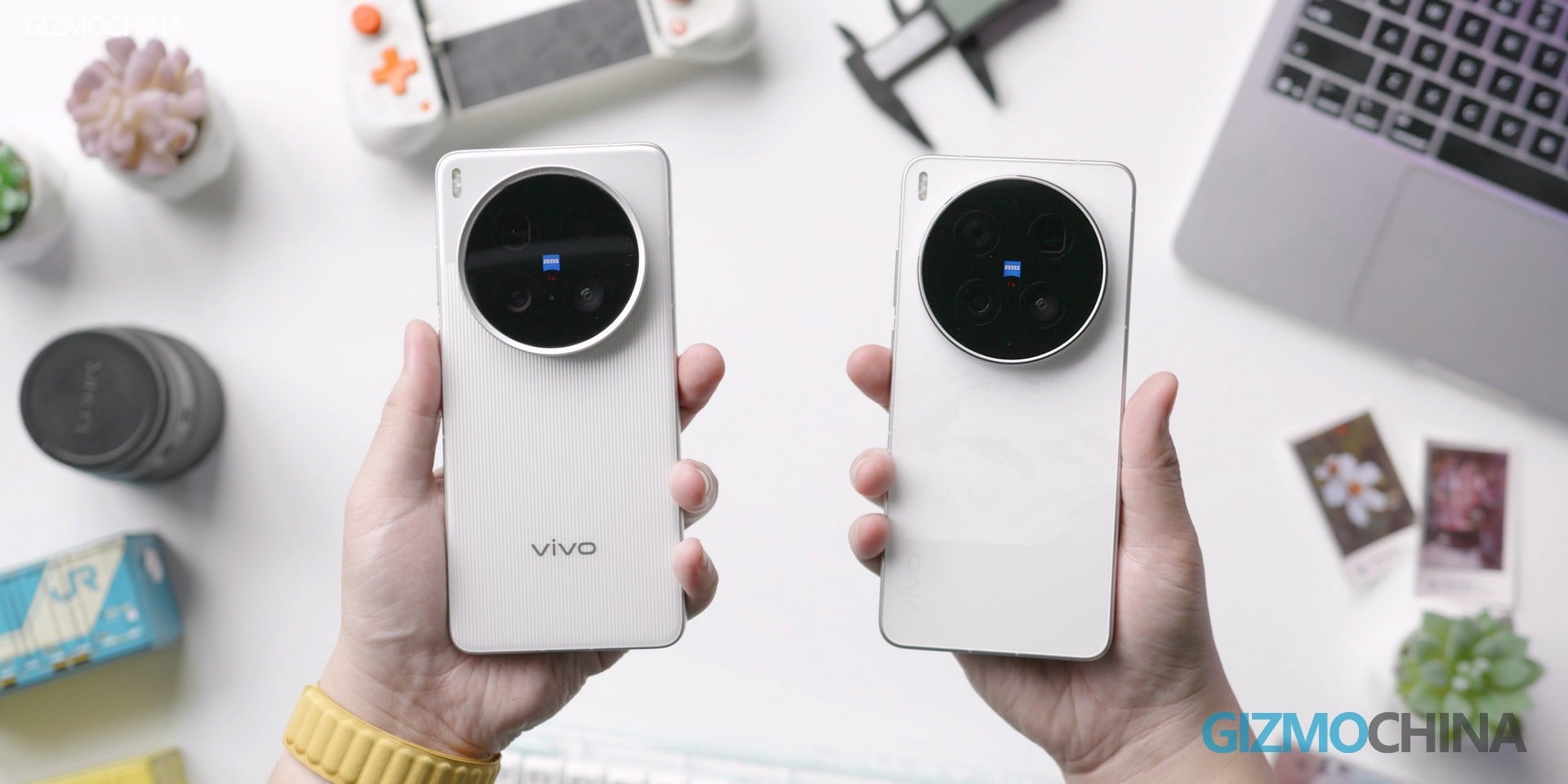
Vivo X300 Ultra and Huawei Pura 90 Pro Max represent two very different approaches to the ultra-flagship smartphone experience. Vivo focuses on maximum hardware power with a cutting-edge Snapdragon chipset, massive battery, and an ambitious Zeiss-backed camera setup, while Huawei leans toward refined design, polished software, and balanced flagship usability. Both promise premium experiences, but the real difference comes down to performance, cameras, and overall value.
Major Features:
Feature
Vivo X300 Ultra
Huawei Pura 90 Pro Max
Winner
Operating System
Android 16, OriginOS 6
HarmonyOS 6.1
Vivo – Newer Android platform with flagship Qualcomm ecosystem
Chipset
Snapdragon 8 Elite Gen 5 (3nm)
Kirin 9030S
Vivo – More powerful flagship chipset
Display Type
LTPO AMOLED, 144Hz, Dolby Vision, HDR10+
LTPO OLED, 120Hz, HDR Vivid
Vivo – Higher refresh rate and broader HDR support
Display Size
6.82-inch
6.9-inch
Huawei – Slightly larger display
Resolution
1440 × 3168
1308 × 2880
Vivo – Sharper resolution and higher pixel density
Protection
Armor Glass
Kunlun Glass + anti-reflective coating
Huawei – Added anti-reflective coating advantage
Main Camera
200MP wide
50MP variable aperture wide
Vivo – Larger megapixel sensor setup
Telephoto Camera
200MP periscope, 3.7x optical
200MP telephoto, 4x optical
Huawei – Slightly higher optical zoom
Ultrawide Camera
50MP
40MP
Vivo – Higher resolution ultrawide sensor
Extra Camera Features
Optional Zeiss zoom lenses, gimbal OIS
Variable aperture
Vivo – More advanced camera hardware flexibility
Rear Video Recording
8K@30fps, 4K@120fps
4K video
Vivo – Supports higher video resolution and frame rates
Selfie Camera
50MP AF
13MP ultrawide AF
Vivo – Higher resolution front camera
Selfie Video
4K@60fps
4K
Vivo – More advanced selfie video support
Storage Options
Up to 1TB / 16GB RAM
Up to 1TB / 16GB RAM
Tie – Similar memory configurations
Battery Capacity
6600mAh / 6400mAh
6000mAh
Vivo – Larger battery
Wired Charging
100W
100W
Tie – Same wired charging speed
Wireless Charging
40W
80W
Huawei – Much faster wireless charging
Reverse Charging
Reverse wired & wireless
18W reverse wired & wireless
Huawei – Reverse wired speed specified
Bluetooth
Bluetooth 5.4
Bluetooth 6.0
Huawei – Newer Bluetooth standard
USB
USB Type-C 3.2, DisplayPort
USB Type-C
Vivo – Faster USB standard with DisplayPort support
Fingerprint Scanner
Under-display ultrasonic
Side-mounted
Vivo – More premium biometric implementation
Satellite Features
Emergency SOS via satellite
BDS satellite calling & messaging
Huawei – More advanced satellite communication
Price
~$1500 / ₹1,25,000
~$950 / ₹89,000
Huawei – Significantly more affordable
Disclaimer: Specs are based on available data. Actual performance may vary. Verify details from official sources before buying.
Design and Display
Build and Feel
The Vivo X300 Ultra and Huawei Pura 90 Pro Max both target the premium flagship segment, but they approach design differently. Vivo leans toward a camera-centric identity with Zeiss branding and a slightly more aggressive flagship aesthetic, while Huawei focuses on refinement and elegance with its polished HarmonyOS ecosystem. Both devices feature glass backs, aluminum frames, and IP68/IP69 protection, giving them a premium feel in daily use.
Huawei’s anti-reflective Kunlun Glass gives the display a cleaner outdoor viewing experience, especially under sunlight. Meanwhile, Vivo counters with Armor Glass protection and a more advanced display package. The X300 Ultra also feels more tailored for media enthusiasts thanks to Dolby Vision support and its higher refresh rate implementation.
Display Quality
The Vivo X300 Ultra features a 6.82-inch LTPO AMOLED panel with a 144Hz refresh rate, HDR10+, Dolby Vision, and sharper 1440p resolution. Huawei offers a slightly larger 6.9-inch LTPO OLED display with HDR Vivid and excellent color tuning, but its 120Hz refresh rate and lower pixel density feel slightly behind for a flagship in this category.
Verdict
The Huawei Pura 90 Pro Max delivers a more elegant and balanced flagship experience, but the Vivo X300 Ultra clearly offers the superior display package. Its higher refresh rate, sharper panel, and Dolby Vision support make it more appealing for gaming, streaming, and long-term flagship value.
Specifications Including Battery
Performance
The Vivo X300 Ultra is powered by the Snapdragon 8 Elite Gen 5 chipset paired with UFS 4.1 storage, placing it among the fastest Android phones currently available. Heavy gaming, AI processing, and multitasking feel effortless, and the combination of OriginOS 6 with the flagship Qualcomm chip gives the device a very polished, high-performance character.
Huawei’s Kirin 9030S chipset performs well for daily flagship use, and HarmonyOS 6.1 feels highly optimized, but it is unlikely to match Vivo’s raw GPU power and sustained gaming capability. Huawei still delivers excellent fluidity for normal workloads, especially within its own ecosystem.
Battery and Charging
Vivo packs a massive 6600mAh battery with 100W wired and 40W wireless charging, making endurance one of its biggest strengths. Huawei counters with a smaller 6000mAh battery but pushes wireless charging further with 80W support. Vivo feels more practical for heavy users, while Huawei’s wireless charging convenience stands out for premium buyers.
Verdict
The Vivo X300 Ultra takes a comfortable lead in overall hardware performance and battery endurance. Huawei remains efficient and polished, but Vivo simply feels more future-proof for demanding users and power-focused flagship buyers.
Camera
Main and Secondary Lenses
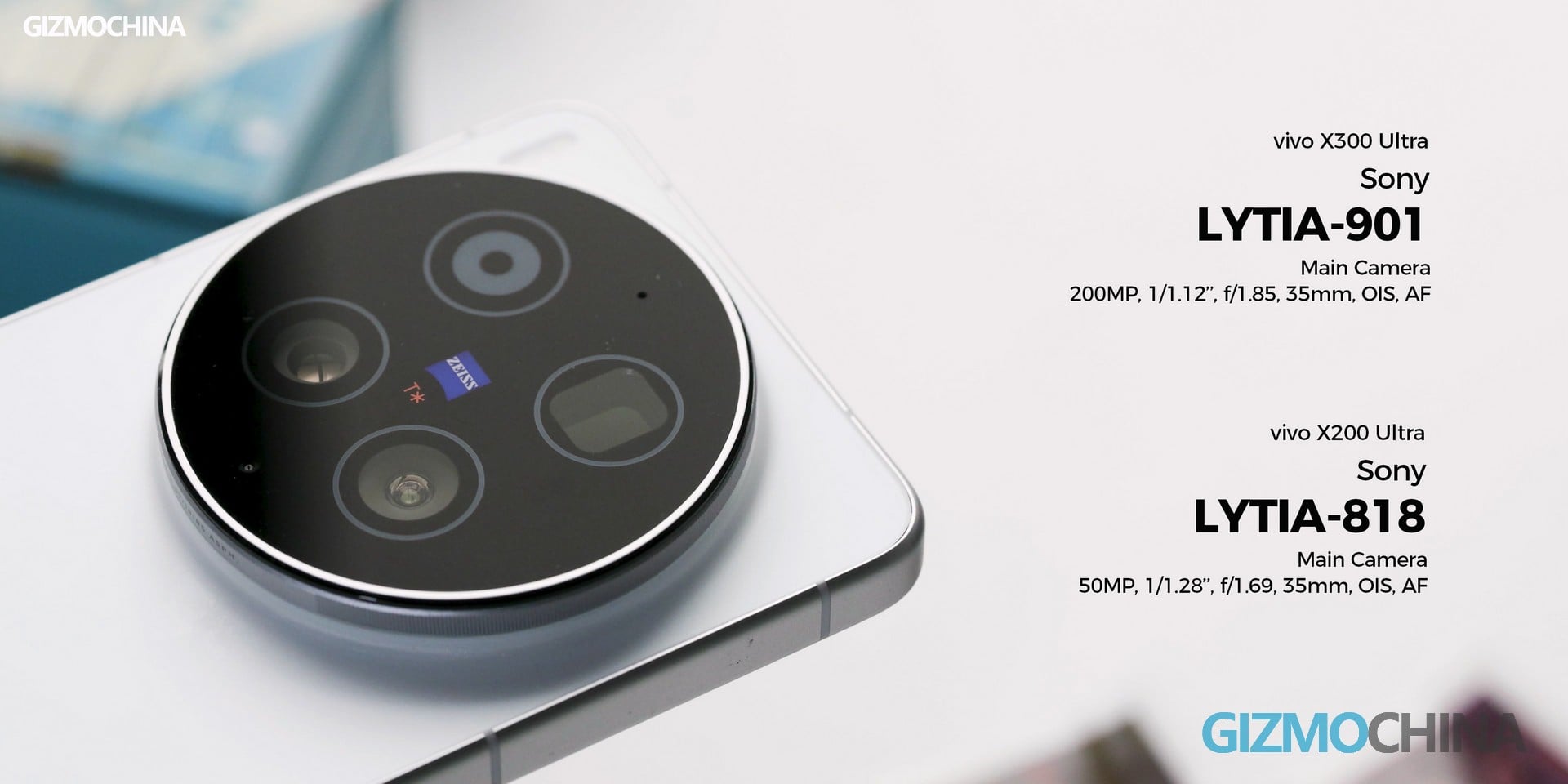
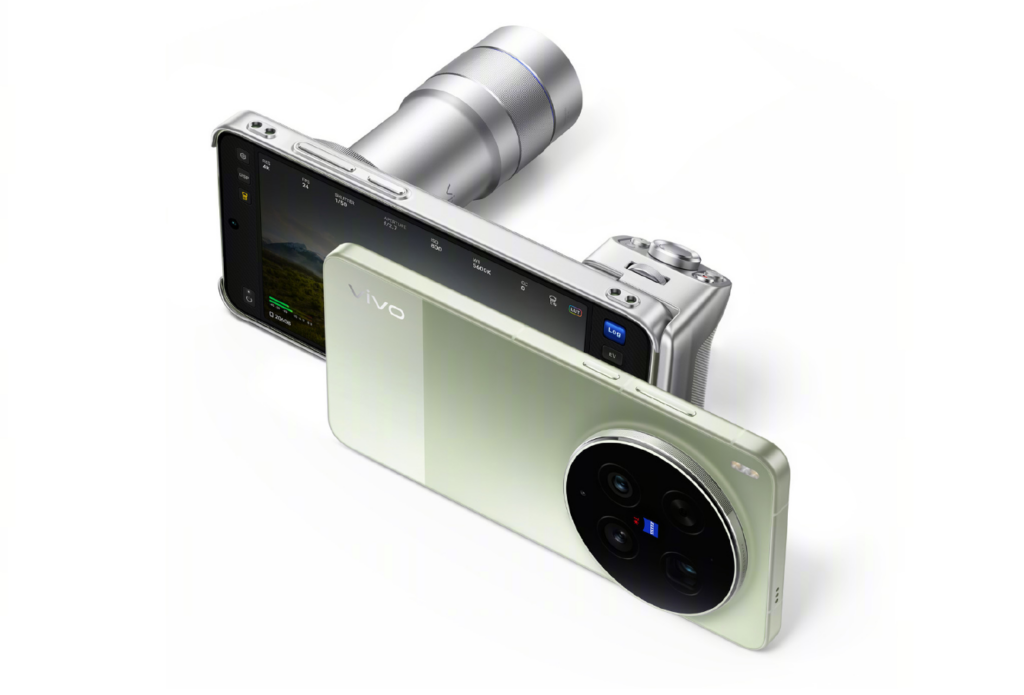
Camera hardware is where both phones become extremely competitive. The Vivo X300 Ultra uses a massive 200MP primary sensor with gimbal stabilization, paired with another 200MP periscope telephoto lens and a 50MP ultrawide sensor. The optional Zeiss zoom lenses further push its photography ambitions into professional territory. Low-light capture and zoom flexibility are expected to be among the best in the industry.
Huawei counters with a versatile triple-camera setup featuring a variable aperture 50MP main sensor, 200MP telephoto lens, and a 40MP ultrawide camera. Huawei’s image processing has historically been among the strongest in mobile photography, especially for dynamic range and natural tones. The variable aperture system also adds more flexibility in different lighting situations.
Selfie Camera
Vivo includes a 50MP autofocus selfie camera capable of 4K recording, while Huawei offers a 13MP ultrawide front camera with autofocus. Vivo clearly delivers more detail and stronger front-camera versatility for creators and video users.
Verdict
The Huawei Pura 90 Pro Max may produce more natural flagship photography in some situations, but the Vivo X300 Ultra offers a more ambitious and technically advanced camera system overall. Its sensor hardware, Zeiss tuning, and extreme zoom flexibility give it the edge for photography enthusiasts.
Pricing
The Vivo X300 Ultra is priced at around $1500 (approximately ₹1,25,000), while the Huawei Pura 90 Pro Max comes in significantly lower at roughly $950 (around ₹89,000). That creates a major gap between the two devices despite both targeting the ultra-premium flagship category.
Vivo justifies its higher price with a stronger chipset, sharper display, larger battery, advanced Zeiss camera system, and higher-end multimedia capabilities. It clearly positions itself as a no-compromise flagship for users who prioritize performance and camera hardware above everything else.
Huawei, however, offers impressive value considering its premium build quality, flagship cameras, advanced wireless charging, and polished software experience. For many buyers, the lower price makes the Pura 90 Pro Max feel like the more balanced purchase. The savings are substantial without sacrificing too much of the flagship experience.
Verdict
The Vivo X300 Ultra is the better ultra-premium flagship, but Huawei delivers stronger value for money. Buyers focused on top-tier hardware may prefer Vivo, while Huawei feels like the smarter purchase for most premium users.
Disclaimer: Prices are approximate and may vary based on country, region, launch timing, and applicable taxes. Always check whether the listed price is for a China unit or a global/international variant when purchasing.
Conclusion
The Vivo X300 Ultra stands out with its Snapdragon 8 Elite Gen 5 processor, dual 200MP camera system, optional Zeiss external zoom lenses, 144Hz LTPO AMOLED display, and huge battery capacity. It is clearly designed for enthusiasts who want maximum hardware performance with very few compromises.
The Huawei Pura 90 Pro Max focuses more on balance and ecosystem refinement. Features like the variable aperture camera, 80W wireless charging, anti-reflective display coating, and HarmonyOS optimization give it a more polished day-to-day personality. Huawei also feels less aggressively focused on specs and more centered around overall flagship usability.
Verdict
The Vivo X300 Ultra is the stronger flagship overall thanks to its superior performance, display technology, battery capacity, and more advanced camera hardware. However, the Huawei Pura 90 Pro Max remains highly competitive because of its lower pricing and refined premium experience. Users wanting the absolute best hardware will likely lean toward Vivo, while Huawei makes more sense for buyers seeking flagship quality without crossing into extreme flagship pricing territory.
Disclaimer: This comparison is based on the specifications provided and is intended for general informational purposes. Actual performance, camera results, battery life, and overall experience may vary depending on real-world usage, software updates, and individual preferences.
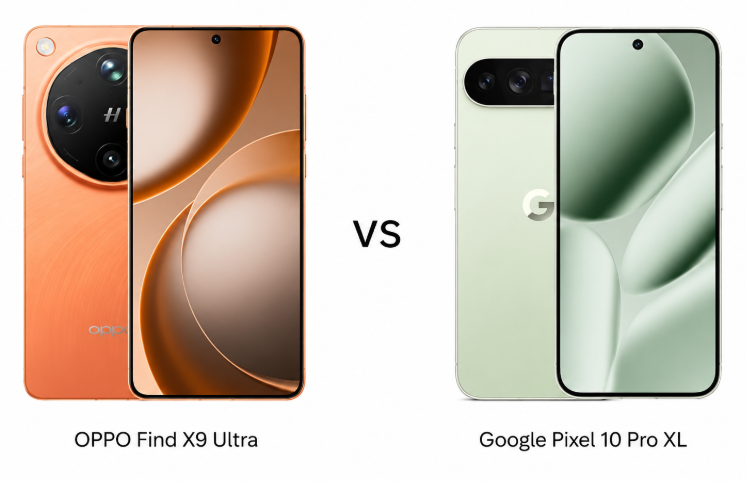
OPPO Find X9 Ultra and Google Pixel 10 Pro XL represent two very different flagship philosophies in 2026. OPPO focuses on cutting-edge hardware with a massive battery, ultra-fast charging, and an aggressive camera setup, while Google leans heavily on AI-powered software, refined photography, and long-term Android support. Both phones sit firmly in the ultra-premium segment, but the real question is whether raw flagship power matters more than a polished smart experience.
OPPO Find X9 Ultra – More advanced camera hardware
Zoom Camera
3x + 10x periscope zoom
5x periscope zoom
OPPO Find X9 Ultra – More versatile zoom setup
Video Recording
8K30, 4K120, Dolby Vision, O-Log2
8K30 (cloud upscaled), 4K60, 10-bit HDR
OPPO Find X9 Ultra – More professional video tools
Selfie Camera
50MP
42MP ultrawide
OPPO Find X9 Ultra – Higher resolution front camera
Battery
7050mAh
5200mAh
OPPO Find X9 Ultra – Significantly larger battery
Wired Charging
100W
45W
OPPO Find X9 Ultra – Much faster charging
Wireless Charging
50W
25W Qi2 magnetic
OPPO Find X9 Ultra – Faster wireless charging
Water Resistance
IP68/IP69
IP68
OPPO Find X9 Ultra – Better durability rating
Extra Features
Infrared port
Satellite SOS, UWB, skin thermometer
Google Pixel 10 Pro XL – More smart ecosystem features
Approx Price
$1150 / ₹110000
$1200 / ₹125000
OPPO Find X9 Ultra – Better hardware value for lower price
Disclaimer: Specs are based on available data. Actual performance may vary. Verify details from official sources before buying.
Design and Display
Build and Feel
The OPPO Find X9 Ultra and Google Pixel 10 Pro XL both target premium flagship buyers, but they deliver very different personalities. OPPO goes for a more aggressive ultra-premium approach with IP68/IP69 protection, optional eco-leather finish, and a bold camera-focused design that immediately feels like a photography flagship. The Pixel 10 Pro XL looks cleaner and more refined with Google’s familiar horizontal camera bar and polished aluminum frame. It feels understated and professional rather than flashy.
OPPO also adds practical extras like an infrared blaster and stronger water resistance credentials, which may matter for long-term durability. The Pixel, meanwhile, keeps things minimalist and polished with tighter software integration and exclusive ecosystem features.
Display Quality
The Find X9 Ultra pushes ahead on paper with a sharper LTPO AMOLED panel, 144Hz refresh rate, Dolby Vision support, and an extremely bright 3600-nit peak brightness. The display feels more cinematic and slightly more immersive for gaming and HDR streaming.
Google’s 120Hz LTPO OLED panel still looks excellent with strong color calibration and excellent HDR tuning. However, OPPO clearly delivers the more hardware-focused display experience.
Verdict
The Pixel 10 Pro XL feels cleaner and more refined, but the OPPO Find X9 Ultra offers the more ambitious flagship hardware package. Its brighter 144Hz display and rugged premium build give it a noticeable edge for multimedia-heavy users.
Specifications Including Battery
Performance
The OPPO Find X9 Ultra is powered by the Snapdragon 8 Elite Gen 5, paired with UFS 4.1 storage and up to 16GB RAM. It is built for raw flagship performance and should comfortably handle high-end gaming, multitasking, and demanding AI workloads. The combination of Qualcomm’s latest chipset and ColorOS optimization makes the phone feel fast and responsive under almost every scenario.
The Pixel 10 Pro XL uses Google’s Tensor G5 chip, which focuses more on AI features, camera intelligence, and software smoothness than outright benchmark dominance. Day-to-day performance should remain excellent, but heavy gamers may still prefer Qualcomm’s stronger GPU advantage.
Battery and Charging
Battery life is one of OPPO’s biggest strengths here. The massive 7050mAh silicon-carbon battery combined with 100W wired and 50W wireless charging gives the Find X9 Ultra a major advantage. It is the kind of setup that feels built for power users.
Google’s 5200mAh battery is respectable, and Qi2 magnetic wireless charging adds convenience, but the slower 45W charging cannot match OPPO’s speed.
Verdict
The Pixel 10 Pro XL focuses more on smart software efficiency, while the Find X9 Ultra prioritizes raw flagship power. OPPO clearly wins for performance enthusiasts and heavy battery users.
Camera
Main and Secondary Lenses
The OPPO Find X9 Ultra delivers one of the most ambitious camera systems in the flagship market. Its dual 200MP setup, including a large periscope sensor, is paired with an additional 10x periscope zoom lens and Hasselblad color tuning. The phone is clearly designed for users who enjoy versatile photography and long-range zoom performance. Video capabilities also feel more professional with Dolby Vision HDR, O-Log2, and cinematic LUT support.
The Pixel 10 Pro XL takes a different approach. Google focuses heavily on computational photography with features like Best Take, Zoom Enhance, and Pixel Shift processing. Its camera tuning tends to produce more natural-looking shots with reliable dynamic range and skin tones. While the hardware is less extreme than OPPO’s, Google’s image processing still remains among the best in smartphones.
Selfie Camera
OPPO offers a sharper 50MP front camera with strong detail retention, while Google’s 42MP ultrawide selfie camera feels more practical for group shots and social content.
Verdict
The Pixel 10 Pro XL is likely the safer point-and-shoot camera for most users, but the Find X9 Ultra feels far more exciting for photography enthusiasts who want maximum zoom flexibility and advanced video tools.
Pricing
The OPPO Find X9 Ultra is expected to cost around $1150 (roughly ₹1,10,000), while the Google Pixel 10 Pro XL sits slightly higher at around $1200 (roughly ₹1,25,000). Despite the smaller gap in global pricing, the difference becomes more noticeable in India, where the Pixel carries a heavier premium.
At its price, the Find X9 Ultra offers stronger hardware value. Buyers get a larger battery, faster charging, a more aggressive camera setup, a higher refresh rate display, and flagship Qualcomm performance. It feels like a specification-heavy flagship designed to outperform competitors on paper.
The Pixel 10 Pro XL justifies its higher price differently. Google’s seven years of Android upgrades, AI-driven features, exclusive Pixel software tools, and cleaner Android experience still hold strong appeal. The phone feels more polished in software execution, even if the hardware specifications are less aggressive.
Verdict
The Pixel 10 Pro XL is priced for users who value Google’s software ecosystem, while the Find X9 Ultra delivers stronger hardware value for the money. OPPO feels like the better deal overall.
Disclaimer: Prices are approximate and may vary based on country, region, launch timing, and applicable taxes. Always check whether the listed price is for a China unit or a global/international variant when purchasing.
Conclusion
The OPPO Find X9 Ultra stands out with its massive silicon-carbon battery, extremely fast charging speeds, dual 200MP camera system, and advanced zoom hardware. It feels like a flagship designed to push hardware boundaries in almost every category. Users focused on gaming, multimedia, battery endurance, and versatile photography will likely appreciate OPPO’s more aggressive approach.
The Google Pixel 10 Pro XL counters with cleaner Android software, deeper AI integration, long-term software support, and Google-exclusive camera intelligence features. Its experience feels smoother and more refined in daily use rather than purely specification-focused. Features like Satellite SOS, Qi2 wireless charging, and advanced AI editing tools help the Pixel maintain its premium identity.
Verdict
Both phones are elite Android flagships, but they target different priorities. The Pixel 10 Pro XL feels smarter and more polished, while the OPPO Find X9 Ultra feels more powerful and feature-packed. For users chasing cutting-edge hardware and better overall value, the Find X9 Ultra emerges as the stronger flagship package.
Disclaimer: This comparison is based on the specifications provided and is intended for general informational purposes. Actual performance, camera results, battery life, and overall experience may vary depending on real-world usage, software updates, and individual preferences.
Xiaomi has added a new cordless vacuum to its home appliance lineup in China. Following the recent release of the 4C model, the company is now introducing the Mijia Wireless Vacuum Cleaner 4. It is priced at 999 yuan (roughly $146) and goes on pre-sale starting today through JD.com.
Mijia Wireless Vacuum Cleaner 4 Specs
The vacuum is built around a brushless motor that operates at 120,000 RPM. According to Xiaomi, it provides 230AW of suction power and a maximum suction force of 25,000Pa. This is standard for the category and is meant to handle everyday household debris like pet hair, food crumbs, and fine dust.
The device comes with a 180-degree blue light integrated into the cleaning head. The light illuminates the floor up to 30 centimeters ahead, which helps make fine dust particles more visible, particularly under furniture or in dimly lit rooms. The cleaning head is also designed to support right-side edge cleaning to help pick up dirt along baseboards.
Internally, the vacuum uses an infrared sensor to monitor the amount of dust passing through the system. When set to Smart Mode, the device adjusts its suction automatically, increasing power when it detects heavier dirt and lowering it on cleaner surfaces to conserve battery life.
To address hair wrapping around the roller, Xiaomi included a dual anti-tangle system. The main floor brush has a built-in comb structure that separates hair as the brush spins. The included motorized mite brush uses a floating mechanism to direct hair straight into the suction channel.
The vacuum is powered by a removable eight-cell 2600mAh battery. Xiaomi advertises a maximum runtime of 90 minutes, though this is limited to the lowest energy-saving setting. In the auto-adjusting Smart Mode, the battery lasts between 18 and 37 minutes, depending on the floor conditions. Using the maximum suction setting depletes the battery in about 10 minutes. Because the battery is detachable, users have the option to swap it out for a charged spare.
For filtration, the device uses a 12-cone cyclone system to separate dust from the airflow, which helps prevent the filter from clogging over time. It features a five-stage filtration setup, including an H13-grade HEPA filter that Xiaomi says captures 99.99% of particles as small as 0.3 microns.
The Mijia Wireless Vacuum Cleaner 4 comes with a standard set of accessories: the main floor brush, the mite brush, and a 2-in-1 crevice tool. It also includes an LED display on the handle to show battery levels and cleaning modes, as well as a wall-mounted dock for charging and storage.
The 2025 Lenovo Yoga 9i 2-in-1 Aura Edition is one of those laptops that quietly wins you over the longer you use it. I’ve been testing it for well over a month now, and during that time, it accompanied me through launch events, flights, hotel stays, editing sessions, and long workdays. I haven’t personally used many competing premium 2-in-1 laptops recently, so I can’t directly compare them against every rival out there. But after spending this much time with it, I genuinely feel this is one of the best premium convertibles currently available.
The unit I tested comes with Intel’s Lunar Lake platform, a 14-inch 2.8K OLED touchscreen, and rotating hinge speakers. On Lenovo India’s website, this configuration is priced at Rs 1,74,005, firmly placing it in premium territory.
Built for travel and everyday productivity
Lenovo Yoga 9i 2-in-1
One thing I appreciated almost immediately about the Lenovo Yoga 9i 2-in-1 Aura Edition (14ILL10) is how practical it feels for frequent travel. I regularly attend launch events that often involve flying from Mumbai to Delhi and back, and those trips can easily stretch into 15 to 18-hour travel days. During those journeys, I’m constantly switching between airports, cabs, hotel rooms, and event venues while continuing to work.
The Yoga 9i handled that lifestyle extremely well.
The Luna Gray finish gives the laptop a premium look without feeling flashy. The aluminum build feels solid and reassuringly sturdy, while the 360-degree hinge remains smooth and firm no matter how often you switch between laptop, tent, or presentation mode.
And that flexibility genuinely becomes useful in real life. During hotel stays, I often used the laptop in tent mode while watching videos or listening to music. At work events or during quick presentations, the stand-style orientation also came in handy. Of course, you can fully fold it back into tablet mode as well, although realistically, because of the size and weight, I still found myself using it primarily as a laptop. Still, having the freedom to use different orientations depending on the situation adds a lot to the overall experience.
Despite being a convertible, the laptop never felt fragile during travel. It’s also reasonably portable for a premium 2-in-1, making it easy to slide into a backpack without becoming a burden during long commutes.
Lenovo Yoga 9i 2-in-1 Lenovo Yoga 9i 2-in-1
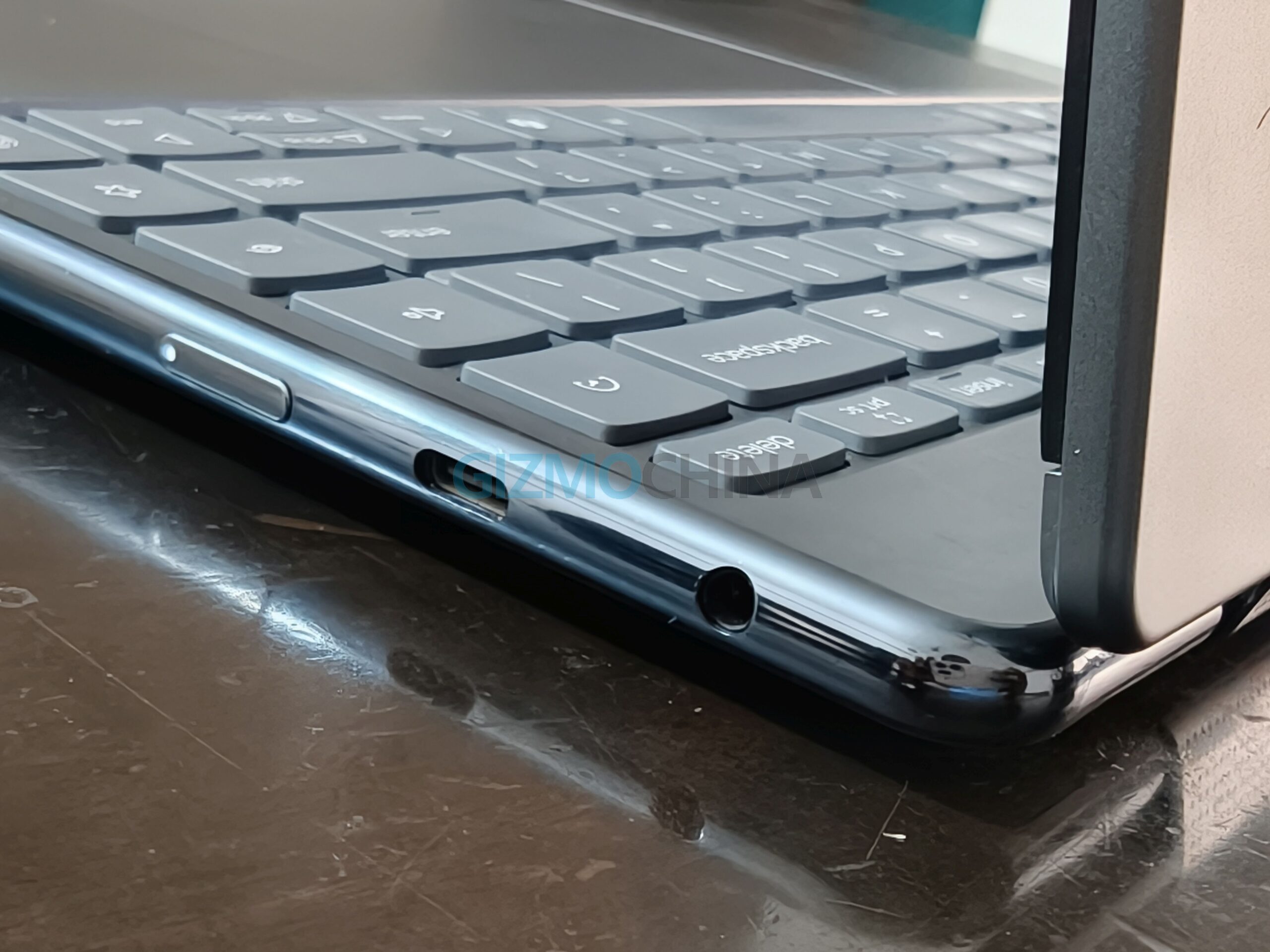
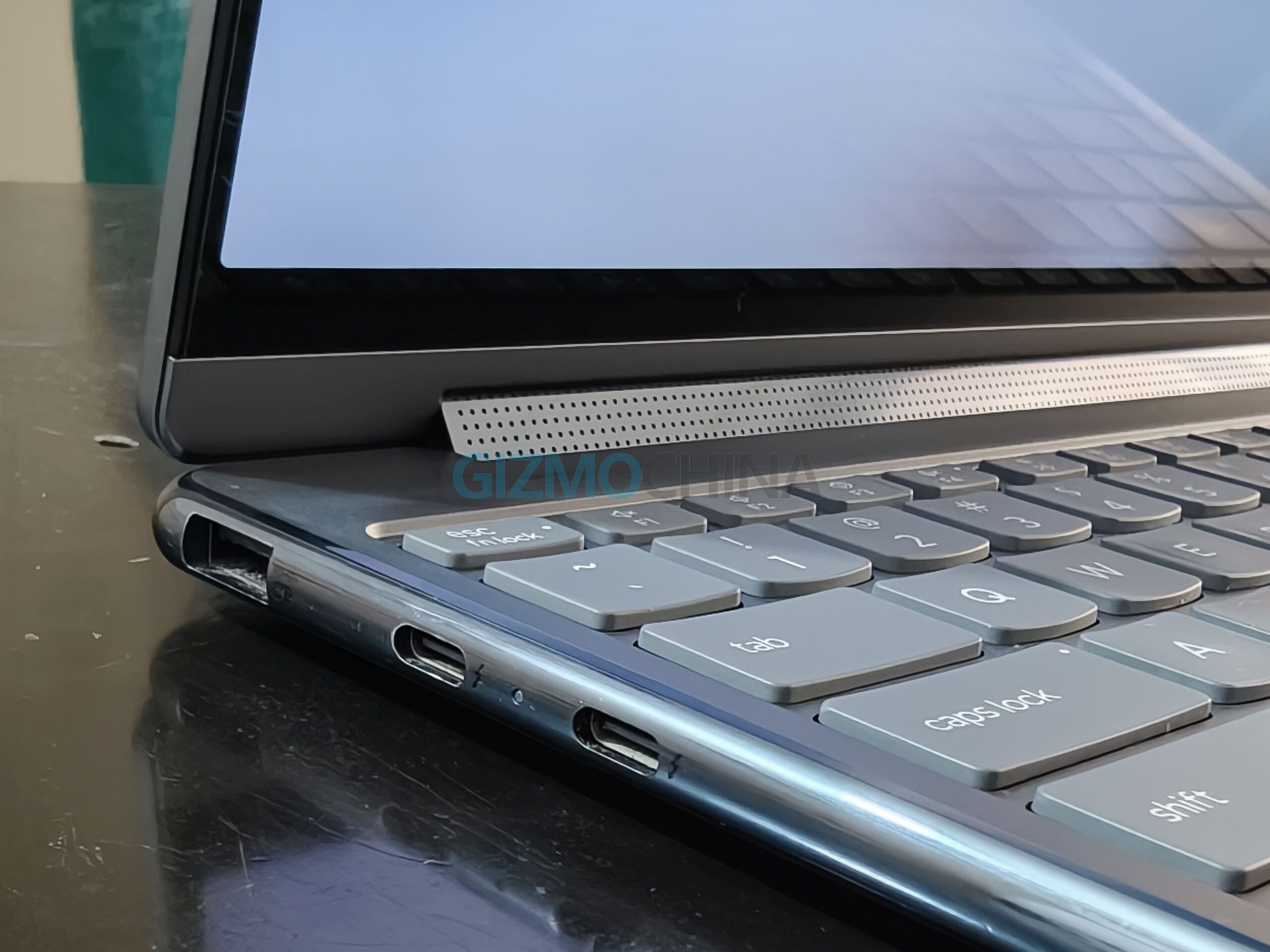
The port selection is also practical for a thin premium laptop. You get two Thunderbolt 4 USB-C ports, one additional USB-C port, a USB-A port, and a 3.5mm headphone jack. I also found it interesting that the power button is placed on the side of the laptop instead of the keyboard deck area. It’s something I personally don’t encounter very often on laptops I use, but I eventually got used to it.
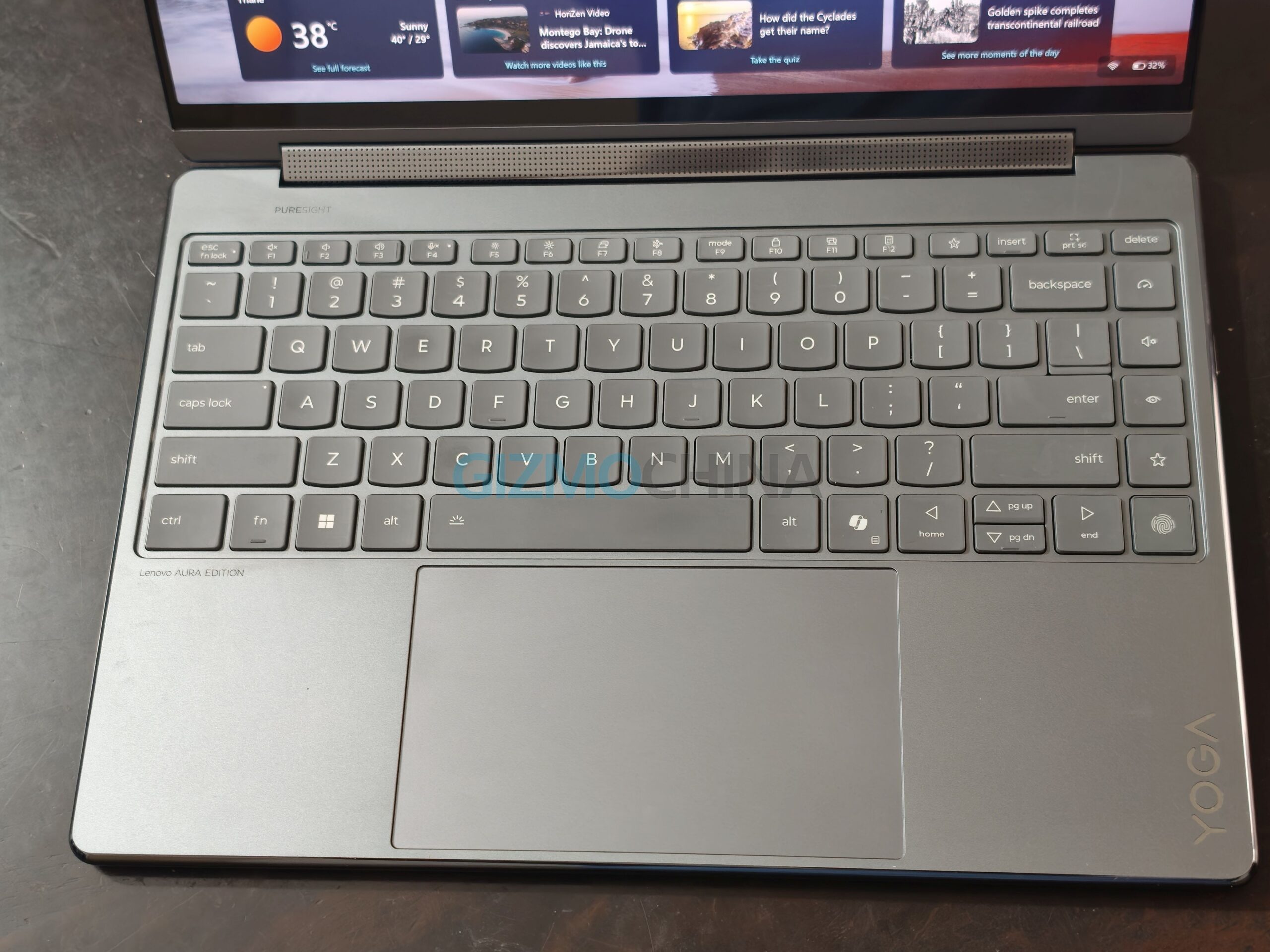
The keyboard deserves praise too. Lenovo continues to make some of the best laptop keyboards in the Windows space, and this one feels tactile and comfortable even during long writing sessions. There’s also a fingerprint reader placed as the extreme key on the bottom-right side of the keyboard. It works reliably, although the placement takes a little time to get used to. Also, there are dedicated buttons on the keyboard to switch between Power, Display, and Audio modes.
Lenovo Yoga 9i 2-in-1
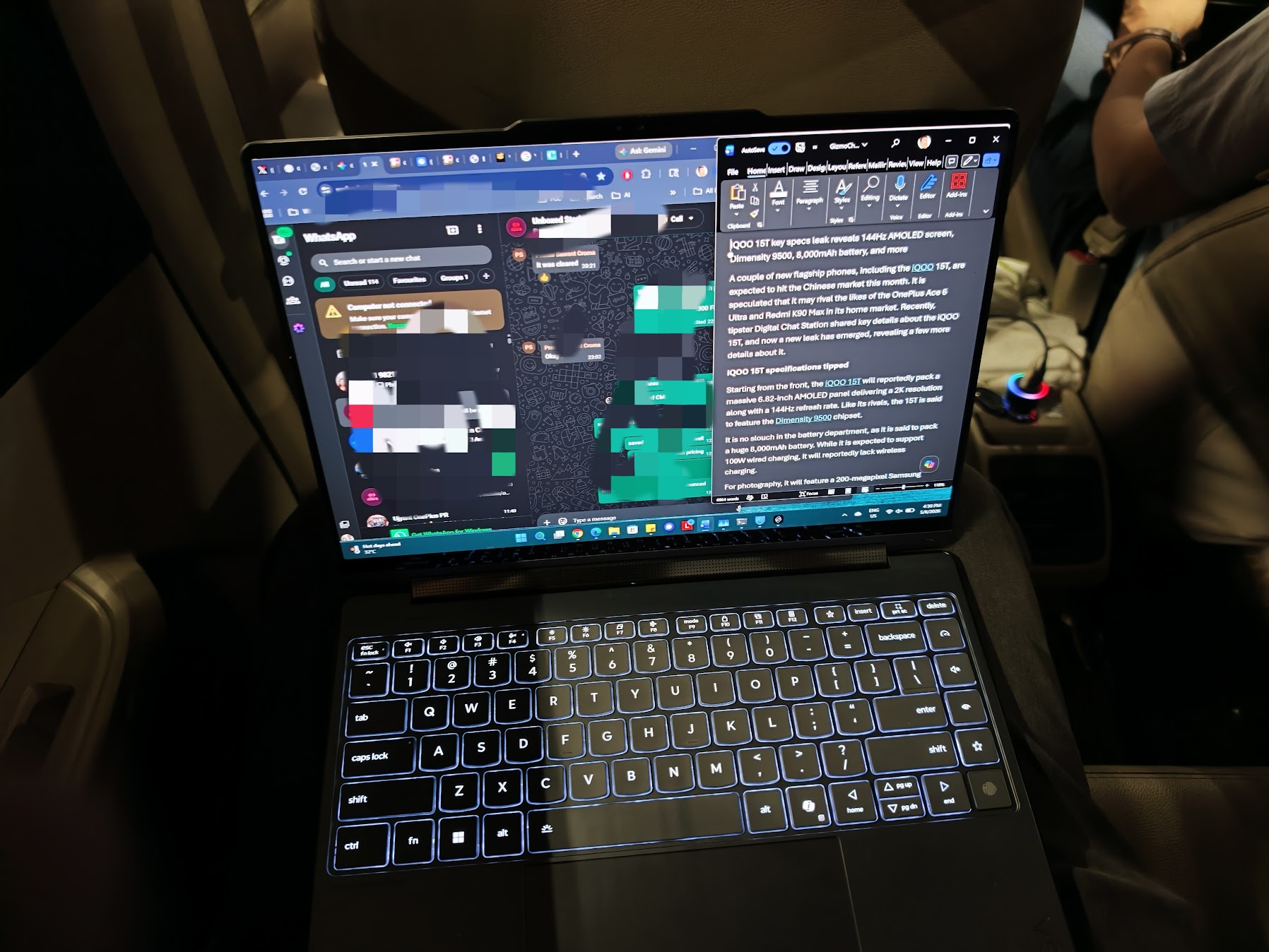
The keyboard backlighting is also quite good and genuinely useful in dim environments. One moment where I particularly appreciated it was while typing inside a moving car passing through a tunnel, where the backlit keys remained clearly visible without feeling overly harsh or distracting.
Speaking of productivity, the Yoga 9i 2-in-1 Aura Edition supports the Yoga Pen, but my review unit package did not include it.
Battery life removes charger anxiety
Lenovo Yoga 9i 2-in-1
The biggest highlight of the Yoga 9i has easily been the battery life.
This is one of the few Windows laptops where I genuinely stopped worrying about carrying the charger everywhere. Even during heavier usage involving Chrome tabs, YouTube streaming, article writing, social media usage, and light editing, the battery comfortably lasted through most of my workday.
There were several times I carried a power bank expecting I might need a quick top-up, but honestly, I almost never ended up using it. And if needed, the laptop can conveniently charge through USB-C power banks anyway.
The laptop packs a 75Wh battery, and paired with Intel’s highly efficient Core Ultra 7 258V processor, the endurance is genuinely impressive for a premium OLED convertible. Lenovo bundles a 65W USB-C charger in the box, and charging speeds are fairly quick as well. In my usage, getting close to 50 percent charge in around 30 minutes felt realistic, which is especially useful during tight travel schedules between events and flights.
That kind of reliability matters a lot when you spend most of your day away from a desk.
Another thing I noticed is how quiet the laptop usually remains. During regular usage, fan noise is practically nonexistent. It’s only during charging or heavier workloads that the chassis becomes slightly warm.
That said, my testing conditions were far from ideal. During some of the review period, outdoor temperatures were reaching around 43 degrees Celsius, while indoor room temperatures still hovered between 33 and 35 degrees Celsius. Considering those conditions, the thermals are honestly respectable. During normal unplugged use, the laptop rarely became uncomfortably warm unless I pushed it with intensive workloads.
Lunar Lake delivers smooth everyday performance
Lenovo Yoga 9i 2-in-1
The Yoga 9i configuration I tested comes powered by Intel’s Core Ultra 7 258V processor, paired with 32GB LPDDR5X RAM and a 1TB NVMe SSD. Neither the RAM nor the storage is expandable on this device. For a thin-and-light 2-in-1 laptop, performance feels consistently smooth and responsive.
In daily usage, the laptop handled multitasking effortlessly. I routinely worked with dozens of Chrome tabs open alongside Discord, Microsoft Word, and multiple browser windows without noticing slowdowns. App launches feel snappy, Windows animations remain fluid, and the overall experience feels polished.
The Lunar Lake platform is clearly optimized around efficiency and AI-assisted workloads rather than brute-force benchmark numbers, but for the kind of usage most premium ultrabook buyers actually care about — productivity, multitasking, media consumption, presentations, light photo editing, and office workloads — it performs very well.
The integrated Intel Arc graphics are also surprisingly capable for casual gaming and lighter creative workloads. This is not a gaming laptop by any means, but it can comfortably handle lighter titles and some AAA games at lower settings if needed.
The 1TB SSD also deserves mention because file transfers and application loading speeds feel consistently fast throughout usage.
What stood out most to me, though, is how balanced the overall performance feels. The Yoga 9i never tries to behave like a bulky workstation laptop. Instead, it focuses on delivering a smooth premium ultrabook experience while staying relatively cool, quiet, and battery efficient.
Lenovo Yoga 9i 2-in-1
The laptop also comes with a 5-megapixel IR webcam equipped with a c, and during my usage, I found it to be noticeably better than the average Windows laptop camera. It delivers good sharpness, decent colors, and reliable Windows Hello facial recognition for video calls and meetings, although in some indoor lighting conditions, the image can occasionally appear slightly soft or overexposed. Lenovo has also included a physical privacy shutter for the camera, which is always nice to have for added peace of mind.
OLED display and hinge speakers make this an entertainment powerhouse
Lenovo Yoga 9i 2-in-1
The entertainment experience on this laptop is genuinely excellent.
The 14-inch 2.8K OLED display is easily one of the best aspects of the Yoga 9i. Blacks look deep, colors appear vibrant, and HDR content looks fantastic. Whether I was watching YouTube videos at hotels after events or catching up on shows during flights, the display consistently impressed me. The 120Hz refresh rate also adds noticeable smoothness while scrolling through Windows or browsing websites.
One thing worth mentioning is that the OLED panel uses a glossy glass layer on top, which gives the display a more reflective appearance near windows, under bright office lighting, or while using it outdoors. You can actually notice some of those reflections in a few of the images I’ve included in this review. Thankfully, the issue becomes much less noticeable once you increase the display brightness, since the panel itself gets sufficiently bright for most environments.
But what surprised me even more was the speaker setup.
Lenovo Yoga 9i 2-in-1
I listen to a lot of music while working, and during this review period, I found myself listening to plenty of Michael Jackson tracks because the Michael Jackson movie was released around the same time. Songs like Billie Jean, Smooth Criminal, and Beat It sounded fantastic on this machine.
The rotating soundbar hinge speakers are genuinely impressive. No matter which orientation you use the laptop in, the sound output remains loud, clear, and immersive. That’s the clever part of Lenovo’s implementation — whether you’re using the device in laptop mode, tent mode, or folded back for entertainment, the speakers continue projecting sound effectively.
Lenovo Yoga 9i 2-in-1 Lenovo Yoga 9i 2-in-1
There’s very little distortion even at higher volumes, vocals remain crisp, and overall sound quality is among the best I’ve heard on a Windows laptop this thin.
Windows touch still needs refinement
Lenovo Yoga 9i 2-in-1
Lenovo has added a feature called Circle-to-Do, which I actually found useful over time.
If you swipe inward from the left side of the screen, you can activate the feature and quickly circle or select on-screen content to perform contextual actions. It feels somewhat like an AI-powered shortcut layer built directly into the system. It’s one of those small additions you may initially ignore but gradually start using more often.
That said, while the touchscreen hardware itself is excellent, I still feel Windows 11 is not fully optimized for touch-first usage.
Technically, you can use this laptop entirely without a mouse thanks to the touchscreen. But in real-world use, there are still moments where touch interactions simply don’t behave the way you expect. Certain menus don’t appear properly, some apps still feel designed primarily for mouse input, and occasionally you end up reaching for the touchpad anyway.
Touch support in Windows has definitely improved over the years, but if you plan to use this machine entirely as a tablet replacement, there will still be frustrating moments.
Lenovo Yoga 9i 2-in-1 Lenovo Yoga 9i 2-in-1
Honestly, I feel Microsoft should focus more on refining and streamlining the Windows touch experience instead of pushing Copilot features left, right, and center. Hardware like the Yoga 9i already proves how good premium touchscreen laptops have become. The software experience now needs to consistently catch up across the operating system and third-party apps.
Interestingly, I also feel the industry itself may slowly move in this direction. I wouldn’t be surprised if Apple eventually launches an OLED touchscreen MacBook as early as next year, before gradually expanding touchscreen support across future MacBook models while perhaps keeping non-touch panels limited to entry-level variants. Premium laptop hardware is clearly evolving toward more interactive touch-first experiences, and Windows already has a major head start there — it just needs better optimization to fully capitalize on it.
Verdict
Lenovo Yoga 9i 2-in-1
The Lenovo Yoga 9i 2-in-1 Aura Edition feels like a premium laptop designed around portability, entertainment, battery life, and overall user experience rather than just raw benchmark numbers. And honestly, it succeeds at that.
The OLED display is gorgeous, the hinge speakers are among the best in the segment, battery life is genuinely dependable, and the overall build quality feels premium throughout. Add the flexibility of the 2-in-1 form factor, and this becomes an excellent companion for travelers, content consumers, and productivity-focused users alike.
I haven’t used many rival premium convertibles recently, but after spending over a month with the Yoga 9i, I can comfortably say this feels like one of the best 2-in-1 laptops currently available. I would definitely recommend it to anyone looking for a premium convertible laptop.
That said, one thing buyers should keep in mind is that while Windows 11 generally works well, the touch experience still isn’t always perfectly smooth. There are occasional moments where touch interactions can feel inconsistent or less polished than they should on a device designed to be used in multiple orientations.
PS:Don’t mind the keyboard key smudges visible in some of the images added in this post. The Lenovo review unit sent to me had already been used and reviewed by someone else before reaching me, and it was also fairly dusty when I received it. Also, while Lenovo’s official listing mentions that the Yoga Pen is included in the retail package, the review unit sent to me did not include the stylus.
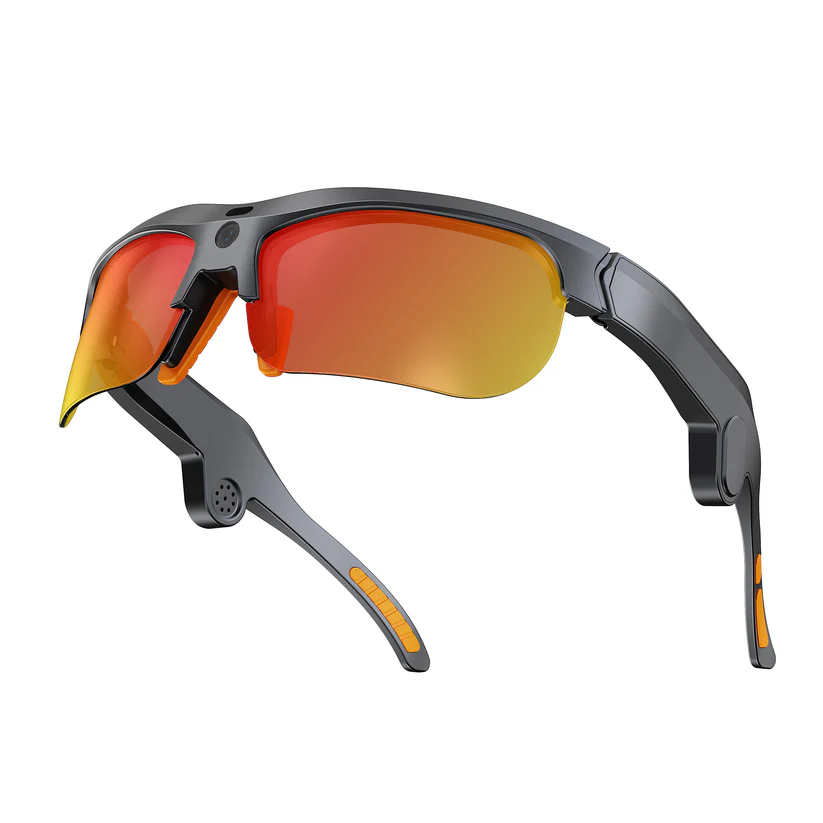
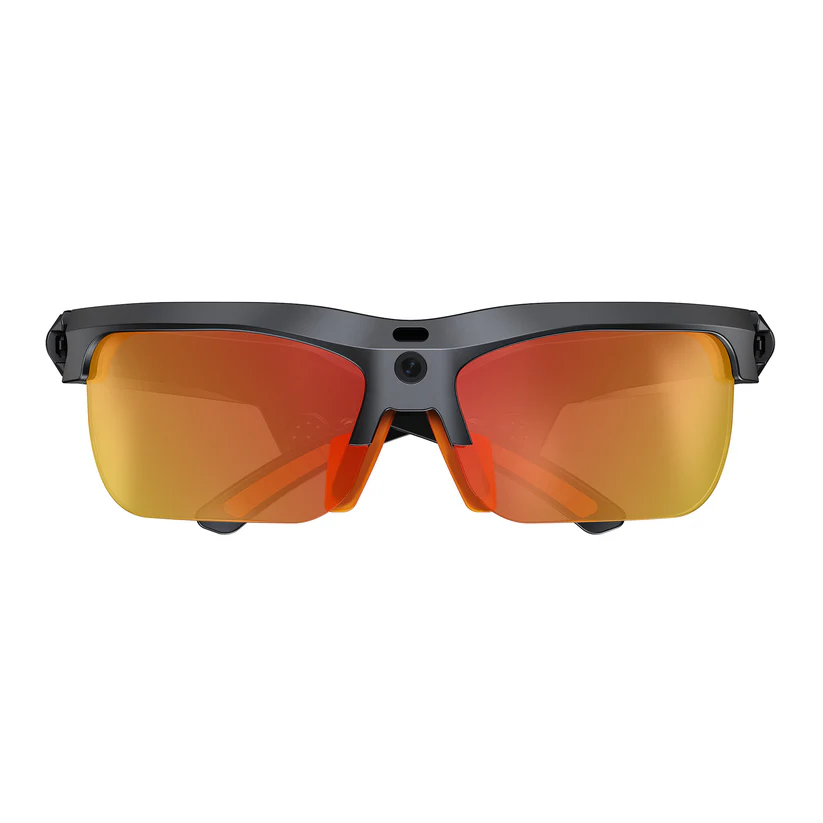
Rollme has officially launched its newest wearable device, the VistaView AI Smart Glasses. The glasses target athletes, travelers, and outdoor enthusiasts who want innovative technology packed into a lightweight and practical design.
Rollme VistaView Specifications
The glasses are equipped with a 13MP Sony IMX386 HD camera that captures sharp photos and smooth 1080p video at 30 fps. They feature advanced stabilization technology for steady video during motion and offer 32GB of storage for photos and videos, making them ideal for daily use or extended trips.
The VistaView includes multi-coated HD polarized lenses that reduce glare and enhance brightness. Rollme has designed them for outdoor comfort and clarity, providing improved visibility even in strong sunlight.
The glasses feature a stable and comfortable wraparound design for activities like running, cycling, or climbing. They include wind-noise reduction for clear audio, built-in speakers for immersive surround sound, and a touchpad for managing phone calls with ease.
The smart glasses include AI object recognition powered by OpenAI. This feature allows users to point the glasses at objects or text to instantly receive information. The device also supports multilingual translation for conversations, enabling smooth communication across languages while traveling.
The VistaView features a 300mAh battery, allowing 50 minutes of continuous video recording, 10 hours of music playback, and up to 120 hours of standby time.
Pricing and Availability
Rollme VistaView glasses come in a single Blazing Orange color and are priced at $99.99. The package includes the glasses, a charging cable, a protective case, and a cleaning cloth. They are available now through the official Rollme store.
In related news, Rollme recently unveiled the lightweight G9 smartwatch with dual-band GPS, offline maps support, and up to 15 days of battery life
For more daily updates, please visit our News Section.
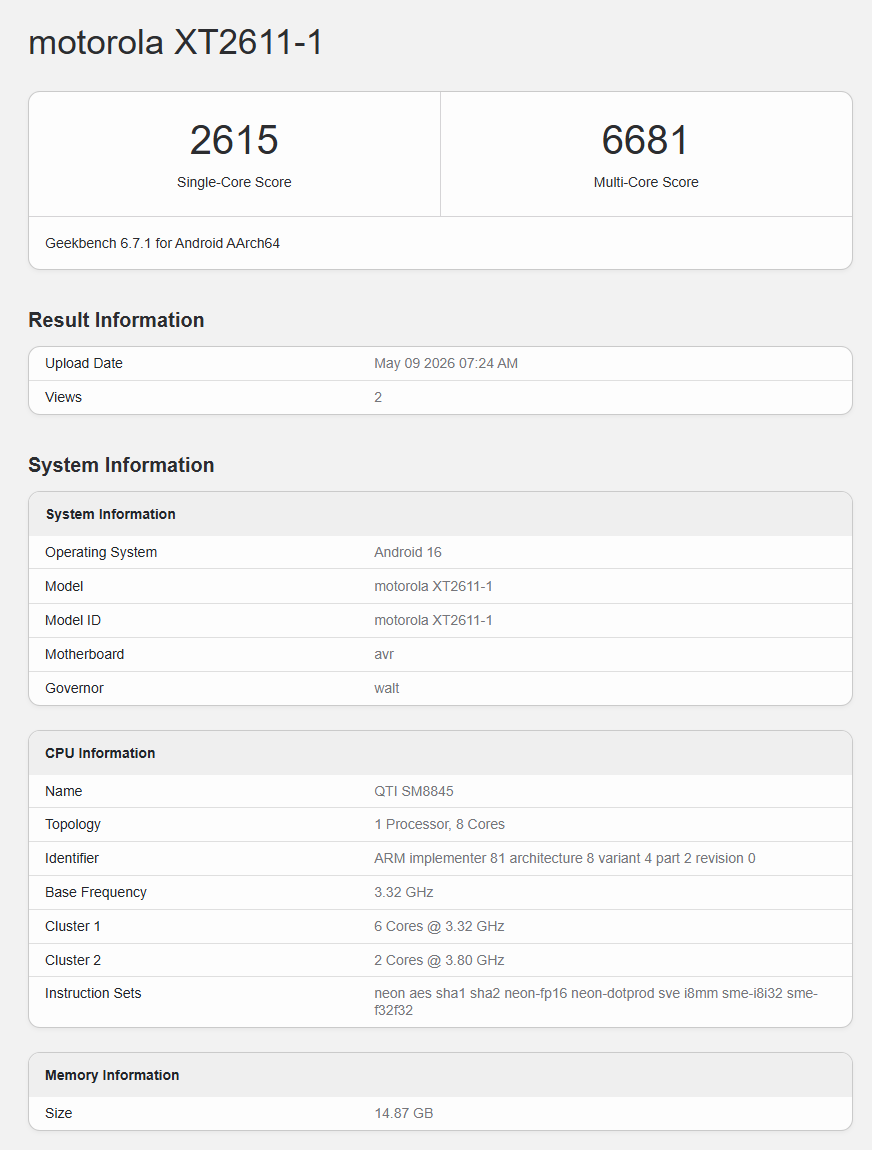
On May 19, Lenovo will unveil a couple of new devices, including the Legion Y70 (2026) gaming phone, in China. Recently, the device, which bears the model number XT2611, was spotted on China’s 3C certification platform, revealing its fast-charging capabilities. Now, the Y70 has appeared in Geekbench’s database, revealing key details about its chipset, RAM, and Android version.
As seen above, the Motorola XT2611-1 device has surfaced on the Geekbench benchmarking platform. While it is labelled as a Motorola device, it is expected to launch in the Chinese market under the Legion Y70 branding.
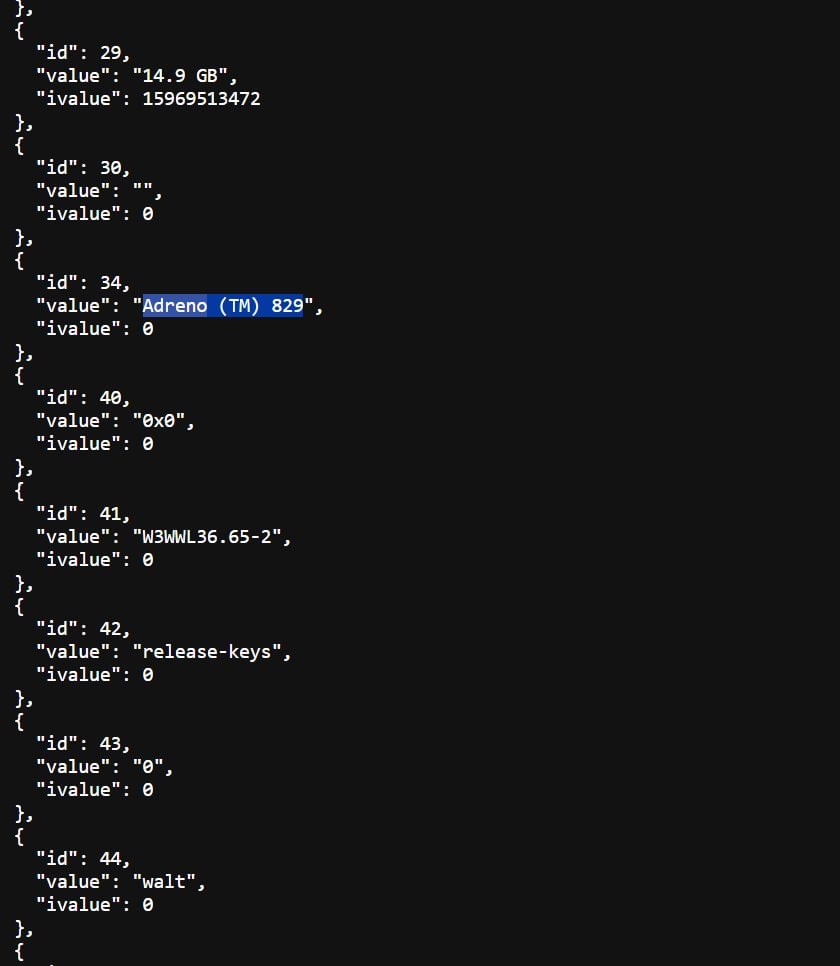
The listing reveals that the Legion Y70 is powered by the Snapdragon 8 Gen 5 chipset, paired with 16GB of RAM and Android 16. In Geekbench’s single-core and multi-core tests, the device scored 2615 and 6681 points, respectively.
As for the other specifications, reports suggest that the Legion Y70 will feature a 6.8-inch OLED panel with a 2K resolution and a 144Hz refresh rate. It is also confirmed to pack a massive 8,000mAh battery with support for 90W fast charging.
For heat dissipation, the Legion Y70 is said to feature a robust thermal architecture that includes a 5500mm² VC cooling system, 12W liquid gold thermal interface material, and 10W high thermal conductivity gel. The device will reportedly be available in black and white shades.
For more daily updates, please visit our News Section.
Noise has unveiled NoiseFit Halo 3 smartwatch in India. The new wearable focuses on AI-backed productivity tools, health tracking, and smart convenience features packed inside a premium round-dial design. Alongside fitness monitoring, the smartwatch also introduces tools like QR storage and AI voice transcription.
NoiseFit Halo 3 specifications and features
NoiseFit Halo 3
The NoiseFit Halo 3 comes with a 1.43-inch AMOLED display that supports brightness levels of up to 1000 nits for improved outdoor visibility. The smartwatch features a metal body with curved edges and an integrated strap layout inspired by classic dress watches. It is offered with metal, leather, and silicon strap options.
One of the major highlights is the inclusion of Noise AI Pro. The AI-based system supports voice commands, voice recording, and AI transcription that converts voice notes into text. The smartwatch can also generate personalised wallpapers and provide morning brief summaries that include sleep patterns, activity details, and health information.
The wearable also supports Super Notifications on Android devices, allowing users to receive OTPs, ride updates, and delivery alerts directly on the watch. In addition, it includes a Smart Dashboard with support for up to five widgets, including AQI updates, hydration reminders, music controls, and sleep tracking insights. Noise has also added a feature called Noise Vault, which stores QR codes for movie tickets, flights, concerts, and other passes for quick scanning access.
For fitness and health tracking, the NoiseFit Halo 3 supports heart rate monitoring, stress tracking, and SpO₂ measurement alongside continuous all-day tracking. The smartwatch is rated for water resistance up to 10 metres and is claimed to offer up to seven days of battery life on a single charge.
NoiseFit Halo 3 price and availability
The NoiseFit Halo 3 is priced at Rs 5,499 in India as an introductory offer. It is available through the official Noise website, Amazon, and Flipkart in Black, Brown, and Blue colour options.
For more daily updates, please visit our News Section.
For years, smartphone brands focused on making devices thinner, lighter, and faster. Battery upgrades often felt incremental, with most flagship phones settling between 4,500mAh and 5,500mAh capacities. However, 2026 is beginning to look very different. Smartphone makers are now experimenting with massive battery capacities, with some brands even crossing the 10,000mAh mark.
At first glance, a 10,000mAh smartphone may sound excessive. After all, many modern phones already last an entire day. But changing usage habits, AI-powered features, mobile gaming, and heavy content consumption are pushing battery demands to new levels.
The rise of power-hungry smartphones
Vivo Y600 Pro
Modern smartphones are no longer just communication devices. They are gaming consoles, portable editing machines, AI assistants, navigation systems, and entertainment hubs. Features like on-device AI processing, 2K displays with 144Hz refresh rates, advanced cooling systems, and desktop-grade gaming graphics consume a significant amount of power.
Mobile gamers, for example, can drain a standard flagship battery within a few hours while playing demanding titles like Genshin Impact or Zenless Zone Zero. Similarly, creators who shoot 4K or even 8K videos often carry power banks because traditional battery capacities struggle to keep up.
This is where 10,000mAh phones begin to make sense. Such devices are not necessarily aimed at casual users. Instead, they target power users who want true multi-day battery life without constantly searching for a charger.
Silicon-carbon batteries are changing the game
Honor Win series
A few years ago, fitting a 10,000mAh battery inside a regular smartphone chassis would have made the device bulky and impractical. However, silicon-carbon battery technology is rapidly changing that.
These newer batteries offer higher energy density compared to traditional lithium-ion cells. In simple terms, brands can now pack larger batteries into slimmer bodies without dramatically increasing thickness or weight.
That is why several upcoming flagship phones are expected to feature 8,000mAh to 10,000mAh batteries while still maintaining relatively premium designs. Combined with ultra-fast charging speeds, these devices could significantly reduce battery anxiety for heavy users.
Do average users really need it?
For many users, the answer is probably no. If your daily activities mainly involve messaging, social media, web browsing, and occasional photography, a modern 5,500mAh or 6,000mAh phone is usually more than enough. That’s the reason why Samsung and Apple flagship phones have barely crossed the 5,000mAh mark.
However, battery life has become one of the biggest purchase considerations globally. Even users who do not fully utilise a 10,000mAh battery may appreciate the convenience of charging their phone once every two or even three days.
There is also a psychological factor involved. Consumers often associate bigger batteries with reliability and long-term durability, especially as battery health naturally declines over time.
10,000mAh phones are already here
Poco X8 Pro Max
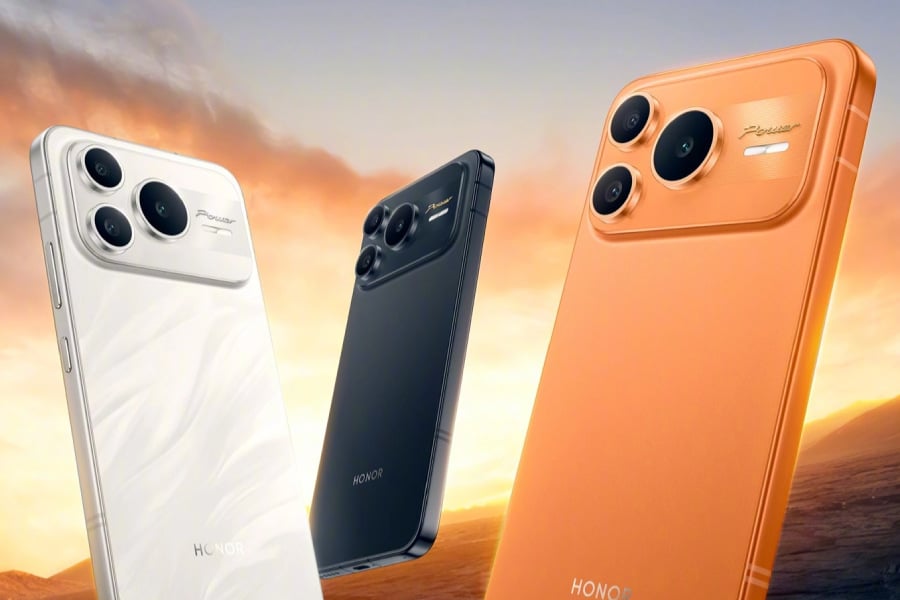
Chinese smartphone brands are already leading this transition. Vivo and Honor have recently introduced smartphones in China featuring batteries close to or above the 10,000mAh mark. These devices are currently limited to the Chinese market, but there is a strong possibility that global variants could arrive in the coming months.
The Vivo Y600 Pro, for example, packs a huge 10,200mAh battery inside a body that measures 8.2mm in thickness and weighs between 221 grams and 223 grams. Honor, on the other hand, has launched multiple high-capacity devices, including the Honor Win series with a 10,000mAh battery. The device measures 8.3mm thick and weighs 229 grams.
Another interesting model is the Honor Power 2, which features a 10,080mAh battery while maintaining an 8mm profile. It weighs 216 grams, making it slightly lighter than some other ultra-battery smartphones currently available.
What is impressive is that manufacturers have managed to keep the thickness of these devices under 9mm, which is quite good considering the battery capacities involved. However, the weight still hovers around the 220-gram mark in many cases. Once users add a protective case, the overall weight could increase by several more grams, making these phones noticeably heavier than typical mainstream smartphones.
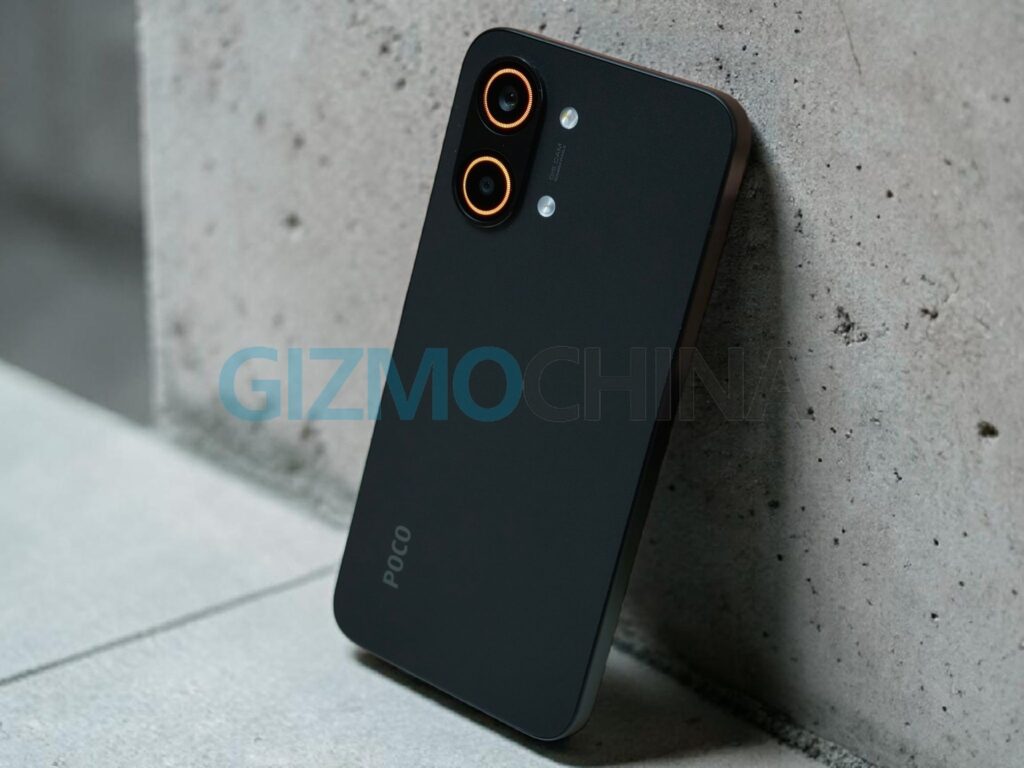
At the same time, the global market is already seeing phones with 9,000mAh-class batteries. Devices such as the Poco X8 Pro Max and OnePlus Nord 6 are pushing battery capacities far beyond what used to be considered standard for mainstream smartphones.
While ultra-large batteries may not become mandatory for everyone, 2026 clearly marks the beginning of a new battery race. And for gamers, travellers, creators, and power users, the era of the 10,000mAh smartphone may finally make perfect sense.
For more daily updates, please visit our News Section.
Redmi unveiled the Redmi K90 and K90 Pro Max smartphones in October last year. Notably, this marked the first time a Redmi flagship arrived with the “Pro Max” branding. Based on that naming pattern, early reports claimed that the upcoming Redmi K100 series would include the Redmi K100 and K100 Pro Max. However, a fresh update now suggests that the company could replace the K100 Pro Max with a different model altogether.
Redmi K100 Pro Max moniker could be dropped
As seen in the screenshot above, reliable tipster Experience More claims that there may not be a Q11U model after all, but instead a Q11X device. Earlier reports suggested that the Redmi K100 Pro Max carried the internal engineering codename Q11U. However, the latest information indicates that Redmi may have replaced the project internally and could launch it under a different branding.
To recall, the Redmi K90 Pro Max reportedly carried the internal codename P11U. Therefore, many expected its successor to follow a similar naming structure with the Q11U codename.
The tipster’s latest claim suggests that the company could launch Q11X instead of Q11U. This has led to speculation that Redmi may drop the “Pro Max” branding for the upcoming flagship altogether. At present, it remains unclear whether the device will debut as the Redmi K100 Ultra or under another name entirely.
Hopefully, additional leaks and reports emerging in the coming weeks will provide more clarity regarding the final branding of the device.
Based on previous reports, the Q11X model has already been spotted running early builds of HyperOS 3 that are reportedly optimized for 2nm architecture. This strongly suggests that the device could be powered by a Snapdragon 8 Elite Gen 6 series chipset. Globally, this device could be rebranded as the Poco F9 Ultra in the global market.
For more daily updates, please visit our News Section.
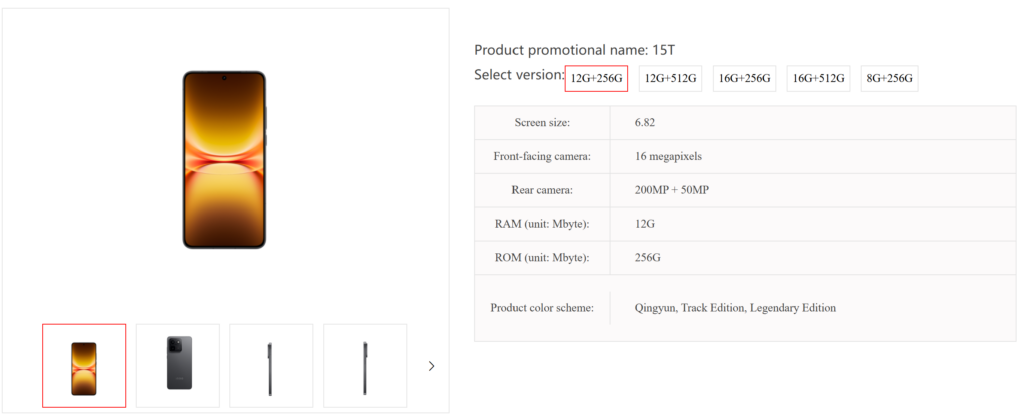
iQOO is all set to unveil the iQOO 15T, a new flagship offering, later this month. While the launch date is still under wraps, the device has been spotted prematurely in China Telecom’s database, revealing its core specifications. Here’s a look at what the smartphone packs inside.
iQOO 15T specifications (rumored)
iQOO 15T
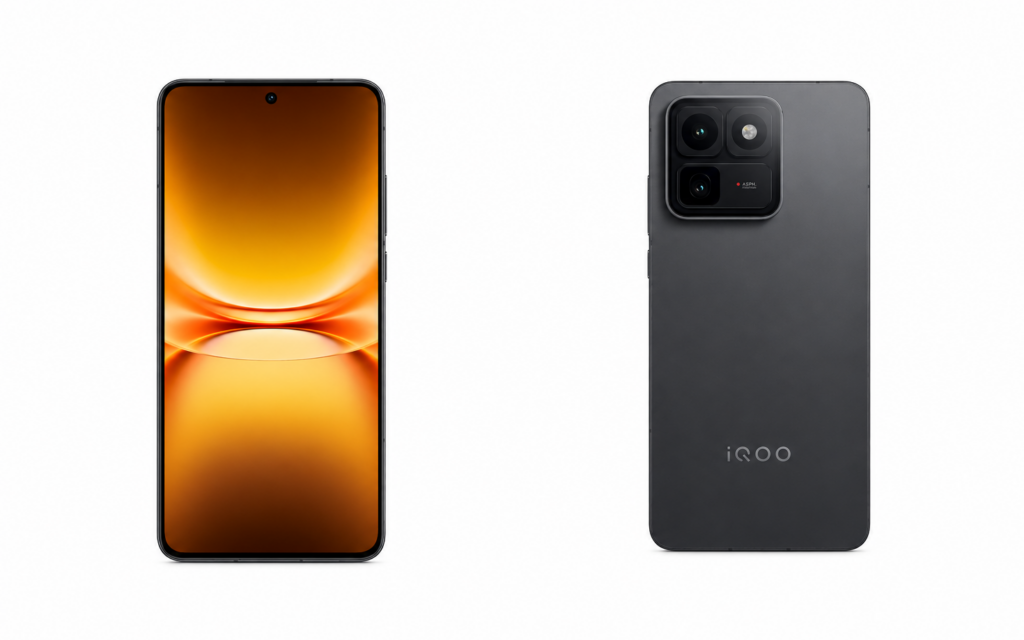
As per the China Telecom listing, the iQOO 15T will house a 6.82-inch OLED screen, which, according to other reports, will offer a 2K resolution and a 144Hz refresh rate. On the front, it will feature a 16-megapixel selfie camera, while the back panel will house a 200-megapixel + 50-megapixel dual-camera setup.
The images available in the listing reveal a flat display and a raised square-shaped camera module on the back. The rest of the design appears minimalist.
The iQOO 15T will be powered by the Dimensity 9500, which is listed as model number MT6993 in the China Telecom listing. It will come preloaded with Android 16, which will have a layer of OriginOS 6 on top.
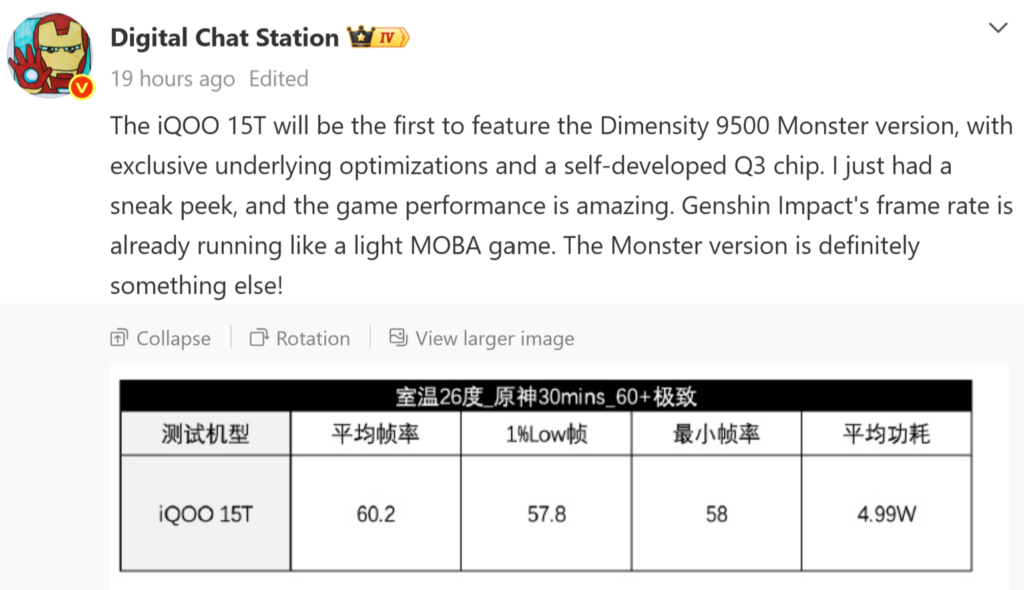
According to Digital Chat Station’s recent Weibo post, the iQOO 15T will debut with a special “Monster” edition of the Dimensity 9500 chipset, paired with the company’s self-developed Q3 gaming chip. The post further claims that the device delivered strong gaming performance during early testing.
According to the shared benchmark details, the iQOO 15T achieved an average frame rate of 60.2fps while running Genshin Impact for 30 minutes at 60fps+ extreme settings in a 26-degree room temperature environment. The test also reportedly recorded a 1% low frame rate of 57.8fps, a minimum frame rate of 58fps, and an average power consumption of 4.99W
Coming back to the China Telecom listing, it also reveals May 20 as the iQOO 15T’s release date. The said event will also see the arrival of other devices, such as the iQOO Pad 6 Pro and TWS 5i earbuds.
It will arrive in multiple configurations, including 8GB+256GB, 12GB+256GB, 12GB+512GB, 16GB+256GB, and 16GB+512GB. It will pack a massive 8,000mAh battery with support for 100W wired charging. Reports suggest that it may lack wireless charging support.
The iQOO 15T will measure 163.37 x 76.71 x 8.25 grams and weigh 216 grams. It will be sold in finishes, such as Qingyun, Track Edition, and Legendary Edition.
For more daily updates, please visit our News Section.
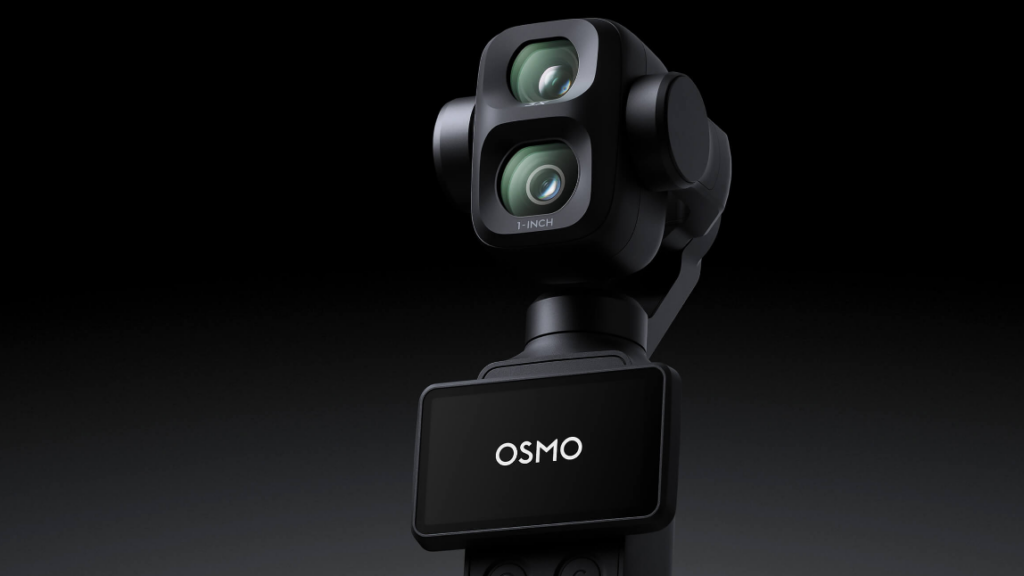
DJI is preparing to take the Pocket series in a slightly different direction this year. After several teasers on Chinese social media, the company has now confirmed that the upcoming Osmo Pocket 4P, sometimes shortened to Pocket 4 Pro, will launch globally. And unlike previous Pocket models, this one is focusing heavily on zoom and more flexible shooting options.
The biggest addition is a dedicated telephoto camera
The Pocket 4P keeps the same 1-inch primary sensor introduced on the standard Osmo Pocket 4, but adds a secondary 3x telephoto lens to the setup. That may not sound revolutionary on paper, but for a compact gimbal camera like this, it’s actually a pretty meaningful change.
One of the biggest limitations of previous Pocket models was that everything had to be shot through a single wide-angle lens. It worked well for vlogging, but portraits, tighter framing, and cinematic shots often relied heavily on digital zoom or cropping. The new telephoto camera changes that.
Early hands-on clips from China suggest the telephoto lens sits around a 70mm equivalent focal length and may use a fairly large 1/1.5-inch sensor. Reports also mention up to 6x “lossless” zoom and 12x maximum zoom overall, which should make the camera much more versatile for travel videos, interviews, and street-style shooting.
Outside of the second camera, the Pocket 4P seems to build directly on the standard Pocket 4. That model already introduced a few major upgrades compared to the Pocket 3, including 240fps recording at 4K, upgraded ActiveTrack, and a brighter rotating display. The upcoming Pocket 4P keeps all of that while adding the extra telephoto hardware. And of course, the signature 3-axis mechanical gimbal is still here, which remains one of the biggest reasons people buy Pocket cameras in the first place.
DJI has been teasing the device with the slogan “See More, Tell More,” which is honestly a pretty accurate summary of what this model seems designed for.
The rollout appears to start in China before expanding globally later. DJI pages for the device have already surfaced in markets like Canada and Mexico. Availability in the US is less clear, though. Similar to some recent DJI products, the Pocket 4P is reportedly facing regulatory hurdles tied to FCC authorization, and at least for now, it doesn’t appear on DJI’s US website.
The MacBook Neo has been a huge hit for Apple, but the surge in demand has also led the company to rethink its chip production strategy. According to a WSJ report, Apple and Intel have just made a “preliminary” chipmaking deal through which Intel’s fabs will be used to manufacture some of the chips that power Apple devices, and that could also include the A27 chips powering the next-gen MacBook Neo.
Taiwanese chip giant TSMC has been exclusively manufacturing Apple chips for years, but its capacity remains tight due to unprecedented demand for artificial intelligence (AI) and high-performance computing (HPC) chips. Therefore, Apple diversifying its chip production partners will help the brand secure additional supply for its entry-level and mainstream-focused chips.
The A18 chip that powers the MacBook Neo and iPhone 16 series is currently manufactured using TSMC’s N3B process technology. That too isn’t unaffected by the ongoing chip shortages, and this has led to a $100 increase in the MacBook Neo’s price, which is a big hike for a $599 product. The deal with Intel will help Apple ensure an optimal quantity of upcoming MacBook Neo laptops in the market.
Apple was also reportedly in talks with Samsung for its chip needs. That could be seen as a backup option in case the need arises. For Intel, this is less about reviving the ‘Intel Inside’ era and more about proving its factories can compete with the world’s best.
Samsung has officially announced that it will stop selling TVs and home appliances in mainland China. The decision follows growing pressure from local Chinese brands that now dominate the country’s consumer electronics market.
The company said the move was made due to “rapidly changing market conditions.” Samsung’s official China website now displays a notice confirming the change. However, the company clarified that after-sales service and customer support will continue normally for existing customers.
AI- Generated Image for representation only
TVs, Refrigerators & More Affected
Samsung will discontinue local sales of several products in China, including televisions, monitors, refrigerators, washing machines, dryers, air conditioners, vacuum cleaners, and air purifiers.
Despite this major withdrawal, Samsung smartphones will still remain available in China. However, the company’s smartphone business has also struggled heavily against domestic Chinese brands and Apple. Samsung once held nearly 20% of China’s smartphone market in the early 2010s, but its share has now reportedly fallen below 1%.
Chinese Brands Continue Growing
Chinese electronics companies have rapidly improved product quality while also offering aggressive pricing. Faster innovation cycles and strong domestic brand loyalty made it increasingly difficult for Samsung to compete in the region.
Samsung’s manufacturing operations in China will continue, as the company still produces devices there for overseas markets.
Samsung Focuses More on AI & Semiconductors
While leaving China’s appliance market, Samsung is seeing massive growth in its semiconductor business. The company is increasingly focusing on AI-related technologies and high-performance memory chips.
In the first quarter of 2026, Samsung reported revenue of 133.87 trillion won and operating profit of 57.23 trillion won. Its semiconductor division alone contributed 61% of the company’s total revenue, driven by booming global AI demand.
Sony’s PlayStation 5 is facing a noticeable slowdown in sales as rising prices and higher production costs continue to affect demand. While game consoles usually become cheaper over time, the PS5 has moved in the opposite direction, becoming significantly more expensive since its launch in 2020.
PS5 Prices Keep Rising Instead of Falling
The PS5 originally launched at $399 for the Digital Edition and $499 for the Disc Edition. After several price increases, Sony now charges around $599 for the Digital Edition and $649 for the Disc model. The latest price hike arrived in March 2026 and added nearly $100 compared to the original launch pricing.
PS5 Sales Drop Sharply
The higher prices are now clearly impacting sales performance. Sony sold 1.5 million PS5 consoles during the quarter ending March 31, 2026, compared to 2.8 million units during the same period last year. This represents a yearly decline of more than 46%.
Full-year PS5 sales also dropped from 18 million units in FY2024 to 16.5 million units in FY2025. Although the PS5 has now reached 93.7 million lifetime sales globally, it is still trailing behind the PS4 during the same stage of its lifecycle.
Rising Costs Are Hurting the PlayStation Business
Sony says the main problem comes from rising memory chip and component costs. According to Sony President and CEO Hiroki Totoki, these higher costs are affecting not only console sales but also software revenue, PlayStation subscriptions, and accessories.
Consumers are also becoming less willing to buy older hardware at higher prices, especially when many expected the PS5 to become cheaper over time.
Sony Does Not Plan Another Price Increase
Despite the slowdown, Sony says there are currently no plans for another PS5 price increase. The company wants to continue operating with the current pricing structure for now after already increasing prices multiple times over the past year.
GTA 6 and PS6 Could Help Sony Recover
Sony remains optimistic about the future of its gaming business. The company expects profits to grow by around 30% next fiscal year, helped by the launch of Grand Theft Auto VI in November.
Sony also confirmed that PS6 development is continuing. However, ongoing research, chip development, and hardware investments for the next-generation console are expected to continue affecting profits in the near future.
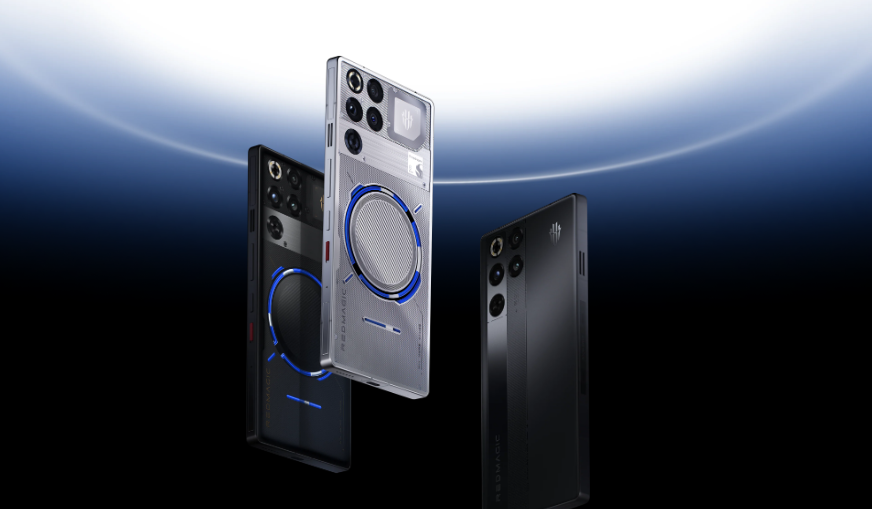
RedMagic has officially locked in May 18 for the launch of the RedMagic 11S Pro, and based on the early teasers, the company is doing what it usually does best: pushing mobile hardware as hard as possible.
The teaser itself talks a lot about overclocking, which is basically RedMagic hinting that this won’t be a standard Snapdragon implementation. The Snapdragon 8 Elite Gen 5 “Leading Version” is a slightly boosted variant similar to the special “for Galaxy” chips Samsung uses in its flagships.
According to RedMagic, the chips go through three separate rounds of testing before qualifying for the “Leading Version” label. One of those tests involves running at extremely high clock speeds, and only chips capable of maintaining stable operation at 4.74GHz make it to the next stage.
From there, the selected chips are pushed through additional voltage and frequency stress testing under extreme conditions to evaluate stability, heat, and power efficiency. In simple terms, RedMagic is essentially binning the best-performing Snapdragon 8 Elite Gen 5 chips for the 11S Pro.
For context, most Snapdragon 8 Elite Gen 5 phones so far, including devices from Xiaomi, iQOO, and OnePlus, top out at 4.61GHz. Then there’s the software tuning side of things, which tends to be more conservative on mainstream flagships like Samsung’s Galaxy S26 Ultra.
The end result, at least according to RedMagic’s teaser material, is a phone capable of running over 200 supported games at up to 2K resolution and 144fps, including titles like Call of Duty and “Break Through the Dark Zone.” The company also mentions support for resolution upscaling and frame interpolation during gameplay.
Of course, higher clocks don’t automatically mean better gaming experience. Sustained performance matters more, and that’s usually where RedMagic tries to separate itself. The company has spent the last few generations aggressively experimenting with vapor chambers, internal fans, liquid cooling, basically anything that helps keep the chip running harder for longer. The 11S Pro is expected to continue that trend.
The RedMagic 11s Pro is set to launch on May 18 in China.
RedMagic is also launching a new gaming tablet, the Gaming Tablet 5 Pro, which is expected to feature a compact 9-inch OLED display with a very high refresh rate, reportedly up to 185Hz. It’s also tipped to use the same Snapdragon 8 Elite Gen 5 platform, paired with up to 24GB RAM and 1TB storage depending on the version.
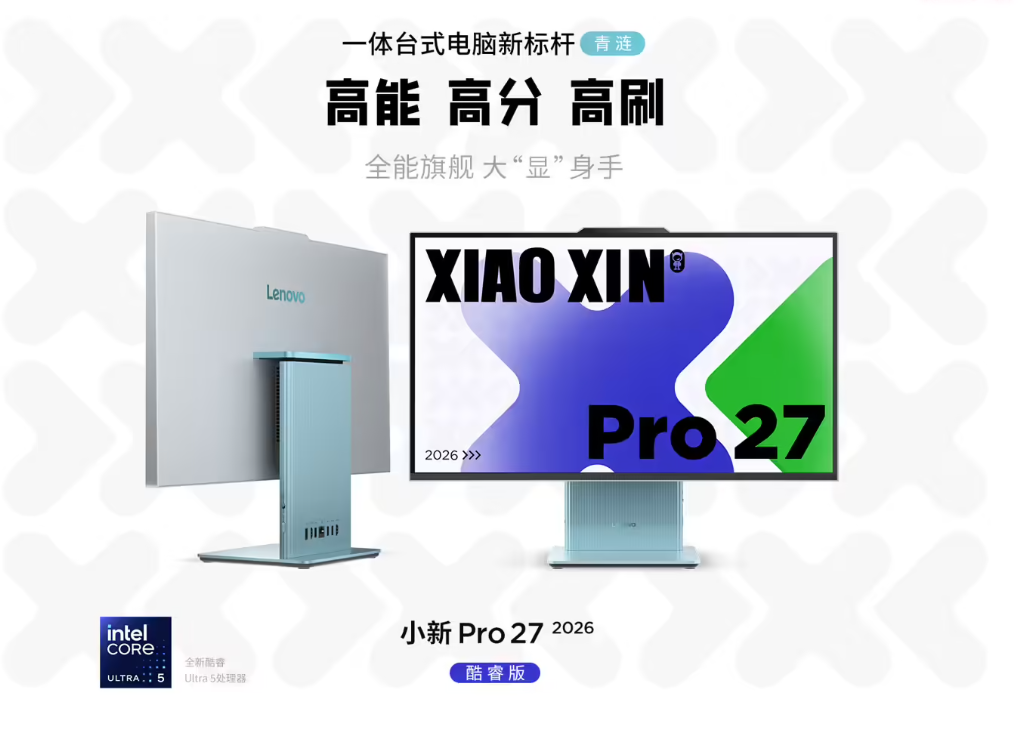
Lenovo has officially introduced the Xiaoxin Pro 27 2026 Core Edition in China, targeting users who want a premium all-in-one desktop with a modern design and capable hardware.
Ultra-Slim Body With Eye Comfort Technology
The new model features an ultra-slim 15.8mm chassis, making it noticeably sleeker than traditional all-in-one PCs. Lenovo has also focused on comfort by including TÜV Rheinland low blue light certification and flicker-free display technology to reduce eye strain during long usage sessions. The company further claims that the system operates at noise levels as low as 16dB(A), helping create a quieter workspace environment.
27-Inch QHD 120Hz Display
The Xiaoxin Pro 27 2026 Core Edition comes equipped with a 27-inch QHD display featuring a 120Hz refresh rate for smoother visuals during multitasking, media consumption, and general productivity work. The panel also offers a 96% screen-to-body ratio, giving the all-in-one a more immersive and modern appearance with slimmer bezels around the display.
Intel Core Ultra Chip
Powering the Xiaoxin Pro 27 2026 Core Edition is Intel’s Core Ultra 5 325 processor. The system is paired with 16GB LPDDR5X-7647 onboard memory and a 1TB M.2 PCIe Gen4 NVMe SSD, offering fast application loading speeds and responsive multitasking performance.
High-Resolution Webcam and Harman Audio Setup
Lenovo has also upgraded the communication and entertainment experience on the device. The all-in-one includes a 2592×1944 high-resolution webcam designed for sharper video calls, while intelligent dual microphones with AI voice noise reduction help improve voice clarity. Audio is handled by the Dolby algorithm-tuned Harman 2.0 stereo speakers.
Multiple High-Speed Ports and Wireless Connectivity
In terms of connectivity, the Xiaoxin Pro 27 includes Wi-Fi 6 support along with a wide range of ports. Users get two USB-C 10Gbps ports, two USB-A 10Gbps ports, one USB-A 480Mbps port, an HDMI 2.1 TMDS output, an HDMI-in input, a 1GbE RJ45 Ethernet port, and a 3.5mm combo audio jack.
Accessories and Pricing
Lenovo is also bundling a wireless keyboard and wireless mouse with the system. The Lenovo Xiaoxin Pro 27 2026 Core Edition is priced at 8,999 yuan in China.
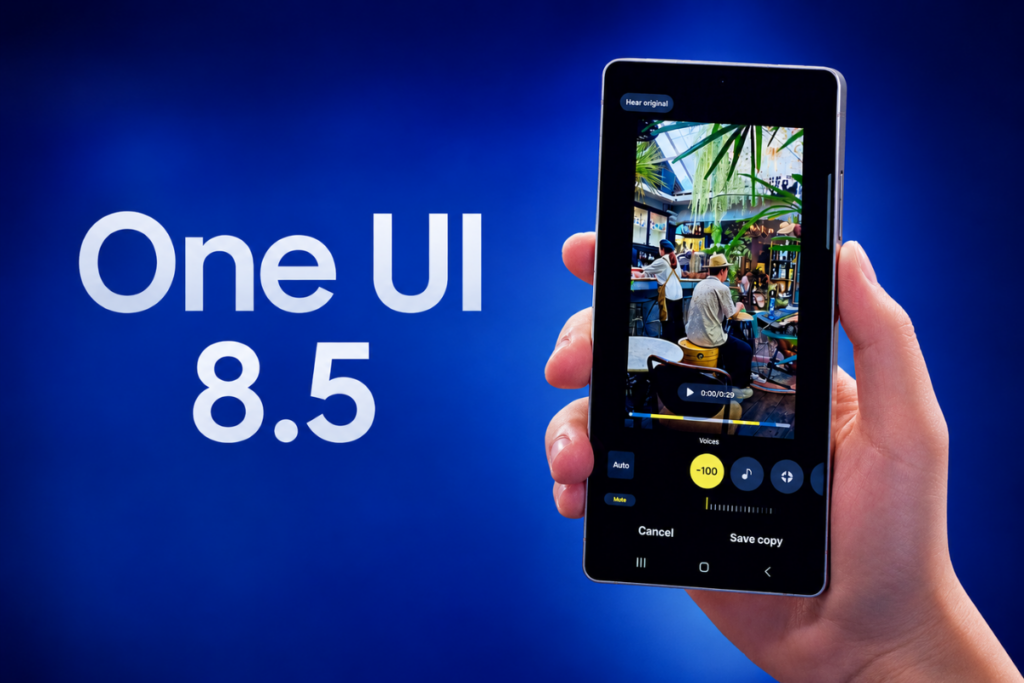
Earlier this week, Samsung started rolling out the One UI 8.5 update to the initial set of devices in Korea, with the global rollout set to begin May 11. Ahead of that, the brand has confirmed One UI 8.5 eligibility for an additional 20 Galaxy devices.
The earlier announcement confirms the One UI 8.5 update arrival for high-end devices, including the Galaxy S25 series (including S25 FE and S25 Edge), Galaxy S24 series (including S24 FE), Galaxy Z Fold 7, Galaxy Z Flip 7, Galaxy Z Fold 6, Galaxy Z Flip 6, Galaxy Tab S11 series, and Galaxy Tab S10 series. The latest announcement from Samsung Germany adds 20 more Galaxy devices to the list.
Here’s the fresh list of Galaxy devices confirmed to receive the One UI 8.5 update:
Galaxy S series
Galaxy S23
Galaxy S23+
Galaxy S23 Ultra
Galaxy Z series
Galaxy Z Fold 5
Galaxy Z Flip 5
Galaxy Tab series
Galaxy Tab S9
Galaxy Tab S9+
Galaxy Tab S9 Ultra
Galaxy Tab A series
Galaxy A15
Galaxy A16
Galaxy A17
Galaxy A25
Galaxy A26
Galaxy A34
Galaxy A35
Galaxy A36
Galaxy A54
Galaxy A55
Galaxy A56
Samsung didn’t reveal a rollout schedule for these devices. However, it’s safe to say the update will start rolling out to these devices once it reaches all high-end devices in the initial wave.
The One UI 8.5 rollout kicked off on May 6, but was limited to Korea, with global expansion scheduled to begin May 11 across multiple regions, including Europe, Hong Kong, India, Latin America, North America, Southeast Asia, and Taiwan.
As the rollout expands in batches, the update may take a few days to reach all the users. To manually check for available updates, head to Settings > Software updates and tap Download and install.
We’ll update you with the latest information in our Samsung section. You can visit the page from time to time to stay updated. Or, join our Telegram channel to receive instant alerts when we post new stories.
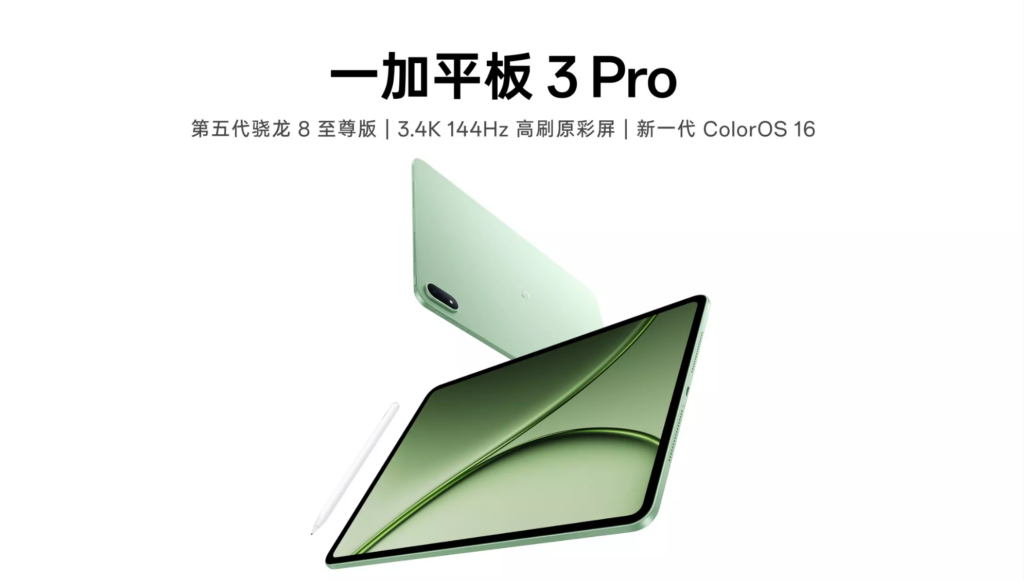
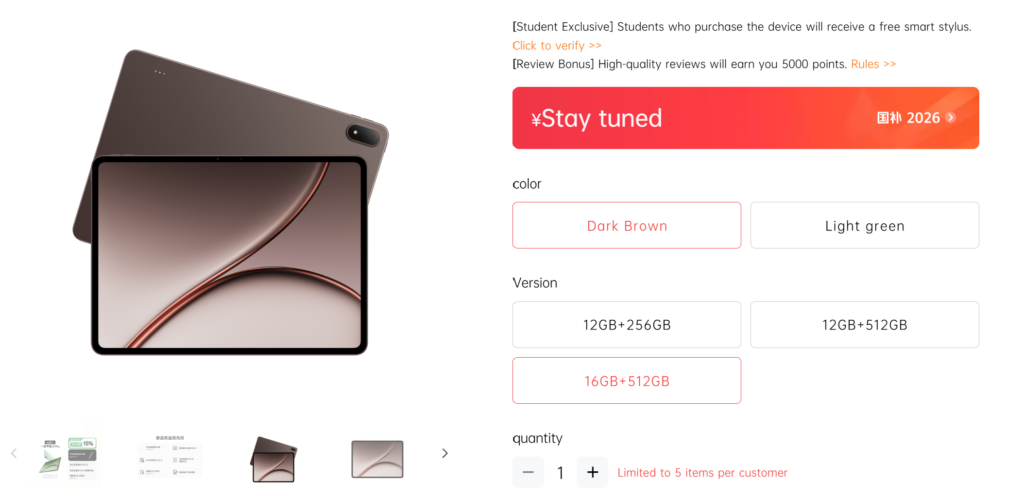
OnePlus has officially opened reservations for the OnePlus Pad 3 Pro in China, revealing nearly all of the tablet’s key specifications ahead of its first sale. The official listing has revealed the official images, color options, and configurations of the flagship tablet.
OnePlus Pad 3 Pro specifications and features
The OnePlus Pad 3 Pro is powered by Qualcomm’s Snapdragon 8 Elite Gen 5 mobile platform and features a large 40,760mm² cooling system that combines graphite and VC heat dissipation. The tablet runs the latest ColorOS 16 software and introduces a desktop-style free multi-window system.
It features a 13.2-inch TCL CSOT LCD display with a 3392 x 2400 resolution, 315ppi pixel density, and up to a 144Hz refresh rate. The screen supports up to 700 nits manual brightness and 1000 nits peak brightness, along with 100 percent DCI-P3 colour gamut coverage and a claimed deltaE value of around 0.7. OnePlus also says it is the first tablet to receive TÜV Rheinland Smart Eye Protection 5.0 certification.
The tablet packs a 13,380mAh battery with support for 67W fast charging. For photography and video calls, it includes an 8-megapixel front camera and a 13-megapixel rear camera. Audio is handled by an eight-speaker setup consisting of four mid-bass units and four ultra-wideband tweeters, along with dual Hi-Res audio certification. Other features include USB 3.1 connectivity, a magnetic ring antenna system, and support for accessories such as the OnePlus Floating Keyboard with integrated NFC and the OnePlus Pencil 3 Pro stylus.
The OnePlus Pad 3 Pro will go on sale in China from 13 May 2026. It will be available in 12GB+256GB, 12GB+512GB, and 16GB+512GB variants. Color options include Deep Brown and Light Green, while additional promotional material also mentions Dawn Gold, Mocha Brown, and Monet Purple finishes.
Interestingly, the OnePlus Pad 3 Pro appears to be the Chinese-market version of the OnePlus Pad 4, which is already available outside China, including in India. The overall design and hardware specifications between the two devices appear to be nearly identical. Therefore, it is unlikely the Pad 3 Pro will make it to the global market.
For more daily updates, please visit our News Section.
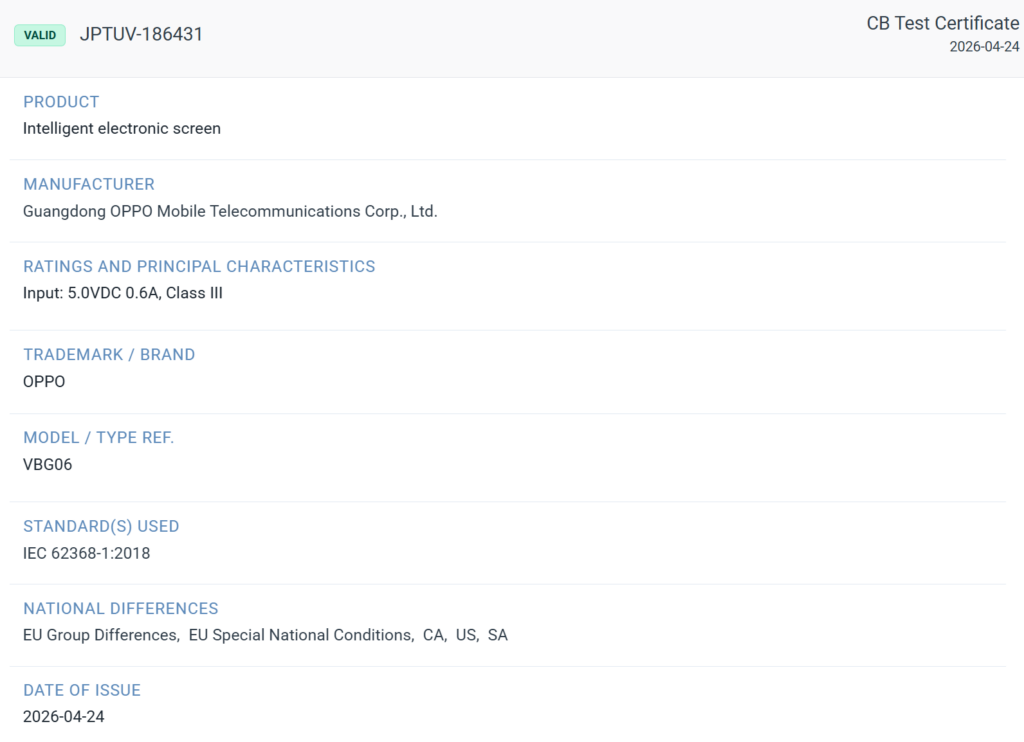
Oppo is gearing up to launch the Reno 16 series in China as well as other markets. While the lineup is expected to debut in the final week of this month, the global launch may happen next month or in July. A new accessory dubbed the Oppo Bubble, reportedly designed for the Reno 16 lineup, has now received approval from certification platforms such as TUV and Malaysia’s SIRIM.
Oppo Bubble certified by SIRIM, TUV
According to a recent report by TheTechOutlook, an upcoming Oppo device with the model number VBG06 has appeared in the SIRIM database with the Oppo Bubble moniker. The listing further describes it as a “wireless screen transmission” device.
Meanwhile, the same device has also surfaced in the TUV database with the description “intelligent electronic screen” and reveals support for 3W charging.
What is Oppo Bubble?
At present, there is no official confirmation regarding the Oppo Bubble, but a recent Weibo post by reliable tipster Digital Chat Station suggests that it will be a new accessory for the Reno 16 series.
Based on the tipster’s claims, the Oppo Bubble appears to be a smart electronic display accessory that supports customized wallpapers and remote camera shutter functionality. The accessory is expected to appeal strongly to fans of celebrity ambassadors such as Song Yuqi, who is reportedly set to endorse the Reno 16 lineup.
For more daily updates, please visit our News Section.
Reports have revealed that well-known Chinese smartphone brands are preparing to launch powerful yet camera-focused mid-range phones in China this month. These include the Honor 600 series, the Oppo Reno 16 series, and the Vivo S60 lineup. A new leak, courtesy of tipster Digital Chat Station, has revealed key details about Vivo’s next S-series phone.
Vivo S60 key details tipped
Vivo S60 leak by DCS
Tipster Digital Chat Station has shared fresh details about an upcoming Vivo “S” iteration smartphone prototype, which appears to belong to the Vivo S60 series. To recall, last year’s S50 lineup featured the Vivo S50 with a 6.59-inch display and Snapdragon 8s Gen 3 chip, while the Vivo S50 Pro Mini was equipped with a smaller 6.32-inch screen and Snapdragon 8 Gen 5 chipset.
According to the new leak, the upcoming S60 series phone features a 6.59-inch 1.5K display with large-radius corners and a centrally positioned screen design. The mentioned screen size suggests that the tipster could be referring to the standard Vivo S60.
The leak further reveals that the S60 will adopt a large horizontal camera matrix on the rear and could be powered by a Snapdragon 8s-series chipset. The device is also tipped to pack a battery capacity starting with “7,” indicating a battery in the 7,000mAh range, along with support for 90W fast charging.
For photography, the prototype reportedly includes a Sony IMX8-series mid-sized periscope telephoto sensor. Other expected features include a metal middle frame, an ultrasonic in-display fingerprint scanner, IP68/IP69-rated dust and water resistance, and support for magnetic accessories via magnetic cases.
The tipster further claims that one of the engineering prototype color options is a striking pink shade. In addition, the device is said to be planned in collaboration with a well-known Chinese anime IP. A report from last month suggested that the S60 lineup will have support telephoto extender accessory.
The Vivo S60 could be accompanied by the Vivo S60 Pro Mini, which may feature a compact design similar to the previous generation. To recall, the S50 Pro Mini was reportedly rebranded as the Vivo X300 FE in markets outside China. Therefore, it is likely that the S60 Pro Mini, if it exists, may be rebadged as the Vivo X500 FE in the first half of 2027.
For more daily updates, please visit our News Section.
The Oppo Reno 16 series is still weeks away from its official launch, but another leak has now added more detail about both upcoming models. This time, tipster Digital Chat Station has shared what appears to be a near-complete hardware overview of the Reno 16 and Reno 16 Pro.
According to the leak, the Oppo Reno 16 Pro could arrive with a 6.78-inch 1.5K OLED flat display and a Dimensity 9500s chipset. The device is also tipped to pack a large 7,000mAh battery with support for 80W wired charging and 50W wireless charging. Oppo reportedly plans to use a metal frame as well.
On the camera side, the Reno 16 Pro may feature a 200-megapixel HP5 main sensor, alongside a 50-megapixel ultra-wide camera and a 50-megapixel periscope telephoto lens.
The standard Reno 16 is said to follow a similar formula but in a smaller form factor. The phone could feature a 6.32-inch 1.5K OLED flat display and run on the Dimensity 8550 chipset. It may also include a 6,700mAh battery with 80W wired charging support.
Interestingly, the regular Reno 16 is tipped to use the same camera setup as the Pro model, including the 200-megapixel HP5 primary sensor, 50-megapixel ultra-wide lens, and 50-megapixel periscope telephoto camera.
Both Reno 16 phones will also have an intelligent e-screen
The leak also mentions an “intelligent electronic screen” feature that supports custom wallpapers and remote-control photography. While the details remain unclear, it sounds like Oppo may be experimenting with additional secondary display functions or interactive software features.
Oppo has already started teasing the series and opened pre-orders in the mainland. The company is expected to launch multiple variants under the Reno 16 lineup, much like the Reno 15 series before it. Global availability may still take longer.
For more daily updates, please visit our News Section.
Sony has officially confirmed a launch event for May 13, and all signs point toward the company unveiling the Xperia 1 VIII. The teaser highlights the rear camera layout, which lines up with recent leaks showing a noticeable redesign compared to older Xperia models.
For years, Sony has mostly stuck to the same vertical camera layout on the Xperia 1 series. This time, though, the company appears to be moving toward a more modern square-shaped camera module. At the same time, Sony doesn’t seem interested in abandoning the things Xperia fans actually buy these phones for.
The Xperia 1 VIII is still expected to focus heavily on manual camera controls and creator-focused hardware rather than chasing mainstream trends. Leaks suggest the phone will feature a 6.5-inch 120Hz OLED panel with FHD+ HDR support, alongside Qualcomm’s Snapdragon 8 Elite Gen 5 chip and 12GB RAM. Color options are also expected to expand a bit this year, with reports mentioning Graphite Black, Iolite Silver, Garnet Red, and Native Gold variants.
Cameras remain the bigger talking point
Sony is reportedly changing direction with the telephoto system on this generation. Instead of continuing with the variable continuous zoom setup found on the Xperia 1 VII, the new model is expected to use a fixed 3x optical zoom periscope camera with a 48MP 1/1.56-inch sensor. The predecessor, in comparison, packs a much smaller 12MP sensor. On paper, that may sound like a downgrade in flexibility, but the larger sensor could improve detail, low-light performance, and image consistency in the zoom ranges people actually use most often.
The rest of the rear camera setup is rumored to include two additional 48MP sensors for the main and ultra-wide cameras. Selfies could once again be handled by a 12MP front-facing sensor, just like last year. Battery capacity is rumored to sit around the 5,000mAh mark, with IP68 water resistance also likely making a return.
Some early Amazon listings, which were later removed, hinted at European pricing above €1,800 and a release window sometime in June. For now, though, the bigger story is the redesign itself. Sony seems to be modernizing the Xperia look.
Buying a budget smartphone in India usually means deciding which features you are willing to compromise on. Over the past year or so, Vivo has built out a lineup of budget phones that focus heavily on battery life and everyday durability, mixing brand-new releases with solid models from last year.
If you have a budget of Rs. 15,000 and are looking specifically for a Vivo device, the choices can be a bit confusing since many of the phones share similar specifications.
Here is a straightforward look at Vivo’s current offerings in this price range and what makes each one worth considering.
Vivo T4 Lite 5G
If you want a balanced phone without relying on bank discounts, the Vivo T4 Lite 5G is a solid starting point. It is priced at ₹13,999, though bank offers often bring it down to around ₹12,500.
For the price, you get a 6.74-inch HD+ display with a 90Hz refresh rate, which is standard for this category. It runs on the MediaTek Dimensity 6300 processor, which handles basic daily tasks well. The standout feature here is the 50-megapixel primary camera with a Sony sensor, which gives it an edge in photography over other phones on this list.
It also includes a 6,000mAh battery. The 15W charging speed is noticeably slow, but the large battery capacity means you probably won’t need to plug it in until the end of the day.
Vivo Y11 5G
If battery life is your top priority, the Vivo Y11 5G sits right at the edge of the budget at ₹14,999 for the 4GB/64GB model.
Vivo has equipped this phone with a larger 6,500mAh battery. It also features a slightly better display than the T4 Lite, offering a 120Hz refresh rate on its 6.74-inch HD+ screen. Under the hood, it is powered by the Dimensity 6300.
On the software side, it runs OriginOS 6 and includes a few modern software additions like Google Gemini and Circle to Search. However, to accommodate the larger battery and faster screen, Vivo scaled back the camera to a basic 13-megapixel sensor. It also retains the slower 15W charging speed.
Vivo Y19s 5G
The Vivo Y19s 5G has a standard retail price of ₹16,499, but frequent bank discounts bring it closer to the ₹15,000 mark.
Internally, it is very similar to the T4 Lite 5G, featuring the same Dimensity 6300 chip, a 90Hz HD+ display, and a 6,000mAh battery. The main difference is its build.
It has SGS and Military-Grade Shock Resistance certifications, making it a bit more resilient against accidental drops. Like the Y11, it only has a 13-megapixel main camera. It is a practical choice if you tend to be rough on your devices.
Vivo T4x 5G
While the Vivo T4x 5G officially starts at ₹16,999, launch discounts and bank offers often reduce the price to around ₹15,000 to ₹15,500. If you can find it at this price, it is the best option on the list.
The T4x 5G offers a clear upgrade in almost every category. It features a sharper Full HD+ 120Hz display and uses the more capable MediaTek Dimensity 7300 processor.
It combines a 50-megapixel camera with a 6,500mAh battery, and most importantly, it supports 44W fast charging, which makes refilling that large battery much more convenient.
For more daily updates, please visit our News Section.
Hisense has launched the 2027 G7 Pro, a 27-inch Mini LED monitor that can switch between two different resolutions and refresh rates. The display is currently available for pre-order in China on JD.com with a standard price of 2,999 yuan ($440), though it is currently listed at a launch price of 2,699 yuan ($396).
Hisense G7 Pro Specifications
Built around a Fast IPS panel with a 16:9 aspect ratio, the monitor allows users to toggle between a sharp 4K (3840 x 2160) resolution at 180Hz and a faster 1080p (1920 x 1080) resolution at 360Hz. It’s backed by a 1,152-zone Mini LED backlight system, which helps it achieve VESA DisplayHDR 1400 certification and a peak brightness of 2,000 nits.
To handle glare, Hisense is using what it calls an Obsidian screen. It’s an anti-reflective glossy finish that combines a dual-layer low-reflection coating with a viewing compensation layer. The company claims this brings the panel’s reflectivity rate down to just 1.8%, which should help maintain deep blacks even in well-lit rooms.
On the color front, the monitor uses a quantum dot enhancement layer, supports 10-bit color depth (via 8-bit + FRC), and covers 99% of the DCI-P3, sRGB, and Adobe RGB color spaces.
For gaming performance, the G7 Pro offers a 1ms gray-to-gray response time with overdrive enabled, AMD FreeSync Premium to prevent screen tearing, and Black Frame Insertion (BFI) to improve motion clarity. It also includes standard gaming overlays like virtual crosshairs, timers, and dark scene enhancement.
The connectivity and productivity features are surprisingly robust for a gaming-focused display. The port layout includes two HDMI 2.1 ports, one DisplayPort 1.4, and a 3.5mm headphone jack. It also features a built-in KVM switch supported by two USB-A ports, a USB-B upstream port, and a full-function USB-C port that delivers up to 90W of power.
The monitor sits on a hexagonal stand that supports height, tilt, swivel, and 90-degree pivot adjustments, and it can be wall-mounted using a 75 x 75mm VESA bracket. It comes in two colors: Moon Shadow Gray and Glacier White.
Hisense has launched two new portable projectors in China under its Vidda LightGo series. Much like the Xgimi MoGo 4 Laser, these outdoor units feature a compact design and use a triple laser setup instead of standard LEDs to improve image quality on the go.
The standard model costs 3,899 yuan (about $570), while a slightly brighter Plus version is priced at 3,999 yuan (about $590). Both projectors output at a 1080p resolution, with Hisense relying on the triple laser engine to provide better color accuracy and contrast to make up for the lack of 4K.
Hisense Vidda LightGo Specifications
Inside, the projector uses Hisense’s new QuaLas 42 laser engine. In terms of brightness, the standard version produces 1300 CVIA lumens, and the Plus version reaches 1400 CVIA lumens. It also supports HDR10+ and covers 110 percent of the BT.2020 color space, which should result in a fairly vibrant image for an outdoor unit.
For setting it up at a campsite or in a backyard, the LightGo includes a 1.0 to 1.3:1 optical zoom lens. This allows you to get a 100-inch image when the projector is placed roughly 2.2 meters away from a wall or screen.
It includes automated features like autofocus and keystone correction to square up the image if you place it on an uneven surface. The unit weighs 2.1kg, has an attached carrying strap, and sits on a 360-degree gimbal stand so you can easily angle it up or down.
Powering it away from a wall outlet is a 20,000mAh battery. Hisense estimates this will give you about two and a half hours of video playback. That is just enough time to watch a standard movie, but you will probably need a portable power station if you plan on watching a longer film or hosting a double feature. Interestingly for outdoor use, the projector is rated to work in freezing temperatures down to -20°C.
For audio, it has two 7W speakers with Dolby Atmos support. The software runs on a smart platform integrated with DeepSeek and Hisense’s own AI models for basic voice controls and media streaming. It also includes HDMI ports with VRR and ALLM support, which is useful if you want to plug in a console.
Alongside these new projectors, Hisense has also unveiled the Vidda C5 series with JBL-tuned audio and support for 240Hz gaming.
For more daily updates, please visit our News Section.
Redmi is reportedly working on the Redmi Note 17 series and Redmi K100 series smartphones for the Chinese market. While the next Note lineup is expected to debut in July or August, the K100 series may break cover in October. In a recent leak, tipster Digital Chat Station revealed key details of a Redmi flagship that is tentatively scheduled to launch around the end of this year, suggesting that he could be referring to one of the Redmi K100 series phones.
Mysterious Redmi K100 series phone’s details emerge
Mysterious Redmi K100 series phone’s details emerge
As per the leak, the Redmi K100 series phone will feature a massive 7-inch display offering a 2K resolution. It will draw power from a huge 10,000mAh+ battery and come equipped with other flagship features, such as an ultrasonic in-screen fingerprint sensor, a metal frame, and an IP68/IP69-rated dust and water-resistant chassis.
Previous leaks from the same source suggested that the Redmi K100 Pro Max would be equipped with the 2nm Snapdragon 8 Elite Gen 6 Pro chip. However, the latest leak mentions the presence of a 3nm chipset instead.
At present, rumors do not point to a new Snapdragon 8-series 3nm chip from Qualcomm this year. Both the Snapdragon 8 Elite Gen 6 and Gen 6 Pro are said to be built on a 2nm process.
On the other hand, there are two other 3nm chips reportedly in development. These include the Dimensity 9500 Plus, which is expected to be an overclocked version of the existing Dimensity 9500, and Xiaomi’s in-house Xring O3 chipset. As far as Qualcomm is concerned, the existing Snapdragon 8 Elite Gen 5 is also a 3nm offering.
Reports have revealed that the Redmi K100 is expected to feature a 6.6-inch display and a battery capacity of around 8,500mAh. Therefore, the mysterious Redmi K100 series phone mentioned by the tipster appears to be neither the K100 nor the K100 Pro Max. This raises the possibility that the lineup could include a third model with the above-mentioned specifications. It may potentially feature either the Dimensity 9500 Plus or the Xring O3 chipset, although the latter currently appears more likely.
For more daily updates, please visit our News Section.
With the expected September launch only a few months away, Apple fans are eagerly waiting for the iPhone 18 Pro series. While global supply chains have been rattled by the rising costs of memory chips, multiple reports claim that despite the price hike of components, the iPhone 18 Pro series may arrive with unchanged pricing.
Whether Apple maintains this aggressive stance or introduces a slight hike in pricing, the iPhone 18 Pro series is expected to offer big upgrades that make it a standout release.
iPhone 18 Pro series AI-generated render
Refined Rear Design
The iPhone 18 Pro is expected to debut a more “unified” aesthetic. Rumors suggest Apple has perfected a new glass-processing technique that minimizes the visual gap between the back panel and the titanium frame, creating a seamless feel in the hand. The headline color for this year is tipped to be a sophisticated Dark Cherry—a deep, wine-like red—joining the staple finishes of Silver, Dark Gray, and a new Light Blue.
The “Micro-Island” Display
The Dynamic Island is finally shrinking. By migrating several Face ID components under the display, Apple is likely to reduce the pill-shaped cutout by roughly 25%. This “Micro-Island” design provides more usable screen real estate, bringing the iPhone closer to a true “all-screen” look while retaining the interactive software features users have grown to love.
2nm A20 Pro Silicon
Under the hood, the A20 Pro chip will be a historic milestone: the world’s first mass-produced processor using TSMC’s 2nm node. This jump in architecture allows for a denser transistor count, resulting in a predicted 15% boost in speed and a staggering 30% reduction in power consumption. It is the powerhouse required for the next generation of on-device agentic AI features.
12GB RAM for Pro Workflows
To support increasingly demanding AI models and professional video codecs, the entire iPhone 18 Pro lineup is expected to jump to 12GB of RAM. This ensures that even with heavy background tasks or 4K ProRes rendering, the system remains buttery smooth. This jump is essential for future-proofing the device for the next half-decade of iOS updates.
Massive Battery Capacity Increase
Apple is reportedly moving away from purely chemical efficiency to focus on raw volume. Leaks point to the iPhone 18 Pro Max packing a massive 5,200 mAh cell, the largest ever seen in an iPhone. By slightly optimizing the internal chassis, Apple is expected to deliver a true “two-day battery” experience, significantly pushing the endurance limits for power users.
Variable Aperture & Camera Control 2.0
The camera system is going mechanical. Apple is expected to introduce a variable aperture on the 48MP main sensor, allowing the lens to physically adjust how much light hits the sensor for natural depth of field.
Complementing this is Camera Control 2.0, which is rumored to feature a pressure-sensitive mechanical feel. This allows for a “half-press to focus” and “full-press to shoot” experience, mimicking professional-grade cameras.
The Proprietary C2 Modem
This year marks a major shift in connectivity. The iPhone 18 Pro series will likely be the first to feature Apple’s in-house C2 5G modem. This custom silicon is designed for extreme power efficiency and deeper integration with the A-series chip. It aims to provide more stable connections in high-density areas and potentially introduces enhanced “Direct-to-Cell” satellite capabilities.
For more daily updates, please visit our News Section.
Hisense has released a new 27-inch monitor in China called the GX Ultra. Priced at 6,999 yuan (roughly $1,030), the monitor is built around a dual-mode panel that lets users switch between a high-resolution mode for general desktop use and a high-refresh-rate mode for gaming.
Hisense GX Ultra Specifications
The display uses a glass-based Mini LED panel with 2,304 local dimming zones. Hisense is marketing this as an Obsidian Display. It uses a zero optical distance (0OD) backlight design, which places the LEDs very close to the LCD layer to help control light bleed and improve overall contrast.
According to the spec sheet, the monitor can reach a peak brightness of 2,000 nits in its XDR mode and covers 98% of the DCI-P3 color gamut. It also uses 16-bit DC dimming, which is designed to reduce screen flickering.
Talking about the dual-mode functionality, in its native setting, the screen outputs a 5120 x 2880 (5K) resolution at a 180Hz refresh rate. If you are playing a game where frame rates are more important than image sharpness, you can switch the display to a 2560 x 1440 resolution, which increases the refresh rate to a much faster 330Hz. For gaming, it also has a 1ms gray-to-gray response time, supports AMD FreeSync Premium Pro, and includes black frame insertion (BFI) to help reduce motion blur.
Hisense included a few other standard features for daily use. The screen has a low-reflection coating that the company claims reduces surface reflectivity to 1.8%, which should help with glare in bright rooms. It also has an ambient light sensor that adjusts the screen’s brightness automatically based on your environment, along with viewing angle compensation technology to keep colors accurate from the sides.
The monitor comes in a white finish and measures 1.7cm at its thinnest point. The included stand takes up a relatively small footprint on a desk and supports basic tilt and rotation adjustments. Port selection includes HDMI 2.1, DisplayPort 1.4, and a USB-C port that supports DisplayPort Alt mode and 90W of power delivery, so you can connect and charge a laptop with a single cable. It also features a built-in KVM switch and dual speakers.
In related news, Hisense has also introduced the Vidda C5 projector series featuring JBL-tuned speakers and support for up to 240Hz gaming.
For more daily updates, please visit our News Section.
Two upcoming Oppo smartphones with model numbers PYR110 and PSY110 have emerged in the database of China’s TENAA certification body. According to a recent leak, the former is expected to launch in China as an Oppo K15 series phone. The TENAA listing of the PSY110 has also revealed its key specifications, although it remains unclear whether it will also debut under the K15 lineup.
Alleged Oppo K15 series phone’s details emerge
OnePlus Nord CE 6 Lite
As per the TENAA listing, the Oppo PSY110 features a 6.72-inch LCD screen that offers an FHD+ resolution of 2400 x 1080 pixels. It is powered by an unknown 2.5GHz octa-core chipset paired with 6GB / 8GB / 12GB of RAM. The phone will be available in storage variants such as 128GB, 256GB, and 512GB.
The device is backed by a 6,830mAh rated battery, suggesting that its typical capacity could be around 7,000mAh. For photography, it features a 50-megapixel + 2-megapixel dual-camera setup along with an 8-megapixel front-facing camera.
While the leak does not mention the software version, the device is expected to ship with Android 16-based ColorOS 16. The TENAA listing also reveals the presence of a fingerprint sensor, which is likely embedded into the power button.
The above specifications are quite similar to those of the upcoming OnePlus Nord CE 6 Lite. However, while the Nord CE 6 Lite is said to feature the Dimensity 7400 Apex chipset, the Oppo offering may come equipped with a different processor. Readers are advised to wait for further reports to learn more about the chipset powering the device.
For more daily updates, please visit our News Section.
Last month, Oppo unveiled the Oppo K15 Pro and K15 Pro+ gaming-focused phones in China. A new leak now suggests that the brand could be preparing to expand the lineup with the vanilla Oppo K15. The first details of the upcoming device have also surfaced.
Oppo K15 key details tipped
According to tipster Bald Panda, the upcoming Oppo K15 series phone, which may arrive with an additional suffix in its final branding, will feature a 6.78-inch LTPS screen that supports a 1.5K resolution. It is said to house a massive 8,000mAh battery within a body measuring 8.8mm in thickness and weighing 213 grams. The tipster further revealed that the device is powered by a 2.6GHz processor, but did not disclose the exact chipset name.
The K15 appears to be the Oppo PYR110, which recently appeared in TENAA’s database. The listing revealed that its 6.78-inch AMOLED panel supports a 1.5K resolution of 2772 x 1272 pixels. Its rated battery capacity is listed as 7,820mAh, while the typical value could be around 8,000mAh.
The K15 is expected to arrive with 6GB / 8GB / 12GB / 16GB RAM and 128GB / 256GB / 512GB / 1TB storage options. It may feature a 16-megapixel front camera and a 50-megapixel + 8-megapixel dual-camera setup on the back. Other expected features include an in-screen fingerprint sensor and an IR blaster.
Coming back to the chipset, Qualcomm recently unveiled the Snapdragon 6 Gen 5 chip, which clocks at 2.6GHz. During the launch, the company stated that Oppo would be among the first brands to adopt the new chip. Since the K15 has also been spotted with a 2.6GHz octa-core processor, it remains to be seen whether it will indeed feature the Snapdragon 6 Gen 5 chipset. MediaTek also has a 2.6GHz octa-core chip in its Dimensity lineup. Hence, it is advisable to wait for further reports to know about the device’s chip.
For more daily updates, please visit our News Section.
Nirvana by boAt has announced a major upgrade for its upcoming premium audio products by integrating Snapdragon Sound technology into its future lineup. The first product expected to showcase this partnership is the Nirvana Eutopia 2 Pro headphones, which are scheduled to launch in the second half of 2026. The announcement hints at boAt’s growing focus on high-end wireless audio experiences for music, gaming, and entertainment users in India.
Snapdragon Sound and premium audio features
Boat Nirvana Eutopia 2 Pro
The upcoming Nirvana Eutopia 2 Pro headphones are expected to be powered by the Snapdragon S3 Gen 1 platform and support Qualcomm aptX Lossless audio. This setup is designed to deliver lossless wireless sound with lower latency and improved connection stability. Qualcomm’s Bluetooth High Speed Link technology is also part of the package, helping maintain smoother audio transmission even in demanding environments.
boAt says the integration of Snapdragon Sound is aimed at improving the complete wireless audio chain, from the playback source to the headphones. Apart from music streaming, the technology is expected to improve voice calls and gaming performance with reduced lag and clearer audio output. The headphones are also being positioned as a studio-grade wireless audio solution for users who prefer premium listening experiences without wired connectivity.
Ahead of the official launch, boAt has teased several features expected on the Nirvana Eutopia 2 Pro. These include Dolby Atmos optimization with Dolby Head Tracking support, Hybrid Active Noise Cancellation, and ultra-low latency audio performance aimed at gaming and video streaming.
The headphones are expected to arrive as part of Nirvana by boAt’s flagship audio portfolio later this year. The collaboration with Qualcomm Technologies also reflects the increasing demand for premium wireless audio products in India, especially among users looking for higher-quality sound and advanced connectivity features.
For more daily updates, please visit our News Section.
Last year in October, iQOO unveiled the iQOO 15 as well as the iQOO Neo 11. This year too, the brand is expected to announce the iQOO 16 in October. So far, reports have revealed several details about the upcoming iQOO flagship. Now, a new leak by tipster Smart Pikachu has not only revealed the existence of the Neo 12, but also disclosed its first details. Likely, it may debut alongside the iQOO 16 later this year.
iQOO Neo 12 key details tipped
iQOO Neo 12 key details emerge
According to the tipster, the upcoming iQOO Neo 12 may feature a 2K+ resolution display and the Snapdragon 8 Elite Gen 5 chipset. The leak also suggests that iQOO is currently evaluating two cooling approaches for the device, including an external accessory-based cooling solution and an active cooling system integrated into the phone.
At present, iQOO is teasing the iQOO 15T flagship phone, which will launch later this month in China. Reports have revealed that it will feature a 6.83-inch AMOLED screen offering a 2K resolution along with a 144Hz refresh rate. It will have a 16-megapixel front camera and a 200-megapixel + 50-megapixel dual-camera setup on the back.
Under the hood, the iQOO 15T will feature the Dimensity 9500 chip and an 8,000mAh battery with 100W wired charging, but it will lack wireless charging support. The phone will arrive in multiple configurations, such as 12GB+256GB, 12GB+512GB, 16GB+256GB, 16GB+512GB, and 16GB+1TB.
The 15T will come with other features, such as an ultrasonic in-screen fingerprint sensor, a metal middle frame, and an IP68/69-rated dust and waterproof chassis. It is expected to arrive in three shades, namely Qingyun, Legend, and Track Edition.
For more daily updates, please visit our News Section.
itel has often drawn attention for bringing design elements inspired by flagship iPhones and Samsung devices to its budget smartphones, such as the itel A90 and itel S26 Ultra. Now, the company has officially launched the itel Zeno 200 in India, and unsurprisingly, the design once again feels heavily inspired by Apple. At least from the back.
The phone features a two-tone rear design similar to recent iPhones, with the upper section housing a single camera setup. Yes, the extra circular cutout next to it is purely cosmetic.
The lower half gets a matte finish, and itel is even offering the phone in an orange color option alongside blue and titanium shades.
itel Zeno 200 Specifications
Around the front, though, things quickly return to budget-phone territory. The device uses a waterdrop-style notch that houses a 5MP selfie camera. The display is a 6.75-inch LCD panel with an HD+ resolution, a 120Hz refresh rate, a 240Hz touch sampling rate, and up to 590 nits of peak brightness.
Impressively, the screen also supports wet and oily touch control. On the back, the phone packs a 13MP rear camera.
Powering the phone is a Unisoc T7250 SoC, paired with 4GB of LPDDR4X RAM and 128GB of eMMC storage. It runs Android 15 Go Edition. Keeping things running is a 5,000mAh battery that comes with 15W charging.
To its credit, the itel Zeno 200 comes with features like IP65 protection and military-grade durability.
The company also promises four years of fluency, AI features like AI Imaging, AI Expand, and AI Remover, along with support for a side-mounted fingerprint scanner.
The itel Zeno 200 is available in India in a single 4GB + 128GB variant priced at Rs 10,399. You can purchase it via Amazon, and the company is offering a Rs 400 discount on ICICI Bank and Axis Bank credit card EMI transactions.
For more daily updates, please visit our News Section.
Samsung has introduced its 2026 Mini LED TV lineup in India, bringing new Vision AI-powered features, upgraded picture processing, and larger screen options to the premium television segment. The latest range starts at Rs 42,990 (~$450) and includes models ranging from 43-inch to 100-inch, targeting users looking for brighter visuals, improved contrast, and smarter entertainment features.
Vision AI features and display upgrades
2026 Samsung Mini LED TVs annnounced-
The new Mini LED TVs come with Samsung’s MetalStream Design that uses a slim metal body and narrow bezels for a more immersive viewing experience. Samsung says the Mini LED backlighting system uses much smaller LEDs compared to conventional LED TVs, allowing more precise light control for deeper blacks, better contrast, and improved HDR performance.
The lineup also supports Pure Spectrum Color technology for more accurate colour reproduction and a wider colour gamut. Additional enhancements such as Color Booster and Mini LED HDR are included to improve brightness, contrast, and overall image quality across movies, sports, and streaming content. For gamers, the TVs support Motion Xcelerator 144Hz, which is aimed at reducing blur and improving smoothness during fast-paced gameplay and sports viewing.
Powering the lineup is Samsung’s NQ4 AI Gen2 Processor with a 20-neural-network architecture designed for real-time picture optimization, AI upscaling, and audio tuning. Samsung has also added an AI Sound Controller that adjusts sound settings based on the type of content being watched and user preferences.
The TVs run One UI Tizen and Samsung is promising up to seven years of OS upgrades. Smart features include Samsung TV Plus with access to more than 150 free channels across 14 languages, along with SmartThings integration, Samsung Knox Security, Apple AirPlay, Alexa, and Google Assistant support.
Samsung’s latest Mini LED TVs are available through retail stores, Samsung’s official website, and Flipkart. The company is also offering up to 5 percent cashback and zero down payment EMI options for up to 30 months.
For more daily updates, please visit our News Section.
Last month, a Xiaomi device with model number 2605EPN8EC was spotted on China’s SRRC certification platform. The same device has now received approval from the country’s 3C certification authority. Rumours surrounding it suggest that it could be the upcoming Xiaomi 17 Max, which may launch later this month.
Xiaomi 17 Max 3C certified
The screenshot above shows that the Xiaomi 17 Max has been certified by China’s 3C authority. The listing reveals that the device may ship with support for 100W fast charging.
Xiaomi 17 Max specifications (rumored)
As per reports, the Xiaomi 17 Max will house a massive 8,000mAh battery and support 50W wireless charging in addition to 100W wired charging. On the front, it will feature a large 6.9-inch flat OLED panel offering a 1.5K resolution and possibly a 144Hz refresh rate. While the existing 17 Pro and 17 Pro Max feature rear displays, the upcoming Max variant is not expected to include one.
Under the hood, the 17 Max will reportedly feature the Snapdragon 8 Elite Gen 5 chip. It may ship with up to 16GB of LPDDR5x RAM and up to 1TB of UFS 4.1 storage.
For selfies, it may feature a 50-megapixel front camera. On the back, the device is expected to house a triple-camera setup comprising a 200-megapixel Samsung HPE primary camera with OIS support, a 50-megapixel ultra-wide lens, and a 50-megapixel periscope telephoto camera with 3x optical zoom.
The Xiaomi 17 Max is expected to come preloaded with Android 16 and HyperOS 3. Other expected features include an ultrasonic in-screen fingerprint sensor, symmetrical dual speakers, and an IP68/69-rated dust and water-resistant body. The device is expected to arrive in black and white color options. Speculations are rife that the phone may remain exclusive to the Chinese market.
For more daily updates, please visit our News Section.
The Vivo S series may soon make a comeback in India, according to a new leak shared by tech tipster Abhishek Yadav on X. The tipster claims that Vivo is preparing to launch new Vivo S2 series smartphones in the country, although details about the chipset and exact specifications are still unknown.
EXCLUSIVE: Vivo S2 series smartphones are launching soon in India.
As of now, I don't know which SoC they will use, but it seems they will be mid-price bracket smartphones. Let's see what they turn out to be.
Vivo S1 was launched in India back in 2019, and now after 7 years,…
As per the leak, the upcoming devices are expected to target the mid-range segment. The company has not launched an S series smartphone in India since 2019.
Back then, the brand introduced the Vivo S1 and later the Vivo S1 Pro as style-focused mid-range devices.
What did Vivo S1 and S1 Pro offer back then?
The Vivo S1 launched in India at a starting price of ₹17,990 and came with features that were considered premium for its segment at the time. It offered a 6.38-inch Super AMOLED display, an optical in-display fingerprint scanner, and MediaTek’s Helio P65 chipset. The phone also packed a 4,500mAh battery with 18W charging and featured a 32-megapixel selfie camera.
Later that year, Vivo followed it up with the Vivo S1 Pro, which arrived with Qualcomm’s Snapdragon 665 processor and a more premium design featuring a glass back and aluminum frame. The device included a 48-megapixel quad-camera setup while retaining the AMOLED display and in-display fingerprint scanner seen on the standard model.
At the moment, there is no official confirmation from Vivo regarding the new S series lineup. The leak only suggests the devices could carry S2 branding. As usual for any early leak, we suggest you take the details with a pinch of salt.
For more daily updates, please visit our News Section.
The upcoming iQOO 15T has surfaced in another round of leaks ahead of its expected launch in China later this month.
A new tip from known leaker Digital Chat Station reconfirms several key specifications of the device, including its display, battery, cameras, and charging support.
iQOO 15T Specifications (Rumored)
According to the latest leak, the iQOO 15T has cleared all the required certifications for release in the mainland.
The phone is tipped to feature a 6.83-inch 2K OLED flat display with a 144Hz refresh rate. On the front, the smartphone may include a 16-megapixel selfie camera, while the rear is expected to house a dual-camera setup with a 200-megapixel primary sensor and a 50-megapixel secondary camera.
Powering the phone will be the MediaTek Dimensity 9500 chipset, an 8000mAh battery, and 100W charging support.
iQOO 15T’s teaser
New is the detail that the phone will launch in five variants, including 12GB + 256GB, 12GB + 512GB, 16GB + 256GB, 16GB + 512GB, and a top-end 16GB + 1TB variant.
The leak also mentions three editions of iQOO 15T — Qingyun, Legend, and Track Edition. If we take cues from the iQOO 13, the Legend model likely features BMW W Motorsport branding on a white back panel. Whereas the Track Edition could be a sleek, dark, racing-inspired option.
Other tipped features include a 3D ultrasonic fingerprint scanner, full-level water resistance, and a metal middle frame.
Earlier leaks additionally suggested support for 8K video recording, Wi-Fi 7, Bluetooth 5.4, IP68 and IP69 ratings, and an X-axis linear motor. However, iQOO has not officially confirmed the full specifications yet.
iQOO 15T’s leaked image
The company had already started pre-orders for the iQOO 15T in China from May 7, alongside the upcoming iQOO Pad 6 Pro tablet and iQOO TWS 5i earbuds. Official teasers have so far only hinted at the phone’s slim design and rear camera module.
For more daily updates, please visit our News Section.
Hisense and Vidda have teamed up to launch the Vidda C5 series laser projectors in China. The new lineup focuses on premium home cinema experiences, gaming performance, and high-brightness projection, while also introducing several upgrades in audio and display technologies across different models.
Hisense Vidda C5 series specifications and features
Hisense Vidda C5 series
The Vidda C5 lineup includes four models called the C5 Pro Max, C5 Ultra, C5 Ultra Max, and C5 Master. All variants come equipped with cinema-focused hardware such as Hubble movie lenses, VRR support, 240Hz refresh rate support, and 1ms low latency aimed at gamers. The projectors also feature a 2.1-channel speaker system with dual 8W tweeters, dual 10W full-range units, and a 20W subwoofer.
The C5 Pro Max features dual QuaLas42 laser systems, 3200 CVIA brightness, a 0.47-inch DMD chip, 5000:1 native contrast ratio, Wi-Fi 6, and 3GB RAM with 64GB storage. The C5 Ultra steps things up with the new MCL3A laser system, 4400 CVIA brightness, 6000:1 contrast ratio, Wi-Fi 7 support, and 4GB RAM with 64GB storage.
For users looking at higher-end options, the C5 Ultra Max adds a new SST architecture DMD chip, 4700 CVIA brightness, and Harman JBL-tuned 2.1-channel audio. The top-end C5 Master combines the MCL3A and QuaLas42 laser systems, reaches 5800 CVIA brightness, and introduces liquid cooling alongside an 8000:1 native contrast ratio. It also offers 4GB RAM and 128GB storage.
Hisense Vidda C5 series price and availability
In terms of pricing, the Vidda C5 Pro Max starts at 7,999 yuan (~$1,175) in China, while the C5 Ultra is priced at 10,499 yuan (~$1,455). The C5 Ultra Max costs 12,999 yuan (~$1,800), whereas the flagship C5 Master carries a price tag of 14,999 yuan (~$2,080). Hisense has not yet confirmed global availability for the new projector lineup.
For more daily updates, please visit our News Section.
Alibaba has announced a major software upgrade for the Qwen AI Glasses S1, bringing a more proactive approach to AI interactions. Instead of waiting for voice commands, the smart glasses can now offer contextual suggestions and reminders based on a user’s schedule, surroundings, and daily habits. The update also introduces spatial 3D display technology and several lifestyle-focused AI services.
Qwen AI Glasses S1 now acts before you ask
The latest update allows the Qwen AI Glasses S1 to provide real-time prompts without requiring users to manually trigger commands. For example, the glasses can remind users to carry an umbrella before leaving home if rain is expected. During work hours, the device can also suggest taking a short break or stretching based on posture, wear duration, and activity patterns.
Alibaba says the AI system combines factors such as location, time, weather conditions, and usage behaviour to generate contextual recommendations. The company plans to further expand these abilities through stronger multimodal understanding and memory features. Future updates may include reminders to leave early for meetings due to traffic conditions or suggestions to switch from coffee to water after multiple caffeine orders during the day.
The update will also add ride-hailing, flash shopping, itinerary planning, and movie ticket booking features later this month. These additions are designed to reduce the need to frequently access smartphones during commuting, travel, or leisure activities.
Another major addition is what Alibaba describes as the world’s first spatial 3D display system for AI glasses. The Qwen AI Glasses S1 uses dual optical engines and binocular stereoscopic imaging technology to create layered visuals with depth perception instead of flat overlays.
This could make navigation prompts, notifications, subtitles, and digital content appear more naturally within the user’s field of view. Alibaba also announced partnerships related to tourism and cultural projects, including AI-assisted documentary creation and travel-focused experiences.
The update is rolling out to the Qwen AI Glasses S1, which is also marketed as the Quark AI Glasses S1 in China.
For more daily updates, please visit our News Section.
I’ve already switched my SIM card back to the iPhone, yet I still shoot with 35mm as my default focal length year-round. It’s not because I’m particularly into street photography—it’s simply that this focal length isn’t too wide or too narrow, making it just right for everyday shots. So when I heard that the vivo X300 Ultra‘s main camera remains at 35mm, I was genuinely pleased.
After using the phone for a while, I can tell it’s indeed better than the previous generation, even if some specs don’t look impressive on paper. But is this minor upgrade really worth an extra cost? Well, why not bring in the X200 Ultra and run a direct comparison to find out?
35mm
The X300 Ultra’s main camera uses Sony’s latest 200MP sensor. The aperture is smaller, but in exchange, you get stronger stabilization.
In well-lit conditions—basically daytime and indoor environments—the X300 Ultra performs slightly better overall than the X200 Ultra. Exposure is more accurate, clarity is higher, colors aren’t overly saturated, and the sharpening isn’t as aggressive as before. The new sensor and updated algorithms bring noticeable improvements to the X300 Ultra.
At night, the gap becomes even more obvious. I don’t even need to explain it—you can see how much it has improved just from the photos. Especially with the help of the multispectral sensor, the white balance accuracy is significantly better. There’s only one situation where the X300 Ultra loses to the previous generation: in near-total darkness.
If you’re shooting in an environment where people can barely see anything, the X200 Ultra will have slightly better clarity. The performance of the X300 Ultra’s main camera can be summed up with this curve. I still appreciate the effort vivo put into this main camera.
There’s a feature on the X300 Ultra that I really like, called “Raw Lighting”. “Restore the camera’s raw lighting for authentic results”—that’s how vivo describes it. Simply put, it reduces the impact of computational processing on the photo. The most obvious result is that the images look more like they were taken with a professional camera rather than a phone. Saturation is further reduced, sharpening is significantly toned down, and fine details look more natural. I think this feature is way more practical than those flashy new filters.
X200 Ultra users don’t need to be jealous—just update your system, and you’ll get it too. Well done, vivo.
85mm
This 85mm telephoto camera is probably the most controversial one on the X300 Ultra. The sensor size hasn’t changed, and once again, a smaller aperture is traded for better stabilization. So which matters more—the downside of a smaller aperture, or the benefits of improved stabilization?
Honestly, the difference isn’t as obvious as with the main camera. You’ll only notice it when you zoom in 200% or 300%—then you’ll realize, okay, the X300 Ultra is indeed better. And this is mainly in low-light conditions; the stronger the lighting, the smaller the gap.
So the conclusion is: the X300 Ultra’s telephoto camera is a real upgrade, but only for photos. Video is a different story—I’ll explain that in a bit.
14mm
Since there’s no hardware change for the ultra-wide camera, its performance should theoretically be very similar—and it is.
In scenes without extreme contrast, the image quality is basically identical to that of the previous generation. However, the two phones take different approaches to HDR. The X200 Ultra tends to control highlights and leaves shadows untouched, while the X300 Ultra does the opposite. There’s no clear winner here—it just comes down to personal preference.
Anyway, the main purpose of the ultra-wide camera on the X300 Ultra is to compensate for the narrow field of view when recording video with the 35mm lenses. So next, let’s look at video performance.
Video & Selfie
If I didn’t label which footage came from which phone, you definitely wouldn’t be able to tell them apart. In fact, even during editing, I had to carefully check the file names to distinguish which clips were shot from the X300 Ultra. And it’s not just the ultra-wide camera—even the main camera footage looks the same. The improved stabilization doesn’t give you a wider field of view either. You can basically consider their video capabilities to be nearly identical.
04:26 – Video & Selfie
For photography, better stabilization allows for longer shutter speeds, improving image quality. But in a video, shutter speed cannot drop below the frame rate. That’s why you can see the X300 Ultra’s telephoto camera actually performs worse in low light. Especially compared to the previous generation, with a larger aperture.
The front camera’s the same story as the rear—you really have to pixel-peep to notice any difference. Thanks to reduced noise reduction in the new algorithm, more texture detail on clothing is preserved.
Overall, this entire camera system has more upgrades than downgrades. But without any new technology, the X300 Ultra lacks that one “hook” to really grab users. For those who chase novelty—like me—most probably won’t be willing to pay that extra $145.
Grip & Teleconverter
Luckily, we also got the photography kit and the G2 Ultra lens. Let’s start with the grip. It still connects via Type-C and has a screw mount at the bottom. The build quality is more refined—it both looks and feels more premium. There’s an extra customizable button, and whether the grip charges the phone can be toggled with another button.
But two issues remain. First, the unlock slider is still positioned near your fingers, which honestly makes me nervous about accidentally unlocking it. Second, when charging the phone through the grip, the power is only 7.5W. The only real downgrade might be the removal of the kickstand on the case.
At the X300 Ultra launch event, two new teleconverters were introduced: a 200mm and a 400mm. The 200mm is more compact, but otherwise unchanged. We already covered it in detail in last year’s X200 Ultra Camera Test, so this time we’ll focus on the 400mm.
First, you can now enter teleconverter mode directly via the top button, which is much more convenient than before. Image quality is still excellent and looks more natural than AI-enhanced photos. And then… well, that’s about it. It’s big, heavy, expensive, and the stabilization isn’t as good as expected. So I’d recommend the 200mm version instead—unless you’re really planning to shoot wildlife with a phone.
I’m glad vivo considered compatibility between old and new teleconverters. The X300 series photography kit can use the previous generation teleconverters. The G2 and G2 Ultra lenses also work on the X200 Ultra, but the adapter rings are not interchangeable due to changes in lens layout.
Also, the X300 Ultra’s grip does not work properly on the X200 Ultra, so you’ll need to buy the correct version for your phone. However, the lenses have no such limitation.
Design
I think I already described the X300 Ultra’s design clearly enough in the hands-on video. In one sentence: you can hardly tell it apart from the X200 Ultra. You can even put an X200 Ultra case on the X300 Ultra, and all the cutouts will line up perfectly. If you’re being picky, yes, there are tiny differences.
What it looks like when you put an X200U phone case on an X300U
For example, the X300 Ultra is indeed thinner—but what they don’t tell you is that it’s actually thicker, including the camera module. Put the phone on a table; it feels more like a seesaw.
Also, the white version looks worse—especially compared to how good the X200 Ultra looked. But these are basically the only two design downgrades. The larger vibration motor and the removal of the camera control button are both good changes. Another positive is that the X300 Ultra is the first in the vivo lineup to support USB 3.2 Gen2 with video output.
Perhaps the best news is that the X300 Ultra finally has a global version, making it easier to buy and service. That said, the Chinese version also has excellent band support—except for slightly weaker signals in rural areas of the US, it works well almost anywhere in the world.
Performance
The X300 Ultra is powered by the Snapdragon 8 Elite Gen5, so peak performance is not a concern. However, since the ultra-wide camera is still stacked above the processor, its thermal performance is slightly worse than that of other Ultra phones.
In Honkai: Star Rail, its maximum in-game resolution exceeds 900P, which is slightly higher than that of other phones. To keep things fair, I lowered the X300 Ultra’s resolution to 1200P. Even so, the Xiaomi 17 Ultra still wins easily. Even though game optimization could be better, I don’t think it will affect the target audience of the X300 Ultra. If you care that much about gaming performance, you probably shouldn’t buy a phone with such a massive camera module in the first place.
Display
The display and battery life are not the focus of this upgrade. The X300 Ultra’s screen looks and feels very similar to the X200 Ultra. Most apps still top out at 120Hz, and the peak brightness increase is only 100 nits—these “upgrades” are basically unnoticeable.
What I can notice is that the old 2.5D glass is now completely flat—finally, it’s easy to apply a tempered glass screen protector. Thanks to the upgraded top speaker, the overall audio experience is better. I’ll include a speaker test at the top of the video—listen for yourself.
Battery Life
The X300 Ultra’s battery capacity increased by 600mAh compared to the X200 Ultra, but in our standard tests, the difference is negligible. After a full day of gaming and camera testing, 46% battery remained. It may not beat Xiaomi or OPPO’s Ultra models, but it comfortably outperforms Samsung’s. As for charging speed, there’s not much to say—you can tell its level just by looking at the curve.
I know—even if you agree that the X300 Ultra’s upgrades are minimal, you might still buy it. Why? Because on the global market, you simply can’t get the more cost-effective X200 Ultra. But after our comparison, you can’t deny that the upgrade is good, though not significant. I’m not a fanboy or a hater of any brand—being loyal to products is definitely smarter. Back when the Xiaomi 15 Ultra showed the smallest improvement, I voiced my dissatisfaction as well. However, since the vivo X300 Ultra is indeed an enhanced version of one of the most powerful camera phones on the market, we still consider it one of the best options—though you’ll have to pay a bit more for the new model. And if you’re already holding the X200 Ultra, considering the price increase, it’s probably not necessary to upgrade to the X300 Ultra in 2026.
Vivo’s next flagship lineup is starting to show up online. Fresh entries spotted in the GSMA IMEI database have now confirmed the existence of the Vivo X500, X500 Pro, and X500e. That also means Vivo appears to be skipping the X400 branding entirely.
The listings suggest the phones are moving closer to launch and international certification. Leaks surrounding the lineup point toward Vivo continuing its usual formula: strong cameras, premium displays, and a heavy focus on imaging features.
The standard X500 is rumored to feature a 6.37-inch display, while the X500 Pro could use a 6.83-inch 2K LTPO OLED panel with high refresh rates. That would make both devices slightly larger than last year’s X300 (6.31-inch) and X300 Pro (6.78-inch). The lineup is expected to retain the ultrasonic in-display fingerprint sensors.
On the chipset side, Vivo is reportedly sticking with MediaTek again. Early reports suggest the series could debut the Dimensity 9600 family, which is expected to use TSMC’s newer 2nm process. If that ends up being accurate, efficiency and sustained performance could see a pretty noticeable jump compared to current-generation chips.
Cameras, unsurprisingly, remain the bigger talking point. The Pro models are rumored to feature newer LOFIC sensor technology, which is designed to improve highlight handling and dynamic range in difficult lighting conditions. There’s also talk of a 200MP periscope telephoto camera, something Vivo has been gradually pushing toward over the last few generations.
Nothing here is official yet, but the IMEI listings are usually a good sign that development is moving along steadily. Vivo is expected to unveil the X500 lineup in China sometime around September or October before expanding availability to other regions later on. For now, though, the X500 series already looks like Vivo doubling down on the areas it’s become known for: cameras, battery life, and increasingly ambitious hardware.
Introduction In an era where smartphone innovation has become a game of microscopic refinements, a truly great device is no longer just about stacking specs—it’s about reimagining the user experience. Honor’s digital series has long been praised for its trendy design and balanced performance. Now, with the all-new Honor 600 Pro, the brand aims to push the boundaries of what a mid-range phone can achieve, leveraging a suite of “above-class” technologies to deliver a genuinely upgraded experience.
Design: Sleek, Solid, and Surprisingly Comfortable The Honor 600 Pro makes a strong first impression with its restrained elegance. At just 7.8mm thin and weighing 200g, it feels refreshingly light compared to many 250g+ flagship phones. What truly stands out, however, is the attention to detail. Honor claims the device features the “largest corner radius on any Android phone” and an “industry-leading 0.98mm bezel.”
In practice, the seamless curvature between the screen and the frame creates a harmonious, edge-free feel. The matte metal frame offers a fine, grippy texture that resists fingerprints and accidental slips. On the back, the “ultra-durable composite fiber” material mimics the glossy look of glass while delivering a warmer, softer touch—and it never smudges.
Display: Stunning Brightness and Eye Comfort The 6.57-inch display boasts an eye-popping peak brightness of 8,000 nits. Under direct noon sunlight, content remains perfectly readable—a feat that even many premium flagships struggle to match. In a side-by-side test with the Galaxy S25 Ultra, the Honor 600 Pro’s “Sunlight Mode” kept the screen noticeably brighter and easier to read. Additionally, the 3840Hz ultra-high frequency PWM dimming significantly reduces eye strain. After long sessions of browsing or watching videos, my eyes felt considerably less fatigued compared to using the S25 Ultra.
Camera: The “Unexpected” Battleground
The imaging capabilities of the Honor 600 Pro are its most compelling “flagship killer” feature. We put it head-to-head with the Samsung Galaxy S25 Ultra in multiple real-world shooting scenarios, and the results were surprising.
Ultra-Wide: Shining in Backlight In a backlit window scene featuring a car model, the S25 Ultra’s ultra-wide lens nearly failed—the front of the car was severely underexposed (almost pitch black), while the clouds outside were blown out to white. The dynamic range collapsed. In contrast, the Honor 600 Pro, despite using a 16mm ultra-wide lens, delivered impressive HDR performance: the car’s green paint and black details were preserved, highlights were well-controlled, and even carpet textures and keyboard details remained clear. In extreme lighting conditions, this “mid-range” device actually outperformed Samsung’s flagship main camera.
Main Camera: A Tale of Two Lighting Conditions In backlit scenes, the Honor 600 Pro continued to shine—wide dynamic range, rich shadow details, and natural metallic paint reflection on the car model. The S25 Ultra, by comparison, produced darker shadows and blown highlights, requiring post-processing fixes. However, in well-lit, front-lit scenes, the tables turned. The Samsung delivered controlled tonal balance, fine paint grain, and smooth background blur. The Honor, in contrast, showed signs of over-sharpening, algorithmic smudging on black plastic parts, and harsh background texture rendering. When it comes to the main camera, Samsung still holds the edge.
Telephoto: Hardware Gap Is Hard to Bridge At 10x zoom, the S25 Ultra is in its element. Its optical telephoto lens delivers solid image quality—building stains and fabric wrinkles are crisp and distinguishable. The Honor 600 Pro’s hybrid zoom suffers from heavy smudging, visible edge artifacts, and a loss of depth in distant subjects. However, in indoor still-life scenes, the Honor’s more pleasing color tuning—rosy skin tones, vibrant hair accessories, clean backgrounds—gives it a win in straight-out-of-camera (SOOC) appeal.
Battery Life & Charging: Ultra-Large Capacity in a Slim Body Packing a 6,400mAh battery into a 7.8mm chassis feels like a technological marvel. In real-world testing, 30 minutes of high-graphics Honkai: Star Rail consumed only 9% of the battery.
80W wired charging gets you from 0% to 50% in just 15 minutes.
50W wireless charging adds convenience for daily top-ups.
27W wired reverse charging is a standout feature. I tested it by charging an iPhone 17 Pro—it’s not as fast as the iPhone’s own charger, but as an emergency power bank, it’s remarkably useful, adding about 20% charge in half an hour.
Verdict The Honor 600 Pro is not your typical “all-rounder.” Instead, it’s a purpose-driven device with distinct strengths—design feel, AI-enhanced creativity
Final Verdict The Honor 600 Pro is not a simple “all-rounder.” It’s a “specialist” with distinct strengths and trade-offs. In terms of design feel, screen brightness, eye-care display performance, and backlit HDR algorithms, it demonstrates flagship-grade capabilities that exceed its price tier—even going toe-to-toe with and sometimes outperforming the Samsung Galaxy S25 Ultra. However, its camera performance is highly scene-dependent. The software algorithms work wonders in complex lighting, but fall short when hardware quality is put to the test in straightforward conditions.
For users who prioritize point-and-shoot convenience and frequently shoot in backlit or high-contrast environments, the Honor 600 Pro offers exceptional value. For imaging enthusiasts who demand consistent optical quality across all focal lengths, a true flagship remains the safer bet.
Motorola was quick to launch its Android 17 beta program, announcing it just days after Google released the first beta for Pixel devices in February 2026. And to everyone’s surprise, the brand kept expanding the beta program to more and more devices, now available for over a dozen smartphones. However, on the other hand, the company is struggling with the Android 16 rollout, as the update hasn’t reached all eligible devices.
Motorola is struggling to wrap up Android 16 rollout
The company began rolling out a stable Android 16 update to its devices in September 2025, ahead of many of its competitors, including OnePlus, Oppo, and Vivo. The Edge 60 Pro and Edge 50 Fusion were among the first phones to receive the Android 16 update. However, Motorola struggled to deliver timely releases to other eligible devices.
Premium devices like the Razr 2025 and Razr Ultra 2025 weren’t lucky either. They started receiving the Android 16 update towards the end of February 2026. The situation only worsens as you move towards cheaper phones. Making matter worse, there’s no official announcement regarding the eligibility of devices or the rollout schedule for Android 16.
Just as we’re getting close to the Android 17 release, Motorola has started rolling out last year’s update to its entry-level phones, including the Moto G35. Since the company is aggressively working on the Android 17 beta program, we hope it will look to complete the Android 16 rollout as soon as possible.
Motorola looks more promising this year
Motorola has been struggling with software releases over the past couple of years. However, if you’ve been tracking recent rollouts and announcements, it’s clear that the company is working to improve the software commitments and rollouts.
The recent major upgrades, though not timely, have shown signs of improvement. The software support period has also been upgraded significantly in recent months.
Motorola’s mid-range and high-end phones were typically limited to three OS upgrades, now promising up to five. It took a big leap forward earlier this year with the release of Motorola Signature, which promises seven generations of major OS upgrades. That’s the best you can get on an Android device.
In February, Motorola surprised with the Android 17 beta announcement just days after Google announced the Android 17 Beta 1, while other brands took over a month. Even more surprising is that the beta program now covers over a dozen Motorola devices, while other non-Google brands have offered it for very few of their phones.
Motorola seems to be taking its software game seriously, and I hope to see quicker update rollouts this year. Also, it would be very welcoming to hear an official rollout schedule for the upcoming OS releases, providing more clarity on when users can expect the updates to land on their phones.
Be sure to visit the Motorola section on Gizmochina to stay up-to-date with the latest news and developments. Or, if you prefer instant updates, don’t forget to join our Telegram channel.
The Honor Magic 9 series is still months away from its official launch, but several details about the device have already surfaced online. The latest leak reveals new information about the Honor Magic 9 Pro Max, including the display, chipset, camera, and battery.
Honor Magic 9 Pro Max Specifications
From the leak, the upcoming Honor Magic 9 Pro Max is tipped to feature a 6.8-inch 1.5K LTPO flat display with slightly curved 2.5D glass. The panel is also expected to support adaptive refresh rate technology, as is usual for a 2026 flagship.
Under the hood, the phone is rumored to use the Snapdragon 8 Elite Gen 6 Pro chipset, which will reportedly be based on a 2nm process. While Qualcomm has not officially announced the processor yet, previous reports suggest the chip could deliver desktop-level 5GHz speed.
The camera specs for the Magic 9 Pro Max could include a 200-megapixel primary camera using a large 1/1.28-inch sensor. In addition, the device may feature a 200-megapixel periscope telephoto camera with a large sensor setup for long-range zoom photography.
Moreover, the engineering prototype of the Magic 9 Pro Max is said to have a battery capacity starting with “8,” suggesting that the final device will pack a battery no less than 8,000mAh.
The leak further mentions support for wireless charging, 3D face recognition, and a 3D ultrasonic in-display fingerprint scanner. The phone is also tipped to carry IP68 and IP69 ratings for dust and water resistance, and “master-level symmetrical dual speakers” for audio.
As with early smartphone leaks, these details should be treated with caution until Honor officially confirms the specifications. However, since the information comes from the reliable insider Digital Chat Station, there may be some credibility to the claims.
For more daily updates, please visit our News Section.
Huawei held a launch event yesterday in Bangkok, Thailand, to introduce a range of smartwatches, including the Watch Ultimate Design. The MatePad Pro Max also launched as the world’s thinnest flagship tablet.
The sole smartphone entry at the event is the Huawei nova 15 Max, which mirrors the Chinese Huawei Enjoy 90 Pro Max, but with software and storage tweaks for global markets.
Huawei launched the nova 15 Max globally in a single 256GB variant. Instead of shipping with its proprietary HarmonyOS 6, the nova 15 Max runs EMUI 14.2 out of the box. That’s not particularly surprising, since Huawei continues to keep HarmonyOS largely limited to China while relying on EMUI for international devices.
Huawei hasn’t officially confirmed the chipset on its global website yet, but the Chinese model uses the Kirin 8000 processor.
Huawei nova 15 Max Specifications
The Huawei nova 15 Max features a large 6.84-inch OLED display with a resolution of 2756 x 1272. It also supports a 120Hz refresh rate and 2160Hz PWM dimming for a flicker-free experience.
The phone packs an 8500mAh battery, which Huawei pairs with 40W fast charging.
On the camera side, Huawei is keeping things relatively simple. The phone includes a dual rear camera system consisting of a 50-megapixel RYYB main sensor alongside a secondary 2-megapixel camera.
One of the more distinctive additions is the customizable “X button” located on the side of the device. Huawei says the button can be used to quickly access commonly used functions and apps. It can also control smart devices like televisions and air conditioners, trigger emergency contact calls with one press, or instantly launch tools such as the flashlight, camera, calculator, or calendar.
The Huawei nova 15 Max is available in Blush Gold, Golden Black, and Lake Cyan colors in select EU countries. It’s priced at €449.
For more daily updates, please visit our News Section.
The razr fold uses a book-style folding design, marking a shift from Motorola’s better-known clamshell foldables. When shut, the phone has a 6.56-inch external display for quick use without opening the device. Once unfolded, it offers an 8.1-inch 2K LTPO main display.
Motorola is also using Corning Gorilla Glass Ceramic 3 on the device. The company says this makes it the first smartphone to feature the new glass and claims it offers a 75% improvement in drop performance compared with earlier generations.
What are the key specs?
The phone runs on the Snapdragon 8 Gen 5 Mobile Platform and ships with Android 16. Motorola is also promising long-term software support, including up to seven Android OS upgrades and seven years of security updates.
Motorola Razr Fold
For cameras, the razr fold comes with a 50MP triple rear camera setup. It also includes two selfie cameras, with a 32MP camera on the external screen and a 20MP camera on the internal display.
The device packs a 6000mAh silicon-carbon battery, which is large for a foldable phone. Charging support includes 80W TurboPower wired charging and 50W TurboPower wireless charging.
Motorola will offer the razr fold in two Pantone color options: Blackened Blue and Lily White. Buyers will get two memory and storage variants, 12GB RAM with 256GB storage and 16GB RAM with 512GB storage.
The Motorola razr fold will be sold through Flipkart, motorola.in, and offline retail stores after its India launch. Pricing details are expected to be announced at the May 13 launch event.
For more daily updates, please visit our News Section.
Huawei has launched two new smartwatches built for children. The Huawei Watch Kids X1 and Watch Kids X1 Pro were announced globally at the company’s Innovative Product Launch, alongside the Watch Fit 5 series, Watch Ultimate Design Spring Edition, and Watch GT Runner 2 Racing Legend Edition.
HUAWEI WATCH Kids X1 Pro
What makes the design different?
Both watches use a kid-focused design with a flippable and 360-degree rotatable body. The Watch Kids X1 comes with a soft silicone strap, while the Pro model adds a detachable design that lets the watch sit inside a camera case included in the box. Huawei says this lets children use it more like a camera for taking pictures.
HUAWEI WATCH KIDS X1
The watches feature a 1.82-inch AMOLED display with a 480 x 408 pixel resolution and a pre-applied anti-sunlight screen protective film. Both models also include a 5MP 110-degree wide front camera and a 13MP rear camera for photos and HD video calls through Huawei’s FamCare app.
How does Huawei track safety?
Huawei is also focusing heavily on child safety. The Watch Kids X1 series supports dual-band GNSS positioning, dual-band Wi-Fi for indoor assistance, cellular connectivity, WLAN, Bluetooth, and GNSS. Through the FamCare app, parents can check real-time activity status, set safe or dangerous zones, receive alerts when children enter or leave those areas, take video calls from the watch, set focus time, limit app use, and block calls.
There is also an Emergency SOS button on the side. Pressing it five times can send an SOS message or place a call using cellular connectivity. Health features include emotional well-being monitoring and heart rate tracking.
Both watches include 2GB of RAM. The Watch Kids X1 has 32GB of storage, while the X1 Pro gets 64GB. Sensors include a barometer, gyroscope, accelerometer, optical heart rate sensor, magnetometer, and Hall effect sensor. They also come with a speaker, microphone, 2 ATM, IP68, and IP69 water resistance, and up to one day of typical battery life.
Pricing & availability
The Huawei Watch Kids X1 comes in Blue and Pink for 249 euros, about $293. The Watch Kids X1 Pro comes in Black and Purple for 349 euros, about $410. Both models are expected to go on sale soon across several countries.
For more daily updates, please visit our News Section.
Google has introduced the Fitbit Air, a screenless wearable aimed at users who want health tracking without wearing a full smartwatch. The device uses a small “pebble” design and depends on a paired phone for viewing health data and notifications.
Google Fitbit Air Performance Loop Band
How small is the Fitbit Air?
The Fitbit Air is the smallest tracker in Google’s current Fitbit lineup. It measures 34.9mm long, 17mm wide, and 8.3mm thick. The pebble alone weighs 5.2 grams, while the tracker with a band weighs 12 grams. Its housing is made from recycled polycarbonate and PBT plastics, and the standard bands use textile material with a stainless steel buckle. The device is water-resistant up to 50 meters.
Google Fitbit Air Active Band
Despite the compact build, the Fitbit Air includes an optical heart rate monitor, 3-axis accelerometer and gyroscope, red and infrared sensors for SpO2 monitoring, a device temperature sensor, and a vibration motor. It can track 24/7 heart rate, resting heart rate, heart rate variability, blood oxygen levels, sleep duration, sleep stages, and heart rhythm, including atrial fibrillation alerts.
Google Fitbit Air Elevated Modern Band
Battery life is rated at up to seven days. Google says a full charge takes 90 minutes, while a five-minute quick charge can provide one day of use. The device uses a lithium-polymer battery and Bluetooth 5.0.
What can it track without a screen?
The Fitbit Air works through the Google Health app and is compatible with Android and iOS. Workouts can be started manually, while automatic activity detection can recognize common activities and adapt to the user over time. It also connects with Google Health Coach for personalized guidance. The app supports image-based workout logging, including photos of cardio machines or whiteboard circuit routines.
Google is also positioning the device as a companion for Pixel Watch users. Someone can wear a Pixel Watch during the day and switch to the Fitbit Air at night while keeping health metrics continuous.
Pricing & availability
The standard Fitbit Air is available for preorder at $99.99 and includes a three-month Google Health Premium trial. Accessory bands start at $34.99. A Stephen Curry Special Edition Performance Loop band in rye brown with orange accents costs $129.99 and reaches U.S. stores on May 26.
For more daily updates, please visit our News Section.
Xiaomi has announced that its AI Lab’s new-generation Kaldi team has open-sourced a new text-to-speech (TTS) model called OmniVoice. According to the company, the model is designed to deliver high-quality speech synthesis across hundreds of languages while also supporting voice cloning and customizable speech generation.
The announcement was shared through Xiaomi’s official WeChat account, where the company claimed that OmniVoice performs strongly in both Chinese and English scenarios and competes with, and in some multilingual tasks surpasses, existing commercial systems.
Xiaomi OmniVoice focuses on multilingual speech synthesis
One of the biggest highlights of OmniVoice is its support for low-resource languages. Xiaomi says the model can generate speech in “almost any language imaginable,” including languages with very limited online training data. The company describes OmniVoice as the industry’s first voice cloning TTS model that covers hundreds of languages.
In multilingual testing, the OmniVoice outperformed several commercial systems across 24 languages in terms of speech similarity and intelligibility, even when trained only on open-source datasets. The company also claims that in testing across 102 languages, OmniVoice’s speech intelligibility was close to, or in some cases better than, real human speech.
The model is also designed to work with limited training data. According to the brand, even languages with less than 10 hours of training material can still achieve high-quality speech synthesis, which could help expand speech technology support for smaller regional and niche languages.
Simpler architecture with faster performance
Xiaomi also says OmniVoice uses a much simpler architecture compared to many current speech synthesis systems. Instead of relying on several different modules and prediction stages, the model uses a single bidirectional Transformer network to directly convert text into speech. This removes the need for separate text modeling, complex hybrid structures, and multi-level token prediction systems that are commonly found in modern TTS models.
The simplified design also improves speed as the OmniVoice is claimed to complete training on 100,000 hours of data in a single day. During inference, the model can run at up to 40 times real-time speed using PyTorch, which could make it easier to deploy in consumer applications and services.
According to Xiaomi, two major design choices helped improve the model’s performance. The first is a “full codebook random masking strategy,” which reportedly boosts training efficiency and overall model capability.
The second is the use of a large language model during pre-training. Xiaomi says this is the first time a large language model has been effectively integrated into a non-autoregressive TTS model to improve pronunciation accuracy and speech intelligibility.
Real-world use features
Alongside multilingual speech generation, OmniVoice includes several practical features. Users can create custom voices simply by describing characteristics such as age, gender, pitch, accent, dialect, or speaking style. The model can even generate whispering voices and other special speech styles without requiring a reference audio sample.
Another feature focuses on noisy audio environments. Xiaomi says OmniVoice can automatically remove background noise from reference recordings and extract clearer voice characteristics, allowing better-quality voice cloning even when the original audio is recorded in less-than-ideal conditions.
The model also supports expressive speech synthesis through intonation controls, including laughter and sighing effects, making generated voices sound more natural and conversational.
For pronunciation accuracy, OmniVoice includes tools that allow users to manually correct difficult pronunciations, including polyphonic Chinese characters and English proper nouns. Xiaomi says this can improve the reliability of synthesized speech in real-world applications.
DJI has officially launched the Osmo Mobile 8P globally, and this time, the biggest upgrade is the new detachable remote. Announced on May 7, the Osmo Mobile 8P builds on the previous model with better tracking and a few smarter shooting tools, but the main focus is clearly giving solo creators more control when filming themselves.
The new remote, called Osmo FrameTap, comes bundled with every version of the gimbal. It’s a small magnetic touchscreen controller weighing around 29g, and it connects over Bluetooth with a range of up to 10 meters.
What makes it interesting is that it can display a live preview from the connected phone, letting users adjust framing remotely instead of constantly walking back to check shots. You can switch tracking subjects, control zoom and gimbal movement through an on-screen joystick, and even tweak fill light settings directly from the remote.
For Android users, DJI is also supporting direct phone screen mirroring on the controller itself. In practical terms, it means creators can use the rear camera for selfies or position the phone farther away while still keeping control of the shot. That kind of setup usually requires much more expensive gear, so it’s a fairly useful addition for vloggers and solo shooting.
Tracking has also been upgraded. DJI says the new ActiveTrack 8.0 system handles crowded environments more reliably, even when subjects move quickly or get briefly blocked from view. The optional Multifunctional Module 2 takes things further by expanding tracking beyond humans and pets to objects like vehicles or landmarks.
For iPhone users, there’s also Apple DockKit support, which allows native tracking directly inside compatible apps including the stock Camera app, YouTube, and Blackmagic Camera.
Outside of the new remote features, the Osmo Mobile 8P keeps most of the things people already expect from DJI’s smartphone gimbals. You still get 3-axis stabilization, a built-in extension rod, foldable tripod, and up to 10 hours of battery life under certain conditions.
The DJI Mimo app also adds a few extra shooting modes like DynamicZoom, Slow Shutter, and Action Shot, alongside 360-degree spin support for more stylized clips.
Pricing and availability
Pricing starts at €159 for the standard bundle, while higher-end kits with the Multifunctional Module 2 and microphone accessories go up to €219. One thing worth noting is that, similar to the previous generation, the Osmo Mobile 8P isn’t launching in the US.

 Login
Login