Login
Login
Why Hungary is Enforcing Strict New Regulations on Budapest’s Historic Thermal Baths and Short-Term Rentals
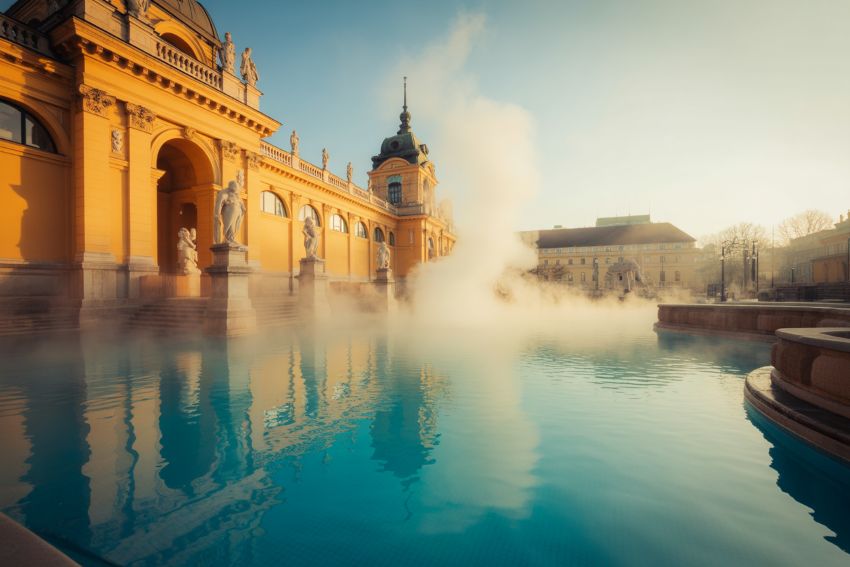
The steaming waters of Budapest’s neo-Baroque and Ottoman-era spas have long been a silent sanctuary in the Hungarian capital. However, the tranquil atmosphere traditionally associated with these “Palaces of Water” is currently being challenged by an unprecedented influx of international visitors. As Hungary celebrates a record-breaking tourism year, the landmarks that define its cultural identity are being heavily regulated. From age restrictions to a complete overhaul of the city’s short-term rental market, the landscape for international visitors is being fundamentally altered to protect the local way of life.
The Age of Tranquility: New Restrictions for Younger Visitors
A significant shift in the operational policies of Budapest’s most famous landmarks was initiated in 2025. Following the implementation of Government Decree No. 510/2023, access to the medicinal pools at the Széchenyi and Rudas Baths is now strictly prohibited for guests under the age of 14. This legislative measure, rooted in concerns for the cardiovascular health of developing children, also serves a dual purpose in managing the acoustic environment of the spas.
For generations, the thermal baths were utilized as quiet spaces for medical therapy and social chess matches among the elderly. In recent years, the rise of “selfie culture” and family-orientated tourism has been viewed by local residents as a disruption to this traditional decorum. Under the new rules, the thermal sections of these historic sites are preserved for adult use, while families are being redirected to more suitable leisure facilities such as the Palatinus or Csillaghegy complexes. These measures are enforced rigorously, and proof of age is frequently requested at the entrance to ensure compliance with the national health directive.
Renovating the Crown Jewel: The Temporary Closure of Gellért
While Széchenyi adapts to new demographic rules, another icon of the city has vanished from the tourist itinerary. The Gellért Thermal Bath, renowned for its Art Nouveau splendour and intricate Zsolnay tiling, was officially closed in late 2025 for a multi-year restoration project. A planned reopening is not expected until 2028. This €51 million transformation is being overseen by the municipal operator, Budapest Spas cPlc (BGYH), to address structural degradation caused by decades of exposure to mineral-rich steam and chemicals.
The closure of Gellért has further intensified the pressure on remaining facilities. With approximately 1,800 daily visitors from Gellért now seeking alternatives, the crowds at Széchenyi and Lukács have surged. To manage this demand, a transition to a more structured booking environment has been encouraged. Priority is given to those who secure tickets online in advance, and fast-track entry systems have been introduced to mitigate the legendary queues that often wrap around the City Park.
Reclaiming the Streets: The District VI Airbnb Ban
The tension between residents and visitors extends far beyond the bathhouses and into the very heart of the city’s residential quarters. In a landmark move, the residents of Terézváros (District VI) participated in a referendum that resulted in a decisive ban on short-term rentals. As of January 1, 2026, the operation of private apartments as tourist accommodations in this central district has been made illegal.
This policy shift is supported by the Hungarian government’s broader strategy to stabilize the housing market. Taxes on short-term rental rooms have been nearly quadrupled, and a moratorium on new licences has been established for 2025 and 2026. The neighbourhood, which houses the Hungarian State Opera and Andrássy Avenue, is being monitored by authorities to ensure that private residences are returned to the long-term rental market for local families. For the traveller, this means a shift back toward traditional hotels or licensed guesthouses, as the era of the unregulated “boutique apartment” in the city centre comes to an end.
A Nation of Records: The Economic Double-Edged Sword
The necessity for these strict measures is highlighted by the staggering growth of the Hungarian tourism sector. In 2025, the country surpassed 20 million guests for the first time in its history, according to reports from the Hungarian Tourism Agency (MTÜ). This growth rate, which is significantly higher than the European Union average, has seen Budapest alone host over 8 million visitors annually.
While the economic contribution of tourism now accounts for over 14% of the national GDP, the “overtourism” phenomenon has prompted a pivot in marketing strategy. Efforts are being made by the government to transition from a “party capital” image toward a model that prioritizes high-value cultural tourism. The record-breaking passenger traffic at Ferenc Liszt International Airport, which reached 19 million in late 2025, underscores the scale of the challenge. The goal for 2030 is to increase the sector’s contribution to the economy while ensuring that the “living heritage” of the city—its baths, its historic districts, and its local communities—is not submerged by its own popularity.
Guidance for the Modern Traveller
Those planning a visit to the “City of Spas” in this new era must change their mindset. The traditional spontaneity of a spa visit has been replaced by the requirement for meticulous planning. Visitors are advised to follow the mandatory dress codes, which include the use of swim caps in lap pools and the prohibition on streetwear fabrics. Furthermore, the thermal pools’ quiet atmosphere is now protected by “no-noise” policies, which are strictly enforced by staff.
By following these evolving regulations, travellers help to preserve a culture that dates back to the Roman and Ottoman eras. While the “tensions” of overtourism exist, the measures implemented in 2026 ensure that Budapest’s healing waters remain a viable sanctuary for future generations.
The post Why Hungary is Enforcing Strict New Regulations on Budapest’s Historic Thermal Baths and Short-Term Rentals appeared first on Travel And Tour World.