Reading view

Samsung losing grip on foldable market to Motorola ahead of iPhone Fold launch
The foldable smartphone market in North America is starting to look more competitive. For years, Samsung has held a clear lead, but that gap is now shrinking.
According to a recent report from Counterpoint Research, foldable shipments in the region grew 28% year-over-year in 2025. Growth is still solid, but the bigger shift is in market share.

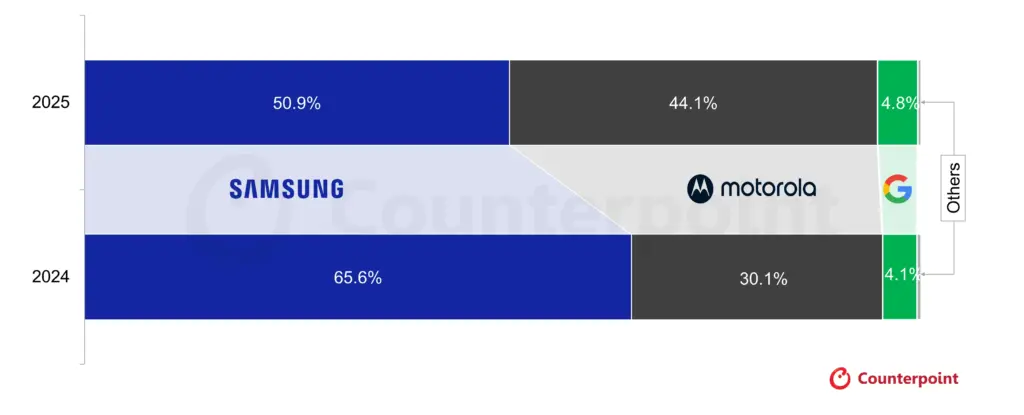
Samsung’s share reportedly fell from 65% in 2024 to around 51% in 2025. The company still leads overall and remains strong in book-style foldables, but competition in the clamshell segment has picked up.

A big part of that shift comes from Motorola. The brand saw strong demand for its Razr 60 series, helped by aggressive pricing and carrier deals. As a result, Motorola captured roughly 44% of the market, turning what used to be a one-sided space into a much closer race.

Google is also growing, though from a smaller base. Shipments rose 52% year-over-year, following the launch of the Pixel 10 Pro Fold in late 2025. Even so, its share is still estimated at around 5%.
All of this comes just ahead of Apple’s expected entry into foldables. The long-rumored iPhone Fold is widely tipped to arrive alongside the iPhone 18 series later this year, though availability could vary depending on the market.

Apple has taken its time with foldables, skipping the early phase when people were more concerned about the durability and reliability of the new form factor. By entering now, the company is stepping into a category that’s more mature and easier to sell to mainstream users.

Samsung, meanwhile, is said to be working on updates of its own, including a book-style foldable with a wider display. The goal appears to be staying competitive as new players, especially Apple, enter the space.

If these trends continue, 2026 could mark a turning point. What was once a Samsung-dominated category is starting to open up, and Apple’s arrival may push it further toward the mainstream.

Don’t miss a thing! Join our Telegram community for instant updates and grab our free daily newsletter for the best tech stories!

For more daily updates, please visit our News Section.

(Source: Counterpoint Research)

The post Samsung losing grip on foldable market to Motorola ahead of iPhone Fold launch appeared first on Gizmochina.


DJI Avata 360 goes official with 8K 360 video, 120MP shots and 23-min flight time

DJI has stepped into the growing 360-degree FPV space with the new Avata 360, and it’s clearly aiming at creators who want more flexibility from their footage. The idea is simple on paper: capture everything in one go, then decide the framing later.

The Avata 360 uses a dual-lens setup with 1/1.1-inch square CMOS sensors. Each one has relatively large 2.4 μm pixels, which should help in tricky lighting. DJI claims up to 120MP stills and 8K 60fps HDR video in full 360 mode. There’s also a single-lens mode for more traditional 4K 60fps recording if you don’t need the full spherical view.

What makes this kind of camera interesting is what happens after shooting. Since the drone captures everything around it, you can reframe shots later, pick different angles, or even create multiple clips from a single flight. It’s not entirely new as a concept, but having it on a compact FPV drone does make it more usable in day-to-day shooting.

DJI is also bringing over its usual flight tech. The Avata 360 uses the O4+ transmission system, offering a 1080p 60fps live feed with a claimed range of up to 20km. There’s omnidirectional obstacle sensing as well, which should make flying a bit less stressful, especially in tighter environments. Features like ActiveTrack 360° and Spotlight Free are included too.

A few practical touches stand out. The front lens can be replaced if it gets damaged, there’s 42GB of built-in storage, and Wi-Fi 6 helps speed up file transfers. Flight time is rated at up to 23 minutes, and the drone weighs about 455 grams.

DJI launched the Avata 360 on March 26, with availability starting in China and wider rollout expected soon. Pricing sits around £409 or €459, which feels fairly aggressive for what’s being offered.

Stay ahead in tech! Join our Telegram community and sign up for our daily newsletter of top stories!

For more daily updates, please visit our News Section.

The post DJI Avata 360 goes official with 8K 360 video, 120MP shots and 23-min flight time appeared first on Gizmochina.

OpenAI discontinuing its AI video generation tool Sora

OpenAI is reportedly shutting down its Sora video-generation tool, less than two years after it first drew widespread attention. Sora was introduced in 2024 as a way to create realistic video clips from simple text prompts. Early demos generated a lot of buzz, especially around how quickly the quality seemed to improve.

But that momentum didn’t quite translate into long-term traction. OpenAI has now announced that it plans to step back from video generation and focus more on areas like robotics and so-called “agentic” AI.

That said, the situation around Sora isn’t a clean, immediate shutdown. While OpenAI has indicated that it is discontinuing the app and winding down development, the tool hasn’t disappeared overnight. The web version, for instance, is still accessible for now, and there’s no clearly defined cutoff date yet. It suggests Sora is in a transition phase—no longer a priority, but not fully offline either.

The shift isn’t just about the product itself. OpenAI is also walking away from a major content partnership with The Walt Disney Company, which had been announced only a few months ago. The deal, reportedly worth around $1 billion, would have allowed Sora users to generate videos featuring well-known Disney characters.

According to reports, the agreement hadn’t progressed far enough for any payments to be made, and Disney was caught somewhat off guard by the decision. The company has since said it will continue exploring AI partnerships elsewhere, while keeping a close eye on how its intellectual property is used.

Sora’s commercial performance may have played a role here. Despite the initial excitement, the platform reportedly brought in around $1.4 million in global in-app revenue—a relatively small figure compared to ChatGPT’s $1.9 billion over a similar period. There were also ongoing concerns around moderation, including misuse involving deepfakes, copyrighted content, and non-consensual imagery.

At the same time, competition in the space has been heating up, with new tools emerging from other companies. Combined with legal risks and rising infrastructure costs, continuing Sora may have been harder to justify.

Don’t miss a thing! Join our Telegram community for instant updates and grab our free daily newsletter for the best tech stories!

For more daily updates, please visit our News Section.

(Source)

The post OpenAI discontinuing its AI video generation tool Sora appeared first on Gizmochina.

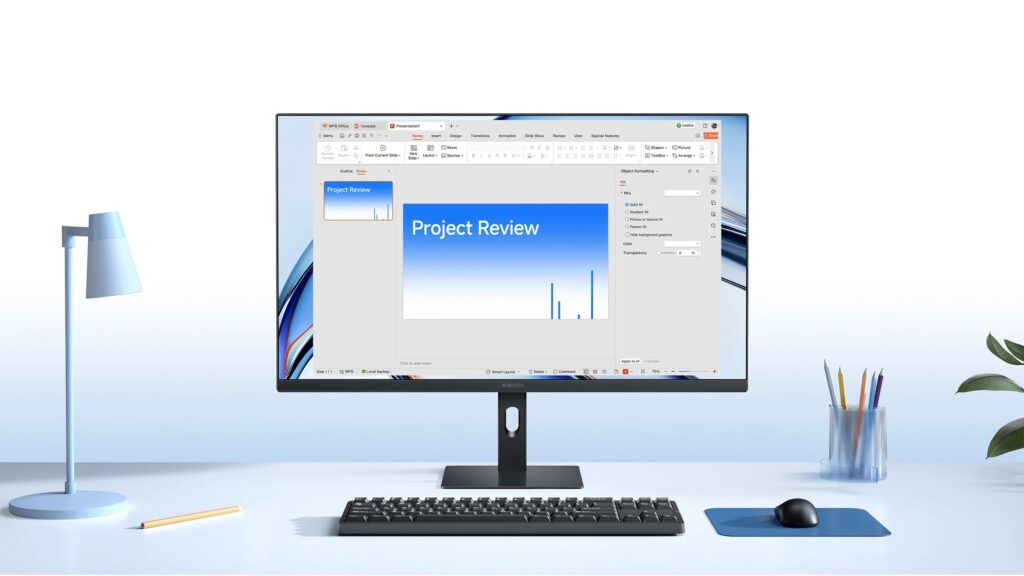
Xiaomi Monitor A24i 2026 goes global with 144Hz refresh rate at a budget price

Xiaomi has quietly brought its updated budget monitor, the Monitor A24i 2026, to more regions, including parts of Europe and Southeast Asia. It’s not a major overhaul, but the changes this time feel a bit more noticeable than usual, especially for a screen in this price range.

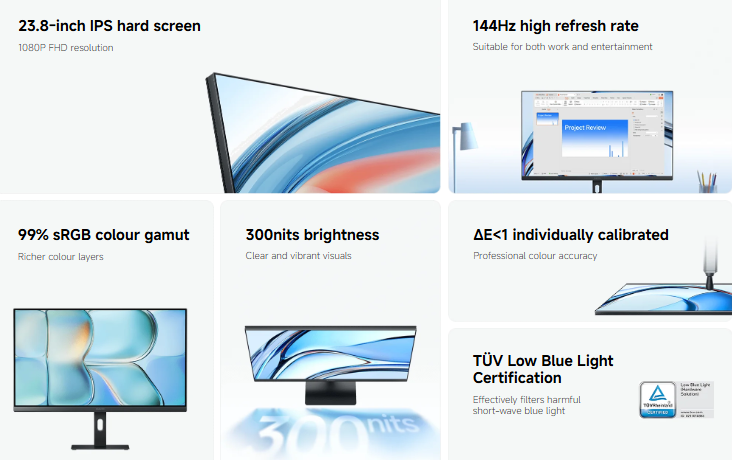
The basics remain the same. It’s still a 23.8-inch IPS panel with a Full HD resolution, which is what you’d expect here. But Xiaomi has bumped the refresh rate up to 144Hz from 100Hz. That doesn’t sound dramatic on paper, but in use, it usually makes things feel a little smoother, whether it’s just scrolling through pages or playing games.

The contrast ratio is now rated at 1,500:1, and Xiaomi says the panel is factory calibrated with Delta E below 1. In theory, that should mean more accurate colors right out of the box. Brightness has gone up slightly too, now at 300 nits. It’s not a huge jump, but it should help a bit if you’re using it in a well-lit room.

Other parts of the monitor haven’t really changed. The design is still slim, with fairly thin bezels, and it keeps wide viewing angles typical of IPS panels. You get HDMI and DisplayPort for connectivity. There’s also TÜV Low Blue Light certification, which is always nice to have if you spend long hours in front of the screen.

Pricing is where it gets interesting. Depending on the country, it’s selling for roughly $90 to $125. That’s still very much in budget territory, especially for a 144Hz display.

Overall, it feels like a small but sensible update. Nothing flashy, but a few tweaks that actually matter if you’re just looking for a reliable, affordable monitor.

Don’t miss a thing! Join our Telegram community for instant updates and grab our free daily newsletter for the best tech stories!

For more daily updates, please visit our News Section.

(Sources: 1, 2)

The post Xiaomi Monitor A24i 2026 goes global with 144Hz refresh rate at a budget price appeared first on Gizmochina.

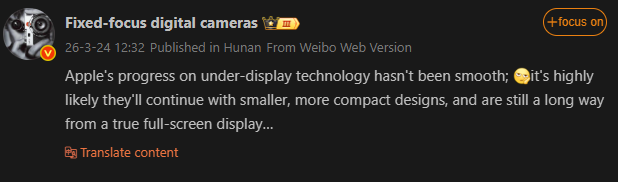
iPhone’s Dynamic Island is here to stay as Apple faces problems with UDC tech

Apple’s Dynamic Island might be sticking around a bit longer than some people kexpected. A new report from China suggests the company isn’t quite ready to move everything under the display yet, at least not for the next Pro iPhones.

The original plan, or at least what many leaks had been pointing to, was fairly straightforward. Apple would hide the entire Face ID system under the screen and leave just a small punch-hole for the front camera. That would finally get the iPhone closer to a true all-screen look. But it now seems that’s proving harder to pull off than anticipated.

Instead, Apple is said to be working on a smaller Dynamic Island for the iPhone 18 Pro models. So the cutout won’t disappear, but it could take up less space than before. It’s a bit of a middle ground. Not the big visual jump some were hoping for, but still a step in the right direction.

Part of the problem comes down to how Face ID works. It’s not just one sensor that can be hidden easily. There’s a full set of components involved, and they all need to work reliably through the display without slowing things down or affecting accuracy. That’s easier said than done, and Apple doesn’t seem willing to compromise on that.

So for now, it looks like the company is choosing to refine rather than rush. A smaller Dynamic Island still keeps all the existing features intact, like live activities and quick controls, while making the front look a bit cleaner.

Of course, this is still based on early supply chain chatter, so things could change. But if this direction holds, a hole-punch cutout in an iPhone display might still be a little further away than many expected.

Don’t miss a thing! Join our Telegram community for instant updates and grab our free daily newsletter for the best tech stories!

For more daily updates, please visit our News Section.

(Source: Fixed Focus Digital on Weibo | Image)

The post iPhone’s Dynamic Island is here to stay as Apple faces problems with UDC tech appeared first on Gizmochina.

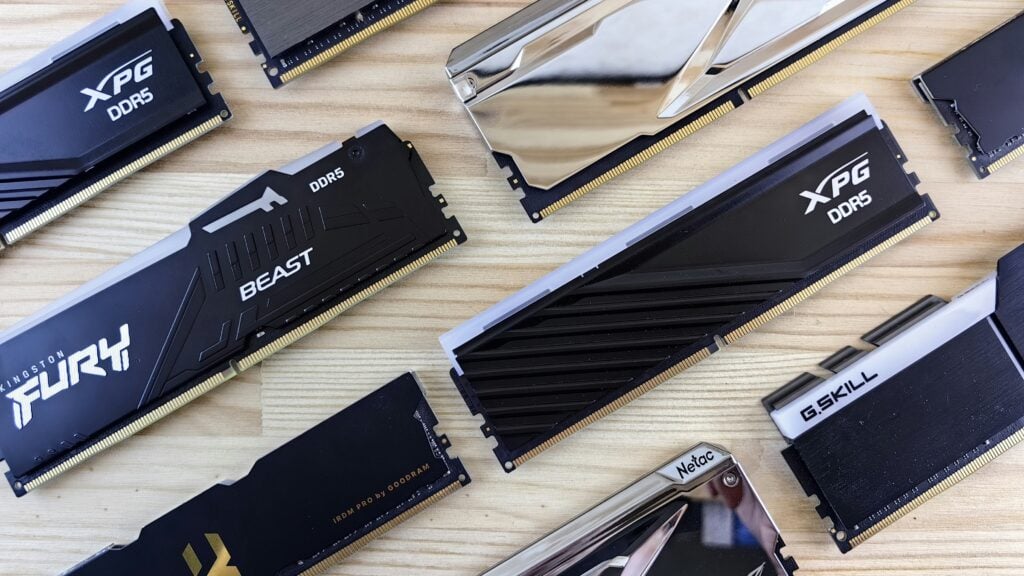
DDR4 prices surge 8.8x in a year as manufacturers shift focus to AI

The global memory market is going through a bit of an unexpected shift in 2026. DDR4, which has long been the go-to option for affordable and widely available memory, is suddenly getting harder to find and noticeably more expensive. And it’s starting to affect a lot more than just PCs.

A recent report from Nikkei points to a sharp jump in prices. A standard DDR4 8GB module hit around $15 in February 2026, up 15% from the previous month and 8.8 times higher than what it was a year ago. DDR5 prices are also moving up, though not as dramatically, suggesting there’s broader pressure building across the DRAM market.

The main reason comes down to supply. Major players like Samsung, SK Hynix, and Micron have been gradually pulling back from DDR4 and LPDDR4 production. The focus now is on newer, more profitable high-bandwidth memory production, especially with AI demand picking up. That shift makes sense from a business perspective, but it’s left older standards in a tight spot.

For companies that still rely on DDR4, this is becoming a real problem. Some reports suggest buyers are only able to secure about half of the memory they actually need, even when paying higher prices. That kind of shortage can slow down production or force last-minute changes.

Interestingly, it’s not just smartphones or laptops feeling this. Devices like digital cameras and even TVs are getting caught up in the situation. Some manufacturers are reportedly looking at fallback options like DDR3, though that brings its own issues since supply there is tightening as well.

DDR4 isn’t obsolete yet, but it’s clearly no longer the priority. For now, that means higher costs, tighter supply, and a bit of uncertainty for anyone still relying on it.

Don’t miss a thing! Join our Telegram community for instant updates and grab our free daily newsletter for the best tech stories!

For more daily updates, please visit our News Section.

(Via | Image)

The post DDR4 prices surge 8.8x in a year as manufacturers shift focus to AI appeared first on Gizmochina.

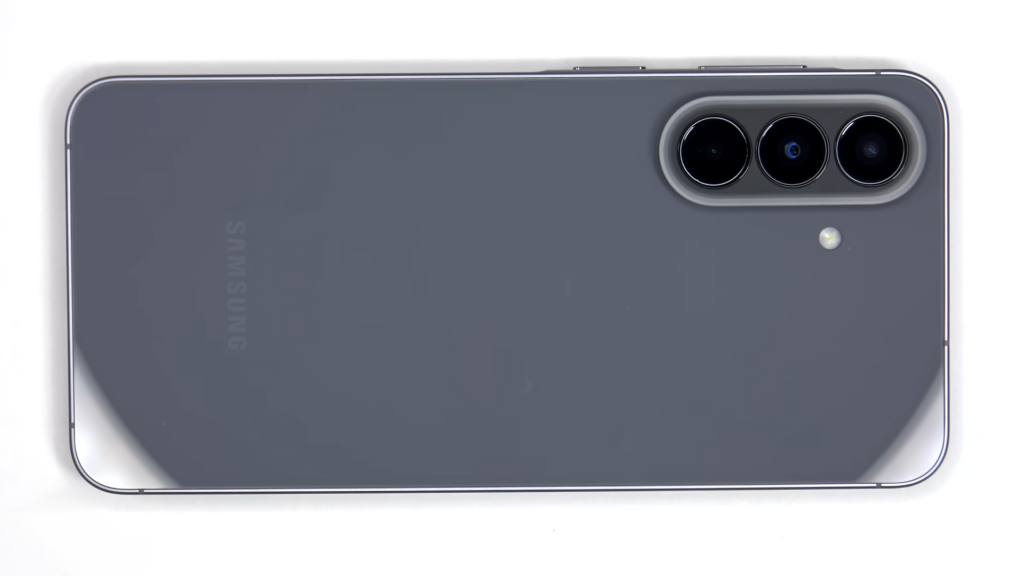
Galaxy A57 teardown video shows Samsung focusing on easier repairs

Samsung has just taken the wraps off the Galaxy A57 5G and Galaxy A37 5G, and we already had a look under the hood of one of them. A teardown of the Galaxy A57 by PBKreviews went live hours before the announcement, giving a fairly clear idea of what Samsung has changed this time.

The teardown itself is pretty standard. The back panel comes off with some heat, followed by a bunch of Phillips screws holding the internal frame together. Once that’s out of the way, the layout looks familiar, with the mainboard at the top and the battery taking up most of the space below.

Camera hardware is largely unchanged. You still get a 50MP main sensor with OIS, a 12MP ultrawide, and a 5MP macro, along with a 12MP front camera. The bigger change sits on the mainboard, where Samsung has placed the new Exynos 1680 chip. It’s built on a 4nm process and should handle daily tasks a bit more smoothly, though real-world performance will tell the full story.

One small but meaningful change is the battery setup. The 5,000mAh unit is held in place with pull-tab adhesive, which makes it easier to remove. It’s not something you notice as a user day to day, but it does make repairs less of a headache later on.

There’s also a larger vapor chamber this time. It sits under the battery and looks noticeably bigger than what we’ve seen in earlier models. That should help with heat management, especially during longer gaming sessions or heavy multitasking.

Overall, the inside of the phone feels clean and fairly easy to work with. The teardown gives it a 9 out of 10 for repairability, which is quite good for a modern smartphone.

From the outside, not much has changed. But internally, Samsung seems to have made a few practical improvements that might actually matter over time.

Don’t miss a thing! Join our Telegram community for instant updates and grab our free daily newsletter for the best tech stories!

For more daily updates, please visit our News Section.

The post Galaxy A57 teardown video shows Samsung focusing on easier repairs appeared first on Gizmochina.

Galaxy A57 and Galaxy A37 launched with minor upgrades and major price hikes

Samsung has refreshed its Galaxy A-series lineup with the launch of the Galaxy A57 5G and Galaxy A37 5G. Both phones bring a mix of practical upgrades, focusing on performance, durability, and camera improvements, while keeping things familiar overall.

The Galaxy A57 5G is clearly the more polished of the two. It runs on Samsung’s new Exynos 1680 chip, built on a 4nm process, and is expected to offer better efficiency and smoother day-to-day performance. A small improvement this year in terms of build and durability is the IP68 rating, up from A56’s IP67.

Samsung has trimmed the design a bit as well. The A57 is now thinner and lighter, with slimmer bezels around its 6.7-inch Super AMOLED display. The panel still sticks to FHD+ resolution with a 120Hz refresh rate, and peaks at 1,900 nits. It’s the same as last year’s A56.

The camera setup doesn’t change much either. You still get a 50MP main sensor with OIS, along with a 12MP ultrawide and a 5MP macro, plus a 12MP front camera. The difference this time reportedly comes from improved image processing, which should help with low-light shots and overall detail.

The more affordable option, the Galaxy A37, follows a similar approach. It uses the Exynos 1480 chip and also gets the new IP68 rating. The display is the same size and brightness as the A57, and camera hardware remains unchanged, though Samsung is relying on better processing here as well.

Design-wise, the A37 doesn’t get the same slimming treatment. It’s a bit heavier and keeps the thicker bezels from before. Both phones run One UI 8.5 based on Android 16 and pack a 5,000mAh battery with 45W charging.

Pricing and availability

Galaxy A37 5G

  • 6GB + 128GB: ₹41999 (or €429)
  • 8GB + 256GB: ₹47499 (or €519)
  • 12GB+256GB ₹52999

Galaxy A57 5G

  • 8GB + 256GB: ₹58999 (€529)
  • 12GB + 256GB: ₹62999 (or €589)

Sales begin April 10, with pre-order offers including a free storage upgrade. Overall, this feels like a steady update. Samsung isn’t changing too much, but it’s refining a few key areas to remain a go-to option for Galaxy fans in the highly competitive mid-range smartphone market.

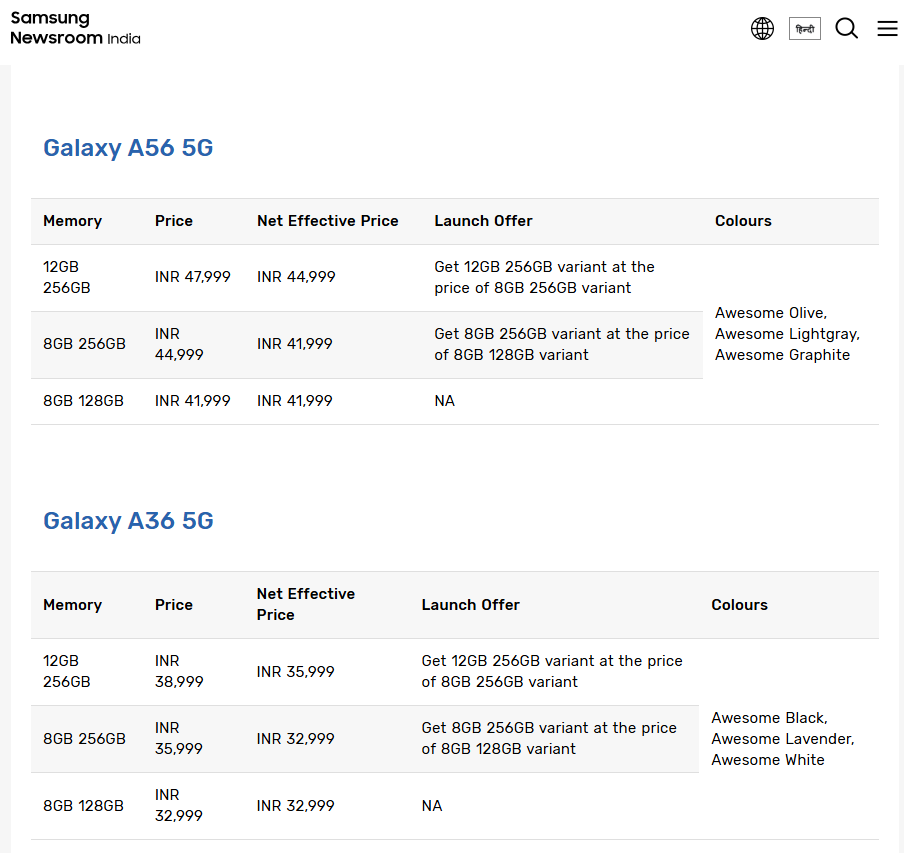
Galaxy A56, Galaxy A36 launch prices

Stay ahead in tech! Join our Telegram community and sign up for our daily newsletter of top stories!

For more daily updates, please visit our News Section.

(Sources: 1, 2, 3)

The post Galaxy A57 and Galaxy A37 launched with minor upgrades and major price hikes appeared first on Gizmochina.

Vivo X300 Ultra, Vivo X300s renders reveal bold new colors that may divide opinions

Vivo is getting ready to unveil its next camera-focused flagship, the X300 Ultra, and most of the details are already starting to fall into place. The phone is set to launch on March 30 alongside the more compact X300s, and going by the latest leaks, Vivo is clearly doubling down on photography this year.

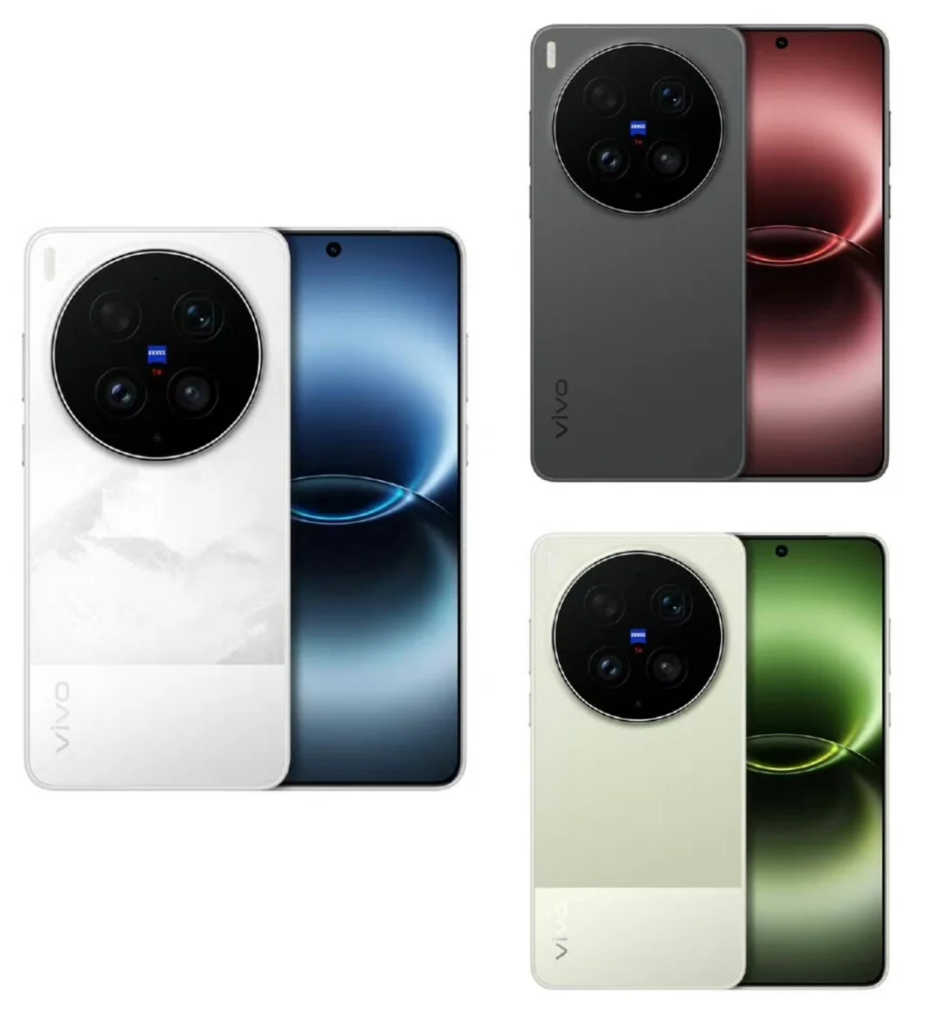
Vivo X300 Ultra renders

Design-wise, the X300 Ultra doesn’t look like a major departure from previous X-series models, but the color options, based on leaked renders, help it stand out. The three variants include a soft green with a dual-tone finish, a clean matte black, and a white option with a similar two-tone look. The design still leans heavily on that large circular camera module at the back, which has pretty much become a signature for Vivo’s flagship line.

The camera setup is where things get interesting. The phone is expected to feature two 200MP sensors, which is unusual even by current flagship standards. The main camera uses Sony’s LYT901 sensor with a 35mm focal length, while the periscope telephoto relies on Samsung’s HP0 sensor with an 85mm focal length. There’s also a 50MP ultrawide camera based on Sony’s LYT818. On paper, it’s a very flexible setup, covering everything from standard shots to longer zoom ranges.

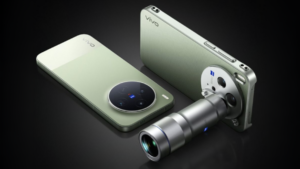
Vivo is also said to be introducing optional ZEISS teleconverter attachments, extending zoom to 200mm and even 400mm. It’s a niche feature, sure, but it shows how far the company is pushing the camera angle here. There’s even talk of a bundled kit with a grip and extra accessories for users who want a more camera-like experience.

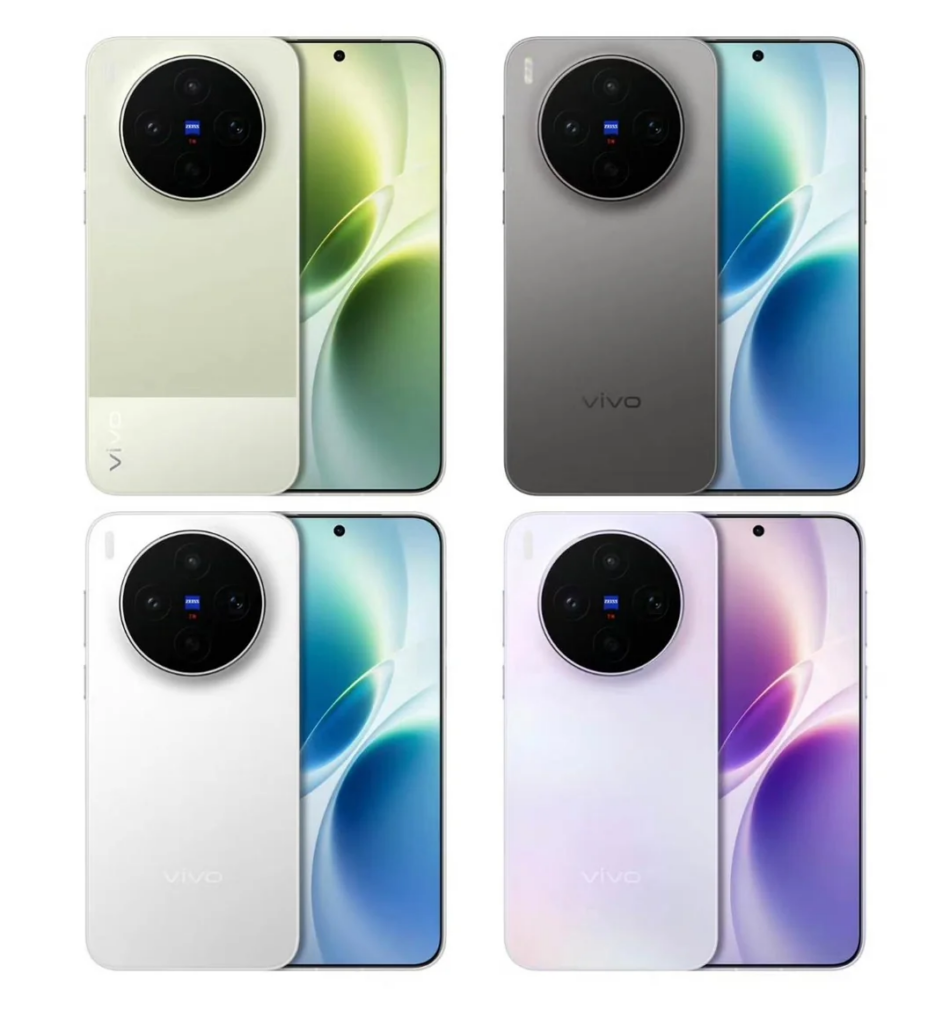
Vivo X300s renders

Performance shouldn’t be a concern either. A prototype has already shown up on Geekbench with scores that line up with the Snapdragon 8 Elite Gen 5 chip. The phone is expected to come with up to 16GB RAM and run Android 16 with OriginOS 6.

With the launch just around the corner, the X300 Ultra looks less like a typical upgrade and more like a focused attempt to stand out through imaging.

Don’t miss a thing! Join our Telegram community for instant updates and grab our free daily newsletter for the best tech stories!

For more daily updates, please visit our News Section.

(Source: DCS on Weibo)

The post Vivo X300 Ultra, Vivo X300s renders reveal bold new colors that may divide opinions appeared first on Gizmochina.

First Galaxy Z Fold 8 renders surface: a fairly iterative update by Samsung’s standards

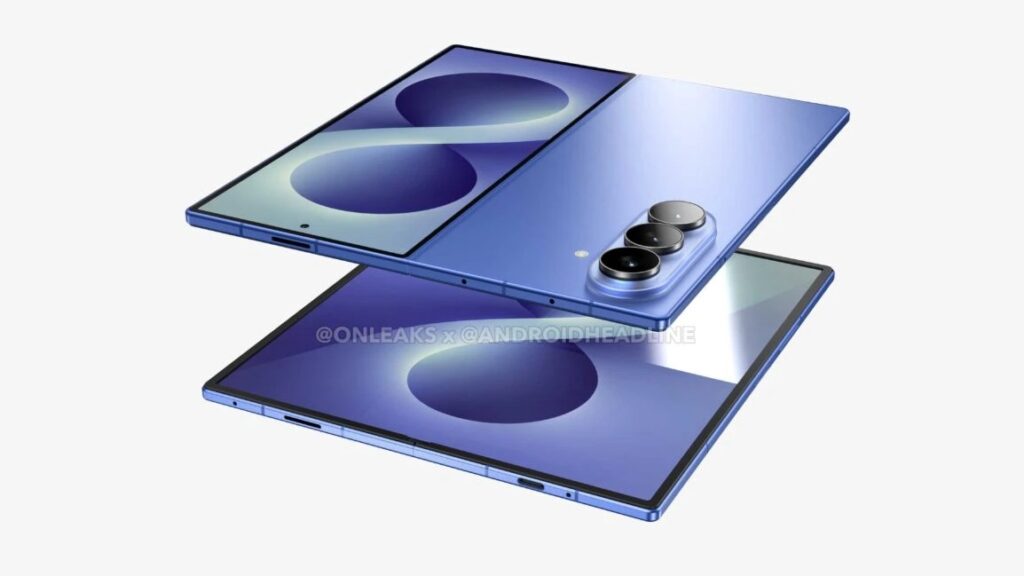
Samsung’s next book-style foldable has started showing up in leaks, and the Galaxy Z Fold 8 doesn’t seem to be chasing a big redesign this year. Fresh CAD renders give a fairly detailed look at the device ahead of its expected July 2026 launch.

The renders, shared by OnLeaks in collaboration with Android Headlines, show a design that’s very close to the Galaxy Z Fold 7. You still get the flat edges, the centered hole-punch on the cover display, and a vertically aligned triple-camera setup at the back. The camera module itself remains quite prominent, with a noticeable raised bump.

In terms of size, the Fold 8 is said to measure 158.4 x 143.2 x 4.5 mm when unfolded and 158.4 x 72.8 x 9 mm when folded. That’s slightly thicker than the official numbers for the Fold 7, though in practice, the difference might not be all that noticeable. Real-world measurements of the older model often end up in a similar range anyway, so this could just be a minor adjustment rather than a step back.

The bigger changes seem to be on the inside. Samsung is reportedly working on a new dual-layer ultra-thin glass setup for the main display, along with a revised support structure. The idea is to improve durability and help reduce how noticeable the crease becomes with use. Display sizes are expected to stay roughly the same, around 8 inches for the inner screen and 6.5 inches for the cover.

There are also signs of a battery upgrade. The Fold 8 could move up to a 5,000mAh unit, paired with 45W charging. That alone would be a welcome change, considering battery life has been one of the weaker points on earlier Fold models.

All of this points to a fairly iterative update by Samsung’s standards. The design isn’t changing much, but the company seems to be focusing on the areas that matter in daily use. Not the most exciting upgrade on paper, maybe, but potentially a more practical one.

Don’t miss a thing! Join our Telegram community for instant updates and grab our free daily newsletter for the best tech stories!

For more daily updates, please visit our News Section.

(Source)

The post First Galaxy Z Fold 8 renders surface: a fairly iterative update by Samsung’s standards appeared first on Gizmochina.

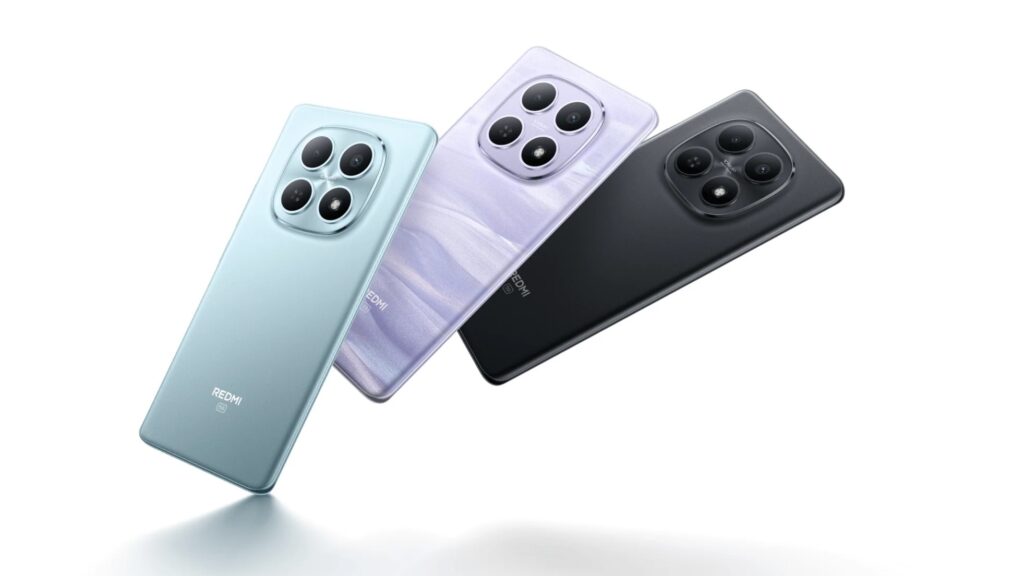
Redmi Note 15 SE launching in India on April 2 with curved design, centered camera island

Redmi is about to expand its Note 15 lineup in India, and the next addition looks like it’s aimed at keeping things simple and affordable. The company has confirmed that the Redmi Note 15 SE will launch on April 2, 2026, joining the rest of the Note 15 series already on sale.

The announcement was made through Redmi India’s X account, with Flipkart listed as the exclusive platform. As expected, the teaser itself doesn’t go into specifics, but the messaging suggests a focus on everyday usability rather than pushing high-end features.

If this sounds familiar, that’s because Redmi has done something similar before. The Note 14 SE last year was essentially a rebrand of the standard model, keeping most of the core experience intact while adjusting a few things to hit a lower price. The Note 15 SE is likely to follow that same route.

Looking at the regular Redmi Note 15 5G gives a rough idea of what to expect. It offers a 6.77-inch curved AMOLED display with a 120Hz refresh rate, runs on the Snapdragon 6 Gen 3, and includes a 108MP main camera along with a 5,520mAh battery and 45W charging. The SE version will probably keep most of this, but with a few practical compromises, maybe in the camera setup or what’s included in the box.

Pricing will obviously play a big role. The 8GB+128GB variant of the Note 15 5G is currently listed at ₹21,499 on Flipkart and ₹22,998 on Amazon, so the SE variant could land closer to ₹20,000 or even slightly below. That’s a pretty competitive spot, especially for buyers who just want a reliable phone for daily use without spending too much. There’s also a fair chance Redmi might skip the charger in the box again. It’s not ideal, but at this point, it’s also not unexpected.

With the launch just around the corner, the full details should be out soon. If Redmi keeps the balance right, the Note 15 SE could end up being one of those easy recommendations in its price range.

Don’t miss a thing! Join our Telegram community for instant updates and grab our free daily newsletter for the best tech stories!

For more daily updates, please visit our News Section.

(Source: Redmi India on X)

The post Redmi Note 15 SE launching in India on April 2 with curved design, centered camera island appeared first on Gizmochina.

Exynos 1680 announced, revealing capabilities of Galaxy A57 hours before launch

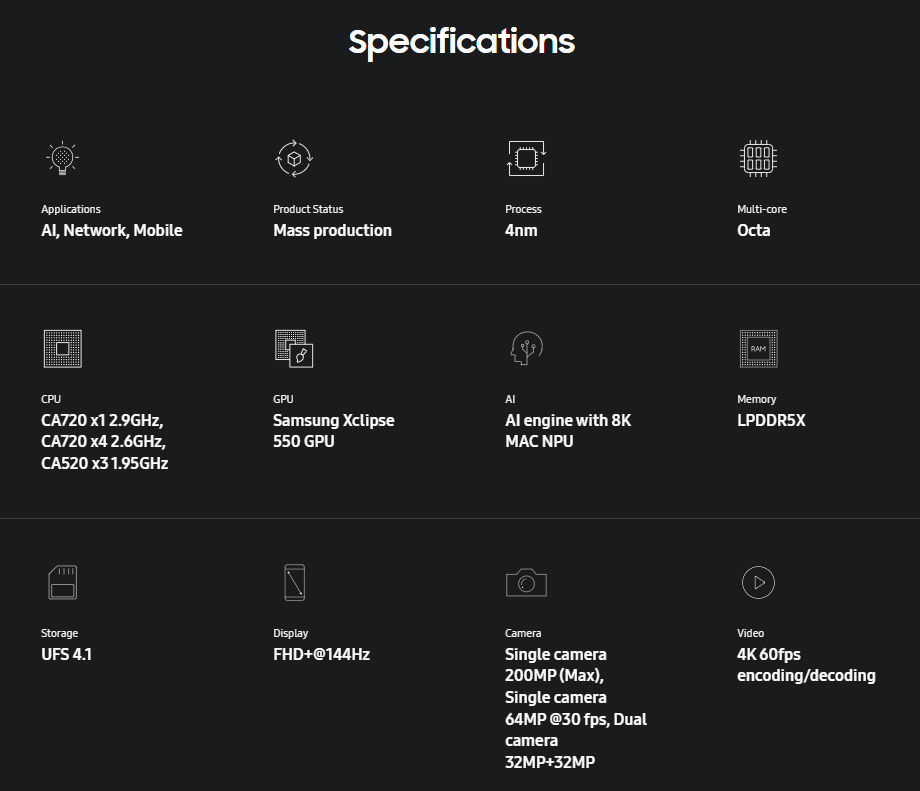
Samsung has taken the wraps off its new Exynos 1680 chipset, and it looks like a fairly important upgrade for its mid-range lineup. This is the chip that’s expected to power the Galaxy A57, and the focus seems to be on making everyday performance feel a bit more polished rather than chasing headline numbers.

It’s built on Samsung’s updated 4nm process, and the CPU setup is what you’d expect in this category. You get one Cortex-A720 core going up to 2.9GHz, along with four more A720 cores and three efficiency-focused A520 cores. Nothing unusual on paper, but the newer cores should help with smoother app switching and better consistency over longer use.

Graphics have been improved too. The Xclipse 550 GPU, based on AMD’s RDNA 3 architecture, is said to deliver around 15% better performance. That’s not a massive jump, but it should be enough to make games feel a bit more stable and animations slightly smoother. It also supports Full HD+ displays at up to 144Hz, which is becoming more common even outside flagship devices.

Exynos 1680 is also leaning into AI: the NPU can handle up to 19.6 TOPS, which is about a third higher than before. In real terms, that should help with things like camera processing and the AI features baked into One UI.

Another interesting bit is memory and storage support. The chip works with LPDDR5X RAM and UFS 4.1, which you’d usually see on more expensive devices. That could make a noticeable difference in how quickly apps open and how the phone feels overall.

Camera support goes up to 200MP, with 4K video at 60fps and 10-bit HDR. Connectivity is also well covered, with 5G, Wi-Fi 6E, and even Bluetooth 6.1 making an appearance.

Taken together, the Exynos 1680 doesn’t try to reinvent anything, but it does seem like a well-rounded step forward. If Samsung gets the tuning right, the Galaxy A57 could end up feeling faster and more refined in day-to-day use.

Don’t miss a thing! Join our Telegram community for instant updates and grab our free daily newsletter for the best tech stories!

For more daily updates, please visit our News Section.

(Source: Samsung)

The post Exynos 1680 announced, revealing capabilities of Galaxy A57 hours before launch appeared first on Gizmochina.

❌