Casio has officially released the GMWBZ5000D-1, GMWBZ5000BD-1, and GMWBZ5000GD-9 G-Shock watches in the US market. These models first debuted in Japan in November 2025 and now expand availability to global buyers. The new lineup continues the brand’s 5000-series legacy with a full-metal construction and updated internals.
Design Details
Each watch in the series features a square stainless steel case, measuring 49.3 x 43.6 x 13 mm, and a solid metal bracelet with a three-fold clasp. The GMWBZ5000D-1 uses a natural silver finish, the GMWBZ5000BD-1 adopts a black ion-plated treatment, and the GMWBZ5000GD-9 is coated in a gold ion-plated finish. All three watches maintain the signature G-Shock design but introduce a redesigned internal structure developed through AI-assisted design processes.
Casio created a new shock-resistant structure after studying decades of G-Shock performance data. Using AI, the company designed a case extension that connects with the lugs to minimize shock transmission. Inside, a resin protector absorbs impacts while preserving the strength of the full-metal exterior.
The watches use a high-contrast, full-dot Memory in Pixel (MIP) LCD for improved readability and energy efficiency. Casio enables eight display modes across two font styles, with options for dual time, day-date, and triple time layouts. The LCD offers wide viewing angles and remains visible even in direct sunlight.
Connectivity features include Bluetooth support through the Casio Watches app and Multi Band 6 radio signal calibration. Casio includes its Tough Solar charging system, which powers the watch from ambient light. The battery can run for up to 22 months in power-saving mode after a full charge.
Other functions include 38 world time zones, a 1/100-second stopwatch, a countdown timer, five daily alarms, an LED backlight, and a full auto-calendar valid through 2099. The watches are water-resistant to 200 meters and feature a screw-lock case back for added durability.
Pricing and Availability
Casio has priced the GMWBZ5000D-1 at $660, while the black and gold models retail for $720. All three models are now available through Casio’s official US channels, select online stores, and authorized jeweler-exclusive outlets.
In related news, Casio has recently launched the premium G-Shock MRGB2100D-2A in the US, featuring a titanium build and Bluetooth connectivity. The company has also introduced its latest Baby-G series with playful pastel tones and translucent straps.
For more daily updates, please visit our News Section.
COLORFUL Technology has announced the EVOL P15 gaming laptop series. The new lineup brings NVIDIA GeForce RTX 50 series Laptop GPUs to a 15.6-inch form factor. The series will be available in two variants with GeForce RTX 5060 and RTX 5050 Laptop GPUs. Both models come with Windows 11 Home and WPS Office pre-installed, with support for Word, Excel, and PowerPoint file formats.
The EVOL P15 RTX 5060 model comes in a Carbon Grey chassis. It supports up to an Intel Core i7 14650HX processor with 16 cores and 24 threads. Graphics are handled by the NVIDIA GeForce RTX 5060 Laptop GPU with 8GB VRAM and DLSS 4 support.
It features a 15.6 inch IPS display with 2560 × 1440 resolution, a 165Hz refresh rate, and 100 percent sRGB color coverage. The laptop uses an Ice Cooling System with dual fans and five heatpipes. It supports up to 16GB DDR5 5200MHz memory and includes a 512GB PCIe Gen3 M.2 SSD. There is also an additional M.2 slot for storage expansion. Connectivity includes Wi Fi 6E, and it has an RGB LED keyboard.
The EVOL P15 RTX 5050 model comes in a Cloud White chassis. It supports up to an Intel Core i5 13420H processor with 8 cores and 12 threads. It is paired with the NVIDIA GeForce RTX 5050 Laptop GPU with 8GB VRAM and DLSS 4 support.
This version features a 15.6 inch IPS display with 1920 × 1080 resolution, a 144Hz refresh rate, and 100 percent sRGB color coverage. Cooling is handled by Ice Cooling System 3.0 with dual fans and four heatpipes. It supports up to 16GB DDR5 5200MHz memory and includes a 512GB PCIe Gen3 M.2 SSD with an additional M.2 slot. It supports Wi Fi 6 and includes an RGB LED keyboard.
The EVOL P15 series will launch in Q1 2026 with a two-year warranty. Pricing will be announced closer to release.
For more daily updates, please visit our News Section.
Xiaomi’s 2026 flagship lineup already has four members. Now the company is reportedly adding a sixth in the form of the Xiaomi 17 Max. That’s a lot of phones in one series. But based on what has surfaced so far, the 17 Max will have its own distinguishing feature in the lineup.
Most of what we know so far comes from a steady stream of rumors, along with a few related reports. Nothing is official yet, but the details have been consistent enough to sketch a fairly clear picture of what Xiaomi might be planning.
An 8,000mAh battery is the headline feature
If there’s one spec that defines the Xiaomi 17 Max right now, it’s the battery.
According to multiple leaks, the phone will pack an 8,000mAh battery. That’s bigger than the already substantial 7,500mAh unit inside the Xiaomi 17 Pro Max.
More importantly, none of the flagships from brands like Samsung or Apple come close to this capacity. So it’s not difficult to imagine Xiaomi marketing this around multi-day usage, heavy gaming, or extended video streaming without worrying about a charger.
Xiaomi could pair this with 100W wired charging and 50W wireless charging. These numbers are in line with the Pro Max model, which also supports 100W wired and 50W wireless charging, along with 22.5W reverse wireless charging.
Big display, flat panel
The “Max” name also points to a large screen, and leaks back that up. According to reports, it will feature a flat OLED display measuring either 6.8 inches or 6.9 inches. For context, the Pro Max also features a 6.9-inch 2K 120Hz OLED panel.
One of the clearer differentiators within the Xiaomi 17 lineup is the presence of a secondary rear display on the Pro and Pro Max models. The 17 Max, despite its name, will not include this feature.
This decision likely serves two purposes. First, it helps Xiaomi maintain a clear hierarchy in the lineup. The Pro Max can keep its more experimental design elements, while the Max focuses on battery and scale. Second, it probably keeps costs and complexity down.
Snapdragon 8 Elite Gen 5 inside
Under the hood, the Xiaomi 17 Max is likely to use the same chipset as the rest of the Xiaomi 17 series, i.e., the Snapdragon 8 Elite Gen 5. That would place it on equal footing with the Xiaomi 17, 17 Pro, and 17 Pro Max in terms of raw performance.
For users, that means the 17 Max should handle demanding games, heavy multitasking, and AI features just as well as its siblings. The real differences will likely come down to battery capacity, camera configuration, and design.
Cameras
As for the optics, early leaks suggest that the Xiaomi 17 Max might borrow the OmniVision Light Fusion 950 primary camera from the standard Xiaomi 17, while improving overall photography performance. It was also tipped to include a periscope telephoto lens that could outperform most models in the series, excluding the 17 Ultra.
More recent information, however, suggests that the 17 Max could feature a 200-megapixel Samsung ISOCELL HPE main sensor (1/1.4-inch), paired with a 50-megapixel Sony IMX8-series periscope telephoto sensor (1/1.953-inch) and a 50-megapixel ultrawide lens.
If accurate, this would be a noticeable step up from the vanilla Xiaomi 17, which reportedly uses three 50-megapixel sensors for main, telephoto, and ultrawide shots. There’s also mention that Xiaomi’s partnership with Leica will continue on the 17 Max.
It’s worth noting that these two sets of camera leaks don’t perfectly match. Either Xiaomi adjusted the prototype configuration over time, or one of the reports reflects an earlier engineering sample.
Until official confirmation arrives, it’s safest to assume the 17 Max will sit above the standard 17 in camera capability, but below the 17 Ultra.
Where it fits in the lineup
Even with five models in the lineup, Xiaomi has a way to create specific identities for each device.
The Xiaomi 17 is the standard flagship.
The 17 Pro and 17 Pro Max add design elements like the secondary rear display.
The 17 Ultra likely remains the photography-focused halo product.
The 17 Max might prioritize battery capacity and scale, while still offering high-end performance and strong cameras.
In some ways, the 17 Max feels like a hybrid between the standard model and the Pro Max. It may inherit much of the Pro Max’s hardware — including the Snapdragon chip and fast charging — but with a more restrained design and an even larger battery.
Launch timeline and availability
As for timing, the Xiaomi 17 Max is rumored to launch in China in Q2 2026, likely in April. The timeframe places it alongside other expected flagship launches in China, including devices like the Vivo X300s and Oppo Find X9s.
Global availability is less certain. Current speculation suggests Xiaomi may only bring the Xiaomi 17 and Xiaomi 17 Ultra to international markets. If that holds, the 17 Max could remain a China-exclusive model.
For more daily updates, please visit our News Section.
Xiaomi’s next flagship phones may already have a price tag in India, months before their expected debut. According to tipster Abhishek Yadav, the series could start at Rs 80,000 for the standard Xiaomi 17, while the Xiaomi 17 Ultra may land at Rs 1,25,000 in the country.
No surprises, Xiaomi hasn’t confirmed these numbers, and as with most early leaks, they should be taken cautiously. Still, the pricing suggests Xiaomi is preparing to move further into ultra-premium territory in India.
For context, the Xiaomi 15 Ultra launched at Rs 1,09,999 for the single 16GB + 512GB variant. The regular Xiaomi 15, meanwhile, had a starting price of Rs 64,999 for the 12GB + 512GB model.
If the leak is true, the standard Xiaomi 17 would see a 23% increase over its predecessor, while the Ultra model would see a 14% hike.
What could Xiaomi be thinking?
Xiaomi has spent the last few years refining its premium image in India, particularly with its Ultra lineup. At ₹1,25,000, the Xiaomi 17 Ultra wouldn’t just be competing on specs; it would be competing on brand perception, software polish, long-term updates, and ecosystem value. Those are areas where Samsung and Apple have historically had an edge.
Another factor affecting the price is the ongoing memory shortage that has driven up consumer device prices. Phones, of course, are one of those commodities.
Meanwhile, the Xiaomi 17 itself appears to be confirmed for India. The device recently surfaced on the Bureau of Indian Standards (BIS) certification database, a common sign that a launch is in the pipeline.
As for timing, the Xiaomi 17 and Xiaomi 17 Ultra are expected to follow a similar launch window to last year’s Xiaomi 15 series. According to earlier information from the same tipster, Xiaomi could unveil the new models around March 2026.
For more daily updates, please visit our News Section.
Nothing has begun setting the stage for its next midrange phones. The company recently confirmed the Phone (4a) series through CEO Carl Pei, and shortly after that, it teased new color options. Now, the standard Nothing Phone (4a) has appeared on Geekbench ahead of the launch.
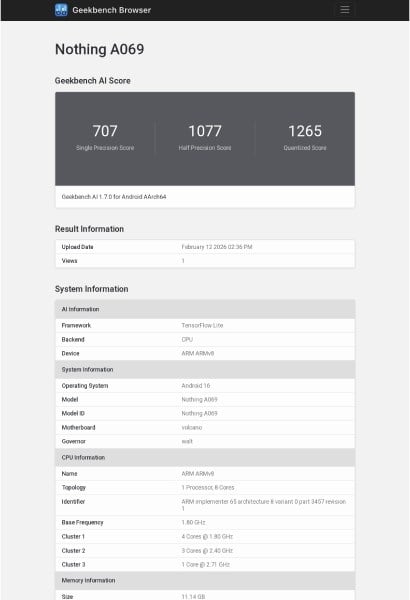
Nothing Phone (4a) Geekbench
The benchmark reveals that the Phone (4a) will run on Qualcomm’s Snapdragon 7s Gen 4, just a step up from the Snapdragon 7s Gen 3 on its predecessor.
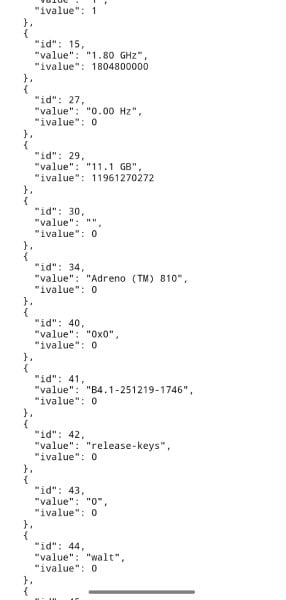
The chip features an octa-core CPU setup with one core clocked at 2.71GHz, three cores at 2.40GHz, and four efficiency cores running at 1.80GHz. Meanwhile, graphics duties are handled by the Adreno 810 GPU.
Moreover, the tested unit on Geekbench comes with 12GB of RAM. But of course, Nothing may offer lower RAM variants at launch. Software-side is handled by Android 16 out of the box.
As for the benchmark score, the Phone (4a) ran the AI benchmark with a single-precision score of 707, a high-precision score of 1077, and a 1265 quantized score.
At this point, Geekbench results don’t tell the whole story. They don’t reveal anything about the display, camera system, battery size, or charging speeds. But they do confirm that Nothing is sticking with a capable midrange chip and pairing it with a relatively high amount of RAM.
The Phone (4a) will launch with the (4a) Pro and even an affordable pair of headphones, called the Headphone (a).
Unfortunately, though, there’s talk of a price increase this time around. Previous reports suggest upcoming Nothing phones could be 30% more expensive due to the ongoing DRAM shortage.
We will know more when the device launches. Speaking of which, the new products are expected to launch in March, though Nothing hasn’t officially confirmed the date yet.
Gmktec has launched the NucBox G3 Pro mini PC for global markets, following its earlier debut in China. The compact desktop targets users looking for an affordable and efficient system for everyday productivity, media consumption, and home server use.
Gmktec NucBox G3 Pro Specifications
The NucBox G3 Pro runs on a 10th Gen Intel Core i3-10110U processor with two cores and four threads. The chip clocks at 2.1GHz and reaches up to 4.1GHz with Turbo Boost. Gmktec allows power tuning with three thermal profiles: Silent Mode at 8W, Balanced Mode at 10W, and Performance Mode at 15W. The CPU is paired with Intel UHD Graphics, which enables dual HDMI output at up to 4K resolution.
The mini PC is available in several configurations. The barebone model ships without RAM or storage, while prebuilt variants include 8GB RAM with a 256GB SSD and 16GB RAM with a 512GB SSD. It houses two SO-DIMM DDR4 slots supporting up to 64GB of memory and dual M.2 slots for storage expansion. One M.2 slot supports PCIe 3.0 x4 drives up to 8TB, and the other supports SATA 3.0 drives up to 1TB.
For connectivity, the G3 Pro includes Wi-Fi 6 (RTL8852BE), Bluetooth 5.2, and a 2.5G Ethernet port (Intel i226). The front panel includes two USB 3.2 Gen1 ports and a power button. The rear panel features two more USB 3.2 Gen1 ports, dual HDMI 1.4 outputs, a 3.5mm audio jack, and a DC input.
For cooling, the device comes with a single-fan and copper heat pipe cooling solution to maintain low temperatures during use. The mini PC supports dual 4K output at up to 24Hz and comes in a small chassis measuring 114 x 106 x 44mm.
The unit weighs around 280 grams and includes VESA mount support. Gmktec states the fan noise stays below 38dB during use. The NucBox G3 Pro supports Windows 11 Pro and major Linux distributions.
Pricing and Availability
The NucBox G3 Pro starts at $169.99 for the barebone model (regularly $309.99). The 8GB + 256GB version is priced at $239.99, and the 16GB + 512GB configuration sells for $299.99.
In related news, Thunderobot has recently launched the Mix Pro II Mini PC featuring Intel Core Ultra 200H processors, a glass design, and ARGB lighting, while Beelink has unveiled the SER10 Max Mini PC powered by the Ryzen AI 9 HX 470 chip, offering 86 TOPS of AI performance, DDR5 memory, and USB4 connectivity.
For more daily updates, please visit our News Section.
If you’ve ever wanted a no-nonsense Windows laptop that feels as sleek and sharp as a MacBook Air but with a dash of futureproof AI acceleration, the Asus Vivobook S14 (M3407KA) might be exactly what you’re looking for.
I’ve been using this machine, powered by the AMD Ryzen AI 7 350, for everything from work to light gaming, and I can say with confidence: this is a seriously competent ultraportable that doesn’t just chase trends. It builds a practical, intelligent foundation for the next generation of computing.
Design and Build Quality
The Vivobook S14 might not be the flashiest device in the room, but it blends in well. The Matte Gray finish on my unit looks subdued and classy, with a CNC-engraved chrome Asus Vivobook logo that adds a bit of character without drawing too much attention. The overall design feels clean and minimal, and it does not attract fingerprints the way some glossier ZenBooks tend to.
It weighs just 1.4 kg and measures about 15.9 mm in thickness, which makes it easy to carry around in a backpack. Despite the lightweight design, the build feels solid. There is no flex in the keyboard deck, no noticeable screen wobble, and the hinge supports a full 180-degree lay-flat design. Asus also meets MIL STD 810H military-grade durability standards, which adds confidence when using the laptop in cafes or during travel assignments.
Display
The 14-inch OLED panel with thin bezels on this laptop looks excellent. Asus labels it as a Lumina OLED display, a panel technology used across several of its professional laptops. The 1920×1200 resolution, combined with a 16:10 aspect ratio, works well for productivity. Text appears sharp, colors look vibrant without appearing exaggerated, and black levels are deep, as expected from an OLED panel.
Asus claims support for 1.07 billion colors and full 100% DCI P3 color gamut coverage, making the display suitable for casual creative work such as photo editing and light color grading. Since this model is not aimed at gaming, it features a standard 60Hz refresh rate.
For eye comfort, the display supports low blue light hardware certification and DC Dimming. This avoids PWM flicker at lower brightness levels and helps reduce eye strain during extended work sessions or nighttime use.
Brightness peaks at around 300-400 nits, which is suitable for indoor use and remains usable outdoors as long as direct sunlight is avoided. The display uses a glossy finish, so reflections are visible at times, but Asus includes an anti-reflective coating to reduce glare.
To be honest, the Vivobook S14’s display is class-leading for its segment. Many competitors at similar prices offer only IPS LCDs (often lower resolution or lower color gamut), whereas Asus has made OLED more accessible. The only trade-offs to be aware of are the typical ones with OLED: potential image retention if static content is left for hours. However, Asus mitigates this with pixel shifting and a screensaver timeout.
But this is a minor issue in day-to-day use. Having such a high-quality panel on a laptop geared at students and working professionals means you get an ultra-portable device that’s excellent for watching movies, doing creative hobby work, or simply enjoying a beautiful Windows UI every day. It’s a big selling point for the Vivobook S14.
Ports and Connectivity
Asus equips the Vivobook S14 with a well-balanced selection of ports. It includes two USB-C 3.2 Gen 1 ports that support both charging and DisplayPort output, along with two USB-A ports for older peripherals, a full-size HDMI 2.1 port, and a 3.5 mm audio jack.
The laptop omits an SD or microSD card slot, which could disappoint creators and photographers, but overall, it covers the essentials without the need for extra adapters.
Wireless performance is equally solid. With Wi-Fi 6E and Bluetooth 5.3, I didn’t face any hiccups during my use, whether it was pairing devices or maintaining a stable connection across tasks.
Keyboard and Trackpad
Typing on this laptop feels comfortable and precise. The keyboard provides 1.7 mm of travel, which is impressive for a thin and light device. Each key offers a quiet yet tactile response, and the deck feels solid enough to support extended writing sessions without flex. I have typed entire articles, including this one, without needing an external keyboard. It also includes a backlight for easier use in dim environments.
The trackpad is spacious, smooth, and highly responsive. Its large surface area takes a little getting used to, and I initially experienced a few accidental palm touches, though it quickly became manageable. Palm rejection could use minor improvement, but it does not interfere with regular use. Clicks feel slightly firm near the edges, while tap-to-click functions accurately. Multi-finger gestures such as three-finger swipes, four-finger taps, and pinch to zoom are well supported and work seamlessly.
Benchmarks
Here’s how the Vivobook S14 (Ryzen AI 7 350, Radeon 860M) performed in my benchmarking suite:
PCMark 10: 7,490 overall – Fast and fluid in day-to-day use.
3DMark Time Spy: 1,961 overall – OK for integrated graphics.
3DMark Steel Nomad Light: 1,452 – Shows limitations for modern AAA gaming.
Geekbench AI (quantized): 7,935 – Impressive for on-device AI tasks.
CrystalDiskMark: 6,752 MB/s read / 3,683 MB/s write – Fast Gen 4 SSD, no slowdowns.
These numbers put it in solid upper-midrange territory, above budget machines and well into premium thin-and-light territory without costing flagship money.
AI and Performance
This is where the Vivobook starts to separate itself. The Ryzen AI 7 350 features an XDNA NPU capable of 50 TOPS, and that matters, especially as Windows 11 leans into AI integration. Copilot, background blur in video calls, real-time translation, and local AI summarization all run smoother and more efficiently on this chip than on older CPU or GPU-bound systems.
And it is not just theoretical. I used AI-powered features in Office apps, Windows Studio Effects, and several local applications that benefit from NPU offload, and they consistently performed without any issues. The advantage lies in the quiet and efficient operation, as AI tasks happen seamlessly in the background without draining the battery or triggering fan noise.
In terms of raw performance, the laptop never felt limited during everyday workloads. It handled heavy Chrome sessions, 1080p video editing, large WordPress dashboards, and even moderate gaming with ease.
Gaming
No, this isn’t a gaming laptop. But the Radeon 860M GPU with RDNA 3.5 architecture is surprisingly capable for an integrated chip. I tested a few titles:
Valorant: 170-230 fps (Low settings, 1080p)
Genshin Impact: 60 fps (Low), 20-25 fps (High)
PUBG: ~50 fps (Lowest settings)
These aren’t groundbreaking numbers, but for an ultrabook? Very respectable. If you’re into casual gaming, this can hold its own.
Thermal and Fan Performance
Asus has done an excellent job with thermal management on this laptop. Even during benchmarks or light gaming, the fans never became noticeably loud. Most of the time, they stayed silent, especially when running in Standard or Whisper mode. When pushed in Performance mode, fan noise hovered around 38 dB, producing a low whoosh rather than a distracting sound.
Temperatures remained in the 75s °C range under load, with very little heat buildup across the chassis. After a Valorant session, the keyboard area felt only slightly warm, and the palm rest stayed cool. This efficiency comes from the dual fan cooling system that Asus adapted from its higher wattage designs, which provides more cooling headroom than the chip actually requires.
Battery Life, Sound, and Camera
Asus claims up to 23 hours of battery life, and while I did not reach that exact figure, I consistently achieved around 10 to 12 hours in real-world use. For my workflow of writing, browsing, streaming music, and light photo editing, I only needed to charge it every other day. When recharging was necessary, the 65W USB-C fast charging brought the battery back to 50% in under 40 minutes.
Audio performance is solid for a thin and light laptop. The stereo speakers deliver clear sound at high volume levels without noticeable distortion. Bass is limited, as expected, but the output remains crisp enough for calls, videos, and casual music playback. Asus’s Audio Booster tuning adds a bit of warmth and depth. For critical listening, headphones are still preferable, but the built-in speakers perform well for everyday use.
The 1080p webcam also performs well. It supports Windows Hello facial recognition through an IR sensor, enabling quick and reliable logins. Video quality is good enough under good lighting conditions, and the built-in microphone array captures voices clearly for online meetings. It may not rival dedicated webcams in sharpness, but with AI background blur and enhancements, it handles video calls effectively and without any issues.
Storage and Upgradability
The Vivobook S14 delivers impressive storage performance with its PCIe Gen 4 SSD. The review unit I tested featured a 512GB NVMe PCIe 4.0 drive, while Asus also offers a 1TB option depending on the configuration. Sequential read speeds exceeded 6,700 MB/s, and write speeds reached around 3,600 MB/s in testing. These results translate into fast app launches, smooth multitasking, and quick file access.
For memory, the laptop comes with 16GB of DDR5 RAM onboard, which is fast and efficient for daily productivity and creative workloads. Unlike many ultrabooks, Asus includes a DDR5 SO-DIMM slot for future upgrades, allowing users to expand memory beyond 16 GB if required.
The storage is also user accessible via a standard M.2 2280 PCIe 4.0×4 slot, making it possible to replace or expand the SSD later. This mix of soldered and upgradable components gives the Vivobook S14 more flexibility than most thin and light laptops in its class.
Verdict
After spending more than two weeks with the Asus Vivobook S14 (M3407), it is clear that this is one of the most balanced ultrabooks in its category. It does not aim to be a creator’s workstation or a gaming powerhouse, but it delivers strongly on the essentials: productivity, portability, battery life, and AI readiness.
The combination of Ryzen AI 7 350 processor and its integrated NPU makes it future-ready for AI-assisted tasks, while the OLED display and comfortable keyboard make daily use enjoyable and efficient.
It starts at Rs. 78,990 for this variant in India, and for students, bloggers, professionals, and anyone who values responsiveness, battery endurance, and a great screen over high-end graphics performance, this laptop is a strong fit.
For more daily updates, please visit our News Section.
Infinix appears to be preparing the launch of the Note 60 Ultra, the top-end model in the upcoming Note 60 lineup. The device was recently listed on the Carlcare service platform, which revealed its model number X6877, and now the same handset has surfaced on Geekbench. Here’s a look at the details that have emerged through the listing.
Infinix Note 60 Ultra Geekbench listing
As per the Geekbench listing, the device is powered by the Dimensity 8400 Ultimate chipset. As usual, the chipset’s name is not mentioned in the listing, but the technical details available in it are sufficient to state that it features the said chipset. The processor configuration includes one core clocked at 3.25GHz, three cores operating at 3GHz, and four efficiency cores running at 2.10GHz. For graphics, it features the Mali-G720 MC7 GPU.
In terms of benchmark performance, the phone achieved 1609 points in the single-core test and 6762 points in the multi-core test on Geekbench 6.5. The listing also confirms that the device includes 12GB of RAM and runs Android 16 out of the box.
Infinix Note 60 Ultra specifications (rumored)
Rumors surrounding the Infinix Note 60 Ultra suggest it may feature a 144Hz AMOLED display and a 200-megapixel primary camera, along with Infinix XOS 16 software. The handset is also expected to include a 7,000mAh battery supporting 100W wired charging and 30W wireless charging.
Additionally, reports hint that the Note 60 Ultra will support two-way satellite communication. Infinix’s collaboration with Italian design house Pininfarina indicates that the device may adopt a more premium design approach compared to previous Note series models. The Carlcare service platform listing has also revealed that the Note 60 Ultra could arrive in two storage configurations, namely 12GB+256GB and 12GB+512GB.
The Note 60 series also include the Note 60 and Note 60 Pro. Previously seen Geekbench listings have indicated that these devices will be powered by the Dimensity 7400 Ultimate and Snapdragon 7s Gen 4 chipsets respectively, positioning the Ultra variant as the most powerful option in the lineup.
For more daily updates, please visit our News Section.
Xiaomi is preparing to launch its first Bluetooth item tracker, the Xiaomi Tag, with retail listings already appearing across European markets before official confirmation.
As reported by WinFuture, the Xiaomi Tag has surfaced on Xiaomi’s UK and France online stores and through third-party retailers. French pricing stands at €17.99 per unit, though some sellers offer it below €15. A four-pack costs €59.99, reducing the per-unit price to approximately €15.
The tracker measures 7.2mm thick and operates on a replaceable CR2032 battery rated for one year of use. Its plastic housing will launch in white only, according to current listings.
The Xiaomi Tag supports Bluetooth 5.4 and NFC connectivity, integrating with both Apple’s Find My network and Google’s Find Hub. This dual-platform compatibility allows iOS and Android users to track tagged items through their respective ecosystems.
Current specifications notably exclude UltraWideBand technology, despite earlier evidence suggesting UWB support in HyperOS software code. This omission has prompted speculation about a potential premium variant featuring UWB for enhanced precision tracking.
Xiaomi has not announced a launch date, though the Tag could arrive alongside new hardware ahead of MWC 2026 in early March.
The tracker’s compatibility with established networks from Apple and Google removes barriers to adoption, allowing users to leverage existing infrastructure rather than relying on a proprietary Xiaomi network.
Asus is stepping a little outside its usual gaming headset formula with the new ROG Kithara. Instead of focusing on RGB lighting or wireless features, this one leans heavily into sound quality, and it does so with help from HIFIMAN, a brand better known in audiophile circles than esports arenas.
The Kithara is an open-back headset built around large 100mm planar magnetic drivers. That alone makes it unusual in the gaming space, where dynamic drivers are far more common. At $299, the Kithara is clearly aimed at enthusiasts rather than casual players.
The headset uses a fully open-back design, which helps create a wider, more natural soundstage. That can be useful for competitive games where spatial awareness matters, but it also means there’s no isolation.
Asus claims a frequency response of 8Hz to 55kHz, which is wider than human hearing, but the real takeaway is likely the tuning. It’s expected to offer a fairly balanced sound signature with good separation between bass, mids, and treble. In theory, that should make footsteps and directional cues easier to pick out without muddying everything with exaggerated low-end.
Unlike many gaming headsets, the Kithara includes a 4.4mm balanced connector, alongside standard 3.5mm and 6.3mm options, plus a USB-C adapter. The detachable boom mic uses MEMS technology and covers a typical 20Hz to 20kHz range.
The frame uses metal in key areas, including hinges and headband supports, and extra earpads are included in the box. At around 420 grams, it’s not lightweight. That’s often the trade-off with planar designs. Whether it feels comfortable over longer sessions will depend on head shape and tolerance for weight.
Reportedly, there’s no wireless mode, no active noise cancellation, and no flashy lighting. That may disappoint some ROG fans, but it seems intentional. Asus seems to be prioritizing sound over features this time.
A Different Direction for ROG
The ROG Kithara feels less like a traditional gaming headset and more like a crossover product. It’s positioned somewhere between an audiophile headphone and a competitive gaming too
OPPO has added a new set of features and improvements to ColorOS 16 for February 2026. This is not a major software upgrade, but a feature update focused on the Photos app and productivity tools. The goal is to improve editing, document handling, and file security.
The Photos app gets several upgrades. The new Popout feature creates a layered effect by separating the main subject from the background. This makes people or objects stand out more clearly in a photo. It works directly inside the gallery, so users do not need any third party apps.
The AI Eraser has also been improved. It now removes unwanted objects with fewer visible marks left behind. Edited areas look cleaner and more natural. The Remove Reflections tool has been upgraded as well. It reduces glare in document photos and portraits, including reflections on glasses, for clearer results.
OPPO has also introduced a limited time New Year Watermark themed around the Year of the Horse. Users can find it by going to Photos App > Select Photo > Edit > Watermark. The feature is available from February 6, 2026 to March 3, 2026. It requires OS version 13.1 and above, and Photos App version 15.75.0 and above. The feature is available in Indonesia, Malaysia, and the Philippines. The Photos app can be updated through the App Market if needed.
On the productivity side, ColorOS 16 now supports PowerPoint translation. Users can translate entire presentations into multiple languages while keeping the original formatting. The feature allows users to view the original and translated text side by side and export the translated file.
The Private Safe feature has also been improved. Adding images and files is now faster, making it easier to store sensitive content securely.
These February 2026 features will roll out in phases from February 6 to February 28. Supported devices include OPPO Find X9 Pro, OPPO Find X9, OPPO Find X8 Pro, OPPO Find X8, OPPO Find N5, OPPO Reno14 Pro 5G, and OPPO Reno14 5G. Rollout timing may vary by device and region.
For more daily updates, please visit our News Section.
Choosing between two flagship phones at the same price is never simple, especially when both promise top-tier performance, premium design, and next-gen cameras. The Vivo X300 and OPPO Find X9 sit in the same price bracket, target the same premium buyers, and even share the same chipset. But their priorities are different. One leans heavily into ultra-high-resolution photography and display brightness, while the other focuses on battery endurance and cinematic video features.
For buyers spending around $650 (₹76,000), this comparison matters. The real question isn’t which phone is powerful; both are, but which one better fits daily habits, content style, and long-term usage needs.
Major Features:
Feature
Vivo X300
OPPO Find X9
Winner
Build
Glass front & back, aluminum alloy frame
Glass front (Gorilla Glass 7i), glass back, aluminum frame
Please Note: When you buy something using the links in our articles, we may earn a small commission at no cost to you.
Design and Display
Build and Feel
The Vivo X300 uses glass on both sides with an aluminum alloy frame and IP68/IP69 protection. It feels sleek and compact, making daily handling easier. The OPPO Find X9 also offers glass and aluminum construction, but adds Gorilla Glass 7i for improved scratch resistance. Both look premium, though Vivo feels more refined while OPPO gives off a sturdier impression.
Display Quality
Vivo offers a 6.31-inch LTPO AMOLED panel with a 120Hz refresh rate and an impressive 4500-nit peak brightness. OPPO features a larger 6.59-inch AMOLED display with Dolby Vision, 3840Hz PWM dimming, and 3600-nit peak brightness. Vivo leads in brightness, but OPPO’s Dolby Vision and higher PWM dimming enhance media comfort.
Verdict
Vivo wins for brightness and compact feel, while OPPO offers better durability and cinematic display support.
Specifications
Performance
Both phones run Android 16 on the MediaTek Dimensity 9500 (3nm) with up to 1TB UFS 4.1 storage. Performance, gaming, and multitasking should feel equally smooth. With five major Android updates promised, longevity is strong on both sides. Real-world speed differences will be minimal.
Battery and Charging
OPPO clearly leads in battery capacity with 7025mAh and 80W wired plus 50W wireless charging. Vivo offers 6040mAh (global) with faster 90W wired and 40W wireless charging. Vivo charges slightly faster, but OPPO should last longer on a single charge. Endurance matters more for heavy users.
Verdict
Performance is tied, but OPPO takes this section due to its significantly larger battery.
Camera
Main and Secondary Lenses
Vivo features a 200MP main camera with Zeiss optics, supported by 50MP telephoto and ultrawide lenses. It focuses on extreme detail and sharpness. OPPO uses three 50MP sensors with Hasselblad color tuning and supports 10-bit LOG and Dolby Vision video. Vivo feels sharper for photos, while OPPO is stronger for professional-style video.
Selfie Camera
Vivo includes a 50MP autofocus selfie camera with 4K recording. OPPO offers a 32MP front camera with 4K support but no autofocus. Vivo delivers better clarity and focus for selfies.
Verdict
Vivo is better for high-resolution photography and selfies. OPPO is better for advanced video creators.
Pricing
Both phones are priced around $650 (₹76,000). At this level, buyers expect flagship performance and premium features. Vivo justifies the price with a 200MP camera and ultra-bright display. OPPO counters with a massive battery and Dolby Vision support. The value depends on whether camera detail or battery life is the priority.
Verdict
Both offer strong value, but OPPO offers slightly more hardware advantages at the same price.
Disclaimer: Prices are approximate and may vary based on country, region, and applicable taxes.
Conclusion
Vivo stands out with its 200MP camera, Zeiss optics, and brighter LTPO display. OPPO distinguishes itself with a 7025mAh battery, Dolby Vision display and video, and Hasselblad color calibration. Vivo feels photography-focused, while OPPO feels built for endurance and multimedia.
Final Verdict
Overall, the OPPO Find X9 is the better choice. It matches Vivo in performance, delivers longer battery life, supports advanced video features, and maintains flagship display quality at the same price. Vivo remains an excellent option for photography lovers, but OPPO offers a more balanced package for most users.
Samsung will debut One UI 8.5 (based on Android 16 QPR2) later this month with the Galaxy S26 series. Soon, the new software will begin rolling out to older Galaxy devices. Unfortunately, this is going to be the last feature update for many Samsung devices, which includes devices across every Galaxy lineup.
In this post, we’ve curated a list of Galaxy devices that will receive One UI 8.5 as their last feature-packed update. This also means they won’t receive One UI 9 and future One UI updates. However, that doesn’t mean the end of the road for them as they will continue to receive security patches for a while, but without the latest features or upgrades.
No more feature updates beyond One UI 8.5 for these Samsung devices
Galaxy S22
Galaxy S22+
Galaxy S22 Ultra
Galaxy S21 FE
Galaxy Z Fold 4
Galaxy Z Flip 4
Galaxy A73 5G
Galaxy A53
Galaxy A33
Galaxy M05
Galaxy F14
Galaxy F05
Galaxy XCover 6 Pro
Galaxy Tab S8
Galaxy Tab S8+
Galaxy Tab S8 Ultra
Galaxy Tab A9
Galaxy Tab A9+
To clarify, Samsung hasn’t yet announced which Galaxy devices will receive the One UI 8.5 update. However, it’s almost certain to reach every Galaxy device that received the One UI 8.0 update or launched with it. Based on that, we’ve prepared the above list.
If your Samsung device is on the list, it will soon become ineligible for future One UI releases, including One UI 9, which is expected to be released in the second half of 2026. To ensure you do not miss out on the latest features and upgrades, you will need to upgrade to a newer model. Don’t forget to check out the list of Samsung devices that promise seven major OS updates, six major OS updates, or four major OS updates to find a reliable option that will stay relevant for years to come.
We’ll keep updating you with the latest developments around One UI in our Samsung section. You can visit the section regularly for the latest updates, or join our Telegram channel to get instant notifications about the latest happenings in tech.
Lenovo has officially announced the Xiaoxin Pro GT 13 as the biggest screen tablet in the Xiaoxin series.
As the name suggests, the headline feature is the 13-inch panel with a 3504 × 2190 resolution and a 16:10 aspect ratio. That works out to a 3.5K resolution and a pixel density of 319 PPI, making it also the highest-resolution screen on a Xiaoxin tablet. The screen refreshes at 144Hz.
Moreover, Lenovo says the tablet has a typical brightness of 600 nits and a peak brightness of up to 800 nits. It also offers 12-bit color depth, covers 99 percent of the DCI-P3 color gamut, and supports Dolby Vision for HDR content.
Lenovo says the panel carries its PureSight Pro certification and has TÜV Rheinland certifications for low blue light and flicker-free performance. It has also passed testing by the National Eye Engineering Center, which the company highlights as a sign of eye comfort and display quality.
Lenovo Xiaoxin Pro GT 13 has an understated design
Design-wise, the Xiaoxin Pro GT 13 looks familiar. Teaser images show a back panel that closely resembles the Xiaoxin Pro GT tablet Lenovo released in 2025. One noticeable change is the camera setup. Instead of a dual-camera system, this model uses a single rear camera. Lenovo has confirmed it’s a 13-megapixel sensor.
The tablet will be available in two color options: pink and silver. Both versions feature a matte metallic finish.
What Lenovo hasn’t confirmed yet is the processor. Last year’s model came with the Snapdragon 8 Gen 3, so it’s reasonable to expect something in that range again. There’s speculation that it could feature a newer Snapdragon 8 Elite or even the Snapdragon 8 Gen 5, but for now, that remains unannounced.
Lenovo is expected to share more details in the coming days. And as always, we will keep you posted on that.
For more daily updates, please visit our News Section.
Xiaomi is rumored to soon hold a global launch event to announce the Xiaomi 17 and 17 Ultra. A new leak, courtesy of tipster Sudhanshu Ambhore, reveals that the Pad 8 lineup will also debut alongside the 17 series. While the specifications of the Pad 8 and Pad 8 Pro are already known since they have been available in the Chinese market for the past few months, the tipster has shared key details about the variants and colour options ahead of their global launch.
Xiaomi Pad 8, Pad 8 Pro configurations, color options
Xiaomi Pad 8 series teaser
The leak reveals that the Xiaomi Pad 8 will be available in 8GB+128GB and 8GB+256GB memory options, whereas the Pad 8 Pro will arrive in variants such as 8GB+256GB and 12GB+512GB. Both devices will be offered in three shades, including blue, grey, and green.
Xiaomi Pad 8, Pad 8 Pro specifications
The Xiaomi Pad 8 and Pad 8 Pro are expected to feature an 11.2-inch LCD panel that supports a 3.2K resolution, a 3:2 aspect ratio, a 144Hz refresh rate, and 800 nits of peak brightness. The Pad 8 has the Snapdragon 8s Gen 4 chip and supports 45W charging, a 13-megapixel rear camera, and an 8-megapixel front camera.
On the other hand, the Snapdragon 8 Elite-powered Pad 8 Pro offers 67W charging, a 50-megapixel rear camera, and a 32-megapixel front camera. Both devices share other common features, such as a 9,200mAh battery, HyperOS 3-based Android 16, Xiaomi Focus Touch Pen Pro support, PC-grade WPS and CAD support, and a quad-speaker setup.
These devices also offer connectivity features such as Wi-Fi 7, USB-C 3.2 Gen 1, NFC, and an IR blaster. It appears that the devices will lack support for 5G/4G connectivity.
For more daily updates, please visit our News Section.
Vivo is scheduled to launch the Vivo V70 series on Feb. 19 in India, and the lineup is expected to include two models, the V70 and the V70 Elite. One of the major highlights is that the V70 Elite is tipped to become the company’s first V-series smartphone powered by a Snapdragon 8-series chipset. Ahead of the launch, a new leak has surfaced online revealing possible pricing, storage variants, and pre-order details for the upcoming lineup.
Vivo V70 series price leaked (rumored)
Vivo V70 Elite
According to tipster Abhishek Yadav, the Vivo V70 could arrive in two configurations, including 8GB+256GB priced at Rs 45,999 (~$510) and 12GB+256GB at Rs 49,999 (~$555). The device is expected to be offered in Passion Red and Lemon Yellow colour options.
The Vivo V70 Elite, on the other hand, is tipped to start at Rs 51,999 (~$575) for the 8GB+256GB variant, while the 12GB+256GB model may cost Rs 56,999 (~$630) and the 12GB+512GB version could be priced at Rs 61,999 (~$685). The leak also claims that pre-bookings may begin from Feb. 12 and continue until Feb. 24, with sales likely scheduled between Feb. 25 and Feb. 28. A promotional Superweek period is also expected from February 25 to March 3.
For reference, the previous-generation Vivo V60 5G debuted at Rs 38,999 (~$430). The V60 series lineup did not have an Elite variant.
Vivo V70, V70 Elite specifications
The Vivo V70 Elite is said to feature a Snapdragon 8-series chipset, likely the Snapdragon 8s Gen 3, paired with LPDDR5x RAM and UFS 4.1 storage. It may include a 6.59-inch OLED display with 1.5K resolution, along with a 6,500mAh battery and support for 90W fast charging. Camera details suggest a triple rear setup featuring a 50-megapixel primary sensor with OIS, an ultra-wide lens, and a 50-megapixel periscope telephoto camera offering 3x optical zoom and up to 100x digital zoom. For selfies and video calls, the device is expected to feature a 50-megapixel front camera with autofocus.
The standard Vivo V70 is tipped to run on the Snapdragon 7 Gen 4 chipset and may share several display and camera characteristics with the Elite model. Both devices are expected to feature an aluminium alloy frame, IP68/69 dust and water resistance, and OriginOS 6 based on Android with up to six years of software support.
For more daily updates, please visit our News Section.
The OxygenOS 16 update is now rolling out to the last eligible OnePlus device, the OnePlus Pad Lite. This entire rollout has been smooth, which began in early November with high-end devices like the OnePlus Open, OnePlus 13, and gradually expanded to mid-range and cheaper Nord CE models.
As shared by OnePlus in a post on the official community, the OxygenOS 16 update for the OnePlus Pad Lite is tagged with the firmware versions OPD2481_16.0.3.500(EX01) and OPD2480_16.0.3.500(EX01). It’s currently available in India as the initial rollout, but it will soon expand to the remaining regions.
If you’re rocking a OnePlus Pad Lite, navigate to Settings > System & Updates > Software update to manually check for the available update. If it doesn’t show up, you can join the OnePlus Release Candidate Program to reduce the wait time. For this, go to Settings > System & Updates > Software update > Beta Program and tap the “update now” button to download the update.
With the OnePlus Pad Lite now joining the OxygenOS 16 party, there’s no more OnePlus device left to receive this major upgrade. However, note that the rollout progresses in batches, so it may take some time to reach all users across all regions.
To recap, here’s a list of OnePlus devices that have received the OxygenOS 16 update:
OnePlus Open
OnePlus 13, 13R, 13S
OnePlus 12, 12R
OnePlus 11, 11R
OnePlus 10 Pro
OnePlus Nord 5, Nord 4, Nord 3
OnePlus Nord CE 5, Nord CE 4, Nord CE 4 Lite 5G
OnePlus Pad 3, Pad 2, Pad, Pad Lite
Soon, OxygenOS 16 and Android 16 will become old topics as Google has already been working on its successor, Android 17. In fact, the first beta build could drop as soon as this month. You can read more about Android 17 here.
You can regularly visit the OnePlus section on Gizmochina to know which devices are getting the update. Alternatively, you can join us on Telegram to stay notified about the latest software releases, smartphone launches, AI news, and tech breakthroughs.
Truke has launched the Bass S2 sleeping earphones in India, introducing a sleep-focused audio product aimed at comfort and relaxation. Priced aggressively, the earphones highlight a compact in-ear design, soft silicone construction, balanced sound output, and an affordable entry into the sleep audio category. Here is a closer look at the specifications, features, and pricing details.
Truke Bass S2 specifications and features
Truke Bass S2
The Truke Bass S2 is designed specifically for overnight use, focusing on comfort during extended listening sessions. It features an ultra-compact in-ear form factor with a smooth profile intended to reduce pressure while lying down, especially for side sleepers. The earphones are built using skin-friendly silicone materials that aim to provide a secure yet gentle fit during sleep. The lightweight construction and flexible cable design help maintain comfort during movement throughout the night.
Truke Bass S2
In terms of audio performance, the Bass S2 comes equipped with a 13mm driver engineered to deliver clear and balanced sound suitable for calming music, white noise, podcasts, and guided meditation or sleep content. The earphones feature a high-flex TPE cable designed for durability during nightly use and different sleeping positions. The product is primarily focused on passive listening experiences rather than active smart features, making it simple to operate for users seeking distraction-free audio during rest. Its compact design also makes it suitable for travel or quiet listening sessions outside the bedroom.
Truke Bass S2 price and availability
The Truke Bass S2 is priced at Rs 799 in India. As part of the introductory offer, customers can purchase it at Rs 499 (~$5) through the official Truke website until 18th February. The earphones will also be available on Amazon and Flipkart starting Feb. 18, 2026 at the same introductory price. The device currently comes in a Black colour option, while a blue variant is expected to arrive later. With
For more daily updates, please visit our News Section.
Xiaomi is best known for smartphones, smart home gear, and the occasional electric vehicle update. Now it wants a place in robotics research too.
The company has announced Xiaomi-Robotics-0, an open-source vision-language-action (VLA) model with 4.7 billion parameters. It’s designed to combine visual understanding, language comprehension, and real-time action execution, which Xiaomi says are the core of “physical intelligence.” And according to the company, it’s already setting multiple state-of-the-art records in both simulations and real-world tests.
At a high level, robotics models like this solve a closed loop: perception, decision, and execution. A robot needs to see the world, understand what it’s being asked to do, decide on a plan, and then carry it out smoothly. Xiaomi says Robotics-0 was built specifically to balance broad understanding with fine motor control.
The Xiaomi-Robotics-0 model is built on two main components
To do that, the model uses what’s known as a Mixture-of-Transformers (MoT) architecture. It splits responsibilities between two main components.
The first is a Visual Language Model (VLM), which acts as the “brain.” It’s trained to interpret human instructions — including vague ones like “Please fold the towel” — and understand spatial relationships from high-resolution visual input. This part handles object detection, visual question answering, and logical reasoning.
The second component is what Xiaomi calls the Action Expert. This is built around a multi-layer Diffusion Transformer (DiT). Instead of producing a single action at a time, it generates something called an “Action Chunk,” — understand it as a sequence of movements — using flow-matching techniques to keep motion accurate and smooth.
One common issue with VLA models is that when they learn to perform physical actions, they tend to lose some of their original understanding capabilities. Xiaomi says it avoided that by co-training the model on both multimodal data and action data. The result, at least in theory, is a system that can still reason about the world while learning how to move within it.
How is it trained?
The training process happens in stages. First, an “Action Proposal” mechanism forces the VLM to predict possible action distributions while interpreting images. This aligns its internal representation of what it sees with how actions are performed. After that, the VLM is frozen, and the DiT is trained separately to generate accurate action sequences from noise, relying on key-value features rather than discrete language tokens.
Xiaomi also tackled another practical problem called inference latency. It is when delays between model predictions and physical movement can create awkward pauses or unstable behavior.
Xiaomi says it implemented an asynchronous inference, decoupling model computation from robot operation, so movements remain continuous even if the model takes extra time to think.
To improve stability, Xiaomi is using a “Clean Action Prefix” technique, which feeds the previously predicted action back into the model to ensure smooth, jitter-free motion over time.
Meanwhile, a Λ-shaped attention mask biases the model toward current visual input instead of relying too heavily on past states. The goal is to make the robot more responsive to sudden environmental changes.
Xiaomi-Robotics-0 Benchmark
In benchmark testing, Xiaomi-Robotics-0 reportedly achieved state-of-the-art results in LIBERO, CALVIN, and SimplerEnv simulations, outperforming around 30 other models.
More interestingly, Xiaomi deployed it on a dual-arm robot platform in real-world experiments. In long-horizon tasks like folding towels and disassembling building blocks, Xiaomi says the robot demonstrated steady hand-eye coordination and handled both rigid and flexible objects without obvious breakdowns.
Unlike earlier VLA systems that often sacrificed multimodal reasoning once action training began, the Robotics-0 model retains strong visual and language capabilities, especially in tasks that blend perception with physical interaction.
For more daily updates, please visit our News Section.
Xiaomi is expected to unveil the Xiaomi 18 series in September in China. Initially, the lineup may include the Xiaomi 18, 18 Pro, and 18 Pro Max, followed by the Xiaomi 18 Ultra’s launch by the end of the year. Today, tipster Digital Chat Station shared a Weibo post revealing key details about the Xiaomi 18.
Xiaomi 18 key details tipped
Xiaomi 18 series leak by DCS
To recall, the Xiaomi 17 and 17 Pro are compact flagship phones equipped with a 6.3-inch display. DCS’s latest leak suggests that the Xiaomi 18’s display size may slightly increase to 6.4 inches while still retaining a compact form factor. It is likely that the Xiaomi 18 Pro may also feature a 6.4-inch display. The inclusion of a larger screen could allow Xiaomi to incorporate more advanced components inside.
Past reports have claimed that the Xiaomi 18 will finally receive a periscope telephoto camera, which would be a major upgrade since its predecessor features a standard telephoto camera. The new leak reveals that not only the Xiaomi 18, but also other models in the series, such as the 18 Pro, 18 Pro Max, and 18 Ultra, may all feature a 200-megapixel periscope telephoto camera.
The tipster has previously claimed that the Xiaomi 18 Pro and 18 Pro Max will feature dual 200-megapixel cameras, possibly for the primary and periscope telephoto sensors. Speaking of the Pro models, these devices are expected to retain a rear-facing secondary display, but it may be more versatile than before.
The iQOO 15 Ultra debuted in China earlier this month as a performance-focused flagship designed for gaming enthusiasts and power users. Soon after its launch, early market reports began surfacing, offering insight into how the device is performing commercially during its initial sales phase. A newer update that has emerged has revealed that the 15 Ultra has met with an amazing market response.
Early sales performance and demand trends
iQOO 15 Ultra sales report
According to the above-shown tech blogger, the iQOO 15 Ultra reportedly sold out during its first sale cycle, with approximately 15,000 units shipped within the first three days. The data is sourced from third-party tracking and should be considered indicative rather than official. Despite that, the figures suggest healthy initial demand, particularly considering the premium positioning of the device.
DCS’s iQOO 15 Ultra market response Weibo post, which was released soon after the launch
Earlier, tipster Digital Chat Station indicated that early performance of the latest Ultra model exceeded expectations. JD.com platform data reportedly showed that the Ultra variant achieved around 1.5 times the same-period sales compared to the previous Pro model. Sales momentum continued to grow, reaching roughly 2.3 to 2.4 times the second-day growth of the earlier Pro generation. The tipster also highlighted strong interest in higher-memory versions, with the 24GB+1TB configuration seeing notable demand among early buyers.
iQOO 15 Ultra specifications, price
iQOO 15 Ultra
The iQOO 15 Ultra is positioned as a gaming-centric flagship powered by the Snapdragon 8 Elite Gen 5 chipset, paired with LPDDR5X Ultra Pro RAM and UFS 4.1 storage. It features a 6.85-inch flat Samsung M14 AMOLED display with 2K resolution and a 144Hz refresh rate, along with advanced touch response capabilities aimed at competitive gaming scenarios. Cooling is handled through an Ice Dome thermal system with active airflow components designed to sustain high performance.
The device runs OriginOS 6 based on Android 16 and includes a triple-camera setup consisting of a 50-megapixel main camera, 50-megapixel ultra-wide lens, and 50-megapixel periscope telephoto camera. Powering the handset is a 7400mAh battery supporting 100W wired and 40W wireless charging.
Pricing in China starts at 5,699 Yuan (~$825) for the 16GB+256GB model and goes up to 7,699 Yuan (~$1,115) for the 24GB+1TB variant. While the iQOO 15 Ultra is a very exciting device for performance enthusiasts, it is unlikely to launch outside China, limiting its global availability despite strong early interest.
For more daily updates, please visit our News Section.
In March, Oppo is expected to unveil the company’s ultimate flagship phone — the Find X9 Ultra. So far, reports have revealed many details about its core specifications, but some information has yet to surface. In a recent X post, tipster Yogesh Brar mentioned the X9 Ultra’s display refresh rate and battery size.
Oppo Find X9 Ultra battery size tipped
Oppo Find X8 Ultra
Previous reports have revealed that the Find X9 Ultra will feature a 6.82-inch flat OLED panel that supports a 2K resolution, similar to the previous generation. However, its screen refresh rate had not appeared in any leaks. Brar claims that the X9 Ultra’s EVT (Engineering Validation Test) unit supports a 144Hz refresh rate. He believes the retail unit will likely support a 120Hz refresh rate.
Another detail that had remained unclear about the Find X9 Ultra is its battery size. Oppo has previously claimed that it won’t launch a flagship phone without a 7,000mAh battery, which suggests that the X9 Ultra would pack a similarly sized battery. The tipster mentioned that the X9 Ultra will house a 7,050mAh battery.
This indicates that the Find X9 Ultra’s battery will be smaller than the Find X9 Pro, which packs a larger 7,500mAh battery. The X9 Ultra’s rumored battery is still larger than the Find X8 Ultra, which houses a 6,100mAh battery. Reports suggest that the X9 Ultra will arrive with support for 80W wired and 50W wireless charging.
As per reports, the Find X9 Ultra will feature a 200MP (main) + 50MP (ultra-wide) + 200MP (3x periscope) + 50MP (periscope) quad-camera setup and a 50MP front camera. Under the hood, it is expected to feature the Snapdragon 8 Elite Gen 5 chip and run on ColorOS 16 based on Android 16.
For more daily updates, please visit our News Section.
A South Korean edition of the Samsung Galaxy S26 Plus was spotted on the Geekbench benchmarking platform in January. Now, its global edition has also emerged on the same benchmarking platform ahead of the Feb. 25 launch. Here’s a look at the details that have surfaced through the listing.
Samsung Galaxy S26 Plus Geekbench listing
Samsung Galaxy S26 Plus (global version) Geekbench listing
The SM-S947B Samsung phone that has appeared on Geekbench is the global version of the Galaxy S26 Plus. This device has been found to be equipped with the Exynos 2600, which is mentioned with its part number s5e9965. Therefore, it appears that the S26 Plus will ship with Samsung’s Exynos chip in most markets.
There’s still a possibility that the S26 Plus may come with the Snapdragon 8 Elite Gen 5 for Galaxy in the US. While its US edition hasn’t been spotted on Geekbench yet, the Galaxy S26’s US edition was spotted with the Snapdragon chip on the same benchmarking platform last month.
The Galaxy S26 Plus Geekbench listing further reveals 12GB of RAM and Android 16, which is expected to be overlaid with the latest One UI 8.5. It scored 2,304 and 9,015 points in the single-core and multi-core tests on Geekbench 6.5, respectively.
As per recent reports, it appears that the Galaxy S26 Ultra will only be available with the Snapdragon 8 Elite Gen 5 for Galaxy in all markets across the globe. The Exynos 2600, which is the world’s first 2nm chip, is expected to be a powerful offering, featuring a 10-core architecture with up to 3.80GHz clock speeds. Only time will tell how the Exynos 2600 performs in real-world usage compared to its Snapdragon counterpart.
For more daily updates, please visit our News Section.
Vivo is expected to hold a major launch event in China next month (March). The event will see the arrival of multiple devices, such as the Vivo X300 Ultra, Vivo X300 Max, Vivo Pad 6 Pro, and the company’s first vlogging camera. Among these, the X300 Ultra and Pad 6 Pro have already been approved by China’s 3C certification platform. Now, the Max model has also appeared in the 3C database, meeting a very important prerequisite before launch.
Vivo X300 Max 3C certified
Vivo X300 Max 3C certified
The above-shown 3C listing shows that an upcoming Vivo phone with model number V2548A has been spotted with a 90W charger. As per previous reports, this phone will be called the Vivo X300 Max when it hits the Chinese market. For those unfamiliar, this device was initially dubbed the Vivo X300s by the rumor mill.
Vivo X300 Max specifications (rumored)
According to a fresh Weibo post by tipster Digital Chat Station, the Vivo X300 Max will arrive with a 6.78-inch LTPO OLED panel with a flat design. It will support a 1.5K resolution and possibly a 120Hz refresh rate. For security, it will feature an ultrasonic in-screen fingerprint sensor.
On the back, the Vivo X300 Max will have a large circular camera module equipped with a 200-megapixel main camera, an ultra-wide lens, and a 50-megapixel periscope telephoto lens with macro capabilities, co-developed with Zeiss and featuring a new optical setup.
The X300 Max will ship with Android 16 with a layer of OriginOS 6 on top and will support band N79 in China. Under the hood, it will feature the Dimensity 9500 and a battery of around 7,000mAh capacity with 90W fast charging support. Finally, it will also have an IP68/69-rated dust- and water-resistant chassis.
BenQ has added two new models to its Mac-focused monitor lineup, and this time the company is clearly aiming higher. The new MA270S and MA320UG lean into glossy panels while keeping the Thunderbolt-heavy connectivity and color tuning that BenQ has been building into its MA series. If you’ve been looking at the Apple Studio Display but hesitating on the price, these might be worth a closer look.
BenQ MA270S
The headline feature here is what BenQ calls Nano Gloss coating. Instead of going fully matte, which can mute contrast, or fully reflective, which can be distracting, the company is trying to strike a middle ground. The idea is to preserve the punch and clarity of a glossy screen while softening glare just enough for everyday use.
Both monitors use IPS panels and cover nearly the full P3 color space: 99% on the 27-inch model and 98% on the 32-inch.
The MA270S is probably the more direct competitor to Apple’s own display. It’s a 27-inch 5K panel (5120 x 2880), which works out to around 218 pixels per inch, essentially the same pixel density as Apple’s 27-inch Retina displays. That means proper macOS scaling, crisp text, and no awkward resolution compromises. For designers, photographers, or anyone who spends all day staring at small UI elements, that matters.
BenQ MA320UG
The MA320UG, on the other hand, takes a slightly different route. It’s larger at 32 inches and sticks to 4K resolution, but adds a 120Hz refresh rate. That won’t turn it into a gaming monitor, but animations and scrolling do feel noticeably smoother at higher refresh rates.
Both models include two Thunderbolt 4 ports, with up to 96W power delivery, plus additional USB-C, USB-A, and HDMI ports. There’s also KVM support for switching between systems. Small touches like brightness and volume control directly through macOS keyboards help the experience feel more native.
Ports on the MA320UG and MA270S
The stands are fully adjustable, with height, tilt, pivot, and swivel support. Nothing flashy there, just practical ergonomics.
Pricing hasn’t been confirmed yet, though the monitors are already listed on BenQ’s European website. If the company keeps them below Apple’s pricing, they could appeal to users who want sharpness or a glossy panel without committing to Apple’s ecosystem pricing.
Baseus has introduced a new portable charger in China that tries to solve a common annoyance: carrying both a wall charger and a power bank.
The new EnerGeek GT 21 combines the two into a single device. It’s a 67W charger with built-in AC prongs, but it also packs a 10,000mAh battery inside. So you can plug it directly into a wall like a normal adapter, or toss it in a bag and use it as a power bank later. It includes a retractable USB-C cable built into the body, which extends up to about 80cm.
In addition to the built-in cable, there’s a USB-C port and a USB-A port. You can charge up to three devices at once, though power is shared when everything is plugged in.
When used as a power bank with all three outputs active, the built-in cable can deliver up to 45W, while the remaining two ports share a combined 15W.
There’s also a small digital display on the front. It shows remaining battery percentage and output details.
On the battery side, the capacity is rated at 10,000mAh, which should provide at least one full charge for most modern smartphones in real-world conditions. It supports common fast-charging standards like PD, PPS, AFC, UFCS, and SCP, so compatibility shouldn’t be an issue either.
The foldable prongs make it easier to carry, and the size appears compact enough to replace both a wall brick and a power bank in a travel bag. For frequent travelers, that kind of consolidation can actually make a difference.
The EnerGeek GT 21 is currently priced at CNY 399 (around $58) in China. There’s no word yet on international availability, but Baseus typically brings its products to other markets, so a wider launch wouldn’t be surprising.
It’s not a revolutionary device, but it does feel practical. If the build quality holds up, it could be a solid option for people who want fewer cables and fewer chargers to think about
Casio has launched the MRGB2100D-2A in the United States. The premium G-Shock MR-G timepiece had previously been released in Japan, Europe, and the UK. It is priced at $4,700 and now joins the brand’s US catalog as part of the flagship MRG-B2100 series.
Casio MRGB2100D-2A Specifications
The MRGB2100D-2A has a silver-toned case with a blue dial inspired by the Japanese hanada-iro shade. The dial features a horizontal texture, bold metallic hour markers, a framed date window at 3 o’clock, and a small day sub-dial at 7 o’clock, creating a balanced, highly legible layout.
Casio builds the MRGB2100D-2A using premium materials. Its octagonal bezel is made of Cobarion, a Japanese alloy four times harder than titanium with a platinum-like shine. The case and crown use Ti64 titanium, while the bracelet is crafted from DAT55G, another titanium alloy prized for its durability and wear resistance. Each of the 27 bezel components is individually polished for precision, and a titanium carbide coating further improves scratch resistance.
The watch features solar-powered timekeeping, Multi-Band 6 radio calibration, and Bluetooth connectivity via Casio’s Mobile Link app, which enables auto time adjustment, watch status updates, and a phone finder. It offers 200-meter water resistance, magnetic resistance, a screw-lock crown, and sapphire crystal glass with an anti-reflective coating.
Casio includes additional design elements inspired by traditional Japanese woodworking techniques. The dial’s latticework structure, known as kigumi, allows light to pass through and power the solar panel. The 12 o’clock marker features a precision-assembled two-part structure that reflects Yamagata Casio’s advanced manufacturing technology.
The MRGB2100D-2A weighs 122 grams and measures 49.5 x 44.4 x 13.6 mm. It supports a full-auto calendar, LED Super Illuminator light, and power-saving mode. The watch is available now through the official Casio store and select retailers.
Apple has reportedly acquired Israeli AI startup Q.ai for ~$2 billion.
Future AirPods could enable silent, lip-based interaction.
The move signals Apple’s deeper push into AI-powered wearable interfaces.
Apple is reportedly exploring a future where users can interact with devices without speaking. According to reports from Financial Times and Reuters, the company has acquired Israeli startup Q.ai for approximately $2 billion, its largest deal since acquiring Beats Electronics.
Q.ai specializes in machine learning systems that analyze micro-movements in facial skin, lip motions, and subtle muscle activity. The technology can detect silently mouthed words, emotional expressions, and even physiological indicators like heart rate and breathing patterns.
Industry analyst Ming-Chi Kuo has previously predicted camera-enabled AirPods could launch in 2026, potentially featuring infrared sensors similar to Face ID’s depth-mapping system. Combined with Q.ai’s algorithms, such hardware could allow users to send messages, activate Siri, or control music without saying a word.
The technology may also extend beyond earbuds to devices like Apple Vision Pro and future smart glasses. Q.ai’s founder, Aviad Maizels, previously co-founded PrimeSense, whose 3D sensing technology later evolved into Apple’s Face ID system.
If implemented, silent facial input could mark a shift from voice commands to discreet, sensor-based interaction, reshaping how users engage with wearable AI while raising new privacy questions.
Privacy Questions:
Silent facial tracking raises significant privacy considerations. Continuous monitoring of lip and muscle movements could generate highly sensitive biometric data. If stored improperly, such data might reveal emotional states, health indicators, or private communications. There are also concerns about potential misuse, including unauthorized tracking or remote intent detection.
If implemented, silent facial input could redefine human-computer interaction, while intensifying the debate over how much data wearable devices should be allowed to observe.
Lenovo has officially started teasing its upcoming Legion Y700 (2026), which is set to launch in March. The company claims the device features a new AI-powered network acceleration system that can reduce game latency by 54.8% in complex network conditions. The tablet also lowers in-game stutter rates by 42.7% compared to rival models, according to Lenovo’s internal data.
The Legion Y700 (2026) introduces a dedicated acceleration channel for gaming. Lenovo says the AI engine detects congested or unstable network environments and prioritizes real-time gaming traffic to reduce packet loss and jitter.
Lenovo also teased that the tablet supports a 2640Hz touch sampling rate. The display is tuned for ultra-fast response, allowing for near-instant input detection. The company describes it as “instant touch, instant response,” reinforcing the tablet’s focus on performance gaming.
In an earlier teaser, Lenovo confirmed that the Legion Y700 will feature an 8.8-inch 3K+ LCD display with a resolution of 3040 x 1904 pixels, a 165Hz refresh rate, and 12-bit color depth. The screen supports up to 800 nits of peak brightness and the DCI-P3 wide color gamut.
Lenovo also explained that the 165Hz refresh rate reduces the refresh interval to 6.06ms, compared to 6.94ms at 144Hz and 16.67ms at 60Hz, resulting in lower input latency and improved motion clarity during gameplay.
According to a leak from Digital Chat Station, the Lenovo Legion Y700 (2026) will be powered by Qualcomm’s Snapdragon 8 Elite Gen 5 chipset. The tablet is expected to launch in multiple variants, including 12GB + 256GB, 16GB + 512GB, and 24GB + 1TB configurations.
It will feature a 50MP rear camera with an RGB ring light and pack a roughly 9,000mAh battery. The retail box will include a 68W fast charger, and the device is also said to come with dual USB-C ports.
While it’s not Lenovo’s first AI-enabled product, this is its most aggressive attempt to blend AI into the gaming tablet experience. The Legion Y700 (2026) will be available in black and white colors.
For more daily updates, please visit our News Section.
Memory prices have been climbing for a while, largely because of strong demand from AI infrastructure and data centers. That usually spells trouble for smartphone pricing. But if recent analyst notes are accurate, Apple isn’t planning to pass those increases directly to buyers of its next Pro iPhones.
According to GF Securities analyst Jeff Pu, Apple intends to keep the starting prices of the iPhone 18 Pro and iPhone 18 Pro Max in line with their predecessors. That would mean $1,099 and $1,199 respectively for base 256GB configurations, assuming no last-minute changes.
The information comes from supply chain checks shared in a note reviewed by MacRumors. Pu suggests Apple has been negotiating aggressively with memory suppliers, including Samsung and SK Hynix, to soften the impact of rising DRAM and NAND prices. Similar negotiations are reportedly taking place around display panels and camera modules.
In short, Apple appears willing to absorb some of the pressure.
Apple has also shifted to quarterly memory contract negotiations instead of semi-annual agreements, giving it more flexibility, though that could also mean exposure to further price bumps later in 2026.
Even so, Kuo believes Apple’s strategy is clear: keep entry pricing stable for the Pro models, even if that trims margins slightly in the short term.
That wouldn’t be surprising. Apple’s Services business continues to grow steadily, bringing in over $30 billion in a single quarter recently. A stable hardware price helps protect market share, and any margin pressure on devices can be offset over time through ecosystem revenue.
The broader industry isn’t quite as insulated. IDC has warned that smartphone prices could rise by 6–8% this year due to component shortages. Meanwhile, Samsung executives have already hinted at cost pressures ahead of upcoming launches.
For now, the iPhone 18 Pro lineup is expected to arrive in September 2026. Nothing is official yet, and pricing decisions often come down to late-stage market conditions. But if these reports hold true, Apple seems prepared to lean on its scale.
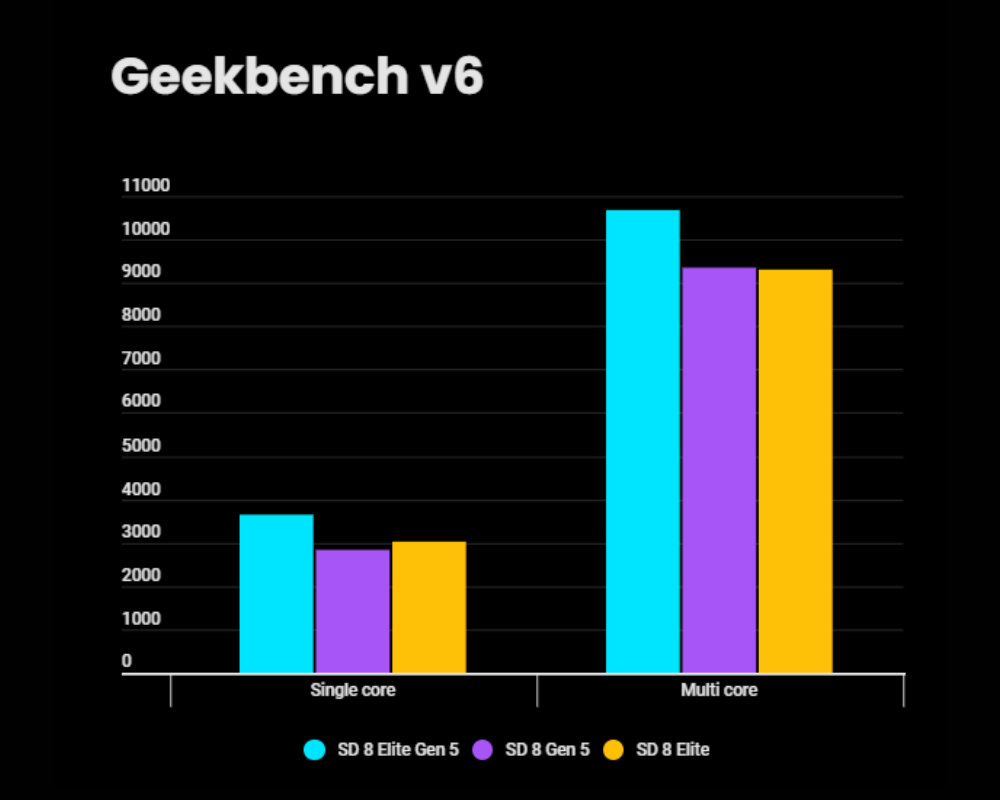
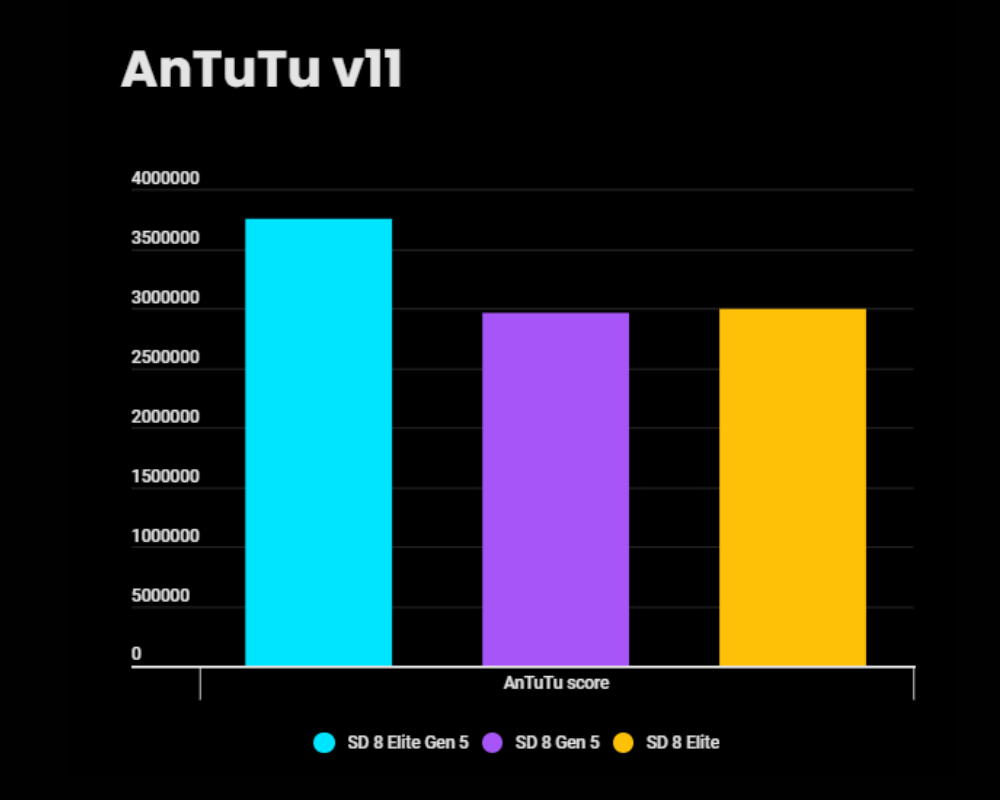
The original Snapdragon 8 Elite was introduced in 2024 as the company’s first mobile chipset featuring an Oryon CPU, then came the Snapdragon 8 Elite Gen 5 next year as its successor, which was earlier supposed to launch as Snapdragon 8 Elite Gen 2, but Qualcomm had a different plan.
A few weeks after the Snapdragon 8 Elite Gen 2’s announcement, Qualcomm followed up with the Snapdragon 8 Gen 5 as an affordable flagship alternative for premium mid-range devices. While it appears to be a successor to Snapdragon 8 Elite, the latter actually delivers better performance. The inconsistent naming scheme from Qualcomm is confusing many people, so we’ve created this detailed post explaining how the Snapdragon 8 Elite Gen 5, Snapdragon 8 Gen 5, and Snapdragon 8 Elite stack up against each other.
Here’s the spec sheet for a quick overview:
Snapdragon 8 Elite Gen 5
Snapdragon 8 Gen 5
Snapdragon 8 Elite
Announced
September 2025
November 2025
October 2024
Process node
TSMC’s 3nm (N3P)
TSMC’s 3nm (N3P)
TSMC’s 3nm (N3E)
CPU cores
8-core
8-core
8-core
CPU cores
2 x 4.61GHz — Oryon (3rd gen) 6 x 3.63GHz — Oryon (3rd gen)
2 x 3.8GHz — Oryon (3rd gen) 6 x 3.32GHz — Oryon (3rd gen)
2 x 4.32GHz — Oryon (2nd gen) 6 x 3.53GHz — Oryon (2nd gen)
GPU
Adreno 840 Ray tracing support Snapdragon Elite Gaming features
Adreno 829 Ray tracing support Snapdragon Elite Gaming features
Adreno 830 Ray tacing support Snapdragon Elite Gaming features
NPU
Qualcomm Hexagon NPU Agentic AI support
Qualcomm Hexagon NPU Agentic AI support
Qualcomm Hexagon NPU
Memory
LPDDR5X, up to 5.3GHz
LPDDR5X, up to 4.8GHz
LPDDR5X, up to 5.3GHz
Storage
UFS 4.1
UFS 4.1
UFS 4.0
Camera
Qualcomm Spectra ISP (Triple AI-ISPs, 20-bit) up to 320MP single camera up to 108MP single camera (MFNR, ZSL, 30fps) up to 48MP triple camera (MFNR, ZSL, 30fps) up to 4K/120fps video recording real-time semantic segmentation (limitless) Advanced Professional Video (APV) codec
Qualcomm Spectra ISP (Triple AI-ISPs, 20-bit) up to 320MP single camera up to 108MP single camera (MFNR, ZSL, 30fps) up to 48MP triple camera (MFNR, ZSL, 30fps) up to 4K/120fps video recording real-time semantic segmentation
Qualcomm Spectra ISP (Triple AI-ISPs, 18-bit) up to 320MP single camera up to 108MP single camera (MFNR, ZSL, 30fps) up to 48MP triple cameras (MFNR, ZSL, 30fps) real-time semantic segmentation (limitless) up to 8K/30fps video recording
Snapdragon 8 Elite Gen 5 vs 8 Gen 5 vs 8 Elite: Benchmark numbers
Note: The benchmark tests were performed on the iQOO 15 (Snapdragon 8 Elite Gen 5), OnePlus 15R (Snapdragon 8 Gen 5), and OnePlus 13 (Snapdragon 8 Elite).
Geekbench performance
The Snapdragon 8 Elite Gen 5, unsurprisingly, achieves the highest score in both single-core and multi-core tests (3649, 10682), followed by the Snapdragon 8 Elite, which gets about 7% higher single-core score than the Snapdragon 8 Gen 5, while the multi-core scores for the two chips don’t have a big difference.
Single core
Multi core
SD 8 Elite Gen 5
3,649
10,682
SD 8 Gen 5
2,837
9,352
SD 8 Elite
3,026
9,306
AnTuTu performance
The Snapdragon 8 Elite Gen 5 is far ahead of the other two, with a total score above 3.7 million. The Snapdragon 8 Elite almost touches the 3 million mark, while the Snapdragon 8 Gen 5 is just below it, scoring 2.96 million points.
AnTuTu score
SD 8 Elite Gen 5
3,751,084
SD 8 Gen 5
2,961,236
SD 8 Elite
2,994,563
3DMark performance
The result isn’t any different on 3DMark than AnTuTu and Geekbench. The Snapdragon 8 Elite Gen 5 pulls off the best high score in the Wild Life Extreme test, followed by the Snapdragon 8 Elite and then the Snapdragon 8 Gen 5.
High score
Low score
SD 8 Elite Gen 5
7,240
3,219
SD 8 Gen 5
5,009
3,321
SD 8 Elite
6,628
4,155
However, things get interesting when you look at low scores. The Snapdragon 8 Elite Gen 5 has the worst low score of 3,219. In contrast, the Snapdragon 8 Gen 5 scores 3,321 points, and the Snapdragon 8 Elite scores 4,155 points. This could mean a higher gaming stability on a Snapdragon 8 Elite-powered device than on devices powered by the other two chipsets. However, that also depends on the software tuning, gaming optimizations, and cooling solution of a device.
The benchmarks focus solely on performance and don’t address other important aspects, such as connectivity and camera capabilities. Let’s talk about them and other important stuff in the following section to get the complete picture.
Snapdragon 8 Elite Gen 5 vs 8 Gen 5 vs 8 Elite: Key differences
CPU, GPU, and NPU
The Snapdragon 8 Elite Gen 5 and 8 Gen 5 have been manufactured using TSMC’s 3nm (N3P) node, which offers slightly improved performance and efficiency over the N3E node used for the Snapdragon 8 Elite.
All three Qualcomm chips have the same 2+6 core configuration. The Snapdragon 8 Elite Gen 5 and 8 Gen 5 feature third-generation Oryon CPU, while the Snapdragon 8 Elite has a second-generation Oryon CPU. Despite a generation older CPU, the 8 Elite beats the 8 Gen 5 on benchmarks because its cores run at higher clock speeds.
As for graphics rendering, the Snapdragon 8 Elite Gen 5 features the powerful Adreno 840 GPU with excellent ray tracing capabilities, along with a full suite of Snapdragon Elite Gaming features to enhance the gaming experience further. In contrast, the 8 Gen 5 has an Adreno 829, and the 8 Elite has Adreno 830. Both GPUs support ray tracing and offer Snapdragon Elite Gaming features.
Now, coming to AI capabilities, the Snapdragon 8 Elite Gen 5 features the largest and most capable NPU with agentic AI support. The NPU performance of the two other chips is nearly identical, but the Snapdragon 8 Gen 5’s official page mentions agentic AI support, whereas the Snapdragon 8 Elite doesn’t.
Camera and Imaging
The camera capabilities of the Snapdragon 8 Elite Gen 5 and 8 Gen 5 are nearly identical, except that the latest Elite chip features Advanced Professional Video (APV) codes for near-lossless, pro-grade capture and limitless real-time semantic segmentation. The Snapdragon 8 Elite features a lower-bit ISP, while the rest of its specs are mostly the same as those of the Snapdragon 8 Gen 5.
Connectivity
While all three Qualcomm chips offer robust connectivity features, the Snapdragon 8 Elite Gen 5 excels by delivering higher download and upload speeds over 5G. The rest of the connectivity specs are almost the same.
Elon Musk proposed building a Moon factory to produce AI-powered satellites.
The plan includes launching satellites using an electromagnetic “Mass Drive” system.
The proposal comes as xAI faces leadership exits and possible IPO pressure.
AI- generated image for representation only
Elon Musk has proposed building a factory on the Moon to manufacture AI-powered satellites, according to a February 10 report by The New York Times. Musk shared the idea during an internal xAI meeting, suggesting that lunar infrastructure could unlock computing power far beyond today’s limits.
The concept includes a giant electromagnetic catapult, often described as a “mass driver,” that would launch satellites into space from the Moon’s lower-gravity environment. Musk reportedly argued that future AI systems will require unprecedented computing capacity and that Earth alone may not be enough.
The proposal expands on Musk’s broader space-AI strategy following the merger of xAI and SpaceX. The long-term vision includes building a self-sustaining Moon city, then moving toward Mars colonization and eventually interstellar exploration. However, no timeline or construction roadmap was shared.
The timing is notable. xAI, founded in 2023 and known for its Grok chatbot integrated into X, is reportedly facing internal leadership changes. Investors are said to be focused on near-term growth and a potential IPO within 18–24 months. Meanwhile, SpaceX is also preparing for a possible public offering.
Musk recently claimed X has about 600 million monthly active users, though the number has not been independently verified.
While supporters see bold innovation, critics question whether now is the right moment for such an ambitious lunar pivot.
Why Moon Has Advantages for an AI Factory?
Lower gravity makes it easier and cheaper to launch satellites into space.
No atmosphere means fewer weather delays during launches.
Abundant solar energy with long periods of sunlight.
Large open space for building massive facilities.
Fewer environmental regulations compared to Earth.
Potential access to lunar resources for construction materials.
Cooler space environment could help with heat management for data systems.
Less risk of natural disasters like earthquakes or storms.
Strategic position for launching satellites into deep space.
Last year, Xiaomi unveiled the Xiaomi 18 series in the same month as the first phones powered by the Snapdragon 8 Elite Gen 5 in China. On the other hand, Vivo introduced the Vivo X300 and X300 Pro as the world’s first phones featuring the Dimensity 9500 chip in China. It appears both brands could once again be among the first to launch flagship phones equipped with next-generation flagship chipsets this year.
September launch window and chipset plans
Snapdragon 8 Elite Gen 6, Dimensity 9600 phones to launch in September, claims DCS
According to tipster Digital Chat Station, new smartphones powered by the Snapdragon 8 Elite Gen 6 series and the MediaTek Dimensity 9600 series are currently scheduled for a September debut. Interestingly, the tip suggests that brands planning to introduce these next-generation chipsets are preparing to offer three versions as standard practice, namely a regular model, a Pro variant, and a Pro Max edition.
To recall, the Xiaomi 17 lineup, which debuted in September 2025, included three models: Xiaomi 17, 17 Pro, and 17 Pro Max. These models are likely to be succeeded by the Xiaomi 18, 18 Pro, and 18 Pro Max in the same month this year.
While Vivo announced the Vivo X300 and X300 Pro in September last year, it appears that this year’s lineup may launch earlier and is likely to include three models, such as the Vivo X500, X500 Pro, and X500 Pro Max. Rumors suggest that the X400 branding may be skipped, as the number 4 is considered an unlucky number in some Asian countries.
Readers should note that the tipster has not specified any device names in the leak. The Oppo Find X10 series is also expected to include the Find X10, X10 Pro, and X10 Pro Max powered by the Dimensity 9600. So, it remains unclear whether the tipster was referring to Oppo or Vivo as the other brand alongside Xiaomi. However, in recent years, Vivo has often been the first brand to launch MediaTek’s latest flagship chipsets, so the second brand mentioned in the leak could be Vivo. Readers are advised to treat this information cautiously.
In today’s leak, DCS also cautions that the company expected to debut the new chip in September is unlikely to ship its device with the SM8975, also referred to as the Snapdragon 8 Elite Gen 6 Pro, as a standard configuration. The reason cited is the extremely high cost of the 2nm chipset, which could significantly impact pricing.
Here, the tipster may be suggesting that Xiaomi will not launch a Snapdragon 8 Elite Gen 6 Pro-powered phone in September. Previous leaks have claimed that this chip is designed for ultra-premium devices and is likely to power the Xiaomi 18 Ultra, which may debut by the end of this year in China.
For more daily updates, please visit our News Section.
ByteDance launches Seedream 5.0 with advanced image editing and lower pricing.
Alibaba unveils Qwen-Image-2.0, supporting 1K-token prompts and 2K images.
Both models directly challenge Google’s Nano Banana Pro amid rising US-China AI rivalry.
AI-generated image for representation only
China’s tech giants are accelerating the global AI race. ByteDance and Alibaba Cloud have introduced new image-generation models designed to compete with Google’s Nano Banana Pro.
The launches highlight growing competition between China and the United States in creative AI tools. Both companies aim to lower costs while improving performance for businesses and individual creators.
ByteDance’s Seedream 5.0 is now available for beta testing on Jimeng in China and on CapCut globally. The company says the model has stronger reasoning skills and a better understanding of complex prompts.
It allows users to edit specific parts of an image without regenerating the entire design. In one test, a “snowy night” scene was created and later modified by switching lights on and off, while keeping the rest unchanged.
The launch follows ByteDance’s recent Seedance 2.0 AI video model, which focuses on realistic AI-generated videos.
Alibaba Cloud’s Qwen-Image-2.0 combines image generation and editing in a single system. It supports up to 1,000-token prompts and produces 2K-resolution images.
The model can handle structured layouts, multi-panel designs, and consistent characters across scenes. It also performs strongly in rendering Chinese text and complex calligraphy.
Together, these launches position both firms as serious global competitors in AI-powered creative tools.
Major Features Compared:
Feature
ByteDance Seedream 5.0
Alibaba Qwen-Image 2.0
Google Nano Banana Pro
Developer
ByteDance
Alibaba Cloud (Qwen team)
Google DeepMind (Gemini)
Core Function
Text-to-image generation + editing
Unified image generation + editing
Image generation + advanced editing
Native Output Resolution
Supports 2K and 4K outputs
Native 2K (2048×2048) output
Up to 4K resolution output
Prompt Handling
Designed for detailed prompt understanding
Supports long prompts (up to ~1K tokens)
Advanced prompt-based generation (no official token limit stated)
Text Rendering
Generates legible text within images
Strong typography and structured text rendering
Advanced multilingual text rendering
Generation + Editing Integration
Supports selective image edits
Generation and editing integrated in one model
Integrated image creation and editing tools
Availability
Beta testing via Jimeng (China) and CapCut (global)
Available via Qwen platforms
Available through Gemini apps and Google AI tools
Model Base / Engine
Proprietary Seedream model
Qwen multimodal architecture
Built on Gemini 3 Pro Image
Disclaimer: Feature details are based on publicly available data and may be subject to updates or changes.
In January, well-known tipster Evan Blass shared the key specifications of the Motorola Edge 70 Fusion. Later, another report surfaced to showcase the phone in Silhouette (Black) and Country Air shades. Now, Blass is back again with a fresh set of images that showcase the phone in as many as five color options.
New renders highlight design and colour options
Motorola Edge 70 Fusion color options
The latest set of images showcases the Motorola Edge 70 Fusion in other paintjobs, such as Blue Surf, Orient Blue, and Sporting Green. The renders indicate a familiar design language as the Edge 70, including Motorola’s signature rear camera layout and a textured back panel inspired by nylon and linen materials. The device appears relatively slim despite housing a large battery, suggesting that Motorola may be focusing on balancing ergonomics with endurance.
Promotional images accompanying the leak provide a clearer look at the curved edges and quad-curved display profile. While the overall aesthetic resembles earlier Edge series models, the updated finishes and materials give the device a slightly refreshed appearance. The smartphone is also expected to retain a premium design approach without moving into flagship pricing territory.
Readers can checkout the source link for more images.
Motorola Edge 70 Fusion specifications (rumored)
Motorola Edge 70 Fusion color options
The Motorola Edge 70 Fusion is rumoured to feature a 6.78-inch quad-curved AMOLED display with 1.5K resolution, 144Hz refresh rate, HDR10+ support and peak brightness reaching up to 5,200 nits, protected by Gorilla Glass 7i. It could be powered by the Snapdragon 7s Gen 3 chipset paired with up to 12GB RAM and 256GB storage.
The handset may include a 50-megapixel primary camera using a Sony LYTIA sensor alongside a 32-megapixel front camera. It will house a large 7,000mAh battery with 68W charging support, Android 16 out of the box, IP68 and IP69 ratings, and MIL-STD-810H certification for durability.
Although pricing details remain unclear, the emergence of marketing materials indicates that the Edge 70 Fusion could be unveiled in the near future, likely targeting markets where previous Fusion models were available.
For more daily updates, please visit our News Section.
Bluetooth audio has evolved far beyond simply connecting earbuds to smartphones. In 2026, it powers televisions, cars, laptops, gaming systems, and home entertainment setups. What was once a convenience feature is now the backbone of modern wireless sound. As this shift accelerates, brands that deliver practical and affordable solutions like Faster Speakers are becoming increasingly important.
From Wires to Wireless Living
Traditional audio systems came with long cables, complicated installations, and limited flexibility. Rearranging a room meant rearranging wires. Adding speakers required effort and compatibility checks. Bluetooth eliminated these everyday frustrations.
Today, users expect seamless pairing, automatic reconnection, and clean setups without clutter. Faster Speakers fit directly into this lifestyle by offering simple, user-friendly wireless audio designed for everyday use, not technical complexity.
2026: A Major Upgrade in Bluetooth Technology
Recent improvements such as Bluetooth LE Audio, the LC3 codec, multi-stream audio, and broadcast audio have significantly improved sound efficiency and clarity. These upgrades allow better audio quality at lower power consumption while enabling multiple device connections at once.
For brands like Faster, these advancements mean delivering reliable performance, strong battery life, and stable connectivity at accessible price points, making modern Bluetooth benefits available to more users.
Wireless Sound at Home, in Cars, and at Work
Bluetooth is now standard in cars for hands-free calling and music streaming. In homes, it allows wireless TV-to-headphone connections and clutter-free speaker setups. In hybrid work environments, stable Bluetooth audio ensures smoother meetings and easy device switching.
Faster Speakers align with this multi-device world. Designed for portability, travel, outdoor use, and home entertainment, they provide practical solutions without overwhelming users with unnecessary features.
Real-World Reliability Over Technical Specs
Today’s buyers prioritize quick pairing, consistent connection strength, long battery life, easy controls, and dependable after-sales support. Technical bitrate numbers matter less than real-world performance.
This is where Faster stands out. By focusing on everyday reliability and affordability, the brand addresses what users actually need, wireless sound that works consistently.
The Bigger Picture
Global Bluetooth device shipments crossed 5 billion in 2023 and continue to rise. The Bluetooth speaker market alone sold hundreds of millions of units recently, proving that wireless sound is now the default choice.
As Bluetooth becomes invisible, seamless infrastructure, brands like Faster Speakers play a key role in making that technology accessible. Wireless audio is no longer optional, and practical, reliable speakers are at the center of this transformation.
How to Choose the Right Bluetooth Device?
Bluetooth Version 5.2 or newer – Better stability, range, and efficiency.
Support for modern codecs (like LC3) – Clearer sound with lower battery usage.
Multi-device pairing – Easy switching between phone, laptop, and tablet.
Strong battery life – Longer playback and fewer charging interruptions.
Stable connectivity – Performs well even in crowded wireless environments.
Low latency support – Important for gaming and video streaming.
Comfort and build quality – Especially for earbuds and headphones.
Simple controls – Easy buttons or touch controls for daily use.
Reliable warranty & support – Ensures long-term peace of mind.
Infinix has started teasing the arrival of the Note 60 series for the global market. The Note 60 Pro will be the company’s first smartphone to feature a Snapdragon chip, but this will not be the case for the standard Note 60. A Geekbench listing that surfaced today reveals it will feature a MediaTek chip.
Infinix Note 60 Geekbench listing
A forthcoming Infinix smartphone with the model number X6879 has appeared on Geekbench. This device was previously spotted on an Indonesian certification platform with the Infinix Note 60 branding.
The Note 60’s Geekbench listing reveals that its MediaTek chip comprises four cores running at 2.0GHz and four cores operating at 2.60GHz. For graphics, it features the Mali-G615 MC2 GPU. These details strongly suggest that the Note 60 is powered by the Dimensity 7400, which is likely to be marketed as the Dimensity 7400 Ultimate.
The Geekbench listing also shows 8GB of RAM and Android 16. In Geekbench 6.5’s single-core and multi-core tests, the device scored 1,055 and 3,097 points, respectively.
The inclusion of the Dimensity 7400 Ultimate will be an upgrade as the previous generation featured the Dimensity 7300 Ultimate. For those who don’t, the predecessor was called the Note 50s 5G as the brand skipped the Note 50 model.
The Infinix Note 60 is likely to borrow some specifications from the Note 60 Pro. It may feature a 144Hz AMOLED screen and a 6,500mAh battery, but it may not include the dot-matrix rear display, which is expected to remain exclusive to the Pro variant.
At present, there is no additional information about the Note 60 series. Since the brand has already begun teasing the lineup, it appears that the launch could take place within the next few weeks.
For more daily updates, please visit our News Section.
Redmi is reportedly working on the Redmi K90 Ultra for China. It will succeed the Redmi K80 Ultra, which debuted in June 2025. A previous report claimed that the K90 Ultra would launch much earlier than its predecessor. Now, a new Weibo post by a reliable tipster has emerged supporting this claim.
Redmi K90 Ultra launch timeframe (rumored)
According to Experience More, a sub-series performance-focused smartphone powered by the Dimensity 9500 is currently in development. While he did not mention the name of the device, it appears that he could be referring to the Redmi K90 Ultra.
He added that the device, carrying the model number 2604FRK1EC, is said to feature an ultra-high refresh rate display along with a built-in cooling fan, indicating a strong focus on gaming and sustained performance. This model number, along with its Redmi K90 Ultra branding, was spotted in the GSMA IMEI database back in December 2025.
The numbers “2604” indicate that the Redmi K90 Ultra may debut as early as April in China. The device will be powered by the Dimensity 9500, not the Dimensity 9500 Plus chip as previously speculated. The D9500+ is expected much later in the second half of the year.
Redmi K80 Ultra
One of the major highlights of the Redmi K90 Ultra will be its built-in cooling system, a first for a Xiaomi phone. It is expected to feature a massive 6.8-inch display offering a 1.5K resolution and a 165Hz refresh rate. Under the hood, it may pack an 8,500mAh battery with 100W charging. Other rumored features include a metal frame, an ultrasonic in-display fingerprint sensor, and full water resistance.
The Xiaomi 17T Pro is said to be a tweaked version of the K90 Ultra designed for the global market. This device, which is said to carry the model number 2602EPTC0G, may lack a few features, including the cooling fan. The model number for the 17T Pro also hints at an early launch, but since the Xiaomi 17 and 17 Ultra have not yet launched globally, it appears that the 17T Pro may debut within the first half of this year.
For more daily updates, please visit our News Section.
Xiaomi has quietly introduced a refreshed version of its affordable 27-inch QHD monitor. The original A27Qi arrived in Europe last year and positioned itself as a solid budget option for work and general use. The 2026 version doesn’t reinvent the formula, but it refines it in areas that actually matter.
At its core, this is still a 27-inch IPS monitor with a 2560 × 1440 resolution. Brightness is rated at 300 nits, response time sits at 6ms (GtG), and viewing angles remain the typical 178 degrees you’d expect from an IPS panel.
Color coverage is also familiar: 100% sRGB and 95% DCI-P3, with 8-bit color depth. TÜV Rheinland-certified low blue light support and DC dimming are included for more comfortable long sessions. So far, very similar to the previous model.
What’s actually improved
The 2026 model now offers ΔE <1 factory calibration, which is a notable upgrade. For photo editing, design work, or content creation, tighter color accuracy out of the box is a welcome improvement.
Contrast has also been bumped to 1,300:1, which should translate to slightly deeper blacks and better separation in darker scenes. It’s not a dramatic shift, but it’s measurable.
The panel now runs at 120Hz, up from 100Hz on the previous version. It will make scrolling, UI animations, and light gaming feel smoother.
Pricing and availability
The monitor has launched in Thailand at THB 4,990, which converts to roughly $159 at current exchange rates. That’s about THB 100 more than the previous generation, an increase for the added features.
Xiaomi hasn’t confirmed broader availability yet, but given how the original model rolled out, it’s reasonable to expect a wider release later.
This isn’t a flashy upgrade. There’s no OLED panel or ultra-high brightness claims here. But for under $200, getting QHD resolution, 120Hz refresh rate, strong color coverage, and sub-ΔE 1 calibration is genuinely competitive.
In 2026, USB-C hubs continue to serve as critical accessories for laptops, tablets, and hybrid workspaces. The best hubs now combine fast charging, high-speed data transfer, 4K displays, and multi-device compatibility into compact packages.
The market includes streamlined options for travel and powerful docks for desktop use. Here are five top-rated USB-C hubs of 2026 that stand out in performance, reliability, and value.
Anker 555 USB-C Hub (8-in-1)
The 555 USB-C Hub from Anker remains a reliable choice for users who need basic expansion without clutter. It adds eight ports, including a 4K HDMI output, 100W USB-C Power Delivery (with 85W pass-through), two USB-A 3.2 ports, a USB-C data port, Ethernet, and dual SD card readers.
The USB-C data port supports 10Gbps transfers, but it does not support video output. The hub is compatible with most MacBook Pro and Air models, Dell XPS laptops, and iPad Pro. It delivers dependable performance for general productivity, video streaming, and media transfer. The build feels solid, and its compact form factor makes it ideal for mobile users who don’t need advanced display setups.
Baseus 12-in-1 USB-C Hub
Baseus takes a more feature-rich approach with its 12-in-1 USB-C hub. It includes dual HDMI (both supporting 4K@60Hz), DisplayPort, three USB-A 3.0 ports, a USB-C data port, SD/TF card readers, Ethernet, a 100W PD port, and a 3.5mm headphone jack. This hub can support three extended displays on Windows laptops with AMD graphics and DP 1.4 support.
The hub sits beneath the laptop and raises it slightly for improved typing ergonomics. Its wide compatibility list includes MacBooks, Surface devices, Dell and HP ultrabooks, and many Android tablets and phones. It targets users who rely on multiple monitors and wired accessories. macOS display mirroring limitations still apply, but for Windows productivity users, this hub delivers impressive flexibility.
Hiearcool 7-in-1 USB-C Hub
The Hiearcool 7-in-1 USB-C hub remains one of the most affordable and best-reviewed compact hubs. It costs under $30 and includes 4K HDMI, dual USB-A 3.0 ports, SD and microSD slots, a 100W charging-only USB-C port, and plug-and-play setup.
Transfer speeds reach up to 5Gbps, and its aluminum body is durable for travel use. However, it lacks Ethernet and does not allow simultaneous SD and TF card use. For casual users, students, and those who travel light, it remains a dependable choice.
Ugreen Revodok Pro 210
The Revodok Pro 210 is built for creators and professionals who need multiple high-resolution displays. It supports dual HDMI output at 4K@60Hz or single HDMI at 8K@30Hz. The 10-in-1 port layout includes USB-C and USB-A 3.0 for 5Gbps transfers, USB-A 2.0 for peripherals, Gigabit Ethernet, SD/TF readers, and 100W PD charging.
The Revodok weighs more than others on this list, but its premium build and extended compatibility make it a reliable choice for creative professionals who depend on color-accurate displays and fast media transfers. It fits into complex workstation setups with ease.
Plugable 9-in-1 USB-C Hub
The 9-in-1 USB-C hub from Plugable includes features that target power users. It supports 140W USB-C PD 3.1 input and delivers up to 125W charging to laptops. The port layout includes 4K@60Hz HDMI, a USB-C 10Gbps port, two USB-A 10Gbps ports, a USB 2.0 port, SD/microSD card slots with UHS-II support, and a Gigabit Ethernet port.
Its built-in 7.5-inch cable simplifies cable management, and its compatibility list covers almost all modern USB-C laptops. This hub charges large MacBooks and Windows workstations quickly while handling high-speed file transfers and stable display output.
Google has just released Android 16 QPR3 Beta 2.1 to Google Pixels, and that would be the final release based on the current OS. The company has now officially confirmed that it’s working on Android 17 and that the first beta build will be released soon.
Android 17 Beta 1 releasing soon
The first public beta of Android 17 will be released soon, says Google. Notably, this won’t be a Developer Preview build. If you’ve followed the development cycles for an upcoming Android OS in the past, you’d know that first builds are generally labelled Developer Preview builds (Android 16 had two of them), and then beta builds are released, but that’s changing this year with Android 17.
Google says Android 17 Beta 1 “builds on top of Android 16 QPR platform release and includes the latest bug fixes and improvements to stability and performance.” Past leaks suggest several new features and improved gaming capabilities are coming to the upcoming Android OS, among many other improvements. We’ll learn more about the changes once the first beta build goes live, which could arrive as early as this month or next month, while the stable build of Android 17 should land around June 2026.
Google Pixel users will have the first bite, as always. Those currently on Android 16 QPR3 Beta 2.1 and choose to remain enrolled in the Android Beta Program will automatically receive the Android 17 Beta 1 update. If they don’t want to receive the beta update, they must opt out of the beta program.
As for the other brands, the Android 17 beta update may arrive on select devices a few weeks after it is released to Google Pixels. We’ll continue to track the development and update you on the same in our Android 17 section. Remember to visit the section regularly for the latest updates. Or, join our Telegram channel to get instant notifications about the latest happenings in tech.
Realme recently unveiled the Realme P4 Power in India, and the USP of the device is that it packs the largest battery ever on a Realme phone — a massive 10,001mAh unit. Now, its Chinese variant appears to be on the verge of launch, as a new Realme smartphone carrying the RMX5166 model number has surfaced on China’s TENAA certification database. It is speculated that the device may carry the Realme Power branding in China, dropping the “P4” moniker. The listing reveals key specifications that appear identical to the global edition.
Realme Power specifications
Realme P4 Power
According to the TENAA listing, the RMX5166 features a 6.8-inch AMOLED display with a 2800 × 1280 resolution and 1.5K clarity. The panel supports 10-bit colour depth (1.07 billion colors), suggesting a focus on vibrant visuals.
Under the hood, the device is powered by an octa-core processor clocked at 2.6GHz, which appears to be the Dimensity 7400 Ultra. The phone is listed with 6GB, 8GB, 12GB, and 16GB RAM options, paired with 128GB, 256GB, 512GB, and 1TB storage variants. In India, the device ships with 12GB of RAM and 256GB of built-in storage.
In terms of optics, the rear houses a 50-megapixel primary camera alongside an 8-megapixel secondary sensor, while the front features a 16-megapixel selfie camera. Powering the handset is a 9,750mAh rated battery, which typically translates to a slightly higher advertised capacity. Given that the Indian edition offers a 10,001mAh battery, the Chinese variant is expected to feature similar battery positioning. The TENAA listing also reveals other features like an in-screen fingerprint sensor and an IR blaster.
Dimension-wise, the device measures 162.26 x 76.15 x 9.08mm and weighs 219 grams, reflecting the trade-off for the massive battery capacity. With TENAA certification now complete, an official launch in China could be just around the corner.
For more daily updates, please visit our News Section.
The upcoming Oppo Find X9 Ultra has appeared in a real-life image. However, since it is inside a confidentiality case, it does not reveal its design completely, but it does give a good idea about its camera layout. Also, there are two handsets shown in the image, but it is unclear whether they are two different prototypes of the X9 Ultra or if only one of them is the X9 Ultra.
Oppo Find X9 Ultra real-life image
Oppo Find X9 Ultra real-life image
The handset that can be seen on the right has more openings, which suggests that it could be the Find X9 Ultra. The image also suggests that the Ultra variant will continue to feature a round camera module, while the X9 and X9 Pro have opted for camera islands positioned at the top-left corner.
The Find X9 Ultra’s camera setup is rumored to include a Sony LYT-901 200MP main camera with OIS support, a Samsung JN5 50MP ultra-wide lens, a 200MP OmniVision OV52A periscope telephoto camera with 3x optical zoom, and a Samsung JN5 50MP periscope telephoto camera with 10x optical zoom. A previous report revealed that the brand may offer a new teleconverter accessory with a 300mm reach for the X9 Ultra.
The Find X9 and X9 Pro are powered by the Dimensity 9500 chip, whereas the Ultra variant will come equipped with the Snapdragon 8 Elite Gen 5. It is expected to feature a 6.82-inch 2K 120Hz AMOLED screen and a battery of around 7,000mAh with 80W wired and 50W wireless charging support.
Oppo is expected to hold a launch event next month (March) in China to unveil the Find X9 Ultra alongside the Find X9s and X9s Pro. The Find N6 foldable is also expected in March, but it is unclear whether it will debut alongside the upcoming X9 lineup. The X9 Ultra is also expected to hit the global market in the second quarter of this year.
For more daily updates, please visit our News Section.
Samsung has officially announced its next Galaxy Unpacked event, confirming that the Galaxy S26 series will debut later this month. The announcement sets the stage for the company’s upcoming flagship lineup, which has been widely discussed through leaks and early teasers. While the event confirmation does not reveal complete specifications, it offers clarity on the launch timeline and highlights what users can expect from Samsung’s next phase of AI-focused smartphones.
Galaxy Unpacked event details and reservation offers
Samsung Galaxy S26 series to be unveiled on Feb. 25
The Galaxy Unpacked event is scheduled for Feb. 25, 2026, in San Francisco and will begin at 10AM PT. Samsung plans to livestream the presentation via its official website and YouTube channel, allowing global audiences to follow the announcements in real time.
Alongside confirming the launch date, Samsung has opened early reservations, allowing interested buyers to register without any purchase commitment. Customers who reserve can receive benefits such as a $30 credit for accessories, potential trade-in savings of up to $900, and a chance to win a $5,000 Samsung.com gift card. Reservations are also expanding beyond Samsung’s website, with retailers like Best Buy and AT&T expected to participate.
The Galaxy S26 lineup is expected to include three models, namely the Galaxy S26, Galaxy S26 Plus, and Galaxy S26 Ultra. Early reports suggest improvements in performance through a newer Snapdragon chipset for select regions, along with faster wireless charging capabilities. The Ultra variant may introduce a new privacy-focused display feature designed to reduce visibility from side angles, though official confirmation is still awaited.
Apart from smartphones, the event could see the launch of the Galaxy Buds 4 series, including standard and Pro versions. Software advancements are also likely to take centre stage, especially with the anticipated rollout of One UI 8.5 and enhanced Galaxy AI features. Samsung appears to be placing significant emphasis on making AI interactions more personalized and seamlessly integrated into everyday usage.
Retail availability for the Galaxy S26 series is expected around March 2026, with pricing likely to remain similar to previous generations. The return of the Unpacked event to late February also aligns with Samsung’s earlier strategy of launching flagship devices ahead of Mobile World Congress, indicating a renewed focus on setting the pace for the year’s smartphone announcements.
For more daily updates, please visit our News Section.
Aohi has introduced a new high-capacity power bank for people who carry more than just a phone. The Future Starship Pro 310W packs a 20,000mAh battery and, at least on paper, enough power to replace multiple chargers in your bag. It’s priced at 499 yuan and comes in a silver-gray and black finish with a small display on the front.
The device measures 45.6 x 57.6 x 158mm and weighs around 630g, so it’s not exactly pocket-sized. But considering what it promises, the size feels expected. On the front, there’s a 1.14-inch TFT color screen that shows battery level and real-time output information. So instead of guessing how fast your laptop is charging, you can see the numbers directly.
Aohi 310W Starship Pro Specifications
The headline feature here is power output. The Starship Pro uses a 2C + 1A port configuration: two USB-C ports and one USB-A port. Both USB-C1 and USB-C2 support up to 140W input and output individually. The USB-A port tops out at 30W. When all three ports are used at once, the combined maximum output reaches 310W (140W + 140W + 30W), with what Aohi calls “smart power distribution” to manage charging across devices.
That means it’s technically capable of charging two high-power laptops at the same time, while still topping up a phone or accessory. It supports common fast-charging protocols including PD, QC, PPS (up to 100W), and UFCS (63W), which should make it compatible with a wide range of devices.
Aohi claims the 20,000mAh capacity can charge an iPhone 16 up to 4.1 times and a 12.9-inch iPad Pro about 1.4 times. The rated energy is 72Wh, using eight 2,500mAh lithium-ion cells from DMC.
What may matter even more for frequent travelers is recharge speed. The Starship Pro supports up to 180W self-charging input. In theory, that allows the power bank to go from 0 to 100 percent in around 60 minutes.
It’s still a relatively heavy device at 630g, but for users who carry power-hungry laptops, tablets, and phones, the trade-off might make sense.
For more daily updates, please visit our News Section.
Xiaomi is preparing to launch a new portable speaker globally, and the Xiaomi Bluetooth Speaker Essential has now appeared on the company’s global website. This listing suggests the speaker could roll out worldwide in the coming months.
The Bluetooth Speaker Essential uses a dual-driver acoustic setup with two 1.5-inch full-range speakers and a large passive radiator. The speaker delivers 5W rated power and includes bass boost for stronger low frequencies. Xiaomi says this setup is designed to provide wide sound coverage in outdoor spaces while keeping vocals clear and natural. The passive radiator adds depth to bass without overpowering mids and highs.
The speaker has a compact, rounded body wrapped in refined fabric mesh. A high-gloss accent band adds a visual highlight, while the lightweight build makes it easy to carry. It weighs around 200 grams and measures 9.8 × 4.6 × 13 cm. Xiaomi compares the weight to that of an apple, making it suitable for one-handed use during travel or outdoor activities. Color options include black and green.
For durability, the Bluetooth Speaker Essential comes with an IP66 dust and water-resistance rating. The fabric mesh body, anti-slip rubber base, and covered side ports help protect it from dust and light rain, making it suitable for outdoor use.
Battery life is rated at up to 10 hours on a single charge. The speaker uses a 1,000mAh battery and charges through a USB Type-C port. Indicator lights show charging status, power, Bluetooth pairing, stereo or multi-speaker mode, and low battery alerts.
Connectivity includes Bluetooth 6.0 for faster pairing and stable wireless performance. The speaker supports TWS stereo pairing with two units and multi-speaker pairing with up to 10 speakers for synchronized playback. It also supports USB sound card mode, allowing it to work as a wired speaker for PCs and tablets. A built-in microphone enables hands-free Bluetooth calling. Xiaomi has not shared pricing or availability so far.
For more daily updates, please visit our News Section.
Snapdragon’s latest flagship processor is a scorching performer in more ways than one. Qualcomm’s Snapdragon 8 Gen 5 chipset delivers blazing-fast performance for 2026’s Android flagships, but early tests show it also runs extremely hot. With great power comes great heat: some benchmark stress tests pushed this chip to a searing 56°C internally, which is far too hot to hold comfortably. While everyday tasks won’t reach such extremes, heavy gaming or rendering can turn your phone into a hand-warmer and even trigger emergency cooldown measures. Here’s what you need to know about the 8 Gen 5’s thermal issues and what they mean for you.
Blistering Temperatures in Stress Tests
A clear example comes from the Red Magic 11 Pro, a gaming phone built specifically for sustained performance. According to testing reported by Android Authority, the device shut down during a 3DMark stress test despite using an active cooling fan and a dedicated thermal system. This result shows that even phones designed for gaming struggle to control the Snapdragon 8 Gen 5 under maximum load.
Standard flagship phones fare worse. In testing of the Nubia Z80 Ultra, reported by PhoneArena, surface temperatures exceeded 50°C, making the phone uncomfortable to hold. Without active cooling, the device was forced to reduce performance quickly to prevent further heat buildup. These results highlight how difficult it is for passive cooling systems to handle this chip during sustained workloads.
Big Performance Drops Under Load
Excess heat leads directly to thermal throttling. In GPU stress tests, some Snapdragon 8 Gen 5 devices saw performance drop by more than 50 percent from the start of the test to the end. In extreme scenarios, sustained heat forced the chip down to less than one third of its peak performance.
By the end of prolonged tests, the Snapdragon 8 Gen 5 was running slower than the previous generation flagship processor. While the chip excels at short bursts of speed, it struggles to maintain those levels without aggressive cooling. In long gaming or rendering sessions, older chips that generate less heat can sometimes deliver more consistent performance.
Gaming Phones Help, But Only to a Point
Gaming phones still handle the Snapdragon 8 Gen 5 better than standard flagships. Larger vapor chambers, liquid cooling systems, and internal fans allow devices like the RedMagic 11 Pro to sustain performance for longer periods. However, testing confirms that even these phones can suffer shutdowns or severe throttling during extreme workloads.
This points to a wider issue across the industry. Cooling systems are struggling to keep up with the power demands of modern flagship processors. Raw performance gains are increasingly limited by how effectively heat can be removed from the chip.
Daily Use Is Mostly Fine
For most users, these thermal issues will rarely appear. Reports from long-term daily use show no noticeable overheating or throttling during common tasks. Web browsing, messaging, navigation, video streaming, and casual gaming do not push the Snapdragon 8 Gen 5 close to its limits.
Heat problems mainly occur during sustained high-load scenarios. Extended gaming sessions, graphically demanding titles, emulation, and heavy rendering workloads are where performance drops become noticeable. Casual users will experience fast and smooth performance, while power users may see dips during long sessions.
Looking Ahead: Cooling Tech to the Rescue?
Thermal challenges like these have phone makers and chip designers looking for new solutions. Interestingly, Samsung has developed a “Heat Pass Block” (HPB) technology that could help tame hot chips in the future. HPB essentially adds a tiny heat-sink layer directly on top of the processor to dissipate heat more effectively. It first appeared in Samsung’s Exynos 2600, where it delivered about a 16% improvement in thermal resistance thanks to a copper layer that helps draw heat away from the silicon. Rumor has it Qualcomm might adopt this Heat Pass Block tech in the next Snapdragon 8 Gen 6 processor to help rein in temperatures. If true, that could allow next-gen phones to run cooler or at least sustain peak performance longer than the 8 Gen 5 does.
In the meantime, expect smartphone brands to get increasingly creative with cooling. We’re already seeing bigger vapor chambers in devices (Apple even added one in the iPhone 17 Pro for the first time), and some gaming phones include mini internal fans. The Snapdragon 8 Gen 5 shows that cooling is now as critical as raw performance. For everyday use, it remains a powerful and reliable chip. Under sustained workloads, however, heat management has become the defining challenge for flagship smartphones.
Lexar has officially launched the JumpDrive D500, a new high-speed solid-state USB drive with both USB Type-A and Type-C connectors. The product is now listed on the company’s website and targets users who want fast, reliable storage that works across multiple platforms, including phones, tablets, laptops, and desktops.
Lexar JumpDrive D500 Specifications
The JumpDrive D500 uses the USB 3.2 Gen 1 interface and is available in four capacities: 128GB, 256GB, 512GB, and 1TB. Lexar claims the drive can deliver maximum read speeds of up to 400MB/s and write speeds of up to 400MB/s.
The 128GB and 256GB models feature 400MB/s read and 360MB/s write speeds, while the 512GB version hits 400MB/s for both read and write. The 1TB variant records slightly lower read speeds at 390MB/s but maintains a 400MB/s write speed.
The drive features a compact swivel design with a metal housing made of aluminum alloy. It supports 360-degree rotation and includes a lanyard loop for added portability. Lexar has designed the drive to handle daily wear and tear while maintaining its performance across a wide temperature range from 0°C to 50°C.
Lexar has also integrated support for its dedicated mobile app. The Lexar app is available for Android, iOS, and HarmonyOS and enables automatic backup of photos and videos from smartphones. It works offline and supports features like Live Photo backup on iPhones. However, it does not support iCloud backup or devices running HarmonyOS Next.
The dual-connector layout allows seamless file transfer between devices without adapters. Lexar claims the 1TB version can store over 300,000 photos, 18,000 minutes of HD video, or more than 110,000 songs.
Lexar backs the JumpDrive D500 with a 5-year limited warranty. The drive is expected to become available through retail and online channels globally.
In related news, Lexar has also launched the JumpDrive A50V and C50V USB drives recently in 512GB and 1TB variants, offering read speeds of up to 200MB/s.
For more daily updates, please visit our News Section.
Foldable phones once promised to be the next big wave in smartphones, bringing a fresh take on a pocket large screen experience. But after years of fast growth, 2025 marked the first real slowdown for the category. Industry data has revealed that the foldable segment not only cooled off, but may have actually declined. But is this just a one-off dip, or does it point to a wider trend? Read on to find out.
Foldables in 2025: A Rare Decline After Years of Expansion
For much of the early 2020s, foldables grew rapidly as more brands entered the space and technology improved. These flexible phones got better and better, and certain models became a lot more accessible in terms of pricing. However, reports have projected a drop in foldable smartphone growth in 2025. According to Counterpoint Research, panel shipments for foldable displays are expected to fall about 4% in 2025 after flat gains in 2024.
Motorola Razr Fold
The report adds that shipment figures show a broader trend of foldable phones losing popularity as manufacturers shipped fewer models than in previous years. The declining number of distinct foldable phones in 2025 reflects caution from brands that once flooded the market with multiple models.
Samsung’s Sales Dip and Market Share Struggles
Samsung Galaxy Z Flip 7 2026 Olympic Edition
Samsung has been the long standing leader in the foldable segment. But the South Korean tech giant has been seeing a decline in foldable sales. This continues even after the release of its latest Galaxy Z Fold 7 and Galaxy Z Flip 7 series of foldable phones. Overall, foldables still make up a tiny slice of the entire smartphone landscape. Despite eye-catching new releases, they’re estimated to account for just around 1.5% of all smartphone sales. In other words, more than 98% of phones sold remain traditional slabs.
Consumers Are Still Wary
While the global market cooled, China bucked the trend with solid growth. Foldable shipments in China expanded significantly, with reports indicating over 30% growth in 2025, thanks mainly to strong demand for Huawei’s models and other local brands. That regional outperformance highlights that demand pockets do exist, although this does not reflect a true global momentum just yet.
Why 2026 Could Be Pivotal
Many analysts see 2026 as a turning point for the foldable category, and one major reason that could back this growth is Apple’s highly anticipated first foldable iPhone. Multiple reports suggest Apple plans to launch a foldable device in the second half of 2026, potentially leveraging its massive customer base to expand awareness and adoption.
This could be great for the entire foldable segment since Apple’s entry could expand markets rather than just redistribute existing demand. Apple’s launch of its foldable will likely lead to significant growth in foldable display shipments in 2026 as well, thanks to renewed interest.
What 2026 Needs to Break Through
Here’s what the foldable phones need to truly shift from niche to mainstream in 2026:
Better pricing and durability: Foldables need to close the price gap with high-end flat phones and continue ramping up durability to lessen repair and longevity concerns.
Clear use-cases: These devices must stand out with everyday advantages for productivity, multitasking and media.
Apple’s entry as a catalyst: If Apple’s foldable iPhone delivers strong performance and ecosystem synergy, it could validate the category for millions more buyers outside current early adopters.
For more daily updates, please visit our News Section.
Special edition phones have become more than just flashy devices. These devices are now collectibles, conversation pieces, and often reimagined versions of hardware you already know and love. So for January 2026, we have compiled a list of a few standout limited edition smartphones that tap into pop culture, global events, fashion, gaming, and more. From Westeros-inspired dragons to Swarovski bling, here’s a guide to the most appealing special edition phones around right now.
Realme 15 Pro Game of Thrones Limited Edition
First on the list, we have the Realme 15 Pro Game of Thrones Edition that goes all-in on fantasy with a bespoke design and collector appeal. Inspired by HBO’s iconic series, this special variant features a color-changing “Dragonfire” leather back that shifts from black to red in higher temperatures.
Realme 15 Pro Game of Thrones Limited Edition
The phone also sports custom golden accents around the camera module and themed UI elements, plus exclusive packaging that includes Westeros-related memorabilia like house sigils and souvenirs. Apart from the nod to the popular fantasy series, the limited edition model features the same specs as the regular Realme 15 Pro, which include the 6.8-inch 144Hz AMOLED display, Snapdragon 7 Gen 4 chipset, and a 7,000 mAh battery.
Motorola Edge 70 Swarovski Edition
If fashion tech is your thing, the Motorola Edge 70 Swarovski Edition is one of the most elegant special phones this season. This variant dresses the Edge 70 in Pantone’s 2026 Colour of the Year, Cloud Dancer. This adds a soft and serene white finish that is decorated with 14 Swarovski crystals.
Motorola Edge 70 Swarovski Edition
It is a part of Motorola’s “Brilliant Collection” and adds a luxurious bling to the super thin phone. The rest of the specs of the Edge 70 remain identical, bringing a 6.67-inch pOLED display, Snapdragon 7 Gen 4, 50MP dual cameras on the rear, a 4,800mAh battery pack, and a sub-6mm body.
Motorola Razr FIFA World Cup 2026 Edition
For fans of football, Motorola has another great limited edition phone for you. The Motorola Razr FIFA World Cup 2026 Edition arrives as a celebration of the sport’s biggest event. This special edition model keeps the Razr’s base flip phone hardware but adds a themed vegan-leather exterior patterned with colorful graphics inspired by the tournament’s branding.
Motorola Razr FIFA World Cup 2026 Edition
You’ll find FIFA-themed wallpapers, ringtones, and logos pre-loaded, making this not just a phone but a celebratory accessory for fans. Hardware-wise, you get a tall 6.9-inch foldable AMOLED display, a MediaTek Dimensity 7400X chipset, a 3.6-inch cover display, and a 4,500mAh battery that supports 30W wired fast charging and 15W wireless charging.
Samsung Galaxy Z Flip 7 Olympic Edition
Samsung’s Galaxy Z Flip7 Olympic Edition is one of the standout special releases of early 2026. Designed specifically for athletes participating in the Milano Cortina 2026 Winter Olympic and Paralympic Games, this Flip 7 variant features a unique blue-and-gold theme inspired by Olympic spirit, plus curated apps like communication tools for athletes and connectivity enhancements.
Samsung Galaxy Z Flip 7 2026 Olympic Edition
Although not available directly to the public, this edition is being gifted to thousands of Olympians and Paralympians and could become a prized collector item in resale communities. It preserves the Flip7’s core foldable hardware while adding distinctive design and software elements tied to the games.
Red Magic 11 Pro+ Wuthering Waves Edition
Gamers looking for something vibrant should check out the Red Magic 11 Pro+ Wuthering Waves Edition, launched in China with an Energy Red themed design inspired by the popular mobile game Wuthering Waves. Beyond the striking colorway, this edition includes custom UI themes, icons, wallpapers and even themed charging animations, along with themed accessories like a protective case and badges.
Red Magic 11 Pro+ Wuthering Waves Edition
The hardware remains flagship-grade with specs such as a Snapdragon 8 Elite Gen 5 chip, a 6.85-inch 144Hz AMOLED display, a 7,500 mAh battery, RGB lighting effects, and an active cooling system with a built-in fan.
For more daily updates, please visit our News Section.
Lexar has launched new 512GB and 1TB variants of its JumpDrive A50V and C50V dashcam USB drives. The expanded storage lineup is aimed at drivers who require long-duration video recording for vehicle surveillance and security. The 1TB model can store up to 96 hours of footage from four dashcams in Li Auto vehicles.
Lexar JumpDrive A50V & C50V Specifications
The JumpDrive A50V uses a USB-A connector, while the C50V is equipped with USB-C. Both drives support USB 3.2 Gen 1 and offer read and write speeds of up to 200MB/s. Lexar uses high-quality TLC NAND flash memory in both models, which helps improve durability and allows the drives to handle high rewrite workloads over extended periods.
Lexar said the drives are designed for continuous 24/7 loop recording and can automatically overwrite older footage when storage is full. This feature supports dashcam and sentry mode use in electric and connected vehicles. The drives ship preformatted in exFAT but can be reformatted to FAT32 or NTFS if required.
The JumpDrive C50V measures 28.8 x 22.5 x 16.23 mm and weighs 13.5 grams. The USB-A based A50V is slightly smaller at 22.5 x 14.9 x 20.25 mm and weighs 6.2 grams. Both models are built to withstand extreme in-car temperatures. Lexar rates the drives to operate between -40°C and 75°C, with storage temperature tolerance up to 100°C.
Lexar said the drives passed compatibility testing with various new energy vehicles. They support plug-and-play functionality on many systems, though some vehicles may require formatting via the infotainment system. Each drive includes a one-year limited warranty and has passed Lexar’s internal automotive-grade reliability testing.
Pricing and Availability
The 512GB model is priced at 779 yuan ($112), while the 1TB version is priced at 1,419 yuan ($205). The new storage options are now available in China through official retail channels.
Realme has announced a new colour option for its 2025 Breakthrough Best Seller smartphone, the Realme Narzo 90x 5G. The new finish is called Valentine’s Special Maroon. It joins the existing Nitro Blue and Flash Blue options and becomes the third colour variant available for the device.
The Valentine’s Special Maroon version will go on sale starting 14 February 2026 at 12 PM. It will be available through Amazon India and the Realme India website. The company has not confirmed pricing yet, but it is expected to match the current colour variants. Since this is only a new colour option, there are no changes to the hardware or software. Realme may announce launch-day offers or limited discounts, which should be detailed once sales begin.
The Narzo 90x 5G originally launched on December 16. It features a 6.8-inch LCD display with a 1570×720 pixel resolution. The screen supports a 144Hz refresh rate, a 180Hz touch sampling rate, and up to 1,200 nits of peak brightness. Display protection is handled by DT-Star D+ glass.
The smartphone is powered by the MediaTek Dimensity 6300 processor. The chipset includes two Cortex-A76 cores clocked at 2.4GHz and six Cortex-A55 cores running at 2GHz, paired with a Mali-G57 MC2 GPU. It comes with 6GB or 8GB of LPDDR4X RAM and 128GB of eMMC 5.1 storage. Storage can be expanded up to 2TB using a microSD card.
For cameras, the phone features a 50MP Sony IMX852 rear sensor with an f/1.8 aperture and an 8MP front camera with an f/2.0 aperture. Both cameras support 1080p video recording at 30fps. Other features include a side-mounted fingerprint sensor, a single bottom-firing speaker with 400 percent Ultra Volume, an IP65 rating, and MIL-STD 810H certification.
The Narzo 90x 5G packs a 7,000mAh battery with support for 60W fast charging. It measures 166.07×77.93×8.28mm and weighs 212g. Connectivity options include 5G SA and NSA bands n1, n3, n5, n8, n28B, n40, n41, n77, and n78, along with dual 4G VoLTE, Wi-Fi ac, Bluetooth 5.3, and a USB Type-C port. The phone runs Android 15 with realme UI 6.0.
For more daily updates, please visit our News Section.
Battery capacity in smartphones keeps creeping upward, but this latest rumor suggests Oppo might be preparing something on an entirely different level.
According to Chinese tipster Digital Chat Station, Oppo has entered trial production for a new dual-cell battery pack rated at around 8,500mAh typical capacity. If accurate, that would put it well above most current flagships.
Oppo Find X9 Pro
The leak claims the setup consists of two 4,190mAh cells, giving a combined rated capacity of 8,380mAh and a typical advertised figure close to 8,500mAh. More interestingly, it’s said to support 100W fast charging without aggressive throttling. The tipster didn’t confirm the exact device, but the clues point toward the upcoming Find X10 series, likely a higher-end variant.
The current Oppo Find X9 lineup already pushed battery capacity past the 7,000mAh mark. Moving to 8,500mAh wouldn’t feel out of place.
Other rumors around the Find X10 series include dual 200MP cameras and a next-gen chipset, potentially something in the Dimensity 9600 class. So pairing that hardware with a massive battery would make sense.
There’s also a possibility this battery could land in a future OnePlus flagship instead. However, separate leaks suggest OnePlus may be experimenting with even larger capacities, possibly approaching 9,000mAh and 120W charging.
Chinese brands have been aggressively pushing battery innovation lately. Companies like Honor, Xiaomi, and Vivo are all experimenting with higher-capacity silicon-carbon cells.
The logic is straightforward: efficiency gains alone aren’t enough anymore. To meaningfully extend battery life, brands are increasing physical capacity while trying to maintain fast charging speeds and manageable thermals.
Nothing has been officially announced yet, and trial production doesn’t guarantee final implementation. The Find X10 series is expected sometime in late 2026, so there’s still room for adjustments.
But if this leak holds up, Oppo could be positioning its next flagship as another genuine battery champion. For anyone tired of charging every night, that alone makes this rumor worth watching.
OnePlus has started rolling out OxygenOS 16.0.3.500 for users in India. The update is now available for the OnePlus 11 and the OnePlus 12R. As with previous updates, this is an incremental OTA and will first reach a small number of users before expanding to a wider rollout over the next few days.
OnePlus 11OnePlus 12R
For the OnePlus 11, the update focuses on small usability changes and security improvements. In Drawer mode, app categorization has been improved with the addition of two new categories called Office and Finance. These categories are meant to make it easier to find work-related and finance apps without scrolling through long app lists. The update also includes the February 2026 Android security patch, which fixes known security issues and improves overall system safety.
Privacy-related features have also been updated on the OnePlus 11. Users can now browse files stored in Private Safe by sliding the side slider. It is also possible to search for files directly within folders inside Private Safe. In addition, files stored in Private Safe can now be shared without moving them to another location, making secure file handling quicker and more practical.
The OnePlus 12R receives a different set of changes focused on charging and battery use. OxygenOS 16.0.3.500 adds a new bypass charging feature. When the phone is used for gaming, video streaming, live streaming, navigation, or other high-load tasks, users can connect the charger and enable bypass charging. This allows the phone to draw power directly from the charger instead of the battery, which helps reduce heat and battery wear during heavy use. The OnePlus 12R also receives the February 2026 Android security patch.
Like the OnePlus 11, the 12R gains the same Private Safe improvements. Users can browse files using the side slider, search for files within Private Safe folders, and share files directly from Private Safe.
For more daily updates, please visit our News Section.
Samsung is expected to begin mass production of its Exynos 2700 processor in the second half of 2026, according to a report from The Korea Economic Daily citing Kiwoom Securities. Analyst Park Yoo-ak stated that the chip will be manufactured using Samsung Foundry’s second-generation 2nm GAA process (SF2P), with initial yields reaching approximately 50%.
The Exynos 2700 could mark a significant shift in Samsung’s mobile strategy. The chip is projected to power around 50% of the upcoming Galaxy S27 series smartphones. This would be a sharp increase compared to the Exynos 2600, which currently powers about 25% of the Galaxy S26 lineup. The Galaxy S26 Ultra exclusively uses Qualcomm’s Snapdragon 8 Elite Gen 5 chip across all markets.
Park Yoo-ak noted that yield improvements and growing customer demand for cost-effective solutions are expected to help the Exynos 2700 gain more traction. Samsung has reportedly asked its partners to promote the SF2P process, which indicates confidence in the chip’s production readiness.
Samsung completed the base design of the Exynos 2700 in 2025. Benchmark leaks suggest a 10-core CPU layout using a unique 4+1+4+1 cluster configuration and a new AMD-based Xclipse 970 GPU. The early test results showed lower clock speeds and performance figures, but the chip appears to be in its engineering phase.
Kiwoom Securities expects Samsung’s non-memory division to post a 21% year-over-year revenue increase to 36.4 trillion won ($24.8 billion) next year. The firm also forecasts an operating profit of 1.8 trillion won ($1.22 billion) for the division.
Samsung aims to cut reliance on Qualcomm’s Snapdragon chips and turn its mobile processor business profitable by expanding Exynos deployment in future flagship phones.
For more daily updates, please visit our News Section.
Choosing between the Samsung Galaxy Watch 8 and the Galaxy Watch Ultra isn’t just about specs; it’s about lifestyle. One is designed for everyday comfort and smart health tracking, while the other targets extreme durability and outdoor performance. With limited-time discounts currently live for US customers, the decision becomes even more relevant right now. This comparison breaks down where each watch truly excels, helping buyers decide whether sleek practicality or rugged endurance offers better value during the ongoing deal window.
Please Note: When you buy something using the links in our articles, we may earn a small commission at no cost to you.
Design and Display
Build & Comfort
Galaxy Watch 8 focuses on comfort and daily usability. Its slim aluminum body and lighter weight make it easy to wear all day and comfortable during sleep. The flatter design also fits better under sleeves, giving it a clean, classic smartwatch feel.
Galaxy Watch Ultra, on the other hand, prioritizes durability. Its titanium frame and thicker build feel extremely solid, but the added weight is noticeable during long wear. It feels more like an outdoor instrument than a lifestyle accessory. Both meet MIL-STD-810H standards, but the Ultra’s materials inspire more confidence in harsh conditions.
Display Brightness & Visibility
Watch 8 stands out with a 3000-nit peak brightness, offering excellent visibility in direct sunlight. The Ultra’s display remains sharp and colorful, but doesn’t match the same brightness advantage.
Verdict
Watch 8 favors comfort and visibility, while Watch Ultra is built for toughness over elegance.
Health and Fitness Tracking
Sensors & Tracking Accuracy
Both watches share Samsung’s BioActive sensor suite, delivering accurate heart rate, SpO₂, ECG, and sleep data. The Watch 8 adds an antioxidant index, leaning more toward wellness insights. The Watch Ultra counters with water temperature tracking, clearly targeting swimmers and outdoor users. For everyday health tracking, accuracy remains largely similar across both.
Workout Modes
Workout support is strong on both models, with automatic detection and detailed post-activity stats. The Watch Ultra feels better suited for long hikes, swimming, and endurance workouts due to its rugged build and larger battery. The Watch 8 comfortably handles gym sessions, runs, and daily fitness routines without feeling excessive.
Verdict
Watch 8 is ideal for daily health tracking, while Watch Ultra shines in demanding fitness environments.
Performance and Software
UI Smoothness
Both watches run on the Exynos W1000 (3nm) chipset with 2GB RAM, resulting in smooth navigation and fast app launches. Every day performance feels identical, even during multitasking. Watch 8 ships with Wear OS 6, giving it a slight head start in software longevity.
App Support & Features
App support remains the same across both, including Google apps, Samsung Health, LTE calling, and payments. The Ultra’s higher storage option benefits users who store offline music or maps, though most users may not need it. Software polish is consistent and mature on both devices.
Verdict
Performance is evenly matched, with Watch 8 gaining a small edge thanks to newer software out of the box.
Battery and Connectivity
Battery Life
Battery life is a clear advantage for the Watch Ultra. Its 590 mAh battery lasts noticeably longer, especially with GPS or LTE usage. The Watch 8 delivers reliable one-day battery life but requires more frequent charging. Both support 10W wireless charging.
GPS, Bluetooth, LTE
Connectivity options are identical, including dual-frequency GPS, Bluetooth 5.3, Wi-Fi, NFC, and eSIM. GPS accuracy and call reliability are consistent on both models, even in challenging environments.
Verdict
Watch Ultra wins on battery endurance, while Watch 8 is sufficient for regular daily use.
Pricing
At around $259.99, the Galaxy Watch 8 offers strong value with flagship-level features at a more accessible price. The Galaxy Watch Ultra, priced at $379, justifies its cost through premium materials and longer battery life rather than added software features. The price gap is significant and only makes sense for users who need extra durability.
Disclaimer: Prices are approximate and may vary based on country, region, and applicable taxes.
Conclusion
Best For Whom
Galaxy Watch 8 is best for users who want a lightweight, comfortable smartwatch focused on daily health and fitness. Galaxy Watch Ultra is designed for outdoor enthusiasts, swimmers, and users who prioritize durability and battery life.
Final Verdict
Galaxy Watch 8 delivers a better all-around experience for most users, while Galaxy Watch Ultra is a powerful but more specialized option.
100MP selfie test: A 100MP front camera is being tested, a possible industry first.
Dual 200MP rear cameras: The prototype includes 200MP main and 200MP telephoto sensors.
Impact still unclear: Real benefits will depend on software, heat control, and processing power.
According to a well-known Chinese tipster, Digital Chat Station, a major smartphone brand is testing an extreme camera setup for its next ultra-flagship phone. The prototype reportedly features a 200MP main rear camera, a 200MP telephoto camera, and a 100MP front-facing camera. If released, the 100MP selfie camera would be an industry first.
The leak notes that the device uses a custom small-pixel sensor solution and is still in early testing, meaning the final hardware may change before launch. The manufacturer’s identity was not revealed, but commenters speculate it could be OPPO or vivo.
This development is notable because front cameras have seen far fewer upgrades compared to rear cameras. A 100MP selfie sensor could significantly improve video calls, live streaming, vlogging, and social media content creation, areas where smartphones are increasingly replacing dedicated cameras. However, challenges such as processing load, heat, storage demands, and real-world image quality could limit how transformative such high resolutions actually are.
Industry trends already point toward dual 200MP rear camera systems becoming common in future flagships. At the same time, companies like Huawei, OPPO, and vivo are reportedly experimenting with new front-camera sensor formats.
For now, all details remain unconfirmed, but the testing hints at where smartphone imaging could be heading next.
New Spring Festival features add countdowns, animated fireworks, and gesture controls to the rear display
Major camera upgrades improve video recording, night scenes, and creative shooting modes
Festive back screen features are exclusive to the China-only Xiaomi 17 Pro series
Xiaomi 17 Pro
Xiaomi has announced a new Spring Festival software update for its Xiaomi 17 Pro series, introducing festive back screen functions along with a range of camera enhancements. The update is scheduled to roll out in mid-February.
One of the main additions is a set of Lunar New Year features designed for the phone’s rear secondary display. From Lunar New Year Day 1 through Day 7, the back screen wallpaper will update automatically at midnight each day.
On New Year’s Eve, a countdown animation will begin at 11:55 PM. When midnight is reached, a fireworks animation will automatically play on the rear display.
The update also introduces gesture-controlled interactions. Users can trigger the fireworks animation remotely by making a fist and then opening their hand in front of the back screen, without touching the device.
In addition to festive visuals, Xiaomi is expanding camera capabilities across the Xiaomi 17 series. Intelligent Scene Card support, adapted from the Xiaomi 17 Ultra, improves photo and video capture for fireworks and stage performance scenes.
For video creators, Xiaomi has added LOFIC recording with support for up to 4K at 60 frames per second, enhanced LOG recording with additional LUTs, dual-view recording using both front and rear cameras, and rear-screen full-frame recording for immersive video selfies. Further improvements include better slow-motion performance, enhanced night video, and improved ultra-wide-angle distortion correction.
The new back screen festive features are exclusive to the China-only variant of the Xiaomi 17 Pro series. International users will not receive these features, as the Pro models are not available globally.
Xiaomi 17 Pro Series — Updates:
Spring Festival Back Screen Features
Daily Lunar New Year wallpapers from Day 1 to Day 7
New Year’s Eve countdown animation on the rear display
Fireworks animation triggered automatically at midnight
Air-gesture control to trigger fireworks without touching the phone
Features rely on the rear secondary display
Camera Updates
Intelligent Scene Card support adapted from Xiaomi 17 Ultra
Dynamic photo capture while recording video
Enhanced LOG video recording with expanded LUT support
Customizable camera interface and toolbar layout
Dual-view recording using front and rear cameras simultaneously
Improved slow-motion video performance
Enhanced night-scene video recording
Improved ultra-wide-angle distortion correction
Camera Features With Explicit Hardware Limits
LOFIC video recording with support up to 4K at 60fps
Honor has been launching two generations of numbered smartphones each year in China, while the global market typically receives only select models. That’s why the Honor 300 and 500 series were launched in China but skipped for global markets. Now, the brand is said to be working on the Honor 600 series for both China and international markets.
In the latest development, Honor is gearing up to launch the Honor 600 Lite. The device was recently spotted on multiple certification platforms, and it has now appeared on Geekbench, revealing its chipset and other key details.
Honor 600 Lite Geekbench listing
Recent certifications, such as GCF and TDRA (UAE), have revealed that an Honor phone bearing the model number LNA-NX1 will be called the Honor 600 Lite when it arrives in the global market. Honor has not launched a “Lite” version of its numbered series in China before, so the 600 Lite is unlikely to be released there.
The Honor 600 Lite’s Geekbench listing indicates that it is powered by the MediaTek Dimensity 7100 chipset. Currently, the only other phone known to feature this chip is the Infinix Note Edge, and it is speculated that the upcoming Tecno Pova Curve 2 may also adopt it.
While the chipset name is not explicitly mentioned in the Geekbench listing, the model number MT6858 along with CPU and GPU details (via metadata) are enough to confirm that the device features the Dimensity 7100 SoC.
The Geekbench listing further shows that the Honor 600 Lite comes with 8GB of RAM and runs Android 16, which is likely paired with MagicOS 10. It achieved scores of 994 and 3023 points in the single-core and multi-core tests, respectively.
Honor 600 Lite NBTC listing
Apart from appearing on Geekbench, the device has also surfaced in the database of Thailand’s NBTC certification. As usual, the listing hasn’t revealed anything significant about it. Upcoming reports are expected to reveal more details about the device.
For more daily updates, please visit our News Section.
HyperOS 3 is one of the biggest upgrades to Xiaomi devices to date, bringing loads of new features and improvements across the system. It’s based on Android 16, but on top of that, Xiaomi has introduced several exciting and useful features in HyperOS 3 that make the stock Android feel like a less feature-rich update.
Here are the five HyperOS 3 features that make it better than stock Android.
Android 16 adds Live Updates to show ongoing tasks (delivery, ride, etc.) in the notification area and on the lock screen, but HyperOS 3 goes much further with HyperIsland. Xiaomi’s implementation features a dedicated pill-style hub at the top of the screen with the ability to show multiple live activities at once (up to three), letting users monitor several concurrent tasks simultaneously and interact with each individually.
HyperIsland offers rich inline controls (play/pause, call actions, accept/decline, navigation shortcuts, etc.) and supports gestures like tapping to expand and swiping to switch islands. What’s more interesting is that users can swipe down an island to open the related app into a floating window for instant multitasking. The Live Updates in Android 16 have fewer controls and don’t offer floating-window behavior for islands.
Xiaomi’s HyperIsland also offers better integration with system features and extends support to a wide range of third-party apps like WhatsApp, YouTube, and Spotify. At the same time, Android 16’s Live Updates work best with Google’s own apps and depend heavily on app developers to make the required changes.
2. Cinematic lock screen and AI dynamic wallpapers (with deeper editing)
Lock screen in HyperOS 3
HyperOS 3.0 focuses on offering a redefining lock-screen experience with new AI-assisted features and deeper customization, while stock Android 16 focuses more on core OS usability than on lock-screen creativity.
The new AI Cinematic Lock Screen feature in HyperOS 3 creates a story-like, cinematic effect each time you unlock, and the AI Dynamic Wallpapers feature transforms your photos into stunning cinematic visuals. HyperOS 3 also features smoother lock-screen transitions, like AOD to lock screen to home screen, making the lock screen feel more premium and lively.
In short, Android 16’s lock screen is clean and functional but less focused on creativity and personalization, but HyperOS 3 explicitly promotes personalized editing.
3. Much stronger cross-ecosystem features, including Apple integration
HyperOS 3.0 excels at cross-device connectivity, especially with Apple devices, while stock Android 16 mostly focuses on bridging gaps among Android devices.
The “Touch to share” feature on HyperOS 3.0 now works with Apple devices too. So, you can now share photos, videos, files, and Wi-Fi passwords with Apple devices simply by touching both devices. Users can also run Xiaomi phone apps on iPad using the Home Screen+ feature with full support for iPad multitasking. Plus, they can unlock their Xiaomi devices using Touch ID or Face ID.
Apple devices can connect to a Xiaomi hotspot with just one tap. Additionally, users can instantly locate their Xiaomi phones from Apple devices, further strengthening Xiaomi’s cross-ecosystem capabilities.
4. HyperAI for smarter writing, transcription, and translation
HyperOS 3.0 provides a suite of AI features as a part of HyperAI, while stock Android 16 relies on Google apps (Gemini, Translate, Photos, etc.) to deliver the most visible AI features.
The AI Writing feature in HyperOS 3.0 can rewrite text in multiple styles, generate captions for images, and features a “DeepThink mode” for longer content in Notes. The AI Speech Recognition helps reduce background noise, convert speech to text while recording, and generate an instant summary when the recording ends.
HyperAI also offers AI Search to search the web for instant answers, generate AI summaries of search results, and find on-device content quickly, while the AI Translate feature does live interpretation for calls/meetings, bilingual subtitles by transcribing and translating audio, and an offline mode for face-to-face conversation translation.
5. Stronger privacy and security layer
The stock Android 16 features Android Protection, which layers multiple protections, such as Theft Detection Lock, offline device lock, USB protection, and anti-scam safeguards. Many of them are also available on Xiaomi devices running HyperOS 3, but the software also includes several security features developed by Xiaomi that are not present in stock Android 16.
HyperOS 3 offers Quantum-level data protection for protection against future quantum attacks on communications. It also features Edge-to-cloud AI data security, ensuring data stays private with on-device and cloud privacy computing, and MiTEE‑powered security protocols for interconnectivity.
So, HyperOS 3.0, based on Android 16, is a pretty significant upgrade for Xiaomi devices, bringing plenty of additional features and improvements over stock Android 16.
To ensure you don’t miss out on the important updates from Xiaomi, remember to visit the Xiaomi section on this website regularly. Alternatively, you can join us on Telegram to get instant notifications about the latest HyperOS updates, along with the biggest tech headlines.
Infinix is teasing its upcoming Note 60 Pro, and early looks suggest it’s mixing design cues from some of the most talked-about phones from last year. The teaser showcases a large new camera island that resembles the latest iPhone 17 Pros, but borrows a design element inspired by Nothing’s Phone (3). So let’s check it out.
Infinix Note 60 Pro Teased
Looking at the teaser poster, the Infinix Note 60 Pro features a bold rear camera island that seems inspired by the iPhone 17 Pro Max. But what stands out is the active Matrix Display on this module. You also get an active dot-matrix style panel that can display info like time, weather, notifications, music controls and charging progress. The dynamic visuals in the back of the phone draw creative parallels to the Nothing Phone (3)’s Glyph interface, but with its own twist.
Infinix Note 60 Pro with Rear Matrix Display Teased
Pair this with a choice of new colorways, namely Solar Orange, and the Note 60 Pro is offering a vibrant new look. The brand has also confirmed that the upcoming mid range phone will be equipped with Qualcomm’s Snapdragon 7s Gen 4 5G. On the front, this model sports a tall 6.78-inch Ultra HDR display with a 1.5K resolution and a 144Hz refresh rate. A massive 6,500mAh battery pack powers the Note 60 Pro, which supports 90W wired fast charging and a new “Battery Self Healing Tech”.
Other notable features include a 50MP Night Master main camera, JBL tuned stereo speakers, a premium leather textured back panel, a 3D IceCore VC vapor-chamber cooling system to keep temps in check, and more. The company has yet to confirm the launch date and pricing details, but the device is set to debut soon. We can expect the Infinix Note 60 Pro to be unveiled during the MWC 2026 event.
For more daily updates, please visit our News Section.
China has unveiled the world’s first 5-ton-class passenger eVTOL
The V5000 completed a full conversion flight, proving the large eVTOL’s feasibility
It can carry 10 passengers and fly up to 1500 km in hybrid mode
World’s First 5-Ton eVTOL Takes Flight
China has reached a major aviation milestone with the successful flight of the world’s first 5-ton electric vertical takeoff and landing aircraft, the V5000. The aircraft completed a full conversion flight at the Kunshan Civil Unmanned Aerial Vehicle Test Flight Operation Base in Jiangsu Province, smoothly transitioning from vertical takeoff to fixed-wing cruise and back to vertical landing. The flight was confirmed by local authorities, marking a breakthrough for large-scale eVTOL development.
From Concept to Large-Scale AirTaxi
The V5000 Sky Dragon was independently developed by Fengfei Aviation Technology, while the passenger-focused V5000 Matrix was unveiled by AutoFlight. Unlike most eVTOLs in service today, which weigh under 3 tons and carry fewer than six passengers, the V5000 enters a new class. It seats 10 passengers or carries multi-ton cargo, showing that eVTOLs can scale beyond small urban air taxis.
Design, Range, and Capability
The aircraft uses a compound wing and three-surface aerodynamic layout, powered by up to 20 lift motors. Its high-redundancy design allows safe flight even with motor failures. The pure-electric version offers a 250 km range, while the hybrid variant can reach up to 1,500 km, opening the door to regional routes and logistics missions.
Why This Matters Globally
Leading Western eVTOL developers remain focused on lighter aircraft for short city trips. None have flown a 5-ton-class eVTOL. The V5000 shows China moving faster toward large, practical, multi-role eVTOLs, signaling a shift from experimental air taxis to real aerial transport systems.
Alienware has officially launched the AW2526HL, a new 24.5-inch gaming monitor in the Chinese market. The monitor is now listed on JD.com and priced at 1199 yuan ($173).
Alienware AW2526HL Specifications
The AW2526HL features a 1920 x 1080 resolution IPS panel with a native 300Hz refresh rate. It delivers a 1ms grey-to-grey response time, which helps minimize motion blur and ghosting during fast movement.
The display reaches a typical brightness of 400 nits and supports a 1000:1 contrast ratio. It produces 8-bit color and covers 99% of the sRGB color gamut, allowing for accurate color reproduction suitable for both gaming and general media tasks.
Alienware has equipped the monitor with AMD FreeSync Premium support along with VESA Adaptive-Sync compatibility. The monitor also includes TÜV Rheinland-certified ComfortView Plus hardware-based blue light reduction, which filters harmful blue light without compromising color accuracy.
In terms of design, the monitor features a fully adjustable stand that allows tilting from -5 to +21 degrees, height adjustment up to 130mm, and pivot rotation to suit different desk setups. It also supports VESA wall mounting for greater installation flexibility.
For connectivity, the monitor includes two HDMI 2.1 (TMDS) ports and one DisplayPort 1.4 input.
The monitor has also passed TÜV eye comfort certification and meets several visual performance criteria, including refresh rate stability and color accuracy. Alienware offers a 3-year warranty with original parts replacement under standard usage conditions.
In related news, Alienware has recently launched the Area-51 desktop powered by AMD’s Ryzen 9000X3D series, starting at $3,349.
For more daily updates, please visit our News Section.
Honor appears to be doubling down on its focus on large battery capacities across its portfolio. After recently launching devices such as the Honor Win and Win RT with 10,000mAh batteries and the Honor Power 2 featuring a massive 10,080mAh unit, a new leak now suggests that the upcoming Magic 9 series could continue this trend. According to the leak, the next-generation flagship lineup may arrive with significantly bigger batteries than its predecessors, reinforcing Honor’s push towards long-lasting performance.
Honor Magic 9 series battery capacity tipped
Honor Magic 9 series battery capacity tipped
Well-known tipster Smart Pikachu claims that the Magic 9 lineup will remain photography-focused while also emphasizing battery endurance as a key selling point. The leak indicates that upcoming models in the series could feature battery capacities ranging between 8,000mAh and 9,000mAh, which would represent a noticeable upgrade compared to previous Magic-series smartphones.
For context, the current Honor Magic 8 lineup already includes sizeable battery units. The standard Magic 8, equipped with a 6.58-inch display, houses a 7,000mAh battery, while the Magic 8 Pro and Magic 8 RSR, both featuring 6.71-inch displays, offer slightly larger 7,100mAh batteries. These models are powered by Snapdragon 8 Elite Gen 5 chipsets, setting expectations that the next generation could bring both performance and efficiency improvements.
Rumors also indicate that the Magic 9 series may be among the early adopters of the upcoming Snapdragon 8 Elite Gen 6 platform. In terms of display sizes, early speculation points to a compact 6.3-inch panel for the standard Magic 9, while the Magic 9 Pro / RSR could grow to around 6.85 inches.
In related news, Honor is also said to be working on the Honor 600 series, which may debut by May 2026 in China. A recent report states that the vanilla Honor 600 may house a 6.57-inch OLED screen and a huge 9,000mAh battery. The other details of the Honor 600 series are under wraps.
For more daily updates, please visit our News Section.
BYD has filed a lawsuit challenging U.S. tariffs imposed during Donald Trump’s earlier presidency
The company is seeking refunds for tariffs paid since April 2025
The case could have wider implications for U.S.–China trade and tech tensions
source: en.byd.com
Chinese electric vehicle giant BYD has filed a lawsuit against the U.S. government, challenging tariffs that were imposed during Donald Trump’s earlier presidency.
The case was filed on January 26, 2026, in the U.S. Court of International Trade under case number 26-00847, and was publicly disclosed in early February. Four U.S.-based BYD entities: BYD America, BYD Coach & Bus, BYD Energy, and BYD Motors, are listed as plaintiffs. The defendants include several federal agencies, such as U.S. Customs and Border Protection, the Treasury Department, and the Office of the U.S. Trade Representative.
BYD argues that the tariffs were imposed under the International Emergency Economic Powers Act (IEEPA), a law that does not explicitly authorize the use of tariffs or border taxes. The company claims this represents an overreach of executive power and is asking the court to declare the measures invalid, block their enforcement, and order refunds of all tariffs paid, along with interest and legal costs.
Beyond BYD, the lawsuit could have broader implications for U.S.–China trade and the ongoing tech rivalry. If the court limits the use of IEEPA for tariffs, it may weaken a key U.S. trade tool and encourage other Chinese firms, especially in batteries, solar, and EV supply chains, to pursue similar legal challenges. Analysts say the case also reflects a shift toward Chinese companies using U.S. courts, rather than diplomacy alone, to challenge trade restrictions.

 Login
Login