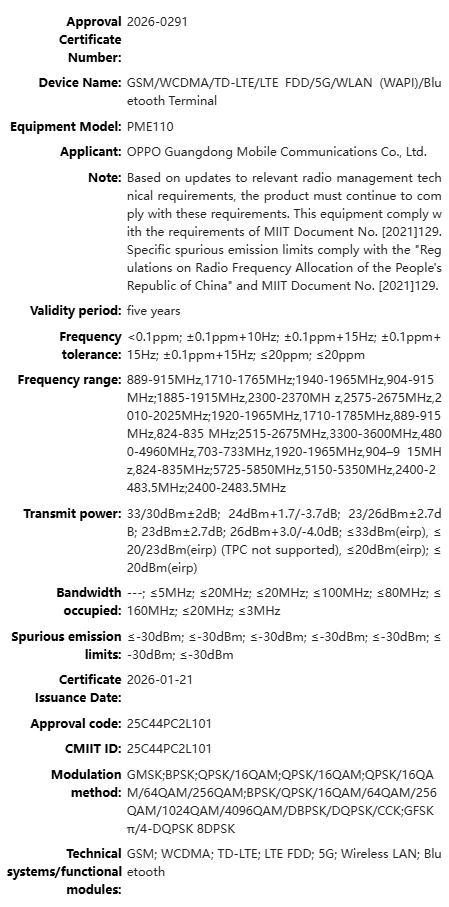
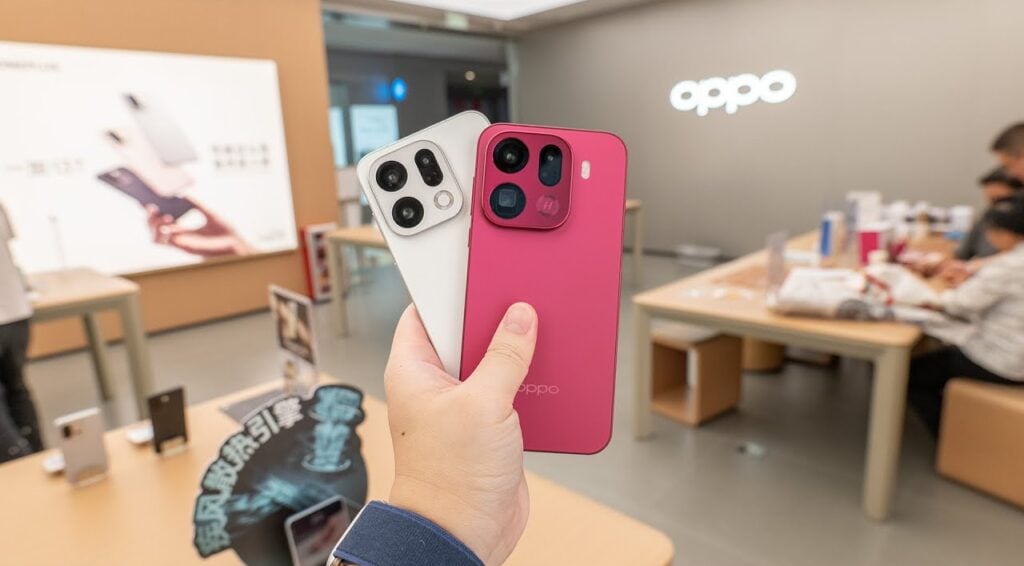
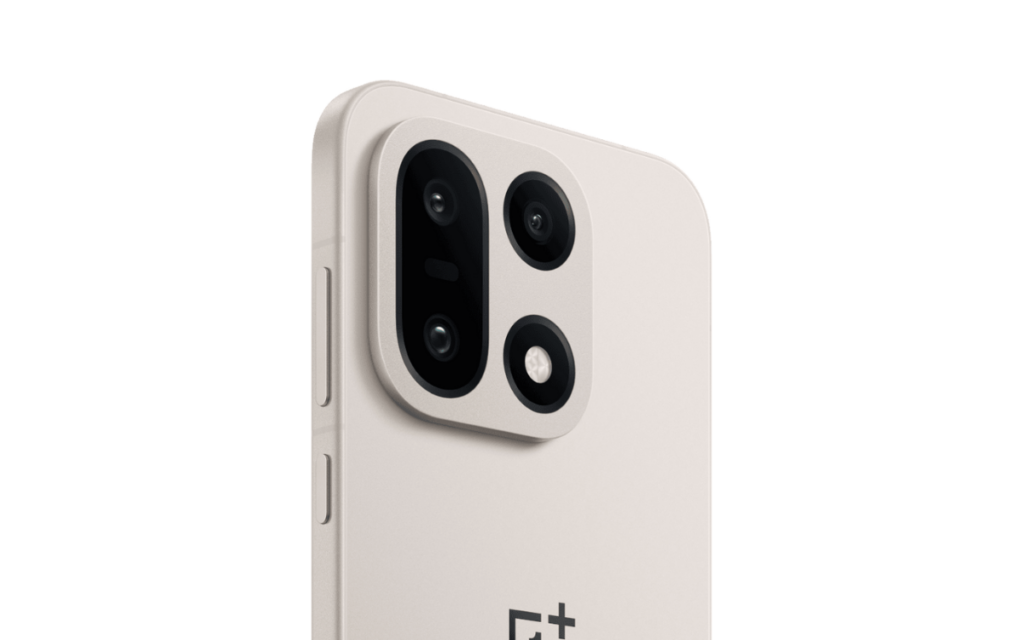
In March, Oppo is expected to unveil two new Find X9 series phones for the Chinese market. One of them has just received a major go-ahead from the country’s SRRC authority. This device is believed to be the Find X9s Pro.
Oppo Find X9s Pro SRRC certified
Oppo Find X9s Pro SRRC certified
As can be seen above, the SRRC authority has approved an Oppo phone with model number PME110, indicating clearance for its wireless and radio communication features in China. However, the device is still awaiting 3C and TENAA certifications before it can move closer to an official launch.
Previous reports claimed that this device was the Find X9s, but newer reports have revealed that it will be called the Find X9s Pro when it hits the Chinese market. Speculation is rife that the device will be released in the global market in the second quarter of this year.
Oppo Find X9s Pro specifications (rumored)
Oppo Find X9s Pro
Recent reports have revealed that the Oppo Find X9s Pro will feature a 6.32-inch OLED LTPS screen delivering a 1.5K resolution and a 120Hz refresh rate. It will be the only compact phone to feature dual 200-megapixel cameras backed by the Samsung HP5 sensor. These primary and periscope telephoto cameras will be accompanied by a 50-megapixel ultra-wide lens. For selfies, it will have a 50-megapixel front-facing camera.
The Find X9s Pro is said to feature the Dimensity 9500 and a massive battery of around 7,000mAh capacity. It is expected to support 80W wired and 50W wireless charging.
For more daily updates, please visit our News Section.
Huawei may be experimenting with a different approach to front cameras, and it could quietly solve a few everyday annoyances in the process. According to a new tip shared by Digital Chat Station on Weibo, the company is exploring the use of a 1:1 square sensor for selfie cameras in future smartphones.
On the surface, a square sensor doesn’t sound dramatic. But the idea behind it is fairly practical. Unlike traditional rectangular sensors, a 1:1 sensor captures a more balanced image area, giving software more room to crop, reframe, or rotate shots without cutting too much out of the frame. That could be especially useful for group selfies, video calls, and social content where orientation changes often lead to awkward framing or lost detail.
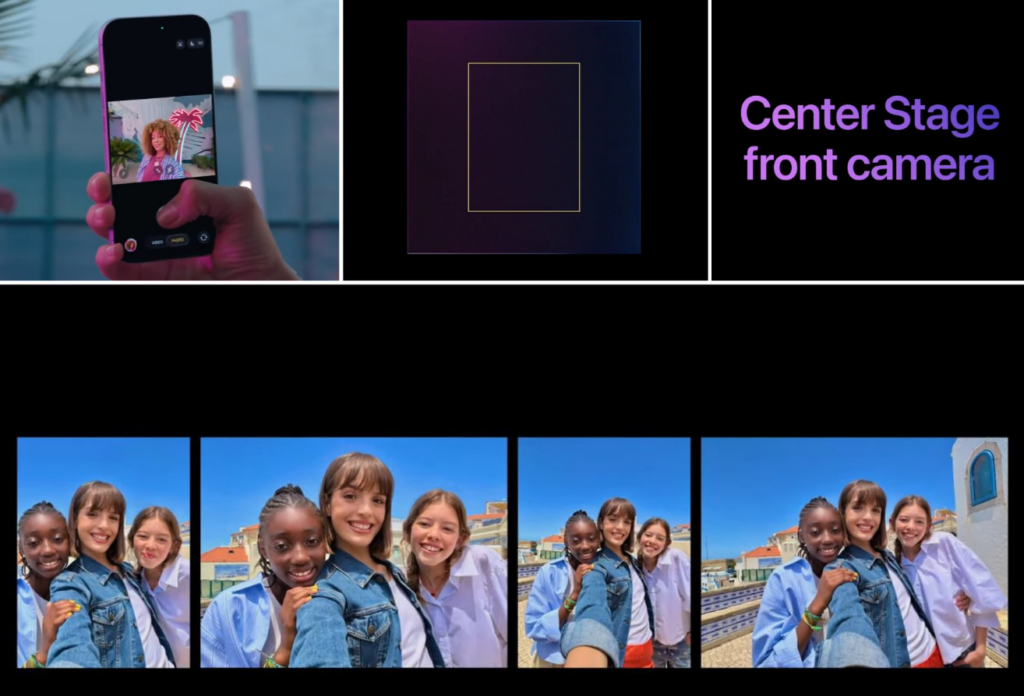
The idea isn’t entirely new. Apple moved in a similar direction with the iPhone 17 series, where its updated Center Stage front camera relies on a square sensor to enable features like auto-framing, smooth orientation switching, and subject tracking during video calls. The hardware allows the software to do more without forcing users to constantly adjust how they hold the phone.
If Huawei adopts the same sensor layout, it could unlock similar benefits on the Android side: cleaner framing in both portrait and landscape, more flexibility during video recording, and fewer compromises when switching formats. This would matter most for users who rely heavily on the front camera for calls, vlogging, or social media. There’s no confirmation yet on resolution, timing, or which phones might get the feature first.
For now, this remains an idea under evaluation, not a locked-in product feature. Still, it highlights how front cameras are becoming a real area of hardware innovation again. If Huawei moves forward, the square sensor could quietly become one of those changes users appreciate every day.
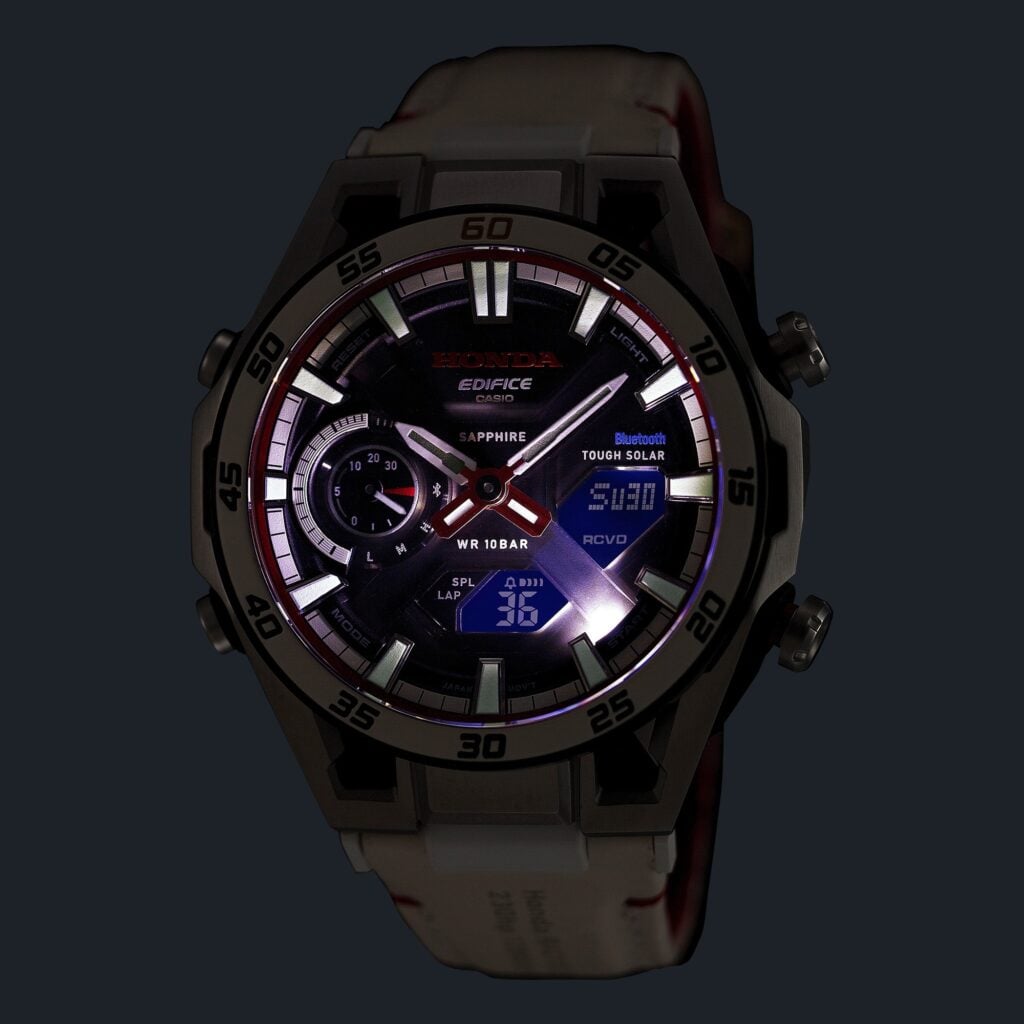
Casio has announced a special edition Edifice watch to commemorate the 60th anniversary of Honda’s first Formula 1 victory. The new model, ECB-2300HR-1AJR, celebrates the historic 1965 Mexican Grand Prix win with a design that draws heavily from the RA272 racecar that secured Honda’s first F1 checkered flag.
Pricing and Availability
The watch is listed on Casio’s official Japanese store with a price tag of ¥66,000 including tax, which converts to approximately $424. It is scheduled for a March 2026 release in Japan. Casio has not confirmed pricing for the European market, but the watch is expected to launch in the region soon.
Design Details
The Edifice design team collaborated with Honda to infuse the watch with elements inspired by the iconic RA272. The bezel features the same Championship White paint used on the original Formula 1 car, while a red ring on the dial echoes the Hinomaru flag design found on its body. The 60-minute marker carries a gold-engraved “60,” symbolizing precision and heritage.
The leather strap features laser-etched engine blueprints from Honda’s 1.5-liter V12 engine, which powered the RA272 to victory. The band loop includes the Latin phrase Veni, Vidi, Vici, referencing a message from Honda’s team leader Yoshio Nakamura. The 9 o’clock sub-dial recreates the original car’s tachometer with detailed scale markings and a redline.
Casio uses a hybrid construction for this model, combining carbon-reinforced resin and stainless steel. The watch includes a sapphire crystal with anti-reflective coating and offers 100-meter water resistance. It supports Casio’s Tough Solar charging and connects to smartphones via Bluetooth for time synchronization, world time, alarms, and phone finder functionality.
The case back displays Honda’s official 60th anniversary logo, and the watch comes in commemorative packaging.
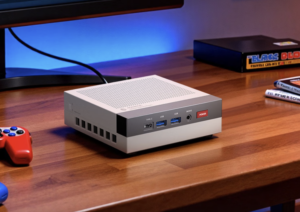
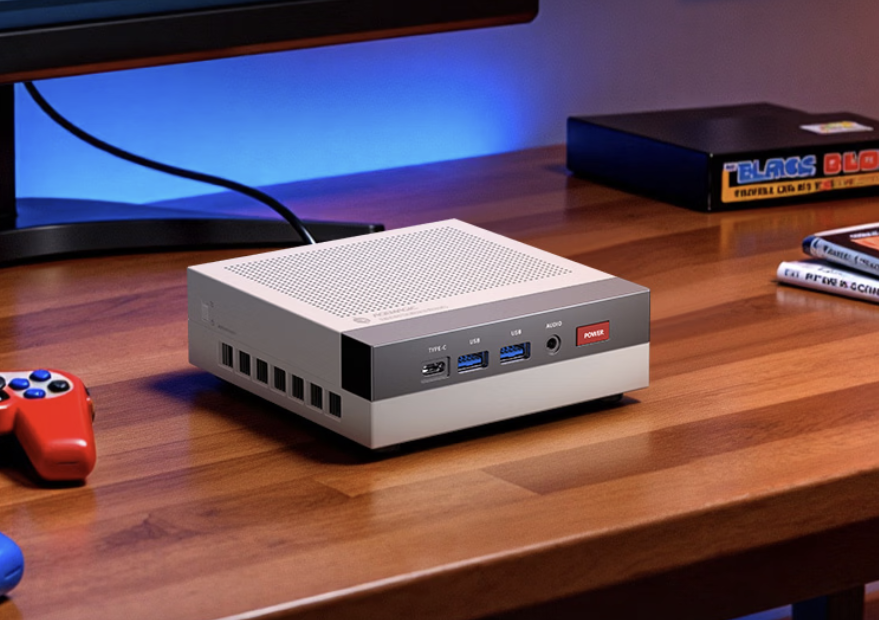
Acemagic has launched the Retro X3 mini PC, a compact desktop powered by the AMD Ryzen 7 H 255. It retains the Nintendo Famicom-inspired retro design of the earlier Retro X5 while adopting a more affordable configuration, and is now available on JD.com priced at 1,899 yuan ($273).
Acemagic Retro X3 Specifications
The Retro X3 comes in a compact square body measuring 128.2 x 128.2 x 44 mm and weighing 406 grams. It features a red, black, and grey color scheme with a sandblasted metal finish, a red toggle-style power button on the front, and a tool-free side panel that makes memory and storage upgrades quick and hassle-free.
Inside, the Retro X3 is powered by an AMD Ryzen 7 H 255 processor built on the 4nm Zen 4 architecture. It offers 8 cores and 16 threads with a maximum boost clock of 4.9GHz and includes 16MB of L3 cache. The chip integrates Radeon 780M graphics based on the RDNA 3 architecture with 12 compute units and a GPU frequency of up to 2.6 GHz.
The system supports up to 128GB of DDR5-5600 memory through two SO-DIMM slots. For storage, it includes two M.2 2280 NVMe SSD slots using PCIe 4.0 x4, with a maximum capacity of 4TB. The device does not support SATA SSDs.
For connectivity, the mini PC includes Wi-Fi 6, Bluetooth 5.2, and a 2.5GbE Ethernet port. It supports up to three external displays via HDMI 2.1, DisplayPort 2.0, and a USB4 Type-C port that also supports 40 Gbps data transfer.
The front panel includes two USB-A 10Gbps ports, a USB4 port, and a 3.5 mm audio jack. The rear offers four USB-A 5Gbps ports, a 2.5GbE LAN port, HDMI, DisplayPort, a DC power input, and a Kensington lock slot.
The system ships with Windows 11 Pro. It uses the brand’s latest Cooling System 3.0, which combines a large fan, dual copper heat pipes, and three-sided airflow to maintain stable thermals during extended workloads.
In related news, Minix has recently introduced the Neo Z95, a pocket-sized mini PC that is smaller than most smartphones, while Gmktec has launched the NucBox K13 featuring an Intel Core Ultra 7 256V processor, 115 TOPS of AI performance, and USB4 connectivity.
For more daily updates, please visit our News Section.
The Dimensity 9400 is a true flagship chipset from MediaTek, featuring an all-big-core CPU design that aims to deliver high peak and sustained performance. It’s powerful enough to rival Qualcomm’s Snapdragon 8 Elite, even if it trails in a few areas, as noted in our detailed comparison. That makes the Snapdragon 8 Gen 5 an interesting opponent.
Announced in November 2025, the Snapdragon 8 Gen 5 sits just below the Snapdragon 8 Elite and therefore is an exciting matchup against the Dimensity 9400. The big question is: can Qualcomm’s sub-Elite flagship hold its ground against MediaTek’s all-big-core powerhouse?
Let’s begin with the spec sheet:
Dimensity 9400
Snapdragon 8 Gen 5
Announced
October 2024
November 2025
Process node
TSMC’s 3nm (N3E)
TSMC’s 3nm (N3P)
CPU
1 x 3.62GHz — Cortex-X925 3 x 3.3GHz — Cortex-X4 4 x 2.4GHz — Cortex-A720
2 x 3.8GHz — Oryon (3rd gen) 6 x 3.32GHz — Oryon (3rd gen)
GPU
Mali-G925 Immortalis MP12 Ray tracing support MediaTek HyperEngine Gaming Technology
Adreno 840 ray tracing support Snapdragon Elite Gaming features
NPU
MediaTek NPU 890 Agentic AI support
Qualcomm Hexagon NPU Agentic AI support
Memory
LPDDR5x, up to 5.3GHz
LPDDR5x, up to 4.8 GHz
Storage
UFS 4.0 + MCQ
UFS 4.1
Camera
MediaTek Imagiq 1090 ISP up to 320MP single camera up to 8K/60fps video recording supports real-time semantic segmentation
Qualcomm Spectra triple AI ISP (20-bit) up to 320MP single camera up to 108MP single camera with zero shutter lag, 30fps up to 48MP triple cameras with zero shutter lag, 30fps real-time semantic segmentation (limitless) up to 4K/120fps video recording
Dimensity 9400 vs Snapdragon 8 Gen 5: Benchmark score
Note: The benchmark tests were performed on the Vivo X200 Pro (powered by Dimensity 9400) and the OnePlus 15R (powered by Snapdragon 8 Gen 5).
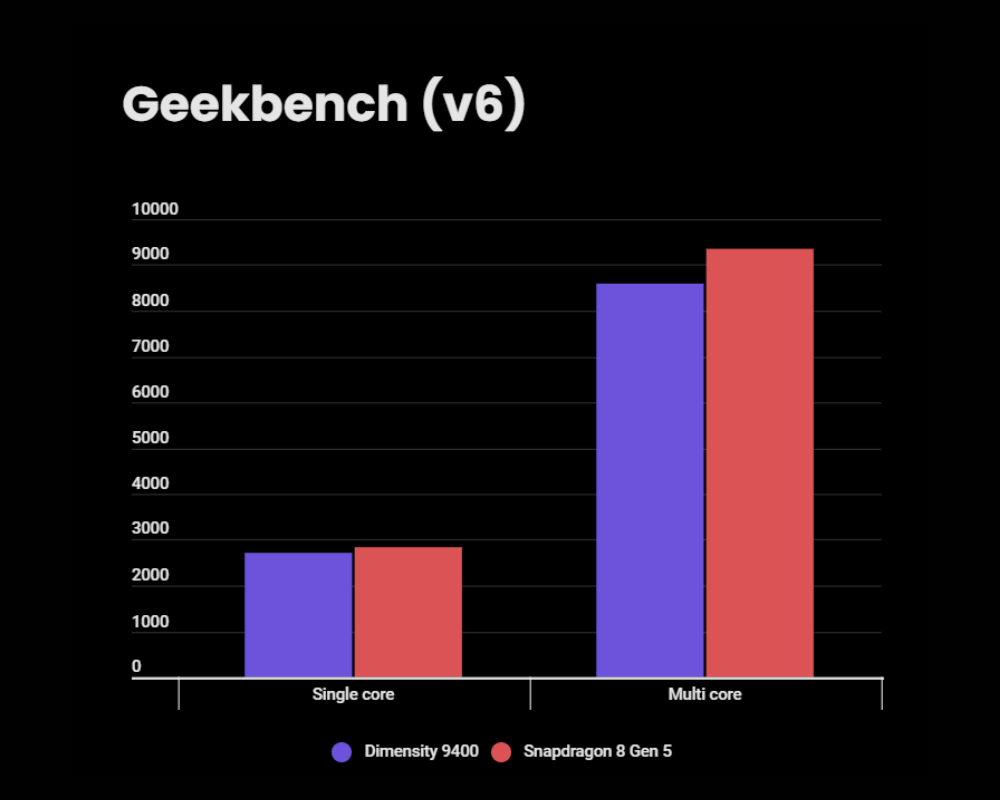
Geekbench score
The single-core scores are pretty close, but Qualcomm holds a slight 4.5% lead. The gap widens in multi-core performance, where the Snapdragon 8 Gen 5 posts a 9% higher score than the Dimensity 9400.
Geekbench scores suggest higher peak performance for the Snapdragon 8 Gen 5. In everyday tasks like browsing the internet, scrolling through your social app feeds, and watching movies, you’d hardly be able to spot a difference.
Dimensity 9400
Snapdragon 8 Gen 5
Single core
2,713
2,837
Multi core
8,592
9,352
AnTuTu score
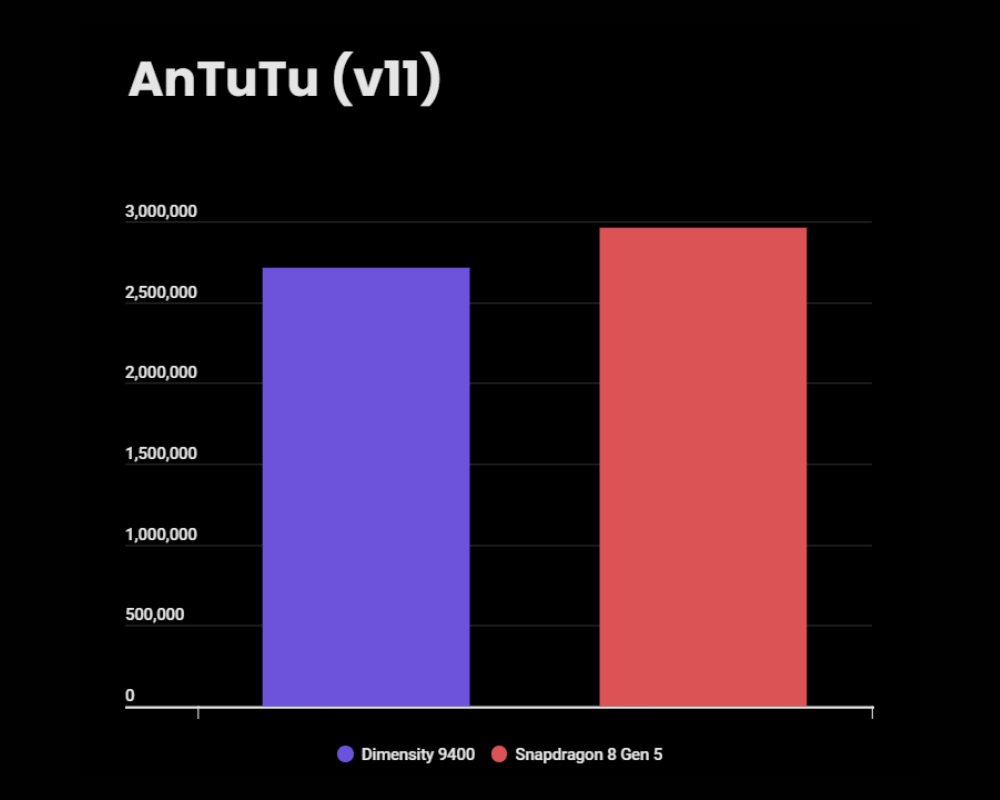
On the AnTuTu benchmark, the Snapdragon 8 Gen 5 scores nearly 3 million, while the Dimensity 9400 reaches 2.7 million. That’s about a 9% higher score for the Snapdragon chip.
The Snapdragon 8 Gen 5 consistently outperforms the Dimensity 9400 across every AnTuTu test, though the difference is not significant. The CPU score is 7% higher, and the GPU score is 5% higher. The memory and UX scores also favor the Snapdragon chip.
Dimensity 9400
Snapdragon 8 Gen 5
AnTuTu score
2,713,650
2,961,236
CPU
853,995
914,878
GPU
927,892
974,402
Memory
355,391
382,729
UX
576,372
689,228
The benchmarks favor Snapdragon 8 Gen 5 over the Dimensity 9400 in terms of performance, but they don’t provide insights into the capabilities of connectivity, camera, and other important aspects of the chips. So, let’s dig further to uncover the real-world differences between the two high-end chips.
Dimensity 9400 vs Snapdragon 8 Gen 5: Key differences
Both Dimensity 9400 and Snapdragon 8 Gen 5 are manufactured using TSMC’s 3nm process, but the latter uses the N3P node, which offers slightly better performance and power efficiency over the N3E node used for the Dimensity 9400.
Furthermore, the chips differ greatly in terms of CPU architecture. The Dimensity 9400 has a 1+3+4 layout, featuring one Cortex-X925 prime core, three Cortex-X4 performance cores, and four Cortex-A720 performance cores. In contrast, the Snapdragon 8 Gen 5 features a 2+6 CPU layout with two Oryon prime cores and six Oryon performance cores.
Notably, the Snapdragon 8 Gen 5 features third-generation Oryon cores, the same CPU cores from the top-tier Snapdragon 8 Elite Gen 5 chipset. They offer better performance and power efficiency than those inside the Dimensity 9400. Plus, they run at higher speeds, offering an additional performance boost.
For graphics rendering, the Dimensity 9400 relies on the Mali-G925 Immortalis MP12 GPU, while the Snapdragon chip uses the Adreno 829 GPU with the new Sliced architecture. Both chips offer ray tracing capabilities, along with their own set of gaming features: Snapdragon Elite Gaming on the Snapdragon 8 Gen 5 and MediaTek HyperEngine Gaming Technology on the Dimensity 9400.
The Snapdragon 8 Gen 5 also maintains an edge in imaging capabilities, as it borrows the triple 20-bit ISP from the Snapdragon 8 Elite Gen 5 with strong “always-sensing” camera support. The Dimensity 9400 features an Imagiq 1090 ISP with emphasis on HDR video across the zoom range and AI-assisted zoom features.
Both chipsets offer robust connectivity features, although the Snapdragon chip may have some advantage here, thanks to mature modem and better carrier-integration in some regions. Furthermore, the chip supports mmWave, UWB, and dual-way satellite connectivity, which are not mentioned on the official Dimensity 9400 page.
Dimensity 9400 vs Snapdragon 8 Gen 5: Conclusion
The Snapdragon 8 Gen 5 holds an upper hand in almost every aspect over the Dimensity 9400. It offers better CPU and GPU performance, a more powerful ISP with greater capabilities, and advanced connectivity features.
That said, the Dimensity 9400 is still a capable high-end chipset with strong performance and robust connectivity. Plus, you’ll likely get a device powered by this chip at a lower price than one powered by Snapdragon 8 Gen 5. That makes it a sweet deal for those looking for a high-performance device at an affordable price. For the absolute best of the two, the Snapdragon 8 Gen 5 is clearly the better choice.
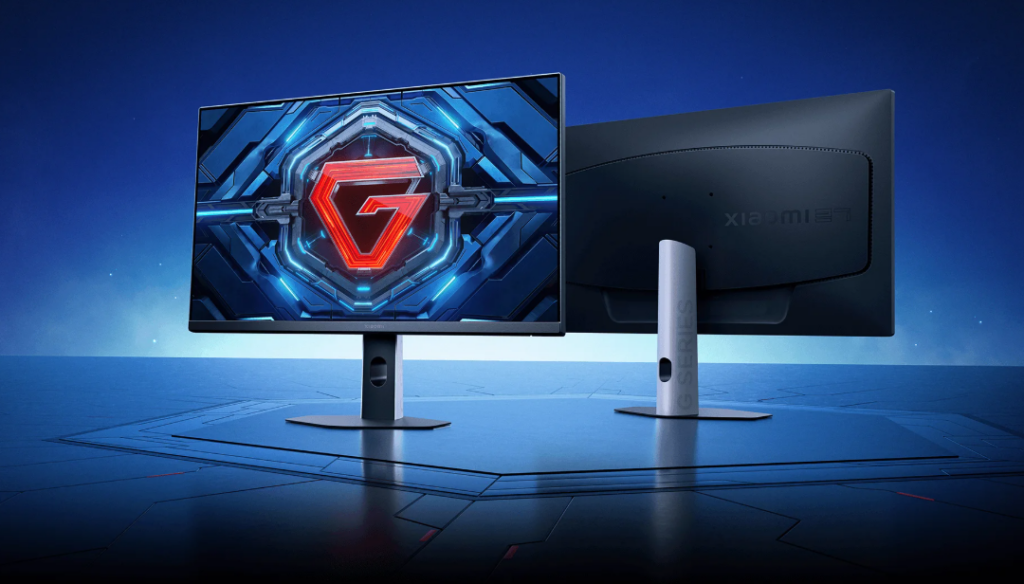
Xiaomi has started the global rollout of its Gaming Monitor G27i 2026, a new 27-inch display aimed at gamers. It follows the recent release of the Mini LED Gaming Monitor G Pro 27Qi 2026 and focuses on high refresh rates, fast response times, and accurate colors at a lower price point.
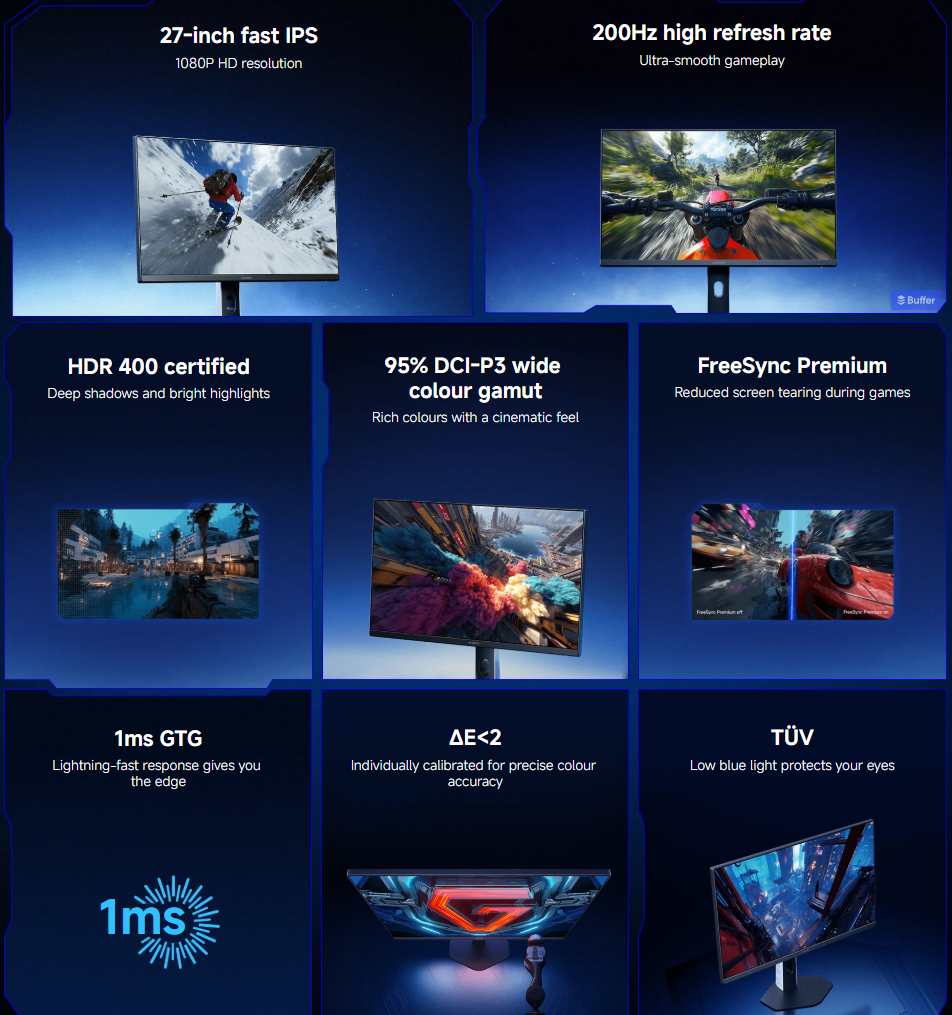
The G27i 2026 uses a 27-inch Fast IPS LCD panel with a Full HD resolution of 1920 × 1080 pixels and a 16:9 aspect ratio. It supports a 200Hz refresh rate in supported modes, along with a 1ms GTG response time when set to the Ultrafast option. Xiaomi states this combination helps reduce ghosting and motion blur in fast-moving scenes. In the official specification sheet, the panel refresh rate is listed at up to 165Hz, which suggests that 200Hz may depend on specific settings or inputs.
The panel offers wide 178-degree viewing angles and a typical brightness level of 250 nits. Peak brightness reaches up to 400 nits, allowing the monitor to meet VESA DisplayHDR 400 certification. This improves contrast between bright and dark areas, helping details remain visible during gameplay. The static contrast ratio is rated at 1000:1.
Color performance is a key focus, as the monitor comes with factory calibration to achieve Delta E values below 2. The monitor supports 100 percent sRGB and 95 percent DCI-P3 color gamut coverage, along with 8-bit color depth capable of displaying 16.7 million colors. This makes it suitable for gaming, video playback, and general content creation.
The G27i 2026 supports FreeSync Premium and is also listed as G-Sync compatible. This helps reduce screen tearing and stuttering when frame rates fluctuate. Eye comfort features include TÜV Low Blue Light certification and DC dimming to reduce flicker during long sessions.
The monitor features an ultra-narrow bezel design and a tilt-adjustable stand with a range of minus 5 degrees to plus 15 degrees. It also supports 75 × 75 mm wall mounting. Physical controls are handled through a joystick button. Connectivity includes one DisplayPort 1.4, one HDMI 2.0 port, a 3.5 mm audio jack, and a DC input. The monitor consumes up to 36W of power and weighs 3.6 kg with the stand.
Pricing & availability
The Gaming Monitor G27i 2026 is priced at SGD 199 (~$157) in Singapore.
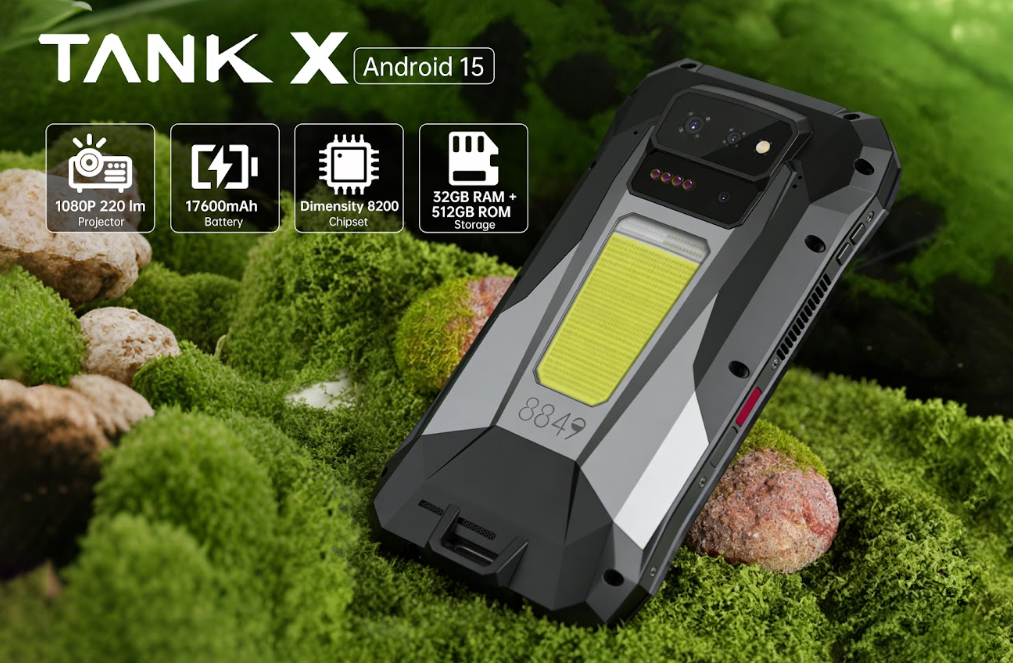
8849 TANK X enters the rugged smartphone segment with a feature set unlike anything currently on the market. Designed for industrial users, outdoor professionals, and extreme-condition environments, it combines a high-lumen DLP projector, ultra-large battery, and advanced connectivity inside a reinforced 5G chassis. This is not a generic lifestyle phone but a strong, purpose-built hardware.
Industrial-Grade Design and Durability
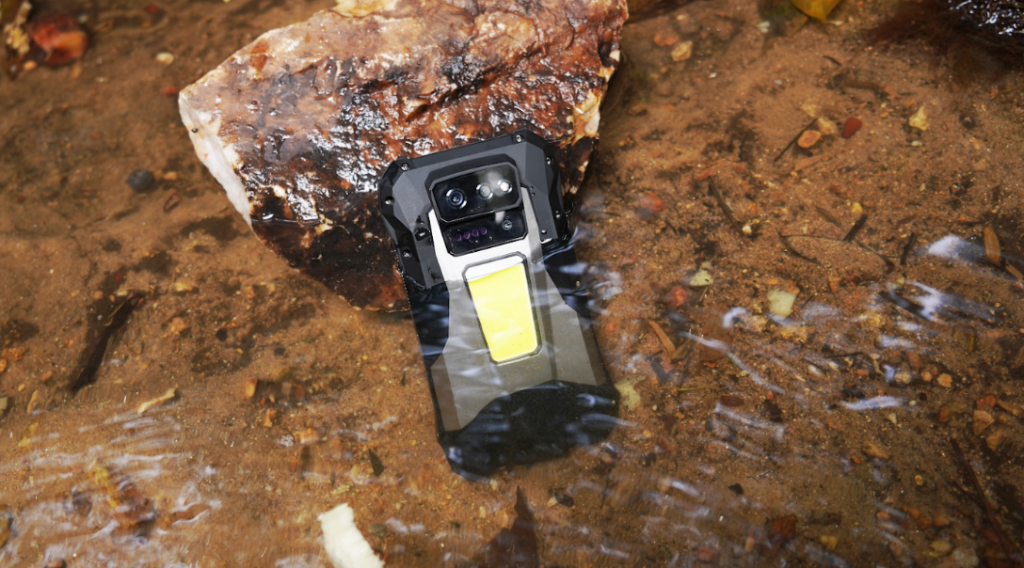
The TANK X uses a half-board, double-sided internal layout to accommodate its projector, dual-cell battery, and thermal controls. With IP68 and IP69K certification, the device is resistant to water immersion, dust ingress, and high-pressure wash environments. Its reinforced construction targets field engineers, emergency responders, and expedition users who require reliability over portability.
Display Optimized for Field Visibility
The device features a 6.78-inch FHD+ LCD panel with a 120Hz adaptive refresh rate and peak brightness of 750 nits. The PWM-free backlight design reduces eye strain during extended usage, making it suitable for long shifts, navigation tasks, and outdoor operations under direct sunlight.
Integrated 1080p DLP Projector System
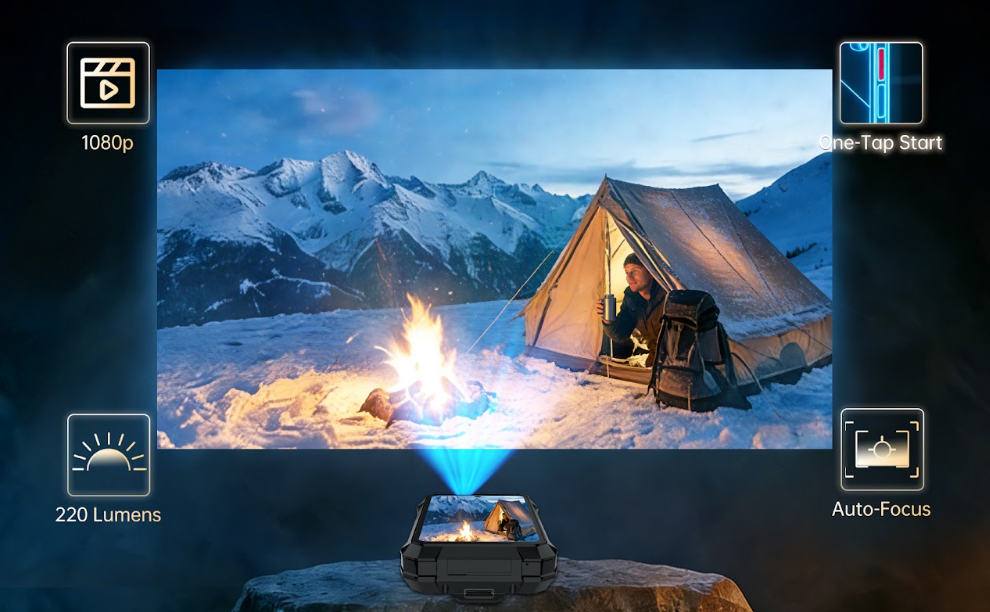
The standout feature is the built-in DLP projector, capable of projecting content at up to 1920×1080 resolution with 220 lumens brightness. Laser auto-focus, ±40° keystone correction, and one-key activation allow quick deployment. The projector supports multiple power modes, delivering up to six hours of use, making it viable for field briefings, training, or outdoor entertainment without additional equipment.
Performance and Storage
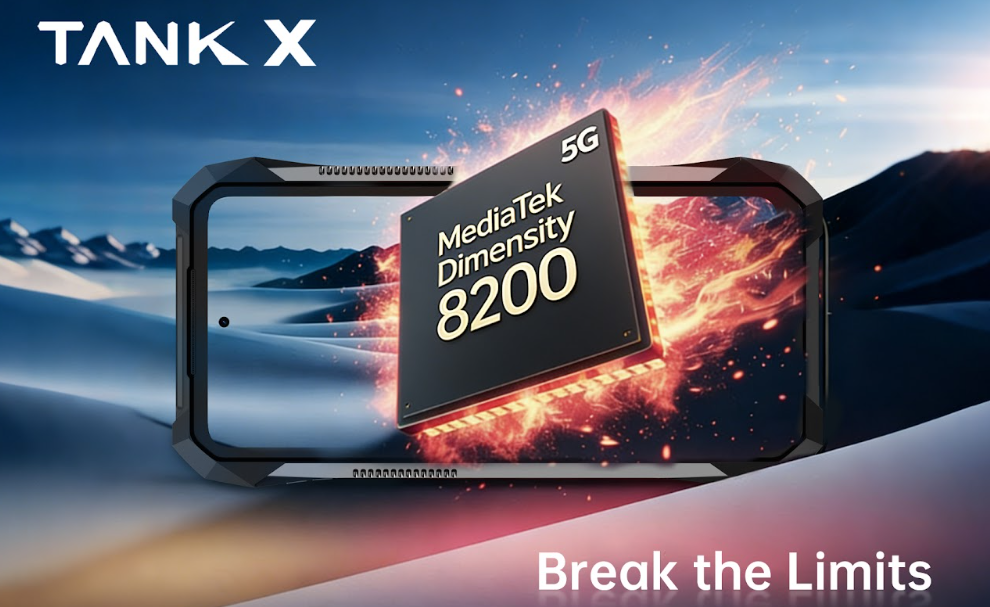
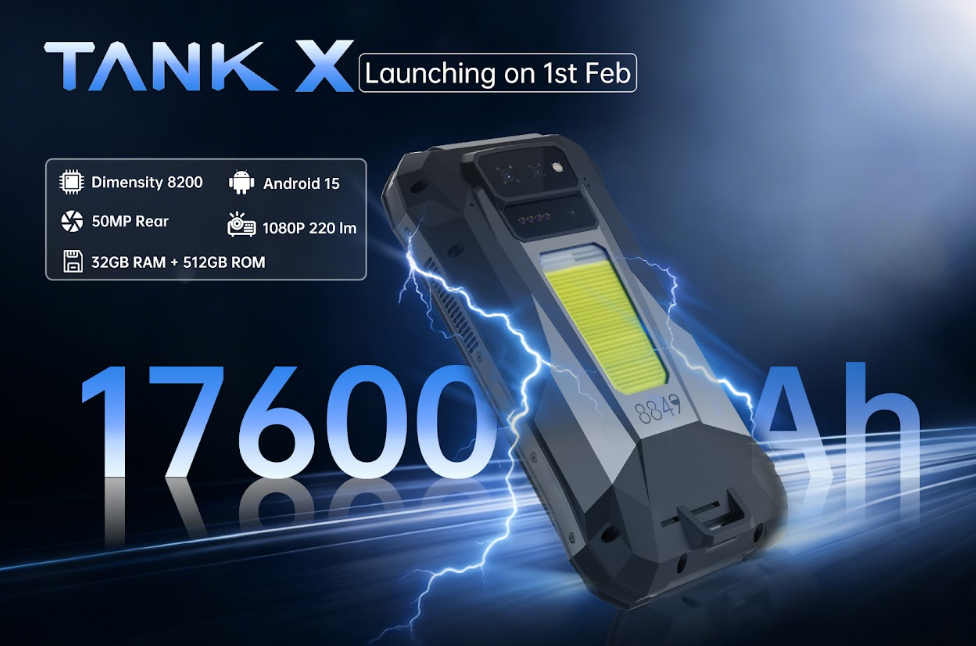
Powered by the MediaTek Dimensity 8200 (4nm) chipset, the TANK X delivers flagship-level efficiency with strong sustained performance. Paired with 16GB LPDDR5 RAM, up to 16GB virtual memory, and 512GB UFS 3.1 storage, it supports heavy multitasking, AI applications, and large offline datasets. Storage expansion up to 2TB via microSD further enhances its utility for professional workflows.
Advanced Imaging and Night Vision
The camera system is tuned for both documentation and surveillance. A 50MP Sony IMX766 main sensor handles standard imaging, while a 64MP infrared night vision camera with quad IR LEDs enables visibility in complete darkness. A 3× optical telephoto lens adds flexibility for inspection and distance capture.
Extreme Battery Capacity and Charging
A defining advantage is the 17,600mAh dual-cell battery, engineered for multi-day endurance. Despite the capacity, 120W wired fast charging delivers a full charge in approximately 70 minutes. Reverse wired charging allows the device to function as a portable power source in the field.
Connectivity, Tools, and Emergency Systems
The TANK X supports global 5G bands, Wi-Fi 6, Bluetooth 5.4, dual-band GNSS with meter-level accuracy, NFC, IR remote control, and a comprehensive digital toolbox. High-output camping lights, emergency RGB warning lights, programmable PTT keys, and SOS features position it as a multifunctional operational device.
Pricing and Availability
8849 Tank X is now available for an early bird price of $549.99, significantly reduced from its regular price of $1049.99. Pre-orders are live, with global shipping beginning March 1 from multiple international warehouses. The 8849 TANK X sets a new benchmark for rugged smartphones by merging projection, power, and durability into a single professional-grade platform.
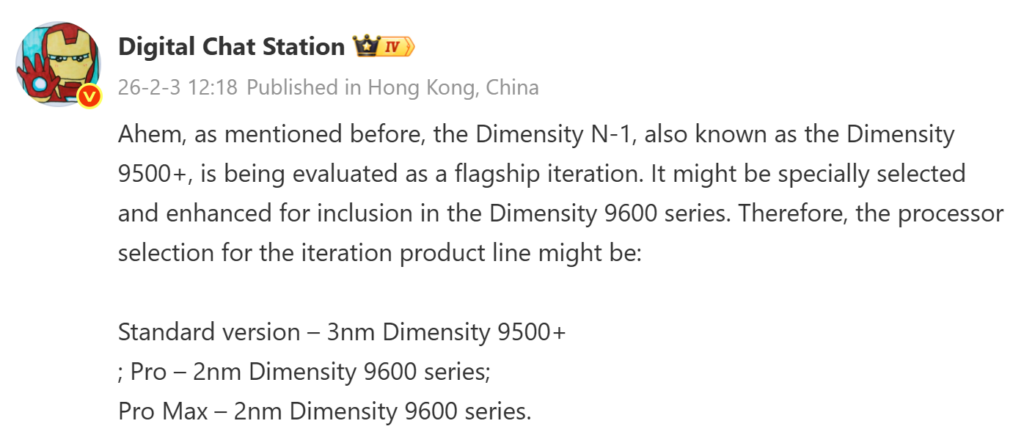
Several reports recently claimed that MediaTek may skip launching the Dimensity 9500 Plus, an overclocked version of the Dimensity 9500. However, a fresh leak shared by tipster Digital Chat Station suggests that the chip has not been completely shelved and could power a next-generation flagship arriving in the second half of the year. This development has now been linked to Oppo’s upcoming Find X10 series.
Oppo Find X10 series chipset details tipped
Oppo Find X10 series chip seemingly tipped by DCS
According to information shared by Digital Chat Station, an upcoming flagship lineup having standard, Pro, and Pro Max models are currently being tested with different MediaTek processors across its variants. The tipster has previously indicated that the Find X10 range may include three models, namely the Find X10, Find X10 Pro, and Find X10 Pro Max. Therefore, the tipster could be talking about the X10 family in the latest leak.
The standard Find X10 is said to be evaluated with the Dimensity 9500 Plus, which is reportedly built on a 3nm process. Meanwhile, the Pro and Pro Max models are expected to move to a more advanced 2nm Dimensity 9600-series chipset. If accurate, this approach would allow Oppo to clearly differentiate performance tiers within the same flagship family, rather than relying solely on camera or display upgrades.
Early rumors suggest that the Find X10 series could be unveiled in China around October. Oppo is also expected to follow up with a Find X10 Ultra model a few months later, which may switch to a Snapdragon 8 Elite Gen 6 Pro chipset, continuing the brand’s trend of reserving Snapdragon silicon for its top-tier Ultra devices.
For now, Oppo’s immediate focus appears to be on earlier launches. Reports indicate that the Find X9 Ultra, Find X9s Pro, and the Find N6 foldable could debut in China in March. While the X9 Ultra and Find N6 are tipped to run on the Snapdragon 8 Elite Gen 5 chip, the Find X9s Pro may rely on the Dimensity 9500. More clarity on Oppo’s flagship roadmap should emerge as these launches draw closer.
For more daily updates, please visit our News Section.
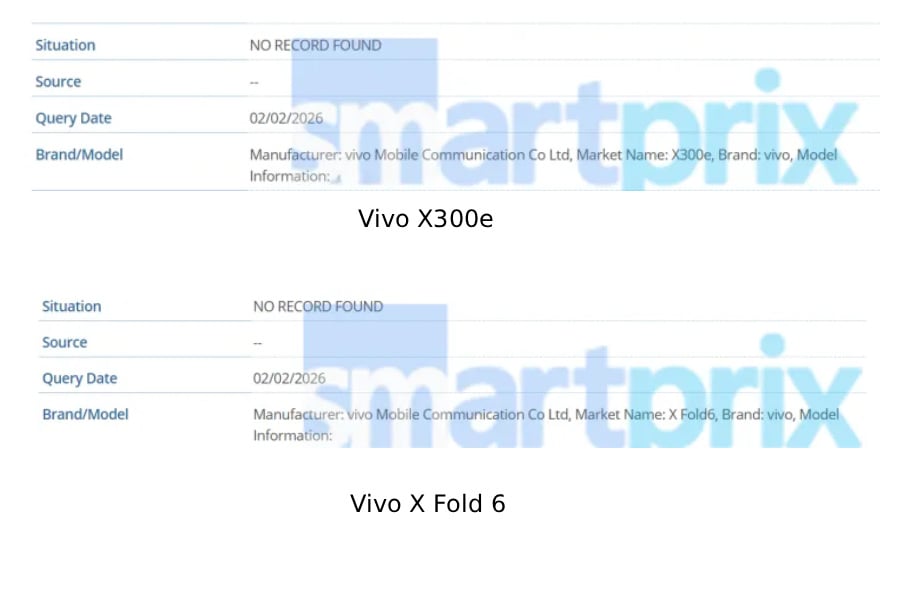
Vivo introduced the X300 series globally in October, with the vanilla and Pro models. The company is currently working on the X300 Ultra as its next big reveal—China first, of course. A new report now suggests that Vivo is also cooking another member of the lineup, called the X300e.
Vivo X300e and X Fold 6 make it to IMEI
The smartphone has appeared on the GSMA IMEI database with the Vivo X300e moniker. Vivo has not used the “e” suffix in the X series so far. Instead, the company introduced the X200 FE last year and the X200T more recently. That said, we expect the X300e to be an affordable flagship option like the X200 FE and X200T.
Also appearing in the IMEI database is the Vivo X Fold 6 foldable. Much like the X300 Ultra, the Fold 6 is expected to launch in China first, followed by a wider global release.
The listings do not reveal any hardware details for either device, but they do confirm that development is underway.
As mentioned earlier, details on both phones remain scarce. However, a leak from November suggests that the Fold 6 will be powered by the Snapdragon 8 Gen 5 chipset.
The Fold 6 is also expected to feature a 200MP camera and a side-mounted fingerprint scanner.
For context, the current Vivo X Fold 5 already offers a high-end setup, including a large 8.03-inch LTPO AMOLED foldable display with a 120Hz refresh rate, Zeiss-tuned triple cameras, and a 6,000mAh battery with support for both wired and wireless fast charging.
For now, Vivo is staying quiet. Still, with both the X300e and X Fold 6 appearing in official databases, it’s clear the company is preparing to expand its flagship and foldable lineup in the coming months.
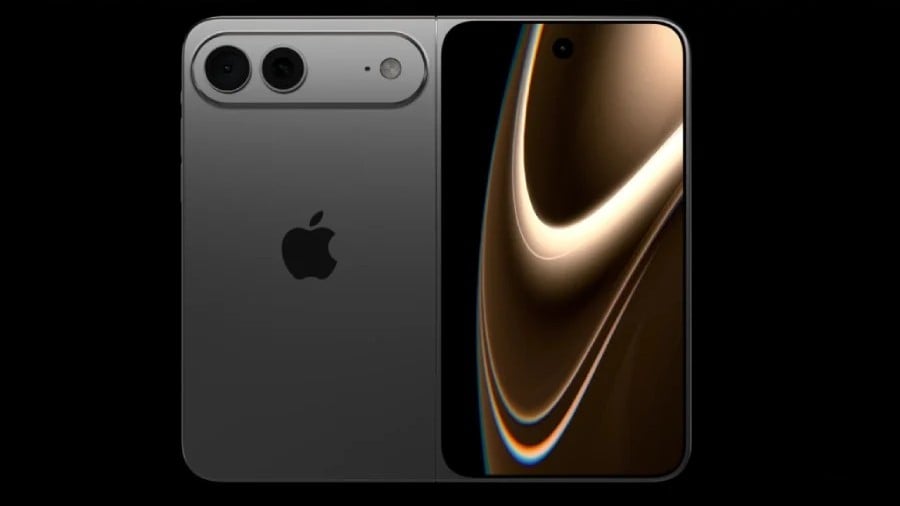
Apple’s first foldable iPhone is still some distance away, but new leaks suggest battery life could be one of its main selling points. According to a new leak, Apple may be planning its largest battery ever for the foldable model.
Weibo leaker Fixed Focus Digital claims Apple’s foldable iPhone could ship with a battery exceeding 5,500mAh, which would already put it ahead of every iPhone currently on the market. For reference, the iPhone 17 Pro Max tops out at 5,088mAh, making this a meaningful jump rather than a minor increase.
This isn’t the first time similar numbers have surfaced. Earlier leaks from yeux1122 suggested Apple was testing battery capacities in the 5,400–5,800mAh range, alongside efforts to slim down internal components and improve power efficiency. Analyst Ming-Chi Kuo has also pointed to Apple using higher-density battery cells, likely to balance size, weight, and longevity.
If the numbers are accurate, Apple’s foldable would be competitive even by foldable standards. Recent devices like the Huawei Mate X7, Oppo Find N5, and Honor Magic V series all sit in roughly the same battery range, while Samsung’s Galaxy Z Fold lineup continues to lag behind in capacity.
iPhone Fold: 5,500mAh (rumored) Huawei Mate X7: 5,600 mAh (or 5,525 mAh in some variants) Honor Magic V5: 5,820 mAh (international) or 6,100 mAh (China model) Xiaomi Mix Fold 4: 5,100 mAh Oppo Find N5: 5,600 mAh Vivo X Fold5: 6,000 mAh
While the leak focuses on battery capacity rather than real-world battery life, Apple’s track record suggests the numbers could translate well in practice. iPhones often deliver longer endurance than Android devices with significantly larger batteries, largely due to Apple’s tight hardware-software integration. If Apple’s foldable launches with a battery similar in size to Chinese rivals — and notably larger than Samsung’s Galaxy Z Fold lineup — it could realistically offer stronger battery life than many competing foldables.
The foldable iPhone is rumored to feature a 7.8-inch inner display, a 5.5-inch outer screen, Touch ID integrated into the side button, a dual-camera setup, and Apple’s upcoming A20 chip with a custom modem. A launch alongside the iPhone 18 Pro series in 2026 is currently expected.
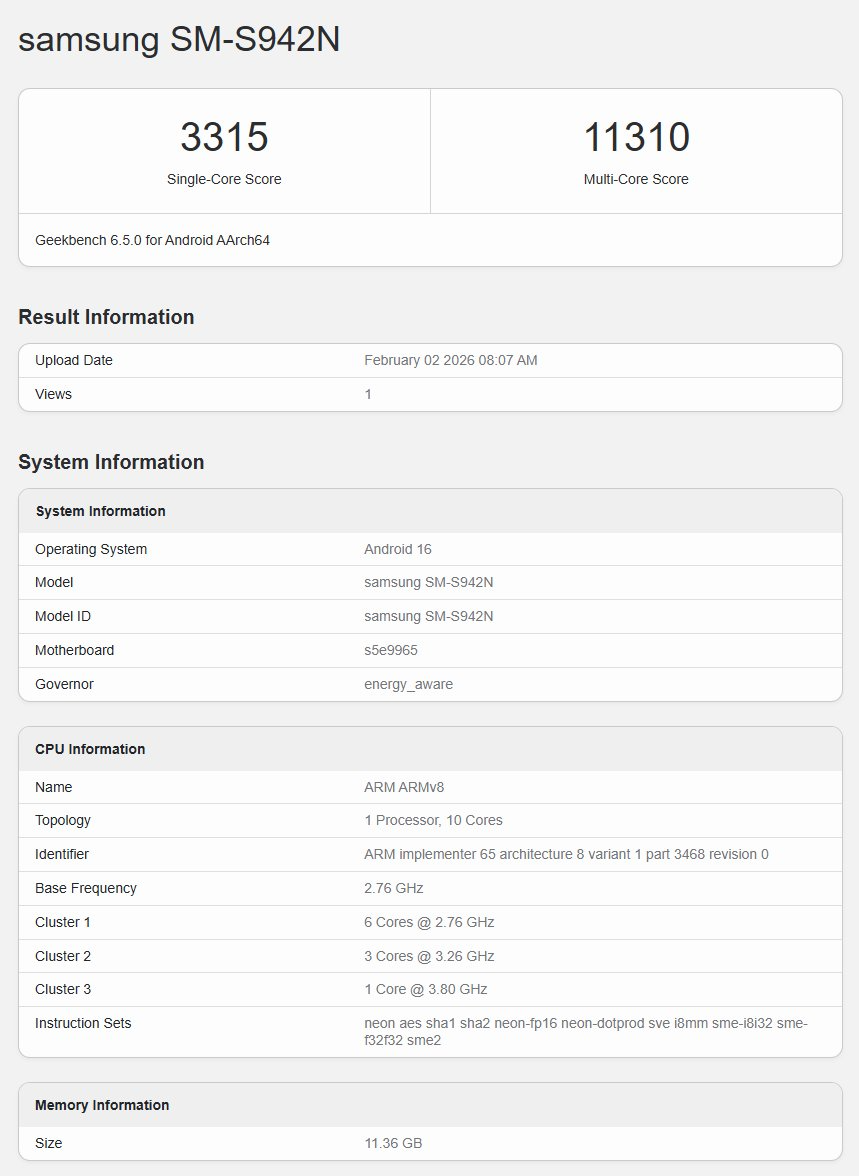
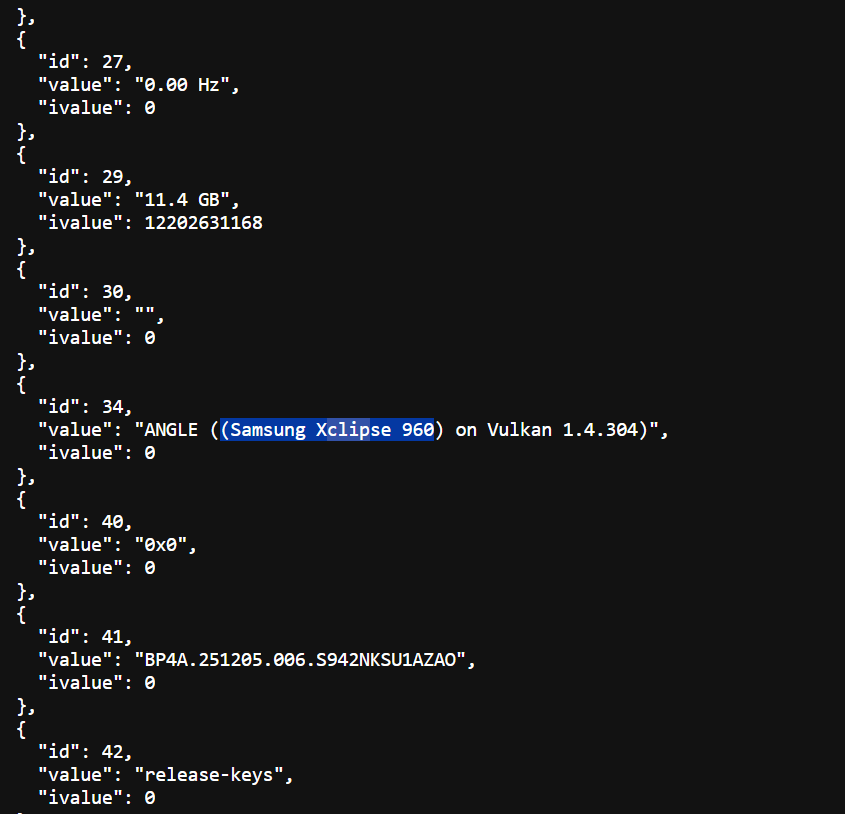
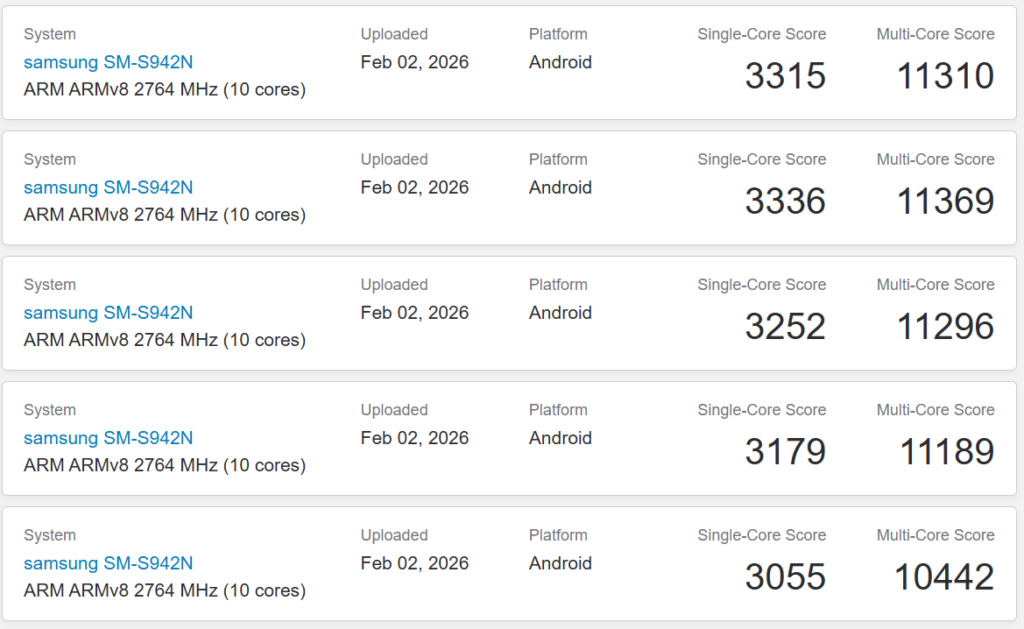
The Samsung Galaxy S26 has, for the first time, been spotted on Geekbench. The model that has appeared on the benchmarking platform is the South Korean edition bearing the model number SM-S942N. Here’s a look at the details that have emerged through the Galaxy S26’s Geekbench listing.
The Geekbench listing reveals that the Samsung Galaxy S26 heading to South Korea may feature the Exynos 2600. While the chipset’s name is not explicitly mentioned, it can be identified through its part number, S59965.
The benchmark listing further reveals that the Galaxy S26 has 12GB of RAM and runs Android 16, which is likely to feature the One UI 8.5 skin.
Coming back to the chip, the Exynos 2600 is the world’s first 2nm chip with a 10-core CPU architecture, equipped with a prime core operating at 3.8GHz and an Xclipse 960 GPU. The device has scored around 3,000 to 3,300 in the single-core test and 10,450 to 11,370 in the multi-core test.
As far as other specifications are concerned, the Galaxy S26 is expected to feature a 6.32-inch AMOLED FHD+ display with a 120Hz refresh rate and 2,600 nits of peak brightness. Its rear camera setup may comprise a 50-megapixel main camera with OIS, a 12-megapixel ultra-wide lens, and a 10-megapixel telephoto camera with 3x optical zoom. It may feature a 12-megapixel front camera and pack a 4,300mAh battery with 25W charging.
The Galaxy S26 series includes multiple models, such as the S26, S26+, and S26 Ultra. It appears that the base and Plus models may come in Exynos or Snapdragon versions, depending on the region. On the other hand, there is a possibility that the Ultra edition may ship with the Snapdragon chip in all markets.
For more daily updates, please visit our News Section.
Samsung is just a few weeks away from hosting the first Galaxy Unpacked event of 2026. At the event, the company will announce new Galaxy S26 phones, including the vanilla, Plus, and Ultra models.
After that, Samsung typically waits until late Q3 to unveil its other flagship products. However, early signs of what’s coming next are already surfacing on the web.
Samsung Galaxy Tab S12 series and Watch Ultra 2 confirmed by this global certification
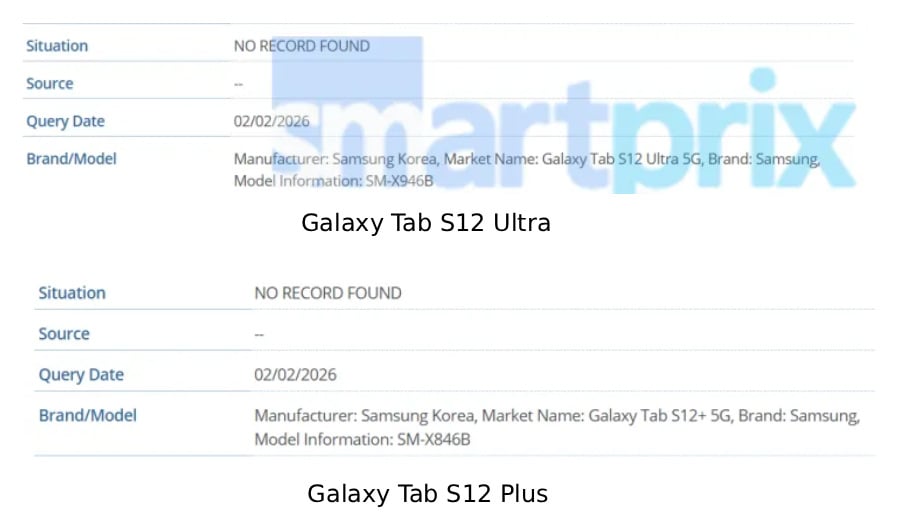
According to Smartprix, the Samsung Galaxy Tab S12 Ultra and Galaxy Tab S12+ have appeared in the GSMA IMEI database months ahead of launch.
The models are listed as SM-X946B for the Galaxy Tab S12 Ultra and SM-X846B for the Galaxy Tab S12+. Notably, the database makes no reference to a standard Galaxy Tab S12.
The Galaxy Tab S11 series skipped the Plus model in favor of the Tab S11 and S11 Ultra combo. It’s possible that Samsung is once again tweaking its naming strategy this year by launching only the Plus and Ultra variants. That said, the regular Tab S12 could still show up in the IMEI database at a later date.
Samsung Galaxy Watch 2 Ultra and Watch 9 also make it to the certification
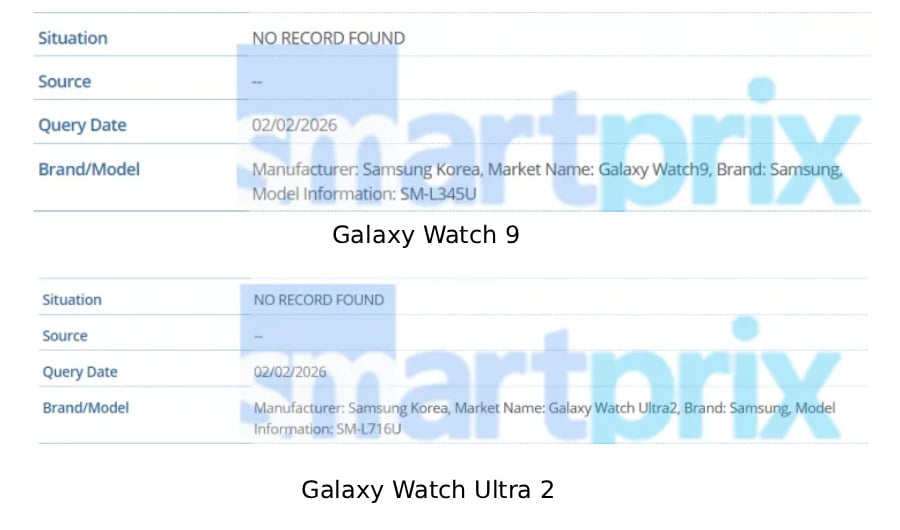
Tablets aren’t the only Samsung products appearing early. The GSMA database has also added entries for two new smartwatches: the Galaxy Watch 9 with model number SM-L345U, and the Galaxy Watch Ultra 2, listed as SM-L716U.
As usual, IMEI listings don’t reveal specifications or features; however, they do confirm that Samsung’s next-generation products are already moving through the early stages of launch preparation.
If the brand sticks to its usual release patterns, these listings offer a meaningful clue about timing. Historically, there’s often a six- to seven-month gap between a device appearing in the IMEI database and its official announcement.
Based on that timeline, the Galaxy Tab S12 series—along with the Galaxy Watch 9 and Watch Ultra 2—are likely candidates for Samsung’s second Galaxy Unpacked event, which typically takes place in August or September.
For more daily updates, please visit our News Section.
Xiaomi’s HyperOS 3 rollout began in October 2025 and has been gradually expanding to a long list of eligible devices. The update is now available on dozens of its devices, and only a few models are pending the HyperOS 3 upgrade. It appears Xiaomi won’t take long to wrap it up, as it has already begun the rollout for the last batch of eligible devices.
Here’s a list of Xiaomi, Redmi, and POCO devices that are still waiting for the HyperOS 3 update, as shared by Xiaomi Time:
Xiaomi 13T
Redmi Note 15 Pro 4G
Redmi 14R
Redmi 15 (LTE & 5G)
Redmi 15C (LTE & 5G)
Redmi A4
POCO C85 (LTE & 4G)
POCO C75 5G
POCO M7 5G
POCO M7 Plus
Redmi Pad Pro
POCO Pad
While some of these devices may have started receiving beta builds in select regions, the stable release has yet to appear. However, we expect the rollout to be completed by the end of February, as the HyperOS 3.1 release is also around the corner.
Xiaomi has already completed the first batch of the HyperOS 3.1 beta release and has recently opened the second batch. So, the development is happening at a rapid pace, and therefore, we’re expecting the stable rollout to begin as soon as next month. Check the list of Xiaomi devices receiving the latest beta update here.
To stay updated with the latest news about HyperOS, visit the Xiaomi section regularly. Or, you can join us on Telegram to get instant notifications about the latest HyperOS updates, along with the biggest tech headlines.
Vivo is gearing up to launch the Vivo X300 Max and Vivo X300 Ultra flagship smartphones in China. These devices are expected to debut in March this year, with a global launch likely around the second quarter.
At the same time, the rumor mill has already shifted focus to Vivo’s next-generation flagship lineup, namely the Vivo X500 and Vivo X500 Pro. Reports suggest the brand may skip the X400 naming altogether, with the X500 series expected to arrive around September or October this year. Interestingly, leaks have also started surfacing about an Ultra variant in the X500 lineup.
Vivo X500 Ultra launch accelerated
According to tipster Smart Pikachu, the Vivo X500 Ultra could launch earlier than initially expected. However, the tipster has not shared any details regarding the device’s specifications, design, or camera hardware so far.
Recent reports have revealed that Qualcomm will announce its next-generation Snapdragon 8 Elite Gen 6 chipset, along with a Gen 6 Pro variant, later this year. If that happens, it is likely that Ultra-branded flagships from major Chinese smartphone brands, including the Vivo X500 Ultra, could be powered by the Snapdragon 8 Elite Gen 6 Pro platform, positioning them as true next-generation performance flagships.
Xiaomi surprised the tech world by launching the Xiaomi 17 Ultra in December 2025. So, there is a possibility that the Xiaomi 18 Ultra may launch by the end of this year. It won’t be surprising if Vivo decides to unveil the X500 Ultra by the end of this year or by January 2027.
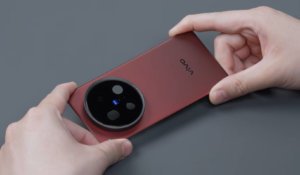
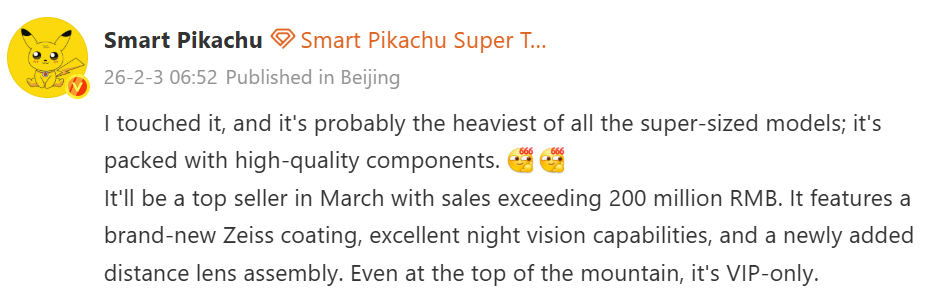
At the same time, Smart Pikachu has also shared fresh insights about the Vivo X300 Ultra. The device is said to be one of the heaviest Ultra flagships yet, indicating a hardware-heavy build. It is tipped to debut in March with dual 200-megapixel cameras, a new-generation Zeiss lens coating, and a redesigned zoom lens system. The leak further suggests strong night photography performance, reinforcing its positioning as a top-tier imaging-focused smartphone.
The Vivo X300 Ultra’s March launch event will also see the arrival of the Vivo X300 Max and the company’s first action camera, the details of which are scarce. The X300 Max is said to have a 6.78-inch OLED 1.5K display, a Dimensity 9500 chip, a 7,000mAh battery, and a 200-megapixel triple camera unit.
For more daily updates, please visit our News Section.
Casio has quietly expanded its Edifice lineup with two new analog watches, called the Edifice EFB-109D-5AV and EFB-109D-3AV. Even though they’re part of the company’s motosport-inspired line, the new EFB-109D watches lean more toward everyday wear than outright motorsport theatrics.
As a result, these watches stand out less for complications and more for proportion. The EFB-109D series uses a compact stainless-steel case measuring 43.5 × 38.5 × 9.2 mm, with a noticeably slimmer profile than many modern sports watches.
Both models feature a gradated dial design, a simple three-hand analog layout, applied hour markers, and a clean overall look that nods to 1970s sports watches. The bezel is mirror-finished, while the case itself uses a hairline finish, giving the watch a mix of polish and restraint.
Under the hood, you don’t get anything flashy, and that’s very much the point. The EFB-109D runs on a quartz movement (Module 5340) powered by an SR920SW battery.
It is rated for around three years of use with an accuracy of ±20 seconds per month. Casio has also included a scratch-resistant sapphire crystal and a screw-lock case back, features that are often skipped in more affordable models.
The solid stainless-steel bracelet uses a one-touch three-fold clasp and supports wrist sizes from 150 to 205 mm. Water resistance is rated at 100 meters, which covers everyday use and surface swimming without issue.
While these new Edifice models skip the chronograph and tachymeter elements found in other Edifice watches, they focus instead on simplicity, slimness, and materials.
The company has not announced pricing and availability details yet.
For more daily updates, please visit our News Section.
A new leak suggests that Redmi is preparing a performance-focused flagship that could significantly raise the bar for gaming-centric smartphones. Early details point to the Redmi K90 Ultra, with emphasis on sustained performance, battery life, and display upgrades, hinting at a notable shift in Redmi’s flagship strategy this year.
Redmi K90 Ultra key details tipped
According to information shared by tipster Digital Chat Station, the Redmi K90 Ultra is expected to be powered by the Dimensity 9500 chipset. Previous iterations of K-series Ultra phones have featured “Plus” versions of Dimensity 9-series chipsets, such as the Dimensity 9400+, Dimensity 9300+, and Dimensity 9200+. Recent reports reveal that this time MediaTek has no plans to launch the Dimensity 9500+, which was expected to be an overclocked version of the existing Dimensity 9500.
What makes the Redmi K90 Ultra stand out is the reported inclusion of an internal cooling fan. This would make it the first Xiaomi group smartphone to feature active cooling, aimed at maintaining stable performance during extended gaming sessions. The cooling system is expected to allow the chipset to run closer to its peak capabilities without thermal throttling.
The Redmi K90 Ultra is tipped to pack an 8,500mAh battery, with internal testing reportedly ongoing to push the capacity even higher. Fast charging support is said to reach 100W via wired charging, with possible compatibility with high-power PPS standards.
The display is expected to be a large flat panel measuring around 6.8 inches, offering 1.5K resolution and a refresh rate that could go as high as 165Hz. With more games now supporting higher refresh rates, this setup should deliver a smoother experience. Other anticipated features include a metal frame, an ultrasonic in-display fingerprint sensor, and full water resistance.
The Redmi K90 Ultra may launch in May or June this year. The brand is also expected to unveil the Redmi K Pad 2, a performance-focused tablet, alongside it.
For more daily updates, please visit our News Section.
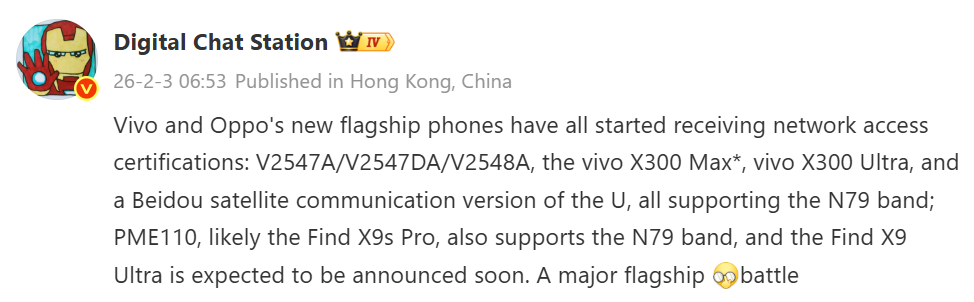
After the upcoming Chinese Spring Festival, Vivo and Oppo are expected to announce new flagship phones. In the latest leak, tipster Digital Chat Station has revealed the model numbers of the upcoming Vivo flagships, which have reportedly received China’s SRRC (State Radio Regulation Commission) network access certification, confirming radio transmission approvals and support for the N79 frequency band.
Vivo X300 series’ model numbers emerge
According to DCS, the model numbers Vivo V2547A, V2547DA, and V2548A belong to the upcoming X300 series. It appears that the V2547A is associated with the Vivo X300 Ultra, while the V2547DA is its Beidou satellite communication version. The leak suggests that the V2548A belongs to the Vivo X300 Max. This is the first time this moniker has surfaced, and it appears to be the same device that was being referred to as the Vivo X300s in recent reports.
Vivo X300 Max: What to expect?
A recent leak by the same source revealed that the Vivo X300 Max will have a 6.78-inch OLED 1.5K flat display surrounded by ultra-thin bezels. For security, it will feature an ultrasonic in-display fingerprint sensor.
On the back, it will have a circular camera module housing a 200-megapixel main camera, an ultra-wide lens, and a mid-tier periscope telephoto camera. Under the hood, it may feature the existing Dimensity 9500, as the rumoured Plus variant of the chip has reportedly been cancelled. This device is also rumoured to pack a huge 7,000mAh battery.
Apart from leaking details about the upcoming X300 series, the tipster also claimed that the PME110 model number belongs to the Find X9s Pro (previously known as Find X9s). The Find X9 Ultra’s model number is not known yet.
All the above devices are expected to break cover in March in China. Except for the X300 Max, all of them are also rumoured to hit the global market around the second quarter of the year.
For more daily updates, please visit our News Section.
The smartphone market is facing mounting instability in early 2026, driven by a sharp and sustained surge in memory chip prices. According to popular tipster Digital Chat Station, the impact is already rippling across product segments, with mid-range phones on the verge of being pulled from shelves and next-gen flagships entering development limbo.
The strain isn’t limited to increased bill of materials (BOM) costs. It is disrupting brand roadmaps and forcing internal teams to rethink launch schedules. Even Apple has reportedly felt the pressure, as suppliers like Samsung and SK Hynix have raised LPDDR memory prices by up to 100%. Some value-segment devices released in late 2025 may be phased out earlier than planned, while their successors have been pushed to mid-2026 or later. When they do eventually launch, many are expected to carry higher price tags.
Digital Chat Station also says that some internal product teams now view new smartphone launches as high-risk financial liabilities. In response, several brands have already paused development of their next-generation flagship phones. There is growing concern that brands may exit certain regional markets entirely to stem losses.
In a related post from late January, the same source pointed to the mid-range segment, especially the 2,000 to 2,500 yuan tier ($275-$345), as the most vulnerable. The pressure is evident: early Snapdragon 8 Elite phones have quietly dropped launch discounts, the price difference between 512GB and 256GB models has widened to over 400 yuan ($58), and 1TB variants are practically disappearing. Some phones are slashing production volumes just weeks after launch, while others aren’t making it out of prototype stages.
As pricing volatility collides with thinning margins, it’s clear that 2026 might be less about product innovation and more about survival. What used to be a battle of specs could quickly turn into a test of who can stay afloat, and which phone brands are still standing when the dust settles.
For more daily updates, please visit our News Section.
Ffalcon, a sub-brand under TCL, has launched the Thunderbird Q7A Pro gaming monitor in China. The new 27-inch display is listed on JD.com with a retail price of 2,299 yuan ($330) and an introductory launch price of 1,999 yuan ($288).
Thunderbird Q7A Pro Specifications
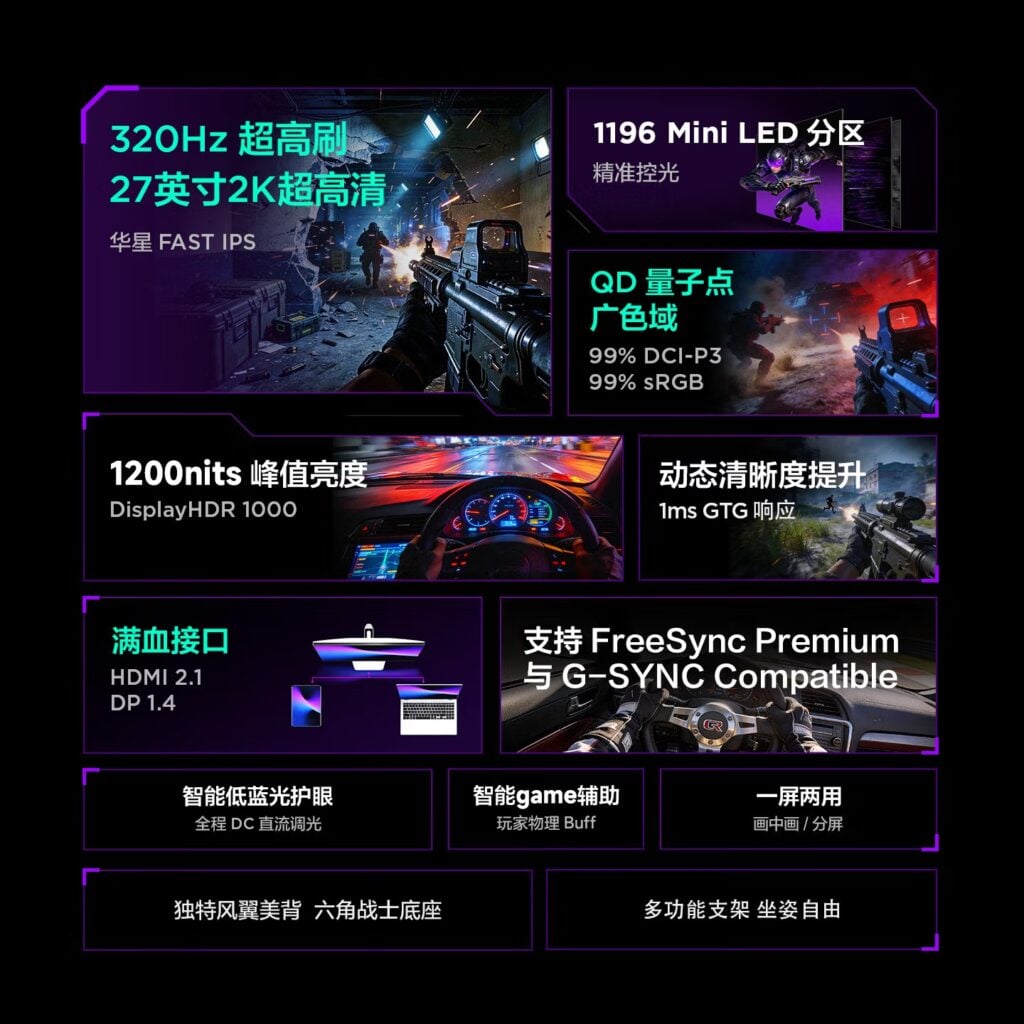
The Q7A Pro uses a 27-inch Fast IPS panel from CSOT with a 2560 x 1440 resolution and a 320Hz refresh rate, targeting competitive and esports gaming. It relies on a QD-Mini LED backlight with 1,196 local dimming zones to boost contrast and limit haloing, while peak brightness reaches 1,200 nits with VESA DisplayHDR 1000 certification.
The display supports quantum dot color enhancement, covering 99% of both the DCI-P3 and sRGB color spaces. Ffalcon rates its color accuracy at ΔE < 2, and the panel supports 10-bit color through 8-bit + FRC processing.
The panel delivers a 1ms GTG response time, offers multiple overdrive modes for motion tuning, includes an MPRT-Plus mode for clearer fast scenes, and supports FreeSync Premium and G-Sync Compatible to reduce tearing and stutter.
For connectivity, the monitor includes two HDMI 2.1 ports and one DisplayPort 1.4 port, all supporting full 2K 320Hz bandwidth. It also includes a headphone jack and offers picture-in-picture (PIP) and picture-by-picture (PBP) modes for multitasking with multiple input sources.
The monitor features a hexagonal base with an ergonomic stand offering 125 mm height adjustment, tilt, swivel, and pivot, supports VESA 100 x 100 mounting, uses full-range DC dimming with a low blue light mode, draws 65W of power, and comes with a three-year replacement warranty.
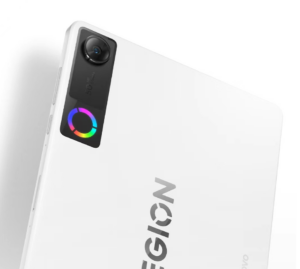
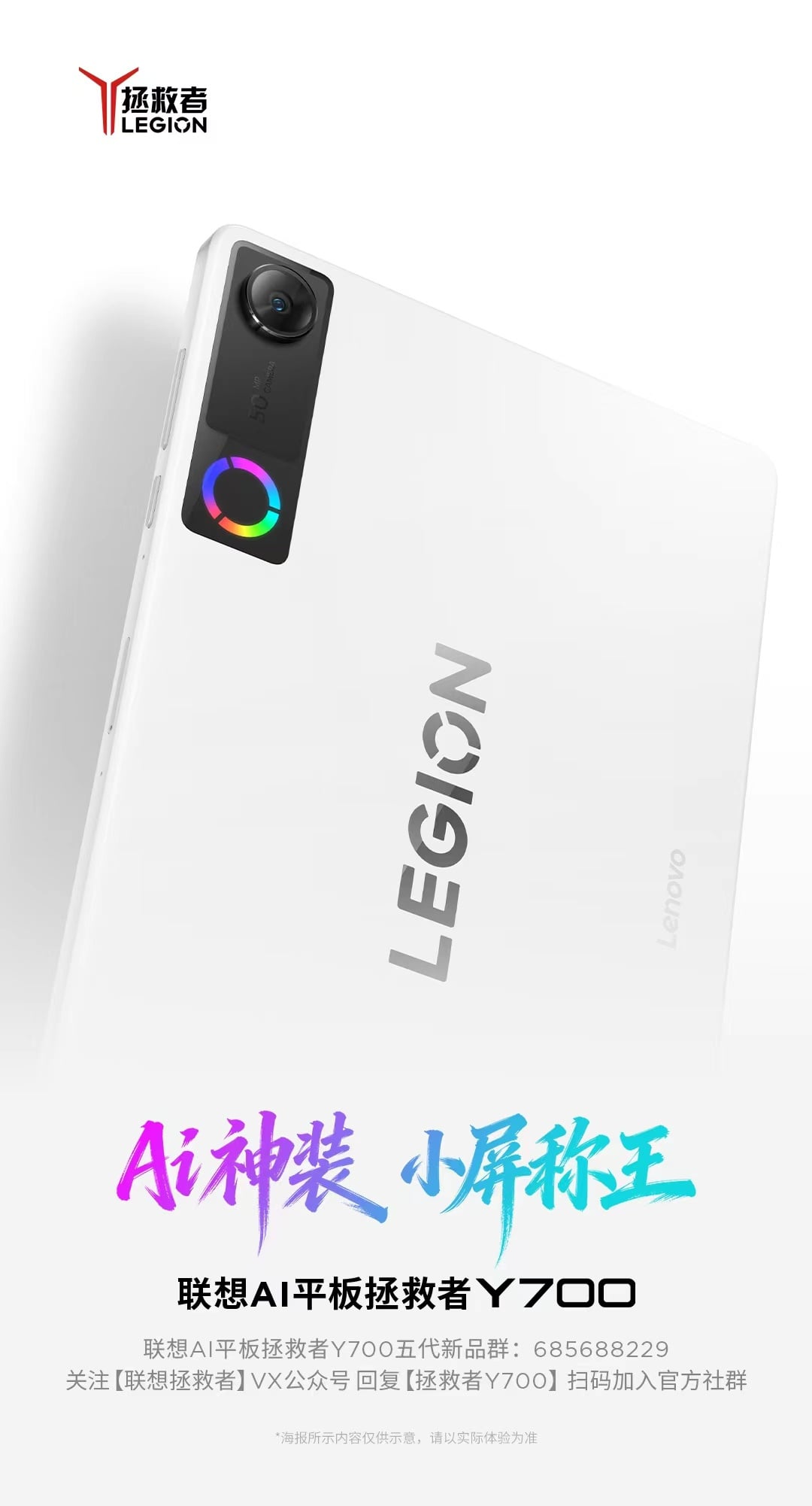
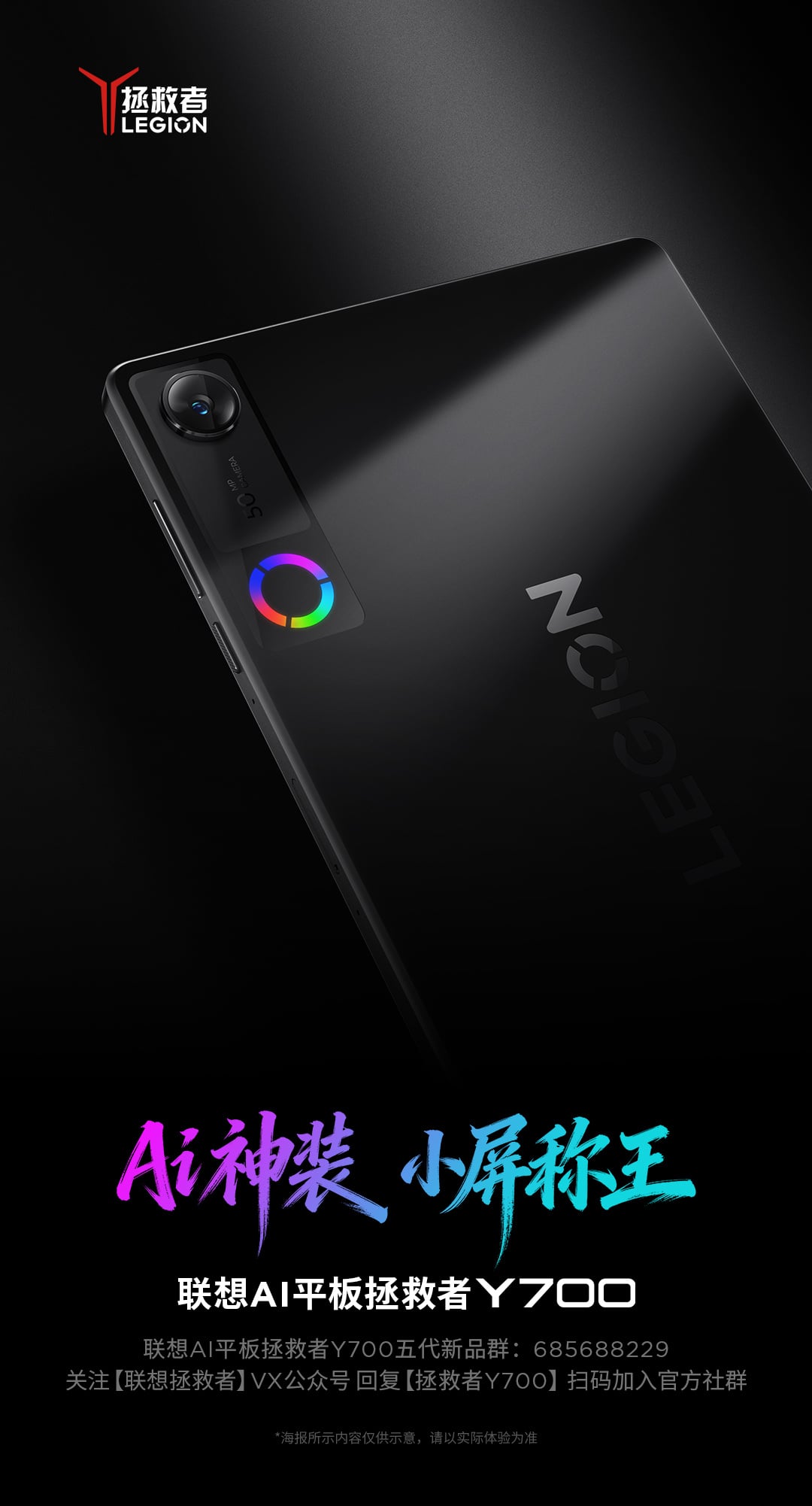
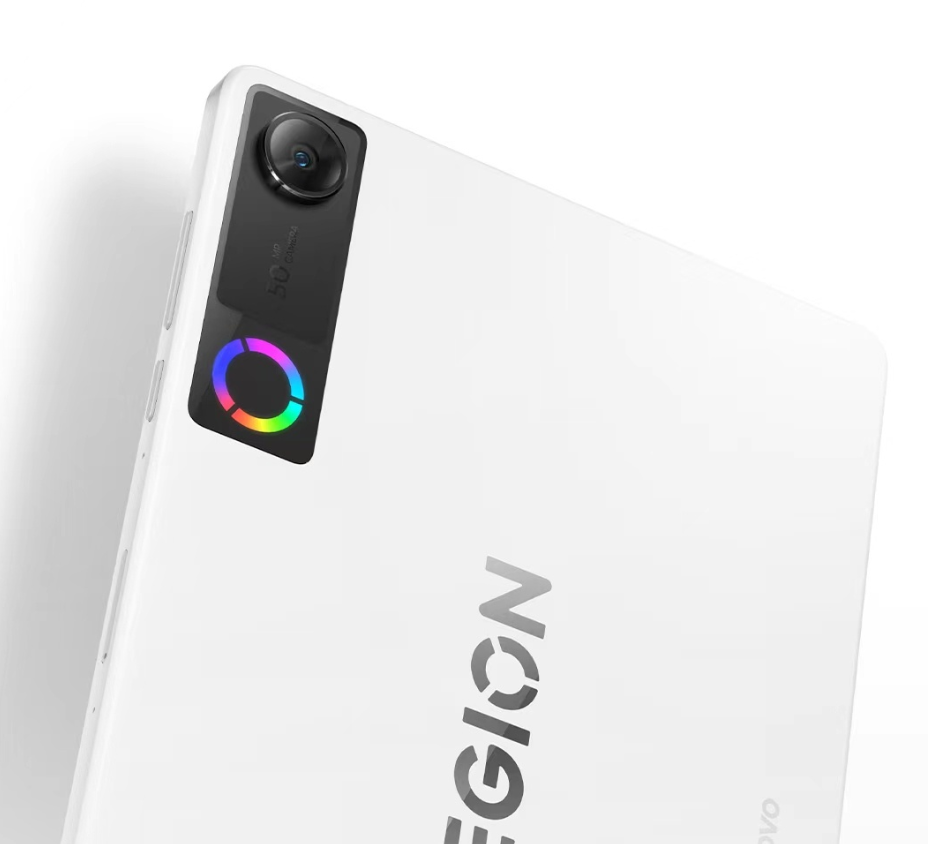
Lenovo has officially revealed the Legion Y700 (2026) by rolling out its first teaser. The image gives a first look at the company’s upcoming performance-focused compact tablet. At the same time, tipster Digital Chat Station has leaked the key specifications and launch timeframe of the device.
The Lenovo Legion Y700 (2026) teaser images show that it will be available in white and black colour variants. The overall design is similar to the previous generation, but a new addition is the RGB ring light below the rear camera unit. The company is yet to share any technical details of the device.
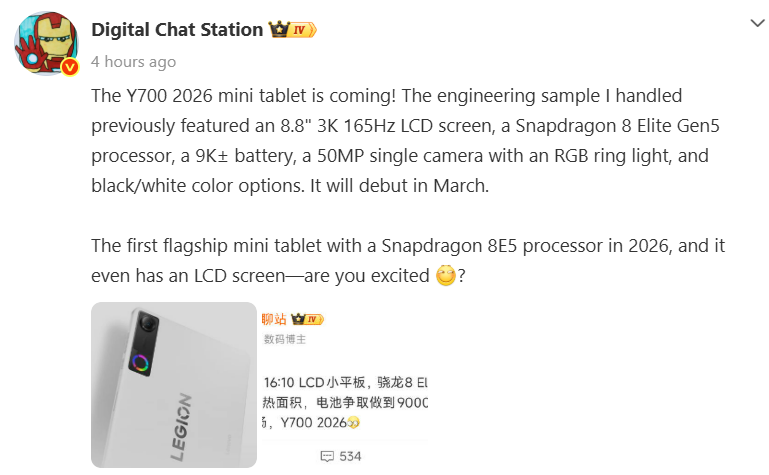
According to tipster Digital Chat Station, the Legion Y700 (2026) will be the first compact tablet to come equipped with the Snapdragon 8 Elite Gen 5 chipset this year. Like the Legion Y700 (2025), the new device will feature an 8.8-inch LCD panel delivering a 3K resolution and a 165Hz refresh rate.
The Legion Y700 (2026) will have a 50-megapixel camera on the back. It is said to pack a massive 9,000mAh+ battery, but there is no information about its fast charging capabilities. A previous leak revealed that the screen will offer a 16:10 aspect ratio and the device will pack a vapour chamber cooling unit with a large heat dissipation area.
DCS further revealed that the Legion Y700 (Gen 5) will be announced in March in China. The previous generation was China-exclusive, so there is no clarity on whether the fifth-generation variant will debut globally.
For more daily updates, please visit our News Section.
The Oppo Find X10 series has begun making early appearances in the rumour mill, months ahead of its expected launch. While Oppo is preparing to introduce new Find X9 models in the near term, fresh leaks suggest that the next-generation Find X10 lineup could bring notable upgrades, particularly in the camera department.
Oppo Find X10 series camera details leak
Oppo Find X10 series camera details leaked
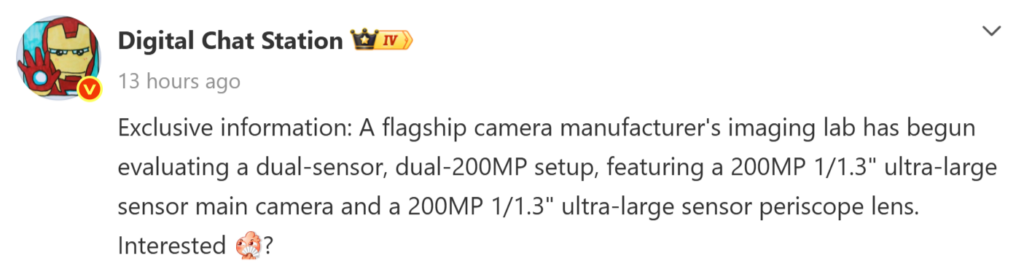
According to information shared by Digital Chat Station on Weibo, Oppo is currently evaluating a dual 200-megapixel camera setup for the Find X10 series. The configuration reportedly includes a 200-megapixel primary camera paired with a 200-megapixel periscope telephoto camera, both using large 1/1.3-inch sensors. If finalized, this would mark the largest telephoto sensor Oppo has ever tested for its Find lineup.
The leak suggests that this camera setup is being tested across the entire Find X10 range, including the standard and Pro variants. There are also indications that Oppo may introduce a Pro Max model for the first time, expanding the lineup beyond the usual two variants. An Ultra model is said to follow next year, continuing Oppo’s staggered release strategy.
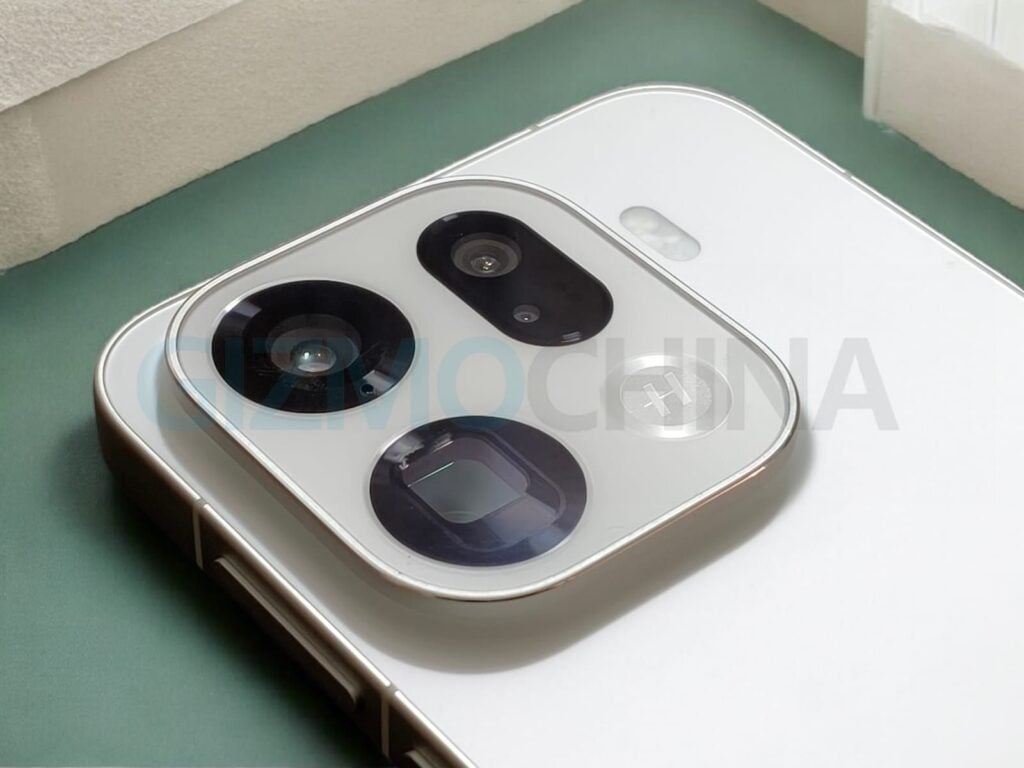
Interestingly, similar camera hardware is expected to debut earlier on the Find X9s Pro, which is tipped to launch in China in the first half of the year. That device is also rumored to feature dual 200-megapixel Samsung HP5 cameras, indicating Oppo’s broader push towards high-resolution imaging across its flagship portfolio.
Oppo Find X9 Pro
On the performance front, the Find X10 series is expected to be among the first smartphones powered by the MediaTek Dimensity 9600 chipset. Built on a 2nm process, the new platform is said to offer higher performance at lower power consumption compared to previous generations. Early testing reportedly shows notable gains in efficiency and sustained performance.
At this stage, details about display technology, battery capacity, and charging remain limited. However, Oppo is expected to position the Find X10 series as a major leap over the Find X9 lineup, especially in camera hardware. With the launch still some time away, more concrete information should emerge in the coming months.
For more daily updates, please visit our News Section.
The Moto G17, which recently launched in parts of Europe, is already drawing criticism, and not because of its hardware. The issue is software support, or more specifically, how little of it Motorola is expected to offer.
The Moto G17 was announced last week as a refresh to the Moto G15. Changes are limited. The most noticeable upgrade is a 32MP front-facing camera, while most other specs remain familiar. The phone runs on the MediaTek Helio G81 Extreme and ships with Android 15, an OS version that first rolled out in mid-2024 and now feels a generation behind in early 2026.
On the UK product page, the company explicitly promises two years of security updates, taking coverage to around early 2028. There is no mention of any Android version upgrades.
The company points to EU Ecodesign regulations, which require manufacturers to provide security, corrective, and functionality updates for several years after a product stops being sold. Crucially, the rules only apply to major Android upgrades if a manufacturer chooses to offer them. That wording allows companies to meet legal requirements while skipping OS version updates entirely.
While this approach appears to comply with the letter of the law, it has not gone over well with critics. Budget rivals are doing far more. The Samsung Galaxy A17, for example, is promised up to six Android version updates, and Xiaomi’s Redmi Note 15 line offers four years of OS upgrades.
At roughly £150, the Moto G17 still offers decent basics—a large display, IP64 protection, and a 50MP main camera. But buyers are being asked to accept limited long-term support in return.
As the phone rolls out across EMEA markets, it highlights a growing split in the budget segment: some brands now treat long software support as standard, while others continue to treat it as optional.
Lenovo has officially announced its upcoming AI-powered tablet, the Xiaoxin Pro 13. The company confirmed that the tablet will launch in March and released a teaser poster revealing key design details. Lenovo is positioning the device as a smart learning and productivity tool with stylus support.
We don’t have any details on the specs, but as per the teaser, the Lenovo AI Tablet Xiaoxin Pro 13 features a quad-narrow-bezel design. It uses a flat-edged frame with slightly rounded corners. The rear panel appears to be matte and likely metal, with a clean and minimal finish.
Lenovo has placed a single 13MP camera and LED flash in a horizontal pill-shaped module near the top corner. The camera bump is subtle and low-profile, which helps the device sit flat on surfaces.
Lenovo also showcased a stylus alongside the tablet. The pen has a cylindrical shape. Lenovo describes the Xiaoxin Pro 13 with the tagline “AI smart learning, limitless with the pen,” indicating a focus on digital writing, note-taking, and AI-assisted educational features. The company is expected to share more information closer to the official launch in March.
Alongside this tablet, Lenovo has also announced that a refreshed version of the popular Legion Y700 tablet is set to launch in March. Lenovo has revealed the design and confirmed that the device will come in black and white color variants. The company describes the Legion Y700 as “AI-powered gear” and promotes it as the “king of small tablets.”
In related news, Lenovo has also launched the Legion 5i Gen 11, a new OLED gaming laptop powered by the Intel Core Ultra 9 385H processor.
For more daily updates, please visit our News Section.
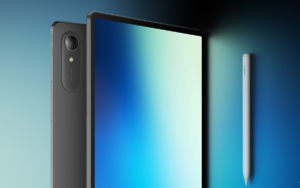
The Xiaomi Pad 8 seems to be getting ready for a wider release, and a new Geekbench listing suggests the global launch may not be far off. The tablet’s international variant has now shown up on the benchmark database.
This isn’t the first sign of movement either. The Pad 8 Pro appeared on Geekbench earlier, and together the two listings make it look like Xiaomi is preparing to bring the full Pad 8 lineup to more markets. So far, the series has only been available in China, where it launched back in September 2025 alongside the Xiaomi 17 series.
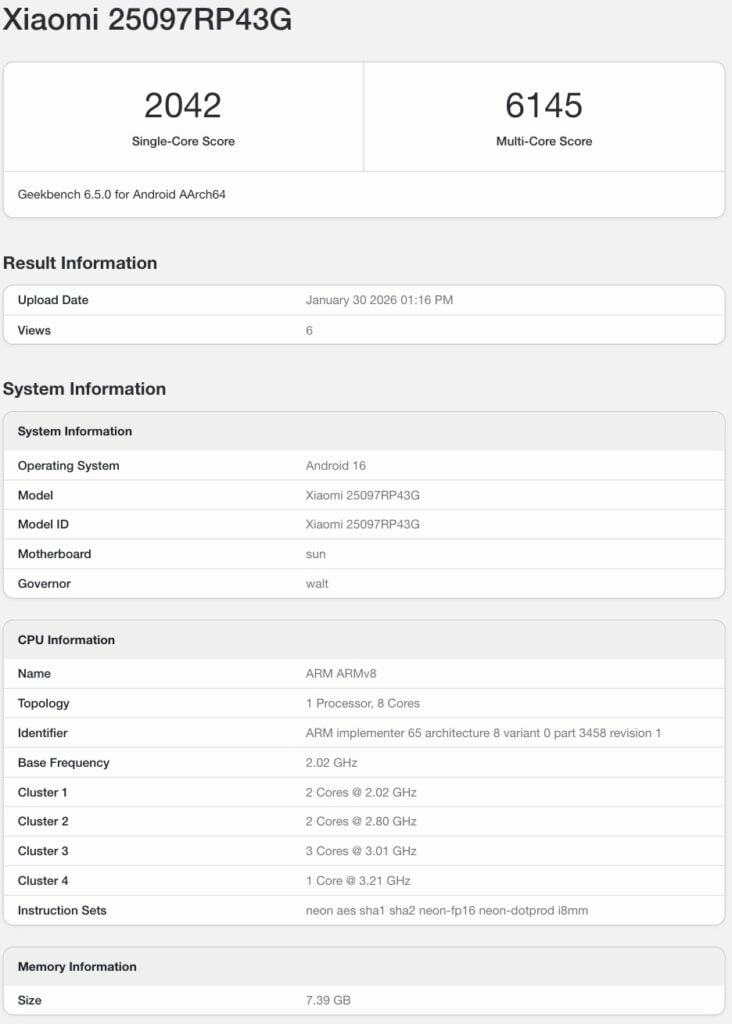
The new listing belongs to a device with the model number 25097RP43G, which is believed to be the global version of the standard Pad 8. According to the Geekbench entry, the CPU core configuration is as follows:
2 × 2.02GHz
2 × 2.8GHz
3 × 3.01GHz
1 × 3.21GHz
This layout matches the Chinese variant exactly, effectively confirming the presence of the Snapdragon 8s Gen 4 chipset. The test unit is listed with 8GB of RAM.
Performance numbers are solid. The tablet scores just over 2,000 points in single-core tests and around 6,100 points in multi-core. That places it comfortably ahead of the Snapdragon 7+ Gen 3-powered Xiaomi Pad 7, which recorded 1,877 and 5,106 points in single- and multi-core tests respectively.
In day-to-day use, this should translate to smoother multitasking and better performance in heavier apps, which is where tablets tend to show their limits.
The software version is listed as Android 16, which likely means it will ship with Xiaomi’s newer HyperOS build out of the box.
If the Chinese model is anything to go by, the Pad 8 should feature an 11.2-inch LCD panel with a 144Hz refresh rate, a large 9,200mAh battery, and 45W wired charging.
Tipster Abhishek Yadav has suggested that Xiaomi could launch the Pad 8 series globally in early March 2026, possibly around the time of MWC. That would line up with the recent increase in leaks and certifications.
For now, the Geekbench appearance doesn’t tell us everything, but it does confirm one thing: the Xiaomi Pad 8 is no longer China-only, and its global release is likely getting close.
Casio has expanded its digital watch lineup in Japan with the launch of the W-221H series. The new range includes the W-221H-1AJF in black and the W-221H-8AJF in a light beige finish. Both models are scheduled to go on sale in February 2026, carry a price tag of ¥6,050 (around $38), and are currently available for pre-order via the Casio official store.
Casio W-221H Specifications
The W-221H series adopts a retro-inspired design based on Casio’s classic 1990s digital watches. It uses a square case shape with a brushed metallic bezel and a polished face, while the band connection features a flat stripe pattern to accentuate the minimalist styling.
Casio has refined the proportions for modern wearers, with the case measuring 43.7 x 38.4 x 12.2 mm and weighing just 35 grams. The watch supports wrist sizes between 145 and 215 mm, making it suitable for both men and women.
Casio has equipped the W-221H with a resin case, resin glass, and a resin band. It supports 5-bar water resistance and includes an LED backlight with selectable durations of 1.5 or 3 seconds. The amber-colored LED helps improve visibility in dark environments.
The display features a wide, easy-to-read layout with a pixel-style day indicator to reinforce the retro look. Casio includes a full set of digital functions such as a 1/100-second stopwatch with 24-hour capacity, split time, auto-start, and a 5-second countdown. The countdown timer supports up to 24 hours with auto-repeat and pre-alarm functions.
The watch packs three daily alarms with a snooze option, an hourly chime, and Flash Alert LED notifications for alarms and timers, alongside a full auto calendar, 12/24-hour formats, tone control. Casio claims a battery life of up to 10 years and a monthly accuracy rate of ±30 seconds.
In related news, Casio has also launched new G-Shock models featuring metallic finishes and bold red dials, alongside the Oceanus OCW-S7000F-2A, which arrives with a sapphire bezel and Bluetooth solar movement.
For more daily updates, please visit our News Section.
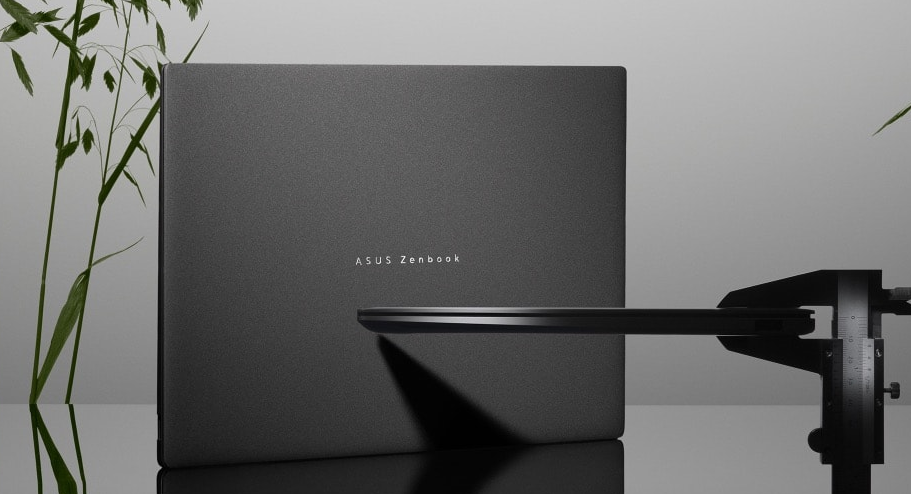
ASUS is gearing up to launch two powerful yet portable Zenbook laptops in India. The new Zenbook S16 (UM5606GA) and the Zenbook 14 (UM3406GA) are a part of the brand’s premium flagship notebook lineup, bringing cutting edge hardware in a slim form factor. Official teasers have confirmed the launch date for these laptops, so here are all the details.
ASUS Zenbook S16 & Zenbook 14 India Debut
ASUS Zenbook S16
The PC giant has shared teaser posters on its official website and Amazon India. These confirm that the pre-orders for the premium laptops go live on 5th February 2026, while the full release is set for February 12. These notebooks are a part of ASUS’ latest flagship lineup that features AMD’s powerful new Ryzen AI 400 series processors, which promise capable performance, improved power efficiency, and enhanced AI capabilities.
Both of these are CoPilot+ compatible and can be configured with up to a Ryzen AI 9 465 CPU. This chip is designed to handle demanding workflows and on-device AI tasks, making them ideal for productivity, creative work, multitasking, and CoPilot+ PC features. Based on what we know so far, the Zenbook S16 is said to sport a 3K ASUS Lumina OLED display with a 120Hz refresh rate. It is built using ASUS’ Ceraluminum construction for a premium feel with a slim profile and superlight 1.2kg body. Battery life is a highlight, with the brand claiming over 25 hours of endurance on a single full charge.
ASUS Zenbook 14
Pre-Orders & Launch Offers
Pre-orders for both laptops start at 10:00 AM IST on February 5 via Amazon India, ASUS India online store and ASUS Exclusive Stores. Customers placing a Rs 1 pre-order can enjoy benefits worth ₹5,599, including an extended two-year warranty and three years of accidental damage protection.
For more daily updates, please visit our News Section.
Xiaomi’s HyperOS 3 update rollout has now technically reached around 95 percent completion. As of right now, the brand’s major Android 16 OS based update has already dropped on a vast majority of eligible smartphones and tablets across the Xiaomi, POCO, and Redmi branded models. Only a handful of these devices are set to receive this update, as Xiaomi is nearing the final wave of updates. So here are all the models left, and when they are expected to receive the HyperOS 3 update.
Xiaomi HyperOS 3 Update: Which Models Will Get the Update?
While Xiaomi hasn’t published a complete official list in one place, tracking data and rollout plans show hundreds of phones and tablets have already got HyperOS 3 or are rolling out under staged OTA campaigns. These include flagship and mid-range models from the Xiaomi, Redmi and POCO families throughout late 2025 and early 2026. Some of the first in line, apart from new announcements, were the Xiaomi 15 series and Redmi Note 14 lineup.
The Chinese tech giant’s rollout was phased and region specific, with many devices getting the update earlier in China ahead of the global variants. Xiaomi has already been working through models in batches throughout October 2025 to early 2026, and its completion target is set for March 2026. So here’s a list of all the eligible devices that have yet to receive the HyperOS 3 update:
Xiaomi & Redmi Models
Xiaomi 13T
Redmi Note 15 Pro 4G
Redmi 14R
Redmi 15 4G
Redmi 15 5G
Redmi 15C 5G
Redmi 15C 4G
Redmi A4
POCO Models
POCO C85 4G
POCO C85 5G
POCO C75 5G
POCO M7 5G
POCO M7+
Tablets
Redmi Pad Pro (WiFi & 5G variants)
POCO Pad
In related news, the Xiaomi 14 Civi finally received the HyperOS 3 update, while the company is already rolling out the HyperOS 3.1 update for eligible models.
For more daily updates, please visit our News Section.
Ultra-slim magnetic power banks have become essential for users who need reliable charging without adding bulk. The latest models in 2026 focus on Qi2 certification, fast USB-C speeds, and form factors that complement modern smartphones. Here’s a closer look at some of the best options available right now.
Anker Nano Power Bank
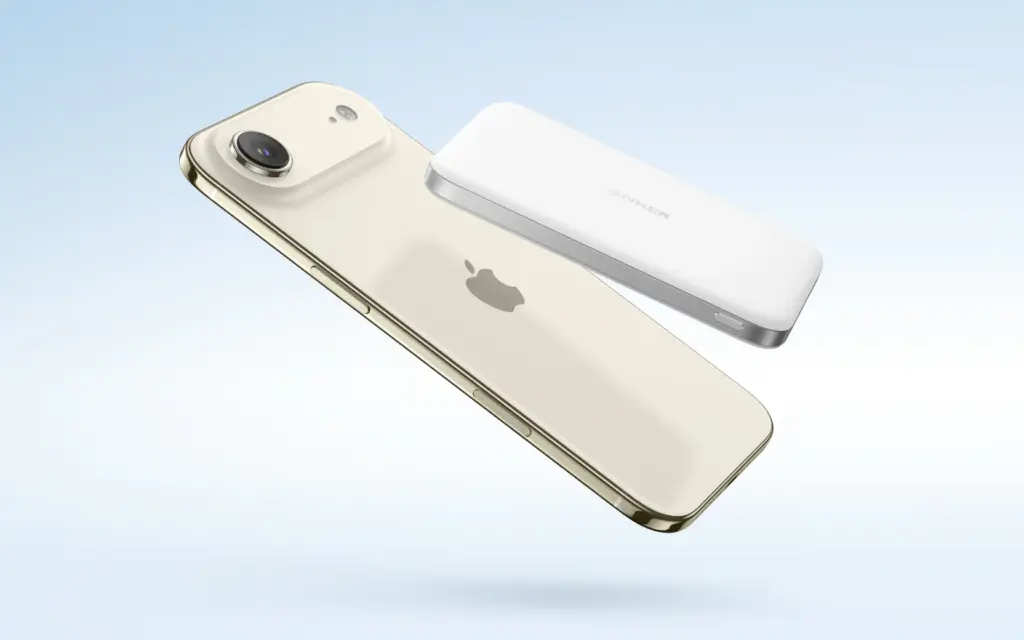
Anker has unveiled the Nano Power Bank as the slimmest and most advanced model in the lineup so far. It measures just 0.34 inches thick, weighs 122g, and targets MagSafe-compatible iPhones from the iPhone 12 to iPhone 17 series. The power bank supports 15W Qi2-certified magnetic wireless charging and includes a two-way 20W USB-C port, all packed into a compact, pocket-friendly design.
It can charge an iPhone 17 Pro to 25% in around 34 minutes while staying comfortably cool, thanks to a graphene cooling system combined with dual NTC sensors that keep temperatures below 104°F. The skin-friendly back panel, anodized metal frame, and four color options give it a premium feel that matches its performance. It suits iPhone users who want reliable, stylish charging while on the move.
Baseus PicoGo AM31 Mini
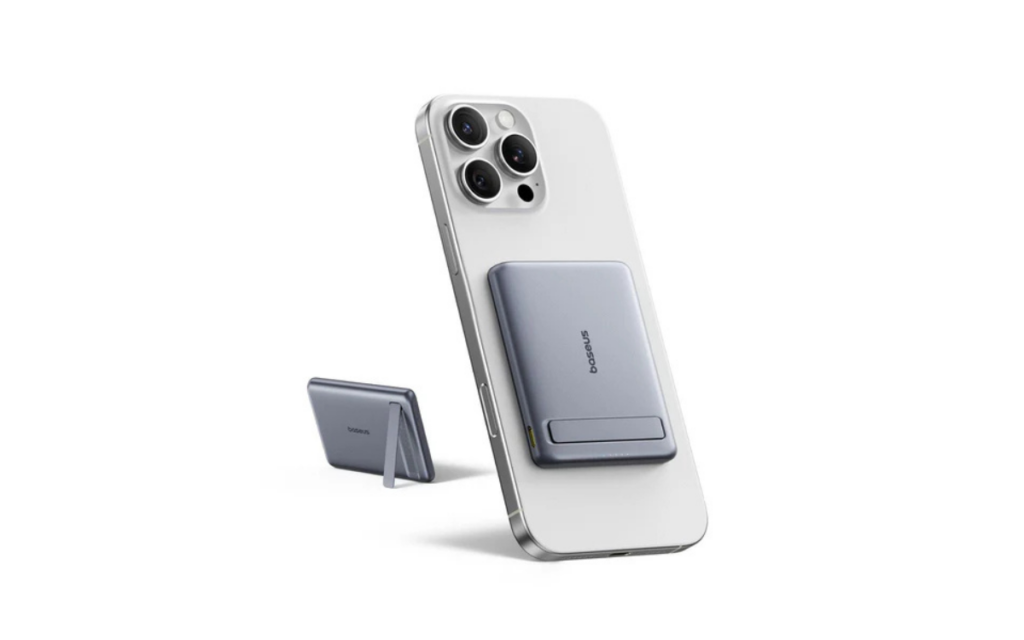
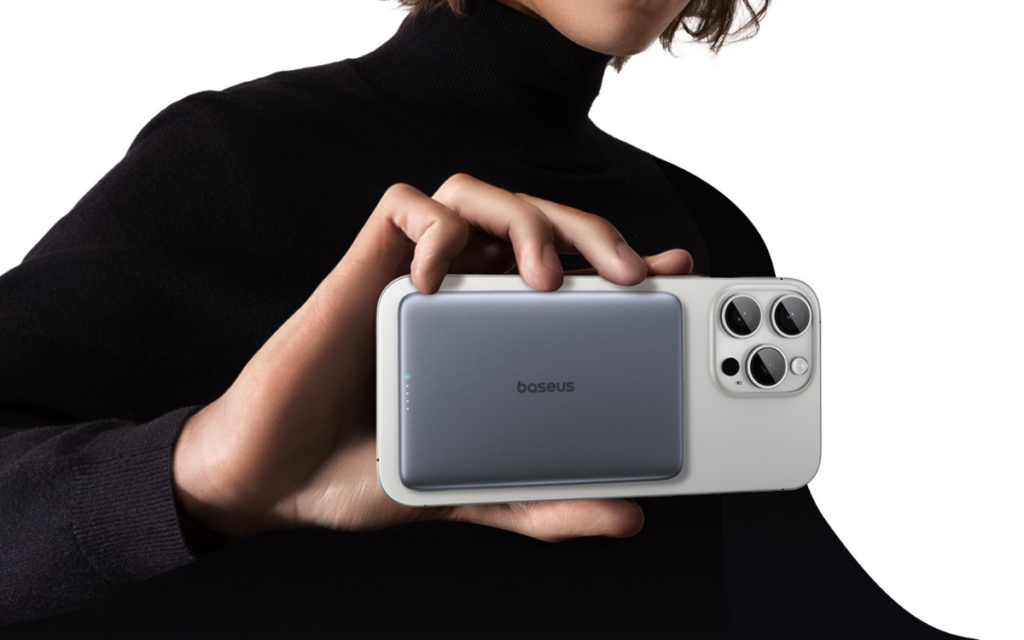
If hands-free use is a priority, the Baseus PicoGo AM31 Mini power bank checks every box. It’s smaller than a credit card at 3.4 x 2.3 x 0.45 inches and includes a built-in aluminum kickstand that works in both portrait and landscape orientations.
The AM31 supports 15W wireless charging and 20W wired charging over USB-C, using Tesla-grade battery cells paired with a triple-layer heat management system for consistent performance. Its liquid silicone finish, combined with an anodized aluminum body, gives it a premium look while improving durability.
The power bank features an 11N magnetic hold and full Qi2 certification, allowing it to securely snap onto iPhones as well as Android phones that support Qi2 magnetic charging.
Xiaomi Ultrathin Magnetic Power Bank
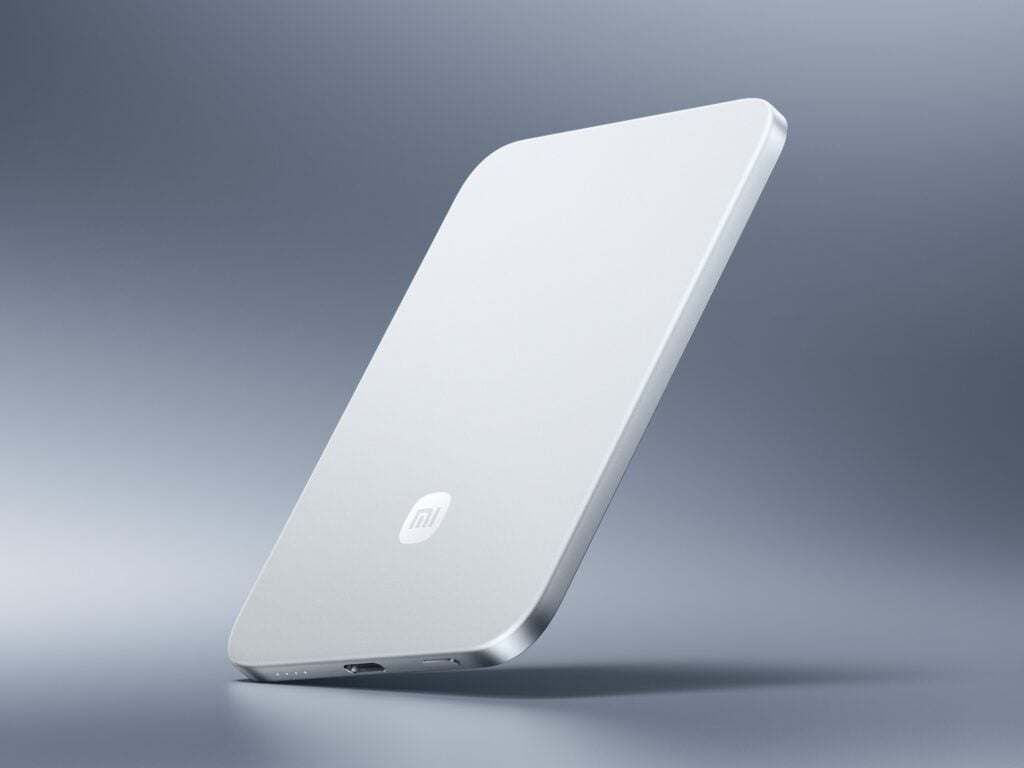
The Xiaomi Ultrathin Magnetic Power Bank is an engineering feat, squeezing 5,000mAh into a mere 6mm chassis that weighs just 98g. Designed for extreme portability, it’s a natural fit for slim phones like the iPhone 17 Pro and Xiaomi 15 Ultra, matching their metallic aesthetics.
While it supports 15W wireless charging and an impressive 22.5W USB-C output, there’s a catch: it only delivers 7.5W of wireless power on iPhones due to the lack of Qi2 certification. That makes it best suited for Android users or those who value form factor above peak iPhone performance.
Baseus PicoGo Ultra-Slim
Baseus offers two ultra-thin PicoGo models, giving users a choice between lighter 5,000mAh (4.6oz) and longer-lasting 10,000mAh (7.8oz) variants. Both support Qi2-certified 15W wireless and 20W+ wired charging, with a slick 0.3-0.5 inch slim body, card-size design, and liquid silicone + aluminum alloy housing.
The 10K version even bumps wired output to 27W, charging iPhones, iPads, and even some USB-C tablets efficiently. Available in four colors (Black, Grey, Pink, Titanium), these power banks stand out for their durability, thermal control, and long-lasting style.
Sharge AeroMag
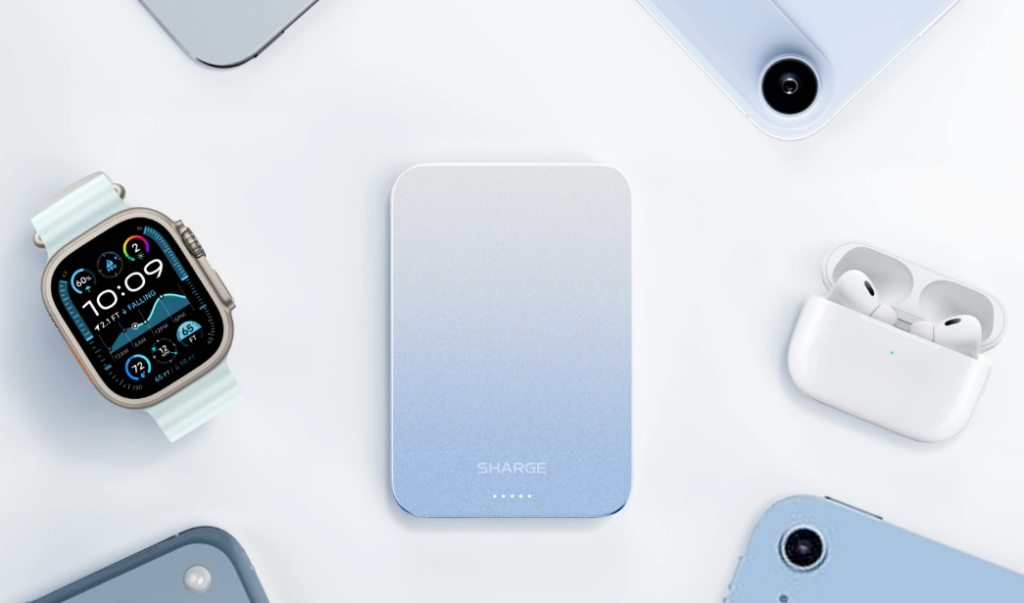
The AeroMag series fuses luxury-grade materials with practical design. Both 5K (125g) and 10K (192g) models feature aerospace-grade anodized aluminum with graphene cooling, keeping the bank and your phone cool even during long calls or streaming sessions.
Certified with Qi2, the AeroMag hits 15W magnetic wireless and 20W wired output. Even better, it can charge two devices simultaneously, wireless for your phone and wired for your earbuds. With a premium finish and N52 magnet array for a shake-proof grip, this is the go-to for those who want power with polish.
For more daily updates, please visit our News Section.
Despite the OnePlus 15 launching just a couple of months ago, there have been plenty of early leaks for its successor. Now, a fresh tip has suggested that the OnePlus 16 is getting a significant camera upgrade, especially for its zoom lens. So here are all the details.
OnePlus 16 leaks with 200MP telephoto camera
The latest leak arrives from a post from OnePlus Club on X (formerly Twitter). In the tweet, the OnePlus 16 is reportedly getting a higher resolution and a larger sensor for zoomed photography. This new camera will be a 200MP shooter that has a 1/1.56-inch size, which is comparable to the OnePlus 15’s primary camera. To recall, the OnePlus 15 launched with a 50MP periscope telephoto shooter with a 3x optical zoom and a 1/2.75-inch sensor.
OnePlus 15
In other words, we might be getting a meaningful boost for zoom photography, along with improved low light detail capture and overall imaging capabilities. This will also make the OnePlus 16 more in line with other Chinese flagships like the Oppo Find X9 Pro and Vivo X300 Pro that pack large telephoto shooters. While the focal length of the new sensor is unknown, the new 200MP resolution could signify a higher digital crop on OnePlus’ next flagship.
This leak is also in line with some of our earlier reports. The OnePlus 15 is expected to launch with a 240Hz display, Snapdragon 8 Gen 6 Pro, and 200MP triple cameras. However, the previous leak hinted at a 200MP primary camera with a 50MP ultra wide angle lens, and a 50MP telephoto shooter. Keep in mind that this is still quite an early leak, so take this news with a pinch of salt for now.
For more daily updates, please visit our News Section.
Nothing confirmed earlier this week, they will not launch any flagship smartphone in 2026. Instead, the focus will be on the comparatively affordable Phone (4a) series. A new leak now suggests that Nothing could also announce a cheaper pair of over-ear headphones.
According to a report from Dealabs, the company is working on a new model called the Nothing Headphone (a). As the name suggests, this is expected to be a more affordable alternative to the company’s existing premium headphones, the Nothing Headphone 1.
The leak claims the headphones will be available in four color options: Black, Pink, White, and Yellow.
Nothing Headphones (a) could launch in March
The report also outlines a possible launch timeline. The Nothing Headphone (a) is tipped to be officially announced on March 12, with pre-orders opening a week earlier on March 5. The headphones are expected to launch in Europe first, alongside other global markets, though there’s no word yet on an India launch timeline.
Pricing is where this leak gets particularly interesting. The Nothing Headphone (a) is reportedly priced at EUR 159 in Europe and GBP 149 in the UK. The Nothing Headphone 1, in comparison, launched at EUR 299 globally and arrived in India in July 2025 with a price tag of Rs. 21,990.
According to previous rumors, the Headphone (a) might simply be a rebranded Headphone 1 with a plastic build. However, the reported pricing makes that seem unlikely. At this point, there’s no concrete information about specifications or features, but it’s safe to expect some compromises compared to the Headphone 1 to hit the lower price point.
For reference, the Nothing Headphone 1 features an over-ear design with a transparent body, 40mm dynamic drivers, and active noise cancellation rated up to 42dB, along with a transparency mode. It supports Bluetooth 5.3, multiple codecs including LDAC, dual-device connectivity, and up to 80 hours of battery life without ANC.
For more daily updates, please visit our News Section.
Samsung has been working on One UI 8.5 for the past few months. It’s still based on Android 16 but uses a newer QPR2 development build, allowing Samsung to include deeper system-level features that weren’t available in the original Android 16 release for One UI 8.0.
One UI 8.5 has been available to select Galaxy devices as a beta release for quite some time now, and it’s inching closer to its stable release. And if you think it would be a minor upgrade, you’re getting it all wrong. There are a host of exciting upgrades and many new features, making the new software more customizable, visually appealing, and more secure.
In this post, we’ll tell you whether your Samsung Galaxy is eligible for the One UI 8.5 update and when you can expect it to roll out.
Is your Samsung device eligible for the One UI 8.5 update?
While the official list is yet to arrive, it’s safe to assume that all Samsung devices that have received the One UI 8.0 update or launched with One UI 8.0 should be upgraded to One UI 8.5, since both software are based on Android 16.
Galaxy XCover series: Galaxy XCover 7, XCover 7 Pro
If your Samsung Galaxy is on the list, it should receive the One UI 8.5 update. But we’d still recommend checking the official announcement for the final confirmation. We’ll post the official list on this website as soon as it’s announced. So, stay tuned.
When will Samsung roll out the One UI 8.5 update?
Samsung will release One UI 8.5 with the Galaxy S26 series, which is set to launch in late February. The latest Galaxy flagships will go on sale starting early March. A few weeks after that, Samsung will begin rolling out older Galaxy devices.
While the exact date of the One UI 8.5 rollout is yet to be announced, reports suggest it could begin towards the end of April.
Meanwhile, Galaxy S25, S25 Plus, and S25 Ultra users are already getting an early taste of One UI 8.5 via the beta program. The first beta build was released in early December, and then a few more beta builds were released at regular intervals.
Unfortunately, Samsung hasn’t expanded the beta program beyond the S25 series, and it doesn’t appear to be changing soon. That means other Galaxy devices may receive the stable build directly. Premium devices such as the Galaxy S25, Galaxy Z Fold 7, and Galaxy Z Flip 7 are likely to be among the first phones to receive the stable update. Then, it will expand to other high-end devices, followed by mid-range and cheaper models.
We’ll continue to update you with the latest developments around One UI 8.5 in the Samsung section on this website. Remember to visit that regularly. Also, join our Telegram channel to get instant notifications about the breaking news and software rollouts.
Oppo has officially launched two new budget-friendly smartphones in its home market of China, the Oppo A6i+ and Oppo A6v. Both of these are affordable smartphones with extra-large batteries that promise extended endurance in daily use. So here are all the details.
Oppo A6i+ and Oppo A6v Specifications
Oppo A6i+
Both models sport a large 6.75-inch display with a 120Hz refresh rate and 1,125 nits of peak brightness for great outdoor readability and DC dimming. Under the hood, the duo are equipped with the MediaTek Dimensity 6300 SoC. The Oppo A6v couples this with up to 8GB of RAM and up to 256GB of internal storage. Meanwhile, the Oppo A6i+ tops out with 12GB RAM and 512GB storage. A massive 7,000mAh battery pack powers the Oppo A6v, while the Oppo A6i+ has a smaller 6,500mAh cell.
Out of the box, both devices run on the Android 15 OS based ColorOS 15 custom skin. These new Oppo A6 series models feature a 50MP main camera on the back, with the front housing a 5MP selfie shooter on the A6i+ and an 8MP camera on the A6v. Other notable features include 45W wired fast charging, IP69 rating on the A6i+ and IP64 rating on the A6v for water and dust resistance, glove and wet touch, side mounted fingerprint scanner, and various AI powered tools.
Oppo A6v
Pricing and Availability
As of right now, pre-orders for these budget phones are live in China, with official sales kicking off on 6th February 2026. Both models are available in multiple colors options, namely Glacier White and Chestnut Brown for the A6i+ and Glacier Blue, Titanium Purple and Wilderness Green for the A6v. So here are the pricing details:
Oppo A6i+
8GB + 256GB- 1,499 Yuan (roughly 216 US Dollars)
12GB + 256GB- 1,599 Yuan (roughly 230 US Dollars)
12GB + 512GB- 1,799 Yuan (roughly 259 US Dollars)
Oppo A6v
8GB + 256GB – 1,199 Yuan (roughly 172 US Dollars)
For more daily updates, please visit our News Section.
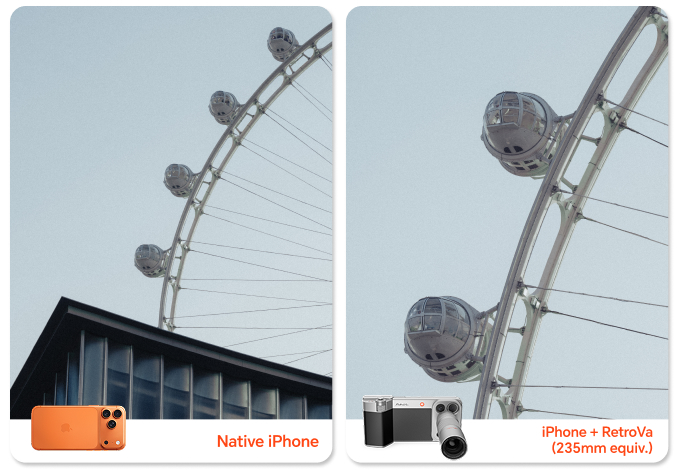
PGYTECH is taking a slightly unusual approach to mobile photography with its new RetroVa Vintage Imaging Kit, a Kickstarter project that turns recent iPhones into something that feels closer to a compact mirrorless camera than a phone with accessories bolted on.
The idea isn’t entirely new. Chinese brands like Xiaomi, Vivo and Oppo have already experimented with external camera modules and add-on optics, but RetroVa is one of the first attempts to bring that concept properly to iPhones.
The kit is designed for the iPhone 16 Pro and Pro Max, as well as the iPhone 17 Pro lineup, with hints that future models could also be supported. It’s clearly aimed at users who are happy with their phone but frustrated by the limits of smartphone zoom.
There are two main versions of the kit. The entry-level option is a grip and case combo that adds a proper camera-style handle to the iPhone. It includes a two-stage shutter button, a zoom rocker, a control dial, and extra buttons that can be mapped to settings like ISO or exposure. The goal here isn’t just convenience, it’s to make shooting feel more deliberate and controlled, closer to using a dedicated camera.
The more expensive bundle adds a screw-on 2.35x telephoto extender. When paired with the iPhone 17 Pro’s 4x telephoto camera, this pushes the effective focal length to around 235mm equivalent, or 10x optical zoom. On the iPhone 16 Pro’s 5x lens, it goes up to 12x. The promise is cleaner results than digital zoom can offer, especially for wildlife, sports, or events.
One of the more interesting touches is the built-in microSD card slot for creators, which reportedly allows direct recording of ProRes video. There’s also a companion app with manual controls and a retro-inspired interface, though the grip itself has only a small battery meant to power its controls.
The Kickstarter campaign launched in late January 2026 and has already passed its funding goal comfortably. Shipping is planned for March and April, depending on the kit.
It’s still a crowdfunded product, so there’s the usual risk involved. But for iPhone users who want better zoom and more hands-on control — without buying a new phone or a separate camera — RetroVa is an interesting experiment.
Casio has officially launched a fresh collection of G-Shock watches that blend metal bezels with bold red displays for a standout look and rugged everyday utility. The four new models, including the GM-110YRA-8JF, GM-2100YRA-8JF, GM-5600YRA-8JF, and GM-6900YRA-8JF, have officially launched in Japan.
Four New Metal G-Shocks with Bright Red Displays
All four models bring Casio’s hallmark shock resistance and practical features together with a distinctive visual twist that’s sure to catch eyes on the wrist. Across the lineup, Casio uses stainless steel bezels paired with resin cases and soft-touch silicone bands, giving these watches durability for outdoor use without sacrificing style. Each of these also brings 20-bar water resistance, mineral glass protection, white LED backlighting, auto calendars, alarms, timers, and much more.
New Metal Casio G-Shocks with Red Displays
The G-Shock GM-110YRA-8JF is an analog-digital hybrid on the more premium end of the series and is based on Casio’s popular 110 series. It offers a bold red dial, stainless steel bezel, and a classic yet rugged G-Shock body. Based on the CasiOak series, the GM-2100YRA-8JF is a slimmer entry in the iconic 100 lineup that also gets the red dial mixed with metallic accents. These two models are listed for purchase in Japan for 40,150 Yen (roughly 260 US Dollars)
On the other hand, the GM-5600YRA-8JF is another classic Casio square digital G-Shock design with a similar design element, while the GM-6900YRA-8JF has one of the larger form factors with the same vibrant red display in a rounder body. Casio has released these two watches for 37,400 Yen (roughly 242 US Dollars. This release also arrives a day after the watchmaker announced a new Casio Oceanus with a sapphire bezel and Bluetooth solar movement.
For more daily updates, please visit our News Section.
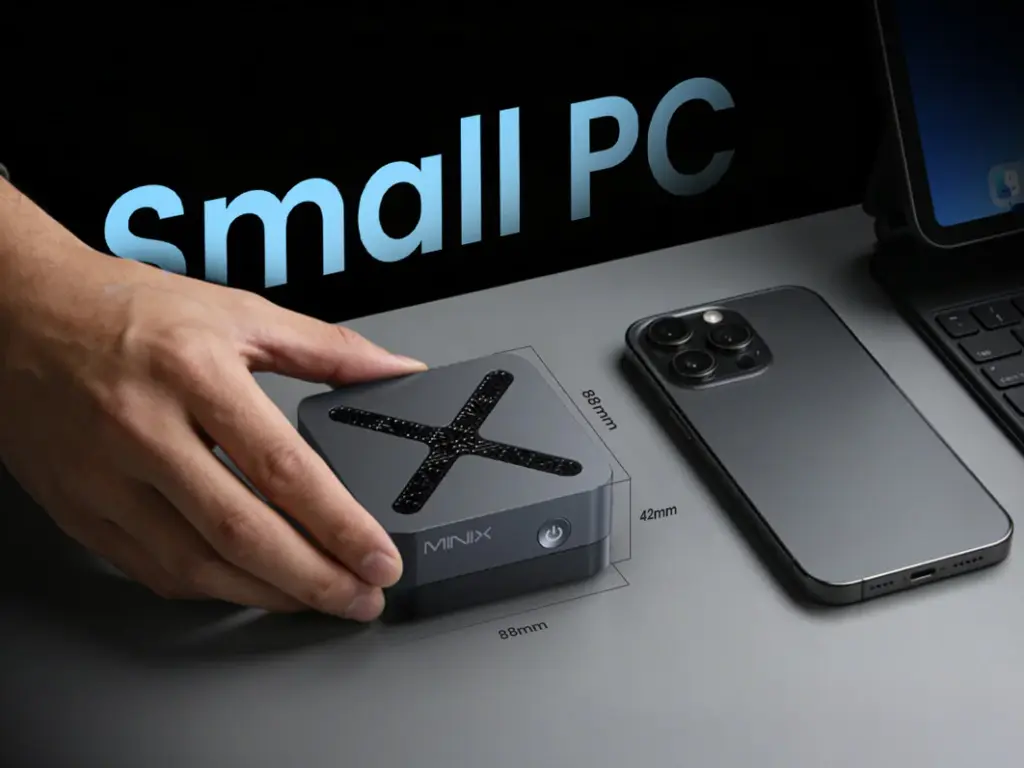
If you’ve ever wished for a full-fledged computer smaller than your smartphone, the new Minix Neo Z95 mini PC might be exactly that. Minix has launched this ultra-compact system designed for everyday desktop tasks. We’ve already seen tiny computers before, but the new Minix Neo Z95 can literally fit in your pocket.
Pocket Friendly Minix Neo Z95 Mini PC Specs
Measuring roughly 88 x 88 x 43mm, the Neo Z95 is small enough to hold in one hand yet packs a surprisingly capable configuration inside. Under the hood, it is equipped with Intel’s N95 processor, a quad-core Alder Lake-N chip that reaches up to around 3.4GHz. This CPU isn’t the most capable, but it has enough horsepower for smooth productivity, web browsing, office work, and video streaming. It isn’t aimed at heavy gaming or demanding creative workloads. Instead, it provides reliable performance for daily use cases.
Minix Neo Z95 Mini PC
Paired with the CPU is 16GB of LPDDR5X RAM and a 512GB PCIe 3.0 SSD, offering generous memory and storage for a mini PC of this size. The SSD can be upgraded for even larger storage down the line, though the RAM is soldered on board. Despite its tiny form factor, the Neo Z95 doesn’t skimp on ports, offering three USB 3.2 Gen 1 Type-A ports, two HDMI outputs and one DisplayPort, allowing the system to support triple-display setups. You also get two Gigabit LAN ports and a 3.5mm audio jack.
This mini PC runs Windows out of the box, making it ready for familiar desktop apps, streaming services, and office tools. Its active cooling keeps temperatures in check during prolonged usage, while the pocket-friendly size and VESA-mount compatibility make it easy to tuck behind a monitor or TV. Pricing hasn’t been officially confirmed by Minix yet, but most Intel N95 powered mini PCs are in the budget segment.
For more daily updates, please visit our News Section.
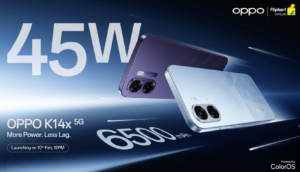
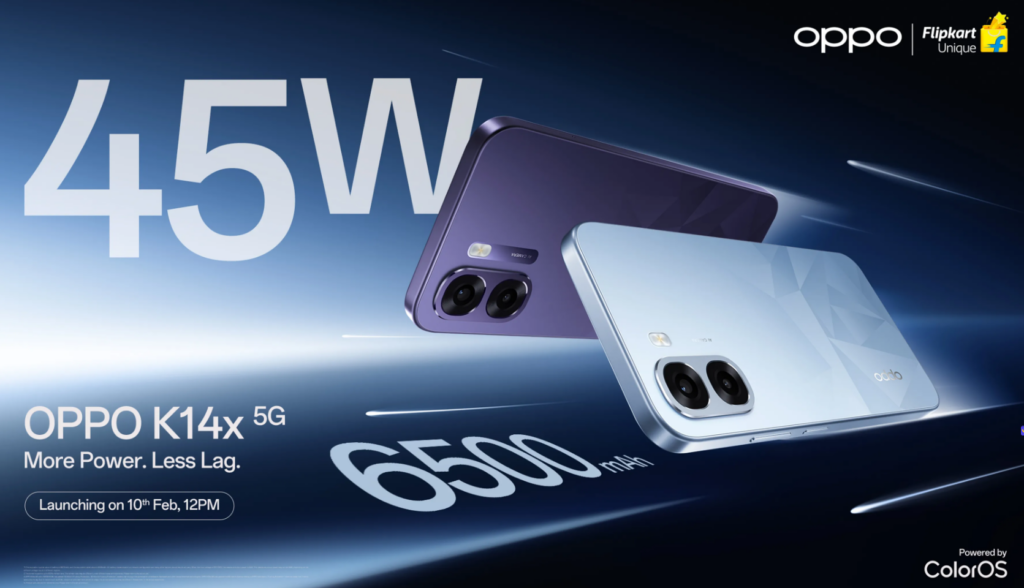
Oppo has officially confirmed that the Oppo K14x 5G will debut on Feb. 10 in India. Ahead of the launch, its microsite is live on Flipkart and Oppo India, revealing its design, color options, and several key features ahead of the launch. Here’s a look at what the device has to offer.
Oppo K14x 5G launch, design, and key specs revealed
The Oppo K14x 5G is set to debut in India on February 10. Design-wise, it features a flat display with a centred punch-hole cutout, while the rear houses a vertically aligned dual-camera module.
On the front, it sports a 6.75-inch HD+ display with a 120Hz refresh rate and a peak brightness of up to 1,125 nits, aimed at delivering smoother scrolling and better outdoor visibility. Oppo has also added Outdoor Mode 2.0 and improved thermal management to maintain visual consistency during extended usage.
At its core, the Oppo K14x 5G is powered by the MediaTek Dimensity 6300 chipset and it runs on ColorOS 15. The phone comes with long-term software optimization, including up to 48-month Fluency Protection. Faster UFS read and write speeds are expected to improve app loading and overall responsiveness.
Oppo K14x 5G key features
The device packs a large 6,500mAh battery paired with 45W fast charging, aimed at lasting through long days of mixed usage, including navigation, video playback, gaming, and calls. For imaging, the phone features a 50-megapixel rear camera supported by AI tools such as AI Eraser, AI Unblur, and AI Reflection Remover. It also includes a side-mounted fingerprint sensor and an IP64 rating for protection against dust and water splashes.
The Oppo K14x 5G is tipped to be priced around Rs 15,000. It will be available in violet and light blue color options.
For more daily updates, please visit our News Section.
Xiaomi has finally started rolling out the much-awaited HyperOS 3 update for the Xiaomi 14 Civi users, while the regular Xiaomi 14 models received it a month ago. Anyway, the update is finally here for Xiaomi 14 Civi, and it brings loads of exciting stuff, including a bundle of new features and dozens of improvements.
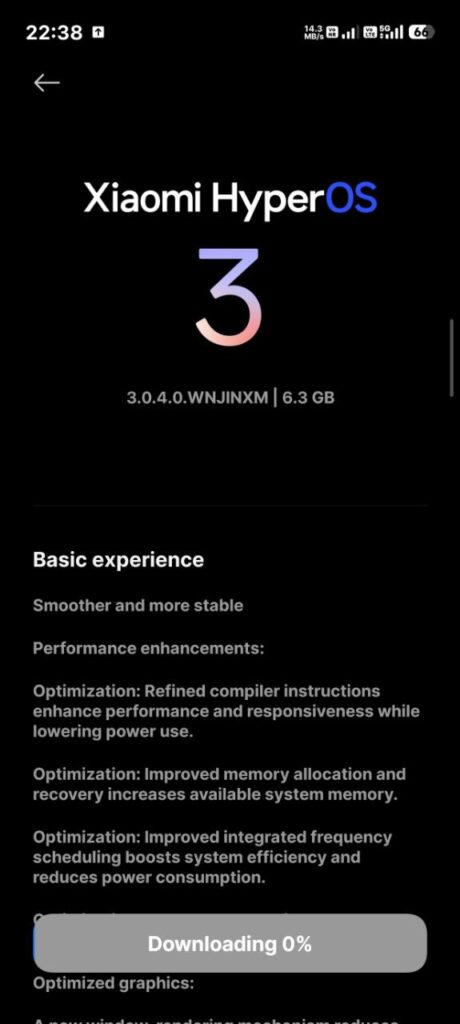
The HyperOS 3 update, based on Android 16, is initially rolling out in India with the firmware version 3.0.4.0.WNJINXM. It’s a massive update package with a download size of about 6.3GB. So, it’s best to download it over a stable Wi-Fi connection.
Since Xiaomi rolls out updates in batches, it may take a few days for all users to receive them. If you’re rocking a Xiaomi 14 Civi, check for available updates manually by navigating to Settings > About phone, then tapping the HyperOS logo. To ensure a smooth upgrade to HyperOS 3, ensure that the device has sufficient space on the internal storage and it’s charged to at least 50%. You can back up important data for added safety.
After upgrading to HyperOS 3.0, you’ll have plenty to explore and play with, including a new HyperIsland, which lets you monitor live activities without opening the app. The updated lock screen now includes AI Cinematic Lock Screen, AI Dynamic Wallpapers, and more new features, allowing greater customization for a more personalized, dynamic lock screen experience.
HyperOS 3 also focuses on AI, with new features such as AI Writing, AI Speech Recognition, AI Search, and AI Translate. The software now features Gemini integration for a more useful software experience. Additionally, Xiaomi has made over 100 improvements to HyperOS 3 to deliver a faster, smoother experience.
The company is also working on HyperOS 3.1, which would still be based on Android 16, and is expected to bring useful upgrades to the software. It has already started recruiting people for the beta program. Unfortunately, the Xiaomi 14 Civi is not on the beta list, but it should receive the update once the stable rollout begins.
To stay updated with the latest news about HyperOS, visit the Xiaomi section regularly. Or, you can join us on Telegram to get instant notifications about the latest HyperOS updates, along with the biggest tech headlines.
Redmi is reportedly working on a new A-series phone called the Redmi A7 Pro. While the device was certified by the FCC authority in December 2025, it is only now, through the NBTC (Thailand) and TDRA (UAE) certifications, that the moniker of this device has been confirmed as the Redmi A7 Pro. Here’s a look at what to expect from the device.
Redmi A7 Pro approved in the UAE, Thailand
Redmi A7 Pro TDRA listingRedmi A7 Pro NBTC listing
The Redmi A7 Pro has appeared with the model number 25128RN17Y in TDRA’s database, whereas it has been spotted with the model number 25128RN17A in Thailand. The latter was also seen on Indonesia’s SDPPI certification platform. These listings do not confirm anything about the core specifications of the phone, but the NBTC listing reveals that it will be a 4G LTE phone.
The appearance of the Redmi A7 Pro moniker suggests that the company has decided to skip the Redmi A6 altogether. Therefore, the A7 Pro is the successor to last year’s Redmi A5.
Redmi’s sibling brand Poco is said to be working on the Poco C81 (model number: 25128RN17G). This is expected to be a rebranded version of the Redmi A7 Pro, just as last year’s Poco C71 was a rebadged edition of the Redmi A5.
Redmi A7 Pro key specifications
Redmi A5
As per the previously seen FCC listing, the Redmi A7 Pro will arrive with a 6.9-inch LCD panel, which may have a waterdrop notch and support an HD+ resolution. Likely, it will run on Android 15 Go edition.
The device is expected to ship with the Unisoc T7250 chip, which also powered last year’s Redmi A5 and Poco C71. The A7 Pro is expected to ship with 4GB / 6GB of LPDDR4x RAM and 64GB / 128GB of eMMC storage.
At present, there is no information about the Redmi A7 Pro’s camera details. Under the hood, it is expected to feature a 6,000mAh battery with 15W charging support over the USB-C port.
For more daily updates, please visit our News Section.
Redmi unveiled the Redmi K Pad, a performance-focused tablet, for China last year. The same device was rebranded as the Xiaomi Pad Mini globally. A new development reveals that the brand is reportedly working on the Redmi K Pad 2. The initial leak has unearthed a few specifications, revealing what to expect from the second-generation offering.
Redmi K Pad 2 specs leaked
Redmi K Pad 2 specs, launch timeframe leak by DCS
As can be seen, well-known tipster Digital Chat Station can be seen talking about an upcoming high-performance tablet. While he has not specified the name of the device, it is largely believed that he could be talking about the Redmi K Pad 2.
The leak suggests that the Redmi K Pad 2 may feature a custom-made 8.8-inch LCD panel offering a 165Hz refresh rate and a 3K resolution. To recall, the Redmi K Pad also featured the same-sized screen with the same resolution and refresh rate.
The leak further states that the Redmi K Pad 2 will feature a flagship-level processor, dual X-axis motors for enhanced haptics, and improved symmetrical dual speakers with co-tuned audio.
Under the hood, the Redmi K Pad 2 will house a massive 9,000mAh battery. This will be a significant upgrade considering that the first-generation model came with a 7,500mAh battery. At present, there is no information about the K Pad 2’s charging and camera capabilities.
Redmi K Pad 2 launch timeframe (rumored)
Redmi K Pad
Redmi unveiled the Redmi K Pad alongside the Redmi K80 Ultra last year. DCS claims that the K Pad 2 will debut alongside a performance-focused flagship, which appears to be the Redmi K90 Ultra, within the first half of this year. So, it may launch in May or June this year. Likely, the tablet may get rebranded as the Xiaomi Pad Mini 2 globally.
For more daily updates, please visit our News Section.
Huawei surprised the tech world last year by announcing the Pura X with an offbeat book-style inward fold and a wider, passport-like form factor, making it noticeably broader and more tablet-oriented than conventional horizontal foldable phones that have a taller, narrower design. Reports have revealed that the brand is working on the Pura X2, and now a new report suggests that its arrival has been slightly delayed.
Huawei Pura X2 launch timeframe (rumored)
Huawei Pura X2 launch timeframe tipped
As can be seen above, a Chinese tech blogger has revealed that while the original Pura X was announced in March 2025, the Pura X2 is expected to be unveiled around April. This puts to rest a previous claim that it would be unveiled in Q1 this year.
There is a possibility that Huawei may unveil its Pura 90 series of flagship phones before the Pura X2. It is advisable to wait for further reports on how and when Huawei plans to launch the upcoming Pura offerings.
Huawei Pura X2 specifications (rumored)
As per a recent leak, the Huawei Pura X2’s main display may increase to a size of 7.5 inches, which is significantly bigger than the 6.3-inch screen available on the original model. The display is said to offer a 16:10 aspect ratio, and the size of the outer screen is also said to increase.
The Pura X2 is said to be equipped with a total of four cameras, which probably includes a selfie camera and a triple camera setup with a 200-megapixel main camera on the back. Under the hood, the device is expected to feature the Kirin 9030 series chipset.
The Pura X2 is expected to arrive in multiple configurations, such as 12GB+256GB, 12GB+512GB, 16GB+512GB, 16GB+1TB, 20GB+512GB, and 20GB+1TB. It may arrive in different shades, such as white, green, orange, blue, black, and purple.
For more daily updates, please visit our News Section.

 Login
Login