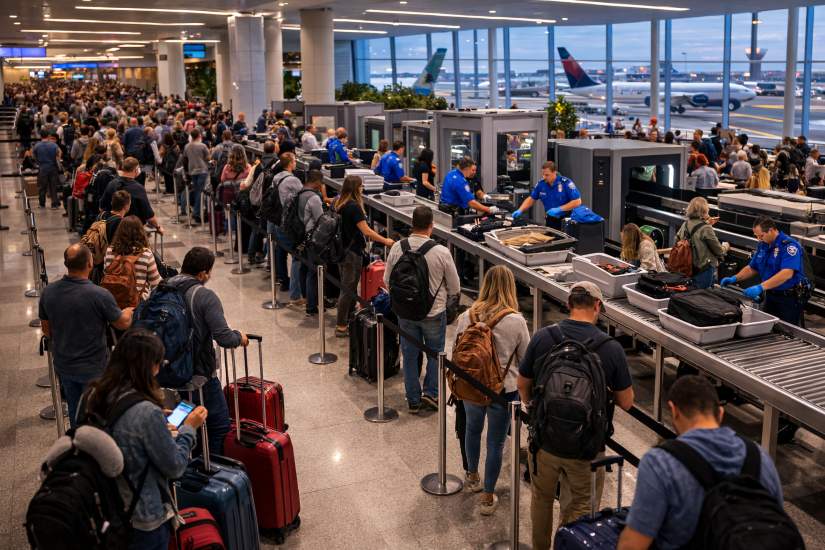
Dubai, United Arab Emirates, Asia – Travel Crisis Deepens as Thousands of Travelers Struggle to Leave the Middle East Amid Evacuation Warnings and Limited Routes
What began as a sudden escalation of conflict in the Middle East has quickly evolved into a major travel crisis affecting thousands of international travelers. Across the region’s major transit hubs, people who arrived for tourism, business, or transit are now facing an uncertain journey home. In Dubai, United Arab Emirates, Asia, one of the world’s busiest aviation gateways, travelers are grappling with flight cancellations, restricted airspace, and confusing evacuation guidance from governments.
The unfolding situation has created a difficult reality: many governments are urging their citizens to leave the region immediately, yet the transportation routes needed to do so remain extremely limited.
According to travel advisories issued through the U.S. Department of State’s Bureau of Consular Affairs, American citizens across several Middle Eastern countries have been advised to depart using any available means of transportation following missile strikes and retaliatory attacks connected to the growing regional conflict.
But for thousands of people currently in the region, leaving quickly is far easier said than done.
A Region-Wide Evacuation Advisory
The U.S. government’s advisory covers a wide stretch of the Middle East. Americans currently in Bahrain, Egypt, Iran, Iraq, Israel, Jordan, Kuwait, Lebanon, Oman, Qatar, Saudi Arabia, Syria, the United Arab Emirates, Yemen, and the Palestinian territories have all been encouraged to depart as soon as possible.
Officials emphasized that citizens should use commercial transportation where available. However, as travelers quickly discovered, finding such transportation has become one of the biggest challenges.
The advisory came after a wave of missile attacks and retaliatory strikes linked to escalating tensions involving the United States, Israel and Iran. As the situation intensified, aviation authorities across the region began restricting airspace to ensure safety.
For travelers caught in the middle of the disruption, the result has been confusion, long waits, and uncertainty about the safest path forward.
Thousands of Flights Suddenly Canceled
Within days of the conflict escalating on February 28, the region’s aviation network experienced an enormous shock. Nearly 20,000 flights to and from the Middle East were canceled, creating one of the largest travel disruptions in recent years.
Few airports illustrate the impact better than Dubai International Airport, widely recognized as the busiest airport in the world for international passenger traffic.
The airport temporarily suspended operations while authorities assessed the evolving security risks. Although limited flights resumed on March 2, schedules remain far below normal levels.
For travelers hoping to catch a flight home, that means fewer available seats, longer waiting times, and intense competition for remaining routes.
Aviation analysts say the scale of disruption is comparable to what the travel industry experienced during the COVID-19 pandemic, when global aviation networks were forced to shut down almost overnight.
Global Flight Routes Forced to Change
The Middle East sits at the center of global aviation routes, linking Asia, Europe, and Africa. Many long-haul flights rely on the region’s airspace or its major transit hubs to move passengers across continents.
When that corridor suddenly becomes unavailable, airlines must quickly reroute aircraft.
Some carriers are now diverting flights north through Central Asia or Eastern Europe. Others are taking longer southern routes around the Arabian Peninsula and parts of Africa.
These changes increase travel time, fuel consumption, and operational complexity for airlines. They also create delays that ripple across the entire global aviation system.
Experts say this disruption highlights just how critical Middle Eastern airspace is to international travel.
Governments Attempt to Bring Citizens Home
As the travel crisis continues, several governments have begun organizing evacuation efforts.
Reports indicate that more than 9,000 American citizens have already departed the Middle East, while thousands more have contacted authorities seeking assistance with travel arrangements.
Officials say additional charter and military flights are being prepared to help evacuate citizens when possible. However, the process is complicated by limited airport operations and security restrictions across the region.
European governments are also stepping in. Both the United Kingdom and France have arranged charter flights designed to assist vulnerable nationals who wish to leave the region.
Large numbers of citizens from these countries have already registered with their governments requesting evacuation assistance.
Private Flights Offer an Expensive Escape
While most travelers must rely on commercial airlines or government evacuation plans, a small number of wealthy individuals have turned to private aviation.
Reports suggest that luxury charter flights from smaller regional airports have surged in demand. In some cases, the cost of securing a private jet seat to Europe has climbed as high as 200,000 euros (around $232,000).
For the vast majority of travelers, however, such options are simply out of reach.
Instead, many remain in hotels, airports, or temporary accommodations while waiting for commercial flights to reopen.
Confusion Over What Travelers Should Do
Another challenge for travelers has been the mixed guidance surrounding evacuation and safety.
Government advisories encouraging citizens to leave the region are being issued at the same time that some security experts recommend temporarily sheltering in place until safer routes become available.
This difference in advice has left many travelers unsure about the best course of action.
For businesses with employees in the region, the situation has also become complicated. Corporate security teams must decide whether to attempt evacuations or advise staff to remain where they are until conditions stabilize.
Land Routes Offer Limited Alternatives
For travelers unable to find flights, traveling by road may seem like an alternative.
However, reaching airports in less affected countries can involve eight to twelve hours of driving, often on crowded highways as thousands of people attempt to leave major cities.
Border crossings can also involve long delays and uncertain entry conditions.
Maritime routes are equally complicated. Shipping lanes near the Strait of Hormuz, one of the world’s most important maritime passages, remain under heightened security due to ongoing military activity.
Waiting for the Skies to Reopen
Aviation experts believe that restrictions on airspace may gradually ease in the coming days as authorities reassess safety conditions.
Until that happens, travelers across the region are being encouraged to closely monitor official government guidance and airline updates.
Airlines, governments, and international organizations are continuing to coordinate efforts aimed at restoring travel routes and assisting stranded passengers.
For now, thousands of travelers remain caught in a challenging situation—balancing evacuation advisories with the reality of limited transportation options.
As the aviation network slowly begins to stabilize, many stranded passengers across Dubai, United Arab Emirates, Asia, and other Gulf travel hubs are hoping that normal flight routes will soon return and allow them to safely continue their journeys home.
The post
Dubai, United Arab Emirates, Asia – Travel Crisis Deepens as Thousands of Travelers Struggle to Leave the Middle East Amid Evacuation Warnings and Limited Routes appeared first on
Travel And Tour World.

 Login
Login