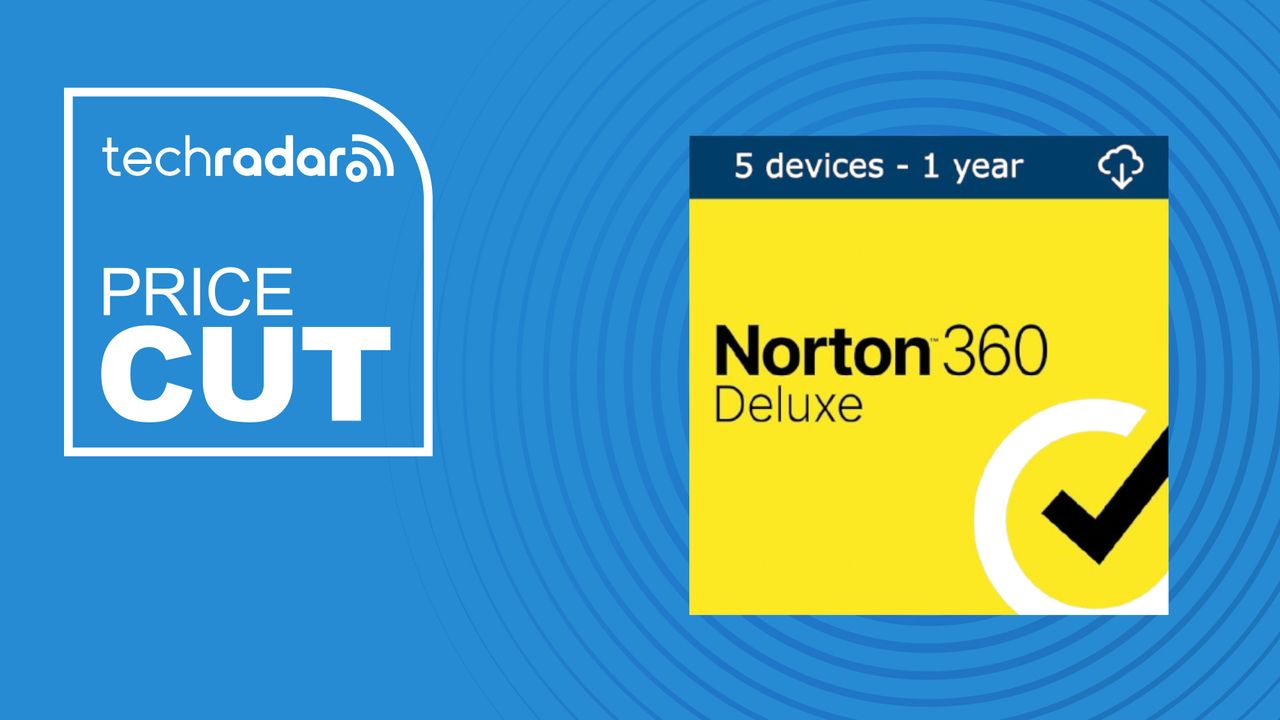
Antivirus, parental control app, VPN, password manager, dark web monitoring, scam protection, and cloud backup makes this perfect for household protection
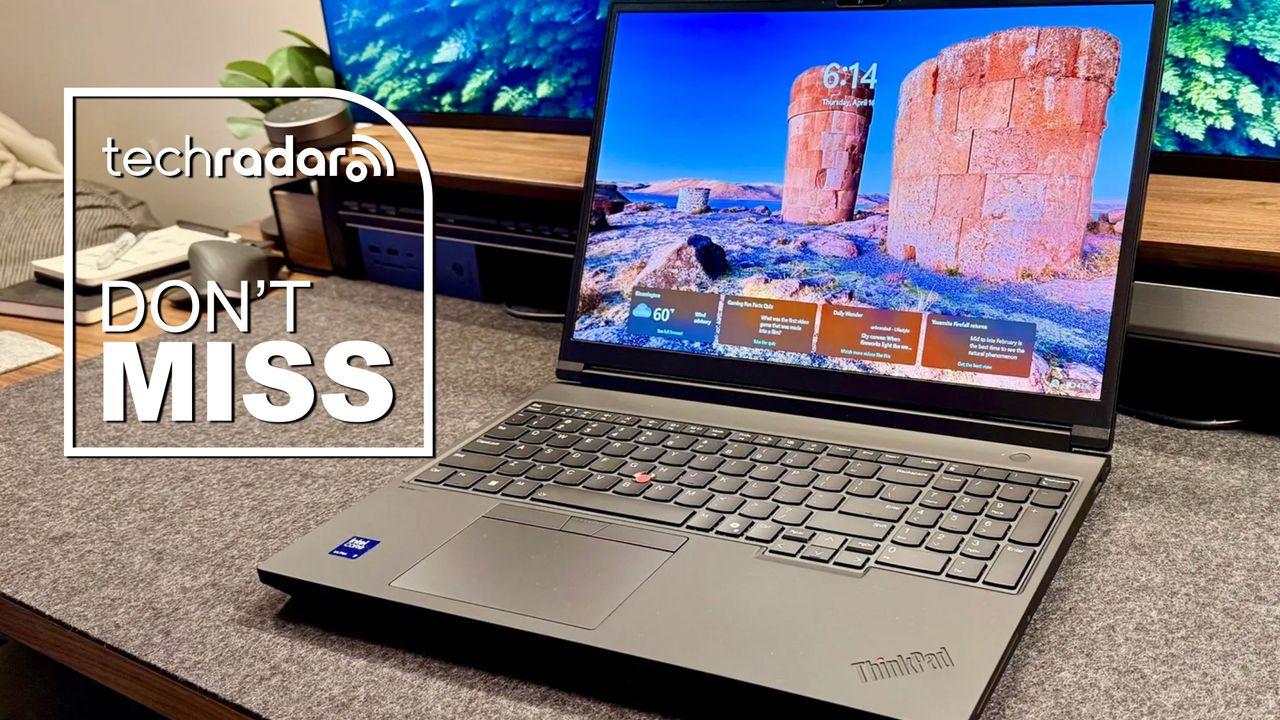
With an Intel Core Ultra 7 processor, Nvidia RTX PRO graphics and 32GB of DDR5 memory, Lenovo's discounted workstation is an easy recommendation from me.
Global regulators have signaled a permanent shift in how they view corporate communication. Today, messaging apps are a multi-billion-dollar legal liability.
Qualcomm appears determined to squeeze out Exynos 2700 from the upcoming Galaxy S27 series, and has prepared as many as six Snapdragon 8 Elite Gen 6 Pro variants to render Samsung Mobile spoilt for choice. Samsung LSI, however, is now reportedly equally adamant at not letting Qualcomm eat its lunch and is preparing an apt "response" to this gambit. Samsung's Galaxy S27 series is emerging as an unequivocal winner in the ongoing tussle between Qualcomm's Snapdragon 8 Elite Gen 6 Pro variants and Samsung LSI's Exynos 2700 chip As we reported recently, Qualcomm is preparing as many as six variants […]
Without the TSME support, the Ryzen-based systems will be prone to cold boot attacks, but AMD didn't consider informing users before removing it. AMD Removes TSME Support from Ryzen Chips as It Reserves It Only for the "PRO" Family TSME, or Transparent Memory Secure Encryption, is a hardware security feature that encrypts everything stored in the system RAM using a key generated by the processor during boot. Unlike AMD's SME (Secure Memory Encryption, the TSME feature works automatically once enabled in the BIOS and doesn't rely on the operating system. For 'privacy-conscious Linux hobbyist' Ben Kilpatrick, this came as a […]
Apple and CEO Tim Cook have sounded the alarm concerning the iPhone 18 price hike, with upcoming models expected to become more expensive due to the ongoing DRAM shortage. In short, the trillion-dollar giant says that the situation has become unavoidable, but how large of a difference can customers expect to pay? One research firm might have an answer, but you’re not going to like it. TechInsights believes that for Apple to maintain its profits, the iPhone 18 Pro needs to become $270 more expensive As Apple’s memory stockpile begins to dwindle, it’s left with little choice but to ramp […]
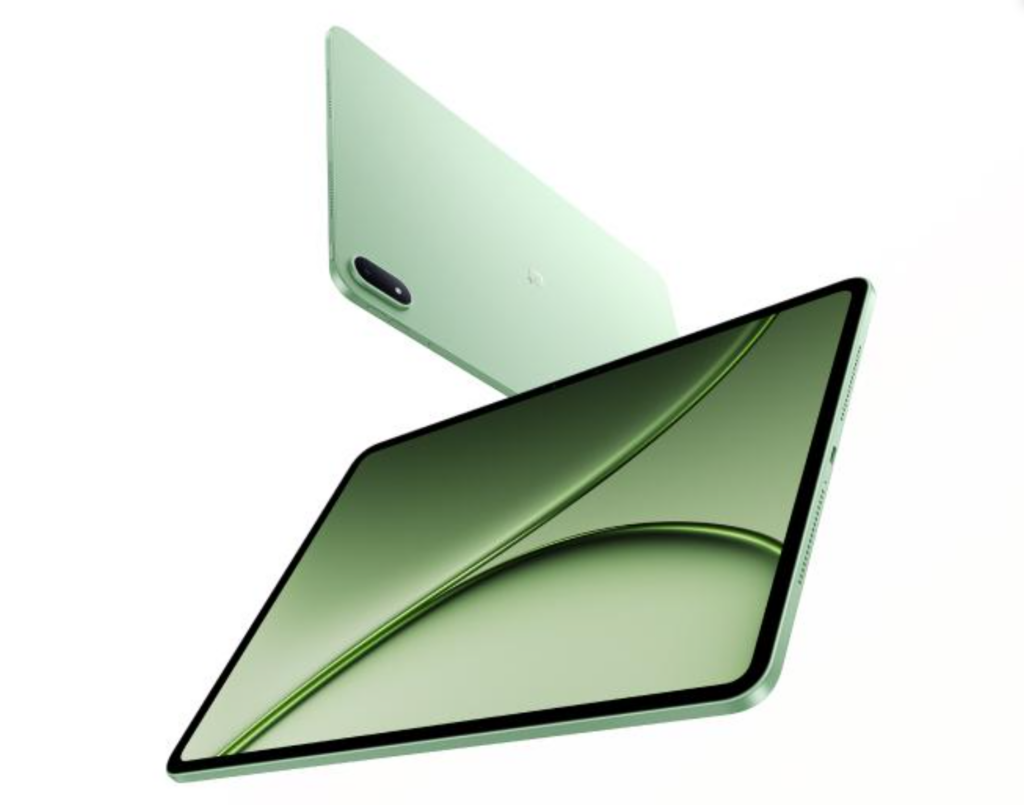
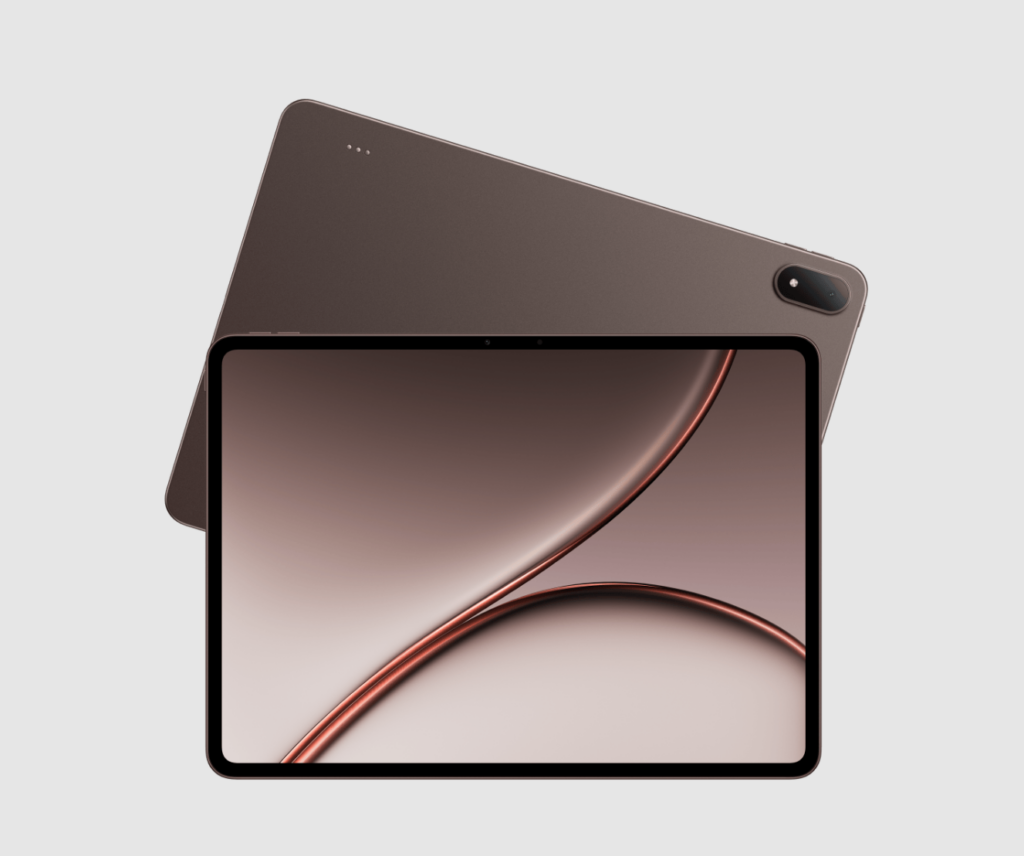
OnePlus has silently unveiled the OnePlus Pad 3 Pro in China. The new tablet arrives as the successor to the OnePlus Pad 2 Pro, which debuted in the country in May 2025. While the hardware shares similarities with the globally available OnePlus Pad 4, the latest model is aimed specifically at the Chinese market. Read on to learn what the tablet brings to the table.
OnePlus Pad 3 Pro specifications and features
The OnePlus Pad 3 Pro features a 13.2-inch LCD panel with a 7:5 aspect ratio, 3392 x 2400 pixel resolution, and refresh rate support ranging from 30Hz to 144Hz. The display reaches up to 1,000 nits of peak brightness and covers 98 percent of the DCI-P3 color gamut. Under the hood, the tablet is powered by Snapdragon 8 Elite Gen 5 chipset, which is currently the most potent chip from Qualcomm.
The device is available with up to 16GB of LPDDR5X RAM and up to 512GB of UFS 4.1 storage. It runs ColorOS 16 and includes productivity-focused features such as PC-level WPS Office, file management tools, cross-device screen sharing, keyboard and mouse sharing, and several AI-powered tools for note-taking, translation, and content creation.
OnePlus Pad 3 Pro
For photography and video calls, the tablet includes a 13-megapixel rear camera and an 8-megapixel front-facing camera. Keeping the lights on is a 13,380mAh battery with support for 67W fast charging. It comes with other features, such as Wi-Fi 7, Bluetooth 5.4, USB 3.2 Gen 1, eight speakers, dual microphones, face unlock support, and stylus support. Lastly, it has a slim 5.94mm chassis that weighs approximately 672 grams.
OnePlus Pad 3 Pro price and availability
The OnePlus Pad 3 Pro is offered in Dark Brown and Light Green color options. Pricing starts at 4,399 Yuan (around $650) for the 12GB + 256GB variant, while the 12GB + 512GB model costs 4,899 Yuan (around $725). The top-end 16GB + 512GB edition is priced at 5,399 yuan (around $800).
The OnePlus Pad 3 Pro is the brand’s most powerful tablet yet, featuring Qualcomm’s latest flagship chipset and premium hardware. The catch is that it appears to be limited to China, while the globally branded OnePlus Pad 4 has only been launched in India so far, leaving other markets without either model.
For more daily updates, please visit our News Section.
OnePlus is giving its popular Nord audio lineup a fresh update with the new Nord Buds 4. They’re packing in some useful features, like strong noise cancellation and long battery life, while still keeping things affordable.
The company has now officially shared the key specs ahead of the June 25 launch in India. The big highlight is the up to 52dB active noise cancellation (ANC), which should do a solid job blocking out noise whether you’re commuting, working, or just trying to focus. Inside, the earbuds pack 12mm titanium-plated dynamic drivers that promise punchy bass and clear audio for music, movies, and calls.
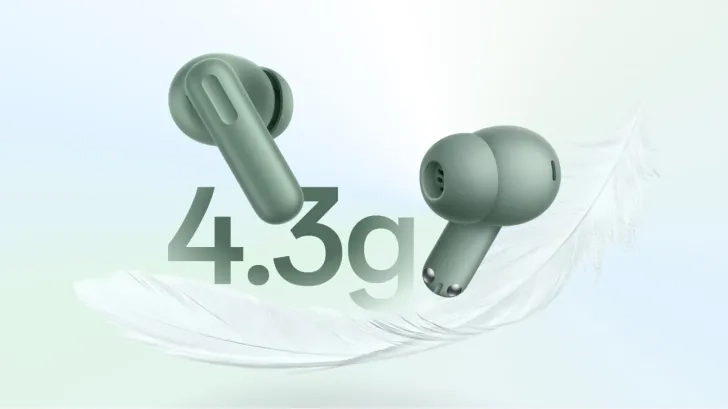
Each earbud is super lightweight at just 4.3g and has an ergonomic design meant for comfortable long sessions. They also support 3D spatial audio and game spatial sound effects, which should make listening feel more immersive. You’ll be able to pick them up in two cool colors: Astral Teal (a nice cyan shade) and the classic Stellar Black.
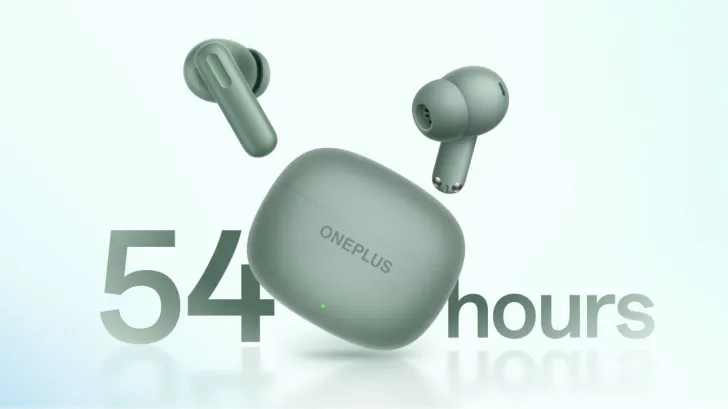
Battery life looks like one of the strongest points. With the charging case, you’re looking at up to 54 hours of total playback. And if you’re in a rush, 10 minutes of fast charging gives you around 11 hours of use, which is super handy for busy days.
Pricing hasn’t been revealed yet, but these are clearly aimed at the competitive mid-range TWS segment. They build on the Nord series’ reputation for offering good value, and they should pair nicely with OnePlus phones through the HeyMelody app for smoother controls and possible software tweaks.
Overall, with solid ANC, good drivers, lightweight comfort, and marathon battery life, the Nord Buds 4 seem ready to take on rivals from Redmi and CMF. As the June 25 launch gets closer, it’ll be interesting to see how they actually perform in real life and whether they deliver that sweet spot of performance, comfort, and price that budget-conscious users are looking for.
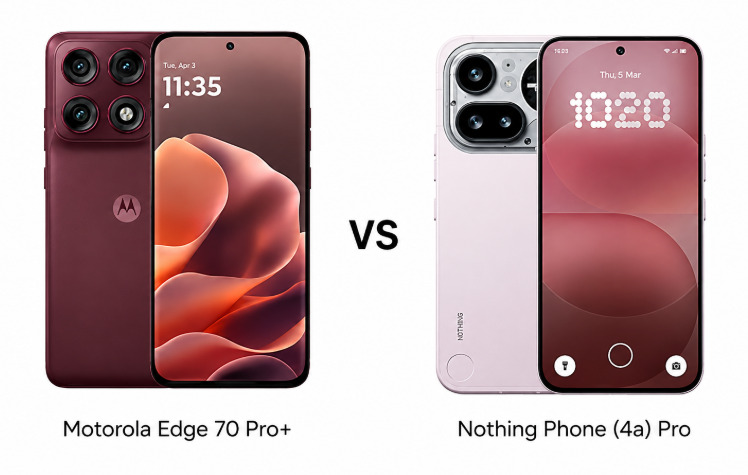
Motorola’s Edge 70 Pro+ and Nothing’s Phone (4a) Pro target buyers who want premium features without entering flagship price territory. Both devices offer high-refresh-rate AMOLED displays, telephoto cameras, and large batteries, but they take different approaches. Motorola focuses on performance, battery endurance, and durability, while the Nothing device emphasizes design, software experience, and its distinctive Glyph-inspired lighting system. Choosing between them depends on whether raw hardware or a more unique user experience matters more.
Major Features:
Category
Motorola Edge 70 Pro+
Nothing Phone (4a) Pro
Winner
Design & Build
Eco-leather back, IP68/IP69, MIL-STD-810H
Aluminum unibody, IP65
Motorola – Better durability
Premium Feel
Practical and comfortable finish
Premium aluminum construction
Nothing – More premium materials
Display Technology
AMOLED, 144Hz, 5200 nits peak
AMOLED, 144Hz, 5000 nits peak
Motorola – Brighter panel
Display Size
6.78-inch
6.83-inch
Nothing – Larger screen
Outdoor Visibility
Excellent sunlight readability
Very good brightness
Motorola – Higher peak brightness
Processor
Dimensity 8500 Extreme
Snapdragon 7 Gen 4
Motorola – Faster chipset
GPU
Mali-G720 MC8
Adreno 722
Motorola – Better graphics power
Storage Type
UFS 4.1
UFS 3.1
Motorola – Faster storage
RAM & Storage
12GB + 256GB
Up to 12GB + 256GB
Tie – Similar capacity
Gaming Performance
Strong sustained performance
Good for casual gaming
Motorola – Better gaming experience
Main Camera
50MP OIS
50MP OIS
Tie – Comparable hardware
Telephoto Camera
50MP, 3.5x zoom
50MP, 3.5x zoom
Tie – Similar zoom capability
Ultrawide Camera
50MP ultrawide
8MP ultrawide
Motorola – Much better ultrawide
Rear Camera System
Three 50MP cameras
Two 50MP + 8MP ultrawide
Motorola – More versatile setup
Video Recording
Up to 4K 120fps
Up to 4K 30fps
Motorola – Superior video options
Selfie Camera
50MP AF, 4K video
32MP, 1080p video
Motorola – Better selfies and video
Battery Capacity
6500mAh
5080mAh/5400mAh
Motorola – Larger battery
Wired Charging
90W
50W
Motorola – Faster charging
Wireless Charging
15W wireless, reverse wireless
Not available
Motorola – Extra charging features
Connectivity
Wi-Fi 7, Bluetooth 5.4
Wi-Fi 6, Bluetooth 5.4
Motorola – Newer wireless standard
Audio
Dolby Atmos, Hi-Res Audio
Stereo speakers
Motorola – Richer audio features
Software Support
3 Android upgrades
3 Android upgrades
Tie – Equal support policy
Unique Features
Military-grade durability, wireless charging
Glyph LEDs, aluminum body
Nothing – More distinctive design
Price/Value
Priced around $570 / ₹48,000
Priced around $500 / ₹40,000
Nothing – Better affordability
Disclaimer: Specs are based on available data. Actual performance may vary. Verify details from official sources before buying.
Design and Display
Build and Feel
The Motorola Edge 70 Pro+ uses an eco-leather back paired with a plastic frame, creating a comfortable in-hand feel that resists fingerprints and offers a more practical everyday experience. It also brings stronger durability credentials with IP68/IP69 protection and MIL-STD-810H certification, making it a better choice for users who prioritize toughness and reliability.
The Nothing Phone (4a) Pro takes a more premium visual approach with an aluminum unibody construction and its signature mini-LED lighting system on the rear. The design stands out immediately and feels more distinctive than most smartphones in this segment. For buyers who value aesthetics and uniqueness, the Nothing device has a stronger visual appeal.
Display Quality
Both phones feature 144Hz AMOLED panels with HDR10+ support and excellent color reproduction. The Nothing offers a slightly larger display and thinner bezels, creating a more immersive viewing experience. However, the Motorola counters with higher brightness capabilities, making outdoor visibility more impressive under direct sunlight.
Verdict
The Nothing Phone (4a) Pro feels more premium and distinctive, but the Motorola Edge 70 Pro+ wins overall thanks to its superior durability and brighter display performance.
Specifications Including Battery
Performance
The Motorola Edge 70 Pro+ is powered by the MediaTek Dimensity 8500 Extreme chipset paired with fast UFS 4.1 storage. It delivers stronger processing power, faster app launches, and better sustained performance during gaming and multitasking. The hardware feels closer to upper-tier flagship devices than a traditional mid-range smartphone.
The Nothing Phone (4a) Pro uses the Snapdragon 7 Gen 4 chipset with UFS 3.1 storage. Daily performance remains smooth and responsive, and Nothing OS 4.1 provides a clean software experience. However, demanding workloads and heavy gaming sessions reveal the performance gap between the two devices.
Battery and Charging
Battery life is a major strength of the Motorola thanks to its massive 6500mAh battery. Combined with 90W wired charging and wireless charging support, it offers excellent convenience and endurance. The Nothing device provides respectable battery life with its 5080mAh global and 5400mAh Indian variants, but its 50W charging is noticeably slower and lacks wireless charging.
Verdict
The Motorola Edge 70 Pro+ clearly leads in performance, battery capacity, charging speed, and overall hardware capability, making it the stronger long-term performer.
Camera
Main and Secondary Lenses
Both phones feature a 50MP main camera and a 50MP periscope telephoto lens with 3.5x optical zoom, creating a surprisingly close contest. Motorola gains an advantage with its 50MP ultrawide camera, which captures more detail and flexibility than Nothing’s 8MP ultrawide sensor. This difference becomes noticeable in landscape photography and group shots.
Video recording is another area where Motorola pulls ahead. Support for 4K recording up to 120fps provides more creative flexibility, while Nothing is limited to 4K at 30fps. The Nothing device still produces attractive images with strong contrast and HDR processing, particularly in daylight conditions.
Selfie Camera
Motorola includes a 50MP autofocus selfie camera capable of 4K recording. The Nothing offers a 32MP front camera limited to 1080p video. The Motorola setup delivers sharper results and more versatility for content creators and video callers.
Verdict
The Motorola Edge 70 Pro+ offers a more complete camera package, particularly due to its superior ultrawide camera, stronger video capabilities, and higher-quality selfie setup.
Pricing
The Motorola Edge 70 Pro+ is priced around $570 (₹48,000), while the Nothing Phone (4a) Pro is priced around $500 (₹40,000). The price gap is noticeable but not excessive, considering the hardware differences between the two devices.
For the additional cost, the Motorola delivers a more powerful chipset, larger battery, faster charging, wireless charging support, stronger durability ratings, brighter display output, and a more capable camera system. These upgrades affect daily usage and are not merely specification-sheet advantages.
The Nothing Phone (4a) Pro remains attractive for buyers seeking a distinctive design and a clean software experience while saving money. It provides a balanced package that covers most essentials without feeling compromised. However, when comparing pure hardware value, the Motorola stretches the budget further.
Verdict
The Nothing Phone (4a) Pro offers solid value at its price, but the Motorola Edge 70 Pro+ justifies its higher cost with meaningful upgrades across nearly every major category.
Disclaimer: Prices are approximate and may vary based on country, region, launch timing, and applicable taxes. Always check whether the listed price is for a China unit or a global/international variant when purchasing.
Conclusion
The Motorola Edge 70 Pro+ stands out through its large 6500mAh battery, 90W charging, wireless charging support, advanced durability certifications, brighter display, and stronger overall camera system. It is designed for users who prioritize performance, endurance, and versatility.
The Nothing Phone (4a) Pro differentiates itself with its aluminum unibody construction, unique mini-LED rear lighting system, clean Nothing OS interface, and lower entry price. It delivers a more distinctive personality than many competitors and appeals to buyers looking for something visually different.
Verdict
Both devices are strong contenders in the upper mid-range segment, but the Motorola Edge 70 Pro+ emerges as the better all-around smartphone. Its superior performance, battery life, charging capabilities, durability, and camera versatility provide tangible advantages in everyday use.
Nothing Phone (4a) Pro remains a compelling alternative for users who prioritize design and software experience, but for most buyers, the Motorola offers the more complete package and the stronger overall value proposition.
Disclaimer: This comparison is based on the specifications provided and is intended for general informational purposes. Actual performance, camera results, battery life, and overall experience may vary depending on real-world usage, software updates, and individual preferences.
Employees increasingly use AI tools secretly at work despite restrictions, often sharing sensitive data while believing policies are inconsistently enforced.
Cybersecurity researchers found vulnerabilities in power and cooling systems inside data centers that could allow attackers to disrupt physical infrastructure operations
SanDisk has introduced its new Optimus GX PRO 850P NVMe SSDs for Sony PS5 consoles, offering up to 8 TB capacities, but they come at a massive price tag. Paying For SanDisk's New 8 TB SSD Feels Like Buying Three Sony PS5 Pro Consoles Today, SanDisk introduced its new SSD lineup, which is officially licensed for the Sony PS5 series consoles. These are the Optimus GX PRO 850P NVMe SSDs, and come in up to 8 TB capacities. These SSDs are PCIe Gen 4.0 compliant and feature up to 7200 MB/s Read and 6600 MB/s Write speeds with 1.2 Million […]
A standard Snapdragon 8 Elite Gen 6 followed by the premium Snapdragon 8 Elite Gen 6 Pro are slated to launch later this year, becoming Qualcomm’s first 2nm chipsets to arrive to the market. However, the advanced lithography is rumored to make the top-end SoC ludicrously expensive, but according to the latest leak, there could be six samples for Qualcomm’s partners to choose from, offering a diversified lineup for manufacturers to mix and match their launches and reduce their chipset expenditure. New leak reveals the Snapdragon 8 Elite Gen 6 Pro may also have varying CPU and GPU clock speeds to […]
Unmissable Father's Day 2026 gift guide: From smart alarm clocks to rechargeable air dusters, these practical tech gifts are perfect for dads everywhere.
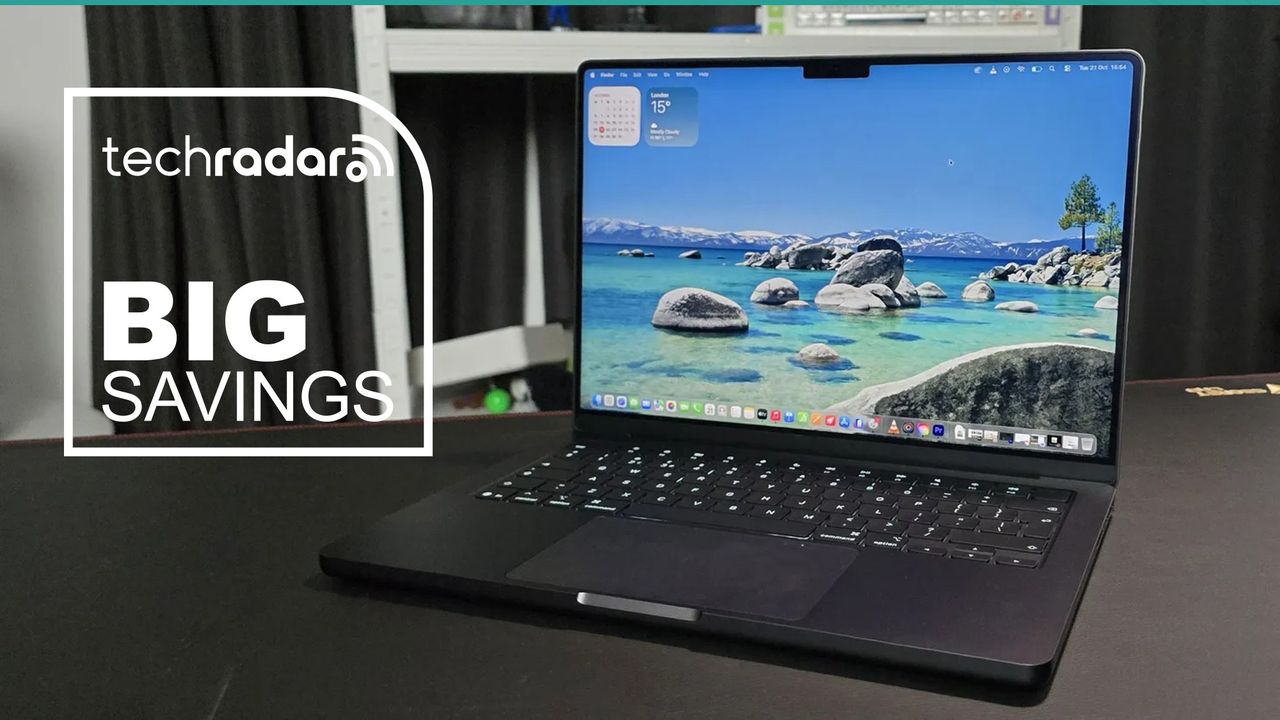
Apple's MacBook Neo has been discounted by £50 on Amazon, making the AI-ready laptop with its A18 Pro chip an even better buy for students, professionals and everyday users
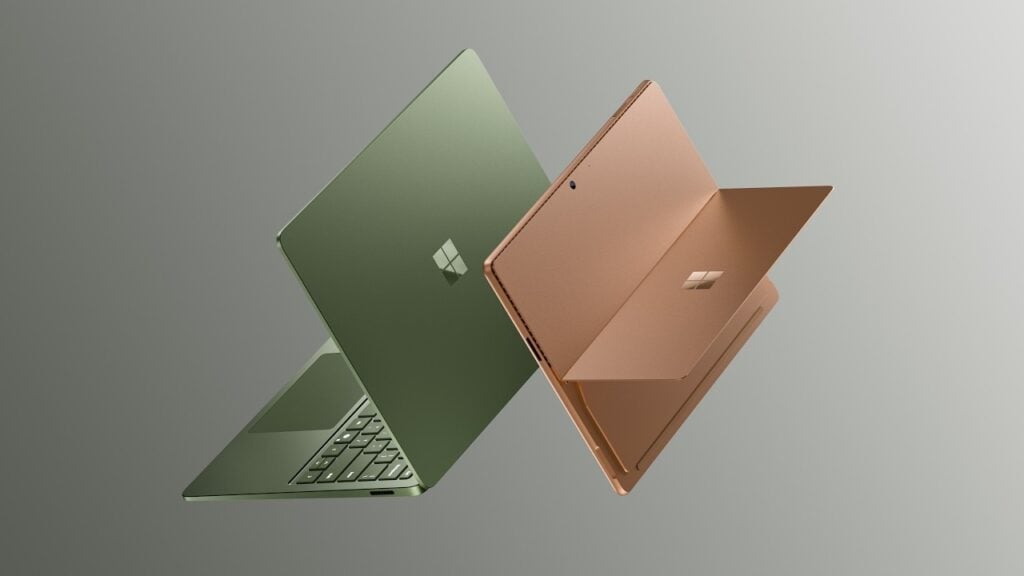
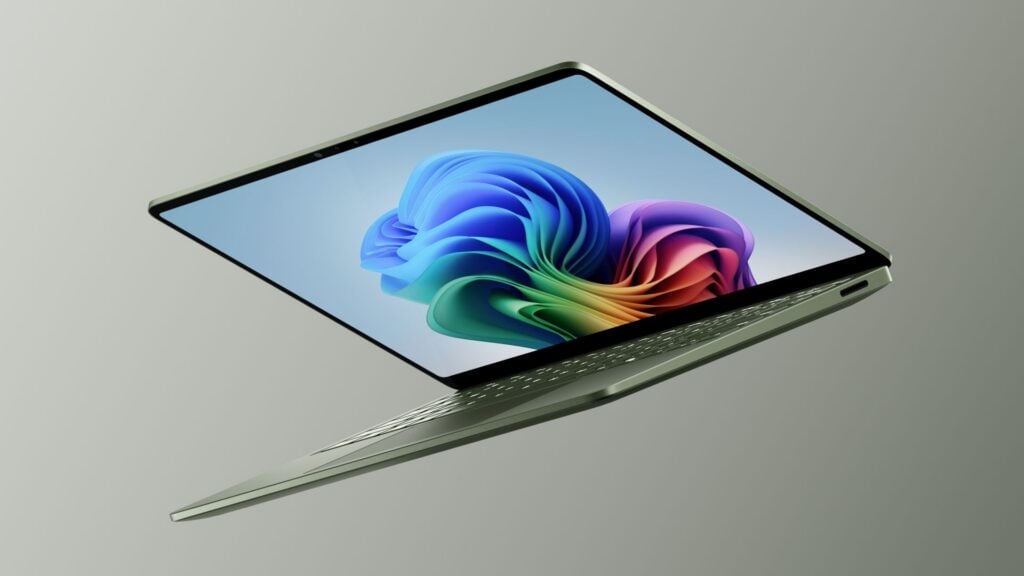
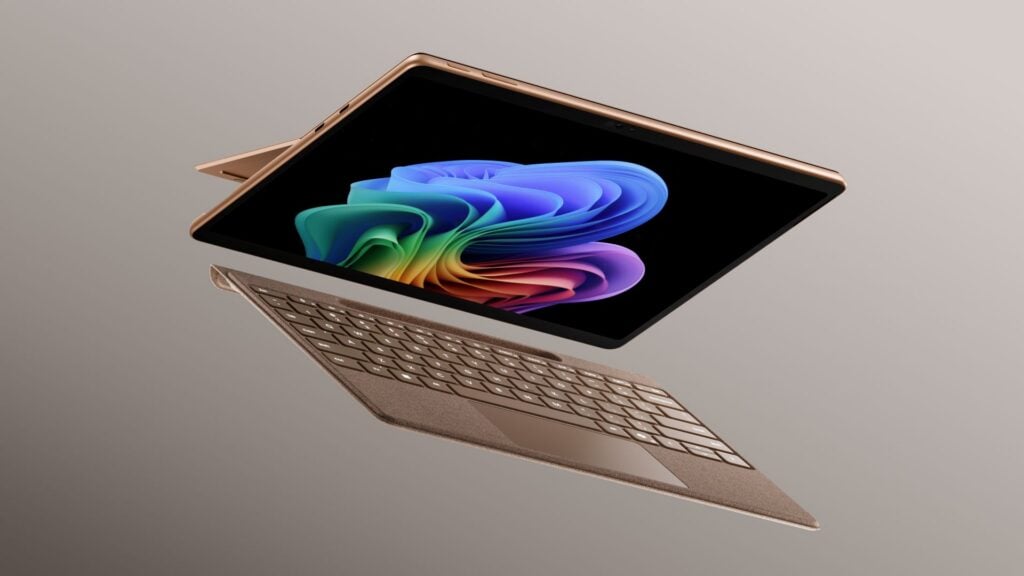
Microsoft has released its latest generation of Surface hardware. The 12th Edition Surface Pro and 8th Edition Surface Laptop are available for consumers starting today, June 16, with enterprise models scheduled for release on July 14. The primary update for this hardware cycle is the integration of Qualcomm’s new Snapdragon X2 architecture.
Surface Laptop & Surface Pro Specifications
Both the tablet and laptop lines are equipped with either the 10-core Snapdragon X2 Plus or the 12-core Snapdragon X2 Elite processors. These chips include a Qualcomm Hexagon NPU capable of 80 TOPS, which Microsoft says is designed to handle local AI processing tasks within Windows.
Memory configurations for the devices start at 16GB and can be upgraded to 64GB, while storage options range from 256GB (or 512GB on the 15-inch laptop) up to 1TB.
The Surface Laptop is available in two screen sizes: 13.8 inches and 15 inches. The 13.8-inch model starts at $1,599 and features a 120Hz LCD screen with a pixel density of 201 PPI. Microsoft’s battery estimates suggest up to 20 hours of local video playback.
The 15-inch version, starting at $1,699, includes a denser display at 262 PPI and adds a MicroSDXC card reader. Both laptops include two USB-C/USB4 ports and one USB-A port. The 13.8-inch model is also available in a new green colorway called Jade, alongside the standard Platinum, Black, and Dune options.
On the 2-in-1 side, the 13-inch Surface Pro 12 starts at $1,499 and is available in Platinum, Black, and Dune. The distinct hardware change for this generation is the availability of an optional OLED display, which retains the 120Hz dynamic refresh rate found on the LCD models.
The tablet includes a 1440p ultrawide front-facing camera, Wi-Fi 7 support, and two USB-C/USB4 ports. Battery life is rated at up to 15.5 hours for local video playback.
In related news, Lenovo has recently refreshed the ThinkBook 16p 2026 with an Intel Core Ultra 7 251HX processor and Nvidia RTX 5060 graphics.
For more daily updates, please visit our News Section.
Xiaomi 18 recently surfaced in the GSMA product database, confirming its existence. Based on how Xiaomi rolls out its flagships, the new Xiaomi 18 series should reach buyers as early as September this year.
However, tipster Digital Chat Station in a fresh reveal says Xiaomi is switching up its usual release order this time around. Instead of launching the standard and Pro models together, Xiaomi will reportedly bring out the higher-spec Xiaomi 18 Pro series first in September, with the standard Xiaomi 18 following shortly after.
The gap between the two launches will not be large, and both phones are said to be available for purchase before the Chinese Spring Festival, which falls in February.
Now, if that sounds familiar, that’s because it is. Apple is expected to launch the iPhone 18 Pro in September, while the vanilla iPhone 18 is rumored to follow later in 2027. Xiaomi seems to be employing the same approach.
And…it might not be the only thing Xiaomi will copy from Apple—rumors suggest the company also plans to use the signature red color expected for the iPhone 18 series.
A price hike is the bigger issue
A bigger concern is that the Xiaomi 18 series is said to cost noticeably more than its predecessors. And this isn’t a Xiaomi-only move. Rising costs across the upstream supply chain are pushing prices up for nearly every major Android brand, not just Xiaomi.
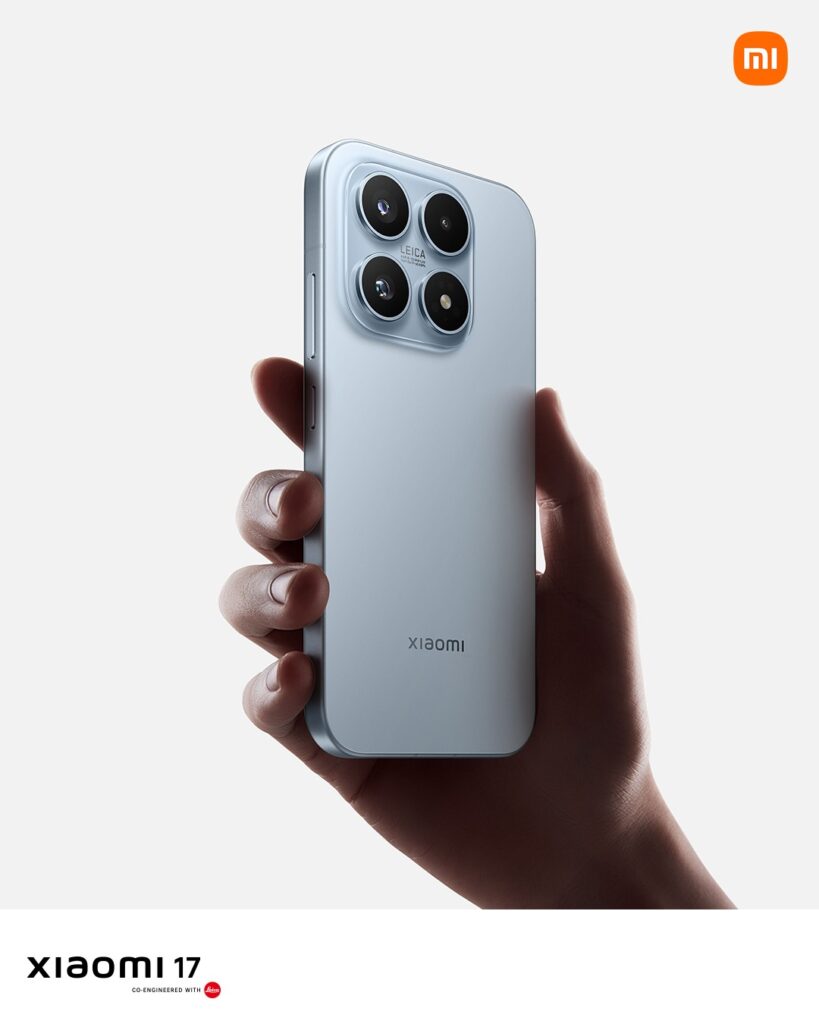
Xiaomi 17
Xiaomi founder Lei Jun has already weighed in on the memory issue. He said the current jump in memory prices is severe, and that supply prices are likely to keep climbing over the next two years. His advice to anyone planning to upgrade their phone soon is simple: buy sooner rather than later.
On the hardware side, the Xiaomi 18 series will be among the first phones to use Qualcomm’s new Snapdragon 8 Elite Gen 6 platform.
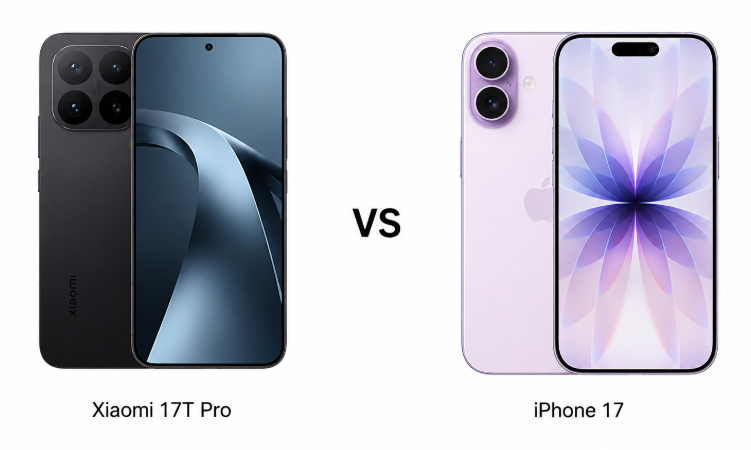
Xiaomi 17T Pro and iPhone 17 represent two very different visions of a modern flagship smartphone. One focuses on delivering cutting-edge hardware, massive battery life, and feature-packed specifications, while the other relies on refined software, ecosystem integration, and Apple’s signature user experience. With both devices competing in a similar price range, the real question is whether premium hardware or polished optimization offers the better overall value.
Major Features:
Category
Xiaomi 17T Pro
iPhone 17
Winner
Build Quality
Gorilla Glass 7i
Ceramic Shield 2
Apple – Tougher screen protection
Display
144Hz AMOLED
120Hz LTPO OLED
Xiaomi – Smoother and more feature-rich panel
Brightness
3500 nits peak
3000 nits peak
Xiaomi – Higher peak brightness
Performance
Dimensity 9500
A19
Apple – Better optimization and efficiency
RAM
Up to 16GB
8GB
Xiaomi – More multitasking headroom
Storage
Up to 1TB
Up to 512GB
Xiaomi – Higher storage option
Main Camera
50MP Wide
48MP Wide
Xiaomi – Larger sensor advantage
Zoom Camera
50MP 5x Periscope
No dedicated telephoto
Xiaomi – Dedicated optical zoom lens
Ultrawide Camera
12MP
48MP
Apple – Higher-resolution ultrawide shots
Selfie Camera
32MP
18MP AF Camera
Apple – Better autofocus and consistency
Video Recording
8K, Log Recording
Dolby Vision 4K
Tie – Different strengths for creators
Battery
7000mAh
3692mAh
Xiaomi – Much larger battery capacity
Wired Charging
100W
Fast Charging
Xiaomi – Significantly faster charging
Wireless Charging
50W
25W MagSafe
Xiaomi – Faster wireless charging
Biometrics
Fingerprint Scanner
Face ID
Apple – More seamless authentication
Connectivity
IR Blaster
UWB, Satellite Features
Apple – More advanced connectivity tools
Audio
Hi-Res Audio, Dolby Atmos
Stereo Speakers
Xiaomi – Richer audio feature set
Software
Android 16, HyperOS 3
iOS 26
Apple – Better ecosystem integration
Value for Money
Priced around ₹75,000
Priced around ₹83,000
Xiaomi – More flagship hardware for less money
Disclaimer: Specs are based on available data. Actual performance may vary. Verify details from official sources before buying.
Design and Display
Build and Feel
The Xiaomi 17T Pro and iPhone 17 approach design from different directions. Xiaomi focuses on a premium flagship experience with Gorilla Glass 7i protection on both sides, an aluminum frame, and an IP68 rating for dust and water resistance. The phone also includes an under-display fingerprint scanner, dual SIM flexibility, and an infrared blaster. The iPhone 17 counters with Ceramic Shield 2 protection, an aluminum frame, IP68 certification, Face ID, satellite communication features, and Apple’s tightly integrated hardware ecosystem. Xiaomi feels more feature-packed, while Apple’s design philosophy prioritizes simplicity and consistency.
Display Quality
Xiaomi delivers a large AMOLED panel with a 144Hz refresh rate, Dolby Vision, HDR10+, extremely high peak brightness, and 3840Hz PWM dimming. The iPhone 17 offers a smaller LTPO Super Retina XDR OLED display with adaptive 120Hz refresh rate, excellent color accuracy, HDR support, and an anti-reflective coating. Xiaomi’s display appears more impressive on paper, especially for gaming and multimedia, while Apple’s panel often provides a more refined and natural viewing experience.
Verdict
The Xiaomi 17T Pro wins on display specifications and feature richness. The iPhone 17 remains appealing for users who prefer a cleaner interface and Apple’s polished display tuning.
Specifications Including Battery
Performance
The Xiaomi 17T Pro is powered by the MediaTek Dimensity 9500 chipset paired with up to 16GB RAM and UFS 4.1 storage. This combination is designed for demanding gaming, multitasking, and long-term performance. The iPhone 17 uses Apple’s A19 processor with 8GB RAM and NVMe storage. Despite having less RAM, Apple’s optimization allows apps and games to run exceptionally smoothly. Xiaomi offers greater hardware flexibility, while Apple continues to maximize efficiency through software and hardware integration.
Battery and Charging
Battery capacity is a major advantage for Xiaomi. Its massive 7000mAh silicon-carbon battery is paired with 100W wired charging and 50W wireless charging, making battery anxiety almost irrelevant. The iPhone 17 features a 3692mAh battery with fast wired charging and 25W MagSafe wireless charging. Apple’s efficiency helps extend endurance, but Xiaomi’s battery and charging hardware operate on an entirely different level. Frequent travelers and heavy users are likely to appreciate the extra convenience.
Verdict
The Xiaomi 17T Pro delivers stronger specifications overall, particularly in battery technology, charging speed, and memory options. The iPhone 17 excels through optimization but trails in raw hardware value.
Camera
Main and Secondary Lenses
The Xiaomi 17T Pro features a versatile triple-camera system consisting of a 50MP main sensor, a 50MP periscope telephoto camera with 5x optical zoom, and a 12MP ultrawide lens. Leica tuning, advanced HDR processing, 8K recording, and professional video modes add further appeal. The iPhone 17 uses a dual-camera setup with 48MP main and 48MP ultrawide sensors. Apple’s image processing consistently delivers natural colors, excellent dynamic range, and reliable video quality. However, the absence of a dedicated telephoto camera limits its flexibility compared to Xiaomi.
Selfie Camera
Xiaomi includes a 32MP front camera capable of 4K recording and HDR10+ support. The iPhone 17’s front camera benefits from autofocus, Dolby Vision HDR recording, and Face ID hardware. While Xiaomi provides higher resolution, Apple continues to lead in selfie video consistency and ecosystem integration.
Verdict
The Xiaomi 17T Pro offers greater photographic versatility thanks to its dedicated periscope zoom lens and advanced video features. The iPhone 17 remains a strong choice for users who prioritize reliable point-and-shoot results and industry-leading video processing.
Pricing
The Xiaomi 17T Pro is priced around ₹75,000, while the iPhone 17 is priced around ₹83,000. Despite costing less, Xiaomi offers a larger and faster display, a significantly bigger battery, faster wired and wireless charging, more RAM options, and a dedicated telephoto camera. On pure hardware specifications, the Xiaomi package appears exceptionally aggressive for its price segment.
The iPhone 17 commands a higher price largely because of Apple’s ecosystem, long-term software support, strong resale value, and seamless integration with other Apple devices. For users already invested in Apple services, the premium may feel justified. However, buyers focused strictly on specifications and features will likely find Xiaomi’s offering more compelling.
Verdict
From a value-for-money perspective, the Xiaomi 17T Pro provides more flagship hardware while costing less. The iPhone 17 justifies its price primarily through ecosystem advantages and software experience rather than raw specifications.
Disclaimer: Prices are approximate and may vary based on country, region, launch timing, and applicable taxes. Always check whether the listed price is for a China unit or a global/international variant when purchasing.
Conclusion
The Xiaomi 17T Pro stands out with its 144Hz AMOLED display, 7000mAh silicon-carbon battery, 100W charging, Leica-tuned cameras, 5x periscope zoom lens, and higher RAM configurations. These features make it particularly attractive for gamers, power users, and photography enthusiasts seeking maximum hardware value.
The iPhone 17 differentiates itself through the A19 chip, Face ID, satellite connectivity, Apple Pay integration, long software support, and seamless interaction with the broader Apple ecosystem. The overall experience feels highly polished, with optimization often compensating for seemingly modest hardware specifications.
Verdict
For buyers seeking the strongest hardware package and overall value, the Xiaomi 17T Pro emerges as the more impressive smartphone. Its display, battery, charging, and camera versatility create a well-rounded flagship experience. The iPhone 17 remains an excellent choice for users committed to iOS and Apple’s ecosystem, but when comparing specifications, features, and price alone, Xiaomi delivers the stronger proposition.
Disclaimer: This comparison is based on the specifications provided and is intended for general informational purposes. Actual performance, camera results, battery life, and overall experience may vary depending on real-world usage, software updates, and individual preferences.
‘For decades, we’ve all built websites for Google’: WordPress VIP’s CTO argues that publishers must optimize websites for both human readers and AI agents, without forgetting about trust.
Nvidia has begun pitching its Vera CPUs to clients in the Chinese mainland even as it contends with direct and indirect state pressure that has seen its GPU sales to China virtually collapse.
Apple's product roadmap for 2027 is shaping up to be even crazier than what it has in store for the ongoing year, with the Cupertino-based tech giant going all-in on the "bezel-less" iPhone 20, a camera-equipped AirPods Pro, and the second iteration of the iPhone Ultra foldable. Apple is on a product launch galore, and 2027 is shaping up to be even crazier than the product-dense 2026 We reported back in February that Apple has been working on a new camera-equipped AirPods Pro. Do note that Apple received a patent back in July 2025 for leveraging cameras - akin to the Face ID's […]
The A20 and A20 Pro will be Apple’s first 2nm chipsets to grace the industry, but according to the latest rumor, it won’t be long before the Cupertino giant unveils its first 1.4nm SoC, the A22 Pro. In fact, the new silicon is said to arrive after the announcement of the company’s 20th-anniversary iPhone. TSMC is aggressively building its 1.4nm facilities to accommodate the raging demand, with Apple likely seizing the first batch of A22 Pro Shortly after commenting on the arrival of the advanced AirPods Pro models, which will be equipped with cameras in 2027, Bloomberg’s Mark Gurman has said […]
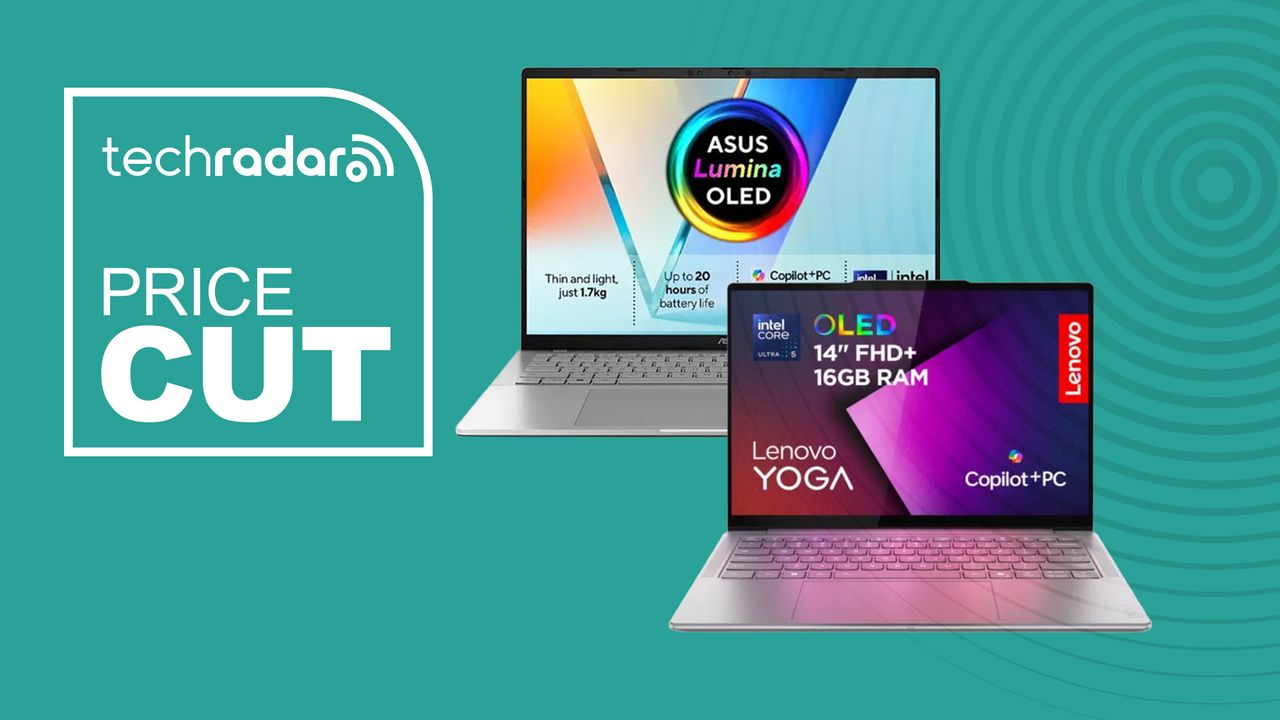
The Lenovo Yoga Slim 7 Aura Edition and the Asus Vivobook S16 OLED are both £599 at Currys right now. One is compact and light, the other is big and bold. Which one is right for you?
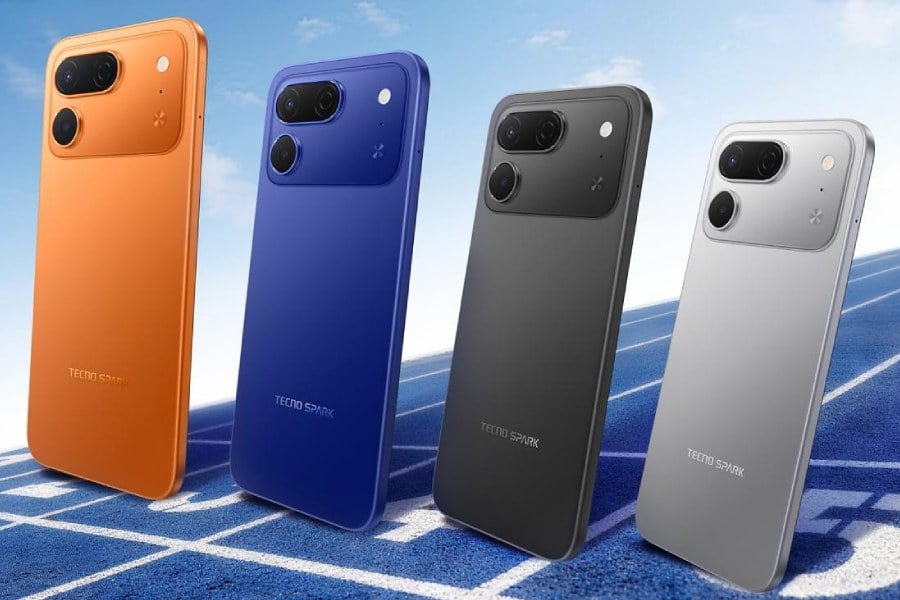
After introducing the Spark 50 last month, Tecno has now announced the new Spark 50 Pro with an iPhone-inspired design. What’s more interesting about this phone is that it has two battery options.
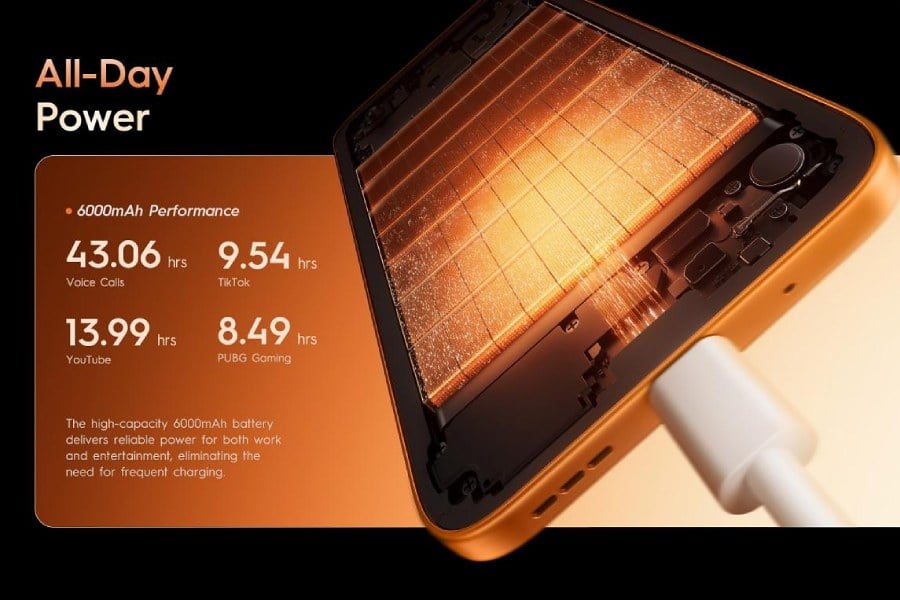
The Tecno Spark 50 Pro is available with either a 5600mAh dual-cell battery or a larger 6000mAh single-cell battery. According to the company, both versions can retain more than 80% of their original battery capacity after six years of regular charging. The batteries are rated for over 1,900 charge cycles.
The phone supports 60W charging, which refills the battery to 63% in 30 minutes, while a full charge takes about 55 minutes. The device also includes different charging modes that let users balance charging speed and heat management.
Tecno Spark 50 Pro Specifications
Under the hood, the Spark 50 Pro is powered by the MediaTek Helio G100 Ultimate chipset, which Tecno says delivers an AnTuTu score of around 550,000.
The front is home to a 6.78-inch display with a refresh rate of up to 120Hz. The audio is handled by dual stereo speakers with DTS Sound.
The photography experience includes a 50MP Sony LYTIA 600 main camera with a large 1/1.953-inch sensor. The smartphone also includes the company’s FlashSnap technology, which supports shutter speeds of up to 1/10,000 of a second for capturing moving subjects.
The camera system is backed by several AI-powered features, including AI Eraser 2.0, AI Extender, and Live Photo support. Tecno has also included its Universal Tone technology to produce more natural-looking skin tones in portrait photography.
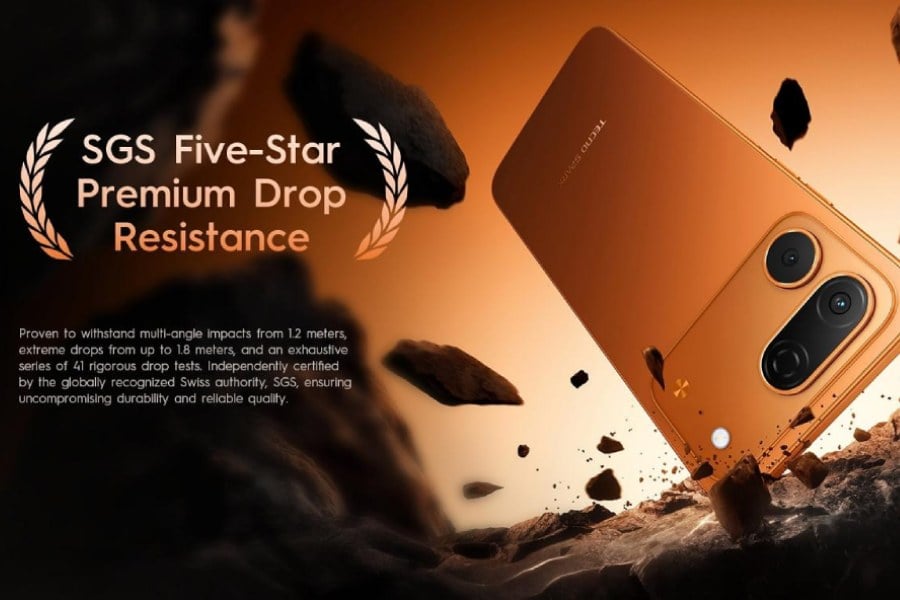
The smartphone has a slim 7.8mm body but comes with SGS Five-Star Premium Drop Resistance certification. It is also rated IP68 and IP69 for dust and water resistance.
In addition to its hardware, the device offers several software and connectivity features. These include FreeLink 2.0 for off-grid communication in supported situations, AI Noise Cancellation for clearer voice calls, and Tecno’s Ella AI Agent and AI Health Assistant for productivity and health-related tasks.
Tecno will offer the Spark 50 Pro in five color options: Ink Black, Titanium Grey, Midnight Blue, Dynamic Orange, and Cloud White.
For more daily updates, please visit our News Section.
Mobile gaming in 2026 has shifted its focus from peak speed to sustained survival. To combat the dimmed screens and dropped frames that plague standard smartphones during heavy sessions, manufacturers are bringing out the heavy artillery: Snapdragon 8 Elite Gen 5 chips, massive 7,000mAh batteries, and advanced thermal management. Whether you prefer a dedicated gaming powerhouse or a traditional flagship that can hold its own, here is a look at the best gaming phones available globally in June 2026.
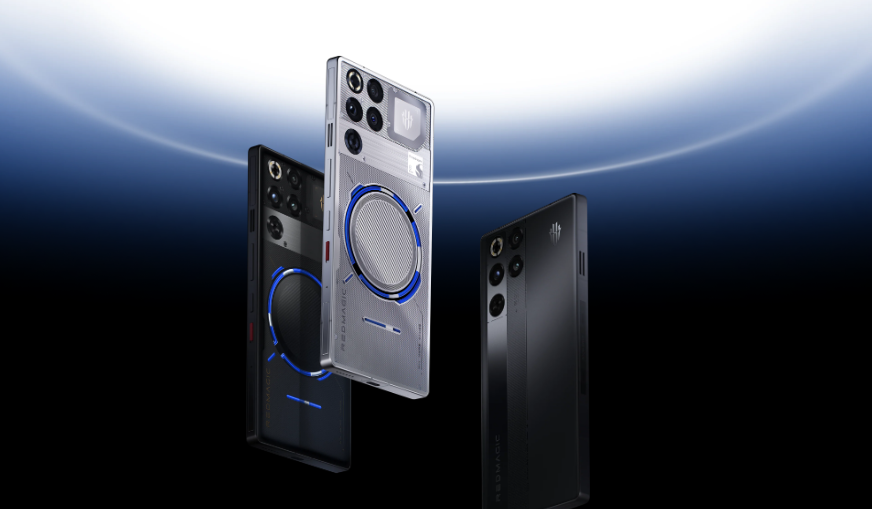
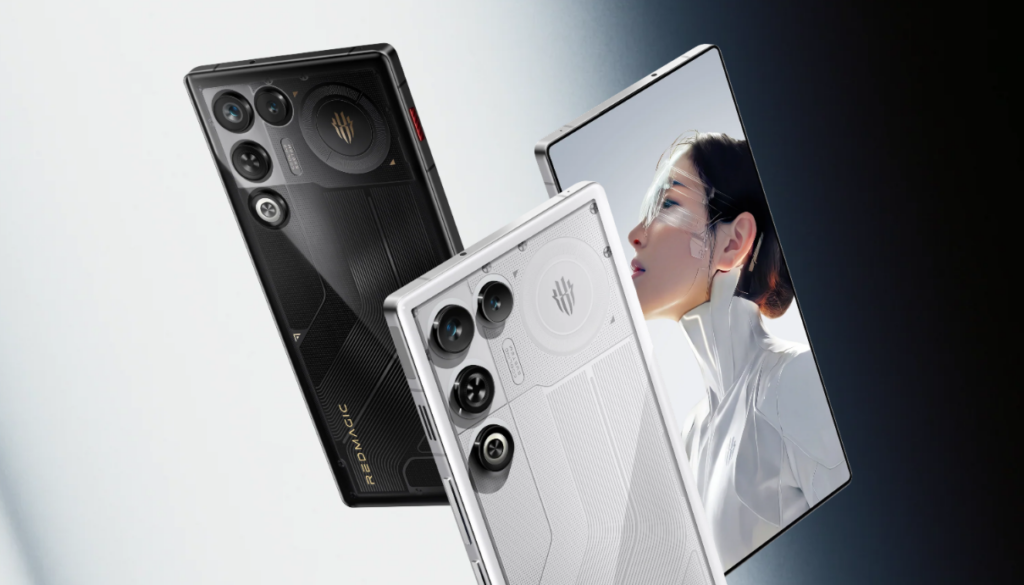
Red Magic 11S Pro
The Red Magic 11S Pro is designed specifically for users who prioritize long gaming sessions and want hardware built entirely around that experience. Red Magic has focused heavily on sustained performance with this model. While it runs on the Snapdragon 8 Elite Gen 5 Leading Version processor, its ability to maintain performance relies on the AquaCore Cooling System.
This setup combines a physical 24,000 RPM internal fan with a fluorinated liquid cooling loop. Through the transparent back panel, you can see the non-conductive coolant being moved by ceramic micropumps. It is a complex solution, but it effectively prevents the phone from throttling under heavy workloads.
To support the main processor, Red Magic includes a secondary RedCore R4 chip that handles audio, haptic feedback, and visual effects, freeing up resources for the game itself. The display is a 6.85-inch 1.5K OLED panel with a 144Hz refresh rate. Because the 16-megapixel front camera is hidden beneath the display, there is no hole-punch cutout to interrupt the screen.
Powering the device is a large 7,500mAh battery that supports 80W wireless and wired charging, and the phone includes 520Hz capacitive shoulder triggers for physical inputs. On the software side, it runs Red Magic OS 11.5, which now integrates Google Gemini AI for real-time translation and image searches.
OnePlus 15
Not everyone wants a phone with visible cooling fans and transparent back panels. The OnePlus 15 takes a different approach, offering high-end gaming capabilities inside a standard, premium smartphone design. It uses the Snapdragon 8 Elite Gen 5 processor and pairs it with up to 16GB of RAM, but its primary gaming advantage is the display.
The 6.78-inch AMOLED screen features a native 165Hz refresh rate that is specifically supported by games like Call of Duty: Mobile and Brawl Stars. It also includes a dedicated touch response chip that pushes the touch sampling rate to 3200Hz for quicker input recognition.
Instead of a physical fan, the OnePlus 15 manages heat using a large vapor chamber and an aerospace-derived aerogel insulation layer to keep the exterior comfortable to hold. It features a 7,300mAh Silicon NanoStack battery and supports bypass charging, which allows you to power the phone directly from the wall while gaming to reduce heat and preserve battery health.
Unlike most gaming-focused phones, the OnePlus 15 also delivers a highly capable camera system, featuring a 50MP main sensor and a 50MP periscope telephoto lens. It is also built to last, carrying IP66, IP68, IP69, and IP69K ratings for water and dust resistance.
Red Magic 11 Pro
If you want the core Red Magic experience but don’t need the overclocked processor of the new “S” variant, the Red Magic 11 Pro remains an incredible buy. Launched late last year, it still holds its own against anything released in 2026.
It features the standard Snapdragon 8 Elite Gen 5 processor and can be configured with up to 24GB of RAM and 1TB of storage. The display remains the same 6.85-inch notchless OLED panel, providing an uninterrupted view of your games. To maintain frame rates during extended play, it also utilizes the AquaCore system, showcasing a visible, flowing liquid cooling loop through a transparent back, paired with a massive vapor chamber and a 24,000 RPM active cooling fan.
It also retains the 7,500mAh battery, the 520Hz shoulder triggers, and the dual stereo speakers found on the S-tier model. It is a highly capable device that focuses purely on the gaming experience without the extra experimental hardware.
Red Magic 11 Air
Gaming phones are traditionally heavy and thick to accommodate larger batteries and cooling systems. The Red Magic 11 Air attempts to balance dedicated gaming features with a more manageable form factor. It is 12% thinner and 10% lighter than the standard 11 Pro, making it much easier to use as a daily driver.
Despite the smaller size, Red Magic managed to fit a physical 24,000 RPM cooling fan inside, which is a notable addition to the Air lineup. It uses the Snapdragon 8 Elite processor and features a 6.85-inch 144Hz OLED display with ultra-narrow bezels. The battery is slightly smaller at 7,000mAh, but that is still larger than most standard smartphones on the market and a significant upgrade from the previous generation.
It also retains the physical shoulder triggers, which have been updated to support vertical games, and includes charge separation technology to keep the phone cool when plugged in. For software, it includes tools like a Tactical Coach for real-time guidance in popular multiplayer games, making it a well-rounded option for those who want gaming features in a slimmer profile.
For more daily updates, please visit our News Section.
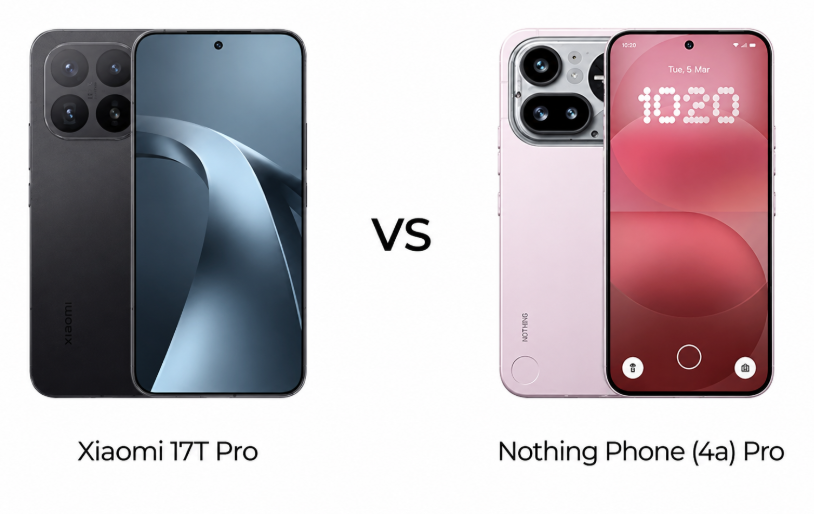
Xiaomi 17T Pro and Nothing Phone (4a) Pro target very different buyers despite sharing premium-looking designs and high-refresh-rate displays. One focuses on flagship-level performance, battery life, and camera hardware, while the other aims to deliver a unique experience at a much lower price. With nearly ₹35,000 separating them, this comparison explores whether Xiaomi’s extra power justifies the premium or if Nothing offers the better overall value.
Major Features:
Feature
Xiaomi 17T Pro
Nothing Phone (4a) Pro
Winner
Build Quality
Glass back, aluminum frame, IP68
Aluminum unibody, IP65
Xiaomi – Better water and dust resistance
Design
Premium flagship design
Unique LED-based design
Nothing – More distinctive appearance
Display
6.83-inch AMOLED, 144Hz, Dolby Vision, 3500 nits
6.83-inch AMOLED, 144Hz, HDR10+, 5000 nits
Nothing – Higher peak brightness
Display Experience
HDR10+, Dolby Vision, 3840Hz PWM
HDR10+, 2160Hz PWM
Xiaomi – Better multimedia features
Processor
Dimensity 9500 (3nm)
Snapdragon 7 Gen 4 (4nm)
Xiaomi – Much faster flagship chipset
GPU
Mali-G1 Ultra MC12
Adreno 722
Xiaomi – Stronger graphics performance
RAM & Storage
Up to 16GB RAM, 1TB, UFS 4.1
Up to 12GB RAM, 256GB, UFS 3.1
Xiaomi – Faster and larger storage options
Main Camera
50MP, OIS, Leica tuning
50MP, OIS
Xiaomi – Larger sensor and Leica imaging
Telephoto Camera
50MP, 5x periscope
50MP, 3.5x periscope
Xiaomi – Longer optical zoom
Ultrawide Camera
12MP
8MP
Xiaomi – Higher-resolution ultrawide
Rear Video
Up to 8K, 4K@120fps, Log
Up to 4K@30fps
Xiaomi – Professional-grade video features
Selfie Camera
32MP, 4K video
32MP, 1080p video
Xiaomi – Better selfie video recording
Speakers
Stereo, Dolby Atmos
Stereo speakers
Xiaomi – Dolby Atmos support
Connectivity
Wi-Fi 7, Bluetooth 6.0
Wi-Fi 6, Bluetooth 5.4
Xiaomi – Newer connectivity standards
Battery
7000mAh
5400mAh (India)
Xiaomi – Significantly larger battery
Charging
100W wired, 50W wireless
50W wired
Xiaomi – Faster charging plus wireless charging
Reverse Charging
22.5W reverse wired
7.5W reverse wired
Xiaomi – More useful reverse charging
Software Support
Android 16, HyperOS 3
Android 16, 3 major updates
Nothing – Clear update commitment
Price
Around ₹75,000
Around ₹40,000
Nothing – Far better affordability
Value for Money
Premium flagship package
Strong features at a lower price
Nothing – Better overall value
Disclaimer: Specs are based on available data. Actual performance may vary. Verify details from official sources before buying.
Design and Display
Build and Feel
The Xiaomi 17T Pro and Nothing Phone (4a) Pro take very different approaches to design. Xiaomi focuses on a flagship-style build with Gorilla Glass 7i on both sides, an aluminum frame, and a premium IP68 rating for stronger dust and water resistance. It feels like a device built to compete with much more expensive smartphones.
The Nothing Phone (4a) Pro stands out with its aircraft-grade aluminum unibody construction and the signature Glyph-inspired mini-LED lighting system. The design is more distinctive and instantly recognizable. For users who value uniqueness and visual identity, Nothing delivers something few competitors offer in this price segment.
Display Quality
Both phones feature large 144Hz AMOLED panels with HDR support and excellent smoothness. However, the Xiaomi 17T Pro pushes higher brightness levels and includes Dolby Vision support, giving it an advantage for outdoor viewing and premium video consumption. The display also benefits from stronger HDR performance overall.
Verdict
Nothing offers the more unique design, but Xiaomi delivers the more premium build quality and display experience. The Xiaomi 17T Pro wins this section thanks to its flagship-grade durability, brighter panel, and richer multimedia credentials.
Specifications Including Battery
Performance
Performance is where the gap becomes substantial. The Xiaomi 17T Pro is powered by the flagship MediaTek Dimensity 9500 built on a 3nm process, paired with UFS 4.1 storage and up to 16GB RAM. It is designed for heavy gaming, advanced multitasking, and long-term performance demands.
The Nothing Phone (4a) Pro uses the Snapdragon 7 Gen 4, which is a capable upper-midrange chipset. Everyday usage remains smooth, and gaming performance is respectable, but it cannot match the raw power offered by Xiaomi’s flagship silicon. Storage is also limited to UFS 3.1, which is slower in demanding tasks.
Battery and Charging
Xiaomi packs a massive 7000mAh battery with 100W wired and 50W wireless charging. Nothing counters with a 5400mAh battery in India and 50W wired charging. The Xiaomi setup offers significantly longer endurance and far quicker top-ups.
Verdict
The Xiaomi 17T Pro comfortably wins this category. Its flagship processor, faster storage, larger battery, and dramatically superior charging system make it a much stronger performance-focused package.
Camera
Main and Secondary Lenses
The Xiaomi 17T Pro features a versatile Leica-tuned triple-camera system consisting of a 50MP main sensor, a 50MP periscope telephoto lens with 5x optical zoom, and a 12MP ultrawide camera. It also supports advanced features such as 8K video recording, Log recording, HDR10+, and professional-grade video tools.
The Nothing Phone (4a) Pro also offers a triple-camera setup with a 50MP main sensor and a 50MP periscope telephoto camera, but its 3.5x zoom range and smaller ultrawide sensor place it slightly behind Xiaomi in overall flexibility. Video capabilities are solid, yet they do not reach the same professional level.
Selfie Camera
Both phones feature 32MP selfie cameras. However, Xiaomi supports 4K selfie recording and HDR10+, while Nothing is limited to 1080p video. Content creators and vloggers are likely to appreciate Xiaomi’s added versatility.
Verdict
Nothing delivers a strong camera system for its class, but Xiaomi provides better zoom capability, stronger video features, and more advanced imaging tools. The Xiaomi 17T Pro takes the camera crown.
Pricing
Xiaomi 17T Pro is priced around ₹75,000 ($900), while the Nothing Phone (4a) Pro is priced around ₹40,000 ($500). This creates a significant price difference of roughly ₹35,000.
Xiaomi justifies its higher price through flagship-level hardware, a substantially faster chipset, superior battery technology, wireless charging, stronger camera hardware, and a more premium overall feature set. Buyers seeking maximum performance and longevity will likely find the premium worthwhile.
The Nothing Phone (4a) Pro positions itself as a value-focused option. It delivers a distinctive design, a capable camera setup, a smooth 144Hz AMOLED display, and a clean software experience at nearly half the cost. For many users, it offers far better affordability without feeling compromised in daily use.
Verdict
In terms of pure value for money, the Nothing Phone (4a) Pro wins. Xiaomi offers more, but Nothing delivers an impressive balance of features relative to its asking price.
Disclaimer: Prices are approximate and may vary based on country, region, launch timing, and applicable taxes. Always check whether the listed price is for a China unit or a global/international variant when purchasing.
Conclusion
The Xiaomi 17T Pro stands out with its flagship Dimensity 9500 processor, Leica camera partnership, 7000mAh battery, 100W charging, 50W wireless charging, IP68 protection, and advanced video recording capabilities. It is clearly aimed at power users who want a premium smartphone experience without stepping into ultra-premium pricing.
The Nothing Phone (4a) Pro differentiates itself through its unique LED lighting system, minimalist software experience, distinctive industrial design, and aggressive pricing. It targets buyers who want something different from mainstream Android devices while still enjoying strong everyday performance.
Verdict
Xiaomi 17T Pro is the better smartphone overall. It wins in performance, battery life, charging, display quality, and camera versatility. However, the Nothing Phone (4a) Pro remains the smarter purchase for budget-conscious buyers because it delivers a surprisingly complete experience at nearly half the price. If the budget allows, Xiaomi is the stronger flagship. If value matters most, Nothing is difficult to ignore.
Disclaimer: This comparison is based on the specifications provided and is intended for general informational purposes. Actual performance, camera results, battery life, and overall experience may vary depending on real-world usage, software updates, and individual preferences.
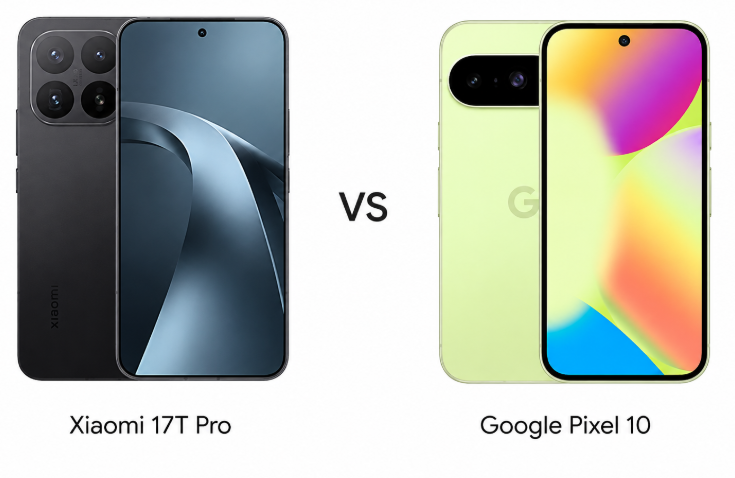
Choosing between the Xiaomi 17T Pro and Google Pixel 10 comes down to priorities. One focuses on flagship-grade hardware, ultra-fast charging, and a large battery, while the other emphasizes software longevity, AI features, and Google’s renowned camera processing. Both target premium smartphone buyers, but they deliver very different experiences despite being priced relatively close to each other.
Major Features:
Feature
Xiaomi 17T Pro
Google Pixel 10
Winner
Build Quality
Gorilla Glass 7i front/back, aluminum frame, IP68
Gorilla Glass Victus 2 front/back, aluminum frame, IP68
Disclaimer: Specs are based on available data. Actual performance may vary. Verify details from official sources before buying.
Design and Display
Build and Feel
The Xiaomi 17T Pro adopts a premium glass-and-aluminum construction with Gorilla Glass 7i protection and an IP68 rating. It feels like a true performance flagship, with features such as an infrared blaster and support for multiple SIM and eSIM configurations adding practicality. The overall design leans toward users who enjoy powerful hardware and feature-rich devices.
The Google Pixel 10 also features a glass-and-aluminum build with Gorilla Glass Victus 2 protection and IP68 certification. Google’s design language remains clean and minimalist, giving the phone a refined appearance that feels modern without being flashy. The software-first approach is reflected in the overall user experience.
Display Quality
Xiaomi takes a clear lead on paper with its 6.83-inch AMOLED panel featuring a 144Hz refresh rate, Dolby Vision support, 3840Hz PWM dimming, and a peak brightness of 3500 nits. The display feels more immersive for gaming, streaming, and multitasking.
The Pixel 10 offers a smaller OLED display with a 120Hz refresh rate and up to 3000 nits peak brightness. While less ambitious in specifications, Google’s display tuning remains excellent for everyday use and color accuracy.
Verdict
The Xiaomi 17T Pro delivers a more impressive display package and feels like a true multimedia powerhouse. The Pixel 10 counters with a cleaner, more compact experience, but Xiaomi wins this section thanks to its superior screen technology and feature set.
Specifications Including Battery
Performance
The Xiaomi 17T Pro is powered by the MediaTek Dimensity 9500 chipset paired with UFS 4.1 storage and up to 16GB RAM. It is designed to handle demanding gaming, multitasking, and intensive workloads with ease. The hardware specifications suggest flagship-level performance with significant headroom for future software updates.
The Pixel 10 uses Google’s Tensor G5 processor with up to 12GB RAM. While Tensor chips continue to improve, their focus remains on AI-driven tasks and software intelligence rather than outright benchmark dominance. Daily performance is expected to be smooth, but power users may notice Xiaomi’s hardware advantage.
Battery and Charging
Battery life is one of Xiaomi’s biggest strengths. The massive 7000mAh battery, combined with 100W wired and 50W wireless charging, creates a package that is difficult to match in the premium segment. Fast top-ups and extended endurance make the device particularly attractive for heavy users.
The Pixel 10 includes a 4970mAh battery with 30W wired and 15W wireless charging. The battery should comfortably last a day, but charging speeds feel conservative compared to Xiaomi’s offering.
Verdict
For raw performance and battery technology, the Xiaomi 17T Pro is clearly ahead. The Pixel 10 remains efficient and intelligent, but Xiaomi offers substantially more hardware value for demanding users.
Camera
Main and Secondary Lenses
The Xiaomi 17T Pro features a 50MP primary camera, a 50MP periscope telephoto camera with 5x optical zoom, and a 12MP ultrawide lens. Leica tuning, Ultra HDR support, and advanced video capabilities, including 8K recording, give it a versatile camera system. The larger primary sensor should also help in challenging lighting conditions.
The Pixel 10 combines a 48MP main camera, a 10.8MP 5x telephoto lens, and a 13MP ultrawide camera. While the hardware appears less impressive, Google’s image processing remains one of the strongest advantages of the Pixel lineup. Features like Best Take, Pixel Shift, and computational photography often produce consistently excellent results.
Selfie Camera
Xiaomi equips the device with a 32MP front camera capable of 4K recording and HDR10+ support. The higher resolution offers greater flexibility for detailed selfies and content creation.
Google’s 10.5MP ultrawide selfie camera benefits from autofocus and Google’s image processing, delivering reliable and natural-looking results.
Verdict
The Xiaomi 17T Pro offers stronger camera hardware and broader video capabilities. However, the Pixel 10 remains highly competitive thanks to Google’s software expertise. Hardware enthusiasts may prefer Xiaomi, while photography purists may still appreciate Pixel’s image processing.
Pricing
The Xiaomi 17T Pro is priced around ₹75,000 ($900), while the Google Pixel 10 is priced around ₹70,000 ($800). The difference is relatively small considering the substantial hardware upgrades Xiaomi provides.
At its asking price, the Xiaomi 17T Pro delivers a flagship processor, significantly larger battery, faster charging, a higher-refresh-rate display, more storage options, and stronger camera hardware. The overall package feels aggressively positioned for buyers seeking maximum specifications.
The Pixel 10, despite being priced around ₹70,000, justifies its cost through seven years of Android upgrades, Google’s AI ecosystem, camera software, and the clean Pixel experience. Long-term software support remains a major advantage that many buyers value more than raw specifications.
Verdict
The Pixel 10 offers excellent long-term value through software support, but the Xiaomi 17T Pro delivers more hardware for the money. Buyers focused on specifications and features are likely to see Xiaomi as the stronger value proposition.
Disclaimer: Prices are approximate and may vary based on country, region, launch timing, and applicable taxes. Always check whether the listed price is for a China unit or a global/international variant when purchasing.
Conclusion
The Xiaomi 17T Pro stands out with its 144Hz AMOLED display, massive 7000mAh battery, 100W charging, Leica-tuned camera system, 50W wireless charging, and flagship-grade Dimensity 9500 processor. It is clearly designed for users who want cutting-edge hardware and minimal compromises.
The Google Pixel 10 differentiates itself with seven years of Android updates, advanced AI capabilities, Circle to Search, Satellite SOS, excellent computational photography, and a clean Android experience. These advantages make it appealing to users who prioritize software quality and long-term reliability.
Verdict
Xiaomi 17T Pro is the better choice for most buyers seeking maximum value in the premium segment. Its display, battery, charging speeds, performance, and camera hardware provide a more complete flagship package. The Google Pixel 10 remains an excellent option for users who prioritize software support, AI features, and Google’s photography experience, but Xiaomi offers a more compelling overall smartphone at this price point.
Disclaimer: This comparison is based on the specifications provided and is intended for general informational purposes. Actual performance, camera results, battery life, and overall experience may vary depending on real-world usage, software updates, and individual preferences.
Apple is gearing up to seriously up the ante on the iPhone 18 Pro duo's camera-related bragging rights, as per the latest tidbits from a legendary Apple-focused leaker. Apple is reportedly preparing three key innovations for the cameras of the iPhone 18 Pro and Pro Max, including variable-aperture and wider-aperture lenses, and professional-grade software features Bloomberg's Mark Gurman is out with yet another scoop, detailing the camera-related innovations within the upcoming iPhone 18 Pro and Pro Max, which include: We already know that the iPhone 18 Pro and Pro Max will come equipped with Samsung's M16 LTPO+ OLED tech, which is a […]
 Login
Login