Bitcoin price today has seen a strong recovery, climbing nearly 3% to around $65,106 after falling to $62,553. This recovery comes just ahead of the upcoming U.S. Initial Jobless Claims report, a key U.S economic indicator that has recently impacted crypto market momentum.
Previous data shows Bitcoin often rises after jobless claims, and now experts are watching the key $70,000 level.
Bitcoin Price Recovers Ahead of Jobless Claims Data
The latest recovery in bitcoin price suggests traders are positioning ahead of the next U.S. labor market report, which could shape expectations around Federal Reserve interest rate policy.
Last week on 19th Feb, Initial Jobless Claims came in at 206,000, lower than market expectations. Following the release, Bitcoin surged nearly 2.7%, reaching a high of $67,518, showing a clear connection between labor data and crypto market sentiment.
This pattern has repeated several times this month, where Bitcoin has reacted positively after jobless claims releases.
The recent bounce shows growing optimism before the February 26 jobless claims report, which is expected to come in around 216,000.
Why US Jobless Claims Could Trigger Bitcoin’s Next Rally
Jobless claims are a key indicator of economic strength. Rising jobless claims suggest weakening labor market conditions, which could increase the chance of Federal Reserve interest rate cuts.
Lower interest rates generally improve liquidity across financial markets, making risk assets like Bitcoin more attractive to investors.
As a result, weaker jobless data often supports Bitcoin’s price, while stronger labor data can reduce expectations of rate cuts and limit upside momentum.
Bitcoin Faces Critical Resistance Near $70K
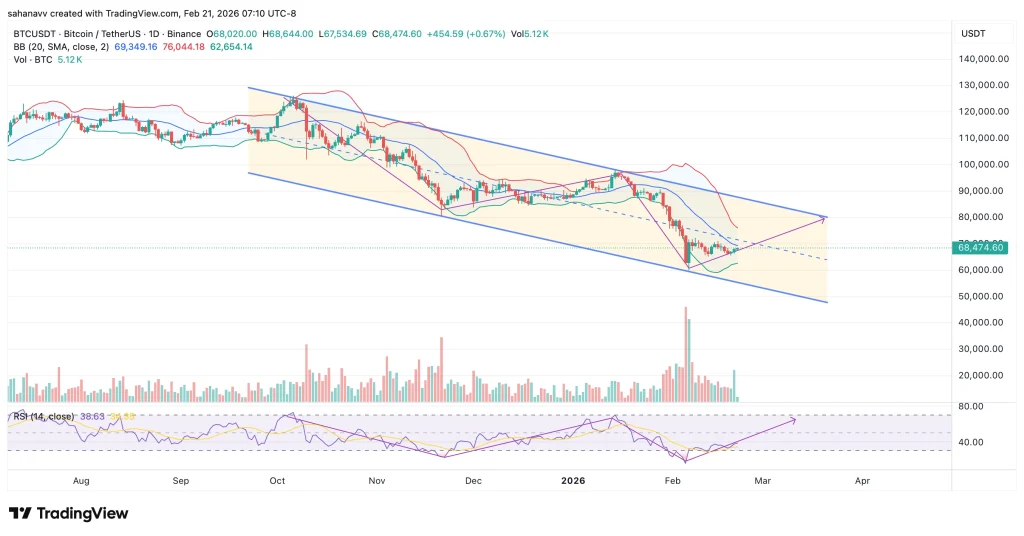
Looking at the daily Bitcoin price chart, BTC has tested the support many times this month in the $62,000–$64,000 range, including on February 6, 13, and 19. Each time, buyers stepped in, showing strong interest at lower prices.
But it has always failed to break above the $67,875 resistance level so far.
If Bitcoin breaks above this level, it could move up to test the next resistance near $70,531. A clear breakout above $70,500 may lead to a stronger upward move toward higher price levels.
Meanwhile, the RSI is near 34, which shows Bitcoin is slowly recovering from oversold levels.
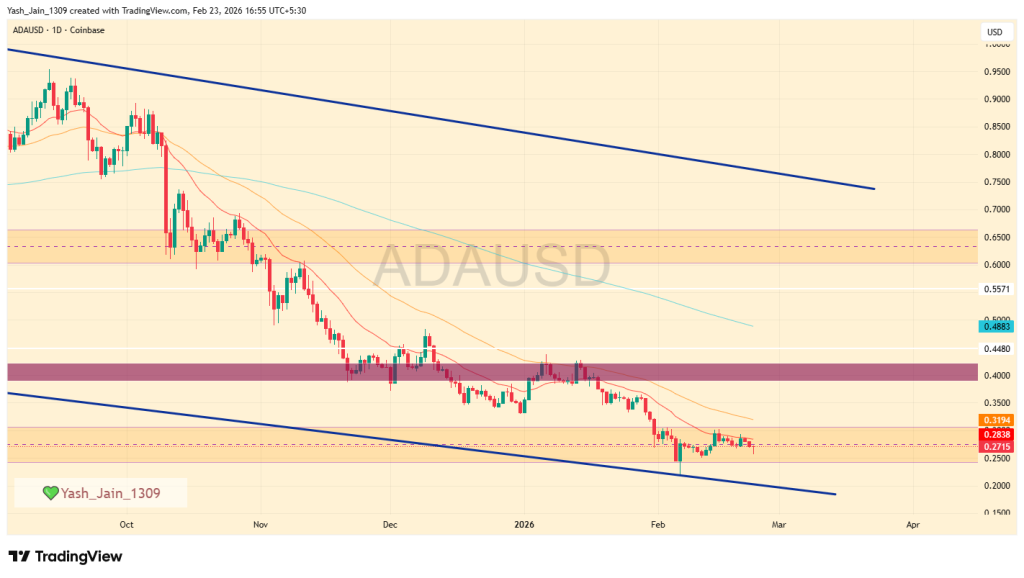
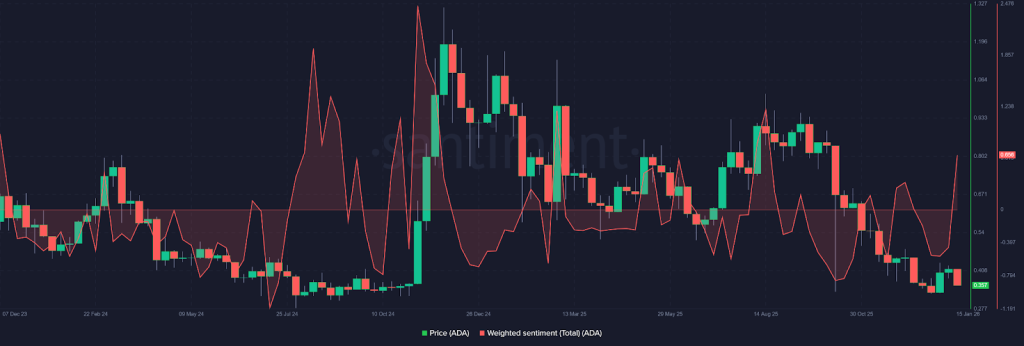
Cardano price prediction is turning bullish as ADA shows early signs of recovery. With the ADA price up nearly 3% today and trading around $0.2640, fresh whale accumulation data is drawing attention. After months of correction, large holders appear to be positioning quietly. This raises an important question for investors: Is Cardano price preparing for its next major rally?
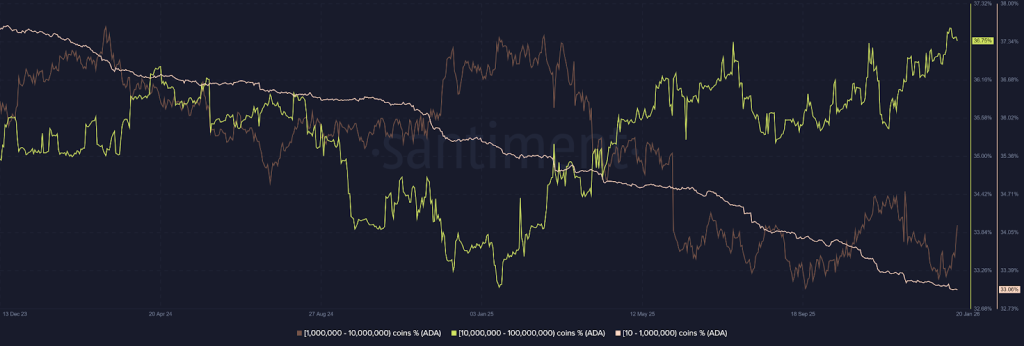
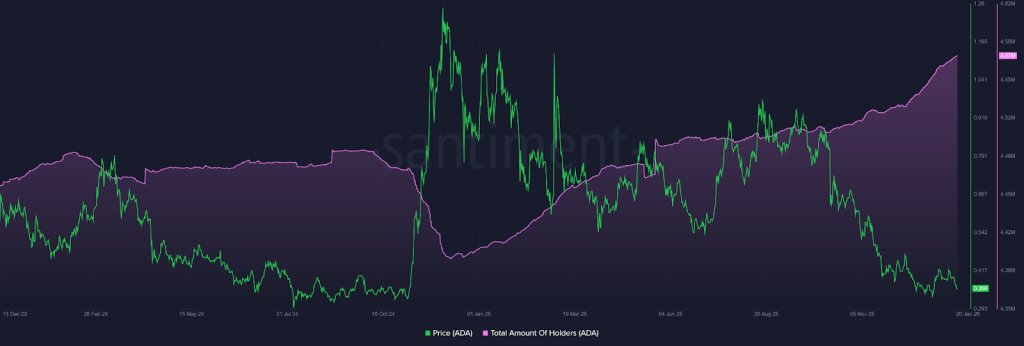
According to Santiment data, wallets holding between 100,000 and 100 million ADA have added approximately 819.4 million ADA over the past six months. That equals roughly $213 million worth of tokens, representing about 1.6% of Cardano’s total supply. What makes this significant is timing.
Cardano's key whales & sharks have quietly been accumulating over the past 6 months. While its price has fallen over 71% from $0.90 to $0.26, wallets with 100K-100M $ADA have added +819.4M more ADA ($213.9M) & +1.6% of the total supply. pic.twitter.com/rmyfi8E0XV
During this accumulation period, ADA’s price dropped more than 70%, from around $0.90 to near $0.26. When prices fall sharply and large holders increase exposure, it often signals long-term confidence. Whales typically accumulate during fear phases, not during hype cycles. This steady absorption of supply reduces available tokens on the market and can create conditions for a stronger recovery once demand returns.
Monthly Structure Shift: Is Cardano (ADA) Price Set for a Massive Rally?
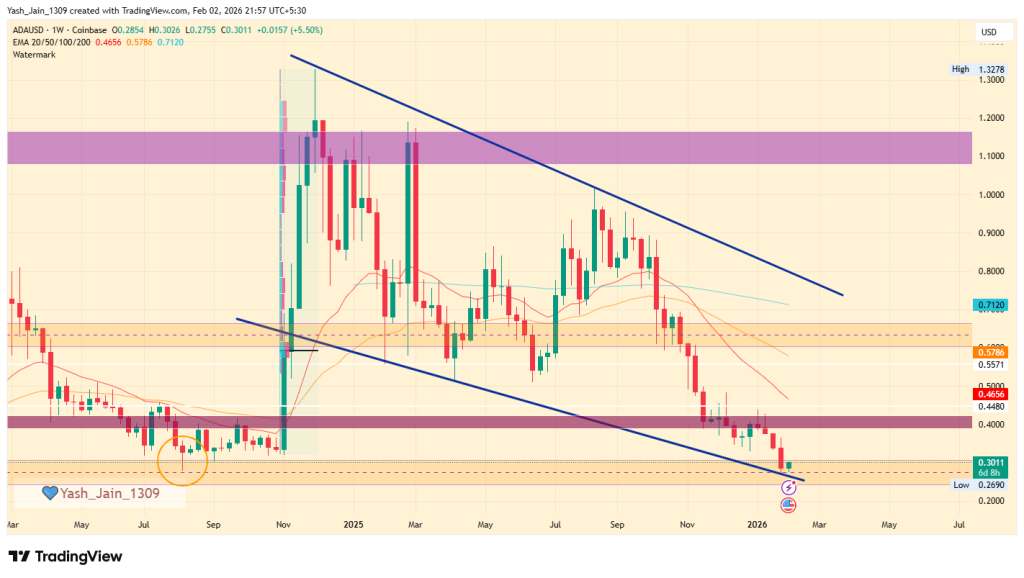
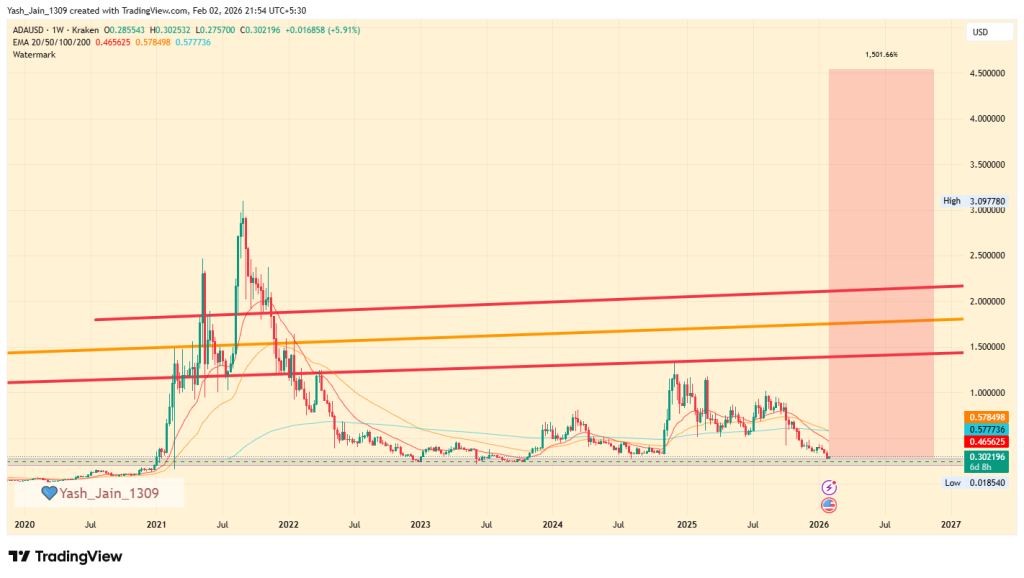
Looking at the higher timeframe chart, Cardano appears to be reacting from the lower boundary of a multi-year correction range.
Historically, ADA has moved in cycles:
Expansion phase
Long consolidation
New expansion phase
The current structure resembles previous accumulation zones that preceded major rallies.
Recent price action shows ADA bouncing from the bottom of the range, with early signs of higher-timeframe momentum attempting to build.
While confirmation is still needed, this type of structure often marks the transition from correction to recovery. If ADA begins forming higher highs on the monthly timeframe, it could signal the early stage of a new upward cycle.
Cardano Price Prediction: Key Levels To Watch
At the time of writing, ADA price trades at $0.2640, up roughly 3% during the intraday session.
Immediate Support Levels:
$0.2500 – Short-term support and psychological level
$0.2200 – Major structural support zone
Holding above $0.2500 keeps the rebound attempt intact. A breakdown below $0.2200 could delay any bullish scenario.
Key Resistance Levels:
$0.2800 – First hurdle for buyers
$0.3000 – Major psychological and technical barrier
A sustained move above $0.2800 would signal strengthening momentum. A clean breakout above $0.3000 could confirm a broader recovery phase.
Cryptocurrency has steadily moved from niche financial technology to a widely discussed payment alternative across multiple industries. Online casinos are among the sectors embracing this evolution most visibly. As digital wallets and blockchain transactions become more familiar to mainstream users, operators are increasingly integrating crypto options into their platforms.
This shift signals more than a simple expansion of payment methods. It reflects broader changes in how consumers value speed, privacy, and global accessibility when engaging with digital entertainment platforms.
The Growing Role of Cryptocurrency in Online Casinos
Traditional banking systems can introduce delays, processing fees, and geographic restrictions that complicate online casino transactions. Cryptocurrency addresses many of these concerns by enabling near instant transfers without relying on intermediary banks. This efficiency appeals to players who expect rapid deposits and faster access to withdrawals.
Major cryptocurrencies such as Bitcoin and Ethereum are now commonly supported by licensed platforms seeking to attract tech oriented audiences. Players who prioritize discretion also appreciate the added privacy that blockchain transactions can offer compared to conventional payment methods.
As adoption grows, industry observers often evaluate platforms that combine security, usability, and crypto support. Reviews highlighting the best online casinos reviewed help players identify reputable operators that integrate digital currencies while maintaining regulatory compliance and strong customer protections. Independent analysis such as best online casinos reviews offers comparisons of platforms that support cryptocurrency transactions alongside traditional payment systems.
Beyond speed and privacy, blockchain technology provides transparent transaction records. Each transfer is recorded on a distributed ledger, reducing disputes and enhancing accountability between operators and users.
Advantages Driving Adoption
Several practical advantages are accelerating crypto payment integration within online casinos.
Lower transaction costs are one key benefit. By reducing reliance on third party financial processors, operators can decrease fees associated with deposits and withdrawals. These savings may be passed on to players through improved bonuses or higher payout efficiencies.
Global accessibility is another important factor. In some regions, traditional banking services impose restrictions on gambling related transactions. Cryptocurrency allows players in eligible jurisdictions to transact without facing common banking limitations, provided the operator is legally licensed to serve them.
Processing speed also plays a significant role. Conventional withdrawal timelines can range from several hours to multiple business days. Crypto transactions often settle much faster, depending on network congestion and blockchain confirmation times. For players, quicker payouts enhance overall satisfaction and trust.
Finally, technological innovation aligns with broader digital trends. Younger demographics, already familiar with decentralized finance and digital wallets, are more likely to adopt platforms that offer flexible payment ecosystems.
Regulatory and Volatility Challenges
Despite its advantages, cryptocurrency adoption is not without complications. Regulatory frameworks differ widely across jurisdictions. Some regions provide clear guidance on digital asset usage, while others continue to evaluate how cryptocurrencies should be classified and monitored.
Operators must navigate evolving compliance requirements to ensure that crypto transactions align with anti money laundering standards and consumer protection laws. This regulatory complexity can slow expansion in certain markets.
Price volatility presents another concern. Cryptocurrency values can fluctuate significantly within short periods. For players, this introduces additional risk beyond standard gaming outcomes. A withdrawal processed in Bitcoin, for example, may vary in fiat value depending on market movements.
Stablecoins have emerged as a partial solution. These digital assets are typically pegged to traditional currencies, reducing volatility while preserving the efficiency of blockchain transactions. As stablecoin adoption expands, online casinos may increasingly integrate these options to provide more predictable value retention.
Industry Insight and Market Influence
The broader cryptocurrency ecosystem continues to evolve alongside online gaming. Market developments, regulatory decisions, and technological innovations directly influence how quickly casinos expand crypto payment support.
Industry news platforms frequently track these developments, offering updates on blockchain adoption, token performance, and regulatory shifts. Readers seeking ongoing updates on cryptocurrency trends and blockchain analysis can explore comprehensive crypto industry coverage at Coinpedia, where developments in digital finance often intersect with online gaming innovations.
As blockchain infrastructure improves and user education expands, trust in digital asset transactions is likely to grow. This confidence may encourage additional operators to adopt crypto options, further normalizing their presence in regulated markets.
Responsible Gambling in a Crypto Environment
The integration of cryptocurrency into online casinos does not eliminate the core risks associated with gambling. In some cases, the perceived anonymity and speed of crypto transactions may increase the need for strong responsible gaming measures.
Licensed operators are expected to implement safeguards such as deposit limits, self exclusion tools, and identity verification processes regardless of payment method. These measures remain essential to maintaining sustainable industry growth.
Players should approach cryptocurrency gambling with clear budgets and an understanding of both gaming risk and potential digital asset volatility. While blockchain technology offers advantages, it does not remove the financial risks inherent in wagering activities.
A Mainstream Shift in Digital Payments
The growing acceptance of cryptocurrency payments within online casinos reflects a broader transformation in digital commerce. Speed, privacy, and global accessibility are increasingly valued by modern consumers, and blockchain technology addresses each of these priorities.
Although regulatory clarity and market stability will continue to shape adoption rates, the trajectory points toward deeper integration of crypto within the iGaming sector. As more operators refine secure and compliant frameworks, cryptocurrency is likely to become a standard feature rather than a niche alternative.
What began as an experimental payment option is steadily evolving into a mainstream component of online casino operations, signalling a lasting shift in how players fund and access digital gaming experiences.
Shiba Inu just flashed a “death cross” on the lower timeframes, and as usual, the chart has split traders into two camps.
Right now, SHIB is trading slightly below $0.0000060 after sliding under several short-term moving averages. On February 23, the 200-period simple moving average crossed above the 50-period moving average on the 2-hour chart.
In technical analysis, that crossover is widely seen as a bearish signal. It suggests that recent price momentum has weakened enough for longer-term averages to overtake shorter ones.
But here’s the thing: death crosses don’t appear out of nowhere. They usually show up after the damage has already been done.
Why the Signal Matters
SHIB had already formed a similar crossover on the 1-hour chart days earlier. The latest signal on the 2-hour timeframe simply confirms that short-term structure has been leaning bearish for a while. Price has been making lower highs, and each bounce has struggled to build strength.
The important level right now is $0.0000060. That zone previously acted as demand, drawing in buyers during earlier dips. SHIB briefly bounced above $0.0000061, but buying pressure faded quickly. There hasn’t been a strong follow-through.
If this support breaks decisively, the next areas to watch sit around $0.0000057 and then $0.0000050. Those levels have seen reactions in the past, but every time a support level gets tested, it weakens a little more. A clean breakdown could open the door to a faster move lower.
On the upside, resistance sits near $0.0000066, with heavier supply around $0.0000072 and $0.0000078. For any real recovery to take shape, SHIB would need to reclaim those zones and climb back above its short-term moving averages. Without that, rallies risk turning into short-lived relief bounces.
It is also important to remember that death crosses are lagging indicators. They confirm what has already happened. They do not guarantee that a fresh crash is coming. Sometimes they appear right before a short squeeze or bounce, especially if the market is already stretched to the downside.
At this point, SHIB is at a technical crossroads. The chart looks fragile, but the $0.0000060 level is still in play. Whether it holds or breaks will likely decide the next meaningful move.
FAQs
Will SHIB recover after the recent death cross?
Recovery depends on reclaiming $0.0000066 and holding support. Without that, rallies may remain short-term relief bounces.
Could SHIB drop to $0.0000050 next?
Yes, if $0.0000060 fails decisively, downside momentum could extend toward the $0.0000050 support region.
Is SHIB bullish or bearish right now?
Short-term structure leans bearish due to lower highs and the death cross, but support at $0.0000060 remains critical.
Bitcoin is attempting to stabilize after a sharp liquidation-driven wick that briefly pushed the price toward the $60K region earlier this month. The daily structure still remains uncertain, but early signs of momentum stabilization are emerging as BTC price trades near $65,600, up roughly 2.4% over the past 24 hours.
However, the broader trend still reflects a series of lower highs and lower lows. Bulls have not reclaimed structural resistance yet. The real test lies ahead near the $70K–$72K supply zone.
Why Bitcoin Price Is Stabilizing Now
The recent bounce appears to be a reaction from a well-defined demand zone between $61K and $63K. This area absorbed heavy selling pressure and triggered short covering. Derivatives positioning has cooled, and funding rates are hovering near neutral to slightly positive. No extreme long imbalance is visible, and the open interest is stabilising after the earlier flush.
This suggests forced liquidation has already occurred. But stabilization is not reversal.
Technical Structure: Key Levels to Watch
Level
Significance
$72,000
Major supply zone
$70,000
Immediate resistance
$66,500
Minor breakout trigger
$63,000
Range midpoint
$61,000 to $62,000
Strong demand zone
$58,000
Breakdown acceleration level
RSI and Momentum Outlook
Bitcoin is currently trapped mid-range between a crucial resistance and support zone. The latest rebound from the support range between $62,000 and $63,000 has attracted some liquidity. However, the bulls have failed to secure $65,600, which raises some concerns as the resistance zone between $70,400 and $71,500 currently remains out of reach. A decisive move is required to define direction.
The daily RSI is hovering near the 35–40 region after previously dipping close to oversold territory. While momentum is curling upward, RSI remains below 50. That keeps broader trend bias bearish.
For a sustained recovery attempt, RSI must reclaim 50, and the BTC price must close above $67K on strong volume. Until then, rallies remain vulnerable.
Derivatives Insight: Positioning Is Neutral
The Open Interest witnessed a major pullback since the start of the month, but soon after reaching the lower range, the levels froze between $40 billion and $45 billion, preventing further drop. On the other hand, the funding rates have turned slightly positive in the past few hours, keeping the bullish hopes alive.
Funding rate currently sits slightly positive, indicating no aggressive long buildup. This reduces immediate squeeze risk but also shows a lack of strong bullish conviction. If open interest expands alongside a breakout above $67K, momentum could accelerate toward the supply cluster near $70K–$72K. If OI rises while price stalls, that increases breakdown probability.
Here’s What to Watch Next: Two Scenarios Ahead
Bullish Scenario: If the BTC price reclaims $66,500 convincingly and secures a daily close above $67,000, then upside targets emerge:
$70,000 initial resistance
$72,000 major supply
Break above $72,000 opens a path toward $78K and potentially $86,000.
However, momentum confirmation is required with the RSI rising above 50.
Bearish Scenario: If the BTC price loses the $61,000 support, which is the critical one, then downside risk accelerates toward,
$58,000 liquidity pocket
Below $58K opens macro demand near $52,000
An extended breakdown may test $48,000
In the meantime, the bears have begun to offer a strong upward pressure; therefore, it would be interesting to watch how things will unfold hereafter. Whether the Bitcoin (BTC) price secures a daily close within the bullish range or slips back to the bearish range is the prime focus right now!
The live price of the Stellar crypto is $ 0.15198218
XLM is holding its $0.13–$0.16 demand zone, with a breakout above $0.30 and $0.50 needed to confirm a structural trend reversal toward 2026 targets.
If payment adoption and tokenization expand, Stellar could trend toward $2.50 by 2026 and potentially $5–$7 by 2030 in a strong cycle.
Stellar (XLM) is trading near $0.15 after an extended corrective phase that saw the price compress beneath a descending trendline structure. While broader crypto liquidity has rotated unevenly across sectors, XLM has quietly defended its macro demand zone between $0.13 and $0.16, a region that historically precedes accumulation cycles.
Unlike speculative Layer-1 competitors, Stellar’s positioning remains rooted in cross-border payments, asset tokenization, and institutional settlement rails. As global payment infrastructure evolves and stablecoin usage expands, networks like Stellar regain structural relevance rather than narrative hype.The question for 2026 is no longer survival, it is a structural breakout.
Coinpedia’s price prediction for Stellar (XLM) depends on macro support and long-term payment adoption potential, Stellar price could trend toward $2.50 by 2026 if resistance above $0.50 and $1.00 is reclaimed. Looking ahead to 2030, sustained ecosystem growth and institutional settlement integration may support expansion toward the $7 region under favorable market conditions.
Year
Potential Low ($)
Potential Average ($)
Potential High ($)
2026
1.20
1.80
2.50
Stellar (XLM) Price March 2026 Outlook
March is unfolding as a technical inflection period for XLM price. After bouncing from the $0.14 demand region, Stellar is attempting to reclaim short-term moving averages while still trading below the dominant descending trendline visible on higher timeframes. Immediate resistance sits near $0.18–$0.20, followed by a stronger supply cluster around $0.23.
If XLM sustains a break above $0.20 and converts it into support, the next liquidity zone emerges near $0.30. Acceptance above $0.30 would signal the beginning of a structural shift rather than a temporary relief bounce. On the downside, losing $0.14 could extend consolidation toward $0.12, though current price behavior suggests demand absorption rather than breakdown. March is therefore a positioning month, not yet an expansion month.
Stellar (XLM) Price Prediction 2026
Looking ahead to 2026, the thesis for XLM revolves around adoption velocity. Stellar’s long-term value proposition lies in enabling low-cost global payments and asset issuance. If stablecoin transaction volume continues expanding and tokenized real-world assets gain traction, Stellar could benefit from increased network utility. Technically, reclaiming $0.30 would mark the first structural reversal signal. A sustained breakout above $0.50 would invalidate the broader downtrend and open upside toward $0.80–$1.00. Beyond $1, historical resistance thins considerably until the $2.00–$2.50 macro supply band.
Under a mature liquidity cycle and institutional participation in payment-focused blockchains, XLM approaching $2.50 by late 2026 becomes structurally feasible rather than speculative. A moderate scenario may place Stellar between $1.20 and $1.80 before attempting higher expansion.
Stellar Crypto Price Prediction 2026 – 2030
Year
Potential Low ($)
Potential Average ($
Potential High ($)
2026
1.20
1.80
2.50
2027
1.80
2.40
3.20
2028
2.80
3.80
4.80
2029
4.20
5.30
6.20
2030
5.50
6.20
7.00
Stellar (XLM) Price Forecast 2026
In 2026, Stellar price could project a low price of $1.20, an average price of $1.80, and a high of $2.50.
Stellar Price Prediction 2027
As per the Stellar Price Prediction 2027, Stellar may see a potential low price of $1.80 The potential high for Stellar price in 2027 is estimated to reach $3.20.
XLM Price Prediction 2028
In 2028, Stellar price is forecasted to potentially reach a low price of $2.80, and a high price of $4.80
Stellar Price Targets 2029
Thereafter, the Stellar (Stellar) price for the year 2029 could range between $4.20 and $6.20.
Stellar (XLM) Price Prediction 2030
Finally, in 2030, the price of Stellar is predicted to maintain a steady positive. It may trade between $5.50 and $7.00.
The long-term projection assumes Stellar sustains relevance in enterprise blockchain use cases, with growth moderating over time as the asset matures.
Year
Potential Low ($)
Potential Average ($)
Potential High ($)
2031
6.20
7.50
9.00
2032
8.00
10.00
12.00
2033
9.10
13.00
16.00
2040
25.00
50.00
80.00
2050
100.00
140.00
200.00
Stellar (XLM) Price Prediction: Market Analysis?
Year
2026
2027
2030
Changelly
$1.90
$2.50
$3.40
CoinCodex
$1.40
$2.70
$4.00
WalletInvestor
$2.00
$3.40
$4.40
Never Miss a Beat in the Crypto World!
Stay ahead with breaking news, expert analysis, and real-time updates on the latest trends in Bitcoin, altcoins, DeFi, NFTs, and more.
FAQs
What is Stellar (XLM) price prediction for 2026?
Stellar could trade between $1.20 and $2.50 in 2026 if it reclaims key resistance and adoption in payments and tokenization accelerates.
What is XLM price prediction for 2027?
XLM could trade between $1.80 and $3.20 in 2027 if adoption expands and broader crypto liquidity supports payment-focused blockchains.
How high will XLM go in 2030?
Under strong market conditions, XLM may reach $5.50 to $7.00 by 2030, driven by enterprise settlement growth and stablecoin usage.
How much will XLM be worth in 10 years?
Long-term projections suggest XLM could exceed $10 if institutional adoption scales, though outcomes depend on regulation and market cycles.
What is the XLM price prediction for the next bull run?
In the next crypto bull run, XLM could target the $0.80–$1.50 range initially. A sustained breakout above $1.00 may open upside toward $2.00+, depending on market liquidity and adoption momentum.
U.S. Senator Richard Blumenthal announced a formal Senate inquiry into Binance after recent news reports revealed that the world’s largest cryptocurrency exchange allegedly facilitated nearly $1.7 billion in transactions tied to sanctioned Iranian entities and Russia’s so-called “shadow fleet” of…
The White House has reaffirmed that former FTX CEO Sam Bankman-Fried will not receive a presidential pardon, even as the disgraced crypto founder publicly courts President Donald Trump through a sustained social media campaign. Sam Bankman-Fried’s Trump appeals fall flat…
The Ethereum Foundation has made one thing clear this week: it is not backing just any DeFi project with a token and a dashboard.
In a series of posts outlining its direction, the Foundation said it wants to see decentralized finance thrive, but only if it lives up to core principles. As one member put it, DeFi is not just another niche inside crypto.
“DeFi isn’t a speculative bet on the future. It’s the inevitable evolution of finance,” adding that “financial autonomy is a right, not a privilege.”
Ethereum co-founder Vitalik Buterin doubled down on that message.
“DeFi is a central part of the value that Ethereum provides,” Buterin wrote. “Financial empowerment is a central part of what it means to have agency and freedom in our current world.” He said that Ethereum does far more than finance, but stressed that permissionless access to savings, risk management and payments remains one of its strongest contributions.
Not All Onchain Finance Makes the Cut
Buterin was direct about where the line is drawn. The Foundation is not interested in supporting “on-chain finance” indiscriminately. Instead, it wants “permissionless, open-source, private, security-first global finance that maximizes people’s control over their own assets, minimizes centralized chokepoints and trusted third parties.”
One concept he stressed is what he called the “walkaway test.” Protocols should keep functioning even if the founding team disappears or turns hostile.
Ethereum, he reminded readers, is permissionless. Anyone can deploy anything. But that does not mean the Foundation will stand behind projects that rely on unnecessary centralization or what he described as “dopamine-maximizing gambleslop.”
A Return to DeFi’s Era
Buterin also called for a revival of the early DeFi mindset. “Ethereum’s early DeFi era was great because it dared to dream and innovate,” he said, pointing to breakthroughs like automated market makers.
Instead of simply building “a better stablecoin,” he requested developers to dig deeper into core problems such as risk management and hedging future expenses, and to design solutions that traditional finance cannot replicate.
Hence, Ethereum wants DeFi that could not exist without Ethereum. Not a copy of traditional finance with a blockchain label, but something structurally different.
Never Miss a Beat in the Crypto World!
Stay ahead with breaking news, expert analysis, and real-time updates on the latest trends in Bitcoin, altcoins, DeFi, NFTs, and more.
FAQs
What is the Ethereum Foundation’s stance on DeFi projects?
The Ethereum Foundation backs DeFi that is permissionless, open-source, secure, and minimizes centralized control, not speculative or heavily centralized projects.
Why doesn’t Ethereum support all on-chain finance projects?
Ethereum supports projects that reduce trusted intermediaries and protect users, not those relying on central control or short-term speculative hype.
How does Ethereum want DeFi to evolve?
Ethereum encourages DeFi that solves real financial problems like risk management and hedging, creating systems traditional finance cannot replicate.
Backpack Exchange just announced that stakers of its token can earn actual equity in the company ahead of a potential IPO. When exchanges start giving away ownership to keep users loyal, it tells you one thing. The market is about to get very competitive for attention.
For the best crypto presale, Pepeto is the token to watch. It is building a project that solves the meme coin infrastructure problem that a $45 billion market has ignored. The presale raised over $7,258,000. For those looking for early investor opportunities, the potential to turn $6,000 into $300,000 makes Pepeto the clear choice.
Backpack Exchange offers equity to token stakers
Backpack CEO Armani Ferrante confirmed users can stake the Backpack token for at least a year and exchange those tokens for equity at a fixed ratio representing 20% of the company. Ferrante said many past token launches were built on empty utility promises, a trap he wants to avoid. Equity offers are attractive for patient investors, but presale returns happen faster for those who position early.
The Best Crypto Presale To Buy Now
Pepeto: the best crypto presale for immediate impact
While equity offers reward patience, the best crypto presale for aggressive growth remains Pepeto. Unlike waiting for a distant IPO, Pepeto is live and building, driving organic demand from day one.
Here is the story most people do not know. When PEPE launched in 2023, it exploded to a $7 billion market cap on pure meme energy. Zero products. Zero infrastructure. Just a frog and the internet. One of the original Pepe Coin cofounders watched that happen and asked a simple question: what if the next generation actually built something?
That question became Pepeto. The cofounder took the cultural power of meme coins and combined it with real trading infrastructure. A cross chain swap for meme coin trading. A blockchain bridge between networks. And a zero fee exchange that saves money on every transaction. Three working demos live today at the official Pepeto website. Holders can test every tool right now.
A quick look at the Pepeto interface shows a clean platform that puts institutional grade tools at your fingertips. Whether you are new to crypto or a veteran trader, everything is clear and fast.
The potential here is massive. Investors who entered early in SHIB turned $1,000 into over $1 million. Pepeto sits at $0.000000185 with dual audits from SolidProof and Coinsult, zero tax, and a confirmed Binance listing approaching. A $6,000 investment at today’s price fills your bag with billions of tokens. At 50x, that is $300,000. At 100x, that is $600,000. And the staking at 212% APY adds roughly $12,840 yearly as a bonus on top.
Dogeball Token presale
Dogeball presents a unique GameFi angle on Ethereum with a wallet linked dodgeball game and a $1 million prize pool. The concept attracts gamers but it lacks the broad market appeal needed to generate generational returns. Gaming tokens remain niche compared to infrastructure plays.
Based Eggman presale
Based Eggman combines meme culture and web3 gaming on the Base blockchain. The native token handles in game purchases and governance. It holds meme coin potential but volatility risks are significantly higher without real trading utility behind it.
The Bottom Line
The search for the best crypto presale is leading smart money to Pepeto. Live utility, dual audits, and a Pepe Coin cofounder’s vision make it the superior choice over speculative gaming or pure meme plays. At $0.000000185, the window to turn $6,000 into $300,000 is still open.
Click To Visit Official Website
FAQs
What makes Pepeto the best crypto presale compared to gaming tokens?
Pepeto offers live meme coin infrastructure needed by all traders. Dogeball and Based Eggman target niche gaming audiences with higher speculative risk and smaller markets.
Can a $6,000 investment in Pepeto really become $300,000?
At $0.000000185, a 50x listing pump delivers that return. SHIB hit $40 billion with zero products. Pepeto has three working demos and dual audits.
Who created Pepeto?
An original Pepe Coin cofounder who watched $PEPE hit $7 billion with zero tools and decided to build what the meme coin market was missing.
Disclaimer: How to buy Pepeto and where can I buy Pepeto.
Pepeto tokens are only available during the presale at the official Pepeto website. The project is not listed on any exchange or decentralized platform. Fake tokens using the Pepeto name have appeared on various exchanges due to the project’s viral popularity. These are not connected to the real Pepeto. The project remains in development and presale. Always verify you are on the official Pepeto website before purchasing with ETH, USDT, BNB, or credit card.
SUI price is attempting a to reclaim a key psychological level as the 21Shares Spot SUI ETF begins trading on Nasdaq. Sui was trading at $0.8786 at press time, up 3.4% in the past 24 hours. The token has struggled…
Bitcoin price is attempting a recovery near $65,000 as the Coinbase Premium turns positive despite recent exchange-traded fund outflows. Bitcoin was trading at $65,907 at press time, up 3.4% in the last 24 hours. The move follows a drop to…
Bitcoin rallied above $66,000 following a positive close from US stock markets, putting Monday’s AI and tech-stock driven sell-off to rest. Will $60,000 remain the BTC bottom?
Coinbase, World Liberty Financial and Laser Digital are also in line for a banking charter in the US, after Crypto.com received conditional approval for a charter on Monday.
Bitcoin Depot is moving to require ID for all transactions as regulators have cracked down on crypto ATM operators over scams and money laundering concerns.
Bloomberg reports that Stripe is in early acquisition talks with PayPal as the payments giant has battled competition, leadership turmoil and an 85% stock drop from its peak.
The Blockchain Association released its tax policy positions, saying “low-dollar” crypto transfers should be exempted, but mining and staking should be taxed.
PI is trading near $0.16, down more than 94% from its all-time high of $2.98. Even after a small bounce from its recent low near $0.13, sentiment remains fragile. Volume is modest, and many early users are questioning what comes next.
But while the price chart looks bruised, the founders insist the real story is happening behind the scenes.
“Pi Is Different. We’re Nonconformist.”
Co-founder Dr. Chengdiao Fan addressed growing criticism directly.
“Pi feels different from other blockchains because Pi is different,” she said. “When Open Network launched a year ago, I described Pi as nonconformist, and that still holds.”
She pointed out several things that separate Pi from the typical crypto launch model. “Pi never did an ICO. Pi is free to mine for accessibility. It’s mobile-first. Pi’s Mainnet blockchain is fully KYC’d.”
That last point is crucial. Unlike most networks that allow anonymous participation, Pi requires identity verification. According to the team, that was intentional.
“Utility also connects with Pi’s focus on KYC identity verification,” Fan explained. “Pi’s fully KYC’d network was fundamental in preparing the blockchain for real-world assets and production processes.”
In other words, Pi is betting on identity-backed utility instead of anonymous speculation.
What Is Pi Working On Now?
Co-founder Nicolas Kokkalis laid out the roadmap as the token struggles.
“KYC and migration remain a top priority,” he said. “We’re increasing KYC throughput, unblocking more users, increasing speed through further AI integration… and enabling second migrations so more Pioneers can fully participate in the Mainnet ecosystem.”
He added that KYC validator rewards are expected this quarter.
On the developer side, Pi is expanding tools and integrations. “We’re lowering the barrier to building on Pi… including new tools like much faster Pi payment setups.”
The team is also pushing deeper into AI and app development. “We’re expanding the App Studio with broader access, new payments integrations, and deeper AI capabilities.”
At the protocol level, work continues on nodes, upgrades, DEX functionality, and liquidity pools.
Utility Over Hype
Fan made one controversial point clear.
“It’s easy to enable fast, high-volume trading. It’s much harder to enable tokens to be used inside real products.”
She questioned the broader crypto industry: “If those tokens don’t map to anything real, what’s the point?”
That philosophy explains why Pi hackathon apps often look like dating platforms or e-commerce tools rather than pure DeFi speculation.
Hence, Pi’s founders are choosing patience over hype.
The crypto market is flashing green today after days of pressure.
Total market capitalization has climbed to $2.27 trillion, up nearly 3% in 24 hours. Bitcoin is trading around $66,200, gaining more than 3% on the day. Ethereum has jumped close to 5%, now hovering near $1,935. XRP has also pushed higher toward $1.38, while Solana leads major altcoins with a 6% move.
The sudden strength comes at a curious moment.
The Jane Street Lawsuit Timing
Yesterday, trading giant Jane Street was sued in connection with allegations tied to the 2022 Terra-Luna collapse. The lawsuit claims the firm used insider information during the UST crisis to profit while the ecosystem unraveled.
While these are still allegations and remain unproven, the timing has sparked intense debate across crypto communities.
Why?
Because for nearly two months, traders had been complaining about what they call the “10 AM dump,” a recurring pattern where Bitcoin would sharply sell off around 10 AM market hours.
Today, for the first time in weeks, that pattern did not appear. Instead of a sharp rejection, Bitcoin and Ethereum moved higher.
Pattern or Pure Coincidence?
Online speculation has taken off.
Some experts are pointing to what they see as strange overlaps involving the number 10:
May 10, 2022 — Luna collapsed from a $40 billion ecosystem to zero.
10 AM — the alleged daily Bitcoin sell-off hour.
October 2025 — $19 billion liquidated in 24 hours, one of the largest liquidation events in crypto history.
Now, just one day after a lawsuit targets Jane Street, the so-called 10 AM selling pressure appears to have paused,and prices are rising.
It is important to stress that there is no confirmed evidence linking today’s price action to the lawsuit. Markets move for many reasons, including short covering, oversold technical conditions, and shifts in sentiment.
Market Conditions Still Fragile
Despite today’s bounce, the broader picture remains cautious. The Fear & Greed Index still sits at 11, signaling extreme fear. The average crypto RSI is near neutral territory after weeks of oversold readings.
Bitcoin remains below major resistance levels, and Ethereum is still recovering from recent losses. However, today’s rally has injected short-term optimism back into the market.
Whether this is the start of a sustained recovery or simply a relief bounce remains to be seen.
Binance has added support for tokenized U.S. stocks and exchange-traded funds on its Alpha trading platform, giving users new ways to access traditional assets through blockchain-based products. The update allows users to trade tokenized securities directly using funds held on Binance…
Crypto payments platform MoonPay has introduced a new product designed to give artificial intelligence systems direct access to digital wallets and on-chain transactions. MoonPay Agents, a non-custodial software layer that enables AI agents to create wallets, manage funds, and trade…
A new debate is taking place in the crypto world after Ripple’s Chief Technology Officer, David Schwartz, made a series of statements about XRP and control over the XRP Ledger.
And this time, he didn’t dodge the hard questions.
Schwartz took to X to explain how the XRP Ledger prevents double spending — the core problem every blockchain must solve. But what caught the community’s attention was not the technical breakdown. It was his clear statement that Ripple intentionally designed the XRPL so the company could not control it.
“We Did Not Want Control”
Schwartz said the XRPL was carefully built so that Ripple cannot censor transactions, reverse payments, or double spend — even if it wanted to.
He admitted Ripple could face pressure from U.S. courts or regulators. As a U.S.-based company with investors, Ripple must comply with legal orders. But that is exactly why, according to Schwartz, the company did not want control over the network in the first place.
If Ripple had the power to alter transactions or freeze the ledger, it could be forced to use that power.
So instead, the system was structured so that no single entity, including Ripple, can own or control it. His message was clear: the best way to say “no” to outside pressure is to make it technically impossible to say “yes.”
The Bitcoin Comparison
The conversation quickly turned toward Bitcoin. Critics argued that XRP’s Unique Node List system creates coordination problems and relies on what they described as a centralized authority.
Schwartz pushed back. When someone claimed, “Your own BTC node will not double-spend if you disagree, but the network will,” Schwartz agreed — and said this proves most decentralization arguments miss the point.
He compared XRP’s coordination model to Bitcoin’s history. Satoshi chose Bitcoin’s mining algorithm. If the community wanted to change it, that would be a massive coordination challenge. Yet when Bitcoin and Bitcoin Cash split, there was no central authority solving the dispute. Each side proposed its own rules and users chose.
Schwartz argues the same would happen on XRPL. If two groups disagree, each would publish its own software and preferred validator list. Node operators would choose which version to run.
In his view, that is no different from how Bitcoin or Ethereum handle forks.
The Decentralization Fight Reignites
Not everyone agreed. One crypto commentator pushed back, arguing that choosing a Unique Node List (UNL), the validator structure used by XRP, creates coordination challenges that, in his view, lean toward centralization.
Schwartz responded that many decentralization debates are disconnected from reality. He pointed out that even Bitcoin nodes can reject invalid transactions locally, but consensus still depends on the broader network.
In other words, no blockchain is as simple as critics often claim.
From his perspective, decentralization was not just a philosophical choice. It was a practical, even selfish, decision to protect the network’s credibility.
Tech giant Meta Platforms Inc reportedly has plans to launch yet another dollar-backed stablecoin to support digital payments for its products.
Sources close to the project said Meta will work with a third-party vendor to integrate the stablecoin and its wallet into Meta’s ecosystem in the early second half of this year. The company has already put forward a product request (RFP) to several third-party firms, but might lean on payment service provider Stripe for the project.
Notably, Stripe broadened its reach into the crypto industry by acquiring the stablecoin specialist Bridge last year. The firm’s CEO, Patrick Collison, has been a member of Meta’s board of directors since April 2025.
Meta joins other social platforms in providing payment services
Similar to Meta, Telegram, and X (formerly Twitter) are taking part in incorporating digital currency payments to their social sites. Telegram already has a functional system while X is transitioning from internal testing to its first external beta. Effectively, these projects would position the companies as top social commerce providers, supporting cross-border remittances and bypassing the costly and time-consuming traditional banking process.
Even more, Meta would create an added revenue source from its 3 billion users through platform charges or transaction fees. Just a month ago, the company reported Q4 2025 revenue of a staggering $59.89 billion, which was a 24% year-over-year increase.
Back in 2019, Meta developed Libra, a fiat-backed stablecoin with the same objective of providing a social payments system. In 2020, the coin was rebranded to Diem in an effort to gain regulatory approval, but concerns over data privacy and financial stability still prevailed.
In 2022, Meta abandoned the project, selling its intellectual property rights to Silvergate Bank for $182 million. In the same year, Meta shut down its digital wallet Novi, which underperformed due to its link to the Diem stablecoin. News of the new stablecoin comes amid the drafting of regulatory frameworks for the same, under President Donald Trump’s GENIUS Act. Still, Meta prefers to test the waters once more through an external provider, with one of the sources saying:
Anthropic alleges Chinese AI companies DeepSeek, Moonshot and MiniMax made 24,000 accounts and 16 million Claude exchanges to scrape its AI bot for training.
Bitwise’s acquisition of Chorus One expands the company’s staking capabilities to more than 30 blockchains, including Solana, Hyperliquid, Monad, Avalanche and Sui.
The EU authority tracking compliance under the MiCA framework issued a warning to those marketing crypto derivatives as “perpetual futures or perpetual contracts.”
MoonPay debuts infrastructure enabling AI agents to transact with stablecoins onchain as both crypto and non-crypto companies race to build the “agent economy.”
On February 24, the price of Bitcoin (BTC) fell below $63,000, hitting an intraday low of $62,694. At press time, the overall relative strength index (RSI) was at 43.21, reading oversold, similar to the Mt Gox and COVID-19 crises. Chairman and CEO of JPMorgan Chase & Co., Jamie Dimon, noted parallels in the current market conditions and the 2008 crisis.
The fear-and-greed index has now clocked 11/100, depicting extreme fear, with 24h liquidations mounting to $342.76 million. Open interest (OI) sits at $43.64 billion, a significant decline from the $217 billion recorded just before the October 10 flash crash.
Possible Bitcoin pullback to $53-$55K
In the week ending February 20, CoinShares reported that digital asset products had entered their fifth week of consecutive outflows, amounting to $4 billion. On Monday alone, spot Bitcoin ETFs accounted for over $200 million worth of outflows, further contributing to the downward trend in crypto prices.
Tensions between the US and Iran have driven recent global market volatility, with both sides considering launching the offensive following failed talks regarding Iran’s nuclear disarmament.
Samer Hasn, a senior market analyst at XS.com, says there is potential for a fall to $53-$55K, due to unwavering selling pressure. Matt Howells-Barby of Kraken echoed this view, adding, “The $60k level is a key support level that the bulls are watching closely.”
What the future holds
Software company Strategy now sits on $9 billion in unrealized losses from its BTC holdings. Despite previously affirming the crypto winter, Executive Chairman Michael Saylor sees this as a buying opportunity, saying, “Bitcoin is on sale.”
Supporting his theory is data from Glassnode, which shows accumulations of over 400,000 BTC at prices ranging between $60,000-70,000. This, in addition to increased mining difficulty, suggests a “buy the dip” trend upcoming as sales near exhaustion.
At writing time, BTC was trading at $64,110 following an hourly recovery of 0.08%.
A spokesperson from the White House has confirmed that U.S. President Donald Trump will offer no clemency to Sam Bankman-Fried (SBF), the founder and former CEO of the now-defunct FTX cryptocurrency exchange.
The spokesperson added that Trump is the sole decider on a mercy release, and he is firmly rooted in granting no pardon to SBF.
Bankman-Fried attempts at absolution following FTX collapse
In March 2024, Bankman-Fried was sentenced to 25 years in federal prison after being found guilty of all seven counts of money laundering, conspiracy, and fraud.
In his defense, SBF argued that he and FTX had been strategically targeted by the Biden administration because of his multi-million-dollar pro-Republican donations. His parents (both professors and legal scholars at Stanford Law School) have tried to secure a presidential pardon for their son to no avail.
A week ago, SBF claimed that FTX’s collapse was manufactured by lawyers and his successor, John J. Ray III, who allegedly profited from the exchange’s bankruptcy filings. He also pinpointed the FTX $7.1 billion payback of its investors as a show of goodwill.
More recently, Bankman-Fried took to X in a long-shot show of Republican pivot, with hopes of swaying Trump’s resolve. He described the recent tariff policies as “right on crypto” and Trump’s capture and extradition of Venezuelan leader Nicolás Maduro as “smart, gutsy, and pro-democracy.” SBF further noted the “political bias” nature of Judge Lewis Kaplan, the man who sentenced him and has been a key player in civil cases against Trump.
Clinton-appointed judge Lewis Kaplan made his political bias very clear when sentencing me and @rsalame7926.
Kaplan ranted about how I “set up a vehicle for making political donations to the right.”
“The state of our political life in this country is in jeopardy,” he said, and…
Bankman-Fried remains incarcerated at the Metropolitan Detention Center (MDC) in Brooklyn, New York. The 33-year-old man has run into rotten luck with yet another denial of a presidential pardon and a much heavier sentence compared to his associates.
Supporters say SBF should receive a similar pardon to crypto players like Binance CEO Changpeng Zhao and former BitMEX CEO Arthur Hayes. Trump, however, stands his ground, saying the man committed financial fraud worth $8 billion. Bankman-Fried’s last resort is an appeal to the US Court of Appeals for the Second Circuit.
Bitcoin remains pinned below $65,000 as random bouts of intense selling pressure persist, but one onchain indicator has stabilized, providing insight into when spot market demand may return.
Ether whale order sizes are shrinking, while a $2 billion short cluster near $2,000 frame a tightening liquidity scenario for ETH after a sixth week of red price action.
Ethereum’s top holders double in size when tokens and stablecoins are included in on-chain valuations. Ethereum’s balance sheet looks nothing like what it looked like a couple of years ago. A new on-chain analysis has found that 58% of capital…
For years, the logic of brand discovery in crypto was straightforward: more placements, more exposure, more chances to be found. That logic is changing. Discovery now increasingly happens inside AI-generated summaries produced by large language models (LLMs), search overviews, and conversational AI tools. Instead of listing dozens of links, these systems compress information from trusted sources into short explanations, mentioning only a limited set of brands.
That’s why competition is shifting from pure exposure to inclusion. Companies are striving to become one of the few examples an AI system names when summarizing a category. That means moving away from pay-to-play coverage toward deliberate visibility engineering through PR designed specifically for AI discovery.
What PR for AI Discovery Actually Means
PR for AI discovery operates differently from traditional PR or SEO. LLMs learn from repeated patterns across public information and tend to reference brands that appear consistently in credible sources with clear, stable associations to a topic. Over time, those patterns determine which projects become default examples in AI-generated answers.
Visibility inside LLMs is typically influenced by:
Source authority – presence in publications AI systems treat as reliable reference material
Narrative consistency – stable, repeatable descriptions across sources
Citation probability – how easily a brand can serve as an example within a category
Topic-level density – frequency of appearance in explanatory contexts
As AI becomes a primary interface for research and comparison, PR agencies that understand these mechanics are shaping which brands get recognized in this new reality.
Methodology: How PR Agencies for AI Discovery Were Selected
This ranking evaluates crypto PR agencies based on how strongly their work influences AI discovery. The shortlisted teams demonstrated either:
Explicit AI positioning services (AI SEO, AIO, LLM visibility, etc.), or
Structural AI impact, driven by data-based visibility strategies.
Beyond that, the key indicator was how their own brands are referenced and positioned inside LLM-generated answers and AI search environments.
The Best PR Agencies for AI Discovery
1. Outset PR
Outset PR was a visible driver of the shift toward data-driven crypto public relations in 2025. The agency treats PR as a verifiable system in which visibility is measured through distribution depth, syndication quality, and consistent narrative formation across outlets.
This model maps cleanly onto AI discovery, since LLMs tend to reuse contextual patterns. Outset PR reinforces the same interpretation through different angles across the sources that carry weight for AI models and trigger secondary reprints that amplify original signals.
A key tool is the agency’s internal syndication map, which tracks how coverage moves from primary publications into syndication networks and high-distribution platforms. This helps identify which outlets act as sources for LLMs and which placements are most likely to compound into long-term discoverability, including AI outputs.
The methodology is documented in Outset PR’s topical authority case study, showing how engineered narrative density around “data-driven crypto PR” translated into broader LLM visibility. By applying the framework to itself and publishing the results, the agency demonstrated a scalable way to become a reference point in AI summaries.
2. ICODA
ICODA offers AI SEO as part of its broader digital marketing services, including dedicated optimization for ChatGPT, Gemini, Perplexity, and Google AI Overviews. Its approach addresses challenges unique to AI-mediated search: limited platform visibi₹lity beyond Google, dynamic conversational responses, and the need for multi-source authority.
ICODA’s services include AI-powered content optimization, Answer Engine Optimization (AEO), and Generative Engine Optimization (GEO). The team also publishes case studies focused specifically on AI SEO performance.
In addition, ICODA provides AI search performance tracking across platforms, measuring citations, impressions, and AI-driven referral traffic. For brands prioritizing direct optimization for generative search interfaces, it represents an explicitly AI-oriented agency focused on technical alignment and cross-platform authority building.
3. SEO G.O.A.T.
SEO G.O.A.T. offers AI search placements designed to improve visibility across AI-driven search environments. The service is positioned primarily for agencies, SaaS companies, and growing brands seeking scalable authority-building through high-quality editorial placements.
Their model is built around strict site selection criteria that focuses on coverage in established domains with strong authority metrics. The agency prioritizes tier-1 geographies, avoids PBN-style networks (low-quality link farms designed purely for SEO manipulation), and emphasizes contextual relevance.
In addition, SEO G.O.A.T. highlights structured backlink profile vetting, a replacement guarantee, and publishes case studies where it outlines AI-focused visibility campaigns and their outcomes.
4. Coinbound
Coinbound builds its AIO services around helping Web3 brands become “referenceable” inside AI-generated answers. Its framework combines AI query research, answer-first content creation, and entity authority reinforcement. The focus is on building category-defining pages, clarifying positioning, and strengthening third-party credibility so LLMs can correctly interpret and associate the brand.
The agency also incorporates technical optimization and AI-focused reporting, tracking brand mentions, category inclusion, and referral lift from generative search interfaces. This positions Coinbound as a Web3-native player approaching AI discovery through narrative control and credibility layering.
5. MarketAcross
MarketAcross operates at ecosystem scale, with documented work for major blockchain platforms such as Binance, Polygon, and Polkadot. Similar to SEO G.O.A.T., its footprint spans tier-1 crypto and business publications, placing client narratives inside high-authority media frequently referenced in industry coverage.
Although the agency does not explicitly market AI optimization services, its large-scale distribution model can influence AI discovery indirectly. Consistent placements across widely cited outlets increase the likelihood that brand narratives are picked up, repeated, and incorporated into the broader information layer that AI systems draw from when generating summaries.
Conclusion
AI discovery has become a new competitive arena, where inclusion inside AI summaries increasingly shapes how categories are defined and which brands become default reference points. The abovementioned agencies – from Outset PR to MarketAcross – operate with this shift in mind, each through its own operational model.
In this environment, PR functions as infrastructure, influencing how brands are described, repeated, and reused across authoritative sources. The advantage will belong to those who understand how AI systems structure information and build visibility accordingly.
Cardano price remained on edge on Tuesday, even after Midnight Foundation unveiled top blue-chip companies as node operators. Cardano (ADA) token retreated for four consecutive days, reaching a low of $0.2600, down sharply from the year-to-date high of $0.4375. ADA…
Two major news outlets published similar reports on Monday claiming that Binance had fired or suspended employees involved in an investigation into crypto going to Iranian entities.
Tokenized securities, 24/7 trading and onchain settlement could allow the NYSE’s blockchain plans to reshape post-trade processes in financial markets.
The blockchain analytics company will incorporate locally and hire in the kingdom's Special Administrative Region as the region advances its digital asset strategy.
Binance listed 10 of Ondo's tokenized stocks, ETFs and commodities on Binance Alpha with UAE regulatory approval, expanding crypto access to real-world assets.
Ethereum Foundation’s move to stake its own ETH, using minority clients and distributed infrastructure, throws fresh focus on how Ethereum’s staking landscape is evolving.
Hut 8 stock price has risen for three consecutive months and is nearing its highest level this year as the company prepares to publish its financial results. Hut 8, a top company in the Bitcoin (BTC) mining and an upcoming…
In 2026, anonymity in online betting is no longer a fringe preference — it has become a defining factor for a growing segment of crypto users. At the same time, outright anonymity without regulatory structure raises its own concerns. The balance between privacy and legitimacy is where many platforms struggle.
Dexsport positions itself directly at that intersection: a licensed operator that maintains a strict no-KYC entry model. In a sector often divided between fully regulated but intrusive sportsbooks and anonymous yet unlicensed crypto casinos, this hybrid structure is central to its identity.
This review takes a closer look at how Dexsport combines licensing, privacy, and blockchain infrastructure in today’s Web3 betting landscape.
Licensed Operation in a Privacy-Focused Environment
Unlike many crypto-native betting platforms, Dexsport operates under an Anjouan gaming license. Regulatory oversight remains a meaningful benchmark in 2026, particularly as authorities worldwide continue to scrutinize digital gambling operations.
Licensing does not eliminate risk, but it establishes a legal framework, defined operating standards, and accountability mechanisms that purely offshore or unregistered platforms often lack.
Complementing its licensing status, Dexsport reports completed third-party security audits by CertiK and Pessimistic. External contract verification provides an additional layer of structural transparency — particularly relevant in blockchain-based systems where smart contract vulnerabilities can expose user funds.
The combination of formal licensing and technical audits distinguishes Dexsport from many competitors that offer privacy but little regulatory clarity.
No-KYC Access: How Anonymity Is Implemented
At the core of Dexsport’s model is its no-KYC structure. Users are not required to submit passports, personal information, or any other sensitive data to register, deposit, or withdraw.
Account creation can be completed through email, Telegram, MetaMask and other non-custodial wallets or via WalletConnect.This streamlined entry model reduces friction at two critical stages: onboarding and withdrawals. In traditional sportsbooks, verification procedures can delay payouts or trigger compliance reviews at unpredictable times. Dexsport’s architecture avoids these bottlenecks by design.
Registration methods available on Dexsport. Source: Dexsport.io
From a data protection standpoint, the absence of centralized identity storage lowers exposure to personal data breaches. Instead of maintaining large databases of sensitive documentation, the platform primarily interacts with blockchain wallet addresses and transaction records.
For many crypto-native users, this structure aligns with the broader principle of financial autonomy: users control their funds and minimize disclosure of personal information.
Security Architecture and Operational Stability
Anonymity alone is insufficient if platform integrity is weak. Dexsport addresses this through a combination of audited smart contracts, licensed operation, and continuous service since its launch in 2022.
Sustained operation without widely reported major security incidents is notable in a sector where short-lived platforms are common. While no online betting environment can be considered risk-free, operational continuity often serves as an indirect indicator of structural resilience.
Dexsport’s full casino game library. Source: Dexsport.io
Provably Fair mechanics are also integrated into eligible casino games, allowing users to verify outcomes via cryptographic seed comparisons. This model shifts trust from purely operator-based assurances to mathematically verifiable processes.
Sportsbook and Casino Offering
Dexsport integrates both sportsbook and casino verticals under a single crypto-based account.
The sportsbook covers major global sports — including football, basketball, tennis, hockey, and combat sports — alongside eSports betting markets. Both pre-match and live betting are available, with settlement conducted entirely in cryptocurrency.
The casino segment includes over 10,000 games across slots, table games, and live dealer formats. Content expansion over the past year has broadened the Web3 casino games catalogue, maintaining competitiveness with established crypto platforms.
Crucially, the no-KYC model applies consistently across both verticals. Users can move between sportsbook and casino products without triggering additional verification steps.
Crypto Payments and Asset Flexibility
While privacy and licensing form the foundation of Dexsport’s positioning, its crypto infrastructure remains central to user experience.
The platform supports more than 40 cryptocurrencies across multiple networks. Deposits and withdrawals are processed in digital assets, eliminating reliance on traditional banking intermediaries.
Blockchain-based settlement enables direct wallet-to-platform transactions, typically processed faster than card-based systems, depending on network conditions. For users accustomed to self-custody and decentralized finance, this structure integrates naturally with existing asset management practices.
Bonus Structure and Ongoing Incentives
Dexsport maintains a standard promotional framework structured separately for sportsbook and casino users.
New players are typically offered deposit-based incentives — such as matched bonuses or freebets — depending on their chosen activity. Recurring promotions include weekly cashback and tiered VIP levels.
Cashback is generally calculated based on net losses within defined periods and credited in supported cryptocurrencies. VIP tiers introduce incremental benefits, including adjusted cashback percentages and personalized offers.
The promotional system is integrated into the user dashboard, allowing participants to track progress and eligibility transparently.
Final Assessment
Dexsport’s core differentiation in 2026 is not simply its game catalogue or token support — it is the balance it attempts to strike between anonymity and regulatory structure.
By combining a formal gaming license, third-party smart contract audits, a strict no-KYC onboarding model, blockchain-based payments, and a continuous operational history since 2022, the platform occupies a distinct space within the crypto betting sector.
For users who prioritize privacy but remain cautious about unlicensed operators, Dexsport represents a structured alternative. As always, participation in crypto gambling carries inherent financial risk, and independent due diligence is advisable. Within its category, however, Dexsport demonstrates a deliberate effort to merge regulatory legitimacy with user anonymity rather than treating them as mutually exclusive concepts.
TRUMP memecoin cools near $5.66 as election hype fades, but 2026–2030 price predictions show potential surges toward $69.90 amid rising crypto and political momentum.
TRUMP token forecast signals major volatility ahead, with 2026 lows at $5 and highs up to $11.20 as memecoin trends, DeFi adoption, and political narratives drive demand.
OFFICIAL TRUMP (TRUMP), the political-themed memecoin linked to U.S. President Donald Trump, has become one of the most watched and volatile tokens in the market.
Its sharp rise in 2025 was driven by election hype, strong celebrity support, and massive social media attention. This pushed TRUMP into the spotlight as a cultural trend, not just another cryptocurrency.
So, let’s dive deep into our in-depth analysis of TRUMP Price Prediction 2026–2030, to find out what’s coming for the investors.
The excitement around the Trump asset had diminished significantly. However, it attempted to revive interest with the launch of a game on the App Store, which shifted perceptions. Now, with the highly anticipated “Trump Billionaire Game” set to debut on the App Store on May 5, 2026, the outlook for recovery in 2026 appears strong, despite the challenges faced in 2025.
February was not surprising, with price action remaining range-bound, but it occurred around the lower border of a falling wedge pattern. If demand picks up, a bounce to $6 could happen in March. Conversely, if it does not rise, a decline to lower levels is also a possibility.
Trump Price Prediction 2026
In 2025, the TRUMP token did not appear to be a dead asset, particularly with the announcement of the “Trump Billionaire Game,” which added a utility aspect beyond its initial memecoin status. The launch is scheduled for May 5th, 2026, on the Apple Store.
However, the outlook for 2026 is complicated by the 2025 market performance, where bulls struggled significantly against robust bearish sentiment. This dynamic reflects the speculative and often volatile nature of TRUMP’s price movement throughout 2025.
As we look forward to the possibilities that 2026 may bring, particularly with Donald Trump’s ongoing influence in the political arena, the potential for adoption is indeed compelling. On the price front, the weekly chart showcases an intriguing setup; we’ve recently seen a demand coming back around $3.00-$4.00 range in February. The price pattern indicates a falling wedge, reflecting a tightly compressed trading range, much like a coiled spring ready to unleash its energy.
Given this technical formation, a rebound appears likely. If bullish momentum emerges in rest of Q1 2026, it will be crucial to monitor the $5.50 resistance level. A decisive breakout above this level could signal a significant rally, potentially advancing toward $8.50 as the uptrend unfolds and could extend to $16 if demand remains stable.
Year
Potential Low ($)
Potential Average ($)
Potential High ($)
2026
$3
$18
$26
Trump Coin On-Chain Analysis
On-chain analysis of the OFFICIAL TRUMP (TRUMP) token in January 2026 reveals a significant bullish divergence characterized by institutional-grade absorption. Over the last 30 days, a clear redistribution of supply has occurred, which means that retail addresses holding between 10 and 10,000 coins have been consistently offloading their positions, while high-conviction “whale” addresses especially those holding between 100,000 and 1,000,000 TRUMP coins, have moved into an accumulation phase.
This “smart money” behavior suggests that larger entities are leveraging short-term retail panic and distribution as liquidity to build substantial long-term positions. This is laying the structural groundwork for a powerful upward trend as market sentiment stabilizes.
TRUMP Price Prediction 2026 – 2030
Year
Potential Low ($)
Potential Average ($)
Potential High ($)
2026
$5.00
$7.10
$11.20
2027
$6.05
$12.65
$18.90
2028
$8.20
$18.20
$27.50
2029
$12.40
$28.10
$44.80
2030
$18.10
$45.10
$69.90
TRUMP Price Prediction 2026
By 2026, the value of a single OFFICIALTRUMP coin price could reach a maximum of $42.00, with a potential low of $14.00. With this, the average price could land at around the $28.00 mark.
TRUMP Price Prediction 2027
Looking forward to 2027, the TRUMP coin Price may range between $21.00 and $42.00, and a potential average value of around $63.00.
TRUMP Price Prediction 2028
The Trump price could achieve the $94.25 milestone by the year 2028. However, the viral memecoin could record a low of $31.50 and an average price of $62.00 if the crypto market turns bearish.
TRUMP Price Prediction 2029
During 2029, the TRUMP crypto could reach a maximum trading value of $141.50 with a potential low of around $88. Evaluating the market sentiments, the average price of this altcoin could settle at around $94.50.
TRUMP Price Prediction 2030
The TRUMP memecoin crypto prediction for the year 2030 could range between $70.75 to $212.25. Considering the buying and selling pressure, the average price could be around $141.50 for that year.
What Does The Market Say?
Firm Name
2025
2026
2030
Mudrex
$60
$100
$600
Icobench
$100
$150
$500
Binance
$13.93
$14.63
$17.78
CoinPedia’s TRUMP Price Prediction
According to CoinPedia’s analysis, TRUMP could recover from its 2025 decline if strong social buzz returns. As per our price outlook, renewed interest in political-themed tokens may help TRUMP climb toward a possible $11.58.
However, if the market turns cautious, the token may drop back toward $5.0 before finding stable support.
Year
Potential Low ($)
Potential Average ($)
Potential High ($)
2026
$5.0
$7.18
$11.58
Never Miss a Beat in the Crypto World!
Stay ahead with breaking news, expert analysis, and real-time updates on the latest trends in Bitcoin, altcoins, DeFi, NFTs, and more.
FAQs
What is the TRUMP token and why is it gaining popularity?
The TRUMP token is a political-themed memecoin that surged due to election buzz, celebrity attention, and strong community hype.
What is the TRUMP price prediction for 2026?
Analysts expect TRUMP to trade between $5.00 and $11.20 in 2026, depending on market liquidity, sentiment, and political momentum.
Can the TRUMP token reach $20 by 2028?
Yes, if market demand rises, TRUMP could test the $20 zone by 2028 as memecoins mature and investor interest strengthens.
What could drive TRUMP’s price higher by 2030?
Community activity, strong market cycles, and sustained interest in political tokens may push TRUMP toward higher long-term levels.
BSV has traded under the 200-day EMA band, indicating a bearish trend.
Analysts predict a gradual price increase, with potential highs reaching $175 by 2030.
Bitcoin SV price (BSV) has been on muted growth trajectory compared to other altcoins. Since the beginning of the year, signaling prolonged bearish sentiment, Bitcoin SV (BSV) has consistently traded below its 200-day EMA band.
Despite attempts to gain traction, the asset has failed to show any long-term bullish reversal, raising doubts among investors and traders about its recovery potential.
Even it’s a non-profit organization, BSV association, optimistic activities like successful collaboration and hackathon events are not manifesting on the BSV price chart
Many ask: “Can BSV Price break bearish trend above 200-day EMA?, “Is BSV a hidden gem waiting for its breakout, or just another risky bet?”. In this Bitcoin SV price prediction 2025 article, we’ll explore the future for BSV Price from 2025 through 2030.
Bitcoin SV (BSV) is exhibiting promising signs of recovery as it approaches an important support level within a falling wedge pattern. Should BSV successfully reverse and surpass the $20 resistance, there is a fantastic opportunity for it to achieve remarkable price levels of $30 and even $64 by year-end, contingent upon increased demand. Conversely, it may continue to consolidate if conditions do not favor growth.
BSV Price Prediction 2026: Outlook for a Fresh Year
The current price of Bitcoin SV (BSV) presents a notable opportunity for investors. Although 2025 experienced heavy challenges after 2024’s high, things seem to be changing for BSV. The price prediction for BSV in 2026 points to a more optimistic future ahead.
This optimism stems from recent chart observations that have revealed what was hidden amid the intense downtrend in the BSV/USD price. The pattern that emerged was a falling wedge, which has significantly compressed the trading range over the last two years. This compression suggests a strong potential for a positive shift in 2026, which should be considered despite the recent price fluctuations.
The projections for Q1 2026 align well with this falling wedge, which has been forming for multiple years, indicating that the trading range is approaching a critical point. Many believe that a substantial bounce could occur, offering a promising outlook for the asset.
While past price action has shown some terrific declines, Q1 saw a retest from the lower border of the falling wedge. From a distance, BSV/USD appears to have taken a stable footing. It appears to have laid a solid foundation that could benefit from better, more favorable macroeconomic conditions in the future. Signs indicate that 2026 could be a significant rally year, and investors anticipate bullish demand.
With stabilizing market conditions, there appears to be potential for considerable upward movement. The immediate resistance level to watch is $20 and $30; if these two levels are surpassed, we could see an ascent towards levels at $42 and $64 later. However, if demand does not improve, consolidation might continue for an extended period.
Bitcoin SV Onchain Analysis
The 90-day Taker CVD is negative and declining, indicating that aggressive sellers have dominated the market. This means that those hitting the bid are selling more than they buy, which likely drives the BSV price down due to excess supply.
However, the large average order sizes indicated by the green dots on the chart suggest otherwise. When these order sizes remain high while prices drop, it signals that whales or big investors are placing significant buy orders. These players are absorbing the selling pressure, allowing retail investors to sell at lower prices into their large orders.
Historically, when high-value orders continue during a price decline, it suggests the market may be nearing a liquidity bottom.
Bitcoin SV Price Forecast 2026-2030
Year
Potential Low ($)
Average Price ($)
Potential High ($)
2026
60
90
130
2027
75
95
145
2028
85
115
155
2029
95
125
165
2030
105
135
175
This table, based on historical movements, shows BSV price to reach $175 by 2030 based on compounding market cap each year. This table provides a framework for understanding the potential BSV price movements. Yet, the actual price will depend on a combination of market dynamics, investor behavior, and external factors influencing the cryptocurrency landscape.
BSV Coin Price Prediction 2026
BSV price prediction for 2026 anticipates a potential low of $60 and a high of $130, with an average price projected at $90.
Bitcoin SV Price Forecast 2027
In 2027, the BSV token price can range between $75 and $145, with an average price of approximately $95.
Bitcoin SV (BSV) Price Prediction 2028
Based on the altcoin’s price history, it can target a potential low of $85 and a potential high of $155, with an average price expected to be $115.
BSV Crypto Price Prediction 2029
Bitcoin SV price targets in 2029 are estimated to range from $95 to $165, with an average price of around $125.
Bitcoin SV (BSV) Price Prediction 2030
The potential low for Bitcoin SV in 2030 is forecasted at $105, the potential high at $175, with an average price expected to be $135.
Market Analysis
Firm Name
2025
2026
2030
Digital Coin price
$78
$94
$199
Coindataflow
$75
$36
$70
Coincodex
$26
$21
$35
Swapspace
$23
$46
$360
Never Miss a Beat in the Crypto World!
Stay ahead with breaking news, expert analysis, and real-time updates on the latest trends in Bitcoin, altcoins, DeFi, NFTs, and more.
FAQs
What is the Bitcoin SV price prediction for 2026?
BSV could range from $60 to $130 in 2026, with an average price around $90, showing potential for a bullish reversal.
What is the Bitcoin SV price prediction for 2030?
By 2030, BSV may reach $105–$175, averaging $135 if adoption grows and market conditions remain favorable.
What is the price prediction for Bitcoin SV in 2040?
Long-term 2040 predictions are uncertain, but if growth continues, BSV could rise steadily with the broader crypto market.
Is Bitcoin SV better than Bitcoin?
BSV focuses on fast, low-cost transactions and enterprise use, while BTC is primarily a store of value. Choice depends on goals.
What are the main risks of investing in Bitcoin SV?
Risks include prolonged bearish trends, weak investor sentiment, regulatory uncertainty, and underperformance versus other altcoins.
Coinbase Global (NASDAQ: COIN), long recognized as a cryptocurrency trading platform, is expanding its ambitions to become a full-service financial exchange. The company has launched stock and ETF trading for users in the United States and announced a new partnership with Yahoo! Finance. The company now aims at making it easier for investors to add traditional stocks to their crypto portfolios.
Coinbase Expands Beyond Crypto
Coinbase (COIN) has expanded its services beyond crypto assets, introducing stock and exchange-traded fund (ETF) trading for all U.S. customers as part of its push to become what it calls an “everything exchange.”
Trade stocks. Around the clock.
→ 24/5 trading → Zero commission → One unified portfolio for stocks & crypto → Buy fractional shares for as little as $1
This allows users to trade U.S. stocks and ETFs directly alongside their cryptocurrency. The platform offers commission-free trading 24 hours a day, five days a week. Customers can get started with just $1 using either U.S. dollars or USDC, making it easier to buy small portions of shares.
Coinbase said more than 8,000 stocks and ETFs are available at launch. Users can trade them with no commission through the Coinbase app using their existing accounts, allowing them to manage stocks and cryptocurrencies together in one combined portfolio.
Coinbase said, “The traditional financial system shouldn’t stop just because the sun goes down. At Coinbase, we believe everyone should have the ability to react instantly to market-moving news.”
The company described the move as a significant step toward bringing traditional financial markets and the crypto market closer together.
Coinbase said the rollout starts with a selection of well-known stocks, with thousands more expected to be added in the coming months.
Coinbase said, “Soon you will be able to trade anywhere in the world, leverage your equity holdings as on-chain collateral, and make instant payments backed by your stock value.”
The company said offering equities trading is part of its broader push to create what it calls a faster and more accessible financial system for its users. The move puts Coinbase in more direct competition with retail brokerage firms like Robinhood (HOOD), which has been expanding its cryptocurrency offerings.
The partnership between BuySellVouchers and Finassets highlights how scalable crypto payment infrastructure can unlock cost-efficient international expansion. #partnercontent
Cloud mining platforms like Hashbitcoin are reshaping crypto mining in 2026, offering hardware-free access to Bitcoin, Litecoin, and Dogecoin with automated daily payouts. #partnercontent
Solana slides below key levels as investors shift focus to emerging DeFi protocol Mutuum Finance. Solana (SOL) is facing a difficult period as its price drops below key levels. The popular altcoin recently failed to hold its ground, causing a…
The Dow Jones Index retreated sharply this week as geopolitical risks rose ahead of key earnings by companies like NVIDIA and Salesforce. The blue-chip Dow Jones was trading at $48,805, down by over 3.3% from its all-time high. Other top…
Crypto markets are under pressure once more. Bitcoin is hovering near $62,900, Ethereum is trading around $1,800, and XRP has slipped toward $1.32. The total crypto market cap has dropped to roughly $2.18 trillion, with fear back at extreme levels.
But this time, the conversation is not just about macro conditions or rate policy. A new court filing has brought back a controversial name, Jane Street, and reignited online claims about “10 AM manipulation” in crypto markets.
The Terra Collapse Allegations
In a lawsuit filed in U.S. District Court, Jane Street is accused of using insider information during the May 2022 collapse of TerraUSD (UST). The complaint alleges that after Terraform Labs reduced liquidity in Curve’s 3pool and withdrew 150 million UST, Jane Street sold 85 million UST into the thinner pool just minutes later.
That trade, according to the lawsuit, helped trigger a chain reaction that ultimately wiped out $40 billion in value and forced Terraform to deploy its Bitcoin reserves to defend the peg.
Jane Street has denied wrongdoing, and these claims remain allegations. Still, the filing has reopened old wounds across the crypto industry.
From Terra to ‘10 AM Manipulation’
In crypto circles, Jane Street has often been mentioned in connection with what traders call the “10 AM move” — a recurring pattern where Bitcoin experiences sharp price swings around U.S. market open hours.
While no formal findings have linked Jane Street to systematic manipulation, critics argue that large institutional market makers have the scale and liquidity access to influence short-term price action, especially in thinner conditions.
Now, with the Terra lawsuit resurfacing, some traders are connecting dots. The narrative gaining traction online is simple: if a firm could allegedly capitalize on fragile liquidity during Terra’s collapse, could similar tactics be influencing markets today?
Correlation or Coincidence?
It is important to separate speculation from evidence. Terra’s collapse happened in 2022. Today’s crypto weakness is occurring under very different conditions — tighter global liquidity, risk-off sentiment, and regulatory uncertainty.
However, the latest scrutiny around Jane Street highlights a broader concern within crypto markets: the growing influence of institutional players. As crypto matures, market-making firms play a larger role in price discovery. That can mean tighter spreads — but also sharper moves during periods of stress.
Market Reality
At the time of writing, Bitcoin is down nearly 5% on the week, Ethereum has fallen close to 9%, and XRP is also under pressure. The Fear & Greed Index sits at 11, signaling extreme fear.
Are current declines tied to institutional positioning? Or simply the natural ebb and flow of a risk-driven asset class?
For now, there is no proof linking today’s volatility to any coordinated action. But the timing of this lawsuit has reignited a narrative that refuses to disappear.
Who would have thought that the same entity accused in court filings over the Terra collapse would also be at the center of ongoing “10 AM manipulation” debates?
Dogecoin price is down by 6.24% to $0.09115 in the past 24 hours, primarily driven by the sell-offs. The memecoin space is facing renewed selling pressure as the other tokens have also experienced significant losses. With this, the token has reached a crucial turning point, and this time these signals are coming from both DOGE/BTC & DOGE/USDT pairs. Historically, moments like this have preceded strong volatility expansions, either explosive upside or extended underperformance.
Now the question arises: What’s next for the Dogecoin price rally?
DOGE/BTC at a Trigger Point
The DOGE/BTC monthly chart reveals a long-term compression pattern that has been building for years. After its explosive 2021 rally, often referred to as “Doge season”, the pair entered a prolonged downtrend marked by consistent lower highs. Since then, volatility has steadily contracted, forming a multi-year compression structure. This type of structure matters because DOGE/BTC measures relative strength. When DOGE/BTC rises, Dogecoin is outperforming Bitcoin, and when it falls, capital prefers BTC.
What the Structure Shows
A clear sequence of lower highs since the 2021 peak
Multi-year consolidation near structural support
Volatility compression similar to pre-2021 expansion
The chart now shows the price sitting near a historical base—a level that previously acted as a launchpad before major upside. This is what traders often call a “trigger zone.” If DOGE/BTC breaks above its compression boundary and begins forming higher highs, it would signal a relative strength shift. That could indicate capital rotation from Bitcoin into Dogecoin, historically the early stage of meme-driven expansion cycles.
If support fails, DOGE could continue to underperform Bitcoin, meaning even if BTC rises, DOGE may lag.
DOGE/USDT Testing Historical Support
While DOGE/BTC tells us about performance versus Bitcoin, DOGE/USDT shows us absolute value. On the monthly timeframe, Dogecoin is currently testing a long-term ascending trendline that dates back to previous cycle lows. Price is hovering near the $0.08–$0.09 region — a zone that historically acted as a strong demand area.
Key Observations
Long-term ascending support is being retested
Price sits near prior accumulation zones
RSI remains neutral to slightly weak, not deeply oversold
This isn’t a euphoric setup. It’s a compression setup. Repeated tests of support increase pressure. Eventually, either buyers defend it decisively, or it breaks. If support holds, a strong bounce from this zone could open the door toward the $0.12 resistance area first. A sustained move above that level would strengthen the bullish case.
If support breaks, a clean breakdown below the trendline could expose DOGE to deeper downside toward the next historical demand pocket.
Conclusion: A Defined Trigger, A Pending Expansion
Dogecoin price is sitting at a clear inflection point across both pairs. On DOGE/BTC, price remains compressed near long-term support. A confirmed breakout above the compression boundary would signal relative strength expansion and potential capital rotation into DOGE. Failure to hold support keeps the broader downtrend intact.
On DOGE/USDT, the $0.08–$0.09 region remains critical. As long as this historical support holds, a rebound toward $0.12 is technically viable. A decisive breakdown below the trendline would invalidate the bullish case and open room for deeper downside.
The crypto fear and greed index dropped to 5 earlier this month, the lowest reading ever recorded. Bitcoin has fallen over 50% from its $126,000 all-time high. But one analyst believes this is exactly the kind of setup that comes before a massive move higher.
Crypto analyst Jesse Eckel laid out a case for why the next crypto bull run could be the biggest one yet, and why AI will be the fuel behind it.
Is the Crypto Bull Run Really Over?
On paper, the economy looks worse than most people realize. Pending home sales are at the lowest level ever recorded. Credit card delinquency has hit 12.7%, the second-highest reading in history after 2008. More than 3 million cars were repossessed in 2025, nearly double what happened during the 2009 crisis.
Eckel calls this a “silent recession” that has been hidden by S&P 500 gains, gains that were almost entirely driven by AI stocks. When priced in gold, both Bitcoin and the S&P 500 have actually been negative since 2022.
“Past bull markets were driven by retail FOMO, by excess and froth in the market in the economy. But this one was basically just institutional structured bid,” he said.
The key shift: business cycle indicators are now crossing back into expansion for the first time since 2022, reaching conditions similar to what existed before the 2013 rally.
Why AI Speculation Could Move Through Crypto
Eckel does not think the next rally will come from NFTs or DeFi. He thinks it will come from AI hype, and that the speculation will play out on crypto networks.
His reasoning is simple. Retail investors want to bet on AI, but they cannot make meaningful gains buying Nvidia at a multi-trillion dollar valuation. Small-cap AI tokens give them the kind of outsized upside they are looking for.
“I think the mania and the hype is really going to be around AI… I think that speculation is going to happen on crypto rails because that’s the best place for rampant low-quality things to propagate,” he said.
He compared the setup to the dot-com bubble and argued that because AI is a more transformative technology, the eventual retail mania should be even larger.
Eckel paid $300 for access to Grok 4.2 Heavy, an AI model that has ranked first in live trading competitions. Its Bitcoin price prediction puts BTC at roughly $155,000 by end of 2026 and around $240,000 at its 2027 high.
The model points to ISM expansion, liquidity growth, ETF inflows, and regulatory clarity as the main drivers.
Eckel treats these numbers as directional rather than precise. He expects around 50 days of consolidation before any breakout, which would place a potential move higher around early April.
“I wouldn’t even give it any credibility except for it consistently crushes on the benchmarks when it comes to actually trading,” he said.
The crypto market crash gained steam today, February 24, with Bitcoin falling below the crucial support level at $65,000 and nearing its lowest level this month. Bitcoin (BTC) was trading at $63,000, while top altcoins like Ethereum (ETH), Ripple (XRP),…
The Clarity Act Crypto 2026 narrative just took a punch to the gut. Polymarket odds collapsed from 82% to 53%, and suddenly the industry’s long-awaited regulatory “holy grail” looks like another stalled promise.
For months, firms across crypto and traditional finance treated this bill as the framework that would finally divide oversight between the U.S. Securities and Exchange Commission and the Commodity Futures Trading Commission. Stablecoin issuers were eyeing it as a playbook for compliance. Institutions saw certainty. Now? Institutional Uncertainty is back in charge.
Polymarket Odds Collapsed
The Polymarket Odds Collapse isn’t just a prediction market glitch. It’s a signal. Confidence in regulatory clarity dropped 30 percentage points this week. That’s enough to flip positioning from opportunistic to defensive, as it clearly reveals confidence has taken a huge hit.
Without legislative guardrails, the “regulation by enforcement” fear creeps back in. Big banks hesitate. Treasury desks de-risk. Crypto FUD 2026 becomes the prevailing mood.
And mood matters. The Crypto Fear and Greed Index is sitting in Extreme Fear territory, with readings between 11 and 14. That’s not mild anxiety but that’s felt like capitulation energy.
15% Global Tariff 2026 Shock
As if Washington gridlock wasn’t enough, macro just added fuel to the fire. Despite a Supreme Court of the United States decision striking down earlier tariff authorities, the administration pivoted to Trade Act Section 122 to implement a new 15% Global Tariff 2026 effective February 24.
The result? Renewed inflation fears. “Higher-for-longer” interest rate chatter. Liquidity drains from risk markets.
Crypto, which has increasingly traded like a high-beta tech proxy, doesn’t love macro friction. Bearish Momentum feeds on it.
Bitcoin Support Levels Tested,
The majors tell the story in price.Bitcoin Support Levels slipped $65,000 are under pressure, with $60,000 looming as the psychological floor. It’s stuck in an identity crisis hard money hedge or speculative asset?
Ethereum isn’t faring much better. ETH broke $1890 and is approaching $1750. Without legal clarity, its RWA and stablecoin narrative loses oxygen.
Solana Retrace is underway too, drifting back toward $75 after breaking $80. High developer activity hasn’t insulated it from macro-driven shakeouts.
XRP, despite its unique regulatory history, has slipped as well and trades under $1.35, moving largely in sync with broader market stress.
So what’s next for Clarity Act Crypto 2026? Right now, the market is holding its breath. Until the legislative path reopens or tariff tensions cool, prices across the board are likely to stay compressed under the weight of uncertainty fatigue.
XRP price is sliding hard as regulatory optimism takes a sudden hit. A sharp drop in Polymarket odds for the Clarity Act has rattled sentiment, and traders are responding quickly. Beneath the surface, exchange data shows consistent sell-side pressure building while leverage unwinds across futures markets. Is this simply a temporary reaction to shifting expectations, or the start of a deeper XRP price reset?
Clarity Act Odds Drop, Sentiment Reverses
The first negative trigger came from Polymarket data. Odds for the U.S. Clarity Act passing this year fell sharply from 72% to 42%. That is a major shift in expectations in a short time. For many investors, the Clarity Act represents potential regulatory clarity for digital assets in the United States. Clear guidelines around token classification and oversight could remove uncertainty and attract institutional capital.
Odds of Clarity Act passing in 2026 have just fallen from 72% down to 42%
When the probability of that clarity weakens, assets closely tied to regulatory narratives feel the impact immediately. XRP has long traded in sync with regulatory headlines. The sudden drop in approval odds forced traders to reassess bullish positioning. Sentiment turned cautious, and early sellers began to take control. However, sentiment alone does not sustain downside moves. Exchange data confirms real selling pressure.
Exchange Data Signals Active Distribution
On Binance, XRP price is trading near $1.34 while the Cumulative Volume Delta (CVD) sits around -728,000 XRP. CVD measures aggressive buying versus aggressive selling. A negative reading of this magnitude shows sellers are dominating. Traders are not simply waiting, they are actively executing market sell orders. The 30-day CVD correlation remains high at 0.68, meaning price is closely following order flow.
As long as CVD remains negative, rallies are likely to face supply. At the same time, the Estimated Leverage Ratio on Binance has fallen to approximately 0.16, with both short-term and mid-term leverage trends declining. This indicates speculative positioning has cooled significantly. The decline is not being driven by forced liquidations. Instead, leverage has already been reduced, suggesting controlled distribution rather than a cascade event. This combination, falling regulatory odds, negative order flow, and lower leverage points toward measured repositioning rather than market panic.
XRP’s chart structure is showing visible signs of weakness after breaking below key moving averages on the daily chart. XRP price is now trading under the 20-day and 50-day EMAs, both of which have started sloping downward, a classic short-term bearish signal.
Adding to the concern, price is struggling to reclaim the mid-channel region, and every minor bounce is facing supply near the declining EMA cluster. This indicates that short-term traders are using rallies as exit opportunities rather than accumulation zones.
The immediate support sits around the $1.28–$1.30 area, where prior consolidation occurred. However, if that zone fails to attract strong demand, the broader chart opens up toward the psychological $1.00 level.
The $1.00 mark is significant for two reasons. First, it aligns with a major horizontal demand area from previous accumulation phases. Second, it represents a psychological support that often attracts liquidity and long-term positioning. The RSI remains in the lower half of the range, showing no clear bullish divergence yet. This suggests downside pressure may persist unless buyers step in decisively.
For XRP to invalidate the immediate bearish structure, price would need to reclaim the $1.45–$1.50 region and close back above the key EMAs. Until that happens, the path of least resistance appears tilted downward. A controlled drift toward deeper support remains possible if selling pressure continues, and that keeps the $1.00 retest firmly on the table.
Final Words
XRP’s weakness appears rooted in regulatory repricing and confirmed by exchange data. The drop in Clarity Act odds triggered the move, while Binance CVD confirms sustained selling pressure. With leverage already reduced, the risk of a violent liquidation event remains low. Recovery now depends on improved regulatory sentiment and a visible shift in order flow. Until buyers absorb supply decisively, XRP may remain under pressure as traders adjust to a more cautious regulatory outlook.
HashKey Group (3887.HK), Asia’s first publicly listed crypto exchange, has launched a one-stop Real-World Asset (RWA) tokenization platform just two months after its $215M IPO on the Hong Kong Stock Exchange. The solution, led by HashKey Tokenisation, covers the full lifecycle of converting illiquid assets into globally tradable digital tokens.
The move is a direct response to Hong Kong’s Digital Asset Development Policy Declaration 2.0, which introduced the “LEAP” framework and stamp duty exemptions for tokenized ETFs when it launched in June 2025.
What HashKey’s RWA Platform Does and Who It Serves
The platform integrates institutional-grade blockchain infrastructure through HashKey’s Crypto-as-a-Service (CaaS) engine. Nexatoken handles full token lifecycle management using the ERC-3643 standard, enabling cross-chain interoperability with HashKey Chain and other mainstream chains.
On the trading side, HashKey Exchange, Hong Kong’s largest licensed virtual asset trading platform, offers primary market subscriptions and secondary trading via Central Limit Order Books or OTC, with instant Delivery versus Payment (DVP) settlement.
The solution targets two groups: asset issuers looking to tokenize previously illiquid holdings, and professional intermediaries like law firms, auditors, and brokers seeking blockchain-powered service infrastructure.
Why Hong Kong Is Positioning as the Global RWA Hub
Dr. Xiao Feng, Chairman and CEO of HashKey Group, said:
“RWA is the essential bridge to the future of finance. Our one-stop solution leverages Hong Kong’s unique institutional strengths to build a high-efficiency channel for asset tokenization.”
HashKey holds licenses across Hong Kong, Singapore, Japan, Bermuda, and Dubai. Its December IPO drew cornerstone investors including Fidelity, UBS, and CDH Investments, with retail demand 394x oversubscribed.
How HashKey Stacks Up in the $36B RWA Market
The tokenized RWA market exceeded $36B (excluding stablecoins) by late 2025. BlackRock’s BUIDL fund leads the space at $2.85B and recently listed on Uniswap for DeFi trading. HashKey is now positioning as Asia’s regulated alternative to the Securitize/BlackRock infrastructure stack that dominates the West.
Hong Kong has already raised $1.28B through digital green bonds and plans to formalize RWA token issuance under its new regulatory framework.
HashKey Tokenisation will soon release a detailed RWA Issuance Service Manual to support onboarding.
The idea of XRP reaching $100 is once again stirring debate across the crypto world. For some, it sounds unrealistic. For others, it’s simply a matter of time.
Right now, the price action tells a different story. XRP has slipped below $1.35 and is trading under its 100-hour Simple Moving Average. After losing support around $1.40, the token is consolidating near $1.33.
Short-term charts show resistance forming around $1.42, with momentum indicators still leaning bearish. If XRP cannot reclaim the $1.37 to $1.40 range, analysts warn another move toward $1.30 is possible.
So why are some investors still talking about triple digits?
The insider, who spent a decade working inside the financial sector, says most critics underestimate how slow and outdated banking infrastructure still is. He points to the transition from paper-based systems to digital workflows as proof that transformation in finance does not happen overnight, but when it does, it reshapes everything.
From his perspective, XRP is not just another speculative token. It is tied to payment rails, liquidity systems, and institutional settlement layers. Ripple’s expanding banking integrations and updated institutional dashboards signal that modernization is underway. Many traditional wire systems, he argues, still operate with interfaces that feel decades old.
If XRP becomes embedded in cross-border settlement infrastructure at scale, demand could rise structurally, not just speculatively.
The Skeptical View
Critics counter with math. XRP has a circulating supply of roughly 61 billion tokens. For the asset to reach $100, its market capitalization would need to climb into multi-trillion-dollar territory.
Some analysts argue that in payment-focused networks, transaction velocity increases with adoption. In other words, the token moves faster rather than necessarily becoming dramatically more expensive.
There is also the broader macro backdrop. Risk assets remain under pressure, and regulatory clarity is still evolving. In the short term, XRP faces technical resistance before any major upside conversation can even begin.
Vision Versus Reality
At today’s price levels near $1.33, a move to $100 seems distant. But long-term projections often depend less on current charts and more on structural shifts in technology and regulation.
Whether XRP ever reaches triple digits remains uncertain. What is clear is that the debate reflects two very different ways of looking at crypto. One side focuses on present price action. The other focuses on how financial infrastructure could evolve over the next decade.
For now, XRP sits between those two narratives. The market is cautious. The believers are confident. And the discussion around $100 is far from over.
Never Miss a Beat in the Crypto World!
Stay ahead with breaking news, expert analysis, and real-time updates on the latest trends in Bitcoin, altcoins, DeFi, NFTs, and more.
FAQs
Why is XRP price dropping today?
XRP is currently trading below key support levels, specifically under $1.40 and its 100-hour moving average. Momentum indicators are bearish, and if it fails to reclaim the $1.37 to $1.40 range, analysts suggest a further move toward the $1.30 support zone is possible.
What is the main argument for XRP’s long-term value?
The primary argument is infrastructure modernization. Unlike speculative tokens, XRP is built as a liquidity tool for outdated banking rails. As financial institutions digitize settlement layers, demand for XRP could rise structurally based on utility rather than just market hype.
Is XRP a good long-term investment?
XRP sits between two narratives: short-term price action and long-term utility. While current charts show caution, the technology is tied to real-world banking integration. Investors should weigh short-term volatility against the potential for structural shifts in global payments over the next decade.
The Bitcoin price is under pressure again. After weeks of choppy trading, selling has picked up, and sentiment has turned sharply negative. The Crypto Fear & Greed Index has dropped to 5, placing the market deep into “Extreme Fear” territory. Readings this low are rare. They usually show up during panic-driven sell-offs or extended downtrends.
Derivatives data adds to the story. Open interest has declined, suggesting leverage is being washed out. Funding rates have cooled, showing fewer traders are willing to bet aggressively on a rebound. Large wallet activity has also increased in recent sessions. As a result, the market has turned defensive: buyers are hesitant, while sellers remain active.
Why Is Bitcoin Falling Today?
The Bitcoin price has dropped by 4.71% over the past 24 hours, to $63,171, underperforming a broadly weak crypto market. The sell-off is primarily driven by the uncertainty from President Trump’s 15% global tariff announcement and six straight weeks of ETF outflows. There isn’t just one trigger. Instead, several pressure points are building at the same time.
Extreme Fear Sentiment: When the Fear & Greed Index falls to 5, it reflects broad pessimism. Retail participation tends to slow during these phases.
Derivatives Reset: Open interest has dropped, signaling that leveraged positions are being closed. That removes fuel from the upside and can keep the price heavy.
Whale Transfers: Large wallet movements have increased. While not definitive proof of selling, it often signals strategic repositioning.
Retail Capitulation Signals: Search trends tied to Bitcoin’s decline have climbed, showing anxiety is spreading beyond just professional traders.
Narrative Uncertainty: Concerns around long-term risks, including quantum computing discussions, have resurfaced. These remain theoretical, but in fragile markets, perception matters.
Bitcoin Chart Analysis: A Clear Descending Channel
The Bitcoin price is undergoing a strong bearish phase, with the price trading within the lower range. The price is stuck within a descending parallel channel, specifically within the lower bands of the channel. The Bollinger bands have been squeezed, hinting towards major price action in the coming days. Additionally, the MACD, which is within a negative range, is about to undergo a bearish crossover, which may drag the price lower.
Bitcoin has been forming a clean descending channel with a series of lower highs and lower lows. After the rejection from the highs, here’s how the trend has been and could reach in the next few days.
125K → 82K → 98K → 62K → 79K → 43K
Inside this channel:
Rallies stall near the upper boundary.
Support gets tapped repeatedly.
Volatility compresses over time.
Compression like this doesn’t last forever.
Key Levels to Watch
Major Support: $43K- This marks the lower boundary of the channel. A clean break below it could trigger acceleration.
Upper Channel Resistance: Around $70K- A strong close above this area would begin to invalidate the bearish structure.
Structural Shift Level: $79K—Bitcoin needs to break above this previous lower high to confirm a change in trend.
Breakout or Breakdown Ahead?
Right now, the Bitcoin (BTC) price structure still favors the bears. But compression means a decisive move is getting closer.
If Bitcoin Breaks Higher: A confirmed close above the channel, followed by a successful retest, could shift momentum. The first upside target would sit near $79K, with further room toward $98K if buyers regain control.
If Bitcoin Breaks Lower: A daily close below $43K could open the door toward the $35K–$38K region. That’s where the next major liquidity pocket may sit.
The Solana ecosystem has suffered a major blow as Step Finance, one of its most important analytics and portfolio platforms, announced it is shutting down all operations.
The shutdown follows a devastating hack this year in January that resulted in the loss of $29 million.
Since then, Step finance native token STEP, has crashed 99.12%, trading near $0.000608
Step Finance Shuts Down After $29M Hack
In a recent tweet post on X, Step Finance confirmed that it, along with SolanaFloor and Remora Markets, will wind down operations immediately.
This decision came after the company failed find new funding or a buyer to keep the business running.
Today we are announcing that Step Finance, SolanaFloor, and Remora Markets will be winding down all operations.
Following the hack at the end of January we explored every possible path forward, including financing and acquisition opportunities.
Hackers attacked Step Finance’s treasury wallets in January 2026, forcing the platform to shut down. The hacker stole 261,854 SOL, worth around $29 million. This heavy loss made it very difficult for the company to recover.
After exploring all possible options, the team stated that shutting down was the most viable decision under current conditions.
After the security breach and the shutdown announcement, the platform’s native token, STEP, has collapsed completely.
The token has lost nearly 99.12% of its value since the hack, now trading around $0.00058, with a market cap of $130K.
What Next for STEP Holders and Users?
Further, in an announcement, Step Finance teams also stated that they are working on a buyback plan for STEP token holders. This buyback will be based on a snapshot taken before the hack happened.
In addition, Remora rToken holders will be able to redeem their tokens, as Remora tokens are still fully backed 1:1.
For users, the focus now shifts to asset security and migration to alternative platforms
What This Means for the Solana Ecosystem
The shutdown of Step Finance is a big loss for the Solana ecosystem. Over 2.4 million users relied on the platform to track investments and manage DeFi assets.
Step Finance also provided important data and tools used across Solana. Its closure removes a major tool that helped users understand and manage their Solana holdings easily.
Never Miss a Beat in the Crypto World!
Stay ahead with breaking news, expert analysis, and real-time updates on the latest trends in Bitcoin, altcoins, DeFi, NFTs, and more.
FAQs
Why is Step Finance shutting down?
Step Finance is shutting down due to a $29 million hack in January 2026. The team was unable to secure new funding or find a buyer to recover from the treasury losses, making shutdown the only viable option.
How much was stolen in the Step Finance hack?
Hackers stole 261,854 SOL from Step Finance’s treasury wallets, worth approximately $29 million at the time. This security breach ultimately made it impossible for the company to continue operating.
Will STEP token holders get their money back?
The team is working on a buyback plan for STEP holders based on a snapshot taken before the hack occurred. Additionally, Remora rToken holders can redeem their tokens, which remain fully backed 1:1.
Bitcoin is currently trading at: $ 63,425.25456870
Predictions suggest BTC to hit $150K to $250K before 2026 ends.
Long-term forecasts estimate BTC prices could hit $900K by 2030.
After a historic 2025 that saw Bitcoin shatter records and flip the legendary $125,000 mark, the market has taken a sharp, cooling turn. The early weeks of 2026 have been defined by a “sell-the-news” reality check, leaving many to wonder if the bull run has finally run out of steam or if we are simply witnessing the ultimate “buy the dip” opportunity.
The landscape has shifted. With a pro-crypto administration in the White House and institutional giants like MicroStrategy and Metaplanet treating BTC as a foundational reserve asset, the rules of the game have changed. No longer just a speculative play for retail traders, Bitcoin is now a geopolitical chess piece and a corporate balance sheet staple.
But as the price tests crucial support levels, the big question remains: Is this a temporary correction before a march toward $200,000, or the start of a long-term reset?
In this deep dive, we break down the Bitcoin price prediction for 2026–2030, exploring the massive trends, regulatory shifts, and institutional moves driving this historic cycle. If you want to know where the floor is and how high the ceiling goes. read on for the full scoop.
Coinpedia’s BTC Price Prediction 2026
In early 2026, Bitcoin is in a correction phase after peaking at around $126,296 in October 2025. A potential bottom may occur around December 2026, with significant support expected between $25,900 and $30,350. Historical trends suggest this decline could reach 70%-76%, potentially bringing Bitcoin down to the lower border of the ascending broadening wedge’s support. This period may mark the end of the bear market, with 426 days in total, similar to historical correction periods, and pave the way for a rally in the next year.
What is the Bitcoin price prediction for today?
The BTC price may range between $62,709.82 and $66,496.74 today.
As of late February 2026, Bitcoin’s price has declined from its support level near $65,000. In the near term, the critical support level at $60,000 is essential for preventing a further downturn in Bitcoin’s price. The Crypto Fear and Greed Index remains in the Extreme Fear category; however, it may transition to neutral if short-term demand triggers a relief rally. Conversely, the index may deteriorate further should Bitcoin continue its downward trajectory.
Furthermore, the 50-day Exponential Moving Average (EMA) is currently below the 200-day EMA, signaling a death cross that has been in effect since mid-November. Additionally, a shorter-term death cross between the 20-day and 50-day EMA occurred in late January, further solidifying the prevailing bearish trend.
This volatile market behavior is likely to persist until there is a significant influx of buyers. Should buyers return to the market in substantial quantities, a reversal may occur, accompanied by a relief rally. The primary target for March is projected at $78,000, with a secondary target of $92,000 in the short term, potentially rising to $97,000, which was the peak reached in mid-January 2026. Already, we are seeing a dominant bearish market structure; any decline below $60,000 could exacerbate the odds of a relief rally in March.
Bitcoin Price Prediction 2026
The current price action in early 2026 confirms that Bitcoin price is following a well-defined historical rhythm within its long-term ascending wedge. After reaching a peak of approximately $126,296 in October 2025, the market has entered a significant correction phase.
This peak was not accidental; it represented a direct hit on the upper resistance boundary of the wedge pattern that has governed Bitcoin’s macro price action for years. Historically, these touches lead to extended periods of decline the first major crash from $21,000 lasted 427 days, while the second from $69,000 lasted 426 days. If this 14-month corrective cycle holds true, we are looking at a “target date” for a definitive bottom around December 2026.
The intensity of the sell-off in February 2026 was largely driven by a failure to reclaim the $87,800–$92,950 supply range. According to the anchored volume profile, this zone represented the highest momentum area of the previous bearish move, and once it flipped from support to resistance, the downward pressure has accelerated. Since markets don’t go straight, there will be attempts to rise in the name of relief rallies, and the nearest relief rally could come targeting $97K, but the likelihood is high that these will occur in the future as fakeouts and result in further decline.
As we look toward the remainder of 2026, the charts suggest that the most significant high-momentum demand area sits much lower, specifically between $25,900 and $30,350.
This range represents a crucial “interest zone” where institutional buyers previously stepped in and where the lower support of the ascending wedge is likely to converge by year-end.
Statistically, Bitcoin’s major crashes have shown a trend of diminishing returns in terms of percentage drawdowns. The late 2017 onwards crash saw an 87.25% decline, and the 2022 crash reached 78.65%. Following this trajectory of “dampening volatility,” the current third crash is projected to result in a 70%-76% approx decline. From the $126,000 ATH, a 76% correction would push the price toward that critical $30,000 region.
Consequently, the prediction for December 2026 is a final test of the wedge’s lower border within this demand zone, marking the end of the current bear cycle and setting the stage for the next period of accumulation and next big rally could occur in 2027 onwards.
BTC Price Indicator Analysis 2026
Similarly, the technical indicators shows that Bitcoin price has already entered a danger zone we haven’t seen in years. On a deeper look at the monthly RSI, BTC has a legendary track record of never hitting “oversold” levels; it usually bottoms out right around the 40 mark. Right now, we’re sitting at 44.49 and sliding fast. This isn’t just a dip it’s the classic signal that the bearish momentum is finally taking over and heading for that historical floor.
The indicators under the hood are screaming the same thing. The MACD has already locked in a bearish cross, and the gap between the lines is widening. In past crashes, the selling hasn’t stopped until those lines flattened out near the zero mark. We aren’t even close to that “exhaustion” point yet, meaning there is plenty of room for this to bleed out further.
Even the “smart money” indicator (CMF) is still showing positive inflows for now, but that’s actually the scary part. Once that green line snaps below zero and heads toward -0.20, that’s when the real panic hits. We aren’t at the end of the crash; we’re in the middle of it. Don’t mistake this for exhaustion, as the collapse toward the pattern’s lower border would soon intensify.
Month
Potential Low
Potential Average
Potential High
2026
$30,000-$45,000
$90,000 – $101,000
$115,000 – $118,000
Bitcoin Price On-chain Outlook
Liquidation data shows roughly $5.81 billion on the short side, compared with just over $380 million on the long side. That imbalance matters because it’s completely dominated by bears and bulls, with no room for survival. It suggests traders are leaning into weakness rather than preparing for a sustained rebound.
In other words, the futures market isn’t buying the bounce. It’s betting against it.
And if BTC price drifts lower again, that heavy short positioning could amplify volatility rather than cushion it. This is why any BTC price prediction right now carries asymmetric risk.
Moreover, the BTC long-term holder SOPR chart shows a current value of 0.7, which is below 1, indicating that more long-term investors are selling at a loss. And it’s seen when more holders keep selling at a loss, this metric has a history of hitting the 0.2-0.3 mark, which has truly seen a fresh demand. For now, the long-term trend is more bearish.
Recent Events Affecting Bitcoin’s Price
The transition from late 2025 into early 2026 saw Bitcoin flip from a booming success story into a struggling “bear market.” After hitting its peak in October, the excitement cooled off fast as the fundamental pillars holding up the price began to crumble at the same time.
By December, the “cheap money” era felt officially over. The Federal Reserve confirmed that high interest rates weren’t going anywhere, and the nomination of Kevin Warsh to replace Jerome Powell signaled a shift toward even tighter financial discipline. This left investors spooked, fearing a future without the safety net of central bank support.
The situation worsened in January when big institutional players started pulling their money out of spot ETFs to lock in profits. At the same time, rising tensions between the U.S. and Iran proved that Bitcoin isn’t yet seen as a “safe haven” but investors ditched crypto for actual gold to avoid the risk.
Finally, a “double blow” of bad news drained what was left of the market’s momentum. Crucial crypto legislation, the CLARITY Act, got stuck in the Senate, leaving the industry in legal limbo. Meanwhile, new fears about quantum computing threats to blockchain security started to circulate. Together, these events broke the market’s confidence, pushing the price toward the lower end of its long-term trend.
Bitcoin Crypto Price Prediction 2026 – 2030
Year
Potential Low ($)
Potential Average ($)
Potential High ($)
BTC Price Forecast 2026
150K
200K
230K
BTC Price Prediction 2027
170K
250K
330K
Bitcoin Predictions 2028
200K
350K
450K
BTC Price 2029
275K
500K
640K
Bitcoin Price Prediction 2030
380K
750K
900K
BTC Price Forecast 2026
The BTC price range in 2026 is expected to be between $150K and $230K.
BTC Price Prediction 2027
Subsequently, the Bitcoin price range can be between $170K to $330K during the year 2027.
Bitcoin Predictions 2028
With the next Bitcoin halving, the price will see another bullish spark in 2028. Specifically, as per our Bitcoin Price Prediction, the potential BTC price range in 2028 is $200K to $450K.
BTC Price 2029
Thereafter, the BTC price for the year 2029 could range between $275K and $640K.
Bitcoin Price Prediction 2030
Finally, in 2030, the price of Bitcoin is predicted to maintain a positive trend. Indeed, the BTC price is expected to reach a new all-time high, ranging between $380K and $900K.
Based on the historic market sentiments and trend analysis of the largest cryptocurrency by market capitalization, here are the possible Bitcoin price targets for the longer time frames.
Year
Potential Low ($)
Potential Average ($)
Potential High ($)
2031
$540,830.43
$901,383.47
$1,261,936.86
2032
$757,162.60
$1,261,936.86
$1,766,711.60
2033
$1,059,945.80
$1,766,711.60
$2,473,477.75
2040
$5,799,454.28
$9,665,757.13
$13,532,059.98
2050
$161,978,188.65
$269,963,647.74
$377,949,106.84
Bitcoin Prediction: Analysts and Influencers’ BTC Price Target
“Jack Dorsey, former Twitter CEO (now X), predicts Bitcoin could exceed $1 million by 2030 due to its ecosystem growth and increasing adoption.”
Cathie Wood, CEO of Ark Invest, projects Bitcoin to reach $1.5 million by 2030, driven by institutional adoption and its position as digital gold.”
“Wall Street broker Bernstein believes 2026 will mark the start of a tokenization “supercycle,” maintaining its $150,000 Bitcoin price target for this year and $200,000 for the 2027 cycle peak.”
“Brad Garlinghouse, the Ripple CEO, predicts Bitcoin will hit $180,000 in 2026, due to favorable market and regulatory conditions.”
Never Miss a Beat in the Crypto World!
Stay ahead with breaking news, expert analysis, and real-time updates on the latest trends in Bitcoin, altcoins, DeFi, NFTs, and more.
FAQs
What are the biggest risks to Bitcoin’s price in 2026?
Major risks include global recessions, tighter crypto regulations, declining liquidity, or a sustained breakdown below key support levels.
How much will BTC be worth in 2030?
Bitcoin price forecasts for 2030 range from $380K to $900K, driven by scarcity, long-term adoption, and expanding institutional participation.
What will be the price of Bitcoin in 2050?
While uncertain, many long-term projections suggest Bitcoin could exceed $1 million by 2050 if it becomes a global store of value.
Is Bitcoin still a good hedge against inflation in the long term?
Bitcoin’s fixed supply makes it attractive as an inflation hedge, especially during currency debasement and long-term economic uncertainty.
The Ethereum Foundation has begun staking a portion of its treasury, depositing 2,016 ETH today as the first tranche of a broader plan to stake approximately 70,000 ETH. All staking rewards will be directed back to the EF treasury to fund protocol R&D, ecosystem development, and community grants, effectively replacing years of controversial ETH sell-offs with protocol-native yield.
At current prices, the full 70,000 ETH commitment represents roughly $128M locked into validators rather than sold on the open market.
Why Ethereum Foundation Is Staking Instead of Selling ETH
The Foundation sold approximately 36,000 ETH via CoW Swap throughout 2025, triggering repeated community backlash. A $650M wallet transfer in October 2025 sparked dump fears, forcing co-executive director Hsiao-Wei Wang to clarify it was a planned migration.
Staking changes that dynamic entirely. Based on the CoinDesk Composite Ether Staking Rate (CESR), the current ETH staking yield is approximately 2.808%. On 70,000 ETH, that translates to roughly $3.6M per year flowing into the treasury without a single token being sold.
The Foundation is using open-source tools Dirk and Vouch by Attestant. Dirk acts as a distributed signer across multiple jurisdictions, removing single points of failure. Vouch supports multi-client pairings to reduce client diversity risks.
“We are excited to take this important step, which helps secure the Ethereum network and at the same time fund the EF’s core operations & activities, including protocol R&D, ecosystem development, community grant funding and more.”
The setup employs minority clients across hosted and self-managed hardware in several countries.
What 70,000 ETH Off the Market Means for Ethereum Price
The Foundation’s shift to staking comes as co-founder Vitalik Buterin moves in the opposite direction, selling over 10,700 ETH worth $21.7M in February alone. ETH is trading near $1,821, down 37% over the past month.
Arkham Intelligence data shows the EF still holds 172,650 ETH plus 10,000 WETH. Staking the full 70,000 would lock roughly 38% of its total ETH holdings out of liquid circulation, reducing one of the largest known sources of recurring sell pressure on Ethereum.
Never Miss a Beat in the Crypto World!
Stay ahead with breaking news, expert analysis, and real-time updates on the latest trends in Bitcoin, altcoins, DeFi, NFTs, and more.
FAQs
Why is the Ethereum Foundation staking its ETH?
The Ethereum Foundation is staking to earn rewards instead of selling tokens. This provides sustainable funding for protocol research and development using staking yield, removing the need for controversial ETH sell-offs that previously impacted the market.
How much ETH is the Ethereum Foundation staking?
The Ethereum Foundation plans to stake approximately 70,000 ETH from its treasury. They have deposited the first tranche of 2,016 ETH, with the full commitment representing about $128 million worth of Ether locked into validators.
What is the staking yield on Ethereum Foundation’s ETH?
Based on the current CoinDesk Composite Ether Staking Rate, the yield is approximately 2.808%. On the full 70,000 ETH commitment, this generates roughly $3.6 million per year in rewards for the Foundation’s treasury.
What does staking mean for Ethereum’s price?
Staking 70,000 ETH removes approximately 38% of the Foundation’s liquid holdings from circulation. By locking these tokens in validators instead of selling them, the move significantly reduces sell pressure on Ethereum in the open market.
Crypto markets are clearly losing steam in early 2026. Bitcoin is trading around $62,900, stuck in a frustrating $60,000 to $70,000 range. Over the past week alone, major cryptocurrencies have dropped between 8% and 11%. This isn’t the kind of fast crash that sparks aggressive dip-buying. Instead, it feels slow and heavy, like the market is gradually deflating.
Altcoins have taken even more pressure. Sell-side activity has reportedly climbed to levels not seen in five years. Sentiment is cautious. Traders are tired. Volatility hasn’t disappeared, but it has changed shape. It’s no longer explosive. It’s structural.
And yet, when you look at ETF flows, a different story begins to emerge.
Bitcoin and Ethereum See Outflows
Last year, spot ETF inflows were one of the main reasons Bitcoin rallied to $126,000. Regulated investment products now account for more than 6% of Bitcoin’s total market capitalization.
But since November, the tide has shifted. Bitcoin ETFs have recorded $7.2 billion in outflows. Ethereum funds have lost another $2.8 billion. Most weeks have ended in the red.
Institutions, at least in BTC and ETH products, appear to be trimming exposure.
XRP and Solana ETFs Stay Positive
Here’s where it gets interesting. Both Solana and XRP ETFs launched right into this broader market slowdown. Yet neither has recorded a single negative month since its debut.
Inflows have slowed significantly. Solana ETF flows fell from $419 million in November to just $19 million in February. XRP dropped from $667 million to $49 million over the same period. But the key point is this: not one red month.
That consistency matters.
According to market analysts, the U.S. spot XRP ETF has seen outflows on only five trading days since launch. That’s a remarkable level of stability during a period when prices have been sliding.
This market feels different from past cycles. Earlier downturns were often driven by retail leverage, leading to sharp collapses followed by violent rebounds. Today’s structure appears more institutionally anchored. Price action is slower. More controlled. More range-bound.
That doesn’t mean weakness is over. Bitcoin’s consolidation near $62,900 shows a balance between buyers and sellers. Altcoins remain under pressure. Liquidity is thinner.
But ETF flows are becoming one of the clearest windows into institutional sentiment. And right now, XRP and Solana are quietly holding their ground.
In a cooling market, staying green every month is not a small detail. It may be one of the more important signals beneath the surface.
Never Miss a Beat in the Crypto World!
Stay ahead with breaking news, expert analysis, and real-time updates on the latest trends in Bitcoin, altcoins, DeFi, NFTs, and more.
FAQs
Why are crypto prices falling in early 2026?
The market is experiencing a structural slowdown rather than a crash, with Bitcoin trading sideways. Selling pressure on altcoins has increased, and institutional outflows from Bitcoin ETFs are contributing to the heavy, range-bound price action.
Are investors pulling money out of Bitcoin ETFs?
Yes, Bitcoin ETFs have seen significant outflows recently, totaling $7.2 billion since November. This shift indicates that institutions are trimming their exposure to Bitcoin, moving away from the aggressive buying seen during the 2025 rally.
What makes this crypto downturn different from past crashes?
Unlike past crashes driven by retail leverage and sharp collapses, this downturn feels institutionally anchored. The price action is slower and more controlled, resulting in a gradual deflation rather than violent, quick rebounds.
What is the most important signal in the market right now?
ETF flows have become the clearest window into institutional sentiment. While Bitcoin and Ethereum see outflows, the fact that XRP and Solana ETFs stay positive every month is a significant signal of underlying strength and stability.
WLFI price is flashing clear signs of weakness as sellers tighten their grip. The token has declined for three straight sessions, repeatedly failing to break above the 20-day EMA, while recent whale transfers to exchanges have added fresh selling pressure. The combination of price rejection and large on-chain movements is keeping sentiment cautious. With WLFI price struggling to regain momentum and distribution signals emerging, the key question now is: What’s next for WLFI price, a deeper correction or a surprise rebound?
Whale Activity Raises Fresh Concerns: More Distribution Ahead?
Recent on-chain data has amplified bearish concerns. According to Lookonchain, wallet address 0x5041 received 26.6 million WLFI tokens, valued at approximately $3.2 million, from a World Liberty Financial-linked wallet. Shortly after, 6 million WLFI tokens, worth around $664,000, were transferred to Binance.
Large deposits to exchanges are closely watched because they often signal preparation for selling. While not every transfer leads to immediate liquidation, such activity typically increases short-term downside risk. The timing of this deposit aligns closely with WLFI’s recent price drop, reinforcing the distribution narrative. When whale movement and technical weakness appear together, markets tend to stay defensive.
WLFI Price Structure Shows Continued Downtrend: Is $0.10 Breakdown Next?
WLFI remains locked in a clear short-term downtrend. The token is currently trading around the $0.107–$0.110 range after multiple failed attempts to reclaim resistance near the 20-day EMA, positioned between $0.115 and $0.118.
Each rejection at this moving average confirms that sellers remain in control. Instead of forming higher highs, WLFI continues to print lower highs, which keeps the bearish structure intact. Immediate support now sits near $0.10. If this level breaks, price could slide toward the $0.095 region, where previous demand emerged. A deeper correction may extend toward $0.090 if broader market weakness persists. On the upside, WLFI must close decisively above $0.118 to shift short-term momentum back to neutral. Without that reclaim, rallies are likely to remain corrective rather than trend-changing.
The Relative Strength Index (RSI) is trading below the neutral 50 level, signaling that buyers lack strong control. At the same time, WLFI is not yet deeply oversold, meaning additional downside remains possible before a meaningful relief bounce develops.
Outlook: Can WLFI Price Stabilize?
WLFI remains under pressure as technical rejection and whale exchange deposits weigh on sentiment. If price fails to hold above $0.10, further downside toward $0.095 or even $0.090 could follow. For any recovery to gain credibility, WLFI must reclaim and sustain levels above $0.118, turning resistance back into support. Until that shift occurs, the trend remains tilted toward the downside, and traders are likely to stay cautious.
Tariff shocks led to a capital rotation from crypto into precious metals and tokenized commodities, as analysts warn that the thin crypto market liquidity is limiting a wider recovery.
Hashgraph Group has launched a blockchain-based supply-chain traceability solution ahead of the EU’s Digital Product Passport requirements, some of which take effect beginning in 2027.
Bitcoin ETF investors have recorded sustained outflows this year, but EMJ Capital’s Eric Jackson argues a longer-term institutional buyer base could emerge.
Bloomberg Intelligence said Coinbase’s USDC revenue may jump sevenfold, as Congress weighs a ban on stablecoin rewards that could reshape how that money is earned.
DOGE has slid below key weekly MAs, risking a drop toward $0.06 on weak volume and downside Bollinger pressure. A cryptocurrency analyst has warned that Dogecoin (DOGE) could decline to $0.06, citing technical indicators that suggest continued downside pressure, according…
XRP products gained ~$3.5m last week while crypto funds lost ~$288m. XRP (XRP)-linked investment products attracted approximately $3.5 million in net capital inflows last week, even as broader cryptocurrency products experienced outflows totaling $288 million, according to the latest CoinShares…
Lawmakers in Arizona have taken a significant step toward formalizing state-level engagement with digital assets by advancing legislation that would create a Digital Assets Strategic Reserve Fund, allowing the state to hold, invest and potentially lend seized cryptocurrencies. Arizona senate…
A viral claim circulating on X has sparked fear across the crypto community, suggesting that Strategy could face a massive $55 billion in margin calls if Bitcoin drops another 4%.
This raised concerns among investors, especially as the Bitcoin price has recently droped 5% today, trading near $63,212.
So Coinpedia stepped in to fact-check whether this claim is real or misleading.
Who Made This Claim?
The claim was made by DeFi researcher Crypto Nobler, who warned that a further 4% drop in Bitcoin’s price could trigger a margin call on Strategy’s Bitcoin holdings.
According to the claim, Saylor would be forced to liquidate Strategy’s entire Bitcoin position of over 717,000 BTC, valued at approximately $55 billion.
But is all this claim true? Let’s break it down.
Coinpedia’s Key Findings: What’s Actually True?
No Liquidation Risk, even if Bitcoin Drops 4%
Strategy currently holds 717,722 BTC, acquired at an average price of $76,018 per Bitcoin. With Bitcoin trading around $63,233, the company is sitting on an unrealized loss of about 17%.
Strategy’s Bitcoin holdings are primarily funded through convertible notes and corporate financing, not fully through margin-based loans.
This means that a 4% drop to near $60K alone is unlikely to trigger a forced liquidation of its entire holdings.
Unlike margin-based loans, Strategy funded most of its Bitcoin purchases using low-interest convertible notes with maturities extending to 2032.
Michael Saylor has also publicly stated that Strategy plans to gradually convert its debt into equity over time. This strategy helps the company protect its Bitcoin holdings and avoid selling assets during market volatility.
Strategy Can Survive Even If Bitcoin Drops To $8,000
Saylor earlier stated that even in an extreme scenario where Bitcoin drops sharply to $8,000, Strategy’s Bitcoin holdings would still be valued at around $6 billion, which is close to its total net debt of $5.6 billion.
Summary Table: Coinpedia’s Evidence Against the Theory
Claim Made by Theory
Coinpedia’s Counter-Evidence
Will Strategy face a margin call if BTC drops 4%
No official filing or confirmation supports this.
Michael Saylor must liquidate $55 billion in BTC
The company has financial flexibility and collateral options, so it won’t be required to liquidate $55 billion in BTC
Can Strategy Survive If BTC Drops To $8K
Yes, Strategy can survive even if BTC drops To $8K
Conclusion
Claim
Will Strategy face forced liquidation if Bitcoin drops another 4%?
Verdict
Misleading
Fact-Check by Coinpedia
Based on available financial disclosures and the strategy’s funding structure, there is no verifiable evidence that a 4% Bitcoin drop would trigger a $55 billion liquidation of its entire holdings.The claim appears to exaggerate liquidation risk without considering the company’s financial structure and flexibility
Never Miss a Beat in the Crypto World!
Stay ahead with breaking news, expert analysis, and real-time updates on the latest trends in Bitcoin, altcoins, DeFi, NFTs, and more.
The Upbit listing news wasn’t just a whisper because it led to a massive explosion. And that’s exactly what happened in the ESP token when South Korea’s top exchanges, Upbit first and then Bithumb, listed it.
The result? A vertical move. Over 120% surge to a fresh all-time high. Where we saw 24-hour volume balloon to $374.46 million. That’s not casual interest, that’s traders piling in because of listing news.
Upbit Listing News Ignites ESP Demand
Before the listing, on-chain metrics were already picking up steadily. Development activity climbed this week. Daily active addresses rose to 2,019. That’s not noise that’s the reflection of usage and development of its ecosystem.
And usage do matters. Espresso Systems isn’t pitching itself as just another altcoin. It’s official website shows that its building shared sequencing infrastructure for Ethereum Layer 2s. Fast finality of roughly six seconds. Cross-rollup interoperability. Decentralized block space ordering.
In plain terms? Rollups don’t have to rely on a single centralized sequencer anymore. That’s infrastructure-level utility. And the ESP token sits right in the middle of it.
now governance, the holders of ESP tokens operate the DAO. For the purpose of staking, Validators are required to lock their ESP tokens to enhance network security. Consequently, the Rollups compensate in ESP’s as fees for sequencing services.
So rising on-chain metrics especially active addresses and development growth align directly with token utility. More usage means more demand pressure. That’s the theory.
Now layer that with enhanced liquidity from a major South Korean listing, like the upbit listing news and bitthumb listing news. Accessibility increases. Price discovery becomes sharper. Rollup developers who need ESP operationally now have deeper markets to source it.
And derivatives traders didn’t sit this one out either. Proof is its Futures volume that exploded 687% to $1.98 billion. Open interest climbed 177% to $86.44 million. The long-short ratio sits at 1.0665, leaning bullish.
Liquidations tell the real story. Shorts lost $8.68 million in the past 24 hours. Long liquidations? Just $1.39 million. That’s a classic squeeze of short positions.
ESP Price Chart After The Surge
On the 4-hour ESP price chart, the token rocketed from $0.0933 to a peak of $0.2200. That’s a dramatic move in a compressed time window.
Of course, profit-taking followed. Price has already cooled back to $0.1933 not unusual after a 120% spike. Momentum traders got their payday. Long-term holders are probably watching carefully.
So now, what happens next is on its Adoption and demand, which will decide that. If rollup utilization continues rising and staking demand strengthens, the utility loop could sustain interest. But if volume fades post-listing, volatility may take over.
For now, one thing is clear: this Upbit listing news and Bitthumb listing news didn’t just bump liquidity but it flipped the ESP price chart into overdrive.
FAQs
What is the ESP token used for?
ESP is the utility token for Espresso Systems. It is used for DAO governance, staking by validators to secure the network, and as a fee payment for rollups using the decentralized sequencing service.
How does Espresso Systems technology work?
Espresso Systems provides shared sequencing infrastructure for Ethereum Layer 2s. It enables fast finality, cross-rollup interoperability, and decentralized block space ordering, removing the need for centralized sequencers.
Is ESP a good investment after the Upbit listing?
While the listing has boosted liquidity and adoption metrics, potential investors should monitor sustained rollup usage and staking demand. The utility narrative is strong, but post-listing volatility is common.
Grayscale Investments has quietly accumulated about 5.258 million LINK worth roughly $43 million, even as the token trades nearly 70% below last year’s high. The move comes as the U.S. Securities and Exchange Commission hires a former deputy general counsel from Chainlink Labs following the departure of Gary Gensler.
Crypto analyst Austin Hilton says the current XRP sell-off is masking a story most retail investors are not tracking. In a recent video breakdown, he argued that institutional players are already building on the XRP Ledger while prices bleed, and the window to accumulate may not stay open long.
Institutions Want the Tech, Not the Token Pump
Hilton drew a line that rarely gets attention. Financial institutions are integrating Ripple’s infrastructure, but they are not buying XRP in bulk to push the spot price higher.
“Do I believe institutions are buying XRP? Sure. Do I believe they’re buying it in mass to move the price of the token? No, that’s not my point.”
The XRP Ledger activated XLS-81 this month, launching permissioned DEXs with built-in KYC and AML controls designed for banks and regulated firms. Ripple also expanded escrow tools to cover stablecoins and tokenized real-world assets. Combined, these give institutions a compliance-ready on-chain toolkit.
“Ripple is not trying to win open DeFi. It’s building a fast lane for institutional capital.”
The signals extend beyond the ledger. Aviva Investors partnered with Ripple to tokenize funds on XRPL, cumulative XRP ETF inflows have crossed $1.23 billion, and Bank of America recently disclosed XRP ETF holdings in an SEC filing.
Tariffs, Iran, and the Macro Drag on Crypto
Hilton connected the sell-off to forces well outside crypto. The Supreme Court struck down the Trump administration’s tariff framework, and the White House immediately pivoted to impose more. The EU is publicly refusing to accept the hikes, and Iran-US tensions continue escalating.
These pressures are suppressing price action across the board, regardless of what is being built underneath.
With Bitcoin at risk of dropping to $55K or below $50K, Hilton expects XRP to follow and potentially fall under $1.
“I never thought I’d be able to buy XRP below a dollar again, simply put.”
He frames that scenario as accumulation, not panic. The infrastructure is live, institutional names are moving, and the CLARITY Act carries 80% odds of passing by April, according to Ripple CEO Brad Garlinghouse. Polymarket bettors price it at 85%.
If the regulatory green light and macro relief arrive together, the gap between XRP’s infrastructure reality and its price could close fast.
BTC swung violently around tariff headlines as ‘tariffs’ mentions spiked across crypto social media. Mentions of “tariffs” have spiked across cryptocurrency social media platforms following President Donald Trump’s announcement of a 15% global tariff on imports, according to data from…
BTC fell about 5% in days as tariffs and geopolitics drove downside risk. Matt Howells-Barby, Vice President of cryptocurrency exchange Kraken, identified critical price levels for Bitcoin as the digital asset undergoes a correction, according to statements from the executive.…
ASTER traded flat into mid-February as traders priced in March mainnet launch. ASTER token consolidated through mid-February as market participants positioned ahead of the project’s scheduled March mainnet launch, according to trader analysis and project roadmap data. Trader Don Wedge…
Bitcoin fell below 200-week EMA, over 52% off peak, risking death-cross capitulation. Bitcoin (BTC) closed the week below a critical support level, falling beneath that threshold for the first time since early February and reaching a two-week low, according to…
The Ethereum Foundation has begun staking a portion of its treasury holdings, marking a significant shift in how the organization manages its ETH reserves. Ethereum Foundation puts treasury to work with 70K ETH staking plan In a post on X,…
Hong Kong-based stablecoin payments firm RedotPay is considering a U.S. initial public offering that could raise more than $1 billion and value the company at over $4 billion, Bloomberg reported, as the crypto IPO market shows renewed momentum. RedotPay joins…
France saw 40+ crypto kidnappings since 2023 amid a 75% wrench‑attack surge, driven by overseas‑coordinated gangs targeting visible wealth. More than 40 cryptocurrency-related kidnappings occurred in France between July 2023 and the end of 2025, with evidence pointing to overseas…
Binance delists 19 margin pairs on Feb 26, citing liquidity, volume, and risk controls. Cryptocurrency exchange Binance announced plans to remove 19 margin trading pairs from its platform, effective February 26 at 09:00 UTC, according to a statement posted on…
BTC kept 0% privacy gains to maximize decentralization, says Buterin at Chiang Mai event. Ethereum founder Vitalik Buterin stated that Bitcoin has prioritized decentralization over privacy features since its launch, according to remarks made at an event in Chiang Mai,…
The Ethereum Foundation has officially begun staking a portion of its treasury in a strategic move aligned with its treasury policy released last year, marking a significant step toward sustainable funding and network support. The organization initially deposited 2,016 ETH and plans to stake approximately 70,000 ETH in total, with all staking rewards returning to the treasury to bolster long-term financial health. According to the foundation, this initiative will enhance Ethereum’s network security while providing ongoing support for core research, ecosystem expansion, developer grants, and community-led initiatives.
South Korea’s top exchange, Upbit, has added Seeker (SKR) and Espresso (ESP), while imposing temporary trading restrictions to stabilize early volatility. Buy orders are blocked for the first five minutes after trading begins, and sell orders below 10% of the previous day’s close are restricted during the same window. Only limit orders are allowed for the first two hours. Upbit also warned users to deposit ESP only via the Ethereum network and verify the official contract address before transfers. Seeker (SKR) jumped about 62%, while Espresso (ESP) surged roughly 50% shortly after the announcement.
Crypto markets slipped into the red over the past 24 hours, with traders reacting to a mix of selling pressure, legal headlines, and a failed hack attempt that briefly rattled sentiment.
Bitcoin is hovering in the mid-$60,000 range, but momentum has weakened.
One of the biggest storylines today is the split in corporate behavior.
Strategy Inc., formerly known as MicroStrategy, added another 592 BTC worth nearly $40 million. The company now holds 717,722 Bitcoin acquired at a total cost of $54.56 billion. The message from Strategy is clear: long-term conviction remains intact.
But not everyone is doubling down.
Mining firm Bitdeer sold its remaining 943 BTC and reduced its treasury exposure to zero as it pivots toward AI infrastructure. That rotation signals a different view on capital allocation and adds to short-term uncertainty.
Economist Peter Schiff also weighed in with a fresh bearish warning, suggesting Bitcoin could fall below $50,000 and even revisit $20,000. His comments added fuel to an already fragile market mood.
Ethereum Slides After Buterin Sells
Ethereum dropped 5.7% after co-founder Vitalik Buterin sold 1,869 ETH over two days. The sale followed a larger liquidation earlier this month.
While the transactions were reportedly pre-planned to fund ecosystem development and biotech initiatives, traders reacted quickly. In sensitive markets, even routine sales from high-profile figures can trigger defensive selling.
According to the team, attackers hacked several cofounder accounts, paid influencers to spread fear, uncertainty, and doubt, and opened large short positions to profit from the disruption.
The attempt failed. USD1 maintained its peg thanks to its 1:1 backing and mint-and-redeem structure. Still, the incident contributed to broader nervousness across digital assets.
The SEC introduced a new stablecoin collateral rule allowing institutions to use stablecoins as higher-value collateral. Over time, this could unlock fresh institutional capital.
At the same time, legal issues resurfaced as Jane Street faces accusations linked to the 2022 Terraform Labs collapse. Old wounds in crypto tend to reopen quickly, and legal uncertainty rarely helps short-term confidence.
For now, though, markets are reacting more to risk signals than to growth stories. Until liquidity improves and volatility cools, traders are likely to remain cautious.
Never Miss a Beat in the Crypto World!
Stay ahead with breaking news, expert analysis, and real-time updates on the latest trends in Bitcoin, altcoins, DeFi, NFTs, and more.
FAQs
Why is Bitcoin price under pressure today?
Bitcoin is weakening due to corporate treasury shifts, whale selling, legal headlines, and risk-off sentiment, reducing short-term momentum near $60K–$65K.
Is Bitcoin showing signs of recovery or further downside risk?
Bitcoin is holding key support, but momentum is weak. A true recovery needs stronger volume and liquidity; otherwise, deeper pullbacks remain possible.
Can the crypto market recover after legal and security concerns?
Recovery is possible if volatility cools and liquidity improves. Strong institutional demand and stablecoin stability could help restore confidence.
Finally, after a long period, the U.S. Federal Reserve has made a major step to improve banking access for the crypto industry. The Federal Reserve has announced a 60-day public comment period on a new proposal that will ensure banks cannot use “reputation risk” as a reason to deny banking services to the crypto industry.
This proposal could remove one of the biggest barriers that have prevented the crypto industry from accessing banking services over the past few years.
Federal Reserve Seeks Public Feedback on New Banking Rule
In its official announcement, the Federal Reserve said it is inviting public comments before making the rule final. The plan focuses on how banks supervise their clients and ensures they base decisions only on financial risk, not reputation.
Such progress is a major step towards putting an end to what is referred to as “Operation Chokepoint 2.0” in the crypto space.
Last year, the Fed told supervisors not to pressure banks to close accounts over reputation concerns. Instead, banks must evaluate customers using measurable financial risks.
The proposal by the Federal Reserve has been welcomed by U.S. Senator Cynthia Lummis.
“She stated that regulators should not unfairly restrict digital asset companies from accessing banking services.”
Why the Fed Is Changing Policy Now
The Federal Reserve is taking action as crypto increasingly integrates into the global financial system.
The approval of spot Bitcoin ETFs in the U.S. has already enabled major asset managers such as BlackRock, Fidelity, and Franklin Templeton to enter the crypto space. These companies are heavily dependent on banking infrastructure for custody, settlement, and fund management.
By removing “reputation risk” under supervision, the Federal Reserve has eased uncertainty for banks that want to engage with crypto companies.
Many crypto companies have, over the years, found it difficult to open and maintain bank accounts. Some banks have refused to work with crypto companies due to financial risks.
Recently, some global banks have already begun to facilitate the adoption of crypto. BNY Mellon has begun to offer crypto custody services to institutional clients, and Standard Chartered has introduced digital asset custody through its Zodia Custody platform.
In the United States, JPMorgan and Goldman Sachs have begun to enhance their blockchain and crypto services.
On the other hand, banks such as HSBC and Citi are also working on infrastructure for digital assets.
If regulators approve the proposed rule, crypto companies may find it easier to open and maintain bank accounts. This will help improve business operations and increase investor confidence.
Never Miss a Beat in the Crypto World!
Stay ahead with breaking news, expert analysis, and real-time updates on the latest trends in Bitcoin, altcoins, DeFi, NFTs, and more.
FAQs
What is “Operation Chokepoint 2.0” in crypto?
It refers to claims that regulators pressured banks to cut ties with crypto firms. The new Fed proposal aims to prevent such account restrictions.
Why is the Federal Reserve changing its crypto banking policy now?
Crypto is increasingly integrated into finance, especially after spot Bitcoin ETF approvals, prompting clearer banking rules based on risk, not perception.
How could this rule impact crypto companies in the U.S.?
If finalized, crypto firms may find it easier to open and maintain bank accounts, improving stability, compliance, and investor confidence.
On-chain investigator ZachXBT says he will release a major report on Feb. 26 targeting “one of the most profitable businesses in crypto.” He alleges that several employees at the unnamed firm used internal data for insider trading over a long period. Speculation is already building. Data from Polymarket shows Solana-based protocol Meteora as the leading guess, though other names remain in the mix. Full details are expected when the report goes live.
Nakamoto inks $107.3M all-stock deal for BTC Inc, UTXO to scale Bitcoin media and treasury platform. Nakamoto, a bitcoin treasury firm founded by entrepreneur David Bailey, announced the acquisition of BTC Inc. and UTXO Management in an all-stock transaction valued…
RedotPay secured $194 million in 2025 across three funding rounds, reaching a valuation above $1 billion and drawing backing from crypto- and venture-focused investors.
Canaan has acquired a stake in three operating Texas mining facilities with 120 MW of power and 4.4 EH/s of hashrate, expanding its footprint in infrastructure operations.
The system provides real-time risk alerts for suspicious crypto transactions across multiple blockchains within the same workflow as fiat-payment monitoring.
Around 300,000 PI tokens exited centralized exchanges over the past 24 hours as PI price hovered near $0.16, with the movement coming as Pi Network marks one year since the launch of its Open Network. The anniversary highlights Pi Network…
Digital asset manager Grayscale Investments has increased its allocation to Cardano in its diversified crypto holdings, signalling institutional interest in the smart contract platform even as broader market sentiment weakens. According to the latest portfolio breakdown, Cardano (ADA) now accounts…
Zcash price has dropped over 20% in the past 7 days as the broader crypto market remained in a downtrend. The privacy token now risks a drop to $200 as a death cross appears to have taken shape on the…
Stablecoin payments firm RedotPay is reportedly considering a U.S. stock market listing that could raise up to $1 billion. The company previously secured $107 million in a Series B round led by Goodwater Capital, with participation from Pantera Capital, Blockchain Capital and Circle Ventures. RedotPay says it serves over 6 million users across 100+ markets.
The broader crypto market is sliding as risk sentiment weakens and major assets struggle to hold key support levels. Bears dominate across large caps, and volatility continues to shake out leveraged positions. Yet amid the pullback, few tokens are refusing to break down. Instead of collapsing with the market, they are holding structure, respecting support, and in some cases even pushing toward fresh highs. Relative strength during a downturn is rarely random. It often signals accumulation beneath the surface and early positioning ahead of a broader shift.
So why are Pippin, Kite, and Decred standing out while the market bleeds? Here’s an outlook of the top 3 best tokens to buy now in the bearish market.
Pippin (PIPPIN) Price Trades Near Breakout Zone: ATH Next?
Pippin has printed one of the strongest continuation structures in the current market cycle. After an aggressive upward impulse, price consolidated into a tight bullish flag pattern, a classic continuation formation that typically resolves in the direction of the prevailing trend. This month, Pippin confirmed a breakout above the upper boundary of that flag, shifting momentum decisively back to the upside.
Currently trading near the $0.73–$0.75 range, Pippin is hovering just below its all-time high zone near $0.75. The fact that it remains close to record levels while the broader market retraces underscores significant relative strength. The breakout level around $0.68–$0.70 now acts as immediate structural support. As long as price holds above this reclaimed zone, the bullish continuation thesis remains intact. A decisive move above $0.80 would likely push Pippin into price discovery, where limited overhead supply could accelerate upside momentum. Failure to defend $0.68 would weaken short-term structure, but for now, the technical picture favors continuation rather than exhaustion.
Kite is demonstrating orderly strength rather than explosive volatility. It is trading within a well-defined rising channel, consistently printing higher highs and higher lows. This type of structure often reflects controlled accumulation, where buyers step in on dips without creating unstable spikes. After reclaiming the $0.20 zone, which now acts as strong horizontal support, Kite advanced toward the $0.24 region. The lower boundary of the ascending channel continues to hold, reinforcing bullish momentum.
Major resistance emerges near $0.26 initially, followed by the psychological $0.30 level. A clean break above $0.26 would likely confirm channel continuation toward the upper resistance zone of $0.30.On the downside, sustained trading below $0.20 would compromise the bullish channel and shift bias toward consolidation. However, as long as the structure remains intact, Kite continues to reflect trend stability rather than weakness.
Decred (DCR) Approaches Breakout Zone: Time to Buy?
Decred presents a classic volatility compression setup. Following a strong rally toward the $25 region, DCR entered a tightening consolidation phase, forming a structured base beneath overhead resistance. Rather than retracing sharply, price has held firm above the $24–$25 demand zone, which has repeatedly absorbed selling pressure.
Currently trading near $26–$27, Decred is approaching the upper boundary of its compression range. The $30 level remains the decisive breakout threshold. A confirmed move above this resistance could open upside potential toward $35, where the next major supply zone resides.
Compression beneath resistance often precedes expansion. If broader market conditions stabilize, Decred appears technically positioned for a volatility breakout rather than a breakdown.
Final Thoughts
The broader crypto market remains fragile, but relative strength in Pippin, Kite, and Decred stands out. If market conditions stabilize, Pippin could attempt a breakout above $0.80 into price discovery, Kite may extend toward $0.26–$0.30 within its rising channel, and Decred could challenge the critical $30 resistance zone. Holding key support levels will determine whether this resilience evolves into sustained upside momentum.
XRP is gaining fresh attention after Grayscale Investments revealed advisers are increasingly hearing client questions about the token. The firm noted XRP ranks just behind Bitcoin in investor discussions, pointing to strong community demand. Brad Garlinghouse also reacted positively on social media. While institutional interest appears to be rising, analysts say real adoption and regulatory clarity will ultimately determine XRP’s long-term market trajectory.
According to a report by The Wall Street Journal, the court-appointed liquidator for Terraform Labs has filed a lawsuit in New York federal court against trading giant Jane Street. The firm is accused of using insider information during the 2022 Terra meltdown to profit while the market was unraveling.
Todd Snyder, who is overseeing Terraform’s liquidation process, claims Jane Street had access to non-public information and used it to front-run key trades during the collapse of TerraUSD (UST). The lawsuit argues that this gave the firm an unfair advantage and allowed it to profit while ordinary investors and creditors suffered heavy losses.
The Curve Pool Withdrawal Claim
One of the main allegations centers on events from May 7, 2022. The complaint states that Terraform quietly withdrew 150 million UST from the Curve 3pool. Within minutes, wallets allegedly linked to Jane Street pulled another 85 million UST from the same liquidity pool.
Snyder argues this information was not public at the time and suggests Jane Street acted with advance knowledge of Terraform’s move. The lawsuit describes the activity as an effort to “rig the market” during one of crypto’s most dramatic crashes.
Jane Street has denied any wrongdoing. The firm reportedly maintains that Terra’s collapse was the result of mismanagement and fraud by Terraform’s own leadership, not insider trading.
Communication Channels Under Scrutiny
The complaint also claims that a former Terraform employee who later joined Jane Street maintained contact with Terraform insiders. The lawsuit suggests that sensitive internal discussions may have been shared through private communication channels.
Jump Trading, another major trading firm, is also mentioned. Snyder has previously sued Jump, alleging it had secret agreements to help support UST before its collapse.
Terraform, founded by Do Kwon, collapsed in May 2022 after UST lost its dollar peg. The crash wiped out more than $40 billion in market value and triggered widespread losses across the crypto industry. Terraform later filed for bankruptcy, and Kwon was sentenced to prison in the United States.
Rising Bitcoin Exposure Raises Eyebrows
Adding to the controversy, Jane Street has sharply increased its exposure to Bitcoin through MicroStrategy shares. The firm reportedly boosted its MSTR holdings by 473% in a single quarter, now holding over 951,000 shares valued at about $124 million.
The timing has drawn attention in crypto circles, especially as some online commentators have previously accused large institutions of influencing Bitcoin price moves around key trading hours.
Never Miss a Beat in the Crypto World!
Stay ahead with breaking news, expert analysis, and real-time updates on the latest trends in Bitcoin, altcoins, DeFi, NFTs, and more.
FAQs
What is the Jane Street lawsuit about?
The liquidator for Terraform Labs is suing Jane Street, alleging the trading firm used insider information to profit during the 2022 TerraUSD collapse before public investors could react.
Terraform Labs’ court-appointed bankruptcy administrator has filed a lawsuit against market maker Jane Street for allegedly using non-public information to profit from the 2022 collapse of the Terra ecosystem. The lawsuit was filed on Monday and accused Jane Street insiders,…
Bitcoin price has lost the $65,000 psychological support level as investors remain wary of the impact of new U.S. global tariffs on trade. According to data from crypto.news, Bitcoin (BTC) price fell roughly 5% from its Monday high of $66,465…
Chainlink’s deputy general counsel, Taylor Lindman, has joined the Securities and Exchange Commission’s Crypto Task Force to replace Michael Selig. Chainlink announced Lindman’s departure in a Feb. 23 X post, thanking him for his five years at the company, most…
BitMine Immersion Technologies has significantly expanded its Ethereum holdings, now controlling 4.423 million ETH, equivalent to roughly 3.66 % of the total circulating Ether supply, according to the company’s latest disclosure. BitMine buys the dip as Vitalik Buterin offloads ETH…
XRP price is hovering near $1.30 as leverage on Binance hits cycle lows, putting focus on a potential breakout. XRP was trading at $1.33 at press time, down 1.2% over the past 24 hours. The token is hovering at the…
Terraform Labs’ bankruptcy administrator has filed a lawsuit in Manhattan accusing trading giant Jane Street of playing a key role in the 2022 collapse of Terra’s ecosystem. Terraform blames Jane Street insider trading for collapse The complaint alleges that Jane…
The Federal Reserve Board of Governors on February 23 proposed a rule to formally remove “reputation risk” as a factor in its bank supervision standards, a shift aimed at ending a controversial practice critics call Operation Chokepoint 2.0. Fed moves…
World Liberty Financial price is testing the $0.10 support zone after USD1 briefly lost its peg amid claims of a coordinated attack. World Liberty Financial (WLFI) token was trading at $0.1084 at press time, down 4.8% over the past 24…
Ethereum co-founder Vitalik Buterin has continued trimming his Ether holdings, selling nearly $7.3 million worth of ETH over the past three days, according to blockchain analytics firm Lookonchain. Vitalik Buterin offloads 3,788 ETH amid Ethereum pullback In a post on…
Crypto markets are abuzz after prominent on-chain investigator ZachXBT teased a major exposé targeting what he described as “one of crypto’s most profitable businesses” over alleged insider trading. Polymarket lights up following ZachXBT’s insider trading claim In a post on…
Bitcoin is under huge pressure after falling sharply this week, and now close to its 3-week low price near $60,000. Market data shows that if Bitcoin falls below $60,000, it could trigger around $2.2 billion in liquidations, which may push the price down even faster.
Here are the key support levels to watch next.
Bitcoin Price Risks $2.2 Billion Liquidation
Bitcoin price is already down nearly 8% this week, with selling pressure increasing across the market. In the past 24 hours alone, Bitcoin recorded $160 million in total liquidations, with $127 million coming from long liquidations.
This means that bullish traders were forced to close their positions as the price began to fall.
On-chain data now show a much larger threat ahead. Well, if Bitcoin drops below the key $60K support level, then the market will see a risk of $2.2 billion liquidation.
Such liquidation often trigger price crash as traders rush to close their long positions, before making any loss.
Institutional & Whale Outflows Signal Declining Confidence
As the bitcoin price continues to decline, institutional sentiment has also weakened, adding to Bitcoin’s downside risk.
On February 23, Bitcoin spot ETFs recorded $203.8 million in net outflows, led by BlackRock’s Bitcoin ETF with $116.4 million in outflows, followed by Bitwise and Fidelity.
While it’s not just institutions, large bitcoin whales are also dumping bitcoin. One of the oldest Bitcoin whales, active since 2009, recently sold $1.24 billion worth of BTC.
This whale had held Bitcoin through multiple market cycles and chose to exit during the current market drop.
Why the $60K Support Level Is Critical
Now, all eyes are on the $60,000 level, which is now the most important support zone for Bitcoin. This level previously acted as strong support when Bitcoin dipped to this zone.
Looking at the weekly chart, if Bitcoin remains above the $60k level, it can gain strength and rally toward the $70,000 level. This is an important resistance level.
Further, if BTC breaks above $70,000, the price could rise toward the next resistance level of $77,023.
But if Bitcoin falls below $60,000, strong selling could start and push the price down faster. The next major support is near $53,485, where buyers may step in and try to stop the fall.
The live price of the Monero crypto is $ 314.82994789.
XMR eyes $820 in 2026 if price reclaims and sustains above $500 resistance.
Privacy demand and macro liquidity will shape Monero’s 2027–2030 trend.
Key support at $300; breakout above $360 could trigger upside momentum.
Monero (XMR) is trading near $318 at a time when privacy infrastructure is slowly returning to strategic relevance. While much of the crypto market remains focused on high-throughput chains and speculative narratives, privacy assets tend to reprice later in market cycles often sharply. Looking ahead to 2026, the trajectory of Monero price will depend on two forces aligning: broader crypto liquidity expansion and renewed emphasis on confidential transactions. As regulatory clarity evolves and digital surveillance discussions intensify globally, privacy solutions are no longer peripheral tools, they are hedging instruments.
Technically, XMR has transitioned from prolonged correction into base-building behavior. The coming quarters will determine whether Monero remains range-bound ,or begins preparing for its next expansion phase.
Coinpedia’s price prediction for Monero (XMR) depends on structural recovery patterns and long-term privacy adoption potential. Monero price could trend toward $820 by 2026 if resistance above $500 is reclaimed and sustained. Looking ahead to 2030, a mature crypto liquidity cycle and broader acceptance of privacy infrastructure may position XMR near $5,500 under favorable conditions.
Year
Potential Low ($)
Potential Average ($)
Potential High ($)
2026
520
680
820
Monero (XMR) Price March 2026 Outlook
March is shaping into a confirmation month rather than a breakout month.
After defending the $280–$300 demand zone earlier in the quarter, Monero price has reclaimed short-term structure and is now pressing toward the $340–$360 resistance band. That region previously capped recovery attempts and remains the first meaningful barrier.
A sustained close above $360 would shift near-term momentum and open room toward $420. If that level converts into support, the path toward $500 becomes technically visible. On the downside, failure to hold above $300 would likely extend consolidation toward $270–$280, though such a retracement would not immediately invalidate the broader recovery structure.
Monero (XMR) Price Prediction 2026
The 2026 projection centers on structural breakout confirmation. Historically, Monero tends to outperform during later stages of crypto bull cycles when capital rotates into differentiated narratives. If macro liquidity improves and institutional capital returns to alternative sectors, privacy coins could regain momentum.
Technically, the key pivot for 2026 sits near $500. That level marks both psychological resistance and structural transition. A confirmed break and sustained acceptance above $500 would invalidate the multi-year consolidation pattern. Beyond $500, resistance clusters thin until the $650–$700 region. If that zone is reclaimed, the next macro liquidity pocket emerges between $780 and $820. Under a favorable macro scenario, Monero price approaching $820 by late 2026 becomes structurally plausible. A moderate expansion cycle may instead see XMR stabilize between $600 and $750 before attempting further upside.
Monero Crypto Price Prediction 2026 – 2030
Year
Potential Low ($)
Potential Average ($
Potential High ($)
2026
520
680
820
2027
720
980
1200
2028
1000
1500
2000
2029
1800
2500
3500
2030
3100
4200
5500
Monero (XMR) Price Prediction 2026
In 2026, Monero price could project a low price of $480, an average price of $520, and a high of $820.
Monero Price Forecast 2027
As per the Monero Price Prediction 2027, Monero may see a potential low price of $720 The potential high for Monero price in 2027 is estimated to reach $1200.
XMR Price Prediction 2028
In 2028, Monero price is forecasted to potentially reach a low price of $1000, and a high price of $2000.
Monero Price Prediction 2029
Thereafter, the Monero (Monero) price for the year 2029 could range between $1800 and $3500.
Monero (XMR) Price Prediction 2030
Finally, in 2030, the price of Monero is predicted to maintain a steady positive. It may trade between $3100 and $5500.
Pi Network has reached its first Open Network anniversary, but instead of fireworks, the mood feels tense.
Over the past week, Pi has dropped more than 6%, followed by another 4% slide on Monday. The token is now trading close to its all-time low near $0.1300. For a project celebrating milestones, the price action tells a very different story.
Right now, the biggest question surrounding Pi is simple: if the ecosystem is growing, why isn’t the price?
Big Numbers, Bigger Claims
In its anniversary update, the Pi Core Team leaned heavily into progress. The focus was not on market performance, but on infrastructure and expansion.
Over 16.2 million users have migrated to mainnet, with more than 10 million of those in 2025 alone.
Around 17.7 million users have completed KYC verification.
The network now hosts 300+ mainnet apps, including over 100 launched this year.
More than 421,000 active nodes are securing the network.
The Map of Pi shows 148,000 sellers and 2.1 million users transacting locally.
Over 111 million Pi have been staked to support app rankings.
On paper, those numbers are impressive. Developer activity appears steady, hackathon submissions continue, and AI-powered tools are being integrated to boost app creation.
Mainnet migration recently resumed, allowing deposits of Pi tokens onto centralized exchanges. Within days, roughly 200 million Pi reportedly flowed into exchange wallets. That kind of supply increase naturally raises concerns about selling pressure.
Adding to the tension, foundation-linked wallets recorded tens of millions of Pi in outflows over a 24-hour period. For traders, visible token movements often signal potential distribution rather than accumulation.
As for now, Pi remains under pressure. The token trades below its 50-day EMA near $0.1758, keeping the short-term trend bearish. The key level to watch is $0.1533. A daily close below that zone could open the door toward the record low near $0.1300.
Never Miss a Beat in the Crypto World!
Stay ahead with breaking news, expert analysis, and real-time updates on the latest trends in Bitcoin, altcoins, DeFi, NFTs, and more.
FAQs
Why is Pi Network price falling despite ecosystem growth?
Pi’s price is under pressure due to rising exchange supply and selling fears, even as user growth and app development continue expanding.
Is Pi Network still growing even with a low price?
Yes, the ecosystem is expanding. The Core Team reports over 16 million mainnet migrations and 300+ apps, but the market price currently reflects liquidity and supply dynamics rather than adoption metrics.
What is causing selling pressure on Pi token?
About 200 million Pi moved to exchanges after migration resumed, increasing liquidity and raising short-term selling pressure.
Step Finance is shutting down its Solana-based platforms after a January hack drained up to $40 million and undermined its financial stability. In a statement shared on Feb. 24 on X, the company said it would shut down its core…
Global cryptocurrency platform Crypto.com has received conditional approval from the Office of the Comptroller of the Currency to launch a federally regulated trust bank in the United States. With this approval, announced on Feb. 13, the company can move ahead…
Administrator Todd Snyder accused Jane Street of improperly communicating with Terraform insiders and trading on alleged non-public information, according to the lawsuit.
Vitalik Buterin sold 8,827 ETH worth $18.45 million over the past week. Ethereum dropped after his sales. But before anyone hits the panic button, remember that Vitalik has sold ETH before, including during 2021 when he donated billions worth, and Ethereum went on to set new all time highs months later. Founders selling is not a death signal. It is a liquidity event in an asset class that has bounced back from far worse.
According to CryptoQuant, the 60 day change in USDT supply dropped to negative $3 billion. The last time that happened was December 2022 during FTX. Bitcoin was at $16,000. What followed? A two-year rally to $126,000. Bloomberg frames it as a contraction. History frames it as the bottom of a generational buying opportunity.
Crypto has a habit of making its biggest moves right after the moments when most people give up. That is not optimism. It is data. And right now, the data shows that while headlines focus on who is selling, the smartest capital in crypto is quietly accumulating the setups that could deliver the next 100x.
The Discount Window That Creates 100x Crypto Returns Only Opens During Fear
SHIB launched when Bitcoin was under $12,000. Early wallets turned $1,000 into $5 million. PEPE launched during regulatory crackdowns. It hit $7 billion inside a year. BONK appeared when Solana was considered dead. Triple digit multiples followed. Every 100x in crypto history was born in a period that felt hopeless. That is the mechanism. Low prices create wide multiples. Fear creates cheap entries. And conviction during fear is what separates the wallets that change lives from the ones that watch from the sidelines.
According to CoinDesk, crypto presale funding surged to 2026 weekly highs during this drawdown. The buyers entering now are repeating the strategy that worked in every previous cycle.
What Crypto Whale Trackers Show About Pepeto’s Presale Acceleration
Pepeto raised over $7.2 million at $0.000000185. That number climbed while everything else dropped. Presale inflows accelerating during a crypto dip is the most reliable signal analysts use to identify conviction-based accumulation.
PepetoSwap for cross chain meme trading. A bridge connecting fragmented blockchains. A zero fee exchange routing every transaction through $PEPETO. All three in working demo stage. Testable. Live. SolidProof and Coinsult dual audits. Created by one of the original Pepe coin founders. Zero tax. Insider sources say a major exchange listing will be announced once tools hit full production, which development milestones place very close.
A 100x on Pepeto requires $50 million market cap. SHIB needed $40 billion. That is 800 times more. PEPE hit $7 billion with zero products. Staking at 212 percent APY compounds daily. A $10,000 crypto position generates $21,200 yearly. But staking is the holding bonus. The primary opportunity is owning six zero crypto infrastructure during the exact type of fear that created every previous 100x.
How to Buy Pepeto Token ($PEPETO): Complete Step by Step Guide
Pepeto ($PEPETO) is available exclusively through the official presale at pepeto.io. The current presale price is $0.000000185 per token. Pepeto is an Ethereum based token, so you need an Ethereum compatible wallet to buy it. Here is how to buy Pepeto.
Step 1: Set up your wallet. Download MetaMask at metamask.io for desktop browsers. For mobile phones, download Best Wallet from the App Store or Google Play. MetaMask, Trust Wallet, Coinbase Wallet, and other Ethereum wallets all work with the Pepeto presale.
Step 2: Add funds to your wallet. Transfer ETH (Ethereum), USDT (Tether), or BNB (Binance Coin) into your wallet. These are the three crypto payment options for buying Pepeto. You can also pay with a credit card or debit card directly on the Pepeto website without needing crypto.
Step 3: Go to pepeto.io and buy $PEPETO. Visit pepeto.io, tap Connect Wallet, choose your payment method, enter the number of $PEPETO tokens you want, and click Buy. To earn 212% APY staking rewards automatically, select Buy and Stake instead.
Your $PEPETO tokens will be delivered to your wallet after the presale concludes. Staked tokens earn daily compounding rewards at 212% APY while you wait for the exchange listing.
Important Safety Warning: How to Avoid Fake Pepeto Tokens
Fake tokens and copycat projects using the Pepeto name have been spotted across multiple platforms. Always confirm you are on the official domain pepeto.io before making any purchase. Never trust links from unofficial groups, random DMs, or social media impersonators. If a contract address is shared outside of pepeto.io, do not interact with it. The only real Pepeto presale lives at pepeto.io.
FAQs
How do I buy Pepeto crypto?
Visit pepeto.io, connect your MetaMask or Best Wallet, select ETH, USDT, BNB, or card payment, choose your token amount, and click Buy or Buy and Stake. The presale price is $0.000000185.
What is the next 100x crypto in 2026?
Pepeto at $0.000000185 needs only $50 million market cap for 100x. Three working demos, dual audits, original Pepe cofounder, and exchange listing preparation make it the strongest early stage crypto candidate.
What wallet do I need for the Pepeto presale?
MetaMask for desktop or Best Wallet for mobile are recommended. Any Ethereum compatible wallet works with the Pepeto presale at pepeto.io. Card payment is also accepted without needing a crypto wallet.
How can I verify the real Pepeto presale?
The only official Pepeto presale is at pepeto.io. Dual audits from SolidProof and Coinsult verify the smart contract. Do not interact with any other domain or token claiming to be Pepeto.
Bitcoin has now fallen below $64,000, adding fresh pressure to an already fragile market structure. What previously looked like a sideways range near $65K is now testing the lower boundaries of support, increasing the risk of a deeper correction.
The recent move lower pushed BTC decisively through the 61.8% Fibonacci retracement level near $64,551, a technical area that had been holding during prior pullbacks. With that level broken, attention shifts to whether sellers can maintain control.
Breakdown Below $63K Changes the Short-Term Picture
Overnight weakness triggered a move below prior intraday lows, confirming that bears are gaining momentum. Earlier, Bitcoin was holding within a defined consolidation range. Now, the breakdown below $64,276 and the loss of the broader $64K zone adds credibility to the bearish scenario.
The next major level traders are sitting around $62,595. A decisive break below that support could open the door to a deeper move toward the $60K–$61K region.
While previous pullbacks were corrective in nature, the latest move shows stronger downside pressure, suggesting that sellers are becoming more aggressive.
Bearish Scenario: Is a Fifth Wave Down Unfolding?
From a technical standpoint, Bitcoin may be completing a larger corrective structure. The recent consolidation resembled a triangle pattern, which often acts as the second-to-last move before a final push lower in a five-wave sequence.
Now that BTC has slipped under $63K, the probability of a final downward leg increases if:
Price remains below $64K
Selling continues beneath $62,595
A sustained breakdown could accelerate liquidations and extend the correction.
For bulls to regain control, Bitcoin needs to quickly reclaim former support and push back above the $66,400–$67,700 resistance zone.
A strong move above $67,719 would weaken the bearish case. The key invalidation level for the downside scenario remains near $68,840.
Until BTC can recover those levels, rallies may be viewed as relief bounces rather than confirmed trend reversals.
Bitcoin Outlook: Volatility Likely Ahead
The dip below $64K marks a shift in short-term momentum. What was previously a range-bound market now faces real breakdown risk.
If support fails to hold, the next leg lower could unfold quickly. However, if Bitcoin stabilizes and reclaims key resistance levels, the breakdown may prove temporary.
With volatility increasing and critical levels in play, Bitcoin appears to be approaching a decisive moment. Traders should monitor the $62.5K support and the $67K resistance zone closely as the next move could define the trend for weeks ahead.
Never Miss a Beat in the Crypto World!
Stay ahead with breaking news, expert analysis, and real-time updates on the latest trends in Bitcoin, altcoins, DeFi, NFTs, and more.
FAQs
Why is Bitcoin price down today?
Bitcoin is down today after breaking key support near $64K, triggering technical selling and increasing short-term bearish momentum.
Is Bitcoin entering a deeper correction phase?
Technical structure suggests a potential final wave lower if price remains below $64K and selling pressure continues.
What levels must Bitcoin reclaim to turn bullish again?
Bitcoin needs to reclaim $66.4K–$67.7K to ease bearish pressure. A move above $68.8K would invalidate the downside setup.
Is this Bitcoin dip a buying opportunity?
It depends on risk tolerance. Short-term traders watch support levels, while long-term investors focus on broader trend structure.
The crypto market took a sharp hit overnight, with Bitcoin falling below $65,000 and triggering a wave of forced liquidations across derivatives markets.
In just one hour, more than $230 million in leveraged long positions were wiped out. Over the past 24 hours, total crypto liquidations climbed to roughly $438 million, with Bitcoin accounting for nearly $89 million of that figure. The sudden cascade of selling intensified downward pressure and pushed prices lower across the board.
The broader crypto market is now down about 0.70% to $2.22 trillion, reflecting a clear shift into risk-off mode.
Macro Shock Sparks Sell-Off
The primary catalyst appears to be macroeconomic. On February 23, President Trump announced plans to raise global tariffs to 15%, citing trade imbalances. The news sparked immediate selling in equities, and crypto followed closely behind.
Data shows an 88% correlation between Bitcoin and the S&P 500 over the past 24 hours, confirming that this was not an isolated crypto event. Instead, digital assets reacted as high-beta risk assets, mirroring weakness in traditional markets.
Adding to uncertainty, investors are also watching upcoming Senate discussions on the CLARITY Act scheduled for February 25. Regulatory ambiguity continues to weigh on sentiment.
Extreme Fear and Market Stress
The Crypto Fear & Greed Index plunged to 11, signaling extreme fear. Historically, such low readings have appeared near market bottoms, including during:
November 2018 (BTC near $3,500)
March 2020 (COVID crash near $4,000)
November 2022 (FTX collapse near $16,000)
While history does not repeat exactly, sharp fear spikes often mark periods of peak panic.
At the same time, roughly 46% of Bitcoin’s supply is currently underwater, meaning nearly half of holders are sitting on unrealized losses. Weekly realized losses across crypto have reached approximately $1.93 billion, the largest spike since 2022.
Levels to Watch
The immediate focus is Bitcoin’s ability to defend the $64K–$65K support zone. A sustained hold above this area could allow for a relief bounce toward $67K. However, a breakdown below support could open the door to a test of $60K–$62K.
Some analysts warn that if macro conditions worsen, a deeper capitulation toward $35K–$45K cannot be ruled out.
For now, the market remains defensive. The next direction will likely depend on macro developments, regulatory clarity, and whether buyers step in to absorb continued selling pressure.
Michael Saylor, the CEO of software company Strategy, has affirmed that quantum computers pose negligible risk to the security systems of the Bitcoin (BTC) blockchain.
Bitcoin-targetted quantum computer attacks are at least a decade away
Speaking at Natalie Brunell’s Coin Stories podcast, Saylor referred to news of quantum computing risks to Bitcoin as a “fear fad.” Echoing a similar outlook by CoinShares, Saylor said any remarkable quantum risk is over a decade away.
Saylor went on to cite Bitcoin’s BIP-360 upgrade, which will effectively adapt the blockchain into a quantum-resistant and lattice-based infrastructure. Any attempts to breach security would only heighten the demand for the coin, further validating what he referred to as a “supply-hardening event.”
As Saylor explains, institutional buying is causing Bitcoin shift away from technical scarcity (halving) to structural scarcity (institutional BTC accumulation). Thereafter, any demand in Bitcoin, even through a coordinated hack, would cause a “supply shock”, effectively causing upward mercurial responses in BTC’s price.
In our brand new sit-down, I handed @saylor every anti-Bitcoin argument the internet has and he responded to ALL of them.
I dare any Bitcoin critic to watch this interview and not reconsider at least one of their arguments.
In the past, however, Ripple’s David Schwartz and CryptoQuant founder Ki Young Ju, have warned of Bitcoin’s vulnerability to quantum attacks. Schwartz even noted that Bitcoin may need to “fork to be quantum proof.”
Strategy BTC acquisition tactic and price outlook
As of February 23, 2026, Strategy was the world’s largest corporate holder of Bitcoin, with 717,722 BTC worth about $54.56 billion. Speaking to Brunell, Natalie explained that the company uses the perpetual preferred stock technique to accumulate BTC while significantly minimizing its stock dilution risk. Effectively, shareholders enjoy fixed income, while the company increases its Bitcoin exposure.
Since 2020, Strategy has continuously accumulated Bitcoin as its reserve asset in the Bitcoin era that it refers to as the “Orange Century”.
At press time, BTC was trading at $64,208, having dropped 0.34% in the last 24h. Despite an almost 50% crash from a $123,000 all-time high, Saylor remains bullish and continues to plan for further BTC purchasing.
Bitcoin (BTC) dropped below $64,000 on February 23 at 20:15 UTC to trade at $63,950, a level last witnessed in late 2024. The flagship’s coin fear & greed index read 5/100, indicating extreme fear.
The crypto market’s Relative Strength Index (RSI) is still in the region of oversold, as BTC’s open interest (OI) drops 0.69% to $44.67 billion in 24h. 164,471 traders have experienced a combined total of $621.69 million in liquidations, with the largest single liquidation happening on the HTX exchange and accounting for $61.51 million.
Bitcoin recorded an all-time-high of $126,272 on October 6, then saw the biggest ever single-day flash crash four days later. In what is now dubbed the “10/10 event”, liquidations on leveraged positions mounted to over $19 billion in just 24h.
Why is Bitcoin on a persistent downward spiral?
One of the primary triggers for Bitcoin’s price correction was US President Donald Trump’s announcement of 100% tariffs on Chinese imports. Currently, this tax sits at 15% for global imports to the US, which has triggered major de-risking among crypto investors.
Among institutions, Bitcoin ETFs have recorded their fifth consecutive week of outflows, now totaling $3.8 billion. Outflows now account for a net $8 billion since late last year, with delays in the passage of the CLARITY Act further hurting market optimism.
Geopolitical tensions between the US and Iran have heightened fear among investors, causing them to switch to gold as a more stable store of value. Gold’s market cap has now risen to $36.4 trillion, with a 17% gain year-to-date. Cryptocurrency’s performance pales in comparison, with the overall market cap at $2.23 trillion, and a 25% backtrack of BTC from its new year’s price of over $88,000.
Several analysts, including those from Standard Chartered, suggest Bitcoin could hit a bottom of $50,000 due to institutional capitulation. However, high trading volumes and net institutional inflows for at least three consecutive days could cause a reclamation of $68,000.
The likes of Grayscale and Bitwise suggest that Bitcoin now has the features of a mature asset, charting slow bullish trends in place of the historical four-year cycle.
Upcoming events that are expected to positively impact the price of Bitcoin include the passage of the CLARITY Act, the March 2026 mining of the 20 millionth BTC, and the appointment of Kevin Warsh as the new Federal Reserve Chair.
The spot Bitcoin ETFs recorded four straight months of outflows, with hodlings down 85,000 BTC since October 2025. Is slowing institutional demand the death knell for BTC price?
Traders struggle to determine if the crypto market bottom is in, but liquidity fears, AI industry valuation worries and BTC mining strength could send Bitcoin back to $75,000.
The Strategy exec downplayed quantum risks on Natalie Brunell’s Coin Stories podcast, saying any credible threat would prompt coordinated software upgrades across global digital systems.
US President Donald Trump is reportedly coordinating efforts with Israeli officials and tech specialists to explore a stablecoin for the embattled region of Gaza. This recent development will be part of the broader objective of the Trump-led multinational organization, the Board of Peace (BoP), which seeks to restore peace and civility not only in Gaza but also globally.
Trump and Israel propose a Gaza stablecoin
For nearly four decades now, Gaza has been the central arena for the Israel-Iran war on regional dominance. In 2023, the conflict became a full-blown missile war, with fatalities on both sides exceeding 70,000.
Consequently, Gaza’s access to Israel’s official currency, the shekel, diminished, while its banking systems collapsed. Gaza occupants now suffer from shortages in food, water, shelter, and medical supplies.
In a pledge towards Gaza’s reconstruction, BoP member states have contributed roughly $17 billion, with the bulk of it ($10 billion) from the US. Part of these funds will be directed toward the Gaza stablecoin, which would function as a digital currency and an alternative means of payment for Gaza citizens.
According to the Financial Times, Israeli developer Liran Tancman will lead the development of the stablecoin. Several Israeli officials will participate in advancing the stablecoin, with Palestinian and Gulf Arab cryptocurrency firms promoting its adoption.
[ ZOOMER ] DONALD TRUMP'S BOARD OF PEACE WORKS WITH ISRAELI TECH ENTREPRENEUR TO CREATE STABLECOIN FOR GAZA'S CITIZENS, WITH HOPES IT WILL LIMIT HAMAS: FT
The development would mark yet another lean toward cryptocurrencies as an alternative means of payment for war-ravaged economies, with Ukraine and Iran already showing heightened adoption.
Opinions regarding the Trump-backed Gaza stablecoin
Supporters of the stablecoin note that it would create a digital payments system, which would be a much-needed alternative to solid cash. The coin would also limit financial access to the terrorist labeled Hamas group.
On the other hand, critics note that developing a stablecoin specifically for Gaza would further isolate it from the West Bank’s economy and governance. Others note that the benefits would be minimal, since Gaza suffers frequent power outages and remains dependent on slow 2G networks. Recently, the Trump-backed stablecoin USD1 temporarily depegged from the dollar by 0.6%, raising uncertainty over Trump’s engagement with yet another stablecoin.
After a yearlong share slump, PayPal is fielding buyout approaches as rivals weigh asset sales and a possible full acquisition, according to Bloomberg.
Bitcoin holds its range trend even as the funding rate turns negative and BTC open interest flatlines. Is the data leaning toward a short squeeze back to $70,000?
A person familiar with the project reportedly said the stablecoin under preliminary discussion by the board would be established as “a means to allow Gazans to transact digitally.”
Banks and credit unions on the Jack Henry Fintech Integration Network can add tokenized deposits, crypto lending and 24/7 payment rails through the partnership.
The price of World Liberty Financial's token dipped about 7% early on Monday, later reported to be the result of a social media and short-seller attack.
PIPPIN price is beginning to show real signs of strength after successfully flipping a former resistance zone into solid support, a shift that often signals a continuation of bullish momentum. Over the past 24 hours, the token has climbed nearly 15% to $0.7232, clearly outperforming the broader market, including the Bitcoin price, which remains under pressure. The move appears to be driven by capital rotation into higher-risk, low-cap altcoins, as large-cap tokens continue to trade in a cautious, bearish environment.
However, the bigger question remains: can a low-cap altcoin like PIPPIN sustain this rally amid persistent fear across the broader market, and does it have enough momentum to push toward a new all-time high?
As noted, the current rally appears to be fueled largely by capital rotation, a shift that became clear when the price bounced strongly from a key support zone. Even during brief pullbacks, PIPPIN has managed to hold above its prior bearish range, showing resilience that many other tokens currently lack. If the bulls can deliver one decisive push above the final resistance zone, it could open the door for a move toward a new all-time high.
As the chart shows, PIPPIN is testing the upper boundary of a broadening wedge for the second time after a brief pullback. To confirm strength, the price needs to clear the resistance zone between $0.71 and $0.75. A follow-through move above $0.811 would likely push the token beyond the pattern and signal a stronger breakout phase.
The price is currently holding above the Ichimoku cloud, supporting the bullish structure, while the RSI has climbed near the upper threshold, reflecting strong momentum. A clean breakout could open the door toward $0.82 and beyond. However, if the breakout fails, the PIPPIN price may drift back toward the $0.51–$0.54 support zone. A bounce there would preserve the uptrend, while a breakdown could send PIPPIN back below $0.30.
On February 23, the Trump-backed decentralized finance (DeFi) protocol World Liberty Financial reported that hackers had infiltrated its ecosystem, specifically targeting its primary stablecoin, USD1.
The coordinated attack comprised a three-pronged approach designed to depeg USD1 from the dollar, and profit from the same.
Using co-founders’ hacked social accounts, hackers posted falsified information to manufacture fear, uncertainty, and doubt (FUD) in the platform’s ecosystem. Thereafter, the attackers reportedly paid off crypto influencers to amplify news of the attack, making it appear worse than it actually was. Attackers then proceed to short-sell WLFI tokens in the hopes of profiting from the artificial chaos.
A coordinated attack was launched against USD1 this morning. Attackers hacked several WLFI cofounder accounts, paid influencers to spread FUD, and opened massive $WLFI shorts to profit from the manufactured chaos.
World Liberty Financial explained that the attack failed “thanks to UDS1’s sound mint-and-redeem mechanism and full 1:1 backing.” The stablecoin experienced a temporary 0.6% deviation to $0.994 before quickly recovering close to the dollar. At press time, the stablecoin was trading at $0.9989, with an overall drop of 0.28% in the last 24h. WLFI token, ranked 29th by market cap, was trading at $0.1115 following a 0.7% 24h dip.
The DeFi platform is one among many that rely on a fully-reserved and fiat-backed mint-and-redeem stablecoin mechanism. Evidence of this is found in monthly reserve attestations, reserve composition reports, institutional partnerships, and its white paper dubbed the “Gold Paper”.
WLFI attack history and developments
Notably, this is the fourth attack aimed at the World Liberty Financial platform in the last two years. In July 2024, Dough Finance, a previous project related to the DeFi platform, lost $2.5 million to hackers. And in September 2025, “sweeper bots” exploited a vulnerability related to Ethereum’s EIP-7702 upgrade, draining wallets of millions in WLFI tokens. Two months later, a phishing campaign compromised user wallets, and the platform was forced to burn and re-allocate $22 million worth of stolen tokens.In more progressive developments, World Liberty Financial launched the World Liberty Forum, which aims to participate in shaping the cryptocurrency regulatory playground.
XRP price is forming a potential Gartley harmonic pattern near $1.30 support, signaling a possible bullish bottom as price rotates within a broader range.
Bitcoin price remains under pressure after rejection at range mid resistance near $68,000, increasing the probability of a corrective move toward $60,000 support.
While many people are still looking at older projects, a new wave of smart capital is flowing into a specific protocol built for the next generation of finance. Success in this space often comes down to finding a project while it is still in its quiet building phase.
Experts are now watching a protocol that has spent the last year creating a high-speed engine to change how the world handles lending. As we approach the final stages of its early rollout, the pieces are falling into place for a move that could redefine what a successful breakout looks like in 2026.
The Mutuum Finance (MUTM) Presale and Vision
Mutuum Finance (MUTM) is building a decentralized hub that changes how users interact with their digital wealth. The project is creating a non-custodial lending system that removes the need for banks.
This would allow users to lend their assets to earn interest or borrow funds using their crypto as security. The main goal is to solve the problem of idle capital by making it easy for anyone to put their tokens to work in a safe environment.
The project is currently in Phase 7 of its presale. The price of a single MUTM token is $0.04, which is a 300% increase from the initial starting price of $0.01. This steady growth shows strong confidence from the community.
So far, the project has raised more than $20.6 million and has attracted over 19,000 individual holders. The total supply is fixed at 4 billion tokens, with 45.5% set aside for this early distribution phase. With a confirmed launch price of $0.06, the current phase is the last chance for participants to enter at a significant discount before the project hits major exchanges.
Protocol Launch and the Value Loop
A major milestone for Mutuum Finance was the launch of the V1 protocol on the Sepolia testnet. This is a working version of the app where users can test the core lending engine. It features the mtToken system, which is a central part of the platform’s yield mechanics.
When you provide liquidity to a pool, you receive mtTokens as a digital receipt. These tokens are interest-bearing assets. They automatically grow in value as borrowers pay back their loans with interest. This creates a simple way to earn passive income without having to manually claim rewards every day.
To support the value of the native token, the project uses a buy-and-distribute model. A portion of the fees collected from every loan on the platform is used to buy MUTM tokens from the open market. These tokens are then given back to the community members who stake their mtTokens.
Many analysts believe this model creates a sustainable loop of demand. Because of these technical deliveries, many experts have issued a price prediction of a potential $0.20 shortly after the mainnet launch.
Stablecoins, Layer-2 and Oracles
The future of Mutuum Finance’s roadmap includes expanding into a full financial ecosystem. One of the most anticipated features is the launch of a native, over-collateralized stablecoin. Users will be able to mint this stablecoin by locking their assets as collateral, providing them with liquidity without needing to sell their original holdings.
This feature is expected to drive massive volume to the protocol. To ensure that all price data is accurate, the platform integrates with decentralized oracles like Chainlink. These oracles provide real-time price feeds that prevent errors in loan calculations and protect users from unfair liquidations.
To make these tools accessible to everyone, Mutuum Finance plans to integrate with Ethereum Layer-2 scaling solutions. This would reduce transaction fees to near-zero and make every interaction instant.
Security Standards and Community Incentives
Security is the foundation of everything Mutuum Finance is building. The project has completed a full manual security audit of its smart contracts with Halborn Security. This firm is a global leader in finding and fixing vulnerabilities in blockchain code.
The project also holds a high trust score from CertiK, which monitors the platform for any risks. To add an extra layer of safety, the team has launched a $50,000 bug bounty program. This program pays independent researchers to find and report any bugs before they can cause a problem on the main network.
In addition to technical safety, the project keeps the community active through a daily 24-hour leaderboard. This board tracks participation in real time. The top contributor each day receives a $500 reward in MUTM tokens. This creates a fun and competitive environment for the 19,000+ holders.
Currently, the $0.04 price represents a 50% discount compared to the confirmed $0.06 launch price. As Phase 7 nears its end, analysts say Mutuum Finance is following the same steps as early market leaders by building a secure, utility-focused hub before the rest of the market catches on.
For more information about Mutuum Finance (MUTM) visit the links below:
Ripple has always said it wants to fix one of banking’s biggest problems: slow and expensive international payments. Now, a growing group of analysts believe the company may be closer to the center of global financial reform than most people realize.
A recent breakdown by Apex Crypto Insights argues that Ripple’s technology lines up almost perfectly with plans being discussed by major global institutions. The idea is simple but bold. If the world is rebuilding how money moves across borders, XRP could play a key role in that new system.
Here is what we know, and what is still just theory.
A Global Push for Faster Payments
In 2020, the G20 set a target to improve cross-border payments by 2027. The goal is clear: make transactions faster, cheaper, more transparent, and easier to access. Organizations such as the Committee on Payments and Market Infrastructures and the Financial Stability Board were assigned to help deliver on that promise, with backing from the Bank for International Settlements, the International Monetary Fund, and the World Bank.
These institutions represent a major share of global GDP and trade. When they commit to reform, it often leads to real structural change.
Ripple’s Technology and the XRP Bridge
Ripple’s business model focuses on solving the exact problems policymakers are discussing. Its payment network allows financial institutions to settle cross-border transactions in seconds rather than days.
XRP, the digital asset connected to Ripple’s system, is designed to act as a bridge between currencies. Instead of relying on multiple correspondent banks, a payment can be converted into XRP, transferred quickly, and exchanged into the receiving currency almost instantly. This approach reduces delays and can lower transaction costs.
The overlap between Ripple’s solutions and the global reform agenda has fueled speculation that XRP could eventually play a larger role.
Project Nexus and the Hub Model
One important initiative is Project Nexus from the BIS Innovation Hub. The project aims to connect national instant payment systems so countries can send money directly between domestic networks.
Countries such as India, Singapore, Malaysia, Thailand, and the Philippines have been mentioned in discussions. The structure is often described as a central hub that links different systems together.
Supporters of XRP argue this resembles the function of the XRP Ledger. However, there is no official confirmation that Nexus uses XRP. The connection remains based on similarities in design rather than public evidence.
Speculation vs. Reality
There is also growing discussion about creating a “unified ledger” where payment messaging and settlement happen on the same platform, instead of being separated as they are today.
Ripple’s leadership has repeatedly said blockchain technology can modernize or even replace parts of the current correspondent banking system. Still, the claim that XRP will become the backbone of global finance remains speculative.
What is clear is that cross-border payments are changing. Whether Ripple becomes central to that transformation is a question that only time will answer.
According to new research from Standard Chartered, the companies behind stablecoins are on track to become some of the biggest buyers of U.S. Treasury bills. Standard Chartered suggests that the U.S. government might start selling more short-term debt to keep up with this new demand. To make room for all those extra T-bills, the Treasury could even hit the “pause” button on its 30-year bond auctions for a few years.
Stablecoin Market Cap Could Hit $2 Trillion By 2028
Standard Chartered analysts Geoffrey Kendrick and John Davies expect the stablecoin market to explode to $2 trillion by the end of 2028. As this market grows, companies like Tether and Circle will need to buy massive amounts of “safe” assets to back them up.
This surge is turning stablecoin issuers into some of the biggest customers for U.S. government debt. The analysts predict that these companies will likely buy between $800 billion to $1 trillion in short-term Treasury bills (T-bills) to use as reserves.
If the government keeps selling debt the way it does now, there won’t be enough T-bills to go around. As a result, demand could outpace supply by about $900 billion over the next three years.
Stablecoin supply
As of now, the stablecoin market has grown to an estimated $300–$320 billion in total value. Companies like Tether and Circle (CRCL) have become significant investors in short-term U.S. government debt. To back tokens like USDT and USDC, they hold large reserves, much of which is invested in Treasury bills.
Tether has reported Treasury bill holdings comparable to those of some mid-sized countries, highlighting the scale of its reserves. Circle likewise maintains a substantial portion of its backing assets in short-term Treasuries, often through money market funds designed to hold highly liquid government securities.
Potential Impact on 30-Year Treasury Auctions
According to the report, shifting that amount of demand away from longer-term bonds could effectively pause 30-year Treasury auctions for as long as three years. By reducing the supply pressure on long-dated debt, such a move could also help relieve upward pressure on long-term yields.
Although it is not the bank’s main forecast, analysts see the 10-year Treasury yield climbing to about 4.6% by the end of 2026. They cautioned that growing demand for short-term government debt could create supply tightness at the front end of the yield curve.
Stablecoin expansion has slowed in recent months, hovering just above $300 billion in total market value. That is still higher than the roughly $238 billion recorded in April 2025, but momentum has cooled as cryptocurrency prices declined in recent weeks. Bitcoin, for example, has dropped more than 50% from its October 2025 high of $126,000, reducing trading activity and the associated demand for stablecoins.
Despite these pressures, Standard Chartered considers the slowdown temporary. The bank argues that stablecoins could generate nearly $1 trillion in additional demand for Treasury bills by 2028.
More than 31 million XRP were transferred to Binance in a single day, according to data from CryptoQuant. The scale and composition of the inflow have raised concerns about potential short-term selling pressure.
Binance remains the preferred venue for large transactions due to its deep liquidity, making it a common destination when holders reposition assets. This week’s inflow was driven predominantly by whale-sized wallets.
The distribution of transfers was as follows:
<1,000 XRP: 6,543
1,000–10,000 XRP: 73,630
10,000–100,000 XRP: 2,938,809
100,000–1 million XRP: 14,236,825
Over 1 million XRP: 14,494,865
The two largest cohorts accounted for nearly the entire 31 million XRP transferred. In total, the inflow represents approximately $45 million in potential sell-side liquidity, a development that warrants close monitoring.
If sustained, this level of exchange inflow could weigh on price performance in the near term.
Price Under Pressure
XRP is currently trading around $1.38, down roughly 0.78 percent in the past 24 hours. While that drop may seem small, the broader picture looks more concerning. On-chain data shows a massive $1.93 billion in realized losses over the past week, marking the largest wave of capitulation since 2022.
At the same time, the wider crypto market has been under pressure. Latest uncertainty around upcoming U.S. tariffs and rising geopolitical tensions have pushed investors into risk-off mode. Bitcoin itself dropped more sharply, and XRP followed the market trend.
Investor Frustration Adds Fuel
Adding to the tension, longtime crypto investor Crypto Bitlord publicly criticized Ripple, claiming that XRP holders have “never benefited” while the company allegedly sold billions worth of tokens to fund acquisitions. His comments came in response to an older post by Ripple CEO Brad Garlinghouse highlighting the company’s acquisition of Hidden Road, now rebranded as Ripple Prime.
While those claims show frustration among some investors, they remain controversial and do not represent an official market conclusion.
Technical Picture: Levels to Watch
From a technical standpoint, XRP recently retested support around the February 11 low near $1.35, where buyers stepped in again. However, the bounce has been weak so far.
For bulls to regain control, XRP needs to break above the first major resistance near $1.46 to $1.47. A stronger push above $1.51 would improve short-term sentiment further.
On the downside, if XRP fails to hold the $1.30 support zone, the next major level sits near $1.20. A breakdown below that area could accelerate selling pressure, especially with tariff implementation expected on February 24.
Crash or Consolidation?
Right now, the market is oversold but fragile. Whale inflows to Binance suggest positioning, but they do not automatically confirm a crash. Much depends on whether support holds and whether buyers step in with strength.
For now, XRP stands at a critical crossroads. The next move could set the tone for weeks ahead.
IQMM's historic first-day launch underscores how traditional cash funds are adapting to compete in a stablecoin-driven landscape following the passage of the GENIUS Act.
While Coinbase and others await decisions on their applications, the federal banks regulator has signaled friendliness to crypto companies through several conditional approvals.
Bitcoin price more than doubled the last time Tether's crypto market capitalization dropped by $3 billion in two months, a signal that is flashing again in 2026.
A crypto trader said a former Revolut employee tried to extort him and contacted his relatives. Revolut confirmed an investigation and said no systems were breached.
Curve founder Michael Egorov told Cointelegraph that protocols cannot “live without real revenues flowing” as token incentives lose power to attract liquidity.
Standard Chartered slashed its forecast for T-bill demand from stablecoins to $800 billion to $1 trillion by 2028, but maintained its $2 trillion stablecoin market call.
Citrini Research’s 2028 scenario imagines AI turbocharging corporate profits, while hollowing out consumer demand and quietly migrating global payments to stablecoins on cheap chains.
The Austrian Financial Market Authority has frozen new business at KuCoin EU months after granting the exchange a MiCA license, citing gaps in key AML and sanctions roles.
The mounting unrealized losses of Bitmine shareholders and Ether’s 60% decline are signaling a critical inflection point that may define Ether’s medium-term momentum, analysts said.
Dogecoin price is stuck in a technical bear market, a trend that may continue as key metrics like exchange-traded fund inflows and futures open interest slip. Dogecoin (DOGE) token was trading at $0.09610, down by 80% from its highest level…
The MYX Finance price has dropped nearly 25% to $0.64, sharply underperforming a broader crypto market that slipped just 1.82%. The fall isn’t just a one-day move; the token is down more than 66% over the past week and almost 88% in the last 30 days. The speed and scale of the decline suggest a momentum-driven sell-off, possibly even capitulation. In this kind of environment, a quick rebound becomes difficult unless a strong catalyst steps in.
At the same time, trading volume has surged over 100% to $72.5 million, signaling heightened activity. With a turnover ratio of 0.445, the data points to intense selling pressure and likely liquidations. From a technical standpoint, the structure still leans bearish, indicating the weakness may continue in the near term.
Is the MYX Finance (MYX) Price Heading Below $0.4?
The MYX price has now wiped out all the gains it accumulated over the past six months, putting the traders under pressure. The recent break below a key support zone has clearly shifted momentum in favour of the sellers, and the chart no longer shows signs of stability. The trend has flipped decisively bearish, with the moving averages pointing towards a bearish continuation. If bulls fail to defend these two major support levels ahead, the current structure suggests the token could slide another 35% from here.
As the chart shows, the 50-day and 200-day SMAs are approaching a bearish crossover, a classic death cross setup that often signals continued downside pressure. At the same time, the RSI has dropped into the lower threshold for the first time since the token began trading, reinforcing the strength of the current bearish momentum. This suggests sellers remain firmly in control.
From here, the immediate support levels to watch are $0.57, which aligns with the ascending trend line, followed by $0.40 — the final major defensive zone. If a death cross forms and bulls fail to protect these levels, MYX could slide back into the price range where it traded during its early listing phase, signaling a deeper structural reset.
Wrapping it Up!
The MYX Finance price remains stuck in a sharp downtrend, and right now, there’s no obvious catalyst strong enough to change the trend. The recent drop has been backed by heavy volume, which often signals capitulation rather than healthy consolidation.
For the bleeding to slow down, MYX needs to push back above the $0.70–$0.72 zone and hold there. That would be the first sign that sellers are losing control. On the flip side, if the price slips below $0.60 with conviction, it could trigger another wave of downside momentum.
With the monthly close around the corner, the next few sessions could be decisive. How MYX price ends the quarter may shape its direction in the weeks ahead.
The Solana price isn’t exactly screaming strength right now. Volume bubble maps across both spot and futures markets show a clear cooling trend after what can only be described as overheating phases. And right now? Sell pressure is dominating.
If you zoom out on the Solana price chart, the pattern since 2021 is pretty consistent. After every volume exhaustion phase, there’s a neutral reset. Accumulation begins quietly, marked by mild “heating” traces, before eventually sliding into another overheating cycle. That’s the rhythm.
At the moment, we’re stuck in the green zone meaning bears haven’t stepped aside. The market still looks vulnerable, and price action suggests a potential solid demand area sitting around $48 to $50.
Solana Price Faces Volume Reset
Here’s the uncomfortable truth: stable footing won’t come until volume across both spot and futures resets to neutral. Historically, that neutral zone is where real accumulation builds.
Right now, though, open interest has dropped sharply from $3.88 billion down to $2 billion. That’s not subtle. Leverage has been wiped out. Yet funding rates are recovering from the red zone toward the 0% line.
Translation? Some futures traders are quietly reopening leveraged long positions even while the broader downtrend remains intact.
The SOL/USD structure still leans weak, but derivatives positioning hints that at least a segment of the market believes the worst might be priced in.
Whales Bet Against the Trend
Now here’s where it gets interesting. Despite the bearish tape and heavily negative weighted sentiment at 0.798, certain large players are going the other way. One whale deposited $2 million in USDC and opened a 20× leveraged long position on Solana. That’s not defensive behavior but that seem’s like his conviction for a relief rally.
Whale "0x4A2" deposited $2M $USDC into #HyperLiquid and increased its $SOL (20x) long position and still has an open order to further increase the position.
There’s more. The percentage of stablecoin supply held by wallets above $5 million on the Solana network is rising. That suggests whales are accumulating dry powder within the ecosystem rather than exiting it. In on-chain terms, it’s often viewed as a positioning phase ahead of tactical deployments.
Relief Rally Before Deeper Drop?
Long-term sentiment still tilts bearish. A move toward the $48–$50 region carries higher probability than a straight-line recovery. And yet, short-term signals also hint at a mood shift.
Daily active addresses are rising. New contracts are being deployed. Network fees are climbing. Utilization is up. Markets don’t usually fall in straight lines, and if accumulation is quietly forming, a relief rally isn’t off the table.
A bounce from the $75–$80 support area could ignite a move toward $160 before heavier sell pressure returns. That’s not a trend reversal but that could be a potential tactical rally within a broader downtrend.
So what does this mean for Solana price prediction narrative?
Simple. Structurally weak. Tactically interesting. Until volume resets and accumulation confirms on the Solana price chart, the Solana price remains caught between exhaustion and opportunistic whale positioning.
Analyst Benjamin Cowen has a blunt explanation for the brutal altcoin crash shaking the market: this was never an altcoin cycle to begin with.
As red candles flash across trading screens and social media fills with panic, one question keeps coming up. Why did altseason never arrive? And more importantly, is this the end for crypto or just another painful phase?
According to Cowen, the answer lies in something most retail traders ignored this cycle: liquidity.
A Cycle Dominated by Bitcoin, Not Altcoins
For months, Bitcoin led the market while altcoins quietly bled out. Normally, crypto bull markets follow a pattern. Bitcoin rallies first. Then profits rotate into higher-risk altcoins. Euphoria builds. Social media explodes. Smaller tokens outperform.
But this time, something was different.
Cowen argues that this cycle topped on apathy, not euphoria. There was no explosive speculative mania in altcoins. No broad participation. No sustained rotation out of Bitcoin.
Instead, capital flowed the opposite way.
Altcoins bled into Bitcoin.
Then Bitcoin began bleeding into stocks.
Then stocks started losing ground to gold.
That progression tells a much bigger story about the global economy.
The Liquidity Problem Nobody Wanted to Hear About
At the center of this “crypto bloodbath” is liquidity.
Liquidity is basically how easy money is to access in the financial system. When central banks keep policy loose and money flows freely, risk assets thrive. When liquidity tightens, markets become fragile.
Cowen points to a liquidity risk model built using:
Policy interest rates
The Fed funds rate versus the 2-year yield
Dollar strength
Central bank balance sheets
Funding stress indicators
The conclusion is simple but uncomfortable: Liquidity has been tight.
And in tight liquidity environments, markets shift toward safety. Within crypto, that means altcoins bleed into Bitcoin. Across markets, that means risk assets lose ground to safer assets like gold.
This is not new. It happened in 2018 and 2019. The difference is scale. This cycle has simply been a larger version of that environment.
Why the October 10 Liquidation Was So Violent
When the massive liquidation event hit on October 10, 2025, many traders were shocked by how quickly altcoins collapsed.
But Cowen argues the weakness had been building for years.
The advanced-decline index for the top 100 cryptocurrencies has been trending down since 2021. Underneath the surface, fewer and fewer altcoins were participating in the rally.
Liquidity in altcoins was already thin.
So when Bitcoin finally rolled over and the broader market cracked, there was no cushion. The structure was fragile. Once stress hit, it collapsed fast.
That is what a tight liquidity regime does. It creates narrow leadership and hides weakness until it suddenly cannot be hidden anymore.
Why There Was No Altseason This Time
In 2020 and 2021, altcoins exploded higher. But that happened under extremely loose monetary policy conditions.
Interest rates were low. Liquidity was abundant. Risk appetite was strong. This cycle has been the opposite.
Even though quantitative tightening slowed at times, overall conditions remained restrictive. The Fed funds rate stayed above the 2-year yield. The dollar remained firm. Liquidity never entered a truly loose regime.
Without loose liquidity, sustained altseason is unlikely.
Cowen warns that simply watching M2 money supply is not enough. Broader net liquidity conditions matter more than surface-level metrics.
Is Crypto Doomed?
Here is where perspective matters. Tight liquidity does not automatically mean crypto is finished. It means leadership narrows. In tight environments, a few strong assets can hold up the market while the rest struggle. That is what Bitcoin did for much of this cycle.
But for a broad altcoin resurgence, liquidity likely needs to shift dramatically.
Historically, that shift happens during or after economic stress. Recessions or crises often force central banks to loosen policy again. When liquidity becomes very loose, higher-risk assets tend to outperform.
That is when expanded leadership returns. That is when altcoins historically shine.
What Comes Next?
The variable to watch is liquidity risk.
If the dollar strengthens sharply again, liquidity could remain tight and pressure risk assets further. If economic stress forces policy easing and liquidity loosens significantly, that could mark the beginning of the next major rotation.
Cowen suggests the next true altcoin boom may not arrive until a future cycle, possibly 2027 through 2029, under looser monetary conditions.
That does not mean crypto disappears. It means the environment must change before speculative excess returns.
Bitmine Immersion Technologies shareholders have now accumulated approximately $8.8 billion in paper losses on Ethereum, surpassing the roughly $8.0 billion FTX customers initially lost when that exchange collapsed in 2022.
Crypto research firm 10x Research flagged the comparison on Monday, warning that ETH is at valuation levels where its fundamental value proposition is being “structurally tested.”
Bitmine’s Ethereum Losses Exceed the FTX Collapse
Ethereum’s price has fallen 60% over the past six months, dropping below Bitmine’s average cost basis of $3,843 per token, according to Bitminetracker.
The firm, chaired by Wall Street veteran Tom Lee, has drawn comparisons to Strategy’s Bitcoin treasury model, but the scale of unrealized damage now sits in historic territory.
Bitmine’s stock has dropped roughly 59% over the same period, trading at $20.13 today. Despite the drawdown, the company acquired 45,759 ETH last week.
“Investors must therefore assess carefully whether the asset is simply in a cyclical downturn or entering a phase of deeper structural impairment,” 10x Research said.
Anthropic Is Now Worth More Than Ethereum
Here is where the capital allocation story gets uncomfortable. FTX’s prior $1.4 billion investment in Anthropic, made using customer funds, would be worth roughly $30 billion today had it not been sold for $1.3 billion during 2024 bankruptcy proceedings.
Anthropic’s valuation now stands near $380 billion. Ethereum’s entire market cap sits at roughly $231 billion. A single AI startup, partially seeded by stolen crypto funds, has eclipsed the network Bitmine staked its balance sheet on.
Smart Money Shorts ETH While Whales Accumulate
Not everyone agrees on what happens next. Smart money traders remain net short on ETH.
Whales are moving the other way. Large investors increased spot ETH accumulation by over sixfold in the past week, acquiring $44 million across 41 wallets. Fresh wallets created in the past 15 days bought $245 million in spot Ethereum, signaling new entrants are net buyers.
Wall Street Is Still Increasing Bitmine Exposure
The top 11 Bitmine shareholders, including Morgan Stanley, Ark Investment Management, and BlackRock, all increased their positions during Q4 2025. SharpLink Gaming, the second-largest corporate ETH holder, faces a $1.4 billion paper loss. The Ether Machine sits on nearly $948 million in unrealized losses.
Bitmine keeps buying. Wall Street keeps holding. And the question 10x Research posed Monday is the one the entire Ethereum market now has to answer: cyclical bottom, or structural impairment?
XRP is once again making headlines. After briefly rallying to $1.46 over the weekend, the token quickly pulled back to the $1.37–$1.38 range, supporting what many experts have warned about for months: low-volume weekend pumps are hard to trust and easy to manipulate. The rally faded just as quickly as it appeared.
But here’s where things get controversial.
Crypto analyst Zach Rector said that the absolute bottom may not be in yet. At the same time, he argues that several classic “bottom signals” are starting to flash, and that retail investors could be making a costly mistake by selling now.
On-Chain Activity Is Surging
Despite weak price action, XRP Ledger activity is rising. Daily successful transactions have jumped roughly 40 percent, approaching 2.5 million per day.
Some of that spike is tied to technical factors, including NFT burns by SBI Holdings related to Expo 2025, as well as increased deposit and withdrawal flows. There is also speculation that the First Ledger XRP/USDT incentive program is driving fresh activity.
Whatever the reason, real network usage is climbing, even while price remains below key moving averages.
That disconnect is raising eyebrows.
Retail Capitulation Hits Extreme Levels
Data shows XRP has recorded its largest realized loss spike since 2022. The previous time realized losses reached similar levels, XRP went on to surge 114 percent over the following eight months.
Large realized losses happen when investors sell at prices below what they originally paid. It usually signals fear, panic, and exhaustion.
Historically, that kind of extreme fear has appeared near market bottoms.
The controversial view? If weak hands have already sold, there may be fewer sellers left. And because crypto markets require relatively little new liquidity to move sharply, even modest buying pressure could trigger a powerful rebound.
Double Bottom or Deeper Flush?
Technically, XRP previously retested the $1.11 area earlier this month. Some traders now expect a possible double bottom between $1.20 and $0.95 before any sustained rally begins. Others warn that macro risks, including geopolitical tensions and tariff uncertainty — could add more volatility before a recovery.
The CME gap near $1.74 remains a potential upside magnet, but only if momentum returns.
Drama, Fear, and Opportunity
Adding to the tension is visible frustration within the XRP community itself. Disputes among validators, influencers, and traders have intensified. Ironically, seasoned market watchers often view peak frustration as a psychological bottom signal.
The bold claim circulating in some corners? XRP could double quickly once sentiment flips, catching sidelined investors off guard.
Of course, no outcome is guaranteed. The market could revisit $1, or even break below it, before any sustained move higher.
But one thing is clear: XRP is approaching a pivotal moment. Whether this is the final shakeout before a major rally or the start of a deeper reset depends on what happens next.
And as always in crypto, the crowd usually realizes it too late.
The Ethereum price has bounced back above $1,900 after a sharp drop, but the bigger picture still looks fragile. The recovery has been quick, yet it hasn’t changed the overall structure of the chart. At the same time, whale activity and price positioning suggest the market isn’t out of danger yet.
With the ETH price struggling below major resistance, traders are now watching closely to see whether this is stabilization or just a pause before another move lower toward $1,300.
The ETH Chart Structure Still Favours the Bears
On the daily timeframe, the Ethereum price remains below both the 20-day and 200-day moving averages, which is a sign that the broader trend is still under pressure. The recent bounce from sub-$1,900 levels looks more like a reaction than a reversal.
Price has also formed a lower high, and a small M-shaped continuation structure is developing. In trending markets, that kind of setup often leads to another downside leg. The key resistance zone sits between $2,050 and $2,100. As long as ETH stays below this range, the breakdown structure remains active.
On the downside, $1,750 is the first level to watch. If that fails, the next support comes near $1,600. A sustained breakdown below those levels opens the door to the measured move target around $1,300–$1,350.
Ethereum Whales Appear Defensive
On-chain data adds weight to the cautious outlook. Wallets holding between 100,000 and 1 million ETH have been trimming their positions rather than accumulating aggressively during this dip.
That’s important. Strong bottoms are often supported by a visible large-scale accumulation. Right now, that conviction isn’t obvious. Instead, it looks like bigger players are staying defensive, which reduces the odds of a powerful upside reversal in the immediate term.
Network Activity Is Rising, But That’s Not Enough Yet
Interestingly, Daily Active Addresses have started to increase even as the Ethereum price remains under pressure. Rising network participation during weakness can sometimes hint that a bottom is forming.
However, activity alone doesn’t drive price. What matters is sustained capital inflow. At this stage, engagement is improving, but price hasn’t confirmed strength. That suggests dip buyers may be stepping in, yet without the force needed to shift the broader trend.
Is $1,300 the Next Stop for the ETH Price Rally?
The current setup feels fragile. Retail traders may see value below $2,000, but larger holders appear cautious. That imbalance can lead to short-lived rallies that struggle to break resistance. If the Ethereum price loses $1,750 with strong momentum, the move toward $1,600 could happen quickly. From there, the broader measured move toward $1,300 becomes technically valid.
However, the bearish outlook would weaken if the ETH price reclaims $2,100 on a daily close and holds above it. A shift in whale positioning would also change the tone of the market. For now, though, the structure leans bearish. The next decisive move, either a reclaim of resistance or a loss of support, will likely determine whether Ethereum stabilizes here or heads toward a deeper reset near $1,300.
BitMine stock price remains in a tight range this week, even as Ethereum dropped to a multi-week low of $1,880. The BMNR stock was trading at the key support level at $20, down by almost 90% from its highest level…
Michael Saylor’s company “Strategy” continues its aggressive Bitcoin acquisition, adding 592 BTC for around 39.8 million dollars at an average price of $67,286 per coin. This latest buy reflects confidence in Bitcoin’s long-term store of value. As of February 22, 2026, Strategy holds 717 722 BTC, purchased for roughly 54.56 billion dollars with an average cost of about 76 020 dollars, underscoring its persistent accumulation strategy.
While major cryptocurrencies struggle under renewed selling pressure, Toncoin is showing relative strength. The token is up roughly 2% today, diverging from the broader market bearish sentiment. In a risk-off environment where most altcoins are facing distribution, TON’s ability to hold gains suggests selective capital rotation rather than speculative noise.
The move raises a question: Is Toncoin price simply bouncing, or is a major rally beginning to take shape. The answer lies in its price structure, derivatives positioning and on-chain ecosystem activity.
Toncoin (TON) Displays Trendline Breakout: Is $1.50 Next Stop?
For the past few weeks, Toncoin price has been trading under pressure amidst broader market headwinds, but today it has displayed relative strength and turned green. On the hourly charts, it has violated the falling trendline barrier and stabilized above the $1.30 resistance zone. The breakout above the zone resulted in retest of the 200 day EMA. If the TON price sustains above $1.35 and continues building higher lows, buyers are likely to retest the next resistance band between $1.40 and $1.50, which marks the most recent swing high region.
A decisive move above the $1.50 mark could open the path toward $2 in the near term. On the downside, a break below $1.20 would weaken the breakout thesis and increase the probability of a retest toward the $1 consolidation floor. For now, however, price action reflects constructive momentum rather than exhaustion.
Long/Short Ratio Shows Bullish Positioning
Long/Short data adds another layer of credibility to the move. Toncoin’s Long/Short ratio currently stands at 1.07, meaning long positions slightly outweigh short positions. This is important for two reasons:
First, it confirms bullish bias without signaling overcrowding. Ratios above 1.3–1.5 often precede liquidation cascades. At 1.07, positioning remains healthy and controlled. Second, it suggests traders are positioning cautiously rather than aggressively chasing upside. This balanced optimism supports price continuation rather than signaling immediate overheating.
Total Value Locked (TVL) Climbs to $62.33M Amid Market Selloff
Fundamentally, Toncoin’s ecosystem is showing resilience. Total Value Locked (TVL) increased by 1% today to $62.33 million, even as broader market liquidity remains fragile.
Rising TVL during a market-wide pullback suggests capital is not exiting the network. Instead, funds are either remaining deployed or incrementally entering the ecosystem. TVL expansion, particularly during broader weakness, often precedes stronger price stability and potential upside continuation. Unlike short-lived speculative spikes, TVL growth reflects structural participation.
Is a Major Rally Coming?
Toncoin is now at a technical inflection point. The breakout above descending resistance, combined with stable derivatives positioning and rising TVL, forms a constructive short-term setup. If TON price sustains above $1.33 and pushes through $1.40, momentum could accelerate toward $1.50. A break above $1.50 would confirm structural higher highs and potentially open the door to a broader recovery phase. However, the broader crypto market remains a risk factor. A sharp downside move in Bitcoin (BTC) could invalidate TON’s relative strength and pull price back toward support zones.
SwanDesk CEO Jacob King, a well-known Bitcoin critic, says companies are rushing to dump their BTC. In a post on X, King claimed corporate Bitcoin exposure has fallen by over 37% in the past three months. He called it “the largest downturn in history.”
Bitdeer, the Singapore-based miner founded by ex-Bitmain co-founder Jihan Wu, sold 1,132.9 BTC in a single week. That includes 943.1 BTC from its reserves and all 189.8 BTC it mined during the period. Corporate holdings now sit at exactly zero.
The decline was steady. Bitdeer started 2026 holding roughly 2,000 BTC. By the end of January, that fell to 1,530 BTC. By February 13, it was down to 943.1 BTC. A week later, everything was sold.
The company has raised $325 million through convertible notes and another $43.7 million in equity. The funds will go toward AI data center expansion, cloud growth, and mining hardware development.
‘Bitcoin Is a Failed Experiment’
King framed the selloffs as proof that corporate Bitcoin strategies are falling apart.
“Bitcoin is a failed experiment. Companies bought in because they thought they could make some quick fiat gains and it would lure new dumb money into their failing stock, but it backfired on both. They’re now jumping ship as quick as they can,” he added.
King also warned that the bear market has more room to fall, saying the “next major leg down will be eye-opening for many naive retail who got lured into this scam.”
Are Bitcoin Mining Companies Abandoning the HODL Strategy?
Bitdeer is not the only miner selling. Earlier this month, Cango dumped 4,451 BTC worth $305 million to fund its AI pivot. Riot Platforms sold $200 million in BTC. Bitfarms has dropped its “Bitcoin company” branding altogether and is going all-in on AI in the U.S.
About 70% of top public miners now earn revenue from AI and high-performance computing. The reason is simple. AI workloads bring in 3 to 25 times more revenue per kilowatt than Bitcoin mining, with margins between 80% and 90%.
MARA Holdings also bought a 64% stake in French computing firm Exaion last week, pushing deeper into cloud and AI services. HIVE, Hut 8, TeraWulf, and IREN are all converting mining facilities into data centers.
What Bitcoin’s Bear Market Means for Treasury Companies in 2026
Bitcoin is currently trading around $66,272, down 47% from its October 2025 all-time high. It now sits below the estimated $77,000 to $87,000 production cost for most miners. Bitcoin ETF outflows have hit nearly $4 billion over the past five weeks.
Bernstein still sees BTC reaching $150,000 by year-end, calling this the “weakest bear case in history.” But for miners running on tight margins and rising debt, waiting for a recovery may no longer be an option.
XRP price currently stands at $2.99, with a market capitalization of $179.79 billion. Analysts and AI forecasts alike suggest that XRP could reach $5.05 by the end of 2025. Long-term XRP price predictions also place it as high as $26.50 by 2030, with an ultra-bullish target of $526 by 2050.
Ripple (XRP) remains one of the top five crypto assets in the world, gaining traction as institutional adoption ramps up and its prolonged legal battle approaches resolution. Since President Trump’s return to office, XRP has seen a resurgence in on-chain activity, investor sentiment, and even XRP ETF approved turned it into a bluechip asset.
Now, making this the most ideal time for XRP price prediction 2026-2030 to be in more focus. Read this to know in depth what’s coming next in XRP.
The XRP price has jumped from a recent low of $1.15, which is near a demand zone from late Q4 2024. After testing this demand area, A brief rise past $1.63 was caught. But, not a weekly close $1.63 has happened yet, but if it happens, it could lead to targets of $2.00 or $2.62 by Q1 2026. If it fails to break $1.63, a drop to $1.00 may occur.
XRP Price Prediction For February 2026
In February, the price of XRP experienced a notable increase after bouncing back from a low of $1.15, indicating that more people are getting interested in buying it again.
But, how the price behaves for the few remaining days of February will depend on whether it can rise above $1.51. If it does, we might see it move up to around $1.63. However, if it drops below $1.35, it could fall further to the $1.10 to $1.00 range.
On the positive side, if XRP price did manages to get past $1.63 and continues to gain strength, the next important levels to look for would be $1.75 and $2.00 by March 2026. Conversely, if the price falls below $1.00, that could slow down its upward trend, and March might bring more uncertain price movements.
XRP Price Prediction 2026
The weekly chart for XRP price indicates notable weakness, with the price declining to $1.15, thereby retesting the demand zone established in late Q4 2024. However, in February, there was a rapid rebound from this short-term demand level, which momentarily elevated the price to $1.65 before it subsequently fell back below $1.65 and above the $1.41 region.
Should the price continue its recovery and successfully surpass the $1.63 threshold with a weekly close, the uptrend may persist, potentially reaching targets of $2.00 or even $2.62 by Q1 2026. Conversely, if $1.63 serves as a resistance level and the price experiences a reversal, one can anticipate a decline to $1.00, with Q1 potentially characterized by consolidation around the $1.00 level.
Year
Potential Low
Potential Average
Potential High
2026
$1.75
$3.45
$5.05
XRP Onchain Outlook
The XRP Ledger: DEX Transaction Count chart indicates a significant bullish divergence starting from May 2025. While the price is consolidating, the activity in decentralised exchanges (DEX) is increasing sharply.
The high transaction volume, which includes both orders placed and cancelled, shows that experienced traders are actively positioning themselves and adding liquidity in anticipation of a future price movement.
As a result, this on-chain metric suggests that the market is preparing for a powerful and sustainable rally in the XRP price ahead.
Also, the biggest fact right now in December is that altcoin liquidity is drying up. Projects securing new liquidity channels like ETFs have a better chance of long-term survival, and since November 14th, the XRP ETF has been seeing positive inflows consistently, despite what price action is, and so far, Cumulative Total Net Inflow has crossed $756 million, while total net assets are worth $723.05 million, by December 1st.
Ripple XRP Price Prediction 2026 – 2030
Year
Potential Low ($)
Potential Average ($)
Potential High ($)
XRP Price Prediction 2026
5.50
6.25
8.50
Ripple Price Prediction 2027
7.00
9.0
13.25
XRP Price Prediction 2028
11.25
13.75
16.00
XRP Price Prediction 2029
14.25
16.50
21.50
XRP Price Prediction 2030
17.00
19.75
26.50
This table, based on historical movements, shows XRP price prediction 2030 to reach $26.50 based on compounding market cap each year. This table provides a framework for understanding the potential XRP price movements. Yet, the actual price will depend on a combination of market dynamics, investor behavior, and external factors influencing the cryptocurrency landscape.
Based on historic price sentiments and XRP’s rising popularity, here are the XRP future price projections beyond 2030, where Ripple price forecasts suggest that it has become more speculative. Therefore, assuming continued adoption and dominance, XRP may see aggressive valuations in the decades ahead.
Year
Potential Low ($)
Potential Average ($)
Potential High ($)
2031
25.00
29.50
35.25
2032
31.50
36.75
41.25
2033
35.75
42.25
47.75
2040
97.50
135.50
179.00
2050
219.25
331.50
526.00
A look at this table, highlights the XRP price prediction 2040 and XRP price prediction 2050 potential high ambitious targets but this reflect a transformative vision for XRP as a dominant global payment player.
Market Analysis
Firm Name
2025
2026
2030
Changelly
$2.05
$3.49
$17.76
Coincodex
$2.38
$1.83
$1.66
Binance
$2.16
$2.27
$2.76
Never Miss a Beat in the Crypto World!
Stay ahead with breaking news, expert analysis, and real-time updates on the latest trends in Bitcoin, altcoins, DeFi, NFTs, and more.
FAQs
What is the XRP price prediction for 2026?
Analysts estimate XRP could trade between $1.75 and $5.05 in 2026, depending on ETF inflows, adoption growth, and overall crypto market momentum.
What is the XRP price prediction for 2030?
XRP price predictions for 2030 range from $17 to $26.50 if adoption, ETF growth, and crypto market expansion continue steadily.
How much will 1 XRP be worth in 2040?
By 2040, forecasts suggest XRP could trade between $97 and $179 if global payment adoption and institutional demand expand significantly.
Is XRP a good long-term investment?
XRP may suit long-term investors who believe in cross-border payment adoption and regulatory clarity, but price volatility remains a key risk.
What factors could drive XRP price higher?
ETF inflows, Ripple network expansion, legal clarity, and rising on-chain activity are major factors that could support higher XRP prices.
The XRP price had momentum. Liquidity expanded during the rally phase, USD depth grew, and the market had enough capital cushion to sustain upward moves. But now? That cushion is thinning.
Because, USD liquidity the capital depth supporting XRP markets has been declining. During the expansion phase, deeper liquidity allowed price to move higher without dramatic instability. Recently, though, that depth has faded. Thinner markets mean higher sensitivity. Volatility doesn’t need much fuel when the order books aren’t as thick as they used to be.
And that’s just one side of the equation.
Liquidity Compression Returns for XRP Price
On the token side, XRP liquidity had compressed noticeably before the previous breakout. Reduced active supply often precedes strong directional moves and that’s exactly what happened.
Now XRP liquidity is trending lower again, resembling those earlier pre-expansion conditions.
So why isn’t the XRP price ripping higher again?
Well, here’s the detail: since, whales are dumping but it appears to be preparing another exit door.
Data from CryptoQuant highlights a steady and systematic rise in cumulative whale inflows into Binance throughout 2026. Since January, the curve hasn’t spiked randomly, it’s climbed consistently. That’s why XRP price has been so sticky around $2 in 2025 and dipped to $1.40 presently.
Binance Whale Inflows Accelerate Fast
The acceleration became clearer in early February, per the latest query run on CryptoQuant’s Arab Chain dashboard. The pace of cumulative whale deposits increased compared to January, suggesting larger players are transferring balances to exchanges more aggressively.
Historically, increased whale flows to exchanges often coincide with short-term corrections or heightened volatility. With cumulative exchange flows rising, the theoretical liquidity available for sale is now higher than before.
This week alone saw more than 31 million XRP transferred to Binance in a single day.
Altogether, that’s nearly $45 million in potential sell-side pressure. Not catastrophic, but definitely worth watching on any XRP price chart.
XRP ETF Interest Fades
Meanwhile, inflows and outflows for the XRP ETF have slowed significantly. Reduced net activity signals fading momentum since launch. In plain terms, buyers aren’t stepping in aggressively and sellers aren’t rushing either.
Add in broader market indecision, with bitcoin ranging and offering little directional clarity, and altcoins like XRP are left without a strong macro tailwind.
So, If liquidity keeps thinning and whale deposits persist, recovery could remain capped in the near term. The XRP/USD pair doesn’t just need compressed supply, it needs demand to absorb it. Until that balance shifts, the XRP price analysis suggests it may struggle to regain sustained upward momentum.
Price predictions for 2026 range from $680 to $1160.
By 2030, BCH could reach highs of $3410, driven by increased adoption and transaction activity.
With Bitcoin smashing through the $100K barrier, all eyes are now on Bitcoin Cash (BCH) as traders wonder—will BCH price follow with a banana move of its own? Beyond hype, Bitcoin Cash is proving its value in the real world. Ranked 4th on Crypwerk’s global adoption list, BCH is gaining traction for its speed, low fees, and merchant-friendly design.
If you’re searching for answers to “Will Bitcoin Cash go up further?” — you’re not alone. In this Bitcoin Cash price prediction 2026–2030, we dive into the technicals and adoption trends shaping the next big BCH Price Prediction.
Q1 2026 could initiate a rally based on the success of the multi-year descending triangle pattern. On a 1-M timeframe, BCH/USD is in a consolidation between $425 and $689. But, sustaining above $689 would signal a trend shift. However, dropping below $450 risks a quick decline, with $300 as a critical support level.
BCH Price Prediction February 2026
In January, the price of Bitcoin Cash (BCH) briefly peaked at $689 before dropping back down. This decline led to a test of a support level around $422 in February.
By the end of February, the price showed some signs of recovery, reaching about $550. This indicates that buyers are attempting to push the price up, but sellers are still quite strong.
As February comes to a close soon, BCH is trading above a critical support level at $522. The price could either rise towards $625 or drop below $522 again. If it falls below $522, it might continue to decline towards $422 in March. Therefore, staying above $522 is important during February, as it will help determine the overall trend for the first quarter of 2026.
BCH Price Prediction 2026 (Q1)
Q1 2026 is set to be the most attractive period for the rally to truly kick off, because H2 2025 onwards it has broken out of a multi-year descending triangle pattern on the monthly chart, and ever since then it has mostly consolidated in a range of $425-$689. The range is quite big on a shorter timeframe, but on a longer timeframe, like monthly, it’s an ordinary consolidation whose movements are not as big as they sound compared to its historical price action.
In Q1 2026, it continues to consolidate in its range and has hit $689 once. And now, if it sustains above it in the coming months, that will signify a “Change of Character (ChoCh)” on the monthly chart, marking a significant long-term trend shift and unlocking potential for higher targets ahead.
Also, under the worst-case scenario, if the BCH price drops below critical support at $450, we could see a swift decline. The $300 level is expected to serve as a strong line of defense against further declines; however, breaking this level would completely delay the current long-term bullish sentiment
Year
Potential Low
Potential Average
Potential High
2026 (conservative)
$300
$605
$1200
Bitcoin Cash Price Targets 2026 – 2030
Year
Potential Low ($)
Potential Average ($)
Potential High ($)
2026
300
689
1,160
2027
680
925
1,160
2028
795
1,135
1,475
2029
1,025
1,480
1,955
2030
1,350
2,010
2,675
This table, based on historical movements, shows BCH price to reach $2675 by 2030 based on compounding market cap each year. This table provides a framework for understanding the potential BCH price movements. Yet, the actual price will depend on a combination of market dynamics, investor behavior, and external factors influencing the cryptocurrency landscape.
BCH Price Prediction 2026
In 2026, Bitcoin Cash price could project a low price of $300, an average price of $689, and a high of $1,160.
Bitcoin Cash Price Prediction 2027
As per the Bitcoin Cash Price Prediction 2027, BCH may see a potential low price of $795. Meanwhile, the average price is predicted to be around $1,135. The potential high for BCH price in 2027 is estimated to reach $1,475.
BCH Price Analysis 2028
Looking ahead to the Bitcoin Cash Price Prediction 2028, BCH is expected to have a low price of $1,025. With an average price of $1,480, the BCH price could make a high of $1,955.
Bitcoin Cash Price Prediction 2029
Finally, by 2029, Bitcoin Cash Price Prediction anticipates a low price of $1,350, an average price of $2,010, and a high of $2,675.
Bitcoin Cash Price Forecast 2030
For the year 2030, Bitcoin Cash Price Prediction forecasts a low price of $1809, an average price of $2705, and a high of $3410.
Never Miss a Beat in the Crypto World!
Stay ahead with breaking news, expert analysis, and real-time updates on the latest trends in Bitcoin, altcoins, DeFi, NFTs, and more.
FAQs
What is BCH price prediction for 2026?
BCH price prediction for 2026 ranges from $680 to $1,160, depending on whether it confirms a long-term bullish trend shift.
How much will Bitcoin Cash be worth in 2030?
Bitcoin Cash could trade between $1,350 and $2,675 by 2030 if adoption rises and market conditions remain favorable.
What is Bitcoin Cash price prediction for 2040?
By 2040, Bitcoin Cash could see significantly higher valuations if global payments adoption expands, though forecasts remain speculative.
Can Bitcoin Cash grow beyond its current use case?
Yes, BCH could grow through wider merchant adoption, faster payments, and improved on-chain utility in real-world transactions.
Is Bitcoin Cash a good long-term investment?
BCH has long-term potential due to low fees, fast transactions, and growing merchant adoption, but price depends on broader crypto market trends.
Can Bitcoin Cash reach its all-time high again?
Revisiting previous highs is possible if BCH sees sustained adoption and a confirmed long-term trend reversal, though it’s not guaranteed.
As Bitcoin mining gets more expensive around the world, one country stands out for the opposite reason: Iran.
In early 2026, the estimated cost to mine one Bitcoin in Iran is around $1,320. At the same time, Bitcoin is trading near $68,000. That huge gap has sparked talk of a possible 50x return compared to production costs. On paper, it makes Iran one of the most profitable places on Earth to mine Bitcoin.
The Reason Is Simple: Electricity.
Bitcoin mining relies on powerful machines called ASICs that solve complex math problems to secure the network and earn block rewards. Electricity is the biggest expense, often making up 80 to 90 percent of total mining costs. In most countries, power prices have surged. In Iran, however, electricity is heavily subsidized by the government. Industrial rates can reportedly fall as low as $0.005 per kilowatt-hour.
Mining one Bitcoin usually consumes between 2,000 and 3,000 megawatt-hours of energy. At Iran’s low rates, that adds up to roughly $1,320 per coin. In comparison, miners in the United States or Europe may spend anywhere from $40,000 to over $100,000 to produce the same Bitcoin, depending on energy prices and efficiency.
Analysts like Money Ape have pointed out that, at current prices, a single mined Bitcoin in Iran could generate more than $66,000 in profit. Bull Theory has also explained how rare it is to see margins like this in today’s mining industry.
Iran officially legalized Bitcoin mining in 2019 as a way to earn foreign currency during international sanctions. Licensed miners can operate legally and access subsidized electricity. However, they are required to sell their mined Bitcoin directly to the Central Bank of Iran, which uses it to help pay for imports and bypass global banking restrictions.
At the same time, experts say that up to 90 percent of mining in Iran may happen underground. Illegal miners often connect to residential power lines or unauthorized grid sources to keep costs even lower. While profits can be huge, crackdowns are common, and authorities frequently seize equipment.
There is also a bigger issue. Large-scale mining has put pressure on Iran’s power grid, contributing to blackouts in some cities. The government has responded with raids and temporary shutdowns to stabilize electricity supplies.
Compared to places like Ethiopia, Kazakhstan, or Texas, Iran still has one of the lowest mining costs in 2026. But the opportunity comes with serious risks. For miners, the question is whether massive potential profits are worth regulatory uncertainty, government oversight, and the constant threat of enforcement.
Never Miss a Beat in the Crypto World!
Stay ahead with breaking news, expert analysis, and real-time updates on the latest trends in Bitcoin, altcoins, DeFi, NFTs, and more.
FAQs
How much does it cost to mine one Bitcoin in Iran?
As of early 2026, the estimated cost to mine one Bitcoin in Iran is approximately $1,320, largely due to subsidized electricity rates as low as $0.005 per kilowatt-hour.
Why is Bitcoin mining so cheap in Iran?
Mining is cheap in Iran primarily because of heavy government subsidies on electricity. Industrial rates are extremely low, making up 80 to 90 percent of operational costs compared to other nations.
Is Bitcoin mining legal in Iran?
Yes, Iran officially legalized Bitcoin mining in 2019. However, licensed miners must sell their coins to the Central Bank of Iran to help the country bypass international banking sanctions.
What are the risks of mining Bitcoin in Iran?
The main risks include regulatory uncertainty, forced sales to the central bank, and potential equipment seizures. Miners also face frequent crackdowns on the large percentage of underground operations that overload the electricity infrastructure.
Brazil’s central bank is moving forward with a new regulatory framework for institutional virtual asset service providers (VASPs). The plan outlines clear rules for licensing, compliance, and supervision, with phased implementation set to continue through 2027. The goal is to bring stronger oversight to crypto firms operating in the country. Officials also aim to tighten anti-money laundering standards and improve operational requirements, helping create a safer and more structured environment for the growing digital asset market.
A top economist has sounded a major warning on key assets like stocks, gold, silver, and the crypto market. The stark warning as these assets have become highly volatile in the past few weeks or months. Crypto prices have sunk,…
Pi Network Coin price has suffered a harsh reversal in the past few days, moving from last week’s high of $0.2050 to the current $0.1580. It has slipped to its lowest level since February 14. Pi Coin (PI) token has…
Continued selling from treasury companies and US Bitcoin ETFs threatens a deeper retracement for BTC, but some analysts see it as a sign of a healthy flush in speculative leverage.
The Bank of Korea proposed a bank-led consortium and a statutory interagency body for issuer approvals, citing the US GENIUS Act as a model, according to local media.
Gemini’s Tyler Winklevoss said he’s “optimistic” amid peak crypto pessimism, but SEC filings, layoffs and public data on Winklevoss Capital’s BTC sales paint a different picture.
Cloud mining platform KT DeFi positions itself as a compliant, automated solution for global users seeking hardware-free access to digital asset mining. #partnercontent
ICP adds 20% revenue-funded burns and usage-based node rewards to align supply with demand. The DFINITY Foundation announced plans to update Internet Computer’s tokenomics to include a burn mechanism funded by network revenue, according to a statement from the organization.…
GottaGamble, in collaboration with game provider BGaming, has announced the launch of a month-long Aviamasters challenge hosted on Stake.com.
The tournament runs from February 19 to March 19, 2026, featuring a total prize pool of up to €1000. All prizes are funded and distributed directly by BGaming.
The initiative highlights the growing role of competitive formats within crypto casino ecosystems, particularly in crash-style gaming.
A Competitive Layer Added to Aviamasters
The challenge centers around Aviamasters, BGaming’s aviator styled casino game available on Stake.com. The tournament introduces a structured leaderboard format where participants are ranked based on cumulative betting activity during the promotional period.
Scoring is determined as follows:
1 point is awarded for every 1.17 USD wagered
Rankings are based on total accumulated points
In the event of identical totals, the participant who reached the score first receives the higher placement
There are no restrictions on bet size or number of spins. All eligible gameplay, including additional buy features, contributes toward leaderboard positioning.
If a participant changes account currency, a new player ID is created and progress is tracked separately.
How Participation Works
To enter the challenge, participants must:
Access the Aviamasters game on Stake.com
Enter the tournament through the in-game yellow coin interface
Input the promo code: STAKE
Only players who activate the promo code are registered for leaderboard tracking.
Timeline and Prize Distribution
Start Date: February 19, 2026
End Date: March 19, 2026
Final rankings are confirmed after the conclusion of the tournament period.
The prize pool of up to €1000 is distributed directly by BGaming according to final leaderboard positions.
Strategic Context
Crash-style games continue to be a high-engagement category within crypto casino platforms. By introducing a leaderboard-driven format, the GottaGamble x BGaming initiative adds a performance-based competitive structure to existing gameplay on Stake.
Such collaborations reflect a broader trend in crypto gaming: combining traditional wagering mechanics with tournament-style incentives to increase player engagement.
For further details on the challenge structure and participation requirements, additional information is available in the Aviamasters challenge rules.
Cameron and Tyler Winklevoss spent over a decade building Gemini into one of crypto’s most recognized exchanges. That reputation is now unraveling at speed.
According to Bloomberg, Gemini is cutting well beyond its announced 25% workforce reduction, letting go of additional US staff in recent days. The company has exited the UK, EU, and Australia entirely. GEMI stock, which peaked at $45.89 after its September 2025 IPO, now trades near $5.82, with market cap cratering from nearly $4 billion to under $700 million.
Three C-Suite Execs Leave Gemini
On February 17, Gemini parted ways with COO Marshall Beard, CFO Dan Chen, and CLO Tyler Meade, all in a single day. The executive who led Gemini’s prediction markets platform also departed the same month the product launched.
Cameron Winklevoss is now absorbing the COO role. No replacement is planned.
Gemini’s Bull Market Bet Backfires
Truist Securities analysts wrote that “Gemini’s management team placed a big bet on the crypto bull market run continuing through 2027 and instead crypto asset prices have cratered.”
“Their strategy needs to change,” analyst Matthew Coad added.
Expenses rose roughly 70% last year while net revenue grew just 17%. Gemini handled only 0.1% of global spot crypto trading in January, down from 0.6% in June, according to Cantor Fitzgerald.
Winklevoss Twins Pivot to Prediction Markets
Facing evaporating revenue, the twins are betting on a new direction. Gemini launched its CFTC-licensed prediction markets platform in December, processing over $24 million in volume from more than 10,000 users.
“Our thesis is that prediction markets will be as big or bigger than today’s capital markets,” the brothers wrote in a recent post.
But the space is crowded. Kalshi, Polymarket, Coinbase, and Robinhood are all pushing into the same market.
What’s Next for GEMI Stock?
Gemini’s $425 million IPO haul provides a financial cushion. But with projected expenses of up to $530 million against net revenue of up to $175 million, the burn rate is steep.
“I just think when you see such a slowdown in user growth coinciding with that level of cash burn, investors are going to worry about solvency issues,” Coad said.
Gemini’s next earnings report, expected March 30, could decide whether the market treats this as a turnaround or a warning sign.
Solana (SOL) has slipped below the crucial $80 level, marking a 6% decline over the past 24 hours. The drop comes as the crypto market has entered into Extreme FEAR with Bitcoin (BTC) and Ethereum (ETH) seeing selling.
Meanwhile, the fall in Solana price has made traders cautious; now they are watching this key zone to see whether the price will recover or continue to fall.
$21M Liquidations Adds Pressure on Solana Price
This year, 2026, has been rough for Solana as it has dropped about 53%, falling from its yearly high of $148.21.
Eventually, today, Solana hit a low of $77 after failing to break above last week’s high of $91. This rejection pushed the price into strong selling pressure, especially after SOL dropped below the important $80 level.
Following the drop, Solana saw total liquidations of $21.31 million in the past 24 hours. Out of this, nearly $19.48 million came from long liquidations, showing that traders who expected the price to rise were forced to close their positions.
Whale Sells $3.9 Million Worth of Solana
Adding to the selling pressure, blockchain tracking platform Lookonchain reported that a major Solana whale, identified as Whale31o3cj, sold 50,000 SOL worth around $3.91 million at $78.27.
Further, whale also exchanged 44,805 SOL worth $3.5 million for 676.27 XAUT, a gold-backed digital asset.
This large transaction indicates that whales are reducing their Solana holdings and shifting funds into safer assets.
Solana’s weekly chart shows a clear Elliott Wave pattern, and the price has now broken below the key Wave (5) support zone near $127. This breakdown confirms the end of the previous bullish cycle and signals a shift toward a bearish phase.
After losing this Key Wave (5), Solana dropped quickly toward the $80 zone, showing strong selling pressure.
Looking ahead, the next key support zone sits around the $70. Because this level previously acted as a strong demand zone.
On the flip side, any quick recovery above $80 would indicate strong buying and could invalidate the bearish pressure.
Never Miss a Beat in the Crypto World!
Stay ahead with breaking news, expert analysis, and real-time updates on the latest trends in Bitcoin, altcoins, DeFi, NFTs, and more.
FAQs
Why is Solana price down today?
Solana dropped 6% today, slipping below $80 due to market-wide fear and $21 million in long liquidations, which forced traders to sell.
What is the next key support level for Solana?
Analysts are watching the $70 zone closely. It is considered the next major support level because it previously acted as a strong demand area for buyers.
How much Solana has been liquidated today?
Solana saw total liquidations of $21.31 million in the past 24 hours, with the majority coming from long positions as traders were caught off guard by the drop.
Can Solana recover above $80 soon?
A strong move back above $80 with buying volume could signal recovery, but sustained momentum is needed to confirm a reversal.
Between late March and early July 2026, five major regulatory and macro events hit back to back. Blockchain advisor Anddy Lian says these aren’t random. They’re connected, and together they’ll decide if crypto finally grows up or stays stuck.
Lian, who has spent over fifteen years in the space and advised governments on blockchain policy, posted his breakdown on X. He called the window between Q2 and early Q3 “a defining moment for digital assets.”
SEC Must Rule on 91 Crypto ETF Applications by March 27
The SEC faces a hard deadline. By March 27, it must deliver final decisions on 91 pending crypto ETF applications covering 24 tokens. That includes altcoin ETFs tied to Solana and XRP.
Approval would open the same institutional access path that Bitcoin and Ethereum ETFs created. Lian called it “a critical test of whether US regulators will allow market demand to shape product availability.”
CLARITY Act and UK Crypto Access Land Days Apart
Trump is expected to sign the CLARITY Act by April 3, which would finally split regulatory duties between the SEC and CFTC. Three days later, on April 6, the UK starts allowing crypto exchange-traded notes inside tax-advantaged ISAs and pensions.
That means millions of UK retail investors and pension funds get a direct, familiar way into crypto. Lian said this move shows “how progressive regulation can expand access without compromising investor protections.”
Powell’s Exit Could Move Markets More Than Any ETF
Fed Chair Jerome Powell’s term ends May 15, 2026. A Trump-appointed replacement would likely push for lower rates and easier monetary conditions.
Lian flagged this as the biggest single catalyst of the five. “Global liquidity conditions often outweigh project-specific developments in driving price action,” he said. History backs that up. Every major crypto rally has lined up with periods of expanding money supply.
MiCA Hits Full Force on July 1
The EU’s MiCA regulation reaches full enforcement on July 1, requiring every crypto firm in the bloc to meet strict compliance standards or shut down.
Lian acknowledged MiCA “may initially slow innovation but ultimately lend credibility to the sector.” Firms that move early stand to gain a competitive edge across all 27 EU member states. Those that resist may lose access entirely.
Never Miss a Beat in the Crypto World!
Stay ahead with breaking news, expert analysis, and real-time updates on the latest trends in Bitcoin, altcoins, DeFi, NFTs, and more.
Since the October 10, 2025, liquidation event, the crypto market feels noticeably different. Bitcoin’s recent drops are no longer followed by strong relief rallies, which suggests buyers are hesitant to step in aggressively. Adding to the tension, Polymarket is now pricing in a 72% chance of Bitcoin price falling below $55,000 — a clear sign that downside fears are growing.
Recent Bitcoin buyers are already sitting on roughly $26 billion in unrealized losses. If BTC slides toward $60,000 or even lower, those losses could swell to nearly $32 billion.
That kind of pressure can easily trigger panic, forcing weaker hands out before a rebound takes shape. The big question is whether this pain is the final shakeout or a warning of deeper trouble ahead.
Short-Term Bitcoin Holders Are Feeling the Heat
This Glassnode chart shows how short-term Bitcoin holders (recent buyers) are performing in terms of realized profit or loss, adjusted for market activity. The green spikes signal moments when these traders are locking in profits—typically during strong rallies. Red zones, on the other hand, highlight periods where recent buyers are selling at a loss, often during pullbacks or sharp corrections.
What stands out is the current deep red phase. It suggests many short-term holders are under pressure and sitting on losses as the price retraces. Historically, such conditions reflect fear and weak hands exiting the market. While painful in the short run, these phases often coincide with local bottoms or late-stage corrections, where selling pressure starts to exhaust, and the market quietly prepares for a potential stabilisation or rebound.
Bitcoin Struggles Below Key Resistance as Bears Defend the Trend
This 4-hour BTC chart shows Bitcoin trading below a well-defined descending trend line, which has repeatedly capped upside attempts. Price is currently hovering around the 0.382 Fibonacci zone at $67,300, highlighting short-term indecision. Notably, RSI has rebounded from the lower threshold, signaling short-term selling exhaustion and hinting at a relief bounce. However, since this is a short-term setup, its impact on the broader, long-term trend remains limited.
On the bullish side, a reversal would only be validated if Bitcoin decisively breaks and closes above the descending trend line. A sustained move above the 0.5 Fibonacci level (~$69,600) could attract fresh buying pressure, potentially pushing the price toward $72,000, with an extended upside toward $75,000 if momentum follows. On the bearish side, rejection below the trend line keeps the structure weak. A drop below $64,500 (0.236 Fib) may expose BTC to deeper downside toward the $60,000 demand zone.
Wrapping it Up
Bitcoin is showing early signs of short-term stabilization, supported by a rebound in momentum, but the broader structure remains cautious. As long as the BTC price trades below the descending trend line, upside moves are likely to be corrective rather than trend-changing. A confirmed breakout and acceptance above the 0.5 Fibonacci level would be needed to shift sentiment and invite stronger buying interest toward higher levels.
Until that happens, the market stays range-to-weak, with traders watching closely for either a breakout confirmation or another rejection-driven move lower.
The broader crypto market remains under pressure today, and Bitcoin continues hovering near the $66,000 region after a sharp correction phase. Momentum appears fragile, sentiment is defensive, and headlines still revolve around the recent bitcoin price crash. Yet beneath the surface, structural data tells a more measured story.
Several on-chain indicators are approaching zones historically associated with macro exhaustion rather than fresh breakdown cycles. Liquidity is contracting, accumulation behavior is shifting, and risk-adjusted return metrics are nearing levels that have previously marked Bitcoin price bottom formations. This does not confirm a reversal. But it does suggest that the market may be entering a bottom zone rather than accelerating into a new bear leg.
Here’s what the on-chain data shows.
Liquidity Contraction Mirrors Prior Bottom Phases
Stablecoin liquidity, the lifeblood of crypto markets, is tightening rapidly. Over the past 60 days, USDT market capitalization has declined by more than $3 billion, pushing the 60-day market cap change toward levels last observed during the 2022 capitulation event. Historically, sharp stablecoin contractions reflect capital exiting the system during fear-driven phases. However, past cycles reveal an important pattern: When liquidity contraction reaches extreme negative readings and begins stabilizing, Bitcoin price bottom formations often follow.
Similar liquidity compression occurred during:
The 2015 bear market low
The 2019 mid-cycle reset
The 2022 post-FTX capitulation
Liquidity drives directional momentum. When contraction slows and inflows stabilize, price typically reacts before sentiment improves. At present, the market appears closer to exhaustion than expansion.
Smart Money Vs. Retail: Early Bottom Formation Beneath the Surface
While the recent bitcoin price crash has dominated headlines, supply-side behavior tells a more layered story. Accumulation addresses, wallets that historically receive BTC without meaningful distribution continue to expand.
Data shows sub-1 BTC holders steadily increasing their share of circulating supply, while the 30-day moving average of inflows into long-term holding wallets remains elevated. This suggests smaller participants are gradually absorbing supply near the $65K region rather than capitulating.
At the same time, whale dynamics are shifting, though not aggressively bullish yet. The 10–10,000 BTC cohort has reduced distribution intensity compared to prior weeks. Large holders are no longer unloading at the same pace, signaling that active sell pressure may be cooling. Major Bitcoin price bottom formations historically develop in stages. First, distribution slows. Then absorption increases. Finally, aggressive accumulation begins once volatility compresses.
Bitcoin’s current behavior resembles early-stage base construction rather than full-scale reversal. Retail appears to be positioning gradually, while whales have moved from active selling toward neutrality. That transition is often the first structural step toward stabilization.
Bitcoin’s Sharpe Ratio Enters Historical Bottom Zone
One of the most compelling signals comes from Bitcoin’s Sharpe Ratio. The Sharpe Ratio measures risk-adjusted return, essentially how much return investors earn relative to volatility. When it drops deeply negative, it reflects poor short-term performance compared to risk taken.
Historically, these negative extremes have aligned closely with:
The 2015 macro bottom
The 2019 reset
The 2022 capitulation zone
Current readings are approaching the lower historical band often associated with low-risk accumulation phases. The Sharpe Ratio does not call the exact bottom. It identifies when the risk-reward profile shifts favorably for long-term positioning. Right now, that shift is approaching historically significant territory.
Final Words
Bitcoin (BTC) price bottom is not confirmed, but structural signals suggest the market is approaching exhaustion. Liquidity contraction is nearing historical extremes, accumulation activity is rising, and distribution pressure is cooling. If macro conditions stabilize and support near the mid-$60K region holds, the current phase may evolve into base formation rather than deeper breakdown.
Australian authorities have charged two men following an investigation into an alleged $5 million cryptocurrency investment scam that targeted vulnerable victims across the country. Australia steps up crypto fraud crackdown The New South Wales Police Force said detectives from its…
Crypto funds recorded $288 million in outflows last week, marking the fifth consecutive week of declines, according to the latest weekly report from CoinShares. US sells, Europe buys: Crypto funds show sharp regional divide The latest withdrawals bring cumulative outflows…
Crypto markets are flashing deep stress signals as geopolitical tensions surrounding a potential U.S. strike on Iran intensify and liquidity continues to drain from the system. Iran strike fears spill into crypto markets The Crypto Fear & Greed Index has…
Brent, WTI fell ~3–5% Monday after Trump’s 15% tariffs and easing Iran war risk. Oil prices declined sharply on Monday as markets reacted to increased U.S. tariffs and developments in diplomatic negotiations with Iran, factors that analysts said are reshaping…
Arthur Hayes outlines hard-asset portfolio, mixing commodity equities, BTC, ETH, ZEC, HYPE and physical gold. BitMEX co-founder Arthur Hayes disclosed details of his investment portfolio, revealing holdings that span commodity-linked equities, cryptocurrencies, and physical gold, according to a statement shared…
Cardano trades near $0.28, flat on day, as LayerZero unlocks 80+ chain connectivity. Cardano has integrated with LayerZero, connecting the blockchain network to more than 80 other blockchains, according to Cardano founder Charles Hoskinson. Hoskinson stated that the integration represents…
XRP slid ~3% in 24h, stuck in a descending channel after failed breakout. Ripple’s XRP (XRP) token declined alongside broader cryptocurrency markets on Monday, continuing a pattern of weakness within a descending price structure, according to technical analysis from Cryptopotato.…
$TRUMP, $MELANIA plunged ~90–93% from peaks, wiping out retail while insiders took profits. Cryptocurrency tokens bearing the Trump brand name have declined sharply from their peak values, with the primary token falling approximately 92% and a related token experiencing similar…
Bitcoin (BTC) dropped to its lowest level in more than two weeks during early trading hours, triggering widespread liquidations across cryptocurrency markets, according to industry data. The rapid decline resulted in approximately 140,000 traders experiencing liquidated positions within hours, data…
Bitcoin trades near 200-week EMA; loss of support could spark 30–60% capitulation. A cryptocurrency analyst has warned that Bitcoin (BTC) could experience a significant price decline similar to events in 2018 and 2022 if the digital asset fails to maintain…
BTC is trading around $68,000, slightly up on the day but down over the week, and Robinhood’s crypto head says their users are using this environment to buy dips and diversify beyond just BTC and ETH. Cryptocurrency investors are diversifying their…
Veteran crypto advocate Erik Voorhees, an early supporter of Bitcoin and founder of ShapeShift, has repurchased a significant amount of Ethereum after selling a large stake roughly one year ago, according to on-chain data shared by analytics account Lookonchain. Erik…
Benchmark cut Metaplanet’s target after BTC-driven losses despite stronger BTC income. Benchmark has reduced its price target for Tokyo-listed Bitcoin treasury company Metaplanet while maintaining a “buy” rating, according to a recent analyst report citing mixed performance indicators from the…
Economist Timothy Peterson says Bitcoin may have strong odds of rising over the next 10 months. Timothy Peterson’s model points to $122K Bitcoin In a post on X, he noted that 50% of the past 24 months have closed positively…
NYDIG’s Greg Cipolaro says only a handful of crypto applications are attractive to investors and that the sector needs to reevaluate its “broad ‘web3’ ambition.”
A researcher at the Near Foundation told Cointelegraph last year that he was working on AI-powered digital twins that vote on behalf of DAO members to address low voter participation.
Ethereum price formed a bearish engulfing candle on Monday and dropped over 6% amidst a market-wide crash led by Bitcoin. According to data from crypto.news, Ethereum (ETH) price fell 6.3% to $1,855 on Monday during early Asian hours before stabilizing…
Ethereum price today fell below its two-week low and is now trading around $1,877, dropping nearly 5.6%. The price drop has also triggered massive liquidations. As the Ethereum price saw liquidations worth over $115 million after falling below $1,900.
The sudden drop has increased concern among investors, as selling pressure continues to rise from multiple sides.
Vitalik Buterin’s Continued Selling of the ETH Token
Ethereum co-founder Vitalik Buterin has been selling Eth continuously. As in the past two days alone, Buterin sold around 1,869 ETH worth $3.6 million. Following this sell-off, the Ethereum price fell from $1,988 to below $1,880, reflecting a drop of 5.7%.
This is not the first time his selling has impacted the market. Earlier this month, he sold 6958 ETH worth around $14.78 million, and the Ethereum price dropped by 22.7%.
In total, Buterin has sold around 8,800 ETH in February, worth over $16.53 million at current prices of $1879. Some experts believe that these sales may be part of normal financial planning.
Well, it’s not Buterin who is selling. Large Ethereum whales are also offloading huge amounts of Ethereum coin. One OG Ethereum investor recently deposited over 14,183 ETH worth ($42 million) into Coinbase after holding it for nearly 9 years.
Apart from this, whale wallets holding between 100,000 and 1 million ETH have sold around 1.43 million ETH, roughly ($2.7 billion) in the past two weeks. This equals roughly $2.7 billion, showing that major investors are reducing their positions.
This kind of whale sell-off means that major investors are reducing their positions, which indirectly push price down.
Ethereum Price Prediction
Looking at the ETH weekly chart, the Ethereum price has broken below key Fibonacci support levels. So, if the ETH price falls below $1,800, the next major support is around $1,573, a level where strong buying happened before.
In a more bearish scenario, the price could drop further toward the $640 zone. This level could mark a full market reset, where weak hands exit and large buyers enter.
If this happens, it may create a strong long-term accumulation opportunity before the next major rally begins. This could lead to a long-term target near $10,048.
Never Miss a Beat in the Crypto World!
Stay ahead with breaking news, expert analysis, and real-time updates on the latest trends in Bitcoin, altcoins, DeFi, NFTs, and more.
FAQs
Why is Ethereum price falling today?
Ethereum dropped below $1,900 after heavy whale selling and $115M in liquidations, increasing short-term selling pressure across the market.
Did Vitalik Buterin’s ETH sales cause the price drop?
Buterin sold ETH recently, which may add sentiment pressure. However, broader whale selling and leveraged liquidations also drove the decline.
Are Ethereum whales selling large amounts right now?
Yes. Large wallets reduced holdings by millions of ETH recently, signaling risk reduction and adding pressure to price action.
Is this a good time to buy Ethereum?
It depends on your strategy. Long-term investors watch key support levels, while short-term traders wait for price stabilization and trend confirmation.
The crypto market is down today. The Bitcoin price marked an intraday low of around $64,290 from its highs at $67,684, a plunge of over 4.6%. On the other hand, Ethereum also underwent a similar plunge from $1,957 to $1,848 after holding the support at $1,914 for nearly a week. The market dropped by 4.31% to $2.23 trillion in the past 24 hours, primarily driven by a massive liquidation cascade in Bitcoin derivatives.
Bitcoin long liquidations surged 934% in the past 24 hours to $211 million, with over $200 million in crypto longs liquidated in just one hour as BTC neared $65,000. This indicates an overleveraged market where forced selling amplified the downturn. The cascade created a feedback loop, and falling prices triggered more liquidations, which pushed prices lower, affecting all correlated assets.
Altcoins Display Strength – PIPPIN Price Leads the Top Gainers
As a result, the altcoins were also negatively affected, with tokens in the top 10 plunging significantly. Solana underwent a massive pullback as it lost the crucial $80 support, reaching $77.43 with a nearly 9% pullback. Besides, XRP, Dogecoin, & Bitcoin Cash experienced over a 5% drop each, reaching $1.34, $0.092 and $539.07, respectively. With this, the altcoin market cap also plunged below $940 billion, marking lows close to $910 billion.
The market cap consolidated between $935 billion and $955 billion for a few days after losing the local highs close to $990 billion. The latest drop seems to have broken the ascending consolidation, raising the possibility of a deeper correction. The altcoins like LayerZero and pump.fun lead the losers with a 10.21% and 8.72% drop, respectively. On the other hand, the price of Pippin continues to rise with a nearly 34.36% jump, followed by the price of Kite with an 18.30% rise and Memecore & Toncoin with over a 2% jump.
USDT Liquidity Turns Negative—Warning Signal for Bitcoin?
This CryptoQuant chart tracks the 60-day change in USDT market cap alongside Bitcoin’s price. Historically, strong expansions in USDT supply (purple area rising) have aligned with bullish Bitcoin phases, signaling fresh liquidity entering the market. Conversely, when the 60-day change flips negative, liquidity contracts—and Bitcoin tends to struggle.
Right now, the 60-day USDT market cap change has dropped to around –$3.1 billion, a level previously seen near local market bottoms in early 2023. The question mark highlights uncertainty: will this liquidity drain mark another short-term bottom or signal deeper weakness? If stablecoin inflows don’t recover soon, Bitcoin may face continued pressure before any sustainable rebound.
The Bottom Line: What to Expect Next?
The sell-off was ignited by a violent unwinding of leveraged Bitcoin positions, compounded by the Ethereum ecosystem plunging nearly 20%, significantly underperforming the broader market. The immediate path depends on Bitcoin price holding $65,000 and the total crypto market cap staying above its critical yearly low of $2.17 trillion. The next key macro catalyst is the release of daily ETF flow data, which will highlight the institutional interest.
Therefore, the next few days until the end of the monthly trade can be considered as an important phase to determine the next course of action of the crypto markets & BTC price.
The crypto market crash intensified today as global markets reacted sharply to fresh macro uncertainty. Bitcoin slipped below $66,000, Ethereum extended its decline below $1,900, and XRP rotated lower as traders reduced leveraged exposure.
So why is the crypto market crash unfolding today, and what exactly triggered this sudden wave of selling across BTC, ETH, and XRP? The answer lies in macro policy shock colliding with leveraged positioning.
Tariff Shock: The Catalyst Behind Today’s Crypto Market Crash
The immediate trigger behind today’s crypto market crash was former U.S. President Donald Trump’s proposal to impose a 15% tariff on imported goods. Markets interpreted the move as a potential escalation in trade policy with direct consequences for inflation and monetary conditions. A 15% tariff would raise the cost of imported products entering the United States, increasing the risk of higher consumer prices. Elevated inflation complicates the Federal Reserve’s rate outlook, potentially delaying rate cuts or tightening financial conditions further. Risk assets, particularly cryptocurrencies, tend to react negatively in such scenarios.
LATEST: BITCOIN SLIDES BELOW $65K AFTER TRUMP TARIFF MOVE
Bitcoin $BTC fell over 5% after President Donald Trump (@realDonaldTrump) announced plans to raise global tariffs to 15%.
Price dropped from $67,600 to near $64,700 in under two hours.
The proposal also revives concerns around global trade stability. Trade friction can slow economic growth and reduce investor appetite for speculative exposure. Following the announcement, equity futures weakened and volatility indicators ticked higher. The crypto market reacted swiftly, with Bitcoin slipping below $65,000 and accelerating a broader liquidation wave. The selloff reflects macro repricing rather than a crypto-native breakdown.
Liquidations Surge as Fear Grips the Market
The crypto market crash quickly escalated into a derivatives-driven unwind. Over the past 24 hours, more than $500 million in leveraged positions were liquidated, with long traders absorbing the majority of the damage. Bitcoin led the wipeout, recording roughly $220 million in BTC liquidations after losing the $66,000 level. Ethereum followed with nearly $120 million in ETH liquidations as price slipped below $1,900, while XRP saw an estimated $20 million in forced closures during its slide toward $1.30.
At the same time, the Crypto Fear & Greed Index dropped into Extreme Fear, underscoring the rapid shift in sentiment. The combination of macro shock, aggressive long unwinds, and collapsing confidence transformed a headline-driven pullback into a full-scale crypto market crash, at least in the short term.
Bitcoin Price Crash: Key Levels to Watch
The BTC price crash began after repeated rejection near the $68,000–$69,000 resistance band. Once Bitcoin price failed to hold $65,000, short-term structure weakened and liquidity below that level was rapidly swept. Since the start of Feb, BTC price has been hovering close to the demand zone of $64-$66k, but has failed to trigger a decisive rebound, which replicates a clear bearish sign.
Immediate support now sits near $64,000, followed by a stronger demand cluster between $62,000 and $63,000. A decisive breakdown below that zone would expose the psychological $60,000 level. On the upside, Bitcoin must reclaim $66,000–$67,000 to neutralize immediate bearish pressure. Without that reclaim, rallies are likely to encounter supply from trapped long positions.
Ethereum Price Action Shows Weakness as Structure Tilts Bearish
Relative to Bitcoin, Ethereum is underperforming and has failed to hold the $1900 level. ETH price has printed a consistent series of lower highs, confirming a short-term structural deterioration. The relative weakness suggests capital rotation out of high-beat alt exposure during the broader crypto market crash.
Ethereum lost the $1,950 pivot and is now testing the $1,850 support region, which previously acted as demand during corrective phases. A sustained move below $1,850 would bring $1,800 into focus as the next downside level. Resistance sits between $1,950 and $2,000, and Ethereum must reclaim this band to restore constructive structure.
XRP Price Capped Inside Descending Channel: What’s Next
XRP price has been capped inside a falling channel for the past few weeks. The asset previously rallied into the $1.50-$1.70 resistance band, but failed to sustain momentum, marking the upper region of the channel. Since that peak, XRP has produced lower highs and gradually compressed toward the lower boundary of the corrective structure.
XRP price crash has pushed price back toward the $1.30 demand zone, a level that previously supported short-term rebounds. Holding above $1.30 keeps the possibility of a recovery toward $1.45–$1.50 intact. A breakdown below that area would open the door toward $1.25, where the next liquidity cluster resides.
Market Outlook
The crypto market crash now hinges on whether Bitcoin stabilizes above $62,000–$64,000 and absorbs recent liquidation pressure. If BTC reclaims $66,000, short-term structure could shift back toward consolidation. However, sustained macro tension and weakness below key support levels may extend downside across ETH and XRP. For now, markets remain reactive to headlines, with volatility elevated and sentiment firmly in risk-off mode.
FAQs
Why is the crypto market crashing today?
The crypto market is falling after a proposed 15% U.S. tariff raised inflation fears, strengthening the dollar and triggering heavy liquidations in BTC, ETH, and XRP.
How do tariffs impact Bitcoin and crypto prices?
Tariffs can raise inflation and delay rate cuts, tightening liquidity. Risk assets like Bitcoin often drop as investors reduce exposure during macro uncertainty.
What are the key Bitcoin support levels right now?
Bitcoin support sits near $64K, then $62K–$63K. Losing those levels could expose $60K, while reclaiming $66K may stabilize short-term momentum.
Is this crypto crash temporary or the start of a bigger downturn?
If Bitcoin holds $62K–$64K, this may remain a correction. Continued macro pressure and weak rebounds could extend downside risk.
Arizona lawmakers have advanced legislation that would allow the state to hold XRP as part of a proposed Digital Assets Strategic Reserve Fund. The bill passed a key committee vote 4–2 and now moves forward in the legislative process.
For XRP, an asset that has spent years navigating regulatory pressure, inclusion in a state-level reserve proposal could mean a shift in tone. It places the token within a public finance framework rather than a courtroom debate.
How the Reserve Would Work
The proposed Digital Assets Strategic Reserve Fund would be overseen by Arizona’s State Treasurer. The fund would include digital assets seized or surrendered to the state, along with funds appropriated by lawmakers.
Under the bill, the Treasurer would be permitted to invest funds held in the reserve during a fiscal year and lend digital assets to generate additional returns, provided such activity does not increase financial risk to the state. Lawmakers have also stated that the measure is not expected to impact Arizona’s General Fund.
The legislation outlines broad eligibility criteria. It names Bitcoin, DigiByte and XRP, as well as stablecoins, non-fungible tokens and other digital-only assets that confer economic or proprietary rights.
The bill also introduces a framework for assessing “cryptocurrency fair value,” using metrics such as market capitalization, network activity and decentralization. That language points to a fundamentals-based evaluation rather than a purely speculative view.
For XRP holders, being included in such criteria reinforces the argument that the token is being judged on its utility and network characteristics.
The bill still faces additional debate and votes. Nothing is final. Yet reaching this stage suggests that digital assets, including XRP, are increasingly being treated as components of financial infrastructure rather than niche experiments.
Never Miss a Beat in the Crypto World!
Stay ahead with breaking news, expert analysis, and real-time updates on the latest trends in Bitcoin, altcoins, DeFi, NFTs, and more.
FAQs
How would Arizona’s Digital Assets Strategic Reserve Fund work?
The State Treasurer would manage seized or allocated digital assets, invest them prudently, and lend holdings like XRP without raising risk.
Why is XRP’s inclusion in a state reserve significant?
It signals policy recognition of XRP as financial infrastructure, shifting focus from past regulatory battles to utility and network fundamentals.
Could Arizona’s XRP reserve impact taxpayers or the General Fund?
Lawmakers say the plan won’t affect the General Fund, as the reserve uses seized assets or specific appropriations.
Search interest for “Bitcoin to zero” has surged sharply in the United States, according to Google Trends data over the past five years, as Bitcoin remains under pressure in a downtrend. The latest reading shows the search term spiking to…
Strategy founder Micahel Saylor has hinted that the firm may be set to execute its 100th Bitcoin purchase as the flagship crypto continues to sink. Saylor shared a cryptic X post on Sunday with the caption “The Orange Century” alongside…
The global crypto market tanked 4.5% to $2.29 trillion on Monday amid Trump’s latest round of global tariffs and concerns over geopolitical tensions. According to data from crypto.news, Bitcoin (BTC), the bellwether crypto asset, fell roughly 5% from around $68,000…
Missouri lawmakers have advanced a strategic Bitcoin reserve bill that would allow the state treasurer to “accept gifts, grants, donations, bequests, or devises of bitcoin from eligible Missouri residents or a governmental entity.” House Bill 2080 was introduced by Rep.…
Global crypto exchange Binance has issued a detailed defense of its compliance program, saying recent media reports mischaracterize its regulatory controls and oversight efforts. Binance pushes back on sanctions claims In a blog post, the world’s largest crypto trading platform…
XRP price is hovering near $1.30 after on-chain realized losses spiked to their highest level in 39 months. XRP was trading at $1.32 at press time, down 4.7% in the past 24 hours. The token is in the red across…
Bitcoin slipped from the $68,000 zone to around $65,300 during Asian hours and briefly dipped below $65,000. Ethereum also fell under $1,900, while Solana dropped below $80.
Market watchers say this move looks more like growing investor caution than any crypto-specific problem. Still, high leverage in the market is making the downside more sensitive.
Crypto liquidation levels traders should watch
According to Hyperliquid data, several key Bitcoin long positions are at risk:
Current price: about $65,011
$64,090–$64,536: 40x leveraged whale positions worth roughly $4–$5 million each could be liquidated with just a ~1.4% drop.
$49K–$55K: A large cluster of longs worth $16–$22 million sits here.
$43.5K–$52K: A pension-linked wallet holds a massive $65 million long that would be liquidated near $43,769.
Max pain zone: $49K–$55K, where more than $100 million in longs could be wiped out if selling increases.
Ethereum liquidation risk zones
Ethereum is also showing heavy risk below current levels.
Current price: about $1,869
$1,779: A 5% drop could liquidate a $24.6 million position.
$1,667–$1,743: Multiple positions above $10 million are lined up.
$1,270–$1,290: The biggest danger zone, where two large positions totaling about $215 million could be forced out.
Max pain zone: $1,270–$1,290.
Solana price volatility warning
Solana remains more volatile than Bitcoin and Ethereum.
Current price: about $78.13
$66.72: Around $2.6 million in longs would be liquidated on roughly a 15% drop.
Because SOL moves fast, these clusters can get hit quickly during market swings.
Latest numbers show the market has already seen notable liquidations:
Total liquidations: about $82 million
Traders affected: 62,900+
BTC liquidations: ~$16.6 million
ETH liquidations: ~$11.2 million
At one point, more than $230 million in leveraged longs were wiped out within 60 minutes when Bitcoin fell below $65,000.
What this means for crypto traders
The market right now looks fragile mainly because of high leverage and macro uncertainty. If Bitcoin loses the $64K area, liquidation pressure could increase toward the mid-$50K range.
On the flip side, if prices stabilize, the immediate risk of cascading liquidations will ease.
Never Miss a Beat in the Crypto World!
Stay ahead with breaking news, expert analysis, and real-time updates on the latest trends in Bitcoin, altcoins, DeFi, NFTs, and more.
FAQs
Why is the crypto market falling right now?
Crypto is sliding on U.S. tariff uncertainty and geopolitical tension. High leverage amplified selling, triggering fast liquidations.
What Bitcoin price levels could trigger more liquidations?
BTC faces risk below $64K. A break could pressure leveraged longs and open downside toward the $55K–$50K zone.
How can traders manage risk during crypto liquidation events?
Use lower leverage, set stop-loss orders, and monitor key support levels. Volatile markets punish oversized positions quickly.
XRP price is trading near $1.34 after dropping about 69% from its $3.66 peak. Price has fallen below the $2 support and is now testing a key higher-timeframe demand zone. On-chain data from Santiment shows the Ripple network just recorded its biggest realized loss spike since November 2022, with $1.93B in weekly losses. Key level to watch: $0.66. Holding above it keeps the bullish case alive.
The crypto market is crashing today as fear spreads quickly among investors. After, the global crypto market cap dropped to $2.23 trillion, falling more than 4% in just 24 hours.
Bitcoin is leading the crash as the Fear and Greed Index has dropped to 14, showing extreme fear.
So, here are the top 4 reasons why the crypto market is crashing today.
Bitdeer’s Bitcoin Sale Led Crypto Market Crash
One major reason behind today’s crypto market crash is the sudden decision by Bitcoin mining company Bitdeer to sell its entire Bitcoin holdings. The company sold 943 Bitcoin from its reserves along with newly mined coins.
After this sale, Bitdeer Holding went to zero BTC.
Similarly, Ethereum co-founder Vitalik Buterin began to sell part of his Ethereum holdings. He recently withdrew 3,500 ETH worth nearly $7 million and sold part of it.
Over the past few weeks, he has sold more than 7,000 ETH worth around $15.5 million.
Trump 15% Tariff Creates Global Panic
Another reason behind today’s crypto market crash is rising fear over new U.S. trade tariffs. On 21st Feb, Donald Trump announced plans to increase global tariffs from 10% to 15%, which increased selling across risk assets like crypto.
This decision came after the Supreme Court of the United States ruled 6–3 that Trump had overstepped his authority when he introduced broad global tariffs last year.
In response, Trump criticized the court’s decision and said his administration decided to raise tariffs after reviewing what he called a “ridiculous and anti-American” ruling.
Heavy long liquidations played a major role in today’s crypto market crash. In the last 24 hours, more than 136,000 traders lost their positions, with total liquidations reaching over $466 million.
Selling pressure increased after Bitcoin fell below the key $66,000 support level. This triggered panic and pushed long liquidations sharply higher to $433.65 million.
Altcoins suffered heavier losses than Bitcoin. Ethereum (ETH) fell 5.5% and dropped below $1,870, while Solana (SOL) dropped to $77. XRP price also fell to $1.33.
Other major altcoins like TRON (TRX), Chainlink (LINK), Cardano (ADA), and Dogecoin (Doge) recorded bigger losses, falling between 6% and 10%, showing strong selling pressure across the altcoin market.
Never Miss a Beat in the Crypto World!
Stay ahead with breaking news, expert analysis, and real-time updates on the latest trends in Bitcoin, altcoins, DeFi, NFTs, and more.
FAQs
Why is the crypto market crashing today?
Crypto is falling due to large BTC and ETH sales, new U.S. tariff fears, and $466M in liquidations that accelerated panic selling.
Did Bitdeer selling Bitcoin trigger the market crash?
Bitdeer sold 943 BTC, adding sudden supply pressure. Large treasury sales often shake sentiment and spark short-term volatility.
Why did liquidations make the crypto crash worse?
When BTC lost $66K support, leveraged longs were forced out. Over $466M in liquidations intensified the selloff quickly.
Why are altcoins falling more than Bitcoin?
Altcoins carry higher risk and lower liquidity. During fear phases, traders exit smaller coins faster than BTC.
Markets turned uneasy after Donald Trump signaled plans to push global tariffs toward 15%. Investors worry the policy shift could tighten financial conditions and slow global trade. The announcement added fresh uncertainty at a sensitive time for risk assets, including crypto. Traders are now watching closely to see whether the tariff push expands or gets softened in the coming weeks.
The fallout from the official TRUMP and MELANIA meme tokens has turned into one of the most brutal retail wipeouts in recent crypto memory. Together, the tokens have erased an estimated $4.3 billion in retail wealth, with more than 2 million wallets now underwater. Both assets have collapsed dramatically from their peaks, plunging as much as 92% and 99%, leaving late entrants nursing heavy losses.
Blockchain data reveals a stark imbalance. While everyday investors absorbed billions in losses, roughly 45 early wallets reportedly secured around $1.2 billion in gains. According to market observers, for every $1 insiders made, retail participants lost roughly $20. The numbers have reignited debate over insider advantage, meme coin speculation, and regulatory blind spots.
Retail Losses vs. Insider Gains
Crypto analyst Zach Humphries described the situation as worse than initially believed, citing new data showing billions lost as prices unraveled. He argued that the “official” branding created a powerful perception of legitimacy, drawing in retail liquidity at scale.
The structure followed a familiar meme coin pattern: rapid hype, explosive early gains, and a sharp collapse once liquidity thinned. With insiders exiting early and retail holding depreciating tokens, critics say the episode reflects a classic wealth transfer dynamic common in speculative cycles. The magnitude of the losses has intensified calls for scrutiny, especially given the political branding tied to the tokens.
Lawyer Bill Morgan questioned whether such a high-profile pump-and-dump dynamic should attract regulatory attention. He suggested it feels like the type of situation an agency might investigate, particularly given the scale of losses among everyday investors.
Former SEC regional director Marc Fagel, however, pushed back. He expressed skepticism that securities laws would apply, noting that meme coins often fall outside traditional investment contract definitions. He also questioned whether government resources should be deployed to rescue investors who knowingly speculated on highly volatile assets.
Morgan countered by referencing legal principles that consumer protection laws are designed to safeguard even the uninformed or inexperienced, not merely sophisticated investors.
The debate touches on a deeper issue within crypto regulation. During Gary Gensler’s tenure at the SEC, meme coins were largely treated as outside the agency’s jurisdiction. Some critics now argue that this regulatory gap created room for speculative traps that harmed retail participants.
Never Miss a Beat in the Crypto World!
Stay ahead with breaking news, expert analysis, and real-time updates on the latest trends in Bitcoin, altcoins, DeFi, NFTs, and more.
FAQs
Was the TRUMP meme coin crash a pump-and-dump?
The tokens followed a classic hype cycle: rapid price surge, heavy early selling, and a steep collapse once liquidity dried up, hurting late entrants.
Can the SEC investigate meme coins like TRUMP and MELANIA?
It depends. Meme coins often fall outside traditional securities definitions, which can limit SEC oversight unless clear fraud is proven.
Why did so many investors trust these meme tokens?
The “official” branding created perceived legitimacy, attracting retail liquidity quickly before prices reversed and losses accelerated.
CELO could target $0.48 in 2026 if buyback and burn plans boost token demand.
Reclaiming $0.09 resistance is key for CELO to confirm a bullish breakout toward $0.12.
Long term, L2 growth and rising adoption could push CELO toward $4 by 2030.
Celo is a mobile-focused blockchain built to make crypto payments simple and easy for everyone. It allows users to send and receive digital money using just their phone numbers, making crypto work like normal messaging.
Earlier, Celo upgraded and became an Ethereum Layer-2 network to improve speed, security, and lower transaction costs.
Now in early 2026, with over 250,000 daily active users and more than 1,000 projects building on the network, investors are asking whether CELO can stage a long-term recovery.
As of now, CELO is trading near $0.0764, down about 83% from its previous highs.
So, let’s explore CoinPedia’s Celo (CELO) price prediction for 2026, 2027, and 2030.
February 2026 is a pivotal moment for Celo due to one major development: a proposed programmatic buyback and burn mechanism.
The community is evaluating a plan that would allocate at least 50% of protocol profits toward buying CELO tokens from the open market. A significant portion of these tokens would then be permanently burned.
Even more importantly, users can pay gas fees using stablecoins like cUSD or USDT, rather than CELO itself.
Combined with rising daily active users and expanding stablecoin transactions in emerging markets, this could push the CELO token to near $0.10.
Technical Analysis
Looking at the 4-hour chart, CELO is currently trading around $0.077, holding near a key horizontal support zone between $0.075 and $0.077. This level has acted as a strong demand area multiple times, preventing further downside.
However, the overall structure remains bearish, as CELO continues to form lower highs and lower lows after rejecting near the $0.09 resistance zone.
For bullish confirmation, CELO must reclaim the $0.09 resistance zone. A breakout above this level could trigger a rally toward $0.10 and $0.12.
However, if support at $0.075 breaks, CELO could decline further toward the $0.07 or lower support levels in the near term.
The RSI is around 32, confirming weak buying strength, though it is slowly stabilizing, which may signal a potential short-term bounce.
Month
Potential Low ($)
Potential Average ($)
Potential High ($)
Celo Price Prediction March 2026
$0.055
$0.089
$$0.12
Celo (CELO) Price Prediction 2026
he year 2026 will be defined by three core drivers:
L2 Integration Maturity
Now operating as an Ethereum L2, Celo benefits from improved security and interoperability within the broader OP Stack ecosystem.
Carbon-Negative Positioning
Celo remains a carbon-negative blockchain, allocating a portion of fees toward carbon offsets. This ESG-focused narrative may attract institutions prioritizing sustainability.
Organizational Merger
The Celo Foundation and cLabs merged into a single entity, Celo Core Co., to accelerate platform development and market synchronization.
If the buyback mechanism activates and network usage continues rising, CELO could attempt a move toward $0.481.
Year
Potential Low ($)
Potential Average ($)
Potential High ($)
CELO Price Prediction 2026
$0.055
$0.220
$0.481
CELO Price Prediction 2026 – 2030
Year
Potential Low ($)
Potential Average ($)
Potential High ($)
2026
$0.055
$0.220
$0.481
2027
$0.093
$0.365
$0.850
2028
$0.164
$0.752
$1.27
2029
$0.390
$1.05
$2.18
2030
$0.826
$1.75
$3.85
Celo Price Prediction 2026
If buybacks begin and L2 adoption stabilizes, CELO price could approach to $0.48 level.
CELO Price Prediction 2027
By 2027, Celo’s mobile-first infrastructure could expand deeper into emerging markets through partnerships with fintech apps and remittance platforms.
Celo Price Foreacst 2028
In 2028, attention may shift toward DeFi scalability and cross-chain liquidity, thus CELO may test $1.40.
Celo Price Targets 2029
By 2029, institutional interest in carbon-neutral and ESG-aligned blockchains could become a stronger narrative could move CELO near $2.20.
Celo (CELO) Price Prediction 2030
By 2030, if millions of users rely on Celo-based wallets for daily payments and DeFi access, CELO could target the $4 range.
What Does The Market Say?
Year
2026
2027
2030
Changelly
$0.606
$0.882
$3.82
DigitalCoinPrice
$0.88
$1.06
$2.24
Coincodex
$0.435
$0.308
$0.047
CoinPedia’s Celo (Celo) Price Prediction
Celo is no longer just a standalone Layer 1. As an Ethereum Layer 2 optimized for mobile payments, it is positioning itself as infrastructure for emerging markets.
From CoinPedia’s perspective, Celo’s recovery depends less on hype and more on real adoption and profitability. The proposed buyback-and-burn mechanism could significantly change token dynamics if protocol revenues continue to grow.
If daily active users expand beyond 300,000 and profit-driven burns are implemented successfully, CELO could gradually hit the $0.50 level in 2026.
Year
Potential Low ($)
Potential Average ($)
Potential High ($)
2026
$0.055
$0.220
$0.481
Never Miss a Beat in the Crypto World!
Stay ahead with breaking news, expert analysis, and real-time updates on the latest trends in Bitcoin, altcoins, DeFi, NFTs, and more.
FAQs
What is Celo (CELO) and how does it work?
Celo is a mobile-focused Ethereum Layer-2 blockchain that lets users send crypto using phone numbers, aiming to simplify payments globally.
What is the CELO price prediction for 2026?
CELO could trade between $0.055 and $0.481 in 2026, with upside tied to buybacks, user growth, and stronger Layer-2 adoption.
What could CELO be worth in 2030?
If adoption scales and token burns reduce supply, CELO could trade between $0.82 and $3.85 by 2030 in a bullish cycle.
What will 1 CELO be worth in 2040?
By 2040, 1 CELO could trade between $8 and $15 if mobile crypto adoption scales globally and revenue-driven token burns continue.
Is CELO a good long-term investment?
CELO’s long-term value depends on real-world adoption, L2 growth, and revenue-driven burns, but volatility and market risks remain.
Vitalik Buterin has offered a sweeping reframing of how the crypto industry should think about security, arguing that the concept is inseparable from user experience and fundamentally rooted in aligning systems with human intent. Vitalik Buterin reframes crypto security as…
Crypto investor Arthur Hayes has outlined a diversified portfolio spanning commodities, defense stocks and digital assets, signaling a continued preference for hard assets alongside select cryptocurrencies. Arthur Hayes reveals portfolio packed with gold, oil, and Bitcoin In a post on…
Crypto mining firm Bitdeer Technologies Group has reduced its pure Bitcoin holdings to zero after selling its entire weekly production, as Bitcoin slid to around $65,000 amid renewed market pressure. In a weekly update posted on X, Bitdeer said its…
An autonomous crypto trading bot known as Lobstar Wilde accidentally transferred its entire token holdings to a social media user after misreading a request for a small donation. The incident involved a bot created by Nik Pash, an employee at…
Crypto prices today fell as Bitcoin dropped below $65,000 and altcoins posted steeper losses amid rising tariff uncertainty. The crypto market opened the week under pressure. Total market capitalization fell 4.2% in the past 24 hours to $2.3 trillion. Bitcoin…
For years, the market was driven by social media trends and viral moments that allowed certain cheap altcoins to reach massive valuations. But as 2026 moves forward, a new pattern is emerging among the most successful investors. While many people still watch the household names, the “smart money” is quietly moving toward new crypto protocols that offer more than just a famous logo.
The transition from pure speculation to functional utility is accelerating, and the projects that solve real-world financial problems are the ones starting to pull ahead. The coming months will likely define which cheap cryptos have the staying power to survive a more mature market and which ones will fade as the hype cycle ends.
Dogecoin (DOGE)
Dogecoin (DOGE) remains one of the most recognized names in the entire crypto space. As of February 2026, the token is trading around $0.099, following a period of high volatility. While it still holds a significant market cap of approximately $14 billion, the days of rapid 100x gains seem to be in the rearview mirror. For DOGE to move significantly higher, it requires billions of dollars in new capital, which is a major challenge in a market that is becoming more selective.
Technically, Dogecoin is struggling to break through heavy resistance zones. The $0.102 to $0.111 range has acted as a firm ceiling for several weeks. Below the current price, the $0.098 level is a critical support zone that bulls are fighting to defend.
If the price fails to hold this floor, analysts suggest a further slide toward $0.08 is possible. The main issue for DOGE is its lack of native smart contract support, which limits its use in the growing decentralized finance sector.
Shiba Inu (SHIB)
Shiba Inu (SHIB) has worked hard to move away from its “meme” origins by building its own Layer-2 network called Shibarium. In February 2026, SHIB was trading near $0.0000065 with a market cap of around $3.85 billion.
While the community is still very active, the token has faced a difficult start to the year, losing a portion of its value during the recent market correction. It is currently in a “value-seeking” phase where investors are looking for proof that the Shibarium network can attract actual users.
On the charts, SHIB is facing a Black Friday resistance level at $0.0000068. This zone has historically triggered major liquidations and currently acts as a gatekeeper for any potential rally. If SHIB can clear this mark, the next target would be $0.0000085.
Mutuum Finance (MUTM)
Mutuum Finance (MUTM) is taking a different path by focusing on a high-utility lending and borrowing engine. Instead of relying on social media mentions, MUTM is building a platform on Ethereum where users could lend assets like ETH and USDT to earn yield according to the official whitepaper.
The project is currently in Phase 7 of its presale, and the price is set at $0.04 per token. Unlike the infinite or massive supplies of meme coins, MUTM uses a structured distribution model designed to reward early participants.
The project has already seen massive success, raising over $20.6 million from more than 19,000 holders. One of the unique features of the protocol is its dual-market approach. It offers both Peer-to-Contract pools for instant liquidity and a Peer-to-Peer system that allows users to set their own loan terms. With a confirmed launch price of $0.06, the current phase offers a 50% discount compared to the planned mainnet debut.
Why MUTM Is Positioning to Outperform DOGE and SHIB
Analysts believe that MUTM has a higher growth potential than DOGE or SHIB because of its starting valuation and utility. DOGE and SHIB are already “large cap” assets. For DOGE to double in price, it needs $14 billion more in market cap.
For MUTM to double, it only needs a small fraction of that. Furthermore, the meme coins suffer from high inflation or a lack of real-world demand outside of trading. MUTM generates revenue from protocol fees, which are used to sustain the ecosystem and reward those who participate in the safety module.
Consider a $700 investment comparison. If you put $700 into Dogecoin today, a 10% gain would bring your total to $770. However, because DOGE is so large, a 10% move is a major market event. In contrast, $700 in the MUTM presale at $0.04 gets you 17,500 tokens.
Once the token hits its launch price of $0.06, that same $700 investment is worth $1,050. This $350 gain is a 50% appreciation that is built into the presale structure, providing a “buffer” that established coins simply cannot offer.
V1 Protocol Launch and Verified Security
Mutuum Finance is not just a concept; the V1 protocol is already live on the Sepolia testnet. This allows investors to see exactly how the lending pools and yield-bearing mtTokens function.
You can even test the health factor monitor, which protects loans from liquidation during market dips. This transparency is a major trust factor that sets the project apart from “paper-only” startups.
Security is also a top priority. The project has passed a manual code audit by Halborn Security, a world leader in protecting digital assets. To keep the community active, there is a 24-hour leaderboard that tracks participation.
The top daily buyer receives a $500 bonus in tokens, adding an extra layer of incentive. With Phase 7 selling out fast, the window to secure tokens at $0.04 is closing. As the market shifts toward utility, the cheap tokens of the past are being replaced by the high-tech protocols of tomorrow.
For more information about Mutuum Finance (MUTM) visit the links below:
Bitdeer Sells Entire Bitcoin Treasury to Fund AI Push
Bitdeer has liquidated 100% of its corporate Bitcoin holdings. The miner sold 943.1 BTC from reserves and 189.8 BTC of newly mined coins, bringing its balance to zero.The company said proceeds will be redirected toward data center expansion and AI cloud infrastructure. The move highlights a growing trend of miners shifting capital from holding BTC to scaling high-performance compute and AI capacity.
February 23, 2026 06:06:56 UTC
Bitcoin Price Crash: BTC Drops 4.5% as $65K Support Breaks
Bitcoin slid 4.5% in just two hours, falling to around $64.2K — its lowest level since February 5. The sharp move triggered long liquidations, while BTC open interest dropped to $19.5B, far below the 2026 peak of $38.3B.Despite the late Sunday timing in the U.S., negative sentiment has surged to a two-week high. With $65K support lost, retail traders have shifted into FUD mode, which has historically preceded quick relief bounces.
February 23, 2026 06:01:34 UTC
$317M Token Unlock Wave Incoming This Week
Crypto markets are bracing for major supply events. According to Tokenomist, more than $317 million in token unlocks are scheduled over the next seven days. Large one-time unlocks (over $5M each) include SUI, JUP, H, GRASS, XPL, EIGEN, KMNO, and SVL. Meanwhile, linear daily unlocks above $1M are expected from RAIN, CC, TRUMP, WLD, RIVER, DOGE, and ASTER. Traders often watch these events closely as new supply can increase short-term selling pressure
February 23, 2026 05:56:13 UTC
Iran Bitcoin Mining Boom
In Iran, mining Bitcoin can reportedly cost as little as $1,320 thanks to heavily subsidized electricity, while BTC trades near $65,000.The government legalized mining in 2019 to earn foreign currency under sanctions. Licensed miners get cheap power but must sell BTC to the central bank. However, estimates suggest up to 90% of mining happens illegally, with underground operators using subsidized or stolen electricity despite regular crackdowns.
February 23, 2026 05:21:01 UTC
Bitcoin Crashing: Short-Term Whale Losses Hit $26B
Recent data shows short-term Bitcoin whales are holding about $26 billion in unrealized losses, one of the highest levels seen this year. The peak came on February 6, when BTC briefly fell below $60,000 and losses surged to roughly $32 billion. These newer large holders are now under pressure. If volatility returns, stress among loss-holding whales could weaken confidence and trigger emotional selling, making the market more unstable in the near term.
February 23, 2026 05:19:41 UTC
Crypto Market Crashing Today
A new market report highlights growing weakness across crypto. Since Donald Trump’s inauguration, the total crypto market cap has dropped by $1.3 trillion, while Binance spot trading volumes have reportedly plunged 95%. The data shows collapsing volumes, thinning positions, and fading trader conviction. Analysts warn that oversold signals alone may not trigger a bounce when liquidity is evaporating. With derivatives shifting and volatility possibly mispriced, the next 1–2 weeks could be critical for Bitcoin and Ethereum.
February 23, 2026 05:18:04 UTC
Why is Bitcoin Dropping?
Bitcoin price crashed more than 5% after Donald Trump announced plans to raise global tariffs to 15%. The price dropped from $67,600 to around $64,700 in under two hours.Major altcoins followed the move. Ethereum, XRP, and Solana also saw sharp declines as the broader crypto market reacted to the news. Traders are now watching whether Bitcoin can hold key support levels in the near term.
February 23, 2026 05:16:46 UTC
Bitcoin Price Crash Today
On the daily chart, Bitcoin is showing what some traders call a bullish setup. Recent price action has cleared out many leveraged long positions below while leaving overhead liquidity intact — a pattern that can fuel a strong squeeze later. However, this is not guaranteed. Technically, the structure could still resemble a bear pennant with downside risk toward $50K. But if Bitcoin holds current lows on daily closes, the path could open for a move back into the $70K range and higher.
February 23, 2026 05:15:20 UTC
XRP Price Records Biggest Realized Loss Since 2022
XRP has posted its largest on-chain realized loss spike in more than two years, according to Santiment data on Feb. 21. The previous weekly low of -$1.93 billion occurred about 39 months ago. Notably, after that event, XRP rallied 114% over the following eight months. While past performance doesn’t guarantee a repeat, the latest spike is drawing attention from traders watching for a potential recovery phase.
February 23, 2026 05:09:41 UTC
Bitcoin Price Crash Wipes $1.21 Trillion in 139 Days
Bitcoin has plunged nearly 49% over the past 139 days, erasing more than $1.21 trillion from its market cap. The drop of roughly $62,000 from the peak has come without a meaningful relief rally, raising concerns across the crypto market. Market watchers say this is one of the most unusual drawdowns in Bitcoin’s history. Many believe the shift began after the October 10 liquidation event, suggesting changes in liquidity and sentiment conditions in crypto.
February 23, 2026 05:09:41 UTC
Ethereum Price Going Down as Vitalik Buterin Sells ETH
Vitalik Buterin has reportedly sold 1,869 ETH worth about $3.67 million in the past two days. During the same period, Ethereum’s price slipped from $1,988 to $1,875, a drop of roughly 5.7%.Earlier, Buterin sold 6,958 ETH worth $14.78 million, after which ETH fell from $2,360 to $1,825 — a sharper 22.7% decline. The reason for the sales is unclear, but traders are watching Ethereum closely.
Arthur Hayes Shares His Portfolio Picks Amid Crypto Crash
Crypto entrepreneur Arthur Hayes revealed his current portfolio mix. He holds stocks linked to gold, silver, copper, uranium miners, oil majors, defense companies, and Latin American energy firms. On the crypto side, Hayes owns Bitcoin, Ethereum, Zcash, and HYPE, along with physical gold.
My portfolio right now.
Stonks – gold silver copper uranium miners, oil majors, merchants of death, LatAM energy names
Crypto prices are falling as global uncertainty spooks investors. Markets reacted after tariff tensions resurfaced and fears of wider conflict grew. When uncertainty rises, traders often reduce exposure to volatile assets like crypto first. Bitcoin and major altcoins have been moving sideways to lower as liquidity stays cautious. Unless clarity returns on macro risks, the broader crypto market could remain under short-term pressure.
The race to the $1 mark has always been the ultimate dream for crypto enthusiasts. For years, investors have looked for the next altcoin that could turn a small pocket of change into a massive fortune. While the market is currently filled with household names that have already seen their biggest rallies, a new chapter is beginning to unfold.
Many are starting to realize that the path to a dollar is much harder for some than it is for others. As the 2026 market matures, the spotlight is shifting away from social media trends and toward digital utility. The air is full of anticipation as a new crypto contender enters the ring, ready to challenge the status quo.
Shiba Inu (SHIB)
Shiba Inu (SHIB) remains one of the most famous names in the industry. It has a massive community and a history of explosive growth that made headlines around the world. However, as of February 2026, SHIB is trading around $0.0000069. Despite its fame, the token is facing a very difficult climb.
With a market cap of over $4 billion, it takes an enormous amount of new money just to move the price a small fraction. For SHIB to reach $1, its market cap would need to reach levels that are simply not realistic in the current financial world.
Technically, SHIB is stuck in a tough spot. It is currently hitting a major resistance zone near the $0.0000078 level. This “ceiling” has prevented the price from moving higher multiple times over the last few months.
If the token cannot break through this barrier, it risks falling back toward its support floor at $0.0000064. While the “Shib Army” is still very active, the lack of new utility means that the price is largely driven by hype. For many, the dream of SHIB hitting $1 feels further away than ever.
Mutuum Finance (MUTM)
As the excitement around meme coins fades, Mutuum Finance (MUTM) is emerging as a serious alternative. Mutuum Finance is a professional lending and borrowing protocol built on the Ethereum network. The project’s design aims to allow users to lend their digital assets to earn interest or borrow funds by providing collateral.
The project is currently in its presale stage, and it has already raised over $20.6 million. This is a huge signal of trust from the market. To make sure the platform is safe, the team worked with Halborn Security. Halborn is one of the top security firms in the world. They performed a full manual audit of the smart contracts to ensure there are no hidden risks. This level of professional care is what separates MUTM from the typical high-risk tokens found on social media.
MUTM vs SHIB
When you compare SHIB and MUTM, the differences are clear. SHIB’s main limitation is its massive supply. There are hundreds of trillions of tokens in circulation. This makes it almost impossible for the price to reach a high dollar value.
In contrast, MUTM has a much smaller supply and is built on a foundation of revenue. While SHIB relies on viral tweets to grow, MUTM grows because people use its lending platform.
Consider a potential investment contrast. If an investor puts $550 into SHIB today, they are buying into an asset that has already peaked. They are hoping for a miracle rally that might never come.
However, putting that same $550 into MUTM during the presale at $0.04 allows them to get in at the ground floor. Because MUTM is still early, it has a much better chance of reaching the $1 goal. Analysts believe that the shift from “hype tokens” to “utility tokens” will be the biggest trend of 2026.
Protocol Launch and the Phase 7 Countdown
The project is moving very fast. The V1 protocol is already live on the Sepolia testnet. This means the technology is not just an idea; it is a working system that users can test right now. You can see how the liquidity pools work and how interest is earned. This working product is driving a lot of excitement, causing the presale to sell out much faster than expected.
We are currently in Phase 7 of the presale, with tokens priced at just $0.04. This phase is selling out quickly because the next phase will see a price jump to $0.045. The window to get in at this low price is closing every hour. With over 19,000 holders already joined, the momentum is unstoppable.
The daily 24-hour leaderboard is also active, giving away $500 in tokens to the top participant every day. The message is clear: the market is moving toward utility, and those who join Phase 7 now are positioning themselves for the next big move in crypto.
For more information about Mutuum Finance (MUTM) visit the links below:
Global cryptocurrency markets fell sharply on Monday, extending a multi-month downturn that traders say is being driven less by crypto-specific news and more by mounting macroeconomic pressure.
The total digital asset market capitalization dropped roughly 4.4% in 24 hours to about $2.23 trillion, according to market data. The selloff was led by losses in Bitcoin, Ethereum, and XRP, which together account for a large share of overall market value.
Bitcoin Drops Rapidly, Triggers Liquidation Wave
Bitcoin fell nearly 5% on the day to around $64,800, with prices at one point sliding roughly $2,500 in about an hour. The swift move triggered an estimated $240 million in long liquidations, according to derivatives data.
In leveraged markets, when prices fall quickly, traders who borrowed to bet on higher prices are forced to sell to cover their positions.
Over the past 139 days, Bitcoin has declined close to 49%, wiping out more than $1 trillion in market value. Analysts say that unlike prior cycles, the downturn has not produced a sustained relief rally.
At the same time, U.S. spot Bitcoin exchange traded funds have seen notable outflows in recent sessions, signaling weaker institutional demand. Weekly withdrawals totaling hundreds of millions of dollars have raised questions about whether the strong ETF-driven inflows earlier in the year are losing momentum.
Ethereum Follows as Derivatives Market Unwinds
Ethereum declined nearly 6% to trade around $1,859, underperforming Bitcoin slightly during the latest drop.
Market participants say Ethereum’s weakness shows both its sensitivity to Bitcoin’s direction and elevated leverage across the crypto derivatives complex. Total open interest across major exchanges remains high, suggesting that many positions were vulnerable to sharp moves.
As Bitcoin fell, Ethereum longs were also liquidated, amplifying losses. This pattern has become familiar during periods of heightened volatility, where price moves are magnified by automated liquidations rather than fundamental shifts in network activity.
XRP and Altcoins Face Broader Risk-Off Rotation
XRP fell nearly 6% on the day and more than 9% over the past week, trading near $1.33. This reflects a broader retreat from altcoins as investors rotate toward perceived safety or reduce overall exposure.
In risk-off environments, capital typically exits smaller or more volatile assets first. Even large-cap altcoins such as XRP can experience outsized declines when confidence deteriorates across the sector.
Hence, now the total crypto market capitalization is hovering near the $2.17 trillion level, a yearly low set earlier this month.
A sustained hold above that level could allow for consolidation and a potential short-term rebound. A decisive break lower, however, may open the door to a move toward the psychologically important $2.0 trillion mark.
Missouri lawmakers are advancing legislation that would allow the state to establish a Bitcoin Strategic Reserve within its treasury. House Bill 2080 (HB 2080), introduced during the 103rd General Assembly, proposes creating a dedicated fund to hold Bitcoin as a long-term reserve asset. The bill has been referred to the House Commerce Committee and represents a big step toward formal state-level Bitcoin adoption.
The initiative is designed to strengthen financial resilience and position Missouri at the forefront of digital asset integration within public finance frameworks.
Defining Bitcoin and Crypto Infrastructure
A central component of HB 2080 is the formal definition of Bitcoin and related crypto concepts under Missouri law. The bill proposes amendments to Chapter 30 of the Revised Statutes of Missouri, adding new sections that clarify key terms such as Bitcoin, cold storage, and cryptocurrency.
Bitcoin is defined as a decentralized digital asset operating on a peer-to-peer network without centralized control. The legislation also outlines cold storage as a method of securing private keys offline in a protected physical environment. Cryptocurrency, more broadly, is described as a digitally recorded virtual currency secured by cryptography and maintained on distributed ledger technology.
By codifying these definitions, Missouri aims to establish a clear regulatory framework to support responsible custody and management of digital assets within the state treasury.
Five-Year Cold Storage Requirement
One of the bill’s most interesting provisions is its strict custody mandate. Any Bitcoin acquired for the reserve must be held in cold storage for a minimum of five years before it can be moved or liquidated. This long-term holding requirement signals that the reserve is intended as a strategic asset rather than a short-term trading instrument.
The fund would grow through gifts, grants, and donations rather than direct taxpayer funding. This structure is designed to ensure that the reserve remains free from state taxation and additional fees tied to traditional transactions. However, other direct crypto-related transactions outside the reserve may still be subject to applicable taxes.
The bill also introduces oversight measures, including custody policies, audits, and biennial reporting requirements to ensure transparency and accountability.
Broader Implications for Bitcoin Adoption
If passed, HB 2080 would position Missouri among the first U.S. states to formally integrate Bitcoin into its treasury strategy. The proposal reflects growing interest among policymakers in treating Bitcoin as a strategic reserve asset, similar to commodities or alternative stores of value.
With an effective date proposed for August 2026, the legislation signals a shift in how state governments may approach digital assets. Should the bill move forward, it could encourage similar initiatives across other states, reinforcing Bitcoin’s legitimacy within public-sector finance.
Never Miss a Beat in the Crypto World!
Stay ahead with breaking news, expert analysis, and real-time updates on the latest trends in Bitcoin, altcoins, DeFi, NFTs, and more.
FAQs
What is the Missouri Bitcoin Strategic Reserve bill?
House Bill 2080 proposes creating a state-held Bitcoin reserve. It defines Bitcoin under state law and requires any acquired Bitcoin to be held in secure cold storage for at least five years as a long-term financial asset.
How would Missouri fund its Bitcoin reserve without taxpayer money?
The reserve is designed to be self-funding. It would grow exclusively through gifts, grants, and private donations rather than direct taxpayer dollars, ensuring the state’s operating budget isn’t used for crypto purchases.
When would the Missouri Bitcoin Strategic Reserve go into effect?
If passed by the legislature, the proposed effective date for the Bitcoin Strategic Reserve is August 28, 2026. This timeline allows the state to establish the necessary custody policies and secure infrastructure for managing digital assets.
Bitcoin price prediction favors a retest of the $60,000 level after losing $65,000 support amid macro tensions and weakening sentiment. Bitcoin was trading at $64,846 at press time, down 4.6% in the past 24 hours. The asset has slipped 5%…
US-based spot Bitcoin ETFs have shed around $2.6 billion already in 2026; Bitcoin developer Matt Corallo shuts down quantum as the reason for the recent sell-off; and other news.
OpenClaw creator Peter Steinberger confirmed that any mention of Bitcoin or other cryptocurrencies on the project’s Discord server can lead to removal. A user was blocked Saturday for referencing Bitcoin block height as a timing mechanism in a multi-agent benchmark.…
Crypto exchanges maintaining operational or financial connections with Russia continue aiding circumvention of international sanctions, according to an Elliptic report. The platforms provide transaction routes allowing Russian entities to make cross-border payments shielded from traditional banking oversight through ruble-to-crypto conversions.…
In this week’s edition of weekly recap, XRP Ledger activated a members-only decentralized exchange for regulated institutions, Strategy reported its fourth-largest Bitcoin purchase of the year and Animoca Brands obtained regulatory approval in Dubai. XRP Ledger enables institutional-only trading Strategy…
More than 80% of 2025 token launches trade below listing price while IPO funding and M&A in the crypto sector surge, suggesting that investors prefer equity exposure.
MEMEAI trades near $0.00005890, with 2026 targets ranging from $0.000027 to $0.000323 depending on AI upgrades and NFT growth.
Technical indicators show a downtrend, with $0.000133 as key resistance and $0.000027 acting as major support.
Long-term projections suggest MEMEAI could reach $0.00526 by 2030 if AI meme tools and Web3 content adoption expand strongly.
Meme AI Coin is a blockchain platform that combines artificial intelligence with meme creation, allowing users to generate memes using AI and turn them into NFTs.
Inspired by the growing influence of meme culture, the project aims to build a fun ecosystem where users can create, share, and earn from their content.
Unlike traditional meme tools, Meme AI uses AI algorithms to create more personalized and engaging memes while also offering an NFT marketplace for creators. This creates a unique mix of AI technology, creativity, and Web3 ownership.
As of now, Meme AI’s native token (MEMEAI) is trading near $0.00005890. For investors watching its future potential, here is the Coinpedia Meme Ai (MEMEAI) price prediction for 2026, 2027, and 2030.
By March 2026, MEMEAI’s short-term price will mainly depend on how active the platform is and how many users are creating and sharing content.
If the project launches an upgraded AI Meme Generator 2.0, it could attract more users by offering better personalization and higher chances of creating viral memes. Expanding its NFT marketplace, especially with cross-chain minting and lower fees, could also increase activity and attract more creators.
If user-generated content grows and NFT trading volume increases, investors could see the MEMEAI token price climbing beyond the $0.000133.
Technical Analysis
Looking at the MEMEAI/USDT on the weekly timeframe, it shows a clear long-term downtrend, with price continuously making lower highs and lower lows. The upper Bollinger Band is sloping down sharply, confirming strong bearish momentum.
MEMEAI is trading near the lower Bollinger Band, which shows sellers are still in control, and demand remains weak. And, the middle Bollinger Band at 0.000133 is acting as strong resistance.
MEMEAI must break and close above this level to show early recovery. The lower band near 0.000027 is the key support. If price breaks below this, further downside is possible.
Month
Potential Low ($)
Potential Average ($)
Potential High ($)
MEMEAI Price Prediction March 2026
$0.000030
$0.000061
$0.000133
Meme AI (MEMEAI) Price Prediction 2026
The year 2026 may be a rebuilding phase for Meme AI, where the project focuses on improving its platform and testing new features.
Its long-term success depends on whether it can grow from just a meme tool into a useful AI platform that people use regularly. This could include adding more advanced AI models to create better and more dynamic memes.
The project may also introduce reward systems where users earn MEMEAI tokens for creating content, which can increase user activity.
If more people start using the platform and the token supply becomes more controlled, MEMEAI could slowly recover and might rally towards $0.000323.
Year
Potential Low ($)
Potential Average ($)
Potential High ($)
MEMEAI Price Prediction 2026
$0.000027
$0.00018
$0.000323
MEMEAI Price Prediction 2026 – 2030
Year
Potential Low ($)
Potential Average ($)
Potential High ($)
2026
$0.000027
$0.00018
$0.000323
2027
$0.000083
$0.00030
$0.000664
2028
$0.000157
$0.00052
$0.001100
2029
$0.00032
$0.00095
$0.00214
2030
$0.000671
$0.00180
$0.00526
MEMEAI Price Prediction 2026
In 2026, MEMEAI may see a moderate recovery if AI meme tools gain traction. A move toward $0.000323 is possible in bullish conditions.
Meme AI Price Prediction 2027
By 2027, if NFT utility and AI content monetization expand, MEMEAI could rise toward $0.000664.
Meme AI (MEMEAI) Price Forecast 2028
However, by 2028, stronger Web3 social integration could push MEMEAI near $0.0011.
MEMEAI Price Targets 2029
To last long, it requires sustained community engagement, and token burns could support prices around $0.00214.
Meme AI (MEMEAI) Price Prediction 2030
Further, by 2030, if AI-generated content economies become mainstream, MEMEAI could approach $0.00526, though risks remain high.
What Does The Market Say?
Year
2026
2027
2030
Wallet Investor
$0.000120
$0.000250
$0.0009
Changelly
$0.00360
$0.00520
$0.0231
Coincodex
$0.00288
$0.00115
$0.0030
CoinPedia’s Meme Ai (MEMEAI) Price Prediction
From CoinPedia’s perspective, Meme AI is a high-risk token that depends heavily on platform usage and online meme culture. While the idea is creative, its long-term value will only grow if real users actively create, trade, and engage with its AI tools and NFT marketplace.
If Meme AI successfully upgrades its AI features and expands NFT adoption in 2026, MEMEAI may test the $0.000320 level.
Year
Potential Low ($)
Potential Average ($)
Potential High ($)
2026
$0.000027
$0.00018
$0.000323
Never Miss a Beat in the Crypto World!
Stay ahead with breaking news, expert analysis, and real-time updates on the latest trends in Bitcoin, altcoins, DeFi, NFTs, and more.
FAQs
What is Meme AI (MEMEAI) and how does it work?
Meme AI is a blockchain platform that uses AI to generate memes and turn them into NFTs, allowing users to create, share, and earn with MEMEAI tokens.
What is the MEMEAI price prediction for 2026?
MEMEAI could trade between $0.000027 and $0.000323 in 2026, depending on platform growth, AI upgrades, and NFT marketplace activity.
Can MEMEAI reach $0.001 by 2028?
MEMEAI may approach $0.001 by 2028 if Web3 social adoption grows and its AI tools attract strong creator engagement.
How high can Meme AI (MEMEAI) go in 2030?
By 2030, MEMEAI could reach around $0.005 if AI meme creation and NFT marketplaces see mainstream use, though market risks are high.
How much will Meme AI (MEMEAI) be worth in 2040?
By 2040, MEMEAI price projections could range into the low cents (e.g., $0.01–$0.05) if AI-powered content economies and NFT use expand long-term.
Is Meme AI a good investment?
Meme AI is high risk, as its value depends on user activity, meme trends, and NFT demand. Investors should consider volatility before investing.
What factors could drive MEMEAI price growth?
Platform upgrades, AI Meme Generator improvements, NFT trading volume, token burns, and strong community engagement can support price growth.
The live price of the Zcash token is $ 239.07356874
Zcash price could see a potential upside toward $850 by the end of 2026.
ZEC’s long-term expansion scenario points toward $7000 by 2030.
While the broader crypto market remains selective with capital deployment, Zcash (ZEC) is beginning to show structural resilience near the $260 level. Unlike high-beta altcoins chasing speculative momentum, ZEC’s movement is increasingly tied to a deeper theme,digital privacy infrastructure. As surveillance debates intensify globally and compliance frameworks evolve, privacy-centric protocols often move from regulatory uncertainty to strategic importance. Zcash, with its zero-knowledge proof architecture, sits at the center of that discussion.
ZEC has transitioned from prolonged decline into base-building behavior, compressing volatility while defending macro support. The convergence of narrative relevance and structural stabilization is gradually reshaping sentiment around ZEC. With the March approaching, traders are watching closely to determine whether this consolidation phase evolves into breakout expansion.
Coinpedia’s price prediction for Zcash (ZEC) highlights that Zcash price could trend toward $850 by 2026 if current structural recovery evolves into macro breakout. Looking further ahead, a sustained adoption cycle and privacy-sector expansion may position ZEC near $7,000 by 2030 under favorable market conditions.
Year
Potential Low ($)
Potential Average ($)
Potential High ($)
2026
480
650
850
Zcash (ZEC) Price March 2026 Outlook
March is unfolding as a decision month for ZEC. After defending the $230–$240 demand zone earlier in the quarter, the ZEC price is now attempting to reclaim intermediate resistance around the $280–$300 corridor. Sustained acceptance above that region would signal a transition from accumulation to expansion. Volume patterns suggest buyers are stepping in gradually rather than aggressively, which typically precedes structured breakouts rather than vertical spikes. If ZEC holds above $250 through March and clears $300 with conviction, the next liquidity band could open toward $380–$420.
However, failure to maintain support above $240 could extend consolidation deeper into Q2 before larger directional confirmation emerges. March, therefore, is less about explosive movement and more about structural confirmation.
ZEC Price Prediction 2026
Looking beyond short-term fluctuations, 2026 represents a potential inflection year for Zcash. Historically, privacy coins tend to outperform during later stages of crypto bull cycles when capital rotates from infrastructure giants into narrative-driven sectors.
If broader market capitalization expands meaningfully through 2026, ZEC could benefit disproportionately from renewed privacy demand. Technically, a sustained break above $350 would invalidate the multi-year downtrend structure and shift long-term market bias. Once $500 is reclaimed, resistance clusters thin considerably until the $700–$850 macro supply region.
Under a bullish expansion cycle, Zcash could approach $850 by late 2026, particularly if:
Capital rotation intensifies into alternative sectors
ZEC Price Prediction 2026 – 2030
Year
Potential Low ($)
Potential Average ($
Potential High ($)
2026
480
650
850
2027
720
980
1200
2028
1000
1500
2000
2029
1800
3000
4500
2030
3100
5500
7000
Zcash (ZEC) Price Forecast 2026
In 2026, the Zcash price could project a low price of $480, an average price of $650, and a high of $850.
ZEC Price Prediction 2027
As per the Zcash Price Prediction 2027, Zcash may see a potential low price of $720 The potential high for Zcash price in 2027 is estimated to reach $1200.
Zcash (ZEC) Price Prediction 2028
In 2028, Zcash price is forecasted to potentially reach a low price of $1000, and a high price of $2000.
ZEC Price Targets 2029
Thereafter, the Zcash (Zcash) price for the year 2029 could range between $1800 and $4500.
Zcash (ZEC) Price Prediction 2028
Finally, in 2030, the price of Zcash is predicted to maintain a steady positive. It may trade between $3100 and $7000.
XRP price has gone nowhere in the past few days despite its key metrics, including its real-world asset tokenization and exchange-traded fund inflows continuing their uptrend. Ripple (XRP) token was trading at $1.4215 on Sunday, down by 15% from its…
Robinhood’s head of crypto, Johann Kerbrat, pointed out that crypto investors are looking for more ways to explore crypto beyond just holding tokens amid market uncertainty.
Pi Network price remained under pressure this weekend, even as the developers announced major announcements, including a strategy to compete with Worldcoin and Humanity Protocol. Pi Coin (PI) token was trading at $0.1677 on Sunday, down slightly from the highest…
Bitcoin is once again testing an important resistance zone, and traders are watching closely to see what happens next.
On the daily chart, Bitcoin recently faced rejection near the $68,300 to $69,800 resistance area. This is not the first time price has struggled in this zone. Sellers have stepped in here before, and we are now seeing another pause in momentum.
So what does this mean for Bitcoin’s short-term outlook?
Bullish Scenario Still Alive
The broader view remains slightly bullish.
Bitcoin appears to have formed a potential “wave two” bottom around February 19. If that structure holds, the market could now be building a third wave to the upside. A third wave is typically the strongest move in a trend, but it still needs confirmation through a clear breakout.
Right now, price action looks messy on lower time frames. There is no strong breakout yet, which means the move higher is not fully confirmed.
A Pullback Could Come First
Even in the bullish setup, a short-term pullback would not be unusual.
A typical pattern would involve a small correction before continuation higher. If Bitcoin pulls back, the key support zone to watch sits between $66,194 and $66,956. As long as price stays above this range, the bullish structure remains intact.
If this support holds, buyers could step back in and push Bitcoin toward new local highs.
What If Support Breaks?
If Bitcoin falls below that support area, the outlook becomes more cautious.
In that case, the next major support zone would be between $64,535 and $62,592. A drop into that area would suggest a deeper correction before any strong rally resumes.
Breakout Level to Watch
For bulls, the most important level is still the $68,300 to $69,867 resistance zone. A strong daily close above this range would signal momentum shifting firmly upward and increase the chances of a move toward higher highs.
Final Outlook
Bitcoin is at a decision point. A small dip would not damage the overall bullish setup, but holding above key support is critical.
If support stays strong and resistance eventually breaks, Bitcoin could begin its next leg higher. If not, a deeper correction may come first before the next major rally.
XRP has just printed its largest on-chain realized loss spike since 2022 — and the last time this happened, the outcome shocked the market.
According to on-chain data, XRP recently recorded roughly $900 million in weekly realized losses, marking the biggest capitulation event in nearly three years. The previous major spike occurred 39 months ago, when realized losses hit -$1.93 billion. What followed? XRP surged 114% over the next eight months.
That historical pattern is now back in focus.
What Realized Loss Spikes Actually Mean
Realized losses occur when investors sell their coins for less than what they originally paid. In other words, they lock in losses instead of waiting for a recovery. This usually happens when fear peaks.
When large numbers of traders capitulate at once, it often signals emotional exhaustion in the market. Weak hands exit. Panic selling accelerates. Sentiment turns extremely negative.
Ironically, that kind of environment can create the foundation for a rebound.
If most panic sellers have already exited, there may be fewer sellers left to push prices lower. That does not guarantee an immediate rally — but historically, extreme realized loss spikes often appear near market bottoms.
Markets tend to move in the opposite direction of maximum fear.
XRP Price: Is a Bounce Already Starting?
Short term, XRP appears to be attempting a corrective bounce. On the higher time frame, the market may have started a B-wave rally within a broader correction.
However, analysts warn that a meaningful low is not fully confirmed yet.
Since January 2025, XRP has been trading inside a wide corrective range. The upper boundary was tested earlier in the year, while the lower boundary sits near key retracement levels from the previous major rally.
The critical level to watch remains around $1.20. A clean break below that zone could open the door to a deeper correction. If support holds, however, the current bounce could extend higher in the coming weeks.
History Doesn’t Repeat, But It Rhymes
The last time XRP experienced a major realized loss spike, it marked a period of extreme fear. Months later, the price had doubled. We are now seeing a similar on-chain signal.
Whether XRP repeats its 114% explosion remains uncertain. But one thing is clear: the market has entered an emotional extreme, and those moments often matter the most.
There’s a lot happening in crypto right now, and one date keeps coming up: March 1. Some investors are wondering if that could mark the beginning of the next altcoin rally.
The reason? Major regulatory movement in Washington.
March 1 Could Be a Turning Point
The White House has set a March 1 deadline to resolve the stablecoin rewards dispute that has been holding up the broader crypto market structure bill, often called the Clarity Act.
This bill aims to create clearer rules for crypto in the United States. And clarity is something the market has lacked for years.
According to prediction markets, there is currently an 83% chance that the Clarity Act will be signed into law in 2026. Ripple CEO Brad Garlinghouse has even said he believes there is an 80 to 90% chance the bill passes by April.
If that happens, it could remove one of the biggest uncertainties hanging over crypto.
Why Stablecoin Rewards Matter
The main issue slowing the bill has been stablecoin rewards.
Banks want limits on crypto platforms offering yield on idle stablecoin balances. They worry that customers could move money out of traditional banks into crypto if rewards are too attractive.
Crypto firms argue that banning yield would hurt innovation and make the U.S. less competitive.
Now, a compromise may be forming. Instead of allowing passive rewards just for holding stablecoins, platforms may be allowed to offer rewards tied to activity, such as transactions or participation.
If this issue is resolved by March 1, the broader bill could move forward quickly.
Why This Could Trigger an Altcoin Rally
Regulatory uncertainty has been one of the biggest reasons institutions have stayed cautious. Large investors do not like gray areas. They want clear rules from the SEC and CFTC before committing serious capital.
If the Clarity Act advances, confidence could return.
Markets often move before the news becomes official. That’s why some investors are watching late February and early March closely.
IoTeX reported containing a hack with losses around $2 million, disputing on-chain analyst estimates placing the theft at $4.3 million. The blockchain platform stated it coordinated with exchanges and law enforcement to freeze stolen funds following what it called a…
US lawmakers and policy analysts criticize Trump’s new 10% global tariff after a Supreme Court ruling, as Bitcoin holds steady amid market uncertainty.
Ethereum co-founder Vitalik Buterin identified limits to human attention as the core problem plaguing decentralized autonomous organizations (DAOs) and democratic governance systems. Writing on X, Buterin argued that participants face thousands of decisions across multiple domains of expertise without sufficient…
After breaking above the local consolidation range near $1,950, the Ethereum price has pushed higher toward the psychological $2,000 level. ETH is trading around $1,988, up roughly 1.1% in the past 24 hours, slightly outperforming Bitcoin’s sub-1% move. The uptick appears to reflect a mild risk-on rotation into altcoins rather than any clear fundamental catalyst.
However, beneath the surface, on-chain data paints a more cautious picture. Despite the bounce, major ETH whale cohorts remain underwater on unrealized profits. If even large holders are still under pressure, the key question becomes whether this rally has real strength, or if Ethereum has yet to print its true cycle bottom.
All Ethereum Whale Cohorts Turn Underwater: A Cycle Reset Moment?
The chart tracking Ethereum whales’ unrealized profit ratio reveals a critical shift in market structure. For the first time this cycle, every major ETH holder group, from 1K–10K wallets to 100K+ ETH addresses, has entered unrealized losses. Historically, large cohorts tend to stay profitable during corrections, providing long-term support to the Ethereum price. But the current drawdown has pushed even the strongest hands below breakeven.
This development signals broad market stress rather than a simple retail shakeout. When whale wallets turn underwater, it often reflects deep capitulation conditions and late-stage cycle pressure. In previous cycles, similar resets have preceded major trend reversals, but only after volatility peaks and selling exhausts.
If Ethereum stabilises near current levels and whales resume accumulating, this zone could evolve into a long-term bottom. However, sustained weakness may prolong consolidation before a meaningful recovery unfolds.
Ethereum Price Analysis: Key Levels to Watch as Volatility Compresses
On the daily chart, Ethereum remains under pressure after breaking decisively below the $2,750–$2,800 demand zone, confirming a major structure breakdown. Price is now consolidating around $1,990, just below the 20-day SMA near $2,038, while the upper Bollinger Band sits around $2,260 — highlighting strong overhead resistance.
The lower Bollinger Band near $1,814 marked the recent capitulation wick low around $1,820–$1,850, which now acts as critical short-term support. A daily close below $1,914 could reopen downside toward $1,820, and a breakdown there exposes $1,700 next.
RSI is hovering near 36, recovering from oversold territory but still below the 50 midline — signaling weak bullish momentum. For bulls to regain control, ETH must reclaim $2,095 first, followed by a stronger breakout above $2,157. A sustained move above $2,260 would invalidate the immediate bearish bias and shift targets toward $2,360.
Until $2,157–$2,260 is reclaimed decisively, rallies are likely corrective rather than trend-reversing.
Bitcoin (BTC) price is up nearly 1.6% over the past 24 hours, trading around $68,213, as the total crypto market cap adds roughly 1.8% in a broad relief bounce. The recovery comes amid extreme fear sentiment, suggesting short-term exhaustion on the sell side. Notably, total BTC liquidations dropped 36.85% to $38.7 million, while long liquidations plunged 64.2%, easing forced selling pressure. With fewer leveraged positions being wiped out, price action has stabilized.
Meanwhile, funding rates remain slightly positive, indicating neutral-to-bullish positioning in perpetual markets. Technically, Bitcoin continues to print controlled lower highs and higher lows, keeping the path open for a potential move toward $80,000.
From a broader perspective, BTC price remains confined within a well-defined descending parallel channel, respecting both support and resistance with precision. The price has repeatedly tested these boundaries, reinforcing the structure’s validity. Following the latest rebound from channel support, a move toward upper resistance now appears increasingly likely. Meanwhile, volume and volatility have tightened significantly, signaling compression.
Such squeezes typically precede strong directional breakouts, suggesting Bitcoin may be preparing for a decisive and potentially high-momentum move.
As reflected in the chart, the RSI continues to respect its cyclical structure, rebounding from near-oversold levels and now trending higher toward the mid-range. This suggests momentum is rebuilding after the recent pullback. At the same time, the Bollinger Bands are tightening noticeably, signaling volatility compression, a setup that often precedes a strong directional move. Price remains within the descending parallel channel, and if Bitcoin mirrors its previous rebound from channel support, a climb toward the upper boundary near $78,000–$80,000 becomes increasingly plausible.
However, this bullish setup hinges on strength above the $70,000 monthly close. Failure to secure that level could invalidate the recovery structure and expose BTC to a retest of $62,000–$60,000 support.
Bitcoin (BTC) price is compressing within a larger descending channel while momentum indicators begin to recover. A confirmed move above $70,000 could open the path toward $75,000 first, followed by a test of the channel resistance near $80,000. A breakout above that zone would shift the structure decisively bullish, potentially targeting $85,000 next. Conversely, rejection below $70,000 keeps the broader downtrend intact, with downside risk extending toward $60,000 if selling pressure resurfaces.
IoTeX said it is assessing suspicious activity tied to a token safe, coordinating with exchanges to trace funds after analysts linked the incident to a possible private key compromise.
As 2026 nears, FT Mining’s zero-threshold cloud model is reshaping global crypto participation trends. As a new round of transformation in the cryptocurrency market approaches in 2026, a “lightweight” participation method is quietly emerging worldwide. Cloud mining platform FT Mining,…
Bitwise Chief Investment Officer Matt Hougan has picked his four must-own crypto assets for this cycle: Bitcoin, Ethereum, Solana, and Chainlink. With markets deep in bear territory and Bitcoin trading over 40% below its October 2025 all-time high, Hougan’s call carries weight. Bitwise manages over $15 billion in client assets and already consults with central banks on digital asset strategy.
Speaking on the When Shift Happens podcast, Hougan laid out specific reasoning for each pick rather than broad market hype.
Why Bitcoin Still Leads Hougan’s Crypto Picks
Hougan called Bitcoin the only clear winner in its category.
“I have every confidence that Bitcoin will win the digital gold store of value monetary asset space. I think that game is over and Bitcoin has won it,” he said.
For every other category, including smart contract platforms where Ethereum, Solana, and Avalanche compete, Hougan recommends buying a basket instead of betting on a single winner.
Bitcoin to $500K? Hougan Says Market Ignores Sovereign Buying
The biggest surprise was Hougan’s take on sovereign Bitcoin purchases. He says markets currently price in roughly a 0% chance that the U.S. government actively buys Bitcoin beyond its seized holdings. Hougan puts that probability at 10-25%.
“If that happens, I think the price goes to half a million dollars or more almost instantly,” he said.
Bitwise is already in conversations with central banks. Sovereign wealth funds in Abu Dhabi and Luxembourg are already buying. The process is real but moves at central-bank speed, which crypto markets consistently discount.
Why Chainlink Could Be the Sleeper Pick of 2026
Hougan’s most interesting pick may be Chainlink. His case rests on one thesis: if stablecoins and tokenization grow as expected, oracles become essential infrastructure, and Chainlink dominates that market.
“There’s hundred trillion dollars of equities. There’s more of that of bonds. There’s even more of that in real estate,” Hougan said, framing tokenization as a far larger opportunity than stablecoins alone.
Major institutions including NYSE, NASDAQ, BlackRock, and Goldman Sachs are all signaling a shift to blockchain-based rails. Hougan compared the current moment to early ETF adoption, a trend skeptics consistently underestimated.
Bitwise launched its own Chainlink ETF (CLNK) on NYSE Arca in January 2026, and a Chainlink ETF is seen as a coming catalyst for LINK’s price.
Zcash price has crashed this year, erasing most of the gains made last year as profit-taking continued and as competition fears rise. Zcash (ZEC) token dropped to a low of $250 on Friday, down by 66% from its highest level…
Ethereum price continued its strong downward trend on Friday as geopolitical risks rose and demand for cryptocurrencies waned. Ethereum (ETH) token dropped to $1,937, down sharply from the all-time high of $4,943, and key factors suggest that it has more…
Tether announced it will discontinue support for its offshore yuan stablecoin CNH₮, citing low demand and limited community adoption. The company will cease all new token issuances effective immediately, while redemption support will end one year from the announcement date…
The Injective price isn’t moving quietly anymore. It just ripped 20% intraday, and no, this isn’t one of those random pumps out of nowhere. There’s capital behind it. Real capital.
Pineapple Financial (NYSE: PAPL) has accelerated its INJ buying spree, announcing another $2 million acquisition on February 19, 2026, under its ongoing market cash purchase program. That pushes its treasury play deeper into the Injective ecosystem and signals this isn’t a one-off headline grab.
The firm now holds 7.02 million INJ tokens, according to its DAT dashboard. Conviction? They say it hasn’t changed.
Let’s not sugarcoat it but public equity treasury strategies buying crypto isn’t exactly new. But Pineapple positioning itself around Injective specifically? That’s deliberate.
This isn’t just passive exposure. It’s active open-market buying. The company is building around INJ crypto as a strategic asset, and its reserves suggest it’s not done yet.
Meanwhile, supply dynamics are tightening. Onchain data highlights that the exchange balances have dropped. Supply outside exchanges climbed to 98.63 million INJ from this week’s low of 97.90 million. That’s accumulation behavior. Whether you’re watching the Injective price chart or on-chain dashboards, the direction is clear: coins are leaving exchanges.
Injective Price Reacts to Buybacks and Burn
Now here’s the main delight. This week saw INJ community BuyBack that completely, burning approximately 54,999 INJ permanently. Deflationary mechanics plus treasury accumulation? That’s not a bad combination if you’re building a bullish narrative.
Adding to that a newly approved proposal, IIP-620, introducing a technical blockchain upgrade. Dynamic gas fees will now be capped within a logically aligned range relative to minimum gas price,which in simple terms, fewer wild fee spikes during congestion.
A new proposal with a technical blockchain upgrade has just been approved in the Injective ecosystem. Now the dynamic gas fee will not be able to increase beyond a logically allowed level aligned with the minimum gas price.
More predictability. Less chaos. Markets noticed. When writing, the INJ/USD pair is currently trading at $3.86, giving the network a $386 million market cap. And yes, that 20% intraday surge followed weeks of steady bullish developments.
Falling Wedge Signals Injective Price Breakout?
Technically speaking, there’s a 24-month compressed falling wedge pattern reacting bullishly this week. If the upper boundary breaks, short-term targets point toward $8.00. That’s the immediate level being watched for Q1 2026.
Stretch that scenario further and some are eyeing $20 longer term, though let’s be real, that won’t happen overnight.
On-chain metrics? Mixed, but improving.
30-day traders are back in profit based on MVRV 30-D. Longer-term 365-day holders are still underwater. The MVRV Z-score sits negative at 0.799, but it’s curving upward. Recovery mode, not euphoria.
Somewhere between disciplined accumulation and a potential technical breakout. If the wedge gives way and treasury buying continues, the $8 test could come sooner than skeptics expect. For now, the Injective price is doing what bulls have been waiting months to see, it’s finally reacting and follow through depends on further accumulation demand.
Ripple is no longer just a payments company. Through a series of aggressive acquisitions in 2025 totaling roughly $4 billion, the company has assembled a full-stack banking infrastructure that positions it as what crypto analysts are now calling “the banker’s bank.”
The argument, laid out by NCashOfficial, is that traditional banks lack the time and expertise to build blockchain infrastructure from scratch. Ripple spent over a decade doing exactly that, and now it’s packaging the finished product for them.
Ripple’s $4 Billion Acquisition Stack
The buying spree started with Hidden Road for $1.25 billion, a prime brokerage clearing roughly $3 trillion annually. That was rebranded as Ripple Prime. Rail came next at $200 million, adding stablecoin payment rails. GTreasury followed at $1 billion, cracking open the corporate treasury market. Palisade rounded it out with institutional custody and wallet technology.
In December 2025, the OCC granted Ripple conditional approval for a national trust bank charter, giving the company direct access to US banking rails.
Brad Garlinghouse has been deliberate about how he frames this.
“Banks are our customers. If we want these technologies to have the biggest impact on the largest number of people, banks are the touch point,” he said.
Asked directly if Ripple would buy a bank, he kept it short: “They’re our customers.”
XRP Supply Squeeze Builds Ahead of Feb 26 ETF Deadline
Separately, Cheeky Crypto highlighted that the SEC faces a February 26 deadline on T. Rowe Price’s active crypto ETF, which lists XRP as a core eligible asset. T. Rowe Price manages $1.8 trillion in assets.
“We believe that blockchain technology and digital assets will play an important role in the future of the financial services industry,” the firm stated in its filing.
US spot XRP ETFs already hold over $1 billion in net asset value, representing more than 1% of circulating supply. Since January, 42 new wallets holding over 1 million XRP each have appeared on-chain.
Ripple’s 2026 roadmap includes native lending and zero-knowledge proofs on the XRP Ledger. But analysts also flag a key risk: enterprise adoption of Ripple’s infrastructure “may not immediately translate into proportional demand for the XRP token itself, creating a lag in price discovery.”
US spot Bitcoin ETFs logged five straight weeks of outflows, with $315.9 million leaving last week as institutional investors de-risk amid macro uncertainty.
MARA acquires a 64% stake in French computing infrastructure operator Exaion, expanding into AI and cloud services as Bitcoin miners pivot toward data center revenue.
Bitcoin only needs a “marginal amount of new demand” to push higher, according to macroeconomist Lyn Alden, who is watching for a potential peak in AI stocks as a signal.
Despite the sharp multi-month market downtrend, Bitcoin whales added 236,000 BTC since December 2025, with order size data showing large players building new positions.
The live price of the Cardano token is $ 0.27267855.
Price prediction suggests potential to reach $2.75 to $3.25 by year-end 2026.
Long-term forecasts indicate ADA could hit $10.25 by 2030.
The Cardano price prediction 2026 is generating significant buzz in the crypto market, as the last quarter is soon to close in few days, boosting interest for the next altcoin. The 2025 for ADA/USD began with numerous fundamental updates strengthening its future, including the transformative Plomin Hard Fork, but 2026 seems even more constructive.
Now, Questions abound: “Will Cardano spearhead the altcoin movement?” and “What heights can ADA reach by 2050?” Explore this Cardano price prediction 2026 and beyond, filled with expert insights and ambitious forecasts.
Coinpedia’s Cardano Price Prediction
The Cardano price outlook for 2026 is promising, driven by its extraordinary 4,000% surge in 2020 and currently holding strong at a significant support level. With a positive shift in market sentiment, even a moderate increase could lead to a remarkable 1,000% rise, positioning Cardano around $4.50.
A more conservative target of $1.40 indicates a solid 300% gain based on existing trends. Analysts are broadly optimistic that upcoming ETF approvals will boost institutional adoption and market stability, with price projections ranging from $2.05 to $2.80.
At present, the price of ADA is navigating a notable sell-off. But, early February has revealed a promising demand zone, indicating a resurgence of buying interest in the short term. Should the broader market improve, we may witness an increase in demand, setting the stage for a potential bullish rally.
Additionally, the lower boundary of the falling wedge is providing strong support, suggesting that a price surge could happen at any time, but short-term support at $0.2510 holds strong value.
Accordingly, if demand increases then we anticipate that ADA might reach an impressive value of $0.40 within this month. Conversely, if the overall market experiences a downturn again, including even declines in major assets like BTC again, then this could negatively affect ADA/USD, possibly driving it down to $0.20 or lower.
ADA Price Prediction 2026
The Cardano price forecast for 2026 points to an important support level on its weekly chart, a range that has consistently acted as a strong pivot point for price trends, and is currently giving off signals of another potential rally. This support level is known for displaying remarkable resilience over time, suggesting that if Cardano price USD can maintain its position above this threshold once again, it could pave the way for significant price movements in 2026.
Looking back at Cardano’s historical performance on the weekly chart, it shows an extraordinary rally in 2020, when the asset posted staggering gains of nearly 4,000%. During that bullish phase, the Cardano price USD spent an extended period consolidating around the dynamic support trendline, which appears to be a strategic accumulation at discounts from smart money, contributing significantly to its eventual surge.
If the current market sentiment shifts positively, a resurgence in investor confidence could lead to a recovery. Not ambitiously, even modestly, past performance could give a tremendous surge. Last year’s performance was 4000%. If we assume 1/4 of that momentum, it would result in an increase of approximately 1000%, potentially elevating Cardano’s price to $4.50 by 2026.
Conversely, a more conservative approach suggests a realistic price target of around $1.40, indicating a potential increase of about 300%. This estimate remains feasible, especially since it is based on fundamental analyses and market trends that are not reliant on speculative triggers, such as the possible approval of exchange-traded funds (ETFs).
Additionally, many experts propose that these ETFs could significantly impact the market by boosting institutional investment and improving market stability. In a situation where ETF approvals occur and retail investor excitement rises, Cardano’s price could realistically range from $2.05 to $2.80.
Scenario
Potential Low
Average Price
Potential High
Without ETF Approval
$0.85
$1.10
$1.25
With ETF Approval + Retail Surge
$1.20
$1.65
$2.05
Bullish Breakout (with ETF & macro support)
$1.50
$2.05
$2.80
Cardano On-chain Analysis
As per Cardano’s on-chain metrics, “Smart Money” accumulation phase is the best observation right now, because the divergence between retail and institutional holders is more vivid than ever.
As the number of addresses holding between 10 and 1 million ADA is declining, and the consistent surge in the 10 million to 100 million coin bracket confirms this, this represents a major supply consolidation. The observation shows that these mega-whales are strategically absorbing the “weak hands” during price dips, effectively building a rock-solid fundamental floor for the asset. Also, the fact that the 1M to 10M coin bracket is also growing confirms that professional high-net-worth investors seem to be positioning for a recovery, too.
Similarly, the surge to 4.57 million total holders despite a grueling 2025 proves that Cardano’s ecosystem is expanding its reach even in a “stress test” environment. This growth in the holder base suggests that the asset is not being abandoned; rather, it is being redistributed into a more stable, long-term foundation. When a holder count rises as prices fall, it signals that the market views current levels as a deep-value opportunity rather than a reason to exit.
Additionally, the Weighted Sentiment flipping the 0 line to 0.656 is a crucial momentum trigger. Professionally, this “0-line flip” indicates that the aggregate social and market bias has shifted from fear to optimism.
Combined with the strategic whale accumulation, this sentiment pivot suggests that the “disbelief” phase is ending and that a bullish rally is likely once the remaining retail sell pressure is fully absorbed by the growing whale cohorts.
Cardano (ADA) Price Prediction 2026 – 2030
Price Prediction
Potential Low ($)
Average Price ($)
Potential High ($)
2026
2.75
3.00
3.25
2027
4.50
4.75
5.00
2028
5.25
5.50
5.75
2029
6.75
7.25
7.75
2030
9.00
9.75
10.25
This table, based on historical movements, shows ADA prices to reach $10.25 by 2030 based on compounding market cap each year. This table provides a framework for understanding the potential Cardano price movements. Yet, the actual price will depend on a combination of market dynamics, investor behavior, and external factors influencing the cryptocurrency landscape.
Need to know what happened in crypto today? Here is the latest news on daily trends and events impacting Bitcoin price, blockchain, DeFi, NFTs, Web3 and crypto regulation.

 Login
Login
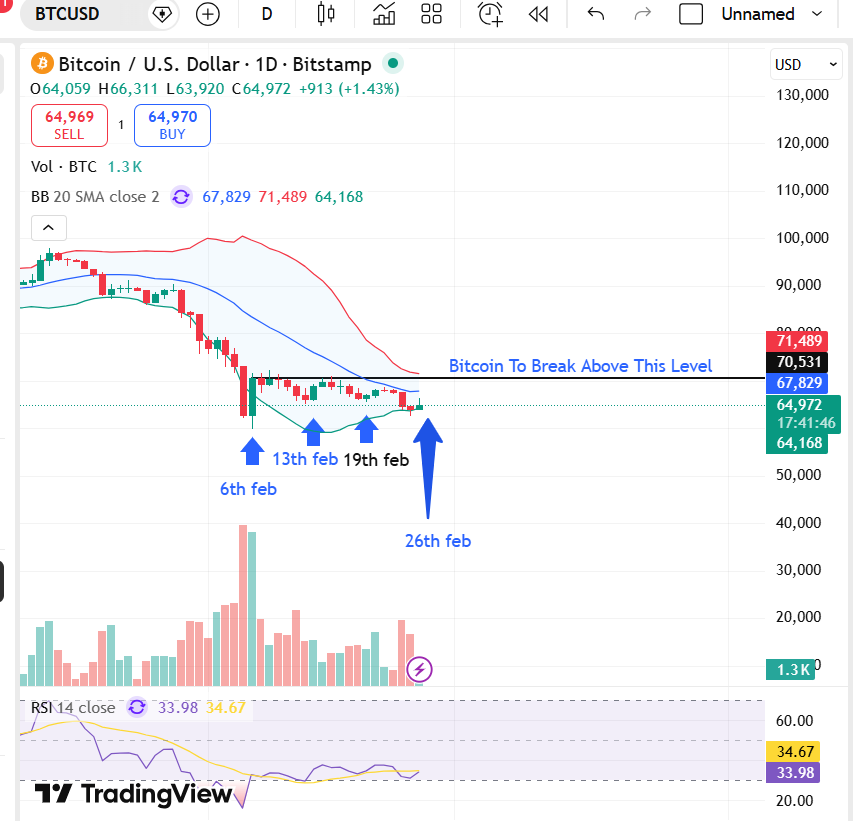

 Cardano's key whales & sharks have quietly been accumulating over the past 6 months. While its price has fallen over 71% from $0.90 to $0.26, wallets with 100K-100M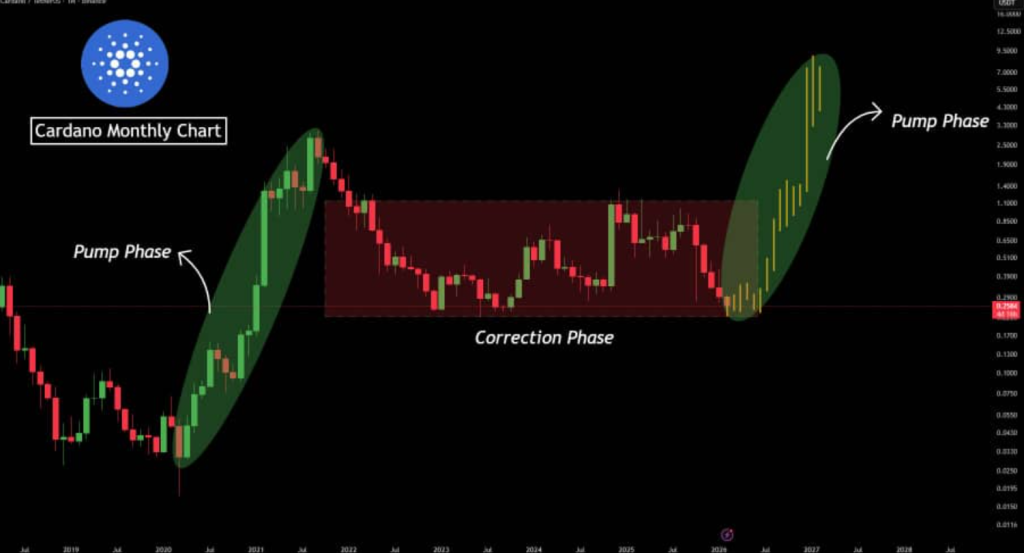


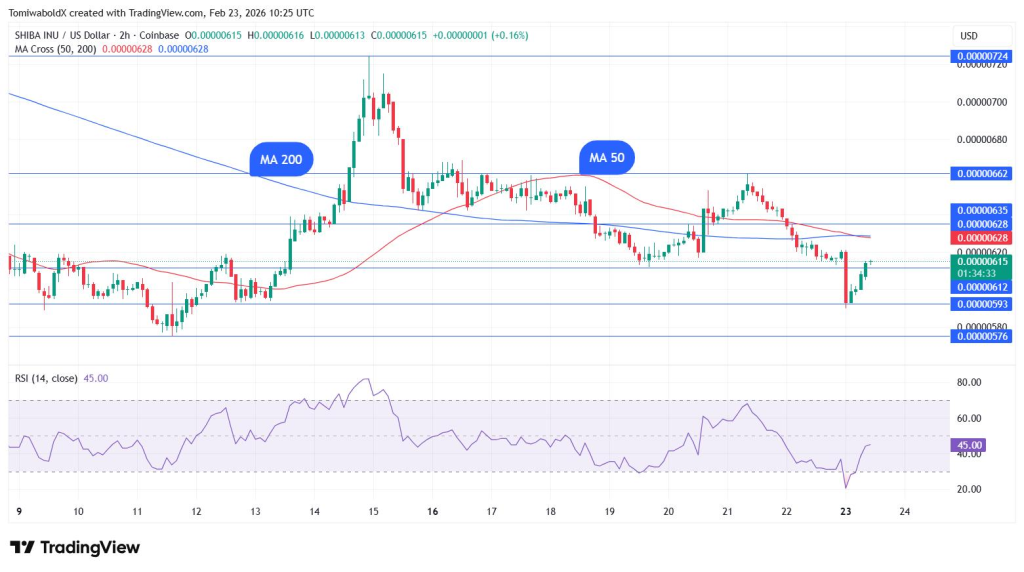
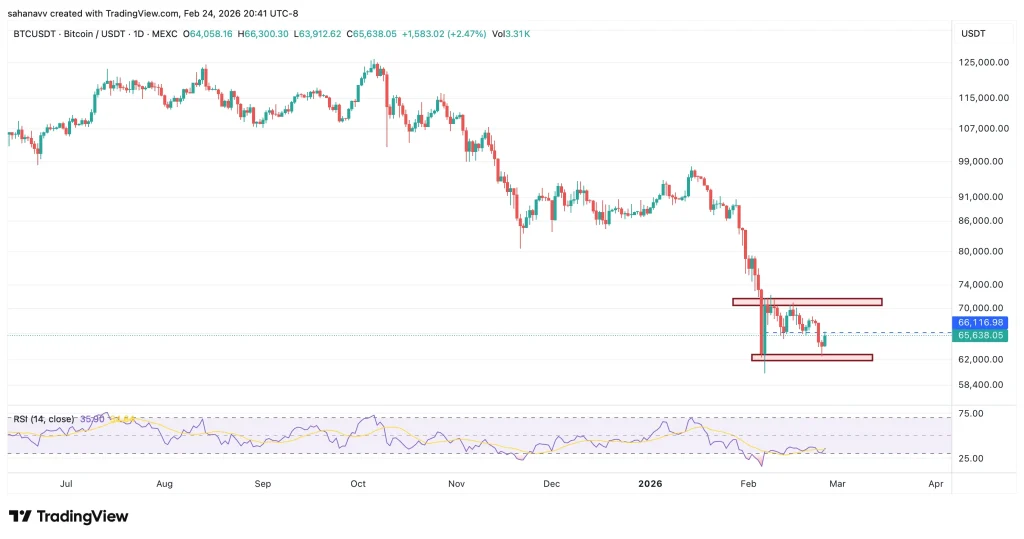
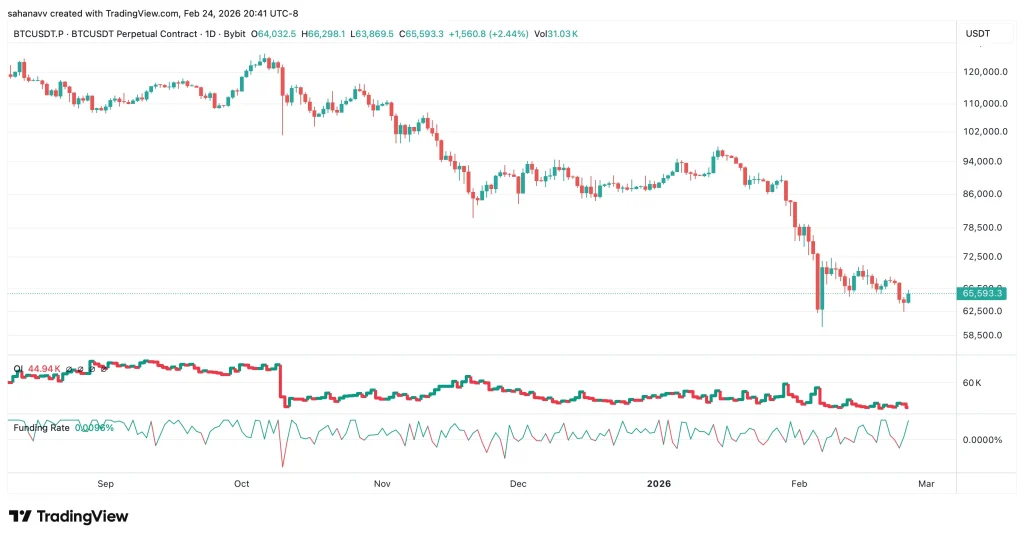

 1.73%
1.73%
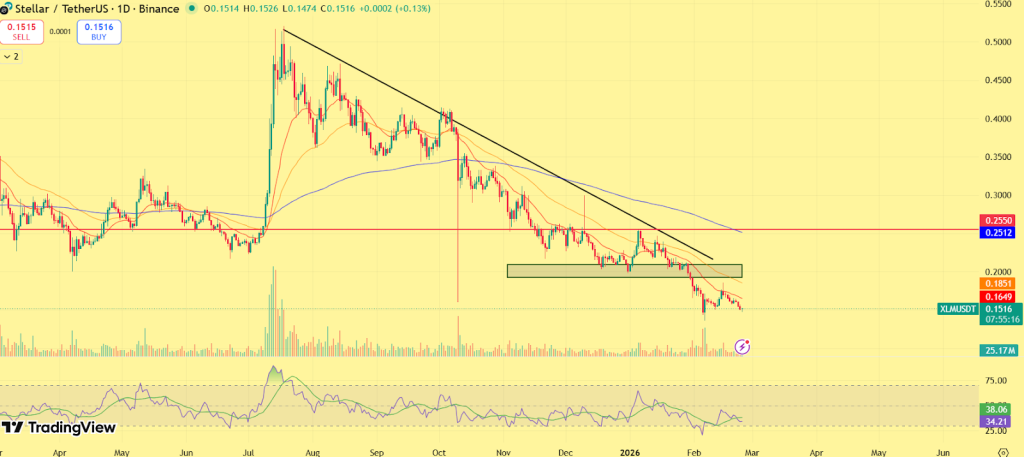


















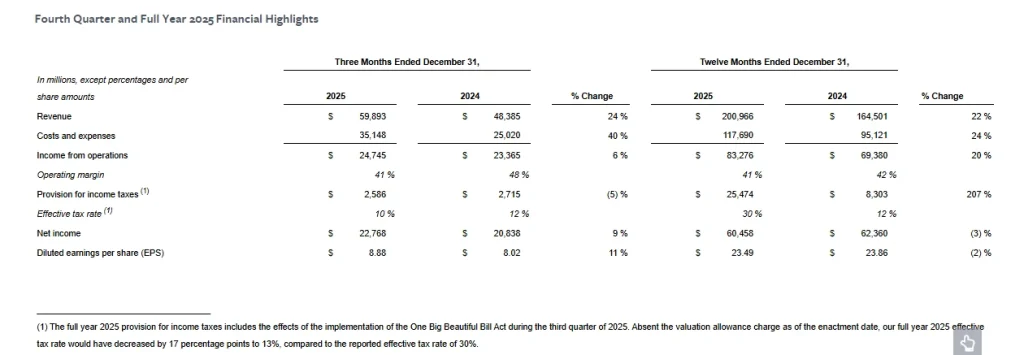







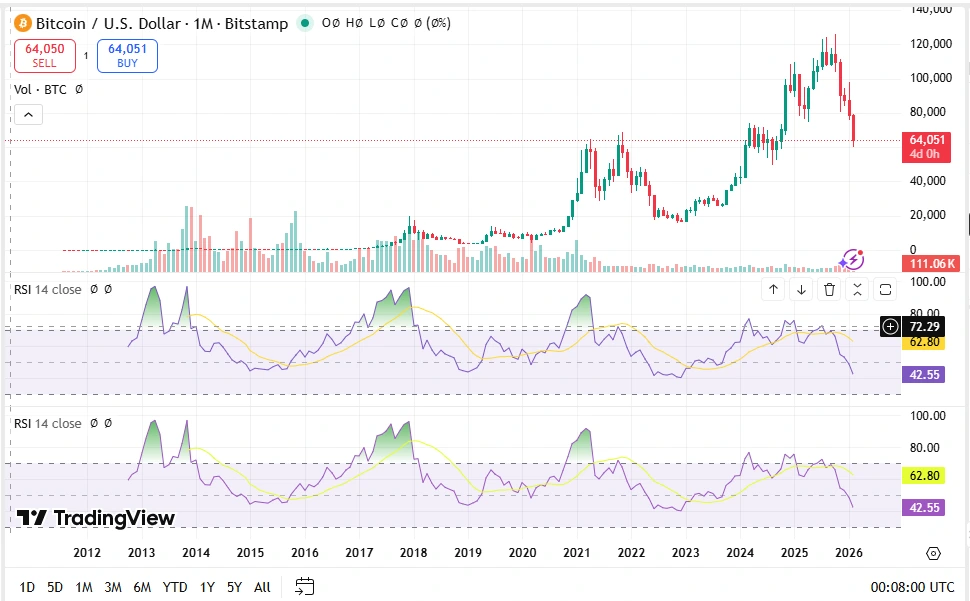
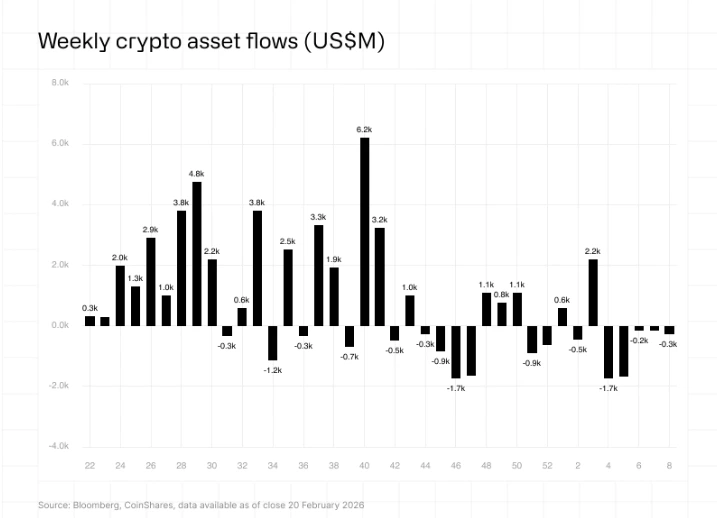





































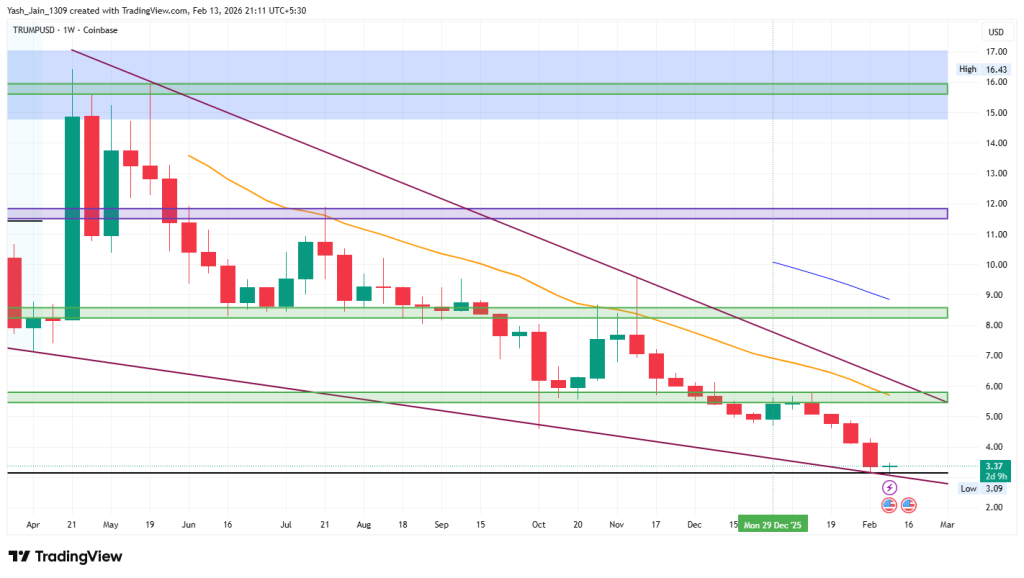
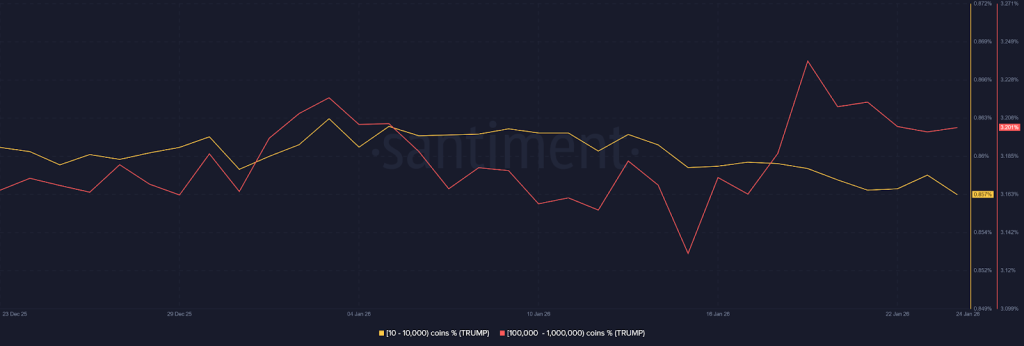

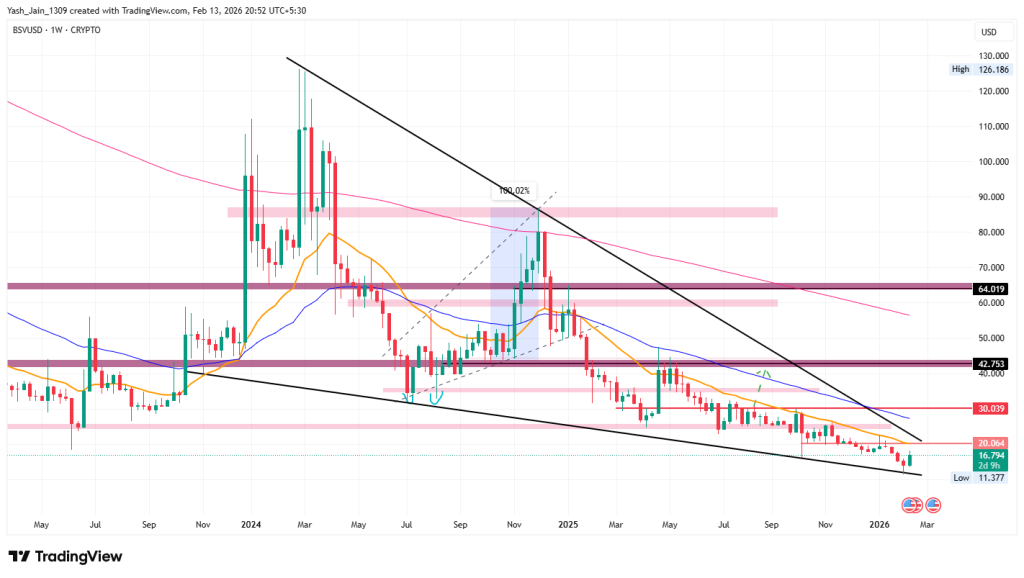
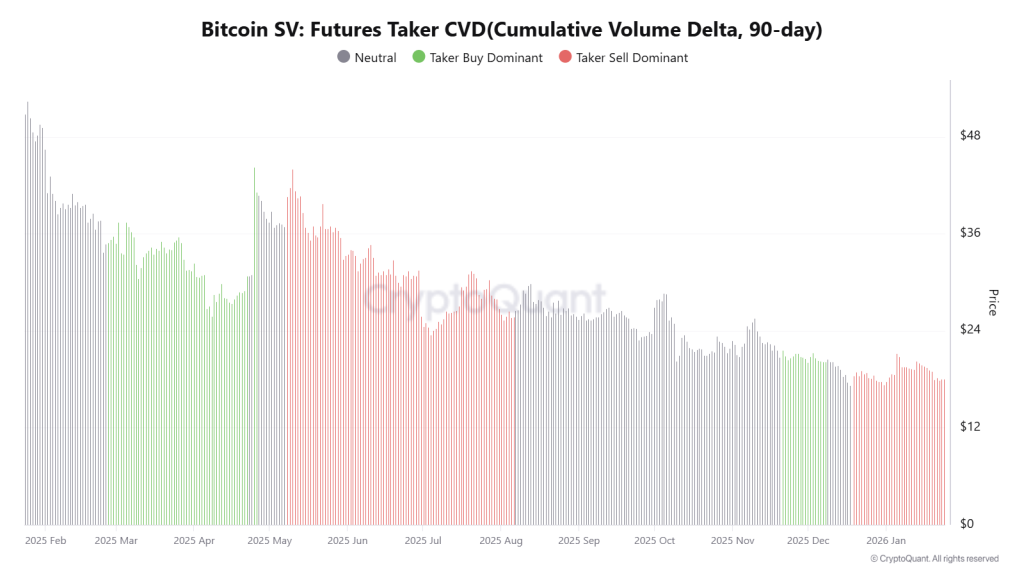
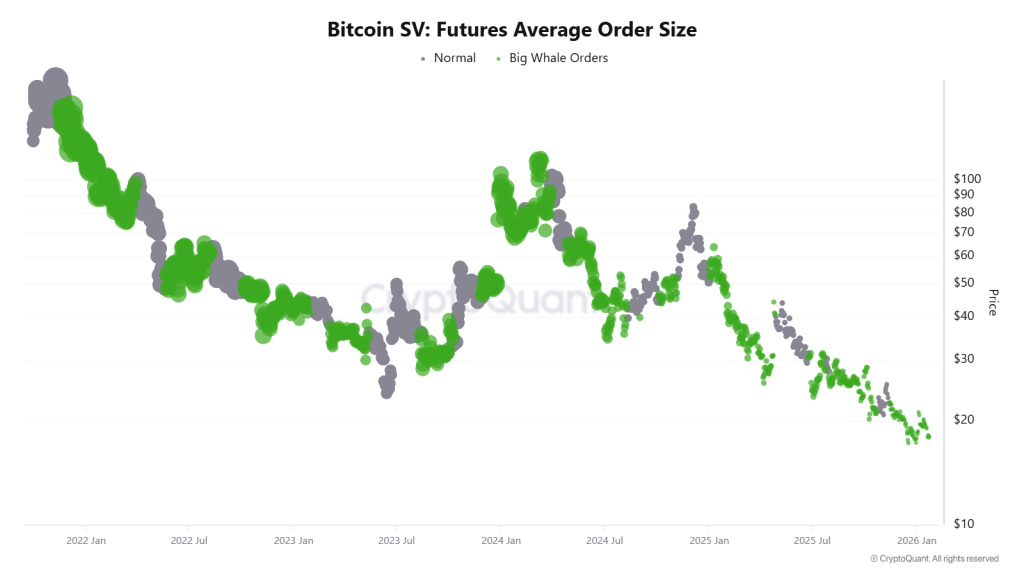

 (@coinbase)





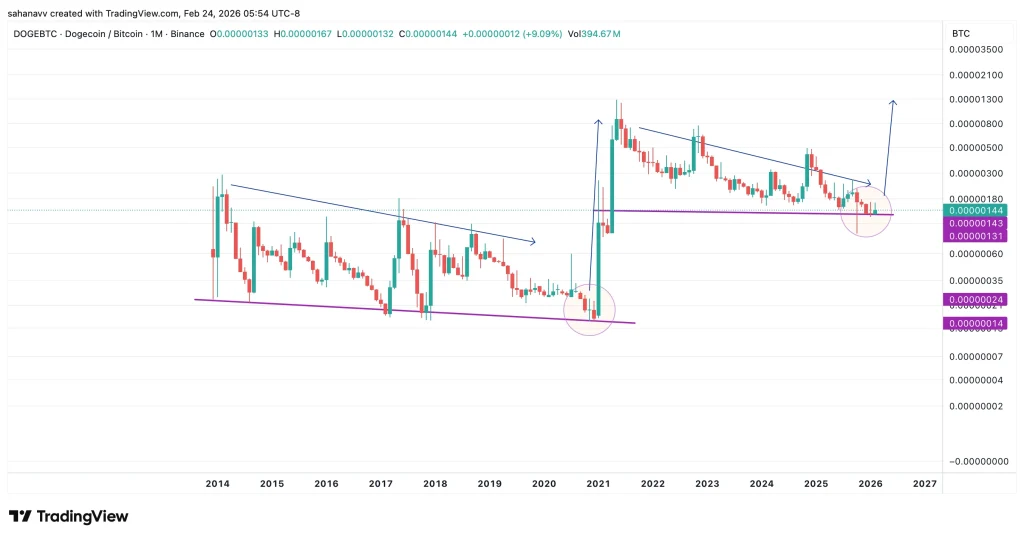
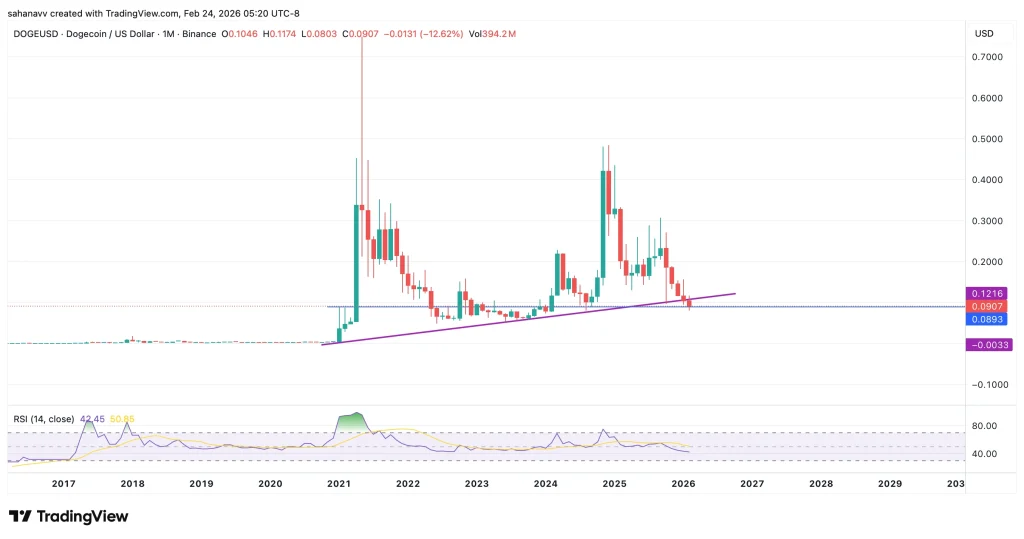




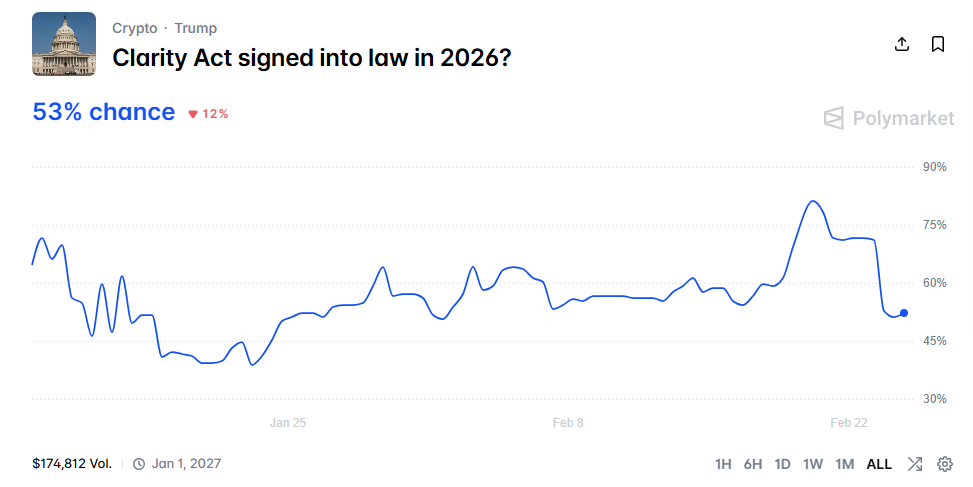
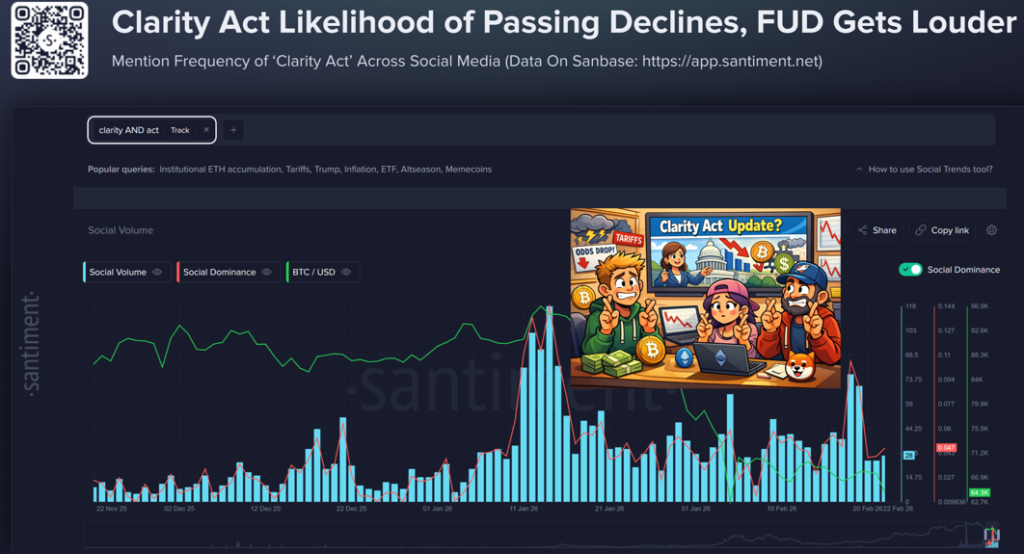
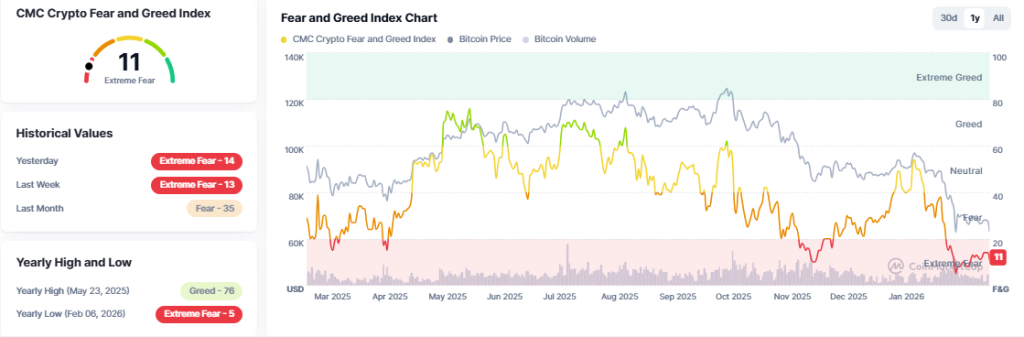
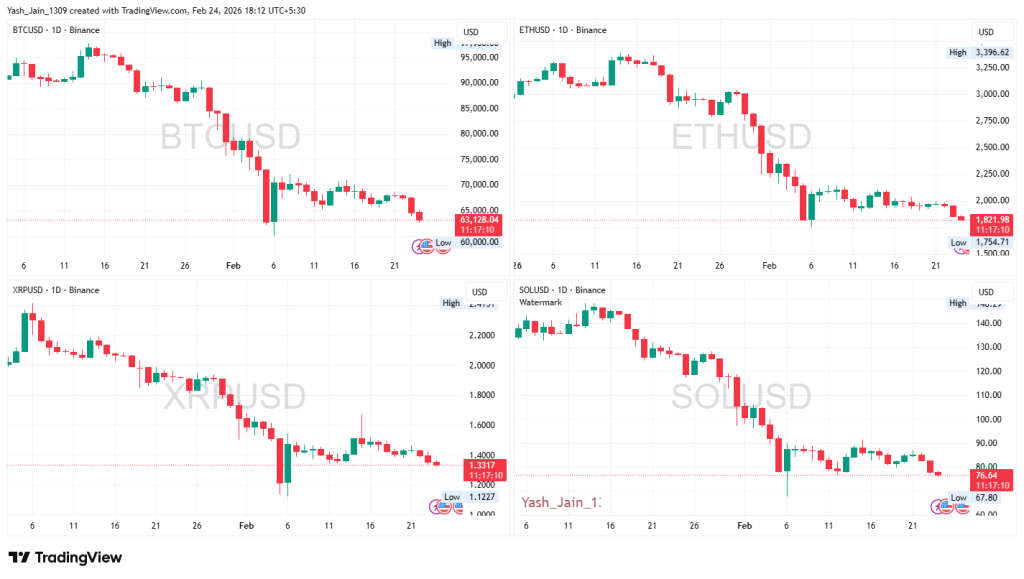
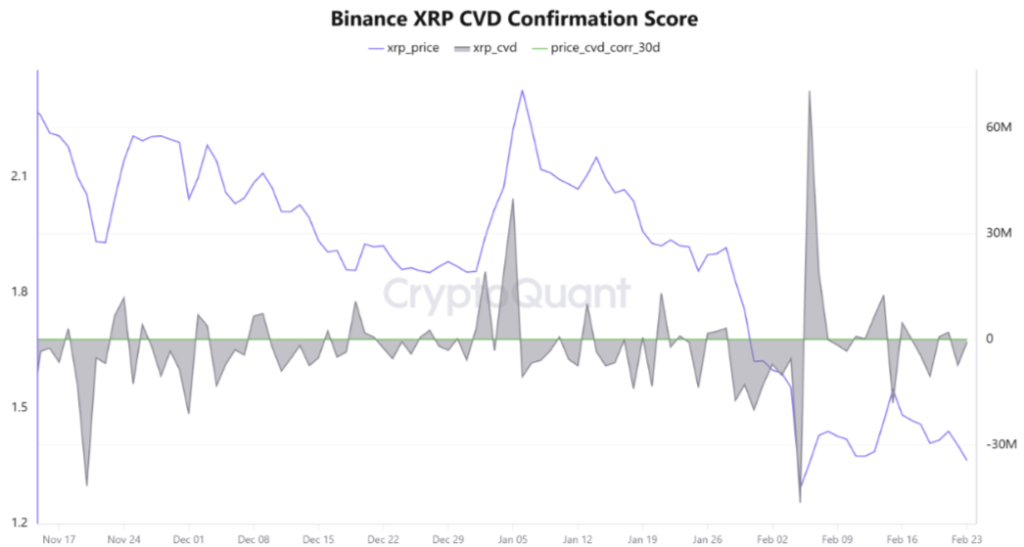
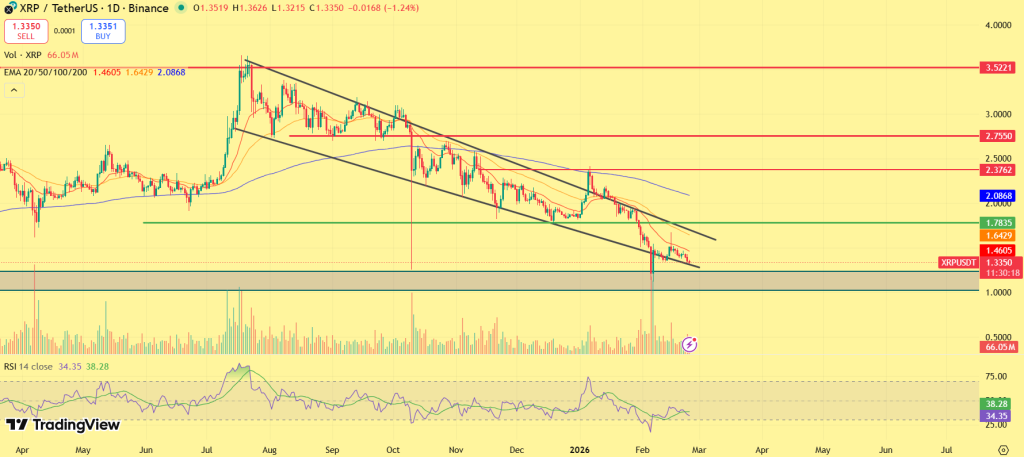


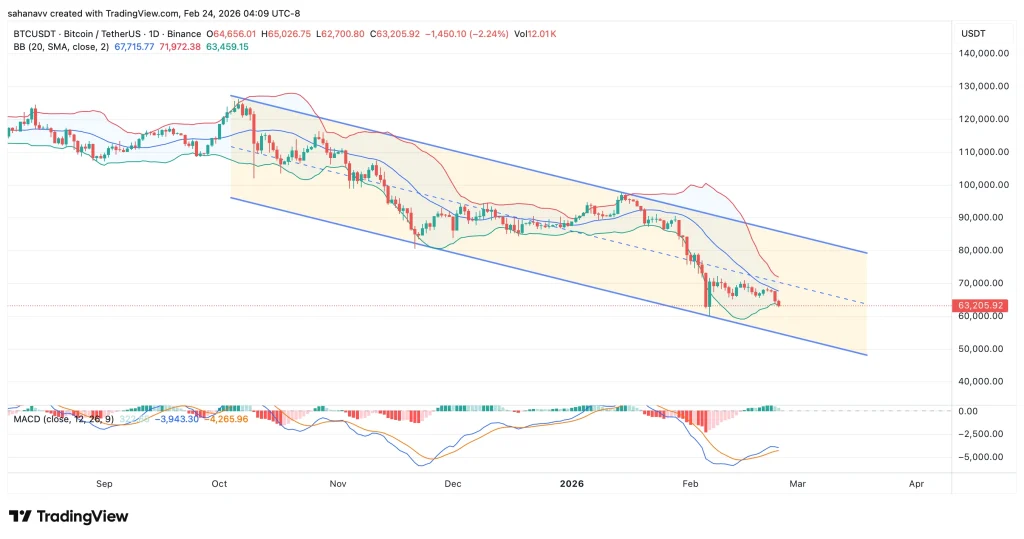

 (@StepFinance_)
 -3.32%
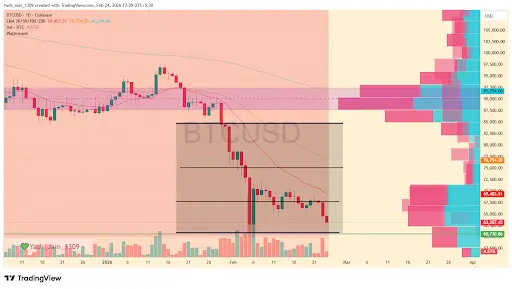
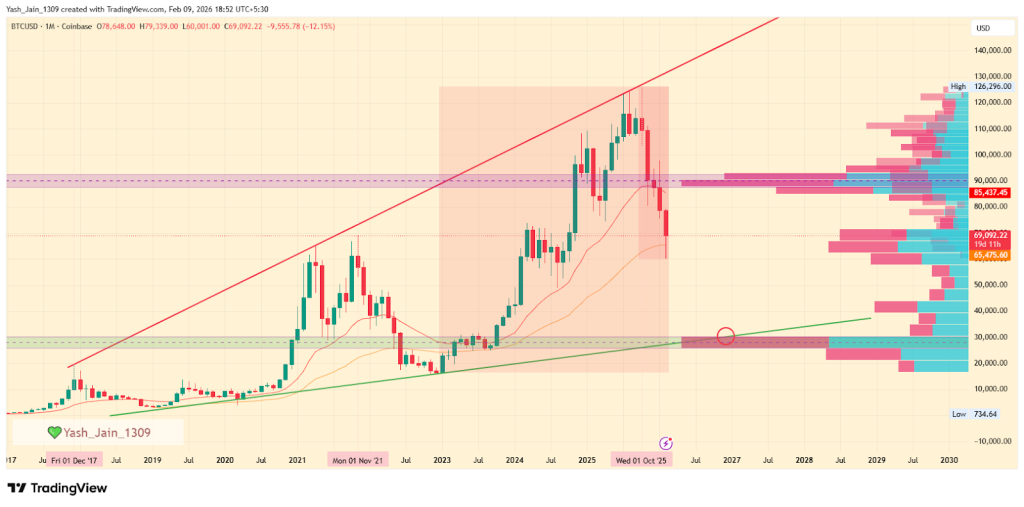
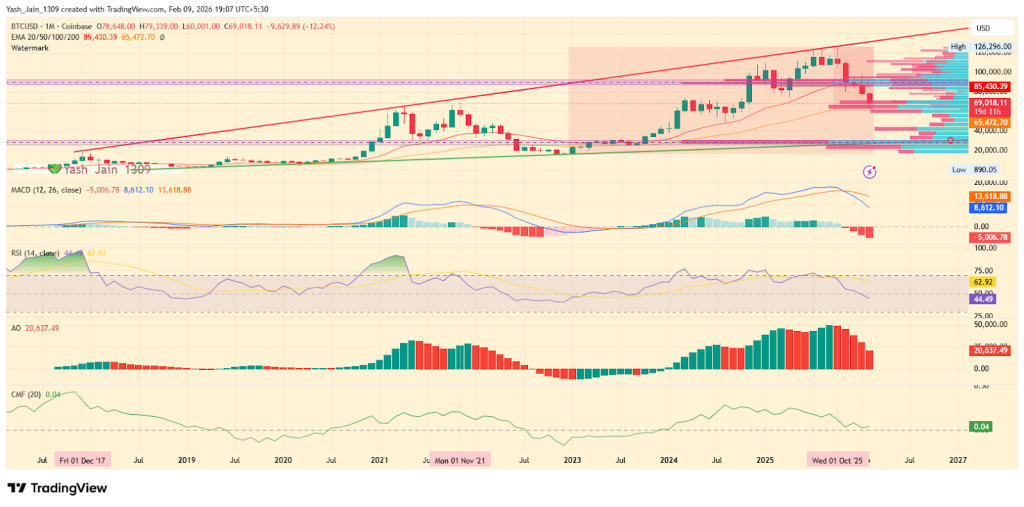
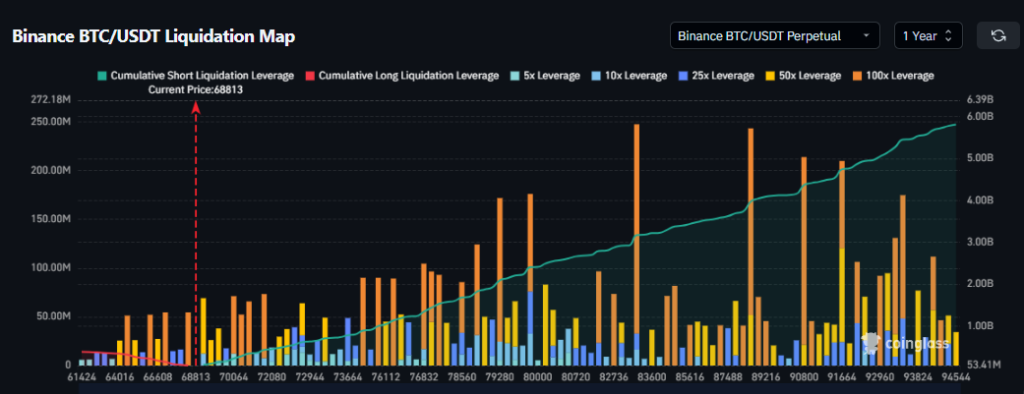
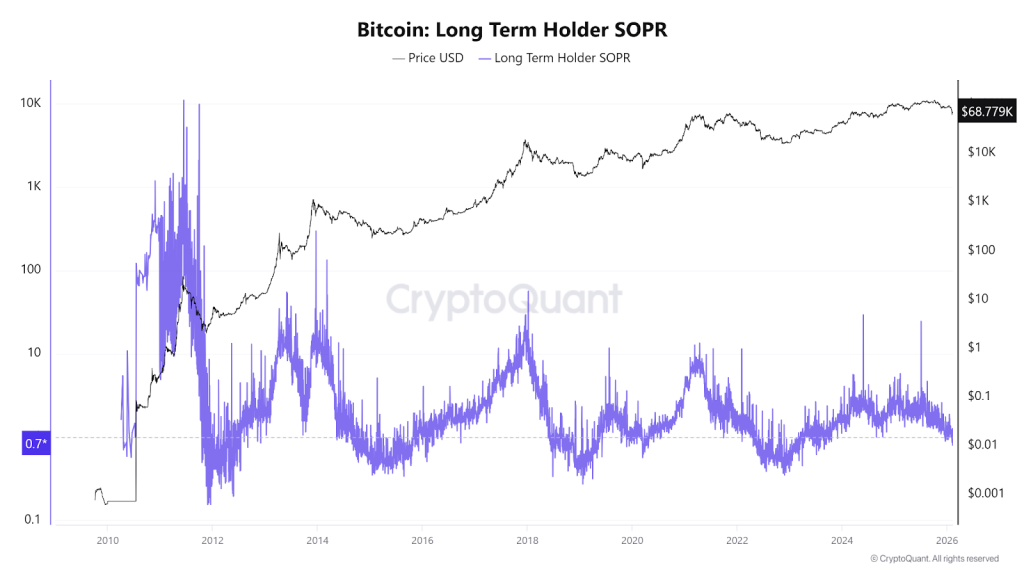

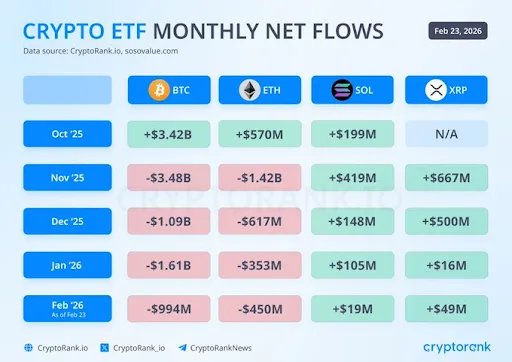

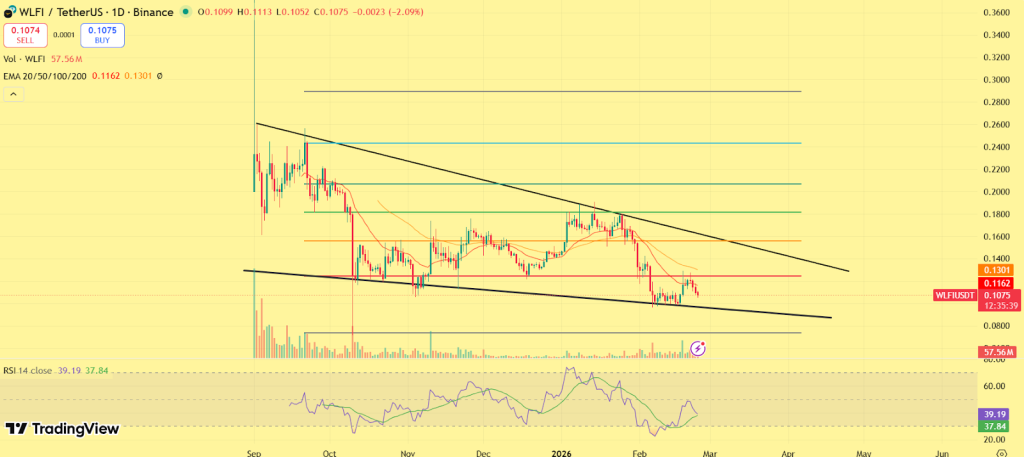









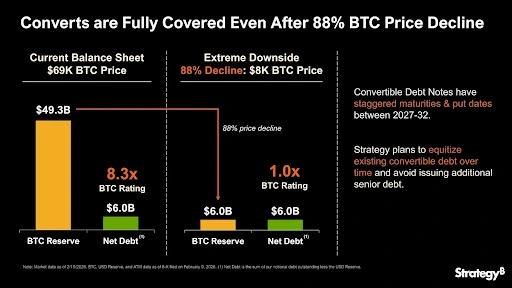
 Misleading




















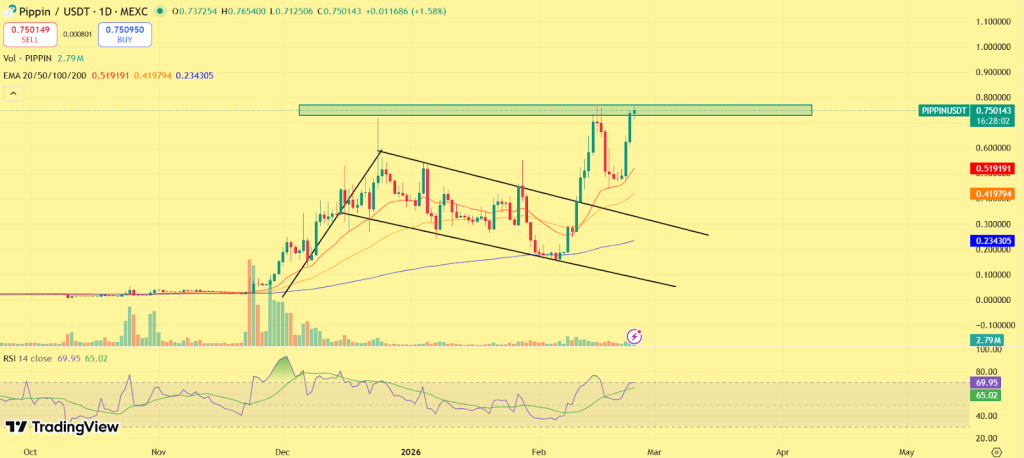
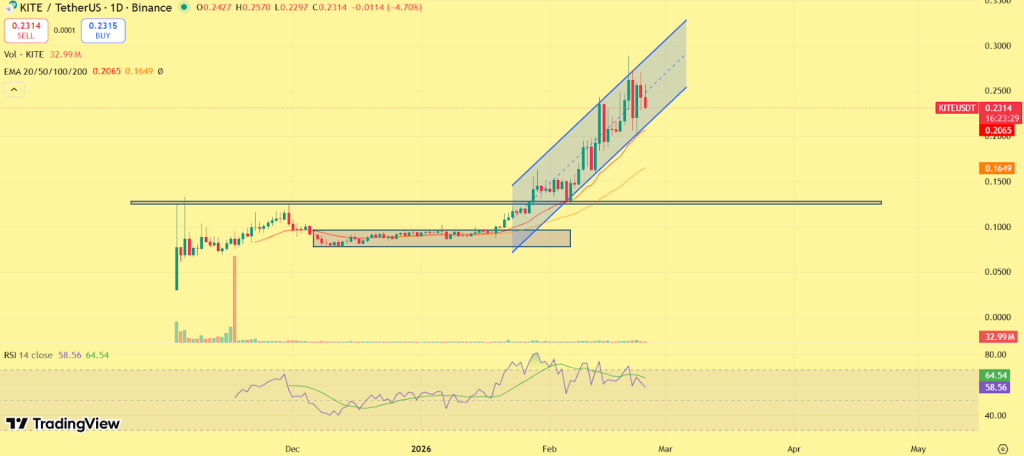
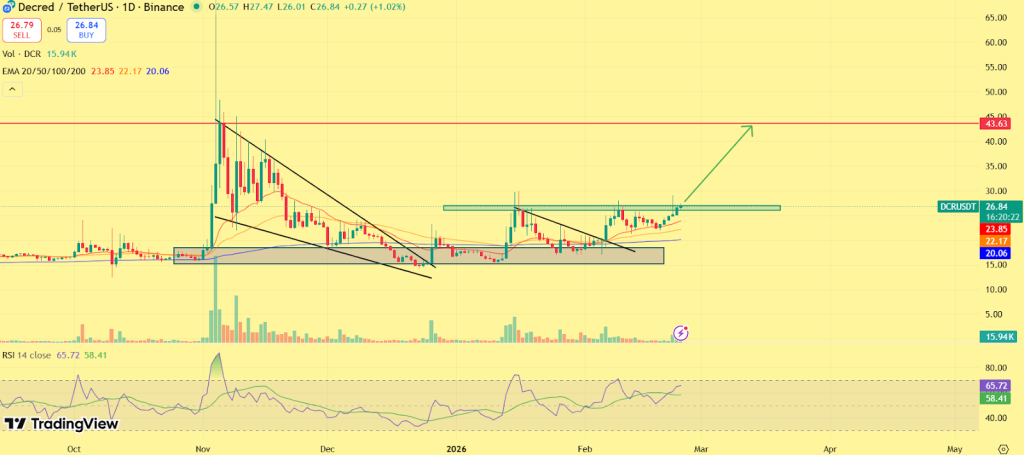










 OLDEST BITCOIN WHALE JUST SOLD $1.24B IN
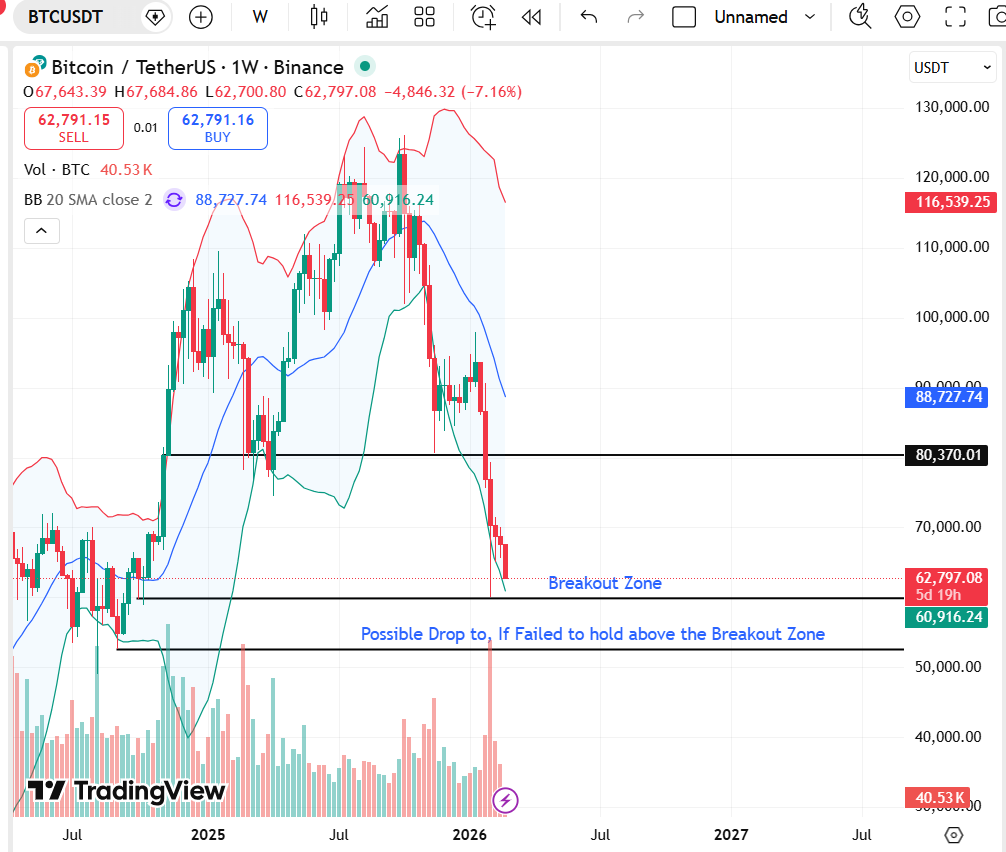

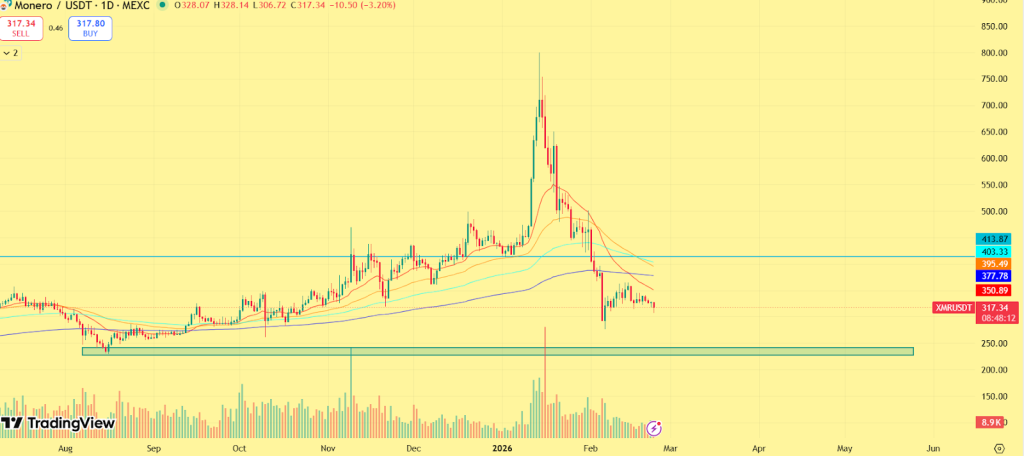









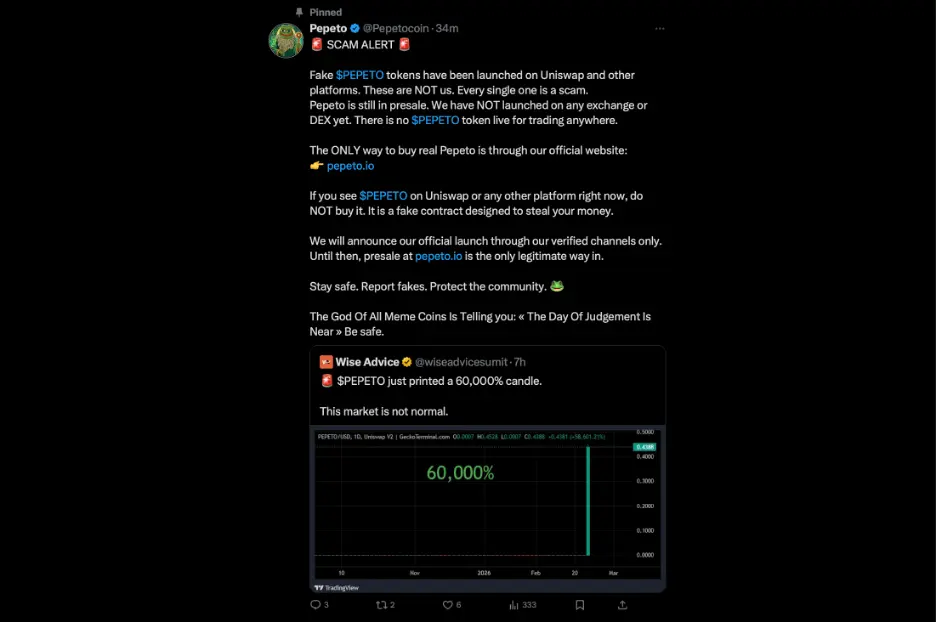
 (@natbrunell)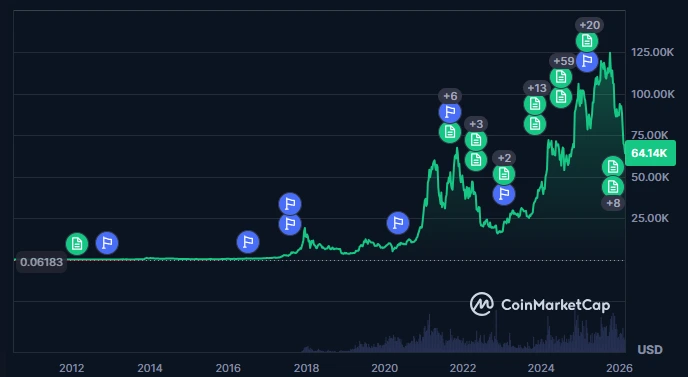
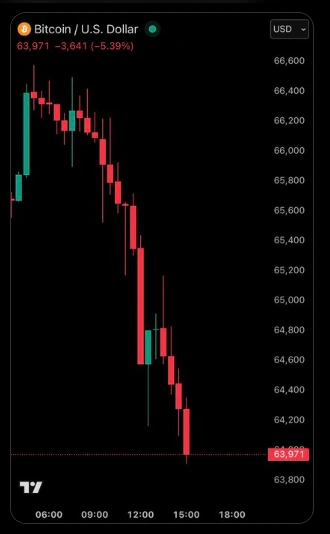
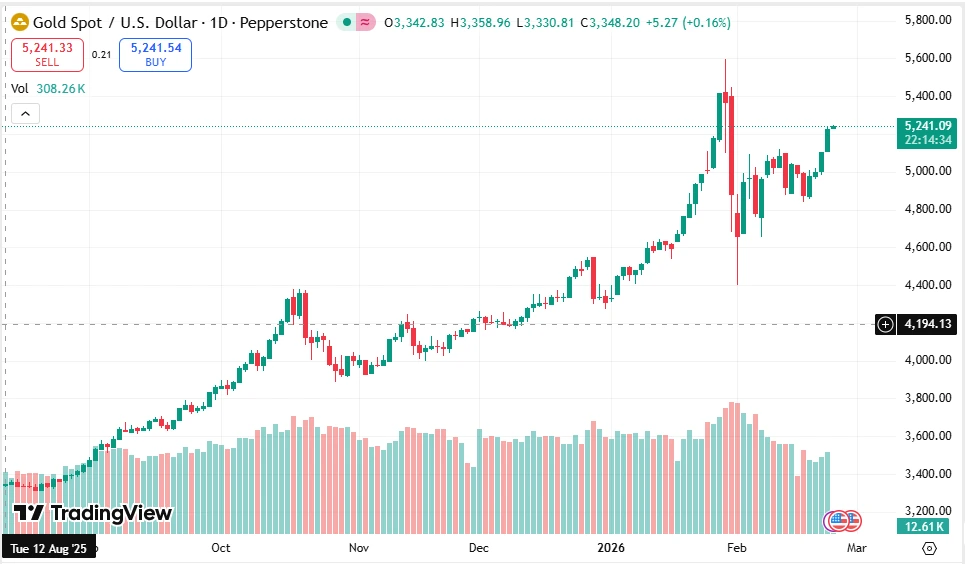












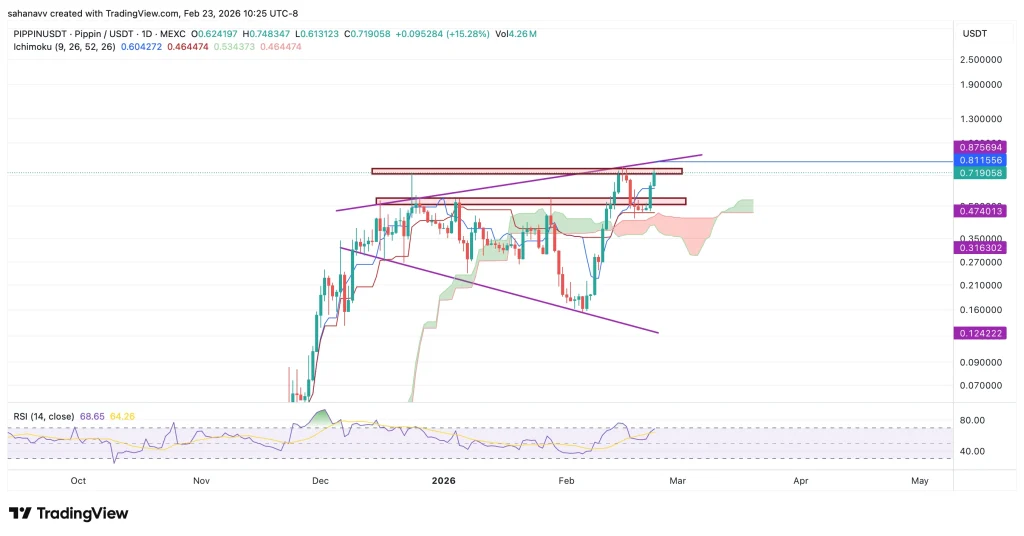

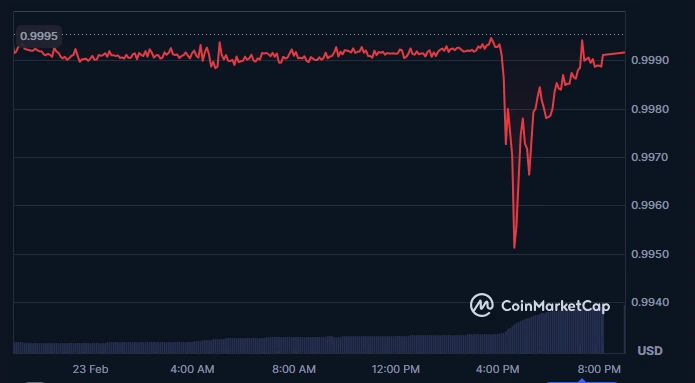





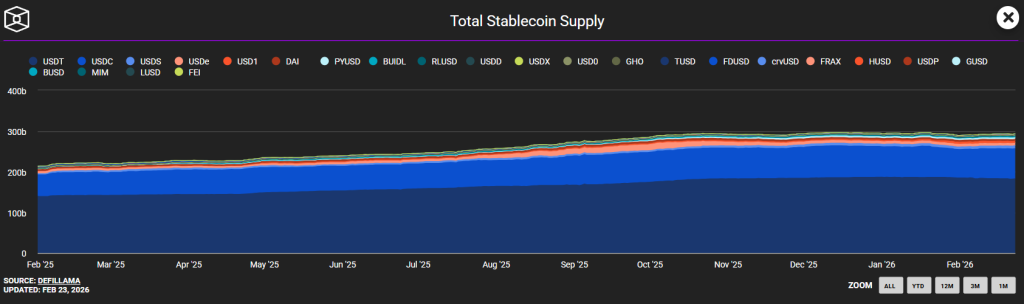
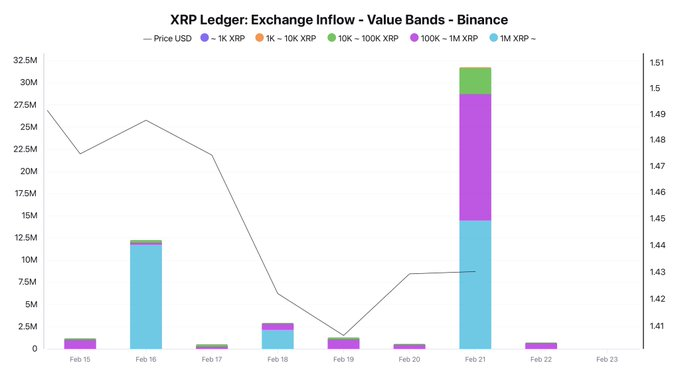















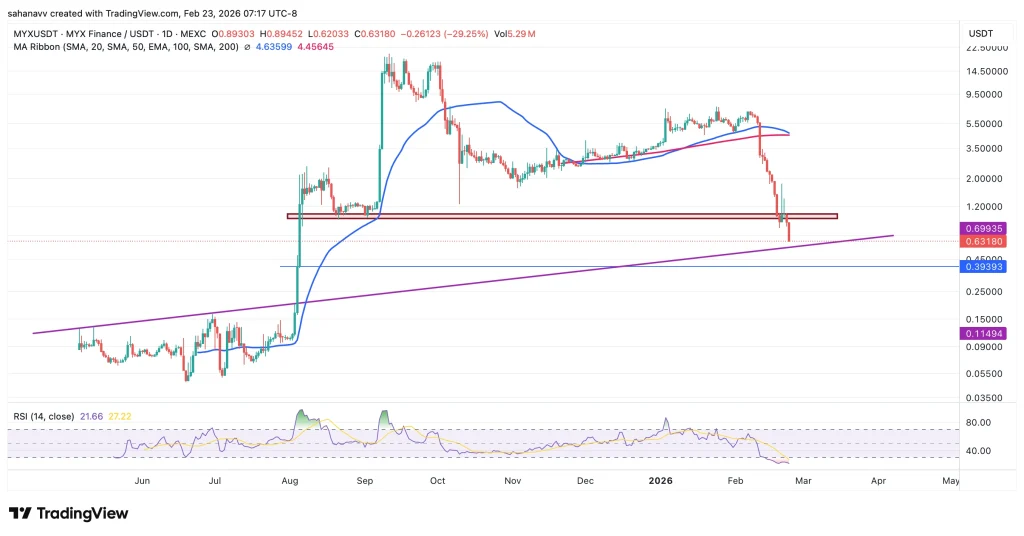

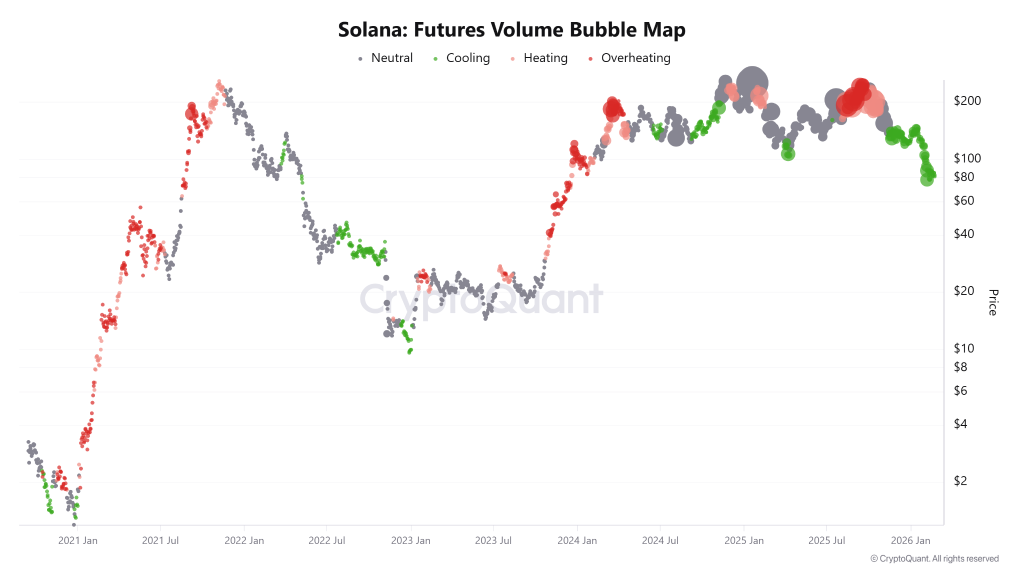
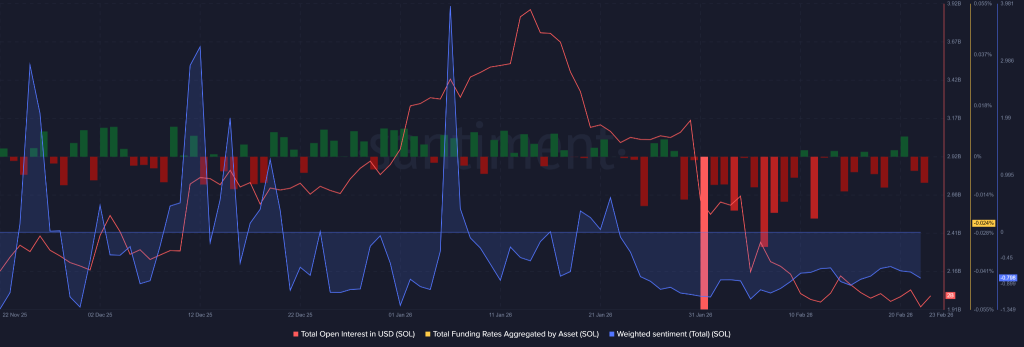
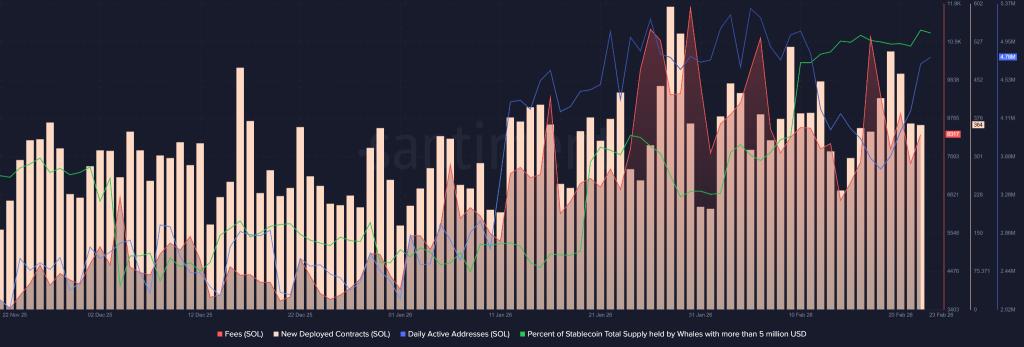

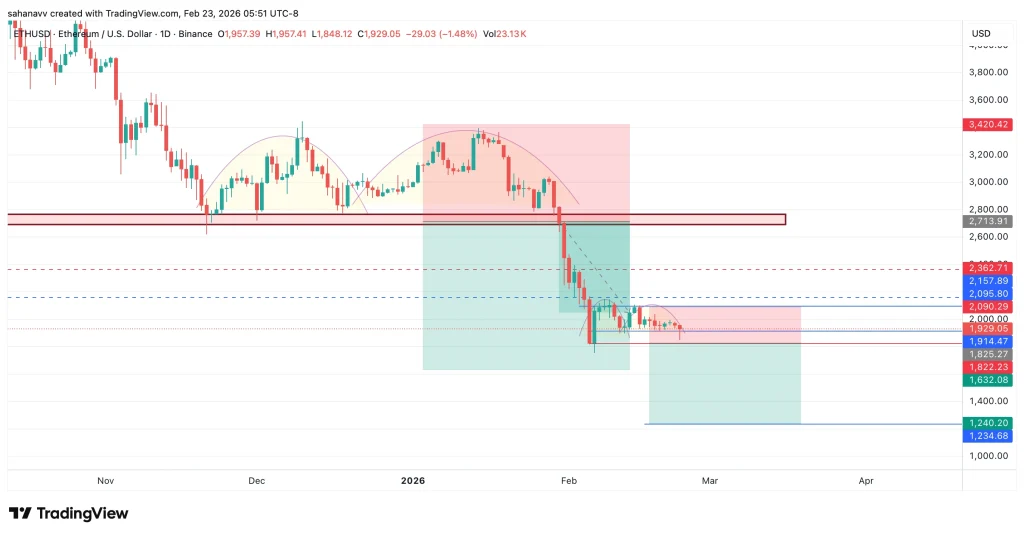
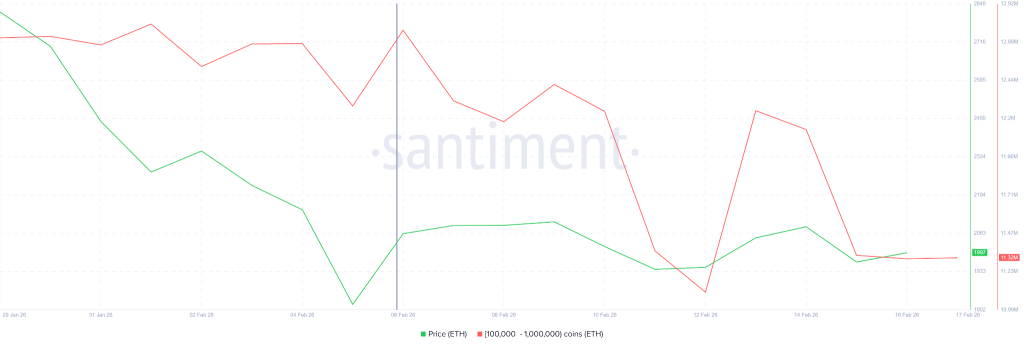
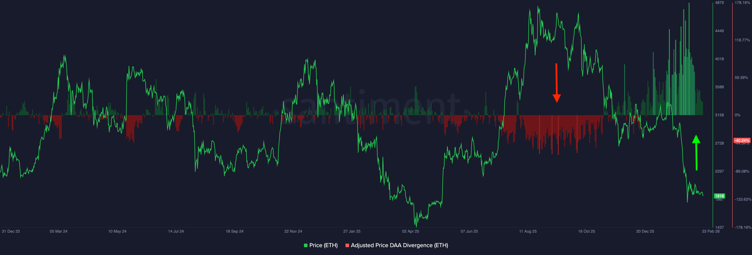



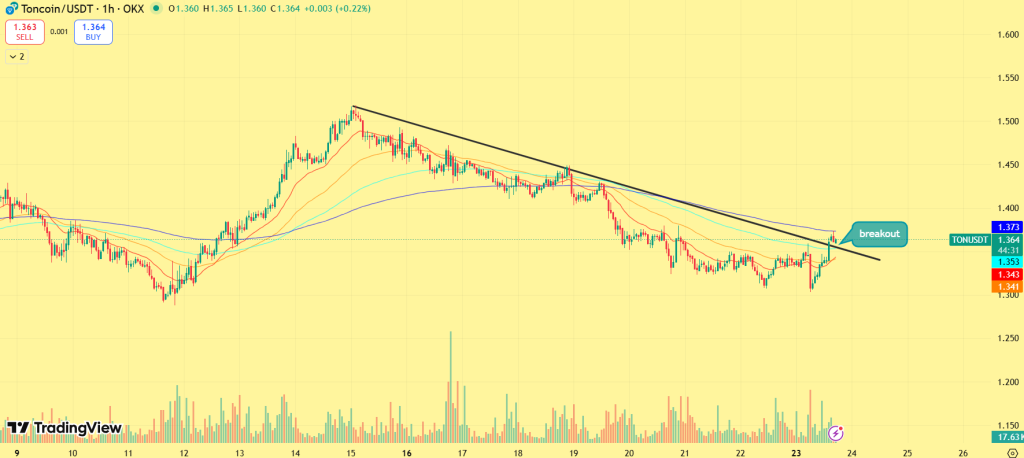
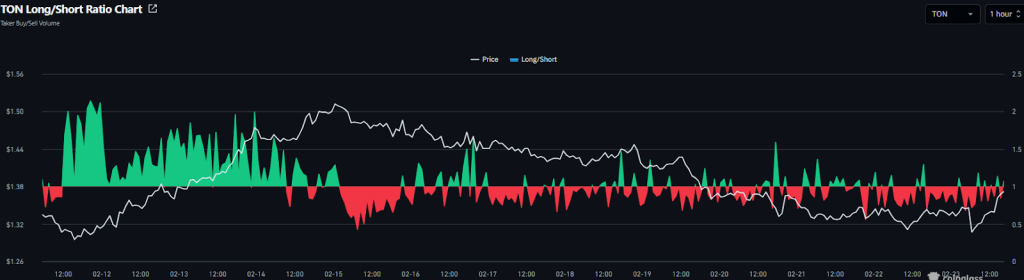
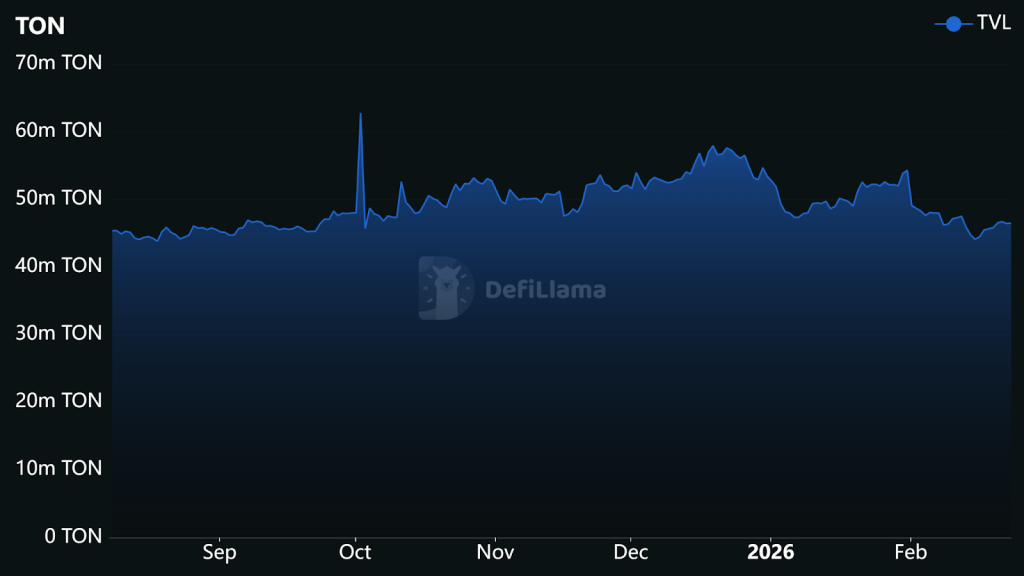

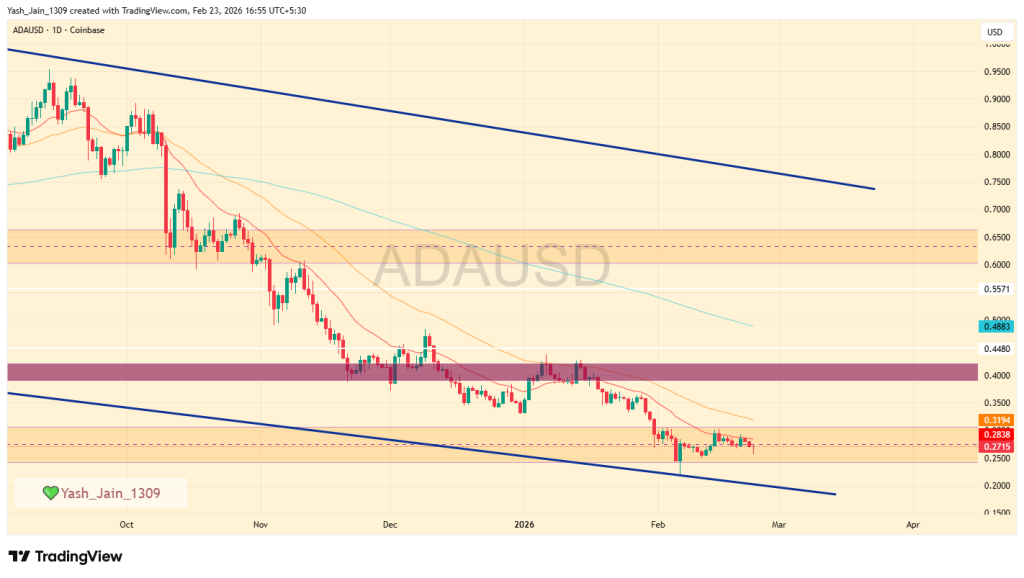
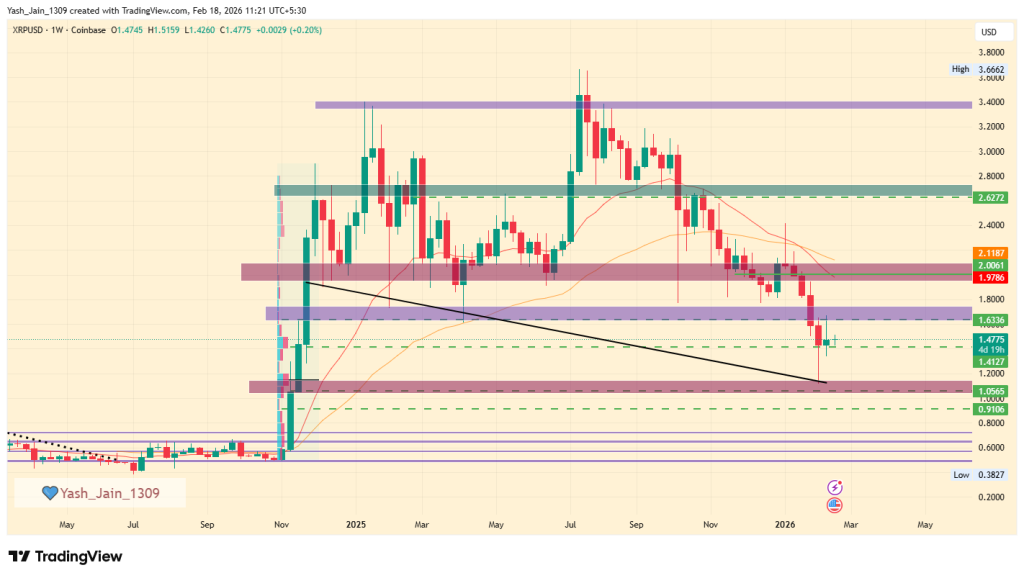
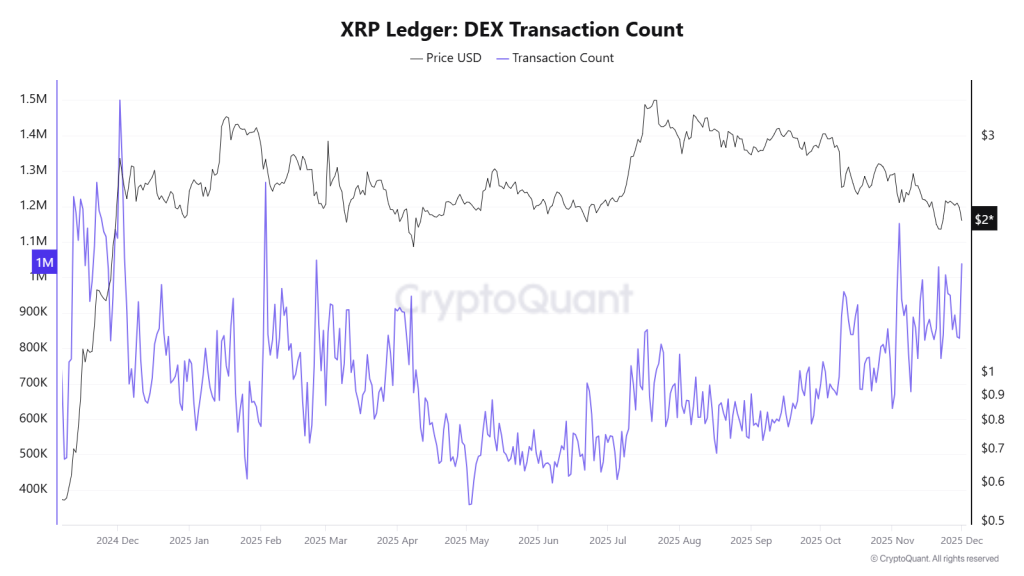
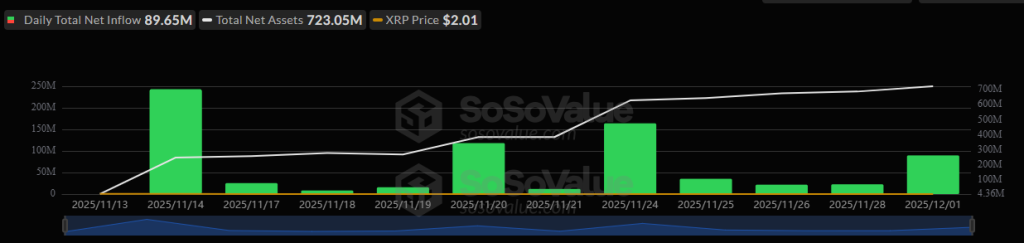

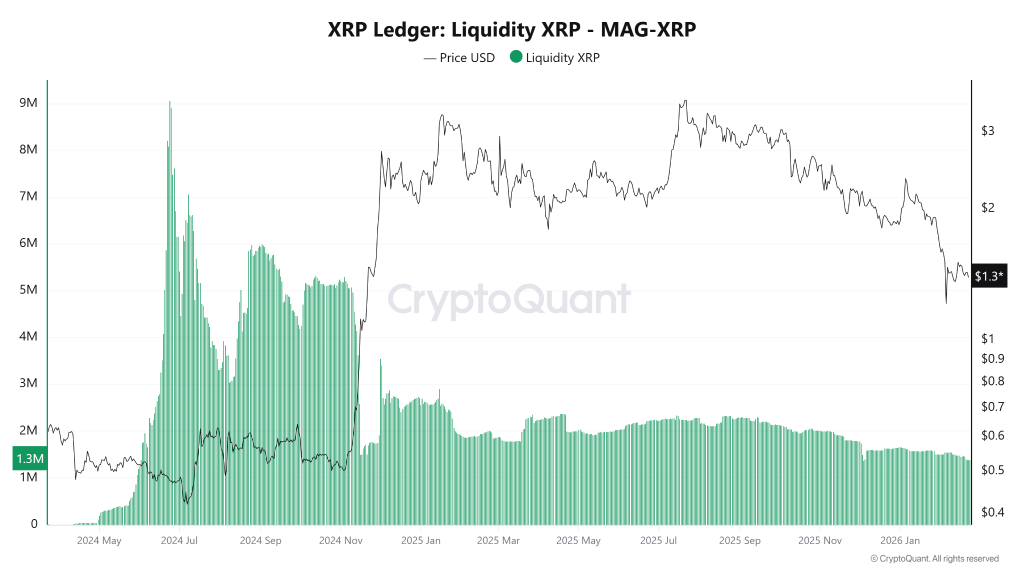
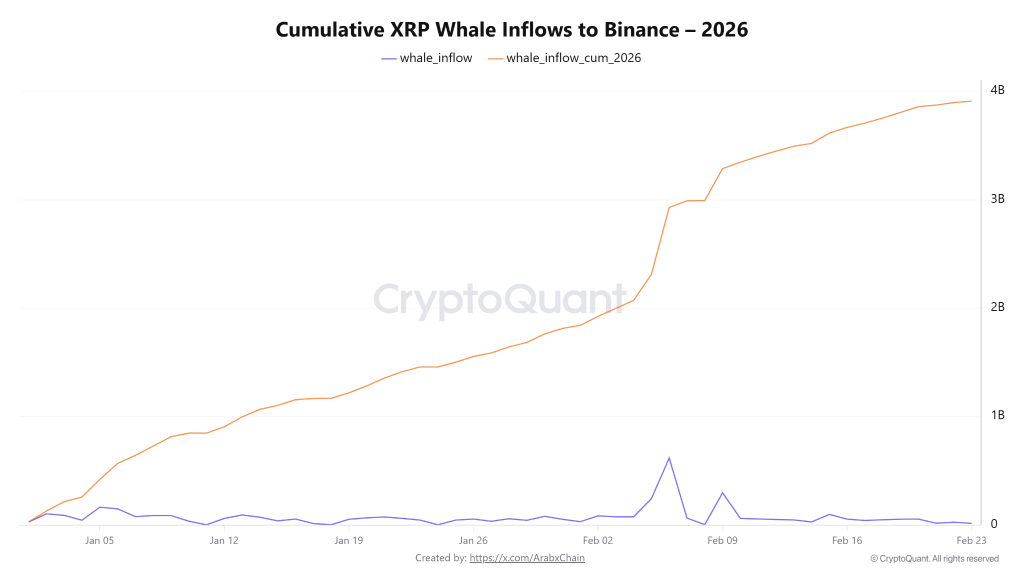
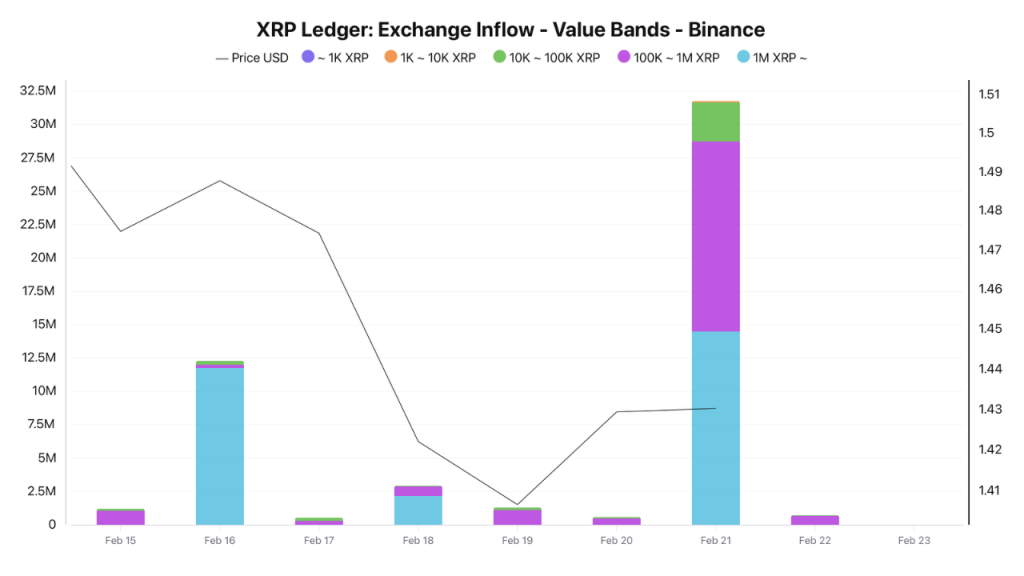
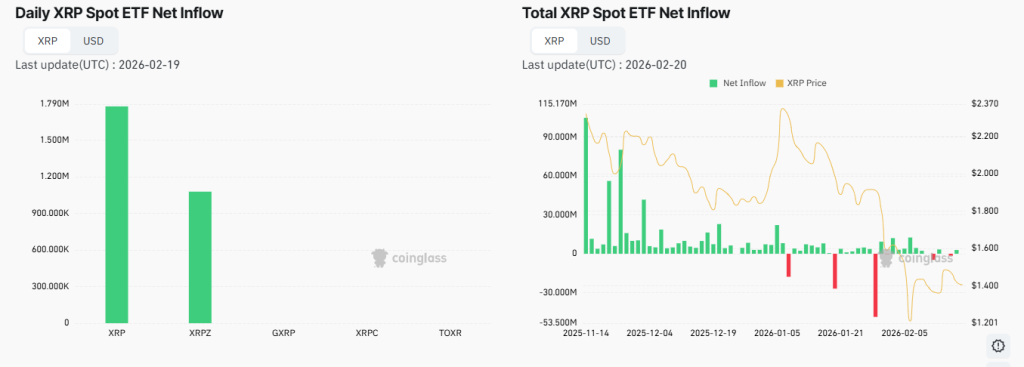

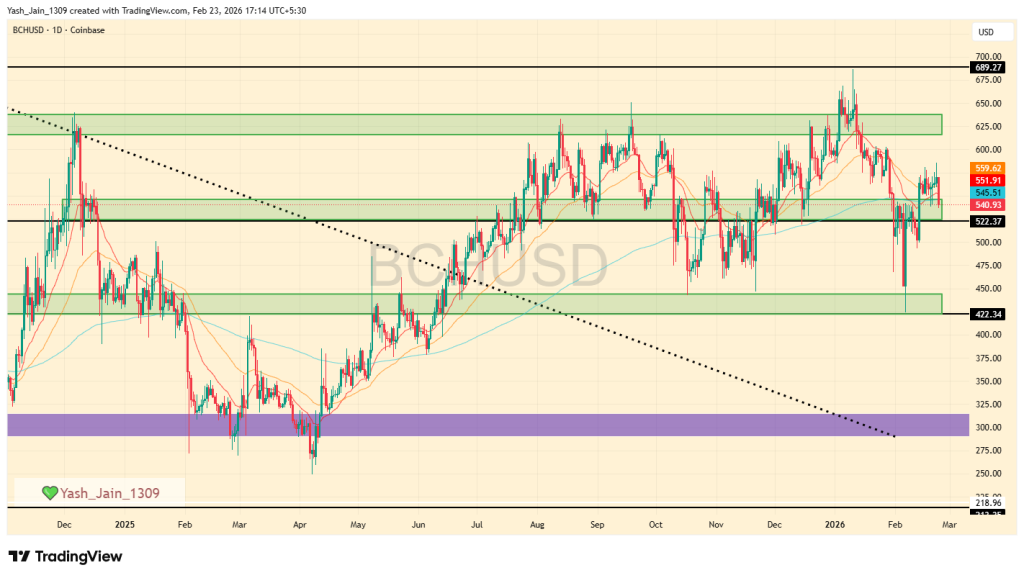
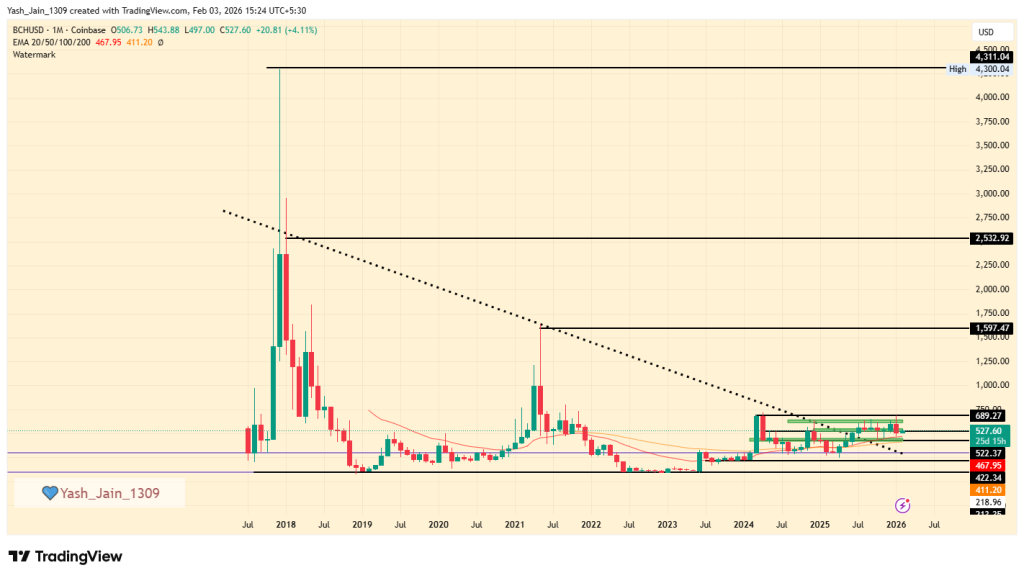















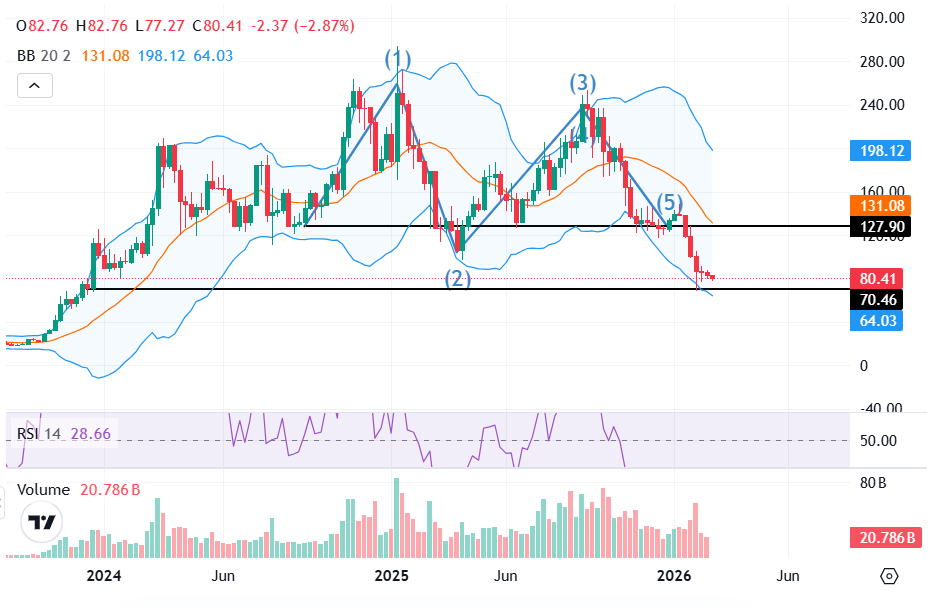

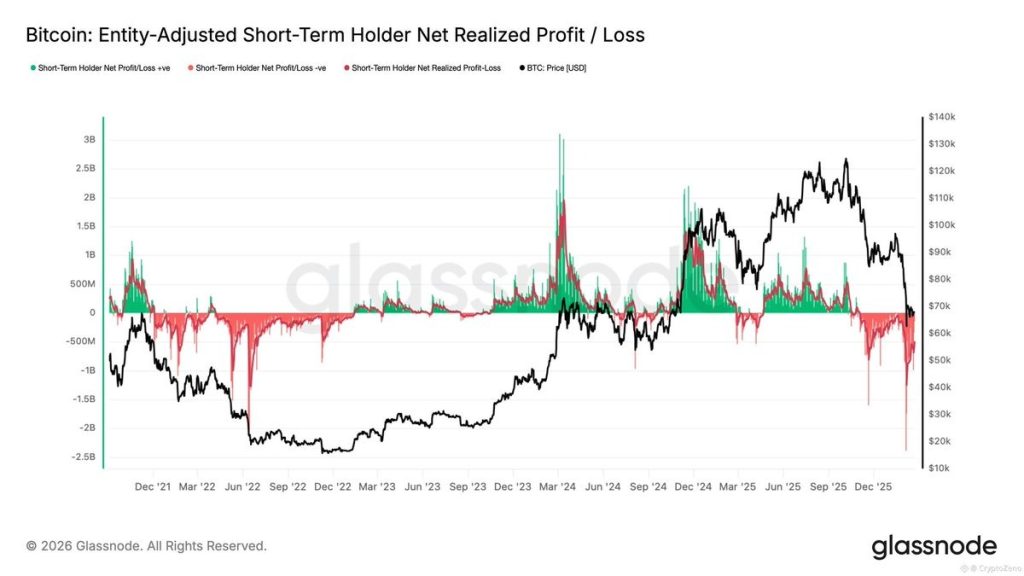
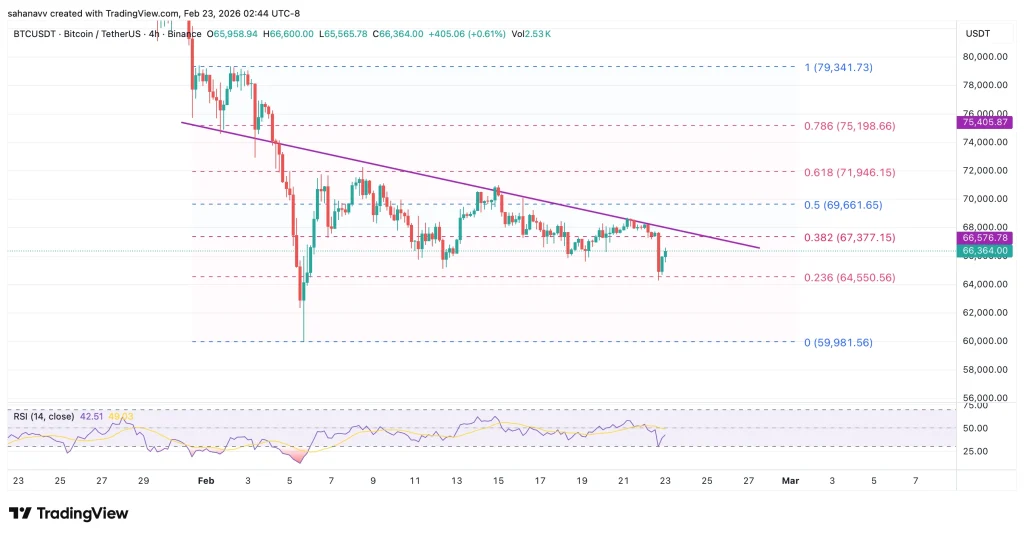
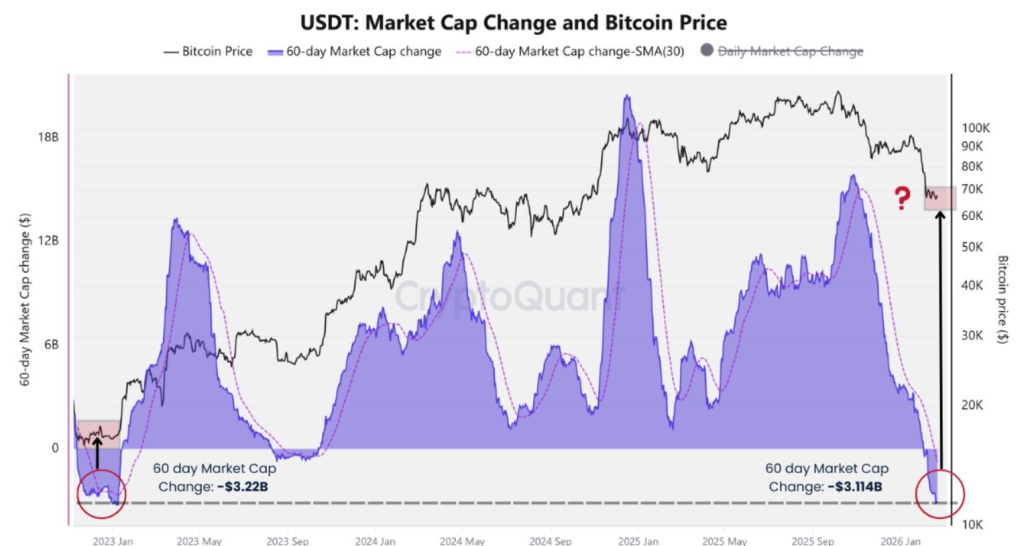
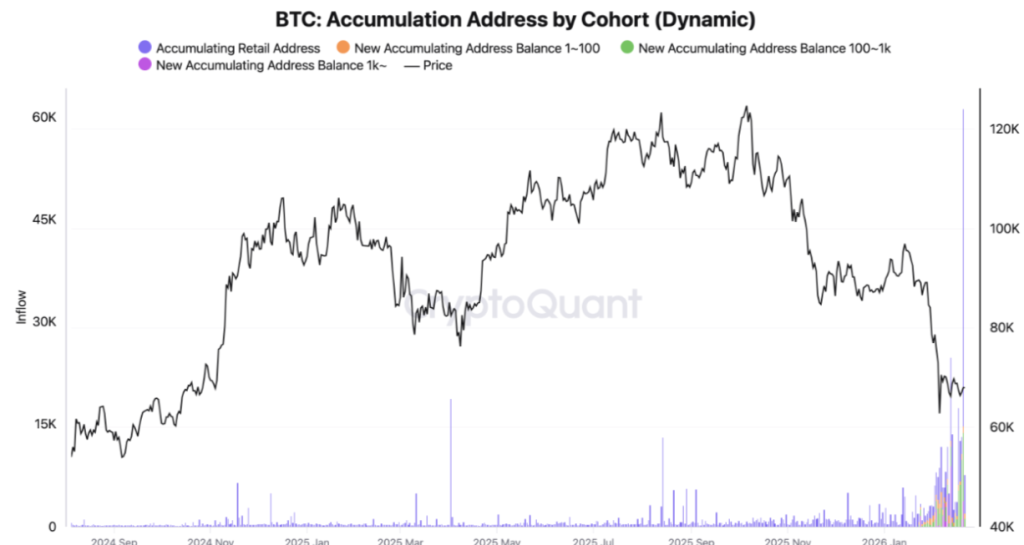
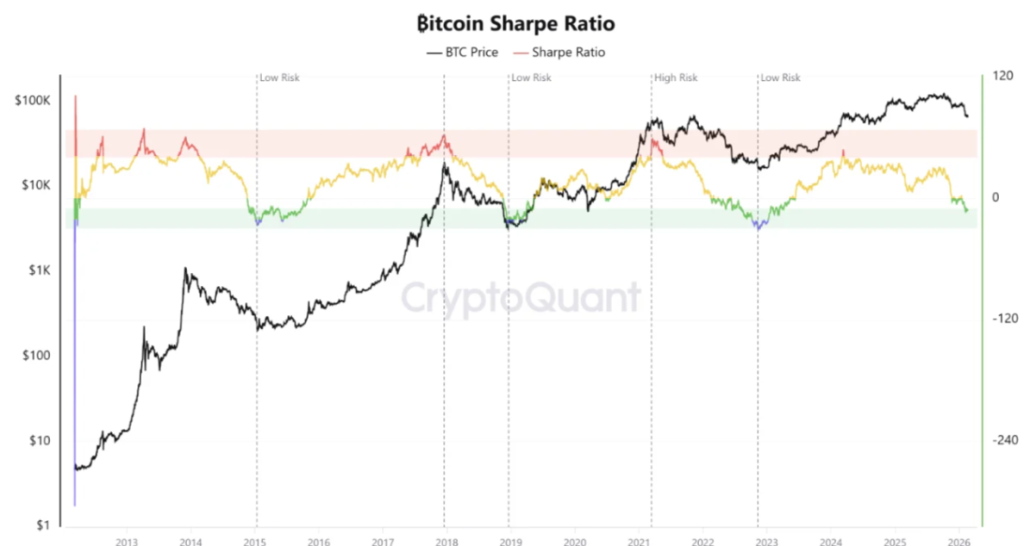




















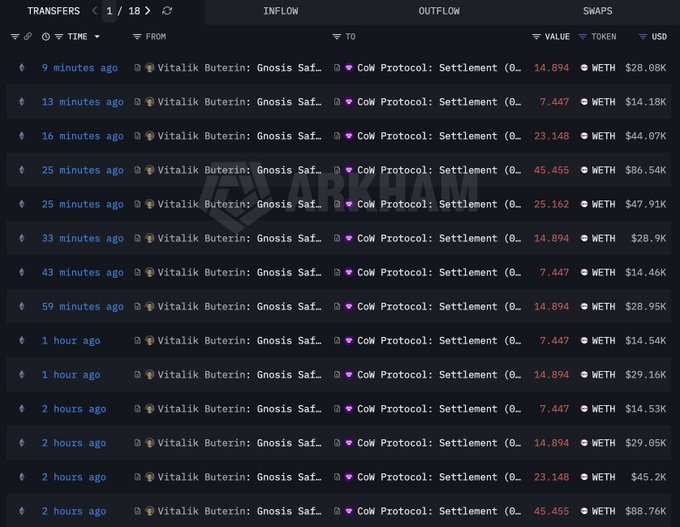
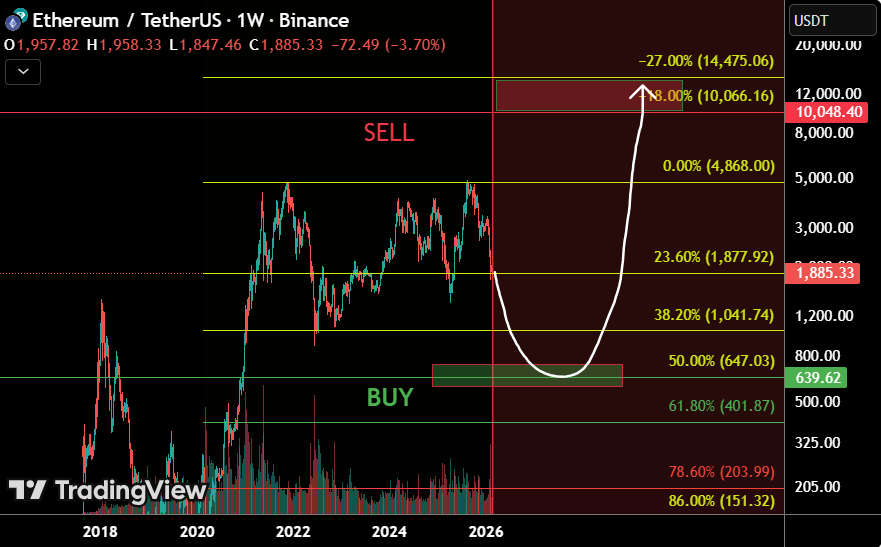
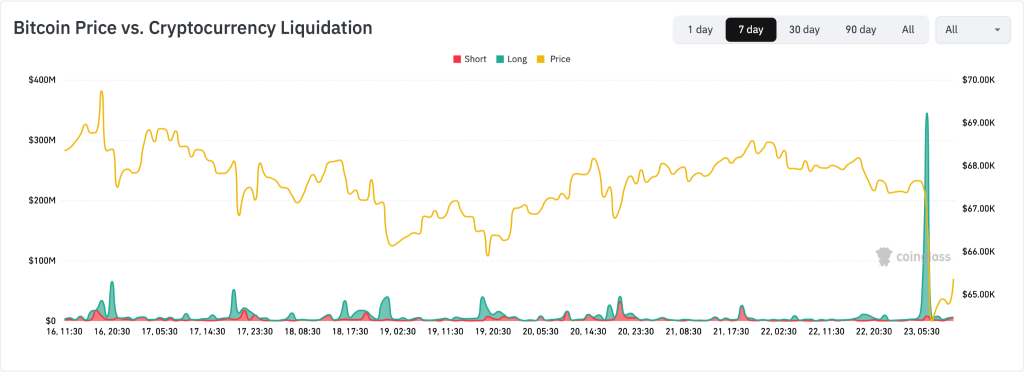
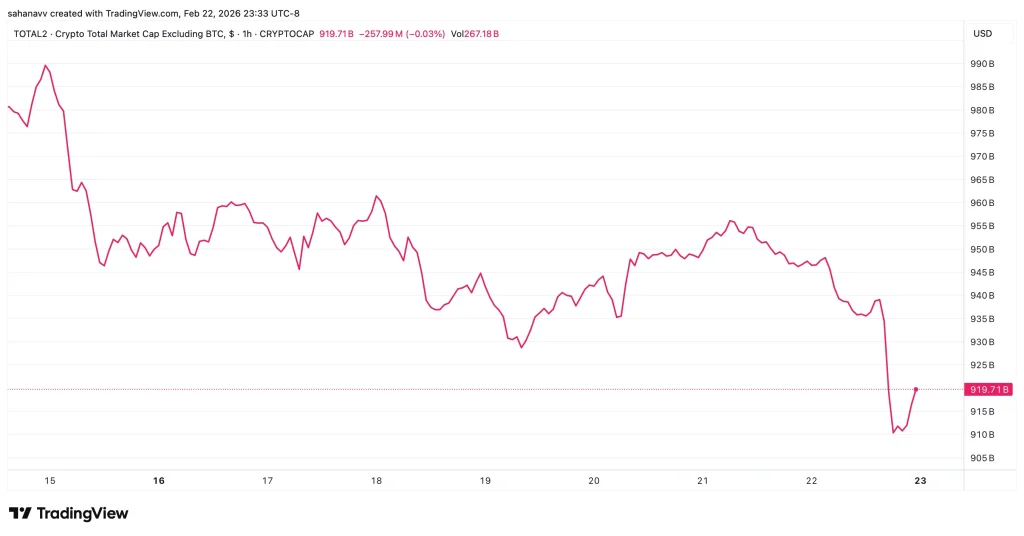
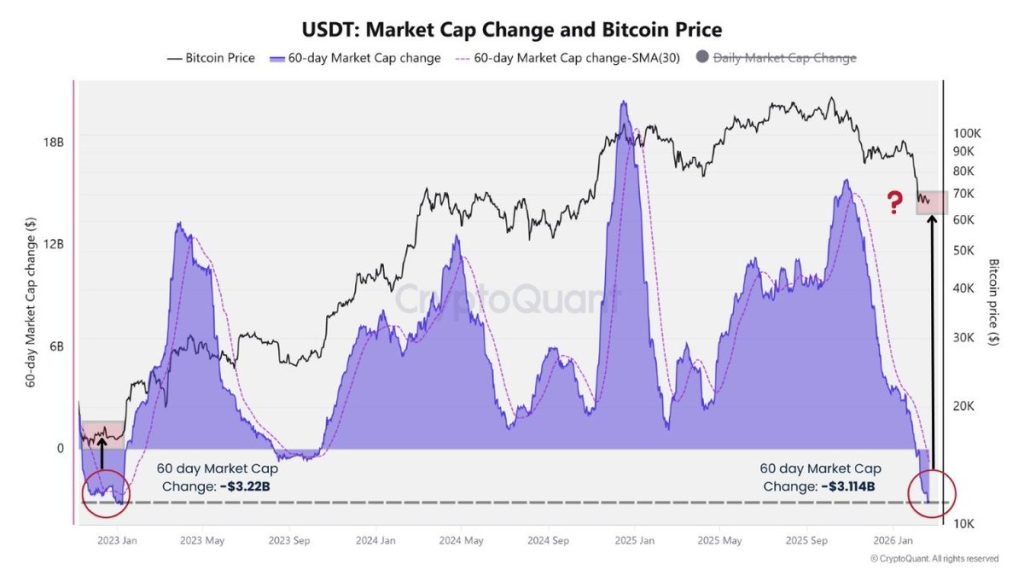

 LATEST: BITCOIN SLIDES BELOW $65K AFTER TRUMP TARIFF MOVE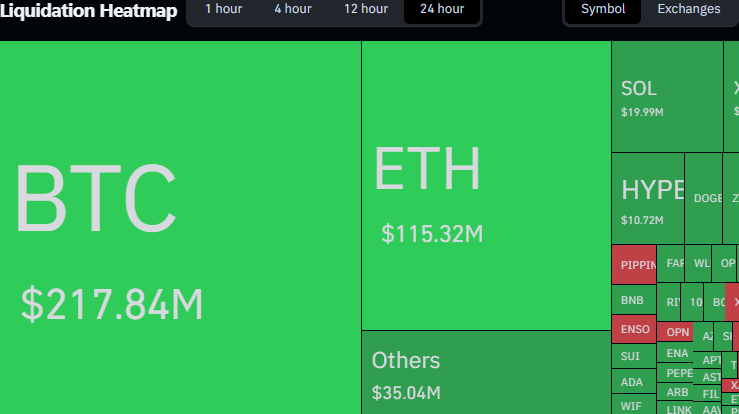
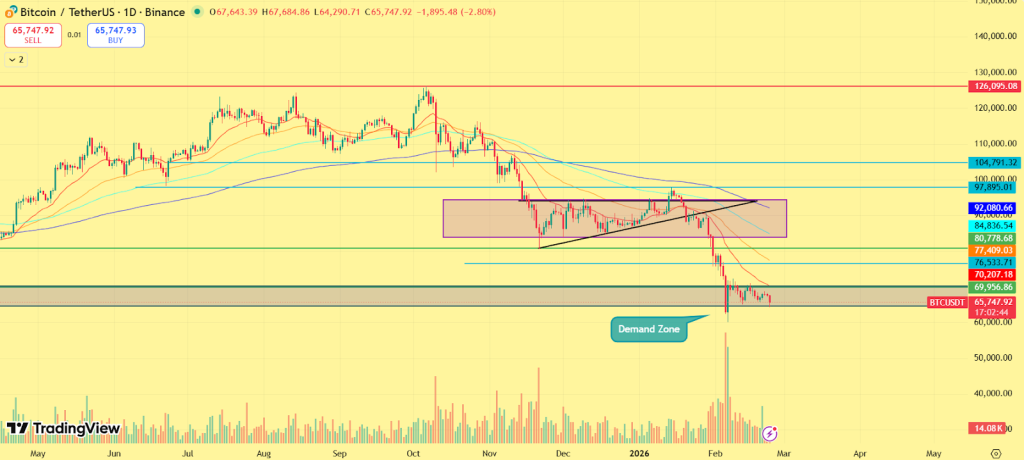
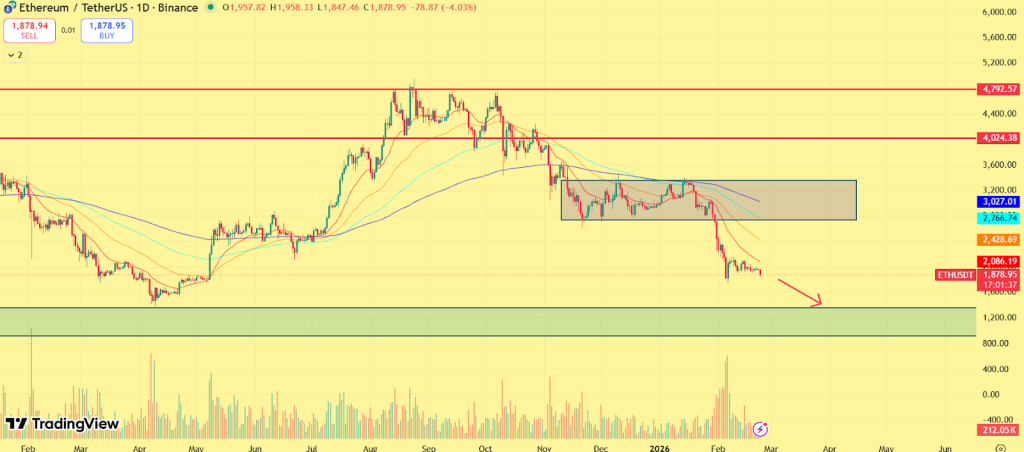
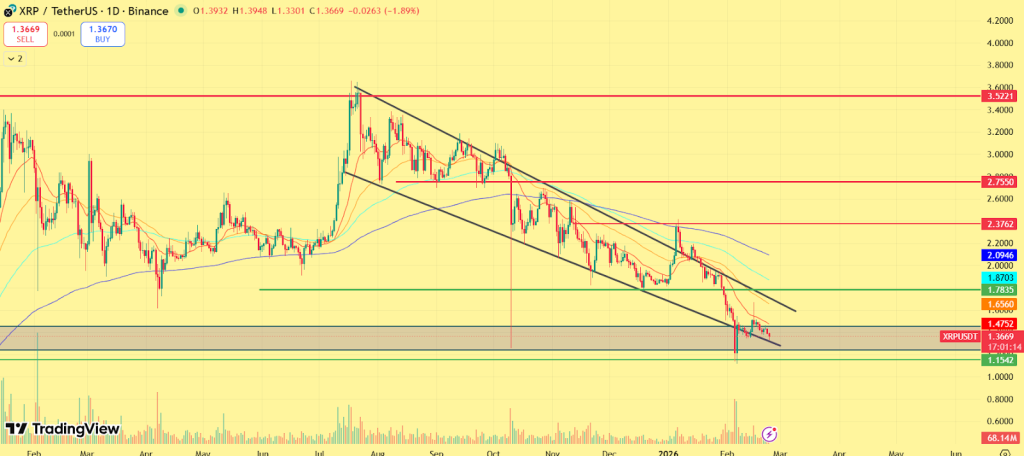






 BTC Holdings: 0 (pure holdings, excluding customer deposits)
 Data as of February 20, 2026.