Reading view

Xiaomi Black Shark Gaming Tablet Launches Globally With Snapdragon 8s Gen 3 and 144Hz Display

Black Shark Gaming Tablet

Xiaomi has started selling its new Black Shark Gaming Tablet globally. The device was teased earlier and later appeared on the Black Shark website with full specifications, but no pricing or availability details. It is now available through the official Black Shark store on AliExpress with worldwide shipping.

Black Shark Gaming Tablet

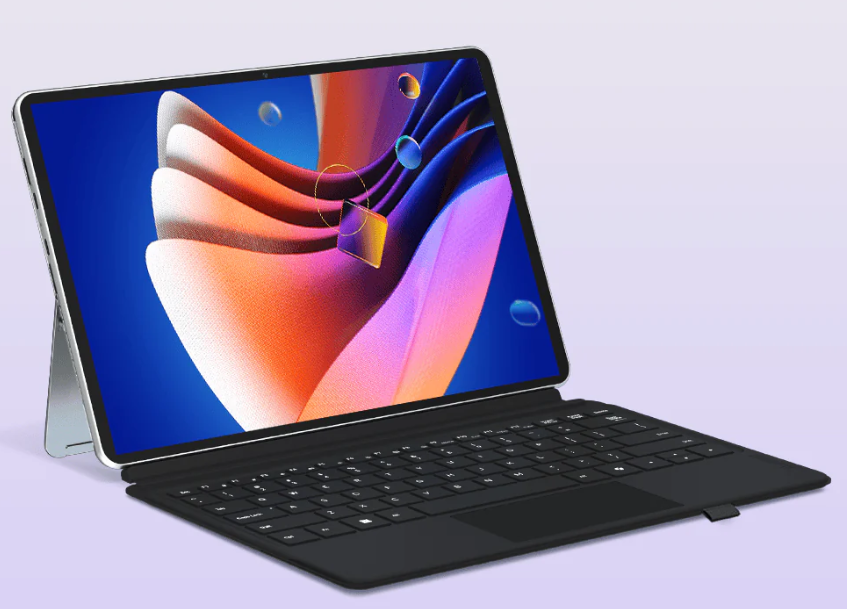
The tablet has a compact 8.8-inch design focused on gaming. It weighs 332 g and is 7.7 mm thick. The body is made from aerospace-grade aluminum alloy with laser-finished detailing. It comes in black and silver color options.

The device is powered by Qualcomm’s Snapdragon 8s Gen 3 processor. The chipset includes an octa-core CPU with speeds up to 3.0 GHz and a 40 TOPS NPU. Black Shark claims an AnTuTu score of more than 1.9 million. The tablet runs Android 16 out of the box. It includes 12 GB of LPDDR5X RAM and 256 GB of UFS 4.0 storage. Storage can be expanded by up to 2 TB using a TF card.

Black Shark Gaming Tablet

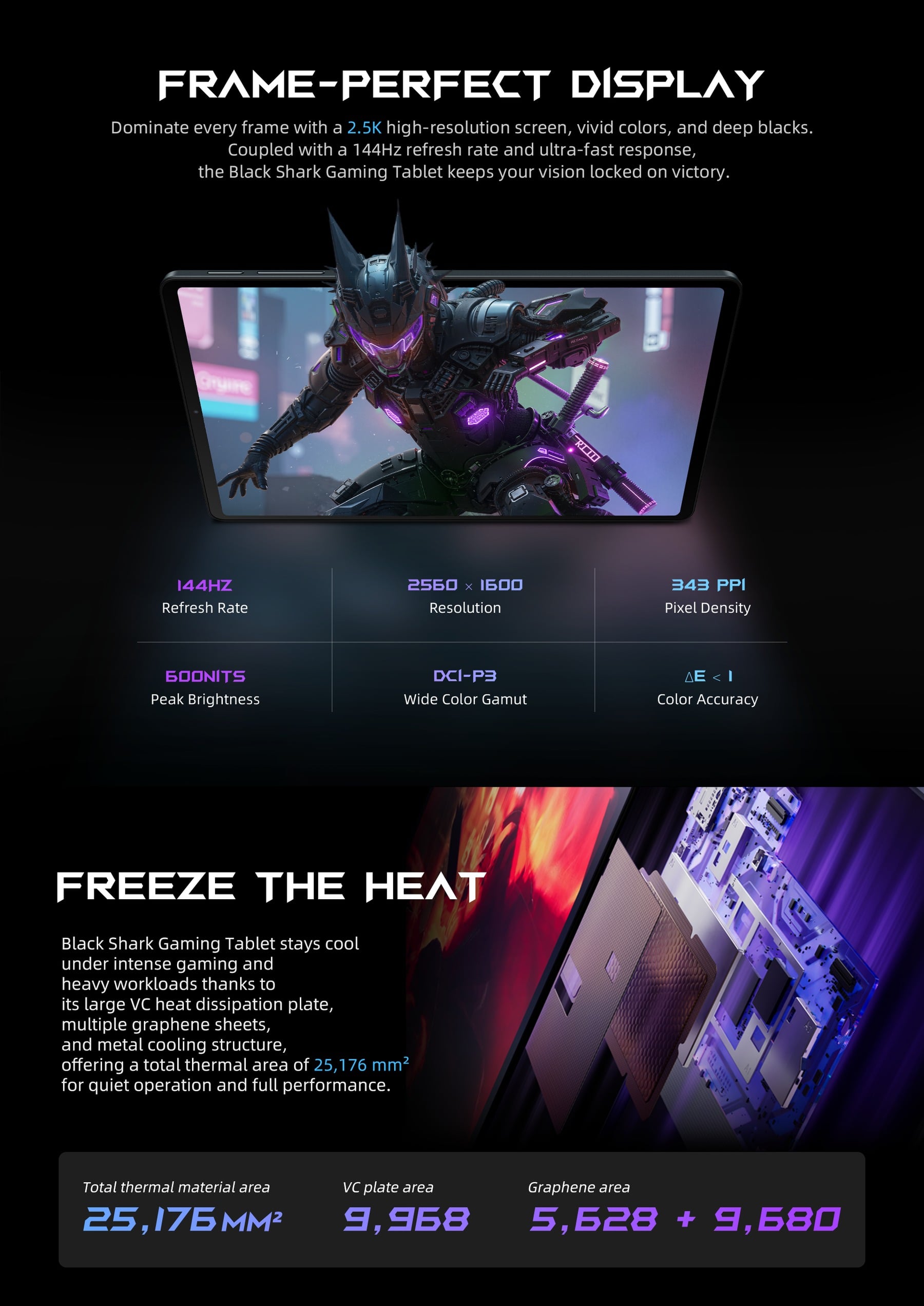
The display is a 2.5K panel with a resolution of 2560 × 1600 pixels and a 144 Hz refresh rate. It has a pixel density of 343 PPI and reaches up to 600 nits of peak brightness. The panel supports the DCI-P3 color gamut and is factory calibrated with ΔE < 1 color accuracy.

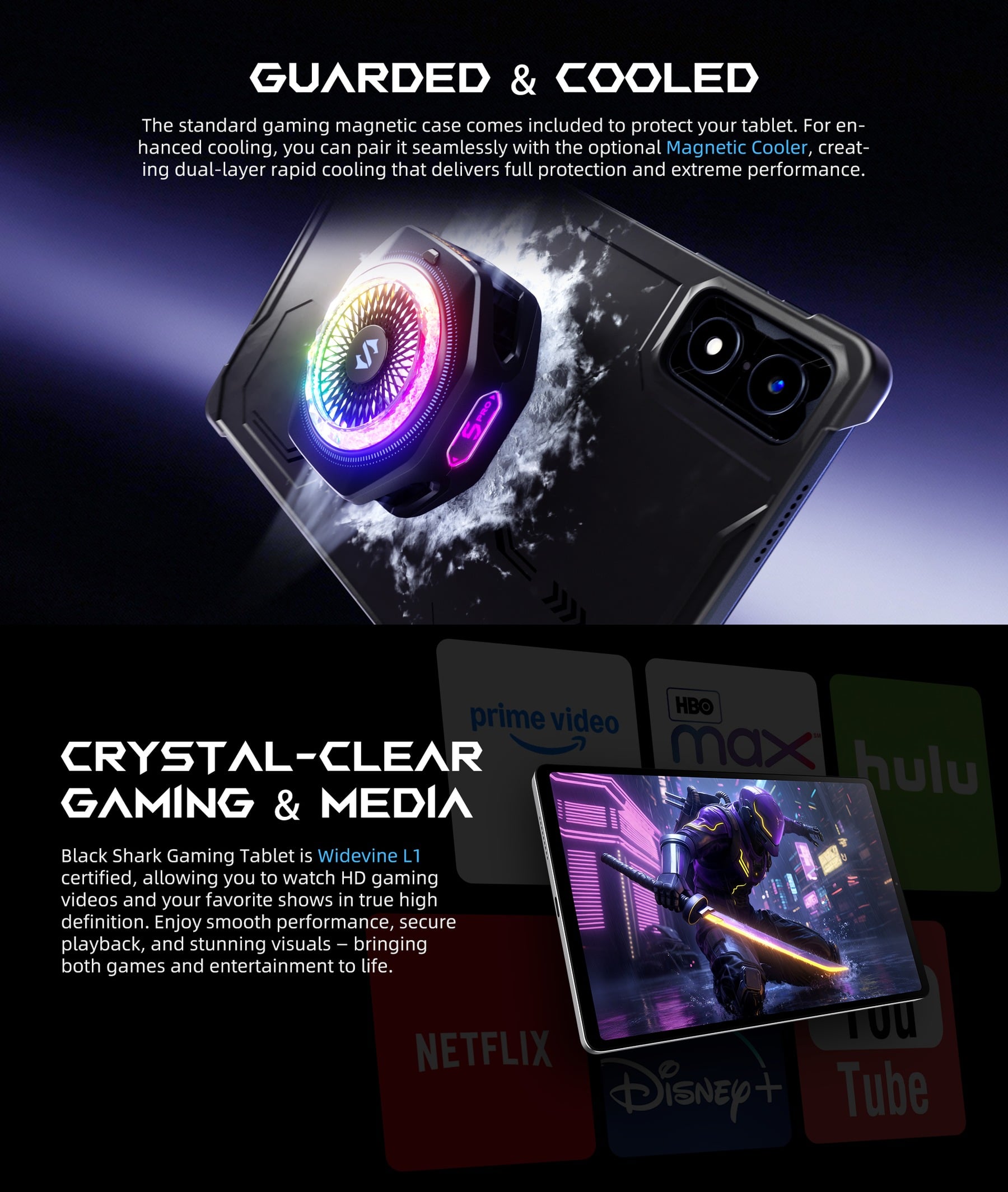
Cooling is handled by a large vapor chamber, multiple graphene sheets, and a metal cooling structure with a total thermal material area of 25,176 mm². There is also an optional magnetic external cooler available for additional cooling.

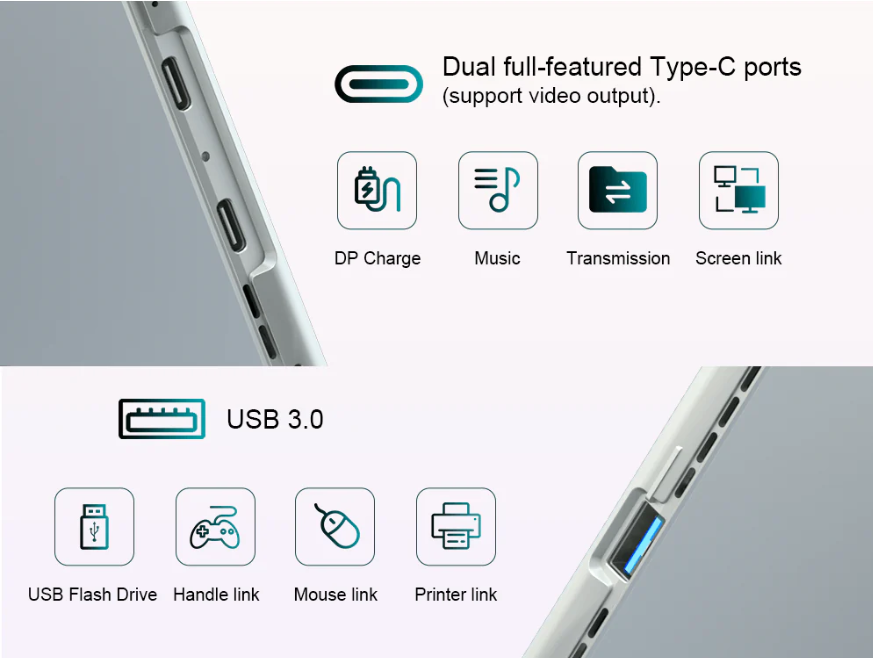
Connectivity features include dual-band Wi-Fi 6 with 2×2 MIMO, Bluetooth 5.4, and DisplayPort output with support for 4K video. Audio comes from symmetrical dual speakers powered by a K9 smart amplifier.

The tablet has a 7,300 mAh battery rated for up to 5.6 hours of gaming, 10.3 hours of web browsing, 7 hours of video playback, and up to 76 hours of music playback. It includes a 13 MP rear camera and a 5 MP front camera.

Pricing & availability

The Black Shark Gaming Tablet is currently shipping worldwide, including the United States. It is available in black and silver with 12 GB RAM and 256 GB storage. Pricing is listed at $670.97 with import charges included. In the UK it costs £558.59, and in the Eurozone it is priced at €635.69.

For more daily updates, please visit our News Section.

Tech enthusiast? Get the latest news first! Follow our Telegram channel and subscribe to our free newsletter for your daily tech fix!

The post Xiaomi Black Shark Gaming Tablet Launches Globally With Snapdragon 8s Gen 3 and 144Hz Display appeared first on Gizmochina.

Samsung Galaxy Buds 4 and Buds 4 Pro Go Official with Blade Design, Super Clear Call, and Advanced ANC

Samsung Galaxy Buds 4 Pro

Samsung has officially unveiled the Galaxy Buds 4 and Galaxy Buds 4 Pro, its latest premium true wireless earbuds, alongside the Galaxy S26 series. The new lineup focuses on improved audio hardware, adaptive sound processing, AI integration, and refined ergonomics. Pre-orders begin today in select markets, with general availability scheduled for March 11.

Samsung Galaxy Buds 4 Pro

Both the Galaxy Buds 4 and Galaxy Buds 4 Pro include several built-in technologies such as Enhanced Adaptive Active Noise Cancellation (ANC), Adaptive Equalizer (EQ), Super Clear Call technology, 24-bit Hi-Fi audio support, and Galaxy AI assistant integration. These features are designed to automatically adjust sound output, reduce background noise, and improve communication clarity depending on the user’s environment and fit.

Galaxy Buds4

New Blade Design Focuses on Fit and Comfort

The Galaxy Buds 4 series introduces a new blade design developed using computational modeling based on hundreds of millions of ear data points and more than 10,000 simulations. The earbuds feature smaller heads and a stabilized blade with a metal finish and engraved pinch control area for easier interaction. A transparent clamshell charging case highlights the design while simplifying storage and charging.

Samsung offers two fit styles across the lineup. The Galaxy Buds 4 Pro uses a canal-fit design intended to maximize sound isolation and functionality, while the Galaxy Buds 4 uses an open-fit design focused on comfort for everyday wear. Both models are available in Black and White, with an additional online-exclusive Pink Gold option for the Pro version.

Samsung Galaxy Buds 4 Pro

Upgraded Audio Hardware in Galaxy Buds 4 Pro

The Galaxy Buds 4 Pro include upgraded audio hardware with a wider woofer that increases the effective vibration area by nearly 20 percent compared to the previous generation. Combined with a tweeter, the two-way speaker system supports 24-bit/96kHz high-resolution audio, which allows more detailed bass and clearer treble reproduction. The speaker placement also helps improve noise cancellation performance while reducing wind interference.

Adaptive ANC and EQ for Personalized Sound

The earbuds include Enhanced Adaptive ANC technology, which analyzes surrounding noise and wearing conditions in real time and automatically adjusts noise reduction levels. The Adaptive EQ system evaluates how the earbuds sit in the user’s ears and dynamically tunes frequencies to deliver more accurate sound tailored to the listener.

Super Clear Call Technology for Better Voice Quality

Both models also include Super Clear Call technology. This feature uses super wideband Bluetooth processing and machine learning-based noise reduction to separate the user’s voice from background noise, helping maintain clearer conversations even in busy environments.

The earbuds integrate with the Galaxy ecosystem and support AI assistants such as Bixby, Google Gemini, and Perplexity. Users can activate these assistants using voice commands or hands-free controls. The Galaxy Buds 4 Pro additionally support head gesture controls for managing calls and assistant interactions. Pairing is simplified through automatic device detection when the charging case is opened near a compatible Galaxy device, with controls accessible through the Quick Panel interface.

The Galaxy Buds 4 feature an 11 mm speaker, three microphones, Bluetooth 6.1 connectivity, Auracast support, and IP54 water resistance. Battery capacity is 45 mAh per earbud with a 515 mAh charging case, delivering up to 5 hours of playback with ANC enabled and up to 24 hours total with the case. With ANC disabled, playback increases to 6 hours per charge and up to 30 hours total.

The Galaxy Buds 4 Pro include a two-way driver system, higher battery capacity at 61 mAh per earbud, and IP57 water resistance. Playback reaches up to 6 hours with ANC enabled and 26 hours total, or up to 7 hours per charge and 30 hours total with ANC disabled. Both models support Android 12 or newer devices with at least 1.5 GB RAM.

Price and Availability

The Galaxy Buds 4 are available in Black and White and can be pre-ordered starting today for €179/$179.99/£159/₹16,999, ahead of their release on March 6. Pre-orders for the Galaxy Buds 4 Pro also began on February 25, 2026, in select markets, priced at $249/₹22,999. Samsung plans to begin shipping early orders for both models on March 6.

For more daily updates, please visit our News Section.

Tech enthusiast? Get the latest news first! Follow our Telegram channel and subscribe to our free newsletter for your daily tech fix!

The post Samsung Galaxy Buds 4 and Buds 4 Pro Go Official with Blade Design, Super Clear Call, and Advanced ANC appeared first on Gizmochina.

Transsion captures 48% as Africa smartphone market grows 13% in 2025

TECNO POVA Curve 2

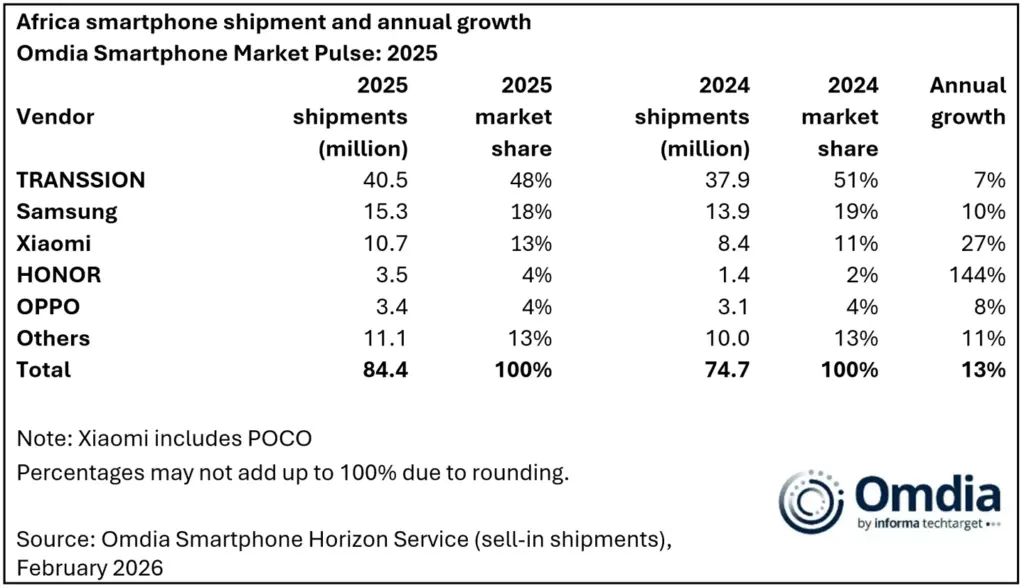
Africa’s smartphone market had a strong 2025, even as global growth remained uneven. New data from Omdia shows the continent shipped 84.4 million smartphones last year, up 13% year-over-year, the fastest pace of recovery since 2021.

TECNO POVA Curve 2

Growth accelerated toward the end of the year. Q4 shipments rose 14% to 23.1 million units, helped by expanded financing programs, improved currency stability in key markets, wider 4G rollout, and early 5G adoption in countries like South Africa and Egypt. Holiday promotions and aggressive pricing also played a role.

Smartphones now make up roughly 55% of total mobile phone shipments in Africa, highlighting the steady shift away from feature phones. Sub-Saharan Africa continued to outpace North Africa, acting as the main growth engine.

At the country level, South Africa led with 38% growth, driven largely by prepaid demand and strong uptake of sub-$100 devices. Nigeria followed with 25% growth, fueled by affordable 4G smartphones dominating the sub-$200 segment. Egypt grew 22%, supported by local manufacturing and value-focused portfolios. Kenya saw modest 3% growth amid cost pressures, while Morocco dipped 3% due to higher import tariffs.

Transsion — through TECNO, Infinix, and itel — maintained a commanding 48% market share for the year, shipping over 40.5 million units. However, its Q4 share slipped slightly as competition intensified in the entry-level tier. Samsung held second place, posting 27% Q4 growth thanks to the Galaxy A series and a broader mid-range portfolio. Xiaomi, Honor, and Oppo also recorded solid gains, particularly in expanding 4G and mid-range segments.

Still, challenges loom. Entry-level devices below $200 accounted for 81% of shipments in 2025, leaving vendors exposed to rising component costs. Average selling prices rose 11% in Q4 as consumers gradually shifted toward better-specced models.

Looking ahead, Omdia expects shipments to decline 23% in 2026 due to inflation and tighter channel inventory management. For now, though, 2025 stands out as a year of resilience and strong momentum for Africa’s smartphone market.

Stay ahead in tech! Join our Telegram community and sign up for our daily newsletter of top stories!

For more daily updates, please visit our News Section.

(Via)

The post Transsion captures 48% as Africa smartphone market grows 13% in 2025 appeared first on Gizmochina.

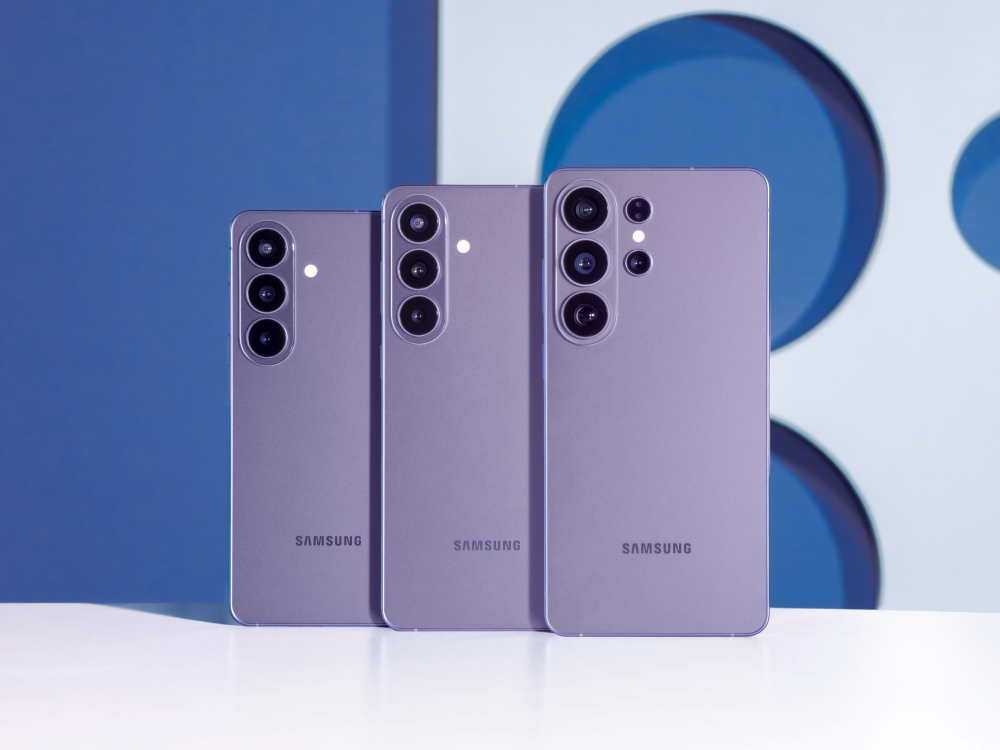
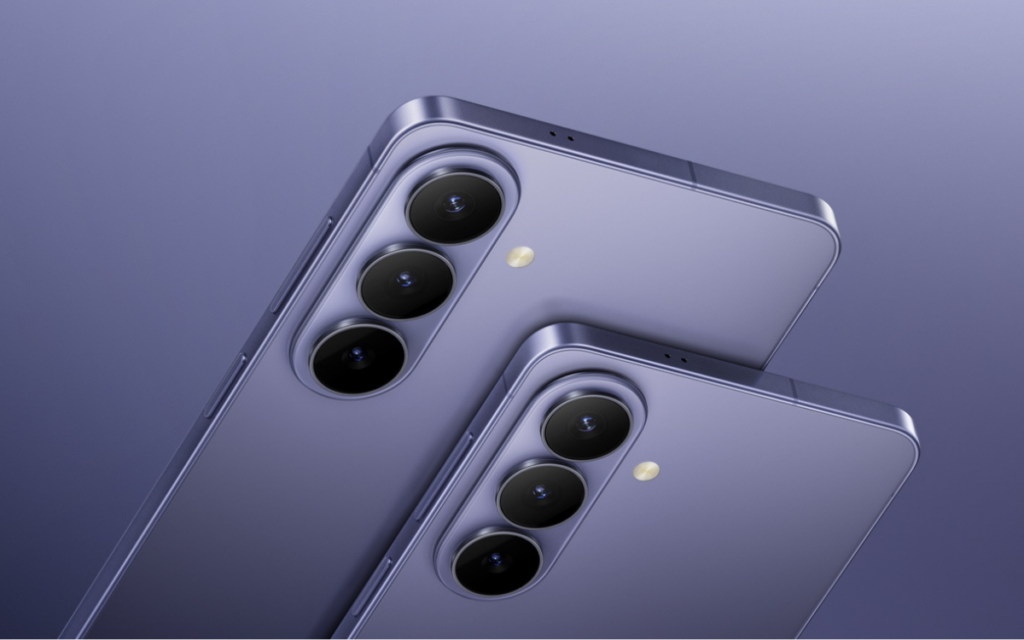
Samsung Galaxy S26 and S26+ launched with 120Hz AMOLED displays & Exynos 2600/SD 8 Elite Gen 5

Samsung Galaxy S26 and S26 Plus

Samsung has officially unveiled its latest flagship smartphones, the Galaxy S26 and Galaxy S26+, along with the Galaxy S26 Ultra, at the Galaxy Unpacked event.

Samsung Galaxy S26 Plus

Galaxy S26 and Galaxy S26+ Specifications

The Galaxy S26 features a 6.3-inch FHD+ (2340 x 1080 pixels) Infinity-O Dynamic AMOLED 2X display, while the Galaxy S26+ offers a larger 6.7-inch QHD+ (3120 x 1440 pixels) display. Both displays boast a 1-120Hz adaptive refresh rate and are protected by Corning Gorilla Glass Victus 2.

The Galaxy S26 series comes with two chipset options, depending on the region: the Samsung Exynos 2600 processor or the Qualcomm Snapdragon 8 Elite Gen 5 for Galaxy. Both chips are built on a 3nm process. The series also feature redesigned Vapor Chamber that improves heat dissipation by up to 29%.

Samsung Galaxy S26 and S26 Plus

The S26 series runs on Android 16 with One UI 8.5 on top. The software offers advanced AI features such as Photo Assist for natural-language photo edits, Now Nudge for smart suggestions, Creative Studio for sticker creation, and Now Brief for personalized reminders and updates.

The Galaxy S26 series features a powerful 50MP main camera with a 1/1.56″ sensor, f/1.8 aperture, and OIS, accompanied by a 12MP ultra-wide lens with a 120° field of view and a 10MP telephoto lens with 3x optical zoom. These cameras are powered by the ProVisual Engine, delivering exceptional clarity and detail in any lighting condition.

Samsung Galaxy S26 and S26 Plus

The devices also feature Nightography, elevating low-light photography by capturing vivid details even in dim settings. They support 4K video recording at 60fps and 8K at 30fps. For selfies, these feature a 12MP front camera, which supports 4K 60fps recording and includes AI-powered enhancements for natural, detailed selfies.

The Galaxy S26 is equipped with a 4300mAh battery, while the Galaxy S26+ features a larger 4900mAh battery. Both devices support ultra-fast charging, with the S26+ capable of reaching 69% charge in just 30 minutes using 45W wired charging. They also offer 20W Qi2 wireless charging and Wireless PowerShare for convenient on-the-go power.

Samsung Galaxy S26 and S26 Plus

Both devices feature an IP68 rating for dust and water resistance, ensuring durability in various environments. For connectivity, these include 5G, Wi-Fi 7, Bluetooth 5.4, USB-C, and dual SIM.

Pricing and Availability

The Galaxy S26 starts at $899.99 for the 12GB + 256GB model, while the Galaxy S26+ starts at $1,099.99.

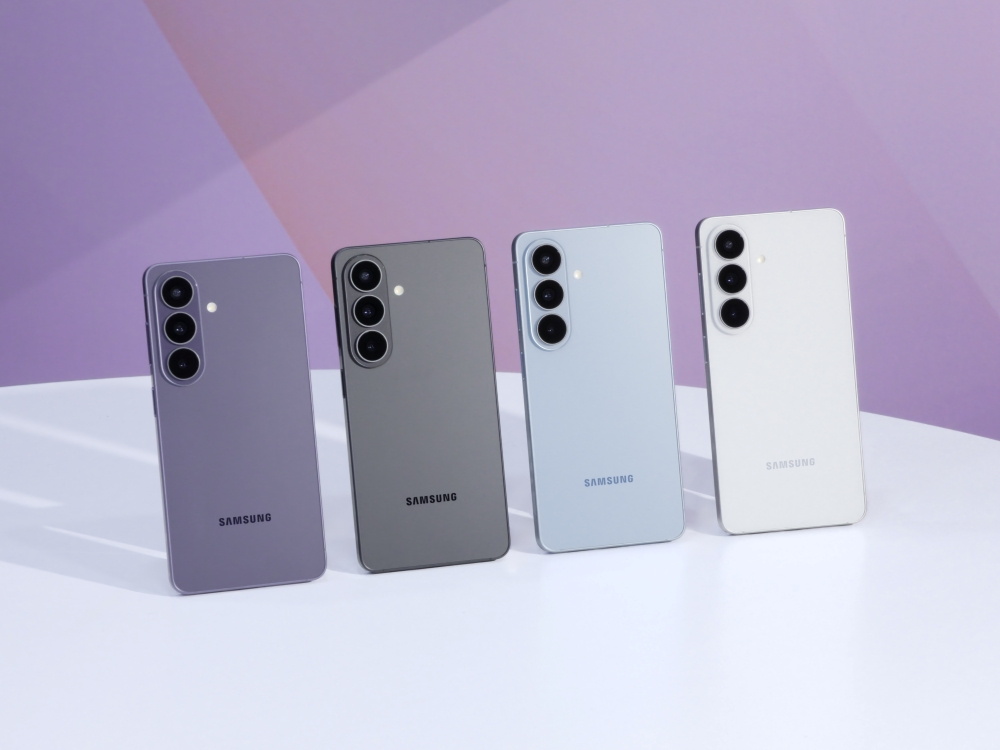
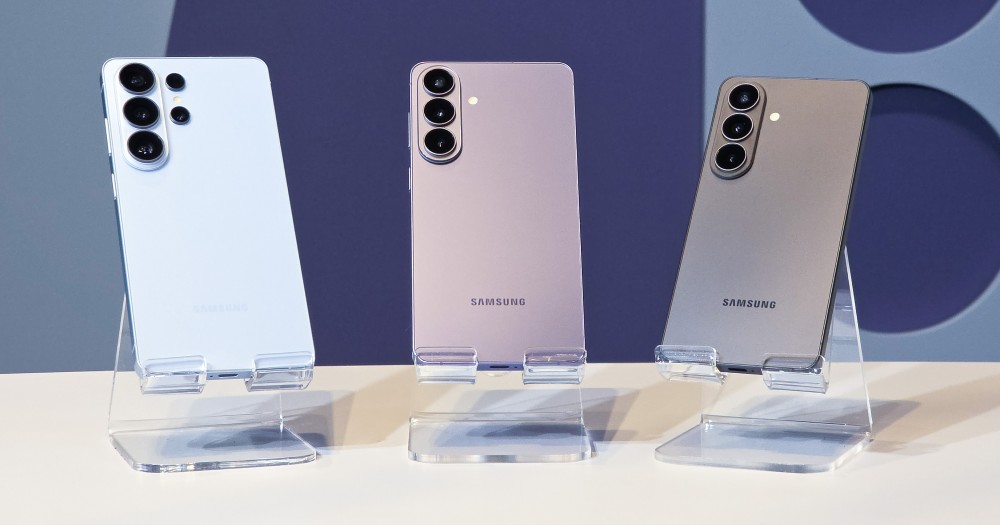
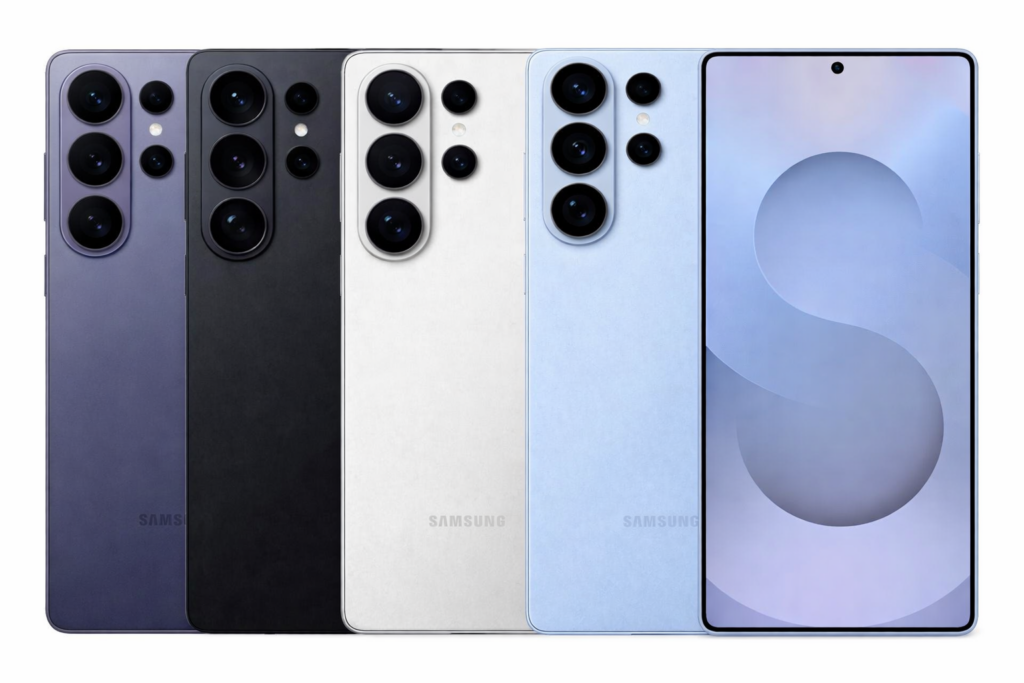
Both devices are available in stunning colors, including Silver Shadow, Pink Gold, Cobalt Violet, Sky Blue, White, and Black.

Pre-orders are live now on Samsung.com.

For more daily updates, please visit our News Section.

Stay ahead in tech! Join our Telegram community and sign up for our daily newsletter of top stories! 💡

The post Samsung Galaxy S26 and S26+ launched with 120Hz AMOLED displays & Exynos 2600/SD 8 Elite Gen 5 appeared first on Gizmochina.

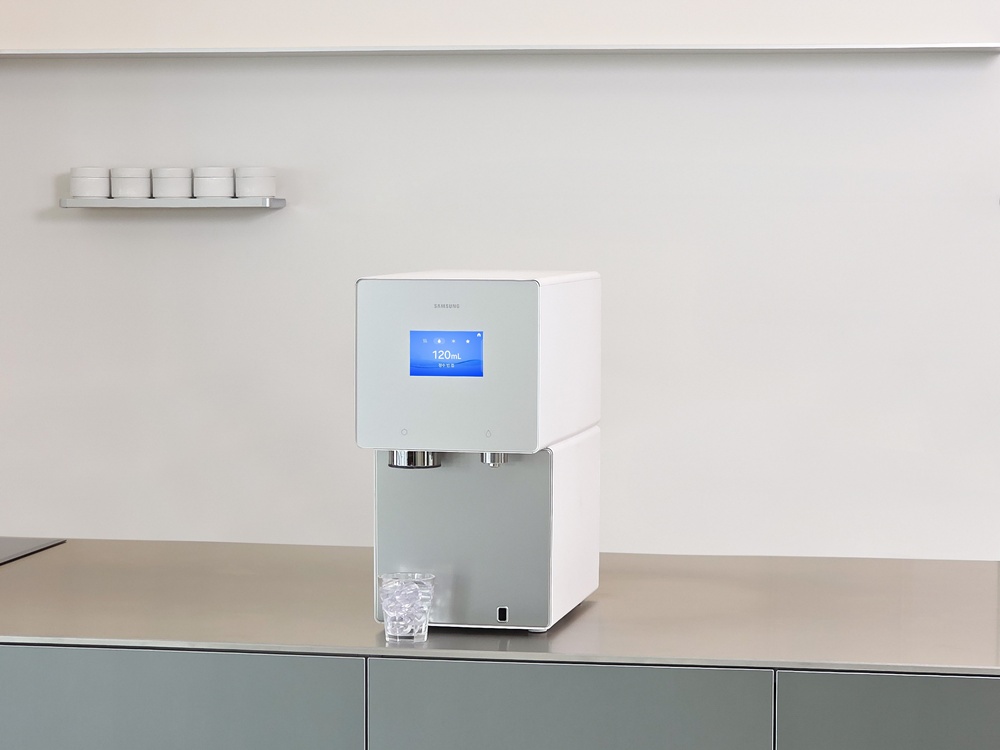
Samsung launches Bespoke AI Ice Purifier: makes up to 1,000 ice per day

Samsung is expanding its Bespoke lineup again. The company has introduced the Bespoke AI Ice Purifier, a countertop appliance that combines water purification and high-capacity ice production in a single unit.

The concept is straightforward: instead of having a separate water purifier and ice maker, Samsung is merging the two into one device. For households that regularly consume filtered water and use a lot of ice, that consolidation could be appealing.

The purification system uses a four-stage NSF-certified filter. Samsung says it’s designed to remove bacteria, microplastics, heavy metals such as lead and mercury, and dozens of other contaminants, up to 82 in total. The company also claims the filter can block particles far smaller than a human hair, though real-world performance will ultimately depend on usage and local water quality.

The ice-making system is where Samsung is leaning heavily into the “AI” branding. The built-in module can reportedly produce up to 1,000 ice cubes per day, equivalent to around 8 kilograms, and store roughly 100 cubes at a time.

Hygiene is clearly a major focus. The unit features electrolysis-based sterilization for internal pipes every few days, automatic monthly cleaning for the ice box and tray, and UV sterilization at the water dispensing outlet. The idea is to reduce manual maintenance while keeping both water and ice as clean as possible.

On the smart side, the purifier integrates with Samsung’s broader ecosystem. It supports Bixby voice commands, allowing users to control water temperature and volume hands-free. Voice recognition can even differentiate between family members and recall personalized presets.

Through the SmartThings app, users can fine-tune water output between 50 and 1,000 ml and set hot water temperatures up to 90°C. The front touchscreen adds another layer of control, showing settings, weather information, and quick access shortcuts. Up to 20 custom presets can be saved for things like coffee brewing or preparing baby formula.

For now, the Bespoke AI Ice Purifier is exclusive to South Korea, and Samsung hasn’t announced plans for a wider release. The product is priced at 2.39 million KRW (roughly $1,650–$1,780 USD), clearly placing it in the premium segment.

Stay ahead in tech! Join our Telegram community and sign up for our daily newsletter of top stories!

For more daily updates, please visit our News Section.

(Source: Samsung)

The post Samsung launches Bespoke AI Ice Purifier: makes up to 1,000 ice per day appeared first on Gizmochina.

Ai+ launches NovaPods and NovaWatch lineup with feature-rich specs at accessible prices

Ai+ Smartphone, a relatively new Indian brand, is broadening its portfolio beyond phones. The company has announced a range of affordable audio products and smartwatches under the NovaPods and NovaWatch names, while also teasing new smartphones to round out its growing ecosystem.

NovaPods Clips

The NovaPods lineup covers multiple price points, but the core hardware remains consistent. All models use 10mm dynamic drivers and carry an IPX4 rating for splash resistance.

At the top of the range are the NovaPods Clips, priced at ₹3,999. These adopt an open-ear, clip-on design that wraps around the ear instead of sealing inside it. The idea is simple: let users stay aware of their surroundings while listening to music. Ai+ claims up to six hours of playback per charge, extending to 16 hours with the case. The earbuds also support Bluetooth 6.0, low latency rated at 50ms, and touch controls.

NovaPods Clips
NovaPods Clips

The NovaPods Pro, priced at ₹1,999, take a more conventional in-ear approach but add active noise cancellation rated at up to 40dB. Ai+ says they offer up to five hours per charge (30 hours total with the case), along with six-mic environmental noise cancellation for calls, dual-device pairing, and a slightly lower 45ms latency figure.

NovaPods Pro

At the entry level, the NovaPods Go come in at just ₹699. They skip ANC but include dual microphones, touch controls, and up to 6.5 hours of playback (24 hours total with the case). The company is also leaning into brighter color options here, including Forest Green, Midnight Black, and Ice Blue White.

The NovaWatch Wearbuds (also referred to as Ai+ Wearbuds) is the most distinctive model at ₹7,999. It combines a smartwatch with built-in detachable wireless earbuds housed inside the watch body. The watch itself features a 1.43-inch AMOLED display with 466×466 resolution, Bluetooth 5.3 dual mode, heart rate and SpO2 monitoring, and even ChatGPT integration. There’s 2GB of onboard storage for music, while the 310mAh watch battery is paired with 25mAh batteries inside each earbud.

More conventional is the NovaWatch Active, priced at ₹2,499. It features a 1.73-inch squircle AMOLED display (466×466 resolution), a functional crown, Bluetooth calling, IP68 water resistance, and a 300mAh battery. Standard health tracking features are included, such as heart rate, SpO2, sleep monitoring, stress tracking, and women’s health tracking.

NovaWatch Active

All NovaPods and NovaWatch products will go on sale exclusively via Flipkart starting February 27 at 12 PM IST.

With this expansion, Ai+ appears to be building toward a broader AIoT ecosystem rather than focusing solely on smartphones.

(Source)

The post Ai+ launches NovaPods and NovaWatch lineup with feature-rich specs at accessible prices appeared first on Gizmochina.

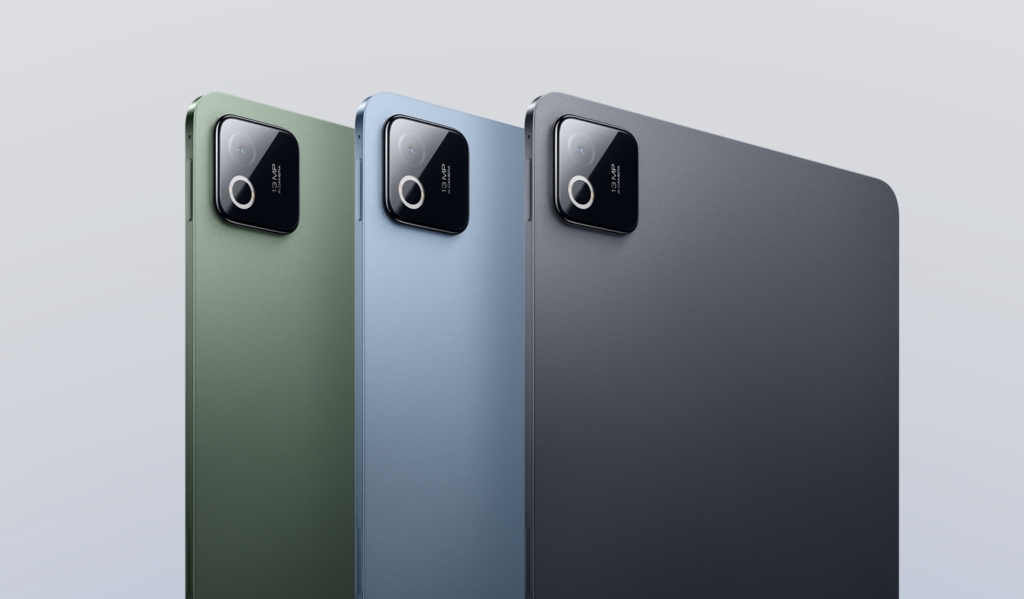
Xiaomi Pad 8 India Launch Confirmed With Two Display Variants, Nano Texture Model Tipped

Xiaomi Pad 8 Pro

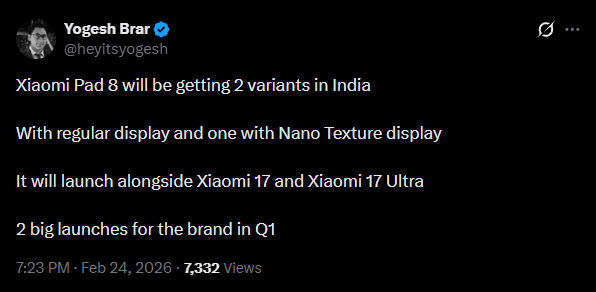
Fresh details have emerged about the Xiaomi Pad 8 ahead of its India debut, confirming that the tablet will arrive in two versions. According to tipster Yogesh Brar, Xiaomi will offer the device with a standard screen as well as a Nano Texture Display option when it launches on February 28 alongside the Xiaomi 17 series.

The Nano Texture model is expected to mirror the variant sold in China that uses an anti-glare nano-texture layer combined with AR coating to cut reflections by around 70 percent. Xiaomi marketed this version as the Soft Light edition in its home market.

Xiaomi Pad 8

Key specifications have also been teased through Amazon’s promotional page. The tablet will be powered by Qualcomm’s Snapdragon 8s Gen 4 chipset and is claimed to cross 2 million points on AnTuTu benchmarks. Xiaomi is also promoting battery endurance, stating that the device will pack a 9000mAh battery capable of lasting up to two days on a single charge. The listing additionally confirms support for accessories such as the Xiaomi Focus Pen Pro and the Xiaomi Focus Keyboard.

Xiaomi Pad 8

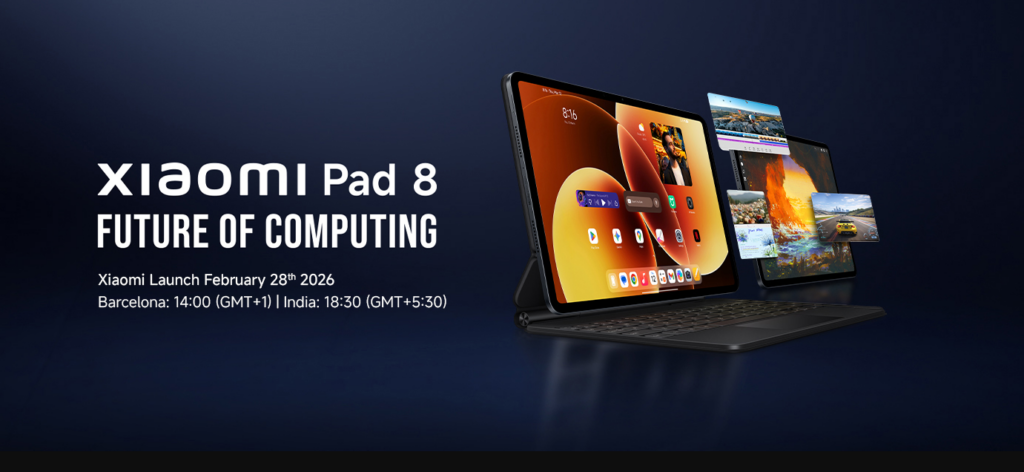
Xiaomi has already scheduled the India launch event for February 28, 2026, at 6:30 PM IST. Pricing, storage options, and availability timelines are expected to be revealed during the announcement.

Based on the Chinese model, the Xiaomi Pad 8 is expected to feature an 11.2-inch panel with 3.2K resolution and a 144Hz refresh rate. The display delivers 345 PPI pixel density, peak brightness up to 800 nits, DC dimming support, and TÜV Rheinland triple eye protection certification. The tablet runs HyperOS 3 based on Android 16 and includes a quad-speaker system with Dolby Atmos.

Connectivity options include Wi-Fi 7, Bluetooth 5.4, and USB Type-C, along with a side-mounted fingerprint sensor for authentication. The device measures 5.75mm thick and weighs 485 grams. Fast charging support is rated at 45W, positioning the Xiaomi Pad 8 as a slim performance-focused tablet designed for productivity, media consumption, and gaming.

(Source)

The post Xiaomi Pad 8 India Launch Confirmed With Two Display Variants, Nano Texture Model Tipped appeared first on Gizmochina.

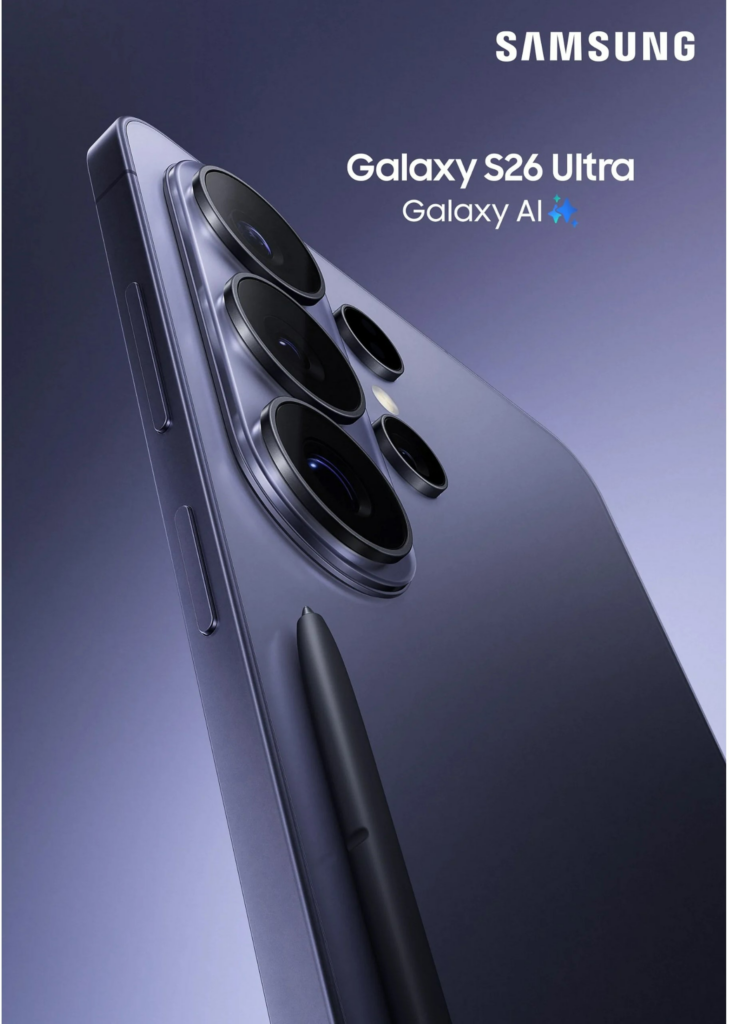
Samsung Galaxy S26 Ultra debuts with a 6.9″ AMOLED privacy display & SD 8 Elite Gen 5 for Galaxy

Galaxy-S26-Ultra

Samsung has officially announced the highly anticipated Galaxy S26 Ultra at its Galaxy Unpacked event, setting a new benchmark for smartphone innovation.

Galaxy S26 Ultra

Galaxy S26 Ultra Specifications

The Galaxy S26 Ultra features a 6.9-inch Dynamic AMOLED 2X display with Quad HD+ resolution (3120 x 1440 pixels), a 120Hz refresh rate, and mDNIe technology for vibrant, precise colors. It includes Corning Gorilla Armor 2 for enhanced durability and a Privacy Display to hide the screen, apps, or notifications for added security.

Galaxy-S26-Ultra

Under the hood, the Galaxy S26 Ultra is powered by the Snapdragon 8 Elite Gen 5 for Galaxy chipset, customized exclusively for Galaxy devices. The processor supports advanced AI features like Photo Assist, which enables natural language text prompts for photo editing, Now Nudge, which offers intelligent shortcuts, and ProScaler, which enhances image clarity in real time.

To complement its powerful chipset, the S26 Ultra features Samsung’s largest Vapor Chamber and optimized thermal interface materials (TIM), delivering 21% improved thermal performance over its predecessor.

The Galaxy S26 Ultra runs on Android 13 with One UI 8.5. It includes Now Brief for reminders, Bixby for smart assistance, and an AI-powered Finder to search for reservations, notes, and more from the home screen.

For photography, the S26 Ultra boasts Samsung’s most advanced camera system yet, headlined by a 200MP wide camera, 50MP ultra-wide sensor, 10MP telephoto lens with 3x zoom, and 50MP periscope lens with 5x zoom and 100x AI-powered Space Zoom.

Galaxy-S26-Ultra

The device comes with enhanced Nightography mode with wider apertures and noise reduction, ensuring crystal-clear photos and videos, even in low-light conditions. Additionally, it supports 4K 60fps and 8K 30fps video recording, with Laser autofocus and LED flash for added versatility.

For selfies, it includes a 12MP front camera with an AI image signal processor for natural skin tones and sharp detail, capable of recording in 4K at 60fps.

The device features a 5000mAh battery with 31 hours of video playback and 75% charge in just 30 minutes via Super Fast Charging 3.0. It also supports up to 25W wireless charging with compatible Qi 2.2 chargers and 4.5W reverse wireless charging.

Galaxy S26 Ultra

For connectivity, the S26 Ultra includes dual-SIM, USB Type-C, 5G, Wi-Fi 7, Bluetooth 6.0, UWB, and NFC. The device is built with Armor Aluminum and Corning Gorilla Glass Victus 2, offering premium durability. Additionally, S Pen support continues to empower creativity and productivity.

Pricing and Availability

The Galaxy S26 Ultra is priced at $1,299.99 for the 256 GB model, $1,499.99 for the 512 GB model, and $1,799.99 for the 1 TB model. It is available in six stunning colors: Cobalt Violet, Sky Blue, Silver Shadow, Pink Gold, White, and Black. Pre-orders are now open on Samsung.com.

For more daily updates, please visit our News Section.

Stay ahead in tech! Join our Telegram community and sign up for our daily newsletter of top stories! 💡

The post Samsung Galaxy S26 Ultra debuts with a 6.9″ AMOLED privacy display & SD 8 Elite Gen 5 for Galaxy appeared first on Gizmochina.

Roborock launches Z1 Ultra and M1S Ultra washer dryer combos with super hydrolysis technology

Roborock-M1S-Ultra

Roborock has announced two new washer-dryer combos in China, the Z1 Ultra and M1S Ultra, both equipped with its proprietary Super Hydrolysis technology. These are now available for pre-sale on JD.com.

Roborock Z1 Ultra Specs

Roborock Z1 Ultra

The Roborock Z1 Ultra is the flagship model, priced at 6,299 yuan ($916). It uses Super Hydrolysis technology to break water molecules into ions and microbubbles through electrolyzed water and atomization. This approach removes stains and sterilizes fabrics without leaving chemical residue.

The machine features FineFoam 2.0, which pre-mixes detergent, water, and air to create dense foam for deep fabric penetration. Roborock claims it achieves a high wash performance ratio of 1.34 and removes common stains such as blood, grease, and ink.

The Z1 Ultra comes with a full-range sterilization system that operates across all water temperatures. It delivers 99.99% sterilization efficiency with UV-assisted dual sterilization and an antibacterial drum coating. The machine also includes a 95°C high-temperature self-clean mode and a 15-minute quick self-clean option.

The Z1 Ultra features a Zeo-cycle molecular sieve system for gentle low-temperature drying, ideal for delicate fabrics like wool, silk, and linen. Its SteamEase 2.0 technology removes wrinkles and eliminates bacteria, mites, and odors in a 20-minute cycle. The machine has a 12kg washing capacity and a 7kg drying capacity, along with intelligent detergent auto-dispensing and Roborock App support for smart control.

Roborock M1S Ultra Specs

Roborock M1S Ultra

The Roborock M1S Ultra is a compact alternative priced at 3,299 yuan ($480). The M1S Ultra offers similar Super Hydrolysis technology for stain removal and sterilization. The appliance includes a 1.2kg washing capacity and a 0.5kg drying capacity, making it ideal for smaller households or lightweight laundry loads.

The M1S Ultra integrates FineFoam 2.0 technology and a real-time drum cleaning system that keeps the machine hygienic during every cycle. The machine supports 32 wash and dry programs, including options for intimate garments and delicate fabrics. Roborock claims its OxiPure Super Hydrolysis technology can remove bacteria, mites, and viruses with 99.99% efficiency.

In related news, Roborock has recently launched the P20 Max robot vacuum featuring 35,000Pa suction and AI-powered obstacle avoidance.

For more daily updates, please visit our News Section.

Stay ahead in tech! Join our Telegram community and sign up for our daily newsletter of top stories! 💡

(JD 1,2)

The post Roborock launches Z1 Ultra and M1S Ultra washer dryer combos with super hydrolysis technology appeared first on Gizmochina.

Razer Launches New Quartz and White Colorways for Kiyo V2 and Kiyo V2 X Webcams

Razer-Kiyo-V2

Razer has announced new Quartz and White color options for its Kiyo V2 and Kiyo V2 X webcams. These new finishes join the original Black variant, giving creators more ways to customize their setups. The webcams, which launched in October last year, target streamers, content creators, and professionals who want high-quality video performance with a stylish design.

Razer Kiyo V2

The Kiyo V2 introduces a new feature called AI Face Retouching. This tool is available through the latest update to Camo Studio. It allows users to smooth imperfections on their face in real-time while maintaining a natural look. The feature automatically adjusts to changes in lighting and the user’s environment.

The Kiyo V2 supports 4K video at 30 FPS and uses a Sony STARVIS sensor for sharp detail and accurate colors, even in low-light conditions. Its Intelligent Auto-Framing feature keeps subjects centered, and One-Click Enhancement optimizes visuals automatically.

The webcam offers HDR support, a 93° ultrawide field of view, Razer Synapse controls, and Camo Studio tools like background blur, spotlight mode, and branding overlays. It also includes a built-in microphone for clear audio.

Razer Kiyo V2 X

The Kiyo V2 X, also available in Quartz and White, offers a more affordable option at $99.99. It provides 1440p resolution at 60 FPS, delivering a balance of sharp detail and smooth motion. The webcam features fast autofocus and an 80° wide-angle lens for consistent image quality.

Although it lacks HDR support and some of the advanced tools of the Kiyo V2, it still offers dependable video performance for streaming, video calls, and content creation. The built-in microphone adds convenience, making it a straightforward, plug-and-play option.

Both models are available now, starting at $149.99 for the Kiyo V2 and $99.99 for the Kiyo V2 X.

In related news, Razer recently brought back its first-ever gaming mouse, relaunching the Boomslang to mark its 20th anniversary.

For more daily updates, please visit our News Section.

Stay ahead in tech! Join our Telegram community and sign up for our daily newsletter of top stories! 💡

(Source, Via)

The post Razer Launches New Quartz and White Colorways for Kiyo V2 and Kiyo V2 X Webcams appeared first on Gizmochina.

Samsung takes aim at iPhone’s photo editing ahead of Galaxy S26 launch

Just hours before Galaxy Unpacked kicks off, Samsung decided to stir the pot a little. The company dropped a short 15-second teaser across its social channels, and it doesn’t take much decoding to see who it’s aimed at. The target is clearly Apple, and more specifically, the iPhone’s photo editing capabilities.

The clip opens with a woman holding what appears to be an older iPhone model, complete with the notch and square camera bump. She’s trying to remove her ex from a shared photo using Apple’s built-in editing tools. What follows is a sequence of taps and retries that don’t quite go as planned. It’s the kind of messy edit most people have probably experienced at some point.

Then the scene cuts. The tagline flashes: “Can your phone do that?”

On a Galaxy device, strongly implied to be the upcoming Galaxy S26 series, removing unwanted elements from a photo happens quickly and cleanly. No visible artifacts. No obvious patchwork. Samsung doesn’t name Apple outright, but it doesn’t need to. The contrast is clear enough.

This isn’t new territory for Samsung. The company has a long history of taking playful (and sometimes pointed) shots at the iPhone. But this time, the focus is squarely on AI-powered photo editing. Apple’s on-devic Clean Up feature can sometimes struggle with complicated backgrounds or fine details. Samsung is positioning Galaxy AI as the more flexible, capable alternative.

The teaser also subtly leans into a broader theme Samsung has been pushing: creative freedom. Apple’s ecosystem is often described as tightly controlled. Samsung, on the other hand, wants to frame Galaxy devices as more open and adaptable — especially when it comes to generative AI tools integrated directly into the Gallery app.

There’s also a light nod to low-light photography in the campaign, though the main punchline revolves around editing.

Of course, a 15-second ad is one thing. Live demos are another. Whether the Galaxy S26 lineup actually delivers flawless object removal in every scenario is something reviewers will test soon enough.

In the meantime, interested readers can take a look at the early camera comparisons against the S25 Ultra, Vivo X300 Pro, and iPhone 17 Pro Max to get a clearer sense of what’s changed — and how Samsung’s new flagship holds up against the competition.

Stay ahead in tech! Join our Telegram community and sign up for our daily newsletter of top stories!

For more daily updates, please visit our News Section.

(Sources: 1, 2)

The post Samsung takes aim at iPhone’s photo editing ahead of Galaxy S26 launch appeared first on Gizmochina.

Nothing Phone (4a) Pink Variant Revealed With New Glyph Bar Lighting

Nothing Phone (4a)

Nothing has confirmed a Pink edition for its upcoming Phone (4a), representing the brand’s first-ever pink smartphone. The device launches March 5 at 10:30 AM GMT during a livestreamed event from Central Saint Martins in London.

Nothing Phone (4a)

The Pink variant will join the already confirmed White, Blue, and Black options. According to Nothing, the colour achieves its distinctive appearance through tinted transparency layers that allow light to interact with the underlying resin, creating depth and texture. The model pairs a pink frame with silver buttons and a camera plate, with retail packaging following the same colour scheme.

Nothing Phone (4a)

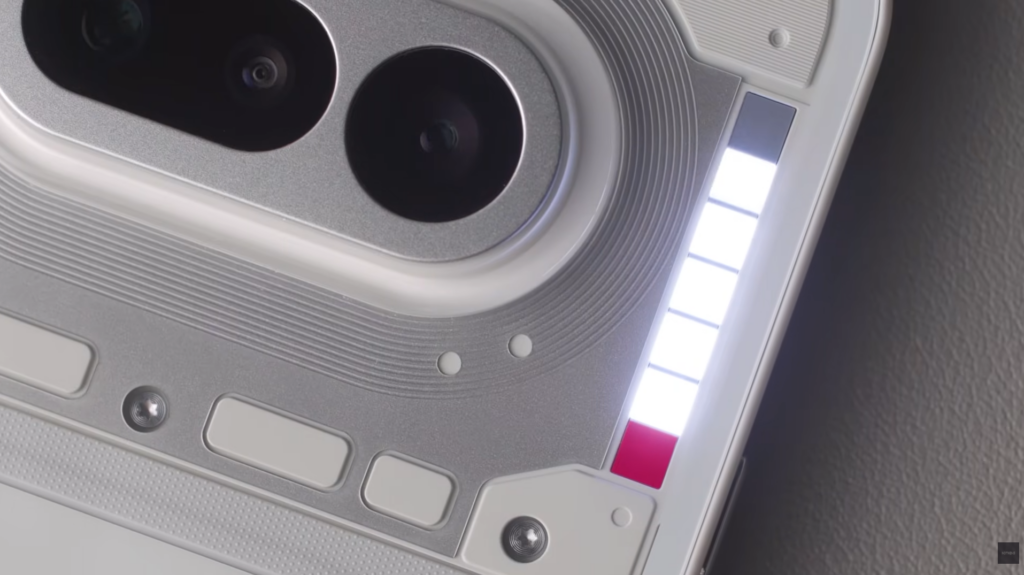
The Phone (4a) will also introduce a redesigned Glyph Bar lighting system, replacing previous configurations with six vertically-arranged white LEDs positioned alongside the camera module’s right edge. A dedicated red LED signals recording activity. The system supports notifications, progress indicators, camera timer countdowns, and shutter confirmation while retaining the hourglass effect from the Phone (3) despite the single-column layout.

Nothing stated that the camera bump has been reduced compared to the Phone (3a) due to the use of a tetra prism telephoto lens. The Glyph Bar will also integrate with system-level features such as Android 16 live updates, expanding its functional use beyond notifications. To promote the Pink variant, Nothing has launched marketing campaigns in London, including graffiti installations across central locations and themed flyposters. The Nothing Store in Bengaluru has also received a pink-themed window takeover.

Leaked specifications suggest the Phone (4a) may feature a 6.78-inch AMOLED display with a 120Hz refresh rate. It is expected to run on the Snapdragon 7s Gen 4 processor with 8GB or 12GB RAM and 256GB UFS 3.1 storage. The software will likely be Nothing OS 4 based on Android 16.

Camera details point to a 50MP main rear sensor and a 32MP front camera. Battery capacity and charging details have not been confirmed yet. Full specifications and pricing will be announced during the March 5 launch event, which will be streamed globally.

For more daily updates, please visit our News Section.

Stay ahead in tech! Join our Telegram community and sign up for our daily newsletter of top stories.

(Source 1, 2)

The post Nothing Phone (4a) Pink Variant Revealed With New Glyph Bar Lighting appeared first on Gizmochina.

Vivo X300 Ultra name appears in a global certification for the first time, may debut with X300 FE

Vivo X200 Ultra

There have been reports that Vivo’s next Ultra-branded flagship—the Vivo X300 Ultra—will not be limited to the Chinese market. The global version of the Vivo X300 Ultra was spotted with model number V256 in the IMEI database in November 2025. Later, the said device was spotted on the EEC (Europe) and TKDN (Indonesia) certification platforms. These certifications only carried the model number and not its final moniker, but now a new certification has emerged revealing its model number and final marketing name together for the first time.

Vivo X300 Ultra, X300 FE SDPPI certified

Vivo X300 Ultra and X300 FE SDPPI certified

As can be seen, the Vivo X300 Ultra and X300 FE have appeared in the database of Indonesia’s SDPPI certification platform. These devices have emerged with model numbers V2562 and V2537, respectively. For those unaware, while TKDN measures the percentage of local Indonesian content in a product, SDPPI certifies that a telecom or wireless device meets Indonesia’s technical and radio regulations.

The Vivo X300 FE has previously been spotted on multiple certification platforms, indicating that its launch may not be far away. While it has been approved in India among other countries, the X300 Ultra is yet to receive the country’s BIS certification.

According to reports, the Vivo X300 FE will be a rebranded version of the Vivo S50 Pro Mini, which debuted in China back in December 2025. As far as the X300 Ultra is concerned, the rumor mill has already leaked several details about it.

Reports have revealed that the Vivo X300 Ultra will have a 6.82-inch flat BOE OLED display with around 2K resolution, LTPO technology, and four-sided narrow bezels. Under the hood, it will feature Qualcomm’s Snapdragon 8 Elite Gen 5 chipset and a massive battery of around 7,000mAh.

The X300 Ultra’s rear camera setup is expected to include an OIS-enabled 200-megapixel Sony LYT-901 main sensor, paired with a 50-megapixel Sony LYT-828 ultra-wide sensor and a 200-megapixel Samsung HPB periscope telephoto camera. For selfies, it will feature a 50-megapixel front camera with autofocus support. It may not feature the dedicated Action button, which was introduced on the X300 Ultra.

There’s a possibility that the Vivo X300 Ultra and X300 FE may debut together globally in the second quarter of this year. In China, the X300 Ultra is likely to break cover in March.

For more daily updates, please visit our News Section.

Stay ahead in tech! Join our Telegram community and sign up for our daily newsletter of top stories.

(via)

The post Vivo X300 Ultra name appears in a global certification for the first time, may debut with X300 FE appeared first on Gizmochina.

Poco X8 Pro and X8 Pro Max Teased Ahead of India Launch: Everything We Know So Far

Poco X8 Pro Max

Poco India has started teasing an upcoming smartphone launch, and the hints strongly point to the Poco X8 Pro series. The brand shared a post on X with the message, “Smart minds will wait for the smarter phone. They don’t rush. So shouldn’t you. #POCO.” Another line in the teaser says, “People with high IQ will wait for what’s coming neXt!” with the letter X highlighted, which clearly suggests the X series.

The company has not confirmed the product name yet, but the teaser timing indicates that the launch is close. Based on current information, the Poco X8 series could debut in India in early March. Two models are expected to launch, the Poco X8 Pro and the Poco X8 Pro Max, and specification details of both models have already leaked.

Poco X8 Pro Max leaked specs

The Poco X8 Pro Max is tipped to feature a 6.83-inch 1.5K TCL M10 OLED display with a 120Hz refresh rate, 2000 nits peak brightness, and 3840Hz PWM dimming. It may run on the Dimensity 9500s processor paired with an Immortalis-G925 MC12 GPU. The device is also expected to include LPDDR5x Ultra RAM and UFS 4.1 storage.

Poco X8 Pro Max
Poco X8 Pro Max

For cameras, it could use a 50MP Light Hunter 600 main sensor with optical image stabilization, along with an 8MP ultra-wide camera. A 20MP OV20B front camera is also expected. The phone may pack a large 8,500mAh battery with 100W wired charging and 27W reverse charging. Other features could include dual stereo speakers, LHDC 5.0 audio support, a 3D ultrasonic in-display fingerprint sensor, IP68, IP69, and IP69K ratings, Wi-Fi 7, and Bluetooth 5.4. The device is tipped to measure 8.15mm thick and weigh 219 grams.

Poco X8 Pro leaked specs

The standard Poco X8 Pro is expected to be slightly smaller with a 6.59-inch 1.5K TCL M10 OLED display, also with a 120Hz refresh rate and 2000 nits brightness. It may use the Dimensity 8500 Ultra processor with a Mali-G720 MC8 GPU, paired with LPDDR5x Ultra RAM and UFS 4.1 storage.

Poco X8 Pro 5G
Poco X8 Pro

The camera setup could include a 50MP Sony IMX882 sensor with OIS and an 8MP ultra-wide lens, along with a 20MP front camera. The phone is expected to include a 6,500mAh battery with 100W charging and 27W reverse charging. It may also feature a metal frame, NFC, IR blaster, IP68, IP69, and IP69K protection, an optical in-display fingerprint scanner, and Wi-Fi 6 connectivity. The X8 Pro may also arrive in a special Iron Man-themed edition, with leaked images of the variant recently appearing online.

For more daily updates, please visit our News Section.

Tech enthusiast? Get the latest news first! Follow our Telegram channel and subscribe to our free newsletter for your daily tech fix!

(Source)

The post Poco X8 Pro and X8 Pro Max Teased Ahead of India Launch: Everything We Know So Far appeared first on Gizmochina.

This Xiaomi Smart Fan Can Run on a Power Bank and Use 3D Airflow to Cool Your Entire Room

Xiaomi Mijia Smart Inverter Circulating Fan Pro

Xiaomi has introduced the Mijia Smart Inverter Circulating Fan Pro, a new addition to its smart home lineup. The product is now listed for crowdfunding on Youpin and will be available at an introductory price of 429 yuan (~$62). Crowdfunding begins on March 4.

Xiaomi Mijia Smart Inverter Circulating Fan Pro

Mijia Smart Inverter Circulating Fan Pro Specs

The Mijia Smart Inverter Circulating Fan Pro uses an advanced air circulation system to improve indoor airflow efficiently. The fan delivers a maximum air volume of 28.7m³/min and can refresh the air in a room within two minutes. Xiaomi designed the fan to support long-distance airflow, reaching up to 13 meters, making it suitable for cooling large spaces.

Xiaomi Mijia Smart Inverter Circulating Fan Pro

In terms of airflow performance, the fan features automatic 3D oscillation with 100° vertical and 120° horizontal movement for wider coverage across the room. It supports precise 10° oscillation adjustments through the Mijia app and includes four natural wind modes designed to mimic outdoor airflow for a more comfortable cooling experience.

The Mijia fan integrates with Xiaomi’s HyperOS ecosystem, supporting remote control and automation through the Mijia app. It allows users to manage speed, oscillation, and power on/off remotely or via Xiao Ai voice commands.

Xiaomi Mijia Smart Inverter Circulating Fan Pro

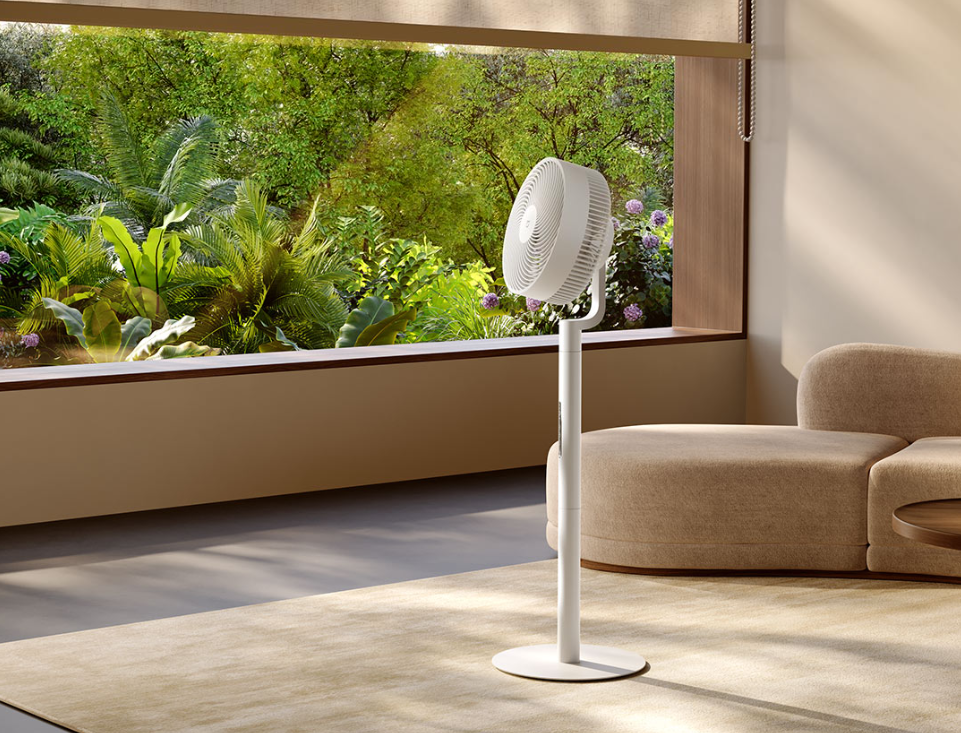
In terms of design, the fan adopts a slim and minimalist look with a reduced head thickness to save space. It supports dual-use height adjustment for both tabletop and floor-standing modes, and a four-step detachable structure makes disassembly and storage simple and practical.

The fan equips a DC inverter motor that keeps noise as low as 28.62dB. It supports USB-C power input for adapters or power banks, with Xiaomi claiming up to 16.75 hours of runtime on a 10,000mAh power bank at low speed.

Xiaomi Mijia Smart Inverter Circulating Fan Pro

Xiaomi has included additional safety and convenience features. These include a removable washable grille, a child lock function, and anti-pinch sensing. The fan also comes with a magnetic Bluetooth remote control and an integrated touch control panel for easy operation.

The Mijia Smart Inverter Circulating Fan Pro weighs 3.5 kg and measures 278 x 310 x 1000 mm. It is available in Xiaomi’s signature off-white design.

In related news, Xiaomi has launched the new Mijia Refrigerator Cross Door 502L globally, while the company has also introduced the Mijia Smart Head Massage Comb with graphene thermal technology and app control.

For more daily updates, please visit our News Section.

Stay ahead in tech! Join our Telegram community and sign up for our daily newsletter of top stories! 💡

The post This Xiaomi Smart Fan Can Run on a Power Bank and Use 3D Airflow to Cool Your Entire Room appeared first on Gizmochina.

Galaxy S26 Ultra camera samples compared against Vivo X300 Pro and iPhone 17 Pro Max

Early camera samples from the Galaxy S26 Ultra are already making the rounds. This time, the comparisons go beyond last year’s model. Beyond the S26 Ultra vs S25 Ultra camera comparison, YouTube creator Sahil Karoul has also posted side-by-side shots on X against the iPhone 17 Pro Max and Vivo X300 Pro.

The tests aren’t perfectly controlled. Framing isn’t identical, and conditions shift between shots. Still, they offer a useful early look at how Samsung’s latest flagship might position itself against two of its biggest camera rivals.

Galaxy S26 Ultra
iPhone 17 Pro Max

Against the iPhone 17 Pro Max, the S26 Ultra’s images appear noticeably more restrained. Colors lean natural rather than punchy. Apple’s image looks more contrast-heavy and immediately eye-catching. Samsung’s version feels closer to what you’d see with your own eyes. It arguably looks more true-to-life.

Galaxy S26 Ultra
iPhone 17 Pro Max

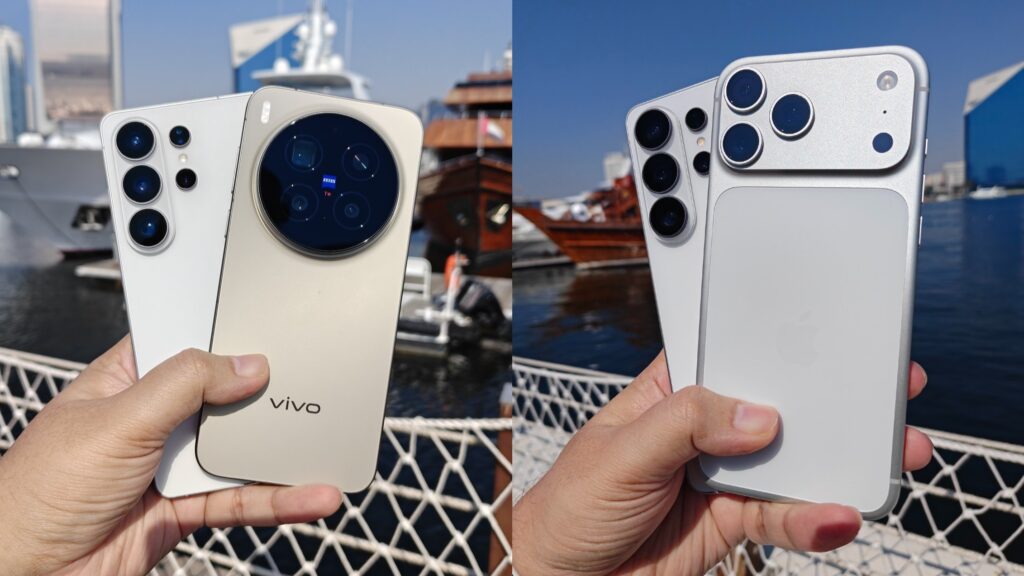
The comparison with the Vivo X300 Pro highlights an even bigger stylistic difference. Vivo’s Zeiss-tuned system, especially in its default Vivid mode, delivers saturated, high-contrast images designed to impress at a glance. They’re bold and social-media ready. Samsung’s output, by contrast, stays relatively muted.

In one shot of a vase with red artificial berries, the Galaxy S26 Ultra, S25 Ultra, and Vivo X300 Pro all struggle slightly to render the reds accurately. Vivo’s version not only looks the brightest and most detailed, but also slightly overexposed. Interestingly, some viewers have commented that the S25 Ultra’s handling of the scene actually looked preferable to the newer model.

X300 Pro
S25 Ultra
S26 Ultra

Overall, there isn’t a major shift in color processing between the S26 Ultra and its predecessor. In some situations — including this one — the S26 Ultra keeps the image a touch brighter and manages noise slightly better, but the differences are subtle.

On the technical side, the S26 Ultra appears to be using a 24MP shooting mode — enabled through Samsung’s Camera Assistant — instead of defaulting to 12MP binning like the S25 Ultra typically does.

In summary, Galaxy S26 Ultra seems to be evolving Samsung’s established camera philosophy rather than rewriting it.

Stay ahead in tech! Join our Telegram community and sign up for our daily newsletter of top stories!

For more daily updates, please visit our News Section.

(Sources: 1, 2)

The post Galaxy S26 Ultra camera samples compared against Vivo X300 Pro and iPhone 17 Pro Max appeared first on Gizmochina.

Oppo A6 Series Gets Four New Models in China With AMOLED Display and 7,000mAh Battery

Oppo A6

Oppo has expanded its A-series portfolio with four new models in China, including the Oppo A6 (PLS120), A6s, A6i+, and A6v. While the naming suggests entirely new devices, the lineup combines one upgraded variant with several rebranded or slightly modified models positioned at different price points. The A6 (PLS120) stands out as the most notable addition due to its display and charging improvements over the previously released global version.

A6 (PLS120): The Premium Variant

The China-exclusive Oppo A6 represents the most significant departure from its global counterpart. It features a 6.57-inch AMOLED display with 1080p+ resolution, replacing the global version’s 6.75-inch 720p+ LCD panel. An optical under-display fingerprint scanner replaces the side-mounted sensor.

Oppo A6

Charging capabilities have been substantially upgraded to 80W SuperVOOC and 44W PPS, compared to 45W and 33W on the global model. The 7,000mAh battery remains unchanged.

The device runs MediaTek’s Dimensity 6300 processor with LPDDR4X RAM and UFS 2.2 storage. Three configurations are available: 8GB + 256GB, 12GB + 256GB, and 12GB + 512GB, all supporting microSD expansion.

Durability is enhanced with IP68 and IP69 ratings. The camera setup includes a 50MP primary sensor, 2MP secondary camera, and an upgraded 16MP front camera. Video recording maxes out at 1080p/60fps.

Pricing starts at CNY 1,600 ($220) for the base model, CNY 1,900 for the middle tier, and CNY 2,100 for the top configuration.

A6s: Midrange Option With Compromises

The A6s uses a 6.75-inch 720p+ LCD display paired with the same Dimensity 6300 chipset. While it retains the 7,000mAh battery, charging is limited to 45W SuperVOOC.

OPPO A6s

The front camera has been downgraded to 8MP from 16MP. Memory configurations include 8GB + 256GB and 12GB + 256GB with microSD support. Despite overlapping specifications with other A6 variants, Oppo markets it as a distinct model.

A6i+: Rebadged Global Hardware

OPPO A6i+

The A6i+ is fundamentally a rebranded device, sharing its model number (PLT120) and specifications with the global Oppo A6. This naming strategy targets different market segments without introducing new hardware.

The device starts at CNY 1,500 for 8GB + 256GB.

A6v: Budget Entry With Reductions

OPPO A6v

The A6v (PLT130) makes several cuts to reach a lower price point. It features a 5MP front camera, a reduced 6,500mAh battery, and 45W SuperVOOC charging. Durability protection drops to IP64 from IP68/IP69.

This model closely mirrors the previously released Oppo A6t with updated branding, starting at CNY 1,200.

Stay ahead in tech! Join our Telegram community and sign up for our daily newsletter of top stories!

For more daily updates, please visit our News Section.

(Source: 123, 4)

The post Oppo A6 Series Gets Four New Models in China With AMOLED Display and 7,000mAh Battery appeared first on Gizmochina.

Xiaomi Introduces Compact 6A USB-C Cable with Reverse Charging & 120W Fast Power Delivery

Xiaomi 6A Automatic Reverse Charging Data Cable

Xiaomi has quietly added yet another useful accessory to its growing ecosystem with the introduction of a new 6A reverse charging USB-C cable in China. While affordable and simple in design, this small cable packs 120W fast charging support, a durable build and an intelligent chip that automatically handles power negotiations, making it more versatile than the average charging lead.

Xiaomi Launches New 6A Reverse Charging USB-C Cable

At just 16cm (6.29 in) long, the new Xiaomi 6A Automatic Reverse Charging Data Cable is tailored for reverse charging. This is a feature where one smartphone is charged by drawing power from another device. Thanks to its short length, it’s especially convenient for on-the-go scenarios, like topping up a friend’s phone, a pair of earbuds, or a power bank in a pinch. The build is said to be durable, with a woven exterior and a high-quality inner core that’s designed to withstand daily use and bending.

Xiaomi 6A Automatic Reverse Charging Data Cable

Under the hood, the cable includes a smart chip that detects the connected device and negotiates power delivery automatically, helping ensure efficient and safe charging across different devices. For most reverse-charging use cases, you simply plug one end into the device that has power (like a smartphone), and the other end into the gadget you want to charge.

Although primarily marketed for reverse charging, Xiaomi notes that this cable can double as a standard charging lead when connected to a suitable power brick. With its 6A rating and supports up to 120W fast charging. So you’re not buying a one-trick pony. Thebrand isselling the Xiaomi 6A Automatic Reverse Charging Data Cable is available for purchase via the XiaomiYoupin platform for 9.9 Yuan (roughly 1.44 US Dollars).

For more daily updates, please visit our News Section.

Tech enthusiast? Get the latest news first! Follow our Telegram channel and subscribe to our free newsletter for your daily tech fix! ⚡

(Via)

The post Xiaomi Introduces Compact 6A USB-C Cable with Reverse Charging & 120W Fast Power Delivery appeared first on Gizmochina.

Ninkear S13 2-in-1 Laptop Gets Big Price Cut: Core Ultra 5, Stylus & 2.5K Screen

Ninkear S13 2-in-1 Laptop

Ninkear S13 Intel Core Ultra 5 115U 2-in-1 Tablet Touch Screen Laptop is currently available at a significant discount on the brand’s official website, making the AI-powered convertible device more accessible for buyers looking for a premium productivity-focused machine. The price drop positions the S13 as a strong value option in the compact 2-in-1 category, especially considering its high-resolution touchscreen, stylus support, and modern Intel Core Ultra platform.

Official Pricing and Discount Details

The Ninkear S13 has received a major price cut on the official website. The price drops from €1,099.00 to €859.00, saving buyers €240.00. For Indian customers, the price falls from ₹117,989.37 to ₹92,222.81, offering savings of ₹25,766.56, making it a more competitive option in the premium mid-range 2-in-1 laptop segment.

Premium 2-in-1 Design with Productivity Focus

The Ninkear S13 is designed as a flexible 2-in-1 system that combines laptop productivity with tablet convenience. It features a detachable magnetic keyboard connected via POGO pins, allowing users to switch between laptop mode and tablet mode depending on workflow. An adjustable kickstand supporting up to 155° further enhances flexibility, making it suitable for desk work, drawing, entertainment, and travel use cases.

The device is also positioned as a creative-friendly system thanks to its touchscreen and stylus support, targeting users who need note-taking, sketching, or digital drawing capabilities alongside traditional productivity tasks.

Intel Core Ultra Performance with AI Acceleration

Powering the Ninkear S13 is the Intel Core Ultra 5 115U processor, which features 8 cores and 10 threads with turbo frequencies reaching up to 4.2GHz. The chip includes Intel AI Boost NPU technology capable of delivering up to 11 TOPS of AI compute power, enabling faster AI-assisted workflows such as content creation, video editing, and multitasking optimization.

The laptop is paired with 16GB LPDDR5 RAM and a 1TB SSD, ensuring smooth multitasking, quick boot times, and enough storage for professional files and creative projects.

2.5K Touchscreen and Stylus Experience

The S13 features a 13-inch IPS touchscreen with a 2.5K resolution (2560 × 1600), offering sharp visuals and 100% sRGB color coverage for accurate color reproduction. The display supports 10-point touch and works with a 4096-level pressure-sensitive stylus, enabling precise input for drawing and writing tasks. With 350 nits of brightness and eye-protection technology, the panel is aimed at both productivity and entertainment use.

Connectivity, Battery, and Everyday Mobility

The laptop includes modern wireless standards such as Wi-Fi 6 and Bluetooth 5.0 for stable connectivity. Port selection includes dual full-function USB Type-C ports supporting charging, data transfer, and video output, along with a USB 3.0 port for external peripherals.

Battery capacity is rated at 42Wh, with the company claiming up to around eight hours of use depending on workload. A 65W USB-C GaN fast charger is included, with marketing claims suggesting up to 70% charge in approximately 30 minutes.

Availability and Value Positioning

With the current discount applied, the Ninkear S13 becomes a more attractive option for users seeking a compact AI-ready 2-in-1 device without stepping into ultra-premium pricing territory. The combination of Intel Core Ultra hardware, high-resolution touchscreen, stylus support, and flexible design makes the discounted pricing especially notable for students, creators, and mobile professionals looking for a portable productivity machine.

The ongoing price cut on the official website significantly improves the value proposition of the Ninkear S13. For buyers considering a lightweight convertible laptop with AI-focused hardware and creative-friendly features, the discounted pricing places the device in a more competitive position within the growing 2-in-1 Windows segment.

Read More:

The post Ninkear S13 2-in-1 Laptop Gets Big Price Cut: Core Ultra 5, Stylus & 2.5K Screen appeared first on Gizmochina.

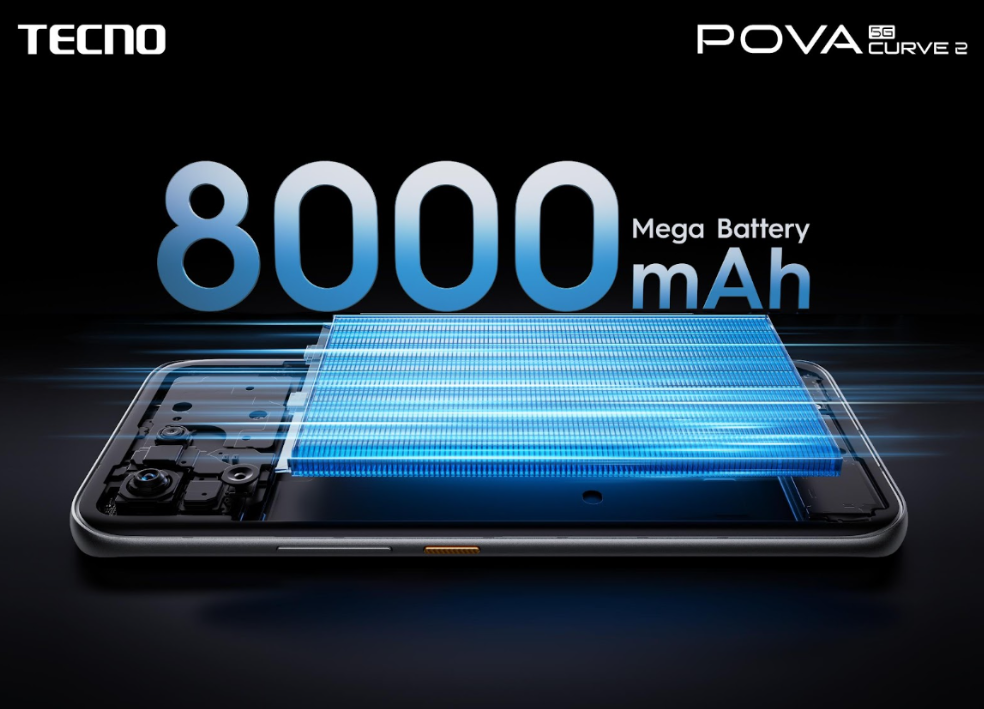
TECNO POVA Curve 2 5G Brings 8000mAh Battery in a Ultra Slim Design

TECNO POVA Curve 2

Key Highlights:

  • Ultra-slim 7.42mm design combined with a huge 8000mAh battery
  • 144Hz curved AMOLED display powered by MediaTek Dimensity 7100 5G
  • AI-driven software features focused on productivity and smart daily use

Announcement and Positioning

TECNO has officially introduced the POVA Curve 2 5G, expanding its POVA smartphone lineup with a strong focus on battery endurance and gaming-friendly performance. The device was launched on February 13, 2026. 

The smartphone will also be showcased at MWC 2026 in Barcelona, where TECNO plans to highlight its growing AI-driven ecosystem. The POVA Curve 2 5G is positioned as an ultra-slim device that combines futuristic styling, long-lasting power, and smart features for everyday users.

Design and Build

The POVA Curve 2 5G follows a futuristic design language inspired by interstellar spacecraft aesthetics. It features a curved AMOLED display that blends smoothly into a clean and modern body design. Refined textures and flowing lines give the phone a premium visual identity.

Despite housing a large battery, the device remains slim at just 7.42mm and weighs 195g. TECNO claims it is among the slimmest phones in its class with an 8000mAh battery. Color options include Melting Silver, Storm Titanium, and Mystic Purple.

For durability, the phone offers IP64 dust and water resistance. It also includes SGS-certified 1.5m drop protection and Corning Gorilla Glass 7i for added strength.

Battery, Charging, and Performance

One of the biggest highlights is the massive 8000mAh high-density battery, which is the largest battery TECNO has ever included in a smartphone. It is designed for heavy usage such as gaming, streaming, travel, and multitasking without frequent charging.

The phone supports 45W fast charging and includes bypass charging technology to reduce heat during extended gaming or heavy workloads. TECNO says the battery is engineered to last up to six years and can operate in extreme temperatures from -20°C to 60°C.

Powering the device is the MediaTek Dimensity 7100 5G chipset. Combined with a 144Hz curved AMOLED display, users can expect smoother visuals and responsive performance. Dual-signal enhancement chipsets improve connectivity, while offline communication allows voice, text, and image sharing up to 1.5km in open areas.

AI Features and Software

The POVA Curve 2 5G runs on HiOS 16 and introduces several AI-powered tools aimed at improving productivity. Features include AI content summarization, writing assistance, AI photo enhancement, and noise reduction during calls.

Additional smart tools include region-aware Muslim prayer reminders, FlashMemo for quickly capturing and summarizing on-screen content, and Mind Hub for organizing AI-generated notes and insights. Ella Assistant enables personalized AI interactions for a more intuitive experience.

TECNO says the AI system works quietly in the background to make daily usage smoother while keeping the interface playful and easy to use.

Software Support

TECNO POVA Curve 2 5G promised to receive two major Android OS upgrades and is designed to deliver long-term performance, making it a reliable daily companion for power-focused users.

Read More:

The post TECNO POVA Curve 2 5G Brings 8000mAh Battery in a Ultra Slim Design appeared first on Gizmochina.

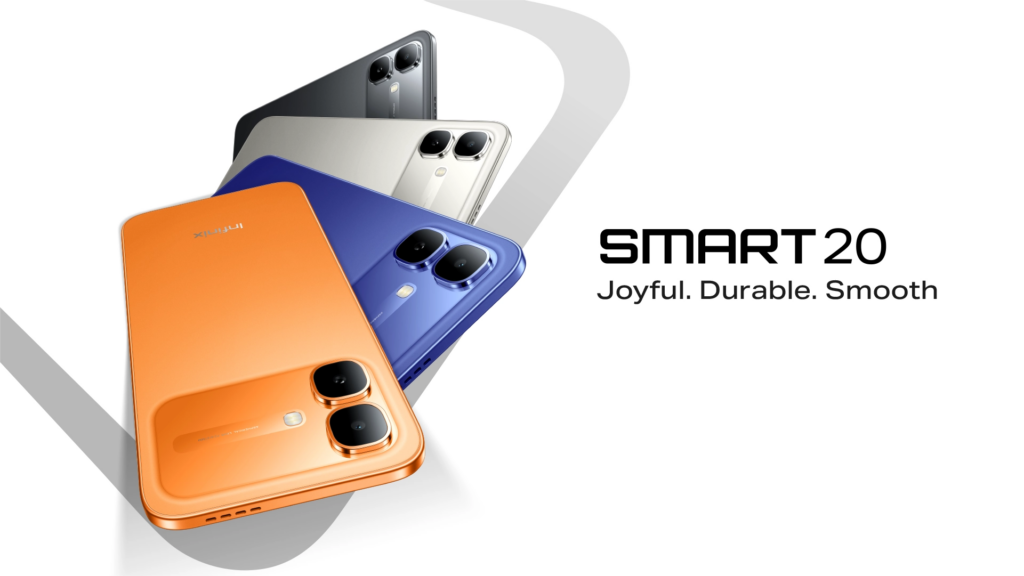
Infinix Smart 20 goes official with 102Hz display, 5200mAh battery

The Infinix Smart 20 is now official as it has appeared on the company’s official website, revealing its complete design and key hardware details. Positioned as an entry-level smartphone, it brings features like a 120Hz display, MediaTek Helio G81 Ultimate processor, and a slim 7.7mm profile. Continue reading ahead to know the Smart 20’s specifications, features, and expected positioning of the device.

Infinix Smart 20 specifications and features

Infinix Smart 20
Infinix Smart 20

The Infinix Smart 20 houses a 6.78-inch IPS LCD punch-hole display with HD+ resolution and support for multiple refresh rates, including 45Hz, 60Hz, 90Hz, and 120Hz. The screen delivers up to 700 nits peak brightness and includes features like Dynamic Bar and Always-On Display elements for quick interaction. For security, it is equipped with a side-facing fingerprint sensor.

The MediaTek Helio G81 Ultimate powers the device along with 4GB RAM, which can be expanded virtually up to 8GB. Storage options include 64GB and 128GB variants, with support for microSD expansion up to 2TB. The phone is backed by a 5200mAh battery with support for 15W charging and 5W reverse charging.

Infinix Smart 20
Infinix Smart 20

The Smart 20 runs XOS 16 based on Android 16. Camera hardware includes an 8-megapixel rear camera supported by dual flash and an 8-megapixel front camera. Other features include NFC with touch transfer, UltraLink offline communication up to 1km, Wi-Fi ac, Bluetooth, GPS navigation, dual nano SIM slots, USB Type-C port, OTG, 3.5mm headphone jack, FM radio, DTS audio, an IR blaster, and IP64-rated dust and splash resistance.

Infinix Smart 20 price and availability

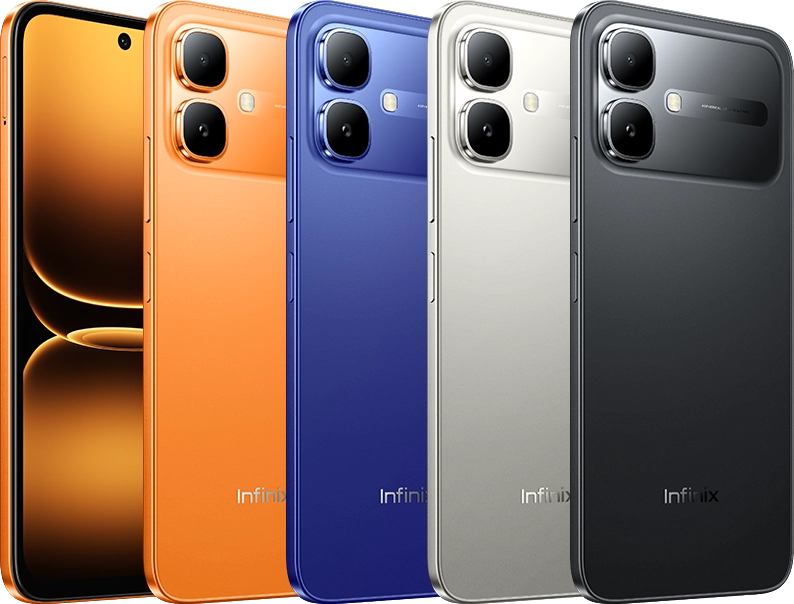
The Infinix Smart 20 will be offered in Shadow Black, Polaris Titanium, Sunlike Orange, and Cloudline Blue colour options. Pricing, offers, and market availability have not been officially confirmed yet.

For more daily updates, please visit our News Section.

Stay ahead in tech! Join our Telegram community and sign up for our daily newsletter of top stories.

The post Infinix Smart 20 goes official with 102Hz display, 5200mAh battery appeared first on Gizmochina.

Oppo Find X10 Pro Max may adopt advanced 200MP Samsung HPC sensor with UFCC technology

Oppo Find X9 Pro

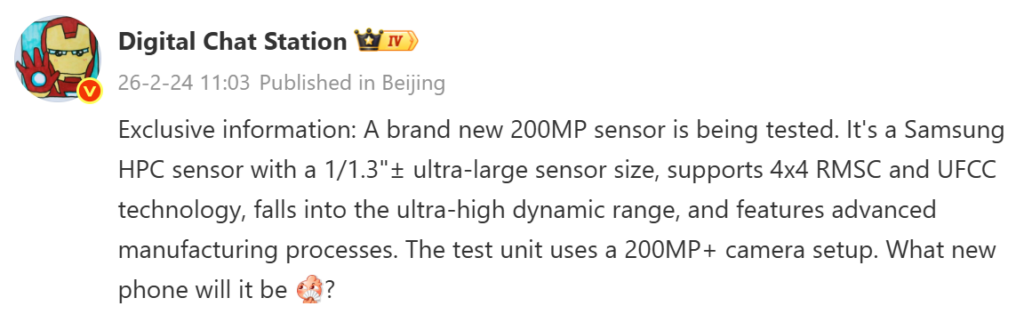
Next month in March, Oppo will announce the Oppo Find N6 foldable phone. The same month could also see the arrival of the Find X9 Ultra and Find X9s Pro. The rumor mill has revealed several details about these flagships, and information about the next-generation Find X10 series is also gradually surfacing. In a new leak, tipster Digital Chat Station has revealed key details about what appears to be the Find X10 Pro Max’s primary camera.

Oppo Find X10 Pro Max’s primary camera details seemingly tipped

Oppo Find X10 Pro Max’s primary camera details seemingly tipped

According to tipster DCS, a new 200-megapixel camera sensor is currently under testing. While he has not specified the name of the Oppo flagship that will feature it, it could be the Find X10 Pro Max. The sensor is believed to be a Samsung HPC unit featuring an approximately 1/1.3-inch large sensor size, placing it among the larger sensors in the high-resolution category.

The leak suggests that it supports 4×4 RMSC technology, which rearranges pixel color data to improve image processing and enhance output quality. Another highlight mentioned is the inclusion of UFCC, or Ultra Full Color Capture technology, which is expected to improve dynamic range performance.

The tipster hinted that the sensor belongs to the ultra-high dynamic range segment and is built using advanced manufacturing techniques. Based on discussions in the comments section and contextual clues, speculation points toward this sensor being tested on the Oppo Find X10 Pro Max.

Oppo Find X10 series: What to expect

Reports also indicate that Oppo could be exploring a dual 200-megapixel camera setup for the upcoming Find X10 lineup, both featuring large sensor sizes. The lineup is expected to include standard, Pro, and Pro Max variants, followed by a later Ultra edition.

In terms of performance, the Find X10 could be equipped with the Dimensity 9500 Plus, which could be an overclocked version of the existing Dimensity 9500. The X10 Pro and X10 Pro Max could feature MediaTek’s first 2nm chip, the upcoming Dimensity 9600. The X10, X10 Pro, and X10 Pro Max are expected to debut in October this year in China.

For more daily updates, please visit our News Section.

Stay ahead in tech! Join our Telegram community and sign up for our daily newsletter of top stories.

The post Oppo Find X10 Pro Max may adopt advanced 200MP Samsung HPC sensor with UFCC technology appeared first on Gizmochina.

Galaxy S26 Ultra vs S25 Ultra camera comparison reveal improvements ahead of launch

As tends to happen ahead of major launches, a handful of devices appear to have slipped into the gray market. Reports suggest units are circulating in parts of Southeast Asia, where eager buyers have been willing to pay a premium to get their hands on the phone early.

Indian YouTuber Sahil Karoul is one of them. He shared an unboxing video, some hands-on impressions, and several camera samples across YouTube and X.

The creator posted side-by-side comparisons with the Galaxy S25 Ultra. And to be fair, these aren’t controlled tests. The framing varies slightly, and conditions aren’t identical between shots. Still, some patterns do stand out.

Galaxy S26 Ultra
Galaxy S25 Ultra

The Galaxy S26 Ultra images tend to look a bit brighter overall. Exposure appears slightly lifted, especially in harsher daylight and mixed lighting scenarios. If the rumored wider apertures on the main and telephoto cameras are accurate, that would explain the extra light intake. It could also simply be more aggressive processing.

Galaxy S26 Ultra
Galaxy S25 Ultra

Portrait shots show a similar trend. Skin tones look a touch brighter and, in some cases, more natural. That said, edge detection still isn’t flawless. Fine hair strands and tricky background edges occasionally show minor inconsistencies in the bokeh effect. Nothing disastrous, but not perfect either.

Low-light samples look marginally cleaner compared to the S25 Ultra — a bit less visible noise and slightly better shadow detail. The difference, however, isn’t dramatic.

Galaxy S26 Ultra
Galaxy S25 Ultra

The S26 Ultra retains the same core camera setup as its predecessor — a 200MP main sensor, 50MP ultrawide, 50MP 5x periscope, and 10MP 3x telephoto — with adjustments focused more on lens tuning and image processing rather than entirely new sensors.

If these early samples are anything to go by, Samsung’s approach this year seems evolutionary. The output looks a bit brighter, a bit cleaner, maybe slightly more polished — but not radically different. For S25 Ultra owners, nothing here immediately screams “urgent upgrade.”

Don’t miss a thing! Join our Telegram community for instant updates and grab our free daily newsletter for the best tech stories!

For more daily updates, please visit our News Section.

(Sources: 1, 2, 3)

The post Galaxy S26 Ultra vs S25 Ultra camera comparison reveal improvements ahead of launch appeared first on Gizmochina.

New Casio G-Shock 2100 Camouflage Watches Arrive with Carbon Core Guard and 200m Water Resistance

Casio G-Shock GA-2100CM-5A

Casio has released new camouflage versions of its G-Shock 2100 Series in the UK. The lineup includes the GA-2100CM-5A and GA-2100CM-8A, both priced at £119 on the company’s official online store. The watches were first introduced in Japan in February 2026.

Casio G-Shock GA-2100CM-5A and GA-2100CM-8A
Casio G-Shock GA-2100CM-5A (left) and GA-2100CM-8A (right)

The GA-2100CM-5A features a lighter camouflage palette with beige, gray, and khaki tones applied across the resin bezel and strap using a metallic print finish. The design also integrates a subtle G-Shock “G” motif within the camouflage pattern.

The GA-2100CM-8A is the darker counterpart in Casio’s new camouflage 2100 Series lineup. adopts a deeper color scheme with dark gray and reddish-brown accents across the bezel and strap. Casio uses bio-based resin derived from renewable organic materials such as corn for the bezel and band.

Casio G-Shock GA-2100CM-5A
Casio GA-2100CM-5A
G-Shock GA-2100CM-8A
Casio GA-2100CM-8A

The watches measure 48.5 × 45.4 × 11.8 mm and weigh 51 g. They use a Carbon Core Guard structure for shock resistance and offer 200-meter water resistance. The mineral glass display includes Neobrite coating for improved visibility in low light.

Both offer a hybrid analog-digital layout that combines two hands with a digital screen that shows time, date, and day information. A hand-shift feature temporarily moves the hands to keep the digital display unobstructed. Double LED illumination with selectable duration and afterglow supports visibility in dark environments.

Functionality includes world time covering 31 time zones and 48 cities, a 1/100-second stopwatch, a countdown timer with a 24-hour range, five daily alarms, and an hourly signal. The watch also features a full auto-calendar through 2099, button tone mute, and 12/24-hour time formats. Accuracy is rated at ±15 seconds per month.

Power comes from two SR726W batteries with an estimated lifespan of three years. The GA-2100CM-5A and GA-2100CM-8A are manufactured in Thailand and support wrist sizes from 145 to 215 mm.

For more daily updates, please visit our News Section.

Stay ahead in tech! Join our Telegram community and sign up for our daily newsletter of top stories.

The post New Casio G-Shock 2100 Camouflage Watches Arrive with Carbon Core Guard and 200m Water Resistance appeared first on Gizmochina.

TECNO at MWC 2026: AI Ecosystem, CAMON 50 Series & Future Concepts Revealed

Tecno MWC 26

Key Highlights:

  • Launch focus on practical AI-powered devices, including the CAMON 50 Series and POVA 8 Series
  • Expansion of a connected AI ecosystem with improved cross-device integration
  • Showcase of future concepts featuring imaginative designs and next-generation interaction ideas

TECNO has announced its participation at Mobile World Congress 2026 (MWC 26) in Barcelona, where the brand will showcase its latest progress in building a connected AI ecosystem. Under the theme “Pioneering the Connection of Intelligence,” the company aims to demonstrate how AI can improve creativity, productivity, and connectivity in daily life through smarter devices and integrated experiences.

Pioneering Practical AI Devices

A major part of TECNO’s showcase will focus on practical AI devices designed for real-world use. Leading the lineup is the CAMON 50 Series, positioned as an AI imaging flagship. The series introduces smarter scene recognition, enhanced AI image processing, and tools aimed at content creators and everyday users who want more creative flexibility and intelligent photography experiences.

Alongside it, the POVA 8 Series targets users looking for performance and style. TECNO highlights its distinctive design, strong battery endurance, and smooth overall performance, making it suitable for users who need reliable daily performance without compromising on modern aesthetics.

Pioneering Connected AI Ecosystem

TECNO is also expanding its connected ecosystem beyond smartphones. The brand will showcase how computers, tablets, and smart accessories can work together through upgraded connectivity features.

At the center of this is the upgraded OneLeap platform, which improves cross-device data transfer, task handoff, and device management. Visitors at MWC will also be able to explore dedicated AI Experience Zones demonstrating practical AI applications in education, wellness, work productivity, and entertainment.

Pioneering Imaginative Designs

Beyond current devices, TECNO will present future-focused concepts exploring new form factors and interaction methods. These prototypes highlight future imaging technologies, adaptive intelligence, and more intuitive usability aimed at shaping the next generation of smart devices.

Event Details

Through its MWC 2026 presence, TECNO reinforces its goal of delivering accessible intelligent solutions while strengthening its role in AI ecosystem development. Visitors can explore the showcase at Hall 7, Stand 7A40 in Barcelona, where the brand will present its latest AI innovations, ecosystem experiences, and concept designs.

Read More:

The post TECNO at MWC 2026: AI Ecosystem, CAMON 50 Series & Future Concepts Revealed appeared first on Gizmochina.

Motorola announces Android 17 beta program in a surprising move

Motorola Android 17 beta

Even though the Android 16 rollout hasn’t gone smoothly for Motorola devices, the company has shown clear signs it’s focusing on improving the software rollout. But I wasn’t expecting a dramatic shift this soon. The company has just announced the Android 17 beta program, becoming the first non-Google brand to do so.

It has been just a couple of days since Google released the first Android 17 beta. We were expecting third-party manufacturers to launch the Android 17 beta program in a few weeks, as has typically been the case in the past, but Motorola had a different plan. The Android 17 beta program is live for Moto Edge 2025, Moto G57, and Moto G57 Power.

The Android 17 beta program for these Motorola smartphones is currently available in select regions, as Motorola posted on the official forum. We’ve listed the devices and supported regions below, along with the direct link to the official beta program page.

  • Moto Edge 2025 – US
  • Moto G57 – EMEA (Europe, Middle East, Africa)
  • Moto G57 Power – India, EMEA

If you want to test early builds of Android 17, you can sign up for the beta program by following the steps mentioned below. Note that beta builds are prone to having bugs and errors. So, it’s best to install them on a secondary device.

It’s surprising to see Motorola launching its Android 17 beta program, starting with mid-range and budget models, not premium models like other brands do. It should expand to more devices in the coming days and weeks. We’ll keep an eye on the latest information and post them in the Motorola section.

How to sign up for Motorola’s Android 17 beta program?

  1. Create an account on Motorola’s community website (if you haven’t already).
  2. Visit the profile page and update your IMEI or serial number (SN) details.
  3. Opt in for MFN on your Motorola community profile.
  4. Always ensure that your phone is running the latest software.
  5. Go to the MFN Beta Testing Opportunities page to see a testing opportunity for your Motorola device.
  6. Tap on the registration link for your Motorola phone.
  7. Fill in the required details and submit your application.

Motorola may send emails containing more details about your beta application. Therefore, remember to check your inbox regularly, including the spam folder. You can also manually check for new updates via the Settings app.

Google has planned a few more betas ahead of the stable release, which is scheduled for Q3 2026. For Motorola, that’s a quick start to Android 17, but it will be exciting to see how things go forward because that’s where Motorola struggles the most. Last year, it began the Android 16 rollout earlier than most brands but struggled to deliver updates to other devices on time.

For more daily updates, please visit our News Section.

Stay ahead in tech! Join our Telegram community and sign up for our daily newsletter of top stories! 💡

The post Motorola announces Android 17 beta program in a surprising move appeared first on Gizmochina.

TECNO to Unveil World’s Thinnest Modular Smartphone Ecosystem at MWC 2026

TECNO smart modules MWC 26

Key Highlights:

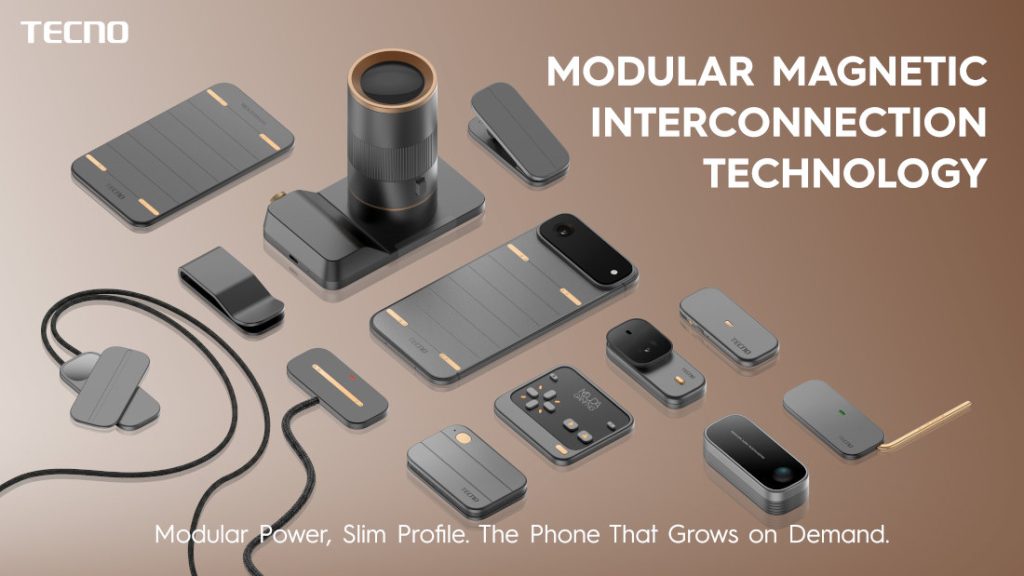
  • TECNO will unveil what it calls the world’s thinnest modular smartphone ecosystem at MWC 2026, built around magnetic modular interconnection technology.
  • The concept introduces instant attachable modules such as a power bank, action camera, and telephoto lens, allowing users to customize hardware based on usage needs.
  • Despite modular expansion, the device maintains an ultra-thin 4.9mm base profile, with engineering focused on keeping the overall size comparable to standard smartphones.

Launch Overview and Industry Direction

TECNO has announced that it will showcase its modular magnetic smartphone ecosystem at MWC 2026, following a pre-event announcement made in Hong Kong on February 25, 2026. The company describes the project as the world’s thinnest modular smartphone ecosystem concept, positioning it as a new direction for smartphone evolution.

The idea centers on flexible hardware that can adapt to user needs instead of remaining fixed. Through magnetic modular interconnection technology, users can expand device capabilities without permanently increasing size or weight. TECNO says the platform is designed to meet rising AI computing demands while maintaining a slim and portable form factor.

The ecosystem is presented as a concept platform rather than a finalized commercial product, highlighting the company’s long-term innovation strategy.

Modular Design Editions

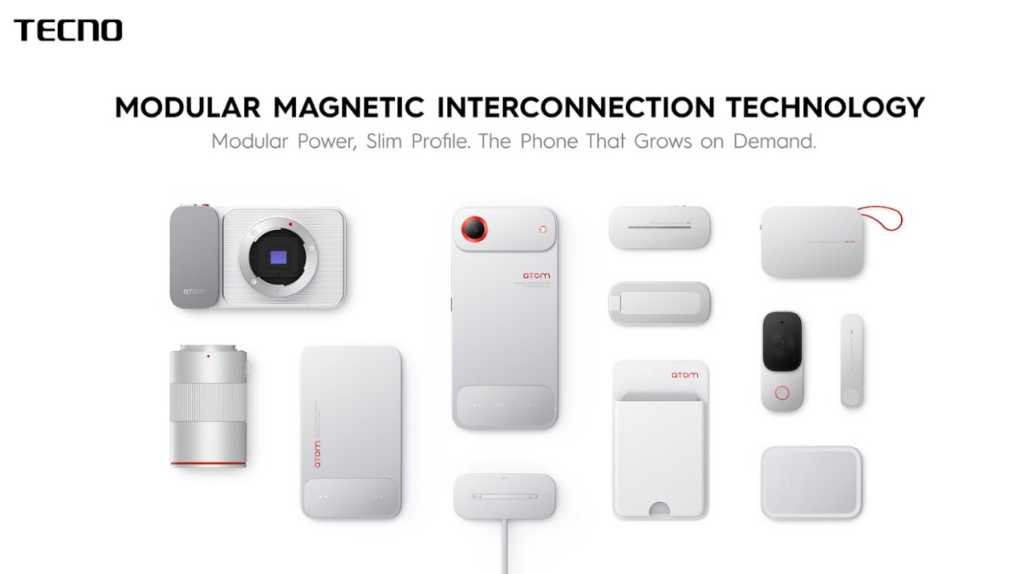
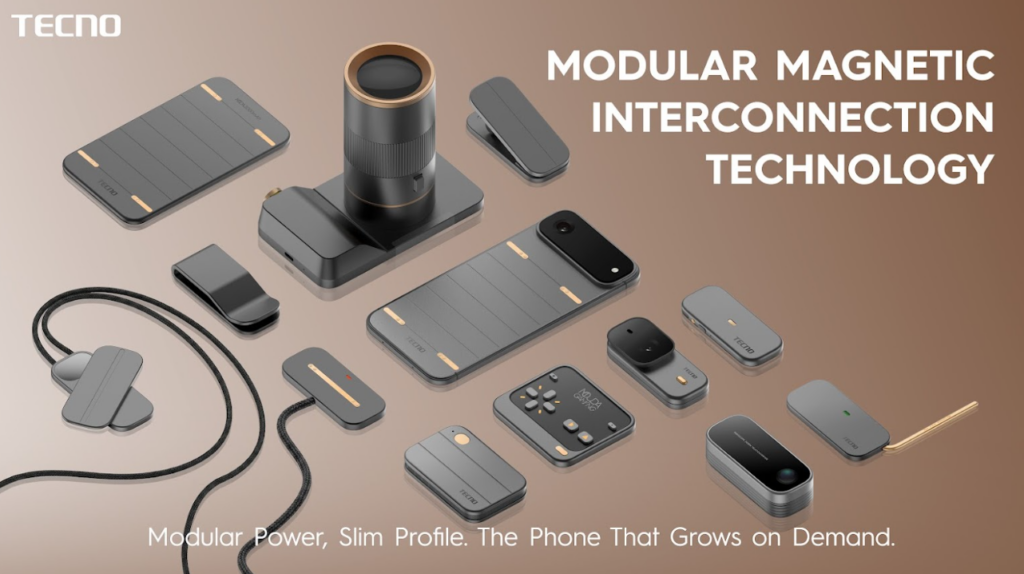
The concept device will be introduced in two design editions: the ATOM Edition and the MODA Edition. The ATOM Edition follows a clean and structured design philosophy described as “Rational Order with Personal Expression.” It features a silver aluminum body combined with signature red accents, giving the device a refined and minimal appearance.

The MODA Edition takes a more expressive approach with a bold, geek-inspired aesthetic that emphasizes the modular identity of the phone. Both editions are designed to highlight personalization and user choice, reinforcing TECNO’s goal of adaptable hardware design.

Modular Ecosystem and Key Modules

TECNO plans to introduce around ten high-performance modules designed for different scenarios such as professional photography, gaming, off-grid communication, and battery extension. Modules can be attached or removed instantly through magnetic alignment, allowing users to switch configurations quickly.

One of the key accessories is an ultra-thin 4.5mm power bank module. It is designed to double usable battery life while supplying power to both the phone and connected accessories, helping users extend usage without carrying separate devices.

Another featured module is the action camera, aimed at creators who need flexible shooting angles while keeping the device lightweight. The telephoto lens module functions as a standalone imaging system, using the phone display as a live viewfinder. TECNO says it supports low-latency live preview and instant capture to maintain a smooth shooting experience.

Ultra-Thin Engineering and Build Design

Maintaining portability is a core part of the concept. The base smartphone measures just 4.9mm in thickness, while the power bank module adds only 4.5mm. Even when combined, the overall profile is designed to remain comparable to standard smartphones.

The device features a high-quality glass back panel with a laminated anti-glare matte finish. A polished metal frame adds structural durability while maintaining a premium appearance.

The rear panel is divided into eight modular zones that act as alignment guides, helping users attach accessories accurately and quickly.

Connectivity and Technology Architecture

The ecosystem relies on a precision magnetic array that ensures secure attachment between the phone and modules. Pogo-pin connectors are used for efficient low-heat power transfer, helping maintain stability and performance during use.

TECNO says intelligent connectivity enables automatic switching between Wi-Fi, Bluetooth, and mmWave communication depending on the module and task. This allows seamless pairing and data transfer without manual setup, keeping the modular experience simple and intuitive.

Future Platform Vision

TECNO positions the modular ecosystem as a scalable platform built for future expansion. Possible additions include AI-powered tools, storage modules, and lifestyle accessories that can further extend device functionality.

The company’s broader vision is to create smartphones that evolve with user needs over time, suggesting a future where hardware becomes more flexible, customizable, and scenario-driven rather than fixed at the time of purchase.

Read More;

The post TECNO to Unveil World’s Thinnest Modular Smartphone Ecosystem at MWC 2026 appeared first on Gizmochina.

Realme C83 5G launch date confirmed, packs 144Hz display with 7,000mAh battery

Back in November 2025, Realme unveiled the Realme C85 in India. Now, the brand has confirmed that it will unveil the C83 on March 7 in the country. Its microsite revealing its key specifications and features is now live on Flipkart. Here’s a look at what to expect from this phone.

Realme C83 key specs and features confirmed

Even though it is an entry-level 5G phone, the Realme C83 5G packs a 144Hz refresh rate display, but the screen size has not been confirmed. Also, there is no clarity on whether it will support an HD+ or FHD+ resolution.

Realme C83 5G will pack a 7,000mAh battery and promises 15.6 hours of gaming, 27.7 hours of video playback, 58.5 hours of calling, and 890 hours of standby time. Realme claims the battery will remain healthy for up to six years. It supports reverse charging and bypass charging.

It features MIL-STD-810H grade shock resistance and an IP64-rated dust and water resistance. It will be available in Blooming Purple and Sprouting Green shades. The rest of the details are under wraps.

The C83, which bears the model number RMX5256, was recently spotted on Geekbench with the Dimensity 6300 chip, 6GB of RAM, and Android 16. At present, there is no information about the camera capabilities of the C83.

This device will arrive as a successor to last year’s Realme C73 5G, which featured a 6.67-inch IPS LCD HD+ 120Hz display, a 32-megapixel rear camera, and an 8-megapixel front camera. Under the hood, it featured the Dimensity 6300, 4GB of RAM, and 64GB / 128GB of internal storage.

Realme C83 5G price (rumored)

Realme C83 5G launch date

As per a recent leak from Xpert Pick, the C83 will be available in three configurations, such as 4GB+64GB, 4GB+128GB, and 6GB+128GB. These variants are likely to cost Rs 13,499, Rs 14,499, and Rs 17,999, respectively.

For more daily updates, please visit our News Section.

Stay ahead in tech! Join our Telegram community and sign up for our daily newsletter of top stories.

The post Realme C83 5G launch date confirmed, packs 144Hz display with 7,000mAh battery appeared first on Gizmochina.

How to Watch Galaxy Unpacked 2026 Livestream for the Samsung Galaxy S26 Series Reveal

Samsung Galaxy S26 Ultra render

Samsung’s Galaxy Unpacked 2026 event, one of the smartphone world’s biggest annual showcases, is almost here. The brand will step onto the global stage in San Francisco to officially unveil its highly anticipated Galaxy S26 lineup on 25th February 2026. So whether you’re a tech enthusiast, a Galaxy fan, or just curious about what’s next in Android flagships, the first order of business is knowing how to watch the event live.

When Does the Event Start

The Unpacked livestream begins on February 25, or basically later today. Samsung has officially confirmed the global timing for when the livestream will kick off:

  • 10:00 AM PT / 1:00 PM ET – US and North America time zones.
  • 6:00 PM GMT / 7:00 PM CET – Europe.
  • 11:30 PM IST – India local time.

Because this event is happening later in the evening in India, many viewers will be tuning in live late at night.

Galaxy Unpacked
Samsung Galaxy S26 series to be unveiled on Feb 25

Where You Can Watch the Livestream

Samsung has made it easy for anyone with an internet connection to watch Galaxy Unpacked 2026 live. Here are the official platforms where the stream will be available:

Samsung Galaxy S26 Ultra render
  • YouTube: The simplest way to watch is via Samsung’s official YouTube channel, where the livestream will be broadcast globally. You can watch on smartphones, tablets, laptops or smart TVs by navigating to Samsung’s channel and tapping the live video when the stream goes live.
  • Samsung.com: In addition to YouTube, Samsung will host the Unpacked livestream directly on its official website (Samsung.com) and the Samsung Newsroom portal. These streams usually embed the same video feed, so you can watch without needing a YouTube account or app.
  • Social Media and Partner Streams: Samsung’s official Twitter/X and Instagram accounts often share live clips, key announcements and highlights throughout the event. Though the full keynote feed is best watched through YouTube or the official Samsung stream. Third-party tech outlets also frequently run simultaneous reaction livestreams, commentary, and giveaways alongside the official broadcast.

What You’ll See at Galaxy Unpacked 2026

While this guide is focused on how to watch, it helps to know what you’re watching for! Samsung’s first major event of 2026 is expected to include:

Samsung Galaxy S26 Ultra promo
Samsung Galaxy S26 Ultra leaked promo image
  • Samsung Galaxy S26 lineup debut, including Galaxy S26, Galaxy S26+, and Galaxy S26 Ultra.
  • AI-enhanced features and One UI 8.x innovations focusing on camera, privacy and voice/assistant capabilities.
  • Galaxy Buds 4 and Galaxy Buds 4 Pro premium wireless earbuds.
  • Possibly new insights into Galaxy AI tools and software direction across the ecosystem, as well as new products.

As of right now, the Galaxy S26 series pre-order details have already gone live. You can also click here to check out all the differences between the Galaxy S26 Ultra and Galaxy S25 Ultra.

For more daily updates, please visit our News Section.

Tech enthusiast? Get the latest news first! Follow our Telegram channel and subscribe to our free newsletter for your daily tech fix! ⚡

Stay ahead in tech! Join our Telegram community and sign up for our daily newsletter of top stories!

The post How to Watch Galaxy Unpacked 2026 Livestream for the Samsung Galaxy S26 Series Reveal appeared first on Gizmochina.

Realme 16 Pro series’ software support extended to 2032

Realme 16 Pro series

Realme has announced an important change for its Realme 16 Pro series, expanding long-term software support for both models. The update policy revision improves device longevity and aligns the lineup more closely with premium competitors, signalling a stronger focus on post-launch value. While the phones were introduced earlier this year with a different update roadmap, the latest announcement reshapes expectations for buyers considering extended usage.

Updated software policy brings longer lifecycle

Realme 16 Pro series
Realme 16 Pro series to get software support up to 2032

The Realme 16 Pro and Realme 16 Pro+ will now receive four Android OS upgrades along with six years of security patches. At launch, the company had confirmed three Android upgrades and four years of security updates, so this extension adds meaningful longevity.

Since both devices ship with Realme UI 7 based on Android 16, they are now expected to receive updates up to Android 20, with security coverage continuing until around 2032. Realme says the revision reflects its evolving product strategy and broader effort to strengthen long-term support across its portfolio.

This is not an isolated decision, as the company has recently extended software timelines for select Realme 14 series, Realme 15 series, Realme P4 series and some Realme P3 models. Applying updated policies to existing devices suggests a gradual shift toward more competitive update commitments within the mid-range segment. With rivals already offering similar long-term support, this move helps Realme remain relevant among buyers prioritising longevity alongside hardware specifications.

Realme 16 Pro, 16 Pro+ specifications

The Realme 16 Pro features a 6.78-inch AMOLED display, while the Pro+ variant gets a slightly larger 6.8-inch AMOLED panel, both offering 1.5K resolution and a 120Hz refresh rate. Camera hardware includes a 50-megapixel front camera and a 200-megapixel main sensor with optical image stabilisation, supported by an 8-megapixel ultra-wide lens. The Pro+ adds a 50-megapixel periscope telephoto camera with 3.5x optical zoom.

Performance differs between the two, with the Realme 16 Pro powered by the Dimensity 7300 Max chipset and the Pro+ running on the Snapdragon 7 Gen 4. Both models feature large 7,000mAh batteries with 80W charging. With extended software support now confirmed, the series strengthens its appeal for users seeking long-term usability, especially following recent pricing adjustments that place the devices at a more premium level.

For more daily updates, please visit our News Section.

Stay ahead in tech! Join our Telegram community and sign up for our daily newsletter of top stories.

The post Realme 16 Pro series’ software support extended to 2032 appeared first on Gizmochina.

OLED touchscreen MacBook Pro with iPhone-like Dynamic Island could launch this year

Apple MacBook Pro OLED display release date

Apple appears to be preparing a major shift for its MacBook Pro lineup, according to a recent Bloomberg report. While near-term updates are expected with refreshed chipsets, a more significant redesign may be closer than previously anticipated. The spotlight is now on a rumoured OLED touchscreen MacBook Pro that could introduce iPhone-style features to Apple’s flagship laptop.

OLED touchscreen MacBook Pro with Dynamic Island

Apple MacBook Pro OLED display release date
MacBook Pro

Bloomberg reports that Apple is working on a MacBook Pro model featuring an OLED touchscreen, possibly arriving toward the end of 2026. If accurate, this would mark the first Mac laptop with an OLED display and built-in touch support. The report suggests that Apple may replace the current notch with a Dynamic Island interface, similar to what debuted on the iPhone 14 Pro series.

On the MacBook Pro, the Dynamic Island is expected to house the webcam while also serving as an interactive software element. It may expand and adapt depending on the application in use, showing media controls, live activities and other contextual information. Third-party app integration is also said to be under consideration, bringing a more dynamic interface to macOS.

Alongside the hardware changes, Apple is reportedly refining macOS to better support touch input. Users may be able to tap or click on on-screen elements interchangeably, with menus and controls adjusting based on the method of interaction. Features similar to iPad gestures, such as pinch-to-zoom and faster scrolling, could be introduced across the system. However, the MacBook Pro is not expected to be marketed as a touch-first device, and the traditional keyboard and trackpad will remain central to the experience.

The OLED MacBook Pro models are said to retain the familiar 14-inch and 16-inch sizes while adopting a thinner and lighter chassis. Apple is expected to refresh the MacBook Pro with M5 Pro and M5 Max chips through the March 4 launch event. The OLED variants launching later in the year could move to M6 Pro and M6 Max processors built on a new manufacturing process, marking a substantial generational upgrade.

For more daily updates, please visit our News Section.

Stay ahead in tech! Join our Telegram community and sign up for our daily newsletter of top stories.

The post OLED touchscreen MacBook Pro with iPhone-like Dynamic Island could launch this year appeared first on Gizmochina.

Tecno’s Modular Phone Concept is a Super Slim 4.9 mm Device With Magnetic How-Swap Attachments

Tecno Modular Phone Concept

Just before the Mobile World Congress (MWC) 2026 event in Barcelona, Tecno unveiled a bold new smartphone concept that is built around the new Modular Magnetic Interconnection Technology. This is a system designed to rethink how hardware expansion works, so here are all the details.

Tecno Modular Phone Concept: Ultra-Thin Design Meets Modular Flexibilty

The Tecno Modular Phone concept is built around a sleek metal frame and matte glass back, with the rear panel visually divided into eight modular zones that guide accessory attachment. Another standout aspect is its ultra slim 4.9mm body. Tecno allows users to add modules such as a 4.5mm ultra-slim power bank or action camera. This sleek design helps the Module Phone Concept avoid turning into a bulky slab even with the accessories attached to the back.

Tecno Modular Phone Concept

The concept will be shown in two design styles, namely ATOM Edition and MODA Edition. Instead of the heavy “brick” modules seen in older modular efforts, Tecno’s approach is more about practical attachments that enhance functionality without compromising portability. Some of these new attachments include:

  • Power Bank Module: Adds extra battery capacity while preserving a slim profile.
  • Action Camera Module: Gives creators alternative angles and workflows for video/shooting.
  • Telephoto Lens Module: Uses the phone’s display as a live viewfinder for improved long-range photography.

This modular ecosystem is designed to solve a modern problem: how to expand hardware capabilities like AI computing, imaging, battery life, and others. Tecno’s modular concept uses a hybrid magnetic attachment system with a rectangular magnetic array and pogo-pin connectors for power delivery.

These connectors help keep power transfer efficient and manage heat more effectively than some old modular prototypes. Meanwhile, the modules communicate with the phone using a mix of Wi-Fi, Bluetooth and mmWave. We can expect more details to be revealed during the major tech event, so stick around for more.

For more daily updates, please visit our News Section.

Tech enthusiast? Get the latest news first! Follow our Telegram channel and subscribe to our free newsletter for your daily tech fix! ⚡

The post Tecno’s Modular Phone Concept is a Super Slim 4.9 mm Device With Magnetic How-Swap Attachments appeared first on Gizmochina.

Honor Magic V6 official images released, debuting as world’s first Snapdragon 8 Elite Gen 5 foldable phone

honor Magic V6

Honor will showcase the Honor Magic V6 at the upcoming Mobile World Congress (MWC) 2026 tech exhibition. Today, the brand released an official poster confirming the chipset that powers the device. Additionally, the device is now officially listed for reservations on Honor Mall, revealing its official images for the first time.

Honor Magic V6 official images

honor Magic V6
honor Magic V6
Honor Magic V6
Honor Magic V6

The official images showcase the Honor Magic V6’s red edition. Rumors surrounding the device reveal that it will also be available in other options, such as white, black, and gold.

The official images show that compared to the Magic V5’s smoother leather finish and understated camera ring, the Honor Magic V6 looks more refined and assertive with a richer vegan leather texture and a slimmer, more polished frame.

The circular camera module is more sculpted and pronounced, enhancing its flagship presence. Inside the module, the V6 adopts a cleaner quadrant-style lens arrangement, replacing the simpler symmetrical layout of the V5. The result is a sharper, more premium evolution of the Magic V5’s elegant design language.

Honor Magic V6 - Snapdragon 8 Elite Gen 5
Honor Magic V6 – Snapdragon 8 Elite Gen 5

Honor has also confirmed that the Magic V6 is powered by the Snapdragon 8 Elite Gen 5, making it the first foldable phone to feature this chip. The rumor mill has yet to reveal the full specifications of the device, but reports suggest that its outer screen will support a 2420 x 1080 pixels resolution and its inner display will offer a 2352 x 2172 pixels resolution.

Honor Magic V6
Honor Magic V6

The Magic V6’s rear camera setup is expected to be headlined by a 200-megapixel main camera. It is also expected to include an ultra-wide snapper and a periscope telephoto camera. Other rumored features include a 7150mAh battery with 120W wired charging and wireless charging, proprietary RF and efficiency enhancement chips, full waterproofing, BeiDou satellite communication support, and a thinner and lighter design compared to the Magic V5.

For more daily updates, please visit our News Section.

Stay ahead in tech! Join our Telegram community and sign up for our daily newsletter of top stories.

The post Honor Magic V6 official images released, debuting as world’s first Snapdragon 8 Elite Gen 5 foldable phone appeared first on Gizmochina.

OnePlus devices eligible for Android 17 (OxygenOS 17) update: Here’s the complete list

OnePlus Android 17 (OxygenOS 17) update eligible devices

OnePlus wrapped up the OxygenOS 16 rollout earlier this month, which is based on Android 16, and we’re pretty sure the brand has already begun the development of its successor, OxygenOS 17. The upcoming software will have Android 17 at its core and will likely feature a host of new features and enhancements across the system.

While we don’t yet know the OxygenOS 17 features, we’ve curated a list of OnePlus devices eligible for the Android 17 upgrade. This is not a hypothetical list, but it is based on the existing software update policy and must therefore be accurate.

OnePlus Android 17 (OxygenOS 17) eligible devices list

OnePlus flagship phones

  • OnePlus Open
  • OnePlus 15
  • OnePlus 15R
  • OnePlus 13
  • OnePlus 13R
  • OnePlus 13s
  • OnePlus 13T
  • OnePlus 12
  • OnePlus 12R
  • OnePlus 11

OnePlus Nord series

  • OnePlus Nord 5
  • OnePlus Nord CE 5
  • OnePlus Nord 4

OnePlus Pad series

  • OnePlus Pad 3
  • OnePlus Pad 2
  • OnePlus Pad Lite
  • OnePlus Pad Go 2

If your OnePlus device is on the list, it’s guaranteed to receive the OxygenOS 17 update once the rollout begins. Otherwise, you’ll need to upgrade to a newer model to continue to receive the latest updates and access the latest features and major changes. You can review the list of OnePlus phones that promise up to 4 major OS upgrades here.

While OnePlus hasn’t shared any details about OxygenOS 17, Google has already released the first beta of Android 17. According to the official timeline, the OS will enter the platform stability phase next month, while the stable release is expected in Q3 2026.

Also read:
1. Android 17 Beta 1: How to install, eligible devices, and new features
2. OxygenOS 17 leak reveals new upgrades with Android 17

Last year, OnePlus was among the earliest third-party manufacturers to offer Android 16 testing. The first beta build was offered to select OnePlus devices in April 2025. The brand is expected to follow a similar pattern with Android 17, and hence, we can expect the first beta to arrive in March or April for select devices, including the OnePlus 15.

We’ll keep an eye on the latest developments around OxygenOS 17 and post them in the OnePlus section. You can visit the page from time to time to get fresh updates. Or, you can join our Telegram channel to get real-time updates.

The post OnePlus devices eligible for Android 17 (OxygenOS 17) update: Here’s the complete list appeared first on Gizmochina.

Is iQOO 15R better than OnePlus 15R?

OnePlus 15R

iQOO has just launched its latest gaming-focused smartphone, the iQOO 15R, and it clearly takes on the OnePlus 15R, which has been in the market for over two months now. Both phones promise cutting-edge performance, stellar displays, and impressive battery life.

However, with comparable price points and similar specifications, it begs the question: Is the iQOO 15R better than the OnePlus 15R? Let’s dive deep into their features to help you decide.

OnePlus 15R

Display

The iQOO 15R features a 6.59-inch OLED display with a resolution of 2750×1260 pixels. It supports a 144Hz refresh rate and achieves a peak brightness of 5000 nits. The device also includes features like 4320Hz PWM dimming and DC-like dimming to reduce eye strain, making it ideal for both indoor and outdoor use.

The OnePlus 15R sports a larger 6.83-inch AMOLED display with a resolution of 2800×1272 pixels. It offers an adaptive refresh rate ranging from 60Hz to 165Hz, which is highly useful for gamers and users who multitask. Its peak brightness reaches 3,600 nits, but OnePlus has added TÜV Rheinland Eye Care certification and brightness adjustments down to 1 nit for comfortable usage in low light.

Winner: The iQOO 15R is compact and might actually be better for game handling, and it also leads in peak brightness. However, the OnePlus 15R takes the overall lead with its adaptive refresh rate and display certifications, making it the superior choice for both gamers and regular users.

Performance

The iQOO 15R uses the Snapdragon 8 Gen 5 SoC and claims to achieve over 3.5 million points on AnTuTu 11. It includes a Q2 gaming chip that supports 1.5K resolution gaming with 144 FPS. iQOO uses a 6500mm IceCore VC cooling system with dual-layer graphite sheets, which helps reduce temperatures by up to 15°C.

The OnePlus 15R also runs on the Snapdragon 8 Gen 5 chipset. It includes a Cryo-Velocity Cooling system with a 3D vapor chamber and aerospace-grade insulation, though the cooling area is smaller than iQOO’s. OnePlus integrates a dedicated Wi-Fi chip for better connectivity, which helps maintain low latency during gaming and streaming.

Both phones come with up to 12GB of LPDDR5X RAM and 512GB of UFS 4.1 storage, ensuring fast app launches and smooth multitasking.

Winner: Both phones are excellent in handling games and overall day-to-day performance, and you won’t notice any difference in regular usage. However, the iQOO 15R takes the lead with its superior thermal management and dedicated gaming chip.

Software

The iQOO 15R runs on OriginOS 6, based on Android 16. The software focuses on gaming features supported by the gaming chip Q2, which enables 144 FPS gaming and 1.5K gaming quality. It offers smooth performance for gamers who need an optimized experience.

The OnePlus 15R runs on OxygenOS 16, also based on Android 16. The software includes AI-driven features like Google’s Gemini assistant and the Plus Mind feature, which acts as a personalized second brain. These features support productivity and enhance user interaction.

Winner: It depends. The iQOO 15R is better suited to gaming-focused users, while the OnePlus 15R offers more advanced AI-driven capabilities for productivity.

Cameras

The iQOO 15R includes a 50MP Sony LYT-700V main sensor with OIS, an 8MP ultra-wide lens, and a 32MP front-facing camera. The camera setup uses NICE algorithms and cinematic image enhancements to deliver vibrant photos and videos.

The OnePlus 15R features a 50MP Sony IMX906 main sensor with OIS, an 8MP ultra-wide lens, and a 32MP front camera with autofocus. The phone also introduces technologies like DetailMax Engine for high-fidelity photos, Clear Burst for action shots, and Clear Night Engine for low-light photography. The rear camera supports 4K 120fps video recording, making it a strong choice for videography.

Winner: Neither of these phones is focused on camera performance, and to be honest, they are quite similar. It’s hard to determine which is better without seeing real-world shots. However, the OnePlus 15R does offer slightly better camera specifications overall.

Battery and Charging

The iQOO 15R packs a 7600mAh battery and supports 100W FlashCharge. It charges up to 50% in just 33 minutes. The battery’s semi-solid-state technology ensures durability under extreme temperatures.

The OnePlus 15R houses a slightly smaller 7400mAh battery with 80W SuperVooc charging. It is designed to retain 80% of its original capacity after four years of use. The battery uses Silicon Nanostack technology, which increases energy density and extends battery life.

Winner: Both these phones are quite similar, but the iQOO 15R takes the lead here with its larger battery and faster charging.

Durability and Other Features

Both the iQOO 15R and OnePlus 15R offer excellent durability and premium build quality, but there are some differences. The iQOO 15R is protected by Schott Shield glass, providing strong resistance against scratches and drops. It also comes with IP68 and IP69 ratings, making it water and dust-resistant for everyday use.

The OnePlus 15R takes durability a step further with Corning Gorilla Glass 7i for added protection against impact. It also features IP66, IP68, IP69, and IP69K ratings, making it resistant to high-pressure water jets and extreme conditions. The use of fiberglass in the Electric Violet variant adds a layer of durability and unique aesthetics.

Both phones also include in-display ultrasonic fingerprint sensors and infrared sensors for enhanced functionality.

Winner: The OnePlus 15R offers slightly better durability with Gorilla Glass 7i and IP69K ratings, while the iQOO 15R still delivers a solid, well-protected design with Schott Shield glass and IP69 certification.

Design and Pricing

The iQOO 15R comes in two color options: Dark Knight and Triumph Silver. The Triumph Silver variant features a unique patterned back exclusive to India. At ₹44,999 for the base model, it is slightly more affordable than its competitor.

The OnePlus 15R is available in Charcoal Black, Mint Breeze, and Electric Violet. The Electric Violet variant uses fiberglass, which adds durability. The base model is priced at ₹47,999, making it more expensive than the iQOO 15R.

Winner: The iQOO 15R is more affordable, but the OnePlus 15R offers premium design finishes.

Which One Should You Choose?

Both the iQOO 15R and OnePlus 15R are exceptional smartphones. The iQOO 15R is the better choice for gamers, offering unmatched brightness and performance, advanced cooling, and faster charging. Meanwhile, the OnePlus 15R shines in design, software, and camera performance, making it ideal for those seeking a refined, well-rounded experience.

In the end, your choice boils down to priorities: gaming and value? Go for the iQOO 15R. Premium software and camera? The OnePlus 15R is your pick.

For more daily updates, please visit our News Section.

Stay ahead in tech! Join our Telegram community and sign up for our daily newsletter of top stories! 💡

The post Is iQOO 15R better than OnePlus 15R? appeared first on Gizmochina.

Xiaomi expands HyperOS rollout: 12T Pro gets HyperOS 3 update, 15 Pro gets a new beta

Xiaomi HyperOS update

HyperOS 3, based on Android 16, has been rolling out to Xiaomi devices for a few months now. But there’s a version of HyperOS 3 based on Android 15, which will be released for select devices that aren’t eligible for Android 16. This started rolling out in China in December 2025, and now the global rollout has begun, starting with the Xiaomi 12T Pro. The Xiaomi 15 Pro, on the other hand, is receiving a new HyperOS 3.1 beta update.

Android 15-based HyperOS 3 now rolling out globally

It’s good to see Xiaomi pushing the Android 15-based HyperOS 3 update outside China. This will allow more Xiaomi users to access the latest features without upgrading to a newer model. For the Xiaomi 12T Pro, as spotted by Xiaomi Time, the HyperOS 3 update arrives with the firmware version 3.0.1.0.VLFMIXM.

It’s a major upgrade, and therefore, the download size would be a few gigabytes. It’s best to use a stable Wi-Fi connection for the purpose, and charge your battery to at least 40% for a smooth upgrade to HyperOS 3. To check for the latest update, go to Settings > My device and tap the HyperOS logo at the top.

Xiaomi 15 Pro is receiving a new HyperOS 3.1 beta update

If you’re running a HyperOS 3.1 build on your Xiaomi 15 Pro, a new beta update should be waiting for installation. The latest one, tagged with the firmware version 3.0.300.7.WOBCNXM focuses on resolving performance issues to improve the user experience. Don’t expect to see new features or major changes with the latest beta build.

The HyperOS 3.1 beta program is currently limited to China, so the latest beta build for the Xiaomi 15 Pro is also restricted to that region. We’ll let you know when the beta program expands to other regions in our Xiaomi section.

We’ll regularly update you on the latest HyperOS news on this website. Be sure to visit the website regularly for fresh details. Alternatively, you can join our Telegram channel to ensure you don’t miss out on anything.

The post Xiaomi expands HyperOS rollout: 12T Pro gets HyperOS 3 update, 15 Pro gets a new beta appeared first on Gizmochina.

Xiaomi 17 Max tipped with Snapdragon 8 Elite Gen 5, 200MP camera, and massive battery

Xiaomi 17 color options

Tipster Digital Chat Station (DCS) has released a new Weibo post to share details about an upcoming large-screen flagship from Xiaomi powered by the Snapdragon 8 Elite Gen 5 chip. While he has not specified the name of the device, it appears the tipster could be referring to the Xiaomi 17 Max.

Xiaomi 17 Max key details tipped

Xiaomi 17 Max key details tipped

According to the tipster, the Xiaomi 17 Max’s engineering prototype includes upgraded speakers, likely using a dual symmetric 1115 speaker setup for enhanced audio performance. The device is also expected to retain an X-axis linear motor, which has reportedly become a standard feature in the series.

On the imaging front, DCS mentions a 200-megapixel large-sensor primary camera paired with a periscope telephoto lens. Other highlighted features include a flagship-grade large display, a symmetrical narrow-bezel design with equal sides, and a massive 8,000 mAh-class battery. The overall design language is said to follow a clean and minimalist aesthetic.

Previous reports have revealed that the Xiaomi 17 Max will feature a 6.9-inch flat OLED panel delivering a 1.5K resolution and a 120Hz refresh rate. Its massive battery is said to support 100W wired and 50W wireless charging. Like recent Xiaomi devices, the 17 Max is expected to run on HyperOS 3-based Android 16.

The 17 Max’s rear camera setup is said to feature a 200-megapixel Samsung ISOCELL HPE primary camera, a 50-megapixel ultrawide camera, and a 50-megapixel Sony periscope telephoto lens. For selfies, it could be equipped with a 50-megapixel front-facing camera.

Xiaomi 17 Max launch timeframe (rumored)

Rumors surrounding the Xiaomi 17 Max suggest that it may debut in April in China. This device is likely to compete with the Vivo X300 Max, which is expected to debut earlier in March in China. At present, there is no information about the global availability of these devices.

For more daily updates, please visit our News Section.

Stay ahead in tech! Join our Telegram community and sign up for our daily newsletter of top stories.

The post Xiaomi 17 Max tipped with Snapdragon 8 Elite Gen 5, 200MP camera, and massive battery appeared first on Gizmochina.

Oppo Find N6 launch date tipped, to be the flattest foldable phone ever

Oppo-Find-N6-images-1

Oppo has started teasing the Oppo Find N6 foldable phone for the past few days in China. Since the February month will end soon, the foldable phone is expected to break cover in March. In a recent Weibo post, tipster Bald Panda has revealed when it would go official. At the same time, reliable tipster Digital Chat Station has revealed additional details about its design and technology.

Oppo Find N6 launch date (rumored)

Honor Magic V6 and Oppo Find N6 launch dates seemingly tipped

Bald Panda’s Weibo post indicates that the Find N6 may launch on March 17 in China, with availability in other Asian markets expected shortly afterwards. While Oppo has not officially confirmed the timeline, the increasing frequency of leaks suggests that the announcement could be imminent. The Marc 1 highlighted in the above image is the Honor Magic V6 launch date.

Oppo Find N6 to be flattest foldable phone ever

According to DCS, the Find N6 could set a new benchmark for foldable design. He claims that TÜV Rheinland has tested the device and rated it as the “flattest” foldable phone it has evaluated so far, noting that the certification body has reviewed nearly every foldable currently available in the market. DCS attributes this to two key technologies: a seamless titanium alloy hinge and a self-healing memory glass solution aimed at reducing visible creases over time.

The tipster also hinted that another major global smartphone brand, which appears to Apple, may be working on similar self-healing materials, possibly inspired by Oppo’s approach, although no official confirmation has been provided.

Oppo Find N6 specifications (rumored)

Reports indicate that the Find N6 will feature an 8.12-inch internal folding display alongside a 6.62-inch cover screen for everyday use. The camera system may include a 200-megapixel primary sensor supported by a periscope telephoto lens, an ultra-wide camera, and a multispectral sensor. Two 20-megapixel selfie cameras are also expected, positioned for both folded and unfolded usage.

Under the hood, the device is likely to run on the Snapdragon 8 Elite Gen 5 platform in a 7-core configuration. It may house a 6,000mAh battery with support for 80W wired charging and 50W wireless charging. The foldable could offer up to 16GB of RAM and up to 1TB of storage, with rumours also pointing towards a variant equipped with satellite connectivity. A recent leak revealed that it will be available in purple, black, and white shades in China.

For more daily updates, please visit our News Section.

Stay ahead in tech! Join our Telegram community and sign up for our daily newsletter of top stories.

The post Oppo Find N6 launch date tipped, to be the flattest foldable phone ever appeared first on Gizmochina.

OnePlus 15T to support wireless charging, ultra-thin magnetic cooling accessory to debut alongside

OnePlus 13s

Yesterday, a OnePlus executive confirmed that the OnePlus 15T will be launching soon. He also described it as a “dream phone” for those who prefer a compact flagship. Today, tipster Digital Chat Station revealed one feature of the 15T that was absent on the previous generation.

OnePlus 15T to offer wireless charging

According to DCS, the OnePlus 15T will be a top-notch flagship phone powered by Qualcomm’s Snapdragon 8 Elite Gen 5 chipset. He added that the device will support wireless charging as standard and offer full compatibility with Apple’s magnetic (MagSafe-style) accessory ecosystem.

To recall, the OnePlus 13T lacked support for wireless charging. DCS describes the 15T as a powerful small-sized device, calling it a “small powerhouse.”

OenPlus ultra-thin magnetic accessory

In addition, the tipster says the brand will introduce what could be the industry’s first ultra-thin magnetic cooling accessory. The magnetic cooler is reportedly under 1cm in average thickness, making it notably slimmer than existing solutions.

DCS also shared an image to showcase the upcoming ultra-thin magnetic cooling accessory. The image above compares the new cooler (on the left) with a OnePlus 27W Freezing Point Magnetic Cooler (on the right), highlighting its significantly slimmer profile.

The side-by-side view emphasizes how thin the new accessory is, reportedly measuring under 1cm in average thickness, suggesting a more compact cooling solution designed for magnetic attachment. However, the new accessory does not feature an internal fan.

OnePlus 15T specifications (rumored)

Reports have revealed that the OnePlus 15T will feature a 6.32-inch OLED 1.5K 165Hz display, a 7,000mAh or 7,500mAh battery with 100W wired charging, up to 16GB of LPDDR5x RAM, and as much as 1TB of UFS 4.1 storage. For photography, it may feature a 200-megapixel or 50-megapixel main camera accompanied by a 50-megapixel telephoto camera and a 32-megapixel front-facing camera.

For more daily updates, please visit our News Section.

Stay ahead in tech! Join our Telegram community and sign up for our daily newsletter of top stories.

The post OnePlus 15T to support wireless charging, ultra-thin magnetic cooling accessory to debut alongside appeared first on Gizmochina.

Spotify launches a cremation urn speaker, and yes, it streams playlists

Spotify-cremation-urn-speaker

Spotify has teamed up with Liquid Death for what might be one of its strangest hardware experiments yet — a Bluetooth speaker shaped like a cremation urn.

The product is called the Eternal Playlist Urn. It looks like something you’d expect to see on a mantelpiece, except it’s not designed to hold ashes. Instead, it’s a collectible speaker with a built-in Bluetooth system tucked into the lid. 

Spotify says only 150 units will be sold in the United States, each priced at $495. Buyers get a 7-inch by 11.4-inch urn-shaped device that streams music and little else.

A Bluetooth speaker dressed for the afterlife

According to Spotify, this is “the world’s first urn speaker that can stream music.” In a blog post announcing the collaboration, Spotify wrote, “Life needs the music. So does the afterlife.”

The idea is simple. Once you receive the urn speaker, you can create what Spotify calls an “Eternal Playlist.” Users answer prompts such as “What’s your eternal vibe?” or “What’s your go-to ghost noise?” Based on those answers — along with your listening history — Spotify generates a custom playlist that can sync directly to the speaker. The playlist can also be shared with friends and family, turning the urn into a kind of permanent soundtrack device.

It’s not the first time Spotify has ventured into hardware, though those efforts have been limited. In 2022, the company partnered with IKEA on a portable Bluetooth lightbox speaker with Spotify quick-play functionality. 

Before that, it launched Car Thing, a dashboard accessory meant to make streaming easier in older vehicles. Car Thing has since been discontinued, and Spotify has yet to introduce a standalone smart speaker under its own brand.

Liquid Death, meanwhile, has built its reputation on absurd and sometimes morbid marketing. The canned water company has released over-the-top products before, including a life-size snowman coffin-shaped cooler that reportedly drew more than 800 bidders and sold for $68,200. The brand thrives on turning dark humor into limited-edition merchandise, and the Eternal Playlist Urn fits neatly into that strategy.

For more daily updates, please visit our News Section.

Stay ahead in tech! Join our Telegram community and sign up for our daily newsletter of top stories! 💡

(Source)

The post Spotify launches a cremation urn speaker, and yes, it streams playlists appeared first on Gizmochina.

SanDisk launches three new portable SSDs with up to 4TB storage and 4,000MB/s speeds

SanDisk Extreme PRO Portable SSD

SanDisk has launched its latest portable SSD lineup, introducing three models designed for different users and workloads. The new lineup includes the SanDisk Portable SSD, the SanDisk Extreme Portable SSD, and the SanDisk Extreme PRO Portable SSD. These drives focus on speed, durability, and capacity to meet the increasing demands of file storage, AI-generated content, and creative workflows.

SanDisk Portable SSD lineup

Specifications

The SanDisk Extreme PRO Portable SSD delivers the fastest performance in the lineup. It offers transfer speeds of up to 4,000MB/s and targets professional photographers, filmmakers, and designers. The drive supports real-time editing and can transfer 10 minutes of 12K video in under one minute. SanDisk will release this model in 2TB, 4TB, and 8TB capacities later this year.

SanDisk Extreme PRO Portable SSD

The SanDisk Extreme Portable SSD provides high-speed storage for creative users. It delivers read speeds of up to 2,000MB/s and supports tasks such as transferring 1,000 high-resolution photos in under 60 seconds. This model is available now in 1TB, 2TB, and 4TB options. And a 500GB version will launch in the second half of 2026.

The SanDisk Portable SSD focuses on everyday storage needs for students, office workers, and family archivists. It delivers read speeds of up to 1,000MB/s and will be available in 500GB, 1TB, and 2TB capacities later this year.

SanDisk Extreme PRO Portable SSD

SanDisk has designed all three models with durability in mind. The Extreme and Extreme PRO models are resistant to three-meter drops, offer IP65 water and dust protection, and include 256-bit AES hardware encryption. The entry-level Portable SSD can withstand drops of up to two meters.

Pricing and Availability

The SanDisk Extreme Portable SSD is available now, starting at $259.99 for the 1TB model. The rest of the lineup will launch globally later this year.

In related news, Lexar has recently launched the JumpDrive D500 dual-interface USB SSD with transfer speeds of up to 400MB/s, alongside the new 512GB and 1TB JumpDrive A50V/C50V USB drives offering speeds up to 200MB/s.

For more daily updates, please visit our News Section.

Stay ahead in tech! Join our Telegram community and sign up for our daily newsletter of top stories! 💡

The post SanDisk launches three new portable SSDs with up to 4TB storage and 4,000MB/s speeds appeared first on Gizmochina.

Samsung stays on top in Europe, but Apple hits record 27% share

Samsung stayed on top of Europe’s smartphone market in 2025, but Apple was the one that really moved the needle.

Fresh data from Omdia shows Europe shipped 134.2 million smartphones last year. That’s down just 1% from 2024, not a dramatic drop, but it signals demand is still soft. Between tighter consumer spending and regulatory shifts like mandatory USB-C and eco-design requirements, the market never really found strong momentum.

Even so, the big names tightened their grip. Samsung and Apple together accounted for 62% of all shipments in the region.

Samsung held the No. 1 spot with 46.6 million units shipped, translating to a 35% market share — up slightly from 34% a year earlier. Growth was modest, roughly 200,000 additional units year-over-year, but the company managed to steady things after a slow start. Things picked up later in the year, helped by aggressive pricing on the Galaxy A16 and particularly strong demand for the Galaxy A56, which reportedly ended up as Europe’s best-selling smartphone overall in 2025.

Apple, meanwhile, had the stronger growth story.

Apple shipped 36.9 million iPhones in Europe, up 6% year-over-year, reaching a record 27% market share in the region. Much of that came from steady upgrade cycles and strong demand for the iPhone 16 series. The iPhone 16 Pro Max and iPhone 17 Pro Max performed well at the high end.

Xiaomi remained in third place with 21.8 million shipments and a 16% share, though volumes dipped slightly. Motorola followed with 7.7 million units (6% share), down 5% year-over-year. Honor broke into the top five with 3.8 million units and a 3% share, showing noticeable momentum toward the end of the year.

Overall, the market looks increasingly split. Premium devices continued to drive growth, while the budget segment stayed under pressure. Samsung leaned on its mid-range strength, Apple capitalized on premium upgrades, and both extended their lead.

Europe accounted for 10.8% of global smartphone shipments in 2025. Not the largest region, but still an important one.

Don’t miss a thing! Join our Telegram community for instant updates and grab our free daily newsletter for the best tech stories!

For more daily updates, please visit our News Section.

(Source: Omdia)

The post Samsung stays on top in Europe, but Apple hits record 27% share appeared first on Gizmochina.

Modified RTX 5090 dies at idle due to extreme temperature

Trying to squeeze every last bit of performance out of high-end GPUs is nothing new. But in the case of the RTX 5090, one ambitious modding attempt ended in a very expensive lesson.

In a recent YouTube video titled “I Killed My 5090…”, the creator behind Frame Chasers walked viewers through what started as a bold experiment on a Gigabyte RTX 5090 Aorus Master, and ended with a completely dead card.

The idea, at least on paper, made sense. Some Gigabyte variants include an unpopulated pad on the PCB for a second 12V-2×6 (16-pin) power connector. It’s there for alternative board designs, including versions that use dual connectors. Seeing that unused pad, Frame Chasers decided to take things further by soldering in a second power connector.

That wasn’t the only modification. He also performed a shunt resistor mod, a well-known (and risky) tweak that effectively bypasses NVidia’s built-in power limits. The goal was simple: let the GPU draw far more power than stock settings allow.

At first, it appeared to work. The system booted, benchmarks ran, and the card seemed stable under load. For a moment, it looked like the mod had paid off.

Then things went very wrong.

The card didn’t fail during a benchmark run or stress test. Instead, it died while idling. According to the video, two large holes were burned straight through the PCB, and at least one capacitor was knocked off the board from extreme heat.

Frame Chasers believes the failure came down to a dangerous combination of factors. The shunt mod reportedly increased baseline power draw, meaning the GPU was pulling more wattage even at idle. On top of that, the fans weren’t spinning despite rising temperatures. The card was also set to “performance mode” in the NVidia Control Panel, which keeps clocks elevated instead of allowing the GPU to downclock at idle.

The GPU die and VRAM chips themselves may still be intact. The catastrophic damage seems localized to the PCB and surrounding power components.

For enthusiasts, extreme overclocking can be thrilling. There’s always the temptation to push just a little further. But this incident is a stark reminder that modern GPUs operate within tightly controlled power and thermal envelopes for a reason.

(Source | Via)

The post Modified RTX 5090 dies at idle due to extreme temperature appeared first on Gizmochina.

Is Meizu shutting down its phone business after Meizu 23 reportedly scrapped?

Meizu Logo

Recent reports circulating on Chinese social platforms suggest fresh uncertainty around Meizu’s smartphone division. The possible restructuring within Xingji (Starji) Meizu raises questions about the future of upcoming devices such as the Meizu 23 series. While there is no official confirmation yet, the developments have sparked wide discussion across the industry.

Meizu phone business suspension claims surface

Alleged Maimai post claiming Meizu 23 halt and phone business shutdown.

A post circulating on the Chinese workplace networking platform Maimai claims that Xingji Meizu may shut down its smartphone business, with related teams facing full layoffs. According to the anonymous user, the much-anticipated Meizu 23 series has effectively been halted.

The post further alleges that Flyme Auto will operate independently, with leadership transitioning to a new head, and will be integrated under Geely-backed Yikatong as part of the broader automotive ecosystem.

The message also states that departments unrelated to the phone business wind-down could complete restructuring in March, with N+1 compensation reportedly offered to affected employees. Staff members holding company shares are said to be required to consult HR individually regarding follow-up arrangements.

Despite the reported changes, the post claims that the Meizu brand will not disappear and will remain within the Geely system, with other Geely subsidiaries potentially continuing related operations.

Xingji Meizu has not issued a public response so far.

Earlier cost pressures had raised concerns

DCS warns of rising chip costs and paused flagship development, while a commenter speculates that Meizu could be affected.

Earlier in February, tipster Digital Chat Station had highlighted rising memory and chipset costs, suggesting that several brands could delay or cancel new launches in 2026. Online discussions speculated that Meizu might be among the affected companies.

Notably, at the 2026 Meizu Fans New Year event, company executives had confirmed that the Meizu 23 was in development and would feature the narrowest bezels in the brand’s history. However, they also acknowledged that the iconic white front panel would be dropped due to manufacturing limitations.

The latest reports now cast uncertainty over those earlier plans.

For more daily updates, please visit our News Section.

Stay ahead in tech! Join our Telegram community and sign up for our daily newsletter of top stories.

The post Is Meizu shutting down its phone business after Meizu 23 reportedly scrapped? appeared first on Gizmochina.

OnePlus 15R May Become More Expensive in India Soon, Here’s What We Know

OnePlus 15R

The OnePlus 15R may soon become more expensive in India, according to recent leaks from tipsters. The smartphone launched last year with a starting price of Rs 47,999. While OnePlus has not confirmed any revision yet, multiple sources suggest that a price increase could be implemented in the coming weeks.

OnePlus 15R

Tipster Abhishek Yadav claims that the price hike could take effect starting March 1. Another tipster, Debayan Roy (@Gadgetsdata), suggests that the increase may fall in the range of Rs 3,000 to Rs 4,000 and could roll out within about two weeks. If this happens, the base variant of the OnePlus 15R could be priced around Rs 51,999 or Rs 52,999. Since there is no official announcement, the information should be treated as unconfirmed for now.

In terms of specifications, the OnePlus 15R is powered by Qualcomm’s Snapdragon 8 Gen 5 chipset, built on a 3nm process and paired with the Adreno 840 GPU. In India, the device is available with 12GB LPDDR5X Ultra RAM and either 256GB or 512GB UFS 4.1 storage. It runs Android 16 with OxygenOS 16 out of the box.

The phone features a 6.83-inch AMOLED display with a 1.5K resolution of 2800 × 1272 pixels. It supports a variable refresh rate from 60Hz to 165Hz, along with 3840Hz PWM dimming and DC dimming for improved eye comfort. Corning Gorilla Glass 7i is used for protection.

For photography, the rear setup includes a 50-megapixel Sony IMX906 main camera with optical image stabilization and an f/1.8 aperture, along with an 8-megapixel ultra-wide camera offering a 112-degree field of view. Rear video recording goes up to 4K at 120fps. The front camera is 32 megapixels with autofocus and supports 4K video at 30fps.

The device packs a 7,400mAh battery with 80W SuperVOOC fast charging. Connectivity options include 5G SA and NSA bands, Wi-Fi 7, Bluetooth 6.0, NFC, and USB Type-C. Additional features include stereo speakers, an in-display ultrasonic fingerprint sensor, an infrared sensor, and IP66, IP68, IP69, and IP69K ratings for dust and water resistance.

(Source: 1, 2)

The post OnePlus 15R May Become More Expensive in India Soon, Here’s What We Know appeared first on Gizmochina.

Realme GT 9 Pro may feature dual 200MP cameras; GT 9 could also flaunt 200MP camera

Realme-GT-8-Pro-camera-specs

In October 2025, Realme unveiled the Realme GT 8 and GT 8 Pro. While the former featured a 50-megapixel triple camera unit, the latter debuted as the company’s first phone with a 200-megapixel camera. Recent leaks surrounding the Realme GT 9 series reveal that the lineup may feature dual 200-megapixel cameras.

Realme GT 9 series camera capabilities tipped

As is known, several smartphone brands are expected to offer dual 200-megapixel cameras on their flagship offerings this year. Some of these include the Oppo Find X9s Pro, Oppo Find X9 Ultra, and Vivo X300 Ultra. As seen in the screengrab below, tipster Smart Pikachu claims that the Realme GT 9 series’ current plan appears to favor a dual 200-megapixel camera setup aimed at pushing imaging performance higher, along with strengthened co-branded image tuning.

The Realme GT 8 Pro already features a 200-megapixel primary camera, and it appears that the Realme GT 9 Pro’s rear camera setup could include a pair of 200-megapixel sensors, likely for the main and periscope telephoto cameras. The leak suggests that the Ricoh partnership will offer deeper tuning for an enhanced photography experience.

Shown above is a Wisdom Pikachu Weibo post from earlier this month. In it, he claims that the entire GT 9 lineup will have a 200-megapixel camera. This suggests that the vanilla Realme GT 9 may also feature a 200-megapixel camera, but the company may not offer dual 200-megapixel sensors on this phone in a bid to differentiate it from the Pro variant.

At present, nothing else is known about the Realme GT 9 series. The lineup will likely be announced in October this year. The GT 8 and GT 8 Pro were powered by the Snapdragon 8 Elite and 8 Elite Gen 5 chipsets, respectively. Therefore, the GT 9 Pro may feature the Snapdragon 8 Elite Gen 6, but it remains to be seen whether the GT 9 will use the Snapdragon 8 Elite Gen 5 or Snapdragon 8 Gen 5.

For more daily updates, please visit our News Section.

Stay ahead in tech! Join our Telegram community and sign up for our daily newsletter of top stories.

The post Realme GT 9 Pro may feature dual 200MP cameras; GT 9 could also flaunt 200MP camera appeared first on Gizmochina.

Galaxy S26 series pre-order deals revealed: up to €350 in savings

But just ahead of the official reveal, a fresh leak has already outlined what could be some pretty attractive pre-order incentives for the Galaxy S26, S26+, and S26 Ultra in Europe.

According to reliable French leaker billbil-kun, posting via Dealabs, Samsung is preparing a mix of storage upgrades and trade-in bonuses that could save buyers as much as €350 in the Eurozone, assuming everything stacks the way it’s expected to.

Pricing reportedly starts at €999 for the base Galaxy S26 with 256GB of storage. Interestingly, Samsung appears to be moving away from the 128GB entry model seen on the Galaxy S25, making 256GB the new starting point. Pre-orders are expected to open right after Unpacked wraps up, with shipping beginning around March 11.

One of the headline offers is a free storage upgrade. Buyers who pre-order a 256GB model may receive the 512GB version at no extra cost, a perk that typically represents a €200 to €300 value, depending on the device. Similar “double storage” promotions have been popular in past Galaxy launches, and it looks like Samsung may be leaning on that strategy again in Europe (including France, and possibly the UK).

Trade-in bonuses are also part of the package. Leaks suggest an extra €100 in trade-in credit for those pre-ordering the Galaxy S26 or S26+, and €150 for the Galaxy S26 Ultra. When combined with the storage upgrade, that could push total savings into the €300–€350 range for certain configurations.

In practical terms, that means a 512GB Galaxy S26 could effectively land closer to €899 in some scenarios, depending on the device you trade in. For buyers eyeing the top-end 1TB Galaxy S26 Ultra, there’s also talk of an additional €200 pre-order discount, which would stack on top of the other incentives.

All of this fits Samsung’s broader strategy. Offering storage bumps and boosted trade-in credits is a relatively low-friction way to drive early orders without officially lowering retail prices.

It’s also worth noting that incentives vary by region. In the US, for example, early reservation offers have included smaller credits and larger trade-in ceilings instead. Europe, on the other hand, seems to be getting the more straightforward storage-upgrade approach this time around.

(Source)

The post Galaxy S26 series pre-order deals revealed: up to €350 in savings appeared first on Gizmochina.

Vivo Y05 launched with 120Hz display, 6500mAh battery

Vivo Y05

The Vivo Y05 has officially launched in Malaysia and Saudi Arabia. The entry-level smartphone offers a 120Hz display and a large battery. Aimed at budget users seeking long battery life, the Y05 combines essential features with practical durability. Here is a closer look at its specifications, features, and pricing details.

Vivo Y05 specifications and features

Vivo Y05
Vivo Y05

The Vivo Y05 features a 6.74-inch LCD with a resolution of 1600 × 720 pixels and up to a 120Hz refresh rate. The panel delivers 260ppi pixel density and supports up to 1200 nits HBM brightness. It is equipped with a side-mounted fingerprint sensor.

Under the hood, the Vivo Y05 has the Unisoc T7225 processor built on a 12 nm process. It is paired with 4GB LPDDR4X RAM and 64GB eMMC 5.1 storage. The phone also supports 4GB of extended RAM and expandable storage up to 2TB via microSD. A 6,500mAh Li-ion battery keeps the device running, supported by 15W charging.

The smartphone runs OriginOS 6.0 based on Android 16. For photography, it includes an 8-megapixel rear camera with f/2.0 aperture and rear flash, along with a 5-megapixel front camera with f/2.2 aperture.

Vivo Y05
Vivo Y05

The Y05 offers connectivity features, such as 4G VoLTE, dual SIM, Wi-Fi 2.4GHz and 5GHz, Bluetooth 5.2, USB Type-C, and an infrared blaster. This IP65-rated phone measures 167.40 x 77.10 x 8.39 mm and weighs 209g.

Vivo Y05 price and availability

The Vivo Y05 is priced at RM 399 (~$100) in Malaysia and is also available in Saudi Arabia for $109. It comes in Black and Blue color options.

For more daily updates, please visit our News Section.

Stay ahead in tech! Join our Telegram community and sign up for our daily newsletter of top stories.

The post Vivo Y05 launched with 120Hz display, 6500mAh battery appeared first on Gizmochina.

Xiaomi 5000mAh Ultrathin Magnetic Power Bank Now Available in New Markets with Orange and Black Colors

Xiaomi UltraThin Magnetic Power Bank 5000 15W

Xiaomi launched its Ultrathin Magnetic Power Bank 5000 15W in Malaysia and Thailand, despite saying it wouldn’t expand to new markets until after February 28.

Xiaomi-UltraThin-Magnetic-Power-Bank-5000-15W

The power bank first appeared in Japan, then reached Australia, Singapore, and South Korea in late January. Xiaomi briefly listed it in the UK before pulling it down. Now Malaysia and Thailand have access, and both countries have two new colors: Graphite Black and Radiant Orange. Before this, only Glacier Silver was available.

What It Offers

The 5,000mAh power bank weighs 98 grams with a 6mm profile, positioning it among the slimmest power banks available. It delivers 15W wireless charging for compatible devices, though iPhones receive reduced 7.5W speeds through magnetic attachment. The USB-C port enables 22.5W wired fast charging.

Xiaomi UltraThin Magnetic Power Bank 5000 15W

Dual-device charging allows simultaneous power delivery to two devices. Compatibility extends beyond Apple products to Xiaomi, Samsung, and Google Pixel smartphones.

Battery and Safety

Xiaomi implemented ten protection layers addressing overheating, overcharging, and short circuits. The smartphone-grade lithium-ion battery is housed in an aluminum alloy body with fire-resistant fiberglass coating.

Pricing

Thailand lists the power bank at THB 2,490 ($80), marked down from a THB 2,990 ($96) suggested retail price. Malaysian pricing starts at MYR 369 ($95), with promotional pricing dropping to MYR 259 ($67).

Don’t miss a thing! Join our Telegram community for instant updates and grab our free daily newsletter for the best tech stories!

For more daily updates, please visit our News Section.

The post Xiaomi 5000mAh Ultrathin Magnetic Power Bank Now Available in New Markets with Orange and Black Colors appeared first on Gizmochina.

Roborock launches P20 Max robot vacuum with 35,000Pa suction & AI obstacle avoidance

Roborock P20 Max

Roborock has launched its latest high-end self-cleaning robot vacuum and mop, the P20 Max. The new model is available starting today at 4,299 yuan ($622) for the standard water-tank version. The automatic water supply and drainage version is priced at 4,699 yuan ($680).

Roborock P20 Max

Roborock P20 Max Specifications

The P20 Max features a compact design, measuring 352mm x 350mm with a height of just 79.8mm. Its low-profile build helps it clean under furniture and move through tight spaces more easily. The robot uses a precision navigation system and packs a large 6,400mAh lithium battery, enabling longer cleaning sessions for bigger homes.

The P20 Max delivers 35,000Pa suction through a high-speed motor and optimized airflow for maximum efficiency. Roborock integrated dual main brushes and curved side brushes specifically designed to minimize hair tangles. Additionally, its carpet pressure cleaning system enhances performance on soft surfaces by driving the brushes deep into fibers to extract stubborn, embedded dirt.

Roborock P20 Max

The robot comes with the company’s latest Lift Chassis 3.0 system. The chassis uses an AI-driven wheel-leg structure to cross obstacles up to 8.8cm high. The system also includes shock-absorbing landing control and coordinated wheel movement to improve stability on uneven surfaces. The robot can lower its profile further in low-height navigation mode, allowing it to clean under sofas and beds.

The P20 Max features dual rotating mop pads with 60°C heated water cleaning and a 12N downward pressure system to tackle sticky stains. The docking station supports 100°C high-temperature mop washing, hot-air drying, and automatic dust collection. The automatic water version adds refilling and drainage for hands-free operation.

Roborock P20 Max

The P20 Max features AI-powered obstacle recognition with Edge Structured Light 2.0, capable of identifying over 280 object types. Its advanced navigation system enables precise edge cleaning and efficient route optimization. It also supports voice commands, app control, and integration with platforms such as Apple Home and Xiaomi.

In related news, Roborock has introduced the G30S Pro earlier this year, featuring 35,000Pa suction, Chassis Lift 3.0, sonic mopping, and AI-powered navigation.

For more daily updates, please visit our News Section.

Stay ahead in tech! Join our Telegram community and sign up for our daily newsletter of top stories! 💡

(JD)

The post Roborock launches P20 Max robot vacuum with 35,000Pa suction & AI obstacle avoidance appeared first on Gizmochina.

Here’s your first look at the Oppo Find N6 in Purple and White

Oppo-Find-N6-White-2

Oppo has started teasing its next foldable, the Find N6, ahead of a launch in China. There’s still no official release date. But in classic internet fashion, the renders are already here.

A leak posted on the Chinese social media platform Weibo gives us our first real look at the Oppo Find N6 in purple and white. 

At first glance, it doesn’t look dramatically different from last year’s Oppo Find N5. It has the same circular camera module and color options.

We did notice a few changes, though. None of the leaked models show a leather back as the purple variant of the Find N5 did. And the flash has been moved outside the camera module, which slightly changes the rear layout. 

What we don’t see in the leak is the inner display — so the most important part of any foldable remains under wraps for now.

Oppo Find N6 specifications

Speaking of which, the Find N6 is expected to feature an 8.12-inch inner display paired with a 6.62-inch outer screen. 

Powering the device could be Qualcomm’s Snapdragon 8 Elite Gen 5 (7-core) platform. The phone has already surfaced on Geekbench with that chip onboard, suggesting Oppo isn’t holding back on performance.

In benchmark results, the Find N6 scored 3,524 in single-core and 9,090 in multi-core tests. The listing also indicates that the device runs Android 16 and comes with 16GB of RAM.

As for the camera, the main rear sensor is said to be 200 megapixels. It’s reportedly joined by a periscope telephoto lens, an ultra-wide camera, and even a multispectral sensor.

According to reports, the Find N6 could launch on March 17, shortly after China’s Spring Festival. It will launch in a standard and a Beidou satellite version. For now, though, we’re still waiting for Oppo to make it official.

For more daily updates, please visit our News Section.

Stay ahead in tech! Join our Telegram community and sign up for our daily newsletter of top stories.

(Source)

The post Here’s your first look at the Oppo Find N6 in Purple and White appeared first on Gizmochina.

Xiaomi 17 Colours Confirmed for India as Xiaomi 17 Ultra Camera Specs Revealed Ahead of Launch

Xiaomi India has revealed camera specifications and color variants for its upcoming flagship phones launching on February 28, 2026, through an Amazon India microsite listing.

Xiaomi 17
Xiaomi 17
Xiaomi 17

The Xiaomi 17 will arrive in three colors: Blue, Black, and an exclusive variant appearing to be Green based on teasers. Globally, Xiaomi confirmed four colors, including pink, alongside these three options.

The Xiaomi 17 Ultra positions itself as a night photography specialist, featuring a Leica 1-inch camera sensor and LOFIC HDR technology for precise exposure control in low light. The device features a Leica-tuned 200MP telephoto sensor covering 75mm to 100mm focal range with mechanical optical zoom, providing hardware-based adjustments rather than digital processing alone.

India appears set to receive only the standard Ultra variant. The microsite shows no evidence of the Leica Edition model, which launched in China with a physical rotating “Master Zoom Ring” for manual control of zoom, exposure, and white balance. BIS certification records listed only the standard model, reinforcing this likelihood.

The standard Xiaomi 17 Ultra is expected to feature a 6.9-inch 1.5K LTPO AMOLED display with a 120Hz refresh rate and Dragon Crystal Glass 3 protection. The camera system includes a 50MP primary sensor, a 50MP ultra-wide lens, and a 200MP periscope telephoto for advanced zoom capabilities.

Battery specifications point to a 6,800mAh capacity with 90W wired and 50W wireless charging support. The device could mirror China’s configuration options: 16GB + 512GB and 16GB + 1TB variants.

In China, Xiaomi launched both standard and Leica versions of the 17 Ultra starting at 7,999 Yuan ($1,160) in Black and Off-White. The Leica Edition included photography-focused enhancements like specialized color processing, exclusive shooting modes, and refined design elements alongside the mechanical zoom control.

The Xiaomi 17 series will launch alongside the Xiaomi Pad 8 on February 28, 2026, in India.

Stay ahead in tech! Join our Telegram community and sign up for our daily newsletter of top stories!

For more daily updates, please visit our News Section.

(Source)

The post Xiaomi 17 Colours Confirmed for India as Xiaomi 17 Ultra Camera Specs Revealed Ahead of Launch appeared first on Gizmochina.

Xiaomi 17T and 17T Pro could launch alongside the Xiaomi 17 Ultra, says this leak

Xiaomi 15T

Xiaomi is getting ready to unveil the Xiaomi 17 and 17 Ultra globally on February 28. A new leak now suggests that these might not be the only phones launching that day.

Xiaomi 15T

According to Digital Chat Station, the Xiaomi 17T and Xiaomi 17T Pro might also launch globally on the same day. The leak corroborates our previous report, which revealed that the two phones would launch four months ahead of their predecessors.

Xiaomi 17T series specifications

The tipster also revealed some specs of the phones. According to the leak, the lineup will use a combination of Dimensity 8-series and Dimensity 9-series flagship platforms. 

More specifically, the Xiaomi 17T could run on the Dimensity 8500, while the Xiaomi 17T Pro will be powered by the Dimensity 9500s chip.

The phones will also retain the Leica imaging solution, while the 17T Pro will exclusively feature a periscope telephoto lens.

Thanks to a codebase leak, we also know the camera specs of the Xiaomi 17T. It will feature a triple rear camera setup led by an OmniVision OV50E sensor. It will be joined by an OmniVision OV13B sensor and a Samsung ISOCELL JN5 sensor, handling ultra-wide and telephoto duties. There’s also mention of a Samsung ISOCELL S5KKDS sensor for selfies.

For comparison, the Xiaomi 15T used a 50MP Light Fusion 800 main camera, a 50MP telephoto lens, and a 12MP ultra-wide camera. It also featured a 32MP selfie camera.

The Xiaomi 17T is also expected to flaunt a 6,500mAh battery. That’s a sizable jump from last year’s Xiaomi 15T, which packed a 5,500mAh battery. However, the charging speed remains unchanged at 67W

For more daily updates, please visit our News Section.

Tech enthusiast? Get the latest news first! Follow our Telegram channel and subscribe to our free newsletter for your daily tech fix! ⚡

(Source)

The post Xiaomi 17T and 17T Pro could launch alongside the Xiaomi 17 Ultra, says this leak appeared first on Gizmochina.

Galaxy S26 series EU energy labels confirm battery sizes and endurance hours before launch

Samsung-Galaxy-S26-Ultra-vs-iPhone-17-Pro-Max-in-real-life

Samsung’s Galaxy S26 series is just hours away from going official at the February 25 Unpacked event, but thanks to mandatory EU energy labels, we already have some confirmed details.

The information comes from official European certification listings. These labels are required for devices sold in the EU and include rated (minimum guaranteed) battery capacities, advertised “typical” capacities, standardized battery endurance results, and even durability metrics.

Starting with the base model, the Galaxy S26 gets a rated 4,175 mAh battery, marketed as 4,300 mAh typical. That’s a modest bump over the Galaxy S25’s roughly 4,000 mAh cell. In the EU’s standardized mixed-use test, it’s rated for 51 hours on a single charge. That suggests Samsung has managed at least incremental gains in efficiency, not just raw capacity.

The Galaxy S26+ sticks with a rated 4,755 mAh battery (advertised as 4,900 mAh typical). Endurance is listed at 55 hours, which either matches or very slightly improves on its predecessor.

Then there’s the Galaxy S26 Ultra, which continues Samsung’s now very long 5,000 mAh tradition. The rated capacity sits at 4,855 mAh, marketed as 5,000 mAh typical, unchanged for six straight generations. It also achieves 55 hours in the EU test.

Beyond battery size and endurance, the EU labels reveal some additional details. All three models score Class A for energy efficiency and drop resistance, carry IP68 dust and water protection, and receive a Class C repairability rating.

The labels indicate 80% capacity retention after 1,200 full charge cycles, which is a noticeable drop from the 2,000-cycle figure associated with the S25 series. That’s roughly a 40% reduction on paper.

All of this lines up fairly well with previous leaks. The standard S26 finally gets a capacity bump, while the Plus and Ultra models lean more on efficiency than larger cells. Whether that’s due to EU transport regulations around battery shipping thresholds, internal space constraints, or Samsung’s design priorities isn’t fully clear — but the strategy is consistent.

We now have concrete figures for capacity, endurance, and durability before the official reveal even begins. The real test, of course, will be hands-on reviews and real-world usage.

Don’t miss a thing! Join our Telegram community for instant updates and grab our free daily newsletter for the best tech stories!

For more daily updates, please visit our News Section.

(Source)

The post Galaxy S26 series EU energy labels confirm battery sizes and endurance hours before launch appeared first on Gizmochina.

Decathlon Launches New Peach Orange Rockrider E-ACTV 500 Hybrid E-Bike

Decathlon Rockrider E-ACTV 500 Hybrid E-Bike

Decathlon has launched a new Peach Orange colorway for its Rockrider E-ACTV 500 hybrid e-bike in Europe. The bike originally debuted in March 2024 and was available in Eucalyptus Green, Lavender Purple, and Cream Beige. The new color is now available at Decathlon’s online stores in France, the Netherlands, and Spain.

Decathlon Rockrider E-ACTV 500 Hybrid E-Bike

Rockrider E-ACTV 500 Specifications

The Rockrider E-ACTV 500 is a hybrid e-bike designed for both casual and adventurous riders. Decathlon equipped the bike with a Yamaha PW-C2 mid-drive motor that delivers a maximum torque of 55 Nm. The motor provides smooth and progressive electric assistance to help riders climb hills and handle tough terrain with less effort. The integrated 504 Wh battery offers a range of up to 150 km in Eco mode and can be removed for convenient charging.

The bike includes an adjustable handlebar stem that allows riders to customize the angle for an ergonomic fit. It also features a 63 mm Suntour SF15 suspension fork to absorb shocks on uneven surfaces. Its hydraulic disc brakes provide reliable stopping power, while reinforced all-terrain tires with puncture-resistant technology ensure durability and safety.

Decathlon Rockrider E-ACTV 500 Hybrid E-Bike

The bike comes with a handlebar-mounted color display that shows essential ride data, including speed, remaining range, and battery percentage. Decathlon added Bluetooth connectivity, allowing riders to pair the bike with the Decathlon Ride app. The app provides access to ride statistics, route tracking, and firmware updates. The bike also includes a USB port for charging devices during rides.

Riders can add accessories such as a child seat, rear rack, or trailer. The bike is available in three frame sizes for the low-step design, accommodating riders from 1.50 m to 1.90 m in height.

Pricing

The Peach Orange Rockrider E-ACTV 500 is priced at €1,999.99. Decathlon also offers financing options starting at €176.19 per month.

In related news, Decathlon has also launched the Stilus E-Touring e-bike recently featuring a Bosch motor and Shimano components.

For more daily updates, please visit our News Section.

Stay ahead in tech! Join our Telegram community and sign up for our daily newsletter of top stories! 💡

(Source, Via)

The post Decathlon Launches New Peach Orange Rockrider E-ACTV 500 Hybrid E-Bike appeared first on Gizmochina.

Xiaomi Watch 5 Global Launch Date Finally Revealed

Xiaomi Watch 5

After debuting in China back in December 2025, Xiaomi has now officially confirmed that the Watch 5 will be coming to the global market before the end of February. During the “The New Wave of Imagery” launch event, where it will unveil the Xiaomi 17 series of flagship phones, the company will also showcase the latest wearable.

Xiaomi Watch 5: Where and When Does it Drop?

The Chinese tech giant has confirmed the launch date for its upcoming global hardware showcase. On 28th February 2026, starting at 13:00 UTC (Barcelona Time), the company will unveil the Xiaomi 17 series, Xiaomi Pad 8 tablets, Xiaomi Watch 5, and more. This major announcement arrives right ahead of the MWC 2026 event (Mobile World Congress).

Xiaomi Watch 5
Xiaomi Watch 5

While Xiaomi hasn’t published a standalone release date for Watch 5 shipments, the appearance of the device on its global event teaser page and the timing of the show suggest it will be available shortly after the February 28 event. The global version of the Watch 5 will stand out from its China-only release in a few key ways:

  • It runs WearOS, giving access to Google Play Store, Google Maps, Google Wallet and Gemini AI support. These are features not available on Xiaomi’s custom OS-based models.
  • The watch sports a 1.54-inch AMOLED screen.
  • It’ll likely deliver multi-day life on a single charge.
  • Expect at least two color options at launch for broader consumer appeal.

Early pricing leaks suggest that the Xiaomi Watch 5 could launch in Europe for around 329 Euros (roughly about 390 US Dollars), which makes it compete with existing WearOS devices like the Samsung Galaxy Watch lineup and the Pixel Watch series.

For more daily updates, please visit our News Section.

Tech enthusiast? Get the latest news first! Follow our Telegram channel and subscribe to our free newsletter for your daily tech fix! ⚡

The post Xiaomi Watch 5 Global Launch Date Finally Revealed appeared first on Gizmochina.

Samsung Galaxy Book 6 Series Releases Globally with Premium Specs & Pricing

Samsung Galaxy Book 6 series

Samsung’s next-generation laptop lineup, the Galaxy Book 6 series, is finally rolling out around the world after officially debuting at CES 2026 earlier this year. The lineup brings powerful new hardware, AI powered features, and a sleek new design. So here is everything you need to know.

What’s New in the Galaxy Book 6 Series

The South Korean tech giant equips the Galaxy Book 6 family with Intel Core Ultra Series 3 processors that offer strong CPU, GPU, and NPU performance for AI related tasks. These chips are based on Intel’s advanced 18A process, and are built for creative work, multitasking, and everyday productivity. The performance gains are packed in a refined, ultra-slim chassis with improved thermal designs. The Galaxy Book 6 Pro gets a vapor chamber solution, while the Galaxy Book 6 Ultra gets a redesigned cooling system.

Samsung Galaxy Book 6 series

Global Launch & Availability

Pre-orders for the entire lineup kicked off last week, and we already reported on the European pricing. So here are the pricing details for the US and more info regarding their region availability:

  • United States: Official sales begin 11th March 2026 via Samsung Experience Stores and Samsung’s online store, with the lineup available in a Grey color option.
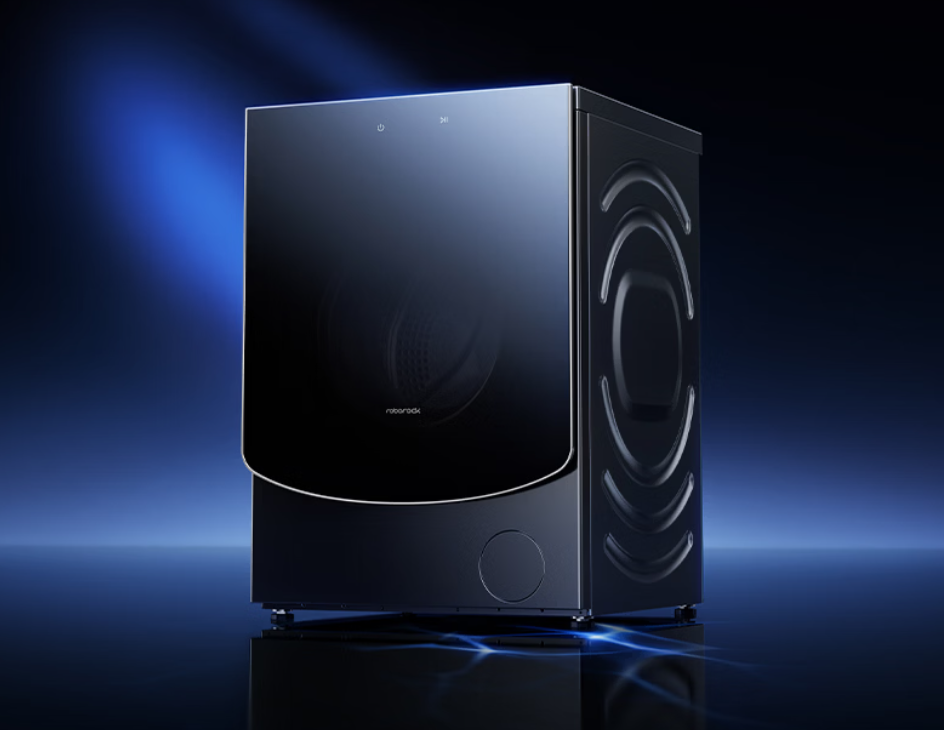

  • Europe: Pre-orders began in late February in markets including the UK, Germany, France, Spain, Italy, Belgium, the Netherlands and Scandinavia, with shipments starting around the same March 11 window.

  • Other regions: Availability will expand to additional markets through spring and into April 2026.

Pricing varies by region and configuration, but in the US, the series starts at roughly $1,049.99 for the base Galaxy Book 6, $1,599.99 for the Pro and $2,449.99 for the Ultra model.

For more daily updates, please visit our News Section.

Don’t miss a thing! Join our Telegram community for instant updates and grab our free daily newsletter for the best tech stories!

The post Samsung Galaxy Book 6 Series Releases Globally with Premium Specs & Pricing appeared first on Gizmochina.

OnePlus 16 could shrink bezels below 1mm, claims new leak

A new leak out of China suggests the upcoming OnePlus 16 could feature bezels measuring under 1mm on all sides. Some measurements even point to around 0.8mm. If that number holds, it would be an incremental but noticeable improvement over the OnePlus 15, which already had impressively slim 1.15mm borders.

On paper, shaving off a few tenths of a millimeter doesn’t sound dramatic. But visually, it can make a difference. Ultra-thin symmetrical bezels tend to create that “all display” look that makes content feel more immersive, especially when you’re watching videos or gaming in landscape.

The latest leak mostly focuses on the bezels, so full display specs are still unclear. That said, earlier rumors have mentioned a flat 1.5K LTPO OLED panel, possibly sourced from BOE again. There’s also talk of refresh rates going as high as 240Hz.

Whether 240Hz actually makes it to the final retail unit is another question. Manufacturers often test higher refresh panels, but power consumption and real-world benefit usually dictate the final number. Even so, anything above 165Hz would keep the OnePlus 16 firmly in “high-refresh flagship” territory.

Interestingly, OnePlus is reportedly avoiding more gaming-specific additions like shoulder triggers or built-in cooling fans. The direction seems clear: keep the design clean and premium rather than turning it into a niche gaming device.

Then there’s the battery rumor. Reports point to a massive 9,000mAh “Glacier” battery using silicon-carbon technology. Silicon-carbon cells are known for higher energy density, so it’s not impossible. Still, until more concrete details surface, that figure is worth treating cautiously. It would be a major leap.

As expected, the OnePlus 16 should run Qualcomm’s next-generation flagship chip. That would bring predictable year-on-year improvements in performance and power efficiency.

Camera rumors suggest a 50MP main sensor, a 50MP ultrawide, and possibly a 200MP periscope telephoto. If accurate, that telephoto setup would be one of the more aggressive upgrades, especially for users who prioritize zoom performance.

As always, though, early leaks are best taken as a direction — not a guarantee.

  1. Stay ahead in tech! Join our Telegram community and sign up for our daily newsletter of top stories!

For more daily updates, please visit our News Section.

(Sources: 1, 2)

The post OnePlus 16 could shrink bezels below 1mm, claims new leak appeared first on Gizmochina.

Kodak IconiK 65-inch Mini QD TV Offers 1500 Nits Brightness and 108W Sound Output

Kodak IconiK 4K Mini QD Google TV

Kodak has launched a new 65-inch Mini QD Google TV in India under its IconiK Series lineup. The television combines Mini LED backlighting, Quantum Dot color technology, and a high refresh rate panel, along with built-in smart features based on the Google TV platform.

Kodak IconiK 4K Mini QD Google TV

The TV features a bezel-less 65-inch display with 4K resolution of 3840 × 2160 pixels and a 120Hz refresh rate. It supports Variable Refresh Rate (VRR) and Auto Low Latency Mode (ALLM), which are useful for gaming and smoother motion performance. The panel uses Quantum Dot technology with Mini LED backlighting and includes 288 local dimming zones. Kodak claims peak brightness of up to 1500 nits. The display also supports Ultra Wide Color Gamut with 1.1 billion colors, along with Dolby Vision, HDR10, and HLG formats. Dolby Vision-Atmos support is also included for combined picture and sound enhancement.

Kodak IconiK 4K Mini QD Google TV

Audio output is rated at 108W through a six-speaker system supported by two dedicated subwoofers. The TV supports Dolby Atmos for multi-channel surround sound, aiming to deliver a more immersive experience without requiring external speakers.

The television runs on a MediaTek processor paired with a Mali-G52 GPU. It includes 2GB RAM and 16GB internal storage to handle the operating system and apps. On the software side, it runs Google TV, which provides access to apps through the Google Play Store. It also supports Google Assistant voice commands, built-in Chromecast, and Apple AirPlay for wireless streaming from compatible devices. The remote control includes quick access app buttons along with a dedicated mute button.

Connectivity options include dual-band Wi-Fi, Bluetooth 5.0, three HDMI ports, two USB ports, HDMI eARC, an optical audio output, and an Ethernet port for wired internet. Kodak is offering a one-year warranty with the television.

Pricing & availability

The Kodak 65-inch IconiK Series 4K Mini QD TV with model number K65Mini5020 is priced at Rs. 57,999 in India and is currently available for purchase on Amazon.in.

Stay ahead in tech! Join our Telegram community and sign up for our daily newsletter of top stories!

For more daily updates, please visit our News Section.

The post Kodak IconiK 65-inch Mini QD TV Offers 1500 Nits Brightness and 108W Sound Output appeared first on Gizmochina.

iQOO Z11x Geekbench listing reveals a chipset upgrade

iQOO is reportedly working on the Z11 series of smartphones. The brand recently unveiled the Z11 Turbo equipped with the Snapdragon 8 Gen 5 chip. While this phone is likely to remain exclusive to the Chinese market, the brand is said to be working on the iQOO Z11 and Z11x, which are expected to be released in multiple markets. Recently, the iQOO Z11x 5G was spotted on certification platforms such as SIRIM (Malaysia) and NBTC (Thailand). Now, the device has appeared on Geekbench, revealing the chipset that powers it.

iQOO Z11x Geekbench listing

iQOO Z11x Geekbench
iQOO Z11x Geekbench
iQOO Z11x Geekbench
iQOO Z11x Geekbench metadata

The iQOO Z11x has surfaced with model number I2507 in Geekbench’s database. The listing suggests that the device could be powered by the Dimensity 7400 chip. As usual, the listing does not specify the chip’s name directly, but its CPU configuration and GPU details available via metadata are enough to confirm the inclusion of the D7400.

The iQOO Z11x Geekbench listing further reveals 8GB of RAM and Android 16. The 1057 single-core and 2507 multi-core scores are in line with the usual performance of the D7400 chip.

To recall, the iQOO Z10x came with up to 8GB of RAM and up to 256GB of storage. It was powered by the Dimensity 7300 chip and was priced at Rs 12,499 for its 6GB+128GB base variant.

While the iQOO Z11x will arrive with a chipset upgrade, it should be noted that the Dimensity 7400 is essentially a minor refresh of the 7300, offering only a small 100MHz (4 percent) boost to its performance cores and roughly 15 percent better AI processing, with almost all other hardware remaining identical.

In India, the iQOO Z10x was sold via Amazon, and its rebranded version, dubbed the Vivo T4x, was sold through Flipkart. Therefore, there is a possibility that the Vivo T5x could also be a rebadged version of the iQOO Z11x. Likely, the Z11x / T5x may debut in March or April across different countries.

For more daily updates, please visit our News Section.

Stay ahead in tech! Join our Telegram community and sign up for our daily newsletter of top stories.

(via)

The post iQOO Z11x Geekbench listing reveals a chipset upgrade appeared first on Gizmochina.

Noise launches Airwave Max 6 headphones with 45dB ANC and 120h battery life

Noise Airwave Max 6

Noise has launched its latest premium headphones, the Airwave Max 6, at an introductory price of Rs. 6,999 ($76). The headphones are available on gonoise.com, Amazon, and Flipkart in four color options: Dune White, Cobalt Blue, Forest Green, and Carbon Black.

Noise Airwave Max 6

Noise Airwave Max 6 Specifications

The Airwave Max 6 features Coaxial Dual Drivers (40mm + 12mm), which deliver a deeper bass and clearer vocals. Noise claims the headphones provide rich, balanced sound across highs, mids, and lows, making them suitable for a variety of audio content. It also supports LDAC and Hi-Res Audio certification, which ensures users experience high-quality, detailed sound.

The headphones feature Adaptive Hybrid Active Noise Cancellation (ANC) that reduces ambient noise by up to 45dB, allowing users to stay focused in noisy environments like crowded commutes, offices, or cafes. Additionally, a five-microphone system with Wind Noise Cancellation ensures clear and crisp voice quality during calls, even in outdoor settings.

Noise Airwave Max 6
Noise Airwave Max 6

The Airwave Max 6 headphones boast a 120-hour battery life in normal mode and up to 80 hours with ANC enabled. They also feature Instacharge, providing six hours of playtime with just 10 minutes of charging, making them ideal for long days and travel.

The headphones use Bluetooth 6.0 for faster connectivity, better stability, and low latency of 80ms. These are compatible with Android and iOS devices and feature Google Fast Pair for quick setup. Noise has also added Spatial Audio, which creates a 3D soundstage for a more immersive experience while watching movies or gaming.

In terms of design, the headphones come with breathable ear cushions for added comfort and a durable steel headband that retains its shape over time. They also feature a foldable design and include a zipper case, making them convenient to carry.

In related news, Asus has launched the ROG Kithara open-back gaming headset featuring 100mm planar drivers with HIFIMAN tuning, while Audio-Technica has introduced new Ash Wood headphones with a guitar lacquer finish.

For more daily updates, please visit our News Section.

Stay ahead in tech! Join our Telegram community and sign up for our daily newsletter of top stories! 💡

(Noise)

The post Noise launches Airwave Max 6 headphones with 45dB ANC and 120h battery life appeared first on Gizmochina.

Snapdragon 8s Gen 4 vs Dimensity 9300 Plus: Which offers superior performance?

Snapdragon 8s Gen 4 vs Dimensity 9300 Plus

The “s” chips inside the Snapdragon 8-series have been popular for offering great performance at an affordable price, and the Snapdragon 8s Gen 4 is no different. It delivers a strong CPU performance with an all-big-core CPU design, a reliable Adreno GPU for smooth gaming, and a mature ISP.

The Dimensity 9300 Plus was announced a year before the Snapdragon 8s Gen 4, featuring an even more powerful CPU with more large cores, a capable GPU, and competitive camera and connectivity capabilities. The real question is whether the Snapdragon 8s Gen 4 truly outperforms the Dimensity 9300 Plus, or if the Dimensity 9300 Plus is too compelling to ignore? Let’s find out.

Let’s begin with the spec sheet:
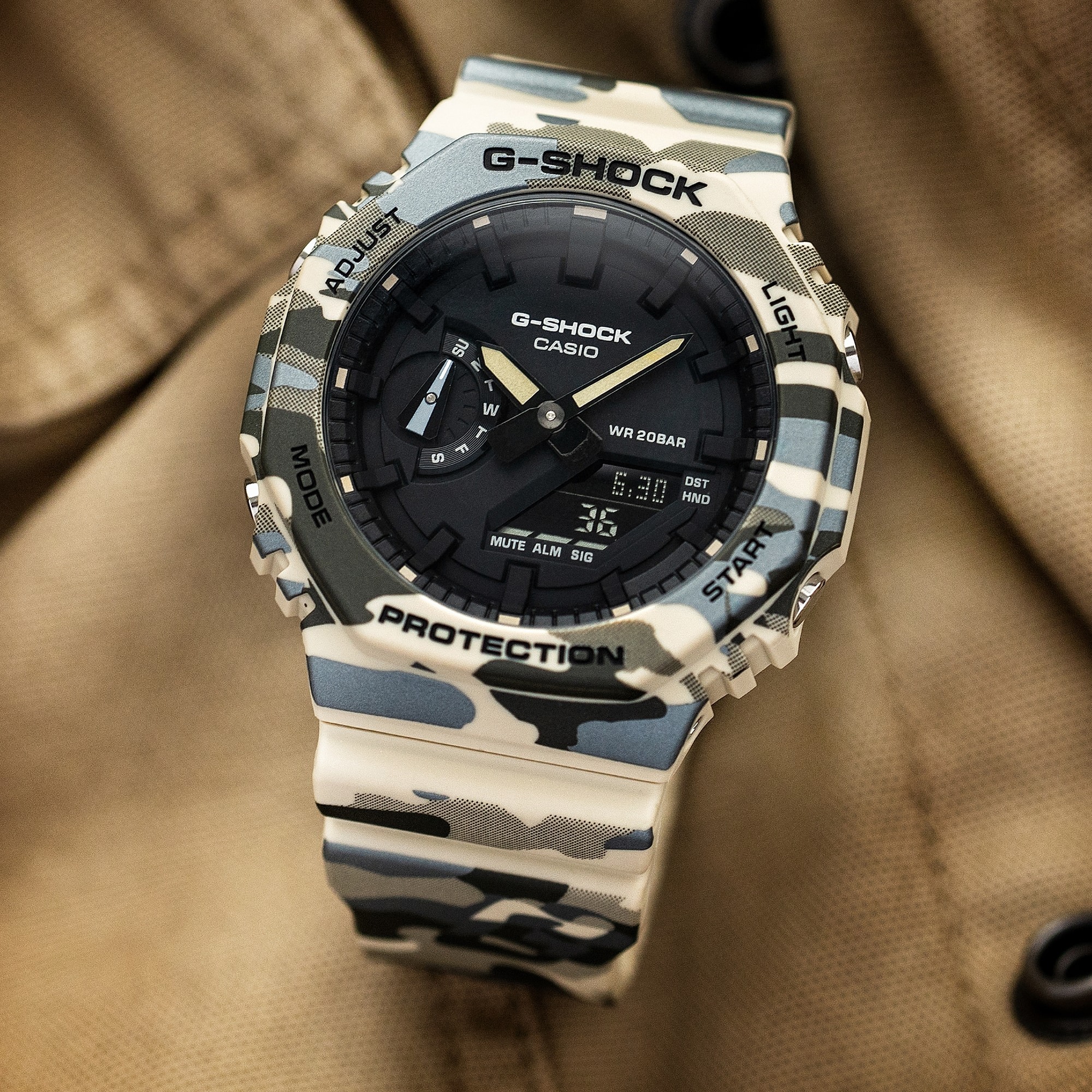
Snapdragon 8s Gen 4Dimensity 9300 Plus
AnnouncedApril 2025May 2025
Process nodeTSMC’s 4nm (N4P)TSMC’s 4nm (N4P)
CPU cores8-core8-core
CPU cores1 x 3.21GHz — Cortex-X4
3 x 3.0GHz — Cortex-A720
2 x 2.8GHz — Cortex-A720
2 x 2.02GHz — Cortex-A720
1 x 3.4GHz — Cortex-X4
3 x 2.85GHz — Cortex-X4
4 x 2.0GHz — Cortex-A720
GPUAdreno 825
ray tracing support
Snapdragon Elite Gaming features
Mali-G720 Immortalis MP12
ray tracing support
MediaTek Adaptive Gaming Technology (MAGT)
NPUQualcomm Hexagon NPUMediaTek NPU 790
MemoryLPDDR5X
up to 4.8GHz speed
LPDDR5X, LPDDR5T
up to 4.8GHz speed
StorageUFS 4.0UFS 4 + MCQ
CameraQuacomm Spectra ISP (Triple AI-ISPs, 18-bit)
up to 320MP single camera
up to 108MP single camera with zero shutter lag
up to 36MP triple cameras with zero shutter lag
real-time semantic segmentation (up to 250 layers)
4K/60fps video recording
Imagiq 990 ISP (18-bit)
up to 320MP single camera
AI Semantic Analysis Video Engine (up to 16 categories)
up to 8K/30fps video recording
ConnectivitySnapdragon X75 5G modem (sub-6GHz)
up to 4.2Gbps download speed
Wi-Fi 7 (peak speed: 5.8Gbps)
Bluetooth 6.0
MediaTek 5G R16 modem (mmWave, sub-6GHz)
up to 7Gbps download speed
Wi-Fi 7 (peak speed: 6.5Gbps)
Bluetooth 5.4

Snapdragon 8s Gen 4 vs Dimensity 9300 Plus: Benchmark score

Note: The benchmark tests were performed on the POCO F7 (powered by the Snapdragon 8s Gen 4) and the Vivo X200 FE (powered by the Dimensity 9300 Plus) 

Geekbench performance

Snapdragon 8s Gen 4 vs Dimensity 9300 Plus - Geekbench score

Thanks to a more performance-focused CPU configuration, the Dimensity 9300 Plus pulls higher Geekbench scores. In the single-core test, it gets about a 5.6% higher score, while the multi-core score is up by 7.3%.

Snapdragon 8s Gen 4Dimensity 9300 Plus
Single core2,0472,162
Multi core6,6207,104

The difference isn’t significant. However, the Dimensity 9300 Plus would still benefit from peak performance. In regular everyday tasks like browsing the internet and scrolling through your social feeds, there shouldn’t be any performance difference, though.

AnTuTu performance

Snapdragon 8s Gen 4 vs Dimensity 9300 Plus - AnTuTu score

In the AnTuTu benchmark, the Snapdragon 8s Gen 4 outperforms the Dimensity 9300+ by 6% in total score. The latter still gets a slightly higher CPU score, but the Snapdragon chip makes a strong comeback in the GPU score, scoring 465K (vs. 455K on the Dimensity 9300+).
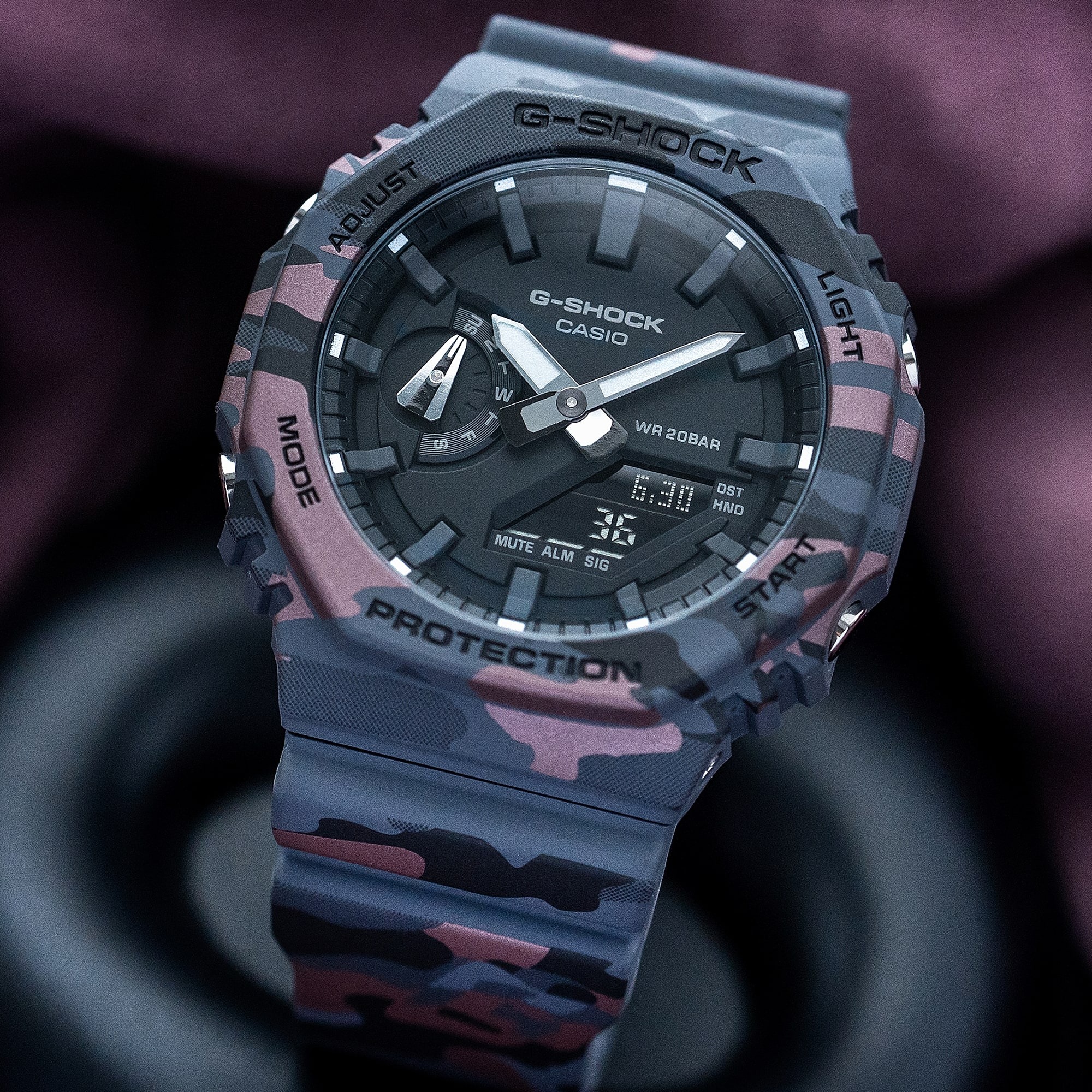

Snapdragon 8s Gen 4Dimensity 9300 Plus
AnTuTu score2,087,4101,968,353
CPU455,444465,444
GPU877,203803,677
Memory428,872338,353
UX325,891360,879

The Snapdragon 8s Gen 4 also benefits from better memory performance, while the Dimensity 9300+ achieves a higher score in the user experience (UX) test.

3DMark performance

3DMark Wild Life Extreme Stress Test

Snapdragon 8s Gen 4 vs Dimensity 9300 Plus - 3DMark Wild Life Extreme score

The 3DMark Wild Life Extreme Stress Test further solidifies the point that the Snapdragon 8s Gen 4 offers better gaming performance. It gets about a 10% better high score, which represents the peak performance.

Snapdragon 8s Gen 4Dimensity 9300 Plus
High score4,4704,046
Low score3,5422,405
Stability79.24%59.44%

The gap widens significantly to 47% in the low-score test, indicating that the Snapdragon 8s Gen 4 chip doesn’t throttle as much as the Dimensity 9300+ during long gaming sessions. This results in much better stability on Snapdragon 8s Gen 4 devices.

Now that we know the benchmark scores, let’s examine the key differences to get a clearer picture.

Snapdragon 8s Gen 4 vs Dimensity 9300 Plus: Key differences

CPU, GPU & NPU

The CPUs of Snapdragon 8s Gen 4 and Dimensity 9300 Plus comprise Cortex-X4 and Cortex-A720 cores. The Cortex-X4 offers higher performance, while the Cortex-A720 balances power and efficiency. Since the Dimensity 9300 Plus features more Cortex-X4 cores, it is able to achieve higher peak performance in CPU tests across benchmarks. The chip also benefits from a higher CPU clock speed.

Gaming performance has always been a major strength of Qualcomm chips, thanks to highly optimized Adreno GPUs, improved driver support, and excellent sustained performance. The Snapdragon 8s Gen 4 with Adreno 825 GPU achieves a much better score and stability on gaming benchmarks than the Dimensity 9300 Plus with Mali-G720 GPU.

For on-device AI intelligence, the Snapdragon 8s Gen 4 relies on Qualcomm’s Hexagon NPU architecture. It brings generative AI capabilities and support for multimodal and multilingual AI assistants.

Qualcomm also uses AI to improve the camera output and deliver stronger connectivity. MediaTek also leverages its NPU 790 in these areas and supports a variety of popular LLMs, including Alibaba Qwen, Google Gemini nano, and Meta Llama 3.

Camera and imaging

Equipped with an 18-bit triple ISP, the Snapdragon 8s Gen 4 supports up to 320MP single camera and real-time semantic segmentation for photos and videos with up to 250 layers. Furthermore, the chip supports intelligent, real-time skin and sky tone correction and up to 4K video recording at 60fps.

The Dimensity 9300 Plus, on the other hand, features an 18-bit Imagiq 990 ISP with up to 320MP single camera, AI Semantic Analysis Video Engine with 16 categories of scene segmentation, and 8K video recording at 30fps. MediaTek highlights AI-videography and zero-latency video preview as key features.

Connectivity

The Snapdragon X75 5G modem on the Snapdragon 8s Gen 4 is a sub-6GHz-only modem with a peak download speed of 4.2Gbps. Over a Wi-Fi 7 connection, the peak speed jumps to 5.8Gbps. The modem supports Bluetooth 6.0, Bluetooth Low Energy, and XPAN, enabling earbuds/headphones to stay connected via Wi-Fi for wider-range coverage.

The Dimensity 9300+ features an integrated 5G modem supporting both mmWave and sub-6 GHz. Furthermore, it offers higher download speeds over 5G and Wi-Fi connections, but doesn’t bring support for the latest Bluetooth standard.

Snapdragon 8s Gen 4 vs Dimensity 9300 Plus: Which is a better choice?

The Snapdragon 8s Gen 4 features a more powerful Adreno 825 GPU, delivering a smooth gaming experience, even during longer sessions, with much less throttling. The positive aspects also include a high memory performance, an advanced Hexagon NPU, a mature 18-bit AI ISP, and Bluetooth 6.0 support.

The Dimensity 9300 Plus excels in peak CPU performance and supports 8K video recording. The integrated 5G modem supports both mmWave and sub-6GHz bands with faster download speeds. And the Imagiq 990 ISP features AI video enhancements and zero-latency preview.

In short, the Snapdragon 8s Gen 4 is a better choice for gaming, while the Dimensity 9300 Plus delivers higher peak CPU performance. For everyday usage, both chipsets offer a similar performance with no significant difference.

The post Snapdragon 8s Gen 4 vs Dimensity 9300 Plus: Which offers superior performance? appeared first on Gizmochina.

NZXT H2 Mini PC Prebuilt Launched With RTX 5080 and Ryzen 7 9800X3D/Core Ultra 9 Options

NZXT H2 Flow

NZXT has launched the H2 Mini PC Prebuilt, a compact gaming desktop designed to deliver high-end performance in a small form factor without requiring users to assemble components themselves. Built around the company’s new H2 Flow mini-ITX chassis with a vertical layout, the system focuses on optimized airflow, efficient cooling, and clean cable management while maintaining a minimal footprint.

NZXT H2 Flow

The prebuilt system is powered by Nvidia’s GeForce RTX 5080 desktop graphics card and offers two processor options. Buyers can choose between the Intel Core Ultra 9 285K paired with the Gigabyte Z890I Aorus Ultra motherboard, or the AMD Ryzen 7 9800X3D combined with the Gigabyte B850I Aorus Pro motherboard. Both configurations include 32GB of DDR5 memory running at 5200MHz and a 2TB M.2 NVMe SSD for storage.

NZXT H2 Flow

Cooling is handled by NZXT’s Kraken Elite 240 liquid cooler, which helps manage thermals inside the compact enclosure. Power is supplied by a Lian Li SP850G 850W power supply. The system comes with Windows 11 Home preinstalled, allowing users to start gaming immediately after setup.

NZXT emphasizes that each H2 Mini PC unit is assembled, tested, and tuned before shipping to ensure reliable performance across gaming and everyday workloads. The company also highlights optimized airflow within the small chassis to maintain stable temperatures during demanding tasks.

In terms of gaming performance, the RTX 5080 combined with either CPU option is capable of running modern AAA titles smoothly at 1440p resolution. With some graphics adjustments, the system can also achieve playable frame rates above 60 FPS at 4K in many games, positioning it as a high-performance compact gaming solution.

The NZXT H2 Mini PC Prebuilt became available starting February 17, 2026, in a black color option. Both the Intel and AMD configurations launch at a price of $3,499 and are currently limited to the US market.

Stay ahead in tech! Join our Telegram community and sign up for our daily newsletter of top stories!

For more daily updates, please visit our News Section.

The post NZXT H2 Mini PC Prebuilt Launched With RTX 5080 and Ryzen 7 9800X3D/Core Ultra 9 Options appeared first on Gizmochina.

iPhone 18 Pro could debut in “deep red” after the Cosmic Orange iPhone 17 Pro

Apple’s next wave of iPhones may bring an interesting split in design philosophy: bold on the Pro side, restrained on the foldable.

In his February 22 edition of the Power On, Bloomberg’s Mark Gurman shared new details about the color options currently being tested for the upcoming iPhone 18 Pro lineup, as well as Apple’s long-rumored foldable iPhone.

A new red for the Pro models?

According to Gurman’s supply-chain sources, Apple is experimenting with a “deep red” finish for the iPhone 18 Pro and Pro Max. If it makes it to production, it would be the first time a Pro model has launched in red.

This isn’t expected to be a bright red finish. Instead, the tone is described as darker, closer to burgundy or wine. Earlier rumors mentioning brown or purplish shades may have been referencing variations of this same concept.

Apple has occasionally used bold colors to differentiate Pro models in recent years. Last year’s standout Pro color reportedly performed well in some markets, and it wouldn’t be surprising if Apple continues leaning into distinctive flagship hues.

That said, nothing is final. Color testing happens months ahead of launch, and some finishes never make it past internal prototypes.

Foldable stays conservative

On the other end of the spectrum is Apple’s first foldable iPhone, often referred to as the iPhone Fold. Gurman suggests Apple is planning to keep things simple for its debut foldable. Instead of experimenting with bold finishes, the company is said to be focusing on classic tones like black, dark gray, and silver or white.

For now, the picture forming is fairly clear: the Pro models may take a bit of a design risk with a darker red option, while the foldable plays it safe for its first outing. If accurate, it would be a small but telling glimpse into how Apple is positioning its next-generation hardware.

Stay ahead in tech! Join our Telegram community and sign up for our daily newsletter of top stories!

For more daily updates, please visit our News Section.

(Source: Bloomberg)

The post iPhone 18 Pro could debut in “deep red” after the Cosmic Orange iPhone 17 Pro appeared first on Gizmochina.

Samsung adds Perplexity support as Galaxy AI ecosystem grows

Samsung has announced an expansion of Galaxy AI with a new multi-agent approach. The update introduces Perplexity as an additional AI agent, aiming to improve contextual assistance and everyday workflows across Galaxy devices.

Galaxy AI moves towards an open multi-agent ecosystem

Samsung is evolving Galaxy AI into a platform that supports multiple AI agents working together within the operating system rather than being limited to individual applications. The aim is to reduce the number of steps required to complete tasks by allowing AI services to understand context at a system level.

Instead of switching between apps repeatedly, users can rely on integrated assistance that responds naturally based on ongoing activity and user intent. The company says that modern users increasingly rely on different AI tools for separate tasks, which has influenced its strategy to support an open and flexible framework.

Galaxy AI is positioned as an orchestrator that connects various AI services into a unified experience, enabling smoother multitasking and improved continuity across workflows. This system-level integration also allows Samsung to include partner services while maintaining a consistent user interface across Galaxy devices.

Perplexity integration and future availability

As part of this expansion, Samsung will introduce Perplexity as an additional AI agent on upcoming flagship Galaxy smartphones. The assistant can be triggered using a dedicated voice command or through hardware shortcuts such as long-pressing the side button. Once activated, it works across supported Samsung apps, including Notes, Clock, Gallery, Reminder and Calendar, helping users perform multi-step tasks more efficiently.

Samsung has indicated that more details about supported devices and rollout timelines will be shared later. The broader vision is to create an inclusive AI ecosystem that gives users greater control over how AI functions within their daily digital routines while keeping interactions seamless and easy to access.

For more daily updates, please visit our News Section.

Stay ahead in tech! Join our Telegram community and sign up for our daily newsletter of top stories.

The post Samsung adds Perplexity support as Galaxy AI ecosystem grows appeared first on Gizmochina.

Honor Will Unveil, its First AI Humanoid Robot and Robot Phone Concept at MWC 2026

Honor AI

Key Highlights:

  • Honor will unveil its first humanoid robot at MWC Barcelona, marking its entry into AI robotics.
  • The company is expanding beyond smartphones with AI-driven devices and ecosystem products.
  • New launches include the Honor Robot Phone concept, Magic V6 foldable, MagicPad4, and MagicBook Pro 14.

Honor Enters the Humanoid Robot Race

Honor Device Co. is set to make a major announcement at MWC Barcelona this weekend with the unveiling of its first humanoid robot. The company says the robot is designed mainly for consumer service tasks such as shopping assistance and everyday support. This move signals Honor’s entry into the fast-growing humanoid robotics segment, an area that has recently gained strong global attention due to rapid AI advancements.

Honor claims it will be the first smartphone brand among its direct competitors to launch a humanoid robot. The company aims to position itself as a leader in next-generation AI experiences, moving beyond traditional mobile devices and exploring embodied AI technology.

AI Strategy and Smart Ecosystem Expansion

The humanoid robot will be showcased under the “Honor Robot Phone” concept, which highlights how artificial intelligence could integrate more deeply into daily life. Honor is also expected to present new agentic AI services designed to work across smartphones and connected devices.

This strategy is part of a larger multibillion-dollar expansion plan focused on artificial intelligence, new AI applications, and building a smarter ecosystem. Similar moves are being seen across the industry, with rivals like Xiaomi, Oppo, and Vivo also investing heavily in AI innovation. Chinese startups such as Unitree are currently leading the momentum in AI robotics with advanced demonstrations, showing how competitive the space has become.

Global Launch Event and Future Vision

The event, themed “Believers in AI Future,” will also include the launch of several new devices. These include the Honor Magic V6 foldable smartphone, which features improved durability, a larger battery, and a slimmer design. Honor will also introduce the AI-powered MagicPad4 tablet and MagicBook Pro 14 laptop, both designed for productivity and lightweight performance.

Since becoming independent from Huawei in 2020, Honor has expanded rapidly with backing from Shenzhen government investment entities and state-owned enterprises. The company has also expressed plans for a future IPO, reflecting its long-term ambition to grow beyond smartphones and establish itself as a broader AI technology leader.

Read More:

The post Honor Will Unveil, its First AI Humanoid Robot and Robot Phone Concept at MWC 2026 appeared first on Gizmochina.

Realme P4 Lite 4G first impressions: Big battery focus with practical upgrades and some fun extras

Realme P4 Lite

I have been using the Realme P4 Lite 4G in the Sea Blue finish for a short while now, and with the confirmed specifications and pricing in place, the positioning becomes much clearer. This is an affordable 4G LTE smartphone that leans heavily on battery life, durability and everyday usability rather than performance or camera ambition. That said, Realme has added a couple of interesting visual and software touches that make it feel less basic than it sounds on paper.

After setting it up, taking calls, browsing, watching videos and using it as a primary device for basic tasks, here is how it feels.

Design and in-hand feel

Realme P4 Lite 4G
Realme P4 Lite 4G

The Sea Blue variant has a clean, subtle finish. It reflects light softly and does not look overly glossy. It feels youthful without being flashy. The colour options officially include Obsidian Black, Sea Blue and Beach Gold, giving buyers some variety at this price.

The Realme P4 Lite measures 167.2 x 76.6 x 7.94mm and weighs 201g. Despite packing a large 6,300mAh battery, it remains under 8mm thick, which is impressive. In hand, the weight is noticeable but not uncomfortable. The flat sides make it easier to grip, and the back does not feel slippery.

Build quality is plastic, but it does not feel fragile. Importantly, the phone carries an IP54 rating for dust and splash resistance, along with MIL-STD-810H grade shock resistance. That makes it more reassuring for rough usage.

You also get a side-mounted fingerprint scanner, which feels responsive and naturally placed.

Pulse Light adds personality

Realme P4 Lite 4G
Realme P4 Lite 4G

One feature that genuinely stands out in this segment is the Pulse Light. This is a large ring-shaped RGB notification LED placed around the rear camera module. It is not just decorative. It can be customized with nine different colors and supports multiple glowing effects.

You can assign it for notifications, alarms, music playback, battery alerts, and even camera usage. There is also an option to keep it always on purely for aesthetics. In a price bracket where most phones look and feel utilitarian, this adds a sense of personality.

It is subtle enough not to feel gimmicky but noticeable enough to differentiate the device from other entry-level phones.

Display experience

Realme P4 Lite 4G
Realme P4 Lite 4G

The device features a 6.74-inch LCD panel with HD+ resolution. At this size, Full HD would have been ideal, but in practical use, the display is serviceable for the segment.

The 90Hz refresh rate does make scrolling smoother compared to standard 60Hz panels. Social media navigation and UI transitions feel reasonably fluid. Colours are decent for an LCD, and indoor brightness levels are comfortable.

Realme P4 Lite 4G
Realme P4 Lite 4G
Realme P4 Lite 4G
Realme P4 Lite 4G

For video streaming and casual content consumption, the panel performs adequately. It is not razor sharp, but it works for its intended audience.

Performance and software

Realme P4 Lite 4G
Realme P4 Lite 4G

The Realme P4 Lite 4G runs on Android 15 with Realme UI on top. While the OS is an older generation, Realme offers its set of customizations, such as Pulse Light, Mini Capsule, Riding Mode, Dynamic Button, and AI Noise Reduction.

Performance is tuned for light tasks such as calls, WhatsApp, YouTube, browsing and basic apps. Multitasking is manageable, especially if you opt for the 128GB storage variant.

There is also a Mini Capsule feature within the Special Features section in Settings. It works similarly to Dynamic Island on recent iPhones. It displays small interactive alerts around the front camera cut-out for things like charging status, data usage and other system notifications. It is not as advanced, but it does make the interface feel more modern and interactive.

Battery life remains the headline feature

Realme P4 Lite 4G
Realme P4 Lite 4G

The 6,300mAh battery is the biggest highlight. In early usage, endurance looks strong. For moderate use, including calling, messaging, browsing and video streaming, this can easily stretch beyond a single day. Lighter users may get close to two days.

Charging is rated at 15W. It is not fast, and given the large battery capacity, a full charge takes time. The trade-off is clearly long endurance over quick top-ups.

Camera performance and other features

Realme P4 Lite 4G
Realme P4 Lite 4G

In daylight, the 13-megapixel sensor captures usable images with acceptable color reproduction. Detail levels are average, and dynamic range is limited. Low light performance is basic.

The 5-megapixel front camera is suitable for video calls and occasional selfies, but is not particularly sharp. Overall, the cameras are functional rather than standout.

1x
2x
1x
1x
2x
2x
Portrait shot
Portrait shot
Portrait shot
1x
2x

Connectivity features include 4G LTE support, Wi Fi 802.11ac, Bluetooth 5.2 and a USB Type C port. The side fingerprint scanner adds convenience.

There is no 5G here, which may matter to some buyers, but the focus is clearly on battery, durability, and affordability.

Early verdict

After using the Realme P4 Lite 4G for a short period, it feels like a phone designed for practicality first, with a bit of added flair through the Pulse Light and Mini Capsule features.

The Sea Blue variant looks clean and modern. The display is adequate with the benefit of 90Hz. Performance is entry-level, cameras are basic, but the 6,300mAh battery and durability features give it a strong foundation.

If your priorities are long battery life, rugged reassurance, and a sub-Rs 12,000 budget, this device makes practical sense.

  • 4GB + 64GB: Rs 9,999
  • 4GB + 128GB: Rs 11,999

Buyers can choose from other colors, such as Obsidian Black and Beach Gold. Starting February 26, it will be available for purchase through Flipkart, Realme’s website, and offline stores.

For more daily updates, please visit our News Section.

Stay ahead in tech! Join our Telegram community and sign up for our daily newsletter of top stories.

The post Realme P4 Lite 4G first impressions: Big battery focus with practical upgrades and some fun extras appeared first on Gizmochina.

Xiaomi Tag Debuts as the Brand New Apple AirTag Rival With Apple Find My and Google Find Hub

Xiaomi Tag

Xiaomi has officially stepped into the smart tracking market with the launch of the Xiaomi Tag. This is a compact Bluetooth tracker designed to help you find misplaced keys, wallets, luggage and more, all while offering cross-platform support that sets it apart from many rivals. Unlike proprietary solutions that tie you to a single mobile ecosystem, the Xiaomi Tag is built to work seamlessly with both Apple’s and Google’s ecosystems, giving users flexibility whether they use an iPhone or Android device.

Xiaomi Tag: Lightweight Design with Practical Tracking Tools

The Chinese tech giant’s latest smart tracker sports a minimalist white plastic build, weighing just around 10g and measuring about 7.2mm thick. So it is slim enough to slip into a wallet or attach to keychains and bags with a compatible strap or accessory.

Xiaomi Tag
Xiaomi Tag

Inside, the tracker uses Bluetooth 5.4 and NFC for connectivity with nearby devices, and it’s powered by a replaceable CR2032 coin-cell battery that Xiaomi says can last over one year before needing a swap. But one thing that sets this smart tracker apart from the crowd is the cross platform tracking via Apple Find My and Google Find Hub. This allows items to be located by compatible devices across ecosystems.

There is also a built-in buzzer that plays a tone when triggered from your phone, which is handy for finding an item nearby. Xiaomi offers “Left Behind” alerts as well, to notify you when you walk away from a tagged object. It supports Lost Mode and contact details so others can also help return a missing item via pop-ups if discovered on another network phone. This model gets an IP67 rating for water and dust resistance.

The Xiaomi Tag has just released in Malaysia, being available in a single white color option. It carries a RM 79 (roughly 20 US Dollars) price tag for a single unit, while a pack of four is available for RM 299 (roughly 77 US Dollars).

For more daily updates, please visit our News Section.

Tech enthusiast? Get the latest news first! Follow our Telegram channel and subscribe to our free newsletter for your daily tech fix! ⚡

The post Xiaomi Tag Debuts as the Brand New Apple AirTag Rival With Apple Find My and Google Find Hub appeared first on Gizmochina.

iQOO 15R launches with 6.59-inch 144Hz display, Snapdragon 8 Gen 5, 7,500mAh battery

iQOO 15R

iQOO has expanded its flagship portfolio in India with the launch of the iQOO 15R. Positioned below the iQOO 15, the new model focuses on delivering high-end performance, long battery life, and a comfortable in-hand feel. The smartphone is aimed at users who rely heavily on their device for work, gaming, and entertainment throughout the day.

iQOO 15R specifications and features

The iQOO 15R is powered by the Snapdragon 8 Gen 5 chipset built on a 3nm process, paired with LPDDR5X Ultra RAM and UFS 4.1 storage. It is supported by the SuperComputing Chip Q2 to deliver stable 144FPS gaming along with 1.5K game super resolution. A 6.5K IceCore VC cooling chamber and dual-layer graphite sheet help maintain thermal stability during extended gaming sessions.

It features a 6.59-inch 1.5K AMOLED display with a 144Hz refresh rate, up to 5000 nits local peak brightness and 4320Hz PWM dimming. The flat panel is protected by Schott Xensation Alpha glass. Despite housing a 7600mAh silicon anode battery, the phone measures 7.9mm in the Dark Knight variant and 8.1mm in Triumph Silver. It supports 100W wired charging and advanced bypass charging.

On the camera front, the device includes a 50-megapixel Sony LYT-700V main sensor with OIS and an 8-megapixel ultra-wide lens. A 32-megapixel front camera handles selfies and video calls. The phone supports 4K 60fps recording with stabilization. It runs OriginOS 6 based on Android 16 and is promised four years of OS updates and six years of security patches.

iQOO 15R price in India, availability

iQOO 15R - Dark Knight
iQOO 15R – Dark Knight
iQOO 15R - Triumph Silver
iQOO 15R – Triumph Silver

The iQOO 15R is priced at Rs 44,999 for the 8GB+256GB variant, Rs 47,999 for the 12GB+256GB model and Rs 52,999 for the 12GB+512GB version. With bank offers, the effective starting price drops to Rs 40,999. Pre-booking begins today (Feb. 24), while sales start from March 3 via Amazon, iQOO e-store, select vivo exclusive stores and offline retail outlets.

For more daily updates, please visit our News Section.

Stay ahead in tech! Join our Telegram community and sign up for our daily newsletter of top stories.

The post iQOO 15R launches with 6.59-inch 144Hz display, Snapdragon 8 Gen 5, 7,500mAh battery appeared first on Gizmochina.

Vivo revealed to be testing a single-cell 12,000mAh phone

Vivo V70 vs Oppo Reno 15

A new leak suggests that Vivo could be jumping on the big-battery bandwagon with an upcoming smartphone.

According to Weibo tipster Digital Chat Station, Vivo is currently testing a new phone equipped with a 10,000mAh battery.

The device reportedly uses a 4.53V single-cell silicon battery with a rated capacity of 10,000mAh. The typical value, however, is said to range between 11,000mAh and 12,000mAh, plus or minus a small margin.

More and more brands are moving toward 10,000mAh

Battery capacity in smartphones has been steadily increasing over the past few years, especially among Chinese manufacturers.

5,000mAh is now the bare minimum, and devices with 7,000mAh to 8,000mAh batteries have become increasingly common in China. In fact, Honor and Realme have already launched phones with a 10,000mAh cell.

Vivo V70 vs Oppo Reno 15
Vivo V70

Speaking of which, the leak also sparked discussion about competitors. When asked about Xiaomi’s plans for large-battery phones, the tipster said such devices are currently in the planning stages and would include “all the necessary features.” This hints that Xiaomi is also considering similar moves, though nothing has been finalized yet.

In a separate response, the blogger addressed whether this year’s flagship phones from Vivo might reach 9,000mAh. According to DCS, the main flagship line is unlikely to hit that level, but phones from its sub-brand iQOO could feature a 9,000mAh cell.

For now, it’s just a leak. As mentioned above, the Vivo phone with a typical battery capacity of 11,000mAh or even 12,000mAh is still under testing, which means it could take a considerable amount of time to launch — even if the tests go well. We’ll keep you updated.

Stay ahead in tech! Join our Telegram community and sign up for our daily newsletter of top stories!

For more daily updates, please visit our News Section.

The post Vivo revealed to be testing a single-cell 12,000mAh phone appeared first on Gizmochina.

iPhone Air user makes it transparent, adds physical SIM tray Apple couldn’t

Apple’s ultra-thin iPhone Air was already designed to stand out, but one modder has taken it in a completely different direction, by making the back transparent and adding something Apple deliberately left out: a physical SIM slot.

The project was documented by YouTuber Linzin Tech. In a 22-minute video, he walks through the process of turning the standard iPhone Air into a clear-backed, SIM-enabled custom build.

The first step involved removing the opaque coating from the rear glass panel. Using a laser process, the modders carefully stripped away the paint layer without damaging key components underneath, particularly the MagSafe coil, which sits just beneath the glass.

Once the coating was removed, the result was a fully transparent back, revealing the battery, logic board layout, shielding, and internal connectors. The Apple logo remains visible, but now it floats above exposed hardware rather than a solid color finish.

Adding what Apple removed

The bigger challenge came next: installing a nano-SIM tray into a phone designed to rely entirely on eSIM.

To make room, the team milled a cutout into the bottom frame of the device. That modification required removing the original Taptic Engine, Apple’s large and finely tuned haptic motor, because there simply wasn’t enough internal space to accommodate both it and a SIM tray.

In its place, a smaller third-party vibration motor was installed. The SIM reader itself was wired in through board-level microsoldering, and according to the video, the modified phone successfully connects to mobile networks using a physical SIM card. It’s a significant hardware alteration, especially considering how tightly packed ultra-thin smartphones are.

As impressive as the mod looks, it wasn’t without consequences. Removing thermal pads during the laser process reportedly affected heat dissipation, leading to faster throttling under sustained load. The structural modifications also eliminated the phone’s IP68 water and dust resistance. And, of course, any warranty coverage was gone the moment the frame was cut open.

Performance of the iPhone Air mod with affected heat dissipation

For most users, the trade-offs wouldn’t make sense. But for hardware enthusiasts, it’s a fascinating reminder that even the most closed-off designs can still be opened up.

Stay ahead in tech! Join our Telegram community and sign up for our daily newsletter of top stories!

For more daily updates, please visit our News Section.

(Source)

The post iPhone Air user makes it transparent, adds physical SIM tray Apple couldn’t appeared first on Gizmochina.

Xiaomi Electric Scooter 6 Ultra to launch globally soon with 75km range, 1200W peak power

The Xiaomi Electric Scooter 6 Ultra has been officially teased ahead of the company’s February 28 launch event in Barcelona. It appears on Xiaomi’s global website as part of the Xiaomi Launch February 2026, confirming that a full reveal is just days away.

The Ultra will sit above the rest of the Electric Scooter 6 lineup, which already includes the standard 6, 6 Lite, 6 Pro, and 6 Max. While Xiaomi hasn’t published the complete spec sheet yet, early listings and retailer pages give a fairly clear idea of what to expect.

More power, longer range

According to those listings, the Scooter 6 Ultra uses a 500W motor with a peak output of up to 1,200W. That should translate into stronger acceleration compared to the 6 Max, along with improved climbing ability.

Top speed is still capped at 25 km/h in most regions to comply with local regulations, but torque figures of around 45 Nm suggest it’s built to feel punchier off the line.

Battery capacity is said to be 585Wh, which could deliver up to 75 km of range under ideal conditions. Real-world numbers will likely vary depending on rider weight, terrain, and speed, but it positions the Ultra as the longest-range model in the current series.

The Ultra seems to lean slightly more toward durability than its siblings. It reportedly includes front and rear suspension, 12-inch tubeless all-terrain tires, and dual disc brakes paired with E-ABS for added stopping control.

There’s also an IPX6 water resistance rating, suggesting it should handle light rain without issue. A 3-inch TFT display shows ride data like speed and battery level.

The trade-off for all that hardware is weight. At roughly 33.7 kg, this is not a lightweight commuter scooter. It’s closer to a heavy-duty urban machine than something you’d casually carry up a flight of stairs.

Pricing and launch timing

Early reports suggest a price around €799.99, which would place it at the premium end of Xiaomi’s scooter lineup. That’s a noticeable step up from lower-tier models, but the Ultra clearly targets riders who want more range and stronger performance.

Stay ahead in tech! Join our Telegram community and sign up for our daily newsletter of top stories!

For more daily updates, please visit our News Section.

(Source)

The post Xiaomi Electric Scooter 6 Ultra to launch globally soon with 75km range, 1200W peak power appeared first on Gizmochina.

OPPO Enco Air 5 Pro Debuts with LHDC 5.0 Audio, AI Call Noise Reduction, and 54-Hour Battery Life

OPPO Enco Air 5 Pro

OPPO has announced the Enco Air 5 Pro in China as its newest true wireless earbuds in the Enco lineup. The model arrives as the successor to the Enco Air 4 Pro launched in 2024, with improvements in active noise cancellation, connectivity, and battery life.

OPPO Enco Air 5 Pro

The Enco Air5 Pro supports up to 55dB active noise cancellation with a noise reduction frequency range of up to 5,000Hz. The previous generation offered 49dB ANC with up to 4,000Hz coverage. The earbuds use a 12mm bass driver and support a 20Hz to 40kHz frequency range. They also retain LHDC 5.0 Hi-Res Audio support with a wireless transmission rate of up to 1Mbps, along with AAC and SBC codecs.

OPPO Enco Air 5 Pro
OPPO Enco Air 5 Pro
OPPO Enco Air 5 Pro

The earbuds run on Bluetooth 6.0 and support dual-device connectivity, allowing them to stay connected to two devices at the same time. There is also a 47ms low-latency mode designed for gaming and video playback. Controls are handled through touch gestures, including slide controls for volume adjustment.

OPPO Enco Air 5 Pro

For calls, OPPO has included a three-microphone system with AI call noise reduction to capture voices clearly and reduce background sound. The earbuds also use an intelligent wind noise reduction algorithm that maintains call clarity in outdoor wind speeds of up to 25 km/h. AI translation support is also included as an additional feature.

The Enco Air5 Pro comes with an IP55 rating for dust and water resistance. Each earbud weighs 4.4g, while the charging case weighs 43g. The case measures 63.37 × 50.03 × 24.74mm, and each earbud measures 30.91 × 17.06 × 19.93mm.

Battery capacity is 62mAh for each earbud and 530mAh for the charging case. With ANC enabled, the earbuds provide up to 7 hours of playback and up to 29 hours with the case. With ANC disabled, battery life increases to 13 hours on the earbuds and up to 54 hours total with the case.

The OPPO Enco Air 5 Pro is available in Moonstone White and Midnight Black. It is priced at 329 yuan, which is about 47.6 US dollars. Sales in China start on March 2.

For more daily updates, please visit our News Section.

Stay ahead in tech! Join our Telegram community and sign up for our daily newsletter of top stories.

The post OPPO Enco Air 5 Pro Debuts with LHDC 5.0 Audio, AI Call Noise Reduction, and 54-Hour Battery Life appeared first on Gizmochina.

OnePlus 15T confirmed to launch soon as “dream phone” for small-screen enthusiasts

OnePlus 13s

Now that the Chinese New Year holidays are over, Chinese smartphone brands have started teasing upcoming phones, such as the Oppo Find N6 and the Honor Magic V6. A recent announcement from a OnePlus community head has hinted at the arrival of the OnePlus 15T, positioning it as a device aimed at users who prefer smaller screens without compromising on performance.

OnePlus 15T teased as a compact flagship

OnePlus community lead Shuai Lan, the OnePlus 15T is set to debut soon
OnePlus community lead Shuai Lan has confrimed that the OnePlus 15T is set to debut soon

According to a newly released video shared by OnePlus community lead Shuai Lan, the OnePlus 15T is set to debut soon and is described as a “dream phone” for small-screen enthusiasts.

Reports suggest that the handset could launch in China as early as March, continuing the company’s T-series strategy that focuses on delivering flagship-grade hardware in a refined form factor. The device is said to adopt a compact design language similar to earlier models in the series, including a small matrix-style camera layout and a white finish with a near unibody appearance.

OnePlus 15T specifications (rumored)

Leaks indicate that the OnePlus 15T may feature a 6.32-inch OLED display with 1.5K resolution and a 165Hz refresh rate, suggesting a focus on smooth visuals and responsive interaction. It is expected to run on the Snapdragon 8 Elite Gen 5 processor, paired with up to 16GB of LPDDR5x RAM and as much as 1TB of UFS 4.1 storage. The device could include a large battery around 7,500mAh with 100W wired charging and wireless charging support, which would be notable for a compact flagship.

Camera details remain uncertain, with rumours mentioning either a 200-megapixel or 50-megapixel primary sensor with OIS, alongside a 50-megapixel telephoto lens and a 32-megapixel front camera. The phone is also expected to run Android 16 with ColorOS 16 and feature an ultrasonic in-display fingerprint sensor.

Rumors are rife that OnePlus has started working on the OnePlus 15s for the global market. This phone is supposed to be based on the OnePlus 15T. Likely, the 15s will have different set of cameras as compared to the 15T.

For more daily updates, please visit our News Section.

Stay ahead in tech! Join our Telegram community and sign up for our daily newsletter of top stories.

The post OnePlus 15T confirmed to launch soon as “dream phone” for small-screen enthusiasts appeared first on Gizmochina.

Honor Magic V6 red edition revealed in first commercial, showcases premium design

Honor Magic V6

With the Chinese New Year holidays over, Honor has started teasing its upcoming foldable phone, the Honor Magic V6. It will be rivalled by the Oppo Find N6, which is also debuting around the same time in China as well as globally. Today, Honor rolled out the Magic V6’s first commercial to showcase its design.

Honor Magic V6 red variant revealed

Honor has introduced the Magic V6 in a new “Chitu Red” color variant, featuring a deep red rear panel paired with a gold middle frame that gives the foldable a festive and premium appearance. The back panel carries a velvet-like textured finish with star-track-inspired patterns, while the circular camera module adds to the device’s recognizable identity.

The Magic V6 is scheduled to make its global debut on March 1 at MWC 2026 in Barcelona, Spain. Apart from the new color, the brand is emphasizing improvements in build quality and reliability.

Apart from red, the Magic V6 is rumored to come in shades like gold, black, and white. Some of its color variants may feature a special eco-friendly leather material with nano-level coating designed to enhance durability against scratches, water exposure, and long-term wear. It is also said to be thinner and lighter than the previous generation.

Honor Magic V6 specifications (rumored)

Honor Magic V6
Honor Magic V6

According to leaks, the Honor Magic V6 could feature the Snapdragon 8 Elite Gen 5 chipset, positioning it as a high-performance foldable flagship. The top variant is expected to include a large 7,150mAh battery, which may become one of the biggest capacities seen in a foldable device, along with support for 120W wired charging and wireless charging.

its outer screen will offer a resolution of 2420 x 1080 pixels, whereas its inner display will produce resolution of 2352 x 2172 pixels. However, the exact display sizes are not known yet.

Camera rumours suggest a triple rear setup led by a 200-megapixel primary sensor, supported by an ultra-wide lens and a periscope telephoto camera offering optical zoom capabilities. Additional expected features include proprietary RF and efficiency enhancement chips, full waterproofing, Beidou satellite communication support, and a thinner and lighter design compared to the previous generation.

For more daily updates, please visit our News Section.

Stay ahead in tech! Join our Telegram community and sign up for our daily newsletter of top stories.

The post Honor Magic V6 red edition revealed in first commercial, showcases premium design appeared first on Gizmochina.

Oppo announces Find N6 foldable, here are the specs we know

Oppo-Find-N6-announcement-teaser

Oppo says its next foldable is almost here. The company today announced that the Oppo Find N6 is “coming soon,” using the tagline “Smooth Sailing.” The teaser poster doesn’t say much, but the image hints that the foldable will have a shallow crease. 

Foldable phones have long struggled with the visible and tactile crease that forms where the screen bends. Earlier this month, Oppo held an internal product appreciation event for the Find N6, where it compared the crease to the gap between two makeshift beds. 

To understand the context, it helps to look at the previous model. The Oppo Find N5 already had a limited crease depth of around 0.15mm, which was considered industry-leading at the time. With the Find N6, Oppo says it’s going further, which will create a smoother transition when you run your finger across the fold. 

Oppo Find N6 Specifications

According to regulatory filings, the Find N6 might launch under model numbers PLP110 and PLP120. The former is expected to be the standard edition while the latter is a satellite communication version, reportedly supporting Beidou connectivity. All versions are said to include 80W wired fast charging as standard.

Oppo Find N5

On the hardware side, the foldable reportedly features an 8.12-inch inner display and a 6.62-inch outer screen. Powering the device could be Qualcomm’s Snapdragon 8 Elite Gen 5 (7-core) platform, paired with a 6,000mAh battery. 

The camera system also stands out on paper. The rear main camera is said to use a 200-megapixel sensor. Alongside it are a periscope telephoto lens, an ultra-wide, and a multispectral sensor. 

According to earlier reports, the Find N6 may launch on March 17, shortly after the Spring Festival. Both the standard and Beidou satellite versions are rumored to support an AI stylus accessory.

For more daily updates, please visit our News Section.

Stay ahead in tech! Join our Telegram community and sign up for our daily newsletter of top stories.

The post Oppo announces Find N6 foldable, here are the specs we know appeared first on Gizmochina.

Decathlon Launches Stilus E-Touring E-Bike with Bosch Motor and Shimano Components

Decathlon Stilus E-Touring E-Bike

Decathlon has unveiled the new Stilus E-Touring electric hybrid bike across several European countries. The bike features upgraded components, a powerful motor, and a long-lasting battery, making it suitable for commutes and off-road adventures. This model builds on the previous Stilus E-Touring design with improved performance and enhanced rider comfort.

Decathlon Stilus E-Touring E-Bike

Decathlon Stilus E-Touring E-Bike Specs

The Stilus E-Touring uses a Bosch Performance Line CX mid-drive motor. The motor delivers 85 Nm of torque for smooth and powerful pedaling assistance, especially on hills and challenging terrain.

The bike has five assistance modes, including Eco for energy-efficient rides and Turbo for maximum power. The motor is paired with a Bosch PowerTube 750Wh battery, which allows the bike to travel up to 130 km on a single charge.

Decathlon designed the bike with a 6061 aluminum frame and offers it in three sizes: small, medium, and large. The medium size weighs 26 kg, making it light for an electric hybrid bike in this category. The low step-through frame makes mounting and riding easier, especially for urban riders.

Decathlon Stilus E-Touring E-Bike

The bike features a Suntour XCM32 ATB suspension fork with 100 mm of travel, ensuring enhanced comfort on rough terrain. Its 29-inch Schwalbe Johnny Watts tires deliver improved grip and stability, whether you’re on roads or trails.

The bike relies on Shimano components for precise and reliable performance. The Shimano CUES 11-speed drivetrain ensures smooth gear changes, while Shimano MT200 hydraulic disc brakes deliver strong braking power in all weather conditions. Riders can monitor their trips using the Bosch Kiox display, which includes advanced navigation features and an eBike Lock function for added security.

Pricing and Availability

Decathlon is selling the Stilus E-Touring for €3,299.99 in countries like France and Spain. The price increases slightly to €3,349.99 in the Netherlands.

In related news, Decathlon launched the PS100 Bluetooth speaker last year, featuring a 10-hour battery life, IPX7 water resistance, and a user-replaceable battery.

For more daily updates, please visit our News Section.

Stay ahead in tech! Join our Telegram community and sign up for our daily newsletter of top stories! 💡

(Source, Via)

The post Decathlon Launches Stilus E-Touring E-Bike with Bosch Motor and Shimano Components appeared first on Gizmochina.

Here’s Why Xiaomi Phones Abroad Often Have Smaller Batteries Than China Versions

It’s increasingly common to see Xiaomi flagship phones launch in China with larger battery capacities than the same models sold in global markets. For example, the Xiaomi 17’s Chinese version reportedly uses a 7,000mAh battery, but the global variant is tipped to carry around 6,300mAh instead. But this isn’t simply a random downgrade or cost-cutting move. So let’s break down why this happens and what it means for consumers.

Battery Shipping Regulations Are the Core Reason

The most widely cited reason for global Xiaomi phones having smaller batteries boils down to international transportation rules for lithium-ion batteries, especially in Europe and certain other major markets. Under agreements such as the European “International Carriage of Dangerous Goods by Road” (ADR) and similar global aviation regulations, lithium-ion battery cells over 20Wh are classified as “dangerous goods”.

Xiaomi 17 Pro Max
Xiaomi 17 Pro Max

In a typical smartphone, a single battery cell above 20Wh translates to around 5,200mAh at a nominal voltage when simplified for consumer terms. If a phone’s battery exceeds this threshold, shipping it becomes more complicated and costly. Many carriers refuse regular shipments of such devices, requiring special handling and documentation. This makes large single-cell smartphone batteries harder to transport and sell in Europe, the US, and some other global markets.

Why Not Just Use Multiple Battery Cells?

At first glance, splitting a large battery into two smaller cells that individually stay under the 20Wh limit seems like an easy workaround. In fact, some devices can do this with dual-cell layouts, and certain international models use that to bump up capacity without breaching the rules. However, widely adopting a multi-cell design across all global smartphones is not straightforward.

Redmi Note 14 Pro+
Redmi Note 14 Pro+ 5G with Dual Batteries

It adds engineering complexity, requiring different internal layouts, charging circuitry, and safety mechanisms. Multi-cell configurations take up more internal volume, increasing weight and thickness. For many brands (including Xiaomi), the slim form factor and competitive design aesthetics are a priority, making this trade-off difficult. As a result, rather than redesigning each phone’s internal structure for different regions, manufacturers often opt to reduce total battery capacity to stay within safer and easier-to-ship limits.

It’s Not Just Xiaomi

Vivo X300 Pro ships with a smaller 5,440mAh battery in Europe

This battery difference isn’t unique to Xiaomi. Other Chinese brands like Vivo and Xiaomi, and sub-brands like Redmi and POCO, also have smaller batteries compared to their Chinese or Asian counterparts because of similar battery size and logistics constraints in global markets.

Does This Impact Real-World Performance?

On paper, smaller batteries could suggest less endurance. To offset this limitation, brands tend to compensate with aggressive power efficient chipsets, software optimizations in HyperOS, and faster charging tech to reduce time spent plugged in. That’s why, even with a slightly smaller battery, global versions generally still offer all-day battery life under typical use. Though they might not quite match their Chinese counterparts in raw battery capacity numbers.

Other Practical Factors

While shipping rules are the main reason, some secondary factors can also play a role:

  • Market priorities: Different regions have different expectations for phone size, weight, and design. International markets often favor slim phones over max battery capacity.
  • Certification and testing: Devices with larger cells may require more extensive certification in each region, increasing cost and time to market.
  • Logistics and warranty services: Selling and servicing phones with larger batteries can be more challenging for global companies that would otherwise need specialized transport or warranty repair channels.

For more daily updates, please visit our News Section.

Tech enthusiast? Get the latest news first! Follow our Telegram channel and subscribe to our free newsletter for your daily tech fix! ⚡

The post Here’s Why Xiaomi Phones Abroad Often Have Smaller Batteries Than China Versions appeared first on Gizmochina.

Xiaomi’s HyperOS 3.1 iOS Bridge Rumored for Global Debut at MWC 2026

HyperOS 3.1 beta testing

Xiaomi could be preparing a major announcement for Mobile World Congress (MWC) 2026 this March in Barcelona, not just around new hardware like the Xiaomi 17 series, but also a significant software upgrade. The company is expected to unveil the new HyperOS 3.1 update along with a new feature for improved cross-platform connectivity with Apple devices, thanks to a new “iOS Bridge” feature.

What is “iOS Bridge” in HyperOS 3.1?

Reports suggest that HyperOS 3.1 won’t be a minor patch. Instead, it’s shaping up as a cross-platform bridge that lets Xiaomi users interact more seamlessly with iOS devices. Key components tipped for iOS Bridge include:

  • iPhone Call Notifications: Incoming calls on an iPhone could show up on connected Xiaomi tablets or PCs, letting users answer or manage calls even when their phone is not nearby.
  • AirPods Support: Full compatibility with Apple’s AirPods, including battery levels, controls and spatial audio indicators directly on Xiaomi devices, much like native support seen on Apple hardware.
  • Easy File Transfer: A feature similar to AirDrop, enabling fast, lossless file sharing between iPhones and Xiaomi phones or tablets without needing third-party apps.
Xiaomi HyperOS 3.1 beta update
Xiaomi HyperOS 3.1

This set of features could closely mimic Apple-style cross-device integration, which is something that Android manufacturers traditionally haven’t matched natively and help position Xiaomi’s ecosystem as more friend-friendly for users who juggle multiple platforms.

Why MWC 2026 is the Right Stage

The MWC 2026 event is set to kick off at the start of next month as one of the biggest events on the tech calendar. Xiaomi is already expected to use the stage for global announcements, bringing in its latest flagship Xiaomi 17 series to the international stage. The latest HyperOS 3.1 could share this spotlight with various software upgrades, which makes sense considering how premium models typically bring the latest software iterations.

For more daily updates, please visit our News Section.

Don’t miss a thing! Join our Telegram community for instant updates and grab our free daily newsletter for the best tech stories!

The post Xiaomi’s HyperOS 3.1 iOS Bridge Rumored for Global Debut at MWC 2026 appeared first on Gizmochina.

Xiaomi HyperOS 3 Update Rollout Kicks Off Once Again After Holiday Break

HyperOS 3 stable update rollout

After a brief slowdown tied to the Chinese New Year holiday, Xiaomi’s HyperOS 3 software rollout has resumed earlier than expected, bringing fresh builds and public releases to a range of devices worldwide. While the initial break was expected to stretch till the next month, the brand has kicked off the latest build for the Xiaomi and other sub-brands’ devices.

Why the Rollout Slowed Down

Like many other tech companies in China, Xiaomi paused new HyperOS 3 releases and internal build compilations to celebrate the Chinese New Year festivities, which traditionally stretch from mid-February to early March. During this time, development teams typically enter a maintenance mode, and new public updates slow down or stop entirely while engineers take the holiday.

HyperOS 3 features
Xiaomi HyperOS 3

However, it now appears that Xiaomi has ended that break early, with new HyperOS 3 builds already rolling out again to eligible devices as of February 21. This marks a quicker return to routine update work than many had expected.

First Wave of Post-Holiday Releases

A variety of Redmi, POCO and Xiaomi devices are already seeing new builds as Xiaomi resumes the rollout:

  • Redmi Turbo 5 (China) received OS3.0.11.0.WPJCNXM based on Android 16.
  • POCO M6 Plus 5G / Redmi 13 5G / Redmi Note 13R (India) are getting OS3.0.10.0.WNUINXM.
  • POCO M6 Pro 4G / Redmi Note 13 Pro 4G builds (Android 16) have also arrived in the global and Russia regions.
  • POCO M7 Plus / Redmi 15 (Global) and others saw Android 15/16-based builds.
  • POCO C75 5G / Redmi A4 (India) got OS3.0.3.0.WGVINXM with updated UI elements like HyperIsland and redesigned home visuals.

These public releases follow an early holiday-week flurry of activity, including new Recovery ROMs being pushed to users and internal test builds spotted on Xiaomi update trackers.

For more daily updates, please visit our News Section.

Tech enthusiast? Get the latest news first! Follow our Telegram channel and subscribe to our free newsletter for your daily tech fix! ⚡

(Via)

The post Xiaomi HyperOS 3 Update Rollout Kicks Off Once Again After Holiday Break appeared first on Gizmochina.

❌