Reading view

Edifier launches MK12 wireless lavalier mic with 15h battery life & DSP processing

Edifier MK12 Microphone

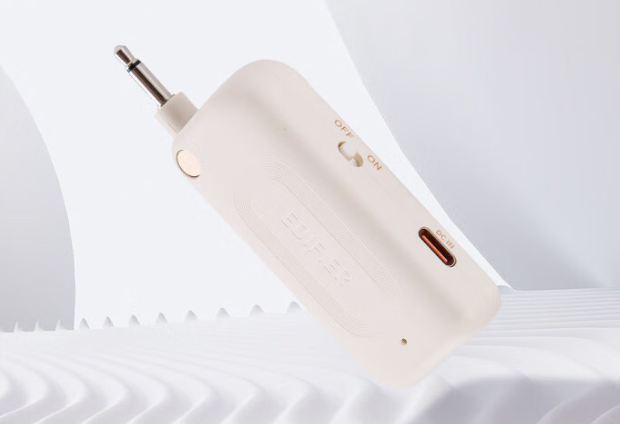
Edifier has introduced the MK12 wireless lavalier microphone in China. It is now available on JD.com for 139 yuan ($20). The microphone is available in two colors, Classic Black and Cloud Rock White, and is designed for simple, plug-and-play use with a wide range of audio systems.

Edifier MK12 Microphone

Edifier MK12 Microphone Specifications

The MK12 includes a clip-on transmitter and a receiver with a standard 3.5mm audio plug. This design allows it to connect directly to speakers, portable amplifiers, sound systems, and mixers without requiring additional setup. Edifier has developed a custom housing for the MK12, moving away from generic molds to create a more distinctive design.

Edifier MK12 Microphone

The microphone uses 2.4GHz wireless transmission to ensure a stable connection. Edifier claims the device can maintain an unobstructed wireless range of over 30 meters. It features a high-sensitivity, unidirectional electret condenser capsule that is tuned for clear vocal pickup. The company positions the MK12 as a solution for classrooms, training sessions, sales presentations, and promotional events.

Edifier has included a built-in DSP chip for audio processing. The DSP provides anti-feedback technology to reduce howling and improve voice clarity, even during live amplification. It also supports advanced features like Acoustic Echo Cancellation (AEC) and Environmental Noise Cancellation (ENC). These technologies help eliminate background noise and maintain clear speech, even in demanding environments.

Edifier MK12 Microphone

The transmitter includes a 300mAh battery, which provides up to 15 hours of use on a single charge. The microphone uses a clip-on design for easy attachment to clothing, while the receiver comes with a lanyard for added portability.

The MK12 has a frequency response of 100Hz to 10kHz, which is optimized for voice rather than music. It supports both 3.5mm and 6.35mm inputs, with an adapter included in the package for compatibility with larger connectors.

In related news, Edifier has recently launched the retro-inspired M330 II Bluetooth speaker with LDAC, AirPlay 2, and up to 14 hours of battery life, alongside the Hecate Air 3 Commander open-ear gaming headset with 2.4G wireless connectivity and Bluetooth 6.0 support.

For more daily updates, please visit our News Section.

Stay ahead in tech! Join our Telegram community and sign up for our daily newsletter of top stories! 💡

(JD)

The post Edifier launches MK12 wireless lavalier mic with 15h battery life & DSP processing appeared first on Gizmochina.

Motorola Launches Moto Buds 2 Plus with Sound by Bose and Moto Buds 2 with 48-Hour Battery

Motorola has introduced two new wireless earbuds at MWC 2026 as part of its Moto Things ecosystem. The new models are the Moto Buds 2 Plus and the Moto Buds 2. Both earbuds focus on delivering strong audio performance, active noise cancellation, and smart features in a compact design with Pantone color finishes.

moto buds 2 plus

The Moto Buds 2 Plus are designed for users who move between work, calls, and entertainment throughout the day. The earbuds use Sound by Bose technology, tuned to deliver balanced and detailed audio.

They feature 11mm dynamic drivers for deeper bass and Knowles balanced armatures for improved clarity and precision. The earbuds support Hi-Res Audio with the Low-Latency High-Definition Audio Codec (LHDC) for high-quality wireless playback. Spatial Audio is also included to create a more immersive sound experience.

moto buds 2

To reduce distractions, the Moto Buds 2 Plus include Dynamic Active Noise Cancellation (ANC). This helps block outside noise while working or traveling. For calls, the earbuds use six microphones with Environmental Noise Cancellation and a high signal-to-noise ratio to deliver clearer voice audio. Users can also enable CrystalTalk AI in the Moto Buds app, which uses AI noise reduction to improve voice clarity in loud environments.

Battery life is rated at up to 9 hours on a single charge, with up to 40 hours of total playback when using the charging case. The earbuds support Dual Connection, allowing them to stay connected to two devices at the same time. Users can move between a laptop and a phone without reconnecting. The Audio Share feature lets two pairs of Moto Buds 2 Plus connect to one phone to listen together. Wear Detection automatically pauses audio when the earbuds are removed.

Users can customize touch controls for play, pause, track skipping, calls, or launching a voice assistant. On compatible Motorola devices, holding the earbuds activates Moto AI features such as Catch Me Up, Pay Attention, and Remember This. AI-powered translation is also supported on select devices.

moto buds 2

The Moto Buds 2 are aimed at everyday listening. They use 11mm dynamic drivers and 6mm micro planar magnetic drivers and support Hi-Res Audio with LHDC. Spatial Audio is also supported for more immersive playback.

moto buds 2 plus

They include Dynamic ANC rated up to 55dB, along with Transparency Mode so users can hear their surroundings when needed. The earbuds also feature six microphones with Environmental Noise Cancellation for clear voice calls.

Battery life reaches up to 11 hours on a single charge and up to 48 hours total with the charging case. A 10-minute charge provides up to 3 hours of playback.

The Moto Buds 2 support Dual Connection and use Bluetooth 6.0 for improved connectivity and faster speeds. A Gaming Mode in the Moto Buds app reduces audio latency for gaming. On supported Motorola devices, users can also access Moto AI features such as Catch Me Up, Pay Attention, and Remember This by holding the earbuds.

Availability

The Moto Buds 2 Plus start at €149/£130 and will launch in Europe, the Middle East, Latin America, and Asia Pacific in the coming weeks. Color options include PANTONE Cool White and PANTONE Silhouette.

The Moto Buds 2 start at €79 and will also launch in the same regions. They will be available in PANTONE Carbon, PANTONE Violet Ice, and PANTONE Gray Mist.

Don’t miss a thing! Join our Telegram community for instant updates and grab our free daily newsletter for the best tech stories!

For more daily updates, please visit our News Section.

The post Motorola Launches Moto Buds 2 Plus with Sound by Bose and Moto Buds 2 with 48-Hour Battery appeared first on Gizmochina.

Nubia Neo 5 GT Brings Built-In Fan Cooling, 144Hz AMOLED Display, and 6210mAh Battery

Nubia Neo 5 GT

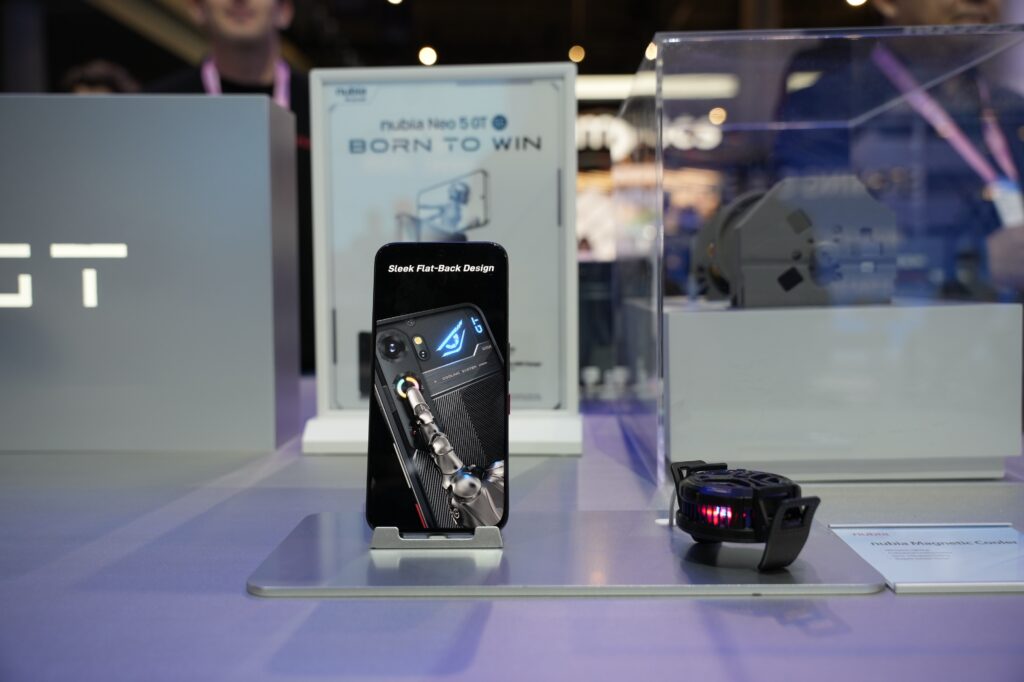
Nubia has unveiled the nubia Neo 5 GT at MWC Barcelona 2026. The phone targets young gamers and Gen Z users with a focus on cooling performance, gaming controls, and AI-powered features.

Nubia Neo 5 GT

Built-In Fan and Advanced Cooling

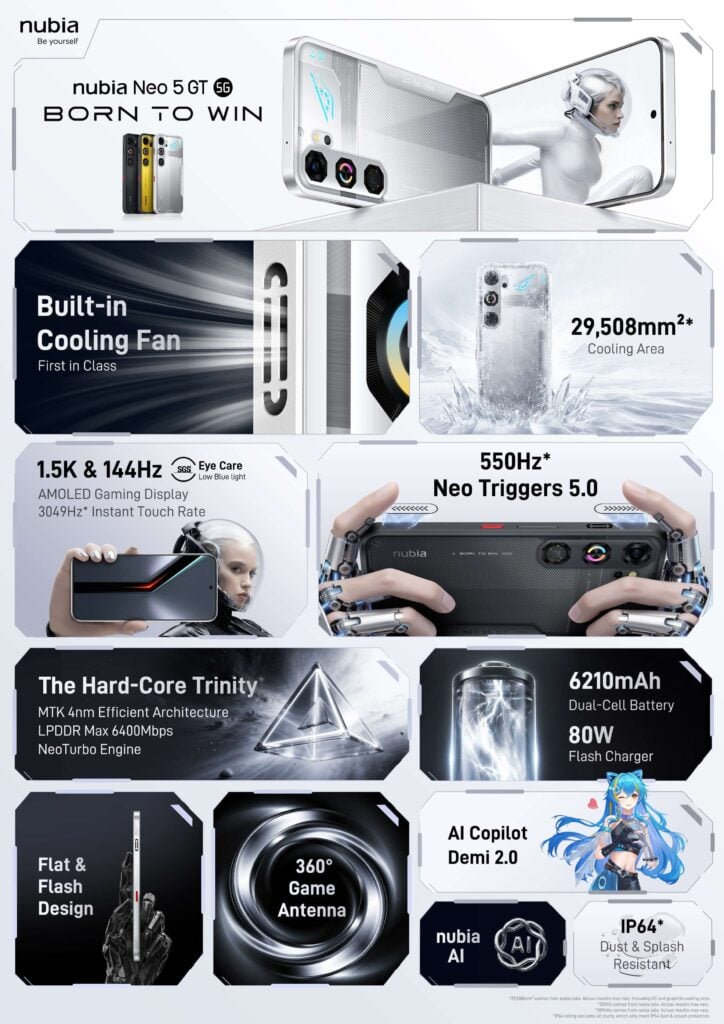
The Nubia Neo 5 GT is the only phone in its class with a built-in active cooling fan. It also includes a 29,508mm² cooling area and a Through-Flow Duct Design that directs airflow over the CPU and battery. This setup is built to control heat and maintain stable frame rates during long gaming sessions.

Nubia Neo 5 GT

The device runs on the MediaTek D7400 4nm processor with LPDDR5 memory rated at 6400Mbps. Performance is managed by the NeoTurbo Engine for consistent frame rates. A 360° Game Antenna helps maintain strong connectivity regardless of how the phone is held. The phone is certified for 120FPS gameplay on Garena Free Fire and MLBB. It also supports 90FPS on Delta Force with the Mid-Season update.

Triggers, Display, and Battery

The Nubia Neo 5 GT comes with 550Hz Neo Triggers 5.0 for four-finger control. It supports sub-5.5ms latency and a 3049Hz touch sampling rate. Magic Touch 3.0 keeps the screen responsive even with wet or sweaty fingers.

It features a 6.8-inch 1.5K AMOLED display with a 144Hz refresh rate and 4,500 nits peak brightness. SGS-certified Eye Care helps reduce eye strain. The 6,210mAh dual-cell battery supports up to 80W fast charging, while the EU version supports 45W PD charging. The 5% Extreme Mode delivers up to 23 minutes of gaming or 29 hours of standby. Bypass Charging powers the device directly during gaming without charging the battery.

Design, AI, and Cameras

The Neo 5 GT has a completely flat back with no camera bump, rounded corners, and a 90° charging cable. It includes stereo dual speakers with DTS:X Ultra, an X-Axis linear motor, and RGB lighting that reacts during gameplay.

AI Game Space 5.0 centralizes performance controls. AI Copilot Demi 2.0 includes a Gaming Coach, Gaming Chatbot, and Auto-Chat reply feature.

The series also includes a 50MP AI triple rear camera and a 16MP front camera. AI Memory, AI Scam Alert, AI Image and Text Generation, and AI Translate are included.

Pricing & availability

The device will launch globally starting in Southeast Asia in March with a starting price of €399.

For more daily updates, please visit our News Section.

Stay ahead in tech! Join our Telegram community and sign up for our daily newsletter of top stories.

The post Nubia Neo 5 GT Brings Built-In Fan Cooling, 144Hz AMOLED Display, and 6210mAh Battery appeared first on Gizmochina.

Anker launches 250W GaN Desktop Charger Pro+ with six ports and Xiaomi 120W support

Anker Desktop Charger Pro+

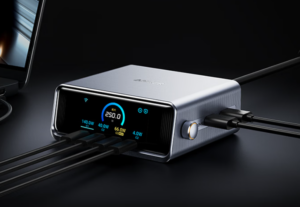
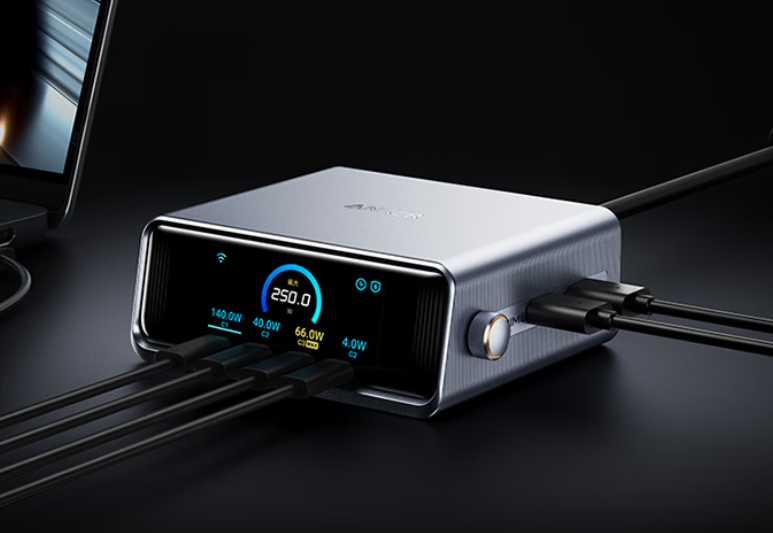
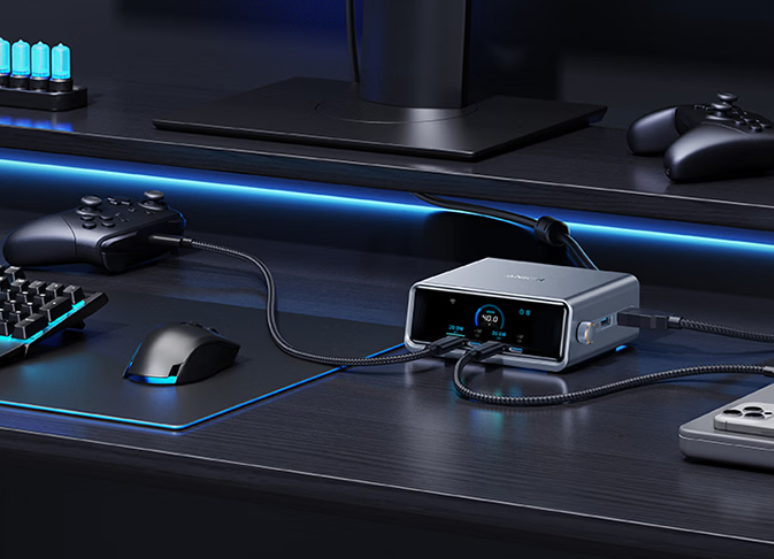
Anker has launched its new 250W Desktop Charger Pro+ (model A2345) on JD.com for 849 yuan (approx $120). The charger features a design similar to the current 250W global version and offers six ports, including four USB-C and two USB-A, with support for multiple fast-charging protocols.

Anker Desktop Charger Pro+

Anker Desktop Charger Pro+ Specifications

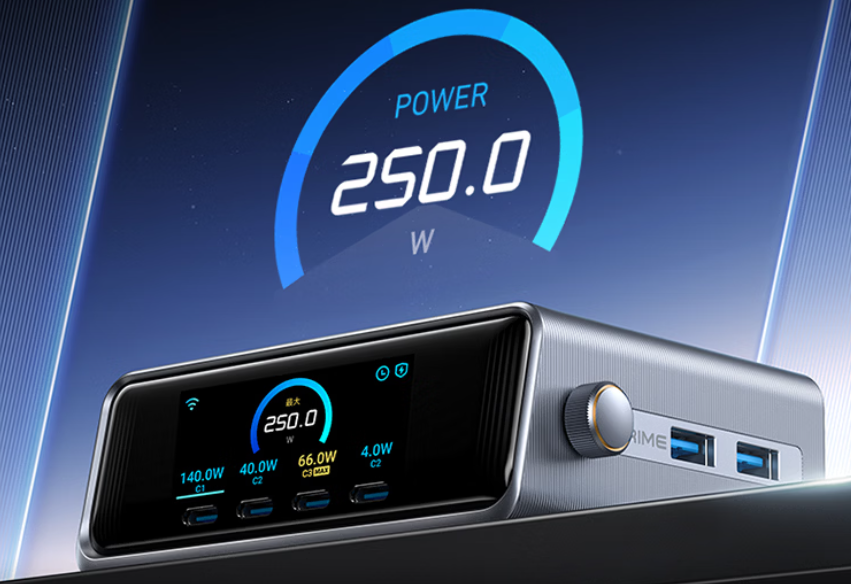
The new charger delivers a maximum output of 250W. The USB-C1 port supports up to 140W output, making it suitable for high-performance laptops like the 16-inch MacBook Pro. It offers multiple power profiles, including 5V/3A (15W), 9V/3A (27W), 15V/3A (45W), 20V/5A (100W), and 28V/5A (140W). The USB-C2, USB-C3, and USB-C4 ports each deliver up to 100W output for fast charging phones, tablets, and other devices.

Anker Desktop Charger Pro+

The device features comprehensive protocol compatibility, including PD, PD 3.1, PPS up to 100W, SCP, UFCS, and Xiaomi’s proprietary fast-charging standards. It comes with built-in support for Huawei 66W SuperCharge and Xiaomi 120W wired fast charging when paired with compatible cables.

The dual USB-A ports provide up to 22.5W output, which works well for smaller devices and accessories like earbuds or power banks.

Anker has built the charger with GaN (Gallium Nitride) technology, which improves efficiency and keeps the device compact. The charger measures 106 x 90 x 40 mm and weighs 640 grams, making it portable and practical for travel or a permanent desk setup.

Anker Desktop Charger Pro+

The front of the charger includes a 2.26-inch LCD display that shows real-time power output for each port. Anker also integrates intelligent power distribution that ensures safe and efficient charging when multiple devices are connected.

In related news, Anker has recently introduced the Soundcore Boom Go 3i portable speaker in Europe, and also unveiled the Soundcore Space 2 headphones featuring enhanced ANC and up to 70 hours of battery life.

For more daily updates, please visit our News Section.

Stay ahead in tech! Join our Telegram community and sign up for our daily newsletter of top stories! 💡

The post Anker launches 250W GaN Desktop Charger Pro+ with six ports and Xiaomi 120W support appeared first on Gizmochina.

MacBook Air M5 debuts with 16GB RAM, 512GB storage, and up to 18 hours of battery life

Apple-MacBook-Air-M5-launch-specs-price

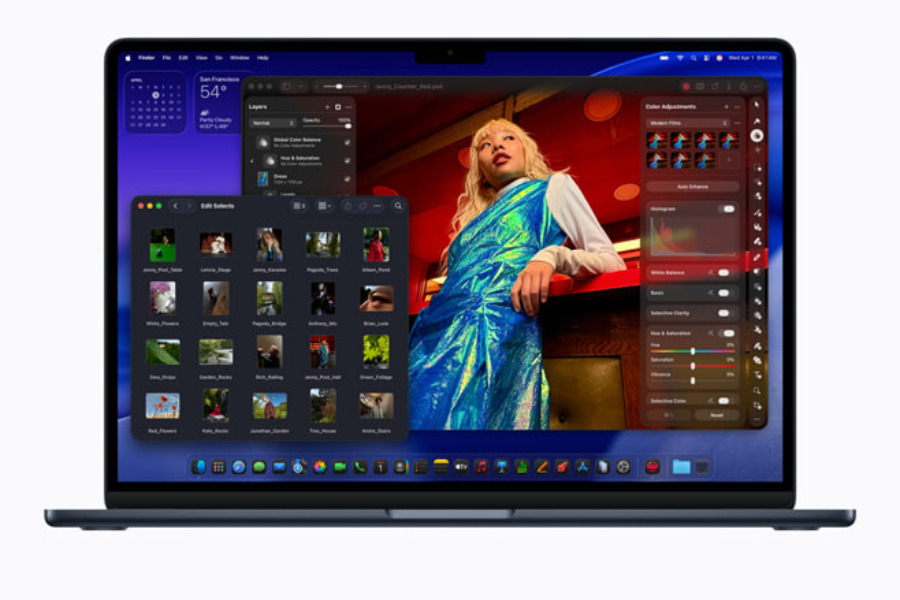
The all-new MacBook Air M5 is here, and at first glance, it doesn’t look very different. But inside, Apple’s latest thin-and-light laptop gets a new chip, faster storage, and updated wireless connectivity, while it keeps the same design that’s defined the Air lineup for the past few years.

Apple’s new MacBook Air is powered by the company’s M5 chip. An important change is that the laptop now starts with 16GB of RAM and 512GB of storage as standard. 

The price also went up from $999 to $1,099 for the base, but you can’t complain. Pre-orders are opening from March 4th, and the launch is set for Wednesday, March 11. 

Same design, familiar feel

On the outside, this is still very much the MacBook Air people know. Apple is keeping the same chassis design, flat edges, a thin profile, and a lightweight build. The 13-inch version weighs 1.23kg, while the 15-inch model comes in at 1.51kg. Color options include sky blue, silver, starlight, and midnight. 

The 13-inch model continues to feature a 13.6-inch LCD display with a 2560 x 1664 resolution and a 60Hz refresh rate. Up top, there’s still a 12MP Center Stage webcam, which automatically adjusts framing during video calls. 

M5 chip takes center stage in new MacBook Air

The real story here is the M5 chip. Apple is offering two GPU configurations: one with an 8-core graphics processor and another with a 10-core graphics processor. 

The new MacBook Air M5 also allows users to customize RAM, SSD capacity, keyboard options, and even the matching power adapter. Apple claims the SSD read and write speeds are now twice as fast as the previous generation. 

Connectivity also gets a bump. The laptop includes Apple’s upgraded N1 wireless chip, supporting Wi-Fi 7 (802.11be), Bluetooth 6, and Thread networking technology. 

The MacBook Air M5 packs a 53.8Wh lithium polymer battery, rated for up to 18 hours of streaming video playback. Likewise, you get a MagSafe 3 magnetic charging port and two Thunderbolt 4 ports on the left. On the right, you’ll find a 3.5mm headphone jack.

Don’t miss a thing! Join our Telegram community for instant updates and grab our free daily newsletter for the best tech stories!

For more daily updates, please visit our News Section.

(Source)

The post MacBook Air M5 debuts with 16GB RAM, 512GB storage, and up to 18 hours of battery life appeared first on Gizmochina.

TECNO Unveils Full-Metal, Ultra-Thin and Lighting-Based Phone Concepts at MWC 2026

TECNO presented concept devices at Mobile World Congress 2026 that tackle a basic problem: AI needs more computing power than current smartphones can handle in their existing designs.

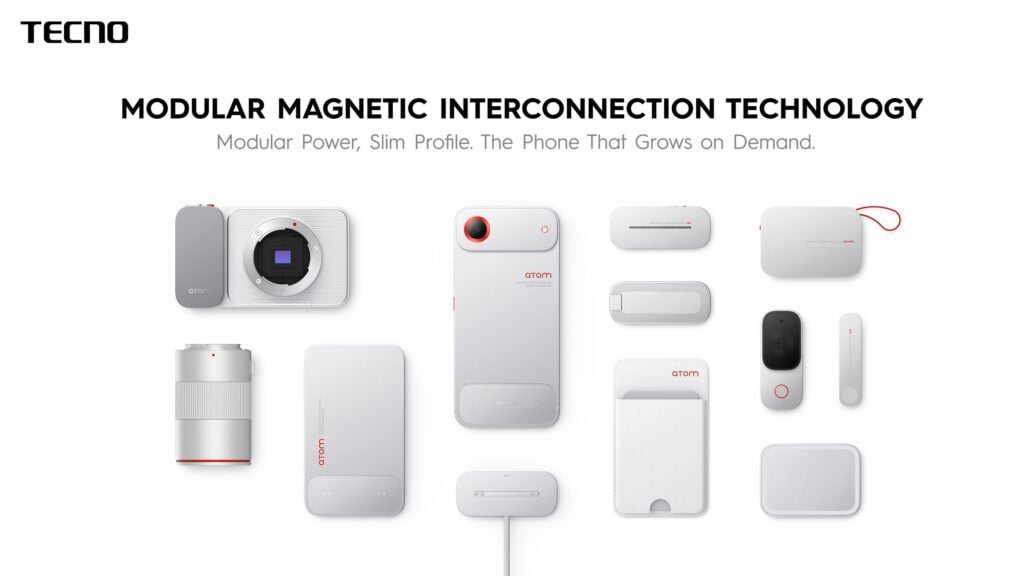
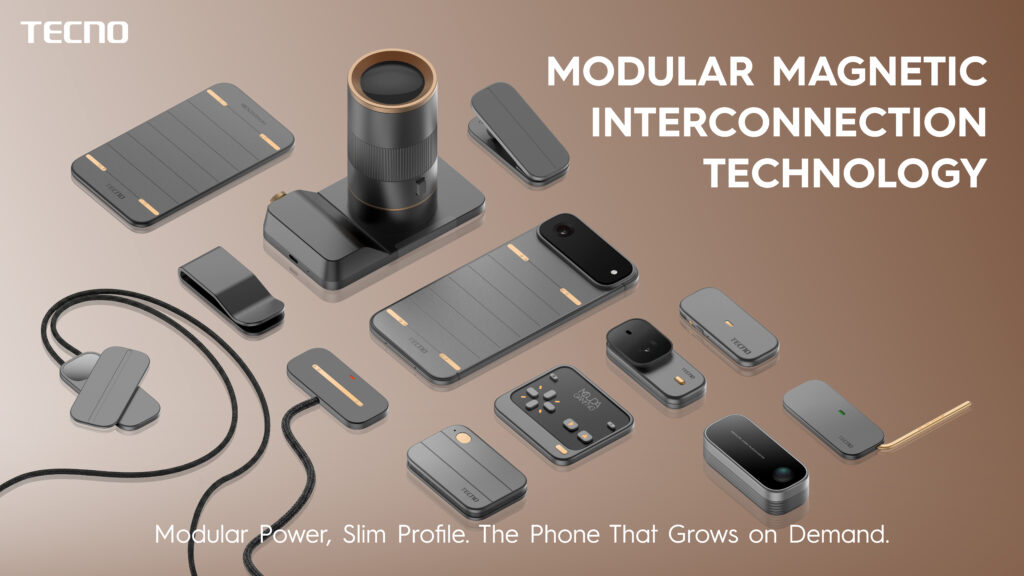
Tecno Modular Magnetic Interconnection

The main solution is Modular Magnetic Interconnection Technology. Users snap hardware pieces onto their phones using magnets. The system includes stackable batteries, action cameras, and telephoto lenses that connect through intelligent connectivity.

Two versions show different styles. The ATOM edition focuses on clean structure and subtle design. The MODA edition uses bold, geek-inspired looks. Both let you add capabilities outside the phone body instead of packing everything inside. This keeps the phone light for daily use while supporting high-demand tasks when needed.

POVA Ecosystem Targets Gamers

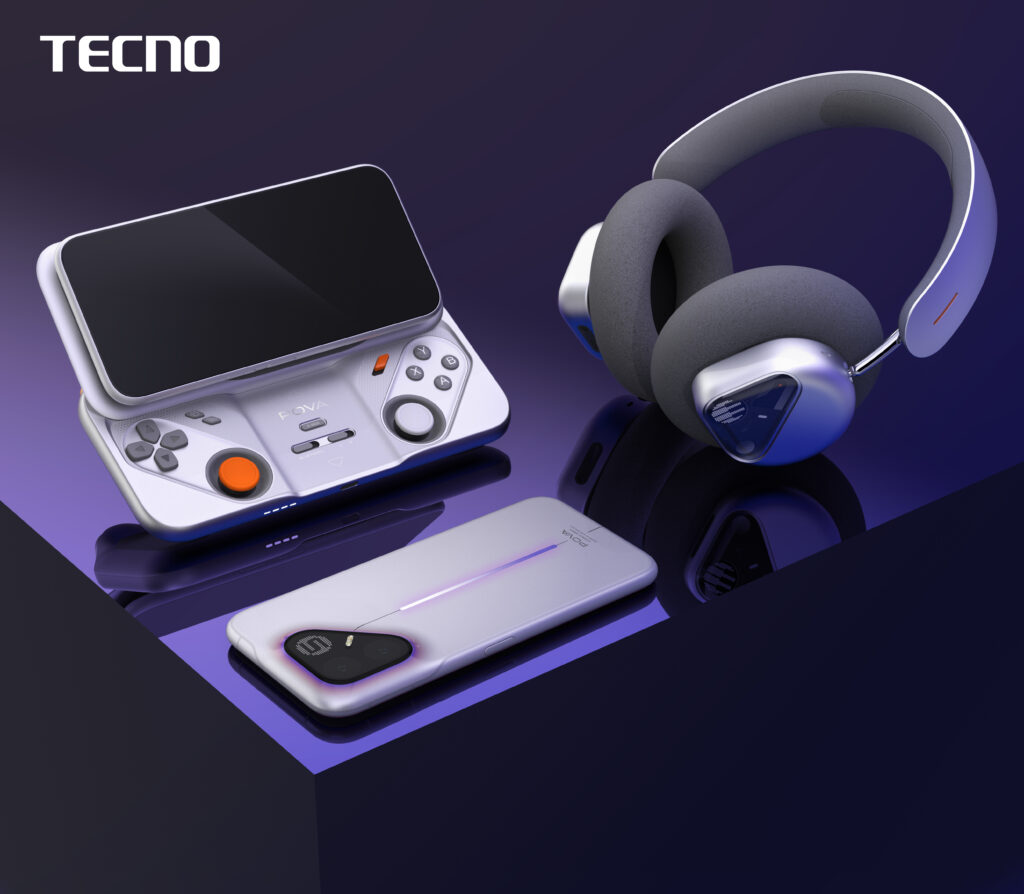
The POVA Ecosystem extends this concept across multiple devices. POVA Metal is the world’s first full-metal unibody 5G phone. It has a Snapdragon processor and all-metal construction.

POVA Controller Slide is the world’s first controller with targeted aiming for MOBA mobile games. It offers 0 to 25-degree adjustable viewing angles, works for both FPS and MOBA games, and supports wireless charging.

POVA Earphones match the ecosystem design with futuristic styling and signature dot-matrix lighting.

Edge AI Runs Directly on Phone

Edge-Side AIGC Preview Concept Technology puts AI processing on the device itself. This removes the need for an internet connection and cuts down lag time.

TECNO worked with Arm to build customized Style Transfer Preview technology. It uses algorithm optimization to reduce screen flickering and jitters that appear in older solutions. The result is a real-time preview at 30fps with smooth split-screen viewing.

The company compressed AI models to run completely offline on smartphones while keeping artistic quality and stable performance.

Other Design Concepts

AI EINK uses electronic ink technology for a paper-like display. The device uses AI recognition to analyze colors from the camera and match the back panel. Users can personalize it through a dedicated app.

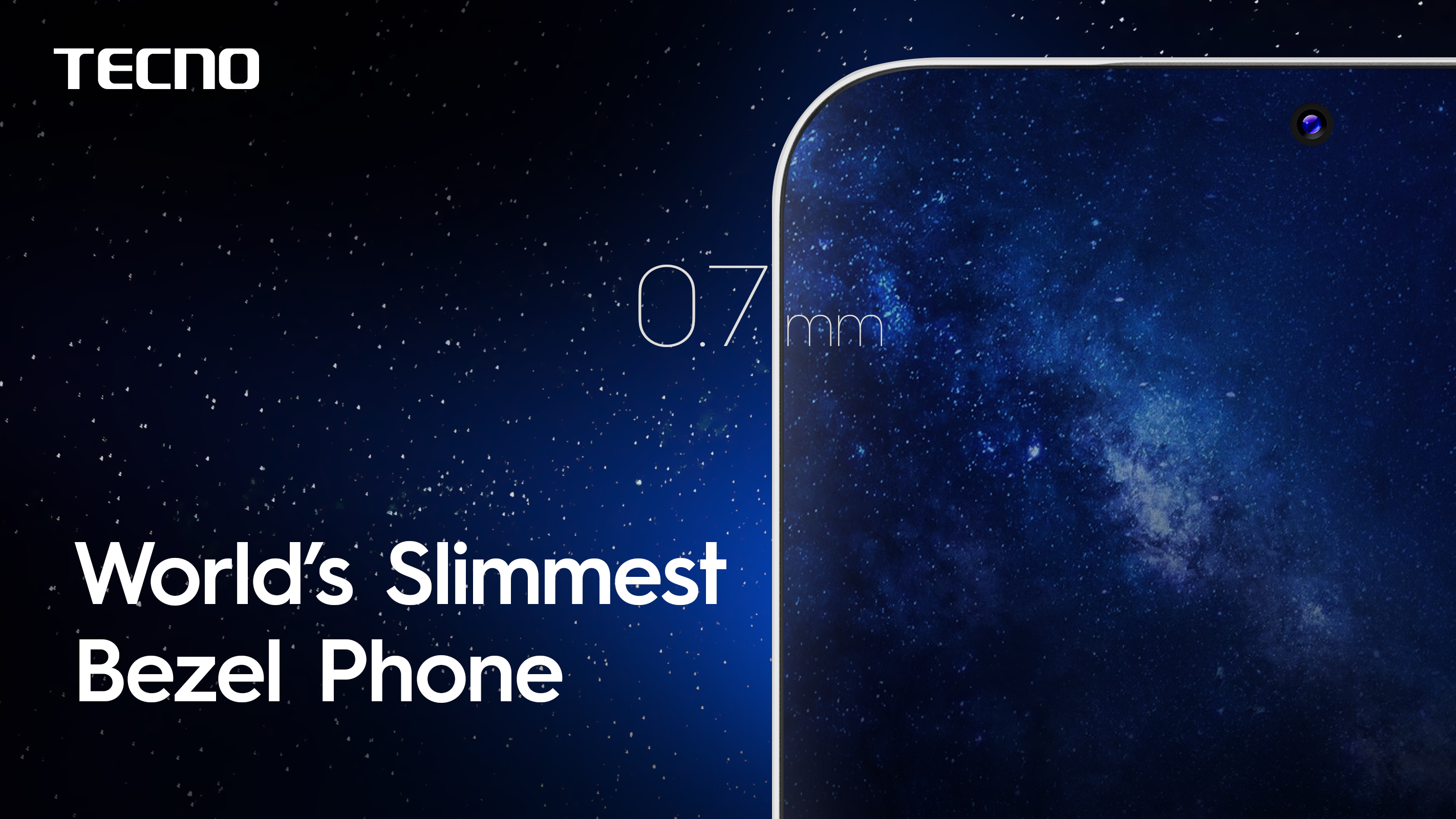
TECNO Slim 2 has an ultra-thin body and 0.7mm ultra-narrow bezel.

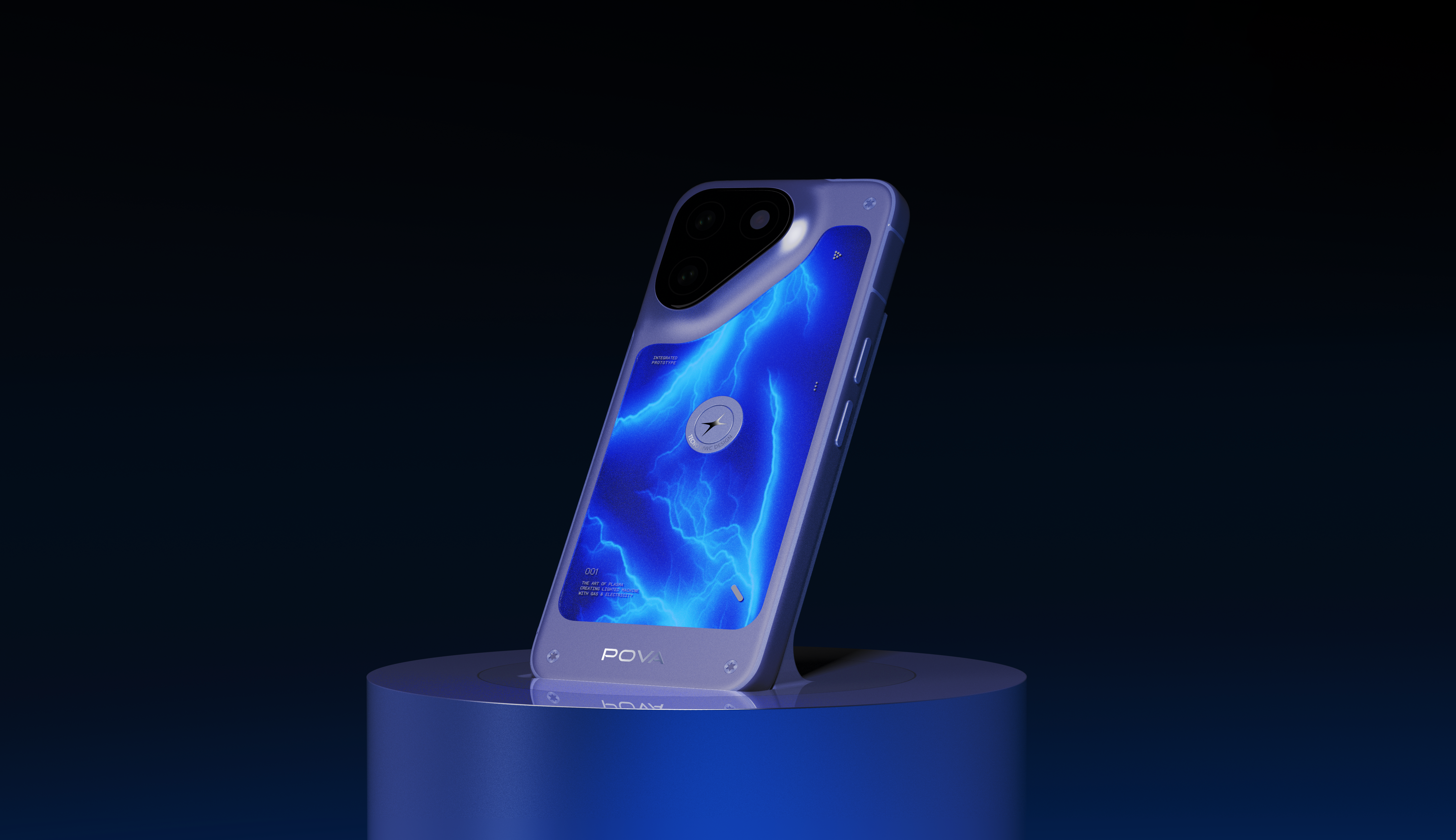
POVA Neon is the first smartphone to use ionized inert gas lighting technology, creating a glowing effect.

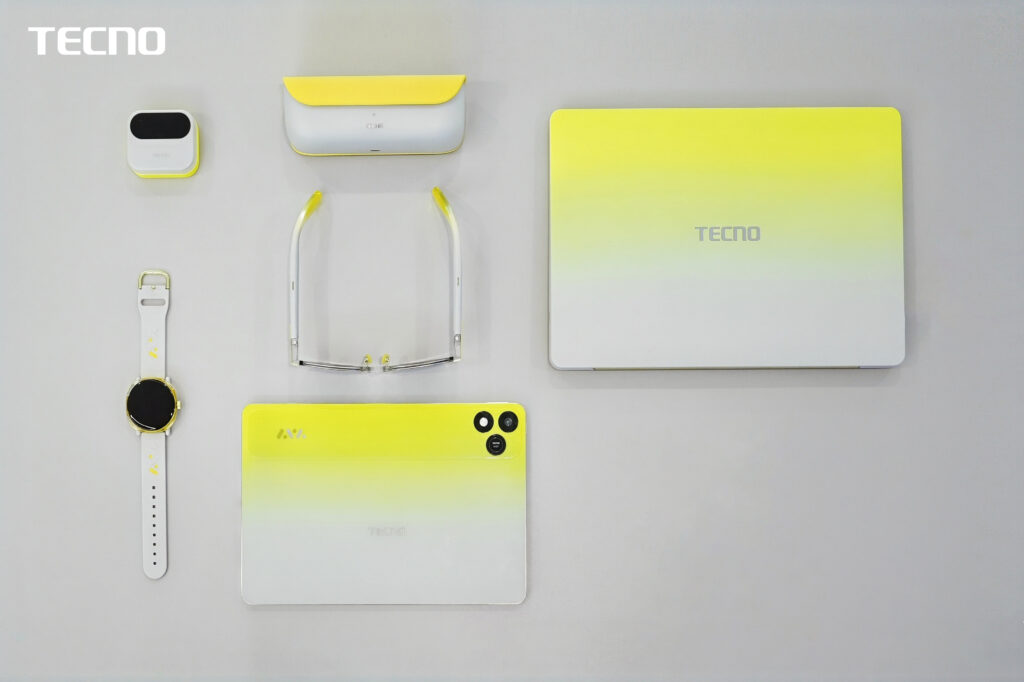
The Concept Design Suite includes a laptop, tablet, earbuds, smartwatch, smart glasses, and power bank. The “Music in Motion” theme uses citrus yellow and urban gray colors.

Tri-Fold Phone Measures 11.49mm Folded

TECNO PHANTOM Ultimate G Fold Concept is the world’s thinnest tri-fold phone. The G-style tri-fold design has a 9.94-inch display that folds inward twice. This protects the main screen from scratches and impacts when closed.

The device is 11.49mm thick when folded and 3.49mm thick when unfolded. It uses 2,000 MPa ultra-high-strength steel for the hinge and ultra-strong Titan Fiber for the back cover, which is just 0.3mm thick.

TECNO displayed these concepts at Stand 7A40 in Hall 7 at Fira Gran Via in Barcelona from March 2 to 5.

For more daily updates, please visit our News Section.

Stay ahead in tech! Join our Telegram community and sign up for our daily newsletter of top stories.

The post TECNO Unveils Full-Metal, Ultra-Thin and Lighting-Based Phone Concepts at MWC 2026 appeared first on Gizmochina.

Galaxy S26 Ultra’s 5,000mAh battery tested against 7,000mAh+ giants

It’s been over half a decade since Samsung last increased the battery capacity of its top-tier Galaxy S flagship. The company moved to a 5,000mAh cell with the Galaxy S20 Ultra back in 2020, and that figure remains unchanged in the newly launched Galaxy S26 Ultra. Instead of increasing raw capacity, Samsung is leaning on improved efficiency from the latest Snapdragon, along with performance tuning in One UI 8.5.

Meanwhile, Chinese brands like Xiaomi, OnePlus, and Honor have taken a very different approach. Their latest flagships pair the same chipset with high-energy-density batteries with capacities over 7,000mAh. So naturally, the big question is where the Galaxy S26 Ultra stands against these rivals when it comes to battery life. A recent battery drain comparison by Tech Droider attempts to put that into perspective.

The test simulated mixed real-world usage such as browsing, video playback, gaming, camera work, and the Galaxy S26 Ultra lasted 9 hours and 8 minutes. That’s actually a step up from last year’s S25 Ultra, which stopped at around 8 hours and 40 minutes in the same test. So there is progress, even if it’s not dramatic.

Where things get interesting is in the comparison. The iPhone 17 Pro Max crossed 9 hours and 41 minutes. Xiaomi’s 17 Pro Max pushed just past 10 hours. And the OnePlus 15 stretched all the way to 12 hours and 31 minutes.

That gap isn’t hard to explain. Battery size plays a role, and a big one. The OnePlus 15 carries a 7,300mAh battery, and Xiaomi’s flagship goes up to 7,500mAh. With that kind of capacity advantage, endurance gains start to look less surprising.

The pattern is becoming clearer year after year. Efficiency tweaks help, but they only go so far when rivals are increasing raw capacity by 30–40 percent.

Samsung has hinted at possible silicon-carbon adoption in future models, which could allow for larger batteries without adding bulk. If that happens, the balance may shift. For now, though, the S26 Ultra remains competitive rather than class-leading in endurance.

Don’t miss a thing! Join our Telegram community for instant updates and grab our free daily newsletter for the best tech stories!

For more daily updates, please visit our News Section.

(Source)

The post Galaxy S26 Ultra’s 5,000mAh battery tested against 7,000mAh+ giants appeared first on Gizmochina.

Honor Magic 9 Pro may arrive with two 200MP cameras on the back

If you’ve been keeping up with us, you’ve already seen the early details on the Honor Magic 9 series. Now there’s more. This time, the spotlight is on the Honor Magic 9 Pro.

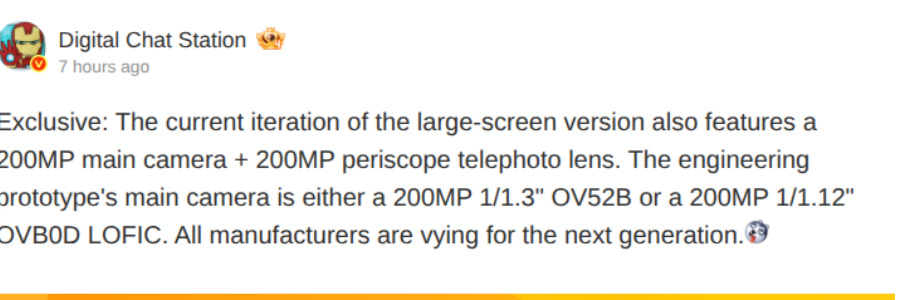
According to tipster Digital Chat Station, Honor is testing the Magic 9 Pro with not one but two 200-megapixel sensors on the back. One is said to serve as the primary camera, while the other would power a periscope-style telephoto lens. 

Honor Magic 9 Pro Camera Specifications (Expected)

The more interesting part is the choice of sensor. The prototype is said to be using either the OmniVision OV52B or the OmniVision OVB0D, both 200MP sensors, but with slightly different sizes and capabilities.

The OV52B reportedly comes in a 1/1.3-inch format and is expected to appear in several 2026 flagship phones. It’s designed to balance high resolution with improved dynamic range, which could help capture more detail in both bright and dark areas of a scene.

The OVB0D, on the other hand, is even larger at 1/1.12 inches and supports OmniVision’s LOFIC Gen 2 HDR technology. LOFIC, short for Lateral Overflow Integration Capacitor, is meant to improve dynamic range and reduce blown-out highlights in challenging lighting. That could make it particularly useful in a flagship device that wants to compete on image quality rather than just raw megapixel numbers.

For now, there are no confirmed details about the phone’s processor, design, or battery. The leak focuses entirely on imaging. But the tipster did confirm that the Honor Magic 9 Pro will feature a 6.85-inch display. 

As always with early leaks, plans can change. But we now at least have an idea of what Honor is preparing for its 2027 flagship lineup. The lineup could debut in October 2026.

For more daily updates, please visit our News Section.

Stay ahead in tech! Join our Telegram community and sign up for our daily newsletter of top stories.

(Source)

The post Honor Magic 9 Pro may arrive with two 200MP cameras on the back appeared first on Gizmochina.

Redmi K90 Ultra’s April 2026 launch timeframe tipped

Redmi K90 Pro Max

The Redmi K90 Ultra was supposed to arrive in February — at least, that’s what earlier rumors suggested. February has come and gone, and there’s still no official word. Now, a new leak indicates the wait might stretch a bit longer.

According to a well-known Weibo tipster, Digital Chat Station, a certain manufacturer’s Dimensity 9500 flagship processor is tentatively scheduled for release in April. 

While the post doesn’t directly name the phone, the clues are hard to ignore. Based on the blogger’s previous posting patterns and discussions in the comments, many are speculating that the device in question is the Xiaomi Redmi K90 Ultra.

Redmi K90 Ultra Specifications

As for specs, the rumored hardware reads like a checklist of flagship ambitions. The phone is expected to feature a massive 6.8-inch display with 1.5K resolution and a 165Hz refresh rate. 

Powering it could be an equally massive 8,500mAh battery with support for 100W charging. Other rumored features include a metal frame, an ultrasonic in-display fingerprint sensor, and comprehensive water resistance.

Redmi K90 Pro Max
Redmi K90 Pro

There’s also a global angle. The so-called Xiaomi 17T Pro is rumored to be a tweaked version of the K90 Ultra for international markets. Carrying the model number 2602EPTC0G, it may ship without certain features like a cooling fan. 

In any case, the Redmi K90 Ultra is expected to launch along with the Redmi K Pad 2 in China. It could come with an 8.8-inch 3K display, a flagship-level processor, and a larger 9,000mAh cell.

For more daily updates, please visit our News Section.

Tech enthusiast? Get the latest news first! Follow our Telegram channel and subscribe to our free newsletter for your daily tech fix! ⚡

(Source)

The post Redmi K90 Ultra’s April 2026 launch timeframe tipped appeared first on Gizmochina.

Smalth Titanium Pro smart ring brings ECG monitoring, 30-day battery backup

Smalth Titanium Pro

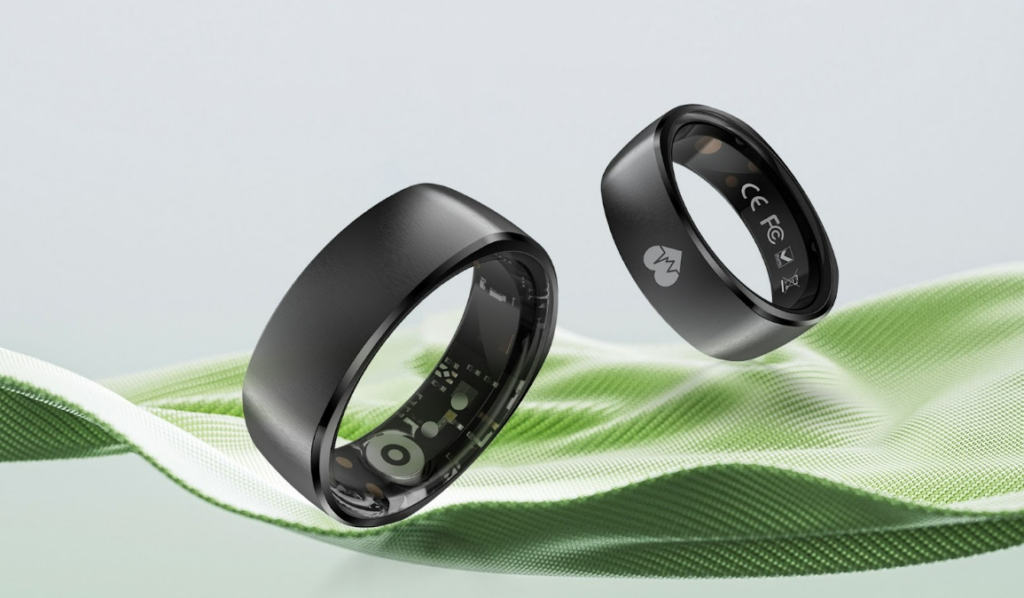
Smalth has expanded its wearable portfolio with the launch of the Titanium Pro smart ring. The new model builds upon the existing Titanium platform and introduces deeper heart monitoring features. Designed as a screen-free wearable, it focuses on delivering meaningful health insights in a subtle and comfortable form.

Smalth Titanium Pro: Built-in ECG for deeper heart monitoring

Smalth Titanium Pro
Smalth Titanium Pro

The Smalth Titanium Pro comes equipped with integrated ECG support, allowing users to monitor heart rhythm patterns beyond standard heart rate tracking. By combining ECG with continuous heart rate, HRV, sleep stage analysis and activity tracking, the ring offers a broader understanding of cardiac health over time.

It can store health data offline for up to seven days, making it suitable for travel or limited connectivity situations. Once paired with the companion app, all stored data syncs automatically.

Smalth Titanium Pro
Smalth Titanium Pro key features

Constructed from medical-grade titanium, the ring is lightweight, durable and resistant to corrosion. Its minimalist and gender-neutral design ensures that it blends seamlessly into everyday wear. The waterproof build adds to its practicality for daily use.

Battery endurance is one of the key highlights of the Titanium Pro. In normal usage conditions, the ring lasts between five and seven days, while lighter usage can extend battery life up to 12 days. The included charging case supports four to five full recharges, delivering a combined battery life of up to 30 days or more.

Smalth Titanium Pro: Price and availability

Priced at $128, Smalth positions the Titanium Pro with the ECG ring as a health-focused wearable that works quietly in the background, offering advanced heart insights without screens, constant notifications, or complicated interaction. Its ceramic ring variant is priced at $88.

For more daily updates, please visit our News Section.

Stay ahead in tech! Join our Telegram community and sign up for our daily newsletter of top stories

The post Smalth Titanium Pro smart ring brings ECG monitoring, 30-day battery backup appeared first on Gizmochina.

Samsung unveils 2030 sustainability roadmap for Galaxy devices

Samsung Galaxy for the Planet

Samsung has announced a major update to its Galaxy for the Planet initiative, outlining fresh environmental goals through 2030. After successfully meeting its earlier 2025 sustainability targets, the company is now widening its focus beyond product design and manufacturing to address broader ecological impact across its global operations.

Galaxy for the Planet achieves 2025 milestones

Samsung Galaxy for the Planet
Samsung’s Galaxy for the Planet initiative

Launched in 2021, Galaxy for the Planet serves as the sustainability framework for Samsung’s Mobile eXperience business. The company confirmed that it has achieved all four goals originally set for 2025, which were aimed at lowering environmental impact across mobile products and operations.

A key area of progress has been the increased use of recycled and responsibly sourced materials in Galaxy devices. Samsung now applies 10 types of recycled materials in both internal and external components, including plastics, glass and metals. It has also advanced circular initiatives such as recovering plastics from discarded fishing nets and strengthening its Circular Battery Supply Chain to reclaim materials from used batteries.

The company has phased out single-use plastics in mobile packaging, shifting to paper-based and recycled alternatives. Improvements in low standby power technology have reduced charger standby consumption to near-zero levels. In manufacturing, all qualifying mobile production sites have received Platinum certification under UL Solutions’ Zero Waste to Landfill standard, reflecting complete landfill diversion at those facilities.

With its initial targets achieved, Samsung is expanding its sustainability strategy for the remainder of the decade. The next phase centres on three priority areas: circularity, water stewardship and ecosystem conservation.

Samsung aims to include at least one recycled material in every module of every Galaxy mobile product, covering phones, tablets, PCs and watches. On water management, the company plans to return 110 percent of the water consumed in its mobile operations while pursuing the highest Alliance for Water Stewardship certification. It has also committed to conserving ecosystems equivalent to the footprint of its global mobile operations, focusing on habitat protection and biodiversity restoration.

Through these measures, Samsung is positioning sustainability as a long-term pillar of its innovation and operational strategy rather than a standalone initiative.

For more daily updates, please visit our News Section.

Stay ahead in tech! Join our Telegram community and sign up for our daily newsletter of top stories

The post Samsung unveils 2030 sustainability roadmap for Galaxy devices appeared first on Gizmochina.

Oppo Find X9 Ultra global launch confirmed; Oppo says it is your next camera

Oppo Find X9 Ultra global launch confirned

Oppo has confirmed that the Find X9 Ultra will make its global debut later this year, signalling a major step for its premium Ultra lineup. The announcement was made during the company’s media event at MWC 2026 event in Barcelona, where executives highlighted the device’s strong focus on next-generation mobile photography.

Oppo Find X9 Ultra global availability confirmed

Oppo Find X9 Ultra global launch confirned
Oppo Find X9 Ultra global launch confirmed

The Find X9 Ultra will mark the first time Oppo’s Ultra platform expands beyond China. Positioned as “Built to Be Your Next Camera,” the device features an advanced imaging system developed in collaboration with Hasselblad. Oppo executives stated that the new Ultra model is designed to set a higher benchmark in smartphone photography. Complete specifications, pricing and regional rollout timelines will be shared closer to launch.

Oppo Find X9 Ultra specifications (rumored)

Reports indicate that the Find X9 Ultra may feature a 6.82-inch flat OLED display with 2K resolution, similar to its predecessor. While early engineering units are said to support a 144Hz refresh rate, the final retail version is expected to offer a 120Hz refresh rate.

On the camera front, the phone is tipped to include a quad-camera system comprising a 200-megapixel main sensor, a 50-megapixel ultra-wide lens, a 200-megapixel 3x periscope telephoto camera, and an additional 50-megapixel periscope lens. For selfies, it may feature a 50-megapixel front-facing camera.

Under the hood, the device is expected to run on the Snapdragon 8 Elite Gen 5 chipset and ship with ColorOS 16 based on Android 16. The battery capacity is said to be around 7,050mAh, which is slightly lower than the Find X9 Pro’s 7,500mAh unit but larger than the 6,100mAh battery found in the Find X8 Ultra. Charging support may include 80W wired and 50W wireless speeds.

For more daily updates, please visit our News Section.

Stay ahead in tech! Join our Telegram community and sign up for our daily newsletter of top stories

The post Oppo Find X9 Ultra global launch confirmed; Oppo says it is your next camera appeared first on Gizmochina.

Vivo confirms X300 Ultra supports full-focal-length 4K Log shooting and custom LUT support

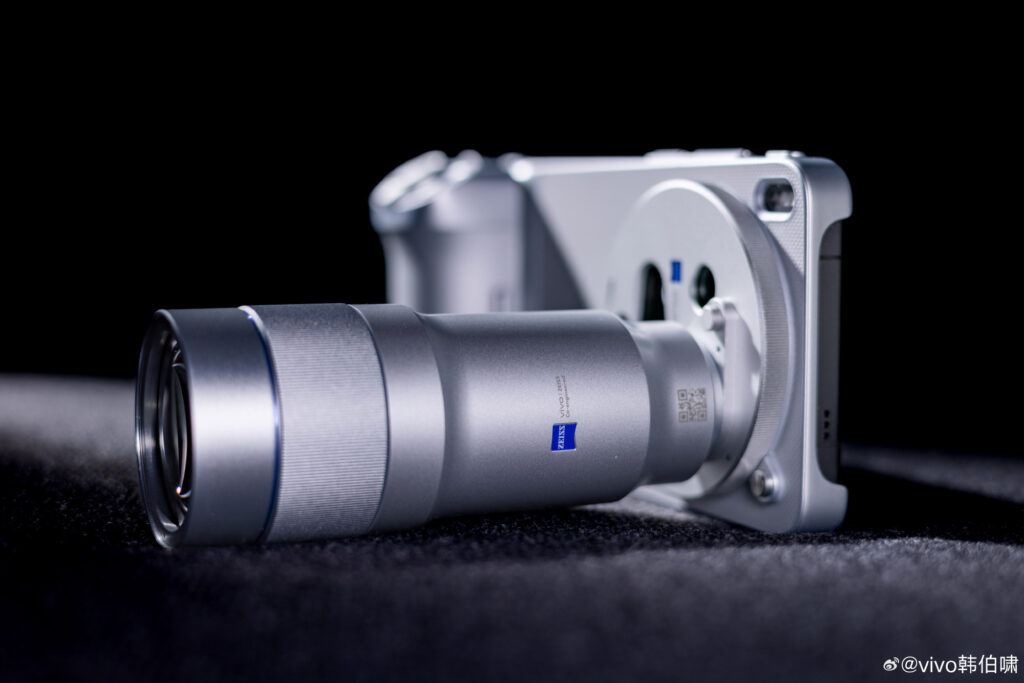
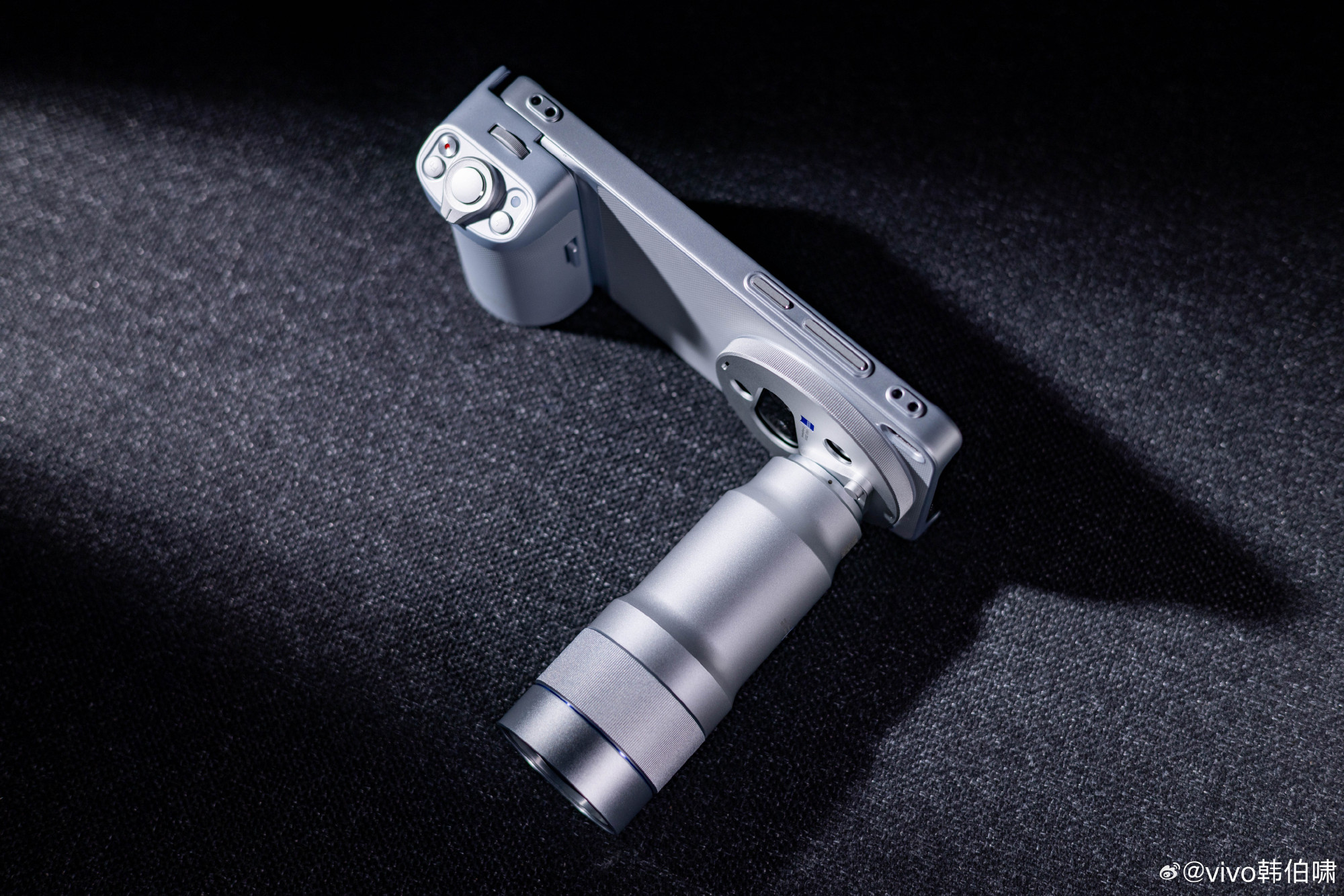
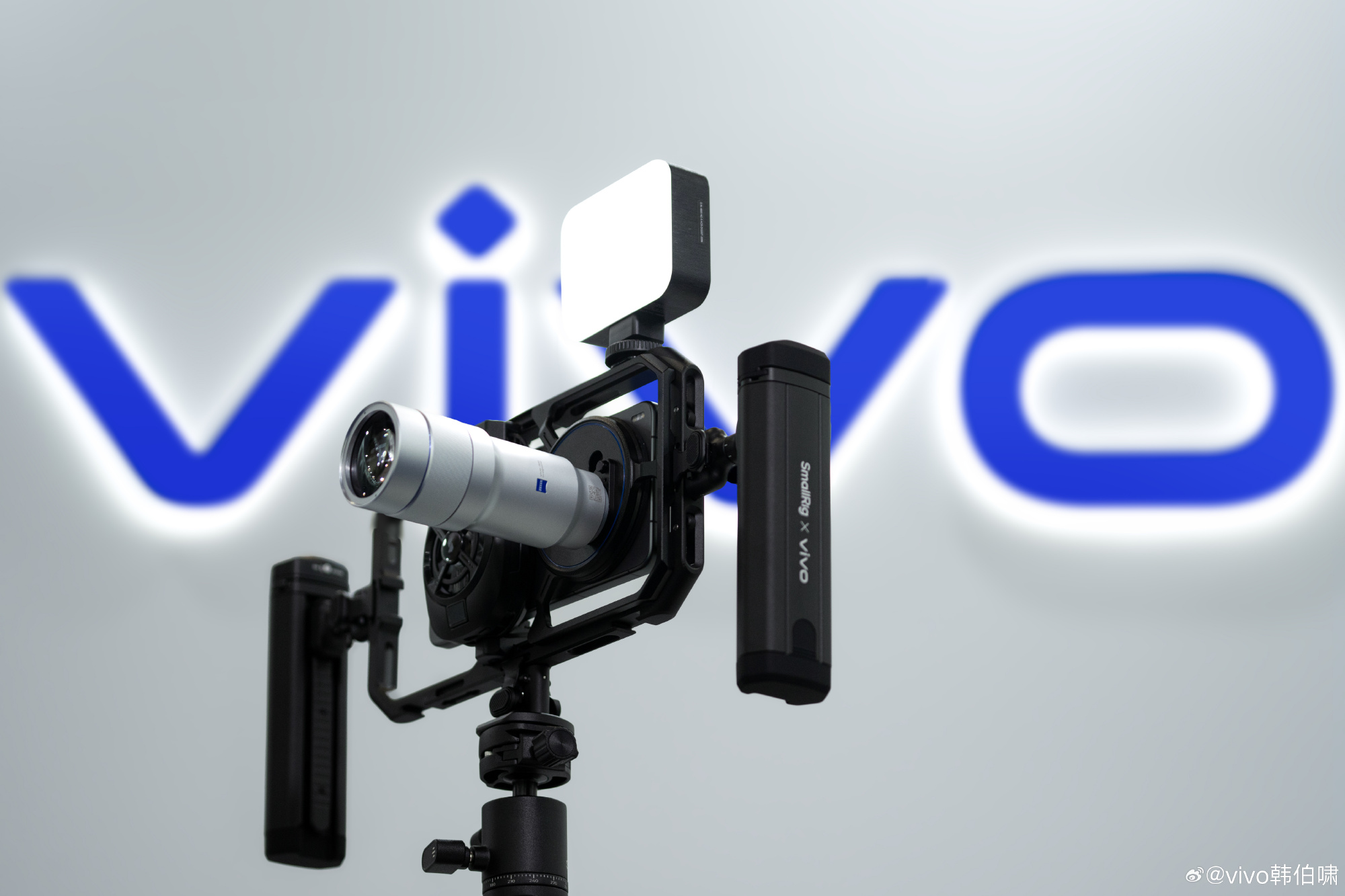
Vivo X300 Ultra 400mm teleconverter kit-

Vivo officially unveiled the X300 Ultra at Mobile World Congress 2026, and now the company is sharing more details about the phone’s video chops. 

In a post on Weibo, Vivo product manager Han Boxiao laid out what he calls the key camera upgrades coming to the X300 Ultra. According to him, the X300 Ultra is aiming to be a “pocket camera” for creators.

Vivo X300 Ultra can record 10-bit Log from all three lenses

One of the headline features is what Vivo calls its “no secondary camera” Zeiss Master Lens Trinity. In practical terms, the company says all focal lengths — from wide to telephoto — will support 4K 120fps 10-bit Log recording. The same applies to 4K 120fps Dolby Vision capture and optical image stabilization across all focal lengths.

The consistency carries over into post-production. The X300 Ultra supports APV 422 professional video encoding, which Vivo claims brings output closer to what you’d expect from a dedicated camera. 

Moreover, Log footage can load and apply 3D LUTs and custom LUTs during recording, enabling real-time color calibration on set. It’s also compatible with ACES workflows, so Log clips can drop into professional cinema pipelines without heavy conversion.

As for the audio, the X300 Ultra has a four-microphone system with six preset scenes designed to enhance target audio while reducing ambient noise. 

For more casual use, Vivo is adding two cinematic color presets: Film Style and Film Look. These are designed to deliver more polished, one-tap results without requiring manual grading. The official says that sample photos and videos in these modes will be shared later.

Vivo X300 Ultra 400mm teleconverter kit-

The device is also tipped to feature a 6.82-inch 2K BOE flat display with narrow bezels and LTPO technology. It will pack the Snapdragon 8 Elite Gen 5 chip and a battery of around 7,000mAh capacity with 100W wired and 40W wireless charging support.

For more daily updates, please visit our News Section.

Stay ahead in tech! Join our Telegram community and sign up for our daily newsletter of top stories

(Source)

The post Vivo confirms X300 Ultra supports full-focal-length 4K Log shooting and custom LUT support appeared first on Gizmochina.

OnePlus 15T AnTuTu listing emerges with 4.45M score, just below iQOO 15 Ultra

OnePlus 15T render

At the launch of the iQOO 15 Ultra, a hardcore gaming phone, iQOO confirmed that the device achieved an impressive AnTuTu score of 4,518,403. Now, the upcoming OnePlus 15T has appeared on the same benchmarking platform, achieving a score just below the iQOO flagship.

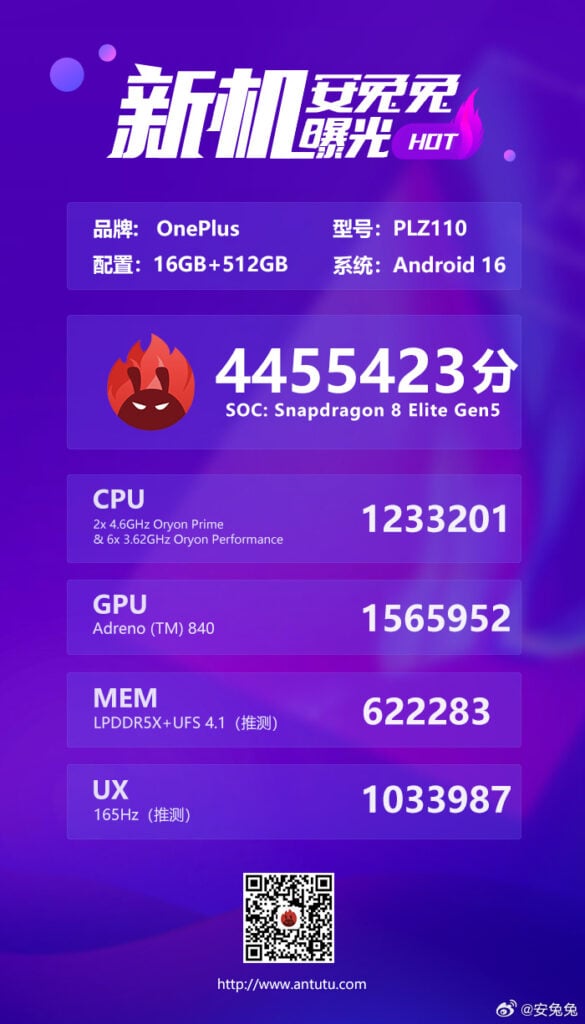
OnePlus 15T AnTuTu listing

OnePlus 15T AnTuTu
OnePlus 15T AnTuTu listing

The OnePlus 15T AnTuTu listing reveals a score of 4,455,423. In the CPU, GPU, memory, and UX tests, the device recorded 1,233,201, 1,565,952, 622,283, and 1,033,987 points, respectively. The scores are impressive considering it is not an aggressive gaming phone like the iQOO 15 Ultra.

Under the hood, the OnePlus 15T features the Snapdragon 8 Elite Gen 5, paired with 16GB of LPDDR5x RAM and 512GB of UFS 4.1 storage. The phone runs on Android 16 and appears to feature a 165Hz refresh rate display.

As seen in the listing, the OnePlus 15T carries the model number PLZ110. Previously, the same device was spotted with a 100W charger at China’s 3C certification in January.

OnePlus 15T specifications (rumored)

OnePlus 15T render
OnePlus 15T AI-generated render

Reports suggest that the OnePlus 15T may arrive with a 6.32-inch OLED panel with ultra-thin bezels, delivering 1.5K resolution and an ultrasonic fingerprint scanner embedded beneath the screen.

On the rear, the phone could offer two possible primary camera configurations. It may feature either a 200-megapixel Samsung HP5 main sensor or a 50-megapixel Sony IMX906 primary shooter, accompanied by a 50-megapixel Samsung JN5 periscope telephoto lens. On the front, it is expected to house a 32-megapixel selfie camera.

The handset is tipped to pack a large 7,500mAh battery with support for 100W wired charging and 50W wireless charging. It is also expected to come equipped with a Plus Key, a metal middle frame and carry an IP68/69 rating for dust and water resistance.

For more daily updates, please visit our News Section.

Stay ahead in tech! Join our Telegram community and sign up for our daily newsletter of top stories

The post OnePlus 15T AnTuTu listing emerges with 4.45M score, just below iQOO 15 Ultra appeared first on Gizmochina.

Vivo Pad 6 Pro spotted in real at MWC 2026, confirms Snapdragon 8 Elite Gen 5

Vivo Pad 6 Pro

At the MWC 2026 Vivo camp, the Vivo X300 Ultra is hogging the limelight. Designed for creators, the ultimate flagship phone will support a 400mm teleconverter kit with 17x optical zoom. However, another upcoming Vivo device quietly showcased at the exhibition is the Vivo Pad 6 Pro. The real device kept on display has revealed its design and confirmed its chipset.

Vivo Pad 6 Pro real-life image

Vivo Pad 6 Pro
Vivo Pad 6 Pro

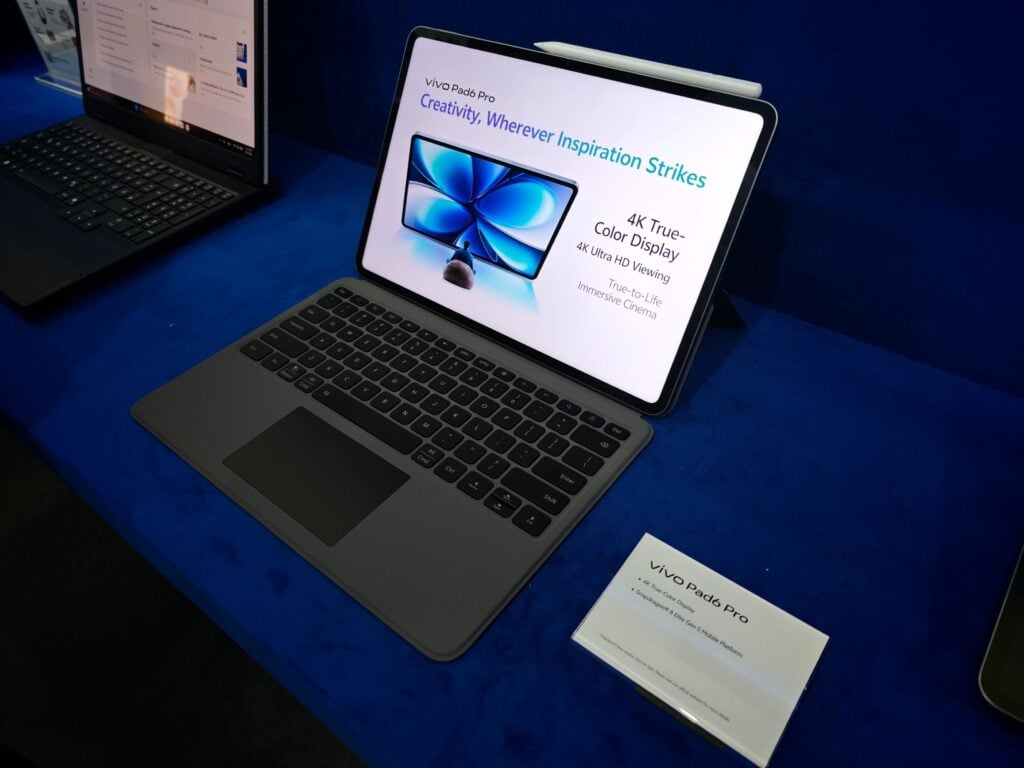
The Vivo Pad 6 Pro was displayed with a keyboard accessory and stylus, positioned as a productivity-focused tablet. The device features slim and uniform bezels around the screen and appears to have a large display panel.

On the screen, the branding confirms it as the Vivo Pad 6 Pro, along with the tagline “Creativity, Wherever Inspiration Strikes.” The display is highlighted as a 4K True-Color Display with 4K Ultra HD viewing and a true-to-life immersive cinema experience.

A specification card placed beside the tablet confirms key hardware details. It mentions the Snapdragon 8 Elite Gen 5 mobile platform, signalling a shift towards Qualcomm’s latest flagship chipset for high-end performance. The overall setup, including the magnetic keyboard and stylus support, indicates that Vivo is targeting users looking for a laptop-like experience in a tablet form factor.

Vivo Pad 6 Pro specifications (rumored)

As per an earlier report, the Vivo Pad 6 Pro is expected to feature a 13.2-inch display, slightly larger than its predecessor. A high refresh rate panel, possibly 144Hz, is also being tipped. In terms of cameras, the tablet may include a 13-megapixel rear sensor and an 8-megapixel front camera for video calls and basic imaging needs.

The battery capacity is said to increase to around 13,000mAh, with support for up to 90W charging. The tablet is expected to launch in China soon, potentially alongside the Vivo X300 series. China will also get the iQOO Pad 6 Pro in the near future. This tablet could be a rebranded or slightly tweaked version of the Vivo Pad 6 Pro.

For more daily updates, please visit our News Section.

Stay ahead in tech! Join our Telegram community and sign up for our daily newsletter of top stories

The post Vivo Pad 6 Pro spotted in real at MWC 2026, confirms Snapdragon 8 Elite Gen 5 appeared first on Gizmochina.

Xiaomi unveils Vertical Study Lamp 2 with 17-year lifespan, 12700 lumens brightness

Xiaomi-Mijia-Standing-Study-Lamp-2-Launch-Specs-Price

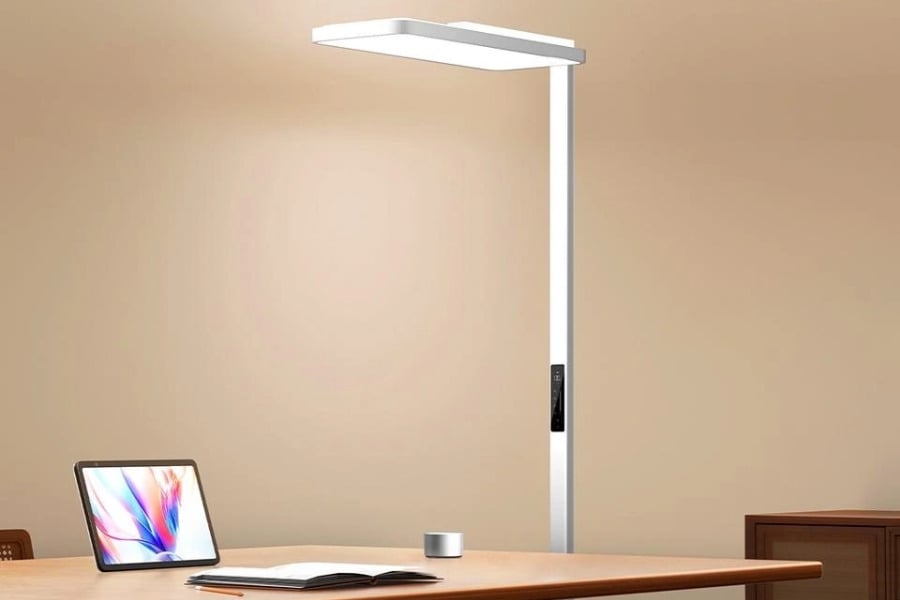
Xiaomi has introduced a new floor-standing desk lamp in China called the Xiaomi Mijia Vertical Study Lamp 2. It’s the company’s latest attempt to turn something as ordinary as a study light into a spec-heavy smart home product. So let’s walk through the details here.

Xiaomi Mijia Vertical Study Lamp 2 Specifications

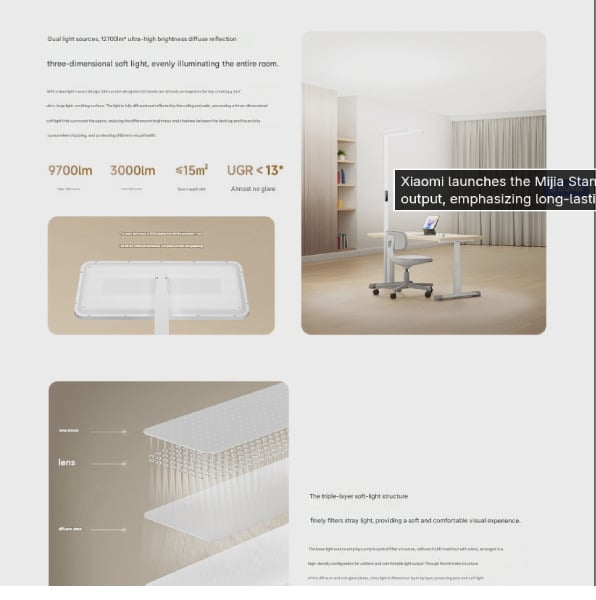
The lamp is designed for rooms up to 15 square meters, which makes it suitable for bedrooms or small home offices. Xiaomi says it uses long-lasting LED beads rated for up to 17 years of use. `

The company further claims the model boosts brightness by 27 percent compared to its predecessor. It delivers a total luminous flux of 12,700 lumens, with an average illuminance of over 1,800 lux in the central area. The uniformity in that center area is rated at 1.04.

The company also says the lamp produces almost no noticeable hand shadows under the light, something that could matter if you spend long hours writing or sketching at a desk.

Like many recent Xiaomi lighting products, the Study Lamp 2 focuses heavily on eye comfort. It supports anti-glare performance with a UGR rating below 13 and offers a high color rendering index of Ra98. The lamp also has a solar spectrum fitting coefficient above 0.985, which indicates that it simulates natural daylight more closely.

There’s also a smart layer. The lamp supports AI-based automatic dimming and can detect when someone is seated. It connects to the Mi Home app and works with Xiaomi’s broader smart ecosystem. Controls include touch interaction on the lamp post itself, as well as remote operation through the app and Xiaomi’s Super AI features.

The official price of the Xiaomi Mijia Vertical Study Lamp 2 is 2,499 yuan (~ $363). It is currently available at a launch price of 2,349 yuan (~ $350), with a national subsidy bringing the final price down to 1,996.65 yuan (~ $290).

For more daily updates, please visit our News Section.

Stay ahead in tech! Join our Telegram community and sign up for our daily newsletter of top stories.

The post Xiaomi unveils Vertical Study Lamp 2 with 17-year lifespan, 12700 lumens brightness appeared first on Gizmochina.

Apple iPhone 17e vs. Google Pixel 10a: Which one offers the best value?

Apple iPhone 17e vs Google Pixel 10a

Apple has just officially unveiled the iPhone 17e as its most accessible gateway into the ecosystem. In the same way, the Pixel 10a, which debuted last month, is an entry-level phone from Google. Here’s a comparison between the two to know which one offers the best value.

Apple iPhone 17e vs Google Pixel 10a

Design and Durability: Minimalist vs. Modern

The iPhone 17e sticks to a familiar blueprint, utilizing a design reminiscent of the iPhone 14. It features a 6.1-inch form factor with a notch, but Apple has upgraded the toughness with Ceramic Shield 2, which it claims is three times more scratch-resistant.

In contrast, the Pixel 10a introduces a radical shift in Google’s design language by featuring a completely flush dual-camera system, removing the signature “visor” bump. It is slightly larger with a 6.3-inch display and uses a matte composite back. While the iPhone feels more “premium” with its glass back, the Pixel’s flat design is arguably more modern.

Display: 60Hz vs. 120Hz

This is where the two devices diverge most sharply. The iPhone 17e remains capped at a 60Hz refresh rate, which may feel dated to power users in 2026. However, its Super Retina XDR panel is incredibly color-accurate and bright enough for most outdoor conditions at 1200 nits peak.

The Pixel 10a wins the spec war here with a 120Hz Actua display. It offers much smoother scrolling and animations, and its peak brightness hits a massive 3000 nits. If you consume a lot of media or play games, the Pixel’s smoother and brighter panel provides a clear hardware advantage.

Performance and AI

Under the hood, the iPhone 17e is a powerhouse, packing the same A19 chip found in the standard iPhone 17. Built on a 3nm process, it offers class-leading raw performance and efficiency. It is also the most affordable way to access Apple Intelligence, bringing features like Live Translation and Clean Up to a wider audience.

Google has taken a different route, equipping the Pixel 10a with the Tensor G4 rather than the flagship G5. While it lacks the raw benchmark scores of the A19, the G4 is optimized for Google’s Gemini AI. Features like Gemini Live and Magic Cue run natively, making the Pixel feel like a “smart” companion that anticipates your needs, backed by a staggering 7 years of OS updates.

Camera Comparison

The Apple iPhone 17e features a single 48-megapixel Fusion camera. While it lacks an ultrawide lens, Apple uses sensor cropping to offer an “optical-quality” 2x telephoto mode. Its strength lies in video recording (4K/60fps with Dolby Vision) and consistent natural skin tones.

On the other hand, the Pixel 10a offers a dual-setup with a 48-megapixel main and a 13-megapixel ultrawide sensor. This gives you more versatility for landscape shots. Google’s computational photography remains the gold standard for still images, especially with Night Sight and the new AI-powered editing tools.

Battery and Pricing

The Pixel 10a is a marathon runner with its 5100mAh battery and support for 45W wired charging. The iPhone 17e has a smaller 4005mAh battery, but iOS efficiency ensures it still lasts a full day. Notably, the 17e finally brings MagSafe to Apple’s budget line, a huge win for accessory fans.

In terms of pricing, the Pixel 10a starts at $499 for the 25GB version, while the iPhone 17e starts higher at $599, though Apple has doubled the base storage to 256GB this year.

The Verdict: Ecosystem vs. Value

Choosing between the iPhone 17e and the Pixel 10a ultimately comes down to whether you prioritize a refined, high-performance ecosystem or cutting-edge display and AI features at a lower price point.

The iPhone 17e is the “safe” and powerful choice. It offers the best-in-class A19 chip, ensuring that this phone will remain fast for years to come. If you are already tied to iMessage, iCloud, and Apple Watch, or if video quality is your top priority, the 17e is a massive upgrade over previous budget models. The addition of Apple Intelligence and the jump to 256GB base storage makes the higher price tag much easier to swallow.

On the other hand, the Pixel 10a is the clear winner for tech enthusiasts who want the best hardware for their money. Its 120Hz display makes the iPhone’s 60Hz screen look dated, and the inclusion of an ultrawide lens provides photographic flexibility that Apple’s single-sensor setup simply cannot match. If you want a phone that feels “smarter” with its deeply integrated Gemini AI and you prefer a smoother visual experience, the Pixel 10a is the superior value proposition in 2026.

For more daily updates, please visit our News Section.

Stay ahead in tech! Join our Telegram community and sign up for our daily newsletter of top stories

The post Apple iPhone 17e vs. Google Pixel 10a: Which one offers the best value? appeared first on Gizmochina.

Honor 600 Lite full specs revealed, has a 6520mAh battery, and Dimensity 7100 Elite chip

Honor-600-Lite-Specs-and-Price-Leak

Just days after details surfaced about the Honor 600, we’re now getting a full look at another member of the lineup, the Honor 600 Lite. German outlet WinFuture has published a batch of official-looking renders alongside a rundown of the phone’s core specs.

The information appears to originate from a listing by a Singapore-based retailer, suggesting the device may be close to launch.

The Honor 600 Lite will ship with 8GB of RAM and 256GB of internal storage. The listed price is 399 Singapore dollars, which roughly converts to around $315.

Honor 600 Lite Specifications

The renders show a fairly clean design with a pill-shaped notch on the front. On the right side of the frame, there’s a dedicated shutter button. Around the back, the camera module sits inside a rectangular bump that stands out slightly from the rear panel.

The Honor 600 Lite will be available in Velvet Black and Desert Gold options. The black version looks understated, while the gold model leans more toward a softer, muted finish.

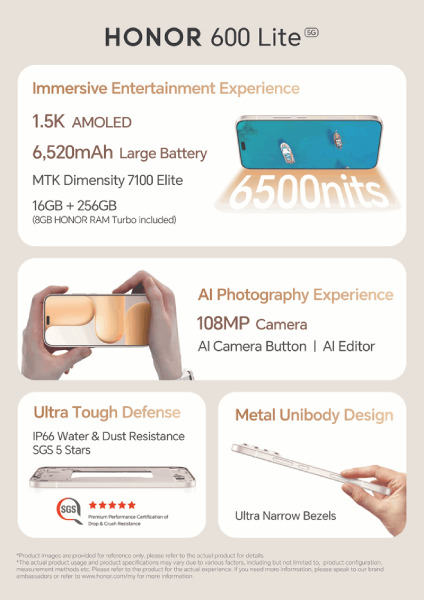
As for the display, the Honor 600 Lite is said to feature a 6.6-inch AMOLED panel with a resolution of 2600 x 1200. It’s rated for peak HDR brightness of 6,500 nits. It also reportedly carries an IP66 rating for water resistance.

Under the hood, the phone is expected to run on the MediaTek Dimensity 7100 Elite processor. Furthermore, the leak reveals a 6,250mAh battery paired with 45W wired charging support.

On the camera side, the front houses a 16-megapixel f/2.2 selfie camera. On the back, there’s a 10.8-megapixel f/1.75 main sensor and a 5-megapixel ultra-wide camera. There’s no telephoto lens, which isn’t surprising at this price point, but it does mean zoom capabilities will likely rely on digital cropping.

It’s not yet confirmed when Honor will announce this smartphone. However, its appearance in the retailer listing suggests that the launch isn’t too far off.

For more daily updates, please visit our News Section.

Stay ahead in tech! Join our Telegram community and sign up for our daily newsletter of top stories.

(Source)

The post Honor 600 Lite full specs revealed, has a 6520mAh battery, and Dimensity 7100 Elite chip appeared first on Gizmochina.

OnePlus 15T’s first real-life image reveals ultra-thin bezels on all four sides

OnePlus 15T (left) and IPhone 17 Pro (right)

The OnePlus 15T compact flagship phone is poised to launch this month in China. Ahead of its debut, OnePlus China President Li Jie has shared the first real-life image of the device, highlighting the ultra-thin bezels the 15T is expected to feature.

OnePlus 15T’s ultra-thin bezels revealed

OnePlus 15T (left) and IPhone 17 Pro (right)

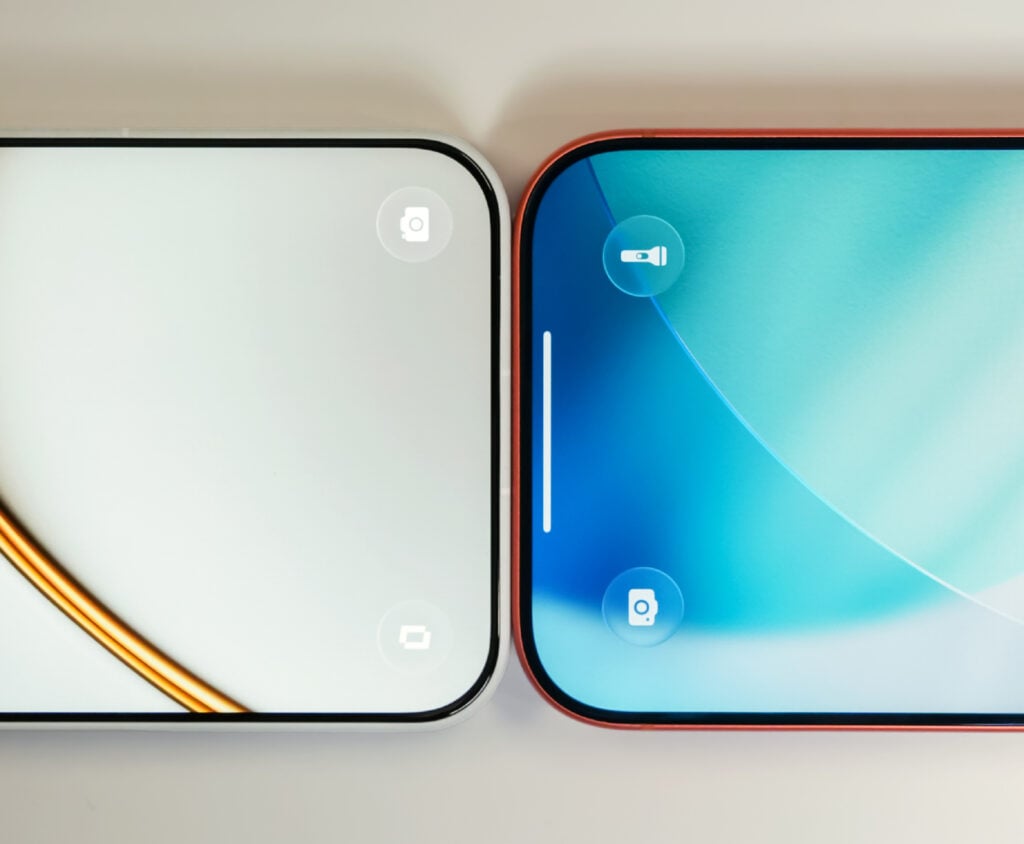
In the shared image, the OnePlus 15T is placed on the left, while the Apple iPhone 17 Pro appears on the right. The executive stated that the 15T will feature the visually narrowest bezels on a compact phone. He hinted that the bezel size is around 1.xx mm without revealing the exact figure. In comparison, the iPhone 17 Pro is said to have 1.44mm bezels.

He added that this achievement was made possible due to a brand-new chip-level packaging system and a series of groundbreaking screen packaging technologies developed in-house by the company. Yesterday, the same executive confirmed that the 15T will have a periscope telephoto camera and offer an enhanced battery life.

OnePlus 15T specifications (rumored)

According to reports, the OnePlus 15T could feature a 6.32-inch OLED display offering a 1.5K resolution, a 165Hz refresh rate, and an ultrasonic in-display fingerprint sensor. For selfies, it may include a 32-megapixel front camera.

The rear camera setup may either include a 200-megapixel Samsung HP5 primary sensor or a 50-megapixel Sony IMX906 primary camera, paired with a 50-megapixel Samsung JN5 periscope telephoto camera. The device is unlikely to feature an ultra-wide camera.

Under the hood, the 15T could be powered by the Snapdragon 8 Elite Gen 5 chipset and pack a battery with a capacity of around 7,500mAh. It may support 100W wired charging and 50W wireless charging. The device is also expected to include a Plus Key and feature an IP68/69-rated dustproof and water-resistant chassis.

For more daily updates, please visit our News Section.

Stay ahead in tech! Join our Telegram community and sign up for our daily newsletter of top stories

The post OnePlus 15T’s first real-life image reveals ultra-thin bezels on all four sides appeared first on Gizmochina.

Xiaomi 18 Pro, 18 Pro Max may sport dual 200MP cameras, Xiaomi 18 may get 200MP periscope zoom lens

Xiaomi 18 render

Xiaomi is reportedly working on the Xiaomi 18 lineup for the Chinese market. So far, the lineup is expected to include the Xiaomi 18, 18 Pro, 18 Pro Max, and 18 Ultra. The Ultra edition may debut by the end of this year, whereas the other three models may go official in September in China. A new leak, courtesy of tipster Digital Chat Station, has revealed that the entire lineup will feature a 200-megapixel camera.

Xiaomi 18’s entire lineup to feature 200MP cameras

The new leak suggests that the current engineering samples of the entire Xiaomi 18 series are equipped with a 200-megapixel camera backed by a large 1/1.28-inch sensor. The tipster added that this generation is said to feature a dual 200-megapixel imaging system, described internally as a landmark upgrade for the brand’s camera capabilities.

As per previous reports, the Xiaomi 18 Pro and 18 Pro Max may both sport dual 200-megapixel cameras in their rear setup. These could be used for the primary and periscope telephoto cameras.

The standard Xiaomi 17 has a telephoto camera in its rear camera setup. However, rumors surrounding the Xiaomi 18 suggest that it will be equipped with a periscope telephoto camera. Related rumors also suggest that the Xiaomi 18’s periscope telephoto camera will feature a 200-megapixel sensor.

Xiaomi 18 render
Xiaomi 18 render

Speaking of the standard Xiaomi 18, it may arrive with a slight increase in display size, reaching 6.4 inches compared to 6.3 inches on the Xiaomi 17. As far as the chipset is concerned, the Xiaomi 18, 18 Pro, and 18 Pro Max are all expected to feature the Snapdragon 8 Elite Gen 6 chip. Likely, the Xiaomi 18 Ultra could be equipped with the more powerful Snapdragon 8 Elite Gen 6 Pro SoC.

For more daily updates, please visit our News Section.

Stay ahead in tech! Join our Telegram community and sign up for our daily newsletter of top stories

The post Xiaomi 18 Pro, 18 Pro Max may sport dual 200MP cameras, Xiaomi 18 may get 200MP periscope zoom lens appeared first on Gizmochina.

Snapdragon Wear Elite brings 3nm power and on-device AI to Wear OS

Snapdragon Wear Elite

At MWC 2026, Qualcomm introduced the Snapdragon Wear Elite platform, signalling a fresh push into premium wearable silicon. The new chip is aimed at upcoming Wear OS smartwatches, including future Galaxy Watch models, while also expanding into AI-driven wearable devices. It marks a clear shift in Qualcomm’s wearable strategy toward stronger performance and deeper on-device intelligence.

Snapdragon Wear Elite: A 3nm platform focused on performance and AI

Snapdragon Wear Elite

The Snapdragon Wear Elite is built on a 3nm process and adopts a big.LITTLE architecture for the first time in Qualcomm’s wearable lineup. It features a single prime core clocked at 2.1GHz alongside four efficiency cores running at 1.95GHz. Compared to the earlier Snapdragon W5+ Gen 2, Qualcomm claims up to five times better single-core CPU performance, which should translate into faster app launches, smoother multitasking and quicker boot times.

Graphics performance also sees a notable jump, with the Adreno GPU delivering up to seven times higher peak frame rates and support for 1080p at 60fps. A dedicated Hexagon NPU enables on-device AI models with up to two billion parameters, supporting use cases such as real-time transcription, contextual recommendations, voice interaction and AI agents. An additional low-power AI engine handles always-on tasks like keyword detection and activity recognition without heavily impacting battery life.

Qualcomm says devices powered by Snapdragon Wear Elite can offer up to 30 percent longer usage compared to the previous generation. Fast charging support allows compatible watches with 300 to 600mAh batteries to reach 50 percent charge in around 10 minutes at 9V.

On connectivity, the chip integrates Wi-Fi 802.11ax, Bluetooth 6.0, UWB, GNSS, 5G RedCap and NB-NTN satellite support. Micro-power Wi-Fi enables lower energy consumption for continuous syncing, while UWB opens up secure unlock and proximity-based features. Qualcomm expects the first commercial devices running Snapdragon Wear Elite to arrive in the coming months, with partners including Google and Samsung onboard.

For more daily updates, please visit our News Section.

Stay ahead in tech! Join our Telegram community and sign up for our daily newsletter of top stories

The post Snapdragon Wear Elite brings 3nm power and on-device AI to Wear OS appeared first on Gizmochina.

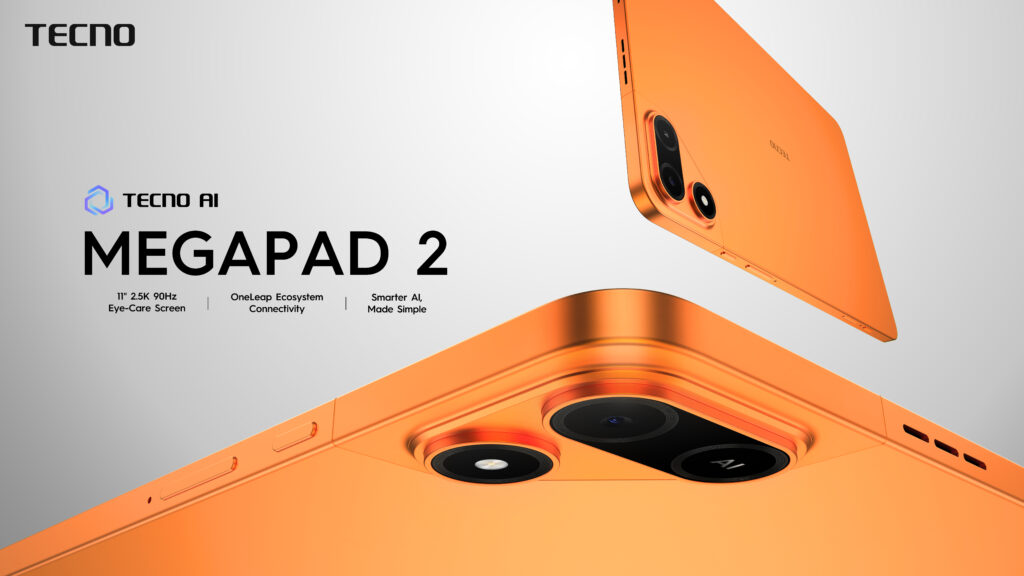
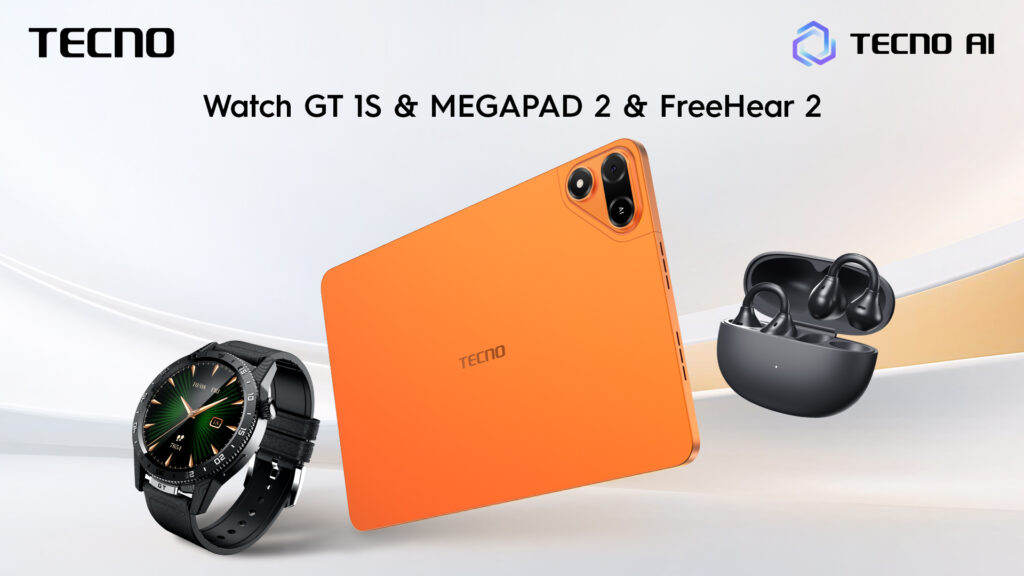
TECNO MEGAPAD 2, Watch GT 1S, and FreeHear 2 Go Official with OneLeap Platform

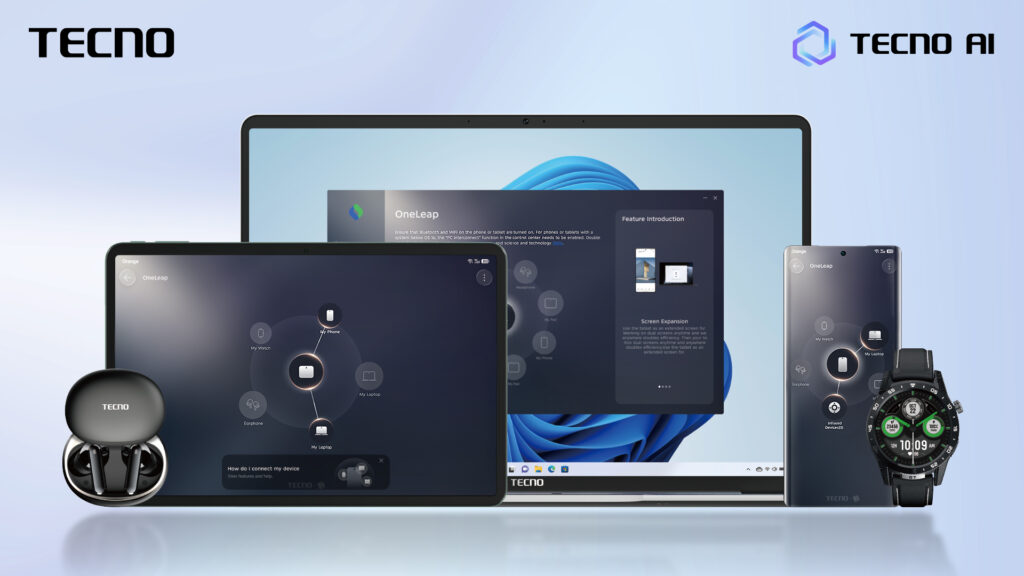
At Mobile World Congress 2026, TECNO announced an upgrade to its AIoT ecosystem. The update is built around TECNO OneLeap, a new interconnection platform that connects smartphones, tablets, PCs, and other smart devices. The company also introduced three new products: the MEGAPAD 2 AI tablet, the Watch GT 1S smartwatch, and the FreeHear 2 open-ear earbuds.

TECNO OneLeap is designed to make multi-device use simple. Devices are discovered automatically and can be connected with a single drag or tap. There is no need for repeated logins or complex setup. Discovery, connection, management, and cross-device interaction are handled in one unified interface.

OneLeap supports three-device collaboration across smartphones, tablets, and PCs at the same time. Trusted devices reconnect automatically. With Keyboard and Mouse Sharing, users can control three screens using one keyboard and mouse. A unified clipboard allows instant sharing of text and files. Images copied on a smartphone can be pasted directly into documents on a tablet or laptop. These tools are built to improve workflow across multiple screens.

The platform also offers flexible display options. A smartphone can mirror to a laptop, while a tablet works as an extended PC display. This enables a three-screen setup. In Phone Widescreen Extension mode, optimized for tablet screen ratios, smartphone and tablet activities stay independent so users can multitask without interruption.

OneLeap also supports real-time, face-to-face translation in more than 160 languages when paired with TECNO audio devices. Translated speech plays through earbuds instantly, and transcripts are saved on the phone for later reference.

The MEGAPAD 2 features an 11-inch 2.5K display with a 90Hz refresh rate and TÜV Low Blue Light certification. It has a 6.6mm ultra-slim body and runs on HiOS. AI Problem Solving supports independent learning and allows parents to guide children. AI Translation works in up to 140 languages across images, calls, videos, and meetings. AI document summary and writing refinement tools support light study and everyday tasks. Through OneLeap, it supports file sharing and PC screen extension.

The Watch GT 1S includes dual-band L1 and L5 high-precision GPS and motion sensors for stable tracking in urban and remote areas. It monitors heart rate, blood oxygen, stress, and sleep. The battery lasts up to 15 days. It has 5ATM water resistance. AI watch faces can be created using image-to-image or text-to-image customization.

The FreeHear 2 weighs 5.4g per earbud and uses a C-bridge clip design for a secure and natural fit. It features a 10.8mm dual-magnetic dynamic driver for spatial audio. Total battery life reaches up to 46 hours. A five-minute charge provides more than one hour of playback.

The MEGAPAD 2, Watch GT 1S, and FreeHear 2 will roll out in selected global markets during Q1 and Q2 2026. Pricing and regional specifications will be announced at local launches.

Don’t miss a thing! Join our Telegram community for instant updates and grab our free daily newsletter for the best tech stories!

For more daily updates, please visit our News Section.

The post TECNO MEGAPAD 2, Watch GT 1S, and FreeHear 2 Go Official with OneLeap Platform appeared first on Gizmochina.

TCL unveils CrystalClip open-ear earbuds with Swarovski special edition

TCL CrystalClip

TCL has launched the CrystalClip, a new pair of open-ear, clip-on earbuds designed for comfort, functionality, and style. The company also revealed a special Swarovski edition of the earbuds, which incorporates a detachable crystal accessory for a touch of elegance.

TCL CrystalClip

TCL CrystalClip Specifications

The CrystalClip earbuds use a lightweight, clip-on design to provide a comfortable fit for users who don’t want the intrusive feel of in-ear models. Each earbud weighs just 5.5 grams and features a titanium-reinforced arch bridge for flexibility and durability.

The earbuds include 10.8 mm dual-magnetic dynamic drivers, which TCL claims deliver rich, detailed sound and enhanced bass. The earbuds also support 3D Spatial Audio, which adds depth to music, gaming, and movies. For phone calls, the earbuds use dual-mic AI-powered ENC (Environmental Noise Cancelation) to ensure clear voice quality while reducing background noise.

TCL CrystalClip
TCL CrystalClip

The earbuds support up to 36 hours of battery life with the charging case, offering 8 hours of playback on a single charge. TCL says users can get 3 hours of playback after just 15 minutes of charging. The earbuds also have IPX4 sweat and splash resistance, ensuring they can handle workouts and light rain.

TCL has added customizable touch controls to the CrystalClip earbuds for music, calls, and voice assistants, along with real-time translation when paired with TCL smartphones.

TCL CrystalClip

The special edition CrystalClip earbuds come with a detachable accessory shaped like a rose made with Swarovski crystals. TCL says the crystal accessory can be clipped to the earbuds or worn separately as a decorative piece on bags, hats, or even styled into hair.

Pricing and Availability

TCL will release the standard CrystalClip earbuds in February 2026 for €79. The Swarovski edition will launch in Q2 2026 for €149. Both models will be available in Asia-Pacific, Europe, and North America.

For more daily updates, please visit our News Section.

Stay ahead in tech! Join our Telegram community and sign up for our daily newsletter of top stories! 💡

The post TCL unveils CrystalClip open-ear earbuds with Swarovski special edition appeared first on Gizmochina.

Anker launches Soundcore Boom Go 3i portable speaker in Europe

Anker Soundcore Boom Go 3i

Anker has launched the Soundcore Boom Go 3i Bluetooth speaker in European markets. The portable speaker, already available in the US for $79.99, is now on sale in the UK and Germany for £59.99 and €69.99. Anker announced the product at MWC 2026 as part of its Soundcore lineup, which also includes the new Space 2 noise-canceling headphones.

Anker Soundcore Boom Go 3i

Soundcore Boom Go 3i Specifications

The Soundcore Boom Go 3i is an outdoor speaker with IP68 water resistance, drop protection for falls up to one meter, and a compact yet durable design. It features a 15W driver delivering up to 92dB peak volume and uses BassUp 2.0 technology to enhance low-frequency output for punchy bass.

The speaker offers up to 24 hours of battery life and features an LED indicator for real-time power levels. It also functions as a power bank, capable of charging devices like smartphones, with internal tests showing it charged an iPhone 17 from 0% to 40% in one hour.

Anker added LED lighting that syncs with music, featuring six reactive light modes and eight ambient options, customizable through the Soundcore app.

Anker Soundcore Boom Go 3i

The Boom Go 3i supports Auracast Bluetooth technology for improved connectivity and device pairing. It allows users to connect multiple devices simultaneously or pair two speakers for stereo sound. The speaker also includes a 92dB emergency alarm that helps users signal for help in outdoor scenarios.

The speaker is available in four colors: Black, Beige, Blue, and Pink. Its compact design and dual-slot silicone strap provide flexibility for carrying or attaching it to backpacks or bikes.

For more daily updates, please visit our News Section.

Stay ahead in tech! Join our Telegram community and sign up for our daily newsletter of top stories! 💡

The post Anker launches Soundcore Boom Go 3i portable speaker in Europe appeared first on Gizmochina.

Anker unveils Soundcore Space 2 headphones with improved ANC & 70h battery

Soundcore Space 2

At MWC 2026, Anker has announced the Soundcore Space 2, a pair of over-ear noise-canceling headphones designed for travel and everyday use. The headphones come in three colors: Cream White, Jet Black, and Sage Green.

Soundcore Space 2

Soundcore Space 2 Specifications

The Soundcore Space 2 headphones include advanced 4-stage active noise cancellation (ANC) that reduces low-frequency sounds like airplane engines, subway noise, and other background disturbances. The headphones weigh 261 grams, and the earcup design has been updated for a sleek, unified appearance.

The Soundcore Space 2 headphones improve on the Space One with better battery life, upgraded noise cancellation, and a lighter design. The Space 2 delivers up to 50 hours of playback with ANC on and 70 hours with ANC off, compared to the Space One’s 40 hours and 55 hours, respectively.

It also features fast charging, and a 5-minute quick charge provides up to 4 hours of playback, making the Space 2 a practical option for users in a hurry.

Soundcore Space 2

Anker has used soft memory foam padding to ensure comfort during long listening sessions. The ergonomic design has been tested with over 2,000 real head profiles for an optimal fit, according to the company.

The headphones feature 40mm double-layer diaphragm drivers and support Hi-Res Audio and LDAC, delivering high-quality sound with up to three times the data transmission rate of standard Bluetooth codecs. LDAC is only compatible with Android devices and can be enabled through the Soundcore app.

Pricing and Availability

The Soundcore Space 2 will launch globally on April 21, 2026, through Amazon and Soundcore.com. The headphones will cost $129.99 in the United States, £129.99 in the UK, and €129.99 in Europe.

In related news, you can also check out our roundup on the best wireless earbuds under $100.

For more daily updates, please visit our News Section.

Stay ahead in tech! Join our Telegram community and sign up for our daily newsletter of top stories! 💡

The post Anker unveils Soundcore Space 2 headphones with improved ANC & 70h battery appeared first on Gizmochina.

TCL CSOT Introduces Super Pixel Displays and 8.6-Gen Printed OLED Plans at MWC 2026

TCL

TCL CSOT is at Mobile World Congress in Barcelona, showing off display tech focused on efficiency over higher resolution. The TCL Technology subsidiary is presenting Super Pixel technology for phones alongside progress in fine-metal-mask OLED, inkjet-printed OLED, and MLED under its APEX brand.

TCL

Super Pixel changes how pixels are arranged rather than cramming in more of them. TCL CSOT boosts sub-pixel count by 1.8% to match WQHD SPR sharpness while cutting power use up to 25% through better data processing. The Real RGB layout needs less bandwidth than SPR, pushing refresh rates up to 40% higher.

The real bet is on inkjet-printed OLED manufacturing. TCL CSOT says it spent over a decade on IJP OLED research and started mass production from its G5.5 line in Wuhan in November 2024. Construction kicked off on October 21, 2025 on an 8.6-generation facility in Guangzhou after a $4.15 billion investment. Inkjet printing puts down OLED materials without masks and cuts contamination, but scaling it up is hard because of issues with drying control, production speed, and material limits compared to vacuum evaporation.

TCL CSOT is showing concept hardware to prove what printed OLED can do: a 28-inch tri-fold monitor with a 1.8mm folding radius and 4.48mm profile, plus a 14-inch laptop panel that’s 0.77mm thick and weighs 77 grams.

The timing matters because competition for large OLED production is heating up. Samsung Display’s Gen-8.6 FMM tandem OLED line could hit mass production in Q2 2026, with panels headed to Apple MacBook Pro models. TCL CSOT is taking a different route with printed OLED to reach the same IT display market.

TCL CSOT is exhibiting March 2 to 5 at Fira Gran Via, Hall 2, Stand 2M30, during the GSMA show in L’Hospitalet de Llobregat.

For more daily updates, please visit our News Section.

Stay ahead in tech! Join our Telegram community and sign up for our daily newsletter of top stories!

The post TCL CSOT Introduces Super Pixel Displays and 8.6-Gen Printed OLED Plans at MWC 2026 appeared first on Gizmochina.

Xiaomi’s HyperOS 3.1 update is ready for release, testing phase completed

HyperOS 3.1 beta testing

Xiaomi has announced that it has completed the official testing phase for the highly anticipated HyperOS 3.1 stable update, bringing a major Android 16-based software refresh closer to a public rollout. So here’s everything you need to know.

Xiaomi HyperOS 3.1 Update is Ready

According to a XiaomiTime report, the OS3.0.301.0 builds, which are the final stable build of HyperOS 3.1, have reached release-ready status. So we can expect the official rollout to kick off soon. This news arrives after weeks of beta testing and marks a key step forward for Xiaomi. Up until recently, the Chinese tech giant was busy rolling out the HyperOS 3 update for more devices, and now we are getting its next evolution.

HyperOS 3.1 beta testing
Xiaomi HyperOS 3.1

What HyperOS 3.1 Promises

Although Xiaomi hasn’t published a full changelog alongside the stable readiness announcement, the broader HyperOS 3.1 update is known to be based on Android 16 and brings a blend of UI enhancements, smarter system behaviour, ecosystem connectivity improvements, and optimisations over the base HyperOS 3 release.

Based on our earlier report, HyperOS 3.1 is expected to bring a bunch of features that include:

  • Smarter UI elements and refined animations for smoother overall navigation.
  • Cross-device ecosystem upgrades, making interaction between Xiaomi devices and other platforms more seamless.
  • Polished system stability and performance improvements compared to earlier builds.

Brand-new models like the Xiaomi 17 series and the Redmi K90 lineup are expected to be among the first wave of devices to receive this update. The official rollout schedule should be revealed soon, so stick around for more. In the meantime, you can click here to check out every new feature, changes, and the full eligible device list.

For more daily updates, please visit our News Section.

Tech enthusiast? Get the latest news first! Follow our Telegram channel and subscribe to our free newsletter for your daily tech fix! ⚡

The post Xiaomi’s HyperOS 3.1 update is ready for release, testing phase completed appeared first on Gizmochina.

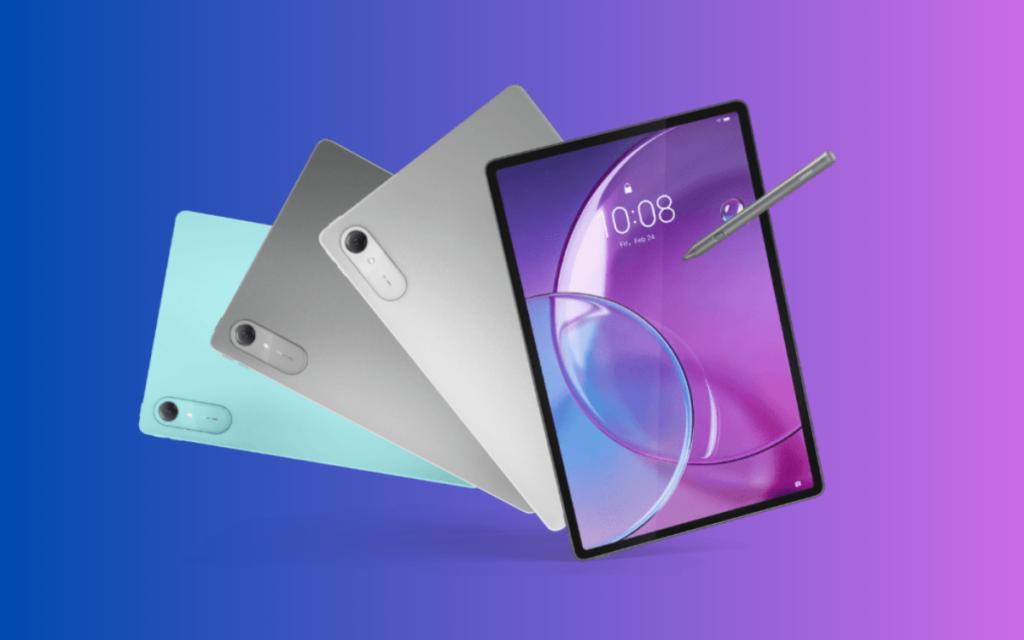
Lenovo launches Idea Tab Pro Gen 2 with a 13″ 3.5K display, Snapdragon 8s Gen 4 & 10200mAh battery

Lenovo Idea Tab Pro Gen 2

Lenovo has officially unveiled the Idea Tab Pro Gen 2 at the Mobile World Congress (MWC) 2026 in Barcelona. Let’s check out its specifications and pricing details.

Lenovo Idea Tab Pro Gen 2

Lenovo Idea Tab Pro Gen 2 Specifications

The Idea Tab Pro Gen 2 features a 13-inch 3.5K PureSight Pro display with Dolby Vision, a 144Hz refresh rate, up to 800 nits peak brightness, and 99% DCI-P3 color coverage for sharp visuals and vibrant colors. Lenovo also offers an optional matte anti-glare version designed to reduce reflections.

Under the hood, the tablet is powered by the Qualcomm Snapdragon 8s Gen 4 processor with an Octa-Core CPU (up to 3.2 GHz) and Adreno 825 GPU. It offers up to 12 GB RAM, 512 GB storage, and supports up to 2 TB expandable storage via microSD.

The Idea Tab Pro Gen 2 runs on Android 16 out of the box and is guaranteed to receive upgrades up to Android 18, alongside four years of security patches.

The tablet features a 13 MP rear camera with autofocus for sharp photos and videos, and an 8 MP front camera for high-quality video calls and selfies. Lenovo has packed a massive 10,200mAh battery into the tablet. It supports 45W rapid charging.

The Idea Tab Pro Gen 2 boasts a slim and lightweight design, measuring just 6.20mm thick and weighing under 600g, making it highly portable. It features a JBL quad-speaker system with Dolby Atmos for an immersive audio experience. Lenovo also offers a 2-in-1 keyboard case with a dedicated Smart Key, enabling quick access to AI-powered features like text generation and translation.

Lenovo Idea Tab Pro Gen 2

Pricing and Availability

The Lenovo Idea Tab Pro Gen 2 will be available in three fresh colors: Luna Grey, Cloud Grey, and Jelly Mint. It is priced starting at €549 and is set to launch in March 2026.

In related news, Lenovo has also introduced the Legion Tab Gen 5 at MWC, featuring an 8.8-inch 3K 165Hz display, the Snapdragon 8 Elite Gen 5 chipset, and a 9,000mAh battery.

For more daily updates, please visit our News Section.

Stay ahead in tech! Join our Telegram community and sign up for our daily newsletter of top stories! 💡

The post Lenovo launches Idea Tab Pro Gen 2 with a 13″ 3.5K display, Snapdragon 8s Gen 4 & 10200mAh battery appeared first on Gizmochina.

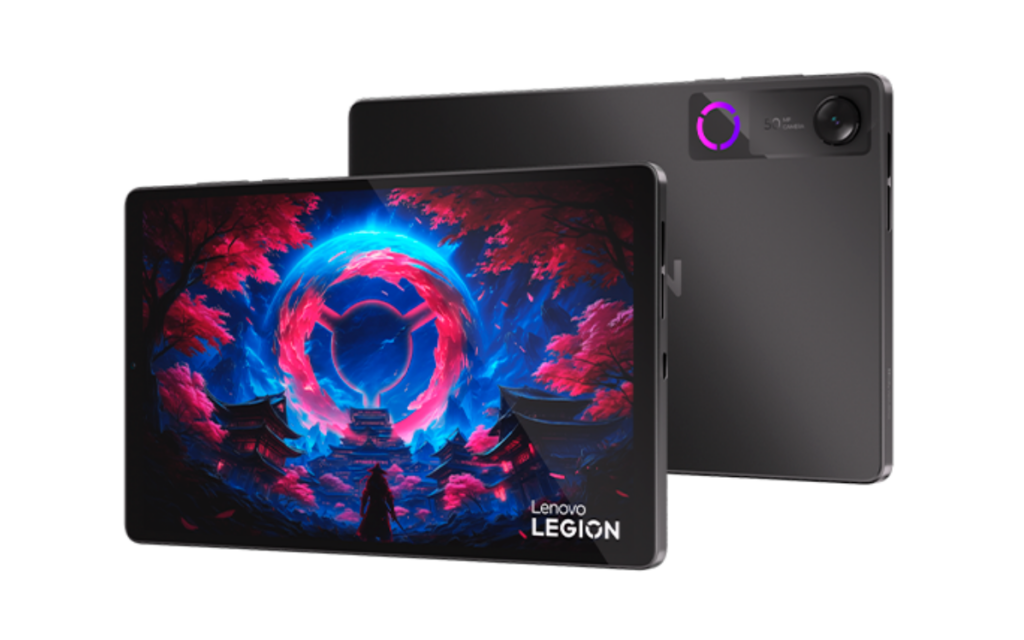
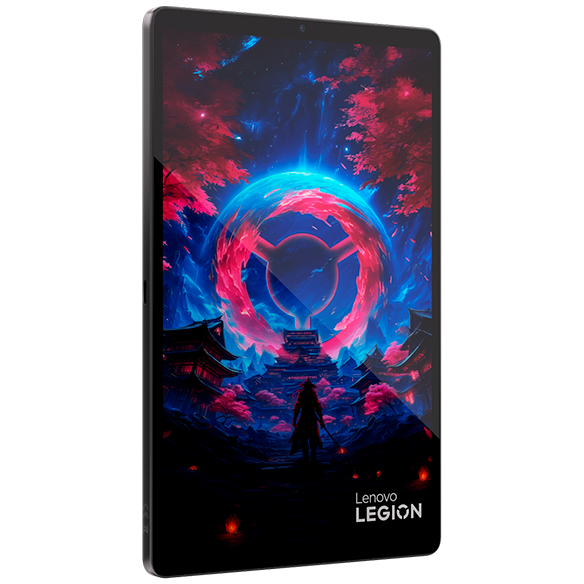
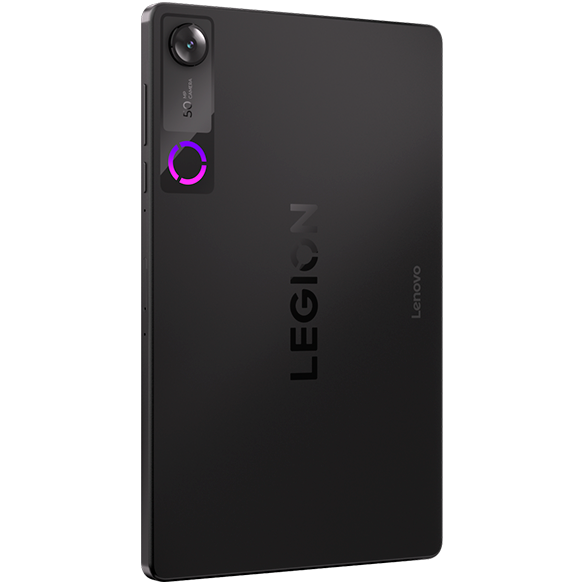
Lenovo Legion Tab Gen 5 debuts with 8.8″ 3K 165Hz display, Snapdragon 8 Elite Gen 5 & 9000mAh battery

Lenovo Legion Tab Gen 5

Lenovo has officially announced the Legion Tab Gen 5 at MWC 2026, a high-performance gaming tablet designed for serious mobile gamers. Let’s check out its key specs and pricing details.

Lenovo Legion Tab Gen 5

Lenovo Legion Tab Gen 5 Specifications

The Legion Tab Gen 5 features an 8.8-inch 3K LCD display with a resolution of 3040 x 1904 pixels, a 16:10 aspect ratio, and 408 PPI for sharp visuals. It offers a 165Hz variable refresh, a 144Hz touch sampling rate, and 750 nits peak brightness with HDR10 and 98% DCI-P3 color gamut support.

Under the hood, the tablet is powered by the Qualcomm Snapdragon 8 Elite Gen 5 chipset, built on a 3nm process. It comes with up to 16GB of LPDDR5T RAM and 512GB of UFS 4.1 Pro storage. To complement this raw power, it features Legion Coldfront Vapor cooling system with a vapor chamber, improving heat dissipation by 32%.

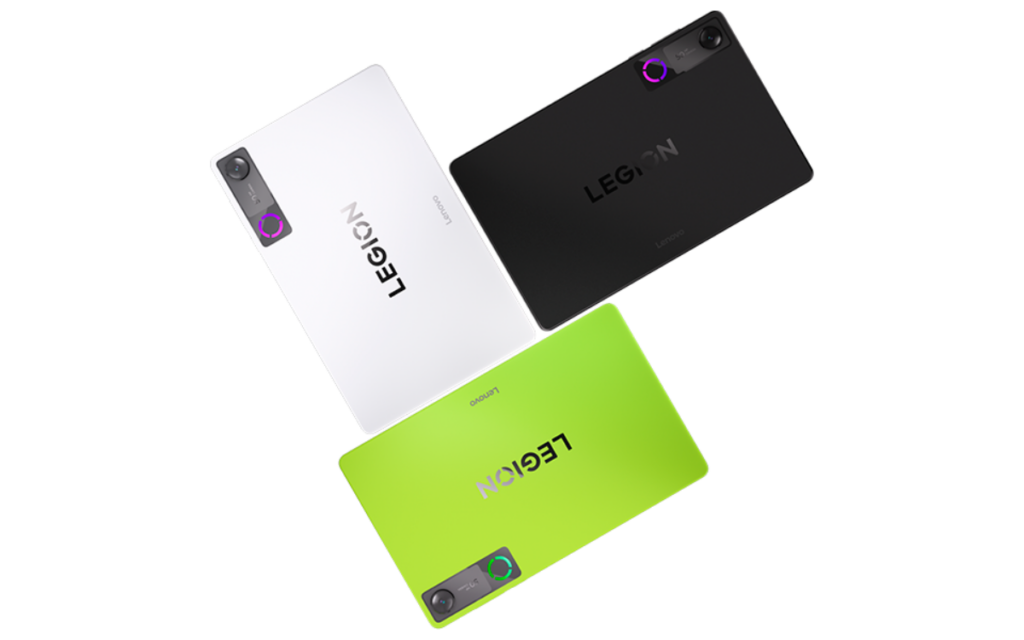
Lenovo Legion Tab Gen 5

The tablet runs on Android 16, optimized for gaming and multitasking, with Lenovo’s AI Engine+ enhancing the experience through improved in-game sound, AI-powered noise cancellation for voice chats, and AI-driven touch sensitivity optimization.

The Legion Tab is equipped with a 50MP rear camera and a 50MP front-facing camera. For power, it features a 9000mAh battery with 68W fast charging support.

The tablet is lightweight and portable at 360g with dimensions of 206.5 x 128.5 x 7.6 mm. It includes two USB-C ports for charging and peripherals, supports Wi-Fi 7, Bluetooth 6.0, and USB-C audio.

Lenovo Legion Tab Gen 5

Pricing and Availability

The Lenovo Legion Tab will be available in Eclipse Black, Glacier White, and Fifa Edition color options. It is priced at €999 for the base model in Europe and will be available starting April 2026.

The tablet will also launch in China as the Legion Y700 (2026) later this month. Availability in other markets, including Africa and the Middle East, is expected to follow soon.

For more daily updates, please visit our News Section.

Stay ahead in tech! Join our Telegram community and sign up for our daily newsletter of top stories! 💡

The post Lenovo Legion Tab Gen 5 debuts with 8.8″ 3K 165Hz display, Snapdragon 8 Elite Gen 5 & 9000mAh battery appeared first on Gizmochina.

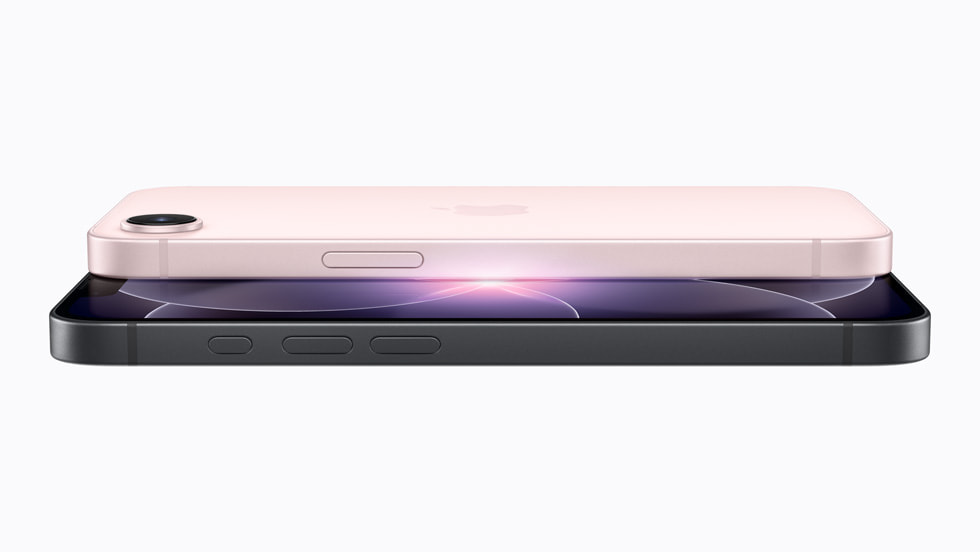
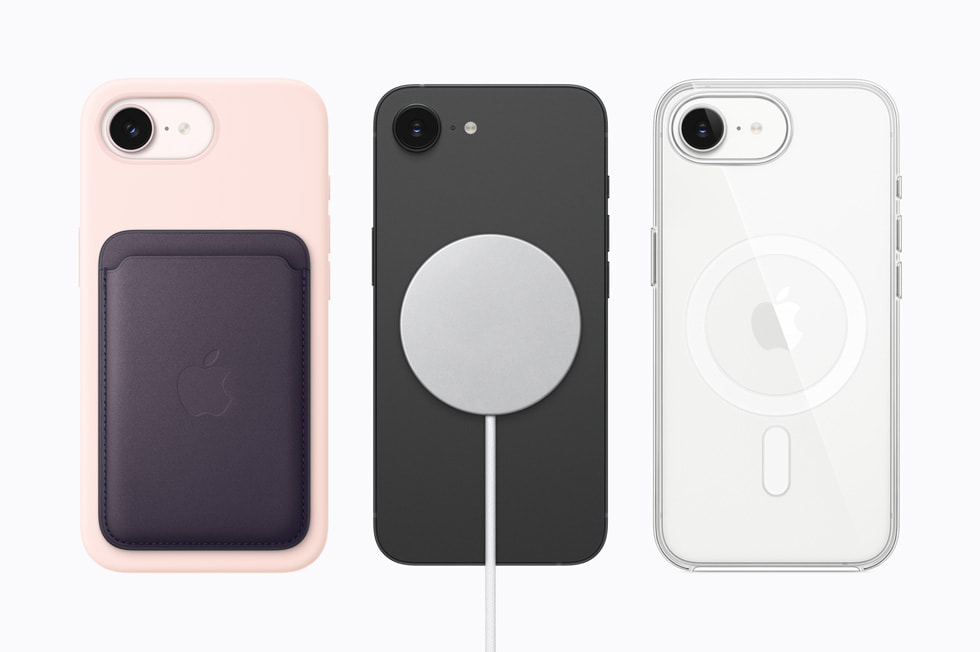
Apple launches iPhone 17e with A19 chip, 48MP Fusion camera & MagSafe

iPhone-17e

Apple has launched its latest smartphone, the iPhone 17e, the successor to the iPhone 16e. The device was unveiled alongside the iPad Air 2026 models, offering advanced features, improved durability, and double the starting storage at an accessible price.

iPhone 17e

iPhone 17e Specifications

The iPhone 17e features a 6.1-inch Super Retina XDR OLED display, offering exceptional clarity with a resolution of 2532 x 1170 pixels and a pixel density of 460 ppi. It supports HDR and True Tone for lifelike colors and boasts up to 1200 nits of peak brightness. The screen is protected by Ceramic Shield 2, which provides three times better scratch resistance than its predecessor and includes an anti-reflective coating.

Under the hood, the device is powered by the 3nm A19 chip, featuring a 6-core CPU, 4-core GPU, and a 16-core Neural Engine. This delivers twice the performance of the iPhone 11, enabling smooth multitasking, console-level gaming, and enhanced AI capabilities.

The iPhone 17e runs on iOS 26 and features a Liquid Glass design and enhanced Apple Intelligence, including Live Translation and Call Screening.

iPhone 17e

For photography, the iPhone 17e features a 48MP Fusion camera with f/1.6 aperture, optical image stabilization, 2x telephoto zoom, and the Photonic Engine for enhanced quality. It supports HDR video with Dolby Vision at 4K 60 fps, Slo-Mo at 1080p 240 fps. On the front, it features a 12MP TrueDepth lens which offers f/1.9 aperture, autofocus, and Dolby Vision HDR video up to 4K 60 fps.

For power, the iPhone 17e features fast USB-C charging, reaching 50% in 30 minutes, and upgraded 15W wireless charging with MagSafe and Qi2.

iPhone 17e

The iPhone 17e is built with aerospace-grade aluminum and is IP68-rated for water and dust resistance. It also includes Face ID for secure authentication and an Action Button for customizable shortcuts. Connectivity options include 5G, Wi-Fi 7, and Bluetooth 5.3.

Pricing and Availability

The iPhone 17e is available in three elegant colors: black, white, and a new soft pink. It starts at $599 for the 256GB model, with a 512GB variant priced at $799.

Pre-orders begin on March 4, with availability starting March 11 in over 70 countries, including the United States.

For more daily updates, please visit our News Section.

Stay ahead in tech! Join our Telegram community and sign up for our daily newsletter of top stories! 💡

The post Apple launches iPhone 17e with A19 chip, 48MP Fusion camera & MagSafe appeared first on Gizmochina.

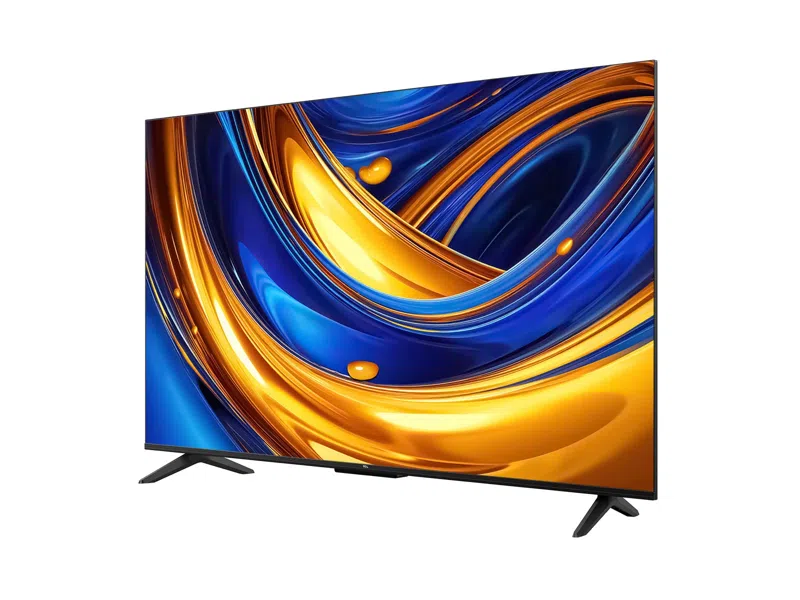
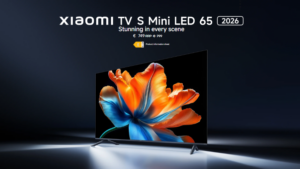
Xiaomi TV S Mini LED 2026 lineup launches in Europe with 4K, 1200 nits brightness, up to 144Hz refresh rate

Xiaomi has expanded its smart TV lineup in Europe with the launch of the TV S Mini LED 2026 series. The new range brings Mini LED backlighting, high refresh rates, and Google TV integration to several price tiers, starting well below many established premium brands.

The lineup covers five sizes: 55, 65, 75, 85, and 98 inches. All models offer 4K resolution (3840 × 2160) with a peak brightness rated at up to 1,200 nits. Xiaomi claims 94% DCI-P3 color coverage, along with support for HDR10+ and HLG. Dolby Vision is available on the 85-inch and 98-inch versions.

Refresh rate varies depending on size. The 55-inch, 65-inch, and 75-inch models use 120Hz panels, while the 85-inch and 98-inch step up to 144Hz. That higher refresh rate makes the larger models more appealing for console gaming or PC setups.

Audio is handled by dual 15W speakers with Dolby Atmos support. Like previous Xiaomi TVs, the software experience is built around Google TV, which means access to major streaming platforms, Chromecast built-in, and Apple AirPlay compatibility.

Connectivity also differs slightly by size. The smaller models include Wi-Fi 5, Bluetooth 5.0, two HDMI 2.0 ports, and one HDMI 2.1. The 85-inch and 98-inch versions upgrade to Wi-Fi 6, Bluetooth 5.2, and three HDMI 2.1 ports — a more future-ready configuration for multiple high-bandwidth devices.

Pricing and availability:

The new lineup is already listed on Xiaomi’s official online stores in countries including the Netherlands, Spain, Italy, and Germany. There’s no confirmation yet on UK availability, though Xiaomi’s broader European rollout suggests additional markets could follow.

Pricing currently starts at €549 for the 55-inch model. The 65-inch comes in at €749, followed by €949 for the 75-inch. The larger 85-inch variant is priced at €1,399, while the 98-inch tops out at €2,199.

Don’t miss a thing! Join our Telegram community for instant updates and grab our free daily newsletter for the best tech stories!

For more daily updates, please visit our News Section.

(Sources: 1, 2, 3, 4, 5)

The post Xiaomi TV S Mini LED 2026 lineup launches in Europe with 4K, 1200 nits brightness, up to 144Hz refresh rate appeared first on Gizmochina.

Apple launches iPad Air (2026) 11″ and 13″ with M4 chip

Apple-iPad-Air-2026

Apple has introduced the latest iPad Air 8th Gen (2026), powered by the advanced M4 chip. It comes in two sizes: 11 inches and 13 inches, offering improved performance, enhanced AI capabilities, and premium features. It maintains the same starting price as the previous model. Here’s everything you need to know about Apple’s latest iPad Air lineup.

iPad Air (2026)

iPad Air (2026) Specifications

The new iPad Air features Liquid Retina displays in 11-inch (2360 x 1640 resolution) and 13-inch (2732 x 2048 resolution) sizes. Both support P3 wide color, True Tone, 500 nits brightness, anti-reflective coating, and full lamination for vibrant, sharp visuals. Both models also support Apple Pencil Pro and Apple Pencil (USB-C) for creative tasks like note-taking, sketching, and editing.

The new iPad Air is powered by the M4 chip, offering a 30% performance boost over the M3 and 2.3x the speed of the M1. Its 8-core CPU, 9-core GPU, second-gen ray tracing, and mesh shading enable ultra-realistic gaming and 3D rendering. It also features 12GB RAM and 120GB/s memory bandwidth, which ensures faster AI processing, gaming, and video editing.

iPad Air (2026)

The iPad Air runs on iPadOS 26, featuring a new windowing system for easier multitasking, a redesigned menu bar, and updates to the Files app. It also adds improved audio controls, Background Tasks support, and AI-powered features like scene removal from videos and faster search.

On the optics side, the iPad Air features a 12MP rear camera with Smart HDR 4 support, 4K video recording at up to 60fps, and cinematic stabilization. The front uses a 12MP Ultra Wide camera with Center Stage for video calls, along with extended dynamic range and Retina Flash to deliver sharp photos and clear video output.

The iPad Air is designed for all-day productivity, offering up to 10 hours of web browsing or video playback on Wi-Fi and up to 9 hours on cellular networks. The 11-inch model features a 28.93-watt-hour lithium-polymer battery, while the 13-inch version includes a larger 36.59-watt-hour battery. Both models support fast charging via the included 20W USB-C power adapter.

iPad Air (2026)

The tablet features Apple’s N1 wireless chip for Wi-Fi 7, Bluetooth 6, and Thread networking. Cellular models include the C1X modem for faster 5G and better energy efficiency. It also offers Touch ID, Thunderbolt 3, and USB 4 for secure authentication, fast file transfers, and external display support.

Pricing & Availability

The new iPad Air (2026) comes in four colors: blue, purple, starlight, and space gray. Below is the detailed pricing for all configurations:

11-inch iPad Air (Wi-Fi)

  • 128GB: $599
  • 256GB: $749
  • 512GB: $949
  • 1TB: $1,149

11-inch iPad Air (Wi-Fi + Cellular)

  • 128GB: $749
  • 256GB: $899
  • 512GB: $1,099
  • 1TB: $1,299

13-inch iPad Air (Wi-Fi)

  • 128GB: $799
  • 256GB: $949
  • 512GB: $1,149
  • 1TB: $1,349

13-inch iPad Air (Wi-Fi + Cellular)

  • 128GB: $949
  • 256GB: $1,099
  • 512GB: $1,299
  • 1TB: $1,499

Pre-orders begin on March 4, with availability starting March 11.

For more daily updates, please visit our News Section.

Stay ahead in tech! Join our Telegram community and sign up for our daily newsletter of top stories! 💡

The post Apple launches iPad Air (2026) 11″ and 13″ with M4 chip appeared first on Gizmochina.

Micron exits consumer business as AI demand reshapes priorities

Micron confirmed in December 2025 that it will exit the Crucial consumer business, which covers retail RAM, SSDs, and memory cards sold through distributors and online channels. Shipments will reportedly continue through the end of Micron’s fiscal Q2. After that, Crucial-branded products will no longer be supplied to retail partners.

Warranty support for existing products will remain in place, and Micron will continue operating its enterprise portfolio under its own name. The change is specifically aimed at reallocating resources toward higher-margin segments such as data-center DRAM, high-bandwidth memory (HBM), and enterprise SSDs.

The reasoning isn’t subtle. AI infrastructure has significantly altered the memory market over the past two years. Data centers training and running large AI models require enormous amounts of DRAM and specialized memory solutions. As Micron’s Chief Business Officer Sumit Sadana put it, AI-driven growth in data centers has led to a surge in demand for memory and storage.

In a market where only three major suppliers — Samsung, SK hynix, and Micron — account for the vast majority of DRAM production, shifts like this matter. When capacity is redirected toward HBM and other server-grade products, less supply is available for traditional consumer devices. That imbalance is showing up in pricing.

For PC builders and upgraders, Crucial’s exit is notable. The brand has long been associated with reliable, reasonably priced memory upgrades. While other brands will continue selling DRAM and SSDs, the overall pool of consumer-focused supply is narrowing.

This doesn’t necessarily mean immediate shortages across the board. But it does suggest that consumer memory may no longer be a priority growth area for major manufacturers, at least in the near term. As AI data centers absorb more production capacity, everyday devices could face tighter pricing and slower cost declines than in previous cycles.

Micron’s decision reflects a broader reality in the semiconductor industry right now: AI infrastructure is where margins are strongest, and companies are following that demand. For consumers, the effects are hard to accept.

Don’t miss a thing! Join our Telegram community for instant updates and grab our free daily newsletter for the best tech stories!

For more daily updates, please visit our News Section.

The post Micron exits consumer business as AI demand reshapes priorities appeared first on Gizmochina.

Samsung is working on a near 1″ 200MP sensor, claims new leak

Samsung may be preparing a noticeably larger 200MP camera sensor for future flagships. According to new leaks out of China, the company is working on what’s reportedly called the ISOCELL HPA.

The information comes from Digital Chat Station, who claims the ISOCELL HPA will feature a 1/1.12-inch optical format. That would make it significantly larger than Samsung’s recent 200MP sensors, such as the HP2 and HP3, which sit at around 1/1.3-inch.

In practical terms, a jump to 1/1.12-inch brings the sensor much closer to the 1-inch class used by some competitors. A larger surface area generally means better light gathering, which can improve low-light performance, detail retention, and overall image quality.

Another key detail in the leak is the use of LOFIC (Lateral Overflow Integration Capacitor) technology. LOFIC is designed to extend dynamic range at the hardware level, helping preserve highlight and shadow detail in high-contrast scenes. Instead of relying entirely on multi-frame HDR processing, the sensor itself handles more of the dynamic range capture. If implemented well, that could lead to more natural-looking images and fewer blown highlights.

The ISOCELL HPA is reportedly targeted for a 2027 release. As with many recent high resolution ISOCELL sensors, it may first appear in devices from Chinese smartphone brands before making its way into Galaxy flagships.

For Samsung’s own lineup, another leak from Ice Universe suggests the Galaxy S27 Ultra could instead use a different 200MP sensor called the ISOCELL HP6. That unit is said to retain the 1/1.3-inch size seen in recent generations but incorporate LOFIC improvements and refined image processing to close the performance gap.

In other words, Samsung may be pursuing two parallel strategies: increasing sensor size for its Chinese customers while continuing to optimize its existing form factor for Galaxy flagships.

With a 2027 timeline, there’s still time before any of this becomes official. Still, the direction is clear: Samsung finally appears to be investing in sensor physics and underlying imaging hardware.

Don’t miss a thing! Join our Telegram community for instant updates and grab our free daily newsletter for the best tech stories!

For more daily updates, please visit our News Section.

(Source)

The post Samsung is working on a near 1″ 200MP sensor, claims new leak appeared first on Gizmochina.

Samsung devices getting the February 2026 security update

Samsung February 2026 security update

Samsung was pretty late to begin the February 2026 security update rollout, probably because it was too busy with the Galaxy S26 series launch. The update finally started rolling out in the last week of February, starting with the Galaxy S25 series. However, the rollout has since expanded to other Galaxy devices at a good pace.

The February 2026 security update now covers over a dozen Galaxy devices. Here’s a list of all Samsung devices now receiving the latest security patch.

The February 2026 security update is rolling out to these Samsung devices

Galaxy S series

  • Galaxy S25, S25+, S25 Ultra
  • Galaxy S25 Edge, S25 FE
  • Galaxy S24, S24+, S24 Ultra
  • Galaxy S24 FE
  • Galaxy S23, S23+, S23 Ultra
  • Galaxy S23 FE

Galaxy Z series

  • Galaxy Z TriFold
  • Galaxy Z Fold SE
  • Galaxy Z Fold 7, Z Flip 7
  • Galaxy Z Flip 7 FE
  • Galaxy Z Fold 6, Z Flip 6
  • Galaxy Z Fold 5, Z Flip 5
  • Galaxy Z Flip 4, Z Flip 4

Galaxy A series

  • Galaxy A56
  • Galaxy A55
  • Galaxy A54
  • Galaxy A53

Galaxy Tab series

  • Galaxy Tab S10 Ultra (Wi-Fi & cellular)
  • Galaxy Tab S10+ (Wi-Fi & cellular)

The update will expand to more Galaxy devices over the coming days and weeks. We’ll update the list periodically to ensure it remains up-to-date.

Keep in mind that the update rolls out in stages, so it may take a few days to reach your device, even if it’s on the above list. You can manually check for updates by navigating to Settings > Software updates > Download and install.

The February 2026 security patch doesn’t include new features or improvements, like any other security patches. However, it includes patches for dozens of vulnerabilities, further strengthening your device security. Specifically, it addresses 37 security vulnerabilities, including 25 fixes provided by Google, while the remaining 12 are from Samsung.

Those Samsung-specific fixes address vulnerabilities related to Emergency Sharing, Knox Guard Manager, Samsung Dialer, the Settings app, facial and fingerprint authentication systems, and the company’s PACM module.

Samsung is also preparing to roll out the One UI 8.5 update to older Galaxy devices, which debuted with the Galaxy S26 series recently. You can read more about One UI 8.5 here.

Be sure to visit the Samsung section regularly on this website for the latest updates. You can also join our Telegram channel to get instant notifications about the breaking news and software rollouts.

The post Samsung devices getting the February 2026 security update appeared first on Gizmochina.

Poco X8 Pro, X8 Pro Max, C85x launching soon, microsites goes live

Poco X8 series teaser

Poco has started teasing the arrival of its next X-series smartphones in India. The landing page is now live on Flipkart, and while it does not reveal anything significant, it hints that the launch could take place this month. The lineup is expected to include two models, the Poco X8 and Poco X8 Pro Max. These devices are believed to be slightly tweaked versions of the Redmi Turbo 5 and Redmi Turbo 5 Max, which are currently available in China.

Pcoo X8 Pro series: What to expect?

Poco X8 series teaser
Poco X8 Pro series teaser

The Poco X8 Pro and Poco X8 Pro Max are tipped to arrive with high-refresh-rate OLED panels, though in different sizes. The X8 Pro is rumoured to sport a 6.59-inch display with 1.5K resolution and a 120Hz refresh rate. The Pro Max variant, on the other hand, may step up to a larger 6.83-inch OLED screen while retaining the same 1.5K clarity and 120Hz smoothness, offering a more immersive viewing experience.

In terms of cameras, both models are expected to share a similar imaging setup. Each device could feature a 20-megapixel front camera for selfies. At the back, a dual-camera system is likely, led by a 50-megapixel primary sensor with OIS support, accompanied by an 8-megapixel ultra-wide lens. This suggests Poco may focus on balanced photography rather than adding extra sensors.

The Poco X8 Pro is said to run on the Dimensity 8500 Ultra chipset with up to 12GB LPDDR5x RAM and 256GB UFS 4.1 storage, backed by a 6,500mAh battery with 100W charging. The X8 Pro Max could be powered by the Dimensity 9500s processor and may pack around an 8,500mAh battery, slightly smaller than the 9,000mAh cell found in the Redmi Turbo 5 Max, which it is believed to be based on.

Poco C85x incoming

Poco C85x 5G teaser
Poco C85x 5G teaser

Poco is also teasing a new C-series phone dubbed the Poco C85x 5G via Flipkart. This phone is rumored to be similar to the Redmi 15 5G, which is already available in the market.

For more daily updates, please visit our News Section.

Stay ahead in tech! Join our Telegram community and sign up for our daily newsletter of top stories

The post Poco X8 Pro, X8 Pro Max, C85x launching soon, microsites goes live appeared first on Gizmochina.

This Honor Magic V6 variants packs 7,150mAh battery, largest on a foldable phone!

Honor Magic V6 -7,150mAh battery

Honor has unveiled the Honor Magic V6 at MWC 2026 for global markets and soon after confirmed a China launch scheduled for March 10. While the global version already brings notable upgrades, the Chinese announcement is drawing attention for a different reason. Reports indicate that China will receive a larger battery variant of the foldable.

Honor Magic V6 China variant battery details

Honor Magic V6 -7,150mAh battery

The global Honor Magic V6 comes equipped with a 6,660mAh silicon-carbon battery supporting 80W wired and 66W wireless charging. However, teasers shared by Honor in China suggest that the domestic model will feature a significantly bigger 7,150mAh battery. The company highlights a new generation Qinghai Lake blade battery with silicon content exceeding 32 percent and an energy density of 985Wh per litre, aiming to deliver over 24 hours of large-screen usage.

Unconfirmed reports indicate that the 7,150mAh edition may support up to 120W fast charging and could be reserved for the top configuration. There is also speculation that satellite communication support might be offered on select variants. Honor followed a similar approach last year by launching multiple battery options in China while offering a smaller pack for the Honor Magic V5 globally, and it appears the same strategy could continue with the Magic V6.

Honor Magic V6 specifications and features

Honor Magic V6
Honor Magic V6

The Honor Magic V6 is powered by the Snapdragon 8 Elite Gen 5 processor paired with 16GB LPDDR5X RAM and 512GB UFS 4.1 storage. It is the first foldable smartphone to receive both IP68 and IP69 ratings for dust and water resistance. The device features a newly developed Super Steel Hinge tested for up to 500,000 folds. It measures 8.75mm when folded and 4mm when unfolded, with the white variant weighing 219 grams.

The inner display is a 7.95-inch LTPO 2.0 AMOLED panel with 2,172 x 2,352 resolution, adaptive 1Hz to 120Hz refresh rate and up to 5,000 nits brightness. The 6.52-inch cover screen also supports 1Hz to 120Hz refresh rate and up to 6,000 nits brightness. Both screens support stylus input and feature 20-megapixel selfie cameras. At the rear, the phone includes a 50-megapixel main sensor with OIS, a 64-megapixel periscope telephoto camera with 3x optical zoom and a 50-megapixel ultra-wide lens. It runs MagicOS 10 based on Android 16 and is promised seven major Android upgrades.

For more daily updates, please visit our News Section.

Stay ahead in tech! Join our Telegram community and sign up for our daily newsletter of top stories

The post This Honor Magic V6 variants packs 7,150mAh battery, largest on a foldable phone! appeared first on Gizmochina.

iQOO Z11x is launching on March 12 with massive 7,200mAh battery

iQOO Z11x

iQOO has confirmed that the iQOO Z11x will launch in India on March 12. Ahead of the debut, updated landing pages on Amazon and the brand’s website have revealed fresh details about the device, including battery capacity, charging speed and storage options. The teasers also confirm design elements and color choices.

iQOO Z11x new details confirmed

iQOO Z11x
iQOO Z11x

The iQOO Z11x will pack a 7200mAh battery, which the company claims is the largest in its segment. Promotional material suggests up to 40 hours of video playback, 93 hours of music and extended gaming endurance on a single charge. The handset supports 44W FlashCharge and also offers reverse charging support. iQOO is highlighting long-term battery health, claiming durability for up to six years.

Under the hood, the device is powered by the MediaTek Dimensity 7400 Turbo chipset. It is confirmed to come in an 8GB+256GB variant, with expectations of 6GB+128GB and 8 GB+128 GB versions as well. The phone will run Android 16 with OriginOS 6 layered on top. The design features a squircle camera module with dual rear cameras, a standard LED flash and an additional ring-style light. A mint green shade has been showcased, alongside a black option.

iQOO Z11x battery
iQOO Z11x battery revealed

Earlier teasers had revealed that the iQOO Z11x would be priced under Rs 23,000 (~$250) in India and sold via Amazon and the official iQOO online store. It is expected to succeed the iQOO Z10x, which offered a 6.72-inch 120Hz display, Dimensity 7300 chipset, 50-megapixel rear camera and IP64 rating.

Reports also suggest that a Vivo T-series model dubbed the Vivo T5x could share similar hardware to the iQOO Z11x.

For more daily updates, please visit our News Section.

Stay ahead in tech! Join our Telegram community and sign up for our daily newsletter of top stories

The post iQOO Z11x is launching on March 12 with massive 7,200mAh battery appeared first on Gizmochina.

MWC 2026: Vivo X300 Ultra showcased with 400mm teleconverter offering 17x optical zoom

Vivo X300 Ultra 400mm teleconverter kit-

Vivo X300 Ultra has been showcased at MWC 2026, offering an early look at the brand’s next flagship, focused heavily on photography and video creation. Vivo Product Manager shared official images of the device, highlighting a redesigned camera system and new professional accessories. The phone is expected to launch in the coming weeks.

Vivo X300 Ultra revealed at MWC 2026

Vivo X300 Ultra 400mm teleconverter kit-

At the centre of attention is a new 400mm Zeiss teleconverter attachment, claimed to deliver up to 17x optical zoom. With in-sensor cropping, the zoom range can extend to around 800mm or 30x while maintaining strong detail. Vivo is positioning the device as a creator-first smartphone, pairing advanced optics with a full suite of video accessories, including a grip handle, cooling fan and external light support.

Vivo X300 Ultra 400mm teleconverter kit-
Vivo X300 Ultra 400mm teleconverter kit
Vivo X300 Ultra 400mm teleconverter kit-
Vivo X300 Ultra with teleconverter kit mounted on a professional camera rig setup.

The rear camera module retains a large circular design and houses a rumoured dual 200-megapixel setup. This includes a 200-megapixel Sony LYT-901 main camera with a 1/1.12-inch sensor and 35mm focal length, along with a 200-megapixel Samsung HPB periscope telephoto camera at 85mm with Zeiss APO certification. A 50-megapixel Sony LYT-828 ultra-wide lens and a multispectral sensor complete the system. For selfies, a 50-megapixel front camera with autofocus is expected.

The device is also tipped to feature a 6.82-inch 2K BOE flat display with narrow bezels and LTPO technology. The physical Action button appears to have been removed this time. It will pack the Snapdragon 8 Elite Gen 5 chip and a battery of around 7,000mAh capacity with 100W wired and 40W wireless charging support.

Early hands-on by Ben Gadget Reviews suggest that Vivo has significantly improved stabilisation, even at extreme focal lengths. The dedicated camera rig attaches securely and is designed for extended shoots, especially concerts and sports events.

Vivo has confirmed that the Ultra model will see a wider global release this year, marking a shift from its earlier China-focused launches.

For more daily updates, please visit our News Section.

Stay ahead in tech! Join our Telegram community and sign up for our daily newsletter of top stories

The post MWC 2026: Vivo X300 Ultra showcased with 400mm teleconverter offering 17x optical zoom appeared first on Gizmochina.

Ai+ Pulse 2 launched at Rs 5,999 (~$65); Brings 120Hz display, Android 16, 6,000mAh battery

AI+ Pulse 2

Brand Ai+ has announced the Pulse 2 in India, expanding its affordable smartphone portfolio with upgrades aimed at everyday users. Successor to last year’s AI+ Pulse, the new model focuses on battery endurance, smoother display performance, latest Android version, and improved cameras, while keeping pricing within reach for entry-level buyers.

Ai+ Pulse 2 specifications and features

AI+ Pulse 2
AI+ Pulse 2

The Ai+ Pulse 2 comes with a 6.745-inch HD+ display featuring a 120Hz refresh rate, offering smoother scrolling compared to its predecessor. The panel supports up to 450 nits typical brightness and includes 10-point touch support. Under the hood, the device runs on the Unisoc T7250 octa-core processor built on a 12nm process, paired with LPDDR4x RAM and eMMC storage.

Photography is handled by a 50-megapixel dual AI rear camera setup, while the front camera has been upgraded to 8 megapixels for clearer selfies. The device packs a 6,000mAh Li-polymer battery with support for 18W fast charging. Despite the larger battery, Ai+ claims the phone maintains a slim profile in its category. The handset carries an IP64 rating for improved dust and splash resistance.

On the software front, the Pulse 2 ships with Android 16 layered with NxtQuantum OS. The updated platform is designed to deliver a cleaner interface and stable day-to-day performance. The phone will be available in Green, Blue, Pink, Purple and Black colour options.

Ai+ Pulse 2 price and availability

Ai+ Pulse 2 will be offered in two configurations. The 4GB+64GB variant is priced at Rs 5,999 (~$65) for the first 24 hours of sale, while the 6GB+128GB model will be available at Rs 7,999 (~$90) during the launch window. The sale starts on March 11 at 12pm via Flipkart.

In related news, Ai+ is also working on the Nova 2 series. Likely, the new lineup will be unveiled in the next few days in the country.

For more daily updates, please visit our News Section.

Stay ahead in tech! Join our Telegram community and sign up for our daily newsletter of top stories

The post Ai+ Pulse 2 launched at Rs 5,999 (~$65); Brings 120Hz display, Android 16, 6,000mAh battery appeared first on Gizmochina.

MWC 2026: Motorola Razr Fold full specifications, price confirmed; Earns DXOMARK gold with top camera score

Motorola Razr Fold - Lily White

At MWC 2026, Motorola officially unveiled the Motorola Razr Fold, its first book-style foldable smartphone. Alongside the launch, the device received a DXOMARK camera score of 164 and earned the Gold Label for imaging, marking a significant moment for the brand’s foldable ambitions.

Motorola Razr Fold specifications and features

Motorola Razr Fold - Lily White
Motorola Razr Fold – Lily White

The Motorola Razr Fold features a 6.6-inch pOLED screen with a 165Hz refresh rate, 2520 x 1080 resolution and peak brightness of 6000 nits, protected by Gorilla Glass Ceramic 3. Inside, there is an 8.1-inch LTPO display with a 120Hz refresh rate, 2484 x 2232 resolution and peak brightness reaching 6200 nits. Both panels support 10-bit colour, HDR10+, Dolby Vision and Pantone validation. Despite the large screens, the device measures around 4.6mm when unfolded and 9.9mm when folded, with a weight of 244g.

Motorola Razr Fold
Motorola Razr Fold

Powering the phone is the Snapdragon 8 Gen 5 processor paired with 16GB of LPDDR5X RAM and up to 1TB storage in select markets. It runs Android 16 and is promised up to seven years of OS and security updates. The foldable houses a 6,000mAh silicon-carbon battery with support for 80W wired charging, 50W wireless charging and 5W reverse wired charging.

Photography is a key highlight. The rear setup includes a 50-megapixel Sony LYTIA 828 main sensor with OIS, a 50-megapixel ultra-wide camera with macro support and a 50-megapixel periscope telephoto lens with 3x optical zoom and OIS.

Motorola Razr Fold -Blackened Blue

The cover display integrates a 32-megapixel selfie camera, while the internal screen carries a 20-megapixel unit. Video capabilities extend up to 8K recording with Dolby Vision support, and AI-driven imaging enhances dynamic range, colour accuracy and low-light clarity.

Motorola Razr Fold price and availability

The Motorola Razr Fold is priced at EUR 1,999 in Europe. It will first go on sale in Europe, followed by North America in the coming months, with a China variant also expected soon. The device comes in Pantone Blackened Blue and Pantone Lily White colour options. A recent report claimed that it could be available for purchase in the second quarter of this year.

For more daily updates, please visit our News Section.

Stay ahead in tech! Join our Telegram community and sign up for our daily newsletter of top stories

The post MWC 2026: Motorola Razr Fold full specifications, price confirmed; Earns DXOMARK gold with top camera score appeared first on Gizmochina.

Motorola Edge 70 Fusion has two CPU variants, India gets a better one with humongous battery

Motorola Edge 70 Fusion

During the MWC 2026 event, Motorola introduced the Motorola Edge 70 Fusion, expanding its premium mid-range portfolio with a refined design and upgraded hardware. The announcement also suggests two different processor versions, one for global markets and another specifically for India. The Indian variant appears to bring notable changes, setting it slightly apart from the international model.

Motorola Edge 70 Fusion specifications and features

Motorola Edge 70 Fusion

The Motorola Edge 70 Fusion focuses heavily on design and durability. It features a quad-curved body where the curved front glass blends smoothly into the rear panel, giving it a slimmer and more refined in-hand feel. The global model measures 7.2mm in thickness and weighs around 177g, while still packing a 5,200mAh battery. It carries IP68 and IP69 ratings along with MIL-STD-810H certification and Gorilla Glass 7i protection.

On the front, the device sports a 6.78-inch quad-curved OLED display with a 1272p+ resolution and 144Hz refresh rate. Peak brightness is rated at 5,200 nits, making it suitable for outdoor visibility. Audio performance is supported by dual stereo speakers with Dolby Atmos and Hi-Res Audio support.

Motorola Edge 70 Fusion

Powering the global version is the Snapdragon 7s Gen 3 chipset built on TSMC’s N4 process, paired with performance improvements over its predecessor. Interestingly, Motorola Edge 70 Fusion teasers on Flipkart in India mention the Snapdragon 7s Gen 4 chipset, indicating that the Indian edition may feature a newer processor. The India model is also confirmed to include a significantly larger 7,000mAh battery and is launching on March 6. Reports suggest this variant could later reach global markets under the Motorola Edge 70 Fusion+ branding.

For imaging, the phone features a 50-megapixel Sony LYTIA 710 main sensor with OIS, accompanied by a 13-megapixel ultra-wide lens with macro support. The front houses a 32-megapixel selfie camera capable of 4K video recording. The device runs Motorola’s AI suite, offering on-device content generation, contextual assistance, and enhanced photo processing.

Motorola Edge 70 Fusion price and availability

Motorola Edge 70 Fusion

The Motorola Edge 70 Fusion will roll out across select regions in Latin America, EMEA and Asia Pacific. Pricing details for global markets are yet to be officially announced. it will come in Pantone shades, such a Orient Blue, Sporting Green, Blue Surf, Country Air, and Silhouette.

In India, the device is scheduled to launch on March 6, with official Rs pricing expected at the event.

For more daily updates, please visit our News Section.

Stay ahead in tech! Join our Telegram community and sign up for our daily newsletter of top stories

The post Motorola Edge 70 Fusion has two CPU variants, India gets a better one with humongous battery appeared first on Gizmochina.

This is when much-awaited Motorola Razr Fold may hit the market

Motorola Razr Fold-

Motorola announced the Razr Fold at CES 2026 in January this year. The device is expected to rival other foldables like the Honor Magic V6, Oppo Find N6, Vivo X Fold 6, and Samsung Galaxy Fold 8 this year, but there has been no official word on its market release. Now, tipster Smart Pikachu has revealed when the device could hit the market.

Motorola Razr Fold release timeframe

Motorola Razr Fold relase timeframe tipped

According to Smart Pikachu, the Motorola Razr Fold is tentatively scheduled to launch in the second quarter of 2026. While this gives a clearer idea of the timeline, the company has not confirmed an exact launch date. Pricing details also remain unknown at this stage, and it is unclear which regions will receive the device first.

Motorola Razr Fold specifications

Motorola Razr Fold-
Motorola Razr Fold-

The Razr Fold features a 6.6-inch OLED cover display designed for quick interactions without unfolding the device. For selfies, the outer screen has a 32-megapixel front-facing camera. Once unfolded, the phone reveals an 8.09-inch LTPO OLED inner display with a 2K resolution. On the inside, there is a 20-megapixel camera catering to video calls and selfies in different orientations.

On the rear, the Razr Fold houses a triple-camera setup consisting of a 50-megapixel Sony Lytia primary sensor, a 50-megapixel ultra-wide lens with macro support, and a 50-megapixel periscope telephoto camera offering 3x optical zoom. The device runs on Hello UX based on Android 16.

The Razr Fold was recently spotted on Geekbench, revealing the Snapdragon 8 Gen 5 chipset paired with 16GB of RAM. Battery capacity and charging details have not been disclosed yet. Additional features include Motorola Pen support and a side-mounted fingerprint sensor. The phone will be available in Blackened Blue and Lilly White color options.

For more daily updates, please visit our News Section.

Stay ahead in tech! Join our Telegram community and sign up for our daily newsletter of top stories

The post This is when much-awaited Motorola Razr Fold may hit the market appeared first on Gizmochina.

OnePlus 15T officially confirmed to larger battery, periscope camera

OnePlus 15T render

OnePlus has begun teasing its upcoming compact flagship, the OnePlus 15T, in China. In a new Weibo post, OnePlus China President Li Jie confirmed that the device will see comprehensive upgrades, including its imaging system. Here’s a look at what the OnePlus executive shared.

OnePlus 15T: OnePlus exec confirms key upgrades incoming

Li Jie revealed that the OnePlus 15T will feature a new LUMO periscope telephoto lens, promising notable improvements in both hardware and image processing. The company claims meaningful gains in clarity for distant subjects while also delivering better portrait depth and atmosphere.

Reports suggest the handset may include a 50-megapixel periscope camera with an 85mm focal length equivalent to 3.5x optical zoom, an F2.8 aperture, and OIS support. Camera samples have also surfaced to reveal the capabilities of the phone’s periscope camera.

He added that while battery capacity, cooling and the periscope system have all been significantly enhanced, the device’s thickness and camera bump remain well controlled. The phone still feels slim and lightweight in the hand.

Reports have revealed that the OnePlus 15T will pack a massive battery of around 7,000 to 7,500mAh capacity. It is said to measure 8.5mm in thickness and weigh around 194 grams.

OnePlus 15T specifications (rumored)

OnePlus 15T render
OnePlus 15T AI-generated render

According to reports, the OnePlus 15T will house a 6.32-inch 1.5K 165Hz OLED screen equipped with an ultrasonic in-screen fingerprint sensor. The device will support 100W wired charging and 50W wireless charging.

Under the hood, the device will feature the Snapdragon 8 Elite Gen 5 chipset paired with up to 16GB of LPDDR5x RAM and up to 1TB of UFS 4.1 storage. It may also integrate a dedicated P3 display chip and an advanced gaming engine for sustained performance.

Its rear camera setup may feature either a 50-megapixel Sony IMX906 or a 200-megapixel Samsung HP5 primary camera, accompanied by a 50-megapixel Samsung JN5 periscope telephoto lens, but no ultra-wide sensor. A 32-megapixel front camera is also expected. The device will also have other features, such as a Plus Key, ColorOS 16-based Android 16, and an IP68/69 rating for dust and water resistance. It is expected to arrive in three shades: Relaxing Matcha, Healing White Chocolate, and Pure Cocoa.

For more daily updates, please visit our News Section.

Stay ahead in tech! Join our Telegram community and sign up for our daily newsletter of top stories.

The post OnePlus 15T officially confirmed to larger battery, periscope camera appeared first on Gizmochina.

AGIBOT Unveils Full Humanoid Robot Lineup and Rental Service at MWC 2026

BARCELONA, March 2, 2026 – AGIBOT, a global player in embodied intelligence, showcased its full range of humanoid robots and application solutions at MWC 2026, underscoring its strategic push into the European market. Following recent exhibitions in Milan and Munich, the company presented integrated robotics systems designed for retail, manufacturing, logistics, and service sectors, both at its own booth and alongside ecosystem partners across the venue.

The company’s portfolio includes several robot platforms tailored for specific use cases: the A2 Series full-sized humanoids for reception and guidance; the X2 Series compact robots for entertainment, education, and research; and the G2 wheeled humanoids for industrial tasks such as precision assembly. AGIBOT also displayed the D1 quadruped robots for logistics and patrol, the C5 autonomous cleaning solution, and OmniHand, a high‑dexterity manipulator for service and industrial applications.

During the event, AGIBOT officially launched its global online store at store.agibot.com, offering direct purchase and leasing options for its A, X, and D Series robots. The company also introduced its Robot‑as‑a‑Service (RaaS) platform, enabling short‑term rentals with a minimum duration of one day and pricing starting at €899. The rental service is currently available in 17 countries and regions, including Spain, Germany, France, Italy, the UK, and parts of North America and Asia.

In parallel, AGIBOT demonstrated collaborative integrations with industry partners. At the China Telecom pavilion, the D1 quadruped robot showcased advanced 6G‑based sensing and connectivity. The company also signed a Memorandum of Understanding with Singtel Enterprise to jointly develop robotics applications leveraging Singapore’s 5G infrastructure.

“Europe is a vital innovation hub, and we are committed to building strong local partnerships,” said William Shi, President of Europe at AGIBOT. “Through open collaboration, we aim to co‑develop an embodied AI ecosystem that addresses the specific needs of this region.”

AGIBOT’s presence at MWC 2026 reflects its broader strategy to deploy general‑purpose embodied robots across real‑world environments while expanding access through flexible ownership models.

For more information, visit www.agibot.com.

The post AGIBOT Unveils Full Humanoid Robot Lineup and Rental Service at MWC 2026 appeared first on Gizmochina.

Lenovo Legion Y700 (2026) scores 4.53M on AnTuTu, features Snapdragon 8 Elite Gen 5

Lenovo Y700 chipset, RAM, storage

Lenovo has confirmed that its upcoming Legion Y700 5th-generation tablet will launch in March. Ahead of the official unveiling, the company has disclosed major hardware details, highlighting significant performance gains over its predecessor. Here’s a look at what to expect from the Y700 in terms of performance.

Lenovo Y700 (2026): Snapdragon 8 Elite Gen 5 drives record-breaking score

Lenovo Y700 chipset, RAM, storage
Lenovo Legion Y700 – Chipset, RAM, and storage
Lenovo Y700 - AnTuTu score
Lenovo Legion Y700 – AnTuTu score

The Legion Y700 (2026) will run on Qualcomm’s Snapdragon 8 Elite Gen 5 chipset, currently positioned as the most powerful chip in the Android camp. With this, the Y700 becomes the first compact tablet to feature the new flagship silicon. Lenovo has paired the chipset with LPDDR5T RAM rated at 10667Mbps and UFS 4.1 Pro storage, ensuring high-speed memory and faster data transfers. A previous report revealed that the device will arrive with up to 24GB+1TB configuration.

In AnTuTu testing, the tablet achieved a score of 4,532,189. This places it ahead of recent contenders such as the iQOO 15 Ultra, which scored 4,518,403, and the Honor Windows device at 4,409,382. Based on these numbers, Lenovo is pitching the Y700 as the most powerful Android small tablet at present.

The upcoming Lenovo Y700 continues with the 8.8-inch display size, offering a resolution of 3040 x 1904 pixels. It supports a 165Hz refresh rate, 408PPI pixel density, 2640Hz instantaneous touch sampling and 480Hz multi-touch sampling rate. The screen delivers up to 800nits global brightness, covers the DCI-P3 colour gamut and supports 12bit colour depth. It also carries TÜV Rheinland certifications for low blue light and flicker-free viewing.

Lenovo has introduced an AI-based network acceleration feature aimed at gamers. In challenging network conditions, the company claims gaming latency can reduce by 54.8 percent, while stutter instances may drop by 42.7 percent compared to rival devices. It will be available in black and white shades.

For more daily updates, please visit our News Section.

Stay ahead in tech! Join our Telegram community and sign up for our daily newsletter of top stories.

The post Lenovo Legion Y700 (2026) scores 4.53M on AnTuTu, features Snapdragon 8 Elite Gen 5 appeared first on Gizmochina.

Xgimi launches affordable Z6X projector with 550 CVIA lumens, MEMC & Dolby Audio

Xgimi Z6X Projector

Xgimi has launched the Z6X 5th Generation Projector in China, targeting budget-conscious buyers. The projector is priced at 1,700 yuan (~$240) and is available for purchase on JD.com. This release comes nearly a year after the company introduced the Z6X Pro model in the same market.

Xgimi Z6X Projector

Xgimi Z6X Specifications

The Z6X 5th Generation projector utilizes DLP technology with a 0.23-inch DMD display chip, offering a native Full HD 1920 x 1080 resolution and compatibility with 2K and 4K inputs. It features a high-transmittance coated lens for improved clarity and consistent brightness, certified at 550 CVIA lumens. The projector supports 124% Rec.709 color gamut, which delivers richer and more vibrant colors than many entry-level LCD projectors.

Xgimi Z6X Projector

The Xgimi Z6X is designed for ease of use, featuring a 150-degree adjustable gimbal stand for versatile projection onto walls, ceilings, or angled surfaces. It offers automatic keystone correction, autofocus, and a 1.2:1 throw ratio for sharp, aligned images in medium-sized rooms. Xgimi has also added MEMC motion compensation technology to reduce motion blur and judder in fast-moving scenes

The projector runs on the GMUI 6.0 operating system, which provides a simplified interface and supports smart features like AI voice control and fast booting. It includes a MediaTek MT9270 chipset, a Mali-G52 GPU, 1.5GB of RAM, and 32GB of internal storage. The projector also supports wireless casting via AirPlay, DLNA, or the Xgimi app.

The Z6X includes dual 3W Dolby Audio-certified speakers for immersive sound and features low blue light technology with diffuse reflection imaging to minimize eye strain during long viewing sessions.

Xgimi Z6X Projector

The projector offers HDMI 2.1 with eARC support, a USB 2.0 port, dual-band Wi-Fi, and Bluetooth 5.1. It operates quietly at under 28dB in standard mode and consumes less than 65W of power. The compact device weighs 1.09kg and measures 235 x 228 x 64 mm, making it highly portable.

In related news, BenQ has recently introduced new short-throw and ultra-short-throw projectors featuring flexible aspect ratio support, while the XElectron iProjector 3 Plus has debuted in India with Google TV and 2000 ANSI lumens brightness.

For more daily updates, please visit our News Section.

Stay ahead in tech! Join our Telegram community and sign up for our daily newsletter of top stories! 💡

(JD)

The post Xgimi launches affordable Z6X projector with 550 CVIA lumens, MEMC & Dolby Audio appeared first on Gizmochina.

Xiaomi unveils Vision Gran Turismo hypercar concept at MWC 2026

Xiaomi Vision Gran Turismo

Xiaomi has officially unveiled its Vision Gran Turismo (GT) concept hypercar, making its debut in the Vision Gran Turismo project. This initiative, created by Gran Turismo producer Kazunori Yamauchi, invites automakers to design futuristic concept cars for the popular PlayStation racing game Gran Turismo 7. Xiaomi is the first technology brand to join this elite group, which includes companies like Ferrari, Porsche, and Mercedes-Benz.

Xiaomi Vision Gran Turismo

The Xiaomi Vision GT adopts a futuristic, aerodynamics-focused design with a sleek teardrop-shaped cockpit and a body shaped by air ducts and cutouts for a lightweight, dynamic look. It features a light blue finish with matching accented wheels, a halo-style taillight that also functions as an air outlet, and bold styling elements such as scissor doors, a shark-fin roof, T-shaped headlights, and a large rear diffuser.

Xiaomi Vision Gran Turismo

The car achieves a drag coefficient of 0.29 and generates a downforce of -1.2. Xiaomi introduced innovations like the Active Wake Control System and Accretion Rims to optimize airflow and improve aerodynamic efficiency.

The hypercar is powered by Xiaomi’s 900V Silicon Carbide platform, which supports nearly 1,900 horsepower. It uses advanced components such as carbon-ceramic brakes and center-lock wheels to handle the immense power.

Xiaomi Vision Gran Turismo

Xiaomi designed the Vision GT’s interior around comfort and technology, featuring a cocoon-like Sofa Racer cabin where the dashboard, seats, and doors blend seamlessly. It includes a butterfly-shaped steering wheel with an integrated display, a panoramic screen, and the Xiaomi Pulse system that uses light and sound for interaction.

Xiaomi Vision Gran Turismo

The car also connects to Xiaomi’s Human x Car x Home ecosystem, enabling adaptive and personalized experiences based on the driver’s mood and behavior. The concept is on display at MWC 2026 in Barcelona and will soon be available for players in Gran Turismo 7.

At MWC, Xiaomi also announced the Xiaomi 17, Xiaomi 17 Ultra, Pad 8, and Pad 8 Pro.

For more daily updates, please visit our News Section.

Stay ahead in tech! Join our Telegram community and sign up for our daily newsletter of top stories! 💡

The post Xiaomi unveils Vision Gran Turismo hypercar concept at MWC 2026 appeared first on Gizmochina.

OnePlus 15T leaked poster showcase white variant with refreshed design

OnePlus 15T leaked poster

Rumors suggest that OnePlus could introduce the OnePlus 15T in China later this month. Ahead of any formal announcement, an official-looking poster has surfaced on Chinese social media, offering a clear glimpse at the handset’s exterior. While the company has not confirmed the device yet, the leak gives enthusiasts an early look at what may be in store.

OnePlus 15T design revealed through leaked poster

OnePlus 15T leaked poster

The leaked image indicates that the OnePlus 15T will feature a minimalist rear design with a raised rectangular camera island placed at the top corner. Within this module sits a vertically arranged dual-camera system, with an LED flash positioned on the left side.

Compared to the OnePlus 13T from last year, the leaked poster of the OnePlus 15T points to a subtle refinement in the rear design rather than a complete overhaul. As always, since this information is based on early leaks, it is advisable to wait for official renders from the company for final confirmation.

According to rumors, its frame is said to be made of metal, and the handset reportedly measures around 8.5mm in thickness while weighing approximately 194 grams. The device is also tipped to come with IP68 and IP69 ratings for dust and water resistance. Color options are expected to include Relaxing Matcha, Healing White Chocolate and Pure Cocoa.

OnePlus 15T specifications (rumored)

As per recent reports, the OnePlus 15T may sport a 6.31-inch BOE X3 OLED LTPO display with 1.5K resolution, a 165Hz refresh rate, and an ultrasonic in-screen fingerprint sensor. It is likely to be powered by the Snapdragon 8 Elite Gen 5 chipset, paired with LPDDR5x RAM and UFS 4.1 storage. In China, variants could range from 12GB+256GB to 16GB+1TB.

The device is tipped to pack a 7,000mAh battery with 100W wired charging support, without wireless charging. For photography, it may feature either a 50-megapixel Sony IMX906 or a 200-megapixel Samsung HP5 primary camera, accompanied by a 50-megapixel Samsung JN5 periscope telephoto lens, but no ultra-wide sensor. A 32-megapixel front camera is also expected. The phone could run Android 16 with ColorOS 16 and include the Plus Key for additional functionality.

For more daily updates, please visit our News Section.

Stay ahead in tech! Join our Telegram community and sign up for our daily newsletter of top stories.

The post OnePlus 15T leaked poster showcase white variant with refreshed design appeared first on Gizmochina.

Motorola Edge 70 Fusion chipset revealed, up to Android 19 OS upgrades promised

Motorola Edge 70 Fusion

Motorola is all set to announce the Edge 70 Fusion on March 6 in India. While the initial Flipkart teaser page kept specifications under wraps, the updated listing has now disclosed important hardware and software details, offering a clearer idea of what to expect from the upcoming smartphone.

Snapdragon 7s Gen 4 and long-term software commitment confirmed

The refreshed Flipkart page confirms that the Motorola Edge 70 Fusion will be powered by the Snapdragon 7s Gen 4 chipset. The device will ship with Android 16 layered with Hello UX. Motorola has also committed to three major Android OS upgrades and five years of security updates, which effectively means support up to Android 19.

The handset will come with IP68 and IP69 ratings for dust and water resistance, along with Gorilla Glass 7i protection for the display and MIL-STD-810H certification for durability. Other confirmed features include NFC and Bluetooth 6.0 support. With these additions, the Edge 70 Fusion appears to be positioned as a well-rounded mid-premium offering rather than just a performance-focused device.

Motorola has already confirmed several hardware highlights of the Edge 70 Fusion. It is said to be the world’s first smartphone to feature an OIS-enabled Sony LYT-710 50-megapixel primary camera. The brand claims improved low-light photography and better highlight control in videos. A 32-megapixel front camera will handle selfies, and all cameras are confirmed to support 4K video recording.

On the front, the device will feature a quad-curved AMOLED display with 1.5K resolution and a 144Hz refresh rate. It is rated for up to 5200 nits peak brightness and offers 96.2 percent screen-to-body ratio, along with HDR10+, SGS eye protection and Smart Water Touch 3.0 support.

The Edge 70 Fusion will pack a 7,000mAh silicon-carbon battery with 68W fast charging, while maintaining a slim 7.99mm profile. It will be offered in Country Air, Blue Surf and Silhouette colour options.

For more daily updates, please visit our News Section.

Stay ahead in tech! Join our Telegram community and sign up for our daily newsletter of top stories.

The post Motorola Edge 70 Fusion chipset revealed, up to Android 19 OS upgrades promised appeared first on Gizmochina.

Why Honor Magic V6 is the most durable foldable phone ever

Honor Magic V6

The Honor Magic V6 has just made its global debut at MWC 2026, and it isn’t just another incremental update. While the foldable market has often been criticized for fragility, Honor has pivoted its engineering to focus on “indestructibility” without sacrificing its signature slim profile.

Here is why the Honor Magic V6 is being hailed as the most durable foldable phone ever made

Honor Magic V6
Honor Magic V6

Industry-First IP68 and IP69 Ratings

For years, foldables struggled to achieve any water resistance. While some rivals reached IPX8, the Magic V6 is the first foldable in the world to secure both IP68 and IP69 certifications.

  • IP68 ensures it can survive submersion in 1.5 meters of water for 30 minutes.
  • IP69 is the real game-changer; it protects the device against high-pressure, high-temperature water jets.

This level of ingress protection suggests that Honor has finally solved the “gap” problem in the hinge where dust and liquid typically find their way into the delicate internal components.

The 2800MPa “Super Steel” Hinge

The heart of any foldable is its hinge, and Honor has gone to extremes here. The new Super Steel Hinge is rated at 2,800 MPa of tensile strength. To put that in perspective, Honor claims this is 87% stronger than the A-pillar of a Tesla.

The hinge is laboratory-tested for 500,000 folding cycles, which equates to roughly 136 folds every single day for ten years. Despite this massive increase in strength, the hinge mechanism is part of a chassis that remains incredibly thin—just 4.0mm when unfolded and 8.75mm when closed.

Anti-Scratch NanoCrystal Shield & “Super Armor”

Honor has upgraded the protective layers on both the exterior and interior displays:

  • Outer Screen: Features the Honor NanoCrystal Shield, which the brand claims is 10 times more drop-resistant and 15 times more scratch-resistant than previous generations.
  • Inner Screen: Uses a reinforced Ultra-Thin Glass (UTG) layer combined with a “Super Armored” coating. This setup has reportedly reduced the depth of the screen crease by 44%, making it nearly imperceptible while significantly increasing its resistance to stylus-related wear and tear.

Real-World “Extreme” Testing

To prove these weren’t just “lab numbers,” Honor showcased the V6 in a series of dramatic stunts leading up to MWC. In one demonstration in Riyadh, the Magic V6 served as the core supporting mechanism for a zipline, successfully holding the weight of a person crossing a lake. This test was designed to highlight the structural integrity of the frame and hinge under massive tension—something most foldables would literally snap under.

Powered by the Snapdragon 8 Elite Gen 5 and a massive 6,660mAh silicon-carbon battery, the Magic V6 isn’t just a rugged tank; it’s a flagship powerhouse. By combining aerospace-grade materials with the first-ever IP69 rating in the category, Honor has addressed the number one consumer fear: that foldables are too fragile for daily life. Visit this post to know when it will be available for purchase.

For more daily updates, please visit our News Section.

Stay ahead in tech! Join our Telegram community and sign up for our daily newsletter of top stories.

The post Why Honor Magic V6 is the most durable foldable phone ever appeared first on Gizmochina.

Honor MagicBook Pro 14 2026 debuts with a massive 92Wh battery, Core Ultra Series 3 chips, and 1.37kg build

Honor has refreshed its premium ultraportable lineup at MWC 2026, introducing the MagicBook Pro 14 2026 with a familiar design but significantly upgraded internals. It weighs 1.37kg — not a dramatic drop from 1.39kg, but enough to keep it firmly in ultraportable territory.

The display remains one of the headline features. Honor is sticking with a 14.6-inch OLED touchscreen in a productivity-friendly 3:2 aspect ratio. Resolution sits at 3120 × 2080 (roughly 258 PPI), paired with a 120Hz refresh rate. On paper, the panel offers 100% DCI-P3 coverage, 10-bit color, and a peak brightness up to 700 nits for HDR content.

The display is clearly aimed at creators who care about color fidelity. TÜV Rheinland Low Blue Light and Flicker Free certifications are also present, and Honor is adding an “E-Book mode” to reduce eye strain during longer reading sessions.

The bigger story, though, is inside. The MagicBook Pro 14 2026 is among the first laptops to ship with Intel’s new Core Ultra Series 3 processors, codenamed Panther Lake. Buyers can configure the laptop with Core Ultra 5 variants or step up to the flagship Core Ultra X9 388H for heavier creative workloads, and even some light gaming.

Memory options include 24GB or 32GB of LPDDR5X RAM, paired with 1TB of SSD storage. Notably, Honor includes dual M.2 2280 slots, giving users some room to expand storage later.

Connectivity is fairly comprehensive. You get Thunderbolt 4, a full-function USB-C 3.2 Gen 2 port, two USB-A ports, HDMI 2.1, and a 3.5mm headphone jack. There’s Wi-Fi 6 and Bluetooth 5.1 onboard, a 1080p wefbcam, and a triple-mic setup. The keyboard features 1.5mm key travel, and Honor is offering either a traditional or pressure-sensitive touchpad depending on configuration.

Battery capacity sits at 92Wh, which is generous for any laptop. Honor claims up to 15 hours of use, though real-world results will depend heavily on workload and screen brightness. Charging is handled by a 100W adapter, with a full charge taking just 68 minutes. It even supports up to 80W reverse charging for other devices — effectively turning it into a smart power bank.

On the software side, it ships with Windows 11 Home and includes Honor’s ecosystem features like Honor Share.

It will be available in Starry Gray, Green, and White. Pricing and detailed availability haven’t been announced yet.

Don’t miss a thing! Join our Telegram community for instant updates and grab our free daily newsletter for the best tech stories!

For more daily updates, please visit our News Section.

The post Honor MagicBook Pro 14 2026 debuts with a massive 92Wh battery, Core Ultra Series 3 chips, and 1.37kg build appeared first on Gizmochina.

Motorola Razr Fold’s chipset finally revealed via Geekbench listing, packs latest Snapdragon 8-series

Motorola Razr Fold-

Motorola’s first book-style foldable, the Motorola Razr Fold, has surfaced on Geekbench, shedding light on the chipset powering the device. While the company had unveiled the phone at CES 2026 without confirming the processor, the latest benchmark listing gives a clearer picture of its performance credentials. The development adds fresh detail to what is shaping up to be a premium foldable offering.

Motorola Razr Fold Geekbench listing

Motorola Razr Fold Geekbench-
Motorola Razr Fold Geekbench (metadata)

The Geekbench entry reveals that the Motorola Razr Fold is powered by Qualcomm’s Snapdragon 8 Gen 5 chipset. The listing shows a single-core score of 2,681 and a multi-core score of 9,056, suggesting flagship-grade performance. The processor configuration points to a high-performance setup with cores clocked up to 3.80GHz, paired with the Adreno 829 GPU. The tested unit carries 16GB of RAM and runs Android 16, likely layered with Motorola’s Hello UX interface.

Interestingly, Motorola has not opted for the more powerful Snapdragon 8 Elite Gen 5 variant. This could be a strategic move to keep overall costs in check, especially considering the expensive nature of book-style foldable hardware. The benchmark also confirms Android 16 and 16GB RAM, positioning the device firmly in the premium segment.

Motorola Razr Fold specifications

Motorola Razr Fold-
Motorola Razr Fold-

The Razr Fold features an 8.09-inch LTPO OLED internal display with 2K resolution, complemented by a 6.6-inch OLED cover screen. On the camera front, it houses a 20-megapixel internal selfie camera and a 32-megapixel external front camera. The rear setup includes a 50-megapixel Sony Lytia primary sensor, a 50-megapixel ultra-wide lens with macro support, and a 50-megapixel 3x periscope telephoto camera.

The phone runs Android 16 with Hello UX, includes a side-mounted fingerprint sensor, and supports the Motorola Pen Ultra. It will be offered in Pantone-certified shades such as Blackened Blue and Lilly White. Additional details are expected to emerge closer to its wider market rollout.

For more daily updates, please visit our News Section.

Stay ahead in tech! Join our Telegram community and sign up for our daily newsletter of top stories.

(via)

The post Motorola Razr Fold’s chipset finally revealed via Geekbench listing, packs latest Snapdragon 8-series appeared first on Gizmochina.

Nintendo Launches Mini Game Boy Music Player Featuring Pokémon Soundtracks

Pokémon Red & Pokémon Blue Game Music Collection

Nintendo has released a mini Game Boy-styled music player that plays soundtracks from the original Pokémon games. The device, called the Pokémon Red & Pokémon Blue Game Music Collection: Game Boy Jukebox, features a nostalgic design and comes with 45 cartridges that each unlock specific tracks. The music player is priced at $69.99 in the U.S., £59.99 in the UK, and 489 yuan in mainland China.

Pokémon Red & Pokémon Blue Game Music Collection

Nintendo crafted the mini jukebox with a design inspired by the iconic Game Boy, recreating its familiar look and layout. The screen and buttons mimic the original console but do not function as controls. Music playback works through mini cartridges, each linked to a specific track from Pokémon Red and Blue, with artwork designed to match the corresponding audio.

The music player includes 45 tracks from the games, such as the Lavender Town theme, Hall of Fame melody, and the battle themes for Gym Leaders and wild Pokémon. Nintendo has confirmed that the device does not play video games and serves only as a music player. The device also does not have a headphone jack, so the music must be played out loud. The jukebox runs on three LR44 button cell batteries, which are included.

Pokémon Red & Pokémon Blue Game Music Collection

The package includes the Game Boy Jukebox, 45 cartridges, and a storage case for the cartridges. Nintendo is selling the device through PokémonCenter.com in North America with a limit of one per customer. Fans in mainland China can register for a lottery-based purchase starting March 6. The product has already sold out in the UK.

Nintendo released the jukebox as part of Pokémon’s 30th-anniversary celebrations. The device allows fans to relive memories of their adventures in the Kanto region through its iconic music.

In related news, Nintendo could increase the price of the Switch 2 as an AI-driven RAM shortage continues to put pressure on supply.

For more daily updates, please visit our News Section.

Stay ahead in tech! Join our Telegram community and sign up for our daily newsletter of top stories! 💡

(Source)

The post Nintendo Launches Mini Game Boy Music Player Featuring Pokémon Soundtracks appeared first on Gizmochina.

Honor Magic V6 availability details hinted, and it’s disappointing

Honor Magic V6

Honor has officially taken the wraps off its newest foldable, the Magic V6, and on paper, it’s one of the most ambitious devices in the category right now. There’s just one catch: most of the world won’t be able to buy it for months.

Honor Magic V6
Honor Magic V6

The announcement happened on March 1 during Honor’s pre-MWC 2026 showcase in Barcelona. The headline feature? It’s the first smartphone to run on Qualcomm’s latest Snapdragon 8 Elite Gen 5 chip. That alone gives Honor early bragging rights, especially in the foldable segment where performance and thermal efficiency matter a lot.

Interestingly, Honor chose to unveil the Magic V6 on a global stage before launching it in China. That’s a bit unusual. Typically, Chinese brands debut major devices domestically first. In this case, the move feels strategic: a way to plant a flag ahead of upcoming foldables like the Samsung Galaxy Z Fold8, Google Pixel 11 Pro Fold, and even Apple’s long-rumored iPhone Fold.

Chinese buyers won’t have to wait long. Sales are expected to begin later this month. That timing gives Honor a meaningful head start in its home market.

International customers, however, are facing a different timeline. Honor has hinted that the Magic V6 won’t arrive outside China until the second half of 2026. That likely means July or later, depending on region. Pricing hasn’t been announced either, which adds another layer of uncertainty.

It’s an odd situation: the phone has been shown, demonstrated, and positioned as a global flagship — yet availability remains months away for Europe, the UK, and other markets. For enthusiasts who followed the Barcelona reveal hoping for near-term access, that delay is going to sting a little.

There are practical reasons for staggered launches, of course. Scaling production, meeting certification requirements, and managing supply chains across multiple regions takes time. Still, in a competitive foldable landscape, long gaps between announcement and release can dilute momentum.

Until that second-half global launch happens, the Magic V6 remains a bit of a tease — impressive on stage, available at home, and just out of reach for much of the world.

Don’t miss a thing! Join our Telegram community for instant updates and grab our free daily newsletter for the best tech stories!

For more daily updates, please visit our News Section.

(Source | Via)

The post Honor Magic V6 availability details hinted, and it’s disappointing appeared first on Gizmochina.

MWC 2026: Honor Robot phone purchase timeframe officially confirmed, flaunts 200MP motorized camera arm

Honor Robot phone

Honor has used the MWC 2026 stage in Barcelona to underline its ambitions beyond conventional smartphones. Alongside the new Magic V6 foldable, the company demonstrated its much-talked-about Robot Phone and confirmed that the device will go on sale later this year. The showcase highlights Honor’s attempt to differentiate itself in an increasingly crowded premium market.

Honor Robot Phone features and launch timeline

Honor Robot phone

The Robot Phone is essentially a high-end smartphone fitted with a motorised camera arm that folds out from the rear panel. The module houses a 200-megapixel main sensor built into what Honor describes as the smallest 4DoF gimbal system in the industry. The arm can mechanically extend, rotate and stabilise footage, offering subject tracking for videos and hands-free shooting. During demonstrations, the camera locked onto moving subjects and followed them smoothly, indicating a focus on creators and vloggers.

Honor has also integrated AI-driven interactions. Users can speak to the assistant, and the camera module can respond with physical gestures such as nodding or shaking, adding a playful robotic element. When not in use, the camera neatly retracts back into the body. While full specifications remain undisclosed, the company has confirmed that the Robot Phone will be commercially available in China in the second half of 2026.

At the same event, Honor teased a compact humanoid robot that performed simple actions on stage, though technical details were limited. The broader message was clear: the brand wants to stand out in a market where many flagship devices look similar, especially as rising memory chip costs are expected to push smartphone prices higher in 2026.

Honor Robot Phone price and availability

Honor has not revealed pricing for the Robot Phone and has indicated that the initial rollout will be limited to China, and will be available in the second half of the year. Given the complex gimbal mechanism and premium positioning, the device is expected to target the higher end of the market.

For more daily updates, please visit our News Section.

Stay ahead in tech! Join our Telegram community and sign up for our daily newsletter of top stories.

The post MWC 2026: Honor Robot phone purchase timeframe officially confirmed, flaunts 200MP motorized camera arm appeared first on Gizmochina.

Samsung plans transition to “AI-driven factories” with humanoid robots and agentic AI by 2030

On March 1, 2026, Samsung announced its plans to turn all of its global production facilities into what it calls “AI-driven factories” by 2030. It’s a bold target, and it goes well beyond the traditional automation that already defines modern electronics manufacturing. This time, Samsung is talking about systems that can make decisions on their own.

Rainbow Robotics RB-Y1

A key part of that vision is agentic AI, which, unlike standard AI tools, can independently plan and execute tasks in order to meet specific goals. Samsung first introduced the term on the consumer side with the Galaxy S26 series. Now it wants to bring similar decision-making capabilities into its factories to increase efficiency and reduce operational costs over time.

Samsung says it will gradually expand its use of industrial robots, including humanoid models. The company describes three categories: operating robots for managing production lines and facilities, logistics robots for transporting materials, and assembly robots for precise manufacturing tasks.

Humanoid robots are expected to handle more complex or flexible operations, the kind that still benefit from human-like dexterity. Samsung has been building up its robotics capabilities in recent years, including increasing its stake in Rainbow Robotics, which is now part of the group. One of the systems likely to appear on production floors is the RB-Y1, a wheeled humanoid robot equipped with dual arms.

Samsung isn’t alone in exploring this direction. Other manufacturers are experimenting with humanoid robots and AI-powered automation as labor costs rise and supply chains grow more complex. Still, making these systems reliable and economically viable across dozens of global plants is no small task.

For now, Samsung is outlining a roadmap rather than showing a finished product. Whether its factories look radically different by 2030 will depend on how smoothly these technologies integrate into real-world production environments. The ambition is clear. The execution, as always, will be the harder part.

Don’t miss a thing! Join our Telegram community for instant updates and grab our free daily newsletter for the best tech stories!

For more daily updates, please visit our News Section.

(Source: Samsung)

The post Samsung plans transition to “AI-driven factories” with humanoid robots and agentic AI by 2030 appeared first on Gizmochina.

Honor Magic V6 launched with Snapdragon 8 Elite Gen 5, 6,660mAh battery, IP68/69 rating

Honor Magic V6

Honor has kicked off MWC 2026 with the announcement of the Honor Magic V6, its latest book-style foldable smartphone. The new model brings notable durability upgrades and hardware refinements, signalling a strong push towards making foldables more mainstream. With improved protection, a larger battery and flagship internals, the Magic V6 sets the tone for the brand’s 2026 portfolio.

Honor Magic V6 specifications and features

Honor Magic V6
Honor Magic V6

The Honor Magic V6 becomes the first foldable smartphone to receive IP68 and IP69 ingress protection, offering resistance against dust and high-pressure water. It is powered by the Snapdragon 8 Elite Gen 5 processor, paired with 16GB LPDDR5X RAM and 512GB UFS 4.1 storage. Honor has engineered a new Super Steel Hinge, tested for up to 500,000 folds, while keeping the device slim at 8.75mm when folded and just 4mm when opened. The white variant weighs 219 grams.

The inner display measures 7.95 inches and uses an LTPO 2.0 AMOLED panel with 2,172 x 2,352 pixels resolution and adaptive refresh rate from 1Hz to 120Hz. Peak local brightness reaches 5,000 nits. Honor claims a significantly reduced crease depth and adds an anti-reflective layer for better visibility. The 6.52-inch cover screen also supports a 1Hz to 120Hz refresh rate, FHD+ resolution and up to 6,000 nits brightness. Both screens support stylus input and include 20-megapixel selfie cameras.

Honor Magic V6
Honor Magic V6

On the rear, the phone carries a triple camera system comprising a 50-megapixel main sensor with OIS, a 64-megapixel periscope telephoto lens offering 3x optical zoom, and a 50-megapixel ultra-wide camera. It runs MagicOS 10 based on Android 16, with a commitment of seven major Android upgrades. The 6,660mAh silicon-carbon battery supports 80W wired charging, 66W wireless charging and reverse wireless charging. Honor has also expanded cross-platform connectivity, enabling two-way notification syncing with iPhone, iPad and Apple Watch devices, along with file sharing and second-screen support for Mac users.

Honor Magic V6 price and availability

Honor Magic V6
Honor Magic V6

Honor has confirmed that the Magic V6 will be offered in Red, Gold, White and Black colour options. The company has not yet announced official pricing or market availability details. Global rollout timelines are expected to be revealed in the coming weeks.

For more daily updates, please visit our News Section.

Stay ahead in tech! Join our Telegram community and sign up for our daily newsletter of top stories.

The post Honor Magic V6 launched with Snapdragon 8 Elite Gen 5, 6,660mAh battery, IP68/69 rating appeared first on Gizmochina.

Galaxy S26 Ultra vs Xiaomi 17 Ultra: Which Ultra is the Better Pick?

Xiaomi 17 Ultra Starry Green

The flagship space in 2026 has reached a new high with the launch of the Xiaomi 17 Ultra and the Samsung Galaxy S26 Ultra, two of the most feature-packed smartphones to hit the market.

Both brands aim to redefine the Ultra experience, but they take very different approaches to design, imaging systems, performance, and software. Let’s break it down to see which one might deserve your hard-earned money.

Xiaomi 17 Ultra Starry Green

Design and Build

Xiaomi introduced a flat display for the first time in its Ultra lineup with the 17 Ultra. The phone features a 6.9-inch display with ultra-thin bezels and a clean, linear design. Xiaomi reduced the size of the camera module and placed it higher to improve balance. At 8.29mm thick, it is the thinnest Ultra model Xiaomi has ever created.

Samsung made the Galaxy S26 Ultra slimmer than its predecessors, with a thickness of just 7.9mm. The phone features a 6.9-inch flat screen and a Privacy Display. This hardware-software integration restricts viewing angles, improving privacy in public spaces.

Both phones feel premium and relatively light for their class, but Samsung gains a slight edge thanks to its slimmer profile and the added practicality of the built-in Privacy Display.

Display

Xiaomi used its 12-bit M10 OLED LTPO screen for the 17 Ultra. The display delivers up to 3500 nits of peak brightness, making it the brightest among flagships. Xiaomi integrated HyperRGB technology, which combines 2K clarity with lower power consumption compared to standard 1.5K displays. The screen also supports HDR10+ and Dolby Vision, and is protected by Xiaomi Shield Glass 3.0.

Samsung equipped the S26 Ultra with its 10-bit Dynamic AMOLED display. The screen supports 1-120Hz adaptive refresh rates, HDR10+, and Gorilla Armor 2 protection. While the display delivers excellent visuals, it falls short of Xiaomi’s brightness and efficiency.

Xiaomi has the edge in display performance with its brighter and more power-efficient screen.

Performance

Xiaomi and Samsung both use the Snapdragon 8 Elite Gen 5 chipset, but Samsung integrates the Snapdragon 8 Elite Gen 5 for Galaxy, a customized version optimized specifically for Galaxy devices. This custom chip enhances gaming, AI performance, and power efficiency, making it a standout feature for the Galaxy S26 Ultra.

Samsung pairs the chipset with 12GB or 16GB of LPDDR5x RAM and storage options of 256GB, 512GB, or 1TB UFS 4.1. It introduces its largest Vapor Chamber ever, which dissipates heat faster and more efficiently, ensuring consistent performance during intensive tasks. Samsung combines this with a tailored thermal interface material (TIM), resulting in 21% greater thermal performance compared to previous models.

Xiaomi equips the 17 Ultra with 16GB of LPDDR5x RAM and options for 512GB or 1TB of UFS 4.1 storage. It features the Xiaomi 3D Dual-Channel IceLoop cooling system, which brings a new capillary structure and improves thermal conductivity by 50% over the previous generation. This advanced cooling system ensures sustained performance during heavy gaming and multitasking.

Performance is top-tier on both devices, so day-to-day use feels equally smooth and responsive regardless of which one you choose.

Software

Xiaomi ships the 17 Ultra with HyperOS 3.0 based on Android 16. The software delivers a clean user experience but lacks major AI-driven features. Xiaomi does not match Samsung’s promise of long-term software support.

Samsung made software a priority with the Galaxy S26 Ultra. The phone runs Android 15 with One UI 8.5 and will receive seven generations of Android updates and seven years of security patches. Samsung also introduced advanced AI features like Now Nudge for contextual suggestions and Now Brief for real-time summaries. These features make the phone smarter and more intuitive.

Samsung leads in software innovation and long-term support, making it the better choice for users who prioritize longevity.

Cameras

Xiaomi developed the 17 Ultra’s camera system in collaboration with Leica, focusing on professional-grade photography. The phone features a 50MP Leica 1-inch Ultra Dynamic Camera powered by the Light Fusion 1050L sensor, which improves dynamic range and detail in challenging lighting conditions. The 200MP Leica telephoto camera uses a 1/1.4-inch HPE sensor with true optical zoom between 75mm and 100mm, maintaining full resolution without relying on digital cropping. The setup also includes a 50MP ultra-wide camera with a 115° field of view and macro support, while Leica APO certification helps reduce chromatic aberration for sharper, more color-accurate images.

Xiaomi also offers optional Photography Kits designed for camera enthusiasts. The standard kit includes a grip with physical buttons and magnetic charging, while the Pro kit adds a larger battery, trigger buttons, and a zoom lever.

Samsung equipped the Galaxy S26 Ultra with a quad-camera system that prioritizes versatility. The 200MP main sensor features a wider aperture for improved low-light performance. The phone includes a 50MP ultra-wide sensor and two telephoto lenses: a 10MP 3x optical zoom lens and a 50MP periscope telephoto lens with 5x optical zoom, supporting up to 100x Space Zoom. Samsung enhanced its Nightography Video for clearer low-light videos and improved Super Steady stabilization for smoother handheld recording.

Xiaomi offers superior still photography with its Leica-powered hardware. Samsung delivers better video performance and excels in low-light scenes.

Battery

Xiaomi equips the 17 Ultra with a 6000mAh battery, supporting 90W wired charging, 50W wireless charging, and PPS (Programmable Power Supply) for optimized and efficient charging speeds.

Samsung uses a smaller 5000mAh battery and features Super Fast Charging 3.0, which charges the phone to 75% in just 30 minutes with its 60W charger. It also supports 25W Qi2 wireless charging and reverse wireless charging.

Xiaomi takes the lead in this category, offering both higher capacity and faster charging options.

Which Ultra Should You Choose?

The Xiaomi 17 Ultra stands out for its brighter display, larger battery, and Leica-powered photography system. It is the ideal choice for users who prioritize cutting-edge camera technology and hardware performance.

The Samsung Galaxy S26 Ultra excels in AI features, long-term software support, and low-light video performance. It is better suited for users who want a phone that stays relevant for years and integrates advanced AI into daily use.

Both phones are excellent in their own right, but the choice ultimately depends on whether you value photography (Xiaomi) or software and AI (Samsung).

For more daily updates, please visit our News Section.

Stay ahead in tech! Join our Telegram community and sign up for our daily newsletter of top stories! 💡

The post Galaxy S26 Ultra vs Xiaomi 17 Ultra: Which Ultra is the Better Pick? appeared first on Gizmochina.

DJI Osmo Pocket 4 user guide shows updated physical controls ahead of launch

A leaked Quick Start Guide for the Osmo Pocket 4 has surfaced online, offering what might be the clearest look yet at the upcoming device. The document appears to be for the Creator Combo version and carries the usual DJI branding and layout. If genuine, it suggests the launch isn’t far off.

From the images, the Osmo Pocket 4 keeps the signature rotatable touchscreen, but it also appears to expand on dedicated hardware buttons. There’s a 5D joystick for gimbal control, a zoom button, a shutter button that doubles as power, a customizable “C” button, and status LEDs. On paper, that may not sound dramatic, but for anyone who used the Osmo Pocket 3, it addresses one of the common complaints: too much reliance on touchscreen navigation during shooting.

The guide specifically mentions the Creator Combo bundle. That likely means DJI will once again offer multiple configurations, similar to the Pocket 3’s Standard and Creator kits.

There’s also growing chatter that early units may already be circulating in certain regions, possibly in Asia. That would explain how a full Quick Start Guide ended up online. If that’s the case, more substantial leaks could appear soon.

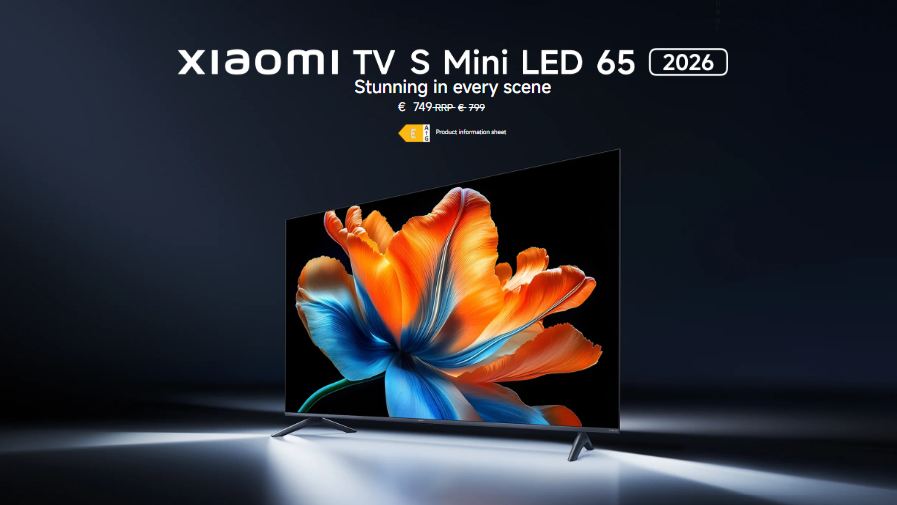

As for timing, previous rumors point to a March 26 announcement in China, with a broader global rollout potentially following in April. Some reports also suggest DJI may introduce a higher-end Osmo Pocket 4 Pro later this year.

DJI doesn’t seem to be reinventing the Pocket formula. Instead, the Osmo Pocket 4 appears to refine it, keeping the compact, three-axis stabilized design intact while improving usability through better physical controls and bundle flexibility.

If the leaked guide is legitimate, the official reveal may be right around the corner.

Don’t miss a thing! Join our Telegram community for instant updates and grab our free daily newsletter for the best tech stories!

For more daily updates, please visit our News Section.

(Source)

The post DJI Osmo Pocket 4 user guide shows updated physical controls ahead of launch appeared first on Gizmochina.

Honor Robot Phone gets a competitor with a detachable “magnetic action camera”

As MWC 2026 approaches, smartphone makers are once again using the event to showcase their unconventional designs. While much of the attention has been on Honor’s upcoming Robot Phone concept, Ulefone is preparing something different: a rugged handset with a detachable camera module.

The device is called the RugOne Xsnap 7 Pro, and its defining feature is a small “magnetic action camera” built into the back of the phone. The module can be removed and used independently, turning it into a compact wearable camera. Ulefone says it’s designed for hands-free recording, whether attached to a helmet, backpack strap, or other gear.

The idea isn’t entirely new: detachable or modular cameras have appeared in various forms over the years. But integrating one directly into a smartphone is unusual. Ulefone describes it as the first “wearable action camera rugged phone,” though real-world performance will depend on how stable the connection is and how well the software handles syncing and control.

As for the phone itself, the hardware is fairly robust. It features a 6.67-inch 1.5K AMOLED display with a 120Hz refresh rate. Power comes from a MediaTek Dimensity 8400 5G chipset, paired with a substantial 9,000mAh battery aimed at extended outdoor use.

The rear camera system includes a 50MP main sensor with OIS and a 64MP night vision camera for low-light and infrared scenarios. What’s still unclear is whether the detachable unit utilizes the main sensor or operates as a separate camera. Ulefone has mentioned magnetic docking for charging and viewing through what it calls “Action Pod Docking.” Unfortunately, full integration details haven’t been shared yet.

The timing is notable. Honor is expected to showcase its ROBOT PHONE concept at MWC as well, featuring a robotic camera mechanism designed to move and adjust framing automatically. While the two approaches are very different — one focused on robotics, the other on modular camera and durability — both reflect a broader push toward more flexible mobile photography setups.

Ulefone plans to demonstrate the RugOne Xsnap 7 Pro prototype at Booth 7E46 during MWC 2026, with a commercial launch targeted for mid-year.

Whether the idea gains traction will likely depend on how seamless that camera module feels in everyday use — and whether users see it as a genuine tool rather than just an interesting add-on.

(Source)

The post Honor Robot Phone gets a competitor with a detachable “magnetic action camera” appeared first on Gizmochina.

❌