
Reading view

Thailand Joins Vietnam, Japan, South Korea, Saudi Arabia, France, Spain And More As Germany Issues New Travel Advisory Amid Border Instability, Identity Document Requirements And Security Alerts

Thailand Joins Vietnam, Japan, South Korea, Saudi Arabia, France, Spain And More As Germany Issues New Travel Advisory Amid Border Instability, Identity Document Requirements And Security Alerts
Thailand 
Vietnam

As worries about border instability, stricter identity document enforcement, and changing security conditions grow, Germany has released updated travel guidelines covering Thailand, Vietnam, Japan, South Korea, Saudi Arabia, France, Spain, and other important destinations. The guidelines advise travelers to stay away from high-risk areas, always carry valid identification, and stay aware of local safety alerts and disruptions.

Germany has updated and reinforced travel guidance for several popular destinations across Asia, the Middle East and Europe, urging travellers to stay alert to evolving security conditions, border-related risks, identity document rules and public safety issues. While the nature of the warnings varies by country, the common thread is clear: German authorities want travellers to prepare carefully, follow local rules closely and avoid high-risk areas.

Thailand: Border tensions, southern unrest and rising crime risks

Thailand sits at the centre of Germany’s latest advisory focus due to a mix of border instability, internal security concerns and growing crime in tourist hubs.

Travel within fifty kilometres of the Cambodia border is discouraged. Military clashes in the border region since July 2025 resulted in deaths and injuries. Although a ceasefire was signed in December 2025 and violence has subsided, martial law remains in place across border provinces and crossings between Thailand and Cambodia are still closed. German authorities warn that renewed escalation cannot be ruled out.

Travel is strongly discouraged to the southern provinces of Narathiwat, Yala and Pattani, along with parts of Songkhla, where separatist violence, terrorist attacks and armed clashes with security forces continue. A state of emergency remains in effect and night-time curfews can be imposed without warning.

Non-essential travel to Trat province islands, including Ko Chang, Ko Mak and Ko Kut, is also discouraged.

Beyond conflict zones, Germany highlights a sharp rise in crime across tourist hotspots such as Phuket, Pattaya, Koh Samui and Koh Tao. Drug- and alcohol-related assaults, robberies and sexual crimes have been reported, particularly during Full Moon Parties on Koh Pha Ngan. Tourists are warned about scams involving taxis, tuk-tuks, jet ski rentals and corrupt police practices, especially in Patong Beach.

Foreigners must carry valid identification at all times, with frequent checks in entertainment districts. Thailand’s digital arrival card is mandatory, and overstaying visas can lead to detention, fines, deportation and long entry bans.

Vietnam: Zero tolerance on drugs, strict laws and nightclub raids

Germany’s advisory for Vietnam stresses strict law enforcement and limited tolerance for mistakes by foreign visitors.

A complete ban is in force on e-cigarettes, vaporizers and related equipment. Importing, possessing or using them can lead to heavy fines or long prison sentences.

Authorities have increased police raids on bars and nightclubs, particularly in Ho Chi Minh City. Patrons may be subjected to drug testing. A positive test can result in detention, even if drug use occurred days or weeks earlier or outside Vietnam. Consular access may be delayed or unavailable during detention.

Public demonstrations are prohibited and criticism of the government, including social media posts made abroad, can lead to questioning, travel delays or exit restrictions. Travel near military zones and borders is strongly discouraged, as restricted areas are often poorly marked.

Petty crime is rising in major cities, including theft on night trains, bag snatching by motorbikes and scams targeting tourists. Visitors are advised to keep documents secure, avoid accepting drinks from strangers and exercise caution in nightlife settings.

Japan: Restricted zones, disaster risks and nightlife vigilance

Germany considers Japan broadly safe but maintains specific warnings that travellers must respect.

Visitors are advised not to enter evacuated zones around the Fukushima Daiichi nuclear power plant, where restrictions remain in place more than a decade after the disaster. Travel to other parts of Japan is considered safe from a radiological perspective.

Japan faces frequent natural hazards. Earthquakes are common, several volcanoes remain under active monitoring and typhoons regularly disrupt travel. Winter blizzards and avalanches affect mountainous regions.

Crime levels are low, but fraud, drink spiking and sexual assault incidents have been reported in nightlife districts of Tokyo and other major cities. Foreigners must carry passports at all times, as police checks are routine.

South Korea: Generally safe, but alert systems and nightlife risks

South Korea is described as stable and secure, with demonstrations usually peaceful and well-organised. However, tensions with North Korea mean emergency drills, sirens and transport shutdowns can occur without warning.

The German advisory encourages travellers to follow local alerts and make use of emergency apps that provide English-language warnings.

Crime rates are low, though isolated cases of drink spiking and sexual assault have been reported in nightlife areas such as Hongdae and Itaewon. Visitors are urged to remain cautious in bars and clubs and safeguard personal belongings.

Visa-free entry remains available for short stays, and biometric data collection is routine at border control.

Saudi Arabia: Regional volatility and border restrictions

Germany warns that despite a ceasefire between Israel and Iran in June 2025, the wider Middle East remains volatile. Security-related incidents, airspace closures and flight disruptions may occur at short notice.

Travel to the border region with Yemen is strongly discouraged due to ongoing conflict and the risk of missile or drone attacks. Terrorism remains a concern, with past attacks targeting civilians, security forces and diplomatic facilities.

Visitors are urged to avoid crowded places, follow security instructions and remain vigilant near religious sites, shopping centres and energy infrastructure. A valid visa is mandatory, and employment disputes can lead to travel bans.

France: Terror alert, strikes and expanded smoking ban

France remains under its highest terrorism alert level, with armed patrols, bag checks and heightened security across transport hubs, public spaces and tourist attractions.

Travellers are advised to remain vigilant during major events and avoid demonstrations, as strikes and protests can disrupt public transport and occasionally turn violent.

A major smoking ban introduced in July 2025 prohibits smoking in parks, beaches near bathing waters, bus stops and areas around schools and sports facilities. Fines apply for violations.

Petty crime, pickpocketing and organised theft affect major cities, particularly Paris. Corsica has seen recent attacks targeting state institutions, while New Caledonia remains sensitive following unrest in 2024.

Spain: Elevated terror alert and tourist-targeted crime

Spain continues to operate under an elevated terror alert level introduced after attacks in 2017. While daily life remains normal, travellers are advised to exercise caution at crowded events and transport hubs.

Tourist-targeted crime is a key concern. Pickpocketing is widespread in cities, airports and beach destinations. Along highways, particularly near Barcelona, organised gangs use distraction tactics to rob drivers.

Violent incidents and break-ins have been reported in major cities, and youth travel groups are urged to ensure proper supervision. Cash declaration rules are strict, and large cash transactions are limited by law.

A broader message to travellers

Germany’s updated guidance does not suggest avoiding travel altogether but sends a clear signal: global travel conditions are becoming more complex. Border tensions, strict enforcement of local laws, identity document requirements and uneven security situations mean travellers must prepare more carefully than before.

Registering with German crisis preparedness systems, monitoring local media, avoiding high-risk zones and respecting local regulations are no longer optional precautions. They are now essential parts of responsible international travel.

Due to border instability, stricter identity document enforcement, and growing traveler security concerns, Germany has updated its travel recommendations for Thailand, Vietnam, Japan, South Korea, Saudi Arabia, France, Spain, and other locations.

As destinations reopen and global movement accelerates, Germany’s message is simple but firm: stay informed, stay alert, and travel with caution.

The post Thailand Joins Vietnam, Japan, South Korea, Saudi Arabia, France, Spain And More As Germany Issues New Travel Advisory Amid Border Instability, Identity Document Requirements And Security Alerts appeared first on Travel And Tour World.
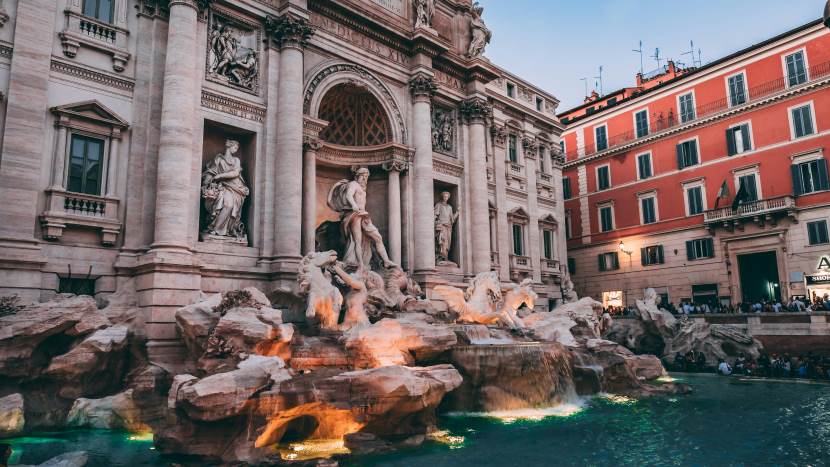
Rome Implements Nominal Entry Fee for Trevi Fountain to Preserve Heritage and Manage Global Tourist Traffic

Rome Implements Nominal Entry Fee for Trevi Fountain to Preserve Heritage and Manage Global Tourist Traffic
The Future of Tourism at the Trevi Fountain and Heritage Preservation.

The city of Rome has recently introduced a significant change in how one of its most legendary landmarks is accessed by the public. A 2-euro fee is now being implemented for those wishing to visit the Trevi Fountain, a decision driven by the necessity to manage the overwhelming surge of tourism and preserve the structural integrity of this Baroque masterpiece. In an effort to balance the influx of global visitors with the needs of local residents, this ticketing system is being utilized to ensure that the site remains sustainable for future generations. It is observed that the historic center of Italy’s capital is frequently congested, and the introduction of a nominal charge is seen as a strategic move to regulate the flow of people around the fountain’s delicate basin.

The Rationale Behind the Fee

The implementation of this new policy is guided by the objective of reducing the chaotic overcrowding that often characterizes the area surrounding the fountain. It is noted by city officials that the sheer volume of visitors has reached levels that threaten both the visitor experience and the physical condition of the monument. By requiring a small financial contribution, a more structured environment is created where the number of individuals present at any given time can be monitored and limited. This approach is not intended to discourage travel but rather to foster a more respectful and organized interaction with the site. The revenue generated from these fees is expected to be directed toward the continuous maintenance and cleaning of the fountain, ensuring that its white travertine stone remains untarnished by the effects of heavy foot traffic and environmental factors.

Impact on the Tourist Experience

While the introduction of a cost might initially be viewed as a barrier, it is argued that the overall experience for the traveler will be significantly enhanced. Under the previous system of unrestricted access, the area was often so densely packed that a clear view of the artistry was difficult to obtain. With the new regulations, a more tranquil atmosphere is anticipated, allowing for better photography and a deeper appreciation of the sculptural details. The fee of 2 euros is considered small enough that it is unlikely to deter international travelers who have already invested significantly in their journey to Italy. Instead, it is perceived as a symbolic gesture toward the conservation of cultural heritage. The convenience of a pre-booked slot or a quick digital payment is being integrated into the system to minimize delays for those arriving at the site.

Addressing Overtourism in Italy

The challenges faced by Rome are mirrored in several other major Italian cities that struggle with the phenomenon of overtourism. Similar measures have been observed in Venice, where an entry fee for day-trippers was tested to control the population density during peak periods. The decision regarding the Trevi Fountain is part of a broader national conversation on how to protect historical treasures while remaining an open and welcoming destination. It is recognized that without such interventions, the quality of life for permanent residents in these historic districts would continue to decline. The passive management of crowds is no longer deemed sufficient; active, data-driven strategies are required to maintain a functional city environment. By placing a value on the entry, a shift in mindset is encouraged among visitors, promoting the idea that access to world-class heritage is a privilege that carries responsibilities.

Logistical Implementation and Management

The logistics of the fee collection are being handled through a combination of physical checkpoints and digital platforms. Staff members are stationed around the perimeter of the fountain to guide visitors and ensure that the flow remains constant. It is clarified that while the area immediately adjacent to the water will be ticketed, the surrounding square remains accessible to those who wish to view the monument from a distance. This distinction allows for a tiered level of engagement, where those seeking the classic “coin toss” experience can pay for the proximity, while casual passersby can still enjoy the architectural backdrop. The system is designed to be as unobtrusive as possible, utilizing technology to prevent long queues from forming in the narrow streets that lead to the Piazza di Trevi.

Environmental and Structural Preservation

Beyond the management of people, the structural health of the Trevi Fountain is a primary concern for the municipal authorities. The constant presence of thousands of people daily contributes to a micro-climate of humidity and physical wear that can accelerate the decay of the stone. By limiting the density of the crowd, the physical pressure on the surrounding infrastructure is reduced. Furthermore, the funds collected are earmarked for specialized restoration projects that require expert stonemasons and conservators. The fountain, which was famously restored with funding from Fendi several years ago, requires constant vigilance to combat the effects of pollution and the natural buildup of calcium from the water. This new economic model provides a steady stream of income that decouples the maintenance of the monument from the fluctuations of the general city budget.

Global Trends in Heritage Management

The move by Rome is reflective of a global trend where iconic landmarks are moving toward a paid-access model to ensure sustainability. From the Acropolis in Athens to various sites in Kyoto, the transition toward controlled entry is becoming the standard. The Trevi Fountain project is being watched closely by other municipalities as a potential blueprint for managing high-traffic urban monuments. The success of this initiative will be measured not just by the revenue collected, but by the measurable improvement in the physical state of the fountain and the satisfaction levels reported by both tourists and locals. It is emphasized that the goal is not profit, but the long-term viability of the site as a centerpiece of Roman culture.

Future Outlook for Rome’s Landmarks

Looking ahead, it is possible that other major attractions within Rome could see similar shifts in policy if the Trevi Fountain model proves successful. The city is home to an unparalleled density of historical sites, many of which are currently free to the public but suffer from the same issues of overcrowding. As the Jubilee year approaches, the city prepares for an even larger influx of pilgrims and tourists, making these regulatory measures even more timely. The focus remains on creating a sustainable tourism ecosystem where the beauty of the past is not sacrificed for the convenience of the present. The transition to a managed entry system represents a commitment to the “eternal” nature of the city, ensuring that the Trevi Fountain remains a source of wonder for centuries to come.

The post Rome Implements Nominal Entry Fee for Trevi Fountain to Preserve Heritage and Manage Global Tourist Traffic appeared first on Travel And Tour World.

France January 2026: BEV sales up 52.1%, Renault Clio VI in Top 10

The new generation Renault Clio has cracked its home Top 10.
After losing -5.5% to its lowest annual level in 50 years in 2025, the French new car market continues on its downward trajectory and starts 2026 with a -6.6% contraction to just 107,157 sales. Petrol sales implode -48.9% to 15,326 and 14.3% share vs. 26.1% a year ago while diesel is down -49.1% to 2,521 and 2.4% share vs. 4.3%. Hybrids for their part limit their fall to -0.5% to 51.171 units and 47.8% share vs. 44.9% in 2025, note this includes mild hybrids. PHEVs are also stable at -0.6% to 4,821 and 4.5% share vs. 4.2% last year. Finally BEVs surge 52.1% to 30.308 and 28.3% share vs. 17.4% a year ago. This is believed to be the highest BEV share in French history and was helped by the social leasing scrappage scheme dedicated to BEVs.

Renault surges 20.7% to 21.402 sales and 20% share vs. 17.5% over 2025. In contrast, Peugeot (-8.2%) falls faster than the market but still holds 16.5% share which is superior to its FY2025 level of 13.5%. Citroen (+2.8%) defies the negative context and climbs back up to #3 overall for the first time in almost two years: since February 2024. Toyota (-12.7%) suffers year-on-year but ranks #4, its highest since last August. Volkswagen (-7%) drops two spots on last month to #5 but the (bad) surprise of the month is Dacia freefalling -33.9% to #6, the low cost brand’s worst position since April 2021. Skoda (+8%) for its part is up to a record 7th place, also reached last October. Opel (+7.8%) is also in great shape at #8 vs. #19 last month and #15 over the Full Year 2025. Notice also Fiat (+21.6%) starting to bounce back up.

The models charts is impacted by the transition between two generations of Renault Clio. The Peugeot 208 (+7.6%) takes the lead with 6% share vs. 3.2% last month and is followed by the Renault Clio (-16.1%) down to 4.1% of the market. Below is the Citroen C3 IV (-30.4%) falling sharply against a year-ago pole position and the Peugeot 2008 (-15%) also in difficult but reaching its highest ranking since last October. The Renault 5 (+40.5%) continues on its incredible success and equals the record 3.7% share it hit last month, however dropping three ranks to #5. The event of the month is the 7th place of the Renault Clio VI with 2.7% of the market, a big number being demo sales as the model has just launched to the public this month. As for other recent launches, the Citroen C3 Aircross II is down three spots on December to #13, the Citroen C5 Aircross II up 32 to #19, the Dacia Bigster down two to #22, the Renault 4 repeating at #29, and the VW T-Roc II up 34 to #31.

Previous post: France Full Year 2025: Weakest market in 50 years, Renault Clio #1, Renault 5 #2 in December

One year ago: France January 2025: Citroen C3 triumphs

Full January 2026 Top 20 brands and Top 100 models below.

France January 2026 – brands:

PosBrandJan-26%/25Dec
1Renault   21,40220.0%+ 20.7%1
2Peugeot  17,70716.5%– 8.2%2
3Citroen  9,4938.9%+ 2.8%4
4Toyota9,1648.6%– 12.7%6
5Volkswagen6,9216.5%– 7.0%3
6Dacia  6,5966.2%– 33.9%5
7Skoda  3,0752.9%+ 8.0%12
8Opel  3,0162.8%+ 7.8%19
9Audi  2,6922.5%– 16.6%11
10BMW  2,6802.5%– 35.5%7
11Hyundai2,3922.2%– 30.2%10
12Ford  2,1182.0%– 27.7%13
13Fiat  2,0982.0%+ 21.6%22
14Kia  1,8281.7%– 26.8%15
15Suzuki1,5211.4%– 10.4%21
16Mini1,5111.4%+ 11.8%16
17Mercedes  1,5051.4%+ 24.5%9
18Nissan  1,3381.2%– 14.2%14
19Cupra1,1691.1%+ 10.9%20
20MG (est)1,1551.1%– 25.0%8

France January 2026 – models:

PosModelJan-26%/25Dec
1Peugeot 2086,4376.0%+ 7.6%4
2Renault Clio V4,4294.1%– 16.1%1
3Citroen C3 IV4,2704.0%– 30.4%3
4Peugeot 20084,0153.7%– 15.0%6
5Renault 53,9523.7%+ 40.5%2
6Peugeot 3008 III2,8762.7%– 29.8%14
7Renault Clio VI2,8492.7%new32
8Dacia Sandero2,8232.6%– 42.6%5
9Renault Captur2,6842.5%+ 18.5%8
10Toyota Yaris2,6842.5%+ 10.0%7
11Peugeot 3082,5132.3%– 2.9%16
12Toyota Yaris Cross2,4712.3%– 34.3%9
13Citroen C3 Aircross II2,3042.2%+ 12026.3%10
14Toyota C-HR II2,0381.9%+ 65.3%40
15Renault Scenic V1,9451.8%+ 65.3%28
16Dacia Duster III1,7381.6%– 43.5%17
17Renault Symbioz1,5651.5%– 14.3%23
18VW Polo1,5461.4%– 28.0%15
19Citroen C5 Aircross II1,4471.4%new51
20Ford Puma1,2451.2%+ 2.1%21
21Peugeot 5008 III1,2411.2%+ 7.3%42
22Dacia Bigster1,1771.1%new20
23Opel Corsa1,1531.1%– 43.9%54
24Renault Austral1,0741.0%– 12.2%34
25Citroen C41,0621.0%– 26.3%82
26Renault Megane E-Tech1,0070.9%+ 48.3%55
27Toyota Aygo X9710.9%– 14.0%60
28Suzuki Swift9410.9%– 21.5%41
29Renault 49250.9%new29
30VW ID.48870.8%+ 142.3%56
31VW T-Roc II8670.8%new65
32Skoda Elroq8560.8%+ 28433.3%46
33Opel Mokka8340.8%+ 112.8%89
34VW Golf8180.8%– 8.0%27
35Hyundai Kona8030.7%– 23.8%36
36Nissan Qashqai7390.7%+ 9.6%13
37VW Tiguan III7050.7%– 40.8%24
38Opel Frontera6890.6%new107
39Toyota Corolla6700.6%– 45.4%84
40Mini Hatch6590.6%– 5.7%35
41VW ID.36490.6%+ 63.1%59
42Mini Countryman6300.6%+ 88.6%57
43Tesla Model Y6130.6%– 4.2%39
44Fiat 6006090.6%– 45.2%104
45BMW iX16080.6%+ 72.2%45
46Hyundai Tucson5780.5%– 41.0%12
47Fiat Grande Panda5760.5%new76
48Skoda Fabia5620.5%– 14.6%53
49Audi A15550.5%– 39.9%79
50Audi Q35430.5%+ 67.6%44
51Skoda Octavia 5390.5%– 25.6%58
52Fiat 5005360.5%+ 24.7%73
53Hyundai Inster5270.5%+ 698.5%77
54Jeep Avenger5260.5%– 11.0%80
55Audi A35130.5%+ 9.9%52
56VW T-Cross4900.5%– 27.7%38
57Cupra Born4870.5%+ 319.8%78
58Dacia Jogger4670.4%– 53.0%63
59BMW X14420.4%– 44.1%22
60Seat Ibiza4400.4%– 33.1%68
61Alfa Romeo Junior4380.4%– 10.2%103
62MG ZS4190.4%– 47.2%18
63Kia EV44100.4%new128
64Ford Kuga3960.4%– 59.0%33
65Dacia Spring3850.4%– 59.7%37
66Skoda Kamiq3830.4%– 13.7%66
67Nissan Juke3760.4%– 39.0%48
68Mercedes CLA3580.3%+ 289.1%97
69MG 33450.3%– 29.4%11
70Peugeot 4083260.3%– 16.6%136
71BMW Série 13250.3%– 74.9%25
72Kia Sportage3170.3%– 42.2%31
73DS 33090.3%– 31.8%148
74Kia Niro3080.3%– 29.5%110
75VW T-Roc I3070.3%– 63.3%50
76Xpeng G63070.3%+ 184.3%99
77Renault Espace2990.3%– 32.5%72
78Suzuki Vitara2890.3%– 18.4%85
79Ford Explorer2820.3%+ 118.6%101
80MG EHS2750.3%+ 157.0%19
81Renault Rafale2670.2%– 40.5%67
82Cupra Formentor2660.2%– 40.6%74
83BMW iX22620.2%+ 53.2%94
84Mercedes GLA2590.2%+ 19.9%30
85Audi Q42520.2%– 52.4%88
86DS 42480.2%+ 11.2%200
87Seat Leon2420.2%+ 4.8%126
88Skoda Enyaq2350.2%– 20.6%93
89Volvo EX302330.2%+ 14.2%109
90Kia Picanto2320.2%– 62.3%102
91Alpine A2902310.2%+ 0.4%118
92Skoda Kodiaq2270.2%– 23.3%90
93Opel Grandland2270.2%+ 27.5%141
94Mini Aceman2220.2%+ 17.5%91
95BMW i42210.2%+ 29.2%100
96Lexus LBX2190.2%– 61.1%139
97VW Taigo2130.2%– 36.0%96

Source: PFA, AAA Data

What’s New in Luxembourg, France, Belgium, and Germany Impacting Travel, Healthcare, and Retail: Everything You Must Know

What’s New in Luxembourg, France, Belgium, and Germany Impacting Travel, Healthcare, and Retail: Everything You Must Know

Luxembourg: New Public Entity and Changes in Retail and Rail Travel

In Luxembourg, February brings important changes, including the establishment of a public entity and international rail travel restrictions, which will affect Luxembourg. The National Centre for Purchasing and Logistics (CNAL) will become operational. CNAL is the first public entity, and law mandates it to centralize the purchasing and logistics for the country’s hospitals, the ambulance and fire service (CGDIS), and other emergency service healthcare facilities. The government’s focus is on operational efficiency, reducing the administrative burden on medical staff, and cutting costs.

Retail: New Ladurée and Delayed Nike Store

In retail, a Ladurée (the French macaron brand) store will open in the Cloche d’Or shopping center in Luxembourg, making it the first store of the brand in the country and adding a Parisian touch to the shopping center. The opening of a Nike store in Cloche d’Or has been delayed from February to Spring, causing some excitement among shoppers.

Changes to Policy on Clothing Recycling

New policy changes within Luxembourg’s clothing recycling initiatives highlight the Kolping non-profit organization. Due to operational cost increases, Kolping will no longer oversee the collection of used clothing at the country’s recycling boxes. The boxes will continue to be used; however, the collection of clothes remains uncertain. Municipalities may potentially be requested to supervise the boxes, but there are no confirmed details on this yet.

Traffic Impacts on Luxembourg’s Railways

From 14 to 23 February, passengers utilizing railways in Luxembourg will face unavoidable impacts. Planned construction will temporarily disrupt key routes in Luxembourg to Metz-Thionville, Esch-sur-Alzette, and Arlon. During the construction period, replacement buses will be utilized, and these temporary disruptions will significantly impact all commuters, particularly cross-border commuters.

New Travel Rules for the United Kingdom

New rules will apply to travelers to the United Kingdom starting on 25 February. When traveling visa-free, travelers will need an Electronic Travel Authorisation (ETA). Since April 2025, airlines will verify ETAs. An ETA costs about €18 and will last for 2 years. Make sure to have an ETA before purchasing a flight to avoid travel disruptions.

Changes in France: New Prices and Less Expensive Energy

From 1 February in France, the prices for certain things are changing. First, the price of tobacco will be more expensive, and there will be new prices for motorway tolls. These will depend on which operator you are using (the prices will be more expensive for some and less expensive for others). If you are monitoring your energy costs, there will be new regulations for the price of electricity, which will be less expensive, as well as a reduction in the price of natural gas per kWh. France also experienced a decrease in the savings rate for the Livret A and LDDS to 1.5%, while the LEP rate decreased to 2.5%. On the other hand, the prices for bank services will be more expensive, with an average increase of 3%, which will impact all customers in the country.

Belgium: Changes to Healthcare and Rising Costs at the Start of February

Beginning 1 February 2026, costs in Belgium are changing. In Belgium, bus tickets in Wallonia are increasing in price by over 2%, and train tickets are increasing by around 2.5% on average across the country. A new policy will also change how people access certain medications. In this case, the medications are anti-diabetic. Patients will now have to obtain an authorization request from a medical advisor, in addition to a prescription, to receive certain reimbursements.

Germany: Changes to Photovoltaics and Pension Cuts

Beginning in 2026, Germany residents will experience added costs for supplementary health insurance, which are now affecting pension payments. As a result, a large number of pensioners will see their net pensions decrease for the month. At the same time, Germany also has changes to photovoltaics: as of 1 February, new photovoltaics will receive a 1% decrease in their feed-in tariff.

Effects on Cross-Border Commuters

Adjustments will be needed by core cross-border metro commuters and travelers in the Luxembourg/France/Belgium/Germany corridor. Rail cross-border metro Luxembourg disruptions will disturb commuter day cycles. Price increases in transit, healthcare, and all services will be disruptive for border-crossing Luxembourg/France/Belgium/Germany. More restrictions in cross-border metro UK travel will be disruptive for Luxembourg/France/Belgium/Germany commuters.

In sum, core cross-border metro commuters and travelers in the Luxembourg/France/Belgium/Germany corridor will be most affected by the changes in February 2026 and beyond. Rail changes, disruptions, increasing cross-border travel restrictions, and border-crossing Luxembourg/France/Belgium/Germany travel will be most affected by increasing price changes. New UK travel ETA requirements will be disruptive in adjusting border-crossing metro travel. Transport will be significantly affected for Luxembourg/France/Belgium/Germany corridor cross-border metro commuters.

The post What’s New in Luxembourg, France, Belgium, and Germany Impacting Travel, Healthcare, and Retail: Everything You Must Know appeared first on Travel And Tour World.
❌