Reading view

Top reviewers awed by Galaxy S26 Ultra’s Privacy Display

The Samsung Galaxy S26 Ultra has made headlines as top reviewers in the mobile industry are awed by its Privacy Display tech. The creator community is vast, but some stand out for their credibility and fanbase.

I’ve watched several review/hands-on videos and sorted out four from creators, including MKBHD, Mrwhosetheboss, Supersaf, and Hayls World. The first two are full reviews, while others have their specific approach for watchers.

Here’s what they think about the Privacy Display:

MKBHD

Marques Brownless calls it a “massive new feature” and “incredibly useful.”

Praised the clever hardware approach and how it effectively limits viewing angles to prevent shoulder surfing. Highlighted its customizability, making it practical and highly valuable for privacy.

  • Watch MKBHD’s Galaxy S26 Ultra review here.
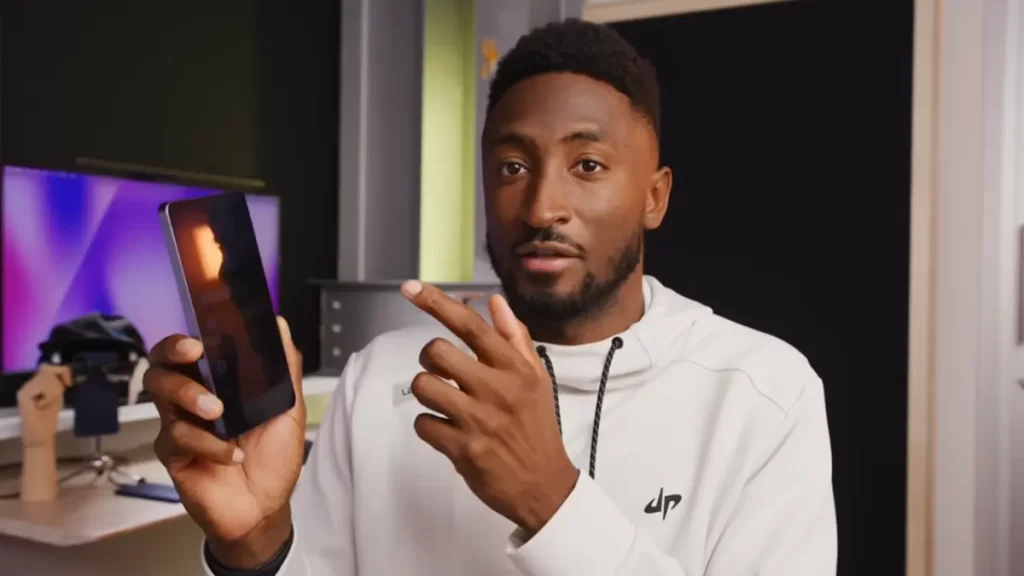
YouTuber MKBHD on Galaxy S26 Ultra Privacy Display Feature

Mrwhosetheboss

Arun Maini, better known as Mrwhosetheboss, describes it as a “completely world exclusive privacy display feature” and “James Bond level tech.”

Additionally, he described it as innovative and providing real “peace of mind” in public. Also emphasized it’s not a gimmick, a genuine innovation that stops others from seeing content from angles, and one of the standout features despite some trade-offs.

  • Watch Mrwhosetheboss’s Galaxy S26 Ultra review here.
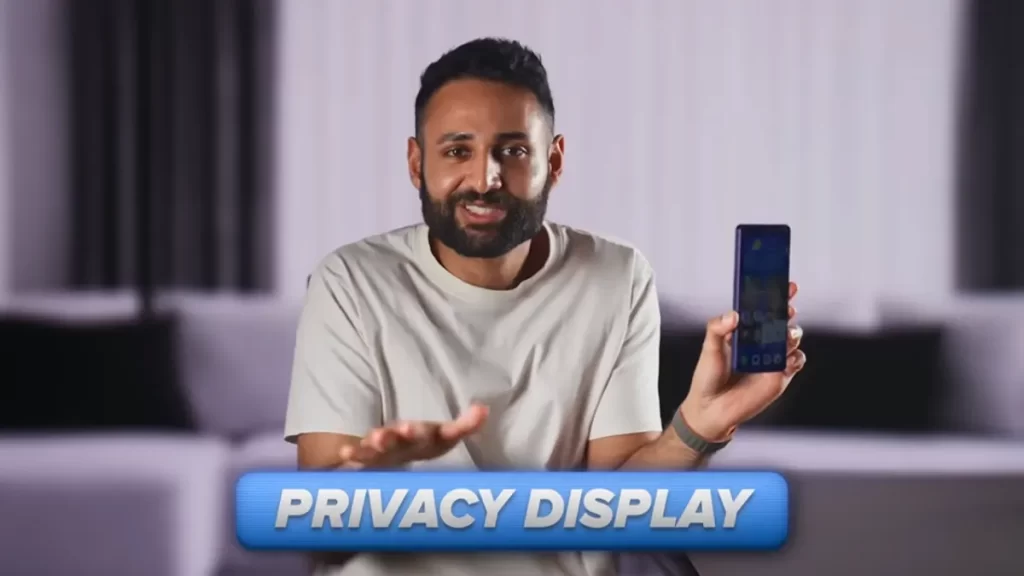
YouTuber Mrwhosetheboss on Galaxy S26 Ultra Privacy Display Feature

Supersaf

Safwan AhmedMia refers to it as the “world’s first” privacy display, working like a privacy screen protector but at the pixel level.

Supersaf labeled it as “impressive” and working “well.” Loved the customization, but recommended selective use and saw the compromises as understandable/acceptable.

  • Watch SuperSaf’s Galaxy S26 Ultra review here.
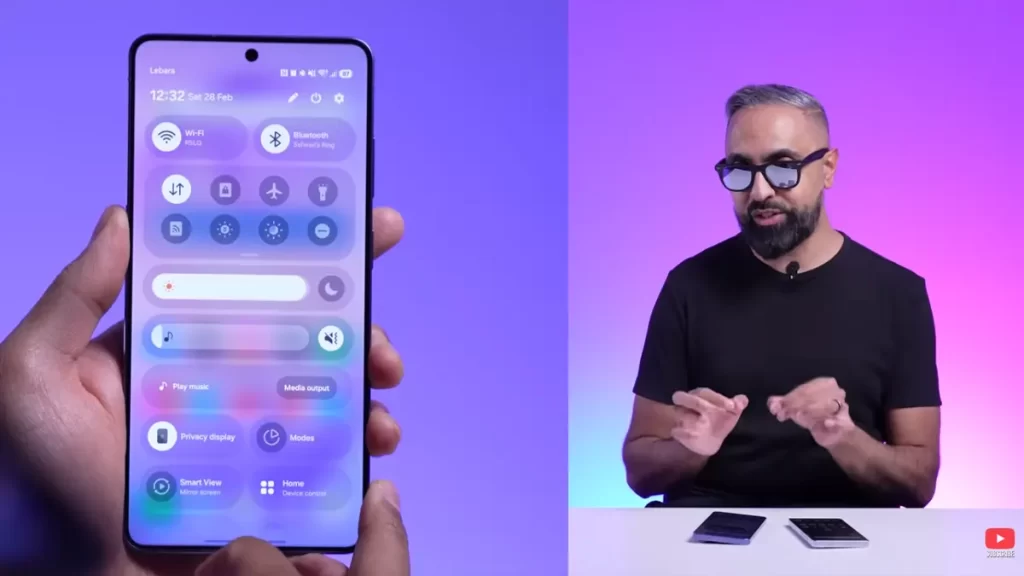
YouTuber SuperSaf on Galaxy S26 Ultra Privacy Display Feature

Hayls World

Hayleigh Chamberlain, known online as Hayls World, highlights it as a “brand new feature” in Ultra settings, the “world’s first built-in privacy display” that can turn on/off.

Hayls World also loved the customization for hiding just passwords, notifications, or specific apps, comparing it favorably to physical protectors and noting it blocks every targeted pixel effectively.

  • Watch SuperSaf’s Galaxy S26 Ultra hands-on video here.
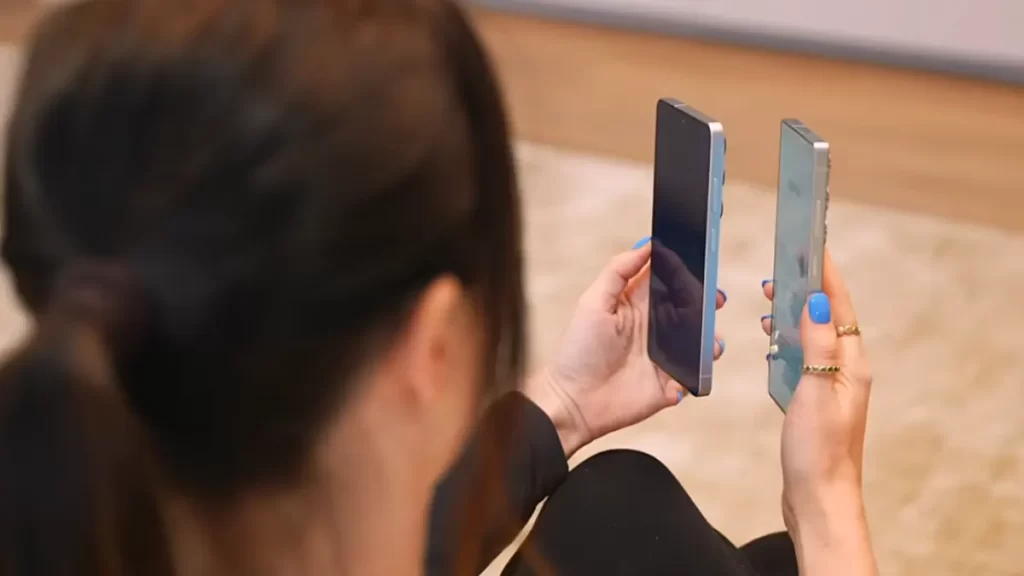
YouTuber Hayls World on Galaxy S26 Ultra Privacy Display Feature

Overall, across these videos, the Privacy Display is consistently praised as innovative hardware-level technology for anti-shoulder-surfing/privacy in public. It’s toggleable, app/notification-specific, and highly customizable.

The post Top reviewers awed by Galaxy S26 Ultra’s Privacy Display appeared first on Sammy Fans.

Galaxy S26 Ultra costs $1,300 yet ships with huge Bloatware

Galaxy S26 series costs between $900 to $1800 in the US, yet Samsung isn’t done with Bloatware. Preinstalled apps make sense with budget and mid-range phones, but flagships should maintain a status given their price point.

Our friends over at AndroidAuthority discovered a huge 40GB storage space occupied on the Galaxy S26 Ultra 512GB model. Worth knowing before you pre-order: there’s no opt-in screen, nor is there an option to stop these apps.

Galaxy S26 is still loaded with Bloatware

The moment you sign into your Google and Samsung accounts, apps from Meta, Microsoft, and Spotify flood in. Facebook, Instagram, LinkedIn, Outlook, OneDrive, M365 Copilot. They’re just there, sitting in your app drawer.

Budget Androids bundle third-party software because it helps offset costs. Manufacturers and carriers strike revenue-sharing deals with Microsoft or whoever, preload their stuff, and pass along some of the savings to buyers.

But the S26 Ultra doesn’t play by those rules. It costs $1,300 at the entry point, with Samsung offered 512GB model at this price, which originally is $1,500.

At that price point, you’re supposed to be buying a premium experience. Instead, you’re handed something that feels closer to a subsidized carrier phone from 2015.

40GB gone before you do anything

Fresh out of the box, after a factory reset and clean setup with only auto-updates enabled, the preinstalled apps and system files occupy over 40GB of storage on a 512GB model.

That’s close to eight percent of your total capacity consumed by stuff Samsung decided you needed. Samsung is monetizing your home screen before you’ve even migrated your photos.

Samsung Galaxy S26 Ultra 512GB storage

Source – Android Authority

The post Galaxy S26 Ultra costs $1,300 yet ships with huge Bloatware appeared first on Sammy Fans.

Samsung Galaxy Watch 8 enters clinical research era

Verily Life Sciences and Samsung Electronics America announced today a collaboration bringing the Galaxy Watch 8 together with Verily’s precision health platform, Pre.

Samsung launched the Galaxy Watch 8 in July 2025, positioned as a consumer health tracker with AI features and a softer redesign. Now it’s got another life entirely.

Verily will fully integrate sensor data from Galaxy Watch and make it accessible in its Viewpoint Evidence solution, which is built on the Verily Pre platform and enables research sponsors to run real-world studies with re-contactable participant cohorts.

Millions of people bought the Watch 8 because they liked the thinness, the brighter display, or whatever marketing line worked. Now Verily can tap them for studies without building its own pipeline.

Sponsors will use Verily Pre data solutions, including Refinery for data harmonization and Workbench for analysis, modeling, and activation. Verily will also recruit Samsung users directly and manage participant engagement.

The companies will also explore potential joint development of new and enhanced end-to-end solutions for clinical research. If this works, expect future Galaxy Watches to ship with features designed for trials first and consumers second.

Verily has a long history of leading the design and verification of digital measures across various therapeutic areas, including Cardiometabolic, CNS, and Respiratory diseases, and the development of advanced AI algorithms for Parkinson’s.

“The use of consumer-friendly devices in clinical research makes it easier for participants to engage in studies, while enabling sponsors to use advanced biomarkers to generate high quality data,” said Scott Burke, Chief Technology Officer at Verily. “This collaboration realizes our vision to integrate health research into everyday life, in order to generate better evidence and make precision health possible for all.”

The post Samsung Galaxy Watch 8 enters clinical research era appeared first on Sammy Fans.

Google Pixel 11 Pro Fold renders show Samsung-style camera bump

Google Pixel 11 Pro Fold surfaced today through CAD renders shared by OnLeaks, and it features a redesigned camera bump that looks a lot like the recent Samsung flagships, the Galaxy S26 Ultra and Galaxy Z Fold 7.

The LED flash and microphone moved inside the top pill-shaped cutout instead of sitting awkwardly next to it. The point where the bump meets the back glass now curves instead of just sticking as if someone slapped it.

The whole module looks cleaner now, as shown in renders leaked by our folks over at Android Headlines. Samsung has been doing this sort of integrated camera design for a while, and Google finally caught up.

Google Pixel 11 Pro Fold Camera Bump

The design is nearly identical to the Pixel 10 Pro Fold. Same shape, same corner radius, same bezels and the hole punch camera sits in the same spot on the inner display. You get a Type-C port at the bottom with the usual grille suspects.

The upcoming Pixel 11 Pro Fold measures 10.1mm when folded, down from 10.8mm; unfolded, it’s 4.8mm instead of 5.2mm. The phone’s height stays at 155.2mm, whereas the unfolded width stays at 150.4mm.

Google Pixel 11 Pro Fold Renders

Source – Android Headlines x Onleaks

Tensor G6 will power the Pixel 11 Pro Fold smartphone. TSMC is building it, supposedly on 3nm, and the latest rumors say it’s a 7-core chip, but take that for what rumors are worth.

Probably the same displays, same battery size, same IP68 rating. Pixelsnap and Qi2 charging may be supported as they became a key discussion point of the Pixel 10 series phones.

Google originally planned $1,500 according to their leaked 2028 roadmap. Meanwhile, the tariff hit and surging costs of components may have forced Google to revisit its pricing strategy.

August launch makes sense based on the last two years.

The post Google Pixel 11 Pro Fold renders show Samsung-style camera bump appeared first on Sammy Fans.

Ethereum Price Signals Market Reset as Binance Open Interest Hits Lowest Levels

Ethereum Queue Hits 3.4M ETH, 60-Day Wait

The post Ethereum Price Signals Market Reset as Binance Open Interest Hits Lowest Levels appeared first on Coinpedia Fintech News

The Ethereum price might look like it’s simply drifting through another typical crypto cycle. But underneath the surface, something more structural is happening in the derivatives market.

Specifically, leverage appears to be cooling off. Fresh data tied to Binance’s Ethereum derivatives activity shows that the 30-day average open interest has dropped to its lowest level since May 2025. That’s not a random number. It hints that traders have been steadily reducing exposure after months of volatility and market swings. And when leverage fades, markets tend to behave differently.

Open Interest Quietly Drops

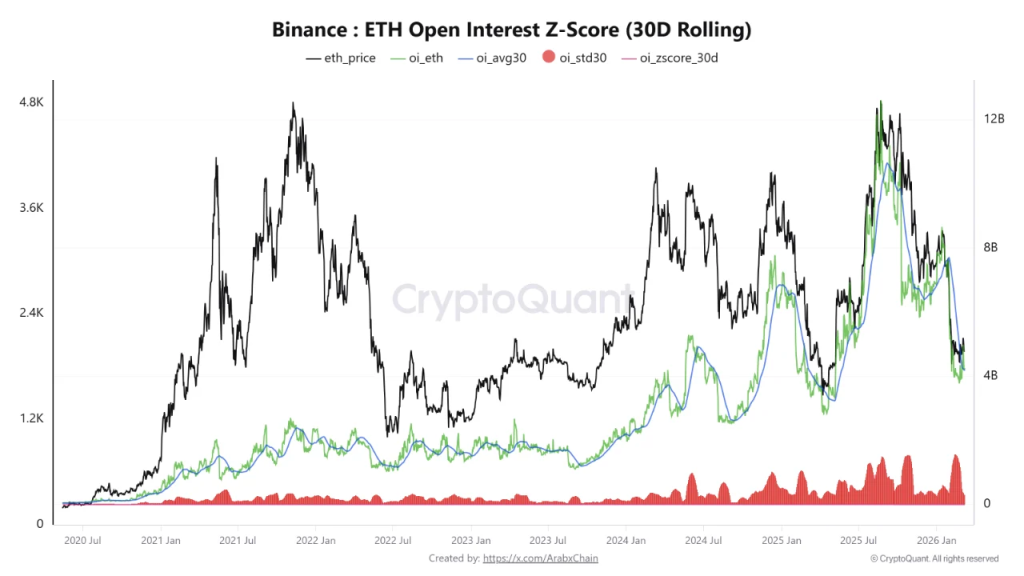
According to data tracking the ETH Open Interest Z-Score (30-Day Rolling) on Binance, total open interest in Ethereum contracts currently sits around $4.26 billion. Per data from Arab chain, the 30-day moving average is slightly lower at $4.18 billion.

Meanwhile, the standard deviation for the same period stands near $285.8 million, with a Z-Score of roughly 0.29. Now, that number matters more than it might seem.

A Z-Score hovering around 0.29 basically means open interest is sitting close to its historical average. In other words, the market isn’t heavily overleveraged, nor is it showing signs of extreme speculation.

For traders studying the Ethereum price chart, that’s a signal the derivatives environment is stabilizing.

Ethereum Price Signals Market Reset as Binance Open Interest Hits Lowest Since May 2025

Ethereum Price Market Rebalancing

So many confused and still wondering what’s actually happening here? Well, here’s the info you might like: falling open interest doesn’t automatically mean bearish sentiment. Often, it just means the market is resetting its risk profile, especially in an bluechip asset like ETH.

Periods of high volatility, especially after strong rallies or corrections, they basically, tend to flush out excessive leverage. Traders close positions. Liquidations clear out weak hands. And speculative capital steps aside.

That seems to be exactly what’s unfolding now. The drop in the moving average suggests fewer leveraged positions are active compared to previous months. Some traders may have exited short-term bets altogether, while others appear to be adopting more cautious strategies amid uncertainty in the ETH/USD market.

Liquidity Waiting for Next Cycle

So, what comes next? Well, markets rarely stay quiet forever. A derivatives reset like this often creates the conditions for a fresh cycle of activity, especially if liquidity returns and traders regain confidence in taking on risk.

Right now, the Ethereum derivatives market appears to be moving toward a less leveraged and more balanced structure. For those following Ethereum price prediction models, that matters. A cleaner derivatives environment thats without excessive leverage stacked on either side can sometimes allow price movements to develop more organically.

Ethereum Price Signals Market Reset as Binance Open Interest Hits Lowest Since May 2025

For now, though, the takeaway is simple. With the 30-day open interest average hitting its lowest point since May 2025, the derivatives landscape surrounding the Ethereum price may be quietly preparing for whatever comes next.

Samsung Galaxy A27 testing begins with One UI 8.5

Samsung Galaxy A27 starts internal testing with One UI 8.5 software. Last month, Samsung launched the Galaxy S26 series, which goes on global sale this week. Now, the focus is gradually being shifted to mid-range models.

As spotted by Alfaturk, Samsung is now possibly testing the Android 16-based One UI 8.5 software for the Galaxy A27. The smartphone is expected to be unveiled along with the Galaxy A57 and A37 sometime in April this year.

An internal build carrying the PDA version number ending with AZC1 has been spotted for the Galaxy A27. The firmware code reveals model number SM-A276B, which belongs to the global version of the Galaxy A27.

One UI 8.5 is based on Android 16 and debuts welcoming UI changes. It applies a dynamic blur engine that fills and reflects across the interface. The color selection is also elegant that refreshes the legacy Samsung software design.

Samsung Galaxy A27 One UI 8.5 Update Testing

Meanwhile, Samsung may shock fans with the phone’s pricing. After the Galaxy S26 series, Samsung may increase the prices of its mid-range phones. The next-gen models may cost more than their predecessors from 2025.

It’s all happening because of the massive surge in the prices of DRAM and NAND. Over the past couple of months, the component costs have more than doubled. RAM/NAND alone costs 30 percent of the Bill of Materials.

The impact isn’t loading just for the upcoming models, but existing ones also facing the heat. The company had three times of price revisions this year. It increased prices of Galaxy A, M and F series phones as well as some tablets.

The post Samsung Galaxy A27 testing begins with One UI 8.5 appeared first on Sammy Fans.

Bitcoin SV Price Prediction 2026, 2027-2030: Will BSV Price Hit $100?

Bitcoin SV Price Prediction

The post Bitcoin SV Price Prediction 2026, 2027-2030: Will BSV Price Hit $100? appeared first on Coinpedia Fintech News

Story Highlights

  • The Live Price Of Bitcoin SV  $ 13.08890445
  • BSV has traded under the 200-day EMA band, indicating a bearish trend.
  • Analysts predict a gradual price increase, with potential highs reaching $175 by 2030.

Bitcoin SV price (BSV) has been on muted growth trajectory compared to other altcoins. Since the beginning of the year, signaling prolonged bearish sentiment, Bitcoin SV (BSV) has consistently traded below its 200-day EMA band.

Despite attempts to gain traction, the asset has failed to show any long-term bullish reversal, raising doubts among investors and traders about its recovery potential.

Even it’s a non-profit organization, BSV association, optimistic activities like successful collaboration and hackathon events are not manifesting on the BSV price chart

Many ask: “Can BSV Price break bearish trend above 200-day EMA?, “Is BSV a hidden gem waiting for its breakout, or just another risky bet?”. In this Bitcoin SV price prediction 2025 article, we’ll explore the future for BSV Price from 2025 through 2030.

Bitcoin SV Price Today

Cryptocurrency Bitcoin SV
Token BSV
Price $13.0889 down -3.74%
Market Cap$ 261,762,832.33
24h Volume$ 14,801,567.1928
Circulating Supply19,998,834.3750
Total Supply19,998,834.3750
All-Time High$ 491.6354 on 16 April 2021
All-Time Low$ 11.8148 on 06 February 2026

Coinpedia’s BSV Price Prediction 2026

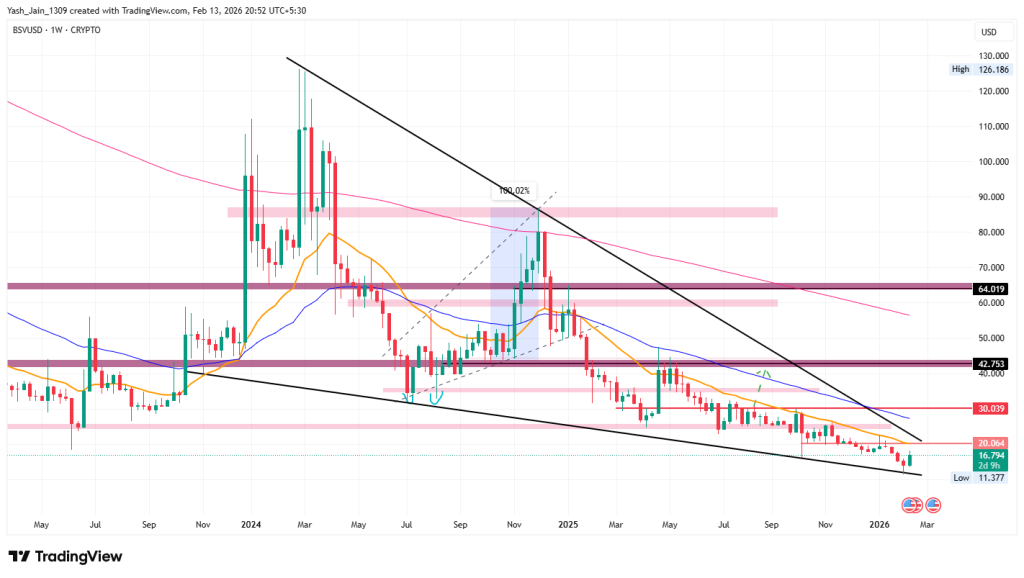
Bitcoin SV (BSV) is showing encouraging signs of recovery as it nears a crucial support level within a falling wedge pattern. If BSV can successfully reverse and break through the $20 resistance, it opens up exciting possibilities for reaching impressive price heights of $30 and even $64 by the end of the year, provided demand rises. 

On the other hand, it may continue to consolidate if market conditions do not support growth.

BSV Price Prediction 2026: Outlook for a Fresh Year

The current price of Bitcoin SV (BSV) presents a notable opportunity for investors. Although 2025 experienced heavy challenges after 2024’s high, things seem to be changing for BSV. The price prediction for BSV in 2026 points to a more optimistic future ahead.

This optimism stems from recent chart observations that have revealed what was hidden amid the intense downtrend in the BSV/USD price. The pattern that emerged was a falling wedge, which has significantly compressed the trading range over the last two years. This compression suggests a strong potential for a positive shift in 2026, which should be considered despite the recent price fluctuations.

The projections for Q1 2026 align well with this falling wedge, which has been forming for multiple years, indicating that the trading range is approaching a critical point. Many believe that a substantial bounce could occur, offering a promising outlook for the asset.

While past price action has shown some terrific declines, Q1 saw a retest from the lower border of the falling wedge. From a distance, BSV/USD appears to have taken a stable footing. It appears to have laid a solid foundation that could benefit from better, more favorable macroeconomic conditions in the future. Signs indicate that 2026 could be a significant rally year, and investors anticipate bullish demand.

With stabilizing market conditions, there appears to be potential for considerable upward movement. The immediate resistance level to watch is $20 and $30; if these two levels are surpassed, we could see an ascent towards levels at $42 and $64 later. However, if demand does not improve, consolidation might continue for an extended period.

BSV Price Prediction 2026

Bitcoin SV Onchain Analysis 

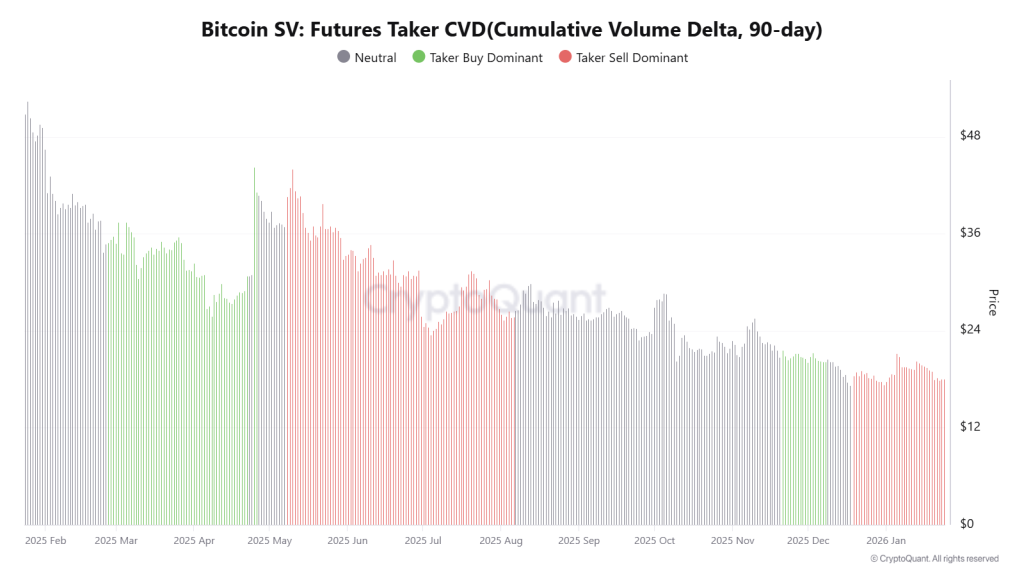
The 90-day Taker CVD is negative and declining, indicating that aggressive sellers have dominated the market. This means that those hitting the bid are selling more than they buy, which likely drives the BSV price down due to excess supply.

Bitcoin SV On Chain Data

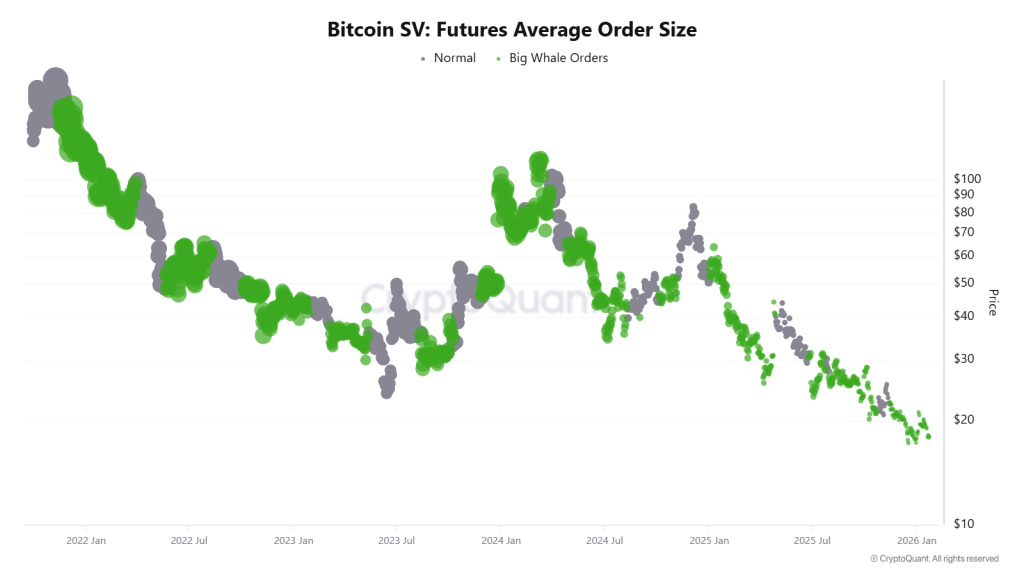
However, the large average order sizes indicated by the green dots on the chart suggest otherwise. When these order sizes remain high while prices drop, it signals that whales or big investors are placing significant buy orders. These players are absorbing the selling pressure, allowing retail investors to sell at lower prices into their large orders.

Bitcoin SV Futures Avg Order Size

Historically, when high-value orders continue during a price decline, it suggests the market may be nearing a liquidity bottom.

Bitcoin SV Price Forecast 2026-2030

YearPotential Low ($)Average Price ($)Potential High ($)
20266090130
20277595145
202885115155
202995125165
2030105135175

This table, based on historical movements, shows BSV price to reach $175 by 2030 based on compounding market cap each year. This table provides a framework for understanding the potential BSV price movements. Yet, the actual price will depend on a combination of market dynamics, investor behavior, and external factors influencing the cryptocurrency landscape.

BSV Coin Price Prediction 2026

BSV price prediction for 2026 anticipates a potential low of $60 and a high of $130, with an average price projected at $90.

Bitcoin SV Price Forecast 2027

In 2027, the BSV token price can range between $75 and $145, with an average price of approximately $95.

Bitcoin SV (BSV) Price Prediction 2028

Based on the altcoin’s price history, it can target a potential low of $85 and a potential high of $155, with an average price expected to be $115.

BSV Crypto Price Prediction 2029 

Bitcoin SV price targets in 2029 are estimated to range from $95 to $165, with an average price of around $125.

Bitcoin SV (BSV) Price Prediction 2030

The potential low for Bitcoin SV in 2030 is forecasted at $105, the potential high at $175, with an average price expected to be $135.

Market Analysis

Firm Name202520262030
Digital Coin price$78$94$199
Coindataflow$75$36$70
Coincodex$26$21$35
Swapspace$23$46$360
Never Miss a Beat in the Crypto World!

Stay ahead with breaking news, expert analysis, and real-time updates on the latest trends in Bitcoin, altcoins, DeFi, NFTs, and more.

FAQs

What is the Bitcoin SV price prediction for 2026?

BSV could range from $60 to $130 in 2026, with an average price around $90, showing potential for a bullish reversal.

What is the Bitcoin SV price prediction for 2030?

By 2030, BSV may reach $105–$175, averaging $135 if adoption grows and market conditions remain favorable.

What is the price prediction for Bitcoin SV in 2040?

Long-term 2040 predictions are uncertain, but if growth continues, BSV could rise steadily with the broader crypto market.

Is Bitcoin SV better than Bitcoin?

BSV focuses on fast, low-cost transactions and enterprise use, while BTC is primarily a store of value. Choice depends on goals.

What are the main risks of investing in Bitcoin SV?

Risks include prolonged bearish trends, weak investor sentiment, regulatory uncertainty, and underperformance versus other altcoins.

Decentraland Price Prediction 2026, 2027 – 2030: Will MANA Price Hit $1?

Decentraland Price Prediction

The post Decentraland Price Prediction 2026, 2027 – 2030: Will MANA Price Hit $1? appeared first on Coinpedia Fintech News

Story Highlights

  • The live price of the MANA crypto token is  $ 0.09025217.
  • Price predictions for 2026 range from $0.247 – $0.40.
  • By 2030, the MANA price could surge toward $4.90 due to growing trader activity.

Decentraland (MANA) is one of the earliest and most recognizable names in the metaverse sector. Built on Ethereum, Decentraland allows users to own virtual land, create experiences, and participate in a digital space using its native token, MANA.

While the overall metaverse narrative has cooled since its 2021 peak, Decentraland continues to maintain an active ecosystem focused on virtual events, social experiences, and creator-led development.

If you’re curious about Decentraland’s future and wondering whether MANA is a good investment, this MANA price prediction 2026–2030 will walk you through its potential growth and long-term outlook.

Decentraland Price Today

Cryptocurrency Decentraland
Token MANA
Price $0.0903 up 0.66%
Market Cap$ 179,232,639.65
24h Volume$ 24,177,179.0682
Circulating Supply1,985,909,566.5331
Total Supply2,193,179,327.3202
All-Time High$ 5.9023 on 25 November 2021
All-Time Low$ 0.0079 on 13 October 2017

Coinpedia’s MANA Price Prediction 2026

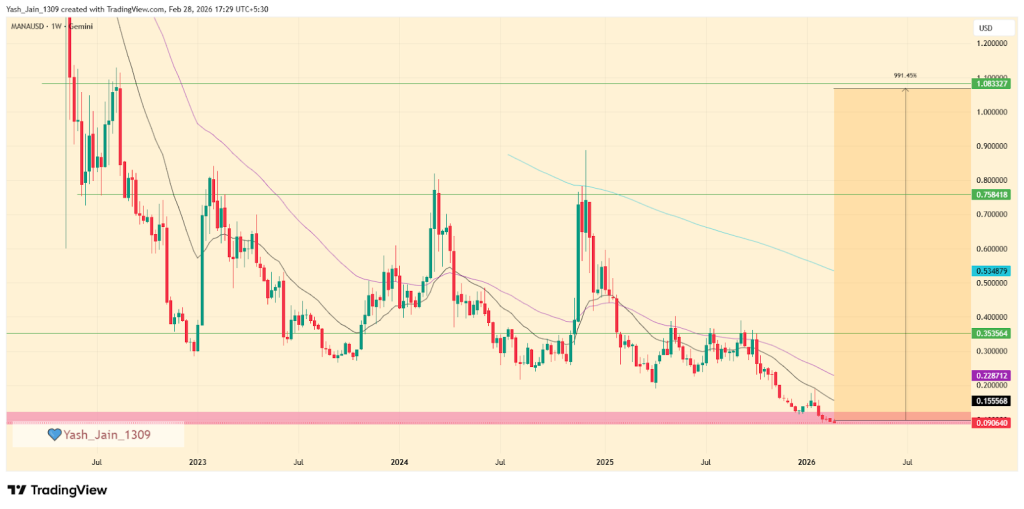
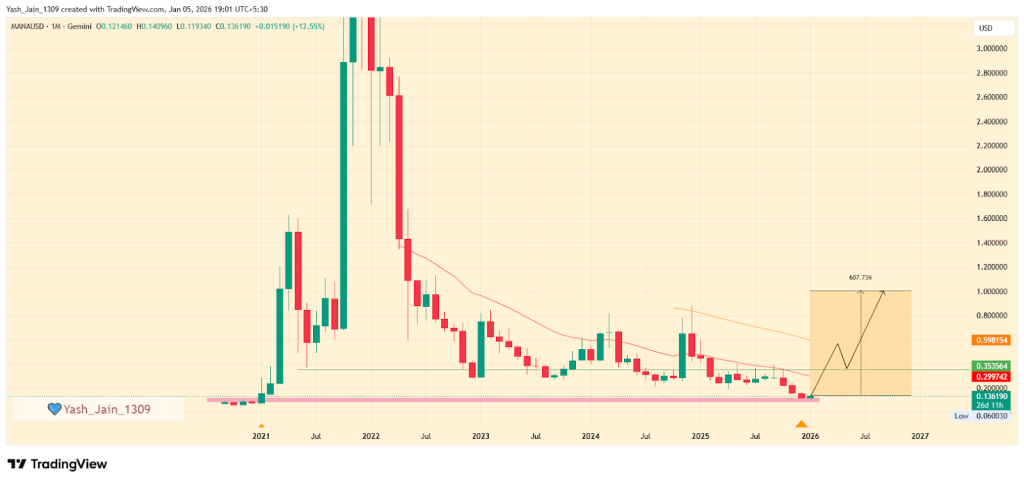
MANA has declined by 98% since the FTX crash in 2021 and has shown little resilience during this time. The critical support level from early 2021 is currently being tested in Q1 2026.The future performance of MANA remains uncertain. But, if the MANA/USD pair closes above $0.35 on a weekly basis, it could signal a potential recovery. This might enable a return to earlier levels within the ecosystem, making the target price of $1.00 within reach for the year.

Coinpedia’s MANA Price Prediction 2026

Decentraland (MANA) Price Prediction 2026

MANA crypto’s multi-year performance chart reflects a dramatic 98% decline since the FTX crash in 2021, leading many enthusiasts and investors to speculate about the project’s potential end. 

This sharp price depreciation has instilled fear among investors, who have witnessed continuous negative price action for years. However, it is essential to consider the historical support level that has been in place since early 2021, which warrants attention despite the recent stagnation in price movement.

Although the project has experienced considerable setbacks over the past half-decade, there still remain arguments for a potential revival. The primary argument is the avoidance of delisting from several exchanges, indicating that MANA/USD continues to pursue efforts aimed at market recovery and still retains decent liquidity in a project with an over $250 million market cap.

MANA Price Forecast 2026

Thus, the current retest of this support level is particularly noteworthy. A reversal at this juncture could result in substantial upward momentum. Conversely, if this support range is breached, it would likely reinforce perceptions of MANA crypto as a failing venture.

That said, it is crucial to closely monitor the $0.35 level. Should MANA successfully breach this level and maintain above it with a weekly close, this would signify a significant “Change of Character” for the price dynamic. Under such circumstances, a conservative target of $1.00 for the year may be warranted.

Price PredictionPotential Low ($)Average Price ($)Potential High ($)
20260.951.451.95

MANA On-chain Analysis

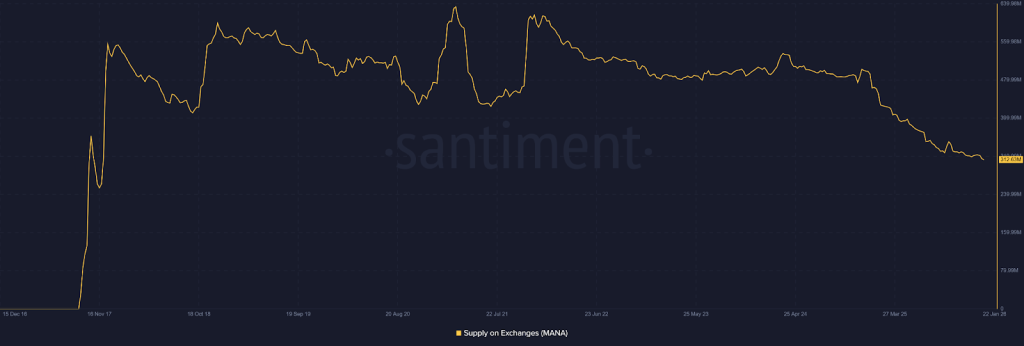
MANA’s exchange reserves have plummeted from 606M to 312M tokens, a massive 48% supply drain signaling aggressive accumulation. This consistent liquidity exit creates a powerful supply-crunch, drastically reducing sell-side pressure and preparing the asset for a significant parabolic breakout as market demand grows.

Mana On Chain

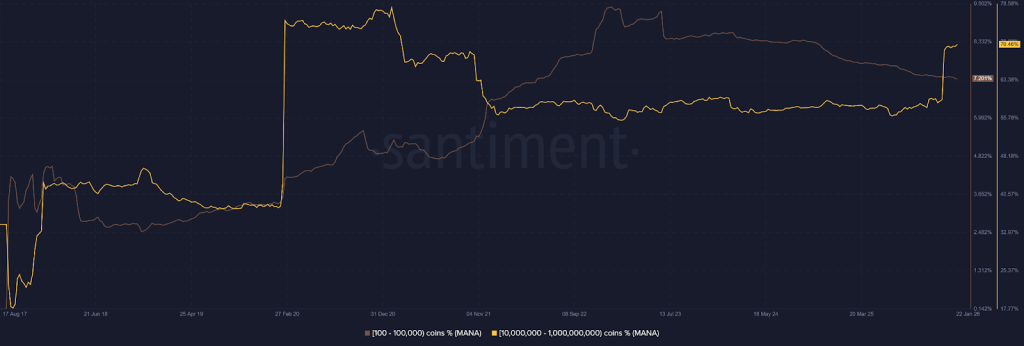
Furthermore, a bullish transfer of wealth is underway. While retail holders dump their positions, institutional whales holding 10M–1B tokens are absorbing the supply. This shift from weak to strong hands confirms deep conviction among major players, providing a solid floor for MANA’s future growth.

MANA On Chain Network Actvity

Decentraland MANA Price Prediction 2026 – 2030

Price Prediction YearsPotential Low ($)Average Price ($)Potential High ($)
Decentraland (MANA) Price Forecast 20260.951.451.95
MANA Token Price Forecast 20271.552.152.85
Decentraland Price Analysis 20282.453.053.65
Decentraland Price Prediction 20293.553.954.35
MANA Price Prediction 20304.154.655.15

Decentraland (MANA) Price Forecast 2026

According to forecast prices and technical analysis, Decentraland’s price is projected to reach a minimum of $0.95 in 2026. The maximum price could hit $1.95, with an average trading price of around $1.45.

MANA Token Price Forecast 2027

Looking forward to 2027, MANA’s price is expected to reach a low of $1.55, with a high of $2.85 and an average forecast price of $2.15.

Decentraland Price Analysis 2028

In 2028, the price of a single Decentraland is anticipated to reach a minimum of $2.45, with a maximum of $3.65 and an average price of $3.05.

Decentraland Price Prediction 2029

By 2029, Decentraland’s price is predicted to reach a minimum of $3.55, with the potential to hit a maximum of $4.35 and an average of $3.95.

Decentraland (MANA) Price Prediction 2029

In 2030, the MANA coin price is predicted to touch its lowest price at $4.15, hitting a high of $5.15 and an average price of $4.65.

What Does The Market Say?

Year202620272030
CoinCodex$0.26$0.39$0.67
Tokenmetrics$0.78$1.41$2.11
DigitalCoinPrice$0.33$0.61$3.32
Never Miss a Beat in the Crypto World!

Stay ahead with breaking news, expert analysis, and real-time updates on the latest trends in Bitcoin, altcoins, DeFi, NFTs, and more.

FAQs

What is Decentraland (MANA) and how does it work?

Decentraland is a virtual world on Ethereum where users buy land, create experiences, and trade using the MANA token.

What is the predicted price of MANA in 2026?

MANA could trade between $0.247 and $0.40 in 2026, with potential upside if it maintains key support and adoption grows.

What is Decentraland’s price prediction for 2030?

By 2030, MANA could reach a high of $4.92, a low of $4.15, and an average price of $4.65, reflecting adoption and growing metaverse use.

How high could MANA price go in 2040?

Over the long term, MANA may see substantial growth if adoption and virtual land demand expand, potentially reaching a high of $12–$15 by 2040.

What drives the price of MANA?

MANA’s price is influenced by virtual land demand, user growth, creator tools, and on-chain activity in Decentraland.

Can Decentraland compete with other metaverse projects?

Yes, if Decentraland expands events, gaming, and creator tools, it could attract more users and remain a top metaverse platform.

Bitcoin Price Holds Key Levels as Strategy Buys $1.28B BTC and Century-Old Pattern Resurfaces

Bitcoin Price Holds Key Levels as Strategy Buys $1.28B BTC and Century-Old Pattern Resurfaces

The post Bitcoin Price Holds Key Levels as Strategy Buys $1.28B BTC and Century-Old Pattern Resurfaces appeared first on Coinpedia Fintech News

The Bitcoin price just received another reminder that some players in the market aren’t interested in short-term noise. They’re still buying as aggressively as ever.

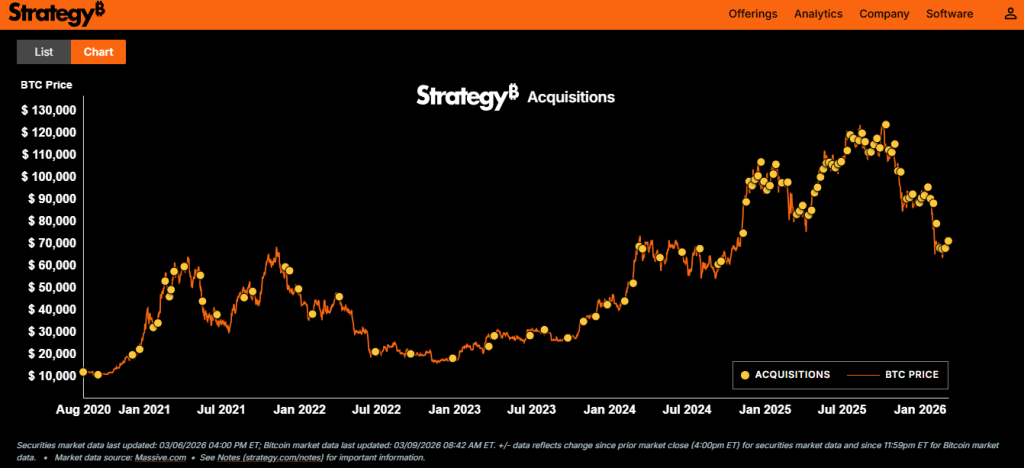
This time the spotlight lands on Strategy at most crucial phase, which confirmed it purchased 17,994 BTC worth roughly $1.28 billion at an average price of $70,946 per coin.

The purchase pushes the company’s total holdings to 738,731 BTC, acquired for about $56.04 billion at an average cost of $75,862 per bitcoin as of March 8, 2026.

For a company that’s been stacking coins for years, the strategy still remains the same: buy and hold.

Strategy Doubles Down on Bitcoin

Bitcoin Price Holds Key Levels as Strategy Buys $1.28B BTC and Century-Old Pattern Resurfaces

Corporate accumulation isn’t exactly new territory for Strategy. But this latest purchase is still notable for one reason: timing.

The company scooped up the additional BTC with the market hovering around the $70K range, reinforcing a pattern where institutional buyers appear comfortable accumulating near this level.

Now, when large entities repeatedly absorb supply at similar prices, traders tend to watch closely. It’s the kind of behavior that often shapes long-term market structure rather than short-term speculation.

And yes, it inevitably feeds into the never-ending Bitcoin price prediction debate.

Because when billions flow into an asset during consolidation, people start wondering what comes next.

Strategy has acquired 17,994 BTC for ~$1.28 billion at ~$70,946 per bitcoin. As of 3/8/2026, we hodl 738,731 $BTC acquired for ~$56.04 billion at ~$75,862 per bitcoin. $MSTR $STRC https://t.co/wB1k3Nt1xa

— Michael Saylor (@saylor) March 9, 2026

Bitcoin Price Chart Echoes Old Pattern

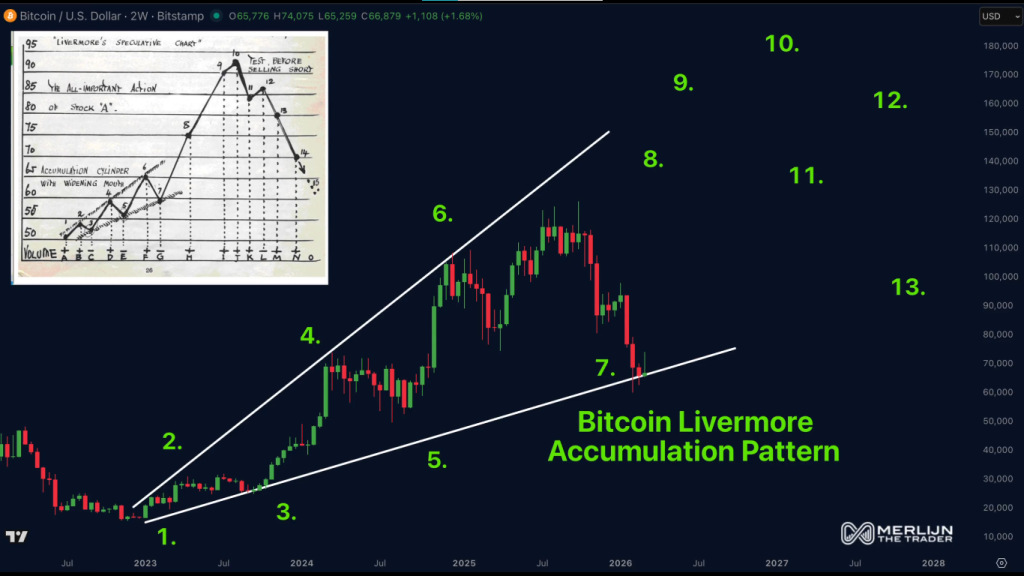
Now here’s where things get a little more interesting. Some market watchers believe the Bitcoin price chart is following a surprisingly old roadmap, one originally described nearly a century ago.

The structure reportedly mirrors a trading pattern identified in the 1920s by Jesse Livermore, one of the most famous traders of early financial markets and seems like big shorts are aware.

According to the interpretation circulating in trading circles, the market appears to be following the same sequence step by step.

And the key levels are straightforward. Above $70K, the next leg of the move is considered confirmed. Below $60K, the market may simply extend its accumulation phase.

Bitcoin Price Holds Key Levels as Strategy Buys $1.28B BTC and Century-Old Pattern Resurfaces

$70K Level Holds Market Attention

So where does that leave the market right now? Right in the middle of the tension zone.

The Bitcoin/USD range between $60,000 and $70,000 has effectively become the battleground determining whether the current cycle accelerates or stretches sideways a little longer.

Institutional buyers accumulating near the upper band certainly add fuel to the bullish argument. On the other hand, markets rarely move in straight lines, especially when sentiment swings between fear and optimism.

Still, the broader narrative remains hard to ignore. A company sitting on more than 738,000 BTC just added another $1.28 billion worth of coins.

And if the historical pattern continues to play out, the next move in the Bitcoin price could depend on whether the market firmly holds that critical $70K threshold.

Samsung phones add a handy new security trick

Samsung seems to have silently installed a new Inactivity restart feature on Galaxy phones. It’s available on the Galaxy S26 series, and users report that the security page inside Settings has added this toggle with the February 2026 patch.

Inactivity restart is what Samsung calls this new security trick. It’s a kind of automation that aims at elevating your privacy. When enabled, it will automatically restart your phone if it stays locked for a straight 72 hours.

Samsung Inactivity restart

Open Settings > Security and Privacy > More security settings to check if the new “Inactivity toggle” is added. The feature description says it all: “Restart your phone if it remains locked for 72 hours.”

Once activated, the feature highlights another description, detailing the functionality.

If you don’t use your phone for 72 hours, and it detects there’s no successive attempt to unlock, it will reboot. No manual effort will be required for this operation as it needs a user-generated setup from system Settings.

After your phone restarts, you need to unlock it before you can receive notifications and alarms from some apps and see the names of incoming callers. If your SIM is locked, you need to unlock it to receive incoming calls.

Usually, restarting Galaxy sends the phone into additional security mode. It will stop displaying notifications and incoming calls. You will need to unlock the device to restore key facilities prevented due to the restart.

From a privacy perspective, it’s a smart addition. Samsung played it smart by offering it as a toggle inside Settings, that too disabled.

Samsung Inactivity Restart Feature

The post Samsung phones add a handy new security trick appeared first on Sammy Fans.

Samsung can’t ignore Oppo Find N6 teasing a crease-free screen and AI Pen

Oppo is launching a new foldable phone, the Find N6, this month, and it is bringing an “AI Pen” and a crease-free screen. The aim is no one else, but Samsung, which dominates the worldwide foldable smartphone market.

Pete Lau just released an official Oppo Find N6 teaser, which highlights its biggest upgrades, including the zero-feel crease, AI Pen, and iPhone 17 Pro-inspired Orange colorway, as well as a giant camera module on the back.

Samsung launched the Galaxy Z Fold 7 back in July 2025, which is just 8.9mm folded and 4.2mm unfolded. The company has engineered a new ArmorFlex hinge to reduce stress on the panel, and the crease is much less noticeable than before.

Meanwhile, Oppo touts its new foldable phone, which introduces a “zero-feel crease” and it unfolds flat. The graphics shown in the teaser also highlight the upgrade, with the crease portion showing no visible wrinkle on the panel.

Oppo AI Pen is the second big thing, revealed in the teaser, which beats the Galaxy Z Fold 7. Samsung used to support S Pen on its foldable phones, but decided to dump stylus to achieve thinness, folded and unfolded.

Zhou Yibao, head of the Oppo Find series, confirmed that the Find N6 will support a stylus, described as an AI-powered pen with industry-first capabilities, suggesting deep integration between hardware and on-device AI features.

Oppo Find N6 Crease, AI Pen

The Oppo Find N6 leverages an 8.12-inch foldable display, comparable to the Fold 7’s 8-inch display. The foldable features a 200MP camera for the first time, while the Z Fold 7 features a 200 MP wide-angle sensor too.

Power comes from the Snapdragon 8 Elite Gen 5 chipset and a 6,000mAh battery with 80W fast charging, which beats Samsung’s dual 4,400 mAh battery and 25 W wired charging by a humiliating margin.

The post Samsung can’t ignore Oppo Find N6 teasing a crease-free screen and AI Pen appeared first on Sammy Fans.

Galaxy S25 just got more interesting after Samsung confirmed this S26 camera feature

Samsung just confirmed it’s bringing the next-gen Virtual Aperture camera feature from the Galaxy S26 series to last year’s Galaxy S25 phones.

Last month, Samsung unveiled the latest Camera and Gallery features that arrived in the new flagship smartphones. At that time, the camera in charge didn’t reveal which new features were being planned for older models.

Virtual Aperture for 3x and 5x sensors

Samsung’s community moderators just confirmed something that makes the Galaxy S25 Ultra virtual aperture situation a lot more interesting.

The feature that debuted on the S25 series for the wide lens only? It’s coming to the telephoto and periscope lenses. A user in a Korean forum asked if the S25 Ultra could get virtual aperture support on the 3x and 5x zoom lenses through Expert RAW.

The moderator’s response was blunt. “Yes, we will support up to S25,” meaning the S25 gets it. Expanding virtual aperture to the 3x and 5x sensors makes total sense.

Samsung’s 3x and 5x cameras on the S25 Ultra are legitimately good. Giving them software-controlled depth just makes them more flexible.

Samsung Galaxy S25 Ultra Virtual Aperture

Virtual aperture is Samsung’s software trick to mimic DSLR aperture priority mode.

Physically, your phone’s camera has one fixed aperture, but Samsung uses depth map data from the dual camera array to fake different aperture values in software.

It works well enough that people who’ve used it on the wide lens seem to like it. The depth maps got better this generation, so the blur looks more natural.

Thanks for the tip, Alfaturk!

The post Galaxy S25 just got more interesting after Samsung confirmed this S26 camera feature appeared first on Sammy Fans.

Can any brand challenge Samsung’s 20-year streak as TV market leader?

Samsung officially announced it has been leading the TV market for straight 20 years. The company has been ranked the global TV market leader every year since 2006, based on revenue share.

According to Omdia’s figures, Samsung accounted for 29.1 percent of the global market in 2025. Two decades of leadership, think by now some competitor would have found a crack in the armor.

Meanwhile, TCL and Hisense tripled their shipment growth year over year in Q1 2025. TCL jumped from 12 percent to 20 percent in the premium market between Q4 2023 and Q4 2024.

That’s not incremental growth, that’s a land grab, and Samsung’s premium share dropped to 29% in Q4 2024 from 41 percent the year before. In December 2025, TCL topped Samsung in monthly shipments, 16 percent to 13 percent.

One month doesn’t crown a new king, but the trajectory is there. TCL’s shipments keep growing year over year while Samsung’s shipments have been stagnant, according to Counterpoint Research.

Well, Samsung held 54.3 percent market share in the premium segment priced over $2,500. Over half, which is dominance in the tier where margins actually matter. And they’ve got 52.2 percent market share for TVs above $1,500.

“When consumers choose a TV, they’re choosing a brand they can trust for years to come,” said SW Yong, President and Head of the Visual Display (VD) Business at Samsung Electronics. “Our 20-year leadership in the global TV market reflects that trust — built on decades of engineering excellence and premium innovation.”

Samsung 20 years TV market leadership

The post Can any brand challenge Samsung’s 20-year streak as TV market leader? appeared first on Sammy Fans.

Samsung Galaxy S25 Ultra has better anti-reflective screen than the S26 Ultra

Samsung just introduced the Galaxy S26 Ultra flagship and its anti-reflective screen to the world, like it’s some sort of breakthrough, and within a week, somebody’s already run tests showing last year’s phone does it better.

Ice Universe laid out Samsung’s Galaxy S25 Ultra and Galaxy S26 Ultra devices, with and without a privacy screen protector. It was all about testing the practical state of the anti-reflective screen technology of the flagships.

The primary image shared shows just a visual comparison with labels in Chinese identifying each device. The image shows four black screens laid side by side, and you can see the differences if you look closely.

The Galaxy S25 Ultra, without any screen protector on it, beat the Galaxy S26 Ultra running Samsung’s anti-reflection film. The S26 Ultra without a screen protector came in third. The S25 Ultra with a privacy screen protector came in dead last.

Samsung Galaxy S26 Ultra screen reflection vs S25 Ultra

Image source – Ice Universe / X

The leftmost S25 Ultra without film looks the cleanest. The second device, an S26 Ultra with the official anti-reflection film applied, shows slightly more visible reflection. Third is an S26 Ultra with no film at all, and the rightmost S25 Ultra with a privacy protector looks the worst of the bunch.

The fact that the S26 Ultra needed official Samsung film just to land in second place tells you this wasn’t the victory lap the company probably hoped for.

Samsung has been pushing anti-reflective tech as a cornerstone of the Ultra experience for three generations now. You would expect the newer one to win this kind of shootout without needing accessories to carry it over the line.

The post Samsung Galaxy S25 Ultra has better anti-reflective screen than the S26 Ultra appeared first on Sammy Fans.

PSA: Galaxy S26 Ultra charges at 60W with 3A cable; 5A cable isn’t necessary

Samsung Galaxy S26 Ultra ships with a 3A cable despite the upgraded 60W charging. Samsung is offering the new 60W adapter at a discounted price, but consumers are worried if they will need to purchase a 5A cable.

Worth knowing before you pre-order.

The Galaxy S26 Ultra never draws more than 3 A during charging, so you don’t need 5A cables, as many assumed would be mandatory when Samsung announced 60W charging.

You can use the Galaxy S26 Ultra 60W 3A setup with a PD 3.1 charging adapter, which supports PPS. That’s a pleasant change from the Chinese flagships that lock you into one specific brick and cable combo.

Thanks to the faster charging, the Galaxy S26 Ultra topups its 5000mAh battery from 0 percent to 75 percent in merely 30 minutes. The new 60W is a 33% jump over the 45W ceiling Samsung has been stuck to since forever.

Samsung’s spec sheet confirms what the measurements show. The official 60W adapter they’re selling uses a standard 3A cable, the same one bundled with the phone.

The bump from 45W to 60W is branded as Super Fast Charging 3.0, but it still uses open standards. The Galaxy S26 Ultra flagship’s 60W 3A cable situation is simpler than anyone expected, and that deserves credit.

People spent months speculating that 60W would require a cable upgrade, that Samsung would force you into buying new accessories. Nope.

Samsung 60W Charger Features

Source – Samsung

The post PSA: Galaxy S26 Ultra charges at 60W with 3A cable; 5A cable isn’t necessary appeared first on Sammy Fans.

My Samsung phone travelled back to the past due to Home Up

Samsung just dropped the Home Up plugin’s March 2026 version, which has two big issues. While testing the latest version of the plugin, I’ve encountered two problems, which may also be triggered due to OS incompatibility.

Home Up March 2026 update landed without a changelog. The version number indicates that the version belongs to the One UI 8.5 firmware. While it successfully installed on my One UI 8.0 device, things went wrong with the functionalities.

Lazy animations

Sideloading Home Up v17.5.00.24 has made system animations lazy as hell. Everything slowed down as I manually slapped this setup. Nothing changed when I tried to set the gesture animations to dynamic.

Even disabling the animation-related settings inside Home Up didn’t change anything. I ended up deciding to uninstall this version and go back to the previous version through Galaxy Store, which reverted the experience.

Pop-up folders

The new Home Up has also broken the pop-up folders feature. I like this feature most as it prevents One UI from allowing the folder to open as a dedicated space.

Enabling popup folder through Home Up ensures the folder takes minimal space to expand and lets users access the apps on the fly. It was the biggest letdown, and Samsung should fix this problem if it’s causing on One UI 8.5 devices too.

Samsung Home Up Pop Up Folder Feature Issue

If you are on One UI 8.0 and wondering about getting the latest Home Up, I recommend you stay on the official build. Still if you want to give the new version a try, make sure to take a backup of your customization set.

The post My Samsung phone travelled back to the past due to Home Up appeared first on Sammy Fans.

PI Network Price Jumps 15% as Volume Rises But $0.28 Holds the Real Answer

Pi Network Gains Attention Today With New Update

The post PI Network Price Jumps 15% as Volume Rises But $0.28 Holds the Real Answer appeared first on Coinpedia Fintech News

The PI Network price is suddenly back on traders’ radar this weekend. Not because it exploded into a massive rally but because something subtler is happening beneath the surface: volume is quietly heating up.

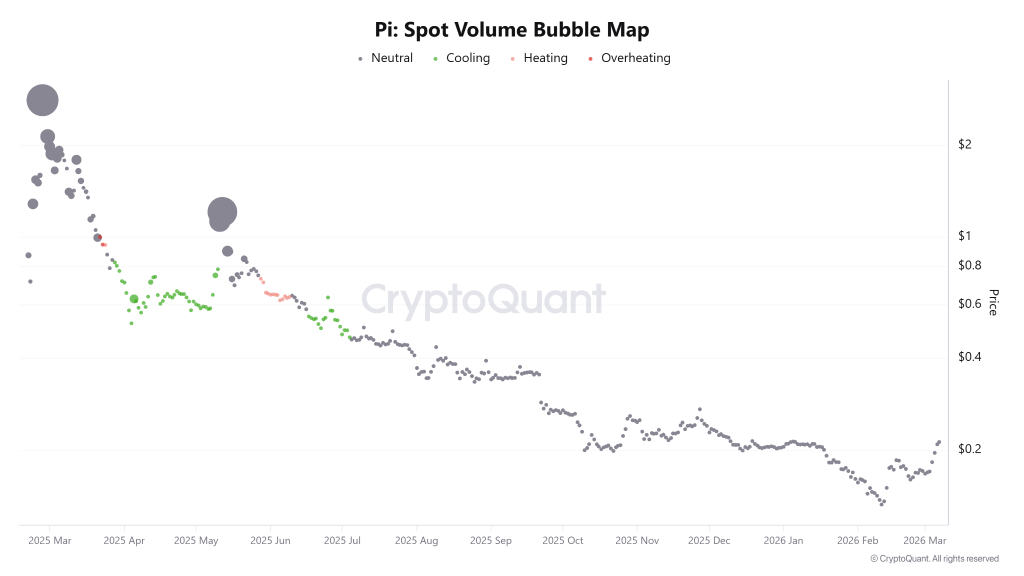
And in crypto markets, rising volume during a price recovery tends to get people paying attention. According to data from CryptoQuant’s spot volume bubble map, trading activity has started climbing alongside the recent PI/USD move. Now, before anyone starts screaming “breakout,” there’s a catch. The indicator still labels the current volume environment as neutral.

Oddly enough, that’s not bad news. Neutral volume during a rising price trend often hints that accumulation might still be underway rather than a full-blown speculative frenzy.

PI Network Price Volume Trend

Take a closer look at the volume map and the pattern becomes clearer. The bubbles tracking spot activity have been gradually expanding, signaling a rise in trading interest. But they’re not glowing red-hot or light orange yet. In other words, momentum hasn’t strengthened yet and to reach peak speculation territory it needs some more efforts to do it.

For long-term watchers of the PI Network price chart, that distinction matters. If volume remains controlled while price edges upward, it can suggest investors are slowly building positions rather than chasing a short-term pump.

Still, crypto has a long history of teasing traders before pulling the rug.

PI Network Price Jumps 15% as Volume Rises But $0.28 Holds the Real Answer

The $0.28 Fakeout Warning

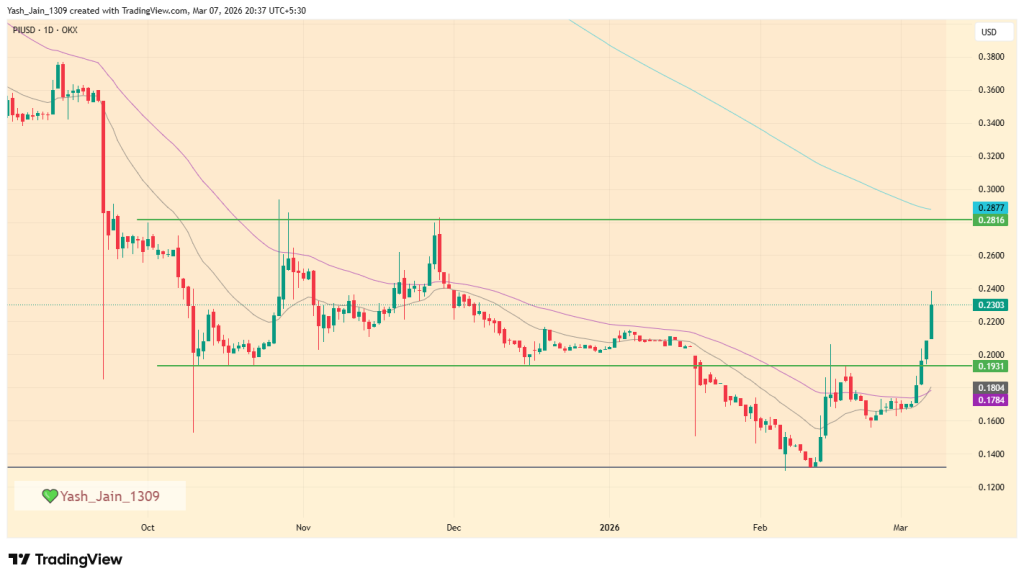
History provides a useful cautionary tale here. Back in Q4 2025, the asset surged from roughly $0.19–$0.20 but ran into a stubborn ceiling at $0.28. That level ultimately triggered a loss of strength, turning the rally into what traders later labeled a classic fakeout.

Fast forward to Q1 2026, and the story looks slightly different. This time, the asset found support much lower, in the $0.13–$0.14 zone. From there, it managed to reclaim $0.20, a move that technically signaled a shift in short-term trend.

But the real test hasn’t arrived yet. If price once again stalls beneath $0.28, the market could start asking uncomfortable questions about whether history is repeating itself.

Network Updates Fuel Investor Interest

So why the renewed attention now? Two recent developments inside the ecosystem appear to be driving the interest.

First came the announcement that Protocol v19.9 migration has been successfully completed, with the next upgrade, v20.2, targeted for completion before Pi Day 2026. Node operators were advised to ensure their systems are updated ahead of the next phase.

Then things got even more interesting. A separate update revealed a proof-of-concept project exploring a new Pi Node utility for decentralized AI training and computing tasks. The project reportedly uses spare computing power from over 421,000 Pi Nodes to process AI-related workloads.

The initiative was conducted in collaboration with OpenMind, a robotics startup backed by Pi Network Ventures. The experiment showed that Pi Nodes could handle AI workloads and return useful results quickly, an early step toward integrating the network into distributed AI infrastructure.

PI Network Price Eyes Breakout

So where does that leave things?

Simple. The PI Network price prediction debate now circles around a single technical hurdle.

If the PI Network price climbs decisively above $0.28, the probability of the current rally being another fakeout drops significantly. Rising volume on CryptoQuant’s chart could then signal accelerating momentum.

PI Network Price Jumps 15% as Volume Rises But $0.28 Holds the Real Answer

And if that momentum continues building, some traders believe the next long-term target could eventually stretch toward $1. But first things first. The market still has one stubborn ceiling to deal with.

Ethereum Price Builds Quiet Strength as RWAs Hit $20.4B and L2 Ecosystem Expands

FG Nexus Sells Additional Ethereum as Losses Hit $82M

The post Ethereum Price Builds Quiet Strength as RWAs Hit $20.4B and L2 Ecosystem Expands appeared first on Coinpedia Fintech News

The Ethereum price may look sluggish on the surface, but under the hood the network’s fundamentals are doing something far less boring which quietly expanding. And in crypto, quiet expansion tends to get loud eventually.

Since January 2025, the value of tokenized RWAs on blockchain has climbed to $20.4 billion, according to the latest data. That growth isn’t happening in isolation either. It’s unfolding alongside a rapidly expanding Layer 2 ecosystem and a massive stablecoin footprint across the Ethereum network.

So while traders argue over candles on the Ethereum price chart, the infrastructure beneath the market keeps getting bigger.

Ethereum Ecosystem Growth Tells Story

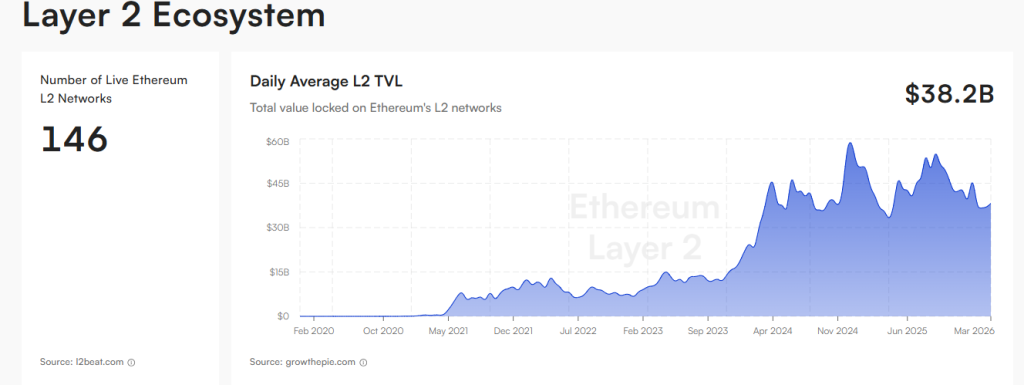
Let’s start with the raw numbers. The Ethereum ecosystem now hosts 146 live Layer 2 networks. That’s not a typo, 146 separate scaling environments designed to handle transactions and applications without clogging Ethereum’s base layer.

And despite the brutal token corrections many of those L2 projects have faced recently, the capital sitting inside them hasn’t exactly vanished.

Ethereum Price Builds Quiet Strength as RWAs Hit $20.4B and L2 Ecosystem Expands

The total value locked across Ethereum’s L2 networks currently sits at $38.2 billion. Sure, that’s down from the $58 billion peak recorded in mid-December 2025, but it’s still a massive figure considering the broader market turbulence.

In other words, the infrastructure didn’t disappear just because prices dropped.

Stablecoins Dominate Ethereum Network Liquidity

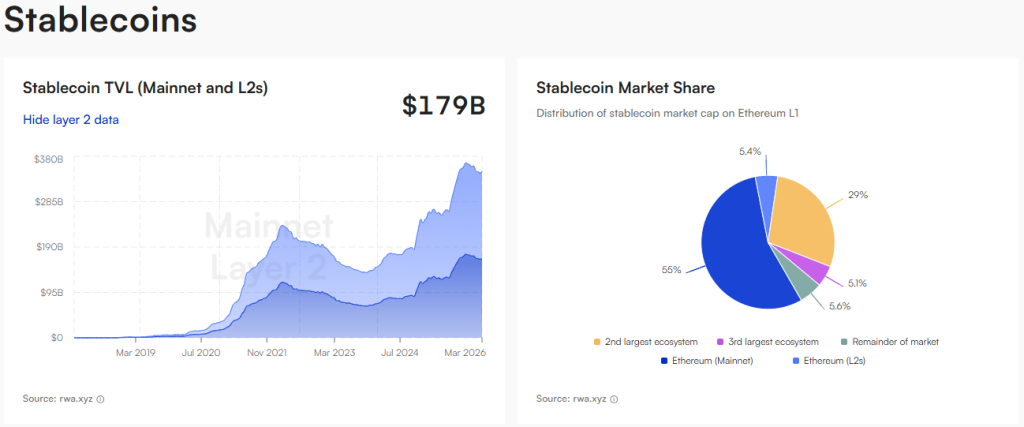
Now here’s another piece of the puzzle. When combining Ethereum’s mainnet and its L2 networks, stablecoins account for over 60% of the market share, representing roughly $179 billion.

That’s a staggering amount of liquidity circulating inside one ecosystem. Why does it matter? Because stablecoins function as the financial plumbing of crypto. They power trading, lending, payments, and DeFi. When the majority of that liquidity sits inside Ethereum’s orbit, it tells you where most of the financial activity still lives.

Ethereum Price Builds Quiet Strength as RWAs Hit $20.4B and L2 Ecosystem Expands

Ethereum Price Signals Possible Accumulation

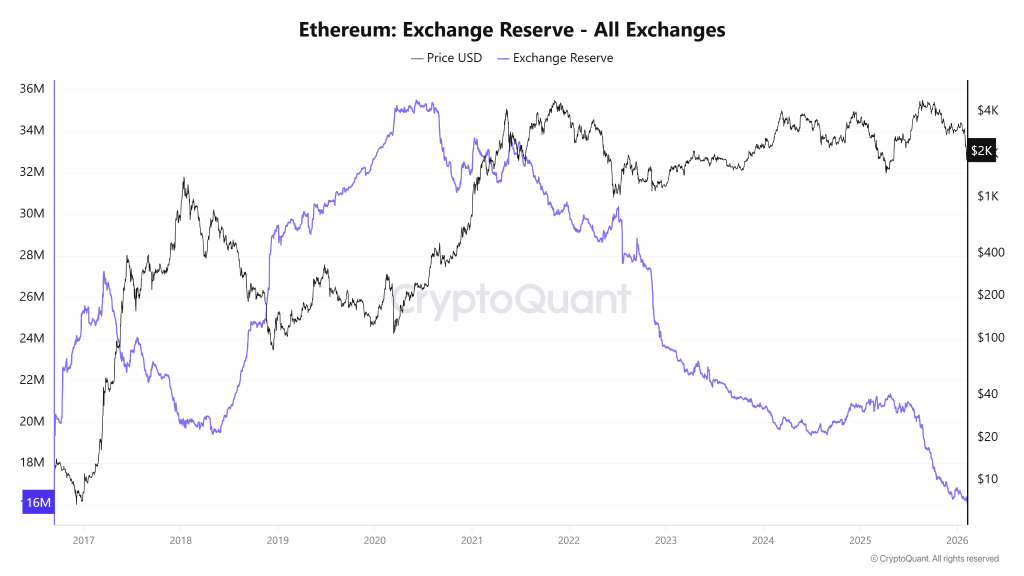
Meanwhile, another metric is quietly flashing on analysts’ dashboards: declining ETH exchange reserves. Put simply, fewer ETH tokens are sitting on centralized exchanges.

Historically, that kind of movement suggests accumulation. Investors pull assets off exchanges when they’re planning to hold rather than sell. Not exactly the behavior you see during panic exits. 

Ethereum Price Builds Quiet Strength as RWAs Hit $20.4B and L2 Ecosystem Expands

Ethereum Price Outlook Sparks Bullish Sentiment

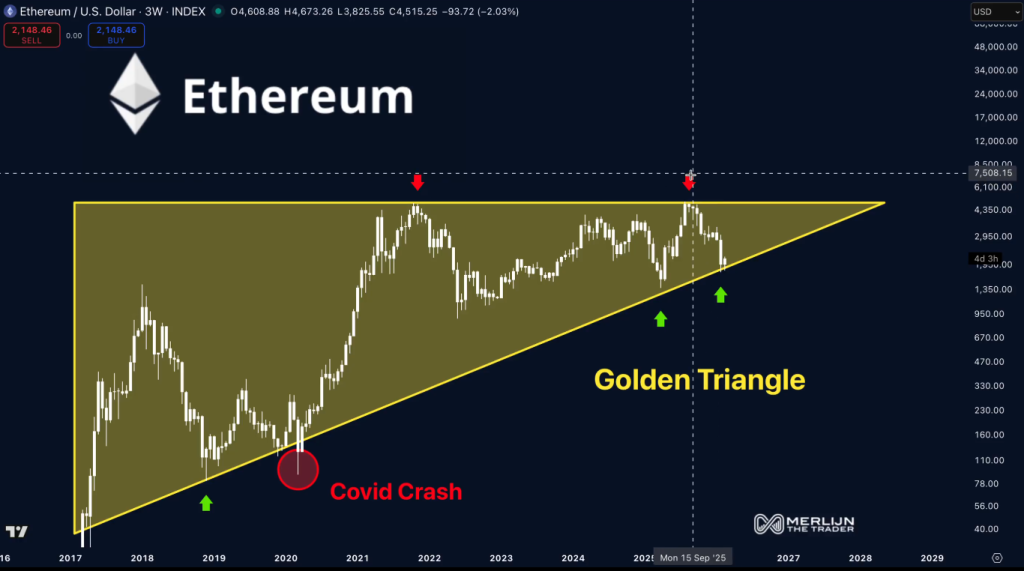
Now here’s where things get interesting. Some market watchers believe the current setup could be quietly building pressure. One particularly blunt sentiment floating around crypto circles sums it up pretty clearly: many investors may not fully grasp how bullish the broader chart structure appears.

Ethereum Price Builds Quiet Strength as RWAs Hit $20.4B and L2 Ecosystem Expands

The argument goes like this. Sentiment across the market remains crushed. Massive capital reportedly sits on the sidelines waiting for regulatory clarity. Meanwhile, institutions, governments, and banks are increasingly experimenting with blockchain-based financial infrastructure.

If that alignment plays out, the Ethereum price prediction suggests that it could eventually reflect the scale of the ecosystem being built around it. And when that happens, the ripple effects across the altcoin market could be hard to ignore.

Worldcoin Price Prediction 2026, 2027 – 2030: Will WLD Price Reach $10?

price prediction Worldcoin

The post Worldcoin Price Prediction 2026, 2027 – 2030: Will WLD Price Reach $10? appeared first on Coinpedia Fintech News

Story Highlights

  • The live price of the WLD token is  $ 0.36768364
  • Price predictions for 2026 range from up to $4.18.
  • Long-term forecasts suggest potential highs of $35.60 by 2030.

WLD price was almost $12 ATH but went crashing to $0.50 in the last remaining days of 2025. This has raised concerns among investors and traders about WLD’s future, and as a result, the Worldcoin price prediction 2026 has become a topic of significant discussion, with many being intrigued about its prospects in the coming year.

Its prolonged period of downtrend has left many wondering if the project’s initial buzz was fading. But, behind the scenes, Worldcoin is still quietly building its platform. Now, experts view Q1 2026 as a potential turning point where renewed momentum could be observed.

So many are now asking a crucial question: is this the start of a new chapter for Worldcoin? Will the project’s focus on decentralized identity and its connection to the AI sector be enough to fuel a powerful comeback and reclaim its spot in the market spotlight?

Let’s delve into the anticipated Worldcoin price predictions 2026 to 2030 and the years to come.

Worldcoin Price Today

Cryptocurrency Worldcoin
Token WLD
Price $0.3677 down -3.83%
Market Cap$ 1,064,067,579.47
24h Volume$ 89,702,292.6615
Circulating Supply2,893,975,824.9380
Total Supply10,000,000,000.00
All-Time High$ 11.8171 on 10 March 2024
All-Time Low$ 0.3140 on 06 February 2026

CoinPedia’s WLD Price Prediction 2026

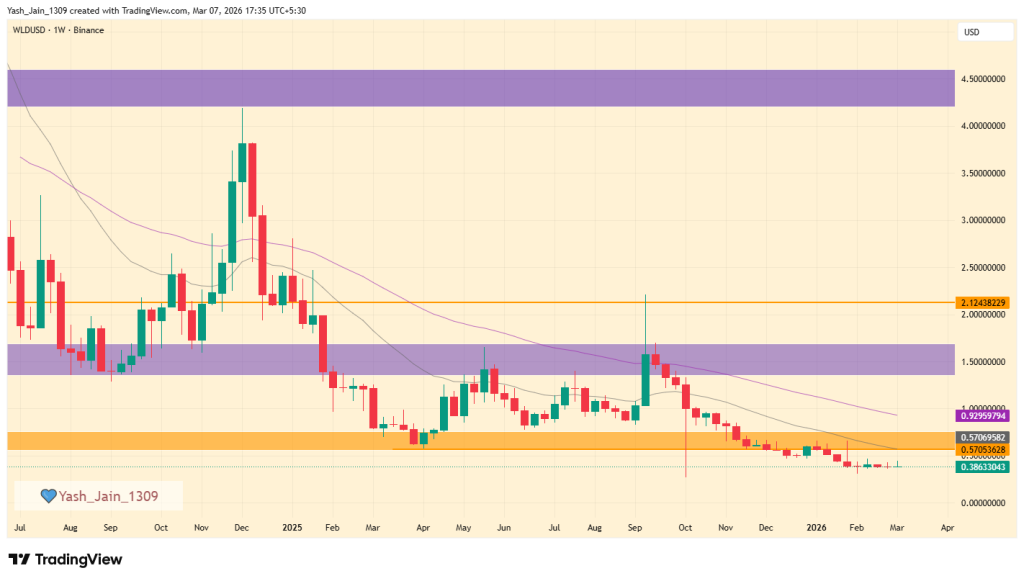
In early 2026, the price dropped to $0.27, prompting efforts to stabilize the market. However, investor sentiment continues to be cautious. The immediate short-term support level is at $0.31; a drop below this level could result in further declines. If the prices increase, we could see a bounce back to $0.60 and potentially $0.95 in March. For a long-term recovery, it is essential to break through the resistance at $1.50.

Worldcoin Price Prediction 2026

Following a false breakout to $2.12 in September 2025, the bearish trend continued into the first quarter of 2026, with prices dropping as low as $0.27. However, since mid-February, there have been efforts to sustain the price and prevent further declines. 

Given the significant drop already experienced, broader market conditions have notably affected liquidity within the cryptocurrency sector. As a result, traders and investors have remained on the sidelines, waiting for clearer market signals to emerge.

In March, the market would find itself in a precarious situation, as odds suggest it could struggle to stabilize. Investor sentiment remained lukewarm, with many hesitant to take advantage of opportunities despite substantial price discounts.

Currently, the immediate critical support level is at $0.31. If this level is breached, lower prices may be possible. On the other hand, if the price rises, March could see a bounce towards $0.60 and $0.95 in the short term. For long-term recovery, the price needs to breach the $1.50 resistance zone.

Worldcoin Price Prediction 2026

WLD On-Chain Analysis

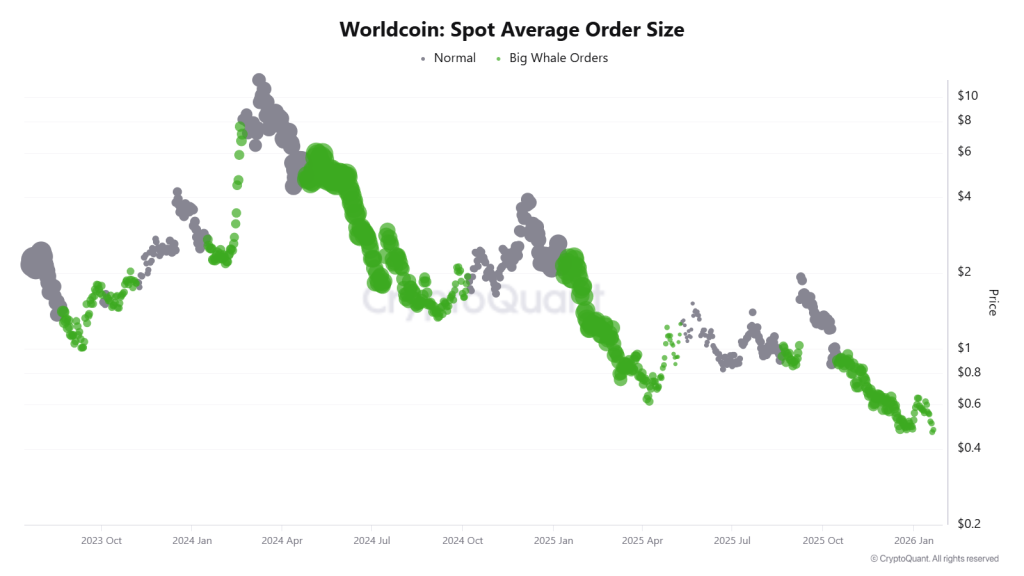
The WLD Spot Average Order Size chart reveals persistent green clusters into January 2026, indicating sustained “Big Whale” participation. This heavy institutional accumulation suggests that smart money is aggressively building positions, viewing the current price range as a high-conviction entry point.

Worldcoin Spot Avg Order Size

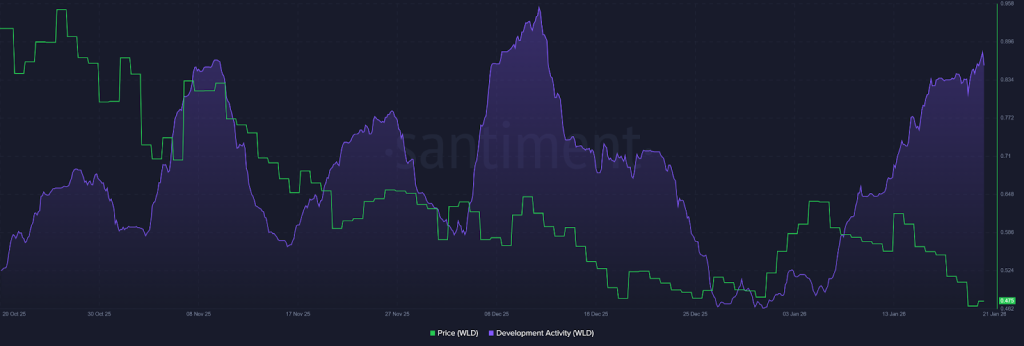
Similarly, development activity on Worldcoin is surging to new local highs in January 2026, showcasing intense builder commitment. This spike in innovation, combined with whale interest, creates a powerful fundamental divergence that historically precedes a massive price reversal.

Worldcoin On Chain Activity

WLD Price Forecast 2026 – 2030

YearPotential Low ($)Average Price ($)Potential High ($)
20262.506.009.50
20277.0011.2515.70
202810.7515.9521.15
202915.6521.6027.50
203019.7527.7535.60

This table, based on historical movements, shows Worldcoin price to reach $35.60 by 2030 based on compounding market cap each year. This table provides a framework for understanding the potential Worldcoin price movements. Yet, the actual price will depend on a combination of market dynamics, investor behavior, and external factors influencing the cryptocurrency landscape.

Worldcoin Price Forecast 2026

Worldcoin’s price for 2026 is projected to range between $2.50 and $9.50, with an average price of approximately $6.00.

WLD Price Prediction 2027

Worldcoin’s price for 2027 is expected to fluctuate between $7.00 and $15.70, with an average price of around $11.25.

Worldcoin Price Forecast 2028

Worldcoin’s price for 2028 is anticipated to be between $10.75 and $21.15, with an average price of about $15.95.

WLD Token Ai Price Forecast 2029

Worldcoin’s price for 2029 is projected to vary from $15.60 to $27.50, with an average price of roughly $21.60.

Worldcoin AI Token Price Prediction 2030

Worldcoin’s price for 2030 is expected to fluctuate between $19.75 to $35.60, with an average price of approximately $27.75.

Market Analysis

Firm Name20262030
Swapspace$1.30$2.07
coincodex$2.40$4.30
DigitalCoinPrice$3.02$4.06

*The targets mentioned above are the average targets set by the respective firms.

Never Miss a Beat in the Crypto World!

Stay ahead with breaking news, expert analysis, and real-time updates on the latest trends in Bitcoin, altcoins, DeFi, NFTs, and more.

FAQs

What is Worldcoin?

Worldcoin is a cryptocurrency project aiming to distribute digital assets to a global audience through a unique identity-verification system.

What is the current price of 1 Worldcoin?

At the time of writing, the price of one WLD token was  $ 0.00349731.

What is the Worldcoin price prediction for 2026?

WLD price forecasts for 2026 suggest a potential range between $2.50 and $9.50, depending on market recovery and technical breakouts.

What is the Worldcoin price prediction for 2030?

Long-term models suggest WLD could trade from about $19.75 to $35.60 by 2030 under bullish conditions.

What is the Worldcoin price prediction for 2040?

While speculative, extended growth forecasts envision potential for WLD beyond 2040 based on adoption and tech use cases.

Is Worldcoin a good long-term investment?

Worldcoin offers long-term potential due to its focus on decentralized identity and AI, but it remains volatile and requires risk awareness.

What factors influence WLD price the most?

WLD price is driven by AI narrative strength, user adoption, token supply dynamics, market sentiment, and overall crypto market trends.

Hyperliquid Price Prediction 2026, 2027 – 2030: Will HYPE Price Hit A New ATH?

Hyperliquid Price Prediction

The post Hyperliquid Price Prediction 2026, 2027 – 2030: Will HYPE Price Hit A New ATH? appeared first on Coinpedia Fintech News

Story Highlights

  • The live price of the Hyperliquid crypto is  $ 30.46060504.
  • The 2025 HYPE price suggests it could hit $40-$105 in 2026.
  • Forecasts suggest that HYPE could reach a potential average price by 2030 of around $125, with highs up to $185.

The crypto market is buzzing with excitement over Hyperliquid and its native token, HYPE. As a decentralized, paperless alternative to platforms like Binance and Coinbase, Hyperliquid is quickly gaining traction, prompting investors to look closely at the HYPE price prediction for 2026 and beyond

With its unique “HyperBFT” consensus mechanism, lightning-fast transactions, and zero KYC hurdles, Hyperliquid is rewriting the rules of perpetual trading. Beyond its consensus mechanism, Hyperliquid also allows users to trade crypto perpetual futures, including major assets like BTC, ETH, SOL, AVAX, and SUI, even without owning the underlying asset. 

As the platform gains traction for its streamlined trading experience, many investors are now turning to analyze the HYPE token price outlook. But does its innovative model signal long-term growth for HYPE Token Price? 

In this article, we dive deep into market sentiment and Hyperliquid price projections from 2026 to 2030.

Hyperliquid Price Today

Cryptocurrency Hyperliquid
Token HYPE
Price $30.4606 down -0.89%
Market Cap$ 7,849,802,143.62
24h Volume$ 150,377,641.1546
Circulating Supply257,703,421.6587
Total Supply957,378,936.6227
All-Time High$ 59.3926 on 18 September 2025
All-Time Low$ 3.2003 on 29 November 2024

Coinpedia’s HYPE Price Prediction 2026

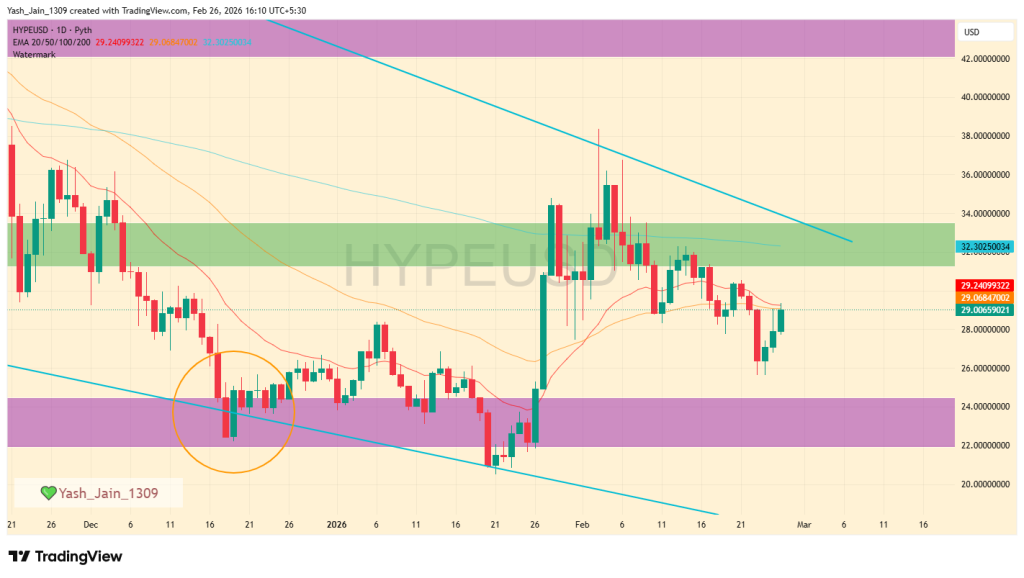
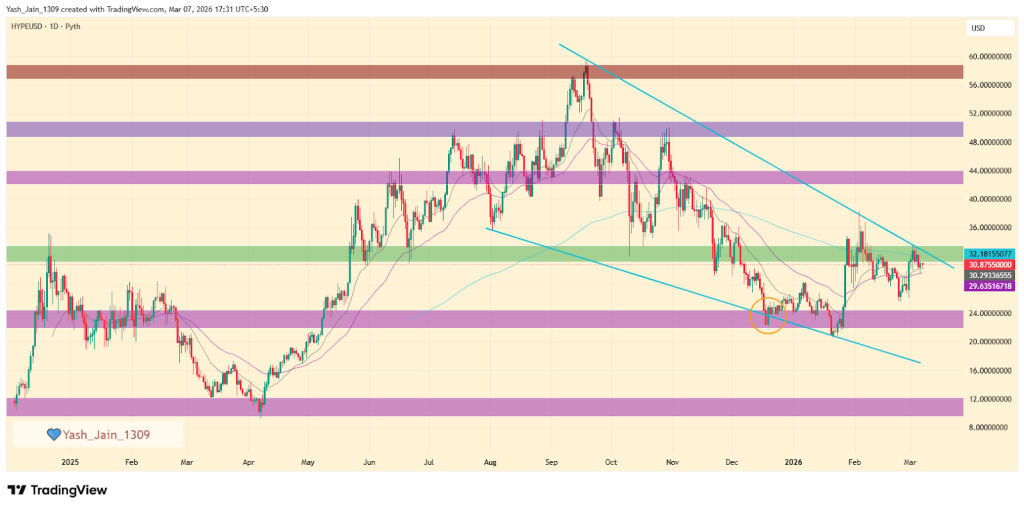
In 2026, HYPE retested support at $21 and rose to $38 but now faces resistance at the upper wedge boundary around $32. If it breaks $32, it could reach $44 or $50; otherwise, it may fall below $21 to $18.

HYPE Price Prediction March 2026

In February, HYPE’s price fell from its $38 peak and is now 30% lower at $26. But late February saw a faint demand again, which pushed the price back up to retest the 20-day and 50-day EMA bands. If it crosses, in March, a retest of $32 could be possible, or even a breach, with targets at $44. But, if $32 repels, then it could hit $21.

HYPE price prediction March 2026

Hyperliquid Price Prediction 2026

In 2026, the HYPE price underwent a significant retest of dynamic support at $21, which coincided with the lower boundary of a falling wedge pattern. This retest led to a price rise to $38 by early February. However, the upper boundary of the falling wedge then served as dynamic resistance, preventing any further upward movement.

Currently, HYPE is consolidating within a narrowing wedge, with the trading range narrowing each month. At present in March, it is fluctuating around the 20-day and 50-day EMA bands.

In the short term, the price has tested the upper boundary of the falling wedge again, approximately at $32. If it successfully breaks through and maintains above this level, it may initiate a rally towards $44 or $50. Conversely, if it is rejected at $32, the price could decline below $21, potentially reaching as low as $18.

Hyperliquid Price Prediction 2026
YearPotential LowPotential AveragePotential High
2026 (conservative)$15$35$80

HYPE On-Chain Outlook

The Dune analytics dashboard provided an quick on-chain overview of the utility metrics of the Hyperliquid token (HYPE), which appears to be improving significantly with each passing month.

HyperEVM total transaction fees have surpassed 235.57K and are at an ATH, and total trading volume has crossed $3.64 trillion and is at an ATH. Even its revenue has reached an ATH, crossing $993 million.

HYPE On-chain outlook

All the major metrics suggest that it is experiencing great adoption among peers, and its on-chain metrics are proof of that, suggesting that if the rally occurs, then 2026 might end on very good numbers.

Hyperliquid Coin Price Targets 2026 – 2030

YearPotential Low ($)Potential Average ($)Potential High ($)
2026255090
20274075105
20285595130
202985110155
2030105125185

HYPE Price Projection 2026

By 2026, the value of a single Hyperliquid token price could reach a maximum value of $90 with a potential low of $25. With this, the average price could land at around the $50 level.

Hyperliquid Coin Price Prediction 2027

During 2027, the HYPE could reach a maximum value of $105 with a potential low of $40. Considering this, the average price of this altcoin could settle at around $75.

HYPE Crypto Price Action 2028

The Hyperliquid price could achieve the $130 milestone by the year 2028. On the flip side, the altcoin could record a low of $55 and an average price of $95.

Hyperliquid Price Analysis 2029

The HYPE crypto prediction for the year 2029 could range between $85 to $155 and the average price could be around $110.

HYPE Price Prediction 2030

Looking forward to 2030, the Hyperliquid Price may range between $105 and $185, and a potential average value of around $125.

Market Analysis

Firm Name202520262030
Binance$37$63$164
DigitalCoinPrice$76$54$97

*The aforementioned targets are the average targets set by the respective firms.

CoinPedia’s HYPE Price Projection

This Layer-1 project has taken the crypto market by storm within a short time frame. With a market cap of over $7 billion, this altcoin has successfully secured a position in the top 25. Moreover, with the mass adoption, this altcoin could claim a spot in the top 10 during the upcoming bull run.

If the bullish sentiment intensifies, the Hyperliquid price will reach a high of $41.39 this year. On the flip side, if the market experiences unfavorable events, this could result in this altcoin settling at a low of $14.65.

YearPotential LowPotential AveragePotential High
2025$14.65$28.02$41.39
Never Miss a Beat in the Crypto World!

Stay ahead with breaking news, expert analysis, and real-time updates on the latest trends in Bitcoin, altcoins, DeFi, NFTs, and more.

FAQs

What is Hyperliquid (HYPE) and why is it gaining popularity?

Hyperliquid is a fast, decentralized trading platform with no KYC and low fees, making HYPE popular among traders seeking speed and independence.

What is the Hyperliquid (HYPE) price prediction for 2026?

HYPE price in 2026 is projected to range between $25 and $90, with an average near $60 if adoption and trading volumes keep rising.

What could HYPE be worth by 2030?

Long-term projections suggest HYPE might reach an average of $125 by 2030, with possible highs near $185 if platform usage keeps expanding.

Is Hyperliquid (HYPE) a good long-term investment?

HYPE may appeal to long-term investors due to strong platform growth, but like all crypto, it carries risk and requires careful research.

Avalanche Price Prediction 2026, 2027 – 2030: Will AVAX Price Hit $100?

Avalanche Price Prediction

The post Avalanche Price Prediction 2026, 2027 – 2030: Will AVAX Price Hit $100? appeared first on Coinpedia Fintech News

Story Highlights

  • The live price of the Avalanche is  $ 8.94539346.
  • Price predictions for 2026 range from $400 to $600.
  • Long term outlook suggests gradual growth potential to approach $1200 by 2030.

Aave (AAVE) is a decentralized finance protocol built on Ethereum that facilitates permissionless lending and borrowing through smart contracts. After witnessing a strong expansion in the previous market cycle, AAVE entered a prolonged correction phase, with price gradually retracing from its earlier highs. Throughout 2025, AAVE remained in a consolidation structure, reflecting a period of market digestion rather than trend continuation. While short-term momentum has cooled, the broader technical structure suggests that AAVE may be transitioning into a new accumulation phase. 

As volatility contracts and price holds above long-term demand levels, attention is now shifting toward whether 2026 can trigger the next major price discovery cycle.

Avalanche Price Today

Cryptocurrency Avalanche
Token AVAX
Price $8.9454 down -0.78%
Market Cap$ 3,862,370,079.79
24h Volume$ 160,482,751.2986
Circulating Supply431,771,961.1772
Total Supply463,441,061.1772
All-Time High$ 146.2179 on 21 November 2021
All-Time Low$ 2.7888 on 31 December 2020

CoinPedia’s Avalanche Price Prediction

Currently, the Avalanche price is testing the $9 mark in March after hitting resistance at $15 in January. A recovery is expected in March, and projections for the first quarter of 2026 suggest it could regain previous levels. Experts are targeting $20, with a potential rise to $28. If it breaks through $28, it may reach $44 by mid-year. However, if $28 acts as strong resistance, consolidation may continue.

Avalanche (Avax) Price Prediction 2026

AVAX price prediction 2026

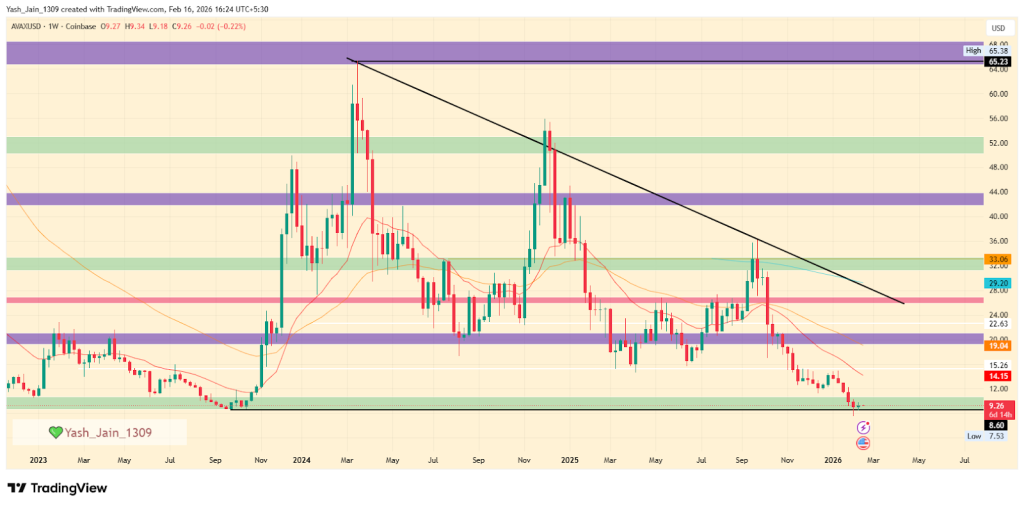
The price action of AVAX hasn’t been so great since its Q1 2024 high of $65; it has been in decline ever since. Most of 2024 and all of 2025 were in decline.

Even in 2026, this bearish momentum’s shadow didn’t lift; it worsened, with the broader market in turmoil. In January, the AVAX price faced rejection from $15 and slipped to $9 support zone after hitting a low of $7.53 in February. But things can change this time around. Since Q1 still has several days left, a recovery remains an option, as it has been testing a demand area of $9 that ignited the late 2024 rally. Sustained demand here could signal a reversal.

Now, expectations for its recovery, which are gaining momentum in Q1 2026, are significantly higher. Now, it appears AVAX may not have performed in the past two years, but it was all about establishing a base, and it seems it has done so. Now, an impressive rally ahead is a strong possibility.

For Q1, we expect $20 with potential to test the pattern’s upper border at $28. However, if it clears the upper border, we can expect AVAX to hit $44 by the end of the first half. But if $28 repels, then the first half could see consolidation stretching.

YearPotential LowPotential AveragePotential High
2026 (conservative)$25$33$50

AVAX On-Chain Analysis

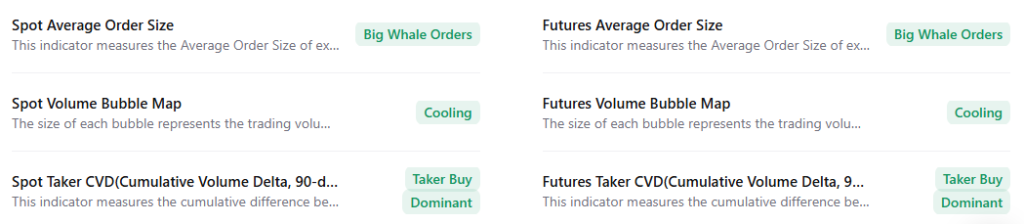
AVAX shows a highly bullish sentiment. Big Whale Orders in both spot and futures indicate strong institutional accumulation. With Taker Buy Dominance at 90 days, aggressive buyers are in control, while the Cooling volume bubble map suggests a healthy consolidation phase. Collectively, major metrics point to a bullish rally ahead.

AVAX onchain analysis

Avalanche Price Prediction 2026 – 2030

YearPotential Low ($)Potential Average ($Potential High ($)
2026400500600
2027550690820
2028650830980
20297409501100
203082010001200

AAVE Price Forecast 2026

Looking ahead to 2026, AVAX’s potential price is anticipated to rise even further, with a projected low of $20.00 and a high of $80.00. The average price for AVAX in 2026 will likely be $50.00.

AAVE Price Prediction 2027

In 2027, the analysis suggests a continued upward trend in AVAX’s value, with the price potentially ranging between $31.50 and $126.50. Based on the calculated figures, the average price is projected to be approximately $79.00 during this period.

AAVE Prediction 2028

By 2028, AVAX’s price could potentially experience further growth, falling within the range of $50.50 and $202.50. The average price during this period, calculated from the data, is expected to be around $126.50.

AAVE Price Prediction 2029

Moving forward to 2029, AVAX’s price is predicted to ascend between $81.00 and $324.00. The average price during this period is estimated at around $202.50 based on calculated figures.

AAVE Price Prediction 2030

By 2030, AVAX’s price is forecasted to soar between $129.50 and $518.50. Further, the average price during this period, calculated from the data, could stand at $324.00.

AAVE Price Prediction 2031, 2032, 2033, 2040, 2050

Based on the historic market sentiments and trend analysis of the largest cryptocurrency by market capitalization, here are the possible AAVE price targets for the longer time frames.

YearPotential Low ($)Potential Average ($)Potential High ($)
203189011001350
203292012001500
2033110013501780
2040160022003000
2050260033004500

AAVE Price Prediction: Market Outlook?

Year202620272030
Changelly$500$750$1100
DigitalCoinPrice$480$680$1000
WalletInvestor$520$650$1250
Never Miss a Beat in the Crypto World!

Stay ahead with breaking news, expert analysis, and real-time updates on the latest trends in Bitcoin, altcoins, DeFi, NFTs, and more.

FAQs

Is AAVE a good investment for 2026?

AAVE shows long-term growth potential if it breaks key resistance levels. However, price depends on market conditions and DeFi adoption.

What should investors watch before buying AAVE?

Watch support near $135–$150, resistance above $250, overall market trend, and activity within the Aave protocol.

What could drive Avalanche (AVAX) price growth in the coming years?

Key drivers include DeFi expansion, institutional adoption, subnet growth, and overall crypto market recovery cycles.

What is the AVAX price prediction for 2026?

The AVAX price prediction for 2026 suggests a potential range between $400 and $600 if market momentum and network growth remain strong.

What is the AVAX coin price prediction for 2030?

AVAX coin price prediction for 2030 points to a possible range of $820 to $1,200, assuming sustained adoption and favorable market conditions.

What is the Avalanche price prediction for 2040?

Avalanche price prediction for 2040 estimates a broad range between $1,600 and $3,000 if long-term blockchain adoption accelerates globally.

AVAX
BINANCE

How to enable the hidden 24MP camera mode on Galaxy S26 Ultra

Samsung’s best flagship phone, the Galaxy S26 Ultra, technically supports a 24MP photo mode, but it’s not there when you open the camera app.

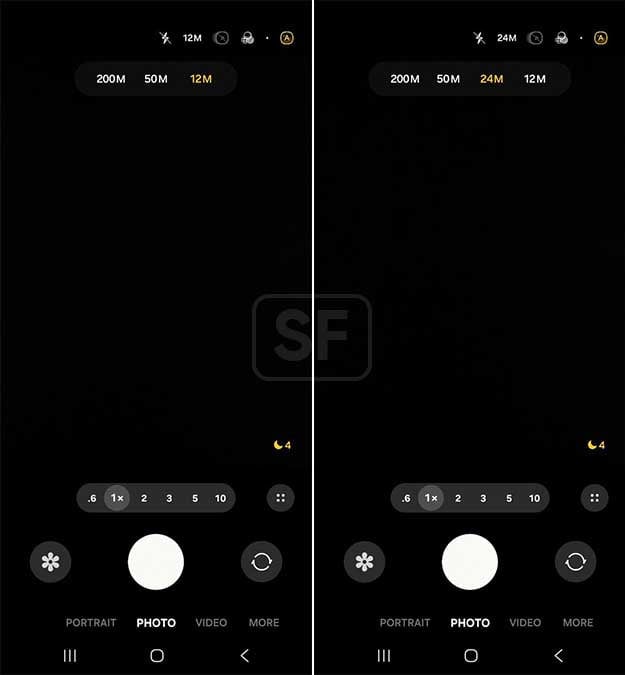
Galaxy S26 Ultra comes with an enhanced 200-megapixel camera. Samsung has also developed a 24-megapixel photo mode for this flagship device. However, users still see those familiar resolutions, 12MP, 50MP, and 200MP.

Galaxy S26 Ultra has a hidden 24MP photo mode

Most flagships default to 12MP because of pixel binning. The sensor takes data from multiple pixels and smashes them together into one, which helps with light, speed, and noise. You lose some sharpness, but you get faster processing and cleaner shots.

While the Galaxy S26 Ultra has a 200MP main sensor, shooting at full resolution gives you insane detail, but the files are huge.

The 50MP telephoto has similar issues, so people bounce between 12MP for everyday reliability and the higher resolutions when they need to crop hard or print large.

Samsung Galaxy S26 Ultra 24MP camera

Image via Samsung Community

24MP is supposed to split the difference

Samsung showcased the 24MP mode, which uses AI Fusion processing to pull detail from the higher resolution data. You get more sharpness without sacrificing the natural color and dynamic range, without huge files.

Samsung Galaxy S26 Ultra 24MP Camera Photo Mode

Here’s how to enable 24MP photo mode

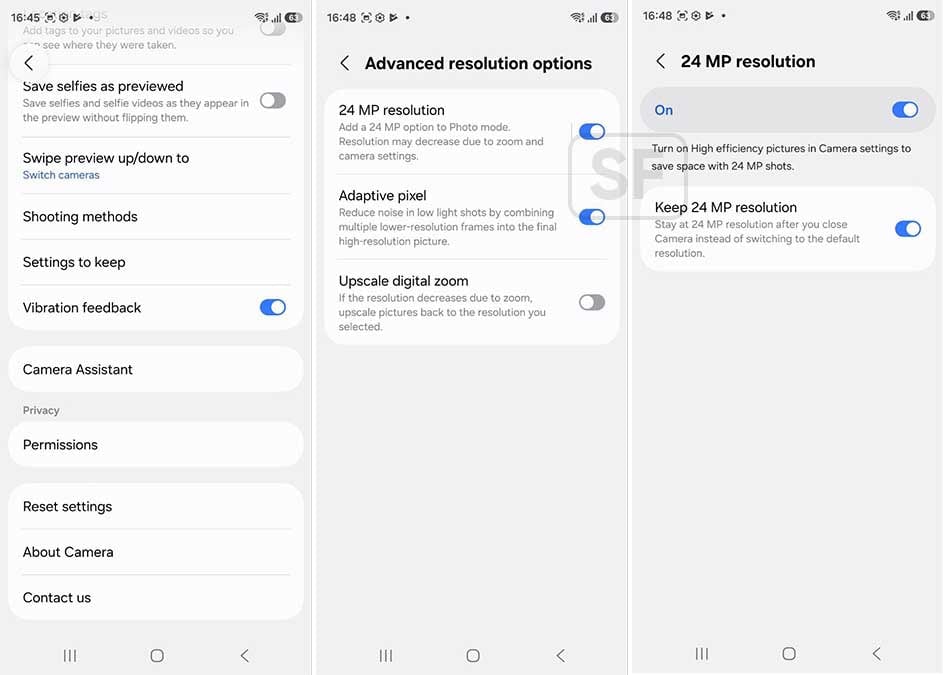
Want 24MP? You need to download Camera Assistant first. Camera Assistant is a Good Lock module, which means it lives in the Galaxy Store, not the main camera interface.

Once you’ve installed Camera Assistant, you have to dig into Advanced Resolution Options and manually flip the toggle “24 MP resolution.”

Samsung Galaxy S26 Ultra 24MP Camera Photo Mode

However, there’s a letdown. Even after you enable 24MP in Camera Assistant, the camera app won’t remember it as your default. You can tap it on and shoot with it, but if you switch back to 12MP or 50MP before closing the app.

he phone resets to 12MP the next time you open it. You have to manually select 24MP every single time unless you leave it set when you exit. To stop this from happening, expand 24MP settings and turn on “Keep 24 MP resolution.”

Unlike the 24MP mode buried in Expert RAW, this version works in the normal camera app.

The post How to enable the hidden 24MP camera mode on Galaxy S26 Ultra appeared first on Sammy Fans.

Galaxy S26 Ultra survives brutal drop test, but one part fails badly

The first Galaxy S26 Ultra drop test is already here as Samsung gears up to start shipping the new flagship phones to preorder buyers.

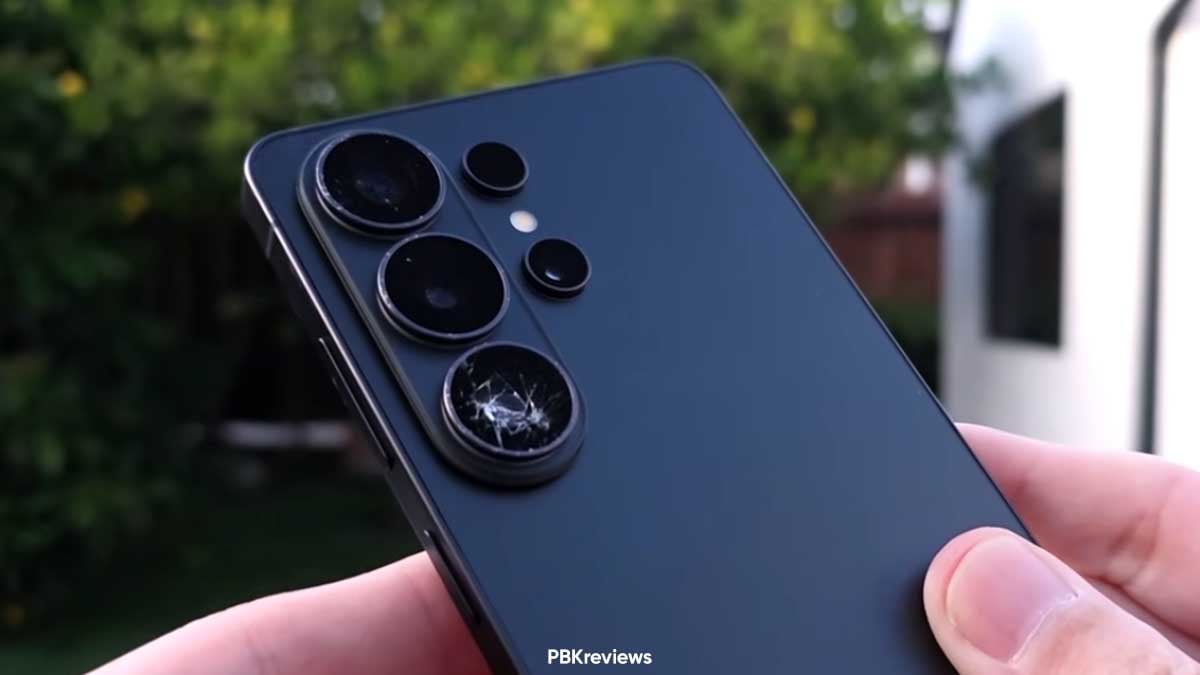
Famous YouTube channel PBKreviews just released the Galaxy S26 Ultra drop test video. The smartphone has survived the brutal test with flying colors, but one important part failed badly, and it’s not good to hear.

PBKreviews tossed the S26 Ultra off a concrete slab from head height four times. What emerged from that beating tells you everything about the phone’s durability story: it’s mostly excellent, but the camera island got obliterated.

The screen held up, no question there. Gorilla Armor 2 on the front glass proved itself immediately with the first drop. Not a crack, not a damage and the power button worked fine, like nothing happened to the device.

Camera lenses still need work

The camera bump extends more than the S25 Ultra’s setup, and the individual lenses sit there with less protective framing around them. So when the phone landed on its back during the second drop, one lens cover shattered outright.

Third drop, more glass fell off. By the end, the cameras still functioned but the shattered lens covers caused noticeable distortion in shots. That’s fixable with a replacement, sure, but you shouldn’t have to be thinking about that.

It was the same case with the Galaxy S25 Ultra last year.

Samsung Galaxy S26 Ultra Drop Test

Source – PBKreviews/YouTube

The aluminum frame took visible damage too. Samsung swapped titanium for aluminum this year, while the difference isn’t drastic. The fourth drop popped the S Pen right out of its slot, however, it remained fully functional.

So we’ve got a phone where the front and back glass hold up brilliantly, but the camera design actively invites disaster.

Do watch the full Galaxy S26 Ultra drop test video on YouTube.

The post Galaxy S26 Ultra survives brutal drop test, but one part fails badly appeared first on Sammy Fans.

Galaxy phone crashed in the presence of Samsung boss, then he surprised all

So a Brazilian TV host’s Galaxy phone crashed at the single most important networking event of his career; classic Samsung timing, that too in the presence of Samsung’s Boss.

Carlos Gorito, a moderator hired to run Brazil’s state dinner with South Korea last month, tried to snap a photo of the February 23 gathering at Seoul’s Blue House Guest House.

Samsung boss surprised everyone

Gorito’s Galaxy gave up, not dead exactly; calls and texts still worked but the camera went frozen. He posted about it later on Instagram, saying the phone “suddenly decided to travel back to the past” – via Chosun.

Now Gorito could’ve just pocketed the Galaxy phone, cursed Samsung under his breath, maybe borrowed someone else’s phone. But he walked up to Lee Jae-yong, the chairman of Samsung, and asked for help fixing his Galaxy.

Lee told him his own phone was working fine. Then, instead of handing it over or calling a tech person or pretending he didn’t understand the question, Lee offered to take the photo himself and email it to Gorito later.

Samsung Boss Galaxy Camera Failure Brazil

That’s not how executives usually handle product failure in public. Most would’ve quietly had someone swap the device out, maybe sent a new Galaxy Ultra to Gorito’s hotel the next morning with a handwritten note.

Brazilian President Lula in attendance, Samsung’s Lee Jae-yong, the CEOs of SK, LG, and Hyundai. This was the dinner where deals happen, where Brazil and Korea shake hands on factory investments and export agreements.

The post Galaxy phone crashed in the presence of Samsung boss, then he surprised all appeared first on Sammy Fans.

Samsung’s Galaxy S26 series spare parts are more expensive than S25

Samsung just revealed spare part pricing for the Galaxy S26 series and it’s more expensive than last year’s phones.

Galaxy S26 spare part cost in India shows the baseline screen replacement for the regular S26 surfacing at Rs 7,640, which is Rs 1,490 higher than what the S25 screen cost at launch.

The Plus model follows the same trajectory. The S26+ main screen now costs Rs 10,340, up from Rs 8,400 for the S25+, which is Rs 1,940 more.

Worth noting that the Plus actually gets a smaller price hike on its frame compared to the base model, which shrinks from Rs 3,460 to Rs 3,690. But the Ultra is where things get uncomfortable.

The Galaxy S26 Ultra screen repair clocks in at Rs 14,760. Last year, it was Rs 11,950 for the Galaxy S25 Ultra. That’s Rs 2,810 more for the same repair scenario; probably, the Privacy Display upgrade is making the difference.

The motherboard replacements are equally brutal. A 256GB motherboard for the S26 Ultra will set you back Rs 44,640 compared to Rs 37,150 for the S25 Ultra. Meanwhile, the 1TB variant jumps to Rs 53,850 from Rs 46,060, a Rs 7,790 climb.

The Ultra uses a Snapdragon 8 Elite Gen 5 chipset, and it has that new Privacy Display tech that Samsung spent five years developing. Those components cost money, but the base S26 and S26+ don’t get the Privacy Display.

The S26 Ultra battery now costs Rs 3,030 versus Rs 2,440 for the S25 Ultra. The base S26 battery actually costs less than the S25 battery, which is the only part that got cheaper year over year.

The S26 has a Rs 570 increase for the frame, and the S26+ sees a Rs 270 bump. However, things got better for the Galaxy S26 Ultra due to preferring Aluminum over Titanium; frame drops from Rs 6,740 to Rs 4,660.

The phones go on sale March 11, and people who pre-ordered are locked in.

Samsung Galaxy S26, S26+ and S26 Ultra repair cost India

The post Samsung’s Galaxy S26 series spare parts are more expensive than S25 appeared first on Sammy Fans.

Samsung Browser (Internet) app integrates Ask AI feature in latest update

Samsung Internet app has been renamed to Samsung Browser on the Galaxy S26 series, and the latest version also integrates the Ask AI feature.

The change in name was spotted recently, and Samsung is now rolling out a new update to the Browser (previously Internet) app, bringing the Ask AI feature. It also adds a warning to safeguard privacy when you browse the web.

Samsung enthusiast LarrySWhite shared a screenshot, showcasing the latest update for the Samsung Browser app. The changelog mentions two major changes that are integration of Ask AI and the malicious site warning.

The Samsung Browser version 29.0.4.45 carries these upgrades. The rollout appears to be limited to the most recent Galaxy flagships. An expansion will take place, but there’s no guarantee of wider availability soon.

Ask AI – US and Korea only affair

Samsung Browser’s changelog makes it clear that Ask AI is only for users in South Korea and the US. It’s a very hard regional restriction, keeping the availability limited to just two countries, leaving others waiting.

Chrome remains the most widely used internet browser app on Android. Samsung Internet is available for all Android devices, yet its utilization is not significant. Still, Samsung is empowering its in-house browser with new features.

APK file of the latest version is available for download manually. Sideloading is banned by Auto Blocker and not recommended either. Still, you can give it a try if you are really interested in the Ask AI trick in the US and Korea.

Samsung Internet Browser Ask AI

Credit – Larry S White

The post Samsung Browser (Internet) app integrates Ask AI feature in latest update appeared first on Sammy Fans.

Galaxy S26 Ultra vs iPhone 17 Pro: 7 key differences decide the winner

The Galaxy S26 Ultra vs iPhone 17 Pro (Max) debate kicked off the second Samsung wrapped its Unpacked event, and this year’s matchup is messier than usual.

I’ve spent the better part of a week looking at these devices, comparing spec sheets, reading Samsung’s marketing claims, and thinking about what actually matters when you’re dropping over a grand on a phone.

Galaxy S26 Ultra vs iPhone 17 Pro

This isn’t a definitive buyer’s guide yet. It’s more like an early assessment from someone who’s watched Samsung chase Apple for five years straight.

Design

Samsung and Apple make rounded rectangular slabs with glass backs and an aluminum frame. Samsung refined the Ultra this year, smoothing out some edges. The camera bump on all three S26 models is the pill-shaped island with three lenses.

Apple has further enlarged the rectangular bump on the Pro and Pro Max models. The island now occupies a significant space on the back. Meanwhile, the base iPhone 17 has two cameras sitting in a smaller bump.

Samsung Galaxy S26 Ultra vs Apple iPhone 17 Pro Max

Samsung wrapped the S26 and S26 Plus in Gorilla Armor, then upgraded the Ultra to Gorilla Armor 2. Apple covered all three iPhone 17 models with Ceramic Shield 2. Marketing names aside, they are all extremely durable pieces of glass.

Verdict: Both lineups look like premium flagship phones in 2026

Colors

Samsung offers Black, Cobalt Violet, Sky Blue, and White everywhere, with Silver Shadow and Pink Gold exclusive to its online store. The iPhone 17 comes in Black, Lavender, Mist Blue, Sage, or White. The Pros get Cosmic Orange, Deep Blue, and Silver.

Samsung Galaxy S26 Ultra SG26U Apple iPhone 17 Pro Series

Display

Samsung bumped the base S26 up to 6.3 inches from last year’s 6.2. The S26+ stays at 6.7 inches, and the Ultra now rocks a massive 6.9-inch panel. All three support variable refresh up to 120Hz, hit 2,600 nits peak brightness.

Apple’s iPhone 17 and 17 Pro both use 6.3-inch screens, while the Pro Max matches Samsung’s Ultra at 6.9 inches. This year, every iPhone supports 1Hz to 120Hz refresh, includes an anti-reflective coating, and 3,000 nits brightness.

Samsung added something Apple didn’t think of or didn’t bother with: Privacy Display.

Verdict: Galaxy S26 Ultra display is a game-changer.

Performance

Every Galaxy S26 runs on a Qualcomm Snapdragon 8 Elite Gen 5 for Galaxy in the US. Apple’s running an A19 chip in the base iPhone 17 and an A19 Pro in the Pro models.

Both companies make absurdly powerful processors at this point, and unless you’re doing something incredibly demanding, they’ll both feel instant.

Verdict: Too early to call a winner here

Camera

Samsung is stuck with the same camera setup on the S26 and S26 Plus that it used last year. That means a 50MP main sensor, a 12MP ultra-wide, and a 10MP telephoto with 3x optical zoom.

The S26 Ultra upgrades things considerably. You get a 200MP main camera, a 50MP ultra-wide, a 50MP telephoto with 5x optical zoom, and a 10MP telephoto with 3x optical zoom.

Samsung Galaxy S26 Ultra SG26U camera

Apple’s base iPhone 17 features a 48MP main camera and a 48MP ultra-wide. No telephoto, but Apple claims 2x optical zoom in and 2x optical zoom out through software.

The iPhone 17 Pro models get three 48MP rear cameras covering main, ultra-wide, and telephoto duties. All three iPhones sport an 18MP front camera with the Center Stage feature.

Samsung and Apple cameras have been excellent for years. The Ultra and Pro Max will likely trade wins depending on lighting conditions, subject matter, and personal preference.

Verdict: Samsung is ahead of Apple in the camera segment.

Battery capacity

Samsung’s battery sizes: 4,300mAh in the S26, 4,900mAh in the S26+, and 5,000mAh in the Ultra. Charging speeds vary too; the base model charges at 25W wired, Plus supports 45W, whereas the Ultra goes up to 60W (25W wireless).

Apple doesn’t publish battery capacity numbers, but the supply chain does. The base iPhone brings a battery of 3,692mAh, the Pro model gets approximately 4,252mAh, while the Pro Max version boasts the largest at about 5,088mAh.

Battery life’s one of those specs where you can’t trust the numbers until you run the actual test.

Price

Samsung wants $899 for the base Galaxy S26, while Apple asks $799 for the iPhone 17. That’s a hundred-dollar gap right out of the gate. Note that every phone here starts at 256GB, which is table stakes in 2026.

The Galaxy S26 Plus comes with a price tag of $1,099, while the iPhone 17 Pro costs $1,099 flat. As before, the Galaxy S26 Ultra continues to keep its $100 (upward) price difference from the best of Apple (iPhone 17 Pro Max).

Verdict: Apple is cheaper at every tier.

Samsung Galaxy S26 Ultra vs Apple iPhone 17 Pro Max

The post Galaxy S26 Ultra vs iPhone 17 Pro: 7 key differences decide the winner appeared first on Sammy Fans.

Samsung reveals the pixel trick behind Privacy Display

Samsung pulled back the curtain on Privacy Display last week. The Galaxy S26 Ultra launched on February 25th with the mobile industry’s first built-in Privacy Display.

Now, Samsung has revealed the brilliant technology behind the Privacy Display. It relies on a new OLED panel from Samsung Display that alternates between two types of pixels: Narrow and Wide.

Here’s how it actually works

In normal mode, both narrow and wide pixels spread light across a wide range of angles. When Privacy Mode is enabled, the display prioritizes narrow pixels that emit light straight forward, while wide pixels are reduced to a minimal level.

Samsung says the tech has been in development for 5 years, which tracks.

The company built Privacy Display with the ability to only apply to small portions of the S26 Ultra’s display, and it can hide notification pop-ups nearly perfectly. You’re not stuck blanking the entire screen every time you’re on a train.

You can set triggers for when the feature activates, such as during PIN, password, or pattern entry, or when notifications appear. No one wants to manually toggle a privacy filter every time they pull out a credit card to buy something online.

Samsung GalaxyS26 Ultra Privacy Display SG26U

Early hands-on suggests the blocking works well at the Samsung booth, but real-world performance depends heavily on the angle. Double-press the side button, and it activates. It’s a quick trick in addition to the toggle in the Quick panel.

Samsung insists it doesn’t mess with brightness, color accuracy, or viewing quality when you’re looking head-on. However, it actually dims the screen brightness a little when tested with equipment.

The post Samsung reveals the pixel trick behind Privacy Display appeared first on Sammy Fans.

Samsung phones could get Android-to-iPhone sharing feature this month

Samsung phones may finally receive the Android-to-iPhone sharing feature this month. The rollout may initially start for the Galaxy S26 series. Samsung will later expand the tool to even more Galaxy users sequentially.

In a recent development, Oppo confirmed (via 9to5Google) that the Find X9 and Find X9 Pro will get a software update later this month that lets them share files with iPhones, iPads, and Macs through Quick Share.

iPhone users will need to flip AirDrop visibility to Everyone for the handshake to work, because Apple’s default Contacts Only mode won’t play nice with Android devices trying to bridge in.

That’s Android-to-iPhone sharing via Quick Share wired into AirDrop’s backend, the same trick Google pulled on Pixel phones back in November.

Here’s what Oppo announced at MWC 2026:

Coming soon, OPPO’s Find X9 Series will bring Android Quick Share, enabled in close collaboration with MediaTek and Google. Without installing third-party applications, users can conveniently and securely transfer files between OPPO smartphones and iOS, iPadOS and macOS devices, improving cross-platform interoperability. The feature is expected to begin rolling out via software update starting in March.

Why does this matter?

Samsung Android iPhone sharing is about to follow. Screenshots surfaced weeks ago showing the Galaxy S26 series prepped for AirDrop compatibility through Quick Share, though the feature wasn’t active when reviewers tested retail units.

The company’s software rollouts haven’t exactly been the most predictable thing for the past year or two. One UI 8.5 is the likely vehicle for this, and Samsung has a habit of staggering such features across device generations.

The Galaxy S26 lineup doesn’t support this out of the box, but the feature may go live through a software update later this month.

The feature doesn’t require special hardware, so older Galaxy phones could get it with a software update, possibly bundled into One UI 8.5.

The post Samsung phones could get Android-to-iPhone sharing feature this month appeared first on Sammy Fans.

Moisture forming inside Galaxy S26 Ultra camera lenses

People with Galaxy S26 Ultra camera moisture problems are starting to speak up. It’s the most distressing problem Samsung’s flagships have ever faced. The condensation problem is rendering the cameras unusable, and that’s sad.

Ice Universe posted about it first on X, asking anyone who bought the phone to check their cameras in freezing weather. His own unit’s got condensation inside.

The problem surfaced after he took his phone outside when the temperature hit around minus six Celsius. Both the 3x and 5x telephoto lenses fogged up completely, which means you’re not taking usable photos in cold conditions.

He mentioned Korean forums picked up the same complaints, which tells you it’s not a bad batch. When multiple people in different countries see moisture forming on the inside of camera lenses on a phone rated IP68, that’s an engineering screwup.

The real question is why moisture’s getting trapped inside sealed camera housings. Samsung proudly touts that IP68 rating like it means invincibility.

Either the seals aren’t doing their job, or the vapor chamber inside the phone is creating internal humidity that has nowhere to go when the temperature plummets.

You’re holding a $1,300 phone that can’t shoot photos when it’s cold. That’s embarrassing for a company that stakes its reputation on hardware quality.

Samsung launched the Galaxy S26 series last month, full well knowing that people in half the world would be using it in freezing temperatures within weeks.

If this happens to you, what do you do?

You can’t blow dry without risking further condensation when it cools again. Rice doesn’t work and never did. Let it sit at room temperature and hope the moisture evaporates on its own without leaving residue on the lens internals.

If it doesn’t clear, you’re looking at a service center visit, and good luck getting that covered under warranty when Samsung might almost certainly call it user error.

Samsung Galaxy S26 Ultra Camera Lens Moisture Issue

Via – Ice Universe / X

The post Moisture forming inside Galaxy S26 Ultra camera lenses appeared first on Sammy Fans.

Samsung wants you to customize One UI beyond apps with vibe coding

There’s one thing Samsung didn’t shout about at Unpacked that could actually change how people use Samsung phones: vibe coding.

Recently, Hamish Hector of Techradar asked Won-Joon Choi, Samsung’s head of MX Business, whether vibe coding might surface on Samsung Galaxy devices; he didn’t shut the door. “Something we’re looking into,” he said.

Then he got specific; the appeal isn’t just app tweaks, it’s deeper.

“The possibility of customising your smartphone experience in new ways, not just your apps but your UX.” Right now, we are stuck with whatever Samsung or Google decided to ship, but vibe coding flips that.

You tell an AI what you want built. Maybe you’re sick of YouTube Shorts clogging your feed and you want a version that strips them out entirely. The AI writes the code, you install it and it’s done, Shorts gone from your feed.

This isn’t some futuristic concept either; coding assistants have been around since LLMs first showed up, but the new breed of vibe coding tools can hand working apps to people who’ve never touched a line of code.

Samsung loves reminding everyone that Android is open. Benjamin Braun, Samsung’s chief marketing officer, celebrated that openness in a post-Unpacked panel.

If Android lets you sideload anything you want already, why wouldn’t Samsung bake vibe coding directly into One UI? It’s the most obvious move they could make.

Choi seemed interested, at least. He didn’t commit to a timeline or confirm it’s definitely happening. But the fact that he engaged with it at all tells you Samsung’s at least thinking about this seriously.

If Samsung actually does this, the “AI phone” label might finally mean something beyond marketing copy. You wouldn’t just be using Samsung and Google’s preloaded apps, but you would make your own apps and use them on Galaxy.

Samsung Galaxy S26 Ultra SG26U Gemini Actions

The post Samsung wants you to customize One UI beyond apps with vibe coding appeared first on Sammy Fans.

Samsung reveals what its AI Smart Glasses will actually do

Samsung’s Jay Kim stood on a stage in Barcelona and shared crucial details about the Samsung AI Smart Glasses. The executive let slip that the upcoming Samsung AI Smart Glasses will feature a camera at “your eye level.”

Samsung has been working on AI Smart Glasses with Qualcomm and Google since 2023, and until this week at MWC 2026 all we got was strategic silence and some internal whispers about something called Project HAEAN, via CNBC.

The glasses feed what you’re looking at through that camera to your Galaxy phone, which does the heavy lifting and then sends you back “a lot of information”. Your phone becomes the brain and the glasses are just your eyes and ears.

When asked about a built-in display, Kim sidestepped the whole thing and said Samsung’s got watches and phones if you need a screen.

Meta’s Ray-Ban glasses own 82% of the global smart glasses market, and Samsung’s essentially trying to clone that playbook with better AI baked in.

The difference is Gemini integration, tighter Galaxy ecosystem hooks, and the hope that Samsung’s name carries more weight than Meta’s in a category where people are still creeped out by cameras on faces.

Kim said the XR headset stuff won’t be “a sort of mass scale business”. It signals the company screwed up, thinking people wanted bulky VR nonsense when they just want something lightweight they won’t be embarrassed to wear.

Samsung is betting that AI agents will turn glasses into the next must-have platform. Meta’s already there and Apple is presumably watching. Samsung’s targeting a release “for industry this year,” and Qualcomm’s confirmed 2026.

The post Samsung reveals what its AI Smart Glasses will actually do appeared first on Sammy Fans.

Galaxy S26 Ultra teardown uncovers ALoP camera, strange adhesive

Galaxy S26 Ultra is set to hit the market shelves on March 11, but we just got the first teardown of this flagship phone, confirming the hidden camera upgrade: ALoP tech in the periscope sensor.

YouTube channel Disassembling Parts uploaded the Galaxy S26 Ultra teardown. The video highlights an excessive use of a “strange adhesive,” but what caught the eye is the installation of ALoP camera technology inside.

Everything the video covers

It’s a full internal breakdown of the Galaxy S26 Ultra, going layer by layer through components like:

  • Battery
  • Motherboard
  • Camera system
  • Overall internal layout

ALoP Camera

The periscope camera module appears to use ALoP technology, which Samsung quietly teased over a year ago. Samsung’s new ALoP (All Lenses on Prism) places the lenses on top of the prism, reducing module size.

ALoP uses a larger lens diameter for improved brightness. The module sits flatter against the body, with less bump and better aesthetics. That square prism outline has also gone; you just see round lenses now as the phone gods intended.

Samsung Galaxy S26 Ultra ALoP Camera Sensor

Source – Disassembling Parts / YouTube | Via – @MyDaebakCafe/X

Even though the ALoP camera has been shipped, Samsung did not mention the technology. The company is accused of lazy hardware upgrades, not because of staleness, but of avoiding marketing of these technologies publicly.

The main highlight is an unusually large amount of adhesive applied in unexpected or “strange” places inside the phone. Adhesive inside phones isn’t new, but the sheer amount here raises questions.

The video explores possible reasons Samsung did this, such as:

  • Improved durability/structural support
  • Better thermal management
  • Enhanced water resistance
  • Other assembly/engineering trade-offs

You can watch the full teardown video on YouTube.

The post Galaxy S26 Ultra teardown uncovers ALoP camera, strange adhesive appeared first on Sammy Fans.

Samsung teases wider One UI 8.5 Beta expansion; Galaxy Z Fold 7 and Flip 7 next

Samsung is opening up One UI 8.5 Beta forums for the Galaxy Z Fold 7 and Flip 7. No actual builds yet, but the fact these forums popped up tells you something awkward about Samsung’s software timeline right now.

The earliest Samsung fans seeing the One UI 8.5 Beta for the Galaxy Z Fold 7 and Z Flip 7 is mid-March, according to MohammedKhatri tracking Samsung’s server movements. That puts stable release somewhere closer to mid-April.

Setting up forums first is usually prep work. March security patch builds are currently being tested for the Fold 7 and Flip 7, which pushes One UI 8.5 toward April. The company’s basically admitting the software isn’t cooked yet.

The Fold 7 and Flip 7 launched in July 2025, running One UI 8 on Android 16. One UI 8.5 went live with the Galaxy S26 series on February 25. Existing devices are now looking at an April rollout instead of the March window people expected.

Samsung Galaxy Z Fold 7 and Z Flip 7 One UI 8.5 Beta Forum

Courtesy – @Mohammed_K_2010/X

The Galaxy S25 series already has the One UI 8.5 Beta running. Samsung is also testing the seventh One UI 8.5 Beta update for last year’s flagships. Stable could start rolling out next month, leaving March dominated by patches.

With One UI 8.5 Beta expanding, we may see the Program arriving for even more models. Samsung may invite the users of the Galaxy S24 series, S23 series, as well as previous foldable models, to test before the Stable jump.

Unlike One UI 8.0, One UI 8.5 is a major upgrade, built on Android 16. It brings a new design language that is more fluid and dynamic. The application of blur across the interface makes it pleasing on Galaxy devices.

The post Samsung teases wider One UI 8.5 Beta expansion; Galaxy Z Fold 7 and Flip 7 next appeared first on Sammy Fans.

❌