Huawei is getting ready to add another model to its high-end smartwatch lineup. The company will unveil the Huawei Watch Ultimate Design Extraordinary Master Diamond Edition on April 20 in China. The launch event will also include other products, including the Huawei Watch Buds 2.
The Diamond Edition follows the Huawei Watch Ultimate Design Royal Edition, which first launched in China last November before arriving in Europe in January 2026. Given its design approach and use of premium materials, the upcoming model is expected to be positioned close to the Royal Edition in terms of pricing.
Early teasers point to a strong emphasis on styling. The watch integrates diamond elements across the dial, strap, and case. Diamonds are placed at the 12, 3, 6, and 9 o’clock markers, while additional stones are embedded into the strap. The case itself features a diamond-cut pattern, giving it a more decorative look compared to other variants in the series.
The hardware layout also differs slightly. Instead of the dual round button setup seen on the Royal Edition, this version uses a digital crown paired with a pill-shaped button. The overall finish and detailing suggest a shift in design direction, with a more polished and jewelry-like appearance.
While Huawei has not confirmed the full spec sheet, the Diamond Edition is likely to carry over most of the core features from the Royal Edition. That includes a 1.5-inch LTPO AMOLED display designed for better visibility in bright outdoor conditions. The watch is expected to support eSIM for standalone calling, along with AI-based noise reduction for clearer voice calls. Gesture controls are also part of the package, allowing users to interact with calls, apps, and the camera using hand movements.
On the health side, Huawei’s Health Glance feature provides a quick overview of 10 key metrics within about a minute, covering heart rate, blood oxygen, stress levels, and more. The smartwatch also supports GPS navigation, onboard music storage, and activity tracking for sports such as running, cycling, and golf.
For outdoor and underwater use, the watch is rated for dives up to 150 meters. It also includes a sonar-based communication feature that enables basic messaging between divers. Battery performance will depend on usage, with dedicated modes available to extend runtime during outdoor or diving activities.
Huawei has not revealed official pricing yet. For reference, the Royal Edition launched at CNY 24,999 in China, €3,299 in Europe, and £2,999.99 in the UK. More details should be announced during the April 20 event.
For more daily updates, please visit our News Section.
Choosing the right tablet in 2026 isn’t just about screen size anymore; it’s about how well it fits your daily workflow. The Moto Pad 2026 and Samsung Galaxy Tab S10 FE sit at two very different price points, yet they overlap in ways that make this comparison surprisingly relevant. One focuses on delivering strong value for entertainment and casual use, while the other pushes toward a more powerful, productivity-ready experience. If the goal is to balance performance, features, and long-term usability, this head-to-head matters more than it seems at first glance.
Design and Display
Build Quality
Moto Pad 2026 keeps things slim at 7mm with a clean aluminum finish, offering a balanced in-hand feel and lighter weight. It includes splash resistance, which adds minor durability. Samsung Galaxy Tab S10 FE goes thinner at 6mm and adds IP68 water and dust resistance, making it significantly tougher for long-term use. The inclusion of both Nano-SIM and eSIM also gives Samsung an edge in connectivity flexibility. Overall, Samsung feels more premium and durable despite being slightly heavier.
Display & Multimedia
Moto Pad 2026 offers a slightly larger 11-inch panel with higher resolution and sharper pixel density, which helps in reading and content clarity. It also features Dolby Atmos with quad speakers and retains a 3.5mm jack, rare but useful. Samsung’s 10.9-inch display is slightly less sharp but still smooth at 90Hz. However, it compensates with better brightness consistency and refined tuning for media.
Verdict
Moto Pad 2026 wins on sharpness and audio flexibility, but Samsung Galaxy Tab S10 FE takes the lead in durability and overall premium feel.
Performance and Software
Processor & UI Smoothness
Moto Pad 2026 runs on Dimensity 6300, which is efficient but clearly mid-range. It handles daily tasks smoothly but may struggle with heavier workloads or gaming spikes. Samsung’s Exynos 1580 is a much more powerful 4nm chip with newer Cortex-A720 cores, offering noticeably better performance headroom. UI fluidity feels more consistent, especially under load.
Productivity & Multitasking
Samsung pushes ahead with up to 12GB RAM and One UI 7 optimizations, making multitasking smoother and more desktop-like. Features like split-screen and app continuity feel more polished. Moto Pad’s 8GB RAM is sufficient, but the experience leans more toward casual usage rather than productivity-heavy workflows.
Verdict
Samsung Galaxy Tab S10 FE clearly dominates in performance and multitasking, making it the better choice for power users and long-term usage.
Battery and Accessories
Battery Life
Moto Pad 2026 packs a 7040mAh battery, which should deliver decent endurance for casual streaming and browsing. However, the 20W charging feels slow in 2026 standards. Samsung steps up with an 8000mAh battery and much faster 45W charging, making it more reliable for longer sessions and quicker top-ups.
Stylus, Keyboard & Ecosystem
Both tablets support stylus input, but Samsung’s ecosystem is more mature. Its integration with keyboards, accessories, and cross-device features feels refined. Moto Pad offers basic stylus support but lacks the deeper ecosystem advantages that Samsung brings.
Verdict
Samsung Galaxy Tab S10 FE wins comfortably with better battery capacity, faster charging, and a stronger accessory ecosystem.
Camera & Media
Rear and Front Camera
Moto Pad 2026 keeps things basic with an 8MP rear and 5MP front camera, good enough for scanning documents and occasional video calls. Samsung upgrades significantly with a 13MP rear and a 12MP ultrawide front camera, which is ideal for group calls and better framing.
Video & Audio Quality
Samsung supports 4K video recording on both front and rear cameras, giving it a clear edge for content creation and meetings. Moto Pad lacks detailed video capabilities. Audio-wise, Moto Pad’s quad speakers with Dolby Atmos deliver a more immersive experience, especially for movies.
Verdict
Samsung leads in camera and video versatility, while the Moto Pad counters with stronger speaker output. Overall, Samsung takes the edge for modern media needs.
Pricing
Moto Pad 2026 comes in at around $250, making it a strong budget-friendly option with solid essentials. Samsung Galaxy Tab S10 FE sits at roughly $500, doubling the price but also offering significantly better performance, durability, cameras, and ecosystem features.
Moto Pad clearly delivers higher value per dollar for casual users, while Samsung justifies its price with a more complete flagship-like experience.
Disclaimer: Prices are approximate and may vary based on country, region, and applicable taxes.
Conclusion
Moto Pad 2026 stands out with its sharper display, quad speakers with Dolby Atmos, and headphone jack, features that still matter for media-focused users. Samsung Galaxy Tab S10 FE brings IP68 protection, a far more powerful chipset, better cameras, faster charging, and a polished ecosystem that feels closer to a productivity device.
Verdict
Moto Pad 2026 is the smarter pick for budget buyers who want a solid entertainment tablet without overspending. Samsung Galaxy Tab S10 FE is the better long-term investment, offering stronger performance, durability, and versatility.
Disclaimer: The Moto Pad 2026 has not been officially released yet, and its specifications are based on announced details. Actual performance, features, and pricing may vary once the device becomes available.
Nvidia CEO Jensen Huang has issued a strong warning about the future of artificial intelligence. He said that if DeepSeek’s upcoming AI model runs entirely on Huawei chips, it could be a “horrible outcome” for the United States. His concern is that global AI systems may start shifting away from US technology, which could weaken America’s leadership in this space.
DeepSeek V4 Could Change the Game
The upcoming DeepSeek V4 model, expected later this month, is already creating buzz. Reports suggest it could run on Huawei’s Ascend chips, marking a major shift from the current reliance on Nvidia GPUs. However, some signs indicate it may still support Nvidia’s latest Blackwell architecture. If DeepSeek fully moves to Huawei hardware, it would be the first major AI model to break away from the US ecosystem.
China’s Different Approach to AI
Huawei’s chips are still considered slightly behind US alternatives in raw power. But China is focusing on a different strategy. Instead of relying on the most advanced chips, companies are using more chips together and improving software efficiency. Techniques like Mixture-of-Experts help boost performance without needing the best hardware.
Strength in Scale and Resources
China has key advantages that support this approach. It has a large pool of AI talent and access to cheaper energy. This allows companies to run massive computing setups. Even with weaker chips, using many processors at once can deliver strong results.
Rising Tensions and Policy Pressure
The situation is becoming more complex due to growing US–China tensions. Lawmakers in the US are pushing for stricter restrictions on Chinese AI firms. At the same time, some chip supply decisions suggest partial easing, showing mixed signals from policymakers.
This is no longer just about hardware power. The real battle is shifting toward software, efficiency, and ecosystem control. If DeepSeek succeeds with Huawei chips, it could mark a turning point in global AI, potentially reshaping who leads the industry in the coming years.
In a smartphone-dominated world, some users are switching back to simpler devices. These dumb phones focus on essential functionality while offering a modern twist with smart features.
Many run on lightweight operating systems like KaiOS, which lets them support key apps such as Google Maps and YouTube. For users who prioritize navigation but prefer a basic device, these phones strike an excellent balance.
While these devices lack the processing power of smartphones, they excel in battery life, durability, and simplicity. Here are the best dumb phones with Google Maps and YouTube support currently available.
Nokia 2780 Flip
The Nokia 2780 Flip offers a reliable option for users who need basic features with modern connectivity. It runs on KaiOS 3.1 and supports apps like Google Maps and YouTube. The phone comes with a 2.7-inch internal display and a 1.77-inch external screen, allowing you to check notifications or caller ID without flipping it open.
The device combines a classic clamshell design with modern features like a Snapdragon 215 processor, 4 GB storage (expandable via microSD), USB Type-C charging, and M4/T4 hearing aid compatibility. It also includes an FM radio, making it a reliable choice for navigation and essential tasks.
Nokia 2760 Flip
The Nokia 2760 Flip serves as an affordable version of the 2780 Flip. This model has KaiOS 3.1 for access to Google Maps and YouTube, but lacks key features like expandable storage or an FM radio. It includes the same 5 MP camera and Snapdragon 215 processor, providing solid functionality for a budget phone.
The 2760 Flip offers modern features like a USB Type-C port and 4G LTE support, making it a solid choice for users seeking basic 4G connectivity without the cost of advanced hardware.
Nokia 6300 4G
The Nokia 6300 4G is a great choice for those who prefer a traditional candy bar design. The phone has a 2.4-inch display and a durable body that fits well in the hand. It also runs on KaiOS and supports YouTube and Google Maps as usual.
The phone uses the Snapdragon 210 processor, 512 MB RAM, and 4 GB of storage (expandable to 32 GB via microSD). It features a 3.5mm headphone jack, Wi-Fi hotspot capabilities, reliable 4G LTE, and a functional but outdated Micro-USB port.
Nokia 8000 4G
The Nokia 8000 4G targets users who want a premium design in a feature phone. It has a glass-like finish and a chrome-finished midframe, giving it a more stylish look compared to other dumb phones. The phone includes a 2.8-inch screen, which is larger than the 6300 4G.
The phone features a Snapdragon 210 processor, 512 MB RAM for smooth navigation, and efficient performance on the KaiOS platform with Google Maps. It also includes a 2 MP rear camera for basic photography. It uses a Micro-USB port for charging, which could disappoint some users. Still, the Nokia 8000 4G remains an attractive choice for those who want functionality wrapped in a sleek design.
Nokia 8110 4G
The Nokia 8110 4G is a nostalgic device with practical value. Its curved slider design makes it stand out, and users appreciate its retro charm. The phone runs on KaiOS.
The 8110 4G uses the Snapdragon 205 processor, offering decent performance. It features a 2 MP rear camera, 25-day standby battery life, and a functional but outdated Micro-USB charging port, making it a good choice for those favoring iconic design over cutting-edge hardware.
TCL Flip 2
The TCL Flip 2 competes directly with Nokia’s clamshell models. This phone includes a 2.8-inch screen and a 1.44-inch external display for notifications. With 1 GB RAM and 8 GB internal storage, it feels faster than most dumb phones on the market.
The TCL phone runs on KaiOS 3.0, supporting Google Maps and YouTube, and features a USB Type-C charging port, a larger 1850 mAh battery, and a 2 MP camera.
Alcatel Go Flip 4
The Alcatel Go Flip 4 is another solid clamshell phone with YouTube and Google Maps support. It features a 2.8-inch display, 4 GB of storage, and a 1.44-inch secondary screen for quick alerts. Like the TCL Flip 2, it includes USB Type-C charging, KaiOS 3.0, and basic smartphone apps.
The 1850 mAh battery provides great runtime, and the phone supports 4G LTE with hotspot functionality for up to eight devices. While the hardware is nearly identical to the TCL Flip 2, this phone has better availability through US carriers, making it a practical choice for everyday users.
DJI is set to launch its new Lito series on April 23, 2026, marking its first consumer drone release of the year. The company has officially confirmed the launch via teasers, with the event scheduled for 20:00 China time (12:00 GMT). Unlike a typical upgrade, the Lito lineup appears to introduce a completely new category in DJI’s drone portfolio.
The series is expected to include two models, the Lito 1 and the Lito X1. The Lito X1 is likely positioned as a successor to the Mini 5 Pro, aimed at users who want better imaging and smarter features. Meanwhile, the Lito 1 is expected to replace older entry-level models like the Mini 4K and Mini 3, focusing on affordability and ease of use.
Leaked pricing suggests aggressive positioning across markets. The Lito 1 is expected to start at €339 (around $370–$400), while its Fly More Combo could cost €479 (~$520–$560). The more advanced Lito X1 may begin at €419 (~$450–$500), going up to €759 (~$800–$900) for the Fly More Combo Plus bundle with the RC 2 controller. This places the series neatly between budget drones and more premium compact options.
Connectivity is expected to be a major highlight. The Lito series may feature DJI’s next-generation O5 transmission system with a range of over 20 kilometers. There are also reports of possible 5G cellular support using software-defined radio technology, which could improve signal performance in crowded environments.
Safety features could see a big upgrade as well. Both models are rumored to include 360-degree obstacle avoidance using a combination of fisheye cameras, infrared sensors, and LiDAR-like technology with detection up to 10 meters. This setup is designed to improve collision detection in all directions.
DJI is also expected to introduce smarter controls. Features like voice commands and gesture-based operation may allow for a more hands-free flying experience, making the drones easier to use for beginners.
In terms of design, both drones are expected to weigh under 249 grams and feature foldable bodies with three-axis gimbals. The Lito 1 may offer around 22GB of storage and up to 30 minutes of flight time, while the Lito X1 could include 42GB of storage and more advanced sensing capabilities.
Some key details, including camera specifications and video capabilities, are still unknown and will be revealed at launch.
The Lito series could reshape DJI’s entry-level lineup, potentially replacing older models while offering a better balance of features and price. DJI has also teased another product launching on April 28, likely a new wireless microphone system, adding to a busy month for the company.
Samsung has officially discontinued the Galaxy Z TriFold in the United States, marking the end of the device’s brief lifecycle. The company confirmed that the limited-edition foldable is now “completely sold out,” with no plans for further restocks. With this, the TriFold is no longer available in both the US and South Korea.
The device was first introduced in very limited quantities in South Korea, where it quickly disappeared after a short sales period. Samsung then continued selling small batches in the US, but availability remained restricted. The final restock on April 10 sold out rapidly, effectively ending the product’s availability worldwide.
The Galaxy Z TriFold was never meant to be a mainstream smartphone. Instead, it was positioned as an experimental and limited-run device designed to showcase Samsung’s innovation in foldable technology. Its tri-fold design with dual hinges made it unique, but also limited its appeal to niche users and early adopters.
Samsung has advised customers to keep an eye on its official website for upcoming devices. As alternatives, the company suggests the Galaxy Z Fold7 and Galaxy S26 Ultra, though neither offers the same tri-fold experience.
Despite the short lifespan of the first model, Samsung appears committed to the concept. Reports suggest that a successor, possibly called the Galaxy Z TriFold 2, is already in development and could launch in the coming years. Expected improvements include a thinner and lighter design, addressing some limitations of the original.
Galaxy Z TriFold stands as a short-lived but important step in Samsung’s foldable journey, highlighting what future smartphone designs could look like.
Xiaomi looks like it’s preparing to expand its smart home lineup again, this time with a more powerful dehumidifier. The Xiaomi Smart Dehumidifier has now shown up on the company’s global website, which usually points to a wider launch not being too far away.
The headline feature here is the 22L per day dehumidification capacity. It should be able to handle larger rooms without much trouble. Xiaomi is also pitching it for everyday scenarios like bedrooms, bathrooms, or even drying clothes indoors.
It comes with a 4.5L water tank, and Xiaomi says that’s enough for around eight hours of use before it needs to be emptied. There’s also the option to connect a drain pipe, so it can run continuously if needed. That part feels pretty practical, especially if you plan to leave it running for long stretches.
There are three modes to work with: Smart, Dry, and Sleep. Smart mode adjusts things automatically depending on the humidity in the room, while Sleep mode brings the noise down to about 35.5 dB. That should be quiet enough to leave it on overnight, at least in most situations.
You get a small display on the unit itself showing real-time humidity, and controls are available both on-device and through the Xiaomi Home app. It also works with Google Assistant and Alexa, which is expected at this point, but still useful.
The design is pretty typical Xiaomi. Clean, white, and simple. It’s not exactly small, but still manageable, and the built-in wheels should make it easier to move around from room to room.
There’s no official pricing yet, and Xiaomi hasn’t shared an exact launch date either. It will likely sit above the existing Smart Dehumidifier Lite, which gives some idea of where it might land.
OnePlus has already started teasing its next gaming-focused phone in China, and the latest one suggests the company might be trying something a bit different this time.
Alongside the phone, OnePlus is teasing what it calls a “dream gear.” The name is vague, but the images make things a bit clearer. It appears to be a clip-on controller accessory designed to work with the Ace 6 Ultra, turning it into something closer to a handheld console.
From the teaser visuals, you can spot shoulder triggers, extra back buttons, and a layout that looks more like a proper controller rather than a basic add-on. The idea seems straightforward. Better control, less reliance on touch input, especially for fast-paced games.
There’s talk of a more “immersive” experience and “precise control,” but that’s about it for now. Things like customizable buttons, low-latency connection, or even hall-effect sticks haven’t been confirmed, though those would make sense for this kind of accessory.
This isn’t entirely new territory. Brands like Lenovo and Redmi have already tried similar add-ons, and there are plenty of third-party options as well. The difference here could come down to how well it’s integrated. It’s built specifically for the Ace 6 Ultra, so there’s a chance it feels more seamless than generic controllers.
There’s also an interesting bit of speculation going around. Recent rumors mentioned OnePlus working on a dedicated gaming handheld. Now it’s starting to look like this controller-plus-phone setup might be what those reports were actually referring to.
The Ace 6 Ultra is expected to launch later this month in China, so more details shouldn’t be too far away. Pricing and how well this “dream gear” actually works will probably decide whether this is just a nice extra or something people actually use regularly.
Samsung has rolled out its 2026 Micro RGB TV lineup in the US, adding two new series, the R95H and R85H, to its premium range. The lineup covers a wide range of sizes, starting at 55 inches and going up to 115 inches, giving buyers more flexibility depending on room size.
The main change this year is the Micro RGB display technology. Instead of relying on traditional backlighting, these TVs use thousands of tiny red, green, and blue LEDs that light up on their own. This helps reduce color bleeding and improves accuracy. Samsung says the panels achieve full coverage of the BT.2020 color standard, which has been verified by VDE. The R95H also includes a glare reduction layer to keep the picture clear even in bright rooms.
Powering the TVs is the new Micro RGB AI Engine Pro processor. It adjusts picture quality in real time, improving sharpness, color, and motion. There are also a few supporting features built in. Micro RGB Color Booster Pro enhances scenes that look flat, while Micro RGB HDR Pro boosts brightness and contrast. AI Motion Enhancer Pro is aimed at smoothing out fast-moving visuals like sports and text. The TVs also support HDR10+ Advanced for better brightness control and smoother playback.
Samsung is also pushing gaming performance here. The R95H supports up to 165Hz refresh rate, while the R85H goes up to 144Hz. Both are designed to reduce motion blur and lag during gameplay.
On the audio side, the TVs support Dolby Atmos and Object Tracking Sound, which matches sound with what is happening on screen. There is also Q-Symphony support, allowing up to five Samsung audio devices to sync together.
Design remains minimal. The R95H supports Wireless One Connect, giving users the option to manage cables or go wireless. Both models can be wall-mounted using a Slim Fit bracket and support the Samsung Art Store, which includes over 5,000 artworks along with a rotating free selection.
The TVs run on Samsung’s updated One UI Tizen platform. It includes Samsung TV Plus with more than 2,700 free streaming options and Gaming Hub for cloud gaming. Samsung says the platform will get up to seven years of updates.
Pricing & availability
Pricing starts at $1,599.99 for the 55-inch R85H and goes up to $6,499.99 for the 85-inch R95H. The 115-inch MR95F carry-over model is priced at $29,999.99, and a 100-inch version is expected later this year.
For more daily updates, please visit our News Section.
Xiaomi has introduced its latest energy-efficient air conditioner, the Mijia Super Energy-Saving 2026 Model (1HP), in the Chinese market. The new product is now available for purchase on JD.com at an affordable price of 1,699 yuan ($249).
Mijia Super Energy-Saving AC 2026 Specifications
The air conditioner features a sleek, minimalist white design that matches Xiaomi’s signature aesthetic. It uses a variable frequency (inverter) system to support both cooling and heating functions, allowing it to perform well in all seasons.
The system achieves a top-tier energy efficiency rating under China’s new standards with an Annual Performance Factor (APF) of 5.45. Xiaomi claims this model significantly reduces electricity consumption compared to less efficient units, thanks to its Lingyun intelligent energy-saving algorithm.
Xiaomi has fitted the air conditioner with a 9.8cc compressor, delivering a cooling capacity of 2670W, adjustable between 150W and 4650W. For heating, it offers 4570W rated output, a maximum of 6100W, and a 1050W PTC auxiliary heater.
The air conditioner moves air efficiently with a cross-flow fan that delivers an impressive airflow rate of 740m³/h. It supports vertical and horizontal swing modes to evenly distribute air throughout a room. Xiaomi has also included an upper and lower airflow system, which prevents direct cold air drafts for improved comfort.
To address hygiene concerns, the unit includes self-cleaning capabilities for both the indoor and outdoor units. The system reduces bacteria buildup and ensures cleaner air over time. Xiaomi has added intelligent features such as automatic clogging reminders and deep-cleaning functions to keep the unit running efficiently.
The air conditioner integrates with HyperOS Connect and the Mijia app, enabling AI-powered automation, cloud-based remote maintenance, and OTA software updates.
Xiaomi has optimized noise levels for quiet settings like bedrooms. The indoor unit operates as quietly as 18dB(A) on its lowest setting, while higher speeds remain within 40dB(A). The outdoor unit produces around 50dB(A) of noise during operation.
The indoor unit measures 795 x 310 x 205 mm and weighs 9.5 kg, while the outdoor unit weighs 22 kg and measures 813 x 560 x 311 mm.
In related news, Xiaomi has recently introduced a new hair dryer featuring nano water ion technology and smart scalp protection, alongside the launch of the Mijia Titanium Thermos Cup Ti2 in a Moonlight Silver finish.
For more daily updates, please visit our News Section.
Casio has expanded the availability of its rainbow ion-plated metal watch, the Casio G-Shock GMW-BZ5000RC-1, to Europe following its initial debut in Japan. The model is now on sale in the UK, while listings have also appeared across several EU markets.
In the UK, the watch is priced at £770. In countries such as Germany and Spain, it is listed as coming soon with a retail price of €799.
The GMW-BZ5000RC-1 features a full-metal build, including a stainless steel case, bezel, and band. The main visual highlight is its center case, which carries a gradient rainbow ion-plated finish. This effect extends onto the dial, paired with rainbow vapor deposition on the glass. Gold-colored ion-plated screws provide contrast, while a mix of hairline and mirror finishes across the surface enhances the overall texture.
Structurally, the bezel and center case are joined at the top and bottom, leaving part of the center case exposed. Inside, a resin protector is used to absorb shocks by deforming on impact. The watch also includes a screw-lock case back for a secure seal and maintains water resistance up to 200 meters.
Casio states that artificial intelligence was used alongside long-term shock resistance data to refine the structure and component layout. The manufacturing process involves multiple stages of forging, cutting, and polishing. Production takes place at Yamagata Casio in Japan, the same facility responsible for the original G-Shock models.
For display, the watch uses a high-definition MIP LCD with a negative display for better readability. Through a companion app, users can switch between different time layouts and choose between STANDARD and CLASSIC font styles. Bluetooth connectivity supports automatic time adjustment, while Multiband 6 radio control ensures accurate timekeeping.
Additional functions include dual world time, a 1/100-second stopwatch, a countdown timer, and five daily alarms. The Tough Solar system allows the watch to run on light-based charging.
For more daily updates, please visit our News Section.
Sony’s next Xperia flagship has started showing up in leaks, and the Xperia 1 VIII looks like it could bring a noticeable design change. A set of detailed renders has surfaced online, giving an early look at what Sony might be working on ahead of a possible May launch.
The first thing that stands out is the camera module. Sony has stuck with that narrow vertical strip for years now, but in these images, it’s replaced by a square-shaped camera island. It holds the triple cameras and the flash, and overall, it feels more in line with what other brands are doing right now. It also differs from earlier renders, where the design looked closer to the OnePlus 10 Pro, with the camera island blending into the middle frame.
Reactions seem a bit mixed, which isn’t surprising. Some people like the larger camera island, but others feel it loses some of that classic Xperia identity. That older design was quite recognizable. The new one, while not bad, doesn’t stand out in the same way. The renders also point to a few color options, including purple, olive green, and black.
On the camera side, the changes look more straightforward. The Xperia 1 VIII is expected to move to a triple 48MP setup, including the telephoto lens. The previous model already upgraded the main and ultra-wide sensors to 48MP but kept the telephoto at 12MP, so this seems like a natural step rather than a big surprise.
Sony also appears to be sticking with a couple of features that have become rare in this segment. The microSD card slot and 3.5mm headphone jack are both expected to remain, which will probably matter more to existing Xperia users than new buyers.
As always with leaks, there’s a chance the final design ends up a bit different. Still, this gives a fairly good idea of the direction Sony might be taking. If the usual timeline holds, we shouldn’t have to wait too long to see the full picture.
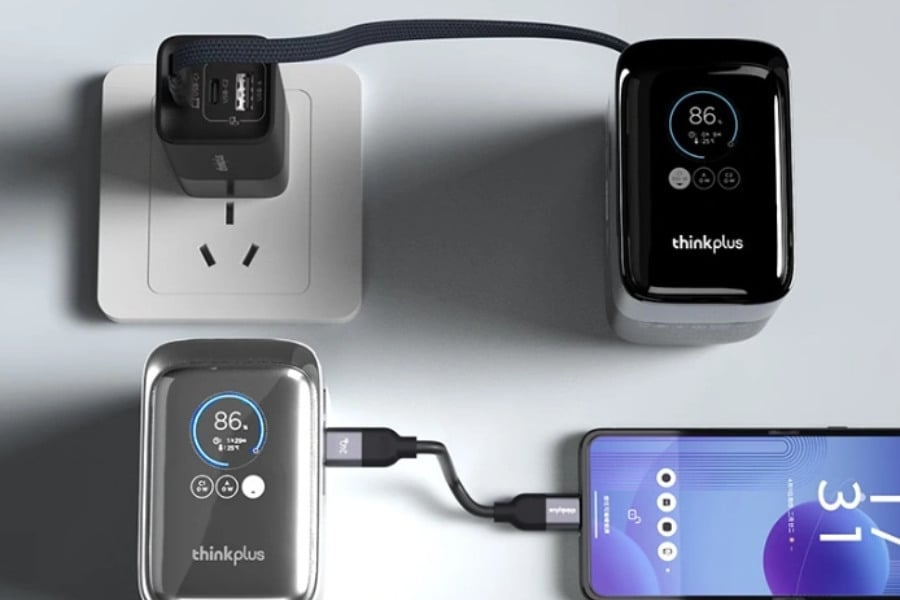
Lenovo has introduced a new high-capacity power bank under the ThinkPlus line. The Lenovo ThinkPlus 190W power bank is now available for purchase in China at just 349 yuan (roughly $50).
For the price, you get a power bank shaped like a block with a built-in retractable cable. It stretches up to 75cm and supports bidirectional fast charging, meaning it can both charge devices and recharge the power bank itself. The retractable design also lets users adjust the cable length.
Lenovo ThinkPlus 190W Power Bank Specifications
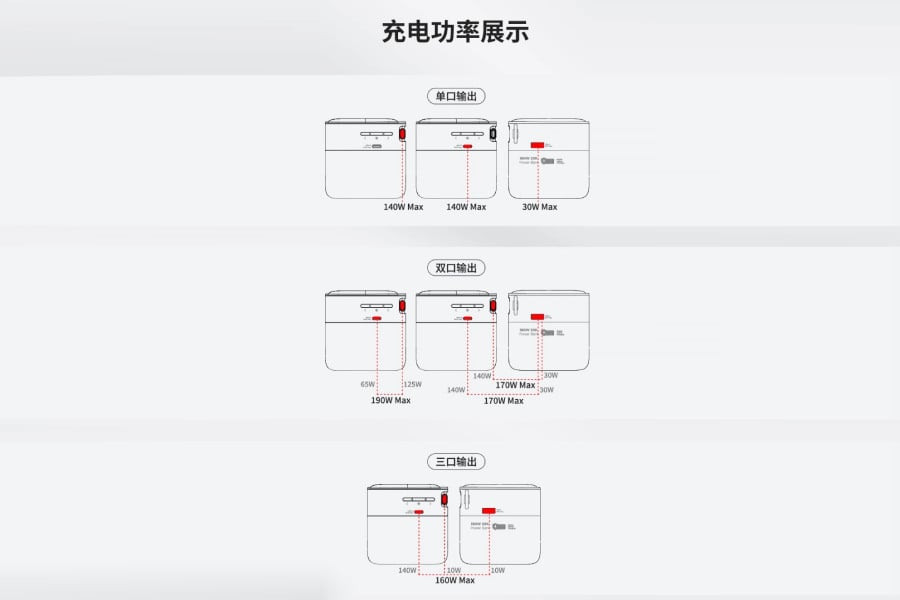
The device supports up to 190W total output across multiple ports. Lenovo says a single port can deliver up to 140W, enough to power laptops such as ThinkPad, ThinkBook, Apple MacBook, and Huawei MateBook. When used across multiple ports, it can charge several devices simultaneously, including phones and laptops, without significantly compromising speed.
On the input side, the power bank supports up to 100W self-charging, so it won’t take as long to refill as many large-capacity alternatives. It also supports a wide range of charging protocols, including PD 3.2, PD 2.0, PPS, QC, and Lenovo’s own VDM standard, making it broadly compatible with devices across brands.
Internally, Lenovo has equipped it with four automotive-grade 21700 cylindrical batteries and an intelligent NTC temperature-control chip. The total rated battery capacity is 11600mAh.
The exterior uses PVD electroplating technology and comes in black and white finishes. There’s also a lanyard for portability, suggesting Lenovo expects users to carry this around rather than leave it on a desk.
Finally, the power bank includes a 2.01-inch TFT display with both Chinese and English interfaces. It shows detailed information like battery health, temperature, power levels, and real-time charging data.
For more daily updates, please visit our News Section.
The upcoming Realme C81 has already started showing up in early leaks. According to the latest report, the phone (model number RMX5388) could come with 4GB RAM, paired with either 64GB or 128GB storage. It’s expected to be available in Storm Black and Glacier Blue, based on what appears to be an internal listing screenshot.
It matches the recently launched Realme Note 80, which has led to speculation that the C81 might not be an entirely new device. Instead, it could be a rebranded version of the Note 80 for different markets. Realme has done this before, so it wouldn’t be surprising.
If that turns out to be the case, the specs are mostly known already. The phone is said to feature a 6.74-inch LCD display with 720 x 1600 resolution and a 90Hz refresh rate. Brightness is listed at around 450 nits, which should be fine for indoor use and manageable outdoors.
Under the hood, it’s expected to run on the Unisoc T7250 chipset. This is a 4G chip aimed at basic everyday use like browsing, calling, messaging, and light social media, with a focus on keeping costs low.
Camera setup looks fairly simple. The rear is said to use an 8MP sensor, while the front gets a 5MP camera. Nothing impressive on paper, but enough for casual shots and video calls.
The C81 is tipped to pack a 6,300mAh battery, along with 15W charging and even reverse wired charging. That kind of capacity should easily last a full day, possibly more depending on usage.
Overall, the Realme C81 is shaping up to be a pretty straightforward budget phone. If it is indeed a rebranded Note 80, then this is more about expanding availability rather than introducing something new.
Launch timing isn’t confirmed yet, but with listings already appearing, it probably won’t be too far off. Pricing will be key, as always, in this segment.
Casio Edifice EQB-1300 is headed to Europe, with Casio now listing the new models on its official online stores in markets like the Netherlands, Spain, and Germany. The series includes three variants: EQB-1300D-2A (blue dial), EQB-1300D-5A (brown dial), and EQB-1300DC-3A (green dial). These watches were previously spotted in leaks last month.
The EQB-1300 is an analog watch with a slim profile, measuring 46.5 x 39.5 x 9.5 mm. It uses a three-hand layout along with a date window, day indicator, and a 24-hour subdial. It also includes a 1-second stopwatch, full auto calendar, and low battery alerts. The watch is water resistant up to 100 meters and is protected by sapphire crystal.
Bluetooth support allows the watch to connect to the Casio Watches app on a smartphone. Once paired, it can sync time automatically, adjust for daylight saving, and offer features like Phone Finder and Time and Place. Most settings can be managed directly through the app.
The watch runs on Casio’s Tough Solar system, which converts both sunlight and indoor light into power. This helps keep the watch running without frequent charging or battery changes.
From left to right:Casio EdificeEQB-1300D-2A, EQB-1300D-5A and EQB-1300DC-5A
In terms of build, the EQB-1300 uses a solid stainless steel case and an H-link bracelet. The links feature a mix of brushed and polished finishes, and the triple-fold clasp is also made of steel. The case design uses curved lines with a combination of mirror and hairline finishes on the bezel, giving it a clean, refined look.
The dial has a textured finish with metallic colors inspired by car interiors. It uses raised indices and layered subdials, with inset elements placed on the same surface as the main dial to add depth without making it look busy.
For pricing, the EQB-1300D-2A and EQB-1300D-5A are listed at €279, while the EQB-1300DC-3A is priced at €329 due to its ion-plated finish. All three models are currently marked as coming soon on Casio’s European stores, with no confirmed release date yet.
For more daily updates, please visit our News Section.
Samsung has quietly dropped prices on its Galaxy S26 series in India. Along with that, there are new bank offers in play, so the effective prices are now noticeably lower than what early buyers paid.
The S26 lineup originally came in at a higher price than the Galaxy S25 series, which didn’t go unnoticed. Pre-order deals like double storage helped a bit, but for regular buyers, it still felt expensive. These new cuts make things easier to justify.
The biggest change is on the Galaxy S26+. Samsung has reduced its price by ₹10,000, and there’s an extra ₹9,000 instant discount with eligible cards. That brings the total benefit to ₹19,000, which is quite a drop this soon after launch.
The standard Galaxy S26 doesn’t get a direct price cut, but there’s an ₹8,000 instant discount available with supported cards. As for the Galaxy S26 Ultra, Samsung has trimmed ₹9,000 off the price, though there’s no additional bank discount on top of that.
Timing-wise, this feels like a response to the initial pricing feedback. Overall, if you were planning to pick up an S26 device but held back because of the price, this is probably the window to look at. Just keep in mind that bank offers can vary a bit depending on where you buy from.
ZTE has launched its new Nebula BE3600 Pro+ router, designed to deliver high-speed, reliable connectivity for modern home networks. The router is available on JD.com for 369 yuan ($54).
ZTE Nebula BE3600 Pro+ Specifications
The ZTE Nebula BE3600 Pro+ is a Wi-Fi 7 router offering dual-band connectivity with MLO technology for faster speeds, reduced latency, and better performance in interference-prone environments. It features 4K QAM modulation, delivering up to 3600 Mbps, ideal for gaming, streaming, and smart homes.
ZTE has equipped the router with a 4th-gen enterprise-grade chipset featuring a 6-core architecture, including a 2-core CPU and 4-core NPU, to enhance data transfer speeds and stability under heavy network loads. It also uses five FEM signal amplifiers and third-gen antennas, designed for better wall penetration, reduced interference, and wider signal coverage.
The router includes two 2.5G Ethernet ports and two Gigabit LAN ports, supporting dual WAN access for load balancing, failover, or bandwidth aggregation. It handles broadband speeds up to 2000 Mbps and supports IPTV single-line multiplexing, simplifying home wiring by combining IPTV and internet signals into one Ethernet cable.
In terms of usability, the Nebula BE3600 Pro+ includes NFC tap-to-connect for quick Android device pairing without passwords. The ZTE Smart Life app offers AI-driven Wi-Fi placement optimization and advanced management features such as parental controls, timed access, and usage management.
The Nebula BE3600 Pro+ supports one-click mesh networking with ZTE routers and works as a wireless access point with other brands. It offers IPv6 support, gaming acceleration tools, and robust durability, having passed over 40,000 hours of stability testing and stress tests for temperature, voltage, and power cycles.
In related news, TP-Link has recently introduced a new affordable Wi-Fi 7 router featuring AI-powered antennas and EasyMesh support, while Huawei has unveiled the Wi-Fi X portable router with a 24-hour battery, 5.3Gbps download speeds, and 1Gbps upload speeds.
For more daily updates, please visit our News Section.
Japan has approved major financial support for Sony Group to strengthen domestic semiconductor production, with a clear focus on AI image sensors.
The subsidy, worth up to 60 billion yen (around $380 million), has been granted under Japan’s Economic Security Promotion Law by the Ministry of Economy, Trade and Industry. The move is part of a broader national effort to secure a stable supply of critical semiconductor components and reduce dependence on external manufacturing.
AI- generated image for representation only
Sony Semiconductor Solutions plans to invest a total of 180 billion yen (around $1.13 billion) to build a new semiconductor facility in Koshi, Kumamoto Prefecture. Construction is already underway. The plant is expected to produce 10,000 units per month of 300mm wafers, with supply scheduled to begin in May 2029.
The government has identified image sensors as essential for future technologies. Key applications include autonomous vehicles, automated industrial systems, and AI-driven imaging solutions. Economy Minister Ryosei Akazawa highlighted the importance of ensuring a stable supply of these components for the growth of physical AI.
Sony already leads the global image sensor market, with its sensors widely used in smartphones, automotive systems, and other advanced technologies.
The development reflects Japan’s broader push to strengthen its semiconductor ecosystem and stay competitive in AI and next-generation imaging technologies.
The Lenovo Kaitian series is a line of commercial computers developed by Lenovo for the Chinese market. The series now has a new member called the Kaitian X5d G1d.
It’s a notebook that isn’t trying to compete with mainstream ultrabooks in design or features. Instead, it is built around domestic hardware, down to the processor, and focuses on compatibility with government and enterprise systems.
Lenovo Kaitian X5d G1d Specifications
On the inside, it runs on a Loongson 3B6000M processor based on the LoongArch instruction set. This is an 8-core chip clocked at 2.4GHz, paired with a second-generation LG200 GPU core.
Lenovo says the graphics performance is more than 60 percent higher compared to the previous Loongson 3A6000. The system also offers AI acceleration exceeding 7 TOPS (INT8).
Beyond the processor, the Kaitian X5d G1d’s software is another talking point. It comes pre-installed with domestic operating systems like Kylin and UnionTech, and supports commonly used apps such as WPS Office and WeChat. More importantly, it is compatible with OFD document formats and electronic signature tools, which are widely used in government workflows.
The Loongson chip also includes a built-in security processor and supports China’s SM2, SM3, and SM4 cryptographic algorithms. Lenovo also says the system enables full-process hardware encryption for storage and documents.
On top of that, the laptop has undergone source code-level auditing, and Lenovo claims there are no hidden backdoors and that it can handle vulnerability fixes independently.
For multimedia, the laptop supports H.264 and H.265 encoding and decoding, along with HDMI and eDP display output—just enough for high-definition video playback and basic design work.
In terms of hardware, the laptop ships with 16GB of RAM and a 512GB SSD, with support for upgrades up to 32GB and 1TB. It also includes a 70Wh battery and a range of ports, including USB 3.1, HDMI, and Gigabit Ethernet.
With all of this, the Kaitian X5d G1d is relatively light at around 1.5kg and comes with a full-size keyboard.
For more daily updates, please visit our News Section.
Choosing between the Vivo T5 Pro and Nothing Phone (4a) comes down to what matters more in daily use, raw power and battery life or a more balanced, premium experience. Both phones target the mid-range segment and offer strong performance, but they take very different approaches. This comparison helps highlight which one actually delivers the better overall value for most users.
Design and Display
Build and Feel
Vivo T5 Pro focuses more on durability with its IP68/IP69 rating, making it far more resistant to water and dust compared to the Nothing Phone (4a). The plastic back keeps it practical, though it lacks the premium feel some users expect. In contrast, Nothing Phone (4a) leans into aesthetics with its transparent-style glass back and signature LED Glyph interface, giving it a more distinctive and modern personality. It feels more like a design statement than just a tool, even if its IP64 rating is less reassuring.
Display Quality
Vivo T5 Pro pushes brightness to extreme levels with a 144Hz AMOLED panel and a massive 5000 nits peak brightness, making outdoor visibility exceptional. The higher refresh rate also gives it a smoother edge in gaming. Nothing Phone (4a), however, delivers a more balanced visual experience with HDR10+, 1B colors, and better tuning, which makes content look richer and more cinematic rather than just bright.
Verdict
Vivo wins on raw display power and durability, while Nothing feels more refined and visually appealing overall.
Specifications Including Battery
Performance
Both phones run on the same Snapdragon 7s Gen 4 chipset, so real-world performance is nearly identical. Day-to-day usage, multitasking, and gaming feel smooth on both devices. However, Nothing OS 4.1 offers a cleaner, more optimized experience with promised long-term updates, which adds more long-term value. Vivo’s Origin OS feels feature-rich but slightly heavier in comparison.
Battery and Charging
This is where Vivo T5 Pro dominates. The massive 9020mAh battery is in a different league, easily lasting two days for most users. Combined with 90W fast charging, it delivers both endurance and speed. Nothing Phone (4a), with its 5400mAh battery (India variant) and 50W charging, is solid but clearly less ambitious. It charges quickly but cannot match Vivo’s stamina.
Verdict
Performance is evenly matched, but Vivo T5 Pro clearly wins with its massive battery and faster charging advantage.
Camera
Main and Secondary Lenses
Nothing Phone (4a) takes a significant lead in camera versatility. Its triple-camera system includes a 50MP main sensor with OIS, a periscope telephoto lens with 3.5x optical zoom, and an ultrawide lens. This setup allows for much more creative flexibility and better long-range shots. Vivo T5 Pro, with its dual-camera setup, focuses more on basic photography. While the 50MP main sensor performs well in daylight, the lack of additional lenses limits its overall capability.
Selfie Camera
Both devices feature a 32MP front camera, but Vivo edges ahead slightly by supporting 4K video recording for selfies, which is rare in this segment. Nothing keeps it more standard with 1080p, but its image processing tends to produce more natural tones.
Verdict
Nothing Phone (4a) is the clear winner for overall photography, offering more versatility and better real-world shooting options.
Pricing
Price Comparison
Vivo T5 Pro is priced at approximately ₹30,000, while Nothing Phone (4a) comes in slightly higher at around ₹32,000. The price gap is small but noticeable, especially in the mid-range segment where value matters the most. Vivo positions itself as a performance and battery-focused device at a slightly lower cost, while Nothing justifies its pricing with design and camera upgrades.
Value for Money
Vivo T5 Pro offers excellent value for users who prioritize battery life, display brightness, and durability. It delivers strong hardware at a more aggressive price point. Nothing Phone (4a), on the other hand, feels like a more premium experience with its unique design, better cameras, and cleaner software. It costs more, but the added features are noticeable in daily use.
Verdict
Vivo T5 Pro offers better raw value, while Nothing Phone (4a) justifies its price with a more premium overall experience.
Conclusion
Vivo T5 Pro stands out with its massive 9020mAh battery, ultra-bright 144Hz display, and superior water resistance, making it highly practical and endurance-focused. It feels like a device built for heavy users who want reliability over everything else. Nothing Phone (4a), meanwhile, brings a unique identity with its Glyph lighting system, cleaner Nothing OS, and versatile triple-camera setup. It feels more modern, expressive, and balanced across different use cases.
Verdict
If one best overall phone has to be chosen, the Nothing Phone (4a) is the smarter pick for most users. Both phones offer similar performance, but Nothing delivers a more complete experience with better cameras, cleaner software, longer update support, and a more premium design. The Vivo T5 Pro is excellent for battery life and fast charging, but it feels more like a niche choice for heavy users. For balanced daily use, long-term value, and overall refinement, Nothing Phone (4a) is the better choice.
Huawei has introduced a new wearable for commercial users, called the Huawei Qingyun HA5B0. It’s a fitness tracker that, at least on paper, tries to cover a wide range of health monitoring features while keeping the design relatively simple.
The HA5B0 comes with an 8.99mm thin body and a 1.62-inch AMOLED display. The panel offers a resolution of 286 × 482, a 60Hz refresh rate, and peak brightness of up to 1500 nits, enough for outdoor usage.
Health and wellness features include professional sleep analysis and multi-dimensional emotional health monitoring. There are also more clinical-style features, such as pulse wave-based atrial fibrillation alerts and premature beat notifications.
The device can also track sleep apnea risk, monitor HRV throughout the day, and provide standard metrics like blood oxygen and heart rate.
On the fitness side, the tracker supports over 100 sports modes, including activities like yoga, strength training, running, and skipping rope. This is fairly in line with what competitors are offering, though the real-world accuracy of these modes will depend on software tuning.
Why is Huawei Qingyun HA5B0 a commercial tracker?
One area Huawei is emphasizing is customization, especially for enterprise clients. The company says it will allow partners to customize elements like the boot logo, watch faces, packaging, and even strap colors and printing. That suggests the HA5B0 is not just meant for retail consumers but also for corporate or institutional deployments.
In terms of hardware, the bracelet includes a 9-axis inertial sensor setup, combining an accelerometer, gyroscope, and magnetometer, along with an optical heart rate sensor and an ambient light sensor. It uses magnetic charging, supports Bluetooth 6.0, and is rated for 5 ATM water resistance. There’s no NFC support, though.
It is rated for up to 14 days of battery life under maximum usage conditions. The device also supports both Android and iOS ecosystems.
For more daily updates, please visit our News Section.
Xiaomi has announced the Mijia High-Speed Water Ion Hair Dryer Pro in the Chinese market. It is priced at 799 yuan ($117) and is now listed on Youpin.
Xiaomi Mijia Hair Dryer Pro Specifications
The Mijia High-Speed Water Ion Hair Dryer Pro comes with a dual-mode constant temperature system designed for safe and efficient airflow. The design includes two modes: an intelligent scalp protection mode for adults, which maintains a stable temperature of 50°C, and a children’s mode, which provides a gentler 40°C airflow. It features a built-in ToF sensor that measures the distance between the dryer and the scalp in real-time and adjusts the heat levels accordingly to ensure safety.
Xiaomi has equipped the device with an NTC thermistor and a microprocessor that performs 200 temperature checks per second. This ensures precise temperature regulation while avoiding overheating. The hair dryer uses patented dual-needle water ion technology to release high-activity nano water ions. These ions deliver deep hydration, reduce scalp oil, and help maintain long-term color vibrancy for dyed hair.
The device runs on a 120,000 RPM brushless motor, delivering airflow speeds up to 72 m/s. It allows short hair to dry in about 30 seconds under optimal conditions and offers four heat settings, two wind speeds, and adjustable temperatures between 30°C and 90°C for versatile styling and drying.
The hair dryer includes a high-concentration negative ion generator that releases up to 200 million ions. This feature reduces static electricity, minimizes frizz, and improves hair texture. Xiaomi includes three magnetic nozzles for different needs, such as smoothing, styling, and combing.
Xiaomi designed the device with a metallic pearlescent finish and offers three color options: Dusk Gold, Frost Purple, and Iris Blue. The handle includes an aluminum alloy temperature control dial for a premium tactile feel. The dryer also incorporates multi-layer noise reduction to keep operation quieter than most traditional hair dryers.
In related news, Xiaomi has recently introduced the Mijia Titanium Thermos Cup Ti2 in a new Moonlight Silver finish, alongside a 508L smart refrigerator featuring 55-minute rapid ice-making and ion purification technology.
For more daily updates, please visit our News Section.
Rogbid has introduced the SR15 Smart Ring, a thin and lightweight wearable designed to combine modern technology with everyday convenience.
Rogbid SR15 Smart Ring Specifications
The SR15 features a 3.0 mm ultra-slim profile and a weight of just 3.2 grams, making it nearly unnoticeable during daily use. Rogbid crafted the ring from high-grade titanium alloy, which provides durability, a premium finish, and IP68 waterproofing, allowing users to wear it all day without worry.
The SR15 offers advanced health monitoring features that include heart rate tracking, blood oxygen measurement, sleep monitoring, and stress detection. The device delivers 24/7 tracking and collects real-time health insights through its high-precision PPG sensors. For women, the smart ring includes menstrual health tracking, helping users predict cycles accurately and manage their daily health.
Rogbid equipped the SR15 with over 100 sport modes, covering activities such as running, cycling, swimming, and yoga. Its tracking features include workout duration, calorie burn calculation, and heart rate monitoring. The device uses intelligent algorithms to ensure precise activity tracking, making it a useful companion for fitness enthusiasts.
The ring offers real-time notifications for calls, texts, and alarms via subtle vibrations. It also features smart gesture controls, enabling users to skip videos, control music, and navigate content with a simple double-tap.
In terms of battery life, it offers up to 5 days of battery life on a single charge, with the charging case extending usage to 10 days.
Pricing and Availability
Rogbid has priced the SR15 at $99.99 and is offering a limited-time launch promotion, now available at the Rogbid official store.
The SR15 is available in Classic Gold, Silver, Black, and a special 2026 FIFA World Cup Football Edition. It comes in ring sizes ranging from 7 to 14, ensuring a comfortable fit for all users.
BigMe, a China-based brand specializing in color E-Ink screen products, has introduced a new smartphone called the HiBreak Dual. It’s not trying to compete in the usual flagship race. Instead, the product sits somewhere between e-readers and traditional phones.
BigMe HiBreak Dual Specifications
At first glance, the HiBreak Dual looks like a standard device, but its defining feature is the 6.13-inch color E-Ink display on the front. In monochrome mode, the screen reaches a sharp 300 PPI, while color mode drops to 150 PPI. It also supports stylus input paired with the “Infinity Canvas” feature, allowing for free writing and recording, making the phone more versatile in everyday scenarios.
Flip the phone over, and things get slightly more experimental. There’s a 1.85-inch circular LCD display on the back with a 360 × 360 resolution. You can use this small screen to check notifications, glance at the time or weather, and even use it as a rear viewfinder when taking photos.
The smartphone is powered by the Dimensity 1080, an octa-core processor from 2022. On the software side, the HiBreak Dual ships with Android 14, which clearly isn’t up to date, as Android 17 is nearing launch. Connectivity features include Bluetooth 5.2, NFC, dual SIM support, infrared, and a fingerprint sensor.
As for the battery, the phone packs a 4,500mAh battery and supports 18W charging. These are fairly standard numbers on paper, but paired with an E-Ink display, it could stretch further than typical smartphones in real-world use.
Pricing and Availability
The BigMe HiBreak Dual’s base model, with 8GB of RAM and 128GB of storage, is priced at $519, while the 12GB + 256GB version costs $599. There’s also a bundle that includes a stylus and protective case with 8/128GB and 12/256GB variants for $569 and $689, respectively.
Google might be working on an interesting hardware tweak for the Pixel 11 series. A new feature spotted in Android 17 Beta 4 hints at something called Pixel Glow, which could bring back notification lights, just in a different way.
The feature showed up in an APK teardown by AndroidAuthority, and from what’s visible, it looks like an LED-based notification system on the back of the phone. When the device is placed face down, it can light up in different colors or patterns to signal incoming calls, messages, or other alerts.
It’s basically a modern take on the old notification LED, just moved to the rear panel. Not exactly new as a concept, but still something we don’t really see on most phones right now.
Descriptions suggest the feature is meant to be subtle rather than distracting. It also looks like this won’t be something that can be added through software alone. The code mentions, “the device must have hardware lights,” so older Pixel devices are unlikely to get it.
Some of the strings hint at a bit more than just basic notifications. There could be custom lighting for favorite contacts, feedback during hands-free use, and even some kind of visual cue when interacting with Gemini. It’s not fully clear how all of this will work yet, but it does sound like Google is trying to make it feel more contextual, thanks to Gemini, rather than just blinking lights.
One slightly confusing part is the hardware side. Leaked renders of the Pixel 11, Pixel 11 Pro, Pixel 11 Pro XL, and Pixel 11 Pro Fold don’t show anything obvious on the back that looks like an LED system. So either it’s hidden in some way, or it’s planned for a later revision.
If it actually shows up on the Pixel 11 series, it could be one of those features people don’t think about much at first, but end up using every day.
The Redmi K Pad 2 is one of the products Xiaomi will unveil at its launch event on April 21. While the company has already teased the tablet’s design and some key features, a new leak from tipster Digital Chat Station fills in more of the technical details.
Redmi K Pad 2 Specifications
The tipster confirms that the Redmi K Pad 2 is built around an 8.8-inch LCD display with a 3K resolution and a 165Hz refresh rate. It also retains the 16:10 aspect ratio of its predecessor.
Powering the tablet is MediaTek’s Dimensity 9500 chipset, which should bring a noticeable boost in performance over the previous generation. To manage heat, Redmi is reportedly including a large 15,300mm² vapor chamber cooling system.
The K Pad 2 is said to pack a 9,100mAh battery paired with 67W fast charging. Audio and haptics include dual symmetrical speakers tuned by Bose, along with dual X-axis motors designed to improve vibration feedback.
Design-wise, Xiaomi has already confirmed a metal unibody build, with color options including Deep Black, Spotlight Purple, and Space Silver. It all looks fairly minimal. There’s also a fingerprint sensor built into the power button, for biometrics.
The 8.8-inch panel is also confirmed to have 1100 nits of peak brightness. And on the gaming side, Redmi is claiming support for 165fps gameplay in select titles, along with a 540Hz touch sampling rate.
The tablet is also using a centered chip layout, which is meant to help with heat distribution during longer sessions.
As for pricing, Redmi hasn’t confirmed anything yet. However, given the specs, you can expect the tablet to sit in a premium range.
Oppo will unveil the new X9 series of flagship phones on April 21. While the Chinese market will get the Find X9 Ultra and Find X9s Pro, the brand is expected to announce the Ultra edition as well as the Oppo Find X9s for the global market. It is already known that the Find X9 Ultra and X9s Pro will be powered by the Snapdragon 8 Elite Gen 5 and Dimensity 9500 chipsets, respectively. Now, in a new development, the Find X9s has appeared on Geekbench, confirming its chipset for the first time.
Oppo Find X9s Geekbench listing
OPPO Find X9s (CPH2873) global variant chipset confirmed — it will be powered by the Dimensity 9500s, while the Chinese variant, Find X9s Pro, features the MediaTek Dimensity 9500.
The above screenshots show that an Oppo phone with model number CPH2873 has surfaced in Geekbench’s database. As per recent certification sightings, this device will debut with the Oppo Find X9s moniker in the market. The listing reveals that it is powered by a MediaTek chip, along with 12GB of RAM and Android 16.
The chip includes a prime CPU core clocked at 3.73GHz, three cores running at 3.30GHz, and four cores operating at 2.40GHz. For graphics, it features the Mali-G925-Immortalis MC12 GPU.
These details suggest that the X9s is powered by the Dimensity 9500s. It scored 2,571 and 7,881 points in the single-core and multi-core tests, respectively.
This does not come as a surprise because MediaTek had already unveiled the Dimensity 9500s and confirmed that the Find X9s would be equipped with it. The only other phone that features this chip is the Poco X8 Pro Max, which debuted last month.
Since the Find X9s is powered by the Dimensity 9500s, a toned-down version of the existing Dimensity 9500, it is likely to be positioned below the existing Find X9.
In terms of other specs, the Find X9s has a 6.59-inch OLED panel with ultra-thin 1.1mm bezels on all four sides. It will offer a 1.5K resolution and a 120Hz refresh rate. It will house a 7,025mAh battery with 80W wired charging, but may lack wireless charging.
The X9s will feature a 32-megapixel front camera. On the back, it will include a 50-megapixel main camera, a 50-megapixel ultra-wide lens, and a 50-megapixel periscope telephoto camera (Samsung JN5 or Sony LYT-700). It will arrive in 12GB+256GB and 12GB+512GB variants and will be available in shades like orange, purple, and titanium.
For more daily updates, please visit our News Section.
Vivo T5 Pro and Google Pixel 10a approach the mid-range segment with clearly different priorities. Vivo leans into aggressive hardware, larger battery, faster charging, and a high-refresh display, while Google focuses on software optimization, computational photography, and long-term support. With both devices targeting similar buyers at very different price points, this comparison breaks down where each phone stands and which one makes more sense depending on usage priorities.
Design and Display
Build and Feel
The Vivo T5 Pro leans toward a bold, rugged approach with a plastic frame and back, backed by strong IP68/IP69 protection. It feels built for durability and endurance, clearly targeting heavy users. The Pixel 10a, on the other hand, brings a more refined finish with an aluminum frame and Gorilla Glass protection. It feels more premium in hand, even if it doesn’t push extreme durability standards as aggressively. The cleaner design language on the Pixel makes it feel more polished for everyday use.
Display Quality
Vivo takes a clear lead in raw display specs with a larger AMOLED panel, ultra-smooth 144Hz refresh rate, and extremely high peak brightness. It’s built for immersive viewing and gaming. The Pixel 10a focuses more on balance, offering a smaller P-OLED panel with 120Hz and strong HDR tuning. While not as aggressive, it delivers more natural colors and better consistency.
Verdict
Vivo T5 Pro is for big-screen lovers and gamers, while Pixel 10a feels more refined and balanced for daily use.
Specifications Including Battery
Performance
The Vivo T5 Pro runs on the Snapdragon 7s Gen 4, delivering solid mid-range performance with a focus on efficiency and stable gaming. It handles multitasking smoothly but stays within predictable limits. The Pixel 10a’s Tensor G4, however, is more AI-focused and optimized for real-world tasks like photography and smart features. While not always the fastest in raw benchmarks, it feels smarter and more adaptive in daily use.
Battery and Charging
This is where Vivo dominates. The massive 9020 mAh battery is designed for extreme endurance, easily lasting far beyond a typical day. Combined with 90W fast charging, it minimizes downtime significantly. The Pixel 10a offers a more standard 5100 mAh battery with slower wired charging and the addition of wireless charging. It’s more about convenience than raw power.
Verdict
Vivo T5 Pro wins on battery and charging by a huge margin, but Pixel 10a offers a smarter, more balanced performance experience.
Camera
Main and Secondary Lenses
The Pixel 10a clearly leads in camera versatility and processing. Its dual-camera setup includes a reliable main sensor with OIS and an ultrawide lens, backed by Google’s computational photography features like Ultra HDR and Best Take. Photos tend to look more detailed and consistent across lighting conditions. The Vivo T5 Pro focuses on a simpler dual setup without an ultrawide, delivering decent shots but lacking flexibility and advanced processing.
Selfie Camera
Vivo offers a higher-resolution 32 MP front camera capable of 4K recording, making it appealing for selfie-heavy users and content creators. The Pixel 10a uses a lower-resolution ultrawide selfie camera but compensates with better HDR tuning and more natural skin tones. It prioritizes realism over sheer detail.
Verdict
Pixel 10a is the clear winner for overall photography, while Vivo T5 Pro appeals more to selfie-focused users.
Pricing
The Vivo T5 Pro is priced around ₹30,000, positioning itself as a strong value-driven device focused on hardware. In contrast, the Pixel 10a sits at around ₹50,000, making it significantly more expensive. The price gap is substantial and immediately affects buying decisions.
Is the Price Justified
Vivo delivers exceptional value with its massive battery, high-refresh-rate display, and fast charging. It feels like a specs-first device built to impress on paper and in usage time. The Pixel 10a justifies its higher price through software longevity, premium build, AI features, and camera performance. It’s less about specs and more about experience.
Verdict
Vivo T5 Pro offers better value for money, while Pixel 10a justifies its price with long-term usability and smarter features.
Disclaimer: Prices are approximate and may vary based on country, region, and applicable taxes.
Conclusion
Vivo T5 Pro stands out with its massive battery, ultra-fast charging, and high-refresh-rate display, making it ideal for power users and gamers. It’s built to last long and perform consistently without worrying about charging cycles. The Pixel 10a differentiates itself with long-term Android updates, AI-powered features, superior cameras, and cleaner software. It feels more future-proof and polished in everyday use.
Verdict
If only one has to be chosen, the Google Pixel 10a is the better pick overall. It delivers a more refined experience with superior cameras, longer software support, and smarter day-to-day performance that ages well over time.
While the Vivo T5 Pro offers incredible battery life and strong value, it feels more like a spec-driven device, whereas the Pixel 10a provides a more complete, polished, and future-proof smartphone experience.
Disclaimer: This comparison is based on the specifications provided and is intended for general informational purposes. Actual performance, camera results, battery life, and overall experience may vary depending on real-world usage, software updates, and individual preferences.
OnePlus looks set to update its budget earbuds lineup again, and the OnePlus Buds Ace 3 have now quietly shown up on the company’s official website, revealing the design. It’s not a full announcement yet, but there’s enough there to get a rough idea of what’s coming.
The earbuds are rated for up to 55dB active noise cancellation. OnePlus is also leaning into gaming a bit, with FPS-specific audio tuning aimed at making things like footsteps easier to pick out. Whether that makes a big difference in real use is something we’ll have to see.
The company is claiming up to 54 hours of battery life with the case, which sounds impressive on paper. In reality, it’ll probably depend on how much ANC you use, but still, it’s a noticeable jump from earlier models.
The Buds Ace 3 will come in Titanium Silver and Interstellar Black, and from what’s visible, OnePlus hasn’t tried to change things too much here. There are still a few gaps, though. Details like driver size, latency numbers, or even call performance haven’t been fully listed yet, so this isn’t the complete picture.
Looking back, the OnePlus Buds Ace 2 were launched in late 2024 at a fairly aggressive price and ended up being a decent value option. They offered solid bass thanks to 12.4mm dynamic drivers, okay ANC, and about 43 hours of battery life. With the Ace 3, OnePlus seems to be pushing things a bit further, especially in noise cancellation and battery.
The fact that these are already up on the official site usually means launch isn’t far away. One of the company’s Weibo posts confirms they’ll arrive later this month, possibly alongside the Ace 6 Ultra. More details should follow once OnePlus makes it official.
Motorola appears to be a little more promising this year in terms of software updates. The company began its Android 17 beta program shortly after Google released the first beta in February 2026, and later expanded it to cover over a dozen devices. The list has just got a little longer as Motorola adds three new high-end phones to its Android 17 beta program.
The Motorola Razr+ 2025, Razr+ 2024 (also known as Razr 50 Ultra in several markets), and the Edge 50 Ultra are the three latest Motorola devices participating in the Android 17 beta program, as announced on the official forum. As always, the beta application is open to a limited number of users in select regions.
If you have an eligible Motorola and you live in a supported region, use the correct post link to open the official Android 17 beta post directly. Or, you can visit the official website to find all the current testing opportunities.
How to sign up for Motorola’s Android 17 beta program
Keep in mind that beta builds may have bugs or broken features. It’s best to avoid such builds and wait for a stable release, or at least not install them on a primary device.
Also, ensure that there are no pending updates for your Motorola phone. Go to Settings > System updates > Check for updates to manually check for updates.
Now, follow these steps to sign up for the beta program:
Tap on the registration link for your Motorola phone.
Fill in the required details and submit your application.
Motorola may send emails containing more details about your beta application. Therefore, remember to check your inbox regularly, including the spam folder.
If your application is approved, Motorola will send you an Android 17 beta update soon. You should receive a notification for this, but it’s better to check for updates manually every few days.
We’ll keep posting the latest developments in the Motorola section. Remember to visit that regularly to stay updated. Alternatively, you can join our Telegram channel to get instant notifications when we publish new stories.
On April 20, Huawei will unveil the Pura X Max foldable alongside the Huawei Pura 90 series in China. Ahead of the launch, fresh leaks have surfaced, giving an early look at the Pura 90, 90 Pro and 90 Pro Max. These details outline key differences in design, battery and imaging hardware, setting expectations for Huawei’s next photography-focused flagships.
Huawei Pura 90 series key specs leaked
Huawei Pura 90 series leak
According to tipster Bald Panda, the standard Pura 90 will feature a 6.84-inch 1.5K flat display and a 6,500mAh battery, while maintaining a slim 6.9mm profile and a weight of 203 grams. The Pura 90 Pro is said to adopt a slightly smaller 6.59-inch 1.5K flat screen, paired with a 6,000mAh battery, with thickness increasing to 8.3mm and weight to 219 grams.
At the top end, the Pura 90 Pro Max could arrive with a larger 6.87-inch 1.5K display, a 6,000mAh battery, and a more substantial build measuring 8.5mm thick and weighing 232 grams. These differences suggest Huawei is balancing screen size, battery capacity and form factor across the lineup.
Huawei Pura 90 series leak by DCS
Additional details shared by Digital Chat Station indicate that the Pro and Pro Max models will bring notable camera enhancements. The Pura 90 Pro is expected to feature a 50-megapixel main camera with a large 1/1.28-inch sensor, a 40-megapixel ultra-wide lens, and a 50-megapixel periscope telephoto camera, along with a multispectral sensor.
The Pura 90 Pro Max could take things further with a similar main and ultra-wide setup, but replace the telephoto unit with a 200-megapixel periscope camera using a large sensor. Both models are tipped to include a new “9 series” chipset, around 6,000mAh batteries, IP68 rating, 2D face recognition, and durable Kunlun glass protection.
For more daily updates, please visit our News Section.
Vivo T5 Pro and Vivo V70 FE might look similar at first, but they’re built for totally different needs. One is all about a massive battery and smooth performance, while the other focuses on the camera and a more premium overall feel. That contrast makes this comparison interesting, because it’s not about which is better, but which actually fits your usage better.
Major Features:
Feature
Vivo T5 Pro
Vivo V70 FE
Winner
Display
6.83″ AMOLED, 144Hz, 5000 nits peak
6.83″ AMOLED, 120Hz, HDR10+, 1900 nits
T5 Pro – Higher refresh rate & brightness
Processor
Snapdragon 7s Gen 4
Dimensity 7360 Turbo (4nm)
V70 FE – More modern and slightly better efficiency
GPU
Adreno 810
Mali-G615 MC2
Tie – Comparable mid-range performance
RAM & Storage
Up to 12GB RAM, 256GB, UFS 3.1
Up to 12GB RAM, 512GB, UFS 3.1
V70 FE – Higher storage option
Rear Camera
50MP (wide) + auxiliary
200MP (OIS) + 8MP ultrawide
V70 FE – More versatile and higher resolution
Front Camera
32MP
50MP (India) / 32MP (global)
V70 FE – Higher resolution & autofocus (India)
Video Recording
4K @30fps
4K, OIS + EIS
V70 FE – Better stabilization
Battery
9020 mAh
7000 mAh
T5 Pro – Significantly larger battery
Charging
90W, 50% in 37 min
90W, 100% in 60 min
T5 Pro – Faster top-up speed
Build & Protection
IP68/IP69
IP68/IP69 + extra immersion time
V70 FE – Slightly better durability
Connectivity
Wi-Fi 6, Bluetooth 5.2, no NFC
Bluetooth 5.4, NFC, IR blaster
V70 FE – More features
OS
Android 16, OriginOS 6
Android 16, OriginOS 6
Tie – Same software experience
Price
₹30,000 (approx)
₹38,000 (approx)
T5 Pro – Better value
Disclaimer: Specs are based on available data. Actual performance may vary. Verify details from official sources before buying.
Design and Display
Build and Feel
Both phones follow a similar design language with a glass front and plastic frame/back, but the experience differs slightly. The Vivo V70 FE feels more refined with its slimmer profile and added touches like Darkness Glow technology, giving it a more premium visual identity in certain markets. The T5 Pro, however, focuses on durability with strong IP68/IP69 protection, making it feel more rugged and confidence-inspiring for long-term use. The choice here leans toward whether durability or aesthetics matter more in daily handling.
Display Quality
The Vivo T5 Pro pushes ahead with a 144Hz AMOLED panel and extremely high peak brightness, making it ideal for gaming and outdoor visibility. In contrast, the V70 FE offers a 120Hz AMOLED with HDR10+ and richer color depth, which feels more balanced for media consumption. The difference comes down to smoothness versus color richness, and both deliver a premium viewing experience.
Verdict
The T5 Pro feels more performance-driven with its smoother panel, while the V70 FE offers a more polished and visually rich display experience.
Specifications Including Battery
Performance
The Vivo T5 Pro is powered by the Snapdragon 7s Gen 4, which leans toward efficiency and stable performance, especially in gaming and sustained workloads. Meanwhile, the V70 FE’s Dimensity 7360 Turbo brings a more modern 4nm architecture and slightly better AI and multitasking capabilities. The difference isn’t drastic, but the V70 FE feels a bit more future-ready, while the T5 Pro offers more consistent thermal performance.
Battery and Charging
This is where the T5 Pro stands out significantly. Its massive 9020 mAh battery easily surpasses the V70 FE’s 7000 mAh, delivering exceptional endurance that can stretch into multi-day usage. Both support 90W charging, but the T5 Pro’s larger capacity, combined with efficient charging curves, makes it feel more dependable for heavy users. Features like bypass charging also add practical value for gamers.
Verdict
The T5 Pro dominates in battery life and consistency, while the V70 FE offers slightly more modern processing advantages.
Camera
Main and Secondary Lenses
The Vivo V70 FE clearly takes the lead with its 200MP main sensor and an additional ultrawide lens, making it far more versatile. It captures more detail, offers better stabilization with OIS, and provides flexibility for different shooting scenarios. The T5 Pro, on the other hand, sticks to a simpler dual-camera setup with a 50MP sensor and lacks an ultrawide, which limits its creative range. It performs reliably but doesn’t stand out.
Selfie Camera
Both devices offer strong selfie performance, but the V70 FE edges ahead in the Indian variant with a 50MP autofocus front camera. This results in sharper, more detailed selfies and better video output. The T5 Pro’s 32MP camera is solid but feels more standard in comparison.
Verdict
The V70 FE is the clear winner for photography, offering more versatility, higher resolution, and better overall imaging capabilities.
Pricing
The Vivo T5 Pro is priced around ₹30,000, while the Vivo V70 FE comes in at approximately ₹38,000. This creates a noticeable gap, placing the V70 FE closer to the premium mid-range segment. The T5 Pro positions itself as a value-focused device with strong battery and performance, while the V70 FE justifies its higher price through camera upgrades, design refinements, and additional features like NFC and an infrared port.
Is the Price Justified
The T5 Pro feels like a practical choice for users who prioritize battery life and smooth performance without overspending. Meanwhile, the V70 FE’s higher price starts to make sense for users who want a more complete flagship-like experience, especially in camera and display quality. However, the price jump may feel steep for those who don’t need those extras.
Verdict
The T5 Pro offers better value for money, while the V70 FE targets users willing to pay more for a well-rounded upgrade.
Disclaimer: Prices are approximate and may vary based on country, region, and applicable taxes.
Conclusion
The Vivo T5 Pro stands out with its massive battery, high refresh rate display, and gaming-friendly features like bypass charging, making it a strong pick for power users. On the other hand, the Vivo V70 FE focuses on a more balanced flagship-like experience, with a high-resolution camera, ultrawide lens, HDR10+ display, and additional connectivity features. It feels more complete as an all-rounder device.
Verdict
The choice ultimately depends on priorities. The T5 Pro is the smarter pick for battery life and performance-focused usage, offering strong value at a lower price. The V70 FE, however, feels like a more premium and versatile smartphone, especially for users who care about photography and overall polish.
Disclaimer: This comparison is based on the specifications provided and is intended for general informational purposes. Actual performance, camera results, battery life, and overall experience may vary depending on real-world usage, software updates, and individual preferences.
Vivo is gearing up to bring its X300 series to India, with teasers now live for the Vivo X300 Ultra and Vivo X300 FE. Both phones lean heavily on camera hardware, continuing the brand’s partnership with ZEISS. The launch is expected in May 2026, and the devices will be sold via Amazon, Vivo’s online store, and offline outlets.
The X300 Ultra is the more ambitious of the two, built around a modular camera setup. Vivo is offering optional accessories like a Camera Grip Kit and the ZEISS Telephoto Extender Gen 2 Ultra. The extender clips onto the camera module and pushes the zoom reach to a 400mm equivalent, which is closer to what you would expect from dedicated camera gear.
On the hardware side, the phone runs on the Snapdragon 8 Elite Gen 5. It has a 6.82-inch QHD+ LTPO OLED display with a 144Hz refresh rate. The rear camera system includes a 200MP main sensor, a 200MP periscope telephoto lens with gimbal-style stabilization, and a 50MP ultra-wide camera. There is also a 50MP front camera. The device packs a 6600 mAh battery with support for 100W wired and 40W wireless charging. It is rated IP68 and IP69 for dust and water resistance.
The Vivo X300 FE sits just below it and comes with a more compact form factor. It has a flat design and weighs about 191g. It runs on the Snapdragon 8 Gen 5 and features a 6.31-inch FHD+ AMOLED display with a 120Hz refresh rate.
Its camera setup includes a 50MP primary sensor, a 50MP periscope zoom lens, and an 8MP ultra-wide camera, along with a 50MP front camera. Like the Ultra, it also supports modular optics. The ZEISS Telephoto Extender Gen 2 can be attached to extend zoom up to a 200mm equivalent.
The X300 FE is backed by a 6500 mAh battery and supports 90W fast charging. More details, including the exact launch date, are expected soon.
For more daily updates, please visit our News Section.
OPPO has started rolling out its April ColorOS update, bringing a mix of feature additions and app-level improvements. The update is being released in phases between April 8 and April 30, and will reach a range of Find and Reno series devices over this period.
The rollout includes the OPPO Find X9, Find X9 Pro, Find X8, Find X8 Pro, and Find N5. It also covers the Reno lineup, including Reno 15 5G, Reno 15 Pro 5G, Reno 14 5G, and Reno 14 Pro 5G. As with staged rollouts, not all users will receive the update at the same time. The dates indicate the latest start window, not a universal release moment. OPPO also notes that the order of devices listed does not reflect update priority, and feature availability may vary depending on region, hardware, and software version.
One of the visible additions in this update is a UEFA Champions League-themed watermark in the Photos app. Users can apply it by opening a photo, entering edit mode, and selecting the watermark option. The feature is available for a limited time until June 10, 2026, covering the remainder of the football season. It requires devices running ColorOS version 13.0.1 or above and Photos app version 15.75.0 or newer. Users who do not see the option may need to update the Photos app through the App Market.
The update also introduces improved video playback controls within the Photos app. Users can now adjust playback speed directly in the video player, with options for 0.5x, 1.0x, 1.5x, and 2.0x speeds. This allows quicker navigation through clips without exporting or using third-party apps. The controls are integrated into the player interface for easier access.
In addition to these changes, OPPO says the update includes general refinements aimed at improving responsiveness and overall usability across the system.
For more daily updates, please visit our News Section.
Honor is all set to unveil the Honor 600 series on April 23 globally. While recent reports have revealed several details about these phones, Honor has now officially listed both phones, revealing all their key specs around a week before the launch.
The Honor 600 and Honor 600 Pro share a largely similar foundation, including display, battery, and core design. However, the Pro model brings several meaningful upgrades that set it apart. Here’s a closer look at the key differences between the two.
Performance and chipset
Honor 600 key features
The standard Honor 600 is powered by the Snapdragon 7 Gen 4 chipset, targeting upper mid-range performance. In contrast, the Honor 600 Pro steps up significantly with the Snapdragon 8 Elite, a flagship-grade chip that delivers better gaming, multitasking, and AI performance.
Telephoto camera advantage
Honor 600 Pro camera specs
Both phones feature a 200-megapixel main camera and a 12-megapixel ultra-wide lens, but the Honor 600 Pro model gains an extra edge with a 50-megapixel periscope telephoto camera. This sensor offers 3.5x optical zoom, making the Pro better suited for long-range photography.
Wireless charging support
Honor 600 Pro key features
While both devices support 80W wired charging and 27W reverse wired charging, only the Honor 600 Pro includes 50W wireless charging. This makes it more versatile for users who prefer cable-free charging.
Positioning and use case
The Honor 600 is aimed at users who want a balanced mid-range device with strong core specs. Meanwhile, the Honor 600 Pro is clearly positioned as a more premium offering, bringing flagship-level performance and enhanced camera capabilities.
Both phones still share several highlights, including a 6.5-inch OLED display with 1.5K resolution and 120Hz refresh rate, a 50-megapixel front camera, a 7,000mAh battery, MagicOS 10 based on Android 16, and an IP69K rating. The choice ultimately comes down to whether you value flagship performance and better zoom capabilities enough to opt for the Pro.
For more daily updates, please visit our News Section.
Vivo has released an official teaser confirming that the Vivo Y600 Pro will launch soon. The poster hints at a battery close to the 10,000mAh mark, although the exact capacity was not disclosed at the time. Shortly after, reliable tipster Digital Chat Station shared additional details via Weibo, revealing key specifications of the device, including its battery, display, and chipset.
Vivo Y600 Pro key specifications revealed
According to the leak, the Vivo Y600 Pro will feature a flat 6.83-inch OLED LTPS display with support for 1.5K resolution. Under the hood, it is expected to be powered by the MediaTek Dimensity 7300e chipset clocked at 2.5GHz.
One of the standout highlights of the device could be its massive 10,200mAh battery, positioning it among a new wave of mid-range smartphones focused on ultra-large battery capacities. The official teaser has already confirmed the presence of a 50-megapixel primary camera. Given its battery-centric approach, the secondary sensor is likely to be a basic 2-megapixel unit. Other reports suggest that it may support 90W fast charging.
Vivo Y600 Pro teaser
The report suggests that the Vivo Y600 Pro will compete with devices such as the Redmi Note 17 series and the Honor X80 lineup, both of which are also expected to feature high-capacity battery solutions.
Additionally, the tipster notes that Vivo’s sub-brand iQOO is working on a similar large-battery smartphone, although its launch may take place at a later stage. As far as the Y600 Pro’s launch is concerned, it is expected to debut by the end of this month.
For more daily updates, please visit our News Section.
Amazfit has launched the Cheetah 2 Pro, a smartwatch built with long-distance runners in mind. It focuses on structured training, recovery tracking, and performance insights, with the launch timed around major marathon events like Boston and London.
The watch keeps things light without feeling fragile. It uses a Grade 5 titanium frame and case, along with sapphire glass for protection. The 1.32-inch AMOLED display has a 466 x 466 resolution, 60Hz refresh rate, and can go up to 3000 nits brightness, so visibility should not be an issue outdoors. It also gets 2.5D tempered glass with an anti-fingerprint coating. The watch measures 48 x 48 x 13.2mm and weighs 45.6g, which makes it comfortable enough for daily use and long runs.
It runs on Zepp OS 5.0 and supports Zepp Flow AI voice control. There is a built-in microphone and speaker for Bluetooth calling, along with support for Amazon Alexa. Connectivity includes Bluetooth 5.2 and Wi-Fi 2.4GHz, and it works with Android 7.0 and above and iOS 14.0 and above.
On the training side, the watch includes Zepp Coach, which creates adaptive plans for distances from 3K up to a full marathon. It also connects with platforms like TrainingPeaks, Runna, Strava, and Intervals.icu. Runners can track metrics such as pacing, lactate threshold, running power, ground contact time, gait, and predicted finish times. Features like Track Run mode, virtual pacer, smart trajectory correction, and running gear management are also included.
Health tracking is handled by the BioTracker 6.0 sensor, along with several other sensors. It tracks heart rate, SpO2, stress, VO2 max, HRV, sleep, and readiness levels.
The watch uses dual-band GPS with support for six satellite systems for accurate tracking. Battery life goes up to 20 days in typical use, 10 days with heavy use, 8 days with always-on display, and up to 31 hours in GPS mode. It also includes a dual-mode flashlight, 32GB storage, over 170 workout modes, and 5ATM water resistance.
The Amazfit Cheetah 2 Pro is priced at USD 449.99 and is available through Amazfit’s website and select retailers.
For more daily updates, please visit our News Section.
Two smartphones, almost identical on paper, yet built for completely different experiences, the Vivo T5 Pro and iQOO Z11 redefine how brands approach the ₹30K segment. With massive batteries, high-refresh-rate displays, and modern hardware, both seem equally compelling at first glance, but the real difference lies in performance tuning, camera capabilities, and feature choices that shape everyday usage. This comparison highlights which one truly delivers better value depending on whether the priority is raw power or a more balanced, refined experience.
Major Features:
Feature
Vivo T5 Pro
iQOO Z11
Winner
Design & Build
Glass front, plastic frame/back, IP68/IP69
Glass front, plastic frame/back, IP68/IP69
Tie – Same durability and build
Display
AMOLED, 144Hz, 5000 nits peak
AMOLED, 165Hz, HDR, 2160Hz PWM, 5000 nits peak
iQOO Z11 – Higher refresh + better display features
Resolution
1260 × 2800, ~450 ppi
1260 × 2800, ~450 ppi
Tie – Identical sharpness
Chipset
Snapdragon 7s Gen 4
Dimensity 8500 (4nm)
iQOO Z11 – More powerful and newer architecture
GPU
Adreno 810
Mali-G720 MC8
iQOO Z11 – Better gaming performance
RAM & Storage
Up to 12GB / 256GB, UFS 3.1
Up to 16GB / 512GB
iQOO Z11 – More RAM and storage options
Rear Camera
50MP (no OIS)
50MP with OIS
iQOO Z11 – OIS improves stability and low light
Video (Rear)
4K@30fps
4K + EIS + OIS
iQOO Z11 – Better stabilization
Selfie Camera
32MP, 4K video
16MP, 1080p
Vivo T5 Pro – Higher resolution + 4K
Battery
9020mAh
9020mAh
Tie – Same massive battery
Charging
90W wired
90W + PD/PPS + UFCS
iQOO Z11 – More charging flexibility
Connectivity
Wi-Fi 6, BT 5.2, No NFC
Wi-Fi 6, BT 5.4, NFC, IR
iQOO Z11 – More features like NFC & IR
Audio
Stereo speakers
Stereo speakers
Tie – Same setup
Price
₹30,000
₹31,000
Vivo T5 Pro – Slightly cheaper
Disclaimer: Specs are based on available data. Actual performance may vary. Verify details from official sources before buying.
Design and Display
Build and Feel
Both phones follow a similar design language with glass fronts and plastic frames, but the overall finish differs slightly in perception. The Vivo T5 Pro feels a bit more refined in hand with a cleaner aesthetic, while the iQOO Z11 leans toward a slightly more performance-focused look. Both offer IP68/IP69 protection, which is a strong addition at this price point and adds confidence for long-term usage. The in-hand feel is solid on both, though the Vivo device subtly feels more polished in everyday use.
Display Quality
The displays are nearly identical in size and resolution, but the refresh rate and tuning create separation. The iQOO Z11’s 165Hz panel offers smoother scrolling and a more responsive feel, especially noticeable in gaming. It also adds better PWM dimming and HDR support, making it more versatile for media consumption. The Vivo T5 Pro still delivers a bright and sharp AMOLED experience with a 144Hz panel, but it lacks some of the finesse seen on the iQOO.
Verdict
iQOO Z11 takes the edge with a more feature-rich display, while Vivo T5 Pro feels slightly more premium in design execution.
Specifications Including Battery
Performance
The biggest gap appears in performance. The iQOO Z11, powered by the Dimensity 8500, delivers significantly higher raw power and better sustained performance. It is clearly tuned for gaming and heavy multitasking, making it more future-proof. The Vivo T5 Pro’s Snapdragon 7s Gen 4 is efficient and capable for daily use, but it sits a tier below in terms of peak performance. For users who prioritize stability over raw speed, the Vivo still holds its ground well.
Battery and Charging
Both phones pack a massive 9020mAh battery, which is a standout feature in this segment. Battery life is exceptional on both, easily stretching beyond a day and a half with moderate use. Charging speeds are identical at 90W, but the iQOO Z11 adds more charging protocols like PD/PPS and UFCS, making it more flexible across different chargers.
Verdict
iQOO Z11 clearly wins with stronger performance and more versatile charging, while battery life remains equally impressive on both.
Camera
Main and Secondary Lenses
Both devices feature a 50MP primary camera with similar sensor sizes, but the iQOO Z11 gains a clear advantage with OIS support. This results in more stable shots and better low-light performance. Video recording is also more reliable on the iQOO due to gyro-EIS combined with OIS. The Vivo T5 Pro still captures good photos with decent dynamic range, but it lacks the consistency seen on the iQOO. The difference becomes noticeable in challenging lighting conditions.
Selfie Camera
The Vivo T5 Pro stands out with a higher-resolution 32MP front camera, delivering sharper selfies and better detail retention. It also supports 4K video recording, which is rare in this segment. The iQOO Z11’s 16MP selfie camera is serviceable but feels basic in comparison, especially for users who prioritize front camera quality.
Verdict
iQOO Z11 is better for rear camera performance, while Vivo T5 Pro is the stronger choice for selfies and front video.
Pricing
The Vivo T5 Pro is priced at around ₹30,000, while the iQOO Z11 comes slightly higher at approximately ₹31,000. The difference is minimal, making this a direct value-based decision rather than a budget constraint. At this price, expectations around performance, camera, and features become very important.
Is the Price Justified?
The iQOO Z11 justifies its slightly higher price with a more powerful chipset, better display features, OIS in the camera, and added connectivity options like NFC and infrared. It feels like a more complete package for power users. The Vivo T5 Pro, however, focuses on balanced usage with a better selfie camera and a slightly more refined design, which may appeal to casual users and content creators.
Verdict
iQOO Z11 offers better overall value for performance-focused buyers, while Vivo T5 Pro remains a solid alternative for balanced everyday use.
Disclaimer: Prices are approximate and may vary based on country, region, and applicable taxes.
Conclusion
The iQOO Z11 stands out with its Dimensity 8500 chipset, 165Hz display, OIS camera system, and additional features like NFC and infrared. It is clearly designed for users who want maximum performance and versatility. On the other hand, the Vivo T5 Pro highlights a stronger selfie camera, a clean design approach, and a dependable overall experience. Both devices share excellent battery life, which is a major selling point in this segment.
Verdict
For gaming, performance, and long-term value, the iQOO Z11 is the better pick. For users who prefer a more balanced phone with better selfies and a slightly more refined feel, the Vivo T5 Pro still makes sense. The final choice depends on whether performance or overall balance matters more.
Disclaimer: This comparison is based on the specifications provided and is intended for general informational purposes. Actual performance, camera results, battery life, and overall experience may vary depending on real-world usage, software updates, and individual preferences.
Zebronics has launched a new smart projector called the ZEB-PixaPlay 77G, adding another option in the affordable home entertainment segment. It is designed to work both as a fixed home setup and something you can carry around when needed.
The projector offers 7500 lumens of brightness, which means it can handle typical indoor lighting without forcing you to completely darken the room. It supports native Full HD resolution at 1920×1080 and can take 4K input as well. The projection size goes up to 200 inches, with a usable projection distance between 1 and 6 metres.
Setup is fairly straightforward. It comes with auto focus and auto keystone correction, so the image adjusts itself without much manual effort. The body has a fabric finish and includes a carry handle, a lens shield, and a 270-degree tilt mechanism that helps with flexible placement.
On the software side, it runs Google TV based on Android 11. Apps like Netflix, YouTube, Prime Video, and JioHotstar are built in, so there is no need for a separate streaming device. It also supports Google Cast and DRM L1 for better streaming quality.
The projector is powered by a quad-core processor, paired with 2GB RAM and 8GB storage. Zebronics claims an LED lifespan of up to 30,000 hours. For audio, there are built-in speakers, and it also supports Bluetooth 5.0 for connecting wireless devices. You can pair it with soundbars, Bluetooth speakers, or headphones. Wired options include AUX output and a 3.5mm jack.
Connectivity includes dual-band Wi-Fi (2.4GHz and 5GHz), HDMI with ARC, USB ports, and AUX out. It also ships with a Bluetooth voice remote for easier control. Weighing 1.4 kg, the projector runs on standard AC power ranging from 100 to 240V.
The ZEB-PixaPlay 77G is priced at Rs. 17,999 as an introductory offer and is available on Amazon and Flipkart.
For more daily updates, please visit our News Section.
Last week, Oppo teased the arrival of ColorOS 16.1, and now it has announced the list of eligible devices and the rollout timeline. The stable rollout is scheduled to go live early May 2026, while the beta program will begin later this month for select smartphones.
ColorOS 16.1 beta and stable rollout details
Oppo has revealed the ColorOS 16.1 rollout details via a post on the Chinese microblogging site Weibo. According to that, the company has already started accepting beta applications, with the deadline being April 17, midnight.
Oppo has limited beta participation to a few flagships, namely the Oppo Find X9 series and the OnePlus 15. Once the application submission window closes, the ColorOS team will begin reviewing applications from April 18 to April 24. The beta update will start rolling out to eligible beta participants from April 21st.
The stable rollout is scheduled to begin May 10 for the first batch of devices, while the second batch will start receiving the update from May 21.
Here’s the stable ColorOS 16.1 rollout schedule:
Batch 1 (May 10, 2026 – May 20, 2026)
Oppo Find N6
Oppo Find N5
Oppo Find X9 series
Oppo Find X8 series
Oppo Find X8s series
Oppo Pad 4 Pro
OnePlus Tablet 2 Pro
OnePlus 15 series
OnePlus 13 series
OnePlus Ace 6 series
OnePlus Turbo 6 series
Batch 2 (May 21, 2026 – May 31, 2026)
Oppo Find X7 series
Oppo Reno 15 series
Oppo Reno 14 Pro series
Oppo K15 series
Oppo K13 Turbo Pro
Oppo Pad 5
OnePlus 12
OnePlus Ace 5 series
OnePlus Tablet 2
Keep in mind that this rollout schedule applies to Oppo and OnePlus devices sold in China. We expect the brand to publish global rollout dates soon. We’ll update you on this website whenever that happens.
The ColorOS 16.1 update is already confirmed to bring several exciting new features and useful upgrades, including revamped Live Activities, a new stacked notification center, and improved Live Activities that now support ongoing calls, the recorder, the timer, the flashlight, and maps. The new software also introduces an iOS-like media player for the lock screen.
A major highlight of ColorOS 16.1 is the introduction of a pill-shaped UI element at the bottom of the lock screen, which looks and works similarly to Samsung’s Now Bar. Plus, it offers seamless animations and immersive transitions.
The ColorOS 16.1 rollout will begin soon, but the company has already started working on the next major upgrade, Android 17. In fact, it has already released Android 17 beta for select devices.
We’ll keep you updated with the latest information in our Oppo section. You can visit the page from time to time to stay updated. Or, you can join our Telegram channel to get instant notifications about the latest software rollouts and major tech news.
Choosing between the Vivo T5 Pro and the OnePlus Nord 6 isn’t just about specs; it’s about deciding what kind of smartphone experience matters more. One leans heavily into extreme battery life and aggressive pricing, while the other brings flagship-grade performance and a more refined overall package.
For buyers in the ₹30K–₹40K range, this comparison highlights a clear shift: do you prioritize endurance and value, or power and polish? This matchup makes that decision surprisingly clear.
Major Features:
Feature
Vivo T5 Pro
OnePlus Nord 6
Winner
Build & Protection
Glass front, plastic frame/back, IP68/IP69
Glass front (Crystal Guard), plastic frame/back, IP68/IP69K, MIL-STD-810H
Nord 6 – Extra durability standards + better protection
Disclaimer: Specs are based on available data. Actual performance may vary. Verify details from official sources before buying.
Design and Display
Build and Feel
Both the Vivo T5 Pro and OnePlus Nord 6 follow a similar design language with glass fronts and plastic frames, but they deliver slightly different impressions in daily use. The Vivo leans toward durability with its IP68/IP69 rating, making it feel more rugged and ready for rough conditions. The Nord 6, however, adds a layer of refinement with its Crystal Guard protection and MIL-STD certification, giving it a slightly more premium and polished edge. The overall in-hand feel of the Nord 6 comes across as more flagship-like, while the Vivo prioritizes toughness.
Display Quality
The Vivo T5 Pro pushes brightness to extreme levels with a 144Hz AMOLED panel and a very high peak brightness, making it excellent for outdoor visibility. The Nord 6 counters with a sharper overall display experience, 65Hz refresh rate, better color depth, HDR10+, and advanced PWM dimming for eye comfort. The Nord’s display feels more balanced and technically superior, especially for long usage sessions and media consumption.
Verdict
While the Vivo excels in brightness and durability, the Nord 6 delivers a more refined, feature-rich display and overall premium feel.
Specifications Including Battery
Performance
This is where the gap becomes clear. The Vivo T5 Pro runs on the Snapdragon 7s Gen 4, which is efficient and capable for everyday tasks, but it sits firmly in the upper mid-range tier. The OnePlus Nord 6, powered by the Snapdragon 8s Gen 4, is in a completely different league. It handles gaming, multitasking, and heavy workloads with far more ease and longevity. The faster UFS 4.1 storage on the Nord also improves app loading and overall responsiveness noticeably.
Battery and Charging
The Vivo T5 Pro stands out with its massive 9020mAh battery paired with 90W charging, making it a clear endurance champion. The Nord 6, especially the India variant with a similar 9000mAh battery, stays competitive but charges slightly slower at 80W. However, it adds better charging standards and optimization. The Vivo feels like it’s built for extreme battery users, while the Nord offers a more balanced approach.
Verdict
The Nord 6 dominates performance, but the Vivo T5 Pro takes the lead in raw battery endurance.
Camera
Main and Secondary Lenses
The Vivo T5 Pro keeps things simple with a single 50MP main sensor and an auxiliary lens, delivering decent results but lacking versatility. The absence of an ultrawide camera limits creative flexibility. The OnePlus Nord 6, on the other hand, offers a more complete setup with a 50MP main sensor featuring OIS and an 8MP ultrawide lens. The addition of OIS and better image processing gives the Nord more consistent and reliable results, especially in challenging lighting conditions.
Selfie Camera
Both phones feature 32MP selfie cameras capable of 4K video, but the Nord 6 edges ahead with autofocus support, which improves sharpness and usability for video calls and content creation. The difference isn’t massive, but it becomes noticeable in real-world use.
Verdict
The Nord 6 offers a more versatile and reliable camera system, while the Vivo feels basic in comparison.
Pricing
The Vivo T5 Pro is priced around ₹30,000, making it a strong contender in the mid-range segment. The OnePlus Nord 6 comes in at approximately ₹39,000, placing it closer to the premium mid-range category. The price gap is significant, and it directly reflects the difference in performance, features, and overall experience.
From a value perspective, the Vivo T5 Pro feels aggressive, especially with its massive battery and solid display. It targets users who want maximum endurance and decent performance without stretching their budget. The Nord 6, however, justifies its higher price with flagship-level performance, better display technology, improved cameras, and more advanced connectivity features.
Verdict
The Vivo T5 Pro offers better value for budget-focused buyers, while the Nord 6 justifies its price with a more complete and premium experience.
Disclaimer: Prices are approximate and may vary based on country, region, and applicable taxes.
Conclusion
The Vivo T5 Pro stands out primarily for its massive battery capacity, making it ideal for users who prioritize long-lasting usage above everything else. It also offers strong brightness levels and solid durability, making it practical for outdoor-heavy usage.
The OnePlus Nord 6 differentiates itself with flagship-grade performance, a superior display experience, better camera versatility, and modern connectivity features like Wi-Fi 7, NFC, and advanced audio codecs. It feels like a device built for long-term performance rather than just short-term value.
Verdict
The choice depends on priorities. The Vivo T5 Pro is the smarter pick for battery-focused users and tighter budgets. The OnePlus Nord 6, however, is the more future-proof and well-rounded smartphone, making it the better overall investment for those willing to spend more.
Disclaimer: This comparison is based on the specifications provided and is intended for general informational purposes. Actual performance, camera results, battery life, and overall experience may vary depending on real-world usage, software updates, and individual preferences.
The Lenovo Legion Y70 (2026) has been officially teased, offering an early look at its design ahead of launch. The images highlight a noticeable shift in styling while retaining some familiar elements from the Legion lineup.
Legion Y70 (2026) design revealed
Legion Y70 (2026)
The Legion Y70 (2026) gaming phone continues with a flat frame and possibly a flat display combination, keeping the sharp and clean aesthetic intact. On the back, there is a square camera module equipped with what appears to be three camreas and an LED flash. The layout appears more refined and less aggressive, aligning closer to mainstream flagship designs rather than a typical gaming-centric look.
The teaser also shows two color options, including a light silver finish and a darker black variant. Both versions carry a prominent Legion branding on the back, but the finish appears more polished this time. The edges look slightly softened compared to earlier Legion devices, suggesting a better in-hand feel.
Another key visual detail is the placement of a dedicated AI button on the left side, positioned towards the upper section. This button is expected to activate Lenovo’s Tianxi AI assistant, pointing towards a shift in focus from pure gaming hardware to smarter, AI-driven features.
At present, there is no information about the device’s specifications. The device is expected to go official on May 19 in China. The same event is expected to see the arrival of the Y900 tablet and Razr Fold foldable phone.
For more daily updates, please visit our News Section.
Xiaomi has officially announced the Redmi Book 14 (2026) and Redmi Book 16 (2026) in China. Both models are available starting today, with a limited-time 500 yuan discount for purchases made before April 23.
As a refresh of their 2025 counterparts, the new laptops bring iterative hardware upgrades. Here’s a closer look.
What’s similar
At a glance, the two laptops share most of their core hardware. Both the 14-inch and 16-inch versions are powered by Intel’s Core Ultra 5 125H processor, a 14-core, 18-thread chip designed for thin-and-light systems. Xiaomi says the laptops can push up to 60W of performance, backed by a dual-fan, dual heat pipe cooling setup.
Memory and storage configurations range from 16GB RAM with 512GB SSD to 32GB RAM with 1TB storage, with LPDDR5X memory clocked at 7467MT/s and PCIe 4.0 SSDs. There’s also support for M.2 expansion.
Redmi Book 14 (2026)Redmi Book 16 (2026)
The two models don’t differ in battery capacity either. Both pack an 80Wh battery and ship with a 100W GaN USB-C charger. Xiaomi says the charger can also fast-charge smartphones, which fits into its broader “human, vehicle, and home” ecosystem approach. Features like cross-device camera, NFC, unified device control, and keyboard and mouse sharing are part of that pitch.
As for I/O, they have Thunderbolt 4, full-featured USB-C, HDMI 2.1, USB-A, and a 3.5mm jack. On paper, there’s little separating the two in terms of everyday usability.
What’s different
The differences mostly come down to size, display, and weight. The 14-inch model uses a higher resolution 2.8K (2880×1800) panel with 500 nits peak brightness, while the 16-inch version drops to 2.5K (2560×1600) and 400 nits. Both support a 120Hz refresh rate and use glossy panels, which may introduce reflections depending on lighting conditions.
Redmi Book 14 (2026)Redmi Book 16 (2026)
Moreover, the 14-inch model weighs about 1.49kg, while the 16-inch version comes in at 1.86kg.
Aside from that, the overall design, keyboard setup, and features remain largely the same.
Price
The Redmi Book 2026 series starts at 5999 yuan, which is roughly $900. The 16-inch model starts slightly higher at 5699 yuan, or about $930, keeping both devices in a fairly close pricing range.
Honor is preparing for a major product launch on April 23, 2026, where it will introduce a range of new laptops, gaming devices, and more. The announcement was made by Zhu Chencai, General Manager of Honor’s PC products, confirming that the updated MagicBook X series will be unveiled at the event.
The company is set to launch the MagicBook X14 (2026) and MagicBook X16 (2026), along with new “Plus” variants. These refreshed models are expected to bring meaningful upgrades over the current versions, which are powered by AMD Ryzen processors. Recent hints suggest Honor may switch to Intel’s upcoming Core 300 series chips, also known as “Wildcat Lake,” though this detail is still unconfirmed.
In addition to mainstream laptops, Honor will also debut its new WIN gaming laptops, including the H9 and H7 models. These devices are likely aimed at entry-level gamers, offering a balance between performance and affordability. The overall lineup appears to target students, office users, and casual gamers looking for reliable everyday machines.
Teasers reveal a clean and minimal laptop design with useful ports such as USB-C, USB-A, HDMI, and a 3.5mm headphone jack. Honor is also expected to include features like eye-protection displays, seamless device connectivity, and multi-screen collaboration.
The launch event will go beyond laptops. Honor is also expected to introduce the MagicBook Pro series and a new tablet, likely the MagicPad 3 Pro.
Overall, April 23 is shaping up to be a big launch for Honor, highlighting its growing ecosystem and focus on practical performance.
Amazon has introduced the Fire TV Stick HD (2nd Gen), a smaller and updated version of its entry-level streaming device. It is built to bring smart TV features to older televisions, with a focus on better speed and a simpler interface.
The new model is noticeably slimmer, making it easier to plug in behind a TV or carry while travelling. Amazon says it is over 30 percent faster than the previous HD version, which shows up in quicker app launches and smoother navigation.
It supports 1080p Full HD streaming, with fallback to 720p at up to 60 fps. HDR formats include HDR10, HDR10+, and HLG. On the codec side, it handles H.265, H.264, VP9, and AV1. Audio support includes Dolby formats such as AC-3, E-AC-3, and E-AC3_JOC through HDMI pass-through.
Under the hood, the device runs on a quad-core 1.7 GHz processor with 8 GB of storage. It also brings Wi-Fi 6 support for more stable streaming on compatible networks, along with Bluetooth 5.3 and Bluetooth Low Energy for accessories.
The updated Fire TV interface reorganises content into sections like movies, TV shows, live TV, sports, and news. Alexa+ support is included in the US, Canada, and the UK, allowing voice search, smart home controls, and quick access to details like cast information. The device also supports cloud gaming services such as Amazon Luna and Xbox Game Pass.
An Adaptive Display feature is expected to roll out soon. It will allow users to adjust text size and scale the interface for better readability.
The Fire TV Stick HD can be powered directly from a TV’s USB port or through USB-C if needed. It comes with an Alexa Voice Remote that supports voice commands and can control power and volume on compatible TVs, soundbars, and AV receivers using IR. The device measures 91.5 × 21.1 × 14.5 mm and weighs 35.8 grams. It works with TVs that support 1080p or 720p output over HDMI.
Fire TV anime hub for Japan
It is priced at USD 34.99 and is currently up for preorder in the US, with shipping expected to begin by the end of the month. Availability will expand to multiple countries, including Japan, where it will feature a dedicated anime hub that brings together content from supported apps. It is currently unclear if Amazon plans to expand the anime hub feature outside of Japan in the future.
Snapdragon 8 Gen 5 is a high-performance mobile processor that offers flagship-grade performance at a not-so-flagship price. It features the same Oryon CPU cores from the top-tier Snapdragon 8 Elite Gen 5 and robust ISP with advanced AI capabilities.
Overall, the Snapdragon 8 Gen 5 is a solid chipset for high-performance devices. So, here’s a list of smartphones powered by the same processor.
Snapdragon 8 Gen 5 phones: Here’s the complete list
The pocket gimbal camera space is starting to get interesting again. Not long after DJI unveiled the Osmo Pocket 4 and teased the dual-camera Osmo Pocket 4 Pro, it looks like Insta360 is already lining up a response.
Insta360 Luna Ultra teaser
The company recently shared a pixelated teaser video of something called the Insta360 Luna Ultra on X, along with a pretty direct caption: “Was that it…?” It doesn’t take much reading between the lines to see that as a jab at DJI’s latest launch.
Leaker Igor Bogdanov also revealed a real-world image, focusing on the joint between the camera and the gimbal. The caption simply asked, “Does it separate?” That one line has been enough to kick off speculation about a possible detachable design.
Insta360 Luna Ultra real-life photo
If that turns out to be true, it could be a fairly big shift. Current pocket gimbal cameras are usually fixed units, so being able to detach the camera module opens up a few different ways to use it. Think remote shooting, mounting it in tighter spots, or even wearing it, similar to Insta360’s smaller cameras.
There’s also talk of 6x optical zoom, which, if accurate, would be a notable jump over the 3x zoom that DJI’s Pocket 4 Pro is expected to offer. That alone could make a difference for creators who shoot a lot of distant subjects or want more flexibility without relying on digital zoom.
The timing of the teaser and the tone Insta360 is using suggest it’s not just a minor update. The company seems to be positioning the Luna Ultra as something a bit more experimental, or at least more flexible than the Osmo Pocket 4.
If even part of these leaks hold up, the competition between Insta360 and DJI could get a lot more interesting in the coming weeks.
Huawei has started rolling out a major HarmonyOS 6.0 update for the Watch GT 6 Pro, bringing a mix of personalization features, improved health tracking, and smarter fitness tools. The update focuses on making the smartwatch more useful in everyday use while adding deeper insights for users who track their activity closely.
One of the most noticeable additions is the new Dance Master (Dance Queen) watch face. It allows users to customize its look and includes interactive animations that respond to actions like music playback, screen wake, and charging. This adds a more dynamic and playful feel to the watch experience.
On the health side, Huawei has introduced a new Nap Summary feature. It can track short and fragmented sleep sessions, including naps of around 30 minutes or more. The system then generates personalized rest reports, helping users better understand their sleep patterns and overall recovery.
Fitness tracking has also been upgraded. The new Running Power Monitoring feature measures energy output in real time, helping users adjust their pace and manage stamina more effectively during runs. Training data is now more detailed as well, with aerobic and anaerobic load separation, optimal training ranges, and improved performance predictions.
Golf features have received a boost, too, with better course visuals, new competition modes, and expanded scoring statistics.
The update also improves convenience with faster tap-to-pay support and deeper smartphone integration, including battery alerts and wear detection notifications. Overall, this update makes the Watch GT 6 Pro feel more refined, smarter, and better connected.
Xiaomi could be preparing a major battery breakthrough, if a new leak is anything to go by. According to well-known tipster Digital Chat Station, a mid-range device from one of Xiaomi’s sub-brands is set to debut with a massive 10,000mAh battery, something we haven’t seen before from the company.
While the leak doesn’t explicitly name the brand, it mentions a “sub-brand mid-range line,” which strongly hints at Redmi. Given Redmi’s history of pushing aggressive hardware in the mid-range segment, this detail lines up closely, although nothing is officially confirmed yet.
The device is said to support 100W fast charging, suggesting Xiaomi is trying to balance extreme battery capacity with practical charging speeds. If true, this could make the phone appealing to heavy users who want both long endurance and quick top-ups.
Other leaked details point to a fairly well-rounded package. The phone may feature a Dimensity mid-range processor, a metal frame for a more premium feel, and an optical fingerprint sensor. On the front, a 1.5K LTPS display with a high refresh rate is expected, likely using a flat panel design.
Camera hardware could also stand out, with a rumored 200MP main sensor. While real-world performance will depend on tuning, this suggests Xiaomi is aiming to bring flagship-style numbers into a more affordable segment.
Interestingly, Xiaomi may not be alone. Similar 10,000mAh battery plans are rumored from brands like Honor, vivo, iQOO, and even Huawei, hinting at a growing race toward ultra-long battery life in smartphones.
OnePlus is preparing to launch a new flagship tablet in India, and this one looks like a serious step up. The company has now confirmed the name, along with a good chunk of the specs, ahead of the official debut later this month.
The OnePlus Pad 4 is set to launch on April 30 at 12 PM IST. Based on what’s been revealed so far, this is clearly not meant to be a mid-range tablet. OnePlus is aiming straight at the premium segment here.
Powering the device is the Snapdragon 8 Elite Gen 5, paired with up to 12GB of RAM and 512GB of storage. Speaking of the display, the Pad 4 features a 13.2-inch panel with a 3.4K resolution (3392 x 2400) and a 144Hz refresh rate. It also supports Dolby Vision and goes up to 1,000 nits brightness in high brightness mode.
Battery capacity is another area where OnePlus is going big. The tablet packs a 13,380mAh battery, along with 80W fast charging. That should be enough for long sessions without constantly worrying about plugging it in, although real-world usage will obviously tell the full story.
Design-wise, OnePlus is sticking with a metal unibody build, which is expected at this level. The tablet will be available in Dune Glow and Sage Mist, both of which seem to lean toward a more subtle, clean look rather than anything flashy.
There’s a single rear camera on the back, though OnePlus hasn’t shared details about it yet. The Pad 4 will also support the OnePlus Stylo Pro and a dedicated smart keyboard, which makes it pretty clear the company is positioning this as more than just a media device.
Overall, the OnePlus Pad 4 looks like a fairly straightforward upgrade, but a meaningful one. The focus seems to be on performance, display quality, and battery life rather than trying to reinvent anything.
Vivo Y600 Pro has been officially teased in China, with the brand revealing key details about its design and positioning. The most interesting aspect of this phone is that it will pack the largest battery ever seen on a Vivo phone. Here’s a look at what to expect from it.
Vivo Y600 Pro to pack the largest battery on a Vivo phone
The teaser hints that the Vivo Y600 Pro will feature a massive 10,000mAh battery, which may support 90W fast charging. As seen in the image below, the company has teased its rear design, which showcases a purple back panel paired with a circular camera module featuring gold accents.
As per other reports, the Y600 Pro is also expected to feature a dual rear camera setup with a 50 megapixel primary sensor, while retaining a circular camera module similar to its predecessor.
Vivo Y600 Pro teaser
The Vivo Y600 Pro is expected to build on the foundation of last year’s Vivo Y500 Pro, which featured a Dimensity 7400 chipset, a 6.67-inch 1.5K, 120Hz OLED display, and a 7,000mAh battery with 90W fast charging support. The predecessor offered other features such as a 200-megapixel dual-camera setup and a relatively slim profile of 7.8mm despite its large battery. With the new model, Vivo is likely aiming to push battery limits further while refining the overall package for mid-range buyers.
Vivo Y600 Pro’s launch timeframe, price (rumored)
The Y600 Pro is expected to launch in May in China, likely targeting the mid-range segment with a price slightly higher than its predecessor, which started at 1,799 (~$265). However, exact pricing and availability details are yet to be confirmed.
For more daily updates, please visit our News Section.
Galaxy A27 has started appearing in early leaks and renders, giving us a first look at Samsung’s next mid-range phone. From design changes to benchmark listings, the details are slowly coming together. While nothing is officially confirmed yet, these early glimpses already hint at a more refined and modern approach compared to its predecessor.
The most noticeable shift is right on the front. The old notch is gone, replaced by a centered punch-hole that immediately cleans up the entire look. It’s not just a cosmetic tweak; it changes how the phone feels in everyday use. Content looks less interrupted, the display feels more immersive, and the device stops reminding you that it’s “budget” every time you unlock it.
source: Galaxy A27 leaked renders – OnLeaks and HotEUDeals.
Interestingly, the rest of the design follows the same philosophy: simplify, refine, and avoid overdoing anything. The rear camera layout is still a triple setup, but now arranged in a more balanced and less cluttered way. It’s the kind of design that doesn’t scream for attention but ages better over time.
Performance-wise, the switch to the Snapdragon 6 Gen 3 is a quiet but meaningful move. On paper, it’s not a massive leap, but it signals a focus on stability and efficiency rather than raw power. For most users, scrolling, streaming, and light gaming are exactly where it matters.
Then there’s the battery. A 5000mAh unit was expected, but wireless charging entering the conversation at this level adds a small layer of surprise. It’s the kind of feature that doesn’t sell the phone alone, but once you have it, you don’t want to go back.
Galaxy A27 isn’t about one standout feature; it’s about getting the basics right. Instead of chasing big specs, it aims to offer a smoother everyday experience, which could be the smarter choice in this segment.
Recent reports suggest that the OnePlus Watch 4 is in the works. Its arrival seems imminent as it has now been spotted on the Google Play Console, revealing its image and key specifications. Here’s a look at what to expect from the Watch 4.
OnePlus Watch 4 key specs revealed
OnePlus Watch 4OnePlus Watch 4 Google Play Console listing
The OnePlus Watch 4’s Google Play Console listing confirms the model number OPWWE261 and reveals a circular dial design with a premium silver finish and a sporty green strap. The listing also shows that its display supports a 466 x 466 pixel resolution and is powered by the Snapdragon W5 chip along with 2GB of RAM, suggesting it could be a rebranded version of the Oppo Watch X3 launched in March.
Rebranded Oppo Watch X3
Oppo Watch X3
The Oppo Watch X3 features a 1.5-inch LTPO OLED display with 466 x 466 resolution and high brightness levels for outdoor visibility. It is powered by the Snapdragon W5 chipset paired with 2GB RAM and 32GB storage. The smartwatch includes a titanium case, sapphire crystal protection, and multiple sensors for ECG, heart rate, and wrist temperature tracking.
It also packs a 646mAh battery with fast charging support and claims up to several days of usage depending on mode. Connectivity options include eSIM, Wi-Fi, Bluetooth, and NFC. The watch supports over 100 sports modes, advanced health tracking, and additional smart features like gesture controls and voice assistant support.
OnePlus Watch 4 launch (expected)
OnePlus is yet to confirm the Watch 4’s existence, though its arrival seems imminent thanks to the Play Console listing. While it is expected to launch globally, there is no certainty about an India release as it has not been approved by India’s BIS authority yet. The Watch 3 was skipped last year, making this launch more significant.
For more daily updates, please visit our News Section.
MediaTek’s upcoming Dimensity 9600 Pro has previously been tipped to reach 5GHz clock speed. Now, a new leak from tipster Digital Chat Station (DCS) adds some rough performance numbers to the picture.
According to the insider, the Dimensity 9600 Pro could deliver Geekbench 6 scores of around 4200 to 4300 for single-core performance and around 12,000 to 12,500 for multi-core.
DCS notes that these numbers are early estimates based on engineering samples, so they aren’t final, but they do give an idea of where things might land.
For context, DCS claims the previous generation’s official figures were around 4,000 for single-core and 11,000 for multi-core. That puts the projected gains of Dimensity 9600 Pro in a noticeable range on paper, though not necessarily dramatic.
What can you expect?
Part of that performance bump comes from a more aggressive CPU design. The chip is said to feature a dual super-core setup, with both cores running at clock speeds close to 5GHz. The configuration is rounded out by three “Gelas-b” and three standard “Gelas” cores.
Essentially, the Dimensity 9600 Pro will feature a 2+3+3 core configuration with an “all-big-core” design. On the graphics side, the chip is tipped to include an Arm “Magni” GPU.
The chip will be based on TSMC’s N2P process. While earlier leaks mentioned potential power savings in the 25 to 30 percent range, those figures remain unverified. Even so, moving to a newer node should help balance the higher clock speeds, especially if the chip consistently pushes toward that 5GHz mark.
According to previous reports, the Vivo X500 series and the Oppo Find X10 lineup will be the first to use the Dimensity 9600 chip.
For more daily updates, please visit our News Section.
The upcoming REDMI Buds 8 have been officially teased, and they look like another strong entry in the affordable TWS space. The launch is set for April 21 at 7 PM (China time), as part of a larger Redmi event where the company will also unveil the Redmi K90 Max and the K Pad 2 tablet. So it’s not a standalone reveal, but the Buds 8 are still getting a fair bit of attention in the teasers.
From what’s been shared so far, the earbuds will offer 50dB active noise cancellation with coverage up to 4kHz. That should be enough to handle most everyday noise like traffic or background chatter. Redmi is also using an 11mm dynamic driver, which usually means decent bass and overall balanced sound for this price segment.
The Buds 8 stick to a familiar in-ear style, paired with a small, rounded charging case. They’ll be available in black, white, and a light, muted green-grey color, which keeps things simple but gives a bit of choice. One small but useful addition is a map-based find feature, which helps locate misplaced earbuds.
For some context, Redmi already launched the Buds 8 Pro earlier this year at 399 yuan, with more advanced hardware like a triple-driver setup and 55dB ANC. The standard Buds 8 seem aimed at a lower price point, focusing on the essentials while still offering solid noise cancellation.
The April 21 event will reveal full details, including pricing, battery life, and real-world performance claims. If Redmi manages to price these aggressively, the REDMI Buds 8 could end up being an easy pick for anyone looking for simple, reliable ANC earbuds.
Lumio has launched its latest smart TVs, the Vision 9 (2026) and Vision 7 (2026), in India. The Vision 9, positioned as a flagship offering, focuses on performance, display quality, gaming, and audio enhancements. The Vision 7 models target more affordable price points while delivering upgraded storage and enhanced usability.
Lumio Vision 9 (2026) Specifications
Lumio Vision 9 (2026) offers 55-inch and 65-inch models, priced at ₹72,999 (₹64,999 with offers) for the larger size. These TVs use advanced QD MiniLED panels paired with Enhanced VA (EVA) technology.
The EVA panels achieve deeper black levels, a 7000:1 contrast ratio, and wider viewing angles compared to traditional VA panels. Lumio claims its flagship models achieve up to 2x faster boot times and app launches than industry averages with the MediaTek Pentonic 700 chipset, 3GB RAM, and 64GB storage.
The Vision 9 TVs support native 4K resolution at 144Hz and up to 240Hz at 1080p, making them ideal for gaming. These also include features like Variable Refresh Rate (VRR), Auto Low Latency Mode (ALLM), and HDMI 2.1 ports, ensuring smooth, lag-free gaming experiences with consoles and PCs.
The TVs deliver up to 800 nits peak HDR brightness, support Dolby Vision, HDR10, and HLG formats, and cover over 100% of NTSC and up to 82% of the Rec.2020 color gamut.
The sound system on the Vision 9 models uses a 50W DGS 2.2 (Damn Good Sound) configuration with dual subwoofers, tweeters, and full-range drivers, plus Dolby Atmos support for immersive audio.
Lumio Vision 7 (2026) Specifications
The Vision 7 (2026) series targets buyers looking for value-oriented options. It comes in 43-inch and 55-inch models, priced at ₹29,999 and ₹39,999 respectively. These TVs include QLED displays and upgraded storage, with 64GB capacity that is four times higher than the previous generation.
Both TV models run on Android 14 with Google TV and feature AI-powered TLDR 2.0 for content discovery. They also include Project Neo, allowing users to send queries or video links from messaging apps like WhatsApp and view results on the TV.
All models will be available via Amazon and Flipkart starting April 24, 2026. Lumio offers buyers additional bank discounts and a two-year warranty on all models.
In related news, Xiaomi has recently introduced the Redmi TV A Pro 2026 series in China, featuring 4K displays ranging from 43 to 75 inches.
For more daily updates, please visit our News Section.
boAt has added a new budget projector to its lineup with the launch of the CineHead E1, introduced alongside the higher-end CineHead M1. This one is clearly positioned as a more accessible option for basic home viewing.
The CineHead E1 comes with a native 720p resolution and supports 1080p playback. It delivers 150 ANSI lumens of brightness, which means it works best in dim or indoor settings. The visuals are handled by a standard lens setup that focuses on clarity and decent contrast rather than high-end output.
One of the key highlights is the projection size. The device can go up to 150 inches, which is enough for turning a wall into a large viewing screen. It is suited for casual use like watching movies, streaming shows, or even running presentations at home.
The projector runs on an Android 13-based interface. It comes with support for popular streaming apps such as Netflix, Prime Video, YouTube, JioHotstar, SonyLIV, and Zee5. There is also an app store for downloading more apps if needed. Wireless screen mirroring is supported, so users can cast content directly from their phones, tablets, or laptops.
For adjustments, the CineHead E1 uses electronic focus instead of manual dials, making it quicker to get a sharp image. It also includes vertical keystone correction to fix image distortion when the projector is placed off-center.
On the audio side, there is a built-in 3W speaker. It also supports Bluetooth 5.0, so external speakers or headphones can be connected. Connectivity options include dual-band Wi-Fi, HDMI, USB, and AUX ports.
The design is simple and functional. It has a rotatable build with an adjustable stand, and it is light enough to carry around. boAt is pitching it as something you can move between rooms or even take outdoors.
The CineHead E1 is priced at Rs 7,499. It is available to buy through Amazon India.
For more daily updates, please visit our News Section.
Motorola has a long-standing commitment to consumer safety, product quality, and open dialogue with the communities we serve. We welcome honest feedback from consumers, reviewers, and content creators.
Recently, Motorola India, in the interest of public safety, initiated legal action against posts and videos containing demonstrably false claims that Motorola devices have exploded or caught fire in circumstances where no such incidents occurred. These fabricated allegations have the potential to cause unwarranted public alarm and harm consumers who rely on accurate information when making purchasing decisions.
Motorola does not seek to suppress legitimate product reviews, consumer feedback, or critical commentary, and we are committed to resolving product issues promptly and fairly through our customer service channels. We are actively reviewing the scope of the current proceedings, and Motorola extends its sincere apologies to the creators affected inadvertently by this matter
Original story follows…
Something a bit unusual is being talked about across the Indian tech space right now. A major smartphone brand is reportedly taking legal action against a large number of social media accounts over what it calls “negative content.”
The story started with a post on X by Yogesh Brar. He didn’t name the company directly, but the replies and follow-up chatter quickly started pointing toward Motorola.
What’s being claimed is that over 300 influencers and pages are involved. The brand apparently believes certain posts have hurt its image. It’s not very clear what kind of content triggered this, whether it’s critical reviews, complaints about service, or something else entirely.
If this turns out to be accurate, it’s not something you see often. Brands usually deal with criticism in quieter ways, through PR statements or by addressing issues directly. Legal action on this scale feels different.
There’s been a mix of reactions so far. Some people see it as a worrying move, especially if it ends up discouraging honest feedback. Others think it might be justified if there’s actual misinformation or coordinated campaigns involved. Hard to say without more details.
The timing is also interesting. The brand being linked to this has been pushing hard in India recently. In a market like this, where competition is intense, perception can matter just as much as the product itself.
At the same time, there’s no official word yet. No public filings, no statement from the company. So for now, this is still based on a leak that’s gained traction pretty quickly online.
If more concrete information shows up, this could turn into a much bigger discussion around how far brands can go in controlling their image, and where that leaves creators and users.
For now, it’s one of those stories that’s still unfolding.

 Login
Login