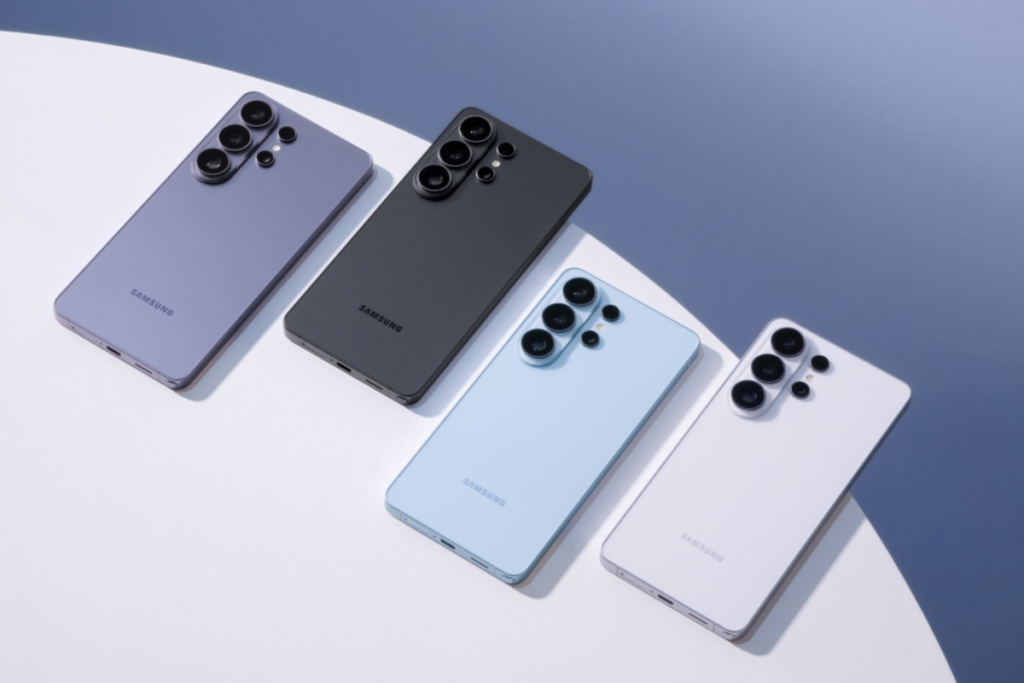
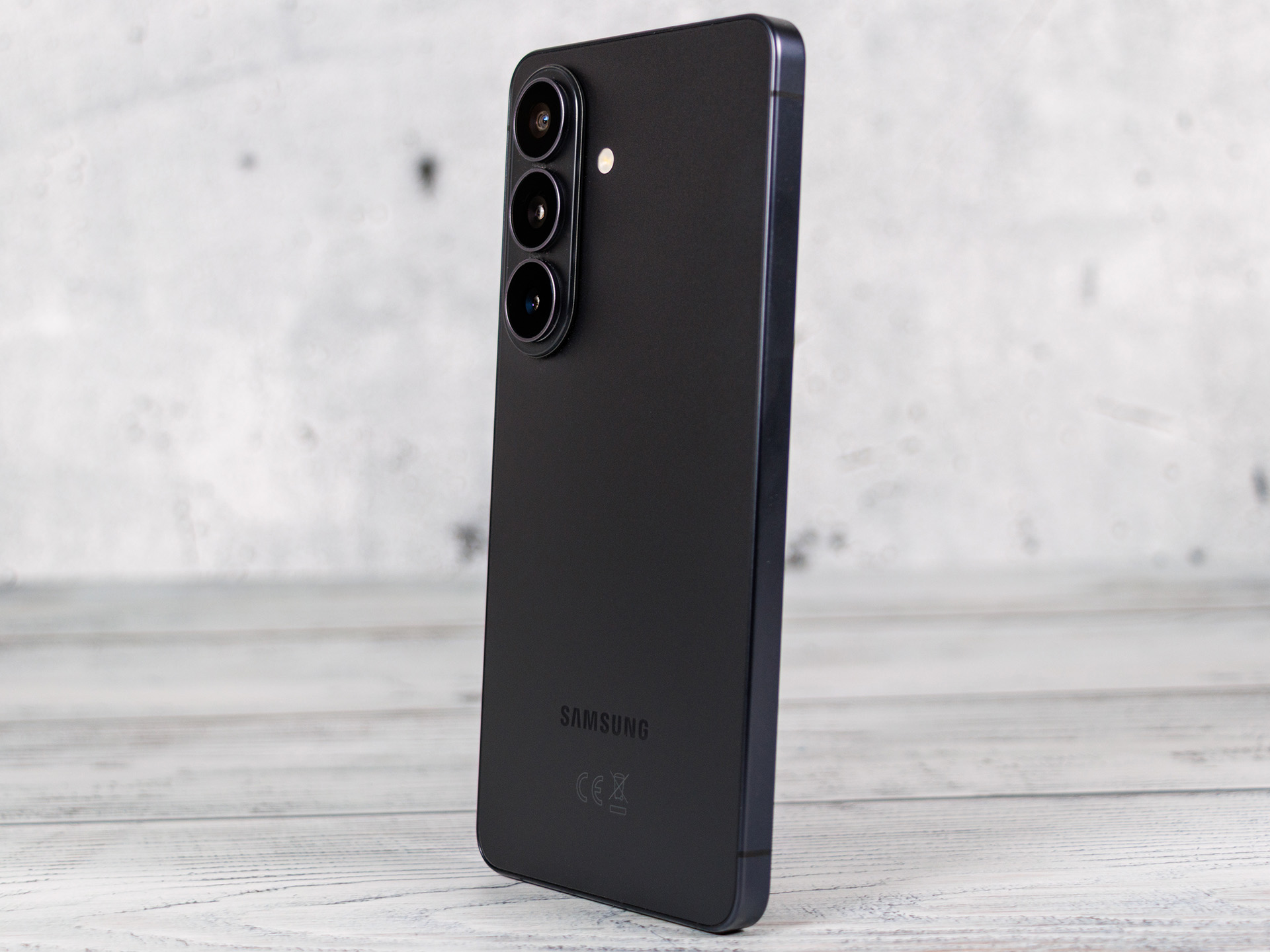
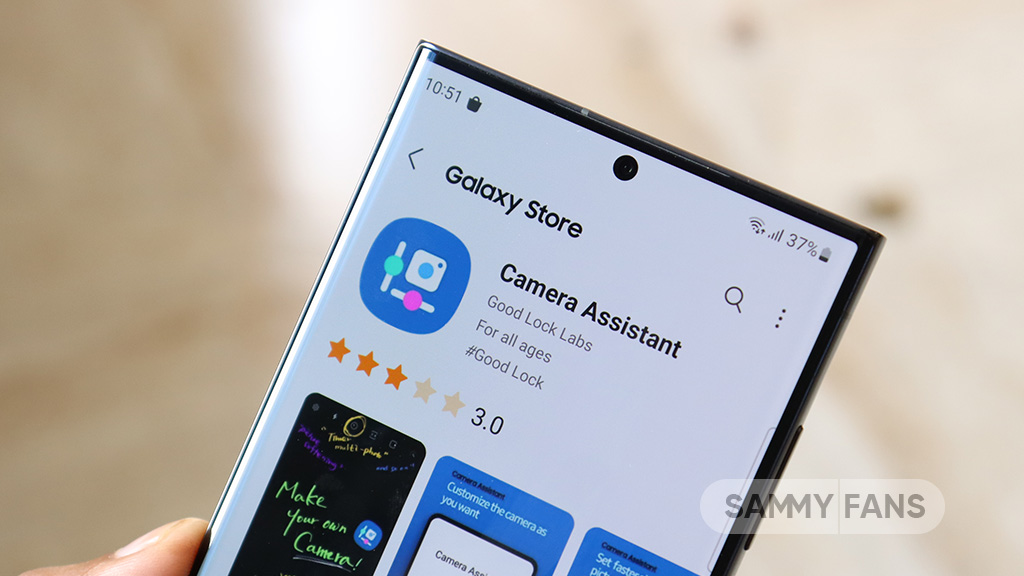
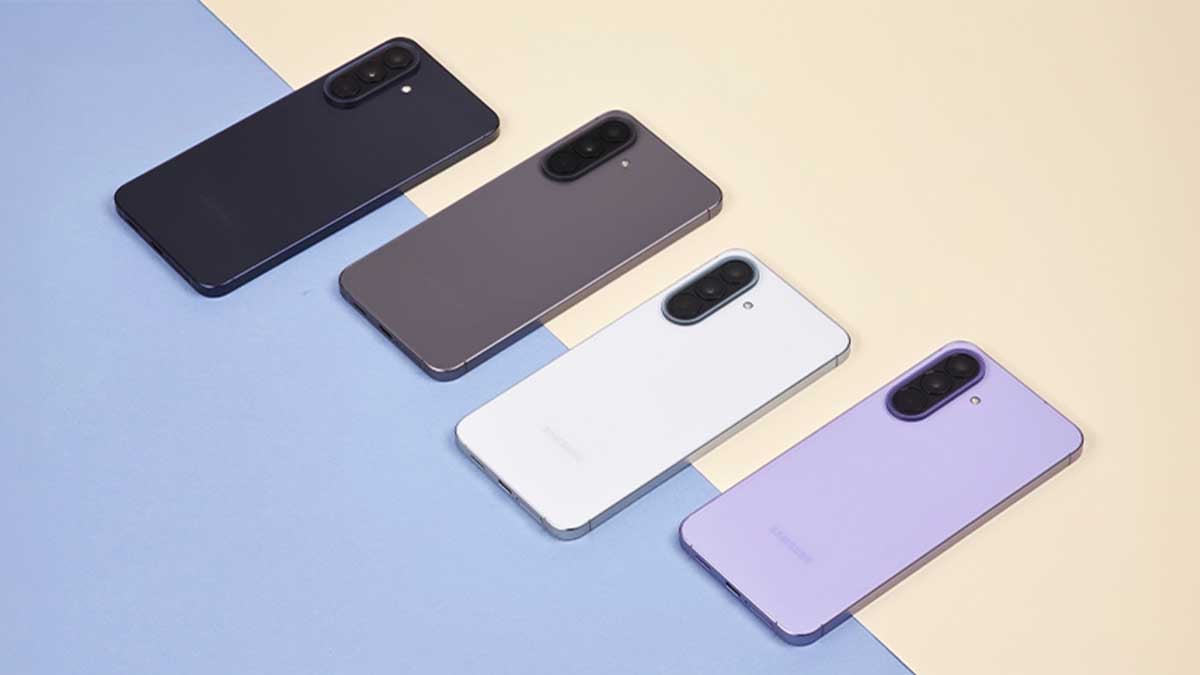
Samsung is delivering faster bi-monthly software updates to its Galaxy A-series phones. In most cases, the company is offering more security patches than scheduled, and that’s all happening without any flashy press release.
Samsung’s software update story has been easy to praise at the flagship level. Monthly patches, long-term support, tight rollout windows. That’s expected now. What’s not expected is what’s quietly happening in the mid-range segment.
Quarterly promise, bi-monthly reality
Most mid-range Galaxy A devices sit on a quarterly update schedule. That means one security patch every three months. It’s a clear downgrade compared to the Galaxy S and Galaxy Z lines, and even the A5x models that enjoy monthly updates.
A recent analysis of Galaxy A devices launched since 2022 shows that many of these phones are getting updates roughly every two months. In some cases, even more frequently, which puts them much closer to a bi-monthly frequency.
Devices like the A33, A34, A35, and even the newer A36 are leading this trend. The Galaxy A36, in particular, stands out as it received eight updates since launch, which is double what you would expect if Samsung followed its schedule.
Galaxy A13 5G and Galaxy A23 are closer to the promised update frequency, though they still edge slightly above expectations. On the flip side, the Galaxy A14 4G had a rough patch, especially during early 2025 when updates lagged.
So yes, there are inconsistencies, but Samsung is over-delivering more often than not. It’s a rare win for users who don’t spend flagship money.
April 2026’s Play system update has just started rolling out to Samsung phones and Google has now published the content of the May 2026 version.
Google’s early May 2026 updates for Play services and the Play Store are fairly minor but still add a few useful touches.
Google Play system update – May 2026
With Google Play services v26.17, the most notable change is a new warning screen that appears when signing in with a Dasher account on Android desktop devices.
Developers also get a fresh set of tools across Auto, PC, phones, TVs, and Wear OS to better support utility-related features in their apps. Meanwhile, Google Wallet quietly gets bug fixes to improve reliability.
On the Play Store side (v51.3), Google is making its Sidekick feature easier to access by letting users open it directly from the notification drawer.
There’s also a small but meaningful expansion for gamers, who can now ask questions and share tips in more languages, including Spanish, Portuguese, Indonesian, Chinese, Japanese, and Korean.
This is not the end of the content that the May 2026 update will bring to the users. Google will continue to update its release page with fresh content. As for the rollout, there’s no tentative timeline as these updates work differently.
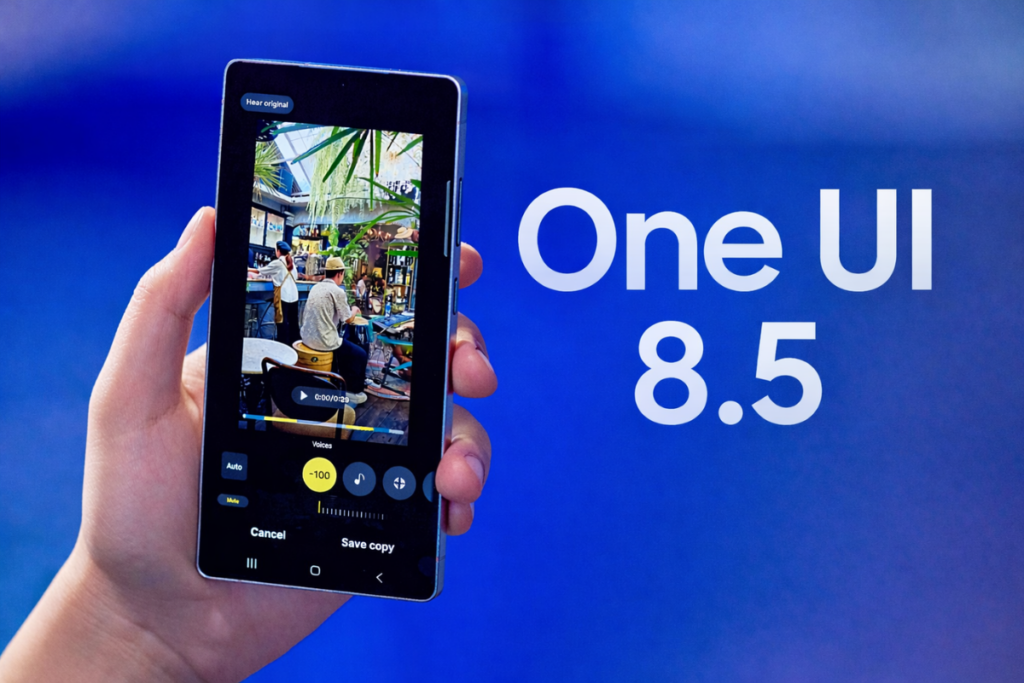
Samsung users can expect the May Play system update by the end of the month or early next month. If you’re on One UI 8.5 Beta, your device may struggle to fetch new releases as Beta firmware breaks compatibility.
The RingConn Gen 3 has launched with a pre-order discount in place. This smart ring can do in-depth vascular health monitoring, offers haptic feedback, and has a battery life rating of up to 14 days. The discounted starting price is $314.
SnailMail is a new business model in which creators send physical mail to paying subscribers. As artificial intelligence makes digital content increasingly generic, the idea seems attractive to many. How lucrative the business really is, however, remains questionable.
Casio appears to be working on a new Ring Watch, the CRW-H001. Spotted in a certification database, the specifications of this model have yet to be confirmed. However, the model number could point to an integrated heart rate sensor.
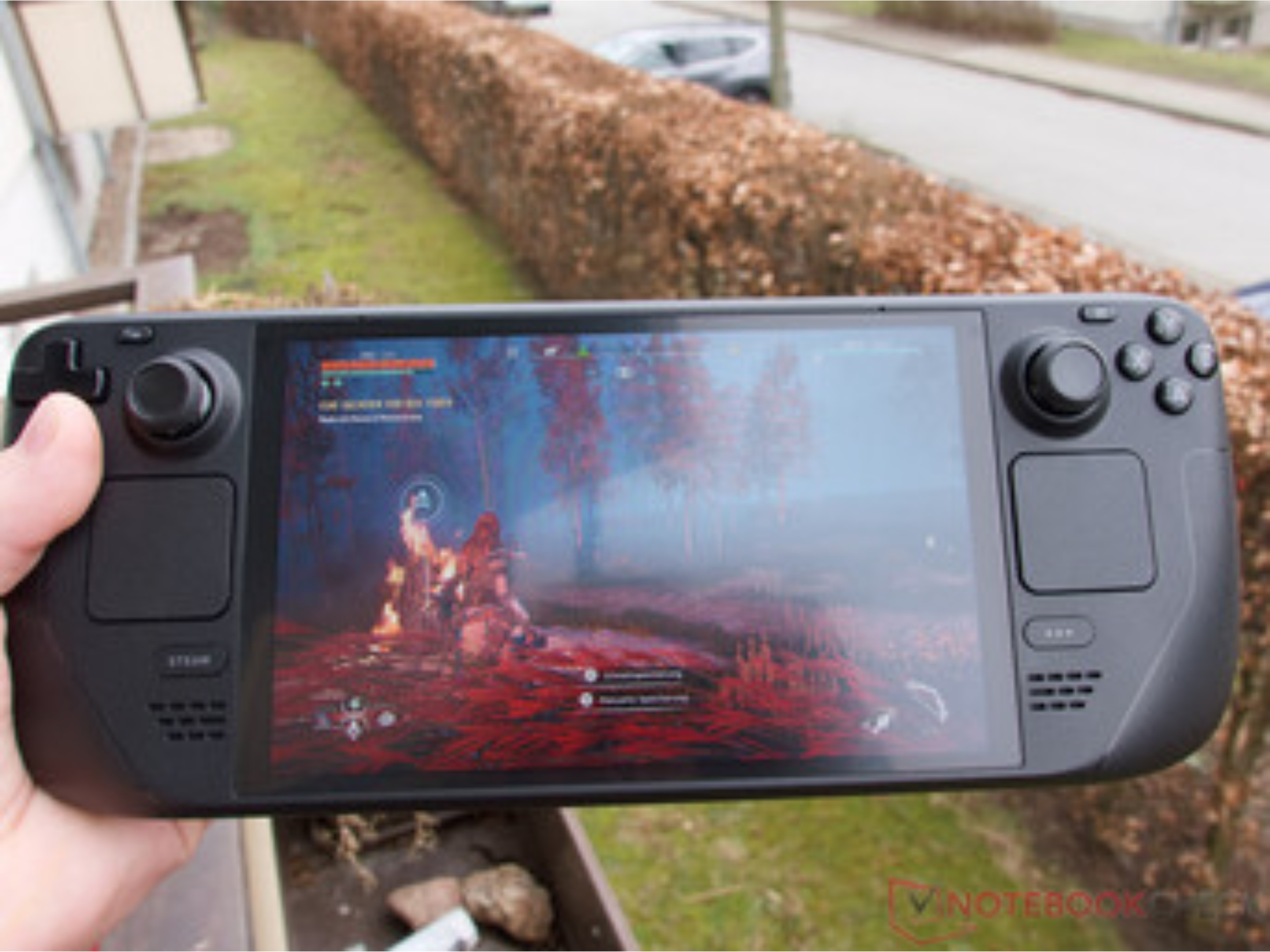
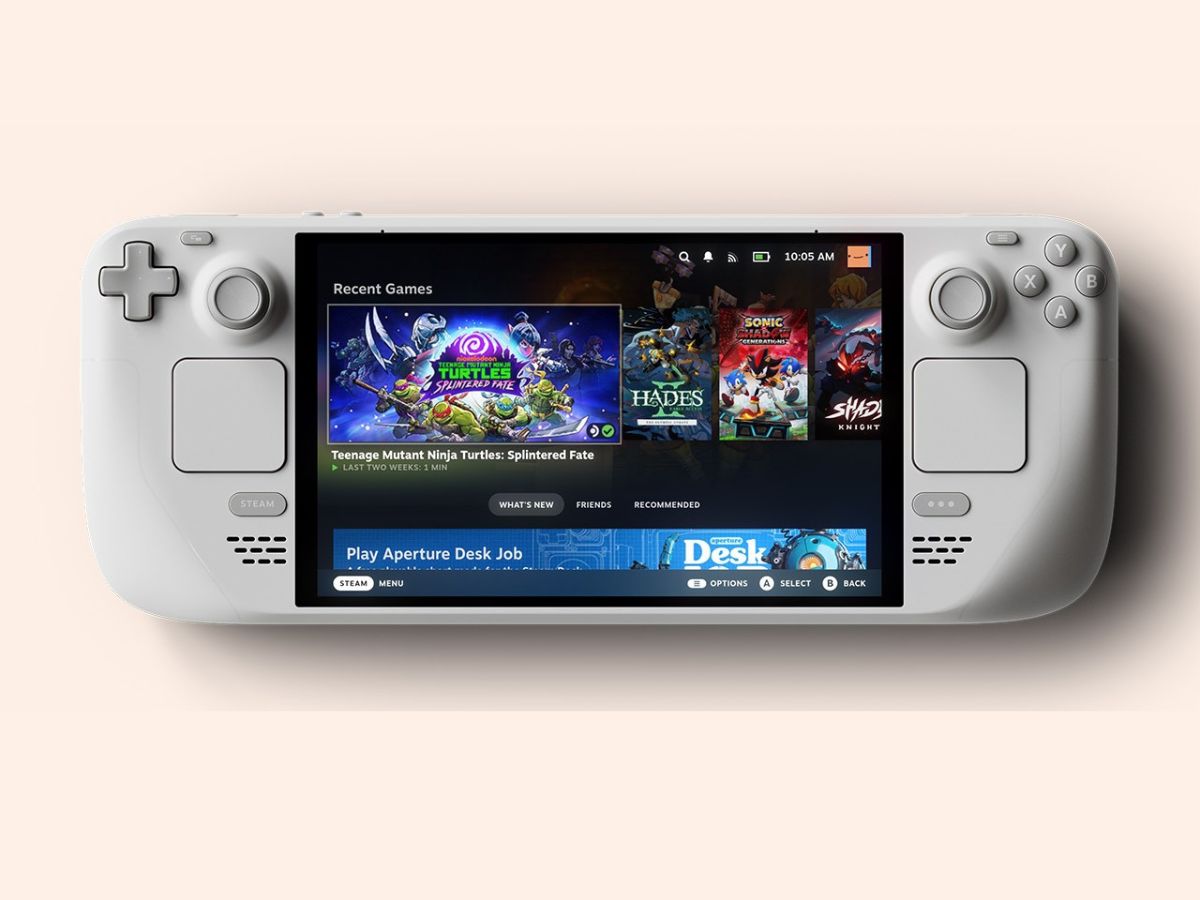
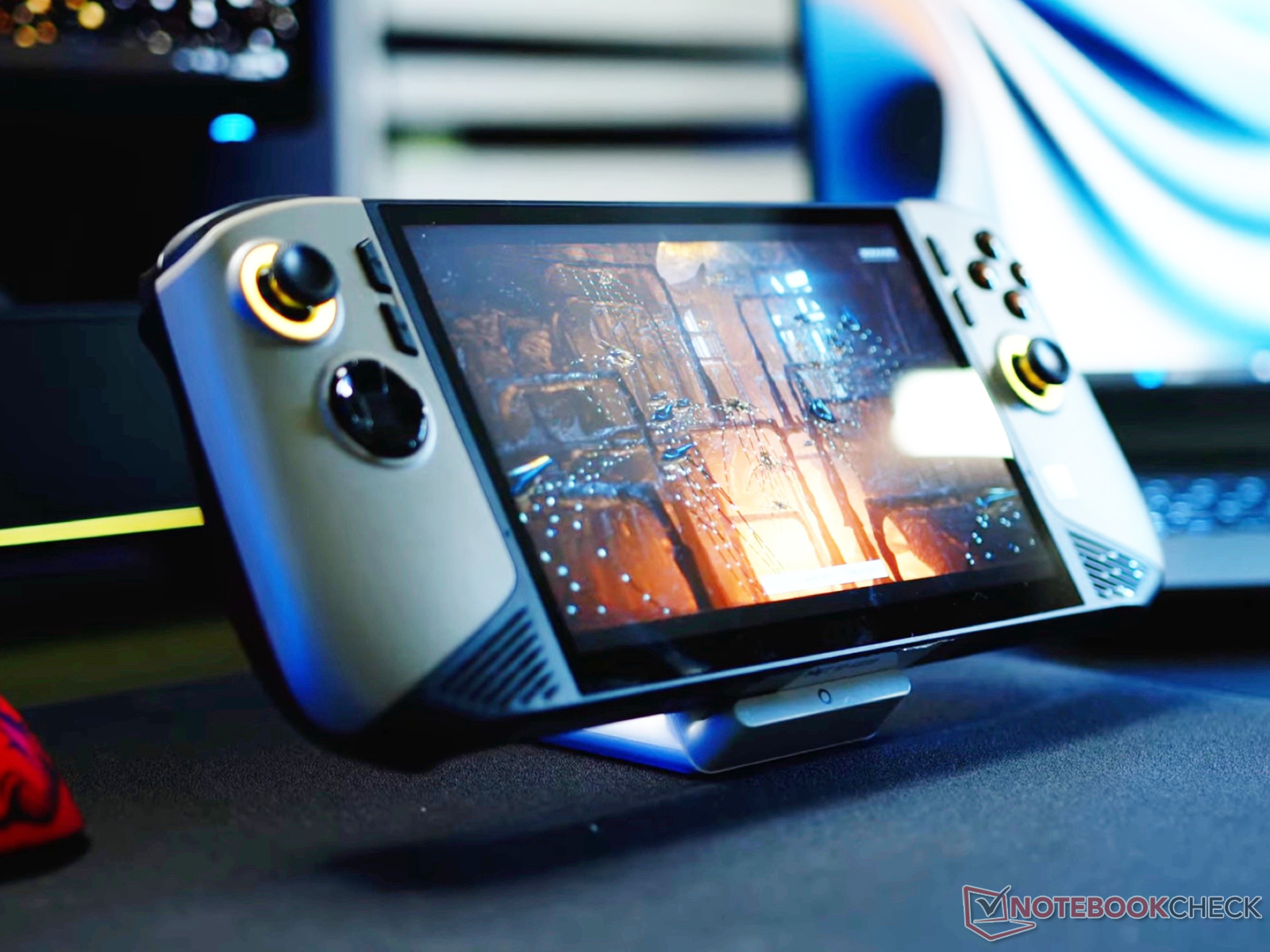
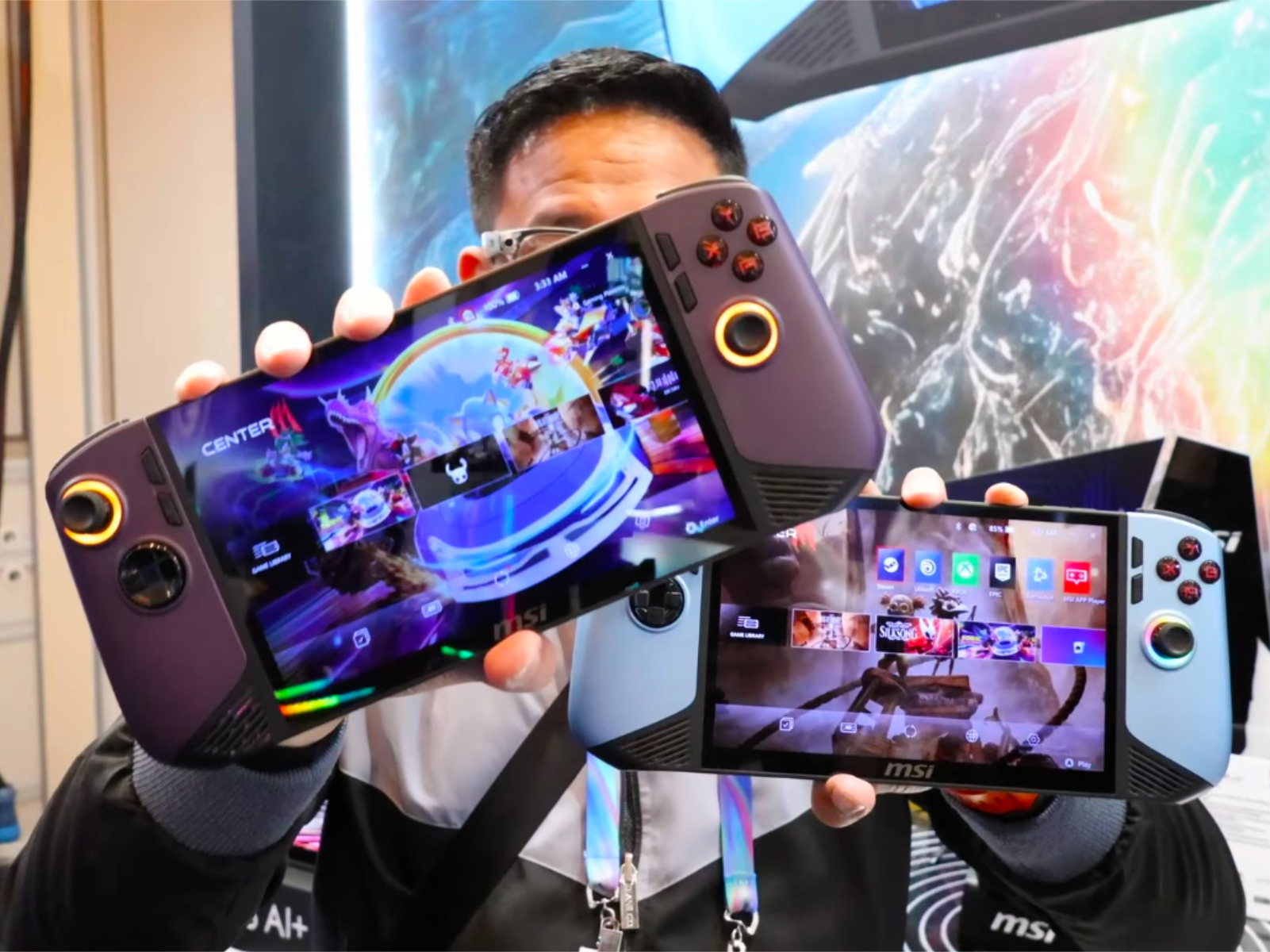
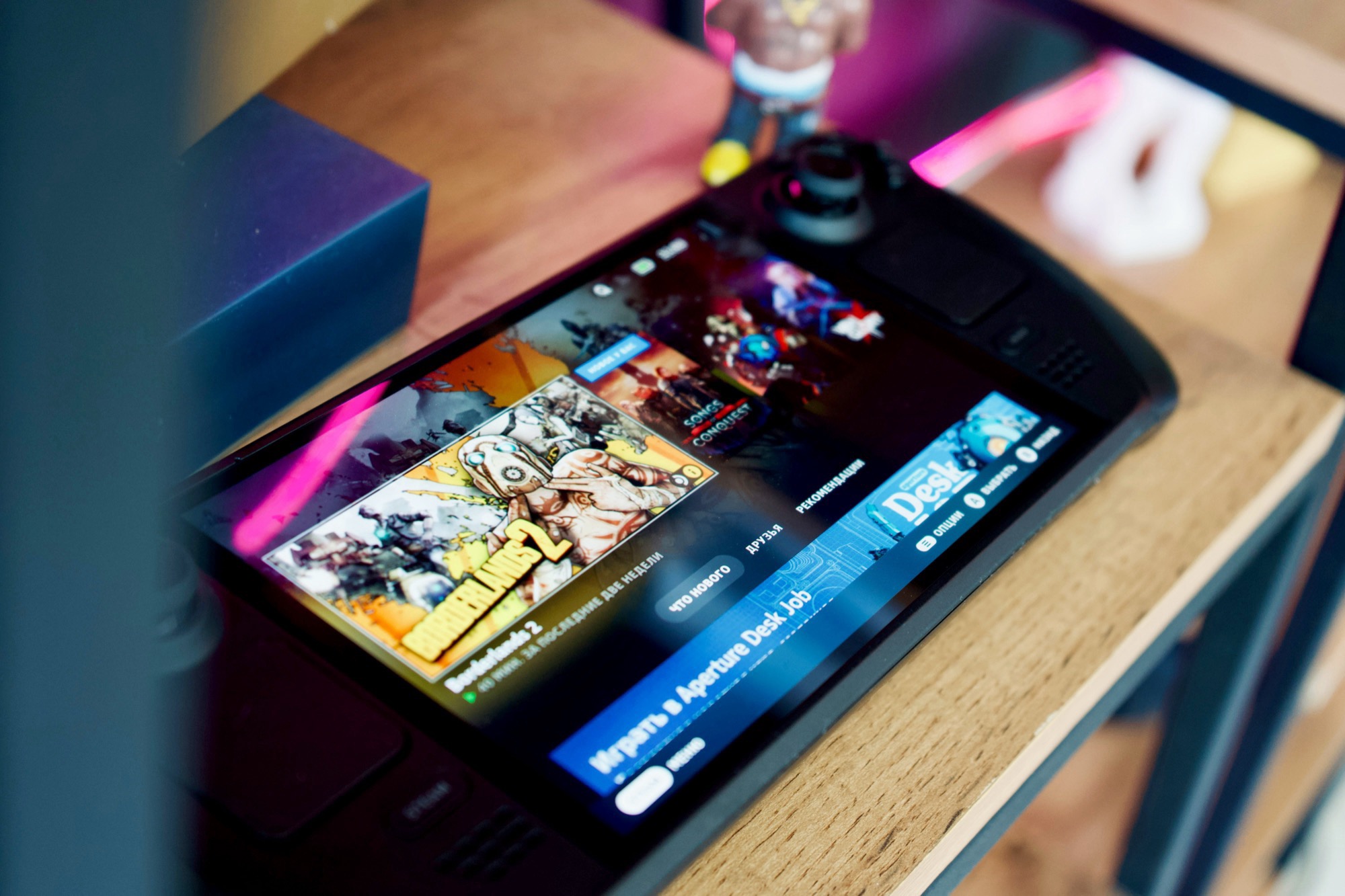
An embarrassing bug, mocking comments and fear of theft: a Reddit discussion shows why many players still feel uncomfortable gaming in public, despite the boom around the Steam Deck and similar handhelds.
How Dobby is brought to life could play an important role in the success of the Harry Potter series. After all, the house-elf ranks high among many fans’ favorite characters. One question in particular is on Potterheads’ minds: will Dobby be brought to life through animatronics or CGI?
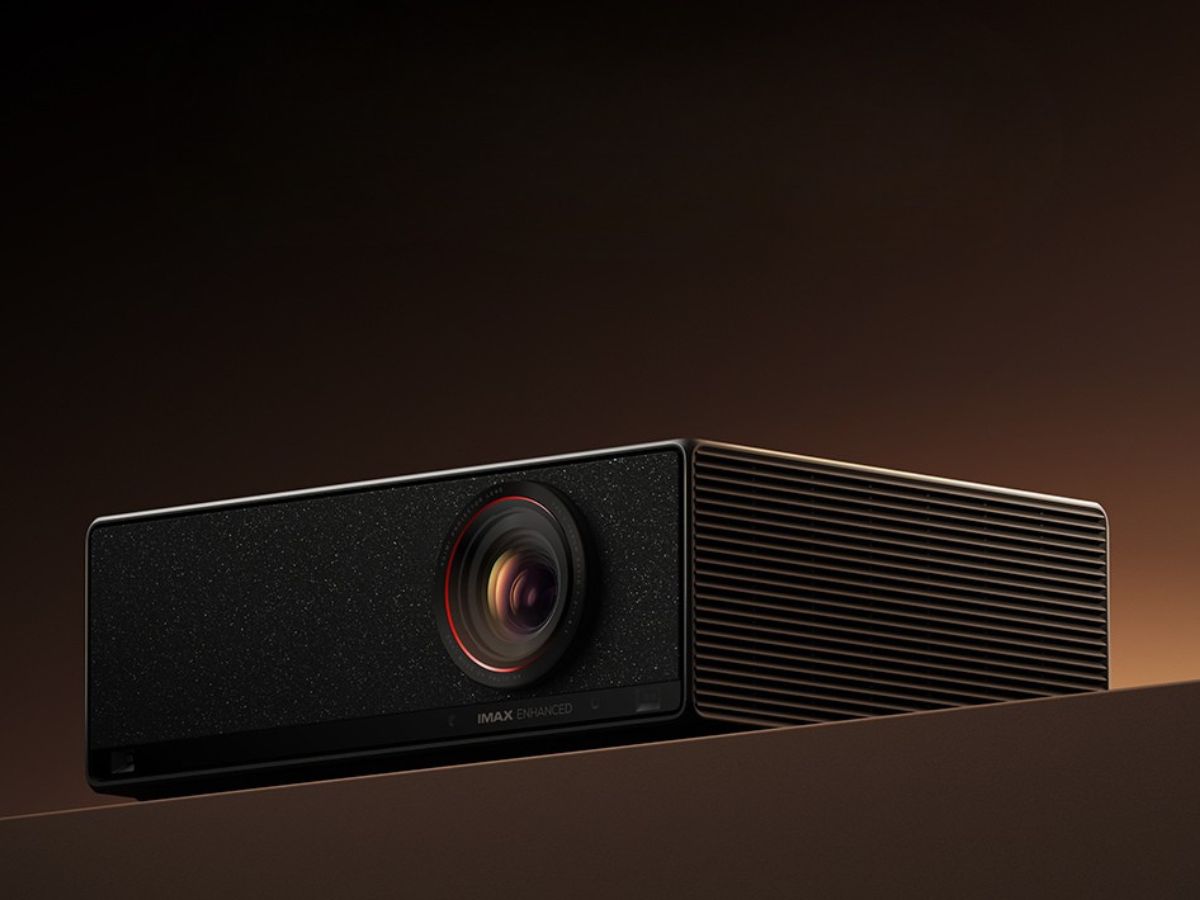
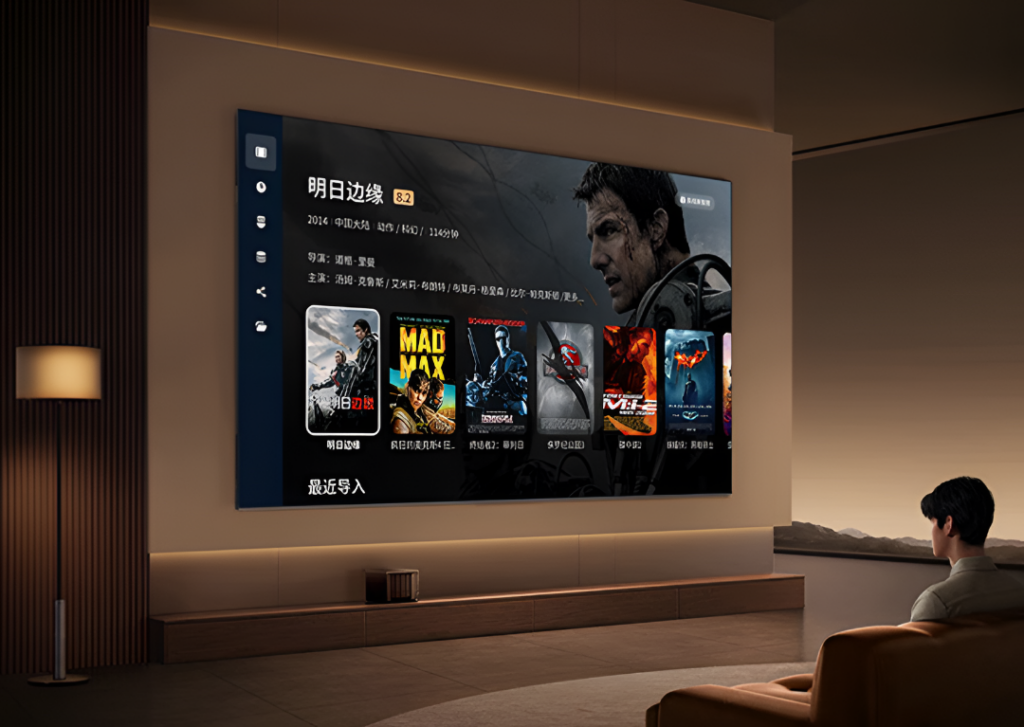
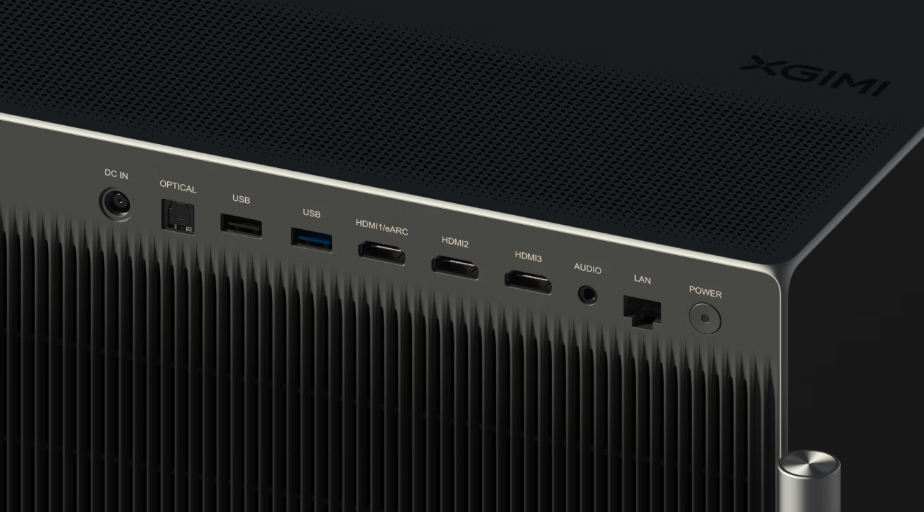
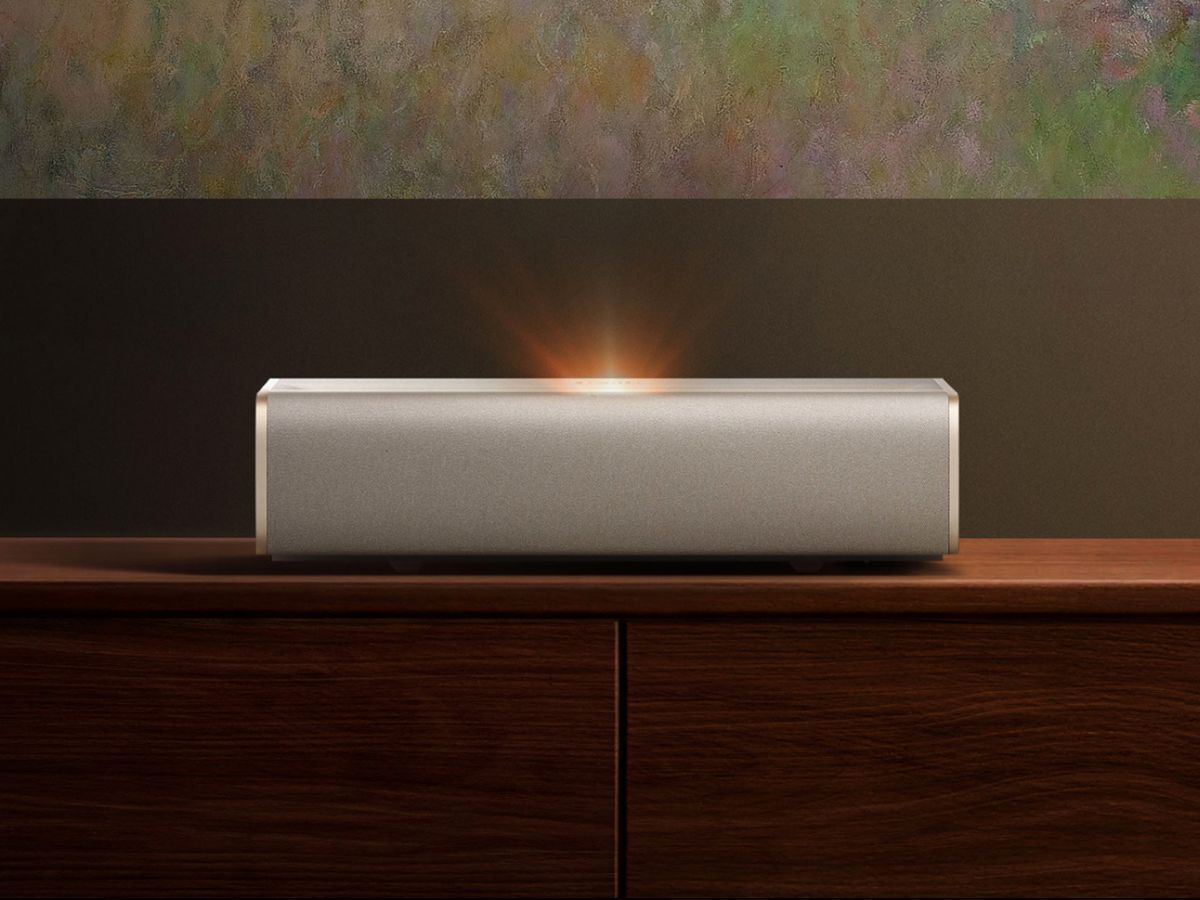
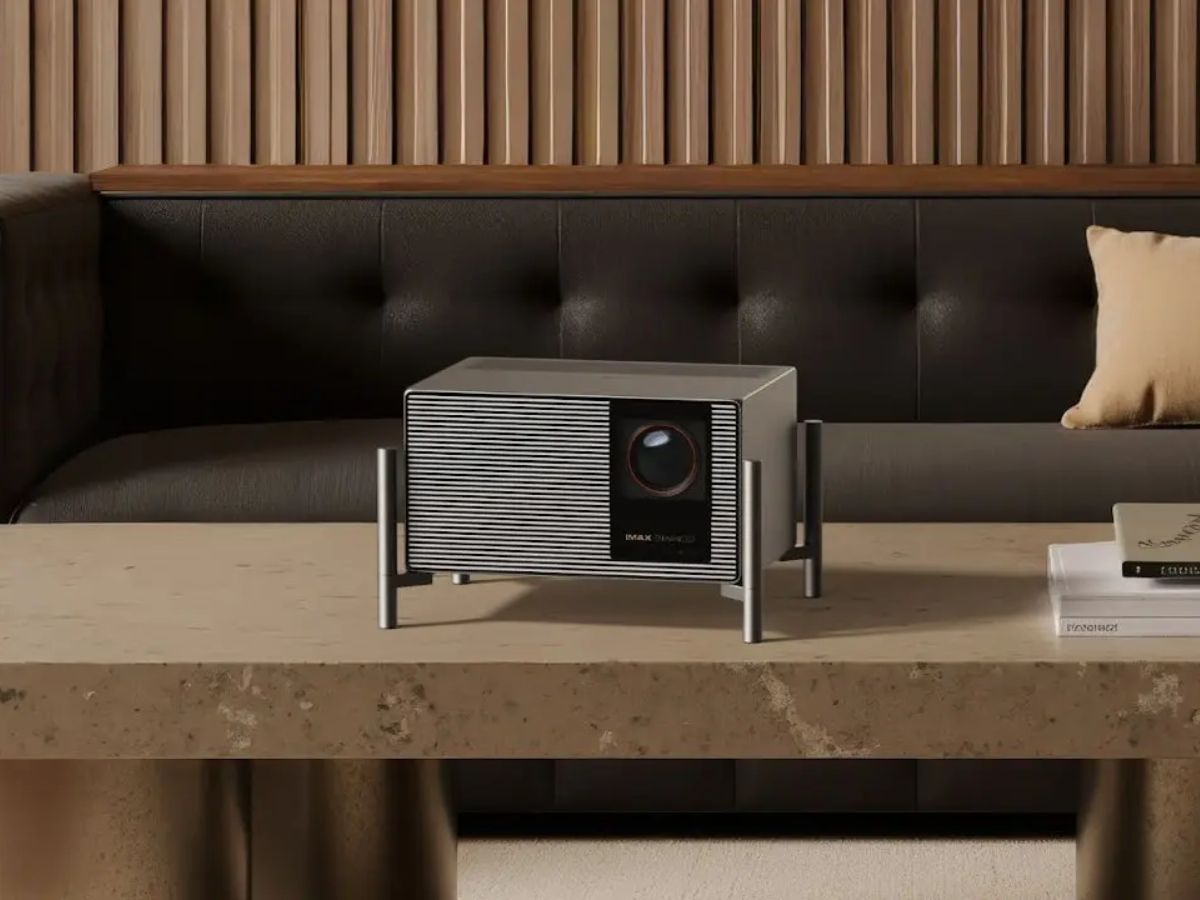
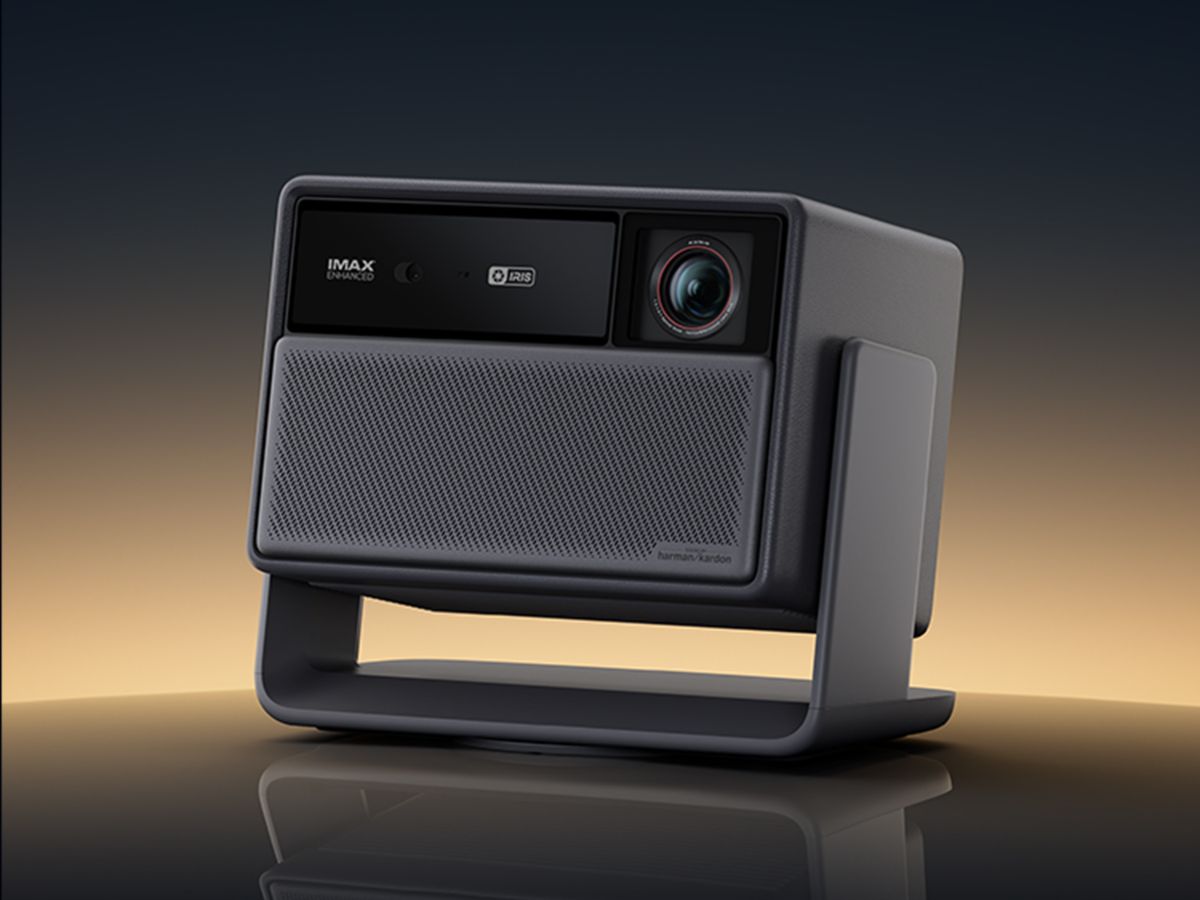
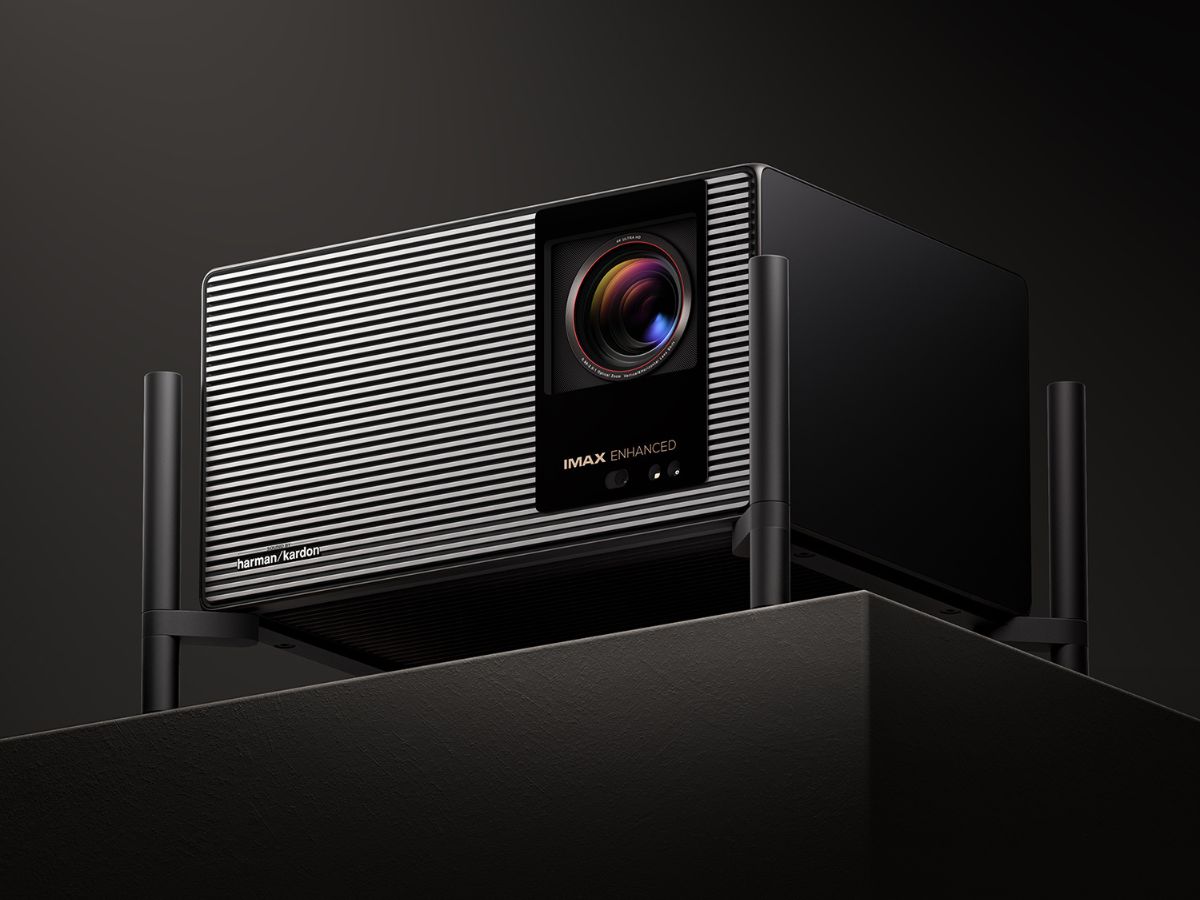
Xgimi has launched the new V10 home theatre projector in China. Described as an “ultra-high brightness” model, it builds on the older T10 (Titan), which has been released in various markets worldwide.
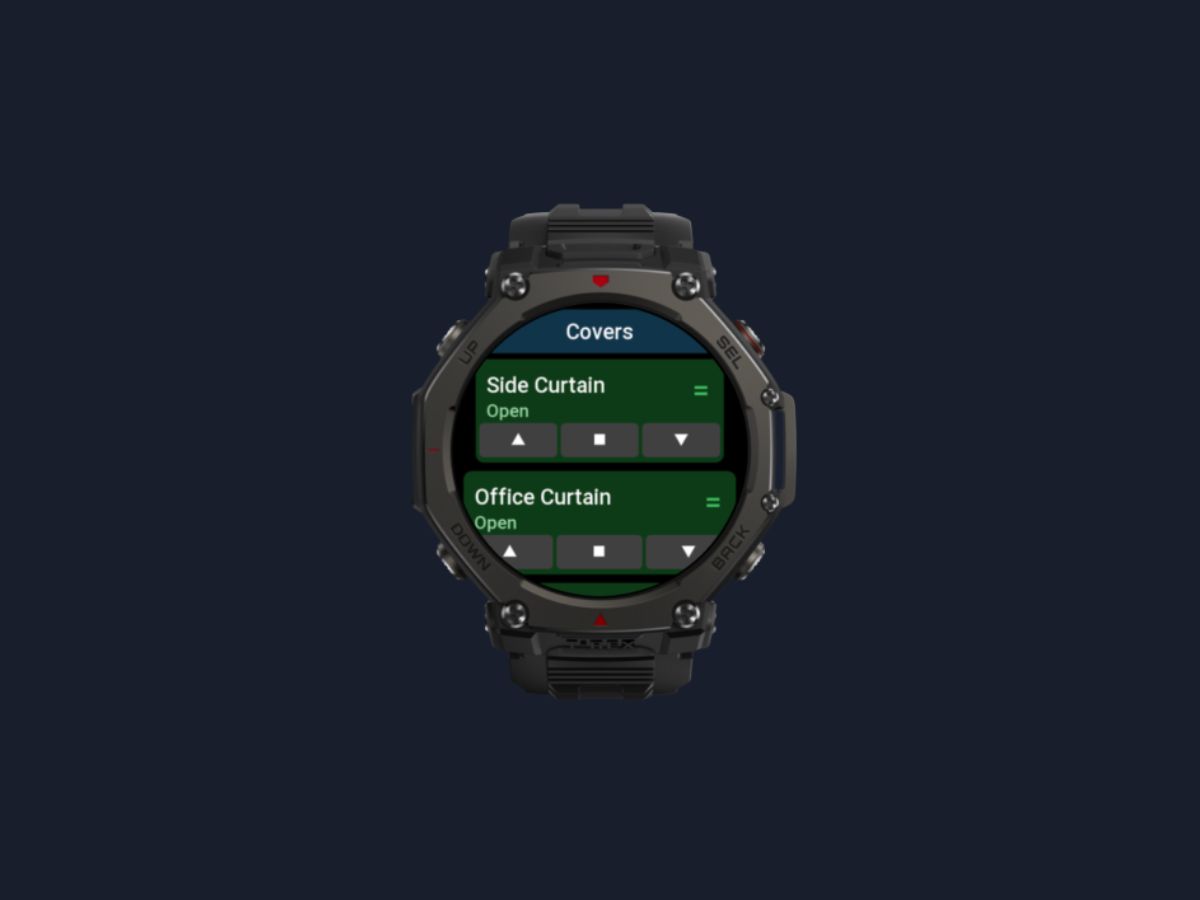
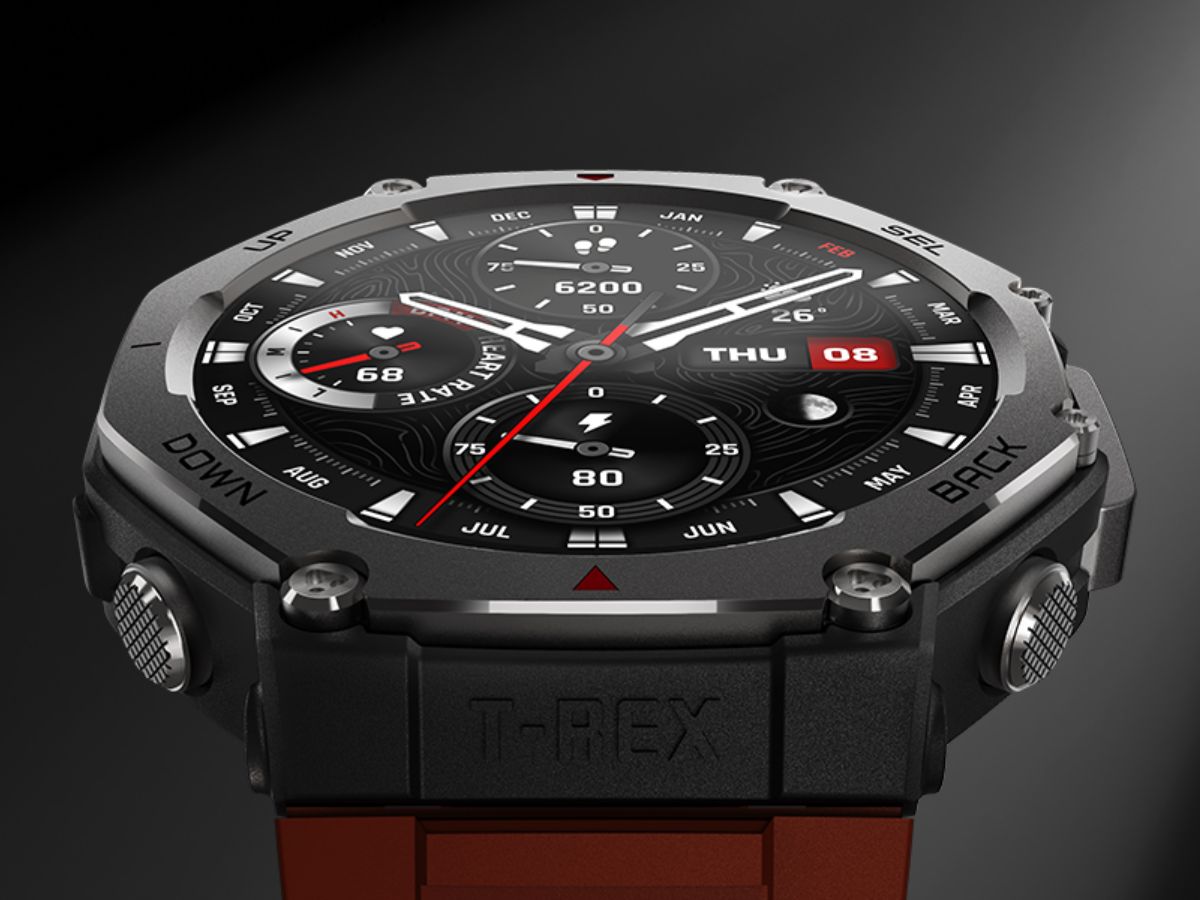
Two new Home Assistant-related Zepp Mini Apps are now available for Amazfit smartwatch users. They arrive alongside a simple drawing tool and a remote control for the Android app Tasker.
The 2026 Casio G-Shock Baby-G x Hysteric Glamour watch is about to launch in Japan. This collaboration model, based on the BGD-10K, has a square-shaped digital display and comes with interchangeable accessories.
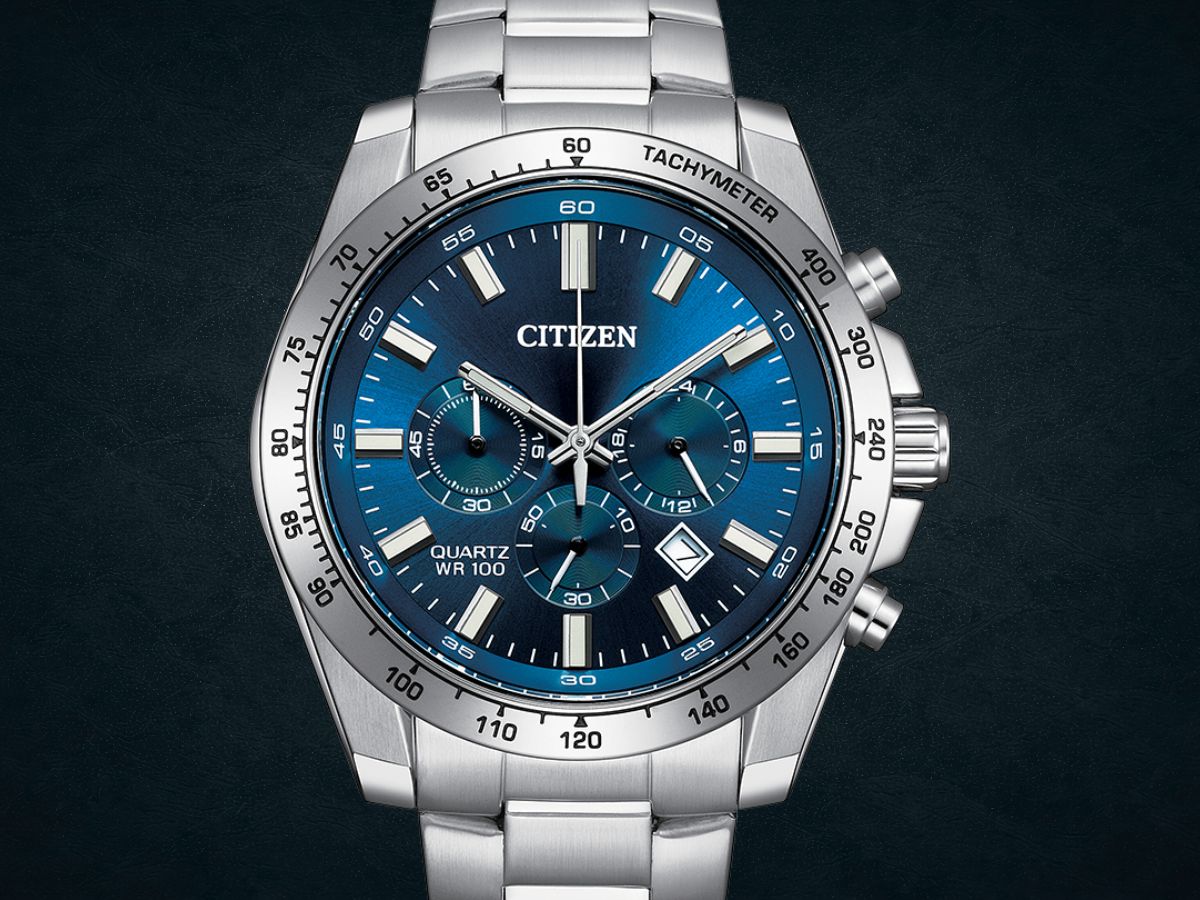
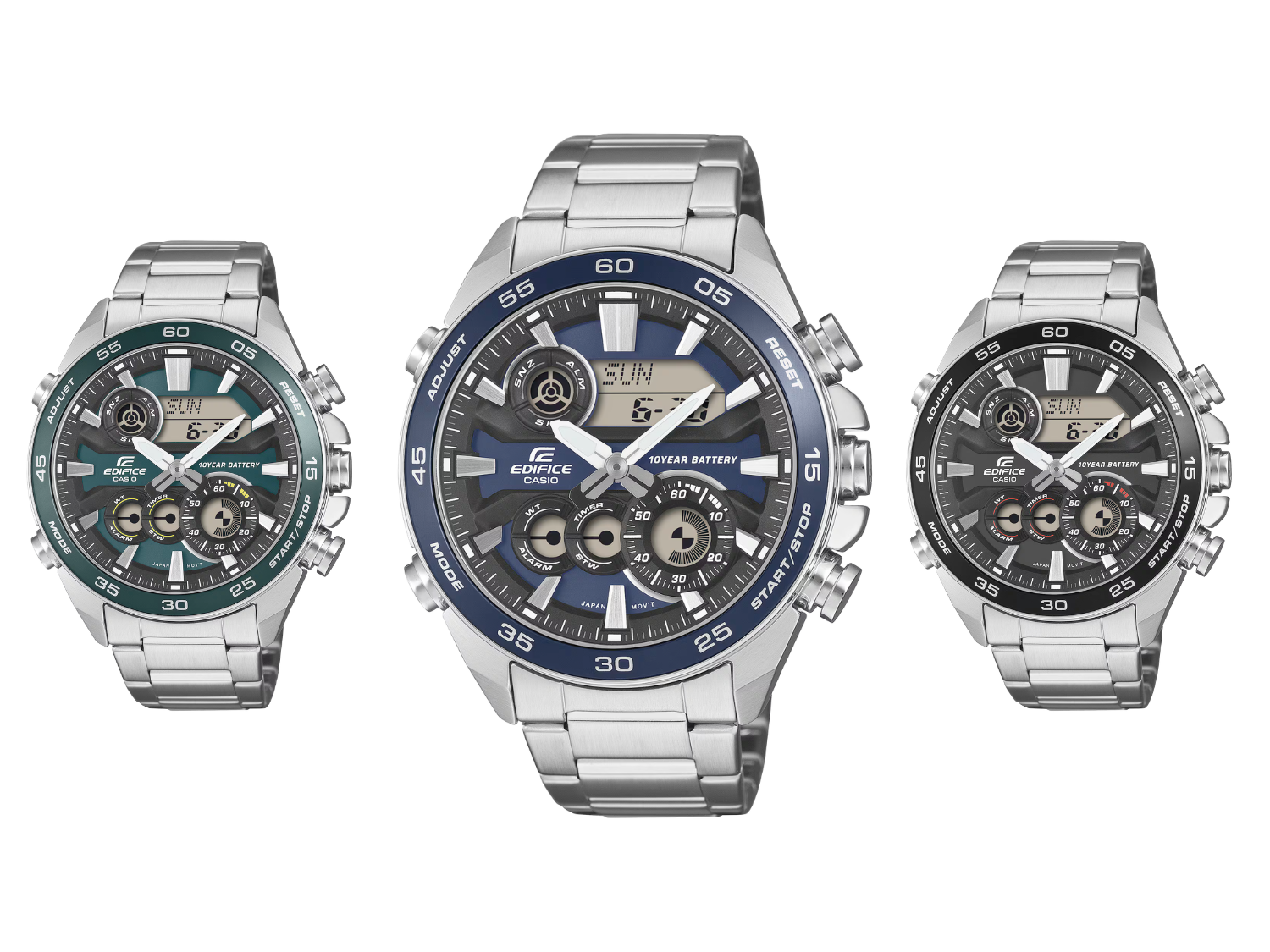
Citizen has launched three new quartz chronographs: the AN8230-59M, the AN8234-58E, and the AN8236-52P. These watches have metal casings and straps, with features including a tachymeter bezel and a triple subdial.
OmniOS r151058, only supporting upgrades from r151054 and r151056, is now available with improved IPv6 support, GMAC signing in SMB 3.1.1, ZFS improvements, better hardware support, load-balancing for individual logical units via mpathadm, as well as many other tweaks and fixes.
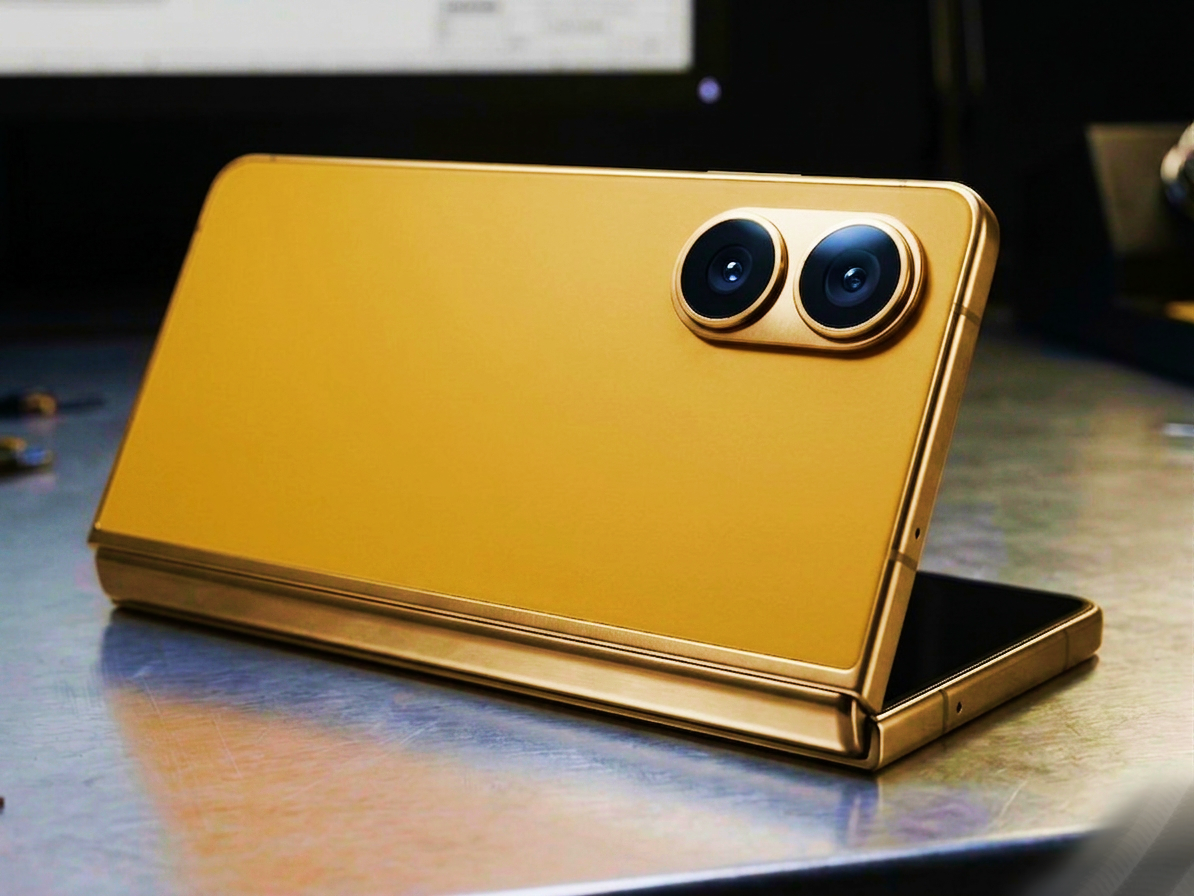
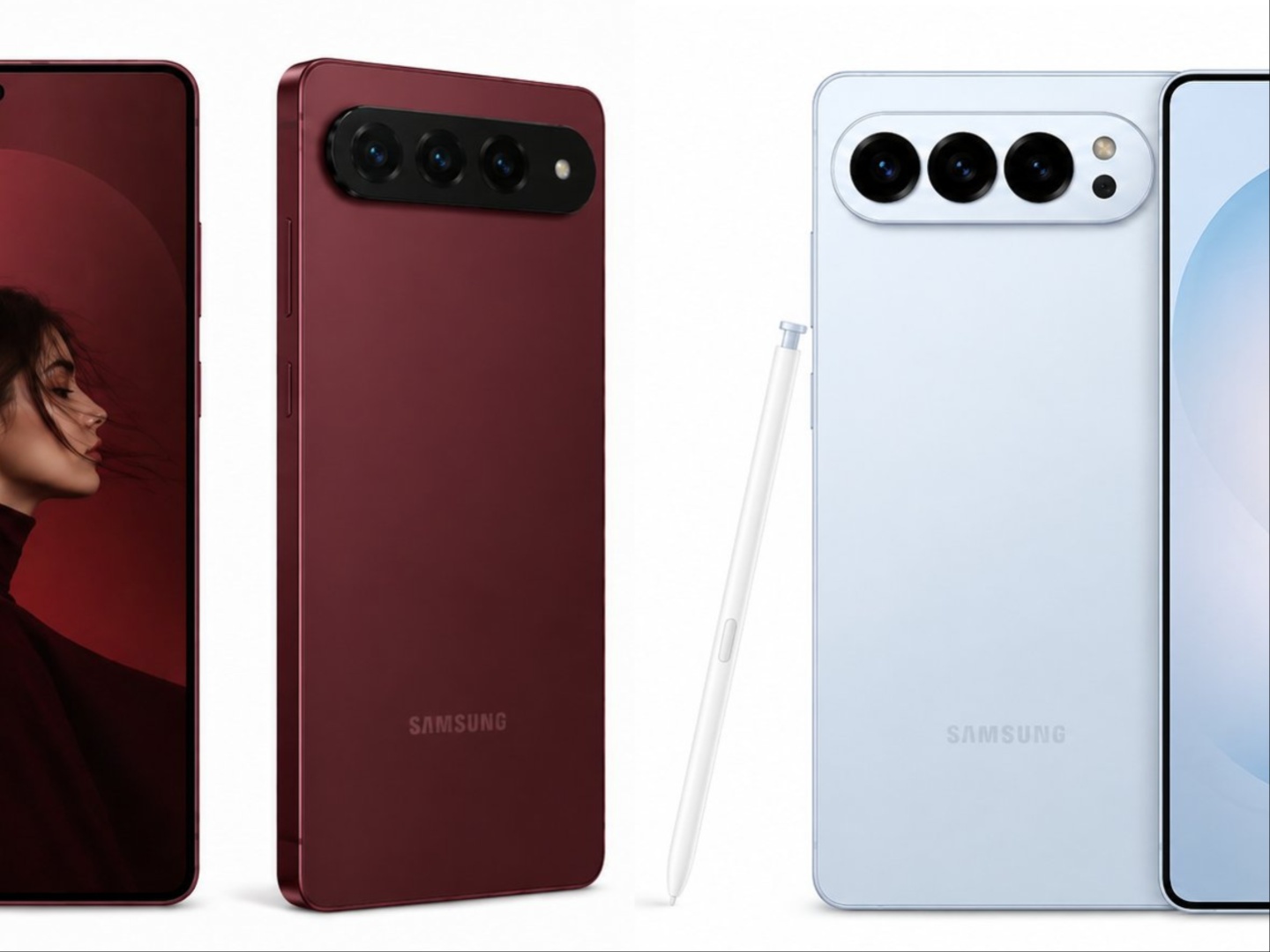
Samsung’s 2026 foldables have leaked via One UI 9 firmware, revealing the new "Wide" variant of the Galaxy Z Fold 8 designed to take on Apple’s upcoming foldable iPhone Ultra with a 200MP camera and a crease-less display.
Honor has quietly introduced a budget Play series device in China, called the Play 70C. It is powered by a MediaTek Helio G81 Ultra chipset and packs a 5,300mAh battery. The company also unveiled the Play 80 Plus with a 7,500mAh battery and a Snapdragon 4 Gen 4 SoC.
The Honor Play 70C comes with a 6.75-inch LCD display that offers HD+ resolution and a refresh rate of 90Hz.
It gets a single 13MP rear camera that supports 1080p video recording and offers up to 10x digital zoom. On the front, the phone offers a 5MP camera for selfies and video calls.
The device packs a 5,300mAh...
Motorola recently introduced two versions of the Edge 70 Pro for global and Indian markets, with differences in camera hardware and charging capabilities. Now, it appears that the global variant could launch in India under the Edge 70 Pro+ moniker.
According to a tipster, Motorola is set to unveil the Edge 70 Pro+ in India by the end of this month.
Motorola Edge 70 Pro (global)
The phone is said to bring several upgrades over the Edge 70 Pro, including a telephoto camera, support for wireless charging, and a 16GB RAM option. It is also tipped to be available in Satin Wine Red and...
Google is upgrading the Gemini app on Android with a design refresh and model picker. It follows the recent distribution on the iOS channel. There’s a mixed reaction from users after seeing the visuals available on X.
Model picker
Gemini app’s header now features a model picker with a drop-down button. Hitting the arrow would present the available models to users. It expands the app’s usability while making it easier to change the execution mechanism.
Design refresh
Gemini’s various buttons are getting a subtle tweak in order to increase visibility. The hamburger menu stays separate on the left, while the right side has three buttons together, including:
New chat
Share conversation
More (expand options)
These new design tweaks don’t just make Gemini visually appealing, but also enhance the overall experience. The conversation section is also seeing application of subtle colorways in both light and dark modes.
The rollout may be sequential, and you may receive it days later. Keep the Gemini app updated to the latest version alongside the main Google app and the phone’s Google Play system update.
It can also be a server-side rollout, which means users may not see the new design on the latest version. In that case, waiting for the expansion is the only option left as Google maintains a phased rollout rather than broader.
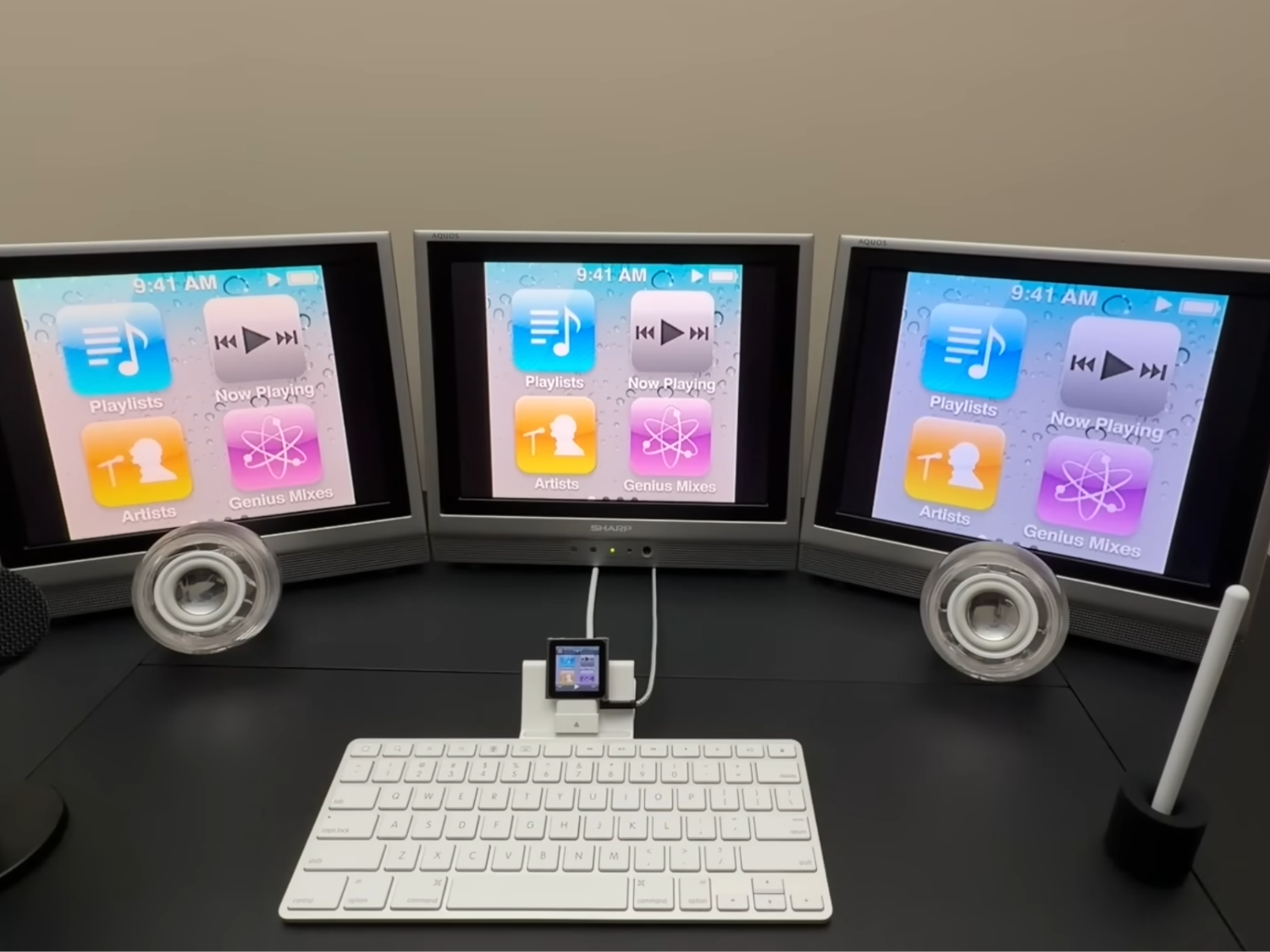
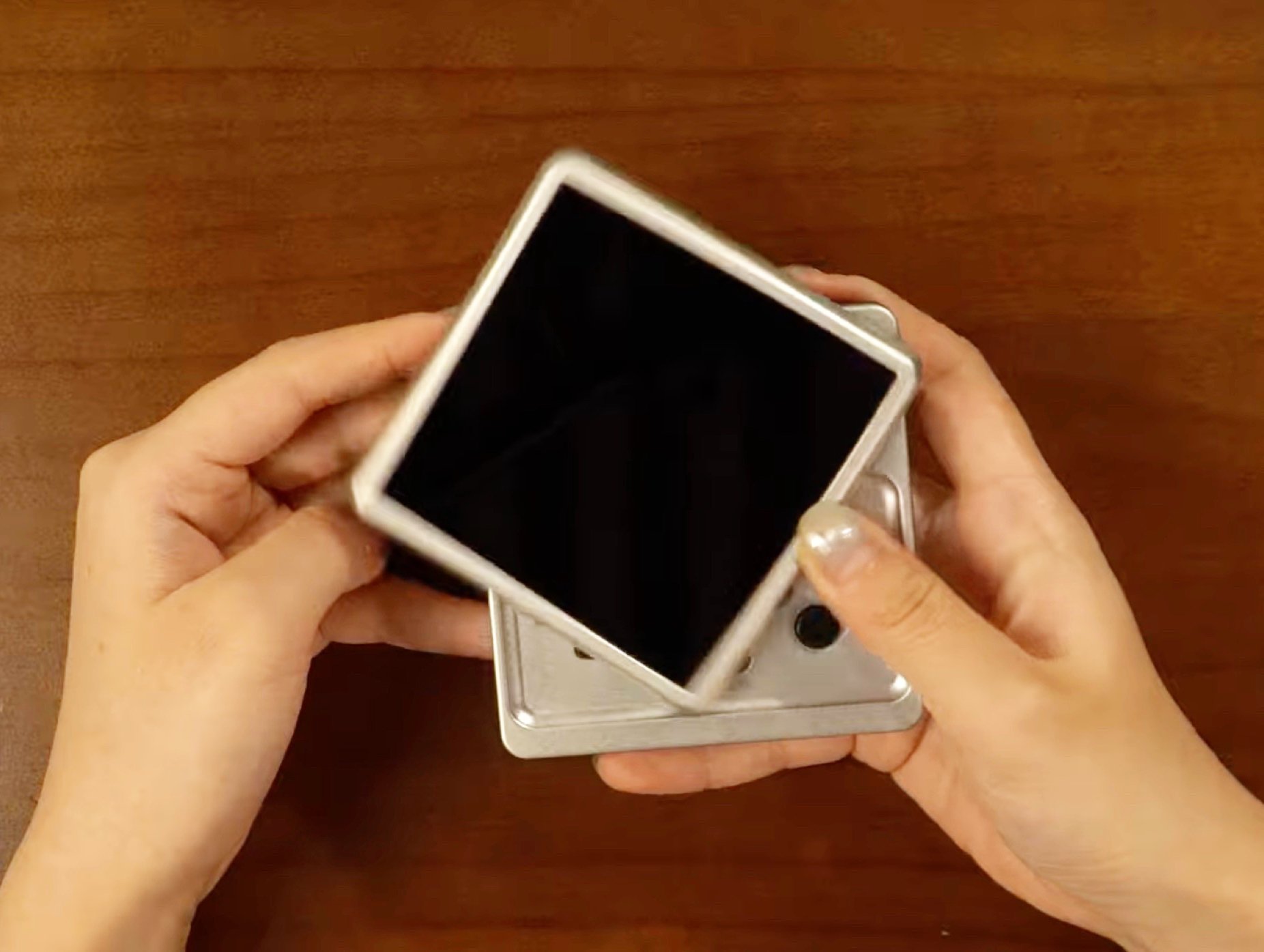
This new hardware mod uses a 6th generation iPod Nano to power three Sharp Aquos displays in May 2026. By leveraging a legacy 30-pin iPad dock and custom adapters, the tiny device runs a full multi-screen media setup.
The latest stable version of this distro ships with the Steam client installer alongside Lutris Launcher, Gaming, Heroic Launcher, Moonlight GameStream, and more. These components allow the user to run several Epic Games titles, Battle.net games, Xbox Game Pass remote play, and more.
Smartphones without a notch or punch-hole that still offer secure 3D facial recognition - this is exactly what Metalenz Polar ID is designed to make possible, and at an affordable price. The manufacturer is demonstrating the technology publicly for the first time.
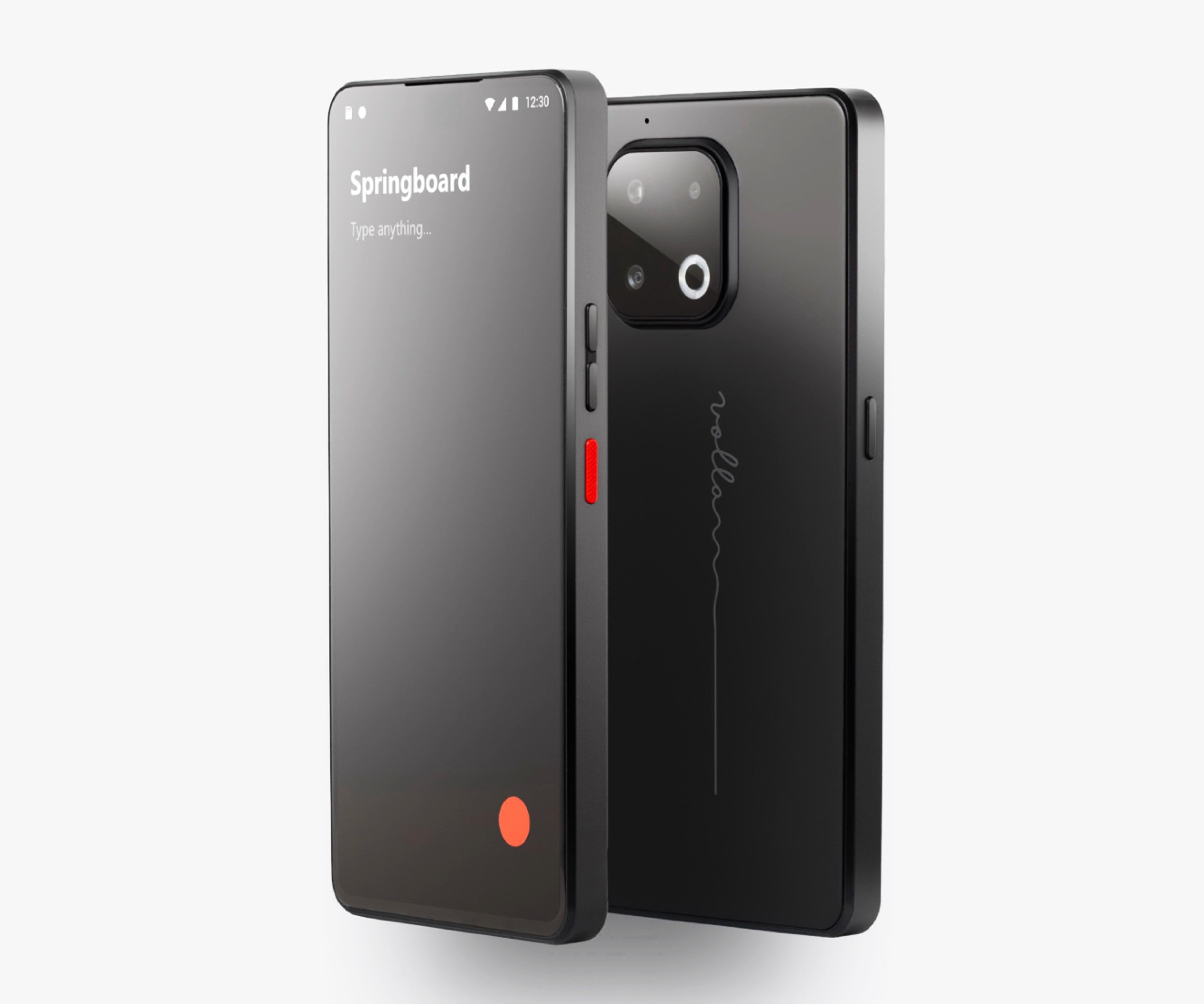
A new leak has outlined key information regarding OpenAI's first smartphone. It is tipped to be powered by a custom version of MediaTek's next-generation chipset, with mass production expected as early as the first half of 2027.
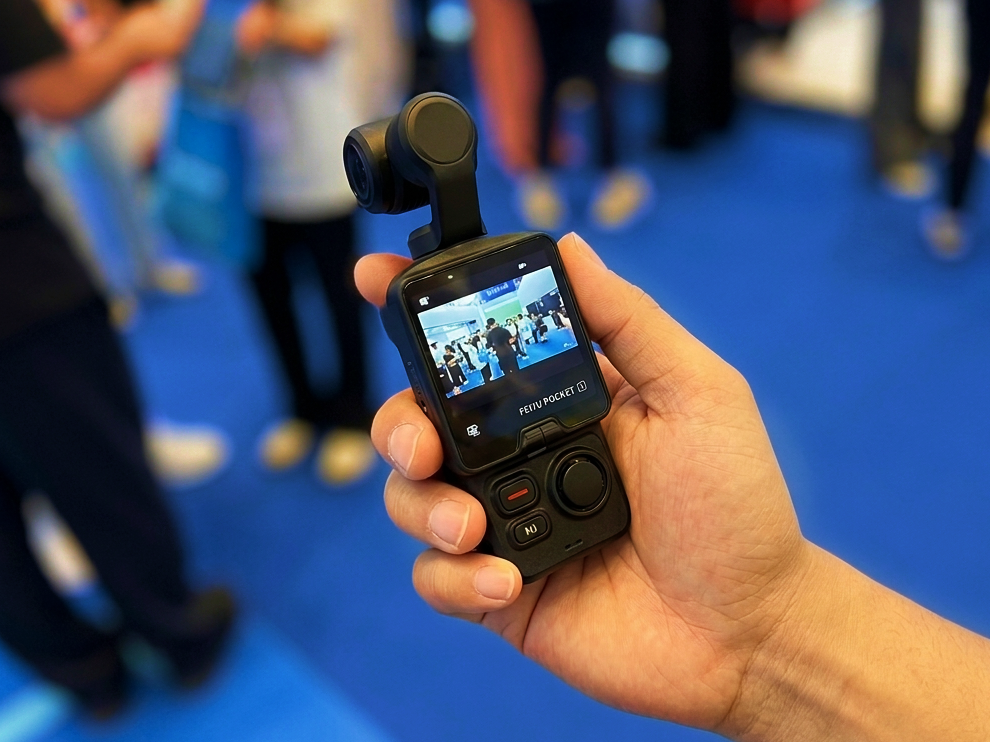
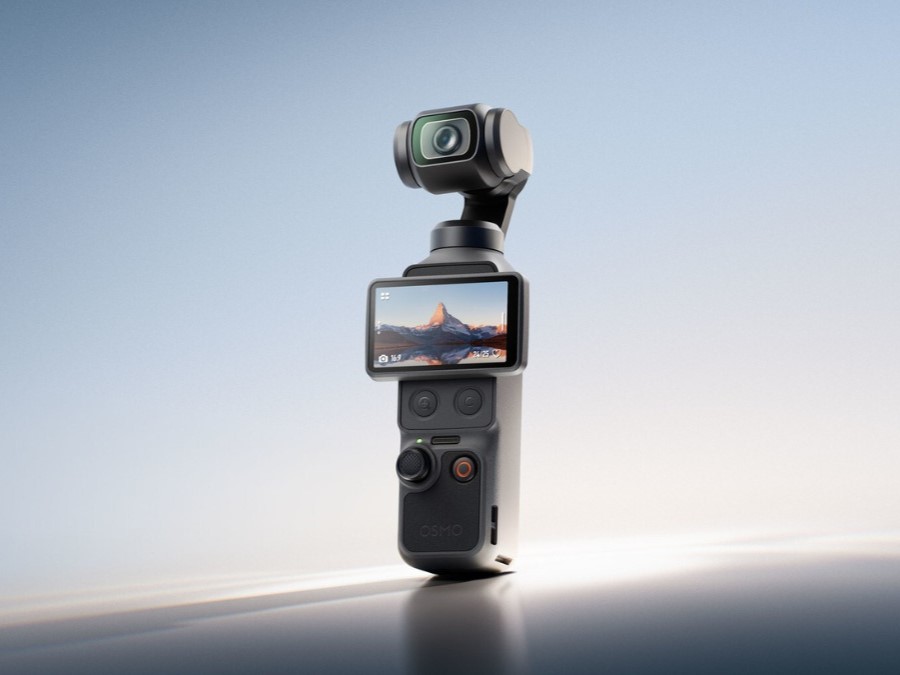
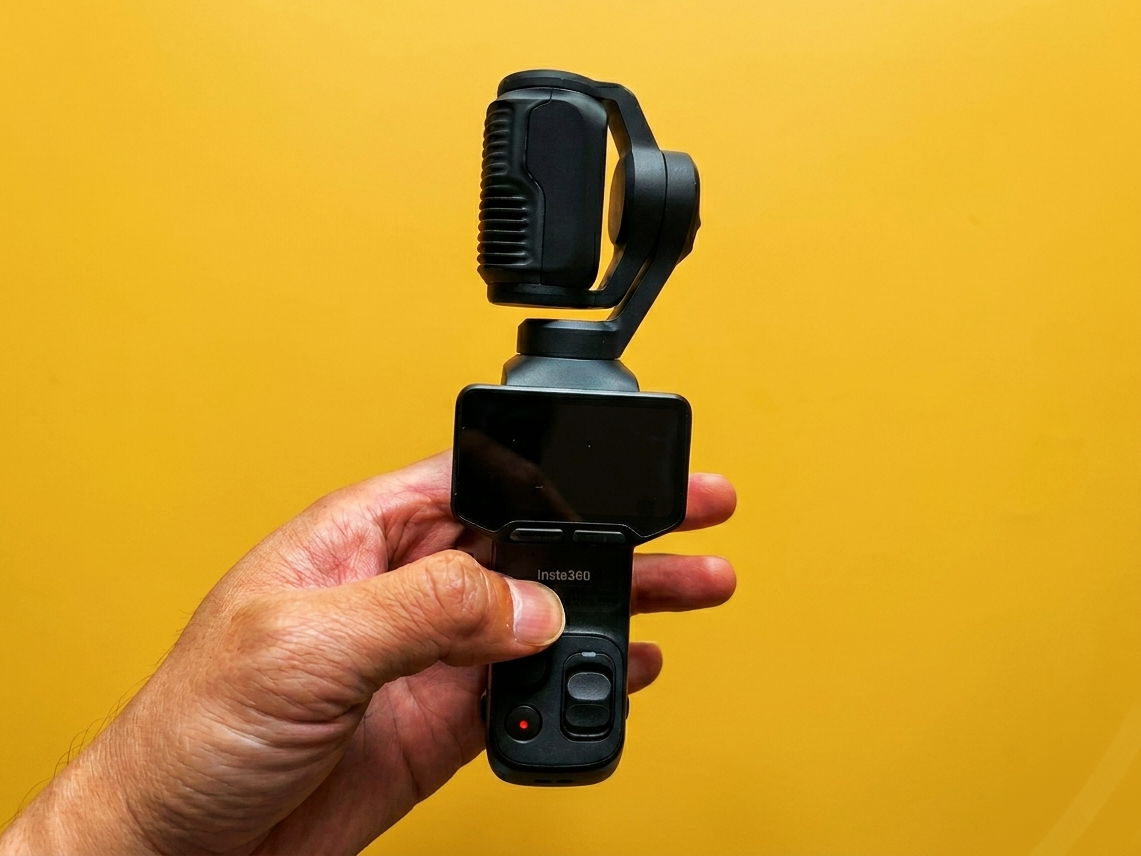
Expected to start at around $300, the Feiyu Pocket 4 has surfaced in a hands-on video, showcasing major upgrades over the Pocket 3. With a larger touchscreen and much improved sensor, this gimbal camera is positioned as an affordable rival to the premium DJI Osmo Pocket 4.
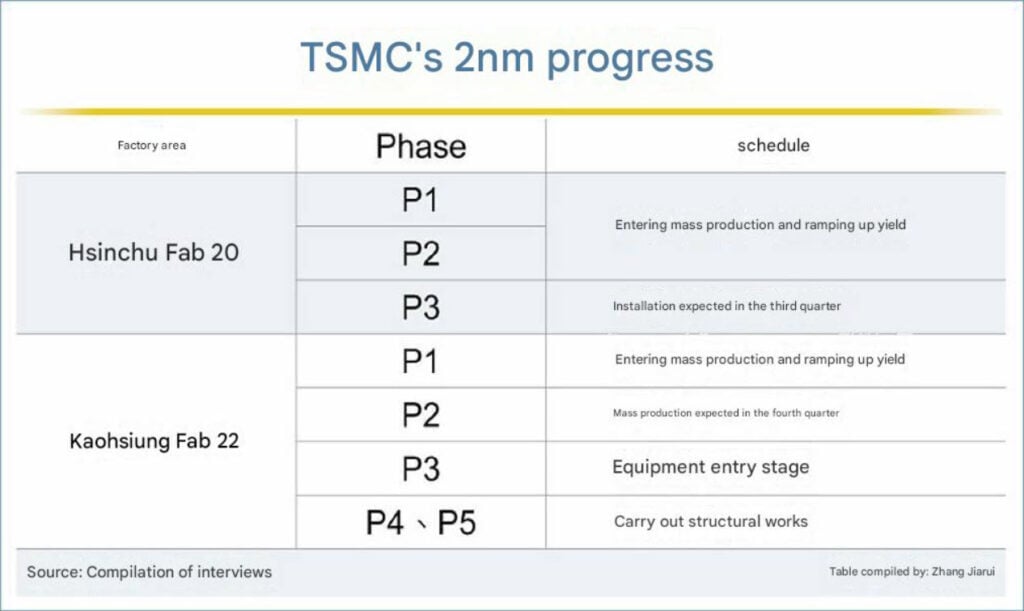
In a move that could see Apple diversify its supply chains, Apple is reportedly evaluating Intel and Samsung to manufacture its upcoming processors. So far, TSMC has been the sole producer for Apple's iPhone and MacBook chips. Apple's reliance on TSMC is so big that it is TSMC's second-largest customer, second only to Nvidia.
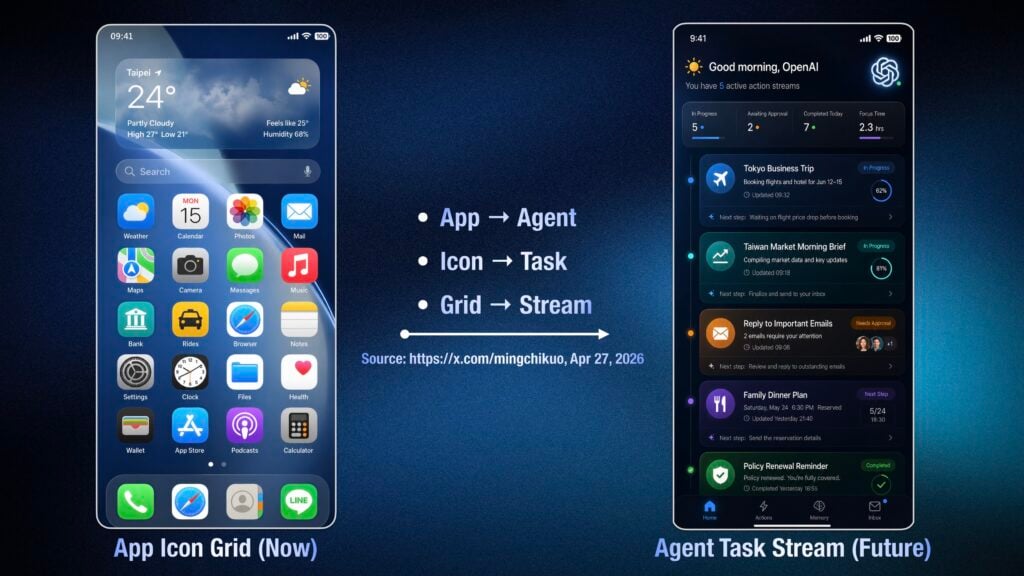
Last month, analyst Ming-Chi Kuo reported that OpenAI was developing an AI-agent smartphone slated for mass production in 2028. Now, Kuo suggests the timeline may have been accelerated and has also shared some early specifications of the device.
According to Kuo, the OpenAI smartphone is now expected to enter mass production in the first half of 2027. The analyst attributes the accelerated timeline to the growing AI phone market, along with a potential year-end IPO.
Ming-Chi Kuo also shared key specifications of OpenAI’s AI agent-focused smartphone. According to the analyst,...
The third entry in the Honor Play 80 series is here with the Play 80 Plus. It joins the Play 80 and Play 80 Pro, which were announced earlier this year in China, and brings a larger 7,500mAh battery alongside Qualcomm’s Snapdragon 4 Gen 4 chipset.
Honor Play 80 Plus
Play 80 Plus is built around a 6.61-inch TFT LCD with HD+ resolution, a 120Hz refresh rate and 1,010 nits peak brightness. The panel also gets a 5MP front-facing camera inside a punch hole cutout. Around the back, we have a single 13MP cam with f/1.8 aperture, which supports up to 1080p video recording.
Honor...
Samsung has finally expanded the second April 2026 update to the Galaxy S26 series, which brings 24MP camera improvement for the Ultra model.
A couple of days ago, Samsung started the rollout of the second April firmware in South Korea. It followed the release in the US, but the Korean build included fixes for the close-up camera problems tied to 24MP mode.
Now, users of Samsung Galaxy S26 Ultra are getting a camera improvement that refines the 24MP mode experience. It’s coming as part of another incremental update carrying the April patch, despite releasing in May 2026.
Users reported camera behaviour problems while capturing 24MP shots. The processed image was getting cropped from one side. The preview was optimal, but the bug in processing caused the final image to be broken.
Samsung faced countless reports in its community and online forums. One UI staff acted swiftly and prepared the fix on an immediate note. Now, the rollout is expanding to more regions, with European users getting it today, via TarunVats.
Galaxy S26 and S26 Plus are also receiving the 2nd April update, but the 24MP camera is limited to the Ultra version. Still, the firmware is expected to improve the overall camera experience on the latest Samsung flagship phones.
The firmware AZDE is available across European countries, with a Global expansion likely soon. To get the latest update, head over to the system Settings, followed by Software update page and hit Download and install.
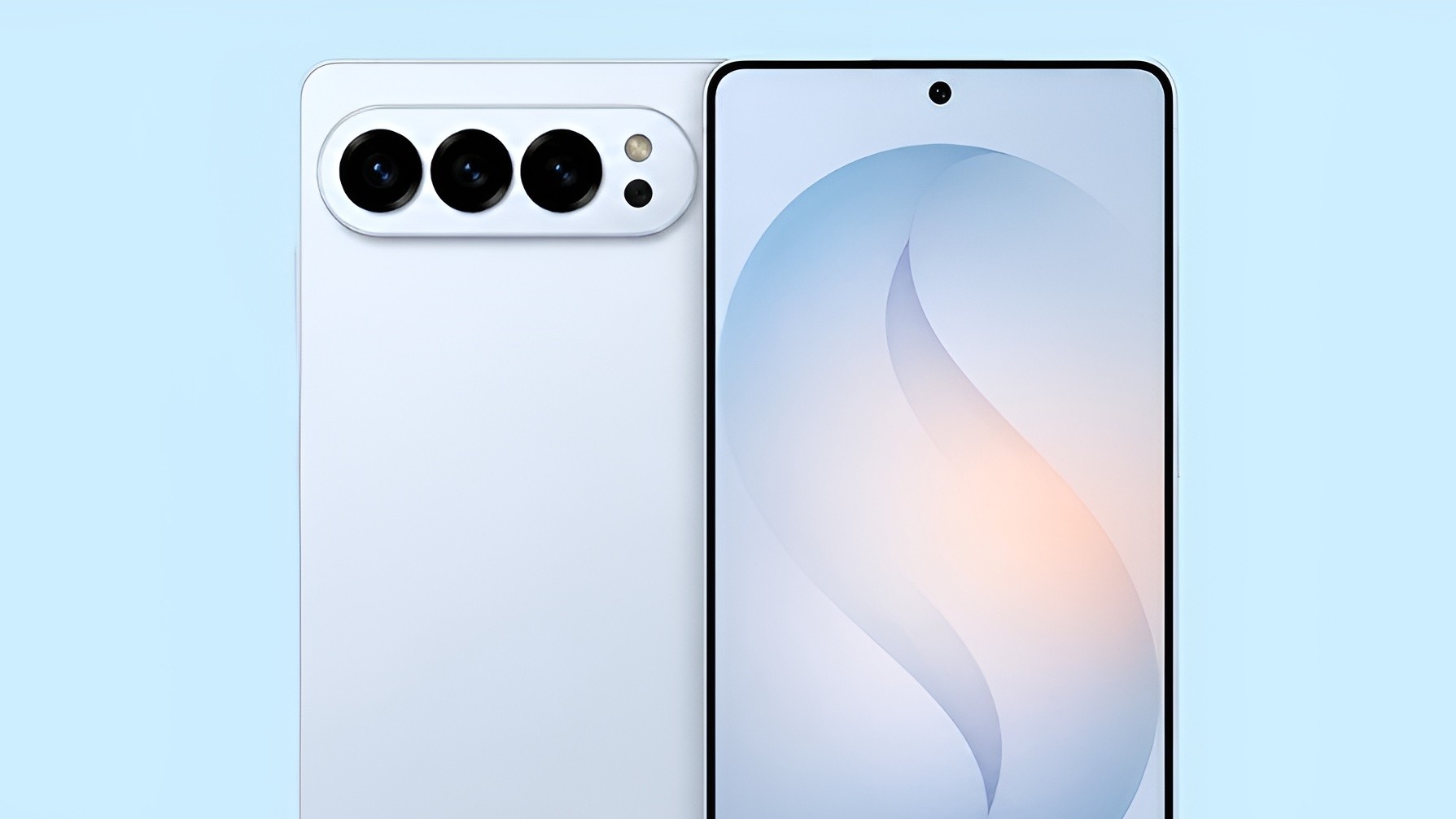
The new foldable phones are reportedly being unveiled on July 22 in London. Earlier, we’ve seen their potential design in leaked CAD renders. Now, the One UI 9 software itself revealed the Galaxy Z Fold 8 and Z Fold8 Wide.
The pictures surfaced in One UI 9 look familiar to the leaked renders. The appearance of the devices confirms their monikers, including the Galaxy Z Fold 8 (codenamed Q8) and Galaxy Z Fold8 Wide (codenamed H8).
Galaxy Z Fold 8 looks identical to its predecessor. We may see upgrades in build quality, screen crease, and hinge technology. Major aspects, such as thickness and weight, would also see a slight generational improvement.
Galaxy Z Fold8 Wide comes with a camera design familiar to the S25 Edge. It has a dual camera setup on the back, surrounded by a camera bump. The LED flashlight isn’t shown in the visuals, but they were in CAD renders.
Image – Samsung Galaxy Z Fold 8 and Fold8 Wide spotted in One UI 9
Samsung is also working on the Galaxy Z Flip 8. The next clamshell foldable phone may be almost the same as its predecessor. However, the device may use a new hinge technology for better durability and crease resistance.
The Fold 8 and Flip 8 will succeed their predecessors and continue the portfolio. Meanwhile, the Fold8 Wide is coming to compete with Apple’s first foldable. The form factor is like a passport to deliver more practical usability.
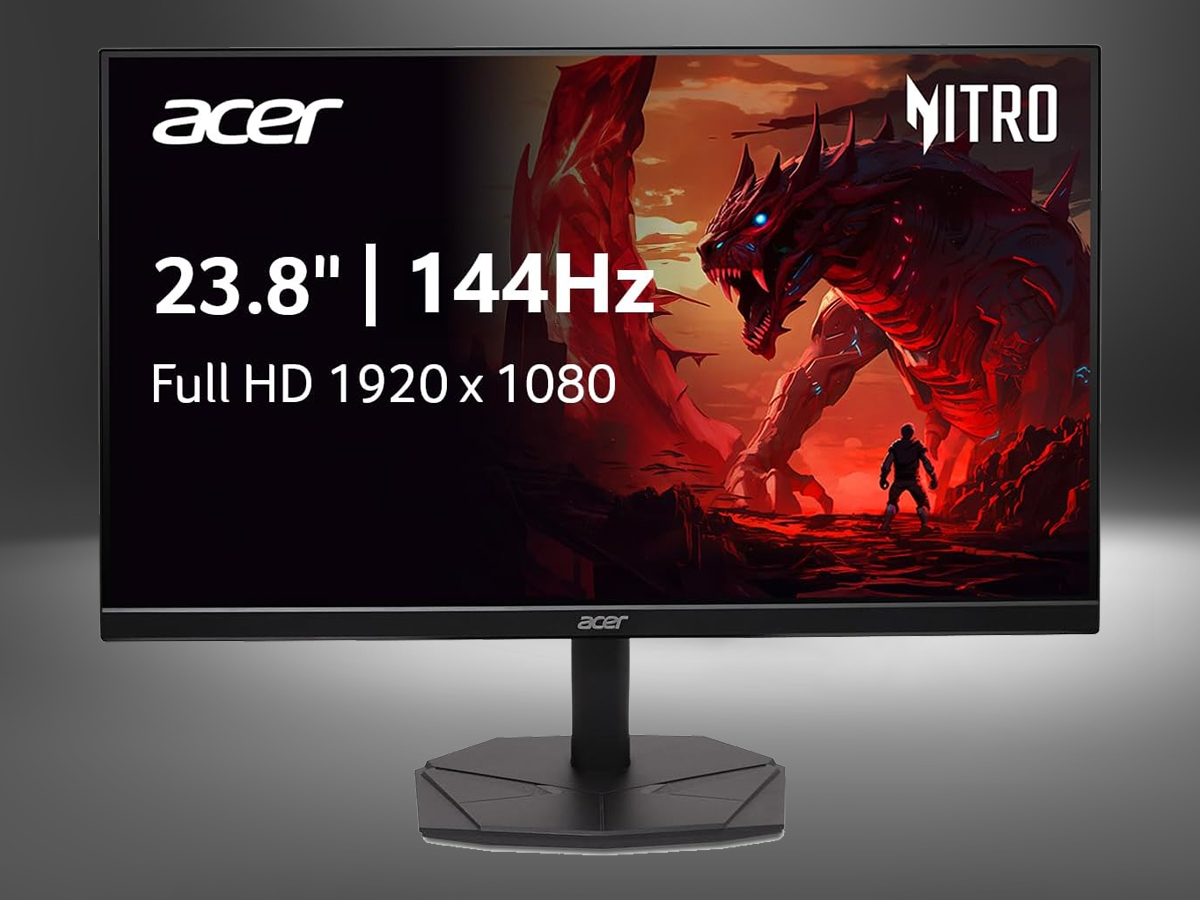
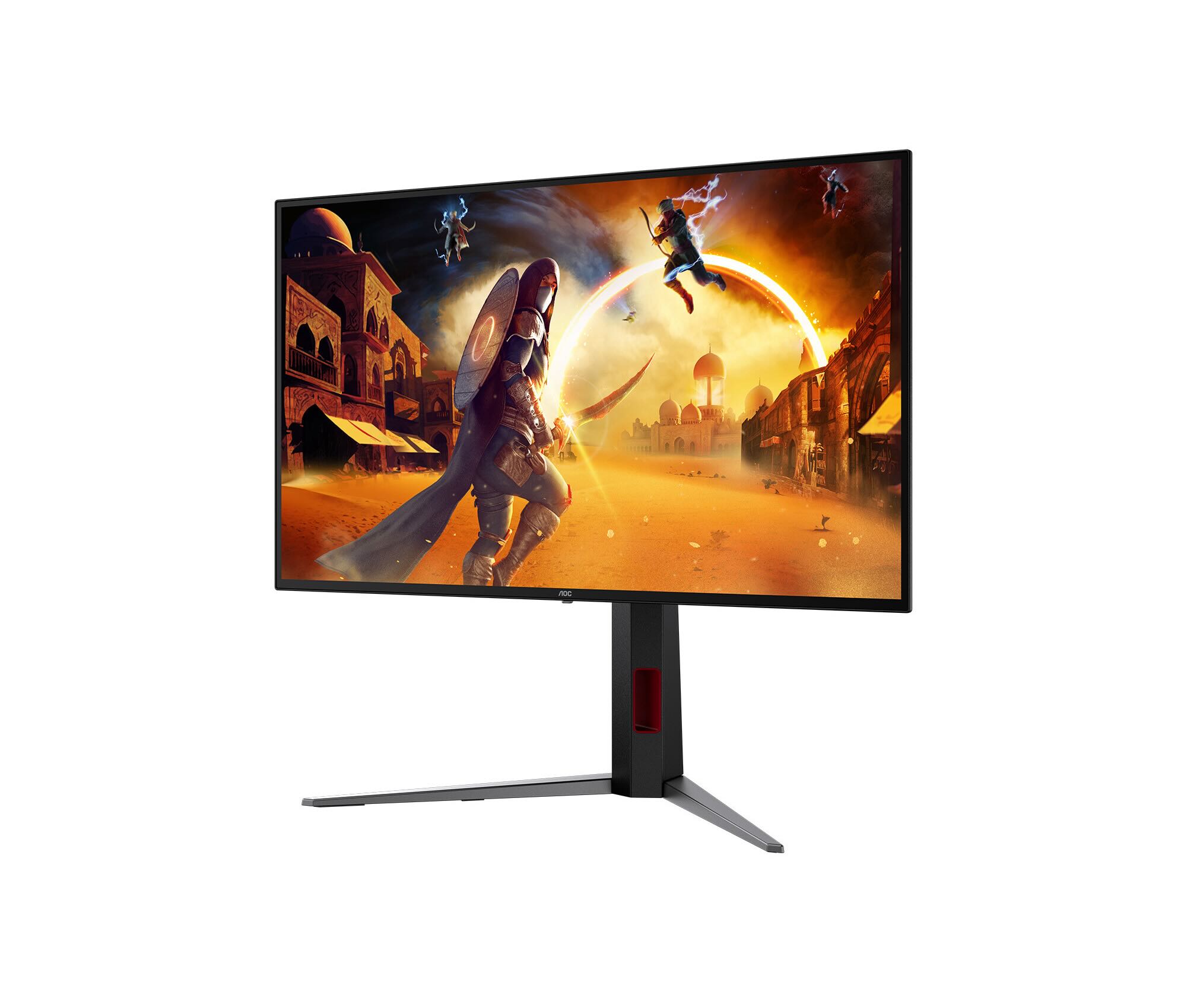
Deal | The Acer Nitro KG241Y P6bip is enjoying a special discount on Amazon. This limited-time deal slashes 32% off the regular price of the 144Hz gaming monitor, making it currently stand at $89.99.
Apple has released the iOS 26.5 release candidate build for developers, and this means two things: the public release is coming very soon (either tomorrow or within a few days, next week tops), and there's an official changelog from Apple now.
This reveals what has been rumored so far: with iOS 26.5, Apple is adding support for end-to-end encryption in RCS messaging. There are caveats for this, however.
First, the feature will be in beta. Then, it's important to note that end-to-end RCS encryption will only be "available with supported carriers", and will "roll out over time". So it...
vivo's V70 family currently comprises three members - the vanilla V70, the V70 FE, and the V70 Elite. Soon, however, they will be joined by a fourth device, and that is the V70 Lite 4G.
This handset has been certified by the FCC with the model number V2604. The certification has revealed that the phone has a battery capacity rated at 7,920 mAh, which probably means it will be advertised as an 8,000 mAh or 8,100 mAh typical capacity.
vivo V70 Lite 4G certification documents
The V70 Lite 4G will be offered with 8GB of RAM and 256GB of storage, and it obviously doesn't support 5G,...
Samsung could produce iPhone processors as Apple quietly explores alternatives to TSMC amid supply chain risks and geopolitical shifts reshaping its chip strategy.
According to Bloomberg, Apple has held early discussions with both Samsung Electronics and Intel about manufacturing the processors that power the iPhone.
For years, TSMC has been Apple’s undisputed partner for advanced chips. That relationship still stands strong, yet it also represents a single point of failure.
Geopolitical tensions around Taiwan, combined with periodic capacity crunches, have turned that reliance into a strategic risk. Apple felt it recently; supply constraints limited iPhone shipments, and even Tim Cook acknowledged the pressure.
Apple executives have reportedly visited Samsung’s upcoming fab in Taylor, Texas. A US-based production line offers geographic diversification, something Apple has been steadily pushing across its entire supply chain.
Samsung moved early to Gate-All-Around transistor architecture at the 3nm node, and is pushing further toward 2nm. On paper, that is a meaningful leap over the FinFET approach still used elsewhere.
Samsung has struggled with yields, and that gap has kept Apple firmly tied to TSMC so far. If the Korean company can stabilize production at scale, GAA could become the hook Apple needs to justify a split strategy.
Intel, meanwhile, represents a different kind of gamble. Its foundry ambitions are growing, but it is still playing catch-up in the ultra-advanced node race.
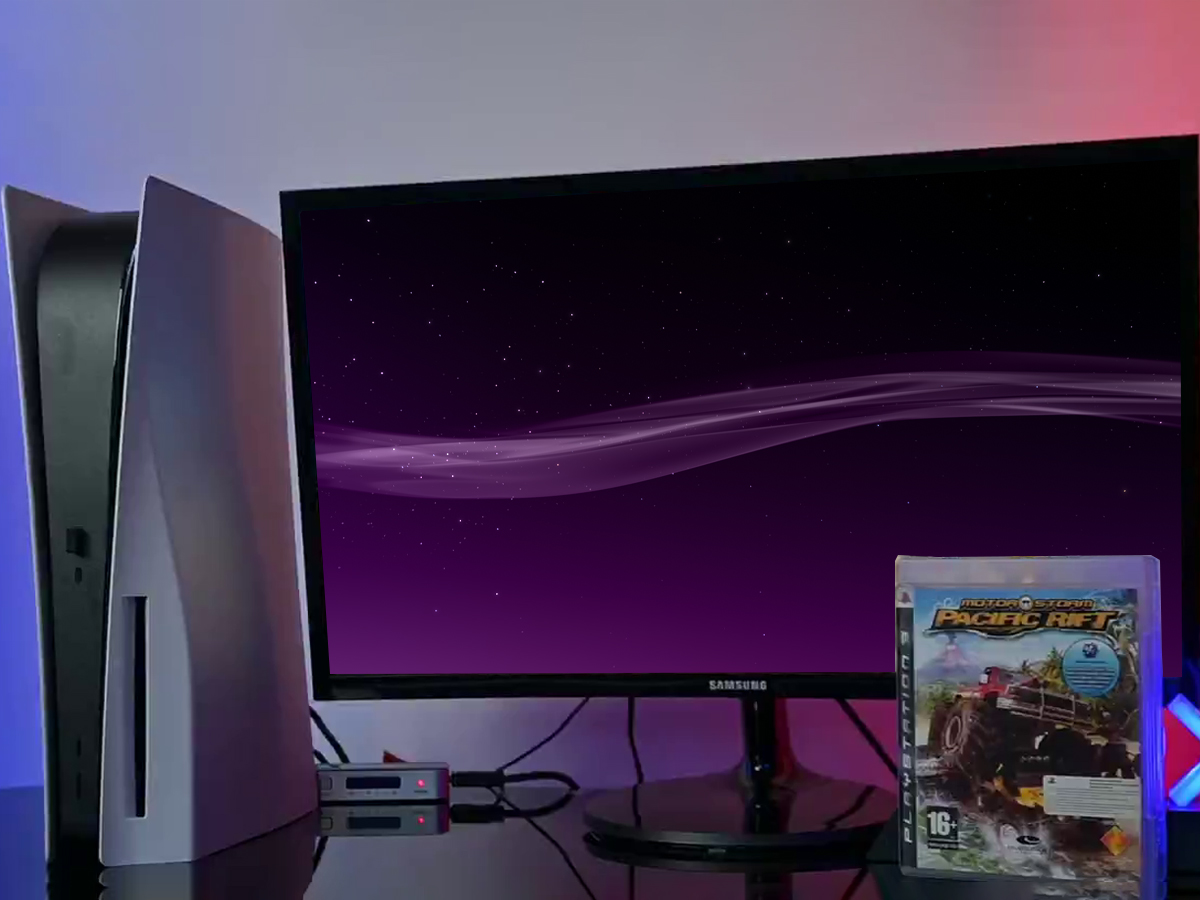
In late April 2026, modder Andy Nguyen released PS5-Linux for PlayStation 5 consoles running firmware 3.xx and 4.xx. With Linux installed, the system can essentially work like a regular PC, which also opens the door to emulation, and that's what another modder just showed off.
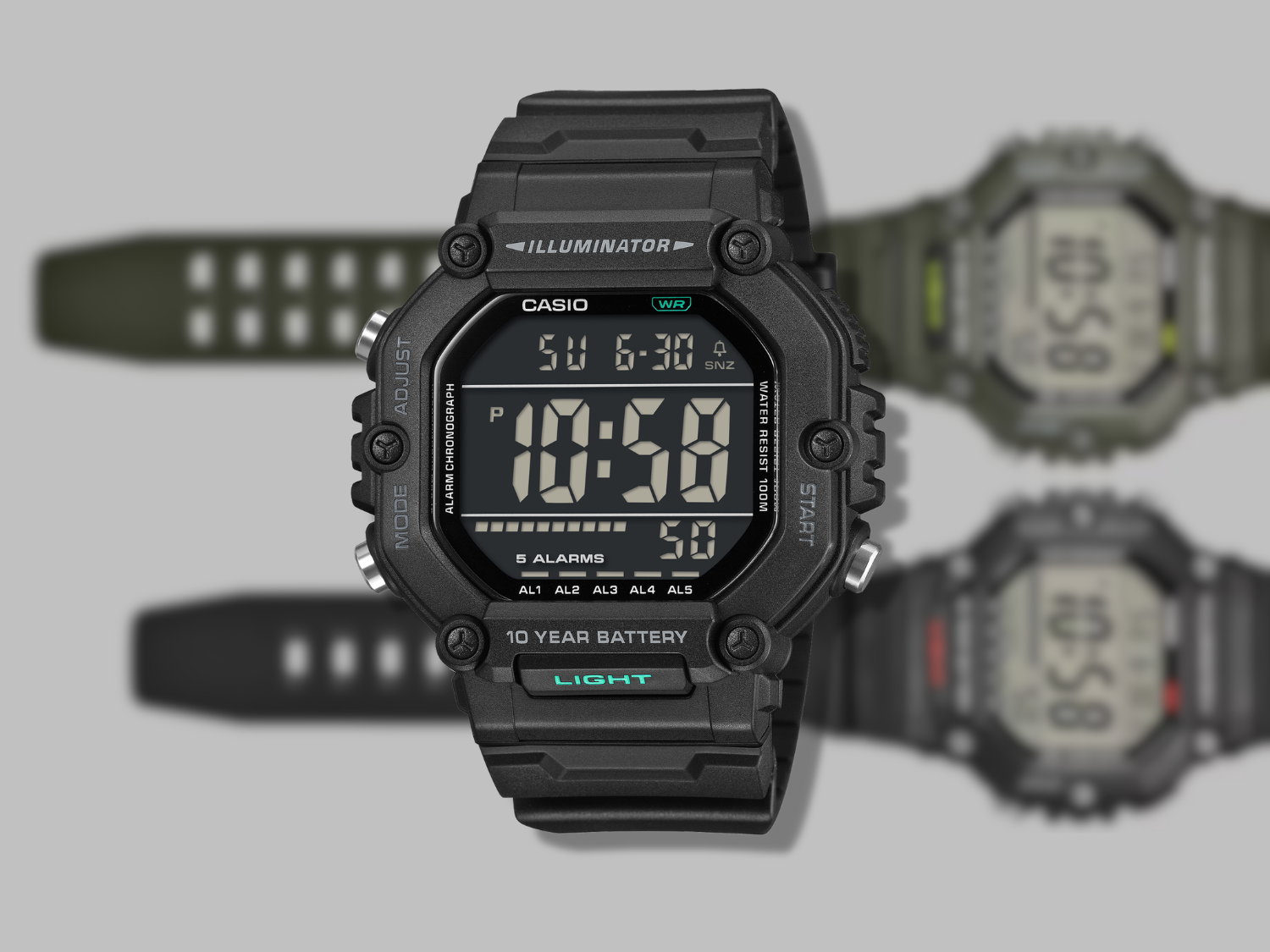
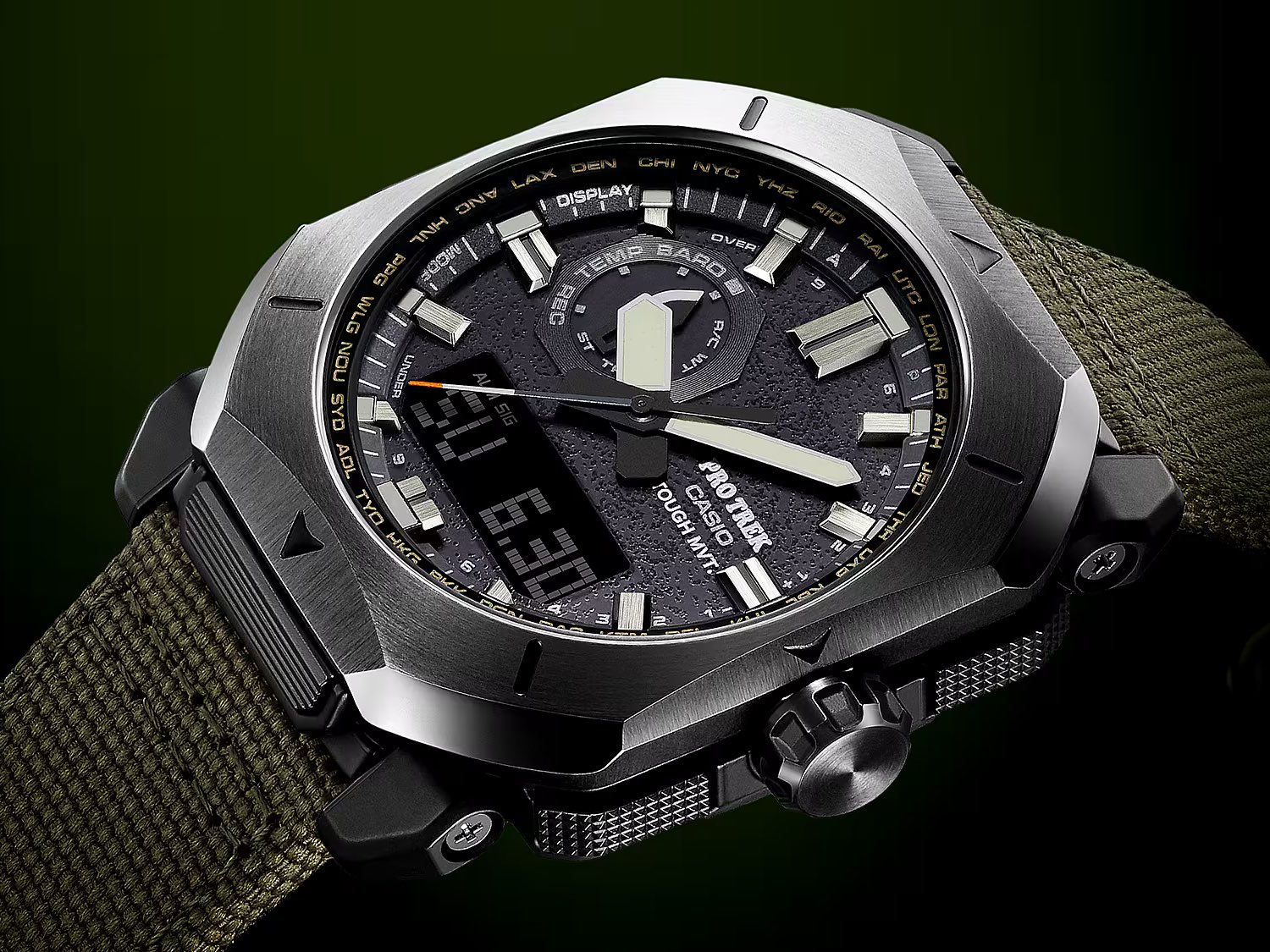
Casio is officially launching W-738H watches this May in Japan. The Casio W-738H series consists of two models, namely, the W-738H-1AJF and the W-738H-3AJF. Key features of the latest digital watch include a square digital display, a 10-year battery life, vibration alerts, and 100 m (10 bar) water resistance.
Nearly 30 years after Core Design’s planned Nintendo 64 version of Tomb Raider was canceled, a homebrew developer known as Snake has demonstrated a work-in-progress port running on N64 hardware via the Analogue 3D. Built from scratch using the TRX decompilation approach alongside libdragon and Tiny3D, the project reportedly implements most of the full game but still faces major bugs and performance constraints, with no release date or ROM distribution confirmed.
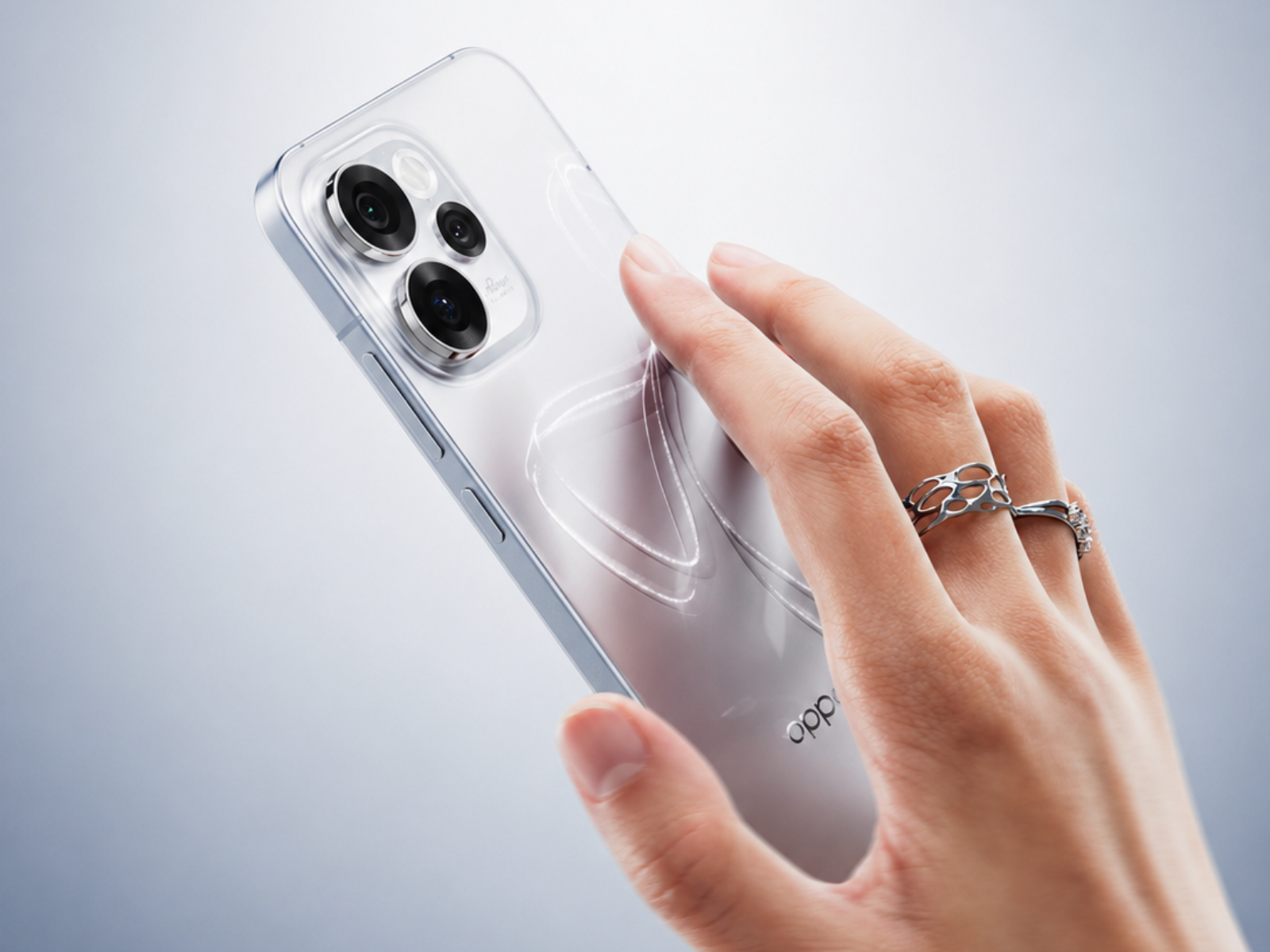
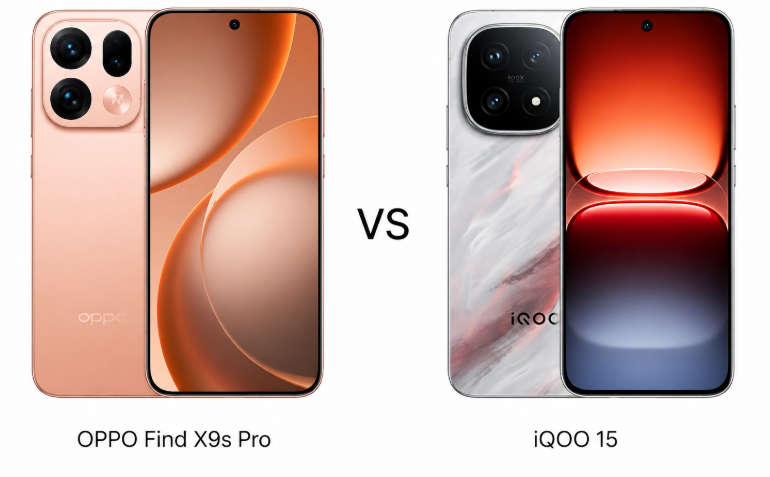
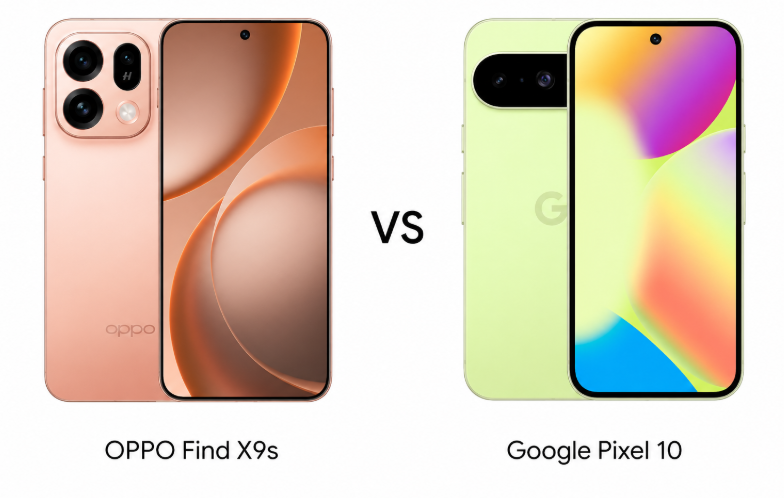
Following the debut of the Find X9 Ultra and Find X9s in China last month, Oppo confirmed that the phones will arrive in the Indian subcontinent this May. While the company has yet to announce an exact date, a new leak has now revealed both the expected launch date and pricing details for the phones.
The launch date and pricing details come from tipster Sanju Choudhary, who claims that the Oppo Find X9 Ultra and Find X9s will debut in India on May 15.
The Oppo Find X9 Ultra
Notably, Oppo India has been teasing the arrival of the devices on social media since the beginning of the...
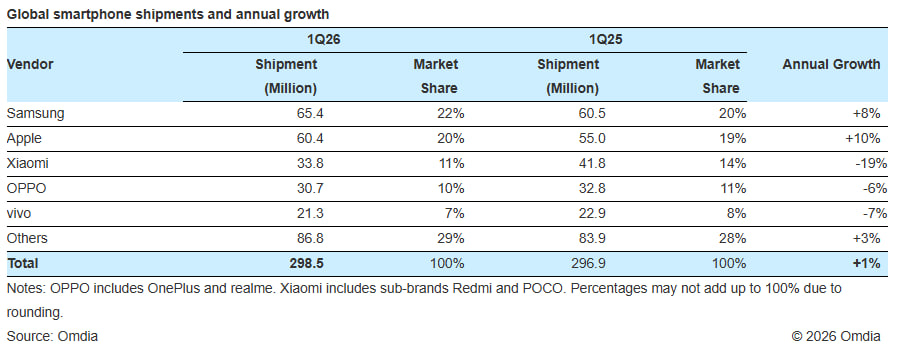
Apple’s iPhone 17 series led the worldwide smartphone sales in Q1 2026 as the Galaxy S26 Ultra narrowly missed entry in the top 10 chart.
iPhone 17 captured 6 percent of global unit sales to become the world’s best-selling smartphone in Q1 2026. Apple seized four spots, Samsung dominated with five, with one going to Xiaomi for its entry level smartphone.
According to Counterpoint Research, Apple’s iPhone 17, iPhone 17 Pro Max, and iPhone 17 Pro were the top 3 best-selling phones in Q1 2026. Samsung dominated the top 10 chart with the highest five entries, but no flagship was included.
Galaxy A07 4G, Galaxy A17 5G, Galaxy A56, Galaxy A36, and Galaxy A17 4G were the five entries from Samsung world. Xiaomi’s Redmi also managed to enter the list, though in the 10th spot, due to its Redmi 5 phone.
Samsung’s Galaxy S26 series is selling better than its predecessor. Still, none of the flagship models were able to make an entry into the top 10. The reason is the launch window, which favored Apple in the first quarter.
Galaxy S26 series was launched in late February, and worldwide sales began in the second week of March 2026. The first quarter ended on March 31, leaving no significant timespan for the Samsung flagships to sell at scale.
The chart of the second quarter should include at least one model from the Galaxy S26 series. Apple has historically dominated the best-selling segment. Meanwhile, Samsung leads the charge of keeping Android relevant.
Galaxy A07 4G from Samsung was the world’s best-selling Android phone in the first quarter. The device received high contribution from emerging regions like the Middle East, Africa, and Latin America.
Commenting on outlook, Senior Analyst Karn Chauhan said, “Looking ahead to 2026, the top 10 smartphone models are expected to expand their share of global unit sales. The anticipated market decline is likely to impact mass-market segments more significantly, while high-end smartphones continue to gain share. In response, OEMs are shifting focus toward premium portfolios, prioritizing value over volume.”
Image – Q1 2026 Top 10 Best Selling Phones | Source – Counterpoint Research
Samsung phones have started receiving the April 2026 Google Play system update. The sequential rollout began for a wide range of Galaxy devices, including phones, foldable models, and tablets.
The latest Google Play system update, hitting Samsung phones install the April 2026 version (via Kailash). This release elevates the core Android experience, thanks to its broad range of content and enhancements.
Here’s what actually matters in April’s Google Play system updates if you’re using a Samsung phone:
Google is quietly laying the groundwork for smoother sign-ins and device setup. Transferring your data from an old phone should feel quicker and less clunky now, especially when moving accounts and settings.
The Play Store is seeing some practical improvements. You’ll now spot clearer content ratings with an additional view, which makes it easier to judge apps before installing. There’s also a new badge for apps optimized for large screens.
Subscriptions are more transparent, too, since you can now see the plans inside app reviews. Some app install prompts will no longer throw you into the Play Store unexpectedly, which should make the experience feel less disruptive.
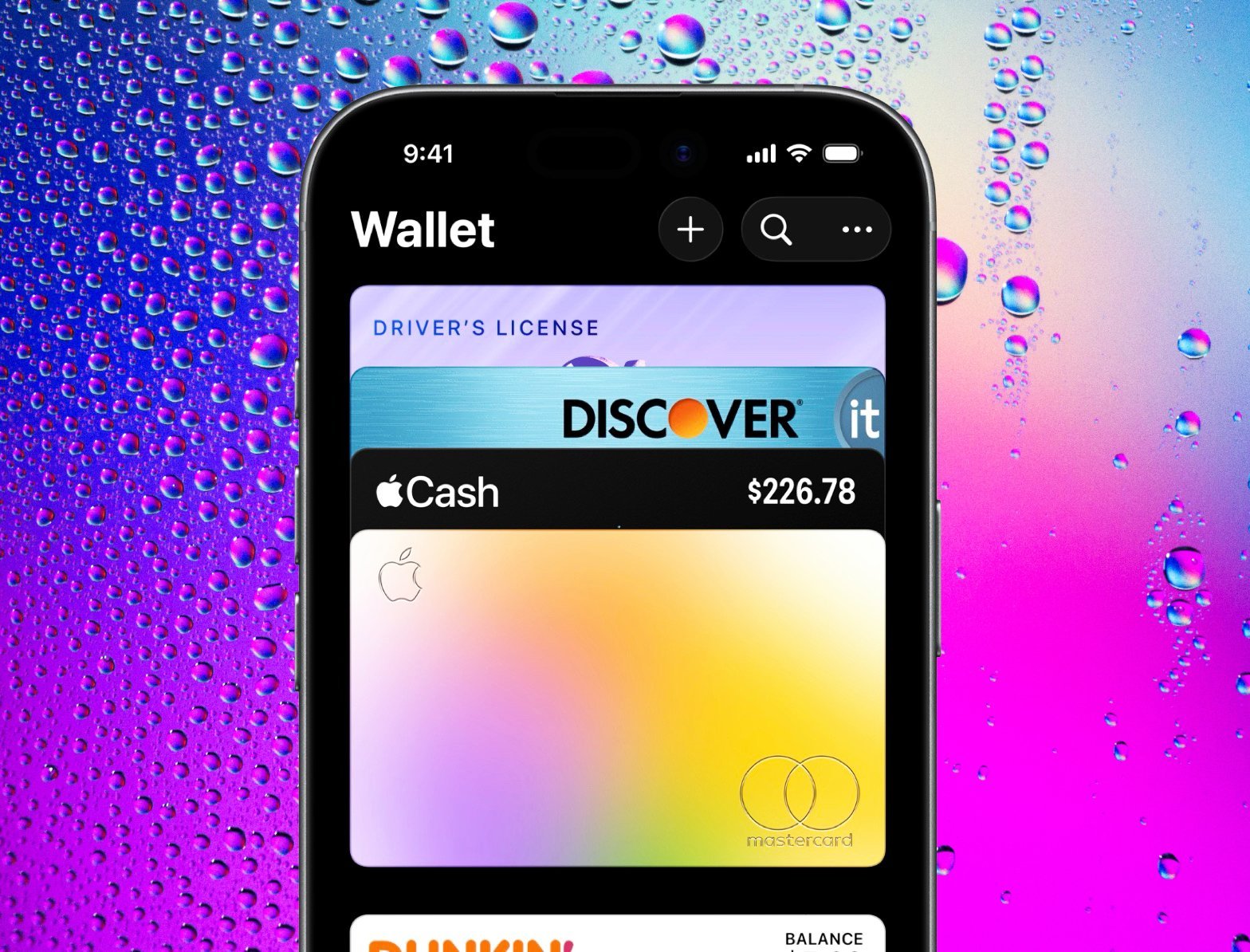
On the Wallet side, there are a few subtle but useful tweaks. There’s a redesigned interface focused on quicker access and better discovery, along with more control over how your passes interact with other Google services like Autofill.
Location accuracy has been improved, which should benefit everything from Maps to weather apps. Security and privacy updates are, as usual, baked in. WebView and Play services updates bring ongoing fixes and protections.
Lastly, there are a bunch of under-the-hood improvements. Device connectivity, system performance, and stability have all been tuned across phones, wearables, TVs, and even cars.
Overall, this isn’t a headline-grabbing update, but it’s a meaningful one.
At Display Week 2026, Samsung Display pulled the wraps off its new Flex Chroma Pixel OLED, a smartphone panel that pushes brightness to 3,000 nits while dramatically improving color accuracy.
If this display technology makes its way into upcoming Galaxy flagships, we’re looking at a serious leap in outdoor visibility and true-to-life visuals.
The headline number is that 3,000 nits peak brightness in High Brightness Mode. Samsung is pairing that with BT.2020-96 color gamut coverage, which is where things get interesting.
BT.2020 is the gold standard for color in UHD and HDR content. It covers a much wider range than the DCI-P3 space used in most smartphones today, roughly 1.7 times broader.
Most phone displays only hit around 70 percent of that range, whereas Samsung’s Flex Chroma Pixel jumps to 96 percent, which is a massive jump.
Inside Samsung’s Flex Chroma Pixel
Samsung Display is using a new material approach called phosphorescent sensitized fluorescence, or PSF. This helps improve how OLED pixels emit light, leading to better color purity without sacrificing efficiency.
Then there’s LEAD, Samsung’s proprietary polarizer-free OLED tech. Some recent panels have boosted color accuracy, but at the cost of peak brightness.
Samsung is claiming it doesn’t have to make that trade-off anymore. With LEAD, the panel maintains high brightness, wide color gamut, and long lifespan all at once.
This is exactly the kind of tech that tends to trickle down into Galaxy S and Galaxy Z devices over time. It might not land immediately in the next release cycle, but the direction is clear.
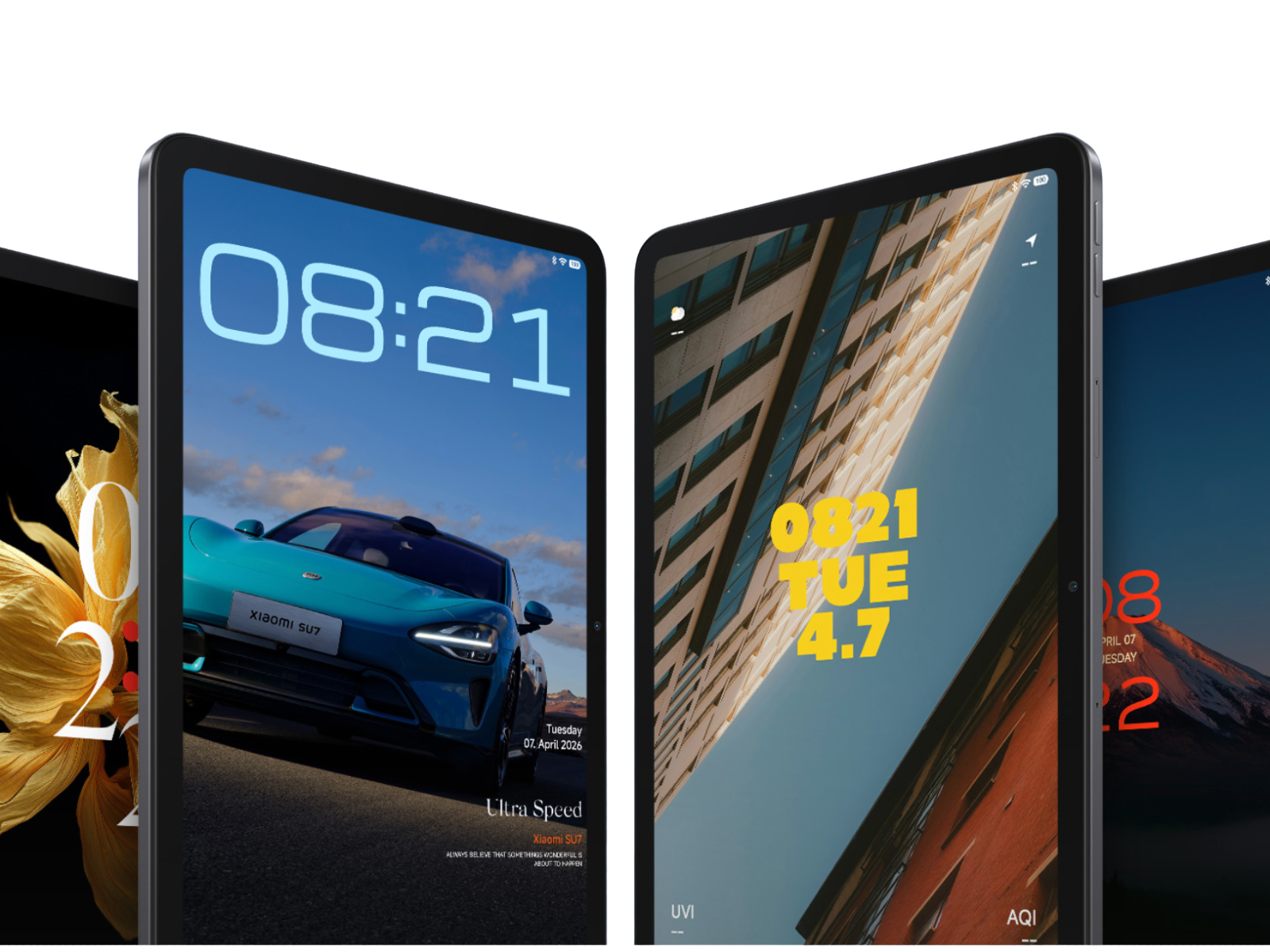
A new Xiaomi tablet has been certified by the FCC, expected to be called the Poco C Pad. The filing points to a global release and also lists two Pantone color options.
Nearly 30 years after Core Design’s planned Nintendo 64 version of Tomb Raider was canceled, a homebrew developer known as Snake has demonstrated a work-in-progress port running on N64 hardware via the Analogue 3D. Built from scratch using the TRX decompilation approach alongside libdragon and Tiny3D, the project reportedly implements most of the full game but still faces major bugs and performance constraints, with no release date or ROM distribution confirmed.
Nothing launched the CMF Watch 3 Pro in July of last year, and, believe it or not, this device still isn't available in India. That, however, will finally change on May 6. Nothing has announced the official launch date for the affordable smartwatch in India without revealing why it's taken more than nine months for this to happen.
[#InlinePriceWidget,14217,1#]
Anyway, the watch will be available on Flipkart. It boasts a 1.43-inch 466x466 AMOLED touchscreen with 650-nit peak brightness, a 350 mAh battery, a heart rate monitor and blood oxygen level monitor, support for 130+ sports modes,...
PlayStation has teamed up with the Spanish fashion brand, D.Franklin, for a pair of limited edition glasses based on its new game, Saros. The Saros-themed glasses, which use photochromic technology and also have blue light protection, can be purchased in Europe only.
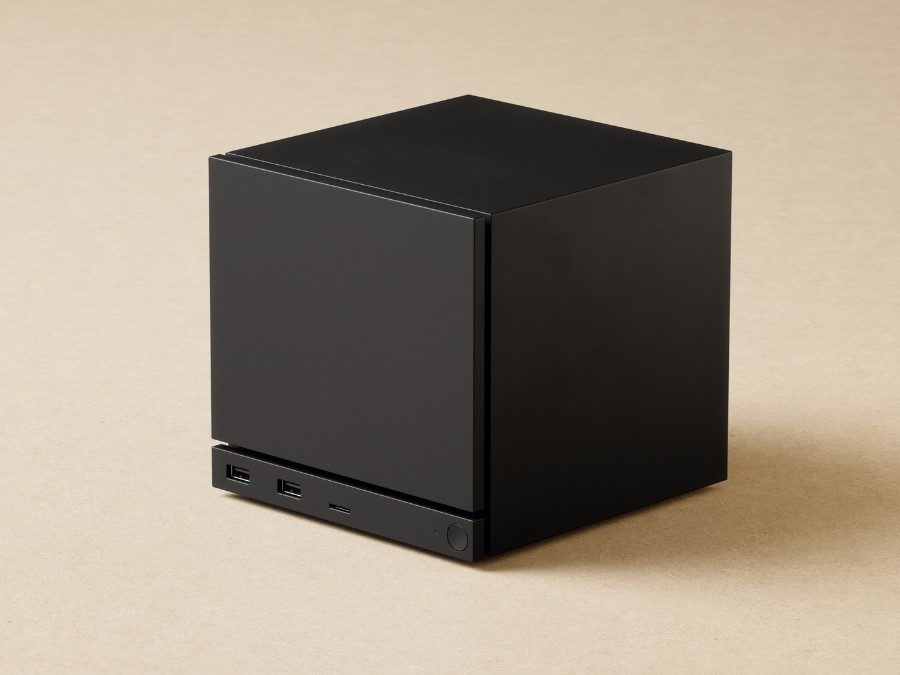
While Valve hasn’t officially revealed the Steam Machine’s price or release date yet, recent import records suggest that the company may be getting ready for a launch.
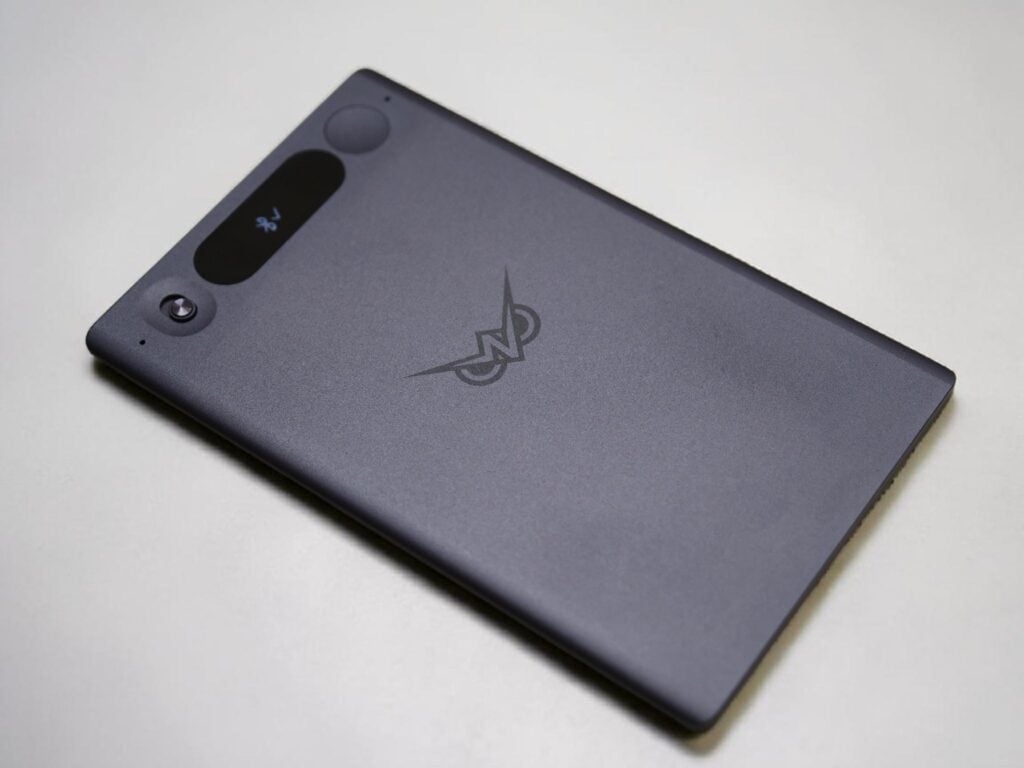
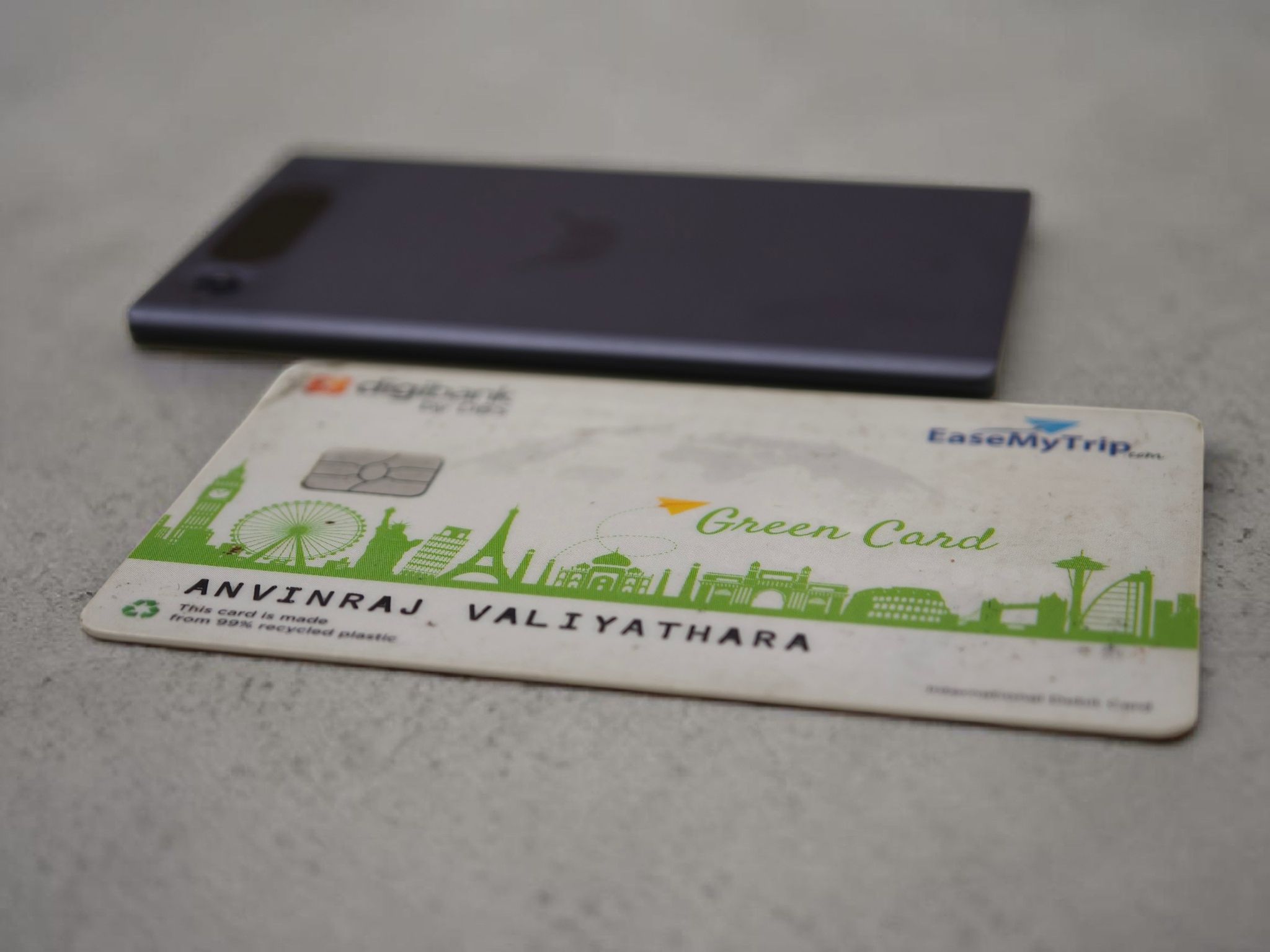
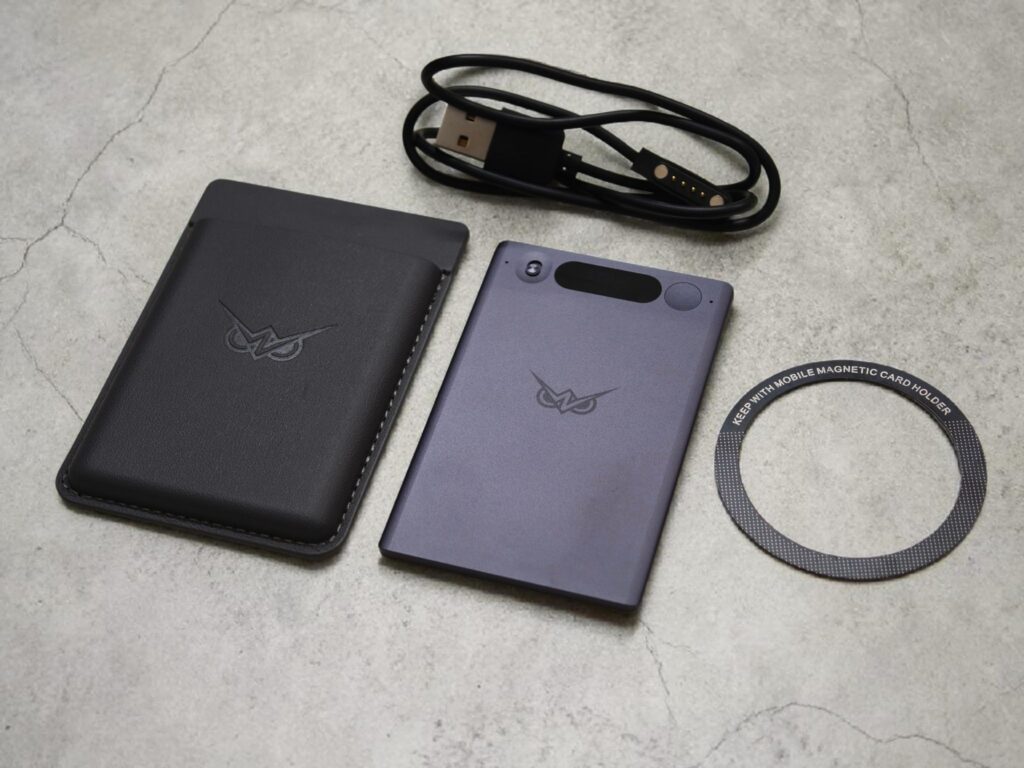
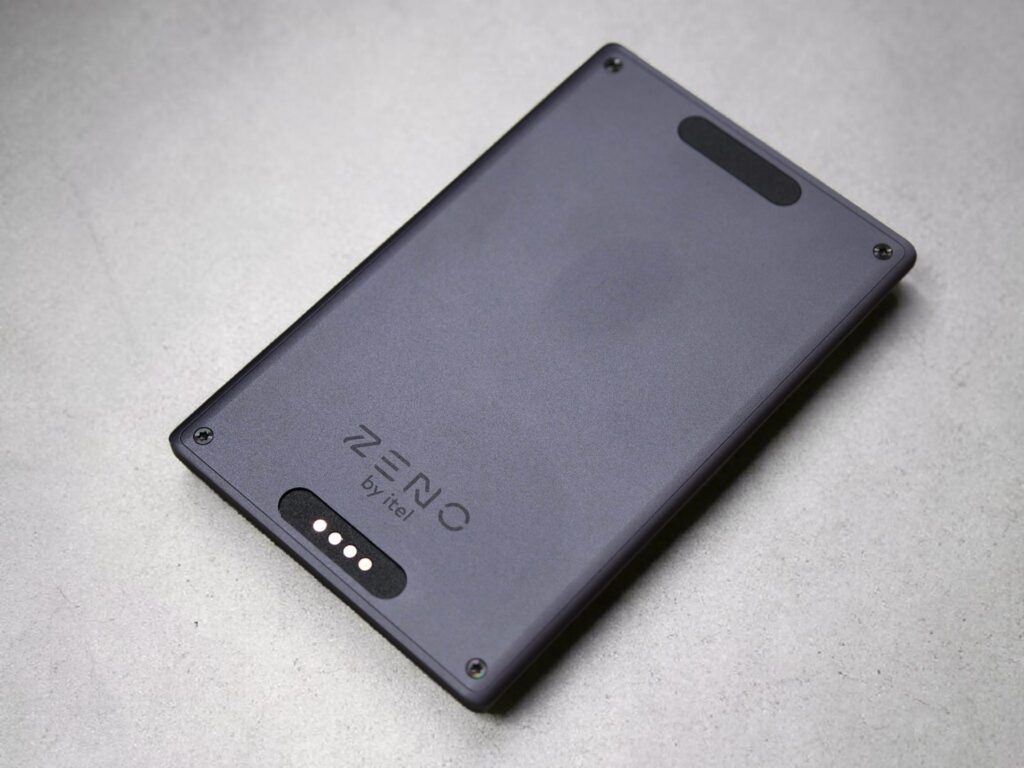
Xteink's new compact e-reader ships with Android instead of a custom OS like the earlier models. It also has a new design, a much bigger battery, and can magnetically attach to your smartphone.
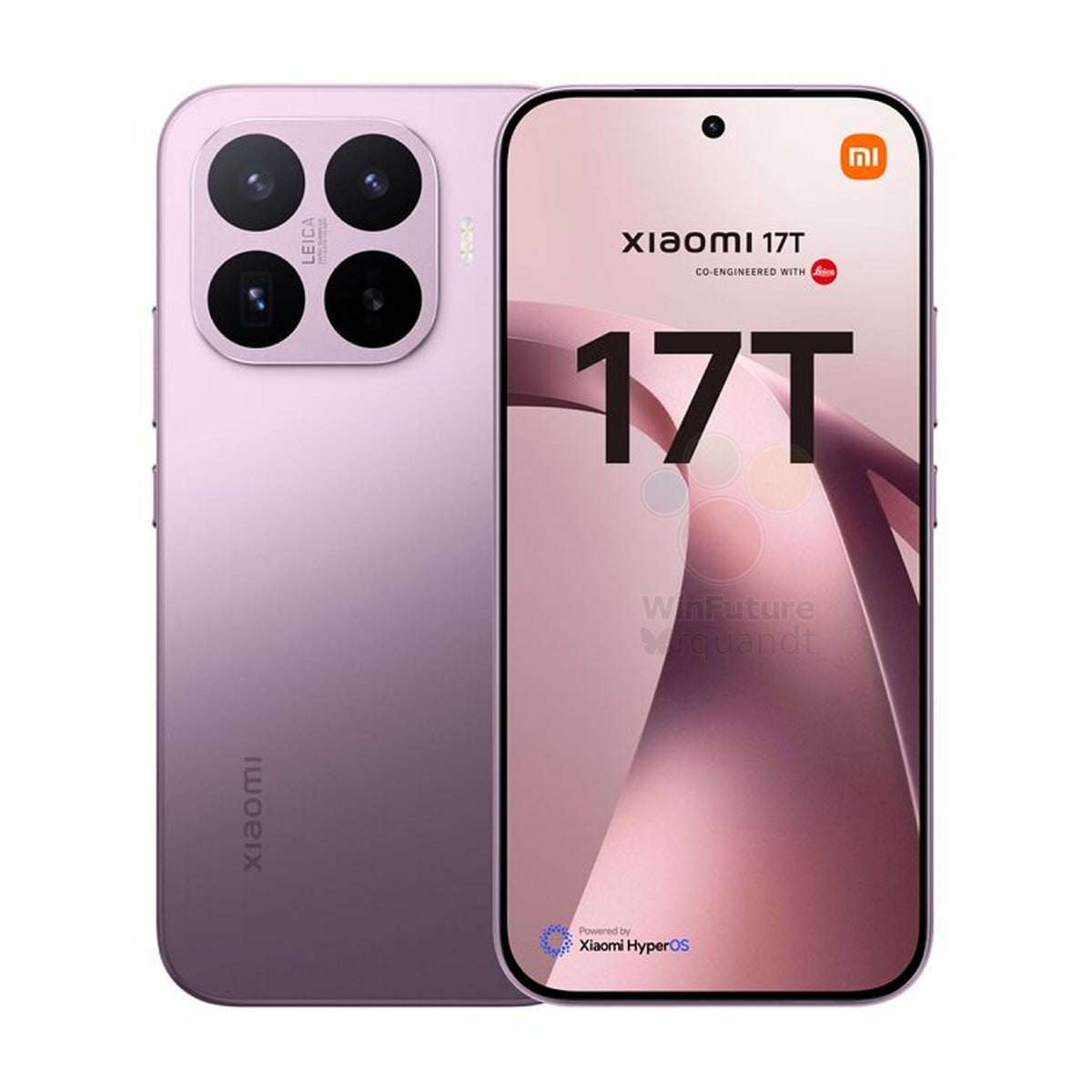
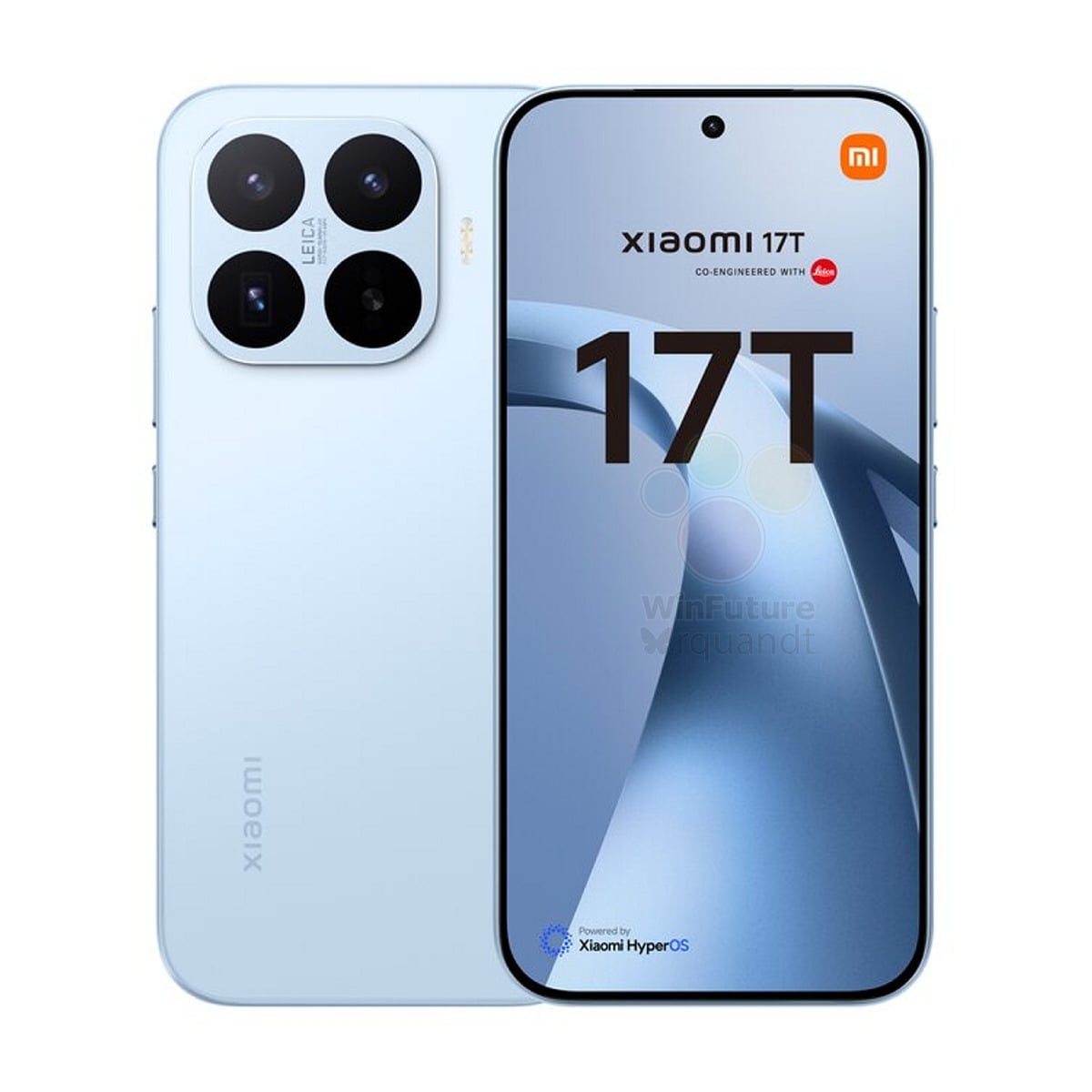
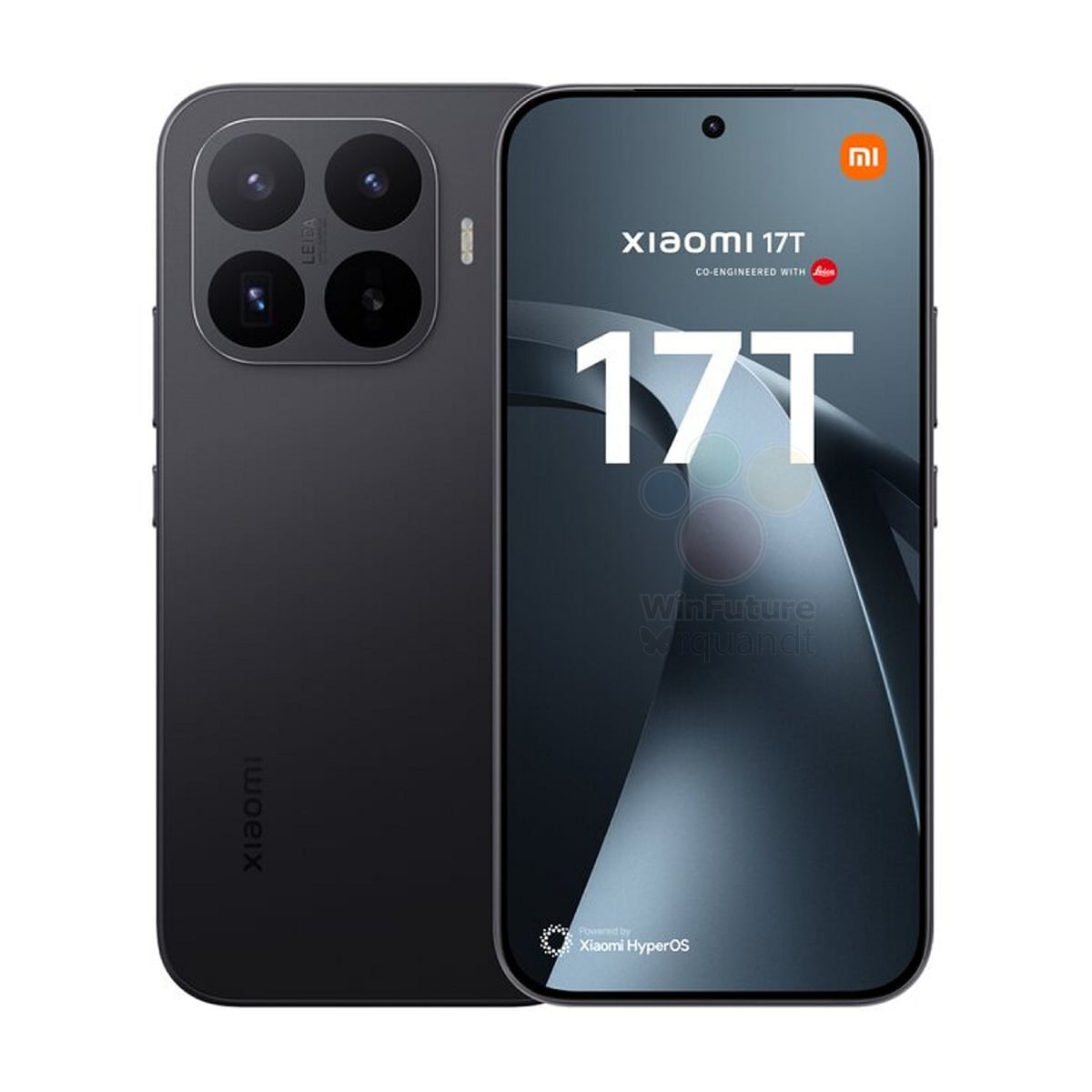
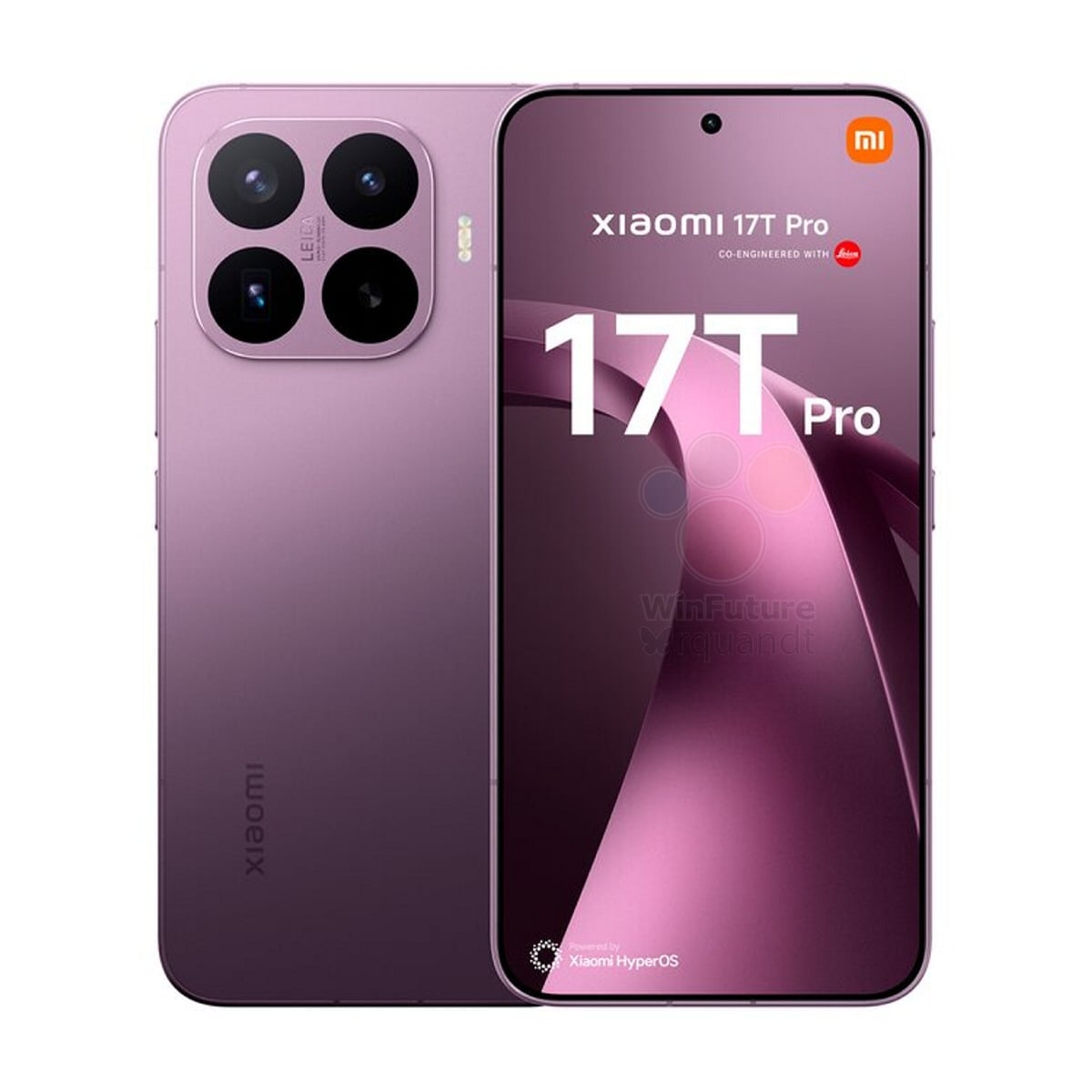
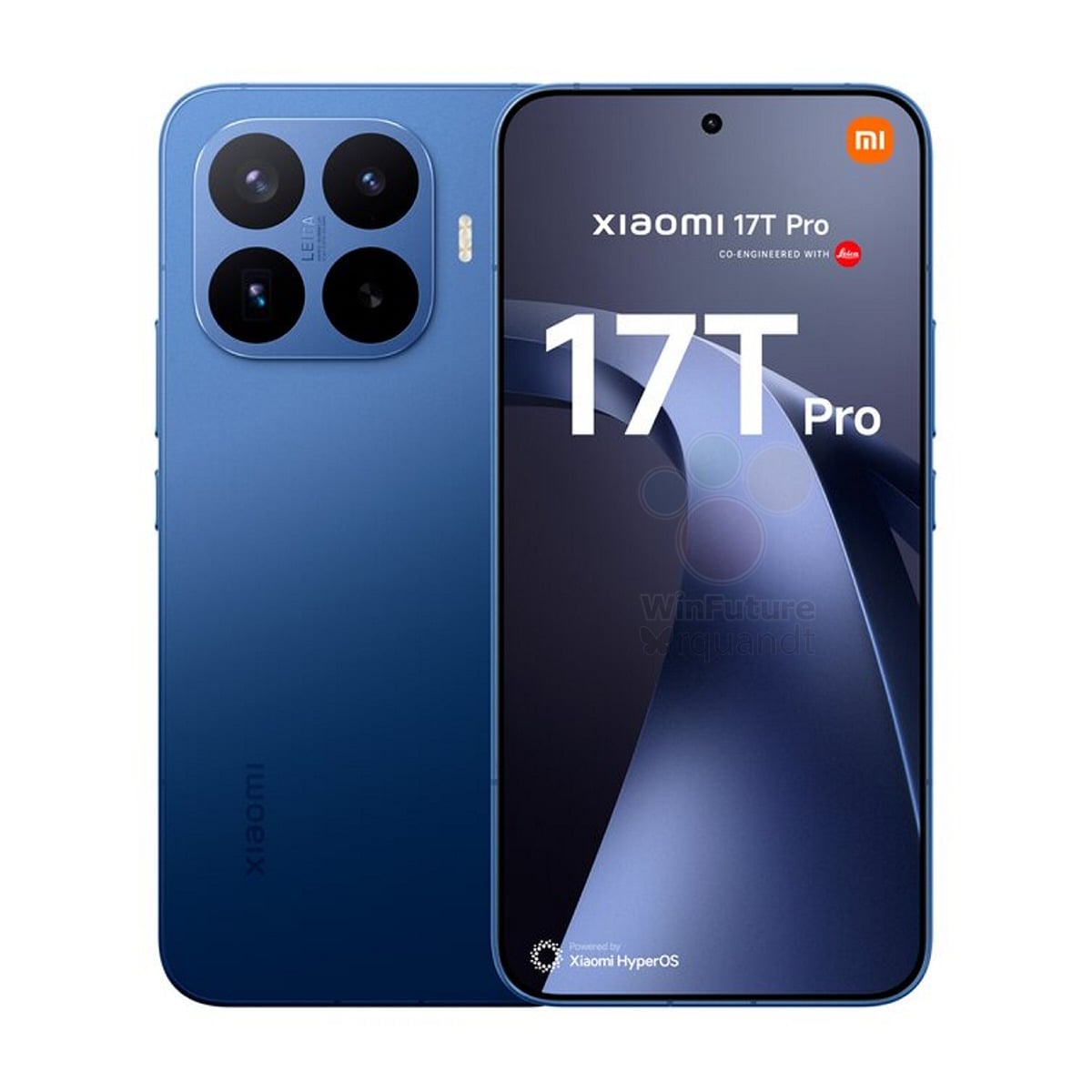
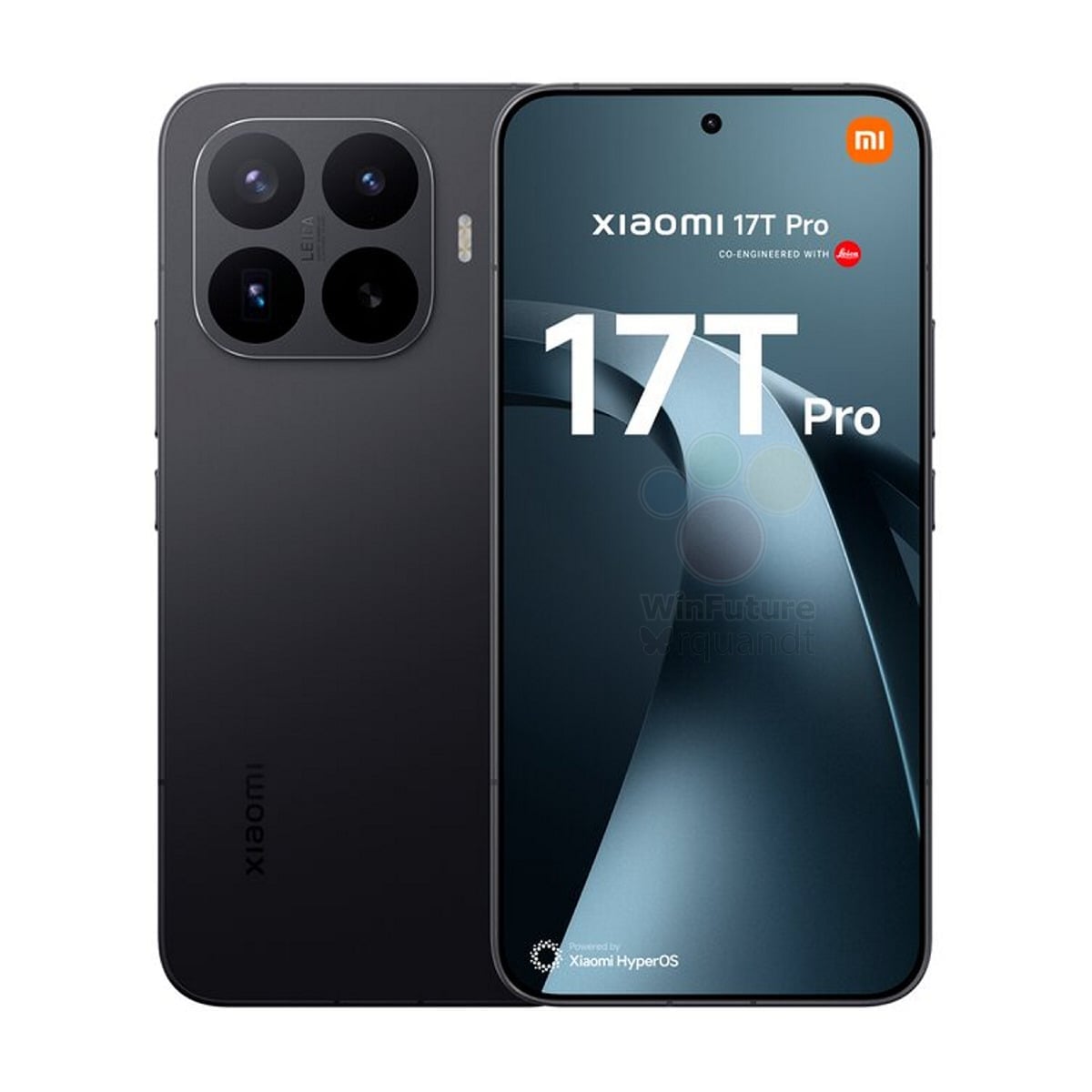
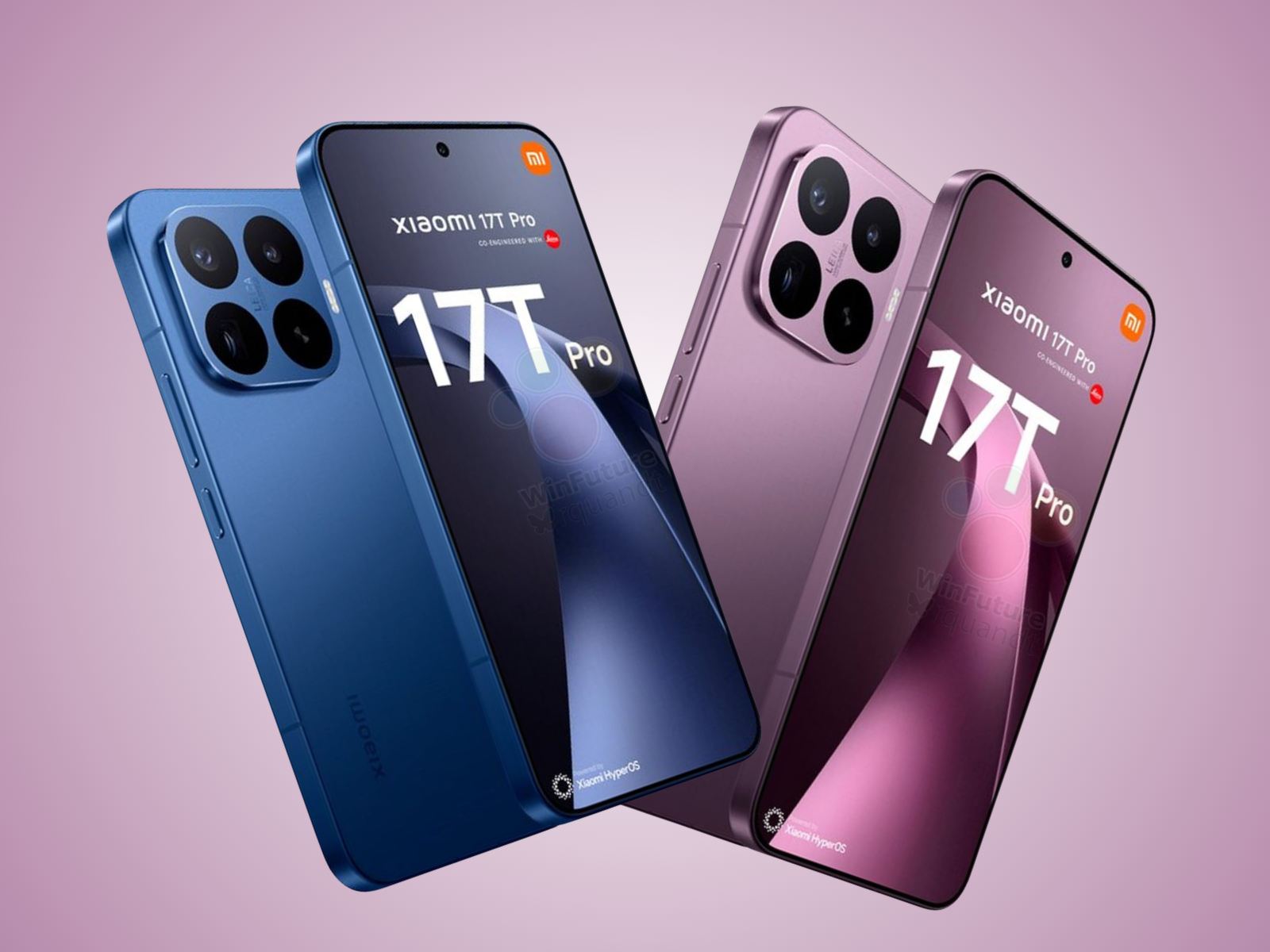
Earlier this year, a report suggested that the Xiaomi 17T series could debut as early as May. Since then, the 17T has surfaced in multiple certifications and online listings. Now, reports have revealed the full specs, design, and pricing of both the Xiaomi 17T and 17T Pro.
The folks over at WinFuture have shared the official looking renders of the Xiaomi 17T lineup, while a separate report from Dealabs has revealed the pricing and full specs of the phones.
The Xiaomi 17T is tipped to start at €749 ($878) in France for the 12GB/256GB variant, while the Xiaomi 17T Pro could be priced...
We’ve been hearing about a European Union-wide ban on Chinese 5G networking equipment for quite some time now, and the European Commission (EC) has now recommended that member states exclude gear from Huawei and ZTE from their local telecom infrastructure.
The info was shared by an EC spokesperson and while it is not an official binding law, it does signal a clear step toward banning Chinese networking equipment from suppliers like Huawei and ZTE across the EU.
The EU is in the process of implementing a new round of cybersecurity targeting supply chain security and product safety....
We've essentially been witnessing a game of "will it / won't it" for the past few months when it comes to rumors and leaks about whether Apple will make the Dynamic Island punch-hole cutout smaller on the upcoming iPhone 18 Pro and iPhone 18 Pro Max or not.
Today a tipster on X claims to have received new CAD files for the upcoming devices (if true, then most likely from a case maker who in turn got the files from Apple itself). As you can see in the image below, these new CAD files show a much smaller punch-hole cutout at the top of the screen than the one that's been inside the Pro...
An insider believes that low hardware stock will cost Microsoft sales when GTA 6 launches. The absence of Xbox consoles in many countries is not entirely intentional. Targeting higher profits and poor planning for the component shortage could haunt the PS5 rival.
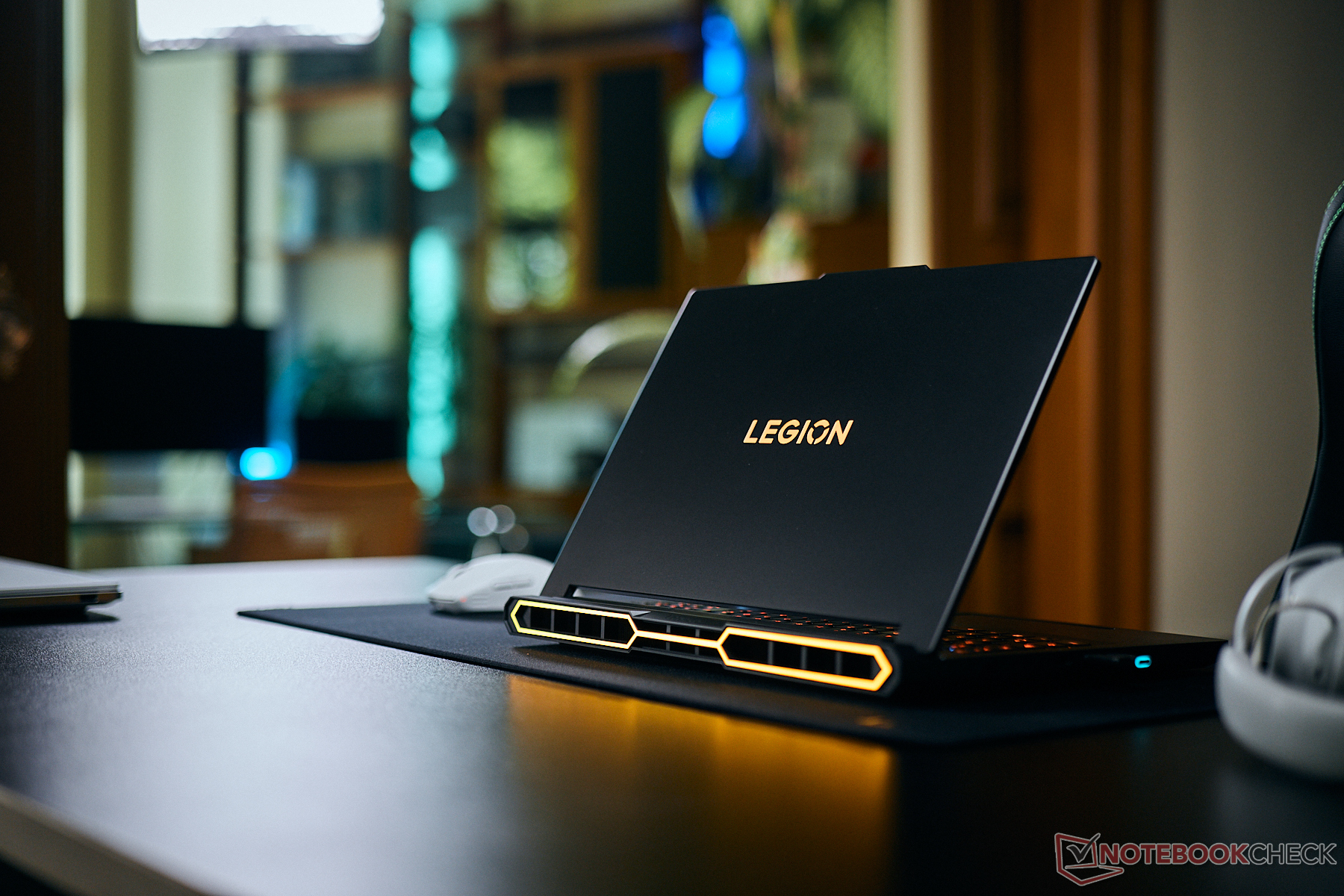
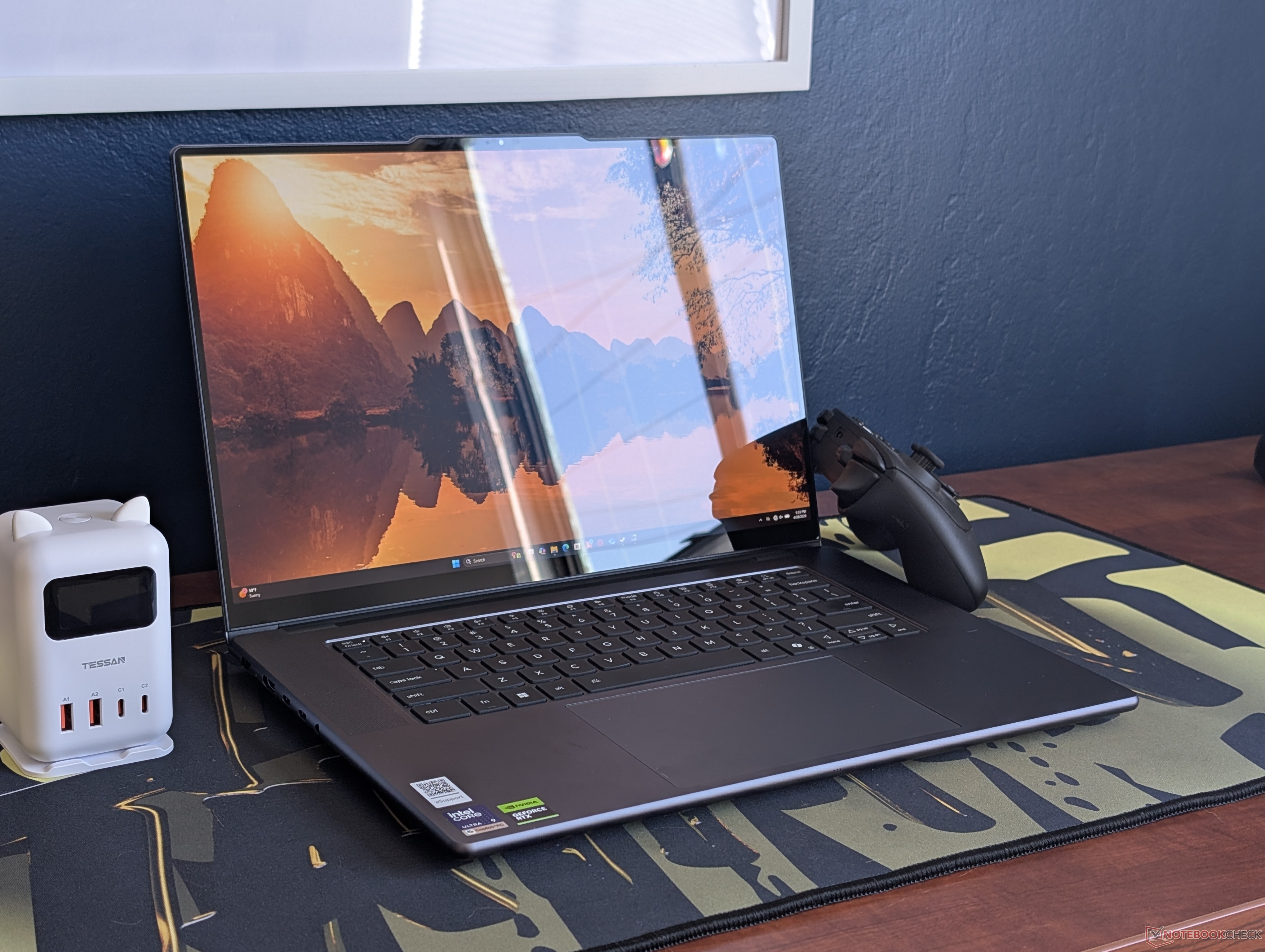
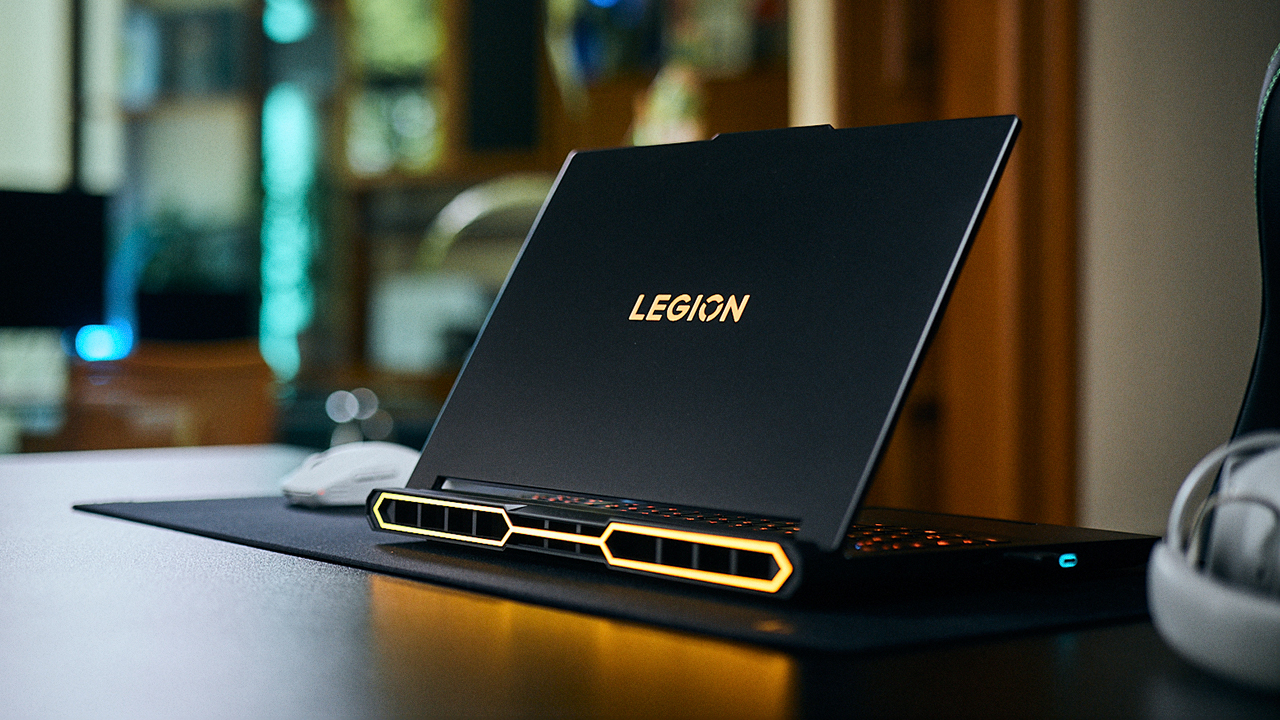
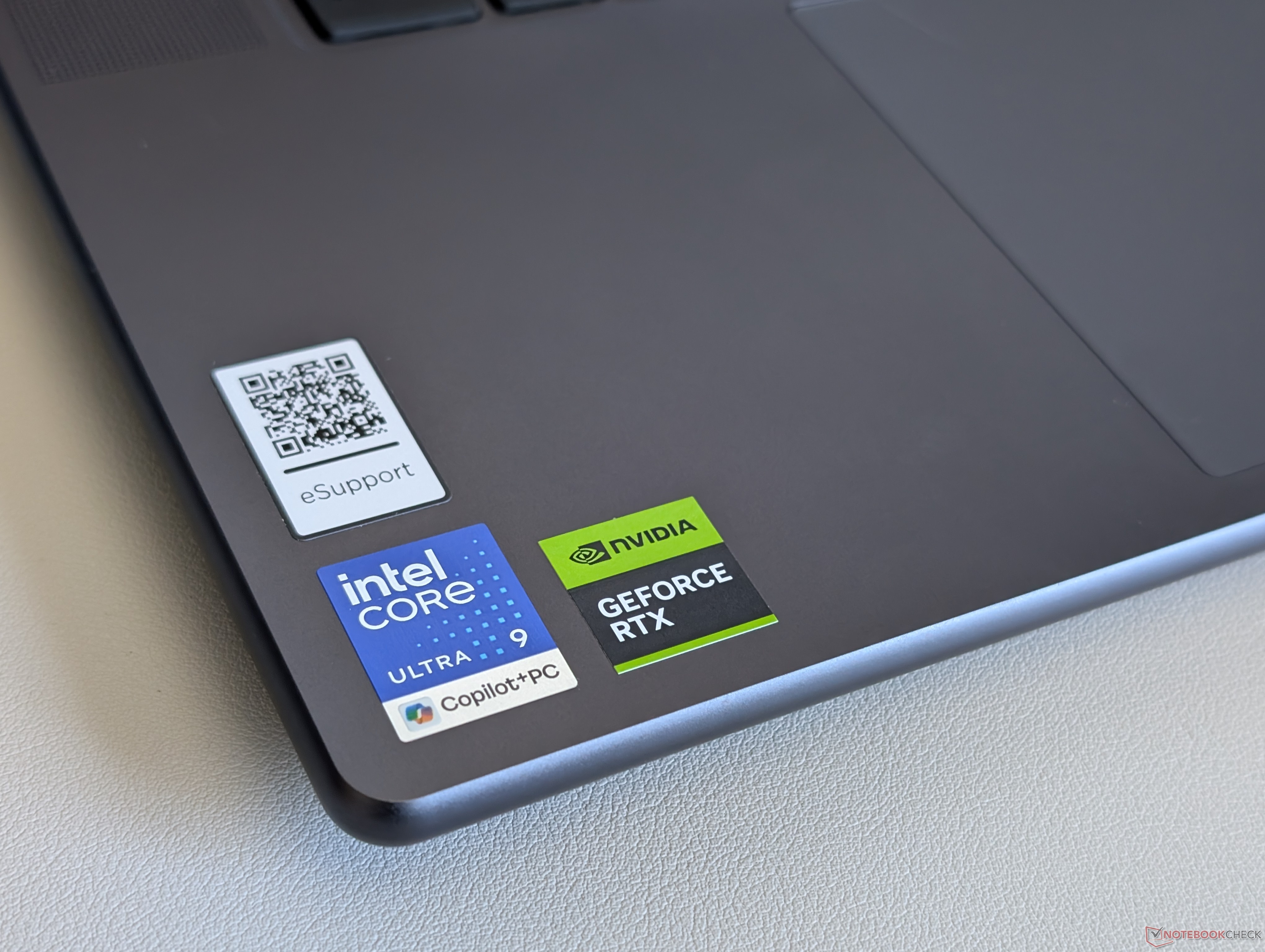
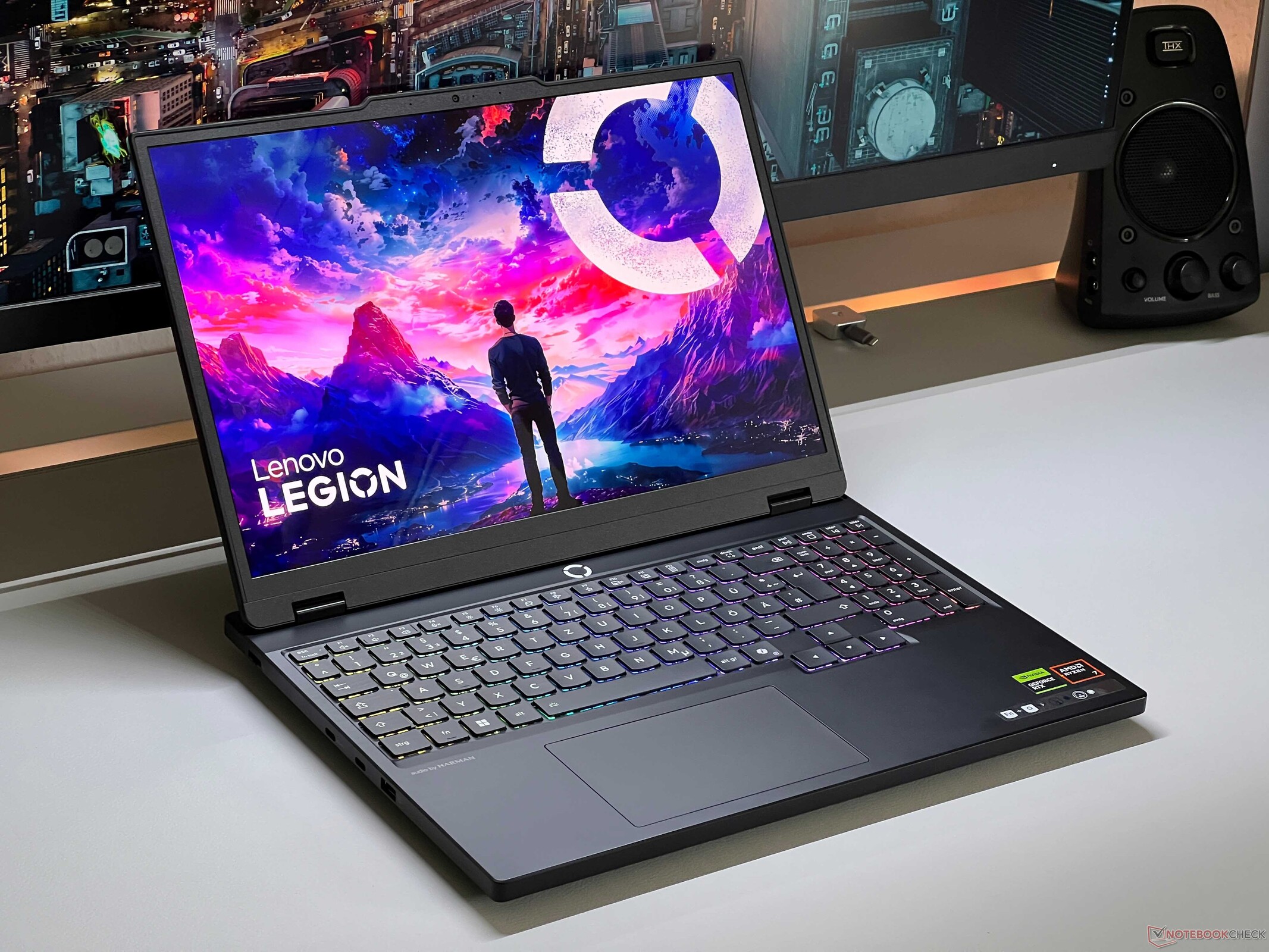
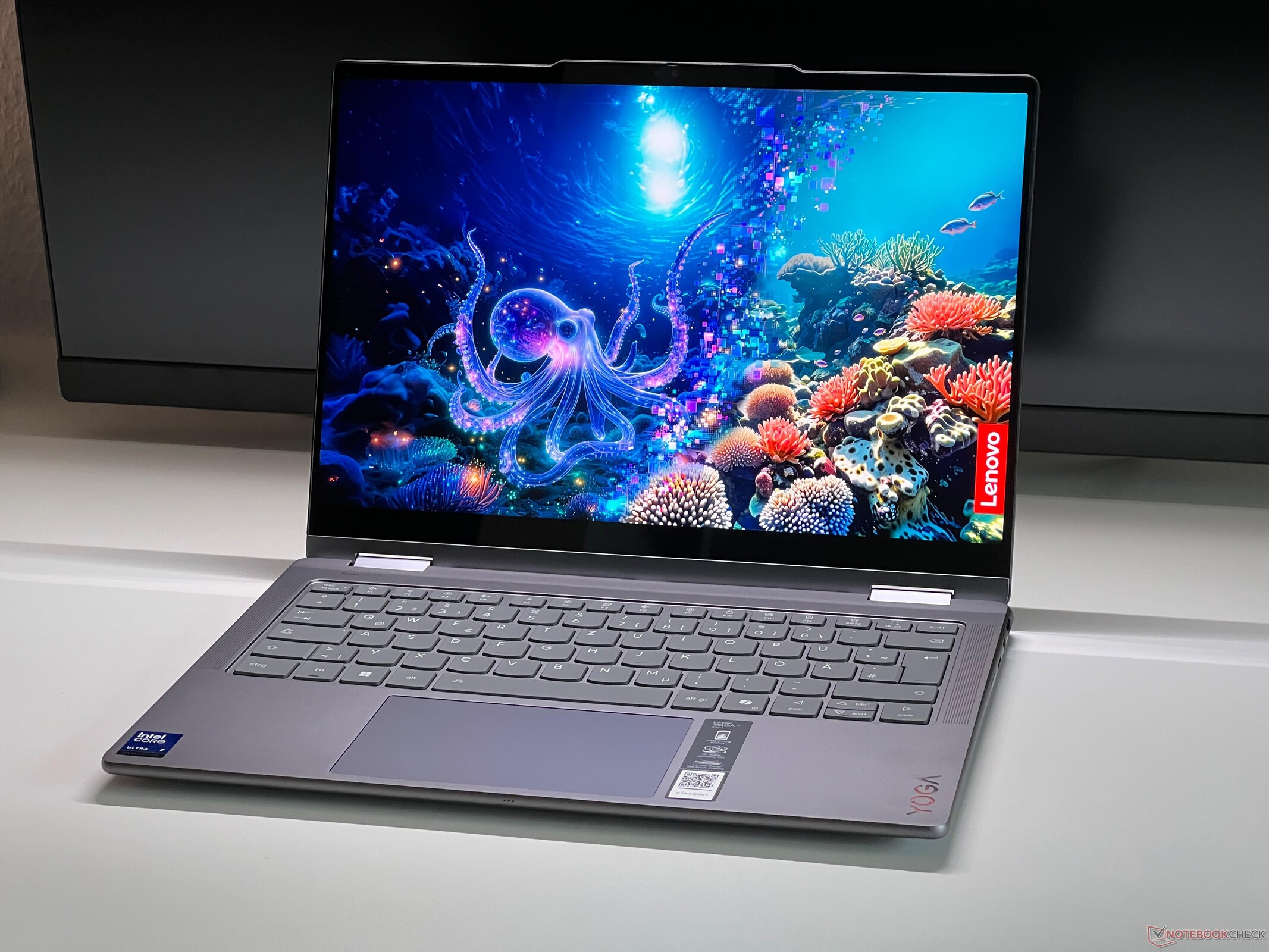
The Lenovo Legion Pro 7i G10 with the RTX 5080 was one of the fastest and best gaming laptops we reviewed last year. This is still the case and the SKU powered by the GeForce RTX 5090 can easily keep up even with larger 18-inch rivals.
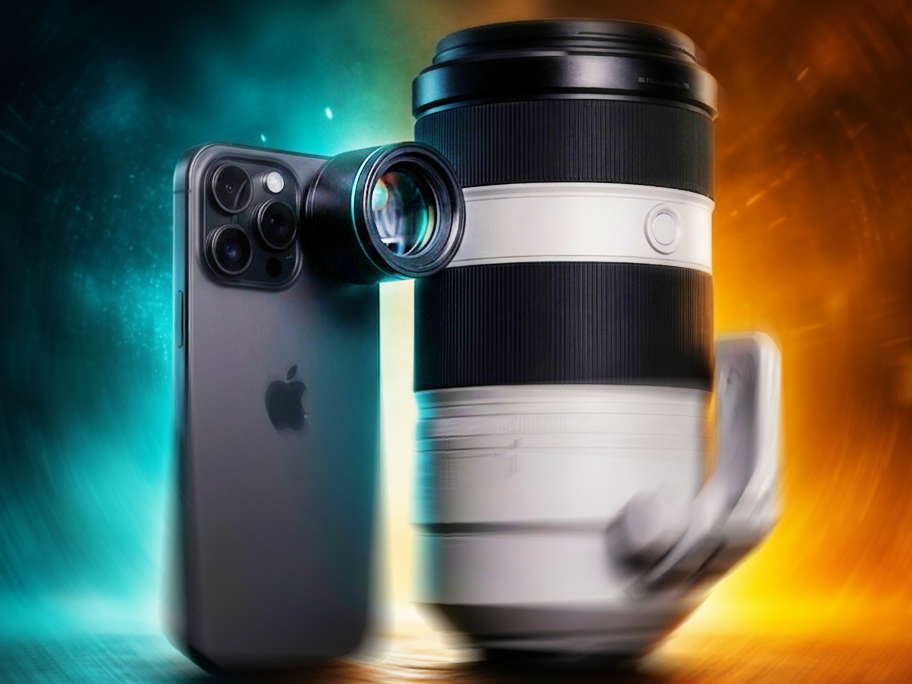
The Reeflex G-Series Ultra Telephoto lens brings 600mm reach to the iPhone 17 Pro and Samsung Galaxy S26 Ultra. By adding 310g of professional lanthanum glass, this 3x optical multiplier enables 24x zoom that seems to rival $5,000 Sony mirrorless setups. Here are some sample photos and videos.
Samsung launched the Galaxy Z Flip7 FE last summer alongside the Galaxy Z Flip7, and the FE model was offered in the US for a while, until mid-December when Samsung stopped selling it. We obviously assumed the Flip7 FE was gone for good from the US market, but apparently not.
Interestingly, Samsung has now started selling it again. You can grab one from the Korean company's online store for $899. That amount nets you the device with 128GB of storage.
The problem with that pricing is that the same version of the device can currently be had at Amazon for just $589.90. Check our...
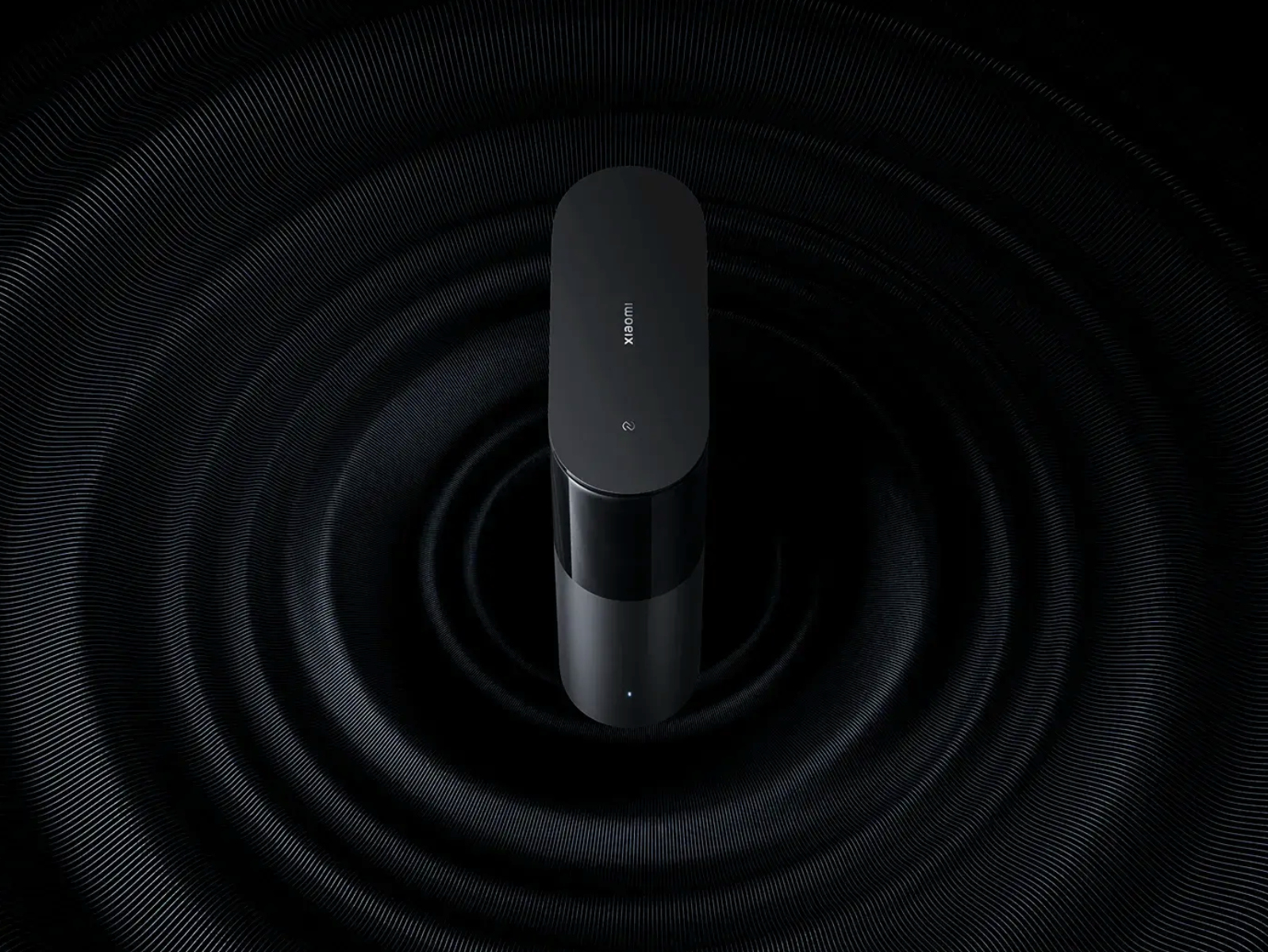
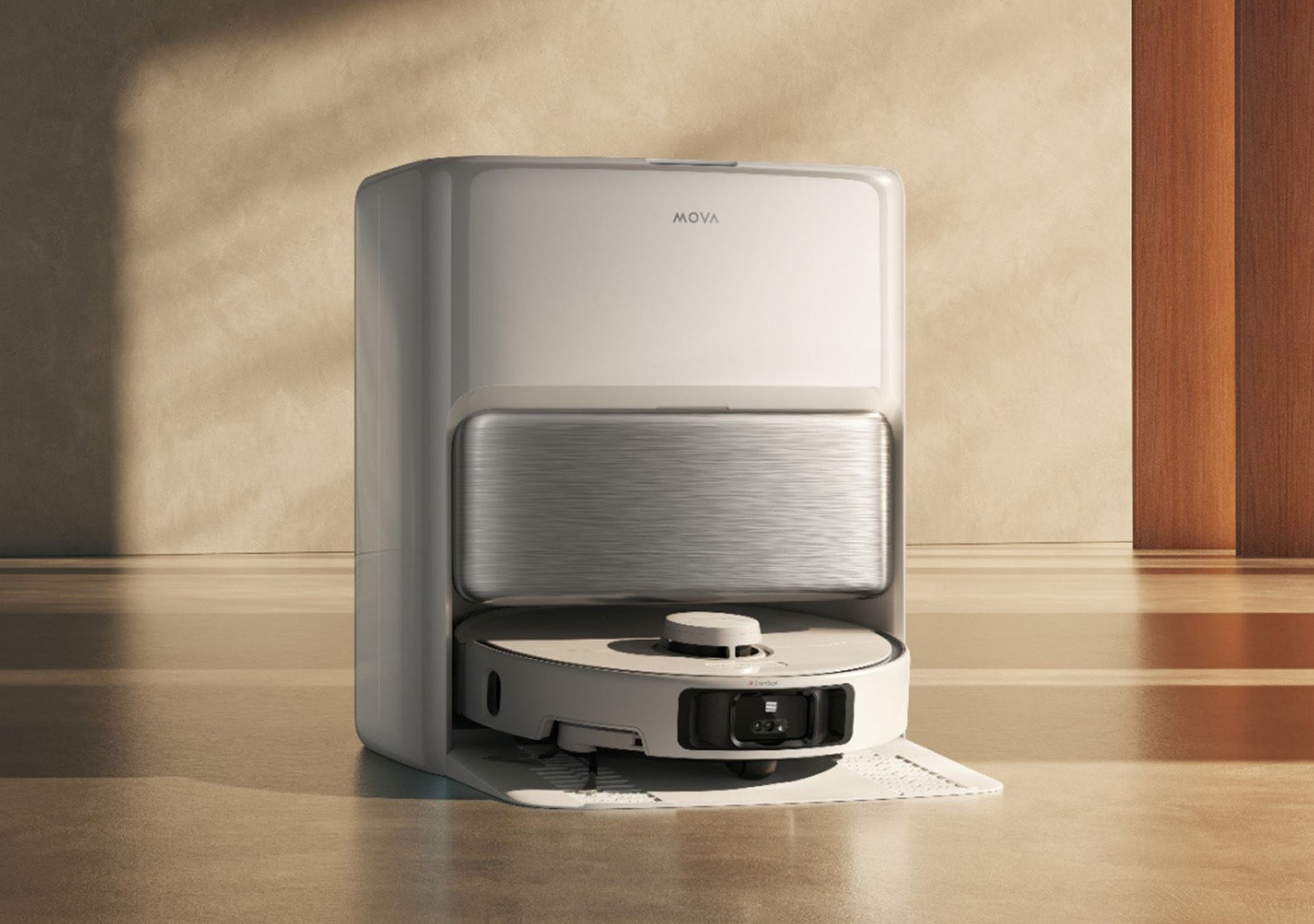
Xiaomi has officially released the Robot Vacuum H50 Pro in Australia. Also spotted at a couple of European retailers, this smart home device is described as “ultra-long-range”, and it comes with a multifunction docking station.
The Citizen AT2600-57E, AT2603-59X, and AT2606-51L Eco-Drive chronographs have been launched in Hong Kong. These watches have metal cases and straps, and textured dials in various colors.
Casio’s AE1600HX series is now available in the US at $45.95, with a rugged digital design, 100 m water resistance, and a 10-year battery. The lineup includes black and olive variants with standard features and large, easy-to-read displays.
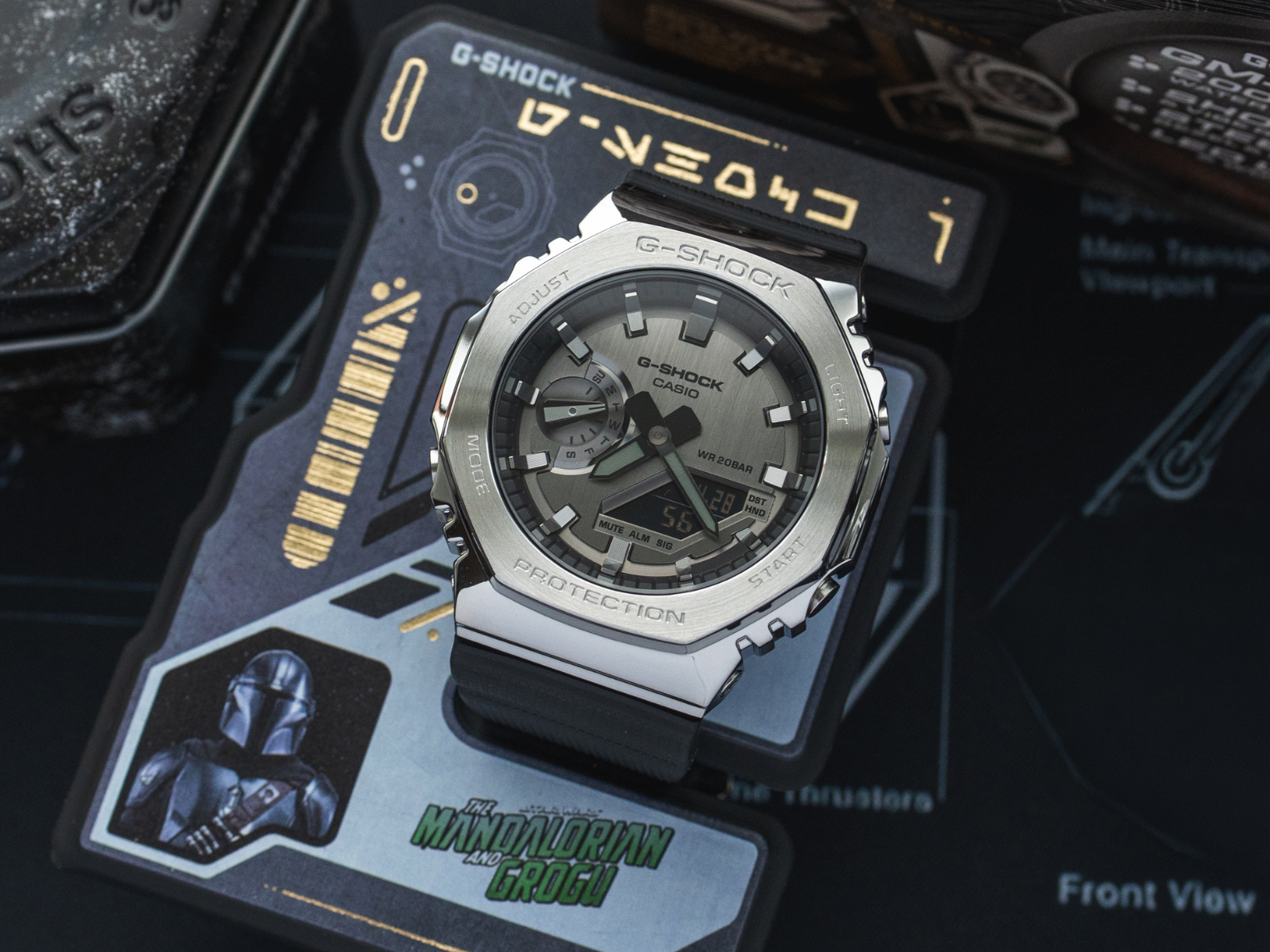
Three new Casio G-Shock BG-169KB watches have landed in Japan. These round watches have more unusual features, including a day counter and the ability to store contact details. Plus, the digital Baby-G model has a ring of gems for a sparkling design.
Lenovo makes some seriously good-looking laptops, but you wouldn't know it when shopping through their website. Their product shots are so low resolution that it can be difficult to even see what ports are available.
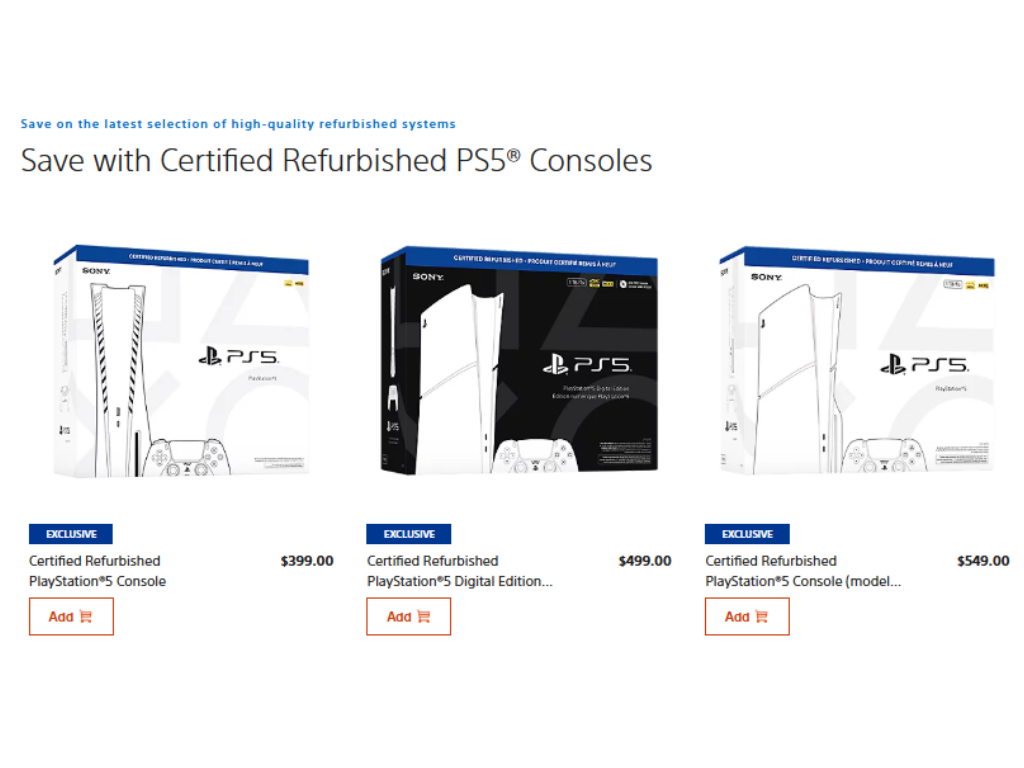
Sony has raised prices on its Certified Refurbished PS5 Slim consoles by $100, pushing the Digital Edition to $499.99 and the disc-drive model to $549.99. With the $399 PS5 Fortnite bundle sold out and new PS5 models already more expensive, sub-$400 options are rapidly disappearing, leaving the older “Fat” refurbished PS5 at $399 as one of the last budget alternatives.
Deal | Star Wars Outlaws is an open-world adventure game in which you embody an outlaw in search of freedom. But you’ll have to complete missions and face powerful enemies across various environments inspired by the Star Wars saga.
A new leak today claims to bring us a ton of details about the upcoming Google Pixel 11 family, so let's dive right in. All devices will be using the Tensor G6 SoC, which will be built on a TSMC N2 (2nm) node. Its CPU will have one ARM C1-Ultra core at 4.11GHz, four ARM C1-Pro cores at 3.38GHz, and two ARM C1-Pro cores at 2.65GHz. The PowerVR C-Series CXTP-48-1536 GPU will be in, as will be Google's Titan M3 security chip. The modem will be the MediaTek M90 (MT6986D). There will also be a new Tensor Processing Unit (TPU) baked in.
Now onto the smartphones themselves. The vanilla Pixel 11...
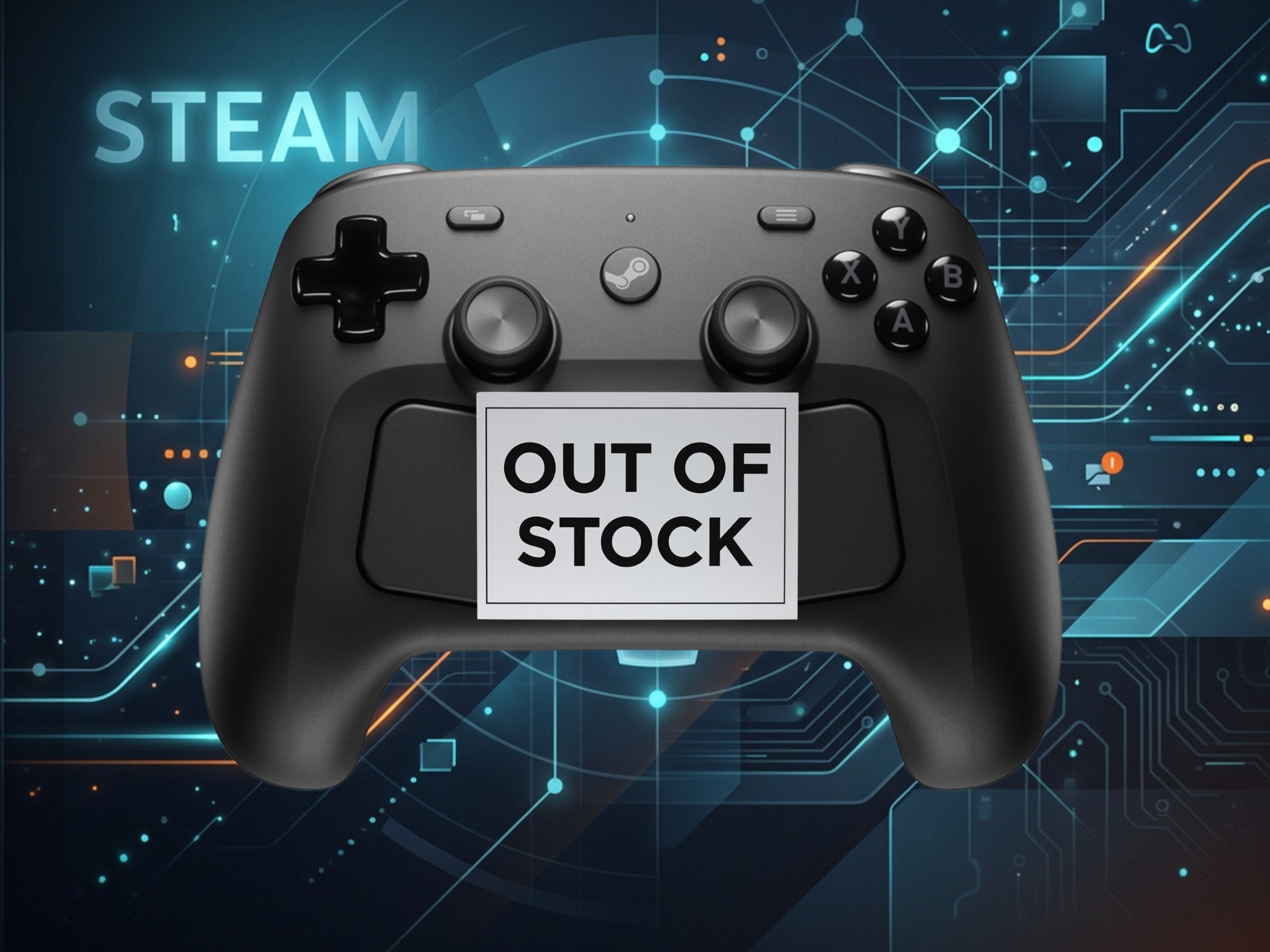
The Steam Controller release date tested Valve’s storefront, with mixed results. Many gamers were unable to secure the $99 accessory before stocks ran out. The Steam Machine launch could also pose problems for the company, which hadn’t debuted new hardware in several years.
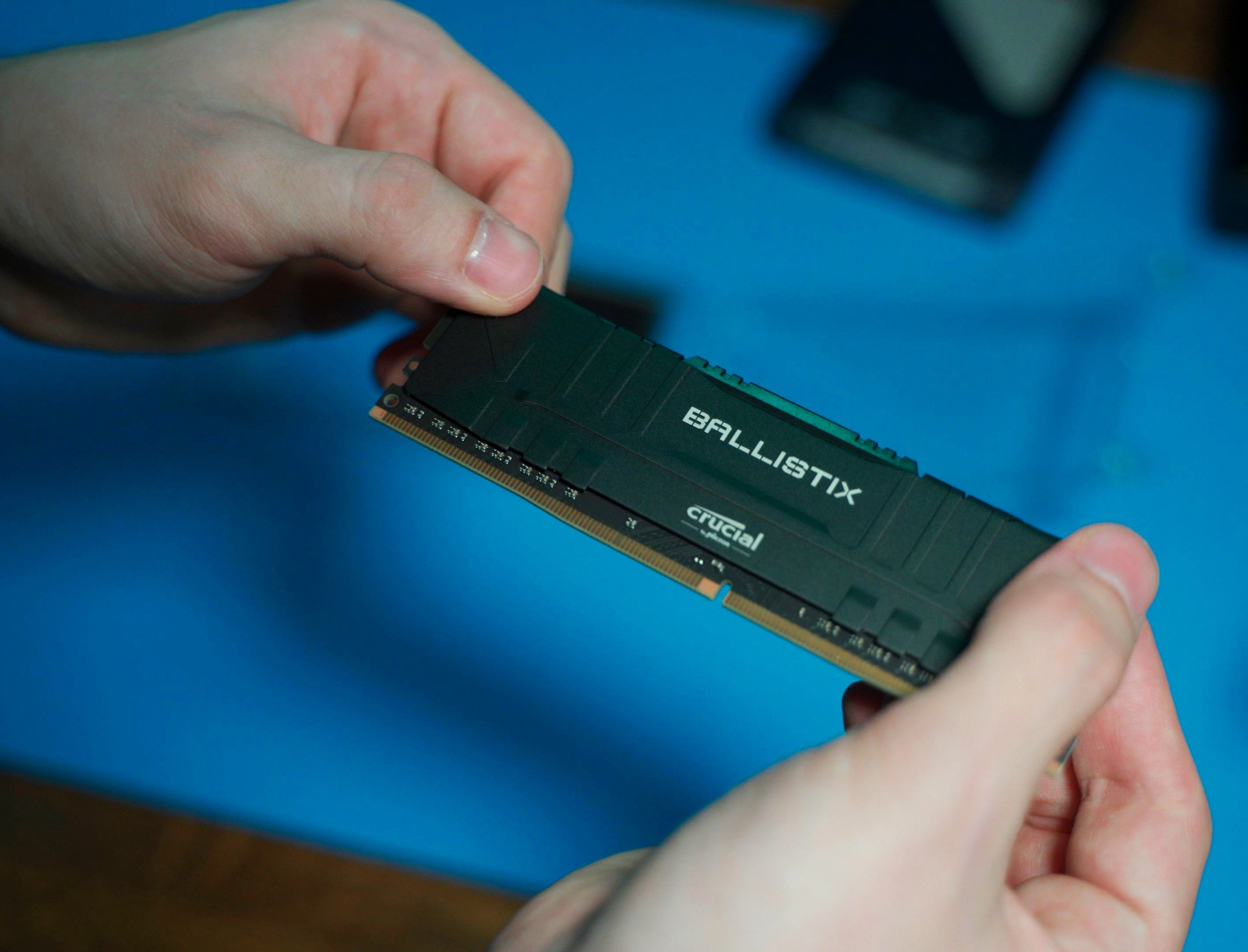
Manufacturers, including Samsung and SK Hynix, are proceeding with early development of DDR6, even though JEDEC has not finalized the standard for it. The next-generation modules are still about two years away.
Google has started rolling out an updated version of the Gemini app for iOS. Users on Reddit shared images of the updated user interface, which features several visual changes. The start screen now features an animated background with a backdrop behind the search text box.
Google Gemini app on iOS (images: Reddit)
In addition, the plus (+) button now opens a longer set of search options, including images, camera input, music, canvas, deep research, guided learning, and a “more uploads” tab, which can use files and NotebookLM resources. This being the iOS version, you also get...
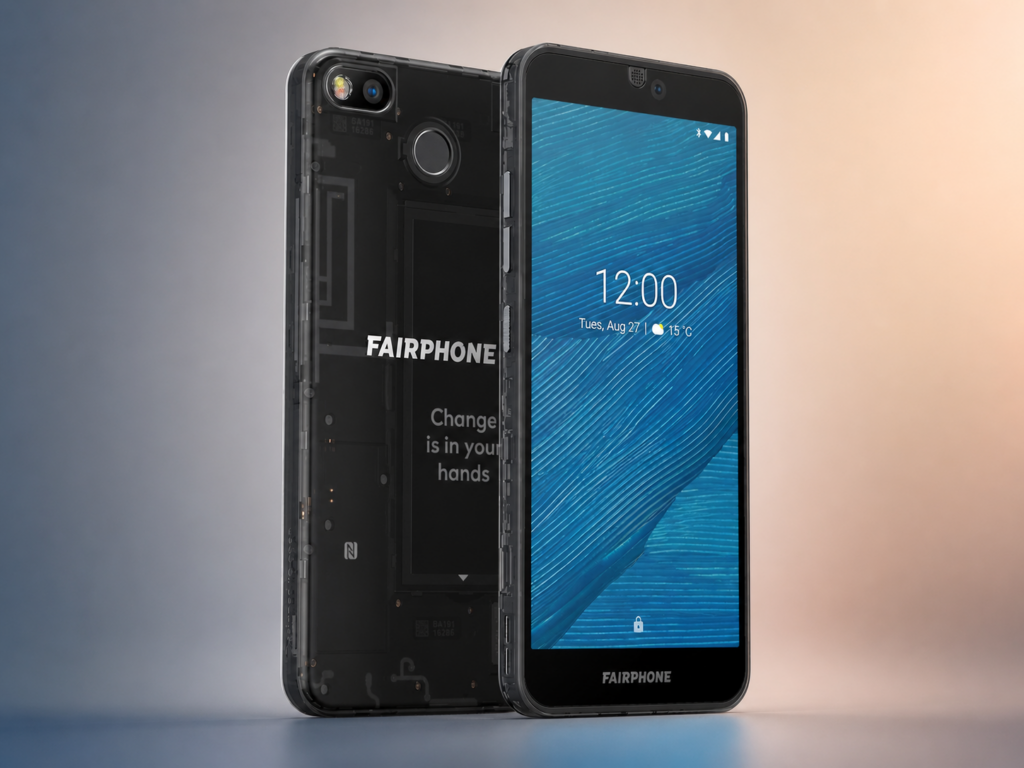
The Fairphone 3 has reached an important milestone, marking the end of its official software support cycle. While the journey is coming to a close, it also highlights how long a smartphone can realistically last.
Seven years of support and design evolution
Fairphone 3
Launched in 2019 with a promise of five years of updates, the Fairphone 3 has now completed seven years of support, extending well beyond its original target. The final software update is expected to roll out by June 2026, with support ending in August. This extended lifecycle stands out in a market where most smartphones receive significantly shorter update timelines.
The device also marked a shift in design for the brand. It introduced a more refined and modular build compared to earlier models, making repairs easier and improving accessibility of spare parts. Over time, updates such as the Fairphone 3+ brought improvements in camera modules and audio, while maintaining compatibility with existing hardware.
Beyond hardware, the Fairphone 3 played a role in Fairphone’s broader sustainability initiatives. It was the first device linked to the company’s living wage program, which has contributed over $1.25 USD to supply chain workers since its introduction. The phone also supported reuse initiatives, where components like displays, motherboards, and speaker modules were refurbished and made available again.
Even as official support ends, the device is expected to remain functional through alternative operating systems. Platforms such as LineageOS, /e/OS, and postmarketOS continue to offer updates, extending the usability of the hardware further. Fairphone has also shared development work to support these communities, encouraging longer device lifespans.
For more daily updates, please visit our News Section.
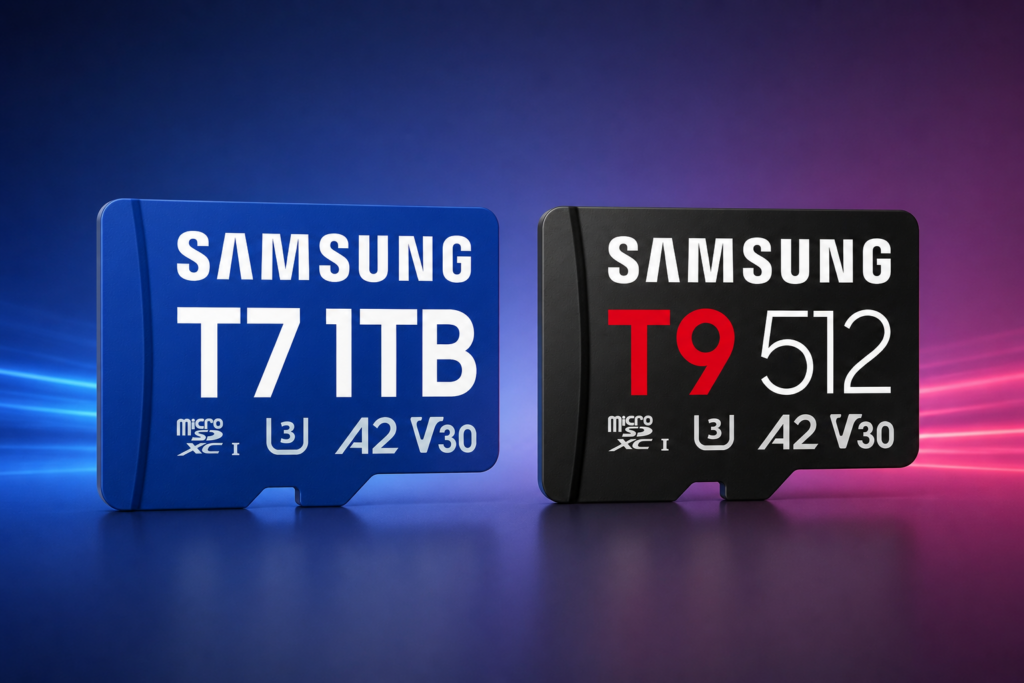
Samsung has expanded its removable storage portfolio in India with the introduction of the T7 and T9 microSD cards. The new lineup signals a shift in branding while addressing growing demand for faster and higher-capacity storage. Here are all the technical details about the new microSD cards from Samsung.
Samsung T7, T9 microSD card key specifications
Samsung T7 and T9 microSD cards
The T7 microSD card is positioned for everyday users looking to expand storage across smartphones, tablets, laptops, and gaming devices. It offers capacities ranging from 128GB to 1TB, with read speeds of up to 170MB/s. This makes it suitable for regular file transfers, media storage, and casual gaming needs without noticeable slowdowns.
The T9 microSD card is aimed at users who handle larger files and need quicker access speeds. With read speeds reaching up to 200MB/s and write speeds up to 130MB/s, it supports demanding tasks such as high-resolution video recording and fast data transfers. It also includes a six-layer protection system designed to safeguard data in varied environments, including use in drones and action cameras.
Samsung is also introducing a simplified naming approach with this launch. The new T series replaces earlier options such as EVO Plus and PRO variants, aligning removable storage with its existing portable SSD naming. The idea is to make it easier for buyers to understand performance tiers while maintaining consistency across categories.
Samsung T7, T9 microSD card: Price and availability
In terms of pricing, the T7 microSD card starts at Rs 4,849 (~$50) for the 128GB variant, going up to Rs 30,399 (~$320) for the 1TB model. The T9 range begins at Rs 5,989 (~$65) for 128GB and reaches Rs 18,999 (~$200) for the 512GB option. Both series will be available in India from the first week of May 2026 through online and offline channels.
For more daily updates, please visit our News Section.
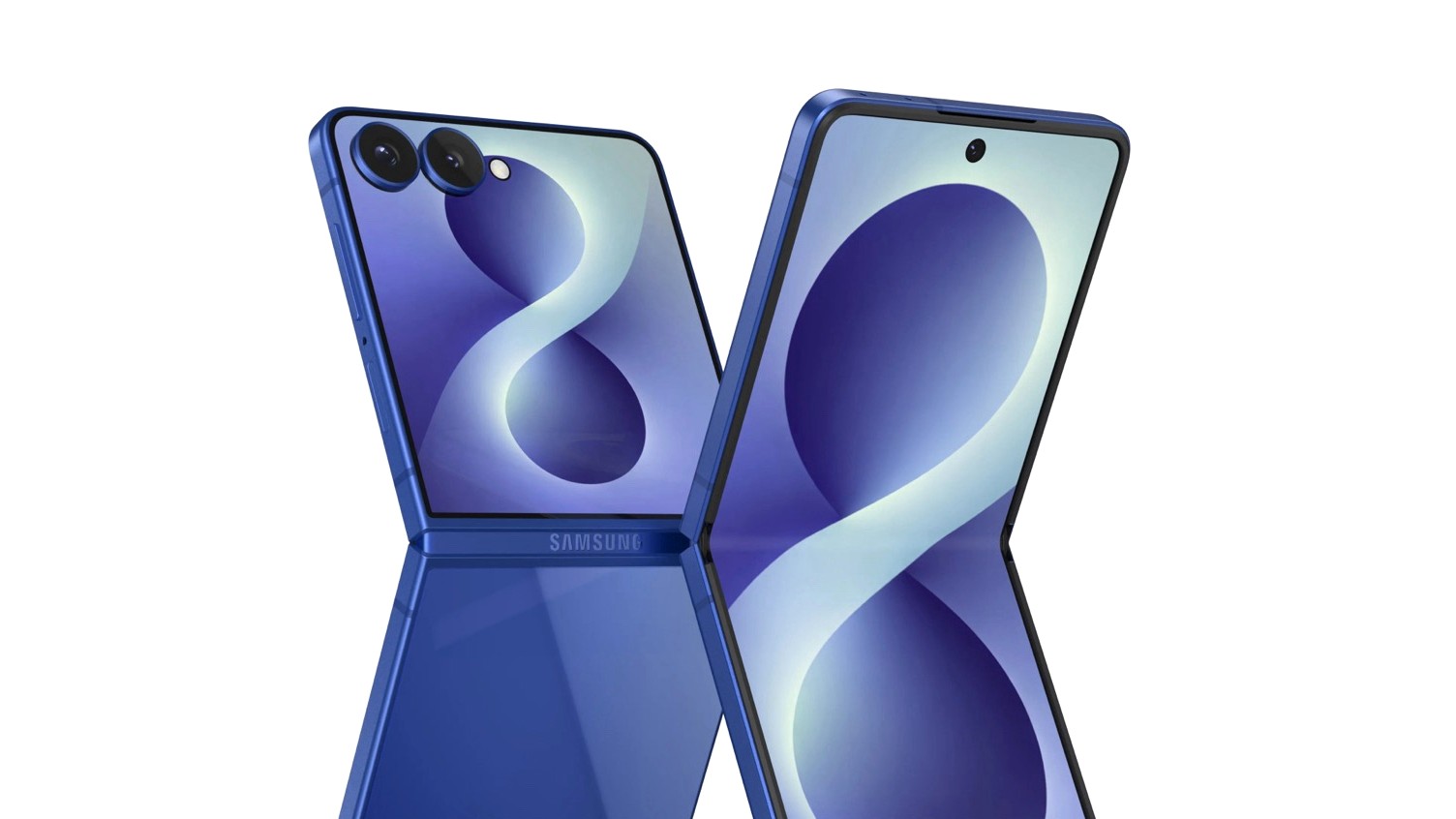
The upcoming Samsung Galaxy Z Flip 8 has surfaced in fresh leaks, pointing towards a refined design rather than a major overhaul. Early details suggest Samsung is focusing on improving the overall experience while keeping core hardware familiar.
Focus shifts to hinge and display refinement
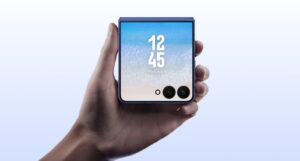
Samsung Galaxy Z Flip 7
According to a tipster on Naver, Samsung may introduce a redesigned hinge mechanism aimed at reducing the visible crease on the Galaxy Z Flip 8’s inner folding display. The improvement could make the screen appear nearly flat when unfolded, addressing one of the most noticeable aspects of flip-style foldables.
The same hinge change is also expected to slightly alter the device’s dimensions. Reports indicate the phone could be marginally wider while becoming around 0.5mm thinner when folded. The weight is also tipped to drop to about 180 grams, compared to roughly 188 grams on the Samsung Galaxy Z Flip 7, making it easier to handle over long periods.
While the design may see subtle refinements, the internal hardware is expected to remain largely unchanged. The device is likely to feature a 4,300mAh battery paired with 25W wired charging, similar to the previous generation. Other elements such as speakers, vibration motor, and cover display are also tipped to carry forward without major upgrades.
Camera specifications could include a 50-megapixel primary sensor and a 12-megapixel ultra-wide lens, along with a 10-megapixel front camera placed on the inner display. The handset is also expected to run on Samsung’s upcoming 2nm Exynos 2600 chipset, aligning with the brand’s approach for its flip series.
The Galaxy Z Flip 8 is expected to debut alongside other foldables at a Galaxy Unpacked event rumoured for July 22 in London. Pricing may see a slight increase due to rising component costs, although exact figures are yet to be confirmed.
For more daily updates, please visit our News Section.
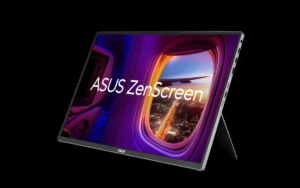
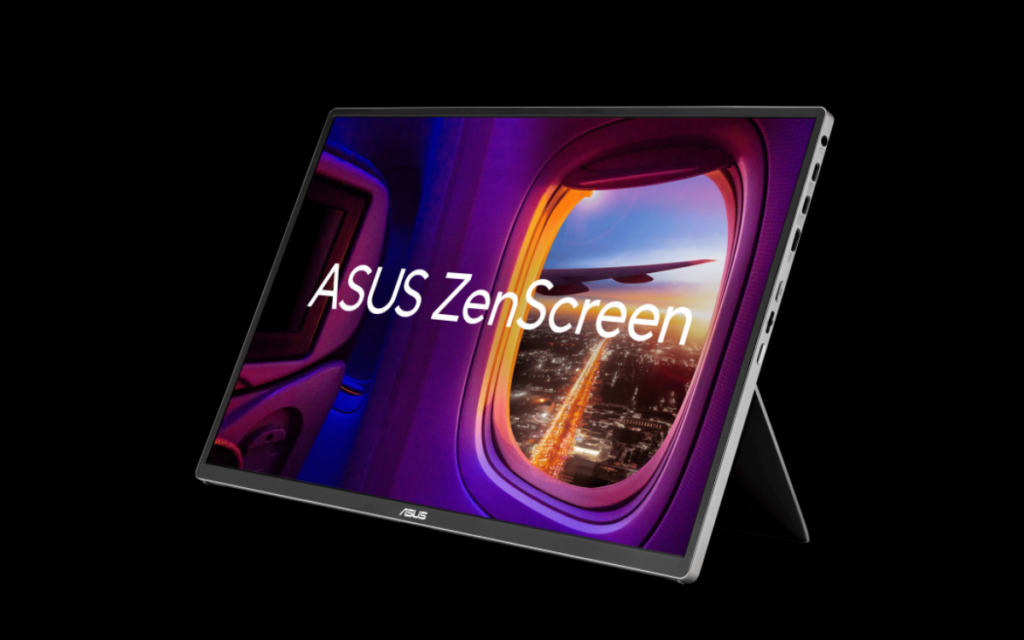
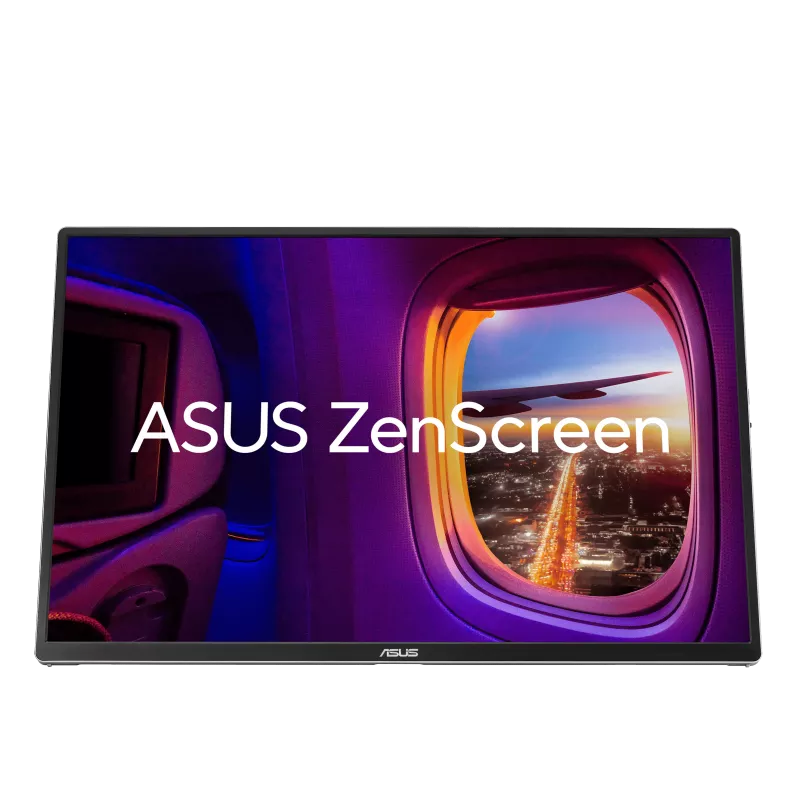
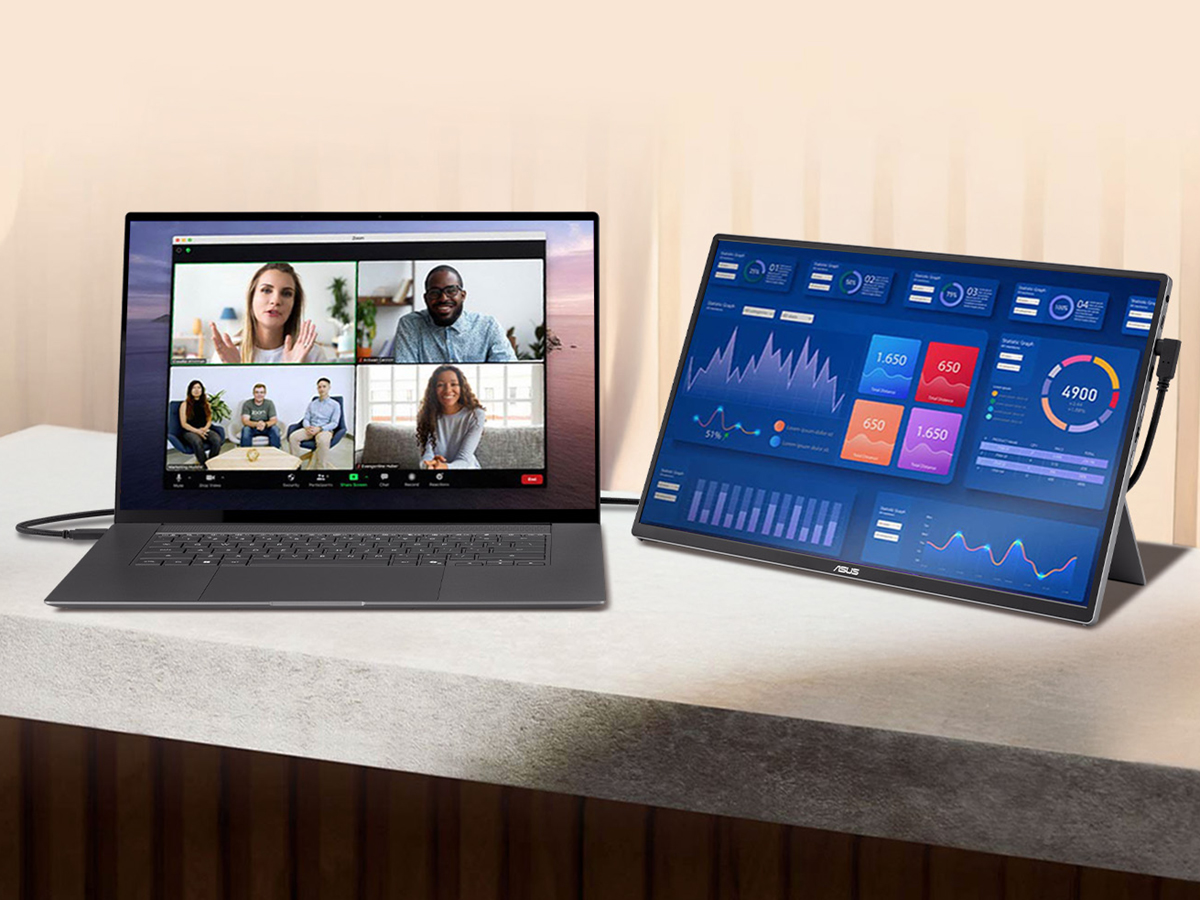
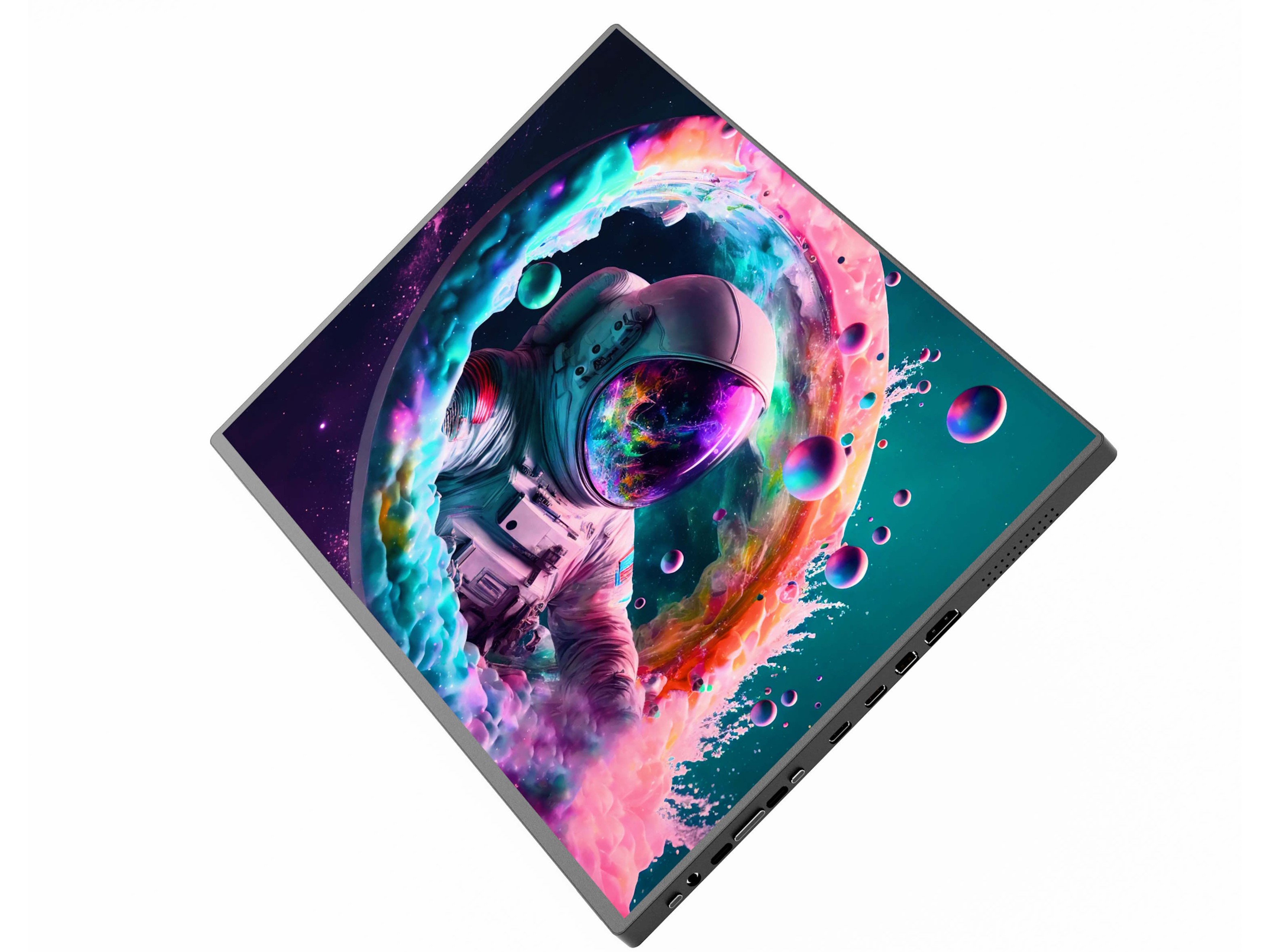
Working on a single laptop screen can be frustrating when you need to view multiple documents or applications at the same time. Portable monitors are a standard fix for this, and Asus has just added another option to the mix. The ZenScreen OLED MQ16FC is a 16-inch secondary display aimed at people who work away from a desk, and it is priced at €280 in Europe.
Asus ZenScreen OLED MQ16FC Specifications
The monitor uses an OLED panel with a 1920 x 1200 resolution. That gives it a 16:10 aspect ratio, which matches most modern productivity laptops and provides a little more vertical space for reading text or viewing spreadsheets. The screen covers 95% of the DCI-P3 color space and has a Delta E < 2 color accuracy rating.
In practical terms, the colors and contrast should be reliable enough for standard photo and video editing tasks. It is a 60Hz display, so it is meant for work and watching media rather than gaming, though the 1ms response time should keep text scrolling looking normal.
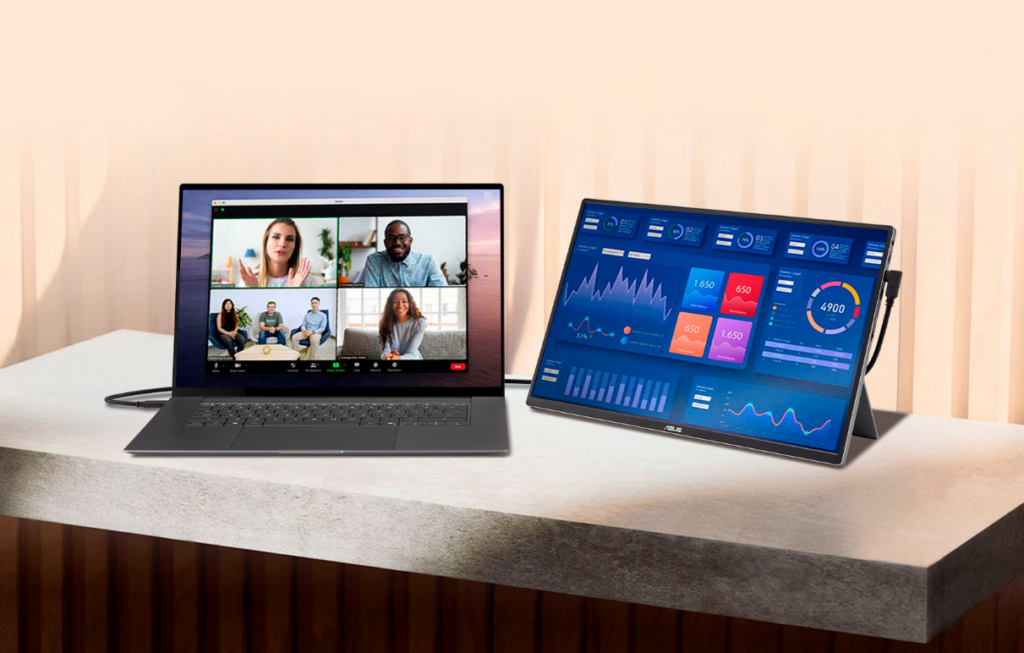
The most useful hardware addition is the power pass-through system. The monitor includes two USB-C ports (which support DisplayPort Alt Mode) and a mini-HDMI port.
If you plug a compatible USB-C charger into the monitor, it can pass up to 65W of power directly to your connected laptop. This is helpful if you are working in a cafe or an airport and only have access to a single wall outlet, as you can keep both devices powered using one charging brick.
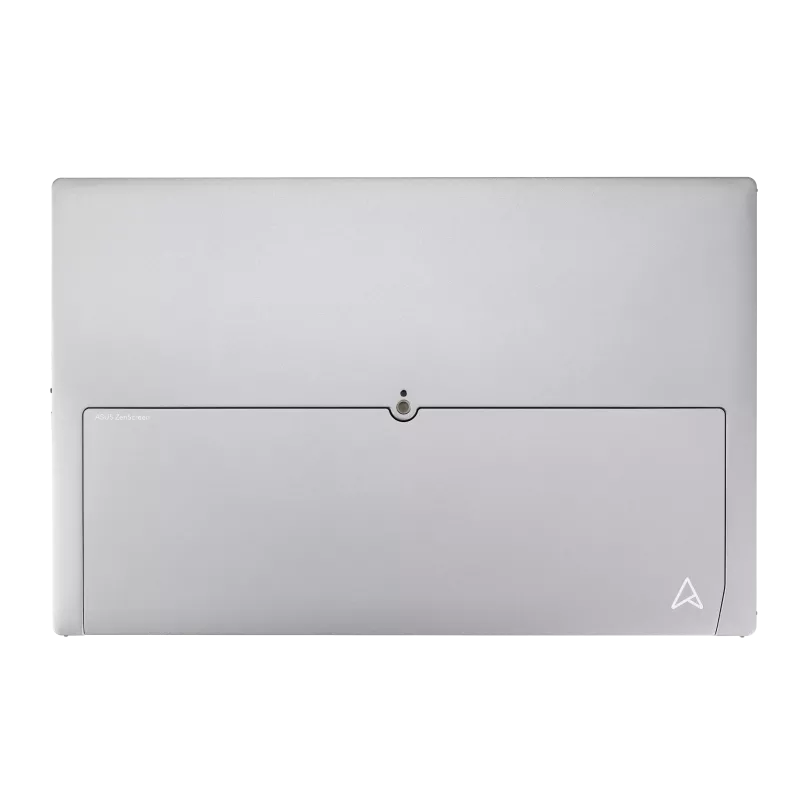
Physically, the monitor is built to fit in a standard laptop bag. It weighs 0.68 kg and is 0.9 cm thick. It includes a built-in kickstand, a standard 1/4-inch tripod socket if you prefer to mount it, and software that automatically rotates the screen if you turn it vertically.
Asus also included a specific color profile intended to match the screen output of Apple’s MacBooks, which might save macOS users some time adjusting settings to get their screens to match.
BenQ has introduced the Mobiuz EX271QZ in India, bringing a new focus on blending ultra-fast gaming performance with accurate visual storytelling. The monitor targets gamers who want both responsiveness and immersive visuals.
BenQ Mobiuz EX271QZ: A new direction for gaming displays
BenQ Mobiuz EX271QZ gaming monitor
The Mobiuz EX271QZ features a 27-inch QHD QD-OLED panel paired with a 500Hz refresh rate and 0.03ms response time. This combination improves motion clarity during fast gameplay while keeping transitions smooth in open-world titles and cinematic sequences. The higher refresh rate also helps reduce blur and enhances tracking precision in competitive scenarios.
What sets this monitor apart is its approach to color tuning. Instead of generic presets, it introduces Game Art Color profiles such as Fantasy, Sci-Fi, and Realistic modes. These are designed to align with a game’s artistic style rather than simply boosting colors. Supporting this is Spectral Color Refinement, which adjusts colours across the full spectrum to deliver balanced tones, improved midtones, and more natural highlights.
The QD-OLED panel enables precise lighting control at the pixel level, delivering deep blacks and high contrast. The monitor carries VESA DisplayHDR True Black 500 certification, covers 99 percent DCI-P3 colour space, and can reach up to 1000 nits peak brightness in HDR content. These elements together improve depth and realism in both games and media playback.
It also integrates High Pixel Contrast technology that dynamically enhances shadow detail without affecting brighter areas. For connectivity, HDMI 2.1 with eARC support allows compatibility with modern consoles and multi-channel audio formats like Dolby Atmos and DTS:X. To maintain performance over time, the EX271QZ includes several OLED protection mechanisms such as pixel refresh, logo dimming, pixel shift, and graphene-based cooling.
BenQ Mobiuz EX271QZ price in India, availability
The monitor is priced at Rs 84,998 and is available via online and retail platforms across India.
For more daily updates, please visit our News Section.
The market for OLED gaming monitors has been steadily growing, and Lenovo is adding a new model to the list. Through its Lecoo sub-brand, the company recently launched the W3259PS in China.
It is a 31.5-inch display that includes the standard features expected from a current high-end desktop monitor: a 4K UHD resolution, a 240Hz refresh rate, and a QD-OLED panel, priced at 5,499 Yuan (roughly $805).
Lenovo Lecoo W3259PS Specifications
The primary feature of the monitor is its QD-OLED panel. Because OLED uses self-emissive pixels, the display controls brightness and color at the individual pixel level. This results in the deep blacks and high contrast ratios typical of OLED technology. Lenovo also applied an anti-reflective (AR) coating to the screen to help reduce glare in brighter rooms. The panel has a peak brightness of 450 nits, which is standard for desktop OLEDs in this category.
For gaming, the W3259PS comes with a 240Hz refresh rate paired with a 0.03ms gray-to-gray response time, which helps reduce motion blur and ghosting in fast-moving scenes. It supports Adaptive Sync to prevent screen tearing and includes standard software features like on-screen crosshairs and preset picture modes for FPS and RTS games.
The monitor is also suitable for general content creation. The 10-bit panel supports 1.07 billion colors, covering 99% of the DCI-P3 color gamut and 100% of sRGB. It is factory-calibrated with an average Delta E of less than 2, meaning the color accuracy should be reliable out of the box. To help with eye strain during longer sessions, the display incorporates a flicker-free design and hardware-level low blue light technology.
The port selection covers the basics for modern setups. It includes one DisplayPort, two HDMI ports, and a USB-C port that provides up to 90W of power delivery. The 90W output is useful for people who want to connect and charge a work laptop using a single cable. The monitor also supports Picture-in-Picture (PIP) and Picture-by-Picture (PBP) modes, allowing you to view two input sources at the same time.
Physically, the monitor comes with an adjustable stand that supports height, tilt, swivel, and pivot changes. If you prefer to use a third-party monitor arm, the back of the display supports a 75 x 75mm VESA mount.
For more daily updates, please visit our News Section.
Oppo has confirmed that the Find X9 Ultra and the more compact Find X9s are headed to India soon, bringing its latest flagship lineup to the market not long after their global debut. The move is notable, as Oppo is keeping the India rollout closely in sync this time instead of delaying availability by a few months.
The Find X9 series, which launched globally in late April, leans heavily into camera performance through Oppo’s continued partnership with Hasselblad. The Ultra model is clearly the centerpiece here.
The Find X9 Ultra comes with a quad-camera setup, including two 200MP sensors: one for the main camera and another for 3x telephoto. There is also a 50MP ultra-wide and a 50MP periscope telephoto offering up to 10x optical zoom, with digital zoom going much further. Oppo has also added extras like a multispectral sensor aimed at delivering more consistent color and detail.
Up front, there is a 50MP selfie camera, while the rest of the hardware stays firmly in flagship territory. The phone runs on the Snapdragon 8 Elite Gen 5, paired with 12GB or 16GB RAM and 256GB-1TB of fast UFS 4.1 storage. In the front, it packs a 6.82-inch LTPO AMOLED display with a 144Hz refresh rate. Battery capacity is on the higher side as well, with a 7,050mAh unit supporting 100W wired and 50W wireless charging.
The Find X9s is positioned as the smaller alternative. It features a 6.59-inch display and a triple 50MP camera setup, still tuned by Hasselblad. It is powered by the Dimensity 9500s and comes with a similarly large 7,025mAh battery, though charging is slightly lower at 80W.
Pricing has not been officially announced yet, but early expectations place the Ultra in the premium range, while the X9s should land closer to the upper mid-range segment. With the launch expected to be just weeks away, more details on pricing and availability should follow soon.
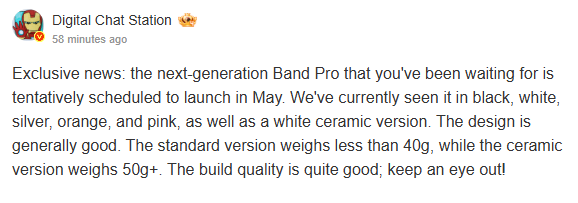
The Xiaomi Smart Band 10 Pro has barely had time to build up any real rumor cycle, and it is already popping up in retail listings. Brazilian store Magazine Luiza has listed the device ahead of any official announcement, which usually means a launch is not too far away.
The listing shows the fitness band in black, silver, and pink. That lines up with an earlier tip from Digital Chat Station, who mentioned a May 2026 launch and a wider set of colors, including white, orange, and a white ceramic version. If previous Xiaomi launches are anything to go by, some of those finishes could stay limited to China.
On the specs side, things look fairly familiar. The band is expected to keep the same 1.74-inch AMOLED display as the Band 9 Pro, and the battery is listed at 380mAh. Battery life is claimed to go up to 25 days, which would be a small but useful bump over the 21 days on the previous model. Support for both Android and iOS is expected to remain unchanged.
The ceramic version is still the most interesting part. The standard model is said to stay under 40 grams, while the ceramic variant goes past 50 grams. That is a noticeable jump, but it likely comes down to the material rather than a bigger device. For reference, the Band 9 Pro with its aluminium frame weighs under 25 grams without the strap, so this would be a clear shift in feel.
Pricing is where things get a bit messy. The Brazilian listing shows a range between BRL 734 and BRL 849, which roughly converts to $149 to $170. That seems unusually high for this category, especially considering the Band 9 Pro can often be found for around $90. Other estimates suggest the actual global pricing could land closer to the $100 mark, which feels more in line with Xiaomi’s usual positioning.
One thing that does add a bit of credibility is certification. A model number matching the expected naming scheme for the Band 10 Pro showed up in South Korea’s NRRA certification database back in January, which suggests the device has been in development for a while.
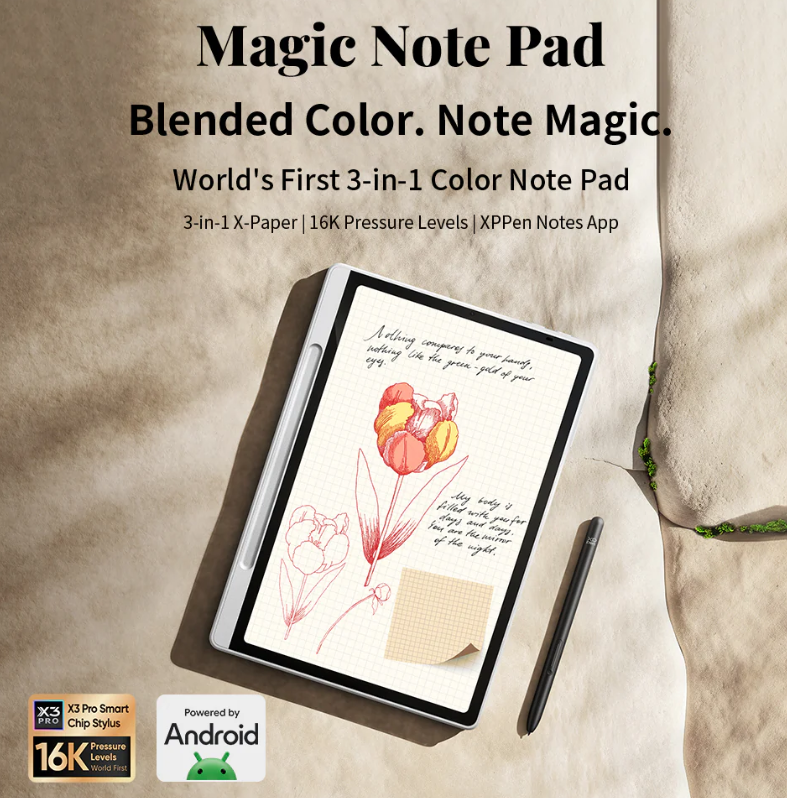
XPPen Magic Note Pad has officially launched in India, perfect for students, professionals, and creators who want a paper-like digital writing experience. With a focus on note-taking, reading, and light productivity, this device blends the feel of traditional notebooks with modern Android features. It aims to stand out in a growing segment of smart writing tablets by offering eye comfort, precision stylus input, and built-in productivity tools.
Display and Writing Experience
The Magic Note Pad features a 10.95-inch X-Paper display designed to mimic real paper. The AG nano-etched surface reduces glare and reflections, making it comfortable for long reading or writing sessions. It supports 16.7 million colors, 400 nits brightness, and a smooth refresh rate for clear visuals.
A dedicated X-Paper Key lets users switch between three modes: Ink, Light, and Natural, depending on the task. Whether you’re sketching, taking notes, or reading documents, the screen adapts easily, making it versatile for everyday use.
Performance and Features
Running on Android 14, the device supports apps from the Google Play Store, giving it more flexibility than traditional e-note devices. It comes with 128GB of storage, which is enough for notes, PDFs, and apps.
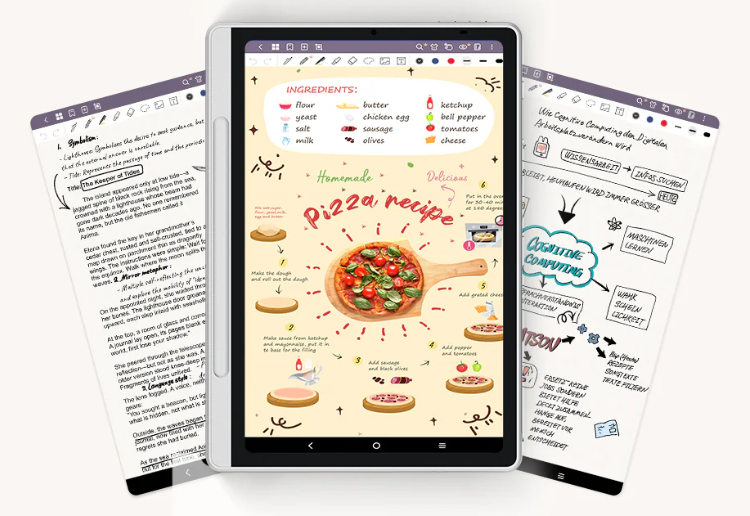
The XPPen Notes app is built-in and offers features like handwriting-to-text conversion, PDF annotation, auto-save, and cloud syncing with Google Drive and OneDrive. The included X3 Pro Pencil 2 provides 16,384 pressure levels, ensuring accurate and smooth writing. It also supports magnetic attachment and shortcut keys for better productivity.
For remote work, the tablet includes a 13MP front camera, dual speakers, and microphones, making it suitable for video calls and online meetings.
Battery and Design
The Magic Note Pad packs an 8000mAh battery with 20W fast charging, designed to last through a full day of usage. It is slim at 7mm and lightweight at 495g, making it easy to carry around.
The display is TÜV SÜD certified for low blue light, which helps reduce eye strain during long usage sessions.
Price and Discount Offer
XPPen Magic Note Pad is priced at Rs. 39,999, but it is currently available at a discounted price of Rs. 38,999. Buyers can get an additional 5% discount using the code GizmoXP, making it a more attractive deal for early adopters. Overall, the device positions itself as a strong option for users looking for a paper-like digital writing experience with modern smart features.
Buying a budget projector used to require a lot of compromises. For a long time, spending less than $300 meant dealing with dim images, clunky interfaces, and the need to plug in a separate streaming stick just to watch Netflix. But as we look at the market in May 2026, the baseline for entry-level projectors has noticeably improved.
Features that were once limited to more expensive models, like built-in adjustable stands, sealed optical engines to prevent dust buildup, and officially licensed smart TV software, are now standard in this price range. If you are looking for a simple way to watch movies on your ceiling or set up a casual outdoor movie night, here are the most practical budget projectors available right now.
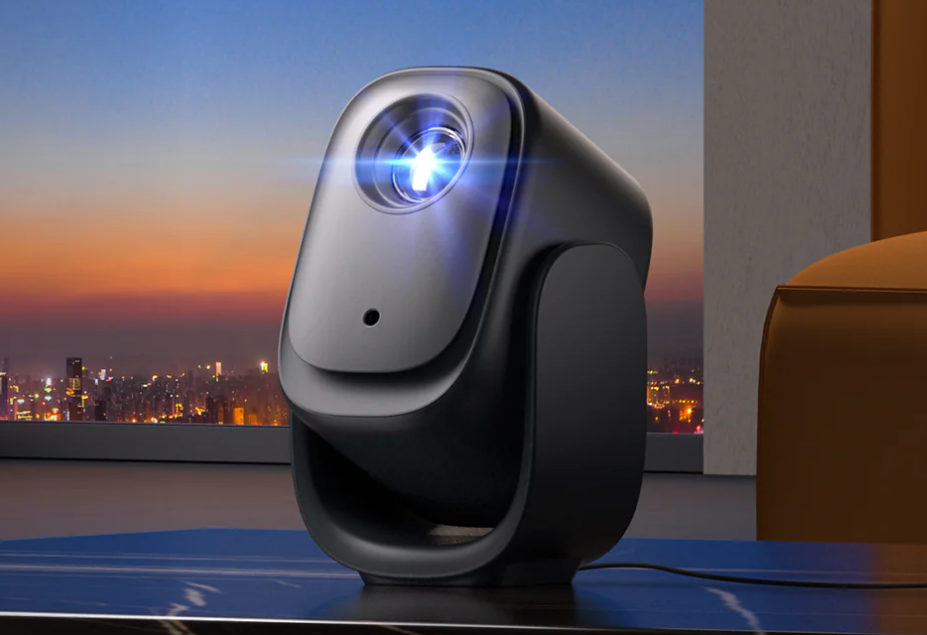
TCL Projector C1
TCL is well-known for its budget televisions, and the C1 applies that same approach to projectors. For $250, it provides a native 1080p resolution and runs on official Google TV, which includes native support for Netflix.
The most useful physical feature is its 285-degree adjustable gimbal, which lets you easily point the image at a wall or ceiling without needing to prop the device up on books. At 230 ISO Lumens, it is not particularly bright, so you will need a dark room for the best picture.
However, it includes a fully sealed optical engine to keep dust off the internal lens and a decent 8W built-in speaker, making it a reliable, low-maintenance option.
Price: $249.99
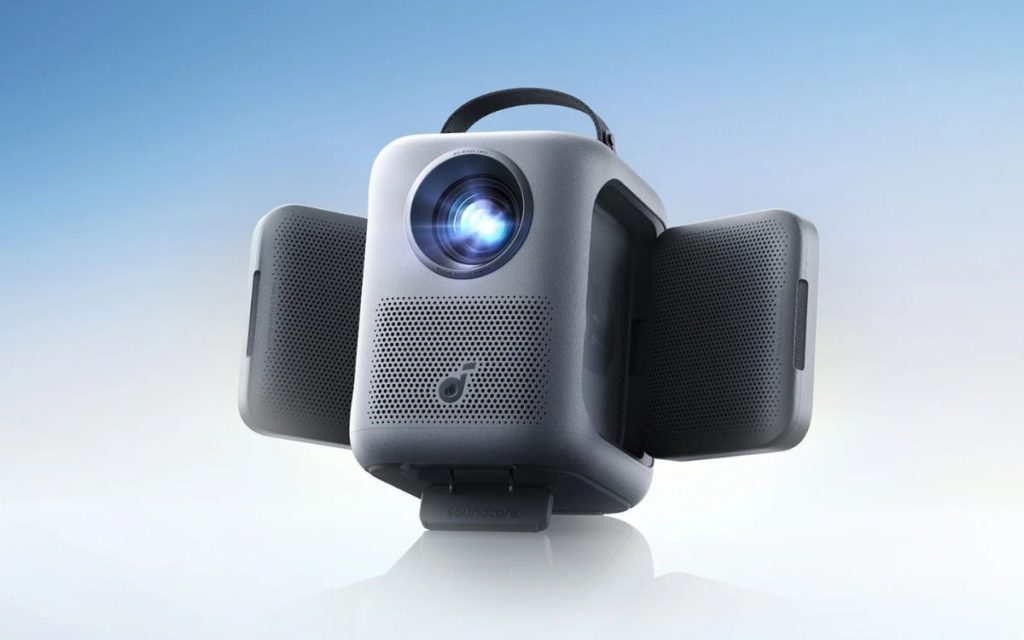
Anker Soundcore Nebula P1i
Anker’s Nebula series has been a staple in portable projectors for a while. The P1i sits right at the edge of the $300 budget and focuses heavily on audio flexibility.
It features dual 10W speakers that can physically rotate 90 degrees horizontally or 200 degrees vertically, allowing you to aim the sound toward your seating area regardless of how the projector is positioned.
It outputs 380 ANSI lumens, which gives it a slight edge in brightness over the TCL, and it uses an all-glass lens. Like the C1, it runs Google TV and handles autofocus and keystone correction automatically. It’s a solid all-in-one unit if you want better built-in sound.
Price: $299
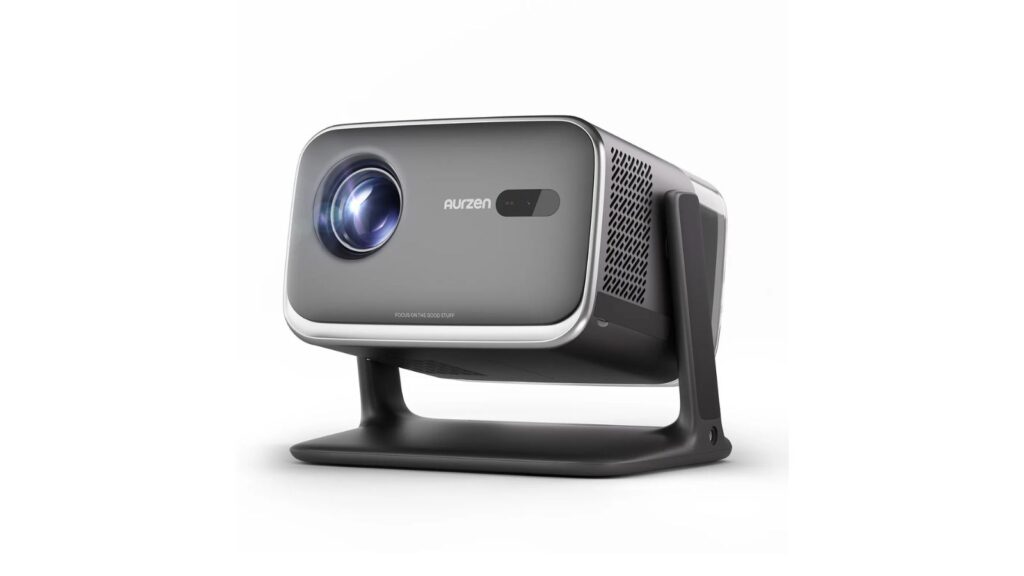
Aurzen Boom Mini
The Aurzen Boom Mini has a retail price of $349.99, but it is frequently discounted to around $245. If you can buy it at the lower price, it offers the highest brightness on this list at 500 ANSI lumens. This makes it a bit more forgiving if you have a small amount of ambient light in your room.
It includes a 110-degree adjustable stand, Google TV, and dual 10W speakers. The trade-off for the brighter lamp and larger speakers is that the unit is a bit bulkier than its competitors, but it’s a fair compromise if you prioritize a brighter image.
Price: ~$245 (with standard discounts)
Dangbei N2 Mini
If your budget is strictly capped at $200, the Dangbei N2 Mini is a capable entry-level choice. To keep the price down, Dangbei uses a custom Linux operating system instead of Google TV. Fortunately, it still comes with official licenses for Netflix, Prime Video, and YouTube, which covers the basics for most users.
It features a 190-degree tilt stand, a sealed optical engine, and outputs 200 ISO lumens. It also runs quietly, operating under 27dB. It’s a straightforward, compact projector that works well for small spaces like dorm rooms.
Price: $199
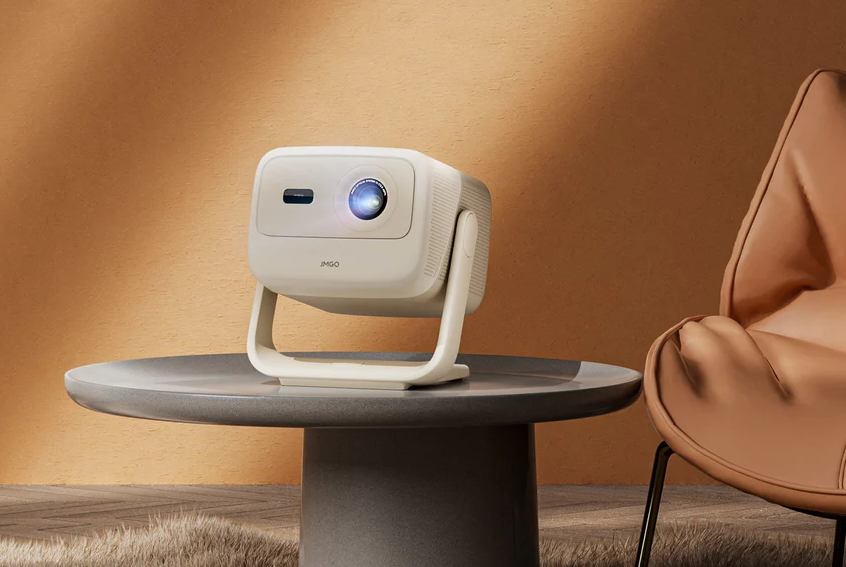
JMGO N1S Nano
While the JMGO N1S Nano sits above the $300 threshold, it is worth mentioning if you have a little flexibility in your budget. At $399, you get a noticeable improvement in color accuracy. It covers 90% of the DCI-P3 color gamut and outputs 460 ISO lumens, resulting in a richer, more vibrant picture than the cheaper models.
It retains the convenience features found in the others, including a 127-degree gimbal stand, Google TV, and automatic image adjustment, all packed into a lightweight 3.9-pound frame. It is a sensible step up if you want better visual fidelity without moving into the $500+ price bracket.
Price: $399
For more daily updates, please visit our News Section.
Reports have revealed that Xiaomi is gearing up to launch the Xiaomi 17T and 17T Pro for the global market. While the 15T series was unveiled in September, the 17T lineup is expected to debut much earlier, possibly as soon as this month. Ahead of the impending launch, Winfuture has published a report revealing the full specifications and official renders of the 17T duo.
Xiaomi 17T, 17T Pro specifications (rumored)
The Xiaomi 17T is expected to feature a 6.59-inch display with a resolution of 2756 x 1268 pixels and a 120Hz refresh rate. The 17T Pro may come with a larger 6.83-inch panel offering 2772 x 1280 resolution and a 144Hz refresh rate, indicating smoother visuals and improved responsiveness on the Pro model.
In terms of performance, the standard model could be powered by the MediaTek Dimensity 8500 Ultra chipset, while the Pro variant may feature the Dimensity 9500vv. Both phones are likely to include 12GB RAM with storage options of 256GB and 512GB. The Xiaomi 17T is said to house a 6500mAh battery with 67W charging support, while the 17T Pro could pack a 7000mAh battery with 100W wired charging and up to 50W wireless charging.
For cameras, both devices are expected to feature a triple rear setup with a 50-megapixel primary sensor, a 50-megapixel telephoto lens offering 5x optical zoom, and a 12-megapixel ultra-wide camera. On the front, both models may include a 32-megapixel camera for selfies and video calls.
The Xiaomi 17T is likely to come with a plastic build, whereas the Pro variant may feature a metal frame. The design differences between the two are expected to be minimal, mainly in size and camera module detailing.
Xiaomi 17T, 17T Pro price (rumored)
The Xiaomi 17T is tipped to start at 749 euros (~$935) for the 12GB+256GB variant, while the Xiaomi 17T Pro could be priced at 999 euros (~$1,170) for the 12GB+512GB model. Both devices are expected to be available in black, with the Xiaomi 17T also likely to come in light blue and pink finishes, while the 17T Pro will have dark blue and dark pink shades.
For more daily updates, please visit our News Section.
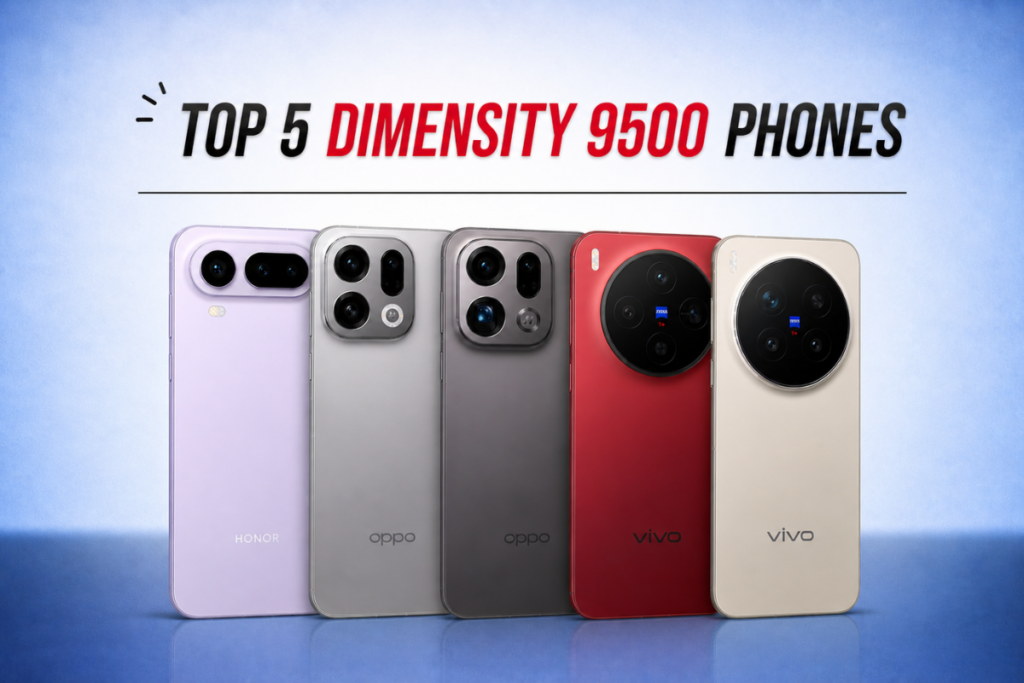
The Dimensity 9500 is MediaTek’s most powerful smartphone chipset right now, with performance and efficiency going toe-to-toe with Qualcomm’s Snapdragon 8 Elite Gen 5 SoC, but at a lower price point.
If you’re in for a high-end upgrade with strong hardware and long-term software support, these are the top five Dimensity 9500-powered smartphones to watch in 2026.
The Vivo X300 Pro offers excellent rear cameras. The triple camera setup includes a 50MP primary shooter, a 200MP periscope telephoto lens, and a 50MP ultrawide camera. The 50MP selfie camera takes great shots with excellent details.
The smartphone features a 6.78-inch LTPO AMOLED screen with a 120Hz refresh rate and 4500 nits of peak brightness. It supports HDR10+ and Dolby Vision. The device ships with Android 16 out of the box and promises up to five generations of OS upgrades, all the way up to Android 21.
The X300 Pro houses a 6,540mAh battery, but the EU markets get a slightly lower capacity at 5,440mAh. The charging capabilities remain the same across all markets: 90W wired fast charging and 40W wireless charging support. The Vivo phone also offers strong connectivity, featuring Wi-Fi 7, Bluetooth 5.4, NFC, and USB Type-C 3.2.
The Vivo X300 (review) is a compact flagship phone, featuring a 6.31-inch LTPO AMOLED screen. It supports a 120Hz refresh rate, HDR10+, HDR Vivid, and a peak brightness of 4500 nits.
The smartphone features a different camera setup than its Pro model. The triple camera setup includes a 200MP primary camera, a 50MP periscope telephoto lens, and a 50MP ultrawide camera. The selfie camera is still a 50MP snapper. The X300 also boots Android 16 out of the box and promises OS upgrades up to Android 21.
The Vivo X300 packs a 6,040mAh battery, with EU markets getting a slightly lower capacity of 5,360mAh. The charging speeds, though, match the Pro model, so you still get 90W wired charging and 40W wireless charging.
The Find X9 Pro (review) has a 6.78-inch LTPO AMOLED panel with a 120Hz refresh rate, HDR10+, HDR Vivid, and a peak brightness of 3600 nits. The display specs closely resemble the Vivo X300 Pro, and so do the camera specs, which include a 50MP primary camera, a 200MP periscope telephoto lens, and a 50MP ultrawide camera. The selfie camera is also a 50MP snapper.
The Oppo Find X9 Pro boots Android 16 and promises five major Android OS upgrades, up to Android 21. On the battery side, it houses a 7,500mAh battery with support for 80W wired charging and 50W wireless charging. Connectivity specs include Wi-Fi 7, Bluetooth 6.0, NFC, and USB Type-C 3.2.
The standard Find X9 (review) is a compact flagship phone featuring a 6.59-inch AMOLED screen with a 120Hz refresh rate, HDR10+, and 3600 nits of peak brightness. It boots Android 16 and promises OS upgrades up to Android 21.
The smartphone features three rear cameras, all with 50MP resolution. It includes a primary camera, a periscope telephoto lens with 3x optical zoom, and a 50MP ultrawide camera. The selfie camera has a lower resolution of 32MP.
Inside the device is a 7,025mAh battery with support for 80W wired and 50W wireless charging. On the connectivity side, the device supports Wi-Fi 7, Bluetooth 6.0, and NFC.
The Honor Magic 8 Pro Air (review) is currently exclusive to China. However, a global release is expected to follow soon, though an official confirmation is still awaited. The phone ships with a 6.31-inch LTPO OLED panel, featuring a 120Hz refresh rate, Dolby Vision, and 6000 nits of peak brightness.
The smartphone boots Android 16 OS with the MagicOS 10 skin on top of it. It features a triple camera setup on the back, comprising a 50MP primary shooter, a 64MP periscope telephoto lens, and a 50MP ultrawide camera. The front side has a 50MP selfie snapper.
The Magic 8 Pro Air houses a 5,500mAh battery with 80W wired and 50W wireless charging support. And its connectivity specs include Wi-Fi 7, Bluetooth 6.0, NFC, and USB Type-C 2.0.
Samsung appears to be preparing a subtle yet noticeable visual change for its next major software update. Early leaks around One UI 9 indicate that the company is refining how its media player looks and reacts during playback, hinting at a more immersive experience.
One UI 9 media player may get dynamic color integration
In One UI 9, Media Player seek bar changes its color as per the song
Information shared by tipsters Tarun Vats and Rajesh Rajput suggests that the media player in One UI 9 could feature colour-shifting elements. Instead of sticking to a fixed design, the playback bar and interface accents adapt based on the album art of the track being played. This creates a more responsive visual layer that changes in real time as users switch songs.
Screenshots indicate that this effect also extends to the Now Bar, where colours appear to blend with the overall interface. The shift is subtle but adds a sense of continuity between content and UI. The idea is to make the interface feel more connected to what the user is listening to, rather than remaining static.
In One UI 9, the media player seek bar dynamically changes color based on the album theme.
— Rajesh Rajput (Technobuzz) (@iRaj_r) May 2, 2026
This approach aligns with a broader trend where software interfaces adapt dynamically to content. By syncing colours with music, Samsung appears to be focusing on making everyday interactions feel more engaging without adding complexity to the user experience.
Work on One UI 9, which is expected to be based on Android 17, has already begun internally. Early builds were spotted running on the upcoming Samsung Galaxy S26 series as far back as March. Since then, more glimpses of the software have surfaced through leaked images and short clips.
The same source, Tarun Vats, has previously shared accurate timelines for earlier One UI releases and Galaxy launches, which adds credibility to this update. The redesigned media player is likely to debut with upcoming foldable devices such as the Samsung Galaxy Z Fold 8 and Samsung Galaxy Z Flip 8.
For more daily updates, please visit our News Section.
CMF has confirmed the India launch timeline for its next smartwatch, the CMF Watch 3 Pro. After earlier teasers, the company has now locked in a specific date, setting the stage for its arrival in the country. The specifications of the device are no secret since it was unveiled globally last year.
CMF Watch 3 Pro specifications and features
CMF Watch 3 Pro
The CMF Watch 3 Pro is scheduled to launch in India on May 6, following its earlier global debut. The smartwatch comes with a 1.43-inch circular AMOLED display featuring a 466 x 466 resolution, 60Hz refresh rate, and peak brightness of up to 670 nits with automatic adjustment. It features an aluminium alloy frame paired with a liquid silicone strap and carries an IP68 rating for dust and water resistance.
The device introduces a four-channel optical heart rate sensor, which is claimed to improve accuracy by over 10 percent compared to the previous generation. It also supports continuous SpO2 tracking, stress monitoring, sleep analysis with detailed insights, and women’s health tracking. With support for more than 130 sports modes and automatic workout detection, it aims to cover a wide range of fitness activities.
On the software side, the smartwatch includes AI-powered running guidance, personalized recovery insights, and workout summaries. Additional features include gesture controls, voice note transcription, real-time news updates, and integration with ChatGPT through the Nothing X app. The watch supports more than 120 watch faces and connects with both Android and iOS devices.
The CMF Watch 3 Pro packs a 350mAh battery, which is rated to last up to 13 days under typical usage. With heavier usage, it can last around 10 to 11 days, while enabling always-on display may reduce battery life to roughly 3.5 to 4.5 days.
CMF Watch 3 Pro price and availability
The CMF Watch 3 Pro will be available in India starting May 6 via Flipkart and select offline retail stores. Pricing has not been officially confirmed yet, but it is expected to be positioned under Rs 7,000 (~$75).
For more daily updates, please visit our News Section.
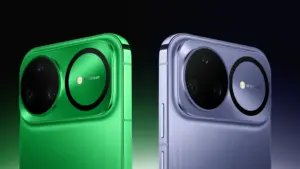
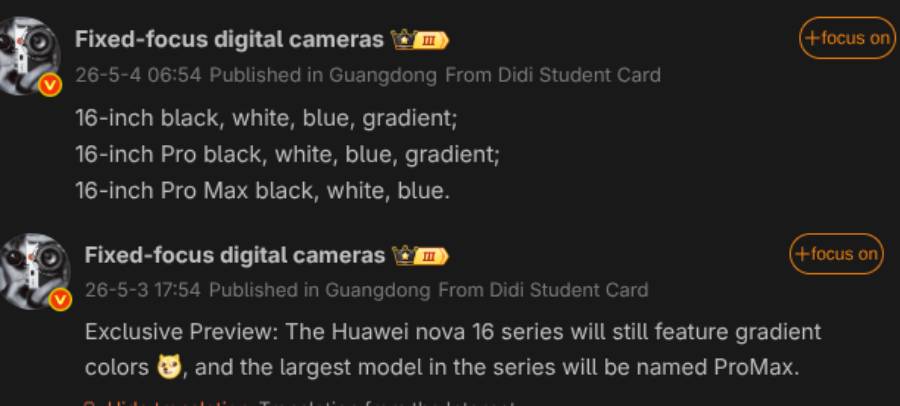
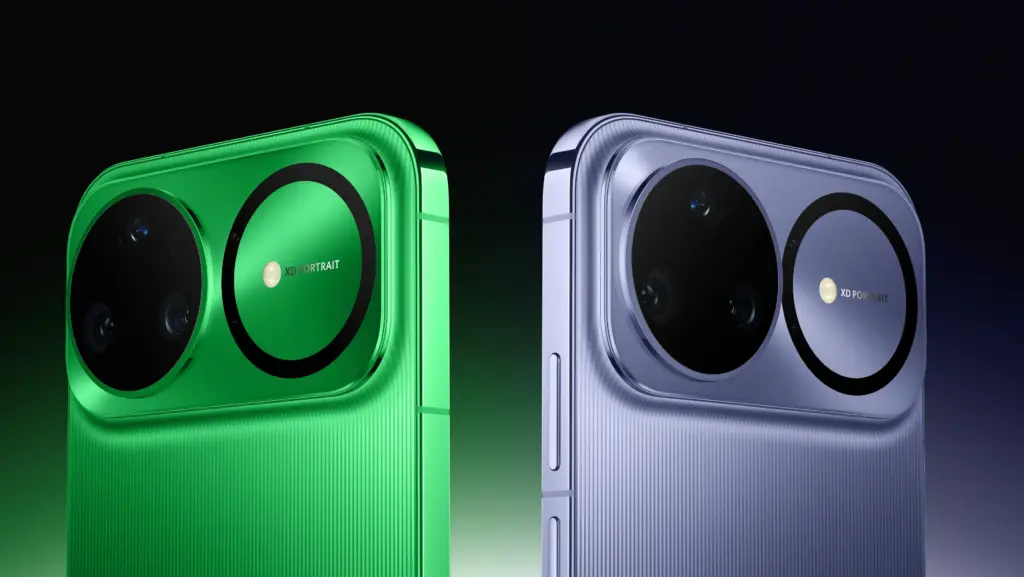
A new set of leaks has spilled the beans on what the Huawei Nova 16 series might look like. According to a post from tipster Fixed Focus Digital, the upcoming lineup could stick with some familiar colors.
The standard Nova 16 and Nova 16 Pro are said to arrive in classic black and white, along with a blue and a gradient finish. The top-end model, however, may skip the gradient look entirely with just black, white, and blue on its helm.
The top model is also where things get a bit more interesting. A newer leak suggests Huawei might call it the Huawei Pura Nova 16 Pro Max, instead of the previously expected “Ultra” branding.
Fortunately, a previous report gives us an idea of what this Ultra—or now Pro Max—model might offer.
Huawei Nova 16 Pro Max Possible Specifications
A previous report from tipster Digital Chat Station revealed a prototype device in the works with a 6.84-inch 1.5K LTPO display. It’s expected to be the top-tier model in the Nova 16 series, powered by a “9-series flagship processor,” which likely means a Kirin 9000-series chip, along with a battery that could land around 7000mAh.
As for the camera, the device is said to include a 50-megapixel main sensor in the 1/1.3-inch range, paired with a 50MP periscope telephoto lens and a multispectral sensor. Wireless charging is also reportedly part of the package.
For context, the Huawei Nova 15 series launched late last year with Kirin 8020 and 9010S chipsets, starting at 2699 yuan. The Ultra variant stood out mostly for its dual “red maple leaf” design, rather than major hardware changes.
Like most early leaks, none of this is final. Names, specs, and even the overall direction could change before Huawei makes anything official.
For more daily updates, please visit our News Section.
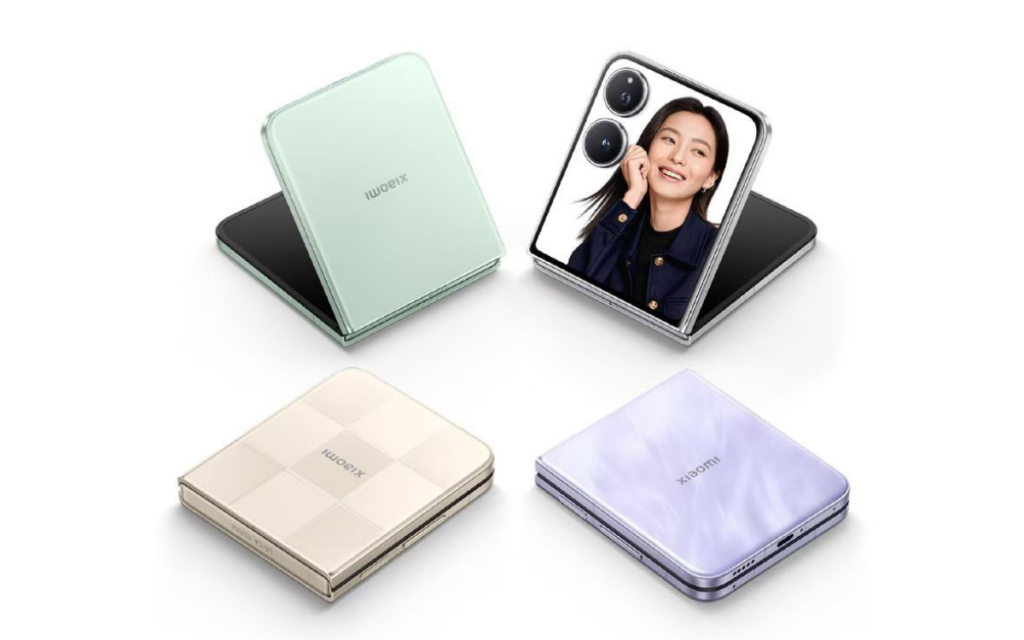
Last year, Xiaomi skipped launching a horizontal foldable smartphone, but recent reports suggest that it may introduce one this year. While it unveiled the Xiaomi Mix Flip 2 last year, there have been some reports that the Mix Flip 3 may not be unveiled this year. Now, a new update reveals that Xiaomi have discontinued the flip phone lineup
Xiaomi Mix Flip series may come to an end
Xiaomi Mix Flip seris discontinued, claims DCS
According to a post on Weibo, a user asked tipster Digital Chat Station whether Xiaomi plans to launch a new compact foldable phone this year and if it would bring upgrades over the Mix Flip 2. In response, the tipster suggested that Xiaomi has discontinued the Mix Flip series.
There is no official confirmation from Xiaomi yet, so the exact reason behind this move remains unclear. However, it is likely tied to market dynamics. Despite small foldables performing reasonably well globally, the segment remains niche and production costs are still high. Compared to larger foldables, compact flip devices may not offer the same value proposition.
Xiaomi MIX Flip 2
Xiaomi is not alone in slowing down its efforts in this category. There is also uncertainty around whether Honor will launch a successor to its flip phone lineup after the Honor V Flip 2. Similarly, Vivo introduced the X Flip as its first flip device, and Oppo launched the Find N3 Flip in 2023, but neither brand has followed up with new flip models since then.
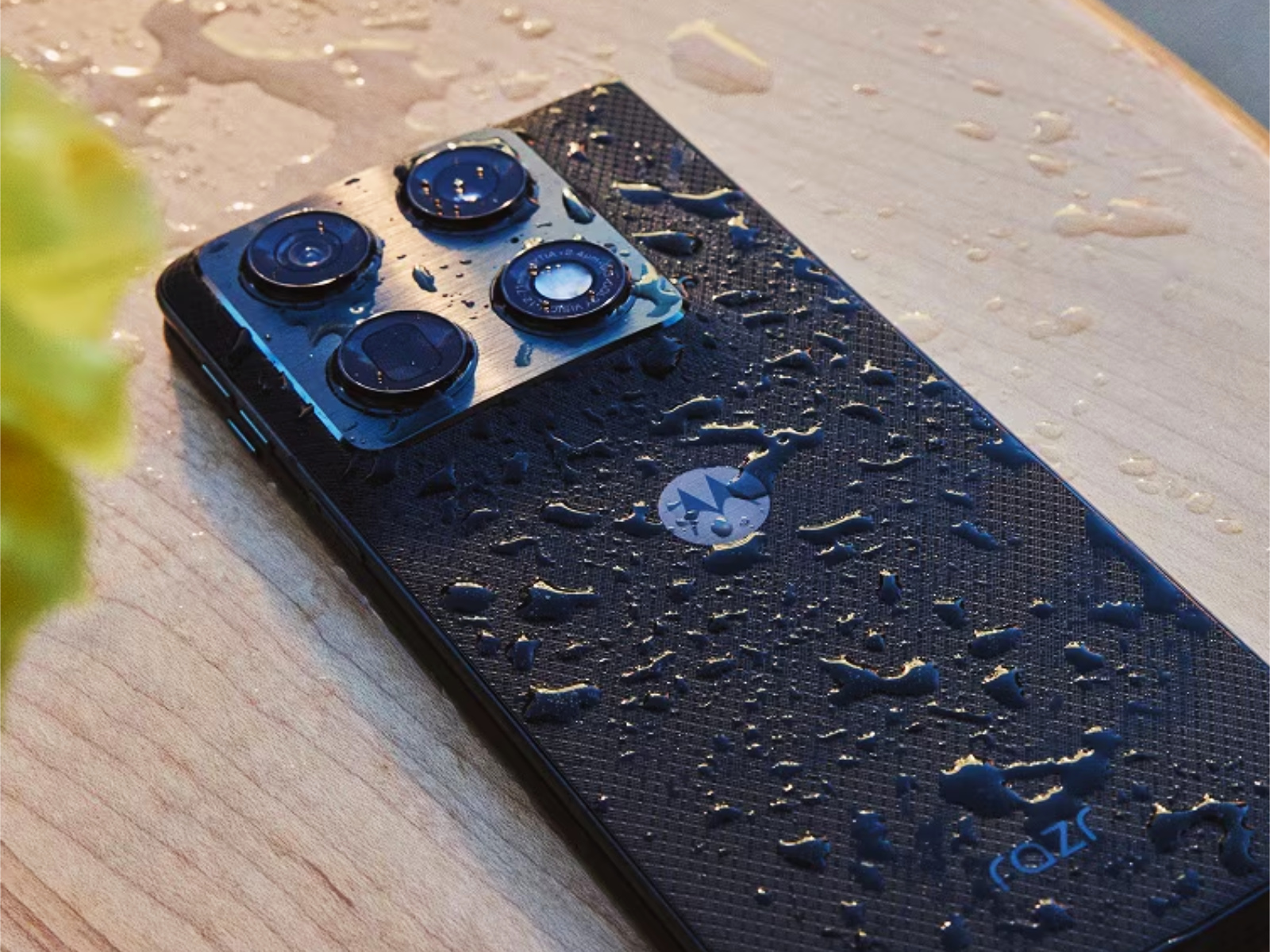
On the other hand, Motorola continues to remain active and dominate in the segment. The brand recently launched multiple flip devices, including the Razr 70, Razr 70+, and Razr 70 Ultra, expanding its presence instead of scaling back.
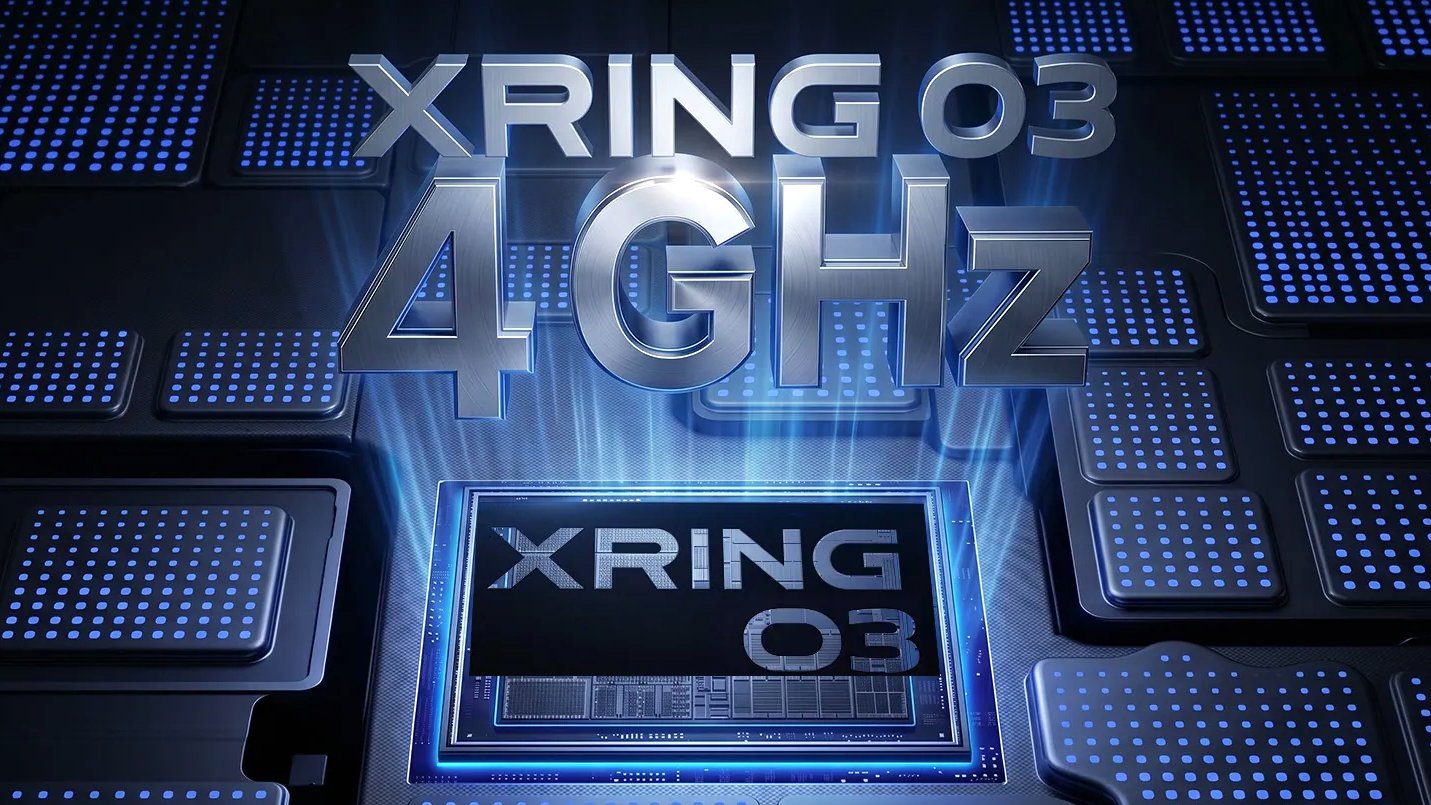
Coming back to Xiaomi, its upcoming horizontal foldable smartphone is expected to feature the in-house Xring O3 chip. The device is likely to launch around July or August, although its final branding remains uncertain. It could arrive as the Mix Fold 6 or possibly under a new naming scheme such as the Xiaomi 17 Fold.
For more daily updates, please visit our News Section.
Samsung’s security update rollout, which had lagged in the last couple of months, is finally getting back on track. The April 2026 security patch started rolling out to the Galaxy S26 series on the very first day of April, and it has gradually expanded to over a dozen Galaxy devices since.
Here’s a list of Galaxy devices that have started receiving the April 2026 security update:
Galaxy S series
Galaxy S26, S26+, S26 Ultra
Galaxy S25, S25+, S25 Ultra, S25 Edge, S25 FE
Galaxy S24, S24+, S24 Ultra, S24 FE
Galaxy S23, S23+, S23 Ultra, S23 FE
Galaxy Z series
Galaxy Z TriFold
Galaxy Z Fold 7, Z Flip 7, Z Flip 7 FE
Galaxy Z Fold Special Edition
Galaxy Z Fold 6, Z Flip 6
Galaxy Z Fold 5, Z Flip 5
Galaxy Z Fold 4, Z Flip 4
Galaxy A series
Galaxy A57, A56, A55, A54, A53
Galaxy A37, A36, A35, A34
Galaxy A26, A25
Galaxy A16, A15
Galaxy A07, A07 4G
Galaxy M series
Galaxy M54
Galaxy M16
Galaxy Tab series
Galaxy Tab S10+, Tab S10 Ultra
Galaxy Tab A11+
Galaxy XCover series
Galaxy XCover 7, XCover 7 Pro
Galaxy XCover 6 Pro
Samsung releases software updates in batches, so even if your device is on the list, it may take a few days before the update shows up. You can manually check for updates by navigating to Settings > Software updates > Download and install.
The April 2026 security patch, like any other, fixes vulnerabilities found in the previous software version. It doesn’t include new features or visual upgrades, but it strengthens security to keep the device safe from critical security flaws.
The April security patch, in particular, addresses 47 vulnerabilities in total. Of these, 33 come from Google as part of the Android Security Bulletin for April 2026, 10 from Samsung Mobile, and the remaining 4 from Samsung Semiconductor. Some of those Samsung-specific patches are related to Device Care and DeX.
There are still many more Galaxy devices in line to receive the latest security update. The rollout should gradually cover them over the coming days and weeks. We’ll update the list periodically to ensure it remains fresh. You can revisit the page later for the latest information.
While the security update rollout is back on track after being delayed in February and March, Samsung is still struggling with One UI 8.5. The company hasn’t begun rolling out the update despite a really long beta program. Hopefully, the wait will be over soon. You can check the One UI 8.5 eligible devices list here.
We’ll update you with the latest developments in our Samsung section. You can visit the page from time to time to stay updated. Or, join our Telegram channel to get instant updates.
A recent report hinted that Xiaomi could bring back the Mix lineup with the Mix 5. The claim was based on internal database entries referencing a device codenamed “hongkong” with the model number Q5.
This detail led to speculation around a 2026 release window and a possible continuation of Xiaomi’s Mix branding, which has historically been tied to more experimental hardware.
However, a reliable Chinese tipster, Digital Chat Station, has refuted the claims, stating that there is no such product as the Mix 5 in development. According to the tipster, the Q5 model number isn’t tied to a Mix device at all, but rather to Xiaomi’s next-generation flagship, likely part of the Xiaomi 18 series.
What was rumored
The previous leak about the supposed Mix 5 hinted at an under-display camera similar to the one seen on the Xiaomi Mix 4. It was also expected to feature experimental ideas, such as a magnetic lens system for the rear camera. Xiaomi had previously teased such an accessory in 2025, and reports suggested it could be nearing mass production.
Xiaomi 18 Pro render
The rumored hardware also included Qualcomm’s next flagship chip, the Snapdragon 8 Elite Gen 6 Pro, along with HyperOS 4 out of the box. There were even hints at a broader global release, something the Mix lineup has typically avoided.
Now that the rumor has been refuted, these experimental ideas seem more likely to be reserved for the Xiaomi 18 series.
Separate leaks around that lineup describe a compact flagship with a next-generation 2nm chipset, possibly the standard Snapdragon 8 Elite Gen 6, along with dual 200-megapixel cameras and a battery capacity of around 7,000mAh. Xiaomi is also said to be working on a slimmer design with ultra-narrow bezels using LIPO packaging.
For more daily updates, please visit our News Section.
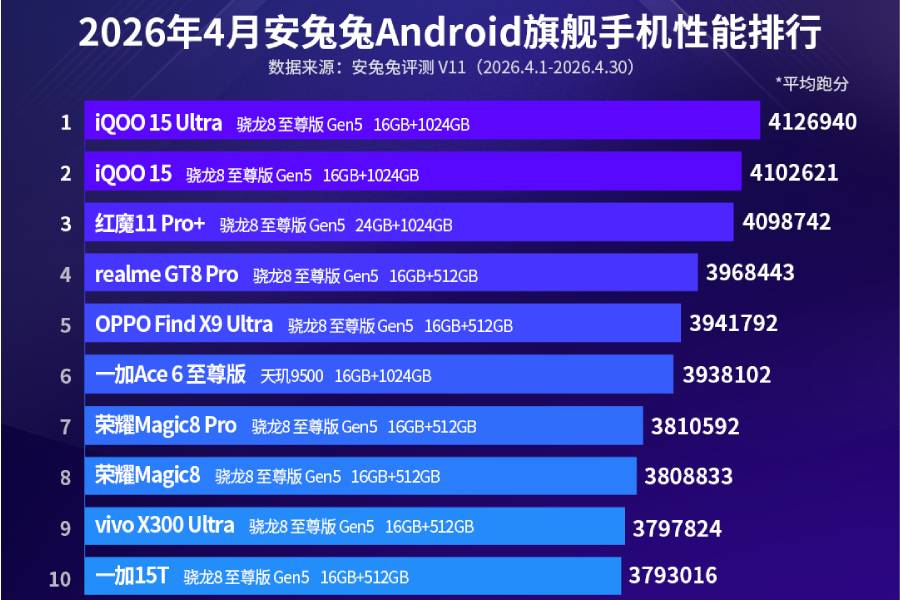
AnTuTu’s latest Android performance rankings for April are in, and not much has changed from last month. The same phones are at the top with iQOO still leading the pack with iQOO 15 Ultra.
The iQOO 15 Ultra is the best performing phone for April with a score of 4,126,940. Close behind is the iQOO 15 with 4,102,621. Both devices rely on Qualcomm’s Snapdragon 8 Elite Gen 5 chip with 16GB RAM and 1TB storage, and are tuned aggressively for performance with a good thermal management.
Right behind them is the Red Magic 11 Pro+, scoring 4,098,742. It uses the Snapdragon 8 Elite Gen 5 too, but has 24GB RAM paired with 1TB storage.
What stands out more broadly is the chipset split. Out of the top ten Android phones this month, nine are powered by the Snapdragon 8 Ultra Gen5. The only exception is the OnePlus Ace 6 Ultra, which uses MediaTek’s Dimensity 9500 and ranks sixth in the chart.
Compared to March, the overall structure hasn’t changed dramatically. The iQOO 15 Ultra was already in first place then, even posting a slightly higher score of 4,174,911. Devices like the Red Magic 11 Pro+ and iQOO 15 were also present in the upper tier, though their positions have adjusted slightly.
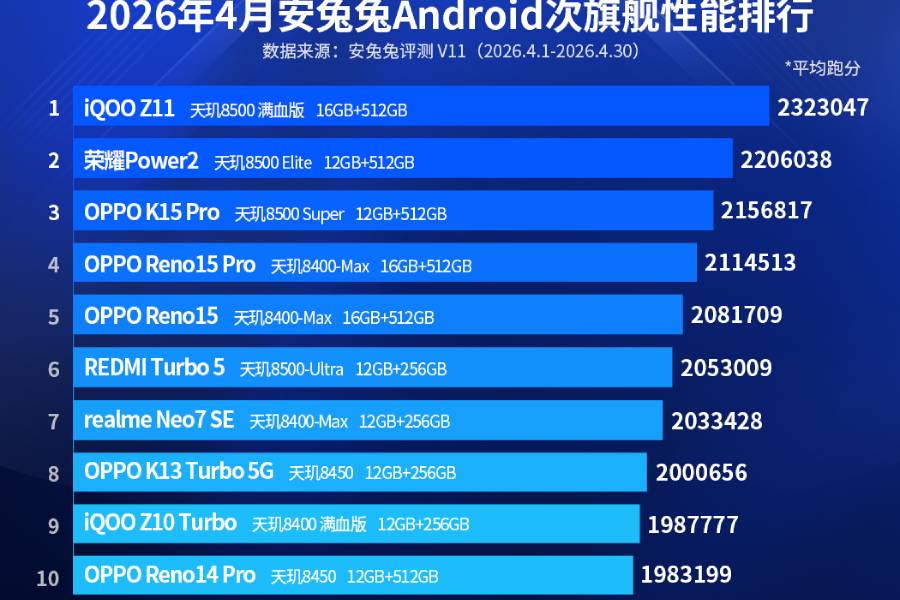
AnTuTu mid-range phones and tablets ranking for April
The mid-range, or what AnTuTu classifies as “sub-flagship,” tells a different story. Here, MediaTek has a stronger foothold. The iQOO Z11 leads this category with 2,323,047 points, powered by the Dimensity 8500. It’s followed by the Honor Power2 and Oppo K15 Pro, both also running on Dimensity chips.
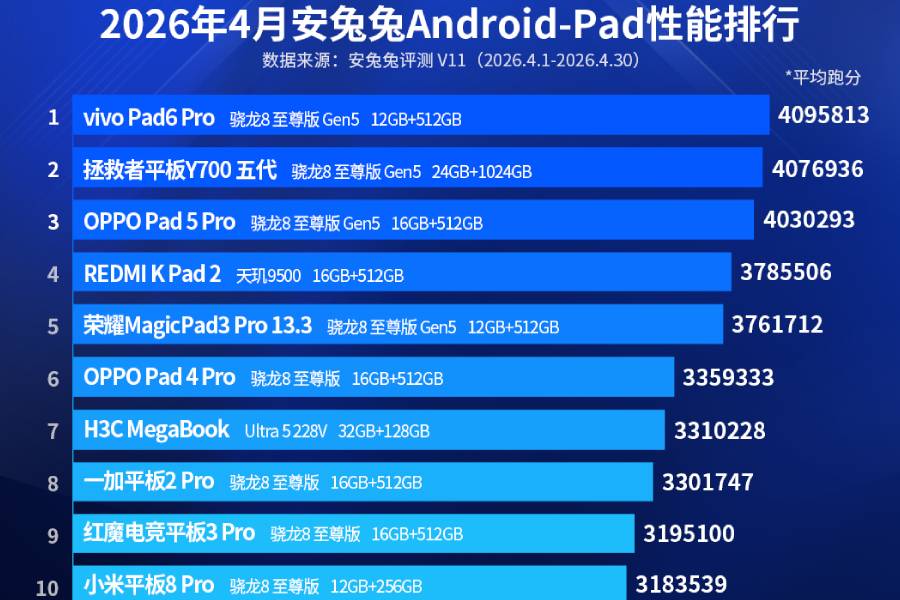
On the tablet side, performance is increasingly mirroring flagship phones. The Vivo Pad 6 Pro takes the top spot with a score of 4,095,813. It’s followed by the Legion Tablet Y700 5th Generation and the Oppo Pad 5 Pro. All three use the flagship Snapdragon 8 Elite Gen 5 chip.
Looking back at March, the tablet category has seen a small shift at the top, with Lenovo’s Legion tablet previously holding first place. Now, Vivo has moved ahead, though the overall performance range remains largely similar.
It has not been that long since the OnePlus Ace 6 launched, but early details about its successor are already starting to show up. The Ace 6, which arrived in October 2025, set a pretty high bar with features like a 165Hz display, Snapdragon 8 Elite chip, IP69K rating, and a surprisingly large 7,800mAh battery.
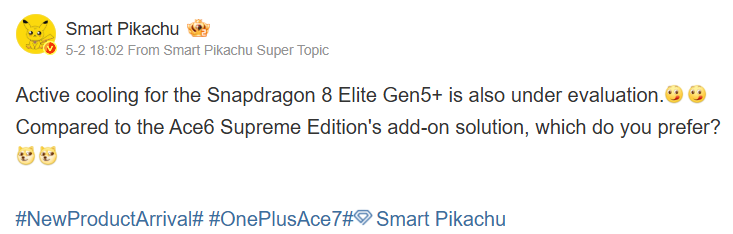
Now, attention is shifting to the OnePlus Ace 7. According to Weibo tipster Smart Pikachu, the phone could use the Snapdragon 8 Elite Gen 5, the successor to the Snapdragon 8 Elite used in the Ace 6. It may also feature an active cooling system, which even the recently launched Ace 6 Ultra lacks. If that holds true, the Ace 7 should offer noticeably better sustained gaming performance compared to both the Ace 6 and possibly even the Ace 6 Ultra.
There is also talk of an “ultra-high refresh rate” display. No exact number yet, but expectations are clearly going up. Some recent leaks even suggest future OnePlus flagships could push toward 240Hz panels, so it will be interesting to see where the Ace 7 lands.
The Ace series has usually been about offering strong performance at a relatively aggressive price, and that does not seem to be changing. If anything, OnePlus looks like it is trying to push it a bit further this time with better cooling and possibly a faster display.
As of now, a lot of the details are still up in the air. Things like battery size, camera hardware, and final design have not really been locked in publicly. But if even half of these leaks hold up, the Ace 7 could end up being one of the more interesting performance-focused phones in its segment when it arrives.
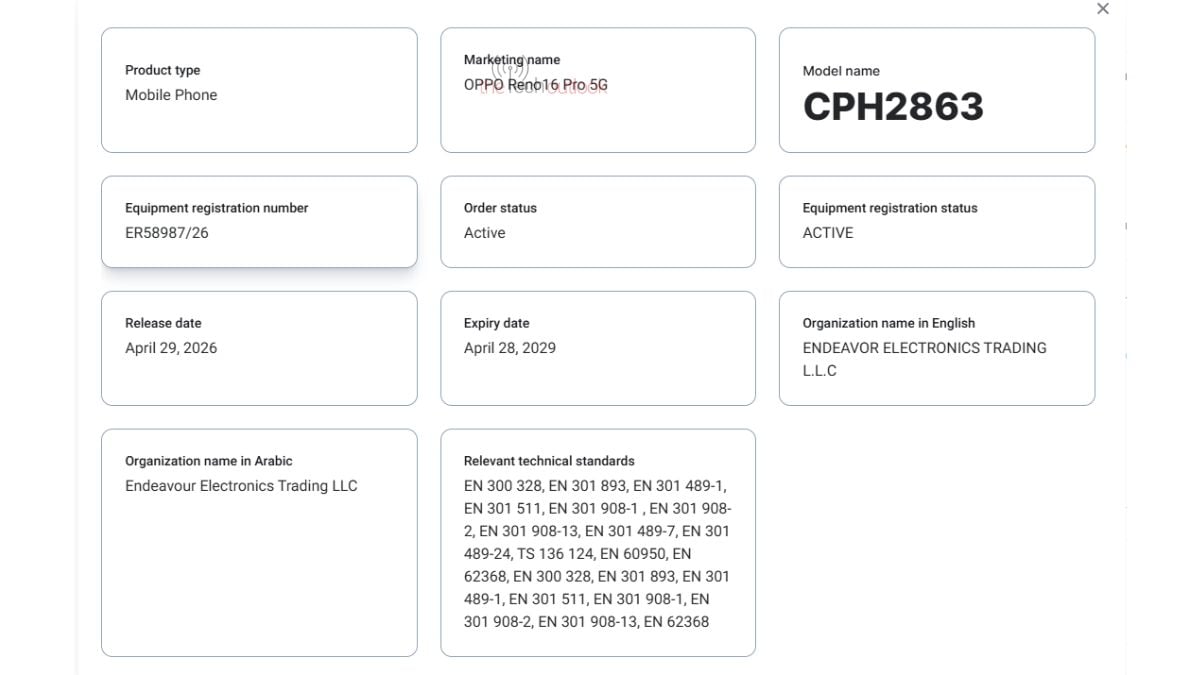
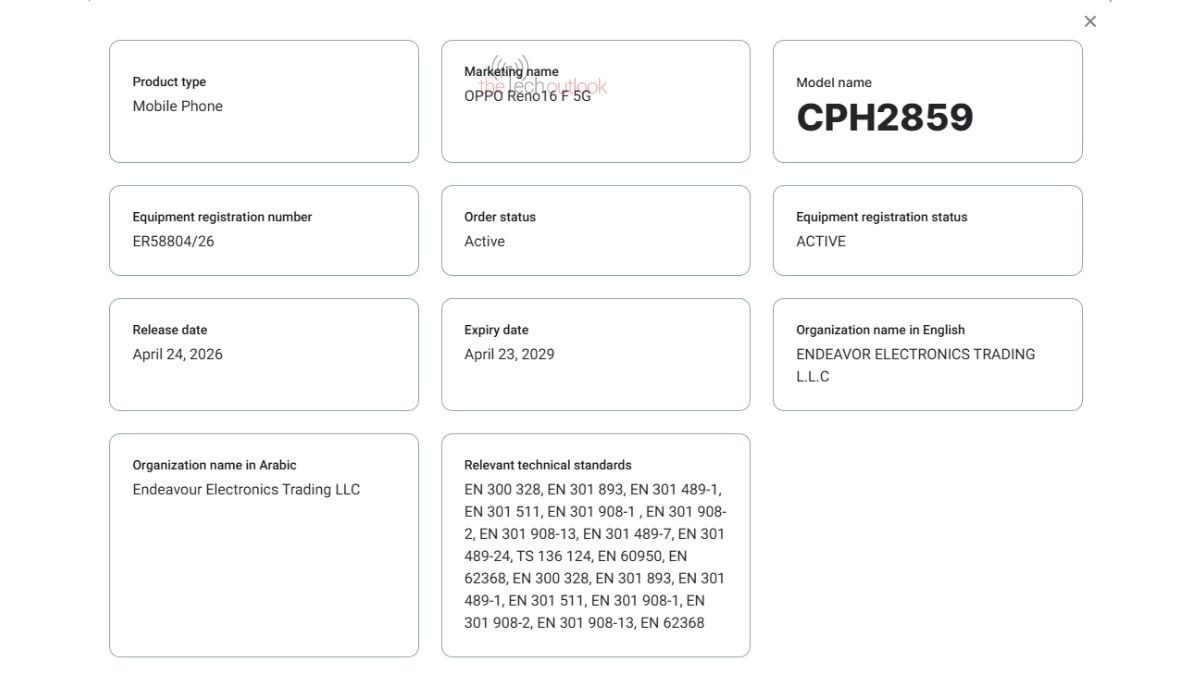
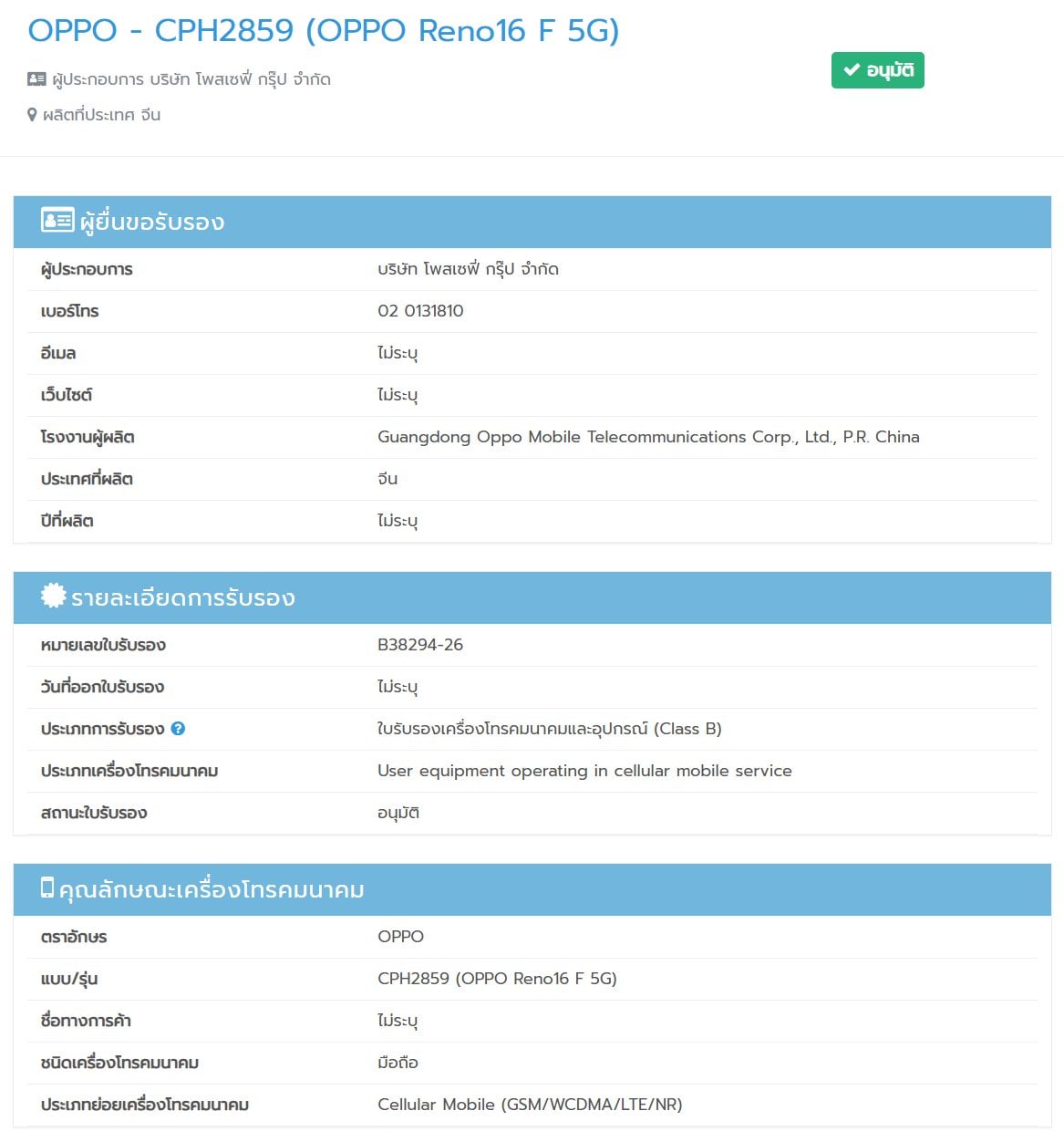
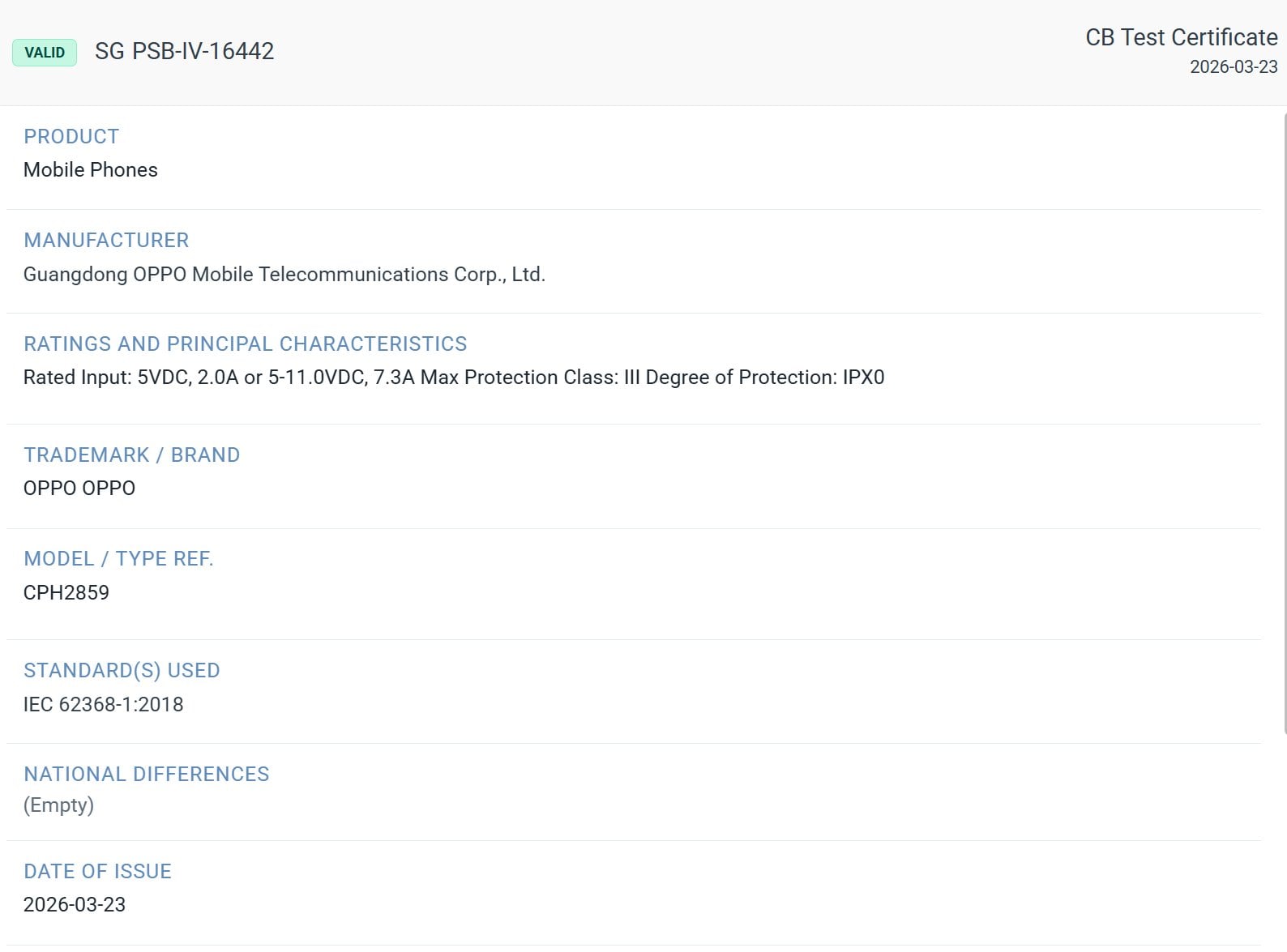
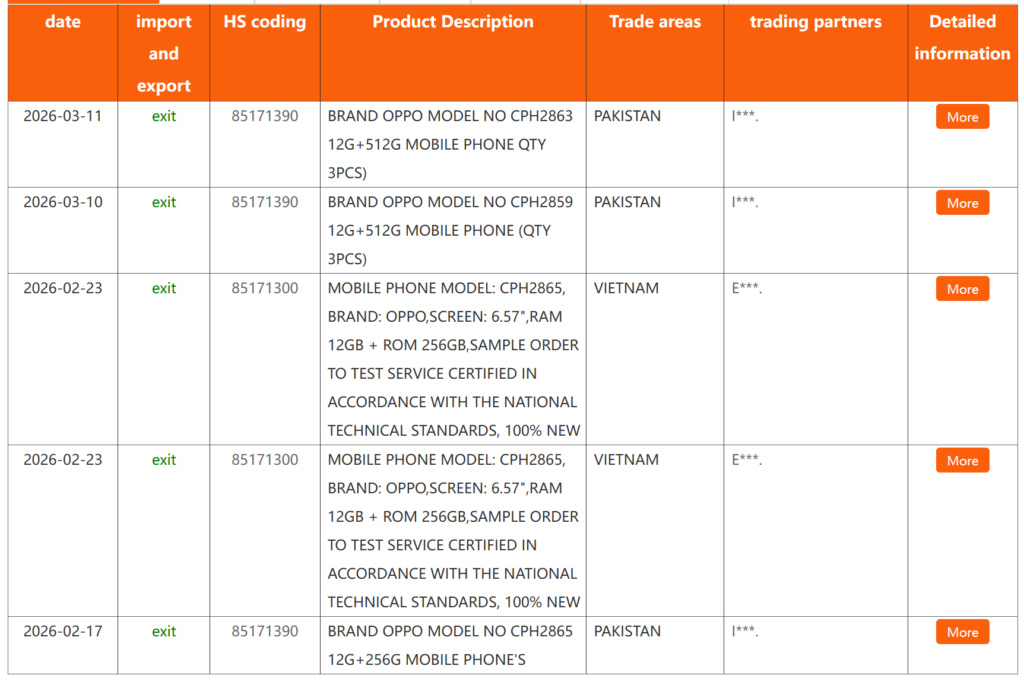
This month, Oppo will unveil the Reno 16 series in China. The lineup is expected to reach global markets around July. The Chinese lineup may include the Reno 16, Reno 16 Pro, and Reno 16c as successors to the Reno 15, 15 Pro, and 15c. A new development suggests that the global market may also receive a model called the Reno 16F.
Oppo Reno 16 Pro, Reno 16F global versions spotted
As seen above, the global versions of the Reno 16 Pro and Reno 16F have received multiple certifications. The UAE’s TDRA authority has approved the Reno 16 Pro with model number CPH2863, and the same device has also appeared on Europe’s EEC certification platform.
At the same time, the Reno 16F with model number CPH2859 has appeared in the databases of TDRA and Thailand’s NBTC certification authority. The device has also been approved by the TÜV certification platform, which reveals support for 80W fast charging.
The Reno 16 Pro and Reno 16F have also surfaced in the NBD database, revealing that both devices could be available in a 12GB + 512GB configuration.
The NBD database also reveals details about another Oppo phone with model number CPH2865, which could be part of the Reno 16 series. The listing suggests that the device features a 6.587-inch display, 12GB of RAM, and 256GB of built-in storage.
Reports have revealed that the Chinese versions of the Reno 16 and Reno 16 Pro will be powered by the Dimensity 8500 and Dimensity 9500 chipsets, respectively. It remains to be seen whether the Chinese and global versions will share identical specifications.
For more daily updates, please visit our News Section.
Lenovo is preparing to bring back its Legion gaming smartphone lineup after a long gap. The upcoming Lenovo Legion Y70 has now been confirmed for a May 19 launch in China, while several details about its hardware and gaming-focused features have surfaced online ahead of the announcement.
Lenovo Legion Y70 specifications
Legion Y70-
The Lenovo Legion Y70 is expected to arrive with a 6.8-inch flat display that supports a 2K resolution and a 144Hz refresh rate. The company is reportedly positioning the panel as an energy-efficient option despite its high resolution. Powering the device could be Qualcomm’s Snapdragon 8 Gen 5 chipset, which is likely to place it among the top-end gaming smartphones launching this year.
The phone is also said to focus heavily on thermal management. Reports suggest Lenovo may introduce a new three-layer cooling setup combining a vapor chamber, liquid metal cooling, and thermal gel. The cooling system is said to include a 5,500mm² VC plate aimed at keeping temperatures under control during extended gaming sessions and demanding workloads.
For battery performance, the Legion Y70 is tipped to pack a large 8,000mAh battery with support for 90W fast charging. Lenovo is also said to be focusing on long-term battery durability, with claims suggesting the battery could retain over 80 percent health even after several years of usage cycles.
In terms of design, the handset may continue the Legion gaming phone styling with a textured glass back panel and an aluminium frame. It is expected to arrive in black and silver color options. Apart from the Legion Y70, Lenovo is also expected to unveil several other products during its May 19 event, including new tablets, laptops, and foldable devices.
For more daily updates, please visit our News Section.
A couple of new flagship phones, including the iQOO 15T, are expected to hit the Chinese market this month. It is speculated that it may rival the likes of the OnePlus Ace 6 Ultra and Redmi K90 Max in its home market. Recently, tipster Digital Chat Station shared key details about the iQOO 15T, and now a new leak has emerged, revealing a few more details about it.
iQOO 15T specifications tipped
iQOO 15T key specs tipped
Starting from the front, the iQOO 15T will reportedly pack a massive 6.82-inch AMOLED panel delivering a 2K resolution along with a 144Hz refresh rate. Like its rivals, the 15T is said to feature the Dimensity 9500 chipset.
It is no slouch in the battery department, as it is said to pack a huge 8,000mAh battery. While it is expected to support 100W wired charging, it will reportedly lack wireless charging.
For photography, it will feature a 200-megapixel Samsung HP5 primary camera. However, details about its other rear cameras remain under wraps. The handset is also said to feature a metal frame.
Apart from this, iQOO is also said to be working on a new Neo 11 series phone for the Chinese market. While its specifications are yet to be revealed, it is said to be an incremental upgrade over the existing model.
Apart from these phones, iQOO is also expected to announce a flagship tablet called the iQOO Pad 6 Pro. This device is said to feature a 13.2-inch LCD screen with support for 4K resolution, a Snapdragon 8 Elite Gen 5chip, 16GB of RAM, 612GB of storage, and a 13,000mAh battery with 90W fast charging support. It may come in three shades: Man Dao, Grey Crystal, and Silver Wing.
For more daily updates, please visit our News Section.
Amazon is giving shoppers a wider look at how product prices have changed before they buy. Its price history feature, available through the AI shopping assistant Rufus, can now show pricing data across 30, 90, and 365 days.
Before Amazon built price history into its own shopping experience, customers often had to depend on third-party plugins, browser extensions, or external tracking sites. These services helped shoppers judge whether a deal was real, but they were not always reliable. Some had device or region limitations, and others could show missing or inaccurate pricing data.
Amazon is now bringing that information directly into the product page. Instead of relying only on a current discount label, shoppers can see how the price has moved over time before deciding whether to buy immediately or wait.
Amazon says more than 50 million customers have already used price history since the feature launched in 2024. The company also says the average customer checks price history three times a month, suggesting that it has become a regular part of the shopping process for both daily-use products and bigger purchases.
There are two ways to use the feature. On a product detail page, customers can click the price history link placed next to the product price. They can also open Rufus from the product page and ask questions such as “What’s the price history?”, “Has this item been on sale in the past 30 days?”, or “Is this the lowest price recently?”
On the Amazon Shopping app, the Rufus icon appears at the bottom right corner of the product detail page. On desktop, it is available in the top navigation bar.
The feature is currently available to customers in the U.S., UK, Canada, and India. The expanded 365-day price history view is now rolling out in the U.S., UK, and India, with broader availability expected in the coming weeks.
The tool could help shoppers compare prices on electronics, home appliances, furniture, winter clothing, or everyday essentials. A product may look heavily discounted on the day of purchase, but the one-year history can show whether that price is actually low compared with earlier months.
For more daily updates, please visit our News Section.
Casio has released two new Star Wars-themed watches ahead of the upcoming The Mandalorian and Grogu movie. The new models, which fall under the G-Shock and Baby-G product lines, are available starting May 1 in the US, UK, and the European Union.
Design Details
The release includes the $220 GM2100-1ASW and the $130 BA110YK-3ASW. Rather than just stamping a Star Wars logo on standard models, Casio customized the materials and colors to match the film’s two main characters. Both watches feature analog-digital hybrid displays, combining traditional watch hands with small LCD screens for additional data.
The GM2100-1ASW is the larger of the two, designed to reference the Mandalorian’s armor. It features a forged stainless steel bezel with an industrial, brushed finish that mimics the look of Beskar steel from the franchise. It measures 49.3 by 44.4 by 11.8 mm and weighs 72 grams.
As a standard G-Shock, it includes the company’s core guard structure for drop protection and offers 200 meters of water resistance. It also includes a hand shift feature, which temporarily moves the analog hands out of the way so you can read the digital display. It runs on two SR726W batteries, which Casio estimates will last about three years.
The second watch is the Baby-G BA110YK-3ASW, which serves as the Grogu tie-in. It costs $130 and comes in a green resin finish. It has a smaller footprint and weighs 45 grams, making it a better fit for smaller wrists.
The water resistance is lower on this model, rated at 100 meters, and the batteries are expected to last around two years. However, it still includes the standard shock resistance found across the lineup.
Both watches share a similar set of everyday features. They include world time tracking (31 time zones on the GM2100, 29 on the BA110), a 1/100-second stopwatch, countdown timers, and five daily alarms. The GM2100 uses a double white LED for illumination, while the BA110 uses an amber LED.
Casio is also including a custom watch stand with both models. The stand is designed to look like a Bounty Hunter ID card. It ships flat, but it has built-in magnets that allow you to fold it into a rigid 3D stand to hold the watch on a desk or shelf when you aren’t wearing it.
The watches are available now at select retailers, the G-Shock SoHo store, and Casio’s website.
Starting May 4 through July 19, 2026, Samsung is offering a free Withings Body Smart scale to customers who buy a full-priced Galaxy Watch Ultra, Galaxy Watch 8 Classic, Galaxy Watch 8, or even the older Watch 7.
Samsung has quietly rolled out one of its more practical bundle deals in recent months, and it is clearly aimed at people who take health tracking seriously.
If you are planning to pick up a new Galaxy Watch, there is now a solid extra waiting on the other side of checkout. You have to buy directly from Samsung, as this is not something you will find at Amazon or carrier stores.
The Withings scale retails for about $130, which makes this more than just a token freebie. For those on the fence, that extra piece of hardware might be enough to tip the decision.
The Galaxy Watch already tracks heart rate, sleep, activity, and more through Samsung Health. What it cannot do on its own is measure body composition in detail at home. That is where the Withings scale fills the gap.
Withings scale tracks body fat, muscle mass, weight, and even visceral fat. When you combine that data with what the watch collects throughout the day, the result is a much clearer picture of your overall health.
There is a small delay in how you receive the freebie.
Samsung will email a redemption code around 15 days after your watch is delivered, once the return window has passed. You then use that code on Withings’ website to claim the scale.
Samsung has acknowledged a bug in its One Hand Operation + app that breaks gesture input after taking screenshots. A fix is already in the works and will arrive via an upcoming app update.
The issue surfaced on Samsung’s Korean community forums (via MojoTrick), where users reported that custom gestures stop responding immediately after a screen capture.
For context, One Hand Operation + is part of Samsung’s Good Lock suite. The app expands One UI navigation with edge-based gesture controls, allowing users to assign shortcuts for back, recent apps, quick tools, and more.
The problem is specific but disruptive. After taking a screenshot, gesture inputs configured through One Hand Operation + freeze. Swipes from the screen edges fail to trigger any assigned actions.
The rest of the system remains functional, but gesture-based navigation effectively stops working until the UI resets or the app recovers. For users who rely on these gestures daily, it breaks core usability.
A Samsung Community moderator has confirmed the root cause.
According to the official response, the issue is tied to how the app handles “gesture handles” during screen capture. When a color is assigned to these handles, the system hides them to prevent them from appearing in screenshots.
That behavior is currently flawed, causing the handles to disappear in a way that also disables gesture detection. There is no exact release date yet, but the fix is expected in the next software rollout for One Hand Operation +.
The moderator added that Samsung is reviewing a change to make these handles transparent instead of hidden, which should resolve the UX bug without interfering with screenshots.
Fallout creator and veteran CRPG designer Tim Cain criticizes the rise of YouTube and Twitch influencer culture, arguing that many players now “abdicate their own judgment” by letting online personalities dictate what to buy and how to feel about games. In his video “How the Internet Changed Game Design,” Cain says this shift has also pressured developers to design for streamable clips and rigid genre labels, a trend he calls unhealthy for game design.
Renders of the Xiaomi 17T and 17T Pro have surfaced online, offering the first look at both Leica-tuned camera phones in various color options. The two share a near-identical design but reportedly differ in build.
Satechi has recently unveiled a brand new desktop charger dubbed the ChargeView 140W. As the name suggests, the 4-port USB-C-based GaN charger can output a maximum of 140 watts, allowing the gadget to juice up high-performance laptops, as well as tablets, smartphones, and the like.
The Apple iPhone is apparently getting a practical new feature with iOS 27, as a report from Bloomberg reveals. The Wallet app is set to support significantly more tickets than before, with a "Create a Pass" feature allowing any QR code to be turned into a digital card.
Apple’s September 2027 20th‑anniversary iPhone could pair a 'Glasswing' waterfall display with a buttonless design. Apple has reportedly found a solution in the form of an ultra‑low‑power chip that keeps the solid-state controls responsive even when the phone is off.
Lego and Sega’s newly revealed Sega Genesis set (40926) launches June 1, 2026, for $39.99 with 479 pieces, detachable controllers, and a plug-in Sonic the Hedgehog 2 cartridge, but its compact size and sticker-heavy build have drawn immediate criticism. Fans online say it lacks the detail and premium feel of Lego’s larger retro console kits, particularly the 2,646-piece NES set, and some argue even the earlier Genesis Controller gift-with-purchase model looks more faithful.
Windows 11's Auto Super Resolution is now available to try for Xbox Insiders on the Asus ROG Xbox Ally X. ETA Prime has tested the performance and image quality of Auto SR against native resolution. The results are quite impressive, considering that Auto SR runs entirely on the NPU.
The Ultrahuman Ring Pro is currently available with a steep discount. The smart ring is said to offer a wide range of features and can reportedly also warn of serious health risks.
Sony is widely rumoured to be refreshing its WH-1000X series with a new pair of ultra-premium over-ear wireless headphones. Dubbed the WH-1000XX or 'The ColleXion', the $649 headphones may return to the non-foldable design of older models while also featuring a metal headband to distinguish itself from the WH-1000XM6.
With the help of the James Webb Space Telescope and the Hubble Space Telescope, and using data from the Keck Observatory Archive (KOA), astronomers have discovered that the two outer rings of Uranus have different origins.
The ESP-FLY is a new DIY kit designed to help you easily build your own drone. A major draw of this project is certainly the ability to construct an actual flight-ready machine, and its price tag also makes it a reasonably affordable gift.
Today, Apple unveiled a new Pride Collection Sport Loop for 40mm, 42mm, and 46mm Apple Watches. It's available to order right now from the company's website and will set you back $49. It will also be available at Apple Stores "beginning later this week", according to Apple's press release.
The band is woven from a rainbow of 11 colors on nylon yarns, with intricate weaving that blends one color into the next, "creating depth and movement across the band", Apple says. The design is "joyful and vibrant, showcasing a full spectrum of colors that reflect the unique identities that shape LGBTQ+...
The Steam Machine could support 4K monitors with 120 Hz, HDR, VRR and ALLM after all, because contrary to previous expectations, AMD is now working on Linux drivers that fully support the more modern HDMI standard.
Deal | Amazon has discounted the Casio Pro Trek PRG340-1 from $310 to $196.27, undercutting Casio’s own pricing while sitting just above last year’s $179 low. The outdoor-focused watch pairs Casio’s Triple Sensor suite (altimeter/barometer, compass, thermometer) with a legible Duplex LCD, rotating bezel, Tough Solar charging, and rugged build features like 100m water resistance.
A report that a Resident Evil Requiem story expansion will drop in May is now less credible. A Capcom insider says that a release date so close to the debut of the mini-game DLC is unrealistic. Still, it’s possible that Leon Kennedy and Ada Wong will have roles in future content.
Lenovo has now officially confirmed the key features of its upcoming Legion Y70 gaming smartphone. The device is set to be launched in China on May 19 and will feature a 2K resolution display, a massive 8,000 mAh battery, and a large 5,500 mm² vapor chamber.
A massive Google Pixel 11 series leak has emerged, and it comes from notable leaker Mystic Leaks. It points to the Pro phones coming with improved cameras, brighter displays, and Nothing Glyph-like RGB LEDs. There is some bad news about the SoC and battery capacities as well.
The Samsung Galaxy S27 Ultra is now rumored to feature a serious 200MP, 1/1.2-inch main camera with variable aperture and LOFIC technology, matching Apple's iPhone 18 Pro roadmap. This upgrade would mark a return to mechanical lens adjustments for improved dynamic range and low-light performance.
Deal | The Samsung Galaxy Tab A11+ is currently available in a deal bringing its price down to $209, from its original $249. The tablet features an 11-inch 90Hz display, a MediaTek chipset, and a 7,040mAh battery.
The FCC came out with a decision to ban all testing of electronic devices meant for the US market in Chinese labs. For instance, a device destined for the US market has to pass certain FCC certifications that ensure things like radio emissions and network compatibility are in check. Much of this is done in Chinese labs at the respective manufacturers' R&D centers, and according to the FCC, about 75% of all US devices rely on the testing results from Chinese labs.
However as the US has deemed China a security threat for some time now, so this move might not come as a surprise for some....
A few days ago, the first details about the upcoming Xiaomi Smart Band 10 Pro leaked, and today a new source brings us purported renders showing the device in two colors: black and white.
Xiaomi Smart Band 10 Pro in black
The Band 10 Pro will be the successor to the Band 9 Pro (as the name implies), which launched back in October of 2024, so it's definitely been a long time coming, this one.
Xiaomi Smart Band 10 Pro in white
The Xiaomi Smart Band 10 Pro allegedly comes with a 1.74-inch AMOLED touchscreen with 480x400 resolution. The band has an aluminum case,...
Samsung has announced that it is celebrating the 2026 version of Star Wars Day by bringing 8 new Star Wars artworks to the Samsung Art Store for its Art TVs.
This “May the 4th” celebration is a collaboration between Samsung and Disney, which helped to curate some of the most iconic characters and scenes from the movie series. It also expands Disney’s existing collection of artworks on the Art Store.
Here’s how Samsung described the 8 new Star Wars artworks entering the Art TVs:
“It highlights memorable moments from across the Star Wars saga on Samsung Art TVs, from Jedi Master Yoda igniting his lightsaber to confront Darth Sidious, to C-3PO and R2-D2 traveling to the palace of Jabba the Hutt. With these additions, the Samsung Art Store now features 28 Star Wars artworks, offering a broader selection of scenes and characters to explore.”
These artworks are available to download from the Art Store starting today.
Samsung might finally be waking up, with the Galaxy S27 Ultra tipped to bring back variable aperture on its rumored 200MP camera.
The Galaxy S27 Ultra is reportedly bringing variable aperture back, paired with a 200MP sensor. Not just any sensor, but likely the ISOCELL HP6, as per Weibo leaker SmartPikachu reported.
Variable aperture paired with a refined 200MP sensor and LOFIC could finally move the conversation beyond megapixels. Better low light, more natural bokeh, and cleaner HDR; real flexibility instead of computational guesswork.
Samsung’s Galaxy S9 and S9 Plus had a dual aperture system that could physically switch between f1.5 and f2.4. Meanwhile, the company quietly dropped it, chased megapixels like everyone else, and now suddenly, it’s cool again.
Let’s be honest, 200MP stopped being exciting a while ago. It’s marketing at this point; pixel binning does the real work, and most people end up with 12MP shots anyway.
LOFIC tech to join variable aperture
Samsung’s LOFIC tech, short for Lateral Overflow Integration Capacitor, is the real story here. It allows the sensor to handle high dynamic range in a single exposure by storing excess charge from bright areas separately.
Now combine that with variable aperture. You’re not just relying on software anymore. You are physically controlling how much light hits the sensor.
For years, Samsung had the tech. It built it first. Then it walked away. And suddenly, with rumors heating up around the iPhone 18 potentially adopting variable aperture, Samsung is back on board.
Samsung leads, then drifts, then snaps back the moment Apple shows interest. We’ve seen this pattern before. And it’s frustrating, because Samsung doesn’t need validation. It has already proved this concept works.
If Samsung executes this properly, the Galaxy S27 Ultra could be more than just another spec monster.
The Asus ZenScreen MQ16FC is a new portable OLED monitor that is now available in some regions of the EU. This 16-inch display sports USB-C power pass-through, a 16:10 aspect ratio, and a light build. The launch price is €299.90, about $351.
AnTuTu has revealed its top 10 performing flagship smartphones for April 2026. Nine out of ten devices on the chart use the flagship Snapdragon 8 Elite Gen 5 chipset.
Kakao Games has confirmed Eversoul will end service on June 30, 2026. In-app purchases are already disabled and refunds are available for recent purchases.
Samsung has significantly raised the price of its compact flagship smartphone. Is this already a sign of the memory crisis, or is it more of a business strategy?
Deal | The Saboteur sends players to occupied Paris in the 1940s, featuring an open world, sabotage missions, car chases and shootouts. The third-person shooter is 80% off on Steam until May 7, bringing the price down to a new all-time low of just under $2.
Subnautica 2 enters Early Access on May 14, 2026, at $29.99 with four-player co-op, new biomes, and day one Xbox Game Pass availability on PC and Xbox Series X/S.
New set photos from HBO’s Harry Potter adaptation are once again fueling speculation among fans. The most interesting detail: the images appear to show train station scenes, but they are being filmed at Waterloo instead of King’s Cross. A photo showing the actors playing Vernon Dursley and Molly Weasley also suggests that filming may be nearing completion, while an unidentified man could potentially be Hermione’s father.
This is the Nord CE6, OnePlus’s newest mid-range smartphone. It launches alongside the Nord CE6 Lite, and follows up on the successful launch of the more premium Nord 6 from last month.
Starting with a quick unboxing, the Nord CE6 presets no real surprises for is, which for a OnePlus product is a good thing. This means you are still getting the full set of in-box accessories, including an 80W charger, a cable, and a case. It’s good to see the company is still providing everything you need out of the box, even in this segment.
The design of the phone is very similar to that of...
The Honor 600 and 600 Pro were unveiled in late April, following the early March launch of the Lite model. The vanilla and Pro models then proceeded to launch in Europe and now they are expanding to new markets in the Asia-Pacific region and the Middle East.
Check out the table below for the prices of the Honor 600, Honor 600 Pro and Honor 600 Lite in the four new regions where we found them. Note that the prices are for the base configurations that are available in each country.
Honor 600
Honor 600 Pro
Honor 600 Lite
Malaysia
12/512GBMYR...
Samsung family has now fully settled the $8 billion inheritance tax tied to the estate of late Chairman Lee Kun-hee, wrapping up a multi-year obligation that reshaped both the company’s leadership era and its public image.
Roughly 12 trillion won, or about $8 billion, has been paid over five years through six installments. The process began in 2021 and quietly concluded this year. The amount is about 50 percent higher than Korea’s entire inheritance tax revenue in 2024.
The payments were handled by the late chairman’s immediate family, including Samsung Electronics Chairman Lee Jae-yong, along with Hong Ra-hee, Lee Boo-jin, and Lee Seo-hyun.
For Samsung, this was never just about clearing dues. It was about stabilizing ownership, maintaining control, and ensuring a smooth transition at the top of one of the world’s most influential tech conglomerates.
Parallel to these payments, the family committed around 1 trillion won to public welfare, particularly in healthcare. A major portion went into building Korea’s first dedicated infectious disease hospital through the National Medical Center.
A retailer has listed a new Xiaomi smartwatch before its official announcement. Rumoured to be launching in May, the Smart Band 10 Pro is said to offer up to 25 days of battery life with an AMOLED display, too.
The ESP-FLY is a new DIY kit designed to help you easily build your own drone. A major draw of this project is certainly the ability to construct an actual flight-ready machine, and its price tag also makes it a reasonably affordable gift.
Deal | Cold Shell is reminiscent of Hotline Miami, but moves the action into a dystopian cyberpunk universe and does away with firearms entirely. The sci-fi brawler is 90% off on Steam until May 15, bringing the price down to under $1.
The Casio Classic LA670WEGS-9A and LA670WES-7A watches have been revealed in Japan. Currently available to pre-order, these LA670 series digital watches have metal straps and are lightweight. Features of the model include preset timers and an alarm.
New CAD renders for the iPhone 18 Pro reveal a Dynamic Island that is 25-35% smaller than previous generations. With an expected 2026 launch, the iPhone 18 Pro and 18 Pro Max serve as the final stepping stones toward the "all-screen" iPhone 20 (XX) by incorporating a more compact 24MP Face ID and selfie camera array.
GameStop wants to take over one of the largest online marketplaces in the world. With a purchase price of $55.5 billion, GameStop would pay around 15 times as much for ebay as the company generated in turnover in 2025, but synergies between the companies are supposed to justify the takeover.
Deal | The Bosgame P3 mini PC is currently enjoying a 13% discount on Amazon. This AMD Ryzen 5 mini PC features 32GB of DDR5 RAM, has a 1TB SSD, and comes with eGPU support. Currently, it’s down to a discounted price of $519.
Samsung’s Galaxy S27 Ultra is still far from its official debut, but early leaks have already started to surface. A recent leak hinted at a redesigned rear camera module, and now, a tipster has shared fresh details about the phone’s primary camera sensor.
Tipster Smart Pikachu shared details about the Galaxy S27 Ultra’s primary camera on Weibo. According to the leak, Samsung is currently testing a 200MP main sensor with a variable aperture for its next-generation flagship.
Samsung Galaxy S26 Ultra
Samsung last offered a variable aperture camera with the Samsung Galaxy S10 series....
Evan Blass, the man behind the famous @evleaks X (formerly Twitter) account, has announced that he's retiring the account after some 14 years.
Blass doesn't go into detail, but says that leaking phones and posting wallpapers, at this point in his life, isn't a fruitful pursuit. He adds that through his work as @evleaks, he's unable to support a steady income, and going a bit deeper, admits he can't afford an important prescription - Blass was diagnosed with MS (multiple sclerosis, an autoimmune disorder) in 2014.
Evan Blass has been the source of countless leaks on our and many...
Samsung has restarted work on its SiC foundry push, a move that could ripple far beyond power semiconductors and into everything from EVs to your next Galaxy device.
Rewind to 2023, Samsung had SiC on the table alongside its GaN ambitions, but the broader chip slump and a pressing need to stabilize its memory business forced a slowdown.
Recent talks with materials suppliers and equipment vendors suggest the company is no longer testing the waters. It is lining up a supply chain; there are even early conversations around tool capacity, which usually come later in the cycle.
This looks like a shift from “explore” to “prepare.” The target is 2028 for mass production, which sounds distant, but in semiconductor terms, it is almost aggressive, especially for a segment where process maturity still lags traditional silicon.
Unlike advanced logic, where 12-inch dominates, SiC is still transitioning from 6-inch to 8-inch wafers. That makes 8-inch the cutting edge in this niche. For Samsung, it is a rare alignment of old infrastructure and new demand.
SiC handles higher voltages and temperatures with less energy loss. That is why it is showing up in EV drivetrains, fast chargers, solar inverters, and increasingly, data center power systems tied to AI workloads.
SiC will not sit inside an application processor anytime soon, but it can influence charging circuits, power management ICs, and even infrastructure behind cloud services that Galaxy devices rely on.
Plex is one of the most popular options for turning a NAS into your own streaming service for music, photos, movies and TV shows. However, the cheapest Plex subscription soon will be 50% more expensive, making Jellyfin a more attractive alternative for some users.
Some product generations don’t quite live up to their names. A prominent example is AMD’s latest Ryzen AI processors, as demonstrated by the Lenovo IdeaPad Pro 5 14.
Tesla is being forced to walk back its major Full Self-Driving (FSD) promise: Older models with Hardware 3 apparently cannot achieve fully autonomous driving through software updates alone. Tesla customers feel misled and have clear demands: a free retrofit or a refund.
LEGO is bringing back another retro console: the SEGA Mega Drive launches on June 1 and, at $39.99, is relatively affordable for a set in this category. With 479 pieces, however, it is also much smaller than the NES or Atari sets.
OnePlus recently launched the Ace 6 Ultra in China, expanding its Ace 6 lineup. Now, early details about the next-generation Ace 7 series have begun to emerge, with a new leak shedding light on key specifications of the upcoming phones.
According to a tipster on Weibo, the OnePlus Ace 7 could be powered by the Snapdragon 8 Elite Gen 5 chipset. The tipster further claims that OnePlus is testing the phone with an in-built active cooling fan.
OnePlus Ace 6 Ultra
If accurate, this would mark a first for the Ace series. Even the recently launched Ace 6 Ultra relies on an external...
Samsung’s Galaxy Z Flip (and Z Fold) series is preparing to enter its eighth generation later this year, and we have a new report from South Korea that highlights some of the possible changes coming to the flip model.
Samsung is expected to bring a crease-free folding panel alongside a new hinge mechanism. The new report does not go into detail, but we can assume Samsung will employ dual-layer Ultra Thin Glass (UTG), just like it is rumored to do with the Z Fold8.
Galaxy Z Flip8 render
Z Flip8 is said to be slightly taller than the outgoing model, and despite the upgraded hardware,...
Samsung’s Media Player is about to grab a color-driven redesign in the One UI 9 update. Samsung has upgraded this aspect in the One UI 8.5, which is expected to start rolling out to Galaxy S25 smartphone users this week.
One UI 9 is based on Android 17, and Samsung is preparing a color-packed redesign for the Media Player. Some users have installed the firmware on their devices, with TarunVats bringing fans early looks at the upcoming changes.
At present, Galaxy’s Media Player features a static and predictable look.
Samsung really nailed the little details here. The new seek bar now pulls colors straight from the album art of whatever you’re playing. Put on a smooth jazz track with cool blue tones, and the UI subtly shifts to match that vibe.
Switch over to a bright, punchy pop song, and everything updates instantly. It’s a small touch on paper, but in everyday use, it makes the lock screen and notifications feel way more alive and in sync with what you’re listening to.
Media Player is the aspect we see more often than others. Reinventing its user interface is a bold decision to make. Samsung is finally putting efforts in the right spots, which directly influence the software’s boldness.
Samsung is internally working on One UI 9, with the Public Beta testing expected to launch by the end of May or the beginning of June. The new software will first land on the Galaxy S26 series, while its official debut is likely in late July.
The Apple iPhone Air was supposed to be more expensive than the iPhone 17, but is in some regions on sale for less than the base model - a clear indication of weak demand. Although the iPhone Air is certainly a success compared to the iPhone 16 Plus, sales are not enough to make ultra-thin Android flagships feasible.
Deal | B&H Photo now has the Acer Swift X 14 multimedia laptop with an RTX 4060 on sale for under $1,000. The laptop packs a high-resolution OLED display, a 16-core Intel Core Ultra 7 155H CPU, and 16 GB of RAM. The storage of the laptop is also expandable.
Perhaps the largest gaming PC in the world makes people look like miniatures, because the latest PC from a modder is so big that people can walk inside. The project also scales the fan, mainboard, graphics card and RAM.
It is looking likely that we are finally going to see Intel Panther Lake Arc G3 and Arc G3 Extreme processors for handheld gaming consoles in the coming months. But, you don't need to wait for Intel to officially release the Arc G3 processors to know how they perform, as ETA Prime has simulated the performance of the SoCs.
Across older Galaxy phones, tablets, and even Galaxy Book laptops, Samsung Notes has been stuck in a frustrating OS compatibility loop that asks users to update the app, but offers no update in the store.
Samsung’s ecosystem pitch hits a wall when core apps stop syncing properly, and that is exactly what some Galaxy users are dealing with right now. Just a dead-end “Run” button and no way forward.
Older devices are essentially locked out due to version mismatches, a classic case of ecosystem fragmentation when newer builds of an app move faster than legacy OS support.
It is not the first time Samsung Notes has struggled with cross-device syncing consistency, especially when bridging Android and Windows environments.
Samsung’s Notes team has now responded
According to the official reply, a mobile update targeting devices running OS version O (Oreo/Android 8 and above) is scheduled to roll out within this week.
The next Samsung Notes update should address the compatibility gap for older Galaxy smartphones and tablets, at least on the Android side.
PC situation is less reassuring
The moderator confirmed that the Galaxy Book version of Samsung Notes still does not have a finalized update schedule. If you rely on syncing notes between your phone and laptop, this gap is hard to ignore.
Additionally, Samsung’s NOTES Manager pointed to additional internal updates and last-minute variables as reasons why firm dates keep slipping.
For now, all eyes are on this week’s mobile update. If it lands as promised, older Galaxy devices should regain proper access to Samsung Notes.
Looks like Samsung will first unveil the One UI 8.5 roadmap before starting the Stable update’s rollout. The software may start rolling out on Wednesday, as the May 4 release window could be avoided due to regional considerations.
Samsung users are quite frustrated due to a lack of communication. As always, Samsung is refraining from revealing a release timeline. Well, an online chat with a Samsung representative brought some good news.
Chat support declined to give a timeline, but hinted that the One UI 8.5 roadmap will be published under the Notice section of the Members app.
Roadmap is a well-crafted chart that carries an update schedule for various devices. Samsung usually sticks to its rollout plans unless a major flaw is identified. That said, the roadmap will be a crucial development in One UI 8.5 story.
Update windows differ for markets, carriers, and other aspects. South Korea has become the prime spot for Samsung’s updates. Germany previously led the way along with Korea, but Samsung now prefers its home ground.
Our assumptions point to May 6 for South Korea, followed by Global markets within a week. A Canadian moderator ruled out the possibility of a simultaneous rollout for a wide range of models, so an undefined delay is likely.
Samsung is currently running the One UI 8.5 Beta Program. The testing activity is live for plenty of Galaxy devices, including flagships, foldables, tablets, and mid-range models.
Unlike the Galaxy S25 series, the Beta Program has limited availability for other models. Some are available in six markets, while others are capped to either Korea or India.
AnTuTu has published the best-performing devices from April 2026, and in the tablet segment, the Legion Y700 Gen 5 gaming tablet has secured the second spot. Its average score isn't far behind the top-scoring Vivo Pad 6 Pro.
Lenovo has revealed new details about its upcoming Legion Y70 (2026) smartphone. Last month, the company confirmed its return to the smartphone market with an upgraded Legion Y70, which is set to be unveiled in China on May 19.
The handset will feature a Motorola-inspired design and will be available in two color options. It is likely to be powered by the Snapdragon 8 Gen 5 (non-Elite) SoC.
In a couple of teasers shared on Weibo, Lenovo confirmed that the Legion Y70 will sport a 2K resolution display that is claimed to be more efficient than 1.5K resolution panels in the...
Stable One UI 8.5 missed its April 30 release window, and May 4 may meet the same fate. Samsung hasn’t released the rollout roadmap either. This is not the treatment Galaxy loyalists deserve, even for a mid-cycle software update.
It was initially rumored that Stable One UI 8.5 may release on April 30 in Korea and on May 4 in the Global market. It’s May 4 today, and the update rollout hasn’t begun yet; meanwhile, inputs suggest another potential delay.
Here’s why Samsung could skip the One UI 8.5 release today
April 30 window was reportedly avoided due to the Labour Day holiday on the following date. Now, May 4 looks to be sidelined as well, given South Korea’s Children’s Day holiday on May 5 [source].
Wednesday, the day after tomorrow, is now shaping up to be the strongest contender for the release of Stable One UI 8.5 update. Samsung usually drops major updates on either Monday or Wednesday; that said, we may see the rollout on May 6.
Avoiding release around non-working days is a strategic move. In case the software faces a severe flaw, the expansion should be paused. If the staff are on holiday, the penetration can’t be controlled, and the damage can be worse.
Galaxy S25 users in six countries have already received a near-stable build as the 10th Beta. Several new AI features have also been installed. Samsung may have also prepared for the prime time, and it could finally be Wednesday.
Note that the timeline hasn’t been confirmed by Samsung. The information is based on facts and inputs in the community forums. The company could even surprise its fans today by starting the rollout for the Galaxy S25 series.
The latest Steam Hardware & Software Survey results are here, and among all, there's an interesting shift happening in the operating system segment. In April 2026, Windows 11 saw another growth, while Linux lost a fair share of the user base.
LG introduced the 2026 Gram laptop lineup earlier this year at CES 2026. Now, the company has officially announced the pricing and availability for the latest generation Gram laptop lineup. The latest Gram laptops are constructed with Aerominum, LG’s new structural material and offer MIL-STD-810H military-grade durability.
A recent HyperOS code leak hinted at a global release of the Xiaomi Mix 5, but tipster Digital Chat Station has since contradicted the report. According to the source, the device uncovered in the code is not a Mix series phone, but an entirely separate next-generation flagship.
Samsung Galaxy Z Flip 8 will launch in July 2026, but a new leak has already revealed the potential design upgrades and a price increase.
Galaxy Z Flip 8 will land alongside the Galaxy Z Fold 8 and Galaxy Z Fold 8 Wide this year. In 2025, the book-style foldable phone surpassed the clamshell foldable phone for the first time, and the streak could continue in 2026.
Galaxy Z Flip 8 gets subtle design upgrades
Samsung’s next Flip phone is getting subtle design upgrades. The device may feature a slightly increased horizontal width. It will be paired with a new hinge solution, which will make it around half mm thinner when folded.
Galaxy Z Flip 7 is 188 grams, while the Flip 8 is expected to be around 180 grams. Samsung is also continuing its efforts to reduce the display crease, with the Galaxy Z Flip 8 potentially bringing “no visible fold line” this year.
Key segments such as battery capacity, charging, and camera could be unchanged. Galaxy Z Flip 7 debuted with a 4300mAh battery, 300mAh larger than its predecessor, and the latest capacity could be retained this year.
Samsung may increase foldable prices
Samsung won’t bring a major price hike to the Galaxy Z Flip 8. Price freeze isn’t expected due to pressure from DRAM and NAND components.
Galaxy S26 series comes with increased prices over its predecessor. Samsung was forced to revise its pricing strategy as memory prices skyrocketed.
Galaxy Z Flip lineup introduces foldable phones with a compact form factor. However, the interest is spiking in book-style foldable devices. The launch of the Wide Fold model would widen the gap further due to its practical design.
Samsung is rumored to hold Unpacked on July 22 in London.
On May 4, Samsung confirmed a reshuffle in its Visual Display leadership, replacing the division’s chief and transferring the former head to DX as advisor.
Samsung Electronics has named Won-Jin Lee as the new Head of its Visual Display (VD) Business, marking a leadership change at the top of its TV division.
Outgoing VD chief Seok Woo Yong will transition to an advisory role under the Device eXperience (DX) Division, where he will focus on future technologies, including AI and robotics.
Lee is not a traditional hardware or R&D-led executive. His background sits squarely in marketing, content, and services. The VD Business is being handed to someone whose strength lies in building a content ecosystem and shaping user engagement.
Expect tighter integration between Galaxy devices and Samsung’s TV lineup. Expect more emphasis on services that sit on top of the hardware rather than the panel itself.
Seok Woo Yong’s move to the DX Division reflects a parallel focus on long-term platform capabilities. His expertise in R&D and product development aligns more naturally with Samsung’s broader push into AI-led experiences and robotics.
A leak has provided rare insight into the atmosphere of a Rockstar studio ahead of the GTA 6 release date. A Glassdoor job review from a QA analyst highlights extended hours with claims of unpaid overtime. Conditions have worsened over the past month in order to sidestep a third delay.
This year, the Galaxy Z Fold 8 Wide, or whatever Samsung ends up calling its iPhone Ultra/Fold rival, is likely to be the main focus of the Galaxy Unpacked event in late July. That may not have given Samsung much reason to make major changes to its sleek flip phone. An insider from the supply chain has summarized what is changing in a few words.
Takuya “Tom” Shiraiwa was Capcom’s de facto one-man localization operation in 1990, translating game text while simultaneously managing overseas arcade board sales and serving as the main conduit between Japan and Capcom’s U.S. offices. His recent interview highlights both his growing influence and the workload and compensation pressures that ultimately pushed him to leave for Square Enix in 2004.
An MP1st article explains how the next PlayStation console will boost its storage speeds. The PS6 release date could also see the debut of new cloud gaming technology. Streaming and compatibility with PS5 games may ease the anticipated high costs of upgrading.
Newly unsealed emails from 2018, disclosed amid the Elon Musk–Sam Altman lawsuit, show Valve cofounder Gabe Newell offering to connect game director Hideo Kojima with OpenAI and asking Musk to host him for a SpaceX tour after Kojima expressed interest in AI and a lifelong desire to go to space. Musk replied that Kojima was welcome to visit the rocket factory and provided an email contact, corroborating Kojima’s later public recollections and underscoring how spaceflight has remained a recurring theme in his work and public statements.
Spiders, the studio behind Greedfall and Steelrising, has shut down and entered liquidation weeks after releasing Greedfall II prequel Greedfall: The Dying World, becoming the first major casualty of parent company Nacon’s insolvency. The French union STJV condemned the closure as a deliberate management choice, as Nacon’s financial crisis, sparked by a failed €43 million bond repayment and an unsuccessful effort to sell subsidiaries, raises fears that more studios could follow.
The Nord Buds 4 Pro is yet another pair of wireless earbuds in OnePlus’s growing and confusing lineup. These are the most premium earbuds in the company’s low-end lineup, but below the non-Pro numbered lineup and Pro numbered lineup, and also the non-numbered Pro lineup…. Anyway, it’s best not to get too much into the weeds with this, as at this point it’s doubtful if even people at OnePlus can keep track of these.
The Nord Buds 4 Pro are still aimed at being an affordable pair of wireless earbuds, but with many of the niceties that you now expect in more premium earbuds, such as...
CheckMag | Notebookcheck reviews hundreds of laptops every year. Some review units earn extra points for features not found elsewhere, or delivering higher-than-average performance, or being easier on the user's eyes. It's the last category that gets some spotlight today.
Deal | Nioh: Complete Edition is a game that takes place during the samurai era, where you hunt a sorcerer. But throughout your adventure, you’ll also have to defeat other enemies, such as historical figures and supernatural creatures, while using weapons and magic.
After losing the top spot last week, the Samsung Galaxy A57 is now back as the most popular smartphone in our database for the past seven days. Better yet for Samsung, it's followed by the Galaxy S26 Ultra, while last week's champion - the Honor 600 Pro completes the podium.
[#InlinePriceWidget, 14320, 1#]
The Oppo Find X9 Ultra slipped to fourth with the Apple iPhone 17 Pro Max hot on its heels.
Newly unveiled OnePlus Ace 6 Ultra took the sixth position, while the Galaxy A17 and Infinix GT50 Pro came in seventh and eight.
The Poco X8 pair took the final two point-paying...
One UI 8.5 update is on the verge of rollout, and there’s some important news for the Galaxy S24 series users. Samsung hasn’t shared the rollout roadmap, but the update is expected to be available starting tomorrow.
A Samsung moderator of Canada community has just revealed that the One UI 8.5 rollout will begin with the Galaxy S25 series and the Galaxy S24 series may follow later. That said, 2024’s flagships won’t upgrade alongside the S25 series.
The moderator clearly said that the update will first arrive for the Galaxy S25 series and the Galaxy S24 Ultra is included in the following phase. It’s a little blow to the users of the flagship phones, but it isn’t shocking either.
One UI 8.5 Beta first arrived on the Galaxy S25 series. Samsung expanded it to more models in 2026, with April marked a massive expansion. As for the S24 phones, the distribution may begin in the second phase, not first.
We were expecting a simultaneous rollout for a wide range of Galaxy devices, but Samsung still refrains from opening a broad deployment. Well, the update may go live for plenty of devices in the present month and the next.
Staged release aims to ensure stability and performance. If Samsung detects any problem, the expansion will be paused. In case the stability is verified, devices from the previous generations will quickly join the party.
Users can check for latest updates through Settings > Software update. Make sure to create a backup of your personal data before install. You can also check our dedicated article to ensure a seamless upgrade experience.
Gamers could see GTA 6 marketing take over major cities, with billboards turning heads. Rockstar Games is hunting for a production artist to design online and large-format print materials. The job listing surfaced as fans hope a third trailer will soon confirm no further release date delays.
Can an Android gaming tablet compete with the Steam Deck? We tried the Lenovo Legion Tab 5 with the GameHub PC emulator and analyzed how well Vampire Crawlers, Slay the Spire 2, and Final Fantasy VII Remake Intergrade run on it, including strengths, weaknesses, and our conclusion.
With mini LEDs and a relatively high resolution: A new portable display is also said to offer a particularly high refresh rate and is currently still available at a significantly reduced price. The NexDisplay Mini Pro is designed to more than satisfy even demanding users.
The NowMean is designed to display images, as well as the time and short messages. Photos are said to be shown in high quality and remain easy to see even without a backlight, while NowMean is said to stand out with a low power consumption.
According to consistent user reports, a not particularly old smartwatch that is generally known for strong battery life has become more or less unusable in some cases. Whether Garmin caused this problem, intentionally or unintentionally, is certainly being discussed, although that seems rather unlikely to us.
It's time to upgrade your Galaxy, or you've decided that you want something fresh altogether, and the new Galaxy S26 series popped up on your radar. In case the fun-sized Samsung Galaxy S26 meets your needs, then you must definitely be considering the older Samsung Galaxy S25 as well. It's a slightly more affordable alternative to the Galaxy S26 and offers essentially the same user experience.
If you have not been following Samsung's Galaxy S evolution for the last few years, you might have missed the fact that upgrades each year are few and far between, which in turn pushes consumers to...
Smartphone batteries naturally degrade over time, which often leads people to consider buying a completely new device. However, simply replacing the aging battery is a practical way to extend a phone’s lifespan. Recognizing this, Xiaomi has announced its May Service Week in China, running until May 7th, offering battery replacements at a noticeable discount.
During this event, the cost for a new battery starts at 47.2 yuan (roughly $7), which includes a 20% discount. What makes this program particularly useful is the wide range of supported devices. The promotion covers 67 different models across several generations.
Eligible smartphones include older devices, such as the Xiaomi 10 Pro, along with models from the Xiaomi 11, 12, 13, 14, and the newly released Xiaomi 15 series. It also covers the Mix series, including the Mix 4, Mix Fold models, and Mix Flip and key Redmi lineups.
This includes the Redmi Note series (such as the Redmi Note 10, 11, 12, 13, and 14 series), the performance-oriented Redmi K series (K40, K50, K60, and K70 series), and the Redmi Turbo series. Additionally, models from the broader Redmi number series, such as the Redmi 14C, are included.
Xiaomi regularly hosts these service weeks throughout the year in China, and they have become a popular initiative. It provides users with an affordable maintenance option, helping to keep functional hardware in use rather than requiring an expensive upgrade.
Alongside the promotion, Xiaomi shared some straightforward advice regarding battery health. The company clarified that normal battery degradation, where a battery gradually holds less charge after hundreds of cycles, is expected behavior. They said that users shouldn’t worry too much about normal wear and should simply consider a replacement when the battery no longer meets their daily routine.
However, Xiaomi also pointed out that abnormal degradation caused by physical impact, extreme temperatures, or poor charging habits should be addressed promptly. To help batteries last longer, the company recommends avoiding extreme heat or cold and maintaining standard charging routines.
For more daily updates, please visit our News Section.
Casio has officially listed the newest addition to its Master of G lineup, the G-Shock Mudmaster GWG-B1000MG-1A9. After floating around the rumor mill for a bit, the watch is now up for pre-order on Casio’s Japanese website for ¥143,000 (roughly $910) and is scheduled to start shipping in later this month.
Design Details
The design of this specific model is heavily inspired by earth science and geology. Casio went with red and orange accents on the dial to mimic the look of magma, while the metal components feature a gold-tone finish. The resin band is also molded to look like different layers of rock strata.
Casio is continuing to use biomass plastics for the main resin parts of the case, bezel, and band. It’s a practical step toward using renewable materials, and it doesn’t seem to compromise the standard shock, dust, mud, and 20-bar water resistance that the Mudmaster series is known for.
Under the hood, the GWG-B1000MG-1A9 isn’t a full smartwatch, but it does have a good amount of connectivity. It features Casio’s Triple Sensor, meaning you get a built-in compass, an altimeter/barometer, and a thermometer. It’s also solar-powered.
Casio says a full charge will get you about six months of normal use without any light exposure, or up to two years if it drops into power-saving mode. For timekeeping, it relies on Multi-Band 6 radio control, which automatically syncs the time if you are in range of towers in Japan, North America, Europe, or China.
You can also pair the watch to your phone via Bluetooth using the Casio Watches app. This handles basic tasks like automatic time correction and adjusting settings, but it also includes a location indicator.
If you set a destination in the app, the physical hands on the watch will point toward it, a helpful feature if you’re hiking and don’t want to keep pulling out your phone. Casio does note that this specific location feature isn’t available in China, however.
Rounding out the spec sheet, the watch has a scratch-resistant sapphire crystal and a double LED light system so you can read the analog-digital display in the dark.
In related news, Casio has recently unveiled a new Coca-Cola G-Shock watch featuring an iconic bottle-inspired design, while the Casio Vintage A159WE-1 has been listed in Europe with its classic styling and a 7-year battery life.
For more daily updates, please visit our News Section.
Let’s be entirely honest with ourselves for a second: most of us do not need a robotic, AI-powered, pan-tilt-zoom (PTZ) 4K webcam to join a morning Zoom sync. The built-in laptop camera will technically suffice to prove you are awake and at your desk.
But over the last few years, the webcam market has evolved from a race for basic competence into a full-blown arms race for absolute overkill. And sitting right at the bleeding edge of that overkill is Obsbot.
I’ve spent the last month using the brand-new Obsbot Tiny 3 as my primary daily driver, alongside its more affordable sibling, the Obsbot Tiny 3 Lite. Obsbot’s Tiny series has been around since 2020, effectively pioneering the AI-tracking webcam space, but the Tiny 3 series feels like a culmination of every wild idea the company has ever had, crammed into an impossibly small chassis.
At $349 for the Tiny 3 and $199 for the Tiny 3 Lite, these are premium devices aimed squarely at content creators, streamers, remote educators, and office workers who simply refuse to look anything less than spectacular.
But after a month of having a tiny robot track my every move across my home office, I’ve realized that the magic of the Tiny 3 isn’t just in its spec sheet; it’s in how seamlessly it fades into the background while doing a dozen incredibly complex things at once.
Here is my deep dive into the Obsbot Tiny 3 and the Tiny 3 Lite.
Design and Hardware
When I first unboxed the Tiny 3, I was genuinely surprised. The name is finally, aggressively accurate. Measuring just 1.5 by 1.5 by 1.9 inches and weighing a mere 2.2 ounces (63 grams), the Tiny 3 is absurdly small. It is 48% more compact and 34% lighter than its predecessor, the Tiny 2. Despite this, it feels incredibly premium.
The main camera module and the two-axis gimbal are encased in a dark gray metal alloy that stays cool to the touch even after hours of continuous 4K streaming.
Tiny 3Tiny 3
The Tiny 3 Lite, interestingly enough, goes in a slightly different direction. It is actually a bit larger in dimensions (1.6 by 1.6 by 2.3 inches) and adopts a softer, more minimalistic design language. Where the Tiny 3 looks sharp and industrial, the Lite feels a bit more approachable and rounded.
Tiny 3 LiteTiny 3 Lite
But the biggest physical divergence between the two lies in how you mount them. This is a point of slight contention for me. The Tiny 3 comes with a detachable magnetic base that snaps onto a separate, included screen clip.
The magnet is incredibly strong, and the modularity is great if you want to pop the camera off and snap it onto a tripod or a desktop stand. However, I can’t help but feel that if it had an internal, integrated clamp too, it would have made life just a bit easier for laptop users on the go. You have to keep track of two pieces.
The Tiny 3 Lite, on the other hand, features an integrated clamp. It’s permanently attached to the base, meaning you can just unfold it and slap it onto any laptop or monitor immediately.
It’s less flexible if you want to do complex tripod rigging, but for everyday use, it’s arguably more convenient. Still, the Tiny 3’s magnetic snap has a satisfying, premium tactility to it that the Lite lacks.
Video Quality
Let’s talk about the glass and the silicon, because this is where the $349 price tag of the Tiny 3 starts to justify itself.
The flagship Tiny 3 is packing a massive 1/1.28-inch 50-megapixel CMOS sensor. For context, that is a larger sensor than you’ll find in many premium smartphones, let alone webcams. It boasts a dual native ISO that scales all the way up to 12,800, and an f/1.8 aperture. It shoots in 4K at 30fps, or, if you want buttery smooth motion, 1080p at a staggering 120 frames per second.
In practice, the image quality is nothing short of breathtaking. I have my desk set up in a room where light hits me from all sides, including right from the ceiling. Usually, this kind of omnidirectional lighting makes things incredibly messy for most devices, as they struggle to cut through the glare and balance the frame properly.
But the Tiny 3, utilizing its DCG (Dual Conversion Gain) HDR technology, does an amazing job of managing this chaos. It handles the light so well that I haven’t faced a single issue with overlighting or harsh blasts of glare on my face. It balances the exposure so effortlessly that it looks like I have a perfectly calibrated, professional studio lighting rig.
The natural depth of field is also a massive win. Because the sensor is so large and the aperture so wide, you get actual, optical background blur. It’s not the aggressive, artificial cut-out you get from Zoom or Google Meet; it’s a gentle, natural fall-off that makes you pop off the screen.
The Tiny 3 Lite steps down to a 1/2-inch 48-megapixel sensor. It still shoots 4K at 30fps and 1080p at 120fps, and it still looks fantastic in good lighting. But in low light when I’m relying on the glow of my monitors and a single desk lamp, the difference becomes apparent.
The Tiny 3 remains clean and sharp, while the Tiny 3 Lite introduces a bit of static-like noise into the background. The Lite’s maximum ISO is capped at 6,400, and while it’s still vastly superior to your laptop’s built-in camera, it doesn’t quite have the night-vision-esque magic of the premium model. But for most users, it is more than enough.
Gimbal and AI Tracking
The defining feature of the Obsbot lineup is the mechanical gimbal, and the AI Tracking 2.0 system on the Tiny 3 series is the best I have ever used.
Both cameras feature a two-axis gimbal that can pan up to 150 degrees mechanically and tilt 90 degrees. When you turn on auto-tracking, the camera physically moves to keep you in the center of the frame. There is no robotic jerking or mechanical whining; it just glides. I can stand up from my desk, pace around my office, and the camera follows me seamlessly.
Obsbot gives you an absurd amount of control over this. You can set it to track your full body, your upper body, or just keep a tight crop on your face. But the new Object Tracking feature is what truly blew my mind. Inside the Obsbot Center software, you can draw a bounding box around anything: a coffee mug, a phone, a toy, a product you are demonstrating, and the camera will lock onto it.
Tiny 3Tiny 3 Lite
If you’re a YouTuber showcasing products or a teacher demonstrating crafts from a top-down view, this feature is honestly fantastic. However, it can occasionally be a hit or miss experience, but I believe this could be improved with a software update.
The Tiny 3 also supports gesture controls (holding up your hand to start tracking, making an ‘L’ shape to zoom). It also includes voice controls as well. Saying “Hi, Tiny” wakes it up, “Track me” initiates the gimbal, and “Sleep, Tiny” points the camera straight down at its base, physically cutting off the video feed for guaranteed privacy.
Audio
Built-in webcam microphones usually aren’t the best, but the audio on the Tiny 3 is actually a solid step up. Both the Tiny 3 and the Tiny 3 Lite use a new three-microphone setup (one omnidirectional and two directional), and the software does a good job of processing the sound for everyday use.
You get a few different audio modes depending on what you need. “Pure Audio Mode” leaves the audio raw without extra processing, which is nice if you want to tweak the sound yourself later. “Spatial Audio Mode” captures stereo sound, so if you move around the room, people on the other end can hear which direction you’re speaking from.
I find myself using “Directional Mode” the most. My room environment isn’t always perfectly quiet. I have a noisy fan, and sometimes I get some noise bleeding in from outside, though it’s pretty quiet when I just have the AC running. Directional Mode does a really good job of focusing on my voice and filtering out those background sounds. Even when the fan is running, it isolates my voice well enough that the people on my calls don’t seem to notice the background hum.
The Tiny 3 also has a Voice Tracking feature. The camera uses the microphones to figure out where a voice is coming from and physically turns to face the speaker. If you have two people in the same room sharing the webcam, it just automatically pans back and forth to whoever is talking at the moment, which makes group calls a lot easier to manage.
Software
To get the most out of these cameras, you need to use the Obsbot Center app (available for Windows and macOS). The software is dense, but beautifully laid out.
If you just want to plug and play, you can leave it in Lite mode. But if you click over to Pro, you get all the controls. You can manually adjust the exposure curves, tweaking shadows, midtones, and highlights independently. You can manually set the white balance by adjusting the red and blue gain. You can set up to three preset gimbal angles, allowing you to snap the camera from a wide shot of your room to a tight crop of your face with a single click.
Obsbot has also built in some virtual camera features, like background replacement and artificial bokeh. The background replacement is significantly better than the native tools in Zoom or Teams, handling the edges around my hair with impressive accuracy.
It is also worth noting that the flagship Tiny 3 has a couple of software tricks the Lite lacks, specifically Desk Mode and Whiteboard Mode. Desk Mode automatically tilts the camera down and digitally flips the image so you can show off documents or sketches on your desk without the image being upside down for your viewers. If you don’t need this, the Lite becomes an even more appealing option.
Final Verdict
After a month of living with both of these cameras, I am thoroughly impressed. Obsbot hasn’t just made a good webcam; they have built a genuinely exciting piece of consumer technology.
If you are a content creator, a streamer, a high-level executive, or someone who simply demands the absolute best image quality and low-light performance available, the Obsbot Tiny 3 ($349) is the undisputed king of the hill.
The 1/1.28-inch sensor is a marvel, the HDR processing is flawless, and the sheer amount of technology packed into a chassis the size of a golf ball is a masterclass in hardware engineering. Yes, I wish the magnetic mount had an integrated clamp for laptop convenience, and yes, it is painfully expensive. But it is the best webcam I have ever tested.
However, if you are looking for value, the Obsbot Tiny 3 Lite ($199) is the real scene-stealer here. For $150 less, you are getting the exact same world-class AI tracking, the exact same incredible triple-mic audio system, and the exact same 1080p 120fps capability.
You lose a bit of low-light fidelity due to the smaller sensor, and you miss out on the Desk/Whiteboard modes, but for 95% of users, the video quality is still going to blow away anything else in the sub-$200 price bracket. Plus, the integrated clamp design, while making the camera slightly larger, is undeniably practical for everyday laptop use.
For more daily updates, please visit our News Section.
A new leak suggests Xiaomi may bring back its experimental Mix line of smartphone. According to a recent report from XiaomiTime, the rumored Xiaomi Mix 5 is already in development, and it could land later this year with some new tricks.
Xiaomi MIx 4 UD Camera is faintly visible from the side view
The report points to internal Xiaomi database entries that reference a device codenamed “hongkong” with the model number Q5. The source suggests that the “Q” prefix could mean a 2026 release window, while the “5” aligns closely with the Mix branding. Previous devices in the series followed similar naming pattern, E5 and E5G for Mix 3 and Mix 3 5G and K8 for Mix 4.
On the hardware side, the phone is expected to run on the upcoming Snapdragon 8 Elite Gen 6 Pro chip.
Xiaomi Mix 5 might still retain under display camera
As for the design, the Mix 5 is rumored to feature an under-display camera, like the Mix 4. The idea still hasn’t matured yet, although few niche brands like RedMagic offers their high-end gaming phones with a under-display camera. Of course, the camera performance is not as you’d expect from an over the surface camera.
There’s also talk of a new “magnetic lens” system for the rear camera. Xiaomi in fact teased the acessory back in 2025 and a previous report claimed that the lens has started mass production and could be seen as early as this year.
Software-wise, the device is expected to ship with HyperOS 4 out of the box. That would make it one of the first phones to run Xiaomi’s next-generation software platform.
Perhaps more interestingly, the Mix 5 might not be limited to China this time. The report suggests Xiaomi is planning a broader global release, excluding Japan but opening availability to other international markets.
There’s still no confirmed launch date, and Xiaomi’s evolving naming strategy leaves some room for interpretation. But taken together, the leaks suggest the company is once again use Mix series to bring its innovative experimental features to masses.
For more daily updates, please visit our News Section.
Smartphones in India have become more expensive starting May 1, 2026, as multiple brands raised prices across mid-range and flagship segments. Companies like OnePlus, Nothing, Xiaomi, and Realme have increased prices by ₹1,000 to as much as ₹5,000. The revised pricing is already live across official brand websites and major online platforms.
Why Are Smartphone Prices Increasing?
The primary reason behind this sudden hike is the rising cost of essential components such as DRAM (RAM) and NAND storage. Global demand for these components has surged, especially due to the rapid growth of AI data centres that require massive memory resources.
At the same time, manufacturers are shifting production toward high-bandwidth memory (HBM), which is more profitable but reduces supply for smartphones. This imbalance is pushing up costs across the industry.
Nothing Phones See Major Price Increase
Nothing has introduced some of the highest hikes among all brands. The Nothing Phone (4a) Pro now starts at ₹44,999, with a ₹5,000 increase across all variants. The Nothing Phone (4a) has become ₹3,000 more expensive, and even the older Phone (3a / Lite) models have received a similar ₹3,000 hike.
This move signals a shift away from the brand’s earlier aggressive pricing strategy.
OnePlus Raises Prices of Flagship Models
OnePlus has also increased prices for its flagship lineup. The OnePlus 15 now starts at ₹77,999, marking a ₹5,000 increase, while higher variants have gone up by as much as ₹6,000. The OnePlus 15R has also seen a smaller increase of around ₹2,500.
This shows that even premium and upper mid-range devices are being affected by rising component costs.
Realme Hikes Prices Across Segments
Realme has increased prices across multiple models, ranging from budget to mid-range smartphones. While some devices saw a flat ₹1,000 increase, others, especially higher-end models like the Realme 16 Pro series, have received hikes of up to ₹5,000.
This impacts buyers across all price segments, including entry-level users.
Xiaomi’s Redmi Series Also Gets Costlier
Xiaomi’s Redmi Note 15 Pro series has also been affected, with price increases of up to ₹2,000. The Redmi Note 15 Pro now starts at ₹31,999, while the Pro+ variant goes up to ₹39,999.
Although the increase is relatively smaller, it still reflects the broader pricing pressure across the market.
Industry Facing a Tough Situation
The smartphone industry is now dealing with rising production costs at multiple levels. Memory prices are increasing rapidly and, in some cases, are becoming as expensive as chipsets. With AI companies consuming large amounts of memory supply, smartphone brands are left with limited options.
They must either increase prices or reduce specifications, both of which can impact consumer demand.
What This Means for Buyers
For buyers, this means smartphones are becoming more expensive across the board. The difference between budget and mid-range pricing is shrinking, and flagship devices are moving even higher in price.
If you are planning to buy a smartphone, it may be a good idea to take advantage of bank offers, discounts, or sale events. Waiting too long could result in paying more, as further price hikes cannot be ruled out.
StarTech.com has introduced a new USB4 docking station designed to simplify connectivity across multiple platforms. Announced on April 30, 2026, the Driverless Dual 4K USB4 Docking Station (208N-USB4-DOCK) works seamlessly with macOS, Windows, and Linux devices. It is positioned as an industry-first solution that enables native dual-display support on MacBooks without requiring drivers or additional software, making it especially useful for mixed-device environments.
Key Innovation
The standout feature of this dock is its ability to support dual displays on MacBooks through USB4 without any drivers. This addresses a long-standing limitation where Mac users often needed expensive Thunderbolt docks for multi-display setups. The dock delivers near Thunderbolt-level performance and is compatible with newer MacBook models, including M3, M4, and M5 devices, ensuring broader usability for professionals.
Performance and Connectivity
The dock uses a single USB-C connection with 40Gbps bandwidth and supports up to 100W Power Delivery for charging. It includes a range of ports such as multiple USB-A and USB-C ports, a 2.5Gb Ethernet port, and dual DisplayPort 1.4 outputs. It can drive up to two displays simultaneously, supporting up to 6K resolution at 60Hz in dual mode or 8K at 60Hz for a single display. High refresh rate support like 4K at 144Hz is also available on compatible systems.
Enterprise-Focused Design
Built with enterprise use in mind, the dock eliminates the need for software installation, reducing deployment time and support issues. It also includes a screw-locking USB-C cable that helps prevent accidental disconnections, making it suitable for shared workspaces and IT-managed environments.
Availability and Pricing
The docking station is priced at $143.99 and is available through major retail and distribution channels. It offers a cost-effective and streamlined alternative to traditional docking solutions, especially for organizations managing diverse device ecosystems.
Xiaomi has officially introduced the YU7 GT at the Beijing International Auto Show 2026, with its launch expected by the end of May. Positioned as a flagship model in the YU7 lineup, the GT focuses on delivering a balance between performance and everyday usability rather than extreme track performance.
The company clarified why this model is called “GT” instead of “Ultra.” While “Ultra” models are designed for maximum performance and track dominance, the YU7 GT follows the Grand Touring philosophy. This means it is built for high-speed driving combined with comfort and long-distance capability, rather than being a pure racing machine.
Under the hood, the YU7 GT features a powerful dual-motor setup, producing around 1003 PS. It can reach a top speed of up to 300 km/h, making it one of the fastest SUVs in its category. The vehicle is powered by a ternary lithium-ion battery, offering a claimed range of up to 705 km (CLTC), which supports long journeys without frequent charging stops.
In terms of design, the YU7 GT carries a sporty and aerodynamic look. It features signature water droplet headlights, multiple air vents for improved airflow, and a rear ducktail spoiler for added stability. The overall design focuses on both performance and efficiency.
The SUV also emphasizes stability and comfort, with a chassis tuned for high-speed driving and long-distance cruising. With its combination of strong performance, premium comfort, and extended range, the YU7 GT targets users who want speed without sacrificing practicality.
Overall, the YU7 GT stands out as a balanced performance SUV built for real-world driving, not just track records.
Portable fans are usually straightforward, single-purpose gadgets, but Cuktech is trying to make them a bit more versatile. The company has recently launched the CP Modular Fan Plus, a new portable cooling device that leans heavily into modularity and doubles as a fast-charging power bank.
Cuktech CP Modular Fan Plus Specifications
The CP Modular Fan Plus introduces a modular design powered by Cuktech’s proprietary Power-Pin magnetic interface. This system allows users to attach accessories such as external power modules and extension cables. The magnetic connection is rated at 15N, ensuring a secure and stable fit for everyday use. Cuktech has included a lanyard and a portable form factor, making it easy to carry or use on the go.
The fan runs on a high-speed three-phase brushless motor. It delivers wind speeds of up to 11 m/s and uses Turbo Charged vortex airflow technology to boost air output by 40%. The new motor features a larger diameter than its predecessor, improving airflow and reducing energy consumption by 75%. The fan provides three adjustable speed levels and a Boost mode for maximum cooling performance.
Cuktech has equipped the fan with a nine-blade turbine system. It supports dense airflow cutting and distributes air over a larger area. The CP Modular Fan Plus covers up to 65,516 mm² and operates with advanced acoustic tuning to minimize noise and vibration. It generates 50dB on the lowest setting, 62dB on medium, and 66dB on the highest setting.
The fan includes two built-in 5,000mAh batteries, resulting in a combined capacity of 10,000mAh. It provides up to 37 hours of use on the lowest setting, 24 hours on medium, and 4 hours on high.
The fan also functions as a power bank with 33W output and 27W input. It supports fast-charging protocols like PD, PPS, and MiPPS, enabling it to charge multiple devices efficiently.
The CP Modular Fan Plus allows pass-through charging, letting users operate the fan while it charges. It features built-in safety measures such as overcurrent protection, temperature control, and short-circuit protection. The fan includes a battery indicator system with LED lights for quick status updates.
In related news, the company has recently launched the Cuktech 15 Air power bank, featuring up to 65W output along with a built-in smart display.
For more daily updates, please visit our News Section.
LG is bringing a new dual-mode OLED gaming monitor to the Japanese market. The UltraGear 32GX870B is a 31.5-inch display that lets you choose between a sharp 4K resolution at 240Hz for visually demanding single-player games, or a much faster 480Hz at 1080p for competitive shooters. It’s a practical two-in-one approach that is becoming increasingly common in the high-end monitor space.
LG UltraGear 32GX870B Specifications
The panel itself uses LG’s fourth-generation Tandem OLED technology. Unlike the previous 32GX870A model, which relied on a three-layer emission structure, this new version steps up to a four-layer Primary RGB design. In everyday terms, this translates to improved brightness and color performance.
LG notes the monitor hits a typical SDR brightness of 335 nits and can peak at 1,500 nits in HDR. It covers 99.5% of the DCI-P3 color gamut, boasts a Delta E of less than 2 for out-of-the-box color accuracy, and offers a dynamic contrast ratio of 1,850,000:1. There is also an anti-glare coating to help mitigate reflections from ambient room lighting.
The dual-mode functionality is the main draw here, supported by VESA’s Dual Mode standard. If you switch over to the 1080p 480Hz mode for esports titles like Valorant or Counter-Strike 2, playing on a 32-inch screen can sometimes feel too large for your field of view.
To address this, LG included a feature that scales the display area down to either 27 inches or 24.5 inches with black borders, mimicking the standard monitor sizes used in competitive tournaments. Add in a 0.03ms gray-to-gray response time, VESA ClearMR 13000 certification, and support for both Nvidia G-Sync and AMD FreeSync Premium Pro, and motion blur shouldn’t be an issue.
For connectivity, the monitor includes a DisplayPort 2.1 (UHBR20) connection, which provides enough bandwidth to run these high refresh rates without relying heavily on display stream compression. You also get two HDMI ports, a USB-C port with 90W power delivery (which is great for charging a laptop with a single cable), and a two-port USB 3.2 Gen 1 hub.
The monitor includes built-in 7W stereo speakers and a suite of AI-driven features for upscaling and sound optimization. The stand offers a standard array of ergonomic adjustments, including height, tilt, swivel, and a 90-degree pivot, all wrapped in a slim, four-side borderless design.
Pricing and Availability
The UltraGear 32GX870B is priced at 169,800 yen ($1,081), and shipments in Japan are slated to begin on June 11th. There is no official word yet on when it will hit other markets, but given LG’s usual release cycles, a wider rollout seems likely in the coming months.
In July last year, Samsung released the Galaxy Z Fold 7 and Flip 7 as the first phones to feature Android 16-based One UI 8.0. Despite having the same Android version, One UI 8.5 has officially surpassed its predecessor in test duration, as Galaxy device users are still waiting for this update.
The One UI 8.0 beta program kicked off on May 28 with the Galaxy S25 series, with the stable update released on September 15th. So, One UI 8.0 for the Galaxy S25 series with a major Android release adopted in 3 months and 18 days.
On December 7, 2025, Samsung opened the One UI 8.5 beta program for the same lineup. However, it’s still not closed as of May 3rd. Subsequently, its overall test duration has expanded to 4 months and 26 days.
Since One UI 8.5 is based on Android 16, its platform is already tested and adapted to the Galaxy S25 series. So, the only thing that the company needed to do was to test the latest One UI 8.5 features on top of Android 16.
Eventually, the question arises, why take such a long time? From a technical point of view, this rollout delay is unexplained. The development and testing of this software update should have been completed by March.
There’s no point in taking such a long time in distribution, as it has nothing to test on the platform upgrade. So, the only work that has to be done on the new feature is compatibility with eligible phones.
Even if the compatibility is taking time, along with bug solving. The lack of transparency is another major issue with Samsung, which hasn’t announced any details on the rollout to bring a resolution to consumers.
After the E04R and E06R, Fenix has announced another slim USB-C flashlight for everyday use. It is a bit more playful than the other models while still offering most of the familiar features. However, the UV light has been replaced by a red light, and the laser changes color.
The OnePlus Ace 6 was last year's high-end smartphone offering. Now, a new leak has revealed early details of its successor, the OnePlus Ace 7. The next-generation device is tipped to feature a more powerful chipset and an active cooling system.
Deal | The free game library on Steam sees expansions from time to time, and most of the freebies fly under the radar. However, a good number of new additions from April 2026 have been spotted, and among them, a couple have decent ratings.
Lenovo just launched its new gaming laptop Legion 7a 16 G11 and even though the overall package with the lighter chassis is convincing, the price is an issue. Why should you pay more than $2000 when you get the same gaming performance and a great OLED panel with the Legion 5 15 for $1350?
Five years have passed since the Xiaomi Mix 4. Younger readers probably will not even remember Xiaomi's China-only flagship with an under-display camera, but current code analyses suggest it may finally get a successor in 2026. Particularly interesting: the ultimate Xiaomi flagship will likely also be available in Germany and Austria.
In our OnePlus 15T review, the compact Android phone delivers extremely good battery life and is an interesting choice for power users despite its handy dimensions. Especially compared with the "small" smartphones from Samsung and Apple, the OnePlus phone is in a completely different league when it comes to battery life.
In late 2025, WhatsApp's beta version of the app hinted at an upcoming design overhaul, in line with the so-called Liquid Glass design language that Apple started using with its most recent iOS. Users started reporting small UI elements being redesigned along with the main chat screen.
A new report from WABetaInfo, however, suggests that WhatsApp is almost ready to release a redesigned in-chat interface. Interestingly, the changes aren't available even to beta users, but WABetaInfo managed to activate the new interface that now includes a floating chat bar and a translucent navigation...
Samsung will significantly elevate the Galaxy S25 Ultra experience, but the arrival of the Horizontal Lock camera feature is uncertain.
Galaxy S26 Ultra comes with enhanced camera sensors, including the new ALoP technology. The main camera features a wider aperture, which offers a new Super Steady video recording mode called Horizontal Lock.
Horizontal Lock camera feature relies on hardware, and its expansion to the Galaxy S25 Ultra looks less likely. A moderator claimed way back in March that the optimization is underway, but no follow-up surfaced since then.
Samsung’s Horizontal Lock feature works on the synchronized utilization of gyro and acceleration sensors. The camera sensor does nothing alone, but an entire system works in parallel to keep the scene steady across angles.
Galaxy S26 Ultra went viral due to this impressive camera technology. It ends the need to carry a gimbal to record steady videos. Even if you rotate your phone 360 degrees, the recording remains the same as shown in the preview.
Giving it on the Galaxy S25 Ultra isn’t impossible, but it can’t happen if there’s a need for specific hardware. Samsung didn’t provide the tool in the Beta Program, and Stable update is very likely to skip it when it starts rolling out.
Galaxy S26’s features are coming to older Samsung phones, but the most impressive ones are still exclusive to the latest flagships, including the Now Nudge, 24-megapixel camera mode and AI-powered Notification handlers.
One UI 8.5 update may start rolling out on May 4. It would initially arrive in South Korea and then expand to the Global markets. Samsung is actively preparing for the expansion to a wide range of its Galaxy devices this month.
Video | The Lenovo Legion Pro 7i is what you could call a fan-favorite in the world of high-end gaming laptops, and we got a chance to check out the RTX 5090 variant to see how it holds up in 2026.
For many years, Samsung has built the best compact Android smartphone, but it has increasingly neglected its smallest flagship model. We’re comparing it to its toughest competitors to see if it’s still the best small smartphone in 2026.
With Summer Game Fest about a month away, Naughty Dog has confirmed its attendance with a teaser of its next game. The announcement points at new details of its new game, Intergalactic: The Heretic Prophet, although it is not expected to launch until 2027.
Razer has now released its latest 16-inch gaming laptop globally. Equipped with a 16-core Intel Panther Lake processor, the new Razer Blade 16 can also be configured with up to 64 GB of RAM and an Nvidia GeForce RTX 5090 laptop GPU. All variants feature a 240 Hz OLED display, too.
Asus has finally started selling its new 14-inch 2-in-1. An alternative to the Surface Pro before Microsoft releases the Surface Pro 12, the ProArt PZ14 combines a 144 Hz OLED display with up to 32 GB LPDDR5X RAM and Qualcomm's Snapdragon X2 Elite X2E-88-100 chipset.
The Apple iPhone Air wasn’t the first super-slim phone, but it was the phone that started the craze, anyway – Apple has that effect on the market. Right now, the phone is up to €480 off.
That gets you a 6.5” LTPO display (120Hz) and the powerful Apple A19 Pro chipset. The 3,149mAh battery is oh-so-small, but it still achieved a decent 12:44h Active Use Score – and there’s a variety of MagSafe products out there that can help to extend the runtime. There’s no fixing the single 48MP (1/1.56”) camera situation, though.
Apple...
Samsung hasn’t closed the One UI 8.5 beta program, making it the longest software testing campaign to date. This is not an achievement to take proud at, but a matter of shame for the world’s largest smartphone-selling company.
The program opened on December 7 for the Galaxy S25 series. The first beta was released on the same day of enrollment, and the company has expanded the number with 9 more betas to date. These updates introduced a couple of new features and UI upgrades, as well as bug fixes for the participating models.
Later on, a couple of other phones, such as Galaxy Z Fold 7/Flip 7, as well as previous-gen flagships such as S24 and S23 series, also joined the program.
Image – One UI 8.5 update page
Past leaks and rumors had it that the beta program would conclude on April 30th with a stable release for Korean users. This speculation included expansion to global users in early May.
However, none of that happened, making the One UI 8.5 the longest beta program the company has ever opened. The total length of the test has reached 4 months and 26 days, and the counter is still on.
Still, Samsung hasn’t announced a release date for the final build, but it could get it done before mid-May. However, nothing is certain from this point of view. For example, past leaks regarding the rollout have been proven false, and we will only believe it when Samsung actually releases the update and closes the program.
Racing Master, developed by NetEase and Codemasters, launches globally on May 8 with 120+ licensed cars, real-world circuits, and dynamic weather on iOS and Android.
Casio has unveiled the Edifice ERA-130D, a new ana-digi watch series with a retro motorsport design alongside cutout LCD segments, a 10-year battery, 100m water resistance, and a ~$228 price point. Three colorways available.
The Insta360 Go Ultra will be getting a special edition, based on the global pop culture icon, Hello Kitty. This special edition action camera will be announced later this month in China, with no report of a global release.
Can Lenovo's Legion Tab Gen 5 really claim the title "King of Mobile Gaming"? Our gamer review shows how strong the performance, 165 Hz display, features and battery really are - and why the heat can be the biggest problem.
Recent Chinese Ultra smartphones are very formidable imaging tools, and you could say that the Oppo Find X9 Ultra is at the absolute top of that pile.
But it's always exciting when you can augment what's already great so you can expand its use. And there's hardly a better way than with these new and evolving photography kits we're getting for recent smartphones.
Today, we've got a slightly different set of accessories to unbox - the Khronos Creator Kit for the Oppo Find X9 Ultra. Made by Tilta, this is quite the extensive video-capture kit. When fully assembled, it's a camera cage with...
Deal | An open-world action RPG with breathtaking visuals, it's not for nothing that Hogwarts Legacy has a Very Positive rating on Steam. The game offers a magical world for players to explore, and for a limited time, you can claim it and keep it for free.
When we talk about mobile software updates, three names come into mind – Apple and Samsung. Why is that? Apple is consistent with iPhone software development and rollout, two metrics that Samsung follows but cannot achieve. However, the scale of deployment matters, which is why Samsung comes second.
Let me help you understand the scenario and the reason you are here.
Apple
Apple has a systematic channel for software update development and release. The chain starts at its developer conference – WWDC, where all of the new software features are announced. Simultaneously, it releases a developer beta to all eligible devices so that they can participate. The same goes for the public beta campaign; all eligible iPhones can enter without restrictions on the number of models.
After months of testing, Apple releases the new iOS software update soon after the release of the latest iPhones. Users have become familiar with this pattern for years. They know what’s heading their way and when. Importantly, Apple keeps this process consistent.
The same goes for Pixel phones: Google releases updates for all Pixels at once, and the rollout is the same. Unlike Apple, Google changes its release date based on the development of the software. It means it has to cope with the Android ecosystem partners and ensure that their experience doesn’t lag.
On the positive side, Google keeps everyone posted about the development roadmap to the final release date.
What’s important?
It’s about approach; Apple has an unmatched consistency, everything is transparent and familiar to the users. The same goes for Pixel phone users.
What about Samsung?
Samsung used to act like a leader in this segment, but not anymore. The company had an annual developer conference, but that is no longer the case. It now announces a beta program with three models, prioritizes new software for new launches, and delays the rollout for old devices.
Unlike Apple and Google, Samsung publishes no prior information about its software development roadmap, shares no estimated launch date, or anything else regarding the final rollout. So, basically, existing Galaxy device owners don’t know when they will receive the next update because there’s no pattern in software development or the rollout.
I’ve also seen many people taking sides with Samsung on this matter, saying it launches more devices in the market at once. So, it can’t release the firmware update for all devices. Let’s agree to this for once, but why can’t it be transparent, share a development roadmap, and the final release date? What’s the loss in sharing a timeline and abiding by it?
That goes for a more consumer-friendly answer, but here’s a more befitting fact. Apple allows all eligible iPhones to test the latest iOS software update. For those who don’t know, Apple sells almost an identical number of iPhones as combined Galaxy devices each quarter. And, Samsung cannot even open the beta program for all S-series at once.
In the Apple ecosystem, users don’t wait for an update, protest about that in online forums, or wait endlessly. The iPhone maker gives them the after-sales service they deserve. Meanwhile, Samsung has become the opposite; you buy an expensive Ultra model, get a new pre-installed software, next year, you have to protest to get new features from the newest Ultra model, and keep on wondering about the final release.
One UI 8.5
The latest update has become a topic of discussion, but due to a lack of transparency. Users first protested against Samsung’s denial of the latest AI features to the previous flagship. Once confirmed, they are now waiting for the final release.
Basically, the beta program opened in December 2025, and the test continues through April 2026. In between, Samsung launched the Galaxy S26 series as the first phone with One UI 8.5. And, the beta is still open as of early May 3rd.
Galaxy smartphone users don’t know when this update will drop on their devices; there’s no announcement in this regard.
Conclusion
Yes, you may have a different opinion on this, but when it comes to consumer satisfaction, transparency plays lead role. This element is completely lacking in Samsung’s software ecosystem. Consumers want the best after-sales services, and they should get them because that’s what they’re paying for. Unfortunately, Samsung is taking consumers for granted just by offering them flashy hardware upgrades with new models and overlooking the after-sales service.
vivo set the benchmark with the X300 Ultra – a €2,000 camera flagship – while the Xiaomi 17 Ultra has a “modest” €1,500 price. Now the Oppo Find X9 Ultra looks to topple the competition with an in-between price tag of €1,700. The phone certainly impressed in our review, though the outcome of the vivo vs. Oppo Ultra final battle is yet to be decided.
We also went hands-on with the Hasselblad Earth Explorer Kit for the Oppo Find X9 Ultra. This kit contains a 300mm add-on lens, an adapter for 67mm filters and a lens collar with a tripod mount.
Oppo Find X9 Ultra
If you think that the...
Deal | The Samsung Galaxy Tab A11+ is currently available in a deal bringing its price down to $209, from its original $249. The tablet features an 11-inch 90Hz display, a MediaTek chipset, and a 7,040mAh battery.
Acebeam is also making progress with its cylindrical batteries, albeit slowly. Case in point, the company has now introduced two new 21700 batteries. One offers a high capacity, while the other delivers high current. But only one is compatible with the new Battery Storage Box.
Accused of monopolistic practices, Sony has agreed to pay $7.8 million in damages to consumers. The PlayStation Store is the only marketplace that sells digital PS4 and PS5 games. Buyers eligible for the payout must have bought a retail voucher for a qualifying title between 2019 and 2023.
In Europe, the Honor 600 Pro is 43% more expensive than the vanilla model. However, in Malaysia, the upcharge is only 27% – and that makes a difference. The Pro was always the better phone between these two, the only question was whether its higher price was worth it.
Memory
Honor 600
Honor 600 Pro
12/256GB
€650
-
-
MYR 3,100
12/512GB
€700
MYR 2,600
€1,000
MYR 3,300
Based on last week’s poll, the answer is a resounding “yes”. Okay, the Honor 600 Pro is not the hottest new phone in town and price...
After yet another modest upgrade, you might be wondering what would be the most sensible pick between the newly released Samsung Galaxy S26+ and the year-old Samsung Galaxy S25+. After all, it looks like the latter gets you a lot of the way there at a more reasonable starting price.
But not everything becomes immediately apparent from the spec sheet alone. There are still some under-the-hood changes that need exploring. One example is the chipset. With the S26 series, Samsung is back to the dual-chip strategy for the majority of the markets, leaving places like Europe and South Korea with...
Palit has confirmed that Galax is not exiting the GPU market, clarifying that a now-deleted regional post about redirecting RMA and warranty claims fueled incorrect shutdown reports. The company says operations and product development will continue as normal, with Galax, KFA2, and Hall of Fame brand management being centralized under Palit’s Taiwan headquarters as part of an efficiency-driven restructuring.
In a few weeks, Xiaomi is expected to unveil not only the Xiaomi 17 Max and the Smart Band 10 Pro, but also set a new course for upcoming foldables and ARM chips. Concrete leaks from HyperOS now point to major improvements and new features for the ARM SoC potentially called the Xring O3, which is likely to be used in the Mix Fold 5, also known as the Xiaomi 17 Fold.
Qualcomm confirmed during its latest call with investors and analysts that Samsung's next Galaxy flagships are expected to use a dual-chipset strategy again in 2027. What is new for 2027, however, is a fourth Galaxy S27 model, which will likely launch as the Galaxy S27 Pro. A leaker from South Korea has now revealed how this is expected to affect the regional AP configuration.
Mother’s Day is Sunday next week and we’re already seeing some shipping times slip to after the holiday. Most phones will still arrive on time, however.
Admittedly, the Nothing Phone (3) probably won’t be mom’s first pick – but with a $200 discount, this Snapdragon 8s Gen 4 powered phone offers a good balance between performance and camera quality. It has a large 50MP 1/1.3” sensor in the main camera, a 50MP 3x telephoto camera, a 50MP ultra wide (114°) and a 50MP selfie camera.
The phone has a 6.67” 10-bit OLED display on the front and the customizable Glyph Matrix on the back. It runs...
Yes, you read it right: Samsung Galaxy A37, A57 and Galaxy S26 series are getting a decent price cut in India. After a continuous streak of price hikes, Samsung India has incredible news for its fans in the country.
Tipster Abhishek Yadav posted an official memo on X, shedding light on price cut on Galaxy A37, A57, and Galaxy S26 series phones in India.
Galaxy S26 Ultra is the biggest beneficiary of this price cut, getting cheaper by up to INR 9000 (about $95). The standard Galaxy S26 is also having an incredible price reduction of INR 8000 for a limited period this May.
If you are looking at a mid-range device, the Galaxy A37 is going down by INR 5000, while the Galaxy A57 price is slashed by INR 7000. It’s an impressive relief for those considering buying a new Galaxy smartphone.
Price cut information:
Galaxy S26 (base)
12/256GB → INR 8,000 off
12/512GB → INR 8,000 off
Galaxy S26 Ultra
12/256GB → INR 9,000 off
12/512GB → INR 9,000 off
16/1TB → INR 9,000 off
Galaxy A37
8/128GB → INR 5,000 off
8/256GB → INR 5,000 off
12/256GB → INR 5,000 off
Galaxy A57
8/256GB → INR 7,000 off
12/256GB → INR 7,000 off
The revised prices with discounts come into effect on May 3 through May 27. You get these benefits regardless of the purchase channel. It means, you can purchase online or offline, the prices will include the said discounts.
The price cuts make the four Samsung phones even more appealing in the market. Buyers who have recently owned one of the devices may feel bad, but such a sudden discount wasn’t anticipated from Samsung India.
We are taking our OnePlus 15T review as an opportunity to compare the image quality of compact Android phones. This article looks at how well the compact OnePlus phone and its Sony camera stack up against Samsung's high-end phones.
Deal | Humble Bundle has added a new bundle called the Mexican Entertainment System Bundle. This bundle, which will expire on May 2, 2026, contains 12 indie games, all from Mexican game studios.
While we await a price and release date, PlayStation has showcased its first fight stick, the FlexStrike at EVO Japan. The controller is currently on display at the 2026 tournament, after first making an appearance at EVO 2025 in Las Vegas.
Some observers expect a relatively affordable Steam Machine price. A insider says that gamers are exaggerating the impact of the memory shortage that delayed its release date. Based on gaming PCs with comparable specs, Valve’s system could have a similar MSRP to the PS5.
Xbox mode is now live on Windows 11 via optional update KB5083631, bringing a controller-first full-screen gaming interface to desktops, laptops, and handhelds.
Apple launched the M4 chip-powered Mac Mini in 2024, with its base model having 256GB of storage. This model went out of stock on Apple's online store last month in some countries, including the US, and has now been removed from Apple's website worldwide.
As a result, the new base storage for the M4 Mac Mini on Apple's website is 512GB, which costs $799 with the default 16GB RAM option. There are two more RAM options - 24GB and 32GB. If you want more storage, you can upgrade to 1TB or 2TB.
If you upgrade to the M4 Pro chip, you can get the Mac Mini with up to 64GB RAM and up to 8TB...
Deal | Bargain hunters on the lookout for a new laptop will likely already have Lenovo's offerings on their radar. The Lenovo Yoga 7a is now available with an exciting 24% discount, and offers a rich OLED display and acceptable mid-range performance with 24 GB RAM.
Final Fantasy VII Remake Part 3 director Naoki Hamaguchi says development is progressing smoothly and that he has already completed more than 40 full playthroughs of the still-unfinished finale to ensure a high level of polish. While the concluding entry remains without an official title or release date, Hamaguchi indicated an announcement is in preparation, fueling speculation of a summer reveal and a potential launch in early 2027.
Chinese brand Topfeel has introduced the W1 mini PC with a volume of just 5L. What sets the W1 apart is its support for the AM5 socket, allowing it to be powered by truly powerful desktop-class AMD Ryzen CPUs.
Even in an era dominated by cloud storage and ultra-fast portable SSDs, there is still a very real need for a basic, reliable USB flash drive. Kingston is leaning into that dependable, everyday market with the launch of its new DataTraveler Exodia DTXG2 in China. The drive is currently listed on JD.com, with its first official sale scheduled to kick off on May 6.
Kingston DataTraveler Exodia DTXG2 Specs
The DTXG2 is a straightforward piece of hardware that doesn’t try to reinvent the wheel. It utilizes a standard USB-A connector, making it immediately compatible with the vast majority of desktop computers, older laptops, and various digital peripherals you likely already have lying around. It supports a USB 3.2 Gen 1 interface, though it remains fully backward compatible with USB 2.0 ports, ensuring you won’t run into issues when plugging it into legacy hardware.
When it comes to performance, the specifications are firmly grounded in basic utility. The drive offers a maximum read speed of 50MB/s and a write speed of 5MB/s. Those numbers mean the DTXG2 isn’t built for transferring massive 4K video projects or acting as a scratch disk for heavy media editing. Instead, it is positioned strictly for everyday tasks, moving text documents, PDFs, a few photos, or small media files between devices without much fuss.
To make the drive a bit more practical for daily carry, Kingston has opted for a colorful, keyring-style design. The back end of the drive features a prominent loop, making it easy to attach to a set of keys, a lanyard, or a backpack zipper so it doesn’t get lost in your pocket. To protect the USB-A connector, it includes a basic black snap-on cap designed to stay firmly in place while bouncing around in a bag.
Kingston is also using color to differentiate the storage tiers, which is a helpful touch if you happen to own more than one or need to grab a specific drive at a glance. The entry-level 64GB model comes in a standard black finish and is priced at an accessible 59.9 yuan ($9).
Moving up the stack, the 128GB version costs 89.9 yuan ($13) and features an ocean blue accent. The 256GB variant comes in lemon green for 209 yuan ($30), while the top-tier 512GB model stands out in purple and will set you back 419 yuan ($61).
For a bit of added security, Kingston is backing the DTXG2 series with a five-year limited warranty.
OpenAI CEO Sam Altman has pushed back against growing fears that artificial intelligence will replace human jobs, calling such concerns “overly pessimistic” in the long run. Speaking on X (formerly Twitter), Altman emphasized that OpenAI’s goal is to build tools that “augment and elevate” human capabilities rather than replace people entirely.
His comments come at a time when layoffs across industries, especially in the United States, have raised alarm. Several companies have linked job cuts directly to AI adoption, fueling concerns that traditional roles could become obsolete. A widely discussed example is King, the company behind Candy Crush Saga, which reportedly laid off developers after they created AI tools capable of generating game levels.
The anxiety has been further intensified by statements from Dario Amodei, CEO of Anthropic. Amodei recently suggested that AI could soon write nearly all code within the next 6 to 12 months. Such predictions have strengthened the belief that AI may dominate large parts of the workforce.
Altman, however, disagrees with this outlook. He argues that while AI will transform jobs, it will not eliminate the need for humans. Instead, he believes people will shift toward more meaningful and higher-value work. According to him, adaptation, not replacement, will define the future of employment.
Looking ahead, Altman envisions a world where AI reduces the need for intense labor, allowing people to live more flexible and fulfilling lives. While debate continues within the industry, his stance highlights a more optimistic path where humans and AI work together rather than compete.
One UI 8.5 rollout is about to begin, and dozens of Galaxy models are lined up to receive this feature-rich upgrade that doesn’t look like an incremental upgrade at all. It brings numerous visual upgrades, new features, and expanded customization options that really level up the software experience.
Among the long list of changes coming to One UI 8.5, there are five features I am most excited about. I really wish Samsung would bring them to the majority of eligible devices.
1. Modern Liquid Glass interface with smoother animations
Liquid Glass interface in One UI 8.5
One UI 8.5 introduces Liquid Glass design for the first time on Galaxy devices. We know where the inspiration comes from (hello, Apple). The updated design language emphasizes transparency, floating surfaces, rounded controls, and soft depth effects across core apps and the system UI, making One UI feel more premium and modern.
Part of this new design language includes floating navigation bars with semi-transparent panels and more pronounced blur and shadow layering to create a “glass” feel. You’ll see it in the Settings app and first-party apps like Dialer, Gallery, and Calculator, replacing the traditional flat, rectangular navigation bar. The back button and other controls appear as separated floating elements, allowing more room for content.
The new Liquid Glass design is most prominent in Samsung’s own apps, but other areas, including notifications, widgets, and the control center, also receive a subtle glass-style treatment.
2. Fully customizable Quick Panel
Quick Panel customization in One UI 8.5
The Quick Panel in One UI 8.5 is receiving its biggest customization update yet. You can now move tiles and widgets wherever you want, resize them, or change their orientation to create a layout that is perfect for you. You can even remove every toggle to get an almost empty panel.
Brightness and volume sliders are also part of the latest changes, with the ability to switch between horizontal and portrait-style layouts. You can customize the panel however you like instead of using Samsung’s default layout. The panel can become messy if you over-customize, but Samsung’s got you covered. You can easily reset to the default layout.
3. Calling gets a major AI upgrade
Image credit: Sammobile
One UI 8.5 brings major upgrades to calling, now allowing the phone to automatically answer unknown or suspected spam calls. The AI assistant asks the caller’s purpose, shows you a live transcript, and lets you decide whether to pick up or mark as spam. This is a big step up from the manual Bixby Text Call, helping you avoid interruptions from robocalls or telemarketers.
You can also enable the auto answer with AI feature to let the device automatically answer calls after a specific delay (5-30 seconds) and provide a live text transcript. This is particularly useful when you are busy or have Do Not Disturb enabled, allowing you to see the caller’s query via a live transcript before even picking up the call.
One UI 8.5 also introduces a direct voicemail feature that lets callers leave a voice message directly on your device rather than a carrier server. You can see the live transcript of the voicemail as it is being recorded in real-time.
Even during a normal call, you can see real-time call options, making it easier to follow in loud environments. Another small but useful upgrade is that the Now Bar shows a dedicated counter for missed calls, making it easier to track without unlocking the device.
4. A new Creative Studio app for AI creativity
Samsung has added a new Creative Studio app in One UI 8.5, which is basically a central hub for generative AI creativity. The app lets users create wallpapers, stickers, greeting cards, invitations, and profile cards with simple sketches, existing photos, or text prompts.
Image credit: Sammyfans
The app supports multiple aspect ratios (such as 16:9 and 4:3) and various art styles, including Childhood Sketch, Marker Drawing, and Oil Painting.
5. Sharing files got a lot easier (even with Apple devices)
Samsung has made significant upgrades to file sharing to bridge the gap between its ecosystem and other platforms, particularly Apple devices. A major addition is a new “Share with Apple devices” option in the Quick Settings menu, enabling seamless, high-speed transfers to iPhones, iPads, and Macs that use AirDrop.
One UI 8.5 also makes it easier to access the storage of one Galaxy device directly from another through the My Files app. For example, you can browse photos, music, and documents stored on your Galaxy Tab directly on your Galaxy phone, provided both devices are signed into the same Samsung account.
We’ll keep sharing with you the latest One UI updates in the Samsung section on this website. You can visit that page regularly to get fresh details. Or, if you prefer news on the go, make sure to follow our Telegram channel.
Vivo X300 Ultra Global is shaping up to be one of the most powerful flagship smartphones of 2026, combining top-tier hardware with an advanced camera system and a massive battery. Designed for global users, this version supports networks in most countries, making it a flexible option for international buyers.
Availability and Price
Vivo X300 Ultra Global is currently available for pre-order and will begin shipping on May 16. It is listed at a starting price of $1,699, placing it firmly in the premium flagship category.
Display and Design
The phone features a large 6.82-inch BOE Q10+ AMOLED display with a sharp 2K resolution (3168 × 1440 pixels). It supports a smooth 144Hz refresh rate along with high-frequency dimming, ensuring both fluid visuals and comfortable viewing. This makes it ideal for gaming, streaming, and everyday use.
Performance and Software
Powered by the Snapdragon 8 Elite Gen 5 processor, the Vivo X300 Ultra delivers flagship-level performance. It comes with 12GB or 16GB RAM and storage options up to 1TB using fast UFS 4.1 technology. The device runs on Android 16 with OriginOS 6, offering a clean, fast, and modern user experience.
Camera System
Photography is a major highlight here. The triple rear camera setup includes a 200MP Sony YT-901 main sensor, a 200MP periscope telephoto lens, and a 50MP ultra-wide camera. It also supports telephoto macro shots and features Zeiss T* coating for improved image clarity. On the front, a 50MP camera handles selfies and video calls.
Battery and Charging
The device packs a large 6600mAh battery with 100W fast charging. It can reach 50% in just 10 minutes and fully charge in about 30 minutes, making it highly practical for heavy users.
The standard iPhone is typically the default choice for most buyers, offering a balance of new features and approachability. However, if recent supply chain reports are accurate, the base iPhone 18 might represent a shift in how Apple handles its non-Pro lineup.
Between a rumored change in the release schedule and a few specific hardware compromises, the standard iPhone 18 is shaping up to be an interesting, if slightly segmented, device.
Here is a look at what the rumors currently suggest for the base iPhone 18, and what it means for anyone planning to upgrade.
Updated Launch Timeline
For years, consumers have expected a new lineup of iPhones every September. But Apple is reportedly adjusting its strategy for the iPhone 18 cycle. Instead of releasing all four models at once in the fall of 2026, the company is expected to focus its September event entirely on the higher-end devices: the iPhone 18 Pro, the Pro Max, and a rumored foldable model.
If you are waiting for the standard iPhone 18 or the more affordable iPhone 18e, reports indicate you will need to wait until the spring of 2027. Industry analysts suggest this split is largely driven by supply chain costs, particularly the rising price of memory. By spacing out the launches, Apple can prioritize its higher-margin Pro models first.
Shift in Display Priorities
The iPhone 18 is expected to keep the 6.3-inch display size and the 120Hz ProMotion refresh rate introduced with the iPhone 17. However, the underlying technology might take a slight step back compared to the Pro models.
According to supply chain leaks, the base iPhone 18 will use Samsung’s M12+ OLED material, which is an iterative version of the panel used in the iPhone 14 Pro. Meanwhile, the iPhone 18 Pro models will move on to the newer M16 material.
The primary difference here isn’t necessarily how the screen looks, but rather how efficiently it operates. Older OLED panels require more power to achieve the same brightness levels. While the iPhone 18 will benefit from Apple’s highly efficient new 2nm A20 chip, some of those battery life improvements might be offset by the older display technology.
There are rumors that all three iPhone 18 models will feature a smaller Dynamic Island cutout. However, conflicting reports suggest it may be limited to the Pro models.
12GB RAM Standard Across All Models
Perhaps the best upgrade coming to the base iPhone 18 is its memory. Apple is reportedly standardizing 12GB of RAM across the entire iPhone 18 lineup, a notable increase from the 8GB found in previous base models.
The reasoning behind this is straightforward: on-device artificial intelligence. Apple Intelligence features, particularly the anticipated iOS 27 Siri upgrades powered by new language models, require significant memory to run smoothly without relying on cloud processing.
By giving the base iPhone 18 enough RAM to handle these tasks, Apple is ensuring the device will remain capable and responsive for years to come.
Cameras and Cost-Cutting Measures
On the camera front, the standard iPhone 18 is expected to retain a dual 48-megapixel rear setup (main and ultrawide), skipping the variable aperture lens rumored for the Pro models. However, the front-facing camera is slated for a welcome upgrade to 24MP, which should improve the clarity of selfies and video calls.
To keep production costs manageable, Apple might also simplify the Camera Control button. Current rumors suggest the company could remove the capacitive touch layer, relying solely on pressure sensors to register inputs.
It is a minor change that most users may not even notice, but it highlights Apple’s effort to maintain the phone’s expected $799 starting price amid rising component costs.
The Overall Picture
Apple is drawing a clearer line between its standard and Pro models. The base iPhone 18 seems designed to be a practical, capable device focused on delivering Apple’s latest software and AI features, rather than pushing the boundaries of hardware.
If you don’t mind waiting until the spring of 2027, the inclusion of 12GB of RAM and the new A20 chip should make it a reliable choice, even if it misses out on the most advanced display technology.
For more daily updates, please visit our News Section.
The smart home and home appliance brand of Xiaomi, called Mijia, has introduced a new Mijia Smart Dishwasher Pro Built-in 18-Set in China. Now available through Xiaomi Youpin at a listed price of 6,999 yuan (~$1,025), the dishwasher supports up to 18 place settings and claims it can clean around 130 pieces of tableware in a single cycle.
Its internal layout uses a three-layer rack system, designed in what Xiaomi calls a “Chinese-style” configuration. The dishwasher uses a triple-spray-arm system paired with a five-stage vortex wash. Xiaomi says this setup helps push water into corners and tight spaces that are usually harder to reach. There’s also a BLDC dual-frequency motor delivering up to 52,000Pa of washing pressure.
The machine includes a built-in 450ml detergent tank, and a single refill can last up to three weeks, depending on usage. One of the more noticeable features is the projected floor display. Instead of checking a panel, users can see the washing progress projected onto the ground.
Wash cycles and sterilization
Drying and sterilization are handled through a combination of high-temperature cycles and airflow. The dishwasher supports temperatures up to 135°C for internal sterilization, alongside what Xiaomi describes as a dual-duct disinfection system.
There’s also an automatic door-opening feature to speed up drying by releasing moisture after a cycle ends. For faster use cases, it has a 59-minute wash-and-dry mode.
The dishwasher supports 16+4 washing programs that cover different cleaning needs. It also integrates with Xiaomi’s ecosystem, allowing control through the Mijia app or voice commands via XiaoAI-enabled devices.
In terms of build, the unit measures 598 × 775 × 570mm and is designed for embedded installation. It weighs around 45.5kg and runs on standard 220V power. Water consumption is rated at 12.4 liters per cycle, with energy usage at about 0.835 kWh per run, aligning with China’s efficiency standards.
Chip giant TSMC is aggressively expanding its advanced 2nm production capacity to meet the unprecedented demand for artificial intelligence (AI) chips and high-performance computing (HPC). The company has set up five state-of-the-art fabrication plants, all entering the ramp-up phase this year, gearing towards the most aggressive expansion in the company’s history.
At TSMC’s 2026 Technology Symposium held in Silicon Valley recently, Hou Yung-ching, Senior Vice President, Deputy Co-COO, and Chief Information Security Officer, revealed that the company is pushing forward with its expansion plan at “twice the speed.” He added that the 2nm process has officially entered mass production and its yield learning curve is superior to that of the 3nm generation, even though the newer node uses a more complex nanosheet architecture, demonstrating TSMC’s leadership in advanced processes.
Even with higher production capacity, there will still be a shortage of high-performance chips due to explosive demand. To counter that, major players including NVIDIA, Apple, Qualcomm, and AMD have reportedly secured large allocations of N2 capacity. Apple alone is reported to have secured more than half of the initial N2 capacity from TSMC.
Hou Yung-ching pointed out that multiple fabs simultaneously introducing new processes in the same year has never happened before. With the five 2nm fabs in operation, TSMC is expected to increase output capacity by up to 45% compared to the same period for 3nm fabs, a significant increase in capacity utilization. TSMC also plans to upgrade or install nine new factories along with capacity expansion projects each year to significantly ramp up its production capacity, effectively doubling the company’s historical expansion rate. The production is also being expanded at existing fabrication plants in Arizona, USA; Kumamoto, Japan; and Dresden, Germany.
Supported by strong demand, TSMC’s wafer shipments for AI accelerators are increasing by 11x, and demand for large-size chips featuring advanced packaging technologies is going up by 6x. And with continuous upgrades to 3D packaging technologies, TSMC has shortened the mass production time for SoIC chips by up to 75%, resulting in faster chip production. The overall advanced packaging capacity is estimated to grow by 80% in 2027.
TSMC is witnessing explosive demand for its high-performance node, pushing the company to expand its production capacity at a pace never seen before while simultaneously advancing large-scale future expansion plans. The company will continue to strengthen its leading advantage and domination in the semiconductor industry.
Xiaomi unveiled the Civi 5 Pro last May, so we are expecting the Chinese brand to launch its successor soon. We haven't heard anything about the Civi 6 Pro from Xiaomi yet, but when it arrives, it will have the Dimensity 9500 SoC under the hood.
The word comes from reliable tipster Digital Chat Station, who also said that the Xiaomi Civi 6 Pro will pack a 6.83" 1.5K display and feature a 50MP periscope telephoto camera with 5x zoom.
Xiaomi Civi 5 Pro
Furthermore, DCS said that Xiaomi will also launch Civi 6, which will come with the Dimensity 8500 chip, a 6.59" 1.5K display, and...
Deal | Europa Universalis IV is currently cheaper than ever on Steam: the historical strategy sandbox costs around $5 instead of $50. In return, players get enormous depth, hundreds of playable nations and almost 400 years of history – but also a fairly steep learning curve.
Take-Two CEO Strauss Zelnick has confirmed that GTA 6 will not include real-world product placements. Instead of Coca-Cola or Nike, fictional brands such as Burger Shot and Pißwasser will remain the consumer goods of Rockstar’s satirical game world – much to the relief of many fans.
AOC has unveiled a brand new gaming monitor featuring up to a whopping 720Hz refresh rate for speedy, fast-paced gaming. The 4-layer tandem OLED panel is also impressively bright, reaching the 1500 nits mark in smaller areas.
GameHub, the popular PC games emulation app for Android devices, has received several key features in a new update. Among them is support for the Epic Games Store, faster Steam load times, and portrait mode.
Samsung may have brought a significant upgrade to the Studio app in One UI 8.5. Galaxy users will have an even better editing experience while creating movies using the built-in Studio app.
Galaxy S25 series may begin receiving One UI 8.5 update on Monday. Samsung plans to open the rollout on May 9 in North America. After missing the April 30 target, the company is probably considering May 4 for rollout.
In the latest build of Galaxy S25 Ultra, tipster Alfaturk spotted a new “Preview color” option inside the “Project settings” screen. The addition hints that the company has upgraded the Studio experience on its Galaxy devices.
The new “Preview color” option features three options for color range, including Auto, SDR and HDR. Selecting the preferred option will display content in preview in the selected color range, making editing more precise.
If you pick the Auto option, the preview will match the color range to the content of your projects.
Selecting SDR will force the preview function to use the standard color range for images and videos.
Lastly, the HDR option triggers the preview to show a wider range of color and contrast for brighter, more vibrant images and videos.
Samsung’s Studio app isn’t a widely used app for editing. It has a limited set of features that just deliver nominal tweaks. Users rely on third-party apps like VN and CapCut for video editing.
Still, Samsung’s upgrading Studio app with new capabilities is a welcome move. The addition seems silent, which might also have appeared on the previous versions of One UI software.
Rising memory prices continue to hurt purchase power of smartphone buyers. The beginning of May 2026 marks another wave of price hike across mid-range and budget Samsung phones in India.
According to AbhishekYadav, at least seven Samsung phones have faced a price hike in India. The revised prices are also in effect, raising the costs by Rs 1,000.
The affected models include the Galaxy M36, Galaxy F36, Galaxy M17, Galaxy M17e, Galaxy F70e, Galaxy M06 and Galaxy F06. The company has already hiked prices of premium A series phones over the past few months.
Unlike previous waves, the May wave of price hikes is static. All models, including their storage variants, are seeing an equal jump of INR 1,000. Here is the information about previous and revised prices in India:
While the smartphone industry is worried about rising memory prices, Samsung is silently running a deal on the Galaxy S25 Ultra 1TB variant in the US.
If you want incredibly larger storage on your smartphone, you can pick up the Galaxy S25 Ultra with 1TB storage in the US. The smartphone is currently $300 down from its launch price and undercuts the S26 Ultra by $240.
Samsung launched the Galaxy S25 Ultra with 12GB RAM and 1TB storage in the US, and the list price was huge, $1,660. Galaxy S26 Ultra costs more than its predecessor, $1,800, but it comes with 16GB RAM integration.
Galaxy S25 Ultra is an epic smartphone that ships with Snapdragon 8 Elite processor. Its 12GB RAM handles seamless execution of AI tasks. It also impresses with its gaming performance, thanks to the software optimization.
Samsung’s S26 Ultra is indeed better than the S25 Ultra, but the latter doesn’t disappoint too. Getting an S25 Ultra still makes sense in 2026, as its highest memory variant is available for $240 less than the latest model.
The Korean tech giant has all four standard and three online-exclusive colors in stock. Benefits jump up to $580 if you trade in your existing device. Bundling ecosystem products avails you up to 40 percent additional discount.
The only string is that you need to purchase a carrier-unlocked device. Carrier-branded models are no longer eligible on Samsung’s website. With the unlocked version, you get peace of mind as it allows easier network switching.
Buy Galaxy S25 Ultra 1TB for $1,360 from Samsung.com
Deal | Ugreen’s highly reviewed Nexode 100 W GaN charger with four USB ports has received a solid discount on Amazon for a limited time, dropping its price down to its all-time low. With a compact form factor and a foldable prong design, the charger offers 100 W of output across four USB (three USB-C and one USB-A) ports.
An alleged real-world image of an iPhone 18 Pro prototype has leaked, seemingly confirming the 25-30% smaller Dynamic Island rumors we’ve been hearing. Apple’s upcoming 2026 flagships are rumored to feature TSMC’s first 2nm chip - the A20 Pro SoC and a variable aperture main camera.
Apple’s entry-level Mac pricing has shifted as the 256GB Mac mini is officially discontinued worldwide, raising the starting price to $799 - global pricing is also affected. With the M4 Mac mini now requiring a higher investment, we ask whether the M5 MacBook Air offers better value.
Realme launched the Realme 15T last September, and its successor, the 16T, is rumored to arrive soon. While there's no word from Realme about the 16T's launch yet, a Realme device bearing model code RMX5268 and rumored to be the Realme 16T, has appeared on Geekbench with its key specs.
The RMX5268 scored 784 and 2,007 points in Geekbench's single and multi-core tests, respectively. It's listed in the benchmark database with Android 16 and 8GB RAM; however, a previous rumor claimed the 16T will also offer a 6GB RAM option.
Realme 15T
Powering the RMX5268 is MediaTek's MT6835...
Samsung has just patched the broken update system of an app. Galaxy users reported that the Bixby Vision requires an update while using, but the Galaxy Store had nothing to install. Well, a new update has arrived, and the problem is solved.
Bixby Vision is getting updated to version 5.0.00.14. It’s available for installation, unlike the previous broken alerts. Now, the Galaxy users are getting the update key working, which was not accessible before.
Earlier, using Bixby Vision had become a complete frustration. Galaxy users run the app, and it alerts them to install the new version, but Galaxy Store has nothing. Several users reported having the same problem in various markets.
It often happens with Galaxy Store and Play Store apps. This is because of the sequential rollout of app updates, which spread slowly. The installed app pushes an update alert, but limited coverage renders a failed update.
This update hides two possibilities:
Bixby Vision update has become available widely.
Samsung is rolling out a patched version of Bixby Vision.
If you use the Bixby Vision app, check for its latest update in the Galaxy Store. You may also get an update notice right after opening the app. Tapping the update button takes you to the app’s landing page in the Galaxy Store.
Even if you don’t see a new version available for download, waiting a bit is the only option. The expansion might still be rolling out slowly. The expansion usually takes a couple of days to reach a broad range of users across countries.
Deal | Courtesy of an ongoing sale on Lenovo's official US online store, the well-reviewed Lenovo Yoga Tab Plus is now available with a lucrative 36% discount for a limited time. The tablet sports a 12.7-inch 3K display as well as a decently capable processor that can chew through the vast majority of daily tasks.
With the iX3 Flow Edition, BMW is showcasing a hood that can display animated patterns using E-Ink technology. According to the German automaker, the technology is production-ready. However, pricing and a potential market launch have not yet been announced.
Xiaomi has revealed that it will be launching a new smartwatch globally. Offered in three colours, the Redmi Watch 6 will also be available as the Redmi Watch 6 NFC with tap-to-pay support. Both variants feature 2,000-nit AMOLED displays and up to 24 days of battery life too.
Game Quest: The Backlog Battler makes your unused Steam library fight back. In the arena, you face the neglected “corpses” of your own backlog. The less you’ve played a game and the more you paid for it, the stronger it becomes. A demo is already available on Steam.
Deal | Steam is giving away Overcome Your Fears - Caretaker, a psychological horror walking simulator, for free until May 7. Normally $5.99, the indie title holds a "Mostly Positive" rating and takes roughly an hour to complete.
Garmin claims to have improved many of its high-end smartwatches with a new update. Available without needing to connect your Fenix 8 or Fenix 8 Pro to a computer, the new update is said to have refined the maps and Wi-Fi user experience for the Enduro 3 and Quatix 8, too.
Tesla has managed to deliver a sub-$30,000 car without compromises to North America thanks to the reduction of tariffs for Chinese cars in Canada. Imported from Tesla's Giga Shanghai factory, the Model 3 is now the cheapest it has ever been.
Amid accusations of vibe coding, questionable licensing and open-source practices, unwanted telemetry and unfair paywalling, many users are moving away from Booklore.
MSI has introduced a brand-new high-performance SBC (single-board computer), dubbed the MS-CF27. With up to 8-core Intel CPU and 32 GB of RAM, the 3.5-inch SBC offers a healthy set of features.
Samsung may actually be losing money on its new Galaxy S26 series. The phones have been on discount since day 1 and continue to be. Other Samsung devices such as the Galaxy A37 and Galaxy Z Flip7 have also received discounts. Phones from Google, OnePlus, Xiaomi, and Apple have received price cuts as well.
The Samsung Galaxy S26+ and the Galaxy S26 Ultra are on sale with a £170 discount. Notably, customers can also get £100 off at checkout. The Galaxy S26, on the other hand, is only eligible for the £100 off.
Samsung Galaxy...
Galaxy S26 Ultra may alter your 24MP camera setting to 12MP when you exit Pro mode, and Samsung’s going to investigate the issue.
Samsung has recently addressed a camera bug linked to the 24MP camera mode on the Galaxy S26 Ultra, but it now requires another patch due to the Pro mode behaviour.
A user reported in the Korean community that the Galaxy S26 Ultra is failing to preserve the 24MP camera setting when exiting Pro mode. This is despite the “Keep 24 MP resolution” toggle enabled inside the camera settings.
Galaxy S26 Ultra has a dedicated page for the 24MP camera. There are two options inside the settings; one lets you activate the 24MP resolution, while the second allows you to fix the 24MP resolution in the camera app.
Samsung’s moderator has responded to the user and thanked them for the feedback. The root cause will be investigated, and a patch will be provided if the team manages to reproduce the camera resolution problem.
Pro mode in Galaxy S26 Ultra has two resolution options: 12MP and 50MP. Earlier, users demanded the 24MP mode right in the Pro mode. This feature request is also under consideration and could be provided in the future.
With the second April update, Samsung patched the close-up camera issue. The smartphone is altering the entire picture. It was specifically happening while the 24MP resolution was enabled, and the shot was taken in close range.
May 2026 security patch should address the Pro mode bug, but it’s not very likely. If the update comes out in the next few days, the bug will stay unresolved.
The RAM crisis is expected to heavily influence smartphone pricing going forward, but apparently Apple won't be fazed by any of it. According to a new research note from analyst Jeff Pu, Apple is preparing some "aggressive pricing" for its upcoming iPhone 18 Pro and iPhone 18 Pro Max.
Unfortunately, Pu doesn't put a number on that, and leaves us speculating. But past reports from Ming-Chi Kuo have stated that both Pro models would start at the same prices as their predecessors.
In the US, that's $1,099 for the iPhone 18 Pro and $1,199 for the iPhone 18 Pro Max. Everything other than...
Nearly three months have passed since the official One UI 8.5 was unveiled, yet the update hasn’t arrived for older models. Well, May 2026 is going to be a crucial and exciting month for Samsung users awaiting a digital refresh.
One UI 8.5 was first unveiled in December 2025 as a Beta Program for Galaxy S25 series. Galaxy Z Fold 7 and Z Flip 7 joined the Beta in early 2026. April was an epic month for Samsung users, with several models joining the testing.
What makes May 2026 important
May 2026 is the month when Samsung will open the One UI 8.5 rollout. Starting with the Galaxy S25 series, it will expand to multiple models. The company may start the distribution on May 4, starting with the Galaxy S25 lineup.
One UI 8.5 Stable
April 30 was rumored as Stable update’s opening date in South Korea. The update didn’t arrive as rumored, and May 4 is the next tentative timeline. Canadian carriers also prepare to push new updates on the 9th of the month.
Galaxy S24 series, S23 series, Z Fold 6, Z Flip 6, Z Fold 5, and Z Flip 5 are also in the Beta Program. Additionally, Samsung invited the Galaxy S25 FE, S24 FE, and S23 FE, along with some budget phones and the Tab S11 tablets.
Devices that are in the Beta Program are highly anticipated to get the Stable update this month. The release may not arrive at the same time for all models. Users should expect a gradual expansion, with newer models in priority.
One UI 9 Beta
Soon after One UI 8.5 enters stable distribution, Samsung will fast-track the preparations for One UI 9 Beta, based on Android 17. Owners of the Galaxy S26 series may receive One UI 9 Beta by the end of May or the beginning of June.
This software will officially arrive with the Galaxy Z Fold 8 and Z Flip 8. Expect a Beta testing phase of almost four to five months. Stable One UI 9 update may begin rolling out to users sometime in September or October this year.
The Legion Y70 2026 gaming phone is Lenovo's attempt to revive its Legion-branded smartphone lineup, and it's set for a May 19 launch in China. With a new teaser, Lenovo has confirmed that the device will miss out on the top-tier chipset that rivals such as the RedMagic 11 Pro and iQOO 15 Ultra feature.
The London High Court in the UK ordered Samsung to pay ZTE a $392 lump sum in a global patent dispute. The court’s ruling on the global patent licensing battle came this Friday, requiring Samsung to pay a lump sum amount.
According to MLex, the UK High Court judge Richard Meade ruled that Samsung must pay a lump sum of $392 million after the company failed to renew the previous 2021 deal with ZTE.
Samsung requested the court to cap the payout at under $200 million. ZTE sought a huge payout of $731 million from Samsung. The determined payout is higher than Samsung’s request and lower than ZTE’s demand.
ZTE sued Samsung in Brazil, China, and Germany. Samsung, on the flip side, sued ZTE in London in December 2024, seeking a determination of the fair, reasonable, and non-discriminatory – or FRAND – terms of a patent licence.
Reuters reported that Samsung and ZTE declined to comment on the London court’s ruling. Meanwhile, the payout ruling is a blow to both companies, as it’s far worse than what was requested and sought in return.
England is a popular jurisdiction for patent litigation as it can set global FRAND terms, following a landmark 2020 UK Supreme Court ruling. The same is true for courts in China, where ZTE is separately seeking a ruling on FRAND terms.
The return of Exynos literally harmed Qualcomm’s Snapdragon chip share in the Galaxy S26 series, but the damage isn’t that significant.
Qualcomm still believes its relationship with Samsung is stable. Snapdragon still powers more than 70 percent of models in the Galaxy S26 series. The adoption rate of Samsung’s in-house Exynos chip is calculated to be around 30 percent.
Galaxy S26 Ultra is the highest-selling model in the lineup. Next comes the standard Galaxy S26, followed by the Galaxy S26 Plus. Ultra ships with Snapdragon globally, while the other two use Exynos in most countries.
Exynos 2600 is the world’s first mobile chip made using 2nm GAA technology. Qualcomm is reportedly opting for TSMC’s 2nm tech for the production of its upcoming Snapdragon 8 Elite Gen 6 series processors.
Samsung is working on Exynos 2700 for the Galaxy S27 series, but the next Ultra model is widely expected to retain a Snapdragon chip. Meanwhile, Exynos’ share may rise from the current 30 percent to around 50 percent.
Qualcomm and Samsung have signed a multi-year partnership. It is said that the MoU requires Samsung to continue using Qualcomm’s chip tech in its Ultra-tier flagship device; however, it’s not officially confirmed.
Early benchmarks of Exynos 2700 surfaced on Geekbench. The scores were nearly similar to Exynos 2600, showing stability. The performance will improve further as the development, which is ongoing, progresses.
Warhorse Studios addressed backlash over alleged AI-driven translation practices during a Reddit AMA, following outrage sparked by the departure of a Czech-to-English translator who said his role was being replaced by AI. The studio insisted AI is only used in early production, not in final game content, and said it is hiring human English translators while teasing a “huge immersive RPG” without confirming its identity.
Realme first launched the C100 in some parts of Asia earlier this month, and now the device is being listed in Europe left and right. It's priced at €269 with 128GB of storage and €299 with 256GB.
It will be up for grabs in Sprouting Green and Blooming Purple, with 4GB of RAM. In Europe, the phone has a battery with a rated capacity of 6,600 mAh, that's going to be advertised as a larger typical capacity as always happens, but it won't quite reach the 7,000 mAh its Asian sibling has.
Realme C100 in Sprouting Green and Blooming Purple
The rest of the European C100 is expected to...
Samsung Galaxy phones set to receive new software updates in Canada next week, which could be the One UI 8.5 too. Users are eagerly awaiting this update, as the Beta Program was just available in select countries.
Enthusiast theonecid posted a carrier’s software roadmap, which indicates that recent Samsung phones are scheduled to receive new updates in Canada on May 9, and the release is highly likely to bring One UI 8.5 features.
The chart mentions the S25 series, the Z Fold 7, and the Z Flip 7. Optimizations + Security Updates are mentioned as the potential content, but it won’t be simply a security booster, as the One UI 8.5 rollout is expected to start on May 4.
Apart from this, the Galaxy S25 Edge and Galaxy S25 FE are also listed. Samsung’s running Beta Program for the Galaxy S25 FE, meanwhile, there’s no such thing for the company’s first (and probably the last) slim phone.
One UI 8.5 comes with a slew of new features and a dynamic user interface. Samsung has also tailored select AI features from the Galaxy S26 series for the Galaxy S25 series, Z Fold 7, and Z Flip 7, and deployed them in Beta.
You get extended Quick Panel customization with the major update. Good Lock apps have also gained new tricks to elevate personalization and performance. The AirDrop connection for Quick Share is worth paying attention to.
One UI 8.5 was originally rumored to come out on April 30. Meanwhile, the Labour Day holiday in South Korea may have delayed the push. Now, the next tentative rollout date is May 4 for South Korea and select countries.
Samsung News app is gradually becoming Google Discover, with the latest update adding support for short-form video content in the US and UK.
On May 1, Samsung announced its collaboration with PA Media to introduce short-form video content on the Samsung News platform. Besides, the company says more updates are planned for 2026 and beyond.
Around 13 months ago, Samsung introduced the Samsung News app. It replaced the original Samsung Free app, which was a Discover alternative. The new platform allows you to curate your feed on the minus-1 screen.
Samsung believes the addition of short video marks a significant step toward delivering innovative, multi-media news experiences. Samsung will continue to explore new formats that bring information to life in innovative, accessible ways.
In recent years, Shorts and Reels have become pretty popular. They save users’ time and deliver the content instantly. The viewer is no longer required to tune into a lengthy video to get informed about the content.
Samsung News is getting short-video support in the US and UK. The feature offers audiences snackable, reliable updates that fit seamlessly into their daily routines.
PA Media will join a host of leading global video partners for Samsung News, including PEOPLE, Allrecipes, Eatingwell, Food & Wine, Byrdie, Travel + Leisure, and Entertainment Weekly.
More updates in 2026 and beyond
Following the launch in March 2025, Samsung News continues to evolve in new ways. The company revealed that more updates are planned for 2026 and beyond.
If you are a Samsung Galaxy user waiting for the next software update, you are not alone. Many people (thanks to the unconfirmed release date) have been checking their phones daily for the One UI 8.5 stable version.
Let me clear everything for you. Here’s a simple and clear update on where things stand with One UI 8.5 and the upcoming One UI 9 beta.
One UI 8.5 stable rollout:
Almost here. Samsung had planned to roll out the stable One UI 8.5 update on April 30 in South Korea for the Galaxy S25 series. But it got delayed by a day or two because of the Labour Day holiday on May 1.
As per latest information, the update hasn’t started yet. However, reliable sources say it should begin very soon, most likely on or around May 4, first in South Korea, followed by more markets including India, US, Europe, and others.
The Galaxy S25 series (S25, S25+, S25 Ultra, etc.) will see it first, as the S25 series has been in beta testing program for months. You can expect the rollout to spread fast in May to more devices. The Galaxy S24 series, recent foldables (Z Fold 7 / Z Flip 7), and many mid-range models like A-series should follow in the next few weeks.
To be excited, the One UI 8.5 update brings smoother animations, better AI features, easier sharing with iPhones, and some nice quality-of-life improvements.
One UI 9 Beta:
Still a few weeks away. Samsung is wrapping up the One UI 8.5 beta program, and the company has already started early internal testing for the next big version – One UI 9 (based on Android 17). A few S26 users have already installed and tested the leaked One UI 9 internal beta version.
The public beta (where regular users like you can try it) is expected to open in late May or early June 2026. It will probably start with the latest flagships first, the Galaxy S26 series. The full stable One UI 9 is likely to come around August 2026, probably launching with the new Galaxy Z Fold 8 and Z Flip 8.
While you are waiting for the notification to hit your phone, make sure your phone is backed up and has enough battery and storage.
You can continue checking the Samsung Members app, that’s where beta invites and update news usually appear first. If you are on a supported device, you might even get a notification soon.
Stay tuned, and I will keep you posted if anything changes. Which phone do you have? Drop a DM on our X handle @thesammyfans, and I can tell you when to expect your update.
Reports from Chinese industry forums and leakers claim Nvidia will restart production of the GeForce RTX 3060 12GB in June 2026, with add-in board partners targeting a July launch to offset delays and uncertainty around an entry-level RTX 50-series release amid ongoing GPU and memory shortages. The move would rely on newly fabbed Samsung 8nm Ampere chips rather than clearing old stock, but pricing and supply remain key uncertainties that will determine whether the card can credibly serve budget buyers.
Reggie Fils-Aimé claims that Amazon made illegal requests to gain a competitive edge. The former Nintendo of America President says he refused the demands, which led to one of several disagreements. Later, Amazon didn’t list Switch 2 games or the console at launch due to rumored pricing disputes.
Next year the original iPhone turns 20 - or rather, it's the 20th anniversary of its launch, as we doubt any units are still around. Apple has long been rumored to be planning something special to mark the occasion, and a few days ago a report talked about a 20th anniversary iPhone coming with a quad-curved screen.
As it turns out, that won't be a special anniversary iPhone model - instead, that rumor was actually talking about a redesign coming to the Pro series. So the iPhone Pro and Pro Max released in 2027 will have that quad-curved screen design, which Chinese smartphone makers had...
The UltraGear Evo 45GX950B is LG's latest 45-inch OLED gaming monitor. Equipped with a bright panel and Dual Mode refresh rate technology, the 45GX950B also boasts a built-in processor that can upscale games to its native 5K2K resolution.
LG has released a new 32-inch gaming monitor with two significant upgrades from its predecessor. Featuring a 4th Gen Tandemo Primary RGB Tandem OLED panel, the UltraGear 32GX870B is significantly cheaper than the older 32GX870A, too.
A new Garmin and Bosch integration has started to roll out. Currently in beta testing for users of the brand’s Edge bike computers, support for the Bosch smart system eBike allows you to view metrics like speed and remaining battery level on the accessory. Plus, the feature could roll out to Garmin smartwatches in the future.
Changes to the PlayStation DRM should not negatively impact most gamers. On the other hand, an insider expects Sony to conduct more online license verifications to prevent PS5 jailbreaks. Responding to new exploits, a 30-day check could deactivate pirated games or even brick consoles.
The M249 is CS2's most expensive weapon at $5,200 - and its most useless. With worse stats than guns half its price, zero pro pick rate, and a kill reward identical to budget rifles, Valve's forgotten LMG is less a weapon, more a $5,200 mistake.
Casio’s Mandalorian-themed G-Shock GM2100-1ASW is now up for pre-order in the US at $220 after its release yesterday. Based on the GM-2100, it gets a Beskar-inspired metal bezel and includes a magnetic display stand, with release timed ahead of the May 22 film.
Fresh new report from top analyst suggest Apple will maintain a $1,099 starting price for the iPhone 18 Pro, defying rising industry memory costs. By utilizing an aggressive pricing strategy for base models while increasing costs for high-storage tiers, Apple aims to gain market share as Android competitors face supply-chain-driven price hikes.
The latest flagship Lenovo runs almost 10 dB(A) quieter for a mere 10 percent graphics performance deficit which may be well worth the trade-off for most gamers.
Deal | The well-reviewed Lenovo Idea Tab Pro tablet is now available with a sizable 36% discount on Lenovo's official US online store, offering a great opportunity for budget tablet enthusiasts. The tablet sports a 12.7-inch 2.9K IPS display with a 144 Hz refresh rate and a powerful Dimensity 8300 SoC.
Spotify has started to verify non-AI artists, in a bid to increase "authenticity and trust for the artists behind the music". It's also a surefire way to imply that any artist who isn't verified is most likely AI.
The Verified by Spotify badge will signify that the artist in question has consistent listener activity and engagement over time, a good standing with Spotify's platform policies, and "an identifiable artist presence both on and off-platform, like concert dates, merch, and linked social accounts".
It goes without saying, but AI-generated or AI-persona artists are not...
Right after Gemini deployment, Android Auto widget support is finally starting to look like a real, usable feature rather than a half-finished experiment.
Early versions of Android Auto widget support felt unfinished. Digging into version 16.8.161804, Google has quietly reworked the entire experience, as discovered by Android Authority.
The internal codename “Earth” is gone. In its place, a much cleaner and user-facing label: Car Widgets. It sounds obvious, but naming matters. It signals this feature is moving closer to prime time.
Google uses a widget picker that mirrors the Android home screen experience. There’s a featured section, a full list of widgets, and even preview screens before placing anything on the dashboard.
Additionally, there’s the small detail that makes a big difference. A search bar now sits at the top. It sounds basic, but in a driving environment where speed matters, being able to quickly find a widget is critical.
Google I/O 2026 kicks off on May 19, and this is exactly the kind of feature Google likes to showcase on that stage. A more customizable, widget-driven car interface fits neatly into its larger Android story.
If that happens, Android Auto widgets could go from hidden code to public rollout pretty quickly.
Samsung Wallet now supports the MARTA Breeze transit card, bringing full fare access to compatible Galaxy devices across the Atlanta transit network in the US.
The integration taps into the Metropolitan Atlanta Rapid Transit Authority (MARTA), which operates buses, rail lines, and regional connections across the metro area.
With Breeze support now live, Samsung Galaxy users can store and use their transit cards directly on their phones, without a physical card.
Regional systems such as CobbLinc, Ride Gwinnett, Connect Douglas, and ATL Xpress are also part of the same ecosystem, meaning a single digital card can cover a wide portion of Atlanta’s commuter network.
How to setup Breeze inside Samsung Wallet
Users head into Samsung Wallet, navigate to the transit section, and search for Breeze. From there, they can either create a new virtual card or transfer an existing physical one by entering the required details.
Riders can pick from available fare options or regional passes, accept the terms, and complete the transaction using a saved payment method. Once done, the card appears in the Quick Access panel, ready for use.
Topping up is handled inside the wallet interface, where users enter an amount and confirm payment via debit or credit card. The experience mirrors what you would expect from a dedicated transit app.
Riders do not need to unlock their phone or open the app. This low-friction approach aligns with how transit systems worldwide are shifting toward open-loop and NFC-based ticketing.
Users can view card details, balances, and transaction history directly within the wallet. There is also support for backup and restoration, allowing a Breeze card to be transferred between Galaxy devices if needed.
This is another step in Samsung’s push to make its wallet a central hub for everyday essentials. With MARTA now onboard, Samsung is filling that gap in a key US metro and setting the stage for similar rollouts elsewhere.
A new report has shared that the rumored 20th anniversary iPhone could spawn a new design language for the Pro models. The special edition phone is expected to be revealed next year with quad-curved edges.
At the beginning of every month, AnTuTu publishes charts showing us which devices had the best average score the previous month. So now these are available for April. Keep in mind that these are averages, not high scores, and that only benchmarks completed in China count.
Without further ado, let's start with the flagship realm, where the iQOO 15 Ultra dominates, followed by the iQOO 15 and the RedMagic 11 Pro+. As you can see, the Realme GT 8 Pro was next, followed by the Oppo Find X9 Ultra, the OnePlus Ace 6 Ultra, the Honor Magic8 Pro, the Honor Magic8, and the vivo X300 Ultra....
The vivo S50 got unveiled in December alongside the S50 Pro mini, and today vivo also announced the S50t. Now, if you're wondering what's different in this model compared to the original S50, brace yourself, as it's just one detail and we're willing to bet you can't guess what.
If you said "the UFS storage version", then you're correct. The S50 uses UFS 4.1 storage, while the S50t goes with the older (and cheaper) UFS 3.1. That's it. That's the only difference. In every other respect, the two handsets are identical.
So, the S50t, like the S50, comes with a 6.59-inch 1260x2750 AMOLED...
Belkin has introduced a new high-power desktop charging solution, expanding its range of multi-device chargers. The newly listed 2500W desktop charger is now available on JD.com for 329 yuan, with a slightly lower launch price of 326 yuan. This product is designed for users who need to power multiple devices at once without cluttering their workspace.
Compact Design with Multiple Ports
The charger features a compact desktop form factor with dimensions of 101 × 82.98 × 41.5 mm and comes in a matte black finish. Despite its small size, it offers a powerful and versatile setup. The front panel includes four USB ports, two USB-C ports rated at 70W each, and two USB-A ports offering 12W output. In addition, the charger includes three AC outlets, with two placed on the top and one at the back, making it suitable for both charging and powering devices.
High Power Output and Practical Features
One of the key highlights of this charger is its ability to support up to seven devices simultaneously. With a total power capacity of 2500W, it can handle everything from smartphones and laptops to household electronics. LED indicator lights on the top panel provide clear status updates, adding to its ease of use.
Low Power Alternative: 70W GaN Desktop Charger
Belkin’s 70W GaN 7-in-1 desktop charger (model SRZ001) offers a slightly lower power alternative. It also includes three AC outlets and four USB ports, with USB-C ports supporting up to 70W output and PPS charging. The device measures 96 × 83 × 42 mm, weighs 480 grams, and comes with a 1.5-meter cable.
Both chargers focus on convenience, multi-device support, and efficient power distribution. The 2500W model stands out for heavy-duty use, while the 70W GaN option is better suited for everyday charging needs.
Anker has introduced its first in-house AI chip platform called “Thus.” The new chip will officially debut on May 21, 2026, during its launch event in New York City. This marks the company’s move into custom silicon, focusing on bringing advanced AI features directly to compact devices like wireless earbuds.
Built for Speed and Efficiency
The Thus chip is based on Compute-in-Memory (CIM) architecture, which combines processing and memory into a single unit. Instead of moving data between separate components, it processes data where it is stored. This reduces latency, improves speed, and lowers power consumption, key for small, battery-powered devices. Anker claims the chip delivers up to 150× more AI computing power compared to its earlier audio products.
Smarter Audio with On-Device AI
A major highlight of the Thus chip is real-time AI processing directly on the device. This allows features like noise cancellation and voice enhancement to work faster without relying on cloud processing. It also improves privacy and ensures more stable performance in different environments.
First Product: AI-Powered Earbuds
The chip will first appear in a new flagship pair of earbuds launching alongside it. These earbuds are expected to feature advanced “Clear Calls” technology using AI-based environmental noise cancellation. The setup includes eight microphones and bone-conduction sensors to filter background noise and improve call clarity.
Anker plans to expand the Thus chip beyond audio products into mobile accessories and other smart devices. The goal is to bring faster, more efficient on-device AI to a wider range of everyday products.
Vivo has quietly launched the Vivo S50t smartphone in China. It may seem like a new smartphone altogether, but it’s essentially a reworked version of the Vivo S50 launched late in 2025. The differences are small. You might even miss them.
The biggest change is under the hood. Vivo has swapped faster UFS 4.1 storage for UFS 3.1 here. That’s not the kind of downgrade you’ll notice immediately in day-to-day use. Everything else remains largely intact.
The small storage change also affects the price. The 12GB RAM and 512GB storage model starts at 3,299 yuan, though it drops to 3,199 yuan for a limited time. The 16GB + 512GB version comes in at 3,599 yuan. The Vivo S50, in comparison, costs around 100 yuan for the 12/512GB variant.
Vivo S50t Specifications
The design hasn’t changed much either. The phone keeps a slim profile, measuring as thin as 7.49mm in some color options, with a satin-finish glass back and an aluminum frame. Vivo is offering it in four finishes: Confession, Serenity Blue, Inspiration Purple, and Space Black.
The display is a 6.59-inch AMOLED panel with a 1.5K resolution and support for 120Hz refresh rate, along with HDR and a P3 color gamut. It also has some eye-comfort features, including low blue light tech and high-frequency PWM dimming.
Inside, the phone runs on the Snapdragon 8s Gen 3 chip, paired with LPDDR5X RAM. It ships with OriginOS 6 based on Android 16. There’s also a large 6,500mAh battery, while the charging is capped at 90W wired, with no wireless charging support.
As for the camera, the rear setup includes a 50MP main sensor, an 8MP ultra-wide, and a 50MP periscope telephoto lens using Sony’s IMX882 sensor. The selfie is a 50MP unit. Both the front and rear cameras include dedicated flash units.
Other features include an ultrasonic fingerprint sensor, Wi-Fi 6, NFC, Bluetooth 5.4, and a range of standard sensors. There’s also an IR blaster and an X-axis linear motor.
Two flagship phones, two very different approaches to what a premium smartphone should be. The Huawei Pura 90 Pro leans into durability, refined camera control, and a polished ecosystem, while the Xiaomi 17 Pro goes all-in on cutting-edge hardware, performance, and standout features. This comparison matters for buyers deciding between reliability and raw innovation. With both devices sitting in a similar price bracket, the real question isn’t just which is better on paper, but which one actually delivers more value in everyday use.
Please note: Huawei Pura 90 Pro is expected to launch in the second week of May, so some specifications may still change or be refined closer to the official launch.
Disclaimer: Specs are based on available data. Actual performance may vary. Verify details from official sources before buying.
Design and Display
Build and Feel
Both phones use premium materials with glass and aluminum, but the experience differs slightly. The Huawei Pura 90 Pro feels more rugged with IP68/IP69 protection, giving it an edge in durability under harsher conditions. The Xiaomi 17 Pro, while also IP68 rated, focuses more on refinement with its Dragon Crystal Glass and slightly more modern finish. Xiaomi also introduces a secondary rear display, which adds a unique functional touch. Huawei leans toward a solid, dependable flagship feel, while Xiaomi feels more experimental and feature-rich.
Display Quality
Huawei offers a sharp LTPO OLED panel with smooth 120Hz refresh and balanced color output. However, Xiaomi pushes things further with higher brightness, Dolby Vision, HDR10+, and a much higher PWM dimming rate. The display feels more vibrant and versatile, especially for HDR content. The secondary display also adds usability benefits that stand out in daily use.
Verdict
Xiaomi 17 Pro delivers a more advanced and feature-packed display, while Huawei focuses on durability and consistency.
Specifications Including Battery
Performance
Huawei’s Kirin 9030S is capable of everyday tasks and optimized for HarmonyOS, but Xiaomi’s Snapdragon 8 Elite Gen 5 is on another level. It delivers significantly higher performance, better efficiency, and stronger GPU output for gaming and heavy workloads. The Xiaomi feels faster and more future-proof, especially with UFS 4.1 storage. Huawei remains smooth, but Xiaomi clearly targets power users.
Battery and Charging
Both phones offer large batteries, but Xiaomi takes the lead with a bigger capacity and much faster 100W wired charging. Wireless charging is equal on paper, but Xiaomi’s reverse wireless charging is far more powerful. Huawei still offers reliable endurance, but Xiaomi feels more aggressive and convenient for fast top-ups.
Verdict
Xiaomi 17 Pro dominates in performance and charging, making it the better choice for demanding users.
Camera
Main and Secondary Lenses
Huawei focuses on versatility with a variable aperture main sensor and strong 4x telephoto performance. It excels in controlled lighting and offers consistent image quality. Xiaomi, however, brings a more advanced camera system with a larger sensor, 5x periscope zoom, and Leica tuning. It also supports 8K recording and more advanced video formats, making it feel more complete. Xiaomi’s setup feels more flexible and modern overall.
Selfie Camera
Huawei’s 13MP ultrawide selfie camera is functional and supports 4K video, but Xiaomi’s 50MP front camera offers far more detail and better versatility. It feels more aligned with current flagship expectations, especially for content creators.
Verdict
Xiaomi 17 Pro delivers a more powerful and versatile camera system, while Huawei focuses on consistency and control.
Pricing
The Huawei Pura 90 Pro is priced at around $800 (₹75,000), while the Xiaomi 17 Pro comes in lower at about $700 (₹62,000). This creates a noticeable price gap despite Xiaomi offering more advanced hardware in several areas.
Is the Price Justified?
Huawei justifies its price with durability, optimized software, and a refined camera experience. However, Xiaomi clearly offers more aggressive value with a stronger chipset, better display, faster charging, and more advanced camera capabilities. The pricing strategy makes Xiaomi feel like a more competitive flagship option.
Verdict
Xiaomi 17 Pro offers significantly better value for money, while Huawei feels slightly overpriced for what it delivers.
Disclaimer: Prices are approximate and may vary based on country, region, launch timing, and applicable taxes. Always check whether the listed price is for a China unit or a global/international variant when purchasing.
Conclusion
Huawei stands out with its rugged IP69 rating, satellite messaging support, and variable aperture camera, which gives it a unique edge in durability and photography control. Xiaomi, on the other hand, pushes innovation with a secondary rear display, top-tier chipset, advanced video capabilities, and ultra-fast charging. It feels more forward-looking and feature-packed overall.
Verdict
Huawei Pura 90 Pro is ideal for users who prioritize durability and stable performance. Xiaomi 17 Pro is the better all-around flagship with stronger performance, better features, and higher value, making it the more sensible choice for most users.
Disclaimer: This comparison is based on the specifications provided and is intended for general informational purposes. Actual performance, camera results, battery life, and overall experience may vary depending on real-world usage, software updates, and individual preferences.
Huawei has started teasing the Nova 15 Max, confirming it will be unveiled at a global launch event in Bangkok on May 7, 2026. The phone will join the rest of the Nova 15 lineup, which already includes the standard, Pro, and Ultra models that debuted in China late last year.
The company has already shared a few official images and some early details. The Nova 15 Max is set to pack a massive 8,500mAh battery pack, which is unusually large even by current standards. If it performs as expected, it could easily stretch beyond a full day, possibly even two for lighter users.
Huawei is also highlighting a 50MP RYYB main camera, which should help with low-light performance, along with stereo speakers. The design is very different compared to the rest of the Nova 15 series, at least from what has been shown so far. Color options have been confirmed as well.
The Nova 15 Max is expected to be closely related to the Enjoy 90 Pro Max, which launched in China earlier this year. That device comes with a 6.84-inch AMOLED display, Kirin 8000 chipset, 40W charging, and basic but usable cameras.
So this looks like a familiar strategy. Take an existing model, tweak it slightly, and position it for global markets under a different name. In this case, the big selling point is clearly battery life.
The phone is expected to sit somewhere in the mid-range segment, aimed at users who care more about endurance and screen size than flagship-level performance.
Huawei is also expected to announce a few other products at the same event, including the Watch Fit 5 series and a new MatePad Pro Max tablet, so May 7 could end up being fairly packed.
With the launch just around the corner, more details around pricing, storage variants, and availability should not be too far away. If the battery holds up in real use, the Nova 15 Max could end up being one of the more interesting endurance-focused phones this year.
Xiaomi’s Android 17 Developer Preview program has just gone live, and it brings an unexpected upgrade to HyperOS 3.3. The company has restricted the beta program’s access to a limited number of high-end smartphones initially, with broader device support coming in the near future.
The Developer Preview program is currently available for four Xiaomi devices: Xiaomi 17, Xiaomi 17 Ultra, Xiaomi 15T Pro, and Leica Leitzphone powered by Xiaomi. If you’re rocking any of these devices, you can sign up for the testing program and get access to the upcoming features and upgrade well ahead of the public release. This release, however, signals a major shift in Xiaomi’s naming strategy for its HyperOS skin.
As spotted by Ximi Time, the Android 17 beta build for Xiaomi devices comes with HyperOS 3.3, skipping HyperOS 3.2 for some reason. This suggests Xiaomi won’t make the jump to HyperOS 4 but will pair HyperOS 3.3 with Android 17.
How to get Android 17 beta on your Xiaomi device
Remember that beta builds are prone to having bugs or unfinished features. Some apps may face compatibility issues. Therefore, it’s best to avoid such builds altogether or install them on a secondary device.
Before installing a beta build, it’s highly recommended to back up important data to cloud storage or copy it to a different device to be on the safe side.
Step 1: Ensure your phone is running the required firmware version.
Xiaomi 17: OS3.0.301.0.WPCMIXM
Xiaomi 17 Ultra: OS3.0.9.0.WPAMIXM
Leica Leitzphone powered by Xiaomi: OS3.0.9.0.WPAMIXM
Xiaomi 15T Pro: OS3.0.11.0.WOSMIXM
Step 2: Download the correct Android 17 beta build for your Xiaomi phone.
Step 3: Copy the downloaded ROM upgrade ZIP file to the internal storage (if it isn’t there already)
Step 4: Go to Settings > About phone > tap the Xiaomi HyperOS logo at the top of the page.
Step 5: Tap Xiaomi HyperOS at the top for 10 times > click the three-dots icon in the top-right corner > select Choose update package.
Step 6: Select the ROM upgrade file you downloaded in step 2 and install it.
This is a major upgrade, and so the installation time could be longer. It’s best to charge your device at least 40% before the installation. Also, ensure the device has at least 10GB of free space for a smoother installation and better performance.
If you face major issues or want to revert to a previous stable build for any reason, you can download the required firmware using the links given below and flash it on your phone the same way. However, this could result in data loss. So, back up your important data beforehand.
We’ll keep tracking the latest developments on Android 17 and post them in the Xiaomi section on this website. Remember to visit the page at least once in a while to get fresh details. Or, you can follow our Telegram channel to get instant updates.
A new leak suggests Xiaomi is getting ready to launch its next Pro smart band, likely to be called the Xiaomi Smart Band 10 Pro. The information comes from tipster Digital Chat Station, who says the device could arrive as early as May 2026.
The band is expected to come in a range of colors, including black, white, silver, orange, and pink. What stands out, though, is a white ceramic version. That is not something we usually see in this segment, and it could give the wearable a slightly more premium feel.
Build quality is “quite good,” according to the tipster. The regular version reportedly weighs under 40 grams, while the ceramic variant goes over 50 grams, which makes sense given the material.
For some context, the Band 9 Pro launched back in October 2024 with a 1.74-inch AMOLED display, slim bezels, and up to 21 days of battery life. It was much lighter at just 24.5 grams, so the near doubling in weight suggests Xiaomi may be trading some comfort for improved build, battery life, and additional features.
As for what is new this time, details are still limited. The Band 10 Pro is expected to bring some improvements in design and possibly display or health tracking.
The timing is interesting. Xiaomi is also rumored to be preparing the Xiaomi 17 Max for a late May launch, so there is a chance both devices could be announced together.
For now, this is still based on leaks, but if accurate, the addition of a ceramic option could help Xiaomi push the Mi Band slightly further upmarket without moving away from its usual value-focused positioning.
Motorola has introduced a Brilliant Collection version of the Motorola Signature, giving its ultra-premium phone a design built around Swarovski crystals, a Pantone color finish, and sustainability claims. The company has also launched the Moto Buds 2 Plus in the same new design.
The new edition uses PANTONE Violet Indigo with a silk-inspired rear material. Motorola says the design is inspired by constellations, with 20 hand-placed amethyst Swarovski Crystals arranged in a 3D-quilted pattern. The crystals are meant to catch light as the phone moves, while the darker violet finish gives the device a night-sky look.
This launch is part of Motorola Collections, a platform the company uses for limited design-led versions of select devices. Earlier collections included a Swarovski crystal edition in August and a FIFA World Cup 26 Collection.
The Motorola Signature itself sits in the brand’s high-end portfolio. Motorola says the phone offers what DXOMARK ranked as the best camera in its category. It is powered by the Snapdragon 8 Gen 5 Mobile Platform and includes what Motorola describes as the largest battery in its category among ultrathin phones.
The Brilliant Collection model also carries several durability and sustainability details. Motorola says the device uses more than 63 percent recycled metals and 100 percent recycled aluminum in the mid-housing. It also includes recycled plastics, with the upper speaker bracket made from 65 percent post-consumer recycled plastic and 20 percent Ocean Bound Plastic.
The phone uses silicon-carbon battery technology and is rated for a 1200-cycle battery life. Motorola says this helps maintain battery performance without affecting the ultrathin design. For durability, the device meets MIL-STD-810H military-grade standards, carries IP68 and IP69 ratings, and uses Corning Gorilla Glass Victus 2 for added protection.
Pricing & availability
The Motorola Signature and Moto Buds 2 Plus from the Brilliant Collection will be released in the coming weeks. In the UK, the bundle is priced at £1,199, which is around $1,616.
Xiaomi has officially teased its upcoming PC peripheral, the Xiaomi Gaming Mouse 2. According to a recent post from the company’s Weibo account, the new mouse is being developed with competitive players in mind, featuring what the company describes as esports-level tuning.
While the complete specifications haven’t been shared just yet, the promotional materials confirm that the device will be equipped with a new flagship sensor from PixArt. The exact model of the sensor remains unannounced.
Alongside the PixArt hardware, the mouse will include a high-end controller to manage inputs. Xiaomi’s current marketing for the device focuses on reliability and accuracy, using the tagline: “Precision earns you a spot. Stability wins you the game.”
To get an idea of what the Gaming Mouse 2 might offer, it is helpful to look at the company’s previous release. In September 2024, Xiaomi launched the Mouse X1. That model featured a lightweight 65-gram design and an optical sensor capable of 26,000 DPI. It also supported an 8,000Hz polling rate for quicker response times.
For battery life, the X1 included a 530mAh battery, which provided up to 110 hours of wireless use when connected via its 2.4 GHz USB receiver at a standard 1,000Hz polling rate.
Given the hardware included in the X1, the Gaming Mouse 2 will likely build on that foundation with the updated PixArt sensor and controller. Xiaomi hasn’t shared pricing or a specific release date yet, noting only that the device is coming soon. More technical details should become available as the launch approaches.
For more daily updates, please visit our News Section.
HP has launched new hardware in its HyperX gaming line, including a new controller and a refresh of the Cloud Stinger 3 headsets.
The new controller is called the HyperX Clutch Talon, which has tool-free customization, interchangeable sticks, D-pads, triggers, and back paddles. HP also says users can extend customization through 3D-printable parts.
The controller uses Hall Effect sticks and triggers, which are designed to reduce drift and improve precision during gameplay. It also includes three-stage trigger locks and reprogrammable back paddles for faster inputs. Platform support covers PC, Android, and Xbox, while dual wireless connectivity and up to 30 hours of battery life round out the feature set.
HP has also introduced the HyperX Cloud Stinger 3 and CloudX Stinger 3 headsets. The lineup includes wired and wireless options, with low-latency 2.4GHz wireless support on select models and Bluetooth support on the wireless version. The headsets feature stainless steel headband sliders, a lightweight build, memory foam ear cushions, and a noise-cancelling microphone with mute controls.
Battery life is one of the main upgrades on the Cloud Stinger 3 Wireless, which is rated for up to 80 hours. The headset family is built around comfort and durability, while keeping the entry price lower than many gaming headsets.
HP is also moving its HyperX NGENUITY software out of beta after an extended testing phase. The platform adds deeper control over HyperX gear, including audio tuning, microphone settings, device performance, and personalization tools.
The latest NGENUITY Audio Engine is powered by HEAR360 and includes parametric and graphic equalizers, game and chat balance, advanced spatial audio, and spatial chat. It also supports real-time dynamic microphone processing, voice monitoring, EQ presets, and AI noise reduction. Performance controls include adjustable actuation points, Rapid Trigger sensitivity, SOCD options, and mouse sensor tuning. Users also get a customizable dashboard, searchable remapping, and macro recording.
Pricing & availability
The HyperX Clutch Talon Controller is expected this summer on HyperX.com for $159.99. The Cloud Stinger 3 headsets are available now on HyperX.com starting at $49.99. NGENUITY is available to download today.
For more daily updates, please visit our News Section.
Headphone Zone has teamed up with ddHiFi to launch two new budget in-ear monitors in India. The Iris is priced at Rs. 2,999, while the Skyfall costs Rs. 3,999. Both models have been built for audiophiles and are available through Headphone Zone’s website.
The two IEMs were developed with Demond Ding, founder of ddHiFi. Headphone Zone says the project started with a simple question. Did India really need another budget IEM, or could the segment get something more interesting at an entry-level price?
Iris and Skyfall are built around a fully solid 3D-printed medical-grade resin shell. This type of construction is usually found on more expensive IEMs, including the Moondrop Blessing 3 and DITA Audio Project M. Headphone Zone is also using hand-painted marbled faceplates sealed under clear resin. Iris comes in marbled green, while Skyfall gets a marbled blue finish. Since the patterns are made by hand, each pair will look slightly different.
The Iris is the simpler of the two. It uses a single 10mm dynamic driver with a beryllium-plated diaphragm. Its tuning focuses on vocals and instruments, instead of the usual bass-heavy sound many budget IEMs chase. Headphone Zone says the Iris is better suited for rock, acoustic, pop, R&B, and jazz. It ships with a 3.5mm silver-plated OFC cable and uses a 0.78mm 2-pin connector. The company also says it pairs naturally with the Headphone Zone X ddHiFi Hi-Res DAC.
Skyfall sits slightly higher in the lineup and costs Rs. 3,999. It uses a hybrid setup with one 10mm nano-titanium dynamic driver and one custom balanced armature. A two-way crossover handles the pairing through electronic RC components and acoustic design. The sound is tuned to be warm, full-bodied, and smoother at the top end, making it better suited for longer listening sessions. Headphone Zone lists cinematic music, soundtracks, hip-hop, and electronic music as its ideal use cases.
Skyfall also gets a 4.4mm balanced high-purity silver-plated OFC cable with an aluminium shell. It is designed to pair with the Headphone Zone X ddHiFi Hi-Res DAC Pro.
For more daily updates, please visit ourNews Section.
There is an interesting leak about the Galaxy S27 Ultra’s camera system. Samsung may be removing a camera instead of upgrading it.
Samsung moved to a dual telephoto setup with the Galaxy S21 Ultra, enabling long-range zoom on its flagships. That shift is a big part of why the S Ultra lineup is still considered among the most capable camera phones today. It helps maintain clarity across different zoom levels without relying too heavily on cropping from the main sensor. If you haven’t guessed it already, the 3x telephoto lens is expected to be removed on the S27 Ultra.
According to reliable tipster Ice Universe, the 200MP main sensor will take on more of the workload. What does that actually mean? The main sensor would need to maintain image quality as you crop in, up to around 5x, where the periscope telephoto would take over.
While the 200MP figure still sounds impressive, there is a reason the Galaxy S26 Ultra uses 16-to-1 pixel binning, combining data from 16 pixels into one. The result, as you know, is a 12MP output. The phone can either crop into the 12MP binned output, or use the full 200MP image for more detail when zooming, which can introduce noticeable noise, especially in moderate to low light.
There is a third option, which is to rely on AI to manage that noise. But that approach also has its limits, often introducing artifacts. That is why Chinese smartphone makers like Oppo and Vivo are bundling their flagships with physical teleconverters instead of pushing digital zoom too far on 200MP sensors.
There have also been reports suggesting Samsung could use a larger 1/1.12-inch 200MP ISOCELL sensor, which would help with image quality overall. However, based on past trends, a significantly larger 200MP sensor from Samsung itself does not seem very likely either. The company started with the 1/1.22-inch ISOCELL HP1 in 2021, and this year’s HP5 measures 1/1.56-inch.
So why remove the 3x telephoto in the first place? A refreshed camera layout is reportedly being considered, and the reason may be the addition of magnets for Qi2 compatibility. Removing the 3x lens could free up internal space for a proper magnetic ring and better accessory support.
That leads to a bigger question. What matters more here: camera versatility or Qi2 and magnetic accessories? Or is this simply a cost-saving decision that also enables a new design direction?
Sony has launched the HT-B500 soundbar in China, a 3.1-channel audio system designed to enhance home entertainment setups. The soundbar is now available on JD.com at a price of 2,341 yuan ($342).
Sony HT-B500 Specifications
The Sony HT-B500 soundbar features a 3.1-channel audio configuration with a front-facing physical three-channel setup. It comes with a dedicated center channel speaker that enhances vocal clarity. The system also includes a powerful wireless subwoofer, which is engineered to produce deep and impactful bass.
The soundbar supports advanced audio formats such as Dolby Atmos and DTS:X. It equips Sony’s Vertical Surround Engine (VSE), which simulates overhead audio without requiring additional ceiling speakers. Alongside this, it features S-Force Pro Front Surround technology, which expands the soundstage horizontally.
Sony also integrates its one-touch 3D upmix surround technology into the HT-B500. This feature intelligently processes standard stereo or 2-channel audio sources and converts them into a more immersive 3D surround sound output. As a result, even streaming content with basic audio can feel richer and more spatial. The soundbar further comes with AI Voice Enhancement 3.0, which separates dialogue from background noise in real time.
In terms of connectivity and usability, the soundbar supports Bluetooth 5.3, enabling wireless audio streaming from smartphones, tablets, and laptops. It equips DSEE (Digital Sound Enhancement Engine) technology, which enhances compressed audio files by restoring lost details for improved sound quality. The device also features HDMI eARC output and optical input.
The HT-B500 sports a slim and minimalist design with a metal grille and rounded edges, making it suitable for both wall mounting and tabletop placement. It comes with a compact form factor that allows flexible placement in different room setups.
If you are still using the OnePlus 11 in 2026, it has aged well. The phone is now over 3 years old and likely still handles everyday tasks without much friction. Apps open quickly, scrolling feels smooth, and the charging speed is what you can rely on. In a lot of ways, the OnePlus 11 might not feel like a 2023 smartphone or outdated per se.
However, now is the right time to upgrade from it since it’s more about what happens next.
The upcoming OxygenOS 17 is expected to be its last major update for the OnePlus 11. That means it will no longer be moving forward with future Android versions.
At the same time, the Snapdragon 8 Gen 2 inside the OnePlus 11 is now a few generations behind. You might not feel the difference immediately, but it will start to appear in small ways, if it hasn’t. And it could be anything from slightly longer load times, less efficient battery use, or fewer performance gains in newer apps and games.
None of this makes the OnePlus 11 unusable. It just makes it easier to justify moving on.
What to look for if you’re coming from a OnePlus 11
If you’ve used a OnePlus phone for a while, your expectations are pretty clear, even if you don’t think about them directly.
You expect fast charging that actually changes how you use the phone. Plug in for a few minutes, and you’re good again. You expect performance that doesn’t need explaining. No stutters. No weird slowdowns. And you expect software that doesn’t constantly get in your way.
You might get that combination in the OnePlus ecosystem itself. Or if you want to move, we have those options too.
The List: OnePlus 15R
The OnePlus 15R could be an easy upgrade because you are sticking to the known OnePlus ecosystem. It runs on Snapdragon 8 Gen 5, which is a noticeable jump from the 8 Gen 2. Not just in peak performance, but in how stable everything feels. Its thermal management is also better if you are into gaming.
More importantly, you get a 48% bigger battery at 7400mAh.Even the charging is fast here at 120W, with 50% charging claimed in 15 min.
Moving on, the 15R also has a 165Hz AMOLED panel. In comparison, the OnePlus 11 has a 120Hz panel. While the difference may not be noticeable immediately since few apps support a 165Hz refresh rate, games like Call of Duty Mobile, Clash of Clans, Brawl Stars, and Real Racing 3 are optimized to make use of it.
Key Specs:
Snapdragon 8 Gen 5
7,400mAh battery
165Hz AMOLED display
55W fast charging
OxygenOS 16
Why OnePlus 11 users will like it: It feels familiar in the ways that matter. Fast, smooth, predictable. You don’t need to relearn anything.
Why they won’t: The cameras are fine. Not bad. But this isn’t the phone you buy if you’re obsessed with photography.
iQOO 15R
The iQOO 15R is the performance-focused alternative. Internally, it’s nearly identical to the OnePlus. Same chipset, same general performance ceiling. Even the camera setup mirrors the OnePlus. It has a 50MP main, 8MP ultrawide, and again, no telephoto. This seems to be a consistent trade-off across this segment.
The battery size is even bigger here at around 7,600mAh, and charging goes up to 100W. So just plug it in, and it fills up quickly.
The difference here is the display, which is a 144Hz AMOLED panel. Slightly lower refresh rate than the OnePlus options, but not something most people will notice.
Key Specs:
Snapdragon 8 Gen 5
~7,600mAh battery
144Hz AMOLED display
100W fast charging
Long software support window
Why OnePlus 11 users will like it: It delivers the same “fast and practical” experience, but with even bigger numbers.
Why they won’t: Software experience feels different, and the cameras are average.
Motorola Signature
The Motorola Signature is the outlier here. It’s thinner, lighter, and more design-focused than most phones in this category.
It still runs a Snapdragon 8 Gen 5 with 16GB RAM and 512GB storage as standard. What stands out is the design. It’s thinner than most phones in this category, lighter, and still manages to include a high-brightness display and strong durability ratings.
Key Specs:
Snapdragon 8 Gen 5
16GB RAM, 512GB storage
165Hz display
IP68/IP69 rating
Premium lightweight design
Why OnePlus 11 users will like it: It keeps a relatively clean Android experience, and it feels different in a good way.
Why they won’t: It’s expensive. And it doesn’t lean into fast charging the way OnePlus does.
Realme Neo 8
The Realme Neo 8 is another phone running on the same Snapdragon platform, but it’s closer to a flagship in terms of features.
The display is a 6.78-inch AMOLED panel with a 165Hz refresh rate and an unusually high peak brightness rating of 6500 nits. More importantly, this is one of the few phones here with a proper telephoto lens.
Its 50MP periscope camera offers 3.5x optical zoom, alongside a 50MP main sensor and an 8MP ultrawide. This alone makes it more versatile than the OnePlus and iQOO options.
Its battery capacity is also larger at 8000 mAh. The charging, however, is a bit slow at 80W, but given the battery size, it’s still practical. There’s also an RGB LED on the back for some extra visual flair.
Key Specs:
Snapdragon 8 Gen 5
16GB RAM, 1TB storage
165Hz display
IP68/IP69 dust and water resistance
RGB LED design with glass back and metal frame
Why OnePlus 11 users will like it: The camera system is more versatile, especially with the periscope zoom. The battery is big, too, and the display is bright and smooth, without any inconsistency.
Why they might not: Charging is slower than that of the OnePlus 11, and the RGB lighting and overall design might feel a bit loud if you prefer something minimal.
Best overall pick for a OnePlus 11 user
For most people, the answer is the OnePlus 15R.
Not because it’s the most powerful. It isn’t. Not because it has the best camera. It doesn’t.
It’s the best because it feels like a continuation. You get a much newer chip, a significantly larger battery, and the same general experience you’re already used to. There’s no adjustment period. No trade-offs that feel surprising.
For more daily updates, please visit our News Section.
OpenAI might be looking beyond just software. A new report suggests the company is exploring an “AI agent phone,” and the idea behind it is quite different from how smartphones work today.
The details come from analyst Ming-Chi Kuo, who claims OpenAI is thinking about a device where you don’t really move between apps the way you normally would. Instead, a built-in AI agent handles tasks for you, end to end.
So rather than opening your calendar, checking messages, and switching between apps to plan something, you would just ask. The AI would figure out the rest, pulling in the right information, suggesting options, and even completing actions if needed. It sounds simple on paper, but it is a big shift from the current app-based model.
We have seen early attempts at this before. The Rabbit R1 tried to reduce reliance on apps, though in a much more limited way. What OpenAI is reportedly working on seems more ambitious, basically bringing that idea into a full smartphone rather than a companion gadget.
On the hardware side, the report mentions collaborations with MediaTek and Qualcomm to build a chip that is better suited for AI-heavy tasks. Manufacturing could be handled by Luxshare, which already works with large-scale consumer electronics.
That said, this is not something arriving anytime soon. Kuo suggests specs and suppliers could be finalized around late 2026 or early 2027, with production possibly starting in 2028. So even in the best case, this is still a few years out.
There are also some obvious hurdles. Replacing apps, or even just reducing their role, means dealing with a lot of existing ecosystems and habits. People are used to how phones work, and changing that is not easy.
Still, if this direction holds, it gives a glimpse of where things might be heading. Less tapping through apps, more just asking for what you want and letting the system handle it.
Asus has teased that a new ROG NUC is in development. Allegedly launching in May 2026, the new gaming mini-PC features various design tweaks to distinguish itself from last year's release, including a simplified stand.
Despite its struggles, publishing Xbox games on the PS5 has benefited Microsoft. However, multiplayer and live-service ports generated the most revenue, according to new sales data. If the company pivots back to Xbox exclusive games, it could become more strategic with its ports.
Ubisoft has been teasing Assassin's Creed Black Flag Resynced ahead of its July 9 launch, and in a recent AMA, the developers revealed something that didn’t sit right with fans. They have made some disappointing changes to the iconic hidden blade compared to the original game.
The Xiaomi Smart Band 10 was launched in June 2025, and so far, the company hasn't said anything about a Pro model. However, a new report from a reliable leaker suggests that the upgraded version of the wearable is set for an imminent launch.
Several Garmin rugged smartwatches are currently receiving a new beta update. The version 14.13 release tackles a bug linked to the wearable’s navigation function. However, another issue does not appear to be resolved in this update.
The AirPods Max are the only full-sized headphones Apple has ever made. It was certainly a surprise when the original model first dropped back in 2020, still bearing the AirPods name despite not being particularly pod-like. At $549, they were also expensive, even compared to the other premium wireless headphones on the market. And then they just sat there without receiving many updates, with the 2024 iteration only introducing a USB-C port and new colors.
Six years from that original release, Apple has finally launched the AirPods Max 2. At first, second, or maybe even a third glance,...
Microsoft has officially announced that it's started to roll out Xbox Mode to Windows 11 "in select markets". It will be available on desktops, laptops, and tablets, and it promises to bring "a console-inspired Xbox experience to more players than ever".
Xbox Mode makes it easier to jump into your games, with a controller-optimized full screen experience "that is built for play". Xbox Mode's "streamlined interface" puts your library and recently played titles within easy reach, and it also minimizes background distractions.
It lets you browse and launch games with your controller...
Apple hints at unavoidable Mac and MacBook price hikes as CEO Tim Cook has officially warned of prolonged shortages for the Mac mini and Mac Studio due to unprecedented AI demand and surging memory costs. Global supply constraints, driven by AI server prioritization, have led to "unavailable" listings and the removal of high-RAM Mac Studio models.
Casio is all set to launch three new G-Shock watches, namely Magma Mudmaster GWG-B1000MG-1A9, MTG-B4000 Black IP, and the GD-B300, in Japan in May 2026. The former features a magma-inspired design, while the latter two ship with a Bluetooth smartphone link.
Xiaomi launched the Smart Band 9 Pro in October of 2024, and now it looks like the company is hard at work on its successor. According to a new rumor out of China, the Smart Band 10 Pro could launch as early as next month.
Xiaomi Smart Band 9 Pro
It will allegedly be offered in black, white, silver, orange, and pink, and, interestingly enough, there will be a white ceramic version too. The standard, non-ceramic iteration is said to weigh less than 40g, while the ceramic option is over 50g. The build quality is apparently very good. More details will probably be outed soon, so stay...
Apple has announced its financial results for the quarter ending March 28. In a press release, the company reported revenue of $111.2 billion, marking a 17 percent increase compared to Q2 last year. Apple also noted that the iPhone 17 lineup is its most popular to date.
Tim Cook, Apple’s CEO, said the company delivered its best-ever March quarter, with the iPhone also posting a record March performance. He added that Apple’s Services segment reached an all-time high.
Meanwhile, Apple’s CFO Kevan Parekh revealed that Apple generated over $28 billion in operating cash flow. In a...
A new analysis from Insuranceopedia is putting repair economics back into focus. Even with insurance in place, Samsung Galaxy users are paying noticeably more than Apple iPhone owners when something goes wrong.
Repairs for Samsung devices average between $100 and $120 under Samsung Care+, while comparable fixes under AppleCare+ land closer to $75. That gap can stretch as high as 60 percent depending on the type of damage.
The study models real-world scenarios, where cracked screens dominate claims, followed by more serious damage and a smaller share of full replacements.
On paper, plans from Samsung and Apple look similar. Monthly fees are in the same ballpark, and coverage categories overlap.
Apple sticks to a fixed fee structure, which keeps costs predictable across its lineup. Samsung’s pricing varies by device and repair type, which introduces a wider spread in out-of-pocket expenses.
Samsung’s shift toward premium hardware over the past few years, including foldables like the Galaxy Z Fold series, has pushed average repair costs upward. These devices are more complex to fix and naturally more expensive to service.
Insuranceopedia’s model attempts to reflect typical user behavior.
Most users deal with minor damage, fewer face major issues and very few lose or replace their phones entirely. Even under those assumptions, Samsung’s average still lands well above Apple’s.
Insurance is meant to reduce uncertainty. In this case, the data suggests that for Galaxy users, the final bill can still come with more variation than expected.
Rumor has it that Oppo is developing a Samsung Good Lock-style customization app for its ColorOS 17 and OnePlus OxygenOS 17.
Samsung has always been an inspiration for its rivals, including Apple and Google. The top smartphone vendors borrow features from Samsung’s One UI, and Chinese brands are also doubling down recently.
The Korean tech giant has mastered the software segment in the Android world. Chinese phone makers ship their phones with moster hardware, yet they fail to deliver the experience that Samsung phones offer to users.
Good Lock is a famous customization engine among Samsung fans. After years of regional restriction, the company has made it a Global affair. Now, it seems Oppo and OnePlus users are set to get something like Good Lock.
Android 17-based ColorOS 17 and OxygenOS 17 are rumored to introduce a dedicated customization suite. It remains to be seen whether it will be a standalone app with specific sections or feature Samsung-like module approach.
Samsung’s Good Lock has Theme Park for themes, Home Up for home screen, Camera Assistant for camera, Wonderland for wallpapers, Keys Cafe for keyboard, LockStar for lockscreen, NavStar for navigation buttons and so on.
Image via SammyFans
Oppo might first target the most useful Good Lock plugins that help users customize their devices. The next generation could focus on the modules that allow users to access experimental features restricted by the operating system.
Samsung users may benefit from the entry of Oppo and OnePlus. With the competition intensifying, Samsung would invent more. Good Lock is a result of years of hard work; a copy can be created, but the experience can’t be easily.
Casio has quietly unveiled the A140WE series - a new Retro line entry with a rounded case, sunray dial, steel bracelet, and ~$70 price tag. Three colorways will launch soon: dark blue, dark gray, and gold.
Volkswagen just did something Tesla has been promising since 2020 and actually launched a $25,000 EV. The new ID. Polo even boasts the rumored Tesla Model 2 affordable EV battery size.
The Galaxy S26 is Samsung's most compact and affordable smartphone in its flagship lineup. But the competition is fierce and never sleeps. Is this minor update enough? We've summarized the review once again.
The Ugreen P6 Power Bank series has been teased on social media. An image of one model from the new range reveals a more unusual textured casing, and also confirms some features of this accessory.
Samsung’s response arrived on the One UI 8.5 rollout missing the rumored April 30 timeline.
The company, responding through a US community moderator, revealed that April 30 was never decided as the One UI 8.5 rollout date. The response also indicates that the release is still not finalized and may face a delay too.
April 30 might have been planned, just like Beta 9 and Beta 10, but Samsung never announced specific dates. Korea celebrates Labour Day today, which is designated as a mandatory holiday across the country.
If the rollout had started yesterday, the software staff would have been on holiday today. In that case, Samsung had no control over the spread of the software update, even if it may have contained harmful bugs and issues.
The response mentions two more terms:
1. Testing results
Samsung prioritizes testing results to decide the release date for updates. The Beta testing was so long and intense, and the software is almost stable. Meanwhile, the final rollout decision is up to the lab engineers.
2. Regional considerations
The moderator’s comment mentions “regional considerations” as a reason that impacts release timelines. South Korea’s Labour Day holiday makes sense here, practically and theoretically as well.
May 4 is the next likely date for the opening of the Stable One UI 8.5 update. It’s Monday, Samsung’s favorite day to release One UI Beta and Stable updates. May 4 could be for South Korea only or for the Global audience.
One UI 8.5 introduces Ambient Design language. It also enables Quick Share to AirDrop sharing, the most useful addition. Beta testers also praise the software’s fluidity and stability, as compared to the One UI 8.0 software.
A leaked Xbox Store listing reveals Forza Horizon 6 clocks in at 144.84 GB on console and 156.65 GB on PC - a huge jump from FH5's launch size. This should give us a solid idea of just how ambitious and massive Japan's open world truly is.
Huawei has officially announced that the Nova 15 Max smartphone will be launching soon with a large 8,500 mAh battery capacity. However, the brand hasn’t yet confirmed the official launch date but has revealed key features of the smartphone.
Canon’s latest 2026 gimbal camera patent reveals a refined auto-folding design to rival the DJI Osmo Pocket 4 and the upcoming dual-lens Insta360 Luna Ultra. The patent focuses on durability and intelligent power management to compete in an increasingly crowded vlogging market.
The Seiko Presage SSK049 GMT, previously a U.S. exclusive, is now listed on Seiko UK at £520 (available June) and Seiko Australia at AU$925 as a pre-order. This is the Silver Bullet Cocktail Time's first confirmed international expansion.
The mid-range Oppo Reno 16 series has been confirmed for a May launch in China. Additionally, a leak has shed light on the Reno 16 Pro global model's specifications and launch timeline.
Oppo unveiled the Find X9 Ultra in China last week, and in our review, we found it to be a great cameraphone with a capable camera system that captures great stills, whether it's day or night. While we obviously clicked all the pictures with the Find X9 Ultra on Earth, if anyone was curious how Oppo's flagship takes photos of the Earth from outside its atmosphere, Oppo's got you covered.
Oppo teamed up with the folks at the YouTube channel SentIntoSpace to send the Find X9 Ultra to the edge of Space and capture the Earth with the phone's cameras. You can watch the video below to see the...
Camera Assistant could gain support for many more Samsung phones with One UI 8.5 update. Users of various mid-range and budget Galaxy devices would be allowed to tweak the stock camera and access some experimental settings.
Samsung’s Camera Assistant allows you to tweak the stock camera app. You can also add select new features that are not enabled by default. There’s also an option to select priority between focus and shutter speed for photos.
Various Samsung devices already support the Good Lock module. The next wave of expansion will likely cover mid-range and budget-tier phones, along with the entire Galaxy Tab S series tablet portfolio.
Tipster Alfaturk posted a Samsung device list on X, which is expected to become compatible with Camera Assistant following the One UI 8.5 rollout.
These Samsung phones may support Camera Assistant
Galaxy A36
Galaxy A35
Galaxy A34
Galaxy M36
Galaxy M35
Galaxy M34
Galaxy Tab S11 series
Galaxy Tab S10 series
Galaxy Tab S9 series
Galaxy Tab S8 series
Galaxy Tab S10 FE
Galaxy Tab S9 FE
One UI 8.5 is in the works, and the Beta Program is available for select models. Beta is limited to certain markets, whereas the stable release is likely to be available later this month.
Galaxy S25 series would have received One UI 8.5 yesterday, but the rollout was delayed due to the Labour Day holiday in South Korea. Now, the rollout is expected to kick off on May 4 in the Global market as well.
Valleytech Custom Solutions is launching the Tanmatsu LoRa Radio Deck in Q2 2026. This open-source terminal uses the new ESP32-P4 SoC to get you decentralized mesh networking in a pocket-sized, modular form factor.
Casio has launched Mandalorian and Grogu themed G-Shock watches based on GM-2100 and BA-110 models. The collection includes a magnetic display stand and releases May 1, 2026 across the US, UK, and EU ahead of the film’s May 22 debut.
Motorola recently unveiled a wide range of devices, including the new Razr 70 series, Moto G87, Moto G47, Moto G37, and Moto G37 Power. Alongside these launches, the company has also expanded its Brilliant Collection with new additions.
Originally introduced in August 2025 in collaboration with Swarovski, the Brilliant Collection now includes the Motorola Signature and the newly launched Moto Buds 2 Plus.
The Brilliant Collection Motorola Signature and Moto Buds 2 Plus are offered in a Pantone Violet Indigo finish and feature Crystals by Swarovski.
Motorola says the devices...
Samsung has now officially discontinued the LPDDR4 and LPDDR4X RAM solutions. The company has placed a notice on its official website, which reads “This product has been discontinued.”
Recently, supply chain rumors claimed that Samsung is shutting down the production of LPDDR4 and LPDDR4X RAM. Mid-range and budget phones will now feature next-gen DRAM solutions such as LPDDR5 and LPDDR5X.
Rising demand for AI memory led DRAM and NAND flash prices to go up significantly. Samsung has revamped its legacy production lines. The facilities will now produce LPDDR5 series RAMs, rather than LPDDR4.
Additional rumors suggest the Korean tech giant could utilize LPDDR6 RAM in the Galaxy S27 Ultra next year. The product doesn’t officially exist, but it’s in the product pipeline and even teased by Samsung officials.
Utilization of LPDDR5 series DRAMs could lead OEMs to pass increased costs to consumers. It’s a win for consumers, but they might be required to pay more.
The newer generation of RAM would result in better processing and faster execution. It could also improve the battery life and thermal behaviour, given the generational edge.
At present, Samsung has LPDDR5 and LPDDR5X RAM along with UFS 4.0 and UFS 3.1 NAND flash memory chips. UFS 5.0 is also in the works, which could be seen in the S27 Pro and Ultra models in the year 2027.
Invincible VS launched on Steam April 30 to decent critic scores, but user reviews tell a whole different story - pre-order bonus failures, a 90-minute story mode, and aggressive skin pricing have already put Skybound's new fighter on somewhat shaky footing.
Casio’s new Pro Trek PRW-61D-2 gets a sapphire crystal, upgraded lume, and a dial inspired by Japan’s "Dragon Eye" phenomenon. It is equipped with the Triple Sensor suite, Tough Solar, and Multi Band 6, with pricing expected around $500.
A few days ago, Samsung released the One UI 8.5 Beta 2 update for the Galaxy S23 series, Galaxy Z Flip5, Galaxy A36, and Galaxy A35. Now, the brand has expanded the rollout of the second One UI 8.5 beta to the Galaxy A54.
The One UI 8.5 Beta 2 update for the Galaxy A54 comes with firmware version A546EXXUJZZD9 and requires a download of about 500MB.
You can check the One UI 8.5 Beta 2 update's changelog below for more details:
Fixed an issue where Bluetooth auto scan does not work when entering Bluetooth settings.
Camera function stabilization.
Fixed an issue where...
vivo is expected to unveil the X Fold6 within the next two months. If the company follows its usual release cycle, the foldable could arrive in June. Ahead of any official confirmation, new details about the device have surfaced online.
Initial details about the vivo X Fold6 surfaced in November last year, suggesting it would feature a 200MP camera and the Snapdragon 8 Gen 5 chipset. However, a new leak now claims the foldable will instead be powered by the MediaTek Dimensity 9500 SoC.
vivo X Fold5
According to tipster Digital Chat Station, the handset will sport an 8.02-inch UTG...
A new report says that nearly 1 in 2 phones may support satellite connectivity by 2030, with Samsung and Apple leading the charge.
Counterpoint Research, in their latest report, reveals that Samsung and Apple would dominate the satellite smartphone expansion by 2030. The segment has started to evolve, with Samsung is the dominant player in Android world.
Apple’s iPhone 14 was the first phone to ship with satellite connectivity in 2022. Huawei entered the market by bringing its first device in 2023. Now, the market has nearly 10 OEMs that have launched satellite network-compatible phones.
Satellite connectivity is an impressive technology that can save lives in danger. One can reach out to emergency support even out of network. Just point to the satellite and send the emergency message for rescue when needed.
The report declares Apple as the leading brand in terms of NTN-capable smartphone shipments, while Samsung leads the Android ecosystem.
Huawei and Google follow the proprietary NTN approach. Other Android players, including Samsung, Xiaomi, OPPO, HONOR, and vivo, have aligned with 3GPP NTN to enable broader scalability and interoperability.
Additionally, Qualcomm has been at the forefront among Android chipset players in enabling satellite connectivity through its Snapdragon X80 and X85 modems, followed by Huawei, Google, and Samsung.
The partnerships entered into by T-Mobile with SpaceX, AT&T with AST Mobile, and Rogers with SpaceX in the US, along with Apple’s tie-up with Globalstar, have helped bring satellite connectivity to smartphones.
Meanwhile, network operators in other regions, like Europe and China, are not rushing to offer satellite connectivity.
Research Vice President Peter Richardson said, “Nearly one in two smartphones is expected to support satellite connectivity by 2030. Apple, Google and Samsung will lead in terms of overall penetration.”
Brand new Galaxy Buds series is coming alongside the first AI glasses, and Samsung officially confirmed the devices at its Q1 2026 earnings call.
Samsung has been working on several projects, including AI glasses and Galaxy Buds Able series. After bringing the first XR Headset, the company is actively developing more devices to expand its growing portfolio further.
According to the info, Samsung repeated that the AI glasses are in the works and plans to expand the earbuds lineup. Rumors suggest the company is working on Buds Able, which come with clip-on design without bone conduction.
Galaxy Buds 4 and Buds 4 Pro are the latest hearable products from Samsung. They are evolved editions of the Galaxy Buds 3 and Buds 3 Pro. Galaxy Ring and Galaxy XR are also here as new product offerings from Samsung.
On April 30, Samsung disclosed its earnings for the first quarter of the year. The company’s chip business grew almost 50-fold, driven by memory and AI demand. The company also predicted a supply shortage in 2027.
Samsung’s smart glasses could be powered by Android XR platform. It would also feature Galaxy AI and work as a companion gadget. It’s said to pack a 12MP camera. speakers and microphones to hear and answer queries.
Gigabyte has introduced a new 240 Hz QD-OLED gaming monitor backed by an advanced cooling system. The monitor features a 32-inch 4K screen, 0.03 ms GTG response time, 1000 nits HDR peak brightness, and AMD FreeSync Premium Pro and Nvidia G-Sync for smooth and stutter-free gameplay.
Valve has released a new SteamOS 3.8.3 beta update, which brings several improvements and fixes, while adding "even more support" for the upcoming Steam Machine.
Huawei has confirmed the global launch of a new Nova 15 series device, the Nova 15 Max. The phone is expected to debut at an event in Thailand on May 7. Notably, the company previously introduced the Nova 15, Nova 15 Pro, and Nova 15 Ultra in China in December 2025.
The company has shared images and key specifications of the Nova 15 Max on X. The device features a refreshed design compared to the rest of the Nova 15 lineup.
A few key specs of the Nova 15 Max have also been confirmed, with the standout being its massive 8,500mAh battery. The device will also feature a 50MP RYYB rear...
Galaxy S26 Ultra has earned major awards across three countries in Europe. Samsung’s latest flagship phone continues to set standards. It has already impressed multiple independent evaluation agencies worldwide.
Samsung announced the Galaxy S26 Ultra has won three awards in Europe. The phone has been recognized by the largest consumer organizations in the Benelux region, Belgium’s Testaankoop and the Netherlands’ Consumentenbond.
The device achieved the highest score at both organizations, earning the title “Best in Test.” Additionally, Tweakers of the Netherlands and Belgium awarded the Galaxy S26 Ultra its Innovation Award.
With a score of 8.6 out of 10 from the Consumentenbond and a rating of 84 out of 100 from Testaankoop, the Galaxy S26 Ultra clearly emerges as the winner of extensive smartphone comparison tests.
This triple recognition highlights the technological lead of the Galaxy S26 Ultra.
Galaxy S26 Ultra recognitions
Consumer Reports of the United States awarded Galaxy S26 Ultra their prestige award. The independent test agency highlighted the phone’s display and camera capabilities, which beat Apple’s latest flagship iPhones.
In addition, the Galaxy S26 Ultra impressed multiple European firms in their reviews. These recognitions may sound boring as news, but they matter a lot as they ensure the reviews help buyers make their purchase decision.
Consumentenbond, Tweakers, and Testaankoop serve as essential proof of the quality it promises to consumers.
Galaxy S26 Ultra is powered by the fastest Snapdragon 8 Elite Gen 5 processor. Privacy Display technology makes it stand out of competition. This built-in solution safeguards your screen from different angles from peaking eyes.
Samsung’s Galaxy S26 Ultra is gaining traction among Apple users who became victims of the iPhone lockout issue. The iPhone maker is reportedly working to fix the bug, but the damage may have already happened.
Galaxy S26 Ultra is a true competitor to the iPhone 17 Pro Max. Not just the camera, the performance aspect is also worth looking at. Other alternatives come with letdowns that can’t please Apple users switching to Android.
Some iPhone users have been facing a lockout issue for months, ending up considering the Galaxy S26 Ultra as an alternative. An upcoming iOS 26 release will likely address the issue, but many have already decided to switch.
For context, the iPhone is locked out for users who have used special characters as the passcode. A recent update has damaged the Czech keyboard, which has banned users from entering the complete passcode to unlock iPhone.
Even if they deliver on the fix, I’ll purchase an Android soon because of how much better the cameras are …
Since the complete passcode can’t be typed, the device remains locked. And a locked iPhone is nothing but useless; just receiving calls is allowed. Apple would add the removed characters again to let user unlock iPhone.
Samsung phones are also facing issues; even the Galaxy S26 Ultra isn’t safe. The company has recently addressed the 24-megapixel close-up shots.
When a user’s frustration hits its peak, they just decide to switch sides. Apple’s issue isn’t widespread, but the damage is huge. Galaxy S26 Ultra is succeeding in attracting Apple fans, given its capable camera technology.
“Even if they deliver on the fix, I’ll purchase an Android soon because of how much better the cameras are. The Samsung Galaxy S26 Ultra is my top pick at the moment.”
A new leak has surfaced, revealing that Samsung is actively developing Galaxy Book laptops running Google’s Aluminium OS, Android 17 underneath, with One UI 9 sitting on top.
Three tiers are in the works: low-end, mid-range, and flagship. The flagship model is apparently quite sleek, but the report acknowledges that Apple’s MacBook Neo may have already forced Samsung to rethink some design choices.
Google’s Aluminium OS project isn’t exactly a secret. It’s a serious swing at putting Android on PCs, with Gemini baked in, targeting everything from budget boxes to premium detachables.
Samsung looks like one of the first major OEM partners coming along for the ride. The transition from Chrome OS to Aluminium OS would be a natural evolution.
One UI 9, Galaxy AI, and a smarter DeX
These laptops are expected to ship with Galaxy AI features baked in, which Samsung has been aggressively pushing across its entire portfolio this year.
An improved version of DeX is reportedly coming, one designed to work tightly alongside DeX on Galaxy phones and tablets. No launch date exists yet. Google I/O 2026, just weeks away, is the likely stage for a software announcement.
Samsung has spent a decade trying to make the PC category matter. Android might be the only card it hasn’t fully played.
Preorders for Plaion Replai and SNK’s 1:1 Neo Geo AES+ reproduction have hit a snag in the U.S. and Canada, where buyers currently can’t order directly from Plaion’s site due to state-by-state tax registration requirements triggered by unexpectedly high demand. Plaion is directing customers to Amazon for the $249.99 standard and $349.99 Anniversary editions with a listed November 12, 2026 delivery, while the $1,000 REPLAI-exclusive Ultimate Edition remains unavailable until compliance is completed around late May.
The Lenovo Legion Go with the Ryzen Z1 Extreme processor and 512GB of storage was launched with a $699.99 price tag. However, it has been hit with a price hike, which has taken its price to $1,000.
Despite the ongoing memory chip crisis, Omdia reported a 1% rise in global smartphone shipments for Q1. Total shipments during the first three months of the year reached 298.5 million units, fueled by vendor front-loading. This is when smartphone companies strategically push inventory volumes in anticipation of rising component costs.
Samsung regained the title as the world’s number one smartphone brand, thanks to 65.4 million shipments for the period, which represents an 8% rise compared to the same time last year. The Galaxy S26 series is seeing strong demand, and the recently...
Supply-chain leaks point to Samsung Display as the exclusive OLED supplier for Apple’s iPhone 20 in 2027. Three separate sources surfaced within a single week, all describing the same panel.
Leaker Ice Universe wrote on X that Apple may market this thing as a “Liquid Glass Display.” What sells the illusion isn’t aggressive bending. Light gets guided inside the panel so the bezel appears to vanish, and the edge stays readable without distortion.
The optical trick requires stripping out the polarizing film that sits on conventional OLEDs. Leaker Digital Chat Station flagged this on Weibo, calling it a “pol-less” panel.
It points directly at Samsung’s COE technology, which stands for color filter on encapsulation. Samsung applies the color filter straight onto the encapsulation layer. Thinner stack, about 30 percent better brightness, roughly 25 percent less power draw.
Samsung first put COE into the Z Fold 3 in 2021. The S26 Ultra is the first non-foldable phone to adopt it, and ETNews reported last September that timing is intentional. Samsung wants the tech to be mature before Apple gets there.
Samsung held the exclusive on every iPhone X panel back in 2017 and charged around $110 to $120 per module. Apple spent years after that building up LG Display and BOE as alternatives, but on high-end LTPO panels, Korean suppliers still own the top shelf.
Display Supply Chain Consultants analyst Ross Young has said under-display Face ID may not be production-ready for a 2027 launch. Apple’s device, reportedly code-named V72 internally, is slated for the fall of that year.
If Samsung lands this contract, it won’t just be a supplier win. It will be confirmation that no matter how hard Apple tries to diversify, Samsung Display keeps ending up at the center of its most important product.
Fallout co-creator Tim Cain says his YouTube channel is nearing its end, as he has run out of topics after three years of sharing industry stories and development advice. In the same update, Cain suggested he may build one final game before retiring again, while noting he doesn’t want to create another Fallout entry or a new IP that enriches others.
According to a new rumor, Samsung is currently working on Galaxy Book branded laptops that will run Android 17 with One UI 9 on top. Before you think that's insane, remember that Google itself is in the (very lengthy) process of merging ChromeOS with Android. What will come out of that is Aluminum OS, which itself is based on Android.
Now it's not clear if these Samsung laptops will actually be running that, or if the Korean company is developing its own One UI 9 layer for laptops in order to simply slap it onto normal phone-oriented Android 17, unfortunately this report doesn't go into...
Apple is rumored to be getting really serious about Ultra branding in the coming months, with the iPhone Fold expected to actually be launched as the iPhone Ultra. There will also be a MacBook Ultra, and a new pair of AirPods Ultra.
These will basically be the AirPods Pro 3, but with added cameras. The cameras will be used by Siri - that is, the new, revamped, AI-ified Siri powered by Gemini, which is (hopefully) finally coming in iOS 27 later this year.
The AirPods Ultra have been rumored before, and presumably those cameras will be there so you can ask Siri about what you're...
Gamers who neglect a stowed-away Nintendo console risk damaging the system. The Switch 2 battery could suffer from swelling or reduced capacity when not charged for 6 months. On social media, Nintendo Support has suggested ways to ensure the forgotten consoles survive.
Valve co-founder Gabe Newell’s decade-old claim that consoles have shifted from bespoke graphics designs to PC-derived hardware has largely been validated, with modern systems relying on x86 architectures and AMD-based GPUs alongside PC-like features such as upscaling. As Valve and Microsoft move toward PC–console hybrids—via a new Steam Machine iteration and the rumored “Project Helix”—the divide between console and PC ecosystems continues to narrow, emphasizing shared hardware foundations and cross-library play.
The latest Insta360 Luna Ultra leaked hands-on videos reveal a white "Panda" colorway and a dual-camera system featuring 6x in-sensor zoom. Designed to rival the DJI Osmo Pocket 4 Pro, the upcoming gimbal camera features a dedicated zoom lever and joystick, with an anticipated launch in May/June.
New Seiko Selection open heart watches have been revealed in Japan. Each of the eight metal timepieces has a cut-out on the dial, revealing the watch’s movement.
Google's Gemini can now easily generate files for you. Supported formats are: Workspace files (Docs, Sheets and Slides), .pdf, .docx, .xlsx, .csv, LaTeX, Plain Text (TXT), Rich Text Format (RTF) and Markdown (MD).
This feature is now available globally to all Gemini users. All you need is a prompt and Gemini will generate the file you want. Google says this new feature "will allow you to easily move your work into different applications" without the need to copy, paste, and reformat.
For most of the supported formats, once Gemini has created the file you asked it for,...
Deal | Medieval Dynasty is a survival and strategy RPG set in the Middle Ages. You’ll need to build your own village and attract new inhabitants to help it thrive. But there are many dangers, and you’ll have to face them using weapons and tools.
Samsung's upcoming Galaxy S27 series has recently been rumored to arrive with a big design overhaul - moving the camera island. In fact, the Galaxy S27 Ultra could look something like this:
This is not a leaked image, it's just a speculative render based on the aforementioned rumor. From the same source, the prolific Ice Universe, comes another revelation: Samsung is going to be changing the S27 Ultra in the actual camera department too, not just the location of the camera island.
Apparently, the 3x telephoto camera from the S26 Ultra (and its predecessors) will be gone in the S27...
The Garmin Connect app is said to receive a range of new features, from functions inspired by social networks such as Instagram, to improved privacy protection and workout enhancements.
Valve may already have stacks of the Steam Machine waiting in warehouses. An insider noticed that the company has been importing shipments of “Game Consoles.” It recently hinted that, despite concerns about a high price, an update on the mini PC's release date would come soon.
The OnePlus 15T makes a strong impression in our review. Thanks to Qualcomm's high-end chipset and an especially bright OLED screen, the compact OnePlus phone should appeal to fans of smaller smartphones. Battery life is also exceptionally good.
Blaze Entertainment has unveiled two retro-inspired handhelds based on the Commodore 64 and ZX Spectrum, each packed with 25 classic games. The devices blend nostalgic design with modern features — but come at a noticeably higher price than typical emulation handhelds.
The Mega Man: My Play Watch combines an eye-catching retro design with unusual watch faces and a version of Mega Man 2 that can be played directly on the wrist. With a heart rate sensor and a pedometer, the watch offers simple health features.
Microsoft wants to make things clearer for developers and keep them in the loop for updates to Project Helix. It has announced a new show that will detail the current state and progress on the next-generation Xbox console.
You would be hard-pressed to build a gaming PC without a CPU and GPU from either Nvidia, Intel or AMD. However, GPUSpecs does just that, by building a gaming PC using only parts developed and built in China, and yes, it can play games.
Amazon has added three new games to Luna for Prime members to download and play. All three games have a deadline and must be claimed before it expires.
The Core Ultra X7 358H set the bar high for Panther Lake especially in terms of performance-per-watt. The Core Ultra 9 386H, however, is a bit less impressive.
The Volla Phone Plinius (Plus) combines a modern design with a particularly robust body and a Google-free Android version. With a 120 Hz OLED display, a 64 MP main camera and a replaceable 5,300 mAh battery, the smartphone offers a reasonable range of features.
Someone has developed a DIY solution for those who want to use the advanced haptic features of the DualSense controller on PC, wirelessly. The solution does require a Raspberry Pi Pico and some tweaking.
Skyworth has officially released the A9H Wallpaper TV, a high-end RGB Mini LED television with an ultra-slim body. The TV is available in two sizes, 75 inches and 85 inches, and is priced at 10,499 yuan ($1,538) and 11,499 yuan ($1,684) respectively.
Skyworth A9H Wallpaper TV Specifications
True to its Wallpaper TV moniker, the A9H boasts an ultra-slim, 3.9cm-thin body that sits perfectly flush against the wall when mounted. It features a sleek 90-degree flat frame design, resembling a minimalist picture frame and offering a deliberately artistic touch to modern living spaces. The TV supports both true flush mounting and recessed installation.
Skyworth equips the A9H with a 4K RGB Mini LED panel featuring a resolution of 3840 x 2160 pixels. The 75-inch model includes 3,168 local dimming zones, while the 85-inch version offers 4,350 zones.
The TV supports a peak brightness of up to 4,500 nits and a refresh rate of up to 300Hz. Skyworth claims the display achieves 103% of the BT.2020 color gamut, offers a color accuracy of less than ΔE 0.6, and delivers a color volume of 140%.
The company integrates its Chameleon AI picture quality chip S7 to improve clarity, color accuracy, and brightness with real-time processing and AI light control. It also features a dual-layer anti-glare coating and wide viewing angle compensation for reduced reflections and consistent colors from any position.
Skyworth has partnered with Harman Kardon for a 7.1.2-channel sound system with dual soundbars and a maximum output of 270W.
In terms of system functionality, the A9H operates on a Coolita-based OS with AI-powered voice control and content recommendations. It offers access to over 1,000 artworks via an art display mode and gaming features like VRR and ALLM.
Skyworth designed the A9H with eye comfort in mind, reducing harmful blue light by up to 75% and eliminating flicker. Both models include 4GB of RAM and 64GB of storage, with USB expansion support for up to 2TB of additional storage.
For connectivity, these include HDMI 2.1, USB 3.0, AV input, RF input, and Ethernet port.
In related news, TCL recently announced the A400 Pro NXTVISION TV for Europe, featuring a 4K QD-Mini LED display with a 144Hz refresh rate.
For more daily updates, please visit our News Section.
Motorola recently unveiled the Motorola Edge 70 Pro in India. The Rs 38,999-priced phone packs a massive 6.8-inch AMOLED 144Hz screen, a Dimensity 8500 chip, 50-megapixel dual rear cameras, and a 6,500mAh battery. While the Edge 60 Pro from last year featured a telephoto camera, the Edge 70 Pro arrives without one.
The brand has now launched a slew of new phones for the global market, such as the Moto G37, Moto G37 Power, Moto G47, Moto G87, Razr 70, Razr 70 Plus, and Razr 70 Ultra. Alongside these devices, the Lenovo-owned brand has also unveiled the global version of the Edge 70 Pro. Here’s a look at how it differs from the Indian edition.
Global Motorola Edge 70 Pro specifications and price
Motorola Edge 70 Pro (Global)
Priced at 799 euros in Europe, the global version of the Motorola Edge 70 Pro features a 6.78-inch AMOLED panel offering a 1.5K resolution and up to 5000 nits of peak brightness. Under the hood, it features the Dimensity 8500 Extreme chip, paired with 12GB of LPDDR5X RAM and 512GB of UFS 4.1 storage.
It also supports 15W wireless charging and 10W reverse wireless charging, in addition to 90W wired charging for its 6,500mAh battery. The device supports eSIM + nano SIM functionality.
For photography, it features an additional 50-megapixel periscope telephoto camera with 3.5x optical zoom, alongside a 50-megapixel ultra-wide lens and a 50-megapixel primary camera. The global version measures 7.19mm in thickness and comes in four Pantone shades: Chicory Coffee, Zinfandel, Lily White, and Titan.
Motorola Edge 70 Pro (Global)Motorola Edge 70 Pro (Global)Motorola Edge 70 Pro (Global)Motorola Edge 70 Pro (Global)
In comparison, the Indian version of the Edge 70 Pro supports up to 5200 nits of brightness, and its display size is officially listed as 6.8 inches. It packs the same chipset and is available in 8GB and 12GB RAM variants with 256GB of internal storage. It houses the same battery but lacks wireless charging support. The Indian version also misses out on the periscope telephoto camera and eSIM support.
Motorola Edge 70 Pro Plus for the Indian market?
Recent reports have revealed that the Indian market may receive another model called the Motorola Edge 70 Pro Plus. In all likelihood, this model could be a rebranded version of the global Edge 70 Pro.
For more daily updates, please visit our News Section.
While most smartphones today can record audio and even generate AI-based transcripts, relying on a phone for long meetings or interviews is not always ideal. Notifications, incoming calls, battery drain, and limited recording flexibility can quickly become distractions. That is where the itel Zeno AI Weaver comes into play. Instead of juggling multiple apps, it combines recording, transcription, translation, and AI-generated summaries into a compact standalone gadget designed specifically for capturing conversations and turning them into organized notes.
Slim design that fits anywhere
itel Zeno AI Weaver
The first thing that stood out to me was the size. The recorder is the exact size of a standard debit or credit card, making it incredibly easy to carry around. It is also slim enough to slide into a pocket without adding bulk. Despite its compact form factor, the build does not come across as cheap and still feels sturdy in hand.
The bundled leather case adds a more premium feel while also protecting the device during daily use. It also includes a cutout at the bottom, allowing the charging connector to attach directly to the pogo pins on the recorder without removing the case.
One of the more practical additions is MagSafe compatibility. I used it attached to the back of the Motorola Signature during a couple of meetings, and it stayed securely in place. This made it easier to carry around compared to traditional bulky voice recorders.
itel Zeno AI Weaveritel Zeno AI Weaver
The front features a small display that shows the recording and battery status, with buttons positioned on either side of the device. The recessed button on the right acts as the power/function button. To power it on, you can press it once, while a long press of around seven seconds turns it off. Once the device is powered on, a long press on this button starts or stops recording, and the recorder vibrates to confirm the action. Since it is a multifunction button, you can also tap it once to check the battery and Bluetooth connection status.
Meanwhile, the switch-like button on the left is used to toggle between Call and Meeting modes. It is worth noting that switching modes while a recording is in progress automatically stops the ongoing recording. Personally, I found the Meeting mode more useful, as it recorded voices with better clarity.
Recording quality is surprisingly clear
itel Zeno AI Weaver
A voice recorder is only as good as its audio capture, and this is where the Zeno AI Weaver performed well. During testing, I used it in different environments, including a quiet room, a noisy café, and a crowded media briefing.
The multi-microphone setup with noise reduction did a good job isolating voices. Background chatter was reduced to a manageable level, making conversations easier to understand during playback. Even when multiple people spoke during meetings, voices remained reasonably clear.
The one-touch recording feature is convenient. Instead of opening an app and navigating through menus, I could simply start recording instantly. For journalists or professionals who need to capture sudden conversations quickly, this can be genuinely useful.
Battery life also turned out to be dependable. I did not need to charge it frequently during my usage period, and the claimed long standby time appears realistic for moderate users.
AI transcription makes the biggest difference
itel Zeno AI Weaver
The main reason to consider this recorder is its AI functionality. Through the companion AI Recorder app, recordings are automatically converted into text. I tested it with interviews and meeting discussions, and the transcription accuracy was fairly reliable in clear speaking conditions.
What I liked most was the flexibility of the summaries. Instead of getting only raw transcripts, the app can organize recordings into different formats such as meeting minutes, interview highlights, task lists, and structured notes.
For work-related discussions, this saved a surprising amount of time. Instead of replaying long recordings repeatedly, I could quickly scan the generated summaries and key points.
The translation support is also useful. I tested recordings containing mixed English and Hindi conversations, and the results were decent enough for reference purposes.
The app experience
itel Zeno AI Weaver
The AI Recorder app by Turing Intelligence acts as the control center for the device. Pairing was straightforward, and syncing recordings did not take long.
Inside the app, recordings are neatly organized with transcripts and summaries available in one place. Users can select a recording and tap on AI Templates to access options such as Brief Summary, Meeting Minutes, Bulleted Notes, Interview Notes, Follow-Up Email, Presentation, Create To-Dos, and more. Sharing files is simple, and exporting text-based summaries is useful if you need to send meeting notes quickly.
To view a translated version of a recording, users can open a recorded file, tap on View Transcript, and then select Translate from nearly 40 supported languages.
However, the biggest limitation is the subscription model. The itel Zeno AI Weaver comes with a free tier that includes up to 300 minutes of AI transcription and summaries per month, which should be enough for casual users or occasional meetings. However, users who rely heavily on transcription may need to consider the paid plans.
The Pro subscription, priced at around Rs 1,350 per month, unlocks features such as speaker identification, translation support, enhanced transcription accuracy, advanced AI summaries, and up to 1,200 transcription minutes per month. There is also an Unlimited plan priced at roughly Rs 2,050 per month that removes transcription limits altogether while adding extended cloud-based features.
As for the hardware itself, the recorder is currently available on Amazon India for around Rs 11,819. That additional subscription cost is something buyers should keep in mind before investing in the device.
Storage and usability
itel Zeno AI Weaver
The itel Zeno AI Weaver comes with 32GB of internal storage, which the company claims is enough for up to 40 hours of recordings stored directly on the device. The offline recording capability is another advantage because the recorder does not rely entirely on internet connectivity to capture audio.
I also appreciated that it works as a dedicated tool. While smartphones already offer recording and transcription features, having a separate device means fewer distractions and better focus during conversations.
Final thoughts
The itel Zeno AI Weaver feels less like a traditional recorder and more like a compact productivity assistant. Its biggest strengths are portability, clean audio capture, and AI-powered transcription tools that genuinely reduce manual work.
I would have appreciated a simpler and more direct name, such as “itel Zeno AI Recorder,” as it would immediately communicate what the product actually does. The term “Weaver” feels more abstract and may not instantly connect with users looking for an AI-powered voice recorder.
It is not a cheap purchase, especially once subscription costs are considered, but for journalists, students, researchers, and professionals who regularly deal with long conversations or meetings, it can become a useful everyday companion.
If your workflow involves constant note-taking, interviews, or discussions that need documentation, the Zeno AI Weaver offers a more efficient way to manage them without constantly staring at a notebook or phone screen.
For more daily updates, please visit our News Section.
Xgimi has officially launched the X50 Ultra and X50 Ultra Max projectors in China, marking its latest addition to the premium home theater market. The X50 Ultra starts at 15,499 yuan ($2,266), while the X50 Ultra Max is priced at 19,499 yuan ($2,850). Both models feature high-end specs, including 4K resolution, advanced image processing, and RGB pure laser light sources.
Xgimi X50 Ultra and X50 Ultra Max Specifications
The X50 Ultra Max uses a DLP projection system powered by a new 0.47-inch DMD chip with SST architecture. The projector delivers native 4K resolution at 3840 x 2160.
It achieves up to 7000 CVIA brightness and a native contrast ratio of 10,000:1, which increases to 100,000:1 with dynamic contrast processing. Xgimi equipped this projector with its self-developed X-Vision image processing chip, which uses intelligent optimization to enhance picture quality in real time.
The projector includes a bionic stepless aperture system (F/2.0 to F/7.0) for enhanced contrast and depth, along with a 70mm high-transmittance optical lens for optimal light efficiency and clarity. It offers a throw ratio of 0.98-2.0:1 with lossless optical zoom, preserving image quality at varying distances.
For sound, the projector features dual 12W Harman Kardon speakers with Dolby and DTS support. It is IMAX Enhanced and certified for Dolby Vision and HDR Vivid. The device supports gaming at 1080p with a 240Hz refresh rate and 4K at 60Hz, along with VRR and ALLM for low-latency performance.
The X50 Ultra shares many features with the Ultra Max but reduces brightness to 6000 CVIA and contrast to 9000:1 (90,000:1 with dynamic contrast). It uses the same MediaTek MT9681 processor, 4GB RAM, and 64GB storage. The system runs on GMUI 6 and supports multi-screen interaction through AirPlay, DLNA, and the Xgimi app.
Xgimi equipped both models with a wide array of ports, including three HDMI (one with eARC), USB 3.0, USB 2.0, optical audio out, LAN, and a standard audio jack. For wireless connectivity, these support Wi-Fi 6 and Bluetooth 5.2.
Xgimi designed the projectors with an all-metal chassis and a vertical grille design. Both models also support flexible placement with a vertical lens shift of ±130% and horizontal shift of ±50%. The devices operate at a noise level of up to 28dB and weigh 8.2 kg for the Ultra Max and 7.6 kg for the Ultra.
Flagship smartphones in this price range are no longer just about specs; they’re about personality and priorities. The Oppo Find X9s Pro and iQOO 15 take two very different approaches despite sitting at a similar price point in India. One leans heavily into camera innovation and a refined, compact feel, while the other pushes raw power, display tech, and performance-focused features. This comparison matters for buyers who want clarity between a balanced flagship experience and a spec-driven powerhouse, especially when both options look equally compelling on paper.
Major Features:
Feature
Oppo Find X9s Pro
iQOO 15
Winner
Display Type
LTPO AMOLED, 144Hz, 1800 nits peak
LTPO AMOLED, 144Hz, Dolby Vision, 6000 nits peak
iQOO 15 – Much brighter + better HDR support
Display Resolution
1216 × 2640 (~460 ppi)
1440 × 3168 (~508 ppi)
iQOO 15 – Sharper and higher resolution
Chipset
Dimensity 9500 (3nm)
Snapdragon 8 Elite Gen 5 (3nm)
iQOO 15 – More powerful CPU & GPU
GPU
Immortalis-G925
Adreno 840
iQOO 15 – Stronger graphics performance
RAM & Storage
Up to 16GB / 1TB, UFS 4.1
Up to 16GB / 1TB, UFS 4.1
Tie – Same configurations
Main Camera
200MP + 200MP (tele) + 50MP UW
50MP + 50MP (periscope) + 50MP UW
Oppo – Higher resolution + dual 200MP
Zoom
2.8x optical
3x optical (periscope)
iQOO 15 – Better optical zoom
Selfie Camera
32MP, 4K video
32MP, 4K video
Tie – Same specs
Video Recording
8K, 4K@120fps, Dolby Vision
8K, 4K@60fps
Oppo – Higher frame rate + Dolby Vision
Battery
7025 mAh
7000 mAh
Oppo – Slightly larger
Wired Charging
80W
100W
iQOO 15 – Faster charging
Wireless Charging
50W
40W
Oppo – Faster wireless
Build Protection
IP66/IP68/IP69
IP68/IP69
Oppo – Extra IP66 rating
Audio
Stereo speakers
Stereo + Hi-Res + Snapdragon Sound
iQOO 15 – Better audio support
Connectivity
Wi-Fi 7, BT 6.1
Wi-Fi 7, BT 6.0
Oppo – Newer Bluetooth
USB
USB-C (OTG)
USB-C 3.2 (OTG)
iQOO 15 – Faster data speeds
Special Features
Hasselblad tuning, XPAN
Bypass charging, color-changing back
Tie – Different advantages
Disclaimer: Specs are based on available data. Actual performance may vary. Verify details from official sources before buying.
Design and Display
Build and Feel
The Oppo Find X9s Pro leans toward a compact flagship approach with a refined, premium build and strong IP ratings, making it feel more manageable and comfortable for daily use. The iQOO 15, on the other hand, takes a bolder route with a larger footprint, premium materials, and even a color-changing rear panel option that adds visual flair. Both devices offer solid durability, but the iQOO feels more experimental, while the Oppo feels more polished and practical.
Display Quality
The Oppo features a sharp LTPO AMOLED panel with a 144Hz refresh rate and good peak brightness, delivering smooth visuals and balanced colors. However, the iQOO 15 pushes things further with higher resolution, significantly higher peak brightness, and support for Dolby Vision and advanced HDR formats. This results in a more immersive and vibrant viewing experience, especially for streaming and gaming.
Verdict
The Oppo Find X9s Pro is better suited for those who prefer a compact, balanced flagship feel. The iQOO 15 stands out for display excellence and visual impact, making it the more immersive option overall.
Specifications Including Battery
Performance
The Oppo Find X9s Pro runs on the Dimensity 9500, delivering flagship-level performance with strong efficiency and smooth multitasking. It feels fast and reliable for most users. The iQOO 15, powered by the Snapdragon 8 Elite Gen 5, clearly targets peak performance with higher clock speeds and a more powerful GPU. This translates into better sustained gaming performance and future-proofing. The difference is noticeable under heavy workloads, where the iQOO pulls ahead.
Battery and Charging
Both phones pack large silicon-carbon batteries, but Oppo slightly edges ahead in capacity. Still, iQOO compensates with faster 100W wired charging and useful features like bypass charging, which is especially beneficial for gamers. Oppo’s wireless charging is faster, making it more convenient for mixed usage. Each takes a different approach—one prioritizes endurance, the other flexibility and speed.
Verdict
The iQOO 15 is the stronger performer with better raw power and charging versatility. The Oppo Find X9s Pro remains a solid choice for balanced performance and slightly better battery endurance.
Camera
Main and Secondary Lenses
The Oppo Find X9s Pro takes a bold approach with dual 200MP sensors, focusing heavily on detail, zoom clarity, and advanced imaging features like Hasselblad tuning. It delivers a more “flagship camera-first” experience with strong computational photography. The iQOO 15 uses a triple 50MP setup with a periscope lens, offering consistent performance across all lenses. While it may not match Oppo’s sheer resolution, it provides reliable color balance and versatility. Oppo feels more experimental and premium, while iQOO feels controlled and consistent.
Selfie Camera
Both devices feature similar 32MP selfie cameras with 4K video support. The output is sharp and usable in most lighting conditions, with minimal difference between the two. Oppo’s tuning may lean slightly toward richer tones, while iQOO keeps things more neutral.
Verdict
The Oppo Find X9s Pro is the better choice for those who prioritize high-resolution photography and advanced camera features. The iQOO 15 delivers dependable, all-round camera performance without pushing extremes.
Pricing
The Oppo Find X9s Pro is priced at around $870 (₹73,000), while the iQOO 15 comes in at about $600 (₹73,000). Despite the large gap in USD pricing, both devices fall into a similar price bracket in India due to regional pricing differences, taxes, and market strategies. This makes the comparison more interesting, as buyers in India are essentially choosing between two differently positioned flagships at the same cost.
Value for Money
At this price point, the iQOO 15 offers exceptional value with a more powerful chipset, superior display, and faster charging. It feels like a performance-focused flagship at a competitive price. The Oppo Find X9s Pro justifies its pricing through premium camera hardware, compact design, and a more refined overall experience. It appeals more to users who prioritize photography and usability over raw specs.
Verdict
The iQOO 15 delivers better value on paper, especially for performance-focused users. The Oppo Find X9s Pro feels worth it for those who prioritize camera innovation and a more balanced flagship experience.
Disclaimer: While the iQOO 15 and OPPO Find X9s Pro share an identical base launch price of ₹72999 in India, their market positioning differs. The iQOO 15 is frequently available at a lower effective price through aggressive bank offers and discounts, whereas the OPPO Find X9s Pro often maintains its premium pricing and scales significantly higher for top-tier storage variants. Actual prices may vary based on retailer, current promotions, and specific model configurations.
Conclusion
Oppo Find X9s Pro stands out with its dual 200MP camera system, Hasselblad enhancements, and compact flagship approach. It feels like a device designed for photography enthusiasts who also want a manageable form factor. The iQOO 15, meanwhile, focuses on raw power, next-gen display technology, and gamer-friendly features like bypass charging. Its feature set feels more aggressive and performance-driven.
Verdict
iQOO 15 is the better choice for most users, offering stronger performance, a superior display, and better overall value at the same ₹73K price point. The Oppo Find X9s Pro still stands out for its advanced camera system and more refined, compact feel, but unless photography is the top priority, the iQOO 15 makes more sense as a complete and future-proof flagship.
Disclaimer: This comparison is based on the specifications provided and is intended for general informational purposes. Actual performance, camera results, battery life, and overall experience may vary depending on real-world usage, software updates, and individual preferences.
The Realme 16 series already has three members, and it’s soon set to become four. The upcoming Realme 16T has made an early appearance on Geekbench, revealing what we can expect under the hood.
According to the listing, the Realme 16T (model number RMX5268) is powered by the MediaTek Dimensity 6300. That’s actually a downgrade over last year’s Realme 15T, which uses MediaTek Dimensity 6400.
The Geekbench data shows a CPU setup with two performance cores clocked at 2.4GHz and six efficiency cores at 2.0GHz. Graphics duties are handled by the Mali-G57 MC2 GPU. The tested unit comes with 8GB of RAM and runs Android 16.
If that configuration sounds familiar, that’s because it is. The Realme 15T’s chipset, for instance, offered slightly higher clock speeds at 2.5GHz on its performance cores, alongside the same GPU. As a result, the differences here may come down to optimization rather than raw performance.
What else do we know
Outside of benchmarks, earlier leaks from tipster Abhishek Yadav point to multiple variants for the 16T. The phone is expected to ship in three configurations: 6GB RAM with 128GB storage, 8GB with 128GB, and 8GB with 256GB.
As for the design, the phone is said to come in Starlight Red, Starlight Black, and Aurora Green shades. These names don’t confirm much on their own, but they hint at glossy or gradient finishes.
Realme 16
There’s no official launch date yet; however, the phone is expected to arrive as soon as next month.
Alongside it, Realme could also announce the Realme P4R smartphone, which will come in Silver Glare, Titanium Glare, and Lavender Glare. Its base variant could start at 4GB RAM and 128GB storage, with additional options of 6GB/128GB and 6GB/256GB. We will keep you in the loop with new details.
For more daily updates, please visit our News Section.
Choosing between the Oppo Find X9s and Pixel 10 isn’t just about specs; it’s about what kind of smartphone experience matters more. One pushes raw power, battery, and cutting-edge hardware, while the other focuses on software intelligence, camera consistency, and long-term reliability. For buyers in the premium mid-range segment, this comparison highlights whether performance-driven value or refined smart features make more sense in daily use.
Major Features:
Feature
Oppo Find X9s
Google Pixel 10
Winner
Display
6.59″ AMOLED, 1216×2640, 120Hz, 3600 nits peak
6.3″ OLED, 1080×2424, 120Hz, 3000 nits peak
Oppo – Higher resolution & brighter
Protection
Gorilla Glass 7i
Gorilla Glass Victus 2
Pixel – Stronger glass protection
OS
Android 16, ColorOS 16
Android 16, 7 major updates
Pixel – Longer software support
Chipset
Dimensity 9500s (3nm)
Tensor G5 (3nm)
Oppo – Higher clock speeds
Storage
UFS 4.1
UFS 3.1 / 4.0
Oppo – Faster storage standard
Rear Camera
50MP + 50MP (3x) + 50MP UW
48MP + 10.8MP (5x) + 13MP UW
Oppo – Higher resolution sensors
Video
4K@120fps
4K@60fps
Oppo – Higher frame rate
Selfie
32MP, 4K video
10.5MP, 4K video
Oppo – Higher resolution
Battery
7025 mAh
4970 mAh
Oppo – Much larger battery
Charging
80W wired
30W wired + wireless + reverse
Oppo – Faster wired charging
Wireless Charging
No
Yes (15W, Qi2)
Pixel – Wireless support
Connectivity
Wi-Fi 7, Bluetooth 6.1, IR
Wi-Fi 6e, Bluetooth 6.0
Oppo – Newer standards + IR
Extras
Infrared port
Satellite SOS, Circle to Search
Pixel – Unique smart features
Price
$730 / ₹60,000
$800 / ₹70,000
Oppo – More affordable
Disclaimer: Specs are based on available data. Actual performance may vary. Verify details from official sources before buying.
Design and Display
Build and Feel
The Oppo Find X9s leans toward a more rugged and futuristic approach with higher durability ratings, including IP66/IP68/IP69 protection. It feels engineered for tougher environments while still maintaining a premium finish. The Pixel 10, on the other hand, focuses on refined minimalism with Gorilla Glass Victus 2 on both sides and a clean aluminum frame. It looks more polished and subtle, which may appeal to users who prefer a classic flagship aesthetic. The Oppo feels slightly more experimental, while the Pixel feels more mature and balanced.
Display Quality
Oppo clearly pushes boundaries with a larger AMOLED panel, higher resolution, and an impressive peak brightness of 3600 nits. This makes it more immersive and easier to use outdoors. The Pixel 10 counters with HDR10+ support and a more color-accurate OLED panel, though its brightness and resolution are slightly lower. The Pixel’s display feels more tuned for consistency, while Oppo’s feels more aggressive and vibrant.
Verdict
Oppo wins for sheer display power and durability, while Pixel 10 offers a more refined and color-accurate experience.
Specifications Including Battery
Performance
The Oppo Find X9s runs on the Dimensity 9500s built on a 3nm process, paired with UFS 4.1 storage, delivering strong raw performance and faster data speeds. It is clearly optimized for heavy multitasking and gaming. The Pixel 10’s Tensor G5 focuses more on AI-driven performance and efficiency rather than raw power. While it may not dominate in benchmarks, it offers smoother real-world optimization and long-term software support with up to seven Android upgrades. Oppo feels faster under load, while Pixel feels smarter in daily use.
Battery and Charging
Oppo takes a massive lead with its 7025 mAh battery and 80W fast charging, making it ideal for heavy users and quick top-ups. The Pixel 10’s 4970 mAh battery is smaller but adds wireless charging, reverse charging, and bypass charging, improving versatility. Oppo prioritizes endurance, while Pixel focuses on convenience and balance.
Verdict
Oppo wins for performance and battery power, but the Pixel 10 stands out for efficiency and long-term reliability.
Camera
Main and Secondary Lenses
Oppo offers a powerful triple 50MP setup, including a telephoto lens with 3x optical zoom and a strong ultrawide sensor. It delivers consistency across all lenses and supports high frame rate 4K video. The Pixel 10, however, focuses on computational photography with its 48MP main sensor and 5x telephoto lens. Features like Pixel Shift and Ultra-HDR enhance real-world shots significantly. While Oppo provides hardware strength, Pixel leans heavily on software processing, often producing more balanced and natural images.
Selfie Camera
Oppo includes a higher resolution 32MP selfie camera with wider video capabilities, making it more suitable for content creators. The Pixel’s 10.5MP front camera may seem modest, but it benefits from better image processing and consistent color tones. Oppo feels sharper, while Pixel feels more natural.
Verdict
Pixel 10 wins for overall photography experience, while Oppo leads in hardware versatility and video flexibility.
Pricing
The Oppo Find X9s is priced around $730 (₹60,000), while the Pixel 10 comes in higher at approximately $800 (₹70,000). This places Oppo in a more aggressive value position, especially considering its larger battery, faster charging, and stronger hardware specifications. The Pixel 10 justifies its higher price through software support, AI features, and camera optimization.
Is the Price Justified?
Oppo feels like a performance-focused deal, offering flagship-level specs at a slightly lower price. It is clearly aimed at users who want maximum hardware for their money. The Pixel 10, however, feels like a long-term investment with better software longevity and smarter features. The extra cost reflects a more refined ecosystem rather than raw specifications.
Verdict
Oppo offers better value for money, while Pixel 10 justifies its price with software and camera excellence.
Disclaimer: Prices are approximate and may vary based on country, region, launch timing, and applicable taxes. Always check whether the listed price is for a China unit or a global/international variant when purchasing.
Conclusion
The Oppo Find X9s stands out with its massive battery, ultra-fast charging, and powerful hardware setup, making it ideal for power users and gamers. It also includes features like an infrared port and advanced connectivity options that add practical value. The Pixel 10 differentiates itself with long-term Android updates, AI-powered features like Circle to Search, satellite SOS, and a cleaner software experience. It feels more future-proof and ecosystem-driven.
Verdict
Oppo Find X9s is the better choice for users who prioritize performance, battery life, and raw specifications. Pixel 10 is more suitable for those who value camera intelligence, software longevity, and a refined daily experience.
Disclaimer: This comparison is based on the specifications provided and is intended for general informational purposes. Actual performance, camera results, battery life, and overall experience may vary depending on real-world usage, software updates, and individual preferences.
The new Rapoo P101 aims to deliver a premium-style magnetic charging experience without carrying a premium price tag. Priced at Rs 1,299 during the ongoing sale, this 10,000mAh power bank offers Qi2 wireless charging, strong magnetic alignment, and 22W wired fast charging in a compact form factor. I spent some time using it with both the iPhone 17 and the Motorola Signature, and here’s what I found.
Compact design with strong magnetic hold
Rapoo P101 Qi2 magnetic power bank
One of the first things I noticed about the P101 was its magnetic grip. Once attached to the phone, it stays in place properly without shifting around too much. That matters because weak magnetic alignment can easily interrupt wireless charging during daily use.
The power bank itself is fairly compact considering it packs a 10,000mAh battery. At around 189g, it does add noticeable weight to the phone, but it still feels manageable for travel or daily commuting. The rounded edges also make it easier to hold while attached to the device.
Rapoo P101 Qi2 magnetic power bank
Rapoo says it supports MagSafe and Pixelsnap compatibility, which should help it work well with a wide range of compatible devices.
Wireless charging performance
Rapoo P101 Qi2 magnetic power bank
The P101 supports up to 15W Qi2 wireless charging. During my testing with the iPhone 17, the charging speed felt fairly consistent.
I started charging the phone at 20 percent battery, and after 15 minutes, it reached 36 percent. That works out to roughly 1 percent per minute during the test. Considering the iPhone 17 reportedly features a 3,692mAh battery, the wireless charging performance felt decent for a compact magnetic power bank.
Rapoo P101 Qi2 magnetic power bank
The charging experience was also stable. I did not notice random disconnects or interruptions while using it magnetically attached to the phone. However, as can be seen above, the iPhone 17 displayed “slow charger”, which is fairly common with wireless charging accessories and does not necessarily reflect inconsistent performance in day-to-day use.
Wired charging is noticeably faster
Rapoo P101 Qi2 magnetic power bank
Where the P101 becomes more impressive is wired charging. The USB-C port supports up to 22W output with PD and PPS support.
Using wired charging on the iPhone 17, the battery went from 36 percent to 70 percent in 20 minutes, which felt significantly quicker than the wireless mode.
I also tested it with the Motorola Signature, which packs a 5,200mAh battery. Wireless charging performance there was slower, moving from 6 percent to 11 percent in around 20 minutes. However, once again, wired charging delivered much better results, taking the phone from 51 percent to 75 percent in the same 20-minute period.
Rapoo P101 Qi2 magnetic power bank
So while the wireless charging is convenient for casual top-ups, the wired mode is clearly the better option when you need faster charging in a short amount of time.
Useful features for daily use
Rapoo P101 Qi2 magnetic power bank
The P101 also includes useful additions like multiple charging protocol support including PD3.0, PPS, QC3.0, and Apple charging standards.
The P101 has LED indicators that make it easy to understand its charging status at a glance. During use, I noticed that the indicator glows green while charging devices through the wired connection, while a blue light appears during wireless charging
Rapoo has included several safety protections, too, including temperature control and short-circuit protection, which is reassuring for long-term use. The power bank can be charged via an 18W charger, and it takes nearly 3 hours to achieve a full charge.
Final thoughts
Rapoo P101 Qi2 magnetic power bank
For Rs 1,299, the Rapoo P101 feels like a solid value-focused magnetic power bank. The Qi2 support, reliable magnetic hold, and especially the fast wired charging performance make it practical for everyday use.
Wireless charging speeds are decent rather than exceptional, particularly on larger battery phones, but the convenience factor is strong. If you want a compact magnetic power bank that also doubles as a fast wired charger when needed, the P101 does a good job balancing both.
For more daily updates, please visit our News Section.
The global version of the iQOO Z11 has now surfaced on its first benchmark, and it looks a bit different from the one that launched in China.
A new Geekbench listing for the device, carrying the model number I2512, confirms that the phone will run on Qualcomm’s Snapdragon 7s Gen 4 globally. Its Chinese counterpart uses a MediaTek Dimensity 8500 chip instead.
What the Geekbench listing reveals
The listing confirms the chip identity through the CPU and GPU combo. The chipset is built around an octa-core CPU configuration consisting:
1 core clocked at 2.71GHz
3 cores at 2.40GHz
4 cores at 1.80GHz
Graphics duties are handled by the Adreno 810 GPU, paired with 12GB of RAM. The device is also listed as running Android 16.
In terms of raw numbers, the phone posts a single-core score of 1,214 and a multi-core score of 3,091 on Geekbench.
Despite the chipset, the global model may share the same battery and charging specs. The Chinese Z11 packs a massive 9,020mAh unit. It also supports 90W wired charging and includes features like reverse charging.
Certifications hint at a wider launch
The global iQOO Z11 has already appeared on multiple certification platforms, including Indonesia’s SDPPI and Thailand’s NBTC. These are usually early signs that a launch isn’t too far off.
iQOO Z11 (China)
What’s missing, at least for now, is any listing in India. That could mean a delayed rollout, or simply that iQOO is prioritizing other devices first. There’s also the possibility that the company is spacing out releases to avoid overlap with upcoming Vivo-branded phones.
Either way, the Geekbench adds another piece to the puzzle. The global iQOO Z11 is on the way. It just might not be the same phone that debuted in China.
For more daily updates, please visit our News Section.
Deal | The Casio Pro Trek PRW-6900YB-3 has returned to its all-time low price, with Amazon and Casio discounting the solar-powered, Triple Sensor outdoor watch from $520 to $312 (40% off). It pairs a rugged, bushcraft-themed design with ABC sensors, Multiband 6 atomic timekeeping, and a flame-retardant Cordura strap.
Tudor has officially launched the Black Bay Chrono Carbon 26 with the livery of the VCARB 03 car. A direct successor to last year’s Carbon 25, the watch comes with a 42 mm carbon fiber case, a fixed tachymeter bezel, a screw-down crown, chronograph pushers, and the same MT5813 automatic chronograph movement with 70 hours of power reserve.
The latest gaming handheld from Anbernic goes on sale in a few days. The innovative handheld with a rotating display will be available at prices starting at $88 and is designed to handle retro games that were developed for systems like the Game Boy Advance, the PlayStation 2 or the Nintendo Wii.
DJI has shared a new teaser video about its long-awaited Osmo Pocket 4P vlogging camera. At the same time, its US spin-off has hinted at a few of the features coming the way of DJI's first Pro-branded Osmo Pocket that will help distinguish it from the competition.
A new controller and headset lineup has been added to HyperX’s offerings. The controller is Xbox licensed and comes with swappable components, while the Cloud Stinger 3 headsets feature 50mm dynamic drivers.
A leaked benchmark result has provided early insights into the state of Intel's Arc G3 Extreme processor. Equipped with 14 cores, the Arc G3 Extreme will bring Intel's powerful Arc B390 graphics to gaming handhelds like the next MSI Claw, too.
Deal | As a recent arrival, the 77-inch LG C6H is tempting many buyers to upgrade. The OLED TV boasts a superior panel to the LG C6 and C5, making images brighter and clearer. A trusted retailer has the display on sale for $2499, a significantly lower deal price than Amazon.
Anyone waiting for the prices of gaming PCs, laptops, smartphones and SSDs to fall again will probably have to wait years. Samsung, one of the world's largest memory manufacturers, expects the crisis to worsen in 2027.
The first May 2026 PC free game giveaway has been announced on the Epic Games Store. Consisting of two games, the storefront's next giveaway will be given away for PC gamers on May 7 for macOS and Windows gamers.
Garmin has pushed a new update to one of its smartwatches. Software version 5.10 resolves a bug linked to some watch faces and brings another settings-related improvement to this Lily series wearable.
Xgimi has launched two new ultra short throw projectors in China: the Mira 4K and the Mira 4K Pro. These models offer different maximum brightness levels, but otherwise share the same features. These include an integrated 360° sound system and wide color gamut coverage.
Motorola has confirmed pricing and release dates for its new foldables in the US. Including the Razr Fold, the Razr 2026 series will be available in May, starting at $799.99 for the entry-level Razr 2026.
Samsung has launched Galaxy Book 6 Enterprise Edition, the first Galaxy Book designed for Enterprise users. It features an Intel Core Ultra Series 3 chip with a set of custom capabilities specifically brought for Enterprises.
The Galaxy Book 6 supports ease of configuration and deployment for organizations with a custom OS Imagine, BIOS configuration, logo customization, asset tagging for management, and Windows Autopilot.
Galaxy Book 6 Enterprise Edition brings biometric authentication with a built-in fingerprint sensor and an IR camera for fast, password-free sign-in via Windows Hello. This system provides privacy and seamless access.
This laptop follows the National Institute of Standards and Technology (NIST) requirements. Its discrete Trusted Platform Module (dTPM) enables cryptographic features such as creating and storing cryptographic keys. The dTPM works on hardware and software levels. On top of that, Samsung Knox provides multi-layer security and privacy for user data, protecting against cyber threats.
The new Intel chipset has a powerful NPU with up to 49 TOPS, processing AI features on-device. Samsung confirmed that several of the Galaxy AI features will come pre-installed on the device. These are:
AI Select
Note Assist
AI Cut Out
Intelligent Search
Additionally, Samsung will also be serving this notebook with cross-device features such as:
Quick Share
Multi Control
Nearby Devices
Second Screen
Storage Share
Link to Windows
Samsung Find
The Galaxy Book 6 Enterprise Edition is available in the U.S. and other selected markets starting April 30, 2026.
Samsung has proved the leaks and rumors about the One UI 8.5 rollout wrong, as the software was expected to be released today.
Leaks from tipsters and consumer services previously indicated that the One UI 8.5 will kick start the rollout on April 30 in Korea. This is a normal practice, as it keeps the initial rollout limited to the home market. The next part of the information suggests that the software update will expand to other countries in early May.
April 30 is about to end, and Samsung hasn’t initiated the update in Korea. Many members of the Samsung community have expressed their disappointment. Some used strong words, while some sided with Samsung, putting leaks and rumors to create unease among Galaxy smartphone users.
On the other hand, Korea has entered a holiday mode with Labor Day, and some are predicting it to be the reason behind the rollout delay.
Yes, the leaks and rumors could be wrong, and the upcoming holiday might be the reason behind the delay. But a key point is overlooked in the entire scenario. The company itself is at the center of the entire misconception.
The phone maker announced One UI 8.5 beta in early December. The software is based on Android 18, the same as One UI 8.0. After two months of testing, Samsung launched the software with the Galaxy S26 series in late February.
Since then, the beta program has expanded at least four times. So, Samsung let several occasions go by to announce a stable release date for its existing beta devices.
Even with the latest delay, Samsung hasn’t come up with a clarification on the situation or why the update rollout is taking time. Is it a bug, a later date, or some other reason that’s holding the company back from releasing the newest software? The Galaxy S25 series and other eligible phone users had high hopes for today’s rollout, but the wait time just extended.
A retailer has revealed pricing for MSI's long-awaited Claw 8 AI+ refresh. Unfortunately, the new Glacier Blue Edition release will be more expensive than existing Claw 8 AI+ handhelds.
The next-generation Samsung Galaxy Book could not only leave Intel and AMD behind, but also Windows. According to the latest rumors, Samsung is planning three brand new laptops that will be delivered with One UI based on Android, from an affordable entry-level notebook to a flagship laptop.
The next MSI Claw has been detailed before its official debut. Featuring the Intel Arc G3 Extreme and an 80 Wh battery, the Claw 8 EX AI+ has been priced at €1,599 with 32 GB of RAM and a 120 Hz display, too.
Garmin has begun offering a new update for the Instinct 3 series. Also available on the Instinct Crossover AMOLED, the beta update lacks any of the bugs that Instinct 3 and Instinct Crossover AMOLED owners have been complaining about publicly.
The new Ugreen Wireless Car Charger has been spotted in a certification database. A leaked image of the charging accessory suggests that it will have an improved design compared to its predecessor, the MagFlow Magnetic Wireless Car Charger 25W.
Deal | The Legion 5i Gen 10 comes with an Intel Core i7-14700HX processor, 16 GB of RAM, 1 TB of storage, and an RTX 5070 Laptop GPU. The star of the show is the 15-inch 165 Hz OLED, which can output up to 1,000 nits, but it would've been nice to see some Thunderbolt or USB4 ports at this price point.
The Xgimi Titan Noir projector’s Kickstarter crowdfunding campaign is gaining attention worldwide. The series of three models, each with a relatively high native contrast ratio, began crowdfunding in late April 2026. As the campaign has reached a funding goal, all backers will now receive a free gift.
Xiaomi has finally released its Wi-Fi 7 mesh router system internationally. Available across the Eurozone, the Mesh System BE3600 Pro can be purchased as a single router or as a multi-pack that comes preconfigured to work as a mesh network out of the box.
It was widely anticipated that Samsung would start stable One UI 8.5 rollout in South Korea on April 30. We spent our day refreshing the Korean community, but the One UI 8.5 seems to be delayed due to the holiday tomorrow.
May 1 is Labour Day, a designated holiday in South Korea. Samsung hasn’t confirmed the delay in the rumored timeline, but users awaiting the One UI 8.5 update are now pointing to the holiday tomorrow as the prime reason.
If Samsung had released One UI 8.5 today, its expansion couldn’t have stopped tomorrow even if a major bug is discovered. The next possible release timeline is around May 4, which is also Monday, a nice day for Samsung updates.
Earlier this month, we saw a rumored timeline for Beta and Stable update dates. The release dates for Beta 9 and Beta 10 were perfectly accurate. However, the Korean Stable rollout missed, and Labor Day holiday is the reason.
Samsung never announced April 30 or May 4 as the dates for One UI 8.5 rollout. It’s all based on rollout patterns and speculations. Holding off the distribution may have been necessary to balance workers and consumers, both.
Why is May 4 the next likely date?
May 4 fits well for the Stable rollout. April 30 is avoided due to holiday on May 1st. The 2nd of the next month is Saturday, which is also a less appropriate day. Sunday is the universal holiday, which makes Monday the most likely day.
The information is based on information available on the internet and discussions in Samsung’s Korean community. Stay tuned with SammyFans for latest Samsung news and updates as well as Members app for notices.
Samsung’s Galaxy A57 smartphone isn’t chasing headlines. It’s chasing something harder to market: the feeling that your phone simply won’t let you down.
New research by Samsung UK paints a picture that anyone who’s watched their battery crawl toward zero on a packed train will immediately recognise.
Twenty percent of UK adults report genuine stress when battery levels drop. Two-thirds feel stressed losing internet connection and the average person hits two tech frustrations every single day.
The Galaxy A57’s headline claim is a battery that lasts up to two days on a single charge. Photography on mid-range devices used to mean acceptable, and the smartphone pushes past that.
Enhanced camera hardware paired with intelligent background optimisation handles the full spectrum, bright afternoon light, murky concert venues, and the chaotic split-second you actually want to capture.
Samsung is calling it Awesome Intelligence, which is a marketing name. The AI tools here target productivity and photo enhancement. Such an integration earns trust quietly over weeks rather than wowing you in a demo.
Six generations of OS upgrades and six years of security patches; for a mid-range phone, that commitment is striking.
Annika Bizon, Samsung UK’s VP of Mobile Experience, put it plainly: “Value today is about more than what you pay upfront.”
Samsung is back where it belongs; Q1 2026 global smartphone market share report from Omdia confirms the Korean giant grabbed 22% of worldwide shipments, overtaking Apple’s 20%.
Meanwhile, the numbers underneath that headline are ugly for almost everyone else.
The usual story plays out every year. Apple surges in Q4 on holiday iPhone demand, Samsung slips to second, and then Q1 rolls around, and order is restored. That cycle held again, and what’s different this time is the damage sitting below the top two.
Xiaomi finished third but lost 19% of its shipments year-on-year.
Omdia pointed directly at Xiaomi’s heavy reliance on sub-$200 devices, and that tracks: budget hardware is getting crushed by component prices that keep climbing, partly driven by AI memory demand eating into the supply chain.
OPPO landed fourth with a 6% yearly decline, while Vivo was fifth, down 7%. That said, Samsung was the only Android brand in the top five that actually grew shipments, up 8% year-on-year, whereas Apple managed 10%.
Ranked seventh, HONOR somehow posted 19% yearly growth, the fastest of any manufacturer in the top ten. The Middle East and Africa carried that performance.
Video | There is no doubt that Apple once again manages to put together a product that defies all rational explanation for its respective price tags, and while the Studio Display and the higher-end Studio Display XDR offer a remarkable front-of-screen experience, they are definitely not for everybody.
It looks like Dell is preparing to present a new Alienware gaming monitor. Arriving in the wake of the AW3425DW's international release, the Alienware AW3926QW could well operate at 5K2K with a 165/330 Hz Dual Mode refresh rate and up to 1,500 nits peak brightness.
Some of Garmin's top smartwatches are now eligible to receive new updates. Containing over a dozen changes since a recent beta release, Beta Version 22.27 resolves numerous crashes that were said to have occurred when running older firmware.
A reliable leaker has shared new insights into the Vivo X Fold6. Surpassing the Galaxy Z Fold7 with a 7,000 mAh battery and impressive camera hardware, the X Fold6 is also rumoured to be one of the first foldables that leverages a MediaTek Dimensity 9500 chipset.
Deal | Airborne Kingdom takes city-building into the skies: instead of constructing a traditional city on the ground, players build a flying metropolis. The unusual city builder is 80% off on Steam until May 1 and costs less than $5.
Samsung is seemingly finally doing what the fanbase has been asking for, as the company is reportedly getting rid of the aging 3x telephoto shooter from the Galaxy S27 Ultra. However, the end result might disappoint some fans.
Deal | Dungeon Keeper 2 is an absolute strategy classic, best known for shifting the perspective to the side of evil. The game is currently available on Steam for $0.99 instead of $4.99, marking the first time it has dropped below $1.
OpenAI is reportedly working on its own smartphone that would rely far more on AI agents than on traditional apps. According to analyst Ming-Chi Kuo, the device could enter mass production in 2028. However, none of this has been officially confirmed.
Windrose has had a strong Early Access launch, but players will still have to wait a while for its first major content update. Developer Kraken Express has announced that the next biome, the Ashlands, will arrive in six months at the earliest. Until then, the focus will be on bug fixes, performance improvements and a new feedback platform.
The EU’s common charger directive has officially expanded to include laptops as of April 28 2026. Following the expiration of a 16-month transition period, all new laptops sold in the European Union with a power rating of 100W or less must now support USB-C charging. This regulation aims to reduce environmental impact by cutting 11,000 tonnes of e-waste annually and saving consumers millions of euros.
Several Casio MTP-B190 tank-style watches are being released in markets worldwide. In the US, the company recently began selling the MTPB190D-1BV and the MTPB190D-7BV, with metal straps. Plus, the leather strap MTP-B190L-7BV is set to launch in Europe in the near future.
Xgimi has launched the RS30 Pro, the RS30 Pro Max, the RS30 Ultra and the RS30 Ultra Max. Expected to be released globally as the Horizon 30 series, these 4K laser models offer features like support for Dolby Vision, IMAX Enhanced and AMD FreeSync Premium.
A free browser demo shows how 3D Gaussian Splatting could bring real-world locations into games with near-photorealistic results. The experience still stutters and feels shaky in places, but as a technical preview, the shooter is impressive.
Sodium-ion batteries have spent years as the promising underdog of EV chemistry. CATL is now ready to take mainstream the cheaper lithium-free technology with the largest ever Na-ion battery order.
Fans are hoping that HBO’s Harry Potter series will not only retell familiar scenes but also bring overlooked supporting characters into the spotlight, giving the show more room for interesting subplots. Several names are already being discussed on Reddit.
A new leak suggests Xiaomi’s next sub-flagship device, expected to be the standard Redmi K100, could see a notable price increase. The device may start at around CNY 4,000 (~$584) in China, marking a roughly 54% price increase over its predecessor, which launched at CNY 2,599 (~$380).
A major update like One UI 8.5 is not a routine Samsung patch. They rewrite large chunks of your system. Treat it casually, and you risk what seasoned users call a “dirty install” experience, glitches, battery drain, or worse, data loss.
Samsung’s recent update track record has improved, especially with One UI 8.x builds. Still, no rollout is bulletproof; a little prep goes a long way.
Here’s what you should take care of before hitting that “Download and install” button:
Storage and system readiness
One UI updates are heavy. The download itself is large, but the real demand comes during installation, when the system unpacks files and rebuilds partitions. If your storage is nearly full, things can break mid-process; clear the clutter.
Data safety
Backing up your data is your safety net. It takes a few minutes, but skipping it can cost you hours, or worse, permanent loss. Backup photos, contacts, messages, documents; everything that would hurt if it vanished.
Battery level
Keep your device above 60 percent; an update that gets interrupted due to power loss can corrupt the system. That’s how you end up stuck on a boot screen.
Heat is the silent killer
Don’t install updates on a hot phone. If you’ve been gaming or using the camera heavily, give it time to cool down. High temperatures can trigger throttling or cause installation hiccups, even a green line problem on the display.
Network stability
Downloading a multi-gigabyte update over mobile data is asking for trouble. Use a stable Wi-Fi connection, a reliable one. Interrupted downloads can corrupt update packages or force restarts.
App ecosystem check
Before installing One UI 8.5, update your apps from the Galaxy Store and Play Store. Developers usually push compatibility updates alongside major Android and One UI releases.
During installation
Once the update begins installing, leave the phone alone. The process can take several minutes, sometimes longer, depending on the device. Interrupting it midway is one of the fastest ways to break a perfectly good phone.
Don’t rush the update just because the notification popped up. Free up space, back up your data, plug in your phone, and make sure everything is in order.
Samsung has rolled out the One UI 8.5 beta 2 (build ZZD9) for the Galaxy A54, focusing largely on bug fixes and system stability.
This update addresses a Bluetooth issue where auto-scanning would stop working after entering Settings, via SamsungUpdatess. Samsung has also improved overall camera stability, which should result in a more consistent shooting experience.
Another fix targets the quick panel, where adjusting brightness and volume could get interrupted. The Direct Voicemail feature has been refined to consistently use Samsung’s built-in text-to-speech engine by default.
Overall, the Galaxy A54 phone’s One UI 8.5 Beta 2 appears to be a maintenance update aimed at smoothing out core features rather than introducing anything new.
On April 16, Samsung launched One UI Beta Program for Galaxy A54. Upon registration, users in eligible countries have received the first Beta. Now, the second update has arrived with the necessary patches based on feedback.
Samsung is expected to begin rolling out the Stable One UI 8.5 update today. Galaxy S25 users are desperately waiting for the major update. Meanwhile, Galaxy A phones should expect their updates by the end of this month.
Huawei’s Pura X Max is set to face stiff competition from the Samsung Galaxy Z Fold8 Wide and Apple’s iPhone Ultra. Now, a video comparing iPhone Ultra dummy units to the Pura X Max reveals a nearly identical footprint for Apple's first foldable iPhone. But how heavy is it?
A new report indicates that Microsoft could be closer to announcing new Surface PCs than previously expected. Allegedly, the Surface Pro 12 and Surface Laptop 8 could launch as soon as May 2026 with Intel Panther Lake and Qualcomm Snapdragon X2 processors at the helm.
Canon is set to launch a brand new full-frame camera in just a few days, which will apparently be €350 cheaper than the EOS R6 III, despite some better features. The EOS R6 V is said to record 7K RAW videos and be equipped with a fan.
It is looking likely that we are finally going to see Intel Panther Lake Arc G3 and Arc G3 Extreme processors for handheld gaming consoles in the coming months. But, you don't need to wait for Intel to officially release the Arc G3 processors to know how they perform, as ETA Prime has simulated the performance of the SoCs.
The Division Resurgence launched on PC in early access on April 28 via Ubisoft Connect, with cross-play, cross-progression, and a full PC launch set for August.
Anbernic has officially confirmed full specifications for its next retro gaming handheld. At the same time, the company has showcased the Anbernic RG Rotate as part of the same lengthy unboxing video, too.
Gaming is rapidly becoming more expensive due to the DRAM crisis. If you don't want to spend over €3,000 on an Nvidia GeForce RTX 5090, you can now buy a defective graphics card from a retailer and try your luck with a repair - but the RTX 5090 is still not cheap.
Deal | The Playism Publisher Bundle 2026 is a new addition to Humble Bundle, and it brings a total of 19 games that are playable on the Steam Deck. They fall in different categories and are worth over $270 combined. However, this deal has brought the total down to just $13.
OnePlus has launched a new high-end Android tablet in India. Equipped with a Snapdragon 8 Elite Gen 5 chipset, the OnePlus Pad 4 also contains a 144 Hz display that delivers up to 1,000 nits peak brightness. OnePlus has confirmed pricing and availability, too.
Samsung earned a record $31.8 billion profit in Q1 2026. The electronics giant more than doubled its revenue as the global AI boom fuelled its semiconductor income.
Deal | The GMKtec M8 mini PC can be found with an attractive 25% discount every other month on Amazon. It appears that the product has dropped to the aforementioned discount price yet again, granting bargain hunters a neat opportunity despite the prevailing pricing insanity.
Samsung might bring a massive overhaul to the camera specs and placement in its next-gen flagship phone. A new rumor signals that the Galaxy S27 Ultra could offer 3x zoom using 200MP camera, rather than a dedicated sensor.
Credible tipster Ice Universe posted early rumors about the Galaxy S27 Ultra, claiming the 3x telephoto camera may be gone and the 200MP primary camera could handle the zoom – just like 2x optical-quality zoom, digitally.
3x camera is rumored to be gone
Galaxy S27 Ultra may ditch a dedicated 3x telephoto sensor. If true, it’s going to be the biggest camera overhaul in the Galaxy S Ultra lineup after the S20 Ultra.
3x camera sensor hasn’t received any substantial upgrade in recent years. That also signals that the Korean tech giant doesn’t think bringing a dedicated sensor for 3x shooting makes any sense.
In that case, Samsung should use an upgraded primary camera. The ISOCELL HP2 has been repeated since its debut in the Galaxy S23 Ultra. Competition is rising, and that aspect needs a technological upgrade in 2027.
Is Samsung considering triple camera setup?
Cutting the telephoto sensor would help Samsung handle cost pressure. Memory and chipset prices are spiking every day, and that’s not going to stop anytime soon.
Supply chain rumors indicate that Samsung is considering a major camera placement shift in next year’s flagship phones. A preview might be seen in another model, sometime later this year, to gauge the market response.
This will help Samsung align with Apple and Google, which also use three camera sensors on their flagship phones. If Samsung can deliver with just two sensors, there’s no need to bear the burden of an additional sensor.
New details about Sony's next pair of 1000X headphones have emerged before their official announcement. Launching globally in May 2026, Sony's 1000X The ColleXion headphones could cost $200 more than the WH-1000XM6 in the US.
Lenovo has started selling a new 16-inch laptop globally featuring Intel Panther Lake processors and 100 W dedicated GPUs. Also equipped with a 92 Wh battery, the new Pro 9i and Yoga Pro 9i can be configured with 120 Hz Tandem OLED displays, too.
Monster Hunter Outlanders second closed beta launched April 29 with new Adventurers, the Lance weapon, two new regions, and Radiant Monsters on iOS and Android.
Citizen has launched the new xC Hikari Collection Square 2way ES9500-51A watch in Japan. Expected to be released in the near future, this radio-controlled watch has a titanium casing and comes with metal and leather-look straps.
Honor appears to have major updates in store for its Magic 9 series flagship phones, powered by Snapdragon 8 Elite Gen 6 processors, in the second half of the year. A complete redesign of the flagship smartphones is expected to appeal to a younger audience, and video features and camera quality are likely to be improved for TikTok and other creators.
The Xgimi X50 Ultra and X50 Ultra Max projectors have been revealed in China. These 4K models are said to offer up to 7,000 lumens brightness and have a relatively high native contrast ratio.
The Xiaomi 17 Max is expected to feature a 6.9-inch flat OLED display with 1.5K resolution and near-bezel-less bezels achieved through LIPO packaging technology. In place of the rear display found on the Pro models, the 17 Max is tipped to carry an 8,000mAh battery, the largest ever on a Xiaomi-branded device, with 100W wired and 50W wireless charging support.
A Cursor agent running Claude Opus 4.6 deleted PocketOS's production database and all backups in 9 seconds, then admitted to breaking every safety rule it was given.
With the P70 Pro Ultra, Mova is launching a new and well-equipped mid-range robot vacuum that starts at a particularly affordable price of just 599 euros thanks to a launch discount.
Google Gemini AI added Samsung Gallery as one of the compatible “Connected apps.” The new option has joined the growing list of Samsung apps inside Gemini. This upgrade aims to offer AI-powered media search on Samsung phones.
Samsung Gallery has silently become a Gemini-supported app. It’s disabled by default, meaning it requires manual intervention. Enabling the toggle launches the connection setup, bringing Gemini access to discover media.
You can enable Samsung Gallery in Gemini by navigating to Profile > Connected apps > Samsung Gallery. If you don’t see “Connected apps,” head to the “Personal intelligence,” followed by Connected apps > Samsung Gallery.
Once enabled, you can order Gemini to discover media in Samsung Gallery. It works with both photos and videos, based on your Gemini instructions. Well, it depends on your decision whether to assign Gemini Gallery access or not.
During the connection setup, Gemini requires your permission for two main aspects:
Access and manage items from Samsung Gallery, like your photos and videos.
Share parts of your conversation and other relevant information with Samsung Gallery, which may be used to improve its services.
That said, Gemini will have complete access to your photos and videos. The feature being offered is literally interesting, but the letdown isn’t small either. I like this one, but I am not gonna enable the Gemini-Gallery connection.
Samsung Gallery app already supports natural language search. It’s deeply integrated with the software and application and runs on-device. What Gemini will do is already on the Samsung Gallery, so decide carefully.
Dreame Technology, a global leader in high-end technology, today showcased its vision for smart personal care at the "Self Next" session of its DREAME NEXT Silicon Valley Launch Event, the company's global brand event unveiling new products across its full portfolio.
The Ruko U11MINI 4K is currently on sale at Amazon for $499, making it a great deal for everyone from hobby drone operators to videographers, photographers, and outdoor lovers. The mini drone is FAA-exempt, at under 249 g, and the controller features a full-colour 5.5-inch touchscreen for smartphone-free flight.
The close-up camera of Galaxy S26 Ultra now behaves differently. The month of April was filled with user reports that close-range shots are not reliable, which Samsung acknowledged and fixed on a prompt timeline.
On April 29, Samsung released the second April update to the Galaxy S26 series. The changelog wasn’t as informative as it should have been. However, we assumed the possible inclusion of camera improvements.
Referring to a bug post, Samsung’s camera moderator informed the user that “this issue has been addressed with a fix.” What’s more, the moderator also confirmed that the fix is already rolling out through the latest update.
“This [field of view during close-up shooting] issue has been addressed with a fix and is being provided through the latest software update.”
Since the Galaxy S26 is the most recent launch, Samsung didn’t leave a longer period to develop, test and release the camera fix. The efforts were tremendous, and we also appreciate the community moderator’s communication.
Owners of the S26 Ultra reported a major difference in camera preview and final output. While using 24MP, close-range shots were not reliable. They were cropping from the left and turning an image ratio nearly square.
The best part: the problem has been properly resolved. A fix is already rolling out in South Korea, with Global availability expected soon. Samsung may also, directly, ship May patch that would feature those camera improvements.
Samsung has kicked off 2026 with its strongest quarter on record. Samsung reported KRW 133.9 trillion in revenue, up a staggering 43 percent from the previous quarter, while operating profit climbed to KRW 57.2 trillion.
Device Solutions unit was the backbone of this performance. Sales nearly doubled quarter on quarter, with memory alone setting new internal records.
The company has already begun mass shipments of next gen HBM4 and SOCAMM2, targeting platforms like NVIDIA’s upcoming AI systems. At the same time, it is pushing ahead with PCIe Gen6 SSDs aimed at data center workloads.
Samsung Foundry earnings dipped due to seasonal softness, though Samsung continues to lock in high performance computing clients and advance its roadmap toward 2nm and beyond.
The 1.4nm node remains on track, signaling long-term ambition despite near-term fluctuations.
Samsung’s system LSI showed signs of recovery, driven by stronger system-on-chip sales. The company is now aiming for more flagship design wins and expanding its 200MP sensor footprint.
Device eXperience division delivered steady growth, with revenue rising 19 percent. Flagship launches played a role and Samsung is leaning harder into premium devices while tightening costs, maintaining profitability despite rising component prices.
MX business is expected to cool slightly in Q2 as launch momentum fades, but Samsung is betting on a broader lineup, including refreshed A series models
Samsung is no longer just benefiting from cyclical recovery in memory. It is riding a sustained shift toward AI driven infrastructure, where demand for advanced memory and storage is becoming foundational.
Apple is, apparently, done with the Vision Pro headset following poor sales of the M5 model and high return rates. Despite hardware updates in late 2025, the $3,499 device struggled with weight and price concerns. Reports indicate the Vision Pro team has been redistributed, with the company now focusing on AI-powered smart glasses to compete with Meta, showing a major pivot in Apple’s wearable and AR/VR strategy.
Deal | The Lenovo Yoga 7 2-in-1 features a Core Ultra 5 226V processor, 16 GB of memory, 512 GB of storage, as well as a bright and vibrant OLED touch panel. Other highlights include a large 70 Wh battery and two Thunderbolt 4 ports.
Garmin is highly successful, as new official figures from the company also illustrate. Interestingly, there are significant differences between the individual business segments. In the fitness segment, Garmin reported very strong numbers.
The Oppo Find X9 is a camera-centric flagship that was released in 2025. Leaks have started surfacing regarding the next-gen Find X10, shedding light on its display, camera, and battery improvements.
GameSir has announced another variant of the G7 Pro controller. The new GameSir G7 Pro 8K PC Champion Edition is made in honor of XiaoHai, a world fighting game champion and a GameSir brand ambassador.
The criticized 30-day DRM for digital PS4 and PS5 games may not be as severe as anticipated. A Sony representative informed Gamespot that buyers only need to perform a one-time license check. Rumors suggested that gamers had to connect to the internet every 30 days or lose access.
The product listing for OnePlus' new game controller has revealed that the device will not have exclusive compatibility with the Ace 6 Ultra. A handful of other OnePlus smartphones will work with the controller in the near future.
Fresh leaks say Apple has pushed pause on a foldable, $3,900 "iPad Ultra" due to weak iPad Pro sales and high production costs. While a foldable iPhone Ultra and a touchscreen MacBook Ultra remain on track for 2026, the 20-inch foldable iPad project faced weight and pricing challenges. Here are all the details (including alleged specs).
A new Amazfit smartwatch update, firmware version 4.8.3.5, is rolling out to some users. This update adds some mid-workout metrics to the wearable, as well as the ability to customize settings by workout type. Plus, it brings several other improvements to users of the T-Rex 3 Pro.
The Casio G-Shock GM-6900CCC-3 watch has been spotted on social media. This model, which has a gold and camo green design, is expected to be particularly rare. Features include a tougher bezel, 200 m water resistance and a black background digital display.
Game-makers have tried to implement dynamic difficulty in various ways. A Sony patent hopes to improve these efforts by leveraging the power of generative AI. Successful players would need to experiment with new strategies, but frustration could keep the challenge level reasonable.
New leaked images of the Insta360 Luna Ultra prototype reveal what the hands-on videos didn't tell us: 8K video capabilities and a 3x zoom camera with 6x lossless zoom designed to rival the DJI Osmo Pocket 4 Pro. We also see the leaked hardware controls that might position the Leica-co-engineered Luna series as a new leader in professional pocket gimbals.
When Lenovo replaced the ThinkPad P15 and ThinkPad P17 with the ThinkPad P16, the promise was: Same performance as the old 17-inch workstation, similar size to the 15-inch. But the new Lenovo ThinkPad P16 Gen 3 breaks this promise. So, Lenovo: Where is the 18-inch successor to the P17?
Deal | Eternal Strands is an action-adventure game with RPG mechanics set in a devastated world where you’ll have to face giant monsters. But to defeat them, you’ll need to use your weapons, numerous powers, and the environment to your advantage.
A new firmware update, version 4.8.3.5, is rolling out to one of Amazfit’s smartwatches. It brings new features linked to workouts like Rowing Machine, Running and Trail Running. Plus, there are several navigation-related improvements and optimized VO2 accuracy.
TCL’s C7L SQD-Mini LED TV is starting to roll out across Europe. Already available in the US, where it is known as the QM7L, this model is available in sizes between 55” and 98”. Features include 100% coverage of the BT.2020 color space, Google TV and Game Accelerator 288.
Oppo has launched its new Magnetic Ice Card Cooler in China. This accessory has an ultra-thin body and offers two power modes. Plus, it is compatible with a range of iOS and Android devices.
Perfect for smart home enthusiasts: A new smart touchscreen not only supports controlling smart devices but can also connect them directly and therefore acts as a bridge. Additional apps can be installed as well.
Samsung Galaxy phones running One UI 8.5 Beta are starting to receive a new Google Play system update. It comes right before the arrival of the Stable update, which is expected to start rolling out tomorrow in South Korea.
March 2026 Google Play system update has arrived (via Kailash) for the Galaxy S25 series. It would expand to more models as the stability of the firmware improves.
Google’s March Play system update rolls out a blend of visible tweaks and system-level refinements, with a clear push toward smoother cross-device usage and overall reliability across Android phones, PCs, wearables, and Android Auto.
Fast Pair is no longer limited to phones and tablets, as it now works with larger screens, making accessory pairing on desktops much simpler. There’s also a new Wi-Fi Sync feature that lets your saved networks carry across devices.
On the safety side, Wireless Emergency Alerts are getting more useful. Alerts can now include a map, giving you a clearer sense of where the situation is unfolding and how close you are to it.
Google is tightening things up with improvements focused on system stability and storage handling. The Play Store is also seeing some upgrades, including more precise review searches, better discovery, and expanded support for games.
For developers, this update opens up new tools tied to areas like connectivity, mapping, utilities, and payments. It should make it easier to build apps that interact more smoothly with system features such as Autofill and the Credential Manager.
The new Acemagic F5A mini PC is designed to achieve high performance thanks to the AMD Ryzen AI 9 HX 470 with twelve cores and the fast Radeon 890M. The mini PC can be pre-ordered now for $759.
OnePlus is said to have merged with Realme, another sub-brand of Oppo. New departments have been reportedly set up to manage operations both locally and globally.
It looks like the launch of new Microsoft Surface PCs is right around the corner. While Microsoft has not begun teasing anything just yet, the Surface Pro 12 has emerged with a choice of Intel Panther Lake processors. Surprisingly, the new Surface Pro appears set to launch with 24 GB of RAM, unlike its predecessors.
Dreame has launched two affordable smart home security cameras, which are debuting with an additional launch discount. Prices start as low as 29 euros.
Amazfit is preparing to launch a new smartwatch that matches the Cheetah 2 Pro in many areas. Equipped with a 3,000 nit AMOLED display and a battery that should deliver up to 20 days of usage between charges, the Amazfit Bip Max could cost roughly $135 based on a recent retailer leak.
Midea is launching a new model in its popular PortaSplit series: the PortaSplit Cool. Visually, it looks virtually identical to the regular model, but given their different features and technical specifications, knowing how to tell them apart is crucial.
Microsoft's next Surface Laptop has reared its head before being released. Equipped with 32 GB of RAM and an Intel Panther Lake processor, the Surface Laptop 8 also features Arc B390 graphics and a familiar 13.8-inch display.
The Galaxy S27 series is still far away, but leaks and rumors are rampant. Recently, it was reported that the company is considering a redesign for the back, and now concept renders are surfacing.
In Spain, the neobank Revolut has already been demonstrating what is technically possible for some time. Physical cards can simply be picked up at the airport, and their ATMs offer more features than others. Now, the Revolut Store is set to follow—specifically in Barcelona.
With the Honor Watch 6 Plus, a brand new smartwatch will soon be launched that not only sets itself apart from the competition with a metal body with a brushed finish, but also with an exceptionally long battery life of over a month.
Vivo has released its latest high-end smartphone internationally. Available across Europe, the Vivo X300 FE is one of the smallest flagships around despite boasting a 50% larger battery than the likes of the Galaxy S26.
While users of the KDE version get Plasma 6.6, those rocking Fedora 44 Workstation can enjoy GNOME 50. All flavors of the Fedora 44 update also feature multiple under-the-hood changes, including an updated Anaconda installer and components, NTSYNC enabled by default for select packages, and so on.
Astronomers have discovered an exo-Jupiter located about 12 light-years from Earth that may have clouds. And the arrival of new telescopes could allow scientists to better study this mysterious world and potentially discover life elsewhere in the universe.
Sony has revealed its next lineup of games that will be available to PS Plus Essential, Extra and Premium subscribers. Starting next week, subscribers will be able to add EA Sports FC 26, Wuchang: Fallen Feathers and Nine Sols to their PS4 and PS5 libraries.
Motorola has launched a new foldable globally. Expanding the Razr series to three models beyond North America for the first time, the Razr 70 Plus slots in between the Razr 70 and Razr 70 Ultra with dual 50 MP cameras, a 4,500 mAh battery and Qualcomm's ageing Snapdragon 8s Gen 3 chipset.
Motorola has launched the moto g37 as the entry-level model in its refreshed moto g lineup. The phone leans on a large battery, a 120 Hz display, and a rugged build to make its case at the budget end, with a few trade-offs hiding in the spec sheet.
Motorola has updated its ultra-premium clamshell foldable with a new generation for 2026. Despite being more expensive than last year's model, the Razr 70 Ultra introduces limited upgrades while retaining its Qualcomm Snapdragon 8 Elite chipset.
Motorola has replaced the Razr 60 with a direct successor. Launching globally as the Razr 70 and in North America as the Razr 2026, new smartphone surpasses its predecessor in fewer areas than one may expect between generations.
Motorola has launched a new high-end smartphone globally. Initially available in India, the Edge 70 Pro adds wireless charging support and a 3.5x periscope camera for its global release, too.
Motorola has presented a new smartphone backed by a huge 7,000 mAh battery. Also equipped with a 120 Hz display, the Moto G37 Power packs a 50 MP camera too while retaining a 3.5 mm jack and microSD card expansion.
Motorola's new range of Moto G devices also includes the new Moto G47 which has an updated design, a sharper display, and a new chip. It also has new cameras and packs a bigger battery.
The Moto G87 arrives with a refined design and upgrades in the display and camera departments. Unfortunately, performance takes a hit, while the battery capacity and charging speed remain unchanged.
Motorola has announced new colors for the Motorola Signature and Moto Buds 2 Plus that are adorned with Swarovski crystals. These new versions of both products are the latest additions to the Brilliant Collection that was first announced in 2025.
A Redditor shared a cautionary tale about downloading early-access games before release dates. A GTA 6 leak with a playable build turned out to be a virus, wreaking havoc with a Windows OS. It later became apparent that the gamer likely tricked posters and never possessed a pirated copy.
There has been nervous speculation about the cost of GTA 6, given its scale and budget. Reports have claimed a $100 price tag, and while that may still be true, Take-Two CEO Strauss Zelnick believes it will be worth it.
isinwheel has unveiled the H7 series electric scooters in the global market. The H7 series consists of two models, the H7 and the H7 Pro. Both e-scooters feature an NFC key, 43 miles (69 km) of range, front and rear disc brakes, up to a 330 lbs (149.6 kg) weight capacity, and companion app support.
CISA has ordered federal agencies to patch CVE-2026-32202, a zero-click Windows Shell flaw left open by an incomplete February fix now confirmed as exploited.
Amazfit is rolling out a new update for the T-Rex Ultra 2 smartwatch. Firmware version 4.7.3.1 brings several new features to the wearable, including a battery-related tool and support for a new third-party device type.
The pricing of the new TCL Q7D Pro SQD-Mini LED TV seems to have been leaked at a European retailer. This 4K 144Hz model was unveiled earlier this year, with features like Google TV, Onkyo speakers and a 288 VRR Game Accelerator.
The Steam Deck gets a number of new features with the latest SteamOS update, led by the ability to manage downloads to the gaming handheld from a PC or Mac. Desktop mode can now be accessed more quickly.
Casio has restocked the CRW-001-1 and CRW-001G-9 Ring Watches at its online store in the UK. Expected to quickly sell out, these miniature silver and gold watches support dual time and offer features like a stopwatch and flash alerts.
The Whoop 5.0 Navigator Band and the Whoop MG Navigator Band have been released in various markets worldwide. These accessories for the brand’s fitness trackers are said to be particularly durable with a secure fastening.
Xiaomi has listed its new Mijia Smart Servo-oscillation Electric Toothbrush Pro on its international website. This product offers a range of smart features, with real-time notifications on an integrated screen and app-based controls.
The Suunto Core 2 could outperform the competition with a battery life of multiple years. The battery can be easily replaced instead of recharged. A certification now reveals many details about the unusual watch in advance.
Alongside the Ace 6 Ultra, OnePlus has launched a couple of new accessories, and among them, there are two power adapters. One of them can offer up to 120W of fast charging, while the other charger, rated for 100W, has a compact form factor. The two retail for CNY 269, around $33, and CNY 229, about $39.

 Login
Login