Bitmine quietly amasses 4.7m ether as staking bet tops $6.3b

The post Brad Garlinghouse Reveals What Happens to Ripple and XRP When Clarity Act Passes appeared first on Coinpedia Fintech News
Ripple CEO Brad Garlinghouse has given one of his clearest explanations yet of what the CLARITY Act would actually mean for Ripple, XRP and the broader financial system, and his answer is more significant than most people realise.
It Is Not About Ripple. It Is About the Banks.
Speaking on Fox Business, Garlinghouse said the CLARITY Act would not fundamentally change Ripple’s existing business. The company has already won its lawsuit against the SEC, with courts confirming that XRP is not a security. That battle is largely over.
What the CLARITY Act does instead is unlock something far bigger. It opens the door for banks in the United States and around the world to fully participate in the crypto industry without fear of legal consequences. And that, Garlinghouse says, changes everything.
“It unlocks banks in the United States and around the world to lean into this industry,” he said. “If we get it codified into law, more financial institutions in the United States and globally will be leaning in.”
Right now, many major financial institutions are interested in digital assets but held back by legal uncertainty. The CLARITY Act removes that uncertainty and gives them the green light to engage at scale.
What XRP Actually Does
Garlinghouse took a moment to explain XRP’s real-world role for viewers unfamiliar with the technology. XRP is an open-source digital asset that runs on the XRP Ledger, a blockchain designed specifically for payments and settlement. It is fast, cheap and energy efficient, making it well suited for moving large amounts of money across borders quickly.
The use cases are already real. Guggenheim and money market organisations are exploring the technology. The Land Authority of Dubai is using the XRP Ledger for land registry. Developers and entrepreneurs are building on the ledger at an accelerating pace, and real-world asset tokenisation is becoming one of its most significant growth areas.
Prime Brokerage Revenue Has Already Tripled
Garlinghouse also shared a business update. Ripple Prime, the company’s prime brokerage business, has already tripled its revenue run rate. He attributed this to Ripple’s strong balance sheet and its growing credibility with the world’s largest financial institutions, many of which previously refused to work with smaller crypto players but are now comfortable with Ripple as a counterparty.
He described 2026 as a record year for corporate demand, with CEOs and boards of directors across the United States actively asking their finance teams whether they should be using stablecoins and how they could be doing so more efficiently.

The post Top Nine Catalysts That Could Push Bitcoin Price Above $100000 appeared first on Coinpedia Fintech News
Bitcoin is sitting below $70,000. But one analyst says that the next major money printing event is not a matter of if but when, and when it arrives, Bitcoin’s price could blow.
Analyst John laid out nine specific scenarios that could trigger the next big government spending wave, and every single one of them historically ends the same way: with more money printed, more dollars created, and hard assets like Bitcoin repriced significantly higher.
Why Another Big Print Is Coming
The argument starts with a simple observation. The COVID pandemic showed the world that governments will print trillions of dollars when they feel they have no choice. Most people have already half-forgotten how extraordinary that response was, slipping back into what John calls the frog in boiling water mentality. But the underlying conditions that make another print inevitable have not changed.
The Nine Catalysts to Watch
First, a large-scale geopolitical war or military escalation. Current conflicts could intensify and force emergency government spending at a scale that dwarfs anything seen in peacetime.
Second, AI-driven job displacement. If artificial intelligence eliminates enough jobs fast enough, governments will face enormous pressure to introduce universal basic income or massive public works programmes. That spending has to come from somewhere.
Third, the state budget collapses. California is already spending far beyond its means while losing its wealthiest residents. States cannot print money the way the federal government can, meaning a federal bailout becomes the only option when things get bad enough.
Fourth, pension system insolvency. Millions of Americans are depending on pension funds that have made promises they may not be able to keep.
Fifth, a regional banking crisis similar to what happened with Silicon Valley Bank in 2023, but potentially larger and more contagious.
Sixth, a collapse in private credit markets, which have grown enormously and remain largely unregulated.
Seventh, structural entitlement expansion including social security increases, Medicare expansion or student loan forgiveness programmes.
Eighth, a major natural disaster requiring emergency federal spending on a large scale.
Ninth, an AI public works programme, which John considers among the most likely near-term triggers as governments scramble to be seen doing something about technological unemployment.
What This Means for Bitcoin
John’s timeline for at least one of these catalysts materialising is somewhere between three and twenty-four months. When it happens, the money printing that follows would dwarf even COVID-era stimulus, and Bitcoin, with its fixed supply of 21 million coins, would be one of the few assets positioned to absorb that wave of new money.

The post Aave V4 Goes Live on Ethereum Mainnet With New Lending Architecture appeared first on Coinpedia Fintech News
Aave has officially launched Aave V4 on the Ethereum mainnet after more than two years of development. The latest upgrade introduces a redesigned structure aimed at improving liquidity use, expanding credit markets, and supporting more advanced lending models.
The rollout follows a cautious approach, with limited assets and conservative parameters during the early phase.
According to the official announcement, Aave V4 introduces a modular “Hub-and-Spoke” architecture that separates liquidity from risk-specific lending environments.
The hub acts as a central liquidity pool, while individual spokes operate as independent markets with their own risk settings.
This structure allows different lending markets to access shared liquidity without affecting the entire protocol. It also enables more precise risk pricing and supports flexible borrowing environments. The upgrade is designed to improve capital efficiency while maintaining strong risk controls during the early rollout phase.
Aave V4 is now live on @ethereum. pic.twitter.com/JMFVNeIZby
— Aave (@aave) March 30, 2026
With this flexibility, Aave aims to expand into broader credit markets. The architecture allows different financial products to operate independently while still drawing liquidity from the same core pools.
“The future of DeFi is that native assets and use cases will keep growing, and Aave is going to be a leader there,
Aave Labs CEO Stani Kulechov also said that the launch will follow a cautious approach. The team plans to gradually expand supported assets and features after monitoring performance and stability in the early stages.
“We’re aiming for sort of a controlled launch.” “That’s how we always deployed the Aave v3, Aave v2, and v1, in a very controlled training wheels manner.”
Aave continues to hold a strong position in the DeFi lending sector. The protocol’s total value locked stands around $23.8 billion as of late March 2026. This significantly surpasses competitors, including Compound, which holds roughly $2 billion in TVL.
The platform currently controls an estimated 60% to 67% share of the DeFi lending market. This dominance reflects consistent user activity, deep liquidity, and growing adoption of Aave’s lending infrastructure.
Despite the major upgrade, AAVE’s token price has remained relatively stable. The token is currently trading near $97.45, showing modest gains in the past 24 hours.
Price action suggests AAVE is closely tracking broader market movement, particularly Bitcoin. As long as the overall crypto market remains cautious, the token may continue trading within a narrow range.

The post Shiba Inu (SHIB) Price Eyes $0.00001 Breakout—But This Key Resistance Could Stall the Rally appeared first on Coinpedia Fintech News
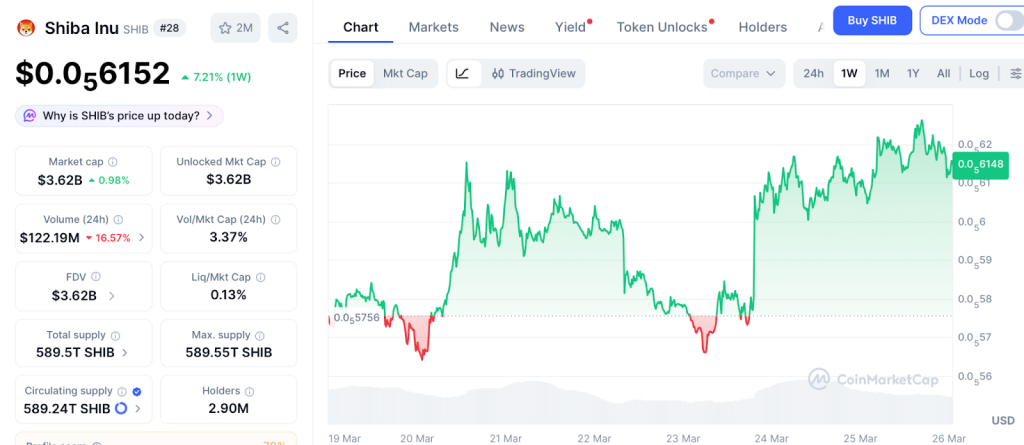
Shiba Inu (SHIB) is showing early signs of recovery as the broader crypto market stabilizes, with the price rebounding from recent lows and reclaiming the $0.000006 level. The renewed momentum has sparked optimism among traders, but the rally remains incomplete as SHIB approaches a crucial resistance zone. With the price now testing key levels, the focus shifts to whether the bulls can sustain the momentum and push the SHIB price toward the psychological milestone of $0.00001.
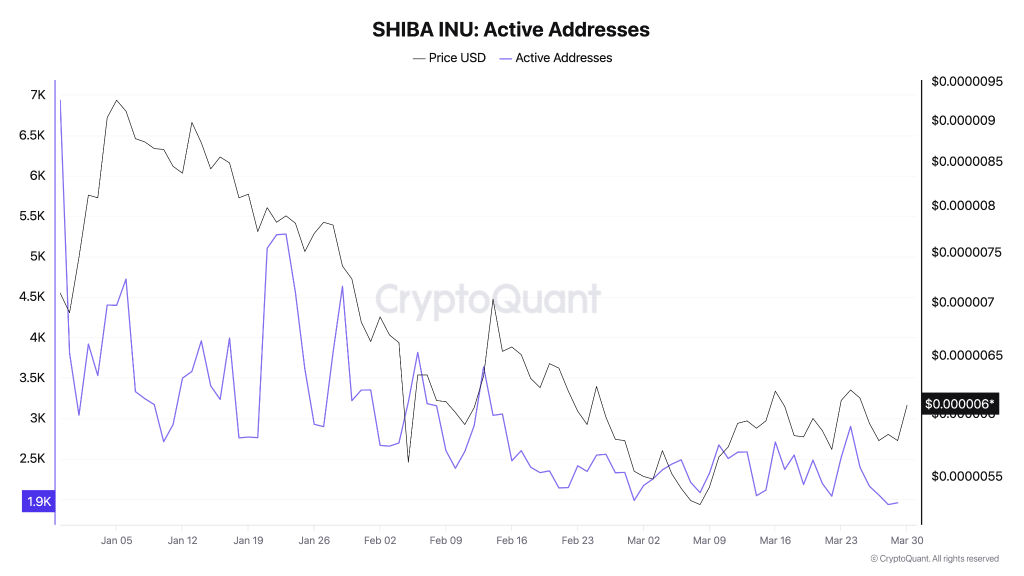
On-chain data adds another layer to the current outlook. Active addresses have been steadily rising throughout the month, indicating increased network activity and growing participation. However, this surge in activity has not translated into a meaningful price expansion, with SHIB continuing to trade within a narrow range.

This divergence suggests that while interest in the token is increasing, the underlying buying pressure remains relatively weak. In simple terms, participation is rising—but conviction is still lacking. Until stronger demand enters the market, the price may struggle to break above key resistance levels.
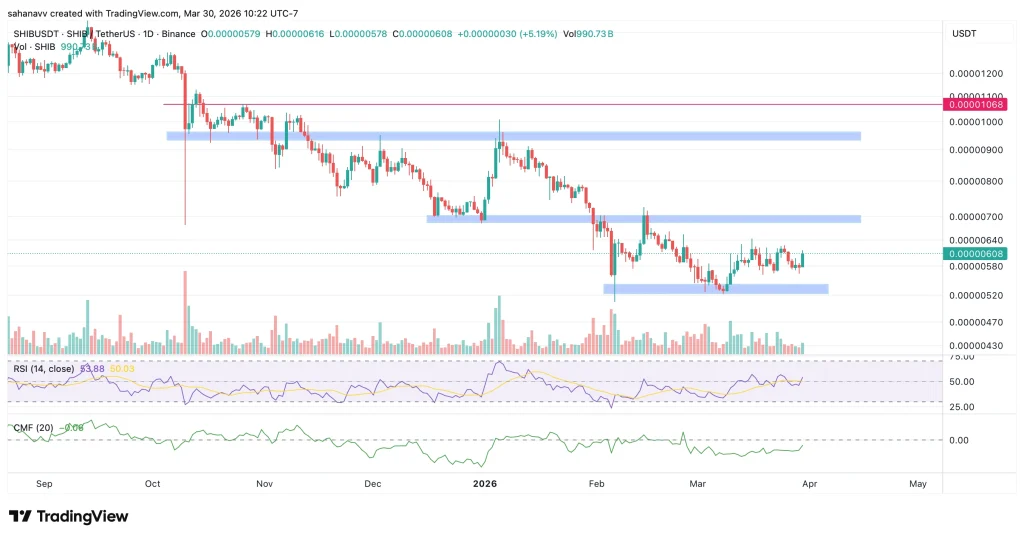
Shiba Inu is currently trading within a recovery phase after bouncing from the $0.0000053 support zone, which has acted as a strong base in recent sessions. The price structure suggests a gradual shift in momentum, with higher lows forming, indicating growing bullish interest. However, the upside remains capped by a key resistance zone near $0.00000625, which has consistently acted as a barrier, preventing further bullish continuation.

From a technical standpoint, momentum indicators are showing early signs of improvement. The RSI has climbed above the midline, signaling a shift toward bullish territory, while the CMF is stabilizing—suggesting that capital outflows are slowing and buying pressure may be gradually returning.
That said, the current setup remains a breakout attempt rather than confirmation. As long as SHIB trades below $0.00000625, the price is likely to remain range-bound with limited upside expansion. A confirmed breakout above this range could open the doors for a move toward $0.000007, followed by a broader attempt to reclaim $0.00001.
The Shiba Inu price is approaching a key decision point, with improving momentum and rising on-chain activity hinting at a potential breakout. However, the lack of strong price reaction despite increasing participation raises concerns about the strength of underlying demand.
The current setup presents two possible scenarios for traders: If SHIB breaks and holds above $0.00000625, it could trigger a move toward $0.000007, with further upside potential building toward $0.00001 in the coming sessions. Failure to clear resistance could keep SHIB locked in a consolidation phase, with the price likely to hover between $0.0000053 and $0.00000625.
A sustained move above $0.00000625 will be crucial to confirm the bullish outlook. Until then, SHIB remains in a range-bound phase, with the next breakout dependent on whether rising interest can translate into real buying pressure.

Ahead of the November midterm elections, backers are lining up behind a new hybrid political action committee that allows contributions directly to candidates.

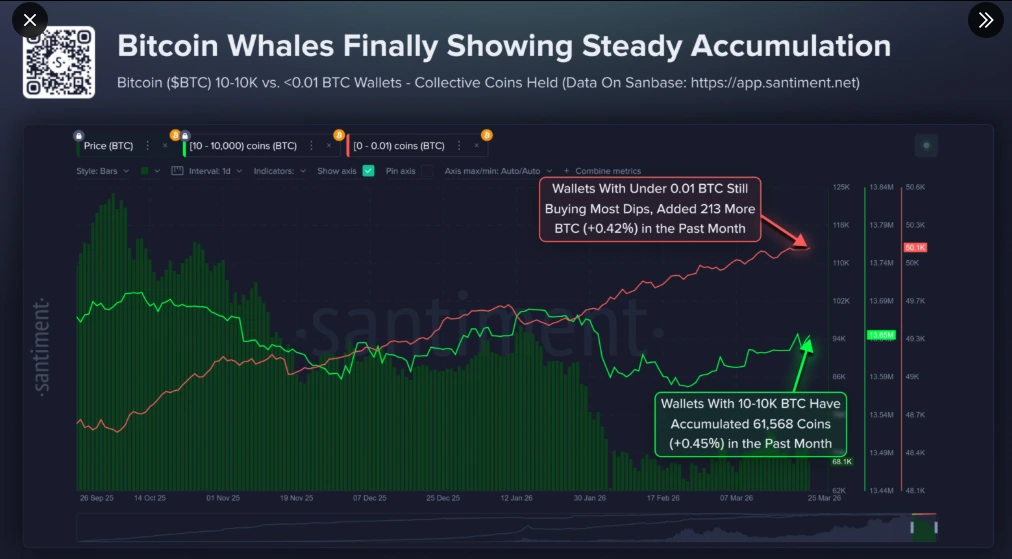
Onchain data shows inflows to accumulation addresses topping 67,000 BTC, while total outflows from Bitcoin miners fell to levels not seen since 2024.

In a Cointelegraph interview, Ran Neuner ponders Bitcoin’s identity crisis, market risks and the growing impact of macro trends.

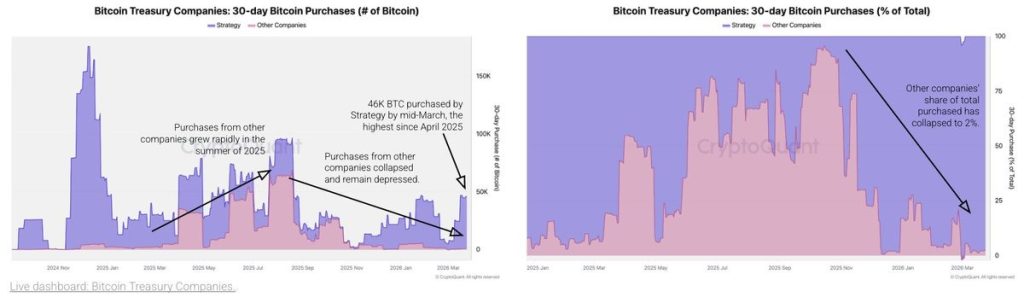
For the first time in 13 weeks, the biggest public Bitcoin treasury company skipped a weekly purchase of the cryptocurrency without any word from Michael Saylor.

The platform aims to help businesses issue stablecoin-funded cards is aimed at using digital dollar balances at the point of sale using existing card networks.

BitGo broadens its Canton Coin offering beyond custody, reflecting efforts to build end-to-end infrastructure as tokenized assets move closer to real-world use cases.

Technical indicators hinted at a possible reversal in XRP’s price, as traders watch whether key support levels can hold.

The post Best Crypto Presale to Buy Now: How Pepe Coin Went From $0 to $11B Marketcap? – Pepeto Targets 300x Over TRUMP and SOL appeared first on Coinpedia Fintech News
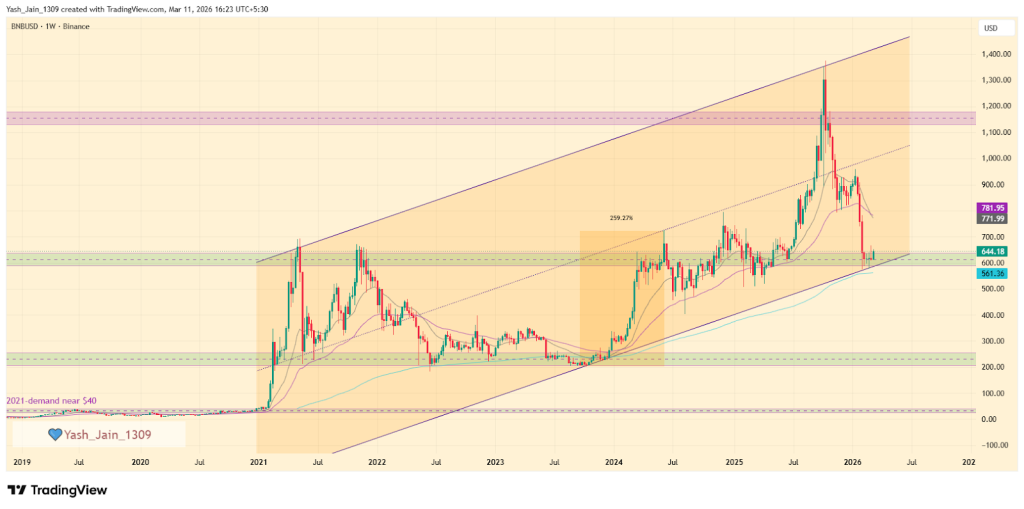
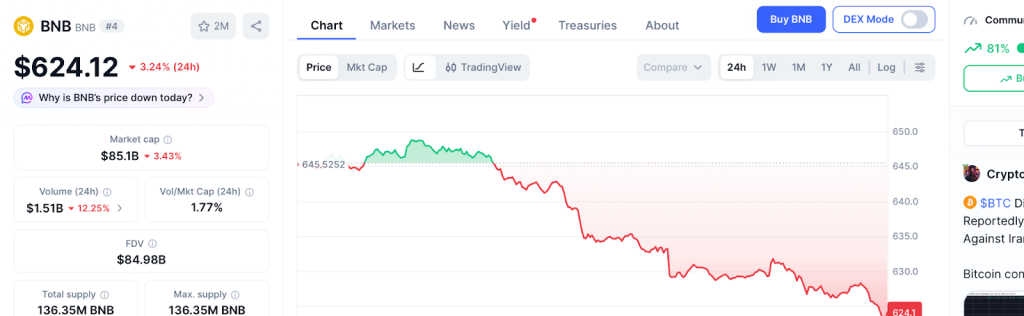
Pepe launched at a fraction of a cent and reached $11 billion, turning early wallets into millionaires. BNB sold for $0.15 in its 2017 presale and trades above $600 today.
The best crypto presale to buy now follows that pattern. Pepeto raised more than $8 million during Fear 9, and if the regret from missing Pepe and BNB still sits with you, last cycle made millionaires out of the wallets that moved first, and this is that same moment with a confirmed Binance listing approaching.
Pepe coin went from zero to $11 billion on pure meme energy with zero products, turning early wallets into millionaires, according to CoinGecko.
BNB sold for $0.15 in its presale and now trades above $600 after building exchange tools behind the token, according to CoinDesk.
The best crypto presale to buy now is where the same math lives, because the distance between presale price and listing price is where life changing returns get made, and that window closes permanently when trading starts.
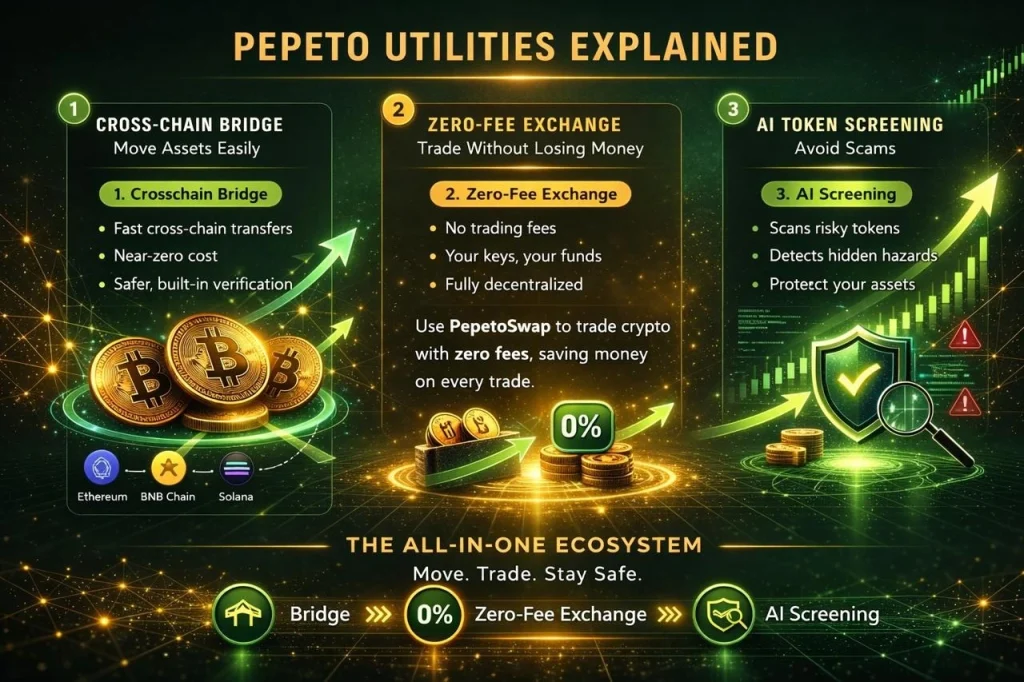
One problem has punished crypto investors for years: scams and trap tokens that drain wallets before anyone sees what happened. The simple answer is a smarter way to check before your money moves, and that answer is Pepeto.
The verified exchange monitors code for hidden risks and catches sudden capital changes in real time. If large wallets move significant funds or capital gets pulled, the system flags it instantly before the price drops.
The platform spots hype and finds real opportunities in one clean space. PepetoSwap removes every trading fee, and the cross chain bridge moves tokens at zero cost.
Real checking stays essential across every market condition, which is what positions the best crypto presale to buy now to deliver after listing and keep delivering through every cycle that follows. More than $8 million raised at $0.000000186 with 191% APY staking compounding positions while stages fill. SolidProof reviewed every line of code, and the same person who launched the original Pepe coin to $11 billion on 420 trillion tokens built the exchange alongside a former Binance expert.
Wallets are entering before the Binance listing at current pricing. Once the presale closes and trading opens, the entry is gone permanently. That is exactly why analysts project 300x, and the window at Pepeto is still open, but it will not stay open much longer.
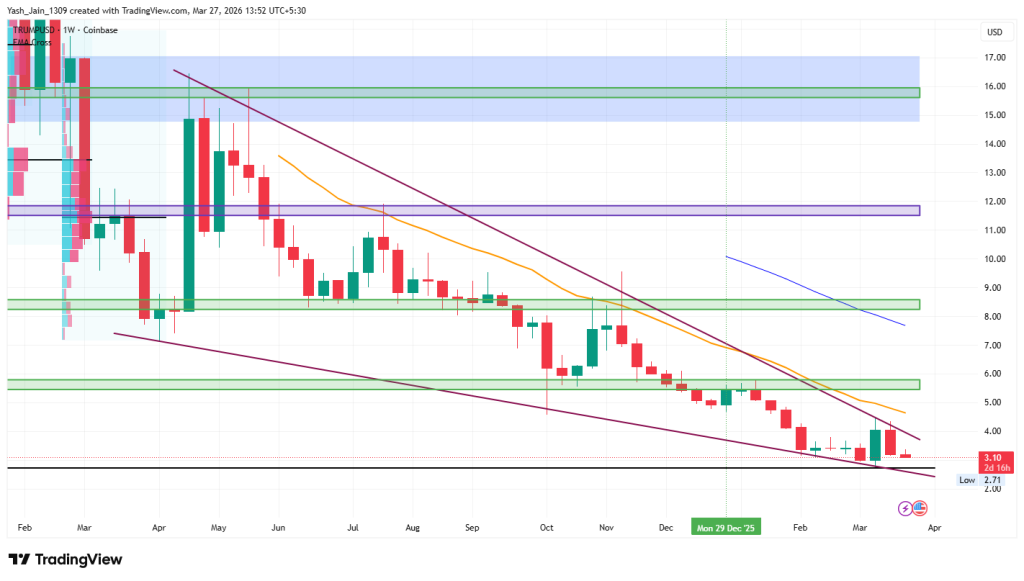
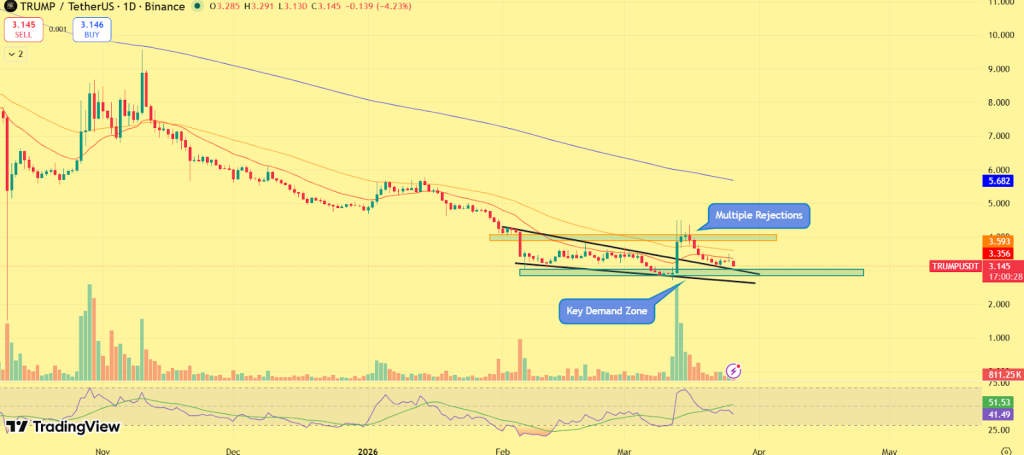
TRUMP went from $0.18 to $73 after the election win, one of the fastest meme coin runs ever. But the token recently hit an all time low near $2.85, and a gala dinner for the top 297 holders cannot replace the utility it never had.
The best crypto presale to buy now with verified tools and a confirmed Binance listing at 300x is the stronger entry.
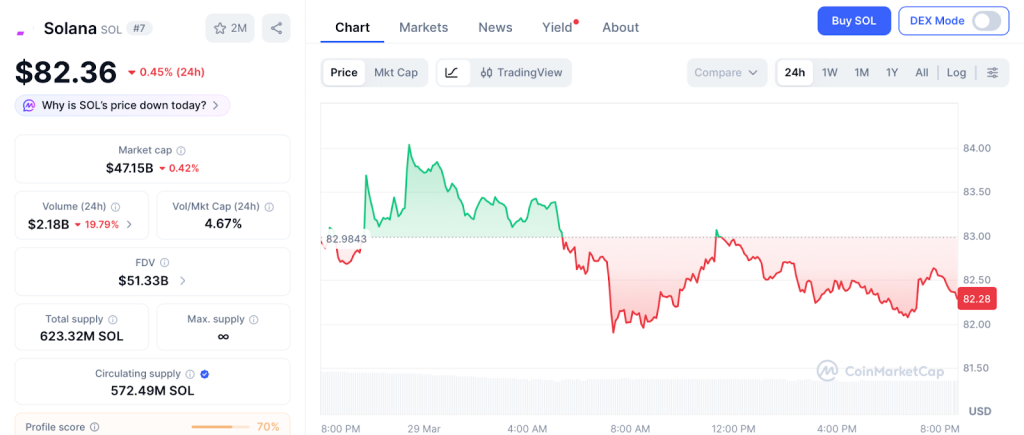
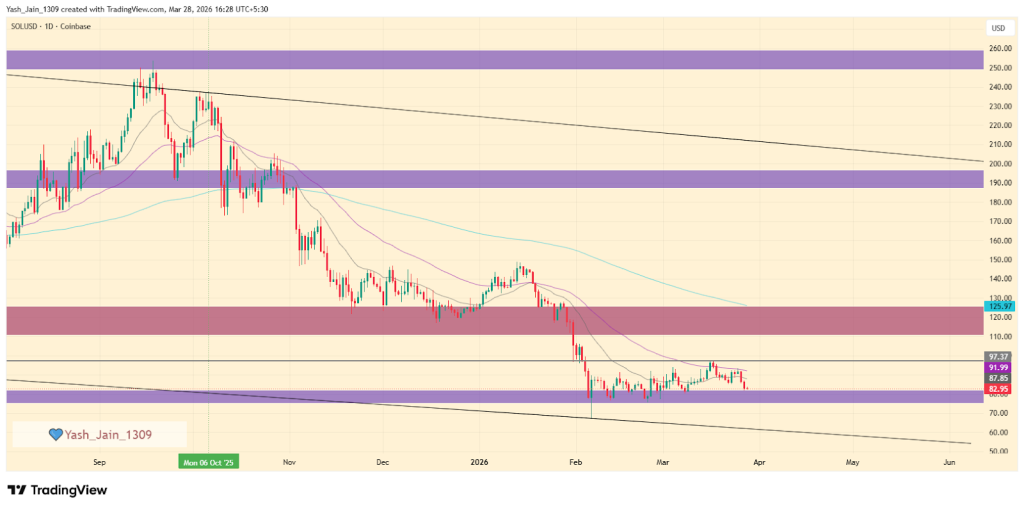
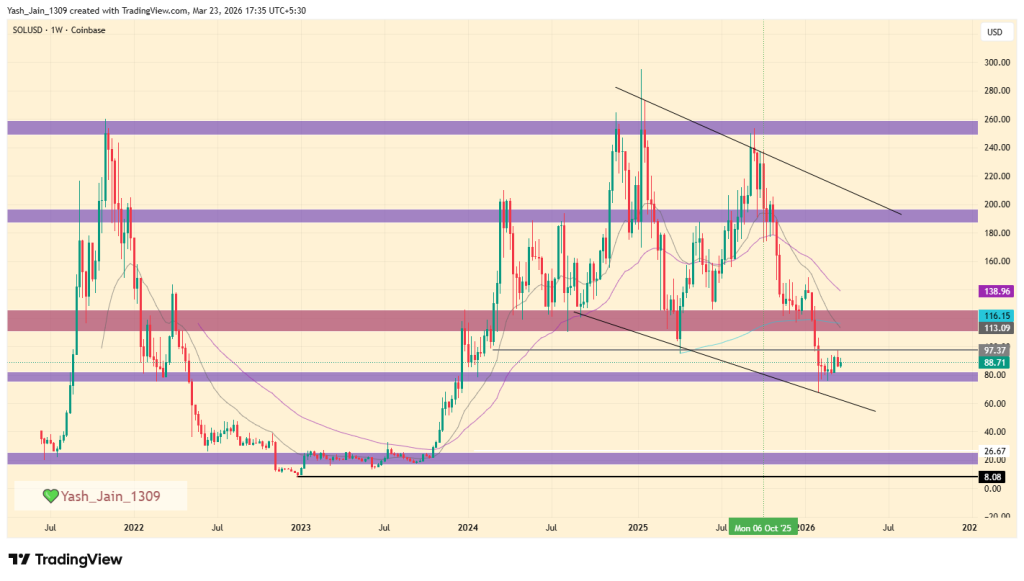
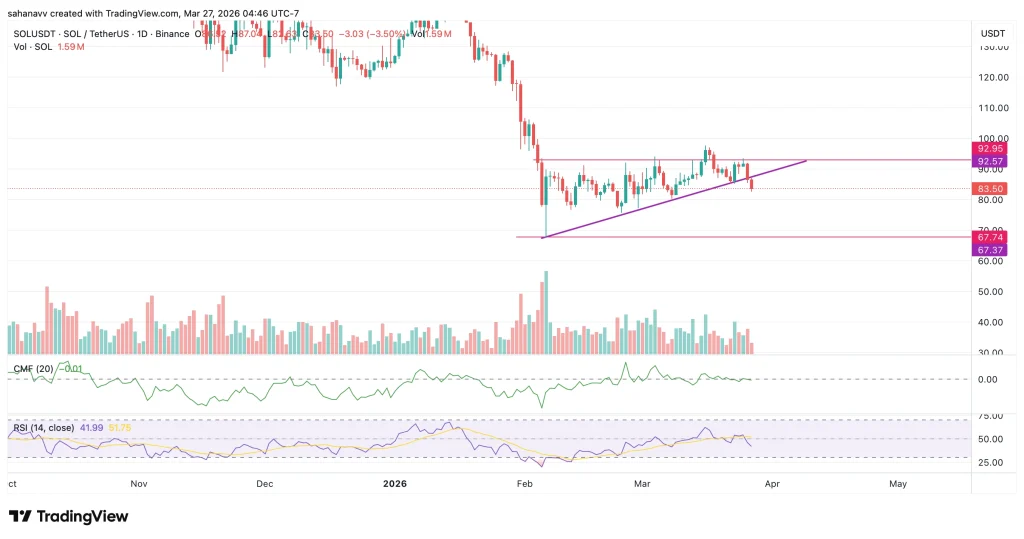
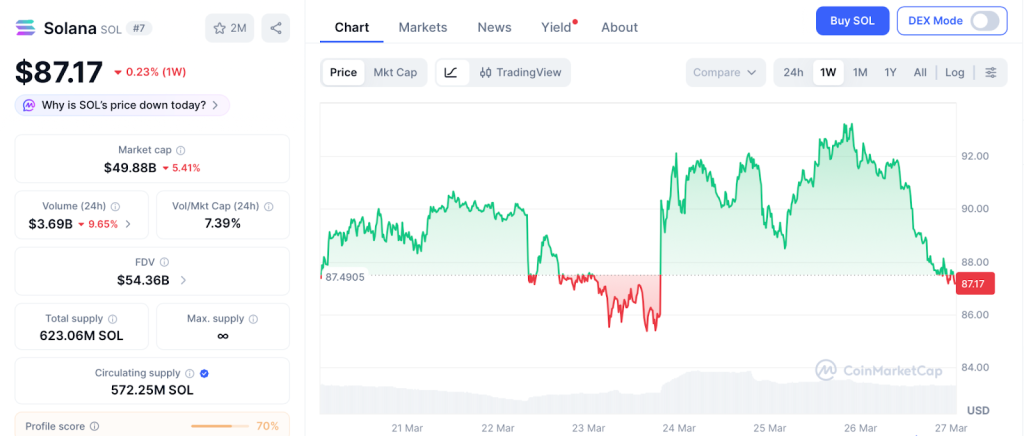
SOL holds $82,40 according to CoinMarketCap, with support intact and ETF inflows of $17 million over five days. A break above $89 opens $98, but rejection sends it toward $75.
SOL has institutional backing, but even reaching $120 is a 50% move, not the return the presale at 300x from one listing delivers to the wallets that entered during fear.
While TRUMP hits new lows and Solana grinds sideways, the verified exchange is well positioned as the best crypto presale to buy now because the tools create real demand that drives adoption from day one, potentially delivering the 300x that analysts project from the Binance listing.
If you still regret missing Pepe at zero or BNB at $0.15, no other project combines the same cofounder, verified tools, and a confirmed listing.
The Pepeto official website is where entering now before the listing is how you make sure this time you are the one who acted early and made the life changing returns instead of the one who recognized the same pattern for the third time and let it pass while the presale closed.
Click To Visit Pepeto Website To Enter The Presale
FAQs:
Why is Pepeto the best crypto presale to buy now compared to hype tokens?
The verified exchange tools create daily demand across every cycle, unlike tokens that crash when attention fades. The Binance listing is confirmed with 300x projections from analysts.
Why is the best crypto presale to buy now better than large cap entries?
Large caps need billions for small gains. The Pepeto official website is where presale pricing at 300x from one listing delivers what SOL and BTC cannot from their current market caps.
When is the right time to enter the best crypto presale to buy now?
The presale fills during Fear 9 and the listing approaches. Once it closes, the entry price is gone permanently, and the wallets inside make what everyone else chases at a higher price.

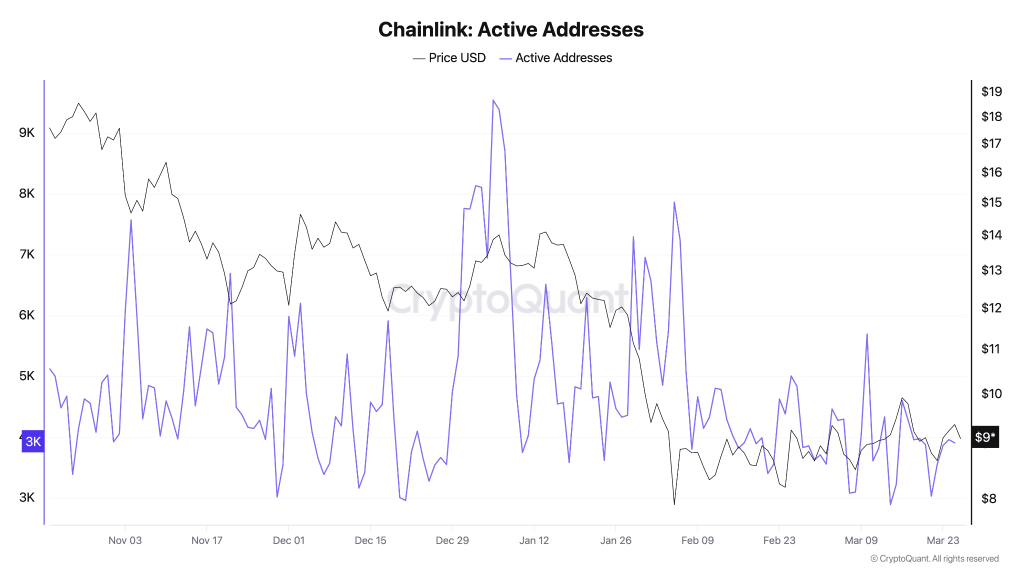
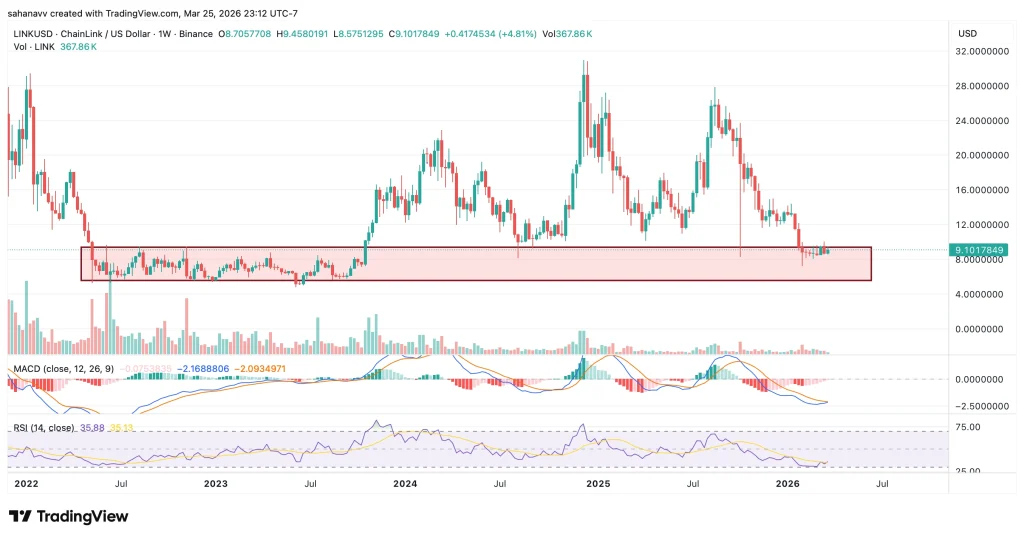
The post Chainlink (LINK) and Uniswap (UNI) Signal Similar Breakouts—Can Both Hit $10 in Q2? appeared first on Coinpedia Fintech News
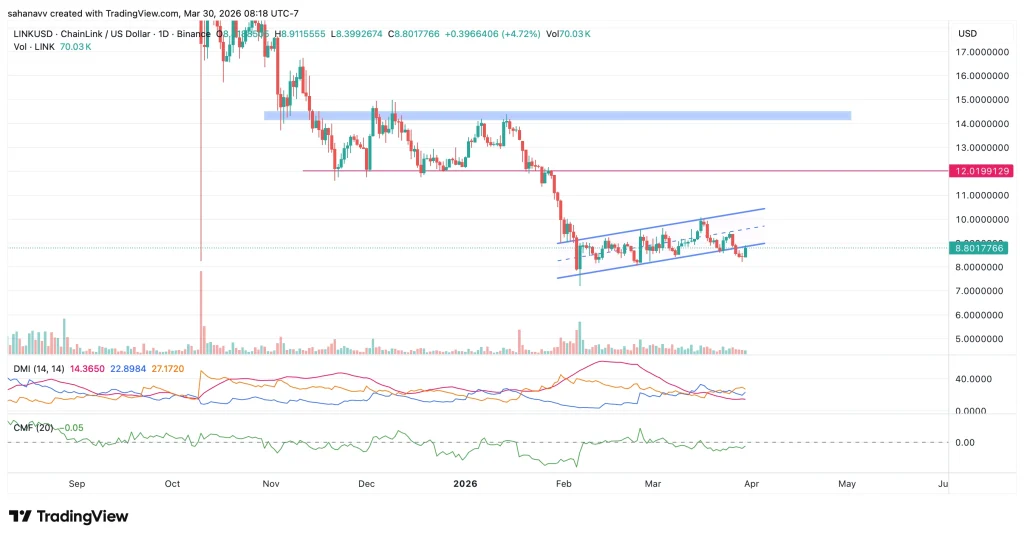
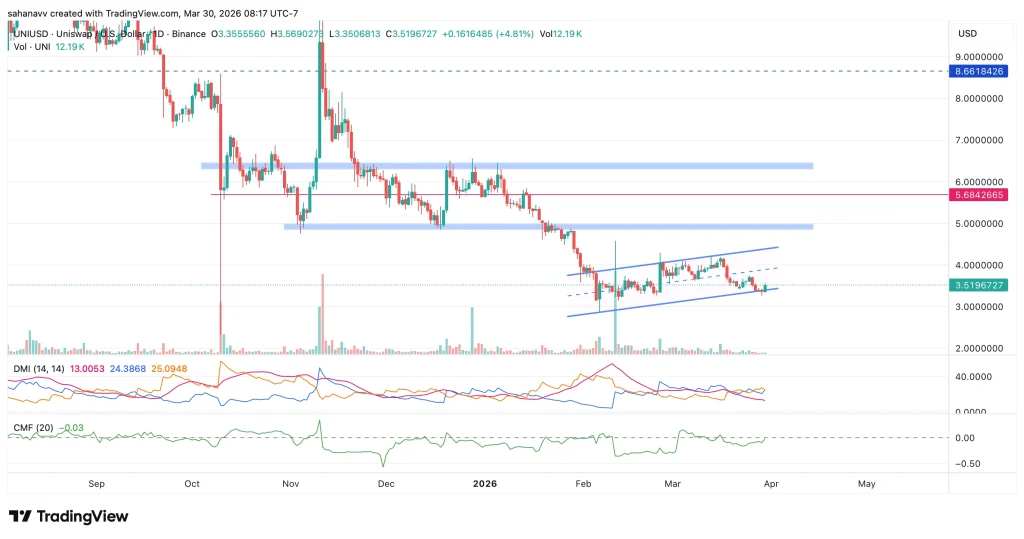
Chainlink (LINK) and Uniswap (UNI) are showing strikingly similar price structures, with both tokens attempting to recover within ascending channels after prolonged downtrends. As the broader market stabilises, these altcoins are beginning to build momentum near key resistance zones.
With both tokens holding above crucial support levels and forming higher lows, traders are now watching for a potential breakout. The key question remains: can the prices of LINK and UNI sustain this structure and push toward the $10 milestone in Q2?
The Chainlink price is currently trading within a rising channel after a sharp decline earlier this year, indicating a gradual recovery phase. The price is holding near the $8.5–$8.8 zone, which now acts as immediate support, while the structure continues to print higher lows.

The next major resistance lies around $10, followed by a stronger supply zone near $12. A breakout above the channel resistance could accelerate momentum toward these levels. On the indicator side, the DMI is heading for a bullish crossover, while CMF is attempting to recover from negative territory, hinting at improving capital inflows. However, the momentum remains moderate, suggesting that a confirmed breakout is still needed for trend continuation.
Key Levels:
The Uniswap price is mirroring a similar structure, trading within a rising channel while attempting to recover from its recent lows. The price is currently hovering near the $3.5 range, holding above the lower boundary of the channel and forming a base.

The immediate resistance lies near $4, with a stronger barrier around $5.6. A breakout above these levels could open the path toward higher targets in the coming weeks. From an indicator perspective, DMI, similar to LINK is heading for a bullish crossover, while CMF remains slightly negative but is heading towards the threshold. This keeps UNI slightly weaker compared to LINK in terms of momentum, but the buying pressure is building.
Key Levels:
Conclusion — Can LINK & UNI Reach $10 in Q2?
Both Chainlink and Uniswap are showing early signs of recovery, with similar ascending channel structures suggesting a potential continuation of the uptrend. In the short term, the setups remain constructive as long as key support levels hold.
However, the path to $10 differs significantly for both tokens. The LINK price appears closer to the target and may achieve it if it breaks above immediate resistance. In contrast, UNI price still requires multiple breakout confirmations before approaching the same level.

The post Pi Network News: Pi Price Is Either Going to $10 or Zero, Here’s Why appeared first on Coinpedia Fintech News
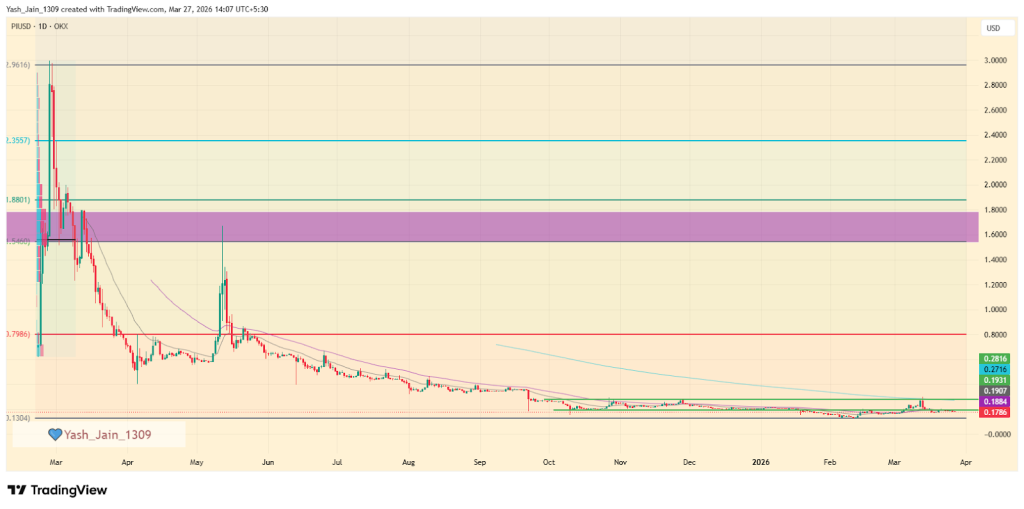
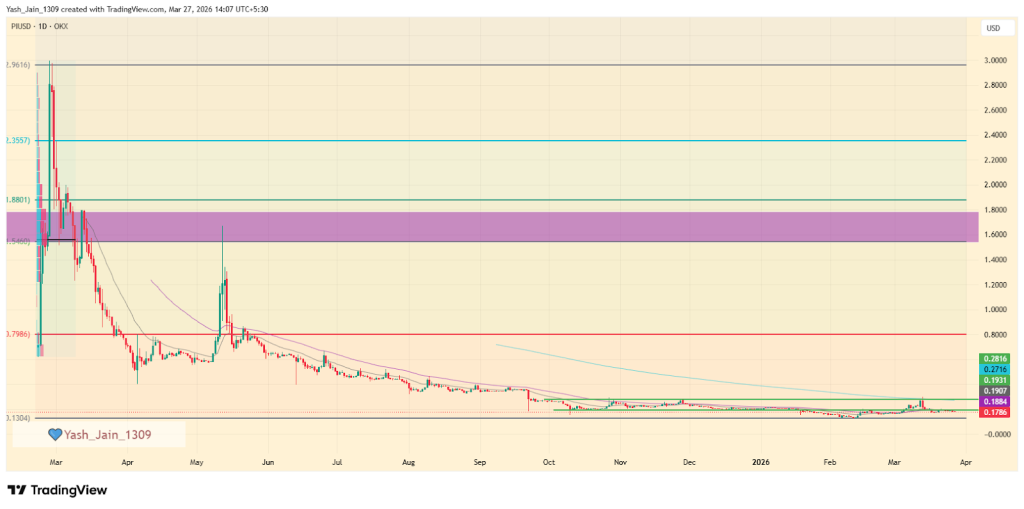
Pi Network is making rounds again on crypto Twitter, and this time, it’s not about mining, controversy, or adoption; it’s about price. Amid weak liquidity and fading altcoin demand, concerns are rising over whether Pi can sustain growth without a meaningful rise in value.
Dr. Pi went deep into the analysis, arguing that price is not just a side factor but the foundation of the entire network. In his view, ignoring price while focusing only on ecosystem growth is unrealistic in today’s market environment.
He started his analysis with a simple question: Can Pi grow without strong price action? The analyst believes the answer is no. He points out that most users joined the space with expectations of future value, not just participation. He even admits Pi’s Kraken listing impact was overestimated, with low trading volume showing weak traction in the U.S. and Europe.
He adds Pi’s strength lies mainly in Asian markets, suggesting its global influence, and even leadership recognition, may be overstated.
Hence, if the token remains low or declines further, engagement could weaken. Fewer active users, declining node activity, and reduced community interest could follow. In his words, without financial incentives, the network risks losing its core energy.
“If the price stays low—or worse, goes to zero—enthusiasm disappears overnight. Who’s going to invest time and energy into a “$0.01 ghost coin,” he said
This concern comes at a time when Pi is showing mixed signals in the market. The token has managed to hold key support levels around $0.17, even gaining slightly despite broader macro pressure. However, ongoing mainnet migration and steady exchange inflows are testing its stability.
He further outlines a more detailed cycle. Rising prices attract attention, which brings in capital. If Pi moves toward levels like $3.14 or even $10, it could trigger institutional interest and renewed investor confidence.
As per him, that influx would likely fuel developer activity, leading to more applications and stronger utility. On the other side, rising prices create urgency among users, pushing adoption forward. Without this push, growth may remain slow with limited real-world use.
Beyond price, concerns are also building around the development pace. The network is still not fully operational at scale, with delays in mainnet rollout and token migration affecting user confidence. Moreover, the capital is moving toward more established assets.
Traditional instruments like stocks and commodities are increasingly being tokenized, drawing liquidity away from altcoins.
What stands out is that price and network growth move together, not separately. This trend has already played out with assets like Bitcoin and Solana, where strong rallies helped drive adoption.
“Only with a strong price can Pi step into the mainstream—as a real medium of exchange, a cross-border asset, a Web3 gateway. Otherwise, it’s just another niche “mobile mining app,” he added.
Stay ahead with breaking news, expert analysis, and real-time updates on the latest trends in Bitcoin, altcoins, DeFi, NFTs, and more.
Pi faces slow mainnet rollout, low trading volume, and weak global traction. These issues affect confidence and limit its short-term growth potential.
Low price and slow progress reduce excitement. Without financial incentives or strong utility, users may lose motivation to stay active long term.
It’s possible but depends on adoption, utility, and demand. Strong price growth could attract capital, but current conditions show limited momentum.

The post JUP Price Jumps 8% as JUICED Launch Sparks Fresh Momentum appeared first on Coinpedia Fintech News
The JUP price just got a shot of adrenaline and no, it’s not just another random pump. This time, there’s an actual product behind it. Jupiter Lend’s latest announcement around its JUICED token has injected fresh energy into a chart that’s been dragging itself through most of Q1.
An 8% intraday move pushed JUP to around $0.1518, with market cap hovering near $539.27 million. Not explosive, but definitely noticeable. Especially for a token that’s been stuck in a slow grind downward until recently.
So, what’s the hype about? JUICED. It’s the token users receive when depositing JupUSD into Jupiter Lend. Sounds simple but the mechanics are where it gets interesting. The token earns yield from three sources: lending interest, incentives, and T-bill yield. And just like a liquid staking token, it appreciates automatically over time.
JUICED is the token you receive from depositing JupUSD into Jupiter Lend.
— Jupiter Lend (@jup_lend) March 30, 2026
It earns yield from 3 sources: lending interest, incentives, and T-bill yield.
Similar to an LST, it grows in value automatically.
You don't even need to visit Lend to get JUICED. Earn Vaults are… pic.twitter.com/Qf5Wd7tB2C
But here’s the clever part per its x post you don’t even need to interact with the lending platform directly. JUICED is integrated into Jupiter’s routing, meaning users can swap into it seamlessly.
Oh, and the yield? Around 4.5% APY passively. Or, if you’re feeling adventurous, JUICED loops can push that into the 12–15% range. Yeah, that’ll get attention.
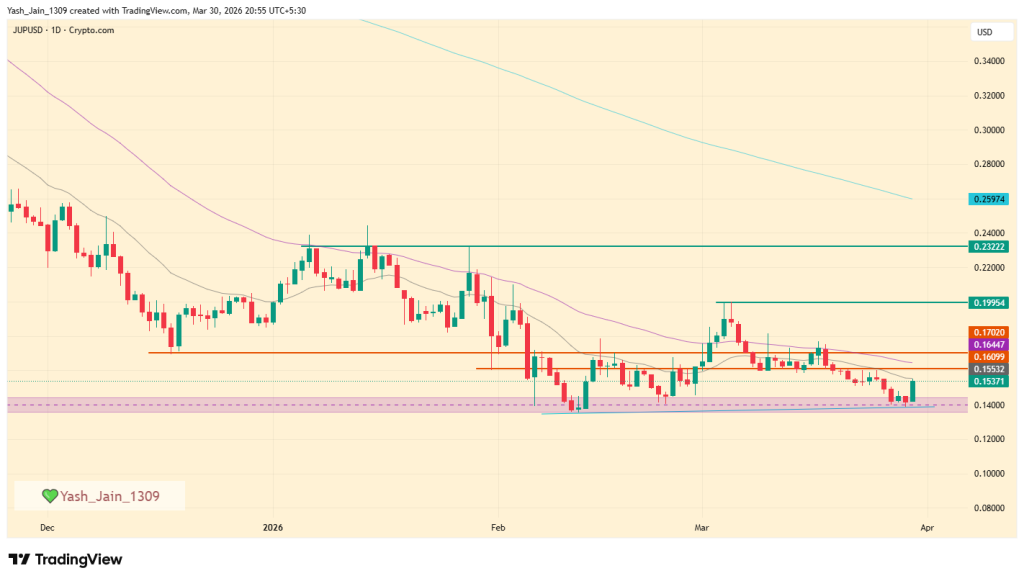
But let’s zoom out for a second. The JUP price hasn’t exactly been a top performer this year. Q1 was mostly a downtrend, with the token finding support around $0.14 in late February.
Now, in late March, it’s bouncing again from that same level this time with a narrative to back it. That matters.
If momentum sticks, the next hurdles are pretty clear: $0.16 and $0.17. Flip those, and suddenly the path opens toward $0.19, which was the early March high. Beyond that? January’s peak near $0.23 becomes the next logical target. Of course, that’s assuming buyers don’t lose interest halfway through.

Now here’s where things start to align technically. Open interest is up 72%, with an additional 11% increase recently. That’s not just noise that’s participation returning. More importantly, Binance data shows a long/short ratio of 1.27 among top traders, indicating a clear long bias.

But it’s not extreme. And that’s actually a good thing. This kind of setup rising open interest with a balanced long tilt usually signals healthy trend development rather than overheated speculation. It creates room for continuation instead of immediate liquidation risk.
So, what’s next? If resistance levels crack, the JUP price could shift from recovery mode into a proper breakout phase. If not, well… it’s back to consolidation.
Either way, for now, JUICED has done what most announcements fail to do as it actually moved the JUP market.

The post Will XRP Price Drop to $0.75 Before Recovery? appeared first on Coinpedia Fintech News
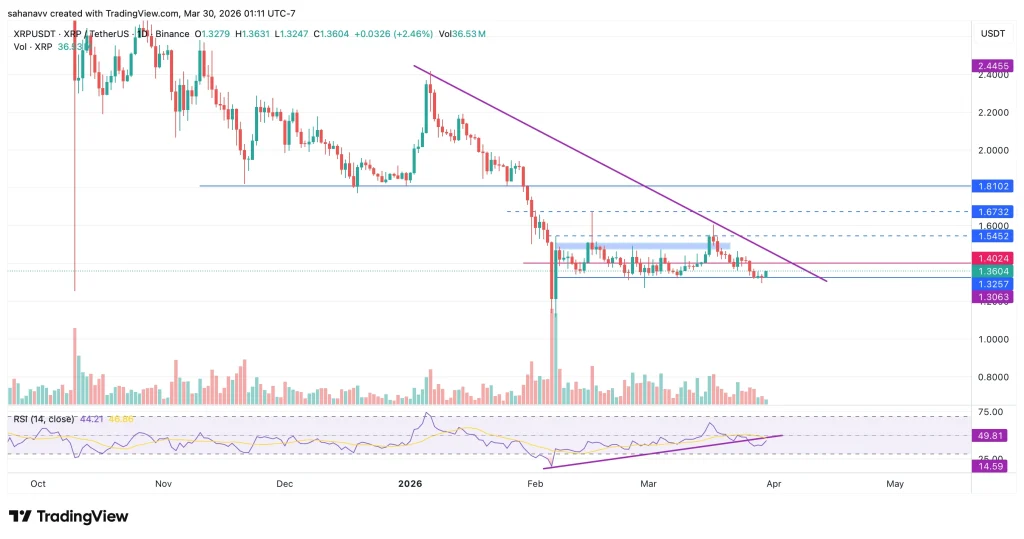
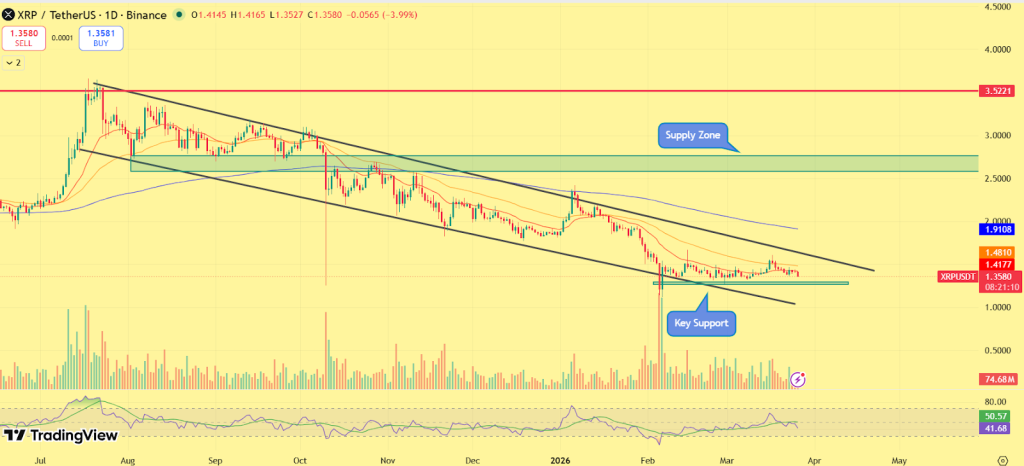
The XRP price is caught in a strange tug-of-war right now and honestly, it’s the kind of setup that rarely ends quietly.
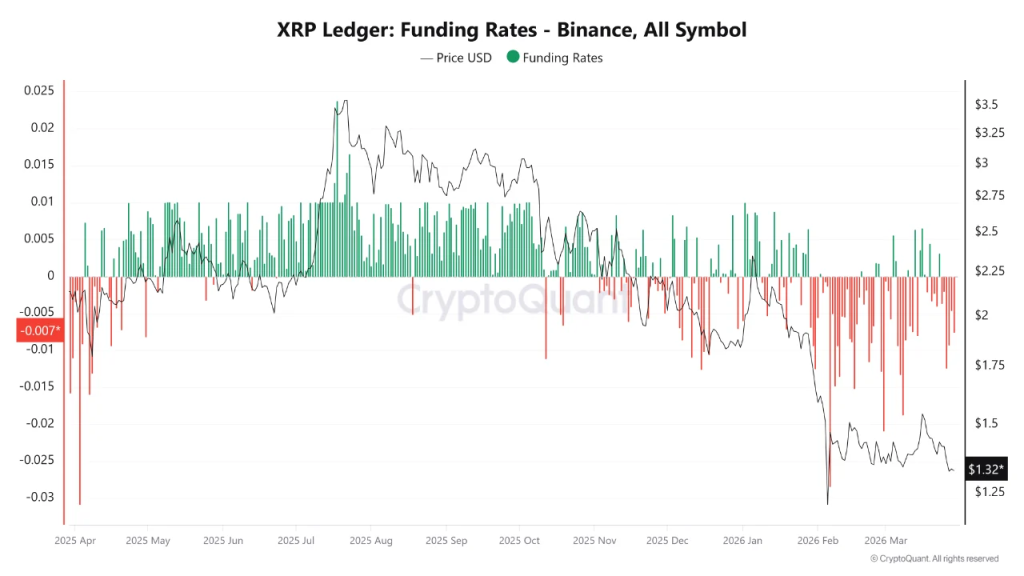
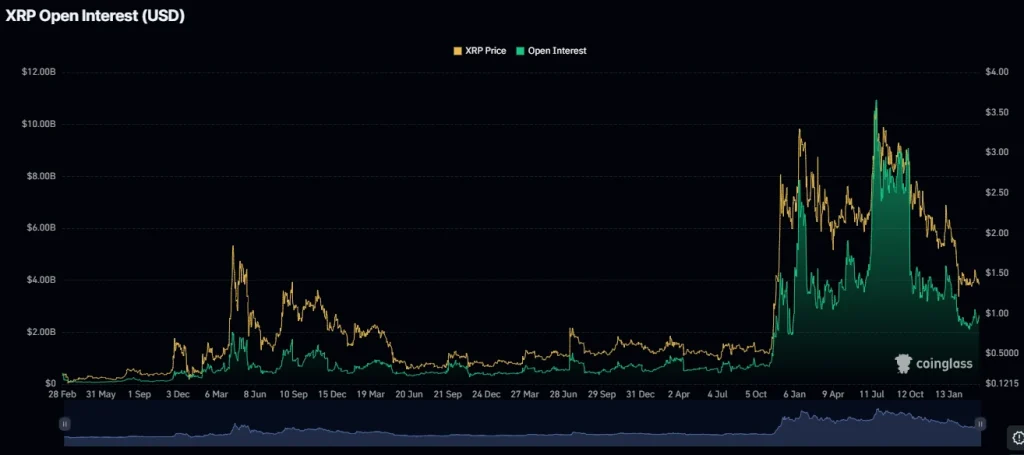
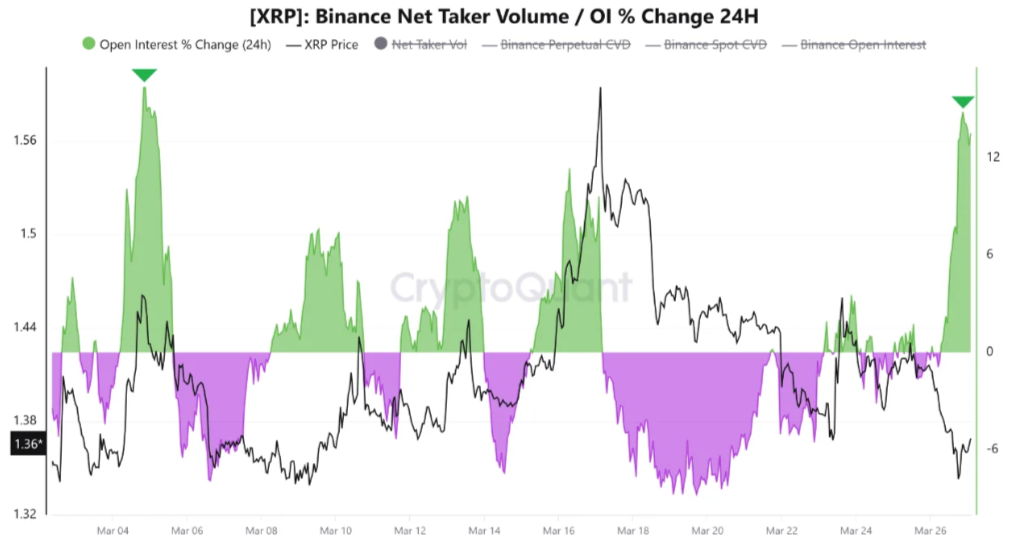
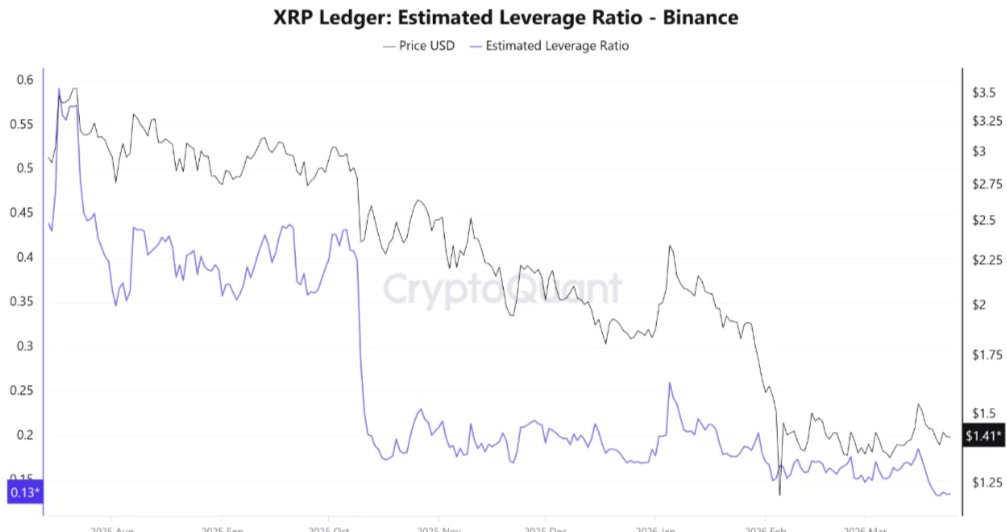
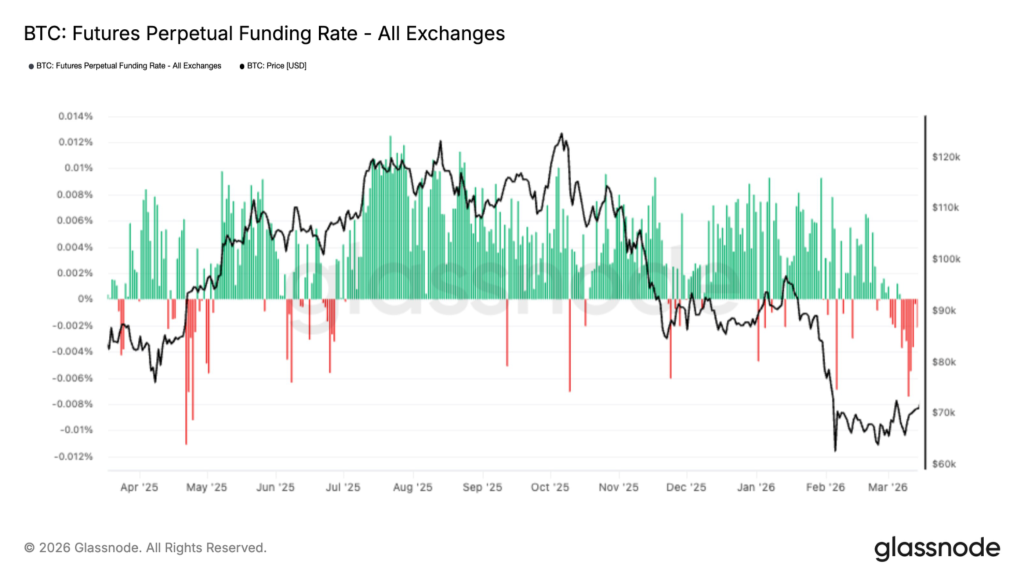
Funding rates tell the first part of the story. They’ve been negative for a while now, and not just mildly. We’re talking deep dips to -0.01 and even -0.02. Shorts are firmly in control, and long traders are getting paid to stay in the game. Structurally, it screams bearish positioning.
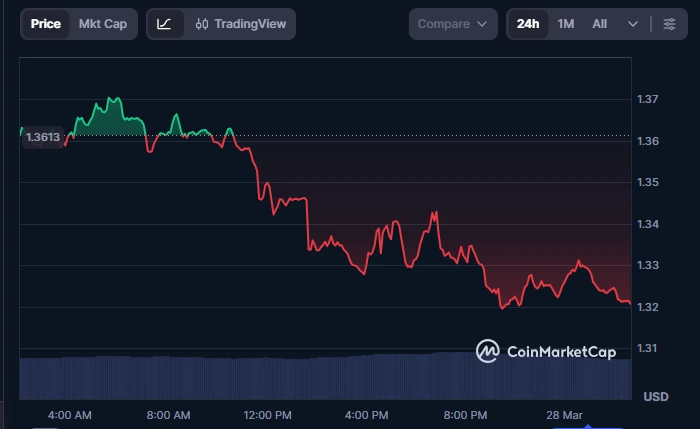
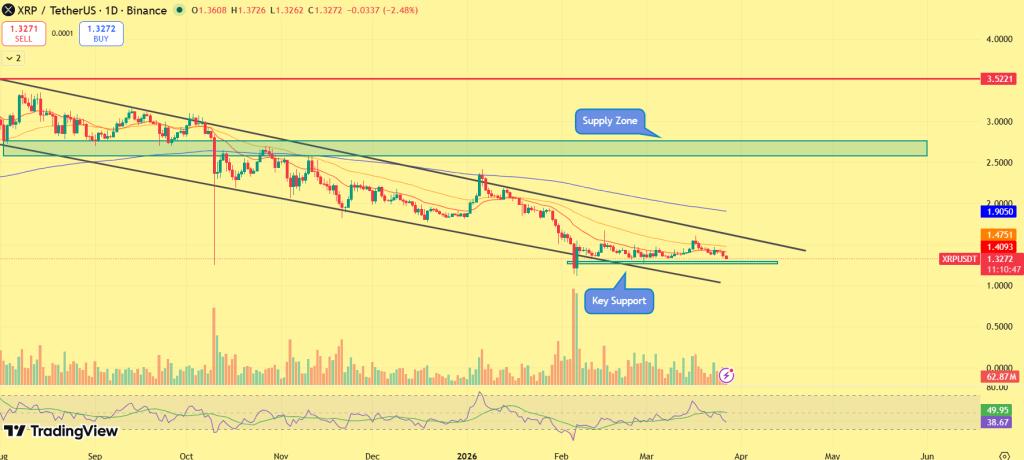
But, the XRP price is sitting around $1.32, continuing its pattern of lower highs and lower lows. Normally, that aligns neatly with bearish sentiment. Except this time, the decline isn’t being driven by organic spot selling but it’s majorly being fueled by leveraged short positions.
That’s a subtle but important difference. The analyst PelinayPA’s post suggests fragility. Because when shorts dominate too much, the market becomes vulnerable to sharp reversals.

Also, during March 23–27, XRP ETFs saw a +2.66 million inflow. Institutional money is stepping in. Quietly, but clearly. So, what gives? Why is price still dropping?
Simple. Divergence. While institutions accumulate, the broader market continues to lean short.
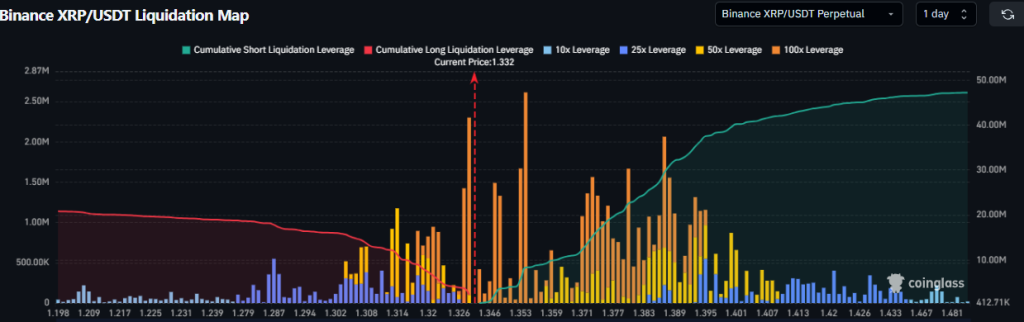
That disconnect creates a scenario where a sudden upward move could trigger a cascade of short liquidations. But don’t get too comfortable. If that squeeze happens, it could be met with aggressive spot selling from those same institutional players locking in gains. In other words, volatility isn’t just possible but it’s likely.
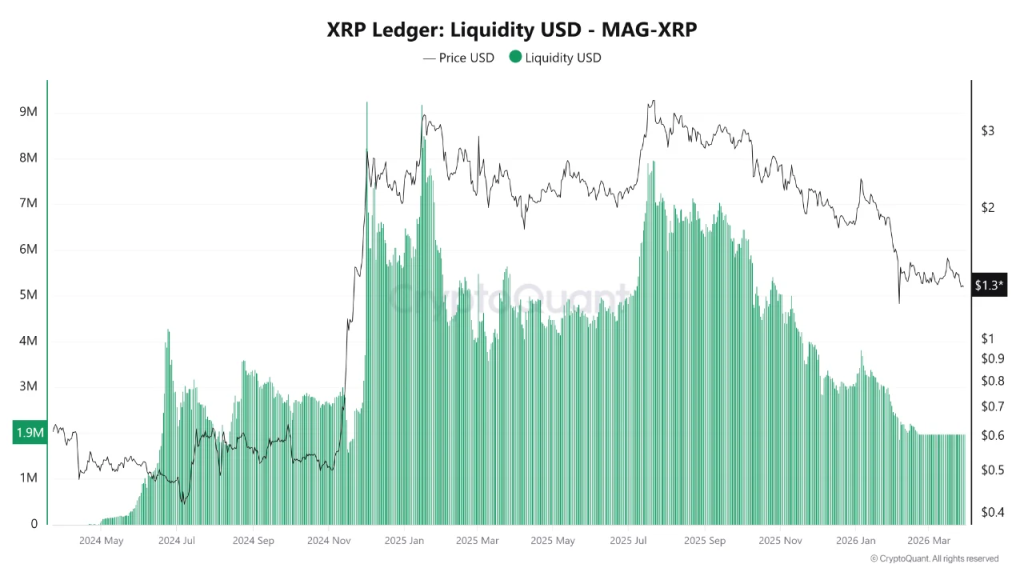
And then there’s the liquidity problem. AMM pool liquidity on the XRP Ledger has shrunk to $1.9 million, hovering near levels last seen before a previous major rally. But the context now feels different. Instead of building momentum, liquidity is stuck in a 30-day flatline.

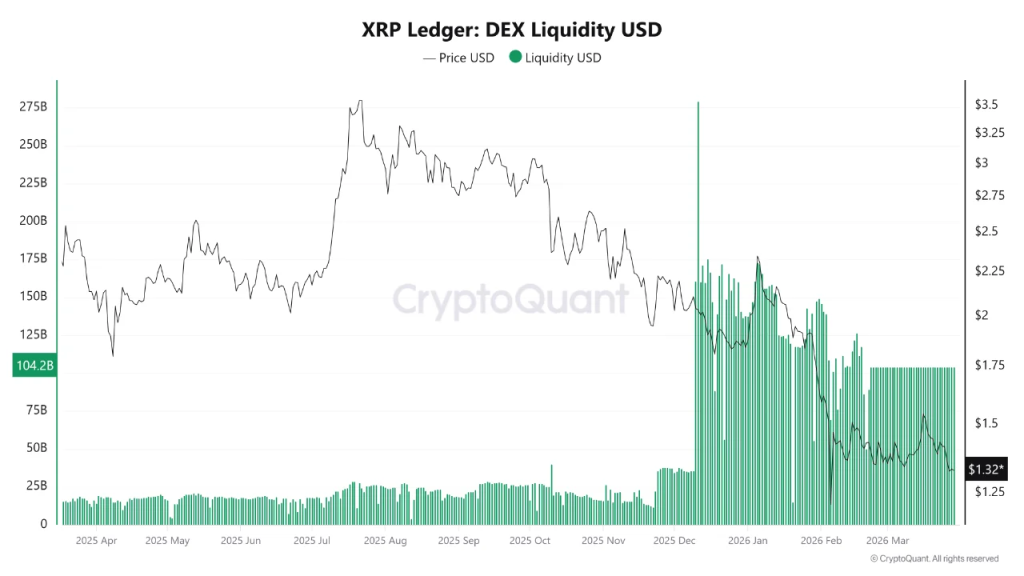
DEX liquidity tells an even harsher story. From a peak of $280 billion post-ETF hype, it has collapsed to $104.2 billion. That’s not a cooldown it’s a retreat.

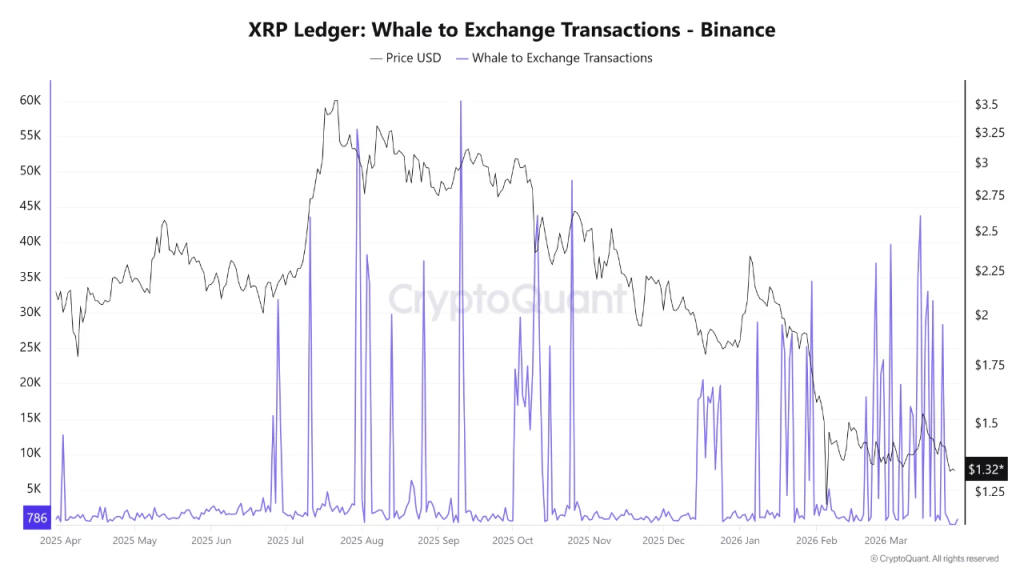
Add to that rising whale-to-exchange transactions through February and March, and it starts to look less like accumulation and more like distribution. Big players appear to be positioning for exits, not entries.

So, what’s next? The XRP price could be heading toward a deeper flush, with potential downside targets in the $0.90–$0.75 range. Not pretty but consistent with the current setup.
And yet, if price starts climbing while funding stays negative, that’s when things flip fast. Until then, every bounce might just be another trap in disguise for the XRP price.

The post Ethereum Price Prediction Turns Bullish as Whales Stack ETH at Record Pace: Why Pepeto Offers a Faster Path? appeared first on Coinpedia Fintech News
Whale wallets are stacking ETH at a pace that took the market by surprise, with buying addresses going parabolic during the deepest correction since 2023.
That bodes well for the ETH forecast long term, but months could pass before the buying pressure shows in the chart. Pepeto raised more than $8 million during that same correction, with the Binance listing confirmed.
Pepe exploded from its presale price to $11 billion, and the people who acted early made the biggest returns of their life. The same pattern is forming right now because more than $8 million flowing in during Fear 9 does not happen without a reason.
ETH whale buying addresses turned parabolic with consistent inflows and minimal selling, removing supply from exchanges during the correction, according to CoinDesk. The Pectra upgrade in April could shift the ETH outlook if the market stabilizes, according to The Block.
The real question is whether waiting months for that catalyst is the best use of capital when one listing event delivers the return the Ethereum price prediction needs a full year to approach.
Pepeto
There is no guarantee ETH makes a major move anytime soon, and that is exactly why the verified exchange presents such a valuable opportunity right now. Pepeto is where analysts project 100x to 300x, which, at current pricing, could be life changing for every wallet that enters before the Binance listing.
More than $8 million raised while the correction punished every chart proves the conviction. The key driver is the exchange: a complete platform in one clean space that already runs. The tools find entries others overlook, check contracts before your capital moves, handle the research that takes hours in minutes, and track how direction shifts in real time so you are never caught guessing.

Because the ETH outlook depends on macro factors that keep it range bound, the exchange gives you a way to move now instead of waiting. More than $8 million raised at $0.000000186 with 191% APY staking compounding positions while stages fill. SolidProof checked every contract before the presale opened, and the founder who took the original Pepe coin to $11 billion on 420 trillion tokens engineered the exchange alongside a former Binance expert.
The initial listing move could be enormous, but the exchange and the demand it creates will stay active for years because Pepeto solves a daily problem that outlasts any single cycle.
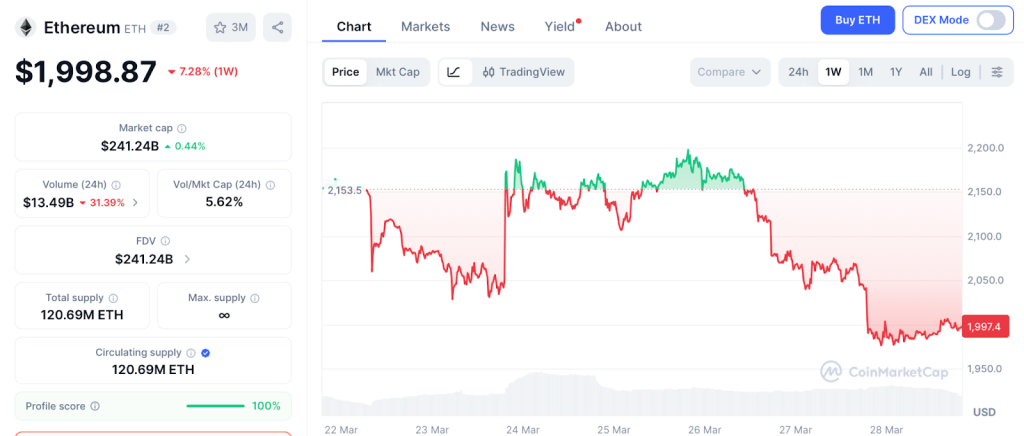
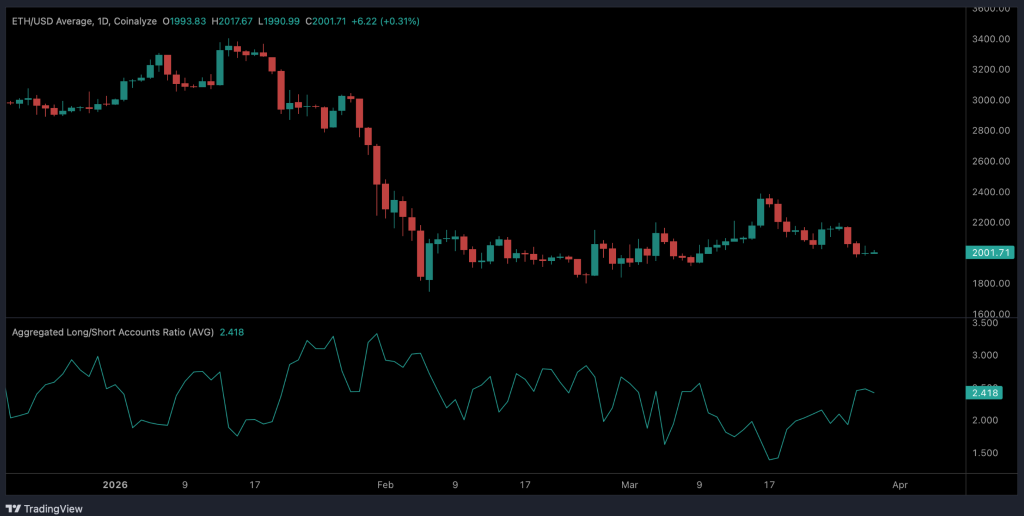
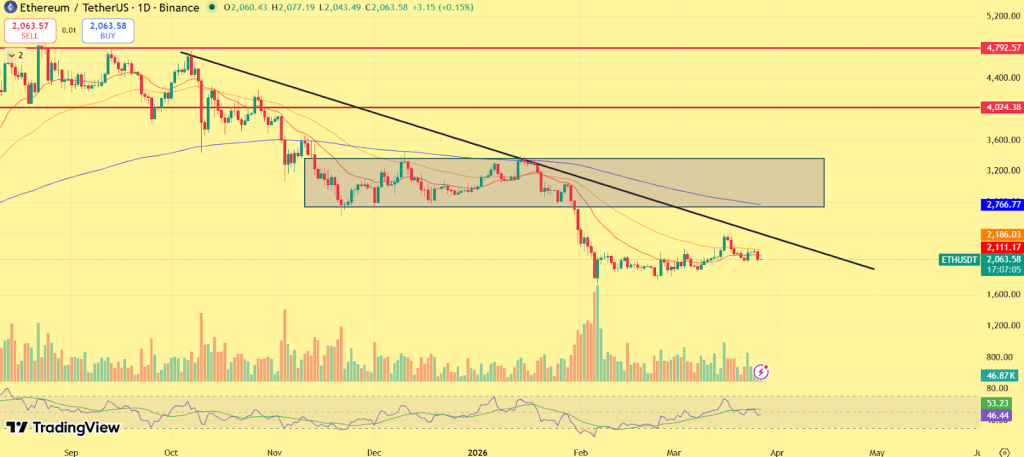
ETH trades at $2,000 according to CoinMarketCap, hovering above the $2,000 support that held through the entire correction. The ETH outlook turns bullish if the price clears the $2,100 resistance and the 50 day SMA near $2,200, which opens a run to $2,600 and then the $3,000 target.
Citigroup puts ETH at $3,175 over 12 months with a bull case of $4,488. The ETH/BTC ratio at 0.030 near multi year lows signals a wide gap between value and price. By 2027, models project $4,000 to $5,500 if Pectra drives renewed activity.
The most bullish ETH forecast for 2030 targets $8,000 to $12,000 if institutional flows mirror the BTC ETF path. The setup breaks if ETH loses $2,000 and slides to $1,900.
The Ethereum price prediction may not deliver much movement in the short term despite the high probability that a future run is building underneath the whale data. Waiting for external factors to move the ETH chart means waiting for the Fed, for Pectra, for legislation that may not pass this year.
In sharp contrast, the verified exchange already has everything needed to deliver from the Binance listing, allowing the wallets inside to be bullish on their own terms without needing macro permission.
The Pepeto official website is where to enter now, while the Ethereum price prediction stalls means you are the one who made the right investment at the right time, and Pepe’s explosion from presale to $11 billion proved that the wallets that acted early changed their whole life while everyone who waited spent the cycle wishing they had moved when the entry was still open.
Click To Visit Pepeto Website To Enter The Presale
FAQs:
What does the parabolic ETH whale buying mean for the Ethereum price prediction?
Whales removing ETH from circulation during a correction reduces sell pressure over time, but the Ethereum price prediction still depends on clearing $2,100 and the Pectra upgrade driving renewed activity.
How does the Pepeto listing compare to the Ethereum price prediction timeline?
The ETH forecast depends on macro conditions clearing gradually. The Pepeto official website is where the Binance listing and 100x to 300x projections offer a defined return from one event.
What levels does ETH need to break for the Ethereum price prediction to turn bullish?
ETH needs to close above $2,100 and hold the 50 day SMA near $2,200 to target $2,600 and $3,000. Losing $2,000 opens $1,900 and is a frustrating range for holders.

AI music licensing breaks on remixes and ownership. Blockchains embed smart contract royalties and provenance, automating creator compensation at scale.

Tokenization startup Midas's Series A round was led by RRE and Creandum to scale an “instant liquidity layer” for onchain yield products.

Bitcoin continued to surprise some analysts as it held the lower end of its local range despite fresh Iran pressure on macro markets.

Yields for five-year US Treasury bonds are up 4%, putting a damper on Bitcoin price, which has ended the month much where it started.

A Coinbase and CoinTracker survey found fewer than half of crypto users correctly understand when digital assets become taxable.

Hong Kong plans to integrate tokenized bond issuance and settlement into its financial system, building scalable infrastructure for digital capital markets.

Trilitech launched a new platform for trading tokenized uranium and metals that are critical for the development of the artificial intelligence industry.

The rollout includes Aave Pro for advanced users and integrates Chainlink to provide oracle data for V4 markets.

Bernstein says crypto-linked equities like Coinbase, Robinhood and Figure now trade about 60% below last year’s peaks, but analysts see growth in revenue and earnings through 2027.

Women creators gain financial sovereignty through Web3 payment rails. Smart contracts deliver instant global payments without banks gatekeeping creative income.

The post ‘There Will Be No Backing’: Top Economist Shuts Down XRP Reserve Theory appeared first on Coinpedia Fintech News
The idea has been building quietly inside the XRP community for years. Ripple and its native digital asset XRP, the argument goes, are not just another crypto project. They are positioning to replace the US dollar as the world’s reserve currency settlement mechanism, allowing governments and financial institutions to settle transactions with full sovereignty while still coexisting with the dollar in other countries.
It is a big claim. So an expert put it directly to Martin Armstrong, an economic forecaster, and asked him what he thought.
His answer was not what XRP supporters were hoping for.
“There Will Be No Backing”
Armstrong’s first and most fundamental point was simple. Any asset that tries to replace or rival the dollar as a global reserve currency would need to be backed by something. And the moment you back something, you limit the ability to create more of it. That limitation, he argued, is precisely what destroyed Bretton Woods.
“You fixed gold to $35 but you did not limit the amount of dollars you were printing,” he said. “A three-year-old with a pocket calculator could figure out sooner or later it was going to go bust.”
His view is that no government on earth will voluntarily surrender its ability to create money, because that ability is the foundation of political power. Governments do not give that up for a private digital asset, no matter how well-designed.
The Real Problem Is Political, Not Technical
Armstrong’s deeper argument is that the global debt crisis everyone is worried about is not primarily a mathematical problem. It is a political one. Debt can keep rolling forward indefinitely as long as there are enough buyers willing to purchase new debt to pay off the old. It is, in his words, a Ponzi scheme that works perfectly fine until confidence disappears.
What is accelerating that loss of confidence right now, according to Armstrong, is geopolitics. China dumped $53 billion in US treasuries in the first quarter alone. The more the US government threatens and alienates foreign nations, the smaller the pool of willing buyers for American debt becomes. And when there are no buyers left for new debt, the default arrives.
“You have divided the world economy,” he said. “You have BRICS versus the SWIFT system. And these people are not willing to surrender their sovereignty and their power.”
What This Means for XRP
Armstrong did not attack XRP or Ripple directly. His skepticism is not about technology. It is about human nature and the history of power. Governments across centuries, from ancient Greek city states borrowing from the Temple of Apollo in the 4th century BC to modern sovereign nations, have consistently chosen to protect their ability to control money above almost everything else.
Whether Armstrong is right or whether the XRP community’s vision ultimately prevails may depend less on technology and more on how willing the world’s governments are to reimagine what money and sovereignty actually mean in a digital age.

The post Why Crypto Traders Need to Watch Japan’s Bond Market Right Now appeared first on Coinpedia Fintech News
The next crypto crash may not start in crypto at all.
That is the argument crypto strategist Ted put forward in an interesting post today, pointing to a silent liquidity crisis unfolding in Japan’s bond market as a potential trigger for the next major sell-off in digital assets.
The timing is not hypothetical. Japan’s 30-year government bond yield has climbed to 3.79% as of March 30, up 1.27 points from a year ago. The 40-year yield has risen to 4.03%, up 1.23 points over the same period. The 10-year yield is hovering close to its highest levels since 1999 at around 2.36%, with the yen having breached the critical 160 per dollar level – a threshold that historically triggers intervention pressure on the Bank of Japan.
These are alarming live readings from the world’s fourth-largest economy actively dismantling decades of near-zero interest rate policy.
The connection runs through what markets call the yen carry trade. For years, investors borrowed cheaply in Japanese yen and deployed those funds into higher-returning assets globally – US equities, emerging market bonds, and increasingly, crypto.
“Crypto depends heavily on this global flow of easy money,” Ted wrote. “When liquidity tightens, people reduce risk and sell volatile assets like crypto.”
When Japanese yields rise, borrowing in yen becomes more expensive. The trade reverses. Investors pull capital back, global liquidity tightens, and crypto – as the most volatile and liquid risk asset – is typically sold first. Altcoins fall harder than Bitcoin for the same reason.
Also Read: Ethereum May Lose Its #2 Spot in 2026: Can USDT, XRP, BNB, or SOL Take It?
BIS data points to hundreds of billions of dollars in yen-denominated loans to non-banks outside Japan. Morgan Stanley estimated outstanding yen carry positions at roughly $500 billion as of December 2025.
In case you’re thinking this is just a theoretical risk, there’s some bad news.
In August 2024, a BOJ rate hike triggered a carry trade unwind that sent Bitcoin and Ethereum down up to 20%. In December 2025, another hike to 0.75% moved Bitcoin from $91,000 to $88,500 within hours of the announcement.
The Bank of Japan is widely expected to raise rates to 1% at its April 28 meeting, which would mark the highest level since the mid-1990s.
Ted also acknowledges the other side. If yields spike hard enough to destabilize markets, the BOJ historically intervenes – buying bonds and injecting liquidity. When that happens, risk assets including crypto tend to recover sharply.
“More liquidity pushes crypto up, less liquidity pushes it down,” he wrote. “Rising Japanese yields equal tightening liquidity equal short-term pressure on crypto. But if central banks react, it can later become fuel for the next bull run.”
The April BOJ meeting is now one of the most important macro events on the crypto calendar.

The post Strategy Pauses Bitcoin Buys After 13 Weeks appeared first on Coinpedia Fintech News
Strategy, the company formerly known as MicroStrategy, appears to have paused its weekly Bitcoin purchases after stacking BTC for 13 straight weeks. During that run, it accumulated about 90,831 BTC. Holdings now stand at 762,099 Bitcoin, roughly 3.6% of total supply. Executive chair Michael Saylor skipped his usual weekly buy signal on social media and instead promoted the company’s preferred stock offering. The pause has sparked debate among traders about future buying plans.

The post Jerome Powell Speech Today: What It Means for Fed Rate Cuts and Bitcoin appeared first on Coinpedia Fintech News
Federal Reserve Chair Jerome Powell is scheduled to speak at Harvard University this morning in what is officially a moderated discussion with an undergraduate economics class. Markets are not treating it that way.
The discussion begins at 10:30 AM Eastern and can be watched live on the Federal Reserve’s official YouTube channel. There are no prepared remarks, but with Brent crude at $114, the US-Israel-Iran war entering its fifth week since the February 28 strikes, and Bitcoin down 46% from its all-time high, traders will be parsing every answer Powell gives for signals on where interest rates go next.
Just twelve days ago, the Fed held rates steady at 3.5%-3.75% for the second consecutive meeting. At his March 18 press conference, Powell acknowledged that inflation progress had been “not as much as we had hoped.”
The dot plot still projects one cut in 2026. CME FedWatch currently prices a 95.3% probability of no change at the April 29 meeting, with zero odds of a cut and a 4.7% chance of a rate hike.
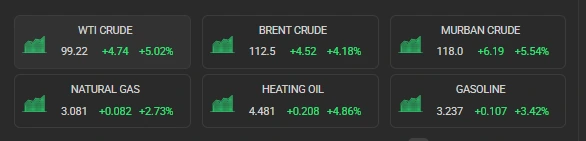
Oil prices are going up drastically after President Trump threatened to seize Iran’s Kharg Island, adding fresh inflation pressure on top of an already slowing economy.
Also Read: Biggest Oil Shock in 45 Years: What Happens to Bitcoin If Oil Price Hits $175?
Powell is navigating the classic stagflation dilemma, a shock that simultaneously drives inflation higher and growth lower, and today’s classroom setting will offer reporters and traders an unscripted window into how he is thinking about it.
The relationship between Powell’s tone and crypto markets is well established at this point. Dovish signals push Bitcoin higher. Hawkish ones compress it. After the March 18 FOMC meeting, Bitcoin fell as rate cut expectations were pushed back further.
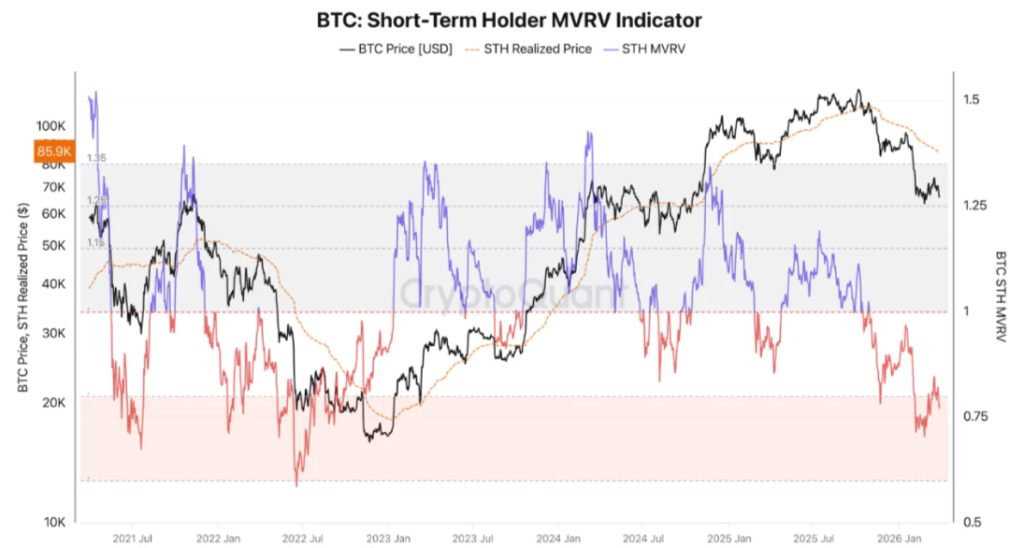
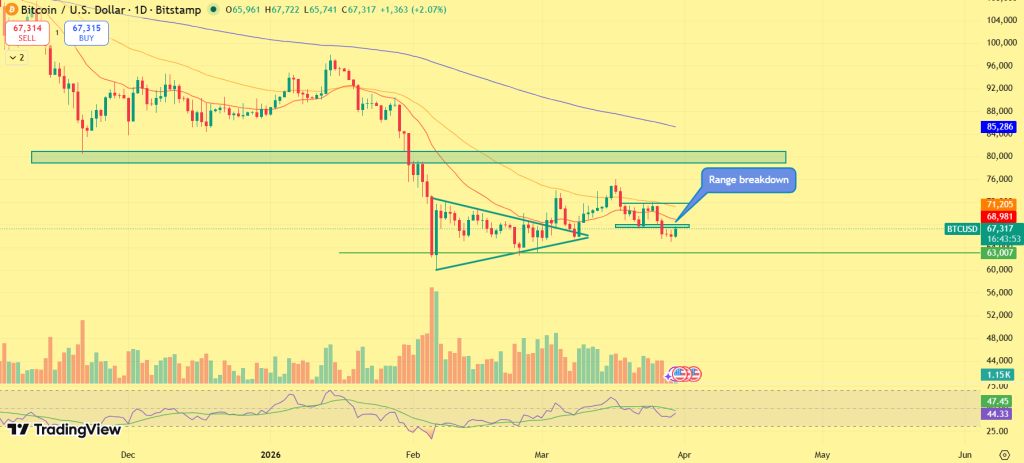
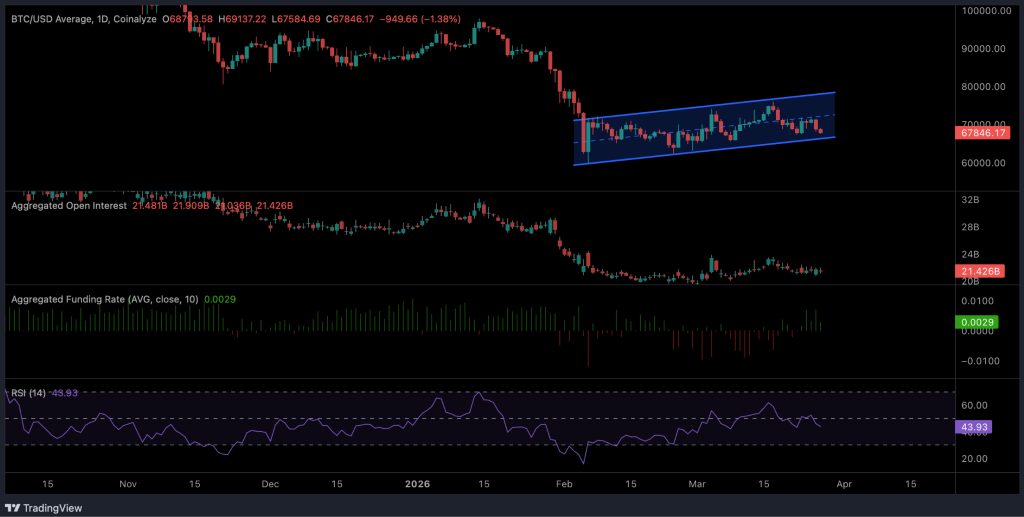
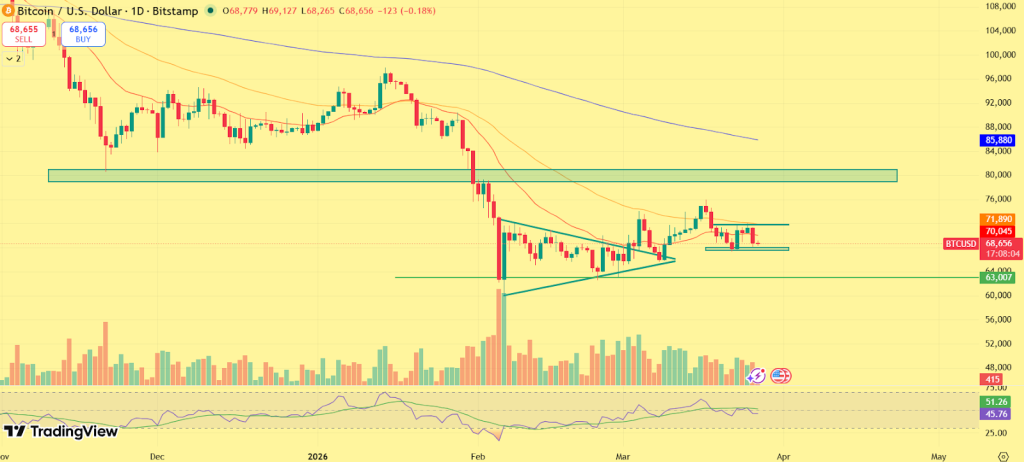
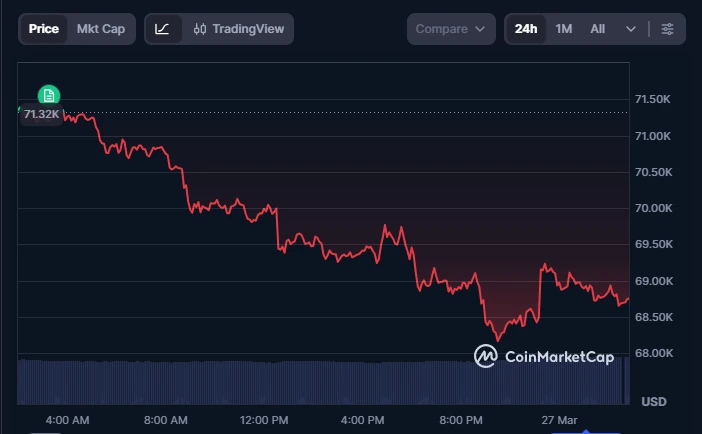
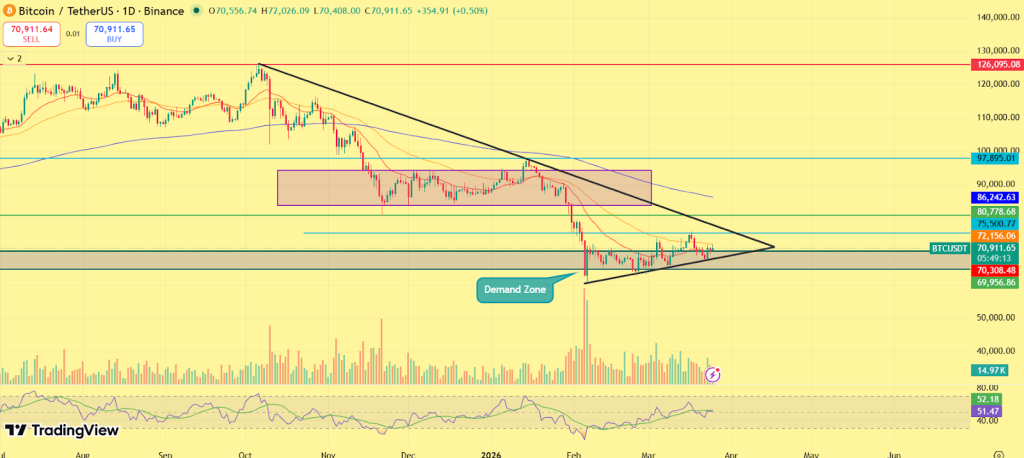
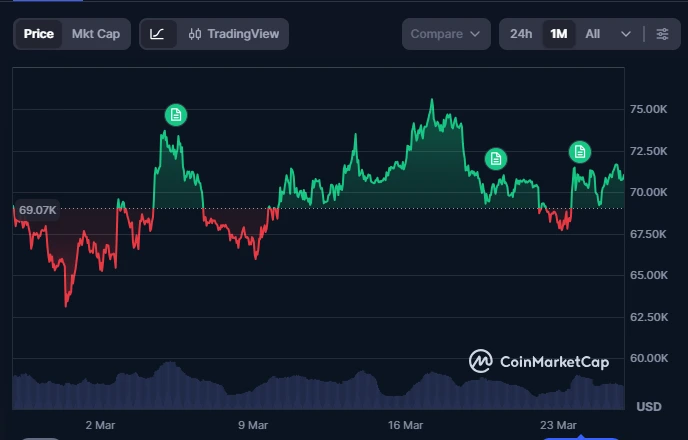
Bitcoin is currently trading around $67,833, up over 1% in the past 24 hours. The near-term technical picture, however, remains under pressure.
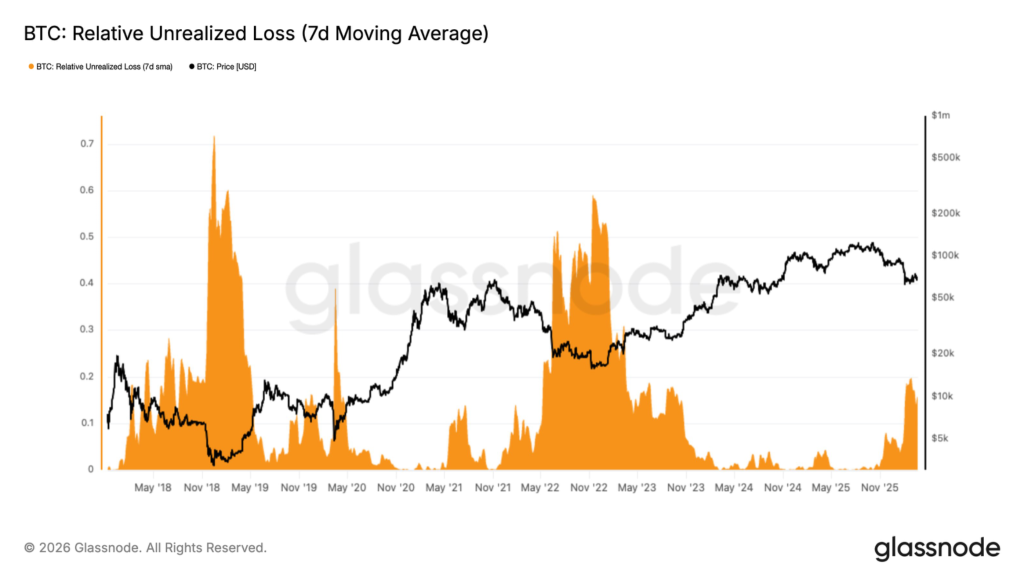
On-chain analyst Willy Woo posted today that his models point to a Bitcoin bottom forming between $46,000 and $54,000, anchored by the CVDD Floor Model currently sitting at $45,500.
Old school onchain models suggest a BTC bottom between 46k-54k. Also hints at how much time we have to wait.
— Willy Woo (@willywoo) March 30, 2026
Orange line correlates to the capital stored in BTC and it has been leaving since November.
CVDD Floor Model has the advantage of climbing over time, 45.5k right now. pic.twitter.com/PrfFTgwAyA
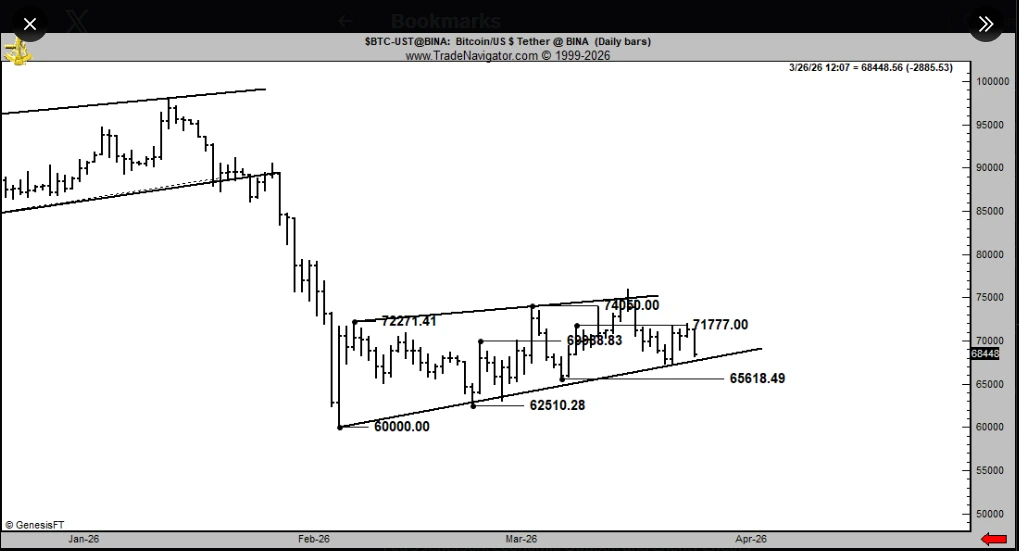
Separately, analysts have flagged a bearish triangle pattern on the daily chart, with a breakdown potentially targeting prices below $50,000.
This Might Interest You: 5 Altcoins With the Strongest 10x Setup in the Current Bear Market
Powell’s term as Fed Chair ends on May 15, leaving him with one more scheduled FOMC meeting before he hands over to his successor. That makes today’s Harvard appearance, informal as it is, one of the final few windows into how he is reading the economy before the transition, and markets are not wasting it.
Stay ahead with breaking news, expert analysis, and real-time updates on the latest trends in Bitcoin, altcoins, DeFi, NFTs, and more.
Jerome Powell is scheduled to speak at 10:30 AM Eastern Time in a live Harvard discussion, streamed on the Federal Reserve’s official YouTube channel.
Markets expect unscripted clues on interest rates, inflation, and economic outlook, especially amid rising oil prices and global geopolitical tensions.
Hawkish signals often push Bitcoin lower, while dovish comments can support price gains by improving liquidity and risk sentiment.

The post Bitmine Adds 71K ETH, Now Holds 4.73M ETH appeared first on Coinpedia Fintech News
Tom Lee’s Bitmine Immersion added 71,179 ETH last week, bringing total Ethereum holdings to 4.73 million ETH, roughly 3.92 percent of the circulating supply. The company’s combined crypto and cash assets now stand at 10.7 billion dollars. Out of this, 3.14 million ETH is staked, generating around 177 million dollars in annual rewards. The move highlights Bitmine’s growing presence in the Ethereum market and the rising institutional interest in staking and long-term crypto investment.

The post Chilliz Price Rally Gains Momentum: Will CHZ Price Reach $0.06? appeared first on Coinpedia Fintech News
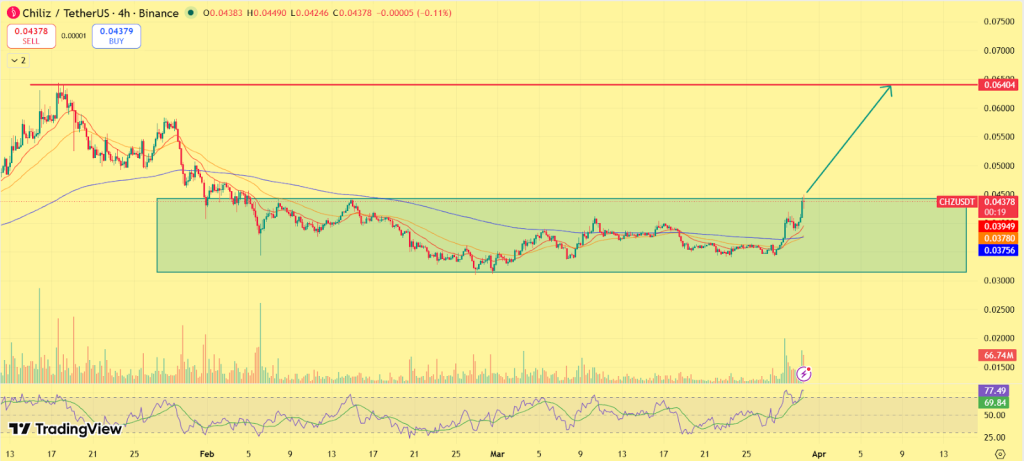
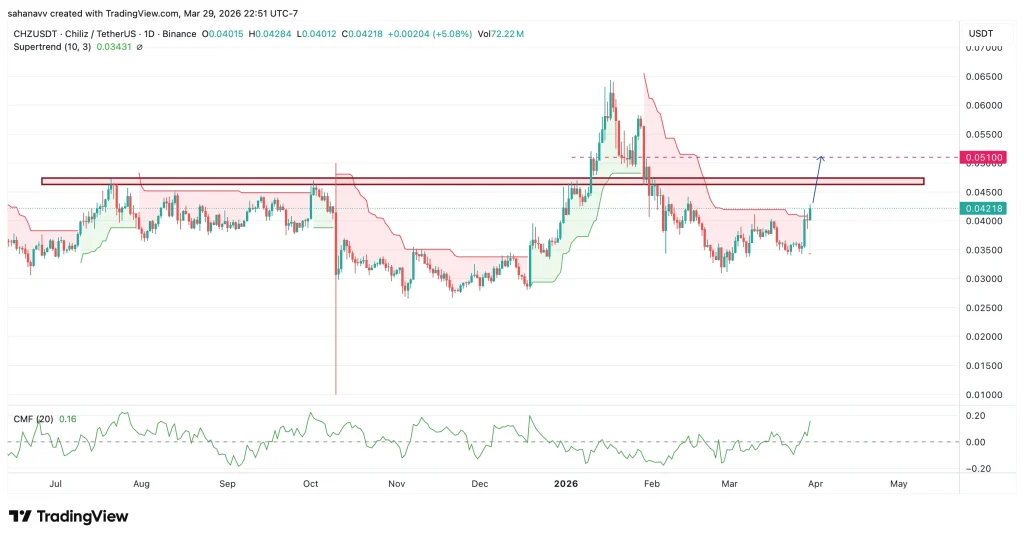
CHZ price is gaining traction again, with momentum building after weeks of tight consolidation. Chiliz has surged nearly 28% over the past week, including an 8% intraday move, and is now pressing against a key resistance zone. The move is not just price-driven, participation is rising, and structure is beginning to shift. So, Is CHZ price moving toward $0.06?
The recent move in CHZ is driven by a clear structural shift. For weeks, the CHZ price traded within a consolidation range between $0.037 and $0.044, forming a base supported by repeated buying at lower levels. That phase now appears complete. Chiliz price is currently testing the upper boundary of this range, with multiple attempts to break through resistance. Each retest weakens the level, increasing the probability of a breakout.
The structure has transitioned from sideways to pre-breakout compression, where buyers gradually absorb supply at resistance. If this level gives way, the move is unlikely to be slow.
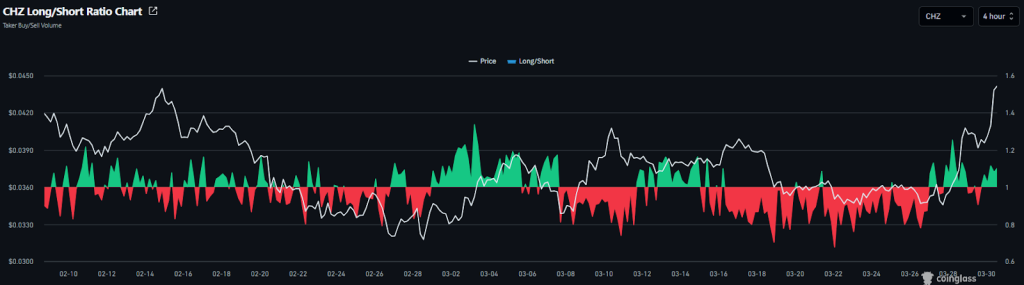
The derivatives market is now supporting the rally. Open Interest has climbed 13% over the past 24 hours, rising alongside price. This confirms that the move is backed by fresh positioning, not just low-liquidity volatility. At the same time, the long/short ratio at 1.1 reflects a mild bullish bias. Traders are leaning long, but not aggressively, leaving room for further upside without overcrowding the trade.

This combination matters. Rising OI with a balanced long bias typically signals healthy trend development, where momentum builds without immediate risk of liquidation-driven pullbacks. As price approaches resistance, this positioning creates conditions for a clean breakout move, rather than a sharp rejection.
CHZ price is at a key inflection point. The immediate resistance sits near $0.044–$0.045, which marks the upper boundary of the recent range. A confirmed breakout above this zone would signal a transition into expansion.

Above that, the next major target lies between $0.057 and $0.060, where previous supply is concentrated. On the downside, the former resistance zone between $0.040 and $0.044 now acts as support. Holding this level is essential to maintain the bullish structure. With derivatives data supporting the move, a breakout carries higher conviction. If momentum sustains, price could move quickly toward the $0.06 level as liquidity above gets taken.
The current CHZ price prediction reflects a market on the verge of expansion. A confirmed breakout from range, rising open interest, and balanced positioning all point toward strengthening momentum. The structure is no longer neutral, it is building toward a directional move.
The next step is clear. If CHZ breaks and holds above resistance, the rally could extend toward $0.06. If not, the token may consolidate briefly before another attempt. For now, the setup favors continuation, and CHZ is approaching the point where momentum either confirms or fades.
The price is rising due to a structural shift in the market, moving from weeks of sideways consolidation to a pre-breakout compression, supported by a 13% increase in open interest and a balanced long/short ratio.
CHZ is currently at a critical inflection point testing a key resistance zone. With rising open interest and a bullish structure, the setup favors a potential breakout, though holding support levels is essential for the trend to continue.
For 2026, the immediate outlook hinges on a confirmed breakout above the $0.044 to $0.045 resistance. If successful, analysts suggest the rally could extend toward the $0.06 liquidity zone, though long-term sustainability depends on maintaining structure above former resistance levels.

The post HYPE Price Signals Golden Cross—Can Bulls Drive a 13% Rally to Reach $45 Ahead of Monthly Close? appeared first on Coinpedia Fintech News
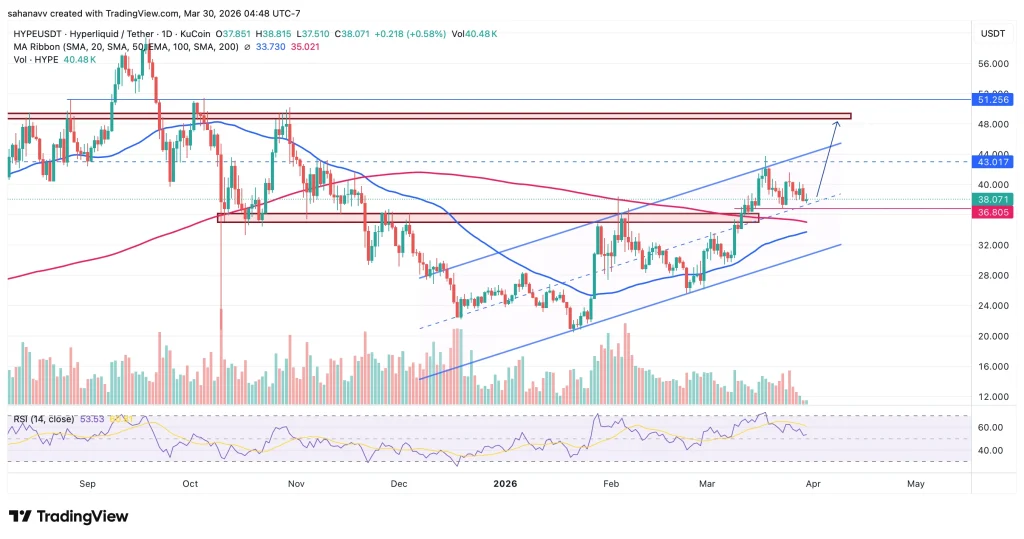
The Hyperliquid price is beginning to flash a key bullish signal, with the possibility of trend reversals and sustained upside momentum. As the broader crypto market stabalises, traders are now watching whether the structure can validate the bullish reversal. And if it is confirmed, it could pave the way for a 10% to 15% rally, potentially helping the HYPE price secure a strong monthly close.
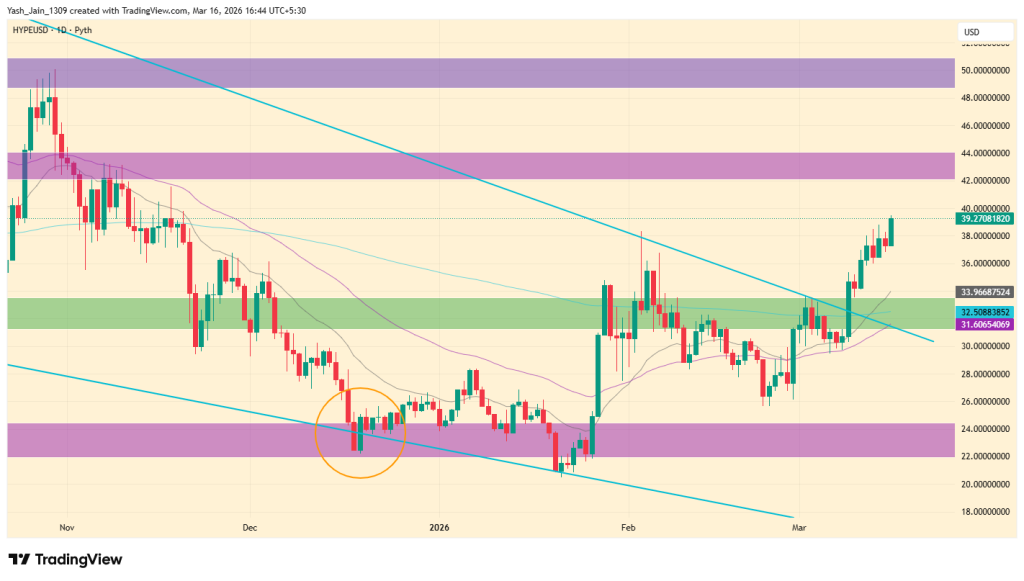
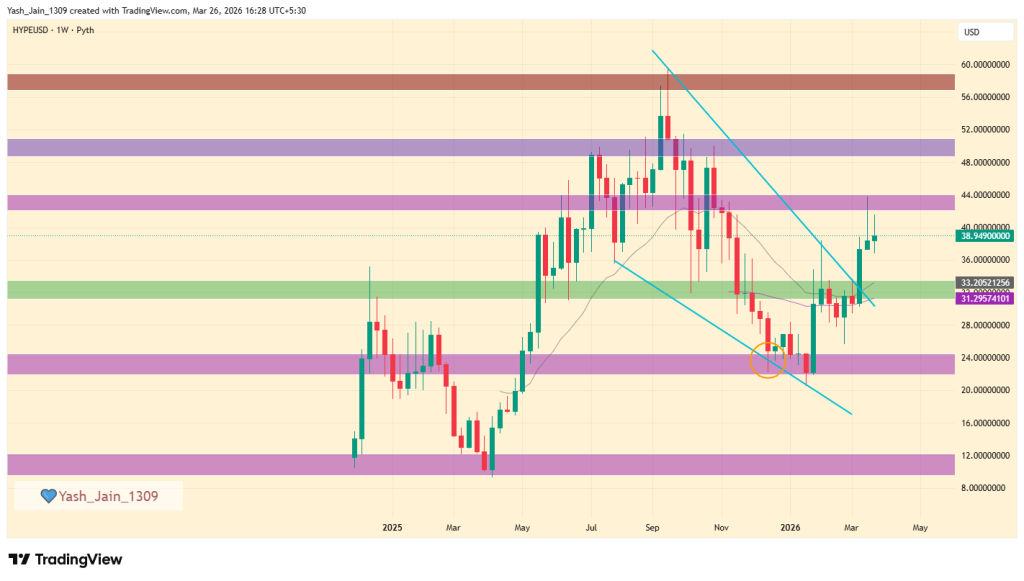
The price is showing steady strength as it continues to trade within a rising parallel channel, indicating a sustained short-term uptrend. The token has successfully reclaimed the $36–$37 support zone, which now acts as a strong base, while the price holds above key moving averages, reinforcing bullish control.

One of the pivotal bullish indicators is the formation of a potential ‘Golden Cross’ with the 50/200-day MAs heading for a bullish crossover. As the price is forming the base at the middle bands of the rising channel, a rebound from this level could push the price to the resistance of the channel. On the other hand, the RSI is displaying a bullish divergence, suggesting the rising strength of the rally.
Currently, Hyperliquid (HYPE) price is attempting to build above the $38 level, with the next key resistance near $43. A confirmed breakout above this zone could open the path toward $48–$51, aligning with the upper channel boundary and a previous supply area. However, failure to hold above $36 could weaken the structure and drag the price back toward the lower channel support near $32.
HYPE price in 2026 is projected to range between $25 and $90, with an average near $60 if adoption and trading volumes keep rising.
Long-term projections suggest HYPE might reach an average of $125 by 2030, with possible highs near $185 if platform usage keeps expanding.
HYPE may appeal to long-term investors due to strong platform growth, but like all crypto, it carries risk and requires careful research.

The post Trader FINNT Sparks 2026 Memecoin Mania appeared first on Coinpedia Fintech News
Degen trader FINNT, known for his years in meme coins and DeFi with 91,000 followers, sparked a wave of excitement on March 30 by pledging to drive a memecoin to a $200 million market cap. His announcement led the community to suggest low‑cap tokens like $VNUT, $FINU, $BOOE, and $MOMO from Solana, Ethereum, and other chains. While supporters see memecoins as community‑driven social assets, critics warn they lack fundamentals and carry high rug and crash risks. This hype reflects the 2026 memecoin cycle powered by platforms that make token creation extremely easy and speculative, though most tokens fail to achieve lasting value.

The post Ethereum May Lose Its #2 Spot in 2026: Can USDT, XRP, BNB, or SOL Take It? appeared first on Coinpedia Fintech News
Ethereum has held the #2 spot in crypto for nearly a decade. Prediction markets are now pricing a 61% chance that changes before 2027.
That number sat at 17% at the start of the year. It is now at 61%, according to Polymarket, which is a massive swing that reflects just how quickly sentiment around ETH has shifted in 2026.
At the start of 2026, most people weren’t even entertaining the question. Now the market is pricing it as the more likely outcome. Why the shift, and what is likely to take its place?
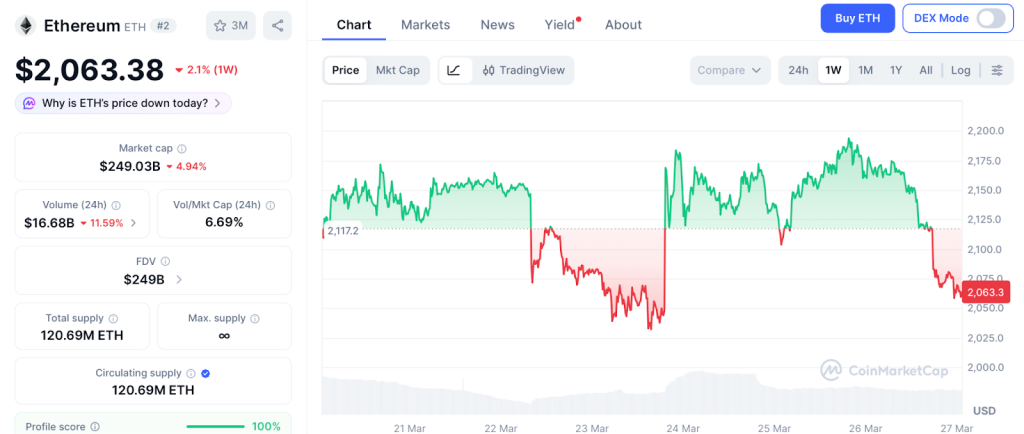
ETH is trading at $2,049 with a market cap of $247.35B. Tether sits at $184.07B. That looks like a comfortable cushion until you do the math – ETH only needs to fall to approximately $1,525, a 25% decline from today, before USDT flips it.
And ETH has already come close. In February, it dropped to $1,746 during the broader crypto selloff amid the US-Israel-Iran war tensions, its lowest level since April 2025.
US spot Ethereum ETFs have shed 65% of their assets under management since October 2025, falling from $31.86B to approximately $11.76B, according to Glassnode. ETH broke below $2,000 again on Friday. It is down 30% over the last 60 days and remains 57% below its August 2025 all-time high. The trend is difficult to ignore.
Part of the problem is structural. ETH is the primary collateral and leverage asset in crypto – when markets turn risk-off, it gets sold first and hardest.
On-chain data shows tens of thousands of ETH were sold in recent months to repay Aave loans, creating a feedback loop where falling prices forced more selling to avoid liquidation.
Institutions, meanwhile, have largely defaulted to Bitcoin over ETH when deploying fresh capital – a dynamic Anthony Scaramucci noted, pointing to Bitcoin as the institutional default for new allocations.
Tether is the most immediate threat. Its market cap has grown from $73B in 2021 to $184B today -entirely independent of price action, expanding precisely when risk appetite dries up and traders move to safety.
On March 24, Tether hired KPMG for its first-ever full independent audit, a move that strengthens its institutional credibility at exactly the right moment.
Beyond USDT, three other assets are building their own cases. BNB sits at $84.06B with its Maxwell upgrade improving scalability. XRP at $82.52B is seeing ETF inflows, institutional adoption, and a potential CLARITY Act catalyst.
Solana at $48.08B just surpassed Ethereum in transaction volume and beat it on RWA holders for the first time in March. Its Alpenglow upgrade, targeting 150ms block finality, would make it the fastest major L1 in crypto by a significant margin.
None of the challengers are at the door yet, except Tether.
The $63B gap between USDT and ETH sounds large. But it is the smallest it has been in years, it is narrowing in the exact macro environment that favors stablecoins, and Polymarket’s 61% says the market knows it.
Stay ahead with breaking news, expert analysis, and real-time updates on the latest trends in Bitcoin, altcoins, DeFi, NFTs, and more.
Yes, Ethereum could lose its #2 spot if selling pressure continues and competitors like USDT keep growing. Market trends show the gap is narrowing fast.
Ethereum is under pressure due to ETF outflows, reduced institutional demand, and forced selling from DeFi liquidations, keeping prices weak.
Tether is the closest, but BNB, XRP, and Solana are also gaining ground with strong growth, upgrades, and increasing institutional interest.
Ethereum remains strong long term, but short-term risks exist due to weak demand and competition. Investors should watch market trends closely.

The post Bitcoin Price Prediction Faces Citigroup $112K Cut While Pepeto Presale Is Going Viral – Here Is What You Need To Know appeared first on Coinpedia Fintech News
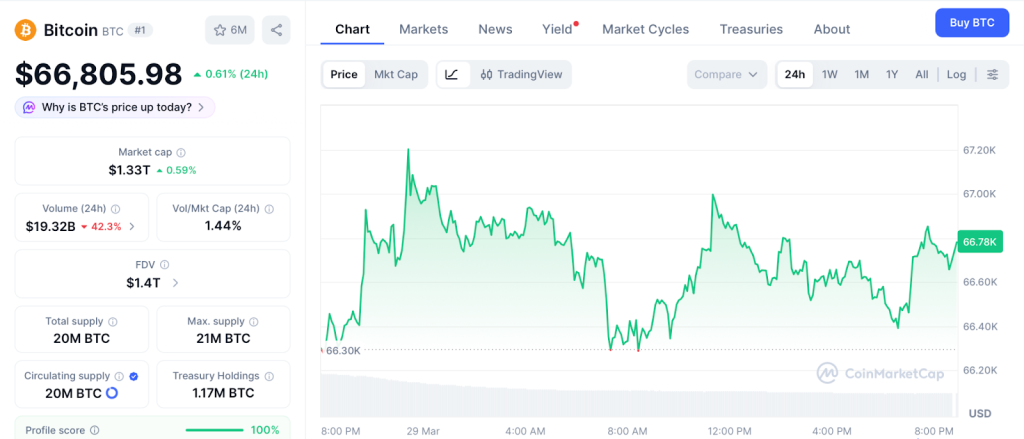
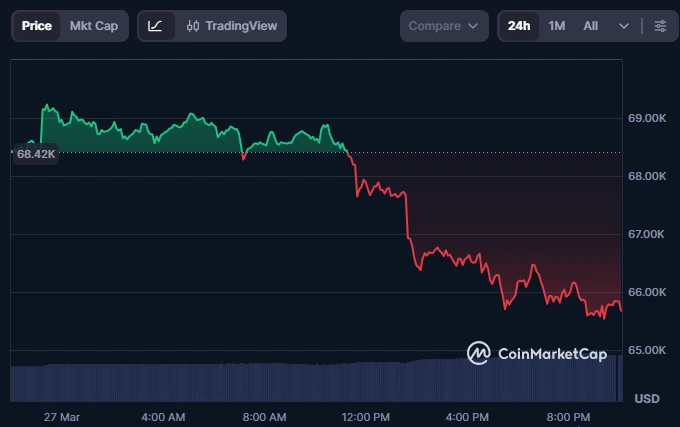
Citigroup just cut its Bitcoin target from $143,000 to $112,000 because the Clarity Act stalled in the Senate. The market dropped to Fear 9, and BTC sits at $66,805 while retail sells into the same correction that whales are buying.
The bitcoin price prediction depends on legislation that may not pass this year, but the presale that raised more than $8 million during that fear does not depend on Washington at all.
Pepeto filled stages while Citigroup revised downward, and the last stage sold out ahead of schedule, while this one fills as the headlines push fear deeper. Getting in now means being on the side that makes the returns instead of the side that watches.
Citigroup lowered its 12-month BTC target to $112,000 from $143,000 as the Clarity Act stalled, according to CoinDesk.
Polymarket odds for the bill passing in 2026 fell to 60%, and the bitcoin price prediction now ranges from a bear case of $58,000 to a bull case of $165,000, according to CoinGecko.
Pepeto
The Clarity Act may not get answered for months, but contract exploits, hidden approvals, and trap tokens are draining real wallets every single day. Pepeto was built for that present day reality.
The exchange scans any token you are about to enter and identifies specific risk factors before your capital moves anywhere. It shows everything in plain language that makes sense without a technical background, so whether the BTC forecast lands at $112,000 or $165,000, your money enters verified entries instead of traps that drain wallets while the market argues about where BTC is heading.

Tracking the bitcoin price prediction for months means watching a target of $112,000 over a full year, a decent return spread across twelve months on an asset that needs billions in fresh capital just to move 15 to 20%. One Binance listing event is where presale wallets make the returns that the BTC forecast takes all year to deliver.
More than $8 million raised at $0.000000186 with 191% APY staking compounding positions while stages fill. Every contract passed SolidProof’s full audit, and the builder behind the original Pepe coin that reached $11 billion on 420 trillion tokens assembled the exchange with a former Binance expert on the team.
Twelve months of waiting for a BTC target, or one listing event that delivers the return analysts project at 100x to 300x from Pepeto at current pricing.
BTC trades at $66,805 according to CoinMarketCap, after losing the $70,000 level that Citigroup called the pre election floor. The bitcoin price prediction for 2026 ranges between the bear case of $58,000 and bull case of $165,000.

Reclaiming $70,000 opens $78,000 and then the $92,000 resistance that capped the February rally. Adam Back flagged 79,000 BTC in margin longs on Bitfinex with whales deploying $20 million daily, signaling large holders see this as an entry.
If the Clarity Act passes, institutional inflows restart, and the bull case opens. Losing $66,000 opens $61,000 as the next floor, but whale buying at current levels suggests the bottom is closer than the headlines imply.
The bitcoin price prediction has been disappointing for retail investors who needed more than a range bound chart for months, and Citigroup cutting to $112,000 confirms the ceiling is lower than the market expected.
The last stage of the verified presale sold out ahead of schedule, and this one fills while headlines push Fear to 9, and the wallets rushing in see the confirmed Binance listing and the 100x to 300x that analysts project.
The Pepeto official website is where entering now, while the BTC outlook disappoints means you are on the side that makes the returns from one listing event instead of the side that spent 2026 watching BTC trade between $58,000 and $112,000 while the presale closed and the wallets inside secured what everyone else wished they had.
Click To Visit Pepeto Website To Enter The Presale
FAQs:
What factors drive the Bitcoin price prediction alongside the presale opportunity?
The bitcoin price prediction depends on the Clarity Act, ETF flows, and Fed policy. The verified exchange does not depend on any of those because the Binance listing is confirmed, and the tools already run.
How does the Pepeto listing compare to the BTC forecast timeline?
The BTC outlook targets $112,000 over 12 months. The Pepeto official website is where the Binance listing and 100x to 300x projections offer a wider return from a single event.
What is a realistic BTC target based on the BTC forecast for 2026?
Citigroup sees $112,000 base, $165,000 bull, and $58,000 bear depending on legislation and ETF flows. The presale at 100x from one listing does not depend on any of those variables.

The post Shiba Inu (SHIB) Price Prediction 2026, 2027 – 2030: Will SHIB Price Reach $0.000330? appeared first on Coinpedia Fintech News
Shiba Inu (SHIB) is a decentralized cryptocurrency operating within the Ethereum ecosystem and remains one of the most actively traded meme-based digital assets in the market. After experiencing extended price corrections over the past cycle, SHIB entered 2025 under sustained consolidation, with volatility gradually compressing near long-term support levels.
While recent price action has remained range-bound, technical structure suggests that SHIB may be approaching a multi-year inflection point. As compression continues and market participation rebuilds, attention now shifts to whether 2026 can initiate a new macro expansion phase for SHIB.
| Cryptocurrency | Shiba Inu |
| Token | SHIB |
| Price | $0.0000
|
| Market Cap | $ 3,554,528,025.69 |
| 24h Volume | $ 97,532,924.2552 |
| Circulating Supply | 589,243,599,408,162.5000 |
| Total Supply | 589,500,152,957,752.1250 |
| All-Time High | $ 0.0001 on 28 October 2021 |
| All-Time Low | $ 0.0000 on 27 August 2020 |
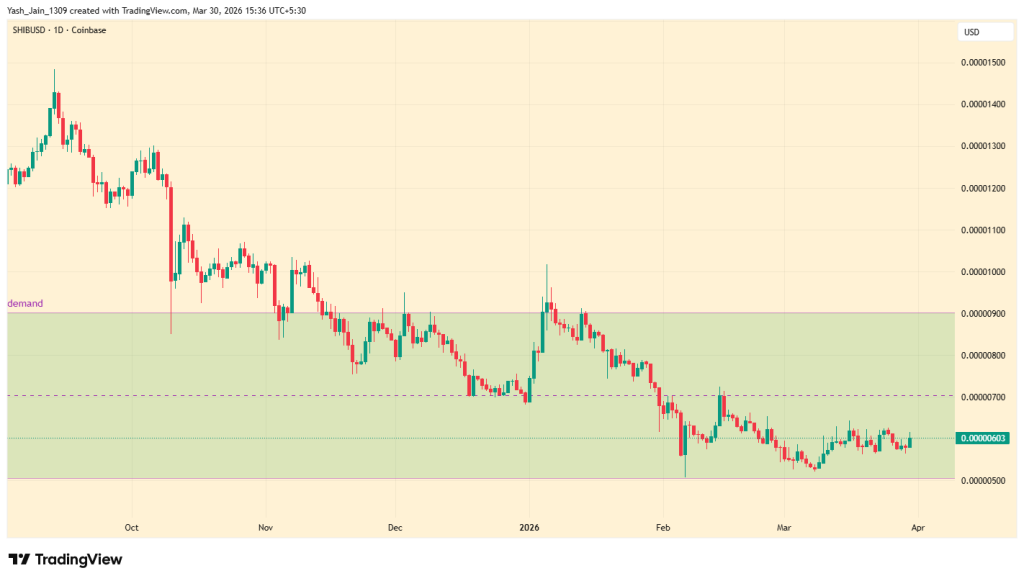
Shiba Inu (SHIB/USD) is entering a key demand zone as of Q1 2026, a signal that long-term holders may be positioning for the next market cycle.
Two potential outcomes are possible for 2026: a quick parabolic breakout to higher levels or a gradual recovery towards the $0.00001600 to $0.00001800 range. Maintaining the demand floor will be crucial for SHIB’s price action in the first half of 2026.
On the daily chart, the SHIB price is currently situated within a consolidation box, nestled inside a long-term accumulation range that has developed over several years. Notably, during the first quarter, the price dipped to the lower boundary of this range at $0.00000500.
However, since mid-March, we have observed a significant surge in bullish demand, indicating a likely retest of the mid-range level at $0.0000070 in April. Should this positive momentum wane, we might see a return to the support level of $0.0000050 within this framework.

Biconomy has announced a significant update for Shiba Inu enthusiasts, offering up to 380% APR in rewards through their $SHIB Earn Products. This promotion, launched on February 10, invites users to subscribe and maximize their holdings via these high-yield decentralized finance incentives.
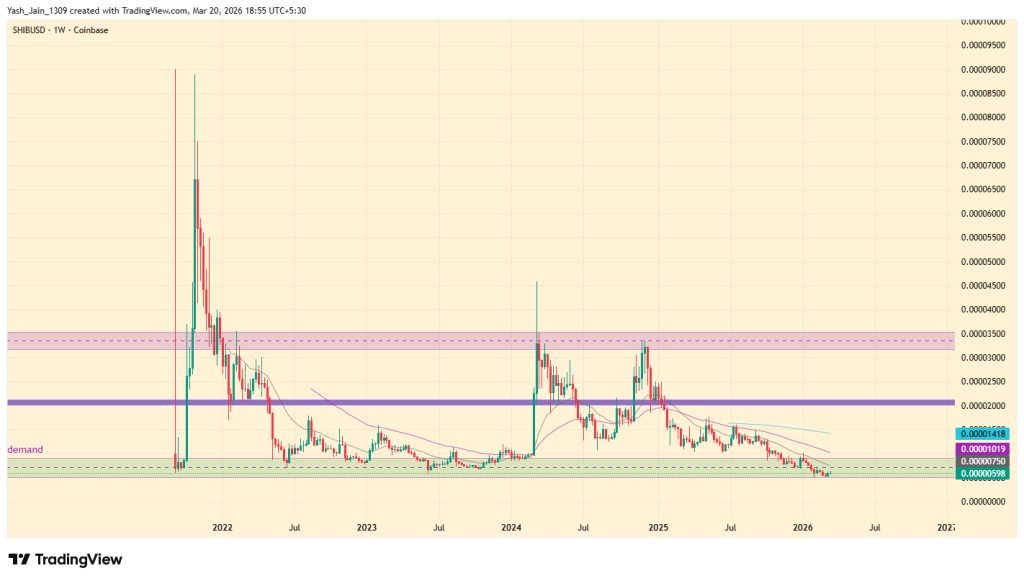
The weekly chart for Shiba Inu (SHIB/USD) shows the price descending into a historically significant and “spectacular” demand zone as of Q1 2026. This green-shaded accumulation area has acted as a powerful springboard in the past, most notably fueling the parabolic rallies of late 2021 and the aggressive surge in early 2024. The current price action suggests that SHIB is once again entering a phase of high-interest absorption, where long-term holders typically begin positioning for the next major market cycle.
While the symptoms of a potential 2026 breakout are building, history indicates two possible paths forward. A high-volatility spike could see SHIB rapidly reclaim higher resistance levels, mirroring its previous explosive moves. However, if a massive breakout does not materialize immediately, the asset is likely to follow a more measured, “gradual” recovery path. In this conservative scenario, the initial recovery targets would focus on reclaiming the 200-day EMA and establishing a foothold in the $0.00001600 to $0.00001800 range.

Regardless of the speed of the move, the primary narrative remains the defense of this multi-year demand floor. The ability of the bulls to hold this level throughout the first half of 2026 will be the deciding factor in whether SHIB undergoes a rapid repricing or a steady, trend-following climb toward its mid-term resistance clusters.
| Year | Estimated Low Price | Estimated High Price | Estimated Average Price |
| 2027 | $0.0000200 | $0.0000300 | $0.0000150 |
| 2028 | $0.0000250 | $0.0000500 | $0.0000350 |
| 2029 | $0.0000340 | $0.0000790 | $0.0000650 |
| 2030 | $0.0000580 | $0.0001300 | $0.0000950 |
Shiba Inu (SHIB) price range can be between $0.0000200 to $0.0000300 during the year 2027.
In 2028, Shiba Inu is forecasted to potentially reach a low price of $0.0000250, and a high price of $0.0000500.
Thereafter, the SHIB price for the year 2029 could range between $0.0000340 and $0.0000790.
Finally, in 2030, the price of SHIB is predicted to maintain a steady and positive. It may trade between $0.0000580 and $0.0001300.
Based on the historic market sentiments and trend analysis of the largest cryptocurrency by market capitalization, here are the possible SHIB price targets for the longer time frames.
| Year | Potential Low ($) | Potential Average ($) | Potential High ($) |
| 2031 | 0.000220 | 0.000340 | 0.000480 |
| 2032 | 0.000260 | 0.000400 | 0.000580 |
| 2033 | 0.000310 | 0.000500 | 0.000700 |
| 2040 | 0.000550 | 0.000850 | 0.001300 |
| 2050 | 0.000900 | 0.001500 | 0.002300 |
| Year | 2026 | 2027 | 2030 |
| Changelly | $0.000085 | $0.000140 | $0.000320 |
| DigitalCoinPrice | $0.0000920 | $0.000150 | $0.000350 |
| WalletInvestor | $0.0000340 | $0.0000520 | $0.0000980 |
Stay ahead with breaking news, expert analysis, and real-time updates on the latest trends in Bitcoin, altcoins, DeFi, NFTs, and more.
SHIB price predictions for 2026 range between $0.0000200 and $0.000099, depending on whether the token confirms a long-term breakout.
Growth could come from adoption, token burns, DeFi expansion, and a stronger crypto market pushing demand higher over time.
Reaching $1 is highly unlikely due to SHIB’s large supply, requiring massive market cap growth far beyond realistic projections.
By 2050, SHIB could reach between $0.000900 and $0.002300 depending on long-term adoption, burns, and crypto market expansion.
SHIB’s price is driven by market sentiment, token burns, ecosystem development, overall crypto cycles, and broader risk appetite.
SHIB may have long-term potential with ecosystem growth, but it remains volatile, so investors should carefully manage risk.

The post Monero (XMR) Price Prediction 2026, 2027-2030: Will Privacy Coins Lead the Next Bull Run? appeared first on Coinpedia Fintech News
Envision the capability to conduct online payments without a digital footprint; that’s payment privacy. Numerous cryptocurrency assets possess a distinct selling proposition (USP); some safeguard transaction details concerning the parties or institutions involved, but some do not.
But this transparency enables larger investors and institutional capital to be easily traced. While unshielded transactions are valued by researchers for the accessible information they provide regarding investments, individuals whose data is subject to scrutiny often experience frustration, as they perceive a loss of privacy over their own financial assets.
This is where Monero (XMR) comes in. Since its inception in 2014, Monero has offered robust privacy features. It has become the top choice for users seeking to maintain a high standard of anonymity in blockchain transactions. The impact of Monero’s privacy capabilities was particularly evident in the fourth quarter of 2025.
Despite the government’s tightening of the rules around digital assets, Monero has ranked 21st globally. Driven by rising interest, XMR stands out as a privacy-focused coin. So, what’s coming next for Monero in 2026 and the years to come? In this Monero price prediction 2026-2030 article, we look at the potential price targets.
| Cryptocurrency | Monero |
| Token | XMR |
| Price | $335.7870
|
| Market Cap | $ 6,194,177,537.22 |
| 24h Volume | $ 79,168,841.6981 |
| Circulating Supply | 18,446,744.0737 |
| Total Supply | 18,446,744.0737 |
| All-Time High | $ 798.9149 on 14 January 2026 |
| All-Time Low | $ 0.2130 on 14 January 2015 |
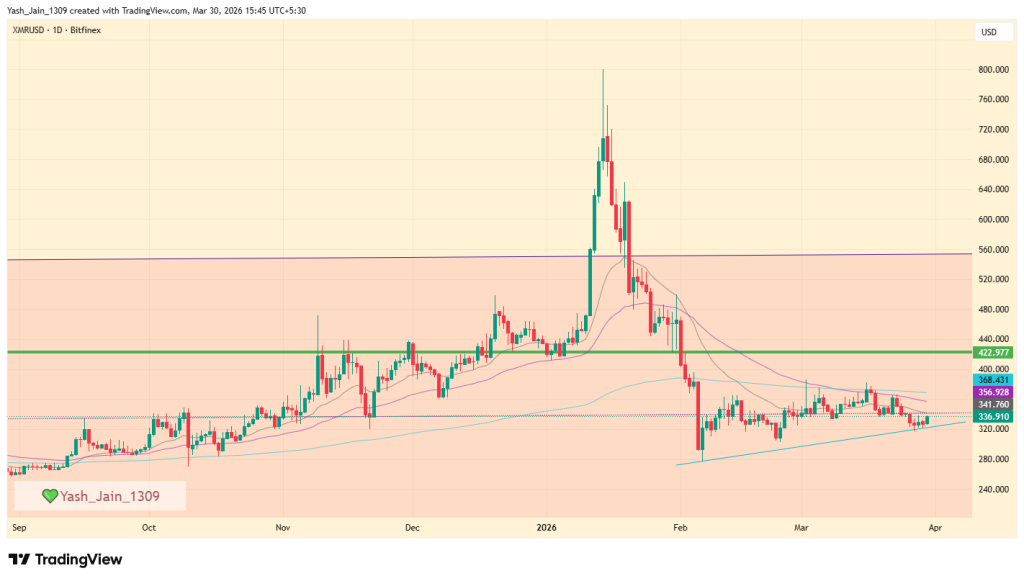
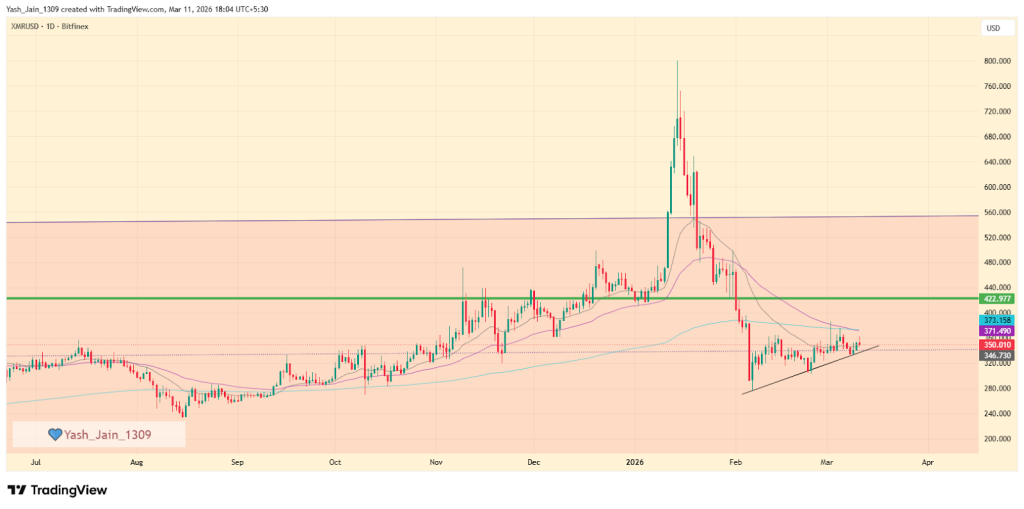
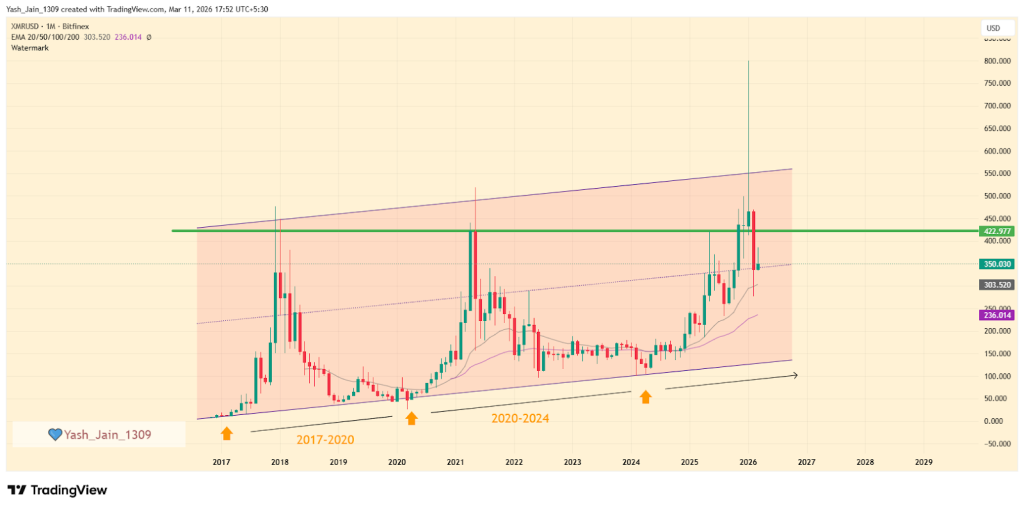
Monero (XMR) surged in Q4 2025, reaching $800 in 2026 before dropping to around $285, indicating bearish dominance. If demand increases, it could revisit $422, but failure to break this level may lead to a decline toward $200 or even $130 by year-end. Currently, XMR is retreating from the upper boundary of its ascending channel and has reached mid-way already, suggesting a correction may be imminent if more ground is lost.
The daily price chart for Monero (XMR) highlights an intriguing market trend characterized by fluctuations. Following its struggle to maintain stability above $422 in January, XMR experienced a notable decline, dipping below $370 in February. However, by mid-March, the price encountered significant resistance near the 200-day EMA and the $370 mark.

As March concludes, the XMR/USD pair has successfully begun to establish a short-term support trendline. If this level is breached, we could see a swift decline, perhaps dropping below $300 in April. On a positive note, if this support remains intact, there is a promising opportunity for XMR to retest the $422 level by month’s end.
Per the late February 2026 post from ProbeLab, they show that findings confirm the Monero network’s resilience against surveillance. Analysis reveals that 46% of community nodes have proactively adopted a “ban list,” effectively neutralizing nearly all identified spy nodes. This grassroots defense highlights a robust, decentralized commitment to privacy, strengthening the network’s topology against potential deanonymization attempts.
The price action of Monero (XMR) showed remarkable bullish momentum, particularly in Q4 2025, driven by a broader trend in privacy coins, which resulted in a significant price surge during that period.
In 2026, Monero followed the same privacy narrative, continuing the rally and pushing the price to new all-time highs (ATH) of $800. However, this increase was short-lived, as the price dropped to around $285 in February, losing more than 60% from its peak. Additionally, the mid-trendline of an ascending channel was breached, confirming a bearish dominance in the market at that time.

But, the remaining days of Q1 2026 showed some improvements that pushed it back above mid-trendline support, and now we see consolidation going on.
Now, if demand for XMR price increases, it could potentially revisit the $422 mark. It’s important to note that a recovery to this level might not inspire much excitement, as it could form a significant trap for investors. To regain a bullish setup, a weekly close above $422 would be crucial for attracting investor interest.
Conversely, if the price fails to break through $422 or even collapses below mid-trendline support again, then the first half of 2026 could see a drop towards $200 area, which could accelerate to $130 by year’s end to touch the lower border of the ascending channels as a support, like in the past.
Furthermore, it’s essential to recognize that the price has reached the upper boundary of its ascending parallel channel. As with previous patterns, a correction appears to be imminent. When it pierced the upper boundary, it had two choices: break away from the earlier pattern and establish new price action, but it briefly exceeded the channel before falling back within it, echoing historical trends. Ultimately, it returned to the pattern, continuing its legacy from the past.

| Year | Potential Low ($) | Potential Average ($) | Potential High ($) |
| 2027 | $910.00 | $1000.00 | $1200.00 |
| 2028 | $863.46 | $1,726.90 | $2,590.35 |
| 2029 | $1,295.19 | $2,590.35 | $3,885.53 |
| 2030 | $1,942.76 | $3,885.53 | $5,828.30 |
Looking forward to 2027, XMR’s price is expected to reach a low of $910, with a high of $1,200 and an average forecast price of $1,000.
In 2028, the price of a single Monero is anticipated to reach a minimum of $863.46, with a maximum of $2,590.35 and an average price of $1,726.90.
By 2029, XMR’s price is predicted to reach a minimum of $1,295.19, with the potential to hit a maximum of $3,885.53 and an average of $2,590.35.
In 2030, Monero is predicted to touch its lowest price at $1,942.76, hitting a high of $5,828.30 and an average price of $3,885.53.
The long-term projection assumes Monero sustains relevance in enterprise blockchain use cases, with growth moderating over time as the asset matures.
| Year | Potential Low ($) | Potential Average ($) | Potential High ($) |
| 2031 | 3800 | 5200 | 6800 |
| 2032 | 5500 | 7500 | 9500 |
| 2033 | 7700 | 10000 | 11500 |
| 2040 | 15000 | 22000 | 42000 |
| 2050 | 30000 | 40000 | 60000 |
| Year | 2026 | 2027 | 2030 |
| Changelly | $720 | $900 | $1900 |
| CoinCodex | $680 | $880 | $1800 |
| WalletInvestor | $740 | $870 | $2000 |
Stay ahead with breaking news, expert analysis, and real-time updates on the latest trends in Bitcoin, altcoins, DeFi, NFTs, and more.
Monero could revisit the $422 level if buying demand strengthens. However, if bearish pressure continues, the price may fall toward $200 or even $130 during 2026.
Projections indicate Monero could trade between about $1,942 and $5,828 by 2030, with an estimated average price around $3,885 if adoption continues growing.
Long-term projections vary widely, but some estimates place Monero between $2,000 and $5,000 by 2040, depending on adoption and regulation.
Monero’s price is driven by privacy demand, regulatory developments, network adoption, market sentiment, and overall crypto market trends.
Monero serves a different role than Bitcoin. Bitcoin focuses on transparency, while Monero prioritizes privacy, making it a niche but valuable crypto asset.

The post Sui Crypto (SUI) Price Prediction 2026, 2027-2030: Is This the Best Time to Buy SUI? appeared first on Coinpedia Fintech News
As a next-generation Layer 1 blockchain, Sui is redefining the architecture of the decentralized web by introducing an object-centric model where assets, data, and permissions are natively ownable and programmable. Built to handle the demands of modern commerce, the Sui Stack provides a modular toolkit that allows developers to scale on resilient infrastructure while delivering high-performance experiences without typical blockchain trade-offs.
From powering institutional capital markets and DeFi to even revolutionizing the gaming sector, the network has already secured a significant foothold with a Total Value Locked (TVL) of $583 million, per the official website.
By prioritizing verifiable security and composable scaling, Sui ensures that value created within its ecosystem is shared rather than extracted. In this comprehensive SUI price prediction 2026–2030, we analyze how this business-ready infrastructure and growing industry adoption will impact SUI’s token and market valuation in the years to come.
| Cryptocurrency | Sui |
| Token | SUI |
| Price | $0.8872
|
| Market Cap | $ 3,460,178,803.57 |
| 24h Volume | $ 358,824,950.9549 |
| Circulating Supply | 3,899,984,688.4154 |
| Total Supply | 10,000,000,000.00 |
| All-Time High | $ 5.3519 on 06 January 2025 |
| All-Time Low | $ 0.3643 on 19 October 2023 |
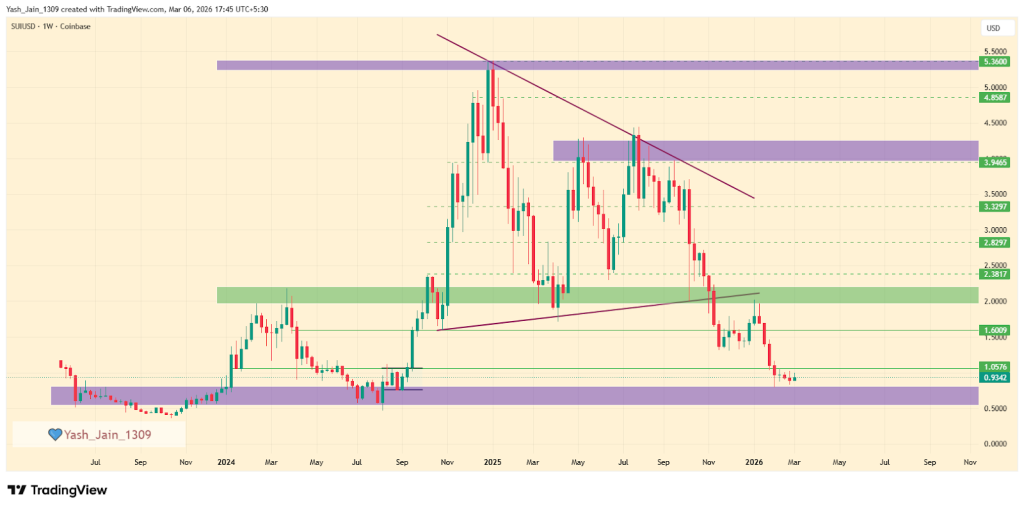
SUI token price is currently in a corrective phase after reaching a peak of $5.36 in late 2024. It is currently testing the support level at $0.80, with a potential decline to the critical $0.50 level. If SUI/USD stabilizes at $0.50, this could indicate a possible reversal.
Key resistance levels to monitor are $1.05, $1.60, and $2.00. A breakout above $3.50 would confirm a trend reversal. In the meantime, it is a “buy the dip” phase for long-term investors.
In early 2026, the SUI price tested the $2.00 level but faced significant selling pressure, resulting in a low of $0.80 in February. Since that time, the price has been consolidating just below the $1.00 threshold.
As March concludes, SUI/USD is at a pivotal moment, with the price facing challenges in overcoming the $1 resistance level. Should this struggle persist, we may see movement towards lower levels. Notably, if the crucial $0.80 support level fails, the price could dip further, potentially finding support in the $0.50 to $0.60 range in April.
On a brighter note, if the SUI price successfully breaks above $1.05, it could signify a local bottom and stimulate a rally towards $1.60, with the possibility of re-testing the $2.00 mark by month’s end.
The weekly price action for SUI/USD reveals a market in a major corrective phase after its late-2024 peak, currently in Q1 2026, searching for a definitive long-term bottom.
What we witnessed is that after the 2024’s explosive rally that topped out near $5.36, the asset entered a persistent downtrend, characterized by a series of “lower highs” capped by a prominent descending resistance line. This primary trendline has remained unbroken throughout 2025, consistently forcing the price toward deeper support levels as the initial hype cycle cooled.
Currently, the SUI price is testing $0.80 support after losing $1.05 support in Q1 2026. The odds suggest a chance of reaching the $0.50 support zone if it fails to hold $0.80, because the $0.50 area is of immense technical importance, as it represents the original “genesis” accumulation level from early 2024.
The price has dipped a lot, and now it’s showing signs of stabilization as sellers are about to reach exhaustion once it hits $0.50. Real consolidation could begin, and a true reversal to fruit has better odds. This area serves as the “line in the sand” for bulls; maintaining this floor is essential to prevent a complete technical breakdown and to begin building a new base for the next market cycle.
Looking ahead, the chart identifies several key resistance levels that SUI must reclaim to shift its bearish structure. The immediate hurdle lies at the $1.05, $1.60, and $2.00 horizontal zones. A successful bounce from the current demand floor would likely target these levels first.
However, a true trend reversal will only be confirmed if SUI breaks and closes above the long-term descending trendline, currently near $3.50. Until that breakout occurs, the asset remains in a “buy the dip” accumulation phase for long-term investors.

| Year | Potential Low ($) | Potential Average ($) | Potential High ($) |
| 2027 | $4 | $6 | $8 |
| 2028 | $8 | $10 | $12 |
| 2029 | $10 | $13 | $16 |
| 2030 | $12 | $15 | $18 |
Subsequently, the SUI price range can be between $4 to $8 during the year 2027.
Beyond the previous ATH,SUI bullish momentum may gain pace and will see another bullish spark in 2028. Specifically, as per our SUI Price Prediction, the potential SUI price range in 2028 is $8 to $12.
Thereafter, the SUI price for the year 2029 could range between $10 and $16
Finally, in 2030, the price of SUI is predicted to maintain a steady and positive. It can trade between $12 and $18.
Based on the historic market sentiments and trend analysis of the largest cryptocurrency by market capitalization, here are the possible SUI price targets for the longer time frames.
| Year | Potential Low ($) | Potential Average ($) | Potential High ($) |
| 2031 | $8 | $10 | $15 |
| 2032 | $10 | $13 | $18 |
| 2033 | $12 | $15 | $22 |
| 2040 | $20 | $32 | $40 |
| 2050 | $30 | $70 | $150+ |
Stay ahead with breaking news, expert analysis, and real-time updates on the latest trends in Bitcoin, altcoins, DeFi, NFTs, and more.
SUI could trade between $0.50 and $5 in 2026. If it breaks key resistance near $3.50, momentum may push the token toward the $3–$5 range.
If adoption continues and the ecosystem expands, SUI could reach $12–$18 by 2030, driven by DeFi growth and network demand.
Long-term projections suggest SUI may trade between $20 and $40 by 2040, assuming strong blockchain adoption and sustained ecosystem growth.
By 2050, SUI could potentially reach $30–$150+ if the network becomes widely used across finance, gaming, and Web3 infrastructure.
You can buy SUI on major crypto exchanges like Binance, Coinbase, KuCoin, and OKX. Simply create an account, deposit funds, and trade for SUI.
Yes, if SUI breaks above key resistance near $3 and market conditions stay favorable, a retest of its $5.35 ATH is possible.
SUI shows long-term potential due to its scalable Layer-1 design, growing DeFi adoption, and increasing developer and institutional interest.
Key drivers include rising TVL above $1B, strong on-chain activity, ecosystem expansion, and SUI’s reputation as a fast, scalable network.

Naver Financial delayed its Dunamu share swap by about three months as antitrust and crypto law reviews continue and Upbit operator profits decline.

Bitcoin remains in a bear market despite a bounce to $67,000, with onchain metrics and models pointing to a potential bottom below $50,000.

Bitcoin neared the first six-consecutive-month streak of losses since the 2018 bear market as Iran war woes kept markets firmly in check.

Digital asset products saw $414 million in outflows last week as inflation fears, US Fed rate hike expectations and Middle East tensions drove a shift toward risk-off sentiment.

Bitcoin Bond Company CEO Pierre Rochard says US regulators’ Basel III revamp cannot quietly decide how banks treat Bitcoin without clearly explaining the rules and evidence behind them.

The Ethereum Foundation deployed $46.2 million in ETH across 11 deposits as it accelerates a 70,000 ETH staking plan.

The post SIREN Price Rebounds Strongly: Is This the Start of a New Uptrend? appeared first on Coinpedia Fintech News
SIREN price is showing early signs of a potential trend reversal after a sharp correction phase triggered panic across the market. Instead of extending losses, the token staged a quick recovery from a critical demand zone, suggesting that buyers are actively defending lower levels. This shift in price behavior is now raising a key question: Is SIREN preparing for a sustained upside move, or is this just a temporary bounce?
The recent price action highlights a crucial development for SIREN. After a steep drop, the token found support at a well-defined daily order block, where buying pressure emerged immediately. This quick reaction prevented further downside, indicating that demand remains intact at this level. Such price behavior is often associated with accumulation phases, where stronger market participants absorb selling pressure.

Notably, the failure of sellers to push prices lower suggests that the recent decline may have been driven more by liquidity hunting rather than sustained bearish momentum. As long as SIREN continues to hold above this order block, the probability of a trend reversal remains elevated.
Another key factor supporting the bullish outlook is the nature of the recovery. SIREN did not consolidate for long after the drop. Instead, it rebounded quickly, reflecting strong buying interest. This type of move typically indicates absorption of sell-side liquidity, where large players step in to accumulate positions. When a token absorbs selling pressure efficiently, it reduces the likelihood of further downside continuation.
At the same time, it creates a more favorable setup for upward movement, especially when combined with improving structure. This shift in sentiment is now becoming visible in SIREN’s price behavior.
SIREN price is attempting to transition from a bearish to a neutral-bullish structure. The immediate support remains the order block zone, which has already proven its strength. A sustained hold above this level will be crucial for maintaining bullish momentum.

On the upside, SIREN faces resistance near $2.00, where liquidity is concentrated. A breakout above this zone could trigger a stronger rally as price moves to capture that liquidity. However, failure to hold the current support zone of $1.50, could invalidate the bullish setup and lead to renewed downside pressure.
The current SIREN price prediction reflects a market at a potential turning point. The strong reaction from key support, combined with absorption of selling pressure, suggests that the token may be entering an early reversal phase.
If buyers continue to defend current levels, SIREN could build momentum toward higher price targets in the near term. However, given the asset’s high volatility, traders should remain cautious and watch for confirmation before positioning aggressively. For now, the focus remains on one key factor, whether SIREN can sustain its recovery and convert this bounce into a broader trend shift.
Yes, SIREN is showing early signs of a trend reversal after a sharp correction. The price found strong support at a key order block and staged a quick recovery, indicating that buyers are actively defending lower levels and absorbing selling pressure.
It can be if support holds and momentum builds. However, high volatility means traders should wait for confirmation before expecting a sustained uptrend.
SIREN could trade between $2–$5 if momentum builds, with bullish targets near $8+. Losing $1.50 support may keep price below $2 longer term.

The post Why CORE Token Crashed 50% in 24 Hours? appeared first on Coinpedia Fintech News
The native token CORE of Core DAO crashed, losing around 50% of its value within 24 hours. According to the official statement from Core DAO, the drop was triggered by a series of large sell orders that hit the market in a short span.
These heavy sell-offs created intense downward pressure, which quickly spilled into the lending ecosystem. The result was a rapid liquidation cascade on Colend, a protocol tied to the Core ecosystem.
The team explained that once prices started falling, leveraged positions on Colend dropped to required collateral levels. This forced automatic liquidations, accelerating the decline further.
As more positions were liquidated, selling pressure increased, creating a feedback loop. The protocol itself functioned as designed, meaning the crash wasn’t caused by a technical failure but by market dynamics.
According to the team, most of these positions have now been cleared, and only limited exposure remains in the system.
Following the crash, the Core Foundation and the Colend team stepped in to stabilize the situation. They confirmed they are actively monitoring the market and working to maintain orderly operations. Their message shows that this was a “market-driven event,” not a structural issue with the protocol.
Crypto analyst MOON JEFF framed the event as part of a recurring cycle rather than an isolated failure. He compared the situation to last year’s Mantra crash, suggesting that sudden collapses like this tend to repeat across different projects. His view implies the drop may be less about CORE itself and more about broader market structure, where leverage, liquidity gaps, and timing often trigger similar cascades.
On the other side, an X user raised serious concerns about transparency and possible insider activity. He questioned whether the CORE team could have played a role, pointing to the token’s extreme drop from around $7 to near-zero levels.
He also highlighted two red flags: the project locking its comment section shortly after addressing the crash, and reports that a large holder, possibly a whale, dumped around 2.8 million CORE tokens.
Meanwhile, another on-chain observer added more detail by identifying a wallet that allegedly sold nearly 3 million CORE tokens. According to his analysis, the wallet has since reduced its holdings to almost nothing, reinforcing the narrative that a single large seller may have triggered the cascade.
This aligns with the core team’s explanation that “large market sells” sparked forced liquidations on lending protocols like Colend, though the identity and intent of the seller remain unclear.
Stay ahead with breaking news, expert analysis, and real-time updates on the latest trends in Bitcoin, altcoins, DeFi, NFTs, and more.
CORE is the native token of the Core DAO ecosystem, used for staking, governance, and paying fees within its Bitcoin-aligned blockchain network.
CORE dropped due to large sell-offs that triggered liquidations on Colend, causing a cascade of forced selling and sharp price decline.
Recovery depends on market sentiment and liquidity. If selling pressure eases and demand returns, CORE may stabilize over time.
The team says it was market-driven, not a technical issue. The protocol worked as intended, but leverage and selling caused the drop.
No confirmed rug pull exists. It appears to be a leverage-driven crash, though whale activity and transparency concerns raised questions.

The post Are Tokenized Stocks Crypto’s Next $5T Opportunity? Nasdaq, SEC, and Congress All Move at Once appeared first on Coinpedia Fintech News
Tokenized stocks just crossed $1 billion in total value locked, and crypto strategist Tanaka thinks most people in the market are still underestimating what that number actually signals.
“If you ask me what the next market trend is, I would say tokenized stocks,” Tanaka wrote in an X post, framing the thesis around a problem that doesn’t get enough attention: access.
In the last three weeks alone, the SEC formally approved tokenized securities trading on Nasdaq, and Congress held one of its most significant tokenization hearings to date.
For investors outside the United States, gaining exposure to American equities has always come with friction – broker dependency, intermediaries, and in many markets, outright restrictions. Tokenized stocks solve that by allowing direct onchain exposure to US equities, removing the layers that have historically kept global retail investors on the sidelines.
Tanaka’s argument is that this is a market responding to genuine, unmet demand.
The numbers support that reading. Tokenized stocks now sit at roughly $907M-$1B in TVL, with monthly transfer volume running between $2.5B and $2.7B. The broader RWA market has reached $26.58B according to rwa.xyz, representing roughly 3-4x year-on-year growth.
The holder base has grown to approximately 180,000-200,000 wallets, with 85,000-90,000 actively transacting.
“The data is already pointing in one direction,” Tanaka noted. “This sector is still early and continuing to expand.”
Ondo Finance currently dominates the tokenized securities space with 55-65% market share. Franklin Templeton, with over $1.5 trillion in assets under management, has already launched tokenized funds and is moving into tokenized ETFs. Major exchanges and infrastructure providers are actively building 24/7 trading rails for tokenized equities.
On March 9, Nasdaq announced a partnership with Kraken to build 24/7 tokenized stock trading infrastructure, powered by Kraken’s xStocks framework which has already processed over $25 billion in transactions.
Nine days later, on March 18, the SEC formally approved Nasdaq’s proposal to allow tokenized and traditional shares to trade side by side with identical tickers, prices, and shareholder rights.
NYSE went a step further, partnering with Securitize to build a full tokenized securities platform and naming it as the exchange’s first-ever digital transfer agent, giving it authority to issue stocks and ETFs directly as onchain tokens.
On March 25, the House Financial Services Committee held its most significant tokenization hearing to date, with a bipartisan conclusion entered on record: tokenized securities are no longer a question of whether but when. The CLARITY Act, which would provide the statutory framework governing this market, is approaching Senate markup in late April.
Zoom out to the addressable market and the scale becomes harder to dismiss. The global equities market is approximately $110-115 trillion. Even a 1-5% migration onchain translates to a $1T-$5T opportunity, according to Tanaka’s analysis.
For retail, the play isn’t the tokenized stocks themselves but the infrastructure being built around them. Tanaka is watching ONDO, MPL, CFG, and POLYX as the key infrastructure tokens in this buildout.

The post Is Strategy the Only Major Bitcoin Buyer Now? What Does it Mean for the BTC Price? appeared first on Coinpedia Fintech News
The rise of institutional interest in the crypto markets has changed the dynamics of Bitcoin, specifically. Strategy (then MicroStrategy) has played a major role in changing these institutions’ perceptions of cryptos. Recent data suggests that Strategy has emerged as the dominant buyer of BTC, raising questions about the sustainability of the ongoing price trend.
Over the past 30 days, Strategy has reportedly accumulated nearly 45,000 BTC, marking its fastest pace of acquisition in almost a year. At the same time, participation from other treasury companies has dropped sharply, with the number of active buyers falling from 30 to just 13. Their combined purchases have declined by nearly 99%, now contributing only a marginal share of total demand.

This sharp decline in broader participation is further compounded by rising ETF outflows, signaling that institutional appetite may be weakening rather than expanding.

This creates a critical imbalance. Instead of a broad-based rally supported by multiple demand sources, the market appears to be relying heavily on a single entity to absorb supply. Such concentration introduces structural fragility, as the absence of diversified buyers limits the market’s ability to sustain upward momentum. However, Bitcoin’s muted price reaction suggests that ongoing buying pressure is being offset by persistent selling.
There are two possible interpretations of the current setup. On one hand, Strategy’s aggressive accumulation could represent a silent absorption phase, where large players steadily accumulate BTC before a potential breakout. In this scenario, the lack of price movement reflects a transfer of supply rather than weakness.
On the other hand, the data may point to a more concerning reality. With ETF outflows rising and fewer companies participating, Strategy’s purchases could effectively be acting as exit liquidity—absorbing selling pressure from other market participants rather than driving fresh demand.
The Bitcoin price appears to be at a crucial turning point, with its current structure offering mixed signals across timeframes. In the short term, Strategy’s aggressive accumulation continues to provide support, helping absorb selling pressure and prevent deeper downsides.
However, the midterm outlook remains uncertain, as weakening ETF flows and declining participation from other corporate buyers keep the market range-bound. This lack of broad-based demand limits the strength of any sustained upside move.
From a long-term perspective, the growing concentration of demand introduces structural risk. If new institutional players fail to enter and reliance on a single dominant buyer persists, the sustainability of the broader rally could come into question.

The post Over 40% of Altcoins Near All-Time Lows Is This a Crypto Market Warning or Opportunity? appeared first on Coinpedia Fintech News
The crypto market is going through a difficult phase, and altcoins are feeling the most pressure. According to CryptoQuant analyst Darkfost, more than 40% of altcoins are now near their all-time lows.
This is a very high number and shows how weak the altcoin market has become in recent months.
The recent market drop started after October 2025, when Bitcoin fell from its all-time high of $126,000 to around $67,000. While Bitcoin dropped heavily, altcoins suffered even bigger losses.
Darkfost’s shared chart shows the percentage of altcoins near all-time lows rising above 40%, which is higher than the previous bear market peak of around 38%. This suggests altcoins are currently under one of the strongest pressures seen in this cycle.

Many large-cap altcoins like ETH, Solana, XRP, Cardano, Chainlink, Litecoin, BNB, and Polkadot are down around 40% from their highs.
Memecoins have dropped even more. Dogecoin is down about 45%, Pepe around 53%, Shiba Inu about 52%, Floki by 55%, and some tokens like Official Trump dropped nearly 71%.
One major reason is global uncertainty and geopolitical tensions, which have made investors move away from risky assets like altcoins. But the analyst says there is another big reason, too many cryptocurrencies.
Today, there are more than 47 million cryptocurrencies in existence. Around 22 million tokens are on Solana, 18 million on Base, and 4 million on BNB Smart Chain. Because there are so many coins, liquidity is getting divided, which makes altcoins weaker over time.
Despite the negative situation, the analyst believes this could also create opportunities. Historically, when altcoins underperform this much, it sometimes happens before a recovery phase.
However, this doesn’t mean all altcoins will recover. The Altcoin Season Index currently stands at 55, showing Bitcoin still dominates the market, while a true altcoin season remains far away.
Stay ahead with breaking news, expert analysis, and real-time updates on the latest trends in Bitcoin, altcoins, DeFi, NFTs, and more.
Altcoins are falling due to Bitcoin’s drop, global uncertainty, and too many tokens splitting liquidity, which weakens demand across the market.
It can be, but only for strong projects. Weak altcoins may not recover, so careful research and risk management are essential before investing.
No, not all altcoins recover. Only projects with strong fundamentals, real use cases, and active development tend to survive and grow again.

The post CLARITY Act News: Senate Markup Set for April As Coinbase Fights to Save $1.35 Billion in Revenue appeared first on Coinpedia Fintech News
The CLARITY Act is moving again, and this time the timeline looks real. A recent update reveals that the CLARITY Act is all set to make headlines again, with Coinbase hinting at a possible Senate markup in the second half of April and potential passage by May.
According to Coinbase’s internal market view, lawmakers had already reached an agreement in principle on March 20, followed by a new compromise on March 24 that proposes banning passive stablecoin yield while still allowing limited, activity-based rewards.
The biggest sticking point is stablecoin yield. The latest proposal aims to ban passive rewards, meaning users won’t earn just by holding stablecoins. However, it still allows limited incentives tied to actual usage, like payments.
This isn’t a small tweak. In 2025, Coinbase and Circle generated around $2.75 billion from reserves backing USDC. Coinbase’s share alone was roughly $1.35 billion, close to one-fifth of its total revenue.
If passive yield disappears, that revenue stream takes a direct hit.
Moreover, Coinbase isn’t opposing the entire bill. It supports clearer rules for DeFi, developer protections, and a defined split between regulators. The issue is the wording around yield.
Chief Legal Officer Paul Grewal has warned that vague language today could give future regulators too much power to reinterpret rules. The company is now working on a coordinated counterproposal to keep reward models viable while still aligning with regulation.
“My memory is a little better than to trust future rogue regulators to faithfully apply the law.” Grewal
This also ties into Coinbase’s broader model. The platform takes a sizable cut from staking rewards, around 35% on major assets, showing how central yield-based income is to its business.
Tensions are not just regulatory; they’re also institutional. Jamie Dimon and Brian Armstrong have reportedly clashed over stablecoin economics, even as both firms maintain a working partnership.
On the policy side, White House adviser Patrick Witt has made the urgency clear: move now or risk losing the window entirely.
The outcome directly affects users. If broader reward structures remain, stablecoins could continue offering 4–5% returns, keeping liquidity strong. If restrictions tighten, incentives shrink, and capital could shift back toward traditional systems.
Overall, the full draft is expected soon, and the next few weeks will decide everything. This isn’t just another bill; it’s a turning point that will shape how crypto operates in the U.S., from user rewards to billion-dollar revenue models.
Stay ahead with breaking news, expert analysis, and real-time updates on the latest trends in Bitcoin, altcoins, DeFi, NFTs, and more.
The CLARITY Act is a proposed U.S. bill that defines crypto regulations, clarifies agency roles, and sets rules for stablecoins and DeFi.
The CLARITY Act could move to Senate markup in April, with a potential final vote by May if lawmakers maintain current momentum.
On Polymarket, traders are speculating on CLARITY Act timelines, reflecting market expectations around approval chances and regulatory impact.
It may reduce passive earnings but bring clearer rules, helping platforms operate legally while improving trust and safety for users.

The post XRP Price Attempts Recovery: $1.50 Key Level to Confirm Trend Reversal—Will Bulls Take Control? appeared first on Coinpedia Fintech News
Unlike Bitcoin and Ethereum, XRP hasn’t seen much excitement lately, with its price stuck in a tight range over the past few weeks. Volatility has dropped noticeably since February, often a sign that the market is gearing up for a bigger move. Currently, the XRP price is hovering between $1.35 and $1.45, facing repeated rejection near the upper range while finding support on dips.
Although the price action looks quiet, there are signs of steady accumulation, with institutional activity appearing cautious rather than aggressive. This kind of consolidation, combined with low volatility, usually points to a buildup phase. As momentum slowly picks up, XRP seems to be approaching a key turning point—suggesting the current calm may not last for long.

From a technical standpoint, XRP is trading within a tight consolidation range, with $1.40–$1.45 acting as a key resistance zone. The price has tested this area multiple times but failed to break through, making it a crucial level for bulls to reclaim. Momentum indicators suggest a gradual shift, with RSI stabilizing near the mid-range, indicating neither strong bullish nor bearish sentiment. This aligns with the ongoing compression in price action, where both buyers and sellers appear evenly matched.
If XRP manages to break and hold above $1.50, it could confirm a shift in momentum and open the path toward $1.60 and higher levels. However, a rejection near resistance may keep the price range-bound, with immediate support resting around $1.30–$1.35.
XRP continues to trade in a narrow range, but the steady increase in ETF inflows indicates growing institutional interest beneath the surface. No XRP ETFs were sold while BTC, ETH, and SOL ETFs experienced outflows of $225 million, $48.5 million, and $7.8 million, respectively. Rather, XRP ETFs recorded net inflows of $2.66M. This silent accumulation, combined with declining volatility, suggests the market may be building toward a larger move.
A decisive breakout above $1.50 could confirm a shift in momentum and validate the bullish case, while failure to do so may keep XRP stuck in its current consolidation phase for longer.

The post Altcoins Collapse: Why So Many Are Near All-Time Lows? appeared first on Coinpedia Fintech News
The crypto market is under pressure as geopolitical tensions and volatility weigh on risk assets, with altcoins taking the hardest hit. Over 40% of altcoins are now at or near all-time lows, exceeding the 38% seen in the last bear market. Oversupply and liquidity dilution, more than 47 million tokens across chains like Solana, Base, and BNB Smart Chain, make altcoins fragile. While underperformance is widespread, it also creates opportunities for investors who can identify strong, resilient projects with long-term potential.

The post Adam Back Flags 79,000 BTC Whale Signal While Pepeto Can Make You Better Returns Than ADA and SOL appeared first on Coinpedia Fintech News
Adam Back just flagged something most of the market missed. Bitfinex margin longs hit an all time high of 79,000 BTC with whales deploying $20 million daily below $69,000 during Fear 9, roughly 450 to 600 BTC purchased every minute around the clock.
When the architect of Bitcoin’s proof of work calls this buying pattern one of a kind, the best crypto to buy now is wherever that conviction flows during fear.
Pepeto raised more than $8 million while the market bled, and ADA early holders who turned a few thousand into generational wealth when Cardano ran from $0.02 to $3.09 all wish they had bought more. The same setup is forming here.
Adam Back identified 79,000 BTC in Bitfinex margin longs at an all time high with whales buying $20 million daily below $69,000, according to U.Today. Fear sits at 9, the lowest in over two years, according to CoinGecko.
The best crypto to buy now benefits because capital conviction flowing into BTC during extreme fear is the signal that presale entries with verified tools catch when the rotation arrives.
Pepeto
Seven days of Bitcoin ETF inflows confirm institutional risk appetite is returning, but what that data does not reveal is where the 100x opportunity sits inside that recovery, because no ETF product is going to file for a presale token. Pepeto was built to fill that gap, and the best crypto to buy now for retail is the entry that institutional products will never touch.
While institutions put billions into BTC and SOL ETFs chasing 15 to 30% annual returns, the verified exchange scans the on-chain layer that those ETFs never reach: early entries, large wallet movements, and contract risk flagged before your money moves. Capital rotates from large caps into altcoins and from altcoins into verified entries with confirmed listings, and that rotation is where the widest returns live.

The exchange already has that working product, flagging risks in real time and tracking direction shifts so the hours of manual research get replaced by answers in minutes. More than $8 million raised at $0.000000186 with 191% APY staking compounding positions while stages fill. SolidProof cleared every contract, and the founder who created the original Pepe coin to $11 billion on 420 trillion tokens designed the exchange alongside a former Binance expert.
Analysts project 100x to 300x from the Binance listing, and Pepeto is the best crypto to buy now because the entry is open and the listing does not wait for macro relief.
Cardano
ADA trades at $0.24 with a 365 day MVRV of negative 34%, the same zone that triggered a 58% rally in January 2024. Close above $0.29 and $0.33 opens, but losing $0.24 breaks the recovery. A 58% rally is solid, but not the return the presale at 100x from one listing delivers.
SOL holds $82,36 according to CoinMarketCap, with spot ETFs pulling $17 million over five consecutive days. First target $98, then $107 and $120.

SOL has institutional backing, but even reaching $120 is a 50% move, not the best crypto to buy now for life changing returns when the presale at 100x sits in the same market.
Bitcoin deserves a place in every portfolio as the anchor that holds the floor, but at $66,600, moving the price takes billions, and a 15 to 20% gain is the realistic ceiling for the portion of your capital meant to be stable.
ADA early holders turned a few thousand dollars into generational wealth when Cardano ran from $0.02 to $3.09, and every one of them wishes they had bought more while the fear was loudest and the entry was cheapest.
The Pepeto official website is where the other portion belongs, because analysts project 100x to 300x from the Binance listing and the wallets entering now during Adam Back’s whale signal are the ones who make the returns that everyone who waited spends the rest of 2026 wishing they had secured.
Click To Visit Pepeto Website To Enter The Presale
FAQs:
Which entry is attracting capital as BTC whale buys hit all time highs for the best crypto to buy now?
The verified exchange leads with more than $8 million raised during Fear 9 and a confirmed Binance listing, with analysts projecting 100x to 300x returns.
What is the strongest entry retail position in before flows rotate for the best crypto to buy now?
The verified exchange at presale pricing gets you in before the rotation. The Pepeto official website is where the tools are running and the listing delivers returns ETF products cannot match.
Which entries offer the widest return before direction turns positive for the best crypto to buy now?
Pepeto, ADA, and SOL are strong picks, but the presale with verified tools and a confirmed Binance listing at 100x to 300x has the widest gap between current price and price after listing.

The post Ethereum Is Inflationary Again, and 59% of Traders Think It Will Lose Number Two Spot in 2026 appeared first on Coinpedia Fintech News
Ethereum is closing March around $2000, still under pressure after a rough quarter.
Data from CryptoRank shows ETH ended Q1 2026 down 32.8%, despite a small 1.3% bounce in March.
The drop came from a mix of market forces hitting at once:
First, Ethereum started behaving like a tech stock. Its correlation with the Nasdaq jumped to 0.82 during February, meaning when tech corrected, ETH fell even harder. Investors treated it as a high-risk “AI proxy” rather than a core crypto asset.
Second, a massive liquidation event made things worse. Once ETH lost the $3,000 level, over $5.4 billion in leveraged positions were wiped out. This triggered forced selling, pushing the price down rapidly to a low near $1,473. With liquidity already thin, the fall became sharper than expected.
Ethereum’s own upgrades also played a role. Improvements like EIP-4844 reduced fees and made the network more efficient, but they also cut the burn rate. For 42 days in Q1, ETH supply actually increased.
This weakened the “ultrasound money” perspective that many investors relied on, reducing confidence at higher price levels.
Global conditions added another layer. Rising oil prices and inflation fears pushed markets into a defensive mode. Capital moved into traditional assets like gold, while crypto saw reduced inflows.
For the first time in years, Ethereum’s “digital asset” narrative failed to compete with real-world commodities.
As per Coindcx prediction, short-term projections hint the ETH Price could drop toward $1,900 if support breaks. On the upside, reclaiming $2,120 could open a move toward $2,200. On the top, Polymarket, traders now see a more than 59% chance that Ethereum could lose its No. 2 spot in 2026, up sharply from just 17% at the start of the year.
For April, expectations remain low. ETH is likely to trade between $1,900 and $2,250. A break above $2,250 would signal strength, while failure to hold $1,900 could extend the downside.
Stay ahead with breaking news, expert analysis, and real-time updates on the latest trends in Bitcoin, altcoins, DeFi, NFTs, and more.
ETH may trade between $1,900 and $2,250. A break above $2,250 signals strength; below $1,900 could extend losses.
Short term, yes. Lower fees reduced ETH burn, leading to temporary supply growth and weakening the “ultrasound money” narrative.
Ethereum can be a strong long-term investment due to its ecosystem, but short-term risks like volatility and macro trends remain high.

The post Major U.S. Economic Event To Watch This Week appeared first on Coinpedia Fintech News
The crypto market has started the week on a slightly positive note, with Bitcoin rising nearly 1%. The early gain comes ahead of a crucial week filled with major U.S. economic events. From Fed Chair Jerome Powell’s speech to initial jobless claims, these updates could have a huge impact on Bitcoin and altcoins. Let’s see what the key U.S. economic events are to watch this week.
The week begins with a speech from Jerome Powell on March 30. After the recent FOMC meeting, where interest rates were held between 3.5% and 3.75%, Powell is expected to stay cautious.
Markets believe the Fed may not rush into rate cuts. Some experts expect Powell to signal only 1–2 rate cuts in 2026, instead of aggressive policy loosening. Although a strict stance from the Fed will put pressure on risk assets like Bitcoin.
April 1: ISM Manufacturing PMI
Further, we have the release of ISM Manufacturing Purchasing Managers Index (PMI) data, which will offer insight into the health of the U.S. industrial sector. Last month, the PMI came in at 52.4, and forecasts suggest a slight dip to 52.3.
A number above 50 still shows economic growth. For crypto, this is often seen as a neutral to slightly bullish signal, as it means the economy is stable without overheating.
2nd April: Initial jobless claims
On 2nd April, the Initial Jobless Claims report is expected to rise to around 212,000, up from 210,000 last week. A gradual increase in jobless claims typically signals a cooling labor market.
This can increase the chances of future rate cuts, which is usually positive for Bitcoin. Historically, such expectations tend to benefit Bitcoin and other crypto assets.
April 3: U.S. Employment and Unemployment Report
The week concludes with the crucial U.S. employment and unemployment report. Job growth is expected to slow from February’s 63K to around 42K. At the same time, the unemployment rate is forecast to rise slightly from 4.4% to 4.5%. A weaker labor market could increase pressure on the Federal Reserve to consider rate cuts sooner than expected.
If employment slows while unemployment rises, liquidity expectations may improve. That combination often acts as a bullish catalyst for Bitcoin and altcoins.
Following the important macro week, the crypto market is still struggling to build strong momentum. Bitcoin continues trading below its 2021 all-time high of $69,000, reflecting cautious sentiment among investors.
Popular crypto analyst Willy Woo believes Bitcoin could bottom between $46,000 and $54,000. His outlook is based on the CVDD Floor Model, which currently shows support around $45,500 and aligns with previous bear market structures.
Meanwhile, prediction platforms like Polymarket show a 54% chance of Bitcoin dropping to $45,000 by year-end. For now, the market remains uncertain, and this week’s data could decide the next big move.

The post Bitcoin Price Prediction: Oil at $100 Puts BTC Price Under a Real ‘Trial by Fire’ appeared first on Coinpedia Fintech News
Bitcoin price prediction is starting to shift, and not because of anything happening inside crypto. Right now, the bigger story is outside. Oil is climbing toward $100, global markets are getting tighter, and liquidity isn’t as easy as it was a few weeks ago. In that environment, the BTC price, sitting near $67,000, doesn’t just move on charts, it reacts to pressure.
A normal consolidation is beginning to feel different. This is the kind of setup where markets don’t drift, they move: So, Is Bitcoin price about to break down or hold its ground?
Oil pushing toward $100 is where things stop being theoretical and start getting real. When energy prices move this high, it doesn’t stay contained in one sector. It spreads across the system. Costs rise everywhere, transport, production, logistics, and that pressure builds quickly. Markets feel it before data even reflects it.

This is where the “trial by fire” idea comes in.
Bitcoin has performed well in environments where liquidity is expanding and conditions are supportive. But this is the opposite setup. Liquidity is tightening, risk is rising, and capital is becoming more selective. This is the kind of phase that tests conviction. Not every asset holds up when conditions change. Some lose momentum, some break structure, and only a few manage to absorb the pressure and stabilize.
For Bitcoin, this is that moment. It’s not about narratives or long-term potential right now. It’s about whether the BTC price can hold steady when the system around it is tightening. If oil stays elevated or spikes further due to geopolitical risks, pressure doesn’t just continue, it accelerates. That’s when markets stop reacting slowly and start moving sharply.
Inside the market, the pressure is visible. The Short-Term Holder MVRV at ~0.77 shows that recent buyers are already in loss. That shifts behavior.
When traders are in profit, dips are opportunities. When traders are in loss, dips create hesitation.

This is where the BTC price becomes more sensitive. Moves don’t need strong catalysts, positioning alone can drive volatility. There is also a clear gap between current price and the $85,000 cost basis for short-term holders. That gap represents unrealized losses sitting across the market.
At the same time, this is not unusual. These phases often mark the beginning of accumulation, where weaker hands exit and stronger participants begin to step in. It doesn’t happen cleanly, it comes with volatility.
BTC price has already broken its short-term structure, and not in a bullish direction. Bitcoin was trading within a defined range, but that range has now been lost. Price has moved below it and is currently retesting the lower boundary, which is now acting as resistance.

This is a key shift. When support turns into resistance and price fails to reclaim it, it usually signals that momentum has weakened. Instead of continuation, the market enters a phase where bounces are sold into.
Right now, Bitcoin is trading between $63K and $67K, but the structure is weaker than before. The inability to move back into the previous range shows a lack of strong buying pressure.
The $63,000 level is now critical. If this level holds, the market can stabilize and rebuild structure. If it breaks, the move lower is likely to accelerate as liquidity below gets taken. On the upside, Bitcoin needs to reclaim the broken range near $68K–$70K to shift momentum back in its favor.
The current Bitcoin price prediction is not about direction, it’s about reaction. Oil is high. Liquidity is tight. On-chain data shows pressure. The chart confirms a weaker structure. These factors are now aligned.
If Bitcoin holds above $63K, the market can stabilize and form a base. If not, the downside move could extend quickly. This is not a trending phase. This is a test, and how the BTC price reacts here will define what comes next.

The post Bitcoin and Ethereum ETFs Lose Millions While XRP Sees Gains appeared first on Coinpedia Fintech News
From March 23 to March 27, major crypto spot ETFs saw clear shifts in investor money. Spot Bitcoin ETFs recorded about $296 million in net outflows, showing that traders were pulling back from the largest crypto. Spot Ethereum ETFs also saw significant outflows of around $207 million, signaling reduced institutional demand. Smaller assets followed suit, with Solana ETFs down about $4.24 million. In contrast, spot XRP ETFs bucked the trend with net inflows of about $2.66 million, hinting at selective interest even as sentiment remained cautious.

The Google Play Store page states that the app collects personal data, such as a phone number, while the App Store directs users to the White House’s privacy policy.

Ethereum is flashing a warning of a familiar bull trap that preceded 45% and 48% drops in the past, raising risks of a fresh breakdown.

The Polymarket trader quickly bought $676 worth of one-cent shares in Tyrell Fortune winning the fight after he realized the UFC announcer called out the wrong winner.

OKX’s X Layer is the 21st blockchain to integrate Aave, which recently surpassed the $1 trillion mark in cumulative lending volume.

The Senate Banking Committee hearing for the Fed chair nominee is expected around mid-April. Senator Elizabeth Warren has pushed back against the proposed Fed appointment.

Monthly notional trading volume for prediction markets has reached roughly $23.7 billion so far in March, up sharply from $1.9 billion at the same time last year.

The post Ethereum Foundation Executes Its Biggest-Ever $46M ETH Stake appeared first on Coinpedia Fintech News
The Ethereum Foundation has made its largest staking commitment to date by allocating about $46.2 million in ETH to support the Ethereum network. In Ethereum’s proof of stake model, holders lock up ETH with validators to secure the blockchain and earn rewards for helping confirm transactions. This substantial stake reflects confidence in the network’s long-term potential and strengthens security by increasing active participation in the consensus process across the protocol.

The post Bitcoin Bottom at $46K? Willy Woo Signals Key Support Zone appeared first on Coinpedia Fintech News
On-chain expert Willy Woo projects Bitcoin’s bottom may land between $46,000 and $54,000, citing the CVDD Floor Model near $45,500 and historical patterns from past bear markets. Bitcoin has declined from over $90,000 in late 2025 to around $66,500, with key metrics showing capital stored in BTC has been falling since November. Woo warns that because these models are based on only four prior downturns during broad bullish cycles, a larger market breakdown could push BTC into an uncharted, deeper bear trend. Meanwhile, prediction markets like Polymarket currently price a 54% chance of BTC hitting $45,000 by year-end, highlighting mixed sentiment between caution and opportunistic buying.

The post Monthly Close Alert: TAO, FET, CHZ, & DEXE Set for Potential Breakouts appeared first on Coinpedia Fintech News
The crypto market is attempting a fragile recovery after recent downside volatility, with Bitcoin hovering near $67,000 and Ethereum struggling to sustain above $2,000. Despite this stabilisation, overall sentiment remains neutral-to-cautious, signaling a decisive phase ahead of the monthly close.
As macro uncertainty, including escalating Middle East tensions, continues to pressure risk assets, the broader market lacks strong bullish confirmation. However, select altcoins are beginning to diverge from the trend. Besides, the prices of altcoins like Bittensor (TAO), Artificial Superintelligence Alliance (FET), Chiliz (CHZ), and DeXe (DEXE) are showing early strength, positioning themselves for potential breakout moves in the coming sessions.
Bittensor (TAO) price has gained strong momentum in recent weeks, rallying over 115% this month. Despite intermittent pullbacks, bulls have consistently defended the key support zone near the $300 range, triggering a fresh rebound. From a technical perspective, the price is attempting to reclaim a crucial resistance zone between $330 and $333, which previously acted as a supply area.

Meanwhile, the RSI has shown a bullish divergence and is now approaching the upper threshold, indicating strengthening momentum but also nearing overbought conditions. If TAO successfully flips $333 into support, the next upside target sits around $350. However, failure to sustain above the resistance zone could lead to a short-term pullback toward the $300–$310 support range.
DeXe (DEXE) price has staged a strong parabolic recovery, reclaiming the key resistance zone around $7.50, an area that previously capped the rally in Q4 2025. Since rebounding from sub-$2 levels, buyers have consistently stepped in, driving a sustained uptrend. The price is now attempting to hold above the $8–$8.5 range, which could act as a confirmation zone for further upside.

The supply/demand profile indicates limited overhead resistance until the $10–$11 region, supporting the case for continuation. Meanwhile, RSI remains elevated in the overbought zone, reflecting strong momentum but also signalling a potential cooldown risk. If DEXE sustains above $8.5, a move toward $10 appears likely. However, failure to hold this level could trigger a pullback toward the $7–$7.5 support zone.
Artificial Superintelligence Alliance (FET) price is showing early signs of recovery after a prolonged downtrend, with the price rebounding from the lower trendline support near the $0.13–$0.15 range. The recent upside move has pushed the token above the short-term moving averages, indicating a shift in near-term momentum.

Currently, FET is attempting to reclaim the $0.24–$0.25 resistance zone, which aligns with a key supply area and the descending trendline. A successful breakout above this range could open the doors for a move toward $0.30–$0.32, marking the next major resistance zone. Meanwhile, RSI is trending upward and holding above the midline, suggesting strengthening bullish momentum. Besides, the Gaussian Channel has turned bullish, substantiating the bullish claim.
Chiliz (CHZ) price is showing signs of recovery after a prolonged consolidation phase, with the price rebounding from the $0.035 support zone and pushing toward a key resistance area near $0.045–$0.047. This zone has historically acted as a strong supply region, making it a crucial level for trend confirmation.

The recent move is supported by a shift in momentum, with the Supertrend indicator turning bullish and the price attempting to hold above it. Additionally, the Chaikin Money Flow (CMF) is trending into positive territory, indicating improving capital inflows and buying pressure. If CHZ manages to break and sustain above the $0.047 resistance zone, it could trigger a move toward $0.050–$0.052 in the short term.
As the crypto market approaches the monthly close, the broader trend remains indecisive, with Bitcoin and Ethereum yet to confirm a sustained bullish reversal. Bittensor (TAO), DeXe (DEXE), Artificial Superintelligence Alliance (FET), and Chiliz (CHZ) are all attempting to reclaim crucial levels, hinting at potential breakout setups. However, these moves remain conditional, as most tokens are still testing supply zones rather than confirming clear breakouts.
A successful push above these resistance levels could trigger short-term upside across these altcoins. On the other hand, failure to sustain momentum may lead to renewed consolidation or pullbacks. Therefore, the next few sessions—especially into the monthly close—will be critical in determining whether these setups evolve into sustained rallies or fade under broader market pressure.

The post Bitcoin and Ethereum are the Safest Investments for 2026, Says Robert Kiyosaki appeared first on Coinpedia Fintech News
Rich Dad Poor Dad Author Robert Kiyosaki says the future favors those who understand money. He warns that rising national debt and money printing will push inflation higher, reducing the value of savings. He also believes conflicts in the Middle East will keep oil prices high, adding pressure on costs. According to him, traditional paths like jobs, saving, and relying on bonds may not be safe. Instead, he prefers assets like gold, silver, oil, food, Bitcoin, and Ethereum for protection in uncertain times ahead. He encourages people to build financial knowledge and think independently.

The post Ripple CEO Traces Crypto From Rat Poison to Pet Rock, Says CLARITY Act Will Decide if Wall Street Goes All In appeared first on Coinpedia Fintech News
The digital asset sector is entering a more mature phase as global firms explore blockchain tools for payments and financial operations. What was once dismissed is now being assessed for real-world use, particularly in areas such as stablecoins and tokenized assets.
Speaking at the Future Investment Initiative alongside Maria Bartiromo, Brad Garlinghouse summed up this evolution, calling how crypto moved from being called “rat poison” to a “pet rock,” and now toward becoming a core part of financial infrastructure.
Garlinghouse’s comment reflects how sentiment has shifted across different stages. Early criticism came from traditional finance figures who saw no value. That later turned into mockery during speculative cycles. Today, the focus has moved toward utility.
Large corporations are now actively asking whether to integrate stablecoins and digital assets into their systems. This marks a move from ignoring the sector to evaluating its role in payments, treasury management, and cross-border transactions.
Garlinghouse also spoke about regulation, noting that upcoming laws like the CLARITY Act will play a major role. He said the industry needs clear rules to move forward, while warning against policies driven by politics rather than long-term growth.
He stressed the importance of consistent policy, saying the industry cannot afford another period of regulatory uncertainty. According to him, clear legal frameworks would encourage major financial institutions to increase involvement in the space.
Draft proposals linked to the bill, including limits on stablecoin yield products, show how policymakers are trying to balance innovation with financial safeguards. While some incentive models may remain, passive income-style offerings could face restrictions.
Garlinghouse showcased stablecoins vital for adoption. He noted that executives at large firms are already directing teams to explore their use. With trading volume surpassing $33 trillion in 2025 and projections pointing to rapid growth, stablecoins are becoming central to blockchain-based finance.
Meanwhile, Ripple has already positioned itself within this trend, launching its own stablecoin RLUSD and focusing on partnerships with financial institutions. He said this strategy is delivering results, with the firm expecting strong performance, as proved by earlier expansions.
Stay ahead with breaking news, expert analysis, and real-time updates on the latest trends in Bitcoin, altcoins, DeFi, NFTs, and more.
The CLARITY Act aims to define clear rules for digital assets, helping companies operate legally and encouraging wider institutional adoption.
Yes, clearer legal frameworks can give banks and corporations confidence to integrate stablecoins and blockchain into operations.
It targets regulatory gaps, consumer protection issues, and unstable yield models, ensuring safer growth without slowing innovation.

The post XRP and Ethereum Dominate – APEMARS Stage 14 Could Be the Best Crypto Presale Before a 3,090% Pricing Gap Closes appeared first on Coinpedia Fintech News
The cryptocurrency market continues to evolve with clear layers of maturity. Established networks like XRP and Ethereum dominate transaction volume and developer activity. These networks form the backbone of modern blockchain infrastructure.
At the same time, early-stage opportunities continue to attract attention. Many participants now look beyond large-cap assets. They search for positioning before wider exposure. This shift has increased interest in the best crypto presale opportunities.
Presales offer structured entry before exchange listings. Unlike open markets, pricing follows predefined stages. This allows participants to evaluate entry points clearly. It also introduces a timing element that does not exist in secondary markets.
As market cycles repeat, early-stage participation becomes more relevant. The best crypto presale projects combine transparency, community, and momentum. APEMARS Stage 14 sits directly within this evolving narrative.
APEMARS introduces a structured presale model. Each stage increases in price. Stage 14 is currently priced at $0.00017238. The intended listing price is $0.0055.

This pricing structure creates a transparent gap. It reflects how presales reward early access. Participants entering earlier stages secure lower entry levels. This model defines the best crypto presale framework.
The project has reached 1,513 holders. It has sold 22.8 billion tokens. It has raised $349k so far. These metrics show measurable growth rather than speculation.
Stage-based presales follow a clear progression. Tokens increase in price as demand grows. This creates built-in scarcity. It also encourages early participation.
Unlike open markets, presales reduce volatility during entry. Participants know the price before buying. This transparency improves decision-making. It aligns with best practices in blockchain fundraising.
The pricing gap suggests a theoretical ROI of 3,090%. This is not guaranteed. It reflects the structure of the presale model. It highlights how early access influences outcomes.
APEMARS emphasizes community-driven growth. Each new holder contributes to network expansion. This builds engagement and long-term interest.
The roadmap outlines future milestones. These include exchange listings and ecosystem development. Clear milestones increase trust. They provide direction beyond the presale phase.
As Stage 14 progresses, availability becomes limited. This creates urgency through structure. It positions APEMARS as a strong candidate for the best crypto presale category.
XRP focuses on cross-border payments. It aims to replace slow settlement systems. Transactions settle in seconds with minimal fees. This makes XRP attractive for financial institutions.
Ripple’s technology uses a consensus protocol instead of mining. This reduces energy consumption. According to Ripple’s official documentation, XRP transactions settle in three to five seconds. This speed positions it well for global payment networks.
Regulatory clarity remains a key factor. Legal developments continue to shape XRP’s adoption. Despite challenges, XRP maintains strong liquidity and global usage. This resilience keeps it relevant in financial discussions.
Developers view XRP as a specialized solution. It does not aim to replace all blockchains. Instead, it focuses on payments. This targeted approach ensures long-term utility within its niche.
Ethereum powers decentralized applications. It introduced smart contracts to blockchain. These contracts execute automatically when conditions are met.
Ethereum transitioned to proof-of-stake in 2022. This reduced energy usage significantly. According to Ethereum.org, the shift cut energy consumption by over 99%. This change improved sustainability and scalability.
The network supports decentralized finance and NFTs. Developers rely on Ethereum for building applications. Its ecosystem includes thousands of active projects. This creates a strong network effect.
However, scalability remains a challenge. Layer-2 solutions aim to solve this. Rollups and sidechains reduce congestion. These improvements continue to strengthen Ethereum’s long-term position.

The cryptocurrency ecosystem includes both established networks and emerging opportunities on the Best Crypto to Buy Now. XRP and Ethereum provide infrastructure and stability. They represent the current state of blockchain adoption.
APEMARS represents a different layer. It focuses on early-stage participation. Its structured model highlights the importance of timing. This distinguishes it within the best crypto presale landscape.
Market cycles continue to reward early positioning. However, risks remain. Volatility, regulation, and adoption uncertainty affect all projects.

XRP enables fast and low-cost cross-border payments for financial institutions.
Ethereum powers decentralized applications and smart contracts across Web3 ecosystems.
It’s structured stages, transparent pricing, and growing community support.
Stage 14 is priced at $0.00017238 with a planned listing at $0.0055.
This article explored XRP’s payment efficiency, Ethereum’s smart contract ecosystem, and APEMARS’ structured presale model. While XRP and Ethereum represent mature blockchain infrastructure, APEMARS Stage 14 highlights early-stage positioning. With transparent pricing, growing metrics, and a defined roadmap, APEMARS demonstrates characteristics often associated with the best crypto presale opportunities.

The post Bitcoin Price: US Bans Lawmakers From Prediction Markets and Pepeto Offers the 100x Entry appeared first on Coinpedia Fintech News
US Representatives just introduced the PREDICT Act to ban Congress members and political appointees from wagering on prediction markets. Traders on Kalshi and Polymarket made massive profits betting on conflicts while lawmakers had access to nonpublic information.
The bitcoin price sits at $66,300 during extreme fear, and every cycle in crypto history rewarded the wallets that entered during exactly this moment. BTC went from $3,200 in 2018 to $109,000 at its peak. Pepeto raised more than $8 million with the Binance listing confirmed, and analysts project 100x because the presale price is the entry that turns into the return every trader dreams about.
Representatives Adrian Smith and Nikki Budzinski introduced the PREDICT Act after traders made massive profits on events ranging from international conflicts to government shutdowns, with growing scrutiny on platforms like Kalshi and Polymarket, according to CoinDesk.
The bipartisan bill permanently bars Congress members, the president, and political appointees from wagering on policy outcomes, according to The Block.
The bitcoin price benefits from political clarity, but the exchange at presale pricing does not need Washington permission to deliver the return that BTC at $66,300 cannot match from one listing.
Pepeto
Instead of watching the BTC price recover slowly over months, Pepeto gives you something that the open market does not: verified tools that block threats the moment they appear, and presale pricing that disappears permanently when trading opens.
The exchange catches dangerous contracts before your capital moves. The risk scorer flags hidden drain functions and risky permissions that trap everyday traders, PepetoSwap handles every trade at zero fees, and the cross chain bridge moves tokens at zero cost. You do not need to understand code to use it because the platform shows you the answer in plain language.

This active protection is what separates the exchange from every other entry in the market right now. The BTC outlook may show recovery to $84,000 over quarters, but the presale delivers the return from one event. More than $8 million raised at $0.000000186 during extreme fear with 191% APY staking compounding positions while stages fill. The full codebase passed SolidProof’s audit, and the builder who created the original Pepe coin to $11 billion on 420 trillion tokens assembled the exchange with a former Binance expert on the team.
The BTC history shows that $3,200 became $109,000 for the wallets that entered during fear. Pepeto at presale pricing with a confirmed Binance listing is the same kind of moment, and the wallets inside right now are the ones positioned for what happens next.
BTC trades at $66,300 on March 28 with Fear at 12, according to CoinMarketCap. BTC needs $70,000 to unlock $74,500 where the ascending triangle completes.
Strategy holds 761,068 BTC and keeps buying while all other corporate treasuries froze. The bullish Bitcoin price target is $84,000, a 26% gain over months. ETFs reclaimed $3 billion of $9 billion in outflows, and the digital commodity classification removes regulatory questions.
Every correction in Bitcoin price history created more millionaires than the rally before it because the wallets that entered during fear were positioned for the breakout. The bitcoin price confirms BTC is building a floor, but 26% over quarters is not what turns a focused entry into the kind of wealth that changes how you live.
The last stage sold out ahead of schedule, and this one fills while you read. Every bitcoin price correction in history made more millionaires than the rally that followed, because the wallets that entered during fear were the ones positioned when the breakout arrived.
The same fear is here right now, and the wallets rushing into Pepeto understand that this is exactly when the biggest entries of every cycle are made.
Getting in now means being on the side that makes the 100x returns when the Binance listing arrives, instead of spending the rest of 2026 wishing you had moved when the entry was still open. The Pepeto official website is where entering today turns one focused position into the return that the Bitcoin price recovery cannot deliver over the same timeline, a rare opportunity not to miss.
Click To Visit Pepeto Website To Enter The Presale
FAQs:
What does the PREDICT Act mean for the Bitcoin price?
The PREDICT Act bans lawmakers from betting on markets with insider knowledge. The bitcoin price benefits from political clarity while the presale targets 100x from one listing.
Where is the Bitcoin price heading in 2026?
BTC targets $84,000 if $74,500 breaks, a 26% gain over the month. The Pepeto official website is where the presale delivers the return BTC cannot match, from $66,300.
Should you buy BTC or Pepeto based on the Bitcoin price outlook?
BTC is the foundation of any portfolio, but the presale at 100x potential from one listing is the entry that creates the biggest return this cycle offers.

The post Can ETH Reclaim $2,500 Soon ? and Here Is Why Pepeto Could Multiply Your Money Faster appeared first on Coinpedia Fintech News
Trading volume on Ethereum jumped 63% in a single session this week as the token pushed toward $2,361 on a high volume breakout. BlackRock ETHB ETF inflows stayed positive through the pullback, and analysts now target $2,500 as the next resistance level with $2,600 in sight if buyers hold.
The Ethereum price news gives holders something to watch, but the real question is where the biggest returns are forming right now. Pepeto raised more than $8 million with a verified exchange already running. The Binance listing is approaching, and analysts project 100x to 300x because the token at presale pricing is what every trader who missed DOGE in 2021 wishes they could go back and buy.
Ethereum rose 8% to $2,361 on a high volume breakout with trading volume jumping 63% in one session, the largest single day increase since the October 2025 rally, according to CoinDesk.
BlackRock ETHB ETF inflows held positive even as broader crypto shed $60 billion in a week, according to The Block.
The Ethereum price news confirms institutional money is buying during fear, and the verified exchange at presale pricing with a confirmed Binance listing is where following that same conviction leads before the window shuts.
ETH Forecast: Where Does ETH Go From $1,998?
ETH trades at $1,998 on March 28 after pulling back from the $2,361 high, with Fear at 12 and exchange supply near decade lows, according to CoinMarketCap.

The Ethereum price news points to $2,500 as resistance with $2,600 as the breakout target. Standard Chartered sees $10,000 long term, and the digital commodity classification removes the biggest regulatory overhang.
On chain data shows long term holders are buying instead of selling, which historically precedes recoveries. The ETH outlook confirms a rebound is forming, but $2,500 from $1,998 is a 25% gain over weeks, not the kind of return that turns a focused entry into real wealth.
Pepeto
Investors are focused on the verified tools Pepeto delivers because the exchange gives you an advantage that the open market does not offer. What exists right now is a working platform, a presale that ends when the Binance listing opens, and a window measured in days.
The exchange grows more valuable every time on chain activity picks up. The 63% ETH volume day proves that activity is accelerating, and the tools that protect your capital during that rush are already running. The risk scorer checks every contract automatically, spotting hidden drain functions and risky permissions before your capital touches them. PepetoSwap handles every trade at zero fees, and the cross chain bridge moves tokens at zero cost.

The ETH outlook shows ETH needs to reclaim $2,500 just to approach where it was months ago, but the exchange token at presale pricing is where the 100x math lives. More than $8 million raised at $0.000000186 during extreme fear with 191% APY staking compounding early positions while stages fill. SolidProof checked every line of the code, and the mind behind the original Pepe coin that hit $11 billion on 420 trillion tokens put together the exchange with a former Binance expert.
The presale ends, and the listing opens right after. Pepeto at this price will not last because the ETH rally confirms volume is flooding back into crypto, and you are either inside at presale pricing when that volume arrives, or you are buying from the people who got in before you.
ETH early holders turned a few hundred dollars into generational wealth during the 2017 run, and every one of them says they wish they had bought more. The Ethereum price news shows volume flooding back in, which means the next wave of wealth is forming right now.
The same setup exists around Pepeto because the Pepe cofounder, verified exchange, and Binance listing create the kind of entry that only appears once per cycle. The Pepeto official website is still accepting entries, and entering now while the price is still open is how you become the one who made the 100x return instead of the one who saw it happening and waited one day too long.
Click To Visit Pepeto Website To Enter The Presale

FAQs:
What does the Ethereum price news mean for ETH holders?
ETH volume jumped 63% with BlackRock flows positive, targeting $2,500. The Ethereum price news shows recovery forming, but the presale targets 100x from one listing.
Is ETH or Pepeto the better entry based on the Ethereum price news?
ETH targets 25% from $1,998 while Pepeto targets 100x from the Binance listing. The Pepeto official website is where the presale entry is still open before trading begins.
How does the ETH volume spike affect the Ethereum price news outlook?
The 63% volume spike signals institutional buying during fear. The presale at the centre of that conviction is where the biggest return forms before the listing.

The post Nvidia Faces $1B Class Action and Here Is Why Pepeto Follows the BNB Model With 100x Potential appeared first on Coinpedia Fintech News
A California judge certified a class of investors suing Nvidia over hiding more than $1 billion in crypto mining GPU revenue. The case survived Supreme Court review and heads to trial.
The BNB price prediction matters because BNB went from $0.15 to $1,355, turning $1,000 into $9 million for early holders who saw an exchange token at presale pricing. Pepeto follows the same model with meme coin virality on top. More than $8 million raised with the Binance listing confirmed, and analysts project 100x.
A California federal judge certified a class of investors suing Nvidia over hiding more than $1 billion in crypto mining GPU revenue from 2017 to 2018, pushing the case toward trial after surviving Supreme Court review, according to CoinDesk.
Nvidia paid $5.5 million in SEC penalties over related disclosure shortcomings, and Bitcoin miners are running their tightest margins with 15 to 20% of the global fleet unprofitable, according to The Block.
The BNB price prediction benefits from Binance processing the most volume globally, but the exchange token at presale pricing with meme coin virality is where the BNB math repeats before the listing.
Pepeto
BNB went from $0.15 in 2017 to $1,355, turning $1,000 into $9 million because holders saw an exchange token at presale pricing before anyone else. Pepeto follows that model with meme coin virality added, meaning the spread happens faster and the return potential is larger.
The verified exchange checks every contract before your money moves. The risk scorer catches hidden drain functions, PepetoSwap handles every trade at zero fees, and the cross chain bridge sends tokens at zero cost.

The BNB forecast from $612 targets $1,000, a 67% move. But BNB already had its $0.15 moment and that math cannot repeat from $83 billion. More than $8 million raised at $0.000000186 during extreme fear with 191% APY staking compounding positions while stages fill. SolidProof reviewed every contract before the presale opened, and the founder who launched the original Pepe coin to $11 billion on 420 trillion tokens designed the exchange alongside a former Binance expert.
Crypto is the future, and the BNB track record proves that exchange tokens are where fortunes are built. Pepeto at presale pricing with the listing confirmed is how you get the BNB entry of this cycle, and missing it means watching others make the returns you knew were coming.
BNB trades at $612 on March 28 with Fear at 12 as the broader market corrects, according to CoinMarketCap. The BNB price prediction targets $1,000 by Q3 2026 if $612 support holds, and Coinpedia sees $1,200 as the stretch target for the year.
Binance processes the largest exchange volume globally, and the digital commodity classification removes regulatory pressure. BNB’s $83 billion market cap makes it the fourth largest crypto by value, and the quarterly burn mechanism keeps reducing supply.
But the BNB outlook from $612 to $1,000 is a 67% move over quarters, and that is the kind of return that rewards patience, not the kind that changes your life. The $0.15 presale entry that made millionaires happened once, and it happened to the people who saw an exchange token early. That same entry is available right now with meme coin virality on top.
The Pepe cofounder plus verified exchange tools plus a confirmed Binance listing is the rarest combination crypto produces, and the wallets inside know it because they chase the same returns BNB early investors made when $1,000 became $9 million.
Meme energy plus real utility at the same time happens once per cycle, and the listing is the one event that delivers the return that BNB cannot repeat from $612.
The Pepeto official website, down below, is where entering now is how you secure the combination that made BNB holders millionaires, and the listing turns your presale position into the kind of return that changes everything about how you live and what you never have to worry about again.
Click To Visit Pepeto Website To Enter The Presale
FAQs:
What is the BNB price prediction for 2026?
BNB targets $1,000 to $1,200 if $612 support holds. The BNB price prediction shows a 67% move over quarters, while the presale targets 100x from one listing.
How does Pepeto follow the BNB model based on the BNB price prediction?
BNB went from $0.15 presale to $1,355 as an exchange token. Pepeto follows the same model with meme virality added. The Pepeto official website is where the presale entry is still open.
Can the BNB price prediction repeat the $0.15 to $1,355 move?
BNB at $83 billion market cap cannot repeat that math. But the exchange token at presale pricing with meme virality and a Binance listing can, which is why thousands are entering now.

The LDO token is down 95.9% from its all-time high, with a $255 million market cap, even as Lido’s staking protocol still accounts for the largest share of staked Ether at 23.2%.

The post Cardano Price at Risk: Will ADA Lose Its Multi-Year Support? What Comes Next appeared first on Coinpedia Fintech News
Cardano (ADA) price is approaching a crucial support zone near $0.237 after facing a sharp rejection from the $0.275 level earlier this week. The decline comes amid broader market weakness, as rising geopolitical tensions in the Middle East and surging oil prices above $100 have pushed investors away from risk assets like cryptos.
While the overall market remains under pressure, ADA has shown relative weakness, dropping nearly 4% compared to Bitcoin’s modest decline. This divergence signals that bearish sentiment around Cardano remains strong, with sellers continuing to dominate the trend.
From a technical standpoint, Cardano is clearly in a downtrend, consistently forming lower highs and lower lows. The recent rejection near $0.275 further confirms that buyers are struggling to regain control. The price is now hovering just above a key support zone between $0.23 and $0.24, which has historically acted as a demand area. However, repeated tests of this level are weakening its strength, increasing the likelihood of a breakdown.
Adding to the pressure, ADA continues to trade below the mid Bollinger Band, indicating sustained bearish momentum. Moreover, the bands have begun to squeeze, hinting towards a strong price action on the horizon.

Besides, the CMF has plunged deeply into the negative territory to levels not seen in its recent history. This suggests strong capital outflows from ADA, probably due to heavy distribution rather than accumulation. The interest of institutions and the retailers could have been negatively impacted, due to which money is flowing out of the asset. Therefore, the sharp decline may continue unless a sharp reversal in inflows occurs.
Key Levels to Watch
Cardano’s price structure remains weak, with consistent lower lows, declining momentum, and heavy capital outflows reflected in the CMF indicator. The repeated rejection from higher levels and lack of strong buying interest suggest that the current trend favors the downside. Therefore, if ADA fails to hold the $0.23 to $0.24 support zone, a breakdown could trigger further downside, probably to $0.2.
On the other hand, any relief bounce will likely face strong resistance near $0.27, where sellers previously stepped in.

The latest token additions include Polygon, Arbitrum and Solana as the app expands its crypto offering for newer users.

Developers from Gnosis and Zisk propose a framework to connect fragmented rollups, amid growing debate over Ethereum’s scaling model and interoperability challenges.

The post Dogecoin Price Repeating Mini Cycles—Is Another Big Move on the Horizon? appeared first on Coinpedia Fintech News
The Dogecoin price has been capped below a crucial resistance range since February, which has dropped by more than 6% in the past few days. The price is down by 3.43% to $0.0904, significantly underperforming a slightly weaker broader market, primarily driven by derivatives-led selling pressure. In the meantime, the on-chain activity begins to rise, despite the DOGE price action remaining muted. This suggests that a larger move could be building beneath the surface.
The question now arises: will the Dogecoin price repeat the previous pattern and explode, or will there be yet another sideways consolidation?
Recent data shows that Dogecoin’s daily active users have climbed to around 53K, marking a noticeable recovery in network activity over the past few weeks. After a prolonged period of relatively flat engagement, the uptick in active addresses suggests renewed user participation, increased transaction activity and growing market attention.

Historically, such rises in network activity have often aligned with early-stage accumulation phases, where interest begins to build before price expansion. However, this alone does not confirm a bullish breakout. While rising activity supports a constructive outlook, it needs to be backed by strong price action to validate any sustained upward trend.
The Dogecoin price has been consolidating within a narrow range between $0.0902 and $0.0970 from the past few days, suggesting tight accumulation. From a technical perspective, the price appears to be following a repeating structure of accumulation, then markup, pullback and later consolidation. Previously, this trade set up have delivered nearly 190% gains in the first breakout and over 480% rally in the second phase.
Currently, DOGE seems to be forming a potential third accumulation zone as the price continues to move sideways within a defined range.

The above charts suggest the price remains within a range bound by lower highs. Momentum is still weak and indecisive with no confirmed breakout structure. This suggests that while the pattern resembles past cycles, the current phase lacks the strength seen before previous rallies. The structure is similar, but the confirmation is still missing. For now, the next direction depends on how the price reacts to these levels.
A breakout above the $0.13–$0.15 zone could signal a shift in momentum and open the door for a move toward $0.25 and higher levels. On the other hand, a breakdown below $0.08 may weaken the structure and delay any bullish continuation. In simple terms, Dogecoin is not in a trend yet—it’s in a setup phase. While the pattern suggests the possibility of another rally, only a confirmed breakout will validate the move.
From a broader perspective, Dogecoin’s chart still carries a long-term bullish possibility, mainly driven by its repeating accumulation cycles. If this cycle plays out, a confirmed breakout above the descending resistance and the $0.13–$0.15 zone could be the first signal of strength.
Beyond that, sustained momentum could push DOGE toward the $0.45–$0.50 range, and in a more extended bullish scenario, the target could escalate to $0.7. However, this outlook remains conditional. The bullish trajectory depends entirely on whether Dogecoin can break out of its current range and maintain higher highs. Until then, the long-term scenario remains a possibility—not a certainty.

The post BTCL Price Prediction 2026: How Bitcoin Everlight Could Outperform XRP and Solana Gains appeared first on Coinpedia Fintech News
XRP delivered 400% in a single cycle. Solana turned early believers into millionaires. Now a new contender is quietly building inside the Bitcoin ecosystem, and the early numbers suggest it deserves serious attention before the next wave hits.
Bitcoin Everlight is not just another altcoin chasing hype. It is a lightweight transaction layer built on top of Bitcoin, designed to process payments faster and cheaper without touching Bitcoin’s core protocol. The native token, BTCL, is currently in presale at Phase 3 for $0.0012 per token, with over $2 million already raised from participants who spotted the opportunity early. With a fixed supply of 21 billion tokens and no inflation mechanism, the scarcity model directly mirrors Bitcoin’s own design philosophy.
Price predictions are never guarantees, but they are grounded in fundamentals. BTCL starts at fractions of a cent. The presale runs across 20 stages, each one locking in a higher price than the last. Stage 1 opened at $0.0008, and the final stage reached $0.0110. Participants in Phase 3 today are still near the floor while the ceiling continues to rise. When you pair that price trajectory with real utility driving demand at mainnet, the conditions for significant gains begin to take shape.

This is where Bitcoin Everlight separates itself from every other presale token in the market right now. The project has just released the Jade Shard, the newest and most accessible entry point in the tiered participation system. For just $100 worth of BTCL tokens, users activate the Jade Shard and begin earning 6% APY in BTCL during the presale phase. Once mainnet launches, that reward converts automatically to 6% real BTC paid from live network transaction routing fees. No hardware, no electricity costs, no technical setup required.
The full tier structure breaks down like this:
Shards auto-upgrade as your contribution grows. They stay active as long as your BTCL balance holds above the required threshold. If it drops below, the shard downgrades until the balance is restored, which naturally encourages long-term holding.

Comparing this to traditional Bitcoin mining makes the value clear: mining demands ASICs, massive energy bills, heat, and constant maintenance. With shards, the barrier is just a $100 commitment.
Over $2 million raised across three phases tells a clear story. The tokenomics back it up further, with the design weighted heavily toward participants rather than insiders. Here is how the 21 billion total supply is allocated:
The minimum entry for a Jade Shard sits at $100, with contributions accepted in BTC, ETH, SOL, USDT, and other major assets. That accessibility is intentional. High-yield BTC earning should not be reserved for whales and institutions. Independent crypto creators are already paying attention, with Crypto Volt and Crypto Royal both covering the project while it is still in its early stages.
Trust in a presale project lives and dies on transparency, and Bitcoin Everlight leaves nothing unverified. The smart contracts have been fully audited by SpyWolf and SolidProof, two respected independent security firms. The entire core team has completed full identity verification through SpyWolf KYC and VitalBlock. On top of that, the project holds ISO/IEC 27001 certification and runs with multi-signature wallets and 24/7 on-chain monitoring. Every single claim is publicly verifiable by anyone.

The Window Is Still OpenXRP and Solana rewarded those who moved before the crowd caught on. Bitcoin Everlight is at that same early inflection point right now, with verified security, real infrastructure, and a reward model built directly on Bitcoin network activity. Phase 3 pricing will not last forever. Activate your shard today and lock in your position before the next price increase closes the door.

The post XRP Price Insights: While Crypto Becomes the Future and Here Is Why Pepeto Is Your Best Move appeared first on Coinpedia Fintech News
Euro stablecoins now command over 80% of the non dollar stablecoin market with total supply hitting $1.2 billion, and Visa and Mastercard expanded settlement support, pushing monthly volumes to $10 billion. Crypto is not the future anymore. It is the present, and the governments building it into the financial system know it.
The XRP price prediction matters for holders watching XRP sit at $1.33 during the correction. But consider this. The US created Bitcoin’s framework after the 2008 financial crisis, launched crypto ETFs a few years later, and now builds stablecoins into global payments.
They want crypto to absorb the $36 trillion national debt. Pepeto raised more than $8 million with a verified exchange, and investing now means positioning ahead of the wave that turns crypto from a market into the financial system itself.
Euro stablecoins account for 85% of non USD stablecoin transfer volume with Circle’s EURC leading, and Visa and Mastercard expanded settlement support pushing monthly volumes to roughly $10 billion, according to CoinDesk.
Despite sharp growth, euro stablecoins remain a small fraction of the $300 billion global stablecoin sector, according to The Block.
The XRP price prediction benefits from stablecoin adoption because Ripple’s RLUSD operates in this space, but the exchange at presale pricing positioned to process volume when trillions flow onto blockchain is where the return lives before the listing.
Pepeto
The financial market rewards those who have better information and act on it first. Pepeto closes that gap permanently because the verified exchange gives every holder the answers that institutions used to keep for themselves, and the tools are already running.
The verified tools track large wallet movements, spot shifts in direction, and catch dangerous contracts before your capital moves. The risk scorer flags hidden drain functions and risky permissions, PepetoSwap handles every trade at zero fees, and the cross chain bridge sends tokens at zero cost. To access every tool, you hold the token.
The XRP outlook shows XRP recovering over months, but the exchange token at presale pricing with a confirmed Binance listing is the entry that delivers what large caps cannot. More than $8 million raised at $0.000000186 during extreme fear with 191% APY staking compounding positions while stages fill. Every contract cleared SolidProof’s full review, and the creator who took the original Pepe coin to $11 billion on 420 trillion tokens shaped the exchange with a former Binance expert.
The presale ends when the listing opens. Analysts project 100x to 300x, and the wallets entering right now understand that crypto is becoming the financial system and the exchange token at presale pricing is how you position ahead of the biggest wealth transfer in history. Pepeto at this price will not exist once trading begins.
XRP trades at $1.33 on March 28 below its 200 day moving average of $2.15, according to CoinMarketCap.
The XRP price prediction for 2026 targets $1.69 maximum, a 26% return. Ripple’s RLUSD is live across 60 markets, and Visa now settles EURC transactions.
The ETF brought institutional access with Goldman Sachs at $153 million, but weekly inflows dropped below $2 million. The XRP forecast confirms XRP is positioned for the stablecoin era, but 26% over months is not the 100x the presale delivers from one listing.
Last cycle made millionaires out of the wallets that moved first, and this is the same moment with a confirmed Binance listing approaching. Visa and Mastercard settling euro stablecoins proves crypto is becoming the financial system, not replacing it.
No other project in 2026 combines the Pepe cofounder track record, verified exchange tools, and meme coin energy at presale pricing. The Pepeto official website is where this second chance is still open, and entering before the listing is how you ride the wave and make actual returns this year instead of watching the XRP price prediction play out slowly from the sidelines.
Click To Visit Pepeto Website To Enter The Presale
FAQs:
Should you follow the XRP price prediction or enter the Pepeto presale?
The XRP price prediction targets 26% growth over the months. Pepeto targets 100x from the Binance listing, making it the stronger entry for life-changing returns.
How does crypto becoming the financial system affect the XRP price prediction?
Stablecoins reaching $300 billion and Visa settling on chain proves crypto is the future. The Pepeto official website is where the exchange at presale pricing positions you ahead of that wave.
Does the XRP price prediction matter for 2026?
The XRP outlook sets realistic expectations at 26% annual return, but the presale delivers the kind of return that XRP cannot match from $1.33..

The post Trump Family Made $1.2B From Crypto and Here Is Why They Know About Pepeto DOGE and AVAX appeared first on Coinpedia Fintech News
The Trump family pulled $1.2 billion in cash from World Liberty Financial in just 16 months, according to the Wall Street Journal. Eric Trump, Donald Jr, and Barron Trump run the venture while $580 million in oil futures traded 15 minutes before the President posted about Iran peace talks. These are not coincidences. These are people who move money before the crowd knows what is happening.
The crypto news is telling you exactly how the game works. The same wallets that move before announcements are the ones entering verified entries during fear. Pepeto raised more than $8 million with exchange tools running and the Binance listing days away. Crypto rewards action, not intelligence, without courage. The people who see the opportunity and do not enter are worse off than the people who never saw it at all.
The Trump family earned at least $1.2 billion in cash from World Liberty Financial over 16 months, with 75% of all token sales going directly to the family, according to CoinDesk.
Meanwhile $580 million in oil futures traded 15 minutes before Trump’s Iran peace post, and Senator Murphy called it “mindblowing corruption,” according to Axios.
The crypto news proves the people closest to power move money before announcements, and the exchange filling with committed capital during this fear is where following that signal leads before the listing.
Pepeto
The insider money pattern is not news to the wallets filling this presale. Pepeto is where that capital flows because the exchange catches the threats that cost regular investors everything, and the wallets entering during fear already know the game works this way.
The verified tools check every contract before your capital moves. The risk scorer catches hidden drain functions and risky permissions that are designed to be invisible. PepetoSwap handles every trade at zero fees, and the cross chain bridge sends tokens at zero cost. These tools give you the edge that was only available to large firms until now.

The market confirms that the bull run comes once every four years, and repeating the same mistake of seeing the opportunity and not entering means missing the cycle again. More than $8 million raised at $0.000000186 during extreme fear with 191% APY staking compounding positions while stages fill. SolidProof verified every contract in the codebase, and the same person who created the original Pepe coin to $11 billion on 420 trillion tokens built the exchange with a former Binance expert on the development team.
The crypto news about Trump’s family shows they move before the crowd. You can do the same thing right now. Pepeto at presale pricing with a confirmed Binance listing is the entry that disappears permanently when trading opens, and the wallets entering during fear are the ones who understand this.
Dogecoin
DOGE trades at $0.093 after falling 2.98% on the week as the broader market sold off according to CoinMarketCap. The 21Shares DOGE ETF on Nasdaq brings institutional access, but the bullish $0.25 target is a 2.8x over a full cycle.

The market shows insiders move into high return entries during fear, not into large caps that deliver 2.8x over months.
Avalanche
AVAX dropped to $8.79 after a 7.41% weekly decline as DeFi slowed. The token needs $16 to avoid $12, and recovery without a catalyst is unlikely when fear controls every chart.
Pepe exploded from its presale price to $11 billion, and the people who acted early made the biggest returns of their lives. The same pattern is forming right now, and the question is, why would more than $8 million keep flowing into Pepeto during extreme fear without a reason?
The crypto news proves that insiders always move first, and following where their capital flows is how you end up on the winning side.
All points lead to Pepeto as the best opportunity of this year. Why would a whale wallet enter a presale? They always know more than the rest of us, but this time, we can follow their movements, and following their moves is the easiest way to build wealth.
Click To Visit Pepeto Website To Enter The Presale
FAQs:
What does the crypto news show about Trump family profits?
The Trump family earned $1.2 billion from World Liberty Financial in 16 months while $580 million traded before the Iran post. The crypto news proves insiders move money first.
How To Make Money Out Of Crypto?
Every wallet that built wealth in crypto made one choice: they acted while the entry was open. The Pepeto official website is where that entry is still available before the listing.
How do insiders profit based in Crypto?
They enter verified entries during fear before the crowd arrives. Pepeto raised $8 million during extreme fear with the Binance listing confirmed, following the same pattern the pattern reveals.
![Bitcoin Price Today [LIVE] Updates, Why is Crypto Going Up 16th March](https://image.coinpedia.org/wp-content/uploads/2026/03/16140330/Bitcoin-Price-Today-LIVE-Updates-Why-is-Crypto-Going-Up-16th-March-1024x536.webp)
The post $12B Shorts vs $3B Longs—Is Bitcoin Price Set for a Short Squeeze Rally? appeared first on Coinpedia Fintech News
Bitcoin price continues to trade within a tight range near $66,700, showing limited momentum despite a slight 0.57% gain over the past 24 hours. While the broader crypto market remains relatively flat, BTC is holding key support levels, hinting at underlying demand. Beneath this muted price action, however, a high-stakes setup is quietly building. Recent liquidation data points to a significant imbalance in the market, suggesting that the next move may be driven less by sentiment and more by liquidity positioning.
As a result, Bitcoin’s next directional move is likely to depend on where the largest clusters of leveraged positions are concentrated—making this a classic liquidity-driven setup rather than a momentum-led breakout.
The latest liquidation data reveals a significant imbalance in the derivatives market. Over $12 billion worth of short positions are stacked above Bitcoin’s current price, while only around $3 billion in long liquidations sit below. This uneven distribution highlights a key dynamic: liquidity is heavily concentrated on the upside as more pressure is building above the current price range.

The BTC price appears more likely to move higher in the short term, targeting these short positions, which may further trigger a short squeeze. Although this does not confirm a sustained bullish trend, these liquidity-driven moves are temporary, followed by sharp reversals once the positions are cleared. This suggests that the price may follow a strong upside, but the traders need to remain cautious about a potential pullback after the liquidity is absorbed.
Bitcoin is currently trading around the $66,600 level, continuing to move within a tight range after facing repeated rejections near the $70,000–$72,000 zone. The 4-hour chart reflects a lack of strong directional momentum, with price action leaning slightly bearish in the short term. A closer look at the Bollinger Bands shows that BTC is trading below the mid-band, indicating that buyers are struggling to regain control.

Although the price recently bounced from the lower Bollinger Band near $65,000, the recovery remains weak, suggesting that the move may be a temporary relief rather than a confirmed reversal. The Relative Strength Index (RSI) is hovering near the 40 level, reflecting neutral-to-bearish momentum. This indicates that while the market is not oversold, it also lacks the strength required for a sustained upside move.
Key Levels to Watch
Bitcoin is currently caught between bullish liquidity signals and weak price structure, creating a high-risk, high-opportunity setup. In the near term, Bitcoin could see a short squeeze toward the $68,000–$70,000 range, driven by liquidity. However, unless BTC manages to sustain above these levels, the move may turn into a bull trap, followed by renewed downside pressure. On the flip side, a breakdown below $65,600 could expose the next key support at $63,900, where buyers are expected to step in.

World Foundation sold $65 million in WLD as the token hit record lows, with additional supply expected to enter the market.

Institutions pay custodians for illusory safety. Bitcoin's onchain governance eliminates counterparty risk that traditional models reintroduce.

Polymarket odds of Ether losing its No. 2 crypto ranking in 2026 have surged from 17% to over 59%, as stablecoin growth challenges its position.

Rising oil and gold volumes signal growing demand for onchain macro trading, but limited liquidity and depth still keep traditional markets in control.

The post Ethereum (ETH) Price Holds $2K Support—Analyst Predicts Shocking $62,000 Target appeared first on Coinpedia Fintech News
Ethereum’s volatility has picked up notably since the start of the month, reflecting a market caught between recovery attempts and persistent selling pressure. After rallying through the first half, the ETH price faced a firm rejection near $2,372, triggering a sharp pullback that erased a chunk of recent gains.
Since then, price action has shifted into a tight consolidation around the $2,000 level, a zone that bulls have repeatedly defended. While this support suggests underlying demand, the lack of a strong rebound highlights buyers’ hesitation.
At the same time, long positions continue to build gradually, signaling growing bullish expectations. However, with price still moving sideways, this positioning raises the risk of a crowded trade rather than confirming a clean reversal. As a result, Ethereum now sits at a critical juncture, where the next breakout—up or down—could define the short-term trend.
Ethereum continues to trade within a tight range near the $2,000 mark after facing a sharp rejection from the $2,372 level earlier this month. The broader structure still reflects a prior downtrend, followed by a phase of sideways consolidation between $1,900 and $2,200.
While this range suggests temporary stability, the price action lacks strong bullish follow-through. ETH has failed to form higher highs, indicating that a confirmed trend reversal is yet to take shape.

A closer look at market positioning reveals a notable shift. The aggregated long/short ratio has climbed to around 2.4, signaling that a growing number of traders are betting on an upside move. However, this increase in long positions is not being matched by a corresponding rise in price. Ethereum continues to move sideways despite the buildup in bullish bets, suggesting a possible market imbalance.
This divergence typically reflects one of two scenarios: either strong hands are absorbing the buying pressure, or the market is setting up for a liquidity-driven move.
When long positions rise, but the price remains stagnant, it often signals a crowded trade rather than a confirmed bullish trend. Such conditions can increase the risk of a long squeeze, where a sudden downside move forces leveraged positions to unwind. This makes the current setup fragile, as excessive optimism without price confirmation can quickly reverse.
The Ethereum price is stuck near $2,000, but under the surface, things are getting interesting. More traders are going long, yet the price isn’t moving much. That usually means pressure is building, and not always in the direction people expect.
If the price slips below $1,950–$1,900, a long squeeze may trigger, pushing ETH down toward $1,850 or even $1,750. On the flip side, if Ethereum manages to push above $2,200 and hold, it could move toward $2,400 in the short term.
In the longer perspective, Ethereum holds strong upside action in the long term; as predicted by a popular analyst, Tom Lee, it may reach $62,000, too.

Crypto ETN adoption is spreading across Europe as banks expand offerings and the UK reopens retail access after lifting its ban.

The post Cardano Founder Charles Hoskinson Accuses Ripple of Using the CLARITY Act to Crush Competition appeared first on Coinpedia Fintech News
One of crypto’s most outspoken founders has launched an attack on Ripple and its CEO Brad Garlinghouse, accusing the company of shaping the CLARITY Act in ways that benefit Ripple while placing devastating burdens on every other blockchain project in the industry.
Charles Hoskinson, founder of Cardano, did not hold back.
The Core Accusation
Hoskinson’s central argument is that the current version of the CLARITY Act, as shaped by Ripple’s influence, would make every new blockchain project a security by default while carving out a significant exemption for Ripple and XRP. In his view, this is not a coincidence. It is a calculated move by a well-funded company to lock in its own position while pulling up the ladder behind it.
“They’re trying to pass a bill that hurts the entire ecosystem while they get protected,” he said.
He also raised serious concerns about liability for open-source developers, arguing that the current language in the bill could expose independent developers to unlimited legal liability simply for building on a blockchain. For a space that runs largely on open-source code, that would be a potentially industry-ending provision.
The Premine Argument
Hoskinson went further, pointing to Ripple’s token distribution as evidence that the company has never needed the industry’s help or solidarity. He noted that Ripple gave itself what he described as a massive premine worth tens of billions of dollars at current valuations, and therefore had more than enough resources to fight the SEC on its own without asking for community support.
“I didn’t give myself 70% of the ADA supply,” he said pointedly, drawing a direct contrast with his own approach to Cardano’s token distribution.
His argument was that Ripple fought the SEC for its own commercial interests, not for the broader good of the crypto industry, and that the XRP community’s belief that Hoskinson should have supported them financially misunderstands both the situation and who actually needed help.
The CLARITY Act and What Is at Stake
Hoskinson’s frustration with the CLARITY Act goes beyond Ripple specifically. He argued that once legislation like this gets enshrined into law it becomes nearly impossible to change, pointing to the Securities Exchange Act of 1933 as a 93-year-old example of how financial regulation tends to calcify.
He said he had proposed a solution: creating a new definition of a digital security that would include blockchain-based disclosure, 24/7 liquidity and the ability to trade on exchanges, which would have addressed the stablecoin yield debate and brought all sides including banks to the table. That proposal, he says, was ignored.
His warning is stark. Pass a flawed bill now and it will be weaponised within two or three years by whoever holds political power at that point.
The Community Reaction
Predictably, the XRP community pushed back hard. Supporters accused Hoskinson of attacking Ripple out of competitive jealousy, arguing that he only raises these concerns because Cardano stands to lose ground if XRP and Ripple gain further regulatory legitimacy.
Hoskinson addressed this directly, saying the inability to separate the argument from the person making it is itself part of the problem. He pointed to years of social media consumption and what he called poor epistemic hygiene as reasons why nuanced conversations about policy have become almost impossible in the crypto space.
The question the industry now has to answer before May is simple: who exactly is the CLARITY Act being written for?

The post Crypto Markets Face $100 Million Supply Shock This Week appeared first on Coinpedia Fintech News
The final days of March and the first week of April are shaping up to be important for crypto markets. More than $100 million worth of tokens are set to unlock between March 30 and April 5, 2026, spanning ten different projects and hitting the market across just six days.
Token unlocks matter because they release previously locked supply into circulation, which can create selling pressure if early investors, team members, or protocol treasuries decide to offload their holdings. Here is a breakdown of what is coming and when:
The Big One: Sui Leads the Week
The largest single unlock belongs to Sui, with $47.5 million worth of SUI tokens set to release on April 1. That represents 53.4 million tokens, equal to 0.53% of total supply. As the dominant unlock of the week by a wide margin, SUI traders will want to watch price action closely heading into Tuesday.
Definitive Brings the Second Largest
Definitive’s EDGE token comes in second with $16.6 million unlocking on April 2. 138.3 million EDGE tokens will be released, representing a substantial 13.8% of total supply. That is by far the highest percentage unlock of the week and could have an outsized impact on price if a significant portion enters the open market.
Mid-Tier Unlocks Worth Watching
Ethena’s ENA token sees $8.81 million unlock on April 2, releasing 94.1 million tokens representing 0.63% of supply. GUNZ follows with $7.03 million unlocking on March 31, representing 4.1% of its total supply across 410.3 million GUN tokens. EigenCloud rounds out the top five with $6.5 million in EIGEN tokens unlocking on April 1, equal to 2.04% of supply.
Smaller Unlocks
The remaining five unlocks are smaller in dollar terms but still relevant for holders of those specific assets. Optimism releases $3.39 million in OP on March 31, while Bitway unlocks $2.91 million in BTW on April 2. Zama, Zora and Keeta each unlock between $2.47 million and $2.7 million, with Keeta’s KTA unlock landing slightly later on April 5.
What This Means for the Market
Collectively, these unlocks add new supply across multiple tokens in a compressed timeframe. The projects most likely to face selling pressure are those with the highest percentage unlocks relative to their circulating supply. By that measure, EDGE at 13.8%, GUN at 4.1% and EIGEN at 2.04% carry the most risk of short-term downward price movement if recipients choose to sell.

The post Pi Network News: New Upgrade Deadline Announced But Community Asks Why KYC Has Been Broken for 3 Years appeared first on Coinpedia Fintech News
Pi Network has officially announced that its Mainnet is upgrading to Protocol 21, with a hard deadline of April 6 for all node operators to complete the update. Any node that fails to upgrade in time will be disconnected from the network.
The Pi Core Team posted the announcement on X, directing node operators to follow the steps outlined in the official upgrade guide. The message was clear: this is not optional, and missing the deadline means losing your connection to the Mainnet entirely.
What the Upgrade Means
Protocol 21 is part of Pi Network’s ongoing series of node upgrades leading toward the much-anticipated v23.0 release scheduled for May 18. The sequential upgrade process is designed to ensure stability across the network, with each version building on the last before a more significant update rolls out.
Node operators play a central role in the Pi ecosystem. They validate transactions, maintain consensus, and keep the network running reliably. Missing a mandatory upgrade is not a minor inconvenience. It means falling out of sync with the rest of the network entirely.
The Community Is Frustrated
While the technical announcement was straightforward, the community reaction underneath it told a different story. Hundreds of Pioneers took the opportunity to voice long-running frustrations, many of them centred on a single issue: KYC.
User Baqeer wrote simply: “Since the launch of Pi, I am mining. Up to now they did not give me a KYC slot.” His comment resonated widely, with many others sharing similar experiences of waiting years for verification that never arrived.
Another user named shared that his KYC had been stuck for three years despite completing every item on his Mainnet checklist except one step that he says is not within his control.
“PCT, please kindly attend to these issues for us,” he wrote.
A Bigger Concern
Beyond the KYC frustration, some users raised a more existential question about the network’s direction. One commenter warned that if node participation continues to decline, the network could eventually consolidate into a small number of nodes, undermining the decentralisation Pi Network was built to achieve.
Pi Network has not publicly responded to the KYC complaints in the replies to the Protocol 21 announcement. For now, node operators have until April 6 to upgrade, while millions of ordinary Pioneers continue waiting for the verification that would allow them to access what they have spent years mining.

The post Cosmos (ATOM) Price Prediction 2026, 2027 – 2030: Will ATOM Price Hit $300? appeared first on Coinpedia Fintech News
Cosmos is entering the middle phase of 2026 in a position few expected a few years ago. After an extended correction cycle that compressed most altcoin valuations, ATOM now trades near $1.80, a level that reflects caution more than enthusiasm. Yet long-term infrastructure assets rarely rebuild loudly. Cosmos was designed to solve interoperability, the ability for blockchains to communicate seamlessly. As the industry matures and multi-chain ecosystems expand, this narrative becomes more relevant, not less.
ATOM appears to be stabilizing after months of decline. Selling pressure has slowed, volatility has reduced, and the price is consolidating rather than breaking lower. Extended consolidation phases at depressed valuations often mark accumulation rather than distribution. The bigger question is whether this base can transition into sustained recovery over the next few years.
Coinpedia’s price prediction for Cosmos (ATOM) depends on the current price structure and long-term interoperability relevance. Cosmos appears to be in a base-building phase rather than a breakdown phase. If the broader market remains constructive, ATOM could rebuild toward mid-cycle levels before attempting higher valuations.
A realistic long-term scenario supports $38 as a structural 2030 target, with potential extension toward $62 under favorable macro and ecosystem conditions.
| Year | Potential Low ($) | Potential Average ($) | Potential High ($) |
| 2026 | 4.00 | 8.00 | 12.00 |
As April begins, Cosmos is trading near $1.66, with the market still locked in a tight, low-momentum range after weeks of sideways movement.
The structure remains clearly defined, with support at $1.50–$1.60 and resistance near $1.90–$2.00. Price has repeatedly bounced from the lower range, but every attempt to move higher has lacked follow-through, showing that buyers are present, but not strong enough to drive a breakout.
At the same time, sellers are also losing strength. The inability to push price below $1.50 suggests that downside pressure is fading, creating a balanced market where neither side has control. This has resulted in a compression phase, where volatility is shrinking, and price is gradually tightening within a defined range. A move above $2.00 would be the first signal of structural improvement, opening the path toward $2.20–$2.80. However, unless this level is reclaimed decisively, upside is likely to remain capped.
On the downside, a breakdown below $1.50 would expose ATOM to a move toward $1.20–$1.30, marking a continuation of the broader weak structure.
Cosmos continues to trade within the $1.50–$2.80 range, with no clear directional trend unless a breakout occurs.
| Base Case | Bullish Case | Bearish Case |
| $8.50 – $9.50 (range-bound recovery) | $10.80 – $12.20 (only after reclaiming $2.30+) | $2.20 (if $1.50 support fails) |
Cosmos enters 2026 with a structurally weak yet stabilizing setup, and the key question is not how high it can go, but whether it can rebuild a sustainable trend after a prolonged decline.
Right now, ATOM is holding near the $1.50–$1.60 base, which has become a critical demand zone after months of selling. The fact that price is no longer making aggressive lower lows suggests that downside exhaustion is beginning, but there is still no evidence of strong accumulation or trend reversal. ATOM must first reclaim $3.00. This level is not just psychological; it marks the point where previous breakdowns occurred. A sustained move above it would indicate that sellers are losing control, opening the path toward $4.30–$5.50, where the next major supply sits.

However, even if this level is reached, upside is unlikely to be immediate or aggressive. The structure above remains heavy, and each rally is expected to face selling pressure until the market proves otherwise. That’s why any move toward $4.80–$6.20 would likely be gradual, requiring sustained demand rather than short-term spikes. On the downside, the risk is clearly defined. If ATOM fails to hold the $1.50 base, the structure weakens again, exposing price to a move toward $1.00, which is the last strong demand zone before deeper downside.
The broader takeaway is that Cosmos is not in a bullish phase; it is in a repair phase. The market is attempting to stabilize after extended weakness, and recovery will depend on its ability to reclaim lost levels step by step.
| Year | Potential Low ($) | Potential Average ($ | Potential High ($) |
| 2026 | 4.00 | 8.00 | 12.00 |
| 2027 | 8.00 | 14.00 | 20.00 |
| 2028 | 15.00 | 24.00 | 32.00 |
| 2029 | 25.00 | 35.00 | 48.00 |
| 2030 | 38.00 | 50.00 | 62.00 |
In 2026, Cosmos price could project a low price of $4.00, an average price of $8.00, and a high of $12.00
As per the Cosmos Price Prediction 2027, Cosmos may see a potential low price of $8.00. The potential high for the Cosmos price in 2027 is estimated to reach $20.00
In 2028, the Cosmos price is forecasted to potentially reach a low price of $15.00 and a high price of $32.00
Thereafter, the Cosmos (Cosmos) price for the year 2029 could range between $25.00 and $48.00
Finally, in 2030, the price of Cosmos is predicted to remain steadily positive. It may trade between $38.00 and $62.00
The long-term projection assumes Cosmos sustains relevance in enterprise blockchain use cases, with growth moderating over time as the asset matures.
| Year | Potential Low ($) | Potential Average ($) | Potential High ($) |
| 2031 | 45.00 | 60.00 | 80.00 |
| 2032 | 55.00 | 75.00 | 100.00 |
| 2033 | 72.00 | 95.00 | 130.00 |
| 2040 | 300.00 | 450.00 | 600.00 |
| 2050 | 850.00 | 1200.00 | 1800.00 |
| Year | 2026 | 2027 | 2030 |
| Changelly | $10.00 | $14.00 | $28.00 |
| CoinCodex | $12.00 | $18.00 | $35.00 |
| WalletInvestor | $11.00 | $20.00 | $25.00 |
Stay ahead with breaking news, expert analysis, and real-time updates on the latest trends in Bitcoin, altcoins, DeFi, NFTs, and more.
Cosmos enables different blockchains to communicate using IBC, allowing asset transfers, data sharing, and scalable app development across networks.
Cosmos could trade between $4 and $12 in 2026, with recovery depending on its ability to reclaim key resistance levels and sustain demand.
Cosmos could trade between $38 and $62 by 2030, driven by interoperability growth and stronger adoption across blockchain ecosystems.
ATOM could rise between $850 and $1800 by 2050, supported by sustained ecosystem growth and its role in multi-chain infrastructure.
Cosmos shows long-term potential due to its interoperability focus, but price performance depends on adoption, market cycles, and technical breakouts.

The post Litecoin (LTC) Price Prediction 2026, 2027 – 2030: How High Will LTC Price Go? appeared first on Coinpedia Fintech News
Litecoin (LTC) continues to position itself as a reliable digital payment network, offering quick transactions and consistently low transaction fees.
As 2025 sets the base for the next phase of crypto adoption, Litecoin’s growth fundamentals together make its forward-looking valuation an important metric for investors tracking stability-driven growth into 2026, 2027, and beyond.
LTC entered 2026 in a recovery-driven market phase, with price action reflecting renewed accumulation after a consolidation period. Trading above its demand zone for most of the year, LTC showed early signs of structural stability, forming a strong base around $60-$70.
Now, Questions abound: “Will Litecoin break the long-term consolidation phase?” and “What heights can LTC reach by 2050?” Explore this Litecoin price prediction 2026 and beyond, filled with expert insights and ambitious forecasts.
| Cryptocurrency | Litecoin |
| Token | LTC |
| Price | $53.8548
|
| Market Cap | $ 4,146,941,720.20 |
| 24h Volume | $ 270,591,025.8064 |
| Circulating Supply | 77,002,333.2335 |
| Total Supply | 84,000,000.00 |
| All-Time High | $ 412.9601 on 10 May 2021 |
| All-Time Low | $ 1.1137 on 14 January 2015 |
Coinpedia’s price prediction for Litecoin’s current structure suggests a rebuilding phase, where downside momentum has slowed, but no confirmed reversal has taken place.
The key level to watch remains $70. Until this level is reclaimed, LTC remains within a controlled range. On the downside, holding above $60 is critical; a breakdown below this level would invalidate the current base.
For 2026, Litecoin is expected to trade within the $100- $125 range, reflecting a gradual recovery rather than an aggressive bull cycle.
| Year | Potential Low ($) | Potential Average ($) | Potential High ($) |
| 2026 | 100.00 | 125.00 | 150.00 |
Litecoin is currently trading within a tight $50–$60 range, and this range has held for several weeks without a breakout. The $50–$52 zone is acting as a strong demand area. Each dip into this region is being bought quickly, indicating that sellers are losing control at lower levels. However, the $58–$60 resistance continues to cap upside, with repeated rejections showing that buyers are not strong enough to push through.
This creates a clear compression setup, where volatility is shrinking and price is getting squeezed. If LTC breaks above $60, the next move is likely toward $65–$70, as this would break the lower high structure If LTC loses $50, price could drop toward $44–$46, which is the next demand zone
Most likely scenario: Litecoin price continues to trade between $50 and $60 in April, unless a clear breakout occurs.
Litecoin’s price prediction for 2026 points to a measured recovery phase rather than an aggressive breakout cycle, with price action largely dependent on its ability to reclaim key resistance levels. At present, LTC continues to trade within a well-defined range, with $50 acting as a strong demand floor and repeated rejections near the $60–$65 zone highlighting persistent supply. This structure indicates that while downside pressure has eased, bullish momentum remains constrained.
A sustained move above $60–$65 would be the first indication of structural improvement, as it would break the sequence of lower highs and allow Litecoin to advance toward the $80–$100 range. If this zone is reclaimed and held, the market could gradually expand toward $100–$125, aligning with previous distribution levels. However, failure to overcome this resistance band is likely to keep LTC in a range-bound environment, with intermittent rallies being capped and price rotating between established levels.

On the downside, a loss of the $60 support zone would expose Litecoin to a deeper pullback toward $44–$46, which represents the next significant demand area. That said, current price behavior suggests that buyers are actively defending this region, limiting the probability of extended downside unless broader market conditions weaken.
Overall, 2026 is expected to act as a rebuilding year for Litecoin, where the asset stabilizes, absorbs overhead supply, and gradually attempts to transition into a stronger trend.
| Year | Potential Low ($) | Potential Average ($ | Potential High ($) |
| 2026 | 100.00 | 125.00 | 150.00 |
| 2027 | 150.00 | 200.00 | 280.00 |
| 2028 | 220.00 | 290.00 | 380.00 |
| 2029 | 290.00 | 370.00 | 530.00 |
| 2030 | 430.00 | 650.00 | 1000.00 |
Litecoin’s price may range between $100 and $150 in 2026.
Litecoin (LTC) price range can be between $150.00 to $280.00 during the year 2027.
In 2028, Litecoin could reach a low of $220, an average of $220, and a high of $380.
Thereafter, the LTC price for the year 2029 could range between $290.00 and $530.00.
Finally, in 2030, the price of LTC is predicted to maintain a steady and positive. It may trade between $430.00 and $1000.00.
Based on the historic market sentiments and trend analysis of the largest cryptocurrency by market capitalization, here are the possible LTC price targets for the longer time frames.
| Year | Potential Low ($) | Potential Average ($) | Potential High ($) |
| 2031 | 570.00 | 750.00 | 900.00 |
| 2032 | 720.00 | 840.00 | 1200.00 |
| 2033 | 800.00 | 920.00 | 1300.00 |
| 2040 | 1000.00 | 1200.00 | 1800.00 |
| 2050 | 1200.00 | 1500.00 | 2200.00 |
| Year | 2026 | 2027 | 2030 |
| Changelly | $165 | $245.00 | $420.00 |
| CoinCodex | $130.00 | $220.00 | $280.00 |
| Binance | $150.00 | $250.00 | $310.00 |
Stay ahead with breaking news, expert analysis, and real-time updates on the latest trends in Bitcoin, altcoins, DeFi, NFTs, and more.
Litecoin is a fast, low-fee digital currency designed for payments, using a secure blockchain similar to Bitcoin for peer-to-peer transfers.
Litecoin will likely undergo its next halving in July 2027, cutting block rewards in half and potentially influencing supply and price over time.
Litecoin offers stable growth potential as a payment-focused blockchain, making it a strong option for diversified crypto portfolios over time.
Litecoin may trade between $100 and $150 in 2026, with a gradual recovery likely as it reclaims key resistance levels above $60–$70.
Litecoin could reach between $430 and $1000 by 2030, depending on adoption, market cycles, and its ability to sustain long-term bullish momentum.
Litecoin could trade between $1000 and $1800 by 2040, driven by long-term adoption and its role as a reliable payment network.

The CLARITY Act stalled in the Senate after banks, crypto firms and lawmakers failed to reach an agreement on key provisions like allowing stablecoin yields.

Canada has proposed banning crypto political donations, citing risks that foreign actors could use digital assets to interfere in elections.

The Washington attorney general became the latest state authority to sue Kalshi, alleging on Friday that the prediction markets operator violated state regulations.

The closed-end Fundrise Innovation Fund holds stakes in private technology companies including Anthropic, Databricks and SpaceX, and went public earlier this month.

The post CP Markets Top 10 Crypto Altcoins Watchlist For Next Week With Price Target. appeared first on Coinpedia Fintech News
The crypto market faces a wholesome decline in price this week, with Bitcoin dropping to 2 weeks low near $66000. Altcoins like Etherem looses 7% in a week below $2000 USD, Solana, BNB, XRP, Shib, Doge, Pepe, and many of the previous performers have been dull. Although there is positive institutional participation, the uncertain geopolitical situation has increased market greed.
Coinpedia Markets’ analysis for next week forecasts a neutral-to-bullish week. Bitcoin will trade in a range of $66000 and $72,000, and altcoins that performed positive growth may repeat the cycle.
Here is our list of altcoin watchlist for next week.
Bittensor(TAO)] is among the star performers, with a monthly growth of nearly 80%, reaching from a low of $171 to 375.
Currently trading at $320.62 with -2.29% growth, TAO/USDT in a 4-hour frame shows firm bullish growth. RSI at 48 is neutral buying pressure, but the altcoin price is trading above the Ichimoku cloud, showing a buyer’s confidence.

Moving in an upward channel, the price may retract to a buying opportunity dip between $280 to $305. In the same scenario, followed by correction, the TAO coin is expected to trade in the $380 to $415 zone in the next 2 weeks.
In case of trend invalidation, Bittensor coin prints a strong support at $300 phsycoligal level.
The newly launched AI-memecoin on BSC, SIREN, has been on the top gainers’ charts for the last week. At press time, SIREN coin is trading at $1.66, with 24h growth if 101% and monthly growth 337%. It is also to note the the previous two trading days, it fell neatly 62% in days, falling to around $0.875.
Despite all the Scrutiny and warnings about a major concentration of circulating supply being held by the team, SIREN coin is a dramatic and clear result of FOMO mixed with ongoing uncertainty.
SIREN/USDT is also seen with balanced long/short derivatives, which can amplify the price further near the horizontal resistance $1.7 range. Holding strong above this level could trigger the rally to the next resistance near $2.06.

In a bearish scenario, a break below $1.50, SIREN could retest the support at $1.20.
The Cardano-based coin Midnight (NIGHT) reacted bullish again after the Monument Bank of the UK announced its plan to tokenize ADA and NIGHT tokens. Further, today, the rally was supported by the Australian exchange CoinSpot listing yesterday.
NIGHT coin at the time of writing is trading at $0.05164, up 12.4% in 24 hours and moved 18.67% in in one month. Launched in early March, Midnight coin has gained its place in the Top 50 coins by marketcap of $744.4m USD.
NIGHT/USDT 4-hour chart shows the coins shows the altcoin is gaining back the momentum. Average Directional Index ( ADX) is at 26 and upward direction, indicating that buyers have entered since 26 March. The MACD line is above the signal; there is a sharp shift in momentum for further gains.

The Support for NIGHT now sits at $0.045 and $0.0423, and a resistance pain point at $0.5517, breaking beyond will push the altcoin to the $0.07 zone.
Pudgy Penguins ( $PENGU)
River ( $RIVER)
WikiCat ( $WKC)
Qubic ( $QUBIC)
Osaka Protocol ( $OSAK)
Dusk ( $DUSK)
Hachiko ( $HACHI)
The market is significantly affected by the ongoing war situation, and Bitcoin is falling due to the uncertainty, which is making altcoins fall too. But the above coins are the ones that have not been majorly impacted by the trend.

The post Ethereum Is Mispriced, Says Coinbase Research Chief Ahead of EthCC on Monday appeared first on Coinpedia Fintech News
ETH is trading at $2,000 today, sitting 59% below its August 2025 all-time high. Most investors have written off altcoins in a brutal bear market.
David Duong, Global Head of Institutional Research at Coinbase, thinks that is exactly the wrong read, especially when it comes to Ethereum.
Speaking on the Milk Road Show this week, Duong laid out why Ethereum might be the most mispriced asset in crypto right now.
On March 17, the SEC and CFTC jointly classified 16 crypto assets as digital commodities, including ETH. For Ethereum specifically, this matters more than it does for most. Staking, a core part of Ethereum’s ecosystem, is now explicitly outside securities law.
“It gives ETH more of a clean regulatory pass,” Duong said, “and I think that has already been there but it’s just nice to see it in print.”
For institutions that were sitting out precisely because of legal uncertainty, that clarity is the green light they were waiting for.
BlackRock launched its iShares Staked Ethereum Trust ETF earlier this month, pulling $254 million in its first week – the fastest-growing crypto ETF launch of 2026. The fund intends to stake between 70% and 95% of its ETH holdings under normal conditions.
Duong called it “a massive development that you don’t really see priced into ETH.”
The logic is straightforward: more institutional demand coming in, less circulating supply available. That is a structural shift, not a sentiment trade.
Also Read: 5 Altcoins With the Strongest 10x Setup in the Current Bear Market
This is the angle most people have missed entirely. EthCC[9] opens in Cannes on Monday March 30, and Duong flagged a specific talk on the agenda titled “Issuance: The Cost of Inaction.”
His read is that a significant announcement about Ethereum’s monetary policy and issuance rate is coming.
“I would expect a big announcement coming about what’s going to happen with the potential ETH supply in the future,” he said.
Coinbase Institutional’s 2026 survey of around 350 respondents found that 73% plan to increase their digital asset allocations this year and 74% expect crypto prices to rise over the next 12 months – even though the survey was conducted during the January drawdown.
As Duong put it, “anyone who wanted to sell likely already sold.”
ETH at $2,000, with regulatory clarity, a structural supply squeeze, and a potential catalyst arriving Monday. The market may not have caught up yet.
Read More: Citigroup Cuts Bitcoin and Ethereum Price Targets: Clarity Act to Blame?

Google and lenders move to finance a $5 billion Texas data center for Anthropic as demand for AI infrastructure accelerates.

Arbitrage opportunities in prediction markets often exist for seconds, giving AI-driven systems a structural advantage over humans.

US authorities launched the “Operation Red Sunset” probe into Bitmain last year over potential espionage and grid risks.

The post Is Solana Price Heading Toward $50 Support Levels? appeared first on Coinpedia Fintech News
The Solana price is sending mixed signals because on one hand, the network is flexing serious dominance. On the other, the token itself? Not so much. It’s one of those classic crypto moments where fundamentals scream bullish, but price action quietly disagrees.
Let’s start with the headline stat. Solana has officially overtaken Ethereum in all-time unique developers. We’re talking 10,864 developers on Solana versus 9,017 on Ethereum, with Polkadot trailing at 8,995. That’s not a small gap in fact it’s a statement. The developer war, at least for now, has a new leader.
Developer activity is often the backbone of long-term ecosystem growth. More builders usually mean more apps, more usage, and eventually, more value.
Add to that Solana’s claim of being one of the fastest networks, and surprisingly, the data backs it up. The chain is consistently maintaining over 3,000 transactions per second. That’s not theoretical throughput but it’s sustained activity.

Despite all this progress, the Solana price has been under pressure. And no, it’s not some hidden flaw in the tech. The likely culprit is broader market weakness, combined with geopolitical uncertainty that tends to spook risk assets across the board.
Then there’s the technical side of things. Solana’s rally above $250 earlier created what now looks like a textbook supply zone. Price has been rejected from that level not once, not twice, but three times. That’s not random that’s sellers defending territory.
Volume peaked during that move, and since then? It’s been cooling off hard.
So, what’s actually happening under the hood? The futures volume bubble map paints a pretty clear picture. Demand isn’t just slowing but it’s fading. The aggressive buying that once pushed price higher has stepped back, leaving behind a market that’s trying to find balance.

And right now, that balance looks lower. The cooldown phase is still in progress, and if this trend continues, the Solana price could extend its decline toward the $52–$58 range. That’s where a more meaningful bottom might form only if buyers decide to show up again.
Until then, it’s a bit of a paradox. A network leading in developers, maintaining high throughput, and expanding its ecosystem… while its token struggles to keep up.
That’s crypto for you. Fundamentals build the story but price writes the headline. And right now, the Solana price headline isn’t exactly bullish.

The post Bittensor Price Prediction: TAO Rally Meets Resistance as Bearish Signal Emerges appeared first on Coinpedia Fintech News
Bittensor price is at a critical turning point, caught between surging narrative hype and emerging weakness. After rallying from $144 to $375, the token has quickly become one of the most talked-about coins in crypto, fueled by bold projections and AI-driven optimism. But as excitement builds, subtle warning signs are beginning to surface. Momentum is slowing, key resistance remains intact, and a major technical indicator has flipped bearish.
The question now is no longer about upside potential, It’s about timing: Is TAO price preparing for another breakout, or is the rally nearing exhaustion?
The first red flag comes from the charts. A widely tracked TD Sequential indicator has now printed a sell signal on the 3-day timeframe, a signal historically associated with trend exhaustion and local tops. Notably, the same indicator previously identified the earlier buying opportunity before TAO’s explosive move, adding weight to its current bearish implication.

This signal does not guarantee an immediate reversal, but it significantly shifts the risk profile. After a 160% rally, markets often enter phases of profit-taking, where early participants begin to lock in gains. In this context, the signal suggests one thing clearly: The easy upside may already be behind.
At the same time, TAO is experiencing a surge in narrative-driven demand. Market commentators are now floating aggressive long-term projections, with some positioning Bittensor as a potential “next Bitcoin of AI.” The thesis revolves around its fixed 21 million supply, integration with decentralized artificial intelligence, and growing relevance in a sector attracting institutional attention.

A closer look reveals that some of the strongest bullish voices are not neutral observers. Several proponents have direct financial exposure to TAO, introducing a layer of bias that experienced market participants rarely ignore. This dynamic matters because of timing. The narrative is expanding after a major rally, not during accumulation. Historically, this phase often marks the transition where retail interest accelerates while early investors begin to reduce exposure. TAO, in this sense, is evolving from an early opportunity into a crowded trade, and crowded trades tend to become volatile.
TAO price is now entering a decision zone. After its rapid ascent, price is struggling to maintain upward momentum near the $360–$380 resistance range. Multiple attempts to push higher have faced rejection, indicating that sellers are beginning to match buyers at these levels. The broader structure suggests a shift from trend expansion to potential distribution.

If TAO fails to reclaim $360 convincingly, downside pressure could build quickly. The first key support lies near $300, a level that carries both psychological and structural importance. A breakdown below this could extend the correction toward $260–$280, where stronger demand previously emerged. On the flip side, the bullish case remains intact only if TAO breaks and holds above $380 with strong volume. Such a move would invalidate the exhaustion narrative and signal continuation. Until then, the balance of power is shifting.
Bittensor is now at a classic inflection point where narrative and technicals diverge. On one side, the long-term story remains compelling, AI integration, fixed supply, and growing attention. On the other, short-term signals suggest that the market may need to reset before any sustainable continuation.
If buyers absorb selling pressure and reclaim resistance, TAO could extend its rally. But if profit-taking accelerates, a cooling phase or correction becomes the more probable path. For now, the message is clear: The hype is rising, but the charts are starting to push back.

The post Bitcoin Loses Crucial Support—Could This Mark the Longest Monthly Bearish Run for BTC Price? appeared first on Coinpedia Fintech News
The Bitcoin price experienced a significant drop in the past sessions, dropping close to $65,500. The drop is primarily driven by the largest single-day outflow from the U.S. spot Bitcoin ETFs in three weeks. It has slipped below a key short-term support, triggering fresh concerns over a deeper pullback. After repeated rejections near the $70K zone, the latest breakdown has weakened bullish momentum and shifted near-term sentiment toward caution.
With BTC now trading around $66K, the focus has turned to whether this move is a temporary correction—or the beginning of a broader downside phase heading into the monthly close.
The latest pullback has raised the possibility of yet another bearish monthly close after marking five months in the red. The current decline is not driven by a single factor but rather a confluence of pressure points:
This combination has created a cascade effect, where selling pressure feeds further downside.
The 12-hour liquidation heatmap highlights a liquidity-driven setup, where Bitcoin’s next move is likely to target leveraged positions rather than follow a clean trend. A major liquidity cluster sits between $67K and $69K, acting as a potential upside magnet. If BTC reclaims nearby resistance, a short-term move toward this zone could trigger liquidations and fuel volatility.

On the downside, strong liquidity is concentrated around $64K–$65K, making it a key target if current support levels fail. This creates a liquidity sandwich structure, with price caught between two high-liquidity zones. Notably, liquidity near the current $66K range is relatively thin, suggesting the market may avoid consolidation and instead move sharply toward either side.
The 4-hour chart of Bitcoin (BTC/USDT) shows a clear shift in short-term market structure, with the price breaking below a crucial ascending trendline and slipping under key moving averages. This breakdown signals weakening bullish momentum and rising downside risk. Bitcoin had been trading within an ascending trend, supported by a rising trendline, since late February. However, the recent sharp drop has decisively broken this support, indicating that buyers have lost control in the short term.
Such breakdowns often act as early signals of a trend reversal or deeper correction, especially when accompanied by increased selling pressure.

The price is now trading below the 50-day and 200-day moving averages, positioned around the $68.4K–$69.2K range. This zone has flipped into a strong resistance area, limiting upside attempts. As long as BTC remains below this range, the market is likely to stay under bearish pressure in the near term.
Bitcoin is currently hovering near immediate support around $65.6K. A breakdown below this level could accelerate the decline toward $63.9K, which is a strong horizontal support and $62.5K, which is the major demand zone and high-confluence support. These levels are critical for maintaining the broader structure. Losing them may open the door for a deeper correction phase.
The Stochastic RSI is currently near oversold levels, suggesting that a short-term relief bounce is possible. However, this does not confirm a trend reversal and may simply result in a temporary pullback toward resistance.
Bitcoin price is approaching a critical monthly close, with price action currently favoring the bears after losing key support and trendline structure. As long as BTC trades below the $68.4K–$69.2K resistance zone, the market remains vulnerable to further downside. A sustained breakdown below $65.6K could accelerate the decline toward the $63.9K–$62.5K demand zone, increasing the likelihood of a bearish monthly close.
A strong reclaim of $68.4K–$69.2K could invalidate the breakdown and push Bitcoin back toward the $70K level. Or a Continued rejection below resistance may drive BTC toward $63.9K or even $62.5K, which is more likely.

The post 5 Altcoins With the Strongest 10x Setup in the Current Bear Market appeared first on Coinpedia Fintech News
The crypto market has had a terrible week. Bitcoin is down over 6% on the week, Ethereum is below $2,000, and sentiment is back in the fear territory. That is exactly when Coin Codex says the smartest money starts paying attention.
In a recent video breakdown, the channel highlighted altcoins that do not even need a new cycle high to deliver massive returns. Some of them just need to reclaim levels the market has already priced in before.
Here are the five with the strongest setups right now.
Chainlink may be the most institutionally connected project on this list. Swift, DTCC, Euroclear, and UBS are all active partners. In January 2026, Chainlink launched 245 US equity data streams, bringing stock market data on-chain.
If finance moves on-chain, the data layer matters enormously, and Chainlink keeps putting itself at the center of that future.
Hedera does not chase hype. It chases institutions. In March, Wyoming’s first state-issued stablecoin went live on Hedera. McLaren Racing also joined the Hedera Council this month.
HBAR only needs roughly a 6x move to revisit its all-time high, making it one of the cleaner large-cap recovery setups on this list.
Also Read: Is HYPE Cheap at $40? Expert Thinks the Market Is Pricing This Wrong
Kaspa surged 20% on March 18 on news of a hard fork scheduled for May 5, 2026. The upgrade introduces programmability to a chain that has been purely proof-of-work until now. For a fair-launched project still 5.7x below its ATH, that is a meaningful technical shift arriving on a specific date.
SUI has three US-listed ETFs tied to it, Nansen support has recently been added, and Deepbook Margin is rolling out. It is still roughly 5.7x below its all-time high, which means it does not need miracle math to perform well in a better market.
Aptos has surpassed 4.7 billion lifetime transactions with zero downtime since 2023. Stablecoin supply on the network reached $1.8 billion by the end of 2025, up dramatically year over year.
As Coin Codex put it, “that is not a dead ecosystem. That is a chain still trying to earn its next rerating.” APT is still roughly 19x below its all-time high.
The video also covers Cardano, Polygon, and Worldcoin as part of its full eight-coin breakdown – each with its own case for the next cycle.
This Might Interest You: Clarity Act 2026 Sparks Crypto Divide Over Stablecoin Yield Ban
The market is heavy right now. But as the video argues, the real money is usually made when almost nobody wants to touch quality altcoins. Whether that moment is now is the question every holder is sitting with.
Stay ahead with breaking news, expert analysis, and real-time updates on the latest trends in Bitcoin, altcoins, DeFi, NFTs, and more.
Crypto sentiment is in fear territory, driven by price drops, macro risks, and volatility, often signaling cautious investors and reduced short-term demand.
Yes, extreme fear has historically marked periods when smart money accumulates, as panic selling can push strong assets below fair value.
Negative sentiment slows momentum short term, but improving confidence and liquidity often trigger strong rebounds in fundamentally solid altcoins.

The post XRP Price Prediction: Two Scenarios if the CLARITY Act Passes or Fails appeared first on Coinpedia Fintech News
XRP price continues to hover around the $1.33 level, reflecting a prolonged consolidation phase. The altcoin is no longer driven purely by utility or network growth. Instead, the focus has shifted to legislation, specifically, the proposed Digital Asset Market Clarity Act.
According to analysts, including Geoffrey Kendrick of Standard Chartered, the regulatory outcome could act as a binary catalyst for XRP.
In a recent interview on March 25, Brad Garlinghouse highlighted how important the legislation could be not just for XRP but for the broader financial system. He said that the Digital Asset Market Clarity Act could open the door for U.S. banks to participate more fully in the cryptocurrency market.
According to Garlinghouse, regulatory clarity represents a key step toward institutional adoption, as traditional financial institutions are unlikely to engage meaningfully without a clearly defined legal framework.
He added that once rules are established, banks are expected to move more decisively into crypto-related services, potentially accelerating liquidity and product development across the sector.
Garlinghouse also pointed to a possible timeline, suggesting that meaningful progress could arrive by late spring, with some expectations leaning toward a resolution by the end of May, though he acknowledged that legislative timelines remain uncertain.
The market is now pricing in two distinct scenarios.
Should the legislation move forward, analysts expect a significant shift in institutional behavior. Regulatory clarity would remove one of the biggest barriers to entry for hedge funds, pension funds, and asset managers.
Estimates suggest XRP-linked exchange-traded products could attract between $4 billion and $8 billion in inflows. Such a development could trigger a repricing event, pushing XRP well beyond its current range.
On-chain data appears to support this possibility. Exchange reserves have been declining, while large holders continue accumulating—often interpreted as positioning ahead of a major catalyst.
On the flip side, failure to pass the legislation could extend XRP’s current stagnation. In that scenario, analysts expect the token to trade within a narrower band, roughly between $1.50 and $2.50.
Without regulatory clarity, institutional adoption in the U.S. would likely remain subdued. Price movement would then depend more heavily on macro trends and overall crypto market sentiment rather than XRP-specific developments.
There are increasing signs that progress is being made.
Rostin Behnam says the CLARITY Act is close to being finished, and Ripple leaders are also optimistic it will be resolved soon. If it moves forward by late spring, the next few weeks could be very important.
If passed, the law could bring more institutional money, bank involvement, and new financial products to XRP. If not, XRP may continue to follow the broader crypto market without a strong push higher.
Either way, the next two months could be crucial for XRP’s future.
Stay ahead with breaking news, expert analysis, and real-time updates on the latest trends in Bitcoin, altcoins, DeFi, NFTs, and more.
The CLARITY Act aims to define crypto regulations in the U.S., which could unlock institutional adoption and significantly impact XRP demand and price.
If passed, analysts estimate XRP-linked investment products could attract $4B–$8B in new inflows, potentially triggering a significant price increase beyond current levels.
Yes, according to Ripple CEO Brad Garlinghouse, banks are ready to enter crypto more decisively once clear rules are established, which could boost XRP liquidity and adoption.
If approved before the midterm recess, it could pass this year. Delays may push final approval to a later congressional session.

The post Bitcoin Price Weakens as Derivatives Build and Spot Demand Fades appeared first on Coinpedia Fintech News
The Bitcoin price keeps drifting lower while everyone looks around for a clear villain, and somehow, it’s not the usual suspects this time. No, miners aren’t dumping. Instead, the pressure seems to be coming from a more subtle, and arguably more dangerous, place: weak demand and rising leverage, while geopolitical tensions are another additional villain and together they are compressing BTC/USD.
An analyst CoinNiel said that exchange inflows have flipped. After a stretch of outflows, we’ve now seen three straight days of BTC moving back onto exchanges. That’s usually not a bullish signal. More coins on exchanges often mean one thing: potential sell pressure is creeping back in.

At the same time, open interest is climbing again. Not explosively, but steadily. That suggests traders are stepping back into the derivatives market, cautiously rebuilding positions. But its not something to get too excited because this isn’t aggressive bullish leverage. Funding rates have turned negative again, which hints that short positions or hedges are dominating the current setup.

And then there’s the Coinbase Premium for which the analyst said that it’s dropped deeper into negative territory, which basically screams weak U.S. spot demand. Meanwhile, Korea Premium has ticked back into positive territory, showing regional demand divergence.
Also, in CoinNiel’s perspective, the broader picture doesn’t look great. When you combine rising exchange inflows with declining spot demand, the Bitcoin price prediction starts leaning more cautious.
On-chain probability paints it pretty bluntly, in his terms analyst predicts around 55% neutral-to-bearish trend versus 45% chance of a rebound. That’s not exactly confidence-inspiring. The market isn’t collapsing right now, but it’s definitely not strong either.
There’s also chatter about a bearish continuation pattern forming, similar to what played out in January, per an analyst Tedpillows. If that analogy holds, late March could be setting the tone for a bearish start to Q2. Not guaranteed but enough to keep traders on edge.

Now looking at Supply distribution data it shows that large holders those sitting on 100 to 10,000 BTC have been offloading again. Quietly, but consistently.
Meanwhile, smaller wallets holding between 0 to 1 BTC are doing the opposite. They’re accumulating relentlessly. And 1-100 BTC are kind of flat.

So, what’s the message here? Big money is de-risking while retail keeps buying the dip. It’s a classic divergence and not always a bullish one in the short term.
So, what’s next? The Bitcoin price chart isn’t screaming strong panic yet, but it’s definitely not signaling major strength either. Rising leverage, weak spot demand, and increasing exchange inflows create a setup where downside pressure can build quietly before showing up all at once.
If anything, the current phase feels like a waiting game. Either demand steps in and flips sentiment, or the market slowly bleeds until it finds a level where buyers actually care again, the real bottom i mean.
Until then, the Bitcoin price remains stuck in this awkward limbo where nothing is breaking yet, but nothing looks particularly strong either.
Bitcoin is expected to range between $100K and $180K in 2026, with bullish momentum building as consolidation near $70K shifts into expansion.
Bitcoin could range between $380K and $900K by 2030, with an average target near $750K as adoption, scarcity, and institutional demand grow.
By 2040, Bitcoin could range between $5,799,454 and $13,532,059, with an average estimate near $9,665,757 as adoption and scarcity increase.
Bitcoin can be a strong long-term asset, but it remains volatile. Investing gradually and holding long-term may reduce risk and improve potential returns.

The post Ethereum (ETH) Price Prediction 2026, 2027 – 2030: Can ETH Reach $10k? appeared first on Coinpedia Fintech News
Since its launch in 2015, Ethereum has evolved from a pioneering smart-contract platform into the primary settlement layer for the global digital economy. What began as a space for experimental decentralized applications (dApps) has now transformed into a robust ecosystem attracting significant institutional interest. This shift is largely driven by Ethereum’s “Business Ready” infrastructure, which is designed to support high-assurance financial applications and large-scale tokenization initiatives.
The successful rollout of the Pectra and Fusaka upgrades has significantly improved Ethereum’s scalability and fee efficiency. These upgrades addressed long-standing network bottlenecks, making the platform more practical and cost-effective for enterprise adoption and high-volume blockchain activity.
As the ecosystem progresses through 2026, the narrative surrounding Ethereum has shifted from simple utility to institutional-grade resilience and infrastructure. With a well-defined roadmap emphasizing censorship resistance, modular scalability, and long-term sustainability, Ethereum is increasingly positioned to support the next generation of decentralized finance (DeFi) and global capital markets.
In this Ethereum price prediction for 2026–2030, we examine whether these structural improvements, combined with evolving macroeconomic conditions, could push ETH toward new valuation milestones over the coming years.
| Cryptocurrency | Ethereum |
| Token | ETH |
| Price | $2,017.4328
|
| Market Cap | $ 243,486,956,656.26 |
| 24h Volume | $ 9,329,996,821.5021 |
| Circulating Supply | 120,691,485.3867 |
| Total Supply | 120,691,485.3867 |
| All-Time High | $ 4,953.7329 on 24 August 2025 |
| All-Time Low | $ 0.4209 on 21 October 2015 |
Ethereum’s price is currently following a trend established since 2020. In 2026, it’s forming a wider ascending channel, signaling that a larger accumulation process is underway that may lead to a stronger price recovery, although demand hasn’t yet reached the threshold for a major upward move. But major eyes are on the Key support area at $1,200-$1400 and $1,700-$1900, which could lead to a recovery towards $2,878, possibly retesting $4,076 later.
However, if demand fails, ETH may remain in a consolidation phase, trading within the current channel and delaying the next trend.
Ethereum faced challenges in January, dropping below the $2800 support level to $1750 in early February. While February stabilized the price, March saw a temporary rise to $2370, but by late March, ETH fell back under $2000, indicating weaker demand.
However, price action still suggests demand is building up. Although this momentum has not materialize in Q1 yet, consolidation has occurred, and there’s potential for an upward trend in Q2, and April could be the month to deliver. If that happens, a retest of $2878 is possible, or it may continue to consolidate.

The Ethereum price currently exhibits a compelling long-term technical structure on the monthly timeframe, anchored by a multi-year 45-degree ascending trendline that has guided price action since 2020.
Historically, this trendline has served as a critical pivot point, with the market oscillating between periods of aggressive upward expansion above the line and phases of strategic consolidation below it.
Notably, when ETH trades beneath this trendline, it often forms a secondary short-term ascending channel lasting a few months. These channels act as accumulation zones, where price fluctuates until sufficient demand builds, eventually leading to a high-momentum breakout once bullish conditions are met.
In the current 2026 market environment, Ethereum appears to be following a familiar structural pattern, albeit with increased volatility and a broader trading range. The ongoing ascending channel, which began in 2025, aligns with the multi-year trendline but is significantly wider compared to previous cycles. While the price action indicates recovery potential, the market has not yet reached the specific demand threshold required to trigger a definitive vertical surge.
Overall, Ethereum’s multi-year trendline combined with the current ascending channel suggests a measured accumulation phase, setting the stage for a potential strong bullish breakout in the months ahead.

From a volume perspective, the anchored volume profile suggests that Ethereum (ETH) is finding significant support around key high-volume zones. These areas, particularly the ranges between $1,700–$1,900 and $1,200–$1,400, have historically attracted institutional interest, creating a solid floor that bears are unlikely to easily break.
If buyer demand strengthens at these levels, ETH could follow a recovery trajectory with an initial target near $2,878. A successful breach of this level would then pave the way for a retest of the $4,076 psychological resistance, signaling renewed bullish momentum.
However, a cautious approach remains warranted. If the market fails to generate sufficient demand at these support zones, the current consolidation phase below the multi-year trendline is likely to continue. In this bearish scenario, ETH would remain trading within its 2025 ascending channel, extending the accumulation period before a decisive trend emerges.
The interplay between this short-term ascending channel and the long-term trendline will ultimately determine whether Ethereum’s next move is a bullish continuation or a prolonged sideways consolidation.
Ethereum’s price is currently stabilizing and 30-days On-chain data shows major whale transaction counts beyond $1 million has been rising in past 30-days. This is signaling “smart money” accumulation near the $2,000 support.

Moreover, the fundamentals of the network are growing. Since January 2025, the value of tokenized real-world assets (RWAs) on the blockchain has reached $20.4 billion. The Ethereum ecosystem now has 146 active Layer 2 networks, with a total value of $38.2 billion locked in these networks. Together, Ethereum’s mainnet and Layer 2 networks show that stablecoins account for over 60% of the market share, totaling about $179 billion.

This indicates a significant amount of liquidity in the ecosystem. Additionally, the number of ETH tokens on centralized exchanges is falling, meaning fewer ETH tokens are less available on CEX platforms meaning bullish pressure increasing.
| Year | Potential Low ($) | Potential Average ($) | Potential High ($) |
| 2027 | 7,071.08 | 14,142.16 | 21,213.24 |
| 2028 | 10,606.62 | 21,213.24 | 31,819.86 |
| 2029 | 15,909.93 | 31,819.86 | 47,729.79 |
| 2030 | 23,864.90 | 47,729.79 | 71,594.69 |
The Ethereum 2027 forecast expects the ETH coin price to make a new all-time high at $21,213.24. However, a correction based on market shortcomings may drive the ETH crypto to $7,071.08, with an average of $14,142.16.
In 2028, the chances of Ethereum dominating the crypto market rise as the ETH price potentially makes a new high at $31,819.86. On the other hand, the altcoin might fall to $10,606.62, making an average of $21,213.24.
Approaching its all-time high of $47,729.79 in 2029, the Ethereum price is expected to surpass the psychological barrier of $40,000. In case of a correction, $ETH may reach a low of $15,909.93, with an average price of $31,819.86.
As per our Ethereum Price Prediction 2030, the ETH crypto price is projected to reach a new all-time high of $71,594.69 in 2030, with a potential low of $23,864.90 and an average price of $47,729.79.
| Year | 2026 | 2027 | 2030 |
| Changelly | $5,800 | $7,500 | $25,000 |
| CoinCodex | $6,300 | $7,850 | $28,200 |
| WalletInvestor | $5,940 | $7,450 | $21,500 |
Stay ahead with breaking news, expert analysis, and real-time updates on the latest trends in Bitcoin, altcoins, DeFi, NFTs, and more.
Ethereum could reach $6,200 in 2026 if accumulation strengthens and demand at key support levels increases.
ETH may hit around $21,200 in 2027, with potential lows near $7,071 depending on market conditions.
By 2030, 1 ETH could reach a new all-time high of $71,500 under strong adoption and network growth.
If adoption and blockchain integration continue rising, Ethereum could theoretically approach $100,000 by 2040.
Long‑term, Ethereum could exceed $150,000–$200,000 by 2050 with widespread global adoption, DeFi and tokenization.
Ethereum remains a strong long-term investment due to growing DeFi use, Layer 2 adoption, and rising institutional interest.

The post Bitcoin Cash Price Approaches $500 Breakout Zone: Will BCH Push Higher? appeared first on Coinpedia Fintech News
Bitcoin Cash is quietly entering one of its most decisive technical zones in recent weeks. While broader crypto sentiment remains mixed, BCH is showing a different story, one of tightening structure, strengthening support, and building pressure beneath a key resistance level.
Trading near $476, the BCH coin is now caught between aggressive buyers defending the downside and leveraged positions stacked above price. This type of setup rarely stays silent for long. The market is coiling, and the next move could be sharp.
The real question now is simple: Is BCH price preparing for a breakout above $500, or another rejection before momentum returns?
Bitcoin Cash price is trading within a compression structure, defined by a descending trendline resistance and horizontal demand support. The trendline, active since February, has consistently capped price rallies. However, each retest weakens its strength. At the same time, BCH is forming higher lows, a key signal that buyers are gradually gaining control.

The most important level remains the $490–$500 resistance zone. This area aligns with prior rejection points and the highest concentration of liquidation liquidity, making it the true breakout trigger. If BCH manages a clean break and holds above $500, the next targets come into view quickly. The first level sits near $520, followed by a broader move toward $560–$580, driven by liquidity absorption and momentum continuation. On the downside, losing the $470 support would weaken the bullish structure and likely push price back into a lower consolidation range.
A deeper look at the BCH liquidation map reveals where the real action lies. A significant concentration of short liquidation liquidity is positioned between $490 and $510, forming a dense cluster just above the current price.

This zone is critical because it represents trapped positions. If BCH pushes into this range, short sellers may be forced to close their trades, creating a chain reaction of buying pressure. This is the classic structure behind a short squeeze, often leading to fast and aggressive price expansion.
On the other hand, downside liquidity appears relatively lighter, reinforcing the idea that $470 is a strong support base. Buyers have repeatedly stepped in at this level, absorbing selling pressure and preventing deeper corrections. This imbalance between upside liquidity and downside stability tilts the setup toward a potential upward move, if resistance breaks.
Bitcoin Cash is now positioned at a high-probability inflection point, where both technical structure and liquidity dynamics are aligned for a potential breakout. The current compression phase suggests that volatility is building beneath the surface. With strong support holding and liquidity stacked above, the path of least resistance appears upward, but only if buyers can reclaim the $500 level. A confirmed breakout could trigger a fast, liquidity-driven rally, while failure to do so may extend the consolidation phase.
Bitcoin Cash could trade between $600 and $1,200 in 2026, with an average around $850 if the market regains momentum and BCH breaks the key $650–$700 resistance zone.
Bitcoin Cash could trade between $2,000 and $3,000 by 2030, depending on global crypto adoption, market cycles, and BCH’s role in digital payments.
BCH has long-term potential due to low fees, fast transactions, and growing merchant adoption, but price depends on broader crypto market trends.

The post Morgan Stanley Submits Filing for 0.14% Spot Bitcoin ETF appeared first on Coinpedia Fintech News
Morgan Stanley has filed updated paperwork with the U.S. Securities and Exchange Commission for a spot Bitcoin ETF, proposing a 0.14% annual management fee, the lowest among U.S. offerings if approved. The low-cost structure undercuts rivals like Grayscale and BlackRock and reflects the bank’s push into crypto investing. The ETF, set to trade under the ticker MSBT on NYSE Arca with custody from Coinbase and BNY Mellon, could reshape competition in the growing $90B Bitcoin ETF market.

The post Solana (SOL) Price Prediction 2026, 2027-2030: Technical Outlook and Long-Term Forecast appeared first on Coinpedia Fintech News
Solana is a high-performance blockchain platform designed to host decentralized applications and power global internet capital markets. It distinguishes itself through a unique architecture that combines Proof of Stake with a “Proof of History” mechanism, allowing the network to process thousands of transactions per second with near-instant finality and minimal fees. This scalability makes it a preferred choice for developers building everything from decentralized finance (DeFi) protocols to massive consumer applications and stablecoin payment systems.
The native SOL token is the lifeblood of this ecosystem, used to pay for transaction fees, deploy smart contracts, and secure the network through staking. As adoption grows among major financial institutions, many enthusiasts are left wondering about the future value of the asset.
Questions regarding whether SOL price can realistically reach $1,000, or how it will maintain stability in longterm, remain central to the community’s curiosity. In this deep dive, we explore these burning questions and more.
| Cryptocurrency | Solana |
| Token | SOL |
| Price | $83.0637
|
| Market Cap | $ 47,543,634,642.08 |
| 24h Volume | $ 2,751,151,174.8029 |
| Circulating Supply | 572,375,658.7392 |
| Total Supply | 623,195,845.0531 |
| All-Time High | $ 294.3349 on 19 January 2025 |
| All-Time Low | $ 0.5052 on 11 May 2020 |
The weekly chart for Solana (SOL) shows significant price surges followed by corrections. After reaching an ATH spike and a downtrend since early 2025, it formed a falling wedge pattern. A recovery reclaimed $80 support in Q1, but SOL needs to break $97 resistance to target $116, with $180 to $200 as the next goal if those levels hold.
The SOL price trended downward into the first quarter, dropping below $120 in January and reaching $67-$70 in early February. However, it has since stabilized, but despite that the immediate resistance level is now at $97; breaking this threshold could lead to a potential retest of $110 in April. Conversely, should it fail, attention will turn to the support levels at $80 and $60.

The weekly chart for Solana price (SOL) reveals a historical pattern of significant price surges followed by prolonged corrective phases. After a major spike in late 2021, the asset entered a multi-month downtrend that eventually found a bottom near the $8 mark.
A similar narrative played out in early 2025 as the price surged toward new highs, only to enter the current broader downtrend. This recent decline has been characterized by a falling wedge pattern, where the price action has consistently respected the converging trendlines, signaling a period of heavy consolidation.
Throughout early 2026, this downward trajectory extended until it tested the lower boundary of the wedge in January. However, a short-term recovery has since materialized, successfully reclaiming the $80 support level.
For a sustained bullish reversal, the price must first overcome the immediate resistance at $97, which would open the door for a move toward $116. If these levels are flipped into support, the next primary target lies within the $180 to $200 range, aligning with the upper border of the falling wedge.

| Year | Potential Low ($) | Potential Average ($ | Potential High ($) |
| 2027 | 180 | 320 | 600 |
| 2028 | 300 | 420 | 720 |
| 2029 | 500 | 750 | 1000 |
| 2030 | 880 | 1200 | 1400 |
As per the Solana Price Prediction 2027, Solana may see a potential low price of $180. The potential high for Solana price in 2027 is estimated to reach $600.
In 2028, Solana price is forecasted to potentially reach a low price of $300 and a high price of $720.
Thereafter, the Solana (Solana) price for the year 2029 could range between $500 and $1000.
Finally, in 2030, the price of Solana is predicted to maintain a steady positive. It may trade between $880 and $1400.
The long-term projection assumes Solana sustains relevance in enterprise blockchain use cases, with growth moderating over time as the asset matures.
| Year | Potential Low ($) | Potential Average ($) | Potential High ($) |
| 2031 | 1200 | 1500 | 1800 |
| 2032 | 1600 | 2000 | 2300 |
| 2033 | 1900 | 2400 | 3000 |
| 2040 | 3200 | 4800 | 5000 |
| 2050 | 5500 | 7500 | 10000 |
| Year | 2026 | 2027 | 2030 |
| Changelly | $220.00 | $350 | $500 |
| CoinCodex | $350.00 | $400 | $600 |
| WalletInvestor | $300.00 | $450 | $550 |
Stay ahead with breaking news, expert analysis, and real-time updates on the latest trends in Bitcoin, altcoins, DeFi, NFTs, and more.
SOL could trade between $75 and $200 in 2026, depending on adoption, market trends, and broader crypto infrastructure growth.
By 2030, SOL could trade between $880 and $1,400, with an average around $1,170 if adoption and market growth continue.
Solana may reach $2,000–$4,800 by 2040, depending on blockchain adoption, network upgrades, and macroeconomic factors.
By 2050, SOL could range from $5,500 to $10,000 if long-term enterprise use and Web3 adoption remain strong.
SOL price is shaped by blockchain adoption, DeFi activity, network upgrades, investor confidence, and overall crypto market trends.

The post Binance Coin (BNB) Price Prediction 2026, 2027 – 2030: Will BNB Price Hit $2000? appeared first on Coinpedia Fintech News
Binance Coin (BNB) suggests a fundamental shift in how the asset responds to broader market dynamics. In 2026, the token’s performance increasingly reflects on-chain utility and ecosystem liquidity rather than mere speculative volatility. This transition from reactive price swings to a more structured price action indicates a maturing market environment.
As the ecosystem stabilizes, the technical narrative centers on long-term accumulation and the absorption of supply within established demand zones. Sustained network activity across the Binance Smart Chain provides a foundational backdrop for this consolidation, potentially setting the stage for a period of extended price discovery. By focusing on fundamental network health and institutional integration, the outlook for the next several years leans toward organic growth and structural resilience within the global digital asset landscape.
So, what’s next for the BNB price in the rest of 2026 and beyond? What can be the future price movements? Let’s get into the Binance Coin (BNB) Price Prediction 2026–2030.
| Cryptocurrency | BNB |
| Token | BNB |
| Price | $613.1268
|
| Market Cap | $ 83,604,300,430.52 |
| 24h Volume | $ 1,411,651,033.7782 |
| Circulating Supply | 136,357,279.82 |
| Total Supply | 136,357,279.82 |
| All-Time High | $ 1,370.5460 on 13 October 2025 |
| All-Time Low | $ 0.0961 on 01 August 2017 |
The BNB/USD chart reveals a long-term ascending channel that is currently testing a crucial support level at $600 in Q1 2026, suggesting a potential accumulation phase. For 2026, a recovery towards $1,000 is anticipated, with the price possibly reaching the median of the channel by Q3. However, if the price remains below $600, the risk of a more significant drop to $200 increases.
In Q3 2025, there was a 125% rally from the $600 support level to $1,375. However, by Q4 2025 and Q1 2026, the price fell back to the $600 demand area, wiping out those gains. Since February, accumulation has been evident around this $600 level, continuing into March, indicating strong support where bullish momentum could resume in April.

Despite overall market negativity, the price stayed above $600 throughout March, showing resilience. In April, if bullish pressure increases, the BNB price may retest $750. If not, further consolidation might persist throughout the month.
A recent ruling news on March 7th came from the US federal court that it has positively dismissed all anti-terrorism claims against Binance, alleviating a significant legal burden. In the Southern District of New York, a judge concluded that the plaintiffs, comprising 535 individuals citing 64 attacks from 2017 to 2024, did not establish sufficient evidence to demonstrate that Binance had assisted or conspired with terrorist organizations. This decision marks a commendable step forward for Binance, affirming its commitment to compliance and integrity.
Based on the technical structure of the BNB/USD weekly chart, the price action reflects a long-term ascending channel (or wedge) that has defined the asset’s trajectory since the massive demand surge from the $40 level in early 2021. This multi-year uptrend culminated in a new all-time high of approximately $1,375 in late 2025, validating the token’s utility and its position within the Binance ecosystem. Currently, the market is witnessing a convergence of horizontal price levels with channel’s dynamic trendline support, which reinforces the technical significance of the current price zone.
As of Q1 2026, BNB price is testing a critical turning support zone around the $600 horizontal support, which aligns precisely with the lower boundary of the primary ascending channel. This area is currently serving as a consolidation floor, suggesting a period of institutional accumulation. Historical precedent highlights the importance of this trendline; a similar touchpoint in late 2023 at the $200 range served as the launchpad for a massive rally, though it took roughly 238 days to reach the channel’s median line.

Looking ahead through 2026, the primary bullish thesis anticipates a recovery toward the $1,000 psychological level. If the recovery pace mirrors previous cycles, BNB/USD could reach the channel’s middle band by Q3 2026. However, if consolidation extends further into the year, the recovery might be more gradual, stretching toward the year-end.
Conversely, a decisive break below the $600 footing would invalidate the current setup, significantly increasing the probability of a deeper correction toward the major $200 demand zone.
Recent on-chain data highlights the network’s resilience, with daily transactions stabilizing at 15 million in Q1 2026 despite market fluctuations. This sustained utility, paired with total unique addresses nearing the 800 million mark, signals a consistent rise in global adoption. These fundamental metrics suggest a robust foundation for long-term ecosystem growth and structural asset valuation.

| Year | Potential Low ($) | Potential Average ($ | Potential High ($) |
| 2027 | 1200 | 1420 | 1800 |
| 2028 | 1600 | 1950 | 2300 |
| 2029 | 2100 | 3250 | 3900 |
| 2030 | 2500 | 3800 | 4500 |
As per the Binance Coin Price Prediction 2027, Binance Coin may see a potential low price of $1200. The potential high for Binance Coin price in 2027 is estimated to reach $1800.
In 2028, Binance Coin price is forecasted to potentially reach a low price of $1600 and a high price of $2300.
Thereafter, the Binance Coin (Binance Coin) price for the year 2029 could range between $2100 and $3900.
Finally, in 2030, the price of Binance Coin is predicted to remain steadily positive. It may trade between $2500 and $4500.
The long-term projection assumes Binance Coin sustains relevance in enterprise blockchain use cases, with growth moderating over time as the asset matures.
| Year | Potential Low ($) | Potential Average ($) | Potential High ($) |
| 2031 | 6000 | 9800 | 12000 |
| 2032 | 8000 | 10300 | 15000 |
| 2033 | 10900 | 12400 | 18000 |
| 2040 | 13200 | 25800 | 38800 |
| 2050 | 22000 | 35000 | 50000 |
| Year | 2026 | 2027 | 2030 |
| Changelly | $1600.00 | $2200 | $5200 |
| CoinCodex | $1800.00 | $2900 | $6400 |
| WalletInvestor | $2260.00 | $2500 | $5550 |
Stay ahead with breaking news, expert analysis, and real-time updates on the latest trends in Bitcoin, altcoins, DeFi, NFTs, and more.
BNB could recover toward $1,000 in 2026 if the $600 support holds and Binance ecosystem demand grows, supported by rising network usage and liquidity.
BNB could trade between $2,500 and $4,500 by 2030 if blockchain adoption grows and the Binance ecosystem maintains strong network activity.
Long-term projections suggest BNB could reach $13,000–$38,000 by 2040 if the network expands globally and maintains strong adoption across DeFi and Web3.
Price depends on exchange network usage, liquidity, adoption trends, historical support/resistance zones, and institutional participation.
BNB is often viewed as a strong long-term asset due to exchange utility, token burns, and ecosystem growth, though crypto investments always carry risk.

The post Is HYPE Cheap at $40? Expert Thinks the Market Is Pricing This Wrong appeared first on Coinpedia Fintech News
HYPE is trading at $39.29 today, ranked #10 globally with a market cap of $10.06 billion, up nearly 35% over the past month alone. To most people looking at that number, it looks expensive. David Schamis, CEO of Hyperliquid Strategies, thinks those people are reading it wrong.
“If you valued this the way people value Ethereum or the way people value Solana, the number is – we’re nowhere near the number that it should be at, whatever it is, $40 a token right now,” he said in a recent interview with The Rollup.
His argument is not based on sentiment.
Hyperliquid produced $14 million in protocol fees last week alone, a 56% increase week on week, with March already tracking toward $53 million for the month. That puts it on pace for over $600 million in annualised fees. The platform holds over 70% of the perpetual DEX market by open interest and processed $208 billion in trading volume over the past 30 days.
These are the numbers of a protocol that has become one of the most actively used financial platforms in crypto.
Also Read: Top 2 Altcoins Institutions Are Buying Before the Clarity Act
The bull case Schamis lays out is built around three markets he believes are each being underpriced independently.
The first is perpetual futures, where Hyperliquid is actively taking share from centralised exchanges.
Schamis noted that Binance’s CZ has been visibly rattled by the competition, describing the pressure as felt by “serious people in crypto.” Hyperliquid’s volume is no longer just crypto either – only 7 of its top 30 markets by open interest are crypto pairs.
The rest are commodities and equities. When Iran-related tensions spiked earlier this month, traders moved to Hyperliquid because it never closes, with the platform’s crude oil perpetual hitting $1.7 billion in peak daily volume.
The second is real-world assets.
“Any asset that could be priced with an oracle price could be brought on Hyperliquid on-chain,” Schamis said. “That TAM is unbelievable.”
Hyperliquid’s volume surged 100x in six months, driven largely by growing RWA trader interest.
The third opportunity is HIP-4, currently live on testnet, which introduces prediction markets and options-style instruments with no leverage and no liquidations.
Schamis, with over 25 years in insurance, sees structured products and insurance as a multi-trillion dollar TAM that crypto has barely touched. Three ETF filings from Grayscale, Bitwise, and 21Shares are also pending.
This Might Interest You: Is Hyperliquid Becoming the Onchain CME? S&P 500 Perp, Record Traders, Grayscale ETF & More
Regulatory uncertainty could slow growth, and in financial services, competition always shows up. Schamis acknowledged it himself: there is no such thing as true franchise value when people simply move to the best price and the deepest liquidity.
Whether $40 is cheap or not depends entirely on which version of Hyperliquid the market is currently pricing in.
Stay ahead with breaking news, expert analysis, and real-time updates on the latest trends in Bitcoin, altcoins, DeFi, NFTs, and more.
HYPE price in 2026 is projected to range between $25 and $90, with an average near $60 if adoption and trading volumes keep rising.
Long-term projections suggest HYPE might reach an average of $125 by 2030, with possible highs near $185 if platform usage keeps expanding.
HYPE may appeal to long-term investors due to strong platform growth, but like all crypto, it carries risk and requires careful research.

The post Pi Network Second Migration Kicks Off with Mandatory Protocol 21 Upgrade appeared first on Coinpedia Fintech News
“Tap To Earn” Pi Network is entering its second migration phase with the mandatory Protocol 21 upgrade. The Pi Core Team also shared a clear roadmap toward Protocol 23.0, which will introduce smart contracts and DeFi features. Meanwhile, the Pi team warned that missing the deadline may disconnect nodes.
The Pi Network team has officially activated the second migration phase with the mandatory upgrade from Protocol 20.2 to 21.2.
However, the Protocol 21 Upgrade (specifically version 21.2) mainly focuses on improving stability and making existing nodes run more efficiently, ensuring the network can handle higher traffic smoothly.
The Pi Mainnet is upgrading to Protocol 21 – Deadline: Apr 6. All Mainnet nodes are required to complete this step before the deadline to remain connected to the network. Details here: https://t.co/9VehO7hhj1
— Pi Network (@PiCoreTeam) March 27, 2026
All mainnet node operators must upgrade their software to version 21.2 before the April 6 deadline. This ensures they remain synchronized and stay connected to the network.
Meanwhile, missing this deadline will disconnect nodes, so Pi enthusiasts are urged to act promptly.
While features will roll out gradually, Protocol 21 lays the foundation for some key developments:
These improvements are designed to make the Pi Network more efficient, secure, and ready for real-world use, moving it closer to becoming a full-fledged blockchain ecosystem.
This is the first step in a three-phase roadmap that will bring full smart contract functionality to the network.
According to the official announcement, completing Protocol 21 will move the network closer to Protocol 22.1, scheduled for April 22, followed by Protocol 23.0 on May 18
These upgrades are important for smoothly introducing smart contracts, expanding DeFi features, and improving overall network stability.
As of now, Pi Network native token Pi coin price is trading around $0.174, trading nearly 78% below form its all-time high price.

The post Clarity Act Crypto Debate Intensifies as DeFi Developer Protections Face Scrutiny appeared first on Coinpedia Fintech News
U.S. Senator Cynthia Lummis said the CLARITY Act will deliver the strongest protections yet for DeFi developers, pushing back against concerns that the bill could expose them to legal risk. She noted recent bipartisan updates to Title 3 aim to fix those issues.
Although the updated draft is not yet public, she maintains that its passage is essential to secure these protections. She urged support for the bill, pushing back against claims by analyst Jake Chervinsky that the draft could still impose KYC rules on non-custodial developers.
While Chervinsky cheered Lummis’ support for the Clarity Act, he showed his concern, pointing to risks within Title 3, which focuses on illicit finance provisions, practically calling it “non-negotiable for DeFi”. He argues the wording could still lead to non-custodial developers being treated as money transmitters, even if they do not handle user funds.
Such a classification could impose compliance requirements like KYC, something Chervinsky says would be damaging for DeFi. He stressed that ensuring developers are not miscategorized remains a critical issue.
Mostly, the discussions are around how these provisions align with the Blockchain Regulatory Certainty Act (BRCA), introduced by Lummis and Senator Ron Wyden. The BRCA is designed to clarify that developers and infrastructure providers should not fall under financial institution rules if they lack control over assets.
“The biggest challenge is ensuring non-custodial software developers aren’t misclassified as money transmitters.” Chervinsky
Earlier drafts included these protections alongside self-custody provisions. However, the addition of new language has raised concerns that these safeguards may not hold up in practice, creating uncertainty for developers.
The issue has gained urgency following recent legal actions in the U.S., including the 2025 conviction of Roman Storm. The case highlighted how developers can face liability tied to how their software is used, intensifying calls for clearer boundaries.
The CLARITY Act remains under review as lawmakers continue discussions. A planned Senate Banking Committee markup was postponed to allow more negotiation.
At the same time, disagreements over stablecoin provisions, particularly those affecting bank deposits, have added another layer to the debate. With multiple points still unsettled, the final version of the bill is yet to take shape.
Stay ahead with breaking news, expert analysis, and real-time updates on the latest trends in Bitcoin, altcoins, DeFi, NFTs, and more.
The CLARITY Act is a proposed U.S. bill to define crypto rules and protect developers, aiming to give legal certainty and support innovation in DeFi.
Senator Lummis states that recent bipartisan updates to Title 3 would deliver the strongest protections yet for DeFi developers by reinforcing safeguards against misclassification. These changes aim to ensure non-custodial builders—who don’t control user funds—aren’t burdened with heavy compliance, though the final public draft will confirm the details.
Lummis pushes back against claims that the bill would force KYC on non-custodial developers, noting ongoing negotiations to align Title 3 with strong protections. The goal is clear boundaries that avoid miscategorizing pure software builders, especially amid cases highlighting developer liability risks—final language will be key for DeFi’s future.

The post Best Crypto Presale as Mutuum Finance and BlockDAG Face Questions While Pepeto Holders Remain Confident And Aim For Big Returns appeared first on Coinpedia Fintech News
Security incidents across the DeFi sector have already caused more than $137 million in losses in 2026, and moving through the crypto market without verified tools has turned into a battlefield. But for the best crypto presale, Pepeto remains the top entry for traders who want protection and returns in the same position.
For anyone trying to secure a spot among the strongest entries of 2026, Pepeto offers the clearest opportunity. More than $8 million has been raised, and early wallets are building positions before the exchange shifts to open market trading after the Binance listing.
Security incidents across DeFi protocols have caused more than $137 million in total losses in 2026, with smart contract flaws and hidden admin functions responsible for the majority, according to CoinDesk.
In one case a single victim lost roughly $1 million in digital assets through a compromised proxy service that hijacked 369,000 devices across 163 countries, according to The Block.
The best crypto presale in this environment is the one that protects your capital before it moves, and the exchange with verified contract scanning and a Binance listing confirmed is where that protection already runs.
Pepeto
If you want to grow your position in the current market, Pepeto is the entry that provides both the tools and the return potential. Many consider it the best crypto presale ahead of alternatives that raise questions instead of capital.
The numbers confirm the potential is grounded in reality. The market cap is small enough that 100x from the Binance listing is a rational target, and the exchange backs that projection with real tools running today. The risk scorer gives you a complete verified answer on every contract your capital touches, catching the traps that have cost DeFi users $137 million this year alone. PepetoSwap handles every trade at zero fees so your position arrives whole, and the cross chain bridge moves tokens at zero cost.

The exchange is what makes Pepeto the best crypto presale. It delivers a verified trading layer for the everyday crypto trader. Instead of moving blind, you get a complete platform with live checks and contract scanning that flags the danger before your capital is exposed. More than $8 million has been raised at $0.000000186, and early wallets are growing their positions with 193% APY staking while stages fill. SolidProof cleared the full codebase, and the creator who launched the original Pepe coin to $11 billion with 420 trillion tokens built the exchange with a former Binance expert directing the trading infrastructure.
Pepeto is the best crypto presale because true growth requires the transparency and verified scanning that protects capital before it moves.
Mutuum Finance
Mutuum Finance positions itself as a lending protocol with dual yield generation, and the accessibility angle has merit for DeFi users who want passive returns without complexity. However, the structural risks are real.
Centralized return sources introduce counterparty exposure that pure on chain protocols avoid by design, and the history of hybrid yield platforms in crypto has produced the sector’s most painful failures when transparency was absent.
BlockDAG
BlockDAG promotes a DAG based Layer 1 with mining accessibility, and the developer interest is visible. However, the roadmap commits to a mobile mining app, a full Layer 1, and a DEX simultaneously.
Spreading development across unrelated verticals at the presale stage is a resource warning that crypto history has seen produce underdelivery across every promised feature.
Presale entries like Mutuum Finance and BlockDAG raise questions that their current stages cannot answer. Pepeto stands out from all of them because the exchange already runs and the capital flowing in during 46 days of extreme fear proves the conviction is not speculative.
Large caps target 2x over months, while the presale targets 100x from one listing, and the pace of more than $8 million entering during the worst fear readings in over a year is the clearest confirmation you can see.
The Pepeto official website is where entering now means joining what the capital already confirmed, and being in before the Binance listing is the one decision that puts you on the future millionaires side.
Click To Visit Pepeto Website To Enter The Presale

Why is Pepeto regarded as the best crypto presale right now?
The exchange runs verified contract scanning that keeps your capital safe, making it the best crypto presale with more than $8 million raised and analysts projecting 100x from the Binance listing.
How do DeFi security losses prove the need for verified entries?
$137 million lost in 2026 confirms that moving without verified tools is the most expensive mistake in crypto. The Pepeto official website is where the exchange built for protection is still at presale pricing.
What makes Pepeto stand out from other presale entries in the market?
While other entries spread across unrelated features or rely on yield without transparency, the exchange provides complete verified answers on every contract before your capital moves.

Bitcoin’s return to all-time highs may depend on how deep the current drawdown extends, with deeper declines historically lengthening recovery times.

Spot Bitcoin ETFs see $296 million in weekly outflows after a month-long inflow streak, as macro uncertainty keeps capital sidelined.

The post Analysts Choose Pepeto As The Best Opportunity Now, While BNB and SUI Come Into Focus appeared first on Coinpedia Fintech News
The crypto market is entering a phase of regulatory clarity. The House Financial Services Committee just held a landmark five-hour hearing on tokenized real world assets, confirming that Congress now treats blockchain as infrastructure, not a fringe experiment. In this environment, the best crypto to buy now is the one already running in live conditions, not waiting for attention or hype.
Pepeto fits this position exactly, widely voted as the best opportunity of the cycle. Currently priced at $0.000000186, the exchange has raised more than $8 million to date, making it the top entry with growth potential that large caps at their current levels cannot match.
The House Financial Services Committee held a five hour hearing on March 25 examining how tokenized real world assets could reshape capital markets, with the on chain RWA market reaching $26.5 billion, according to CoinDesk. Witnesses including the Blockchain Association CEO and Nasdaq VP confirmed that existing securities laws apply to tokenized instruments while the CLARITY Act approaches Senate markup in April, according to The Block.
The strongest entry right now benefits when institutional frameworks advance, and the exchange already at presale pricing with a Binance listing confirmed is where that infrastructure meets early positioning.
Pepeto: Crypto Analysts Choice For The Best Opportunity Of the Cycle
As crypto grows more institutional, Pepeto stands out as the best crypto to buy now because the exchange is aiming for returns that match the early stages of a cycle, not the recovery phase. This is not attention-driven growth. The conviction is driven by the tools and their positioning.
The exchange offers a verified set of tools that work inside your existing trading flow. You can check every contract for dangers, track large wallet activity, and catch risky tokens before your capital touches them. The platform keeps everything clean and fast so that beginners and experienced traders both get verified answers without confusion.

As more wallets use these tools, the exchange naturally expands, driving stronger demand. Adoption is growing fast, with more than $8 million raised and 193% APY staking compounding early positions while stages fill. The contracts cleared SolidProof’s full review, and the founder who launched the original Pepe coin to an $11 billion market cap with 420 trillion tokens designed the exchange with a former Binance expert shaping the trading tools.
The presale window is closing fast as the Binance listing approaches. It has been confirmed that Pepeto lists on exchanges, and at this pace additional listings could follow, tightening supply further. For traders seeking the best crypto to buy now, Pepeto is clearly the most strategic entry point for wallets targeting 100x returns this year.
BNB
BNB trades near $642 as of March 27, with exchange utility holding steady and the SEC commodity classification confirmed, according to CoinMarketCap.

Support at $590, resistance at $678. Core exchange token, but the return from $642 needs broad market recovery over months, not the compressed timeline where one listing delivers what quarters of holding cannot.
SUI
SUI trades near $0.90 as of March 27 still stuck below $1.00 despite new user growth and commodity classification, according to CoinMarketCap.
Support at $0.80, resistance at $1.50. Growing chain, but the ceiling from $0.90 is capped by weak retention, and the best crypto to buy now sits at presale pricing, where one listing closes the distance.
Time is running out on the best crypto to buy now. As Pepeto approaches the Binance listing, the presale window enters its final stretch with more than $8 million in committed capital proving the conviction is real. Positioning in the strongest presale entry is no longer just an option; it is the gateway to capturing the full return from a listing that turns presale pricing into the number everyone references afterwards.
The Pepeto official website is where the entry available today will not exist next week. Every person who entered early in crypto made one choice: they moved today instead of planning to come back tomorrow, and entering now is how you make the same choice, the smart choice, while the presale is still open.
Click To Visit Pepeto Website To Enter The Presale

FAQs:
What is the best crypto to buy now with growth potential?
Pepeto is the primary choice because the exchange runs verified tools today, and the Binance listing closes the presale, with analysts projecting 100x from the current entry.
How can traders identify early entries with working products?
Look for exchanges that offer running tools during the presale phase. The Pepeto official website already delivers verified contract checks at presale pricing before the listing.
Which large caps are leading alongside the best crypto to buy now?
BNB holds steady at $642 with commodity classification confirmed, while SUI fights to reclaim $1.00, but both face recovery timelines measured in months compared to the presale’s compressed return from one listing.

The post Clarity Act 2026 Sparks Crypto Divide Over Stablecoin Yield Ban appeared first on Coinpedia Fintech News
The Clarity Act’s stablecoin yield ban has drawn loud opposition from some of the biggest names in crypto. But not everyone is unhappy with it, and the divide says more about business models than it does about the bill itself.
Coinbase once again told Senate offices it cannot support the latest draft of the Clarity Act, citing significant concerns over the stablecoin yield language. It is the second time the company has rejected the bill.
Crypto Banter founder Ran Neuner publicly backed that stance, arguing that the restrictions protect a banking system that had years to innovate but chose not to. Their position is straightforward: the banks pushed for a yield ban, the banks got one, and crypto lost.
Frax Finance founder Sam Kazemian sees it differently.
Speaking on The Rollup’s Stabled Up podcast this week, Kazemian described the yield compromise as one step in a much longer political process, not a final verdict. His view is that the crypto industry is reacting to it as if the conversation is over, when it is really just getting started.
“The crypto industry is not used to the fact that this stuff is part of politics, an ongoing process, not a one-and-done thing,” he said.
His recommendation is to accept the current wording, pass the broader bill, and come back to the yield debate in the next legislative cycle. The bigger win, in his view, is getting crypto market structure written into law.
Regulatory guidance from the SEC or CFTC can be reversed by the next administration with very little friction. A passed law is much harder to undo.
Kazemian’s more specific argument is that the yield ban does not hurt everyone equally, and some players are quietly in a stronger position because of it.
Tether has never paid passive yield to holders. Its model does not rely on passing Treasury returns to users, so the ban changes nothing for it. What it does change is the ability of rivals to close the gap by offering yield through platform agreements. In that sense, the current wording makes Tether’s competitive position stronger, not weaker.
For DeFi-native teams, the activity-based yield carveout that survived the compromise is already the model they have been building around, which means the ban changes very little about how they operate.
The disagreement between Kazemian and Armstrong is not really about principle. It is about exposure.
Stablecoin revenue made up roughly 19% of Coinbase’s total revenue in Q3 2025.
The Clarity Act’s ban on anything economically equivalent to deposit interest targets that structure directly. When Armstrong said earlier this year that Coinbase would rather have no bill than a bad one, there was a specific revenue line behind that statement.
That is why the same bill reads as a problem for one camp and an opportunity for the other.
Kazemian acknowledged that Armstrong is the loudest voice on the crypto side of this debate, but made a point that has not received enough attention. Armstrong does not control the outcome. Senators do, and they are balancing pressure from both the banking lobby and the crypto industry simultaneously.
The more pressing issue is the Senate calendar.
If the Clarity Act does not pass before Congress heads into recess ahead of the midterm cycle, the bill is unlikely to move until 2027. Polymarket currently prices the odds of it being signed into law this year at 49%. The Senate Banking Committee markup is targeted for the second half of April, after Easter recess ends on April 13.
Kazemian’s case is simple: take the deal now and fight the yield language again in the next cycle. Armstrong’s case is equally simple: the current text is not acceptable. Both positions are rational given what each company has at stake.
Stay ahead with breaking news, expert analysis, and real-time updates on the latest trends in Bitcoin, altcoins, DeFi, NFTs, and more.
The Clarity Act is a U.S. crypto bill that sets rules for digital assets, stablecoins, and oversight, aiming to give the industry legal clarity.
The Senate Banking Committee is expected to review it in April, with a potential vote depending on negotiations and legislative timing.
If approved before the midterm recess, it could pass this year. Delays may push final approval to a later congressional session.

The post Bhutan Sells Bitcoin, Dumps $120M Worth of BTC in 2026 appeared first on Coinpedia Fintech News
The Royal Government of Bhutan has been gradually reducing its Bitcoin holdings, but recent activity shows the pace is picking up. According to Arkham Intelligence, the country has net sold around $120 million worth of BTC in 2026 so far, cutting its holdings by roughly 1,700 Bitcoin.
The latest move came on March 27, when 123.7 BTC, worth about $8.5 million, was transferred from a primary wallet to a new address. This follows a familiar pattern, where Bhutan typically breaks sales into smaller $5–10 million batches rather than executing large single transactions.
Arkham reports that Bhutan has moved about $158.57 million worth of Bitcoin out of its wallets in 2026, while receiving $38.84 million back, resulting in a net outflow of roughly $120 million, likely directed to exchanges, market makers, or firms such as QCP Capital.
While earlier activity remained controlled, March marked a clear shift. On March 26 alone, Bhutan moved 519.7 BTC, part of a series of larger transfers that have accelerated in recent weeks.
Overall figures show about $158.5 million in Bitcoin has been moved out this year, with roughly $38.8 million flowing back in. That leaves a net outflow of around $120 million sent to exchanges, market makers, and trading firms such as QCP Capital.
This trend has significantly reduced Bhutan’s holdings, dropping from a peak near 13,000 BTC to around 4,453 BTC.
The selling pattern is also important. Bhutan typically doesn’t dump large amounts at once. Instead, it sells in smaller chunks of $5–10 million to avoid crashing the market. However, the transfer activity has picked up recently, suggesting the pace of selling is increasing.
Notably, January and February saw smaller transfers, including 184 BTC, 100 BTC sent to QCP Capital, and even a $1.5 million USDT movement to Binance.
By March, however, the pattern shifted. Transactions increased in size, ranging between $35 million and $45 million, including notable outflows of $72 million and $36.7 million in recent weeks.
Despite the growing scale, the strategy still avoids sudden market shocks by spreading activity across multiple transfers.
Not exactly. Mining likely continues, but at lower profitability. Online reactions have remained grounded. Discussions on Reddit suggest most participants view the sales as a simple liquidity move rather than a calculated market move.
Many believe Bhutan is converting Bitcoin into cash for practical needs, rather than attempting to time price movements. Some questioned whether the timing was ideal, while others pointed out that buyers likely absorbed the supply at discounted levels.
Debates also touched on Bitcoin’s usability in real-world transactions, but the broader takeaway was clear: this is seen as routine selling, not a turning point for the market.
Stay ahead with breaking news, expert analysis, and real-time updates on the latest trends in Bitcoin, altcoins, DeFi, NFTs, and more.
Bhutan’s Bitcoin holdings have dropped from around 13,000 BTC to about 4,453 BTC after continued selling activity.
Bhutan is likely selling Bitcoin to raise liquidity for national needs, not to time the market, as its steady, controlled sales pattern suggests.
Bhutan sells Bitcoin in small $5–10 million batches and spreads transactions over time, helping avoid sudden price drops and market disruption.
Bhutan’s sales suggest steady supply entering the market, but controlled selling limits impact, signaling routine liquidity moves, not bearish sentiment.

The post Bhutan Offloaded About $120M in Bitcoin This Year appeared first on Coinpedia Fintech News
Bhutan has intensified its Bitcoin sales this year, offloading nearly $120 million worth of BTC and cutting its holdings by around 1,700 coins. The government typically breaks its sales into smaller batches of $5 million to $10 million, routing funds through exchanges or market makers such as QCP Capital to manage liquidity. In recent weeks, transfer activity has accelerated, including a fresh move of 123.7 BTC valued at about $8.5 million, signaling continued strategic selling.

The post “US Will Lead as Global Bitcoin & Crypto Superpower,” Says President Donald Trump appeared first on Coinpedia Fintech News
U.S. President Donald Trump has declared that the United States will become the world’s Bitcoin superpower, signaling stronger political support for crypto. The comments came during the FII PRIORITY Miami 2026 summit, where he also praised Bitcoin’s growing influence in institutional investors.
Speaking at the summit, Trump said the United States aims to become the undisputed crypto capital of the world.
“Bitcoin Superpower of the World, Bitcoin is Very Powerful”
Since starting his term for the second time as U.S. president, Trump has become more supportive of crypto than ever. He said, “Bitcoin is very powerful,” and noted that more people now want to make payments with crypto.
This is very different from 2021, when he called Bitcoin “not money, it’s a scam.”
Meanwhile, Trump has shown support beyond words. Last year, he signed an executive order to make Bitcoin the Strategic Reserve.
He also backed the U.S. Digital Asset Stockpile, showing that his administration wants cryptocurrency included in the financial system.
Trump also highlighted crypto-focused legislation, including the Genius Act and the Clarity Act, which aim to provide regulatory clarity.
According to him, the goal is to end what he described as a “war on crypto” and instead encourage innovation. He stressed that supportive policies could help the U.S. lead global crypto adoption.
The remarks come as governments worldwide compete to attract blockchain companies and investment. By promoting crypto-friendly policies, the U.S. could position itself as a hub for exchanges, mining firms, and institutional investors.
Since Trump returned to office, Bitcoin has seen huge gains. In 2024, it was trading around its previous all-time high of $69,000.
The rally continued, and in October 2025, Bitcoin reached a new all-time high of $126,000, pushing its market cap to $4 trillion. This was mainly due to the launch of Bitcoin ETFs and countries adding Bitcoin to their strategic reserves following the U.S. lead.
However, amid ongoing geopolitical tensions in the Middle East, Bitcoin and the broader crypto market have faced sharp declines. As of now, Bitcoin is trading around $66,415, showing the market’s sensitivity to global events.
Stay ahead with breaking news, expert analysis, and real-time updates on the latest trends in Bitcoin, altcoins, DeFi, NFTs, and more.
Bitcoin is expected to range between $100K and $180K in 2026, with bullish momentum building as consolidation near $70K shifts into expansion.
Bitcoin could range between $380K and $900K by 2030, with an average target near $750K as adoption, scarcity, and institutional demand grow.
By 2040, Bitcoin could range between $5,799,454 and $13,532,059, with an average estimate near $9,665,757 as adoption and scarcity increase.
Bitcoin can be a strong long-term asset, but it remains volatile. Investing gradually and holding long-term may reduce risk and improve potential returns.

The post Bitcoin ETF Fees Comparison: Why Morgan Stanley is Going Cheaper appeared first on Coinpedia Fintech News
Morgan Stanley’s proposed 0.14% fee is lower than competitors like BlackRock and Grayscale. Lower fees matter because they attract investors, but that’s only part of the strategy. By offering the cheapest option, Morgan Stanley makes it easier for its advisors to recommend their own product rather than sending clients’ money to other firms.
The bank has around 16,000 financial advisors managing trillions in client assets. That’s where the real impact lies. The firm suggests clients allocate 0% to 4% of their portfolio to crypto. Even a small move can drive huge inflows.
“Morgan Stanley Wealth Management oversees about $8 trillion in AUM and recommends a 0–4% Bitcoin allocation. Even a 2% allocation would mean $160 billion, nearly three times the size of IBIT. $MSBT: Monster Bitcoin.” — Phong Le, President, Strategy
That’s significantly larger than the combined current size of many Bitcoin ETFs. Instead of investors choosing Bitcoin on their own, advisors could now guide that decision at scale.The real impact comes from Morgan Stanley’s wealth business.
Until now, Morgan Stanley clients have mostly accessed Bitcoin through third-party products. With MSBT, that changes.
The bank is building a full crypto setup that includes:
This means clients can get Bitcoin exposure without leaving the Morgan Stanley ecosystem.
This move shows how much Wall Street’s view on Bitcoin has changed.
A few years ago, many big banks were unsure about crypto. Now, they are building products, infrastructure, and long-term strategies around it.
Morgan Stanley’s ETF could:
Banks like JPMorgan Chase and Goldman Sachs are also expanding into crypto, which shows this is part of a larger shift.
Stay ahead with breaking news, expert analysis, and real-time updates on the latest trends in Bitcoin, altcoins, DeFi, NFTs, and more.
The bank aims to bring Bitcoin investing in-house by offering a low-cost, proprietary option. This allows its 16,000 advisors to recommend an internal product rather than sending client assets to third-party competitors.
It represents a major shift in Wall Street adoption, potentially bringing steady, long-term capital into Bitcoin. It also increases competition among ETF providers, pushing major banks to build permanent crypto infrastructure.
Morgan Stanley’s MSBT charges a 0.14% fee, making it cheaper than rivals like BlackRock and Grayscale, giving advisors a strong reason to recommend it to clients.

The post Ethereum Price Prediction: $6.3B Smart Money Inflows Signal Major ETH Breakout Ahead appeared first on Coinpedia Fintech News
Ethereum price prediction is entering a decisive phase as a sharp divergence unfolds between retail sentiment and smart money behaviour. While short-term volatility continues to shake confidence, deeper data reveals a different story. Large holders are actively accumulating ETH, billions are flowing into derivatives markets, and price is compressing near a critical resistance level. This combination of rising capital inflows, aggressive whale activity, and tightening price structure, has historically preceded major breakouts.
With Ethereum price trading near key levels, the question now is clear: Is ETH price on the verge of its next explosive move, or is this another trap before downside?
Ethereum is witnessing a notable rise in institutional activity, with over $6.3 billion in net inflows into futures markets. This surge reflects growing conviction among large players who typically position ahead of major price expansions.
$ETH whales also made massive net buying during the short-term downtrend.
— CW (@CW8900) March 28, 2026
Net buying in futures positions amount over $6.3 billion, also spot $BTC also saw net buying exceeding $47 million.
While retail investors were gripped by panic, whales reaped the maximum profits. pic.twitter.com/GhbbRAbTXF
Such inflows are not random. They indicate structured capital deployment, often seen during accumulation phases where institutions build exposure before momentum becomes visible to the broader market. At the same time, data suggests that spot Bitcoin also saw net buying exceeding $47 million, reinforcing the idea that capital is rotating back into crypto despite market uncertainty. This alignment between derivatives and spot inflows strengthens the broader bullish narrative.
On-chain activity further confirms this trend. Despite recent market weakness, whales continue to accumulate aggressively. One notable transaction shows a whale withdrawing 9,976 ETH worth approximately $19.8 million from Binance within hours, signaling a shift away from exchange-held liquidity.
Despite the market drop, whales are still buying $ETH!
— Lookonchain (@lookonchain) March 27, 2026
Whale 0xC4eA withdrew 9,976 $ETH($19.8M) from #Binance via 3 wallets over the past 2 hours.https://t.co/im75jQBRTS pic.twitter.com/QeqmZNOf0N
In parallel, a newly created wallet received 55,175 ETH valued at around $113 million from Galaxy Digital, marking one of the most significant recent accumulation events. These movements are critical.
A newly created wallet received 55,175 $ETH worth $113.62M from #Galaxy Digital.
— Onchain Lens (@OnchainLens) March 27, 2026
Address: 0x75541d3C4c2b2Fbf7244AB6D99141849dbc4533D pic.twitter.com/ag0OHILQBK
When ETH is withdrawn from exchanges into private wallets, it reduces immediate sell pressure and reflects long-term holding intent. This behavior suggests that large players are positioning early, even as broader market sentiment remains uncertain.
Ethereum price is approaching a critical inflection point. ETH has tested a key horizontal resistance trendline multiple times, each rejection confirming it as a strong barrier. However, repeated tests are gradually weakening this level, as buying pressure continues to build underneath.

This structure suggests a classic compression phase, where volatility tightens before a breakout. Each retest increases the probability of a breakout as liquidity builds above resistance. ETH/USDT price structure now indicates that Ethereum is no longer in a clean downtrend, but rather transitioning into a potential breakout formation.
As ETH price is currently trading near the $2,050 resistance zone, which remains the immediate trigger level for bullish continuation. A confirmed breakout above this level could open the path toward higher liquidity zones, where stop orders and momentum traders may accelerate the move.
On the downside, support remains near the $1,900 level, acting as a key demand zone. A breakdown below this could delay bullish momentum and extend consolidation. These levels are now critical in determining Ethereum’s next directional move.

The post Cardano Price Prediction Sparks Bullish Sentiment as Pepeto Presale Accelerates in a Quiet Market appeared first on Coinpedia Fintech News
Friday’s PCE inflation data could decide whether the Fed’s hawkish stance holds, and the crypto market waits with BTC stuck between $68,000 and $72,000 for weeks. The broader regulatory clarity could lead to a structural shift, but it will take time to show in the charts and is unlikely to affect the Cardano price prediction soon.
Many traders are interested in ADA due to its low price and projected potential, yet Pepeto presents a much stronger entry that already has the main catalysts built in. The exchange raised more than $8 million, and the Binance listing approach is pushing conviction as wallets prepare to secure positions before analysts’ 100x to 300x projections are put to the test.
Friday’s PCE inflation reading, the Fed’s preferred gauge, arrives with a 72% probability of a rate cut by the June FOMC meeting already priced in, according to CoinDesk.
If inflation comes in hot, the hawkish stance holds, and risk assets face pressure, while a soft reading opens the door to the cut the market needs, according to The Block.
The ADA forecast waits alongside every other large cap for that answer, and the exchange already running at presale pricing with a Binance listing confirmed is where the return does not depend on the macro.
Pepeto
Regulatory clarity is a net positive for every asset, but while the Cardano price prediction needs time to digest macro catalysts, Pepeto runs on its own engine. Despite the Binance listing approaching, the core exchange is already live, and the launch is also a proving ground for the verified tools powering daily trading.
The exchange covers both on chain and off chain signals, enabling you to get every relevant check for daily trades, including the risk scorer for catching dangerous contracts, zero fee trading through PepetoSwap, and the cross chain bridge at zero cost.

It is also worth pointing out that Pepeto raised more than $8 million at $0.000000186 while the markets looked like a battlefield with the Fear and Greed Index at 10 for 46 consecutive days, and 193% APY staking compounds early positions while stages fill faster. Every contract passed the SolidProof audit, and the same builder who took the original Pepe coin to $11 billion with 420 trillion tokens created the exchange with a former Binance expert on the team.
Put everything together, and it is clear that analysts’ 100x to 300x projections are not built on hope but supported by a complete exchange that reflects what traders actually need. Pepeto shifts to open market trading after the Binance listing, with additional exchanges likely to follow, and by them, the opportunity to make big returns out of it will shut.
Will ADA Remain Stuck or Break $0.27 Before the PCE Catalyst?
ADA trades at $0.25 as of March 27 stuck below $0.27 resistance, while the picture hints at a deeper correction if PCE data disappoints, according to CoinMarketCap.

The Cardano price prediction remains uncertain, with $0.29 as the target that buyers need to break. If $0.25 falls apart, the floor at $0.24 exposes ADA to lower targets. Cardano’s outlook could improve when institutional catalysts are priced in, but Hoskinson’s revised funding model has not translated into price movement.
The ADA forecast for 2026 targets $0.40 to $0.55 if BTC leads a full recovery, roughly doubling from here over the months, not the 100x to 300x the presale compresses into one listing event.
PCE data on Friday is undeniably important for every large cap. However, macro tailwinds have been building for months with no green candles to show for it. If you are holding majors, prepare for long stretches of waiting because even a positive cardano price prediction needs multiple catalysts before the chart moves.
Pepeto cuts out the waiting because every piece is already in place from more than $8 million raised to a running exchange. SHIB turned $1,000 into $1 million tom many early investors, these are the returns we all seek out of crypto, SHIB did it with zero products behind it, and more tools behind a project logically reaches further than what zero tools reached.
The capital that flowed in already settled the debate about which entry leads this cycle. The Pepeto official website is where entering now is how you join the new wave of crypto millionaires of this year.
Click To Visit Pepeto Website To Enter The Presale

What does the PCE data mean for the Cardano price prediction?
A soft reading opens the door to a rate cut that benefits risk assets, including ADA, but clearing $0.27 resistance is the trigger the chart needs before any move higher.
Why are traders choosing Pepeto over waiting for the Cardano price prediction?
Pepeto has a confirmed Binance listing, more than $8 million raised, and a running exchange. The Pepeto official website is where 100x to 300x projections from analysts have a confirmed timeline behind them.
What are the critical levels for ADA right now?
ADA faces $0.27 resistance with $0.29 as the next meaningful target, while losing $0.25 opens the floor at $0.24 and lower targets.

The post U.S. Lawmakers Name Ripple in Push to Overhaul $93 Trillion ACH Network appeared first on Coinpedia Fintech News
Ripple was mentioned during a recent U.S. House Financial Services Committee hearing, bringing blockchain-based payments into focus at the policy level.
During the session “Innovation at the Speed of Markets,” Representative Sam Liccardo questioned Randall Guynn, Director at the Federal Reserve Division of Supervision and Regulation, on whether they are moving quickly enough to modernize payment systems, citing Ripple as a real-world example of faster and cheaper transaction technology.
The discussion focused on improving the Automated Clearing House (ACH) network, which handles payroll, bill payments, and business transfers across the U.S.
Liccardo pointed to industry-backed ideas, saying: “We’ve heard that from Intuit and from Ripple… the idea of imposing pre-funding of ACH transactions.”
His remarks show that there is growing pressure on regulators to adopt solutions that reduce delays and improve efficiency.
Ripple’s mention in Congress links back to its February 2026 proposal to the Federal Reserve. The company suggested introducing pre-funded ACH accounts for stablecoin issuers like RLUSD.
This model requires issuers to hold full reserves before processing transactions, allowing near-instant settlement while removing counterparty risk. It also reduces reliance on traditional banking intermediaries.
The ACH network remains one of the largest payment systems globally, processing around $93 trillion in transactions in 2025, including over $61 trillion in credit payments.
Even a small change toward blockchain-based rails could move notable volume on-chain, which is why lawmakers are increasingly focused on upgrading the system.
Ripple was not alone in the discussion. Companies like Visa and Intuit also contributed ideas. Suggestions included pre-funding requirements, transaction limits, and stronger monitoring tools to reduce risk and improve settlement speed.
Overall, Ripple’s mention in a congressional hearing signals growing interest in blockchain solutions within traditional finance. As regulators explore ways to improve payment infrastructure, proposals like pre-funded ACH and stablecoin integration could play a larger role in shaping the future of U.S. payments.
Stay ahead with breaking news, expert analysis, and real-time updates on the latest trends in Bitcoin, altcoins, DeFi, NFTs, and more.
Rep. Sam Liccardo cited Ripple as an example of faster, cheaper payment technology while questioning regulators on modernizing the U.S. ACH network.
ACH is a key U.S. payment system for payroll and transfers. Lawmakers want upgrades to reduce delays, lower costs, and improve efficiency.
It means stablecoin issuers must hold full reserves before processing payments, enabling faster settlements without relying on traditional banking middlemen.

The post Bitcoin Beats Inflation 97% of the Time, Says Bitmine CEO Tom Lee appeared first on Coinpedia Fintech News
World’s largest cryptocurrency Bitcoin is being viewed as a stronger hedge against inflation after Bitmine CEO Tom Lee said the asset has outperformed inflation 97% of the time, better than gold.
He also pointed to growing institutional interest, saying Ethereum could benefit from Wall Street tokenization and AI-driven infrastructure development.
Speaking at the Futu Investment Exhibition, Tom Lee said that many investors still trust gold as the safest asset during inflation. However, historical data show gold has not always protected wealth as people believe.
He said that in the last 55 years, gold has underperformed inflation about 48% of the time. This means gold did not always protect purchasing power, despite widespread belief that it rises during periods of economic uncertainty.
Over the past week, gold prices dropped over 15%, marking a sharp decade decline, now trading around $4,493 approximately.
On the other hand, Bitcoin has performed much better against inflation since its creation in 2009. According to Lee, Bitcoin has outperformed inflation 97% of the time, which makes it one of the strongest modern inflation hedges.
Lee said, “Many investors hold large amounts of gold for protection, but may be missing exposure to Bitcoin. With its fixed supply of 21 million coins and increasing adoption, Bitcoin is increasingly seen as digital gold.”
Institutional demand through ETFs and corporate treasury allocations has also strengthened Bitcoin’s position.
Since the launch of Bitcoin ETFs, about $56 billion has flowed as asset managers increasingly added Bitcoin to portfolios globally. This shift is gradually moving Bitcoin from a speculative asset to a macro hedge similar to gold.
As of now, Bitcoin is trading around $66,000, after a 3.4% drop in the last 24 hours
Further, Lee also spoke about Ethereum and said Ethereum could become very important for Wall Street in the future. He believes Ethereum could be used for tokenization, settlements, and financial infrastructure.
This shows that the crypto industry is slowly moving from speculation to real financial use cases.
Stay ahead with breaking news, expert analysis, and real-time updates on the latest trends in Bitcoin, altcoins, DeFi, NFTs, and more.
Bitcoin has outperformed inflation about 97% of the time since 2009, compared to gold’s mixed record, making it a stronger modern hedge.
Institutional inflows, including billions into Bitcoin ETFs, have boosted credibility and demand, shifting Bitcoin toward a mainstream macro asset.
Both are seen as stores of value, but Bitcoin’s scarcity, performance, and adoption are driving its reputation as “digital gold” among investors.

XRP shows improving risk-adjusted returns alongside rising whale flows, but rising leverage use and repeat liquidations point to a fragile futures market.

Crypto lawyer Jake Chervinsky said legislation covering crypto developer protections has been overshadowed by the intense focus on stablecoin yield in the CLARITY Act.

Ripple’s Garlinghouse noted that stablecoin trading volume reached more than $33 trillion in 2025, while Bloomberg predicted that stablecoin flows would hit $56.6 trillion by 2030.

The post Next Crypto to Explode: Trump Iran Plan Sends Oil Below $100 as Pepeto Targets 100x While SHIB and AVAX Recover appeared first on Coinpedia Fintech News
Coinbase just launched stock perpetual futures for non US traders, putting Apple and Nvidia exposure under the same roof as crypto. The exchange adds products to capture trading fees, while the tools that help individual traders build real wealth stay scarce.
The next crypto to explode is the one with a safety report for every token, and Pepeto has raised more than $8 million with a Binance listing approaching and analysts projecting 100x.
US President Donald Trump proposed a 15 point plan to end the conflict with Iran on March 25, and oil retreated below $100 per barrel for the first time in weeks according to CoinDesk.
BTC responded with a 1.2% bounce mirroring Nasdaq 100 futures gains, and declining implied volatility suggests the market is starting to price in de-escalation.
According to Phemex, RWA and AI tokens are outperforming BTC as capital rotates into projects with real utility. The next crypto to explode is the one already built for the rotation that follows every fear cycle.
Pepeto: The Safety Report Every Token Entry Needs Built by the Pepe Cofounder
Oil is retreating, the Iran tension is easing, and the capital that sat on the sidelines during fear is starting to move into the entries that deliver the biggest multiples. Pepeto, considered the next crypto to explode is the exchange that finds problems before capital gets near them, giving every trader a safety report on every token they enter, and the Binance listing approaching is the event that the presale conversation is being decided by.
The exchange is the most underpriced entry in the market right now. PepetoSwap processes trades at zero fees, so the reader’s capital grows instead of shrinking to costs, the cross chain bridge routes tokens across networks free of charge, and the risk scorer finds problems in contracts before a single dollar gets near them, verified by a SolidProof audit.

The cofounder who created the original Pepe coin to $11 billion with zero products designed this exchange with the same 420 trillion supply, and a former Binance expert on the dev team brings the listing knowledge that makes this the most credible entry this cycle.
More than $8 million raised during extreme fear proves the wallets inside see the outcome clearly, and 193% APY staking builds positions while the Binance listing approaches. The entry at $0.000000186 is where analysts project 100x, and the valuation is still early enough that a compact market cap makes the kind of move that turns one position into life-altering returns.
Pepe cofounder plus exchange utility plus Binance listing, is the rarest combination this cycle has produced, and the wallets entering one stage earlier are the ones collecting the biggest multiples.
Shiba Inu (SHIB)
SHIB trades at $0.0000059 per CoinGecko, down 93% from its all time high. A recovery to $0.00001 delivers 67% gains, strong meme energy for patient holders.
While the truck driver who turned $650 into $1.7 million found that wealth at the presale stage, Pepeto is offering the same kind of entry right now before the listing opens.
Avalanche (AVAX)
AVAX trades at $9.12 per CoinMarketCap, holding above the $9 level with real subnet infrastructure behind it.

A recovery to $13 delivers roughly 35% over months, a solid layer 1 play, while the next crypto to explode at the presale stage is where the multiples that define entire cycles are built and Pepeto is that entry today.
Trump’s Iran plan is pulling oil lower, and the macro pressure that pushed crypto down is starting to ease. The biggest returns this cycle come from being early in exactly the kind of setup that is forming right now. Pepe, cofounder plus exchange utility plus Binance listing at the same time, is the rarest combination this cycle has produced, and the wallets entering one stage earlier collect the biggest multiples when trading opens.
The Pepeto official website is where the next crypto to explode entry is still at presale price, and the Binance listing is the event that turns every wallet inside into the early money this entire market talks about.
Click To Visit Pepeto Website To Enter The Presale

What is the next crypto to explode as oil retreats and fear eases?
Pepeto is the next crypto to explode with a live exchange, more than $8 million raised, and analysts projecting 100x from presale as the Binance listing approaches.
How do you find the next crypto to explode in 2026?
A real product, a proven cofounder, and a compact valuation are the three signals, and the Pepeto official website is where all three are available at presale entry.
Is Pepeto the next crypto to explode this cycle?
With the Pepe cofounder, a SolidProof audit, and exchange utility already live, Pepeto targets 100x from presale, and the listing is the event that delivers it.

The post SIREN Price Surges 50% After Consolidation—Is a New All-Time High Next? appeared first on Coinpedia Fintech News
SIREN price has surged back into focus after delivering multiple explosive rallies of over 250% in recent months, attracting renewed traders’ interest. Following a steep 70% correction, the token has staged a sharp comeback, climbing nearly 60% in the past 24 hours from lows near $0.72 to around $1.60.
Notably, the rally comes amid a weakening broader market, signaling strong speculative demand and aggressive buying pressure. Trading volume has spiked significantly, reinforcing the strength of the current move. With price action now aligning with a recurring bullish structure, the key question remains—can SIREN sustain this momentum and extend the rally toward another major breakout?

The short-term price action suggests SIREN is forming a recurring “surge-and-correct” structure, often seen during early-stage bullish expansions. However, the second rally faced resistance at a lower high, introducing the risk of a developing descending trend.
That said, a potential third interaction with the descending trendline could validate this structure as a bullish continuation pattern rather than a sustained downtrend. Until a confirmed rejection occurs, the broader bias leans cautiously bullish.
On the momentum side, the RSI has broken above its descending trendline, signaling strengthening buying pressure and a possible shift in short-term sentiment. The $2.42 level now stands as a pivotal resistance zone. A successful breakout above this range could open the door for a move toward $3, with further extension toward a new all-time high above $4.
However, failure to reclaim this resistance may lead to another pullback toward the established support zone, keeping the pattern intact but delaying the breakout.

The post Elizabeth Warren Probes Trump-Linked Bitmain Deal Over National Security Risks appeared first on Coinpedia Fintech News
U.S. Senator Elizabeth Warren has raised concerns about Bitmain, one of the biggest producers of Bitcoin mining machines. As per a Bloomberg report, in a letter to Commerce Secretary Howard Lutnick, she asked for details on any investigations into the company and whether its equipment could pose national security risks.
She also requested information on any communication between Bitmain, the Commerce Department, and members of the Trump family.
The spotlight intensified after a major deal involving American Bitcoin Corp, backed by Donald Trump’s son. The company purchased 16,000 mining machines from Bitmain for $314 million last year.
Lawmakers are now examining whether such large purchases of foreign-made equipment could create risks, especially when used in large-scale mining operations.
The connection goes deep into the federal probe known as Operation Red Sunset, which looked into whether mining machines could be remotely accessed for surveillance or used to disrupt power systems.
Moreover, the earlier findings had already raised alarms. In 2024, Bitmain equipment used near a U.S. military base was flagged as a potential risk. A 2025 Senate Intelligence Committee report also highlighted possible vulnerabilities and the chance of tampering in such hardware.
On the flip side, a user noted that Jeffrey Epstein had reportedly viewed Bitmain with suspicion and chose not to invest in the company.
Bitmain has denied the claims, saying the allegations are inaccurate and that it complies with all laws. Meanwhile, American Bitcoin Corp stated that its own security checks found no issues with the machines.
At the same time, lawmakers continue pushing for more transparency and clearer answers on how such equipment is being used.
Growing scrutiny could lead to tighter oversight of crypto mining hardware, especially when it involves foreign manufacturers. Discussions around infrastructure security are also picking up, with more focus on where mining equipment comes from and how it operates within the U.S.
Stay ahead with breaking news, expert analysis, and real-time updates on the latest trends in Bitcoin, altcoins, DeFi, NFTs, and more.
Lawmakers fear foreign-made mining hardware could pose security risks, including surveillance or system disruption in critical infrastructure.
A Trump-backed firm bought $314M in Bitmain machines, raising concerns about foreign hardware use in large U.S. crypto mining operations.
Officials say risks are possible but not confirmed. Concerns focus on potential vulnerabilities, though Bitmain denies any wrongdoing.
Yes, rising scrutiny may bring stricter rules on foreign mining hardware to protect national security and critical infrastructure.

The post XRP Sees $35M Bot-Driven Buying as Whales Stay Divided appeared first on Coinpedia Fintech News
XRP is showing mixed signals from large investors in early 2026, as fresh buying meets ongoing selling pressure. The latest move, a rapid $35 million purchase executed through an automated trading bot, has added a new dimension to an already divided market.
An unidentified entity accumulated more than $35 million in XRP in less than an hour using a sophisticated algorithmic trading bot strategy. The system executed 156 identical buy orders of 10,000 XRP each, placing trades every 18.5 seconds across multiple platforms, including Coinbase, Bitstamp, and Kraken.
Rather than placing one large order, the strategy distributed purchases across exchanges to minimize price impact and avoid slippage. Coinbase alone handled over $23 million of the total volume, with similar activity mirrored on other platforms.

Market analyst Dom noted the unusual precision, saying this kind of execution is rarely seen and likely designed to build a large position quietly. Data also showed a sudden surge in buy volume, with Coinbase flipping from negative to strong positive territory within minutes, followed by similar moves on Kraken and Bitstamp.
Despite this aggressive accumulation, XRP continued to trade near $1.32, slipping on the day even as volume jumped.
This bot-driven XRP whale activity comes as whale behavior remains divided. On one side, wallets holding between 100,000 and 100 million XRP added more than 110 million tokens in March, reflecting confidence at current levels.
On the other side, selling continues. Since January, around 3.8 billion XRP has moved to exchanges like Binance, pointing to profit-taking or reduced exposure by some large holders.
This back-and-forth has kept XRP trading within a narrow range between $1.30 and $1.50, limiting upside despite steady activity.
Wider data still shows interest from institutions and traders. Expectations around a potential XRP ETF remain high on prediction platforms, while long-term accumulation trends suggest ongoing positioning by major players.
However, with many holders still in the loss and signals from whales remaining mixed, the market lacks a clear direction. For now, XRP appears to be in a consolidation phase, with accumulation and distribution taking place simultaneously.
Reactions were mixed, with some traders questioning why such a large buy didn’t move the price higher, pointing to low sell-side liquidity. Analyst Dom responded that market makers likely absorbed the demand, keeping the price stable.
Others flagged calculation errors, but Dom clarified that the visible trades were just a pattern, while most of the $35M buy used smaller orders via a TWAP strategy. Some remained skeptical about its impact, saying much larger volumes are needed for a bullish change, while a few made speculative claims about timing cycles.
Stay ahead with breaking news, expert analysis, and real-time updates on the latest trends in Bitcoin, altcoins, DeFi, NFTs, and more.
TWAP (Time-Weighted Average Price) splits a large order into smaller trades over time to reduce price impact and avoid alerting the market to big moves.
Whales buying signals confidence at current levels, but simultaneous selling creates balance, keeping XRP range-bound between $1.30–$1.50 with no clear breakout.
Whale activity offers clues but isn’t definitive. Mixed behavior, like buying and selling simultaneously, can signal indecision rather than a clear trend.

The post XRP Price Prediction: Analyst Says XRP Must Hit $100 for Banks to Use It appeared first on Coinpedia Fintech News
Everyone in crypto watches market cap. It is the number that appears on every chart, every app and every news headline. But according to financial analyst Jake Claver, market cap might actually be one of the worst ways to measure whether a digital asset is genuinely strong or just temporarily popular.
Claver has spent the last year developing what he calls the Liquidity Index, a six-part equation designed to measure the true utility and stability of a digital asset. And when you run XRP through it, the results are interesting.
Why Market Cap Tells You Almost Nothing
Market cap is simply price multiplied by supply. It tells you what the market thinks something is worth right now. It does not tell you whether that asset can actually handle the weight of global financial infrastructure. Claver’s Liquidity Index measures six things instead: market depth, liquidity continuity, slippage cost, available supply, settlement speed, and accessibility. Together, these paint a very different picture of which assets are built to last.
The Swimming Pool Analogy That Changes Everything
To explain market depth, Claver uses a brilliantly simple analogy. Imagine XRP’s market as a swimming pool. The water is the money available to absorb large trades. If JP Morgan wants to move $100 million using XRP and the pool is shallow, that trade is like a 200-pound adult cannonballing into a kiddie pool. Water goes everywhere. Price crashes. The trade becomes expensive and unpredictable.
But if the pool is the size of a lake, the same cannonball barely makes a ripple. The trade goes through cleanly and price stays stable. The question then becomes: how do you make the pool deeper?
Here is where it gets interesting. XRP has a fixed supply. You cannot print more tokens the way the Federal Reserve prints dollars. So the only way to deepen the liquidity pool is to make each individual token worth more.
“If XRP is worth $1 each and you need to move $100 million, you need 100 million tokens sitting ready to absorb that trade,” Claver explained. “But if XRP is worth $100 each, you only need a million tokens to absorb the same trade. Same dollars moving, way less stress on the pool. That is not speculation. That is arithmetic.”
The Slippage Problem Banks Cannot Ignore
Right now, if a major bank tried to push $100 million through XRP, they would lose around 10% to slippage alone. That is $10 million simply evaporating in the process of executing a trade. In traditional stock markets, moving the same $100 million costs less than half of 1%. Crypto currently loses that comparison by a wide margin.
To close that gap, Claver says the value sitting on XRP’s order books needs to grow by somewhere between 20 and 100 times its current level. Since the token supply cannot grow, the price has to do all of that work.
Supply Is Shrinking While Demand Grows
At the same time that institutional demand is rising, the available supply of XRP is quietly shrinking. ETFs from firms like Grayscale and Franklin Templeton lock tokens in cold storage, removing them from circulation entirely. Banks holding XRP as operational inventory are not leaving those tokens on exchanges. DeFi protocols and lending pools are absorbing more supply every month.
The result is a classic supply and demand squeeze. When demand rises and supply falls simultaneously, prices do not drift upward gradually. They gap up sharply, because at some point there simply are not enough sellers and buyers have to pay whatever the next willing seller will accept.
Speed and Access: The Final Two Pieces
XRP settles transactions in 3 to 5 seconds. Bitcoin takes up to an hour. Ethereum takes between 5 and 15 minutes. Claver compares it to a bank teller who can serve one customer every 30 minutes versus one who serves a customer every 5 seconds. The fast teller with the same amount of money can serve exponentially more customers. A market maker with $10 million working on XRP could theoretically support billions in daily volume. The same market maker on Bitcoin might support a few hundred million.
The final piece is regulatory access. Until the GENIUS Act passed in July 2025, US banks were legally unable to touch crypto at scale. That door is now open for stablecoins. If the CLARITY Act passes, US banks could hold XRP directly on their balance sheets as a recognised asset. When that happens, Claver says the pool gets significantly deeper very quickly.

The post Origin Protocol (OGN) Price Prediction 2026, 2027 – 2030: Is OGN Ready for a Reversal? appeared first on Coinpedia Fintech News
Origin Protocol is currently trading around $0.021, reflecting a prolonged consolidation after a steep decline from previous cycle highs. While the price remains suppressed, the structure suggests that downside momentum has slowed, with OGN beginning to stabilize near key support levels.
From a utility perspective, Origin Protocol continues to position itself within decentralized commerce and NFT infrastructure, but the current market environment shows limited capital rotation into mid-cap tokens, keeping recovery gradual rather than aggressive. This is clearly reflected in the chart, where price action remains compressed, with lower volatility and repeated support defense near the $0.018–$0.020 zone.
At the same time, the inability to reclaim the $0.025–$0.030 resistance range highlights that bullish momentum is still developing, not confirmed. This combination of steady support and capped upside suggests that OGN is moving through a base-building phase, where accumulation is taking place without strong breakout activity.
With that in focus, let’s move into Origin Protocol’s price prediction and outlook.
| Cryptocurrency | Origin Protocol |
| Token | OGN |
| Price | $0.0208
|
| Market Cap | $ 13,829,151.05 |
| 24h Volume | $ 4,008,455.4658 |
| Circulating Supply | 665,416,962.00 |
| Total Supply | 1,409,664,846.00 |
| All-Time High | $ 3.3883 on 08 April 2021 |
| All-Time Low | $ 0.0184 on 28 February 2026 |
Origin Protocol is currently in a low-volatility accumulation phase, with price stabilizing near key support levels. While short-term momentum remains limited, the structure suggests that the market is building a base.
Coinpedia’s price prediction for OGN suggests that, if OGN successfully reclaims higher resistance levels, it could move toward $0.050–$0.060 in 2026, with long-term potential extending toward $0.20+ by 2030, depending on market conditions and ecosystem growth.
Origin Protocol is currently trading within a tight range between $0.020 and $0.025, reflecting a low-volatility consolidation phase.
The $0.018–$0.020 zone continues to act as a strong support level, where buyers are consistently preventing further downside. Meanwhile, resistance near $0.025–$0.030 remains a key barrier, with price failing to sustain upward moves. If OGN breaks above the $0.030 level, it could trigger a short-term rally toward the $0.040–$0.050 range, signaling a shift in momentum. On the downside, losing support may result in a retest of the $0.015 zone.
Overall, OGN remains in a range-bound accumulation phase, awaiting a breakout for directional confirmation.
Origin Protocol’s outlook for 2026 suggests a recovery and rebuilding year, where the market transitions from consolidation into gradual expansion. A reclaim of the $0.030–$0.040 range would indicate strengthening momentum, allowing OGN to move toward the $0.050–$0.060 zone. This level may act as a key resistance before further upside continuation.

On the downside, failure to hold current levels could push OGN toward $0.015, which is likely to act as a strong accumulation zone. Overall, 2026 is expected to be a stabilization phase, where OGN builds structure before attempting a broader recovery.
| Year | Potential Low ($) | Potential Average ($ | Potential High ($) |
| 2026 | 0.11 | 0.20 | 0.30 |
| 2027 | 0.15 | 0.30 | 0.40 |
| 2028 | 0.35 | 0.45 | 0.60 |
| 2029 | 0.50 | 0.60 | 0.80 |
| 2030 | 0.80 | 1.40 | 2.00 |
The OGN price range in 2026 is expected to be between $0.11 and $0.30
Origin Protocol (OGN) price range can be between $0.15 to $0.40 during the year 2027.
In 2028, Origin Protocol is forecasted to potentially reach a low price of $0.35, an average price of $0.45, and a high price of $0.60.
Thereafter, the OGN price for the year 2029 could range between $0.50 and $0.80.
Finally, in 2030, the price of OGN is predicted to remain steadily positive. It may trade between $0.80 and $2.00.
Based on the historical data and trend analysis of the cryptocurrency, along with the market sentiments, here are the possible OGN price targets for the longer time frames.
| Year | Potential Low ($) | Potential Average ($) | Potential High ($) |
| 2031 | 1.80 | 2.50 | 3.00 |
| 2032 | 3.00 | 3.50 | 3.80 |
| 2033 | 2.40 | 4.00 | 4.80 |
| 2040 | 3.00 | 5.20 | 6.50 |
| 2050 | 3.90 | 6.00 | 10.00 |
| Year | 2026 | 2027 | 2030 |
| Changelly | $0.40 | $0.95 | $1.45 |
| DigitalCoinPrice | $0.80 | $1.00 | $1.60 |
| WalletInvestor | $0.75 | $0.85 | $1.80 |
Stay ahead with breaking news, expert analysis, and real-time updates on the latest trends in Bitcoin, altcoins, DeFi, NFTs, and more.
OGN may offer potential during accumulation phases, but it remains a moderate-risk asset influenced by broader crypto trends and adoption growth.
Key drivers include adoption in decentralized commerce, NFT usage, market sentiment, and successful breakouts above major resistance levels.
OGN is expected to trade between $0.11 and $0.30 in 2026, with upside depending on breaking key resistance and improving market conditions.
OGN could reach up to $2.00 by 2030 if adoption in decentralized commerce grows and market conditions remain supportive over time.
By 2040, OGN is projected to trade between $3.00 and $6.50, driven by long-term ecosystem growth, utility expansion, and broader crypto adoption.

The post Stacks (STX) Price Prediction 2026, 2027 – 2030: Is STX Ready for a Reversal? appeared first on Coinpedia Fintech News
Stacks (STX), one of the few smart-contract layers directly anchored to Bitcoin, ended 2025 amid persistent downside pressure as price followed a clear descending structure. While market momentum weakened, the network continued expanding Bitcoin-based applications and stacking participation, keeping its long-term narrative intact.
As selling pressure eased toward year-end, STX price stabilized near a historically strong demand zone, signalling possible accumulation. With structure compression now in place, the focus shifts to whether 2026 can mark a trend reversal for Stacks (STX).
| Cryptocurrency | Stacks |
| Token | STX |
| Price | $0.2229
|
| Market Cap | $ 404,556,348.06 |
| 24h Volume | $ 9,602,006.8633 |
| Circulating Supply | 1,814,605,788.1905 |
| Total Supply | 1,814,570,813.1905 |
| All-Time High | $ 3.8406 on 01 April 2024 |
| All-Time Low | $ 0.0450 on 13 March 2020 |
Coinpedia’s price outlook for STX in 2026 depends largely on whether the token can convert its base formation into sustained upward momentum. Entering the year, if market conditions remain bullish, STX could establish a higher market regime over the coming cycles. However, upside momentum is expected to remain measured rather. With performance closely tied to Bitcoin-linked adoption platform trends and broader market conditions.
CoinPedia expects that STX Price to reach $2.50 by the year-end. On the downside, if STX price sees a continued decline in the upcoming months, the coin’s price may slip to $0.50.
| Year | Potential Low ($) | Potential Average ($) | Potential High ($) |
| 2026 | 0.50 | 1.50 | 2.50 |
Stacks is currently trading around the $0.24–$0.26 range, and based on your chart, the structure is clearly showing a prolonged downtrend transitioning into a base formation. STX price has been compressing near a major horizontal support zone (~$0.22–$0.24), while repeated lower highs and a descending trendline indicate that upside momentum remains weak. At the same time, the flattening price action suggests that selling pressure is gradually fading.
Heading into April, the key trigger lies near the $0.30–$0.38 resistance zone. If STX manages to break above this range, it could push toward $0.40–$0.50, signaling a short-term structural shift. However, if the price continues to respect the descending structure, STX is likely to remain range-bound between $0.22–$0.30, with a risk of brief dips toward $0.20 if support weakens. Overall, April is likely to remain a consolidation-to-early recovery phase, where breakout confirmation is still pending.
Stacks is still trading within a macro downtrend, with the 200-day moving average acting as dynamic resistance above. The inability to reclaim higher zones suggests that the market is still in a rebuilding phase rather than expansion. For 2026, the first major structural shift would come only if STX reclaims the $0.38–$0.50 range, which previously acted as a strong supply zone. A successful breakout here could open the path toward $0.60–$0.75, aligning with higher timeframe resistance toward $1.

However, as long as price remains below this zone, the market is likely to stay in a slow accumulation phase, with limited upside momentum. On the downside, the $0.20–$0.22 support zone remains critical. A breakdown below this level could push STX toward $0.15, although current structure suggests buyers are attempting to defend this region. This aligns with broader expectations where STX may trade within a moderate range in 2026, roughly between $0.15 and $0.35–$0.50, depending on market strength
| Year | Potential Low ($) | Potential Average ($ | Potential High ($) |
| 2026 | 0.50 | 1.50 | 2.50 |
| 2027 | 1.00 | 1.90 | 3.30 |
| 2028 | 1.50 | 2.80 | 5.00 |
| 2029 | 2.50 | 5.00 | 10.00 |
| 2030 | 5.50 | 10.00 | 20.00 |
The STX price range in 2026 is expected to be between $0.50 and $2.50.
Stacks (STX) price range can be between $1.00 to $3.30 during the year 2027.
In 2028, Stacks is forecasted to potentially reach a low price of $1.50, an average price of $2.80, and a high price of $5.00.
Thereafter, the STX price for the year 2029 could range between $2.50 and $10.00.
Finally, in 2030, the price of STX is predicted to maintain a steady positive. It may trade between $5.50 and $20.00.
Based on the historic data and trend analysis of the cryptocurrency along with the market sentiments, here are the possible STX price targets for the longer time frames.
| Year | Potential Low ($) | Potential Average ($) | Potential High ($) |
| 2031 | 18.00 | 30.00 | 50.00 |
| 2032 | 35.00 | 50.00 | 70.00 |
| 2033 | 45.00 | 68.00 | 85.00 |
| 2040 | 80.00 | 100.00 | 120.00 |
| 2050 | 150.00 | 300.00 | 500.00 |
| Year | 2026 | 2027 | 2030 |
| Changelly | $2.10 | $4.00 | $10.00 |
| DigitalCoinPrice | $3.00 | $4.80 | $11.00 |
| WalletInvestor | $2.00 | $3.70 | $8.00 |
Stay ahead with breaking news, expert analysis, and real-time updates on the latest trends in Bitcoin, altcoins, DeFi, NFTs, and more.
Stacks stands out by enabling smart contracts on Bitcoin, combining Bitcoin’s security with decentralized apps, which strengthens its long-term utility.
STX may offer potential if it breaks key resistance levels, but it remains a moderate-risk asset tied closely to Bitcoin performance and adoption trends.
Key drivers include Bitcoin adoption, developer activity, network usage, staking demand, and broader crypto market sentiment shifts.
Stacks (STX) is expected to trade between $0.50 and $2.50 in 2026, depending on Bitcoin trends, adoption growth, and overall crypto market conditions.
STX could reach up to $20 by 2030 if Bitcoin-based app adoption grows and market conditions stay bullish, though steady growth is more likely than rapid spikes.
By 2040, STX is projected to trade between $80 and $120, driven by long-term adoption, network utility, and broader crypto market expansion.

The post Morgan Stanley Slashes Bitcoin ETF Fees to Record 0.14% appeared first on Coinpedia Fintech News
Morgan Stanley, one of the leading banks in the US with $6.2 trillion in client assets and 16,000 financial advisors, has set a 0.14% management fee for its spot Bitcoin ETF (MSBT).
The announcement is part of its updated S-1 registration statement filed with the US Securities and Exchange Commission (SEC) for said Bitcoin ETF.
Should the agency approve the filing, the bank’s fees would be the lowest and most competitive in the $85 billion to $92 billion spot Bitcoin ETF market. By comparison, Grayscale Bitcoin Mini Trust’s fee is 0.15%, while BlackRock’s iShares Bitcoin Trust and Fidelity Wise Origin Bitcoin Fund are each 0.25%.
Previously a cautious observer of cryptocurrencies, Morgan Stanley filed its initial applications for a spot Bitcoin ETF and a spot Solana ETF on January 6, 2026. Shortly afterwards, it filed for a staked Ether ETF and then appointed Amy Oldenburg, one of its time-honored executives, as head of its digital asset strategy.
On March 17, the bank filed an amended S-1, specifying a $1 million seed investment and the ticker MSBT. The company also noted that Coinbase and BNY Mellon were the proposed custodians of the product.
A week later, the New York Stock Exchange (NYSE) issued an official listing for the product, citing its launch as “imminent.”
In addition to the spot Bitcoin ETF, Morgan Stanley applied for a national trust banking charter in mid-February to provide crypto custody, trading, and staking services.
The bank now recommends that its clients allocate 2%-4% of their investment portfolios to cryptocurrencies, including those in individual retirement accounts (IRAs) and 401(k) plans.
Despite disputes with stablecoin issuers over yield farming, banks are increasing their exposure to blockchain and cryptocurrencies through products such as ETFs, tokenized fiat deposits, and tokenized real-world assets. JPMorgan Chase, Standard Chartered, and Goldman Sachs are among the banks leading this cause while helping to legitimize cryptocurrencies in the global financial space.

Bloomberg ETF analyst Eric Balchunas said Morgan Stanley’s 16,000 financial advisors would have no problem recommending the product at such low fees.

The post XRP Derivatives and Open Interest Bolster Ahead of SEC ETF Verdict appeared first on Coinpedia Fintech News
The US Securities and Exchange Commission (SEC) faced a deadline on Friday, March 27, to decide on several applications for spot XRP ETFs.
The agency was expected to rule on 91 pending crypto ETF applications spanning 24 tokens, including XRP.
Several spot XRP ETFs, including those from Canary Capital, Bitwise, and 21Shares, are already live and trading. These launched between September and December 2025 and now account for $1.44 billion in crypto inflows.
Among the pending filings is Grayscale’s, which seeks to convert its $2.1 billion XRP Trust into a spot ETF. Franklin Templeton awaits a ruling on its sport XRP fund while WisdomTree awaits a ruling on a batch of filings.
Online speculation points to institutional inflows of up to $8 billion following approval of the XRP-related investment products.
Ten days ago, the SEC and CFTC (Commodities and Futures Trading Commission) jointly classified XRP as a digital commodity, placing it on the same legal footing as Bitcoin and Ethereum.
Community buzz around the recent SEC deadline saw XRP open interest (OI) spike 14.8% in 24h – the highest in a week. Historically, OI lows such as those in April 2025 have preceded a triple-digit percentage rally, a pattern March 2026 is mirroring.

Source: CoinGlass
On the other hand, XRP’s perpetual funding rate recently surged 158.19% to reach 0.0028. This indicates that long positions are overpowering short positions, implying bullish sentiment among derivative traders.
Nonetheless, XRP traded at $1.32 at the time of writing, having dipped 2.95% alongside the broader crypto market’s reaction to geopolitical and macroeconomic events and the Friday $13.5 billion options expiry.

Source: CoinMarketCap
Ripple has integrated artificial intelligence (AI) into its network, which recently helped it capture 10 bugs on the XRP Ledger.
Further improvements to the ledger are intended to enhance consistency, strengthen security, and reinforce predictability amid rising complexity. This will hopefully address the recent rise in gas fees due to network congestion.
Furthermore, a Senate Banking Committee markup of the CLARITY Act in late April is expected to etch XRP’s status as a commodity into federal law.

The executive order is the latest in a wave of legal actions in the US seeking to curb government insider trading on prediction markets.

Bitcoin price slumped on Friday as uncertainty over the US economy and war in Iran negatively impacted stock and crypto markets.

Regulatory uncertainty shakes stablecoins as institutions push forward, prediction markets tighten rules and AI agents reshape micropayment economics.

The P2P.me team opened positions on the Polymarket prediction platform to wager whether the project would hit its $6 million fundraising goal.

Bitcoin and select major altcoins have turned down sharply, indicating that the bears are trying to take charge of the market.

The US city is expected to pen an amicus brief in Coinbase's lawsuit against the state of Michigan, which the exchange filed ahead of its prediction markets launch.

The post Bitcoin Dips Below $66K: Charts Signal Incoming Market Bloodbath and Buy Opportunity appeared first on Coinpedia Fintech News
Bitcoin (BTC) has plummeted below $66K, trading at $65,675 at press time, which is a 3.98% drop in 24h, and a 47.9% dip from its October all-time high (ATH) of $126K.

Source: CoinMarketCap
Liquidations in Bitcoin futures positions totaled $189.17 million, with long positions accounting for $173.24 million.
Traditional assets have not been spared, with gold and silver witnessing 20% and 45% drawdowns from their ATHs, while the Magnificent 7 stocks fell by upto 34% from their January peaks.
Bitcoin’s price has declined today amid uncertainty caused by the escalation of strikes between the US and Iran and its proxies. Crude oil prices now trade at least $99.13/barrel, adding to inflationary fears amid rising energy prices.

Source: OilPrice.com
The US Federal Reserve remains undecided on interest-rate action, calling it a “challenging situation” driven by new inflationary shocks amid the conflict in the Middle East. The current US inflation rate is near 3%, well above the Fed’s 2% target.
Additionally, $16.38 billion in Bitcoin and Ethereum futures contracts expired on the Deribit exchange today, marking the largest single-day derivative settlements of the year.
As a result, sentiment turned bearish among institutions, with spot Bitcoin ETFs seeing net outflows of $306.44 million between March 26 and March 27.
According to market analyst Aksel Kibar, Bitcoin is mirroring previous bearish wedge patterns, indicating a possible downside move towards $52.5K.
See my analysis at the time of the previous bearish wedge pattern. A similar pattern might be developing.
— Aksel Kibar, CMT (@TechCharts) March 19, 2026
Not a prediction.
Breakdown of the lower boundary will be the signal for a possible move towards 52.5K. $BTCUSD https://t.co/0l6eu30Pu1 pic.twitter.com/jYxEYlKqS7
Another analyst says a bottom will form once BTC drops towards $50K. For bullish investors, both predictions signal a great buying opportunity in the near future.
Bitcoin is yet to enter the bottoming zone.
— Ted (@TedPillows) March 27, 2026
Once $BTC drops towards the $50,000 level, a bottom formation will happen. pic.twitter.com/0HtULKtQLM
Goldman Sachs already calls a bottom, while gold permabull Peter Schiff criticizes the coin’s fall below its 2021 peak of $69K “despite record hype and so-called adoption.”
Developments in the US-Iran conflict this weekend are the key events to watch, along with the resulting energy prices and investor action.

The post Binance CEO CZ Issues Urgent Warning Over Crypto Listing Scams appeared first on Coinpedia Fintech News
Binance CEO Changpeng Zhao (CZ) has cautioned the public against trusting persons claiming to manage cryptocurrency project listings on Binance.
These scammers offer to list crypto projects on Binance, claiming to work for the company or to be acquintances/ friends of CZ.
The executive distanced himself from such persons, saying he intends on blacklisting them in an effort to promote the security of user funds.
You can safely assume anyone who claims to be able to help you list your project on Binance (CEX) is a SCAMMER, especially if they say they know CZ or is a good friend, etc.
— CZ
99.999% of the time, I don't know them. If I do, I will put them on a blacklist. Stay SAFU!BNB (@cz_binance) March 25, 2026
Crypto-related fraud and theft rose from $12 billion in 2024 to an all-time high of $14-$17 billion in 2025. The methods of attack encompassed:

Source: DeepStrike
Retailers accounted for 74% of all losses, while persons over 60 years of age suffered the highest losses at $3.2 billion.
In January 2026, financial losses related to crypto fraud reached $370 million, the highest monthly total in nearly a year.
Recently, crypto and blockchain investigator ZachXBT flagged more than 10 coordinated X accounts that manufactured panic in order to drive followers to crypto scams. Known as “doomposting,” the exploit netted at least six-figure profits before X suspended these accounts.
1/ I uncovered a coordinated network of 10+ accounts manufacturing viral panic about war and politics to drive traffic to crypto scams.
— ZachXBT (@zachxbt) March 23, 2026
Strategy:
>Purchase accounts with followers
>Doompost multiple times per day
>Repost content from alt accounts
>Promote fake giveaway or scam… pic.twitter.com/uMjCSQUzwp
Community reaction ranged from support to questioning CZ’s goodwill following allegations of Iran-linked flows and money laundering on Binance.
Just today, the Australian Federal Court fined the exchage A$10 million for client misclassification that led to A$8.66 million in trading losses.
Brazil has now announced its intentions to direct the proceeds of crypto-related crimes to its national treasury to fund public projects and establish strategic reserves. Nations implementing similar agendas include the US, the UK, China, and North Korea.

The post Bitcoin Price Prediction: Lawrence Lepard Sets $200,000 Target as Fed Returns to Money Printing in 2026 appeared first on Coinpedia Fintech News
While Bitcoin sits near $70,000 and many investors are questioning whether they missed the rally, macro investor Lawrence Lepard is making a bullish case: the biggest move is still ahead, and the window to buy cheap is closing fast.
Buy the Dip or Regret It
Lepard’s message to anyone sitting on the sidelines is clear. “Think of it the way you think of food. Filet mignon is on sale, you go buy it,” he said. “If you can buy Bitcoin at $70,000, that is great.” For long-term investors, the current price is not a warning sign. It is an opportunity.
He manages money on a multi-year timeframe and says he has high confidence that Bitcoin reaches $200,000, driven not by speculation but by the structural collapse of the dollar’s purchasing power.
The Fed Is Printing Again
The trigger for Lepard’s thesis is already in motion. The Federal Reserve has quietly returned to money printing, currently running at $40 billion per month, what analyst Lyn Alden has called the “gradual print.” While it is not the trillions printed during COVID, Lepard believes it is the beginning of a much larger wave.
“The next print will be bigger than the last one,” he warned. With the US deficit running at over $2 trillion annually and a war adding hundreds of billions more, he sees no path forward that does not involve significantly more money creation.
Dollar Losing Reserve Status
Lepard draws a direct parallel to Britain’s Suez moment, the point at which the pound lost its global dominance. He believes the US dollar is experiencing the same slow-motion collapse, accelerated by geopolitical conflict and fiscal irresponsibility.
“If you are saving money, you have to save in things the government cannot print,” he said plainly.
Bitcoin Over Gold
While Lepard is bullish on both Bitcoin and gold, he sees Bitcoin as the better buy at current levels, with greater upside potential as institutional adoption accelerates and available supply continues to shrink through ETF lockups and long-term holding.
His timeline for the broader system to face a breaking point: somewhere in the next 12 to 18 months. The avalanche, he says, is already built. Nobody knows which snowflake triggers it.

The post Ripple CEO Was in Washington Two Days Ago and Came Back Saying the CLARITY Act Passes by End of May appeared first on Coinpedia Fintech News
Ripple CEO Brad Garlinghouse has made one of his boldest public predictions yet, telling an audience at FII Priority that the CLARITY Act will pass by the end of May 2026, and that the stablecoin payment revolution is no longer a question of if but when.
“People Are Exhausted. That Is When They Finally Compromise”
Garlinghouse was candid about the state of crypto legislation in Washington. Speaking about the CLARITY Act, which is designed to define what counts as a security and what counts as a commodity in the digital asset world, he acknowledged the bill has moved slower than expected, largely because banks have reopened debates around how stablecoin yields and rewards should work.
But he is not pessimistic. Two days before the interview, he was in Washington meeting with key figures involved in the legislative process, and what he heard gave him confidence.
“The person I trust on how the sausage is made said when people are their most exhausted and most annoyed, that is when they finally compromise,” Garlinghouse said with a laugh. “I think we are there. I will predict by the end of May we will get something across.”
A Night and Day Difference From the Biden Era
Garlinghouse pointed to a landmark moment that has already changed the landscape dramatically. Nine days before the interview, the SEC and CFTC jointly confirmed that 16 digital assets are commodities, a move that would have been unthinkable under the previous administration.
“Think about the contrast between that and the Biden war on crypto that drove it offshore in the United States,” he said. “We have already made huge progress in this administration to provide structure and clarity.”
He also credited the GENIUS Act, passed last summer, as a major turning point that unlocked real corporate interest in stablecoins. Fortune 2000 CEOs and CFOs are now actively asking whether their companies should be using stablecoins, a conversation that simply was not happening at scale before.
The Stablecoin Wave Is Coming and It Is Coming Fast
On the broader question of where crypto goes next, Garlinghouse was direct. He referenced predictions made by some of the biggest names in traditional finance, including Stanley Druckenmiller, who said all payments will be done through stablecoins by 2030, and BlackRock CEO Larry Fink, who has predicted all assets will eventually be tokenised.
“I do not think they are too far off,” said fellow panelist Zach, who was seated alongside Garlinghouse. “This is just an improved system to what currently exists.”
Garlinghouse closed with a line that summed up his entire outlook in a single sentence, borrowing from a well-known framework: “People overestimate what happens in five years and underestimate what happens in 10 years.
What This Means for XRP and Ripple
For Ripple specifically, Garlinghouse said that the company does not have a strong vested interest in the stablecoin yield debate that has slowed the CLARITY Act down. Ripple launched its own stablecoin RLUSD and has positioned itself as payments infrastructure rather than a yield product. That gives Ripple a relatively neutral seat at the table while the banks and crypto platforms fight over the rewards question.
With the CLARITY Act potentially weeks away from a Senate vote, and Garlinghouse putting his personal credibility behind an end of May timeline, the next few weeks could define the regulatory future of the entire US crypto industry.

A draft US crypto tax bill proposes stablecoin exemptions and new rules for digital assets, but excludes a Bitcoin de minimis provision.

While prediction market platforms are under legal scrutiny in the US, many Coinbase users are claiming that the app is pushing them to gamble.

Ether traders said ETH price could see further downside after bulls failed to defend the $2,000 support as signs of declining demand were apparent.

Crypto cycles trap retail in speculation. Savings layers with capital preservation and prize incentives rewrite participation for consistent gains.

The post Crypto News: SEC Rules on 91 ETFs Today as Pepeto Builds Toward Listing While DOGE and LINK Fade appeared first on Coinpedia Fintech News
Crypto ETP inflows logged four consecutive weeks of positive flows, and the crypto news today shows institutional capital is back in buying mode. The retail side is searching for the entries that deliver multiples instead of percentages.
Pepeto is the unified trading platform that more than $8 million in capital already chose, with a Binance listing approaching and analysts projecting 100x to 300x from the current entry, making it the strongest listing event this quarter.
The SEC faces a deadline today, March 27, to deliver rulings on 91 pending crypto ETF applications spanning 24 different tokens, including XRP, Solana, Litecoin, and Dogecoin, according to Phemex.
This follows the March 17 joint SEC and CFTC ruling that classified 16 major tokens as digital commodities, which unblocked the ETF pipeline. According to CoinDesk, BTC is testing $72,000 again with ETH open interest at multimonth highs. The crypto news today is about institutional access expanding, and the projects with real products are the ones that benefit most.
Pepeto: The Unified Trading Platform Building Toward the Strongest Listing Event This Quarter
The SEC is ruling on 91 ETF applications today, and the institutional access that follows is the kind of catalyst that sends capital searching for verified presale entries with real products behind them. Pepeto is the unified trading platform for capital protection that is already live and building toward the strongest listing event this quarter, and the Binance listing approaching is the moment that converts presale math into open market returns.
The demand for this entry is building fast. PepetoSwap executes zero fee trades so every position lands at full strength, the cross chain bridge sends tokens between networks at no expense, and the risk scorer reviews every contract before capital touches it, giving the reader the protection that corrections demand.
The SolidProof audit confirmed every contract, and the cofounder who created the original Pepe coin to $11 billion with zero products designed this platform with a former Binance expert on the dev team.
More than $8 million raised during extreme fear is the conviction signal that tells the whole story, and 193% APY staking grows positions for wallets already inside. Analysts project 100x to 300x from the current entry at $0.000000186, and the signal the reader is following right now is the same one that early SHIB holders acted on when they turned $650 into $1.7 million. This is the second chance to get the kind of entry that made early movers wealthy, and the Binance listing is the event that delivers it.
Dogecoin (DOGE)
DOGE trades at $0.91 per CoinMarketCap, with sentiment dependent price action tracking BTC’s moves closely.

X Money’s crypto integration could lift DOGE, and a recovery to $0.15 delivers 50% over months, strong meme energy, while the presale math that turned early entries into wealth lives inside Pepeto right now, with a verified exchange already built.
Chainlink (LINK)
LINK sits at $8.92 per CoinGecko, holding above $9 with real oracle infrastructure behind it. A recovery to $12 delivers roughly 30% over months, a solid infrastructure play.
While presale entries with verified exchanges are where the multiples that reshape portfolios are built, Pepeto is offering that entry right now.
The SEC is ruling on 91 ETFs today, and institutional access is expanding, and the market signals confirm that the next phase is about to begin. This is the second chance to get the kind of entry that made early movers wealthy in every cycle, and the SHIB truck driver turned $650 into $1.7 million from one presale position with the same math available right now.
The Pepeto official website is where that second chance is still open, and the Binance listing is the event that turns every presale wallet into the early money that this cycle’s crypto news will be talking about for years.
Click To Visit Pepeto Website To Enter The Presale

What is the biggest crypto news today as the SEC rules on 91 ETFs?
The SEC is ruling on 91 ETF applications today, and Pepeto is the presale that benefits most with a verified exchange and a Binance listing approaching.
Which crypto news entry offers the best returns this cycle?
Pepeto offers 100x to 300x from presale to listing with a SolidProof audit, and the Pepeto official website is where that crypto news entry is still open.
Why is Pepeto in the crypto news as a top presale entry?
More than $8 million raised during extreme fear with a live exchange makes Pepeto the crypto news entry that the SHIB and DOGE early movers are comparing to their own starts.

The post Garlinghouse Reveals Ripple’s $70 Billion Crypto Balance With XRP Escrow Not Included appeared first on Coinpedia Fintech News
Ripple is holding between $60 billion and $70 billion in crypto assets, along with about $4 billion in cash, according to CEO Brad Garlinghouse. In a recent interview at the FII Priority Miami conference, he clarified that XRP held in escrow by Ripple is not included in this figure, suggesting additional reserves beyond the reported balance sheet.
This level of holdings places Ripple among the strongest players in the digital asset space, especially as it expands its institutional offerings.
Garlinghouse said the decision to launch RLUSD was tied directly to Ripple’s payments operations. The company has processed more than $100 billion in cross-border transactions and was responsible for minting about 20% of the USDC supply at one point.
That experience pushed Ripple to build its own solution.
As he put it, “If we’re the number one minter on the network, why don’t we look at actually doing this ourselves?”
The shift gained urgency after the USDC de-peg during the Silicon Valley Bank collapse, which raised concerns around backing and reliability. RLUSD is positioned as a compliance-focused stablecoin aimed at institutional use.
Was it worth it?
Not everyone is convinced. Some X users argue that RLUSD’s growth, which reportedly reached a $1.5 billion market cap, may be drawing attention away from XRP. They also point to XRP’s price decline from its 2025 highs and ongoing token unlocks as concerns, while others say institutions may prefer stablecoins for settlement instead of using XRP for liquidity.
In the competition, Garlinghouse made it clear that more players are entering the space. Large institutions like banks are actively exploring launching their own stablecoins, which could lead to short-term expansion.
However, he doesn’t see endless growth in the number of coins. “We don’t need 50 U.S. dollar stablecoins,” he said, warning that too many options could create fragmentation similar to early banking systems.
Over time, he expects consolidation, where a few strong players dominate and specialize in different areas like payments or custody.
Regulatory progress is influencing the market’s direction. Garlinghouse pointed to recent U.S. efforts, including the GENIUS Act, as a factor behind growing corporate interest in stablecoins.
He also noted improving coordination between regulators, including the SEC and CFTC, which recently aligned on classifying several digital assets. Discussions around additional legislation, including the CLARITY Act, are ongoing, with debates focused on issues such as yield on stablecoins.
Ripple sees stablecoins becoming a core part of financial systems rather than a niche product. As Garlinghouse stated,
“The stablecoin payment wave is happening, and it’s going to happen fast.”
With strong reserves and rising institutional interest, Ripple is positioning itself as stablecoins see wider adoption.
Stay ahead with breaking news, expert analysis, and real-time updates on the latest trends in Bitcoin, altcoins, DeFi, NFTs, and more.
RLUSD is Ripple’s U.S. dollar-pegged stablecoin, fully backed and focused on compliance for institutions. It has grown to around a $1.4-1.5 billion market cap since launch, offering a stable option alongside Ripple’s payments network and XRP for faster settlements.
RLUSD and XRP serve different roles—RLUSD provides stable dollar value for everyday transactions and settlements, while XRP excels as a fast bridge asset for cross-border transfers. Many see them as complementary in Ripple’s ecosystem rather than direct rivals, though some worry about focus shifting.
Ripple expects consolidation, not overload. A few strong, trusted stablecoins will likely dominate as regulation improves and markets mature.

The post Litecoin Price at a Critical Level: Will This $50 Zone Trigger the Next LTC Rally to $100? appeared first on Coinpedia Fintech News
The Litecoin price is slowly gaining attention, not due to its strength, but rather because it is entering one of the critical support zones. The price has plunged by 2.19%, trading at $53.78 in the past 24 hours. There has been a marginal rise in the volume, which seems to have intensified the upward pressure. As LTC approaches the $50–$60 zone, the chart is showing repeated reactions from this area across multiple cycles.
The question now is simple: is this a base forming for the next move up, or is this support finally giving way?
On the higher timeframe, Litecoin has tested this zone multiple times and bounced each time. That kind of repeated reaction usually means one thing—buyers are active here. Price is now back in the same region, but with a different structure. The recent move down has been sharp, and momentum isn’t strong yet. Still, the fact that LTC is holding above this zone keeps the bullish case alive.

As seen in the above chart, the range between $50 and $60 is the key demand area, wherein the price has reacted multiple times. Hence, if the structure loses this range, the rally could lose its strength. However, the price still sits above the range, indicating it has entered a decisive point. The repeated bounces from a multi-touch support base, which often leads to strong moves if held.
The Litecoin (LTC) price is not trending right now, but it’s sitting at a level that decides what comes next. If the $50–$60 zone holds, a bounce toward $100 first becomes likely. From there, continuation toward $150 and $200+ opens up if momentum builds. But if this level breaks cleanly, the entire bullish setup fails, and LTC could enter a deeper correction phase. For now, this is a reaction zone, not a breakout zone.

Bitcoin joined a risk-asset rout as oil-supply nerves sparked major US inflation warnings, with $70,000 in place as new BTC price resistance.

ICE completed a new $600 million investment in Polymarket, advancing its $2 billion funding deal as prediction markets face growing scrutiny.

An ECB working paper found DeFi governance remains highly concentrated, complicating efforts to identify who should fall under MiCA oversight.

If betting markets are to be believed, the chances of former FTX CEO Sam Bankman-Fried getting a presidential pardon this year aren’t looking good.

Bitcoin grabbed downside liquidity as oil-supply pressure sent BTC price action below $66,500 to its lowest levels since March 9.

The post TRX Price Eyes Breakout as Tron Enters U.S. Regulatory Perimeter appeared first on Coinpedia Fintech News
The TRX price is grinding higher while most of the market looks the other way. But behind the charts, something bigger is unfolding. Tron isn’t just another chain just chasing narratives anymore; in fact it’s already running scale.
The ecosystem has billions in USDT that’s a key player for its rising utility and its growth of 366 million users and 13 billion transactions is proof of that. Those aren’t projections. That’s the current usage. And yet, somehow, it still feels under-discussed. And now, today’s move is pushing it into regulation circumference.
While other ecosystems chase adoption, Tron seems to have stumbled into it and stayed longer. Massive stablecoin liquidity, consistent transaction throughput, and actual usage in payments and settlements have pushed it into a category most chains haven’t reached.
And now, things are getting official. Anchorage Digital just announced institutional-grade custody and staking support for TRX, effectively bringing Tron inside the U.S. regulatory perimeter.
.@Anchorage, home to America’s first federally chartered crypto bank, today announced that it will now support the TRON Network, bringing secure, institutional-grade custody and infrastructure to one of the largest and most widely used networks in crypto.
— TRON DAO (@trondao) March 26, 2026
Through this… pic.twitter.com/5QpcEMrCff
That’s not just another partnership headline it makes Anchorage the first federally chartered U.S. firm to offer this for Tron.
Translation? Institutions now have a clearer path to interact with the network.
But let’s not pretend this is happening in isolation. Tron’s ecosystem is already deeply tied to the stablecoin movement, especially USDT and that’s where the real volume lives.
The combination of institutional custody and existing transaction scale creates a strange dynamic: infrastructure catching up to usage, not the other way around.
And then comes the next layer and that’s AI. A $1 billion TRON AI Fund has been committed to accelerating what’s being called the “agentic economy.” The pitch is simple: automated, machine-to-machine financial flows running on a network built for low-cost, predictable execution.
.@TRONDAO AI Fund is committing $1B to accelerate the agentic economy.
— H.E. Justin Sun
“TRON has the ability to sustain large-scale, real-world transaction volumes with predictable, low-cost execution.
This makes it ideal for repeated, automated interactions such as treasury management,…![]()
(@justinsuntron) March 26, 2026
Think treasury management, merchant settlements, API-to-API payments. Not flashy. But very real.
Now flip back to the charts, because this is where things get interesting.
The TRX price has been steadily climbing since early February, forming what looks like a textbook double bottom pattern. Momentum is building, and price is now pushing toward a key neckline resistance around $0.3200.

But markets don’t move in straight lines. A short-term pullback toward the 200-day EMA wouldn’t be surprising. In fact, it’d probably be healthy. More liquidity, better structure, stronger base.
Still, if that neckline breaks and holds, the next logical target sits near $0.3600. That’s where things could accelerate.
So yeah, while everyone’s busy chasing the next hype cycle, the TRX price is quietly aligning fundamentals, adoption, and structure. And those setups… they tend to matter more than people expect.

The post Why Crypto Market Is Crashing Today: Bitcoin Hits $66.5K appeared first on Coinpedia Fintech News
Today, the crypto market suddenly dropped by 3.4% within just a few hours, wiping billions from the total market value. At the same time, Bitcoin price fell to a two-week low and is now trading around $66,510.
Other major cryptocurrencies like ETH, XRP, Solana, and AVAX also followed the drop, each falling around 5%. As a result, market sentiment has shifted to extreme fear, with the index at 23.
So, what is really causing the crypto market to crash today?
One of the biggest reasons behind the decline is the rising U.S. Treasury yields. The 10-year yield is nearing 4.5%, its highest level since July. Higher yields make risk assets like crypto less attractive as investors shift toward safer returns.
At the same time, the U.S. Dollar Index (DXY) rose 0.57% this week to 100.148. A stronger dollar usually puts pressure on Bitcoin and other cryptocurrencies. Adding to uncertainty, the MOVE index, which tracks bond market volatility, jumped 18% in just 24 hours.
Analysts also point to geopolitical tensions in the Middle East, creating a risk-off environment, pushing traders away from volatile assets like crypto.
Another key factor is a large batch of Bitcoin and Ethereum options expiring this Friday. The total value of expiring contracts stands around $15.58 billion, with Bitcoin accounting for roughly $14 billion. The key level traders are watching is near $75,000, often called the “max pain” point.
Ethereum also has about $2.2 billion worth of options expiring, with a key level around $2,300. Large expiries like this often increase volatility as traders adjust positions before settlement.
Long liquidations also accelerated the drop. In the past 24 hours, 122,488 traders were liquidated, totaling $451.59 million. The largest single liquidation occurred on Hyperliquid, involving a BTC-USD position worth $3.96 million.
At the same time, institutional demand has also weakened. Bitcoin ETFs have recorded continued outflows this week, led by BlackRock, followed by Fidelity and Bitwise. This suggests large investors are reducing exposure during the current uncertainty.
As of now, Bitcoin trades near $66,500, down about 4%, while Ethereum hovers around $1,990, also showing notable losses as market pressure continues.

The post Why Is Bitcoin Crashing Today? $14B Options Expiry, Iran War Escalations, & More appeared first on Coinpedia Fintech News
Bitcoin is trading at $66,553, down 3.94% on the day, with the Coinpedia technical analysis gauge reading Strong Sell and the fear and greed index sitting at 23.
For anyone confused about what is driving today’s move specifically, two significant events converged at once.
At 08:00 UTC this morning, $14.16 billion in Bitcoin options expired on Deribit, representing nearly 40% of all open interest on the platform. The max pain level – the price at which the most contracts expire worthless – sat at around $75,000, roughly $9,000 above where Bitcoin is currently trading. When that gap exists, positions unwind mechanically and liquidations follow.
Over $115 million in BTC long positions were wiped in a single hour, with $70 billion erased from the total crypto market in four hours.
The technical picture compounds the pressure.
Crypto Patel noted that Bitcoin is forming the same bear flag pattern that preceded its drop from $89,000 to $60,000 in eight days earlier this year. “A daily close below $66,000 could trigger a massive breakdown targeting $46,000,” he said.
Ran Neuner agreed: “The bear flag just broke down. It’s not good. Could go as low as $50k if we don’t bounce soon.”
Also Read: Bitcoin Below $67,000: Is a Drop to $46K Next or Is This the Dip to Buy?
The geopolitical backdrop intensified today as Iran threatened to block the Bab el-Mandeb Strait, the Red Sea gateway through which 12% of global seaborne oil passes, in addition to the Strait of Hormuz, which has been effectively closed since the war escalated.
An Iranian military source said that “the Bab el-Mandeb Strait is considered one of the world’s strategic straits, and Iran has both the will and the ability to create a completely credible threat against it.”
The US Department of Transportation issued a formal advisory on the threat today. If both straits are disrupted simultaneously, the energy route from the Gulf to Europe would be severed end to end.
Gold is trading at $4,438 today, up 1.36%, while Bitcoin is down nearly 4%. That divergence reflects a pattern that has played out repeatedly since the war began.
When the conflict escalated on February 28, Bitcoin initially fell to $63,106, then recovered to $73,156 within five days as investors rotated out of gold, which had hit record highs above $5,400, and back into crypto. Today that rotation has reversed, with fresh escalation pushing capital back toward traditional safe-haven assets.
Read About This: ‘Biblical’ Rotation: Bitcoin Is Outperforming Gold Amid the US-Iran War
Bloomberg Intelligence senior ETF analyst Eric Balchunas described the rotation that drove Bitcoin’s recovery earlier this month: “Traders were like, look, gold had a nice run. Bitcoin’s been beaten up. Let’s rotate into Bitcoin.”
Today, the trade is running in reverse.
Bitcoin ETF outflows hit $171 million on March 26. Ethereum ETFs have now seen seven consecutive days of outflows at $92.54 million, according to Wu Blockchain.
Michaël van de Poppe noted Bitcoin’s weakness heading into month end and said he remains interested in buying in the lower $60K region. The last time Bitcoin dropped sharply on Iran war news, February 28, it recovered 16% within five days. Whether that pattern repeats depends on how the geopolitical situation develops over the weekend.
$66,000 remains the key level. A daily close below it puts the $46,000 bear case in play. A hold keeps the lower $60K range, where at least one major analyst is positioned to buy, as the next significant test.

The post Will ONDO Price Repeat Its 2024 Surge By Joining Hands With Franklin Templeton? appeared first on Coinpedia Fintech News
The ONDO price is on a level that’s eerily familiar and if you’ve been around since early 2024, you know exactly why that matters. The $0.20–$0.30 range isn’t just another support zone. It’s the same demand pocket that previously fueled a run past $2.00. Now? It’s lighting up again, and quietly, accumulation is picking up.
But let’s not romanticize it just yet. This isn’t a straight-line recovery. It’s a slow grind… the kind that usually precedes something bigger or nothing at all.
Well, on its price action chart, after a heavy correction through 2025 and into Q1 2026, ONDO/USD has drifted right back into that historic accumulation range. And this time, the data suggests it’s not retail chasing shadows.
Whale transaction counts specifically transfers above $100K have clearly surged. That’s not noise. That’s increase in positioning.

At the same time, the MVRV metrics are painting a pretty brutal picture. The 1-year and 2-year MVRV ratios are deeply negative, meaning most holders are underwater. Translation? Pain. But also… potential.

Because historically, that’s where smart money starts stepping in, when most people are in stronger pain and current situation sound like they are in right now.
Now shift gears for a second. Because fundamentals are starting to creep into the picture.
A $1.7 trillion asset manager has stepped in, yes, that’s not a typo, because it just announced today. Through a partnership between Franklin Templeton and Ondo, tokenized ETFs are being brought onchain. We’re talking exposure to U.S. equities, fixed income, and even gold… without needing a brokerage account.
That’s a big deal. Investors can now use these tokenized assets as collateral or plug them into DeFi ecosystems. And the broader tokenized real-world asset (RWA) market? It’s grown roughly 360% since 2025, now sitting at $26.5 billion.
A $1.7T asset manager just tokenized its ETFs.
— Ondo Finance (@OndoFinance) March 26, 2026
In a Bloomberg exclusive, Franklin Templeton and Ondo announced a partnership to bring tokenized versions of Franklin Templeton ETFs onchain, spanning U.S. equities, fixed income, and gold.
Key points from the story:
→ Investors… pic.twitter.com/7fV3Q1XdeJ
But you know the fact is that narratives alone don’t move charts anymore, the sector is not a micro niche anymore and niche that has transitioned mostly to macro. They need timing. And right now, ONDO price is sitting at a crossroads where narrative meets structure.
So, odds suggests that if this accumulation phase actually translates into momentum, the first major test sits at the 200-day EMA band around $0.46. Clear that, and suddenly $0.75 doesn’t look so far-fetched, either.

But, there’s always a but because its not that easy for price to rise because if the catalyst fizzles out again, then expect more sideways chop. Maybe weeks. Maybe months.
Because without fresh demand, accumulation just becomes… stagnation.
Short-term MVRV is already hinting at improvement, with 30-day metrics moving toward breakeven. That’s usually the first sign of life. But it’s not confirmation. Not yet.
Still, one thing’s clear based on ONDO price analysis and it clearly points that this asset isn’t dead, yet. It’s just waiting. And whether this turns into a breakout or another drawn-out consolidation depends entirely on what comes next.

The post While Crypto Market Slips Stargate(STG), Ondo Finance, Canton (CC) Turn To Be Gainers appeared first on Coinpedia Fintech News
Friday, 27 March, The Cryptocurrency market turned red amid the ongoing geopolitical uncertainties over risky assets. Bitcoin lost its $70,000 strong region and slipped below to the $67,000. Ethereum, Solana, and major cryptocurrencies face decline.
In this bearish crypto trend, a few altcoins, Stargate(STG), Ondo Finance, Canton, LayerZero, and Chillz network moved bullish. Their price action, fundamentals, and community sentiments still point towards continued upward momentum.
Stargate Finance, STG, hit a yearly high today at $0.2818 after the announcement of being acquired by LayerZero. STG can now be supplemented directly with ZRO with a 1:1 ratio.
Currently trading at $0.2794 with 52% surge in 24 hours and a 24-hour trading volume growth of massive 724%, a 40%-45% surge in 2h. STG coin also experiences activity in both Spot and features, and the TVL too remained near neutral at $1.2 m.
STG/USDT 4-hour chart shows the price spiked long out of the upward channel, and also near the second bar of ascending resistance.

The price now is above all the Fibonacci and EMA’s, the RSI at 80 is in the overbought zone with trend sidelined, not declined.
With the social media sentiment, increasing volume SGT shows sideways movement for a few sessions and makes higher highs and higher lows. If Sertup goes right $0.3 is a psychological resistance.
If the trend is reversed, we have support levels at $0.25 and $ 0.17.
Ondo Finance surged today to a high of $0.289 and is currently trading at $0.268 with 24h rally of 4.81%. This growth came after its partnership announcement with Franklin Templeton.
The Partnerships yield tojenoce 5 of Franklin’s tokens on the Ondo Global Markets platform. Later, the ETF will be made available to the US market with Defi usability.
ONDO/USDT 4-hour chart shows the price action in a slightly down-facing channel, where $0,29 acting as a strong resistance zone.

The short-term picture for Ondo coin looks constructive as the price sits above SMA-20 and SMA-50 at $0.2604, and the Ichimoku Kijun at $0.2664 adds a support level just below.
The RSI is at 55 in corrective mode. The Average Directional Index ( ADX) shows the Ondo coin trend is loosening but facing upwards. A 2 candle close above $0.2753 will trigger buyers again.
In case of invalidation, $0.2388 is at the lower Support
Canton network’s native coin, Canton(CC), is among the gainers’ list in this negative market momentum. The crypto surged to the daily high of $0.147 from a low of $0.134. This surge was due to the news of Visa becoming a Canton super validator.

As seen on CC/USDT, Canton is moving in a downward triangle channel pattern with a strong support at $0.1415 and resistance at $0.1483. RSI is sitting at 50 neutral, with neutral momentum. Watch for the trend confirmation of a close above $$0.1483.

The post XRP Price Analysis: Is a Breakout or Crash Coming Next? appeared first on Coinpedia Fintech News
XRP price analysis shows the market entering a critical phase as conflicting signals begin to emerge beneath the surface. With XRP price trading around $1.33, derivatives data reflects a sharp increase in open interest, pointing to growing trader participation. At the same time, liquidation heatmaps reveal clearly defined liquidity zones, suggesting that price is now trading between key levels where strong reactions are likely.
This combination of rising positioning and structured liquidity zones often precedes significant moves. As volatility compresses and pressure builds, XRP appears to be approaching a decisive moment where the next breakout could define its short-term trend.
Recent derivatives data shows XRP’s open interest climbing to 14.8%, marking a notable increase in leveraged positioning across major exchanges.

This rise reflects renewed interest from traders positioning ahead of a potential move. Typically, such increases signal that the market is preparing for expansion, as both long and short positions build simultaneously. However, higher open interest also introduces increased volatility. As leverage builds, price movements tend to accelerate, often leading to sharp directional moves once key levels are tested.
In XRP’s current structure, the rise in open interest suggests that the market is coiling for a breakout, with positioning building ahead of a potential volatility expansion phase.
Liquidation heatmap data provides a clearer picture of where liquidity is concentrated, helping define XRP’s key reaction zones. A dense cluster of liquidity is visible around the $1.25–$1.30 region, establishing this area as a strong support zone. This level has consistently attracted buying interest, as liquidity below it creates conditions for potential rebounds.

On the upside, significant liquidation concentration is observed near $1.45, marking it as an immediate resistance level. Beyond that, a larger liquidity pocket exists between $1.90 and $2.00, which could act as a major barrier if bullish momentum develops. These zones do not indicate weakness but rather highlight where price is likely to react. Markets are naturally drawn toward liquidity, and XRP is currently positioned between these key levels, suggesting that the next move may be driven by a liquidity sweep rather than gradual momentum.
Amid rising activity, XRP’s Sharpe Ratio has turned positive, indicating an improvement in risk-adjusted returns. This shift suggests that recent price performance is becoming more efficient relative to volatility, pointing to early signs of stabilization.

While not yet confirming a strong bullish trend, it reflects a transition from weaker conditions toward a more balanced market environment. Historically, such improvements often precede more sustained price movements, as stability returns beneath short-term fluctuations.
XRP price is trading within a defined range between support and resistance liquidity zones. The $1.25–$1.30 region remains a critical support level. Holding this zone is essential for maintaining the current structure and preventing further downside.

On the upside, $1.45 acts as the immediate resistance level. A breakout above this zone could trigger a move toward the $1.90–$2.00 region, where the next major liquidity cluster sits. While a break below $1.20 could push XRP price toward the $1.05-$1.10 range. As price continues to compress within this range, the likelihood of a breakout increases. The direction of this move will largely depend on which liquidity zone is tested and cleared first.
XRP is currently positioned in a high-liquidity, high-volatility environment, where multiple signals are converging. The rise in open interest highlights growing participation, while liquidation heatmaps define clear reaction zones. At the same time, improving risk metrics suggest that the market may be stabilizing beneath the surface. This setup typically leads to decisive price action, as markets move toward liquidity clusters before establishing direction.
If XRP breaks above resistance with strong follow-through, it could initiate a recovery phase. However, a move below support may trigger a downside liquidity sweep before any sustained upside develops. For now, XRP remains in a compression phase, where the next move is likely to be sharp, fast, and driven by liquidity dynamics rather than gradual sentiment shifts.

The post What Is a Crypto Casino and How Does It Work in 2026? appeared first on Coinpedia Fintech News
A crypto casino is an online gambling platform that accepts cryptocurrency for deposits and payouts. In 2026, these casinos combine familiar games like slots and blackjack with crypto-native payments, faster settlement, and optional fairness verification tools. They can be convenient for international players, but you must understand network fees, price volatility, and local rules before you play.
A crypto casino in 2026 is defined by how deeply crypto is built into the cashier and account system, not just by a “Bitcoin accepted” badge. Typical features include multi-coin support, clear network selection for each asset, and balances displayed in crypto or stablecoins. Many platforms also offer quicker cash-outs than traditional bank rails.
Most sites fall into two styles: crypto-first casinos that keep the flow primarily on-chain, and hybrid casinos that accept crypto but may convert it internally into fiat-like balances. This choice affects transparency, limits, and how often identity checks show up.
Crypto payments are straightforward, but they’re less forgiving than cards because blockchain transfers are usually irreversible. The safest routine is to confirm the coin, confirm the network, and verify the address before you send. That habit prevents the majority of costly mistakes.
Deposits (step-by-step):
Withdrawals (step-by-step):
Bitcoin and Ethereum remain the most common options because they’re widely recognized and liquid. Bitcoin is often chosen for simplicity, while Ethereum is common when casinos integrate token ecosystems or EVM-compatible networks. Fees and confirmation times can vary, so your experience depends on network conditions.
Stablecoins are increasingly popular in 2026 because they reduce volatility for players who want a predictable bankroll. Holding your balance in a dollar-pegged stablecoin can make budgeting and limits easier, while still benefiting from the speed and portability of crypto payments.
Crypto casino legality depends on your jurisdiction and the operator’s license, so there is no one-size-fits-all answer. Some countries license online gambling and allow crypto under compliance rules, while others restrict online gambling entirely or limit payment methods. A casino’s ability to accept crypto does not automatically make it legal for you to use.
Regulation quality also varies by licensing region and operator behavior. Stronger oversight generally means clearer dispute channels, stricter AML practices, and more predictable withdrawals, but it can also mean more verification. Before depositing, read the casino’s geo-restrictions, KYC policy, and withdrawal rules so you’re not surprised later.
The main advantage is payment convenience, especially for cross-border players. Deposits can be quick, and withdrawals can settle faster than bank transfers when the casino processes them efficiently. Stablecoins can also help you keep your bankroll steady compared with volatile coins.
The main risks are operator reliability, volatility, and irreversible transfers. A polished site can still have harsh terms, delayed payouts, or weak support, so reputation and transparency matter. If you deposit in a volatile asset, your balance can change with the market even if your gameplay result is unchanged.
Start with transparency: clear licensing info, readable terms, and specific policies for bonuses, limits, and withdrawals. Prioritize casinos that explain fees, minimums, and processing steps up front, and that provide responsive support. If key details are hidden or constantly changing, treat it as a red flag.
Then check security and payment safety. Look for 2FA, clear network labels per coin, and optional controls like address whitelisting or login alerts. Finally, test with a small deposit and a small withdrawal to see how the platform behaves in real conditions before you commit more.
A crypto casino can be right for you in 2026 if you want fast, global deposits and withdrawals and you’re comfortable managing wallets and networks. Using stablecoins can make the experience feel closer to playing with a fixed budget, while still benefiting from crypto payment speed.
However, the convenience comes with responsibility and due diligence. Choose transparent operators, protect your account, and assume that verification may be required at certain limits. If you prefer maximum predictability and minimal self-custody tasks, a traditional licensed casino may be the better fit.
Do I need a crypto wallet to use a crypto casino?
Usually yes, because you need somewhere to send funds from and receive withdrawals. Some casinos accept deposits from exchanges, but withdrawals are safest to a wallet you control. Use strong passwords and 2FA where available.
Are stablecoins better than Bitcoin for casino play?
Stablecoins are often better for budgeting because they reduce price swings during play. Bitcoin is widely accepted but can fluctuate noticeably in short periods. Many players use stablecoins for bankroll management and keep BTC/ETH for holding.
How long do crypto casino withdrawals take?
It depends on two things: the casino’s internal processing and the blockchain’s confirmation time. Some platforms approve withdrawals quickly and broadcast a transaction ID, while others review requests longer. If a casino can’t explain its processing timeline, be cautious.
What does “provably fair” mean?
Provably fair systems let you verify certain RNG outcomes using cryptographic seeds and hashes. It can increase transparency for some games, but it doesn’t replace licensing, security, or fair terms. Treat it as one positive signal, not a guarantee.
What’s the biggest beginner mistake with crypto casinos?
Sending funds on the wrong network or to the wrong address is the most common. The next is ignoring fees, minimums, or bonus wagering rules. Double-check the network label and read key terms before you deposit.

The post Solana Price Analysis This Week: Key Levels SOL Must Break to Start Q2 on a Bullish Note appeared first on Coinpedia Fintech News
The Solana price is plunging and appears to be approaching the crucial $80 support as broader market sentiment turns bearish. The price has dropped by more than 4.88% in the past 24 hours, reaching $83.42 with a slight rise in the trading volume. As the token heads into the Q1 close at a critical point, how SOL ends the quarter could determine how Q2 begins.
Right now, the question is simple: can the SOL price close Q1 with strength and flip bullish for Q2, or is this just another lower high before continuing down?
On the daily chart, Solana has been forming higher lows since the $67 bottom, suggesting buyers are slowly stepping in. But the problem is clear—price keeps getting rejected near the $92–$95 zone. This has created a tightening range between rising support and horizontal resistance. Moves like this usually don’t last long. A breakout or breakdown is coming, and the Q1 close will likely decide the direction.

At the same time, SOL slipping below the $83 level shows short-term weakness. Bulls are trying to hold structure, but they haven’t taken control yet. The structure is simple but important.
Indicators are not helping much:
So even though the structure looks like a recovery, the confirmation is missing.
Therefore, if Solana (SOL) price manages to push back above $90 and close Q1 strong, then Q2 can start with bullish continuation. But if it keeps rejecting below resistance or loses the $82 level, expect a move back toward $67 before anything meaningful happens.

The post Cardano’s Charles Hoskinson Calls Midnight ‘Next-Gen Crypto,’ Investor Asks: Sell ADA? appeared first on Coinpedia Fintech News
Charles Hoskinson has sparked fresh buzz around Midnight after calling it a “next-generation cryptocurrency,” as the project continues to gain traction.
The attention comes after Midnight secured a major deal with UK-based digital bank Monument to tokenize £250 million in customer deposits. The move marks a milestone, as it’s the first time a UK-regulated bank will tokenize deposits on a public blockchain while keeping them protected and interest-bearing.
Hoskinson pointed out Midnight’s unique tokenomics, noting that protocol revenue can be used to buy and recycle its NIGHT token into the treasury. This, he says, creates a sustainable model while keeping supply deflationary.
He also pointed to its “capacity exchange” mechanism, calling it a key innovation that sets Midnight apart. “Midnight is leading the way… the tip of the spear,” he said, focusing on its role in bringing real-world assets onto blockchain rails.
On the other hand, Midnight has raised concerns about Cardano’s role. However, Hoskinson clarified that Cardano remains deeply integrated into the infrastructure.
According to him, most commercial deals involving Midnight will still include a Cardano component, meaning both networks are expected to benefit together rather than compete. Midnight also relies on Cardano for security, reinforcing that connection.
Though it is seen as a positive move, this sudden shift has triggered doubts among some investors. Questions like “Should I sell ADA and move to NIGHT?” have started circulating online.
This comes at a time when ADA is still far below its previous highs, and Cardano’s DeFi remains smaller compared to rivals. However, not all sentiment is negative, as some community members see Midnight as exactly the kind of push the ecosystem needs.
On-chain data shows a split among large holders. Some mid-sized whales have reduced their positions, while larger wallets have accumulated roughly 270 million ADA in recent days.
This shows that while some investors are uncertain, others are buying the dip, potentially providing support if accumulation continues.
On the flip side, Midnight’s early success, especially with institutional partnerships, could act as a catalyst for Cardano rather than a replacement. If adoption grows, it may bring more activity, liquidity, and real-world use cases into the broader ecosystem.
For now, Midnight is driving the narrative, but ADA’s role remains tied to how well this expansion plays out.
Stay ahead with breaking news, expert analysis, and real-time updates on the latest trends in Bitcoin, altcoins, DeFi, NFTs, and more.
Midnight is a privacy-focused blockchain using new tokenomics and capacity exchange, enabling real-world asset tokenization with sustainable, deflationary supply.
Investment decisions depend on your strategy. While some investors are shifting focus, on-chain data shows large wallets accumulating ADA, and analysts suggest Midnight’s growth could boost the broader Cardano ecosystem rather than diminish it.
Midnight secured a deal with UK-based Monument bank to tokenize £250 million in deposits. This is the first instance of a UK-regulated bank putting interest-bearing deposits on a public blockchain while keeping them protected.

The post Bitcoin Below $67,000: Is a Drop to $46K Next or Is This the Dip to Buy? appeared first on Coinpedia Fintech News
Bitcoin is trading at $66,636 at the time of writing, down 3.82% on the day, with the Coinpedia technical analysis gauge firmly in Strong Sell territory. The move lower hasn’t caught everyone off guard, but the speed of it has.
Over $115 million in BTC long positions were liquidated in a single hour as the price broke below $67,000. The fear and greed index has dropped to 23, down from 32 last week, sitting in Fear territory.
Crypto analyst Crypto Patel flagged the setup directly: “First Bearish Flag broke down and Bitcoin crashed from $89,000 to $60,000 in just 8 days. Now $BTC is forming the exact same pattern again.”
First Bearish Flag broke down and Bitcoin crashed from $89,000 to $60,000 in just 8 days.
— Crypto Patel (@CryptoPatel) March 27, 2026
Now $BTC is forming the exact same pattern again.
A daily close below $66,000 could trigger a massive breakdown targeting $46,000.
Are you prepared?
TA Only. Not Financial Advice. ALWAYS… pic.twitter.com/SoSFuyCxZK
His warning is specific. A daily close below $66,000 could trigger a breakdown targeting $46,000.
Ran Neuner echoed the concern: “The bear flag just broke down. It’s not good. Could go as low as $50k if we don’t bounce soon.”
Month-end timing adds to the pressure. Michaël van de Poppe noted Bitcoin’s current weakness heading into month end and flagged the risk of a deeper correction, with a potential sweep of the lows.
His positioning: “I remain to be interested to be buying in the lower $60K regions.”
Also Read: Top 2 Altcoins Institutions Are Buying Before the Clarity Act
The on-chain picture reflects the same uncertainty. On March 26, spot Bitcoin ETFs recorded $171 million in net outflows. Spot Ethereum ETFs saw $92.54 million exit, extending their outflow streak to seven consecutive days, according to Wu Blockchain.
Institutional money is not stepping in to cushion the slide.
Adding to the pressure, Bhutan has moved over $100 million in Bitcoin in 2026 alone.
This Might Interest You: Is the Corporate Bitcoin Treasury Trend Dead? Saylor’s Strategy Is the Only One Buying
Interactive Brokers strategist Steve Sosnick noted that market internals still show persistent buying on dips, but framed it as a warning rather than reassurance.
“We’ve gotten so convinced that every dip is a buying opportunity,” he said, pointing to reflexive FOMO behaviour rather than fundamental conviction. With oil not yet hitting the $150-$200 barrel scenarios risk managers have long modelled for a Strait of Hormuz closure, Sosnick’s read is that markets may be underestimating what’s still possible.
Stay ahead with breaking news, expert analysis, and real-time updates on the latest trends in Bitcoin, altcoins, DeFi, NFTs, and more.
Bitcoin is expected to range between $100K and $180K in 2026, with bullish momentum building as consolidation near $70K shifts into expansion.
Bitcoin could range between $380K and $900K by 2030, with an average target near $750K as adoption, scarcity, and institutional demand grow.
By 2040, Bitcoin could range between $5,799,454 and $13,532,059, with an average estimate near $9,665,757 as adoption and scarcity increase.
Bitcoin can be a strong long-term asset, but it remains volatile. Investing gradually and holding long-term may reduce risk and improve potential returns.

The post Anchorage Digital Adds TRON Custody, Opens Institutional TRX Access appeared first on Coinpedia Fintech News
Anchorage Digital has introduced custody support for the TRON blockchain, giving U.S. institutions a regulated way to hold and manage TRX. The firm also plans to support TRC-20 tokens and native staking later, expanding access to one of the most active networks for stablecoin transfers.
According to the announcement, Anchorage Digital, the first crypto company with a U.S. banking charter, has introduced custody support for TRX, the native token of the TRON network. This allows institutions to securely hold TRX using Anchorage’s platform and its self-custody wallet, Porto, within a compliant U.S. framework.
The rollout will happen in phases. The first step includes custody for TRX. After that, Anchorage will add support for TRC-20 tokens built on TRON. The final stage will introduce native TRX staking, allowing institutions to earn rewards while helping validate the network.
This is the first time a federally chartered crypto infrastructure provider has integrated TRON in a regulated U.S. environment.
Anchorage Digital CEO Nathan McCauley said the move brings one of crypto’s largest ecosystems into an institutional setup, making it easier for traditional firms to access the network.
TRON has become one of the busiest blockchains for moving stablecoins and payments. The amount of stablecoins on the network has grown steadily over the past three years and now stands near $86 billion. This accounts for more than a quarter of the total stablecoin supply.
With regulated custody now available, institutions can access TRON more easily without dealing with technical or compliance risks. The integration removes a key barrier that previously limited institutional participation in the network.
Anchorage already supports major networks including Bitcoin, Ethereum, Solana, Avalanche, and BNB Chain. It also provides access to layer-2 networks such as Arbitrum, Optimism, Base, and Linea. Adding TRON expands its coverage across high-activity ecosystems.
Anchorage’s move reflects a broader trend of regulated providers expanding blockchain support. The firm previously added networks like Sui and Aptos, suggesting regulatory clarity has been a bigger hurdle than technical readiness.
Meanwhile, institutional adoption continues to grow across the industry. Coinbase recently introduced a mortgage structure allowing borrowers to use crypto assets such as Bitcoin and USDC as collateral.
Together, these developments signal increasing integration between traditional finance and digital asset infrastructure.
Stay ahead with breaking news, expert analysis, and real-time updates on the latest trends in Bitcoin, altcoins, DeFi, NFTs, and more.
Anchorage Digital now lets U.S. institutions securely hold TRX through a federally chartered, regulated platform the first of its kind for TRON.
Not yet, but native TRX staking is planned in a future phase, allowing institutions to earn rewards while supporting network validation.
Yes. Anchorage Digital holds a U.S. federal banking charter, making it the first crypto-native firm to offer TRON custody within a fully compliant U.S. framework.

The post Zcash Price Could Reach $4,000 If It Captures Just 2% of Bitcoin and Gold Markets, Says CIO appeared first on Coinpedia Fintech News
While most of the crypto world is focused on Bitcoin and Ethereum, one investor is making the case that Zcash could be one of the most undervalued assets in the entire market. Will McEvoy, Chief Investment Officer at Cypherpunk Holdings, sat down with CoinDesk to lay out exactly why he believes ZEC could reach $4,000, and the logic behind that target is more grounded than it might first appear.
McEvoy’s price thesis is built on a simple comparison. If Zcash could capture just 2% of Bitcoin’s total value, by convincing a small slice of Bitcoin holders that a truly private version of the asset is worth owning, ZEC would be trading close to $2,000. Push that further, he argues, and the number climbs fast.
“If you expand that and get to convince some gold owners and offshore wealth holders, whether people holding money in offshore bank accounts or value in art, you can get to $3,000 or $4,000,” McEvoy said. “And in the long run there’s quite a good setup for much higher.”
The target audience here is not retail crypto traders. It is the global pool of capital that already operates outside traditional financial systems and is looking for a digital home.
A common pushback on privacy coins is that Bitcoin already offers some degree of anonymity. McEvoy mostly disagreed on that idea. Bitcoin, he explained, is pseudonymous at best, and in a world increasingly powered by AI, that distinction matters enormously.
“AI is already very good at stitching together disparate data sources,” he said. “If there is a data leak about you, or public information on your social media, any information about you will be used to deanonymise the Bitcoin blockchain.”
McEvoy also addressed the idea that gold provides meaningful privacy. He said that Gold is private in a limited sense, but it cannot be moved quietly. When a central bank ships tonnes of gold across the world, it loads pallets onto aircraft. That is not private. Zcash moves value across borders without leaving a public trail.
The SEC ended its investigation into Zcash earlier this year, which removed one major cloud hanging over the project. But McEvoy acknowledged that regulatory risk has not disappeared entirely. A future SEC chair could take a different view on privacy coins, and clear legislation in the U.S. has not yet arrived.
Stay ahead with breaking news, expert analysis, and real-time updates on the latest trends in Bitcoin, altcoins, DeFi, NFTs, and more.
ZEC price prediction for 2026 ranges between $480 and $850, with $650 as a projected average if bullish momentum sustains.
Zcash could trade between $3,100 and $7,000 by 2030 if privacy adoption expands and the broader crypto market enters a strong cycle.
By 2040, ZEC could potentially reach $25,000 in a mature adoption scenario, with projected averages near $22,000.
Zcash can be a good investment for those seeking privacy-focused crypto, but consider market volatility and technology adoption before investing.

The post Could Pepeto Be the Best Crypto to Invest In for 220x as BTC Drops 20% While BNB Holds Ground appeared first on Coinpedia Fintech News
Bitcoin is down 20% in 2026, and 44% from its all-time high, and every cycle that started with this kind of fear ended with the wallets that entered during the drop collecting the biggest returns.
The correction is creating the discounted entry that makes the best crypto to invest in obvious to anyone reading the numbers. Pepeto has raised more than $8 million and is approaching its Binance listing, with a potential return of 220x that is outpacing every large cap recovery target this cycle.
Bitcoin is down roughly 20% in 2026 and 44% from its all time high, with the Motley Fool reporting that inflation fears, rate cut uncertainty, and the stalled Clarity Act are weighing on the entire market according to Yahoo Finance.
The drop is setting the stage for the next bull run because every cycle began with exactly this kind of fear.
According to Fortune, BTC fell to $69,438 on March 26 as the market tested the 200 day moving average. The best crypto to invest in right now is the one positioned to multiply when the recovery arrives.
Pepeto: The Clean and Simple Exchange With an Explosive Return Window for Early Wallets
BTC is down 20% and the Clarity Act stalled, and the market is creating exactly the kind of discounted entry that made early movers wealthy in every previous cycle. Pepeto is the clean and simple exchange that scans every token before the reader’s capital enters, and the Binance listing approach is the event that converts presale math into the explosive return window analysts are projecting.
The exchange offers embedded safety at every step. PepetoSwap lets the reader trade at zero cost so positions keep their full value, the cross chain bridge transfers tokens across chains without taking a fee, and the contract verification engine scans every token before entry, so the reader’s money goes into verified projects only.

The SolidProof audit confirmed every contract, and the cofounder who created the original Pepe coin, to $11 billion with zero products built this exchange specifically for the best crypto to invest in opportunity that retail traders can actually access.
More than $8 million raised during extreme fear proves this is the capital flow that comes from conviction, and 193% APY staking builds positions while the listing approaches. Analysts project 220x from the current entry, and a $5,000 position at presale becomes roughly $1.1 million if those projections hold after the Binance listing opens trading. The same pattern that took DOGE from $0.007 to a $90 billion market cap is visible right now with a working exchange behind it, and the wallets entering today are building the position that can define their entire cycle.
Bitcoin (BTC)
BTC trades at $68,973 per CoinMarketCap, down 2.91% in the last 24 hours.

A recovery to $85,000 delivers 21% over months, a strong anchor for any portfolio, while the best crypto to invest in at the presale stage offers 220x from one listing event, which the current drop is setting up perfectly.
BNB
BNB trades at $627 per Blockchain, steady as the broader market corrects around it.
At $87 billion market cap, a run to $800 delivers 25% over months, a solid ecosystem hold, while presale entries are where the kind of returns that reshape entire portfolios are built, and Pepeto is that entry right now.
BTC is down 20%, and the market is resetting. The best crypto to invest in is the project that is already built and positioned to ride the recovery when it arrives. DOGE reached $90 billion with zero products, and the same pattern with a working exchange behind it points to a higher ceiling that the wallets entering today are set to reach.
The Pepeto official website is where the 220x return window is still open, and the Binance listing is the event that confirms every presale wallet as the early money this cycle rewards the most.
Click To Visit Pepeto Website To Enter The Presale

What is the best crypto to invest in as BTC drops 20% in 2026?
Pepeto is the best crypto to invest in with a verified exchange, more than $8 million raised during fear, and analysts projecting 220x from presale to listing.
What is the best crypto to invest in 2026?
Pepeto offers embedded safety, zero fee trading, and a Binance listing approaching, and the Pepeto official website is where the 220x entry is still open.
What are the best coins to invest in during a correction?
Getting in early at presale means capital has the most room to multiply, and Pepeto at $0.000000186 offers the kind of entry that large caps at current valuations are unable to match.

The post Top 2 Altcoins Institutions Are Buying Before the Clarity Act appeared first on Coinpedia Fintech News
While most altcoins have struggled through the current market selloff, two assets have moved in a different direction.
Crypto analyst Tim Warren highlighted Bittensor TAO and Hyperliquid HYPE this week as altcoins where institutional money is actively building positions, and the on-chain and filing data supports that view.
TAO is up over 86% in the past month, currently trading at $329, ranked #27 globally with a market cap of $3.55 billion. The rally was driven in part by a March 20 appearance by Nvidia CEO Jensen Huang on the All-In Podcast, where he endorsed Bittensor’s decentralized AI model and called the approach a legitimate technical achievement.
The institutional infrastructure was already in place before Huang’s comments. Grayscale filed an S-1 for a spot TAO ETF in December 2025. Staked value across Bittensor’s AI subnets has grown from $74,000 a year ago to over $620 million. The network generated $43 million in AI customer revenue in Q1 2026.
DCG, Grayscale, Bitwise and Stillcore Capital are among confirmed investors. Early Uber investor Jason Calacanis has publicly described TAO as a potential 200x opportunity.
Also Read: Altcoin Season 2026: Top Altcoin Setups and Exact Bitcoin Dominance Signal to Watch
Hyperliquid is currently trading at $38.79, up over 44% in the past month, and sits at #10 globally with a market cap of $9.94 billion.
That ranking alone tells the story – a relatively young decentralized exchange in the top ten cryptocurrencies by market cap.
Hyperliquid generated $14 million in protocol fees last week, a 56% increase week on week, and recorded a platform-high 229,818 active traders.
Grayscale filed for a spot HYPE ETF on Nasdaq under ticker GHYP on March 20, joining earlier filings from Bitwise and 21Shares. The platform now offers S&P 500 perpetuals with over $100 million in open interest, drawing in traditional finance participants seeking around-the-clock equity market exposure.
Both TAO and HYPE stand to benefit from the CLARITY Act, targeting a Senate Banking Committee markup in April. If passed, the bill would allow US banks to hold digital assets on their balance sheets, opening institutional capital flows that analysts say are currently on the sidelines.
Read More: Clarity Act Update: Why Are Banks Fighting Against Stablecoin Yield?
Tim Warren’s analysis, supported by data and latest moves, points to institutional conviction building in both assets ahead of that potential catalyst.
Stay ahead with breaking news, expert analysis, and real-time updates on the latest trends in Bitcoin, altcoins, DeFi, NFTs, and more.
The CLARITY Act may allow banks to hold crypto assets, potentially unlocking large institutional capital and accelerating adoption of assets like TAO and HYPE.
The CLARITY Act may allow banks to hold crypto, unlocking institutional capital. TAO and HYPE could benefit early due to existing investor interest.
They show strong momentum, and the CLARITY Act could boost institutional inflows. Still, crypto is volatile, so careful research and risk management are key.

The post Solana Price Prediction: TD Sequential Signals Potential SOL Breakout appeared first on Coinpedia Fintech News
Solana is beginning to flash signals that traders rarely ignore. While the broader crypto market remains uncertain, SOL is quietly building a case for a potential breakout. A key technical indicator has flipped bullish, just as on-chain data shows Solana tightening its grip over one of crypto’s fastest-growing sectors, real-world asset (RWA) tokenization.
This convergence of technical reversal signals and strong network activity often emerges before major moves. With momentum starting to shift, the question now is: Is Solana price about to skyrocket?
Recent chart data shows the TD Sequential indicator printing a buy signal on the 4-hour timeframe, a pattern commonly associated with exhaustion in downtrends. This signal typically appears when selling pressure begins to fade, suggesting that bears may be losing control.

While it does not guarantee an immediate rally, it often acts as an early indication that a short-term reversal could be forming. In the current setup, the signal aligns with stabilizing price action, increasing the probability that SOL may be transitioning from a corrective phase into an early recovery stage.
Beyond technical signals, Solana’s fundamental growth is strengthening its market position. Recent data indicates that the network accounts for nearly 98% of all tokenized on-chain spot equity volume, placing it at the center of the rapidly expanding RWA narrative. This level of dominance reflects increasing adoption and confidence in Solana’s infrastructure for real-world financial applications.
— BSCN (@BSCNews) March 27, 2026
BIG DATA: SOLANA DOMINATES IN RWA AND TOKENIZATION$SOL has established itself as the dominant L1 force when it comes to tokenization and RWAs, accounting for some 98% of all tokenized onchain spot equity volume over the past week (per TokensOnSolana).
It is also reported… pic.twitter.com/pS9Qgr7r7w
In addition, the network processed approximately 826 million transactions within a single week, representing a significant share of overall blockchain activity. Such sustained throughput highlights strong user engagement and reinforces Solana’s role as a high-performance ecosystem. Together, these metrics point toward real demand rather than speculative interest, a key factor that often supports long-term price strength.
A deeper look into Solana’s historical price behavior reveals a recurring pattern that traders are beginning to monitor again, the formation of a monthly bullish engulfing candle.

In previous market cycles, this single signal has consistently preceded major upside expansions. Each time Solana printed a strong bullish engulfing structure on the monthly timeframe, it marked the beginning of a sustained rally phase.
Conversely, periods lacking this confirmation have struggled to generate meaningful upward momentum. This reinforces the importance of the pattern as a macro-level trigger, rather than just a short-term signal. At present, Solana has yet to fully confirm this structure. However, the developing setup is drawing attention, as a confirmed engulfing candle could signal a broader trend reversal and potentially unlock stronger upside momentum.
In the near term, maintaining support around the current consolidation zone around $75-$80, will be crucial for sustaining bullish momentum. A breakdown below this level could delay recovery and reintroduce downside risk toward $70. On the upside, the first major resistance lies near recent rejection levels around $90-$95. A breakout above this zone would act as confirmation of strength and could accelerate price toward higher levels toward $110-$120, aligning with the broader bullish signals seen across both technical and on-chain data.
Solana’s current setup reflects a strong alignment of technical indicators, network growth, and sector dominance. While macro conditions remain a key variable, SOL is beginning to show relative strength compared to the broader market. If momentum continues to build and resistance levels are cleared, Solana could transition into a high-momentum recovery phase, potentially positioning itself as a leader in the next market cycle.

The post Decentraland (MANA) Price Prediction 2026, 2027 – 2030: Will MANA Price Hit $1? appeared first on Coinpedia Fintech News
Decentraland (MANA) is one of the earliest and most recognizable names in the metaverse sector. Built on Ethereum, Decentraland allows users to own virtual land, create experiences, and participate in a digital space using its native token, MANA.
While the overall metaverse narrative has cooled since its 2021 peak, Decentraland continues to maintain an active ecosystem focused on virtual events, social experiences, and creator-led development.
If you’re curious about Decentraland’s future and wondering whether MANA is a good investment, this MANA price prediction 2026–2030 will walk you through its potential growth and long-term outlook.
| Cryptocurrency | Decentraland |
| Token | MANA |
| Price | $0.0810
|
| Market Cap | $ 160,781,098.48 |
| 24h Volume | $ 19,767,364.3960 |
| Circulating Supply | 1,985,909,566.5331 |
| Total Supply | 2,193,179,327.3202 |
| All-Time High | $ 5.9023 on 25 November 2021 |
| All-Time Low | $ 0.0079 on 13 October 2017 |
MANA price has declined by 98% since the FTX crash in 2022 and has shown little to no resilience since then. Even as of Q1 2026, this downward trend continues, but MANA is finally testing a critical support level that was established in early 2021.
The future performance of MANA remains uncertain. However, if the MANA/USD pair closes above $0.35 on a weekly basis, it could signal a potential recovery. This may enable MANA to return to earlier levels in the ecosystem, making a $1.00 target price achievable within the year.

MANA crypto’s multi-year performance chart reflects a dramatic 98% decline since the FTX crash in 2022, leading many enthusiasts and investors to speculate about the project’s potential end.
This sharp price depreciation has instilled fear among investors, who have witnessed continuous negative price action for years. However, it is essential to consider the historical support level that has been in place since early 2021, which warrants attention despite the recent stagnation in price movement.
Although the project has experienced considerable setbacks over the past half-decade, there still remain arguments for a potential revival. The primary argument is the avoidance of delisting from several exchanges, indicating that MANA/USD continues to pursue efforts aimed at market recovery and still retains decent liquidity in a project with an over $250 million market cap.

Thus, the current retest of this support level is particularly noteworthy. A reversal at this juncture could result in substantial upward momentum. Conversely, if this support range is breached, it would likely reinforce perceptions of MANA crypto as a failing venture.
That said, it is crucial to closely monitor the $0.35 level. Should MANA successfully breach this level and maintain above it with a weekly close, this would signify a significant “Change of Character” for the price dynamic. Under such circumstances, a conservative target of $1.00 for the year may be warranted.
| Price Prediction | Potential Low ($) | Average Price ($) | Potential High ($) |
| 2026 | 0.95 | 1.45 | 1.95 |
On-chain metrics for Decentraland (MANA) as of mid-March 2026, the asset is exhibiting a notable shift in market sentiment and trader behavior. Over the past 30 days, Open Interest (OI) has trended upward, peaking recently near the $7.14 million mark.
This climb in OI, coupled with funding rates that are stabilizing or turning positive (reaching approximately 0.01%), suggests that new capital is entering the market and traders are increasingly willing to pay a premium to hold long positions.

The profitability profile of short-term holders has also undergone a significant transformation. The 30-day MVRV Ratio has flipped above the zero line, currently sitting at approximately 2.39%. This transition into positive territory indicates that the average address that acquired MANA within the last month is now seeing “green” on their investment.
While this signals a return of bullish momentum, it also suggests that the asset has moved out of the “opportunity zone” and into a phase where some traders might begin to consider taking profits.

Furthermore, the supply distribution data reinforces this narrative of accumulation by larger stakeholders. Throughout March, addresses holding between 10,000 and 10 million MANA have seen a synchronized rise in their percentage of the total supply.
Specifically, the mid-tier “whale” and “shark” brackets (the 100k–1M and 1M–10M cohorts) have recovered from their late-February lows, signaling that significant players are positioning themselves for further upside. This collective accumulation by influential wallet tiers often serves as a foundational support for sustained price action.

| Price Prediction Years | Potential Low ($) | Average Price ($) | Potential High ($) |
| Decentraland (MANA) Price Forecast 2026 | 0.95 | 1.45 | 1.95 |
| MANA Token Price Forecast 2027 | 1.55 | 2.15 | 2.85 |
| Decentraland Price Analysis 2028 | 2.45 | 3.05 | 3.65 |
| Decentraland Price Prediction 2029 | 3.55 | 3.95 | 4.35 |
| MANA Price Prediction 2030 | 4.15 | 4.65 | 5.15 |
According to forecast prices and technical analysis, Decentraland’s price is projected to reach a minimum of $0.95 in 2026. The maximum price could hit $1.95, with an average trading price of around $1.45.
Looking forward to 2027, MANA’s price is expected to reach a low of $1.55, with a high of $2.85 and an average forecast price of $2.15.
In 2028, the price of a single Decentraland is anticipated to reach a minimum of $2.45, with a maximum of $3.65 and an average price of $3.05.
By 2029, Decentraland’s price is predicted to reach a minimum of $3.55, with the potential to hit a maximum of $4.35 and an average of $3.95.
In 2030, the MANA coin price is predicted to touch its lowest price at $4.15, hitting a high of $5.15 and an average price of $4.65.
| Year | 2026 | 2027 | 2030 |
| CoinCodex | $0.26 | $0.39 | $0.67 |
| Tokenmetrics | $0.78 | $1.41 | $2.11 |
| DigitalCoinPrice | $0.33 | $0.61 | $3.32 |
Stay ahead with breaking news, expert analysis, and real-time updates on the latest trends in Bitcoin, altcoins, DeFi, NFTs, and more.
Decentraland is a virtual world on Ethereum where users buy land, create experiences, and trade using the MANA token.
MANA could trade between $0.247 and $0.40 in 2026, with potential upside if it maintains key support and adoption grows.
By 2030, MANA could reach a high of $4.92, a low of $4.15, and an average price of $4.65, reflecting adoption and growing metaverse use.
Over the long term, MANA may see substantial growth if adoption and virtual land demand expand, potentially reaching a high of $12–$15 by 2040.
MANA’s price is influenced by virtual land demand, user growth, creator tools, and on-chain activity in Decentraland.
Yes, if Decentraland expands events, gaming, and creator tools, it could attract more users and remain a top metaverse platform.

The post Pi Network Price Prediction 2026, 2027 – 2030: Future Targets, Risks & Growth Outlook appeared first on Coinpedia Fintech News
Pi Network’s vision of mobile-based crypto mining attracted millions worldwide, making it a standout community-driven project. However, its lack of exchange listings, limited liquidity, and minimal real-world integration now challenge its sustainability.
As the broader crypto landscape shifts toward utility-based projects and DeFi innovation, Pi Coin struggles to maintain relevance. As a reason, the PI price faced a seamless fall. While social and Google search curiosity still remains high, especially with growing searches like “1 Pi to INR” and “1 Pi to PKR,” the absence of strong fundamentals keeps Pi price recovery uncertain.
This is leaving investors questioning whether this once-hyped token can ever reclaim its lost glory. As a result, the current period aligns perfectly with the current year’s calendar to change soon, making people intrigued towards the PI price prediction for 2026-2030.
| Cryptocurrency | Pi |
| Token | PI |
| Price | $0.1725
|
| Market Cap | $ 1,710,042,123.72 |
| 24h Volume | $ 20,816,454.5506 |
| Circulating Supply | 9,912,283,936.2891 |
| Total Supply | 100,000,000,000.00 |
| All-Time High | $ 2.9816 on 26 February 2025 |
| All-Time Low | $ 0.1312 on 11 February 2026 |
Pi’s price dropped from a consolidation range of $0.19 to $0.28, hitting a low of $0.1297 in January amid bearish momentum. A brief recovery occurred in February and March, but prices fell again, struggling to stay above $0.19. The market faced low liquidity and bearish sentiment, with hope for 2026 depending on improving conditions, and breaking the $0.28 resistance is a key element.
Pi’s price remained within its consolidation range of $0.19 to $0.28 during the fourth quarter of 2025. However, in January, it fell outside this range, hitting a new low of $0.1297.
This shift indicated a strong bearish momentum, with PI investors selling off their holdings as if there was no chance of recovery. Many investors and traders began to view it as a dead asset, comparing it unfavorably to memecoins.
Despite a short-term upward movement in February and March that pushed the PI price back above $0.28, the long-term price prediction for 2026 showed no significant improvement, with the price still following a dominant decline.

At this time, while the PI price was at its weakest long-term levels, the short-term rally still suggested a potential recovery. As this optimism was largely fueled by the announcement of a few ecosystem updates on X in early March, along with an exchange listing on Kraken, the surge saw the price retest $0.28 by mid-March. Hopes were high that the newly announced plans could revitalize the struggling ecosystem.
However, that point failed to materialize sustained demand; in fact, from mid-March onward, the price faced strong rejection at $0.28 and slipped below $0.19, approaching February’s low of $0.13. If bearish momentum continues, then new lows could be formed a new.
Despite the challenges posed by the bear market, which has suppressed momentum across the entire cryptocurrency sector, no altcoin has successfully staged the anticipated rally. Much of this stagnation can be attributed to a lack of liquidity, with new investors remaining cautious and many feeling apprehensive about the prevailing bearish sentiment.
Nonetheless, the outlook for 2026 remains somewhat optimistic for the sector if geopolitical conditions show signs of improvement. Also, If PI can generate sufficient demand, it may attract a few more drops of liquidity. Only if the broader market improve, the likelihood of a substantial rally could increase, but a crucial factor will be confidently breaking through the $0.28 resistance level.

| Year | Potential Low ($) | Potential Average ($) | Potential High ($) |
| 2026 | $0.85 | $2.25 | $3.50 |
| 2027 | $1.25 | $3.25 | $5.25 |
| 2028 | $2.00 | $5.50 | $8.50 |
| 2029 | $3.50 | $8.50 | $13.75 |
| 2030 | $5.50 | $13.75 | $22.00 |
The Pi crypto prediction for the year 2026 could range between $0.85 to $3.50. Considering the buying and selling pressure, the average price could be around $2.25 for that year.
During 2027, the Pi network value could reach a maximum trading value of $5.25 with a potential low of $1.25. Evaluating the market sentiments, the average price of this altcoin could settle at around $3.25.
By 2028, the value of a single Pi coin price could reach a maximum of $8.50 with a potential low of $2.00. With this, the average price could land at around the $5.50 mark.
Looking forward to 2029, the Pi coin Price may range between $3.50 and $13.75, and a potential average value of around $8.50.
As per our Pi Coin Price Prediction 2030, the Pi coin value in 2030 could reach a high of $22.00. However, the viral altcoin could record a low of $5.50 and an average price of $13.75, if the crypto market turns bearish.
| Firm Name | 2025 | 2026 | 2030 |
| CoinCodex | $ 2.08 | $ 1.48 | $ 2.63 |
| priceprediction.net | $1.08 | $1.61 | $6.74 |
| DigitalCoinPrice | $107.98 | $125.57 | $265.95 |
*The aforementioned targets are the average targets set by the respective firms.
The Pi Network’s recent developments—from major token accumulation and Banxa integration to Binance listing rumors—are clear indicators that Pi is no longer just a test project. As market conditions turn favorable and institutional interest grows, Pi Coin is entering a new phase of maturity.
Stay ahead with breaking news, expert analysis, and real-time updates on the latest trends in Bitcoin, altcoins, DeFi, NFTs, and more.
Pi Coin is expected to trade between $0.85 and $3.50 in 2026, with an average price of around $2.25 based on current market conditions.
Pi Coin could range between $1.25 and $5.25 in 2027, with an average value of approximately $3.25 if demand and adoption increase.
In 2028, Pi Coin may trade between $2.00 and $8.50, with an average price near $5.50 as ecosystem growth improves.
Pi Coin could reach a maximum price of $22.00 by 2030, with an average value of $13.75 under favorable market conditions.
By 2040, Pi Coin could range between $15 and $50, depending on adoption, real-world utility, and overall crypto market growth.

The post Bitcoin Price Stuck in a Trap? Data Signals $66K Sweep Before $72K Breakout appeared first on Coinpedia Fintech News
The Bitcoin price is once again approaching a critical zone, but the current setup suggests traders may be walking into a trap. Despite strong liquidity clusters building above the $70,000 level, key derivatives data show weak conviction, rising leverage dominance, and a lack of real spot demand. This combination often precedes sharp, unexpected moves in the opposite direction.
With Bitcoin consolidating near $68,000 inside a rising channel, the big question is: Will BTC break toward $72K or drop to sweep liquidity near $66K first?
Recent shifts in open interest, funding rates, and volume ratios indicate that the market is not trending—it’s positioning for a liquidity-driven move. And historically, in such conditions, Bitcoin tends to move where it hurts the most traders before choosing a direction.
The latest Bitcoin liquidation heatmap (48-hour) highlights a clear liquidity imbalance, with major clusters forming above the current price. Data indicates that the $70,000 to $72,000 range holds a dense concentration of leveraged short positions, making it a key target for any upward move. This zone acts as a liquidity magnet for the BTC price, as a move into this region could trigger a short squeeze.
Historically, Bitcoin tends to test such high-liquidity levels.

While the upside target remains clear, the heatmap also reveals nearby liquidity below the current price, particularly around $66K–$68K. These levels contain long liquidation clusters, with the price often moving toward closer liquidity zones first as weak momentum increases the chances of a downside sweep. This suggests that Bitcoin could drop in the short term before attempting a move toward $72K.
The liquidation heatmap suggests that while Bitcoin price could target $72K, traders should prepare for short-term volatility and potential downside risk first.
Bitcoin’s current price action suggests consolidation, but underlying derivatives data tells a more important story—the market lacks strong conviction and is increasingly driven by leveraged trading rather than spot demand.
Aggregate open interest remains largely flat near the $21 billion level after a recent decline, indicating that traders are not aggressively building new positions. This lack of participation typically signals uncertainty and often precedes a sharp move once liquidity is triggered.

At the same time, the funding rate has turned slightly positive, reflecting a mild long bias in the market. However, the absence of extreme funding levels suggests that bullish sentiment is not strong enough to sustain a breakout on its own. This aligns with the Relative Strength Index (RSI), which continues to hover in the neutral zone near 44, highlighting the absence of clear momentum in either direction.

Adding to this, the perpetual futures-to-spot volume ratio remains elevated, showing that most of the trading activity is concentrated in derivatives rather than actual buying in the spot market. Historically, such conditions lead to liquidity-driven price action, where Bitcoin moves sharply to liquidate overleveraged positions rather than follow a steady trend.
Taken together, these indicators suggest that Bitcoin is currently in a low-conviction environment, where price is more likely to experience sudden volatility than a sustained directional move. This reinforces the possibility of a liquidity sweep before any meaningful breakout, aligning with the broader market structure seen in recent sessions.
Bitcoin price remains in a low-conviction, liquidity-driven phase, where price is more likely to move sharply toward key liquidation zones rather than follow a steady trend. Current structure and derivatives data suggest that traders should prepare for volatility and fakeouts rather than a clean directional breakout.
In the near term, the $66,000–$67,000 zone acts as critical support, where a cluster of long liquidations could be triggered if the BTC price dips further. On the upside, the $70,000 level remains immediate resistance, while the broader $71,500–$72,500 range stands out as the primary liquidity target, supported by dense short positions visible on the heatmap.
Given the lack of strong participation in open interest and the dominance of leveraged trading, Bitcoin is unlikely to break out cleanly without first clearing nearby liquidity. This increases the probability of a short-term downside sweep below $67K, followed by a reversal toward the $70K–$72K range by the end of the month

The post Official Trump (TRUMP) Coin Price Prediction 2026, 2027-2030: How High Can TRUMP Go? appeared first on Coinpedia Fintech News
The TRUMP coin, a Solana-based token strongly tied to Donald Trump, has had a volatile journey. It captured headlines with a viral campaign offering top holders a gala dinner with the U.S. President, which propelled its price to an astonishing high of $49. The subsequent plunge quickly flagged the token as a massive pump-and-dump.
Now, trading at severely discounted levels, the token is gaining renewed interest from investors looking for a potential turnaround, making it a potential future returnee on Google searches. Crucially, the coin lost a lot and barely retains a market cap and volume, signaling that a dedicated memecoin community is still trying hard to revive the president’s surname.
This ongoing activity suggests the possibility of a future trigger, perhaps a major political event or direct action from Trump that could reignite speculative demand. This analysis summarizes the key TRUMP coin price predictions from 2026 through 2030.
| Cryptocurrency | OFFICIAL TRUMP |
| Token | TRUMP |
| Price | $3.0019
|
| Market Cap | $ 697,946,610.15 |
| 24h Volume | $ 109,319,107.5631 |
| Circulating Supply | 232,497,956.4546 |
| Total Supply | 999,999,148.9888 |
| All-Time High | $ 75.3518 on 19 January 2025 |
| All-Time Low | $ 1.2084 on 18 January 2025 |
The TRUMP asset has seen declining interest, but recent efforts, like the new game launching on the App Store, are starting to make a difference. The “Trump Billionaire Game” is set to hit the App Store on May 5, 2026, and could help revitalize the asset this year after the struggles of 2025.
Moreover, the Q1 was stretched in a downtrend, but April could show a spike and could possibly start a breakout in Q2 2026 from the upper boundary of a falling wedge pattern. If demand increases, we can expect a rebound to $6 in April. However, if demand doesn’t pick up, prices
In 2025, the TRUMP token did not appear to be a dead asset, particularly with the announcement of the “Trump Billionaire Game,” which added a utility aspect beyond its initial memecoin status. The launch is scheduled for May 5th, 2026, on the Apple Store.
However, the outlook for 2026 is complicated by the 2025 and Q1 2026 market performance, where bulls struggled significantly against robust bearish sentiment. This dynamic reflects the speculative and often volatile nature of TRUMP’s price movement throughout 2025, and that extended into Q1 2026.
As we look forward to the possibilities 2026 may bring, particularly with Donald Trump’s ongoing influence in the political arena, the potential for adoption of his game is indeed compelling. On the price front, the weekly chart showcases an intriguing setup; we’ve recently seen a demand coming back, and March showed a spike with recent claims of the top holder of Trump to be invited for a dinner with Trump, which fueled short-term hype, but it wasn’t a big trigger of momentum.
The price pattern indicates a falling wedge, reflecting a tightly compressed trading range, much like a coiled spring ready to unleash its energy, making the pattern more interesting for the TRUMP price.
Given this technical formation, a rebound appears likely. If bullish momentum emerges in the rest of Q1 2026, it will be crucial to monitor the $5.50 resistance level. A decisive breakout above this level could signal a significant rally, potentially advancing toward $8.50 as the uptrend unfolds and could extend to $16 if demand remains stable.

| Year | Potential Low ($) | Potential Average ($) | Potential High ($) |
| 2026 | $3 | $18 | $26 |

The Santiment data for the TRUMP token reveals a significant shift in holder dynamics through early March 2026. While mid-sized “shark” wallets (yellow) are aggressively accumulating, the largest whale tier (red) shows more cautious, fluctuating interest. This indicates retail-to-mid-tier conviction is currently driving the momentum over massive institutional-scale positioning.mem
| Year | Potential Low ($) | Potential Average ($) | Potential High ($) |
| 2026 | $5.00 | $7.10 | $11.20 |
| 2027 | $6.05 | $12.65 | $18.90 |
| 2028 | $8.20 | $18.20 | $27.50 |
| 2029 | $12.40 | $28.10 | $44.80 |
| 2030 | $18.10 | $45.10 | $69.90 |
By 2026, the value of a single OFFICIALTRUMP coin price could reach a maximum of $42.00, with a potential low of $14.00. With this, the average price could land at around the $28.00 mark.
Looking forward to 2027, the TRUMP coin Price may range between $21.00 and $42.00, and a potential average value of around $63.00.
The Trump price could achieve the $94.25 milestone by the year 2028. However, the viral memecoin could record a low of $31.50 and an average price of $62.00 if the crypto market turns bearish.
During 2029, the TRUMP crypto could reach a maximum trading value of $141.50 with a potential low of around $88. Evaluating the market sentiments, the average price of this altcoin could settle at around $94.50.
The TRUMP memecoin crypto prediction for the year 2030 could range between $70.75 to $212.25. Considering the buying and selling pressure, the average price could be around $141.50 for that year.
| Firm Name | 2026 | 2030 |
| Mudrex | $100 | $600 |
| Icobench | $150 | $500 |
| Binance | $14.63 | $17.78 |
Stay ahead with breaking news, expert analysis, and real-time updates on the latest trends in Bitcoin, altcoins, DeFi, NFTs, and more.
TRUMP coin is a Solana-based memecoin tied to Donald Trump’s brand, driven by hype, community support, and speculative trading.
TRUMP coin is highly volatile and speculative. It may offer gains, but investors should assess risks and avoid relying only on hype.
In 2026, TRUMP coin may trade between $5 and $11.20, depending on demand, market sentiment, and political or social triggers.
Official Trump coin could range between $18.10 and $69.90 by 2030, depending on market trends, demand, and overall crypto sentiment.
By 2040, TRUMP token could exceed $69.90 if long-term adoption, political relevance, and crypto market expansion continue to grow.

The post Binance Australia Fined $6.9 Million as Exchange Admits Retail Investor Failures appeared first on Coinpedia Fintech News
Australia’s Federal Court has ordered Binance Australia Derivatives to pay A$10 million after the exchange admitted to exposing more than 85% of its Australian customer base to high-risk crypto derivatives they were never qualified to access.
The affected investors, 524 retail clients, were misclassified as wholesale clients between July 2022 and April 2023, granting them access to complex derivative products without the consumer protections Australian law requires.
The misclassification led to A$8.66 million in trading losses and A$3.89 million in fees.
One detail stands out. Binance admitted that users seeking sophisticated investor status could retake a multiple-choice qualification test an unlimited number of times until they achieved a passing score. Senior compliance staff also failed to adequately review client applications or supporting documents.
ASIC Chair Joe Longo did not hold back.
“This wasn’t just a technical breach – it directly resulted in over $12 million in client losses,” he said. “Binance failed to set up basic compliance checks and incorrectly approved hundreds of applications for complex, wholesale investor products.”
Binance’s response was measured. “The issue was self-identified, reported to ASIC, and fully remediated in 2023,” a spokesperson said, adding that Oztures had voluntarily surrendered its Australian financial services licenses that same year.
The fine comes on top of approximately A$13.1 million already paid in compensation to affected clients in 2023. Justice Moshinsky also ordered Binance to cover ASIC’s legal costs.
Also Read: Who Dumped $5B in Bitcoin as Israel Strikes Iran? Binance and Wintermute Wallets Flagged Again
The Australia ruling is the latest in a string of regulatory confrontations for the world’s largest crypto exchange. In 2023, Binance pleaded guilty to violating US anti-money laundering and sanctions laws, paying a record $4.3 billion penalty. Founder Changpeng Zhao served a short prison sentence before being pardoned by President Trump in October 2025.
This year alone, the US Senate opened a formal probe into allegations that $1.7 billion in crypto flowed to Iran-linked entities through the platform. The DOJ launched its own investigation. Binance denied direct transactions with Iranian entities and sued the Wall Street Journal for defamation over its reporting.
Each time, the exchange points to its compliance improvements. Each time, a new jurisdiction adds its name to the list.

The post Trump to Appear on US Dollar Bills in Historic First for Sitting President appeared first on Coinpedia Fintech News
The U.S. government is set to make a historic change to its paper money. President Donald Trump’s signature will soon appear on U.S. currency, marking the first time a sitting president’s name is printed on dollar bills.
The move is part of celebrations for America’s 250th anniversary and is expected to begin with the $100 bill starting in June 2026.
The update also breaks a long-standing tradition. Since 1861, U.S. currency has always carried the signatures of both the Treasury Secretary and the U.S. Treasurer. With this redesign, the Treasurer’s signature will be removed entirely.
This means the new notes will feature only Trump’s signature alongside that of Treasury Secretary Scott Bessent. The current Treasurer, Brandon Beach, will not have his name printed on currency, making him the first in the role to miss that distinction in over a century.
Treasury Secretary Bessent said, “There is no more powerful way to recognize the historic achievements of our great country and President Donald J. Trump than U.S. dollar bills bearing his name.”
The first redesigned $100 notes will be printed in June, and more denominations are expected to follow over time. However, it may take a few weeks before these new bills fully enter circulation through banks.
Existing currency with earlier signatures will remain valid and continue to circulate alongside the new notes.
This decision is part of a wider effort to associate Trump’s name with national symbols and institutions. Recent moves have included proposals for coins, buildings, and other federal projects linked to his presidency.
Supporters say the change reflects strong economic performance during his term. Officials have described it as a symbolic way to mark both the country’s milestone anniversary and Trump’s leadership.
While the signature is changing, most elements of U.S. currency will remain the same. Laws still require key features like “In God We Trust,” and only deceased individuals can appear in portraits on bills.
So, apart from the signature update, the overall design of the currency will stay unchanged.

The post Best Cross-Chain Bridges to Watch in 2026 appeared first on Coinpedia Fintech News
Blockchain interoperability has moved from a niche engineering concern to a billion-dollar infrastructure priority. Here is what the landscape looks like today, and which platforms are earning trader trust.
For most of crypto’s first decade, the conversation about blockchain infrastructure revolved around a single question: which chain would win. Ethereum versus Solana. Solana versus Avalanche. Avalanche versus everything else. That framing has largely collapsed. The industry has settled, reluctantly at first and then decisively, on a different answer: all of them, simultaneously, connected.
That shift has transformed cross-chain bridges from a technical curiosity into load-bearing infrastructure. According to DeFiLlama, Bridges TVL hit $21.94B as of March 2026, consistently exceeding $20B through market cycles. Bridges, it turns out, are one of the few crypto infrastructure categories that grow with market fragmentation rather than despite it.
But choosing the right bridge is not trivial. The sector carries a history of catastrophic failures. The Ronin Bridge exploit alone cost users over $600 million in 2022, and the recovery has been uneven. Some protocols have since been rebuilt with stronger architectures. Others have not. And an entirely different class of solution, exemplified by platforms like ChangeNOW, has sidestepped the most dangerous design patterns entirely.
What follows is a working guide for practitioners: the frameworks for evaluating bridge quality, an honest accounting of the risks, and a considered list of the cross-chain platforms worth watching as 2026 develops.
The phrase “bridging crypto” gets used loosely, but the mechanics matter for anyone moving meaningful capital. At its core, a blockchain bridge solves a specific problem: native assets on one chain cannot, by design, exist or be verified on another chain. Ethereum has no visibility into the Solana ledger. BNB Chain cannot read an Avalanche block header. Bridging is the set of mechanisms that creates a credible representation of value across this divide.
The dominant architecture for most of bridge history has been “lock-and-mint”: a user deposits an asset into a smart contract on Chain A, and an equivalent “wrapped” token is issued on Chain B.
The wrapped token’s value is backed by the locked original. When the user wants out, they burn the wrapped token and unlock the original.
In theory, it is elegant. In practice, it creates a single, obvious problem: the locking contract becomes a high-value target. A single vulnerability can expose all funds held within it.
Is bridging crypto safe? The accurate answer is: it depends almost entirely on which bridge, and how you use it. That is not a hedge, it is the substantive answer.
The attack surface for bridges is distinctive. Unlike a DEX or lending protocol, where exploits typically drain one pool or one reserve, a compromised bridge contract can drain everything locked in it simultaneously.
The security environment has changed measurably. Audit standards have risen sharply, reputable bridges now carry multiple independent audits, often including formal verification. Bug bounty programs in the $1-10 million range have become standard for top-tier protocols. And the market has increasingly penalized protocols that cut corners: users have migrated capital toward bridges with stronger security track records.
That said, practical risks remain, and users should internalize them:
For most users, the most defensible posture is to prioritize non-custodial, swap-based bridges for routine cross-chain transfers and reserve lock-and-mint bridges for specific DeFi use cases where wrapped tokens are necessary. Users should also apply consistent hygiene by verifying URLs, starting with small test transactions, and avoiding keeping assets in bridge contracts between sessions.
This is the question most users skip.
For a growing segment of the market, the answer is increasingly no.
While bridges remain essential for certain DeFi-native use cases, particularly those involving wrapped assets or protocol-specific liquidity, alternative approaches to cross-chain execution have matured.
Instead of moving the same asset across chains, some platforms move value itself, using swaps rather than synthetic representations.
Platforms like ChangeNOW operate in this category. Rather than locking funds and issuing wrapped tokens, they facilitate cross-chain swaps, sourcing liquidity across networks. This removes the need for large locked pools, reducing exposure to one of the most critical bridge risks.
The trade-off is structural:
For payments, transfers, and portfolio rebalancing, this distinction is often irrelevant.
For DeFi strategies requiring specific wrapped assets, it still matters.
In practice, users are increasingly opting for either bridging or swapping based on risk tolerance, speed, and cost, rather than ideological considerations.
Across the best cross-chain bridges operating in 2026, several characteristics consistently separate the platforms worth trusting from those that require more caution.
Security architecture is the obvious starting point, but the relevant question is more specific than “has it been audited.” It is: what happens if a single component fails? The best blockchain bridges are designed with the assumption that individual nodes, validators, or contracts will be compromised, and they route around that failure gracefully.
Weak ones concentrate risk in:
Chain and asset coverage determine practical utility. A bridge that connects two chains handles a narrow use case. The most valuable crypto network bridges in 2026 span the major EVM chains, the principal Layer 2 rollups (Arbitrum, Optimism, Base, zkSync), non-EVM ecosystems like Solana and the Cosmos IBC universe, and the emerging Layer 1s gaining traction in the Sui and Aptos ecosystems. Asset coverage matters as much as chain coverage, a bridge that moves ETH but not ERC-20 tokens serves a fraction of user needs.
Fee transparency is a less glamorous but operationally important differentiator. Some bridges advertise low protocol fees while embedding margin in exchange rates. Total cost of transfer (including implicit spread) is the honest metric. Platforms that display both clearly earn a material advantage with sophisticated users.
Finally, non-custodial design and user experience increasingly travel together. The best bridges minimize or eliminate the window during which a third party holds user funds, and they deliver that security without requiring users to navigate complex wallet configurations or understand wrapped token mechanics.
Instead of a flat list, it is more useful to think in categories.
These protocols aim to abstract chains entirely:
They focus on passing data, not just tokens.
Fast and widely used, but dependent on liquidity pools:
Focused on native asset transfer without wrapping:
Cross-chain bridges are no longer optional tooling. They are foundational infrastructure for a multi-chain financial system.
But they are not the only path.
For some users, avoiding bridge exposure entirely through swap-based execution is becoming a rational strategy, not a compromise. For others, especially within DeFi, bridges remain indispensable.
The market is no longer deciding between chains.
It is deciding how value moves between them.
And that question is still very much open.

The post Ripple CEO Backs CLARITY Act Progress, Warns Too Many Stablecoins Are ‘Useless’ appeared first on Coinpedia Fintech News
Ripple CEO Brad Garlinghouse has taken a neutral stance in the growing debate around the CLARITY Act, saying the company is not actively involved in the ongoing industry clash.
He also warned that the growing number of similar USD stablecoins adds little value, arguing that only transparent and regulated players will survive.
Speaking at the FII PRIORITY Miami summit, Brad Garlinghouse said Ripple does not have “a big dog in this fight” when it comes to the CLARITY Act. The company is intentionally staying on the sidelines while others who are more involved handle the discussions.
Still, he said the support from the White House is very important and believes the bill will eventually move forward. According to him, many industry participants are frustrated after repeated delays, but negotiations are still active.
He added that there is a growing urgency to finalize the framework, with hopes that something could reach the finish line by the end of May.
Garlinghouse also talked about stablecoins and said the market does not need too many USD-backed stablecoins that all do the same thing. To succeed, he outlined three key requirements, trust, regulation, and transparency
As the market matures, projects lacking strong compliance standards are likely to disappear, while institution-focused stablecoins gain dominance.
He also revealed that Ripple was once minting a large portion of USD Coin, which is why launching a Ripple stablecoin made sense, especially after USDC briefly lost its dollar peg during the Silicon Valley Bank crisis.
Meanwhile, US Senate Banking Chair Tim Scott said lawmakers from both political parties are making progress on crypto market structure rules. Companies like Coinbase are still part of the discussions, and negotiations are ongoing.
With lawmakers moving closer to agreement and industry players still negotiating, the outcome of the CLARITY Act could shape stablecoin competition, institutional adoption, and crypto regulation in the coming months.
If passed, it could become one of the most important crypto regulation laws and bring long-awaited clarity to the industry.

The post Ethereum ICO Whale Turns $12K Into Millions appeared first on Coinpedia Fintech News
An early backer of Ethereum, identified as 0xd64A, sold 11,552 ETH for about $23.42 million at roughly $2,027 per coin in the last hour. This investor originally bought 38,800 ETH during the 2014 ICO for just $12,000, when the price was around $0.31 per token. Today, that original position is worth around $79.5 million, showing one of the biggest returns for long-term crypto holders. The recent sale appears to be profit-taking after more than a decade of holding.

The post Fear Index Hits 10 as Pepeto Fills Faster While ETH and XRP Battle Key Levels appeared first on Coinpedia Fintech News
The crypto market moves fast, and finding the best crypto to buy now means paying attention to what is changing right now. While older DeFi projects deal with internal upgrades and governance battles, newer tokens focused on real trading tools are pulling in serious capital.
Pepeto has raised more than $8 million and is approaching its Binance listing, with an entry price that analysts project to deliver 100x returns, and the stage is filling faster than any presale this cycle.
The crypto Fear and Greed Index dropped to 10 on March 26, the lowest reading in 16 months, as BTC fell below $70,000 for the third consecutive session according to Blockchain Magazine.
Exchange net flows turned positive with 8,420 BTC deposited, a signal of selling pressure, but wallets holding more than 100 BTC grew by 0.4%, showing whale buying underneath the fear.
According to Fortune, BTC dropped $1,861 in a single morning session to $69,438. The best crypto to buy now is the one that Whale Capital is entering during extreme fear.
Pepeto: The Personal Trading Guard That Is Ready From Day One While the Market Resets
The Fear and Greed Index just hit 10, and whales are buying while retail sells, which is exactly the pattern that precedes the biggest moves in crypto. Pepeto is the exchange that acts as a personal trading guard for every trade, running a security gate on every token the reader enters and blocking anything dangerous before capital gets near it, and the Binance listing approaching is the event that turns this entry into wealth building returns.
The exchange is ready from day one. PepetoSwap handles zero fee trades, so the reader’s capital stays intact on every position, the cross chain bridge carries tokens across networks without charging a cent, and the risk scorer checks what the reader is about to enter and blocks anything dangerous before a dollar touches it.

The SolidProof audit confirmed every contract, and the cofounder who created the original Pepe coin to $11 billion with zero products designed this exchange to be the best crypto to buy now for traders who want protection built into every trade.
More than $8 million raised during extreme fear proves the wallets inside are positioned on conviction, and 193% APY staking grows those positions while the listing approaches. The entry at $0.000000186 is where analysts project 100x, and the stage is filling faster than any previous round. Every wallet entering now locks in the price that the open market pays more for once the Binance listing opens trading, and this is where the wealth building returns that define a cycle are being secured right now.
ETH trades near $2,063 according to CoinMarketCap, with wallets holding 100 to 100,000 ETH buying aggressively near $2,050 support.

A break above $2,250 opens $2,350, delivering roughly 12% over weeks, a strong buying zone at these levels, while the best crypto to buy now at presale entry offers the kind of returns that ETH’s $233 billion valuation produces over years.
XRP trades at $1.36 per Blockchain, with realized volatility hitting cycle lows near $1.40 support.
Closing above $1.61 opens the next target, delivering 13%, steady for a large holding, while presale entries are where the multiples that reshape portfolios are built and Pepeto is offering exactly that math right now.
The Fear and Greed Index reads 10, and whale wallets are growing while retail sells, and the best crypto to buy now is the entry that is actively becoming more valuable while the market resets.
The last stage sold out ahead of schedule, and every wallet entering this one locks in the price that the open market pays more for once the Binance listing opens. The Pepeto official website is where the fastest filling presale this cycle is still open, and the wallets entering at this price are building the position that the next wave of buyers will be chasing at a higher cost.
Click To Visit Pepeto Website To Enter The Presale

What is the best crypto to buy now as the Fear Index hits 10?
Pepeto is the best crypto to buy now, with more than $8 million raised during extreme fear, a verified exchange, and analysts projecting 100x from presale entry.
What are the best cryptocurrencies to invest in during fear?
Pepeto offers a live exchange verified by SolidProof with 193% APY staking, and the Pepeto official website is where the entry that fills faster at each stage is still open.
How do you spot the best crypto to buy now in a correction?
The wallets holding more than 100 BTC grew during this drop, and Pepeto is where that same smart capital is entering a presale with 100x projected returns before listing.

The post Crypto Crash Alert: Bitcoin, Ethereum Drop as Iran War Sparks Market Panic appeared first on Coinpedia Fintech News
The crypto market is flashing a clear warning, and this time, it’s not just technicals driving the move. Bitcoin price has slipped to $68,670, Ethereum price has dropped near $2,050, and over $336 million in liquidations have already been triggered as geopolitical tensions escalate. The catalyst? A sharp deterioration in the US–Iran conflict, which is rapidly pushing global markets into a risk-off mode.
With sentiment now firmly in the fear zone, the big question is no longer whether volatility is coming, but how deep this crypto crash could go if macro pressure intensifies further.
The latest escalation in the US–Iran conflict has rattled global financial markets, with investors quickly moving away from high-risk assets. Crypto, which has increasingly behaved like a risk-on instrument in recent cycles, is now reacting sharply to geopolitical uncertainty.
Recent developments indicate that Iran has rejected key diplomatic proposals, prolonging uncertainty and keeping markets on edge. This has directly impacted crypto sentiment, with Bitcoin dropping below the critical $69K region while Ethereum and other major altcoins follow suit. The broader market reaction highlights a growing trend, crypto is no longer acting as a hedge, but rather as a liquidity-sensitive asset tied to global macro conditions.
The sudden downturn has triggered a cascade of liquidations across derivatives markets. Over $336 million in positions have been wiped out, with long traders taking the biggest hit as prices moved sharply lower.

This type of liquidation spike typically accelerates downside momentum, as forced selling pushes prices further down in a short period. It also reflects excessive leverage in the system, which tends to unwind aggressively during macro-driven shocks.
At the same time, the Crypto Fear and Greed Index dropping to 29 confirms a rapid deterioration in sentiment. Markets have shifted from cautious optimism to fear within a short span, indicating that traders are reducing exposure and waiting for stability.
Bitcoin price is now testing a crucial support zone around $68,000–$68,500. This level has historically acted as a short-term demand area, but repeated tests weaken its strength.

A confirmed breakdown below this region could expose Bitcoin to a deeper move toward $65,000, where stronger support lies. For the past sessions, Bitcoin has failed to sustain above the hurdle of $70,000-$73,000 and faced rejection multiple times. A clean break above $73K would lead to a massive short covering move toward $80K in the short term.

Meanwhile, Ethereum price is holding near the $2,000–$2,050 range, a key psychological and structural level. If this zone fails to hold, downside could extend toward $1,900, increasing pressure across the altcoin market. On the upside, recovery will require Bitcoin to reclaim the $70,000 level, while Ethereum needs to move back above $2,200 to regain bullish momentum. Until then, rallies are likely to face selling pressure.
The current market setup reflects a clear convergence of macro stress, liquidation pressure, and weakening sentiment. The escalation in geopolitical tensions has introduced a layer of uncertainty that is difficult for markets to price in quickly. In the near term, volatility is expected to remain elevated. Any signs of de-escalation could trigger a relief bounce, but continued tensions may deepen the current correction.
For now, the crypto market remains in a fragile state, where macro headlines, not technical setups, are driving the next move.

The post Bitcoin and Ethereum Face Downside Risk Ahead of $15.58B Options Expiry Today appeared first on Coinpedia Fintech News
A large batch of Bitcoin and Ethereum options is set to expire this Friday, with total value crossing $15.58B billion as per Deribit insights. This marks one of the largest single-day expiries of the year and will take place at 8:00 UTC. The put/call ratios stand at 0.63 for Bitcoin and 0.57 for Ethereum, showing that more traders are still positioned for upside.
As expiry gets closer, prices often move toward what traders call the “max pain” level. This is the price at which most options expire worthless. Because of this, markets can feel like they are being pulled toward certain levels. At the same time, traders and market makers keep adjusting positions, which creates a tug-of-war in price.
This effect usually lasts only until expiry. Once the contracts expire, that pressure disappears.

Most of the expiring value is in Bitcoin, with around $14 billion worth of contracts. The key level to watch is $75,000, often called the “max pain” point — where most options are expected to expire without profit.
As the expiry gets closer, market activity can slowly push the price toward this level. Right now, most bullish bets are placed much higher, above $90,000, while only a small number sit below $78,000. If Bitcoin stays near $71,000 at expiry, a large share of these bullish positions could expire worthless. Because of this setup, bulls would need roughly a 6% move up in a short time to shift momentum in their favor.
Looking at possible scenarios, the market leans slightly bearish below $70,000. A move above $72,000 would give bulls stronger control and could improve sentiment.
There are also a few important price levels to keep in mind. Around $71,000 is acting as immediate resistance, while $75,000 remains the key level to break. If price moves higher, the next area to watch is around $78,000–$79,000. On the downside, support sits near $66,000–$67,000.
Bitcoin is currently trading near $68,000, which means it is still below the key $75,000 level. This could create some upward pressure in the short term, but if the price fails to move higher, it may continue to stay weak.

Ethereum has about $2.2 billion in options expiring, with a key level around $2,300. With the price already near this level, the ETH Price may not see sharp moves like Bitcoin. Instead, it is more likely to stay within a limited range in the short term.
The current trend is slightly weak so upside moves may struggle without strong buying support. If the price dips toward $2,020 or $1,916 and shows signs of recovery, it could move up toward $2,147 and then $2,197.
If the price moves higher toward the $2,200–$2,300 zone but fails to hold, it may turn lower again. In that case, downside levels to watch are $2,147, followed by $2,020 and $1,916.
A clear break above $2,386 would signal stronger upward momentum. On the downside, a drop below $1,800 could open the door for further weakness.
Stay ahead with breaking news, expert analysis, and real-time updates on the latest trends in Bitcoin, altcoins, DeFi, NFTs, and more.
When options expire, contracts settle and hedging pressure fades. This often reduces volatility and can shift price trends shortly after expiry.
Bitcoin may see relief after expiry as pressure eases. A move above $72K–$75K could strengthen bullish momentum if buying volume increases.
For Bitcoin, watch $72K–$75K resistance and $66K support. For Ethereum, monitor $2,300 resistance and $2,020–$1,916 support zones.

The post Pepeto Draws Record Capital as $13.5B Options Expire on Deribit While SOL and ADA Recover appeared first on Coinpedia Fintech News
$13.5 billion in crypto options expire on Deribit today, the largest settlement of Q1 2026, and the forced position adjustments are sending capital toward the best crypto presale with real products behind it.
The drop is setting the stage for what comes next, and the wallets that position during the reset collect the biggest returns.
Pepeto has raised more than $8 million at the fastest capital flow this cycle, built by the cofounder who created the original Pepe coin. With a Binance listing approaching, analysts project 100x.
Roughly $13.5 billion in BTC and ETH options expire on Deribit today, March 27, making it the largest single settlement event of Q1 2026, according to Phemex. The expiry lands on the same day the SEC faces a deadline on 91 crypto ETF applications.
According to CoinTribune, analysts point to $75,000 as the max pain level acting as a price magnet, and a break above it could trigger a significant bullish move. The best crypto presale is the one already positioned to benefit when that move arrives.
Pepeto: The Most Complete Meme Exchange Built for Traders Who Move Before the Crowd
$13.5 billion in options expire today, and the forced position adjustments create exactly the kind of reset that sends capital searching for the best crypto presale with the clearest value. Pepeto is the most complete meme exchange built this cycle, and the Binance listing approaching is the event that turns presale math into open market returns for every wallet inside.
The exchange solves the one problem every trader faces: capital leaking through fees, dangerous contracts, and costly transfers. PepetoSwap runs zero fee trades, so every dollar of a position stays protected, the cross chain bridge delivers tokens between networks at zero cost, so what goes in is what arrives, and the risk scorer verifies every contract before capital goes near it, all already live and verified by a SolidProof audit.

The cofounder who created the original Pepe coin to $11 billion with zero products designed Pepeto for a market of hundreds of millions of active traders who need protection, and a former Binance expert on the dev team brings the exchange knowledge that makes this presale entry also the most credible.
More than $8 million raised during extreme fear is the fastest capital flow this cycle, and 193% APY staking grows positions for wallets already inside. The entry at $0.000000186 is where analysts project 100x, and the wallets entering the best crypto presale right now are positioning for the life-changing multiples that only pre-listing entries produce. The Binance listing is the event, and every wallet that secures this entry is building the position that this cycle rewards.
Solana (SOL)
SOL trades at $87,17 per CoinMarketCap, holding above the 50 day SMA at $86 as the $95 resistance caps every rally attempt.

A break above $95 opens $117, delivering 26% over weeks, a solid infrastructure play, while the leading presale at current entry targets 100x from one listing event that is now approaching.
Cardano (ADA)
ADA sits at $0.27 per CoinGecko, climbing above a key moving average as the correction fades.
A run to $0.42 delivers roughly 55% over months, strong recovery math for patient capital, while presale entries are where the life-changing multiples live, and Pepeto is offering that entry right now.
The options expiry clears $13.5 billion in positions today, and the market is about to reset. The wallets that are already inside the best crypto presale are the ones positioned to collect the biggest returns when the next move begins.
DOGE went from $0.007 to a $90 billion market cap, and the wallets that entered early built generational wealth from one entry, and Pepeto is offering the same kind of math with a working exchange behind it. The Pepeto official website is where the wallets that recognize this rare alignment are entering right now, and the Binance listing is the event that turns every presale position into the early money this cycle rewards.
Click To Visit Pepeto Website To Enter The Presale

What makes Pepeto the best crypto presale as $13.5B in options expire?
Pepeto is already live and verified, with more than $8 million raised, and analysts project 100x from presale entry as the Binance listing approaches.
What will drive the best crypto presale price after listing?
Pepeto’s growing trader base across a market of hundreds of millions of users drives demand, and the Pepeto official website is where that entry is still open.
How much return can the best crypto presale deliver this cycle?
The cofounder built Pepe to $11 billion with zero products and the same supply, and Pepeto with a full exchange offers 100x from presale entry that wallets inside are earning right now.

The post Tether Picks KPMG for USDT Audit appeared first on Coinpedia Fintech News
Tether has confirmed that KPMG will audit its $185 billion USDT reserves, ending speculation about the unnamed “Big Four” firm. The audit will go beyond BDO Italia’s monthly attestations and review assets, liabilities, and internal controls. Tether also hired PwC to prepare its systems ahead of the review. The move comes as the company plans U.S. expansion and aims to raise $15-20 billion amid investor concerns over pricing and regulatory risks. CFO Simon McWilliams said the audit will be delivered.

The post Brazil Signs Law Allowing Seizure of Bitcoin and Crypto Linked to Crime appeared first on Coinpedia Fintech News
Brazil has passed a new law allowing authorities to freeze, seize, and liquidate digital assets, including cryptocurrencies, tied to serious crimes. However, President Luiz Inácio Lula da Silva signed the bill, expanding enforcement powers and redirecting seized crypto to public security funding.
According to Law No. 15.358, authorities can now block or confiscate “digital or virtual assets” during criminal investigations. The rule applies when courts find strong evidence linked to organized crime, paramilitary groups, or private militias.
Judges can order precautionary actions such as freezing wallets, blocking exchange accounts, and restricting access to online platforms. The law allows courts to approve early liquidation of seized crypto before final conviction.
Authorities will redirect recovered funds to public security budgets, marking a shift in crypto treatment.
The legislation expands enforcement tools by allowing authorities to suspend access to exchanges, digital wallets, and financial platforms during investigations. Meanwhile, authorities can apply permanent restrictions after conviction.
The law also strengthens international cooperation, allowing Brazil to work with foreign agencies to track and recover digital assets across borders. Officials aim to stop criminal groups from moving funds between jurisdictions.

In addition, the measure creates a national criminal database that links the financial structures of known criminal organizations. The system improves coordination between police, prosecutors, and courts.
The new law comes as Brazil debates broader crypto policies. In August 2025, lawmakers discussed creating a national Bitcoin reserve.
Coinpedia news reported that a revised proposal introduced in February 2026 suggested allowing purchases of up to 1 million BTC, though no decision has been finalized.
Instead of building a reserve, the government chose to redirect seized crypto funds to law enforcement.
Brazil’s crypto adoption continues to rise. Around 17.5% of the population, roughly 16 million people, now own cryptocurrency. Public companies in Brazil hold about 4,328 BTC, valued at nearly $296 million, with additional exposure through ETFs and exchanges.
Meanwhile, Bitcoin is trading near $68,572, down about 2% in the last 24 hours, as markets react to broader macro pressure.
The new law signals that Brazil is moving beyond regulation and toward actively using seized crypto assets within state systems.

The post David Sacks Steps Down: Has the Clarity Act Lost Its Most Powerful Ally? appeared first on Coinpedia Fintech News
David Sacks has stepped down from his role as the White House’s AI and crypto czar after his term as a Special Government Employee expired.
“We’ve accomplished a lot in the first year, but the President wants to keep the pedal to the metal on everything tech. That’s exactly what we will do,” Sackssaid.
Despite stepping down from the czar role, Sacks is not fully stepping away from policy discussions. He is expected to continue as co-chair of the President’s Council of Advisors on Science and Technology (PCAST), a position that could still allow him to influence crypto and AI-related decisions at a broader level.
Eleanor Terrett said she has reached out to both the White House and Sacks for further clarification on his future involvement, but no official response has been confirmed yet.
The development comes shortly after earlier statements hinted that Sacks would remain actively involved. During an appearance tied to EthereumDenver, White House Crypto Council Executive Director Patrick Witt said that Sacks showed “no indication of wanting to step back” and was continuing work at full pace.
However, in a more recent update, Sacks confirmed to Bloomberg that his role as crypto czar has concluded.
Sacks’ exit comes as several important crypto initiatives remain unfinished. These include the widely discussed Clarity Act, aimed at defining regulatory boundaries for digital assets, and proposals such as a Strategic Bitcoin Reserve.
At the moment, it remains unclear whether the White House will appoint a new crypto lead or distribute responsibilities across existing agencies and advisors.
Stay ahead with breaking news, expert analysis, and real-time updates on the latest trends in Bitcoin, altcoins, DeFi, NFTs, and more.
David Sacks stepped down because his term as a Special Government Employee reached the 130-day limit. He described the move as completing a productive first phase while the administration continues pushing hard on tech priorities.
Sacks will continue influencing policy as co-chair of the President’s Council of Advisors on Science and Technology (PCAST). This broader advisory position lets him weigh in on AI, crypto, and other tech issues at a high level.
Yes—Sacks is expected to remain involved through his PCAST co-chair role. While no longer the dedicated “czar,” he can still advise on crypto and AI matters as part of a wider tech advisory group.
Key initiatives such as the Clarity Act for digital asset regulation and the Strategic Bitcoin Reserve remain priorities. Responsibilities may shift to other White House advisors or agencies, with momentum continuing under the administration’s pro-tech stance.
No replacement has been announced yet. The White House may distribute duties across existing teams or agencies rather than naming a new single lead, as Sacks transitions to his expanded advisory role.

The post Brazil Passes Law to Use Seized Crypto for Public Security appeared first on Coinpedia Fintech News
Brazil has passed a major new law to fight organized crime, which President Luiz Inácio Lula da Silva signed this Tuesday. The law lets judges freeze, seize, and even liquidate digital assets like Bitcoin and other cryptocurrencies linked to serious criminal activity. It also allows courts to approve early sales of these assets if needed. Money from seized crypto will be used to strengthen public security, fund police operations, and support crime-fighting efforts. Experts say this makes Brazil’s approach to crypto and crime more practical and focused on results.

The post David Sacks Steps Down as AI & Crypto Czar appeared first on Coinpedia Fintech News
David Sacks has stepped down from his position as the White House’s AI and cryptocurrency advisor after serving the maximum time allowed for a special government employee, a role capped at 130 working days per year under U.S. rules. He will now serve as co‑chair of the President’s Council of Advisors on Science and Technology, where he is expected to help guide policy on a wider range of technology issues beyond just artificial intelligence and digital assets.

The post Ripple News: 25% of 351 Surveyed Institutions Add XRP in 2026 appeared first on Coinpedia Fintech News
The crypto market has faced a prolonged slowdown since late 2025, with total valuations dropping by nearly $1.45 trillion. XRP has mirrored this trend, falling close to 51% during the same period, highlighting the broader weakness across altcoins.
Yet institutional behavior tells a different story. Rather than exiting, large investors are repositioning and preparing for future opportunities. A recent survey by Coinbase reveals that 25% of institutions are planning to add XRP to their portfolios in 2026, pointing to renewed confidence at lower levels.
The January 2026 study, conducted with Ernst & Young, surveyed 351 institutional investors, most managing assets above $1 billion. The findings show a clear pattern: participation remains strong, but strategies are changing.
Around 73% of respondents intend to increase their crypto exposure this year. Meanwhile, 29% expect digital assets to account for more than 5% of their portfolios, a notable rise from 18% previously. Although sentiment has softened, most institutions still expect the market to recover over the next year.
At the same time, there is a visible move toward regulated access. Nearly two-thirds now use ETFs or ETPs, while over 80% prefer structured, compliant investment routes.
XRP is becoming an important part of institutional allocations. While Bitcoin continues to lead, investors are expanding into other assets beyond Bitcoin and Ethereum.
Currently, 18% of institutions already hold XRP, while 25% plan to add it this year. Interestingly, XRP has been attracting growing institutional capital, with reports of around $154 million exposure from Goldman Sachs and notable investors like Andy Schectman allocating nearly 10% of holdings. This reflects a calculated bet rather than speculation, driven by the view that increased bank adoption could unlock strong upside, while limited adoption may cap growth.
This places XRP alongside major altcoins like Solana, BNB, and Cardano in institutional consideration.
Meanwhile, XRP volatility has dropped to its lowest level in 2026, with data shared by analyst Xaif Crypto showing a 30-day realized volatility at multi-month lows while price holds steady around $1.43. The analyst suggests this is not a bearish signal but a buildup phase, where supply and demand are balanced before a major move.
Historically, such low-volatility periods have preceded sharp breakouts, meaning a strong move, up or down, could be near, with the volatility shift acting as a key trigger.
Stay ahead with breaking news, expert analysis, and real-time updates on the latest trends in Bitcoin, altcoins, DeFi, NFTs, and more.

The post Next Crypto to Explode: Binance Listing Pushes Pepeto Into the Spotlight With 100x as BNB and DOGE Chase Recovery appeared first on Coinpedia Fintech News
Kentucky’s hardware wallet bill just proved regulators still misunderstand self custody, forcing the Bitcoin Policy Institute to explain that seed phrase recovery is not possible. While Washington debates the basics, capital is moving off exchanges at a record pace, with $1.68 billion pulled from Bitcoin exchange wallets in one week.
At the same time, investors are searching for the next crypto to explode in 2026, and Pepeto has emerged as the strongest contender for 100x gains, a complete exchange built by the cofounder who created the original Pepe coin, with more than $8 million raised.
Bitcoin exchange wallets lost $1.68 billion in net outflows over seven days according to Blockchain Reporter, a move Sentora described as continued buying into cold storage and institutional custody. The outflows helped BTC hold above $70,000 even during a choppy stretch of trading, with shrinking exchange inventories reducing the available supply for sellers.
According to CoinMarketCap, CryptoQuant analyst Darkfost confirmed that March was largely defined by negative net exchange flows, meaning investors are buying and withdrawing rather than preparing to sell.
Pepeto: The Exchange That Is Already Running While the Market Looks for the Next Crypto to Explode
Bitcoin just saw $1.68 billion leave exchanges in a single week, and the capital moving off exchanges is looking for exactly the kind of early entry that vanishes once a token is listed. Pepeto helps investors cut through the noise by offering a complete exchange where they trade, bridge, and verify without paying fees, and that utility is why analysts project Pepeto as a potential 100x entry and the next crypto to explode in 2026.
Powered by a full set of exchange tools, Pepeto runs zero fee trades through PepetoSwap, moves tokens across chains through the bridge at no cost, and checks every contract through the risk scorer before capital goes near it, making sure the reader does not fall into the traps that multiply during corrections.

These tools are already live and running, verified by a SolidProof audit that confirmed every line of code behind the platform. The cofounder who built the original Pepe coin to $11 billion with zero products designed every tool to work without charging fees.
More than $8 million raised during extreme fear proves the wallets inside are not guessing, and 193% APY staking compounds positions while the listing approaches. The Binance listing is what triggered the attention, and analysts project Pepeto as the next crypto to explode, potentially putting the 100x move on the table the moment trading opens, because the presale sits at $0.000000186 and every wallet inside before listing collects what everyone else pays for after.
BNB trades at roughly $647 per CoinMarketCap, holding steady as the Aster decentralized exchange launched on mainnet this month.

At a $87 billion market cap, the path to $800 delivers 26% over months, a steady hold, but not the kind of return that the explosive presale conversation is about.
DOGE trades at $0.096 per CoinDesk, sitting 86% below its $0.73 all time high from 2021 when a truck driver turned $650 into life-changing money before the listing.
The ETF optimism keeps DOGE in headlines, but at a $14.8 billion market cap, even a run to $0.15 delivers 50% over months, and the presale math that turns small entries into fortunes requires getting in before the listing, not after.
Crypto investors are targeting new entries to watch, and among them, Pepeto is leading as the top 100x contender for this cycle. This presale is the next crypto to explode as the Binance listing draws closer, and the wallets positioning right now are doing so before the price moves permanently.
The Pepeto official website is the entry point for the SHIB truck driver who turned $650 into $1.7 million, wishes he had found earlier, and his friend, who saw the same opportunity, waited one day, and never got that entry again is the reason meme season rewards are being hours early, not days late.
The millionaire investors from last cycle are already looking for the next one, because the listing is where presale holders collect what everyone else chases.
Click To Visit Pepeto Website To Enter The Presale

What is the next crypto to explode with 100x potential?
With a complete exchange running and a SolidProof audit, analysts project Pepeto as the next crypto to explode in 2026, with 100x from presale to listing.
What crypto under $1 will explode?
Pepeto has a working exchange in presale, and the Pepeto official website is where the entry that could deliver 100x before listing is still open.
Which crypto is best to buy now?
After raising more than $8 million during fear with a verified zero fee exchange, Pepeto is the strongest next crypto to explode entry for anyone chasing outsized gains this year.

The post Pi Network News: Referral Rewards Are Finally Moving to Mainnet, But There Is One Condition appeared first on Coinpedia Fintech News
Pi Network has officially started rolling out its Second Migration Phase after Pi Day 2026, allowing users to transfer additional balances to the mainnet. This follows the initial migration stage and opens the door for deeper participation in the ecosystem.
So far, more than 119,000 users have finished this phase, showing steady progress as access expands gradually across the network.
This phase allows users who have already completed their first transfer to move remaining eligible balances. Unlike earlier, this now includes referral mining rewards, which were not fully processed before.
These rewards are tied to referral team activity, but there’s a key condition. Only bonuses linked to members who pass KYC can be moved. As a result, a user’s final transferable balance depends on how many of their referrals are verified.
Referral bonuses are calculated across individual mining sessions and vary from user to user. Because of this, they require more detailed computation compared to standard mining rewards.
This is why the rollout took longer. The system must verify each reward based on activity and KYC status before recording it on-chain. Any unverified referral still holds back a portion of earnings until they complete verification.
The second migration introduces more complex backend processing and stricter checks. At the same time, security has been strengthened, with users required to complete wallet two-factor authentication before any transfer. Since blockchain transactions cannot be reversed, this step ensures funds are protected.
Despite this update, first migrations remain the priority. Users still waiting for their initial transfer are not affected, and processing continues alongside the new rollout.
This phase arrives as the ecosystem continues to grow. Features like the Pi Launchpad on testnet and new app integrations are increasing how Pi can be used, moving beyond simple mining toward real utility.
The update has drawn mixed responses. Some users have raised concerns about KYC issues, especially cases where accounts that completed the first migration were moved back to tentative status, blocking access to second migration rewards.
At the same time, others see this as steady progress. Many view the rollout as a meaningful step that rewards long-term participation while maintaining a controlled and careful approach.
Stay ahead with breaking news, expert analysis, and real-time updates on the latest trends in Bitcoin, altcoins, DeFi, NFTs, and more.
The Second Migration is the phase allowing users who already completed their first transfer to move remaining eligible balances—including referral mining rewards—to the mainnet, provided their referrals have passed KYC.
Enable two-factor authentication, ensure your referrals are verified, and follow the app prompts to securely transfer balances to mainnet.
Referral rewards require detailed computation and KYC verification, making processing more complex than standard mining reward transfers.
No, first migrations remain the priority. If you are still waiting for your initial transfer, this new rollout does not affect your queue, and processing continues alongside the second phase.
Phase 2 expands use cases with Pi Launchpad on testnet and app integrations, moving Pi beyond mining toward practical, real-world utility.

The post Coinbase-Backed Group Mobilizes Voting for Pro-Crypto Midterm Candidates appeared first on Coinpedia Fintech News
Stand With Crypto (SWC), a Coinbase-led advocacy group, has announced a voter mobilization drive intended to endorse crypto-supporting candidates for the November midterm elections.
The team will focus on swing states such as Arizona and Pennsylvania, employing a dual strategy to advance their mission.
SWC will encourage the use of its new voter hub, an online platform that showcases electoral candidates and their stances on cryptocurrency issues. The group will also issue its November 2025 questionnaire to vet politicians on matters of blockchain and digital assets.
Crypto PACs (Cryptocurrency Political Action Committees) have emerged as some of the most influential forces in US politics due to the massive funding they provide. Other than Coinbase, key players of these organizations include Kraken, Ripple Labs, Andreessen Horowitz (a16z), the Winklevoss twins, and Jump Crypto.
In 2024, crypto PACs donated more than $245 million towards political campaigns. This was about half of all corporate donations received during that period. Beneficiaries of the PACs include President Donald Trump and representatives Pat Ryan and Josh Riley, while victims include Sherrod Brown, the former Senate Banking Chair and a prominent cryptocurrency critic.
Having risen to about 18 groups, crypto PACs have now amassed a $271+ million war chest for the 2026 midterm elections. SWC alone has more than 2.7 million members, and its affiliate, the Super PAC Fairshake, has already raised $190M+ for the upcoming elections.
The crypto PACs initiative signals technological championship, working bottom-up rather than waiting to react to policies after development. Their work also makes crypto hostility potentially politically damaging.
Coinbase CEO Brian Armstrong has recently stalled the development of the Clarity Act, calling the ban on stablecoin yield a damaging move. Wyoming Senator Cynthia Lummis, among others, has called for a compromise between banks and crypto companies on stablecoin matters, arguing that further delays could push the agenda into 2030.
Dear @brian_armstrong ,
— Nico Cabrera (@NicoCabrera92) March 25, 2026
It’s time to stop.
This started back in January with a narrative that made sense — letting people earn with their own money. Respect for that.
But now, enough.
You’re protecting your business. Fair. But this industry is bigger than @coinbase .
If this…

The post Bitcoin Price Prediction 2026: The Breakout Condition You Need to Know appeared first on Coinpedia Fintech News
Bitcoin (BTC) has recently breached the key psychological support level of $70,000, trading at $68,739.30 (-3.49% in 24h) at press time.
This happened after the Pentagon reported plans to execute a “final blow” on Iran, in addition to the upcoming expiration of $16.4 billion in Bitcoin and Ethereum options on Friday.

Source: CoinMarketCap
Nonetheless, on-chain data show persistence in whale accumulation, with wallets holding between 10 and 10,000 BTC increasing their positions by 0.45% (61,568 BTC) over the past month.
Consistent accumulation is generally a sign that the market is ripe for bullish momentum.
Still, the digital asset’s price has continued to drift, failing to break above $75,000 over the past month.
Beyond macroeconomic and geopolitically driven uncertainty, retail fear of missing out (FOMO) is contributing to the price pullback.
According to market intelligence platform Santiment, retailers’ accumulation of Bitcoin is moving in tandem with that of sharks and whales. In the past month, wallets with under 0.01 BTC have added onto their stash by 0.42%.

Source: Santiment
Bitcoin has historically shifted from bearish to bullish momentum when the actions of these two investors diverged – long-term holders expressed immense buying pressure as short-term holders exited the market.
Until we attain such a trend, the digital asset is likely to experience prolonged sideways movement. Fed actions, inflation reports, and developments in the ongoing US-Iran conflict will continue to drive price volatility.
In the near term, analysts point to an impending capitulation, driven by historical trends and economic pressures.

Source: X
Another analyst points out that a dip below $48,387 (the long-term holder realized price) and the -0.2 standard deviation band ($36,657) have historically sparked bull runs. And each time the gains exceeded 300% within 18 months.
For over a decade, Bitcoin $BTC has kicked off new bull runs after dropping below:
— Ali Charts (@alicharts) March 26, 2026
• Long-term holder realized price: $48,387
• −0.2 standard deviation band: $36,657
I’ll be watching these zones for dip-buying opportunities ahead of the next bull cycle. pic.twitter.com/T2SismH5Pl
The gold-Bitcoin narrative supports this theory, in which Bitcoin experienced a V-shaped recovery following a surge and cool in gold prices.
Bleak forecasts hint at a possible recession due to unemployment, economic shifts, and the West-Middle East friction.
Unemployment rate rising
— Benjamin Cowen (@intocryptoverse) March 26, 2026
Geopolitical conflicts rising
Price of oil rising
Inflation rising
Airport travel collapsing
Bitcoin dropping
Stocks dropping
All business cycles must come to an end, and it usually ends with a recession.

The post Coinbase and Better.com Unveil Crypto-Backed Mortgages appeared first on Coinpedia Fintech News
Leading US exchange Coinbase has partnered with Better Home & Finance (Better.com) mortgage lender, to launch cryptocurrency-backed mortgages.
Henceforth, home buyers can pledge their Bitcoin (at 250% collateral) or USDC (at 125%) as collateral for home loans without selling them (the tokens). This eliminates capital gains tax since there are no realized gains.
Additionally, these loans comply with the new Federal Housing Finance Agency (FHFA) standards, which make them eligible for lower interest rates than private cryptocurrency loans.
Notably, the loan terms and conditions remain unchanged amid crypto market volatility. While this introduces liquidation risk if the asset’s value falls below the threshold price, it provides home buyers with loan repayment stability.
Get your house and keep your crypto.
— Coinbase
Crypto-backed mortgages are here – increasing access to homeownership for millions of Americans.
Buy a home without converting your portfolio by using BTC or USDC as collateral for your down payment.
Offered by Better, powered by Coinbase. pic.twitter.com/9hfL3fVty5(@coinbase) March 26, 2026
The Coinbase announcement comes after a June 2025 directive from the FHFA ordering secondary mortgage lenders, Fannie Mae and Freddie Mac, to recognize digital assets as eligible collateral for the $18.5 trillion mortgage market.
The product addresses homeownership barriers, with the US median home sale price at about $429,000 as of February 2026. Meanwhile, the median age of first-time homebuyers was at an all-time high of 40 as of late 2025.
With the news, Better.com stock (Nasdaq: BETR) gained 5.41% in the day to a closing price of $33.12.

Source: MarketWatch
America’s largest bank, JPMorgan Chase, now allows a select group of clients to use Bitcoin and Ethereum as loan collateral through its Onyx blockchain platform.
BNY Mellon offers a similar service, providing crypto custody and loans simultaneously. Meanwhile, Wells Fargo and Bank of America take spot Bitcoin ETF shares as collateral.
The leading providers of crypto-backed loans in centralized finance include Nexo and Ledn, while in the decentralized space, the leading providers are Aave and Morpho.
Sygnum Bank, a Swiss cryptocurrency bank, provides credit solutions with digital assets or their hashrate as collateral.

The post Ripple (XRP) Price Prediction 2026, 2027-2030: Will XRP Reach $5? appeared first on Coinpedia Fintech News
Ripple (XRP) Ripple’s XRP remains one of the most closely watched assets in the crypto market, largely due to its strong positioning in the cross-border payments sector and the continued expansion of Ripple’s financial infrastructure. Over the years, Ripple has focused on building partnerships with banks and payment providers to streamline international settlements through blockchain technology. XRP’s long-term outlook continues to revolve around global payment integration, institutional partnerships, and the adoption of RippleNet and On-Demand Liquidity solutions. These developments could gradually strengthen XRP’s role as a bridge asset for international payments.
XRP price structure around $1.30–$1.40 has emerged as an important demand zone where buyers have shown consistent interest. If this area continues to hold, the market could gradually shift from consolidation to recovery. With the broader crypto market entering another potential expansion phase, XRP remains positioned as one of the major altcoins that could benefit from renewed institutional and retail participation.Now, making this the most ideal time for XRP price prediction 2026-2030 to be in more focus. Read this to know in depth what’s coming next in XRP.
| Cryptocurrency | XRP |
| Token | XRP |
| Price | $1.3683
|
| Market Cap | $ 83,940,025,558.04 |
| 24h Volume | $ 2,464,824,031.6432 |
| Circulating Supply | 61,344,583,754.00 |
| Total Supply | 99,985,695,443.00 |
| All-Time High | $ 3.8419 on 04 January 2018 |
| All-Time Low | $ 0.0028 on 07 July 2014 |
Ripple’s XRP continues to maintain strong relevance in the cryptocurrency market due to its role in cross-border payments and financial infrastructure. If Ripple continues expanding its institutional partnerships and blockchain adoption grows globally, XRP could gradually regain stronger market momentum.
Coinpedia’s price outlook for Ripple highlights that XRP could reach around $5–$6 by 2026, while a stronger market cycle and increased institutional usage could push the token toward $18 by 2030.
| Year | Potential Low ($) | Potential Average ($) | Potential High ($) |
| 2026 | 3.40 | 6.50 | 9.50 |
XRP is currently trading around $1.35, holding a steady range after recent volatility, and as March comes to an end, the price structure suggests a tight consolidation phase rather than a clear trend. Throughout March, XRP has struggled to sustain moves above the $1.40–$1.45 resistance zone, while buyers have consistently defended the $1.25–$1.30 support range. This behavior reflects a market where momentum is limited, but downside pressure is also being absorbed.
Heading into April, the key trigger remains a breakout above $1.45. If XRP manages to clear this level with strength, it could open the path toward the $1.60–$1.75 range, signaling a shift in momentum.
On the downside, if XRP loses the $1.25 support, the price may slip toward the $1.10–$1.15 zone, where the next demand area is likely to emerge. Overall, XRP appears to be in a range-bound accumulation phase, and the upcoming breakout from this structure will likely define its direction for April.
Looking further into 2026, XRP’s growth potential will largely depend on the broader cryptocurrency market cycle and Ripple’s continued expansion in the financial sector. If Ripple strengthens its partnerships with global financial institutions and the adoption of blockchain-based payment infrastructure increases, XRP could gradually regain investor confidence.

Historically, major altcoins tend to perform strongly during bullish market cycles, and XRP has often been among the leaders during such periods.
From a technical perspective, reclaiming the $2 level would be the first signal of a stronger recovery. Once this level is established as support, XRP could move toward $3–$4, where significant resistance previously existed. If the broader market enters a strong expansion phase, XRP could potentially reach $5–$6 by the end of 2026, supported by increasing liquidity and institutional interest.
XRP’s on-chain data is currently pointing toward a cooling market environment, where activity has slowed but structural conditions are quietly improving. Spot trading volume across exchanges has dropped to its lowest level since 2024, reflecting reduced participation and weaker short-term momentum. This decline indicates that the market is no longer driven by aggressive trading, but is instead moving through a low-liquidity consolidation phase. At the same time, liquidity remains concentrated on major platforms like Binance, Upbit, and Coinbase, suggesting that while overall activity has declined, core market interest is still intact.

On the derivatives side, a more significant shift is unfolding. XRP’s leverage and open interest in Binance have dropped sharply, signaling a major reset in speculative positioning. The estimated leverage ratio has fallen substantially from previous highs, while open interest has cooled to much lower levels. This indicates that leveraged traders have largely exited or reduced exposure, removing excess risk from the market.

This combination of declining spot activity and reduced leverage suggests that XRP is transitioning from a highly speculative phase into a cleaner, more stable structure. With the market now less crowded and less prone to liquidation-driven volatility, the current setup reflects a reset phase, where pressure is building more gradually.
Overall, XRP’s on-chain signals point toward a market that is not weakening, but resetting after excess, creating conditions that often precede a more sustainable and directional move once momentum returns.
| Year | Potential Low ($) | Potential Average ($ | Potential High ($) |
| 2026 | 3.40 | 6.50 | 9.50 |
| 2027 | 7.50 | 10.00 | 12.00 |
| 2028 | 8.80 | 11.50 | 16.00 |
| 2029 | 14.20 | 19.00 | 22.00 |
| 2030 | 18.80 | 23.00 | 30.00 |
The XRP price range in 2026 is expected to be between $3.40 and $9.50
Ripple (XRP) price range can be between $7.50 to $12.00 during the year 2027.
In 2028, Ripple is forecasted to potentially reach a low price of $8.80, an average price of $11.50, and a high price of $16.00.
Thereafter, the XRP price for the year 2029 could range between $14.20 and $22.00.
Finally, in 2030, the price of XRP is predicted to remain steady and positive. It may trade between $18.80 and $23.00.
Based on historical market sentiment and trend analysis, the following are the possible XRP price targets for longer-term time frames.
| Year | Potential Low ($) | Potential Average ($) | Potential High ($) |
| 2031 | 25.00 | 29.50 | 35.25 |
| 2032 | 31.50 | 36.75 | 41.25 |
| 2033 | 35.75 | 42.25 | 47.75 |
| 2040 | 97.50 | 135.50 | 179.00 |
| 2050 | 219.25 | 331.50 | 526.00 |
| Year | 2026 | 2027 | 2030 |
| Changelly | $3.00 | $6.50 | $17.76 |
| DigitalCoinPrice | $4.20 | $7.50 | $18.00 |
| WalletInvestor | $4.80 | $7.90 | $20.00 |
Stay ahead with breaking news, expert analysis, and real-time updates on the latest trends in Bitcoin, altcoins, DeFi, NFTs, and more.
XRP could trade between $3 and $6 in 2026 if crypto market momentum strengthens and Ripple expands partnerships with banks using RippleNet and ODL.
XRP could potentially reach $18–$30 by 2030 if the crypto market enters a strong bull cycle and Ripple expands global payment partnerships.
Market projections suggest XRP could trade around $25–$35 in 2031, depending on global crypto adoption and Ripple’s continued growth in payment infrastructure.
If adoption of blockchain payments grows and Ripple strengthens its financial network, XRP could trade between $97 and $179 by 2040.
Long-term projections indicate XRP could reach $219–$526 by 2050 if blockchain payment networks become widely used across global financial systems.
XRP’s long-term growth may depend on global payment adoption, institutional partnerships, and wider use of Ripple’s blockchain infrastructure.
XRP may be a promising investment due to its role in cross-border payments and growing institutional adoption, but price volatility and regulation risks remain.

The post Ripple’s AI Finds 10 Bugs in the XRP Ledger; But The Community Shouldn’t Panic appeared first on Coinpedia Fintech News
The XRP Ledger has been running without interruption since 2012. It has processed over 100 million ledgers, completed more than 3 billion transactions, and secured billions of dollars in value. By any measure, that is an impressive track record.
But Ripple is not resting on it.
In a detailed post published on March 26, Ripple engineer Ayo Akinyele revealed that the team has overhauled its entire security approach, deploying artificial intelligence to hunt for vulnerabilities deep inside the XRPL codebase. And the AI has already found things humans missed.
The AI Red Team Is Already Working
Ripple has established a dedicated AI-assisted red team whose sole job is to stress-test the XRP Ledger the way an attacker would. The results have been striking. The team has already uncovered more than 10 bugs, with only low-severity issues disclosed publicly so far. All are being actively fixed.
To be clear, none of these were catastrophic. But the fact that a decade-old system is still yielding new vulnerabilities under AI scrutiny tells you something important: the old way of testing was not thorough enough, and Ripple knows it.
“AI allows us to shift from reactive debugging to proactive, systematic discovery of vulnerabilities,” Akinyele wrote, “strengthening the ledger faster and with greater confidence than ever before.”
Why Now?
The timing is not accidental. The XRP Ledger is no longer just a payments rail. It is being positioned as infrastructure for tokenized real-world assets, institutional DeFi, and global financial settlement. The stakes are higher than they have ever been, and Ripple is adjusting its security posture accordingly.
The next XRPL software release will be dedicated entirely to bug fixes and improvements, with zero new features. That is a significant signal. In an industry obsessed with shipping new things, choosing to stop and fix what exists is a mature and frankly reassuring decision.
What Is Changing
Beyond the AI red team, Ripple is also requiring multiple independent security audits before any major network change goes live, expanding its bug bounty programme to bring in outside researchers, and running “attackathons” where new features are deliberately tested in hostile environments before they touch the main network.
The codebase itself is also being modernised, addressing structural issues like inconsistent feature interactions and undocumented assumptions that have quietly built up over more than a decade of development.

The post Why is Crypto Crashing Today: $16.4 Billion in Bitcoin and Ethereum Options Expire Friday appeared first on Coinpedia Fintech News
One of the largest single-day options expiries of the year is hitting markets on Friday, and the clock is already ticking. A combined $16.4 billion in Bitcoin and Ethereum options contracts are set to expire at 8am UTC.
What Is Actually Happening
When options expire at this scale, markets experience what traders call “max pain,” the price level where the maximum number of contracts expire worthless and market makers take the least damage. For Ethereum, that level sits at $2,300, notably above where ETH is currently trading at around $2,067.
The bigger the expiry, the stronger the force dragging prices toward that level in the final hours. At $16.4 billion, there is a lot of gravity in play right now.
Bitcoin Is Carrying the Bulk
Bitcoin holds the majority of the $16.4 billion in notional exposure. With BTC currently trading around $68,969, the tug-of-war between options holders and spot traders is already underway. Both sides are jockeying for position before Friday’s cutoff, and sharp moves in either direction before 8am UTC are firmly on the table.
Ethereum, trading at $2,067 at the time of writing, is sitting well below its max pain level of $2,300. That gap is significant. It means ETH options sellers have a strong incentive to see the price drift higher before expiry, while put holders want it to stay exactly where it is.
The Broader Market Picture
The backdrop is not helping sentiment. The Fear and Greed Index is sitting at 29, firmly in fear territory. The broader crypto market cap stands at $2.37 trillion, down 2.67% on the day, but average RSI across crypto assets is at 40.99, hovering near oversold levels.
Among the majors, Solana is down 4.62% on the day to $87.52, Dogecoin is leading with a 5.18% decline, and XRP is down 3.06% to $1.36.
What Happens After the Bell
Once those options expire, $16.4 billion in open interest disappears from the board. The max pain gravity vanishes with it, and that is typically when markets find their real direction.
If Bitcoin and Ethereum have been suppressed into the expiry, the release of that pressure could send prices sharply higher. If they have been running hot into Friday, the unwind could cut the other way. Either scenario is possible.

The post Senator Tim Scott Just Gave the Clearest Update Yet on America’s Crypto Law: Here’s What He Said appeared first on Coinpedia Fintech News
The CLARITY Act, America’s biggest attempt at crypto regulation, is inching toward the finish line. But as Senate Banking Committee Chairman Tim Scott told Fox Business’s Maria Bartiromo on Thursday, there is still one critical piece missing: full industry buy-in.
Republicans and Democrats Are Actually Agreeing
In a rare show of bipartisan unity, Scott confirmed that both Republicans and Democrats are now aligned on the CLARITY Act, with the White House also on board. For a bill this complex and this consequential, that is no small thing.
“We now have Republicans and Democrats working together. The White House agrees as well,” Scott said. “I am very optimistic about where we are.”
The bill, which could come out as early as Easter, is designed to give crypto a proper legal home in the United States, separating digital commodities from securities and handing the CFTC clear authority over assets like Bitcoin and Ethereum.
The Stablecoin Yield Fight
The thorniest issue holding things up is stablecoin yields. The latest version of the bill bans passive yield on stablecoins but allows activity-based rewards, a compromise that has not gone down smoothly with everyone at the table.
Coinbase, one of the most powerful names in crypto, has pushed back on the language. Circle, the issuer of USDC, saw its stock drop 20% following reports of the compromise. Scott acknowledged the tension but insisted all players are still engaged.
“I spoke with Coinbase. Everyone is still at the table,” he said. “Work to be done.”
He was also careful to push back on the idea that banks are winning the argument over crypto platforms on the rewards question. “We are talking about an apple and an orange, not an apple versus an apple,” Scott said, stressing that stablecoin accounts and FDIC-insured bank accounts are fundamentally different products and should not be regulated identically.
Why This Matters Beyond Crypto
Scott framed the CLARITY Act as something far bigger than a crypto bill. In his view, getting this legislation right is about keeping America economically dominant on the world stage. “This is the first time ever we have tried to deal with such a historic piece of legislation,” he said. “It will keep America as the most dominant player in the world economically.”
The Clock Is Ticking
With a potential Senate Banking Committee markup pencilled in between April 13 and 20, the window for passing the CLARITY Act this year is narrow. Miss the May deadline for floor votes and the bill likely gets pushed to 2027.
Scott sounded confident but realistic. “This is hard. Threading the needle is always difficult the first time. It gets better and better.”

The post How Much XRP Do You Actually Need to Beat 90% of All Holders Right Now? appeared first on Coinpedia Fintech News
Six months ago, getting into the top 10% of XRP holders would have cost you around $6,000. Today, that same spot costs closer to $3,000. The entry price has been cut in half, and the reason is not good news for existing holders.
A Market in Freefall
XRP has fallen roughly 50% since the final quarter of 2025, caught up in a broader crypto market selloff that has wiped out $1.45 trillion in total market value. For investors who bought near the peak, it has been a painful ride. But for those sitting on the sidelines with cash, the same downturn has opened a much cheaper door into the asset.
What the Numbers Say
According to the latest percentile distribution data, holding at least 2,208 XRP is now enough to place you in the top 10% of all XRP wallets. That translates to roughly $3,000 at current prices, down from approximately $6,000 when XRP was trading at its Q4 2025 highs.
The data also shows just how concentrated wealth remains at the top. The top 1% of holders each hold at least 45,846 XRP, while the top 0.01%, just 774 wallets, each hold more than 3.8 million XRP. In other words, a tiny group of wallets controls an enormous share of the total supply.
More Wallets, More Holders
Despite the price drop, total XRP wallet numbers have continued to grow. The number of addresses qualifying for the top 10% bracket has risen to 773,594, suggesting that new investors are entering the market and accumulating even as prices fall. It is a pattern often seen during bear markets, where retail buyers step in while larger players remain cautious.
The Bigger Picture
The drop in entry price is a double-edged story. On one hand, it shows genuine pain for long-term holders who watched their portfolios shrink significantly over six months. On the other hand, it marks one of the more accessible entry points for XRP in recent memory.
Whether this accumulation phase eventually leads to a recovery, or whether further downside lies ahead, remains the key question for the XRP community heading into the second half of 2026.

The post Clarity Act Update: Why Are Banks Fighting Against Stablecoin Yield? appeared first on Coinpedia Fintech News
A year ago, US banks thought they had won.
The GENIUS Act, signed in July 2025, banned stablecoin issuers from paying yield on their tokens. Banks had lobbied hard for that provision. With it in place, they believed the competitive threat from digital dollars was addressed.
The law said nothing about exchanges.
As CoinGecko outlined today, within months of GENIUS passing, Coinbase was offering roughly 4% on USDC and Kraken around 5%. Chase was paying 0.01%. The Blockchain Association, representing 125 companies including Coinbase, Kraken and a16z, later wrote to the Senate arguing Congress had “intentionally preserved” the ability of platforms to offer rewards.
Banks called it a loophole. The crypto industry called it a negotiated outcome.
The Federal Reserve missed it entirely. Fed Governor Stephen Miran gave a speech in November, months after GENIUS passed, stating he saw “little prospect of funds broadly leaving the domestic banking system” because stablecoins don’t offer yield. The yield programs were already live.
Bank of America’s CEO eventually put a number on what was at stake: $6 trillion in deposits could leave US banks for stablecoins. The Fed’s own modeling found that in a high adoption scenario, reduced lending capacity could reach $1.26 trillion.
Over 3,200 bankers signed letters to Congress. The American Bankers Association made closing the gap their top legislative priority.
Congress responded with the CLARITY Act, extending the yield prohibition to all digital asset service providers. In January, Coinbase withdrew support and the Senate vote was postponed. The White House stepped in, brokering talks with a March 1 deadline. That passed with no deal.
On March 20, Senators Tillis and Alsobrooks announced a compromise – passive yield banned, activity-based rewards permitted. The market priced in a banking industry win immediately.
Also Read: Tokenization Hearing Confirmed, CLARITY Act Stablecoin Deal Done “In Principle”: Big Week for Crypto
This week, Coinbase rejected the draft again, telling Senate offices it cannot support language that bans yield “directly or indirectly” and anything “economically equivalent to bank interest.”
The difficulty, as CoinGecko notes, is that the US government is not aligned on the outcome. While banks push for restrictions, Treasury Secretary Bessent expects stablecoins to generate $2 trillion in demand for US government bonds. Tether alone already holds over $130 billion in Treasuries – more than Germany.
Banks need the loophole closed. Treasury needs stablecoins to grow. Senator Lummis has said negotiators are targeting committee action by end of April.
It’s now a wait-and-watch game.

The post MemeCore Price Volatility Explodes After Hardfork and Perp Listing Surge appeared first on Coinpedia Fintech News
MemeCore price just pulled off one of those blink-and-you-miss-it moves. A brutal 65% intraday surge sent the token flying from $1.70 to $2.80 only to slam straight into a historical supply zone and retrace just as aggressively. Now sitting around $2.01, the market’s cooling off, trying to decide whether that rally was genius… or just another overcooked spike. And honestly? It might be a bit of both.
Well, this surge timing wasn’t random. Infact two big news are responsible for surges as on March 25, the MemeCore Hardfork went live, bringing a “stable” upgrade alongside account abstraction features aimed at cheaper and smarter transactions. That alone was enough to get attention.
But then came the accelerant. A new perpetual listing with up to 50x leverage dropped, paired with trading incentives running through April 2. Suddenly, traders had both narrative and leverage.
If you’re wondering whether traders actually showed up then data on Coinglass shows they did.

Derivatives volume surged to $350.20 million, while open interest jumped to $73.22 million, effectively doubling from the previous day. That’s not quiet accumulation that’s aggressive positioning.

And the liquidations? Brutal. Total liquidations hit $2.62 million, with short positions taking the bigger hit at $1.71 million. Longs weren’t spared either, with $916.04K wiped out. Classic squeeze behavior first shorts get punished, then late longs feel the heat.
Now comes the part that actually matters to traders. Yes, we talk price now, it has pulled back aimed towards the $1.80–$1.90 zone, and this is where things get interesting. If this range holds, it could act as a solid base for another push higher. Liquidity builds, confidence returns, and suddenly $3.00 doesn’t look so far away.
But let’s not get ahead of ourselves. If that support cracks? The bullish narrative takes a hit fast. The next meaningful downside sits much lower, around $1.20–$1.30. That’s not a dip; that’s a reset.

So, here onwards traders are now watching for one thing which is a clean, convincing bounce. Not a weak drift, not a fake-out. A real reaction.
Because right now, MemeCore price analysis shows that it is stuck in that awkward phase where hype meets reality. The tech upgrade is live, derivatives activity is booming, and volatility is doing what volatility does best is shaking out both sides.
If support holds, this could be the early stage of something bigger. If it doesn’t… well, we’ve seen how these stories usually end.

The post New App Helps Crypto Users Prepare Source-of-Funds and Wallet Verification Reports appeared first on Coinpedia Fintech News
Vaduz, Liechtenstein — Banks freeze crypto. Exchanges block withdrawals. Now, anyone can prove you’re clean with a simple, blockchain-verified solution.
Cibex AG today launches CryptoPass — the mobile app powered by patented KYW
Technology that performs a fast unhosted wallet AML check, proves crypto ownership on-chain, and instantly generates a professional self-hosted wallet compliance certificate that banks, exchanges, and tax authorities can use for Source of Funds verification.
No card. No KYC upfront. Free basic check in just 2 minutes.
Upgrade to the full KYW
certificate only when you need it — from just €10 per wallet.
Perfect for real-world situations:
Users report that having a CryptoPass KYW certificate ready helps make verification processes with exchanges and banks smoother and faster.
An independent legal opinion by Dr. Stephan Ochsner (former CEO of the Liechtenstein Financial Market Authority) confirms that the CryptoPass Report provides added value for clarifying Source of Funds and ownership of unhosted wallets.
CryptoPass is available right now — free to download.
Cibex AG is a Liechtenstein-based company building user-first blockchain compliance tools. CryptoPass puts the power back in your hands — simple, private, and proven.

The post Cardano Price Prediction: Pepeto Outpaces Even the Strongest ADA Forecast as SOL Grinds Toward Recovery appeared first on Coinpedia Fintech News
The SEC just cleared the Depository Trust Company to tokenize Russell 1000 stocks, major ETFs, and US Treasury bills, opening the door for trillions to move on chain. But no tokenized asset pilot delivers the same returns as a presale entry below what the open market will price after listing.
The Cardano price prediction debate carries weight for ADA holders, but Pepeto is approaching a Binance listing with more than $8 million raised, built by the cofounder who took the original Pepe coin to $11 billion.
The SEC issued a no action letter clearing DTC to tokenize Russell 1000 constituents, major equity ETFs, and Treasury bills in a limited pilot according to The Block.
The pilot launches in the second half of 2026 and represents the first time a central securities depository received clearance to bring traditional assets on chain.
According to CoinDCX, the move arrives alongside FTX’s $2.2 billion payout on March 31. The Cardano price prediction is heating up, but Washington favours projects with products already built.
Pepeto: The Platform the Pepe Cofounder Built While the ADA Forecast Grinds Toward Recovery
The SEC cleared DTC to tokenize stocks and Treasury bills in a pilot that will take years to reach the market, but Pepeto is approaching its Binance listing in days, and the gap between those two timelines is the entire argument for why early entries matter more than institutional frameworks right now when the window is open.
Pepeto is a live exchange platform built for the retail trader who always seems to pay more than the wallets that moved first. As institutional capital floods on chain through tokenized assets and Bitcoin ETF flows, the gap between large players and retail only widens, and Pepeto was built to close that gap.

PepetoSwap runs zero fee trades, so capital stops bleeding to costs, the cross chain bridge moves tokens at no charge, so what the reader sends is what arrives, and the risk scorer checks every contract before capital touches it, giving retail the verification that protected capital requires.
The original Pepe coin’s run to $11 billion with zero products is the benchmark that keeps coming up in Pepeto conversations, because the same cofounder built both with the same 420 trillion supply, except this time there is a complete exchange behind it.
The presale sits at $0.000000186, and matching Pepe’s all time high from this entry is 150x, with a SolidProof audit verifying every contract and 193% APY staking growing positions while the listing approaches. No Cardano price prediction on any chart delivers that return for anyone willing to move before the Binance listing closes this entry for good.
ADA trades at $0.27 per CoinMarketCap, climbing above a key moving average as bearish pressure fades.

The Cardano price prediction points to $0.30 first, then $0.42 if buying builds, but even the best ADA forecast delivers roughly 55% over months, the kind of return that rewards patience but does not rewrite a portfolio.
SOL trades near $92.50 per CoinDesk, below its 2026 high despite the Mastercard partnership and $650 billion in February stablecoin volume.
Anyone searching the Cardano price prediction for alternatives already knows SOL’s path to $130 delivers roughly 40% over months, meaningful but nowhere near the presale math that turns a small entry into something the reader thinks about for the rest of the cycle.
The SEC cleared DTC to tokenize stocks and Treasury bills, and the ADA forecast shows ADA climbing above a key moving average, but the math behind those predictions does not rewrite a portfolio. Every signal points toward verified exchange products as the presale narrative of this cycle, and Pepeto is approaching its Binance listing with the cofounder who has already proved the math works.
The entry available today does not exist next week, and not entering now is an active choice that results in chasing this project at a higher price from the people who have moved. The Pepeto official website is where that difference is being decided, the same regret Pepe and DOGE late discoverers carried, because the difference was never intelligence, it was always who moved while the entry was open.
Click To Visit Pepeto Website To Enter The Presale

What is the Cardano price prediction after ADA climbs above a key moving average?
The Cardano price prediction points to $0.30 then $0.42, but Pepeto targets 150x from presale to listing with more than $8 million raised.
What is the ADA price target as the correction fades?
ADA targets $0.30 near term with $0.42 as a continuation, but the Pepeto official website shows an entry that no ADA forecast can match before listing.
How does the Cardano price prediction compare to Pepeto?
ADA recovery is slow and conditional, while Pepeto targets 150x from one listing event with a complete exchange running.

The post Marathon Digital Sells 15,133 BTC Worth over $1 Billion appeared first on Coinpedia Fintech News
Marathon Digital ($MARA) has sold 15,133 Bitcoin between March 4 and March 25, raising roughly $1.1 billion in one of its largest BTC liquidations this year. The company disclosed the sale in an SEC filing and plans to use most of the proceeds to repurchase around $1 billion in convertible senior notes due in 2030 and 2031, reducing its debt load by about 30%. MARA’s stock jumped as investors saw the move as a strategic step to strengthen the balance sheet and limit shareholder dilution.

The post Cardano Price Nearing a Major Reversal? Key Indicators Signal Bottom Formation appeared first on Coinpedia Fintech News
Cardano price may be flashing one of its strongest reversal signals in months, and most of the market is still looking the other way. As sentiment sinks deeper into fear, on-chain data shows holders sitting on heavy losses, while smart money quietly flips bullish. At the same time, derivatives positioning is shifting fast, with top traders aggressively building long exposure. Historically, this combination has marked key turning points, not continuation phases.
With price compressing and pressure building, the setup is clear, Is ADA price about to catch the market off guard with a sharp breakout?
Recent on-chain data highlight a critical development: Cardano’s MVRV (Market Value to Realized Value) has dropped sharply into negative territory, with average wallets sitting at significant unrealized losses. Historically, such extreme negative MVRV levels have aligned with accumulation phases, where long-term investors begin to step in as risk-reward improves. The logic is straightforward, when the majority of holders are at a loss, selling pressure tends to exhaust, creating conditions for a potential trend reversal.


In previous market cycles, similar setups have often marked macro bottoms or early-stage recovery zones, making the current structure particularly noteworthy from a risk-adjusted perspective.
Adding to the bullish narrative, derivatives data from Binance reveals a clear shift in positioning among top traders. Long positions in ADA have increased sharply, rising by nearly 10% within just a few days, signaling growing confidence among experienced market participants. At the same time, broader funding rate data shows an unusually high concentration of short positions in the market. This imbalance creates conditions for a potential short squeeze, where any upward price movement could force short sellers to cover positions, accelerating upside momentum.

This divergence between retail pessimism and smart money positioning often acts as an early signal of trend shifts, particularly when combined with supportive on-chain metrics.
Cardano’s price structure is now entering a decisive phase, where compression is nearing its resolution point. After a prolonged downtrend, ADA has transitioned into a tight symmetrical consolidation, reflecting a balance between buyers stepping in and sellers gradually losing control.

The $0.25–$0.26 support level has acted as a strong base, absorbing selling pressure despite broader market weakness. On the upside, ADA continues to face a firm supply barrier around $0.33–$0.34, a level that has rejected multiple breakout attempts. This repeated rejection confirms it as a critical liquidity zone where sellers remain active.
However, the narrowing price action suggests that this resistance is being tested under increasing pressure. A decisive move above this region could trigger a shift in market structure, opening the path toward $0.42–$0.45, where the next major resistance cluster lies. If ADA fails to hold above the $0.25 support, the bullish thesis weakens, potentially exposing downside toward lower liquidity zones. However, as long as price continues to hold and compress within this range, the probability of an upside breakout gradually increases.
ADA’s MVRV is deeply negative, signaling holders’ losses may exhaust selling pressure and smart money is starting to accumulate.
ADA may rise if $0.25 support holds and buyers push past $0.34 resistance, potentially targeting $0.42–$0.45 in the near term.
With negative MVRV and smart money accumulating, ADA shows strong risk-reward potential for buyers seeking early-stage recovery opportunities.
Key levels: support $0.25–$0.26, resistance $0.33–$0.34. Breaking resistance may open the path to $0.42–$0.45, confirming bullish momentum.

The post ETH and SOL Price Prediction: Key Levels to Watch in the Next 4–6 Weeks appeared first on Coinpedia Fintech News
ETH and SOL price action just walked into a geopolitical storm and it doesn’t feel subtle at all. A proposed 4-6 week deadline to resolve the Iran conflict, alongside rising oil prices and troop deployments, is injecting fresh uncertainty into already fragile markets. And when macro tension rises, risk assets like crypto don’t exactly get a free pass, especially altcoins. So yeah, buckle up. This window could get messy.
Well, we know since this was announced, oil prices are already climbing again, inflation fears are creeping back in, and suddenly the appetite for risk looks… shaky. That’s usually bad news for assets like Ethereum and Solana, which thrive when liquidity flows freely.

But we need to be more realistic on this situation. We have always seen that crypto doesn’t always follow the script. Also, decentralized systems sometimes shine in chaos. Still, in the short term, pressure is pressure and right now, it’s building that leaves us at uncertainty for now.

But, one thing is clear and that is price action that shows for now that the ETH price action is rejected by $2400. That level is acting like a ceiling and trapping price and putting it in a frustrating consolidation range.
But zoom out a bit, and things look less comforting. The structure hints at an ascending channel, and when paired with January’s sharp drop, it starts resembling a bearish continuation setup. Not exactly what bulls want to hear.

Therefore, Ethereum price analysis highlights whether that pattern plays out? Bears could aim as low as $1500. And the indicators aren’t helping calm nerves either. MACD just flashed a bearish cross. RSI slipped below 50. AO is leaning bearish, and CMF has already turned down from mid-March highs, hovering close to neutral and threatening to dip negative. Not a sure shot collapse signal yet, but definitely not confidence-inspiring either.

Now flipping over to SOL price analysis, and it’s like watching a slightly delayed version of the same movie.
Price action suggests a similar channel structure, with $97 acting as a key resistance. If that level keeps rejecting, consolidation could stretch across this entire 4–6 week window.

But if the structure breaks? Downside targets around $50 start coming into play. Indicators back that cautious tone. RSI has already dipped below 50. AO shows rising bearish momentum. CMF is sitting at -0.02, signaling capital outflows. The only difference? MACD hasn’t confirmed a bearish cross yet, but it’s not exactly screaming strength either.
So, what’s next? To sum-up, this 4–6 week period isn’t just another timeline in fact it’s a pressure cooker. Between geopolitical tension, rising oil prices, and weakening technical structures, both ETH and SOL price trends are entering a critical phase.
If stability returns, maybe consolidation holds. But if macro stress escalates, the downside scenarios on ETH and SOL price charts might not stay theoretical for long.

The post Why Is Bitcoin Holding Up? Iran War, Oil Shock, Recession Risk, Weakened Dollar appeared first on Coinpedia Fintech News
Bitcoin has gained roughly 8% since the US-Iran war began. Gold is down. The S&P 500 is down. Asian equities had their worst stretch since 2020. For an asset that critics still call speculative, that’s a result worth paying attention to.
Bitcoin investor and BnkToTheFuture founder Simon Dixon thinks he knows why and his explanation goes deeper than crypto.
When Trump posted on Truth Social that “the USA needs nothing from NATO,” Dixon responded with a point-by-point breakdown of what the US actually depends on.
Europe prints money, buys American weapons and recycles Eurodollars back to Washington. The Middle East keeps oil priced in dollars. Japan runs near-zero interest rates that finance hedge funds. China manufactures the goods that keep global trade flowing. The Global South supplies the minerals the whole system runs on.
Dixon’s conclusion: “If that ends, then US shrinks to a regional power and the financial industrial complex tightens its control and grip on both US and EU.”
He added that European banks are deeply connected to US banks, meaning any financial stress from a prolonged energy shock will be global.
Iran this week rejected Trump’s 15-point ceasefire proposal as “extremely maximalist and unreasonable,” countering with demands for Strait of Hormuz sovereignty and war reparations – both non-starters for Washington. The war is now in its 26th day.
Brent crude is trading around $107, up nearly 48% in a month. JPMorgan has cut its S&P 500 year-end forecast. Goldman Sachs raised its recession odds to 30%, warning that oil-driven inflation could keep the Fed from cutting rates. Former Goldman CEO Lloyd Blankfein said this week that the damage from the war “is going to last” even if there were “a resolution tomorrow”.
This is precisely the environment Dixon was describing – the dollar system under strain, alliances fraying, energy prices doing the damage that no rate policy can easily fix.
Bitcoin dropped 8.5% on February 28 when Operation Epic Fury launched on a Saturday – the only major market open to absorb the shock. Since then, it has made a higher low on every escalation, recovering faster each time.
The dollar system Dixon describes was built on trust, recycled debt and geopolitical arrangements that are now openly contested. Bitcoin doesn’t need any of that to function. Right now, that distinction is showing up in the price.
Gold and equities fell while oil prices surged, reflecting market stress. Traditional assets face volatility, unlike Bitcoin’s independent recovery.
Yes. Bitcoin’s borderless design and limited supply attract investors seeking an alternative to traditional markets during wars and crises.
Oil surged 48% in a month, S&P 500 forecasts dropped, and inflation risks rose. Bitcoin, however, rebounded faster with each escalation.

The post Africa Crypto Adoption Surges as Ripple Executive Highlights $205 Billion On-Chain Growth appeared first on Coinpedia Fintech News
While many people believe that the most advanced crypto markets are in big financial cities or tech hubs, a new perspective from Reece Merrick, Managing Director for Middle East & Africa at Ripple, suggests something very different.
According to him, some of the fastest and most practical crypto growth is happening in Africa and other emerging regions, not in traditional financial centers.
According to Reece Merrick, Africa, which has 54 countries and more than 1.5 billion people, is building its digital asset ecosystem from the ground up. Instead of using crypto for speculation, many people there use digital assets for real-life financial needs like sending money, saving money, and making payments.
“In the past 12 months alone, Sub-Saharan Africa received over $205 billion in on-chain crypto value, showing a massive 52% growth compared to the previous year.”

This makes the region the third fastest-growing crypto market in the world.
One of the biggest contributors is Nigeria, which alone accounted for about $92 billion of that total, showing how quickly adoption is growing there.
Another major trend is stablecoins. Stablecoin usage in the region has grown by 180% year-over-year, showing that people are using crypto for practical purposes like payments and money transfers rather than just trading.
As per Reece one major reason for Africa’s crypto growth is remittances.
He says that remittance “Sending $200 to Sub-Saharan Africa using traditional banking systems costs about 8.9% in fees on average.”
Using digital assets, the same transaction can be completed in seconds with much lower fees, saving a significant amount of money for families and businesses.
This is why crypto adoption in Africa is driven by real financial needs rather than trading speculation.
At the same time, regulations are also improving. Countries like South Africa, Nigeria, and Kenya are working on new crypto laws, licensing systems, and stablecoin regulations.
Ripple XRP is playing a growing role in this transformation by improving cross-border payments. XRP works as a bridge currency, helping convert one currency to another instantly. Transactions can settle in about 4 seconds with very low fees.
Ripple’s On-Demand Liquidity (ODL) system has already processed over $15 billion in cross-border payments globally. In Africa, XRP-based payment corridors are expanding across more than 27 countries, targeting a remittance market worth over $329 billion.
Some estimates show XRP-powered remittances already handle billions in yearly volume and can reduce costs by up to 40%, making it a strong alternative to traditional systems.
Stay ahead with breaking news, expert analysis, and real-time updates on the latest trends in Bitcoin, altcoins, DeFi, NFTs, and more.
Crypto adoption is rising in Africa due to real needs like remittances, payments, and savings, offering faster and cheaper alternatives to traditional banking.
Nigeria leads Africa’s crypto adoption, followed by South Africa and Kenya, driven by strong demand for digital payments and evolving regulations.
High remittance costs, limited access to traditional banking, and demand for faster cross-border payments are pushing more Africans to use crypto.

The post Machi Big Brother Faces $30M Loss, Reenters ETH appeared first on Coinpedia Fintech News
Taiwanese crypto trader Machi Big Brother has taken another major hit in the volatile Ethereum market. After a $500,000 USDC deposit on Hyperliquid, a market dip wiped out his Bitcoin and ETH longs, leaving his account at just $138,000. Undeterred, he immediately opened a new 25x leveraged long on 1,600 ETH worth $3.3 million, currently showing a $16,000 unrealized loss as ETH trades near $2,075. Nicknamed the “King of Crypto Liquidations,” he has endured over 300 wipeouts, with total losses surpassing $75 million.

The post Smart Money Quietly Accumulates Worldcoin—Is Institutional Interest Just Beginning? appeared first on Coinpedia Fintech News
Worldcoin is one of the most popular cryptos that attracts attention at regular intervals. However, the price has remained stuck within a strong descending trend and reached the lowest support at $0.3. The WLD price has plunged by more than 4.8% in the past 24 hours, reaching $0.3, while the volume has increased close to 30%, rising above $186 million.
In the meantime, several crypto funds have quietly accumulated WLD over the past week, which suggests early-stage positioning. This raises a key question: Is institutional interest in Worldcoin rising?
Recent data shared on X by @nansen_ai points to a clear shift in smart money behavior around Worldcoin (WLD), with multiple funds increasing exposure over the past week. The standout move came from DACM, which built a new position of 1.4 million WLD tokens within seven days, moving from zero holdings to a sizable allocation. Notably, the accumulation was driven entirely by exchange withdrawals, indicating deliberate positioning rather than passive inflows.
Four funds accumulated $WLD this week
— Nansen
DACM made the biggest move – a brand new position. Zero holdings a week ago. 1.4M tokens today. All withdrawn directly from Binance.
They're not alone:
– Kenetic Capital: +143.8K across 2 wallets
– CoinFund: +67.2K
– Hashed: +38.4K —… pic.twitter.com/z9A1ZEPArK(@nansen_ai) March 26, 2026
Other funds also followed:
Nansen data further shows no selling activity from these entities during this period, reinforcing the idea of accumulation rather than short-term trading. However, the trend remains selective. Larger holders, including Multicoin Capital and Blockchain Capital, have not adjusted their positions, suggesting that broader institutional participation has yet to emerge.
However, the trend remains selective. Larger holders, including Multicoin Capital and Blockchain Capital, have not adjusted their positions, suggesting that broader institutional participation has yet to emerge.
Worldcoin (WLD) continues to trade under pressure, with price action firmly locked inside a descending channel on the daily timeframe, signaling a sustained bearish structure. Since its recent highs, WLD has consistently formed lower highs and lower lows, confirming a broader downtrend. The current price, hovering near $0.30, sits close to the lower boundary of this channel, a zone that has historically acted as short-term support.

RSI (14) remains subdued near the 35–40 range, indicating weak buying momentum without entering deeply oversold territory. While Chaikin Money Flow (CMF) is negative, suggesting capital outflows and a lack of strong accumulation pressure in the spot market. Despite the recent smart money inflows highlighted by Nansen data, these indicators show that broader market demand has yet to align with institutional positioning.
Key Levels to Watch
As Worldcoin approaches the near-term turning point, the setup remains a classic divergence between positioning and price confirmation. On one side, smart money accumulation suggests early interest from funds. On the other hand, price continues to respect a descending channel, with momentum indicators still weak. This leaves traders with a level-based setup rather than a directional conviction.
Trade Setup & Scenarios
Traders should watch for a breakout from the current channel, as that move is likely to define direction into the next phase. Until then, the Worldcoin (WLD) price may remain range-bound rather than aggressively positioned.

The post FET Price Breakout Incoming? Whale Buying and OBV Flash Bullish Signal appeared first on Coinpedia Fintech News
While most of the market remains distracted, FET’s on-chain data and technical indicators are aligning in a way that often precedes major breakouts. A recent multi-million dollar whale accumulation, combined with a strong signal from the On-Balance Volume (OBV) indicator, suggests that smart money may already be positioning. With price beginning to recover from its base and momentum slowly building, the big question now is, is FET price about to surprise the market with a sharp upside rally?
Fresh on-chain data reveals that a whale has accumulated 914 million FET tokens worth approximately $2.34 million from Binance, alongside additional altcoin purchases. Such large-scale accumulation typically reflects growing conviction among high-net-worth participants, especially when it occurs after a prolonged consolidation phase. Historically, whale buying at lower levels has often preceded strong upward moves, as large players tend to position early before momentum becomes obvious to the broader market.

The timing of this accumulation suggests that institutional or smart money interest in FET may be increasing, particularly as AI-related narratives regain traction in the crypto space. This development is critical because it indicates that despite recent market uncertainty, capital is selectively flowing into high-potential assets, with FET emerging as one of the key beneficiaries.
Adding further weight to the bullish case is the behavior of the On-Balance Volume (OBV) indicator. According to market analysts, OBV is showing a steady rise even when price action has remained relatively subdued. This type of divergence is often interpreted as a leading signal of accumulation, where buying pressure builds beneath the surface before reflecting in price. In simpler terms, volume is increasing in favor of buyers, even though price has yet to fully respond.

Such setups have historically preceded strong breakouts, as latent demand eventually pushes price higher once resistance levels are tested. The current OBV structure suggests that FET may be in the early stages of this process.
FET price appears to be transitioning out of a downtrend into a recovery phase. The chart shows that price has formed a base and is now attempting to move higher, supported by improving momentum. A key observation is the formation of a higher low structure, indicating that selling pressure is gradually weakening. At the same time, price is approaching a critical resistance zone, which could act as the trigger point for the next major move.
If bulls manage to sustain momentum and break above this resistance, it could open the door for a sharp continuation toward higher levels, aligning with the signals observed in both on-chain data and volume indicators.
In the near term, immediate support is seen around the recent higher low region around $0.2200, which is acting as a foundation for the current recovery. Holding this level will be crucial to maintaining bullish structure. On the upside $0.2500, the primary resistance zone lies ahead, and a confirmed breakout above this level could accelerate momentum significantly toward $0.2700 followed by $0.2900. If this breakout occurs with strong volume confirmation, it may validate the ongoing accumulation narrative and trigger a broader rally.
FET shows early bullish signs with whale accumulation and rising OBV. While promising, it remains volatile, so traders should confirm breakouts before entering.
Whale accumulation often signals confidence from large investors. It can precede price rallies, as big players typically position before momentum becomes visible.
Yes, if momentum continues and resistance breaks with volume. Current structure, OBV divergence, and whale activity all point toward a potential breakout setup.
FET price predictions for 2026 vary widely, with estimates ranging from $0.20 to $0.55 on average, while bullish scenarios could reach $1+ depending on AI adoption and market trends.

The post Curve DAO Token (CRV) Price Prediction 2026, 2027-2030: Can CRV Break Its Long-Term Range? appeared first on Coinpedia Fintech News
In the Decentralized Finance (DeFi) world, Curve DAO is known for its sophisticated Automated Market Maker (AMM) that redefined stablecoin liquidity. By utilizing non-custodial smart contracts to minimize slippage and trading costs, the protocol offers a seamless, permissionless environment for both traders and liquidity providers. At its core is the CRV token, a powerhouse of utility that drives governance and rewards through its unique staking architecture.
However, with the CRV price currently trading 98% below its all-time high, the protocol stands at a critical crossroads. As the market pivots toward more sustainable yield models and enhanced capital efficiency, investors are asking: Can Curve’s deep-rooted infrastructure spark a massive recovery? This analysis dives into the fundamental shifts within the Curve ecosystem and provides a comprehensive long-term Curve DAO (CRV) price prediction 2026-2030 to determine if CRV can recapture its former dominance in the next bull cycle.
| Cryptocurrency | Curve DAO Token |
| Token | CRV |
| Price | $0.2209
|
| Market Cap | $ 326,913,563.65 |
| 24h Volume | $ 61,847,793.4578 |
| Circulating Supply | 1,480,184,302.2878 |
| Total Supply | 2,364,951,302.2349 |
| All-Time High | $ 60.4988 on 14 August 2020 |
| All-Time Low | $ 0.1811 on 05 August 2024 |
Curve Dao Price has fallen from a high of $1.33 late in 2024 and into 2025, and even into Q1 2026, but most importantly, it fell back to $0.18 through early 2026, which supported the late 2024 rally. Signs of a bottom are emerging, with decreasing selling pressure. If demand increases, the CRV price could target $1.00 and potentially retest $1.33 and $1.90 by the end of 2026.
challenging start to the year. After losing the $0.34 level in January, the downward momentum continued through February. However, in March 2026, price action has shifted into a tight-range consolidation, indicating that the aggressive selling phase may be transitioning to a more neutral state.
This behavior resembles the price action observed in the second half of 2024. During that time, CRV/USD remained confined within a narrow range, characterized by squeezed Bollinger Bands, for several months. This extended phase of sideways movement served as a necessary cooling-off period before the market eventually sparked a significant rally toward $1.33 in November 2024.

The emerging technical patterns suggest that the first quarter of 2026 has successfully brought CRV back to a primary “buy zone.” We are likely to continue seeing a multi-month accumulation phase, and April could experience significant consolidation as well.
This situation could be essential in setting the stage for a potential breakout once the market has built enough energy. Therefore, in the short term, if conditions worsen, we might see the CRV price decline to $0.18. However, if demand slightly exceeds expectations, it could rise to $0.29 in April.

On March 6th, Curve Finance publicly addressed PancakeSwap regarding an alleged license violation, claiming their code was used without permission. Curve cautioned that such actions are historically unwise and illegal, yet extended an olive branch by offering formal licensing and expertise to ensure user safety and legal compliance.
On February 4th, River announced an integration with Curve Finance to deepen satUSD liquidity. This partnership establishes a crvUSD-satUSD stable pool, allowing 1:1 swaps via the River module. The collaboration positions satUSD as a core DeFi primitive, leveraging Curve’s efficient AMM infrastructure to streamline stablecoin routing across the ecosystem.
Based on the weekly chart, the CRV/USD pair has faced a grueling period for long-term investors. Since losing the critical $1.90 support level in 2022, the price action has been overwhelmingly pessimistic, dominated by a persistent bearish trend. This multi-year underperformance eventually saw the asset bottom out near the $0.18 mark by 2024, as sellers maintained a firm grip on the market.

While late 2024 brought a wave of broader market optimism that lifted CRV, the recovery lacked the strength to challenge its former glory. The momentum stalled prematurely near $1.33, failing to even revisit the $1.90 threshold. This rejection led to a full retracement, with the price drifting back down to the $0.18 demand zone throughout 2025 and now stretching even in the first quarter of 2026.
Despite this sluggish history, there are emerging signs of a potential bottom. Weekly volume is beginning to fade, suggesting that selling pressure around the $0.18 area may finally be waning. Furthermore, the weekly Bollinger Bands are currently shrinking, that are mirroring the setup seen before the late 2024 pump, with the lower band providing a technical turning point from the existing demand zone.

If a fresh influx of demand enters the market, the odds favor a recovery attempt. A successful bounce from this floor would likely see CRV target a retest of the $1.00 psychological level. If bulls can sustain that momentum, a move back toward the $1.33 resistance and a long-awaited retest of the $1.90 level could become a reality.
| Year | Potential Low ($) | Potential Average ($ | Potential High ($) |
| 2027 | 1.50 | 2.00 | 4.50 |
| 2028 | 2.10 | 4.10 | 6.00 |
| 2029 | 3.40 | 6.00 | 7.20 |
| 2030 | 4.80 | 6.50 | 8.00 |
As per the Curve Dao Price Prediction 2027, Curve Dao may see a potential low price of $1.50 . Meanwhile, the average price is predicted to be around $2.00. The potential high for Curve Dao price in 2027 is estimated to reach $4.50.
In 2028, Curve Dao price is forecasted to potentially reach a low price of $2.10 and a high price of $6.00.
Thereafter, the Curve Dao (Curve Dao) price for the year 2029 could range between $3.40 and $7.20.
Finally, in 2030, the price of Curve Dao is predicted to maintain a steady positive. It may trade between $4.80 and $8.00.
The long-term projection assumes Curve Dao sustains relevance in enterprise blockchain use cases, with growth moderating over time as the asset matures.
| Year | Potential Low ($) | Potential Average ($) | Potential High ($) |
| 2031 | 5.20 | 7.40 | 9.00 |
| 2032 | 6.00 | 8.60 | 10.80 |
| 2033 | 7.00 | 11.50 | 13.50 |
| 2040 | 19.00 | 25.00 | 32.00 |
| 2050 | 35.00 | 48.00 | 70.00 |
| Year | 2026 | 2027 | 2030 |
| Changelly | $2.40 | $3.80 | $6.50 |
| CoinCodex | $1.90 | $3.50 | $7.00 |
| WalletInvestor | $2.00 | $3.60 | $6.40 |
Curve Dao Price has fallen from a high of $1.33 late in 2024 and into 2025, and even into Q1 2026, but most importantly, it fell back to $0.18 through early 2026, which supported the late 2024 rally. Signs of a bottom are emerging, with decreasing selling pressure. If demand increases, the CRV price could target $1.00 and potentially retest $1.33 and $1.90 by the end of 2026.
Stay ahead with breaking news, expert analysis, and real-time updates on the latest trends in Bitcoin, altcoins, DeFi, NFTs, and more.
Curve DAO Token (CRV) is used for governance, staking, and boosting rewards on Curve Finance, a leading DeFi protocol for low-slippage stablecoin trading.
Curve DAO price prediction for 2026 suggests CRV may trade between $0.45 and $3.00 if long-term support holds and DeFi demand improves.
CRV price prediction for 2030 estimates a range between $4.80 and $8.00 if Curve continues serving as key liquidity infrastructure in DeFi.
CRV’s long-term price depends on DeFi adoption, stablecoin growth, protocol revenue, governance activity, and broader crypto market cycles.

The post Binance Lists Tether Gold (XAUt) With Multiple Spot Trading Pairs appeared first on Coinpedia Fintech News
Binance will list Tether Gold (XAUt) on March 26, 2026, at 13:30 UTC, with a Seed Tag applied. New spot pairs include XAUt/USDT, XAUt/BTC, XAUt/U, XAUt/USDC, and XAUt/TRY. Users can begin depositing XAUt one hour before trading starts, while withdrawals will open on March 27 at 13:30 UTC, expanding access to tokenized gold trading.

The post Avalanche (AVAX) Price Prediction 2026, 2027 – 2030: Will AVAX Price Hit $100? appeared first on Coinpedia Fintech News
Aave (AAVE) is a decentralized finance protocol built on Ethereum that facilitates permissionless lending and borrowing through smart contracts. After witnessing a strong expansion in the previous market cycle, AAVE entered a prolonged correction phase, with price gradually retracing from its earlier highs. Throughout 2025, AAVE remained in a consolidation structure, reflecting a period of market digestion rather than trend continuation. While short-term momentum has cooled, the broader technical structure suggests that AAVE may be transitioning into a new accumulation phase.
As volatility contracts and price holds above long-term demand levels, attention is now shifting toward whether 2026 can trigger the next major price discovery cycle.
| Cryptocurrency | Avalanche |
| Token | AVAX |
| Price | $9.2422
|
| Market Cap | $ 3,990,535,424.42 |
| 24h Volume | $ 224,835,659.7913 |
| Circulating Supply | 431,771,961.1772 |
| Total Supply | 463,441,061.1772 |
| All-Time High | $ 146.2179 on 21 November 2021 |
| All-Time Low | $ 2.7888 on 31 December 2020 |
Currently, Avalanche’s price is trading in the $8.60 to $10 range this entire Q1, following a retracement from its $15 resistance level in January. Excitingly, a faint recovery was anticipated this month, but it didn’t follow through, and forecasts for Q2’s April are beginning to surface.
Experts express optimism about a target of $15, with the potential to reach $20 if momentum continues. If conditions align favorably, there is even a thrilling possibility of an ascent to $28 in the second quarter. However, if a rapid recovery does not materialize, a gradual rise could push $44 by year-end. On the other hand, if $28 becomes a significant resistance level, we may witness a period of consolidation.

The price action of AVAX hasn’t been so great since its Q1 2024 high of $65; it has been in decline ever since. Most of 2024 and all of 2025 were in decline.
Even in 2026, this bearish momentum’s shadow didn’t lift; it worsened, with the broader market in turmoil. In January, the AVAX price faced rejection from $15 and slipped to $8.60-$10 support zone after hitting a low of $7.53 in February. But things can change this time around. Since Q1 still has few days left, a recovery remains an option, as it has been testing a demand area that ignited the late 2024 rally. Sustained demand here could signal a reversal but if its delayed then Q2’s april could be the month to watch.
Now, expectations for its recovery, in 2026, are significantly higher. Also, now, it appears AVAX price may not have performed in the past two years, but it was all about establishing a base, and it seems it has done so. Now, an impressive rally ahead is a strong possibility.
We can expect first half to expect $20 with potential to test the pattern’s upper border at $28. However, if it clears the upper border, we can expect AVAX to hit $44 by the end of the 2026. But if $28 repels, then the first half could see consolidation stretching.
AVAX shows a highly bullish sentiment. Big Whale Orders in both spot and futures indicate strong institutional accumulation. With Taker Buy Dominance at 90 days, aggressive buyers are in control, while the Cooling volume bubble map suggests a healthy consolidation phase. Collectively, major metrics point to a bullish rally ahead.

| Year | Potential Low ($) | Potential Average ($ | Potential High ($) |
| 2026 | 400 | 500 | 600 |
| 2027 | 550 | 690 | 820 |
| 2028 | 650 | 830 | 980 |
| 2029 | 740 | 950 | 1100 |
| 2030 | 820 | 1000 | 1200 |
Looking ahead to 2026, AVAX’s potential price is anticipated to rise even further, with a projected low of $20.00 and a high of $80.00. The average price for AVAX in 2026 will likely be $50.00.
In 2027, the analysis suggests a continued upward trend in AVAX’s value, with the price potentially ranging between $31.50 and $126.50. Based on the calculated figures, the average price is projected to be approximately $79.00 during this period.
By 2028, AVAX’s price could potentially experience further growth, falling within the range of $50.50 and $202.50. The average price during this period, calculated from the data, is expected to be around $126.50.
Moving forward to 2029, AVAX’s price is predicted to ascend between $81.00 and $324.00. The average price during this period is estimated at around $202.50 based on calculated figures.
By 2030, AVAX’s price is forecasted to soar between $129.50 and $518.50. Further, the average price during this period, calculated from the data, could stand at $324.00.
Based on the historic market sentiments and trend analysis of the largest cryptocurrency by market capitalization, here are the possible AAVE price targets for the longer time frames.
| Year | Potential Low ($) | Potential Average ($) | Potential High ($) |
| 2031 | 890 | 1100 | 1350 |
| 2032 | 920 | 1200 | 1500 |
| 2033 | 1100 | 1350 | 1780 |
| 2040 | 1600 | 2200 | 3000 |
| 2050 | 2600 | 3300 | 4500 |
| Year | 2026 | 2027 | 2030 |
| Changelly | $500 | $750 | $1100 |
| DigitalCoinPrice | $480 | $680 | $1000 |
| WalletInvestor | $520 | $650 | $1250 |
Stay ahead with breaking news, expert analysis, and real-time updates on the latest trends in Bitcoin, altcoins, DeFi, NFTs, and more.
AAVE shows long-term growth potential if it breaks key resistance levels. However, price depends on market conditions and DeFi adoption.
Watch support near $135–$150, resistance above $250, overall market trend, and activity within the Aave protocol.
Key drivers include DeFi expansion, institutional adoption, subnet growth, and overall crypto market recovery cycles.
The AVAX price prediction for 2026 suggests a potential range between $400 and $600 if market momentum and network growth remain strong.
AVAX coin price prediction for 2030 points to a possible range of $820 to $1,200, assuming sustained adoption and favorable market conditions.
Avalanche price prediction for 2040 estimates a broad range between $1,600 and $3,000 if long-term blockchain adoption accelerates globally.

The post Hyperliquid (HYPE) Price Prediction 2026, 2027 – 2030: Will HYPE Price Hit A New ATH? appeared first on Coinpedia Fintech News
The crypto market is buzzing with excitement over Hyperliquid and its native token, HYPE. As a decentralized, paperless alternative to platforms like Binance and Coinbase, Hyperliquid is quickly gaining traction, prompting investors to look closely at the HYPE price prediction for 2026 and beyond.
With its unique “HyperBFT” consensus mechanism, lightning-fast transactions, and zero KYC hurdles, Hyperliquid is rewriting the rules of perpetual trading. Beyond its consensus mechanism, Hyperliquid also allows users to trade crypto perpetual futures, including major assets like BTC, ETH, SOL, AVAX, and SUI, even without owning the underlying asset.
As the platform gains traction for its streamlined trading experience, many investors are now turning to analyze the HYPE token price outlook. But does its innovative model signal long-term growth for HYPE Token Price?
In this article, we dive deep into market sentiment and Hyperliquid price projections from 2026 to 2030.
| Cryptocurrency | Hyperliquid |
| Token | HYPE |
| Price | $39.2590
|
| Market Cap | $ 10,069,082,761.03 |
| 24h Volume | $ 261,607,663.2519 |
| Circulating Supply | 256,478,238.5729 |
| Total Supply | 956,651,568.1905 |
| All-Time High | $ 59.3926 on 18 September 2025 |
| All-Time Low | $ 3.2003 on 29 November 2024 |
In 2026, HYPE price bounced off $21 and surged to $38. The upper falling wedge resistance hindered growth but it has been breached in March and now Q2 will begin. If this keeps on then it’s aiming for $44 next or higher; but if it drops then it could retrace back to $32 or $21.
In late February, a short-term bullish crossover between the 20-day and 50-day EMAs formed a bullish cross. By mid-march, a rally had brewed, flipping the upper border of the falling wedge, and it’s now approaching $40. Once it’s flipped, it could see $44 as well. But if $40 is not flipped, it could revert to $32.

In 2026, the HYPE price experienced a noteworthy retest of dynamic support at $21, aligning with the lower boundary of a falling wedge pattern. This pivotal moment catalyzed a remarkable price increase to $38 by early February.
However, the upper boundary of the falling wedge subsequently established itself as a formidable dynamic resistance, hindering further upward momentum. Fortunately, March has been bullish for HYPE with robust energy, but Q1 soon to conclude, but the breakout is still signaling strength that might continue in Q2.
Currently, the HYPE price appears to be targeting $44 in the short term, with an ambitious goal of reaching $60 and possibly venturing into a new all-time high or even entering a market discovery phase in Q2 probably. It is crucial to secure the $44 level; a failure to do so may lead to a retracement to the nearest support at $32, or even a decline back to $21.

The Dune analytics dashboard provided an quick on-chain overview of the utility metrics of the Hyperliquid token (HYPE), which appears to be improving significantly with each passing month.
HyperEVM total transaction fees have surpassed 235.57K and are at an ATH, and total trading volume has crossed $3.64 trillion and is at an ATH. Even its revenue has reached an ATH, crossing $993 million.

All the major metrics suggest that it is experiencing great adoption among peers, and its on-chain metrics are proof of that, suggesting that if the rally occurs, then 2026 might end on very good numbers.
| Year | Potential Low ($) | Potential Average ($) | Potential High ($) |
| 2026 | 25 | 50 | 90 |
| 2027 | 40 | 75 | 105 |
| 2028 | 55 | 95 | 130 |
| 2029 | 85 | 110 | 155 |
| 2030 | 105 | 125 | 185 |
By 2026, the value of a single Hyperliquid token price could reach a maximum value of $90 with a potential low of $25. With this, the average price could land at around the $50 level.
During 2027, the HYPE could reach a maximum value of $105 with a potential low of $40. Considering this, the average price of this altcoin could settle at around $75.
The Hyperliquid price could achieve the $130 milestone by the year 2028. On the flip side, the altcoin could record a low of $55 and an average price of $95.
The HYPE crypto prediction for the year 2029 could range between $85 to $155 and the average price could be around $110.
Looking forward to 2030, the Hyperliquid Price may range between $105 and $185, and a potential average value of around $125.
| Firm Name | 2025 | 2026 | 2030 |
| Binance | $37 | $63 | $164 |
| DigitalCoinPrice | $76 | $54 | $97 |
*The aforementioned targets are the average targets set by the respective firms.
This Layer-1 project has taken the crypto market by storm within a short time frame. With a market cap of over $7 billion, this altcoin has successfully secured a position in the top 25. Moreover, with the mass adoption, this altcoin could claim a spot in the top 10 during the upcoming bull run.
If the bullish sentiment intensifies, the Hyperliquid price will reach a high of $41.39 this year. On the flip side, if the market experiences unfavorable events, this could result in this altcoin settling at a low of $14.65.
| Year | Potential Low | Potential Average | Potential High |
| 2025 | $14.65 | $28.02 | $41.39 |
Stay ahead with breaking news, expert analysis, and real-time updates on the latest trends in Bitcoin, altcoins, DeFi, NFTs, and more.
Hyperliquid is a fast, decentralized trading platform with no KYC and low fees, making HYPE popular among traders seeking speed and independence.
HYPE price in 2026 is projected to range between $25 and $90, with an average near $60 if adoption and trading volumes keep rising.
Long-term projections suggest HYPE might reach an average of $125 by 2030, with possible highs near $185 if platform usage keeps expanding.
HYPE may appeal to long-term investors due to strong platform growth, but like all crypto, it carries risk and requires careful research.

The post Is the Corporate Bitcoin Treasury Trend Dead? Saylor’s Strategy Is the Only One Buying appeared first on Coinpedia Fintech News
The corporate Bitcoin treasury movement had a great story. Dozens of public companies piling into Bitcoin, a structural shift in how institutions manage capital, a new floor under the price. CryptoQuant just put some hard numbers on where that story stands today.
In the last 30 days, Strategy bought 45,000 BTC. Every other treasury company in existence bought roughly 1,000 combined.
That’s a 99% collapse in participation from everyone except Michael Saylor.
Strategy now holds approximately 76% of all Bitcoin owned by corporate treasury companies, according to CryptoQuant. Their share of total 30-day purchases has reached an extraordinary level, while other companies’ share has fallen to just 2%, down from 95% at the peak of the corporate buying wave.
CryptoQuant’s read on this is direct: “There is no broad corporate demand right now.”
What made this data point significant is the timing. Corporate buying participation peaked at 69,000 BTC in August 2025. Bitcoin was climbing and the narrative was building. Then prices dropped, and the conviction evaporated.
Bitdeer Technologies liquidated its entire Bitcoin position, going from 2,029 BTC to zero. Genius Group sold roughly 58% of its Bitcoin holdings to pay down a Bitcoin-backed loan. Cango sold nearly 60% of its stack.
These weren’t small retail players. These were companies that publicly announced Bitcoin treasury strategies and bought near the top.
Strategy did the opposite. As prices fell, Saylor’s firm accelerated, making this its fastest accumulation pace since April 2025.
Corporate buying was one of the loudest structural arguments for Bitcoin’s 2025 run to over $126,000. Companies buying and holding permanently removes supply from the market, creating a floor under the price.
That floor now rests almost entirely on two companies. Strategy is the dominant force. Metaplanet, the Tokyo-listed firm that has become the fourth-largest corporate Bitcoin holder with 35,102 BTC, is the only other name still actively building.
Also Read: Won’t Deny It: Metaplanet CEO Admits Buying Bitcoin at the Peak, Defends Strategy
Just this month, Metaplanet raised $234 million through a new warrant structure specifically to buy more Bitcoin, with a stated target of 100,000 BTC by the end of 2026.
Two companies with conviction. Most others have either gone quiet or are actively selling into the drawdown.

The post Crypto News Now: FTX Returns $2.2B as Pepeto Signals a 1000x Move Before Listing While BTC and ETH Hold Support appeared first on Coinpedia Fintech News
FTX is distributing $2.2 billion to creditors on March 31, putting cash back into the hands of traders who lost everything to an exchange with no audit. The crypto news now cycle is dominated by that payout, but the bigger signal is what those wallets do next.
With the market turning, Pepeto is entering at the right moment with a Binance listing approaching, and more than $8 million raised during extreme fear confirms serious capital already committed.
FTX Recovery Trust confirmed on March 18 that $2.2 billion will go to creditors on March 31 through BitGo, Kraken, and Payoneer according to BeInCrypto, bringing total repayments above $10 billion.
All payouts are based on crypto values from November 2022 when Bitcoin traded near $16,000. According to Coinpedia, the fifth distribution is locked in for May 29. The crypto news now worth watching is where those billions go next.
The FTX payout is sending $2.2 billion back to traders who lost everything to an exchange with no protection, and the crypto news now story those wallets should be reading is the one about a presale that built every safeguard FTX never had. Pepeto is the complete exchange platform with more than $8 million raised and a Binance listing approaching that gives early holders the kind of returns listed tokens cannot match.
At $0.000000186, Pepeto is the strongest 1000x entry in the market, and the wallets that entered early collect when the listing opens trading. The exchange runs zero fee trades through PepetoSwap so capital stops bleeding to costs on every position, the cross chain bridge moves tokens between networks at no charge so what the reader sends is what arrives, and the risk scorer checks every contract before capital touches it. The SolidProof audit verified every line of code so the reader’s money enters an exchange that has been tested, not a pitch deck with promises attached.

The cofounder who created the original Pepe coin to $11 billion with zero products is the one behind Pepeto, with 193% APY staking growing positions for wallets inside while the listing approaches. The exchange tools are already live, which puts Pepeto in a stronger position than any crypto news now presale still building what it promised.
All attention turns to the Binance listing that closes this presale permanently, and analysts project 1000x from the current entry, making Pepeto the opportunity that the wallets receiving $2.2 billion from FTX on March 31 should find before that capital hits the market looking for a home.
BTC trades near $71,362 according to CoinMarketCap, holding $71,000 support with the Fear and Greed Index at 14 and spot ETF inflows of $180 million on March 24.

Early wallets acted before the crowd had reason to look, and SHIB early buyers all say the same thing: they wish they had committed more. The Pepeto official website is where that second chance lives with a higher ceiling because there is a working exchange behind it, and the search the reader just made is the same one those early wallets made before they moved.
Click To Visit Pepeto Website To Enter The Presale
How is crypto doing today, per the latest crypto news now?
BTC holds above $71,000 and ETH trades near $2,170, while Pepeto leads with more than $8 million raised.
Are we expecting a crypto crash?
Some analysts believe the market has not bottomed, but Pepeto targets 100x after listing, and the Pepeto official website is where wallets are entering before that event.
What is the latest crypto news now?
FTX distributes $2.2 billion on March 31 as Pepeto approaches its Binance listing with more than $8 million raised during fear.

The post ApeCoin (APE) Price Prediction 2026, 2027–2030: Will ApeChain Drive a Massive Comeback? appeared first on Coinpedia Fintech News
ApeCoin didn’t start as just another token; it launched as the economic layer of one of the most recognizable NFT brands in crypto.
Backed by Bored Ape Yacht Club (BAYC) and Yuga Labs, APE surged immediately after launch, briefly capturing the imagination of the entire NFT market. The token was meant to power a broader ecosystem, including Otherside metaverse, gaming experiences, DAO governance, and Web3 culture initiatives.
But as the NFT market cooled, ApeCoin’s demand followed. The token is now trading near $0.09061, over 84% below its peak, leaving investors questioning whether the ecosystem still has momentum.
So let’s explore CoinPedia’s Ape Price Prediction 2026, 2027 – 2030.
| Cryptocurrency | ApeCoin |
| Token | APE |
| Price | $0.0872
|
| Market Cap | $ 65,652,897.43 |
| 24h Volume | $ 18,583,862.5898 |
| Circulating Supply | 752,651,515.00 |
| Total Supply | 1,000,000,000.00 |
| All-Time High | $ 39.3989 on 17 March 2022 |
| All-Time Low | $ 0.0868 on 26 March 2026 |
From Coinpedia’s perspective, ApeCoin’s future no longer depends on NFT hype; it depends on ApeChain utility.
With most tokens already unlocked and infrastructure improving, downside inflation risk is reduced. But recovery requires real ecosystem usage, especially from Otherside and gaming applications.
If ApeChain adoption grows, APE could move toward $1.89 in 2026. Long-term upside depends on whether Yuga Labs successfully builds a functioning metaverse economy.
| Year | Potential Low ($) | Potential Average ($) | Potential High ($) |
| 2026 | $0.05 | $1.15 | $1.89 |
April 2026 will depend heavily on ApeChain adoption as the pressure from token unlocks starts to decline. By March 2026, around 90% of the total APE supply (about 908.6 million tokens) is expected to be unlocked, which means the risk of future dilution will be much lower.
In the past, large token unlocks created constant selling pressure because new tokens were regularly entering the market. But now, since most of the supply is already in circulation, the downside pressure caused by inflation is expected to weaken.
Another important development is the ApeChain integration with Binance, which makes it easier for users to access ApeChain and interact with its ecosystem.
If adoption improves and market conditions remain stable, ApeCoin could surge toward the $0.211 level.
| Month | Potential Low ($) | Potential Average ($) | Potential High ($) |
| APE Price Prediction April 2026 | $0.087 | $0.104 | $0.211 |
Looking at the weekly chart of ApeCoin shows a strong long-term downtrend, with price continuing to make lower highs and lower lows since 2024. The descending trendline is acting as major resistance, and the price has now fallen close to the long-term support trendline near the $0.09 area.
Currently, APE is trading around $0.09, which is a critical support zone. If this level holds, we could see a relief bounce toward $0.31, which is the next resistance level based on the weekly structure and moving averages. It will rally towards $1.89 by the end of this year, 2026.
However, if the $0.08 support breaks, the price could drop further toward $0.05.

The ApeCoin price prediction for 2026 will depend more on ApeChain adoption than on NFT market sentiment. ApeChain is important because it gives ApeCoin its own ecosystem, cheaper transactions, gaming compatibility, and metaverse integration, which could create real utility for the token.
If Yuga Labs successfully launches playable experiences in Otherside using ApeChain, this could create real demand for ApeCoin through gas fees, governance participation, ecosystem rewards, and metaverse usage, rather than just speculative trading.
Yuga Labs is also shifting ApeCoin toward community-driven governance, which may increase DAO participation and long-term engagement. However, there are still risks. The NFT market is still relatively weak.
Other side adoption is uncertain, and there is strong competition from other gaming and metaverse blockchains. Because of these factors, ApeCoin’s performance in 2026 will largely depend on whether ApeChain and Otherside can attract real users and developers.
| Year | Potential Low ($) | Potential Average ($) | Potential High ($) |
| Apecoin Price Prediction 2026 | $0.05 | $1.15 | $1.89 |
| Year | Potential Low ($) | Potential Average ($) | Potential High ($) |
| 2026 | $0.05 | $1.15 | $1.89 |
| 2027 | $0.42 | $1.77 | $4.94 |
| 2028 | $1 | $3.12 | $8.21 |
| 2029 | $1.44 | $6.63 | $10.09 |
| 2030 | $2.2 | $11 | $16.21 |
If ApeChain adoption increases and token unlock pressure disappears, APE could reach $1.89.
If Otherside launches interactive metaverse experiences and gaming integrations expand, APE could move toward $4.94.
Broader Web3 gaming adoption and NFT ecosystem revival could support APE near $8.21.
By 2029, if ApeChain becomes a dedicated gaming and metaverse hub, APE may approach $10.09.
Long-term ecosystem growth and DAO-driven governance could push APE toward $16.21.
| Year | 2026 | 2027 | 2030 |
| coincodex | $3.19 | $1.30 | $ 3.25 |
| Changelly | $1.85 | $2.66 | $311.54 |
| Binance | $1.26 | $1.33 | $1.66 |
Stay ahead with breaking news, expert analysis, and real-time updates on the latest trends in Bitcoin, altcoins, DeFi, NFTs, and more.
ApeCoin is a Web3 token powering BAYC’s ecosystem, used for governance, payments, gaming, and metaverse apps like Otherside.
ApeChain is ApeCoin’s blockchain for cheaper, faster transactions, enabling gaming, metaverse apps, and real utility beyond speculation.
APE’s long-term value depends on Otherside success, gaming adoption, and DAO growth. It has potential but carries high risk and volatility.
ApeCoin is expected to range between $0.05 and $1.89 in 2026, depending on ApeChain adoption, reduced inflation, and ecosystem growth.
ApeCoin could reach up to $16.21 by 2030 if metaverse adoption, gaming usage, and DAO participation expand strongly.
By 2040, ApeCoin could range between $5 and $25 if long-term adoption of ApeChain, metaverse growth, and DAO utility continue to expand.

The post PREDICT Act Introduced to Ban U.S. President, Congressman From Prediction Market appeared first on Coinpedia Fintech News
U.S. lawmakers have introduced the bipartisan PREDICT Act to stop senior government officials from trading on political prediction markets.
The proposal would ban the president, vice president, members of Congress, and political appointees, along with spouses and dependents, from profiting on government-related outcomes.
According to the March 25 proposal, Representatives Adrian Smith and Nikki Budzinski introduced the Preventing Real-time Exploitation and Deceptive Insider Congressional Trading (PREDICT) Act. The bill targets prediction market trading tied to political events, policy decisions, and government actions.
The restrictions would apply to members of Congress, the president, vice president, executive branch officials, and their spouses and dependent children. Lawmakers argue that officials with access to sensitive information could gain an unfair advantage by betting on policy outcomes.
The bill also outlines penalties for violations. Anyone covered under the rule could face a 10% fine based on contract value and would be required to give up all profits from the trade. The recovered funds would be sent to the U.S. Treasury.
Supporters of the bill say prediction markets have recently drawn attention after traders reportedly made large profits from geopolitical events and policy decisions. These include contracts tied to war developments, government shutdowns, and regulatory outcomes.
Lawmakers argue that individuals with access to non-public information could influence markets or benefit from early knowledge.
The PREDICT Act aims to close this gap and ensure public officials do not profit from their roles.
The PREDICT Act comes alongside other legislative efforts targeting prediction markets. Earlier this month, another proposal, the BETS OFF Act, aimed to restrict trading tied to sensitive government operations.

At the same time, multiple U.S. states have taken action against prediction markets. Reports indicate 11 states have launched legal actions, while two additional states are considering similar steps.
Federal lawmakers have also raised concerns about contracts that resemble sports betting or casino-style markets. Some proposals would restrict regulated entities from listing such products.
If passed, the PREDICT Act would significantly limit who can trade on political outcomes. It would also tighten oversight around insider information risks.

The post Summ Review – The Global Crypto Tax Platform with Thousands of Integrations appeared first on Coinpedia Fintech News
Managing your crypto portfolio is no longer only about finding the best trades, it’s also about staying tax compliant. That’s where using a crypto tax calculator comes in. The difficult part? Choosing which platform to use.
You may have heard of Summ (formerly Crypto Tax Calculator), a platform that helps you easily figure out what crypto taxes you owe, all while making sure you pay the least amount of tax possible.
In this article, we’re diving deeper into Summ: who it’s for, key features, and pricing, so you can figure out if it’s the right choice for you.
Summ was started in 2018 by brothers Shane and Tim Brunette in Sydney, Australia. What began as a relatively simple crypto tax calculator has since expanded into an advanced crypto tax machine with extensive capabilities that span across smart transaction categorization, complex DeFi activity, and producing audit-ready tax reports.
Summ is designed for crypto investors at all levels. Whether you’re a beginner who trades a couple of times a month, or a seasoned investor who has thousands of transactions across multiple wallets and exchanges, Summ is for you.
If you’re wondering if Summ supports your location, chances are it does, with support for over 180 countries. This is also helpful if you’re conducting transactions or managing portfolios across multiple jurisdictions and need to match local tax rules.
And if saving dollars is important to you, Summ’s got you covered. With its exclusive Least Tax First Out accounting method, Summ uses the asset with the highest cost basis whenever a disposal is triggered to help you pay the least amount of tax possible.
Security
With enterprise-level security including SOC 2 Type 2 certification, multi-factor authentication, zero-trust architecture, and 24/7 threat detection, you can trade in comfort knowing that your data is secured.
Customer support
Summ offers 24/7 live chat support, no matter what tier you have. Yes, that means talking to real humans.
DeFi & NFT Support
With support for over 2,300 protocols, Summ is built for complex DeFi activity. It automatically categorizes cross-chain swaps, liquidity pool transactions, and yield farm activities, in addition to supporting staking, lending and borrowing, airdrops, wrapped tokens, and NFT mints and trades.
Thousands of integrations
Summ offers a whopping 3500 integrations (and counting) to cover a wide network of platforms to import data from. It also integrates directly with TurboTax, TaxAct, and other major tax preparation software to make filing your taxes just that much easier.
Tax-compliant reports
Once you’ve imported your data, you can get IRS-compliant reports – including Form 8949 and Schedule D – ready to send to your accountant or file with your preferred online platform.
Summ has one free plan and four paid plans that offer a range of features:
| Transactions | Features | |
| Free plan | Portfolio tracking for up to 100,000 transactions. | Unlimited integrationsDeFi & NFT supportAuto-categorizationIf you want to download tax reports you’ll need to upgrade to a paid plan. |
| Rookie: $49/year | Up to 100 transactions | Portfolio tracking Tax reports for all prior years |
| Hobbyist: $99/year | Up to 1,000 transactions | All the features from Rookie as well as: Automated on-chain activity Smart contract integrations |
| Investor: $249/year | Up to 10,000 transactions | All the features from Hobbyist as well as:Tax minimization algorithmTax loss harvestingAudit report |
| Trader: $499/year | Up to 100,000 transactions | All the features from Investor as well as priority email and chat support. |
Summ also offers customized pricing for clients with up to 10 million transactions.
Another thing to keep in mind is that Summ’s plans are priced on an annual subscription basis, so one plan covers historical years back to 2013. This means you can pay once and can generate reports for any previous year, which is amazing if you need to access old data.
If you’re looking for a crypto tax platform that doesn’t need a 50-page document to figure out, Summ is the way to go. Not only does it have one of the most extensive integration networks on offer, but it also provides extensive DeFi and cross-chain support so you can leave most of the manual work behind.
With the tax deadline around the corner, it’s built to support IRS tax guidelines. So you can rest easy knowing your capital gains, losses, and income are all being tracked (and reported) for you.

The post SEC Chair Atkins Confirms Tokenization Exemption Is Just ‘Weeks’ Away, But Why the Delay? appeared first on Coinpedia Fintech News
Gary Gensler spent years making sure this didn’t happen. Paul Atkins just said it’s weeks away.
Speaking to Crypto America, SEC Chair Atkins confirmed that the long-awaited tokenization innovation exemption is nearly ready. A regulatory sandbox that would let firms experiment with on-chain securities without full SEC registration.
His timeline: “soon, soon, soon. I think here in the next few weeks.”
What’s holding it up? The exemption is currently sitting with the Office of Information and Regulatory Affairs, the federal body inside the Office of Management and Budget that reviews agency actions before they go public. Once that clearance comes through, the SEC will seek public comment before shaping the final rules.
Commissioner Hester Peirce, who is overseeing the exemption’s design, has been clear that firms shouldn’t expect a wholesale rewrite of securities law.
The sandbox would enable limited trading of certain tokenized securities on blockchain – controlled experimentation, not a green light for everything.
That framing matters, because some in Congress aren’t convinced.
The same day Atkins made his comments, the House Financial Services Committee held a dedicated hearing titled “Tokenization and the Future of Securities: Modernizing Our Capital Markets.” The room agreed on one thing: tokenized securities are coming. Everything else was contested.
Rep. Brad Sherman raised concerns about a “two-tiered market where tokenized securities on blockchain platforms are exempted from core securities regulations.” Rep. Maxine Waters drew a straight line to 2008, questioning whether the technology benefits investors or just intermediaries.
Rep. Warren Davidson placed blame on the previous regime directly: “Gary Gensler wanted to prevent any kind of real progress on the Commission.”
Blockchain Association CEO Summer Mersinger, who played a key role in CLARITY Act negotiations, told the committee that tokenization can strengthen U.S. capital markets, but only if the regulatory framework is built around how blockchain actually works, not how legacy systems do.
NYSE has already partnered with Securitize on a tokenized securities platform. The SEC approved Nasdaq’s tokenized securities pilot just last week – the first token-settled trades are expected by end of Q3 2026. The infrastructure is moving faster than the rules meant to govern it.
Stay ahead with breaking news, expert analysis, and real-time updates on the latest trends in Bitcoin, altcoins, DeFi, NFTs, and more.
The SEC’s sandbox lets firms test blockchain-based securities trading with limited rules, enabling innovation while still protecting investors.
According to Paul Atkins, it could launch within weeks, pending final review and a public comment phase.
Major players like NYSE and Nasdaq are already building platforms, showing strong demand even before clear regulations are finalized.

The post Shiba Inu Price Prediction Weakens as Mastercard Builds on Solana While Pepeto SHIB and TAO Take Different Paths appeared first on Coinpedia Fintech News
Mastercard, Worldpay, and Western Union signed on as early adopters of Solana’s enterprise developer platform, and the arrival of institutional grade rails confirms the market is entering a phase defined by real tools and verified risk control. But for the average trader, the gap between insiders positioning early and the public reacting late is wider than ever.
Pepeto is quickly becoming the primary exchange for those looking to close that gap before the Binance listing arrives. The project has raised more than $8 million, with the shiba inu price prediction turning flat while analysts project 100x from the current entry, and the window to secure presale pricing is closing fast.
Mastercard signed on for stablecoin settlement, Worldpay for merchant payments, and Western Union for cross border transfers on Solana’s enterprise platform, according to CoinDesk.
The platform includes modules for tokenized assets and on chain forex in a market valued at $328 billion, according to The Block.
The shiba inu price prediction reflects a market where meme sentiment is fading, and the exchange that turns institutional grade data into plain language answers for retail traders is where the real opportunity sits before the listing.
The crypto market is not short on data. It is short on tools that turn that data into answers you can act on before it costs you money. Pepeto is the exchange that solves this because it runs five specialized tools that check transactions, flag contract dangers, and track whale capital around the clock.
The risk scorer acts as your first line of defense by scanning any contract for hidden drains, fake minting, and honeypot traps before your capital goes near them. PepetoSwap handles trades at zero fees so your full position stays intact, and the cross chain bridge moves tokens at zero cost between networks. The platform turns the kind of research that normally eats your entire evening into clear answers available in seconds.

More than $8 million raised with 193% APY staking compounding in early wallets, while stages fill faster, proving committed capital. The SolidProof audit cleared every contract, a former Binance expert is on the dev team, and the cofounder who built the original Pepe coin to $11 billion with the same 420 trillion supply is behind the exchange.
With more than $8 million raised and the Binance listing approaching, the platform has been running in live market conditions while holders test every tool. Pepeto is at $0.000000186 with 100x projected by analysts, and the shiba inu price prediction offers a narrow range, while the presale offers the entry where one listing changes the math. The window to get in at this price is closing fast, and only the wallets entering before the listing will see the returns everyone else chases after.
Shiba Inu trades near $0.0000061 as of March 25, with technical indicators pointing to a weak outlook and the token sitting in a range, according to CoinMarketCap.

The current SHIB forecast targets $0.000072 to $0.000086, but for a meme coin driven by sentiment these targets remain speculative. The return from current levels needs a rally that most analysts do not see coming soon, not the compressed path where one listing delivers 100x.
Bittensor trades near $363 as of March 25, leading the AI infrastructure narrative with a 2026 forecast targeting $388 to $472, according to CoinMarketCap.
TAO offers an established ecosystem, but the large market cap limits explosive returns that the presale delivers from one listing at a fraction of the price.
The shiba inu price prediction confirms that the meme coin era built on pure sentiment is giving way to projects with real exchange tools behind them. Your keyword search just led you to the answer, and the wallets that found it earlier already acted before the crowd had a reason to look.
SHIB early buyers all say the same thing: they wish they had committed more while the entry was cheap. Pepeto is that second chance with a higher ceiling because this time there is a working exchange behind it that SHIB never had. The Pepeto official website is where that entry is still open before the Binance listing closes it.
The shiba inu price prediction fades. The presale offers 100x. Visit Pepeto before the listing closes.

Click To Visit Pepeto Website To Enter The Presale
What is the most accurate Shiba Inu price prediction for 2026?
Forecasts target $0.000072 to $0.000086, but the presale with a live exchange and 100x projected by analysts offers a stronger path to returns.
How can traders track the Shiba Inu price prediction during market shifts?
The Pepeto official website is where the exchange monitors contract dangers, tracks whale capital, and delivers verified answers in real time before the moves reach the news.
Is Pepeto better than following a standard Shiba Inu price prediction?
The exchange uses live tools that protect your capital from high risk tokens while the Binance listing approaches with 100x projected from the current entry.

The post Chainlink Whales Accumulate as LINK Supply Shrinks—Why Is Price Still Stuck? appeared first on Coinpedia Fintech News
Chainlink price is stuck within a tight consolidation, failing to secure the threshold at $10. The price has dropped by 2.5% in the past 24 hours, trading around $9.09, while the trading volume has also dropped significantly. In the meantime, it has also been displaying signs of quiet accumulation.
Recent on-chain data suggests that Chainlink’s large wallets have been climbing consistently and reached their highest level. This occurs in times when the price is closely consolidating within a tight range. This divergence between accumulation and price action suggests that the market may be entering a critical phase.
Recent data from Santiment shows a steady rise in Chainlink’s mid-to-large holder wallets, even as the price remains range-bound. The number of wallets holding at least 1,000 LINK tokens has climbed to 25,420, marking the highest level recorded in 2026. This increase reflects a growing concentration of tokens among larger investors, often referred to as whales.

This pattern typically suggests that larger players are gradually building positions during periods of low volatility, rather than chasing momentum. Such phases are often associated with long-term accumulation, where supply is quietly absorbed without triggering immediate price movement. The chart highlights a key dynamic: whale accumulation is rising, but the market has yet to respond, reinforcing the view that Chainlink is currently in a positioning phase rather than an active trend.
Recent on-chain data presents a mixed but insightful picture of Chainlink’s current market structure, highlighting a divergence between supply dynamics and network participation. On one hand, exchange reserves have steadily declined, dropping from around 170 million LINK to nearly 127 million LINK over the past few months.

On the other hand, active addresses have remained relatively subdued, with no sustained upward trend in network activity.

The decline in exchange reserves points toward tightening supply, reinforcing the accumulation narrative supported by rising whale wallets. However, the lack of growth in active addresses signals muted demand, indicating that retail participation or broader market engagement remains limited. As a result, Chainlink appears to be in a transitional phase, where accumulation is taking place without strong confirmation from network usage.
Chainlink’s weekly chart shows the price consolidating within a critical multi-year support zone between $8 and $10, a range that has historically acted as a strong demand area. After multiple rejections from higher levels near $20–$30, LINK has gradually declined back into this zone, where buyers have consistently stepped in to prevent further downside. The current price action suggests that the market is attempting to stabilize, but momentum indicators highlight underlying weakness.

MACD remains in bearish territory, with the signal line still below the zero line, indicating a lack of bullish momentum. While RSI is hovering near the lower range (around 35), suggesting weak buying strength, though not yet in deeply oversold conditions. This combination points to a market that is not yet ready for a strong reversal, despite holding key support.
Key Levels to Watch
As Chainlink (LINK) price approaches the end of the quarter, the market remains in a tight compression phase, with accumulation building but momentum still lacking. From a trading perspective, the $8–$10 range remains the key battlefield.
At present, price action suggests positioning rather than confirmation. While declining exchange reserves and rising whale wallets provide a supportive backdrop, the absence of strong network activity means that a breakout still requires a demand-side catalyst.

The post UK Bans Crypto Political Donations appeared first on Coinpedia Fintech News
The UK government will ban cryptocurrency donations to political parties until a clear regulatory framework is in place, following recommendations from the Rycroft Review. It will also cap donations from overseas electors at £100,000 per year, including loans and similar transactions. These measures will be added as amendments to the Representation of the People Bill and applied retrospectively, requiring parties to return any unlawful donations within 30 days. The goal is to increase transparency and protect the integrity of UK elections.

The post Lawmakers Push Ban on Political Prediction Market Bets appeared first on Coinpedia Fintech News
U.S. Representatives Adrian Smith and Nikki Budzinski have introduced the PREDICT Act, a bipartisan bill to prohibit the president, vice president, members of Congress, political appointees, and their spouses and dependents from participating in prediction markets tied to political events, policy decisions, or government actions. The legislation would impose a 10% fine on the value of any contract and require the forfeiture of all profits earned in violation of the ban. The proposal aims to prevent conflicts of interest and maintain trust in government decision-making.

The post Court Throws Out Crypto Developer’s Case and Hands Him a DOJ Memo Instead of Real Legal Protection appeared first on Coinpedia Fintech News
A U.S. court in Texas has dismissed a lawsuit filed by crypto developer Michael Lewellen, who was seeking legal clarity for his blockchain-based software. The case was thrown out by Reed O’Connor, who ruled that Lewellen failed to show a credible and imminent threat of prosecution.
Lewellen had asked the court to confirm that his Ethereum-based tool, Pharos, designed for charitable crowdfunding, would not violate money transmission laws. Reacting to the decision, he expressed disappointment, arguing that developers are still left without real legal certainty.
“A non-binding DoJ memo is no substitute for real legal certainty.”
In an X post, Lewellen maintained that his software does not control user funds and simply acts as a neutral tool, similar to an envelope used to send checks. Based on this, he argued it should not be regulated like services such as Western Union or Venmo.
His position was backed by major crypto advocacy groups, who warned that unclear legal definitions could stifle innovation across decentralized finance.
However, in its decision, the court leaned on a U.S. Department of Justice memo suggesting prosecutors would avoid targeting crypto platforms for users’ actions or unintended violations.
However, critics were quick to challenge this reasoning. Crypto analyst and critic, Peter Van Valkenburgh, argued that such memos are not legally binding and can be revised or revoked at any time. He stressed that they do not offer real protection to developers.
Lewellen shared a similar concern, stating that a non-binding memo cannot replace clear legal rules. Critics say the court effectively used a temporary policy as justification to avoid providing lasting judicial clarity.
Skepticism also stems from recent enforcement actions. Developers linked to Tornado Cash and Samourai Wallet faced prosecution and prison sentences for operating unlicensed money transmitting businesses.
Although Judge O’Connor distinguished those cases, highlighting their alleged links to money laundering, critics argue the outcomes show that developers still face real risks despite policy signals from regulators.
The ruling has drawn strong reactions from across the crypto space. Policy voices like Jonathan Schmalfeld called the decision a “hugely disappointing result,” arguing that if current guidance were truly protective, ongoing cases like that of Roman Storm would not exist.
“Whether through market structure or elsewhere, developer protections MUST be codified into law.”
Many believe the court missed a key opportunity to define the legal boundaries for developers, leaving them in uncertainty.
Stay ahead with breaking news, expert analysis, and real-time updates on the latest trends in Bitcoin, altcoins, DeFi, NFTs, and more.
Developers may still face investigations or charges if authorities interpret their software as enabling financial activity, even without direct control of funds.
Independent developers, startups, and open-source contributors are most exposed, as they lack resources to handle legal uncertainty or enforcement risks.
Future cases may revisit similar issues, or lawmakers could introduce clearer legislation to define when crypto software qualifies as money transmission.

The post TRUMP Coin in Trouble? $23M Whale Move Hints at Sell-Off as Price Faces Breakdown Risk appeared first on Coinpedia Fintech News
A sudden $23 million on-chain transfer has put the Official TRUMP memecoin ($TRUMP) back under the spotlight, but this time, for the wrong reasons.
The move, traced to wallets linked with internal allocations, comes at a moment when price is already struggling below critical resistance. Historically, such transfers have often preceded exchange inflows and sharp volatility spikes, raising concerns of a potential sell-off.
With price structure weakening and whale activity surging, the market now faces a crucial question. Is the TRUMP coin preparing for a breakdown, or is this a calculated shakeout before the next rally?
On-chain data reveals that approximately $23 million worth of $TRUMP tokens was moved from a team-associated wallet into a fresh address, a pattern that typically signals preparation for redistribution. While no direct exchange inflow has been confirmed yet, the market rarely waits for confirmation in such cases. Historically, similar high-value transfers have led to increased circulating supply once tokens hit exchanges, often triggering short-term price pressure. The timing of this move, combined with an already fragile technical setup, has amplified bearish expectations across the market.
$TRUMP: HUGE TRANSFER
— onchainschool.pro (@how2onchain) March 25, 2026
$23M worth of tokens were transferred from a wallet associated with the team to a fresh wallet, from which we can potentially expect further withdrawals to exchanges.
We are tracking both of these wallets to stay informed of new movements, as only a… pic.twitter.com/iEP7LPzqNc
At the same time, whale metrics paint a more complex picture. The number of large holders has climbed to a multi-month high, suggesting that accumulation may be quietly taking place. This divergence, where potential distribution meets rising accumulation, creates a high-stakes environment, often leading to sharp and unpredictable price swings.
The TRUMP coin is showing clear signs of weakness. The asset continues to trade within a descending structure, marked by consistent lower highs, a classic indication of bearish control. The most critical level remains the $3.80 to $4.00 resistance zone, where price has faced repeated rejection. Each failed breakout attempt has strengthened this zone as a supply barrier, with sellers aggressively defending higher levels. As a result, bullish momentum has been unable to sustain, keeping the broader trend under pressure.

Currently, the TRUMP coin price is hovering near the $3.10 support level, a zone that has provided temporary stability. However, the absence of strong buying continuation suggests that demand remains weak. Volume patterns further indicate that recent moves may be driven more by distribution than accumulation, reinforcing the cautious outlook.
The immediate structure places strong emphasis on the $3.00–$3.10 support zone, which now acts as a critical line of defense. A breakdown below this level could accelerate downside momentum, potentially pushing price toward the $2.60–$2.80 demand zone, where stronger buyer interest may emerge. On the upside, recovery depends on reclaiming the $3.50–$3.60 region, which would signal short-term strength returning. However, a full bullish shift would require a decisive breakout above the $3.80 resistance, a level that has consistently capped upside attempts.

The post Clarity Act News Today: Senate Has 6 Weeks to Pass Crypto Law or Delay Until 2027 appeared first on Coinpedia Fintech News
The U.S. crypto industry is at a turning point. The CLARITY Act is moving closer to a Senate vote, and the next six weeks could decide whether crypto finally gets a proper legal framework or gets pushed to the back of the queue until 2027.
Congress recently held a four-hour hearing on tokenization, bringing together key voices from across the industry to debate what the CLARITY Act actually means and why the May deadline carries so much weight. Analyst VirtualBacon has since laid out a clear roadmap of what to expect in the weeks ahead.
Here is what is happening, why it matters, and where things could go from here.
The CLARITY Act is trying to do something the U.S. has never done before: draw a clear line between digital commodities like Bitcoin, Ethereum, and Solana, and securities.
The bill has already passed the House with broad support and has White House backing. At its core, it hands the CFTC exclusive authority over digital commodities while introducing a concept called the “mature blockchain.” This means a token can launch under SEC oversight and, as its network becomes more decentralised over time, graduate into being treated as a commodity instead. It is a framework built around how crypto actually works, rather than forcing it into rules written decades before blockchain existed.
Importantly, analyst VirtualBacon was clear that this is not deregulation. The bill sets real, enforceable rules for exchanges, brokers, and custodians. It requires proper risk disclosures, permits blockchain-based recordkeeping, and overrides conflicting state-level laws that have created a patchwork of confusion across the country.
The pressing challenge, however, is time. The Senate Banking Committee markup, scheduled between April 13-20, is the single make-or-break event. If it doesn’t pass, the crypto bill misses the narrow May window for floor votes and reconciliation before the Memorial Day recess, and the next chance would be 2027. Analysts like Alex Thorn warn that delays at this stage would effectively kill the bill for this session.
However, stablecoin yield has been the main flashpoint. The compromise bans passive yield but allows activity-based rewards. The market reacted immediately: Circle dropped 20% and Coinbase 10%. Meanwhile, the treatment of DeFi protocols, especially lending and staking, remains unresolved, leaving a cloud of uncertainty.
A recent four-hour hearing brought Wall Street players and crypto developers together in unprecedented agreement. Both sides agreed that tokenized securities should follow existing rules and that blockchain will play a key role in modernizing markets.
Echoing the same, BlackRock CEO Larry Fink said in his annual shareholder letter that tokenization could “update the plumbing of the financial system.”
Analyst concludes that April’s Senate markup is the crucial moment. If it passes, the bill could move quickly toward full implementation. If not, the U.S. crypto space faces a long wait. For investors and projects alike, the next month-and-a-half may well define the future of digital assets in America.
Stay ahead with breaking news, expert analysis, and real-time updates on the latest trends in Bitcoin, altcoins, DeFi, NFTs, and more.
The CLARITY Act defines whether tokens are commodities or securities, giving the CFTC authority and creating clear rules for crypto markets.
Bitcoin and Ethereum would likely be classified as commodities, placing them under CFTC oversight instead of stricter SEC rules.
DeFi rules remain unclear, but the Act may bring compliance requirements, affecting lending, staking, and overall project operations.

The post NVIDIA Faces Class Action Over Alleged Hidden Crypto Mining Revenue appeared first on Coinpedia Fintech News
A U.S. federal court has allowed a class-action lawsuit against Nvidia and CEO Jensen Huang to move forward over claims the company hid crypto mining-related GPU sales.
Investors say more than $1 billion in revenue tied to crypto miners was not clearly disclosed.
According to the court ruling, the case covers investors between August 10, 2017, and November 15, 2018. Plaintiffs claim Nvidia earned large revenue from crypto miners but recorded much of it under its gaming business.
Court filings suggest Nvidia generated around $1.7 billion from crypto mining GPU sales during the period. Of this, roughly $1.13 billion was allegedly not clearly disclosed. Investors argue this created a misleading view of steady gaming demand.
The filings also state that more than 65% of crypto-related demand came from Nvidia’s GeForce gaming GPUs. This means growth in the gaming segment may have been driven by miners rather than gamers.
In addition, crypto demand may have accounted for about 83% of Nvidia’s GPU growth during the time covered by the lawsuit.
The issue became clear in 2018. In August 2018, Nvidia lowered its outlook and said crypto demand had slowed. Then, on November 15, 2018, the company admitted gaming revenue missed expectations due to unsold inventory after the crypto decline.
After this disclosure, Nvidia shares dropped about 28.5% in two trading sessions. Investors say the fall reflected the market reacting to the company’s earlier crypto exposure.
The judge said Nvidia failed to prove that its statements did not affect the stock price.
Because of this, the court allowed the lawsuit to proceed as a class action. A hearing is set for April 21.
This is not the first time Nvidia has faced scrutiny. In 2022, the U.S. Securities and Exchange Commission fined the company $5.5 million for failing to clearly disclose how crypto mining affected gaming revenue.
Regulators said investors should have been told that a meaningful portion of GPU demand came from crypto miners.
Following this, Nvidia stock has dropped about 9% over the past month, now trading near $178.68, as investors watch the case closely.

The post Ethereum Classic (ETC) Price Prediction 2026, 2027-2030: Forecast, Targets & Future Outlook appeared first on Coinpedia Fintech News
Ethereum Classic (ETC) is a Layer-1 blockchain that preserves the original Ethereum chain, maintaining a strong focus on immutability and decentralized principles.
Unlike Ethereum, which transitioned to proof-of-stake, Ethereum Classic continues to operate on a proof-of-work consensus, making it one of the few major smart contract platforms still relying on mining.
From a market standpoint, ETC is considered a legacy smart contract asset with cyclical relevance rather than continuous ecosystem-driven growth. Its price action is often influenced by broader market sentiment, proof-of-work narratives, and Bitcoin-led momentum.
As ETC trades near long-term historical lows, its forward price outlook becomes increasingly sensitive to the recovery phase in the wider crypto market.
As Ethereum Classic (ETC) price hangs around the demand zone of $10, its price behaviour and network fundamentals have positioned it as a speculative yet structurally resilient asset to track into 2026 and beyond.
| Cryptocurrency | Ethereum Classic |
| Token | ETC |
| Price | $8.4573
|
| Market Cap | $ 1,319,741,634.06 |
| 24h Volume | $ 54,671,634.2634 |
| Circulating Supply | 156,046,968.2035 |
| Total Supply | 210,700,000.00 |
| All-Time High | $ 176.1577 on 06 May 2021 |
| All-Time Low | $ 0.4524 on 25 July 2016 |
Coinpedia’s price prediction for ETC is neutral to bullish. However, Ethereum Classic’s long-term outlook depends largely on its ability to retain relevance as a proof-of-work smart contracts network.
Moreover, Ethereum Classic’s long-term growth is likely to remain cyclical and sentiment-driven, with price expectations closely tied to broader market recoveries rather than organic adoption alone
CoinPedia expects that the ETC price will reach $80.00 by the year-end.
On the downside,, if ETC price sees a downtrend in the upcoming months, it may collapse the coin’s price to $30.00.
| Year | Potential Low ($) | Potential Average ($) | Potential High ($) |
| 2026 | 30.00 | 45.00 | 80.00 |
Ethereum Classic is currently trading near $8.70, where the price is attempting to stabilize after a prolonged downward trend. The recent structure suggests that ETC has entered a late-stage consolidation phase, with volatility compressing and price holding near a key base zone.
As March approaches its end, ETC is hovering just above the $8.40–$8.60 support region, which has started to act as a short-term demand zone. The repeated defense of this level indicates that sellers are losing momentum, while buyers are gradually stepping in to absorb supply.
Heading into early April, the price is likely to test the immediate resistance near $9.20–$9.50, which aligns with previous rejection zones. A sustained move above this range would be the first signal of a potential structure shift, opening the path toward $10.50–$11.50, where stronger resistance is expected. If momentum continues to build alongside broader market stability, ETC could extend toward $12–$13, marking a transition from consolidation into early recovery. However, if the price fails to hold above the $8.40 support, the structure could weaken again, leading to a potential drop toward $7.50–$7.80, where deeper demand may emerge.
Overall, the period between late March and early April appears to be a decision phase, where ETC is attempting to move out of its prolonged downtrend and establish a base for recovery.
Looking at the broader 2026 outlook, Ethereum Classic appears to be in the early stages of rebuilding after an extended correction cycle. The current structure suggests that the market is transitioning from accumulation toward a gradual recovery phase, although momentum is still developing. For ETC to confirm a stronger shift in trend, the price would need to reclaim the $12–$14 range, which represents a key structural resistance zone. A sustained move above this level would indicate that buyers are regaining control and that the recovery phase is strengthening.

Once this zone is secured, the price could gradually move toward $18–$22, where significant resistance is expected due to previous supply zones. This area will act as a major test for continuation, as it reflects a transition from recovery into expansion.
If broader market conditions turn supportive and capital flows back into mid-cap altcoins, ETC could extend its upside toward $25–$30, representing a more mature phase of the recovery cycle. At the same time, if ETC struggles to maintain support above the $8–$7.5 region, the recovery could be delayed, keeping the asset in a prolonged sideways structure before any meaningful breakout occurs.
In essence, 2026 is likely to unfold as a gradual rebuilding phase for Ethereum Classic, where price action shifts from consolidation into a structured uptrend, with upside developing progressively rather than through an immediate rally.
| Year | Potential Low ($) | Potential Average ($) | Potential High ($) |
| ETC Price Prediction 2026 | 30.00 | 45.00 | 80.00 |
| Year | Potential Low ($) | Potential Average ($ | Potential High ($) |
| 2026 | 30.00 | 45.00 | 80.00 |
| 2027 | 40.00 | 80.00 | 100.00 |
| 2028 | 80.00 | 100.00 | 150.00 |
| 2029 | 130.00 | 180.00 | 220.00 |
| 2030 | 200.00 | 220.00 | 300.00 |
The ETC price range in 2026 is expected to be between $30.00 and $80.00.
Ethereum Classic (ETC) price range can be between $40.00 to $100.00 during the year 2027.
In 2028, Ethereum Classic is forecasted to potentially reach a low price of $80.00, an average price of $100.00, and a high price of $150.00.
Thereafter, the ETC price for the year 2029 could range between $130.00 and $220.00.
Finally, in 2030, the price of ETC is predicted to maintain a steady positive. It may trade between $200.00 and $300.00.
Based on the historic market sentiments and trend analysis of the largest cryptocurrency by market capitalization, here are the possible ETC price targets for the longer time frames.
| Year | Potential Low ($) | Potential Average ($) | Potential High ($) |
| 2031 | 250.00 | 350.00 | 500.00 |
| 2032 | 320.00 | 400.00 | 600.00 |
| 2033 | 480.00 | 650.00 | 770.00 |
| 2040 | 800.00 | 980.00 | 1200.00 |
| 2050 | 1200.00 | 1500.00 | 2000.00 |
| Year | 2026 | 2027 | 2030 |
| Changelly | $25 | $45.00 | $70.00 |
| CoinCodex | $18.00 | $29.00 | $50.00 |
| Binance | $35.00 | $50.00 | $80.00 |
Stay ahead with breaking news, expert analysis, and real-time updates on the latest trends in Bitcoin, altcoins, DeFi, NFTs, and more.
Ethereum Classic is the original Ethereum blockchain that runs on proof-of-work, prioritizing immutability, unlike Ethereum’s proof-of-stake model.
ETC is projected to trade between $30 and $80 in 2026, depending on market recovery, Bitcoin momentum, and proof-of-work demand.
Ethereum Classic is expected to trade between $40 and $100 in 2027, driven by cyclical market recovery and renewed interest in proof-of-work assets.
In 2028, ETC may range from $80 to $150 as broader crypto adoption and long-term accumulation phases support higher valuations.
By 2030, Ethereum Classic could trade between $200 and $300 if long-term market growth and proof-of-work relevance continue.
Long-term projections suggest ETC could reach $800 to $1,200 by 2040, assuming sustained crypto market expansion and legacy chain demand.

The post Bitcoin (BTC) Price Prediction 2026, 2027 – 2030: How High Will BTC Price Go? appeared first on Coinpedia Fintech News
Three months into 2026, Bitcoin price continues to hover around the $70K–$71K zone, and the market is starting to realize that this isn’t weakness, it’s a phase of positioning. Despite multiple attempts, BTC has struggled to sustain moves above the $72K–$75K resistance, while every dip toward the $67K–$69K range is being absorbed quickly. This behavior reflects a market where selling pressure is no longer dominant, but buyers are also not chasing price aggressively. At the same time, capital rotation across the crypto market remains selective.
Large-cap assets like Bitcoin continue to hold relatively stable, while broader participation remains uneven, a pattern often seen when the market is rebalancing rather than trending. What’s also notable is the steady demand during dips. Recent price action shows consistent buying interest near support, suggesting that stronger hands are gradually building positions, while the lack of breakout continuation indicates that liquidity above remains heavy.
This push-and-pull dynamic has resulted in a tight compression structure, where volatility continues to contract and price action becomes increasingly controlled. Such phases don’t reflect weakness, they reflect preparation. With Bitcoin spending extended time within this range, the structure suggests that the market is building pressure near a key inflection zone, where the next move could define the broader trend for the months ahead.
With that in focus, let’s move into Bitcoin’s price prediction for 2026 and understand what lies ahead.
Coinpedia’s price prediction suggests that Bitcoin is currently in a transitional phase, cooling off after its 2025 peak while holding a long-term bullish structure. The ongoing consolidation near $70K reflects a reset in momentum rather than a breakdown, with the market rebalancing before its next move. While short-term volatility may persist, BTC could gradually recover, with potential to reach $120K–$150K+ in 2026, as the cycle shifts toward expansion.
| Cryptocurrency | Bitcoin |
| Token | BTC |
| Price | $70,044.8467
|
| Market Cap | $ 1,401,110,080,087.11 |
| 24h Volume | $ 35,569,529,773.5318 |
| Circulating Supply | 20,003,043.00 |
| Total Supply | 20,003,043.00 |
| All-Time High | $ 126,198.0696 on 06 October 2025 |
| All-Time Low | $ 0.0486 on 14 July 2010 |
Bitcoin’s recent price action clearly shows a range-bound structure, with price oscillating between $67K–$75K over the past few weeks.
On the downside, the $67K–$69K zone continues to act as a strong demand area, where buyers are consistently stepping in and preventing deeper corrections. Each dip into this region is being absorbed quickly, indicating that downside momentum remains limited.
On the upside, Bitcoin is facing repeated rejection near the $72K–$75K resistance zone. Despite multiple attempts, the price has failed to sustain above this level, suggesting that supply remains active and breakout momentum is still lacking. This behavior reflects a tight compression phase, where volatility is shrinking and price is getting squeezed between support and resistance. If Bitcoin manages to break above the $75K level, it could trigger a momentum shift toward the $80K–$85K range, potentially opening the door for further upside expansion.
However, if BTC fails to hold the $67K support, the price may revisit the $62K–$64K zone, aligning with previous demand levels. Overall, Bitcoin price is currently in a range-bound accumulation phase, and the longer it continues within this structure, the stronger the eventual breakout is likely to be.
Bitcoin’s price structure in 2026 points toward a transition year, where the market is gradually shifting from consolidation into expansion rather than entering a fresh bearish phase.
The first key trigger remains the $75K–$80K range. A sustained reclaim of this zone would indicate strengthening momentum, allowing BTC to move toward the $90K–$100K region, where the next resistance is likely to emerge. If price stabilizes above this level, it would confirm a shift out of the current range, opening the path toward the $110K–$130K zone in the later part of the year.
At the same time, external uncertainties continue to keep the upside controlled. Periodic spikes in geopolitical tensions, sudden liquidity shifts, and risk-off reactions across global markets are creating intermittent pressure, preventing immediate breakout continuation. This is one of the key reasons why Bitcoin, despite holding strong support, is still struggling to trend decisively.

However, what stands out is the consistency in demand. Every dip toward lower levels is being absorbed, suggesting that the market is building a base rather than weakening. This kind of structure typically forms before expansion, especially when downside follow-through remains limited. On the downside, failure to hold the $67K support zone could trigger a temporary correction toward the $60K–$62K region. But unless this level breaks decisively, the broader structure remains intact.
Overall, 2026 is shaping up as a rebuilding and controlled expansion phase, where Bitcoin is stabilizing under external pressure while gradually preparing for its next major move.
Bitcoin’s on-chain data is currently reflecting a strong shift in supply dynamics and holder behavior, aligning closely with the ongoing range-bound structure on the chart. One of the most notable developments is the decline in Bitcoin reserves on major exchanges like Binance, which have dropped to their lowest levels since the start of 2026. This reduction in available supply suggests that coins are increasingly being moved off exchanges into cold storage or long-term holdings, effectively reducing immediate selling pressure in the market.

At the same time, a contrasting trend is visible on platforms like Upbit, where reserves have climbed to their highest levels since 2024. This divergence highlights a shift in liquidity distribution, where global supply is tightening while regional trading activity, particularly in the Korean market, is increasing, often acting as an early signal of rising demand or short-term volatility.
Alongside this, holder behavior is undergoing a significant transition. Data shows that Bitcoin accumulated during late 2025 has now crossed the 155-day threshold, moving into the long-term holder (LTH) category. This shift indicates that a large portion of previously active supply is no longer being traded, but instead held with conviction. Historically, the transition from short-term holder dominance to long-term holder dominance marks a move away from speculative trading toward accumulation-driven phases. The current environment reflects a similar pattern, where conviction-based holding is beginning to outweigh short-term market activity.

Taken together, these on-chain signals suggest that Bitcoin is in a phase where supply is tightening while holding behavior is strengthening, even as price remains range-bound. This kind of setup typically forms when the market is building a base, where reduced sell pressure and increasing long-term conviction gradually set the stage for a stronger directional move ahead.
| Year | Potential Low ($) | Potential Average ($ | Potential High ($) |
| 2026 | 100k | 150k | 180k |
| 2027 | 170K | 250K | 330K |
| 2028 | 200K | 350K | 450K |
| 2029 | 275K | 500K | 640K |
| 2030 | 380K | 750K | 900K |
The BTC price range in 2026 is expected to be between $100K and $180K.
Subsequently, the Bitcoin price range can be between $170K to $330K during the year 2027.
With the next Bitcoin halving, the price will see another bullish spark in 2028. Specifically, as per our Bitcoin Price Prediction, the potential BTC price range in 2028 is $200K to $450K.
Thereafter, the BTC price for the year 2029 could range between $275K and $640K.
Finally, in 2030, the price of Bitcoin is predicted to maintain a positive trend. Indeed, the BTC price is expected to reach a new all-time high, ranging between $380K and $900K.
The long-term projection assumes Bitcoin (BTC) sustains relevance in overall cryptocurrency adoption and the continued development of blockchain payment solutions, with growth moderating over time as the asset matures.
| Year | Potential Low ($) | Potential Average ($) | Potential High ($) |
| 2031 | 540,830 | 901,383 | 1,261,936 |
| 2032 | 757,162 | 1,261,936 | 1,766,711 |
| 2033 | 1,059,945 | 1,766,711 | 2,473,477 |
| 2040 | 5,799,454 | 9,665,757 | 13,532,059 |
| 2050 | 161,978,188 | 269,963,647 | 377,949,106 |
“Jack Dorsey, former Twitter CEO (now X), predicts Bitcoin could exceed $1 million by 2030 due to its ecosystem growth and increasing adoption.”
Cathie Wood, CEO of Ark Invest, projects Bitcoin to reach $1.5 million by 2030, driven by institutional adoption and its position as digital gold.”
“Wall Street broker Bernstein believes 2026 will mark the start of a tokenization “supercycle,” maintaining its $150,000 Bitcoin price target for this year and $200,000 for the 2027 cycle peak.”
“Brad Garlinghouse, the Ripple CEO, predicts Bitcoin will hit $180,000 in 2026, due to favorable market and regulatory conditions.”
Stay ahead with breaking news, expert analysis, and real-time updates on the latest trends in Bitcoin, altcoins, DeFi, NFTs, and more.
Bitcoin is expected to range between $100K and $180K in 2026, with bullish momentum building as consolidation near $70K shifts into expansion.
Bitcoin could range between $380K and $900K by 2030, with an average target near $750K as adoption, scarcity, and institutional demand grow.
By 2040, Bitcoin could range between $5,799,454 and $13,532,059, with an average estimate near $9,665,757 as adoption and scarcity increase.
Bitcoin in 2050 could range from $161M to $377M, with an average estimate near $269M, driven by long-term adoption, scarcity, and global demand.
Bitcoin can be a strong long-term asset, but it remains volatile. Investing gradually and holding long-term may reduce risk and improve potential returns.
Yes, investing $100 in Bitcoin can be a good start. It allows beginners to gain exposure, learn the market, and benefit from potential long-term growth.

The post Bitmine Scoops Up $253M in ETH in Just Two Days appeared first on Coinpedia Fintech News
Tom Lee’s Bitmine has stepped up its Ethereum accumulation, buying another 50,000 ETH ($108.3 M) from FalconX as part of a broader buying trend. Over the past two days, three newly created wallets likely tied to Bitmine have picked up a total of 117,111 ETH worth about $253.3 M, according to on-chain analytics. This aggressive purchasing underscores Bitmine’s ongoing strategy to build one of the largest corporate ETH treasuries in the market.

The post UK Bans Crypto Donations to Political Parties, Caps Overseas Funding at £100K appeared first on Coinpedia Fintech News
The UK government has announced a ban on cryptocurrency donations to political parties while also introducing a £100,000 annual cap on overseas political contributions.
The move aims to prevent foreign influence and improve transparency in election funding, as authorities tighten rules around political financing.
According to the announcement, the UK government will prohibit all cryptocurrency donations to political parties until stronger regulation is introduced. Officials said crypto payments make it difficult to verify the true source of funds, raising the risk of hidden foreign influence in elections.
The government will implement the rule through amendments to the Representation of the People Bill. Once the legislation takes effect, political parties and candidates will have 30 days to return any donations that do not comply with the new requirements.
After that period, enforcement action may follow.
The decision follows recommendations from the Rycroft Review, which warned that crypto-based funding could bypass traditional financial checks. Authorities said the ban will remain in place until regulators and Parliament establish a more transparent framework for digital asset donations.
Along with the crypto ban, the government set a yearly limit of £100,000 on donations from British citizens living outside the UK. This limit also covers loans and other similar payments to political parties.
Officials said money coming from abroad is harder to track. This makes it difficult to check if anything is wrong. The new limit lowers the risk of large foreign-linked funds entering UK politics.
The review also said that British citizens living abroad can still donate. But very large transfers from outside the country could be misused. So, fixing a clear limit will help keep better control and make the system safer.
The policy change also introduced stricter donor verification requirements. Political parties must confirm donor identity, ensure companies have genuine UK operations, and conduct stronger “Know Your Donor” checks before accepting funds.
Authorities are also considering granting the Electoral Commission additional powers to investigate suspicious donations. These steps are part of overall efforts to reduce foreign interference and improve accountability.
With crypto donations banned and overseas contributions capped at £100,000, the UK is moving toward tighter political funding rules while regulators work on future digital asset oversight.

The post SEC Set to Clear Path for Crypto Token Innovation appeared first on Coinpedia Fintech News
Securities and Exchange Commission (SEC) Chair Paul Atkins has said the agency could roll out a tokenization innovation exemption for crypto companies in just a few weeks. The move is part of a broader effort to ease regulatory hurdles and support experimentation with blockchain‑based tokenized assets. Industry participants expect the exemption to help expand markets for tokenized securities and real‑world assets (RWA), though specific details and eligibility are still pending release.

The post XRP Fees Suddenly Spike: Ripple CTO Explains What’s Happening appeared first on Coinpedia Fintech News
The XRP Ledger has recently seen an increase in transaction fees as network activity climbed close to 200 transactions per ledger, a level rarely reached in its history. This surge in usage pushed the network closer to its limits, resulting in higher fees and increased load, which drew criticism from users.
Addressing the concerns, Ripple CTO David Schwartz explained that such fee spikes are a normal response when demand rises beyond what the network can handle efficiently.
According to Schwartz, XRP fees are designed to increase when transaction demand slightly exceeds capacity. Having said that, even a small overflow beyond key levels, like the 200 transactions per ledger range, can cause fees to jump quickly.
This happens because the system prioritizes stability. Instead of allowing congestion to build, it raises fees to limit excess transactions and ensure the network continues to function smoothly.
He further detailed that validators independently estimate how many transactions can fit into a ledger based on recent performance. They then apply an exponential fee curve, where costs rise rapidly once demand crosses a certain threshold.
The final clearing fee is not controlled by a single entity. Validators collectively determine it, typically requiring a majority agreement, and in some cases up to 80% consensus, depending on network conditions.
Transactions that do not meet the required fee are placed in a queue and prioritized based on the fee offered, ensuring that higher-value transactions are processed first.
When the network begins to slow down, such as when consensus rounds stretch to around 12 seconds, validators take additional steps to stabilize performance. They reduce the number of transactions allowed per ledger and adjust the fee curve accordingly.
This means higher fees are required earlier, helping to manage congestion and bring the system back to normal operation.
Overall, the recent XRP fee spike shows how sensitive the network is to sudden increases in demand. As Schwartz explains, these changes are part of a built-in mechanism designed to protect performance. As the demand grows, similar fee movements may appear during periods of high activity.
Stay ahead with breaking news, expert analysis, and real-time updates on the latest trends in Bitcoin, altcoins, DeFi, NFTs, and more.
Validators estimate how many transactions fit per ledger, applying an exponential fee curve that rises as demand exceeds capacity.
Higher fees make transactions costlier and can delay low-fee transactions, but they ensure faster processing for urgent payments.
Users can send transactions during lower network demand and adjust fees based on priority to avoid high-cost periods.

The post Smart Contracts, Tokens, and a May Deadline: Pi Network’s 2026 Roadmap Is Here appeared first on Coinpedia Fintech News
Pi Network has officially announced completion dates for its node protocol upgrades, marking a crucial phase in the project’s path toward greater stability, performance, and future functionality. According to a recent post by crypto user Woody Lightyear, the team revealed a clear schedule for key protocol versions, culminating in the long‑anticipated v23.0 upgrade.
Pi Network has mapped out its protocol progression with the following milestones:
The movement toward protocol version 23 marks one of Pi Network’s most significant core updates yet, representing a shift from the older v19 series through multiple intermediate versions. The upgrade is a mandatory, step‑by‑step process for all node operators, emphasizing coordination and consensus across the entire ecosystem.
Moreover, this upgrade is not merely an incremental patch but a substantial improvement in performance, security, and readiness for broader Web3 functionality. Nodes that fail to follow the required sequence may risk falling out of sync with the network or losing validation privileges.
Pi Network’s sequential upgrade model prioritizes stability. In short, upgrading from one version to the next, rather than skipping steps, helps ensure that each technical layer functions correctly before moving forward. This reduces the risk of fragmentation or incompatibility within the network.
Nodes play a main role in maintaining the blockchain. They validate transactions, maintain consensus, and support network reliability. As such, these upgrades are seen as essential improvements that will enhance transaction handling, node communication, and overall system robustness as the ecosystem expands.
Early community feedback shows excitement and anticipation. Many Pi users on Reddit believe that completing the final v23 upgrade could unlock greater participation, better performance, and expanded utility for Pi applications in the long term. Others note that clear deadlines help set expectations and guide node operators on what to prepare for in the months ahead. The community noted that the structured transition underscores the project’s methodical approach to upgrading its blockchain infrastructure rather than rushing into changes without thorough testing.
Some even asked what the updates actually mean, while others explained that each protocol version will bring new blockchain features. The Pi testnet is already running v23, which introduced tokens, leading to speculation that Pi Network could launch tokens on the mainnet as early as June.
As Pi Network progresses through this upgrade path, all eyes will be on how these changes impact scalability and the network’s readiness for broader Web3 adoption.
Stay ahead with breaking news, expert analysis, and real-time updates on the latest trends in Bitcoin, altcoins, DeFi, NFTs, and more.
Pi Network will complete its v23 upgrade on May 18, 2026, following sequential updates v21.2 and v22.1 for stability and performance.
The v23 upgrade improves network performance, security, and readiness for Web3 features while ensuring nodes remain fully synchronized.
Node operators must update sequentially to stay synced, maintain validation privileges, and support improved network performance.

The post Dogecoin Price Prediction Fades as Bithumb Faces $43B Glitch While Pepeto Takes the Lead Over DOGE and Hyperliquid appeared first on Coinpedia Fintech News
Bithumb, South Korea’s second largest exchange, is pushing to reappoint its CEO despite a system error that credited users with $43 billion in phantom Bitcoin and serious anti money laundering penalties earlier this year. Trust in centralized platforms keeps cracking, and the yield from large cap recovery does not match the returns of early stage entries like Pepeto, where the exchange already works.
The dogecoin price prediction is bearish short term as risk appetite evaporates, and Pepeto has already raised more than $8 million with the Binance listing approaching. The real 100x push starts after listing, and the wallets entering now are the ones who collect what the rest of the market chases at a higher price.
Bithumb heads into its March 31 shareholder meeting seeking to reappoint CEO Lee Jae Won despite a $43 billion phantom Bitcoin glitch and anti money laundering violations, according to CoinDesk.
The DOGE outlook turns bearish from the same fear that makes presale entries valuable, according to The Block.
When centralized platforms fail, the exchange that checks every contract before your money moves is where the real opportunity sits.
Bithumb is generating headlines from a $43 billion error on a platform designed for capital that trusted the wrong operator. Pepeto is built for everyone else: the traders who came to crypto because 2x recovery on a large cap does not change anything, and who need verified information to find opportunities that centralized platforms were never designed to surface.
The numbers tell you everything. More than $8 million has been raised during the correction, moving through stages faster each week. The risk scorer catches contract dangers before your capital goes near them, PepetoSwap handles every trade at zero fees, and the cross chain bridge moves tokens at zero cost with 193% APY staking compounding in early wallets.

Every tool sits on one platform, turning research that normally takes hours into verified answers in seconds. The SolidProof audit cleared every contract, a former Binance expert is on the dev team, and the cofounder who built the original Pepe coin to $11 billion with the same 420 trillion supply is behind the exchange.
The presale closes when the Binance listing arrives. Pepeto is at $0.000000186, and the dogecoin price prediction shows DOGE heading lower while analysts project 100x from this entry. The yield Bithumb generates on broken trust will still be available after the listing, but the presale price will not.
Dogecoin trades below $0.096 as of March 25, as the Fear and Greed Index sits at 33 with $5.49 million in DOGE positions liquidated in 24 hours, including $5.09 million from longs, according to CoinMarketCap.

Futures open interest dropped 8% to $1.06 billion. DOGE sits below the 50 day, 100 day, and 200 day moving averages with the February low at $0.088 as the next target. The Dogecoin price prediction is bearish, and the return from recovery cannot match the 100x from one listing.
Hyperliquid traded near $40 as of March 25 after breaking out of a multi month pattern with 36% monthly gains, but money flow indicators were flashing a warning, according to CoinMarketCap.
Support at $40, resistance near $42, with short liquidations clustered between $45 and $48. The breakout looks driven by liquidations, not real buying, and the return at this market cap is range-bound, not the kind of entry where the listing changes everything.
The bullish dogecoin price prediction had its moment in 2021 when DOGE reached $0.70 in a different market with different energy. The crowd that chased DOGE to the top has grown up, and they are looking for something with real exchange tools behind it now. Not entering Pepeto while the presale is open is an active choice that ends with chasing the same project at a higher price from the wallets that moved first.
That is the same regret the Pepe and DOGE late discoverers carried for the rest of that cycle. The difference was never who was smarter; it was who decided to move while the entry was open versus who came back tomorrow. The Pepeto official website is where that decision is being made right now.
The Dogecoin price prediction turns bearish. The presale turns 100x. Visit Pepeto before the listing closes.
Click To Visit Pepeto Website To Enter The Presale

FAQs:
What is the Dogecoin price prediction after losses below $0.096?
The immediate target is the February low at $0.088, with $0.080 below that as the next support level.
What does the Dogecoin price prediction look like as fear takes over?
The dogecoin price prediction is bearish short term with $5.49 million liquidated and DOGE below all three major moving averages, signalling continued pressure downward.
How does the DOGE future price compare to early-stage entries like Pepeto?
DOGE faces structural headwinds from retail sentiment fading. The Pepeto official website is where analysts project 100x from the current entry, with a live exchange and the Binance listing confirmed.

The post BitGo & ZKsync Team Up to Revolutionize Bank Deposit Tokenization appeared first on Coinpedia Fintech News
Digital asset infrastructure company BitGo is partnering with ZKsync, a leading Ethereum Layer 2 scaling protocol, to develop fiat tokenization infrastructure for banks.
The resulting products will be regulatory-compliant and institutional-grade settlements, with all the benefits of blockchain technology – 24/7 availability, instant settlements, security, and privacy.
BitGo has been at the forefront of developments in the crypto space since its launch in 2013. One of its best creations is multi-sig wallet technology, which has greatly improved security in the ecosystem and even encouraged institutional uptake of said wallets.
Its latest partnership now addresses the need for banks to tokenize fiat deposits to enable faster settlements and underpin new financial products.
Unlike asset tokenization led by Ripple Labs, this infrastructure will bridge fiat and blockchain without requiring stablecoins.
The project is currently in its testing phase, with high expectations of massive institutional uptake following its official deployment later this year.
There has been a long-standing disagreement between banks and stablecoin issuers on the grounds that stablecoin yields diminish bank deposits.
A draft of the Clarity Act attempted to address this situation, but the latest challenge emerged when Coinbase rejected a ban on stablecoin yields.
While the BitGo-ZKsync partnership does not resolve this issue, it brings a whopping $450 trillion in traditional finance funds to blockchain.
Banks have wanted to modernize settlement and treasury ops for years. The infrastructure just wasn't there.@BitGo x @zksync changes that. Tokenized deposits, institutional custody, always-on settlement. Built for regulated banks, ready to deploy.
— BitGo (@BitGo) March 25, 2026https://t.co/Fj7hWo4cpV
BitGo stock (NYSE: BTGO) was trading at $10.00 at the time of writing, 2.16% higher than the previous day’s closing price.
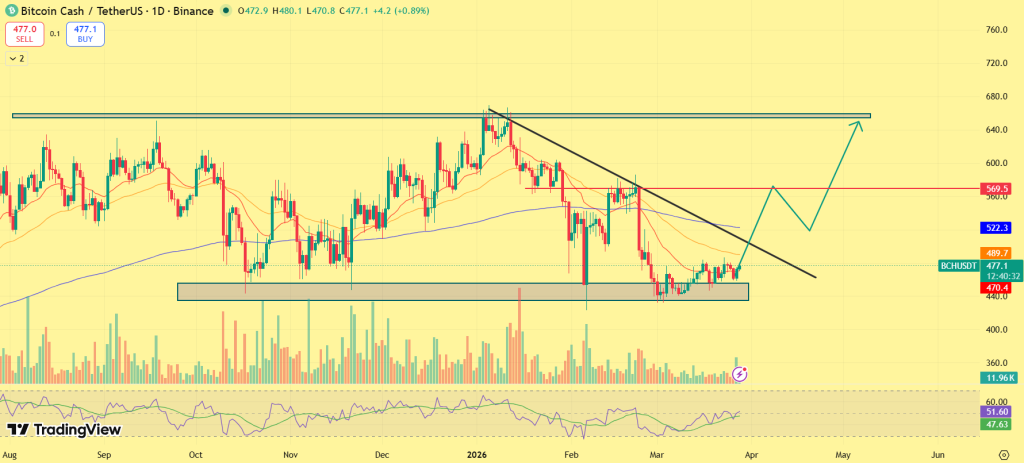
Source: MarketWatch

The post Coinbase Rejects the Clarity Act Draft as Stablecoin Yield Fight Escalates appeared first on Coinpedia Fintech News
Coinbase, the largest cryptocurrency exchange in the US, has expressed disapproval of the latest draft of the Clarity Act, which seeks to ban yields on stablecoins.
Speaking in Senate offices during a Monday meeting, the company expressed concerns about the bill’s language and its intentions, saying it rejects the compromise meant to level the playing field between cryptocurrency companies and banks.
Recently, Senators Thom Tillis and Angela Alsobrooks led the development of a draft to accelerate the bill’s passage through the Senate. The document addressed the long-standing debate on stablecoin yields, which banks claimed created unfair competition to their fiat deposits.
More specifically, the bill proposed a restriction on interest from passive stablecoin deposits in favor of “active rewards.”
Following its development, the above senators expressed optimism that the much-delayed act would receive Senatorial approval, but this seems to have hit a wall with Coinbase’s latest stance.
Notably, Coinbase is a major sponsor of the Fairshale Super PAC network – a massive bipartisan political organization dedicated to electing crypto and blockchain advocates into the US Congress. The group’s prominence in American politics has grown considerably following its multi-million dollar electoral donations to President Donald Trump.
Senators and other politicians, therefore, risk defunding if Coinbase’s conditions regarding the Clarity Act are not met. The release of the draft already caused a drop in Coinbase’s stock price to below $200, a level it has yet to recover from, with shares closing at $181.10.

Source: MarketWatch
Wyoming Senator Cynthia Lummis has called for a compromise, saying further delays would harm America’s financial future.
Community reaction shows deep disappointment at yet another delay, while others argue that banks actually need protection because of the current enormous debt burden.
I know patience is required in this industry, but it seems like a deal has been imminent for months now. Is clarity coming in 2026, or 2027?
— Nicholas Urso (@Nicksobtc) March 25, 2026

The post White House Clears Path for Crypto and Bitcoin in $14T 401(k) Plans appeared first on Coinpedia Fintech News
The US White House has completed its review of the proposal to allow cryptocurrencies, including Bitcoin (BTC) and private equity exposure in 401(k) retirement plans.
The proposal now awaits formal ruling from the Department of Labor (DOL). A positive ruling would support the flow of $13.9 trillion from defined-contribution plans, such as 401(k), into cryptocurrency investments.
This development would further reinforce the legitimacy of the blockchain and cryptocurrency industry, possibly driving higher demands and breaking recent price consolidation in favor of a bullish reversal.
The clearance from White House comes after an August 2025 executive order asking the DOL to ease restrictions on alternative assets. The latter spans private equity, real estate, infrastructure, commodities, and cryptocurrencies.
While Bitcoin inclusion in 401(k) plans is already legal under the Employee Retirement Income Security Act (ERISA) of 1974, a positive review from the DOL would shift the DOL’s crypto stance away from “extreme care.”
By contrast, the former Biden administration warned against integrating cryptocurrency into retirement plans, saying volatility could wipe out entire funds and threaten economic stability.
This stance shifted in May 2025 in line with the Trump administration’s aspirations to make America a global hub for Bitcoin and cryptocurrency.
The move to integrate Bitcoin and crypto into retirement portfolios has elicited divergent reactions within the community. Supporters highlight increased accessibility to high-yield digital assets, with financial gains offsetting inflationary effects on the value of fiat.
The #1 barrier to #Bitcoin adoption just crumbled. The Labor Department’s new rule means your employer can finally offer you Bitcoin without fearing a lawsuit. By opening the $13T 401(k) market, the government is making Digital Scarcity a core pillar of the American Dream. This…
— RayDAR.Sol (@RayDARdotSol) March 25, 2026
Critics note that uptake may be lower because retirement firms prioritize stable gains over speculative ones or illiquid investments like private equity.
Currently, the DOL maintains a neutral stance on the inclusion of crypto in retirement plans. Once it issues its upcoming ruling, a public commentary period would follow, and thereafter a final ruling.
A positive verdict would provide legal protection to fiduciaries, preventing them from being investigated or sued for including Bitcoin.
Nonetheless, the integration may take some time as retirement firms assess the benefits of such investments and develop the necessary infrastructure to support them.

The post Will Bitcoin Drop Below $50K? Latest BTC Price Debate & Analysis appeared first on Coinpedia Fintech News
Bitcoin (BTC) has been in consolidation between $62,000 and $75,000 over the 25 days of the US-Iran military conflict.

Source: CoinMarketCap
At press time, the flagship cryptocurrency was trading at $70,748, having gained 1.3% in the day following reported peace talks between the rival nations.
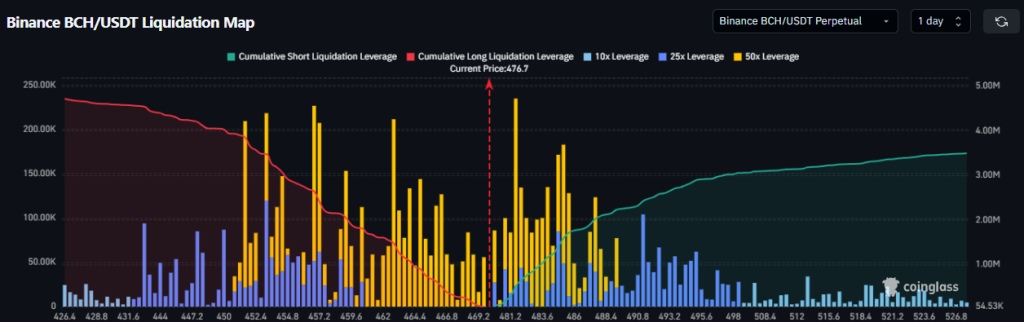
The positive price action is also attributed to a year-to-date reversal in Bitcoin ETF outflows, with $2.5 billion in inflows over the past month alone.
A short squeeze could have triggered further buying pressure as investors sought to cover their losses (short-position liquidations rose to $48.2 million on the day).
Another reason is increased investor accumulation, as shown by blockchain intelligence firm Glassnode. 10,485 BTC has been offloaded from exchanges in the past week, bringing Bitcoin balances to an all-time low of 2.4 million. Long-term holders have expanded their BTC portfolios, adding about 33,000 BTC in the past month.
Still, prices remain below $75K due to insufficient buying pressure despite tight supply.
In the past, Bitcoin prices have plunged roughly 850 days after a halving. At around 700 days post the 2024 halving, it would appear we are almost due for a repeat in history.

Source: Crypto Rover
Crypto market intelligence division K33 Research supports this theory, identifying $60K as a likely upcoming bottom fueled by negative funding.
To add on to that, Bitcoin’s “electrical cost” (break-even mining price) has declined below $60K from $70K in Q4 2025. Historically, reduced miner profitability coincided with price floors. This has been the argument among analysts, including those at Kalshi prediction markets, in their forecasts of a low of $48K.

Source: Trading View
BREAKING: Our traders forecast Bitcoin to reach a low of $48,000 pic.twitter.com/072nvNoUmy
— Kalshi (@Kalshi) March 24, 2026
Gold permabull Peter Schiff warns of a financial crisis brought on by inflationary pressures from rising oil prices.
We are headed for a full-blown financial crisis. February import prices spiked 1.3% while export prices surged 1.5%, annualizing to inflation rates of 16.8%–19.6%. That's before oil rose 50%. Unless the Fed raises rates several hundred basis points now, inflation will skyrocket.

— Peter Schiff (@PeterSchiff) March 25, 2026

The more optimistic traders argue that BTC could be poised for an uptrend, which has historically coincided with a rise in gold prices.

Source: Trading View
Which direction the coin will take remains to be seen, with looming geopolitical tensions and Fed action as key catalysts for price movement.

The post Franklin Templeton Partners With Ondo in Asset Tokenization Push appeared first on Coinpedia Fintech News
Franklin Resources Inc. has partnered with the decentralized finance platform Ondo Finance to launch tokenized exchange-traded funds (ETFs).
Also known as Franklin Templeton, the company is the world’s 16th largest asset manager with $1.7 trillion in assets under management (AUM).
Under Ondo Finance, Ondo Global Markets will provide the technology to access Franklin Templeton ETFs within crypto wallets. This will enable 24/7 trading, improved investor accessibility, shorter settlement periods, and higher liquidity ceilings.
The pilot debut will take place in Europe, the Asia-Pacific region, the Middle East, and Latin America, with launch in the US now pending regulatory approval.
We’re excited to announce that Ondo has partnered with Franklin Templeton (@FTDA_US), one of the world’s largest asset managers with $1.7T AUM.
— Ondo Finance (@OndoFinance) March 25, 2026
Together, we’re bringing exposure to Franklin Templeton-managed investment products onchain through Ondo Global Markets. pic.twitter.com/vY2AqbiMm7
Founded in 1947, Franklin Resources has grown its AUM from about $1.58T in early 2025 to over $1.7 T in early 2026.
Named the 2025 Asset Manager of the Year in the $500B+ category by Money Management Institute and Barron’s, the firm now closely rivals colossal investment firms such as Morgan Stanley.
On the other hand, Ondo Finance is a 2021-founded company backed by former Goldman Sachs executives.
As of early 2026, the platform was the largest provider of blockchain-based investment products with a total value locked (TVL) exceeding $2.5 billion.
Some of the firm’s most prolific partners include BlackRock (the world’s largest asset manager with $14.04T AUM), Binance, and Fidelity.
ONDO token, now the 51st in the world by market cap, gained 4.17% in the day to trade at $0.2593. Critiques note the token’s disconnect from the company’s performance, underscoring ongoing debates about RWA utility.

Source: CoinPedia
Institutions are increasingly adopting initiatives similar to Franklin Templeton’s to remain competitive in the growing crypto space.
The trend has now moved from experimental phases to full-on scaling following regulatory clarity under the GENIUS Act. Financial giants such as BlackRock, JPMorgan Chase, and Goldman Sachs now lead the bandwagon, and many more plan on joining them.
Most recently, Securitize partnered with the New York Stock Exchange (NYSE) to launch 24/7 RWA tokenized trading powered by stablecoin settlements.

The post Best Crypto to Invest in as Bitcoin Bounces 5% to $71,000 on Iran Pause and Pepeto Presale Keeps Growing appeared first on Coinpedia Fintech News
Bitcoin jumped above $71,000 after Trump postponed strikes on Iran, and the entire crypto market followed with a relief rally that pushed altcoins up 5% across the board. When the market sells off on fear and bounces the moment tension eases, that tells you demand never left.
The best crypto to invest in right now is not the large cap that is already priced in the bounce. It is the presale where more than $8 million has been committed money is already positioned for what comes after the recovery.
Bitcoin climbed above $71,000 on March 23 after Trump said the U.S. would pause strikes on Iranian energy infrastructure, according to Bloomberg.
The move filled the CME gap from the weekend selloff and erased losses from the fear driven drop to $68,200.
CoinDesk reported more than $400 million in liquidations hit in 24 hours, with most being short positions as the bounce punished bearish bets. The Altcoin Season Index at 49 signals the market is approaching the rotation point where capital moves beyond Bitcoin.
An early entry built for serious growth does not appear every cycle, and the window between discovery and listing is where the real returns live. The wallets that found the right presale before the listing are the ones every article references six months later. The best crypto to invest in is never obvious when you find it. It becomes obvious after the listing proves it.
Pepeto collected more than $8 million while the market shook out panic sellers, and committed wallets verified the team and contracts before entering. The cofounder who built the original Pepe coin to $7 billion with zero products is now building a full exchange, with a former Binance expert on the dev team driving that launch.

SolidProof completed the audit before the presale opened. PepetoSwap removes the fees that bleed your capital on every trade, and the bridge sends tokens across chains at zero cost so what you send is what arrives. These tools run today, protecting wallets that entered early. Staking at 194% APY compounds daily while positions grow for every holder inside.
The presale sits at $0.000000186, and the same 420 trillion supply, the same cofounder, and a working exchange Pepe never had give the community calling for 1000x from this level the math to back it up. The Binance listing approaching permanently erases this price, and the wallets entering now are building the positions the rest of the market will spend this cycle wishing they had taken.
Bitcoin trades at $70,916 after the Iran pause rally, according to CoinMarketCap. Strategy holds 762,099 BTC and filed a $42 billion program to buy more. BTC needs to clear $72,600 to $75,000 to confirm a reversal.

A move to $100,000 is roughly 40% and requires months of macro cooperation. The recovery is real, but life changing returns from $70,916 are measured in years.
XRP sits at $1.43 after a modest weekly recovery, according to Yahoo Finance. The DTCC integration and institutional partnerships keep the long term case alive. A move back to its all time high of $3.84 is roughly 2.7x from current levels.
XRP is building real connections to traditional finance, but that timeline does not compete with a presale entry that compresses the entire return window into a single listing event.
The recovery is here, Bitcoin filling the CME gap confirms the demand was only waiting, and the investors who understand cycles know the best crypto to invest in is always found before the crowd arrives. The cofounder who built Pepe to $7 billion is building Pepeto with better infrastructure, the same supply, and a presale closing faster every week.
This is the second chance for anyone who missed the original Pepe entry, and the wallets loading positions on the Pepeto official website right now are the same type that made millions by moving early in the last cycle. The listing erases the presale price permanently, and the wallets that hesitate will spend this recovery watching from outside while the ones who moved celebrate from within.
Click To Visit Pepeto Website To Enter The Presale

Which altcoins offer the strongest setup as the crypto market recovers?
The best crypto to invest in is Pepeto, with more than $8 million raised, a former Binance expert on the team, and a Binance listing approaching during the recovery.
What projects show real conviction beyond large cap recovery in 2026?
Pepeto is the best crypto to invest in with committed capital flowing through every presale stage while BTC and XRP offer limited percentage gains from current levels.
How does Pepeto compare to Bitcoin and XRP during the bounce?
BTC at $70,916 targets 40% to reach $100,000. XRP at $1.43 targets 2.7x. The Pepeto official website gives presale access before a Binance listing where the return window compresses into days.

The post Bitcoin Price Prediction: Can BTC Break $73K or Drop Again? appeared first on Coinpedia Fintech News
Bitcoin is showing signs of a short-term recovery, with price action attempting to push higher toward the $73,500 level. However, analysts warn that the current move may not mean a full bullish reversal, but rather a temporary rebound within a broader corrective structure.
Recent market activity shows that Bitcoin climbed steadily before encountering resistance near the $71,550 zone. This level has been a critical barrier, having acted as a rejection point multiple times in recent sessions.
Despite the upward momentum, the move is being viewed as a counter-trend rally, meaning it could face renewed selling pressure. While the price action remains constructive in the very short term, the broader structure still lacks clarity.
For bullish momentum to continue, Bitcoin must break decisively above the $71,550 resistance. A successful breakout could open the door for a move toward the $73,500 range, which is currently seen as a near-term target based on technical projections.
On the downside, support is forming around $70,400. Holding this level is crucial for maintaining upward momentum. A break below it would not necessarily trigger a sharp decline, but it could signal a shift in structure and increase the likelihood of further consolidation or downside movement.
Zooming out, the broader trend shows Bitcoin may still be navigating a corrective phase following a previous decline. Analysts point to the possibility that the current upward move is part of a larger wave structure, rather than the beginning of a sustained rally.
The resistance range between $73,500 and $74,800 is being closely monitored. This zone could act as a strong ceiling, where sellers may re-enter the market and trigger another downward leg.

The post Inside Outset Media Index (OMI) and How Its Proprietary Metrics Change Media Performance Analysis appeared first on Coinpedia Fintech News
Outset Media Index (OMI), which recently entered the soft launch phase, introduces a standardized way of benchmarking media performance. It helps marketing, media, and PR teams, as well as advertisers and researchers, understand expected results, working conditions, and cost efficiency across more than 340 publications. At this stage, these include crypto-native, finance, tech, and broader news platforms that report on cryptocurrency.
OMI’s signals are also used by Outset Data Pulse (ODP) to reflect regional crypto media trends, with both being part of the emerging Outset PR ecosystem.
Out of 37 overall metrics, the index introduces a set of proprietary indicators:
These are designed to capture what traditional data tends to miss.
Conventional metrics start with traffic, how many people saw a story and where it appeared – but often stop there. OMI brings that missing layer into view and shows what that attention turns into once the content is published.
The platform structures traffic through indicators such as Average Traffic (3M), Total Traffic (3M), and monthly changes, covering both scale and short-term movement. But it goes quite a bit deeper than that.

What follows looks closer at OMI’s in-house parameters, how they fit alongside traditional ones, and how to make sense of them together.
OMI’s proprietary metrics address what media and PR teams are really trying to figure out, which usually comes down to a few key questions:
Total visits can seem impressive at first glance, but they’re often driven by the same audience coming back repeatedly. Unique Score brings attention to outlets that regularly reach fresh readers, rather than depending on returning ones.
Meanwhile, Composite Score merges both relative and absolute traffic shifts to indicate whether an outlet is gaining steady traction or just experiencing brief surges in interest.
Reading Behaviour gets at whether people stay or pass through, because reaching on its own doesn’t mean much if no one sticks around.
Then there’s what happens after a story goes live. Some outlets just publish and move on, while others see their content picked up or resurface elsewhere. That’s what Reprints and Reprints Score are meant to catch.
Not everything comes down to the audience, though. Some of it is operational. Editorial Rigidity, for example, gives a sense of how easy it is to submit guest content to a given outlet.
From there, the way the data is explored becomes just as important as the data itself. Inside OMI, users can:


OMI’s metrics are designed to be read together. Individually, each one highlights a specific aspect of performance. Combined, they show how an outlet behaves in real-world scenarios.
For example, high traffic, strong domain authority, and a high Reprints Score reflect both credibility and active redistribution, signalling a good syndication opportunity.
Sometimes OMI and traditional metrics might not line up, and when that happens, it usually means the results aren’t as straightforward as they appear.
An outlet might show strong traffic, but if distribution signals are weak, that attention tends to peak and stop there instead of spreading further. In other cases, traffic may look more modest, but strong reprints and aggregator presence suggest the content keeps circulating well beyond the initial release.
There will also be situations where visibility seems solid on the surface, but engagement trends tell a different story – people arrive, but don’t stay. Then, there are operational trade-offs: fast turnaround paired with high editorial rigidity often means third-party content can be published quickly, but with limited flexibility.
These differences often explain why similar-looking outlets perform differently in practice.
Different campaign goals require prioritizing different combinations of metrics.
For a quicker overview and easier benchmarking, OMI combines these and other metrics into two weighted scores: the General Score and the Convenience Score. These determine each outlet’s position in the corresponding rankings within the index: the General Rating and the Convenience Rating.
Represented as single numbers from 0 to 100, the General Score answers how strongly an outlet performs overall, and the Convenience Score shows how easy it is to actually run a campaign with that outlet.
Outset Media Index allows coverage to be viewed not just within one category of media, but across different types of outlets where the same story can appear in a different context and order of publication.
Where standard analytics tend to stop at visibility, OMI extends that view. That changes how impact is understood. Instead of being tied to a single moment, it becomes something that develops over time – shaped by how content moves, how long it stays visible, and how consistently it performs across outlets.
As media discovery continues to spread across platforms, aggregators, and AI-driven tools, this kind of measurement becomes more important. The real value of media coverage is no longer just about where it appears, but how it continues to circulate and hold attention beyond the initial release.

The post Midnight Deal With Monument Could Drive Massive TVL Growth, Says Hoskinson appeared first on Coinpedia Fintech News
In a move that shows the growing convergence between traditional banking and blockchain technology, Monument Bank has announced plans to introduce tokenised retail deposits using blockchain infrastructure.
The initiative, developed in collaboration with the Midnight Foundation, aims to allow customers to hold digital versions of their bank deposits while maintaining the same protections and benefits as conventional savings accounts.
Unlike cryptocurrencies, these tokenised deposits are not separate assets. Instead, they act as digital representations of funds already held within the bank. Each token is backed one-to-one by traditional deposits, meaning customers can still redeem their holdings in pounds sterling while earning interest as usual.
This is one of the largest deals we've ever done and could bring hundreds of millions to billions of TVL to the Midnight ecosystem. I'm extremely proud of @F_ZK_Now and his team at the @midnightfdn for the hard work they put into the negotiations with Monument.
— Charles Hoskinson (@IOHK_Charles) March 25, 2026
Midnight is the… https://t.co/T98Z1jVEQR
The project is expected to begin with a rollout of up to £250 million in deposits. This marks an early step in what could become a broader transformation in how banks manage and deliver financial products using blockchain systems.
Beyond simple tokenisation, the bank is planning a phased expansion of services. Future stages may introduce access to tokenised investment products, including asset classes such as private equity and commodities. Traditionally, these opportunities have been limited to institutional investors or high-net-worth individuals, but tokenisation could make them more widely accessible.
Another planned feature includes the ability for customers to borrow against their tokenised assets. This approach would allow users to unlock liquidity without needing to sell their investments, reflecting services typically associated with private banking.
An important component of the initiative is the use of privacy-focused blockchain technology. The infrastructure is designed to ensure that sensitive financial data remains accessible only to authorised parties, addressing regulatory concerns around transparency and data protection in decentralised systems.
The development comes as financial institutions worldwide continue to explore tokenisation as a way to improve efficiency and expand access to financial markets. While many projects have focused on institutional use, this approach places retail customers at the centre, potentially marking a shift toward more mainstream adoption of blockchain-powered banking solutions.

The post Bitcoin Stabilizes Around $70K — What Will It Take for the BTC Price to Break Out? appeared first on Coinpedia Fintech News
The Bitcoin price has started to stabilize around the $70K region after a sharp pullback, with signs of easing sell-side pressure and improving ETF flows. The immediate downside momentum has slowed, but the recovery still lacks conviction.
Spot volumes remain muted, and overhead supply continues to cap upside moves. This puts BTC in a familiar position—stabilizing, but not yet breaking out. The next move depends on whether fresh demand steps in or if the price remains stuck in a broader range. Below is the on-chain data from Glassnode, which suggests that the breakout may not be nearby.
This heatmap tracks where short-term holders accumulated Bitcoin, essentially showing where supply is concentrated across price levels. Right now, a significant portion of that supply sits above the current price, particularly in the $75K–$90K range. This creates a clear overhead resistance zone. Many of these holders are currently at a loss, and as the price moves higher, they are likely to sell at breakeven. That’s what makes upside moves slow and difficult to sustain.
On the other side, the $65K–$70K range is starting to build as a support cluster. This is where newer buyers have stepped in and are holding their positions, preventing further downside for now. So the structure is quite clear—Bitcoin is trading between a strong support base below and heavy supply above. Until that overhead supply gets absorbed or cleared, any rally is likely to face resistance, keeping the price stuck in consolidation.
This chart tracks how much of the market is sitting at a loss over time. Right now, unrealized losses are starting to rise again, which means a growing number of participants are holding Bitcoin below their entry price. This typically happens during pullbacks, when recent buyers get trapped.

In earlier cycles, sharp spikes in this metric marked capitulation phases, where weak hands exited and strong hands accumulated. However, the current levels are still relatively moderate compared to those extremes. The trade set-up suggests that some pressure is building, but not enough to signal a full market reset. This explains the current price action. Bitcoin is stabilizing, but without a strong flush or aggressive accumulation, momentum remains limited.
Perpetual funding rates have flipped negative across exchanges, showing that short positions are gaining dominance in the market. This shift reflects weak sentiment and a lack of aggressive long positioning. Earlier, positive funding showed aggressive long positioning during the uptrend. But the shift to negative funding suggests that confidence has dropped, and the market is no longer chasing upside.

At the same time, persistent negative funding can act as a setup for short squeezes, but only if spot demand returns. Without that, it simply confirms bearish pressure. So the setup is clear—sentiment has turned cautious, but positioning is starting to get crowded on the short side. This keeps Bitcoin in a range for now, but also leaves room for sharp moves if sentiment flips.
Options data highlights significant negative gamma exposure around the $70K–$75K range, indicating strong dealer hedging pressure. This creates resistance on upward moves and increased volatility near key levels. When gamma is negative, it tends to amplify price moves. On the upside, it creates resistance as dealers hedge by selling into rallies. On the downside, it can accelerate drops as selling pressure increases.

In simple terms, even if BTC attempts to push higher, derivatives positioning may slow the move unless strong spot demand absorbs it. The current range is heavily controlled by derivatives’ positioning, making breakouts harder in the short term. Until this gamma pressure eases or gets absorbed, Bitcoin is likely to stay volatile but range-bound around these levels.
Bitcoin is not in a breakdown, but it’s also not in a confirmed recovery. The market is clearly waiting for liquidity.
For the rest of the quarter, BTC is likely to remain range-bound unless a strong demand catalyst emerges. A breakout above resistance would require sustained spot inflows, while failure to hold support could bring another leg lower. Right now, Bitcoin price is in a transition phase—not a bearish collapse, but not bullish expansion either.

The post Was the XRP Lawsuit Meant to Shake Out Retail Investors? appeared first on Coinpedia Fintech News
The long-standing legal saga surrounding XRP is once again under scrutiny after analyst Jesse from Apex Crypto Insights shared views hinting the case may not have been what it seemed.
In a recent discussion, Jesse described the lawsuit involving Ripple Labs as potentially strategic rather than purely legal, stating that his initial belief was that the entire episode might have been orchestrated.
“To me, I’ve always said I think this was a coordinated plan… maybe to scare retailers out and justify a low price for a while,” Jesse said.
According to Jesse, one possible explanation behind the lawsuit was to temporarily suppress XRP’s price. This, he suggested, could have allowed time for institutional partnerships and ecosystem development without excessive retail speculation.
He described the situation as a “teeter,” implying a controlled balancing act rather than a full-scale attack.
“I always thought it was just all teeter… to justify a low price so they have time to incentivize partners,” he added.
However, Jesse acknowledged that his perspective shifted after reviewing what he referred to as newly surfaced documents, which hinted at the possibility of a more deliberate attempt to target XRP.
“When the files came out… showing they were trying to attack XRP, I started to think maybe it wasn’t just a teeter,” he said.
Despite this, he remains uncertain, estimating only a “20% chance” that the lawsuit represented a fully genuine regulatory action rather than a coordinated move.
The XRP lawsuit has had a profound impact on the cryptocurrency’s price, adoption, and regulatory perception since it began. While parts of the case have moved toward resolution, discussions like Jesse’s show that questions around intent, fairness, and broader implications remain far from settled.
Whether viewed as a calculated strategy or a legitimate enforcement action, the XRP case continues to shape how regulators and investors approach the wider crypto market.

Need to know what happened in crypto today? Here is the latest news on daily trends and events impacting Bitcoin price, blockchain, DeFi, NFTs, Web3 and crypto regulation.